20-Nov-14
 Is this London's most extreme bike ride? Danny Macaskill gets in a spin... [ 20-Nov-14 12:26pm ]
It's not every day you get invited on a mystery tour, to witness what was billed as "London's most extreme bike ride". Planning the launch event for their virtual personal assistant, Cortana, Microsoft had been in touch promising thrills, spills, and world-famous trials bike rider Mr Danny Macaskill. Needless to say, I was excited!

Danny's stunt was kept under wraps right until the last minute, and the excitement built as darkness fell and we cruised up the river Thames on Wednesday evening. Everyone assembled on board snapped pictures of London's most famous landmarks as we neared our destination.
As the London Eye came in to view, so did a barge floating in the middle of the river with a massive slope and loop-the-loop built on top. What was about to unfold became clear, and I was blown away by just how epic the night was turning out to be.
Danny's London stunt is just another string to his bow, following the enormous success of his online videos including the most recent (and I'd argue best) film, The Ridge, which has already been viewed over 20 million times on Youtube.
Apparently Microsoft's Cortana acted as Danny's personal assistant throughout his training for the event, arranging his meetings, setting appointment reminders, playing his favourite music, warning for bad weather and finding maps.
He explains; "A career as a professional athlete can be quite hectic and as I prefer to spend as much time on my bike as possible - any help in organising meetings, travel plans and projects is great. This is one of the biggest set-ups I have ever ridden and the location is amazing. To have a five-metre loop floating on a barge is something surreal. I always look for new challenges and the chance to ride this massive loop with the help of Cortana is another achievement I can be proud of."

Our boat moored by Victoria Embankment, putting Danny's loop in line with the London Eye. As the crowd waited eagerly, I can't imagine what would be going through his mind. Was he nervous? What if he fell? Would he over-shoot the slope and end up in the river?!
If Macaskill was nervous, he certainly didn't show it. With a quick spin and a hop suddenly he was off, gathering speed on the steep slope before whizzing around the loop, then delivering a perfectly executed backwards wheelie on his front wheel.
The crowd (which I noticed included trails pioneer Hans 'No Way' Rey) gave him a huge cheer, and it was all over too soon.
Riding a bike along the river Thames usually involves dodging lorries and massive pot holes, and there's been lots of talk recently about the idea of building a floating bike track down the middle of the river. That's fine by me, just so long as it includes a 5 metre high loop the loop so we can all have a go!
Many thanks to Microsoft's Cortana for a great evening!
Share
12-Nov-14
Lightning Motorcycles makes first customer delivery of the LS-218 electric superbike [ 12-Nov-14 10:46pm ]
The SMIDSY-killing cycling jacket; we road test the dazzling Reflect360 [ 12-Nov-14 8:30am ]
We're often approached by companies interested in sharing their latest cycling "innovation" with us. From gloves with built-in indicators, to cycling jackets with special pockets for storing a pizza, we've really seen it all. So we were pleasantly surprised when a company got in touch claiming not only to have made the most reflective cycling jacket, but that it also started life here in London...
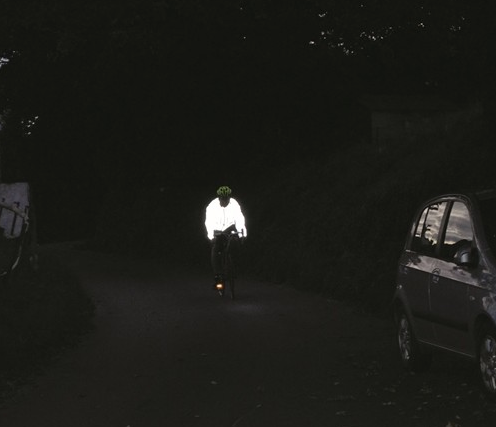
The REFLECT360 cycling jacket does exactly what it says on the tin; it reflects light back to other road users from every angle. It's not just got a reflective strip or some shiny striping, the entire jacket is reflective, from top to bottom.
I have my own reservations about 'safe' cycling wear, having started out my urban cycling career wearing a bright yellow builder's vest I grew to loathe. But I've been pleasantly surprised by the REFELCT360 - here is a cycling jacket designed around safety features that you can actually wear in to the office or the pub without looking like an epic banana.
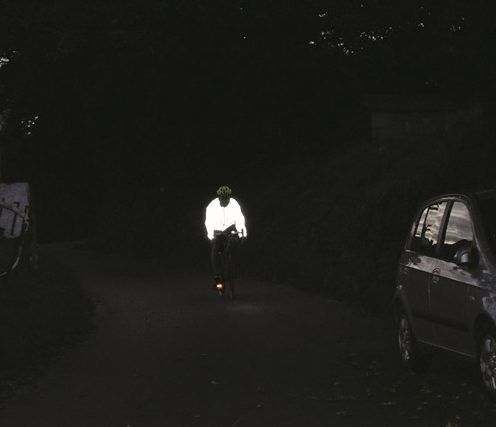
I spoke to the founder of ProViz, Anthony Langly-Smith, to find out what inspired him to create the jacket: "I'd been commuting by bike for about 12 years, and I was seeing lots of people going through Clapham up to London Bridge - on what is now the Cycle Superhighway route - and when I was at the traffic lights I would see three or four other people on bikes. Now there are 30 or 40 people at every turn of the lights. Unless you're actually there you can't quite fathom what a big change that was."
"At the same time there seemed to be a move away from cycling products that didn't just look like builder's jackets. People wanted fitted stuff, waterproof stuff. It started with me and my brother thinking about what our fellow cyclists might need on our commute to work, and has turned in to our business; now we're selling product in Chile, Colombia, China, Korea, Belgium, Denmark, Australia and New Zealand."
Anthony's latest product to come to market, the REFLECT360 range, has been garnering lots of interest with positive reviews on BikeRumor, the Evening Standard, and the Guardian among others. I found it was not just in reviews that this jacket got lots of attention; during our road test other cyclists came up to me at traffic lights to ask where it was from and where they could get one for themselves, astonished by the reflective quality now the nights are growing dark.
"We launched the jacket in February and suddenly we had so many people coming to talk to us, taking photos, wanting to know about the material, wanting to know how this product came about. It was astonishing. The success has bred an entire line; a rucksack cover, a vest, a gillet and a children's jacket."
So what about the jacket itself? How does it work, and what's it like to ride around town in?
The waterproof material is covered with thousands of tiny microscopic glass beads which reflect light, throwing back light that approaches it from any angle. The jacket itself is a well constructed design for cyclists, with taped seams, waterproof zips and pockets, a longer tapered back for good positioning on the bike as well as lots of adjustable seams and flaps to increase or decrease its breathability. It feels strong and sturdy and should last well.
Riding around town I found the jacket fitted well, performed brilliantly in the rain and stood up to everything London's mucky roads could throw at it. Whilst the material is a touch on the warm side, the addition of under arm vents helped me to keep my cool. I'm usually highly sceptical about the sort of claims made about these kind of products, but my reservations about the effectiveness of cycling "safety" kit evaporated too - I did feel noticeably more visible whilst riding around town in the jacket, and I think it would be invaluable on darker country roads.
London's cycle scene inspiring products which in turn help London's cyclists to feel more safe? We like that very much.
The REFLECT360 cycling jacket is available at Evans Cycles, Halfords and most good bike shops, or online directly from ProVisSports here.
Share
07-Nov-14
With 48 hours to go, your voice counts! If you do one thing for cycling this weekend, do this... [ 07-Nov-14 3:08pm ]
You need to send an email to consultations@tfl.gov.uk by Sunday night saying why you want London's new Cycle Superhighways to be built. Doing so is really important and a chance for you to actually make a difference to London. Read on to find out why...
It's been a fast and furious few weeks in the cycle campaigning world, with lots of behind the scenes activity and meetings trying to get as many people as possible to signal their support for the Mayor of London's hugely ambitious "Crossrail for Bikes" cycling plans.
As most of you know, there's been some very cloak and dagger lobbying by some business interests who are desperately trying to kick the plans in to the long grass. With a Mayoral election coming up, delaying these plans means they risk not being built at all. And now there's just 48 hours for you to contribute and make a difference...
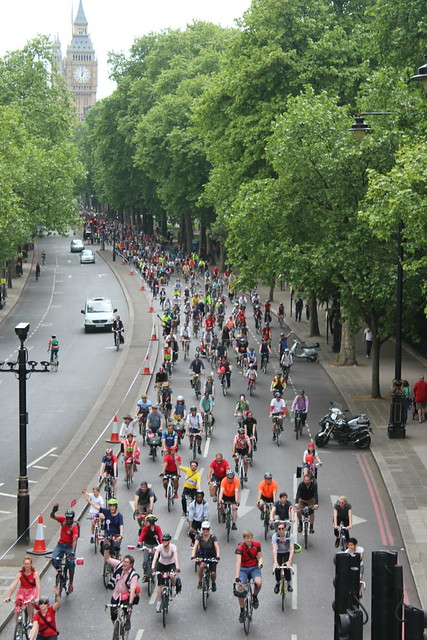 Space4cycling protestors travel down the Embankment, the route of the proposed the east / west cycle superhighway.
These Cycle Superhighway plans are from being won. There's bad news to come with Westminster Council proposing all sorts of mad ideas like painting bike lanes down the middle of the Mall as some sort of Cycle Superhighway alternative. In short, they'll do anything to avoid having to address the sinful cesspit of shame that is the current state of Parliament Square, where the route is currently planned to go. Later today (Friday) the CBI will submit their response to the consultation. I've seen a draft and I'd be charitable if I were to say that it is hopelessly outdated in its approach to how cities really work.
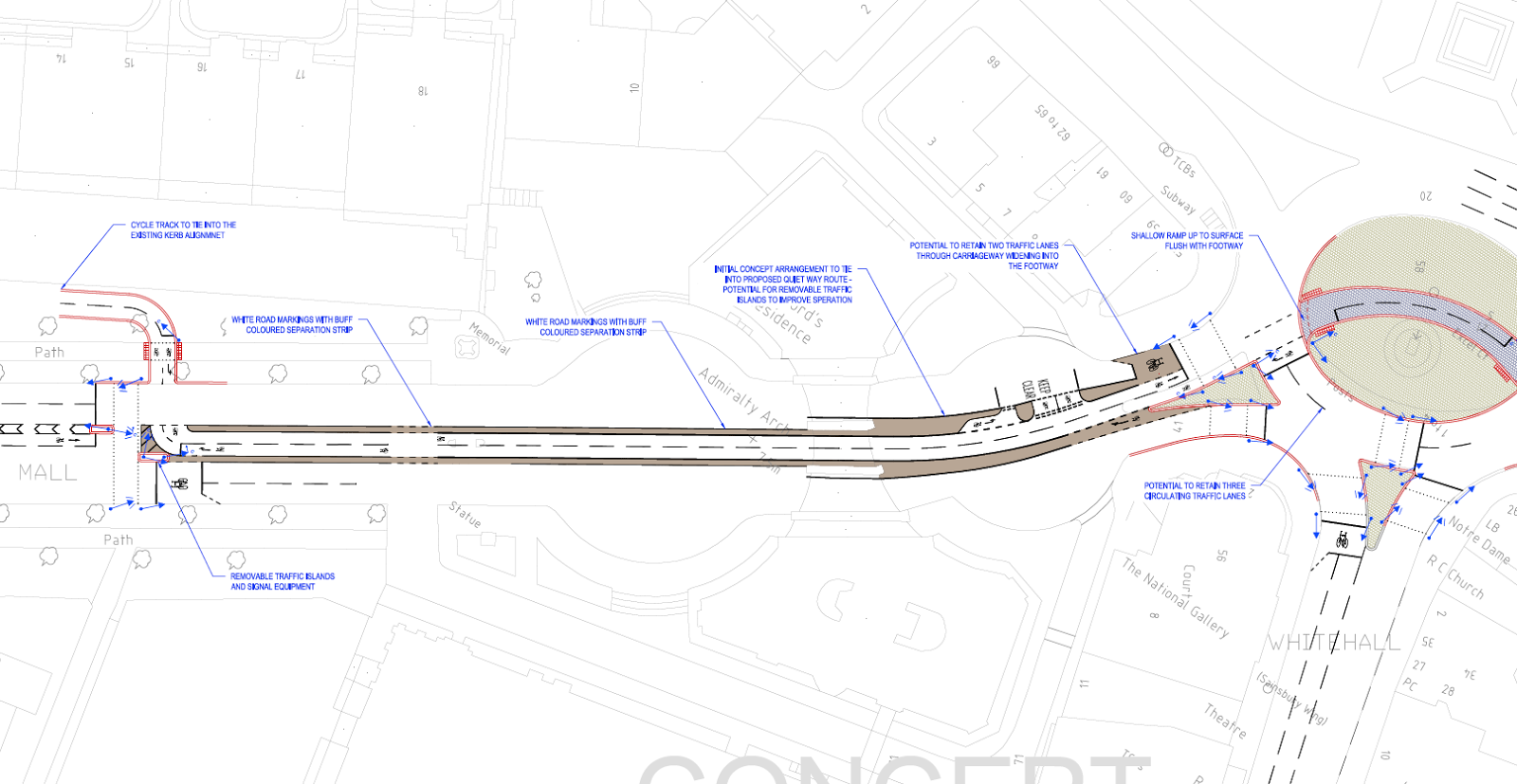 Westminster's bonkers plans to send cyclists down the middle of the Mall with fast moving traffic either side of a painted strip.
Of course, this late flurry of negative attention is not a mere coincidence. With 14 cyclists killed on London's roads in 2013, six in a two-week period this time last year, no-one wants to be seen to be publicly saying they *don't* want to see improvements (real improvements) for people on bikes. So in a classic lobbying tactic these last minute submissions are coming in right on the line in the hope that everyone will go home for the weekend and not notice the "against" voices quietly doing their thing.
It sounds so sinister, doesn't it? Like some kind of crazy conspiracy theory. I'm fully aware of this, but this is the score with lobbying in London it would seem...
Luckily, the wider business community in London is much more enlightened. CyclingWorks.London have been collating positive responses from organisations to the Cycle Superhighway plans and they've been inundated - almost overwhelmed - with businesses saying "Yes" and "Build it, Boris" to these plans. This week alone the University of Central London, the English National Opera, the Civil Aviation Authority, the City of London Police, Universal Records and many others have piled in with their support, joining Microsoft, Unilever, Deloitte, the Royal Bank of Scotland, Olswang LLP, Herbert Smith and many, many others.
 Just some of the very long list of business names who support the Mayor's Crossrail for Bikes.
The devisions between those "for" and those "against" led Evening Standard journalist Ross Lydall to go so far as to say there was only a "50/50 chance" of the Cycle Superhighways ever being built.
And with the consultation plans closing on Sunday, now it is your turn to get involved. If you can find twenty minutes to add your voice as a London cyclist, then you'll have strengthened the chances of these ambitious bike tracks being built and the Mayor delivering on his "Go Dutch" election promises.
You can go through the step-by-step consultation on the Transport for London website, which you can find here.
Alternatively, you can send an email to consultations@tfl.gov.uk with the subject matter "East West and North South Cycle Superhighway consultation" with you own comments.
Perhaps you want to explain how you'd like to bring your kids in to town by bikes safely? Or maybe you are particularly excited about a certain section of the route and the wider calming impacts it will have, like at Parliament Square?
Maybe you work on or near the route and this will make your commute to work a safe and inviting option all year round?
Perhaps you have other reasons you'd like to see these routes built; maybe you voted for the Mayor on the back of his "Go Dutch" promise?
Maybe you'd like to send a note supporting the broader concept, or perhaps you love a particular part of the scheme like a certain road closure or safe space for cycling where currently there is none. You can make critical suggestions for improvements too, of course (I've asked TfL to ensure they use angled curb stones to make sure cyclists can use the full width of the lanes.)
The point is, the agenda is set by those who show up and now more than ever before we need the real voice of Londoners to be reflected in this consultation.
So please, take the time to pen a note to Transport for London this weekend and help to make the city where we live a better place for everyone.
Share |
29-Oct-14
# [ 29-Oct-14 12:05pm ]
# [ 09-Oct-14 12:29pm ]
04-Oct-14
POSTSTEP 2014 [ 04-Oct-14 10:37am ]
# [ 25-Sep-14 11:42pm ]
11-Sep-14
# [ 11-Sep-14 6:01pm ]
02-Sep-14
An electric motorcycle rider, Terry Hershner, has first electric win in Vetter Fuel Economy Challenge [ 02-Sep-14 6:26am ]
New blog [ 31-Aug-14 12:33pm ]
History making race with streamlined motorcycle coming to eMotoRacing near Salt Lake City [ 17-Aug-14 12:55am ]
Renovo Motors unveils Shelby CSX9000 based electric supercar [ 16-Aug-14 11:17pm ]
# [ 31-Jul-14 12:35am ]
OASIS BOOK REVIEW ROUND-UP [ 17-Jul-14 9:47pm ]
CRP launches Energica Ego world tour - information, and test ride report [ 17-Jul-14 6:21pm ]
DEFINITELY DEFINITELY DEFINITELY OUT NOW [ 15-Jul-14 10:39am ]
Electrics on track for outright Pikes Peak wins, following excellent results at 2014 Pikes Peak for both cars and bikes [ 03-Jul-14 12:06am ]
Risking life and limb to electrify racing - is it worth it? PLEASE, do it safely! [ 30-Jun-14 8:23pm ]
Harley Davidson shocks electric motorcycle world with electric motorcycle announcement [ 19-Jun-14 11:01pm ]
John Wayland starting a business selling Black Zombie electric muscle cars [ 12-Jun-14 11:39pm ]
Drive eO returns to Pikes Peak from Latvia, with customized Tesla Roadster [ 12-Jun-14 2:55am ]
McGuinness 117 miles/hr in 2014 TT ZERO, Anstey 115 miles/hr, shattering 2013's records [ 04-Jun-14 1:36pm ]
McGuinness scored an odometer moment - 115+ miles/hr in TT ZERO - what does it mean? [ 02-Jun-14 8:39pm ]
McGuinness shatters TT ZERO lap record, 115+ miles/hr [ 02-Jun-14 6:02pm ]
Anstey sets new TT ZERO lap record - 112 miles/hr - Saturday qualifying session [ 31-May-14 6:36pm ]
McGuinness sets 111 miles/hr lap record in TT ZERO qualifying/practice session on Friday May 30 [ 30-May-14 9:27pm ]
Awake at the Big Bend [ 04-Jan-14 7:17pm ]
27-May-14
Buckeye Current repairing circuit boards, testing bike, at TT ZERO 2014 [ 27-May-14 4:40pm ]
ManTTX readying bike for TT ZERO 2014, may be a late entry [ 24-May-14 12:50am ]
TT ZERO entry list makes it onto Twitter, and we snag a picture for you [ 24-May-14 12:25am ]
AT TIME'S LIGHT THRONGED MERIDIAN [ 20-May-14 9:52am ]
 Spain's Bultaco Motors relaunching as electric motorcycle company, derived from LGN Tech from 2011 e-Power [ 20-May-14 5:40am ]
TT ZERO Schedule of events over the next two weeks [ 20-May-14 1:04am ]
Mugen Shinden pictures from TT ZERO preparations [ 19-May-14 10:19pm ]
Aussie team ELMOFO debuts first electric race car in gas car racing [ 19-May-14 8:10pm ]
DAVID HOCKNEY'S ART SCHOOL DAZE Part 25 [ 11-May-14 12:01am ]
Spain's Bultaco Motors relaunching as electric motorcycle company, derived from LGN Tech from 2011 e-Power [ 20-May-14 5:40am ]
TT ZERO Schedule of events over the next two weeks [ 20-May-14 1:04am ]
Mugen Shinden pictures from TT ZERO preparations [ 19-May-14 10:19pm ]
Aussie team ELMOFO debuts first electric race car in gas car racing [ 19-May-14 8:10pm ]
DAVID HOCKNEY'S ART SCHOOL DAZE Part 25 [ 11-May-14 12:01am ]
A FIGGING FOR HOCKNEY TEACHES THIS BDSM FREAK THE VALUE OF THINKING WITH HIS DICK!
At the start of their second year Kitaj was doing very well at the Republican College of Art. Hockney wanted to see whether he could make a better fist of the new term at the RCA than he had of the last. He began with a much better chance of doing so, for he was thoroughly humbled. The discovery that he was not altogether such a hero as he had fancied himself, had dawned upon him very distinctly by the end of his first year as the full depths of his masochism had been revealed; and the events of the long vacation had confirmed the impression, and pretty well taken all the conceit out of him for the time being. The impotency of his own will, even when he was bent on doing the right thing, his want of insight and foresight in whatever matter he took in hand, the unruliness of his temper and passions just at the moments when it behooved him to have them most thoroughly in check and under control, were a set of agreeable facts which had been driven well home to him. The results, being even such as we have seen, he did not much repine at, for he felt he had deserved them; and there was a sort of grim satisfaction, dreary as the prospect was, in facing them, and taking his punishment like a man. Or at least like a girl since he most enjoyed bondage scenes in which he was made to put on dresses and act like a member of the 'weaker' sex.
Kitaj was so fully occupied with painting and a muscle-building regime that he'd taken up, that Hockney had scruples about demanding much of his spare time in the evenings. Nevertheless, the two men still wanted to enjoy some kinky sex together, and were able to do so both at the RCA and in their rooms. On the first day of term Hockney checked out the new first year students and had even sucked one of them off in the men's toilet at lunchtime. He hoped Kitaj would hear about this and would punish him severely for it. And that was precisely what happened towards the end of that first day back at college.
Hockney stood in the corner of a lecture room, his hands firmly planted on the top of his head, muttering at the injustice of it all. He knew that Kitaj was strict, but he was in his early twenties for fucks sake, a post-graduate art student, and he had been standing with a view of nothing but peeling paintwork for the last forty-five minutes. Hockney heard Kitaj step back into the room and the blinds of the lecture hall fell, leaving only the glow of the lights.
"Boy, what did you think you were doing?" Kitaj's voice was harsher than before, Hockney could tell this time he was in for it.
The sub's response came out as a mutter: "Nothing, it was just a bit of fun..."
"Just what? A Joke? I'm sure that fresher's orgasm wasn't a sarcastic orgasm, was it?"
"No," Hockney was sulking by this time. He was being spoken to like a child, it had just been guys messing around in the john, a quick blow job, and now he was taking a heavy wrap for it.
"No sir, is how you shall address me Hockney! I see it is not just your submissive peers you treat with such disrespect but even your master. Come over to the lecture desk."
Hockney walked over to the most imposing piece of furniture in the room as Kitaj instructed. He lowered his arms from his head and gave them a little rub to improve their numbed circulation.
"They tried punishing you with lines when you were at school I presume?" Kitaj snapped.
Hockney rummaged in his bag with one hand, thinking how cruel it was that his position in the corner had made his arms ache before the hours of endless, repetitive writing.
"And writing lines didn't make an impact on you I see" Kitaj continued as he sat down in a chair behind the lecture desk, "So instead of getting you to write out 'I must not suck fresher cock' a thousand times, I want you to bend over this desk, and we will see if I can't beat some discipline into you."
Hockney jerked his head up to look at Kitaj, and was shocked to see he was done up like a tranny. Kitaj was wearing make-up and a low cut dress, not to mention a sick stern kind of smile that made it clear that he was on some strict school-mistress trip. He even had on long false nails that had been painted with purple varnish! Kitaj hadn't looked anything like this when he'd left the room. It was sick, in anyone else the way Kitaj was done up would have looked like forced feminisation, but the dom was able to carry it off and retain his aura of authority and masculinity. Still being beaten by a top wearing a dress was a new level of humiliation for Hockney.
Hockney took his time bending over the desk, taking in Kitaj's female scent - a perfume he was unable to name - as he leant towards him. Kitaj stood and walked round the desk and out of Hockney's line of sight. The apprehension the sub felt was nearly unbearable and although it could only have been a few seconds it felt like minutes had passed before Kitaj spoke.
"Hockney, earlier today you seemed to think it amusing to suck some boy's cock without my permission." This was clearly a statement, not a question, so Hockney kept his mouth shut. "I think it is fair that you shall drop your trousers for your caning"
Before Hockney had time to refuse to comply, Kitaj pinned the sub to the desk with one hand. Hockney felt Kitaj's body against his own and a strange sense of arousal came over him as he once again took in his master's feminine scent. Hockney was thinking he shouldn't be turned on by this, a master who has dressed himself up in a frock, plastered make-up over his face and drenched himself in cheap perfume. It was a new low in Hockney's sexual fetishism.
Kitaj practically assaulted Hockney. The sub felt one hand undoing his belt, removing it and then Kitaj used a length of rope to tie Hockney's hands to a hook on the other side of the desk, stretching him across the wood and pressing his cock against it. Hockney clenched his legs together determined that Kitaj would not remove his trousers, but Kitaj's strength was astounding, probably the result of all the weight training he'd been doing. Hockney's overpants were at his ankles, and Kitaj ordered him to step out of them, his smalls did little to preserve his dignity. Hockney snapped his legs back together, determined that Kitaj wouldn't see through to his cock, which was, much to his great pleasure, rock hard. The reason Hockney had a stiffy was because he was completely vulnerable. He clenched his butt cheeks tight together in anticipation of the cane.
"Boy, I am going to give you eight strokes for your cock sucking antics. You are to count them and if you miss one I will start again. If you try to avoid your punishment by squirming, I will start again. Don't give me a reason to make this worse boy."
Hockney heard the cane before he felt it. A swoosh through the air then a thwack as it landed on his clenched buttocks. The pain took a few seconds to register in his brain, being felt as a tingle before it became a sting, and by the time the sub fully appreciated this agony it was every bit as bad as he was expecting. Hockney clenched his gluteus muscles to help him control himself and stay still. "One, sir," then "two sir," almost immediately after.
Hockney wasn't ready for the second stroke, he tensed up just as the cane hit, and Kitaj saw that all of Hockney's gluts had contracted. As both Hockney and Kitaj knew the gluteal muscles are a group of four muscles. Three of these muscles make up the buttocks: the gluteus maximus muscle, gluteus medius muscle and gluteus minimus muscle. The fourth and smallest of the muscles is the tensor fasciae latae muscle, which is located anterior and lateral to the rest. Without Hockney even thinking about it all of his gluts had tensed. Indeed even Hockney's hamstrings had contracted.
"Hockney, why are you clenching your buttocks like that? Does the caning hurt too much or are you daydreaming that you are performing squats with a heavy barbell across your shoulders?"
The sub wasn't fooled by the mock sympathy in Kitaj's voice and didn't answer.
"Do you know, boy, what they did to naughty boys who clenched their buttocks during a canning in the ancient world?"
"No sir."
"Let us have a little history lesson then…"
Hockney felt Kitaj getting up close and personal with him, and then pulling down his skidmarked knickers. Hockney tried to struggle against Kitaj but it was useless, the top already knew Hockney didn't have the best hygiene habits in the world, and was often reduced to boiling his shit and piss stained underpants in a pan to get them clean. When he did this, Hockney always feared a knock on the door from his landlady Mrs Longbottom. She would scream at him and yell that she ran a Christian house in which no man was allowed to boil his underpants on a hot plate since the smell was an affront to the dignity of upright and moral women of all classes.
Just as he tried to hide his underpant boiling activities from Mrs Longbottom, Hockney hoped to hide the fact that he now had a raging hard on from Kitaj. The top's false nails scraped against Hockney's cock as Kitaj pulled the sub's skidmarkded underwear down. But the dom didn't mention the state of extreme sexual arousal the slave just happened to be in.
Hockney wobbled as Kitaj pulled one of his ankles towards the leg of the desk and tied them securely together - the operation was then repeated on the other side. Hockney was trussed up like a turkey at Christmas and hoping he'd end up just as well stuffed. The bottom was unable to move his arms or his legs, but he could still clench his butt cheeks together. He heard the clink of Kitaj's high heels on the floor and the door opening, but not shutting. He was tied to a desk, naked from the waist down with the door open whilst Kitaj went out for what Hockney wrongly imagined to be a wank in the john.
Hockney had no idea how much time passed before Kitaj returned with what looked like a carved vegetable that had been shaped into a buttplug in his hand. Kitaj stood behind the sub and fondled his butt cheeks, spreading them apart.
"Relax, it will be worse if you don't."
Worse? Hockney wondered what the hell Kitaj was going to do with him. With one hand holding Hockney's arse cheeks apart, the top slipped something cold and wet into the sub's anus. Why was Kitaj doing that Hockney wondered? Then his bum started tingling, and the sub tried to clench his rim of dark pleasures tight to stop Kitaj pushing the unknown thing in any further. Despite Hockney's pitiful attempt to struggle against it, the strangely carved vegetable kept going in deeper and deeper. And while this was happening the tingling had progressed into a burning.
"This Hockney is called figging, the tighter you clench, the more it hurts and burns."
"What is it sir?"
"Ginger, four inches of it, freshly cut and shaped for your naughty little bumhole…"
Hockney winced as Kitaj stepped back to retrieve his cane, The sub had no choice now but to relax because the more he tightened his gluts and pelvic core the more the ginger burned him. He wondered how much the caning would hurt? Determined to stay relaxed, Hockney awaited the third stroke of his punishment. And it came. Harder than the last two on his now bare and figged bottom.
"Ahh shit, fuck, oahh, th-three sir." Hockney had been relaxed for the stroke, but then clenched on the ginger once he felt the pain of it, getting the worst of all worlds. And yet through it all his cock was throbbing, desperate for some attention. For a moment sexual desire took over from the agony.
"That was not three, boy, we had to start again, and your appalling language has done little to help you, counting is clearly too difficult for your hormone crazed brain to handle - that's right, I have seen how hard your little dick has got from me punishing you. Let's try it again, five more strokes."
Kitaj walked around to the desk, and shoved Hockney's filthy skidmarked drawers into the sub's gob. The smalls were wet with piss and shit and tasted dirty in Hockney's mouth, Before Hockney could consider using his tongue to push the underwear out of his north and south, they were taped firmly in place and he was instructed to remain silent.
The next three strokes came in quick succession, one after the other on the delicate fold between the leg and the cheek. That is to say he was being whacked on the gluteal sulcus, also known as the gluteal fold, the horizontal gluteal crease, or the fold of the buttocks. It is an area on the body of humans and great apes described by a horizontal crease formed by the inferior aspect of the buttocks and the posterior upper thigh. The gluteal sulcus is formed by the posterior horizontal skin crease of the hip joint and overlying fat, and is not formed by the lower border of gluteus maximus, which crosses the fold obliquely. It is one of the major defining features of the buttocks in both great apes and humans.
But Hockney was not giving much thought to anatomy. The sting of the cane mixed with the burn of the ginger, leaving him in a state of sexual agony. His anticipation of the next stroke forced his buttocks to clench hard around the ginger, intensifying the burning sensation and immediately making him relax in an attempt to dull the pain. Kitaj waited for that moment before he struck. This stroke came firmer than the previous three and was immediately followed by another swift blow.
As the sixth stroke came, Hockney's body thrust forward by the three millimetres available to it. The sub's knob, trapped between his body and the desk, rubbed pleasurably against the tough oak. Hockney let out a low moan despite the shit-smeared gag in his mouth. This cry articulated both pain and sexual arousal. Kitaj heard it and let out a disapproving chuckle. Hockney, meanwhile, thrust his cock against the desk in an attempt to gain some release from that hard and sexy surface.
As the seventh stroke smashed into Hockney's reddened backside, it greatly added to his sense of extreme sexual arousal, and all pain was washed away by the genetic urges coursing through his core. Hockney awaited stroke eight. The sub was unable to see his master, but he felt his hand, cold against his burning bumhole, making its way towards the ginger plug. And then the pain intensified. Kitaj was fucking Hockney's arse with the ginger, renewing the sensations that had begun to subside.
Then it finally came! The eighth and last stroke of the cane. It was, in fact, the eleventh stroke - and Hockney's arse burnt and stung like it had been attacked by a swarm of angry bees who believed their queen to be imprisoned in the sub's guts. The bottom's cock was hard and pressed against the art school desk.
Then Kitaj spoke. "Well done, boy. You dealt with that well in the end. Was it really worth making all that fuss over?"
Hockney tried to speak, but through the shitty gag his words came out as an incomprehensible murmur. He wasn't going to argue. His love muscle was too hard and his bulk ached for release too much for him to do anything. He simply found himself grateful for the restraints. They kept him from falling to the floor.
"However, I am disappointed at this." As he spoke Kitaj reached underneath Hockney and cruelly prodded his throbbing member. "It seems I have done little to teach you in the long term about the consequences of unauthorised cock sucking. It seems that no matter what I do you are only able to think with your dick..."
After the figging Hockney was convinced that thinking with his dick wasn't such a bad idea - since it opened up so many orgasmic possibilities. He even made a student painting on the theme entitled "Be A Man, Think With Your Dick" but unfortunately it has been lost to posterity.
08-May-14
LONDON RADICAL BOOK FAIR, 2014 [ 08-May-14 11:40am ]
# [ 03-May-14 11:56pm ]
Back to the Future [ 25-Apr-14 6:57am ]
Simon, via his own bloggige, bringing this article to attention, re '80s revivalisms as demo-trageting marketing trend. Which reminds me of why this is the one "decades blog" that I was always hard-pressed to ever contribute to.
According to the marketing logic cited in the NYer article, I should be winsomely nostalgic for the 1980s. It's the decade in which I went to high school, entered adulthood, finally got out of the shithole town I'd grown up in by eventually going off to college, & etc etc. Yet it's probably the one decade I feel the least the nostalgic about. Why? Because it was a totally shit decade. Because of the politics; because of the economics; because of all the shit music and shit fashion, all of which was inescapably hegemonic at the time due to the way media and culture worked in those days.
All of which is why, quite frankly, I'm quite fine with seeing the decade being associated -- by way of the cited marketing campaigns -- the last place that most people would ever go to shop for electronics, a lowest-tier fast food chain, and a video game that is unanimously considered the worst in history. Seems only fitting.
17-Apr-14
FREUD, CHRIST, MARX & THE BROTHERS GALLAGHER: A 300-WORD PRAYER [ 17-Apr-14 1:30pm ]
DEFINITELY MAYBE 33 1/3 [ 15-Apr-14 11:54am ]
SENSE AND SECTIONALITY [ 02-Apr-14 9:56am ]

Reading Sterne's Sentimental Journey, I'm struck by how much its ethical guidebook for the haute bourgeoisie resembles our own RaceSexualityGender doxa. In both cases, morality is abstracted - and pseudo-systematised - through a series of jargon terms for the initiated. Whereas we have PoC, intersectionality, trigger warning, mansplaining, brocialism, the eighteenth century had sentiment, sensibility, nature, decorum, sympathy, etc.
In both cases, ethics becomes a kind of manneristic exercise to be perfected if one is to acquire maturity and attain the degree of cultivation required for social advancement (in the eighteenth century - the church, the court, the judiciary, the army; in our own time - academia, politics, the commentariat, and indeed any profession - ie. the vast majority - in which social liberalism is preached while the most punitive form of neoliberal economics is practiced).
The weakness of both systems is their largely performative aspect - using the appropriate terminology and adopting the correct standpoint today with regard to, say, sexuality, is precisely equivalent to eighteenth-century displays of sensibility (the gentleman doffing his cap or handing the young lady his handkerchief at exactly the right moment). The point is that these are what we might call courtly gestures - largely superficial acts of performance that attract applause and approbation in the short term and in the social foreground but do not extend substantially into the realm of actual social organisation. Indeed, in most cases, the former actively stands in for the latter.
23-Mar-14
SUBLIMATION OF THE SOAR PT.3 [ 23-Mar-14 9:58pm ]
Dream swelling soar here
19-Mar-14
HOW HAS CAPITALISM GOT AWAY WITH THE FINANCIAL CRISIS, AND WHY IS POLITICS SCARED OF IDEAS? [ 19-Mar-14 2:41pm ]
i b i k e l o n d o n [ 20-Nov-14 12:26pm ]

Is this London's most extreme bike ride? Danny Macaskill gets in a spin... [ 20-Nov-14 12:26pm ]It's not every day you get invited on a mystery tour, to witness what was billed as "London's most extreme bike ride". Planning the launch event for their virtual personal assistant, Cortana, Microsoft had been in touch promising thrills, spills, and world-famous trials bike rider Mr Danny Macaskill. Needless to say, I was excited!
Danny's stunt was kept under wraps right until the last minute, and the excitement built as darkness fell and we cruised up the river Thames on Wednesday evening. Everyone assembled on board snapped pictures of London's most famous landmarks as we neared our destination.
As the London Eye came in to view, so did a barge floating in the middle of the river with a massive slope and loop-the-loop built on top. What was about to unfold became clear, and I was blown away by just how epic the night was turning out to be.
Danny's London stunt is just another string to his bow, following the enormous success of his online videos including the most recent (and I'd argue best) film, The Ridge, which has already been viewed over 20 million times on Youtube.
Apparently Microsoft's Cortana acted as Danny's personal assistant throughout his training for the event, arranging his meetings, setting appointment reminders, playing his favourite music, warning for bad weather and finding maps.
He explains; "A career as a professional athlete can be quite hectic and as I prefer to spend as much time on my bike as possible - any help in organising meetings, travel plans and projects is great. This is one of the biggest set-ups I have ever ridden and the location is amazing. To have a five-metre loop floating on a barge is something surreal. I always look for new challenges and the chance to ride this massive loop with the help of Cortana is another achievement I can be proud of."
Our boat moored by Victoria Embankment, putting Danny's loop in line with the London Eye. As the crowd waited eagerly, I can't imagine what would be going through his mind. Was he nervous? What if he fell? Would he over-shoot the slope and end up in the river?!
If Macaskill was nervous, he certainly didn't show it. With a quick spin and a hop suddenly he was off, gathering speed on the steep slope before whizzing around the loop, then delivering a perfectly executed backwards wheelie on his front wheel.
The crowd (which I noticed included trails pioneer Hans 'No Way' Rey) gave him a huge cheer, and it was all over too soon.
Riding a bike along the river Thames usually involves dodging lorries and massive pot holes, and there's been lots of talk recently about the idea of building a floating bike track down the middle of the river. That's fine by me, just so long as it includes a 5 metre high loop the loop so we can all have a go!
Many thanks to Microsoft's Cortana for a great evening!
Share
Electric Race News [ 12-Nov-14 10:46pm ]
Lightning Motorcycles makes first customer delivery of the LS-218 electric superbike [ 12-Nov-14 10:46pm ]Last night Lightning Motorcycles fulfilled a long-held promise of selling the Lightning electric superbike to paying customers. The company has raced with production-intent-prototype-bikes in events since 2010 setting a number of records. After every one, Lightning CEO Richard Hatfield promised their bikes were now on sale - a promise that's now been fulfilled.
For more see Lightning 
i b i k e l o n d o n [ 12-Nov-14 8:30am ]
The SMIDSY-killing cycling jacket; we road test the dazzling Reflect360 [ 12-Nov-14 8:30am ]We're often approached by companies interested in sharing their latest cycling "innovation" with us. From gloves with built-in indicators, to cycling jackets with special pockets for storing a pizza, we've really seen it all. So we were pleasantly surprised when a company got in touch claiming not only to have made the most reflective cycling jacket, but that it also started life here in London...
The REFLECT360 cycling jacket does exactly what it says on the tin; it reflects light back to other road users from every angle. It's not just got a reflective strip or some shiny striping, the entire jacket is reflective, from top to bottom.
I have my own reservations about 'safe' cycling wear, having started out my urban cycling career wearing a bright yellow builder's vest I grew to loathe. But I've been pleasantly surprised by the REFELCT360 - here is a cycling jacket designed around safety features that you can actually wear in to the office or the pub without looking like an epic banana.
I spoke to the founder of ProViz, Anthony Langly-Smith, to find out what inspired him to create the jacket: "I'd been commuting by bike for about 12 years, and I was seeing lots of people going through Clapham up to London Bridge - on what is now the Cycle Superhighway route - and when I was at the traffic lights I would see three or four other people on bikes. Now there are 30 or 40 people at every turn of the lights. Unless you're actually there you can't quite fathom what a big change that was."
"At the same time there seemed to be a move away from cycling products that didn't just look like builder's jackets. People wanted fitted stuff, waterproof stuff. It started with me and my brother thinking about what our fellow cyclists might need on our commute to work, and has turned in to our business; now we're selling product in Chile, Colombia, China, Korea, Belgium, Denmark, Australia and New Zealand."
Anthony's latest product to come to market, the REFLECT360 range, has been garnering lots of interest with positive reviews on BikeRumor, the Evening Standard, and the Guardian among others. I found it was not just in reviews that this jacket got lots of attention; during our road test other cyclists came up to me at traffic lights to ask where it was from and where they could get one for themselves, astonished by the reflective quality now the nights are growing dark.
"We launched the jacket in February and suddenly we had so many people coming to talk to us, taking photos, wanting to know about the material, wanting to know how this product came about. It was astonishing. The success has bred an entire line; a rucksack cover, a vest, a gillet and a children's jacket."
So what about the jacket itself? How does it work, and what's it like to ride around town in?
The waterproof material is covered with thousands of tiny microscopic glass beads which reflect light, throwing back light that approaches it from any angle. The jacket itself is a well constructed design for cyclists, with taped seams, waterproof zips and pockets, a longer tapered back for good positioning on the bike as well as lots of adjustable seams and flaps to increase or decrease its breathability. It feels strong and sturdy and should last well.
Riding around town I found the jacket fitted well, performed brilliantly in the rain and stood up to everything London's mucky roads could throw at it. Whilst the material is a touch on the warm side, the addition of under arm vents helped me to keep my cool. I'm usually highly sceptical about the sort of claims made about these kind of products, but my reservations about the effectiveness of cycling "safety" kit evaporated too - I did feel noticeably more visible whilst riding around town in the jacket, and I think it would be invaluable on darker country roads.
London's cycle scene inspiring products which in turn help London's cyclists to feel more safe? We like that very much.
The REFLECT360 cycling jacket is available at Evans Cycles, Halfords and most good bike shops, or online directly from ProVisSports here.
Share
With 48 hours to go, your voice counts! If you do one thing for cycling this weekend, do this... [ 07-Nov-14 3:08pm ]You need to send an email to consultations@tfl.gov.uk by Sunday night saying why you want London's new Cycle Superhighways to be built. Doing so is really important and a chance for you to actually make a difference to London. Read on to find out why...
It's been a fast and furious few weeks in the cycle campaigning world, with lots of behind the scenes activity and meetings trying to get as many people as possible to signal their support for the Mayor of London's hugely ambitious "Crossrail for Bikes" cycling plans.
As most of you know, there's been some very cloak and dagger lobbying by some business interests who are desperately trying to kick the plans in to the long grass. With a Mayoral election coming up, delaying these plans means they risk not being built at all. And now there's just 48 hours for you to contribute and make a difference...
Space4cycling protestors travel down the Embankment, the route of the proposed the east / west cycle superhighway.These Cycle Superhighway plans are from being won. There's bad news to come with Westminster Council proposing all sorts of mad ideas like painting bike lanes down the middle of the Mall as some sort of Cycle Superhighway alternative. In short, they'll do anything to avoid having to address the sinful cesspit of shame that is the current state of Parliament Square, where the route is currently planned to go. Later today (Friday) the CBI will submit their response to the consultation. I've seen a draft and I'd be charitable if I were to say that it is hopelessly outdated in its approach to how cities really work.
Westminster's bonkers plans to send cyclists down the middle of the Mall with fast moving traffic either side of a painted strip. Of course, this late flurry of negative attention is not a mere coincidence. With 14 cyclists killed on London's roads in 2013, six in a two-week period this time last year, no-one wants to be seen to be publicly saying they *don't* want to see improvements (real improvements) for people on bikes. So in a classic lobbying tactic these last minute submissions are coming in right on the line in the hope that everyone will go home for the weekend and not notice the "against" voices quietly doing their thing.
It sounds so sinister, doesn't it? Like some kind of crazy conspiracy theory. I'm fully aware of this, but this is the score with lobbying in London it would seem...
Luckily, the wider business community in London is much more enlightened. CyclingWorks.London have been collating positive responses from organisations to the Cycle Superhighway plans and they've been inundated - almost overwhelmed - with businesses saying "Yes" and "Build it, Boris" to these plans. This week alone the University of Central London, the English National Opera, the Civil Aviation Authority, the City of London Police, Universal Records and many others have piled in with their support, joining Microsoft, Unilever, Deloitte, the Royal Bank of Scotland, Olswang LLP, Herbert Smith and many, many others.
Just some of the very long list of business names who support the Mayor's Crossrail for Bikes.The devisions between those "for" and those "against" led Evening Standard journalist Ross Lydall to go so far as to say there was only a "50/50 chance" of the Cycle Superhighways ever being built.
And with the consultation plans closing on Sunday, now it is your turn to get involved. If you can find twenty minutes to add your voice as a London cyclist, then you'll have strengthened the chances of these ambitious bike tracks being built and the Mayor delivering on his "Go Dutch" election promises.
You can go through the step-by-step consultation on the Transport for London website, which you can find here.
Alternatively, you can send an email to consultations@tfl.gov.uk with the subject matter "East West and North South Cycle Superhighway consultation" with you own comments.
Perhaps you want to explain how you'd like to bring your kids in to town by bikes safely? Or maybe you are particularly excited about a certain section of the route and the wider calming impacts it will have, like at Parliament Square?
Maybe you work on or near the route and this will make your commute to work a safe and inviting option all year round?
Perhaps you have other reasons you'd like to see these routes built; maybe you voted for the Mayor on the back of his "Go Dutch" promise?
Maybe you'd like to send a note supporting the broader concept, or perhaps you love a particular part of the scheme like a certain road closure or safe space for cycling where currently there is none. You can make critical suggestions for improvements too, of course (I've asked TfL to ensure they use angled curb stones to make sure cyclists can use the full width of the lanes.)
The point is, the agenda is set by those who show up and now more than ever before we need the real voice of Londoners to be reflected in this consultation.
So please, take the time to pen a note to Transport for London this weekend and help to make the city where we live a better place for everyone.
Share |
...and what will be left of them? [ 29-Oct-14 12:05pm ]
# [ 29-Oct-14 12:05pm ]The Stranglers' version of Walk on By voted third best cover of all time.
The stars aligning, the moon entering its fullest phase ... #
09-Oct-14
The stars aligning, the moon entering its fullest phase ... #
# [ 09-Oct-14 12:29pm ]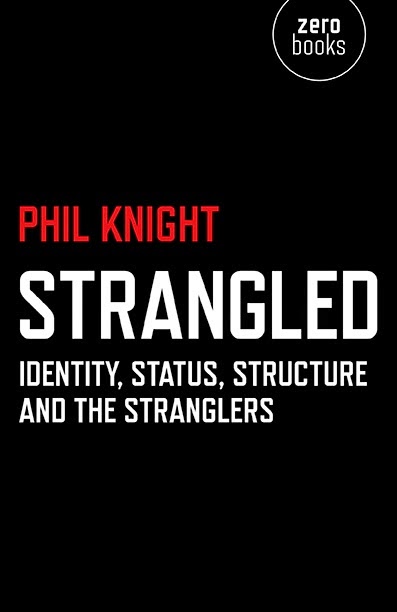
leaving earth [ 4-Oct-14 10:37am ]
POSTSTEP 2014 [ 04-Oct-14 10:37am ]Three-fourths of 2014 is allready gone, and it's obvious that the golden age of poststep is at its end. Brilliant music is still being released, and I'm sure the year will eventually be a "great" one, but it's mostly because there's still an abundance of futuristic energy left from the high tide (2010-2012) that needs to find an outlet. A lot of started developments have to run their course, and a lot of the main artists are far from finished with being inspired. I do fear, though, that this will be the last year where these remnants are still strong and plentiful enough to be seen (if - like me - you're so inclined) as the sprawling manifestations of a hyperactive musical climate, rather than isolated glimmers of light in an otherwise tired and backwards-looking landscape. I suppose it's never possible to say exactly when that blurry line is crossed, but the way things are going right now, it's hard to believe that yet another year will pass without it happening.
The decline was already evident last year - plenty of great records came out, but the sense of constant surprise and opening of endless new possibilities was somehow gone. Rather than continuing the restless drive for even further explorations into the unknown, the best music was mostly exploring the already established new possibilities in further detail - which is obviously not a bad thing in itself, it's just a bad sign when that is most of what's going on. Furthermore, the few examples of something really strange and previously unheard that the year didproduce, were new and unheard because of unique oddball approaches, and not because they discovered fertile new areas open for all: On D'zzzz, Misty Conditions took the rhythmic dementia of the best footwork (but luckily none of the clichéd "street"-samples that always come off as lame and regressive), and used it to create a murky, 21st century scrap heap music all their own. En2ak's 3 got rid of (almost) all of the down tempo and alternative-hip-hop vestiges that made his two previous albums a bit too uneven to be completely convincing, and instead he embraced a kind of playful para-rave, where elements of bitstep, Rustie-style maximalism and even stadium-EDM didn't-quite-coalesce into quirky, almost pop-like microforms.
Though far more minimal and understated, Coco Bryce's Club Tropicana also offered a weird hodgepodge of melodic miniatures - 8bit-mangled pseudo-skweee, electroid dream step and zomby-arpeggiated break beat-contraptions -, while David Kanagas soundtrack for the experimental video game DYADdissolved its miniatures into a liquid kaleidoscope, where fragments of melody and rhythm constantly melted and merged into a colourful virtual goo. Even further gone into the digital ether, the spindly, transparent voicescapes on Co La's Moody Coup seemed to have lost any connection to organic reality or known musical forms, much like on R+7, where Oneohtrix Point Never finally completed the process of eliminating the last traces of synth pastiche, and instead offered an eerie, transparent non-space, that seemed equally untouched by both human hand and human mind.

The last three sort of belong to the entropic camp, at least when it's made wide enough to include the whole "new synth"/virtual dreampop/vapourwave crossover area - Adam Harper territory, basically. Though not as uniquely strange and of-its-own-kind as Kanaga, Co La and Oneohtrix, there's much, much more of this stuff to choose from, but most of it I'm only tangentially interested in - there's a lot of potential and some great creations (in 2013, Ikonika and The-Drum made a couple of good contributions in the "new synth"-camp), but far too often it'll end up as eighties pastiches, or dull indietronica, or slightly off-kilter atmospheric pop. It's a fine line - on one side we'll find someone like Minerva, who have never really been able to convince me that she's more than a dreampop/synthpop-hybrid, but then on the other side there's Fatima al Qadiri, sounding exactly as strange, new and otherworldly as you could hope for. Her long awaited debut LP for Hyperdub, Asiatisch, is among the 2014 highlights so far - by no means a sino grime pastiche (as the concept might lead you to believe), but rather a much more ethereal beast, a transparent and unreal maze of slowly morphing, digitally rendered dream-fragment simulacra.
In some ways Asiatisch could be the ultimate Adam Harper-album, bridging the slightly vaporwave-leaning part of the new synth territory with the current wave of abstract, atmospheric "cryo-grime", which was one of the few successful examples of something resembling a broader movement within the 2013 poststep landscape, where it perhaps reached its apex with Logo's Cold Mission. A completely alien, empty and groovelesssly stuttering beatscape, it didn't actually sound like grime at all - not even like the cold, grey instrumentals of early Plasticman or Mark One. If anything, it was the aesthetic of Jam City's Classical Curves taken to its logical conclusion, a trail followed by many others in 2013, and source of some of the best EP-releases in a year where that format seemed in decline.
Highlights in this department were Rabit's Double Dragon, Mssingno's Mssingno and Wen's Commotion, the latter followed in 2014 by Wens debut album Signals, which sort of took a few steps backwards towards a - slightly - more warm, groovy and full sound. While definitely containing some brilliant tracks (as well as a few fillers - an EP would have been better), it does seem like a regressive development, but perhaps it's not really possible to take cryo grime further after Cold Mission. You could certainly argue that the best developments of the style in 2014 (Filter Dread, Air Max '97, Beneath, Mock the Zuma) have pretty much gone entirely into omni-experimental "beat music", the monochrome, inorganic art music that is Adam Harpers current favourite soundcloud-and-bandcamp-zeitgeist. Clearly related, yet much more ground breaking and unique, SD Laika's debut LP That's Harakiri has mostly been classified as a kind of "avant-grime", but pretty much remain unclassifiable, a claustrophobic stress-scape of bizarre digital debris, asymmetrically twitching march-rhythms, and disturbing, dirty-yet-clinically-synthetic sounds - basically one of the greatest, strangest and unfathomably newest records of 2014.

The only slight drawback of That's Harakiri is a few tracks, like "Meshes" or "Remote Heaven", where the ugly, punishing harshness seem to almost regress into a kind of minimal techno - a problem that is not uncommon for many current practitioners of beats-experimentalism. The root of this may be Actress, whose minimalism occasionally fell back into some of the most unimaginative repetitive art-techno clichés, and far too much music did the same in 2013 - an even more annoying tendency than the countless, dreadfully pretty dream pop/trip hop-hybrids. And even worse, hitherto brilliant poststep practitioners suddenly decided to make boring minimal crap, perhaps the electronic equivalent of a rock musician going back to the "mature" "essence" of "song writing". The worst offender in this respect was Montgomery Clunk, who made one of the greatest, maddest EPs of 2012 with Mondegreen, but in 2013 minimalized his name to Clnk and released an album of tasteful, restrained and deeply dull dub techno - not unlike that on Single Point Edge's SPE album, which the otherwise peerless Rwina-label for some reason released in 2013. Also disappointing was Egyptixx, who followed 2011s brilliant Bible Eyes with A/B Till Infinity, an album that seemed to consist almost entirely of not-that-interesting ambient interludes, mixed with a couple of excursion into pounding, pointless techno, and Dam Mantle, who haven't made much recently, but the little we've got - mostly remixes and tracks on split EPs - seem to be stuck in a minimal-house-with-slightly-more-lively-percussion groove, light years away from the brilliance he used to be capable of.
Going back to "serious 4/4-techno" is of course nothing new in the arty end of dubstep - it was pretty much what people like 2562, Scuba and Shackleton did back before arty dubstep had really become post dubstep yet - but it's always sad to see a straightforward regression. Luckily, a lot of poststep artist still moved forward in 2013, even if it was mostly within the territory of already well-defined frontiers. Some of these included the maximalist hypergrime that took Rusties Glass Swords as a starting point and ran amuck with it, the expansion of footwork into a more and more deranged form of head music, and still-going-on-outside-the-limelight styles like skweee and bitstep. The hyper-maximal stuff was perhaps a bit of a hangover from 2012, and was best in the beginning of 2013, where Slugabeds Activia Benz-label released brilliant EPs like 813's Recolor and Eloq's C'mon, occasionally reaching the same level of ridiculous, sugar-overdose madness as Montgomery Clunks aforementioned Mondegreen . Since then, the style has been slightly in decline, a symptom perhaps being that Activia Benz apparently has given up on vinyl and now apparently is a digital-only label. The best attempts at actually doing something new with a maximalist approach have more or less been from the trapified wobble camp, which in 2013 delivered some good EPs in in the intersection of populist EDM-bombast and weird avant-brostep; good examples being Joney's Illowhead or Blue Daisy/Unknown Shapes Used to Give a FK. As for 2014, Rusties much anticipated follow up to Glass Swords, the messy Green Language, doesn't really seem like a convincing revitalisation of the style.
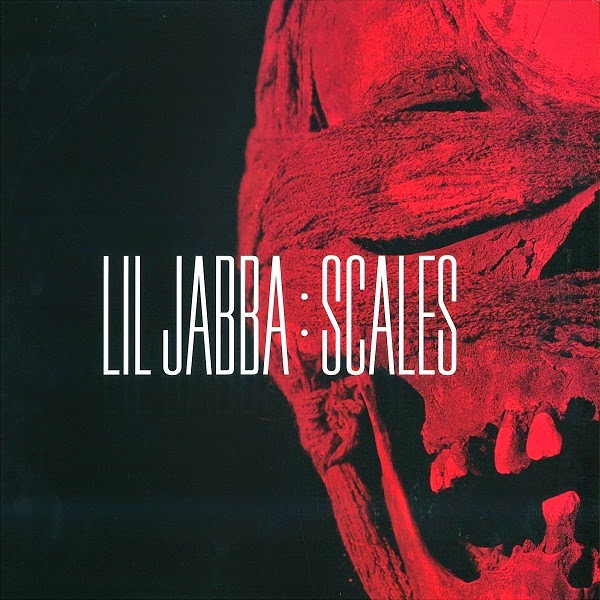
With footwork, the hype is also slowly fading, it's not really the new thing anymore, and with the death of DJ Rashad, just as he was beginning to get the attention he deserved, the scene also lost its most obvious figurehead. Rashad's first Hyperdub-album, Double Cup, was released shortly before his death, and was anticipated as sort of the definitive footwork statement, but sadly it wasn't quite the milestone it was supposed to be. On the other hand, 2013 also gave us Lil Jabba's Scales, arguably the best footwork album yet (second perhaps only to DJ Diamond's Flight Muzik), where the jittery rhythms turned weirdly cold and arrested, creating a claustrophobic atmosphere further enhanced by murky drones and demented, oppressive-yet-catchy fanfare-melodies.
Also worth mentioning was Hade+Dwfl's The Healthiest Man in Chicago, which, despite being a bit uneven, did have some brilliantly weird tracks on it, and Ital Tek, who continued to expand on the hybrid style developed on his 2012 Nebula Dance-album. He benefited from working with much shorter formats - the EP Hyper Real and the mini-LP Control - where his super smooth production style and the lack of attention grabbing melodic material didn't create the same problem of sameness as on a full length album. Especially Control had just the right balance between ideas and length, atmospheres and inventive structures, and it's probably his best release so far. His 2014-EP Mega City Industry pretty much follows the same path, but still works as great little entity in its own right.

Footwork is only in the first phase of losing its status as the new hip style; for bitstep this happened years ago. The "golden age" was approximately from 2009 to 2011, which is a long time ago by today's standards, but nevertheless, surprisingly many of the best releases in 2013 could be classified as either bitstep or, in cases like Zomby and Desto, bitstep-derived. The latter's Emptier Streets is mostly a kind of somnambulist ghost-trap, containing only a few scattered remnants of the archetypical "bit"-signifiers (angular arpeggio-patterns, diced computer game sounds), but it also comes off as an obvious, almost logical development - the empty, spectral city where harder, rave-aligned poststep goes to die. Equally haunted, but clearly bitstep proper, Clouds double EP USB Islandssounded like the (mini)-album Dam Mantle or Darkstar should have made, which means that it's obviously one of the very best poststep releases of 2013. In a way it's the perfection of bitstep-as-entropic/psychedelic-melancholia, like wandering further and further into a dark maze of hopelessness and despair, all stumbling, fractured beats, seasick laments and cascades of vertigo-inducing 8bit-debris.
In the opposite, more wild and colourful end of bitstep, 96wrlds mini-LP Private Language and Eprom's Halflife both offered diverse curio cabinets of popular club-forms turned into grotesque and lopsided, yet still oddly groovy, monsters. Especially Halflife, as a follow up to 2012s not-completely-successful Metahuman, was pretty much exactly the album you'd hope Eprom would make - bare boned, raw and wonderfully ugly, containing both brutally rave-oriented behemoths and completely bizarre experiments, as well as a few more relaxed pieces - which were thankfully as unpolished and direct as the rest of the album. I could be wrong, but it seems to me like Halflife was done much faster and in a much more intuitive manner than its predecessor, and is all the better for it.
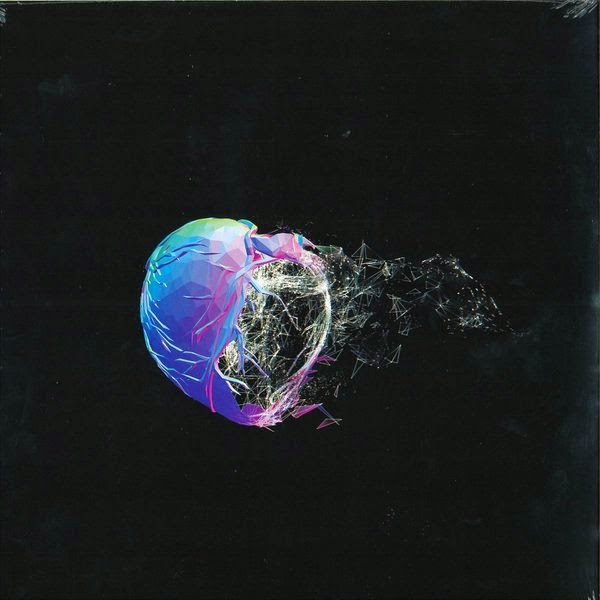
Perhaps DKSTR's mini-LP Pleasures should be classified as bitstep as well - it definitely contains a lot of the aforementioned "bit-signifiers" - but in any case, it was the best skweee-release of 2013, and probably the best since the wonder year of 2010. Ever since the brief media-interest of approximately 2009-2010, skweee has lived even more outside of the limelight than bitstep, yet the style just keep going, and each year there seem to come at least a couple of great releases, showing that it's still worth keeping an eye on. In the case of Pleasures - apparently by a new skweee-recruit - it feels almost like a rebirth. All the best skweee-elements - the baffling syncopations, the raw, deliberately synthetic sounds, the abrupt, counter-intuitive melodies - seem intensified, turned up to eleven, and further enhanced by an onslaught of hysteric 8bit-shrapnel - an instant skweee-classic!
In 2013 Pleasures was pretty much in a skweee-league of its own, but that said, the debut LP of one of the oldest skweee-practitioners, Easy & Center of the Universe, was definitely also worth checking out. Easy & C.O.U. is the prime exponent of "ethno skweee", and on Aryayek Machine the fusion of rubbery square wave-funk and middle eastern elements had never worked better. It might seem a bit regressively organic compared to the futuristic madness of DKSTR, but on its own terms it's a brilliant combination, sort of the skweee equivalent of Débruit - who happened to release a pretty great album in 2013 as well. A collaboration with Sudanese singer Alsarah, Aljawal was also a meeting of organic and synthetic, but Débruits production was as colourful and inventive as ever, and seemed further inspired by the plenty of opportunity for vocal science offered by Alsarah.

All in all, it should be obvious that 2013 was indeed a brilliant year for poststep-releases - there's even a few great ones that I haven't been able to fit in yet, but which definitely should be mentioned: Nguzunguzu made one of their best so far with the mini-LP Skycell, Burial made his most interesting release since Untruewith Rival Dealer, and Pascäal gave new life to the original Burial-sound by turning it into irresistibly catchy, heartbreakingly sad and yet weirdly bright and colourful pop-step on Fragile. So far - despite some really great releases, some promising ones on their way, and an apparent resurge of great new EPs - 2014 doesn't seem nearly as great. But then, in all fairness, that's probably also how I felt same time last year. A lot can still happen. But in the end, that's not the point. There's at least 20-25 EPs and albums from 2013 that I wouldn't be without, records that didn't sound like they could belong in any other era than this, and more than half of them still radiated the utter newness that has been so thrilling the last five years, still held the future promise. Perhaps there will be as many records of the same calibre when 2014 ends, but again - that's not the point.
The point is that all this is living on borrowed time, running on a hitherto unimagined reservoir of energy that was detected sometime around 2007, and unexpectedly erupted two years later. We shouldn't expect it to go on forever, and the transformation from out-of-control frontline research to slightly-refining-discoveries-already-made will happen as gradually and almost unnoticed as it did in the mid-nineties, the early eighties, the early or mid-seventies (depending on how you regard prog), etc. Except - this time it doesn't even seem like most of the people involved have even recognised it as a golden age, so perhaps they won't notice that anything's gone afterwards? It does leave a lot of questions. How did the original energy materialise, seemingly out of nowhere and in spite of all those people saying that it didn't exist - couldn't exist - and even now, saying that it never even did exist, that nothing have happened during the last ten years that haven't just been a regurgitation of all the real innovation that (of course) happened when they were young. Which leads us to the next question: Why was the energy never recognised? Even the ones who participated didn't seem to think of it as a connected thing - or a whole lot of connected things -, there was never really a movement, a common feeling of moving in specific, ground breaking new directions - even though that was what they did - and never any struggles as to which new directions ought to be followed. Everyone was left to their own devices.
These questions will take some time to answer, time I don't have right now. Obviously, it all has something to do with the time we're living in, a time where movements just aren't supposed to happen, and where the ability to recognise something new has been purged to such a degree that most people refuse to recognise it even if it's staring them in the face. Hopefully, I'll have the time to go into further detail later.
26-Sep-14
The decline was already evident last year - plenty of great records came out, but the sense of constant surprise and opening of endless new possibilities was somehow gone. Rather than continuing the restless drive for even further explorations into the unknown, the best music was mostly exploring the already established new possibilities in further detail - which is obviously not a bad thing in itself, it's just a bad sign when that is most of what's going on. Furthermore, the few examples of something really strange and previously unheard that the year didproduce, were new and unheard because of unique oddball approaches, and not because they discovered fertile new areas open for all: On D'zzzz, Misty Conditions took the rhythmic dementia of the best footwork (but luckily none of the clichéd "street"-samples that always come off as lame and regressive), and used it to create a murky, 21st century scrap heap music all their own. En2ak's 3 got rid of (almost) all of the down tempo and alternative-hip-hop vestiges that made his two previous albums a bit too uneven to be completely convincing, and instead he embraced a kind of playful para-rave, where elements of bitstep, Rustie-style maximalism and even stadium-EDM didn't-quite-coalesce into quirky, almost pop-like microforms.
Though far more minimal and understated, Coco Bryce's Club Tropicana also offered a weird hodgepodge of melodic miniatures - 8bit-mangled pseudo-skweee, electroid dream step and zomby-arpeggiated break beat-contraptions -, while David Kanagas soundtrack for the experimental video game DYADdissolved its miniatures into a liquid kaleidoscope, where fragments of melody and rhythm constantly melted and merged into a colourful virtual goo. Even further gone into the digital ether, the spindly, transparent voicescapes on Co La's Moody Coup seemed to have lost any connection to organic reality or known musical forms, much like on R+7, where Oneohtrix Point Never finally completed the process of eliminating the last traces of synth pastiche, and instead offered an eerie, transparent non-space, that seemed equally untouched by both human hand and human mind.
The last three sort of belong to the entropic camp, at least when it's made wide enough to include the whole "new synth"/virtual dreampop/vapourwave crossover area - Adam Harper territory, basically. Though not as uniquely strange and of-its-own-kind as Kanaga, Co La and Oneohtrix, there's much, much more of this stuff to choose from, but most of it I'm only tangentially interested in - there's a lot of potential and some great creations (in 2013, Ikonika and The-Drum made a couple of good contributions in the "new synth"-camp), but far too often it'll end up as eighties pastiches, or dull indietronica, or slightly off-kilter atmospheric pop. It's a fine line - on one side we'll find someone like Minerva, who have never really been able to convince me that she's more than a dreampop/synthpop-hybrid, but then on the other side there's Fatima al Qadiri, sounding exactly as strange, new and otherworldly as you could hope for. Her long awaited debut LP for Hyperdub, Asiatisch, is among the 2014 highlights so far - by no means a sino grime pastiche (as the concept might lead you to believe), but rather a much more ethereal beast, a transparent and unreal maze of slowly morphing, digitally rendered dream-fragment simulacra.
In some ways Asiatisch could be the ultimate Adam Harper-album, bridging the slightly vaporwave-leaning part of the new synth territory with the current wave of abstract, atmospheric "cryo-grime", which was one of the few successful examples of something resembling a broader movement within the 2013 poststep landscape, where it perhaps reached its apex with Logo's Cold Mission. A completely alien, empty and groovelesssly stuttering beatscape, it didn't actually sound like grime at all - not even like the cold, grey instrumentals of early Plasticman or Mark One. If anything, it was the aesthetic of Jam City's Classical Curves taken to its logical conclusion, a trail followed by many others in 2013, and source of some of the best EP-releases in a year where that format seemed in decline.
Highlights in this department were Rabit's Double Dragon, Mssingno's Mssingno and Wen's Commotion, the latter followed in 2014 by Wens debut album Signals, which sort of took a few steps backwards towards a - slightly - more warm, groovy and full sound. While definitely containing some brilliant tracks (as well as a few fillers - an EP would have been better), it does seem like a regressive development, but perhaps it's not really possible to take cryo grime further after Cold Mission. You could certainly argue that the best developments of the style in 2014 (Filter Dread, Air Max '97, Beneath, Mock the Zuma) have pretty much gone entirely into omni-experimental "beat music", the monochrome, inorganic art music that is Adam Harpers current favourite soundcloud-and-bandcamp-zeitgeist. Clearly related, yet much more ground breaking and unique, SD Laika's debut LP That's Harakiri has mostly been classified as a kind of "avant-grime", but pretty much remain unclassifiable, a claustrophobic stress-scape of bizarre digital debris, asymmetrically twitching march-rhythms, and disturbing, dirty-yet-clinically-synthetic sounds - basically one of the greatest, strangest and unfathomably newest records of 2014.
The only slight drawback of That's Harakiri is a few tracks, like "Meshes" or "Remote Heaven", where the ugly, punishing harshness seem to almost regress into a kind of minimal techno - a problem that is not uncommon for many current practitioners of beats-experimentalism. The root of this may be Actress, whose minimalism occasionally fell back into some of the most unimaginative repetitive art-techno clichés, and far too much music did the same in 2013 - an even more annoying tendency than the countless, dreadfully pretty dream pop/trip hop-hybrids. And even worse, hitherto brilliant poststep practitioners suddenly decided to make boring minimal crap, perhaps the electronic equivalent of a rock musician going back to the "mature" "essence" of "song writing". The worst offender in this respect was Montgomery Clunk, who made one of the greatest, maddest EPs of 2012 with Mondegreen, but in 2013 minimalized his name to Clnk and released an album of tasteful, restrained and deeply dull dub techno - not unlike that on Single Point Edge's SPE album, which the otherwise peerless Rwina-label for some reason released in 2013. Also disappointing was Egyptixx, who followed 2011s brilliant Bible Eyes with A/B Till Infinity, an album that seemed to consist almost entirely of not-that-interesting ambient interludes, mixed with a couple of excursion into pounding, pointless techno, and Dam Mantle, who haven't made much recently, but the little we've got - mostly remixes and tracks on split EPs - seem to be stuck in a minimal-house-with-slightly-more-lively-percussion groove, light years away from the brilliance he used to be capable of.
Going back to "serious 4/4-techno" is of course nothing new in the arty end of dubstep - it was pretty much what people like 2562, Scuba and Shackleton did back before arty dubstep had really become post dubstep yet - but it's always sad to see a straightforward regression. Luckily, a lot of poststep artist still moved forward in 2013, even if it was mostly within the territory of already well-defined frontiers. Some of these included the maximalist hypergrime that took Rusties Glass Swords as a starting point and ran amuck with it, the expansion of footwork into a more and more deranged form of head music, and still-going-on-outside-the-limelight styles like skweee and bitstep. The hyper-maximal stuff was perhaps a bit of a hangover from 2012, and was best in the beginning of 2013, where Slugabeds Activia Benz-label released brilliant EPs like 813's Recolor and Eloq's C'mon, occasionally reaching the same level of ridiculous, sugar-overdose madness as Montgomery Clunks aforementioned Mondegreen . Since then, the style has been slightly in decline, a symptom perhaps being that Activia Benz apparently has given up on vinyl and now apparently is a digital-only label. The best attempts at actually doing something new with a maximalist approach have more or less been from the trapified wobble camp, which in 2013 delivered some good EPs in in the intersection of populist EDM-bombast and weird avant-brostep; good examples being Joney's Illowhead or Blue Daisy/Unknown Shapes Used to Give a FK. As for 2014, Rusties much anticipated follow up to Glass Swords, the messy Green Language, doesn't really seem like a convincing revitalisation of the style.
With footwork, the hype is also slowly fading, it's not really the new thing anymore, and with the death of DJ Rashad, just as he was beginning to get the attention he deserved, the scene also lost its most obvious figurehead. Rashad's first Hyperdub-album, Double Cup, was released shortly before his death, and was anticipated as sort of the definitive footwork statement, but sadly it wasn't quite the milestone it was supposed to be. On the other hand, 2013 also gave us Lil Jabba's Scales, arguably the best footwork album yet (second perhaps only to DJ Diamond's Flight Muzik), where the jittery rhythms turned weirdly cold and arrested, creating a claustrophobic atmosphere further enhanced by murky drones and demented, oppressive-yet-catchy fanfare-melodies.
Also worth mentioning was Hade+Dwfl's The Healthiest Man in Chicago, which, despite being a bit uneven, did have some brilliantly weird tracks on it, and Ital Tek, who continued to expand on the hybrid style developed on his 2012 Nebula Dance-album. He benefited from working with much shorter formats - the EP Hyper Real and the mini-LP Control - where his super smooth production style and the lack of attention grabbing melodic material didn't create the same problem of sameness as on a full length album. Especially Control had just the right balance between ideas and length, atmospheres and inventive structures, and it's probably his best release so far. His 2014-EP Mega City Industry pretty much follows the same path, but still works as great little entity in its own right.
Footwork is only in the first phase of losing its status as the new hip style; for bitstep this happened years ago. The "golden age" was approximately from 2009 to 2011, which is a long time ago by today's standards, but nevertheless, surprisingly many of the best releases in 2013 could be classified as either bitstep or, in cases like Zomby and Desto, bitstep-derived. The latter's Emptier Streets is mostly a kind of somnambulist ghost-trap, containing only a few scattered remnants of the archetypical "bit"-signifiers (angular arpeggio-patterns, diced computer game sounds), but it also comes off as an obvious, almost logical development - the empty, spectral city where harder, rave-aligned poststep goes to die. Equally haunted, but clearly bitstep proper, Clouds double EP USB Islandssounded like the (mini)-album Dam Mantle or Darkstar should have made, which means that it's obviously one of the very best poststep releases of 2013. In a way it's the perfection of bitstep-as-entropic/psychedelic-melancholia, like wandering further and further into a dark maze of hopelessness and despair, all stumbling, fractured beats, seasick laments and cascades of vertigo-inducing 8bit-debris.
In the opposite, more wild and colourful end of bitstep, 96wrlds mini-LP Private Language and Eprom's Halflife both offered diverse curio cabinets of popular club-forms turned into grotesque and lopsided, yet still oddly groovy, monsters. Especially Halflife, as a follow up to 2012s not-completely-successful Metahuman, was pretty much exactly the album you'd hope Eprom would make - bare boned, raw and wonderfully ugly, containing both brutally rave-oriented behemoths and completely bizarre experiments, as well as a few more relaxed pieces - which were thankfully as unpolished and direct as the rest of the album. I could be wrong, but it seems to me like Halflife was done much faster and in a much more intuitive manner than its predecessor, and is all the better for it.
Perhaps DKSTR's mini-LP Pleasures should be classified as bitstep as well - it definitely contains a lot of the aforementioned "bit-signifiers" - but in any case, it was the best skweee-release of 2013, and probably the best since the wonder year of 2010. Ever since the brief media-interest of approximately 2009-2010, skweee has lived even more outside of the limelight than bitstep, yet the style just keep going, and each year there seem to come at least a couple of great releases, showing that it's still worth keeping an eye on. In the case of Pleasures - apparently by a new skweee-recruit - it feels almost like a rebirth. All the best skweee-elements - the baffling syncopations, the raw, deliberately synthetic sounds, the abrupt, counter-intuitive melodies - seem intensified, turned up to eleven, and further enhanced by an onslaught of hysteric 8bit-shrapnel - an instant skweee-classic!
In 2013 Pleasures was pretty much in a skweee-league of its own, but that said, the debut LP of one of the oldest skweee-practitioners, Easy & Center of the Universe, was definitely also worth checking out. Easy & C.O.U. is the prime exponent of "ethno skweee", and on Aryayek Machine the fusion of rubbery square wave-funk and middle eastern elements had never worked better. It might seem a bit regressively organic compared to the futuristic madness of DKSTR, but on its own terms it's a brilliant combination, sort of the skweee equivalent of Débruit - who happened to release a pretty great album in 2013 as well. A collaboration with Sudanese singer Alsarah, Aljawal was also a meeting of organic and synthetic, but Débruits production was as colourful and inventive as ever, and seemed further inspired by the plenty of opportunity for vocal science offered by Alsarah.
All in all, it should be obvious that 2013 was indeed a brilliant year for poststep-releases - there's even a few great ones that I haven't been able to fit in yet, but which definitely should be mentioned: Nguzunguzu made one of their best so far with the mini-LP Skycell, Burial made his most interesting release since Untruewith Rival Dealer, and Pascäal gave new life to the original Burial-sound by turning it into irresistibly catchy, heartbreakingly sad and yet weirdly bright and colourful pop-step on Fragile. So far - despite some really great releases, some promising ones on their way, and an apparent resurge of great new EPs - 2014 doesn't seem nearly as great. But then, in all fairness, that's probably also how I felt same time last year. A lot can still happen. But in the end, that's not the point. There's at least 20-25 EPs and albums from 2013 that I wouldn't be without, records that didn't sound like they could belong in any other era than this, and more than half of them still radiated the utter newness that has been so thrilling the last five years, still held the future promise. Perhaps there will be as many records of the same calibre when 2014 ends, but again - that's not the point.
The point is that all this is living on borrowed time, running on a hitherto unimagined reservoir of energy that was detected sometime around 2007, and unexpectedly erupted two years later. We shouldn't expect it to go on forever, and the transformation from out-of-control frontline research to slightly-refining-discoveries-already-made will happen as gradually and almost unnoticed as it did in the mid-nineties, the early eighties, the early or mid-seventies (depending on how you regard prog), etc. Except - this time it doesn't even seem like most of the people involved have even recognised it as a golden age, so perhaps they won't notice that anything's gone afterwards? It does leave a lot of questions. How did the original energy materialise, seemingly out of nowhere and in spite of all those people saying that it didn't exist - couldn't exist - and even now, saying that it never even did exist, that nothing have happened during the last ten years that haven't just been a regurgitation of all the real innovation that (of course) happened when they were young. Which leads us to the next question: Why was the energy never recognised? Even the ones who participated didn't seem to think of it as a connected thing - or a whole lot of connected things -, there was never really a movement, a common feeling of moving in specific, ground breaking new directions - even though that was what they did - and never any struggles as to which new directions ought to be followed. Everyone was left to their own devices.
These questions will take some time to answer, time I don't have right now. Obviously, it all has something to do with the time we're living in, a time where movements just aren't supposed to happen, and where the ability to recognise something new has been purged to such a degree that most people refuse to recognise it even if it's staring them in the face. Hopefully, I'll have the time to go into further detail later.
faces on posters too many choices [ 25-Sep-14 11:42pm ]
# [ 25-Sep-14 11:42pm ]up close and personal [ 11-Sep-14 6:01pm ]
# [ 11-Sep-14 6:01pm ]Electric Race News [ 2-Sep-14 6:26am ]
An electric motorcycle rider, Terry Hershner, has first electric win in Vetter Fuel Economy Challenge [ 02-Sep-14 6:26am ]Last week at the Vetter Fuel Economy Challenge in Utah, Terry Hershner became the first electric motorcycle rider to win the challenge. With new modifications to his 2012 Zero S electric motorcycle, he easily finished the 172 mile route, at 2/3rds the cost of the closest finisher. In the fuel economy challenge, the riders are competing to see which can complete the course at the lowest cost 
31-Aug-14
faces on posters too many choices [ 31-Aug-14 12:33pm ]
New blog [ 31-Aug-14 12:33pm ]Dear all,
I'm going to start a new project on the films of Alan Clarke. It will be a blog at first [http://belovedenemies.blogspot.co.uk/] and then, who knows? His films have been obsessing me for a while, and there is very little out there about him or his work. So I thought I might as well write the texts I wanted to read etc.
As it goes on any feedback would be welcome.
29-Aug-14
I'm going to start a new project on the films of Alan Clarke. It will be a blog at first [http://belovedenemies.blogspot.co.uk/] and then, who knows? His films have been obsessing me for a while, and there is very little out there about him or his work. So I thought I might as well write the texts I wanted to read etc.
As it goes on any feedback would be welcome.
Electric Race News [ 29-Aug-14 6:00am ]
KillaCycle racing beat everyone at Bonneville with a 240+ miles/hr electric motorcycle [ 29-Aug-14 6:00am ]
The Killacycle Racing Team just set a new speed record in their class (three wheeled streamlined electric motorcycles) and for the first time in history an electric vehicle had the fastest speed at the Bonneville Motorcycle Speed Trials event. I don't know much beyond a couple postings from the Killacycle team, so I'll do my best to summarize what they posted.
Basically - they a) set a new 
17-Aug-14
History making race with streamlined motorcycle coming to eMotoRacing near Salt Lake City [ 17-Aug-14 12:55am ]Historical streamlined race bike - the NSU SportMax from 1955
History is about to be made at the upcoming eMotoRacing event near Salt Lake City. For the first time in decades a streamlined motorcycle will race in a sanctioned event. If you're scratching your head and going "why's that important" we have to ponder motorcycle racing politics, and the abysmal inefficiency of regular motorcycle 
Renovo Motors unveils Shelby CSX9000 based electric supercar [ 16-Aug-14 11:17pm ]Taking the shape of a muscle car from an earlier era, Renovo Motors has unveiled the Renovo Coupe all electric supercar. The car, based on a factory-modified Shelby American CSX9000 rolling chassis ("Cobra Daytona Coupe"), has a 0-60 miles/hr time under 3.4 seconds and a top speed over 120 miles/hr. That's faster than the Tesla Roadster, FWIW.
That performance is generated by a 
31-Jul-14
faces on posters too many choices [ 31-Jul-14 12:35am ]
# [ 31-Jul-14 12:35am ]Fascinating Horizon documentary on Mondragon from 1980. Not so much for Mondragon itself ( still looming large in the anti-capitalist imaginary 35 years later) as the tone, tenor and underlying assumptions of the piece.
#
18-Jul-14
#
THE FANTASTIC HOPE [ 17-Jul-14 9:47pm ]
OASIS BOOK REVIEW ROUND-UP [ 17-Jul-14 9:47pm ]Well well well, treatments of the Oasis book are now coming in thick and fast ...
First up, David Stubbs wrote an excellent long-form review essay in Review 31 under the lyrically apposite title: On the Crest of a Wave. It's a great piece of prose in its own right, and contains the seeds of a longer argument DStubbs is developing all about (I think) 1996 as the pivotal year in recent cultural history.
Next, under another great title (Are Oasis Socialists?) VICE's Noisey blog published an interview I did with Josh Hall (also, incidentally, another top-notch writer - see for example here). The VICE copy-editing leaves much to be desired, but once you've waded through the typos there's some very valuable stuff in there, particularly about the Left and heritage.
Most bizarrely of all, perhaps, I managed to get Oasis into this week's TLS. Yes, that's right, the Times Literary Supplement has actually gone and fucking reviewed my book about Definitely Maybe. The piece is relatively short and isn't available online if you're not a subscriber. What's more, it was written by Joe Charlton, one of the two or three people from my Northumberland comprehensive school with even a shred of influence in the contemporary British culture-sphere. But still. The fucking TLS. What would Liam Gallagher make of that, I wonder?
Finally, and most importantly, my intellectual soulmate Rhian E. Jones has written a cracking essay over at Velvet Coalmine, which glances at the Oasis book, but is really just a spot-on summary of everything that matters most in the world right now. Praise her, with great praise.
Oh, also, there's that psychogeographical tour of Manchester thing on the Bloomsbury blog I mentioned in the last post.
There may yet be more to come, you never know.
17-Jul-14
First up, David Stubbs wrote an excellent long-form review essay in Review 31 under the lyrically apposite title: On the Crest of a Wave. It's a great piece of prose in its own right, and contains the seeds of a longer argument DStubbs is developing all about (I think) 1996 as the pivotal year in recent cultural history.
Next, under another great title (Are Oasis Socialists?) VICE's Noisey blog published an interview I did with Josh Hall (also, incidentally, another top-notch writer - see for example here). The VICE copy-editing leaves much to be desired, but once you've waded through the typos there's some very valuable stuff in there, particularly about the Left and heritage.
Most bizarrely of all, perhaps, I managed to get Oasis into this week's TLS. Yes, that's right, the Times Literary Supplement has actually gone and fucking reviewed my book about Definitely Maybe. The piece is relatively short and isn't available online if you're not a subscriber. What's more, it was written by Joe Charlton, one of the two or three people from my Northumberland comprehensive school with even a shred of influence in the contemporary British culture-sphere. But still. The fucking TLS. What would Liam Gallagher make of that, I wonder?
Finally, and most importantly, my intellectual soulmate Rhian E. Jones has written a cracking essay over at Velvet Coalmine, which glances at the Oasis book, but is really just a spot-on summary of everything that matters most in the world right now. Praise her, with great praise.
Oh, also, there's that psychogeographical tour of Manchester thing on the Bloomsbury blog I mentioned in the last post.
There may yet be more to come, you never know.
Electric Race News [ 17-Jul-14 6:21pm ]
CRP launches Energica Ego world tour - information, and test ride report [ 17-Jul-14 6:21pm ]Energica Ego in San Francisco
CRP's Energica Ego has been several years coming - in 2010, CRP came onto the TTXGP scene with the eCRP, a bike patterned after the Agni Motors entry in the 2009 TTXGP on the Isle of Man. This was the act of a motorcycle manufacturer getting their feet went in electric bikes, and with that first effort they won titles in the 2010-11 TTXGP and e-Power seasons. 
15-Jul-14
THE FANTASTIC HOPE [ 15-Jul-14 10:39am ]
DEFINITELY DEFINITELY DEFINITELY OUT NOW [ 15-Jul-14 10:39am ]Well friends the Oasis book has finally emerged from the primordial swamp and is now available from at least some good bookshops in the UK and the rest of the world.
The launch is this Wednesday, 16 July, at 7.30 at the Peckham Pelican, Peckham. I'll read a short extract from the introduction to the book, and the inimitable David Stubbs will play some 1994 tunes. Everyone is welcome and there's no ticketing.
Extracts from the book have been published at ...
Stereogum
Flavorwire
+ The Quietus
Bloomsbury's 33 1/3 blog is also publishing some associated features this week as part of "Oasis Week".
First up: my short autobiographical take on the album. I barred first person from the text proper for various stylistic and political reasons, but thought it might be nice to do a brief sketch all about ALEX NIVEN for the sake of scene-setting, empathy, identification, all that shite. Later this week there will be a Video Vault feature nodding at the album's influences and a psychogeographical tour of Manchester featuring Maine Road, Mr Sifter, and Adolphe Valette.
More to follow on reviews, talks &c.
03-Jul-14
The launch is this Wednesday, 16 July, at 7.30 at the Peckham Pelican, Peckham. I'll read a short extract from the introduction to the book, and the inimitable David Stubbs will play some 1994 tunes. Everyone is welcome and there's no ticketing.
Extracts from the book have been published at ...
Stereogum
Flavorwire
+ The Quietus
Bloomsbury's 33 1/3 blog is also publishing some associated features this week as part of "Oasis Week".
First up: my short autobiographical take on the album. I barred first person from the text proper for various stylistic and political reasons, but thought it might be nice to do a brief sketch all about ALEX NIVEN for the sake of scene-setting, empathy, identification, all that shite. Later this week there will be a Video Vault feature nodding at the album's influences and a psychogeographical tour of Manchester featuring Maine Road, Mr Sifter, and Adolphe Valette.
More to follow on reviews, talks &c.
Electric Race News [ 3-Jul-14 12:06am ]
Electrics on track for outright Pikes Peak wins, following excellent results at 2014 Pikes Peak for both cars and bikes [ 03-Jul-14 12:06am ]In last weekend's Pikes Peak Hill Climb race, electric car drivers took 3 of the top 4 results in the overall ranking, and both electric car and electric motorcycle racers claimed hugely positive results. While this isn't as stunning as Lightning Motorcycle's overall win last year with a 20 second margin over all motorcycle racers, that Mitsubishi's drivers came within 3 seconds of an overall 
30-Jun-14
Risking life and limb to electrify racing - is it worth it? PLEASE, do it safely! [ 30-Jun-14 8:23pm ]Bobby Goodin, R.I.P.
A question in my mind since the 2014 TT ZERO (and TT) at the Isle of Man is the carnage happening in this kind of race. The TT course, the Pikes Peak course, and some other races, are severe challenges between person, machine, and the elements. The challenge is higher than at regular race tracks, and while track based racing see's a fair amount of injury and even death, 
20-Jun-14
Harley Davidson shocks electric motorcycle world with electric motorcycle announcement [ 19-Jun-14 11:01pm ]Harley Davidson just dropped a bombshell, stunning the motorcycle world by announcing the company's first electric motorcycle. Instead of the obnoxious Harley Sound, the bike has the high pitch whine we know and love from electric motorcycle racing. The bike looks awesome, and initial response in the articles I've seen have been great.
Normally I'd cover this news on ElectricRaceNews, but 
12-Jun-14
John Wayland starting a business selling Black Zombie electric muscle cars [ 12-Jun-14 11:39pm ]John Wayland of Plasma Boy Racing, builder of the White Zombie electric 1972 Datsun, has teamed up with Mitch Medford (a Texas Tech CEO) to start building ultra high end electric muscle cars. The first car they're planning is the Black Zombie, which is a 1968 Mustang powered by twin Netgain Warp 11 motors and dual Zilla controllers. The car is expected to deliver over 700 horsepower, about 
Drive eO returns to Pikes Peak from Latvia, with customized Tesla Roadster [ 12-Jun-14 2:55am ]The next major event lined up for the electric racing calender is the Pikes Peak International Hill Climb. The list of electric challengers in 2014 is smaller than in 2013, but a return entrant is Drive eO. Last year the team ran with a custom built electric car, the PP01, but didn't finish the race. This year, the team is returning with a Tesla Roadster sporting a custom drive train, the 
04-Jun-14
McGuinness 117 miles/hr in 2014 TT ZERO, Anstey 115 miles/hr, shattering 2013's records [ 04-Jun-14 1:36pm ]Mugen shattered lap speed records in the 2014 TT ZERO, with John McGuinness (117.366 miles/hr) and Bruce Anstey (115.048 miles/hr) taking 1st and 2nd place. They were the expected winners, and a 115+ miles/hr finish was to be expected after McGuinness' 115.598 finish on Monday, but hitting a speed over 117 miles/hr was beyond expectations. The battle for 3rd place saw a photo finish between 
02-Jun-14
McGuinness scored an odometer moment - 115+ miles/hr in TT ZERO - what does it mean? [ 02-Jun-14 8:39pm ]Earlier today Mugen Shinden's John McGuinness shattered the TT ZERO lap speed record - it now stands at 115.598 miles/hr. His teammate, Bruce Anstey, also broke the previous record, which had been set by Anstey on Saturday, with a 113+ miles/hr lap speed. These two are top riders in the TT, for example Anstey set the overall lap speed record just yesterday at over 132 miles/hr. Setting a new
McGuinness shatters TT ZERO lap record, 115+ miles/hr [ 02-Jun-14 6:02pm ]The 115 miles/hr threshold has been broken in today's 2014 TT ZERO qualifying round. Mugen Shinden's John McGuinness finished with a 115.598 miles/hr (19:35.007) lap speed, followed closely by Bruce Anstey who also broke the previous record with a 113.643 miles/hr (19:55.221) lap speed.
The wet weather for which the Isle of Man is famous nearly canceled today's racing, but the IOM TT crew 
31-May-14
Anstey sets new TT ZERO lap record - 112 miles/hr - Saturday qualifying session [ 31-May-14 6:36pm ]John McGuinness during Friday's practice
Source: IOMTT
Today it was Bruce Anstey's turn to set an (unofficial) TT ZERO lap speed record. Yesterday, Mugen's John McGuinness finished with a 111.904 miles/hr lap speed, and in today's qualifying round Mugen's Bruce Anstey finished with a 112.355 miles/hr (unofficial per live.iomtt.com) lap speed.
McGuinness finished with a 109.370 miles/hr lap 
30-May-14
McGuinness sets 111 miles/hr lap record in TT ZERO qualifying/practice session on Friday May 30 [ 30-May-14 9:27pm ]Today the 2014 TT ZERO is having its first practice session on the Isle of Man. At the bottom of this is a bunch of postings I've located on Twitter, Facebook and Instagram. The big news is that John McGuinness, riding for Team Mugen Shinden, broke the 110 miles/hr threshold, hitting a 111.904 miles/hr lap speed. Going by the Manx Radio reporting, he rode real hard the whole race, hitting 164 
28-May-14
Climate Change - Medium [ 4-Jan-14 7:17pm ]
Awake at the Big Bend [ 04-Jan-14 7:17pm ]It was about 3 AM when I woke up, unzipped the tent and looked up, forever changing my relationship with the cosmos…
Electric Race News [ 27-May-14 4:40pm ]
Buckeye Current repairing circuit boards, testing bike, at TT ZERO 2014 [ 27-May-14 4:40pm ]The Buckeye Current team is working hard on the Isle of Man before the 2014 TT ZERO. I stumbled across a discussion thread on a forum where the team is posting field updates.
They're using the same 2006 CBR1000RR frame as before but have completely redone the battery pack, adding three more cells while dropping 30 lbs of weight. They've also worked on the software, hopefully eliminating 
24-May-14
ManTTX readying bike for TT ZERO 2014, may be a late entry [ 24-May-14 12:50am ]Just a few minutes ago I posted an entry list for the 2014 TT ZERO that lacked an entry from home-town team ManTTX. That team is based on the Isle of Man, and has raced in every previous running, even including the 2009 TTXGP. It'd be odd to hold a TT ZERO and not have a ManTTX entry, and indeed while looking for data on the previous post I found a news item saying Dave Moffit was going to ride
TT ZERO entry list makes it onto Twitter, and we snag a picture for you [ 24-May-14 12:25am ]The Buckeye Current team just posted the TT ZERO entry list - this list doesn't seem to be posted on iomtt.com, but since Buckeye Current is a competitor they obviously have access to things not published on that site. Hopefully it's okay they posted this on Twitter ;-)
Who are the entries?
John McGuiness - Mugen Shinden - Team Mugen (earlier coverage)
James Hillier - TBC - TBC - (?? To be 
20-May-14
THE FANTASTIC HOPE [ 20-May-14 9:52am ]
AT TIME'S LIGHT THRONGED MERIDIAN [ 20-May-14 9:52am ]Electric Race News [ 20-May-14 5:40am ]
Spain's Bultaco Motors relaunching as electric motorcycle company, derived from LGN Tech from 2011 e-Power [ 20-May-14 5:40am ]Sarolea isn't the only historical motorcycle brand being revived for the electric age, Spain's Bultaco Motors is relaunching as an electric motorcycle company. The brand has a strong history dating back to 1958, and had many racing wins to its credit. However, the company had shut down until the Bulto family met LGN Tech Design, a Spanish firm working on mechanical and electronic designs and 
TT ZERO Schedule of events over the next two weeks [ 20-May-14 1:04am ]The TT ZERO is due to begin on the weekend of May 24 on the Isle of Man. There's going to be a bunch of noisy stinky gasoline powered bikes roaming the Island, and filling the schedule with events important to those who haven't yet realized electric racing is the future. Therefore, it's still the case that only a portion of the schedule will feature the TT ZERO activities.
In the meantime 
19-May-14
Mugen Shinden pictures from TT ZERO preparations [ 19-May-14 10:19pm ]Teams are starting to arrive at the Isle of Man getting ready for TT Week. The festivities start this weekend, on the 24th. Here's a few pictures of/from the Mugen Shinden team I'm capturing off Twitter.
We're here at Castle Combe with @MUGENSHINDENTT who are testing with @JM130TT and Bruce Anstey, fresh from the NW200! pic.twitter.com/4oqO7Ru9ZB
— Bennetts (@bennetts_bike) May 19, 2014

Aussie team ELMOFO debuts first electric race car in gas car racing [ 19-May-14 8:10pm ]An electric race car team in Australia just became the first team to race an electric car against gas powered race cars on equal terms. The team, ELMOFO (electro motive force), builds high end electric cars, and has built a race car based on a Radical SR8 chassis. With that car they entered the 2014 NSW Motor Race Championship at Sydney Motorsport Park, last weekend. While a battery pack 
15-May-14
TEAMS RECEIVE FIRST DELIVERY OF FORMULA E RACE CARS [ 15-May-14 8:55pm ]
Doors open on new Donington Park headquarters and team facilities
LEICESTERSHIRE, UK (May 15 2014): The 10 teams competing in the new FIA Formula E Championship received their first batch of Spark-Renault SRT_01E race cars today, at the same time as the doors to their new state-of-the-art facilities were officially opened.
With both projects delivered precisely to schedule, each team 
GREG TRACY AND HIROSHI MASUOKA WILL COMPETE FOR MITSUBISHI IN ELECTRIC MODIFIED DIVISION AT THE BROADMOOR PIKES PEAK [ 15-May-14 8:51pm ]
Colorado Springs, May 9------------One of the top competitions at the 2014 The Broadmoor Pikes Peak International Hill Climb will be the quietest of them all.
The talent-heavy Electric Modified Division already includes Nobuhiro Tajima, who won the Electric Division last year when he drove his Tajima Monster Sports Special E-Runner to a blazing time of 9:46.530, an Electric record and the 
13-May-14
THE FANTASTIC HOPE [ 13-May-14 12:26pm ]
NOTES ON THE GUARDIAN NORTH-EAST/DETROIT ARTICLE [ 13-May-14 12:26pm ]
Perhaps because the football season ended so anti-climactically this weekend, the north-east of England has since taken a diversion into socio-cultural terrain to enact a now familiar ritual of tragedy-as-farce played out in the national press. (See also the social media accounts of pretty much everyone from the region over the past couple of days.)
Seeing as I was one of the interviewees for the piece by Andy Beckett that started the whole fuss on Saturday, here's some of my thoughts about both the article and the response to it ...
Firstly, some notes about the format of the piece. My contribution was to be interviewed by Andy over the phone some six or seven months ago. The conversation lasted about an hour, and although a part of me was initially sceptical about the fact of the article being written by someone from [evil voice] The South, I was impressed by Andy's intelligence, inquisitiveness, and above all, his sympathy - arising, I think, out of his own socialist beliefs and certain of his life experiences - in highlighting the profound social and economic difficulties the north-east has faced in recent years, difficulties that have often been occluded and even ridiculed in the mainstream media. Inevitably, in the final version of the article, my comments had been whittled down to two or three short quotations (which are, by the way, kind of embarrassingly ungrammatical - proof of their spontaneous, extemporised origins I think).
I fully expected this to happen and nothing in the piece misrepresented my feelings in any way. At the same time, of course there was a hell of a lot of stuff that I mentioned in that 1-hour phone conversation that didn't make it into the final cut.
On the one hand, I'm tempted to to follow incumbent politician Chi Onwurah's lead by claiming that the choice of quotations and the overall thrust of the article was selective, that there was a lot of more positive stuff mentioned in the interview with Andy that wasn't used in the published version. I could go on about how I think the north-east is the greatest place on earth (I do), talk about how desperate I am to get back there (4 unsuccessful job applications this year and another pending), reel off soundbites for the sake of balance about the growth of tech start-ups in the region, moderate increases in house prices, the fact that Newcastle's nightlife is still thriving, the continued outstanding creative achievements of the area's sons and daughters, how wonderful the landscape is, and so on and so forth.
All this stuff is true, but to be honest, I'm not writing a tourist industry brochure or massaging PR for the Nissan car factory. Besides, as the ever trenchant Ross Lewis pointed out on Twitter: "You can love the best of a place and also be ashamed of it and try and change the worst aspects".
I don't want to speak for Andy Beckett, but I should imagine there are a couple of reasons why his article was not entitled "The North-East of England: Some Pros and Cons" or "A Rounded Portrait of a Part of the Country That is Essentially Quite Similar to Everywhere Else".
The first, obviously, is that no editor would have published it and no reader would have bothered to read it through to the end. Outside the world of corporate hospitality literature and marketing hyperbole, articles about a particular subject will of necessity take a specific line of argumentation, and the Guardian piece was in my opinion an entirely fair-minded exploration of the (factually indisputable) notion that the north-east has suffered in recent years from socio-economic decline. If this premise was subsequently simplified on a superficial level by headlines, choice of images, pull-quotes, the Detroit parallel, etc, then that's the nature of journalism, and it's surely not all that difficult to see beyond this paraphernalia in order to see the nuances of the discussion contained in the actual text. Accusations of a "hatchet job" are laughable, and should be rejected out of hand by anybody with any sense.
The second reason I think for the critical angle taken in the piece is that criticism of the way recent political history has unfolded to the detriment of certain parts of the country are much-needed. If I knew the Detroit analogy would be used in the quite the way it was, I might have been more wary of deploying it in conversation with Andy. But then again, I think the parallel is pretty apt (though of course only partially so), because Detroit is the archetypal example of a post-industrial city/region that has suffered very badly over the last three decades - in a broadly similar way to the NE - from the neoliberal double whammy of deindustrialisation and massively reduced social spending.
I think that anyone who cares about the north-east is likely to feel a sense of anger about the fact that it has, inarguably, suffered in certain concrete statistical ways in the post-Thatcher period. Nitpicking about the finer points of the Detroit analogy seems to me pretty foolhardy in light of the essential connection between working-class Western cities that have been continually passed over in the race to liberate the market and bolster the wealth of the super-rich in the last three decades. (Moreover, looked at another way, as someone pointed out on Facebook, isn't being compared to Detroit - cradle of Motown, Eminem, MC5, and Iggy Pop - quite a bit better than being compared to Croydon?)
I have sympathy with some of the defensive reactions to the Guardian piece. Perhaps there's always something slightly questionable about being told by an outsider that the place you live might have problems, and its a natural human reaction to respond to such claims with proclamations of local pride and useful additions to the discussion that try to provide examples of north-eastern resilience and ingenuity in the face of social and economic marginalisation.
But I think a better way to react to the article than trumpeting local success stories and worrying hysterically about how negative PR might deter capitalist investment (which I'm going to go out on a limb here by suggesting might not necessarily be a plausible or even a worthwhile solution to the problems faced by the vast majority of north-easterners), is to use the example of the way the region has been shafted by the London-based institutions of the English Establishment over the last few years as fuel for political anger and constructive determination to change things. The former ultimately plays into the hands of the Tories, while the latter offers the hope of something much more valuable.
There are way more than 100 reasons why it's great up north, but right now offering a coherent, organised alternative to the south-east and its capitalist mega-city is not one of them.
It could be.
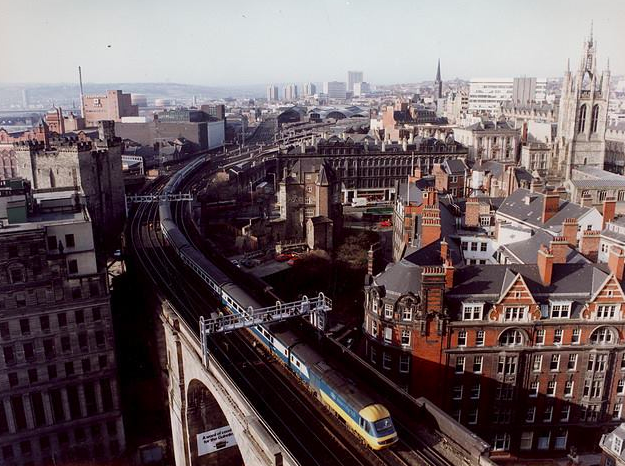
11-May-14
Seeing as I was one of the interviewees for the piece by Andy Beckett that started the whole fuss on Saturday, here's some of my thoughts about both the article and the response to it ...
Firstly, some notes about the format of the piece. My contribution was to be interviewed by Andy over the phone some six or seven months ago. The conversation lasted about an hour, and although a part of me was initially sceptical about the fact of the article being written by someone from [evil voice] The South, I was impressed by Andy's intelligence, inquisitiveness, and above all, his sympathy - arising, I think, out of his own socialist beliefs and certain of his life experiences - in highlighting the profound social and economic difficulties the north-east has faced in recent years, difficulties that have often been occluded and even ridiculed in the mainstream media. Inevitably, in the final version of the article, my comments had been whittled down to two or three short quotations (which are, by the way, kind of embarrassingly ungrammatical - proof of their spontaneous, extemporised origins I think).
I fully expected this to happen and nothing in the piece misrepresented my feelings in any way. At the same time, of course there was a hell of a lot of stuff that I mentioned in that 1-hour phone conversation that didn't make it into the final cut.
On the one hand, I'm tempted to to follow incumbent politician Chi Onwurah's lead by claiming that the choice of quotations and the overall thrust of the article was selective, that there was a lot of more positive stuff mentioned in the interview with Andy that wasn't used in the published version. I could go on about how I think the north-east is the greatest place on earth (I do), talk about how desperate I am to get back there (4 unsuccessful job applications this year and another pending), reel off soundbites for the sake of balance about the growth of tech start-ups in the region, moderate increases in house prices, the fact that Newcastle's nightlife is still thriving, the continued outstanding creative achievements of the area's sons and daughters, how wonderful the landscape is, and so on and so forth.
All this stuff is true, but to be honest, I'm not writing a tourist industry brochure or massaging PR for the Nissan car factory. Besides, as the ever trenchant Ross Lewis pointed out on Twitter: "You can love the best of a place and also be ashamed of it and try and change the worst aspects".
I don't want to speak for Andy Beckett, but I should imagine there are a couple of reasons why his article was not entitled "The North-East of England: Some Pros and Cons" or "A Rounded Portrait of a Part of the Country That is Essentially Quite Similar to Everywhere Else".
The first, obviously, is that no editor would have published it and no reader would have bothered to read it through to the end. Outside the world of corporate hospitality literature and marketing hyperbole, articles about a particular subject will of necessity take a specific line of argumentation, and the Guardian piece was in my opinion an entirely fair-minded exploration of the (factually indisputable) notion that the north-east has suffered in recent years from socio-economic decline. If this premise was subsequently simplified on a superficial level by headlines, choice of images, pull-quotes, the Detroit parallel, etc, then that's the nature of journalism, and it's surely not all that difficult to see beyond this paraphernalia in order to see the nuances of the discussion contained in the actual text. Accusations of a "hatchet job" are laughable, and should be rejected out of hand by anybody with any sense.
The second reason I think for the critical angle taken in the piece is that criticism of the way recent political history has unfolded to the detriment of certain parts of the country are much-needed. If I knew the Detroit analogy would be used in the quite the way it was, I might have been more wary of deploying it in conversation with Andy. But then again, I think the parallel is pretty apt (though of course only partially so), because Detroit is the archetypal example of a post-industrial city/region that has suffered very badly over the last three decades - in a broadly similar way to the NE - from the neoliberal double whammy of deindustrialisation and massively reduced social spending.
I think that anyone who cares about the north-east is likely to feel a sense of anger about the fact that it has, inarguably, suffered in certain concrete statistical ways in the post-Thatcher period. Nitpicking about the finer points of the Detroit analogy seems to me pretty foolhardy in light of the essential connection between working-class Western cities that have been continually passed over in the race to liberate the market and bolster the wealth of the super-rich in the last three decades. (Moreover, looked at another way, as someone pointed out on Facebook, isn't being compared to Detroit - cradle of Motown, Eminem, MC5, and Iggy Pop - quite a bit better than being compared to Croydon?)
I have sympathy with some of the defensive reactions to the Guardian piece. Perhaps there's always something slightly questionable about being told by an outsider that the place you live might have problems, and its a natural human reaction to respond to such claims with proclamations of local pride and useful additions to the discussion that try to provide examples of north-eastern resilience and ingenuity in the face of social and economic marginalisation.
But I think a better way to react to the article than trumpeting local success stories and worrying hysterically about how negative PR might deter capitalist investment (which I'm going to go out on a limb here by suggesting might not necessarily be a plausible or even a worthwhile solution to the problems faced by the vast majority of north-easterners), is to use the example of the way the region has been shafted by the London-based institutions of the English Establishment over the last few years as fuel for political anger and constructive determination to change things. The former ultimately plays into the hands of the Tories, while the latter offers the hope of something much more valuable.
There are way more than 100 reasons why it's great up north, but right now offering a coherent, organised alternative to the south-east and its capitalist mega-city is not one of them.
It could be.
ART WHORE [ 11-May-14 12:01am ]
DAVID HOCKNEY'S ART SCHOOL DAZE Part 25 [ 11-May-14 12:01am ]A FIGGING FOR HOCKNEY TEACHES THIS BDSM FREAK THE VALUE OF THINKING WITH HIS DICK!
At the start of their second year Kitaj was doing very well at the Republican College of Art. Hockney wanted to see whether he could make a better fist of the new term at the RCA than he had of the last. He began with a much better chance of doing so, for he was thoroughly humbled. The discovery that he was not altogether such a hero as he had fancied himself, had dawned upon him very distinctly by the end of his first year as the full depths of his masochism had been revealed; and the events of the long vacation had confirmed the impression, and pretty well taken all the conceit out of him for the time being. The impotency of his own will, even when he was bent on doing the right thing, his want of insight and foresight in whatever matter he took in hand, the unruliness of his temper and passions just at the moments when it behooved him to have them most thoroughly in check and under control, were a set of agreeable facts which had been driven well home to him. The results, being even such as we have seen, he did not much repine at, for he felt he had deserved them; and there was a sort of grim satisfaction, dreary as the prospect was, in facing them, and taking his punishment like a man. Or at least like a girl since he most enjoyed bondage scenes in which he was made to put on dresses and act like a member of the 'weaker' sex.
Kitaj was so fully occupied with painting and a muscle-building regime that he'd taken up, that Hockney had scruples about demanding much of his spare time in the evenings. Nevertheless, the two men still wanted to enjoy some kinky sex together, and were able to do so both at the RCA and in their rooms. On the first day of term Hockney checked out the new first year students and had even sucked one of them off in the men's toilet at lunchtime. He hoped Kitaj would hear about this and would punish him severely for it. And that was precisely what happened towards the end of that first day back at college.
Hockney stood in the corner of a lecture room, his hands firmly planted on the top of his head, muttering at the injustice of it all. He knew that Kitaj was strict, but he was in his early twenties for fucks sake, a post-graduate art student, and he had been standing with a view of nothing but peeling paintwork for the last forty-five minutes. Hockney heard Kitaj step back into the room and the blinds of the lecture hall fell, leaving only the glow of the lights.
"Boy, what did you think you were doing?" Kitaj's voice was harsher than before, Hockney could tell this time he was in for it.
The sub's response came out as a mutter: "Nothing, it was just a bit of fun..."
"Just what? A Joke? I'm sure that fresher's orgasm wasn't a sarcastic orgasm, was it?"
"No," Hockney was sulking by this time. He was being spoken to like a child, it had just been guys messing around in the john, a quick blow job, and now he was taking a heavy wrap for it.
"No sir, is how you shall address me Hockney! I see it is not just your submissive peers you treat with such disrespect but even your master. Come over to the lecture desk."
Hockney walked over to the most imposing piece of furniture in the room as Kitaj instructed. He lowered his arms from his head and gave them a little rub to improve their numbed circulation.
"They tried punishing you with lines when you were at school I presume?" Kitaj snapped.
Hockney rummaged in his bag with one hand, thinking how cruel it was that his position in the corner had made his arms ache before the hours of endless, repetitive writing.
"And writing lines didn't make an impact on you I see" Kitaj continued as he sat down in a chair behind the lecture desk, "So instead of getting you to write out 'I must not suck fresher cock' a thousand times, I want you to bend over this desk, and we will see if I can't beat some discipline into you."
Hockney jerked his head up to look at Kitaj, and was shocked to see he was done up like a tranny. Kitaj was wearing make-up and a low cut dress, not to mention a sick stern kind of smile that made it clear that he was on some strict school-mistress trip. He even had on long false nails that had been painted with purple varnish! Kitaj hadn't looked anything like this when he'd left the room. It was sick, in anyone else the way Kitaj was done up would have looked like forced feminisation, but the dom was able to carry it off and retain his aura of authority and masculinity. Still being beaten by a top wearing a dress was a new level of humiliation for Hockney.
Hockney took his time bending over the desk, taking in Kitaj's female scent - a perfume he was unable to name - as he leant towards him. Kitaj stood and walked round the desk and out of Hockney's line of sight. The apprehension the sub felt was nearly unbearable and although it could only have been a few seconds it felt like minutes had passed before Kitaj spoke.
"Hockney, earlier today you seemed to think it amusing to suck some boy's cock without my permission." This was clearly a statement, not a question, so Hockney kept his mouth shut. "I think it is fair that you shall drop your trousers for your caning"
Before Hockney had time to refuse to comply, Kitaj pinned the sub to the desk with one hand. Hockney felt Kitaj's body against his own and a strange sense of arousal came over him as he once again took in his master's feminine scent. Hockney was thinking he shouldn't be turned on by this, a master who has dressed himself up in a frock, plastered make-up over his face and drenched himself in cheap perfume. It was a new low in Hockney's sexual fetishism.
Kitaj practically assaulted Hockney. The sub felt one hand undoing his belt, removing it and then Kitaj used a length of rope to tie Hockney's hands to a hook on the other side of the desk, stretching him across the wood and pressing his cock against it. Hockney clenched his legs together determined that Kitaj would not remove his trousers, but Kitaj's strength was astounding, probably the result of all the weight training he'd been doing. Hockney's overpants were at his ankles, and Kitaj ordered him to step out of them, his smalls did little to preserve his dignity. Hockney snapped his legs back together, determined that Kitaj wouldn't see through to his cock, which was, much to his great pleasure, rock hard. The reason Hockney had a stiffy was because he was completely vulnerable. He clenched his butt cheeks tight together in anticipation of the cane.
"Boy, I am going to give you eight strokes for your cock sucking antics. You are to count them and if you miss one I will start again. If you try to avoid your punishment by squirming, I will start again. Don't give me a reason to make this worse boy."
Hockney heard the cane before he felt it. A swoosh through the air then a thwack as it landed on his clenched buttocks. The pain took a few seconds to register in his brain, being felt as a tingle before it became a sting, and by the time the sub fully appreciated this agony it was every bit as bad as he was expecting. Hockney clenched his gluteus muscles to help him control himself and stay still. "One, sir," then "two sir," almost immediately after.
Hockney wasn't ready for the second stroke, he tensed up just as the cane hit, and Kitaj saw that all of Hockney's gluts had contracted. As both Hockney and Kitaj knew the gluteal muscles are a group of four muscles. Three of these muscles make up the buttocks: the gluteus maximus muscle, gluteus medius muscle and gluteus minimus muscle. The fourth and smallest of the muscles is the tensor fasciae latae muscle, which is located anterior and lateral to the rest. Without Hockney even thinking about it all of his gluts had tensed. Indeed even Hockney's hamstrings had contracted.
"Hockney, why are you clenching your buttocks like that? Does the caning hurt too much or are you daydreaming that you are performing squats with a heavy barbell across your shoulders?"
The sub wasn't fooled by the mock sympathy in Kitaj's voice and didn't answer.
"Do you know, boy, what they did to naughty boys who clenched their buttocks during a canning in the ancient world?"
"No sir."
"Let us have a little history lesson then…"
Hockney felt Kitaj getting up close and personal with him, and then pulling down his skidmarked knickers. Hockney tried to struggle against Kitaj but it was useless, the top already knew Hockney didn't have the best hygiene habits in the world, and was often reduced to boiling his shit and piss stained underpants in a pan to get them clean. When he did this, Hockney always feared a knock on the door from his landlady Mrs Longbottom. She would scream at him and yell that she ran a Christian house in which no man was allowed to boil his underpants on a hot plate since the smell was an affront to the dignity of upright and moral women of all classes.
Just as he tried to hide his underpant boiling activities from Mrs Longbottom, Hockney hoped to hide the fact that he now had a raging hard on from Kitaj. The top's false nails scraped against Hockney's cock as Kitaj pulled the sub's skidmarkded underwear down. But the dom didn't mention the state of extreme sexual arousal the slave just happened to be in.
Hockney wobbled as Kitaj pulled one of his ankles towards the leg of the desk and tied them securely together - the operation was then repeated on the other side. Hockney was trussed up like a turkey at Christmas and hoping he'd end up just as well stuffed. The bottom was unable to move his arms or his legs, but he could still clench his butt cheeks together. He heard the clink of Kitaj's high heels on the floor and the door opening, but not shutting. He was tied to a desk, naked from the waist down with the door open whilst Kitaj went out for what Hockney wrongly imagined to be a wank in the john.
Hockney had no idea how much time passed before Kitaj returned with what looked like a carved vegetable that had been shaped into a buttplug in his hand. Kitaj stood behind the sub and fondled his butt cheeks, spreading them apart.
"Relax, it will be worse if you don't."
Worse? Hockney wondered what the hell Kitaj was going to do with him. With one hand holding Hockney's arse cheeks apart, the top slipped something cold and wet into the sub's anus. Why was Kitaj doing that Hockney wondered? Then his bum started tingling, and the sub tried to clench his rim of dark pleasures tight to stop Kitaj pushing the unknown thing in any further. Despite Hockney's pitiful attempt to struggle against it, the strangely carved vegetable kept going in deeper and deeper. And while this was happening the tingling had progressed into a burning.
"This Hockney is called figging, the tighter you clench, the more it hurts and burns."
"What is it sir?"
"Ginger, four inches of it, freshly cut and shaped for your naughty little bumhole…"
Hockney winced as Kitaj stepped back to retrieve his cane, The sub had no choice now but to relax because the more he tightened his gluts and pelvic core the more the ginger burned him. He wondered how much the caning would hurt? Determined to stay relaxed, Hockney awaited the third stroke of his punishment. And it came. Harder than the last two on his now bare and figged bottom.
"Ahh shit, fuck, oahh, th-three sir." Hockney had been relaxed for the stroke, but then clenched on the ginger once he felt the pain of it, getting the worst of all worlds. And yet through it all his cock was throbbing, desperate for some attention. For a moment sexual desire took over from the agony.
"That was not three, boy, we had to start again, and your appalling language has done little to help you, counting is clearly too difficult for your hormone crazed brain to handle - that's right, I have seen how hard your little dick has got from me punishing you. Let's try it again, five more strokes."
Kitaj walked around to the desk, and shoved Hockney's filthy skidmarked drawers into the sub's gob. The smalls were wet with piss and shit and tasted dirty in Hockney's mouth, Before Hockney could consider using his tongue to push the underwear out of his north and south, they were taped firmly in place and he was instructed to remain silent.
The next three strokes came in quick succession, one after the other on the delicate fold between the leg and the cheek. That is to say he was being whacked on the gluteal sulcus, also known as the gluteal fold, the horizontal gluteal crease, or the fold of the buttocks. It is an area on the body of humans and great apes described by a horizontal crease formed by the inferior aspect of the buttocks and the posterior upper thigh. The gluteal sulcus is formed by the posterior horizontal skin crease of the hip joint and overlying fat, and is not formed by the lower border of gluteus maximus, which crosses the fold obliquely. It is one of the major defining features of the buttocks in both great apes and humans.
But Hockney was not giving much thought to anatomy. The sting of the cane mixed with the burn of the ginger, leaving him in a state of sexual agony. His anticipation of the next stroke forced his buttocks to clench hard around the ginger, intensifying the burning sensation and immediately making him relax in an attempt to dull the pain. Kitaj waited for that moment before he struck. This stroke came firmer than the previous three and was immediately followed by another swift blow.
As the sixth stroke came, Hockney's body thrust forward by the three millimetres available to it. The sub's knob, trapped between his body and the desk, rubbed pleasurably against the tough oak. Hockney let out a low moan despite the shit-smeared gag in his mouth. This cry articulated both pain and sexual arousal. Kitaj heard it and let out a disapproving chuckle. Hockney, meanwhile, thrust his cock against the desk in an attempt to gain some release from that hard and sexy surface.
As the seventh stroke smashed into Hockney's reddened backside, it greatly added to his sense of extreme sexual arousal, and all pain was washed away by the genetic urges coursing through his core. Hockney awaited stroke eight. The sub was unable to see his master, but he felt his hand, cold against his burning bumhole, making its way towards the ginger plug. And then the pain intensified. Kitaj was fucking Hockney's arse with the ginger, renewing the sensations that had begun to subside.
Then it finally came! The eighth and last stroke of the cane. It was, in fact, the eleventh stroke - and Hockney's arse burnt and stung like it had been attacked by a swarm of angry bees who believed their queen to be imprisoned in the sub's guts. The bottom's cock was hard and pressed against the art school desk.
Then Kitaj spoke. "Well done, boy. You dealt with that well in the end. Was it really worth making all that fuss over?"
Hockney tried to speak, but through the shitty gag his words came out as an incomprehensible murmur. He wasn't going to argue. His love muscle was too hard and his bulk ached for release too much for him to do anything. He simply found himself grateful for the restraints. They kept him from falling to the floor.
"However, I am disappointed at this." As he spoke Kitaj reached underneath Hockney and cruelly prodded his throbbing member. "It seems I have done little to teach you in the long term about the consequences of unauthorised cock sucking. It seems that no matter what I do you are only able to think with your dick..."
After the figging Hockney was convinced that thinking with his dick wasn't such a bad idea - since it opened up so many orgasmic possibilities. He even made a student painting on the theme entitled "Be A Man, Think With Your Dick" but unfortunately it has been lost to posterity.
THE FANTASTIC HOPE [ 8-May-14 11:40am ]
LONDON RADICAL BOOK FAIR, 2014 [ 08-May-14 11:40am ]This Saturday!
Myself and the incomparable Tamar Shlaim will be hosting the Zero stall 10-5.
Blog here. Come doon.

04-May-14
Myself and the incomparable Tamar Shlaim will be hosting the Zero stall 10-5.
Blog here. Come doon.
faces on posters too many choices [ 3-May-14 11:56pm ]
# [ 03-May-14 11:56pm ]watched a bunch of Robert Altman films, most of them I think were on the boxset to pad it out really, but damned if this doesn't stick with me the most:
https://www.youtube.com/watch?v=Q1ESzFocBj4
One of the best musical performances I can think of in as unlikely a vehicle as a Robert Altman teen comedy. Unsure of how the band and Altman became entangled but I'm not sure I want to really. #
29-Apr-14
https://www.youtube.com/watch?v=Q1ESzFocBj4
One of the best musical performances I can think of in as unlikely a vehicle as a Robert Altman teen comedy. Unsure of how the band and Altman became entangled but I'm not sure I want to really. #
THE FANTASTIC HOPE [ 29-Apr-14 6:12pm ]
CREATIVE BLOG PROCESS TOUR [ 29-Apr-14 6:12pm ]
I'm not quite sure of the of the origins of this series, but I was flattered to be asked to contribute by esteemed Manchester blogger and dapper man-about-town Greg Thorpe, by way of Emma Jane Unsworth I think (and also somehow Zoe Lambert, who've I've never met but who seems like a very nice lass judging by the writing on her blog).
Greg's answers are here. My nominees are sensational cultural critic/fiction writer Rhian E. Jones and an as yet uncomfirmed international celebrity chef.
What am I working on?
At the moment I'm waiting for a couple of books to come out, and tying together some other ideas in the hope that they'll coalesce into a new project. There's an essay for Glasgow quarterly The Drouth about the Anglo-Scottish borders which will hopefully come out around the time of the independence referendum: a Yes vote is looking increasingly likely so I think we have to start thinking seriously now about what will happen to the North of England after Scottish secession. Aside from another, more academic essay about Ezra Pound's late poetry, I'm trying to work out how to corral my willfully disparate output into a single book about something or other. I've done two short-ish books now so something a bit bigger would be good. The poetry is ongoing too, and sporadic, as poetry tends to be - the latest accretion is here.
How does my work differ from others of its genre?
Following on from the last question, I think one of my biggest preoccupations is trying to work out what genre is best for saying the things that need to be said at this moment in time. I think it's quite a strange period for art in general and countercultural art in particular - lots of the old forms and genres are a bit lost, a bit enervated, and we're awaiting some sort of social development that will re-organise culture in a way that will give a bit more shape to the way we experience art collectively. At the moment the culturescape is a kind of Darwinian sludge pit, with lots of competing individuals and not much agreement about the underlying point of it all. I think that both the big strength and the big weakness of my writing is that it's not yet quite committed to one genre, but hopefully interesting because it's trying to think about how you might create a new genre that's responsive to the spirit of the age and anticipatory about the big societal bang - whatever it may be - that's just around the corner. Maybe something like lyric criticism or lyric non-fiction would be a good term for it. And I think with poetry, similarly: lyric realism or something like that.
Why do I write what I do?
Look, I'm just doing what I'm doing do and if anyone else likes it ... Only joking. I'm trying to say a handful of things that I think are important - I don't really have a problem with that fundamental bedrock. It's more the stuff about genre and form and positioning, and of course trying to persuade people to publish that's the hard part.
How does my writing process work?
I don't really have a set method, partly because, like most people, I live and work pretty precariously with very little routine or long-term job security. When I get a book project to work on it's quite liberating, and I try to work for five hours a day, morning to afternoon, five days a week, until the book's done, if I can. More than that and your concentration starts to slip. I tend to write in short, closely worked-on chunks of 500-700 words at a time and keep the editing at the end to a minimum. Poetry is obviously very different - short bursts followed by continual revisions, sometimes over many years, mainly tied up with the issues of publication and cultural positioning outlined above.
25-Apr-14
Greg's answers are here. My nominees are sensational cultural critic/fiction writer Rhian E. Jones and an as yet uncomfirmed international celebrity chef.
What am I working on?
At the moment I'm waiting for a couple of books to come out, and tying together some other ideas in the hope that they'll coalesce into a new project. There's an essay for Glasgow quarterly The Drouth about the Anglo-Scottish borders which will hopefully come out around the time of the independence referendum: a Yes vote is looking increasingly likely so I think we have to start thinking seriously now about what will happen to the North of England after Scottish secession. Aside from another, more academic essay about Ezra Pound's late poetry, I'm trying to work out how to corral my willfully disparate output into a single book about something or other. I've done two short-ish books now so something a bit bigger would be good. The poetry is ongoing too, and sporadic, as poetry tends to be - the latest accretion is here.
How does my work differ from others of its genre?
Following on from the last question, I think one of my biggest preoccupations is trying to work out what genre is best for saying the things that need to be said at this moment in time. I think it's quite a strange period for art in general and countercultural art in particular - lots of the old forms and genres are a bit lost, a bit enervated, and we're awaiting some sort of social development that will re-organise culture in a way that will give a bit more shape to the way we experience art collectively. At the moment the culturescape is a kind of Darwinian sludge pit, with lots of competing individuals and not much agreement about the underlying point of it all. I think that both the big strength and the big weakness of my writing is that it's not yet quite committed to one genre, but hopefully interesting because it's trying to think about how you might create a new genre that's responsive to the spirit of the age and anticipatory about the big societal bang - whatever it may be - that's just around the corner. Maybe something like lyric criticism or lyric non-fiction would be a good term for it. And I think with poetry, similarly: lyric realism or something like that.
Why do I write what I do?
Look, I'm just doing what I'm doing do and if anyone else likes it ... Only joking. I'm trying to say a handful of things that I think are important - I don't really have a problem with that fundamental bedrock. It's more the stuff about genre and form and positioning, and of course trying to persuade people to publish that's the hard part.
How does my writing process work?
I don't really have a set method, partly because, like most people, I live and work pretty precariously with very little routine or long-term job security. When I get a book project to work on it's quite liberating, and I try to work for five hours a day, morning to afternoon, five days a week, until the book's done, if I can. More than that and your concentration starts to slip. I tend to write in short, closely worked-on chunks of 500-700 words at a time and keep the editing at the end to a minimum. Poetry is obviously very different - short bursts followed by continual revisions, sometimes over many years, mainly tied up with the issues of publication and cultural positioning outlined above.
faces on posters too many choices [ 25-Apr-14 6:57am ]
Back to the Future [ 25-Apr-14 6:57am ]Simon, via his own bloggige, bringing this article to attention, re '80s revivalisms as demo-trageting marketing trend. Which reminds me of why this is the one "decades blog" that I was always hard-pressed to ever contribute to.
According to the marketing logic cited in the NYer article, I should be winsomely nostalgic for the 1980s. It's the decade in which I went to high school, entered adulthood, finally got out of the shithole town I'd grown up in by eventually going off to college, & etc etc. Yet it's probably the one decade I feel the least the nostalgic about. Why? Because it was a totally shit decade. Because of the politics; because of the economics; because of all the shit music and shit fashion, all of which was inescapably hegemonic at the time due to the way media and culture worked in those days.
All of which is why, quite frankly, I'm quite fine with seeing the decade being associated -- by way of the cited marketing campaigns -- the last place that most people would ever go to shop for electronics, a lowest-tier fast food chain, and a video game that is unanimously considered the worst in history. Seems only fitting.
THE FANTASTIC HOPE [ 17-Apr-14 1:30pm ]
FREUD, CHRIST, MARX & THE BROTHERS GALLAGHER: A 300-WORD PRAYER [ 17-Apr-14 1:30pm ]With Easter approaching, here's a short, obliquely religious reading of Live Forever by Oasis (pruned and abstracted, as you might imagine, from the 33 1/3 book).
Whatever else Oasis were, there is no doubt that they embodied, in their early days, a kind of religious fervour, channelling a quasi-spiritual urge Sigmund Freud once characterised as oceanic consciousness (a "feeling … of being indissolubly bound up with the whole of the world outside of oneself"). Oasis's great achievement was to advocate a spiritualised form of collectivism in a neoliberal society where such practices had been outlawed. Just ten years after the Miners' Strike, Definitely Maybe suggested that maybe, just maybe, the spiritual core of working-class identity had not been purged completely by Thatcher and her radically individualist regime, that solidarity and towering hope could be put back at the centre of British pop culture by a heroic project of melodic forcefulness and blind belief. The tragedy, of course, was that Oasis quickly became paid-up members of the Thatcherite music industry establishment they had once reviled. But this makes their original mission statements all the more poignant - indeed, sometimes unbearably so.
Live Forever condensed Oasis's radical working-class spiritualism into a raggedly glorious pop song about eternal life built around one of the most affecting lyrics in pop history: "maybe you're the same as me / we see things they'll never see / you and I are gonna live forever". Buried in this fragment is a kind of Christian Marxism - it is easier, after all, for a camel to pass through the eye of a needle than for a rich man to enter the kingdom of heaven. But perhaps more important than Live Forever's impassioned belligerence is its belief in a visionary togetherness that can unite people when they realise, in a moment of leaping bewilderment, that they are unequivocally the same as each other. This special kind of grace has many epithets - comradeship, friendship, solidarity, brotherhood - but perhaps its most familiar name for religious believers and humanists alike is love.
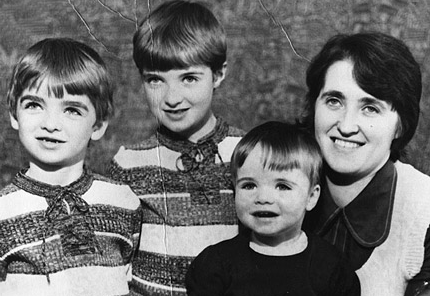
15-Apr-14
Whatever else Oasis were, there is no doubt that they embodied, in their early days, a kind of religious fervour, channelling a quasi-spiritual urge Sigmund Freud once characterised as oceanic consciousness (a "feeling … of being indissolubly bound up with the whole of the world outside of oneself"). Oasis's great achievement was to advocate a spiritualised form of collectivism in a neoliberal society where such practices had been outlawed. Just ten years after the Miners' Strike, Definitely Maybe suggested that maybe, just maybe, the spiritual core of working-class identity had not been purged completely by Thatcher and her radically individualist regime, that solidarity and towering hope could be put back at the centre of British pop culture by a heroic project of melodic forcefulness and blind belief. The tragedy, of course, was that Oasis quickly became paid-up members of the Thatcherite music industry establishment they had once reviled. But this makes their original mission statements all the more poignant - indeed, sometimes unbearably so.
Live Forever condensed Oasis's radical working-class spiritualism into a raggedly glorious pop song about eternal life built around one of the most affecting lyrics in pop history: "maybe you're the same as me / we see things they'll never see / you and I are gonna live forever". Buried in this fragment is a kind of Christian Marxism - it is easier, after all, for a camel to pass through the eye of a needle than for a rich man to enter the kingdom of heaven. But perhaps more important than Live Forever's impassioned belligerence is its belief in a visionary togetherness that can unite people when they realise, in a moment of leaping bewilderment, that they are unequivocally the same as each other. This special kind of grace has many epithets - comradeship, friendship, solidarity, brotherhood - but perhaps its most familiar name for religious believers and humanists alike is love.
DEFINITELY MAYBE 33 1/3 [ 15-Apr-14 11:54am ]Right folks, the campaign trail for this here Oasis book is starting to stammer into life, just as the 20th anniversary season approaches a point of scarcely creditable hysteria.
Apparently some North American readers are beginning to receive copies. Here's one pictured with a first edition of Dostoevsky's Brothers Karamazov (thanks to the estimable David Soud for this):
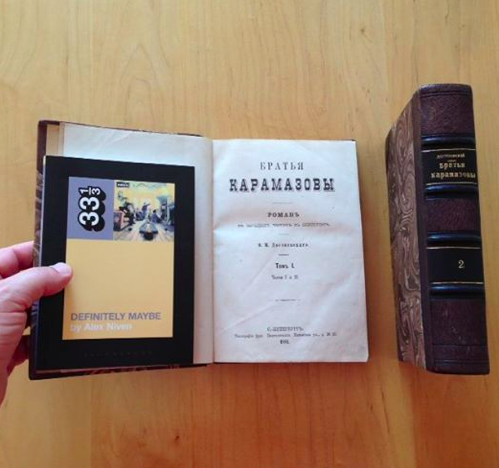
(By the way, this is uncannily apt, as there's a quotation from the Brothers K on my epigraph page - if that seems incongruous, well, it's not, and I will tell you for why if you ask me.)
The media campaign is also up on the rails ...
Here's a comment piece published in the Guardian this weekend, which gives a hyper-condensed summary of the book's argument.
Meanwhile, a handful of speaking events have been scheduled, with more to follow. At the moment these are:
26 June, 2014, Rough Trade East, Brick Lane, London. Q&A with fellow 33 1/3 authors Pete Astor (Richard Hell's Blank Generation) and Darran Anderson (Serge Gainsbourg's Histoire de Melody Nelson).
14-17 August, 2014, Green Man Festival, Glanusk, Wales. Q&A with Agata Pyzik (author of the excellent Poor But Sexy). Details tbc.
1 October, 2014 (exact date tbc), Foyles, Charing Cross Road, London. Legacy of Britpop panel discussion featuring Owen Hatherley (author of Uncommon: An Essay on Pulp) and Rhian E. Jones (author of Clampdown: Pop-cultural Wars on Class and Gender).
More details as and when they come in. And if you'd like a review copy, or want to open high-level negotiations for an event/reading, do get in touch via the email address on the sidebar.
02-Apr-14
Apparently some North American readers are beginning to receive copies. Here's one pictured with a first edition of Dostoevsky's Brothers Karamazov (thanks to the estimable David Soud for this):
(By the way, this is uncannily apt, as there's a quotation from the Brothers K on my epigraph page - if that seems incongruous, well, it's not, and I will tell you for why if you ask me.)
The media campaign is also up on the rails ...
Here's a comment piece published in the Guardian this weekend, which gives a hyper-condensed summary of the book's argument.
Meanwhile, a handful of speaking events have been scheduled, with more to follow. At the moment these are:
26 June, 2014, Rough Trade East, Brick Lane, London. Q&A with fellow 33 1/3 authors Pete Astor (Richard Hell's Blank Generation) and Darran Anderson (Serge Gainsbourg's Histoire de Melody Nelson).
14-17 August, 2014, Green Man Festival, Glanusk, Wales. Q&A with Agata Pyzik (author of the excellent Poor But Sexy). Details tbc.
1 October, 2014 (exact date tbc), Foyles, Charing Cross Road, London. Legacy of Britpop panel discussion featuring Owen Hatherley (author of Uncommon: An Essay on Pulp) and Rhian E. Jones (author of Clampdown: Pop-cultural Wars on Class and Gender).
More details as and when they come in. And if you'd like a review copy, or want to open high-level negotiations for an event/reading, do get in touch via the email address on the sidebar.
SENSE AND SECTIONALITY [ 02-Apr-14 9:56am ]Reading Sterne's Sentimental Journey, I'm struck by how much its ethical guidebook for the haute bourgeoisie resembles our own RaceSexualityGender doxa. In both cases, morality is abstracted - and pseudo-systematised - through a series of jargon terms for the initiated. Whereas we have PoC, intersectionality, trigger warning, mansplaining, brocialism, the eighteenth century had sentiment, sensibility, nature, decorum, sympathy, etc.
In both cases, ethics becomes a kind of manneristic exercise to be perfected if one is to acquire maturity and attain the degree of cultivation required for social advancement (in the eighteenth century - the church, the court, the judiciary, the army; in our own time - academia, politics, the commentariat, and indeed any profession - ie. the vast majority - in which social liberalism is preached while the most punitive form of neoliberal economics is practiced).
The weakness of both systems is their largely performative aspect - using the appropriate terminology and adopting the correct standpoint today with regard to, say, sexuality, is precisely equivalent to eighteenth-century displays of sensibility (the gentleman doffing his cap or handing the young lady his handkerchief at exactly the right moment). The point is that these are what we might call courtly gestures - largely superficial acts of performance that attract applause and approbation in the short term and in the social foreground but do not extend substantially into the realm of actual social organisation. Indeed, in most cases, the former actively stands in for the latter.
SUBLIMATION OF THE SOAR PT.3 [ 23-Mar-14 9:58pm ]Dream swelling soar here
HOW HAS CAPITALISM GOT AWAY WITH THE FINANCIAL CRISIS, AND WHY IS POLITICS SCARED OF IDEAS? [ 19-Mar-14 2:41pm ]Bit of a late one this, but if you're in central London tonight you could do a lot worse than come along to this event, which I'm speaking at alongside Mark Fisher, Rhian E. Jones, Dan Taylor, and Tariq Goddard.
Event info: Wednesday 19th March, 6.30pm - 8.30pm, Committee Room 8, House of Commons
Event info: Wednesday 19th March, 6.30pm - 8.30pm, Committee Room 8, House of Commons


