
Welcome to the first Best of Bylines of the week, featuring an article from one of our 10 UK national and regional publications, hand-picked by our editors-in-chief and delivered directly to your inbox.
David Murray lives in West Lothian, is a member of the Scottish Currency Group campaign, and writes regularly for Bylines Scotland. As the press scrambles to analyse the first budget of a new Chancellor in Westminster, David grapples with the legacy of austerity in British and Scottish politics.
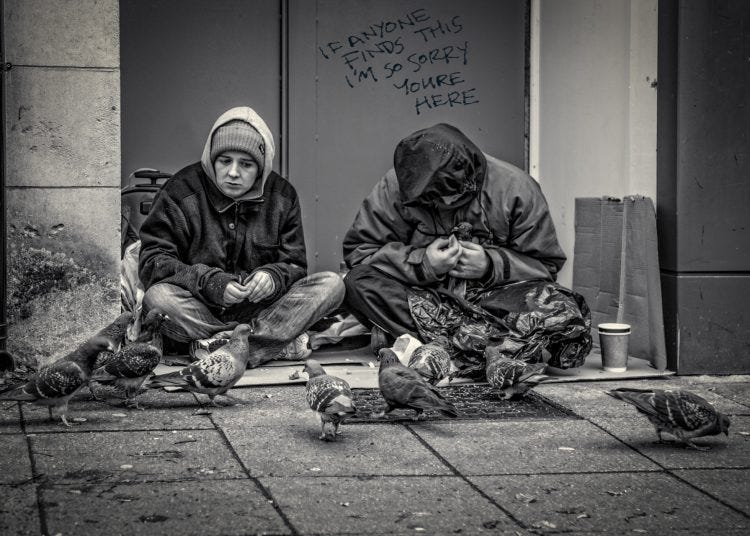
Austerity may be described as one of the Chancellor's tough decisions. A set of necessary technical economic policies that is analogous to temporary belt-tightening. But this framing does not represent the true nature of this political choice. Instead, it is better perceived as a systematic, banker-led assault on humanity itself.
Framed as responsible fiscal management, it delivers the opposite: low growth, stagnating wages and cost of living increases, lowering living standards in the present while stealing the future through lack of investment and reshaping society in ways that carry civilisational consequences. The damage is visible in everyday life and embodied in the quiet erosion of human potential, solidarity and hope.
Walk today through any town or city, shaped as they are by sustained austerity, and the natural outcomes are plain to see. Potholes scar the roads. The NHS strains under the weight of demand. Libraries close, parks and common landscapes grow neglected, infrastructure crumbles, and high streets fill with boarded-up shops.
These are not accidental by-products of hard times. Our governments, in currency-issuing nations, never experience "hard times" in a financial sense. These deficits in essential services are the predictable outcomes of policies that prioritise debt reduction and financial balance sheets over the maintenance of the public realm. The result is a collective reduction in living standards that affects everyone, not just those already on the margins.
Are we human, or are we consumer?The longer-term effects cut deeper. Austerity economics recasts fundamental human activities as market transactions. Students are no longer learners contributing to a shared pool of knowledge and capability; they become "consumers of education". Ill people are no longer patients in need of care; they become "consumers of healthcare". This linguistic and institutional shift is profound.
Healthy people once stood as the most productive and caring members of society. Educated people once offered insights, imagination and skills that advanced collective thinking. Under the consumer model those contributions are subordinated to individual payment and market metrics. The purpose of education and healthcare is no longer primarily the cultivation of human capacity for the benefit of an interconnected humanity. It becomes the extraction of value from individuals who must continuously prove their worth as customers.
The human cost of this transformation is unnecessary stress - one of the most debilitating conditions of modern life. Austerity generates chronic anxiety about the future. People live in perpetual fear of losing their place in society. When the essentials of life are perceived to be scarce, everything becomes competition. Secure housing, decent elderly care, stable employment and reliable public services are recast as scarce prizes rather than shared entitlements.
The savings trapIn response, households change their behaviour. Instead of spending what little they earn on present needs and community life, they save whatever they can. The motive is defensive: to stave off the worries of retirement, of declining health, of the next generation's prospects. People try to protect themselves rather than build for those who will follow.
Those savings do not remain inert. Banks and hedge funds absorb the funds and convert them into massive profits. The capital is recycled into the privatisation and financialisation of more public utilities and services. Quality of service declines while bills and the cost of daily essentials rise. Water, energy, transport and care are treated as investment vehicles rather than common goods.
The feedback loop is complete: austerity forces precautionary saving; that saving fuels the private capture of public assets; the degraded assets then justify further austerity and further individualised risk. It is a race to the bottom of immense proportions.
The civilisational stakes are high. A society organised around fear, competition and scarcity cannot easily generate the trust, long-term thinking or collective imagination required for genuine progress. When healthy and educated citizens are valued chiefly as revenue streams, the social surplus of care, insight and mutual support shrinks.
Stress becomes a constant. Solidarity frays. The capacity to invest in the next generation - through infrastructure, knowledge and a healthy environment - is displaced by the imperative of personal survival. What begins as fiscal discipline ends as a narrowing of human possibility.
The race we don't want to winThis trajectory is not inevitable. It is the product of deliberate policy choices that elevate financial claims above human flourishing. Recognising austerity as a banker-led assault clarifies the choice before us. Continuing on the present path means accepting lower living standards, higher anxiety, degraded public goods and a society of competing consumers chasing the next dopamine high.
Stepping out of the race before the finish line requires rejecting the premise that public services must be subordinated to private profit, that education and healthcare are primarily markets, and that individuals must bear the full weight of systemic risk.
The alternative is not reckless spending but a reorientation of economic purpose. Public investment in reliable infrastructure, accessible care and high-quality education is not an optional extra; it is the foundation of productive, caring and imaginative citizens.
Reducing the ambient fear that drives excessive saving would free resources for present wellbeing and future-building. Restoring the idea that healthy and educated people are a collective asset (for society and business) rather than individual cost centres would reverse the consumerist inversion. These are practical steps, grounded in the recognition that a race to the bottom is one that no society can win without losing what makes it human.
The boarded-up shops, the neglected parks and the stressed households are not signs of natural scarcity. They are the visible scars of a policy regime that has prioritised financial extraction over shared human capability. Ending that regime is not merely an economic adjustment. It is a defence of the conditions under which people can live without constant fear, educate themselves for insight rather than market compliance, and care for one another as members of an interconnected humanity rather than as competing consumers. The prize for winning the austerity race is a diminished civilisation. We must not participate - we have better things to do.
October Bylines Network Gazette - towards a better media
Become our Friend and get every Gazette
Welcome to a special Saturday edition of Best of Bylines, featuring an article from one of our 10 UK national and regional publications, hand-picked by our editors-in-chief and delivered directly to your inbox.
This time we hand over to Kurdish-British writer, political analyst and North East Bylines contributor Greng Hassan for a thoughtful and personally informed analysis of arguments about immigration in the UK.
Stay tuned to the end of Greng's story for news on the latest Bylines Network Gazette, all about what it will take to build a better media.
 Photo by Kyle Glenn on Unsplash
I came to Britain in 2002. I have lived here long enough to watch this country tie itself in knots over immigration - the speeches, the targets, the promises, the panic. I have watched governments of both parties announce that this time, finally, they are going to get a grip. I have watched those announcements produce nothing except the next announcement.
I have also spent years working inside Britain's immigration system - not as a politician or a policymaker, but close enough to watch what it actually does to people. And what strikes me, every time, is not the scale of the problem. It is the scale of the dishonesty surrounding it.
Not dishonesty about the numbers. Dishonesty about the question itself. Britain's immigration debate has never really been about immigration. It has been about something else entirely - and until the country admits that, nothing will change.
What the Right got wrongThe Conservative Party spent seventeen years in government promising to reduce net migration. They never came close. Under David Cameron, net migration rose. Under Theresa May, it rose. Under Boris Johnson, it rose. Under Rishi Sunak, it reached a record high of over 700,000 in a single year. The Rwanda scheme cost hundreds of millions of pounds and relocated four volunteers.
This was not incompetence. A party that governs for seventeen years and consistently fails to achieve its stated priority on a single policy is not unlucky. It is running a con. The Conservative Party needed immigration as an electoral instrument - a permanent problem that could always be blamed on someone else, always be promised away, and never actually be solved, because solving it would remove the instrument. The British public was told, year after year, that control was coming. It was not coming. It was never coming. Because the people making the promise had no intention of keeping it.
That is not a left-wing critique. It is arithmetic.
What the Left gets wrongLabour's failure is different, and in some ways more troubling, because it comes wrapped in the language of compassion.
Labour represents millions of people from migrant and minority communities who understand, from the inside, what the hostile environment actually means - the landlord checks, the bank account closures, the Windrush letters. It also believes, or tells itself it believes, that it must appeal to a working-class electorate that polling shows wants firmer controls. The result is a party permanently at war with itself, producing policies that satisfy nobody and explain nothing.
But the deeper failure is this: Labour has never been willing to say clearly that asylum and immigration are not the same thing. Asylum is a legal right under international law - it cannot be capped, targeted or bargained away by a Home Secretary's speech. Economic migration is a policy question on which democratic debate is entirely legitimate. Conflating the two - treating every arrival as part of a number to be reduced - is not just intellectually dishonest. It makes genuine policy impossible, because you cannot design a coherent system around a category that does not exist.
The left talks about cruelty when it suits them and about control when it does not. Neither position is a policy. Both are postures.
What nobody will sayHere is what an honest conversation would sound like.
It would say that Britain's asylum backlog - which reached over 175,000 cases at its peak - was not caused by too many people arriving. It was caused by a system that was deliberately starved of resources, that operated a refusal culture generating appeals it then complained about, and that used delay as a deterrent rather than decision-making as a process. The cost of housing people in hotels while their claims are pending ran to billions of pounds - money that would have funded the caseworkers, judges and legal aid that would have cleared the backlog years earlier. The hostile environment did not reduce immigration. It increased the cost of managing it while making it crueller.
It would also say something that neither party will say to the communities receiving new arrivals: you have been let down. Not by the people who arrived. By the governments that cut local authority funding, reduced housing stock, underfunded schools and GP surgeries, and then pointed at the nearest visible newcomer when voters asked why services were struggling. The pressure on public services in places like Newcastle, Birmingham and Leeds is real. Its cause is twenty years of austerity, not twenty years of arrivals.
And it would say, plainly, that no government can promise to reduce asylum numbers, because asylum is not a number. It is a legal obligation. A government that promises otherwise is either ignorant or lying. The British public deserves to know which.
What Britain actually needsI am not arguing for open borders. I am not arguing that all immigration is good or that concerns about its pace and management are illegitimate. Those are serious questions and they deserve serious answers.
What I am arguing is simpler: Britain cannot have a serious debate about immigration while its politicians are using the issue rather than addressing it. The right has used it to win elections. The left has used it to avoid difficult conversations. The media has used it to sell papers. And the people caught inside the system - the young man from Iraq trying to explain in Kurdish why he cannot go home, the family in temporary accommodation waiting three years for a decision, the community in the North East absorbing new arrivals without a penny of additional support - have paid the price of everyone else's dishonesty.
Britain is capable of better than this. It has built, at its best, institutions of genuine fairness — a judiciary that is genuinely independent, a civil society that is genuinely engaged, communities that have absorbed wave after wave of newcomers and made something remarkable out of the encounter. None of that is nothing. All of it is threatened by a political culture that prefers a useful argument to a true one.
Twenty years of noise. It is time for a sentence of truth.
October Bylines Network Gazette - towards a better media
Become our Friend and get every Gazette
 October Bylines Network Gazette - towards a better media [ 30-Oct-26 6:44pm ]
The October Bylines Network Gazette is out now, and this month we're turning our powerful citizen spotlight on a subject close to our hearts - making the media better.
How many times have you finished a news story feeling more incensed than informed? How often is something important to your community ignored? Did you watch the Jason Arday media pile-on with a familiar sense of horror? Do you want news that puts accuracy and speaking truth to power ahead of sensationalism, right-wing narratives and profit margins?
So do we. Bylines Network believes in a better form of journalism - made by the people, for the people. That's why this Bylines Network Gazette brings you 108 pages of citizen stories about the media alongside sharp commentary from leading experts. We ask what happens when the press gets things wrong, what communities do when local reporters disappear and how we can build a better media from the bottom up.
In this bumper edition of our monthly magazine featuring standout stories from across the UK, you will find anger, uncomfortable reading, bold ideas and countless people showing how journalism can be done differently.
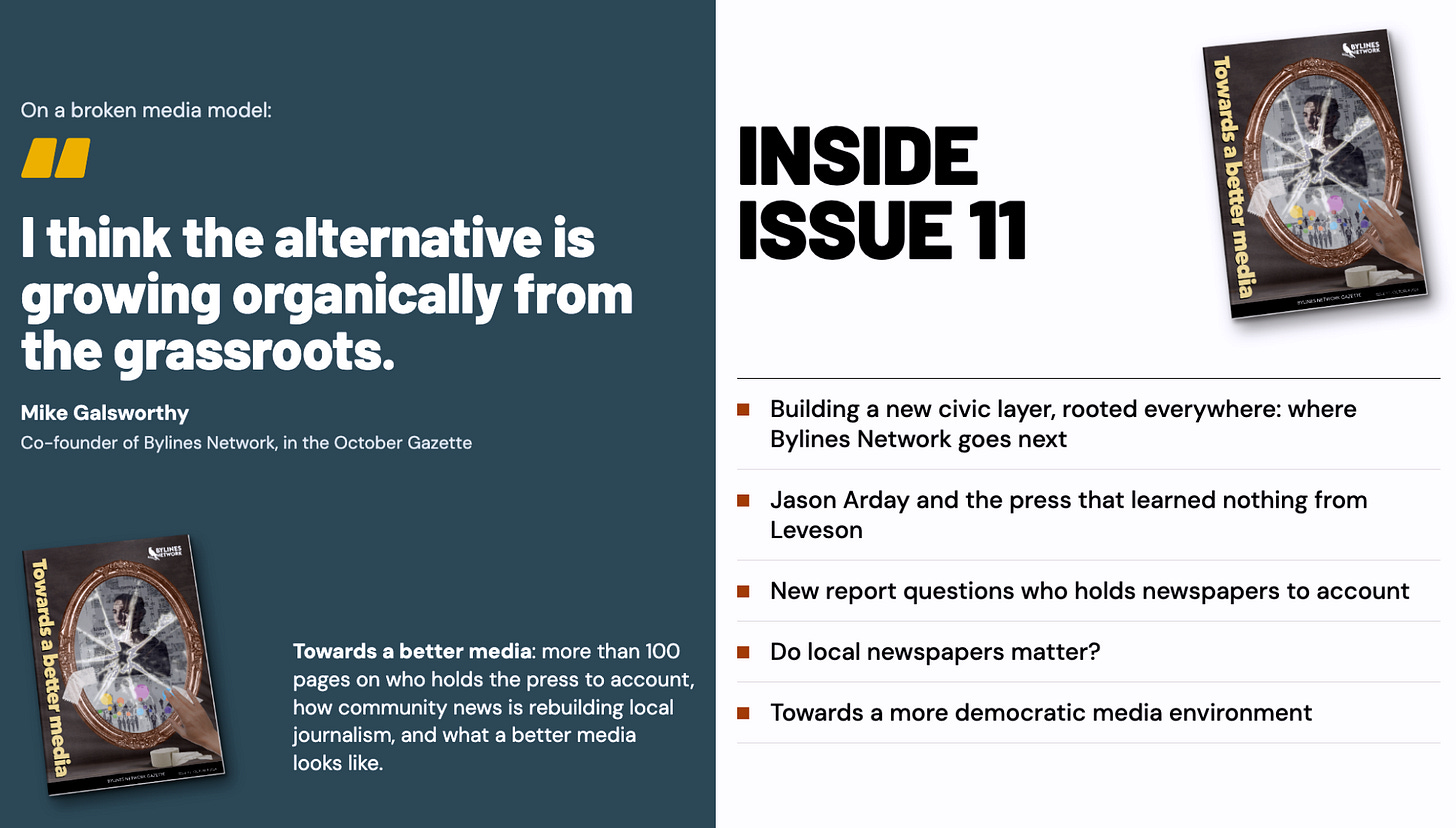
What's inside?
, Priyamvada Gopal, and on accountability, representation and what responsible journalism should look like.
Reflections on coverage of Professor Jason Arday, raising difficult questions about the behaviour and regulation of some sections of the press.
The media and the far right: how some parts of the media can instigate division and what we can do to challenge it.
The impact of disappearing local news, from the demolition of Portsmouth's old News Centre to the daily struggle of keeping independent reporting alive.
A look ahead with , revealing exciting plans for a Citizen Journalism Academy, support for local publishers and steps to build an even stronger Bylines Network community.
Why better media needs people who know their communities, care about getting things right and are prepared to ask tough questions.
A guide to bringing your own stories to Bylines Network publications, from first conversations with an editor to seeing your name on the finished article.
 How to get your Bylines Network Gazette
Our Gazettes are presented in a specially designed flipbook which you can read online or download as a PDF. How can you get access? You have three options:
Buy this edition as a one-off, and get access to the glorious online flipbook, which you can download as a PDF:
Become a Friend of Bylines Network. You can choose from the tiers described in this graphic. As well as the Gazette, your monthly donations give you access to a host of other benefits and - crucially - support powerful citizen journalism.
If you prefer to manage things through Substack, then please consider taking out a paid subscription to Bylines Network there. We consider paying Substack subscribers the same as Friends of Bylines Network, and give them access to all the same benefits. We are entirely not-for-profit, don't take advertising, or charge for services, and treat Substack subscriptions like any other donations that support our work.
 Journalism by the people, for the people - get involved, email us: info@bylinesnetworks.co.uk
Welcome to your first Best of Bylines of the week, featuring an article from one of our 10 UK national and regional publications, hand-picked by our editors-in-chief and delivered directly to your inbox.
This time Rebecca Kotey of West England Bylines talks to Villy Søvndal about a letter calling for the Danish shipyard Fayard to "refuse all further repair and maintenance of Arc7 tankers."
Earlier this year, Søvndal, a Danish Member of the European Parliament, led a cross-party coalition of parliamentarians from over 17 countries to sign the open letter. The tankers are vital to the Kremlin's Russian Liquefied Natural Gas (LNG) trade, and servicing them could help Putin generate more revenue for his war economy, even after the EU prohibits imports of Russian LNG in January 2027.
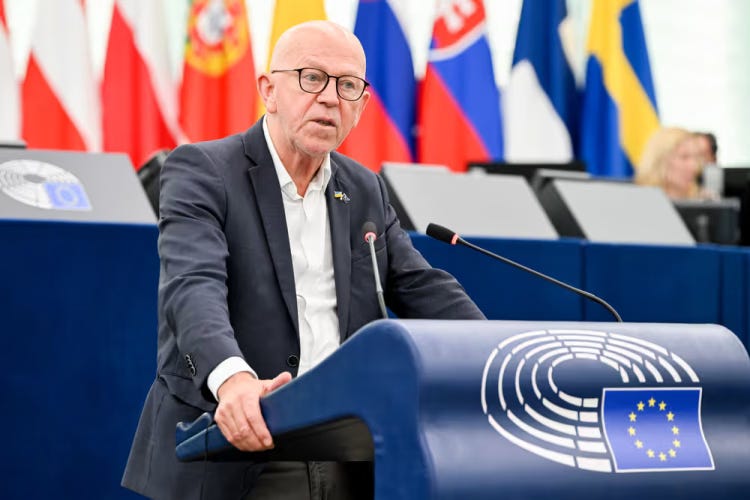 Courtesy of European Parliament
This open letter was signed by 105 parliamentarians including signatories from four vice-presidents of the EU Parliament and six representatives of the EU Parliament political groups. Speaking on the phone, MEP Søvndal said the letter "is a moral appeal. [Fayard] aren't breaking any sanctions, or doing anything illegal, but they are not acting morally".
The Danish shipyardThe private shipyard Fayard is a Danish shipping company that specialises in servicing tankers, including Arc7 vessels, for major operations like LNG transport. In its response to the parliamentarians, Fayard claim that it "is fully in compliance with the rules, and all services by Fayard have at all times been fully compliant with the regulations". The letter continues: "For the gas to reach Europe, the vessels transporting it must be serviced to ensure maritime safety and environmental protection in European waters and ports." Fayard made clear that, as a private company, it "does not determine foreign or energy policies". The company says it merely follows the decisions the politicians make, and as a result of the open letter, Fayard claims that it will end servicing the Arc7 vessels this year.
But for MEP Søvndal, morality comes before legality, and he wishes for countries and organisations to act morally in urgent crises such as the Ukraine war. "Damen (a French shipping company) stopped servicing [Arc7 tankers] because they wanted to be aligned with the French government. I want Fayard to do the same. The Danish government is a high-profile country serving Ukraine, giving the biggest help directly to Ukraine, and this is in direct opposition to that," said Søvndal.
The serviced tankersClimate and human rights NGO Urgewald has been tracking the movement of these ships at Fayard, and since the open letter, they have reported a total of four Arc7 vessels arriving at the Danish shipyard for servicing. Their recent service took place in September 2026, two months after Fayard's response saying it would stop servicing the vessels that year, and just days after the US signed into law the Lindsey O. Graham Sanctioning Russia and Iran Act, which puts statutory sanctions, tariffs, and prohibitions on Russia. This law also increases the likelihood of Russia's LNG trade with Europe being disrupted; yet according to Urgewald, Fayard continues to service these Arc7 tankers.
This is important because, once these vessels are serviced, they can continue operating for years, meaning that Russia can continue its Russian LNG operations even after the EU ban in January 2027. MEP Søvndal and many other parliamentarians fear that this could weaken the impact of the embargo.
"After having been serviced, these tankers are going to sail for three, four, five years before they will need another service," said Søvndal. "Fayard will follow these sanctions and will stop servicing [after the ban] but [these tankers] will remain even after they have stopped servicing. If we should really tighten the grip on the Russian economy, we should not play this game anymore."
Restrictions on Fayard?Many followers of this conflict have often asked whether the EU will put pressure on Fayard to prevent it from servicing these tankers. I put this question to MEP Søvndal, who replied, "No, we are not allowed to do that. Instead, I will put this question to the Danish Prime Minister, Mette Frederiksen, and ask what she thinks about all of this, and if she thinks that Fayard should follow the example of French shipyard, Damen. It's even more immoral after Damen," he continued. "[Fayard] can now make an even bigger profit. They are the only player servicing these ships. These ships come from EU countries. Why do EU countries allow these ships to hold Russian LNG gas? How can they allow these ships? Why not stop it?"
The urgency for Fayard to stop servicing these tankers may now be heightened following the Danish intelligence service's recent announcement that Russia is actively preparing "acts of sabotage" against Denmark's defence industry for its increasing support of Ukraine. In September, it was reported that a Russian frigate fired two flares towards a Danish military helicopter, sparking suspicions about whether this is part of Russia's strategy. For Søvndal, he had no worry that Fayard's continual service of Russian Arc7 tankers, despite this incident, could potentially damage the shipyard's reputation. "I have no reason to believe that they are cooperating with Russia in servicing these ships. It's a shame for a country like Denmark, which is a high profile [supporter] of Ukraine for its own company to not see what's wrong in this question."
Join the citizen journalism community

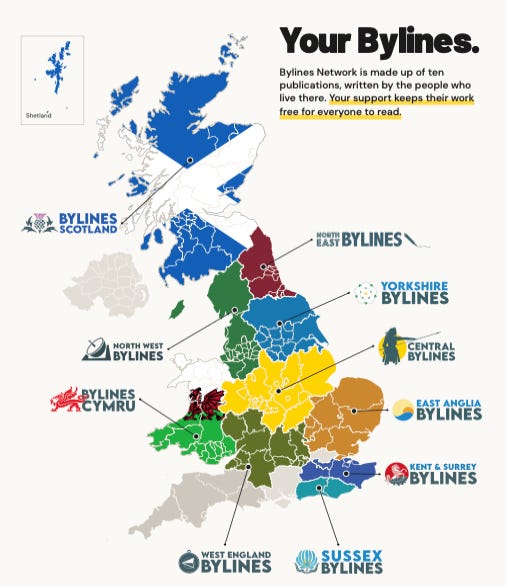
Unbiased. Independent. Honest. A community that champions everyday citizens and unheard voices. We don't have oligarch owners, corporate controllers or political paymasters - we have a community of 2,500 volunteer writers and editors, and over 350,000 readers. Help power Britain's biggest citizen journalism movement. Become a member of our Friends of Bylines Network scheme today.
Become a Friend of Bylines Network
The open letter
Included among the 105 parliamentarians who signed the letter were 25 UK MPs. Despite their signatures, many feel that they are too quiet about the UK company Seapeak, which is an active participant in moving Russia's LNG exports to Europe. I questioned MEP Søvndal on his thoughts on this, and he responded: "I am happy for their support, because we were not counting that many will support it. Everyone should follow up from the immoral question. Do they think it is okay? They should be asking 'how can I help countries stop helping Russia's economy?'"
The open letter stated that, "Ice-class Arc7 vessels are no ordinary LNG tankers. They are the lifeline of Russia's Arctic LNG export business. European countries must do everything possible to increase pressure on Russia and reduce the revenues that sustain its war of aggression against Ukraine. Danish maritime infrastructure should not be used to prolong the operational life of vessels that keep Russian fossil fuel revenues flowing. We therefore urge Fayard to refuse all further repair and maintenance work on Arc7 LNG tankers and other vessels serving Russian Arctic LNG exports, and to publicly confirm that no such vessels will be accepted in 2026."
Criticisms of the Danish shipyard's actions have been raised for some time, and even at the highest level. Søvndal's criticisms joins Danish Prime Minister Mette Frederiksen, who called it "inconceivable" that a Danish shipyard would service vessels carrying Russian LNG. Even more significant is the critique by Vladislav Vlasiuk, the sanctions adviser to Ukrainian President Volodymyr Zelenskyy, who described the maintenance as being a critical link in Russia's logistics chain, and has called for an end to servicing at European ports. More importantly, European Parliament Vice-President Robert Zile stated that: "We must remain vigilant and close loopholes to ensure sanctions remain effective. By continually adapting our sanctions, we demonstrate that Russia will face lasting consequences for its war of aggression against Ukraine."
EU sanctions packagesThe latest EU sanctions package was introduced in July 2026. It was the 21st sanctions package that the EU has targeted at Russia and its economy. This is the bloc's attempt to weaken Putin sideways. The aim of the package is to further cripple Russia's economy, and to prevent it from being able to take further military actions against Ukraine and its civilian infrastructure. But after 21 sanctions packages, have they all proven useful in weakening Putin and his war on Ukraine?
"For sure," said MEP Villy Søvndal. "It is obvious for everyone that Russia is in big, big trouble. [The sanctions packages have] weakened Russia's economy. They are starting to sell their gold reserves, and Russian citizens are taking money out of their banks. And with the deep strikes that Ukraine is making into Russia, all of these possibilities mean that Russia could lose this war." Søvndal is confident that the sanctions packages are enough to put pressure on Russia to negotiate.
"They can see that the war is not moving," he continued. "1.3 million young men killed or displaced, means that in each Russian family, we know about someone who is either killed or has disappeared, and who can neither work nor go back to society. […] It costs [a person] 13.5 years [in prison] to critique the war. For sure it is a situation which is difficult for Putin."
In the 21st sanctions package, the EU lays out that the automatic adjustment of the oil price cap will be paused until 15 July 2027. But even with this pause, Russia will still be making a profit from its LNG trade, only not as much as it could make had the pause not been implemented. Over the phone, I asked MEP Søvndal whether completely ending all revenue from the Kremlin's LNG trade was possible to achieve immediately. He responded, "We are hoping for that. But the problem is that there are some countries that are still reliant on Russian gas. There are some countries that have found a green alternative, but the countries that did nothing to change their energy supply are still relying on this. Sanctions demand unanimity in the count. They put the border on how quickly we can move."
Søvndal's message"I think you can say that Denmark has really helped Ukraine: both in economic terms, trying to stop the shadow fleets […], but there are other EU countries not doing their part. We are now at a point in this war where the Russian economy has weakened. If every country did what they could to stop as many businesses [as possible] from giving Russia a better economy, we would stop this war soon. If Russia wins this war, we will be in a worser economic situation. You can win a war in two ways: the military, which is less likely to happen, and the economy. [The latter] is the better approach to stopping Russia. It's all in our best interest to stop Russia."
Rebecca Kotey
Rebecca is a freelance journalist and a writer. She withdrew from the Bar Practice Course at the Inns of Court College of Advocacy, to embark on a career in journalism. Currently, she writes for businesses and publications, and is host of 'The Thinking Archive' publication on Substack where she is writing a children story, and analysing deep topics of the humanities subjects to inform and to get you thinking. Topics include literature, philosophy, history, theology, and more.
Read more from Rebecca on Substack here:
Read more of Rebecca's journalism for West England Bylines here.
Hello, Best of Bylines newsletter subscribers. Welcome to you Friday Best of Bylines newsletter. Twice a week we send you an article from one of our 10 UK national and regional publications, hand-picked by our editors-in-chief and delivered directly to your inbox.
This time, Adam Green discusses the recent decision to designate Skye in Rochdale as a Conservation Area. A detailed appraisal has just been published setting out the historical, architectural and landscape evidence behind the designation. In a fascinating article for North West Bylines, Adam takes a close look at what it says.
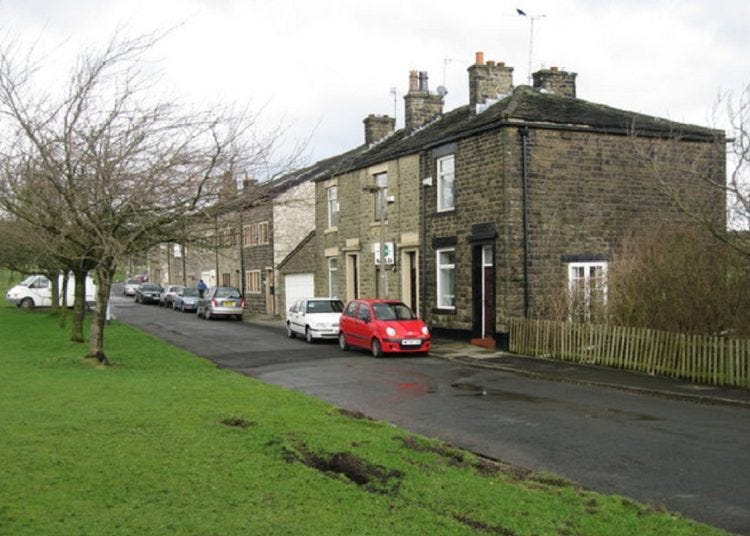 Cottages on Syke Road image by Paul Anderson. CC BY-SA 2.0The history of Syke
Rochdale Borough Council confirmed on 17 February 2026 that the area of Syke has been granted Conservation Area status, a move intended to "protect its unique heritage" and safeguard it from unsympathetic development. The designation follows what the council describes as a successful public consultation, with "more than 85% of locals backing proposals." The announcement positions Syke as an area of "unique and rich history," highlighting its location on a historic packhorse route and the presence of traditional weavers' cottages, identifiable by their distinctive upper-floor windows designed to maximise light before the advent of electricity.
The Conservation Area Appraisal provides further historical detail, identifying Syke Road as part of the historic packhorse route linking Clitheroe to Rochdale and beyond. A packhorse route is a route that was used by packhorses to transport goods, particularly before the development and widespread use of canals and railways. Before the Industrial Revolution, packhorses were used to transport goods including coal, wool, cloth and limestone.
The appraisal also identifies a network of historic paths across the Common, including remnants of the old packhorse trail. The new Conservation Area will cover Syke Common, parts of Dewhirst Road and Syke Road, as well as sections of Buckley Wood. Councillor Danny Meredith, cabinet member for regeneration, described the designation as a "worthy addition" to Rochdale's existing Conservation Areas, emphasising local engagement and pride in the area's heritage.
Public support for the decisionThe council held a public consultation, and of the 38 responses received, 33 were positive about the new Conservation Area status for Syke. The 38 responses do not represent a large consultation response, but the figures show that support among those who responded was high, with approximately 87% expressing a positive view of the designation. The responses also provide evidence that local heritage was an important consideration for those who took part in the consultation.
Assessing historical significance of the areaThe Local Council's description of Syke's historical significance did not set out the detail contained in the Conservation Area Appraisal. The mention of weavers' cottages and a historic packhorse route is supported and expanded upon by the appraisal.
The appraisal itself, however, provides substantial supporting evidence for the designation. It identifies the northern extent of Cronkeyshaw Common and Syke Pond, well-preserved weavers' cottages and evidence of former industry, vernacular buildings and farmsteads, sandstone buildings, dry-stone and flagstone walls, and Syke Road as the former Limers Gate and packhorse trail.
It also includes historical maps dating from 1851, 1891, 1911 and 1936, sections on architectural character and historic buildings, key views and vistas, historic paths, green spaces and a character appraisal.
The appraisal therefore provides a documented basis for the council's assessment of Syke's special architectural and historic interest.
Designating and managing a Conservation AreaGuidance published by Historic England provides a framework for understanding how such designations are typically made. According to the organisation, Conservation Areas are designated by local authorities and must be justified by the presence of "special architectural or historic interest." The guidance also indicates that local authorities are expected to prepare a Conservation Area Appraisal. This document defines the character and significance of the area, providing a structured and evidence-based justification for its designation.
The Syke Conservation Area Appraisal states that its purpose is to set out the significance of the area and identify measures to preserve and enhance its special character. It says the appraisal is intended to guide future development and inform future management plans. The document was prepared following consultation with local residents and was based on site visits, archive material, information from local residents and guidance documents provided by Historic England.
Historic England told us that it had "no involvement with the designation for the new Conservation Area in Rochdale." The organisation directed attention to its general guidance on Conservation Areas but did not provide any assessment of Syke itself.
Council documents show that Historic England guidance and documentation were considered as part of the process, while Historic England itself did not have a role in determining the designation.
Planning protections and practical impactThe Local Authority states that Conservation Area status will "enshrine particular protections within the planning process," helping to safeguard the area from unsympathetic development. Guidance from Historic England supports this general objective but makes clear that the level of protection can vary. Additional controls, such as Article 4 Directions, are not automatic and depend on further decisions by the local authority.
The available information does not establish whether any such measures will be introduced in Syke, nor does it set out in detail what the designation will mean in practical terms for residents, property owners, or developers. The Conservation Area Appraisal provides more detail on the practical planning implications. The main document states that permitted development rights are more restrictive in Conservation Areas and identifies circumstances where planning permission is required, including substantial demolition of buildings or structures, certain walls, gates and fences, and certain householder extensions and alterations.
The appraisal also explains that Article 4 Directions can remove additional permitted development rights and sets out additional requirements, for instance concerning trees, within Conservation Areas.
However, the existence of these general conservation-area controls does not itself establish that an Article 4 Direction has been introduced for Syke. The practical effect on individual properties will depend on the controls that apply and any further decisions by the local planning authority.
In context with Rochdale's other Conservation AreasThe announcement places Syke within a broader context, noting that it is now Rochdale's 28th Conservation Area. Other designated areas include Manchester Old Road in Middleton, associated with architect Edgar Wood, and Catley Lane Head, known as Cotton Famine Road.
The available material does not provide a direct comparison between Syke and these existing Conservation Areas in terms of scale, significance, or condition. Without such context, it is difficult to assess how Syke fits within the borough's overall heritage strategy.
The Syke Conservation Area Appraisal does, however, identify the particular characteristics that the Local Authority considers important to Syke. These include the relationship between its historic buildings and open spaces, surviving evidence of its industrial and agricultural past, Cronkeyshaw Common and Syke Pond, historic paths, and the wider landscape.
Taken together, the available information shows that the designation is supported by a detailed Conservation Area Appraisal. The appraisal examines Syke's historical development, architectural character, historic buildings, landscape, views, paths, green spaces and other features contributing to the area's special interest.
Recognising and protecting local heritageRochdale Borough Council's designation of Syke as a Conservation Area marks a significant step in recognising and protecting local heritage. The council's committee report and Conservation Area Appraisal provide substantial information about the reasons for and implications of the Council's designation. Guidance from Historic England makes clear that such decisions should be grounded in detailed appraisal and clear justification.
Council records provide context on consultation scale and supporting evidence of the decision-making process.The evidence is accessible through the Local Authority's published documents, allowing the basis for the designation to be examined in great detail.
Join the citizen journalism community
Unbiased. Independent. Honest. A community that champions everyday citizens and unheard voices. We don't have oligarch owners, corporate controllers or political paymasters - we have a community of 2,500 volunteer writers and editors, and over 350,000 readers. Help power Britain's biggest citizen journalism movement. Become a member of our Friends of Bylines Network scheme today.
Become a Friend of Bylines Network
Welcome to your Monday Best of Bylines, featuring a standout article from one of our 10 UK national and regional publications, delivered straight to your inbox.
This time we hand over to Central Bylines journalist Louise Balint-Kurti wth a story that should interest anyone who cares about our environment. Discussing the inspirational work of the The Beaver Trust, Louise reveals how colonies of Europe's largest rodent have been returning to the Midlands over the last five years, after an absence of four centuries - eight in Derbyshire.
 image by Mark Ma. Free to use under the Unsplash License
Working in partnership with local conservation organisations, the Beaver Trust has helped reintroduce Eurasian beavers into wildlife sanctuaries and woodland across the region. Beavers can now be found at:
Boothby Wildland - Lincolnshire.
Idle Valley Nature Reserve - Nottinghamshire.
Trentham Gardens - Stoke-on-Trent
Willington Wetlands - Derbyshire
Several of these sites have larger rewilding projects in hand and beavers are playing a vital role in reinstating natural landscape features that reinvigorate the surrounding countryside.
The Eurasian beaver, Europe's largest rodent, is estimated to have lived in the UK for 30 million years. Many factors contributed to its decline and by the 12th century it was already extinct in Wales, followed by England and Scotland in the 16th century. Beavers were hunted relentlessly for their meat, fur and scent. Regarded as being rich in flavour, beaver meat was considered a delicacy, while its fur was prized to make fashionable waterproof hats, warm coats and mittens. Combined with creeping deforestation and urbanisation, the beaver eventually disappeared until campaigns started in the mid-1990s to return it to the UK.
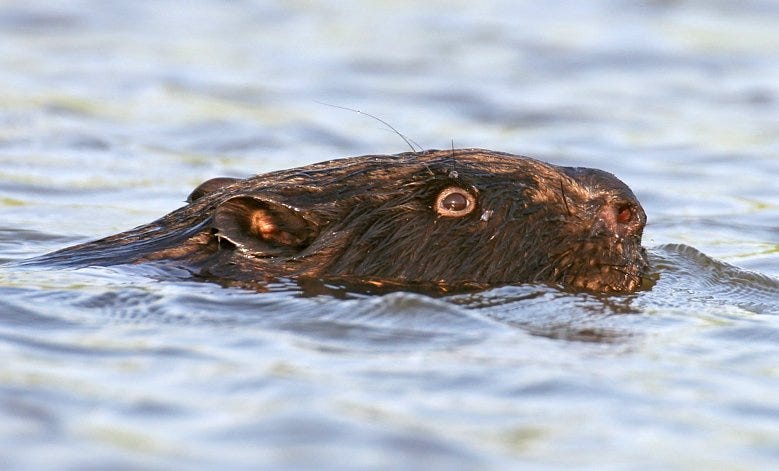 image by Klaudiusz Muchowski. Free to useBeavering away on rewilding
Rewilding is the active restoration and conservation of large areas of land that were previously farmed or developed in a way that disrupted or destroyed natural ecosystems. It often involves reverting rivers and streams back to their original courses, regrowing indigenous tree and plant species and reintroducing animals who used to populate the local landscape. Reclaiming natural land features and bringing back native species is increasingly believed to benefit the wider environment too, helping it build resilience to the effects of climate change and reverse lost biodiversity.
Beavers are referred to as "ecosystem engineers": their characteristic dam-building creates new wetlands, as well as reduces flood-risk by slowing down waterflow in rivers and streams. They tirelessly coppice trees and shrubs, dam small waterways and dig their own mini-canal systems.
This helps adjacent land store more water, which in turn sustains other wildlife during periods of drought. Their absence led to the demise of myriad small water networks nationwide and consequently other plant and animal life suffered too. New beaver activity has quickly proven successful in developing natural communities, attracting otters, voles and waterbirds to their wetlands.
Environment protector or waterway pest?While environmental and conservation groups have hailed the return of our flat-tailed friends and the contribution they are making to rewilding projects, they have not received a warm welcome from everyone. Farmers and landowners regularly voice concerns that while damming can prevent flooding downstream, it can actually cause localised flooding of agricultural land. Equally, as prodigious builders, beavers fell and strip trees, so that as colonies grow the damage to surrounding woodland can be considerable and farmers have to meet reparation costs themselves. Midlands' fishing and angling groups also caution that damming disrupts fish migration for breeding, affecting trout and salmon in particular, whose numbers are already in decline.
Furthermore, because beavers have settled back in so well, there is a risk that booming colonies could become an issue, as there are few natural predators around to help regulate the population. Centuries ago, wolves and wild cats preyed on adult beavers, while otters, badgers and birds of prey hunted their kits (baby beavers). There are campaigns to reintroduce wolves, lynx and golden eagles into the UK, but they have met with resistance from farmers worried about wild animal attacks on livestock and are still under discussion.
 image by Hangsna. CC BY-SA 4.0
Two days to go till our next webinar - book now!
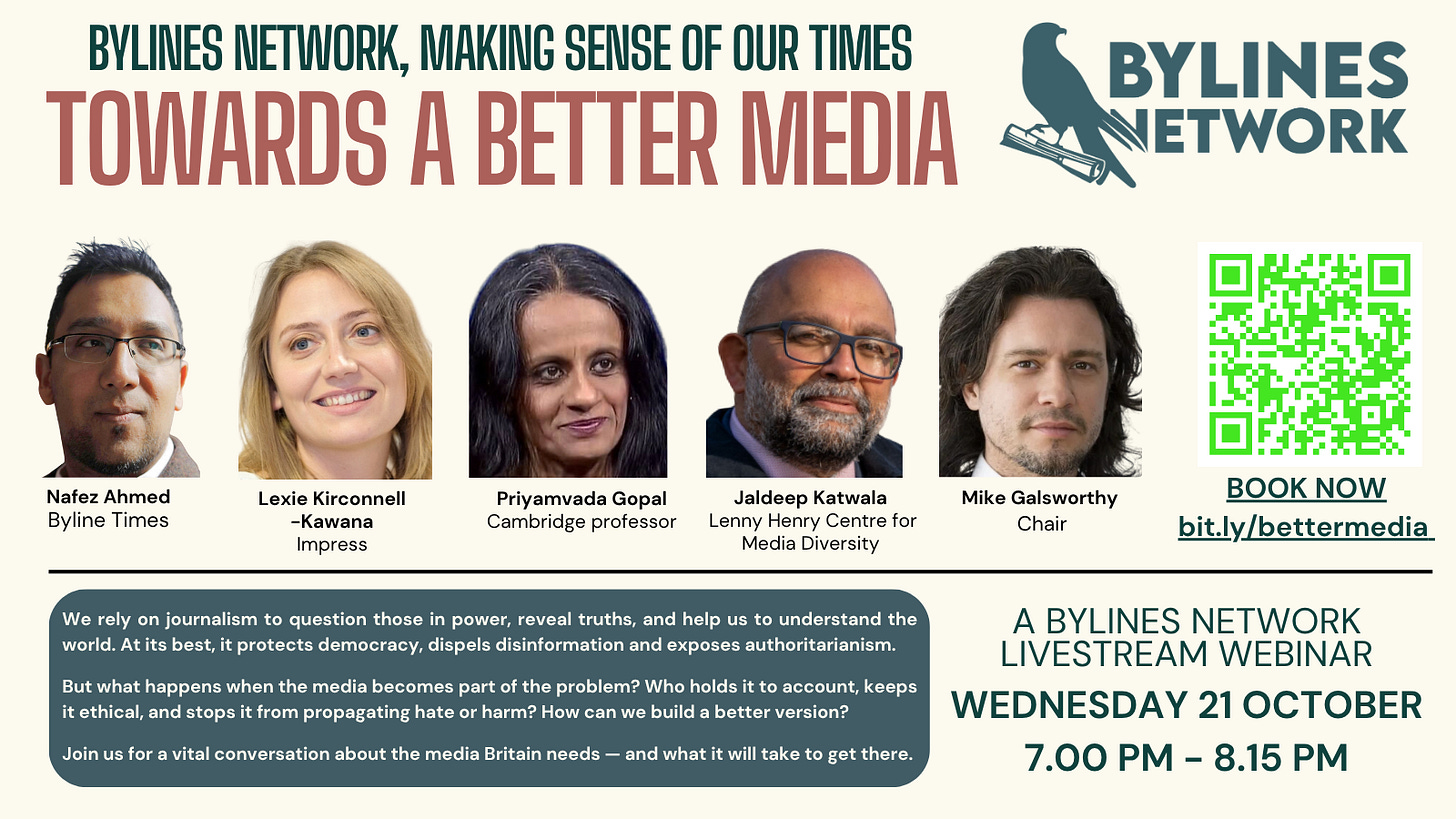
The death of Cambridge professor Jason Arday, following weeks of intense and often hostile media coverage, has raised urgent questions about the power of the press, the responsibilities of journalists and what happens when scrutiny becomes something more troubling.
Journalism should question those in power, reveal truths and help us understand the world. At its best, it protects democracy, dispels disinformation and exposes authoritarianism. But what happens when the media itself becomes part of the problem? Join Bylines Network for a live conversation about the media Britain needs - and what it will take to get there. Book now:
Now back to Louise's wonderful article.
License to thrive
All these factors make rural planning essential. There have been instances of beaver bombing, whereby beavers are released back into the wild privately, without being part of any formal program or managed scheme. In some ways, it shows the popularity of beaver reintroduction, as groups and individuals tire of waiting for official repopulation projects, but it can be problematic for landowners and existing colonies alike. Consequently, Defra (Department for Environment, Food and Rural Affairs) started a beaver reintroduction license scheme in February 2025, to help balance existing colonies, protect landowners and regulate beaver activity.
For the most part, the return of beavers to UK waterways has been well-received and generated huge public interest. The new colonies are thriving and kits have been born in all four of the Midlands sites: Beaver Kits at Willington Wetlands. Nationally, there is increasing coverage of the positive impact beaver activity has had on the wider environment, especially over the hot summer of 2026, when new wetlands helped attract and support a wide range of wild animals and insects through several heatwaves. The Beaver Trust's vision of "thriving waterways, where beavers are embraced as a vital part of our biodiverse landscape" is fast becoming a reality.
 Beaver tail and paw prints in the snow image by Minnekon. CC BY-SA 4.0Part of a wider scheme
In April 2024, Forestry England teamed up with the Beaver Trust and Natural England to release a family of six beavers into an enclosure in the Wyre Forest, which sits on the border of Worcestershire and Shropshire. They quickly took to their new environment. A new 30-metre dam appeared creating a large pool in which the beavers had created lodges. In the summer of 2026 Forestry England reported that three kits had been born.
In February 2025 two beavers were released in Shrewsbury at the Old River Bed Nature Reserve in conjunction with Shropshire Wildlife Trust. Within two weeks they had created their lodge. The beavers, Beryl and Bertie, quickly got busy making a positive impact on the local environment and in December 2025 it was announced that their kit had been born, marking the first beaver to be born in Shropshire in nearly 400 years!
To find out more about the Beaver Trust and the work they do visit their website.
Join the citizen journalism community
Unbiased. Independent. Honest. A community that champions everyday citizens and unheard voices. We don't have oligarch owners, corporate controllers or political paymasters - we have a community of 3,000 volunteer writers and editors, and nearly 500,000 readers. Help power Britain's biggest citizen journalism movement. Become a member of our Friends of Bylines Network scheme today.
Become a Friend of Bylines Network
Bylines Network relies on your support as volunteers and donors - without it, we wouldn't exist. Being a paid Substack subscriber is the same as becoming a Friend of Bylines Network. Click here to subscribe now.
Welcome to another weekend edition of Best of Bylines, featuring a fresh and important story from one of our 10 UK national and regional publications.
This time, Bylines Cymru co-editor-in-chief Gareth Wyn Roberts reports on last week's protests against a proposed AI data centre in Wales. This is Bylines Network at its best - a local story, written by a citizen embedded in their community, shedding light on the global development of big-tech that should concern us all.
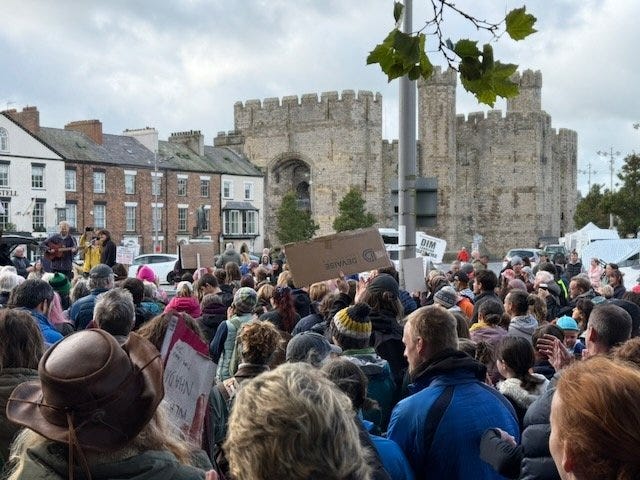 Image by Gareth Wyn Roberts. Used with permission
On Saturday 10 October, demonstrators gathered at the Maes (Castle Square) in Caernarfon to oppose a proposed AI data centre on the former Ferodo site, between Caernarfon and y Felinheli. Following speeches by politicians, residents and environmentalists, they marched around the castle to the county hall. The protest followed a well-attended community meeting that demonstrated the strength of local opposition. A petition against the development has already attracted 22,000 signatures.
The scale of the proposalAn outline planning application for a data processing facility on the brownfield site and adjoining greenfield land has prompted renewed local concern. Submitted to Gwynedd County Council, the proposal includes demolishing the existing buildings and structures. Campaign group "Gwarchod y Menai" (Safeguard the Menai) opposes the plans and says the largest building would be 100ft high. The proposed complex would occupy more than 50 football pitches on the shores of the Menai Strait, extending beyond the original brownfield site. Campaigners also say the site still contains asbestos that could be released into the surrounding environment during construction or landscaping.
Ferodo was a major local employer in the second half of the twentieth century. From 1962 to 1997, up to 1,500 workers produced brake pads, linings and other components for the automotive industry. The business later became Friction Dynamics, and the factory closed in 2008, leaving a large brownfield site.
The developer's caseDeveloper Gwelyfenai Ltd, which submitted the planning application, says the project would create jobs and help regenerate the derelict site. Reports prepared on the company's behalf describe its vision as a highly sustainable digital infrastructure facility that would strengthen Wales's data and technology capabilities while responding sensitively to the site's environmental and landscape setting. The developer says concerns raised about other data centres do not apply to Canolfan Ddata Menai. It argues that the project would boost the economy and that its cooling system would recirculate water rather than continually draw on supplies. The company says construction would support 700 workers and that the completed facility would employ about 200 people. However, many residents believe the benefits would not remain local because specialist construction workers and permanent staff would be recruited from outside the area.
Political pushbackLiz Saville Roberts, Plaid Cymru MP for Dwyfor Meirionnydd, said in letters to this publication and concerned constituents that the proposed 57-football-pitch complex represented a major change to the Menai Strait landscape and therefore required the highest level of scrutiny and public engagement. She added that local opposition was growing and that residents' concerns were widely shared.
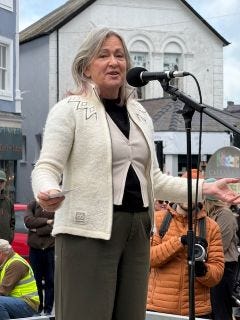 image by Gareth Wyn Roberts. Used with permission
She also questioned whether the claimed employment benefits would justify the development. Saville Roberts said that developers needed to demonstrate clear, lasting benefits for local communities, given doubts that the number of permanent jobs would justify the project's scale. She argued that concerns about site contamination, water demand, the loss of agricultural land, and wider environmental and landscape impacts outweighed the uncertain economic returns.
Beca Brown, Plaid Cymru MS for Gwynedd Maldwyn, added: "The strength of feeling locally about this proposal is clear. Residents have raised legitimate concerns about the scale of the development, its environmental impact, and the pressure it could place on local resources. Having considered the views put forward by the community, I share those concerns and oppose the proposal." At the time of writing, the two local Reform MSs had not responded to Bylines Cymru's invitation to comment.
A unique habitat at riskAt Saturday's meeting, Frankie Hobro of Anglesey Sea Zoo, which lies directly opposite the proposed site, said: "The development would border several Sites of Special Scientific Interest and Areas of Outstanding Natural Beauty, and would be adjacent to a Special Area of Conservation designated for environmental protection. Protected wildlife in the immediate area includes otters, grey seals, lamprey, and several species of migratory fish and birds. The Menai Strait is unique globally and, if this data centre goes ahead, it will completely and permanently destroy this unique and irreplaceable global phenomenon."
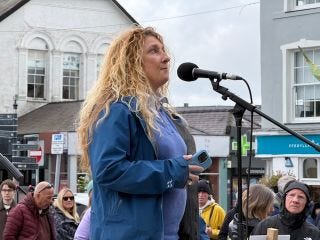 image by Gareth Wyn Roberts. Used with permission
Local Anglesey residents whose homes overlook the Menai Straits and the mountains of Eryri also express concern. Many feel it would be a blight on the landscape and diminish the visual beauty of the area. Noise and the smell would also cause a nuisance.
Campaigners have warned that the proposed data centre could make reopening the former Bangor-Caernarfon railway more difficult and expensive unless its route is protected. The campaign group, Traws Link Cymru has objected to the redevelopment because the former railway alignment runs through the site. In a letter to Gwynedd County Council, the group said that retaining the Lôn Las Menai walking and cycling route, which follows the old railway, would not in itself safeguard the land for future rail services.
In summary, objectors argue that the development's uncertain employment benefits do not justify its potential costs: disruption during construction, pressure on water and electricity supplies, pollution and noise, damage to wildlife and the marine environment, loss of local amenities, and the obstruction of future rail services.
Have your sayMembers of the public, as well as concerned organisations, are invited to submit their views on the project by 17th October to Gwynedd County Council's planning department. The planning reference number is C25/0740/20/EIA or alternatively email cynllunio@gwynedd.llyw.cymru.
Join us
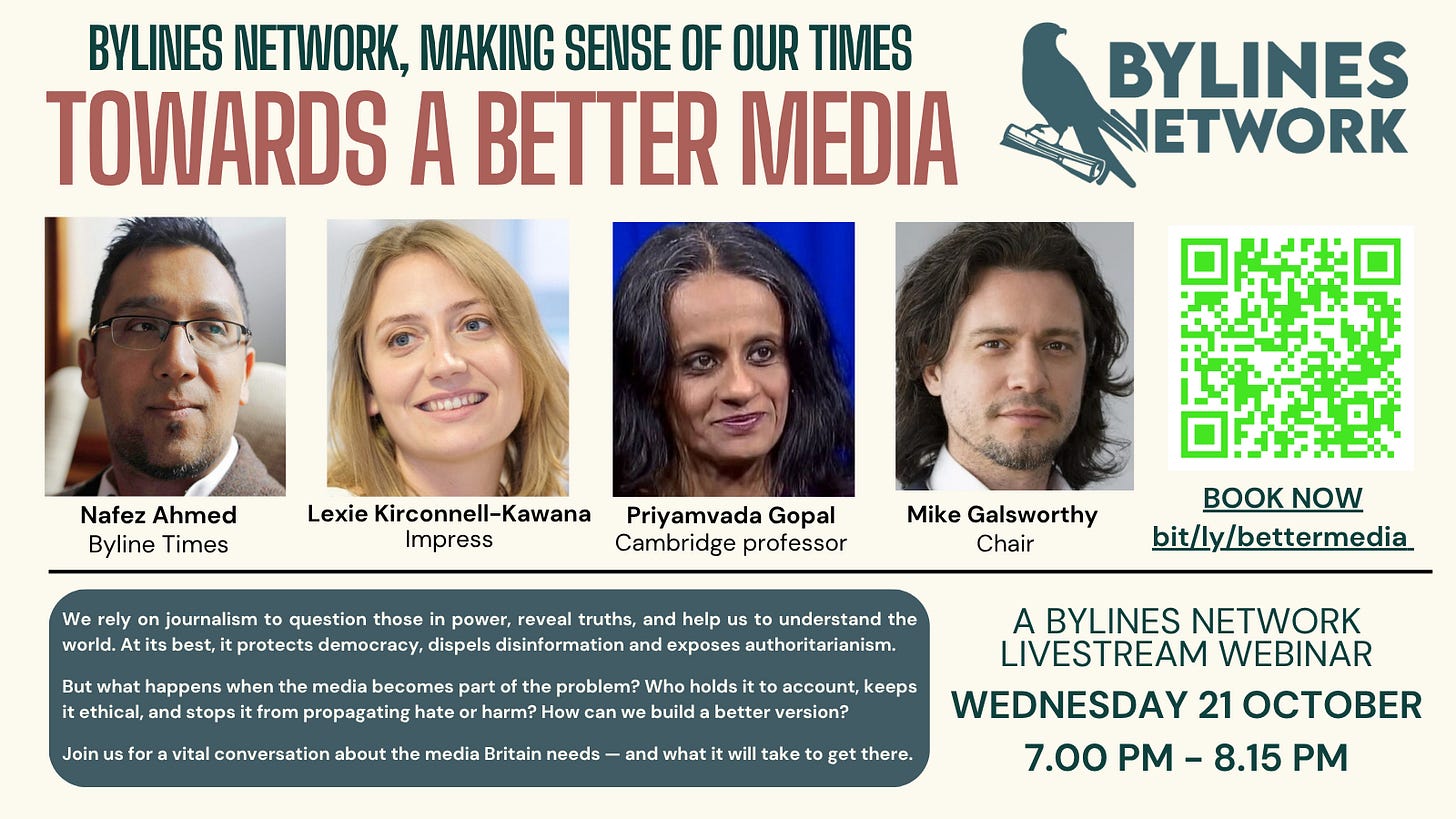
The death of Cambridge professor Jason Arday, following weeks of intense and often hostile media coverage, has raised urgent questions about the power of the press, the responsibilities of journalists and what happens when scrutiny becomes something more troubling.
Journalism should question those in power, reveal truths and help us understand the world. At its best, it protects democracy, dispels disinformation and exposes authoritarianism. But what happens when the media itself becomes part of the problem? Who holds it to account, keeps it ethical and stops it from propagating hate or causing harm?
Fourteen years after the Leveson Inquiry examined the culture, practices and ethics of the British press, are the systems intended to hold journalism accountable working? And if they aren't, what would a better media look like?
Join Bylines Network for a live conversation about the media Britain needs - and what it will take to get there. Join our fantastic panel:
Nafeez Ahmed - systems theorist, and Director of Investigations & Strategic Impact at Byline Times.
Priyamvada Gopal - writer, activist, and professor of postcolonial studies at the University of Cambridge.
Lexie Kirkconnell-Kawana - chief executive of Impress, the independent media regulator.
Mike Galsworthy - Chair of European Movement UK and co-founder of Bylines Network.
Book a ticket and join the event from anywhere. All you need is an internet connection. Standard tickets are £5, and there is a free option for those who can't afford the ticket price - with no questions asked.
Bylines Network relies on your support as volunteers and donors - without it, we wouldn't exist. Being a paid Substack subscriber is the same as becoming a Friend of Bylines Network. Click here to subscribe now.
Welcome to your Monday Best of Bylines, featuring a standout story from one of our 10 UK national and regional publications, delivered straight to your inbox.
This time we hand over to Maryam Panah, a new contributor to Sussex Bylines, with a powerful article revealing the heart-rending and sadly underreported impacts of the US's war on Iran.
With the conflict entering a period some have called a 'forever war', Donald Trump's administration is making absurdly contradictory statements, on the one hand asserting this is not a war at all and on the other talking of 'total annihilation'. As uncertainty grows about what will happen next, Maryam reflects on the human cost, including tragic consequences for Iranian children, the phenomenon of 'black rain', and a growing mental health crisis.
Maryam's article continues below, but first, we want you to know that sharing this story is part of our commitment to truth-telling, powerful citizen news. Bylines Network was founded in the post-Leveson era, when trust in the media was at an all-time low. We're glad to be part of a new ecosystem of better journalism, rooted in communities and championing unheard voices. Sadly, some legacy media outlets don't seem to have learned the lessons of the past.
If you think articles like Maryam's matter, then please join our webinar on Wednesday 21 October, 7 pm, when we will discuss how to build a better media with Nafeez Ahmed, Lexie-Kirconnell-Kiwana, Priyamvade Gopal and Mike Galsworthy.
And now back to Maryam's important story.
 A prayer stone on a rug. Image by Rudolf Langer from Pixabay
The fear of re-escalation into an all-out war and the bombings of earlier this year have reminded me of a conversation I had with my aunt back in May in the midst of it all, as I sat in Brighton worrying daily about my relatives back in Tehran.
Contact was very sporadic and limited to short occasional phone calls while their internet access remained blocked. The only way we could speak was by them calling us, but only by purchasing calling cards at an exorbitant cost. During one of the short calls, I heard that my aunts had been to a funeral.
Whose, I asked? Shockingly, it was the funeral of a 12 year old relative who had taken her own life. She had hanged herself using towels in the bathroom while home alone as schools remained closed and her mum, a single parent, was out at work at the local hospital all day.
The plight of children in IranThe grief and anguish of such an event is, of course, unbearable. Beyond this awfulness, it shines a light on the plight of children in Iran. It's also a reminder of the wider indirect deaths, which are the consequences of war, conflict and repression. These deaths are systematically under-reported.
The return to war has resulted in more direct bombing related deaths. On 1st September, a US missile strike caused the deaths of four people including two children at a wedding ceremony in southern Iran.This increases the total toll of children killed directly by US attacks. It is astonishing that the US has taken such little accountability for this. The Pentagon is still refusing to release the results of an investigation into the killing of 150 people, the majority of whom were school girls in Minab, also in southern Iran months ago. Meanwhile the UN has reported this month that that attack could have amounted to a war crime.
Beyond the immediate deaths, however, there are also indirect and longer term ones that tend not to be reported, are yet to be counted, and will need to be documented in months or even years to come. These range from deaths due to respiratory illnesses, to disruption to health services, and to the exacerbation of what had already become a growing mental health crisis.
The "black rain" phenomenonFirstly, attacks on oil and gas infrastructure led to severe pollution and inhalation of heavily contaminated air. In an earlier phone call with my aunt, she told me that she had been sitting at home indoors with a mask on for 2 days, even though all the windows and doors were closed as the black smoke had seeped in. In the same week, the "black rain" phenomenon - a toxic mixture of fuel by-products and atmospheric condensation - was widespread in Tehran.
It is well known that the fine particulate matter resulting from this black smoke and rain can penetrate into the lungs and enter the bloodstream with long term effects. The deaths resulting from this are yet to be counted.
Secondly, in an Iranian context where access to healthcare and medicines were already squeezed by the dire economic circumstances, the disruption to health services is a hammer blow. Beyond the destruction of hospitals and medical facilities, there has been an interruption to infectious disease control and immunisation programmes. There are also the delays to all sorts of other health interventions for a combination of cost and lack of facilities or medicines.
An escalating mental health crisisLess talked about, but equally worrying, is the escalating mental health crisis which is engulfing large chunks of the population with seemingly disproportionate recent impacts on teenage girls and young women. This has been a trend over a number of years. The suicide of one 12 year old will never be counted as a consequence of this war. The closure of schools, as well as the total internet shut down during the war closed off the few outlets Iranian children and teenagers have for social contact.
In a repressive state offering little hope for the future, if the war results in these remaining outlets being taken away, who will take accountability for the trauma and mental health impacts in the years to come?
Join the citizen journalism community
Unbiased. Independent. Honest. A community that champions everyday citizens and unheard voices. We don't have oligarch owners, corporate controllers or political paymasters - we have a community of 3,000 volunteer writers and editors, and nearly 500,000 readers. Help power Britain's biggest citizen journalism movement. Become a member of our Friends of Bylines Network scheme today.
Become a Friend of Bylines Network
Bylines Network relies on your support as volunteers and donors - without it, we wouldn't exist. Being a paid Substack subscriber is the same as becoming a Friend of Bylines Network. Click here to subscribe now.
Welcome to a special weekend edition of Best of Bylines, featuring another fresh and vital story from one of our 10 UK national and regional publications.
This time, we hand over to Kent and Surrey Bylines and Jennie Kermode's uplifting account of a night of unity, hope and music at last Saturday's Nothing But Love gig at Camden's Jazz Café. An event that was even more special thanks to a surprise set from legendary 90s rock band Skunk Anansie.
Joined onstage by Primal Scream drummer Darrin Mooney, they headlined a bill featuring indie soul sensation Constance Power and The Voice UK winner Ruti. Skunk Anansie lead singer Skin had such a good time that she even got down into the crowd to dance with fans before joining DJ Smokin Jo on the decks for the remainder of the party. "Looking out at that room, with every kind of person dancing together, I felt the love," she said later.
"There are people out there spreading hate, and they want us divided because they know that when we come together, nothing can beat us. But there are more of us than there are of them, so we're taking this everywhere. Next year we're bringing the UK's biggest artists back to their hometowns, back to the small venues that made them. Saturday was just the start."
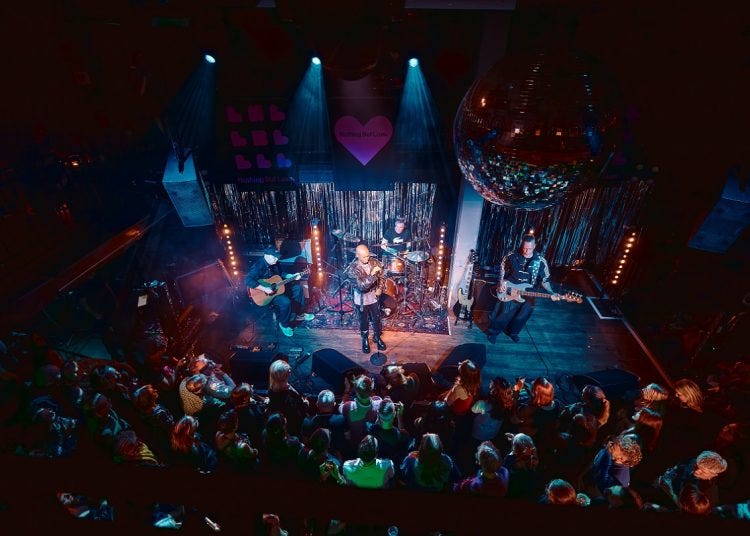 Pictures taken at Nothing but Love, The Jazz cafe, by Mette UnuabonaNothing But Love is changing the narrative
When you turn on the news you'll often hear despairing talk of broken Britain, but that's not all there is to this country, say the people behind the rapidly growing movement. What began in Trafalgar Square in March, when Skunk Anansie performed with Arlo Parks and Nova Twins for a crowd of 8,000 people, has been going from strength to strength. More and more venues and promoters have been getting on board, and next year, Nothing But Love's Homecoming gigs will give fans the chance to see world famous stars in intimate venues for an experience that's hard to match.
"It has been a joy working with the UK's artists and listening to their desire to respond to this moment in the UK's history," said the movement's founder, Katrin McMillan. Having spent much of her career opposing the far right and supporting vulnerable communities, she is a great believer in the power of music because it helps people to connect emotionally whether or not they're ready to start having conversations.
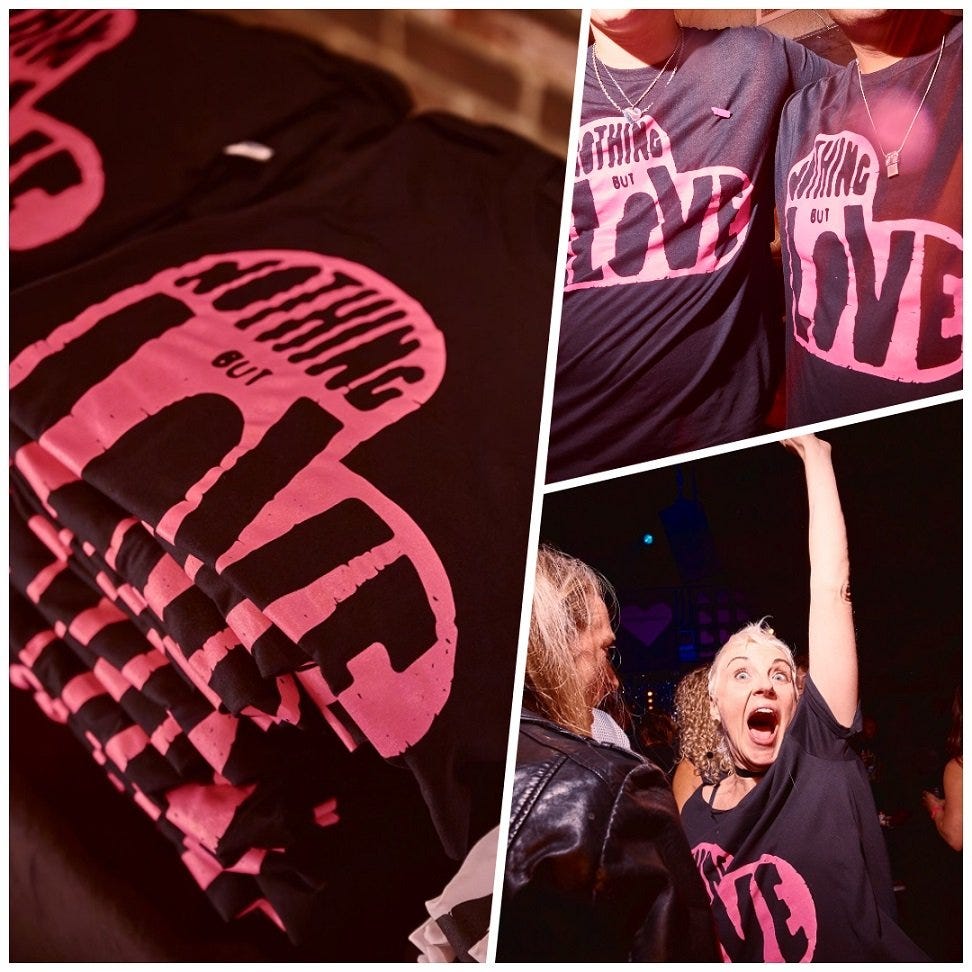 Pictures taken at Nothing but Love, The Jazz cafe, by Mette Unuabona
The movement resembles Rock Against Racism, which brought together bands like The Clash, The Specials, Stiff Little Fingers, Aswad and X-Ray Spex to help counter the rise of fascism in the mid-1970s. Its Militant Entertainment Tour staged gigs in cities and towns all across the country and even inspired a similar movement in Germany. Now artists believe that the time has come for musicians to lead the way once again.
Music and art can fuel a brighter future"I wanted to be part of Nothing But Love because I feel like I want to put my passion and the skills I have to good use," said Ruti. "I'm not a great talker or leader but I can help create a space for inclusion, joy and community. We often scrutinise each other for our small nuanced differences and mistakes when we are actually all fighting the fight against fascism. It's better if we do that together than in fragments and intersections."
Although it is focused on music, the movement aims to engage with people across the creative industries. The funds it raises will support local music venues and promoters but also local arts projects, with the performers themselves selecting the beneficiaries. This will create wider opportunities to share and celebrate the diverse traditions that combine to make this country a great place to live.
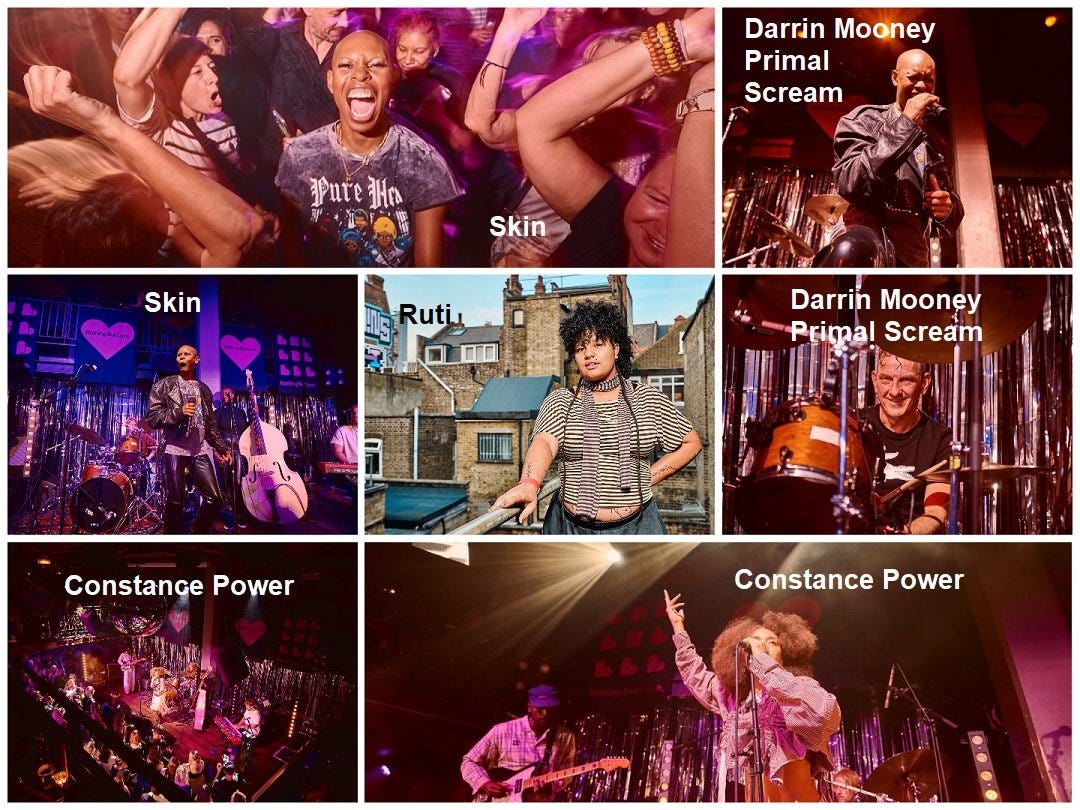 Skin, Ruti, Darrin Mooney and Constance Power, Pictures taken at Nothing but Love, The Jazz cafe, by Mette Unuabona
The event was difficult to put together, McMillan admits, because "this is a new movement in the most toxic moment that I've known of the UK's political and social history, and as a consequence, it's very hard to start anything right now because everyone's frightened." That changed, however, when the gig began.
"This stopped being an idea and suddenly became a feeling. What everyone felt in the room that day on Saturday. I want everyone to feel. I want everyone to feel that feeling of tolerance, loving kindness, inclusion, diversity, hopefulness. Fear wasn't in the room. I think people felt powerful. It started being a revolution for our time, albeit teeny tiny so far, but I can tell that the snowball has begun."
Many of the fans, she says, told her that they want to get more involved and keep supporting the new movement.
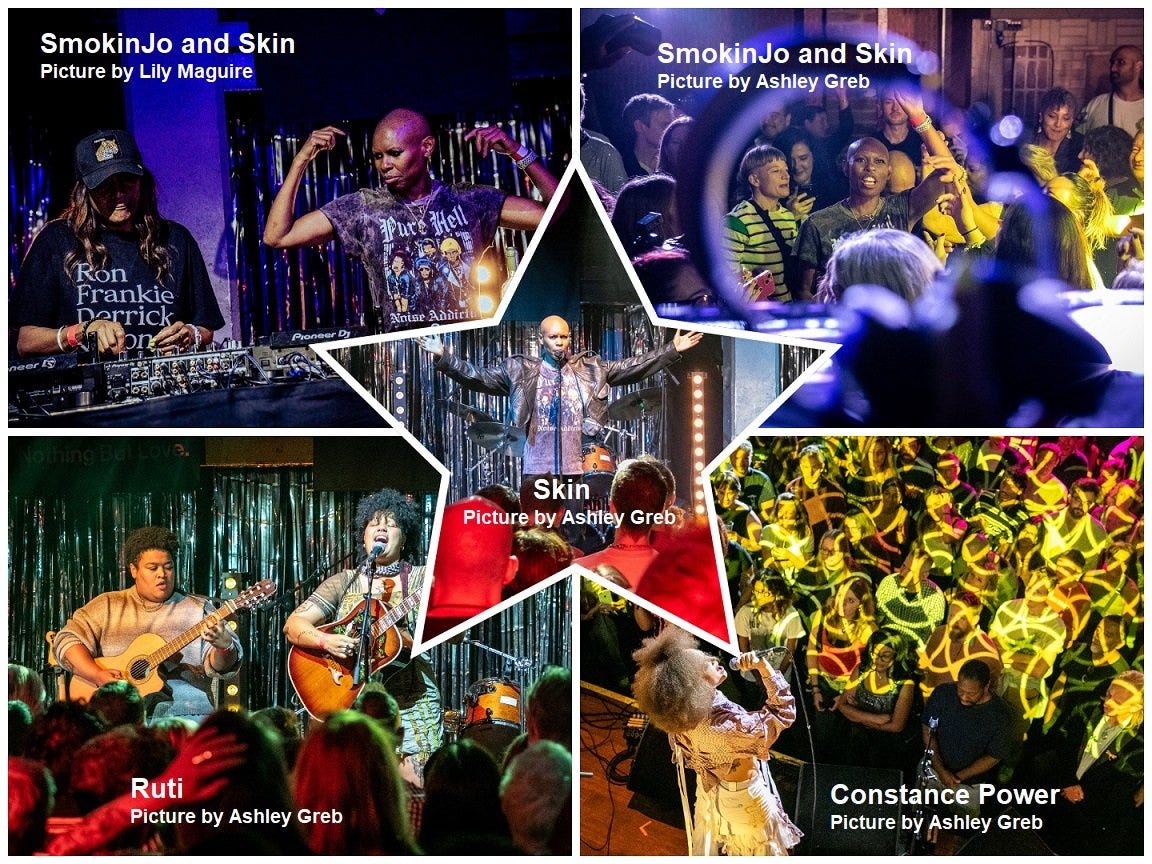 Pictures taken at Nothing but Love, The Jazz cafe, by Ashley Greb and Lily Maguire
Constance Power sees the present time as one that is full of opportunity. "No matter what you look like or where you come from, everyone deserves to feel loved and have spaces where they feel safe to express themselves," she said, but added "I'm grateful to be a part of the serenading and the soundtrack to a time where hope and freedom to be yourself is invaluable as we stand up for and inclusive and colourful future."
A lot to look forward to in 2027Because Nothing But Love is all about inclusion, everybody will have an equal chance of attending the 2027 gigs. Tickets will be available through a lottery system, priced at £1 each and limited to ten per person. There's no knowing who will get lucky, but this means there will be no inflated prices putting them out of reach of ordinary people, and businesses won't be able to buy them up for corporate give-aways. The atmosphere at the gigs should be electric because everyone present will be a genuine fan.
Exactly who will be performing remains to be revealed, but McMillan has revealed that they are very close to conforming with some "superhumanly big pop stars".
"Major artists from all genres and generations, up and down the UK, are joining forces, because joy beats fear and hatred," she said. "The greatest human triumph is love, and we need to fight for what we love…I believe that people are fundamentally good and kind and decent, community focused, and that the vast majority of us want to take care of each other and the United Kingdom. I think that we also need a resurgence of joy and play and fun in the face of darkness, because I think there's something quite radical about that."
"It was an honour and a pleasure to be involved," said Skin. "We need to do it all again!"
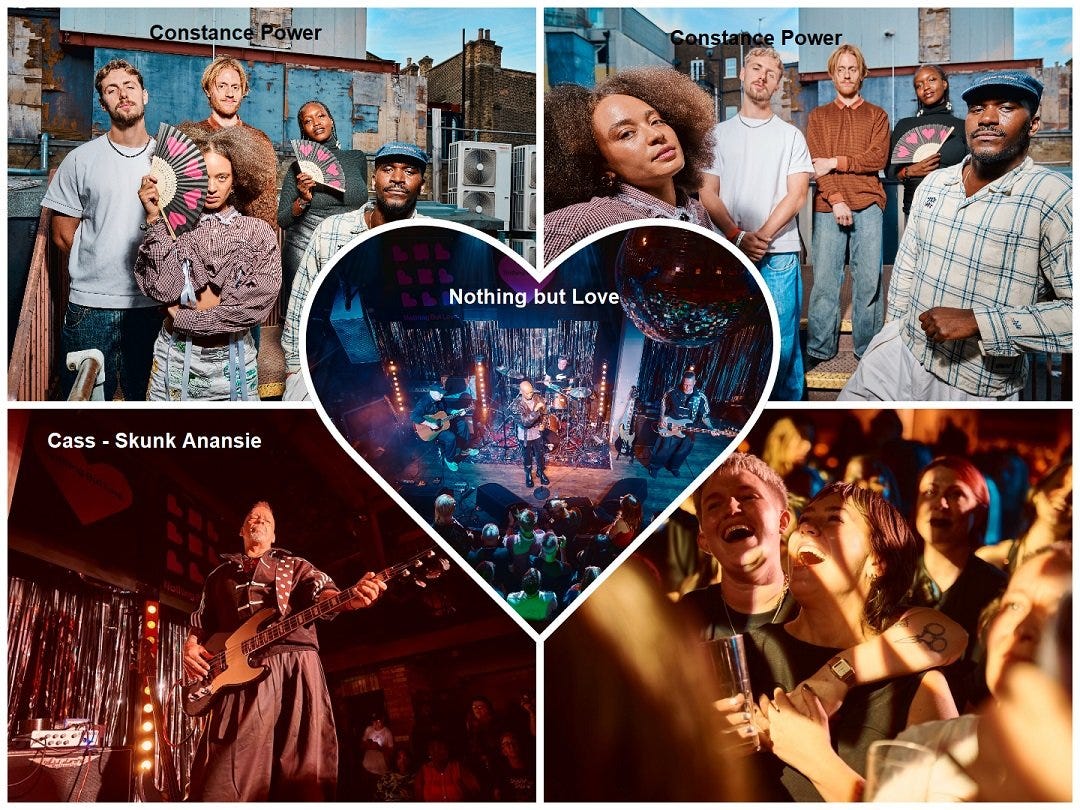 Constance Power, Cass and the crowd. Pictures taken at Nothing but Love, The Jazz cafe, by Mette Unuabona
Whilst we've got your attention, what are you doing on 21 October?
We rely on journalism to question those in power, uncover what is hidden, and help us understand an increasingly complex world. When it does its job properly, it's a firewall between democracy and disinformation, authoritarianism and hate.
But what happens when the media itself becomes part of the problem? Who holds it to account? 14 years after the Leveson Inquiry reported its findings, has anything really changed? And how can we build something better? Join Bylines Network on Wednesday 21 October, 7 pm, for a vital conversation about the media Britain needs - and what it will take to get there.
Join our fantastic panel:
Nafeez Ahmed - systems theorist, and Director of Investigations & Strategic Impact at Byline Times.
Priyamvada Gopal - writer, activist, and professor of postcolonial studies at the University of Cambridge.
Lexie Kirkconnell-Kawana - chief executive of Impress, the independent media regulator.
Mike Galsworthy - Chair of European Movement UK and co-founder of Bylines Network.
Book a ticket and join the event from anywhere. All you need is an internet connection. Standard tickets are £5, and there is a free option for those who can't afford the ticket price - with no questions asked.
Bylines Network relies on your support as volunteers and donors - without it, we wouldn't exist. Being a paid Substack subscriber is the same as becoming a Friend of Bylines Network. Click here to subscribe now.
Welcome to your Monday Best of Bylines, featuring a standout article from one of our 10 UK national and regional publications, delivered straight to your inbox.
This time we hand over to East Anglia Bylines author Stephen McNair for a local investigation that raises important questions about appointments to senior local government jobs.
On 7 September, Dennis Bacon took charge of Norfolk County Council, an organisation employing around 8,000 people and spending £2.3bn a year. He had never worked in local government, and the latest accounts for Apple Homecare, which he led for eleven years, show that the company employed 15 people. Yet council leader David Bick claimed Dacon had considerable experience dealing with the council.
But first - what are you doing on 21 October?
We rely on journalism to question those in power, uncover what is hidden, and help us understand an increasingly complex world. When it does its job properly, it's a firewall between democracy and disinformation, authoritarianism and hate.
But what happens when the media itself becomes part of the problem? Who holds it to account? 14 years after the Leveson Inquiry reported its findings, has anything really changed? And how can we build something better? Join Bylines Network on Wednesday 21 October, 7 pm, for a vital conversation about the media Britain needs - and what it will take to get there.
Join our fantastic panel:
Nafeez Ahmed - systems theorist, and Director of Investigations & Strategic Impact at Byline Times.
Priyamvada Gopal - writer, activist, and professor of postcolonial studies at the University of Cambridge.
Lexie Kirkconnell-Kawana - chief executive of Impress, the independent media regulator.
Mike Galsworthy - Chair of European Movement UK and co-founder of Bylines Network.
Book a ticket and join the event from anywhere. All you need is an internet connection. Standard tickets are £5, and there is a free option for those who can't afford the ticket price - with no questions asked.
And now back to Stephens's excellent and important story.
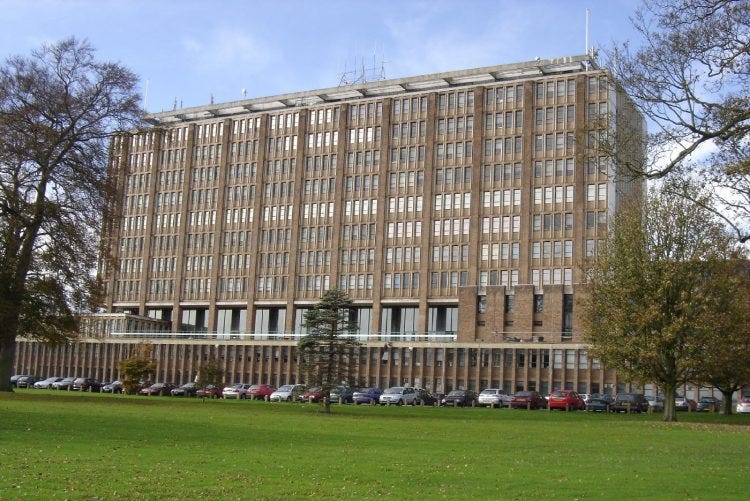 Image by Martin Richards (CC BY-SA 3.0)
Bacon's appointment as Chief Executive followed an unusually rapid recruitment process after Reform UK took control of the authority in May. Although the five-member interview panel failed to agree on the appointment, there was no readvertisement. The appointment went instead to an extraordinary meeting of the full council on 14 August, where Reform councillors, backed by Great Yarmouth First - the local party founded and chaired by former Reform MP Rupert Lowe - had the numbers to secure his appointment.
Councillor Dan Roper (Lib Dem), who had taken part in two previous chief executive appointments, told the meeting that confirmation would normally be a formality, with cross-party support giving the successful candidate a mandate from the whole council. This time, leaders of four opposition groups spoke strongly against the appointment. Bacon takes up the post facing a difficult challenge.
The appointment processBacon will replace Tom McCabe, who left for reasons which have not been made public, shortly after Reform UK took control of the council. The council leader, Councillor David Bick (Reform UK, Thetford West), wanted to fill the vacancy as quickly as possible. Opposition councillors argued that the urgency was unnecessary since the Director of Legal Services had proven an effective interim substitute. They argued that she could have continued in the role, allowing more time for advertising and consideration.
Despite this, the vacancy was advertised only on the county council website and on LinkedIn, with a very short timescale. The process nevertheless attracted 49 applicants. Councillor Maxine Webb suggested that this was an unusually limited approach for such a senior post which might expect national and perhaps international interest. She pointed out that it was contrary to the advice of the Local Government Association. Later in the meeting, the council's monitoring officer confirmed that the process had been "legal and proper".
Councillor Davis expressed surprise that, given Reform's commitment to reducing local government spending, the post had been advertised at a higher salary than the previous CEO. At £215,000, it is now more than the Prime Minister's salary. Previously the post ranked as 45th highest paid council officer in England; it is now 24th. An officer subsequently confirmed that the increase resulted from the council's annual salary uplift.
There was no technical or psychometric testing of candidates, the interview panel was not involved in shortlisting, and candidates had a 30-minute online exchange with a leadership stakeholder panel followed by a one-hour interview with the member appointment panel. Councillor Roper said that a colleague at a District Council had told him that waste operatives went through a more extensive interview process. Councillor Webb had requested sight of all the applications and the scoring grid used for shortlisting, but this had not been provided by the time of the meeting.
Councillor Webb argued that the five-member panel did not properly reflect the political balance of the council, despite the constitution requiring political balance. It included a representative from Great Yarmouth First but excluded the Conservatives, although both groups have nine councillors. A request to extend the panel to allow wider representation was dismissed.
At the end of the interviews, the panel failed to agree on the appointment, and the Director of People suggested alternative ways of resolving this, including further discussion with the stakeholder panel, another conversation with Bacon or bringing the two preferred candidates back for a presentation. But Councillor Bick had already said that there would be no readvertisement, and a recommendation to appoint was made only by a majority.
The appointeeFor the last eleven years, Dennis Bacon led Apple Homecare, which provides domiciliary care from a base in Norwich, employing 15 people to care for 39 people. He also spent 19 years as chairman of the Norfolk Independent Care Association, which supports more than 600 organisations and 11,000 staff in social care, and served as a member of the Norfolk and Waveney Sustainability and Transformation Partnership, bringing together local NHS organisations and councils. He is also a past recipient of Norfolk County Council's Outstanding Leadership in Public Services Award.
In 2022, the Care Quality Commission rated Apple Homecare as 'good' for effectiveness, but 'requires improvement' on safety and the 'well-led' category, which assesses leadership, management and governance. After eleven years in post, Bacon resigned from that role nine days before the county council post was advertised.
Opposition councillors questioned whether Bacon had the experience required to run an organisation with 8,000 employees and an annual budget of £2.3bn, given that he had no experience working within local government, and had previously led a much smaller organisation whose CQC rating included 'requires improvement' for leadership, management and governance.
Concern was also expressed about a potential conflict of interest. Although Bacon resigned his role with Apple Homecare at the end of June, Councillor Weston told the meeting that control of the company had passed to John Bacon and that public records showed Dennis and John Bacon remained in business together through other companies.
Councillor Roper expressed regret at the situation, saying it was "very unfortunate and unfair on Mr Bacon" that councillors lacked confidence in the appointment because of the process.
At the end of the debate, the chair invited the leader, Councillor Bick to 'sum up'. His response to the suggestion that psychometric testing might have been used, was to offer such testing to councillors. He criticised opposition councillors for referring to a £2bn budget, when the real figure is £2.3bn. He rejected the claim that Bacon had no background in local government, saying he had "considerable experience dealing both with this council and with the NHS". He described councillor Weston's remarks about Bacon and Apple Homecare's CQC record as "unworthy, personal remarks".
The futureThe outcome of the council meeting was never in doubt. Although Reform do not have a majority on the council, they were backed on this appointment by the nine councillors from Great Yarmouth First, the local party founded and chaired by former Reform MP Rupert Lowe and affiliated with his new national party, Restore Britain. In the event, both turned out almost all their councillors, and the appointment was confirmed by 45 votes to 18, with five abstentions.
But Dennis Bacon faces a council in which opposition councillors have publicly questioned both the recruitment process and whether his experience equips him for the job. And he also faces the challenge of leading the work of local government reorganisation which the Reform administration is opposed to, and which will abolish his own job in less than two years. He takes up the post at an unusually difficult moment for both Norfolk County Council and local government in the county.
You can see the full council debate on YouTube here.
Join the citizen journalism community
Unbiased. Independent. Honest. A community that champions everyday citizens and unheard voices. We don't have oligarch owners, corporate controllers or political paymasters - we have a community of 3,000 volunteer writers and editors, and nearly 500,000 readers. Help power Britain's biggest citizen journalism movement. Become a member of our Friends of Bylines Network scheme today.
Become a Friend of Bylines Network
Bylines Network relies on your support as volunteers and donors - without it, we wouldn't exist. Being a paid Substack subscriber is the same as becoming a Friend of Bylines Network. Click here to subscribe now.
Welcome to your Friday Best of Bylines newsletter, bringing a standout article from one of our 10 UK national and regional publications straight to your inbox.
Today, we're delighted to welcome back J 'masharubu' Strauss, who was born in Missouri, moved to Kansas at the age of ten, and worked for 40 years in Tanzania, Kenya and Somalia. Writing about music and the realities of Donald Trump's America, he features regularly in Yorkshire Bylines.
Here he explores what might happen this coming November, when the United States goes to the polls in midterm elections, and the choices of "indie" voters could decide who controls Congress.
 image by Sumon3478. Licensed by Shutterstock [SD]
"…the days grow short when you reach September" - Kurt Weill and Maxwell Anderson
The US just celebrated Labor Day, honouring American workers. The rest of the world celebrates 1 May as International Workers' Day. But Americans considered that too socialist, so instead opted for Labor Day in September, proposed in 1882 by Matthew Maguire, who was a socialist. Go figure.
Labor Day also used to mark the start of the political season. 'Used to' because these days it's politics 365 days a year. Immediately after Trump won in 2024, talk began about the 2026 midterm elections. Once the midterms lurch through November, we'll get two years about the presidential election in 2028. Some have already speculated about each party's choice.
I have tried not to pay too much attention to all the sound and fury so far in 2026. Midterm elections are now less than two months off, so we can take a preliminary look at what might go down. We should keep in mind what British Prime Minister Harold Wilson said: "A week is a long time in politics." The numbers will change before 3 November, guaranteed 100%.
Currently, the 'GOP' controls the House of Representatives by four seats. Kalshi, the prediction market, gives the Dems an 85% chance of winning a majority in the midterms. Hardly worth discussion.
The battle for CongressThe Senate, on the other hand, could be a squeaker. The GOP have 53 seats, the Dems 45 plus two Indies who vote with the Dems. The Dems need to flip four seats to take over. In 2026, 22 GOP seats and 13 Dem seats are being contested. The non-partisan Cook Political Report shows 12 solid/likely wins for the Dems, 16 for the GOP, one GOP-leaning Dem, and six toss-ups.
It's the six toss-ups to keep an eye on. The GOP currently hold five of the six seats. If the Dems win three of the five GOP seats, retain their toss-up and all others turn out as predicted, Dems flip the Senate. However, two likely GOP seats may, just may, come into play. Nebraska farmers are suffering from Trump tariffs and war with Iran - that's 25% of its economy. Trump has slapped a sales ban on Canadian aircraft manufacturer Bombardier. Their US headquarters is in Wichita, Kansas, where I grew up. They employ 1,200 workers who have families, buy groceries, and pay taxes. Kansas is a blood red state - the last time Kansans elected a Democrat to the Senate was 1932. But they may not like that their GOP senator up for re-election wrote that he would fight for Wichita jobs BUT agreed with Trump on the ban. Folks in Kansas know sycophantic double-talk when they hear it.
Another consideration: Indies may decide who wins those toss-up contests. According to the latest Gallup poll, 49% of voters 'lean' Dem', while only 39% lean GOP. This includes Indies, who now constitute 45% of the electorate.
Here's how it breaks down:
*In Michigan, 53% are Dems, 31% GOP; in Texas, 56% are GOP, 28% Dems
The midterm voters who could decide itLet us not forget the single biggest group of potential voters - the no-shows. In 2024, 31% of all possible votes went to Trump; 36% of those eligible didn't cast a ballot. Midterms attract fewer voters than do presidential elections. Since 1980, midterm turnout has averaged only 48%. When asked which party is more in touch with their concerns, 46% of voters said the Dems, 35% said the GOP, 13% said a plague on both their houses.
Also, it behoves us to remember Donald's Tenets. Not Trump, but Donald Rumsfeld, secretary of defense under George W Bush. Among his many gems of wisdom, he talked about "known knowns", "known unknowns", and "unknown unknowns".
The known knownsKnown knowns: We know that when the GOP can't win fairly, they cheat. Voting districts were determined after the census in 2021. Trump asked for more seats in the midterms and seven GOP states redrew maps to give themselves a possible extra 16 seats. Trump has tried to get his SAVE Act passed in Congress that could disenfranchise over 20 million voters. He's failed … so far. His postal service wants to determine who receives mail-in and absentee ballots. The Supreme Court has blocked that. Trump has talked about having immigration agents and others at polling stations. That's illegal, but illegal has never stopped Trump before. He's already a convicted felon and has been found liable in a civil sexual abuse case.
The known unknownsKnown unknowns: We know that Trump and the GOP will continue to try all sorts of mumbo jumbo to win in November. We just don't know what they are yet. Before the end of June, we didn't know Trump would announce a midterm convention (Trump-a-palooza). The purpose, we heard, was to galvanise the base. They don't need galvanising. The MAGA cult would walk through fire for Trump. It's 'normal' GOP, Indies and no-shows who need galvanising, but 20 million Americans chose to watch an NFL football game in Australia instead of Trump-a-palooza. Only 2.5 million watched Trump. Given the 24-hour news cycle, Trump-a-palooza will be history in about a week.
We didn't know until the Trump-a-palooza that he will give every adult American a $5,000 'dividend' IF the GOP keep their majority in the House and Senate. A big IF.
That totals a $1.3tn bribe. Trump may think that if he offers a bribe in public, it's not illegal. Not to worry: it will be like the DOGE cheque he promised that didn't come and the $2,000 Trump tariff cheque he promised that didn't come. However, in the unlikely event both House and Senate stay GOP and the even more unlikely event that Trump keeps his promise, will Americans understand he is sending them their own taxpayer dollars, which will increase inflation and add to the $40tn national debt?
The unknown unknownsUnknown unknowns: I dare not even guess what shenanigans Trump and the GOP will try to pull off between now and November. Chances are they will be unethical, outrageous, and possibly deranged.
I wrote the above before an unknown unknown became known. The Trump Pledge: "I pledge to the greatest president in the history of the United States that loves us so much he can't even breathe, that I will go out with my family, my friends, I don't care if I'm registered or not - I'm going to try and cheat like hell like they do. There's never been bigger cheaters. I don't care. I am going to go out and I am going to get my friends, my family, and we are going to vote on Nov. 3rd or we are going to vote before that. OK. So help me, God."
From now through November, it's Looney Tunes.
Join the citizen journalism community
Unbiased. Independent. Honest. A community that champions everyday citizens and unheard voices. We don't have oligarch owners, corporate controllers or political paymasters - we have a community of 3,000 volunteer writers and editors, and nearly 500,000 readers. Help power Britain's biggest citizen journalism movement. Become a member of our Friends of Bylines Network scheme today.
Become a Friend of Bylines Network
This Substack is reader-supported. To receive new posts and support my work, consider becoming a free or paid subscriber.
Welcome to your Monday Best of Bylines, featuring a standout article from one of our 10 UK national and regional publications, delivered straight to your inbox.
This time we hand over to James Jobson, one of our Bylines Scotland editors-in-chief, who reflects on Scotland's future and who should decide. It's not just a matter of legality; it's a question of ethics and a permanent exchange of power.
This Substack is reader-supported. To receive new posts and support my work, consider becoming a free or paid subscriber.
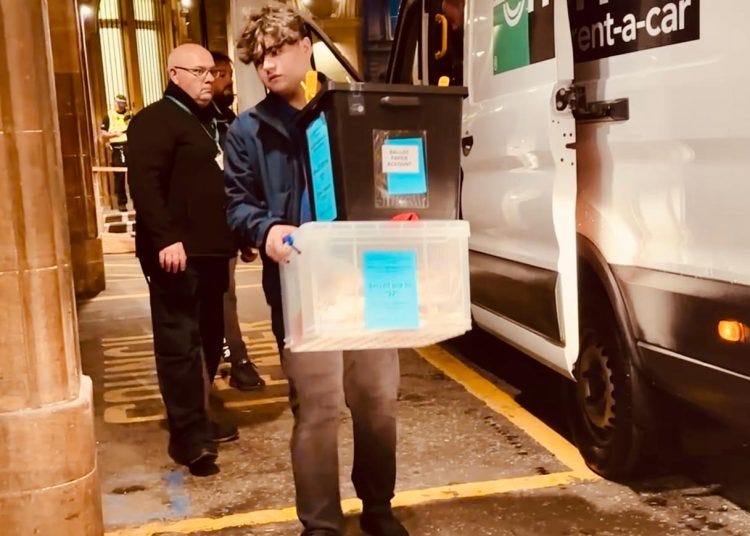 Image provided by the author.
"Now is not the time." "Off the table." "They're not having one." Words of UK Prime Ministers and government ministers past and present on the issue of whether or not Scotland should be allowed a referendum on its independence from the United Kingdom.
Here lies the problem with these so called 'democratic' politicians who don't even represent a constituency in Scotland. They would dictate Scotland's future to it, tell the Scottish people that they and their elected representatives are not allowed to even ask questions about their own future, that their opinion doesn't matter when up against the opinion of the UK Prime Minister.
Legally the UK can say noOf course, the UK Government is perfectly within its legal right to be able to deny Scotland a referendum on independence. Under the current devolution settlement, Scotland does not have powers over the constitution and does not have the legal power to hold a constitutionally changing referendum, let alone enact any changes that might arise from one.
In the past, Scotland was temporarily granted this power through a Section 30 Order, which enabled them to hold a referendum on independence in 2014, but this was done at the discretion of the UK Government and the Prime Minister of the time, David Cameron.
Whereas perfectly legal, however, this doesn't make it anywhere close to moral.
Morally the UK should play no partOn the issue of Scottish independence, I am not supportive. Not through any sense of British nationalism but because I love all four home nations deeply and, as an internationalist, I believe in the, admittedly idealist, viewpoint that all nations across the world should be coming together and doing away with borders. But that doesn't mean for one second I don't support Scotland's right to have a democratic choice about its constitutional future. Far from it.
The question of whether or not Scotland should become an independent country is one for the people of Scotland alone. Nationalists know it, unionists know it, even the British Government knows it. In fact, I've only ever met two people who disagree and believe the whole UK should get a vote on the issue.
But where Scottish unionist parties and the UK Government consistently let the side down is in respecting the Scottish Government's wishes to hold a referendum.
Scotland's people consistently elect a pro-independence government and a majority of pro-independence MSPs. This has been the case since 2011. Yet David Cameron, for all his faults as a Conservative politician, has been the only Prime Minister to respect the will of Scotland's democratically elected Parliament and grant the necessary powers to Holyrood to hold one. Successive Conservative and Labour Prime Ministers, as well as other government ministers, have all ignored the pro-independence majorities of MSPs, placed there each time by the voters of Scotland. This is anti-democratic and morally wrong.
Devolve the power permanentlyThe solution to the constitutional deadlock is simple: devolve the power to hold a legally binding independence referendum to the Scottish Parliament permanently.
If Holyrood has the power to hold a legal vote on independence, no longer will the Scottish Government be bogged down in endless arguments and tedious legal battles. The case for independence can be made by the yes campaign, the case for the Union can be made by the no campaign and, to paraphrase, 'may the better campaign win.'
More importantly, it will be the people of Scotland deciding Scotland's constitutional future, not Prime Ministers down in Westminster, none of whom since Gordon Brown even represent a Scottish constituency.
The issue of independence is a hot topic, and one that, as someone on the left of the political spectrum, I disagree with. But I firmly believe that the decision should be made by the people of Scotland and the power to ask the question should be in the hands of Scotland's elected representatives. Scotland's place in the Union must be earned by a successful, grassroots campaign in Scotland, not imposed upon the nation by Prime Ministers who are too scared to face the outcome.
Join the citizen journalism community
Unbiased. Independent. Honest. A community that champions everyday citizens and unheard voices. We don't have oligarch owners, corporate controllers or political paymasters - we have a community of 3,000 volunteer writers and editors, and nearly 500,000 readers. Help power Britain's biggest citizen journalism movement. Become a member of our Friends of Bylines Network scheme today.
Become a Friend of Bylines Network
This Substack is reader-supported. To receive new posts and support my work, consider becoming a free or paid subscriber.
Welcome to your Frodau Best of Bylines, featuring a standout article from one of our 10 UK national and regional publications, delivered straight to your inbox.
We end this week with a powerful story about NEETs from West England Bylines co-editor-in-chief Claire Jones. More than a million young Brits are not in education, employment or training, and are scrabbling to find work in a Hunger Games style rat-race, seemingly designed to punish.
As Claire reveals, reliance on benefits is increasing, and many young people find themselves unemployed for years on end.
This Substack is reader-supported. To receive new posts and support my work, consider becoming a free or paid subscriber.
 Image by Syda Productions. Shutterstock
A NEET-eye view:
"To say that my adult life didn't shape up how I thought it would is an understatement. I have been out of work for just over a year and it's tough. It has been the single most soul crushing experience of my life so far.
Sites that I was told are good and reliable places to look, such as LinkedIn and Indeed, are now riddled with scam postings. [There's] listing after listing where you spend hours perfecting the cover letter, rewriting the CV, giving them a picture off you, the blood of your first-born child and a lock of your hair, and they never get back to you.
It no longer feels like getting a job is possible, even one that's not perfect or just something to pay the bills. It's like being employed is something that happens to other people. Meanwhile, one has to go onto benefits just to survive while you send application after application after application.
It feels like there's no longer anything I can do to fix the situation I'm in."
The toll on young people's lives from these struggles, and from our aggravating culture of mindless carping, is enormous.
The game terrain'NEET' officially refers to 16 - 24-year-olds. But the tribulations experienced by young people seeking employment frequently extend beyond into their late 20s and early 30s.
UK unemployment is at a 5-year high of 5.2%. Job applications are heavily oversubscribed, with 2.4 jobseekers for every vacancy and graduate jobs typically receiving up to 140 responses per advert.
Young job seekers are caught in a catch 22. Employers now seek an average of 2.5 years' experience for many entry level jobs. As a result, 33% of applicants are rejected because they lack sufficient experience.
Being a UK graduate NEET:
"Exposes a common lie about our education system which we … hear from parents and teachers - that a degree in the right subject, or from the right institution, or with the right grade, is a recipe for success."
The employment Hunger Games have also shifted fully online. As our first NEET above observes, days are filled with endless applications in an anonymous screen-world, devoid of face-to-face human interaction and with rejections deduced through silence.
Businesses won't touch real paper CVs anymore, and buildings that say 'Job Centre' are not actually job-finding centres.
Additionally, large language AI has triggered a fall in demand for human input, with the UK's service sector concentration leaving us particularly exposed to large-scale job displacement.
AI constitutes a double insult to NEETs. It not only adjudicates their online applications but is also soaking up swathes of NEET employment opportunities.
LimboThe NEET job-seeker's challenge currently looks overwhelming. Instead of reaching the traditional milestones of adulthood, they find themselves in an unstable limbo, endlessly performing the "humiliation ritual" of chasing work that has the seeming rareness of hens' teeth.
Aspiration is deeply strained - only 48% of young people believe anyone can succeed in Britain if they work hard enough.
Alan Milburn's recent NEETs report distinguishes between NEETs actively looking for work, (39%) and inactive NEETs (61%). A proportion of 'inactives' have never worked, but it's worth noting that others in this cohort may have been active but eventually gave up precisely because there's a limit to human endurance.
Try harderAs NEETs wake to face another round of application checking, the continuing online silence is broken only by the steady thrum of government and society urging them to try harder - 'you just need to get more savvy at working the system'; 'your problem is that you didn't put enough freelance projects and student society leadership positions on your CV'; 'try doing (yet) more volunteer work to stand out' (assuming you can find it), 'tell AI what's special about you' (even if you don't feel special after months of failure).
This thoroughly undermining 'advice' tells NEETs they aren't doing quite the right thing, as if the right thing can somehow even be done - anymore. It's a grotesque pantomime testing the resolve of even the wiliest.
Getting work, rewarding or otherwise, is now random, rare, and has very little to do with how hard you try.
Stop slackingWhen society isn't delivering 'advice', it's busy caricaturing these Hunger Gamers as snowflake scroungers. Since their brains, it's presumed, have been melted by social media and 'me' culture, they lack the 'gumption and fortitude of their forefathers and allow themselves to fall lazily into the pernicious habit of exploiting our hard-pressed benefits system'.
Here, NEETS again fall under society's mindless sledgehammer: 'If that kid is fiddling the system, you must all be'. But it's the critic's reasoning here, not 'youth', which is lazy where it slithers, as it so often does, from 'one / a few' to 'most / all' without reflection or hesitation.
Waking up on day x of your dogged 'job seeker' marathon to hear that you're a 'feckless loafer robbing the state' is just the ticket for compounding pre-existing mental health issues, or, frankly, even creating them.
We need your help to make real change
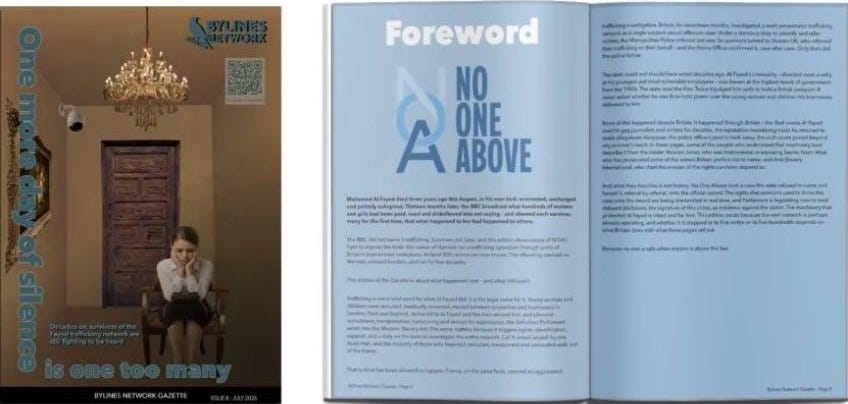
One more day of silence is one too many is a special Bylines Network Gazette featuring articles from survivors of trafficking and abuse at the hands of Mohamed Al Fayed. Alongside former chief prosecutors, investigative journalists and anti-slavery networks, they call for a public inquiry into failings that have left them without justice for decades.
Working with the survivor group No One Above, we plan to print a copy of this powerful Gazette for every MP, and cover the costs of survivors visiting Westminster to take their case to Downing Street. To do this, we need to raise some additional funds. If everyone reading this newsletter donated just £5 to support this effort, we would smash the target instantly. You can help here:
PIP
The growing number of youngsters claiming Personal Independence Payments (PIP) for neurodevelopmental or mental health disorders has only amplified society's indignation. But are these PIP claims surprising? Applying for PIP is a notoriously stringent, protracted and demanding process. But, after failing repeatedly to find employment, plenty start feeling they don't fit into society, that there might be something wrong with them. 'Neurodivergence', if nothing else, floats an explanation to NEETs and their judges for 'feeling dysfunctional' and for a predicament they feel helpless to change.
Of course, PIP is sometimes exploited by the work-shy. But, again, we should pause before making assumptions since the reasons are nuanced.
Some NEETs use PIP as protection against the caprice they experience in the world of Universal Credit. 20-24-year-olds are twice as likely to experience a benefit sanction as 30-34-year-olds. And the reasons can feel unfair. Perhaps it was because they missed a UC meeting as their bus was cancelled, or perhaps they couldn't face attending a job interview for nightshift work cleaning toilets a 1.5 hr train-ride away. Sometimes reasons for sanctions are too buried in red tape to discern.
Harried by the government's shrill promise to 'make life (even) harder for UC receivers', NEETs live under the constant threat of waking up skint. And, in our atomised society, they don't invariably have a 'bank of mum and dad' as last resort. So, who can blame them for seeking a PIP safety net that protects them from mercurial UC decisions, and provides certainty about their next meal, in a world where 'if you work your socks off, you'll gain security' is a promise that simply never materialised?
The futureAndy Burnham plans to reduce NEETs by revolutionising education in ways that help engage young people with work. But this is only a solution if there's work to be had.
There is a fundamental contradiction in our NEETs narratives - we believe people's lives should be orientated around work and that young people should be encouraged with carrots and sticks to find it. But we are simultaneously moving towards a world where employment opportunities are diminishing.
In one school of thought, the AI revolution, as per past tech revolutions, will ultimately generate sufficient alternative forms of human employment. But this assumption is hotly contested. The National Foundation for Educational Research, together with Mustafa Suleyman, the head of Microsoft's AI division, Geoffrey Hinton (Nobel Prize-winning computer scientist) and prominent economist, Daniel Susskind, all argue that we're moving, at the very least, towards a world of dramatically reduced human labour, with AI "creating massive unemployment".
Plumbers and electricians look safe. But Susskind predicts that "task encroachment will displace workers" from a wide range of jobs across most blue- and white-collar sectors. Economics and employment are de-coupling, creating the novel spectre of "jobless growth".
Beyond the work gospelWe aren't preparing young people for this fast-approaching new world of significantly reduced work. Instead, we're foisting an old model on them that they can see withering before their eyes.
There's a parallel here between NEETS and Thatcherite deindustrialisation. In neither case was the promise of life-long, regular work and security honoured, or preparation made for the consequences of trashing those promises. Then and now, the neo-liberal assumption was that market forces will kick in, driving people to find other work, by relocating, if necessary. This 'try harder' diktat no more fitted reality then than it does now. Are Thatcher's lost northern towns, still stuck in poverty and disillusionment, a metaphor for our future youth?
So much is premised on the value of work as life's provider of structure, meaning and security. Yet, faced with precarious, unfulfilling jobs and the prospect of their Hunger Games only getting harder, NEETs are losing faith in the "gospel of work", disengaging wholesale from the point of it. Depression, suicide, crime and drug use will all increase unless we give young people aspirations for worthwhile lives that are no longer noosed to employment.
To this end, education will need to build the kind of value, purpose and meaning into young people's lives that enables them to cope in a 'work-lite' world. We may need a universal basic income; but education must also cultivate stronger moral and societal responsibility, together with other specifically human endeavours such as creativity, physical life, and the rewards of human interaction.
Instead of looking backwards to an obsolescent model of work, making empty promises to young people, and feeding the NEET mental health epidemic, we must equip them with the skills, confidence and imagination to flesh out this potentially exciting and culturally advanced new world for themselves as adults.
This article was first published with Bearly Politics (13 August) and with Left Foot Forward (19 August, 2026).
Join the citizen journalism community
Unbiased. Independent. Honest. A community that champions everyday citizens and unheard voices. We don't have oligarch owners, corporate controllers or political paymasters - we have a community of 3,000 volunteer writers and editors, and nearly 500,000 readers. Help power Britain's biggest citizen journalism movement. Become a member of our Friends of Bylines Network scheme today.
Become a Friend of Bylines Network
This Substack is reader-supported. To receive new posts and support my work, consider becoming a free or paid subscriber.
The latest Bylines Network Gazette is available now.
With trust in politics in short supply, billionaire donors under intense scrutiny and growing calls for electoral reform, this month's Gazette asks a vital question: what would it take to clean up British politics and make our democracy work?
We're answering with more than 100 pages of powerful citizen journalism, including stories from every corner of the UK and exclusive commentary from political experts and democracy campaigners. This Gazette goes beyond clickbait scandals and superficial reporting to make sense of the big issues: political funding, standards in public life, electoral reform, devolution, accountability, representation, local democracy and the power citizens have to create real change.
You'll hear from Gina Miller, Dominic Grieve KC, Neal Lawson and Professor Christina Pagel, alongside journalism and analysis from across the Bylines Network.
How do you get a copy? Read on, and we'll tell you.
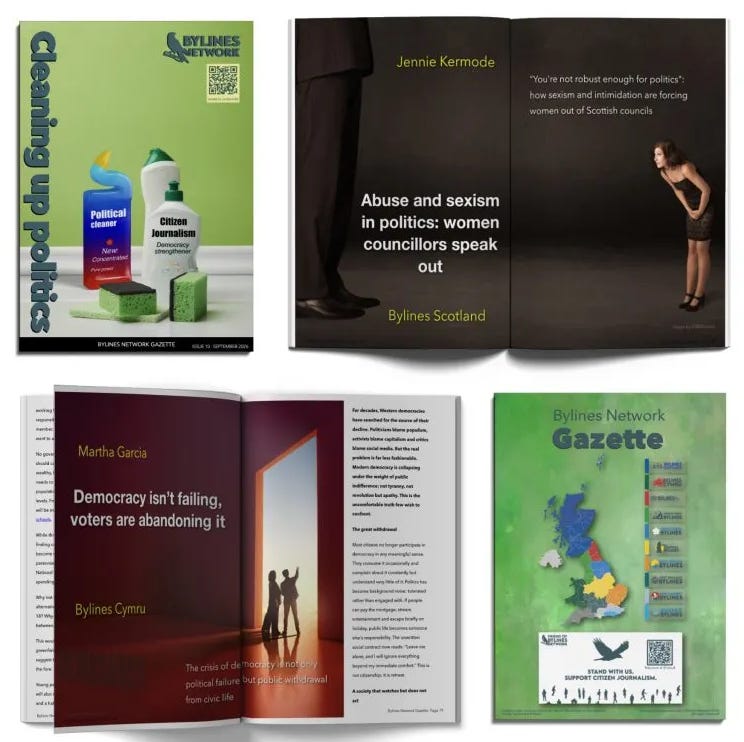 caption...
What's inside?
This month's edition includes:
Gina Miller, Dominic Grieve KC, Neal Lawson and Professor Christina Pagel on what needs to change if Britain is to rebuild trust in politics.
An exclusive interview with Emma Harrison of Make Votes Matter on why democracy means more than turning up at the ballot box.
An examination of political funding, including allegations raised by Channel 4's investigation into Reform UK's funding arrangements.
Experiences of women in politics facing abuse and sexism.
A look at 50 years of debate over electoral reform, and what it means for today.
Frontline stories of devolution and why it needs better protection and permanence.
Analysis of what changes to local government could mean for communities.
Why voters are becoming disengaged from politics, and ways to bring them back.
A practical citizen's guide to taking action for political change.
How to get your Bylines Network Gazette
Our Gazettes are presented in a specially designed flipbook which you can read online or download as a PDF. How can you get access? You have three options:
Buy this edition as a one-off, and get access to the glorious online flipbook, which you can download as a PDF:
Become a Friend of Bylines Network. You can choose from the tiers described in this graphic. As well as the Gazette, your monthly donations give you access to a host of other benefits and - crucially - support powerful citizen journalism.
If you prefer to manage things through Substack, then please consider taking out a paid subscription to Bylines Network there. We consider paying Substack subscribers the same as Friends of Bylines Network, and give them access to all the same benefits. We are entirely not-for-profit, don't take advertising, or charge for services, and treat Substack subscriptions like any other donations that support our work.
What are you doing on 21 October? Why not join us?
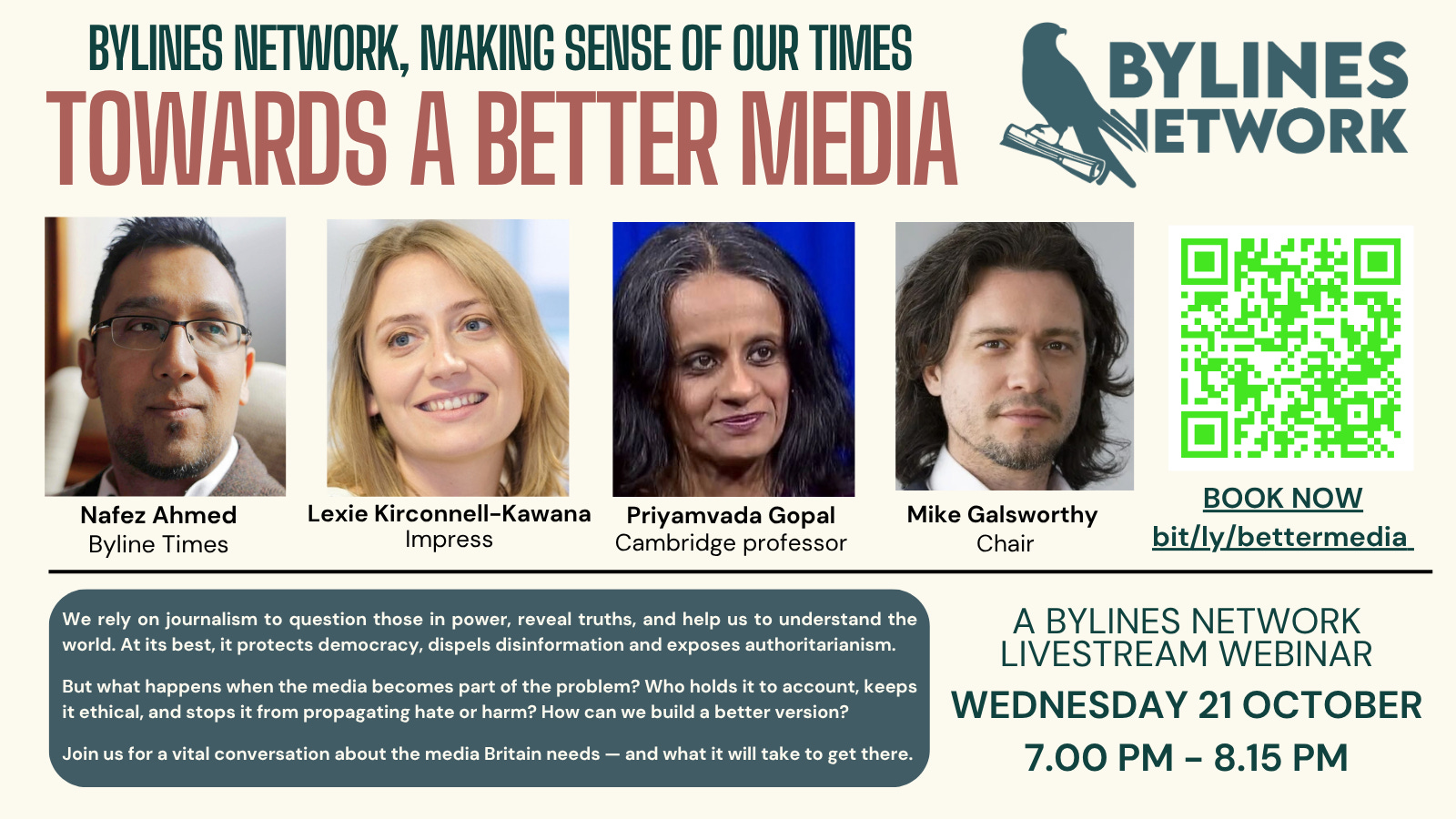
We rely on journalism to question those in power, uncover what is hidden, and help us understand an increasingly complex world. When it does its job properly, it's a firewall between democracy and disinformation, authoritarianism and hate.
But what happens when the media itself becomes part of the problem? Who holds it to account? 14 years after the Leveson Inquiry reported its findings, has anything really changed? And how can we build something better? Join Bylines Network on Wednesday 21 October, 7 pm, for a vital conversation about the media Britain needs - and what it will take to get there.
Join our fantastic panel:
- systems theorist, and Director of Investigations & Strategic Impact at Byline Times.
Priyamvada Gopal - writer, activist, and professor of postcolonial studies at the University of Cambridge.
- chief executive of Impress, the independent media regulator.
Mike Galsworthy - Chair of European Movement UK and co-founder of Bylines Network.
Book a ticket and join the event from anywhere. All you need is an internet connection. Standard tickets are £5, and there is a free option for those who can't afford the ticket price - with no questions asked.
Welcome to your Monday Best of Bylines, featuring a standout article from one of our 10 UK national and regional publications, delivered straight to your inbox.
To start your week in style, of North East Bylines reflects on an event he attended at Live Theatre in Newcastle. It was titled: Radical North East, is this our moment? and it inspired Jay to consider the political heritage of the region he lives in, the major issues facing younger people in Britain, and whether we may have just arrived in a moment of truly transformative potential.
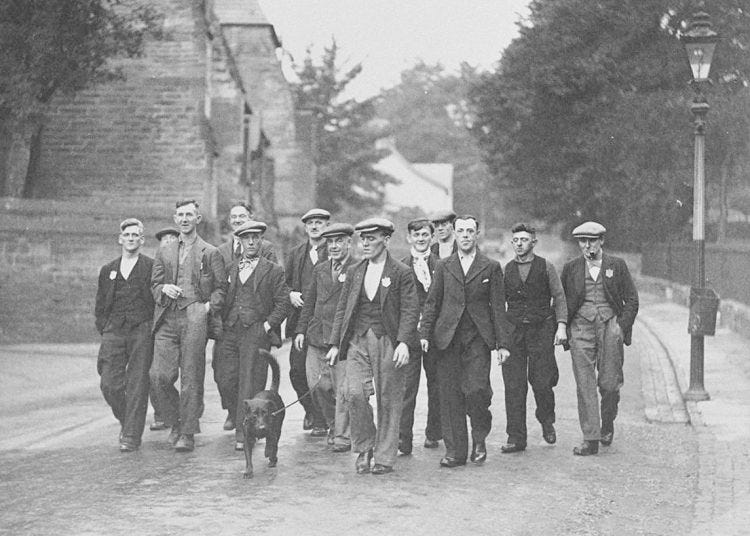 Jarrow Marchers en route to London. Collection of (National Media Museum (Photographer unknown) No restrictions
On the simplest level, I appreciated that an open and inclusive political discussion was happening in Newcastle - one that anyone, regardless of their views and backgrounds, could attend. Panel discussions such as this with real stakeholders are few and far between. But sitting there, one leg crossed over the other with my tatty cap sitting on my knee, I was itching to get up and outline my thoughts, my feelings, and my vision for a genuinely radical North East.
What a feelingTo me, we are an inherently radical community. There can be very little debate around it. It's in our blood, our bones. Our history of involvement in the suffragette movement, the bravery shown by our striking miners, the Jarrow Crusade - the list goes on. Radicalism, ultimately, isn't something primarily defined by actions; it's a vibe - an emotional outlook, a gut feeling, an innate ability to challenge norms, to be sceptical towards power, and to be proud of your own community. In the North East, I think we have that within us.
For working class north easterners, I think that radical spirit is something we're born with. It's the stories we're told as we grow up. It's sitting with your granddad and hearing stories of his childhood: brothers dying young, accidents in the pit, the almost grotesque, bone-breaking reality of a job that somehow was the source of undeniable pride. And growing up, as granddad becomes frail and you grow into yourself, it's picking him up from the Working Men's Club after having drinks with his old pals, reminiscing on the good days that weren't all that great, seeing the twinkle in his eye, his pride in you, and the person you've become - the barriers you've overcome to break from the mould and explore opportunities that, for him, were never ever possible. And when he's gone, its the plaque above the bar with his name, and his favourite catchphrase: just another day.
And so I think, regardless of your politics, we all carry that radical streak. Is this our moment? I think so. But we've never needed permission to make it one. Because bluntly, time and time again, when our backs have been against the wall and we've been well aware of the insurmountable objects standing right in front of us, we've never cowered, and we've found a way to make it our moment - however small, however fleeting. We're resilient, and we're strong. And we will always chip away at the coalface to forge a new path.
For those outside of the North East, that rhetoric might read as twee or self-righteous - other communities across the country have struggled with similarly long histories of underinvestment and deprivation. But I think the North East sits in an unusual place within that, because whatever we've faced, we've always stood together; forever resolute. And if that's not radical, I'm unsure what is.
But now, with a PM apparently aligned with a genuine levelling-up agenda, and a driven North East Mayor with the bit between her teeth, it's on us to turn that emotion, that feeling, into action.
EducationFor me, there is one area which could have the greatest long-term impact on levelling-up our community: our schools. A radical North East is one that, while focused on action, does so with its people at the very centre. If we can improve opportunities for our young people especially, we can facilitate a new generation of thinkers and of leaders who can carry on that work in the years to come.
Votes at 16Last night, when asked a question about voting for 16-year-olds, the panel unanimously spoke in favour. For me, I agree in principle, but only if it comes with the civic education to make that vote mean something. If we aren't investing in educating our children on politics, and on the way our institutions work and what matters to them, what are we actually letting them vote for? If the next generation of voters are going to be allowed to have their politics shaped and bent by social media when their brains are at their most formative, that seems short-sighted to me.
I was never taught politics at school. It rarely came up. If anything, politics and civics were weirdly taboo. It wasn't ever something that we seemed welcomed into.
When I look around Blyth today and see people from school posting hard-right propaganda, AI videos and fake news on their Facebook timelines, I think it's no wonder when our education system does very little to educate them on how to consume media, often because our teachers and leaders are unsure how to themselves. Sure, giving votes to 16-year-olds looks great, but if that's all you're prepared to do, and they leave school with poor literacy, a smattering of middling GCSE results, and feel that there is no obvious next step to go into, what have we achieved? We build resentment and encourage them to engage in a system which - on account of our own negligence - they are increasingly likely to seek to topple as they age.
I've written before that nationally, but especially in the North East, there is an opportunity vacuum. Now, with the rapid and foolishly unregulated advancement in AI and technology, that vacuum has become a void. Even for the most able of young people, those with brilliant grades and shiny degrees, there is very little without a network of well-connected people already there. And guess what? In the North East, the vast majority of us don't have that.
When I arrived at Newcastle University in 2018, I knew two other people from my school going there - to a top University less than half an hour's drive from my front door. By contrast, the students I met on my course and within societies came to Newcastle because they knew a network of tens of students was already there, or preparing to, from the private school they'd attended. The first question you were always asked was: what school did you go to? At my home university, I was an outsider.
We need your help to make real change
One more day of silence is one too many is a special Bylines Network Gazette featuring articles from survivors of trafficking and abuse at the hands of Mohamed Al Fayed. Alongside former chief prosecutors, investigative journalists and anti-slavery networks, they call for a public inquiry into failings that have left them without justice for decades.
Working with the survivor group No One Above, we plan to print a copy of this powerful Gazette for every MP, and cover the costs of survivors visiting Westminster to take their case to Downing Street. To do this, we need to raise some additional funds. If everyone reading this newsletter donated just £5 to support this effort, we would smash the target instantly. You can help here:
When I was writing my UCAS application, amongst some staff, Newcastle was not a university we were particularly encouraged to apply to. Durham sure, because they had their supported progression programme for underprivileged students. Northumbria (a great university by the way) yes, because subconsciously the former polytechnic was deemed more our level. Durham only seemed viable because they'd let the poor kids in for less. And even then, that programme was mostly an exercise so that they didn't have to be so selective through standard UCAS applications for colleges to meet their quotas.
Newcastle always had the sort of vibe - not that they'd ever really admit it, but it was definitely there - that it wasn't quite the right place for people like us. Maybe I'm projecting, maybe it's the chip on my shoulder. But I felt it, both at school when applying and when I arrived.
Education in the North East has to have aspiration at its core; otherwise, what's the point? If we're not pushing kids to do the best they can do - irrespective of their class background - what is the actual point of schools and exams? If the aim is just to do good enough compared to the background you come from, the entire system is failing.
It's an uncomfortable truth - and not the case in every school in the region - but in the most deprived places, it's a reality. Reading ages and literacy rates are appallingly low, attendance often even lower. Staff turnover sky high. A radical North East starts by reforming our education system, tearing up everything that doesn't work, root and branch, and rebuilding.
In my view, a lot of that begins in pre-school. We may have to accept that, through our own negligence, we have wasted the potential of a generation already - that people my age, and those 16+, might already have had their cards marked by the mistakes that exist in the system. That can be a hard pill to swallow, but that's not to say that it's untrue. Of course, it's not intended as a blanket observation, and many will push back and argue that there are many young people from our region who do great stuff. It's true. But for working class kids without guidance, mentorship and access, it's a rare phenomenon. And the onus is entirely on the student. That's a lot to shoulder.
Our question should always be: how can we have as many brilliant North East young people reaching their potential and, if it doesn't sound too twee, reaching for the stars to meet their dreams. Posh kids aren't told that certain careers are inaccessible. If they want to be actors or artists or musicians, they aren't told no in the same way we are. When posh kids want to study History or English, they're not met with: "well what are you going to do with that?" like I was (I eventually studied Law because it felt like a "real" subject). We have to face up to that. We have to restore ambition and aspiration because, when it's all boiled down, that's what radicalism is. In the North East, we are a community of storytellers; a region of dreamers.
From pre-school and nursery, reading and access to arts and theatre should be a staple of the curriculum. We should expose kids to books and creativity at the earliest possible age. In an age of rapid technological progress, it's the human ability to think freely and create that will make us unique and maintain us. And we have to keep that going all the way through the system.
We need to involve more coursework components into exams that aren't just writing essays. It should be performance-based, or creatively driven, so that there is a release valve from just sitting and writing exams. People have to enjoy studying and feel that they can express themselves in the ways they know how to, if we are ever going to give them the confidence to reach their potential. That's how we maintain the essence of our North East grit and spirit. Through the power of expression. Practically, that means funding creative subjects and reading recovery in every primary school, training teachers to teach media literacy and politics with confidence, and building formal mentorship and access schemes that connect state school pupils in the North East with the universities and industries currently closed off to them.We have to acknowledge what makes us different, hold it close, cherish it, and never let it go.
Green energyIf radicalism is about seizing a moment, then green energy is an exciting one. The North East already has the ports, the engineering heritage, the coastline and the history to become the country's genuine hub for offshore wind and renewables. That opportunity is sat right on our doorstep, and we're already making real inroads. We cannot afford to let it pass us by again.
But there's something more important here than the jobs and the investment. This is our chance to prove that progressivism isn't a zero-sum game - that lifting one community up doesn't mean taking something away from another. If we're going to close your factory, we owe you the truth about why, and a real path forward: retraining, or a move onto one of the new green projects springing up along our coast. Nobody - young or old - should be left feeling behind, or stuck without options or support, because the country decided to change direction.
And we need to shout about it. It's great having the conversation in the North East about the North East, but that's not enough anymore - we need to get the word out there. Flood the zone with our success stories. Dominate the media landscape telling our own story, on our own terms, for once. Put hope back into our communities, so that whoever you are, you can grow up believing that anything is possible.
Because if we can't do that, what's the point?
Them or us?There is one existential, and remarkably simple, reason why this has to be our moment: because if it isn't, it will be the hard right's.
They promise an equally radical North East too. The difference is that the barriers standing between them and achieving it are far lower than ours. Their vision isn't to build anything - it's to cut and strip away everything that's good, to remove hope entirely, to divide us further, to destroy rather than rebuild. Their plan is to let anger simmer and fester, and have us turn on one another, all from the comfort of an office in Whitehall. Their project doesn't cost anything, because it was never about investment or regeneration in the first place - it's about setting fire to everything and calling the smoke progress.
If they're elected, their chances of success are high. That's exactly why this has to be our moment. We can choose to be radical, and fight for a genuinely better North East - one built on hope, community solidarity, and opportunity. Or we can surrender to anger and division.
Join the citizen journalism community
Unbiased. Independent. Honest. A community that champions everyday citizens and unheard voices. We don't have oligarch owners, corporate controllers or political paymasters - we have a community of 3,000 volunteer writers and editors, and nearly 500,000 readers. Help power Britain's biggest citizen journalism movement. Become a member of our Friends of Bylines Network scheme today.
Become a Friend of Bylines Network
This Substack is reader-supported. To receive new posts and support my work, consider becoming a free or paid subscriber.
This is your Friday Best of Bylines, featuring a standout article from one of our 10 UK national and regional publications, delivered straight to your inbox.
This time we welcome back Cliff Mitchell, a regular contributor to Central Bylines whose stories have often been chosen as prime examples of powerful citizen journalism.
Here Cliff discusses new research by Frontier Economics, shared by , showing the Midlands could benefit from a £1,386mn increase in GDP if the UK rejoins the EU.
 Midlands-based JCB is owned by Lord Bamford, a prominent Brexit supporter. Image by TaurusEmerald CC BY-SA 4.0
To put £1,386mn in perspective, it could build two new community hospitals (2 x £400mn), four primary schools (4 x £10mn), four secondary schools (4 x £35mn), 2,000 care home places (2,000 x£80,000), 200 GP surgeries (200 x £1mn) a year and still have millions in change. It's the kind of additional funding that could transform day-to-day life in the Midlands for everyone.
The research took account of five scenarios, ranging from further divergence from the EU with greater regulatory distance, looser trade ties, and moving away from the Trade and Cooperation Agreement (TCA) baseline (scenario 5), to closer UK-EU integration, equivalent to reinstated EU membership (Scenario 4).
Closer integration on agrifood, including via a bespoke agreement on Sanitary and Phyto Sanitary Measures, as envisioned under the current approach to UK-EU reset.
Deeper regulatory alignment between the UK and the EU on goods and services.
Closer integration on trade via more liberal rules of origin
More liberal rules of origin and deeper regulatory alignment between the UK and the EU on goods and services.
A "TCA-minus" scenario in which there is greater regulatory distance, and consequently trade frictions, than at present.
Scenario 4 is very close to full EU membership and includes deep integration with the EU single market and customs union, while option 5 assumes erosion of the limited mutual recognition that currently exists. A further two scenarios analysed the impact of US sanctions on scenarios four and five.
The report concludes that joining the EU could grow the UK economy, as measured by GDP, by 1.5-3.6%, or at least £92bn, and those are conservative estimates. While the benefits would be quite evenly spread across the UK, the regions benefiting the most compared to the UK government's current approach would be the West Midlands, followed by Yorkshire and the East Midlands. The combined benefit to the Midlands would be a massive £1,386mn EVERY YEAR. This is welcome news given the West Midlands is one of the most badly impacted UK regions in the UK as a result of Brexit.
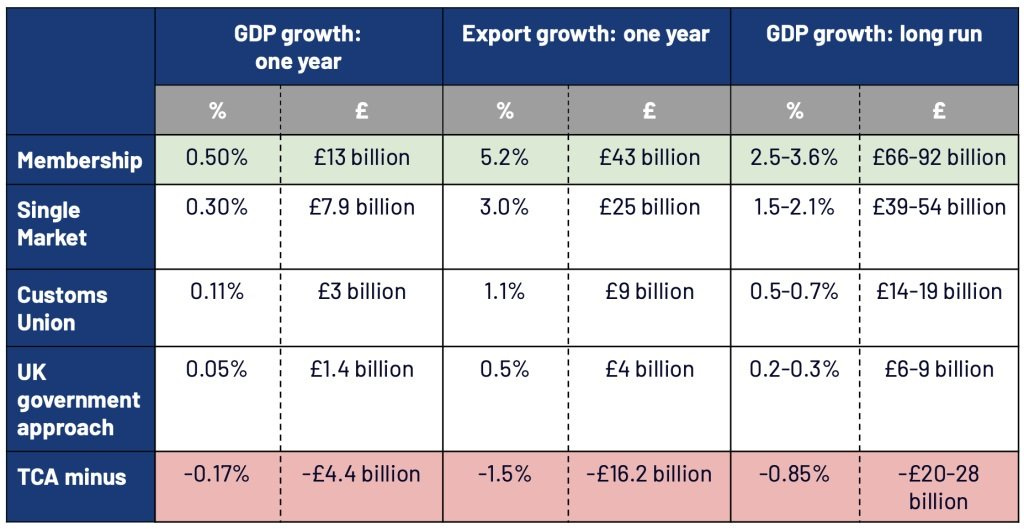 Projected GDP growthThe making of the Midlands
The Midlands region has a strong history of trade in manufactured goods. For example 73% of West Midlands exports are in transport and machinery, thanks to its successful aerospace and automotive sectors. That is why further regulatory alignment with the EU, together with more liberal rules of origin, deliver particular gains for us. They also provide robust safeguards against punitive US tariffs.
The new research shows how EU membership would boost the West Midlands economy by £873mn per year, and the East Midlands by £513mn per year. Across the UK there would be an increase of around 5% for all exports. Even in a tariff-prone world, this would largely undo the long-term damage done to the UK economy by leaving the EU, estimated by the Office for Budget Responsibility (OBR) in the UK as around 4% with other credible estimates putting the damage at up to 8% (National Bureau of Economic Research in the USA).
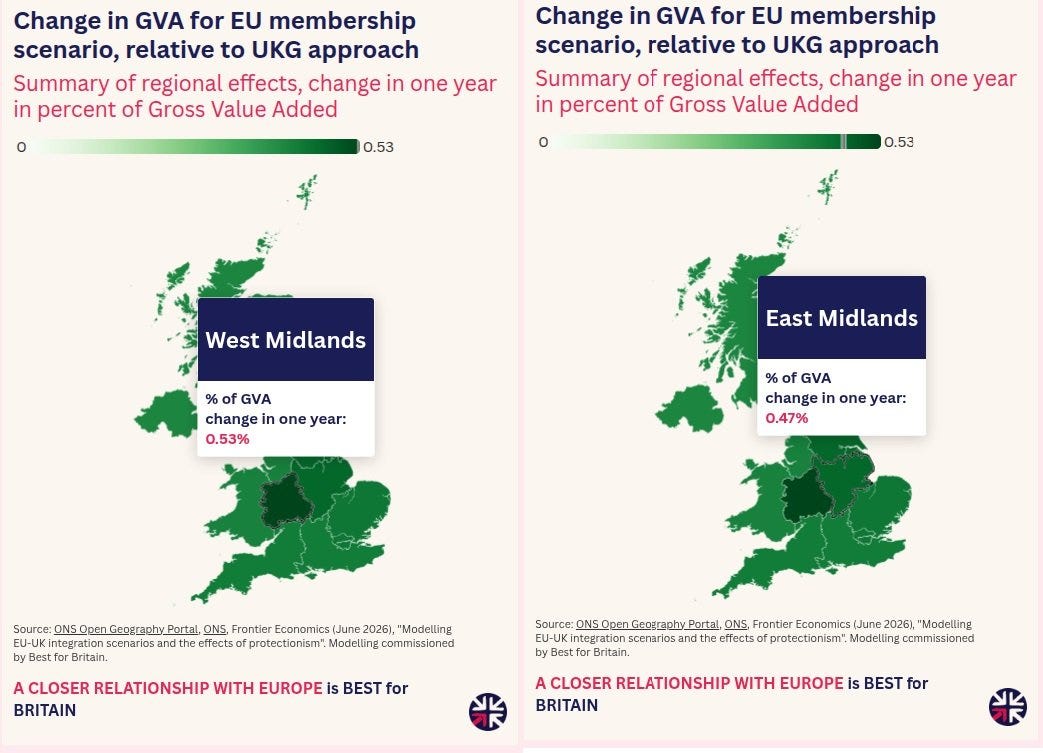 Change in GVA for EU membership scenario
We need your help to make real change
One more day of silence is one too many is a special Bylines Network Gazette featuring articles from survivors of trafficking and abuse at the hands of Mohamed Al Fayed. Alongside former chief prosecutors, investigative journalists and anti-slavery networks, they call for a public inquiry into failings that have left them without justice for decades.
Working with the survivor group No One Above, we plan to print a copy of this powerful Gazette for every MP, and cover the costs of survivors visiting Westminster to take their case to Downing Street. To do this, we need to raise some additional funds. If everyone reading this newsletter donated just £5 to support this effort, we would smash the target instantly. You can help here:
The public are with us
YouGov polling conducted in April 2026 found that 53% of British voters support EU membership, with just 32% opposed. There is little support for keeping UK-EU relations as they are now (31% of voters) and 50% oppose any further divergence from the EU.
Some have argued that benefits from the UK's post-Brexit trade deals outweigh any Brexit downsides. However government estimates of the projected increase across all six free trade agreements (FTA) agreed since Brexit (Japan, Australia, New Zealand, Comprehensive and Progressive Agreement for Trans-Pacific Partnership, India, and the Gulf Cooperation Council) is approximately £15bn in annual long-term GDP. By contrast, EU membership would be worth at least £92bn every year, more than 6 times the total gained from these FTAs.
, Chief Executive of Best for Britain, said:
Politics and partnerships"The birthplaces of industrial manufacturing and Sir Isaac Newton, and now home to bustling cities, the British Grand Prix, and Jaguar Land Rover cars, the East and West Midlands are hubs of high-end innovation, but after a decade of trade friction, soaring bills and a cost of living crisis, the regions are still punching far below their weight.
"Both the public and the data are clear: as this research sets out, EU membership is the quickest and the most popular way to get Britain growing again - and, as Prime Minister, Andy Burnham now has a chance to transform the fortunes of the Midlands, put money back into people's pockets and help local businesses thrive."
Both the Conservatives and Reform UK oppose even the UK-EU reset, let alone any move to closer cooperation or integration with the EU. Kemi Badenoch, leader of the Conservatives, called the reset a step backwards and said 'dynamic alignment' would make the UK a 'rule taker'. Nigel Farage went further by promising that Reform UK would 'scrap' the May 2025 Summit commitments entirely.
Conservatives and Reform UK have also committed to withdrawing from the European Convention on Human Rights. In response the EU could well suspend some or all of the TCA, leading to even greater economic damage. They would take us back to scenario 5 of the Frontier Economics research, "TCA-minus", with a consequential, long-term reduction in UK GDP of between 0.5 to 0.8%, equating to a £28bn hit to the economy rather than the £92bn bonus of EU membership.
In May 2025, the Labour government under Sir Keir Starmer negotiated the UK-EU reset, setting out a new UK-EU strategic partnership and common understanding, agreeing to annual summit meetings, and committing to strengthened cooperation. The Frontier Economics report demonstrates the benefits of such closer cooperation and emphasises the economic prize of continuing down this path.
According to Best for Britain, membership of the EU would have a "…truly transformative effect on the UK economy. By modelling the key benefits of membership - namely, closer integration into the EU Single Market and deeper integration on goods trade associated with a Customs Union - we see long term growth estimates of at least 2.5%-3.6%."
Ellie Chowns, Green Party MP for North Herefordshire, said:
Joining the EU gives the Midlands the biggest boost"The West Midlands has long been an industrial and agricultural powerhouse fuelling the whole of the UK - but while we are outside the EU, our local industries are operating with one hand tied behind their backs, unable to fulfil their immense potential.
"The Green Party has long championed Britain's place in Europe. This report demonstrates that the West Midlands would benefit most if we rejoin the EU - creating jobs, boosting investment and designing the innovative technologies that will help us tackle the climate crisis."
The Frontier Economics report shows how our prosperity as a nation, and the Midlands economy in particular, are dependent on our relationship with the EU. Further integration brings substantial economic benefits, while moving further away from the EU would lead to real economic damage.
The UK's former industrial heartlands in the Midlands stand to gain the most from the increased trade in goods that would follow closer EU integration. The prize is an extra £1,386mn every year, enough to make daily life better for all of us in the Midlands.
 image by Anti I A. Public Domain
This article has been adapted from two press releases by Best for Britain.
Join the citizen journalism community
Unbiased. Independent. Honest. A community that champions everyday citizens and unheard voices. We don't have oligarch owners, corporate controllers or political paymasters - we have a community of 3,000 volunteer writers and editors, and nearly 500,000 readers. Help power Britain's biggest citizen journalism movement. Become a member of our Friends of Bylines Network scheme today.
Welcome to Best of Bylines, bringing you a standout article from one of our 10 UK national and regional publications. This time, writing in North West Bylines, Gary Gilligan investigates the likely impacts of a recent proposal by Rupert Lowe to set 80 mph road speed limits. Rather than this being a bold step to "back business", as Lowe claims, the evidence tells a different story.
Gary's article follows below, but first we would like to highlight an important campaign aiming to help survivors of abuse at the hands of Mohammed Al Fayed raise their calls for justice in Westminster.
We need your help to make real change
One more day of silence is one too many is a special Bylines Network Gazette featuring articles from survivors of trafficking and abuse at the hands of Mohamed Al Fayed. Alongside former chief prosecutors, investigative journalists and anti-slavery networks, they call for a public inquiry into failings that have left them without justice for decades.
Working with the survivor group No One Above, we plan to print a copy of this powerful Gazette for every MP, and cover the costs of survivors visiting Westminster to take their case to Downing Street. To do this, we need to raise some additional funds. If everyone reading this newsletter donated just £5 to support this effort, we would smash the target instantly. You can help here:
More haste, less speed?Why Rupert Lowe's proposal to raise the speed limit would be a failure in England's North West, by Gary Gilligan
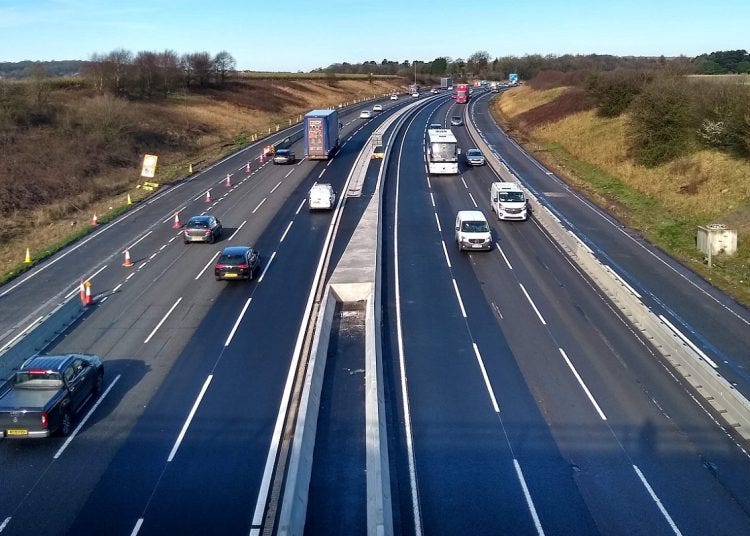 Roadworks on a stretch of the M6 in the North of England. Picture by Bylines Team
Rupert Lowe, founder and leader of Restore Britain, is no stranger to announcing policies via social media. His X (formerly Twitter) timeline largely consists of posts pointing out what he feels is wrong in the UK and policy promises that he feels will make the country great again. Some might say those apparent policy announcements are rants, not unlike those you might hear in a pub. A recent pronouncement was that Restore Britain would increase the speed limit to 80mph, which he claims will "back business, trust drivers, and get Britain moving."
When I read this, my initial thought was this was more libertarian ranting, but I then decided to do some more digging into whether there was any substance to his claim and how workable it is.
"Back business"Lowe implies that a faster speed limit will help business. The section of the M6 that would be classified as in the North West stretches approximately 100 miles. At a steady speed of 70mph this would take approximately 1 hour 26 minutes to navigate. Maintaining a constant speed of 80mph would take the approximate travel time down to 1 hour 15 minutes. Balanced against this "saving" of only 11 minutes are claims by organisations such as the Road Safety Foundation that the roads are unsafe for 80mph.
The M62 might well be the UK's busiest east-west freight connection. Warrington Borough Council in its Freight and Logistics Strategy states that increased speed limits would lead to a higher incidence of crashes due to reduced reaction times to avoid collisions. Coupled with the increase in injury and damage, this would lead to more gridlock on the region's roads, reducing reliability of delivery times and increasing costs for logistics providers. It also argues that increasing car speeds to 80mph increases the speed differential between cars and HGVs which also increases risk due to increased weaving in and out of lanes.
The model also predicts that increased speed limits would accelerate bottlenecks on busy stretches, forcing imposition of lower speed limits and causing further congestion.
Backing business? Are you sure Mr Lowe?
Trust the drivers?Department for Transport figures show that 1,602 people were killed and an estimated 27,865 seriously injured in reported road collisions in Great Britain in 2024. There were 128,272 casualties across all injury severities. According to the car sales site car.co.uk: "Speed contributed to 59% of road deaths, with 21% involving an outright speed limit breach and 29% involving either a breach or travelling too fast for conditions."
Trusting the driver seems a rather risky strategy in the light of this data.
"Get Britain moving"Let us scrutinise Mr Lowe's lofty rhetoric. In 2023, Lancashire was identified as the worst place in the country for traffic delays. Manchester also ranked as the sixth-worst in the same study.
One cause is very high dependence on motorways, resulting in congestion. Another relates to driving behaviour. The RAC identifies a phenomenon called a "shockwave" traffic jam, where a driver at the front taps their brakes, causing a chain reaction of braking by other drivers which ultimately results in some drivers behind ending up stationary. Increasing speed limits to 80mph will not positively impact any of these causes. This calls into question the practicality and the consequences of Lowe's proposed policy.
Scrutiny mattersMr Lowe's social media posts often seem to promise ideas with little substance as to how they would work in reality. As others have observed, similar contributions can encourage clicks and comments, and are sometimes referred to as "rage baiting". Also, as one newspaper recently claimed, they tend to play a part in helping social media become a significant source of revenue. Mr Lowe has reportedly earned £931 per hour through the full range of his activity on X (formerly Twitter) this year.
I'll be watching the sedate traffic heading up and down the Fylde coast at well below 80 miles per hour.
Join the citizen journalism community
Unbiased. Independent. Honest. A community that champions everyday citizens and unheard voices. We don't have oligarch owners, corporate controllers or political paymasters - we have a community of 3,000 volunteer writers and editors, and nearly 500,000 readers. Help power Britain's biggest citizen journalism movement. Become a member of our Friends of Bylines Network scheme today.
Welcome to your Friday Best of Bylines, featuring a standout article from one of our 10 UK national and regional publications, delivered straight to your inbox.
Writing for Bylines Cymru, independent youth journalist Maggie Curley reveals that a nine-kilometre wastewater pipe in Wales has repeatedly burst since August 2023. Built to serve the Afan Wastewater Treatment Works, the pipe has been releasing untreated sewage into Wales' much-loved Kenfig Nature Reserve.
Despite community campaigns and growing political pressure, a formal investigation didn't begin until 9 June 2026. Drawing on official documents and environmental reports, Maggie exposes the threat posed by Dŵr Cymru's (Welsh Water) infrastructure failures and asks why Natural Resources Wales has struggled to protect one of the country's most important ecosystems.
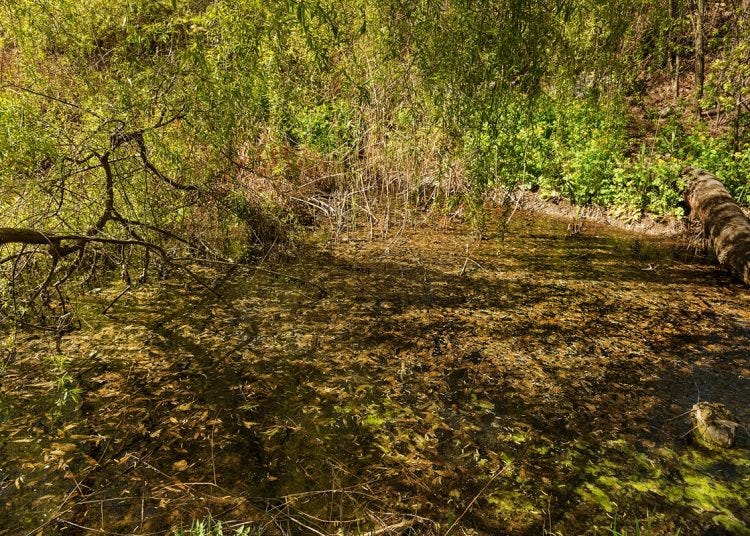 image by A_Lesik. Licensed by Shutterstock [SD]A disaster years in the making
The Kenfig River sewage disaster did not occur without warning. It was the predictable result of deteriorating infrastructure, delayed intervention and weak oversight. The ongoing pollution has had devastating consequences, with the once thriving Kenfig River now being described as "devoid of life" by local fishermen. It has also brought renewed scrutiny of Dŵr Cymru's handling of the crisis.
Together, official documents, community evidence and environmental reports point to a pattern of delay that allowed the situation to worsen. At the centre of the story is a crucial question: why did decisive intervention not begin until June 2026? That timeline begins in August 2023, when the first warning signs appeared.
Warnings, delay and mounting pressureDuring that period, repeated concerns were raised about sewage pollution affecting the Kenfig River, but little substantial action followed. The reasons given by the chief operating officer Steve Wilson and local wastewater representatives from Dŵr Cymru for the delays, included structural and environmental factors, operational failures and management weaknesses. The situation worsened significantly in February 2026, when a continuous discharge of sewage began pouring from the Marlas Sewage Pumping Station near North Cornelly. Ofwat has also levied some heavy criticism against the company, claiming that it did not have "adequate processes in place or oversight by senior bosses".
Residents, fishermen and environmental groups, including Surfers Against Sewage and A Peace for Nature, raised urgent concerns in May 2026. Local people reported an overwhelming stench, discoloured water and severe damage to wildlife. After years of complaints, community pressure and visible environmental decline, action did not begin until June 2026.
What Dŵr Cymru says went wrongDŵr Cymru has offered technical explanations for the structural, environmental, and operational problems. These structural problems include the nine-kilometre Marlas rising main deteriorating far earlier than expected, with the pipe material weakening, in which said material has not yet been specified, to the point where it could no longer withstand normal pressure. New bursts have occurred since August 2023, which has been monitored by the regulator. Natural Resource Wales said the situation escalated in February "with a continuous discharge" from the Marlas SPS.
Dŵr Cymru's early response relied on short-term patching and tanker fleets, but these were only temporary fixes. Attempts to build a bypass were also slowed by complex land-access disputes involving multiple private landowners.
On 12 March, Ofwat also found that Dŵr Cymru had failed to operate, maintain, and upgrade its wastewater treatment works. The findings added to concerns about the role of wastewater infrastructure in the environmental incidents.
A river stripped of lifeWhile Dŵr Cymru's explanation focused on engineering problems, the consequences were felt most clearly in the river itself. Fish and invertebrate populations were dramatically reduced, oxygen levels fell, and the water became visibly discoloured. Bank-side wildlife, including herons and kingfishers, is also at risk because of toxic conditions, low oxygen levels and reduced food sources. Because many species rely on the river as a feeding route, the damage has spread into the wider Kenfig Nature Reserve, disrupting one of South Wales's most significant ecosystems. The scale of ecological loss makes clear that this was not a minor incident, but a sustained environmental crisis.
Permit breaches and wider accountabilityThe ecological damage has also raised serious questions about regulation, permits and accountability. Official statements and compliance updates from Natural Resources Wales indicated that the sewage discharges into the Kenfig River may have breached permit conditions. The spills occurred during dry weather and continued for months as broken infrastructure leaked untreated waste directly into protected waters.
Dŵr Cymru also has a wider record of permit failures, including years of unpermitted raw waste discharges, untreated sewage flowing into the Teifi estuary and out into Cardigan Bay, over a 10-year period, which hosts one of Europe's largest resident populations of bottlenose dolphins, 2,274 days of illegal discharges, and millions of pounds in regulatory penalties for failing to maintain and operate its wastewater network such as convictions for the Gwent Levels in Magor and a £1.35mn fine for over 800 permit breaches. Ofwat's recent £44.7mn redress package highlighted the scale of the company's problems, and the Kenfig disaster now faces ongoing scrutiny by Natural Resources Wales.
The investigation continuesWith Natural Resources Wales investigating the discharges, Dŵr Cymru potentially facies enforcement action once evidence collection is complete. Although a £13m replacement pipeline has now become operational, regulators have made clear that the new infrastructure does not close the case. The Kenfig incident could still trigger further sanctions, enforcement measures and long-term monitoring. The outcome will depend on whether investigators conclude that the disaster was the result of unavoidable infrastructure failure or preventable neglect.
A test of accountabilityAs the Kenfig River slowly begins to recover, the real question is whether Dŵr Cymru will learn from the failures that allowed the crisis to unfold. Dŵr Cymru have stated that they "accept the findings of Ofwat's investigation and apologise for where [they] have fallen short of standards". This crisis has shown the severity of the threat that neglect poses to fragile ecosystems. What happens next will determine whether this incident becomes a turning point for environmental protection in Wales or simply another entry in a long list of pollution scandals that many contend were preventable. For communities who rely on the river, and for the wildlife dependent on it, the cost of repeating these mistakes will be far greater than the price of preventing them.
More from Bylines Cymru
Read Mark Thomas' story of steel, sacrifice and a 24-year fight for pension justice. Why re Welsh steelworkers are still fighting for pensions lost in 2002, after decades of broken promises and political delay? Full story here.
A chance to make real change - donate now!
Every month, we release a Bylines Network Gazette - to get yours, sign up as Friend of Bylines Network. Tackling topics from poverty to climate change, education, and media power, each issue is packed with stories from citizens and leading figures like George Monbiot, Sangita Myska, Michael Rosen, Gina Miller, Gavin Esler, and more.
Now, with your help, one of our Gazettes could influence those in power to make real change.
One more day of silence is one too many is a special Gazette featuring articles from survivors of trafficking and abuse at the hands of Mohamed Al Fayed. Alongside former chief prosecutors and anti-slavery networks, they call for a public inquiry into the failings that have left them without justice for decades. Working with the survivor group No One Above, we plan to put a printed copy of the July Gazette in the hands of every MP, and to help survivors finally put their case to Downing Street.
We don't normally print Gazettes, or organise trips to Westminster, and we need to raise some funds to do it properly. If everyone reading this newsletter donated just £5 to support this effort, we would smash the target instantly. You can help here:
Or click this preview of our co-founder 's post on Bluesky and reshare to help spread the word:
To receive new posts and support Bylines Network's powerful citizen journalism, consider becoming a free or paid subscriber.
When Britain forgot its coastal people [ 07-Sep-26 8:17pm ]Welcome to your first Best of Bylines of the week, bringing you a standout article from one of our 10 UK national and regional publications. This time it's the turn of Sussex Bylines journalist Odi Okaka Oquosa, who brings an insightful historical perspective that feels remarkably timely.
After a weekend in which Britain's southern coast witnessed worrying actions by masked anti-immigration protestors, Odi's article considers Britain's history as a maritime nation shaped by the sea.
Fishing communities fed towns and cities, developed extraordinary maritime knowledge, built local economies and connected Britain to the wider world long before the Industrial Revolution or the British Empire reached their height. Yet, as Odi points out, there is a paradox at the heart of Britain's national story; we celebrate our coastline but, too often, we forget the people who built it.
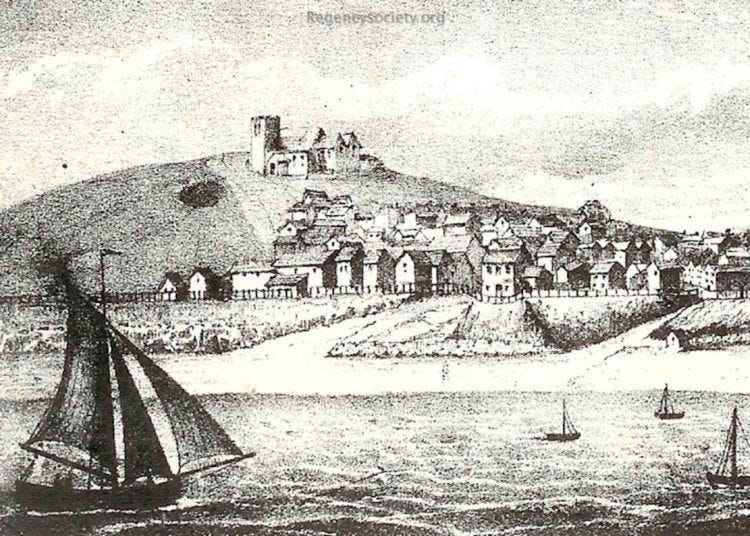 Brighthelmstone in 1779. Digital image by the Society of Brighton Print Collectors. (This work is licensed under a Creative Commons Attribution-NonCommercial 4.0 International License.)
That paradox first became clear to me during my doctoral research at the University of Sussex, where I explored how public symbols, monuments, architecture and civic institutions shape historical consciousness and belonging in Brighton.
Most people know Brighton. Far fewer know Brighthelmstone.
Before it became one of Britain's best-known seaside destinations, Brighthelmstone was a small fishing settlement whose existence depended upon generations of fishing families who lived and worked along the Sussex coast. Their labour sustained the community for centuries. Their knowledge of the sea shaped local life. Their resilience made later prosperity possible.
Yet as Brighton reinvented itself during the eighteenth and nineteenth centuries through royal patronage, fashionable tourism and imperial prosperity, another transformation quietly took place. The fishing community gradually disappeared from the city's dominant public story.
The Royal Pavilion became famous, visits from the Royal Family became celebrated, elegant architecture became protected, and imperial achievements became commemorated. Yet commemoration of the people whose labour laid the foundations of the town became increasingly difficult to find within Brighton's symbolic landscape.
This absence is not simply about missing historyIt reflects a wider process that can be described through the concept of Symbolic Environments: the interconnected landscapes of monuments, buildings, institutions, street names, education and public narratives that quietly teach societies what deserves remembering and what can be forgotten.
These environments do more than preserve history. They shape identity. They influence belonging. They determine whose achievements become visible and whose contributions fade into silence.
This matters because public memory is never neutral. Every city and town makes choices about what to honour and commemorate. Every monument represents one story among many, every museum display highlights certain lives while leaving others in the background. Over generations, these choices become normal. They shape how citizens understand their country and their place within it.
For many years, Britain's national memory has rightly celebrated explorers, monarchs, military victories, scientific innovation and industrial achievement. But what happens when ordinary working people become almost invisible within that story?
This question extends well beyond Brighton.
Today, many of Britain's coastal towns face persistent social and economic challenges. Clacton-on-Sea has become one of the most recognisable examples of this wider reality. Nearby Jaywick has repeatedly ranked among the most deprived neighbourhoods in England. Many coastal communities experience lower wages, unreliable seasonal employment, poorer transport links, declining high streets and fewer opportunities for young people than many inland areas.
Communities need more than economic investmentThese challenges are real and their causes are complex. Globalisation, deindustrialisation, changes in fishing, housing policy, education, investment and political decisions have all contributed. When it comes to a solution, communities need more than economic investment.
They also need recognition.
When the histories of ordinary working people gradually disappear from public consciousness, communities may begin to feel that they have disappeared from the nation's imagination as well. Recognition is not merely symbolic.
It shapes dignity. It shapes identity. It shapes whether people believe their lives matter within the national story.
Throughout Britain, fishing families, dock workers, market traders, shipbuilders, coastal labourers and small business owners helped create the prosperity from which later generations benefited. Yet their histories are overshadowed by grander narratives of empire, royalty, commerce and tourism.
The result is not simply historical imbalance, it creates what might be called an inequality of recognition. Some communities repeatedly see themselves reflected in public space. Others might never do.
New buildings alone cannot restore belongingMy doctoral research suggests that this imbalance has profound consequences for belonging. When people cannot recognise themselves within the places they inhabit, feelings of exclusion may deepen even where physical regeneration takes place. New buildings alone cannot restore belonging. Economic investment alone cannot repair historical invisibility. Communities flourish when people believe that their work, their ancestors and their histories have contributed to something larger than themselves.
This insight lies at the heart of another concept developed through my research: the EtuPath Six Sense Continuum of Collective Self (ESSCCS).
This proposes that people encounter the world not only through what they physically observe, but also through inherited memory, emotion, culture, relationships and symbolic meaning.
Public environments continually influence these processes, shaping how individuals understand themselves, others and the societies they inhabit. Seen in this way, Britain's coastal challenges are not only economic, they are also cultural, historic, and symbolic.
The question is no longer simply how we regenerate coastal towns, it is also how we regenerate public memory.
Brighthelmstone offers an important lesson. Remembering its fishing community does not diminish Brighton's remarkable history. It enriches it. It reminds us that every successful city rests upon generations of ordinary people whose names rarely appear on monuments, but whose labour made everything else possible.
The same principle applies across Britain.
Britain's coastal communities deserve moreFrom Clacton-on-Sea to Grimsby, Hastings to Fleetwood, Hull to North Shields, Britain's coastal communities deserve more than occasional political attention during election campaigns or moments of economic crisis.
They deserve recognition as makers of Britain, as contributors to Britain's democratic, cultural and economic life. As communities whose histories matter just as much as the stories already carved into statues, museums and civic buildings.
Perhaps Britain's greatest challenge is not simply rebuilding its coastal economy, perhaps it is rebuilding the relationship between memory and belonging. When nations forget the people who built them, they risk weakening the very foundations upon which social trust depends.
But when forgotten histories are brought back into public consciousness, something remarkable becomes possible. Communities begin to see themselves again. Belonging becomes stronger. History becomes more honest, and the future becomes something that everyone can recognise as their own.
Britain's coastline has always connected us to the world.
Perhaps now it can reconnect us to one another.
A chance to make real change
Every month, we release a new Bylines Network Gazette - to get your's sign up as Friend of Bylines Network now. Each tackles an important issue like poverty, climate change, education, media power…the list goes on. They are packed with articles by citizens from across the UK and interviews with leading figures including George Monbiot, Sangita Myska, Michael Rosen, Gina Miller, Gavin Esler, and many more.
Now, with your help, one our Gazettes could influence those in power to make real change.
One more day of silence is one too many, is a special Gazette featuring articles from survivors of trafficking and abuse at the hands of Mohamed Al Fayed. Alongside former chief prosecutors, investigative journalists and anti-slavery networks they call for a public inquiry into the failings that have left them without justice for decades. Working with the survivor group No One Above we plan to print a copy of the July Gazette for every MP, and to help surivors finally put their case to Downing Street.
We don't normally print Gazettes, or organise trips to Westminster, and we need to raise some extra funds to do it properly. If everyone reading this newsletter donated just £5 to support this effort, we would smash the target instantly. You can help here:
Telling others is also really helpful - click this preview of our co-founder 's post on Bluesky and reshare it so others can learn about what we're doing and why:
To receive new posts and support Bylines Network's powerful citizen journalism, consider becoming a free or paid subscriber.
Hello, Best of Bylines newsletter subscribers. Two things happened at the same time last night: Channel 4 ran a startling feature about Reform UK, which had widespread consequences today, and we ran a "cleaning up politics" webinar, offering a host of ideas for saving British democracy.
This special Best of Bylines mailing picks up where they left off. You'll find information you need to watch highlights of the webinar, sandwiched between two halves of a brilliant article by former Westminster lobby correspondent and Kent and Surrey Bylines journalist Bill Doult - with Nigel Farage clamping up over scrutiny about funding sources, pressure grows for a radical clean-up of political funding.
 image by Ralph_Fotos. Pixabay
Running a political campaign is an expensive endeavour. Just ask Nigel Farage.
Somewhat strangely, however, the Reform leader currently seems less than keen to talk about money, insisting it is not our business to know more about the £5 million donation he received from a cryptocurrency billionaire.
Despite his reluctance to talk about the cash sent to Reform UK's coffers - let alone Farage's own pocket - this situation has reignited the fraught issue of political funding. Demands are once again growing for the United Kingdom to adopt tougher regulations, controlling who can donate money to political parties and how much.
Some might say not before time either! Compared to other European countries, the laws governing political donations to British political parties are so lax as to be almost inconsequential. But more of those international comparisons later.
The limits of political fundingThere are now two distinct though linked problems with political funding in Britain. One is the way the scale of political expenditure is controlled; the second, controlling where the money comes from.
To be blunt, the controls on electoral spending have become unfit for purpose. Traditionally, the focus was on controlling local spending, whether for Parliament or council elections. The aim: a level playing field to ensure no party or candidate could massively outspend their rivals and, in effect, buy the election. Those rules remain in force today but have become almost irrelevant.
That's because while limits remain on how much candidates can spend in their constituencies or wards during election campaigns, there are no limits on what parties can spend nationally.
Hey, big spender! Looking for a friendly party policy?National spending by the major parties has soared. According to the Electoral Commission, parties spent a combined £68.6 million during the 2024 General Election - more than double the figure at the 2010 election, when total spending was just under £31 million.
Labour was the biggest spender in 2024. Their campaign budget rose from £8mn when they lost power in 2010 to £30.1mn when they returned to government in 2024 - more than all parties spent combined in 2010.
Donation reformIt is not, however, the spending rules that have prompted today's renewed calls for reform. Those demands were fuelled by revelations about the money that appears to have been given to Farage and Reform UK from wealthy cryptocurrency backers.
Farage is an enthusiastic supporter of crypto - even lobbying Bank of England Governor Andrew Bailey to abandon plans for a state-backed digital currency. The Governor insisted the lobbying had no impact on Bank policy.
Christopher Harborne - an early cryptocurrency investor - had already donated more than £24 million to Reform UK and its predecessor, the Brexit Party, making him Britain's biggest political donor. But it was the disclosure of a separate, £5mn personal gift to Farage that caused the controversy.
Farage initially described the money as funding for his personal security because he was supposedly "the most physically and verbally attacked public figure or politician of modern times". He later called it an "unconditional gift" recognising his years campaigning for Brexit, before insisting it was entirely his private business.
Missed our webinar? Watch the highlights now
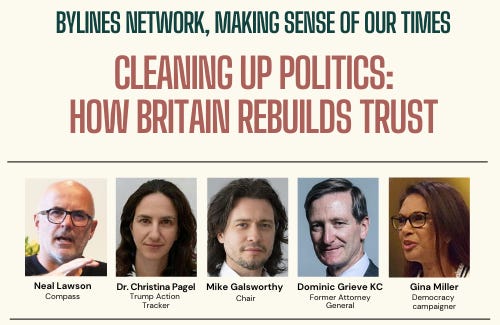
Bylines Network webinars get under the surface of the key issues shaping our society. Earlier this week we discussed whether Andy Burnham's promise of a better kind of politics might restore trust in Westminster and, if not, what else could be done to clean up British democracy. Over 300 people joined this insightful, impassioned and urgent discussion, with panellists including:
Neal Lawson - political commentator, co-founder and chair of Compass.
Professor - inventor of the Trump Action Tracker.
Dominic Grieve KC - former politician and Attorney General.
Gina Miller - democracy campaigner.
- Chair of European Movement UK and co-founder of Bylines Network.
If you missed it, don't worry! This topic is so important that we've decided to share a special 30-minute highlights reel right here:
Want to see the whole event? You can! This webinar lasted 75 minutes, including attendee questions, audience polls, and an array of ideas to strengthen our democracy. Our live events are ticketed. We rely on the money they raise to continue our work, but we're keen to ensure everyone can be part of these conversations and offer free access to those with limited funds. Visit this link to view this webinar in full and make an optional donation to support Bylines Network's efforts to put citizen voices at the heart of our democracy:
Full webinar and donation details
And now back to Bill's fantastic article.
Cryptocurrency billionaires donate for Farage
Parliament's Standards Commissioner, Daniel Greenberg, launched an investigation into whether the Harborne gift should have been declared under Commons rules. Relations between Farage and the media quickly deteriorated as questions intensified.
Reform's second-largest donor is Hong Kong-based cryptocurrency billionaire Ben Delo, who contributed £4mn before moving to Britain after ministers introduced a £100,000 limit on donations from overseas British citizens.
In 2020 Delo pleaded guilty in the United States to breaching the Bank Secrecy Act by failing to establish anti-money laundering controls at cryptocurrency exchange BitMEX. He was fined $10 million, placed on probation and later pardoned by President Donald Trump.
Electoral Commission records, analysed by Friends of the Earth, suggest Harborne and Delo together account for 71% of Reform UK's reported donations.
Questions have also been raised about non-cash support allegedly provided to Farage, including security services, transport, and accommodation. Farage denies any wrongdoing and says he has complied with the relevant declaration rules.
The continental approachCompared with much of Europe, Britain's political funding rules resemble the Wild West. There is no cap on domestic donations, overseas donations from eligible British citizens are capped at £100,000, and although donations above £7,500 must be declared, significant loopholes remain around non-cash benefits.
France caps individual donations at €7,500 and bans corporate and trade union donations altogether. Spain limits annual donations to €100,000 and prohibits anonymous gifts. The Netherlands caps donations at €100,000, bans foreign donations and requires declarations within four weeks. Sweden combines extensive state funding with annual donation limits of around €1,500-€2,500.
So, what can be done about it? Well, at the time of writing, the UK is going through yet another regime change, thanks to the bloodless coup by the Member for Makerfield.
Burnham backs demand for political funding reformsNew Prime Minister Andy Burnham made his position clear when questioned by the campaign group WakeUpGB to whom he said: "Yes, I do think there should be a cap on political donations. This would guard against the perception of any one party being unduly influenced or swayed by one person or organisation."
He added that he wanted to reduce limits over time and close legal loopholes, increasing transparency. This is radically different from the Starmer government, which rejected extending the overseas cap to UK donors.
However, not all in the Labour movement are keen on funding reform. The GMB union urged Labour MPs in July to oppose the proposed caps, fearing they could have "significant unintended consequences", undermining Labour's traditional union funding. Similar concerns have been expressed by both Unison and Unite.
Potential for state funding expansionAnother option is state funding. Inevitably, British politicians of all flavours too often react to the idea like pearl-clutching maiden aunts finding themselves in a strip club. Which is a bit daft, as we have had a limited, well-established form of state funding for opposition parties since 1975. Short Money, named after former deputy Labour Party leader Ted Short, provides funds for opposition parties with either two seats or one seat and at least 150,000 votes at the last election.
Across much of Europe, state funding is a major source of party finance. In Sweden and Norway it provides up to 90 per cent of funding, up to 85 per cent in Finland and Denmark, 80 per cent in Spain and around 60 per cent in France. Why not in the UK?
The answer to that question may emerge following Mr Farage's re-election of MP for Clacton. His return to the Commons means we should soon be getting the findings of the Parliamentary Commissioner for Standards, Daniel Greenberg, and the Commons' Select Committee on Standards into that £5 million donation. That, in turn, could lead to Farage's suspension from the House and another by-election. But as far as reforming party political funding, well, don't hold your breath.
Join the citizen journalism community
Unbiased. Independent. Honest. A community that champions everyday citizens and unheard voices. We don't have oligarch owners, corporate controllers or political paymasters - we have a community of 2,500 volunteer writers and editors, and over 350,000 readers. Help power Britain's biggest citizen journalism movement. Become a member of our Friends of Bylines Network scheme today.
Become a Friend of Bylines Network


