
I'm a Professor of Economics at the University of Limerick in Ireland, I've helped create some interesting courses in Software Engineering and Bioscience. I love reading these and thought it might be nice to do one of my own. — Stephen Kinsella
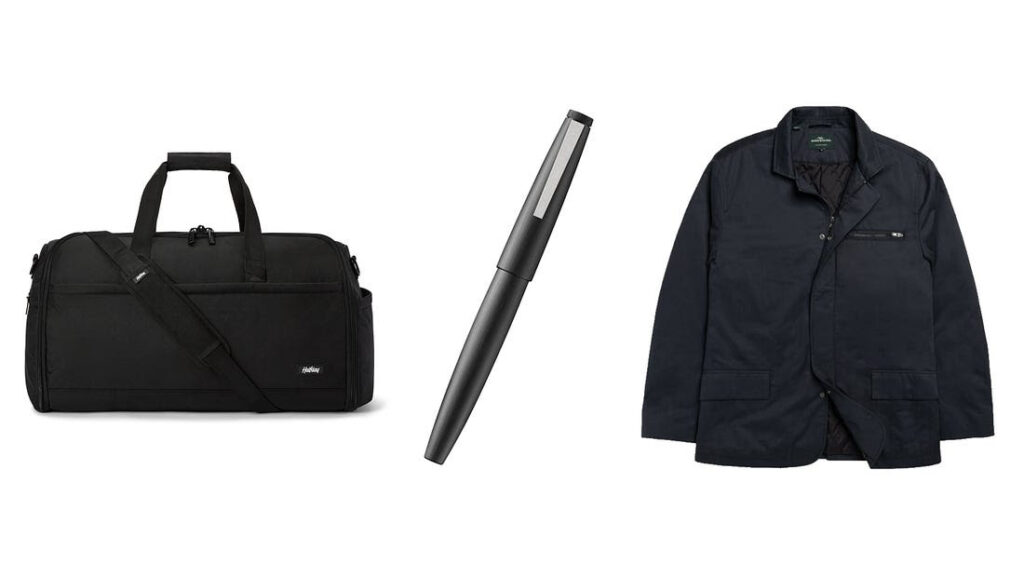 PHYSICAL
- Halfday Garment Duffel Bag. I travel at least once a week and it is a pleasure to use this bag. It is perfectly formed around a specific need. It helps me carry one suit, a spare shirt, some workout gear, and some toiletries, in a designed bag that is exactly adapted to the use case I have. It makes me happy using it.
- Lamy Fountain Pen 2000. A luxury item, mine is twelve years old now, with the fine nib. It feels great to use, looks great, and it is a little piece of design excellence you get to enjoy daily. I use Asa-gao Iroshizuku ink because it looks fantastic on the page and works well with this pen.
- Rodd and Gunn Jacket. I love all of this brand's products, and have several, but this jacket is my favourite.
DIGITAL
- Freedom. I bought a lifetime subscription a while ago. It blocks the stupid stuff when you need to try to be focused and clever.
- YNAB. A budgeting app that saves you money because it forces you to focus for a minute on money. I keep it as simple as I can with this.
INVISIBLE
᚛ᚐᚏ ᚐᚌᚆᚐᚔᚇᚆ᚜ This is Ogham, an ancient Irish alphabet, written linearly and on stone. What you are looking at is 'Ar Aghaidh', or 'Onwards'.
Sign up here to get What's in my NOW? a week early in your inbox.



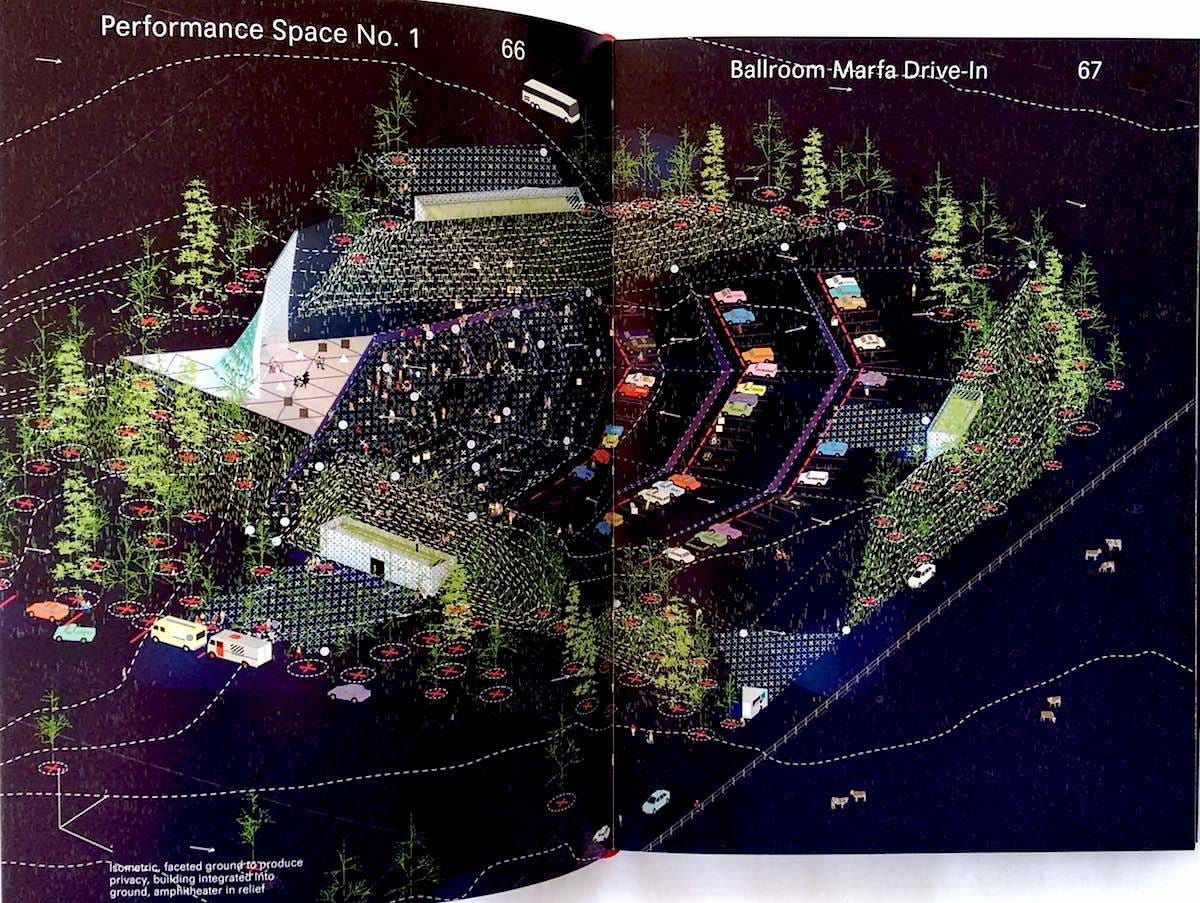
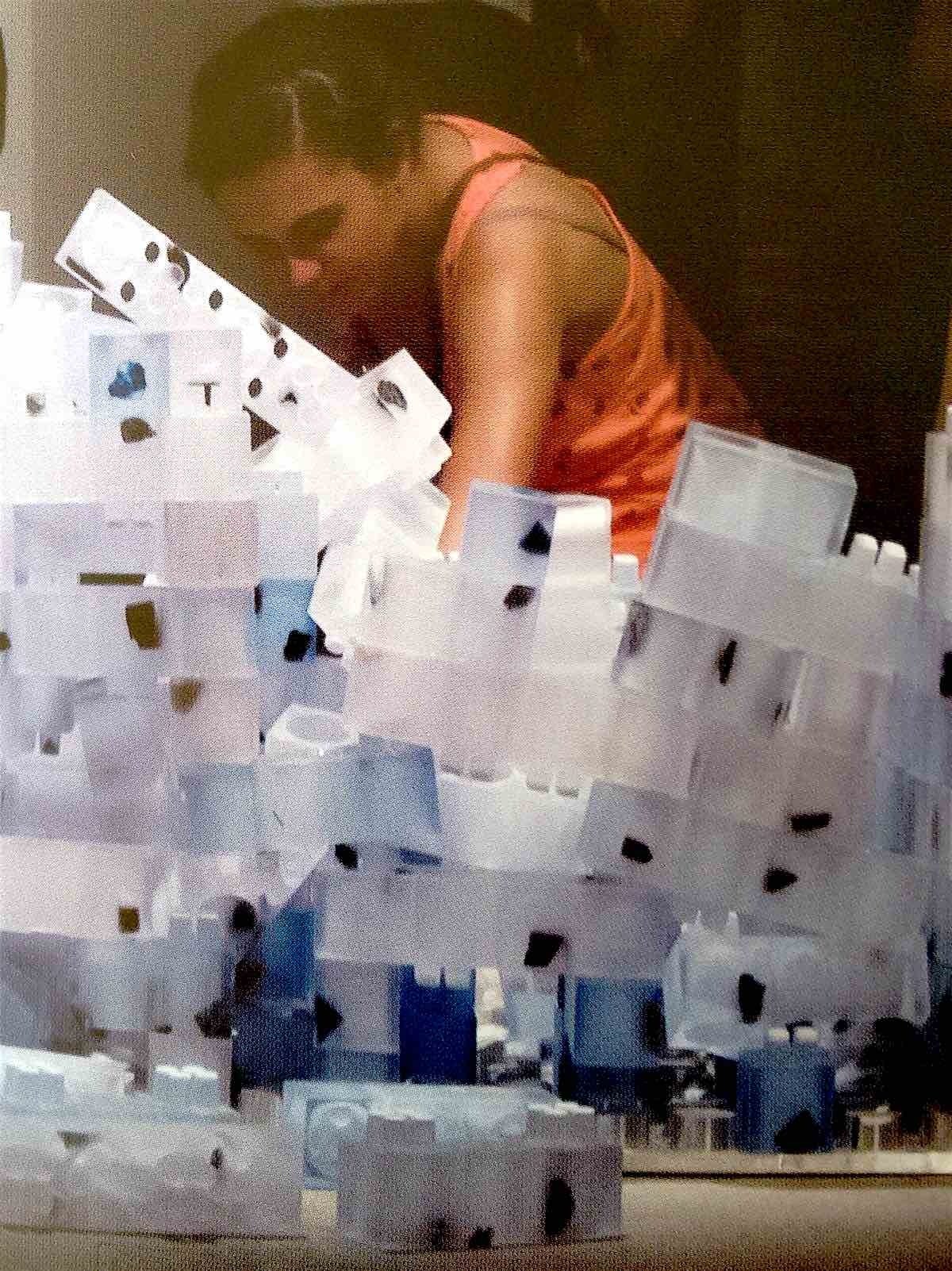
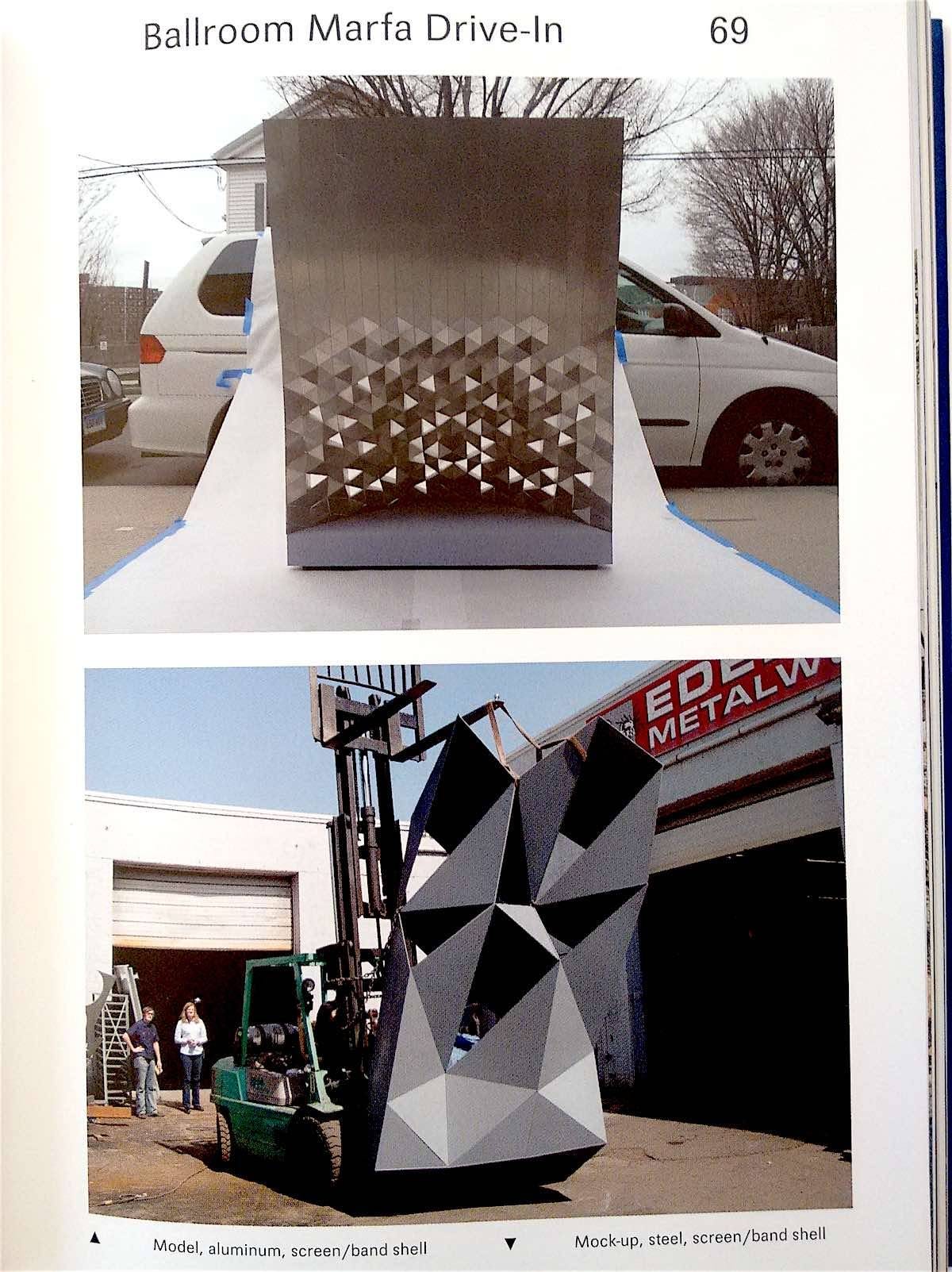
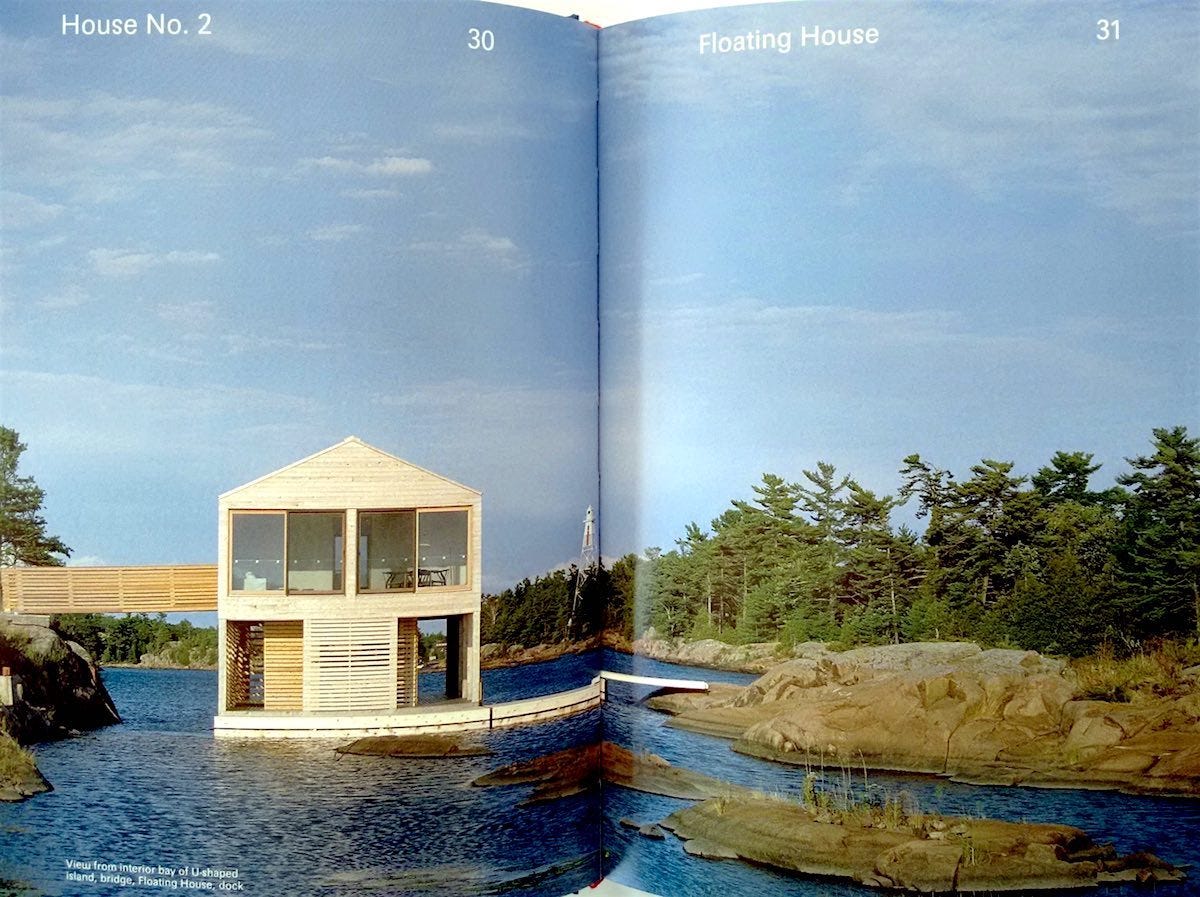
MOS: Selected Works
by Michael Meredith and Hilary Sample
Princeton Architectural Press
2016, 288 pages, 6.2 x 8.5 x 1 inches
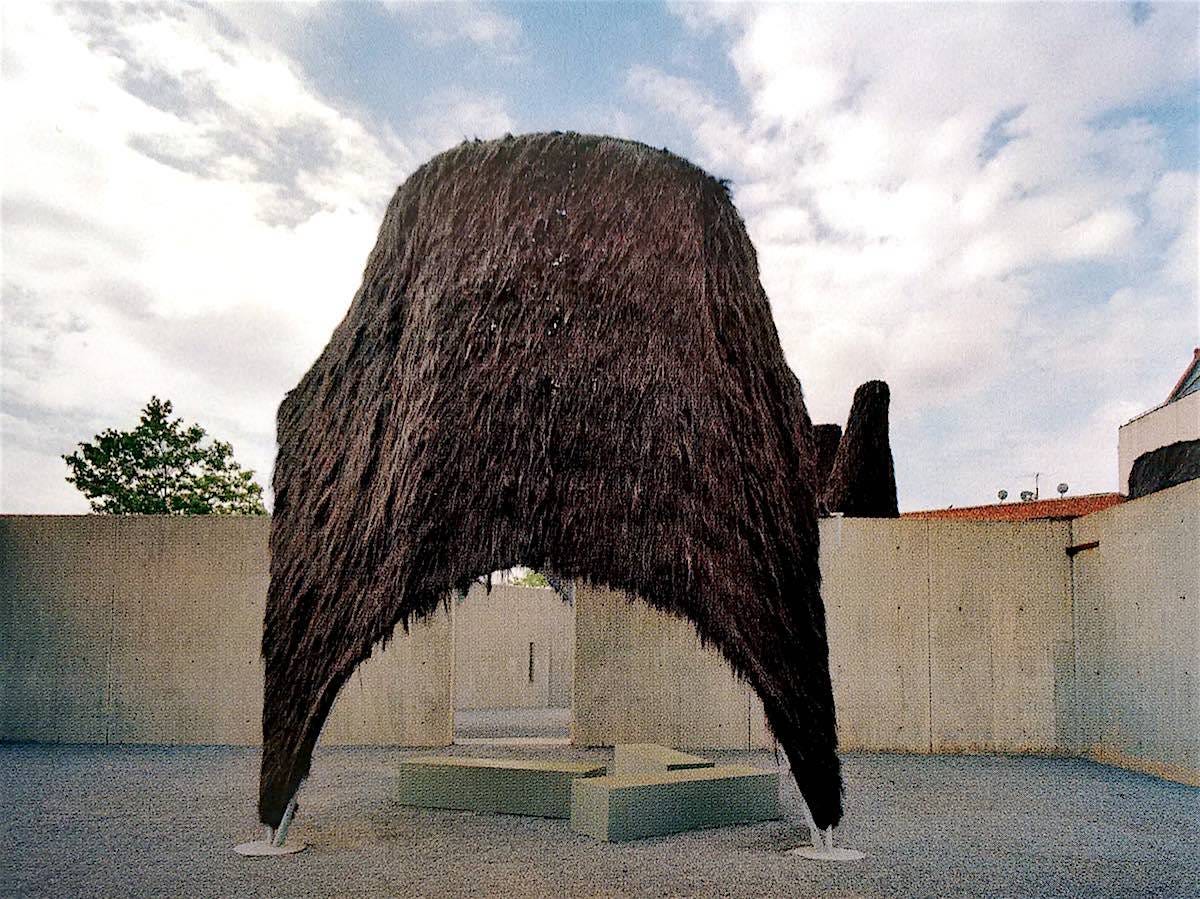
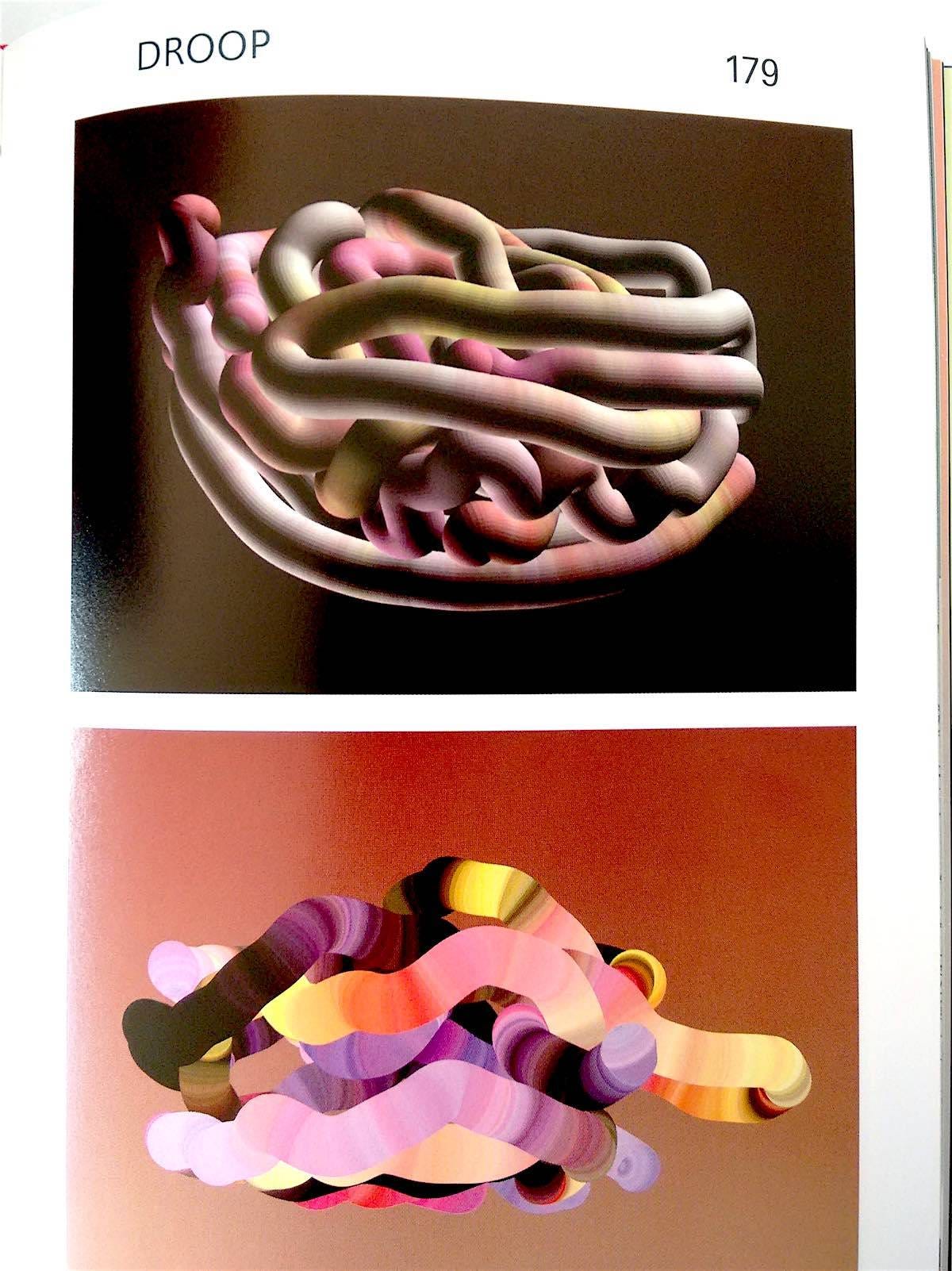
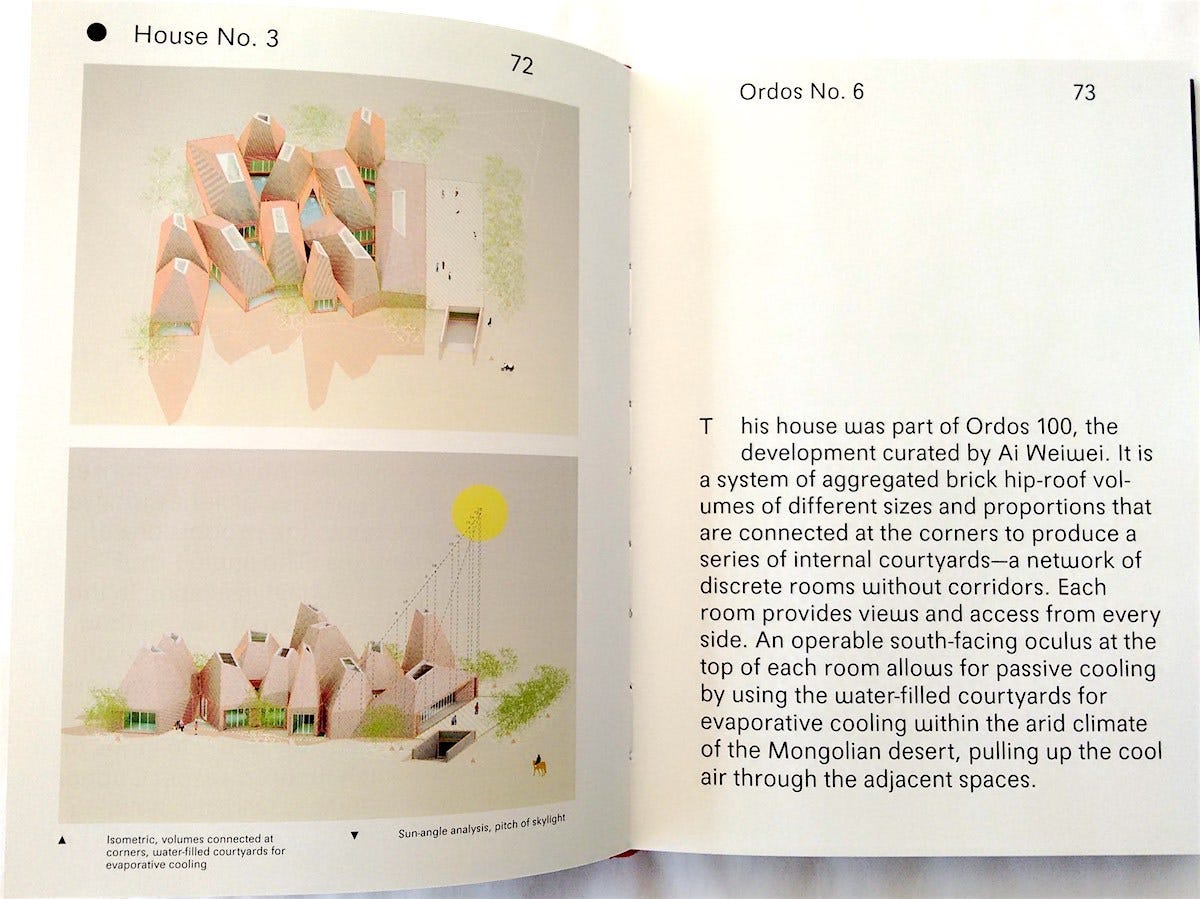
If the enormous hairy solar chimneys that these architects once built in the middle of Long Island City don't make you smile, then your sense of play might need renovation. The fun-loving, aggressively eccentric work of MOS Architects includes some recurring motifs: canopies, unusual materials, solar chimneys, shaft lighting, and buildings that look like blocks tumbled to earth. Engaging for architects and non-architects alike, this is a book that I keep picking up: to look through the illustrations, to wonder at, to think about how to work creatively, to show something weird and wild to a friend. While there is some discussion of theory in the included essays, this is a book refreshingly light on architectural jargon.
The architectural historian Lucia Allais suggests in an included essay that one of the primary questions that the work of MOS poses is, "Is this simple or complex?" While the works presented are often simple, the reactions they provoked for me were complex, ranging from confusion to glee to disbelief. Crammed with 300 images, the just-released MOS: Selected Works demonstrates the firm's unusual range of having produced buildings, installations, furniture, software, films, and pavilions, along with smaller works (like this book).
MOS, as a firm, is on a very serious mission to advance the limits of architecture, but without taking themselves too seriously. Their hilarious office manual is included in the book and will inspire glee in anyone who has ever worked in a corporate office, advising, "You will arrive at the Office when you are awake and ready to work. We ask that you not come to work resembling a "bad version of yourself" (or someone else for that matter; however a good version of someone else is acceptable under § 2.1)…" While the MOS office manual insists that their work merely "mumbles, if anything," I hope they keep mumbling in my ear for a while. - Brent Garland
THE ART OF ZOOTOPIA - A FANTASTIC COMPANION BOOK TO A FANTASTIC MOVIE

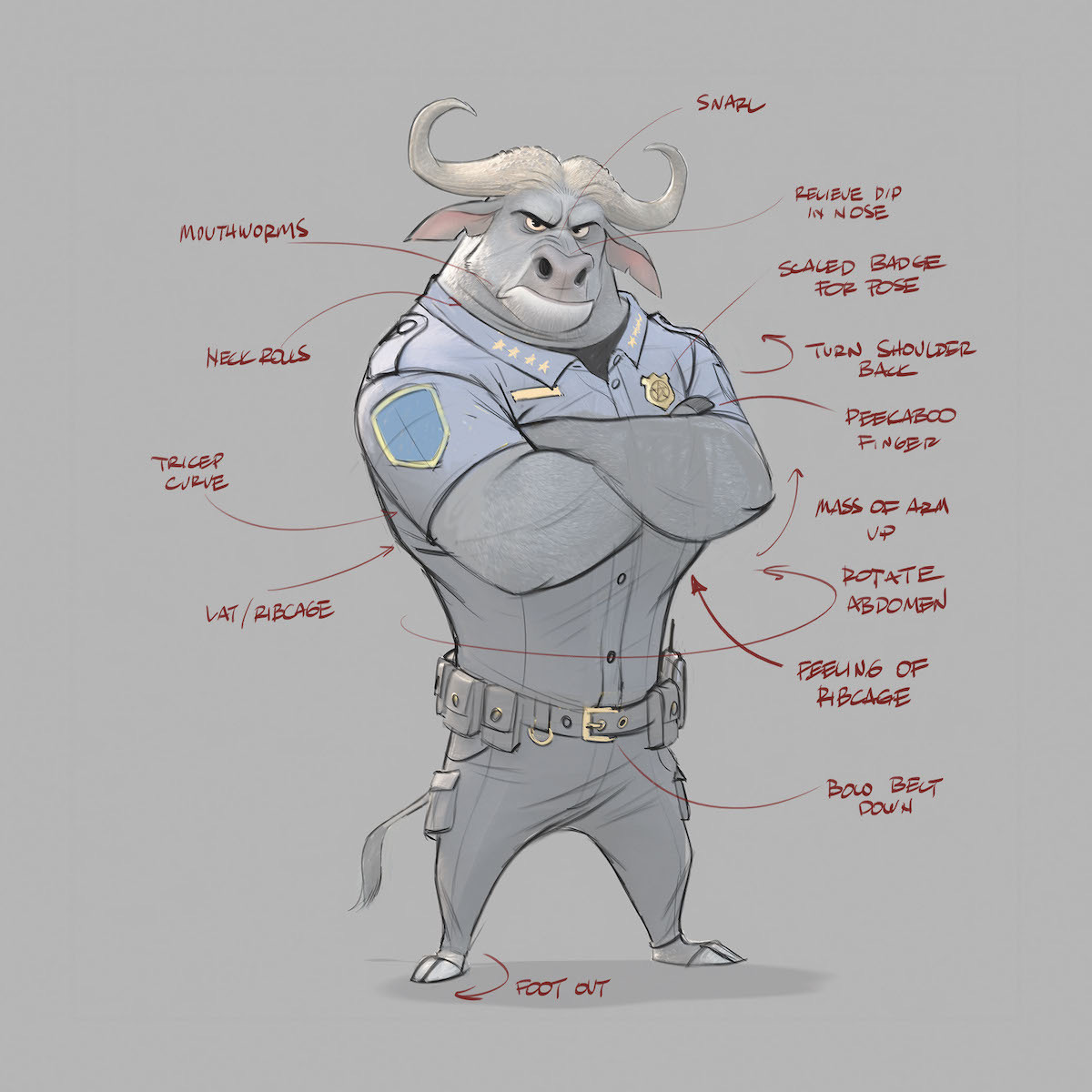



The Art of Zootopia
by Jessica Julius (foreward by Byron Howard and Rich Moore; preface by John Lasseter)
Chronicle Books
2016, 160 pages, 9.5 x 11.5 x 1 inches
I got my hands on a copy of The Art of Zootopia last week, days before the movie opened, and was so enamored with the fresh yet classic Disney-inspired art that I was already set on reviewing the book. Then over the weekend I watched the movie with my 12-year-old daughter and friends, and wow! What a brilliantly humorous and moving winner of a movie it was. Bravo to directors Byron Howard and Rich Moore! But this is Wink, so back to the book…
The Art of Zootopia is such a treat in the way that it not only revisits the movie's delightfully heartwarming characters and fantastic art, but gives us an engaging look at what went into the making of Zootopia. The book starts with author Jessica Julius describing the movie's original story pitch - a 1960s spy story - and how it evolved over four years into the modern day tale of underdogs, prejudice, and fighting for justice for all. She gives us the scoop on how the characters were developed (balancing a feminine yet tough, naïve yet sharp, optimistic yet challenged bunny cop isn't so easy!), shows us amazing "sets" I don't even remember in the fast-moving film, and she lets us in on all kinds of fun details, like the fact that it took eight months to get the various animals' fur just right (color, texture, and direction of fur growth takes more contemplation than I realized). We are also privy to many sketches and scenes that were eventually cut from the film.
Just released today, The Art of Zootopia is both a captivating companion book to the movie, as well as a stand-alone coffee table book that doesn't need any knowledge of the movie to be appreciated. - Carla Sinclair
Books That Belong On Paper first appeared on the web as Wink Books and was edited by Carla Sinclair. Sign up here to get the issues a week early in your inbox.
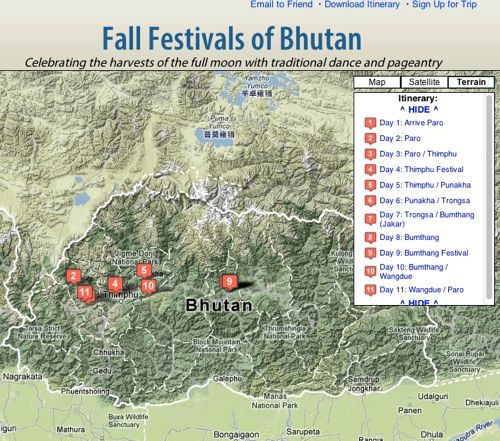 DIY tours
Packaged adventure tours can be fun and useful. A guided hut-to-hut walk in the Italian Alps, or a bicycle tour around the villages of Rajasthan, or a kayaking cruise between Caribbean islands are fantastic journeys that can be hard to program yourself. A good adventure tour agency knows how to smoothly sequence events like this, and on higher-price tours you may get a guide as well.
But I prefer to create my own adventure tours, because I can save many thousands of dollars that way. I use the commercial adventure tour itineraries as a basis for my own travels, and then modify them as needed. The way I figure it, if they can move a dozen people along the route, I should be able to do it with one or two. The most reputable agencies publish their itineraries online in great detail as a sales incentive. But to complete many of the routes they are selling requires private transportation or special accommodations. You might need a pick-up or delivery at a trail-head, or a jeep to reach a village, or even a plane flight, etc. This is where many budget travelers stop. It took me many years to realize that in most places in the world today — even developing nations — it is not hard, or very expensive, to arrange private transportation or expert help. And with the internet, these arrangements can be made beforehand. I've pre-arranged jeeps, vans, buses, and boats. The simple rule of thumb is: if a US-based tour agency can pre-arrange it, you can too, and at a great savings.
It will take some time and googling to arrange all the parts of an adventure tour, but the payoff is that you can replicate the same tour for about 1/5th the cost of the glossy professional version. So now I page through the adventure travel sites discovering all kinds of nifty tours I would have never thought about doing. Unlike the unconnected places in a guide book, there's a logical flow to an itinerary, and because of their high prices, these agencies will hone and optimize a trip for peak experiences. A key thing: pay attention to the time of year they run a tour, which is again highly optimized. Still I wind up modifying them in some way for my own use. I usually chop off the leisurely entry in a big city and head directly to the adventure (I call that laser-forward-slow-back travel).

Adventure Tour Agencies
- National Geographic Expeditions
- Wilderness Travel
- Geoex
- AsiaTranspacific
- Africa Adventure
- Zegrahm
- Journeys International
Some famous adventure travel companies specialize in highly-refined premium tours around the world, but they may be low on actual adventures. For instance I find National Geographic Expeditions' trips (better than their Adventure trips) involve more car and plane travel than suits me, but occasionally they'll have a nice gem worth replicating. Wilderness Travel gets you walking or kayaking a bit more, but still cover more miles in vehicles than I want, but I have used their itineraries a few times with great success.
Geoex offers pretty cool offbeat trips I've not seen elsewhere, but they also have plenty that are too mileage-hungry to count as an adventure. AsiaTranspacific specializes in Asian trips, a few of which stay close to the bone. For Africa and animals I look to Africa Adventure; they have a really good season chart for best times of year and parks for wildlife viewing. I like Zegrahm for inspiration. They do real off-the road adventures, including trips one might describe as "expeditions" which is more my kind of adventure travel.
But of all the tour sites, the one that has provided me with the most appealing itineraries is Journeys International. They emphasize in getting you to walk, hike, bike and kayak and this is really the way to go anywhere. Almost any one of their itineraries would yield a fantastic adventure.
Remember, I have no personal experience with the tours given by any of these outfits. I only use their freely published routes. All these tours are super expensive if you buy them but I would bet they would be really fun and generally well done. I recommend them here only as models to assemble your own. — KK
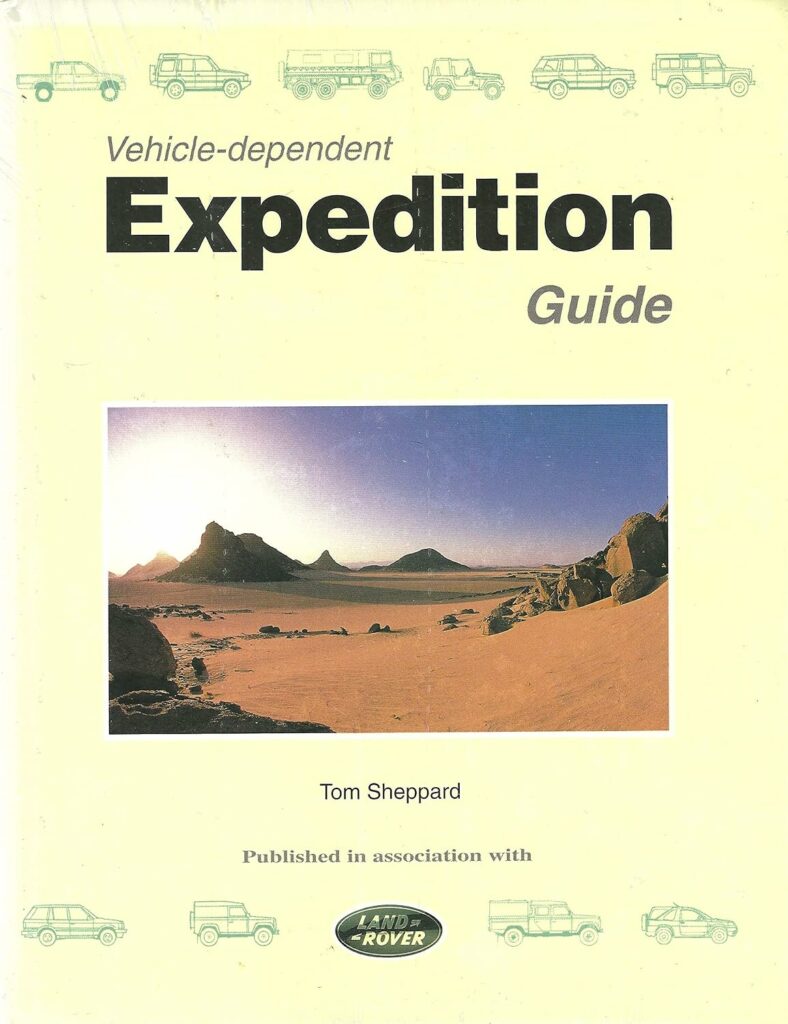 Serious off-road survival
Vehicle-Dependent Expedition Guide
This great book is unfortunately expensive and difficult to find. However it is the most stunning collection of vehicle expedition lore anyone is likely to encounter. It lists everything from how many Land Rover Defender 90's you can fit in a cargo container, to what socks to wear while driving in the desert. It is extremely detailed, does not shy away from product names, and is rife with real-world life-saving data. It includes tons of information on planning, visas, customs, shipping, survival, vehicle set up, driving tips, GPS and traditional navigation etc. On top of all that the writing style is matter of fact, the book is very well organized, and the photos and examples are inspiring. The most surprising fact that I learned from this book was how much weight matters, just like backpacking and mountaineering, it is the single most important thing to minimize in vehicle expeditions. Weight adversely affects handling, fuel efficiency, acceleration, braking, and your ability to traverse sand, mud, or steep grades. The $150 spent on this book will save anyone thousands on any offroad trip or expedition they are undertaking. — Alexander Rose
 Best of the world
I've slowly clued into the fact that there is a network of "World Heritage" monuments, sites, and natural parks throughout the world-places that are deemed unique enough, or endangered enough, to deserve funding by UNESCO. A cultural site can be a monument, a group of buildings, or an entire city. But to be granted a World Heritage designation, it must "represent a masterpiece of human creative genius; or bear a unique or at least exceptional testimony to a cultural tradition or to a civilization which is living or which has disappeared."
I like to think of these creations as the Best of Civilization.
Almost every country has at least one site, and sometimes many. Some places are justifiably famous, but many are mysteriously overlooked. Heritage sites are always among the most interesting destinations to visit in any country, well worth going out of your way to see. The sites range from ruins like the famous Inca Machu Picchu, to the less known ancient city of Fatehpur Sikri, India, to preserved towns like Visby, Sweden, to unspoiled wilderness areas like the Galapagos Islands. In total UNESCO lists 788 sites in 100 countries, which also include about 150 natural sites, deemed "areas of exceptional natural beauty and aesthetic importance" or outstanding bio-diversity.
In my travels I've learned to seek them out.
For a full list, and criteria, see World Heritage List. — KK
- BULGARIA (Year added to list)1979 Boyana Church1979 Madara Rider1979 Rock-hewn Churches of Ivanovo1979 Thracian Tomb of Kazanlak1983 Ancient City of Nessebar1983 Srebarna Nature Reserve1983 Pirin National Park1983 Rila Monastery1985 Thracian Tomb of Sveshtari
 Exploring with a vehicle
This is a more affordable version of Vehicle Dependent Expeditions. For $30 you'll get most of what is in that $100 plus book. In fact, this Handbook is more practical, with the kind of information you would want to take with you on a rough vehicle expedition, while Expeditions is more for pre-planning your trip. Think of it as the Lonely Planet guide to overlanding. — Alexander Rose
- The single biggest mistake first-timers make is over-equipping and overloadingtheir vehicle.
- Do You Need a Powered Winch?A powered winch may be crucial to the 'expedition look', but the received opinion from most 4×4 overlanders who've been there and got stuck is that, unless you're looking to push your 4×4 to the limit, there are many other more useful items.However they're powered, the typical permanent front mounting will be at the wrong end more than half the time and on many occasions there'll be nothing close enough to winch off unless other vehicles are present. And if they are, chances are they can simply pull you out.
- Shipping involves so many entities that it's very difficult to discern where a service charge ends and a bribe begins.
- You must also be very conscious of your situation and the local culture. In many developed countries, an attempted bribe could land you in a lot of trouble. On the other hand, in some countries, without a small bribe your vehicle could turn to rust before you get the single stamp you need on your temporary import document.
Once a week we'll send out a page from Cool Tools: A Catalog of Possibilities. The tools might be outdated or obsolete, and the links to them may or may not work. We present these vintage recommendations as is because the possibilities they inspire are new. Sign up here to get Tools for Possibilities a week early in your inbox.
I cracked my Kindle's screen a month ago, and when I looked to replace it, I was surprised by how much prices had jumped. So I tried the XTEINK X4 Pro, a pocket-sized e-reader no bigger than a credit card. Its screen light adjusts from warm to cool, and it lasts for weeks on a charge. It reads EPUB, PDF, MOBI, and text files and holds 16GB of books. The drawback is that it can't read Kindle books. A fan community has built a free replacement operating system called CrossPoint that adds features, including a way to read Libby library loans, but it takes some tinkering. At $99, it's much cheaper than a Kindle, and it snaps magnetically onto my phone so I can take it everywhere. — MF
TV ads removalThe promise of coding AIs is that it is super easy to take control of your devices. You just ask Claude to write you a program to do what you want on demand. As an example, folks are vibe coding apps to remove all the ad clutter on their TVs. This article in TechCrunch reports on this guerrilla frontier with two vibe apps that do just that. Employing AIs to remove ads is almost sacrilegious, so it will be interesting to see how the media companies respond. — KK
The Invisible EncyclopediaThe Encyclopedia of Invisibility is a collection of people, events, and ideas connected by invisibility—things that are deemed hidden or erased from history. The entries listed on this webpage are just a tiny sliver of what the artist Tavares Strachan compiled for the actual 2,400-page sculptural book. I think what makes it contemplative and "artful," even as just a link dump, is how differently invisibility is measured. Some entries are literal, like dark matter and glasswing butterflies. Others inform us about the things that have been erased from cultural memory, or that have gone extinct or have been destroyed. — CD
Mesmerizing card shufflerThe Lotus ($89) is a cleverly designed card shuffler that can shuffle up to two decks at a time. It's a black plastic box with a folding top. Place the deck in the center and touch a sensor; a pair of silicone rollers then divides the deck into two stacks on either side. Then you pick up the two stacks, put them back in the center, and repeat. Each pass takes about five seconds, and the site suggests repeating it three to seven times. It runs on a standard 9V battery, which is included and rated for more than 500 shuffles. It folds shut with the cards inside, which makes it easy to carry. It's a joy to watch in action, and it would make a great gift for anyone who plays card games. — MF
Save Page NowThis is more of a public service announcement than a recommendation. I recently tried to load a page I'd bookmarked, but it was gone, and when I checked the Wayback Machine, I was so sad to see it had never been captured. So I finally downloaded the Internet Archive's browser extension, which now auto-saves every page I bookmark. If you'd rather not give an extension access to your browser, you can paste any link into Save Page Now instead. — CD
Heritage scissorsI overpaid ($48) for a heavy duty scissors, but I think it is worth it because it will not only outlive me, but my great grandchildren as well. The Craighill Chroma is a heavy duty, stainless steel, super sharp, ergonomic, colorful, makes-me-happy-to-use-it 8-inch scissors. Most fine scissors have slightly curved blades to ensure a cut, but these are so hefty the blades are straighter, so have less friction, to make each cut effortless. I keep mine on my desk so I can see and enjoy its tri-colors. Makes a great gift, too. — KK
THIS ISSUE IS SPONSORED BY Incogni
Searching yourself on Google or ChatGPT exposes shocking details like your address, SSN, and financial records. Incogni's Unlimited plan automatically erases your sensitive data from online brokers, protecting you from identity theft and fraud. Get 58% off with code RECOMENDO
Sign up here to get Recomendo a week early in your inbox.
Adaptive Tools That Make Your Work Easier
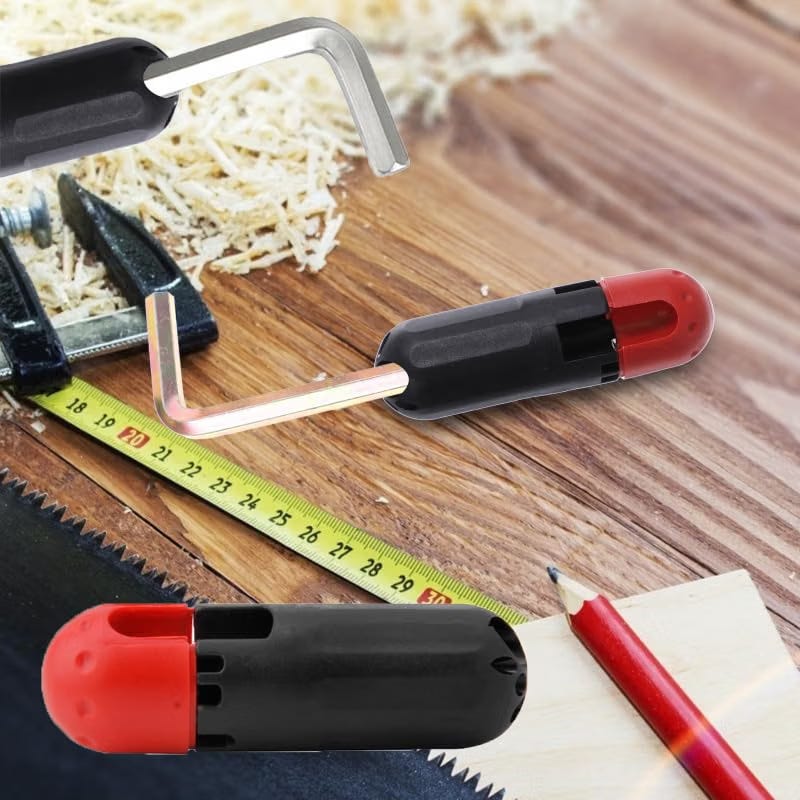 Hex Key Handles
How did I go so long without one of these simple hex key T-handles? I've known about them for years and thought about them every time I was cursing my way through assembling flat-pack furniture, I finally got some, and they're great. I got a pack of three cheap, chunky plastic ones and the size is perfect for confident gripping with arthritic hands. The handles are made to accept a variety of common hex sizes, and they're designed to be used either in a T- or L-handle configuration. At under $2 each, you definitely want some of these around your home and shop.
Exploring Weird Tools Concepts and the Infimaker 5-Axis Desktop CNCWhile this Laura Kampf video is basically a promotion for the forthcoming Infimaker 5-Axis Desktop CNC, it uses that opportunity to explore an "Is this crazy or clever?" idea. Laura wants to know if there's any real value in a disk-shaped measuring tool that you keep in your pocket and roll across surfaces and material for rough measuring. She uses the Infimaker to go down the rabbit hole of the idea to see if it's worth pursuing. Moving quickly (and cheaply) from idea to prototype is a real superpower in developing product ideas, so you can definitely see how a machine like this could be a serious asset. The Infimaker had a successful $4.7 million crowdfunding campaign in Sept. The machines are allegedly shipping in early 2027.
Marveling at Cheap Flat-Pack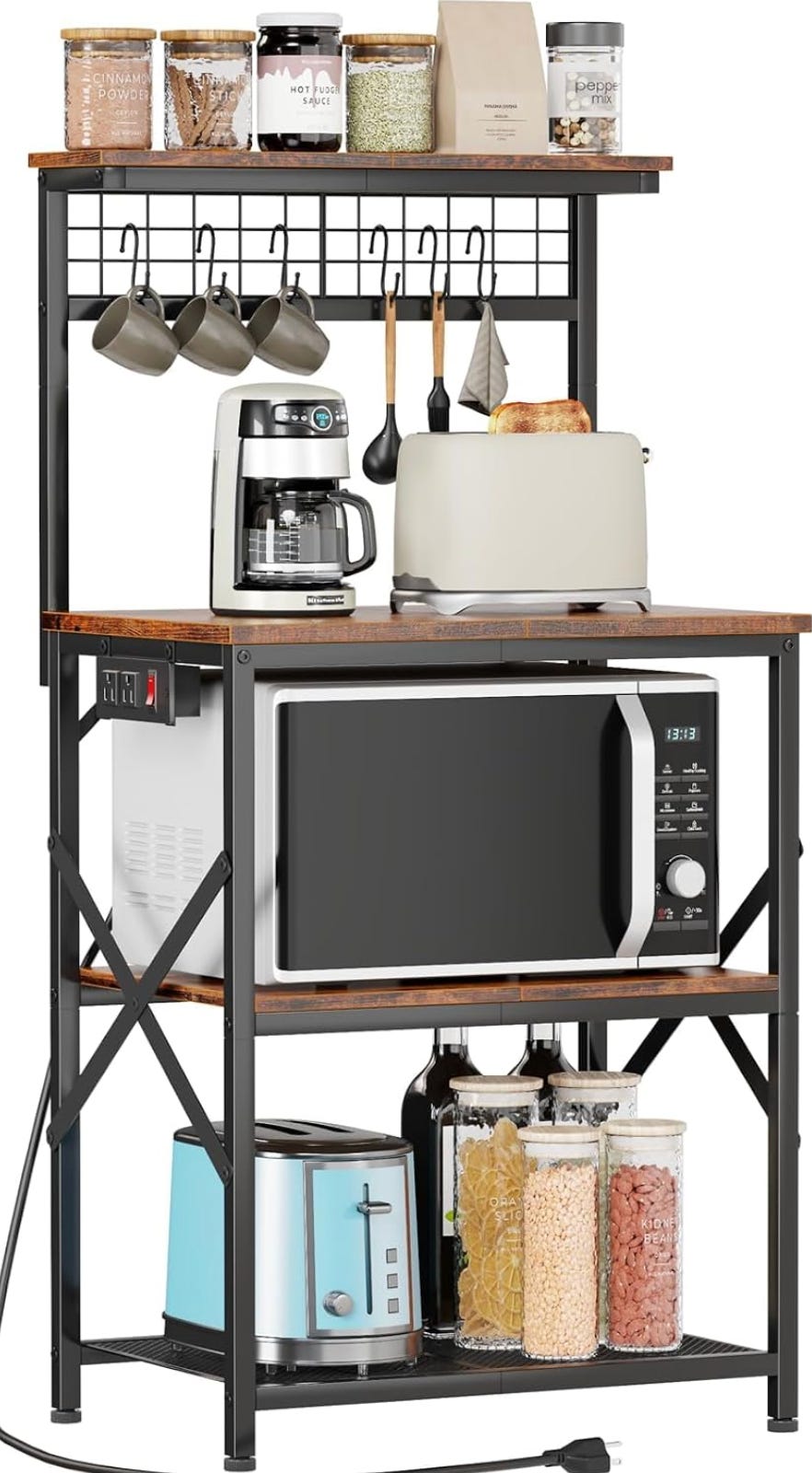
My wife recently bought a "baker's rack" to use as a microwave and coffee stand in her art studio. As soon as I saw it on our doorstep, I knew I had a job ahead of me. The heavy box (for a 21.7" x 14.6" x 49.4" shelving unit) was disturbingly small. I knew it was going to be filled with a TinkerToy collection of short box-tubing components and a big-ass bag o' hardware. It was.
It took me two nights of after-dinner work to get it all put together. And those hours also became a kind of meditation on the mad genius of international consumer manufacturing and trade.
I don't mean that as a hymn to global consumer capitalism. There are plenty of uncomfortable questions buried inside cheap imported goods: labor, environmental costs, shipping, disposability. But I couldn't help marveling at the amount of mostly invisible intelligence embodied in this mundane under-$50 object.
Somebody had to design a nearly 50-inch-tall rack with four shelves, a built-in power strip, and enough strength to hold a microwave, coffee maker, etc. And design it so that it would fit into that alarmingly small shipping box.
Then there's the manufacturing. There must have been 25 or 30 main components, plus a heavy sack of hardware. The tubing was nicely powder-coated, the shelves were decent, and dozens of holes drilled into dozens of different parts somehow had to line up perfectly. As I worked, I could imagine this deft balancing act of trade-offs around engineering, materials, and precision manufacturing, all within the reality of razor-thin margins.
Somebody designed it. Somebody sourced the tubing, shelving lumber, fasteners, electrical components, and packaging. Somebody worked out the manufacturing, assembly sequence, and instructions. Somebody figured out how to pack it into that tiny carton. Then it entered the vast global Rube Goldberg machinery of factories, warehouses, container ships, ports, trucks, and delivery networks before landing on our porch.
Again, you can't help but feel like $49 is too cheap, and image the real costs are simply showing up somewhere else. But after two nights of cursing the thing, I found myself admiring it and the processes by which it had come to me. Human beings on the other side of the world had been handed a nearly absurd set of constraints: Make it sturdy. Make it useful. Make it decent-looking. Make all the holes line up. Make it fit into a tiny box. Ship it halfway around the world. And price the damned thing under fifty bucks. How the hell do they do that?
Still Sweet on ItTools That Remain Favorites
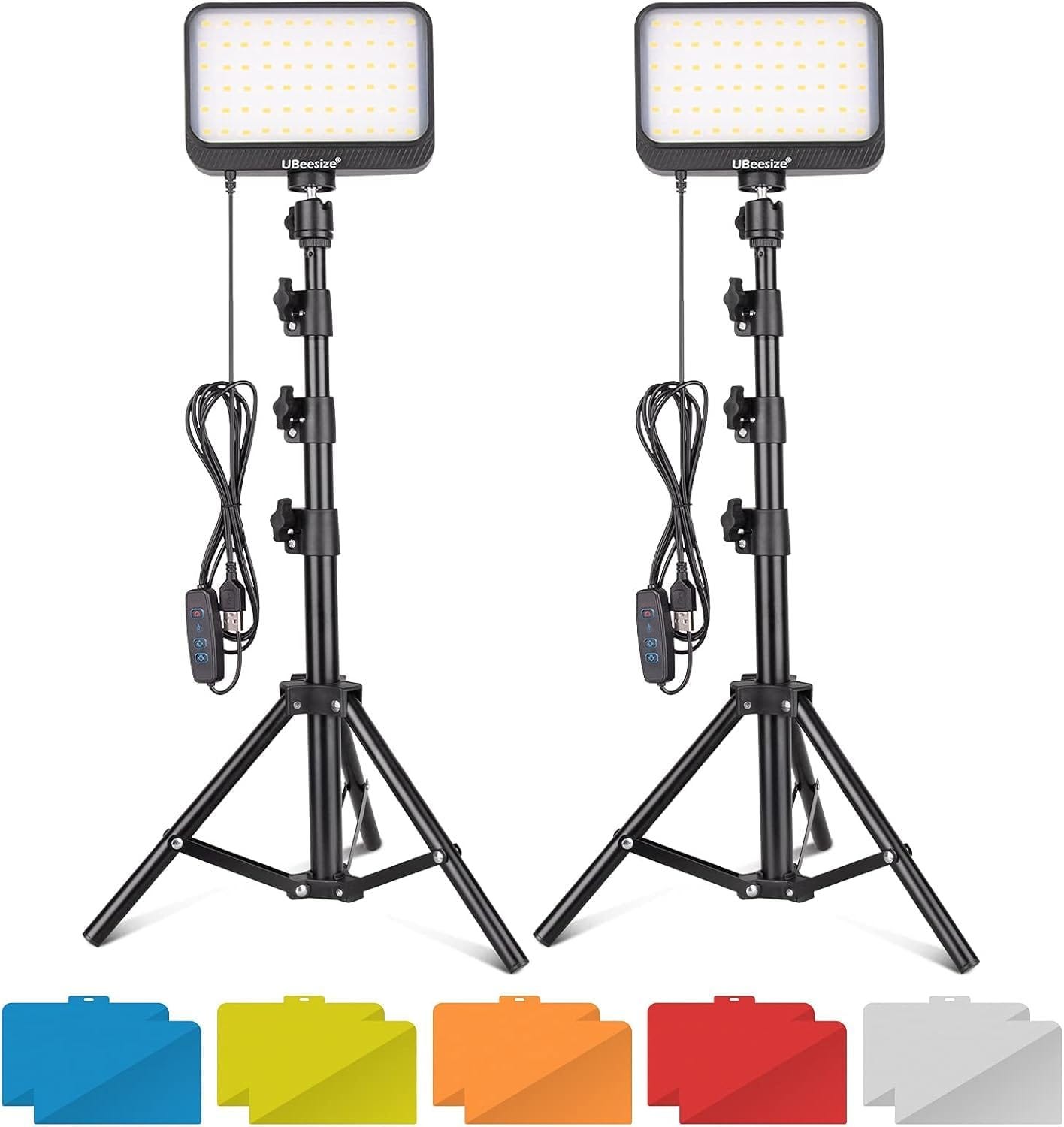
Three years ago, when I got a new remote job that I knew would require a lot of weekly Zoom meetings, I knew I needed decent video lighting for my office. Not knowing what sorts of lights I would ultimately require, I went onto Amazon and ordered a cheap set of LED panel lights on adjustable stands to tide me over until I could figure out what a really needed. Three years later, and I still have the same lights and see no reason to upgrade. When I bought these UBessize lights on stands, they were only $30. Today, they're even lower, at $25! The stands are a bit rickety, and everything smacks of cost-cutting and minimal amounts of material. But the lights work great, there are four brightness levels, and the stands are adjustable. They even come with five color filters. Honestly, when these eventually die, I'll likely just get the same ones again. For my needs, they're perfect. I even sometimes pair them with a USB power brick so I can move them around for close-up photography lighting.
Workshop Setup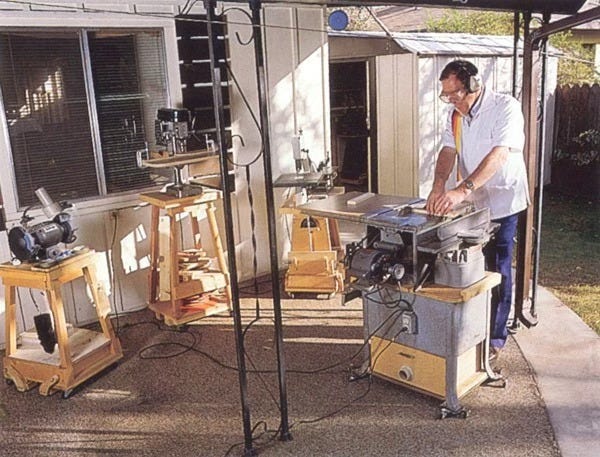 Donald Kinnaman packs the contents of an entire workshop into a 90-sq. ft. metal shed next to his Phoenix, Arizona, home. He rolls the machines he needs out onto the covered patio behind his house and goes to work.
In a recent Tools for Possibility on Cool Tools, the subject was workshop setup. There are a lot of really great ideas here, from creating a simple tabletop spray booth from a box and a fan, using PVC pipes for tool storage, and shopping carts as mobile workstations.
Turning a Broken Caulking Gun into a Vise
In this Taku Woodcraft Instagram video, Takurou shows how he cleverly constructed a useful bench top cutting vise using a discarded caulking gun mechanism.
I now have well over 10,000 subscribers to this humble little newsletter. And 50 paid subscribers. A million thanks to all of you. Doing this newsletters is a true joy for me and I especially like feeling like I'm connected to a community of fellow makers. Thanks to everyone who's sent me an email, made a comment, shared a tip or tool. Let's keep the ball rolling for another 200 issues!
If you want to financially support this work, please consider a paid subscription. It helps keep me in PB Swiss. I appreciate you.
A very special thanks to Hero of the Realm subscribers: Moses Hawk, Jim Coraci, Donobster, Peter Sugarman, and Will Phillips for your generous support.
 Book Freak #229: The Social Construction of Reality [ 30-Oct-26 4:00pm ]

Get The Social Construction of Reality
Peter Berger and Thomas Luckmann's The Social Construction of Reality (1966) argues that the social world around us, and our understanding of it, is something people fabricated together. Even though we made it, it feels as solid and real as nature, and we usually don't remember making it.
It reminds me of the "imagined orders" Yuval Noah Harari describes in Sapiens. Enough people believe in money, nations, companies, and human rights that we treat them as real things instead of agreements. The International Sociological Association named it the fifth most influential sociology book of the century.
Reality Is Made in Three StepsPeople make the social world, then experience it as a fact outside themselves, then absorb it.
Habits Become Institutions"It is important to keep in mind that the objectivity of the institutional world, however massive it may appear to the individual, is a humanly produced, constructed objectivity. The process by which the externalized products of human activity attain the character of objectivity is objectivation. The institutional world is objectivated human activity, and so is every single institution."
"It is already possible, however, to see the fundamental relationship of these three dialectical moments in social reality. Each of them corresponds to an essential characterization of the social world. Society is a human product. Society is an objective reality. Man is a social product. It may also already be evident that an analysis of the social world that leaves out any one of these three moments will be distortive."
It starts with routine.
"All human activity is subject to habitualization. Any action that is repeated frequently becomes cast into a pattern, which can then be reproduced with an economy of effort and which, ipso facto, is apprehended by its performer as that pattern. … Even the solitary individual on the proverbial desert island habitualizes his activity. When he wakes up in the morning and resumes his attempts to construct a canoe out of matchsticks, he may mumble to himself, 'There I go again,' as he starts on step one of an operating procedure consisting of, say, ten steps. In other words, even solitary man has at least the company of his operating procedures."
Once people share habits and pass them down, they become institutions.
Language Builds the World"The institutions, as historical and objective facticities, confront the individual as undeniable facts. The institutions are there, external to him, persistent in their reality, whether he likes it or not. He cannot wish them away. They resist his attempts to change or evade them."
"In the early phases of socialization the child is quite incapable of distinguishing between the objectivity of natural phenomena and the objectivity of the social formations. To take the most important item of socialization, language appears to the child as inherent in the nature of things, and he cannot grasp the notion of its conventionality. A thing is what it is called, and it could not be called anything else. All institutions appear in the same way, as given, unalterable and self-evident."
Teaching it to children makes it more real to the parents, too.
Beware of Reification"The process of transmission simply strengthens the parents' sense of reality, if only because, to put it crudely, if one says, 'This is how these things are done,' often enough one believes it oneself."
Try It Now"Reification is the apprehension of human phenomena as if they were things, that is, in non-human or possibly supra-human terms. Another way of saying this is that reification is the apprehension of the products of human activity as if they were something else than human products—such as facts of nature, results of cosmic laws, or manifestations of divine will. Reification implies that man is capable of forgetting his own authorship of the human world, and further, that the dialectic between man, the producer, and his products is lost to consciousness."
"As soon as an objective social world is established, the possibility of reification is never far away. The objectivity of the social world means that it confronts man as something outside of himself. The decisive question is whether he still retains the awareness that, however objectivated, the social world was made by men—and, therefore, can be remade by them."
- Pick a rule you follow without thinking, like a workplace habit or a family ritual. Trace where it came from and who started it. Could work another way?
- Notice the labels you use today, like "busy person," "good neighborhood," or "real job." Try applying a different label. Does it feel different?
- When someone says "that's just how it works," consider whether it's a law of nature or something people built. What would it take to change it?
"Social order is not part of the 'nature of things,' and it cannot be derived from the 'laws of nature.' Social order exists only as a product of human activity."
Book Freak is published by Cool Tools Lab, a small company of three people. We also run Recomendo, the Cool Tools website, a YouTube channel and podcast, and other newsletters, including Recomendo Deals, Gar's Tips & Tools, Nomadico, What's in my NOW?, Tools for Possibilities, Books That Belong On Paper, and Book Freak.
I left home with a carry-on suitcase full of clothing two months ago, which means heavy rotation for what I'm wearing. I've been especially happy with the Merino.Tech polo shirt I got as a birthday present earlier this year: it doesn't get stinky, or wrinkled, or itchy and it still looks new. I'm a fan of more expensive brands like Ibex and Icebreaker, but at $60 on Amazon, this one is punching above its price tag.
Easier Hotel Point Redemptions AbroadIf you've been sitting on some hotel points that don't seem to get you much in the USA, Canada, or Europe, you might want to plan your next vacation to some destination where you can do better. Since point requirements roughly track room rates for most programs now, you can find great deals in bargain destinations. I recently scored two nights at a Small Luxury Hotel of the World in Malaysia for 50K points total via Hilton. (Their Surpass card from Amex is a great deal.) The 50K cap on the free nights credits from a Marriott Bonvoy card was no problem: a Westin on a tropical island, with a terrific view, was only 35K points per night. Same with IHG in Saigon for my annual free night through their card. I've found similar points bargains from Mexico down to Santiago in the Americas.
Nomadico is a reader-supported publication. To receive new posts and support my work, consider becoming a free or paid subscriber.Upgrade to paid
Highest-rated Rental Car CompaniesIf you're renting a car frequently in the USA, you might want to lean toward Enterprise and their associated brands. The latest JD Power & Associates survey scored Enterprise at the top, with sister brand National scoring second and its leisure brand Alamo coming in at #4. The others to score above the industry average were Advantage, Sixt, and Hertz.
Countries With Cheap Domestic FlightsInternational flight prices are all over the map, but distance does play a big part in it: you'll pay more to fly across an ocean usually than to go two hours away. For flights within a country though, it's more about competition. Some countries have lots of cheap flights criss-crossing their nation, while others have one choice only. I just posted this article on countries with the cheapest domestic flights and found that distances and wealth have very little correlation. You will find great flight deals in India, Thailand, and Mexico, but also in Japan, Norway, Australia, and the USA.
* Editor's note: We're going to release The Best of Nomadico, the First 4 Years e-book in November and paid subscribers will get it for free. We're also going to start restricting some content to subscribers only, so if you've just been lurking on the app, please join us for real as a free or paid subscriber if you like what you see here. We appreciate it!
A weekly newsletter with four quick bites, edited by Tim Leffel, author of A Better Life for Half the Price and The World's Cheapest Destinations. See past editions here, where your like-minded friends can subscribe and join you.
Rob van den Brand lives in 's-Hertogenbosch, the Netherlands. He loves to read, think, take walks, cook meals with his wife, and travel. His main skill is optimizing systems, which he applies in his work as a bookkeeper and financial advisor. He also has many thoughts about societal systems and how to improve them. He might write them down one day.

 PHYSICAL
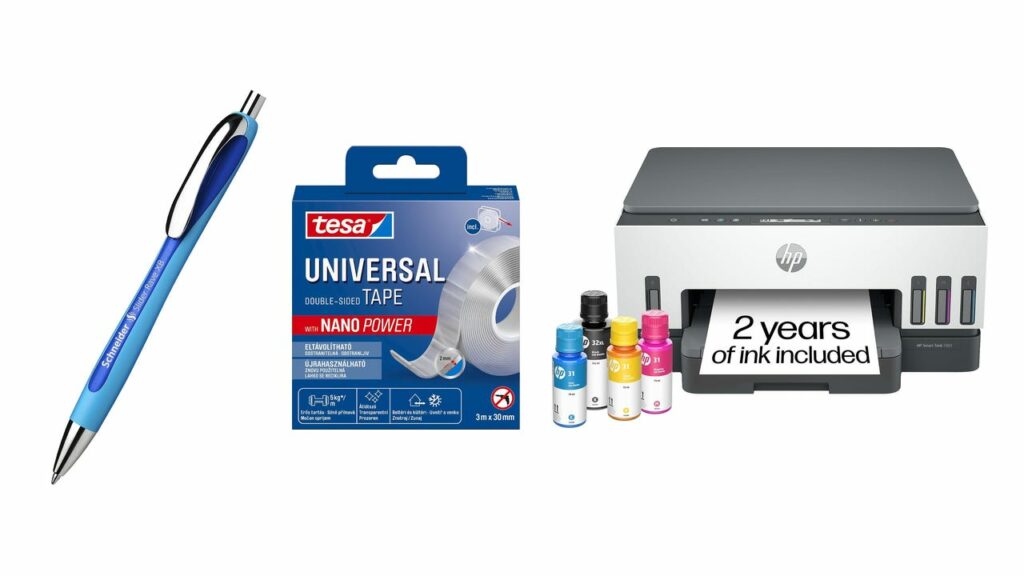
- Schneider Slider Rave XB. This is my favourite pen. It feels comfortable and well balanced in my hand. It's also inexpensive and just writes well. I have one pen and then buy refills whenever I need them.
- Nano tape. My wife recently discovered Nano tape. We used it for fixing a bunch of power strips to the wall. It's amazing how well they hold, it feels (and is) very solid. For someone who doesn't like to drill when not absolutely needed, this was a lifesaver.
- HP Smart Tank 7001. This is an anti-recommendation, can I do that? Not wanting to deal with ink cartridges any longer, I decided to try an ink tank printer and chose this HP model. The first one was "incontinent", it spilled little yellow ink blots over the prints. I submitted it for repair but got a new one. On that one, the scanner didn't work. I submitted it for repair but got a new one. That one had incontinence like the first one, but I decided to live with it, because I didn't want to go through all the hassle again. Aside from the occasional yellow spots on my prints, I've been pretty satisfied for about a year. But now, it decided to stop printing blue. My favourite colour!! It's all very frustrating, don't buy this one!
DIGITAL
- Deep Questions (Cal Newport's podcast). I love listening to podcasts doing chores around the house. This is one of my favorites, because it combines the topics of productivity, learning and (the conscious use of) technology. Recently, there have been a lot of episodes on AI. His perspective is critical and anti-hype which has helped ground my own stance about AI, which is enthusiastic (long term) and skeptical (short term) at the same time. All the other episodes are good as well and are about "cultivating the deep life".
- Emotional Exploration Tool. I use writing to "process" my emotions. That sounds rather technical, I know, but it's about discovering, feeling and releasing emotions that have been stuck somewhere. The thing is: I have no interest in saving these types of notes. The value is in the act of writing. That's why I enjoy this tool. I just write freely or based on a prompt. Afterwards, the words disappear into the void. Wonderful!
INVISIBLE
Goals, plans, vision documents, mission statements…I get what they are about, but somehow these have never worked for me. I can write one, sure. But then I just go about my life and some things happen and others don't. Still, I do like to reflect about my life and the direction it could take. That's why I'm experimenting with this question:
What wants to happen?
My theory is that if I align with what the universe wants to happen, the actions/projects that come up in my mind can be completed with ease and flow, having the support of invisible but real forces. And that has been my experience so far. It does mean I have to bypass my rational thinking brain, but that's working overtime anyway. It's lovely to be able to trust this question.
Sign up here to get What's in my NOW? a week early in your inbox.
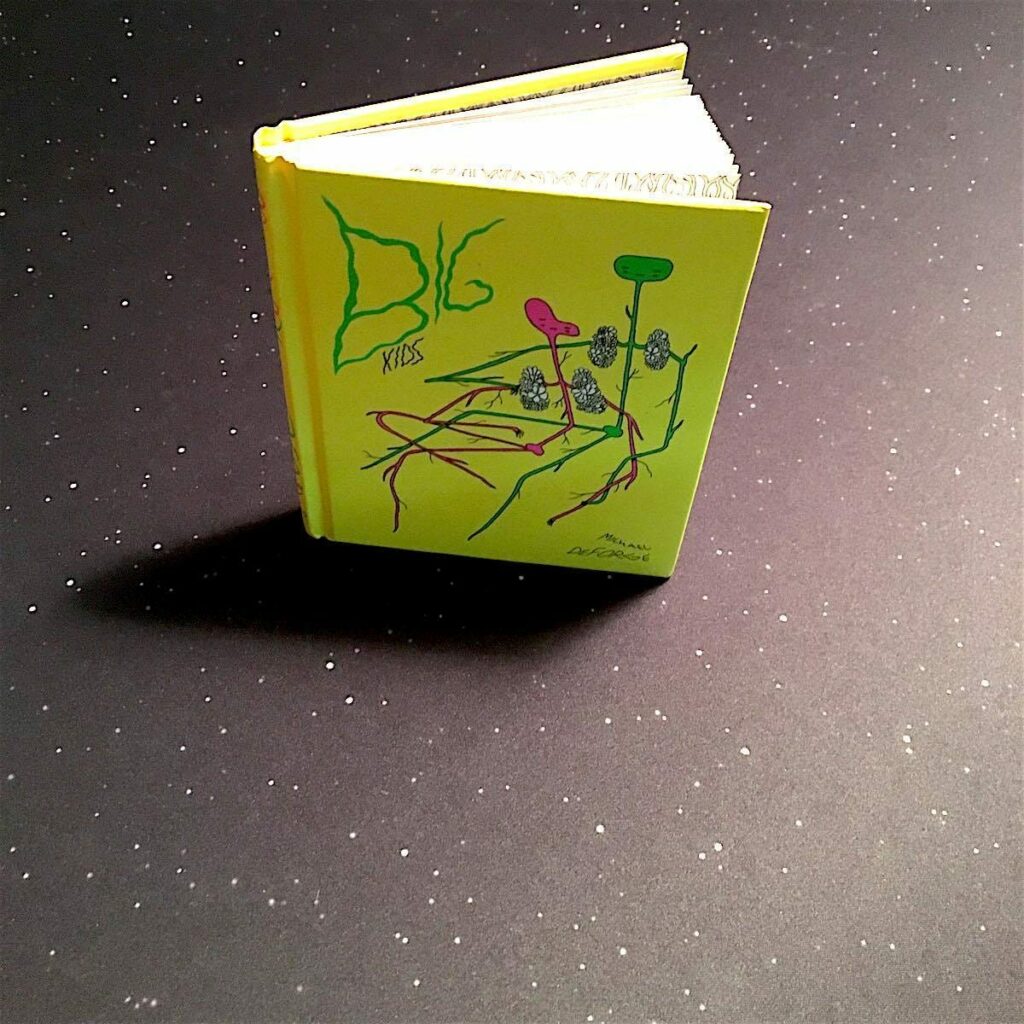









Big Kids
by Michael DeForge
Drawn & Quarterly
2016, 96 pages, 5 x 6.2 x 0.6 inches
I have been fascinated by the work of Canadian comic artist Michael DeForge for a while now. If you like unvarnished explorations of the human psyche and the high weirdness that an unhinged mind and a free hand can render, check out Michael's Lose series, Very Casual, and Dressing, all from Toronto-based comics publisher of note Koyama Press.
Big Kids is something of a departure for DeForge, or at least it starts off seeming that way. On the surface, Big Kids is a dark and mopey coming-of-age tale. It concerns a troubled teen boy who lives with his parents and a recalcitrant uncle in the basement and has awkward, restless sex with his best friend, in-between dangerous dares, bullying, bouts of petty vandalism, and other adolescent antics.
When the boy's uncle gets kicked out of the house and a female college student moves in - a girl with a very different take on life who hangs with a group of more sophisticated, less juvenile delinquent friends - something extraordinary happens. Too many other reviews of this book spoil what comes next, which I think is a shame. I knew nothing of what was about to happen and was really stunned by the whole thing as a result. The book is obviously meant to be a meditation on the profound transformations we go through at different stages in our lives (especially in becoming a teen), and how strange, terrifying, and wondrous those changes can be. But this is done in a unique way that you could never guess is coming.
Michael DeForge's work seems to be all about challenging our perceptions of identity, reality, and the comic form itself. Every time you delve into one of his pieces, you have no idea where you're going to end up. Or just how splintered your mind will be by the time you get there. Big Kids manages to do all this while still delivering a touching, if somewhat disturbed, take on a classic tale of adolescent angst. - Gareth Branwyn
PRIDE & PREJU-KNITS: 12 GENTEEL KNITTING PROJECTS INSPIRED BY JANE AUSTEN
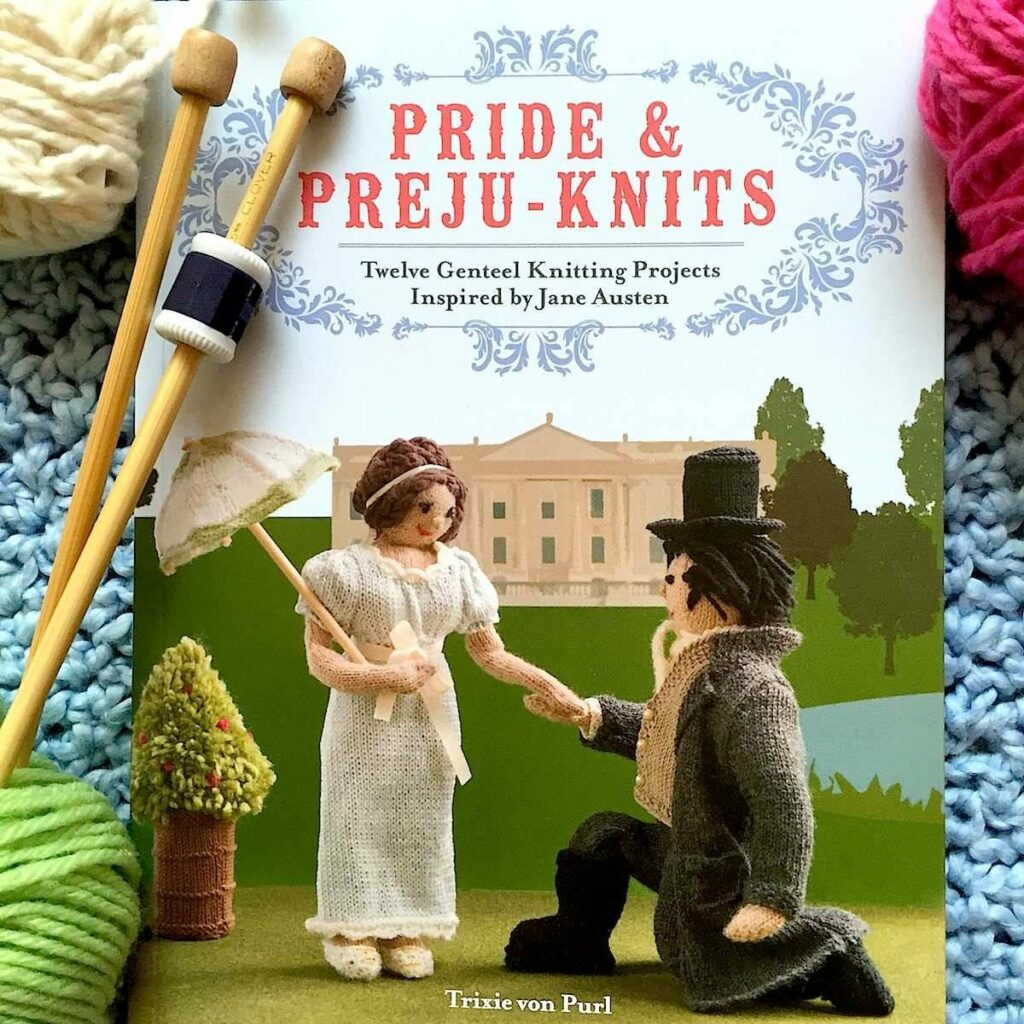
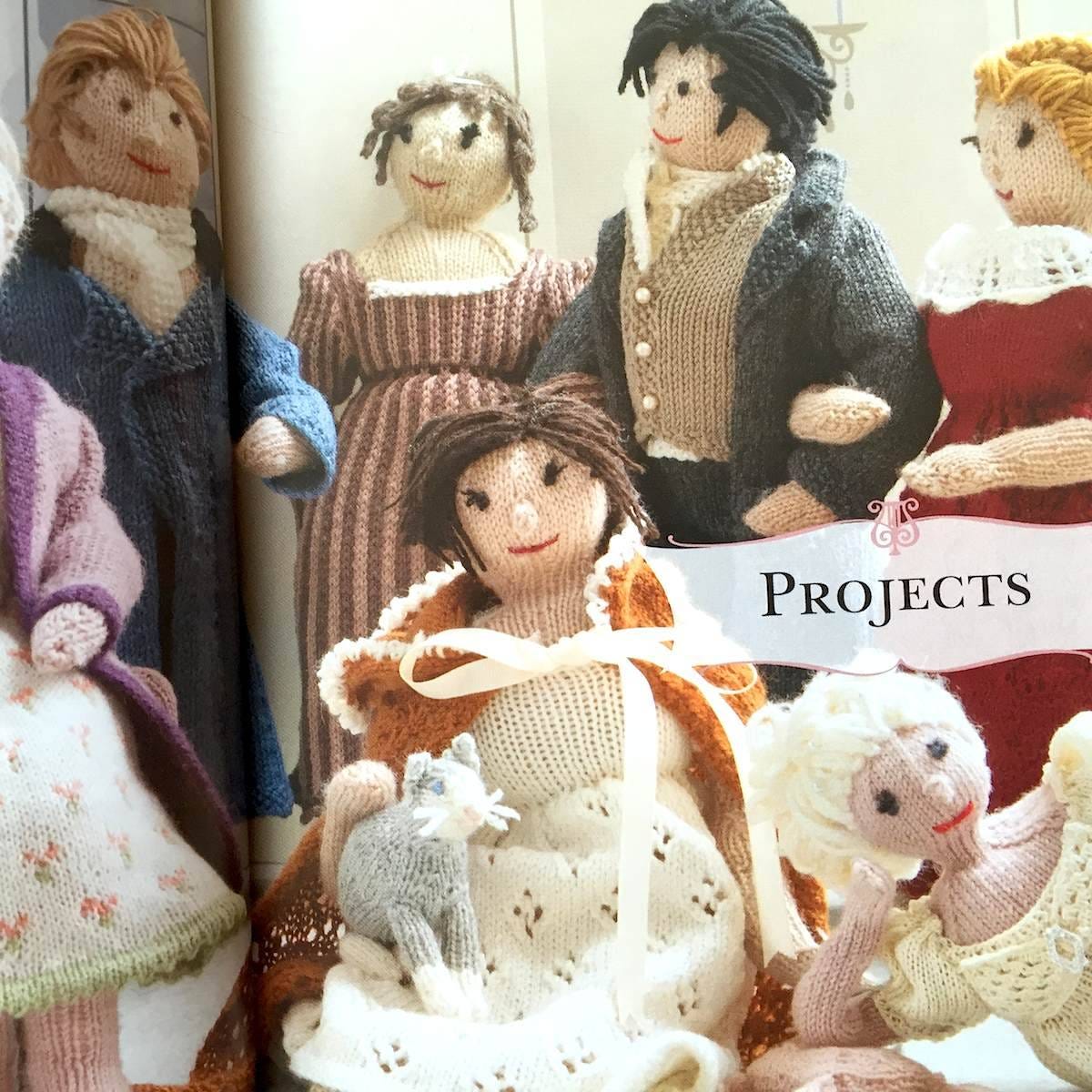

Pride & Preju-knits: Twelve Genteel Knitting Projects Inspired by Jane Austen
by Trixie von Purl
Harper Design
2015, 112 pages, 8.6 x 6.6 x 0.4 inches (paperback)
What's the perfect book for a crafty, British literature fan with a sense of humor? It's Pride & Preju-Knits of course! "This book is my life!" my 20-year-old daughter exclaimed when she opened up this adorable do-it-yourself paperback. "I love the fact that they give you just a few simple figures to make, and then so, so many clothing options."
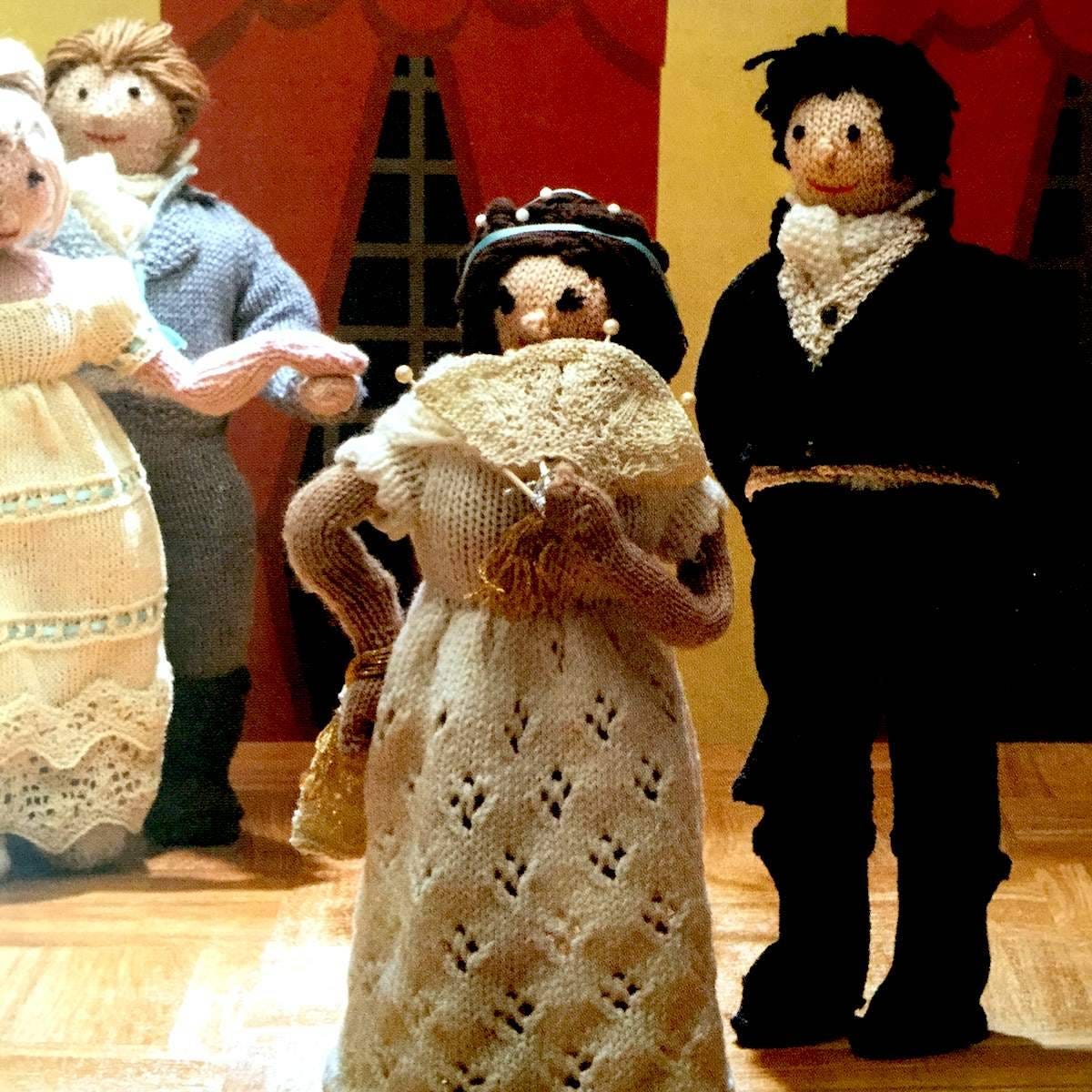
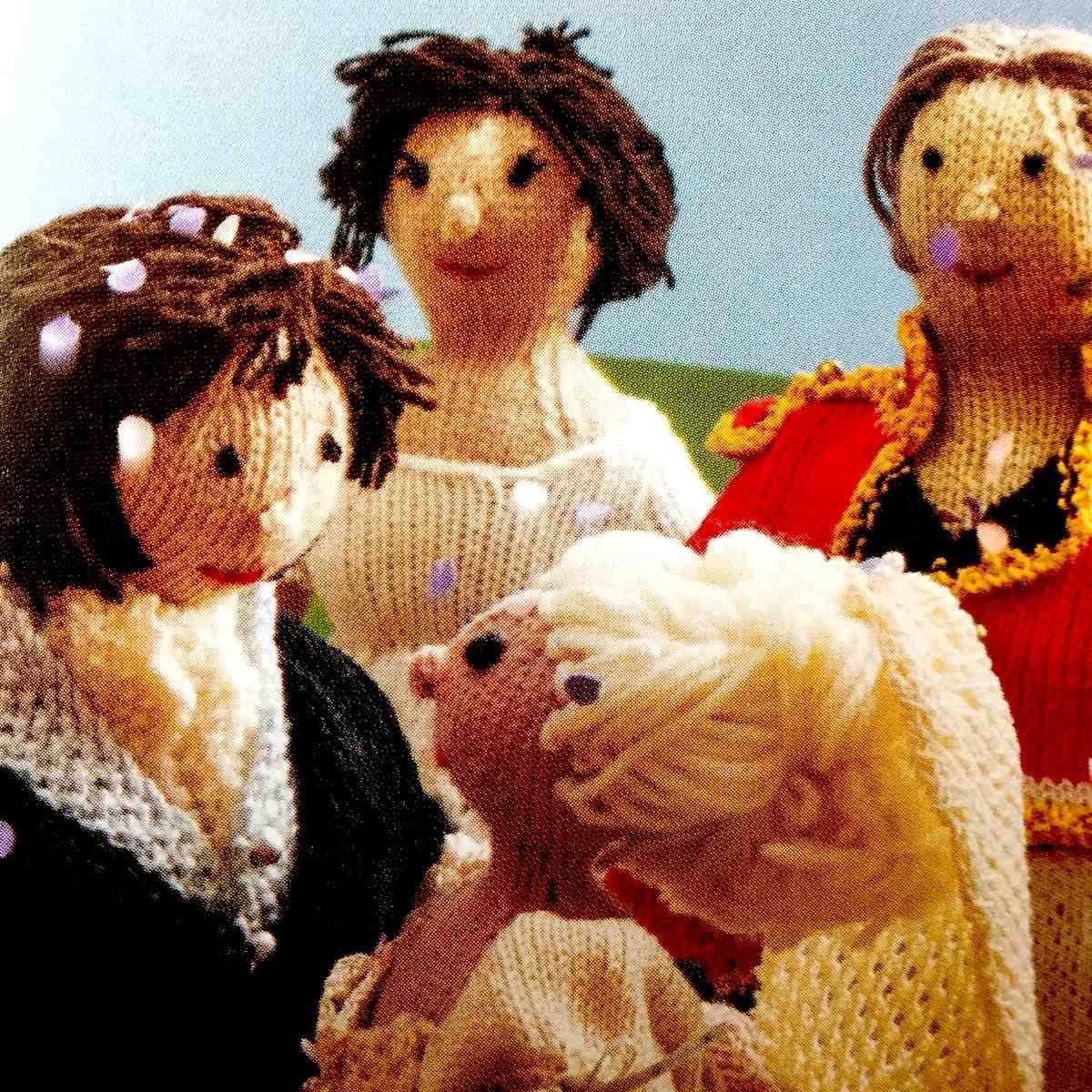
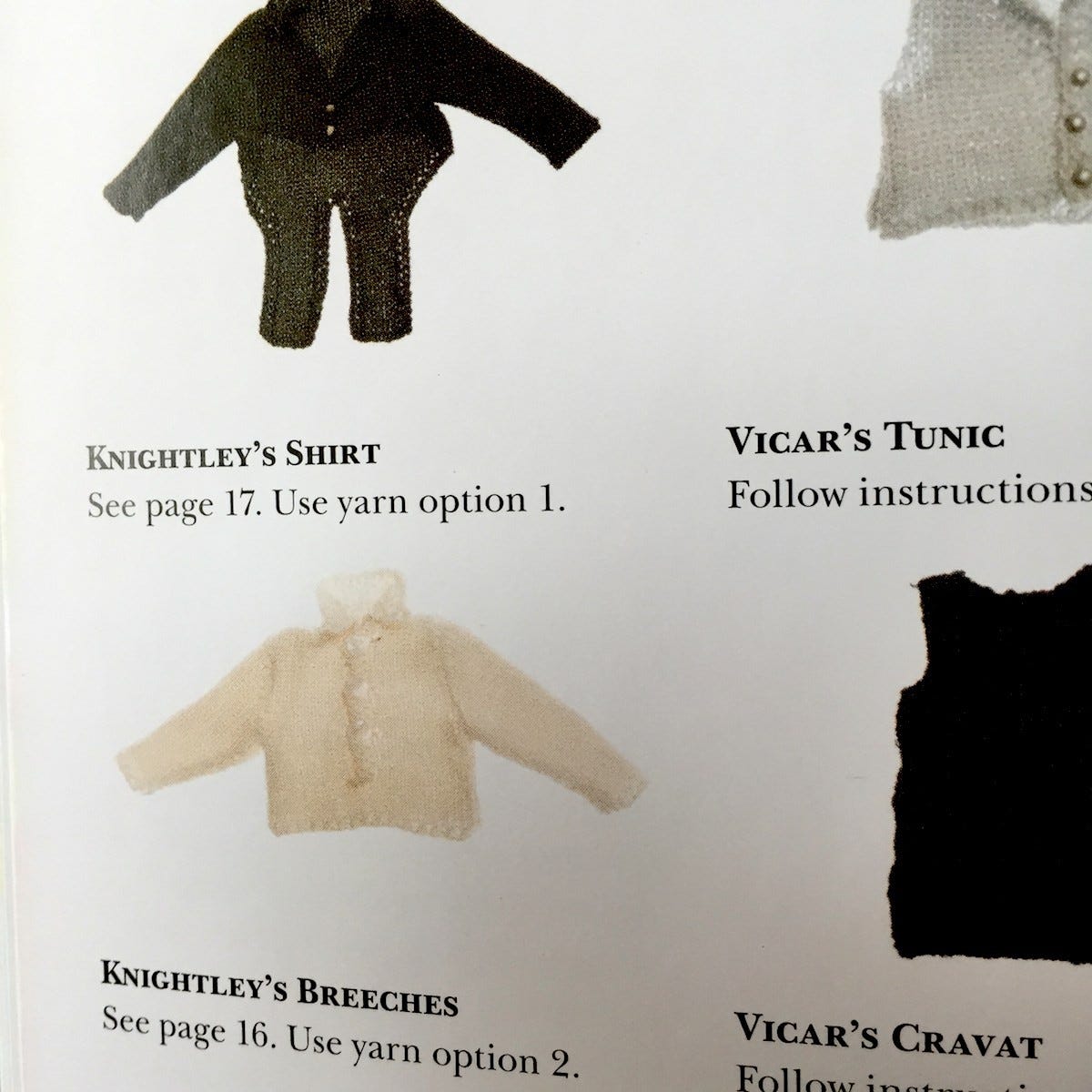
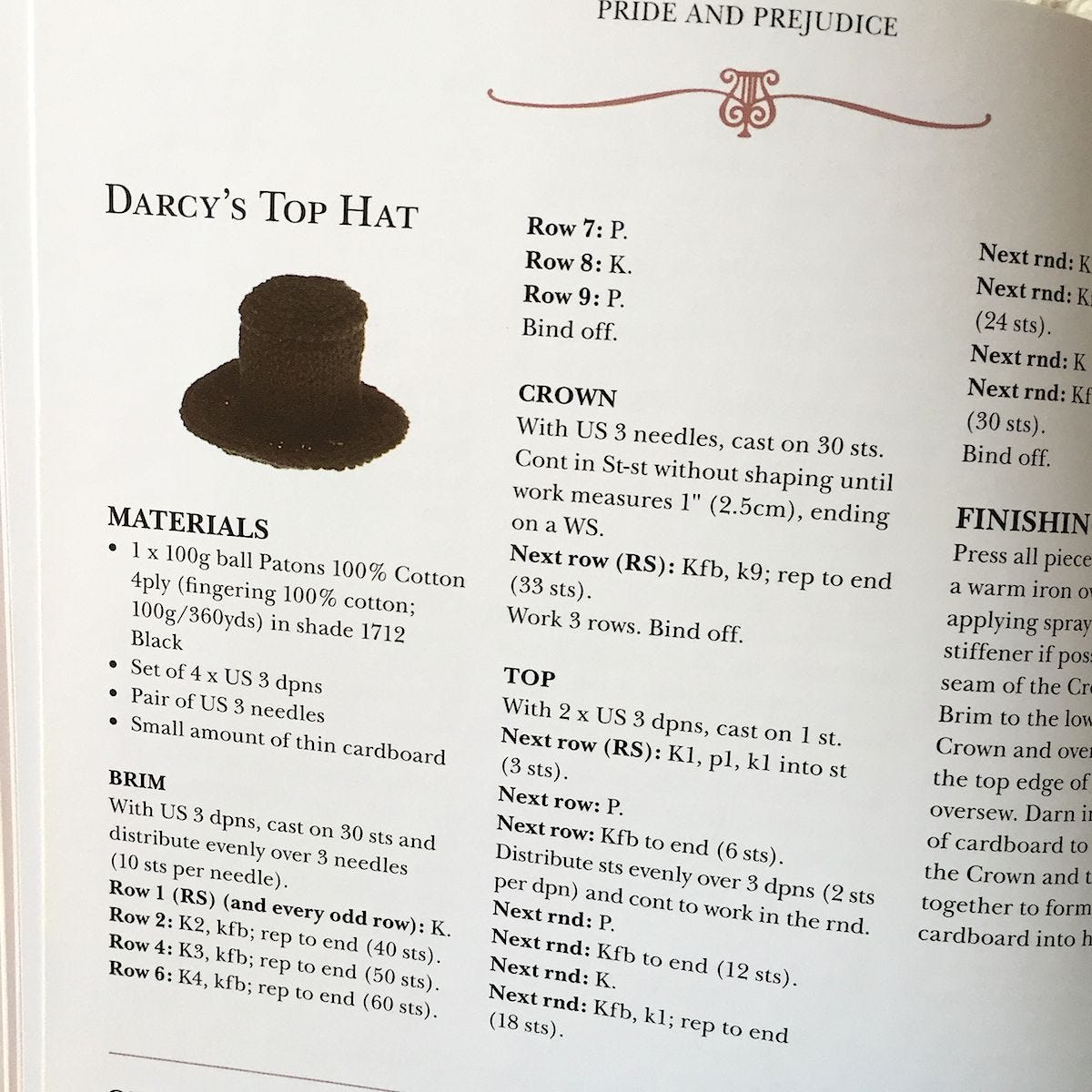
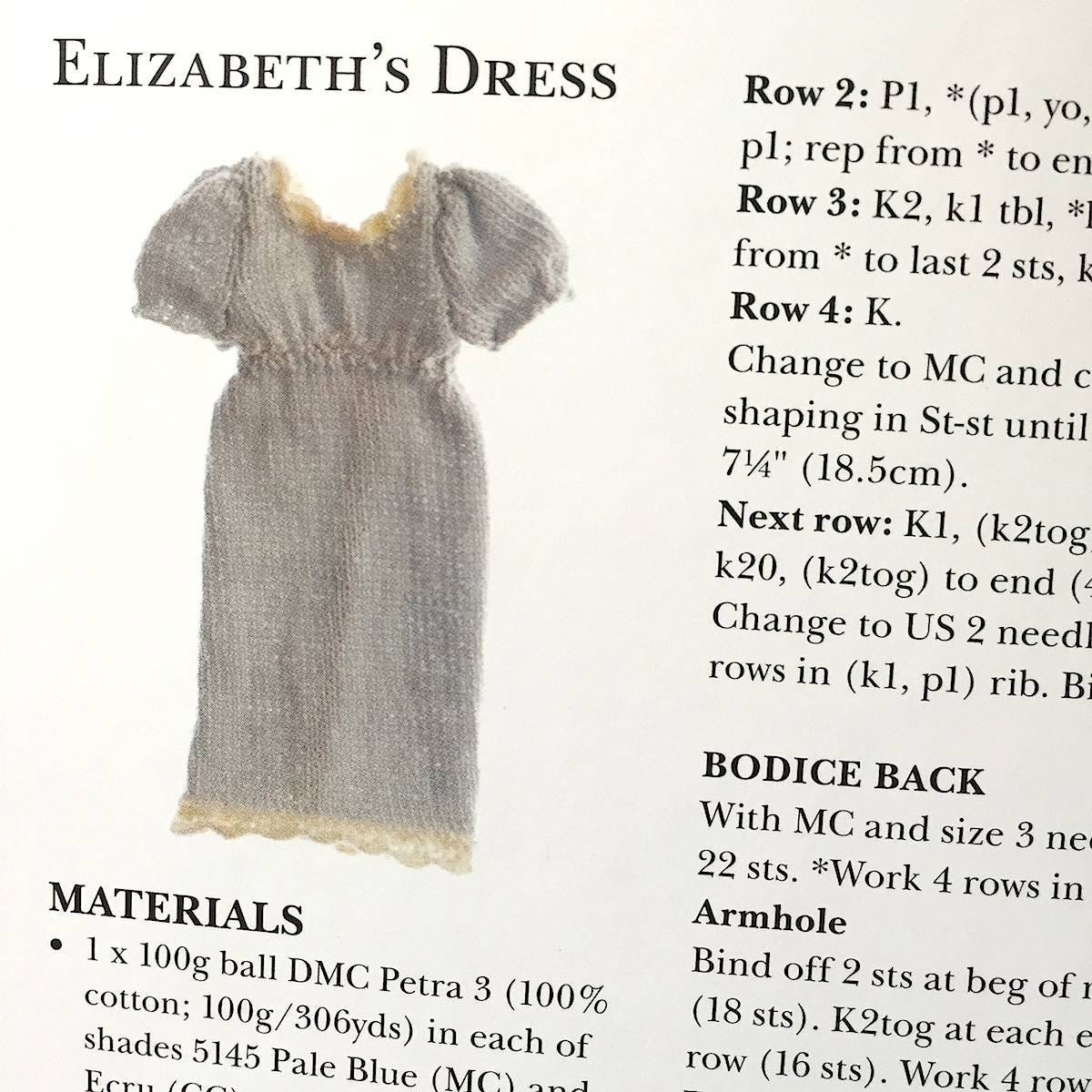
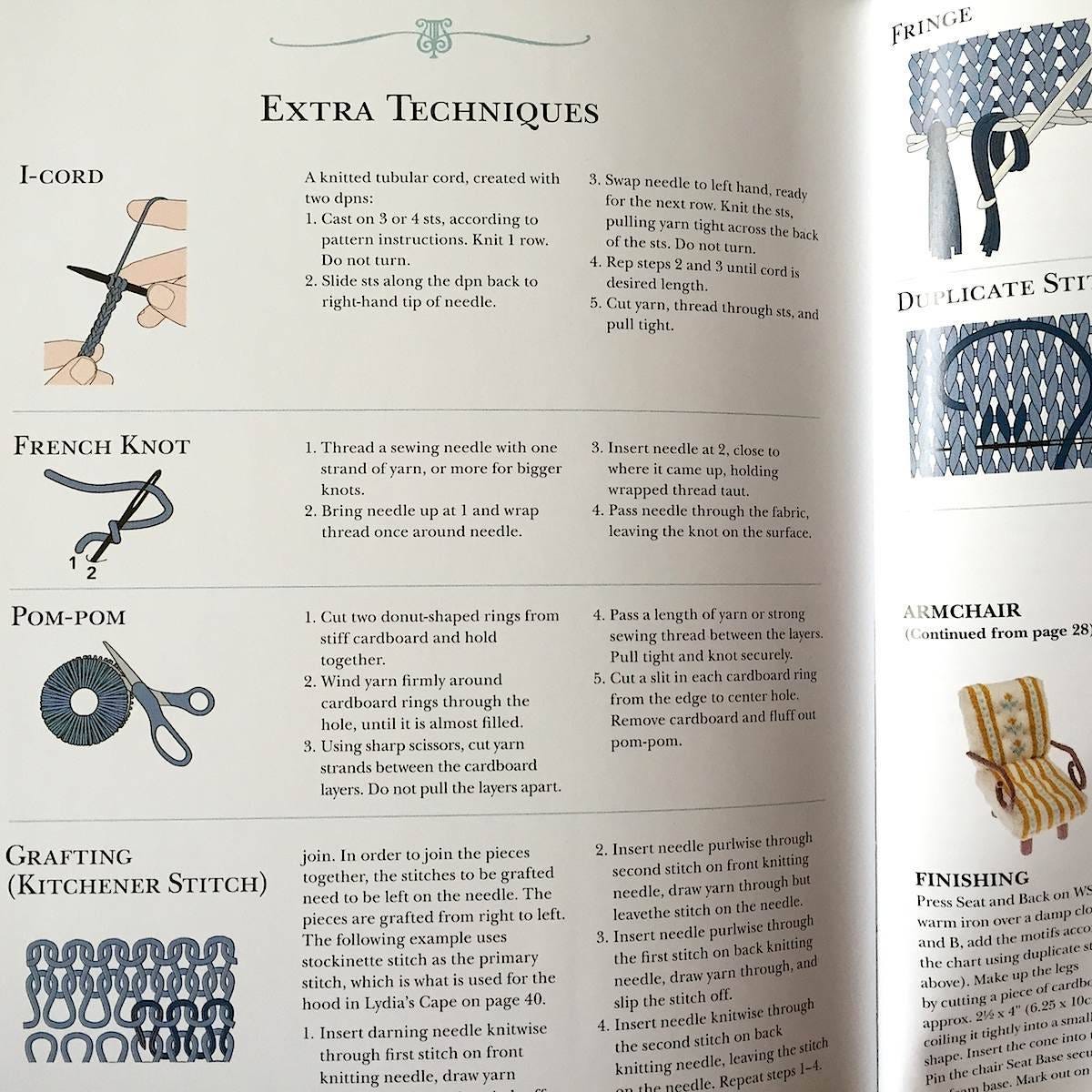
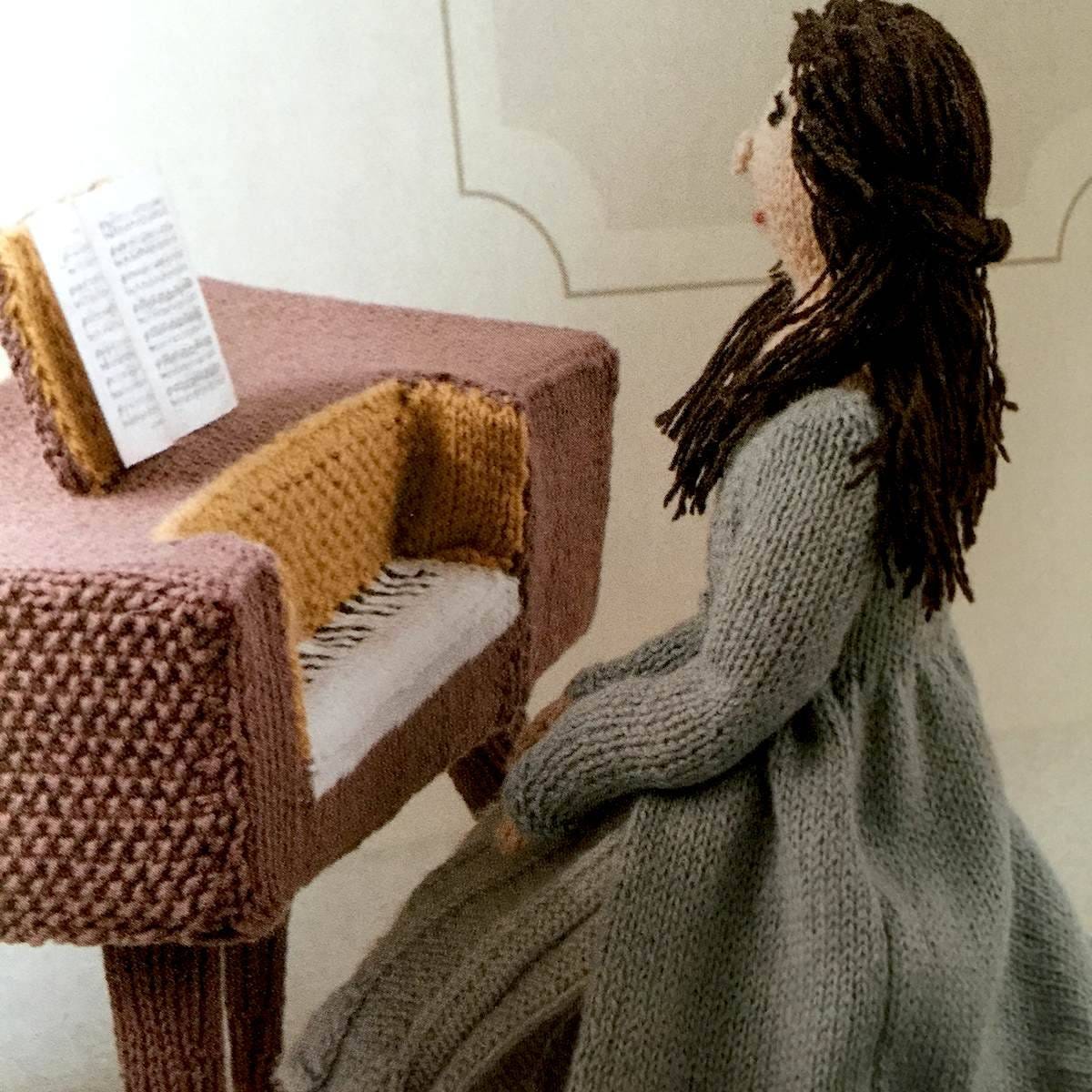
Pride & Preju-Knits contains 12 knitting projects (scenes) based on Austen's six novels. Every element in these scenes can be knit, including main characters, accessories, animals and furniture. There are detailed instructions on how to knit Regency ladies and gentlemen, how to knit Elizabeth Bennet's dress and Mr. Darcy's trousers from Pride and Prejudice, and even how to knit the pianoforte played by Anne Elliot in Persuasion. You can also learn to knit sheep from Sense and Sensibility and for Emma Woodhouse's wedding dress from Emma. Instructions include the materials, the gauge and how to finish off the piece. Trixie von Purl (aka Geraldine Warner) briefly recaps each Austen novel as well. Although these are very intricate projects, anyone can appreciate the imaginative handiwork and enjoy this charming little book. - Carole Rosner
Books That Belong On Paper first appeared on the web as Wink Books and was edited by Carla Sinclair. Sign up here to get the issues a week early in your inbox.
 Non-toxic skeeter eliminator
When I saw this cheap trap at Logan's Trading Post three years ago, I figured what-the-heck, but we've been amazed at how effective they are. About three fourths of the way up from the bottom of the jug a tube runs through a hole in each side. Fill the jug with water up to the bottom of the transverse tube, add a pheromone pack, let it sit for a week with the top off (to make sure it gets the right attention), then close it after topping the water off. The mosquitoes fly into the tube and lay their eggs. When they hatch, the little mosquitoes can't figure out how to get out. With luck, in about three weeks the trap will literally be swarming with skeeters.
We empty ours once a year and add new water once a month or so; as long as you break the breeding cycle early enough in the spring it's not a big deal if you forget to water them later in the season. On our quarter-acre lot, I've found that three traps is plenty. So far this season, I haven't seen a single mosquito (except for the two or three I let out when I opened up one of the traps to top it off w/water). Only one of the three traps have looked really busy this year (last year, it was two of three).
We don't get many bugs inside. We live in an 1872 farmhouse, so we do get the occasional palmetto bug, but never up so high as to need the Bugzooka. However, living as we do, in the North Carolina piedmont, we're plagued by mosquitoes; particularly the new "Asian Tiger" mosquitoes, which leave me and my sweetheart itching and inflamed for days after working in the garden or yard. We tried the "propane to human breath" machine (the Mosquito Magnet) for a year or so, and it simply didn't catch any mosquitoes. The fan was not powerful enough to suck in the little buggers, so the mesh bag they said would be full of bugs was full of dust and pollen. We tried the doughnuts you're supposed to dunk in places (like gutters) where water stands from time to time, and they didn't help. We drilled holes in all of our trashcans and recycling bins, but they still bred mosquitoes. We heard about services that will spray some sort of natural insecticide all summer long, but they were too expensive.
With these traps, we can now work in the yard or garden or sit on our porch — one of the small joys that defines Southern living — without fear. — Steven Champeon
 Hurts bugs, not plants
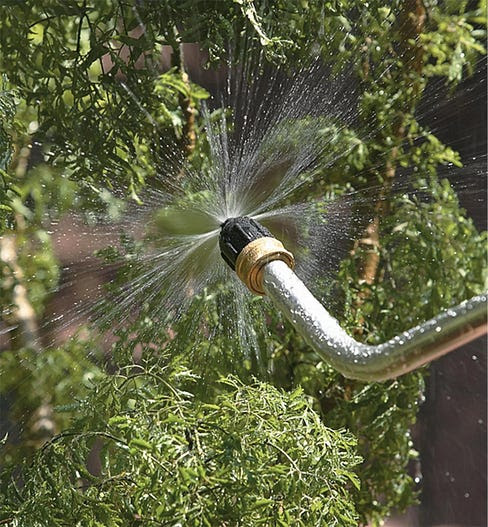
The Bug Blaster is a great insect control tool for the garden. It is completely organic-it only uses the force of water. I have used the tool for three years and love it. You just attach it to your hose and turn it on. The water is forced out a tiny hole and guided in such a way that it comes out in a fine spray that is a flat circle. Stick the nozzle in your plants and it knocks all the insects and eggs off, those below the leaves and those above.
Every gardener knows you can remove aphids by hosing the plant, but it is difficult to get the ones under the leaves. On delicate new growth, the hosing can injure the plants. But the Bug Blaster has such a fine, controllable spray that it cleans the plants of all the pests and doesn't harm the plants. The good insects are usually hard shelled and aren't injured. Since I bought this tool I haven't used any other pest control method. — Terry Powell
 Guide to edible & useful foliage
In the 1970s British bus driver Ken Fern went back to the land. Twenty-five years later he published the first edition of this now-revised compendium, a catalog and guide to a staggering number of mostly-perennial plants that can be harvested for food and other uses. Literally, thousands of seed, root, fruit, flower and leaf crops from a range of bulbs, trees, shrubs, climbers, bamboos, water plants and more. Beyond climatic needs and appearance, plants are described in terms of their taste and, often, highly-specific use (e.g. Asarum canadense. SNAKE ROOT: "a ginger substitute in flavouring cooked foods."). The index is conveniently broken up into edible uses, like condiments and egg and salt substitutes, and non-edible uses, like basketry, disinfectant, and tooth care; For more, check out 100 Other Uses. And actually, the Plants for a Future web site offers a searchable database of 7,000 plants. While much of the info from the book is available online, the printed format can be easier to parse and digest. There are sections on "green manures" and how to mulch with cardboard boxes or newspaper and straw, as well as how to make a pond. Despite all the ideas and potential outlined in the book, the final chapter, "Future Possibilities," truly emphasizes the magical allure of cultivation and experimentation. — Steven Leckart
- Most organic gardeners, when confronted by a heavily weed-infested site, will reach immediately for the fork or spade and spend many hours laboriously digging out as many weeds as they can. Not only is this exceedingly hard work, but it is often far less than successful. Many of the weeds, such as couch grass or thistles, will soon regrow with renewed vigour if even small parts of the roots are left in the ground. There will also usually be an explosion of germination from literally millions of seeds that have been given ideal germination conditions. The newly-dug ground will very soon be covered in weeds again.
The alternative, once more, is to mulch. But this time there must be some organic barrier placed below the mulch to prevent all the weeds from growing through. We have found that cardboard boxes are an ideal barrier to use. They are usually freely available in quantity from local shops, etc., will form an excellent barrier for a year or so, in which time most of the persistent weeds will have died, and then will rot down nicely to add their own organic matter to the fertility of the soil. Other materials that can also be used include newspapers (but try to avoid to many with colour printing and do not use colour supplements on land where you intend to grow food) and carpets (but only those made of natural materials such as hessian — avoid foam-backed carpets).
It is very important to ensure that you apply a sufficient thickness of barrier mulch, otherwise the more vigorous weeds such as thistles and docks will push their way through it. A carpet that is not too worn is usually sufficient, carboard boxes folded flat but not opened out are generally enough, and newspapers about 15 sheets thick are also adequate. make sure that the edges of the boxes or whatever overlap by at least 8 cm, otherwise the weeds will soon find their way to the surface. Autumn and early winter is the ideal time to mulch weed-infested beds, though it can be done at any time of the year so long as as the soil is not dry.
 Best gardening innovations
Do plants have ideas? Yes.
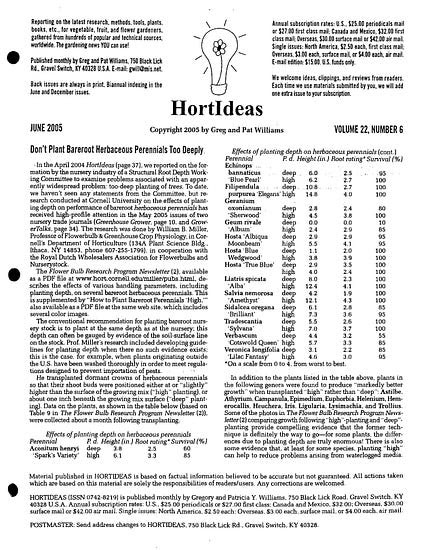
I use this monthly to troll for the best in the art and science of gardening. Each month editors Greg and Pat Williams extract the meatiest, handiest, most practical innovations in vegetable, fruit and flower horticulture. They tirelessly glean material from obscure ag-extension bulletins, garden club newsletters, seed catalogs and dusty journals, reading it all so you don't have to, and translating it into clear English so you can use it. They run no pictures, no ads; only concepts, tools, and techniques. It's sort of like a Cook's Illustrated for your garden — the advice is based on scientific testing, and the tools born out of genuine need.
The newsletter is emailed as a PDF file. Because HortIdeas reports "news that stays new", I recommend the nifty CD of all their back issues. This humble yet intelligent newsletter is an amazing service which should appeal to anyone with a love of perfecting what is possible. — KK
- Ohio State University horticulturists have been evaluating underutilized low-growing willows (Salix species) for their ornamental potential and hardiness. They gathered around 200 willows from a variety of international sources…. Several of the low-growing willows have interesting ornamental features and appear to be excellent candidates for use in small-scale gardens in the Midwest. Some are well-suited to container-growing. We hope that commercial nurseries become interested in propagating and marketing some of these trees! According to the OSU horticulturists, because of extreme variability among seed-propagated willows, it is imperative that individuals with unique qualities be propagated vegetatively
- Several years ago, there was considerable interest in adding hydrogen peroxide to irrigation water to enhance oxygen in the root zones of plants. At the time, some investigators reported increased crop yields with hydrogen peroxide, but, as far as we know, no commercial apparatus was developed. Perhaps the results of recent experiments conducted in Australia will rekindle interest in oxygenated irrigation systems. The Australian researchers injected 0.6 pints per 1,000 square feet of 50% hydrogen peroxide solution via subsurface drip irrigation tape into heavy clay plots following flooding of the soil. Zucchini plants grown in the plots produced 29% more fruits weighing 25% more than the fruits produced without hydrogen peroxide treatment. The researchers also tried injecting hydrogen peroxide at a rate of 0.1% by volume with the irrigation water provided to container-grown vegetable soybean plants in "heavy cracking" clay soil that was kept water-saturated. Yields of soybean pods (fresh weight) went up by 82-96% relative to the yields with no hydrogen peroxide.
Clearly, oxygenated irrigation is a highly promising way to boost production of crops growing in waterlogged heavy clay. We believe there could be a substantial market for a mechanismthat automatically injects hydrogen peroxide into drip irrigation systems. - Moss loves buttermilk and beer. Where did this "old school" formula of mixing moss fragments with buttermilk and/or beer in the family blender come from, and does it work? Moss craves acidic conditions which buttermilk and stale beer provide. While the "moss think tank" at Moss Acres prefers some less odorous methods of preparing a moss shake/slurry, this oft-prescribed method has about a 60% success rate when the moss fragments are kept consistently wet. Al Benner, president of Moss Acres, says: "Our customers tell us the applications for moss are expanding. Moss has always been … popular … in Asian gardens, rock gardens, water gardens, and shade gardens. But every day we are helping clients use moss for creative projects such as interior landscaping, stone walls, and moss roofs."
- The researchers conclude that the results of the storage trial show that high storage temperatures—apparently achievable simply by having a fairly large pile, without periodic turning— can speed destruction of pathogenic bacteria in solid manures. They also warn of the potential dangers of consuming produce harvested soon after applying fresh manure.
Once a week we'll send out a page from Cool Tools: A Catalog of Possibilities. The tools might be outdated or obsolete, and the links to them may or may not work. We present these vintage recommendations as is because the possibilities they inspire are new. Sign up here to get Tools for Possibilities a week early in your inbox.
White noise alarm clockThe key premise of Recomendo is that everything we have suggested weekly in the past 10 years has been a personal recommendation based on our own experiences. It is something we have seen, heard, visited, or used ourselves. For this Christmas, we'd like to deviate from that principle slightly (and temporarily) to provide you with a dozen of recommendations from our subscribers. That is you. For our brand new Annual Christmas Reader Recommendations issue we will select the best personal recommendations submitted within the next 2 weeks by October 25. To keep it sane, just one recommendation per subscriber. Keep it short and personal. Suggest a product, tool, app, place, book, documentary, podcast, follow—anything—that you genuinely love, and few know about. No self-promotion. Beyond the dozen we share in the newsletter, we will post all of the vetted submissions on our website.
I needed a new bedside clock, so I got this Hotmoon Cocoon Pro 3 sound machine. Besides the dimmable clock display, it has 117 sounds, including 3 kinds of brown noise, my favorite. If you don't like brown noise, try white, pink, green, blue, red, or gray. Once you set it up with the phone app, you don't need the app unless you want to stream some of its regularly updated sounds. No subscription is required. It also has a night-light ring with adjustable color and brightness, works as a Bluetooth speaker, and has clearly labeled buttons on top. — MF
Recreational shoppingRecreate the entire ritual of online shopping on Dopamine Shop, or on Food Never Comes: You search for products, compare reviews, add items to your cart, enter a shipping address, place an order, and even track your delivery. That was fun! Then … nothing happens. No package arrives. No money changes hands. The food never comes. Nothing to return or clean up. You consumed nothing, yet you are an ace shopper. If shopping is your comfort scroll, this is very satisfying late at night. (This trend is big in Korea.) — KK
Inner sound journeysI recently attended an in-person event with visionary Alana Fairchild, where she led us through a guided imagery meditation to meet Great Mother archetypes like the Black Madonna and Kuan Yin. I was especially moved by her chanting and singing. I own many of her oracle decks, but this recommendation is for her voice. You can experience her meditations and sacred music for free on Spotify. — CD
Gossip GoblinGossip Goblin is an Instagram channel of short AI-generated films set in a world that looks like a combination of Terry Gilliam's Brazil and Mad Max. It explores themes of artificial intelligence, biohacking, and the merging of humans and machines. The artwork is incredible, as are the acting, stories, and characters. It's the first time I've watched an AI video without thinking "this is AI slop. The Hollywood Reporter interviewed the creator, Zack London. His feature-length film, Gods Don't Give Gifts, opens in US theaters October 30. — MF
Revisit childhood through drawingsKids Trends is a directory of more than 100 million children's drawings and paintings that you can search by any keyword. Exploring how children picture the world opens up imaginal portals in my mind. — CD
AI-musical debateAI-musicals are becoming memes - and the new way to debate ideas. Not a normal debate highlights the debate about whether AI is a "normal technology" which has been spun into overdrive with AI-generated musicals defending each side. One musical refutes two academics scholarly paper arguing that AI is a normal technology, and the other AI musical by the two scholars refutes the first musical. Both music
Sign up here to get Recomendo a week early in your inbox.
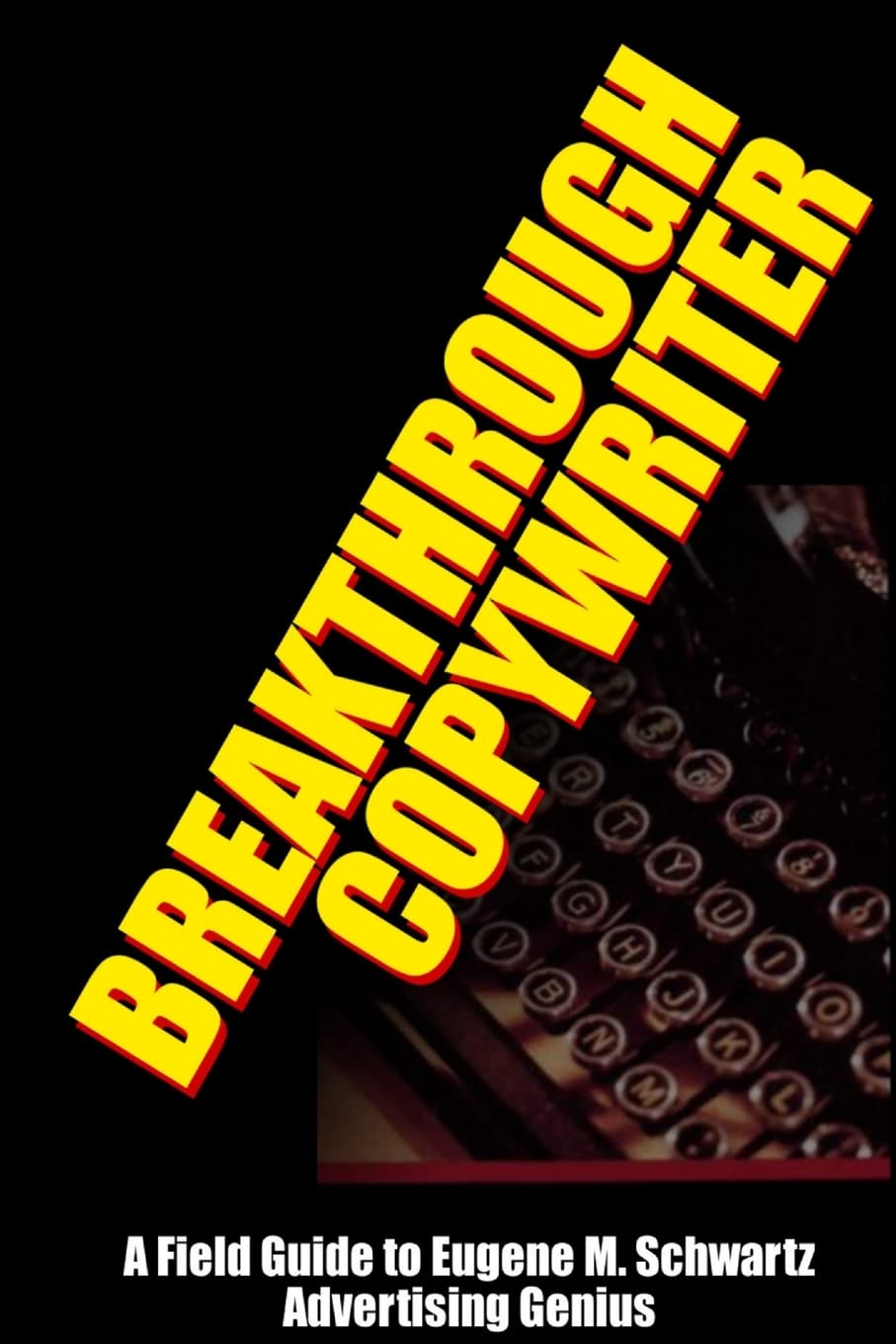
Breakthrough Copywriter distills Eugene M. Schwartz's legendary advertising principles into an accessible field guide that shows you how to tap existing desires, match your message to market awareness, and create ads that work.
Core Principles Channel Mass Desire, Don't Create ItThe copywriter's job is to aim people's hopes, dreams, fears, and desires at a specific product.
"The desire must already be there. It must already exist. You cannot create it, and you cannot fight it. But you can direct it, channel it, and focus it onto your particular product."
Match Your Message to the AwarenessSchwartz identified five levels of awareness, from completely unaware to most aware.
"If your prospect is aware of your product and has realized it can satisfy his desire, your headline starts with the product. If he is not aware of your product, but only of the desire itself, your headline starts with the desire."
Understand Market SophisticationThe first advertiser to promise a benefit wins. As competitors pile in with the same claim, the market grows skeptical, and the next advertiser has to push harder.
"Copy that successful claim—but enlarge on it. Drive it to the absolute limit."
Find the Roles Your Customer Wants to PlayBehind every purchase is a person reaching for a version of themselves they want to become, like the savvy investor, the devoted parent, or the independent thinker.
"He has gained, or he has been given, a whole new vocabulary of wants. He now buys, not only objects, but roles."
Try It Now- Pick something you want to sell or promote. Instead of listing its features, write down three desires your audience already has that this thing satisfies, rather than explaining what the product does.
- How aware is my audience? Do they know they have a problem? Do they know solutions exist? Do they know my specific solution? Write your opening line to match that awareness level.
- Study three competitors in your space. Notice the claims they make. What can you claim that they can't?
"Copy cannot create desire for a product. It can only take the hopes, dreams, fears, and desires that already exist in the hearts of millions of people, and focus those already-existing desires onto a particular product. This is the copywriter's task: not to create this mass desire — but to channel and direct it."
Book Freak is published by Cool Tools Lab, a small company of three people. We also run Recomendo, the Cool Tools website, a YouTube channel and podcast, and other newsletters, including Recomendo Deals, Gar's Tips & Tools, Nomadico, What's in my NOW?, Tools for Possibilities, Books That Belong On Paper, and Book Freak.
Back in Nomadico issue #218, I mentioned a men's travel clothing article I got quoted in quite a bit. Another traveler who was featured mentioned a store I'd never shopped in, a Japanese one Uniqlo, and said it was great for inexpensive merino wool tops, shorts, and t-shirts. While I'm in Asia, I picked up a replacement for a fast-drying workout t-shirt that was getting worn out, an anti-odor wicking one that feels better-made than what you'd expect for $15. My last stop is Saigon, so I'll probably snag a couple more before coming home.
Best Airlines for Economy ClassSkytrax runs the most respected annual rundown on top airlines because it relies on consumer surveys only, which tend to reflect the overall mood and service level more than obscure data points like on-time performance. The latest economy class report is dominated by Asian and Middle Eastern carriers. Anyone who has had one leg on Cathay Pacific (#2) and then a connection on American Airlines will give you an earful about the differences. Delta was the only North American carrier to make the top-20. Singapore won again, while others in the top 5 were Qatar, EVA, and All Nippon (ANA).
Toxic Haze in Southeast AsiaWhile there have been plenty of natural disasters happening around the world lately, the haze blanketing much of Southeast Asia for more than a month now is a man-made problem. The annual "Haze Season" is caused by farmers following slash-and-burn agriculture, including more than a few big Asian corporations. While the practice has long been squashed in most of the world, the rules in this region are poorly enforced, especially in Indonesia, so neighboring countries deal with dangerous air quality and poor visibility. El Nino is making it worse than usual: here's the full story.
Disney World or a Luxury Tour?According to a study that landed in my inbox from a company called FloridaRentals.com, it will cost a family of four an average of $4,064 this season to stay at one of the official Disney World resorts around Orlando. That's already enough to put a family into a very nice house or apartment in much of the world, but if you pick the top option, Polynesian Village Resort, a week's lodging will set you back $7,969. That's before you pay the outrageous park entry fees or buy overpriced meals for everyone, so figure the total tab will be twice that. The things a mom and dad could do with that much money! It's a dreamy travel list.
A weekly newsletter with four quick bites, edited by Tim Leffel, author of A Better Life for Half the Price and The World's Cheapest Destinations. See past editions here, where your like-minded friends can subscribe and join you.
Tony Franco is a fractional COO and founder of SageWell Advisors, helping founder-led ecommerce and CPG brands build the operations to grow. He's also Team Director for his town's NICA youth mountain bike team, which he counts as one of his clients. Not a well-paying one

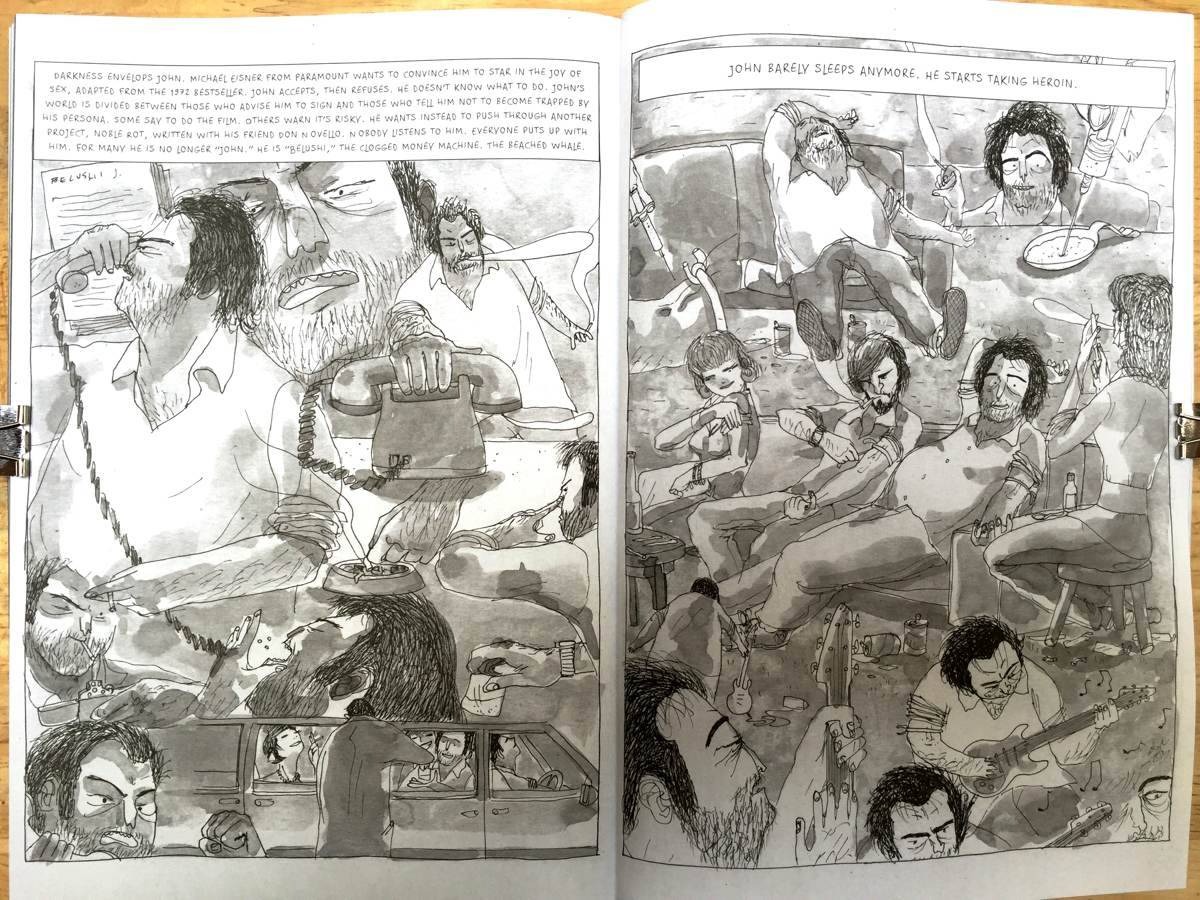


Belushi: On a Mission from God
by Alberto Schiavone (author) and Matteo Manera (illustrator)
One Peace Books
2016, 112 pages, 7 x 1 x 10 inches (softcover)
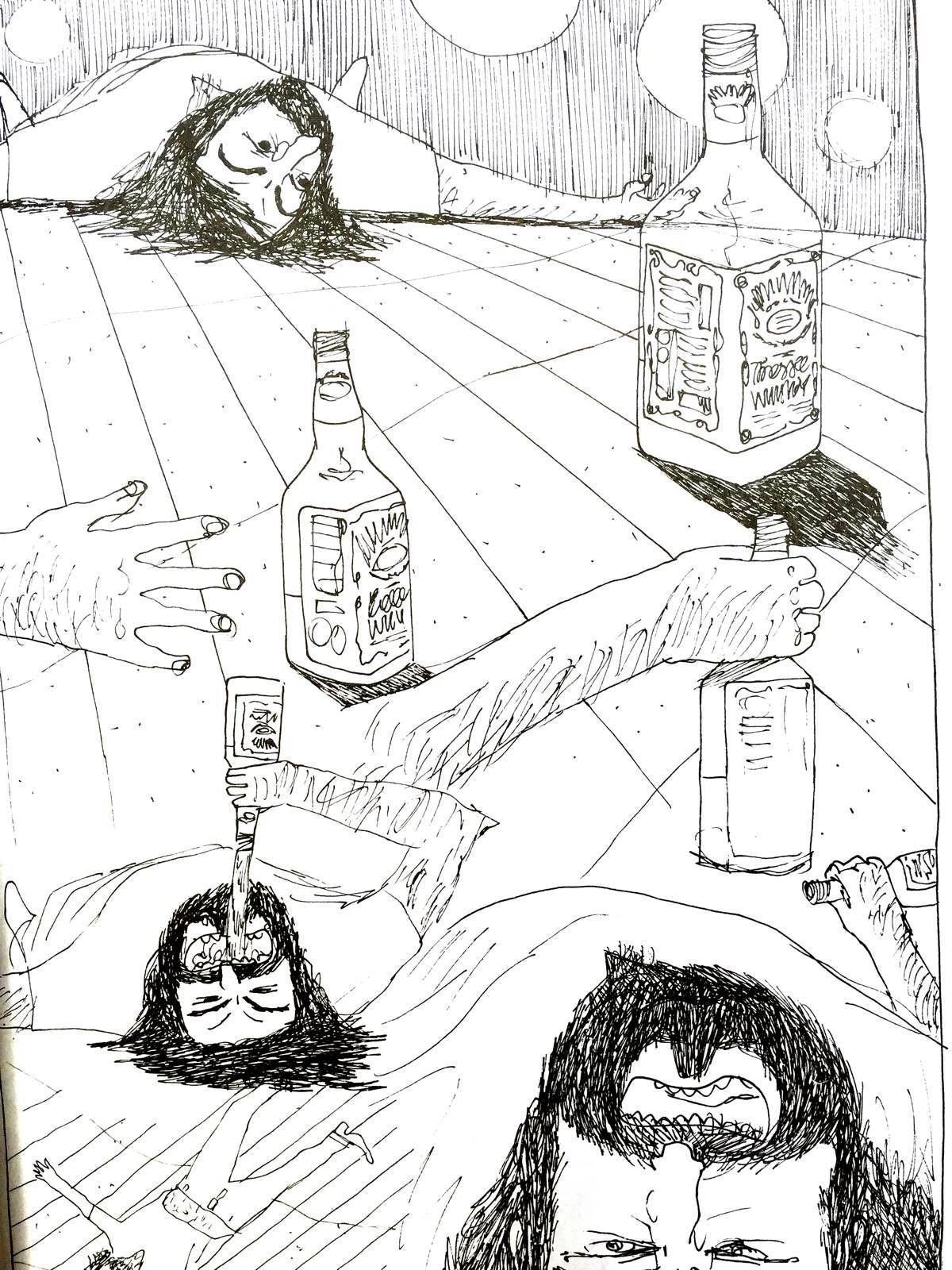
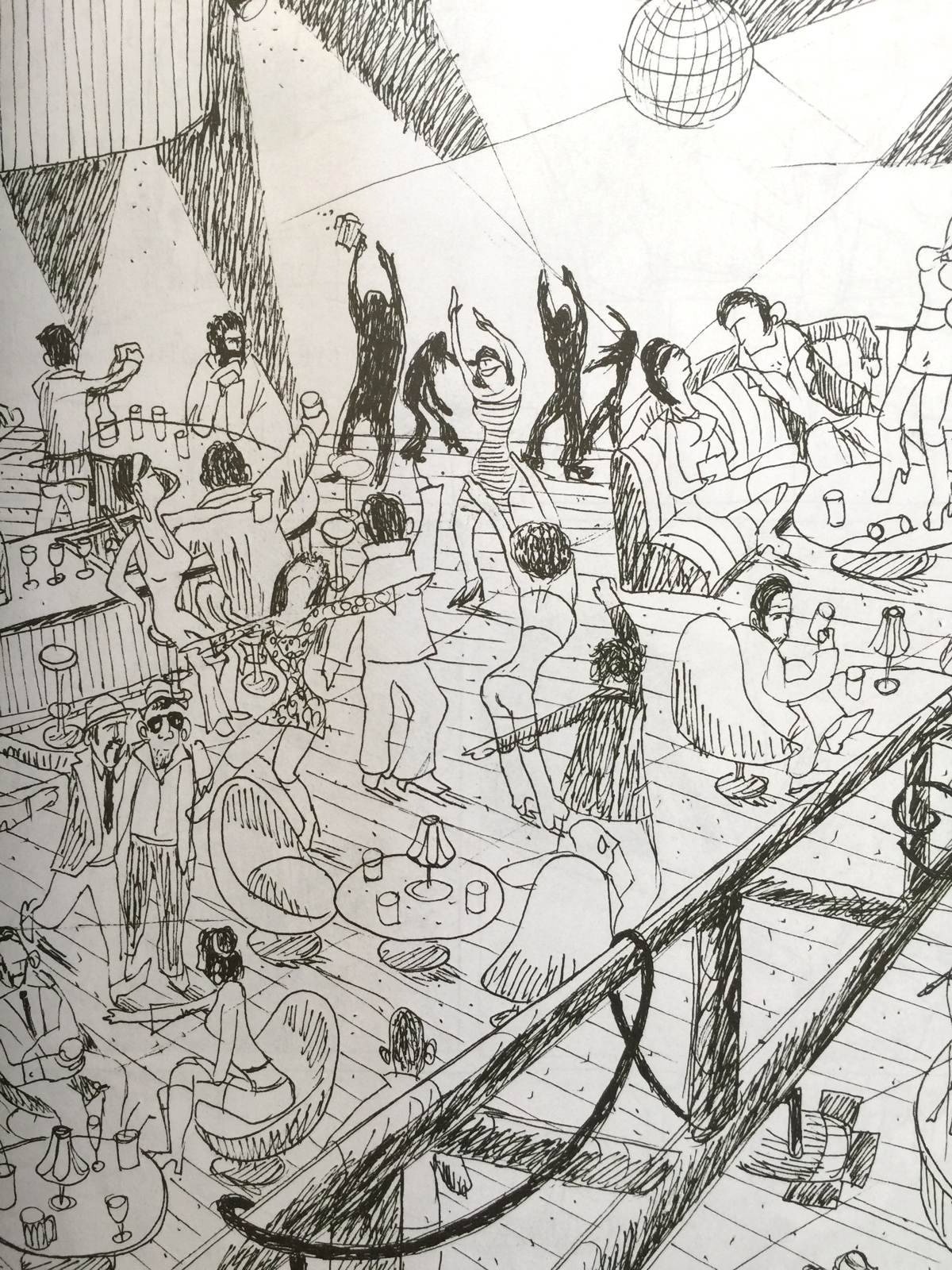
In 1982 John Belushi died from an overdose in a bungalow at the Chateau Marmont when he was 33 years old. At his memorial service, his friend and collaborator, Dan Akroyd, said Belushi was "a brilliant performer, writer, tactician, business strategist…a good man - and a bad boy." Released today, this graphic novel biography, written and illustrated by two Italian truefans of Belushi, presents us with the story of a man whose level of self-destructive behavior moved in lockstep with his rapid rise to international superstardom. Author Schiavone doesn't bother explaining why Belushi abused drugs when he had everything else going for him - because the why is not especially interesting. "Real greatness gives license for real indulgence," explained Ackroyd at the memorial service, "whether it's as a reward, as therapy or as sanctuary." This is true for many great entertainers, and Schiavone wisely chose not to devote space exploring this aspect of Belushi's life, choosing instead to focus on what made the comedian unique - his brand of humor that was fresh and absurd, yet comforting and deeply resonant at the same time. Manera's fine-lined pen and ink illustrations capture the essence of Belushi and his manic short life. - Mark Frauenfelder
TIMELINE: A VISUAL HISTORY OF OUR WORLD
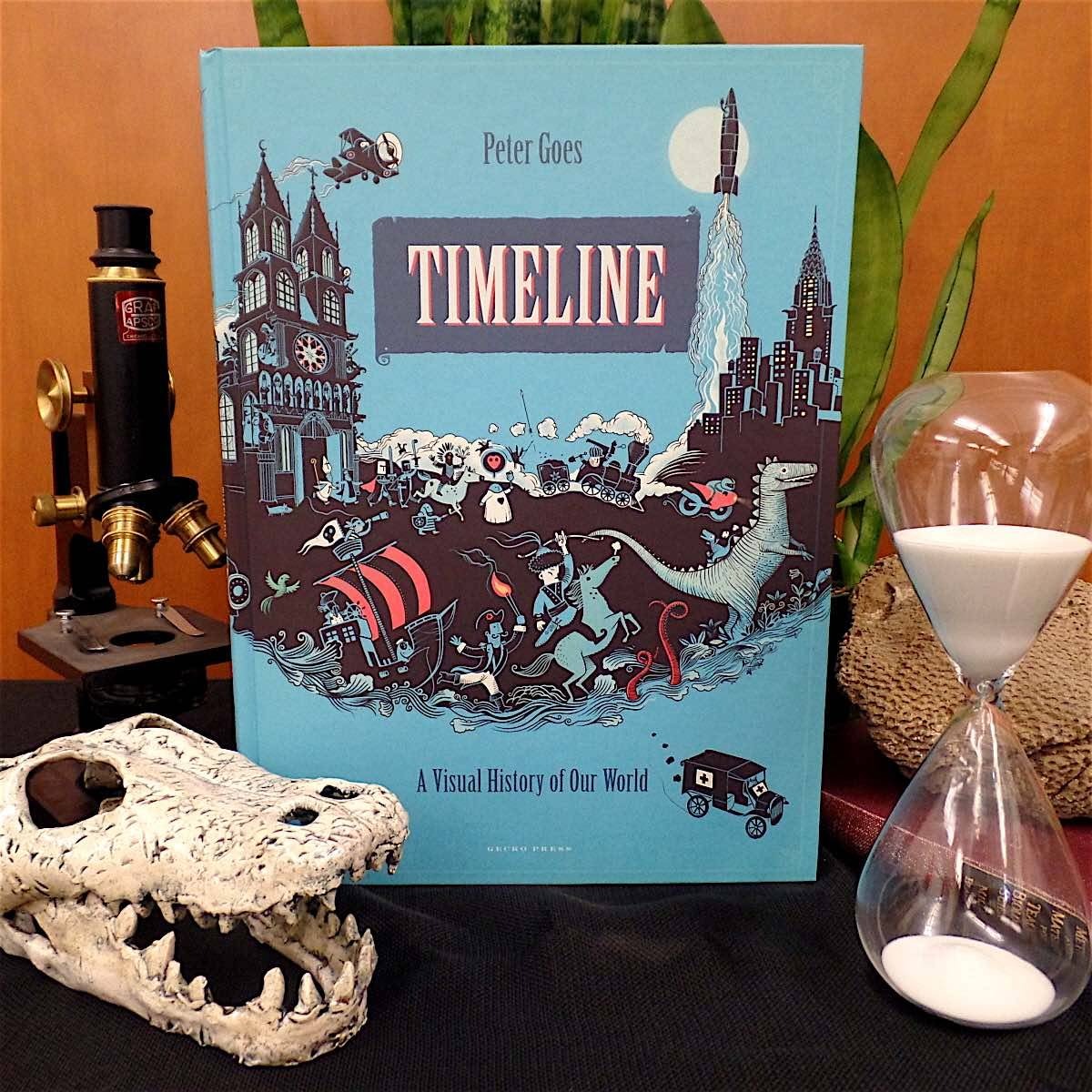




Timeline: A Visual History of Our World
by Peter Goes
Gecko Press
2016, 80 pages, 10.6 x 14.6 x 0.6 inches
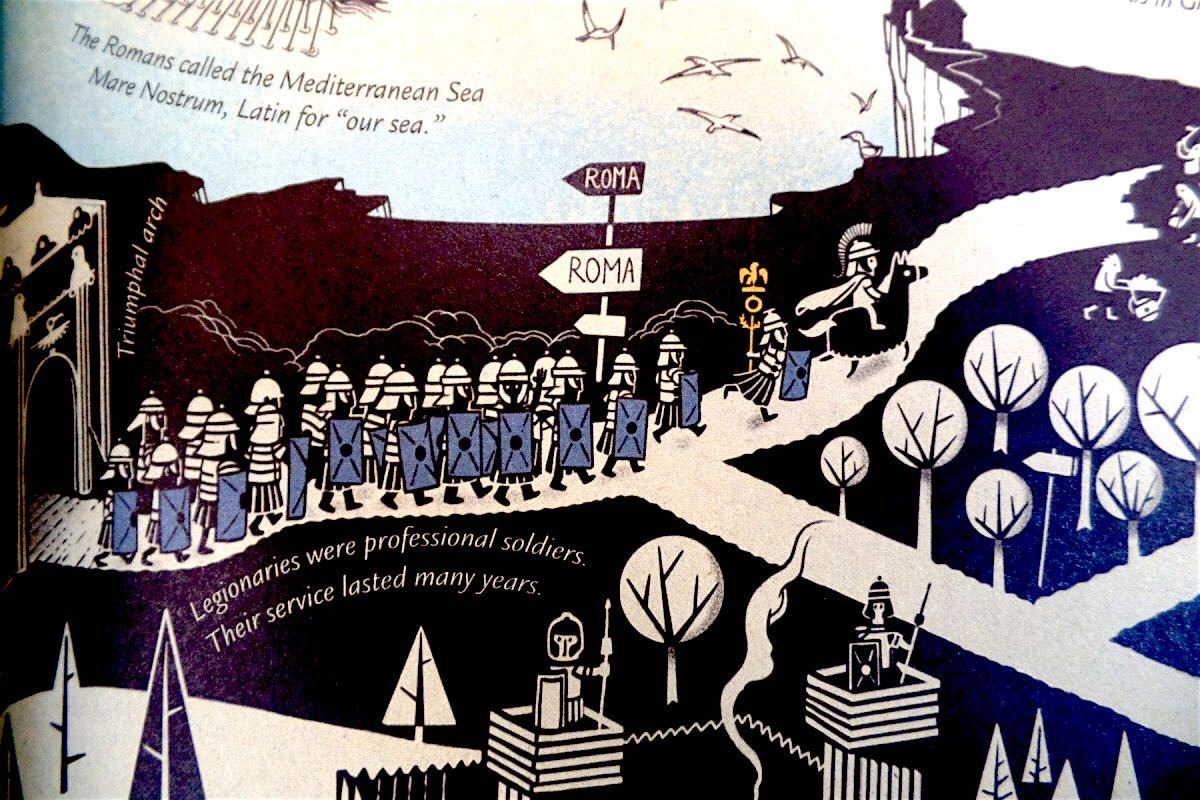
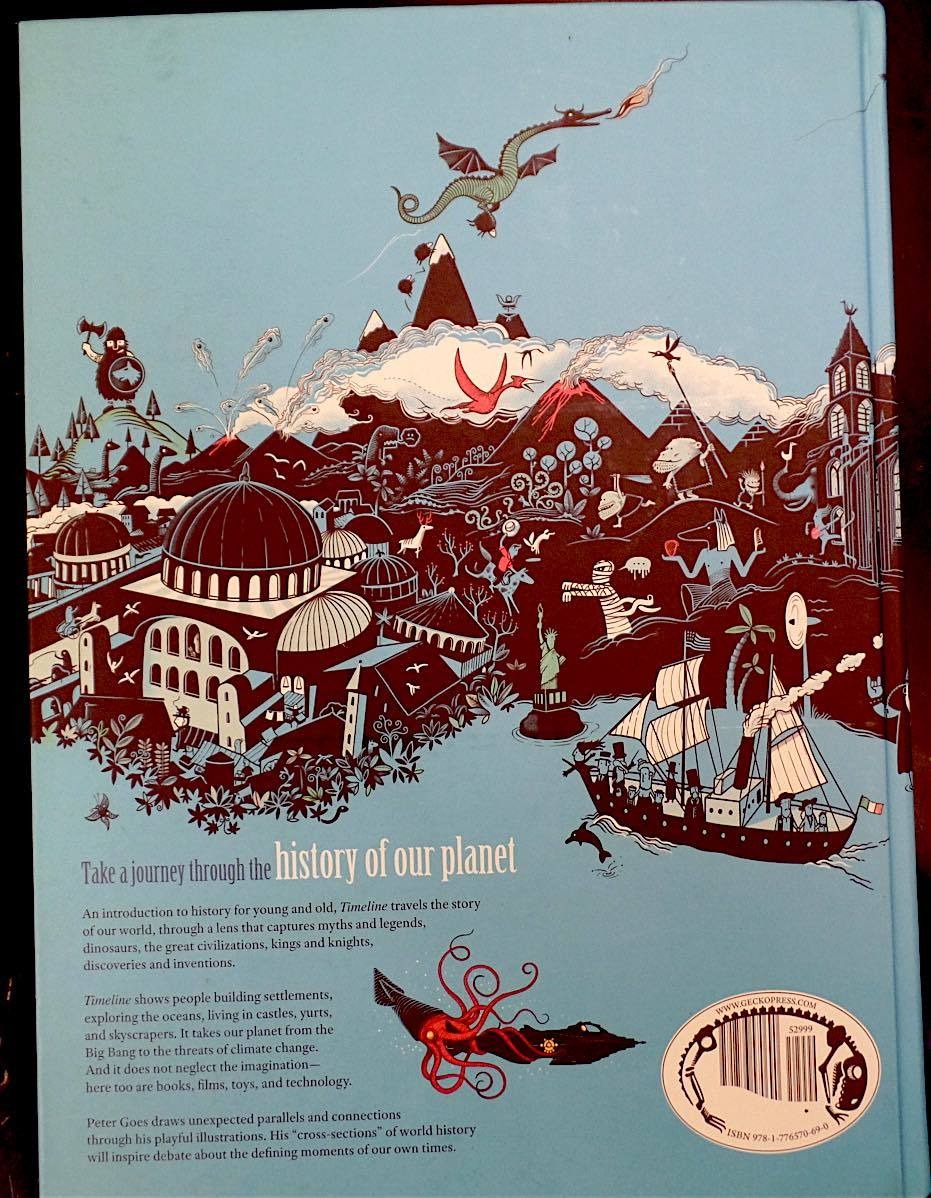
I love the tidbits of history, the unique visual style, the subtle humor, and the breadth of coverage in Timeline: A Visual History of Our World. On each 10×29-inch page spread are whimsical curved text blocks filled with simply written - yet intriguing - historical facts. And each spread addresses one era of time. The book, which targets children 7 to 12-years old, starts with The Beginning of Life and includes a miniature image-based timeline of stromatolites, trilobites, ammonites and more. The author offers spreads dedicated to the major geological periods, as well as more brief and recent timespans. Our current decade is the last timeline covered, concluding with "As time goes by…" along with a person spreading black paint across the page.
The illustrations are fabulous. Goes uses a minimalist color palette that differs for each of his timelines. The Dinosaurs are on a wheat-toned page with black silhouettes accented by red and gold. The Ming Dynasty appears on a dusty rose background with dark pink and white accents, again using black as the major illustrative color. Goes' technique of black with two accent colors artfully draws the eye to visual vignettes on the page, while the curving text leads you to the next image. Wonderful. Engaging. Amusing.
This book makes for great conversational fodder. Did you know that, according to the page spread on 18th Century in Europe, "Mont Blanc was called Mon Maudit, or 'cursed mountain,' until the Enlightenment, when people stopped believing in curses"? The 1960s spread covers the social protest movements of the decade, referring to incidents from around the globe. One of the most interesting spreads to me was Explorers from All Periods, mostly because I love learning about specific people. China had an ambassador, Zhang Qian, in the 2nd Century BC - who knew that there were ambassadors that long ago? I am not a history buff, yet I continually enjoy perusing Timeline: A Visual History of Our World. - Lora Poser-Brown
Books That Belong On Paper first appeared on the web as Wink Books and was edited by Carla Sinclair. Sign up here to get the issues a week early in your inbox.
 Easiest jar opener
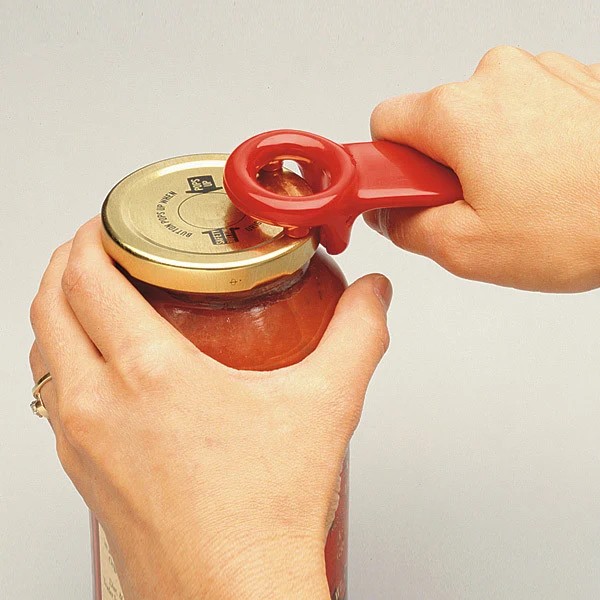
The JarPop jar opener is the best five-dollar gizmo I've ever bought. It's what I gave my mother for Christmas last year. It's a beautifully simple bottle-cap-opener for lidded jars. It breaks the seal on a jar of applesauce (or anything else), and then the lid twists right off. I'm a little embarrassed how strongly I feel about it. — David McIntosh
 Heat-activated frozen treat scoop
Unfortunately for my waist, I love ice cream. For a long time, I accepted the fact I either had to strengthen my wrist muscles, leave out the ice cream to soften up, or run the frozen tub or spoon under hot water before digging in (which dilutes the ice cream if you forget to dry it off beforehand). Not anymore.
The trick to this scoop is a heat-conductive fluid sealed inside the handle and business end. The heat from your hand warms the fluid, which lets you scoop easier and quicker. I find it can scoop ice cream from ice cream tubs that are hard as a rock, like a spoon through a tub of margarine.
This Zeroll scoop is not dishwasher safe, and must be hand-washed in warm or luke warm water (the fluid in the handle can't take any hotter). It comes in different sizes from two to four ounces, in either a silver aluminum or Anodized Teflon finish. I opted for the two-ounce aluminum scooper because I've heard the Teflon finish wears off over time.
It's worth mentioning that I learned of the Zeroll from a cooking magazine. They tested various scoopers to settle on one that makes the "perfect, round scoop." The Zeroll won. — Ethan Stettner
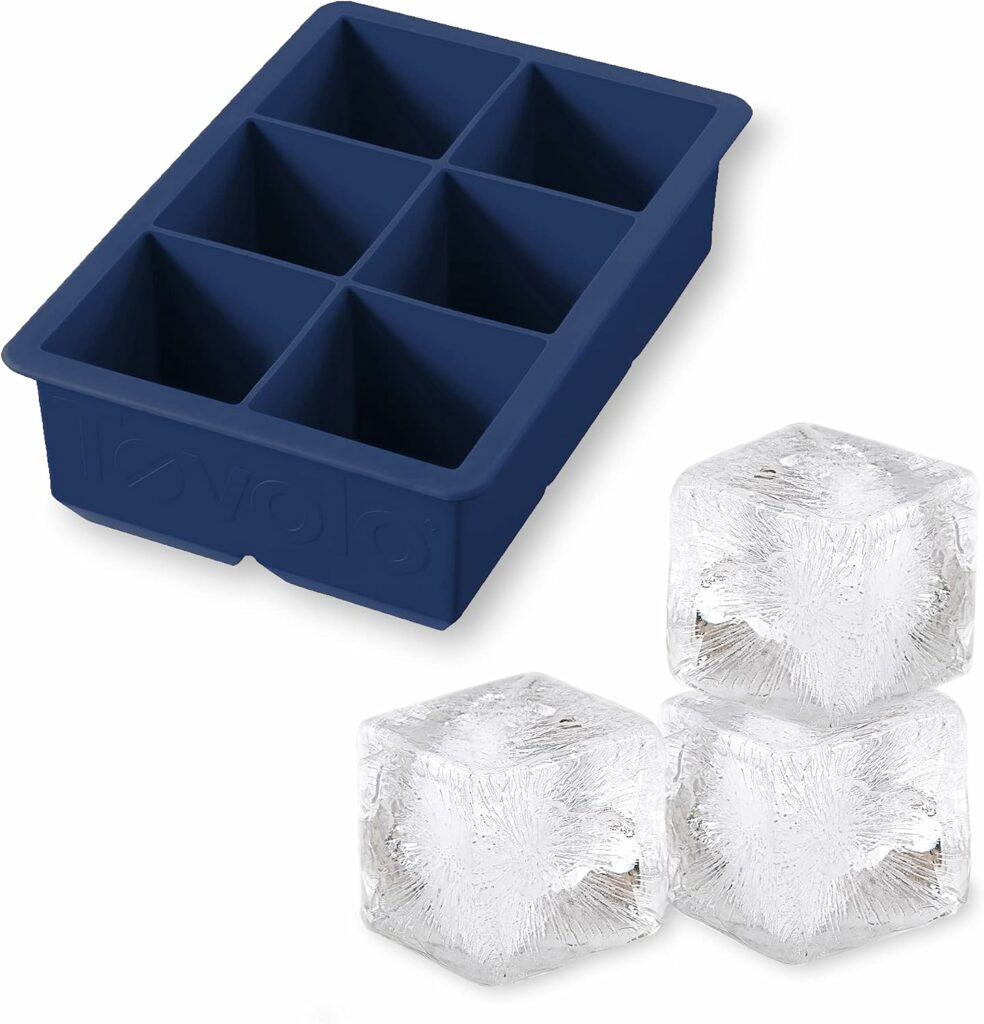 Really big ice cubes
I don't own a fridge with an ice maker, and so for the past few years have been relying on the cheap white ice trays that seem to inhabit everybody's freezer. They've done their job, but never very well. Recently, however, I picked up the Tovolo King Cube Ice Tray and have been blown away with the oversized ice cubes it produces.
The silicone ice tray produces the largest cubes of ice (they're 2″ x 2″) of any tray I've seen. Outside of being a gigantic novelty, the increased size is a boon as it reduces the surface area to volume ratio. This means the ice melts slower in your drink keeping it cold longer while minimizing how much it waters down your drink. I hadn't expected it to make that much of a difference, but it's really astonishing how much longer the ice remains in the drink. I've found these large cubes are downright perfect for cocktails like a gin and tonic, and while I'm no whiskey connoisseur I imagine they'd be even more at home in a scotch on the rocks. Simply put there's something special about having an oversized piece of ice clinking in your glass.
Another design plus is that the silicone tray holds a greater volume of water than other ice cube trays I've tried (which all seem to hold a pitiful amount of water), while taking up less valuable freezer real estate (the tray is significantly taller, and not as long as my old trays). Popping the ice cubes out takes a bit of wrangling, but no more so than cracking traditional ice trays, and because silicone is a good insulator you're not left with ice cold hands in the process.
The only downsides I've found so far are that the flexible silicone tray can twist and bend and slosh while finagling it into the freezer, and the fact that it only makes six cubes at a time. This hasn't been a problem for me as it takes fewer cubes (read: one) to cool down most drinks.
Overall, these big ice cubes are just plain cool, and for $9 it's a cheap and functional upgrade to any freezer. — Oliver Hulland
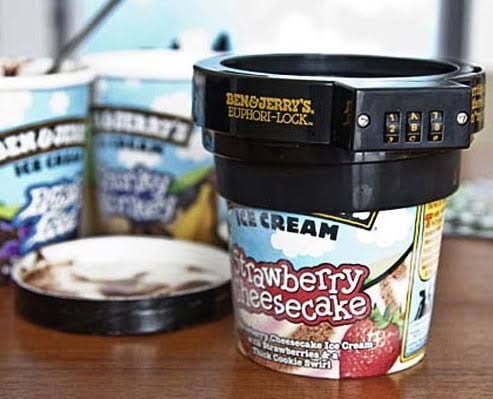 Personal ice cream security
Due to roommates that didn't quite understand my displeasure at my consistently disappearing ice cream, I had to resort to this. Not a gag, it is actually is designed with the intention to work. Though I suppose that since the container it is "locking" is made of waxed cardboard (which can be deformed a bit) it won't keep out a serious professional penetration attempt.
I found that it sends a warning message, sort of like one of those little LED's you put in a car to give the appearance of having an alarm. — Morgan Davis
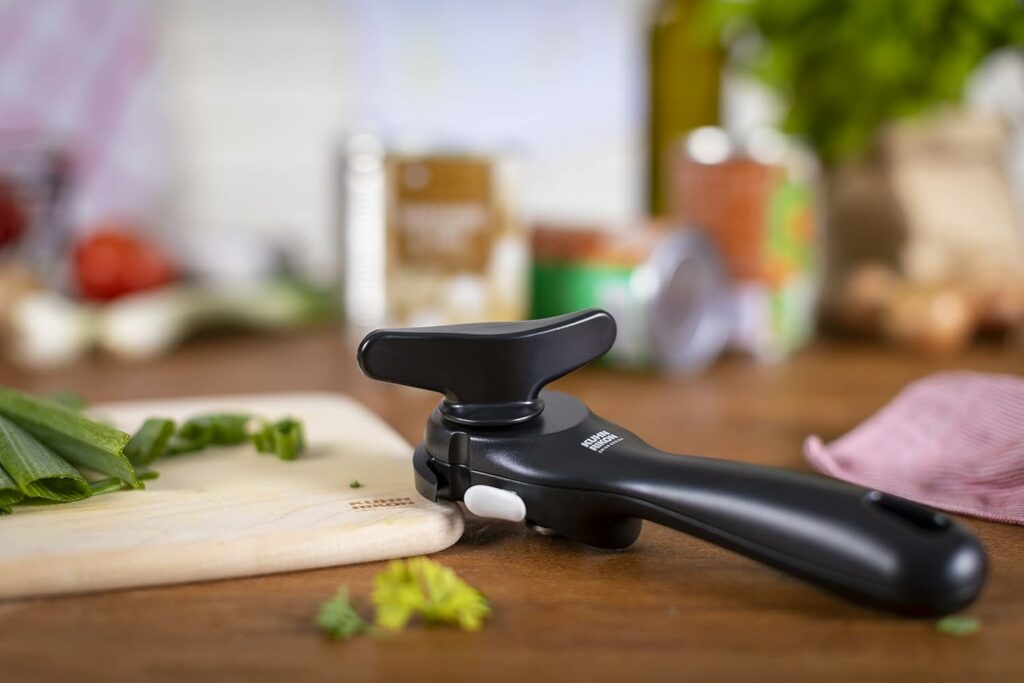 Safe can opener
It may be a terribly long and unwieldy name, but it is far and away the coolest can opener I have ever used.
Why? The blade cuts into the can *below* the rim so the lid never falls into the food, and the blade doesn't touch the food either. You can use it to open "pop top" lids as well. A can opened with this tool will have no sharp edges. Apparently, it works for both righties and lefties (not tried). Best of all you can challenge your friends by handing them the opener and a can and watch them figure out how to use it. — Marsh Gardiner
 One-handed towel dispenser
Most free-rolling paper towel dispensers just don't work for me. Since I do a lot of food prep from my wheelchair, I can only grip with one hand. The genius of this "Perfect Tear" dispenser is how it allows enough freedom for the roll to unwind with a steady pull; yet, there's still enough friction to prevent further unwinding when you pull to detach the sheet.
The secret? 1) The center post is a series of bowed wires that contract and hold the paper roll snugly in place; and 2) The base weighs about four pounds, which adds stability.
No more chasing unwinding rolls of paper across the kitchen floor. Or getting five sheets when I only need one. Better still, it works just as well at the end of the roll as it does at the start. When a roll is out of sheets, just unscrew the top cap, slide off the cardboard tube, push on another roll and replace the cap. All of this can be easily performed one-handed.
After a couple of years, it's still well worth the precious space it's claimed on my very limited counter. — Eric Eales
Once a week we'll send out a page from Cool Tools: A Catalog of Possibilities. The tools might be outdated or obsolete, and the links to them may or may not work. We present these vintage recommendations as is because the possibilities they inspire are new. Sign up here to get Tools for Possibilities a week early in your inbox.
Yesterday's weatherThe key premise of Recomendo is that everything we have suggested weekly in the past 10 years has been a personal recommendation based on our own experiences. It is something we have seen, heard, visited, or used ourselves. For this Christmas, we'd like to deviate from that principle slightly (and temporarily) to provide you with a dozen of recommendations from our subscribers. That is you. For our brand new Annual Christmas Reader Recommendations issue we will select the best personal recommendations submitted within the next 2 weeks by October 25. To keep it sane, just one recommendation per subscriber. Keep it short and personal. Suggest a product, tool, app, place, book, documentary, podcast, follow—anything—that you genuinely love, and few know about. No self-promotion. Beyond the dozen we share in the newsletter, we will post all of the vetted submissions on our website.
Most weather apps don't show you yesterday's weather. Who cares, right? But it's useful information if you want to know whether today will be warmer or colder than yesterday. Yesterday is a free iPhone app that shows a chart of the hour-by-hour temperatures for yesterday and today. If it's late in the day, you can see how tomorrow's weather will differ from today's. It also gives you a simple one-sentence summary, like "Today will be noticeably hotter and sunnier" or "Daytime high noticeably warmer and rain unlikely." It was created by Matt Webb, who publishes Interconnected, one of my favorite newsletters. It's a great example of vibe coding. — MF
Quantify yourself scienceEighteen years ago Gary Wolf and I started the Quantified Self movement - the idea that you could use technology to track yourself. Gary hosted thousands of meetups where people shared what they were tracking and what they learned, and from this vast experience over decades, he finally wrote up the results of what we know about self-tracking in a new book, The Quantified Self. The book is fabulous, perceptive, useful, and illuminating. Turns out self-tracking is more about observing and having the right questions, than it is about wearable technology. Self-tracking can be a form of what Gary calls "personal science" - you are doing experiments on yourself (N=1), and the methods, criteria, protocols are different than what you would do for N=millions. I highly recommend The Quantified Self for everyone; we are all doing personal science on ourselves, and this will help you do it better. — KK
Advice for parts workThis short guide by Tricycle Day gathers practical advice from licensed psilocybin facilitators on working with the inner child, critic, protector, people-pleaser, and all the other parts that can pull us in conflicting and confusing directions. I think this advice is useful with or without psychedelics. I found it helpful to learn that our inner inhabitants don't always speak in words: "Our parts can show up through emotions, memories, body sensations, images, or inner dialogue, offering information about what they need and what they've been carrying." — CD
Stainless steel coffee filterI often take an AeroPress coffee maker when traveling, especially if I'm staying at a hotel or Airbnb. When I arrive, the first thing I do is buy ground coffee at a local market. I've streamlined my setup by using this stainless steel filter instead of bringing a sack of paper filters. It does a great job filtering the coffee, and I think it tastes better than coffee pressed through paper. It's easy to clean with a rinse under the faucet, and Altura says it will replace the filter if you lose it, break it, or even have it stolen, no questions asked. — MF
Inbox recommendationsIt feels a little meta to share a newsletter's list of other newsletters worth your time, but I've recommended Wonder Tools before and trust Jeremy Caplan's curation. His list includes 17 newsletters covering useful tools, technology, AI, news, journalism, and practical wisdom. I've already added a few to my Feedly. Worth checking out if your inbox could use some new sources. — CD
Alternative citizenshipThere are many reasons to live somewhere else, or to have the option to live somewhere else. The Nomad Capitalist is a YouTube channel that takes a market approach to the question of where you can live. It researches, compares, evaluates how much it costs to purchase a passport, or a residency card, or buy real estate around the world, and gives advice on what are the best bargains for "citizenship through investment" and so on. What is the cheapest price for a passport and what do you get? Where are taxes minimal? Many of the options he examines are not cheap, but for some, it can still be worth it. It's good to know what your options are. — KK
Sign up here to get Recomendo a week early in your inbox.

The Perfume of Silence is a collection of dialogues between nonduality teacher Francis Lucille and his students that points directly to the consciousness underlying all experience and shows how recognizing it dissolves psychological suffering.
Core PrinciplesYou Are Not the Body-Mind
Are you your thoughts, sensations, and perceptions? Or are you the awareness in which they appear? Lucille says we are the open, borderless consciousness that witnesses these changes.
"We have always been this consciousness, this presence."
Welcoming Whatever ArisesInstead of fighting unwanted thoughts or chasing pleasant states, Lucille recommends welcoming whatever arises, including fear, boredom, and restlessness.
"We should be present to the totality of whatever arises in consciousness, instead of focusing on something that we want to get rid of."
Happiness Is Your Nature, Not a GoalWe spend our lives pursuing happiness as though it were something external to acquire. Lucille says it's always present when we stop covering it with mental agitation.
"Know that your happiness is not in the next situation, in the next object, but that the next situation or object is simply a celebration of this happiness that we already are."
The Ordinary Is SacredAwakening shows up in the most ordinary moments, like drinking tea, walking, or listening to a friend.
"Just stick to the ordinary circumstances without labeling them ordinary. Be open to them with no desire to change them in any way."
Try It Now- Close your eyes and notice whatever appears — sounds, sensations, thoughts. Ask yourself: "What is aware of all this?" Then rest your attention on awareness itself, the open space in which everything appears.
- The next time you feel an uncomfortable emotion — irritation, anxiety, boredom — instead of reacting or analyzing, say to yourself, "You are welcome here." Notice what happens to the emotion when you stop resisting it.
- Choose a mundane activity you do every day without paying much attention—making coffee, washing dishes, walking to your car. Do it with full attention. Notice whether the activity, stripped of the label "ordinary," reveals a quiet aliveness you might otherwise ignore.
"There is no freedom at the level of the body-mind. There is absolute freedom at the level of consciousness."
Book Freak is published by Cool Tools Lab, a small company of three people. We also run Recomendo, the Cool Tools website, a YouTube channel and podcast, and other newsletters, including Recomendo Deals, Gar's Tips & Tools, Nomadico, What's in my NOW?, Tools for Possibilities, Books That Belong On Paper, and Book Freak.
If you have a Visa card of some kind, you can get some free eSIM data from GigSky on your phone when traveling abroad. I can vouch that the promotion is for real because I just used it myself in Malaysia. My data is about to run out, but I can re-up with a different Visa card or purchase a plan at a hefty discount. Benefits run from 3 days to 15, with different amounts of data depending on how "premium" your credit card is. See the details here.
Getting From A to BThere are a lot of tools and websites out there telling you how to get from one location to another, but the one I've had the best results from for years is Rome2Rio. While others seem to have blind spots—mostly what they're not selling themselves—Rome2Rio shows everything. Then it refers you to parent company Omio or directly to the booking platform if it's proprietary, like some government-owned train systems. I've seldom run into a situation where I can't see every overland option in one place, plus an idea of flight choices as well.
Nomadico is a reader-supported publication. To receive new posts and support my work, consider becoming a free or paid subscriber.Upgrade to paid
American Airlines Offering Cash + MilesIf you don't have enough frequent flier miles for a ticket, American is now joining the other major legacy carriers in offering a way to pay for a flight—domestic only for now—with a combination of cash and points. This is "rolling out" now so we don't have the actual formula, but going by this article, it will probably equate to a penny a mile or less. Not a great use of your points if they can get you a full ticket later, but getting a discount is better than just letting them sit there forever, deteriorating in value.
Prices for Travelers in UzbekistanAs I mentioned a few issues ago, I traveled through Uzbekistan with G Adventures and the price for the tour I took comes out to $140 to $185 per day double occupancy depending on the time of year and demand. I took note of prices everywhere we went, however, for my blog readers who may want to travel around there independently. This country needs to go in my World's Cheapest Destinations book when I eventually get around to putting out a sixth edition because it's a terrific value. See the full rundown on lodging, food, transportation, and more here: Uzbekistan Travel Prices and Tips.
A weekly newsletter with four quick bites, edited by Tim Leffel, author of A Better Life for Half the Price and The World's Cheapest Destinations. See past editions here, where your like-minded friends can subscribe and join you.
I am a Kenyan Maasai registered nurse, entrepreneur and livestock enthusiast running my own clinic in the village while building businesses around healthcare and farming. I'm rooted in Maasai culture, and passionate about community development, learning from different cultures, and creating opportunities for myself and others.
 PHYSICAL
- A Young Ram: Livestock has become both a passion and an investment for me. I enjoy raising sheep and goats and watching small beginnings turn into something valuable.
- Maasai Shuka: My Maasai shuka represents my heritage and reminds me of the importance of preserving and sharing culture.
- My Stethoscope: My stethoscope represents my journey in nursing and my work providing healthcare in my own community.
DIGITAL
- Fiverr app: Fiverr showed me that opportunities aren't limited by geography. During university, I used it to earn money to sustain my studies.
- Spotify: Music has become one of my favorite ways to discover cultures beyond my own, especially African and international artists.
INVISIBLE
Big things rarely start big.
I'm learning to appreciate small steps, whether it's a young animal, a small business, education, or a new relationship because consistency can turn them into something much bigger.
Sign up here to get What's in my NOW? a week early in your inbox.

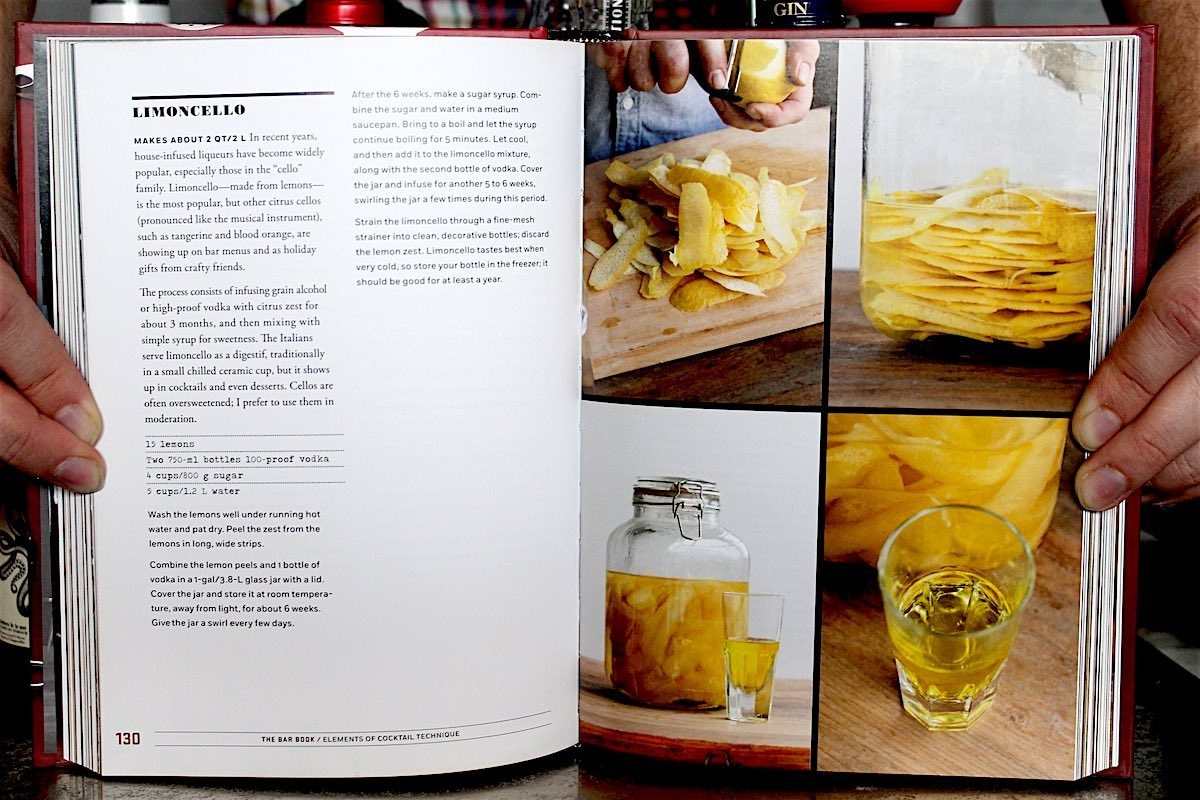

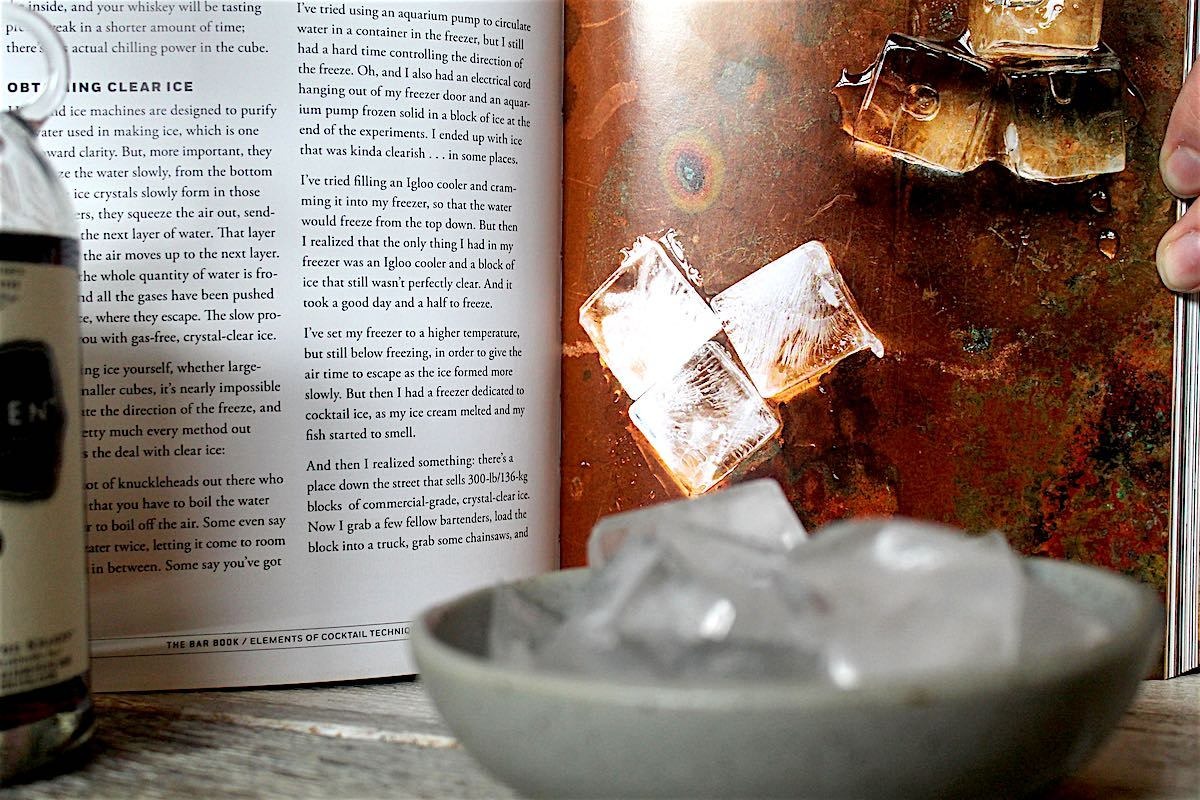
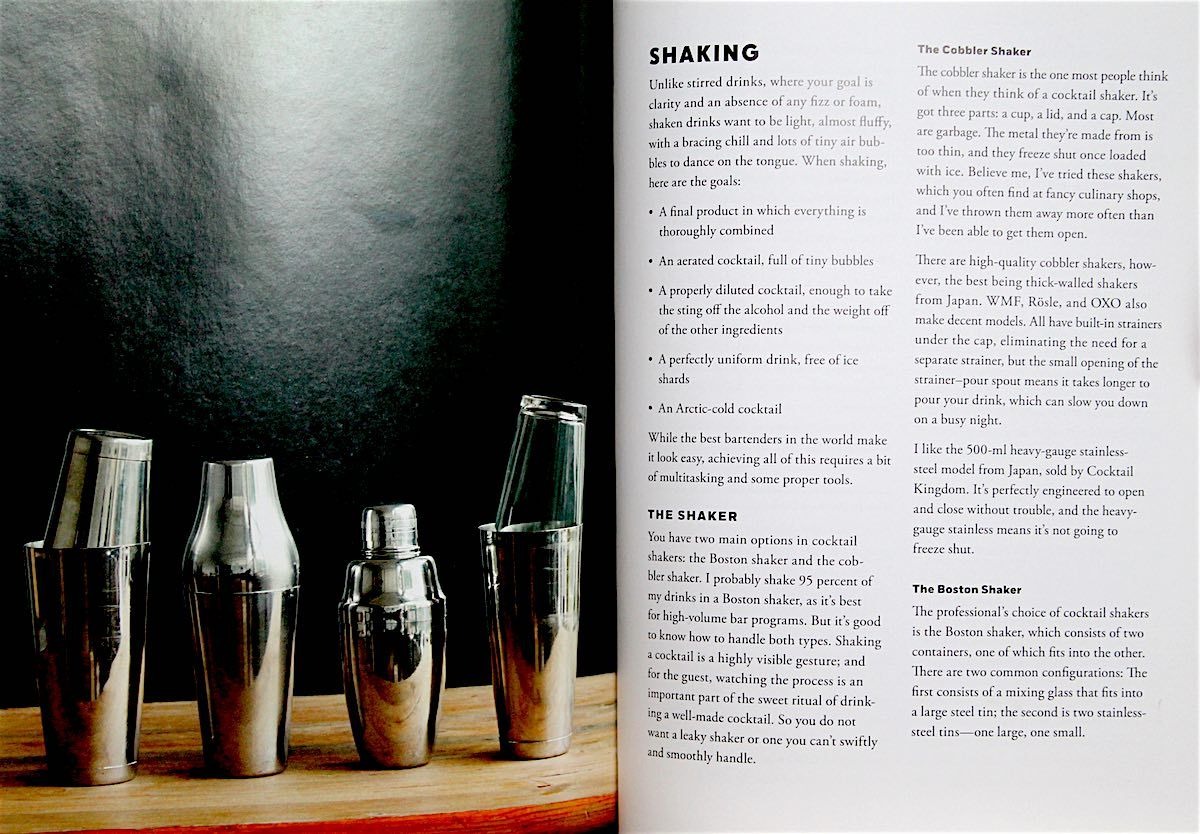

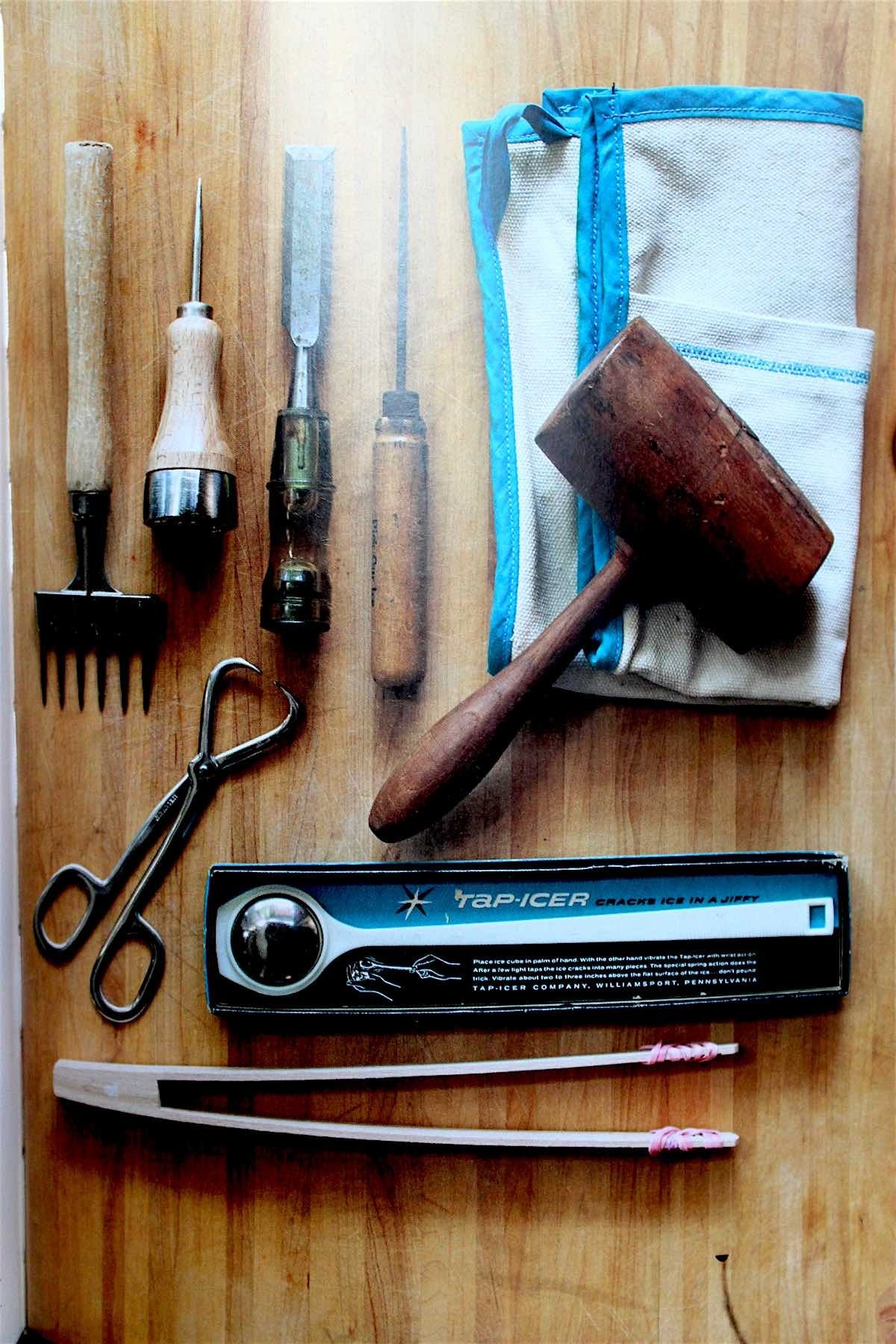

The Bar Book: Elements of Cocktail Technique
by Jeffrey Morgenthaler (author) and Alanna Hale (photographer)
Chronicle Books
2014, 288 pages, 7 x 9.5 x 1 inches
As someone who spent many misguided years of my youth drinking poorly-eyeballed gin and tonics out of coffee mugs, I never really understood: How exactly can you make cocktails "well" or "poorly"? Isn't it a simple matter of ratios - of pouring the right amount of the right things into a glass, chucking in an ice cube or two and calling it a day? Where is the mysterious opportunity in that simple process to either mess it up or do it exceptionally well? Jeffrey Morgenthaler's The Bar Book is a masterclass on that very subject.
The Bar Book is not a recipe book. Instead, it is a techniques book. Morgenthaler elevates making cocktails into a craft, focusing on finding the right recipe, using the best ingredients, and executing it all using effective techniques. While the author does include expertly curated recipes for some must-know cocktails, instead of focusing on what to mix (which can always be found with a quick Google of "how to make a Cosmopolitan"), it focuses on how, why, and when to mix it. He gives you a 360-degree education in barcraft, from what shapes cocktail shakers come in and what the differences mean to why the shape and size of your ice is important and how to make it so that it comes out of the tray clear and beautiful. He's a big proponent of making things like mixers, garnishes and even liqueurs from scratch, so the book offers up recipes for making things like flavored syrups, infusions, and even tonic water. Even if you're not the type who relishes taking the time to create something you can easily buy from a store, seeing and understanding the DIY processes behind these ingredients is fascinating and demystifying.
The book is peppered with stories, some steeped in niche-y barcraft history and delightful tradition, some from Morgenthaler's own bartending days. Striking, minimalist photography guides you from the easiest recipes to the most hardcore. A perfect blend of science, theory, philosophy, history, and personality, The Bar Book is a must-read material for anyone who wants a deeper look at what exactly it means to be a good bartender. - Michelle Kaatz
THE VERY PERSISTENT GAPPERS OF FRIP - CREEPY MULTI-EYED CREATURES TORMENT A VILLAGE
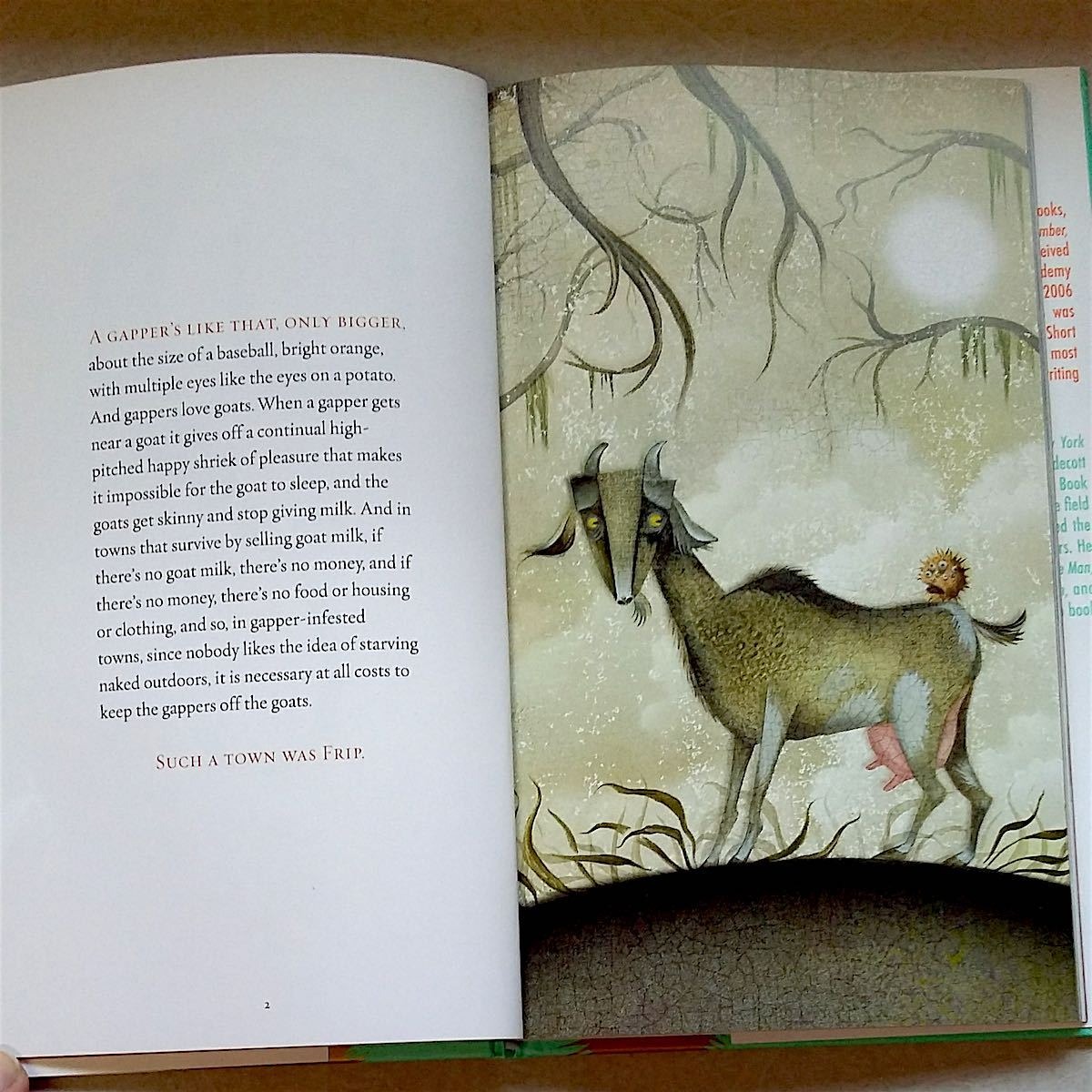
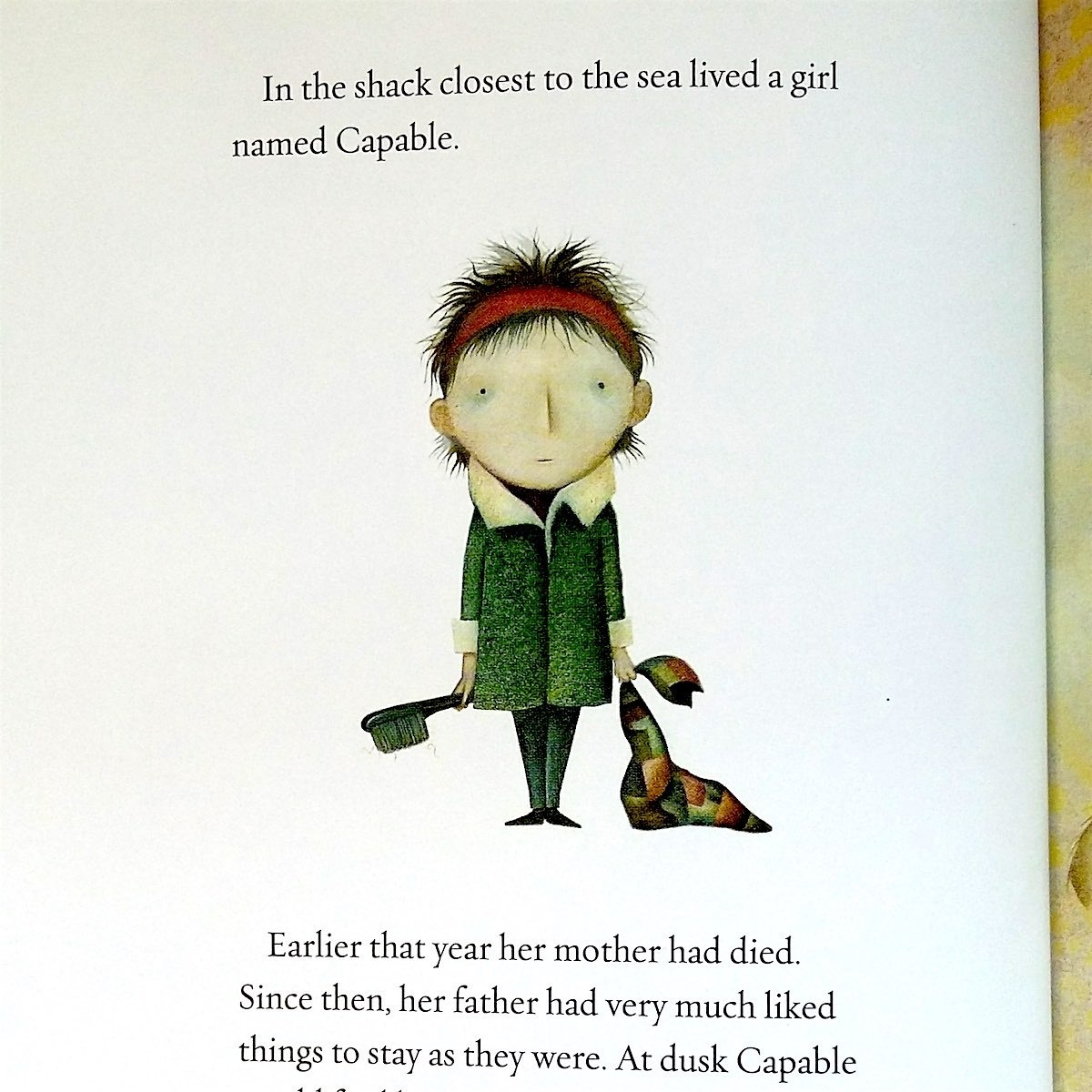
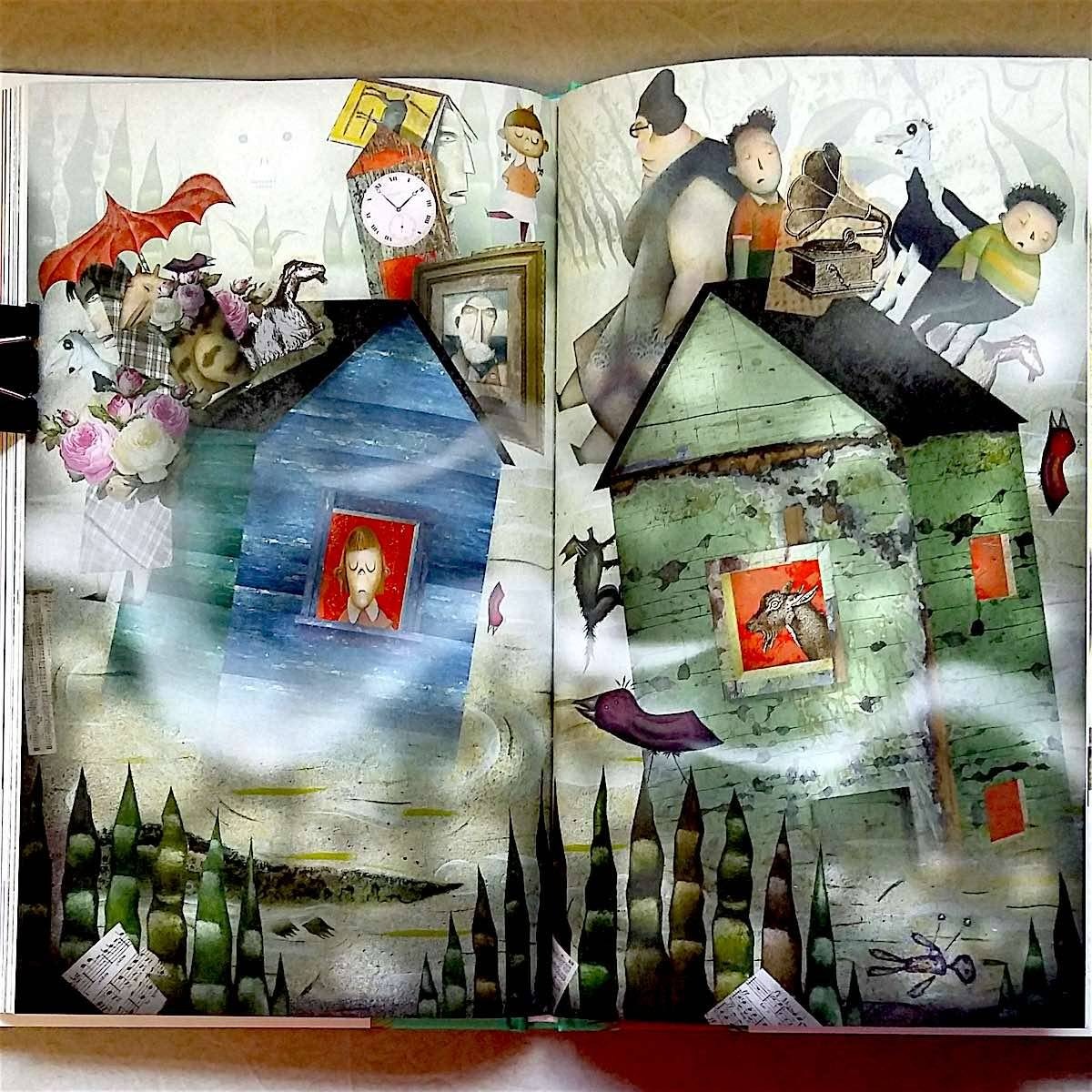

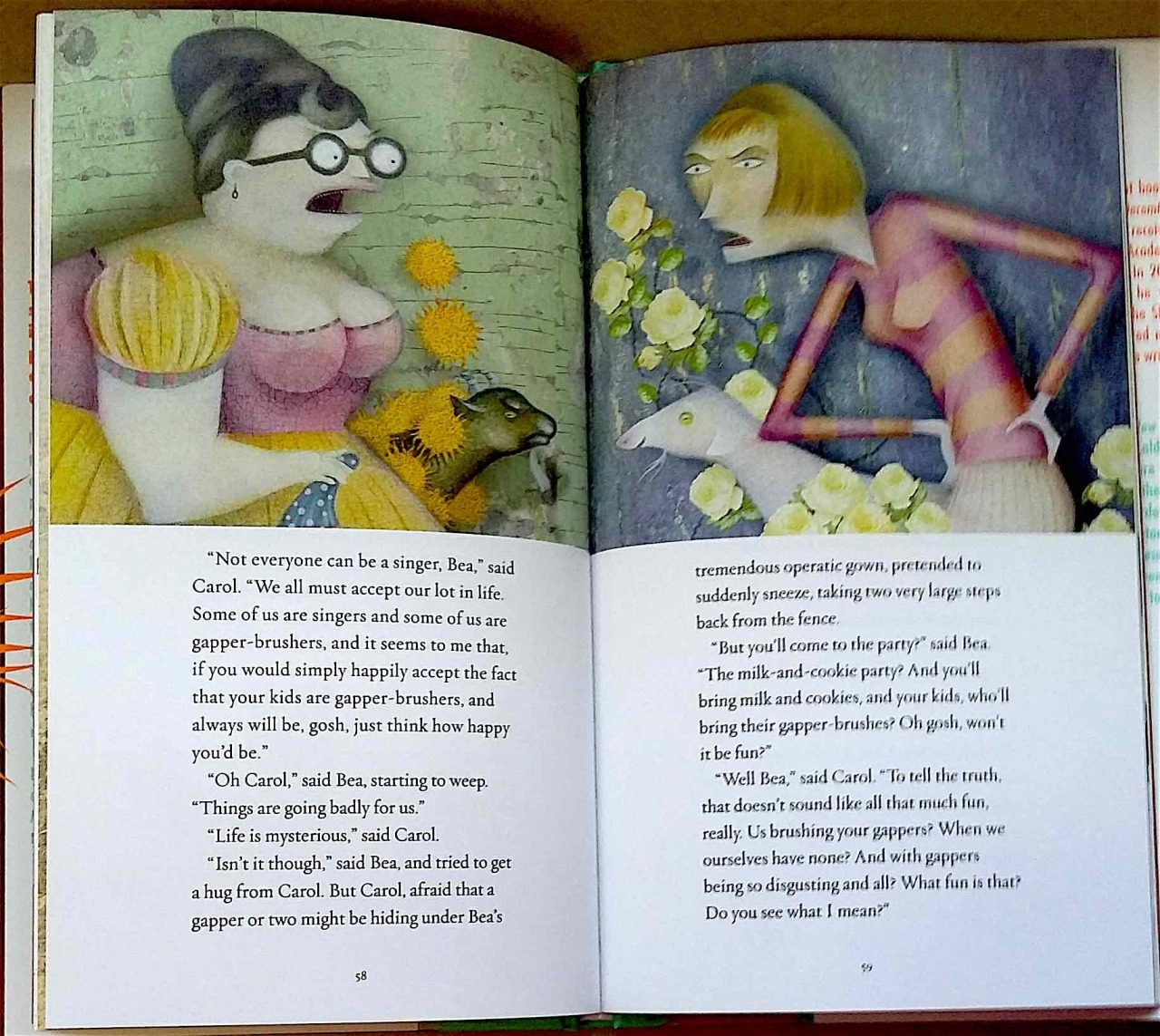
The Very Persistent Gappers of Frip
by George Saunders (author) and Lane Smith (illustrator)
Random House
2015, 96 pages, 5.8 x 9.6 x 0.5 inches
Gappers are creepy little orange, multi-eyed, round creatures that love nothing more than to hang out on or near goats, shrieking all the while. As you might imagine, this is very stressful to the goats. They stop eating; they stop giving milk. If your family gets its livelihood from that milk, you're in bad shape when the gappers are around. They emerge from the ocean, find the goats, and wreak their shrieking havoc.
The village of Frip is made up of three ocean-side shacks. The girl Capable and her widowed father live in one. Mrs. Romo and her sons live in the second. Sid and Carol Ronson and their daughters (who "sometimes stood completely motionless in order to look somewhat pretty") lived in the third. In Frip, the children must check on the goats eight times per day in order to remove the gappers and return them to the sea (from which they will reemerge again and again).
The Very Persistent Gappers of Frip is a fable about the perils of putting oneself before the community and the ultimate merits of sharing amongst a community. The gappers have bothered the three families' goats equally for ages, until one of the smarter gappers realizes that Capable's goats are slightly closer than the others. Once the gappers converge, Capable is unable to keep them away. She asks for help, but she is refused:
"We feel strongly that, once you rid your goats of gappers, as we have, you will feel better about yourself, and also, we will feel better about you. Not that we're saying we're better than you, necessarily, it's just that, since gappers are bad, and since you alone now have them, it only stands to reason that you are not, perhaps, quite as good as us."
Capable is, in fact, quite capable - she takes care of those around her and solves problems for herself. The illustrations are lush and whimsical. The book is a lovely parable for children, but the tale and visuals are engaging for readers of any age. - Meagan Rodgers
Books That Belong On Paper first appeared on the web as Wink Books and was edited by Carla Sinclair. Sign up here to get the issues a week early in your inbox.
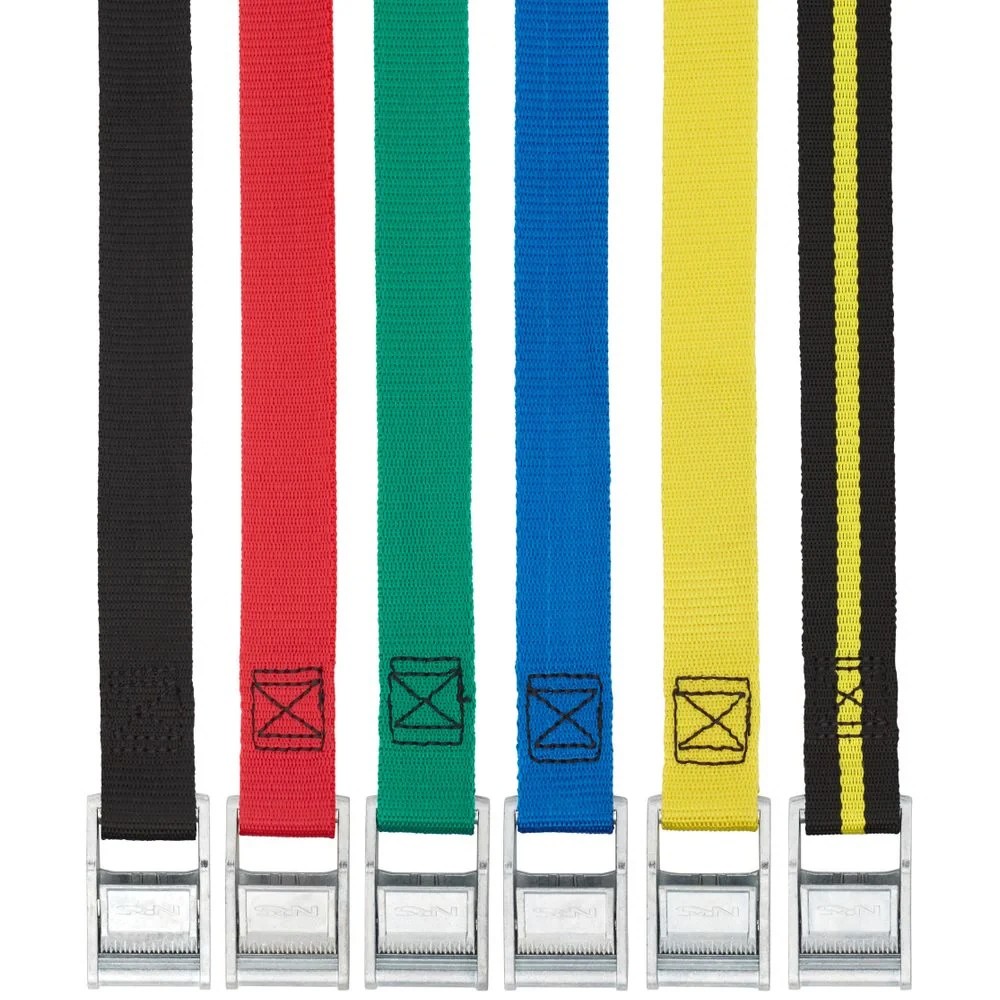 Quick strong tie downs
These straps are incredibly strong. The tensile strength of these 1.5 inchers is 2000 pounds. With their cam locks these NRS straps are easily and infinitely adjustable and can be cinched down very tight. They have almost no flex/stretch and can be used in situations where a bungee would be too weak or stretchy and would not be "bomb-proof" like a cam strap.
If you are a river runner you are already familiar with these straps. They hold your boat, frame and oars on your truck for the drive to the put-in. You then use them to hold the frame to the boat, your bags, spare oar and rocket boxes to the frame. The originals are 1″ wide and come in sizes from 1 foot up to 20 feet. As a commercial boatman I used these for everything from bundling firewood collected for that nights campfire to pulling a truck out of a ditch.
NRS has come out with a 1.5″ model that is the perfect width. I have even been using one for several months as a belt. In a pinch it can be used (at the risk of my shorts heading south) to strap/bind/tow just about anything. I keep two of the twenty footers in my truck at all times. These straps are a permanent part of my kit, right next to the duct tape, bailing wire and channel locks. — Topher Stephenson
 Strap supplier
You can see all the different strap types and strap hardware (buckles, tie downs, keepers, clips, etc.) in use on all sorts of stuff swirling around us in daily life. But if you want to get some for your own projects?
Strapworks.com has pretty much all of it. Metal or plastic hardware. All sorts of strap and webbing material.
Inexpensive, easy to work with. Helped me a few times, and I know I will continue to use them when the need arises. — Wayne Ruffner
 Extra Large Rubber Bands
I have been buying one pound packs of rubber bands from LFSMarine for over five years now (along with their cheap and tough nitrile gloves and barge glue). My first buy was an impulse one. I thought, "It's hard to find this size rubber band (3/4″ x 6″) and, besides, I wanted to make some slingshots so…" I got a one pound bag. When you get them, you realize a pound of these is a lot of banding material. With that abundance, you don't stint their use.
I love them for binding together papers and books (I teach so I always have a few in my desk.) I have used them to hold wood in place for gluing. I use them along with barge glue and duct tape to splice materials together in the garden. And I use them for sling shots., too. In fact they are always in mind and on hand for any kind of kludge. I usually buy a couple of pounds of them at a time for less than ten bucks.
It's fun to give them as gifts just for the odd looks you get now and the thank-yous you continue to get as they too discover that these bands are handier than a pocket on a shirt. Perfect for the maker/tinkerer in you and yours. — Terry Elliott
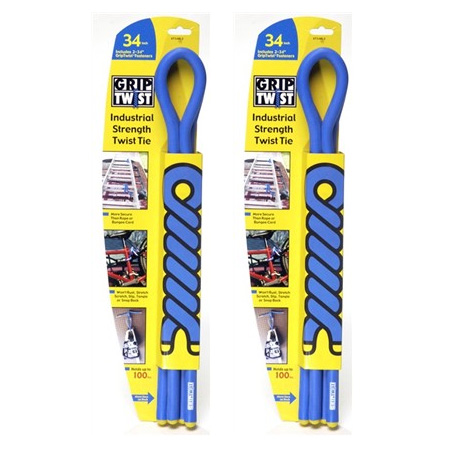 Gigantic twist ties
I picked up four of these at my local container store, not knowing exactly how I'd use them, but guessing they'd come in handy. Within 48 hours I'd already used them twice-once to secure the barrel of my telescope to its collapsed tripod for easy transport to a remote location, and then to stabilize a table and chairs in the back of my car for a trip across town-both times with great success. These giant, rubberized "twist-ties" were much more efficient and easier to use than a bungee cord in both cases.
Griptwist offer several advantages over bungees in particular. First, they provide "point-to-point" stability, rather than "tie-down" or "net-like" attachment. For example, when moving dining room furniture in the back of my car, I was able to use four Griptwists to connect the legs of chairs to each other, etc., at critical points, so that the entire mass (i.e., of one table and four chairs) was stabilized from within, rather than essentially trying to "net" or "wrap" the mass together from the outside, with bungee cords. Second, with bungee cords, there's always a certain amount of "give," unless you stretch them to their maximum, which isn't always practical; bungeed objects will often move a bit more than you want them to. Third, if you do stretch bungee cords to their maximum, they exert great pressure on the object being contained. I wouldn't have wanted to use bungees around the barrel of my telescope, for example. The Griptwists remain as tight (but only as tight) as you tie them, with no inherent potential energy to give or take along their own length like elastic bands. This brings to mind a fourth benefit: no danger of "snapback" when it's time to unload or unpack.
Some things will always have to be netted down, and sometimes the stretchiness of bungees provides a benefit in and of itself (like the ability to squeeze one more last-minute object under the cords, without having to repack). Moreover, from the outside to the extent they lack handy points where a Griptwist could be employed (e.g., a couch, a canoe, a stack of luggage or boxes). But for temporarily affixing one object to another in a point-to-point fashion, with stability, I see more everyday utility in the Griptwist. — Adam Zaner
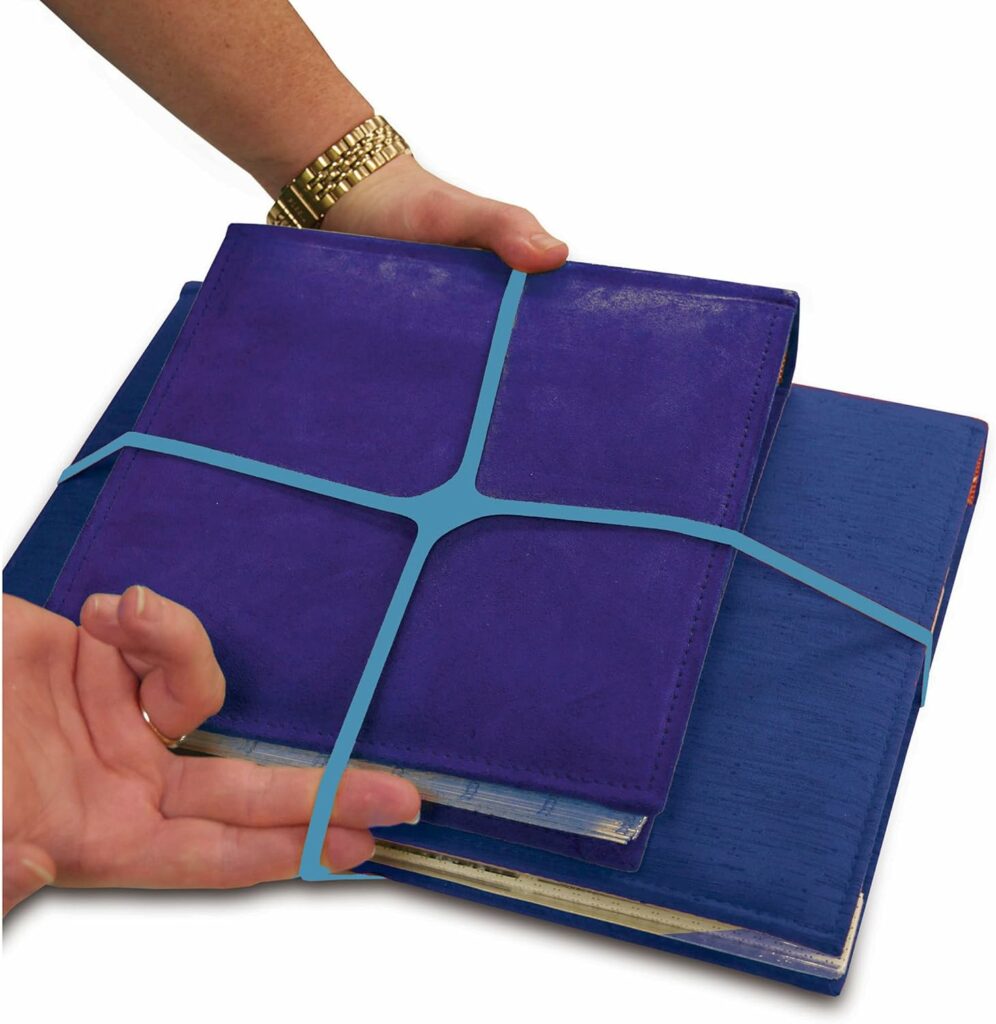 Parcel bands
These hefty four-way rubber bands are so much more useful that a plain old rubber band. Also they can be used decoratively on a simple brown-paper-wrapped gift. Or as a solid tie for bundles of magazines or newspapers. — Kaz Brecher
Once a week we'll send out a page from Cool Tools: A Catalog of Possibilities. The tools might be outdated or obsolete, and the links to them may or may not work. We present these vintage recommendations as is because the possibilities they inspire are new. Sign up here to get Tools for Possibilities a week early in your inbox.
Scientists have reconstructed what a Jurassic forest might have sounded like 165 million years ago, and the one-minute audio is a really cool soundscape to imaginatively step into. They created it by analyzing and modeling the sound-producing structures preserved in 20 fossil insect wings from nine species that lived together in what is now Inner Mongolia. It's a diverse chorus of low trills and high-pitched chirps, and I wish I could loop it all day as background noise. — CD
Inexpensive exercise headphonesIf I'm doing vigorous exercise, my earbuds fall out. I didn't want to spend a lot of money on a second pair, so I bought these inexpensive Joywise Bluetooth headphones. They are wireless, have loops that fit around the ear, and are connected to each other with a wire. Unlike most small earbuds, they charge via USB-C directly rather than in a case. The sound quality is great for the sub-$20 price, and the batteries last up to 16 hours before needing a recharge. — MF
Analog mathFor mathematical nerds, Henry Segerman is your channel. Segerman 3D-prints weird mathematical shapes, invents curious mathematical toys, constructs intricate mathematical models, and turns math into analog things you can 3D-print yourself. His YouTube channel demos all this with expert explanations of the math behind it. — KK
Free online utilitiesNormal Tools is a free collection of 193 single-purpose tools for all kinds of random small tasks, including calculators, color pickers, image resizing, and file conversion. It has more tools than I will ever need, but useful to bookmark. Most tools are private by default and process everything locally in your browser, with no account or download required. — CD
China TravelI am traveling in China again and I am reminded that the best way for foreigners to book hotels, trains, and flights anywhere within China is to use Trip.com. It is easy to use, comprehensive, accurate, and reliable. — KK
The White RoseBesides Recomendo, Cool Tools publishes a newsletter about books called Book Freak. I've been doing it for quite a few years, and I recently started finding old out-of-print books, scanning them, and turning them into ebooks with a new foreword and cover. This is a benefit for paid subscribers, and so far the library includes four books, with a new one coming every month. The latest is The White Rose by B. Traven, who also wrote The Treasure of the Sierra Madre. It was translated into English in 1979 but is out of print, so I used AI to translate the German version. It's very readable and a fantastic book. You can read about it here. —MF
This Issue's Sponsor
Why do smart people miss the future? Dev Patnaik explains why smart, hardworking people still get blindsided by change, and how to get better at noticing what's coming before it arrives. Watch the TEDx talk.
Sign up here to get Recomendo a week early in your inbox.

I came across Ways of the Six-Footed, a collection of essays by Anna Botsford Comstock, Cornell's first woman professor, while visiting the Museum of Jurassic Technology in Los Angeles. The museum has a nice reading library, and I was drawn to the book's design and title.
I read it for about an hour, captivated by Comstock's portraits of bees, ants, crickets, and caterpillars and the ways they solve the problems they face. I went home and ordered a copy, and it has stuck in my memory for over a decade.
Core Principles 1. Every Life Confronts ProblemsThe young Viceroy caterpillar eats a leaf down to its midrib and rests on the bare stem during the day, where birds could find him. "He fastens with a silken thread a little bunch of débris to the bare stem between his feeding-place and his resting-place. This is a clever performance; for if one of his foes should be hunting on this leaf and should start out on the denuded stem it would meet with this empty and worthless mass and would naturally be discouraged from further investigation."
2. Observe the Humble to Learn the GrandThe Little Carpenter Bee nests inside a broken twig of elder or sumac. "Our heroine, with the aid of her mandibles or jaws, commences to excavate a tunnel in the branch by removing the pith mouthful by mouthful… we might compare her to a man who should attempt to dig a well three or four feet wide and two hundred feet deep, and with no tools except his hands with which to remove the earth."
3. The Individual Serves the WholeA young ant's first job after it emerges is to care for the colony's larvae. "When the ant babies are hungry they stretch up like young birds, and their nurses regurgitate partly digested food into the gaping, hungry mouths… When the sun shines hot on the nest in the morning the nurses carry their charges to the lower compartments, but toward night they carry them again to the upper nurseries."
4. Go Back and Do Your PartComstock pried the maple-leaf cutter caterpillar's tiny leaf tent loose and left it upside down, to see what he would do. "He crawled halfway out upon the leaf and by a dexterous lift of the rear end of his body he brought the tent down right side up and at once began pegging it down… He had spun his silken cords so they formed an X."
Try It Now- Go outside and observe a spider, insect, or other small creature. What problem is it trying to solve?
- Think about your own behavior. What are you trying to solve? The next time you face an overwhelming problem, think about how a solitary or social insect works through its problems one step at a time. How could you break your big problem into a set of smaller ones?
- If you're waiting for conditions to be perfect before you act on a project, think about how animals build shelter from whatever materials are at hand. What do you have at hand, physical, conceptual, or social, that you could use?
- Some insects succeed through sheer persistence. That might be the only thing you need to add to solve your problem.
"I felt inspired to go back and serenely do my own little part as well as I could, trusting that somehow, somewhere, and to Some One the net proceeds of struggle are greater than the cost."
Book Freak is published by Cool Tools Lab, a small company of three people. We also run Recomendo, the Cool Tools website, a YouTube channel and podcast, and other newsletters, including Recomendo Deals, Gar's Tips & Tools, Nomadico, What's in my NOW?, Tools for Possibilities, Books That Belong On Paper, and Book Freak.
This article has a flawed title since it's missing some of the longest and best-known treks, but this list of 28 of the best multi-day hikes in the world deserves kudos for one big reason: she's done them all. From the Inca Trail and Chile's W Trek to Everest Base Camp and the Routeburn Trek in New Zealand, there are a lot of tempting trips on here to plan around if you love the outdoors.
Enhance Your Rental ApartmentWhat do an extension cord, a corkscrew, a French press, an ice tray, and a large drinking glass have in common? They're all items I've bought and left behind when the furnished apartment I rented while traveling was lacking what I needed. Yeah, I could have made a request with the owner, and have done that when the kitchen was truly barren, but I've learned that "Don't sweat the small stuff" is a good short-term apartment rule of thumb. Most items I bought in some kind of discount store or the local market, always an added adventure. The coffee press came from a Malaysian IKEA ($8), another interesting cross-cultural experience. One friend who used to be nomadic would even buy an air fryer and leave it if he was in a place for two or three months, but I'm not sure I would go that far…
International Money Back-upsMy ATM card never came back out of the machine when I used it in Tashkent, two years after an airport ATM ate a version of the same card in the Republic of Georgia. The second instance had a happy ending thanks to a phone call from my tour guide and a trip to the bank's HQ. I was never really sweating it though because I had backups. I have three cards that don't charge an ATM fee and reimburse the local fee as well (to a point with the last one). They're tied to cash accounts at Fidelity, Schwab, and my biz bank Novo. I generally keep at least one in a separate place/bag from the others. Plus a PayPal card, a Wise one (don't love it), and whatever my wife is carrying. Overkill? Maybe, but I never pay a fee to get my money this way and I know I'll always have access.
Airports Where Connections Are a PainWhile you see lots of lists for best airports (we highlighted one for the USA last week) and worst airports, this article Kevin Kelly sent me that originally ran in the Washington Post focuses on one aspect: long and confusing connections. A few frequent travelers I know are quoted in it and I can say that all four airports I try hard to avoid for connections are featured: Miami, JFK, Heathrow, and Paris. Two of them mentioned, Frankfurt and Denver, have been 50/50 for me. I hate a lot of things about Istanbul's airport, but getting to your gate is fairly straightforward there.
A weekly newsletter with four quick bites, edited by Tim Leffel, author of A Better Life for Half the Price and The World's Cheapest Destinations. See past editions here, where your like-minded friends can subscribe and join you.


