
His love for cycling reinvigorated, Alistair Fitchett spent much of 2025 colouring in maps.
Colouring The Lanes
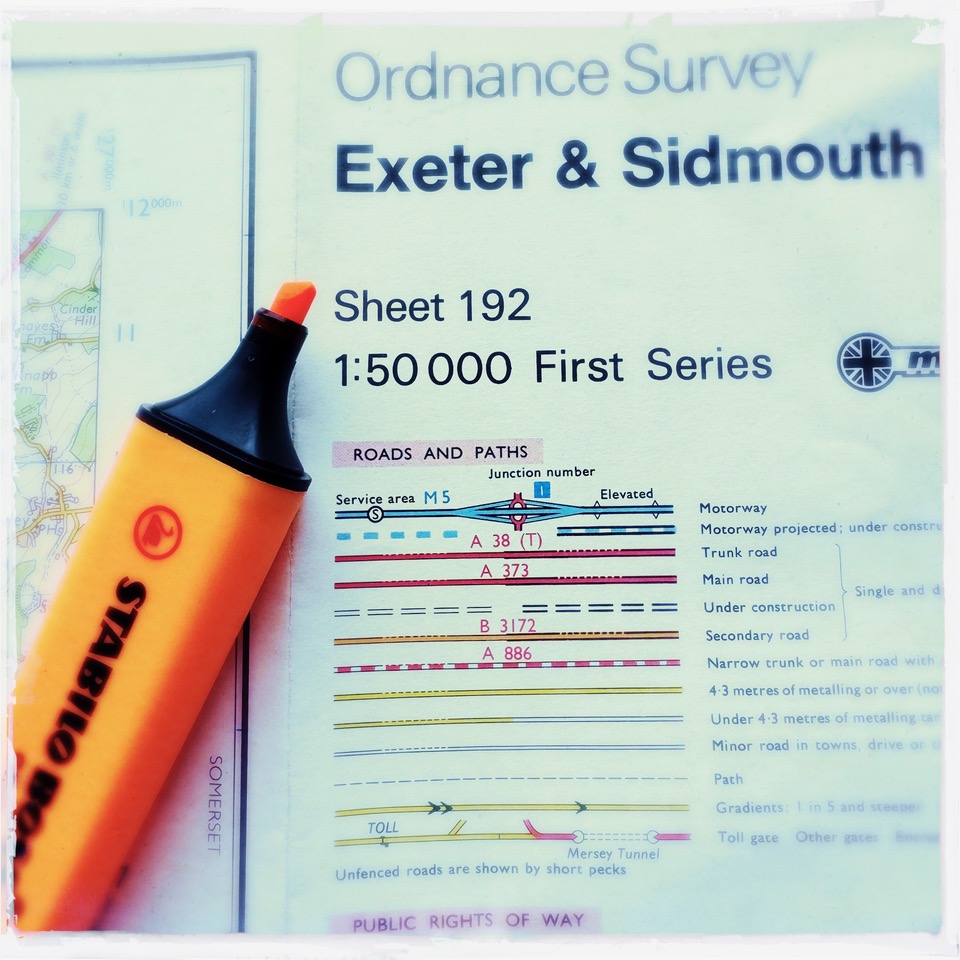
Much of 2025 has been spent colouring in maps, recording roads and lanes down which I have cycled. Most of this colouring activity has focused on sheet 192 (Exeter and Sidmouth) of the Ordnance Survey 1:50000 First Series from 1974, although surrounding maps have also been touched by my pen on occasion. I suspect part of the reason for doing it is the need to evidence existence, just as writing these words is, whilst another might be the strain of completist collector in me. Whatever the reasons, the desire to colour in as many lanes as possible is strong and has, alongside investment in an electric road bike (originally as a means of getting back to health after a spinal issue, ahem, 'back' in 2024) rather reinvigorated my love for cycling.
The first assaults on the map are exercises in memory retrieval. What roads and lanes have I ridden in thirty three years of living in Devon? Quite a lot, as it turns out, and it is particularly gratifying to let loose with the highlighter pen on those larger roads that I would never choose to ride on now, like the A3052 from Sidmouth to Exeter. This was one of the first Devon roads that I cycled back in 1988 when I made a cycling tour of parts of the South West visiting musician and fanzine-writing friends. It is immeasurably busier these days and now it is mostly an obstacle to cross rather than something to travel along.
I do cross this road early on my ride of June 27th, which is the first of my targeted colouring routes (I'm aiming to fill in a bunch of lanes around the hills of Northleigh in the designated East Devon Area Of Outstanding Natural Beauty), and also one of the rare occasions when I take the bike in the car, riding out from the beach car park at Branscombe. The route ends up being 68km and 1600m of elevation gain and is gloriously rewarding. Around Harcombe, with its 22% inclines, a series of fluorescent pink signs decorated with stencils of dinosaurs punctuate Chelson Lane. Their meaning is never clear, but I assume them to be for different camp sites as there are vans and tents dotted in fields, whilst another sign promises a Fun Dog Show the following day in 'The Party Field'. Categories include 'Best Sausage Catcher', 'Waggiest Tail' and 'The dog judges would most like to take home'. I hope they do not succumb to the temptation.
Elsewhere on this ride I finally take the opportunity to go down past the Devenish Pitt Riding School, the signs for which C and I have seen many times on drives to/from swims at Beer and about which we usually say to each other "I'm Devenish Pitt" in the style of Steve Coogan saying "I'm Holbeck Ghyll" in series one of The Trip. As another aside, Devenish Pitt (retired Army Major, I think) is surely a character out of a great lost Golden Age detective story, no? In truth the riding school is utterly charming, tucked away on a typically steep hillside with views east to Farway and the river Coly winding its way towards the coast, where it merges with the Seaton wetlands and reaches the sea at Axmouth Harbour. This is where I eventually head, after several loops around the hills, following the Axmouth Road and riding over the old Axmouth Bridge. Built in 1877, it is believed to be the oldest surviving concrete bridge in England and on my map is still the only bridge across the river at this point.
July 2nd is a ride from home, out west and north this time on lanes I've ridden many times. The exception, and the main reason for this ride, is one very short stretch that leads down to and then back up from Pennicott Farm near Shobrooke. At the farm I've hit rush hour for the sheep, so gates are closed across the yard through which the lane passes. The farmer apologises, but it's fine to stand in the shade for a few minutes and watch others at work.
The following day I do a longer ride and fill in more new lanes in East Devon, finally detouring off the road from Hemyock up to the airfield at Dunkeswell, which I have ridden innumerable times, to visit the ruins of Dunkeswell Abbey. It's a glorious high summer day and I meet a couple from Swansea who have walked to the Abbey along the lane that skirts the Madford river. We talk of the not-so-ancient routine of 'two sleeps' at night, which the monks at the abbey would certainly have practised, and about the liberating pleasures of electric bicycles.
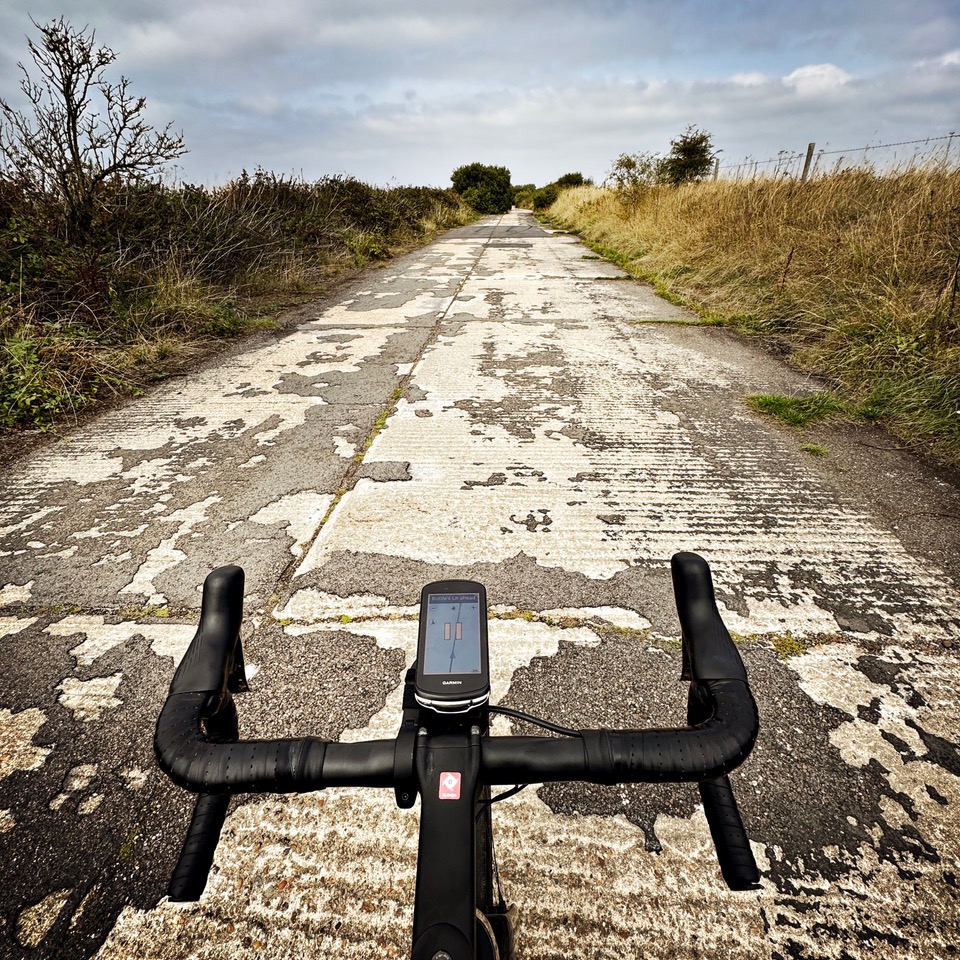
The 13th of August finds me out near Dunkeswell again, this time on a mission to colour in some of the lanes around Bolham Water and particularly to ride along what used to be one of the runways of the Upottery Airfield. The approach to the airfield from the north is on a narrow lane, even by East Devon standards, alternately potholed, scattered with gravel and/or muddy, even in one of the driest and hottest summers on record. Often there is grass growing down the middle, a sure sign of a lane less travelled. Old maps show the lane joining the ridge road at Clayhidon Cross, but since the construction of the airfield in WW2 there must have been little reason to travel along it. Then, like now, the only traffic must be for Middleton Barton farm, for the only other building, the quaintly named Trood's Cottage, is now a crumbling shell. The landscape that the lane crosses is largely wooded, dipping down to the Bolham River and then back up again to the airfield, which explains the lingering dampness. Emerging onto the remains of an airfield runway is quite an odd experience. The surface turns suddenly to concrete, the wind whips across the Blackdowns and the ghosts of American airmen and parachutists linger on the periphery, mixing with burnt out shells of caravans and motor cars, for the airfield now plays host to banger racing and monster truck shows. How times change.
It occurs to me now that I must have passed the Upottery airfield site back in 1988 on that first visit to the South West, for my ride to Sidmouth had started in Taunton and I must have ridden out on the Honiton Road, up Blagdon Hill and then across the ridge of the Blackdown hills. It must have been a headwind that day too, the struggle bleaching out all memory, and the proof that the suppleness of youth is no match for the motorised assistance of age. Still, it's good to piece these fragments of memory together and colour those routes some 37 years later.
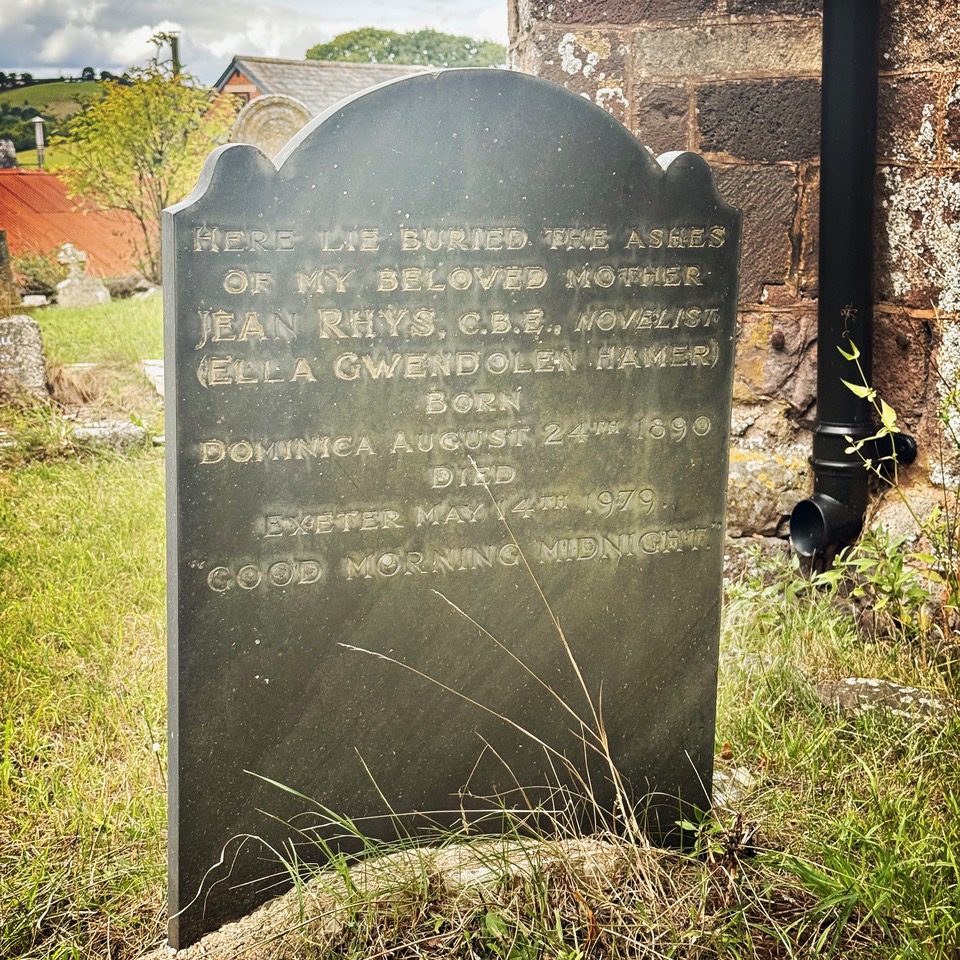
On September 4th, a day before driving to Scotland for my mum's 93rd birthday, I colour in some lanes on Sheet 191 (Okehampton and North Dartmoor), ostensibly to visit the grave of author Jean Rhys in the churchyard of St Matthew Church, Cheriton Fitzpaine. I also track down what I think was the cottage in which she lived, on the end of the terrace of Landboat cottages. There is no plaque commemorating the fact that Rhys lived here and I cannot decide if this is a shame or a relief. The latter, I think, for there is something rather splendid about keeping such mysteries at least partially caged.
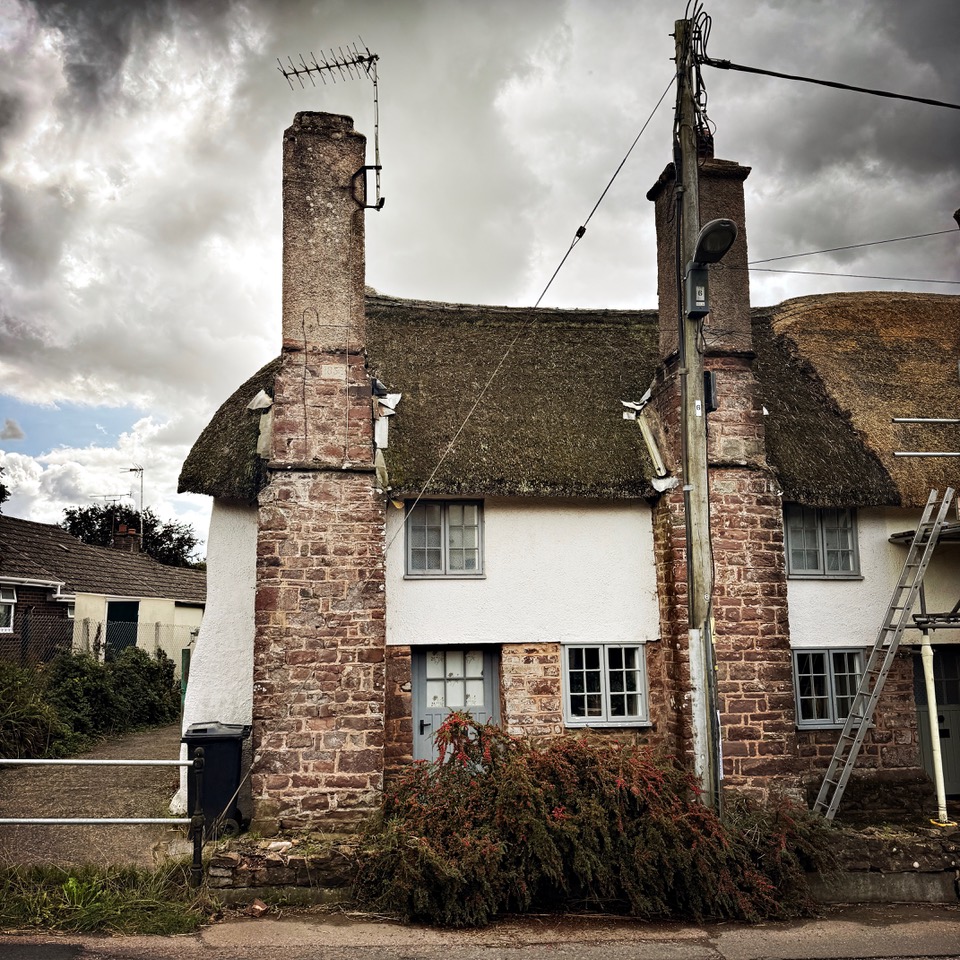
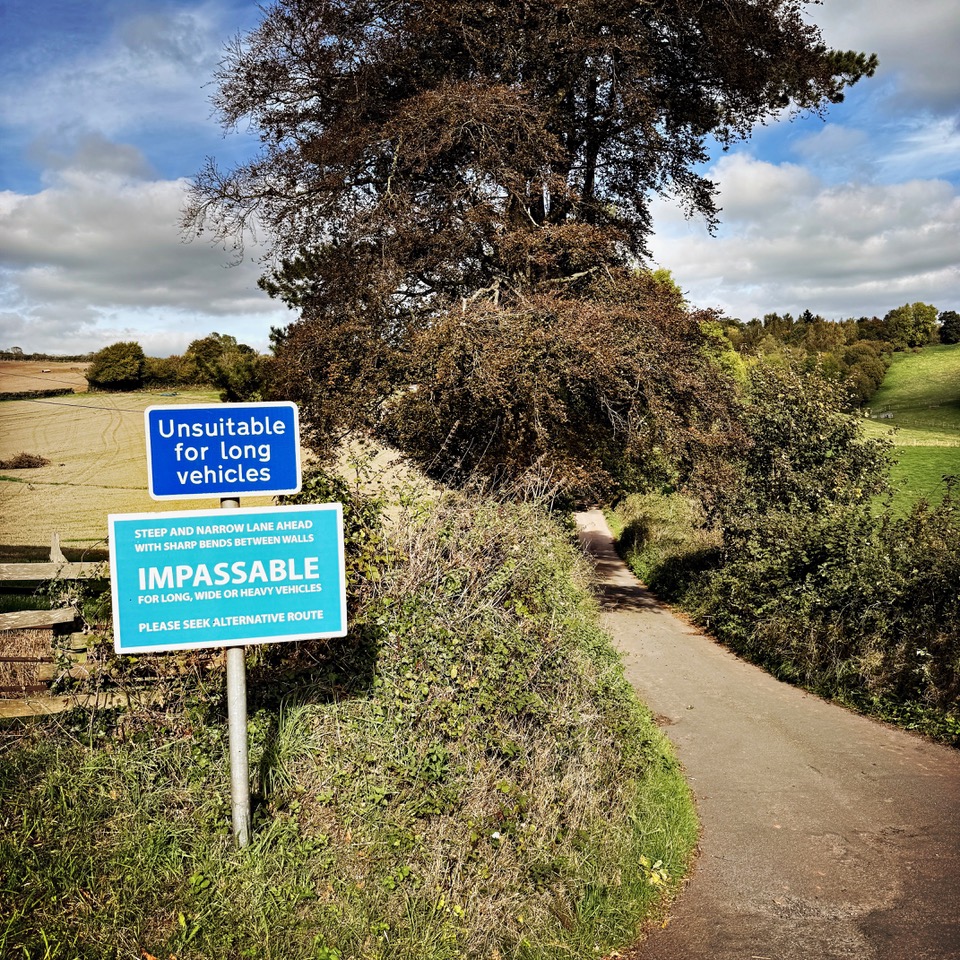
In October I do a few rides out east again, through Kentisbeare, where I always nod to the resting place of another author, E. M. Delafield, whose Diary of a Provincial Lady is one of my very favourite books. On these autumnal rides I head up from the village towards the pumpkin farm on Broad Road, colouring a lane at Windwhistle Cross, an 'Unsuitable for Wide Vehicles' one leading from Broadhembury to the A373 and a couple of others that lead only to farms.
On November 1st I visit the area again, this time to fill in a lane that climbs to Blackborough past All Hallows farm. The landscape is damp and grey and I am happy to not have ridden here a day earlier when the ghostly presence of generations past could easily be imagined haunting the crossroads where the finger sign is so weathered as to be almost illegible. The landscape is starting to look more like winter, though there are still enough leaves on the trees to feel like autumn is clinging on for a few more weeks at least.
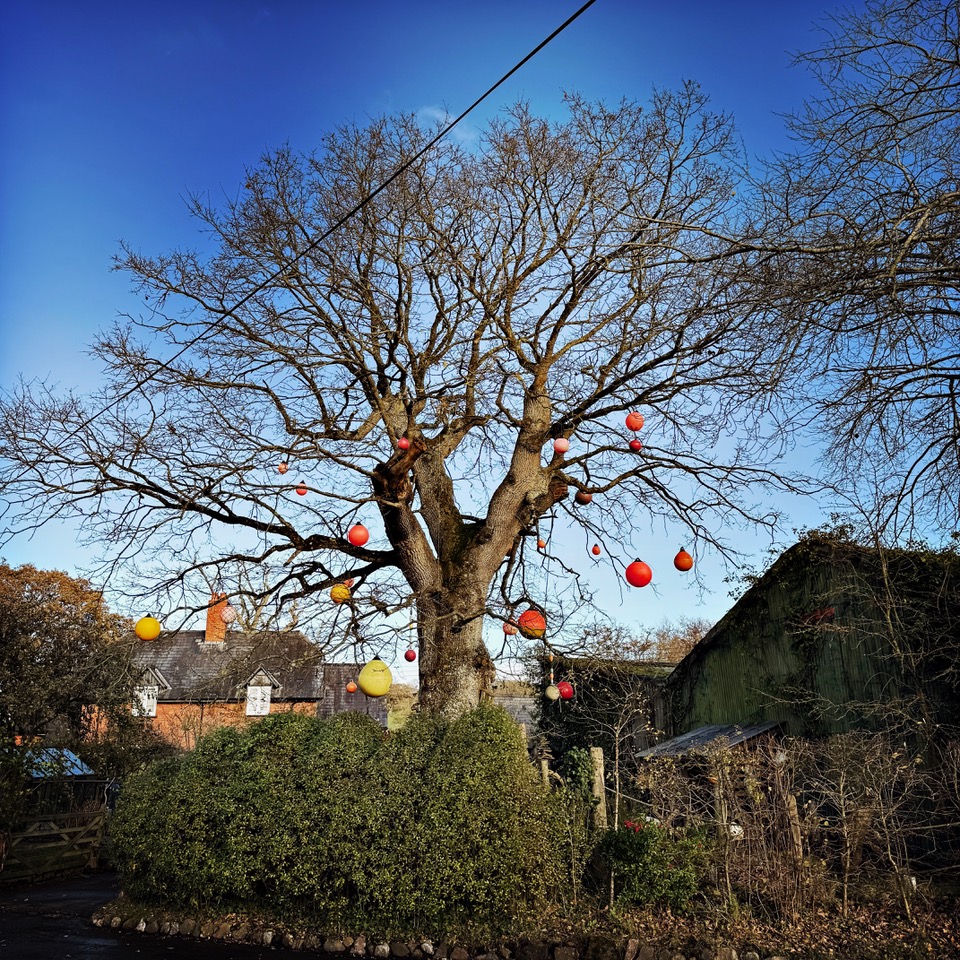
Come the end of the month, however, and the low sunlight shining through bare branches insists that the year is reaching its conclusion. On a ride close to home I finally take the opportunity to ride along Harepathstead Road, a lane at the foot the Ashcylst Forest close to Westwood, where I am delighted to see that the festive Christmas Bouybles are hung once again from the large Oak tree at Wares Cottages. These remind me that whilst it will no doubt continue to be enormously enjoyable to colour in lanes not yet travelled, it is equally important to keep revisiting the treasures I know and love.
Mark Hooper looks back over a year that put us all on Boil Notice.
Boil Notice
As I'm writing this, in early December, my entire town is on 'Boil Notice'. It's been almost two weeks since the water supply was turned off in Tunbridge Wells. The irony is lost on no-one that a town owing its existence - and name - to the discovery of a natural spring now has no water. (Although, funnily enough, the spring itself, recently renovated and monetised by an enterprising local, is still bubbling away quite happily, next to a vending machine selling bottles of the mineral-rich elixir for around £7 a pop.)
The problem, according to a slow-drip of corporate comms that I'd trust as much as the tap water, was a 'bad batch of coagulant chemicals' added to the treatment plant. Which fills you with confidence from the outset. To be fair, water returned to our taps after six days but, as of now, we are helpfully informed that - and I quote in full - 'Your water is chemically safe, but a potential fault in the final disinfection process means you must boil it (and let it cool) before drinking.' Which is as clear as the water coming out of the taps (before letting the sediment settle, as advised).
I'm aware that all this may sound like a very First World problem. Especially as I only returned to my hometown on Day Two of the very middle-class emergency, having been on holiday in Tunisia, where of course we were advised to only drink bottled water because our sensitive Western-softened bellies might not be able to handle the coagulant-free variety.
But, as frivolous as it may sound, the effect was more traumatic than I expected. It was like a mini Covid flashback - the deadlines and messages changing daily, the home-schooling and gallows humour unlocking some residue of lockdowns past, mental muscle memory kicking in. It also felt like an apt metaphor for a deeply weird and unsettling year, one that put us all on Boil Notice as we were gaslit and ghosted on an industrial scale. The simmering anxieties were partly why I decided to opt out of social media, making one last virtue-signalling post on my birthday in February, before deleting my data from Meta (a much easier process than you'd expect - although I now keep getting 'Memory almost full' notices on my new laptop from all the backed-up Instagram images I downloaded).
The idea was to step away from the increasingly binary debates that are no good for anyone; to spend more time in nature; to wait for the storm to break.
I'm not sure it worked entirely. For a start, my social media detox wasn't total: I kept my LinkedIn profile going, to keep an eye out for jobs. No joy there. In fact, if anything, it only added to the tension. Not only did it confirm that everyone is 'Open to Work' these days - even those few still doing the hiring - but it also confirmed my worst suspicious about social media. It seems to be dominated by tech-bro wannabes giving you five key but irrelevant takeaways for your business while trolling you about AI, ICE, KPIs and ROIs. But in between the slop and the dross there are still the odd gems - mainly from witty, out-of-work admen (and -women) with newfound time on their hands.
With my own spare time, I vowed to spend more times doing rather than thinking about doing. That meant trips to Bristol to watch the brilliant Idles at their hometown-square gig, as well as GANS, my favourite new band of the year, who I saw in three different towns, from a tiny pub basement to the Troxy, each a fantastic, visceral, life-affirming treat. The Bristol gig was my favourite, because it's my favourite city. While the rest of the world plummets to hell in a bile-powered handcart, it remains a sanctuary of good sense and good vibes. A place where you're a Bristolian first and anything else is secondary if not extraneous; where a nod's as a good as a welcoming West Country hug, where everyone's your mate, 'moi darling' or 'moi lover' (especially when said with gusto between two burly heterosexual males). Some of my favourite people live in or come from Bristol (the former just as important, because they have actively made the decision to be there). This includes Johnny, my oldest friend, who I never see enough, and who can always be relied on to provide the best counsel on life, music, politics and flags. Needless to say, he loved GANS too.
Other musical highlights this year included The Beta Band at the Roundhouse - where we randomly bumped into Marc Wootton, my comedy hero (not to be confused with Dan Wootton, AKA the worst man in the world). The Betas were of course amazing - any gig that starts with Bowie's 'Memory of a Free Festival' played at full blast is incapable of failing, never mind the 90s nostalgia. (On that, it would be remiss of me not to confess I went to see Oasis at Wembley, along with approximately 20% of my generation. I'd never seen them before, and as the years have passed, I've bought into the agenda that they embody all that was wrong with 90s laddism, and I convinced myself that I was doing it for my 10-year-old son, who had never seen anyone before, and who has become - Dad bias notwithstanding - a very talented guitarist. The first song he ever learned to play was by Oasis, followed by his second. When I told him it was amazing that he could play two songs, he replied, 'To be honest Dad, it's pretty much the same song.' Anyway, they were incredible. Of course they were. Even better was Richard Ashcroft. I shed a tear when he dedicated 'The Drugs Don't Work' to 'All those we've left along the way'. As we shuffled our way out at the end, a random scouser high-fived me and called me 'Dad of the year' at the end too, which was nice.)
The Social Street Party in June was another highlight - one of those events where you can guarantee to catch up with the best of the best without any pre-planning - this year Stephen Cracknell of the Memory Band, Mathew Clayton (and some post-planning), plus my old mates Mike and Val and a cast of hundreds made it an afternoon to remember (don't remember the evening, tbf).
At this point I have to give a vigorous nod to KIF's Still Out, the brainchild of Will Cookson and Tom Haverly, which Will had mentioned to me in passing when we met at last year's Neo Ancients festival in Stroud. At the time, I made the sort of noncommittal noises one does when someone mentions a personal pet project. But when Will followed up with a link to the trailer and soundtrack (the result of a roadtrip from North Yorkshire to North Devon, inspired by the KLF and directed by Rufus Exton), I was uncharacteristically effusive. It felt like the soundtrack to my own off-grid ramblings, a connection between the past and the present. Fortunately, a few other people agreed. The film was screened at The Social, while the album was listed among Disco Pogo's top ten of the year. My all-time favourite album, however - of this or most years - was Blood Orange's Essex Honey. A deeply human study of loss, written and recorded by Dev Hynes as he returned to the UK to look after his dying mother, it feels like the perfect summary of this weird year, with people forced to question their sense of belonging and self. Talking of which, there was a rare moment of perfect irony when the Tories' own have-a-go antihero Robert Jenrick singled out the Birmingham district of Handsworth as a 'slum' that showed a lack of integration. The irony being that Handsworth's most famous resident, the late, great Benjamin Zephaniah, did more for integration than any other Briton I can think of (if, by integration you mean a sharing and blending of cultures, rather than wholesale submission to one by all the others). In lieu of a rant against the jackboot-lickers that are getting far too much airtime at present, I'd rather leave you with a few choice words from our unofficial poet laureate who, in his poem 'The British (Serves 60 Million)', lists the many nationalities that make up our nation, urging us to:
Leave the ingredients to simmer
As they mix and blend allow their languages to flourish
Binding them together with English
Allow some time to be cool
Add some unity, understanding, and respect for the future
Serve with justice
And enjoy.
We're still on boil notice, waiting for the storm to break.
*
You can listen to Mark's soundtrack to this piece here.
 Shadows & Reflections: Sean Prentice [ 15-Feb-26 9:00am ]
As a yet-to-be-built bungalow beckons, Sean Prentice concludes his relationship with a mysterious field.
Dog-Walking On Faerie Soil
The man that ploughed the ley would never cut the crop.
— T. D. Davidson, The Untilled Field, Agricultural History Review. 1955.
There are in or near Worcestershire a great many fields and other places of the names "Hoberdy", "Hob", "Puck", "Jack" and "Will" …
— Jabez Allies, On the Ignis Fatuus: Or Will 'O' the Wisp, and the Fairies, 1846.
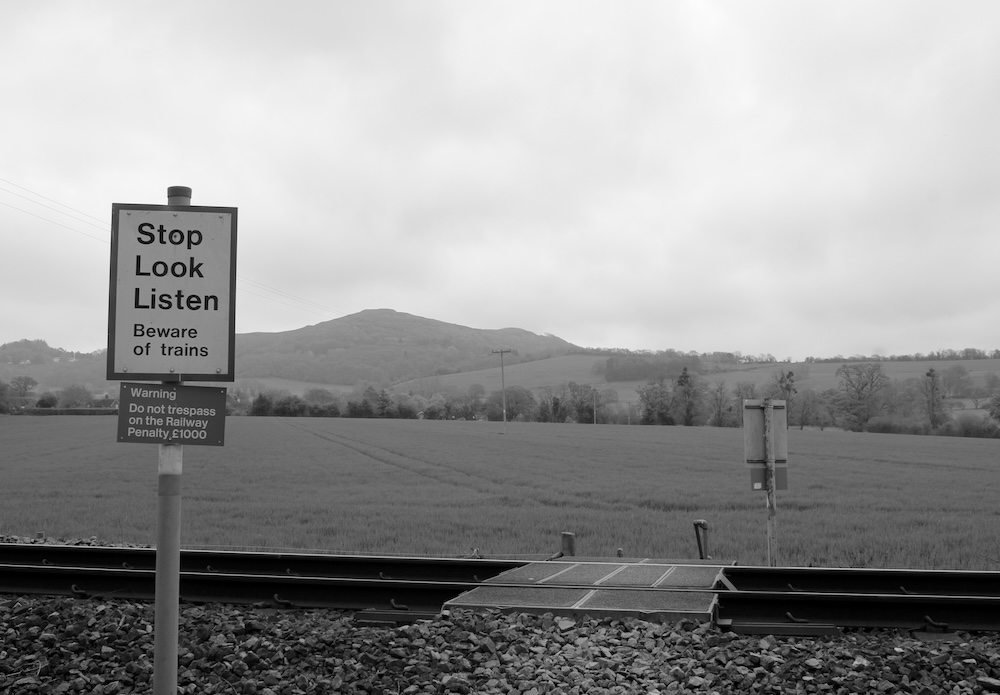
In the last twelve months, as I enter my sixtieth year, as my disability progresses, as my mobility fails more certainly, a yet-to-be-built new build bungalow beckons, more insistently, and I begin the process of uncoupling from the slightly damp mudstone cottage, built in 1873, where I have lived for a decade longer than I have lived anywhere else ever. As part of this stilted farewell, which like all life changes is a variety of mourning, I have decided once and for all that I have to ignore a field — or rather to ignore The Field, to finally say, after all these years of unpredictable and confusing behaviour on its part and frustrating attempts at communication on mine — "this is the end for us". The field in question isn't much to look at — a standard issue agricultural space fringed by hawthorn and blackthorn, boggy at the farthest corner, and bounded at one edge by the Worcester-Hereford line, yet it seeps a rare order of liminality. The location itself, on the edge of the village bounds, beyond the remaining boundary oaks, lends itself to be another order of periphery, as a space between the everyday and down-to-earth and uncertain supernatural worlds. During the fourteen years of being its neighbour the field has oozed enough unplaceable strangeness to make me wary and suspicious of its true identity and possible intentions. The familiar becomes unfamiliar just beyond our back hedge. Walking the bounds of its almost-square I have on occasion become temporarily unstuck in time, I have heard discorporate voices at my shoulder and strange, unplaceable music. I have questioned both where and who I am.
The field is named as Jack Field on the 1841 tithe map of the village. I already knew enough to wonder about that name. There is of course Every Man Jack, Jack Tar, Jack the Lad indeed Jacks of all Trades and although once upon a time every John was also nicknamed Jack I had an inkling that the Jack of Jack Field wasn't a person at all, at least not a person in the strictest sense. Jack Field always puzzled me. In the adjacent Broadley Ground, where the shorn wheat stumps crunched underfoot, each harvest brought to the surface fresh shards of long broken crockery. I have two pickling jars full of this field-edge flotsam — blue and white, the odd piece honey-coloured slipware — evidence of harvest repasts gone by — but I seldom find ceramic or anything much at all to indicate human agency and industry in Jack Field and surmise that it had rarely been cultivated or laboured-upon before living memory. Thumbing through a copy of George Ewart Evans' The Pattern Under the Plough I find a reference to survivals of the belief that certain uncanny fields within the parish should be left untilled, and that these fields 'sometimes called Jack's Land' carried a taboo. I think of Jack in the Green, close kin to the Green Man, and his association with fertility rites, a bringer in of plenty — and that givers in folklore are often takers also. Jack, within this context, I learn, was the generic name afforded to many of the sprites, imps, and other members of the Secret Commonwealth that might slip into human form bestowing good fortune or alternatively cause all manner of mischief. So it was understood that not to exploit the "fairy soil" of such land was a due, a deal made on behalf of the whole community to appease capricious supernatural forces and in so doing safeguard against havoc and mayhem, mischief and misfortune. I research further and find that the practice of sacrificially offering up land in this manner — in many instances on a farm by farm basis — was, in other parts of the British Isles, also referred to as the Goodman's Croft, Gudemen's Fauld, and Goodman's Fauld. Clooties Craft, Jack Craft were other variations. Here the word croft for enclosed farmland is as much Middle-English as Scots and the old time Gudeman doesn't contain the adjective good with an anachronistic spelling but the Anglo-Saxon noun god — the Germanic Guda. Meaning I think that the Gudemen's Fauld was once really the god-man's field, a field belonging to a supernatural being. The church and parliament preferring a different god-man crusaded hard to stamp out these practices throughout the sixteenth and seventeenth centuries, particularly through the use of hefty fines but also by the threat of invoking laws pertaining to witchcraft. Ultimately it was economic pressures and which forced farmers to risk paranormal calamity and cultivate all available land and the practice dwindled and then died a death during the course of the nineteenth-century, with any remaining unworked field falling foul of the Cultivation of Lands Orders enforced for the duration of the First World War. It is possible to see the Enclosure Acts of the early nineteenth-century as an action which extended to the eradication and enclosure of folk beliefs along with the commons and earlier field systems. Now Jack Field, perhaps like the whole of the countryside, might be described as a "post-supernatural landscape" although only in that the supernatural has been pushed aside, trampled, and forgotten, in favour of secular common sense and measurable financial concerns.
Earlier today I attempted to walk our dog in Jack Field. A good portion of it is presently out-of-bounds, divided by an ever-shifting latticework of temporary electric fencing, and the right-of-way down along the stream to the railway line has been churned up by so many sheep. The cold clay is waterlogged and slippy and half-rotted beets from the year before stick out of the soil like tiny bleached skulls. It is unsafe underfoot and I am already irked when I meet another dog-walking villager coming the other way, his own dog one of those overly enthusiastic breeds, and he and I fall into discussing the weather (which until the day before yesterday had been "mild for the time of year") and also the sudden absence of access through the neighbouring fields, and he concludes "O' well never mind…I'll circle 'round…join the footpath over there…" gesturing a semicircle "makes no odds…" and yet it makes significant odds to me. More than I can say as I hobble on. More than I have vocabulary for. The landowner believes, perhaps understandably, that Jack Field is his, but it isn't. The farmer believes equally that the soil he leases from the landowner is his to cultivate or graze as he pleases, but he's also mistaken. If land can be owned at all then that ownership resides elsewhere and beyond our ken.
Now, as I write on this cold and wet afternoon, with an early fire in the hearth, I am already partially elsewhere, partially ensconced in that soon-to-be-bungalow-land, and with this shift comes an acknowledgement that my relationship with Jack Field is coming to some kind of natural — or extra-natural conclusion. I have perhaps, like I accept the inevitability of my physical decline and a future wheelchair usage, accepted when it comes to Jack Field I am left with far more questions than answers — an ending without closure. And in the same manner I have inadequate language to describe the nature and nuance of my disability as I experience it over time — so will not even attempt to, I will also not attempt to describe who or what I once met crossing the field in the first light of morning in the that first year here. Suffice to say that the fellow I encountered on that occasion was more foliage than flesh and blood, and he wasn't walking a dog.
Shadows & Reflections: Tamsin Grainger [ 14-Feb-26 9:00am ]In Edinburgh, Tamsin Grainger spent 2025 on a quest for a hidden river.
This year I have been looking for the Granton Burn in Edinburgh where I live. It began with a New Year Resolution to get to know the area better through planning a series of walks. What I needed was a good map. The February date coincided with the Festival of Terminalia, an annual celebration of the Roman god of boundaries, Terminus, on the 23rd. If I found a chart showing the boundaries, maybe I could get a measure of the place, define it better and identify its features. I was curious to discover who lived there before me, who the indigenous species and people were.
It was clear that the Firth of Forth estuary was the northern perimeter, and contemporary maps showed Ferry Road, a main east-west traffic artery, as the southern. However, nobody seemed to agree where the eastern and western edges were. Local organisations such as the Community and Parish Councils provided plans which differed. Street and building names that included the word 'Granton' were spread over a wide area, some to be found in neighbouring zones. Turning to historical documents, I discovered that the Wardie and Granton burns — Scots for small river or stream — were listed, but where were they? Not on my phone app, that was for sure.
There is an old map showing the City of Edinburgh in colour with Granton in white as if it barely existed. Only a number of thread-like lines depicting fields, one or two boxes denoting properties, and some grassy tussocks and tree shapes can be seen. There was once a castle, the website for the existing garden and dovecot told me, but in 1544 the English invaded and it was sacked. I had very little to go on.
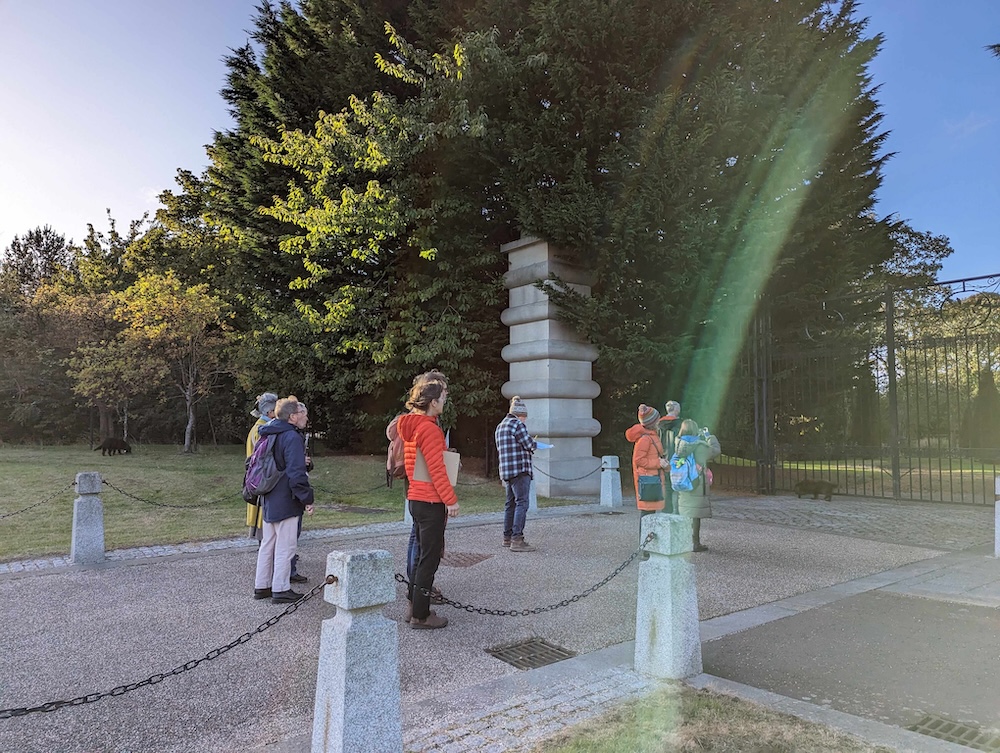
A Granton Community walk - outside Caroline House
Here is where the community walks came in useful. Local people who joined me on my search said that although the Wardie Burn cannot be seen, its route roughly followed the current A903. I had noticed musty, damp smells near where that road meets the end of mine. I could occasionally hear the shrieks of foxes and other small creatures coming from somewhere unpenetrated by street lamps. My walking companions confirmed, yes, the Burn used to run in a dell there between two slopes, maybe still does. Now I knew the eastern limit.
The Granton Burn remained elusive.
On my March walks, when I was close to what I guessed was the edge of the area, I started asking people, "Am I in Granton?" When they shook their heads and said "No, hen," I would enquire, "Do you know where it is?" Everyone had an answer; it was just that their opinions did not tally. In the end I collated the replies and results of my research and drew my own map using pencils and ink on an old roll of wallpaper. Then I mounted it in an exhibition at Granton Hub, the local community centre, to prompt further discussion.
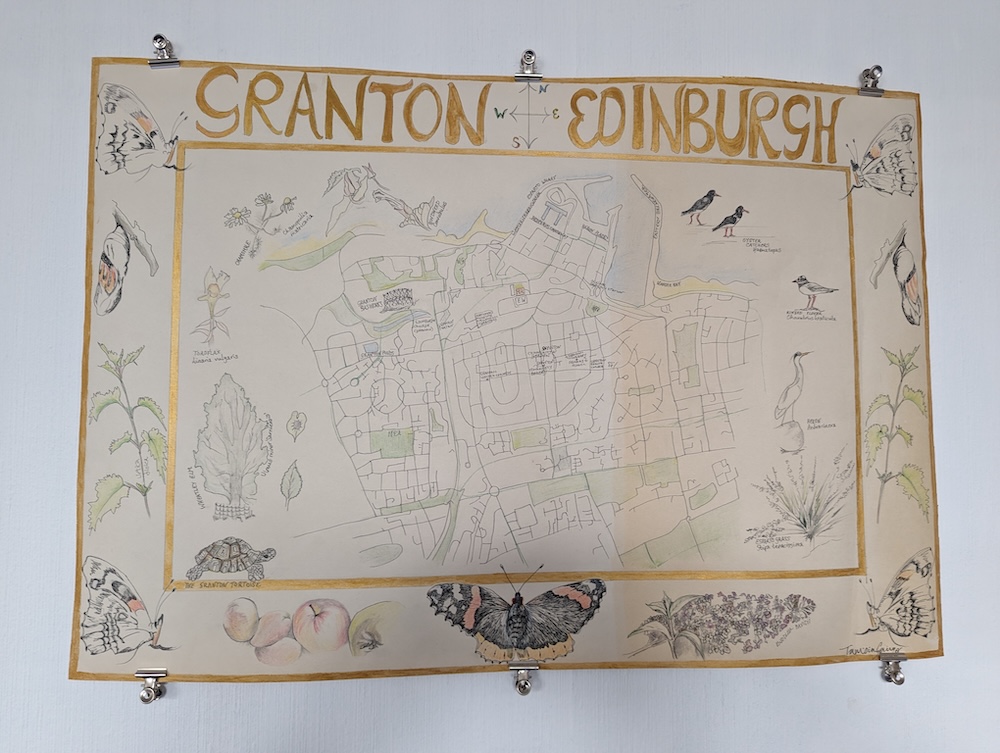
Granton Map by Tamsin Grainger. Pencils and ink on wallpaper. March 2025
Like most cartographers, I used a bird's eye street-view, and influenced by the ancient maps I had lying around my studio, I surrounded it with illustrations of other-than-humans I had met on my walks. The red admiral butterfly is shown in various stages of its development with the nettles and buddleia it thrives on. Our resident heron is there, together with a pair of oystercatchers from the Bay, and also the Wheatley Elm from my garden. This particular elm tree is ideal for Granton for it can cope with salt and high winds.
One chilly day in April, on a community walk, we stopped outside the gates of Caroline House, a private residence down by the sea that dated from 1585. A group member told us a ghost story associated with it: An overnight caretaker had made his rounds in the early evening, checking no-one else was present. All night he heard the distinct sound of furniture being moved upstairs and could not sleep. When someone came to relieve him the next morning, they went up to the floor above only to find that nothing had changed. It has never been explained and people love to speculate. While I was listening, I spied a fountain of water through the fence, coming out of a grassy knoll. What was its name? No-one knew.
As the months went by, my walks skirted around this property. I discovered that a drain on the side of the Firth of Forth regularly overflowed with Spring rains, flooding the road as if the water was making a dash for the Brick Beach, a nearby strand dumped with building materials. When I explored the beach, I found what looked like a cast-iron pipeline in the sand, half hidden by seaweed. Could it be spilling out water, and if so, where did it come from? My appetite truly wetted, I retraced my steps, hesitating at the gravelly side-entrance to Caroline House and peering into the gardens before creeping in undetected.
I found a burn pouring over a stone sill and rushing under a low-arched bridge. It flowed beside the house and, further on, at the bottom of some rickety steps. Slipping on the slimy wood, I clutched the handrail to save myself and, at a tilt, was delighted to spy a colony of over-wintering ladybirds all cuddled up close in a nook underneath. Following the water's flow, I came to the end of the garden and what looked like gate posts. Two square stacks of red stone were set into a wall glowing in the evening sun. Though the space between the stacks was bricked up, I could climb up and see the Brick Beach beyond. Turning to make my way back up the slope, I was assailed by angry cries. I had been discovered.
I offered profuse apologies and gently persuaded the owner I was not threatening. I felt she really wanted to tell me about the history of her home. "This is the Sea Gate and that is the Granton Burn," she told me. I was very happy to hear it, and asked, "Do you know where the source is?" I had recently walked the Braid Burn from its Portobello mouth, further along the Edinburgh coast, to the source in the Pentlands (my writing is part of an Art Walk Porty publication here). I assumed the Granton Burn must also originate there. "No," she replied, "I think it rises on Corstorphine Hill."
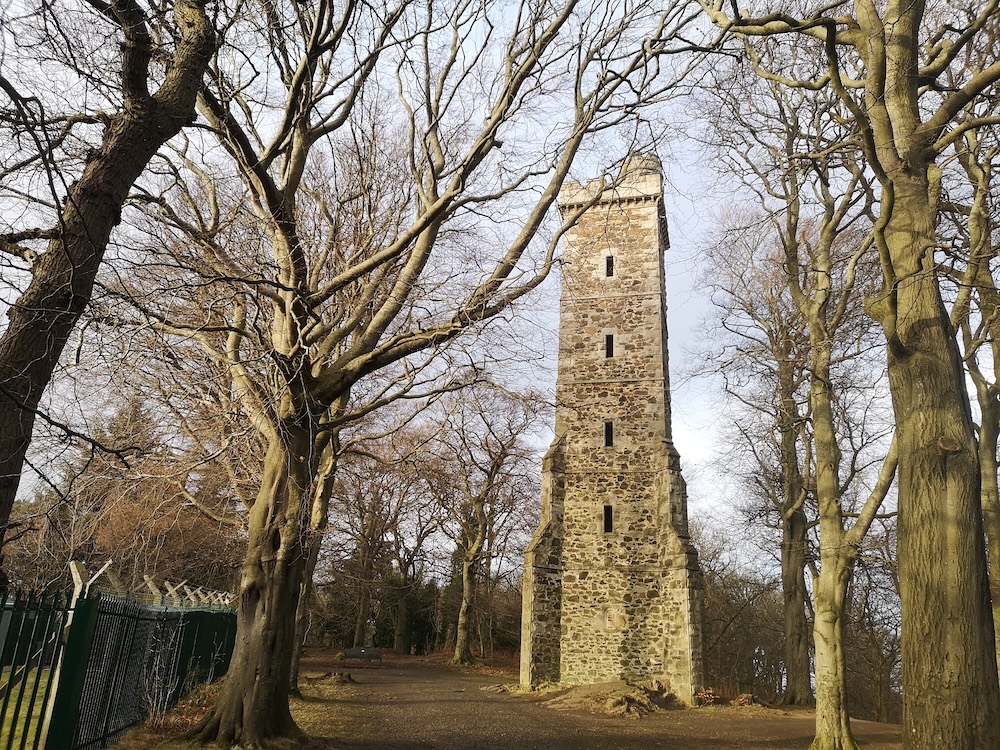
Corstorphone Hill, the Scott Tower
The owner let me out through the front entrance, and waved goodbye. I noticed how squelchy the grass was underfoot. In fact, it was always sodden here whatever the weather. Staying with the juicy noise, I passed the Scottish Gas building and the lights were on. Shut for quite a few years, I could see a security guard at the reception desk, so smiled and gestured. He let me in. "We're getting ready to re-open after the flood" he said, and I remembered that an inundation had been responsible for staff leaving; the Burn must run underneath. I continued on towards Forthquarter Park where there is a man-made canal and a new sign had been put up since my last visit: 'Please Look After Your Granton Burn.'
During the summer, I took more walks through Forthquarter Park, watching the moorhens negotiate the bullrushes and proud-necked swans swimming amongst irises. Silver birches were coming into full trembling leaf and gulls were lined up on the railings. A 'Footpath' marker pointed me between Waterfront Park and West Granton Road, and there was an unexpected lochan of sparkling water with a warning — 'Deep, Beware.'
After this, the trail went dry.
As Autumn began, I received an invitation to speak at the Scottish Historic Buildings Trust (SHBT) Winter Lecture Series on the Edinburgh Coastline. This was the excuse I needed to pick up my project again. I visited the National Library's wonderful map store and scoured for water sources. With the support of the librarians, I found wells and springs, sluices, another reservoir, and filtering beds, all between Corstorphine Hill and Caroline House. That weekend I put on my walking boots, took a bus to the foot of the hill and started to search for the origin of the Granton Burn. I believed it had served many of the industries I knew proliferated along the Forth Estuary in the 18th and 19th centuries: paper, coal, steel wire, and ink, to name a few.
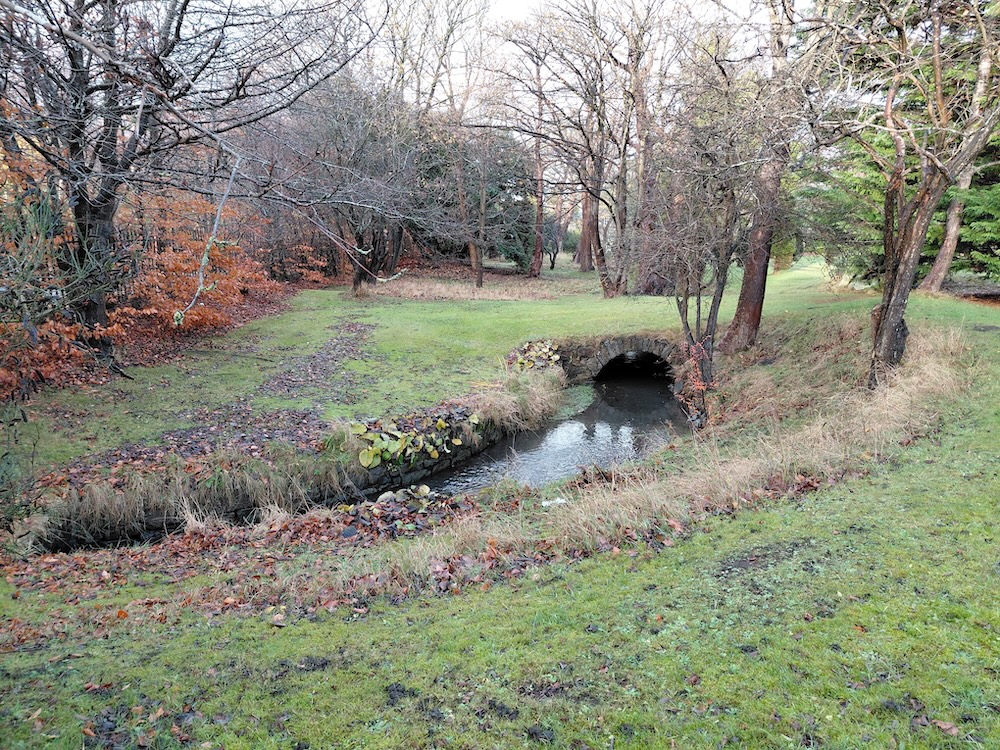
The Granton Burn in the grounds of Caroline House
Starting up the zoo side, I quizzed a dog walker for signs of the burn. We were standing beside a Scottish Water unit which was buzzing and humming. "Oh yes," she said, "there are wells just on the other side of the Scott Tower." After locating them inside circular pens overgrown with brambles, it was easy to follow a gully in the undergrowth. I ignored my scribbled maps and almost flew down the hillside knowing I was onto something.
When I came to a road and stopped to get my bearings, rain was starting to drip onto my notebook and phone. Something else was wrong too: trying to align myself with Caroline House seemed to be impossible. I was not on the right side of the hill. It looked likely that I had been lured by a different burn altogether, one that was running towards Crammond Island, also on the Firth of Forth, but nearer the famous bridges. River though it must have been, this was not the one I was searching for.
Back up the steep incline I trudged, meeting a helpful woman with a baby strapped to her front who took me home to consult her husband. He gave me a paper map, but it did not mention the burn. Later, I spotted a man in a sodden anorak looking up and asked him if he knew the area. He said he was a tree surveyor and after a short explanation of my quest, explained that he was born in Granton and his father still lived there. "The Wardie Burn runs under his garden. If you stand outside the Co-op on Boswall Parkway after the rain you can hear it."
Back at the apex of the hill, I was fed up. It was four hours since I had arrived and according to the street map, it would take me the same time to get back home. Perhaps it was impossible to detect water below ground, even if I had spent a lot of time in its company. I ate my picnic and looked around. The land dropped steeply off to the left where the vegetation was lush. I got out the map I had sketched at home and it showed squiggly blue lines at the bottom where the old maps said Craigcrook Castle used to be. There had been a pump and it was definitely facing in the right direction. I had nothing to lose.
It was raining hard and the daylight would not last long. As I descended the steps, there seemed to be a watery flow in the earth — or was I imagining it? Through the fence, the grass flattened out and a horse was grazing. Suddenly, I stumbled into a hole, nearly falling forwards onto my hands and knees. Clear water was running over my feet; water with vitality. I waded on, energised now, despite soaking socks. It was as if I could feel a sort of magnetic pull from underneath. I sprang from bank to bank over a ditch, lost the trail but was able to find it again quickly. Water-loving plants and grasses, damp-loving fungi, the outward signs were clear, and inside I had a strong feeling too. I had a sense of the water being grateful. It seemed weird, but it really was as if the burn was wanting to be found, was glad to be beside me.
Onwards, and sometimes there was a path and sometimes none. It was unfamiliar territory, but I was not lost. Every time I looked at the compass, I was on-course. I passed a pool, a little creek, went behind a school and out of trees through back gardens. A lane led to a side-street and a main road and then I was in built-up Blackhall where men were on their way to the mosque. As daylight began to dwindle, I was still heading for the known sections when I crossed the familiar Roseburn Cycle Path, realising with surprise that I had never thought to look for a Rose Burn, if there was one*. Manoeuvring between bungalows and blandly designed housing schemes with not a lawn in sight, I kept my attention below ground.
After Pennywell, I came across Granton Mill, a development where a friend lives. In 2024, I had worked at the local history archive. No-one had known if there had been an actual mill there, nor which water it relied on if there was. Now I knew. I crossed Ferry Road into Granton, and trekked through the last blocks of nondescript tenement flats before regaining the reservoir. Ten minutes later I was on the sea side of Caroline House. It was no surprise to hear the force of the burn before I saw it, gushing along after the heavy rain.
As I write, it is the last day of December. I know now that most of the Granton Burn is underground, as many urban rivers — the Fleet in London, Farset in Belfast, for example — are. May East, international urbanist and author of What if Women Designed the City? advises us not to rely on old maps when navigating changing urban landscapes. Prompted by this, and the difficulty I had finding the river, I have embroidered my own, its stitches representing my walking steps. Though this year's research has not been academically corroborated, this walk of faith seemed to be acknowledged by the Burn itself. As if it knew I was there and was pleased that I was paying it attention, it showed itself to me.
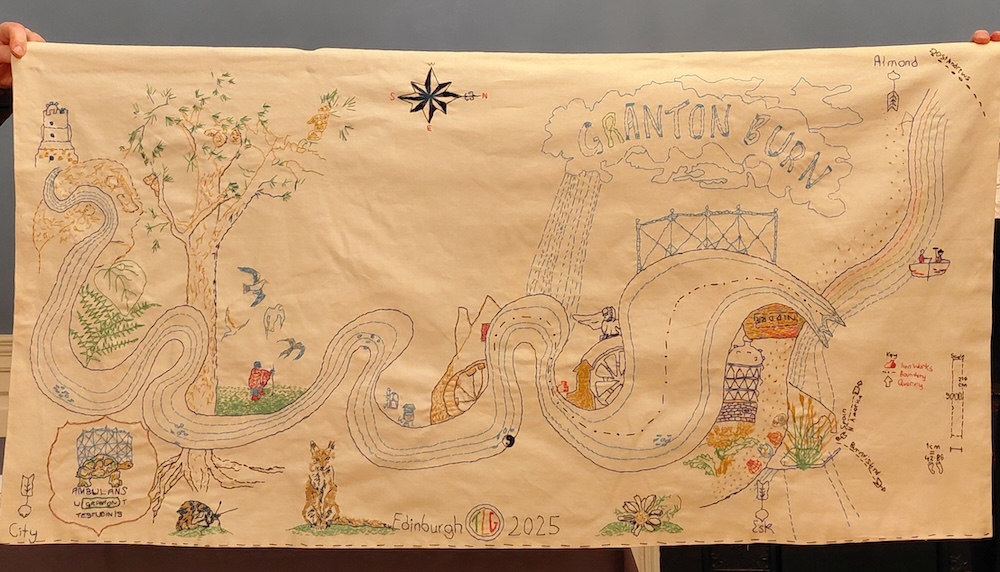
The Granton Burn, stitched map by Tamsin Grainger. Textile and cotton thread. December 2025
I chose to place the Burn at the forefront, and I matched the colours to the 1867 W. and A. K. Johnston Plan of Edinburgh and Leith, using simple running- and chain-stitches. It draws on my walking encounters, depicting a fox, a moth, chamomile, and oyster shells. There are also seabirds, tortoises, a pilgrim, and reminders of some of the industries that relied on the water. Presented at the SHBT Winter Series to accompany my lecture, From Hill to Sea, the map can be viewed at Riddles Court, Lawnmarket, Edinburgh.
*When I looked up the Rose Burn, I found that 'the burn drained into Corstorphine Loch, originally a glacial lake giving way to a large area of marshland which was finally drained in the c17th.' (Water of Leith Conservation Trust website)
*
Tamsin Grainger is a writer, bodyworker and walking artist living in Edinburgh. Visit her website here.
Another lovely edition from Cornwall's very own Ancient Magic Books.
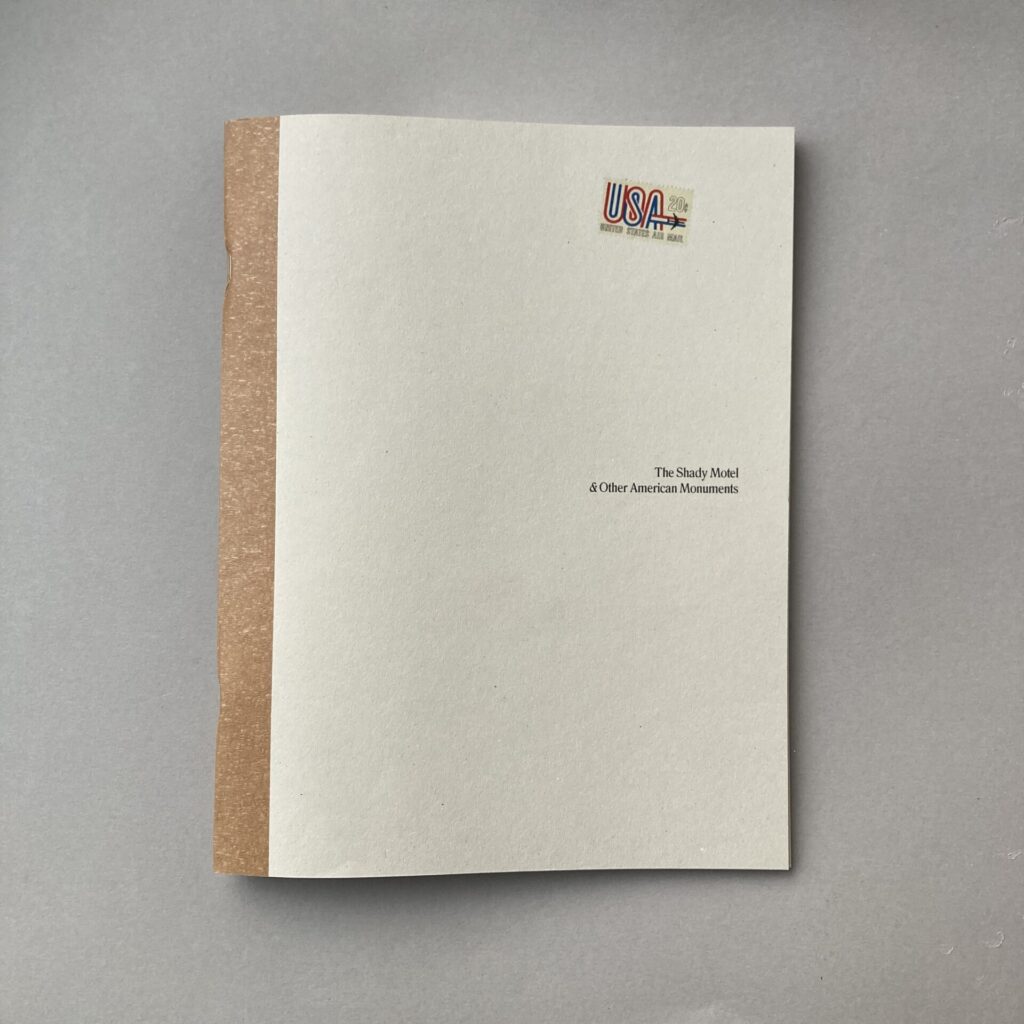
Taken in 2023 on a three week road trip around the West Coast of America, James Meredew's The Shady Motel & Other American Monuments is an offbeat, mostly people-less view of a tired-looking American landscape.
"I found it very strange how little people walked around the towns, it gave you an eery feeling every-time you entered a new place, I tried to capture some of that when walking around taking photos" - James Meredew
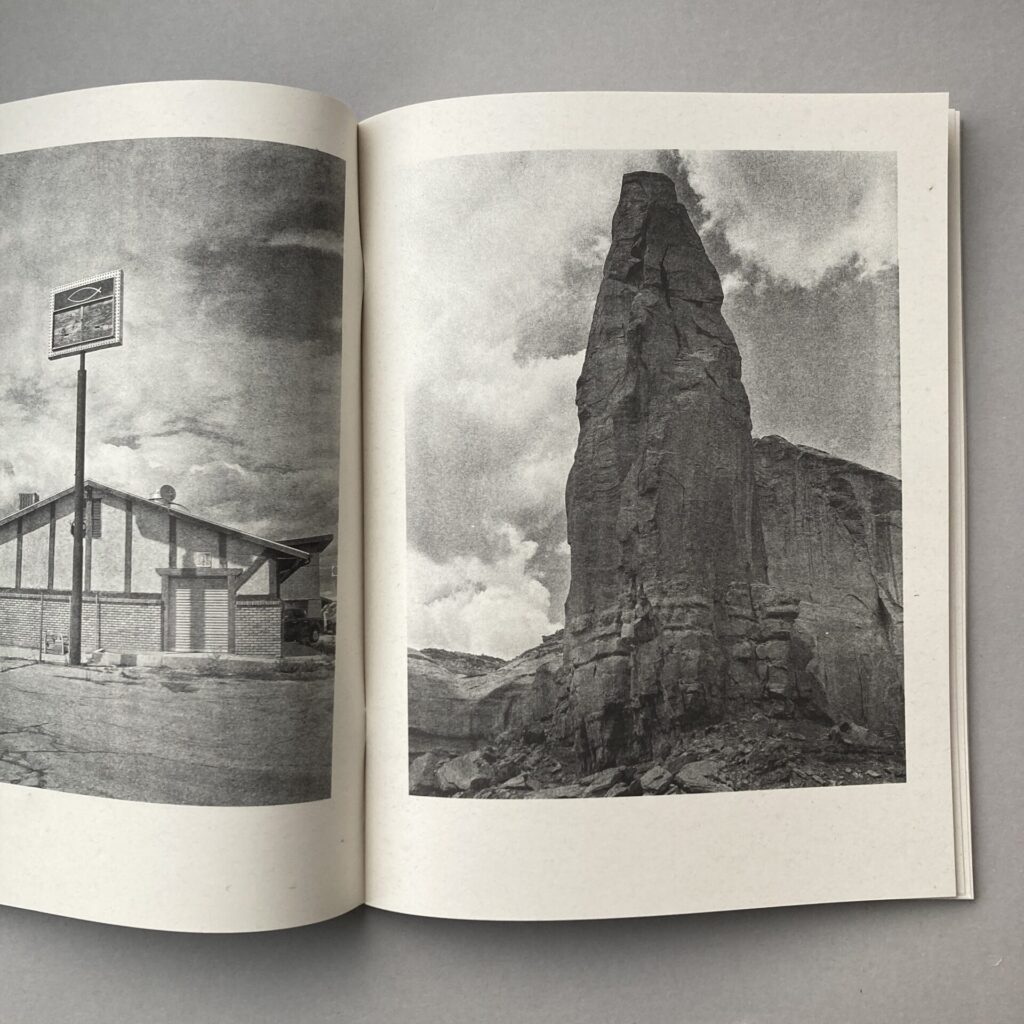
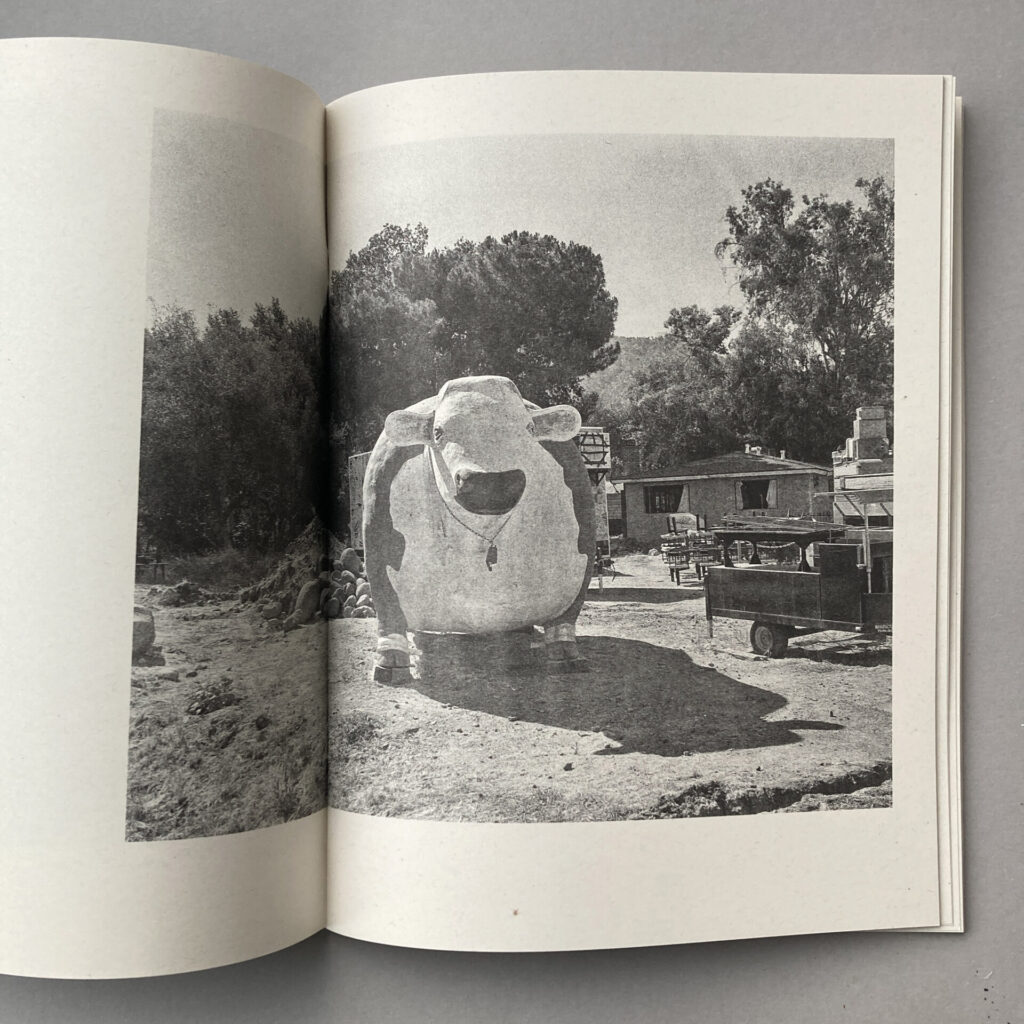
Risograph Printed
60 Pages
26x20cm
Context 135gsm Birch Recycled Inner Pages
Brown Craft Tape
Edition of 100
This book and all of its offcuts are 100% compostable
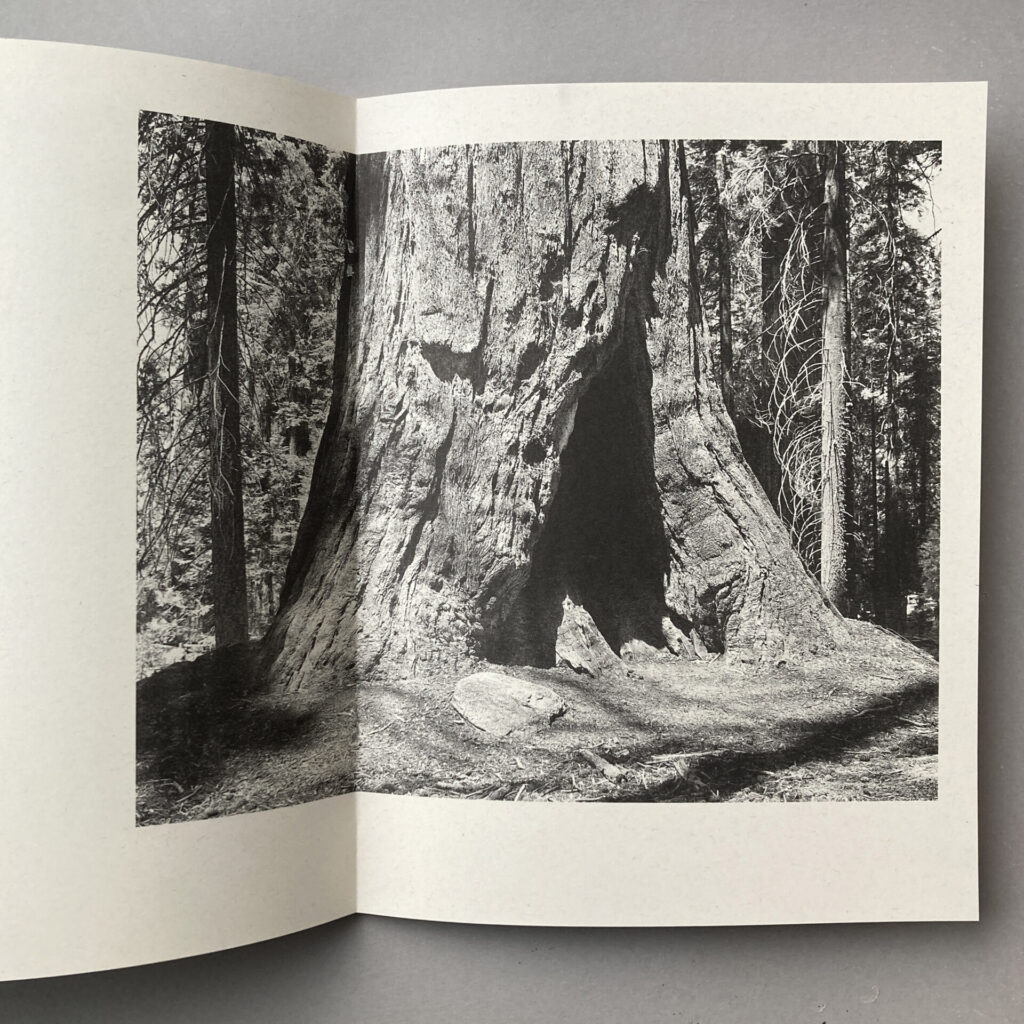
£16 and available here. We have also restocked some other Ancient Magic titles — An Daras / Portals by Rosie Kliskey (inspired by the ancient landscape of West Penwith in Cornwall) and West ~ A Cornish Surf Anthology by Pete Geall (an invitation to step into the world of spirited local surf scene in West Cornwall).
Splann!
Shadows & Reflections: Kevin Parr [ 12-Feb-26 5:27pm ]Kevin Parr on a 2025 of high winds and topsy-turvy seasons.
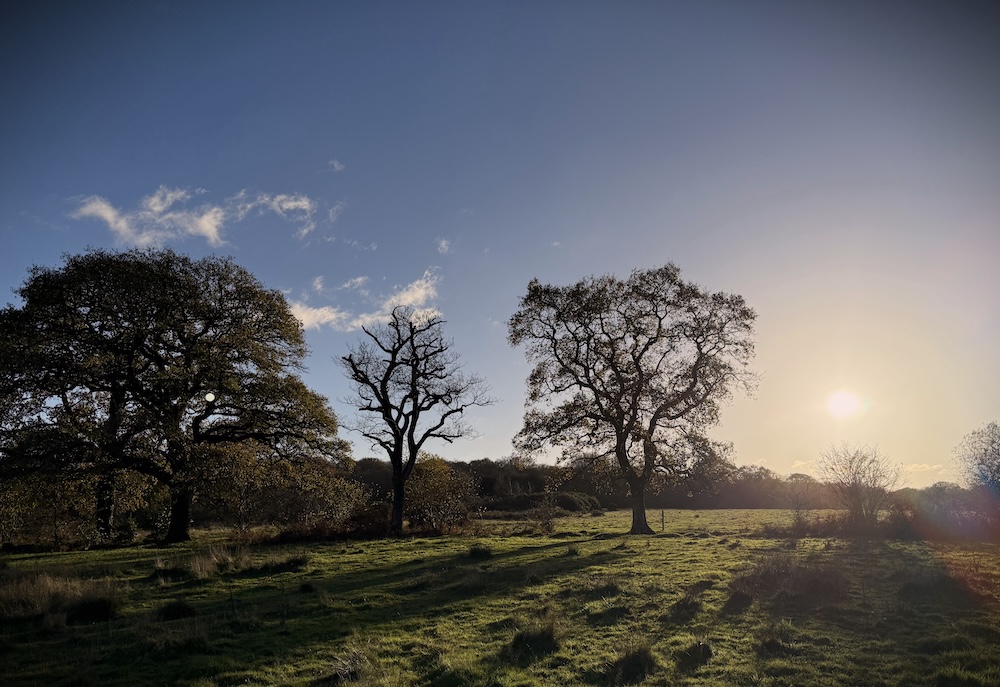
It was a Sunday morning in mid-November when autumn finally broke. A jet-stream flicker brought an Arctic shove, behind which rose a periwinkle sky and low sun streaming through the French windows. The cyclonic cycle had been welcome when it broke the summer drought but then lingered too long. It wasn't that someone had left the tap running, more that they'd left the immersion on, steaming up the mirrors and thickening the soup. We were lighting the fire to dry the washing and fight the damp, sitting in t-shirts while outside the cloud rolled up from Chesil like smoke billowing from a bonfire of damp leaves.
We were back in the limbo of summer, only without the sun. Waiting once more for the shift — but what to do while we wait? The ox-eye daisies decided to come back into flower, while the frogs returned to the little pond by the garden gate. At night, they croaked in conversation as though it was early spring, while inside we struggled for sleep, lying beneath a sheet in November, our duvet that hug of cloud outside the window.
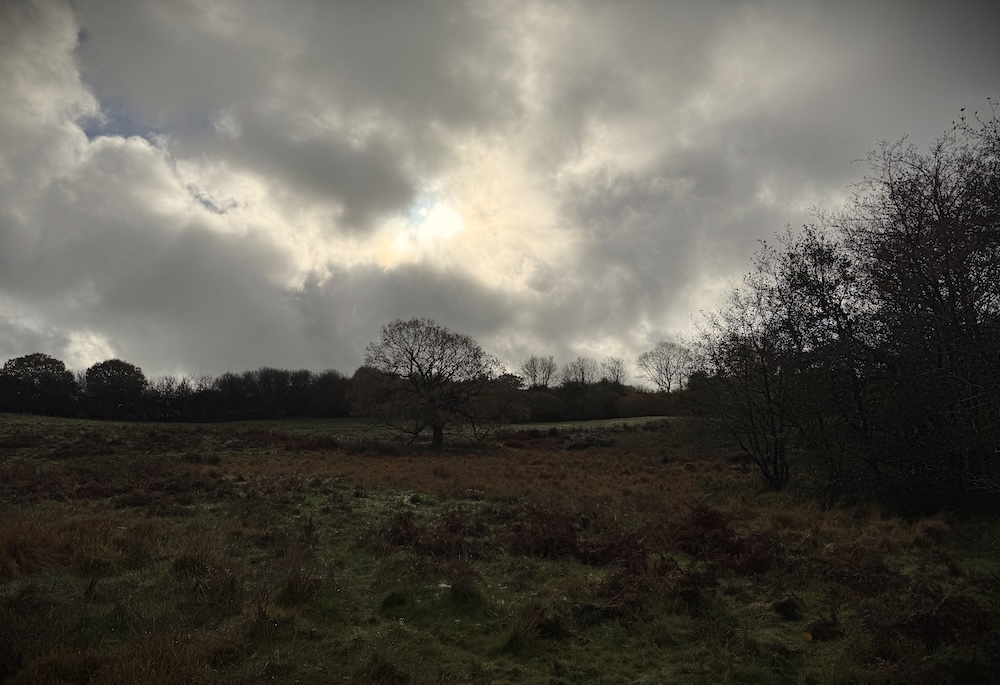
I was missing my routine, the ritual of walks that I tread each autumn. I particularly love the seasonal shift in the meadows at Kingcombe. There, in early September, small coppers and common blues still dance across the yarrow and knapweed, the leaves on the oaks only just beginning to brown. The change, week on week, is as smooth and inevitable as the diminishing arc of the sun. The pattern is reassuring, as flowers fade so waxcaps begin to glow among the green. There comes the vast ring of parasols in New Grafs Meadow and the steadily emergent skeleton of the single oak in Redholm. This year, though, went topsy-turvey. An early flush of fungi folded in the damp warmth, ceding to a churn of buttercups and dandelions. The grasses plumped and greened and the scorched soil saturated. In Redholm, the parasols sunk into oily dollops, while in the garden a blackbird joined the song thrush in full song.
***
The break brought frost and fieldfare as the soup cleared to consommé and steam curled off the backs of the cows. I was back in The Cairngorms, in the summer before this one, wondering if I was actually breathing or whether the air was so pure that it simply seeped through my pores. On the Monday, I walked the meadows until they dissolved into the dusk, crunching though the shadows and savouring the still. Autumn arrived abruptly, yet I was able to absorb the essence in a single afternoon. Just in time for the first bite of winter that followed later that week, though we avoided the snow of elsewhere.
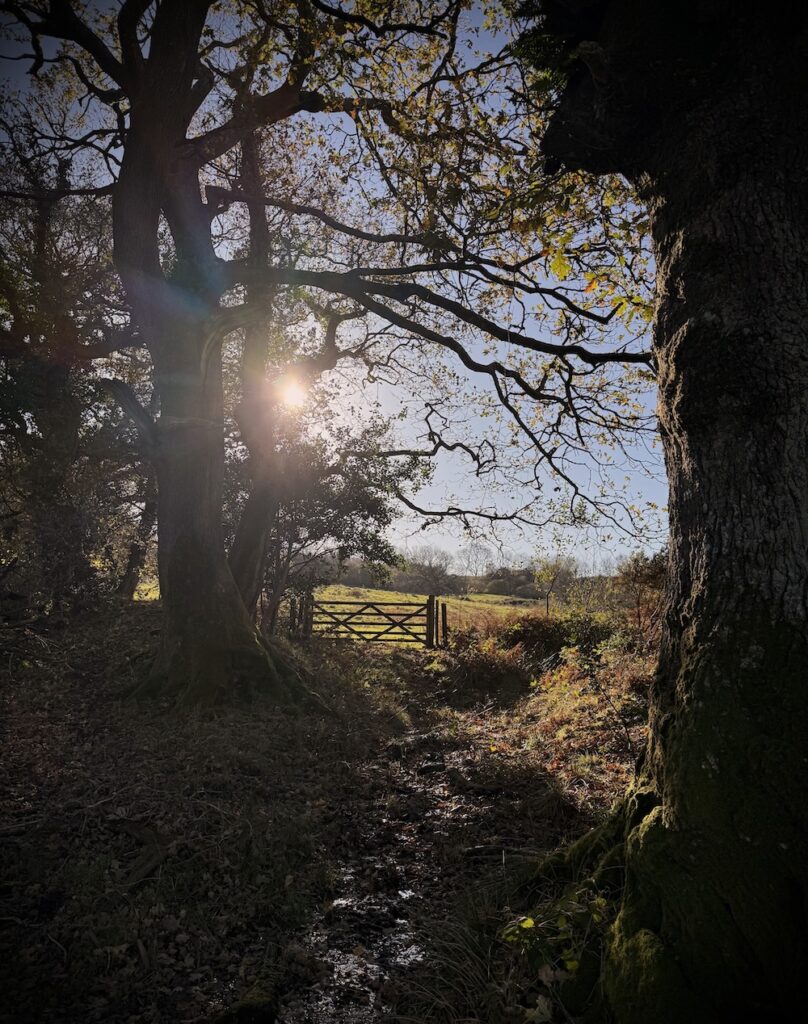
A fortnight on and we are back into the cyclonic cycle, sitting once more in a t-shirt as Storm Bram batters the windows and floods the lanes. And what I must not do is long again for the break. It is a response incompatible with contentment, and little wonder that so many of us are wondering where the year went — we wished a lot of it away.
I am one of those people who struggles with change, although sometimes come those moments that remind us that change doesn't have to be bad. It was the Wednesday following my Monday meadowland walk, and Sue and I were sitting in the lounge as the world drifted outside the windows. The wind, though light, still came from the north and was pushing up the ridge opposite, giving perfect lift for the ravens to ride. Then came the sighting we've been expecting for several years. 'What is that?' Sue asked, although we both knew the answer. Our minds still worked through the process of probability before rationality brought confirmation. It couldn't be anything else.
G818, I later learned, a female white-tailed eagle that fledged in 2021. Some people dismiss the Isle of Wight released birds as 'plastic', but there was nothing artificial about my emotions in the then and there. Yes, I'll asterisk the sighting in my notebook, (species number 101 on the garden list), but I'll never forget the moment.
Shadows & Reflections: Dexter Petley [ 08-Feb-26 9:00am ]Dexter Petley reflects on the year his field became a forest.
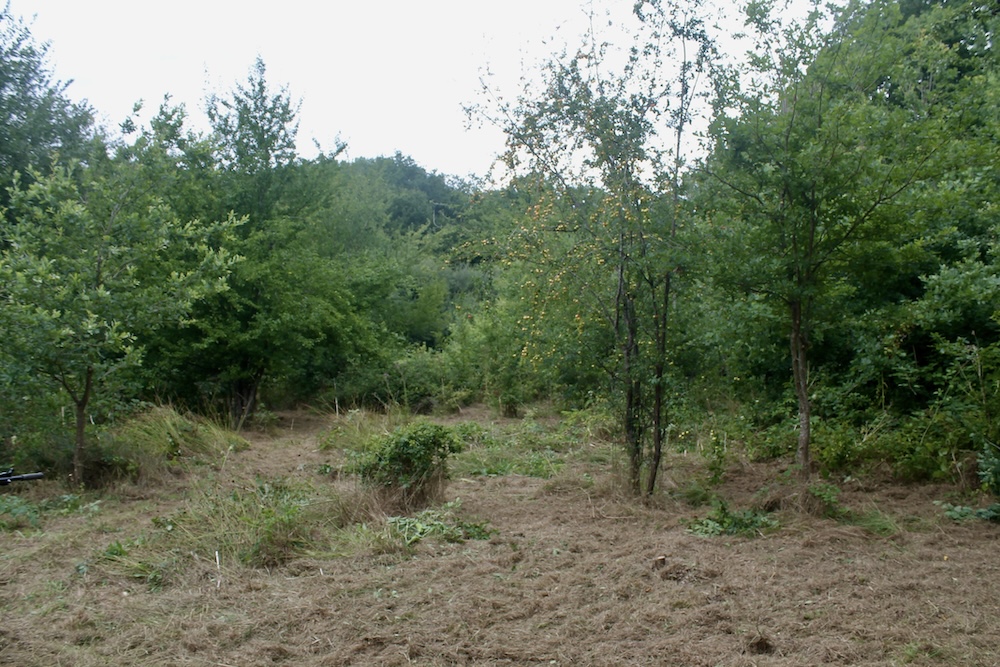
Put simply, 2025 has been the year during which my field became a forest. Hec est finalis Concordia.
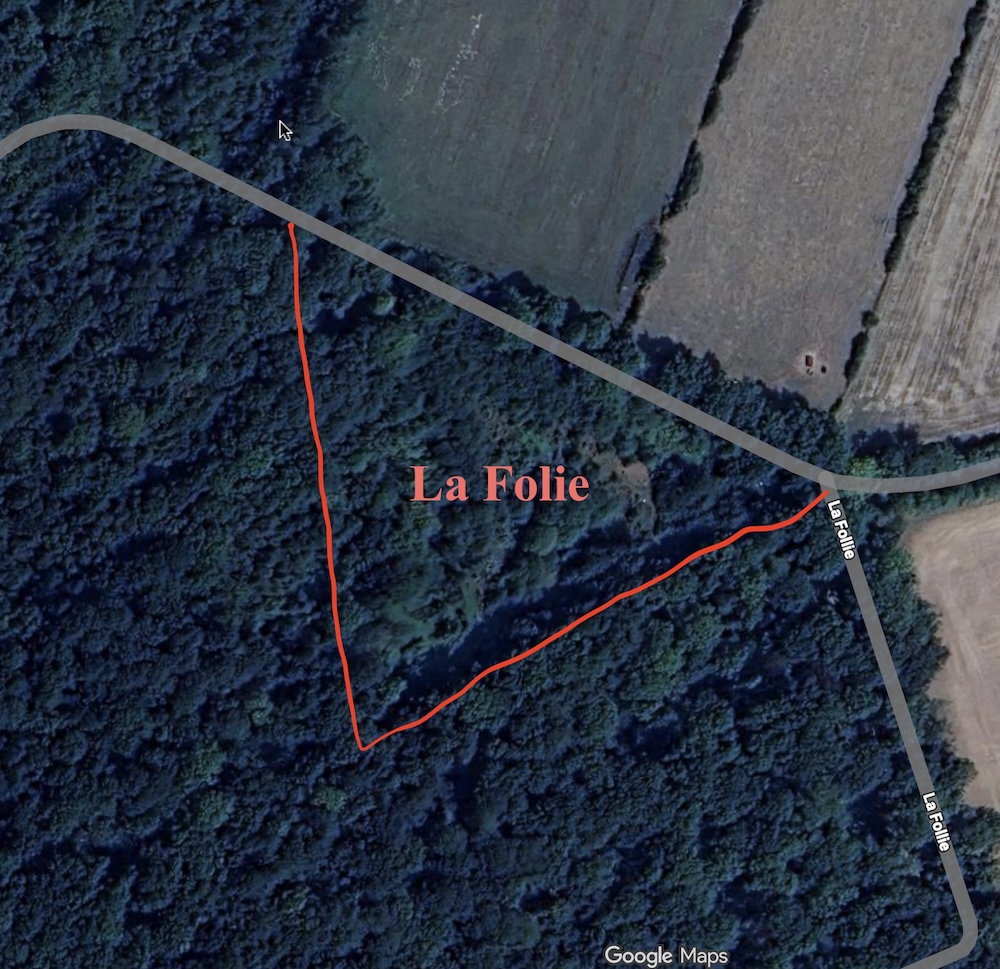
This new forest is not on parchment or in the feet of fines. It is not a forest because of the trees. Arboriculturists, I should add for veracity, might argue the terms and stages of succession, that it is only a forest at the first tree felled. Purchased as naked agricultural flood pasture in 2010, its one dead ash stump sat in bramble fester, seven oaks lined the lane, a straggle of goat willow and hazel shoots sporadic along the nettle boundary, an aquifer one yard underground, according to the water diviner. Not a lot to go on, though homeward bound. It even had a topographical name from 1077, La Folie, feulliée, fullie, foille, folie, a shelter of leaves.
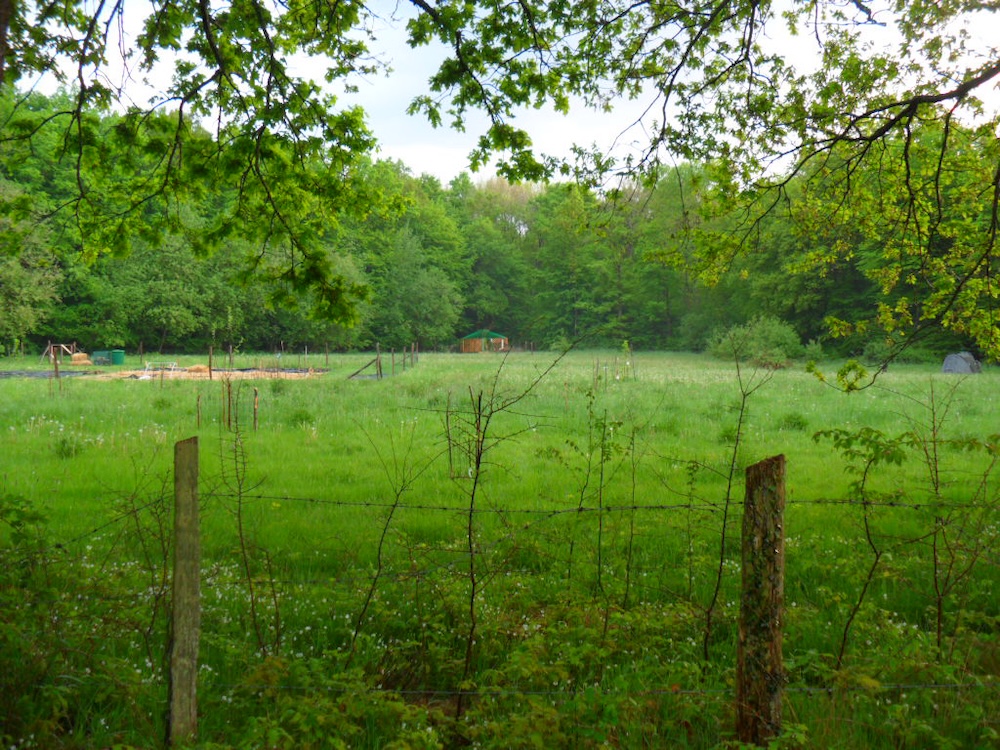
Technically cued to become an ecotone, I dislike the term, my palimpsest was nonetheless a transitional zone between two different habitats. The idea was for the eventual presence of both species and features from bordering habitats. Though triangular, I counted four; two forest, one pasture, one tillage.
From the beginning, it was out of my hands. By its second summer the farmer said it was too woody to cut for hay. Pioneer saplings were arriving from the mother forest either side. At one end, the potager struggled then sank in soaked clay and marsh grass. At the other I hoisted camo nets to conceal my illegal home from any passing collaborator. La Folie, also a cabane, or maison de campagne. I need not have worried. Today, even the Google plane cannot spot the yurt.
My first autumn act of 2010 was to plant a twenty-six-tree orchard of mixed fruit. Each tree hole filled with brown water as I dug them, months after the first garden crops had already rotted in the ground. La Folie, according to Le Robert, dictionnaire historique de la langue française, poor ground only a madman would cultivate. For years the saplings stunted at competition level, the campagnoles and musaraignes stripped their bark until, when finally they struggled into flower one spring, they'd reverted to their root stocks, mostly gender-neutral prunes. Good cherry, pears and apples, plums and greengages floundering in no mans land.
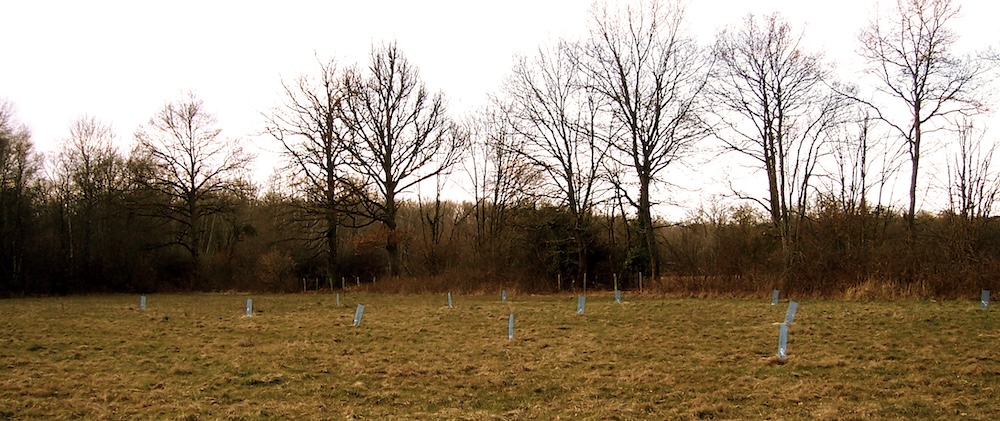
In the intervening years, the jays chipped in to save the day. By their raucous meanderings, bombing acorns hither and thither, the one-by-one became thousands. Stubby oaks rose above the height of rye grass and marsh thistle. The winds supplied the rest. Aspens and ash, hazel and willow, beach, hornbeam and gean, all spreading in moonlight, until this year the fruit trees, deciduous and mycelium became one place, habitat united, 3-in-1, a forest garden as I sat and watched. Neither Weald nor Anderida of my roots, just the coincidence of joined hands, my triangular hectare and a spit is now the meeting place for the offspring of old forest pushed in from either side. Naturally aspirated, seen from the air or the ground, a young forest not because of trees, which do not on their own make a forest, but because of the mushrooms.
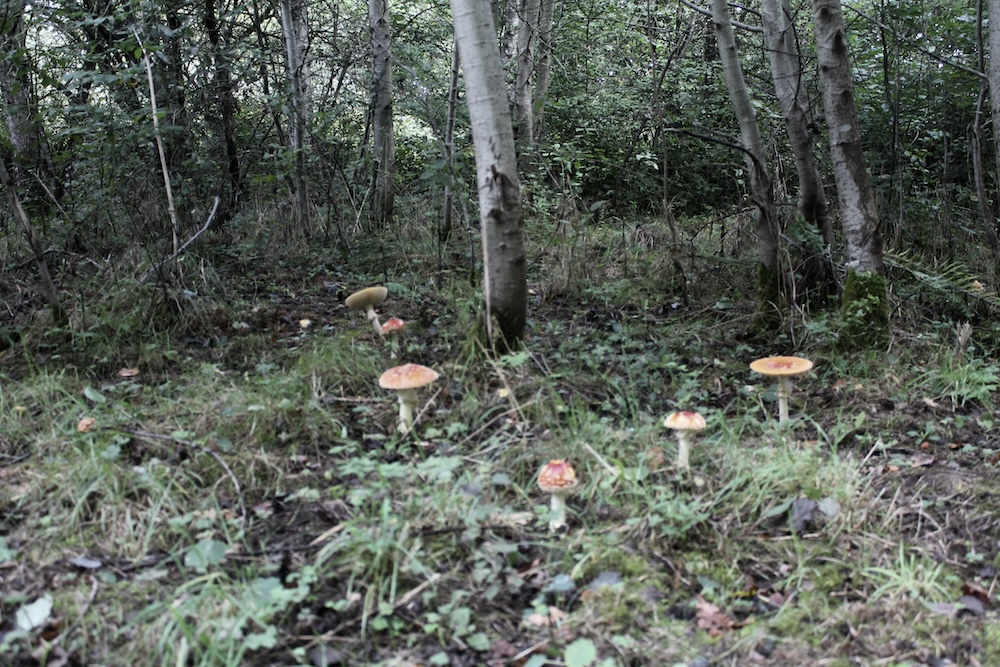
This summer, they came, these mycological migrants, in their thousands, in rings and rows, ranks and in reams. At first, they seemed to map the animal passages, having come by hoof and claw from three sides, few edible species yet, just their harbingers and precursors, the edibles spored-in for the next rise, or the next. The mousseron, though technically a field species, showed up in both spring and autumn variant. Both were eaten to ritual, as blood-of-ground in a kind of coming-of-age omelette. And among the aspens, now trembling with anticipation, the true heralds of boletus, the fly agarics, up and at 'em, leaving their message poste restante. Cortinaires and pholiotes, lactaires and hygrophores, the latter at the first frosts, edible if mediocre. The fruit trees shared the evolution of good news. Dishevelled and unpruned, they flashed a show of April blossom which could only mean trouble come harvest. The orchard, having decided to fruit after 15 sterile autumns, was invisible once the blossom died, oaked-in and brambled over. Having witnessed this march of mushrooms and the blossom revival, I cleared a passage for the miracle as best I could. Though genus unconfirmed, they poured their summer hearts out into multi-coloured balls which bent the branches and filled the baskets.
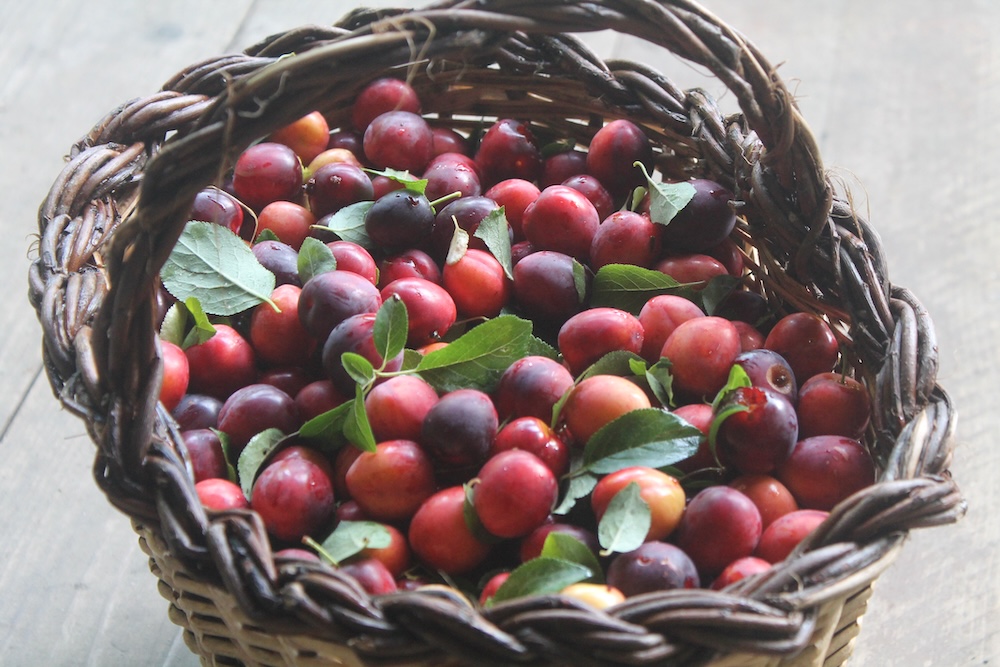
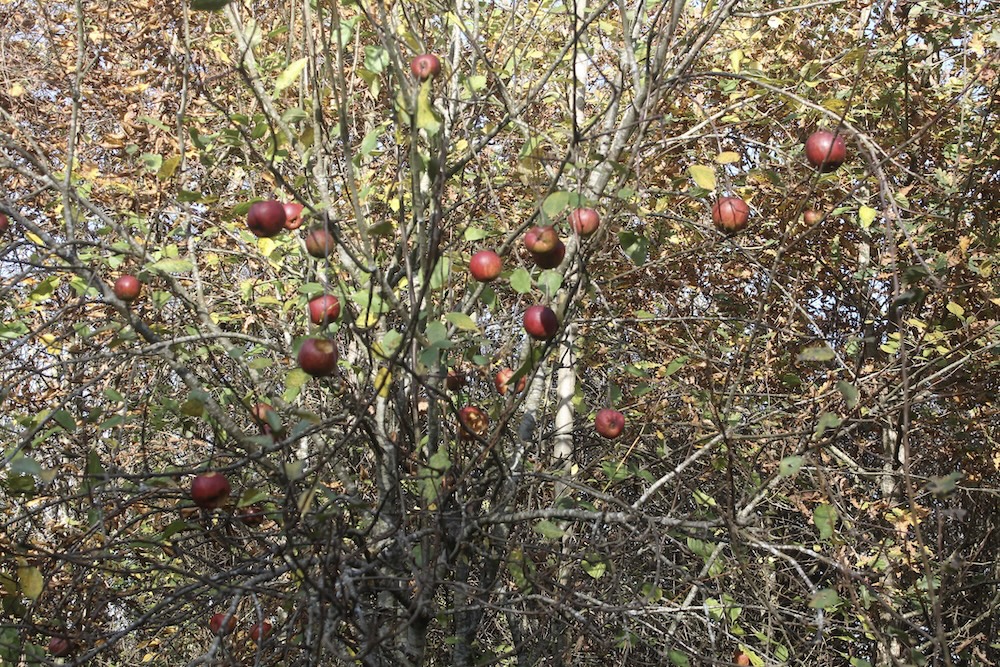
Plums of a kind, mirabelles and greengages, apples and pears, wasps, hornets and pine martens in contention for the final. We picked and bottled and jarred, stuffed, swatted, spat and composted, like spenders at a jackpot. The hornets, sensing an end to famine, stayed until the end, making caves of the late Calvilles still on the tree, relinquished only at the first November frosts.
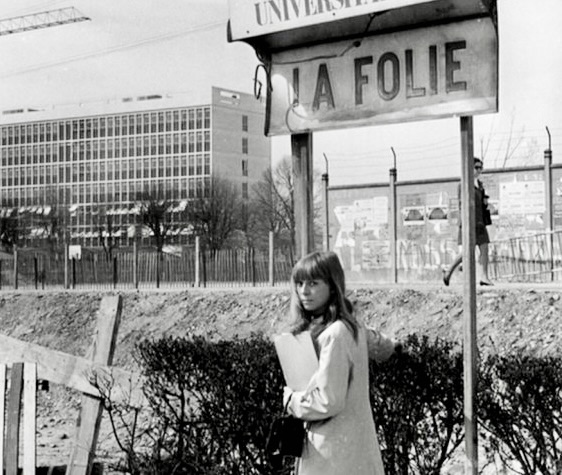
In these frosts I linger still, reluctant to pack down the outside kitchen, beside which hangs an old, enamelled metal sign with red lettering, LA FOLIE, once the name-plaque on a railway station platform. Somehow, through that mysterious passage of hands, it came to me this year, La Folie, an extravagant or dispendieuse construction. This modest sign, from the factory of Laborde, est.1900, merits personification for its place of witness, the times it saw, and those who saw it. Indeed, what's in a name? La Folie, a stone's throw from the Seine, was in 1690 a rich maison de plaisance, with all it implies, of boudoirs and alcoves and demi-mondaines. Underground, great caverns were created from mining the stone which built half of Paris. In 1809, La Folie became a factory producing chemicals. In 1837, a railway halt on the first line out of Paris. In 1900 the caves were rented to a champignonniste who produced the famous mushroom of Paris. An early camp d'aviation, La Folie in 1916 became a vital base where biplanes were stocked and repaired. In the Second World War the Camp de La Folie became Beutepark Luftwaffe n° 5 Nanterre, storage depot for Luftwaffe wrecks arriving by train, spare parts workshop, a black museum for shot-down allied planes dismantled for scrutiny in the laboratory of war. Swords into ploughshares, my enamelled plaque was still there on the post-war aero club platform when they built the University of Nanterre beside it. Perhaps torn down by students in the riots of 1968, La Folie being the very place where that whole thing began, or sold to a collector in 1972 when the station was rebuilt. In 2025, this old sign has been restored to camp, and the folly, also the madness, has been vindicated.
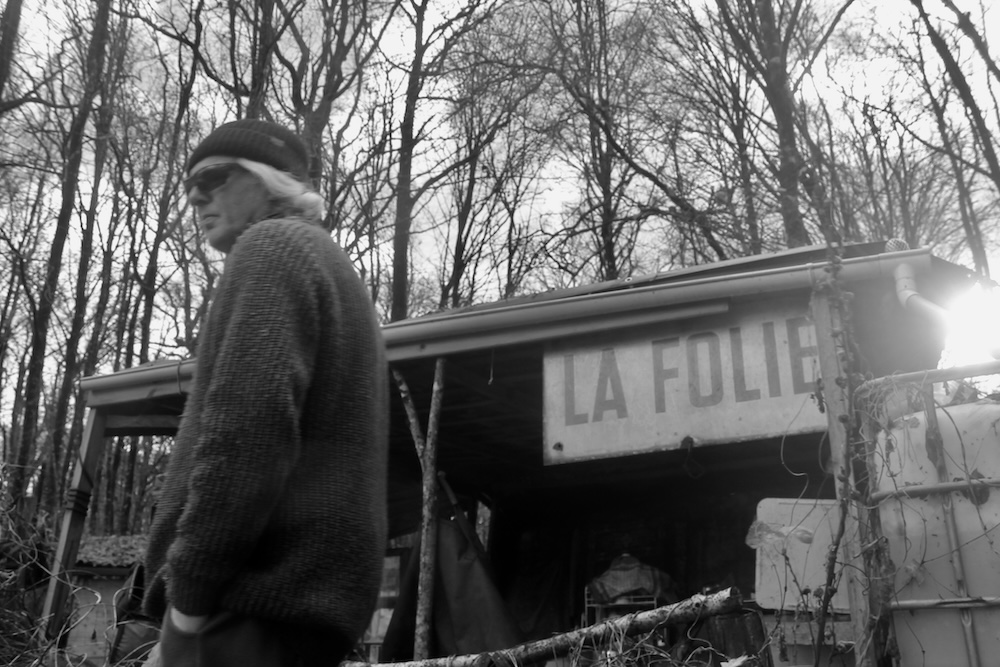
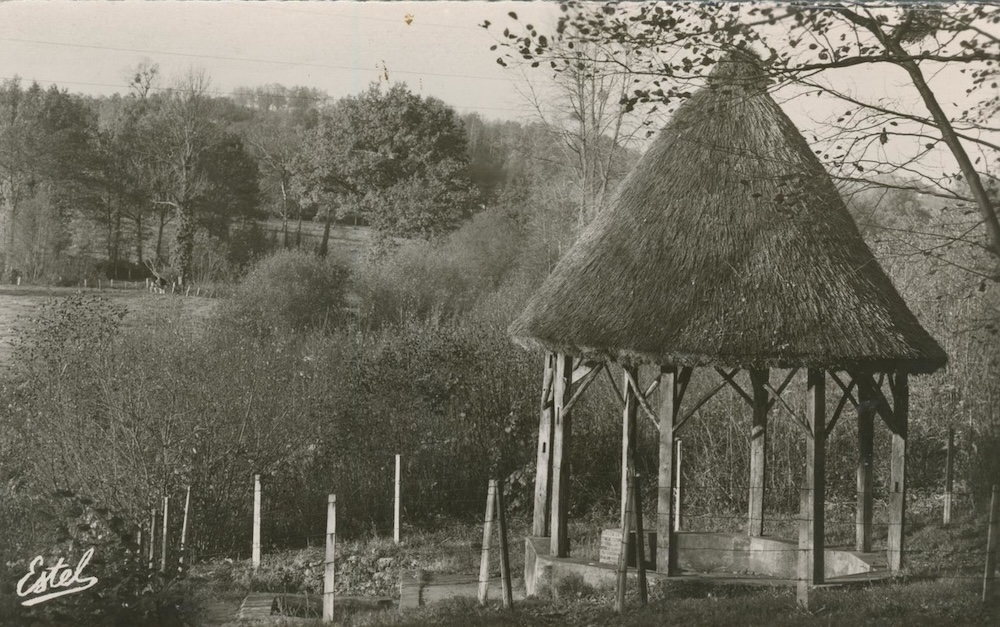
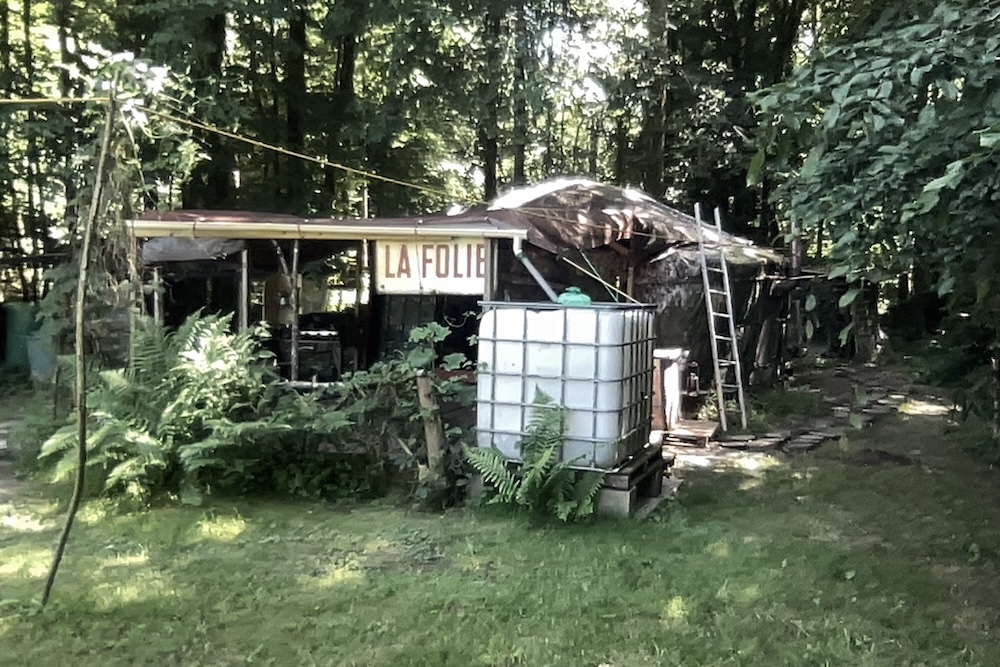
As daylight shrinks and the sun barely skirts the ground, the solar holds by touch and go, by twists and turns. Electricity is rationed to an hour per day, the power station tops the vital services, charging the fridge battery or laptop, bread dough mixer or electric bike, depending upon the weather or the task at hand. My old carp fishing barrow has converted to a mobile station, solar panel, battery and invertor, a constant standby which I wheel around the forest field as the sun pokes feebly into clearings, mostly just to keep a lamp lit above the stove. In August, the 1000 litre rain tank filled to its brim, now shut off and sealed with clean water, enough at 5 litres per week, my average total consumption, to last till doomsday. Coffee water comes from a spring in a nearby forest, the Fountain of Madame Jeanne, born 1378, daughter of Pierre II, the Comte d'Alençon. The spring was discovered by local monks in 1170 and reputed for its therapeutic properties. My old neighbour's father, a farmer, would cycle to the fountain every morning during the war to fill the baby's feeding bottles. Now just a bramble covered path, a plastic pipe sticks from a bank as water gushes into a gravel pool lined in brick, its 1880s thatched shelter a fenced off ruin, the thatch strewn in rough hanks along the path.
The point, it seems, of 2025, has been to complete that vision I had thirty years ago, of how life could be lived, by rain, and sun, and wood, by joined up history, wits and luck, risk and caution, sacrifice, even piety in the brunt of natural calamity, simplicity the overwhelming bounty, for in truth it's also been about how to live on a third of the minimum wage, the neglected writer's annuity, how nature pays your rent, fills your kettle, heats your free water. Poverty at its best, the woodshed full of logs from La Folie, the caravan-cum-pantry stocked with canning jars of La Folie, its cèpes and trompettes, green beans and born-again fruit. The palimpsest becomes botanical and bestiary, that old tin sign now turned the other way, from looking on at violence to face the sagacity of trees.
Shadows & Reflections: Ian Preece [ 07-Feb-26 9:00am ]Ian Preece shares another year in books, records, film, life and community.
I think, as I get older, I'm just on a simple path in life now: to strip out all the crap, all the artifice. I managed to catch at the NFT this year, on a super-beautiful 35mm colour print, a screening of what's possibly my favourite film of all time: Claire Denis' 35 Shots of Rum (or 35 Rhums in the French). First released in 2008, it's a kind of simple tale of a train driver in Paris (played by Alex Descas, a Denis staple) and his daughter (Mati Diop), who's about to spread her wings. There's lingering ennui, melancholy, unrequited longings, the passing of time, and the simple matter of getting by, day to day, on the rainy twilight streets of a Parisian banlieue; a mise en scène superficially gloomy but full of hope, and soundtracked (like all Denis' films) with commensurate aplomb by the Tindersticks, which also includes what has to be the greatest (and most fraught) use of 'Nightshift' by the Commodores ever captured on celluloid. It's the fans of understatement's most understated film. I've been searching for that bottled essence on the silver screen ever since, but it's proved elusive (Paterson, Perfect Days, Past Lives, Shadows in Paradise, Winter in Sokcho - close; What Do We See When We Look at the Sky? ‒ also close, but too whimsical; The Holdovers - sharp lines and superb acting, held back by dollops of Hollywood cheese; The Mastermind ‒ disappointingly flat, all super-cool cars and cinematography, though an unengaging lead untypical of Kelly Reichardt movies renders it not quite the measure of its brilliant Rob Mazurek soundtrack; La Cocina - great, more than a tad theatrical though; Denis' own Trouble in Mind - similar palette, superb matching soundtrack, but too psychotic). I probably need to work my way back to Yasujirō Ozu's Late Spring.
Is it me, or is everything over-produced, over-hyped, suspect, lurching to the false, or just downright fake these days? On one level there's obvious questions like: isn't Venezuelan oil Venezuelan? Or shouldn't a manager familiar with life on the touchline be allowed to run a football club (rather than someone who was once a winger, or founded a talent agency from the back bedroom of their mum's house before making a killing on the futures markets)? On a more micro level, we live in an over-mediated world: 6 Music DJs and trailers carry on like they are all our best mates accompanying us on our own personal 'journeys in sound' ('shout out to Maya and Felix baking cranberry muffins with their dad in Swanley, Kent'; with, of course, the honourable exception of Gideon Coe, who actually is someone listeners would queue round the block to have a pint with); the Guardian want us to 'share our experience'; and 'this is our BBC', for 'each of us'. Why is there a 'severe weather warning' and news bulletin on the weather page of my phone from the Sun proclaiming 'snow in London' when out of the window the sun dazzles in a clear blue sky and there's just a very slight firmness under foot from a light frost? Why this desperate faux inclusivity when this feels like a time when people are more divided than ever? The answer, I guess, is the same as it ever was: the smokescreens, filters, buffers and diversionary tactics of 'late' (it's always 'late'?) capitalism. Fifteen years late to the party, I read John Lanchester's Whoops! just before Christmas, explaining the financial crash of 2008 to finance-illiterate idiots like me: he was on the money re. the monetization of every last walk of everyday life; and I think I buy his overreaching thesis that now communism is dead and buried in the east, capitalism no longer has to pretend to be benevolent in terms of the greater good in the west (no more education, welfare, infrastructural spending for the mass 'we'), the untethered banking madness leading up to 2008 (super high-interest subprime loans earning bankers a fortune ahead of them reaping a further payout/bailout/fortune from taxpayers) signaling just the start of a new rapacious world order curated for the entitled few.
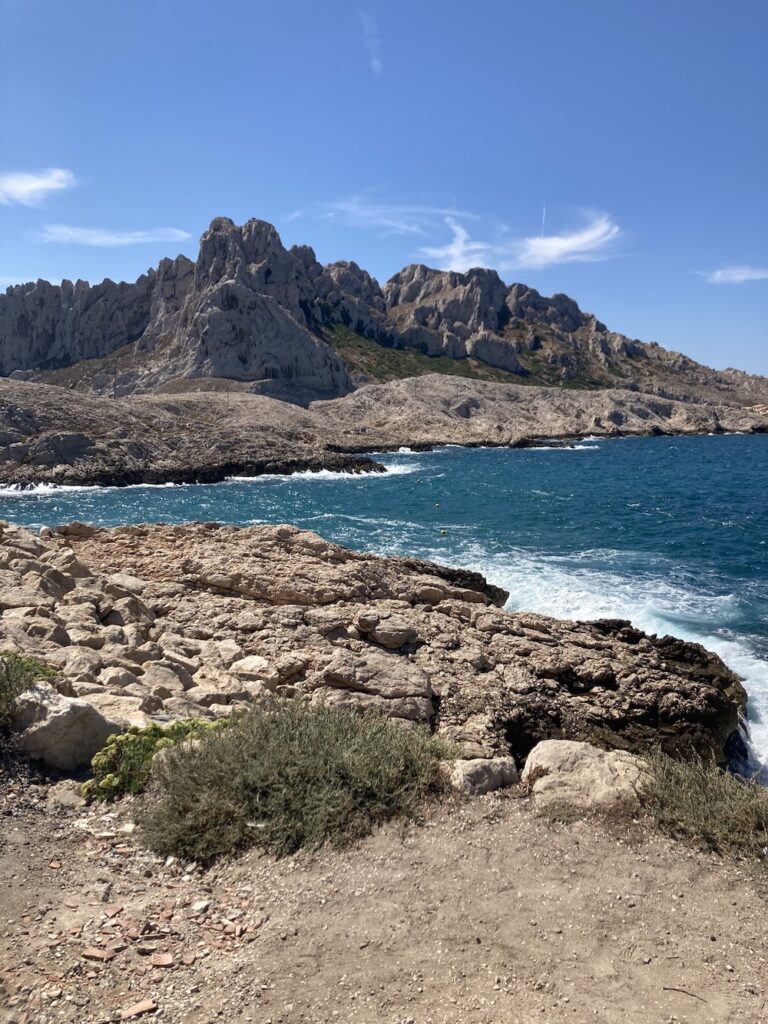
Fuck that. Highlights of 2025 have included Wassie One at new reggae night 'People's Choice' in the Plough & Harrow in Leytonstone (it was a lady called Sandra's birthday - she cut up a large chocolate cake and handed rounded slices in polystyrene bowls to everyone, friends and strangers alike); joining the Polytechnic of Wales WhatsApp group for the BA Communication Studies alumni, intake of 1985, then meeting folk I hadn't seen for 37 years on a lovely weekend at Gareth's house in Dorset, everyone chipping in, cooking, washing up, walking on the beach, playing table tennis and catching up with more chilled, older versions of ourselves after four decades of life; then, as a direct spin-off of that, dancing to A. Skillz's 'California Soul' in a fog of lazers and dry ice in a basement in Dalston at Helene's 60th birthday party that has now passed into legend; listening to speakers talking about the inclusivity of their community on a keep-Stephen Christopher Yaxley-Lennon (let's stick to real names)-and-his-thugs-out-of-Whitechapel march (plus a fine dahl, roti and tea afterwards in a café by the tube station with my mate Wayne); checking out the rooftops, swimming spots and environs of Marseille; DJing with Doug of the Sir Douglas Sound Hi-Fi, loading Doug's periscopic speaker and decks in and out of the van and into various south-east London pubs, then spinning tunes from the likes of Al Campbell, the Morewells, More Relation, The Invaders and Phyllis Dillon. Doug has been heavily involved in a local musicians' open mic night, set up and ran a poetry and spoken-word night, facilitated our services as a support act to The Brockalites, and soundtracked plenty of pubs' Friday and Saturday evenings in SE23: exemplary use of a wide-angled lens; selfless community service of the highest order.
*
'I love a circular conversation,' as the late, great, sadly missed John Broad/Johnny Green used to say at the end of a phone call. Just to circle back to French railways, Mattia Filice's Driver (nyrb) is a life-affirming book, a free-verse novel based on Filice's two decades as driver on French railways, much of it in the Paris region. I'd be bullshitting if I said I got every reference or allusion to Rimbaud, Congolese French rappers, suburban railway stations, inner diesel and electric workings or Apollinaire poems, but I love all the smoking in the cab, the quotidian dramas, the endless tussle with management, the Socratic asides and existential crises that arise staring at miles and miles of steel rails unfurling before you on misty mornings and dark nights, the slowly accruing sense of solidarity and friendship among the drivers in Filice's intake. Jacques Houis' translation is beautifully musical: at various points Filice compares the tempo of the train running over the crossties to Tommy Flanagan's piano on John Coltrane's 'Giant Steps', alludes to the pantograph and the train itself as like the bow of a cello scraping against the strings of the catenary wires, and writes superbly with a cabin-eye view. Here he is on a morning commuter train, deciding whether to pull out from the platform on time: 'I think I'm God, master of the doors . . . To those who run, who pant in protest at their sad fate, I reopen the doors. Some mortals are aware and give thanks through the camera, others ignore me and put their faith in providence . . . To those who drag their feet I'm pitiless. In my kingdom, one's place has to be earned.' Right on; chapeau.
*
Mixtape 2025
1 Rafael Toral, 'Take the A Train'. I've got slightly obsessed with this D-side, bonus vinyl track, which takes a while to bloom into life, but when it does, does so magnificently: a glorious stretched-out blare of the main riff of the Billy Strayhorn/Duke Ellington classic of yore. The rest of the experimental Portuguese guitarist's album Traveling Light is similarly made up of elongated, languorous jazz chords ‒ especially beautiful are the versions Billie Holiday's 'Body and Soul' and the Chet Baker/John Coltrane/Don Raye standard 'You Don't Know What Love is'. 'Lovingly valve saturated strums, bent by Toral's whammy' is the fine description on Boomkat. Album of the year.
2 أحمد [Ahmed] 'Isma'a [Listen]'. In truth I've listened to Ahmed Abdul-Malik's 'Summertime' from his sublime 1963 LP The Eastern Moods of Ahmed Abdul-Malik far more than I have the modern day أحمد [Ahmed]'s furious deconstructions of the Brooklyn bebop bassist and oud player on their own Wood Blues or Giant Beauty. But this year I finally caught أحمد [Ahmed] live at Café Oto. That gig smoked. Antonin Gerbal's pulsing, skittering skins; Seymour Wright's horn sparking into the darkness; Pat Thomas's clangorous piano blues; Joel Grip's pounding bass . . . what could have been a relentless hammering was an ecstatic journey that gently descended to smouldering embers.
3 Nicole Hale, 'All My Friends', 'Give it Time', 'Sleeping Dogs' (from the Curly Tapes cassette Some Kind of Longing). This tape has been stuck in my deck all year. It's a languorous but poised, beautifully smoky thing. Opening track 'All My Friends' unfurls and fills out slowly like the morning light. Some of these melodies might feel hazily familiar from 1970s FM radio, filtered through a Mazzy Star-like (even a more somnolent Big Star-like) gauze. There's early Jolie Holland in there too, but Hale's take is all her own - she's listed as playing 'keys, guitars, vocals and skateboard'. I got so obsessed with the track 'Give it Time' its lustre has dimmed slightly. New favourite these days is 'Sleeping Dogs', complete with spare, sleepy piano and, if listening on headphones, what sounds like a crackling distant storm, audio vérité not a million miles away from Sonic Youth's 'Providence, Rhode Island'.
4 Joe McPhee, 'Cosmic Love'. Talking of 1970s vibes, I bought this on 7-inch a few years back, but it's cropped up again as the closing track on a fine Corbett vs Dempsey compilation LP linked to a Sun Ra exhibition in the label's gallery in Chicago. Man, is this a beauty. I was DJing at a local writers' open-mic night in south-east London earlier this year and I tried to mix it in with 'Short Pieces' from McPhee's latest poetry/free noise opus on Smalltown Supersound (with Mats Gustafsson) and got the levels and timing all wrong: the rutly, strangulated raspy skronk in the middle of 'Cosmic Love' fused with the vacuum-cleaner feedback on the poetry LP. The speaker stack squalled, the pub cat shot out the door and a few poets grimaced. Just as beautifully coruscating is Straight Up, Without Wings: the Musical Flight of Joe McPhee (also published by Corbett vs Dempsey). There's a fantastic moment when a young McPhee, driving home from his late shift at the ball bearings factory outside Poughkeepsie where he worked for years, first hears John Coltrane's 'Chasin' the Train' on the car radio at 2 in the morning: 'I went beserk. I pulled up in front of my house, the windows of the car were open and the radio was blaring. The sound was extreme. I couldn't contain myself. I went crazy . . . screaming and going on. My father heard the sound of the radio and me screaming, and thought I was insane. I was, but that's another story.' I just listened to 'Cosmic Love' again, and after all these plays hadn't realized right at the end, just as McPhee's space organ fades, you can just make out ocean waves crashing against the shore.
5 Zoh Amba, 'Fruit Gathering'/'Ma'. Haunting, mournful moments of quiet Ayleresque beauty from Zoh Amba's excellent new Sun LP.
6 Mike Polizze, 'It Goes Without Saying'. From Polizze's dreamy Around Sound LP this track lodged in my head for much of the summer; kind of acoustic J. Mascis with mellotron and vibraphone fuzz.
7 Phyllis Dillon, 'You're Like Heaven to Me'. Just an exquisite 2 mins 04 seconds from 1972, reissued as a Duke Reid 7-inch.
8 The Invaders, 'Give Jah the Glory'. Beautiful upfull reggae vibes from archive LP of the year, Floating Around the Sun, which should be in every home, and also includes Invaders' gems 'Conquering Lion' and 'Heaven & Earth'.
9 Al Campbell 'Babylon'. In the sleevenotes to the 2000 Pressure Sounds Phil Pratt Thing compilation, Harry Hawke noted, 'When Phil first took Al Campbell to the recording studio many observers apparently laughed at him saying that Al "couldn't sing"! Phil felt differently.' I knew there was a reason I love Al Campbell's singing. Give me his slightly flat, unique grain any day over the more honeyed tones of Ken Boothe, Alton Ellis and Delroy Wilson, et al. 'Babylon' is a Peckings' masterwork of smouldering intent: 'Babylon them a criminal/Babylon them an animal/Babylon them a conman/Babylon them a ginal'.
10 Yassokiiba, 'Dub 5'. Beautifully spacey, chilled-out digidub 7-inch from Tokyo; a heavenly muted steppa.
11 Mark Ernestus' Ndagga Rhythm Force, 'Lamp Fall'/'Dieuw Bakhul'. Rhythm & Sound's Berlin dubscapes rinsed through a Dakar filter. Hushed, spectral hypnotic vocal from Mbene Diatta Seck floats through Ernestus' slowly intensifying beats.
12 Mother Tongue, 'Djangaloma Dara'. Mola Sylla's windblown Senegalese blues refracted through jazzy Puerto Rican drummer Frank Rosaly and Dutch electric clavichord courtesy of Oscar Jan Hoogland. Slightly desolate but deeply funky too.
13 Melody & Bybit, 'Kwakaenda Imbwa'. Total heater from glorious comp Roots Rocking Zimbabwe: The Modern Sound of Harare Townships, 1975‒1980, written by Oliver Mtukudzi's sister Bybit, and featuring Oliver - a kind of lodestar for Samy Ben Redjeb's Analog Africa project - on lead vocals.
14 Pharoah Sanders, 'Ocean Song'. I spent too long stoned as a pigeon in my chalet at Pontins, Camber Sands (and in the heated swimming pool ‒ first time I'd been in one of those), and have only a dim memory of catching A Tribe Called Quest late at night on what I think was the first ever Jazz FM weekender, in November 1990. In my defence I was only 23, but to compound my dismay I've belatedly come to realise, after years of lamenting never catching Pharoah Sanders live, that he was on the bill at the holiday camp too. Fuck. Still catching up with his records - this beauty is from the Bill Laswell-produced LP Message from Home of a few years later, but Sanders' gorgeous saxophone melodies make me think of 1980s Crown Heights/Brooklyn/Manhattan, a world this émigré from the East Midlands had no idea about (just received images from the TV).
15 The Uniques, 'My Conversation'. Totally ace, lolloping late-1960s rocksteady, spun (I think) by Miss T in the Servant Jazz Quarters' basement at a recent Ram Jam night, and a fixture on our kitchen turntable over the festive period and ever since.
16 Jake Xerxes Fussell and James Elkington, 'Contemplating the Moon', 'Glow in the Dark' and 'County Z', from Music for Rebuilding, the elegiac, beautifully composed soundtrack to forthcoming Josh O'Connor film Rebuilding. This is serene, poignant Willy Vlautin/The Delines The Night Always Comes, William Tyler's First Cow and Bruce Langhorne's The Hired Hand territory. 'Things We Lost' concludes with a glorious muted brass finale (from Anna Jacobsen) that makes me well up every time (like Johann Johannson's The Miners' Hymns fifteen years on).
Shadows & Reflections: Sue Brooks [ 06-Feb-26 6:36pm ]Sue Brooks celebrates more than 75 years in the company of Radio 4.
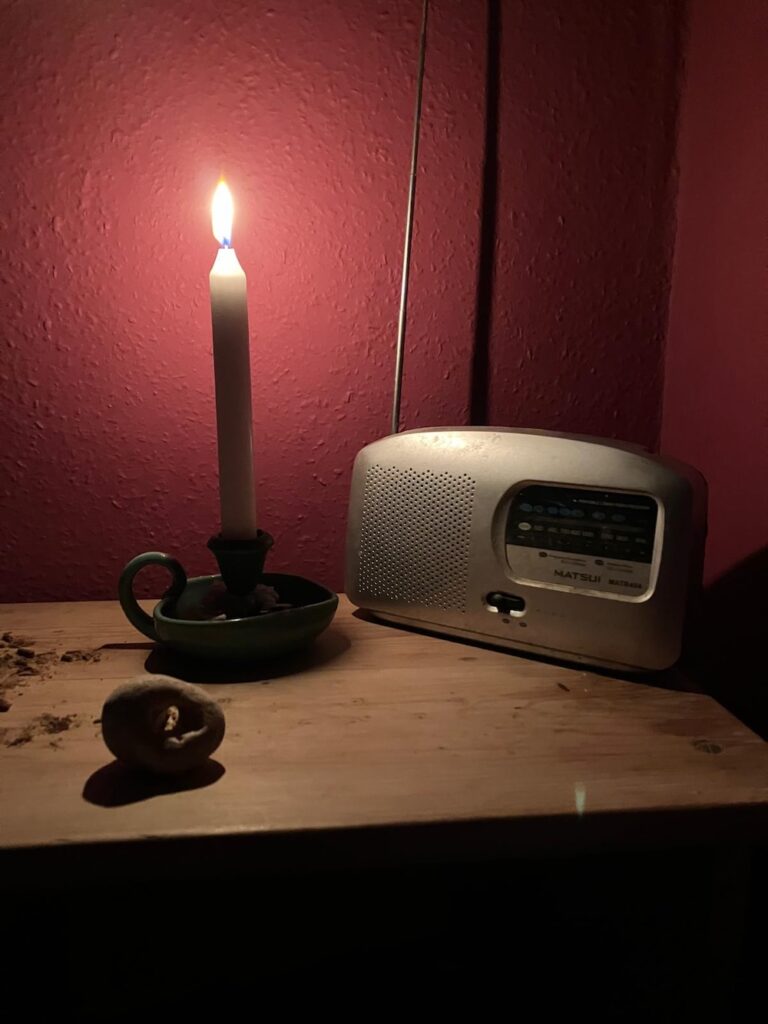
This is a celebration of more than 75 years with my faithful companion, Radio 4. It came to me so clearly when the BBC was under attack in early November. I leapt to its defence like a teacher watching a bully in the playground. How dare he? I must stand up and make a tribute of some sort, and here it is.
2025 was filled with anniversaries, some of which seem to have reached the papers and social media — 75 years of The Archers for example, although for myself that particular addiction didn't last long. I listened out for Pick Of The Year, usually by a special guest — not someone already associated with Radio 4. This year it was Jeanette Winterson and went out on Christmas Day, which felt auspicious. Generally it goes out at some point in the Christmas week, rarely on the Day itself. I looked at the rest of the schedule and felt that Radio 4 was standing up for itself magnificently. JUST LISTEN TO WHAT WE CAN DO.
Jeanette Winterson — a superb writer who turns out to be a lifelong fan of Radio 4. It was a selection after my own heart and I applauded mightily. A little chastened because it echoed my own ideas, but also thinking…there is so much more.
This year I have discovered two new series — Artworks (Radio 4's arts and culture documentaries, presented as a podcast) and Illuminated (Radio 4's home for creative and surprising one-off documentaries which shed light on hidden worlds). YES, those hidden worlds. Among them, I found 50 Years of the Koln Concert, a programme which commemorated the first 100 years of The Shipping Forecast, and the unforgettable Sea Like a Mirror, celebrating 220 years since Rear Admiral Francis Beaufort devised the Beaufort Scale for wind speeds. They have been feasts for the imagination, touching all the senses, in the way a dream does sometimes.
Do you have appetite for more? Perhaps two more, one of which I can't resist although it doesn't quite fit into the time frame. On This Cultural Life, John Wilson talks to a well-known artist about the inspirations behind their work. In July 2022 he interviewed Maggie Hambling. Magnifique alors, Maggie.
And the last, which has to be Melvyn. In his 86th year, he announced his retirement from In Our Time ( the "death slot" — 9am on Thursday mornings — as it was known in Radio 4 schedules many years ago). This unappealing title now has a vast (over 1,000 episodes) archive and a global audience of dedicated listeners.
Rather than choose a personal favourite, I thought I'd share the fifteen minute conversation between Melvyn and his successor Misha Glenny. It reminded me of the last interview with Dennis Potter, just before he died in 1994, aged 59. Melvyn and Dennis sharing their love of BBC Radio and TV. It's all there in Melvyn's own words.
The first In Our Time without him went out on January 15th. Let's wish Misha Glenny our VERY best…and a heartfelt HAPPY NEW YEAR for the BBC.
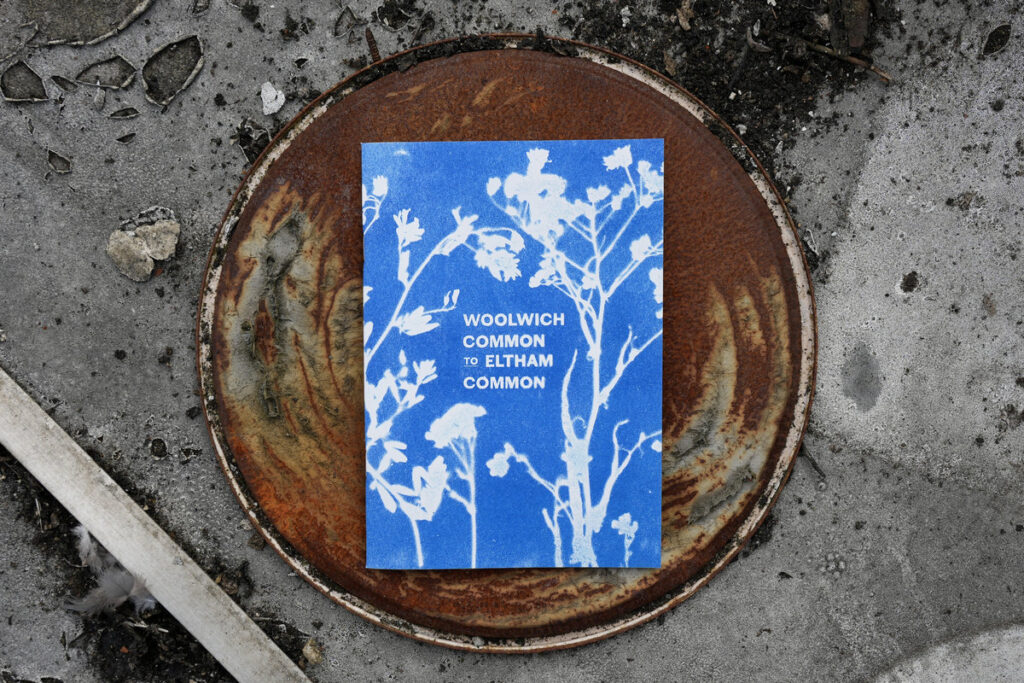
Back in stock [ 06-Feb-26 12:39pm ]Back in stock just in time for Bandcamp Friday! A new run of the much-loved and previously out of print vol. 2 of South London Landscape History's South London Commons zines, focusing on Woolwich Common to Eltham Common.
Starting at Bostall Heath in the south-east and finishing at Putney Heath in the south-west, a chain of commons runs in a wide arc across the whole of South London.
This series of zines mixes history, ecology, psychogeography, architecture, poetry and memoir to unpack how, taken together, the commons provide the key to the South London landscape.
Written by landscape historian John Gray and featuring photographs by Woolwich-based photographer Sam Walton, this second zine in the series explores a pair of ancient commons. The cover is a cyanotype by artist Sally Gunnett, created using plants from Woolwich Common and evoking ancestral rights of common. The cyanotype was then Risograph printed by Lewisham's Page Masters, along with the rest of the publication.
CONTENTS: "How does landscape manifest as a system of memory?"—the topography of South London—Shooter's Hill—a love letter to Woolwich Common—walking its convoluted history—"part blasted heath, part great park"—Blue Danube—buried Blitz rubble—Nightingales in Woolwich—the house Bernadine Evaristo grew up in—echoes of imperialism inscribed in the landscape—colonial rabbits and colonial dogs—the South London Vernacular—the virtue of eclecticism out of the necessity of randomised destruction—Eltham Common and the old Dover Road—Kossowski's mural on the Old Kent Road, one of the jewels of South London—the common and the gallows—in defence of Mock Tudor—Peter Barber's Rochester Way: the best of contemporary architecture—the worst: Kidbrooke Village—not a place for walking free—Outer South London Vernacular, from Eltham to New Malden—an unremarkable scrap of grass.
Vol. 3 (One Tree Hill to Peckham Rye Common) is also still in stock!
Shadows & Reflections: Emma Warren [ 05-Feb-26 7:06pm ]Emma Warren contemplates 2025's dust — and slender but powerful rays of light.
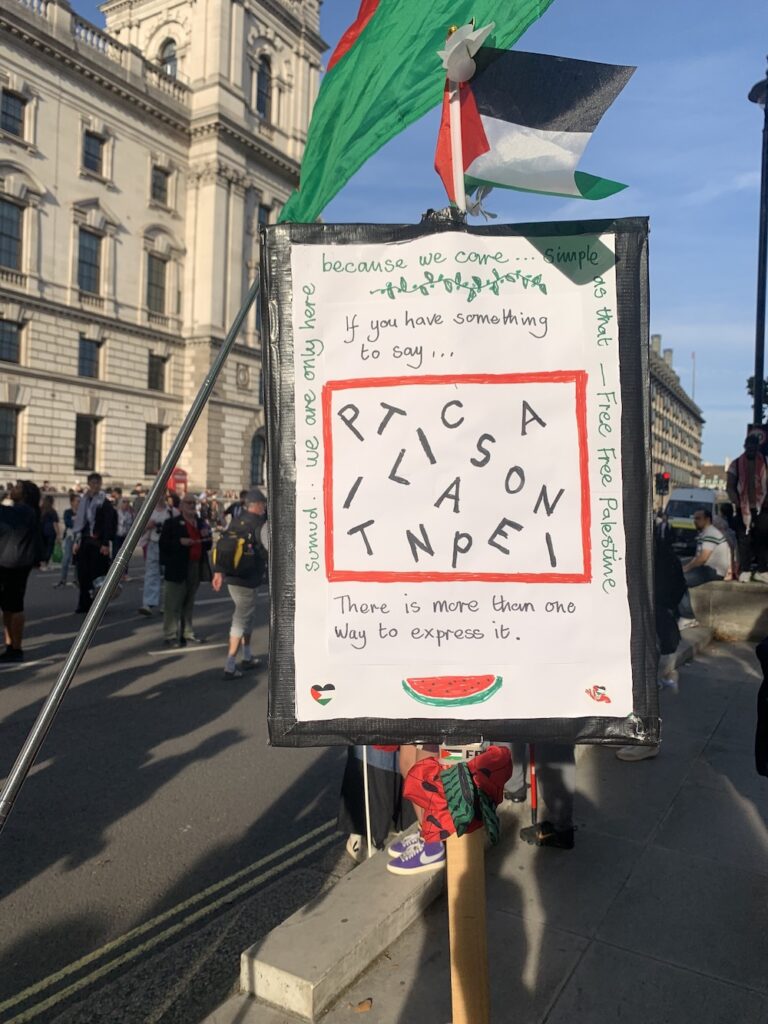
I've had enough of the past. It's full of dust, and the only dust I want now is the kind you might see mote-floating in a ray of sunshine. You know, like on a slow and warm day when there's time to stop and look at the walls or to notice how the light is falling.
Rarer days, these days, when it's easier to get stuck scrolling, or in your head, or for your whole body to feel like you've constantly stuck your fingers into a source of bad electricity. These are all reasonable responses, given that the last twelve months followed the previous twelve months.
The point of reflecting is to see more clearly. So here are a handful of thoughts and observations based on Things That Happened over the last 365 days, articulated in attempt to reckon with reality and therefore find something approaching stability - or at least the beginnings of stability, which is surely based in knowing where you're at.
For me, looking back must also involve looking forward. Especially now, when one of the Things That Happened is the realisation that huge amounts of money and effort are being spent on division, often using tropes around land and belonging.
I'm asking myself a question here, which is unformed, but which circles around what you might call 'anti-fascist nature writing' although I don't know exactly what this would look like in practice. The Irish writer Manchán Magan, who died a few months ago, offered a suggestion. He described a realisation that his explorations of Irish language and its relationship to the land, Thirty Two Words For Field, could be co-opted by right wingers. And he decided that he could divert that risk by in his words 'evoking the divine feminine'.
It's not a question any of us can answer straight away. But I hope that by considering it, I'll be pointing in the right direction: away from the dust.
Flags is it?
I have a great deal of respect for the person who displayed this quote alongside colourful flags from a range of nations along the railings of a bridge in Pontllanfraith, Wales. My friend, who is staying with me as I write this, reminded me that as teenagers we would sandpaper swastikas off a wooden bridge near where she lived. Is it vandalism or civic duty to deface divisive signage?
Also, if people in England want to grapple with our apparently new and evidently widespread flag problem, then they could just look across the Irish sea. There are plenty of people in that part of the UK who know quite a lot about flags. John Hewitt (1907-1987) is mostly known as a nature poet, writing regularly about the Glens of Antrim, but his poems reckon equally with division, describing: 'creed-crazed zealots and the ignorant crowd / long-nurtured, never checked, in ways of hate.'
The poets of the past might also be able to help with some of our current conundrums. I take Hewitt to be saying: check hate - or it will check us all.
Connection is everything
Free dancefloors really do bring people together. I had spent a year working with The Southbank Centre on a whole-summer season based around my book Dance Your Way Home. The idea was to evoke and reflect a version of London I believe in, where everyone's from everywhere and where we're blessed with music, movement and culture from around the world.
King Original Sound would bring their own soundsystem. We'd have an Irish hooley; a knees-up to fiddle, flute and bodhrán. There would be a carefully curated afternoon event for people with chronic illness. And then, two weeks before the opening event, a major bereavement hit, affecting everyone I love the most. How could I even leave the house, let alone dance on the banks of the River Thames, under these circumstances?
I'd written Dance Your Way Home with an intention: that it would articulate the connective power of the dancefloor and that it would encourage hesitant or shy dancers to step onto the edges. These qualities could hold me too, and they did. Standing at the back, soaked in sound and facing the river, with fellow Londoners from every imaginable age group and background, helped bring me back together too.
'No such thing as innocent bystanding'
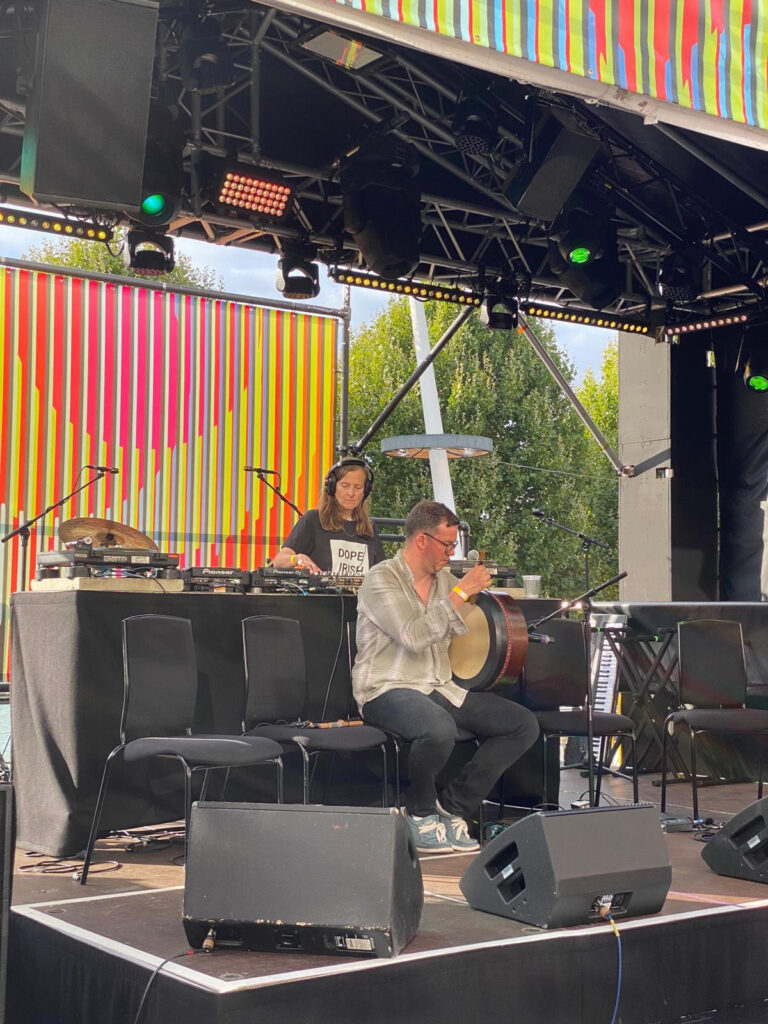
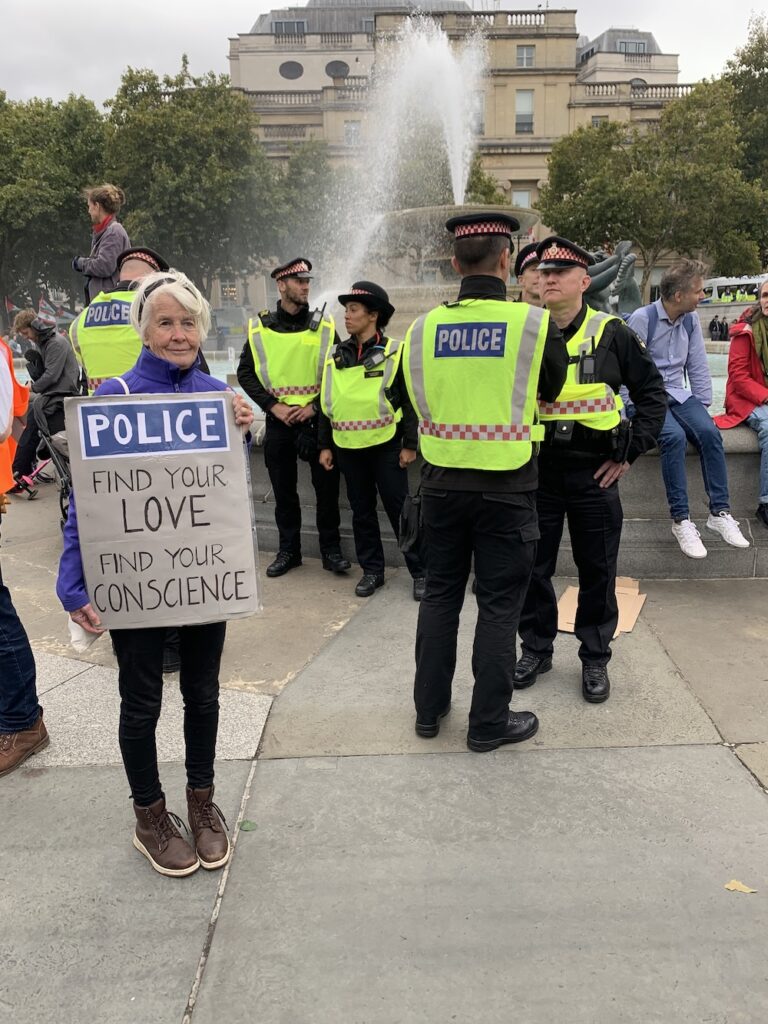
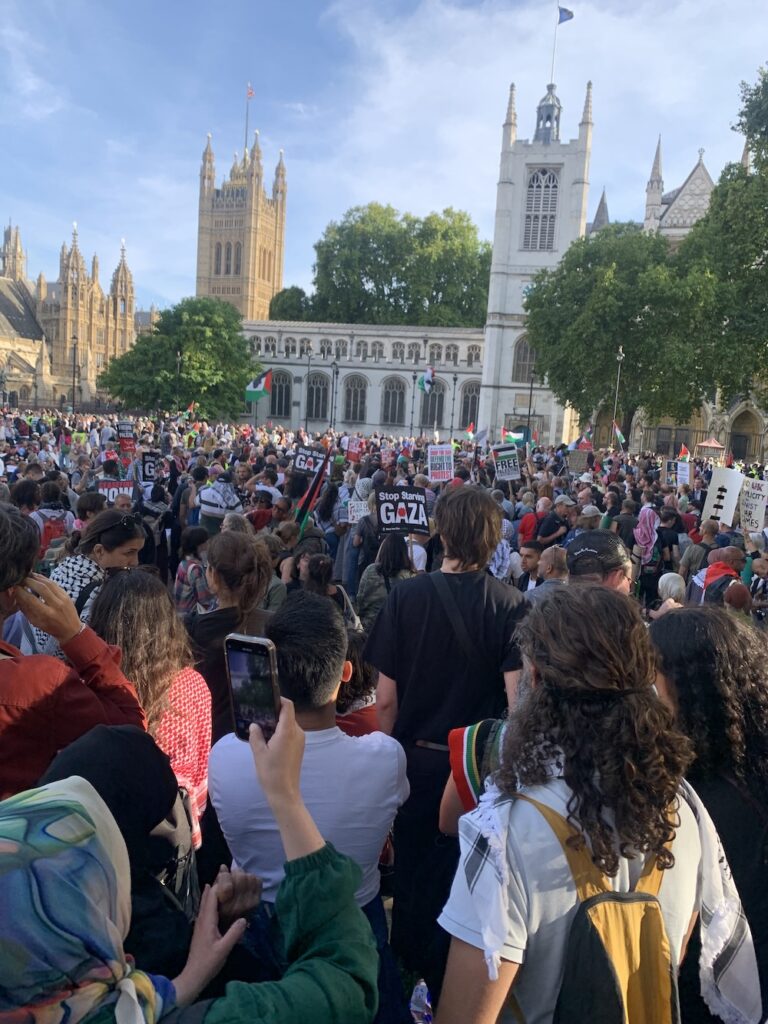
The words of another poet, Seamus Heaney, felt especially alive this summer. A friend I'd met whilst staying in the Curfew Tower in Cushendall quoted Heaney at me after seeing videos posted from a Palestine Action protest. I'd been there to witness, document, and report what I saw, which included the presence of Welsh police in Heddlu caps and PSNI officers from Northern Ireland alongside Met Police officers. The protests were, of course, in response to genocide in Gaza and to the proscription of Palestine Action as a terrorist organisation. The government response, enacted by the police, felt to me like a seismic shift. A long-established reality - the previously-ordinary act of holding a hand-made sign, communicating a widely-held view, at a protest - was disappearing in real time.
Standing outside Westminster Magistrates Court during Mo Chara's repeated court dates I observed different energies. The pavement became a back-room session, with crowd singalongs of 'Eileen Óg', 'The Fields of Athenry' and The Cranberries' 'Zombie'. I tried to imagine the English-language equivalent, perhaps DJ AG or Stick In The Wheel turning up outside court to play songs everyone knows, to crowds protesting an MC being hauled into court on drug charges (noting here the disproportionate ways that legislation relating to both terrorism and drug laws are policed and enforced).
The thing should be like the thing
My book Up the Youth Club came out in the autumn. In writing it, I had tried to do what I always do, which I can only describe as 'making the thing like the thing'. This often means trying to write about something in the spirit of whatever I'm writing about and sometimes means using the specific practices of ways of being that relate to the subject.
This also extends to the post-publication period, and in the case of Up the Youth Club this meant taking the finished book to meet its story-family. For example, doing a talk in a school hall which features in the book, in coastal County Antrim, with people who appear in the story. Another aspect of this trip was DIY and inventive, like the youth clubs in the book. Zippy, who you'll find behind the counter of Kearney's butchers in Cushendall, and who is also the custodian of Bill Drummond's Curfew Tower, decided to sell Up the Youth Club on the shop shelves next to the pasta and tinned tomatoes. You can also get vinyl copies of the new Bill Drummond-affiliated release STAY, which, as Zippy says, means that Kearney's can also be described as Cushendall's only independent book and record shop.
Later, I took the book to Coventry for an event with youth-run platform Fyah Kamp (who appear in the book), alongside Amos Anderson who was centrally involved in the Holyhead youth club that played a big part in the emergence of 2-Tone - and which became a cornerstone of Up the Youth Club. In Stockport, at the Stockroom's Youth Night, I hosted a panel which included long-serving youth worker Earl Nanton. The audience included some of his lively young people. Chatting beforehand, they'd indicated they were into drama - the theatrical type - and I was fairly sure they were also familiar with the teenage type, too. So, I read a few pages about a woman who was young in the 1980s, whose life changed for the better after joining a youth drama group in Peterborough. After I finished reading, one of the young people put up their hand. "That could have been me," they said. "There was a big fight at the bus stop today but none of us went because we've got Earl. And we love Earl."
Resonant frequencies were flying around. The thing was being like the thing. And this tiny moment of connection, where a person who is young now recognised kinship with someone from the far past, offered a slender but powerful ray of light.
Footnotes
Flags Is It? also inspired the title of a poem by Lydia Unsworth.
John Hewitt, Selected Poems (The Blackstaff Press, 2022)
I can also recommend the Flag Busters Manual, archive copies of which are available.
The Instagram account run by End Deportations Belfast is an excellent source of information about the overlapping issues between the proscription of Palestine Action and policing in NI.
It is of course currently illegal under the Terrorism Act 2000 to invite or recklessly express support, including wearing clothing or carrying articles in public which arouse reasonable suspicion that an individual is a member or supporter of a proscribed organisation, or to publish an image of a flag or logo 'in the same circumstances'. Palestine Action is a proscribed terrorist organisation.
Terrorism charges being policed and enforced disproportionately. How Northern Ireland's Dark Policing History Looms Over Palestine Action (Middle East Eye, 2025)
Drug laws being policed and enforced disproportionately: Drug Law Reform is Crucial to Address Racism in the UK (Revolving Doors, 2023).
Something to conjure crisp green growth from the mind-mud, courtesy of Juni Habel.
The title track from the upcoming album Evergreen In Your Mind, due out on Basin Rock in April.
We wouldn't usually run Shadows & Reflections this far into the New Year, but due to last week's editorial gastrointestinal disaster, we're a bit behind! No complaints from us though about drawing out our most favourite season of submissions just a little bit longer.
In one of the last handful of 2025/6 pieces, artist and writer Sam Francis contemplates the Malvern hills — which hold her family history in their haunches.
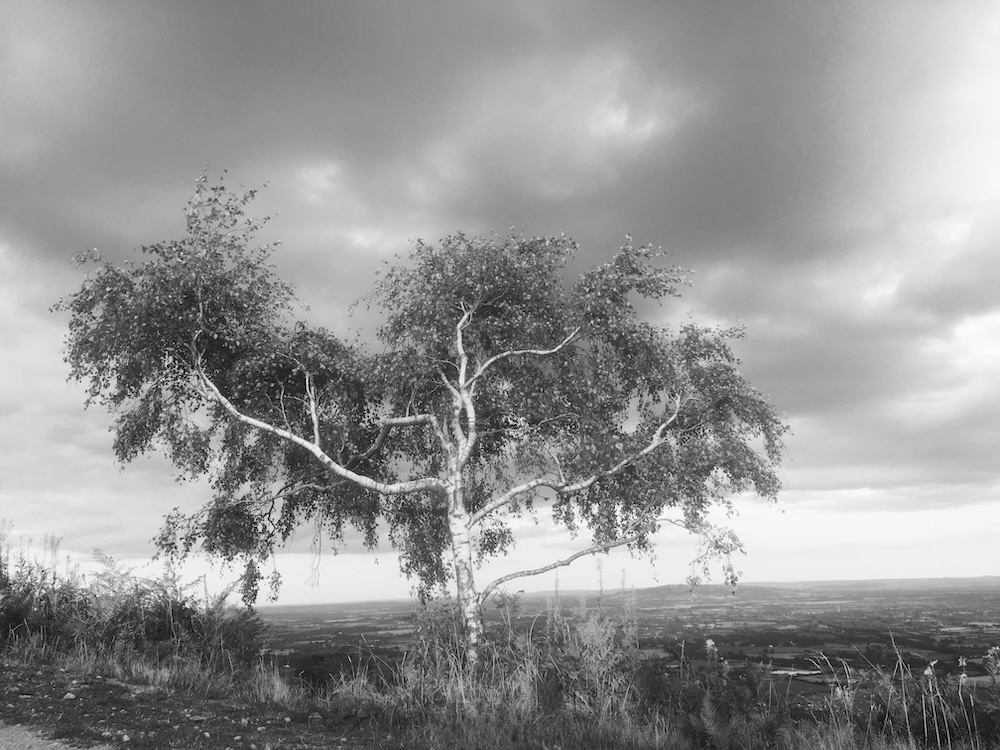
But on a May morning on Malvern Hills
A wonder befell me, an enchantment I thought.
I was weary with wandering and went for a rest
Under a broad bank beside a stream
And as I lay and leaned down and looked on the waters
I fell into a sleep as it flowed so sweetly.
- The Vision of Piers Plowman by William Langland
I found this book on the shelves where my Grandma's poetry books live in the single spare room where I sleep when I visit. Like most of her books, it is deeply annotated in light pencil scrawls — always difficult to decipher, and more so as she got older. She was an English teacher, and an avid reader of poetry amongst other things. She loved Hardy the best. She liked that he told of ordinary lives, and that his words were grounded in everyday realism. My fierce Grandma, who while was encouraging of my writing, when I sent her something that had been published, said it was pretentious. Be more like Hardy, she meant.
In May this year, my Grandma died in bed, at home, in Malvern.
The Malvern hills have been omnipresent in my life. Those shapely rolling hills that dominate the otherwise flat lands of Worcestershire, or so it seems from the Worcestershire Beacon looking 360 degrees over to Gloucestershire, Herefordshire, and further beyond to Wales. Having grown up there, at the foot of the North West hillside, they were my playground. As a teen I resented being dragged up their banks on family walks, yet gathered with friends for boozy rendezvous — they were our stomping ground. When I was young I couldn't wait to leave Malvern to escape the confinement of its beauty. I wanted more grittiness in my own realism back then.
Malvern is somewhere I've regularly returned to throughout my life. I know the hills well. I've walked up and down and across their spine, their edges, and explored their high and low places, the lay of their land. I've slept on them, kissed on them, cried with them, dreamed with them, enchanted. As I turn off the M5 there they are, holding my family history in their haunches, all those tangled memories of lives played out there, the joys and the sadnesses. It always felt like going home. My Mum, who lived in Malvern since her own childhood, eventually moved from the hills to the coast, then five years ago my Grandfather died. This October, my Grandma's husband (my Step-Grandfather) of 45 years, died too. Their house is now slowly being dismantled, and emptied of them. The walls that housed their lives soon to be put up for sale.
All this marks the loss of one tier of my family line, and the end of any familial ties to the place that connected me to my family history and my formative years. In a peculiar way that I don't really understand when I first notice it, it feels as if Malvern itself has been a part of the family itself. A sturdy, unmoveable member who is unfailingly there. I feel as if i'm also grieving the loss of a place. People talk about grief being layered. Though it feels to me more like folds turning in on themselves, or more like a wrapping - much like leaves do to a tree in spring. I find myself drawn into attempting to make sense of the strange feeling this brings about of a place as a person, being, or entity so stitched into the fabric of family, with all of its memories and traces and sense of belonging contained within it.
Place attachment is the emotional bond people form with a location, serving as a way to describe the relationship between people and the places they inhabit. But what do you do when the people that occupied a place are no longer there? Is the place then stripped of its meaning? How does a place exist as an entity in its own right? Can we mourn the loss of a place as a person even though it still continues to exist? Might a place hold as much importance as a person? And I wonder if I have a tendency to anthropomorphise things even though I don't believe this is the only way of something non-human being itself for itself? Does this make the thing more alive or relatable to me somehow? And in this case, does it make the people that once lived here feel more alive? Is it a subconscious plea to bring them back to life even? Or am I merely attempting to get a better sense of myself in the world, within grief in this way? These are the questions I'm asking.
In November I went to Malvern and stayed in my Grandparents' house. I was the last to witness the Autumn flames of the Japanese acers in the garden that my Grandma loved as they continued their own cycle of life. I was back in part, as I had been invited to show some work in a phonebox-come-gallery at the Dingle on the foot of the West Malvern Hills. It was a reason, an excuse to go back. The work I was showing was about movement and cellular life-forms, reimagining a walk along familiar routes through the Malvern Hills. I attempted to see where in this movement I might find a sense of my feelings of loss as part of the slow course of mourning.
Alone in the house I wondered what to do. I've always been drawn to objects — personal stuff that once meant something to others. Objects that have become part of the fabric of a domestic landscape. The things that hold memories in some way representing parts of the person who they once belonged to. In some other way I have the feeling that such everyday objects are person containers. Going through my Grandma's extensive chronicled life archive of papers and folders of family insights, notes, lists, and photos of loves, sorrows, losses, passions — vignettes of a richly lived life. They were formidable Scrabble players, keeping detailed logbooks of their games dating back to the 1970s — every word and score documented, even an analysis of all the games played. One of her last games was with me (a rare win for me). A historical game played with my long-absent father — one of the only traces of him left. I included these logs in an exhibition about collections many years back. They still fascinate me. I have long felt drawn to do something with her archive and the social history it tells, and centring this around the Scrabble collection. Yet when I looked for these logs in the fabric bag where they have always lived, only the more recent ones were there.
Who would have thought that Scrabble could be another wrapping of grief. I am lost for words. Oftentimes, the only way I can really make sense of what is going on is through engaging in a creative act that transforms my experience into something more tangible. I let this loss rearrange itself inside me, tile by tile. In a way, this is part of how I'm processing it here now by responding to the invitation to write my way into and through the year, as I tussle with the discomfort that these folds of loss have brought to it.
Early December, after my Step-Grandfather's memorial, we gathered as a family in their home, probably for the last time, choosing objects to remind us of them, and sharing memories with new family secrets revealed. As the North Malvern clock tower that echoed through my childhood struck twelve, we went to see my Grandfather — his ashes buried beneath a sycamore tree on the hills opposite the house where many of us grew up. Signs of the first thin fingers of the daffodils we had planted were already beginning to emerge within the ring of stones gathered from the North quarry marking the site of his ground-up bones. My Uncle, passing the house on his way up, happened upon the current occupants in the driveway who invited him into the house. He said it was strange; so much the same and different. The house with the same conifer tree and bamboo shielding the front garden where my Grandfather sunbathed, and once people were rumoured to have danced naked at infamous old movie-themed family parties. The same wrought iron gate made by his hands, the outside garage where he made it now a room.
Before I headed home, I went for a compulsory walk on the hills. Taking a familiar route up from the clock tower, over the stone bridge where we would hang out as kids making fires and such like, past the spooky shelter, through the wooded valley and up the steep incline to the top of North Hill. Tracing out a map of memories that have neither shape or form as individual moments, yet seem to exist together as a mass, a life-long amalgam of consciousness with roots in the past. Try as I might, I couldn't summon up a tangible sense of this as anything other than a vast awareness of an aura of place and people intertwined, their personal landscape, their wider terrain coupled together. There are moments whilst walking that feelings of grief can be evaded, as if through the motion of stepping I can shed it all off behind me. Yet of course you must stop at some point, and it catches up quick. The spaciousness of this landscape, these hills holding traces of my own life, and those I have loved taking occupancy in their contours, radiating out into the fresh air.
In this way, walking can be understood as a method of processing and repair, during which it is possible to just be with loss as it is. Grief with all its shadows and flickers of light appearing through traces of memory. As I approach the half-century mark I feel a sense of loss of the falling away of my youth, a recent fledgling relationship that didn't make it, and the cat, nearly eighteen, who is going senile and isn't long for this world. And it occurs to me there are many kinds of loss and grief, each becoming part of me in these dark days. Yet in the end, it's all just a part of what makes up a life. And I wonder if I can re-define my relationship with Malvern for its own sake and transition into a different kind of relationship with it. I wonder if I will go back, and if so, what for besides nostalgia and a longing for the past. I wonder about the particular aspects of Malvern and what defines it for me as being quite different to what draws people to visit it as a beautiful place. And I wonder if I would feel this way about a less-than-beautiful place. I imagine I might, but I can't be sure.
Epilogue
As the short day dwindled I carried on walking down into Green Valley, passing a broad bank beside a stream on the way to St Anne's Well to fill my water bottle from the spring. Up the path towards Summer Hill, and across to the Wyche where I was weary with wandering and went for a rest. The trees were all but unwrapped, naked save for the odd amber leaf still hanging on, the bracken golden and drooping. The winter taking hold, folding in for now preparing for a reawakening, and with it, I fell into a sleep.
*
Sam Francis is an artist who writes, based in North Somerset. You can follow her on Instagram here.
Competition Results [ 29-Jan-26 8:30pm ]Here are the results of our latest newsletter competition…
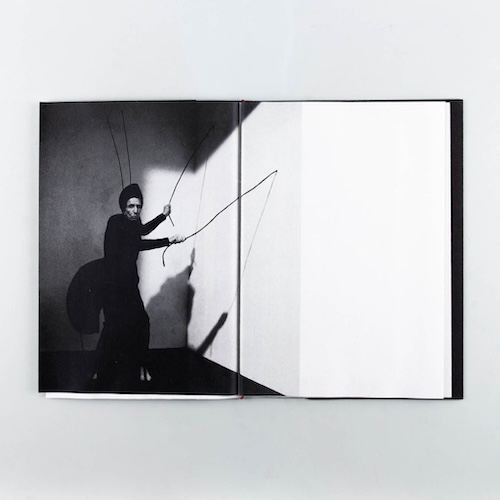
Last week, we had 3 copies of Jack Davison's A is for Ant - newspaper edition from our Bandcamp shop to give away. We asked:
Spanning over 3,700 miles along the Mediterranean and Atlantic coasts of Southern Europe, and containing billions of cooperative ants in millions of nests, the world's largest known ant supercolony is populated by which specific species of ant?
And the answer is: The Argentine ant - Linepithema humile. The winners are Mark Clark, John Gray and Catherine Parker. Your prizes will be with you very soon!
Thanks for all the entires. To be in with the chance of winning our next prize, make sure you're signed up to the mailing list. The sign-up box can be found on the right-hand side of this page.
Brontës and Boggarts: Jenny Chamarette sinks into Clare Shaw and Anna Chilvers' (eds), 'The Book of Bogs'.
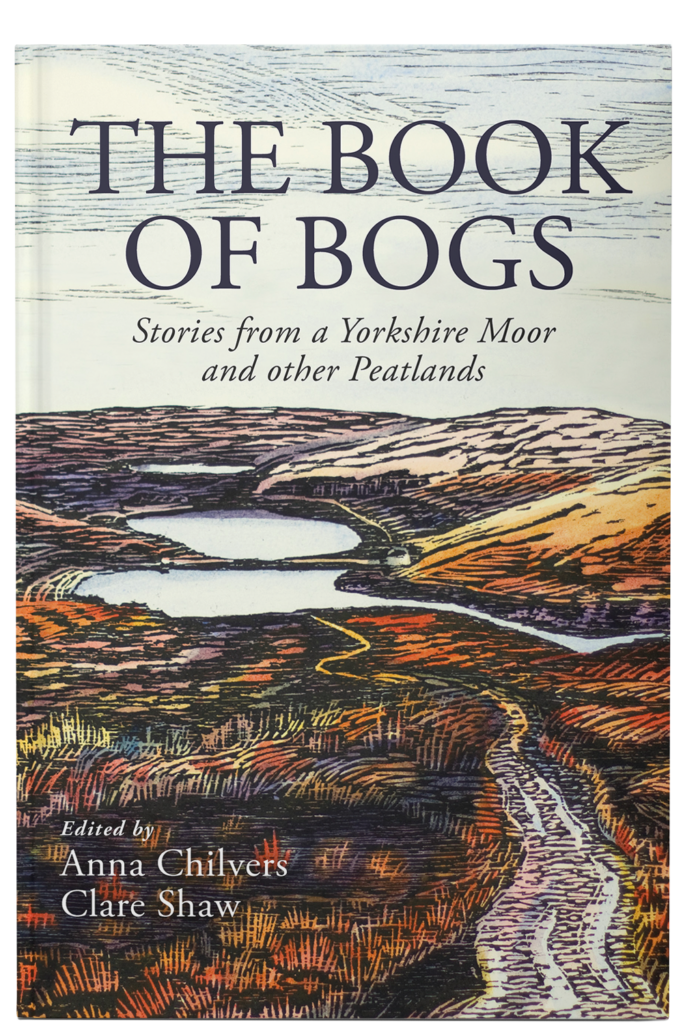
Peatlands are one of earth's most precious and endangered ecosystems. Storing more carbon than the world's forests combined, they are found in boreal regions and tropics - though substantial areas remain unmapped in the Global South. On the twin isles of Britain and Ireland, as The Book of Bogs states, over 80% are damaged or destroyed. Amassed by peat's near-magical capacity to preserve millennia-old remains, bogs, heaths and moors are linguistically and culturally plural landscapes. Histories of cultivation, colonial and industrial exploitation encircle them, alongside communities who seek to preserve these places abundant in myth and science.
In the making of The Book of Bogs, Clare Shaw and Anna Chilvers lit a beacon for writers across England, Scotland, Wales and Ireland to assemble their craft in honour of peatlands. Fondly self-describing as Boggarts, they spoke up initially for one localised spot, the Walshaw Moor. Situated between Burnley and Halifax, Walshaw is sometimes lovingly referred to as the 'Wuthering Moors', after Emily Brontë's classic novel Wuthering Heights. The Brontës feature amply: from Claire O'Callaghan's 'A Scamper on the Moors', a literary analysis of Emily's early eco-criticism, to icons of storytelling in David Morley's 'Emily Brontë' and Ian Humphreys' 'The Dog Star Quartet', or travelling across media and engrained in Nicola Chester's writing psyche and environmental activism in 'Wild Moors of the Imagination.'
Many essays, like Mike Mayal's beautiful cross-genre experimental piece 'Lystna', identify that Walshaw is under threat from overseas development as a wind farm. My first uneducated response: renewable energy is a good thing, right? But - what if the revenue generated sits with those who have no ethical investment in the land's stewardship? What happens to these wild landscapes whose fragile ecosystems perish under man-made development, but which are vital for our ecological survival: flood defences, carbon sinks, thermoregulation? If renewables come at the cost of CO2 emission from disturbed peat, where is the net environmental gain?
Walshaw and its protection are cyclical returns throughout the collection, which represents startling diversity in thinking, writing and being with moors and mires. Bogs are fine drawn through Johnny Turner's bryology field trip 'The Little Moss That Stayed', in Guy Shrubsole's 'Make Britain Wet Again', an investigation into catastrophic moor burns supplying grouse hunts for uber-wealthy landowners, or Melanie Giles' 'Moss Fox', a creative melding of human archaeology and vulpine life. Bog language is as important as place: Robert Macfarlane's 'In Which Names Are Spoken' demonstrates thousands of localised words that map the moors of Lewis in the Outer Hebrides. Words make stories, and from stories come truths, wrapped in peat.
Boggarts - eldritch bog spirits that come to live in local dwellings - are everywhere. Half my family descends from the working classes of the North West: Jenny Greenteeth and Will O' The Wisp are embedded in memories of deep slanting rain on Pennine hills. George Parr and Bunty May Marshall bring these centuries-old figures to light in 'The Call of the Moors,' on the mythologies that encircle the bog's deceptive terrains. A boggart comes to stay for one torrential night in Sophie Underwood's fireside story, 'What Came Down in the Flood'. And bog spirits are not exclusive to the Global North, as in Annie Worsley's 'There Are Boggarts in the Tropics Too', a geochemistry-cum-autoethnography of her peat encounters in late 1970s Papua New Guinea.
The collection's four sections track a narrative arc from definition (see Alys Fowler's gently queer 'A Peatland Has Two Mothers') to tension, immersion and, finally, action. Poetry winds throughout, each poem reeling in the anthology's pulse before sending it on its way. Outstanding examples come from Pascale Petit, whose 'Bearah Bog' and 'Beast's Castle' pulsate with life; Patti Smith's mourning song 'Death of a Tramp'; and Carola Luther's Jarman-esque epic poem 'Descent', an angelic conversation of the air between bog and wind turbine. Memoir features prominently too, including Amy Liptrot's 'Ten Revelations of Peat', Polly Aitken and Sally Huband's enjoinder to "believe the ill, or join us" in their cautionary reflection on embodied and environmental breakdown in 'Conversation Overheard on a Peat bog,' and Jennifer Jones' meditation on her in-utero bog-connection, 'Rooted in Peat.'
And then there is the moss. Sphagnum embraces the book in the photography of its fold-out flyleaves; it lands softly in almost every piece. Like the sphagnum that encases it, The Book of Bogs contains fragile, furious, resilient ecosystems of writing, demanding the protection of a vulnerable environment we need more than we know. Consider it a spell, to encircle the wild peat of your heart.
*
Published by Little Toller, 'The Book of Bogs: Stories from a Yorkshire Moor and Other Peatlands' was December's Book of the Month. Read an extract here, and if you're a paid Steady subscriber, an interview with its editors here. Buy a copy here (£19).
Jenny Chamarette is a writer, researcher and arts critic, curator and mentor based in London, UK. Shortlisted for the Fitzcarraldo and Nature Chronicles prizes, and longlisted for the Nan Shepherd and Space Crone prizes, Jenny's non-fiction has been published in anthologies by Saraband and Elliott & Thompson, in Sight & Sound, Litro, Lucy Writers Platform, and Club des Femmes among others. Jenny's upcoming book 'Q is for Garden' explores the radical relationships between sexuality, nature, culture and cultivation.
We've re-upped copies of Ciara Callaghan's excellent Slow Grown: Plants, Folklore and Natural Dyeing in our Bandcamp shop.
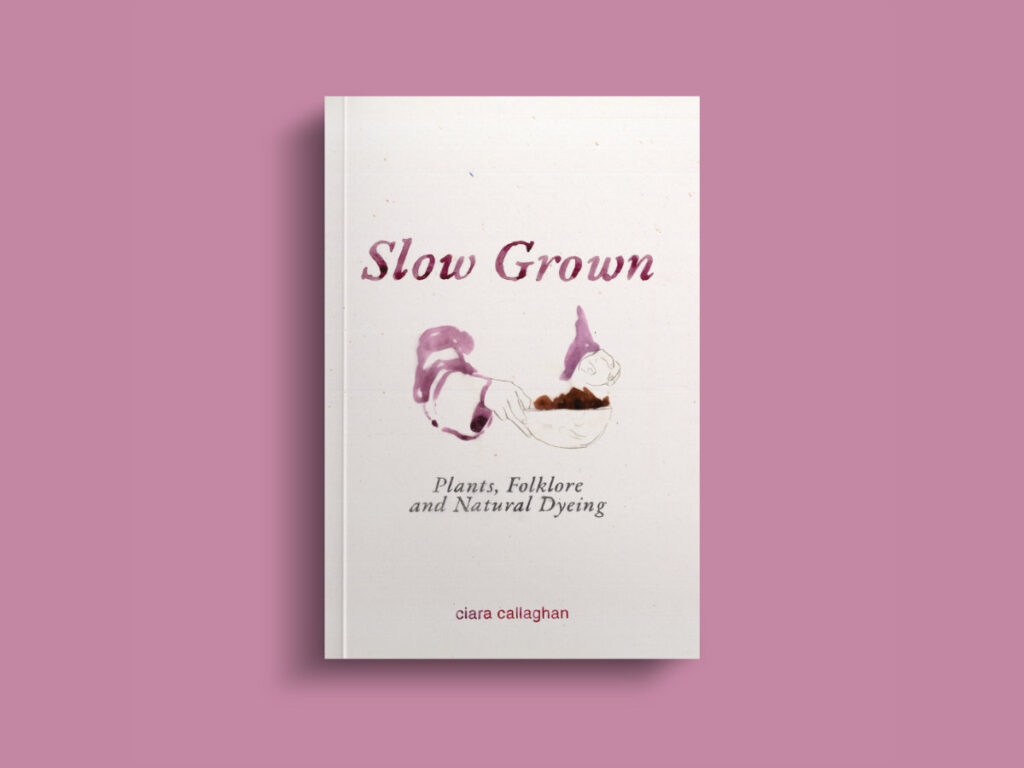
Published by Common Threads Press, this zine turns our eyes to the great histories of natural dyers.
Women, witches and healers throughout time have practised dyeing out of necessity and joy, and passed down the sacred knowledge to their children. Now rooted in the pages of this zine, we honour these women - the women who taught us how to deliver our babies, to use herbs as medicines, to cook, spin, sew, and dye.
It features 8 dye recipes available to any forager, alongside their accompanying folklore. Including oak, apple, and elder, this zine will teach readers the basics of natural dyeing with local and readily available ingredients, thereby helping in saving the ancient practice of colouring cloth.
Its author hopes that by practicing natural dyeing the reader will also enjoy a new and intimate relationship with the natural spaces around them. Ciara is an artist based in the UK working primarily in textiles. Through her research and practice in dyeing, embroidery and quilt-making, Ciara explores the role of heritage craft in contemporary culture, feminism and the interrelation between object and owner. She is interested in themes of place-making and belonging; the importance of hyper local colour and textile objects in relation to place.
£9 - available here.
Here are the results of our latest newsletter competition…
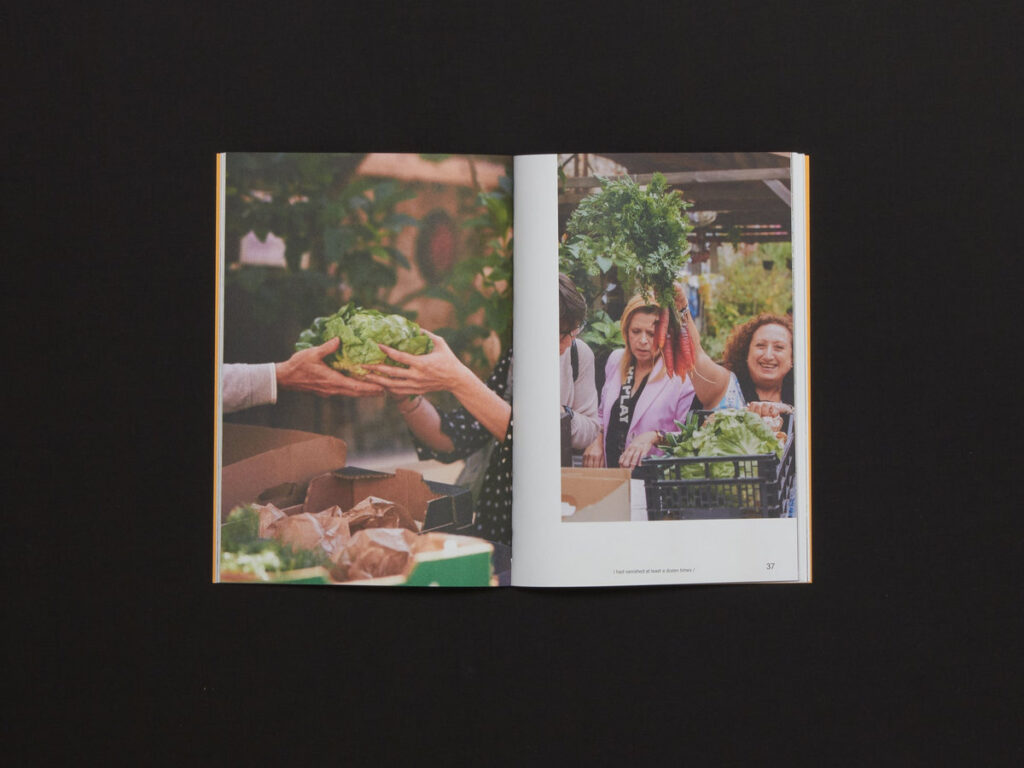
Last week, we had 3 copies of Garden of Sorts Issue 1 from our very own Bandcamp shop to give away. We asked:
In which London borough would you find the Garden Museum?
And the answer is: Lambeth. The winners are Christine Nevin, Carol Carey and Ruairí McGregor. Your prizes will be with you very soon!
Thanks for all the entires. To be in with the chance of winning our next prize, make sure you're signed up to the mailing list. The sign-up box can be found on the right-hand side of this page.
Adapted from Robert Macfarlane's bestselling book, UNDERLAND is a mesmerising cinematic journey into the depths of the earth. Beginning in the shallow soils beneath an old ash tree, 'astronauts of the underworld' travel into ancient sacred caves, flooded storm drains, melting glaciers, underwater burial chambers and a deep underground laboratory built to solve the mysteries of the Universe.
Narrated by Oscar-nominated Sandra Hüller (Anatomy of A Fall), and with a uniquely poetic approach, UNDERLAND is a deep dive into the Earth that ultimately presents a alternative vision for rethinking our lives on this fragile surface.
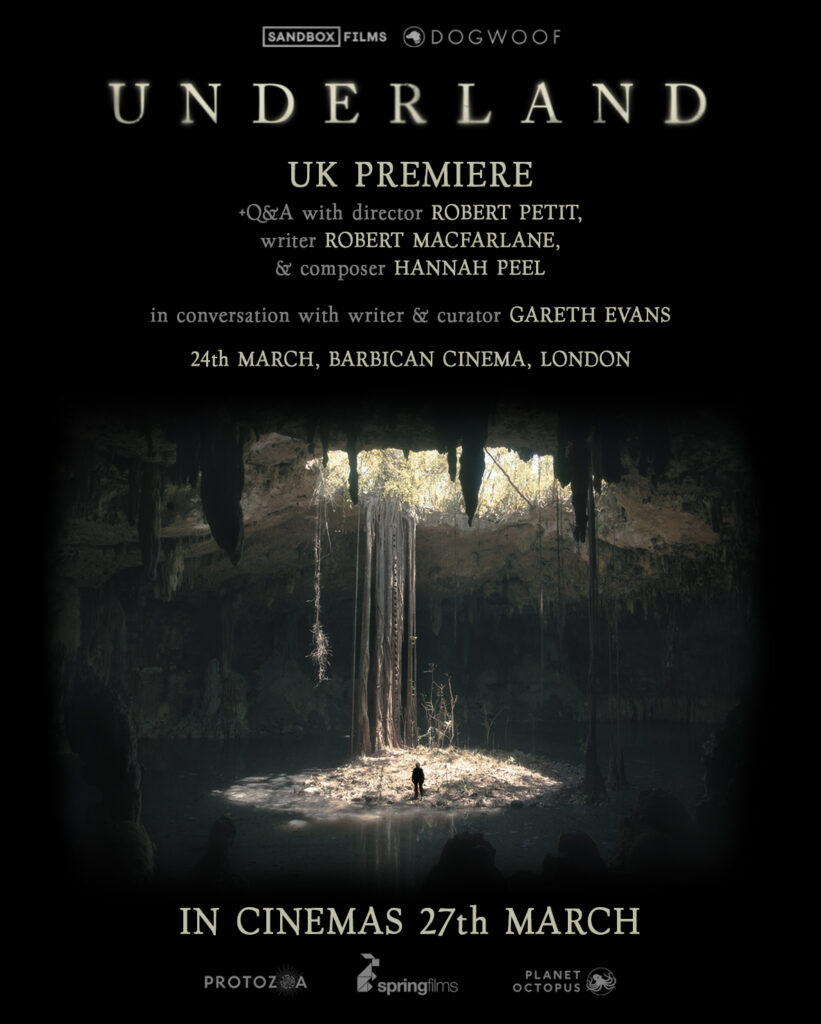
We're very pleased to announce that we will be digitally releasing the film's score, composed by Hannah Peel, on our Rivertones label on 27th March — the same day the film hits cinemas.
The film's UK premiere takes place at The Barbican Cinema on 24th March, followed by a live Q&A with director Robert Petit, author Robert Macfarlane, and composer Hannah Peel, in conversation with writer and curator Gareth Evans. More information and tickets here.
Nicola Chester contemplates a year of cut ties and broken legs.
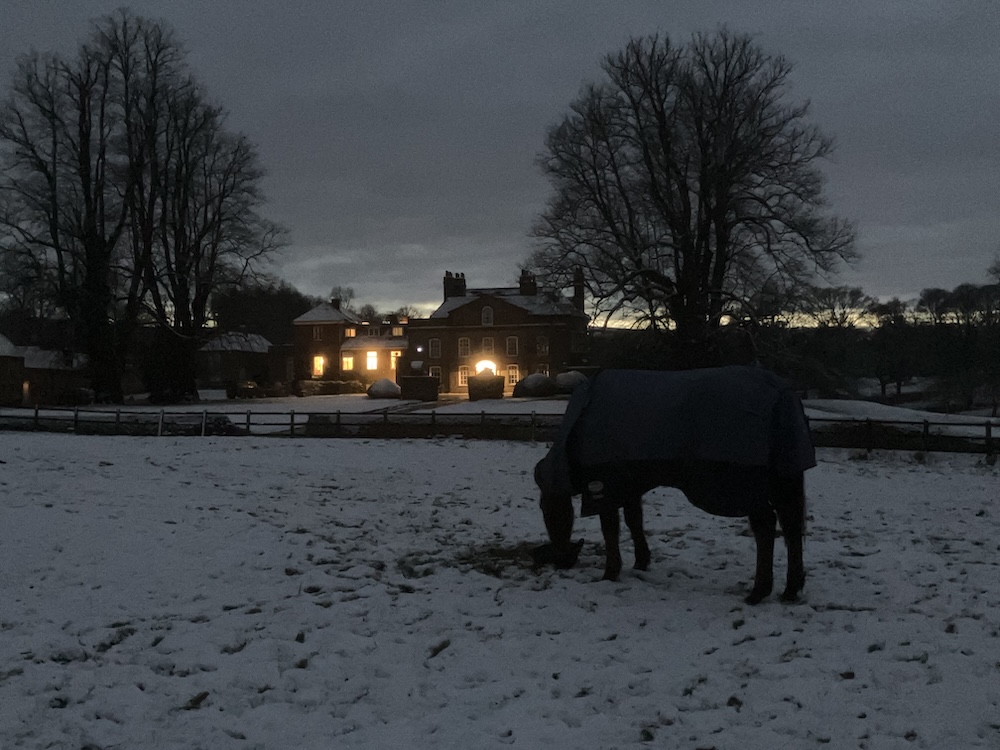
January 2025 already had a label attached to it that read, Big Year. Just before Christmas, a book had been written, things had been decided, things instigated. Huge cogs in our lives as a family, had been set in unstoppable motion. The previous September, I'd handed in my notice as librarian in a secondary school. It was a job I loved, at a school I loved and I knew my timing would badly let them down.
I spent the last weeks working out my notice with a full and overbrimming heart. It was the hardest job I've ever had to leave, especially as I knew no one was taking over from me (though thankfully, months later, someone did). I left, hurt, because of that. Other contributory factors to my leaving — things that I'd suppressed, that were a frustration, a trauma, and that I thought I'd managed to tamp down — smoked and glimmered, threatening to ignite.
But I was leaving because I couldn't do it all. Our youngest daughter, traumatised by years of an educational system that labelled her underachieving and 'failing,' left school trailing a two year record of poor behaviour and punishments, no GCSEs, no rewards and no Prom, though she'd turned up everyday and sat all her exams. Now, the system demanded that, because she'd 'failed,' she must keep trying for another 2-3 years. This entailed an hour plus round trip twice a day for me, because the bus was intermittent, and stopped short by seven miles (and has since been cancelled entirely.) With her situation unchanged, there were still distressed calls to pick her up in the middle of the day.
My new book was due in at the end of the year, and though it had taken three years in the thinking, dreaming, researching and living, was really just over half written. I could no longer simply 'write in the gaps.' The writing demanded more of me, and the spaces in between more pressing things, barely existed anymore. When I factored in the challenge of 2025, it was clear I couldn't continue.
We'd decided to move house. After a lifetime in tied or tenanted cottages, and an unexpected spell of too many adults living in a now too-small house the year before (when our son and his girlfriend came back to live with us a while) we recognised a further and deeper precarity. We were all of us now renting in an increasingly unstable and unfair system. Mum had the solution. If we pooled our life savings (with her contribution far outstripping ours) we could build Mum an annexe in her double garage and move into her now too-big house. There would be a bedroom for all, more space, more company for her and a level of security, at last, for us.
With planning permission granted, work began in March 2025 and we began to say a long goodbye to our estate cottage home of 22 years. The house that raised our children, but had never been ours and never felt it. We have lived in the most wonderful places, but every few months, there would be a shock from some quarter, to remind us of our place and vulnerabilty. It might come from a neighbour evicted to make way for staff, a family member, or a sale to facilitate repairs to the big house's vast and aged, Queen Anne roof; or it might be a contractor coming to do work without our knowledge, being verbally abusive about the fact that he had rights and orders, and we didn't. Our sense of security and attachment to the place were complicated, freighted with a kind of feudalism and deep-seated.
By May, our daughter completed the first year of college, and we all decided, enough was enough. She is continuing her 'education' in other ways. Working where she is valued and supported (Employee of the Year, no less) and building confidence and skills through several local volunteering opportunities, and learning to drive (most days still involve at least two, hour long round trips.) She is far happier. Bright, funny and deeply emotionally engaged with the world, as we have always known her. Mum's little house was finished as autumn began. We'd both used up all our savings, and had a tricky moment when we couldn't, not being homeowners, access any kind of loan, or be guarantor at the same time, for the rental on our son and other daughter's places. Mum could though, so we simply paid her instead of a bank. The builders, a local firm, couldn't have been nicer. We were utterly clueless and they proved the best and most trusted of guides.
In the same week my book, Ghosts of the Farm was published, we moved. The older two children came home to help, and came to my book launch. Each time we moved a bit of furniture the less-than-a-mile down the road, we walked or drove the route between two women's lives that are at the heart of my book: Miss White in the 1940s and 50s, and mine, from the 1980s to the present. There were - are - so many coincidences, hauntings and connections, I am still trying to understand them all.
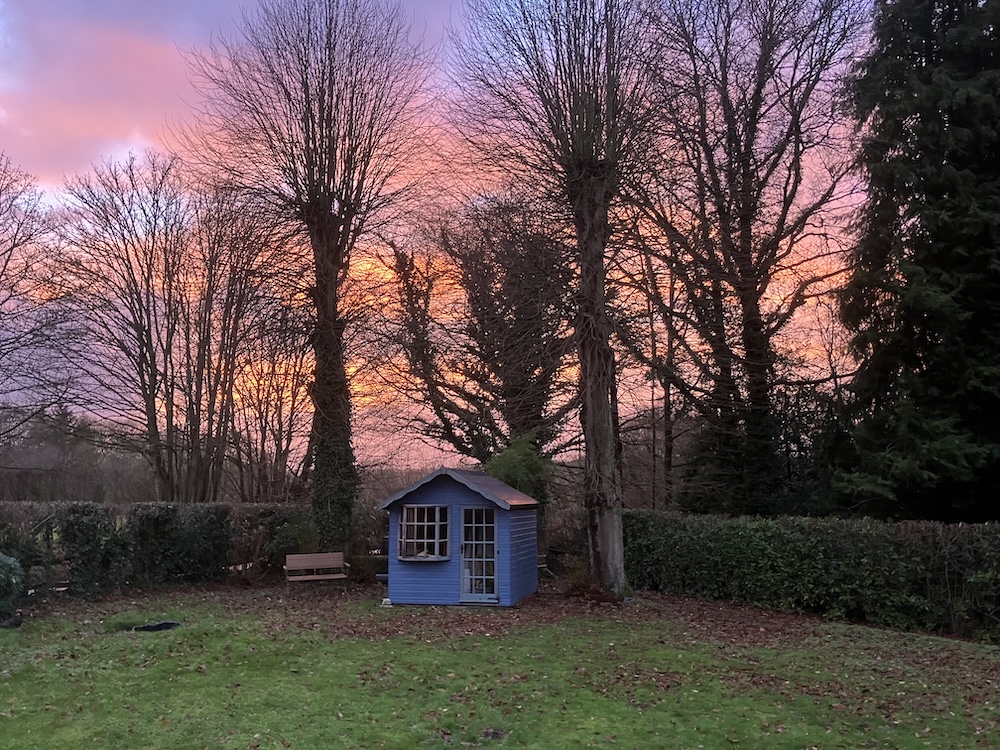
As we moved and the publication process of the book brought a smattering of events and writing opportunities, as well as some online teaching, I begun to feel justified in leaving my other job for the freelance life (though, it has to be said, being even poorer paid than my near minimum-wage school support job, I can only do it because of my husband's wage as a Paramedic.) We settled in next door to Mum's and it felt right for all of us. After a bitter-feeling tussle to get our significant deposit back on our rented house (£1600 on a two bed house with a tiny box room 22 years ago) we decided to move our old horse away from the estate too and finally, cut all ties. It felt freeing, emotional, and raw. Not empowering. Not yet. But the constant chatter in my head, of a lack of agency, worry and being less, began to subside. The dreams - someone knocking on the door, barging past to claim some piece of furniture, sit on the sofa or take some cutlery, haven't left me yet. And won't, because our two older children have inherited both the dreams and the shocking reality of renting in this country. But, we were home and dry.
And then, I had an accident.
Our young dog, Mum's big young labrador, and a whippet, met in the woods: caught a case of the zoomies, and crashed into my lower leg, breaking it before I hit the ground. Mum was stood right beside me. Thank goodness it wasn't her. Two days later, I hobbled into the X-Ray department, and came out in a wheelchair, with my leg in a cast.
I had to stop. I had to let others take over. My husband took all the driving on, fitting it around his work and other commitments in the community and with his parents. Our daughter stepped up to manage the animals, Mum and friends stepped in too. The first four weeks were hard. I could make a cup of tea for myself, but not carry it, or stand long enough to drink it where I'd made it. Subsequent weeks have been better, but boxes remained unpacked, our plans for the house, and the things Mum needed doing, were all on hold. I wrote, and wrote harder to compensate for my inactivity. But it wasn't enough. I read, but it wasn't enough. I had so many ideas, that were both not enough and too many. Finally, I listened to those telling me to stop. To appreciate this time for what it was and think about what had happened in the last 12 months. Finally, finally, I think I did. I hobbled about the house and got to know it. Hilariously, it is a bungalow. The fitness App on my phone (that I never, ever use) sprung to life, concerned about me: I hadn't climbed any stairs in days, now weeks. I was far less active than I was compared to this time last year, last month. I learnt the house's foibles; its sounds and sighs, smells, sometimes. I learnt to stand in the conservatory for each sunset, for ten minutes of just being, a minute or so earlier each day, as the leaves peeled from the trees and pooled, or fluttered into little vortexes in gusts, as we crept towards the shortest day. I watched the wind shift from south west to north and turn the clouds. I watched the morning sun melt a corner frost and the evening sun gild the gulls' bellies, as they travelled home from the ploughed fields, to roost on the lakes in town, doing my commute for me. I watched the rooks commute out from the Farm I had written so much about, and watched them return again at night. I listened to the radio; even, to podcasts. I cuddled up on the sofa with the dog. I had tea with Mum, or my daughter in the daytime. I paused, I cried sometimes, I sang. I healed my leg and wondered what 2026 would bring, with hope and the excitement of simple things. This had been a big year, no doubt about it. But it had been good. We had shifted, with effort and risk, like a cart being pushed out of the mud, piled high with all our precious cargo and meagre worldly goods, and found solid ground. We had settled. I had stopped. Paused. And just before the old anxiety creeps back in to ask me, have you done enough? Have you made the most of this time? Appreciated it enough? I shall write it all down, to be as sure as I can be, that I have.
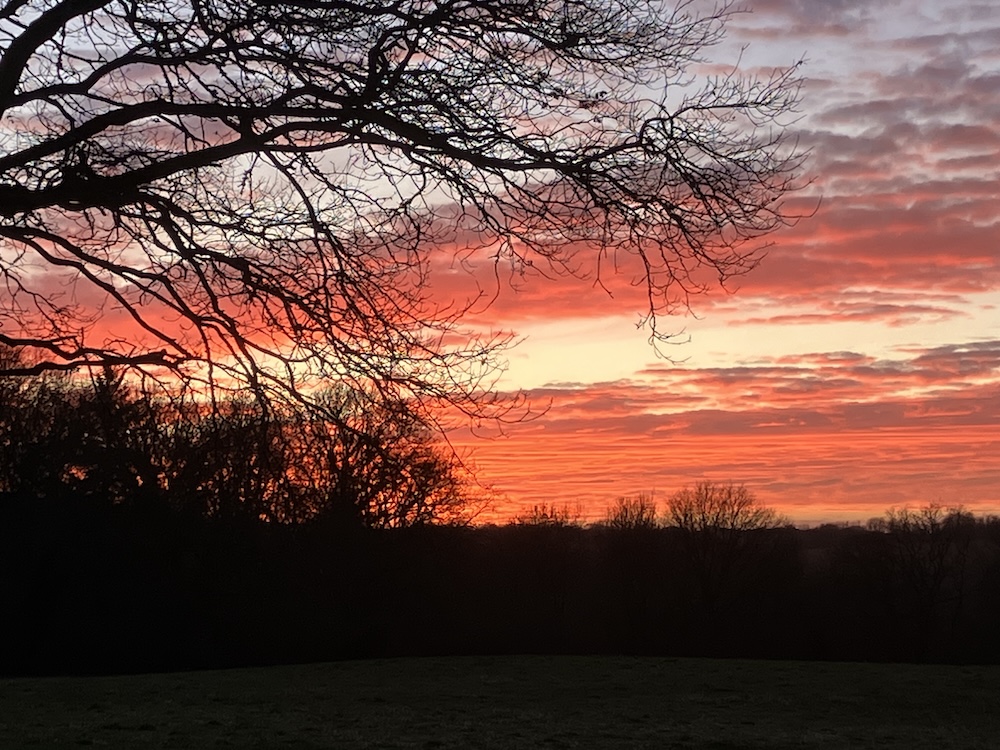
*
Nicola Chester's 'Ghosts of the Farm' was a 2025 Book of the Month.
At Snowshill, Gloucestershire — home of eccentric architect, artist-craftsman and poet Charles Wade — JLM Morton muses on frivolity.
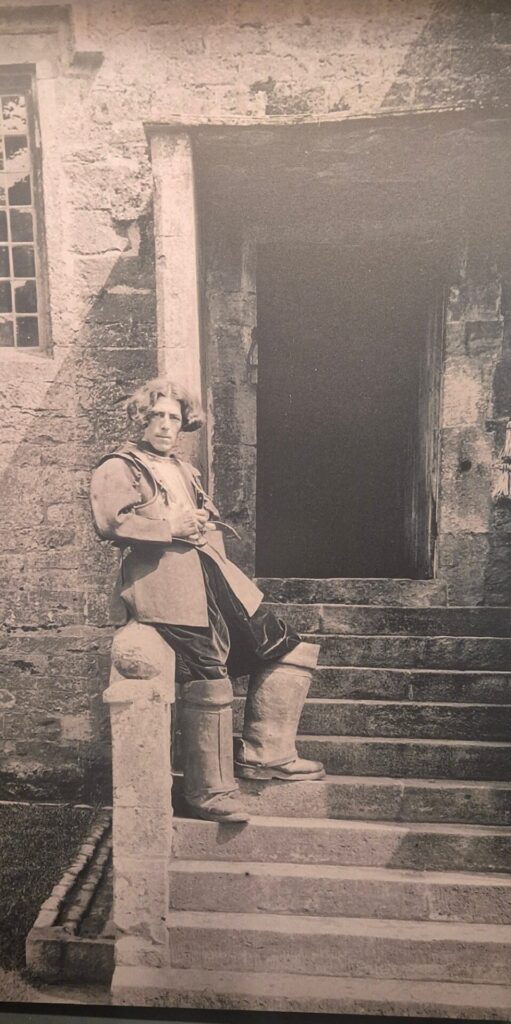
On frivolity
at Snowshill, Gloucestershire
Every single clock at Snowshill Manor tells a different time, every corner of every room giving the illusion of existing on a different timeline. Or, the illusion of multiple timelines existing simultaneously. I suppose that if you could peer into the owner Charles Wade's imagination, you might see his vision for the world as a kind of pentimento, a painting in which earlier images, forms or strokes exist under the image we see now; layer upon layer of human ingenuity and invention, intricate beauty and a version of humanity that is somehow its best expression.
Charles Wade was an English architect, artist-craftsman and poet of mixed-race descent who bought Snowshill Manor, a Cotswold house, in 1919. He donated the house, gardens and their contents to the National Trust thirty-two years later in 1951. His grandmother, Mary Jones, was a free black woman who married Solomon Abraham Wade, a white dry goods merchant and beneficiary of compensation from abolition. He purchased the first of several plantations in St. Kitts in 1850, after which the family moved to Kent, England. Solomon gifted Wade's father the money to buy further sugar estates in St. Kitts in 1879, a business which Wade went on to inherit in 1911, making him independently wealthy.
Charles Wade qualified as an architect but was called up in the first world war and served as a sapper. Combat engineers, sappers constructed trenches and fortifications, cleared mines, dug tunnels and built roads. As a way of escaping the atrocities of the Western Front, Wade turned to painting and drawing. A talented artist and illustrator in his own right, he was said to paint vast imaginary gardens and restore whole landscapes and buildings again in his mind after they'd been decimated by war.
About 3.3 million soldiers died on the Western Front, site of some of the most brutal and costly battles of World War I, including the battles of the Somme, Verdun and Passchendaele. The very architecture of war alone — the trenches, including those that would have been planned or constructed by Wade — were in part responsible for around a third of soldier deaths. Witnessing the horror and destruction of the battlefields was an experience which must have profoundly shaped Wade's character. Records show that he saw an advert for the dilapidated manor house at Snowshill in a copy of Country Life when he was in the trenches himself. Visiting today, the house has the feeling of belonging to someone who's seen devastation and, as a consequence, chose a very different way of being in the world.
*
We visit in August during the drought when the fields are scorched and bleached to their very bones. I have come with my daughters, trying to find things to fill the time in the holidays before an actual holiday, something to fit in between juggling freelance work and childcare. They are tweens now, poised between childhood and a fuller teenage independence — they've outgrown holiday clubs and, though I love spending time with them, it's getting harder and harder to find things for them to do together that they enjoy and I have this lurching feeling that we're mindlessly killing time. Dragging out the days with activities that are just something-to-do, instead of seizing the days and yielding to the utterly unreasonable social pressure to make memories.
Whoever said that the years are short, the days are long was not wrong.
We have a picnic on a bench in the orchard, a hastily put together lunch of cheap crisps, cereal bars and bits picked up on route. My youngest gasps, half-joking, half not,
'Sushi! We must be rich!'
I feel guilty about the tiny plastic fish that's filled with soy sauce and think about it going into landfill or, worse, ending up in the sea like some ghost double of an IRL sardine. Such waste. We watch the sheep grazing in the field beyond the orchard and the red kite circling overhead, its chestnut body glinting with every direct turn towards the sun. After we've eaten, dusky purple clusters of plums lure me to the tree by the fence. I touch them to see if the skins give with ripeness, but the kids have already plucked one each and are making hmmmn sounds about their deliciousness. I bite into the one that's offered to me. It's sharply and retchingly sour and astringent, a drying kind of bitterness on my tongue. A damson. The kids both bend double with laughter.
*
A kleptomaniac who spent his days prancing about the Manor in costumes and playing with objects he'd bought in English house clearances and auctions, Charles Wade seems to me to have been gloriously and wildly eccentric. Yes, the acquisition of private property and the accumulation of wealth through nefarious means has enabled this eccentricity, but there's something interesting going on here. The volunteer on the door tells us proudly that there are no labels to explain the contents of the house. It's up to us to interpret it how we like, which is just as well, because the volunteer in the first room can't remember anything she wants to tell us about the collection and keeps scratching her forehead and sighing.
There are a few costumes on display from the collection — a jester's cape, a beefeater outfit, a dress made of the first copperplate printed fabric that heralded the birth of fast fashion. Cabinets of curiosity are stuffed with trinkets — a test tube of emerald beetles, another of iridescent moths, carved ivory puzzle balls, a fan, a collection of hat pins, a tin chicken on wheels, a laughing buddha, a glass tiger. The kids pull me on by the wrist to look at this, look at that! On the top floor there is an entire room full of bicycles and carts. Penny farthings hang from the ceiling. There are boneshakers and all manner of lethal-looking contraptions and a volunteer leaning forward to tell us about them as we pass briskly by. There is a glass case full of dolls whose eyes follow us around, half a carriage attached to a wall, rooms full of samurai armour (26 sets in all), musical instruments, swords, clocks. It soon becomes bewildering.
'Over consumption,' declares my youngest.
On the wall above the long pendulum of a clock, 'THE LIFE OF TIME IS MOTION' is inscribed on a beam. Charles bought his first acquisitions with his pocket money as a child — among them, three small bone-carved shrines of St Michael.
St Michael, patron saint of soldiers, defender of truth and justice.
Opponent of evil.
*
On the way to Snowshill we stopped at dad's gravestone and pushed back the weeds, found a trowel we recognised and must have left there when we last came. The girls asked me if they ever knew dad. No, I said, he ran out of time. But he would have loved them very much. We cleared the weeds away from the granite, rubbed the dirt out from the lettering and left a small bunch of scabious and sow thistle on the stone.
*
Wade's collection tells of a life of smoke and mirrors. A dramatized life of fantasy and play, the pursuit of every interest. But what was behind it? 'Let nothing perish' was the motto Wade chose for his own coat of arms. A gesture of expansive generosity perhaps, but it's hard not to wonder what ghosts haunted him, what it was that motivated him to gather so much stuff.
The place feels and smells like it needs a good clean; it has the air of an oily wooden spoon languishing in a deep drawer that hasn't been washed for years. Wade's own quarters were not in the house but in a small cottage in the manor garden, consisting of a bedroom and a bathroom which he'd fitted out with a flush toilet and hot running water.
The kids squawk at the desiccated woodlice piled up in the plughole of the bathroom sink. A thick blanket of dust drapes the furniture, the objects, the beams in the ceiling. Outside the pond is covered in algae — the kids comment on that too, 'like bro, you could at least give that a clean.'
I notice the gardens, by contrast, are cared for, the colours of the high summer dahlias and gladioli orchestrated in deep purples and pinks, petunias and verbena tumble from pots that flank the stone steps. The gardener must have been in just this morning, leaving little fresh clippings of grass in the gap between path and lawn. I decide that it's these very imperfections that make Snowshill such a fascinating place. The messiness of it. The celebration of fun and humour, the open-door policy of friendliness, the realism of its chaos somehow seems gently pitched against austerity, against doom, against sober order and moronic convention. A glimpse of a spirit that might hold something we need to know now.
*
The last time we visited Snowshill was with my mother-in-law. We wanted to take her on a day out that would be accessible but out of the ordinary. I remember getting her a mobility scooter from the National Trust reception desk and we cruised the smooth tarmac paths down from the carpark to the manor. Prompted by the birth of our first-born daughter and some gentle encouragement, my partner had reconnected with his mum after years out of touch. None of us knew that she was dying at the time and would have only a few months left to live, but we were aware of making the most of our time together — of making up for lost time. It would be the last visit she ever made to our home.
We were a little awkward, finding conversation difficult and stilted at times, not the free and easy talk we had hoped for. But there was a sense we were prepared to accept that getting to know each other would take time. The kids were tiny; there were years ahead. Reason enough to make the effort.
I think about that reservedness, this stiff inaccessibility as I weave again through the dark corridors and garden rooms of Snowshill — passed off as politeness, it seems to be at the heart of so many family dynamics and so many social interactions too.
What are we all so scared of?
I wonder if Wade recognised and understood this awkwardness, saw it as a kind of failure of the human spirit, a waste of time indeed. There are black and white photographs dotted around of Wade and his house guests posed in fancy dress. Word of his collection spread among writers and artists in the early twentieth century, and he welcomed several famous figures to Snowshill, including J B Priestley, Graham Greene and Virginia Woolf. The photos picture scenes of easygoing, frivolous pleasure and a willingness to overstep social boundaries and received norms. Wade seemed to be able to bypass discomfort and stiff convention by using costume and theatre to orchestrate relations. Was that a further denial of reality, a masking — or, by using disguise, did he offer an invitation to his guests to be even more themselves?
Frivolity is defined in the dictionary as 'lack of seriousness; silly, funny' and we all know, don't we, that frivolity is often enabled by the kind of ease that comes with privilege… but Wade shows us that this world of play can be subversive, a radical reimagining of how we spend the time of our lives, a reframing of imaginative plenty as a kind of pleasure that's a powerful antidote to the apocalypse we find ourselves living through in this year of wars, this year of the unconscionable maiming and killing of children, this year of climate disasters and relentless systemic inequality.
I come away from Snowshill feeling something different about life, about the ways frivolity has been dismissed — most likely because it's 'unproductive' — (yawn) and the ways in which abundance (of creativity, connection, generosity, play) can be not only the reality of our daily lives but the guiding principle.
We take the path down from the flower gardens to the vegetable patch where purple beans are growing in trellises. There are courgettes, rainbow chard, pears and apples. The kids see a tree laden with mirabelle plums at a turn in the path, whole branches sagging with untouched fruit.
They jump up to grab the plums, reaching for the red ones, the sweetest fruits, letting the juice run down their chins and arms, giggling and running on and away when new visitors appear on the path behind us.
*
Image: Charles Wade on the back steps at Snowshill in carriageman's boots, oversized for protection on the road.
JLM Morton is a writer, celebrant and arts producer. Her poetry has featured on BBC6 Music and appeared in Poetry Review, Poetry London, Rialto, Magma, Mslexia, The London Magazine, Poetry Birmingham, The Sunday Telegraph and elsewhere. Her prose writing has won the Laurie Lee Prize, been longlisted for the Nan Shepherd prize and extracts from her nonfiction 'Tenderfoot' have been published in Caught by the River, Oxford Review of Books and Elsewhere: A Journal of Place. Juliette is the winner of the Geoffrey Dearmer and Poetry Archive Worldview Prizes and she is twice a Pushcart Prize nominee. Her debut poetry collection 'Red Handed', was highly commended by the Forward Prizes and a Poetry Society Book of the Year (Broken Sleep Books, 2024). Her second poetry collection is forthcoming in 2026 and her debut nonfiction in 2027. Find her online here.
From the Isle of Skye, Bethan Roberts shares a 2025 of lighthouses and sheilings.
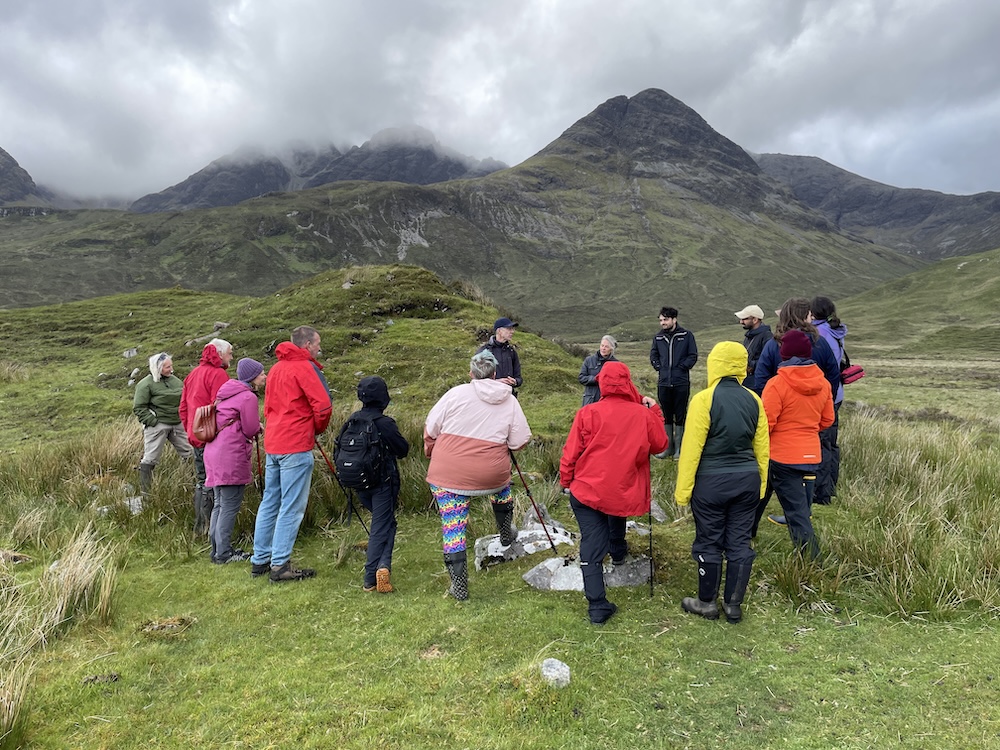
I'd been trying to go to the lighthouse for months. Neist Point, Skye's most westerly point. As one of Skye's tourist hotspots it's out of bounds in the summer months - a long single-track road snarled up with campervans. Into the winter months, circumstances haven't aligned, around work, childcare and the weather. I sometimes envy the holiday makers, at liberty to explore the island - their playground. Skye still comes to me slowly, in glimpses. I know its playparks, toddler groups, the place where all the kids have their birthday parties, its famed beauty spots less so.
*
Instead of going to the lighthouse, I pick up Virginia Woolf's novel To the Lighthouse, published in 1927. It's set on Skye, and depicts the Ramsay family holidaying there, with 'the hoary Lighthouse, distant, austere, in the midst; and on the right, as far as the eye could see, fading and falling, in soft low pleats, the green sand dunes with the wild flowing grasses on them'. Huh? I might not have been out and about much, but this is definitely not Skye. For Woolf describes not Skye at all, but Cornwall, where she spent all her childhood summer holidays - at Talland House in St Ives. There's no clear reason why Woolf chose to transplant Cornwall to Skye as the setting. She'd never been, but knew and loved the writings of Samuel Johnson and James Boswell about their celebrated journey to the Hebrides, including Skye, in 1773. 'The Hebrides are very angry', she wrote to a friend after the publication of To the Lighthouse, and told Vita Sackville-West of how 'an old creature writes to say that all my fauna and flora of the Hebrides is totally inaccurate'.
To the Lighthouse makes the shape of the letter H. This was how Woolf drew it in her notebook - 'Two blocks joined by a corridor'. The opening chapter 'The Window', set on a September evening, and the third 'The Lighthouse', a September morning, are the two blocks, joined together by the middle chapter, the corridor, 'Time Passes', which spans ten years during which the holiday home stands empty - 'So with the house empty and the doors locked and the mattresses rolled around'. I'm reading this chapter when I come across the latest statistics relating to short-term lets (holiday homes) on Skye. There are 1558, 1188 of which are classed as potential dwellings. Of new homes built last year, 18.8% are already holiday lets. Woolf described To the Lighthouse as an elegy, and reading this novel in the winter months, I find there to be something particularly elegiac about the extended, poetic description of the empty house, a holiday home out of season, with 'shrouded jugs and sheeted chairs'. 'Nothing', Woolf tells us, 'could disturb the swaying mantle of silence' that takes hold of the place. Silent, ghostly, empty buildings, 1188, ever proliferating across the island, while people struggle to find a place to live here.
To the Lighthouse was a huge success and with the money she made from it Woolf bought a car. In June 1938 she finally visited Skye with her husband, in, I like to think the same car she brought with the proceeds from the novel, transporting her to its purported location. 'Well, here we are in Skye,' she wrote in a letter, 'and it feels like the South Seas - completely remote, surrounded by sea, people speaking Gaelic, no railways, no London papers, hardly any inhabitants.' Ah, remote, that adjective so often applied to Skye, the source of as much ire as creative responses among folk who live here. 'Rural, not remote' is the slogan. I've definitely been guilty of describing Skye as remote, stemming from subjective experience - remote from family and friends, from familiar places. Step aside from your own experience (if you're not from here) and it doesn't take much for Skye to become the centre of the world, rooted in and radiating a rich culture of song and story.
If Skye is actually Cornwall in To the Lighthouse, then even when Woolf is on Skye she still insists on its sort of elsewhere-ness. 'Believe it or not, it is […] so far as I can judge on a level with Italy, Greece or Florence', she writes. 'Remote as Samoa, deserted: prehistoric. […] Hardly embodied; semi-transparent; like living in a jelly fish lit up with green light.' There is a lack of a tangible, grounded sense of Skye - indeed it's 'hardly embodied', although the evocation of the lit-up jelly fish is beautiful. She finds Skye not entirely 'deserted' (although there was indeed a population low in the 1930s, the clearances compounded by losses in WWI) - she records encountering the 'nice red headed brats' of the MacLeod clan at Dunvegan castle, and how 'the old women live in round huts'. Yet for Woolf, the interest and beauty of Skye is 'almost entirely colour, very subtle, very changeable, running over my pen, as if you poured a large jug of champagne over a hairpin'. Skye gives her the sense that 'one should be a painter'. In To the Lighthouse the character Lily Briscoe is painting a picture, in 'all its greens and blues, its lines running up and across', albeit not one of place. Lines and colours run across pens and canvases and postcards.
Woolf's layering of western points, Cornwall, Skye, one atop the other, prompts me to think through my own relationship to the west, and with the west, comes 'Celtic', comes matters of language, branching into Irish, Scottish Gaelic and Manx - Goidelic or Q-Celtic languages - and Welsh, Cornish and Breton - Brythonic or P-Celtic languages. I grew up in northeast Wales, borderlands, and with that comes an uneasy relationship to place. My mother English, my father Welsh. But we've always headed west, my dad with his roots in northwest Wales, in the Conwy valley. He's a Welsh-speaker, but didn't pass the language on to me and my brother. It's a familiar story up here too, the loss of Gaelic. The colonial lies. The language will hold them back. The language has no future. Moving to Skye has in a sense brought me closer to Wales and to Welshness, or perhaps has brought home to me more persistently the deep connectivity between language and place. I'd always thought I'd move back to Wales, finally learn the language properly. Here, instead, I start Gaelic classes, and ride the various waves and surges of closeness and absence, longing, belonging, unfamiliarity, loss. Lostness.
I had most of my own family holidays as a child in Anglesey, Ynys Môn, the island off the northwest coast of Wales. My parents first took me when I was six weeks old and I've been to the island at least once a year since, perhaps missing a year here and there. Anglesey will always be imbued with that glow of childhood memory, to me. Golden sandy beaches, slate-blue seas, gentle green rolling farmland, shelving down to dunes and across clifftops. Hedgerows knitted with hawthorn, ancient sites, gorse. Snowdonia, Eryri, beyond the fertile flatlands, protective. I took my daughter in the summer, caught her too running in that golden glow, it glancing off her, a mirror held up to the past. Time passes. I wonder how her connection to place is being written, growing up on Skye, her Gaelic better than mine.
*
While I didn't make it to the lighthouse, I did make it to the sheilings this year. Shielings were something I'd come to hear about living on Skye but I didn't really know much beyond the name. I signed up to a walk organised by local organisation ATLAS Arts to Àirigh na Creige, 'the shieling of the rocks', in May. The walk was led by landscape archaeologist Michael Given, and Eilidh MacKenzie, a musician, visual artist and educator from north Skye. The walk is given the name 'the soil remembers', and we learn how the soil holds the memory of the way the land has been used in the past. The walk starts near Torrin, a beautiful part of Skye that feels sort of secret, accessed by an easy-to-miss turn off from the main road at Broadford. The road snakes down to Elgol, curving tightly around the top of loch Slapin, the bluegrey shape of Blà Bheinn, outlier of the main Cuillin ridge, stamped on the horizon to the west.
We learn how, sheiling, àirigh in Gaelic, is the name given to the summer pasture and little turf and stone bothies used during the summer months, where livestock were taken to pasture, while women and children lived in the little bothans, milking cows and processing milk into butter and cheese. Eilidh tells of how Gaelic oral tradition remembers shielings culture fondly, a welcome change of scene and routine. We're led to the site of the shielings at the flat valley bottom between the head of loch Slapin and the base of Garb-bheinn, rising grey to green to meet the sky to the fore of Blà Bheinn, the stream, Allt Aigeinn, running down. Over seventy structures are recorded here. I would have totally overlooked this place, but Michael shows us what to look for and how to identify the sites, through the vivid bright green patches of grass, despite the decades of disuse, still verdant from all that manure. As Eilidh notes, it's a colour described by the Gaelic word gorm, seen differently through the lens of language. I can't help but compare this experience of green with that of Woolf, her 'jelly fish lit up with green light'. This green, gorm, grounded, a tangible sense of the past, the memory of how the land was used held and seen in colour.
Later in the year, Eilidh's exhibition of Skye shieling culture opens, 'ùir-sgeul | earth story'. It's beautiful exhibition, bringing together a large variety of materials, the fruits of extensive research and deep care - songs, stories, maps, archaeological reports, as well as materials found at sheiling sites. Eilidh's own artworks also form part of the exhibition, in which she uses pieces of peat, heather and bogwood. It is the ultimate art of place. I'm much better at interpreting words than visual arts, but the colours, dominated by browns, greys and blacks, are those of earth, rock and stone. I see the way the soil remembers, the bothans then and now, the Gruagach stone, the deep connection to and understanding of place, of stone touched and felt, known, lichen, and the mountains rising too, rock on all scales, from all sides.
In her excellent chapbook accompanying the exhibition Eilidh recalls sitting in a shieling bothy, which she likens to 'being in something of a portal'. She writes:
It's a tangible connection to a bygone time of which almost nothing else remains. […] The last people to shelter within the walls of these huts would have had a relationship with the land that was built on generations of indigenous knowledge and communal living, and understood their animals and environment in ways we are no longer required to learn. The sense of loss in these terms feels overwhelming, and not just the loss of the indigenous knowledge and language so intrinsically connected to place, but a way of seeing and being that was completely shaped by belonging to the land.
Her exhibition captures Skye's sheiling culture from the brink of loss, holds it in the present. She also writes of how such aspects of Skye, in danger of being forgotten, are overlooked by the shiny machinations of mass tourism today. Nearly five years into life on Skye, I'm still a tourist, really. Glad I never made it to the lighthouse. Glad I made it to the sheilings.
*
You can read Eilidh's chapbook (to which this piece is indebted) here.
Bethan Roberts is a freelance writer, researcher, and editor living on the Isle of Skye who enjoys thinking and writing about nature, literature, music and film. She is the author of 'Nightingale' (Reaktion Books, 2021) and is currently working on a book about life on the Isle of Skye.
At home and abroad in 2025, Daniel Williams found his perspective framed by trees.
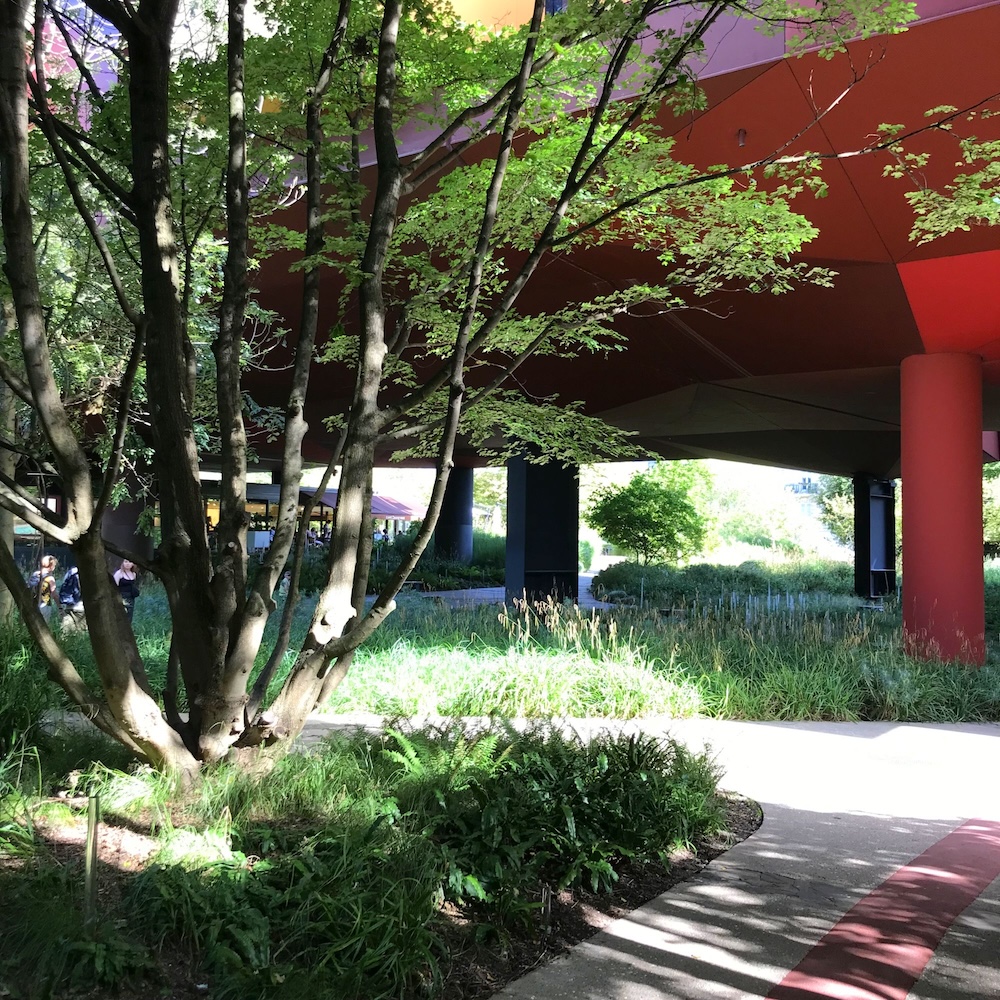
Caught by the Seine
I don't travel as well as I used to do. I've become so rooted in the heathland common landscape in which I live that I find it increasingly hard to leave, for fear of the hiraeth I will experience when elsewhere. Even with the routine of work and chores, home is where I feel most myself, where I can shift at a moment's notice from those obligations into time to walk and think and write and be.
My perspective is framed by trees. I identify strongly with the ones which bound and surround me - the slim, wild Scots pine at the bottom of the garden, its supple trunk bending with the winds; the magnolia echoing one which stood outside a childhood home; and the sweet chestnut and English oak just beyond the front gate. I look out upon them and wrestle with words until their shape on a page pleases me, if no-one else. Increasingly I'm a gnarly old oak myself, mindful in this mast year of the continuation of the species, trying to be as productive as I can, spreading out a carpet of acorns beneath my canopy. Robert Forster once described the unwillingness ever to leave where you're from as a 'Cat's Life', a thing he couldn't understand, until he could. Something of the feline seems to have come over me.
Nevertheless, I do manage to tear myself away from home from time to time, and this year took trips to Manchester, Newcastle and Paris. Inevitably, having made the effort to travel, I find myself inspired and enthused by the differences from my daily lot. A professional interest had me visiting Manchester's Mayfield Park, created around the cleaned-up River Medlock, and noting green walls and other elements of beneficial urban design in Newcastle. We are adapting our cities to the climate, knowing now that we have to do so alongside decarbonising, balancing realism with the hope that we must try never to lose in the face of our bloody-minded attempt to extinguish life on earth.
The same attempt to make the urban realm more resilient and biodiverse has been happening in Paris since I last visited. The Seine has benefitted both from traffic being rerouted away from the bank, and a billion-euro clean-up of the water, so that this year, after a century-long ban, public swimming is once again allowed in the river; the Olympic Games was just a staging post in the environmental effort. It's a much greener city than it was. Seeking relief from the summer heatwave, I'm struck by the oases that have bloomed under Mayor Anne Hidalgo's transformative administration. While you can still find plenty of examples of clipped, boxy shade in the formal gardens and parks, there has been a move to more naturalistic planting, softening the streetscape, making it more inviting, not to mention cooler, and ultimately more resilient to climate change. And then there is Paris Respire. Paris can indeed breathe every Sunday, due to the car-free scheme launched in 2016 and still going strong.
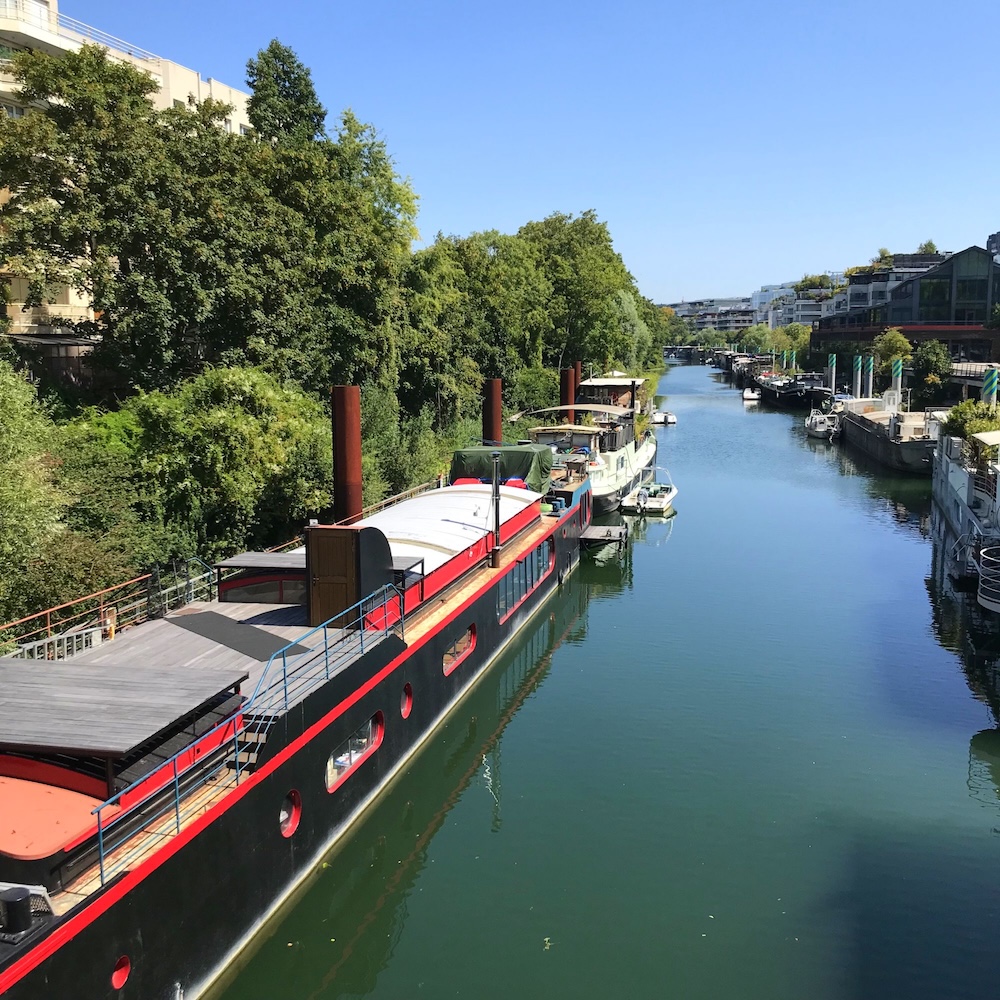
In the August heat, we drift by the Seine where once cars used to rattle along. It's been fifteen years since my last visit to Paris, and thirty-odd since the first. Inevitably memories are awoken and reflections set in motion as the sun glints and plays across the rippling surface of the water. Moments where my path and the Seine's intersected, here and downriver in Rouen and Le Havre. On the passing of time; how cities change and yet somehow stay the same; the Babylonian pleasures of language; and the nature of parental influence (or otherwise), for my daughter is about to start living and working in this fabled place.
If I can claim any influence over her embarking on a second half-year stay in France, three decades after my own six-month stint, it's to have helped foster a perspective which looks out from our island and doesn't imagine the coast as walls. When I was growing up, France was little more than a once-visited campsite near Calais with an on-site restaurant which served up andouillette (sausage made from the lower intestine of pigs) to my unsuspecting brother. The language I was learning at school was an academic exercise, a Molière stage play, not a living, breathing thing. Thinking back, the real source of my Francophilia was likely the Style Council, through both the piano-heavy À Paris EP - the cover of which features Paul and Mick looking impossibly cool next to a fountain with the Eiffel Tower in the background - and the torch songs and Gallic jazz inflections of the Café Bleu LP.
Inevitably we pass something of ourselves onto our offspring - genes, tastes, attitudes, perspectives, opinions - even if we are wary of that process. But as often as not they define themselves for themselves - neither in contrast, nor as updated replicas, but through the trial-and-error process of opportunity and engagement with the world beyond home. This I like (music, gymnastics, languages). This I do not (football, scratchy indie records from the 1980s, blue cheese). Music was always in the air, but it wasn't force-fed. My daughter's taste is very much her own, not that of her parents, save for a grounding in Gershwin and the Beatles with a dash of Tracey Thorn (singing not 'The Paris Match' but Tinsel and Lights). Equally she is now creating and defining her own version of Paris, free of the influence either of The Style Council or Georges Perec. And while I hope it'll be a while before she settles into any kind of cat's life, that's her call.
*
Visit Daniel's website here, or follow him on Instagram.
Love Caught by the River? Wish you could undertake a paid membership to read our delicious bonus content, but just can't afford it at the moment?

Before our first subscriber-exclusive of 2026 goes out, we're making a year's worth of paywall access available to 15 people free of charge. Please note that these places are intended for low-waged/unwaged readers who could not otherwise afford to pay to access our bonus material.
Bonus content comprises an in-depth interview between CBTR contributing editor Tallulah and the author of each of our Books of the Month, plus the imminent addition of a new regular feature celebrating the passing of the seasons.
Email info[@]caughtbytheriver[.]net to claim, first come first served, no questions asked. That's all there is to it!
Anton Spice measured 2025 in bell strikes and ancient ice.
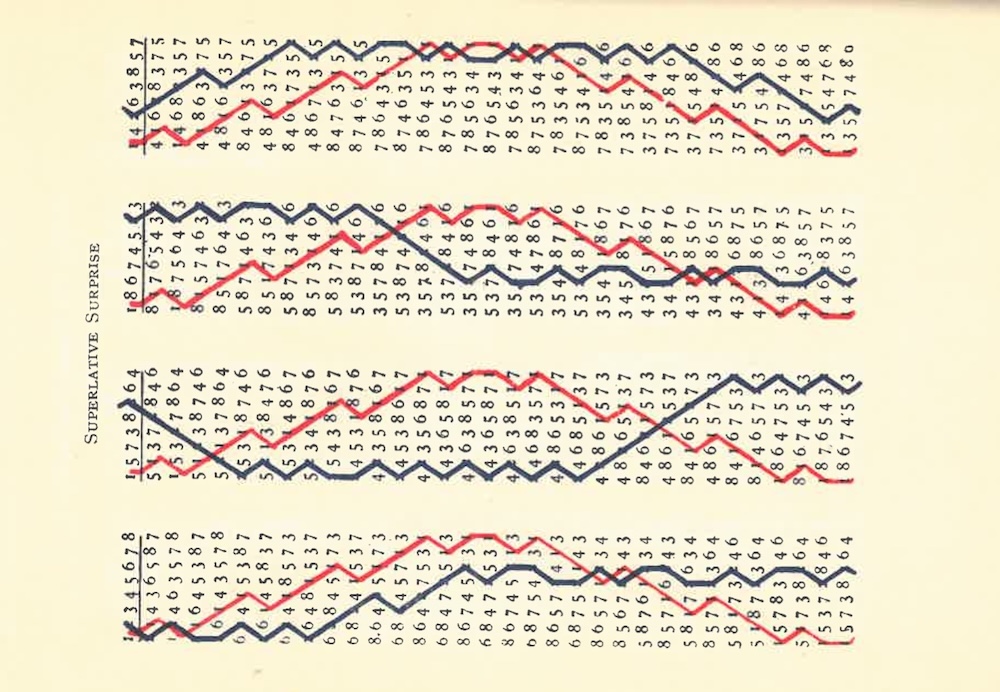
'Feeble was the sound they made … on frozen nature's winter omnipotence.'
I've spent the last few months of the year reading the 600-page epic Independent People by Icelandic author Halldór Laxness. First published in 1934, it follows the fortunes - or more accurately misfortunes - of shepherd and farmer Bjartur of Summerhouses, who spends much of the book and the decades it tracks fighting in vain to retain a very particular version of his independence, often to the dismay and suffering of those around him.
Independent People is a book about the crushing inevitability of capitalism at the turn of the 20th century, about the power of superstition, nature, industry, politics and economics being greater or more irresistible than the power of the individual. Life on Bjartur's remote croft in the Icelandic countryside begins in myth and magic and ends in debt and legislation. Progress pokes at the edges of his world and then marches straight through it. A road is built, Christianity is taught, local economic systems are replaced by wider co-operatives, and the effects of war and revolution ruffle a community that was until then entirely self-contained. America appears on the horizon. Loans accumulate. Sheep, cows and children are born, raised, and buried. And throughout it all the only thing that seems to make life worth living is drinking inexplicable quantities of coffee.
I don't live on a remote Icelandic croft, but I do feel like rapid change driven by forces beyond my control is accelerating. As a writer, I feel like I am being constantly asked to adapt and adjust my relationship to the to the tools I use and account for the work I do. And I too feel a Bjartur-like resistance rising in my chest whenever I am asked to contend with its coming impact. In response, I've found myself drawn to longer arcs.
In November, I made a trip to the John Taylor & Co. bell foundry in Loughborough, which is the last remaining bell foundry in the United Kingdom. The workshop and tuning rooms feel Victorian. The casting hall, positively medieval. Forges are atavistic places, the elements in which they trade outdate the bells they cast and outdate the very notion of time that we cast bells to keep. Return clients at the foundry can be three or more generations apart. Most of the cathedrals in the UK have had their bells restored in the last hundred years, and as such won't need them looked at for another few hundred. New bells are not in demand, but I have come to see a casting.
It's cold up on the gallery. I am a good thirty years younger than everyone else here. Below us, a furnace burns green hot. Fired up to a temperature of over 2000 degrees Celsius. We wait in anticipation for the temperature to reach the requisite level. One by one, the founders enter the room, nodding to one another that the time has come. They gather around the furnace, pull visors down over their eyes and gloves up to their elbows. Their movements are choreographed and perfectly timed. The molten metal is tipped on a pivot into a large vat that is suspended from the gantry. Sparks fly and smoke rises.
Once the final drops have been poured, the vat is winched down the centre of the room towards a sand pit, where the chimney of a bell mould is poking out of the ground. John Taylor are one of the few foundries to still cast their bells underground, a nod to the itinerant founders who used to travel the countryside, digging holes and casting bells in churchyards as they went. The founders assume their positions. The wheel is turned and the vat tips forwards, slowly emptying its contents into the top of the mould. Instructions are given to speed up. The regularity of the pour is essential to ensure consistency in the metal, and therefore also consistency in the tone. Solid turned liquid turned solid. The bells are made to withstand up to a quarter of a million strikes a year. For hundreds of years. Millions of strikes. Everything about them speaks to a scale beyond the human. Rarely seen, always heard. Too heavy to move, too solid to break, exhumed from the earth like ancient relics in an act of high ceremony. Archaeology in reverse.
There are 8,760 hours a year. If a bell strikes the time of each hour, it will strike 156 times a day and 56,940 times a year. According to the Office for National Statistics, I will live to be an average of 84 years old. Such a bell could toll 4,782,960 times in my lifetime. After which it could outlive me by a thousand years.
Shortly before my trip to the foundry, I spent a day at the British Antarctic Survey ice core laboratory in Cambridge to record the sound of the world's oldest ice being melted and analysed. Scientists use ice cores to reconstruct the relationship between atmospheric CO2 and temperature change that has been the basis for our understanding of human-made global heating. Until last year the longest continuous ice core record dated back 800,000 years. This ice is thought to be double that, anywhere between 1.5 and 2.5 million years old.
At this age, the ice has been extracted from a depth of several kilometres, each centimetre of which is said to account for roughly 500 years of highly compressed snowfall. The samples are cut to size and fitted vertically into a plexiglass scaffold and slowly lowered onto a hot plate where the air bubbles and water droplets are separated for analysis. It gurgles as it goes. The ice is melted at 1.5 centimetres a minute, meaning that every hour, 45,000 years of environmental history melts away before my eyes. So how many bells is that?
Ice cores are regularly referred to as archives because the molecular information they contain take us back in time. Since the Industrial Revolution, CO2 levels have rocketed to heights not seen in a million years. The scientists at BAS are now just waiting for the temperatures to catch up. Maybe Bjartur was right. Time for another coffee.
*
Find Anton Spice's previous work on Caught by the River here, and follow him on Instagram here.
2026 will be the year of looking to your neighbour, writes Cally Callomon.
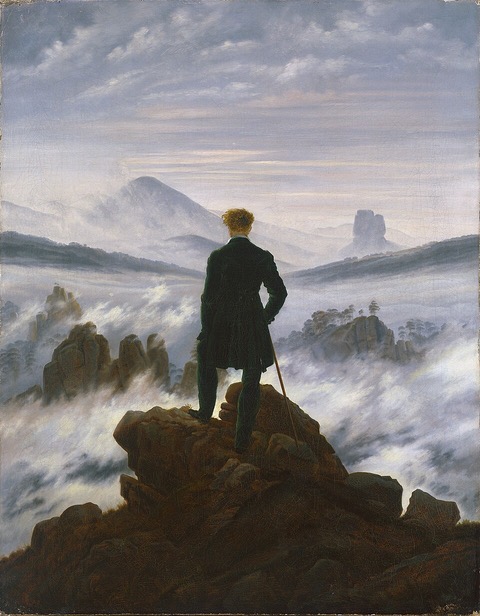
Shadows, Reflections and Ponderings above the sea of fog
or
Flashes From The Archives Of Oblivion
(How things actually do fall apart — but only if we allow it)
30 nine-year-olds sat at their desks in Primary School, me at the back, and we listened to Miss Raine ask us who we thought 'They' are in response to someone suggesting that "they should ban them from the toy shops". Thus Miss Raine introduced the concept of there being no 'they', no us-and-them. Only us. A life lesson learned — two words henceforth to be used judiciously; both 'They' and 'Should'.
Breakfast, a week later my father tried to explain to my older brother that the red plastic toy soldier that was included in the Kellogg's Corn Flake box was not actually 'free', that we had paid for it over all the previous Corn Flake purchases. "But it says it's free" argued my brother, who never understood. He went on to be a financial consultant arranging mortgages. A life-lesson learned: nothing is ever free.
Teatime a week later my mother quizzed why I thought The National Front was making the world a better place and I had no answer for that. Politics was big at our table. A life lesson learned: we must embrace the otherness of others.
My mum ran a tight household budget. I wanted to borrow money to buy a cassette recorder so that I could tape concerts. The parents never loaned me a penny, I had to save up my paper-round money, buy it outright and now I have cassettes of those bands I surreptitiously recorded, copies of which I sold to classmates and a life in the music industry followed. (Strangely none of my pals wanted the recording of Can at The University College London "it's just drumming" they said).
A life lesson learned: Home taping wasn't killing music.
I probably learned a few more things at that age where a developing brain is open to ideas, influence and imagination, before the great shut-down of our thirties forgot so much of it and we failed to acknowledge the privilege of a welfare state, of health and happiness, of not having our houses demolished by pilot-less drones.
2025 — this was the year of a country wanting something for free: lower taxes yet more public spending. The Americans would say "go figure" or "do the math(s)". If we don't get this we will blame 'them' and we'll make the world a worser place.
This last year seems to be the time when things that were threatening to fall apart fell even further apart. We have benefits creaking at the seams, benefits my parents fought hard for which we sold off on the open market whilst we built nuclear power stations and railways we cannot afford, yet seem oblivious to the needs of communication and how simple these could be if only my Suffolk home could get a 'phone signal more than one blob, could stream things beyond a buffer and could get a DAB signal for the wireless that didn't keep submerging into an audial fishtank. I then tell myself not to say that "they should…"
We make our own entertainment.
Author, broadcaster and MP (before he saw the folly in that) Rory Stewart's new book Middleland concerns itself with his early days in Westmoreland where he worked as a reporter on a local level. Like my Suffolk a county of dissent, Westmoreland is a place so cut off from The Central Government Of They one has to think and act along local lines. He writes how a local community knew it needed more homes (not 'housing') especially for those who were just starting families, and so the local community chose the site (making it harder for objections) approved the planning, and built the homes using local labour, before setting up their kids to live in them.
I dearly hope these are not seen as rungs on the obscene 'housing ladder' not 'starter homes' but are seen as homes forever. Stewart goes on to describe the much needed, and oft-disregarded localism as a way to run a household (like my mum) and thus to run a community, town, county, country, and, yes, a continent we somehow still call Europe.
By doing that we may see migration as a world problem, one that has existed for millennia, the solution and accommodation to which has to be solved on a global, yet local level, much the same as the perils faced by our environment — which must include humans in that misleading word 'nature'. As long as we see outsiders as others we are doomed.
Not long after I was nine I got to see Roy Harper play for free (it WAS free, it said so in the Melody Maker) in Hyde Park. The rest of my sixty years has been spent with Harper at my side. He's a good deal older than me but he managed a second leg of his farewell tour this year. Though I had tickets for his Birmingham Symphony Hall concert — the usual rowdy celebration of all things Roy — I somehow managed to see him in a tiny pub in Clonakilty beforehand. Something I won't ever forget.
As I get older I find music suits pubs better than almost any other venue. Where I am we are surrounded by fantastic thriving pubs, so many of these pubs host sessions in them, 'big' names drop by to play, and if this local intimate setting is our substitute for some vacuous arena on an industrial estate then I know where I'd rather be.
To get into these pubs requires no 'dynamic pricing' ticket, no internet scramble, no bag search, no queue at an overpriced 'merch' table, no jostling for beers at London prices, no pillock next to me on his phone checking his share prices, and no missing the last train home complete with bus replacement service.
Somehow the year's fog grew denser. A welcoming embrace with the ever-thrilling recent Burial release of Comafields / Imaginary Festival. At three minutes shorter than Nick Drake's 28-minute epic Pink Moon, Bevan the Burial makes music with the listener uppermost in mind. This is true folk music, the sound of south London in collaged shrapnel and indistinction once again served up as an enigmatic soup.
When desperation sets in and we crave clarity, sometimes the opposite reassures us that the solution is up to us alone. 2026 will mean look-to-your-neighbour — keep it local on a global setting.
Dan Richards reflects on a year of sharing stories of darkness and light.
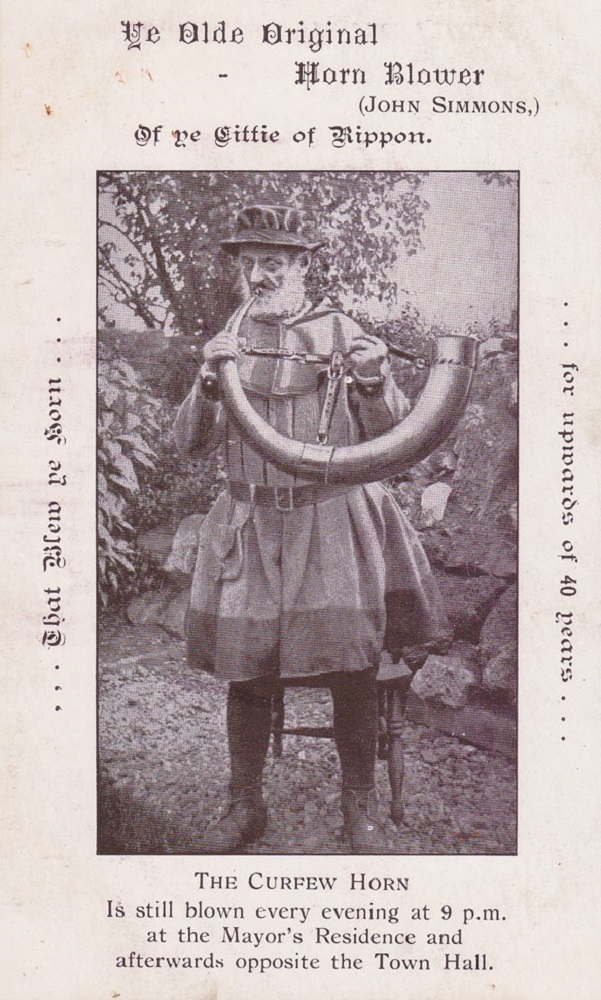
2025 was a strange old year, quite a lot of which I spent on tour with Overnight, a book which sought to shine a light on the work, care, dreams and wildlife afoot whilst most of us sleep.
It's weird touring a non-fiction hardback because, inevitably, things change - the world doesn't stop or remain in place just as and because you wrote it down - so as I went around having conversations and telling stories, I was constantly having to tweak and update my narrative.
Some things came to an end, even before the book was published.
In Autumn last year, Royal Mail ceased operating mail trains. The final East Coast mainline service ran on June 14th 2024, piloted by driver Keith Buckley, in whose cab I rode as part of my Shadows & Reflections of 2023.
The age and increasing maintenance demands of the trains, the difficulty to obtain spare parts, and the cost of electricity were all flagged as key factors in Royal Mail's decision to move away from rail transport in favour of road and air. 'Only 3% of mail is transported by rail', a press release explained - as if that wasn't a decision Royal Mail had made - before noting that no jobs will be lost because rail staff would be redeployed driving lorries; all of which rather suggests that Royal Mail is aiming for Net Zero in the same way I daydream about a Nobel Prize. Altogether, a rather abject slipshod end to a historic storied service after 194 years.
In happier news, 2025 marked 100 years of the BBC's Shipping Forecast. Announcers Ron Brown and Viji Alles came along to Overnight's London launch and Ron read from the Late Ships chapter to a spellbound Brick Lane Bookshop. I also had the pleasure of sharing a stage at Hay with Meg Clothier, whose book celebrating a hundred years since the first broadcast is a maritime marvel.
Sadly, in a very BBC move, perhaps anticipating jollity and anxious to both-sides-it, as of April 1st, 2024, the Shipping Forecast was cut from four daily broadcasts to two on weekdays (00:48 and 05:20) and three at weekends - the daytime long wave-only transmissions at 12:04 and 17:54 are no more; a loss to listeners of Test Match Special and analogue sea dogs alike.
Bat numbers at Buckfastleigh crashed shortly after my first visit - at which point, I really did begin to feel like a nocturnal Jonah. Although the cause turned out to be more Strigiform than Cetacea.
'Owls moved into the roost in 2024,' explained Pam to a packed-out room at the East Gate Bookshop, Totnes, on the evening of Overnight's publication. 'They disturbed the breeding females who tried to move to nearby roosts, but were there too disturbed by owls, so fled.'
Most of the main South Devon roosts are monitored but no substantial increase in numbers was detected, so nobody knows where the bats went or where a large number may still be. At one point only 12 bats were counted in Buckfastleigh on a summer night when several hundred might have been expected.
Thankfully, numbers have since increased. Speaking to me in September 2025, Pam reported 'seeing about 500 in our usual spot, so I'm estimating that 1,200 have returned to the roost', which is great news.
Many other good things have happened, fresh dawns.
2025 is the 80th anniversary of Tove Jansson's first Moomin story so I was doubly delighted to publish an account of ice fishing on the twilit Baltic with Marie Kellgren and her father, Viking, in a recent issue of Scotland's excellent Gutter Magazine.
'Some big changes' Marie emailed me last month, 'I'm not fishing anymore, dad still does with Grandpa [but] I got the opportunity to work for Martha.' - The Martha Association, a Finnish non-profit citizens' organization founded in 1899 with the aim was to promote public education among women across Finland - 'So I'm now working with a Smartfish project teaching kids in school how to prepare and make food out of fish. It's been really interesting and I get to see some more of Finland as well.'
Congratulations to you! I wrote back. Your knees and sleep patterns must be thrilled. Good luck!
Once I'd hit SEND, I sat for a while recalling the bite of the Finnish winter, the roar of Viking's chainsaw cutting holes in the ice. Hard work, long days through the sunless Winter months; the blinking lights far out at sea, the trees of Pellinge doubled-over with snow in the blue-dark of January.
The crews of Anstruther RNLI and HM Coastguard helicopter Rescue 912 continue their 24 hour vigils, ready to deploy and race to those in peril and distress.
The outreach teams of St Mungo's are out every night of the year as ever more people turn up on the streets needing help. The front page on their website is frank about the UK's current homeless situation: 'Rough sleeping is on the rise. With the increased pressures of the cost of living crisis, we need to prepare for this to continue.'
No light without darkness.
Following a book talk in Bristol, I received message:
When I read about the book, the excerpts and descriptions resonated so much with my life (night owl, working in A&E, a trainer for those working in sleep studies) … we aren't the heroes everyone thinks but real people who struggle to find worth and peace in a chaotic world. I was a classicist who left to become a medic so I could be useful to the modern world. It's made the pandemic (and memories of it) manageable. Good luck on your tour.
Last week, after a Manchester event with the brilliant Jean Sprackland, another:
I just wanted to send you a message to say how much I appreciated you sharing your experiences while in critical care at the event this evening. I'm an anaesthetist and have a lot of those kinds of conversations & it's so valuable to hear and be reminded how it feels from the other side. I'm so sorry that it felt lacking in comfort - for some people we're the last person they ever speak with & the weight of that is something I think about often…
These are two of many.
What can we all do with these memories, this trauma carried by people within and without our creaking systems of care?
The news cycle that rolls on and over us all - the deathly euphemisms, lack of accountability; the way people talk of the end of the world like it might be avoided, might never happen, when it's happening every day and night to someone, someone's family.
With this in mind, in 2025 I've tried to find and celebrate the good and humane, help those helping even though it sometimes felt futile, and find and share stories of connection rather than schism - because it's all fun and games pointing out how fucked everything is, quite another to soothe and unify, amplify a sense of belonging.
I've found strange and galvanising connections in all sorts of odd places but perhaps the most affecting occurred after an Overnight event with the brilliant Rozie Kelly in Ripon, North Yorkshire, I stood with a small crowd of onlookers to witness a hornblower 'set the watch', an ancient ceremony dating back to AD886 when Saxon King Alfred the Great presented Ripon with a horn after granting the city a Royal Charter.
At 9 o'clock every night of the year, without fail, a horn is blown at the four corners of the obelisk in Ripon's Market Place to announce that a watch has begun against crime and disorder. The horn is then sounded three times outside the mayor's house to confirm that the watch has been set. The tradition commemorates the time in the Middle Ages when Ripon's first citizen, the Wakeman, was responsible for crime prevention in the city from 21:00 until dawn - an early law enforcement officer who pledged to ensure the peace, enforce a city-wide curfew and compensate any victims of burglary on his watch. At 1139 years and counting, this continuous act of observance has a good claim to be the longest unbroken human ritual there is.
So I've been thinking about that - benevolent acts, the solidarity manifest in looking out for each other, especially as the nights, already dark, grow colder.
Who wrote that hope is a verb? I don't know. Somebody wise. I remember that Bob Hoskins said it was good to talk, and I've seen this past year how folk love stories about lights in the dark, kindness generates kindness and 'Thanks' is a word best said aloud.
*
'Overnight: Journeys, Conversations and Stories After Dark' is out now and available here, published by Canongate.
On the crofts of Annie Worsley and Kirsteen Bell, pine needles puncture the shimmer and shade of winter.
Dear Kirsteen,
Belated Happy Winter Solstice, Christmas and New Year. I'm piling everything into one joyful bundle because I've been completely hopeless with cards and seasonal greetings. I hope you all had a wonderful time?
I can't quite grasp how swiftly this year has flowed. I am about to enter my eighth decade and feel the run of time as a river in spate. I flip from bone-weary tiredness to over-the-top exuberance. Life is a cycle of fast and slow, up and down, pain and pleasure, but one thing is certain, it never stops surprising me.
R beat me to 70 (in November) so we enjoyed a few days in Torridon, a wee gift from the family. The weather was cold but kind. Crystal clear air revealed summits and slopes where every nook and cranny was visible. It's rare to see so much topography and fine geomorphological detail and a joy to walk on relatively dry ground. There was a lot of path restoration work in 2025. Once I'd have preferred a tougher, wilder scramble amongst boulders, heather and tumbling burns following a faint trail. 50 years on, I'm very happy to place booted feet securely on sturdy rocks and gravel. I can gawp at the peaks and see where the path is heading.
In the weeks before Christmas we were busy cutting hedges back to both restore them and regain our mountain views. We've been loath to do too much trimming in the past because these big old hedges have done a wonderful job of interrupting and reducing the severest gales. They've saved our roof many times in big storms. And they're home to lots of wildlife. But if we allow another year of growth, they'll no longer be hedges but woodland. There are so few hedges here in coastal Wester Ross the incentive to maintain them properly is now an important part of our overall croft management plan. They connect our small patch of mature woodland to areas of gorse-scrub containing emerging trees such as rowan and aspen and to our newest 'infant' woods. They're small corridors for wildlife and they provide shelter for grandchildren hell-bent on playing outside in 50 mph winds!
Do you have hedges on your croft? Are there many in Lochaber? I've often wondered why there aren't more here acting as protection from stormy weather but guess it's due the long history of crofting and because every available corner of ground was needed to support the crofting township. Fences only began appearing in recent decades. I once asked my neighbour about enclosures and she said apart from the grand old dyke wall surrounding South Erradale, there were none. Only when crofts were bought from the laird or ownerships exchanged were they fenced. Posts and wire are a sign of modern practices and the need for legal boundaries rather than the open mutually shared practices of my neighbour's youth.
Everything has settled back into the earth. Once tall tufts of grasses are bleached of colour. They've shrivelled or have been whittled away by the cold and wind. The turf is pale and shrunken but it creates a dense protective matt covering seeds, hibernating insects and invertebrates from the worst ravages of winter. For ages, I watched a few pale gold leaves cling to one old birch by the river. From a distance they looked like small flecks of gold leaf. And then they vanished.
This year, I found the weeks leading to midwinter especially dark. Relief came from the gangs of goldfinches dashing back and forth, from field to garden feeders and back again. I love their Christmas colours. They flicker like fragments of wrapping paper in the gusting winds.
The solstice seemed to be bound in a corset of wild weather, cinched hard at the waist as if by a strong belt. I yearned for the release and time to draw long deep breaths of cold fresh air. And then, just as the family arrived, skies cleared, temperatures dropped and the valley opened out like a flower.
Yuletide and Hogmanay have been joyous; our hearts have been full, despite the darknesses in the big wide world. It's been wonderful to have a baby in the house again. Flashes of every kind of light have brightened the days — glinting ice-covered hills, the sparkling fast-flowing river, the laughter of children — then meteors in the night sky (did you see them?). We played on the beach in glorious winter sun, frolicked in the snow, looked out at the moon.
The growing pile of pine needles on the floor made us laugh. We remembered our own spell of parenting — young and exhausted with four little ones. I'd hang my best glass baubles on the highest branches of our Christmas tree. Some belonged to my grandmother. Our children could not keep their fingers from fiddling with the decorations. By twelfth night the lower half of our tree would be almost bare. If we'd had a time-lapse camera the result would have shown a tree with mobile tinsel and trinkets, creaturely, with rippling skin of shiny colours and stippled texture.
This year we've come full circle. A house bursting with noise and mayhem. Another tree bare of needles below a bauble-filled upper half. The old glass survivors, now more than 100 years old, are still placed high, out of reach.
And then, an unexpected extension to the family holiday. More snow; deep and crisp and even. Our wee sloping track became a sledging-slope of unconfined joy. The ponies — guests on the croft — caught the contagion and cavorted. The baby, cocooned in many layers, laughed out loud.
The family stayed on. A (age 6) was delighted. The roads were too difficult, the journey too long for little ones in such conditions (deep snow, a -80C wind chill), so we were blessed with a few precious extra days.
And now? Slush, snow, silence. Inside and out, the clear-up begins. Slàinte mhath! Ax
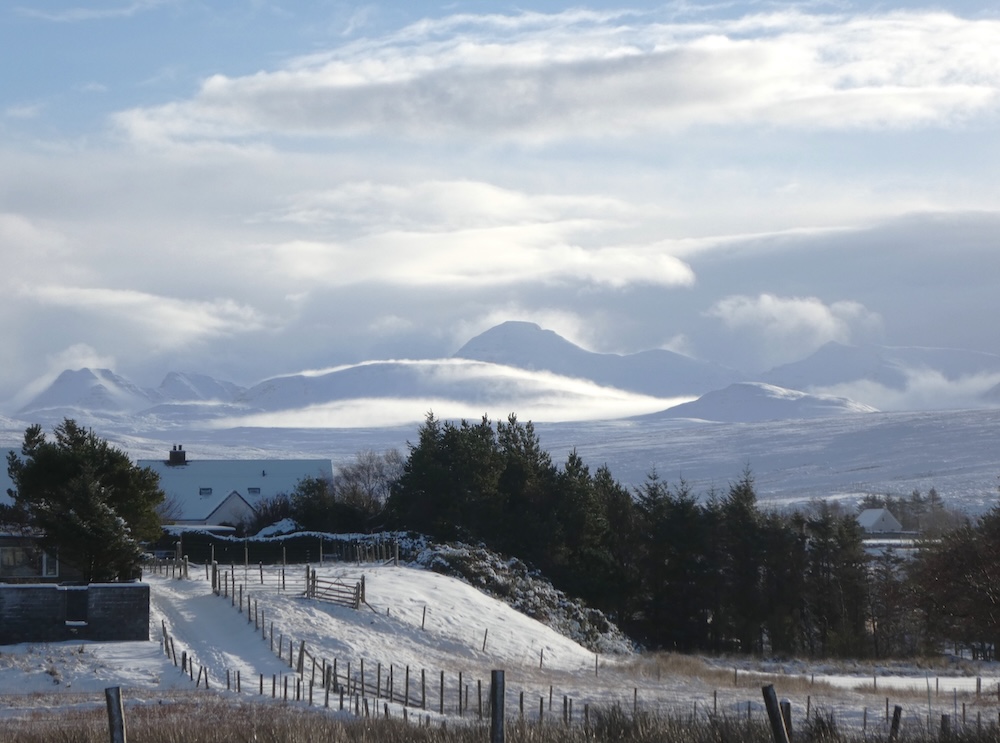
*
Dear Annie,
Coming to write my reply to your letter was, as always, a welcome moment of reflection after our own hectic festivities. I do love the celebration of light and life in these dark days, candles and fairy lights in amongst the evergreens. I also love the calm of January when I can sink into that dark quiet for a while.
I did manage to see the meteors - driving round the loch at 6am to beat the Christmas Eve shopping chaos! A single falling spark through indigo skies, above black trees blurred by my own speed along the road. Little moments of magic stitched through the busy-ness were their own kind of gift. The kids are getting old enough that we borrowed the Icelandic tradition of gifting books on Christmas Eve, and the half hour of hushed reading afterwards is up there on the scale with shooting stars.
There is a sweet spot somewhere in the shimmer and shade of winter. December brought cloud inversions, freezing fog that clung low to the loch. Shoreline, hills, houses all evaporated in soft, opaque light. The spell broken only occasionally by the shining slope of a seal head at the surface, or the slap of cormorant wing hidden in the mist. Where it cleared, the revealed landscape underwent its own kind of inversion, dark branches whitened by hoarfrost, and pale sky turned heavy as steel.
Now we have flipped back again, swarms of snowflakes bringing sky to land. When I take the dog up the hill for her evening walk, the normally bright streaks of birch are shadows in the dusk against silver-blue shine of snow. Unlike you, I have always preferred a path to a scramble, and I have been getting smug walking the same route up the snow-covered slope and into the woods. My body tilts in remembered rhythm over hidden dykes and ditches, and fallen branches turned into deceptively smooth white mounds. Not so smug, mind, when I forget to dip low enough under an outstretched branch and receive three inches of snow to my nape.
We don't have hedges here, as such. There is shelter in parts from hazel grown thick along the drystone walls, and the post and wire fence runs alongside those lines of moss and stone. As I understand it, before the 'improvements' of the nineteenth century, hedges or boundaries were rarely needed as pre-Clearance townships worked their shared land in rigs. When people were moved to the crofts and when boundaries were necessary, they would have had to make do with available materials, and as our own differing landscapes show, each township would have different needs.
Many of the crofts on our stretch of loch have the same old stone boundaries, and this land gives stone in plenty. Just in the few square metres of the polytunnel, still I lift stone after stone, as the frost wheedles more from the depths. This croft is so small that giving ground deliberately to hedge for shelter would have taken valuable grassland, and I think that story will be common with most crofts around here. Our survival doesn't depend solely on these few acres in the way it would have done to those first wallers, I suppose they might consider it a luxury that we can think about planting hedges.
As you say, two or three shelterbelts on even the smallest of crofts have value now, especially when we're no longer using the in-bye for grazing or hay alone. We have no yew and juniper here; I have been contemplating planting both to eventually replace the pallets blocking weather from the west end of the polytunnel. It is a luxury that I can go online and order saplings to be delivered to my door. Our predecessors would have had to work considerably harder to acquire cuttings on land once emptied of woodland.
I loved to read of your rich hedges and the visiting goldfinch. We've had charms of them here too in the past, along with long-tailed tits, and even a rare bullfinch. However, there is nothing quite so confronting to my romanticising of the winter landscape than having cats.
Part of me is loath to write to you about it. It is difficult to admit to what we have introduced to the wildlife here. As hoped, they are good croft cats, that is, efficient mousers. They don't limit themselves to rodents though. We see fewer birds now. I remind myself of the damage mice can do to wiring, or to new green shoots, attempting to absolve us from the choice we made. The realities of that choice were never clearer than on New Year's Day when the tom brought in a woodcock.
Did I ever tell you about my first footer a few years ago? L rescued a woodcock from the road. While we were busy lining a cardboard box with moss and ferns, it came out of its shock and began padding about the house, bronze feathers and dark eye gleaming in our lamplight. It left little white splotches on the laminate as it eventually taptoed out of an open doorway and back into the night. I decided then it was a positive omen, pontificating in my writing that January on how we might blend with the other lives in the land.
Not so this year. This poor bird was caught in one of the clothes horses. It was too late for me to do anything but take it back outside and place it high on the bank under stone and fern, whispering my sorries to the night. That was as close a balm as I could get.
We hung onto the Christmas tree for a few days longer than we perhaps should have, searching for that sweet spot of peace just a little longer until we couldn't avoid our own growing pile of pine needles either.
With love, and wishing all good blessings to you and yours for 2026.
Kx
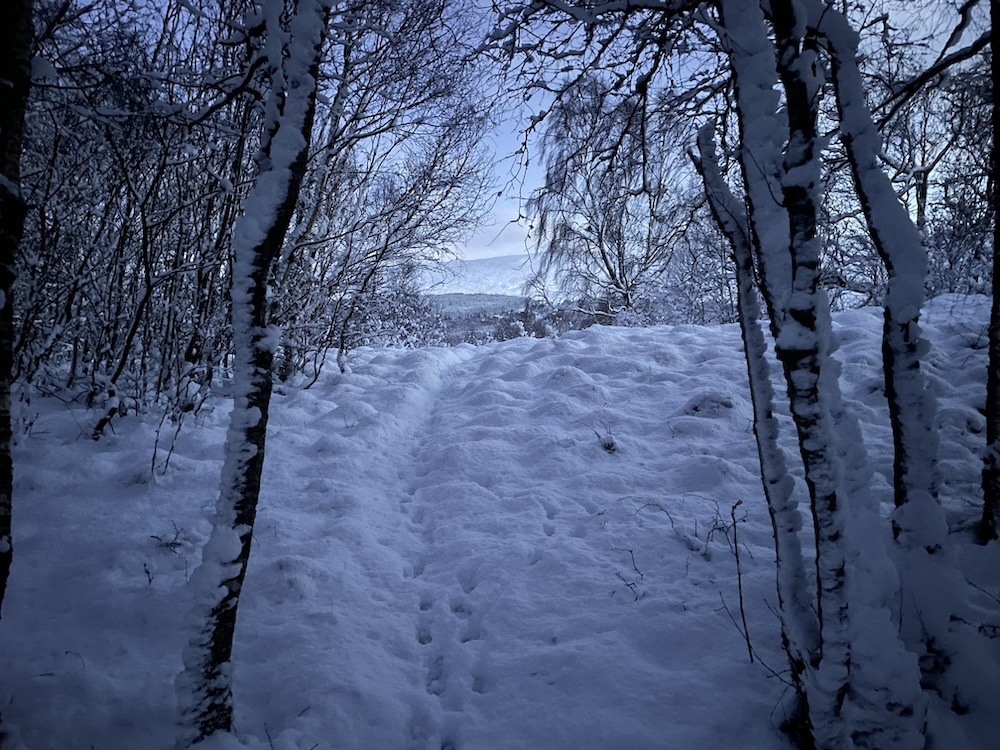
*
Kirsteen Bell is a Scottish writer of narrative non-fiction and sometimes poetry. All her words are gathered from the croft in Lochaber where she lives, and the surrounding Scottish Highlands. Her writing and reviews can be found in such places as Paperboats, Caught by the River, The Guardian Country Diary, The Lochaber Times, and Northern Scotland Journal. Kirsteen can also be found at Moniack Mhor, Scotland's Creative Writing Centre, where she is Projects Manager and Highland Book Prize Co-ordinator.
Annie Worsley is a writer, crofter, grandmother and geographer with an enduring love of the Scottish Highlands. In 2013 she and her husband moved to the crofting township of South Erradale near Gairloch. While her husband was a community pharmacist, Annie worked on Red River Croft. She began a blog about life on the croft and then wrote essays on nature and environment for various publications including Elementum Journal, Women on Nature, the Seasons' Anthologies edited by Melissa Harrison, Caught by the River and Inkcap Journal. Her first book about life on Red River Croft and the natural history of Wester Ross, 'Windswept: Life, Nature and Deep Time in the Scottish Highlands', was published by William Collins in 2023, and is out now in paperback.
Polly Atkin looks back over a year in lakes.
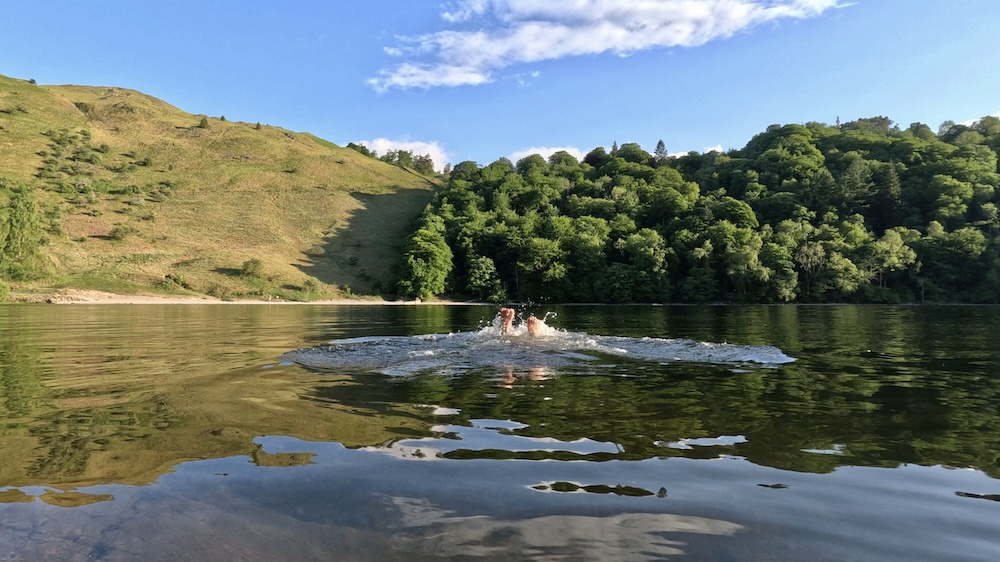
I have been swimming all year round in the lakes, tarns and rivers of the Lake District where I live since winter 2018. I keep a casual diary of my swims through photographs and film, social media posts and notes to friends. So when I agreed to write a short book about swimming through the year, I expected it to be a simple enough proposition. I had the material, and the structure. And yet this short book became one of the hardest things I've written. I'm not sure why. Partly perhaps simply that I was exhausted before I began. But like a body of water of water I did not know, I could not find the way in. I spent a long time just standing in it, barely up to my knees. I could not get in far enough to float off. I watched leaves fall around as I stood, shivering, in its shallows. It was deep autumn before I could see my route forward.
The year before I began swimming through the year, I had started running a monthly poetry reading group through the Wordsworth Trust. Each month we would gather to read and talk about four poems: three seasonal ones and one which reflected what was going on in the world at that time. We met by the fireside in Dove Cottage for the first couple of years, reading and talking about poems in that space haunted by poems and the production of poems, by the history of tourism and the history of literature, and the places where they overlap and leach into each other. In 2020 we moved onto Zoom, and continue to meet virtually. Eight years of reading seasonally and sharing seasonal writing - of talking about the seasons with others - has shifted my relationship with seasonality and transitions in the year just as swimming year-round has. I have learnt through immersing my body in bodies of water and other people's bodies of work to feel the seasons differently, especially the autumn and winter months.
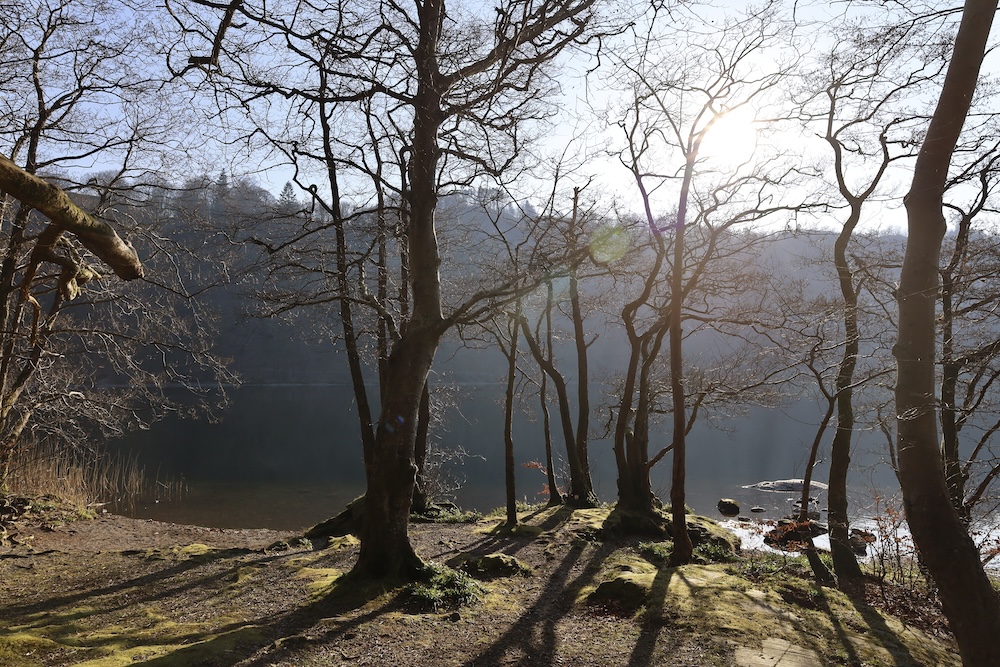
I am a cold person with symptoms made worse by the cold. I struggle physically and emotionally with the short, dark days of a Northern winter, and particularly with the pressure to keep active through them. Come November my impulse is to sleep, and stay mostly sleeping till February. Every year I think I can make something useful of this time, when what I need is to not think of anything much at all.
In the short days of midwinter, it is too easy for me to miss the light entirely. I get distracted working, or wait to see if the cloud lifts, or a hint of sun in the distance touches the village. Grasmere is a small bowl of a valley, a cupped palm, as I put it once. In midwinter, the sun barely reaches in at all, spends an hour or two before noon creeping down the fells and trees and houses, a couple of hours after creeping back up.
Meeting daylight on its inward or outwards journey becomes increasingly unlikely if your body, like mine, is not amenable to movement in the morning. So often I go just a little too late, reach the lake with the watery sun already falling away behind the fells, or a shroud of cloud lying over them. There is a heavy greyness on a day like that, all the colours muted. The water greyish-brown like the fells, like the woods. The vivid colours of November swept away by a bitter wind.
But even on a cold, dank day, even when I miss the light, there is something to find at the lake. If I do manage to catch the light, I might be lucky enough to see the lake's ghost rising from its body as mist and grey wagtail.
When the sun does shine, it is dazzling. It turns everything along the lake shore a pale gold in its glare - reeds, trees, walls.
There is so much colour, so much light to be found in this time I used to think of as a smudged void. That I used to want to erase, or erase myself from.
So why was I finding so hard to write this? I don't swim for challenge or for sport. I swim partly for exercise, but mostly for pleasure. That was what I wanted to share. Not a record of achievement or personal growth. I wanted to offer readers what I've found in other people's poetry of the seasons - a path through the year - a way in and a way out again. But I needed to see my own way through first.
I have found myself having to learn and relearn the same lessons, year after year. Slow down. Prioritise rest. Prioritise care for myself and others. Listen to what my body needs, and do what it asks, not what I want. Not what others want or ask. Maybe I haven't taken these lessons to heart, or into practice. I realise this is a cycle too. Forgetting, remembering, being made to remember.
This has been a year of being made to remember. I must attend better to what I already know. I must attend to it with my whole self, and not just my good intention.
Each time I go to the lake in winter, it reminds me that the winter world is not asleep at all. The birds are as busy as ever. I watch them as I swim, and as I change they move around me. Shoals of long-tailed tits swoop from tree to tree, trilling. Noisy blue tits and great tits hop from bush to bush. A wren shouts from the sidelines. There is a robin carolling from the mossy oak, goldcrests cheeping. I love to be in their company, they who never expect me to explain anything to them, yet always have something to say to me. Best of all, I love the grey wagtails, who always remind me that light is still here, even in the darkest times, even if hidden under an outstretched wing of grey.
*
'Swimming The Seasons: A Freshwater Almanac' will be published by Saraband in May 2026.
Here are the results of our latest newsletter competition…
Last time, we had 3 copies of Edmund Newell's Herne the Hunter: Seeking Shakespeare's Ghost, Windsor's Demon and Wicca's God to give away, courtesy of Herne Books. We asked:
The earliest written account of Herne comes from which of Shakespeare's plays?
And the answer is: The Merry Wives of Windsor. The winners are Richard Wilding, Sharon Sanderson and Richard Woodward. Your books will be with you very soon!
Thanks for all the entries. To be in with the chance of winning our next prize, make sure you're signed up to the mailing list. The sign-up box can be found on the right-hand side of this page.
Musician Laura Cannell shares a year of Red Kites, lighthouses at night, and making up with the sea.
Last week I watched 43 Red Kites gather and settle in for their communal roost. My sister and I were walking down a lane near where we grew up in South Norfolk, and the Kites were calling and wheeling. Watching so many raptors together was emotional, their distinct fork-tailed shapes soaring on a backdrop of clouded greys. The scale was so strange, a flock of eagles who appeared like rooks from a distance, their movements and calls like a renaissance polyphony of multiple choirs and soloists filling the cathedral sky from every corner.
According to the RSPB they have gone from almost extinct in 1995 to an increase of 2464% in 2023. The lane we walked down is where we used to catch the school bus in 1995. I don't think I was aware of 'nature' then, I was just in it — I've always just been in it (except when I was at music college in London, thinking about it now it makes perfect sense that it was completely the wrong environment for me to be in physically).
Every day, my half-a-mile walk, sometimes lugging my cello to the unofficial bus stop (oak tree) on the corner. We were off the beaten track, one of the awkward stops outside of the villages. I used to feel so exposed in that moment, going from being alone in the trees and lanes and my thoughts to suddenly on a bus full of loud people, the driver taking off before I'd sat down while I tried desperately not to knock the bridge out of the cello in its canvas case as I bumped it along the narrow gangway, past everyone to the only available seats (the bridge did get knocked out a few times).
Being in this place with my sister felt poignant and positive. I truly felt like the Kites were going to save us all from ourselves. Let's give it all back, everything. Start from here, look at how they behave, let them take charge: they are not consumed with money and power and greed and death machines. Let the Kites gather in their roost and work it out, let them hold a mirror to human stupidity and remind us that we can work together, dream together but still be independent.
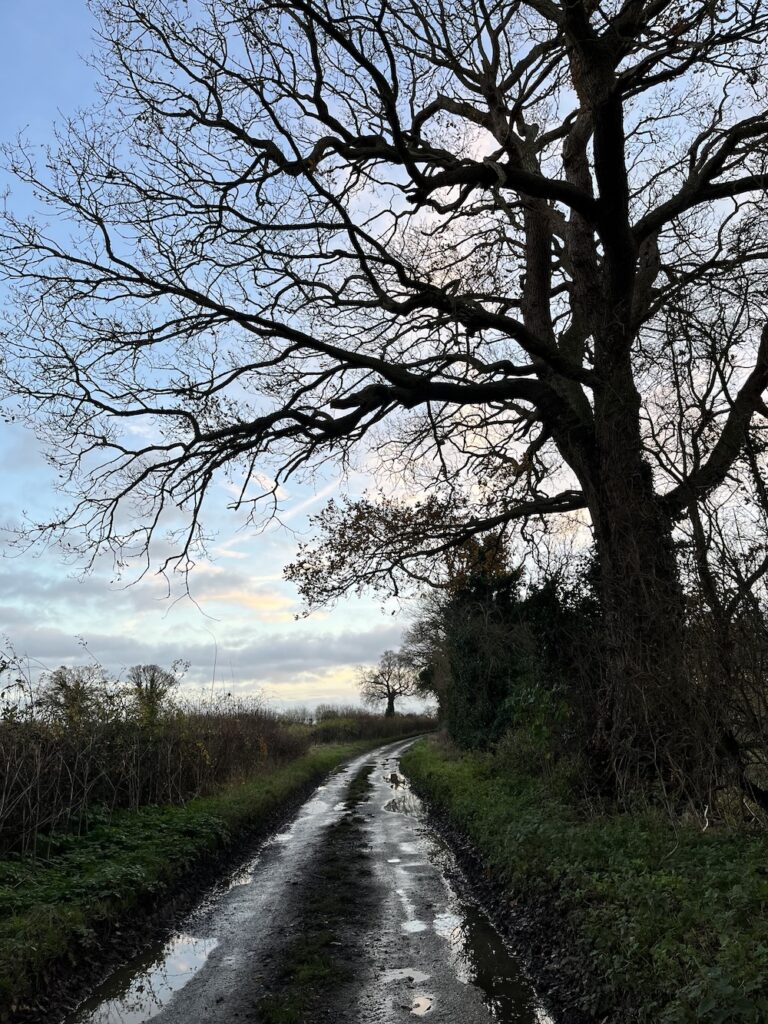
My sister and I often joke about having two tables 'for one' pushed together. We each need our space — our own creative output requires a magical discipline that can only to be developed and produced with a large amount of time alone — but it's also good to feel part of something bigger. In that moment, watching the Kites roost at dusk, I felt like there was a lot of hope.
A while ago, when I wrote for CBTR more regularly, I talked about falling out with the sea. I couldn't bear to look at it, it was barren and bleak, and I took alternative routes when I had to drive to avoid glimpsing it.
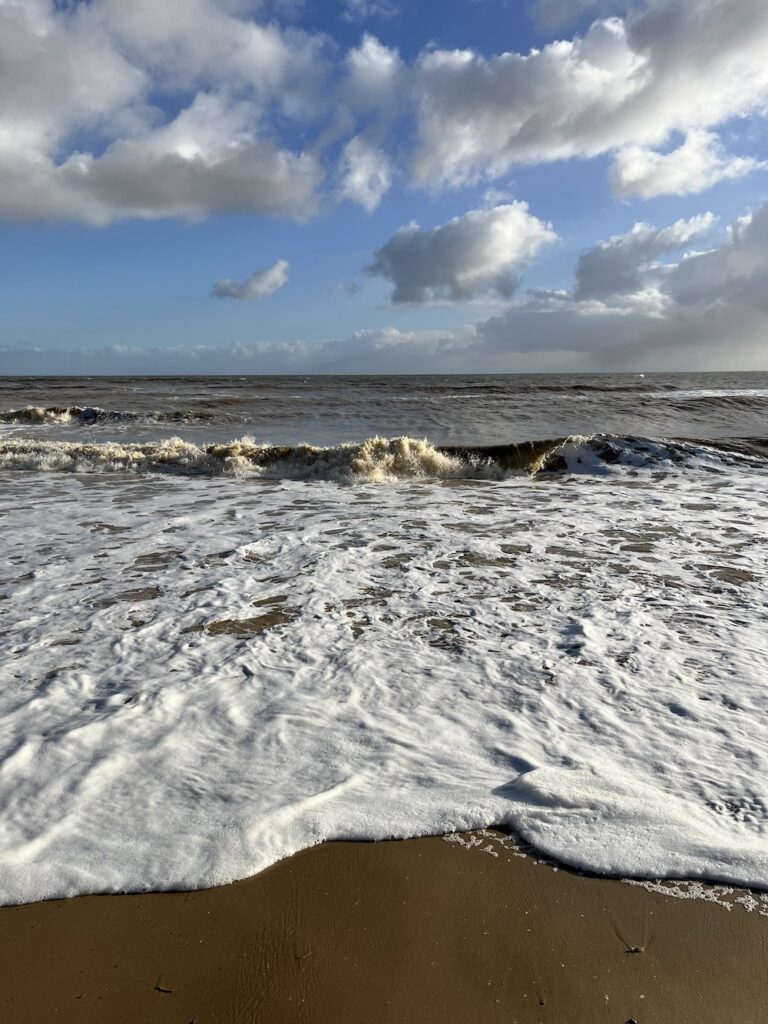
The sound was constant, it was driving me mad, and I was scared that if I got too close, my life would fall over the edge. As I change in life, my feelings have changed towards the sea. I realise that it is a private need, a personal love that we have. I cannot be there in the summer watching and hearing a coast made busy with too may people. Bright, exposed, open, with a forced smile to be jolly in the summer. The summer does not make me happier, it's taken me this long to realise that my instincts and comfort go against light = happy, dark = sad. Like when someone very early on tried to teach me that music in a minor key sounded 'sad', and a major key sounded 'happy'. I couldn't get my mind around this, the minor keys made me so happy, because they were full of feeling and nuance. The major keys just felt like they were telling me to feel something positive, happy or jolly when I wasn't. Not that I was unhappy — I just felt like I didn't fit any of the rules. I was obviously taking it very literally as a 7 or 8 year old, but perhaps this was the beginning of realising that I could not get on board with ideas of rules in music. Darkness and minor keys equal atmosphere, imagination, melancholy, depth, joy, intrigue, dissonance, passion, life, determination, manifestation, emotion, grit, power, love and so much more. They are autumn, winter and spring.
Maybe summer is the major key for me, it's all laid out in front, brightly for you to see, no mysteries here. But I need the search, the hunt and the mystery, I need to always be exploring and growing in both nature and music. I need the sea in the autumn, the winter and the beginnings of spring when it speaks to me the most. The times when everything is hidden, shrouded, covered in leaves or growing in new directions, unseen and unspoken. Where the sound on the violin is in my body waiting to be let out through the pressure of my bow. Like the life which happens out of sight between the seabed and the crashing waves above.
I have learned that the sea, though constantly shifting stays the same, but I am always moving, emotional fluctuations, emotional plasticity. I don't get to decide that I have fallen out with the sea, I was just there at the wrong time. When you come up against something so huge that you are not ready to deal with — death, grief, sickness or great changes — you can always find ways to avoid it. But eventually, when the time is right and you have the inner strength to have a conversation, you know you will go back and often be surprised by the response.
My emotional response to the landscape and the seascape is so much bigger than the way I think about people. There are a handful of favourite people who I need to see or speak to, but my urge to soak in sea with all of my senses is overwhelming.
Standing in Walberswick on the south side of the Harbour, the stretched beam of Southwold Lighthouse swept across the sea and the salt marshes. This tiny village that sits on the edge of the sea and corner of Blackwater was ours for a few moments. Quiet in the off-season before Christmas, no cars, no walking families, just the light and faint noise of The Bell pub. The air and water made the lighthouse sound like it was whooshing in time to a soundtrack. The gossamer clouds were glowing from the lamp room beam and maybe from the stars behind. Within minutes it became a sparkling dark starry sky, and a dream of winter, of quietude, of magic, of movement even when I am still. I am happy to know that the sea is there for me whenever I want to come home to it.
This year I read, wrote, recorded and released a lot of music, soaking up inspiration from medieval bestiaries, Icelandic folklore, the Anglo Saxon lyre from the Sutton Hoo ship burial, landscape photography created from from NASA image archives, ancient Christmas carols, hauntings, weird dreams and so much more. I had a very quiet year in terms of performing live, and an intensively rich year of making and creating. I fell back in love with traditional fiddle music, and started playing it for myself again as part of my practice routine. I wrote several albums and EPs for production libraries with no compromise.
My releases have been in the Official UK Album Download Charts (3 releases), on the radio (BBC 3, 4 and 6Music and more), in the Guardian, on the television (in surprising places like Emmerdale and Horrible Histories, Race Across the World & news programmes).
My music has travelled the world, and I have been rooted for the first time in years. I have turned down performances in other countries because of anxiety; it has not all been easy, but I haven't stopped creating and making and believing that music makes a difference, not only to me, but to anyone that it reaches and speaks to. I am learning the boundaries of comfort and my own needs, what priorities can be. Music has its own life, and I am excited to see what happens next. It is, as we all know, completely made up, and as my sister Sarah says, "we are all weird aliens on a blue green planet spinning through space, everything is completely ludicrous and incredible", so why not make up good stories? What if it all works out, and the sea can be our friend rather than an overwhelming ledge?
*
Find all of Laura's musical releases here.
'The Cold Collar' by Andrew Wasylyk (feat. Gruff Rhys), released today alongside a visualiser by Tommy Perman.
Taken from the album Irreparable Parables, due for release on Friday 6th March 2026 via Clay Pipe Music & State 51.
Andrew Wasylyk (+ ensemble) Live Dates, March, 2026
03 March - Tolbooth, Stirling
04 March - The Lemon Tree, Aberdeen
05 March - Pleasance Theatre, Edinburgh
06 March - St. Mackintosh Church, Glasgow
07 March - Maryatt Hall, Dundee
08 March - The Attic, Leeds
10 March - Pan-Pan, Birmingham
11 March - The Lantern Hall, Bristol
12 March - Rich Mix, London
13 March - Gosforth Civic Theatre, Newcastle
Find all tour tickets here.
Rob St John considers how archival material informed his Are You Lost? project — a 2025 series of community-minded film, sound and textile installations across the Forest of Bowland. Photos: Ray Chan.
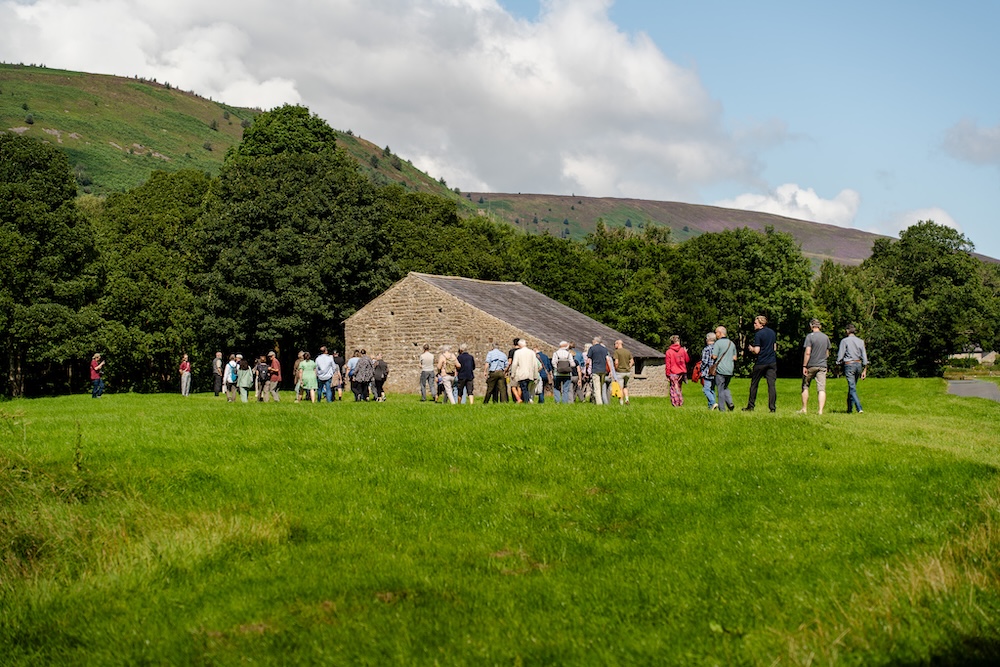
A tradition worth passing on: John Weld, ecology and community in the Forest of Bowland
Adapted from the Lord of Bowland lecture given at Browsholme Hall in the Forest of Bowland in October 2025 reflecting on learning from historical archives to shape socially-engaged artwork as part of the Are You Lost? project.
This year I've been working with the John Weld archive - held at the Harris Museum in Preston - as part of my Are You Lost? project. Weld was a Victorian landowner, antiquarian, naturalist and painter who lived at Leagram Hall in the Forest of Bowland, Lancashire. Born in 1813, he made detailed written and visual records of both the local area and the places he encountered on travels across Europe. One document has been of particular interest to me - and to the communities I've been working with - a notebook titled: The Flora and Fauna of Leagram and Neighbourhood. Written through the mid-19th century, this ledger - a collection of field notes, sketches and paintings - reveals his naturalist's eye and artist's sensibility coupled with a keen awareness of Bowland's changing landscapes.
Its first line reads: 'Fifty or sixty years ago many birds were common in this district, that are rarely met with now. Many usual winter visitants then, are very casual, or more than rare occurrences at present. The universal use of guns, the general discontinuance of corn cultivation, the reducing much woody waste, and marshy land to comparative cultivation, with the great preservation of game that now exists, encouraging the destructive instincts of keepers especially of late years, are amongst the principal causes of all but the total disappearance of many kinds, and of the greatly reduced numbers of others.'
The first theme that stands out is Weld's use of 'met with' as a way of describing his encounters with the natural world. There's something quite charmingly modest and reciprocal about the phrase, which recurs throughout his ledger. And related, a second theme is the sense of uncanny contemporary resonance. The idea of shifting baseline syndrome - that each successive generation tacitly accepts an increasingly degraded version of their local environment - is a central theme to contemporary landscape thought. But here we hear directly from Weld that this isn't solely a modern phenomenon - that even two centuries ago communities were witnessing a deadening of Bowland's ecosystems as a result of human activities. So the Weld archive encourages us to look again at Bowland's landscape, to ask: what has been lost in our encounters with the natural world, and what might be recovered?
Weld's ledger begins with birds of prey. Describing sea eagles, peregrine falcons, merlins, red kites and marsh harriers across Bowland, Weld's proto-environmental ethic is filtered through an aristocratic civility and unease with the way in which biodiversity in the landscape is being lost. He writes, 'some have been very common whilst others in late years, have only been rarely met with. A war of extermination against all the tribe has been latterly carried on, too successfully by the gamekeeper, by means of his ever-ready gun and by different engines especially pole traps.' There's a tension here. Many birds - even tiny ones like the wheatear and goldcrest - appear in Weld's ledger after being brought to him by gamekeepers for identification after being shot. So the agent of their destruction is also the envoy of their description. Weld has the collector's zeal of many wealthy men of his age, and his writing communicates the implicit idea of a landscape in need of documentation: his ledger a cabinet of Bowland curiosities.
There's a beautiful sense of local naming for wildlife in Weld's writing. The kestrel is the 'windhover' (also the title of an influential poem by Gerard Manley Hopkins, who studied and taught in Bowland in the 1870s); the great grey shrike (which creates its own larder of insects by impaling them on hedgerow thorns) is the 'butcher bird'; the grey heron is the 'Johnny Gant', the 'Long Neck', or, for some unknown reason, 'Frank'. And Weld has a rich descriptive turn of phrase for telling stories. When discussing a sparrowhawk he writes - faintly absurdly - that, 'a fine male was taken in the drawing room at the hall September 16th 1877. It had dashed through a pane of glass, shivering it to pieces, a case of hummingbirds near the window was probably the cause of the intrusion.' However, the impact of the modern invention of grouse shooting in Bowland - part of the wider British aristocratic fashion of 'Balmoralisation' popularised by Victoria and Albert in the mid-to-late 1800s - is rarely far from the surface. Weld writes about owls of all sorts - long-eared, short-eared, barn and tawny - and corvids being, 'very common all through the district in my recollection but will soon be almost extinct as far as this neighbourhood is concerned. Through the rapacity of bird collectors, and the indiscriminate zeal of gamekeepers, killing everything that in their opinion might possibly be hurtful to their charge.'
Weld documents birds no longer seen or heard in Bowland like the corncrake, the golden oriole and the bittern, and highlights the abundance of those whose numbers had dropped, such as the house sparrow. He also notes the arrival of unusual migrants like the gannet, or solan goose. He writes about finding a gannet asleep in a field in November 1872 after a gale, its six foot wingspan looking, 'like a small drift of snow in the sunshine.' He continues, 'I was enabled to steal up to the bird and seize it by the neck, and with some difficulty, succeeded in carrying it home.' There's something quite daft and tragic about this picture: a throttled gannet, its wings like a gleaming snowdrift being carried across the fields, back to the manor to be added to the collection. These documents of Bowland's wildlife are so specific and strange that they seem almost mythological, when really, they resided in the memory of those who met with them just a few generations ago.
Weld's writing hints at the prevailing attitude to wildlife in Bowland at the time. He cites a monk from nearby Whalley describing a church erected at Chipping after the departure of the Romans, suggesting that the 'neighbouring country was a frightful wilderness of impassable forest full of foxes and other wild beasts.' There's a neat etymological link here. The word 'wild' in modern English evolved from variants of weald and weld in old English, denoting a wooded or untamed area populated by wild animals. Weld is appropriately named to survey a landscape which, while rich in biodiversity, was having its wild nature dulled by human stewardship. The monk's words remind me of the language used in the descriptions of the enclosures across Bowland through the 16th and 17th centuries, which commonly refer to the fells as 'upland wastes'. It was in this period that the opportunistic and often anti-authority demarcation of farmland - patterns of land tenure we still know today - took place in a process known as 'assarting'. Weld writes that the wildcat was, 'not infrequently met with 35 years ago,' below Fair Oak fell, a last refuge from the gamekeeper's strict control. Similarly, he describes Wolf House at the foot of Parlick fell: a respite for travellers from remnant populations of wolves, which could be shot through an aperture in the door. One local story goes that the last wolf in England was chased from the Bowland fells and killed at Humphrey Head on Morecambe Bay sometime in the 15th century. Regardless of this tale's accuracy, the traces of a wilder Bowland remain in its non-human names: Wolfhole Crag, Cat Knot, Kite Clough, Foxdale Holds, Wolf Fell, Boarsden. And likewise, in Weld's writing, we glimpse the historical ebb of the wild and the waste in Bowland: how they have been framed, and how they have been tamed.
Weld's writing also evokes a historical soundscape of Bowland: where the nocturnal summer song of the nightjar echoed across Longridge Fell; the bittern boomed in marshes which had yet to be drained; and the corncrake croaked in farmer's fields and meadows. But this isn't solely a nostalgic reverie for a lost world: Weld's writing documents the shifting use of Bowland's landscape, and the ways in which nature moved with it. In addition to the rising persecution of wildlife in the mid-to-late 19th century he also notes the biodiversity which has disappeared with changing agricultural practices. He describes the decline of birds like the common partridge and jay which benefited from the cultivation of corn in the area - a process that declined following the repeal of the protectionist Corn Laws in 1846 by Robert Peel, himself the son of a Lancashire farmer. Nearly two centuries later, projects across Bowland are exploring the potential of regenerative and nature-friendly farming approaches to help farmland biodiversity to recover whilst supporting sustainable livelihoods in communities squeezed by rising costs and isolation.
These dynamics resonate with deep historical research undertaken by John Porter and Mary Higham in the 1970s and 80s, the long-term ecology work based on pollen cores by Anson McKay in the 1990s, and the recent archaeological work undertaken by Rick Peterson: all of which in different ways reveal the shifting dynamics of Bowland's landscape through history. Porter and Highams's work highlights the interplay of people and nature across Bowland since the 1500s: the clearance and ordering of the landscape for the royal hunting forest; and its subsequent marginalisation and spontaneous rewilding, too far from the urban court to be of regular use. For all that the modern imagination of Bowland might be akin to a static picture - empty fellsides and quiet villages in a state of living history - these historical accounts, like Weld's, reveal a landscape that has never really stayed still. And the memory maps drawn by hundreds of people in village halls, shopping centres, workshops and walks across Bowland in Are You Lost? attest to this idea of a storied terrain: the places where communities explored, trespassed, proposed, skinny dipped, gathered, grew and harvested, spotted rare birds and flowers, came out to their family, fell in love, campaigned for access, bivvied out, marked where their ashes will be scattered, and experienced "life changing intimate moments amongst the bilberries," amongst many others. Then, as now, Bowland has never been blank space.
Weld's own sense of specificity in documenting the natural history of Bowland reminds me of a country vicar, writing more than a century earlier in Hampshire, whose archive has become so influential that it has never been out of print. Published in 1789, Gilbert White's The Natural History and Antiquities of Selborne is regarded as a founding document in modern ecology. Like Weld, White surveyed the ecological intricacies of his local landscape in a manner which might now be called citizen science. Unlike Weld, White's archive found wide public attention, drawing praise from Charles Darwin among others. In an era of ecological crisis and climate emergency, this sense of close attention to the fluctuations of people, place and wildlife shown by both Weld and White is vital, both in documenting our changing world, and in helping tell powerful stories about the need for its conservation and restoration. In Weld, we have a very local inspiration for this task, and my work in Are You Lost? suggests that this spirit of curiosity and attention has a valuable role in helping communities connect to Bowland's landscape. As one attendee at a workshop said - so poetically - of this process, "the first step ripples out across lifetimes." And as the wider project has suggested, public access to landscapes like Bowland which have historically been closely guarded by private ownership can help foster new forms of attention, care and responsibility towards their flourishing in the future.
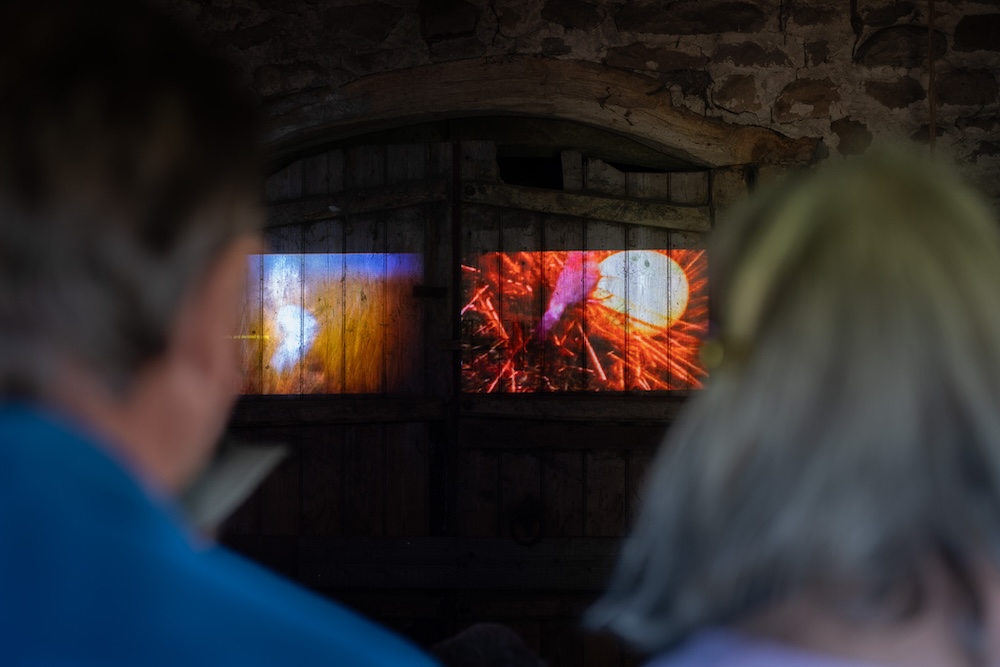
The Weld archive shows how people and nature ebbed and flowed across Bowland in the 19th century, in particular the patterns of ecological diversity and abundance in relationship with changing land practices across farming and grouse shooting. These dynamics reveal a landscape always on the move. As such, the Weld archive undercuts the narrative which legitimitises the bulk of environmentally damaging activities in Bowland - the burning of the fragile moorland and peatland; the trapping, shooting and snaring of non-game 'vermin'; the secretive wildlife crimes imperilling birds of prey like the hen harrier - based on a seemingly-timeless imagination of grouse shooting in the landscape. By working with historical archives, we see that this framing - so dominant, and scaffolded by invisible strata of capital and privilege - is the product of only a brief moment in the deep landscape history of this place. This insight resonates with the contemporary work with communities in Are You Lost?, which has engaged a significant and well-informed public, both across and around Bowland, who would seek to see its management shifted towards more environmentally just and democratic forms, and to ask difficult questions about how it is managed, and for who. You can hear these community perspectives and voices in the film we made together and toured across Bowland this summer.
The Weld archive also highlights how plants, birds and animals which have been largely lost from contemporary imaginations of Bowland - like the corncrake, bittern and sea eagle - are commonly met with, just a few generations ago. Perhaps if we can take inspiration from the archive when thinking about the future of Bowland, the imperative is not about restoring the landscape to some pre-industrial baseline, but instead to learn from a dynamic past to collectively shape how it might flourish in the future, both for people and for nature. I often think about the abundance of Weld's world when on the depleted fells; where the only sound is the rustle of the Molinia grass and occasional clatter of a grouse. I wonder how they could be more: a sponge for water, carbon and life of all kinds; a life-support system for the environmental, social and economic pressures of an increasingly stressed world. As another community collaborator said in a workshop on Bowland, "this is a place steeped in memory: can we allow it to dream?"
Something I've learnt in this project is that encouraging wider public access to Bowland's landscapes can help cultivate new forms of imagination, openness, and accountability in how they are managed. And learning from the past can help guide this work. Archives can help us get under the skin of a place, even when we might not be able to get there ourselves. Archives are themselves landscapes: joining up threads of time and space; always open to being remade. Navigating them with new communities helps us unearth connections and glean visions; to expand the frame of what this place could be, and for who. Weld's fine-grained attention to the dynamics of wildlife, people and place in Bowland formed the basis of an early conservation ethic rooted in care for his local environment. We find communal forms of this ethic in citizen science, community ownership and rights of nature movements that are helping bring landscapes back to life across the world today. As the work in the Weld archive in Are You Lost? suggests, fostering a deeper sense of place and belonging through engagements with the past can help shape productive and democratic imaginations of the future. We might call it an ecology of hope. As workshop collaborator Zainab Maria writes of Bowland in Home in the Hills: A Manifesto, 'let this be an invitation: to slow down, to listen, to ask what kind of future might grow from care, not control… To belong is not only to take from the land, but to give back. To tend, to listen, to share. That may be the beginning of a tradition worth passing on.'
*
Are You Lost? was a series of film, sound and textile installations across the Forest of Bowland which explored the diverse voices and perspectives of the communities that live around the area. A series of temporary installations were shown across the National Landscape in 2025, both in accessible venues and more remote, largely-unused spaces.
It was produced with the Forest of Bowland National Landscape and Lancaster Arts, and commissioned by Nature Calling, the first national programme of new art commissions by the National Landscapes Association.
Explore films, podcasts, writing and resources from the project here.
The John Weld collection is held by the Harris Museum, Art Gallery & Library, Preston. It is also being interpreted by artists Ian Nesbitt and Ruth Levene in new work.


