05-Oct-15
 System Focus: Get To Know Gqom, South Africa's Slow-Burning Club Music [ 05-Oct-15 5:44pm ]
 The TOWNSHIPTECH logo
The latest System Focus is on dance sounds of South Africa that live online, chiefly 'gqom' with some shangaan electro and sgubhu too (click here to read). featuring: Spoek Mathambo, Nozinja, TOWNSHIPTECH, SHANGAANBANG, DJ Dino, U-Zet, Phelimuncasi, Rude Boyz, GQOM OH, Citizen Boy and DjAsinatar and the Facebook groups IGqomu, Sgubhu & Gqom Lovers, Gqomu music and Gqom Nation.
South African popular music, in its myriad forms—from choral folk group Ladysmith Black Mambazo to madcap rappers Die Antwoord—has played a huge role on the world stage for decades, and today this richly musical country boasts an ecosystem of electronic dance and club sounds that changes, spreads, and develops with an energy that can rival that of just about anywhere else you care to name...

Meanwhile, the southeastern coastal city of Durban in the KwaZuluNatal province of South Africa has been incubating a style called gqom for a few years now... It would be difficult to imagine a kind of music more different from Shangaan Electro than gqom is—it's a slow-burning, minimal and ominous style that's frequently described as "raw." Gqom fan Thandolwethu BlaqueMusiq Mseleni—who runs a group on Facebook called Sgubhu and Gqom Lovers out of King Williams Town in the Eastern Cape province—told me that qqom is "house music with broken beats, sliced vocals or chants, high tempo and mostly with no bassline."
"We grew up on it," Veezy tells me about gqom. "You know, taxis in town or everywhere in and around Durban blasting these songs that had really catchy and funny verses as well as banging hooks. Most people just hear loud bangs but, if you take time to really listen to it, you realize it's more than a created pattern—it's rhythm that syncs with fun. I like it cause it's a really huge crowd favorite in lounges and clubs to get turnt with or get the party sounded."...
 Citizen Boy is one of gqom's most creative producers. Plunge headlong into his kasimp3 uploads... featuring him and his affiliates, and you'll encounter dozens of weird and wonderful twists on the genre's template. Try the hectic "Spit Fire (Remix)," the ultra-minimal "VH HIT" with its deadpan cuíca hook, the downright evil "Natural Mafias," the alien skirmish of "Thekwini War (Mafiamix)" or the unholy croaks of "Point Magnet (Dope mix)." There there's "Deep Gqomu," a masterpiece that builds up majestically, its ethereal scales climbing ever skyward...
01-Oct-15
Dennis Smalley - Pneuma [ 30-Sep-15 8:21pm ]
Citizen Boy is one of gqom's most creative producers. Plunge headlong into his kasimp3 uploads... featuring him and his affiliates, and you'll encounter dozens of weird and wonderful twists on the genre's template. Try the hectic "Spit Fire (Remix)," the ultra-minimal "VH HIT" with its deadpan cuíca hook, the downright evil "Natural Mafias," the alien skirmish of "Thekwini War (Mafiamix)" or the unholy croaks of "Point Magnet (Dope mix)." There there's "Deep Gqomu," a masterpiece that builds up majestically, its ethereal scales climbing ever skyward...
01-Oct-15
Dennis Smalley - Pneuma [ 30-Sep-15 8:21pm ]
I like the way this sucks and wheezes. It reminds me of my future. One day, I'll be at a bus stop and this will be the last sound I make. I'm looking forward to it.
28-Sep-15
Roots of Goa trance (2) [ 28-Sep-15 1:13pm ]
Cyclists are out of control! (And why that's okay) [ 23-Sep-15 7:48am ]
This compelling animation by Lucas Brailsford (whereislucas.com) looks at the high level of "non conformist behaviour" among cyclists in the Netherlands. It's not the sort of narrative you'll usually hear from cycling campaigners - it is hard to be persuasive with Governments and decision-makers if you're also prepared to admit that the people you're championing regularly jump red lights, ride home drunk or generally behave 'badly'.
There's a concept in the Dutch legal system of tolerating lightly illegal behaviour, or changing the framework so that it is no longer illegal. Dutch policy famously allows euthanasia, has legalised prostitution and the use of marijuana, and was the first country in the world to introduce gay marriage. The pragmatic approach seems to be "tolerate things, rather than prohibit them, force them underground and loose control."
When a cyclist barreling down the pavement in the dark nearly knocks you over this pragmatic approach to tolerance might seem frustrating. Likewise if a prostitute sets up (knocking) shop next door. There's no doubt that on an individual level these things could be highly frustrating, or even dangerous, but collectively society just doesn't see it as such a big deal.
Criminal tearaways, no doubt about it...
But this concept of 'turning a blind eye' is not as foreign as we might think. Watching Lucas' video from an emerging cycling culture is a real eye-opener because the non conformist behaviour of some cyclists seems a bit wild. But if a similar video was made here, about our prevalent transport users, you'd find the same. Non conformist behaviour among motorists includes speeding, parking illegally, driving drunk, riding without insurance and knocking down other road users. You don't believe that as many people in cars flout the law as regularly as cyclists ride drunk in Amsterdam? Just try driving around your local town without once exceeding the speed limit and see how your fellow road users like it..
There's no doubt in my mind that good behaviour helps to encourage a literally civil society. But in terms of fixing things, society only tries to resolve the problems it identifies as being a problem. The cyclists of Amsterdam might seem to us to be a bit out of control, but when it comes to non-conformist behaviour I know which sort I'd prefer any day...
Share |
21-Sep-15
London has been changing over the summer. Whilst the city was on holiday, Transport for London's contractors have been out in force building bike infrastructure on a remarkable scale. Boris Johnson confirmed he would go ahead with his new Cycle Superhighway plans in January of this year, and now we're seeing the first results on the road.

Big construction projects inevitably cause short-term congestion whilst underway, but it is worth remembering the astonishing level of support for the new Cycle Superhighways and the long-term gain they'll bring. The nine-week public consultation on the plans saw an overwhelming 21,500 responses from individuals and business organisations, with 84% in overall support of the plans. A YouGov opinion poll taken during the consultation found 73% of Londoners supported the Cycle Superhighways, even if it meant taking a lane of traffic away. Over 160 major employers, including Deloitte, Coca Cola, Unilever and others came out in support of the East / West Cycle Superhighway which is currently being built on the Embankment.
A quick ride up the finished section of the East / West Cycle Superhighway along the Embankment, courtesy of @CycleGaz
There has been opposition, of course, namely from the old guard of the taxi lobby (hello, LTDA, you scoundrels!) so much of which has been thinly-veiled anti-cycling sentiment. Construction of the Crossrail train project has seen entire streets closed off in central London for years (as opposed to just months), but no one seems to be complaining about that...
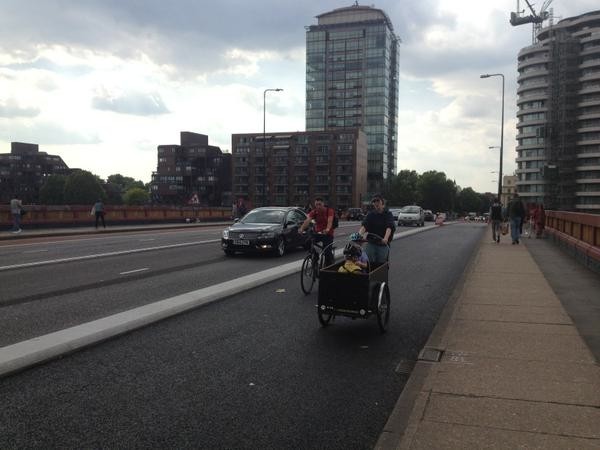
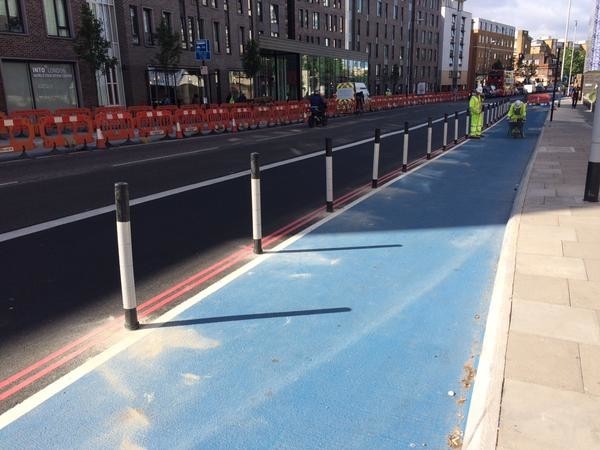
Vauxhall Bridge (2 way track) via @AsEasyAsRiding and segregation wands on the Whitechapel Rd (apologies to whoever I saved this photo from, I can't remember who it was!)
The changes afoot are not just along the route of the East / West Cycle Superhighway. At Oval, CS5 is being upgraded to provide full segregation, including around the terrifying Vauxhall Gyratory and over Vauxhall Bridge. In East London the killer CS2 is also getting an upgrade, with full or semi-segregation being introduced on a route that was previously literally just dirty blue paint and a lot of wishful thinking.
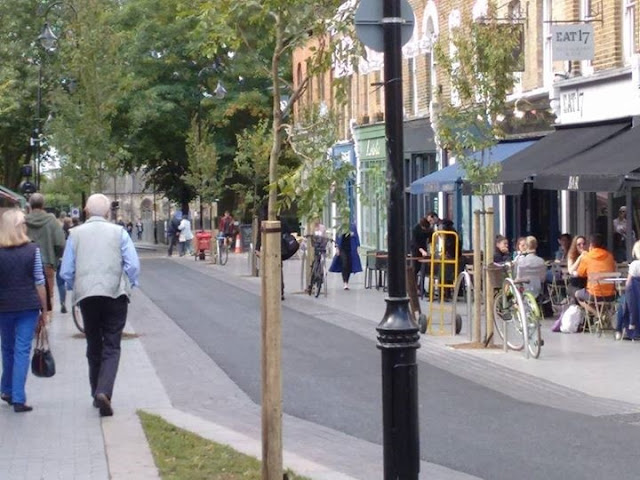 Newly Hollandised Waltham Forest village! Just look at all that anti-driving economic activity going on(!)
Cycle tracks alone can't change a city in to a bike riding paradise. You also need balanced residential zones where local streets are set free from the tyranny of rat running and speeding traffic. The Waltham Forest Mini Holland is just such a project and is now beginning to take shape - but only because of the diligent work of local residents in the face of vociferous NIMBYs who wish to retain their right to drive 150metres to the local shops... There's a street party on Orford Rd today (Monday) from 3PM to celebrate the completion of the first stage of the project, if you're in the area.
As the London Cycling Campaign rightly point out, there are growing pains which need to be resolved in some places, and that's to be expected with innovation and change. Meanwhile, progress presses ahead with construction of the North / South Cycle Superhighway in central London chalked up to start in autumn (check here for details)

But with summer almost over and the city's streets transformed whilst everyone has been away, the pace of change seems unstoppable. The old "blue paint and optimism" superhighways - despite their very obvious limitations - still saw a leap in rider numbers of a minimum of 25%. When these new safe and separated routes open to the public we'll see a torrent, a deluge, a flood of new riders using them, and it's going to change London completely!
Share |
12-Sep-15
Get ready for racing on Regent's Street as a new Tour of Britain route comes to London! [ 09-Sep-15 8:30am ]
It's no secret, I love the Tour of Britain! I like the smaller scale of it compared to the Grand Tours of Europe, the opportunity for emerging riders to taste success, and of course the route through green and pleasant Great British Countryside.
But I've always felt the final stage - right here in London - has always been a bit of a let down. Yes, you get the finish line photo of racing in front of Buckingham Palace, but the rest of the day is spent riding up and down the Embankment and Upper Ground which makes for a dull stage that is not very exciting for spectators.
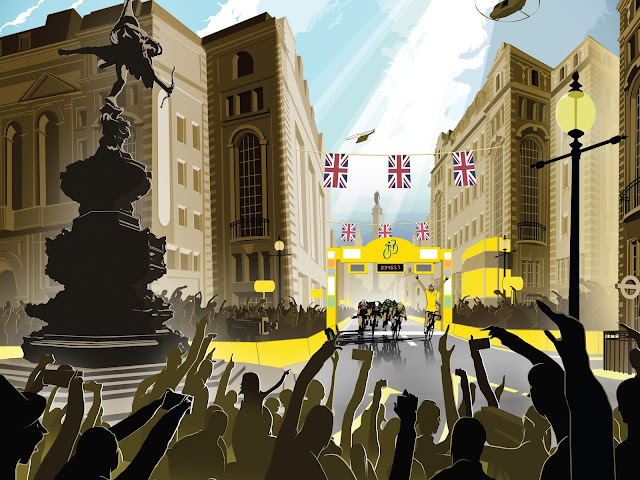
So I'm thrilled to see that this year's final stage has a new route in our beautiful capital - and it's all because of London's everyday cyclists! Because of construction work on the Embankment to build the new East / West Cycle Superhighway the Tour can't ride there. So in 2015 it is adopting a new route, which promises fast down-hills on Haymarket, tight corners around Trafalgar Square, and racing up and down magnificent Regent's Street which is, in my opinion, the most beautiful street in the world (ESPECIALLY when it is closed to traffic!)
The final stage comes to London this Sunday the 13th of September, heralding the end of a fantastic summer of cycle racing. The start and finish line is just south of Piccadilly Circus, and the riders will make a three-pointed loop of Regent's Street, Whitehall and the Strand, passing some of London's most famous buildings and attractions along the way. It is free to spectate and makes for a fun day out for all the family. The riders are fast, but you might even catch a glimpse of favourites Sir Bradley Wiggins, Mark Cavendish, Alex Dowsett and Andre Greipel, or even local boy Tao Geoghegan Hart from Hackney racing for British Cycling's development team.
Seeing as the stage is hosted and paid for by Transport for London (did anyone check the balance of the cycling budget recently?) Londoners might as well get their money's worth and have a nice day out of it...
All the details of the London stage can be found on the Aviva Tour of Britain website here. The beautiful picture of Piccadilly Circus featured in this post is by artist Will Barras and was specially commissioned by cycling website Rouleur, where it is available for purchase.
Share |
05-Sep-15
# [ 01-Sep-15 4:17pm ]
25-Aug-15
Hoop Dreams 1994 Documentary / Drama Movies Full Movie [ 24-Aug-15 11:26pm ]
19-Aug-15
THE GUARDIAN'S JEREMY CORBYN COVERAGE IN 15 HEADLINES [ 19-Aug-15 3:10pm ]
Response from chukwumaa [ 17-Aug-15 1:26pm ]
System Focus: The Voices Disrupting White Supremacy Through Sound [ 17-Aug-15 1:18pm ]
 chukwumaa and E. Jane of Philly duo SCRAAATCH. Photo by Liz BarrAugust's System Focus is on rising networks of African and Afrodiasporic artists disseminating their music in solidarity, along with some cultural context (click here to read). Featuring Chino Amobi, NON, Angel Ho, Nkisi, Serpentwithfeet, SCRAAATCH, E. Jane, chukwumaa, embaci, Brandon Covington, Elon, Butch Dawson, Kayy Drizz, Dog Food Music Group, Violence, Mykki Blanco, Psychoegyptian, Yves Tumor etc.
Back in December, angry New Yorkers gathered to sing "They Don't Care About Us" following the decision not to indict Eric Garner's killer, a police officer. The song's lyrics were written on a placard during a protest against the Ferguson police department in the wake of their fatal shooting of Michael Brown. It also provided the soundtrack to the Baltimore protests in response to the death of Freddie Gray in police custody, danced to by a Jackson impersonator amidst the chaos of helicopters and sirens... The song has recently found new layers of meaning and urgency in the context of the continuing struggle against racist police violence, now taken up by the Black Lives Matter movement... It's no wonder that African and Afrodiasporic artists are choosing to disseminate music in solidarity. In many cases, this creative decision is a strategy for dealing with the alienation that is so often a part of Afrodiasporic experience. As the London-based writer Kodwo Eshun puts it in his 2003 essay Further Considerations on Afrofuturism: "the condition of alienation, understood in its most general sense, is a psychosocial inevitability that all Afrodiasporic art uses to its own advantage by creating contexts that encourage a process of disalienation." And yet in the continuing environment of white supremacy, this creativity is routinely either erased, appropriated, or confined to narrow and fetishized aesthetic areas...
"In no uncertain terms, the Intent of NON is to run counter to current Western hyper-capitalist modes of representation and function, exorcising the language of domination through the United Resistance of policed and exotified colored bodies," NON's email continued. "At a time when national (market) state financial and political systems are tested as never before, NON shall remain committed to the militant realities and potentials of 'The NON State.' NON came into existence through the Pan-African desire for representation on our own terms." As stated on their Soundcloud page, NON artists are "using sound as their primary media, to articulate the visible and invisible structures that create binaries in society, and in turn distribute power..." SerpentwithfeetOne of the most beguiling and exciting voices to have emerged from underground music in recent times, Serpentwithfeet also appears on another track that NON reposted on their Soundcloud. Titled "Total Freedom," it finds the singer winding himself delicately around rising and falling tones, including those of an mbira. In an interview for Dazed, he discussed his self-described "PaganGospel" creed for living and said, "I am always ready to pierce things with my black-queer cutlery. I am constantly looking for ways to make my music extra gay and extra black..."
SCRAAATCH is an art and sound double act, originally from Washington DC and now based in Philadelphia, who often perform live. It consists of artists E. Jane and chukwumaa—read interviews with them here and here—and, along with the New Jersey born DJ Haram, they run the monthly Philly "club-not-club" night ATM. Also negotiating race, gender, queerness, mental illness, and the digital world in her artwork and photography, E. Jane makes sounds and edits under the names E_SCRAAATCH and Mhysa, typically with a glitchy, spectral take on R&B. Try their / her Soundcloud playlist I Have To Say No So Much Right Now, especially its magnificent title track. About their / her artwork, E. Jane said in a recent interview with The Offing, "I came to the conclusion that I am black and I am a woman, my body is thoroughly Black American and it is perceived as woman. Then I realized that means my body is not a 'safe' body. My body is an unprotected body. I started asking myself how we protect unprotected bodies? What if the body were code? What if the body were only a simulation? What if I could exaggerate how inhuman I feel?" Her partner in SCRAAATCH, chukwumaa, was born in Nigeria and "on a plane to the US the first week of [his] life." He also engages experimentally with pop as plus_c—the track "quadrille_club_bing" uses a Vine recording of "They Don't Care About Us" being sung during the Baltimore uprising, mixed into a distorted club beat and resonant tones like metal being brushed and played with a bow. He also made an installation consisting of twenty-one burner cellphones playing Beyoncé's "Flawless," which turned the song into a waterfall... Thumbnail for E_SCRAAATCH's 'I Have To Say No So Much Right Now' Chino Amobi appeared on [Blasting Voice], as did cross-U.S. artist Violence, who is soon to appear on the inaugural release of a new label founded by rapper Mykki Blanco called Dogfood Music Group. Due September 18th, the release will be a compilation titled C-ORE, featuring tracks from Violence, California's Yves Tumor, NYC rapper Psychoegyptian and Blanco himself. "We are a group of friends who have created a release that represents a slice of what we're into, our culture and what we want to show the world," Blanco has said about the collection. "People all over the world are only fed this singular image of 'African American Music' and we want to disrupt that. We all come from backgrounds outside of the black American norm, and the world deserves to see our culture as much as anything else..."
 C-ORENeedless to say, the artists mentioned here aren't the only African and Afrodiasporic artists making challenging and beautiful music in the underground, just a few constellations—there are countless more voices out there. As it has been for centuries, since the traumatic dawn of modernity, finding such voices through music is not just a leisure activity, as it is marketed to many of us. It's part of the urgent and fundamental search for self and identity in a world that not only erases that identity, or appropriates it, or predetermines it, or constrains it, or renders it fragmented and ostensibly paradoxical, but that also systematically commits physical violence upon people of that identity. This is why so many artists with minority status end up in underground music—this is why they are underground music. Fortunately, the underground can form spaces and networks where identity matters, is audible, and becomes visible.
System Focus: Why Today's Underground Club Music Sounds Cybernetic [ 17-Aug-15 12:59pm ]
C-ORENeedless to say, the artists mentioned here aren't the only African and Afrodiasporic artists making challenging and beautiful music in the underground, just a few constellations—there are countless more voices out there. As it has been for centuries, since the traumatic dawn of modernity, finding such voices through music is not just a leisure activity, as it is marketed to many of us. It's part of the urgent and fundamental search for self and identity in a world that not only erases that identity, or appropriates it, or predetermines it, or constrains it, or renders it fragmented and ostensibly paradoxical, but that also systematically commits physical violence upon people of that identity. This is why so many artists with minority status end up in underground music—this is why they are underground music. Fortunately, the underground can form spaces and networks where identity matters, is audible, and becomes visible.
System Focus: Why Today's Underground Club Music Sounds Cybernetic [ 17-Aug-15 12:59pm ]
 Celestial Trax's Ride or DieJuly's System Focus was on a particular strain of club music with a cybernetic feel, along with some incidental reflections on calling it 'club music' (click here to read). Featuring Night Slugs, Fade to Mind, Keysound Recordings, Liminal Sounds, Her Records, Sentinel, Amnesia Scanner, J.G. Biberkopf, D.J. New Jersey Drone, Track Meet, Bootleg Tapes, P4N4, Velkro, #FEELINGS, CELESTIAL TRAX, Tallesen, WDIS, Gewzer, Gronos1, Magic Fades, SPF666, Korma, Team Aerogel, Infinite Machine, Roller Truck, Tessier-Ashpool Recordings, IMAMI, Cloaka, Spurz, Kadahn, Gel Dust, Dviance, Partisan, Sharp Veins and Lit Internet. Nb/ this article should have said a bit more about the style's relationship to Jersey Club, Bmore Club and Philly Club.
There has been a slow but sure shift in the way the underground talks about one of its key areas: "dance music" has become "club music." The major reason for this is probably that it differentiates it from Electronic Dance Music (EDM), the name that, despite its generality, has come to stick more specifically to the recent explosion of big name, big crowd, big show parties held outdoors, particularly across the U.S. "Club music" is not that—it's a more intimate, enclosed environment, both in the physical spaces it describes and in the community that enters and honors those spaces, whether real or imagined...
DJ New Jersey Drone's Energy EP This kind of music was pioneered by transatlantic labels like Night Slugs, Fade to Mind, and Keysound, and mixes together rebooted ballroom/vogue house and the new wave of instrumental grime, all with a stark, hi-tech machine sheen. It was soon developed further on tight, intense and ice-cold shorter releases by artists on London's Liminal Sounds such as Brooklyn-based producer Copout, and particularly those on fellow UK label Her Records, such as DJ Double M, Sudanim, CYPHR and Kid Antoine. It's a style that is enjoyed by the sort of musicians and fans who don't like to name styles, but instead allude to hybridities of aging categories like house, techno and grime... Korma's ZGMF-X19AWhat makes this music so good to run to? It has a high tempo which keeps urging you relentlessly forward. But it's more than that. It embodies progress and athleticism in its very sound (unsurprisingly, it's the soundtrack to health goth) not in a merely beautiful way, but with a frightening dose of the sublime too. Because as in both running and culture, forward motion isn't nice, easy, or moral—it's laced with anti-humanistic pain, aggression and dissolution, crashing euphoria and dysphoria together in a bodily blur of hormones and neurotransmitters. As muscles grow and become more supple, as lungs become cleaner and the brain less resistant, so technoculture improves: motors, alloys and power supplies increase in efficiency, pixels shrink and multiply, and digital intelligence grows more independent of yesterday's humanity. Organic, machine—it's all the same in the struggle of kinetic matter. All this seems apt as I schlep my loathsome fleshform across the tarmac in a futile bid to flourish, or at least survive the oncoming war...
 Cloaka's AdaptOne particularly fascinating and powerful release is Lit Internet's Angelysium, which features collaborations with some of the producers on the _VIRALITY compilation as well as South London producer Endgame (who was in last month's tresillo column). Cinematic almost to the point of telling a story, if Angelysium ever gets into a groove, it's likely to vanish suddenly into the vast mists, giant machinery and assorted percussive enigmas. The empty spaces that characterise the stop-start textures of eski grime become yawning chasms thick with tension and potential assailants, yet also with melancholic distance.
 Lit Internet's AngelysiumAll this is just another reason why the category "club," while it does a lot to hone in on specific and, in many ways, desirable qualities in dance music, can only go so far. "Dance" is a more intangible, open-ended concept, something that can happen anywhere and is directly related to the body and activities like running and other forms of exercise, the body being even more intimate and present than the club that might temporarily enclose it. Dance is music that moves you.
13-Aug-15
Lit Internet's AngelysiumAll this is just another reason why the category "club," while it does a lot to hone in on specific and, in many ways, desirable qualities in dance music, can only go so far. "Dance" is a more intangible, open-ended concept, something that can happen anywhere and is directly related to the body and activities like running and other forms of exercise, the body being even more intimate and present than the club that might temporarily enclose it. Dance is music that moves you.
13-Aug-15
I'm spending the summer in the Netherlands, and have been learning so much about cycling in their cities. What has become clear to me is that Dutch cities are increasingly competing for a share of the visitors who come here to learn about the Netherland's cycling and planning culture. Utrecht, host of this year's Grand Depart, is not alone in this - note how this incredible video touting their cycling achievements is presented in English rather than Dutch and really tries to "show off" the city as a beautiful place to visit (which it is, I hasten to add).
I think this is an interesting phenomenon for two reasons; firstly the internet is being recognised by cities as an effective tool for reaching and inspiring many people around the world, getting them excited and clearly demonstrating exportable concepts. There's also a clear attempt here to attract high-spending tourists who are on learning-based trips. In short, visiting cities to find out how they work has become a mini industry of its own!
What do you think? Have you spent time visiting cities in order to learn and find out what you can do in your own city? Do videos like this make you want to visit somewhere more? Could pro-cycling messages like this help to make the case for cycling in the city where you live?
For more information on cycling in Utrecht, visit utrecht.nl/we-all-cycle/
Share |
02-Aug-15
Interesting Postcards [ 02-Aug-15 12:00am ]

'Bing bing bong, this is Radio Butlin'. Yes, it really happened. We used to on holiday to Butlins in the seventies, and always had a brilliant time. I'll tell you about it someday, as well as posting more of my surprisingly extensive Butlins postcard collection. Bet you can't wait.
01-Aug-15
What We Call The Most [ 01-Aug-15 12:00am ]

'Look, Mary, no hands!'There's no question in my mind that Cliff Richard has made a lot of good records, but very few of them have the immediate dance floor appeal of his very groovy version of 'The Girl Can't Help It' as released on his 1970 LP 'Tracks 'n' Grooves'.
The Little Richard cover puts Cliff back in touch with his rock and roll roots, of course, but it's a slightly daring move as the lyrics are ridiculously and comically lascivious, with numerous metaphors for sexual arousal and climax.
To complement the saucy words, Cliff is given a loping, slightly sleazy arrangement to emote over, full of dirty bass and, yes, prominent horns. In an attempt to temper the relentless smut, a middle eight is inserted where a Hammond organ goes all churchy and Cliff suddenly declaims 'OH, HEAR ME NOW!' as if he were a hysterical evangelist working a tent full of gyrating snake handlers.
Nice one, Clifford, nice one, son.
31-Jul-15
The Nanny [ 31-Jul-15 12:00am ]


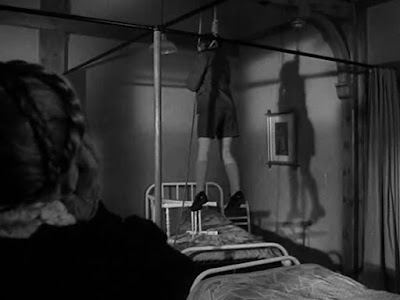
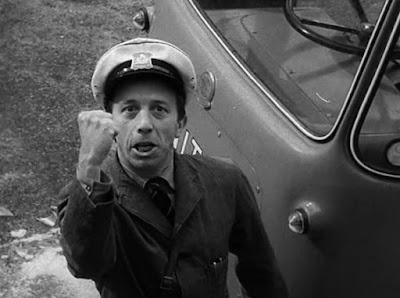


As you might expect from a film that is about the death of a child and the devastating impact it has on a family, 'The Nanny' is a rather somber affair, by far the most restrained of the psychological thrillers that Hammer used to supplement their various horror franchises. There are very few twists and turns, just a slow piecing together of the true circumstances of what may or may not have been a tragic accident.
Bette Davis stars here as Nanny, ably supported by extraordinary eyebrows. The only child in the house hates and fears her, but that's irrelevant as her real duties are to stop the Mother of the family unraveling completely, which she does by treating her like a baby, obsessively brushing her hair and feeding her steak and kidney pie from a spoon (yes, Social Services, I am aware that does not necessarily constitute responsible child care). Davis' performance is mannered and slightly grotesque, without ever being ridiculous. As things begin to unravel, Ms Davis resists the chance to go full psycho-biddy, as if her character is already at the extent of her strangeness.
The lovely Pamela Franklin pops up as a lonely teenage neighbour who pretends to have loads of boyfriends but mainly sits in smoking and watching westerns on the telly, and is by far the most sympathetic character in a film filled with emotionally damaged and psychologically distant people.
It's all a bit depressing, really, but it's well made and directed and doesn't rely on cheap shocks to tell its ultimately rather sad story. I fancy some steak and kidney pie now. I'll have a bath later.
30-Jul-15
Check Four [ 30-Jul-15 12:00am ]






Driving used to have criteria, things that you had to do before embarking on a journey. There were special clothes to wear, equipment you needed to keep in your boot, sweets you needed in the glove box: there were gloves. It was also a time when men were expected to be useful, and so a series of mechanical checks were expected to be made before every trip. Now people just jump in and piss off at high speed in the same casual way that they might sit on a chair, or a toilet.
So, next time you need to use the car, humour me. Check the lights; check the steering; check the tyres; check the brakes; put on your car coat and pull on your driving gloves. When you've done all these things, light your pipe, make a hand signal and set off. The drive-thru KFC will still be there in a few seconds time.
28-Jul-15
Bike bans in pedestrian zones make no sense, but not why you think [ 28-Jul-15 8:30am ]
Last week I visited the Dutch city of Zwolle, the Netherlands City of Cycling in 2014. It's a pretty, historic city surrounded by countryside and has a pedestrianised heart. But what I saw there made me reconsider banning bicycles from pedestrian-only areas, but not for the reasons why you might think.
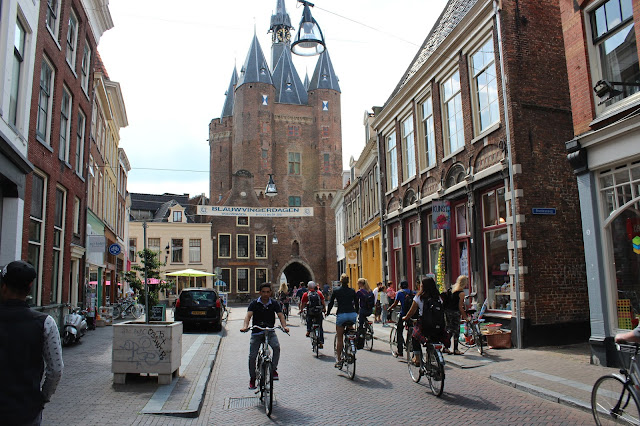 Many cities - both in the UK and elsewhere - have pedestrian zones where people using their feet to get around can relax in a safe environment where they don't need to be worried about being knocked down by speeding cyclists, or any other traffic for that matter. Where there are lots of people, especially around shops, this has always made sense to me.
The West Country town I grew up in had a large pedestrians-only shopping area, where you were expected to lock your bicycle on the perimeter and walk in. Even as a young man I remember being approached by security guards and given a telling off for pushing my bike through.
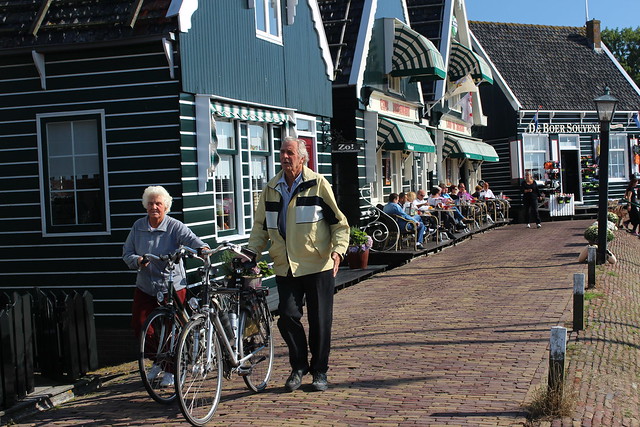
Things were different in Zwolle. I'm not sure if bikes were technically permitted but I saw many in the pedestrian area. A few were being slowly cycled to available bicycle parking, but the majority of them were being pushed. I saw two friends; one woman on a bike and one man on foot, making a journey together through the city centre (photographed, below) Would their journey have taken place if a strict bike plan was in place?
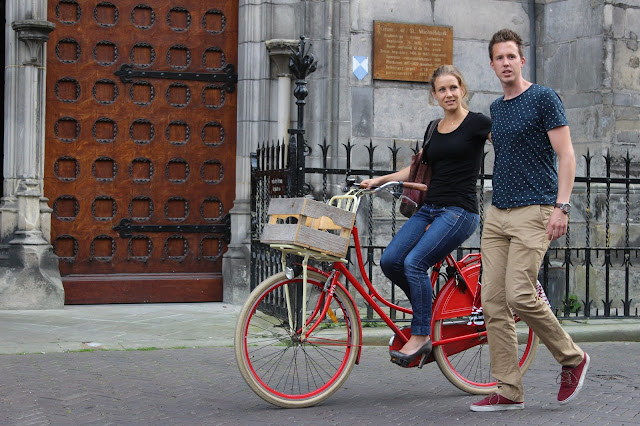 An older woman was using her bicycle as a shopping trolley, filling her basket with goods she brought as she pushed the bike from store to store.
I remember hearing Danish urbanist Jan Gehl recount a story about his mother who, when she became too frail to cycle, would still walk with her bicycle - it was her dignified access to mobility, without having to revert to using a walking frame.
Pedestrians are important, and in pedestrian areas should always come first. As with much in life however the situation is not black and white; people have a complex approach to their own mobility. I wouldn't want to see cyclists riding at speed through shopping areas, or obstructing access with mountains of parked bicycles, but I realise there's more to bicycles in pedestrian-only areas than initially meets the eye.
P.S For more wild and reckless behaviour like using a bike in a pedestrianised area, see this film by the City of Zwolle which features their Bike Director getting a backie from various residents - something which landed London Mayor Boris Johnson in hot water this week and for which he was slammed by the CTC! (Film in Dutch only, sorry!)
Share |
25-Jul-15
Sucked To Death [ 25-Jul-15 12:00am ]





As a child I had a morbid fear of quicksand. I'd probably watched too many Tarzan films, and PIF's like 'Keep A Grid On It', a warning about the dangers of children dying in grain pits ('drowning without water') didn't help. Come to think of it, as an adult I'm still pretty scared of quicksand AND grain pits, I'm just wise enough to know that if I don't go looking for that sort of danger, it certainly won't coming looking for me.
24-Jul-15
Dracula, Prince of Deadness [ 24-Jul-15 12:00pm ]






It's a convention of vampire films that Dracula starts dead, and ends up dead. In Hammer productions he is usually ended by a member of the Van Helsing family, but his nemesis can also be a callow youth or a monk who likes to warm his arse on an open fire. In 'Taste The Blood Of Dracula' he just gets giddy from being in a church and falls off a ledge. Fact is, Dracula is very much a bully. He's cock of the walk when biting young, vulnerable girls, but he crumbles when faced with any real opposition. Literally. That said, he'll be back. He always comes back.
RIP, Sir Christopher, you pompous old marvel. See you again soon.
Interesting Postcards [ 24-Jul-15 12:00am ]

Dolphins at Brighton Aquarium, Sussex
I know what you're thinking, 'yeah, dolphins are cool, Paul, but they're not that interesting'. Well, wind your neck in, mate, because these clever little bastards are Dick and Delilah, the dolphins the CIA trained to sabotage Soviet submarines during the cold war. And you can't prove otherwise.
20-Jul-15
The Evil of Banality [ 20-Jul-15 12:00am ]
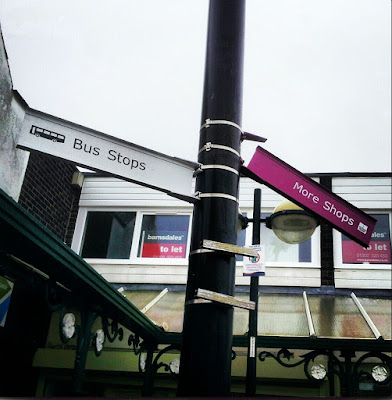
The writer, theorist and academic Mark Fisher recently set up a Facebook page called 'Boring Dystopia', and invited the submission of photographs of Britain in the 21st century to illustrate the concept. I've already uploaded a few snaps, as manifestations of dullness and decay have long been an interest of mine, particularly the places where the banal and the broken intersect, and the true, terrible, tedious horror of modern life is revealed.
We've all read '1984' and seen the implications of totalitarianism: the endless war, constant surveillance, the relentless propaganda machine, the purges, the torture, the executions, the mind boggling twists and turns in ideology, in language, in life under the heel of the system. But this is a very different dystopia that lacks even the charm of the police state: there are hardly any police for a start (the phalanx of coppers in the picture below dates from 2012, and the procession of the Olympic Torch).
This dystopia is held in place by neglect, by apathy, by a lack of resources, by a lack of interest. Everything is falling apart, but we lack the money and energy to make it right. Newly built things look half-dead even as they are unveiled, MDF where wood used to be, bricks made out of old bricks, slates and glass made out of plastic, all covered with a single coat of watery pastel paint.
New housing is prohibitively expensive and resembles a series of bird boxes split into quarters, sixths, eighths depending on how many newly weds are expected to cram into them. The pity of the boring dystopia is that these poorly and hastily constructed pens are sought after. It has come to this: we are so desperate to live somewhere that we will settle for a Lego house with a tiny consolatory patch of polyurethane lawn. There are some townhouses near to where I work. Each of them has one large window has a tiny balcony attached to it, like a fancy fringe on the bottom of a sofa. You cannot stand on it, sit on it, or even dangle a child over it. In any event, it just looks out onto a dirty, busy road.

Local authorities and other central civil organisations are not instrumental in the boring dystopia, they are subsumed by it, just like everybody else. Lacking money, resources and motivation, their interventions are confined to putting up signs, or erecting fences and barriers to keep members of the public away from areas that they already have no interest in.

Old and empty buildings are no longer demolished, as that costs too much money, and the boring dystopia has put too many rules in place about blowing things up or setting fire to them. Instead these buildings ossify with pigeon droppings, and stalactites form like spindly toxic fingers. After a while the buildings become invisible.
Yet, despite the underpopulated office blocks, in spite of the abandoned buildings, we keep on building because we are not able to stop, perhaps because we want to fulfil the life trajectory we expected when our world was not so dystopic, not so boring. Or perhaps it's to see out the job that our distant ancestors started several centuries ago: to carve up and chop down this land until every inch of it has the brand of civilisation upon it, until there is no corner or parcel of space that does not have a foot print or a unit or a trampoline upon it. There CCTV cameras everywhere, but they simply provide a continuous flow of unmonitored images. They flicker through the night in unmanned offices. If something happens, someone will review the footage, in exactly the same way that a store detective might rewind the day's surveillance tape to check out a shoplifting incident - in 1990. We've spent billions on replicating a process that already existed. We've lost the whirring noise and gained blurred footage of Michael McIntire shopping.

Who runs the boring dystopia? The answer is no-one. There is no-one driving. The government are too busy to bother with little things like the administration of the country now. They are like burglars who have meticulously planned a precision raid on a gold warehouse, only to get there and find all the doors open and the alarms switched off. They wander around, taking what they want, not quite believing their luck. After a while, they take their masks off. They know no-one will stop them, and they no longer care who sees them.
We can obey a dictator, respect an ideologue, fear a tyrant. These individuals lead by bending parts of the world to their will, and, whether, we go along or fight against, we live or die in the shadow of their monstrous ego. But this dystopia is boring, and it is run by boring people, except for Ian Duncan Smith, who is a fucking maniac.

So, yes, thanks to Mark Fisher, the Boring Dystopia has a name now, and Facebook users can participate in its cataloguing. It is unlikely to spark a revolution, or challenge the parameters of this society that we have created. We are too tired and disengaged to throw a brick, so we press a button to 'like' a picture of something that, actually, represents our cultural penury and societal subjugation, like condemned men unknowingly shaking the hand of their executioner, who uses the contact to estimate the length of the drop. We should be ashamed, really, mortally ashamed, but this dystopia has made us all boring, and we are too stupefied to do a fucking thing about it.
A Million Horns [ 18-Jul-15 12:00am ]

It's 1970, and Cliff Richard faces up to the challenges of a new decade and a less than inspiring recent sales record by teaming up with his old pal Hank Marvin and releasing a single that is not only rockier than his usual output, but also exploits a topical theme: the unstoppable rise of the car, and the damage pollution is doing to the environment.
Written by Hank, 'The Joy of Living' features an interesting guitar effect that seems to evoke the grinding futility of a traffic jam, and lyrics that are both deeply sarcastic and rather angry and are redolent of J.G Ballard (who would have thought lots of big, sexy, deadly cars a good thing) or even Patrick Hamilton (who would have thought it disastrous*). In this dystopic version of the future where the motor car is King, man is reduced to living in state appointed high rises, looking down on the world and remembering what it felt like to breathe clean air, like a scene from the credit sequence to 'Soylent Green' come to life.
In the end, however, a strong ecological message and a jaunty chorus were not enough to propel the song higher than number 25 in the charts and the backlash against the dirty bastard car didn't take place after all. As someone who was stuck in a lovely multi coloured crocodile for twenty minutes this morning, I wish the world had listened to Cliff more closely. He was also right about young ones not being young for very long.* Hamilton had more reason than most to hate the motor car, having been knocked over and nearly killed by one in the late 1920's. In 'Coleoptera', the last chapter of his 1953 novel 'Mr. Stimpson & Mr. Gorse', he predicts a Britain over-run by cars, created by man to serve but now completely in charge of their inventors and 'pitilessly exacting' in their demands. 'The beetles were not magnanimous in victory', he notes.
F*** Me, It's Freddie! [ 17-Jul-15 9:00am ]



FMIF as Philip Proudfoot in 'Otley' (1968).
We've actually done this film before, but it is well worth revisiting, especially with facial expressions this good. Freddie plays what is called in olden days parlance 'a flaming homosexual', i.e. he isn't scared of what you think of his sexuality. He's also quite a dandy, and at the centre of the intrigue, like a camp mod spider. It's a broad performance, but it works - after all, as you can see from the second screen shot, Freddie has his tongue firmly in its cheek.
Otley [ 17-Jul-15 12:00am ]
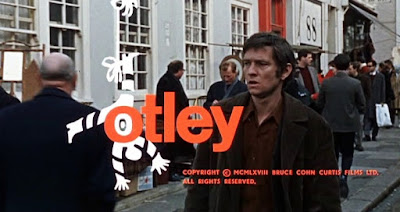
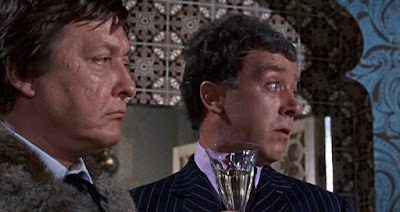
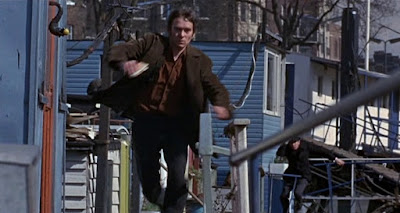

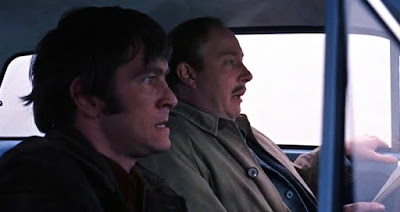
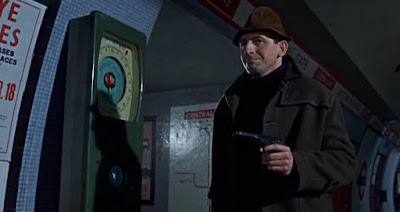
'Otley' is about fifteen minutes too long, but it's a fun film about the rather shabby world of espionage that features a stellar cast of British character actors, led by the great Tom Courtenay as Gerald Arthur Otley, a shiftless moocher and compulsive pincher of ornaments who, by sheer idiocy, finds himself at the centre of a web of slightly incomprehensible intrigue.
A nice mix of comedy and drama, 'Otley' is very sixties (never a problem in my book - or on my blog, anyway), but gives us a glimpse of the 'real' London behind the swing: the markets and bedsits, cafes, pubs and tube stations, people in polo necks and socks that need darning. The grooviest person in it is Freddie Jones, who is so sharply dressed it makes Beau Brummel look like Worzel Gummidge.
Tom Courtenay is excellent, as always. His light Yorkshire accent, bony face and slightly camp delivery are miles away from the usual leading man, and he's not afraid to appear cowardly and pathetic, which is probably why he never made it big in action films. He's also very funny and, at times, the self-obsessed, duplicitous Otley is reminiscent of a (slightly) more grown up Billy Liar, which makes you wonder sometimes if all the running around and gun play is simply part of some elaborate, extended fantasy.
The rest of the cast are a who's who of contemporary character actors, including James Villiers, Alan Badel, Leonard Rossiter, James Cossins, Ronald Lacey, Frank Middlemass, Geoffrey Bayldon and, of course, our beloved Freddie. The last two on the list are still with us (aged 91 and 87, respectively) and, I hope, will remain so for a good few years to come. Romy Schneider makes an attractive female lead, but then she always did, particularly when sporting thigh length white pvc go go boots as she does here.
Light hearted and full of twists, it's the sort of film that should be on TV right now but, for whatever reason, never is. Bloody nowadays TV.
Adieu, Aubrey [ 16-Jul-15 10:50pm ]

The purring, sinister, wonderfully eccentric Aubrey Morris is dead. He lived for 89 years, and was acting up until a few months ago. Here he is as an utterly bonkers psychiatrist Dr. Putnum in Hammer's 'Blood From The Mummy's Tomb'. Adieu, Aubrey.
What Might Have Been [ 16-Jul-15 12:00am ]
It's February 1979, and Punk is moribund enough for Legs & Co to get involved and start clod hopping about in plastic sandals and party wigs. If they'd only flipped the record over they would have encountered 'Frigging in the Rigging', a puerile chant full of explicit sexual imagery that is crying out for literal interpretation in dance by five ditzy dancers. Can you imagine the hand gestures?
Christ Almighty [ 12-Jul-15 12:00pm ]

Art therapy is an essential part of prison for those serving long sentences: they've got to do something, after all, and smearing a load of paint all over a canvas can be cathartic.
Ronnie Kray was a keen amateur artist, and his paintings (not all of which are as good as his 'Crucifixion' above) now sell for several thousand pounds each. Good news, Ronnie, wherever you are: people are still fucking mugs when it comes to your tawdry legend.
A tip of the cap to Jonny Trunk who originally posted this on Instagram and made me aware of it. Now I can't think about anything else, so, yeah, thanks a lot.
Keep It Broken! [ 12-Jul-15 12:00am ]

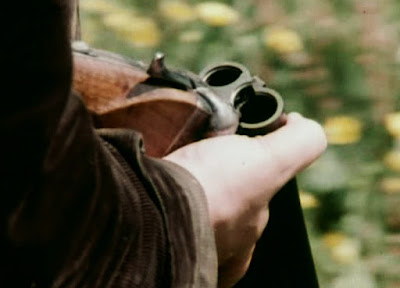
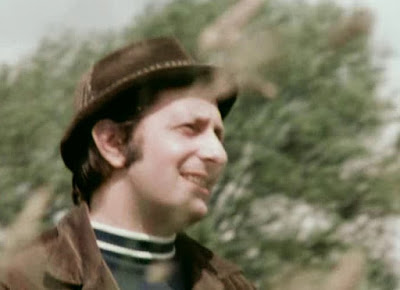
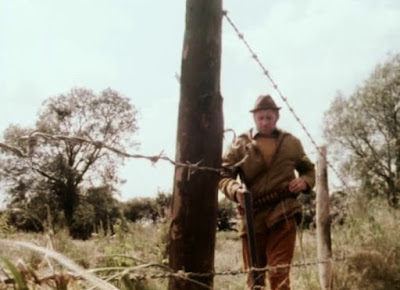
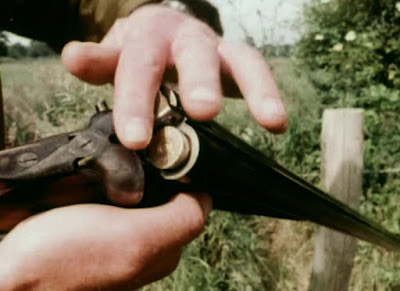
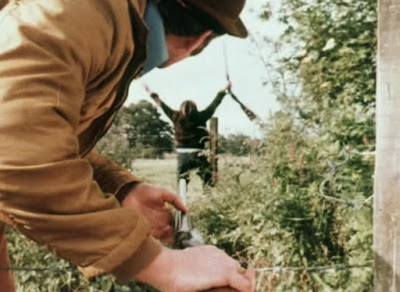
While we're thinking about shotguns, rural settings and sudden, violent death, remember --
'A gun should be broken and unloaded whenever it's not being fired, and especially when getting through a fence or over any obstacle. If you don't follow the rules, sooner or later there'll be a - BANG! - tragedy'.
Look at the geezer being shot. Is it just me, or is he hamming it up a bit?
House On Straw Hill [ 11-Jul-15 12:00am ]

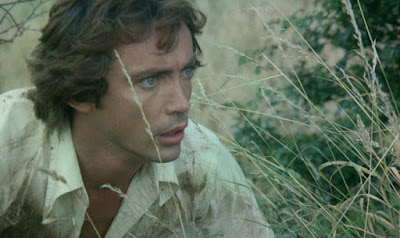
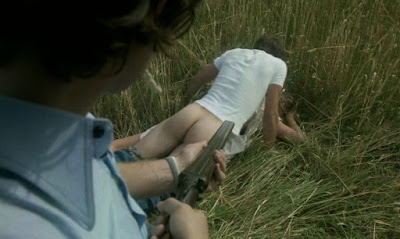

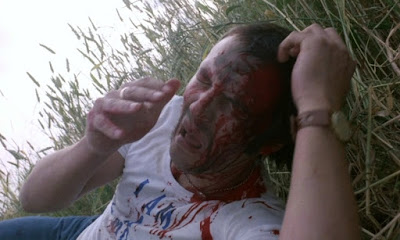
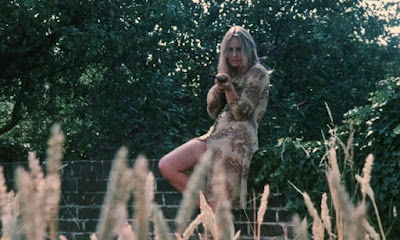
'House On Straw Hill' has either an illustrious history or a terrible reputation, depending on how you look at these things. It was the only British film on the 1984 list of banned video nasties, mainly because of its fairly explicit mix of sex (some consensual, some not) and violence (some consensual, some not). Made in 1975, it exists in any number of different versions, and under several different titles, although a more or less definitive version has recently been released on Digital Versatile Disc.
The always odd Udo Keir plays Paul Martin, a successful author who rents a remote cottage in Essex in order to work on his second book. He has an on-off relationship with porn star Fiona Richmond, i.e. he gets on, then off, then sends her packing. Their 'love' scenes have a rough and ready quality that makes them seem more explicit than they really are, but then some of that might be due to him putting on latex gloves every time they get it on.
Paul hires a secretary over the phone to help type up his masterpiece and is delighted when she turns out to be Linda Hayden, who brings her usual blend of jailbait precocity to the role, and forgets to bring a bra. Linda is a compulsive masturbator and, when she is caught fiddling with herself in a field by a couple of bicycle riding 'youths' (including an already balding Karl 'Brush Strokes' Howman), an unpleasant rape scene (is there any other type?) ensues. This young woman is not quite the pushover she seems, however, as the yokels who assault her find out to their cost.
The last half hour explodes in a frenzy of rough sex and sharp knives and a soap opera plot twist which makes enough sense to validate all the huffing, puffing and intimate touching that has gone before. Unlike the BBFC, I wouldn't describe the film as nasty, rather as an adult psychodrama that occasionally gets a little too adult for comfort: if Ingmar Bergman had made it, it would have been hailed as a masterpiece (it's worth remembering that Bergman's film 'The Virgin Spring' was the inspiration for 'Last House on The Left'). Probably.

I enjoyed the rural setting (it was filmed near Chelmsford, the furthest extent of 'my' Essex), and the scene where Keir drives a brakeless Morris Minor into a pond. I liked Linda Hayden, who always does an excellent sexy psycho, and I was intrigued by Fiona Richmond's lissom body and bricklayer's face. Most of all I enjoyed hearing extracts from the book Paul is working on, which sounds like it's going to be truly fucking awful.
Music lovers will be pleased to hear that the film has a rather good soundtrack, but you needn't take my word for it as my friend and colleague Fearlono has made a custom soundtrack for it that you can download at his smashing website Cottage of Electric Hell. One thing: you will need to pretend to be an adult to gain entry, as there are grown up themes and some sexual swear words.
Baby Love [ 10-Jul-15 12:00am ]

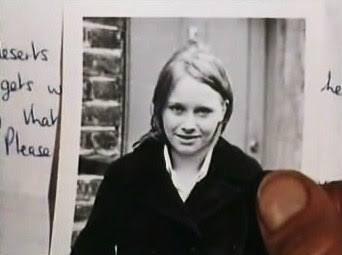

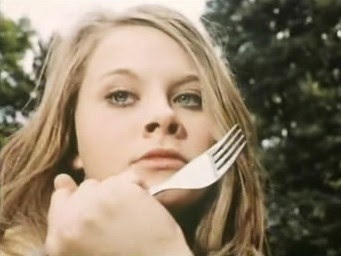


'Baby Love' centres around the familiar plot device of a stranger who enters a supposedly perfect household and shags (or is shagged by) everyone, subsequently exposing how damn dysfunctional they all are behind the smiles and soft focus. Lucy is a fifteen year old strumpet in training who is suddenly orphaned when her sluttish mother (Diana Dors) kills herself. Mum's last wish was that Lucy go to live with Keith Barron, one of her few old flames to have actually done well for himself. Lucy's arrival throws the house into turmoil, not least because she has been trained to exploit her sexuality at every opportunity, and spends most of her time flirting, walking around in her bra and letting seedy strangers feel her up at the pictures. After a while, however, Lucy begins to long to be part of the family, only to find that the family rather like her as she is - a sex object that they can project their hetero and homo sexual fantasies onto.
'Baby Love' simply wouldn't get made today, if only for the fact that frequently nude star Linda Hayden was only fifteen years old at the time of filming. This role propelled her into a career in which she almost exclusively played, for want of a better term, jailbait. In the various retrospective interviews I've seen with her she seems remarkably well-adjusted and good humoured about her ten years as a baby faced slut but, as she went out with Robin Askwith for a number of years, her critical faculties may be slightly impaired.
Some interesting guest stars in this, by the way - the aforementioned Diana Dors, right on the cusp of turning from pneumatic blonde bombshell to frowsy Earth Mother, and, in a small but sleazy role, dirty old Dick Emery.
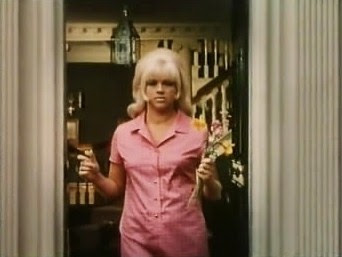
The ghost of Diana Dors.

'Ooh, you are awful', etc.
Bloody Hell [ 09-Jul-15 12:00am ]
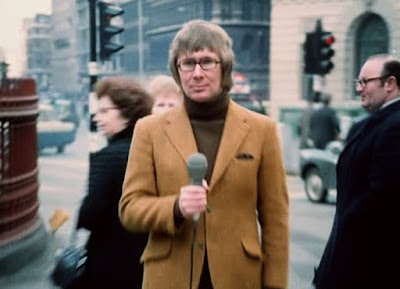
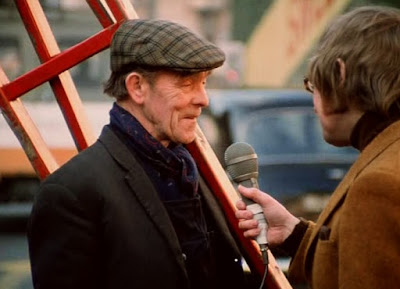
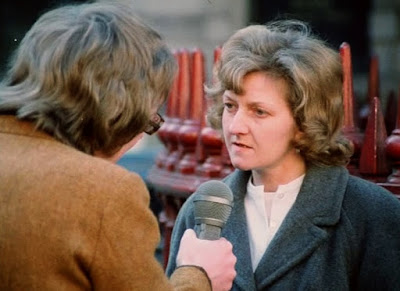
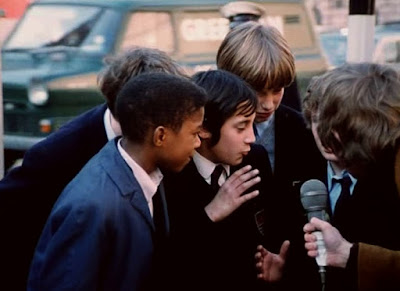
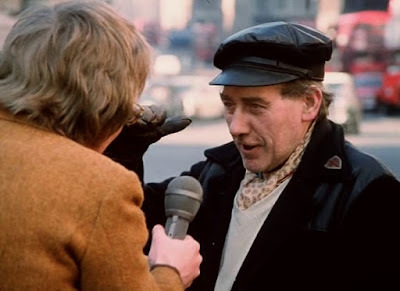

What do these randomly selected band of Dickensian grotesques and cheeky urchins know about blood? Nothing. One bloke in a bowler hat even thinks that you can keep it for up to a year! Surely everyone knows it only lasts three weeks, which is why it is used immediately, and why the NHS needs so much of it. So, do as the gingerbread man made flesh says: ring the Blood Transfusion Service and GIVE BLOODY BLOOD.
F*** Me, It's Freddie! [ 04-Jul-15 12:00am ]



FMIF as Harry Field's Dad in 'Who Killed Harry Field?', a 1991 episode of 'Inspector Morse'. If you're wondering who did kill Harry Field, you'll have to watch the show, but, believe me, he definitely had it coming. Freddie gives a great performance, by the way, but then that's Freddie's stock in trade, isn't it? He's a great hero of mine, and it feels good to be paying tribute to him again.
Lifeforce [ 03-Jul-15 12:00am ]






'Lifeforce' is a mostly enjoyable adaptation of Colin Wilson's classic novel 'Space Vampires'. In it, a space shuttle mission is interrupted by the discovery of a huge, seemingly abandoned space craft of alien origin. When the crew board the hulk, they discover hundreds of dead space bats and three naked humanoids in a state of suspended animation. Their genitals are thoughtfully obscured but the sole female (Mathilda May) is very beautiful indeed and has perfect breasts, and we are allowed full sight of these, which is a fatal mistake as they become pretty much all we can see and, when they disappear about forty five minutes in, all we can think about is when we will see them again. Indeed, if I close my eyes I can see them now *closes eyes*

As it goes on, the film becomes less interesting and slightly chaotic, especially in the semi-hysterical finale in which vampirism has infected London and is driving people to barbaric acts of public unrest, and our uninspiring American hero (Steve Railsback) has to strip off and kiss the sexy naked vampire lady a lot in order purely to get her into a position where he can stab her with a special anti gorgeous bloodsucker sword, killing her, saving the world, but sacrificing himself. Good, the man's an idiot.
There are some excellent actors in the cast (Jerome Willis, Frank Finlay, Patrick Stewart, the superb Aubrey Morris), although Peter Firth is miscast as a tough SAS officer. There was also clearly some money spent on the production, and the special effects are generally very good if rather derivative of both 'Alien' and 'Raiders Of The Lost Ark'. There's even a promising plot line about the vampires having visited Earth on a cyclical basis for centuries but this doesn't really develop into anything interesting. Ultimately, however, all of those positive points are totally irrelevant in the scheme of things: this film is all about the ancient space vampire's stupendously attractive chest and the rest, a mysterious celestial body well worth getting bitten on the neck for.
Thinking about it, perhaps not the best film to come back with. I don't want you thinking I've had some sort of breakdown and am now obsessed with knockers, especially as a couple of next week's posts are about Linda Hayden.
From Just This Side Of Midnight [ 02-Jul-15 12:00am ]
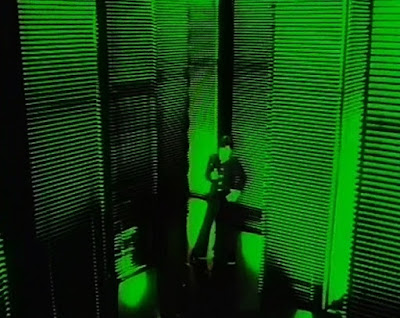
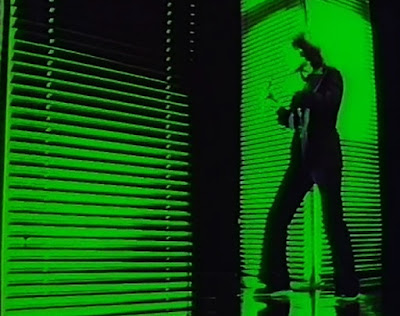

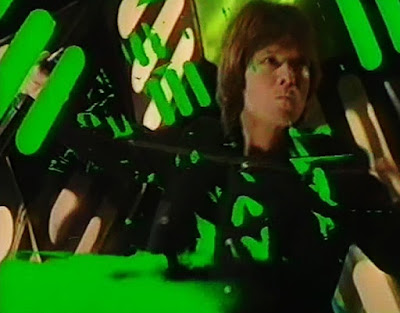

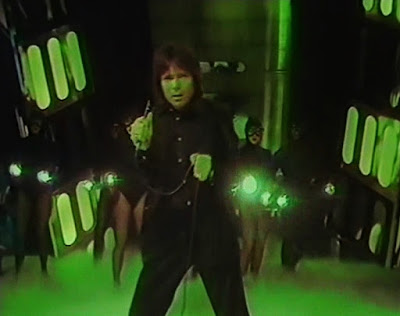
I don't know whether recent allegations about Cliff Richard are true. My only response is that it wouldn't surprise me, not because I have reason to particularly suspect him but because, in a world where Rolf Harris has been unmasked as a serial sex offender, I now lack the capacity to be shocked by further revelations. Anyway, Cliff fascinates me, and always has done, so I thought I'd look at some of his occasionally very odd oeuvre, today arriving in 1979, already twenty one years into his seemingly endless career.
Here, Cliff is searching for a green light. He's been looking for it all night. It's one of his sleaziest records, ably complemented here by the addition of Hot Gossip in this performance from a 1979 episode of 'The Kenny Everett Video Show'.
Cliff appears to be lost in a sensuous reverie but, ever the innovator, has clearly worked closely with choreographer Arlene Phillips to invent dogging. The torch wielding, goggle wearing, balaclava clad dancers bring an additional sinister note to the balefully lit proceedings. Cliff, clad all in black, is both victim and voyeur. He's found half a dozen green lights tonight, and, one way or another, he is going to get fucked.
It's good to be back.
I Had No Luck With Her [ 02-Jul-15 12:00am ]
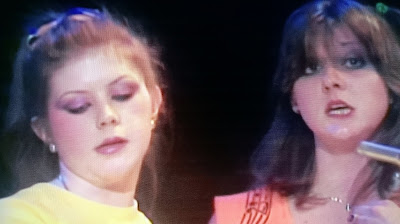
To kick off, here's a screenshot from a recently repeated episode of 'Top of The Pops' originally broadcast in 1980. It features the backing singers for a performance of Jona Lewie's quirky electro pop hit 'You'll Always Find Me In The Kitchen At Parties'.
Left hand lady is the much missed Kirsty MacColl, of course, but I have been unable to identify her co-worker. This task has been made harder by the fact that neither of them actually sang on the record, they were just in the vicinity when needed for the telly. They really remind me of the girls I used to like as a young man: attractive, feisty, not interested.
The British Esperantist [ 29-Jun-15 9:00pm ]

This is Issue 6 of The British Esperantist, the 'mix tape of books' that I have been working on since I left The Island a year ago. It's been pretty successful and, now I have returned, I would like to suggest that you purchase a copy if you can as it is not only very entertaining, it is also informative and really cheap. This issue's contents include: Hawkwind; Ben Weber, International Ventriloquist; William Blake's horoscope; trouser trends and lots, lots more.
More details here --
The British Esperantist 6
Don't linger, though, they generally aren't around for very long. Thank you for your attention.
Why there's more to successful cycle paths than just building cycle paths [ 20-Jul-15 8:30am ]
My idea of fun... [ 20-Jul-15 7:57am ]
# [ 19-Jul-15 11:28pm ]
14-Jul-15
# [ 14-Jul-15 6:25pm ]
Now that the Tour de France has left, what else can Utrecht teach us about cycling? [ 09-Jul-15 8:00am ]
I'm on a summer trip, making a tour of Le Tour following the riders around Antwerp, Namur, and even riding with the peloton in a race car. It's been a brilliant journey and now I am on my last stage, returning to the scene of the Grand Depart, Utrecht in the Netherlands, to see what this cycling city looks like once the pro riders have passed by.
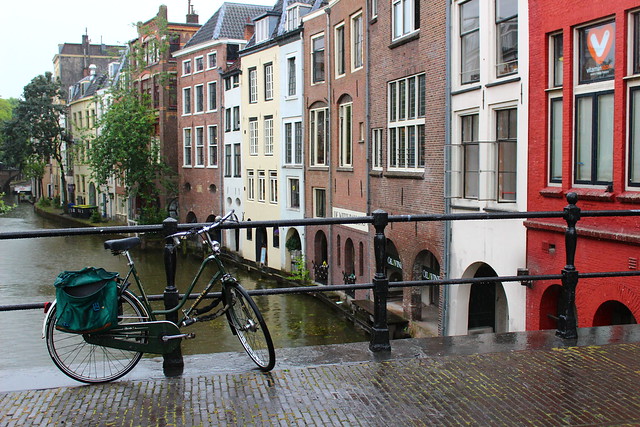
I've partnered with Ibis Hotels for this trip and all of the staff have been so friendly and helpful. Utrecht was the same; "Of course you can ride today", said the cheery receptionist "It takes more than a bit of rain to stop the Netherlands from rolling!" I looked out the window at the rain blowing in sideways and decided to fortify myself with the fantastic breakfast before I set off, grabbing the keys to a bicycle rented directly from the hotel. The Ibis in Utrecht is just a five minute ride in to the city centre along a pretty canal lined by windmills and old town houses - not a bad start to my day, despite the weather.

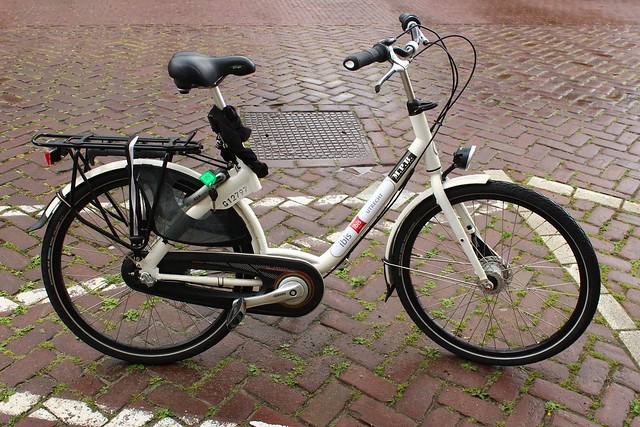
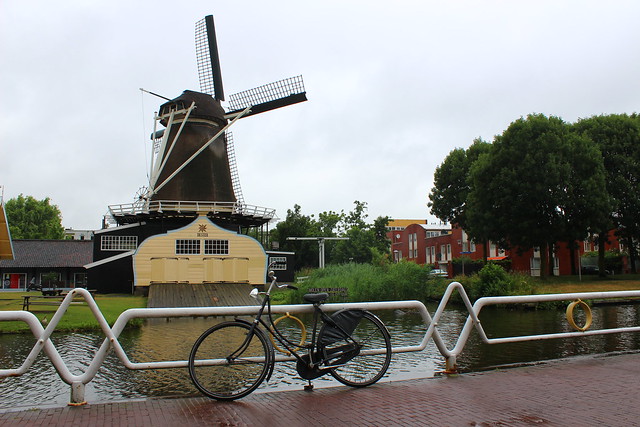
The clouds darkened and rain intensified, but this didn't seem to deter Dutch riders who cycled on regardless. Rain coats were pulled out of bags, hats were donned and umbrellas were lifted, making it immediately apparent I was in a totally different cycling situation to the UK. You could ride down the Tottenham Court Road in London at peak time in the rain whilst holding a big umbrella if you wanted to, of course, but I wouldn't recommend it. Here, things are different.
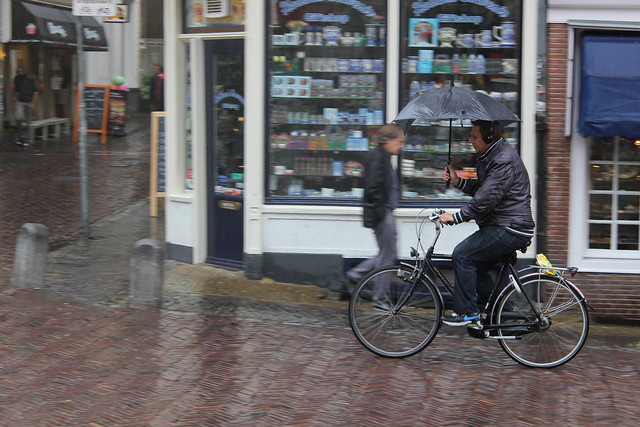
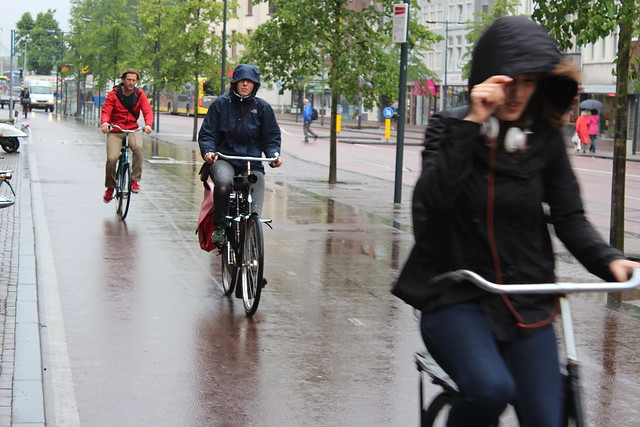
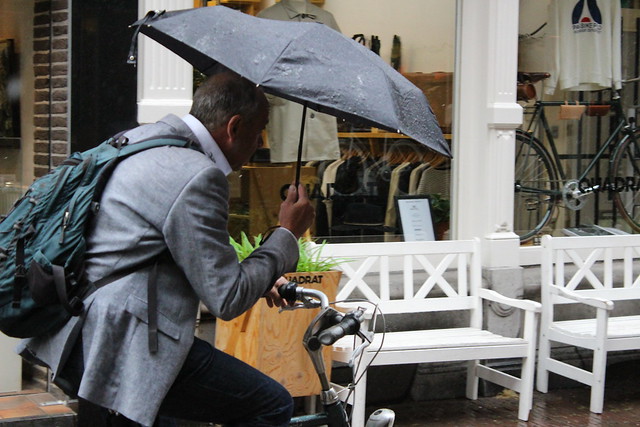
Hints that the Tour de France had recently been this way were everywhere. Shop windows were decorated with bicycles, flags were hung over every street and a statue of the city's most famous daughter - Miffy the bunny - had been put up in the tourism office. Naturally, she was riding her bicycle. The facade of the popular cafe Winkel van Sinkel was decked out in yellow jerseys, too.
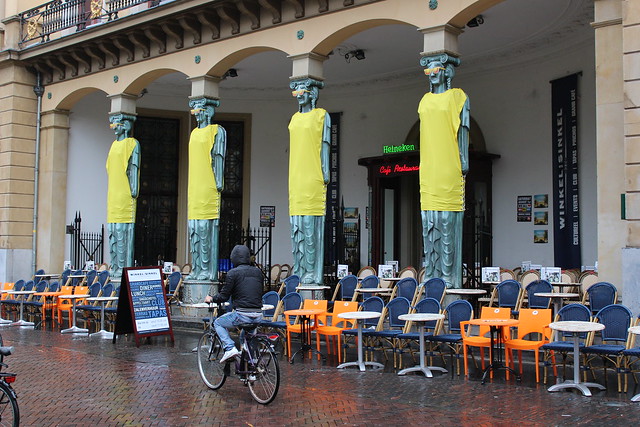
But even though the pro riders had left, there's still a festive cycling feel to Utrecht that stems from the many thousands of people on bikes who cycle here every day. I saw small children being carried on their parent's bikes, middle-sized children riding alongside on their own, and teenagers enjoying their mobility and being totally independent.
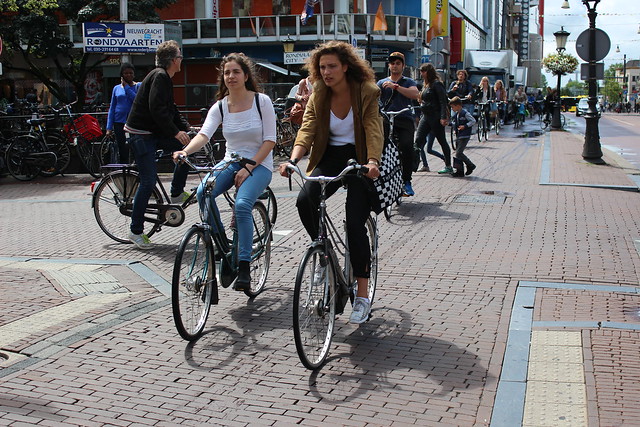
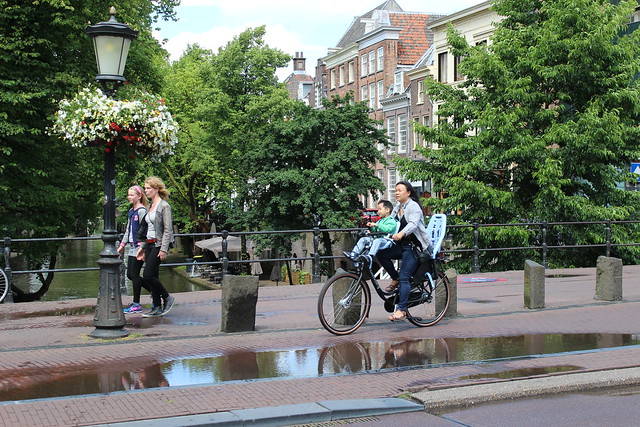
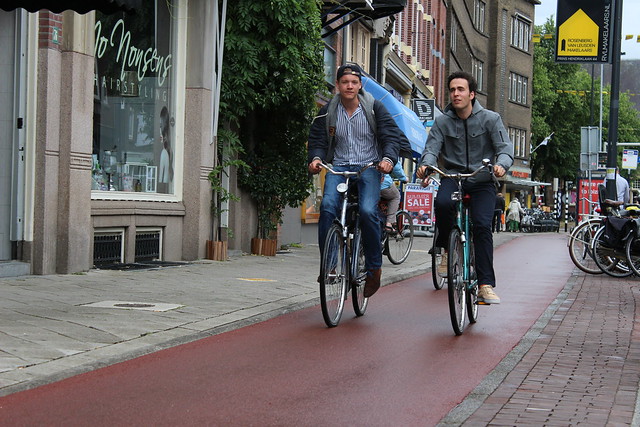
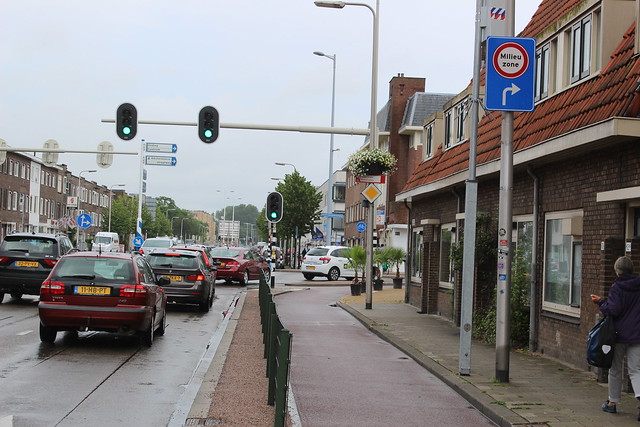
I have no doubt that all that freedom stems directly from the excellent cycling infrastructure which you'll find all over the Netherlands, but what I was particularly impressed by was how the Dutch don't sit on their hands, but are always seeking to improve things. I went for coffee with Mark Wagenbuur from the brilliant Bicycle Dutch blog. He took me out to a junction on the edge of the city, smiling proudly all the way, that we had last visited together in 2012. Back then, he had described it to me as 'the most dangerous junction in Utrecht' and I was inclined to agree. Cyclists were forced to merge with a lane of fast-moving traffic turning right, and to ride together alongside a metal fence for about 100metres. Just three years later and the situation has entirely changed. Engineers have 'found' the space to continue the cycle track safely through the junction, and the right turning traffic simply waits in a lane of the rest of the road. Of course, it's not a question of 'finding' space at all but simply a choice of what to do with the space that you have and who to allocate it to.
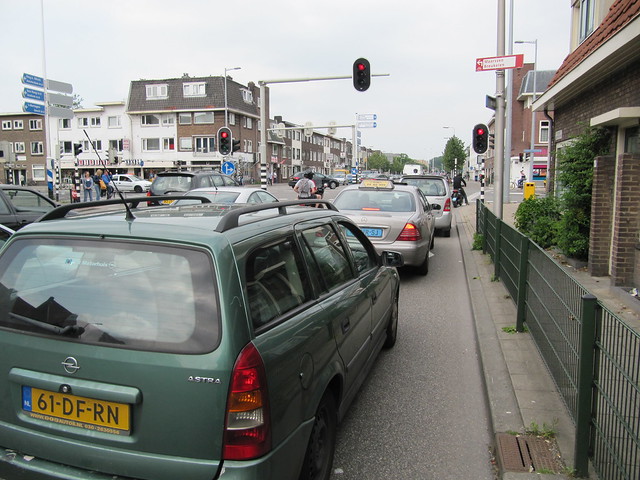
The same junction, above in 2012, as it appears today, below in 2015. Notice how space has been 'found' for the new and safer cycle track without taking the pedestrian's pavement away.
I had been impressed by the new junction, but it was nothing compared to the building project which is nearing completion in the city centre. When I first visited Utrecht the space in this photo was part of a multi-lane city ring road built in the 1970s. All it did was create traffic congestion and bring more cars in to the city centre, where there was no room for them. So the city planners decided to push the ring road further out of the city - to loosen the city's belt, if you like - to create more space for people.

The move has allowed for the total redevelopment of the train station, created space for a new shopping area and offices and very soon the dirt that you see in the photo will be removed and replaced with water, re-connecting two sections of the city's ancient canals.
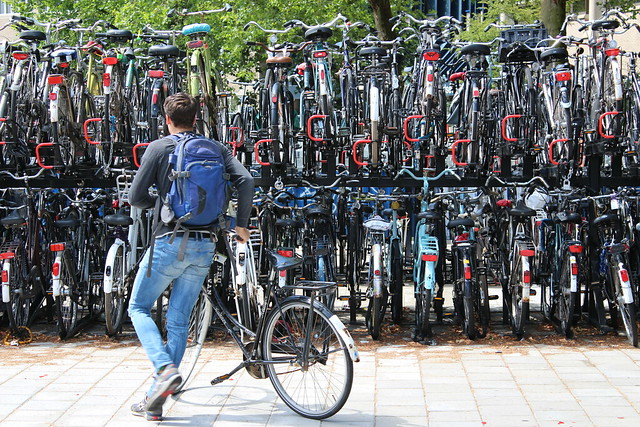
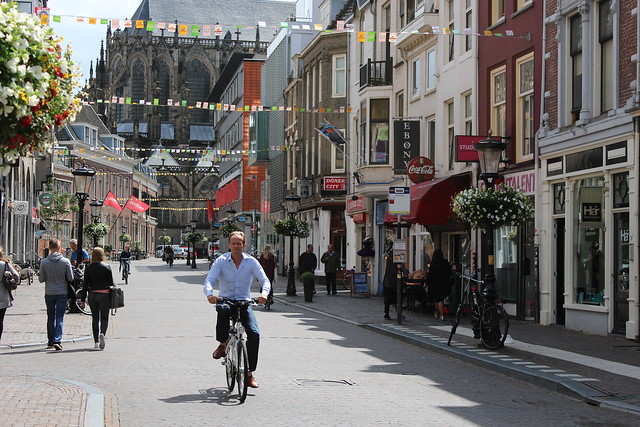
At the new station the city's cycle racks are being refreshed and new bicycle parking areas are being built. On Korte Jansstraat in the old town, a road which used to be clogged with two lanes of car parking has been re-surfaced in red bricks and the parking spaces moved away. Rather than harming the businesses there, the streets were busy with shoppers and restaurants had laid out new tables and chairs.
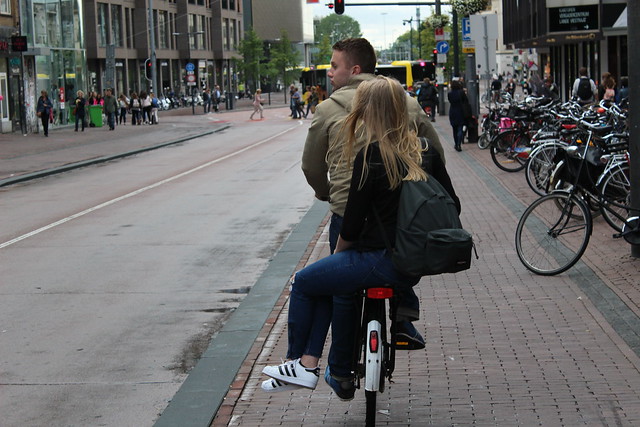
This is my third trip to Utrecht and each visit has left me with the same impression; that this is a city rapidly growing, improving itself, identifying the planning mistakes of the past and quietly getting on with rectifying them. It's lively and packed with young people and University students. Better still, it is easily connected to the rest of the Netherlands and Schipol airport by the fantastic national rail network. Utrecht proved with the Tour de France that they know how to throw a good bike party, but if the world's cycling cities were in a race Utrecht would in the break away every day. Why not make a visit to see for yourself?
Share
08-Jul-15
System Focus: How A Traditional Rhythm Is Shaping Today's Most Exciting New Music [ 08-Jul-15 9:17pm ]
 Exclusivo by Blaze KiddJune's System Focus (click here to read) was on a loose network of producers, most of whom draw on the tresillo rhythm found in reggaeton and other musics of the African diaspora, often using grime and Spanish language too. Labels and artists featured include Blaze Kidd, Uli-K, PALMISTRY, Kami Xlo, Lexxi, Ana Caprix, EndgamE, Golden Mist Records, BLASTAH, Dinamarca, STAYCORE, Lil Tantrum, Sister, Tove Agelii, Mapalma, mobilegirl, Imaabs, ZUTZUT, Extasis Records, Morten_HD, Spaceseeds.
A simple rhythm bounces back and forth over the once vast Atlantic ocean, ever faster. It begins in Sub-Saharan Africa, but Europeans brutally pull it up by the roots—slaves bring it with them on a long journey to the Caribbean. By the nineteenth century it has become the defining element in the Afro-Cuban dance habanera, which finds its way to New Orleans where it helps form ragtime, then to South America, where it contributes to tango, and to Europe, where it becomes the most famous section of one of the era's most popular operas, Carmen. It also spreads across the Caribbean, Latin America and Africa and back again, and its descendents meet and collaborate, now using recordings and drum machines. Soon it doesn't even need to touch the water. Ricocheting off satellites and barreling down cables, it permeates the information sphere, with space and place just an interesting footnote on a Soundcloud profile...
 EndgameLondon club music (at home and abroad) has recently come to resonate in sympathy with sounds from Mexico down. And it's not just tresillo and reggaeton rhythms that are being drawn on, but the Spanish language too. South London has both a significant population of Latin American migrants and a network of producers who have been on Soundcloud for years and are very hungry for international sounds. They got together on Exclusivo, the debut mixtape of an MC of Ecuadorian heritage, Blaze Kidd, and recently, as Aimee Cliff reported for The FADER, the video for "Sniper Redux."...
Tresillo is woven throughout Palmistry's delicate and deceptively carefree fabrics. In tracks like "DROPDrip" (on his Ascención mixtape), "Protector SE5," the single "Catch" or his latest, "Memory Taffeta," it'll ride on the back of simple synths, complementing his fragile yet controlled and earnest voice and forming songs of need and tenderness...
 Palmistry One track on the Endgame EP was a remix by Dinamarca, and in turn, Endgame provided one for Dinamarca's EP, No Hay Break. "Dinamarca" is Spanish for "Denmark," but the artist Dinamarca is based in Stockholm, and his intense and attitude-filled tracks typically have a tresillo bounce, however it's distributed through the drum machine. Some of them, when the tempo is upped, even feel like they're morphing into footwork. Dinamarca is the head of the Staycore label, who just put out a brill free collection of tracks titled Summer Jams 2K15—hopefully a sign of things to come...
 Lil Tantrum is just one of the many areas of overlap between Staycore and Sister, a female-identifying-only club collective founded by the formidable Swedish artist, Tové Agelii. Agelii's own productions are gorgeously gothic and suffused with the human vox the way light shines into a cathedral. And Sister's mixes (again, all female-identifying, using productions that all involve women) are both peppered with a tresillo feel and seriously something...
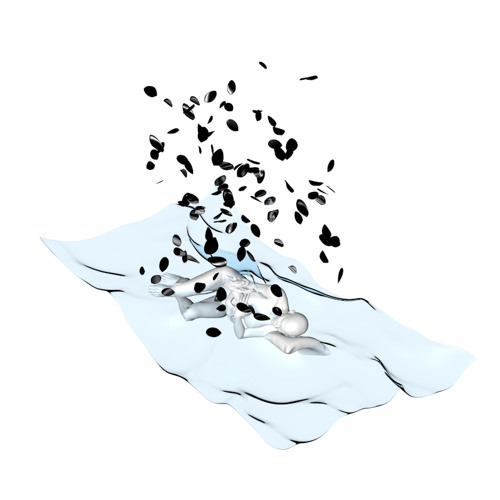 'Icesheets' by MobilegirlHailing from Santiago de Chile and one of the weirder and more futuristic exponents of grimy reggaeton, Imaabs has a great EP out on noted Mexico City underground-club label NAAFI. Another standout is Zutzut's "Yo Te Voa A Dar" on account of it delectable buzzing synth and proper passionate MC. Zutzut, from Monterray, has a truly lovely Soundcloud collection (try the digital flutes of "Otra Vez Llegue") and a self-titled dembow EP with some vogue inflections out for another Mexican label, Extasis, who have a bit of a net aesthetic and, because all is connected, have released cute speedster Xyloid too. Extasis also explored some pretty bizarre experimental grime with Norwegian producer Morten_HD and Mexico's Spaceseeds, and they too have a summer compilation (from last year). And, aha, it featured a Blaze Kidd track with a reggaeton production by Kamixlo and Uli-K.
 System Focus: What Does "Experimental Music" Even Mean Anymore? [ 08-Jul-15 9:00pm ]

What is experimental music, and what does it want from us? As a term and as a field of music-making, it's widely accepted but fits uncomfortably and is never well defined. "Experimental music" was a phrase used in the mid-twentieth-century to describe a range of ultramodernist compositional techniques as being a form of quasi-scientific research. John Cage was careful to point out that the term should apply to music "the outcome of which is not known"—that is, music with chance elements or improvisation built into it—since a composer ought to have completed all the necessary experiments before the piece was finished. And yet in everyday parlance, especially in popular music, "experimental" music has come to refer to music that seems radically unconventional, pretty weird, as if to experiment with the very building blocks of musical beauty... POPULOUS by Brood Ma [Experimental music is] involved with the building blocks that musical languages are made of. When you put it like this, it's odd to think that people find experimental music "difficult"—it's a radically simpler experience, assuming much less semiotically. And that's where experimental music's appeal lies. It reconnects you with the fundamental life of sound and music, and entices you to search for meaning in a language you cannot yet speak. You ask yourself, "What sort of subjectivity would make art like this? What does it perceive that I don't (or don't yet)?"...
 DARK WEB by Giant Claw DARK WEB is clearly and curiously unstuck: juddering, dissonant, stop-start, crazed, obsessive. It's like a robot failing at human entertainment, a rejected intermediate form generated by whatever algorithmic process then went on to produce the less uncanny Far Side Virtual, which resonated more comfortably with human needs and desires. If human music were a CAPTCHA, DARK WEB would fail it...Most striking about [Epitaph] is its empty space—enormous architectures bracketed and magnetized by harsh syncopation. The textures are modular, moving from sound object to sound object and back again; Epitaph divides up its musical world into discrete, almost warring factions...
 U.S.M! by DJWWWW DJWWWW's album U.S.M! is one of this year's most absorbing listens, restlessly assembling horrific and beguiling bouquets of musical sensations (many of which will be familiar to followers of underground music)... DJWWWW is extrapolating and caricaturing the myriad experiences of a day in digital, asking us how and why the combinations work (or not)...[Assault Suits's] own release Statue Cathalogue kickstarted the [Flamebait] label last year with its sinuous yet imposing metallic sculptures. The subsequent album by Tokyo producer Hanali is highly complex and predominantly percussive, roving through many layers of rhythm until it seems to coalesce in the bizarro club cut "10 Years or 100 Years." 10.9†01;9 by modular synth artist GOP (Geniuses Of Place) is equally rich: sizzling and glitching its way through the phone networks only to dissolve and digest what it finds...
  Aftertouches by Kara-Lis Coverdale Aftertouches weaves in all kinds of colors, many of them acoustic instruments, others eerily hinting at acoustic instruments, and others carrying all the richness of acoustic instruments yet not at all recognizable as such. She manages to do the exact same with the moods of the pieces: some are human, some eerily hint at the human, and others have all the depth of human moods but are as yet unfamiliar as such. Coverdale recently teamed up with LXV for Sirens, where their different palettes of techniques complement one another. They seem to populate each others' landscapes with the distant faces, dwellings and systems of unknown hi-tech cultures, who harvest the elements of their environment with a peace and concord we don't yet understand...
Fragments of a Scene (text for Creamcake) [ 08-Jul-15 8:32pm ]
Aftertouches by Kara-Lis Coverdale Aftertouches weaves in all kinds of colors, many of them acoustic instruments, others eerily hinting at acoustic instruments, and others carrying all the richness of acoustic instruments yet not at all recognizable as such. She manages to do the exact same with the moods of the pieces: some are human, some eerily hint at the human, and others have all the depth of human moods but are as yet unfamiliar as such. Coverdale recently teamed up with LXV for Sirens, where their different palettes of techniques complement one another. They seem to populate each others' landscapes with the distant faces, dwellings and systems of unknown hi-tech cultures, who harvest the elements of their environment with a peace and concord we don't yet understand...
Fragments of a Scene (text for Creamcake) [ 08-Jul-15 8:32pm ]
 Fragments of a Scene website, designed by Jon Lucas
Amazing Berlin clubnight institution Creamcake asked me to write a text to go with an evening they were putting on in April, both to feature Brood Ma, Forever Traxx, Claude Speeed, Club Cacao, DYNOOO, Punishment of Luxury, Hanne Lippard and Britney Lopez. Click here to see the text in its originally obfuscated context with music (scroll down for a PDF), or read below.
Music is space. Music goes high and low, shallow and deep, left and right, in and out,
round and round. It goes here and there at the same time, underneath and over, it
faces in the same and in the opposite direction. It's among and alongside and between
things, it's behind and in front of things, it goes away from and towards things, it's
beyond things and quite within them. Its spatial changes map to bodies when it makes
them move, and in turn music moves according to an embodied imagination. Music is
more than sounds - at the very least it is sounds in spaces. More than that, music is
multimedia, it always means more than just sounds, it means sights, it means
proprioception, it means people. Music is a scene.
Fortunately, there are two senses in that word. A scene is a discrete moment in
theatre, a sequence on-stage with actors, script, speech, costume, props, lights,
background, gesture. Scenes are where things happen, framed both by the elevated
ground, the proscenium and by time. In a way, an entire play is a scene of scenes, and
forms a part of the wider scenes of life. This is where the other sense of the word
scene comes in. It's a term - one loaded with cultural capital, mostly that gained by
disavowing it - for musicians, fans, places, and performances (and speech, costume,
props, lights, background, gesture)clustered together, almost as if in a discrete
moment. The scene in New York in the 1960s: Andy Warhol, the Velvet Underground,
Nico and friends, one of many interconnected scenes at the time. Sometimes there's
only one scene, the scene, something to be in touch with - to be 'scene' is to be a part
of it. But the term can be used without that fancy fluff. It's usefulness comes from the
multimedia nature it inherits from theatre - a scene is never just sounds, never even
just musicians, but a network of artists in multiple mediums 'high' and 'low,' and even in
mediums that are not yet known as Art.
And scenes are difficult to piece together nowadays, especially as discrete moments
framed, like the theatre is, by certain locations in space and time. Berlin, London and
New York are still pretty good at that. But the internet has created social and aesthetic
connections that go beyond the more traditional conceptions of space and time. Don't
believe the rhetoric though: the internet has not destroyed time or space, much less
materiality. The internet is still 'in real life / IRL,' all art is still 'physical.' The aesthetics
of art and the internet, however, has been fascinated with the dilemma that it might not
be - whether that's a good thing (ushering a transcendent Utopia) or a bad thing (an
anxiety-inducing accumulation of blasphemous desires and accesses). At its best,
these two feelings occur at the same time.
What you have at Hau 2 on the 16th of April is Fragments of a Scene - in many
senses of a scene (and of fragments). The artists you will see make up something of a
scene, albeit partially: They are related in music, multimedia, social networks,
geography (to some extent), and are ultimately related by the fact that they are all
appearing tonight. They are all engaging with the modern age, which predominantly
means the digital world and its forms of expression. Yet while many artists in this vein
tend towards representation, figuration, even pastiche, these artists tend towards
abstraction and affect. Their perspective is less one of a detailed fantasy universe than
an onslaught of shapes and sensations boiling within a matrix of strong yet
indeterminate feelings.
Take Brood Ma. While there are occasional outlines of samples in James B. Stringer's
work, or the nuclear shadow of styles like grime (he's from London), at the centre is a
roiling mass of sonic shards, glittering and roaring like scales or teeth. Named after the
matriarchal figure in a culture of humanoid women with large scarabs for heads in
China Miéville's weird fiction Perdido Street Station, there is something deeply
insectoid about Brood Ma's modus operandi: biting, chewing, proliferating, attacking,
defending, all under a hard multipartite carapace filled with even weirder, visceral
matter beneath. Brood Ma works at the constituent level of sound itself, its very grains,
whipping digital codes into vortices as if they were pools of water. He distorts sounds
the way jpeg compression distorts Nature, and depixellates them, datamoshing them
until insides and outsides become part of a broader, more disorienting experience of
space.
This comes as no surprise, because James B. Stringer is part of a network of visually
trained multimedia artists coalesced around the Quantum Natives label, all long
interested in digital techniques of both sight and sound. One of the main nodes is
Stringer's friend Clifford Sage, an incredibly prolific sound-producer himself, with an
industrial synth style. At Hau 2, Sage will be providing the visuals to Stringer's
performance, both inviting us to draw some continuity across their respective fragments
of the abstracted scene.
Like many of Fragments of a Scene's artists, Forever Traxx is one of those producers
who instantly stokes curiosity with their mysterious and oblique Soundcloud profile.
Anonymous and not linking to any formal releases, digital or analogue, the mystery of
Forever Traxx is exponentially intensified by the music, which has been uploaded track
by track over the past four years. It's not just a surreal and somehow spiritual collage of
samples tied together by curiously mountainous passions (like the music of Elysia
Crampton, Chino Amobi and Total Freedom - big inspirations in the Soundcloud
collage scene), but the recurring idées fixe: lithe upper-frequency electronic lines,
babies crying, horror effects and other moments of piercing panic, urgent battalions of
drums, edits of tracks that bring the pitch up slightly as if to highlight some inner quality
(structural coherence? cuteness? absurdity?). Visually, the recurring motif is a rubbery
yet golden stickman who, as the apparent star of a ClipArt set, appears in a series of
symbolic scenarios in the Souncloud account's thumbnails and avatars. What's going
through this little guy's solid gold head, that he's beset by rapturously violent music?
He's the modern internet-user, perhaps, living a life that is both bland and breathtakingly,
monstrously intense.
Claude Speeed has explored the complexity and onslaught of the modern mindset
both as a band and as a solo electronic artist. Hailing from Scotland, his band
American Men released a dazzling EP Cool World in 2010, its crystal vistas and fractal
rhythms seeming to usher in a new decade for post-rock. Since then, Speeed has been
exploring sounds far and wide, each new Soundcloud upload an unexpected turn, from
the tweaking trance textures of 'Ambien Rave' to the roving vox of 'Clearing' and the
wailing new-Dark-Age wake of 'V (Spirit Leaves the Body)', via walls and walls of
distortion. At Fragments of a Scene, Claude Speeed will be performing with four amps
in stereo, so expect sounds so rich and intense you can taste them.
Also taking up these alpine electronic textures and inchoate drama is Club Cacao.
Another Soundcloud mystery whose account artwork competes with the music for
beauty, Club Cacao launches off from contemporary production styles from dance and
hip hop, ending up with compelling tracks like 'Go Off,' with its perfect euphoric
liberation, or the darker 'Balaclava,' an industrially twisted bounce over which a voice is
squeezed out, becoming both hilarious and terrifying.
Due to its uncanny ability to fuse disparate elements into a whole that makes a sense
one does not yet understand, but that one appreciates as the insights of a cybernetic
consciousness, DYNOOO's These Flaws Are Mine to War With was one of last year's
most interesting releases. His work has always suggested to me an emerging
intelligence, either artificial or that of the technological post-human, engaging with its
own mechanical realities as well as the curiously organic world around it. Piecing
together rainforest, desert and arctic tundra with an almost military palette of harsh
sounds and leaving it all suspended and rolling in a bubbling tank like a specimen or an
embryo, DYNOOO's conclusions could not have been reached by yesterday's
humanity, and they're as disquieting as they are beautiful.
Not to be confused with the English post-punk band active in the late 1970s and early
1980s, Punishment of Luxury is a Soundcloud experimentalist in a similar vein to
Forever Traxx, Crampton, Amobi and others. PoL creates strange yet urgent new
atmospheres for pop fragments to breathe in, as if they've suddenly been transported
to other planets. The procedure often seems to cause them to spin erratically in situ,
like broken bots in a massively multiplayer online role-playing game. Try the bizarre
union of Nicki Minaj and the Walker Brothers in 'BASSBREAKUP,' the desperate
product placement of 'BENZ BENZ BENZ,' plagued by alien anxiety, or the way the
ear's finger runs down the length of the male voice in 'TLS Male Vocal Choir Edit,' and
it's rough like a large iron nail file.
Using her voice to beckon a broader understanding of human culture and expression,
Hanne Lippard is somewhere between a poet and a performance artist. A book of her
texts, Nuances of No, was released in 2013. Her phrases often begin or end in the
same way as she accumulates concerns and information in a deceptively random
manner. These parallel the tics of language online, like the telling non-truths of
Google's autocompletes, or the attention-hijacking of sidebar advertising, or the
piecemeal, provisional conclusions of status updates. She narrates the Web 2.0 stream
of attention, but her voice is also perennially human, always seeking to elevate itself
while remaining intimate.
As she puts it, performer Bella Hager was 'torn and raised in Berlin, had to survive the
90s as a teenager.' She focused on pop divas such as Jennifer Lopez, soon feeling a
rupture between the art of being a women in music videos and the art of being a
women on the very own stage. After many years of research in different scenes, social
contexts and with different representations of gender, Bella decided to reunite with
Jenny, Britney, Christina and the rest to resolve this absurd struggle. During the first
act of appearance in Fragments of a Scene her character 'Britney Lopez' will enter
Christina Aguilera's music video to dive into the world of female pop artists in the late
90s, and will then take them into the year 2015 where a new extroverted sexuality
(Bella refers to herself as 'twerself') has left the former virginal image of the diva
behind.
Perhaps the only fair thing to say that all of these artists have in common (apart from
their appearance at Fragments of a Scene), is that they don't quite fit into the normal
distributions of creativity into particular places. Even musically, it is not entirely fitting to
call any of them merely 'producers' or 'musicians,' or to expect their work in clubs or
physical albums. And much of the time, their work is too specific, and too conversant
with the languages of pop and everyday life to feel at home in a gallery or concert hall
either. Many of them have taken the poetics of the visual and used them in a sound-led
medium, perhaps then turning back to re-incorporate the eye, which does not close as
it passes over an online account or a stage. However, nonetheless, these artists have
now carved out a space, somewhere between art and sound and music as it was
understood last century, a way to explore differences within the cohering locus of the
specific, to maintain that fragile equilibrium between novelty and similarity. Isn't that
precisely what a scene should be?
Rouge's Foam [ 5-Oct-15 5:44pm ]

System Focus: Get To Know Gqom, South Africa's Slow-Burning Club Music [ 05-Oct-15 5:44pm ] The TOWNSHIPTECH logoThe latest System Focus is on dance sounds of South Africa that live online, chiefly 'gqom' with some shangaan electro and sgubhu too (click here to read). featuring: Spoek Mathambo, Nozinja, TOWNSHIPTECH, SHANGAANBANG, DJ Dino, U-Zet, Phelimuncasi, Rude Boyz, GQOM OH, Citizen Boy and DjAsinatar and the Facebook groups IGqomu, Sgubhu & Gqom Lovers, Gqomu music and Gqom Nation.
South African popular music, in its myriad forms—from choral folk group Ladysmith Black Mambazo to madcap rappers Die Antwoord—has played a huge role on the world stage for decades, and today this richly musical country boasts an ecosystem of electronic dance and club sounds that changes, spreads, and develops with an energy that can rival that of just about anywhere else you care to name...
Meanwhile, the southeastern coastal city of Durban in the KwaZuluNatal province of South Africa has been incubating a style called gqom for a few years now... It would be difficult to imagine a kind of music more different from Shangaan Electro than gqom is—it's a slow-burning, minimal and ominous style that's frequently described as "raw." Gqom fan Thandolwethu BlaqueMusiq Mseleni—who runs a group on Facebook called Sgubhu and Gqom Lovers out of King Williams Town in the Eastern Cape province—told me that qqom is "house music with broken beats, sliced vocals or chants, high tempo and mostly with no bassline."
"We grew up on it," Veezy tells me about gqom. "You know, taxis in town or everywhere in and around Durban blasting these songs that had really catchy and funny verses as well as banging hooks. Most people just hear loud bangs but, if you take time to really listen to it, you realize it's more than a created pattern—it's rhythm that syncs with fun. I like it cause it's a really huge crowd favorite in lounges and clubs to get turnt with or get the party sounded."...
Citizen Boy is one of gqom's most creative producers. Plunge headlong into his kasimp3 uploads... featuring him and his affiliates, and you'll encounter dozens of weird and wonderful twists on the genre's template. Try the hectic "Spit Fire (Remix)," the ultra-minimal "VH HIT" with its deadpan cuíca hook, the downright evil "Natural Mafias," the alien skirmish of "Thekwini War (Mafiamix)" or the unholy croaks of "Point Magnet (Dope mix)." There there's "Deep Gqomu," a masterpiece that builds up majestically, its ethereal scales climbing ever skyward... An Idiot's Guide to Dreaming [ 30-Sep-15 8:21pm ]
Dennis Smalley - Pneuma [ 30-Sep-15 8:21pm ]I like the way this sucks and wheezes. It reminds me of my future. One day, I'll be at a bus stop and this will be the last sound I make. I'm looking forward to it.
Roots of Goa trance (2) [ 28-Sep-15 1:13pm ]This was something that fascinated me a while ago. Still fascinates me. Uchronie never really took off, though.
I need some people.
The thing is, the essay I linked to in the above post has a related sub/sur-Acid mix and that mix is now here. It's currently sound-tracking some marking of essays related to the Cognitive Approach and seems fairly apposite.
Yeah.
23-Sep-15
I need some people.
The thing is, the essay I linked to in the above post has a related sub/sur-Acid mix and that mix is now here. It's currently sound-tracking some marking of essays related to the Cognitive Approach and seems fairly apposite.
Yeah.
i b i k e l o n d o n [ 23-Sep-15 7:48am ]
Cyclists are out of control! (And why that's okay) [ 23-Sep-15 7:48am ]This compelling animation by Lucas Brailsford (whereislucas.com) looks at the high level of "non conformist behaviour" among cyclists in the Netherlands. It's not the sort of narrative you'll usually hear from cycling campaigners - it is hard to be persuasive with Governments and decision-makers if you're also prepared to admit that the people you're championing regularly jump red lights, ride home drunk or generally behave 'badly'.
There's a concept in the Dutch legal system of tolerating lightly illegal behaviour, or changing the framework so that it is no longer illegal. Dutch policy famously allows euthanasia, has legalised prostitution and the use of marijuana, and was the first country in the world to introduce gay marriage. The pragmatic approach seems to be "tolerate things, rather than prohibit them, force them underground and loose control."
When a cyclist barreling down the pavement in the dark nearly knocks you over this pragmatic approach to tolerance might seem frustrating. Likewise if a prostitute sets up (knocking) shop next door. There's no doubt that on an individual level these things could be highly frustrating, or even dangerous, but collectively society just doesn't see it as such a big deal.
Criminal tearaways, no doubt about it...
But this concept of 'turning a blind eye' is not as foreign as we might think. Watching Lucas' video from an emerging cycling culture is a real eye-opener because the non conformist behaviour of some cyclists seems a bit wild. But if a similar video was made here, about our prevalent transport users, you'd find the same. Non conformist behaviour among motorists includes speeding, parking illegally, driving drunk, riding without insurance and knocking down other road users. You don't believe that as many people in cars flout the law as regularly as cyclists ride drunk in Amsterdam? Just try driving around your local town without once exceeding the speed limit and see how your fellow road users like it..
There's no doubt in my mind that good behaviour helps to encourage a literally civil society. But in terms of fixing things, society only tries to resolve the problems it identifies as being a problem. The cyclists of Amsterdam might seem to us to be a bit out of control, but when it comes to non-conformist behaviour I know which sort I'd prefer any day...
Share |
leaving earth [ 21-Sep-15 11:02pm ]
The End of PostStep [ 21-Sep-15 11:02pm ]
There's not much to write about in terms of new exciting post dubstep any more. As predicted the last time I posted here - and that's already a long time ago - 2014 produced quite a lot of good poststep + derived and associated music, but not with the same amount of trailblazing creativity as the four years before. There were still some shockingly new stuff, but mostly it was a year of further refining ideas from the previous wonder years.
Best of all - in a league of its own, really - was Felicitas Frenemies ep, containing the most jaw-droppingly weird and alien music I've heard since, I dunno, Jameszoos Faaveelaa probably. Felicita is related to the PC-music camp, but where those people mostly use hyper-syntheticness as a kitsch enhancer, on Frenemies it's taken far beyond its breaking point and into utter abstraction, as creepy and terrifying as watching an artificially intelligent toy, designed to be overbearingly cute and cheerful, going completely insane, its thought processes disintegrating before our ears. In its own absurd way as radical as, say, early Swans or Einstürzende Neubauten, and the rest of the PC music camp is pretty much coming off as a cut rate Test Department by comparison, though the Lucky Me-label did released a couple of actually quite good EPs - Cashemere Cats Wedding Bells and Joseph Marinettis PDA - which, while still being a bit too pastiche-inflicted to be on Felicitas level, managed to share some aspects of the PC-aesthetic and yet be a bit more unreal and weird than the real PC deal. Closest to Felicitas level of alieness was probably Giant Claws Dark Web, which, despite being much more related to the Oneothrix Point Never/ Software end of things, reached moments of the same inorganic weirdness and broken-machine-dream-logic.

As for something approaching an actual leading movement in poststep in 2014, rather than PC music, the most obvious suggestion is what could collectively be called "abstract grime", spanning a whole heap of different approaches, and culminating in an enormous amount of releases last year. Many were only "grime" in the most tangential sense, and many certainly weren't all that great, but a pretty good amount of highly original, forward-thinking stuff still came out if this department. The icy, hyper angular anti-grooves of the "cryo grime" subgenre had pretty much already culminated in 2013 with Logos' Cold Mission, and not much has been added since, but a couple of brilliant EPs - Air Max '97s Progress and Memory, Blooms Hydraulics - did managed to take it into even more abstract extremes in 2014. Related in its quest for inorganic groovelessness, a much more interesting development was what could be called entropic grime, where the clinical, sharp and shiny angles of cryo grime were taken over by stumbling, dysfunctional zombie-rhythms, and buried in layers of sonic dirt, dead sounds in a state of perpetual decomposition. SD Laikas awesome That's Harakiri-album was more or less the definitive release in this respect, though Filter Dreads Midi Space ep was perhaps even better. While his Space Loops lp - released on tape in 2013 and re-released on vinyl in 2014 - offered a slightly more polished and coherent version of the SD Laika aesthetic, Midi Space infused the style with a bizarre playfulness - there's synthetic colours and rubbery syncopations worthy of the best bitstep, yet it all come off as strangely faded, washed out, hazy: Yesterdays amazing cybertoys twisted and broken, their operating systems overtaken by depression.
Among the most characteristic subgenres of grime in 2014, "new age grime" or perhaps "emo-grime" took the clean, delicate structures of cryo grime and made them, if not exactly "warm", then at least soft and bright, inviting. Some seemed to think that this approach was somehow wrong by definition (because grime should be "raw" and "road" and "authentic"), and while I do consider that puritan mindset pretty ridiculous, I must admit that I didn't get much into this stuff. Perhaps I'd been won over if Yamanekos Pixel Wave Embrace - seen by many as a key work - had been released on vinyl and not just tape, but another potential key work, Mr. Mitchs Parallel Memories, didn't really do anything for me either, too wistfully emotional and uniformally pretty for my taste. Rather, I think the best suggestion in this area is probably Fatima al Qadiri's Asiatisch, which is certainly clean, lithe, bright and soft, and at the same time emotional in a wonderfully synthetic, hyper real fashion. Like with SD Laika and Filter Dread, Asiatisch has only a faint, superficial relationship with grime, with just a few artificially inseminated stylistic elements audible, and I do find it kinda silly that these records are being placed under the abstract grime umbrella, but that doesn't mean that they're not some of the greatest releases of 2014.
Cryo- emo- and entropic grime was only a small part of 2014s huge abstract grime wave, and some of the best of the rest managed to be simultaneously emotional, atmospheric and highly experimental, while still clearly recognisable as - at least a kind of - actual grime descendants. Sure, they were still clearly not doing grime (or more generally, 'nuum music) "right", taking it in a deliberately cerebral and arty direction that is far from how the genre was originally supposed to be, but that is exactly why they were actually doing something new and unheard, and why records like Slackk's moody, melancholic Pakm Tree Fire-album or Inkke's Crystal Children ep were among the best records of 2014. This stuff is to the original grime sound what Ultravox, Japan or Soft Cell were to glam: A clearly new and contemporary take on some related ideas, free of the rock'n'roll/'nuum residue still present in the predecessors. Abstract grime is not 'nuum music, but why should it have to be to be good?
In addition to all the abstract-grime-and-related stuff, 2014 still had quite a few brilliant records scattered throughout different kinds of poststep, as well as some not really belonging there, but perhaps not really belonging anywhere else either. Evian Christs Waterfall-ep and Krampfhaft's Before We Leave-album both had elements that perhaps could classify them as a kind of avant trap, and as such the closest we got to descendants of the wonky-wobble/ravey bitstep-lineage. On Waterfall, massive riff-blasts and brutal lurch-march rhythms are twisted into dysfunctionally weird shapes, the effect being somewhere between over the top silly, slightly creepy and genuinely intimidating, while Before We Leave tried to convert Krampfhafts idiosyncratic style into a more subtle and understated "big album"-sound, and as a result failed to be the masterpiece it could have been. The soft and polished overall sound made it a pretty big disappointment at first, but in the end that was only really a problem because of, as so often before, the inappropriate length. With repeated listening it eventually managed to show itself as one of the very best of the year, despite its shortcomings; On the first three fourths, Krampfhaft really succeeded in creating a kind of cosmic, slow motion version of his ultra-angular bleep-melodies and neurotic trap/bitstep beats, whether in the form of ravey-yet-sonambulist freak-step like "Superfluid", "Spinner" and "Toekan", or isolationist deep sea dreams like "Clip Point" and "Mostly Empty Space". It's only with the last four tracks that it gets too much - here we're getting too close to cosy, pretty chill out music, completely unnecessary, and only making the album seem pointlessly drawn out. Which is a shame when the rest is so good.

Surprisingly, after some very slim years where the Californian "post hop"-scene more or less seemed to have regressed into standard down tempo dullness, it made a (slight) come back in 2014, with two pretty great albums. Mono/Poly is one of the scenes lesser known artists, even if he has been active almost from the start, and has released a couple of brilliant EPs. Where his tendency towards new age mysticism was a bit of an annoying element on 2010s digital-only Paramatma-album, on Golden Skies he dedicates himself completely to these elements, and surprisingly makes it work. The glittering bleep cascades is a perfect match for the drowsy, mystically sun-kissed sound - a genuinely contemporary, wide-eyed take on cosmic chill out music, where too much stoner down tempo is just safe and cosy. Much the same effect is to be found on the first half of Collapse, debut album by the hitherto unknown - to me at least - Repeated Measure. The sound here is perhaps more "spaced out" cosmic than warm and sunny, but we're still talking slowly drifting sci fi-music with plenty of fractured bleep patterns. What's really noteworthy, though, is the second half, where these bleep patterns are suddenly backed by a much more heavy and angular bottom, effectively turning the music into wobbly bitstep. Where 2013 actually had a surprising amount of amazing new bitstep, that sound practically disappeared since, and in 2014, and the only place it really made a noteworthy appearance was on the second half of Collapse - and brilliantly so!
Of the remaining 2014 highlights, Mesaks Howto Readme took skweee in new directions that made the style less uniquely its own, but also yielded some interesting hybrid forms. Equally eclectic, Jimmy Pés Insomnia bridged ravey wobble-trap and atmospheric, burialesque sadstep (with some nauseating vocals here and there, unfortunately), while Ital Teks Mega City Industry ep offered more of his trademark dreamy, floating footwork ("dreamwork"?), and the hitherto unknown Chainless made the best darkstep record of the year with Grey Veils, brilliantly building on the best parts of Lorn and early Nosaj Thing. Surprisingly, Inga Copelands Copeland, which on the surface really seemed too minimal for its own good, somehow managed to be better than anything else I've heard from Hype Williams, whether as Blunt and Copeland solo or together. Sort of entropic music reaching peak bleak emptiness. As opposite to this as imaginable, Disrupt offered colourful and catchy 8-bit hyper-dub on Dub Matrix with Stereo Sound, while The Marvs combination of bouncy beats and ghostly bollywood samples on A King of Tuneswas just as catchy - almost pop music.
Which sort of brings us to FKA Twigs' LP1, I guess, which, while not full blown poststep as such, nevertheless used a whole heap of poststep elements, and sort of demonstrated how they could be used as a base for pop music as odd and futuristic as poststep proper. So far, a much more durable and fascinating record than the much talked about XEN by her producer Arca, who goes all the way into the abstract, and is sort of closer to traditional glitch or IDM than Twigs is to traditional pop music. Not that you can't hear the contemporary elements and techniques - and a few tracks do sound genuinely and exhilaratingly new -, but when taken this far into pure soundplay and atmospheric experimentalism, you inevitably end up with something resembling classic Autechre (or, heck, even Eno), at least on the surface level. And this kind of seem to be the way most of the radically experimental electronic scene is heading - away from the unheard structural weirdness of poststep and into the more well established world of "soundscaping", as heard on records from Holly Herndon, M.E.S.H., TCF and Brood Ma. A lot of this is sort of brilliant (Herndons Platform is one of my 2015 favorites so far), but still also slightly disappointing in the returning to safe formulas. Not unlike the goth lite/proto dream pop of the early 4AD school I guess, delivering light, digestible and comforting "art music" as an alternative to the resurgence of lame and mannered "real rock", in 2015 mirrored by the endless forms of retro house/retro 'nuum music paying lip service to all the righteous signifiers of true dance and club culture while offering no actual evolution of the form - except perhaps a few slight hybrid elements and updates in overall sound design - i.e. stuff that only people with oppressive historic knowledge would notice, let alone care about. I mean, how desperate do you have to be as a critic to get excited about something as boring and creatively inane as deep tech or jackin house, with nothing to offer except having the right, 'nuumologically correct attitude?

So, yeah, I'm not optimistic I guess. So far, 2015 has had very little to offer, and I don't think the coming years will offer much more than the aforementioned updated electronic art music - nu-IDM, entropic, new synth. The once so exciting engine of weird wobble dubstep has ossified into formulaic stadium trap, and most other attempts at making music simultaneously experimental and dance floor oriented seem to end up as yet more insultingly dull 4/4-house-with-percussion-and-slightly-gritty-basslines-crap. Of course, some of the best artists of the poststep golden age will be hanging on and continue to release great stuff (Debruit is still at it, and Kuedo is back after a looong break), and now and then a few new artists will make surprising anomalies as weird and wonderful as the best of the originals (like Jlin's Dark Energy, perhaps the best of 2015 so far). And I am excited to hear what artists like Felicita, Filter Dread and SD Laika will be doing next. But, in the end, the golden age of poststep is definitively over, as it inevitably would be. I knew it wouldn't last, and so I should most of all just be happy about the unbelievable amount of amazing music that made the last 5-6 years such a thrill to live through, an abundance I hadn't experienced since the first half of the nineties, and not something I had really expected to ever happen again. Yet, while I'm grateful for all this, and still listen to all these records more than anything else (and even find more amazing records from the last five years that I didn't even notice the first time around), there's also something about it that feels very curious, like somehow it wasn't real, it didn't really happen, despite all the concrete evidence, all the groundbreaking records. And indeed, if we're talking about this music being recognised as a golden age, as an abundance of innovation and creativity and shocking futurism, then it didn't really happen. It seems like I'm more or less the only one having this perspective - even Adam Harpe has a different focus, both with the music he's championing and with the years he consider the best (to him the years prior to 2010 were the best, and then things got good again only recently, so pretty much exactly the opposite of how I see it).
The question is: why wasn't this golden age recognised as a golden age? I have been giving this a lot of thought lately, and it's a complex problem with no single, simple solution. Answering it really deserves a piece of its own - this is pretty long and pretty delayed already - so I'll postpone my thoughts on that matter for now, and hopefully return soon.
14-Sep-15
Best of all - in a league of its own, really - was Felicitas Frenemies ep, containing the most jaw-droppingly weird and alien music I've heard since, I dunno, Jameszoos Faaveelaa probably. Felicita is related to the PC-music camp, but where those people mostly use hyper-syntheticness as a kitsch enhancer, on Frenemies it's taken far beyond its breaking point and into utter abstraction, as creepy and terrifying as watching an artificially intelligent toy, designed to be overbearingly cute and cheerful, going completely insane, its thought processes disintegrating before our ears. In its own absurd way as radical as, say, early Swans or Einstürzende Neubauten, and the rest of the PC music camp is pretty much coming off as a cut rate Test Department by comparison, though the Lucky Me-label did released a couple of actually quite good EPs - Cashemere Cats Wedding Bells and Joseph Marinettis PDA - which, while still being a bit too pastiche-inflicted to be on Felicitas level, managed to share some aspects of the PC-aesthetic and yet be a bit more unreal and weird than the real PC deal. Closest to Felicitas level of alieness was probably Giant Claws Dark Web, which, despite being much more related to the Oneothrix Point Never/ Software end of things, reached moments of the same inorganic weirdness and broken-machine-dream-logic.

As for something approaching an actual leading movement in poststep in 2014, rather than PC music, the most obvious suggestion is what could collectively be called "abstract grime", spanning a whole heap of different approaches, and culminating in an enormous amount of releases last year. Many were only "grime" in the most tangential sense, and many certainly weren't all that great, but a pretty good amount of highly original, forward-thinking stuff still came out if this department. The icy, hyper angular anti-grooves of the "cryo grime" subgenre had pretty much already culminated in 2013 with Logos' Cold Mission, and not much has been added since, but a couple of brilliant EPs - Air Max '97s Progress and Memory, Blooms Hydraulics - did managed to take it into even more abstract extremes in 2014. Related in its quest for inorganic groovelessness, a much more interesting development was what could be called entropic grime, where the clinical, sharp and shiny angles of cryo grime were taken over by stumbling, dysfunctional zombie-rhythms, and buried in layers of sonic dirt, dead sounds in a state of perpetual decomposition. SD Laikas awesome That's Harakiri-album was more or less the definitive release in this respect, though Filter Dreads Midi Space ep was perhaps even better. While his Space Loops lp - released on tape in 2013 and re-released on vinyl in 2014 - offered a slightly more polished and coherent version of the SD Laika aesthetic, Midi Space infused the style with a bizarre playfulness - there's synthetic colours and rubbery syncopations worthy of the best bitstep, yet it all come off as strangely faded, washed out, hazy: Yesterdays amazing cybertoys twisted and broken, their operating systems overtaken by depression.
Among the most characteristic subgenres of grime in 2014, "new age grime" or perhaps "emo-grime" took the clean, delicate structures of cryo grime and made them, if not exactly "warm", then at least soft and bright, inviting. Some seemed to think that this approach was somehow wrong by definition (because grime should be "raw" and "road" and "authentic"), and while I do consider that puritan mindset pretty ridiculous, I must admit that I didn't get much into this stuff. Perhaps I'd been won over if Yamanekos Pixel Wave Embrace - seen by many as a key work - had been released on vinyl and not just tape, but another potential key work, Mr. Mitchs Parallel Memories, didn't really do anything for me either, too wistfully emotional and uniformally pretty for my taste. Rather, I think the best suggestion in this area is probably Fatima al Qadiri's Asiatisch, which is certainly clean, lithe, bright and soft, and at the same time emotional in a wonderfully synthetic, hyper real fashion. Like with SD Laika and Filter Dread, Asiatisch has only a faint, superficial relationship with grime, with just a few artificially inseminated stylistic elements audible, and I do find it kinda silly that these records are being placed under the abstract grime umbrella, but that doesn't mean that they're not some of the greatest releases of 2014.
Cryo- emo- and entropic grime was only a small part of 2014s huge abstract grime wave, and some of the best of the rest managed to be simultaneously emotional, atmospheric and highly experimental, while still clearly recognisable as - at least a kind of - actual grime descendants. Sure, they were still clearly not doing grime (or more generally, 'nuum music) "right", taking it in a deliberately cerebral and arty direction that is far from how the genre was originally supposed to be, but that is exactly why they were actually doing something new and unheard, and why records like Slackk's moody, melancholic Pakm Tree Fire-album or Inkke's Crystal Children ep were among the best records of 2014. This stuff is to the original grime sound what Ultravox, Japan or Soft Cell were to glam: A clearly new and contemporary take on some related ideas, free of the rock'n'roll/'nuum residue still present in the predecessors. Abstract grime is not 'nuum music, but why should it have to be to be good?
In addition to all the abstract-grime-and-related stuff, 2014 still had quite a few brilliant records scattered throughout different kinds of poststep, as well as some not really belonging there, but perhaps not really belonging anywhere else either. Evian Christs Waterfall-ep and Krampfhaft's Before We Leave-album both had elements that perhaps could classify them as a kind of avant trap, and as such the closest we got to descendants of the wonky-wobble/ravey bitstep-lineage. On Waterfall, massive riff-blasts and brutal lurch-march rhythms are twisted into dysfunctionally weird shapes, the effect being somewhere between over the top silly, slightly creepy and genuinely intimidating, while Before We Leave tried to convert Krampfhafts idiosyncratic style into a more subtle and understated "big album"-sound, and as a result failed to be the masterpiece it could have been. The soft and polished overall sound made it a pretty big disappointment at first, but in the end that was only really a problem because of, as so often before, the inappropriate length. With repeated listening it eventually managed to show itself as one of the very best of the year, despite its shortcomings; On the first three fourths, Krampfhaft really succeeded in creating a kind of cosmic, slow motion version of his ultra-angular bleep-melodies and neurotic trap/bitstep beats, whether in the form of ravey-yet-sonambulist freak-step like "Superfluid", "Spinner" and "Toekan", or isolationist deep sea dreams like "Clip Point" and "Mostly Empty Space". It's only with the last four tracks that it gets too much - here we're getting too close to cosy, pretty chill out music, completely unnecessary, and only making the album seem pointlessly drawn out. Which is a shame when the rest is so good.

Surprisingly, after some very slim years where the Californian "post hop"-scene more or less seemed to have regressed into standard down tempo dullness, it made a (slight) come back in 2014, with two pretty great albums. Mono/Poly is one of the scenes lesser known artists, even if he has been active almost from the start, and has released a couple of brilliant EPs. Where his tendency towards new age mysticism was a bit of an annoying element on 2010s digital-only Paramatma-album, on Golden Skies he dedicates himself completely to these elements, and surprisingly makes it work. The glittering bleep cascades is a perfect match for the drowsy, mystically sun-kissed sound - a genuinely contemporary, wide-eyed take on cosmic chill out music, where too much stoner down tempo is just safe and cosy. Much the same effect is to be found on the first half of Collapse, debut album by the hitherto unknown - to me at least - Repeated Measure. The sound here is perhaps more "spaced out" cosmic than warm and sunny, but we're still talking slowly drifting sci fi-music with plenty of fractured bleep patterns. What's really noteworthy, though, is the second half, where these bleep patterns are suddenly backed by a much more heavy and angular bottom, effectively turning the music into wobbly bitstep. Where 2013 actually had a surprising amount of amazing new bitstep, that sound practically disappeared since, and in 2014, and the only place it really made a noteworthy appearance was on the second half of Collapse - and brilliantly so!
Of the remaining 2014 highlights, Mesaks Howto Readme took skweee in new directions that made the style less uniquely its own, but also yielded some interesting hybrid forms. Equally eclectic, Jimmy Pés Insomnia bridged ravey wobble-trap and atmospheric, burialesque sadstep (with some nauseating vocals here and there, unfortunately), while Ital Teks Mega City Industry ep offered more of his trademark dreamy, floating footwork ("dreamwork"?), and the hitherto unknown Chainless made the best darkstep record of the year with Grey Veils, brilliantly building on the best parts of Lorn and early Nosaj Thing. Surprisingly, Inga Copelands Copeland, which on the surface really seemed too minimal for its own good, somehow managed to be better than anything else I've heard from Hype Williams, whether as Blunt and Copeland solo or together. Sort of entropic music reaching peak bleak emptiness. As opposite to this as imaginable, Disrupt offered colourful and catchy 8-bit hyper-dub on Dub Matrix with Stereo Sound, while The Marvs combination of bouncy beats and ghostly bollywood samples on A King of Tuneswas just as catchy - almost pop music.
Which sort of brings us to FKA Twigs' LP1, I guess, which, while not full blown poststep as such, nevertheless used a whole heap of poststep elements, and sort of demonstrated how they could be used as a base for pop music as odd and futuristic as poststep proper. So far, a much more durable and fascinating record than the much talked about XEN by her producer Arca, who goes all the way into the abstract, and is sort of closer to traditional glitch or IDM than Twigs is to traditional pop music. Not that you can't hear the contemporary elements and techniques - and a few tracks do sound genuinely and exhilaratingly new -, but when taken this far into pure soundplay and atmospheric experimentalism, you inevitably end up with something resembling classic Autechre (or, heck, even Eno), at least on the surface level. And this kind of seem to be the way most of the radically experimental electronic scene is heading - away from the unheard structural weirdness of poststep and into the more well established world of "soundscaping", as heard on records from Holly Herndon, M.E.S.H., TCF and Brood Ma. A lot of this is sort of brilliant (Herndons Platform is one of my 2015 favorites so far), but still also slightly disappointing in the returning to safe formulas. Not unlike the goth lite/proto dream pop of the early 4AD school I guess, delivering light, digestible and comforting "art music" as an alternative to the resurgence of lame and mannered "real rock", in 2015 mirrored by the endless forms of retro house/retro 'nuum music paying lip service to all the righteous signifiers of true dance and club culture while offering no actual evolution of the form - except perhaps a few slight hybrid elements and updates in overall sound design - i.e. stuff that only people with oppressive historic knowledge would notice, let alone care about. I mean, how desperate do you have to be as a critic to get excited about something as boring and creatively inane as deep tech or jackin house, with nothing to offer except having the right, 'nuumologically correct attitude?

So, yeah, I'm not optimistic I guess. So far, 2015 has had very little to offer, and I don't think the coming years will offer much more than the aforementioned updated electronic art music - nu-IDM, entropic, new synth. The once so exciting engine of weird wobble dubstep has ossified into formulaic stadium trap, and most other attempts at making music simultaneously experimental and dance floor oriented seem to end up as yet more insultingly dull 4/4-house-with-percussion-and-slightly-gritty-basslines-crap. Of course, some of the best artists of the poststep golden age will be hanging on and continue to release great stuff (Debruit is still at it, and Kuedo is back after a looong break), and now and then a few new artists will make surprising anomalies as weird and wonderful as the best of the originals (like Jlin's Dark Energy, perhaps the best of 2015 so far). And I am excited to hear what artists like Felicita, Filter Dread and SD Laika will be doing next. But, in the end, the golden age of poststep is definitively over, as it inevitably would be. I knew it wouldn't last, and so I should most of all just be happy about the unbelievable amount of amazing music that made the last 5-6 years such a thrill to live through, an abundance I hadn't experienced since the first half of the nineties, and not something I had really expected to ever happen again. Yet, while I'm grateful for all this, and still listen to all these records more than anything else (and even find more amazing records from the last five years that I didn't even notice the first time around), there's also something about it that feels very curious, like somehow it wasn't real, it didn't really happen, despite all the concrete evidence, all the groundbreaking records. And indeed, if we're talking about this music being recognised as a golden age, as an abundance of innovation and creativity and shocking futurism, then it didn't really happen. It seems like I'm more or less the only one having this perspective - even Adam Harpe has a different focus, both with the music he's championing and with the years he consider the best (to him the years prior to 2010 were the best, and then things got good again only recently, so pretty much exactly the opposite of how I see it).
The question is: why wasn't this golden age recognised as a golden age? I have been giving this a lot of thought lately, and it's a complex problem with no single, simple solution. Answering it really deserves a piece of its own - this is pretty long and pretty delayed already - so I'll postpone my thoughts on that matter for now, and hopefully return soon.
i b i k e l o n d o n [ 14-Sep-15 8:30am ]
One road at a time, London is making cycling progress - and it will change everything! [ 14-Sep-15 8:30am ]
London has been changing over the summer. Whilst the city was on holiday, Transport for London's contractors have been out in force building bike infrastructure on a remarkable scale. Boris Johnson confirmed he would go ahead with his new Cycle Superhighway plans in January of this year, and now we're seeing the first results on the road.
Big construction projects inevitably cause short-term congestion whilst underway, but it is worth remembering the astonishing level of support for the new Cycle Superhighways and the long-term gain they'll bring. The nine-week public consultation on the plans saw an overwhelming 21,500 responses from individuals and business organisations, with 84% in overall support of the plans. A YouGov opinion poll taken during the consultation found 73% of Londoners supported the Cycle Superhighways, even if it meant taking a lane of traffic away. Over 160 major employers, including Deloitte, Coca Cola, Unilever and others came out in support of the East / West Cycle Superhighway which is currently being built on the Embankment.
A quick ride up the finished section of the East / West Cycle Superhighway along the Embankment, courtesy of @CycleGaz
There has been opposition, of course, namely from the old guard of the taxi lobby (hello, LTDA, you scoundrels!) so much of which has been thinly-veiled anti-cycling sentiment. Construction of the Crossrail train project has seen entire streets closed off in central London for years (as opposed to just months), but no one seems to be complaining about that...
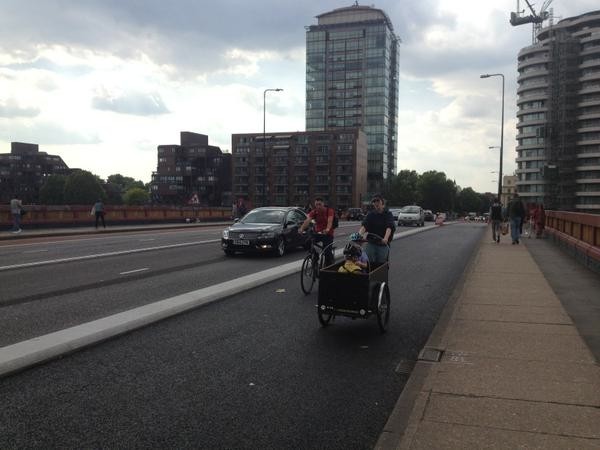
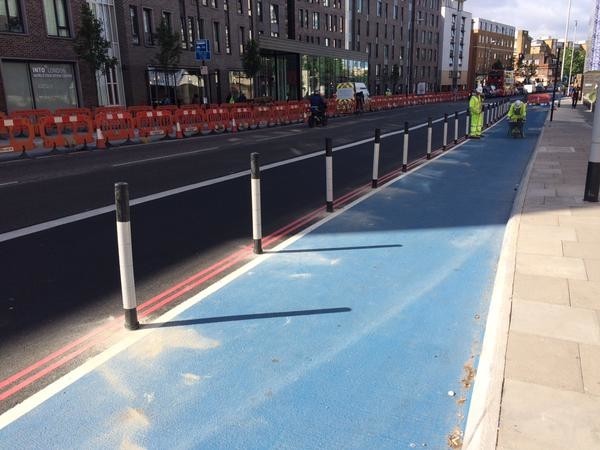
Vauxhall Bridge (2 way track) via @AsEasyAsRiding and segregation wands on the Whitechapel Rd (apologies to whoever I saved this photo from, I can't remember who it was!)
The changes afoot are not just along the route of the East / West Cycle Superhighway. At Oval, CS5 is being upgraded to provide full segregation, including around the terrifying Vauxhall Gyratory and over Vauxhall Bridge. In East London the killer CS2 is also getting an upgrade, with full or semi-segregation being introduced on a route that was previously literally just dirty blue paint and a lot of wishful thinking.
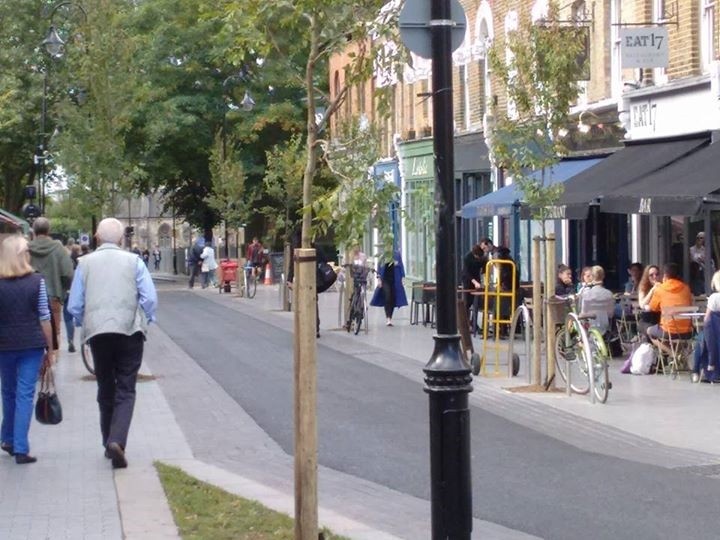 Newly Hollandised Waltham Forest village! Just look at all that anti-driving economic activity going on(!)
Cycle tracks alone can't change a city in to a bike riding paradise. You also need balanced residential zones where local streets are set free from the tyranny of rat running and speeding traffic. The Waltham Forest Mini Holland is just such a project and is now beginning to take shape - but only because of the diligent work of local residents in the face of vociferous NIMBYs who wish to retain their right to drive 150metres to the local shops... There's a street party on Orford Rd today (Monday) from 3PM to celebrate the completion of the first stage of the project, if you're in the area.
As the London Cycling Campaign rightly point out, there are growing pains which need to be resolved in some places, and that's to be expected with innovation and change. Meanwhile, progress presses ahead with construction of the North / South Cycle Superhighway in central London chalked up to start in autumn (check here for details)

But with summer almost over and the city's streets transformed whilst everyone has been away, the pace of change seems unstoppable. The old "blue paint and optimism" superhighways - despite their very obvious limitations - still saw a leap in rider numbers of a minimum of 25%. When these new safe and separated routes open to the public we'll see a torrent, a deluge, a flood of new riders using them, and it's going to change London completely!
Share |
Ration The Future [ 12-Sep-15 9:38am ]
Feels like Autumn [ 12-Sep-15 9:38am ]
It has been very quiet at Ration The Future for 2 months! Sorry to my regular readers. I would love to be disciplined enough to commit to a weekly blog, but that isn't how my life is right now. I have worked long hours on a large project all summer - it feels like I have skipped straight to Autumn. The mornings are cold, evenings are shorter and the bounty of courgettes, cucumbers and beans is tailing off now.

Produce from my garden, including chickpeas.
This week I went to the car boot sale with my eldest daughter, who has just returned from finishing Uni. She was delighted to find several nearly new tops, a dress and a skirt all with labels from her favorite shops. Her little sister liked the dress too and has commandeered it!

In addition we bought some unopened gift sets with body lotions and shower gels, some from the body shop, which were all small travel size bottles, so very handy.

I only bought 2 items for me, but I love them both. One was an egg run, that I had seen for £17 in the Organic Gardening Catalogue and had decided it was too expensive for me to buy when a cardboard egg box does the trick for nothing. But when I spotted it at the car boot and the lady only wanted £1....well it seemed like fate.

I have always kept my eggs in the fridge, but as my fridge is in need of replacing and I am hoping to downsize it, to save money and energy, it is time to keep the eggs out. And don't you love my multi-coloured eggs too? I buy them from a friend each week and love that they are green and white as well as brown :-)

Then I spotted a purse. Not just any purse, but a Ness purse and it was brand new, complete with label for £24.95. Aren't the materials gorgeous? It was mine for just £2.50, so how could I pass that up?

When my husband and I visited the Isle of Skye for his birthday many years ago, I found a lovely little Ness shop and bought myself a purse. You may think that the lovely tartan material might not be as hard wearing as leather, but it lasted me 5 years! I like that the company is based in Scotland, aims to source materials from the UK where it can, and centers its designs on traditional Scottish tartan. Buying local twice over, so no consumer guilt about this purchase. I haven't decided whether to keep it, as it is a larger design than I normally go for, but it would make a lovely gift if not.
As well as all the goodies already mentioned, I bought some books and toys for my cousin's children. We spent a total of £15 and made it home with no packaging, not even a carrier bag! Ethical shopping is bliss :-)
But as Jo at All the blue day has pointed out, a 'one in, one out' policy is required, as buying is only one side of the story.
We had already had a big clearout of clothes. I gave some to friends, sold some at the car boot sale, donated some to charity and took less sale-able clothes to the '£5 a bag' shop. I felt like I had cleared out so much stuff.......but then my daughter arrived home from Uni with all her cooking utensils, clothes and furnishings and we had to have an even bigger sort out to make some space. this time it was the shoe drawers, coat rack, teddies, craft stuff and kitchen equipment that was under the spotlight.
It is a great idea to have a clear out and get rid of all the items that are not used regularly, but on the other hand there is an element of being prepared that seems to oppose this idea. For instance I have a stock of old woollen blankets. Some of them get used when we go camping, but most haven't been touched for years. Yet a few years before we moved to Loughborough there was a cold snowy winter where they had a powercut, and many homes had no alternative heating source. So in the interest of preparedness, the blankets are staying.
It is funny how many things about living lightly on the planet clash. Such as being frugal and supporting local organic producers. Or being prepared for the climate change future we face and living a minimalist lifestyle. Or even just storing all your home-grown produce and trying to reduce disposable plastic bags and containers. How else can I store my fresh lettuce or frozen blackberries? It is all a choice between what means the most to you.

Lovely homegrown veg stored for winter....in PLASTIC!!!!Well, we have 4 bags for selling at the carboot sale and a couple of boxes of kitchen equipment to donate to refugees. I am just loving how organised and clutter free the house is starting to feel, lets see if I can keep it up :-)
09-Sep-15

Produce from my garden, including chickpeas.
This week I went to the car boot sale with my eldest daughter, who has just returned from finishing Uni. She was delighted to find several nearly new tops, a dress and a skirt all with labels from her favorite shops. Her little sister liked the dress too and has commandeered it!

In addition we bought some unopened gift sets with body lotions and shower gels, some from the body shop, which were all small travel size bottles, so very handy.

I only bought 2 items for me, but I love them both. One was an egg run, that I had seen for £17 in the Organic Gardening Catalogue and had decided it was too expensive for me to buy when a cardboard egg box does the trick for nothing. But when I spotted it at the car boot and the lady only wanted £1....well it seemed like fate.

I have always kept my eggs in the fridge, but as my fridge is in need of replacing and I am hoping to downsize it, to save money and energy, it is time to keep the eggs out. And don't you love my multi-coloured eggs too? I buy them from a friend each week and love that they are green and white as well as brown :-)

Then I spotted a purse. Not just any purse, but a Ness purse and it was brand new, complete with label for £24.95. Aren't the materials gorgeous? It was mine for just £2.50, so how could I pass that up?

When my husband and I visited the Isle of Skye for his birthday many years ago, I found a lovely little Ness shop and bought myself a purse. You may think that the lovely tartan material might not be as hard wearing as leather, but it lasted me 5 years! I like that the company is based in Scotland, aims to source materials from the UK where it can, and centers its designs on traditional Scottish tartan. Buying local twice over, so no consumer guilt about this purchase. I haven't decided whether to keep it, as it is a larger design than I normally go for, but it would make a lovely gift if not.
As well as all the goodies already mentioned, I bought some books and toys for my cousin's children. We spent a total of £15 and made it home with no packaging, not even a carrier bag! Ethical shopping is bliss :-)
But as Jo at All the blue day has pointed out, a 'one in, one out' policy is required, as buying is only one side of the story.
We had already had a big clearout of clothes. I gave some to friends, sold some at the car boot sale, donated some to charity and took less sale-able clothes to the '£5 a bag' shop. I felt like I had cleared out so much stuff.......but then my daughter arrived home from Uni with all her cooking utensils, clothes and furnishings and we had to have an even bigger sort out to make some space. this time it was the shoe drawers, coat rack, teddies, craft stuff and kitchen equipment that was under the spotlight.
It is a great idea to have a clear out and get rid of all the items that are not used regularly, but on the other hand there is an element of being prepared that seems to oppose this idea. For instance I have a stock of old woollen blankets. Some of them get used when we go camping, but most haven't been touched for years. Yet a few years before we moved to Loughborough there was a cold snowy winter where they had a powercut, and many homes had no alternative heating source. So in the interest of preparedness, the blankets are staying.
It is funny how many things about living lightly on the planet clash. Such as being frugal and supporting local organic producers. Or being prepared for the climate change future we face and living a minimalist lifestyle. Or even just storing all your home-grown produce and trying to reduce disposable plastic bags and containers. How else can I store my fresh lettuce or frozen blackberries? It is all a choice between what means the most to you.

Lovely homegrown veg stored for winter....in PLASTIC!!!!Well, we have 4 bags for selling at the carboot sale and a couple of boxes of kitchen equipment to donate to refugees. I am just loving how organised and clutter free the house is starting to feel, lets see if I can keep it up :-)
i b i k e l o n d o n [ 9-Sep-15 8:30am ]
Get ready for racing on Regent's Street as a new Tour of Britain route comes to London! [ 09-Sep-15 8:30am ]It's no secret, I love the Tour of Britain! I like the smaller scale of it compared to the Grand Tours of Europe, the opportunity for emerging riders to taste success, and of course the route through green and pleasant Great British Countryside.
But I've always felt the final stage - right here in London - has always been a bit of a let down. Yes, you get the finish line photo of racing in front of Buckingham Palace, but the rest of the day is spent riding up and down the Embankment and Upper Ground which makes for a dull stage that is not very exciting for spectators.
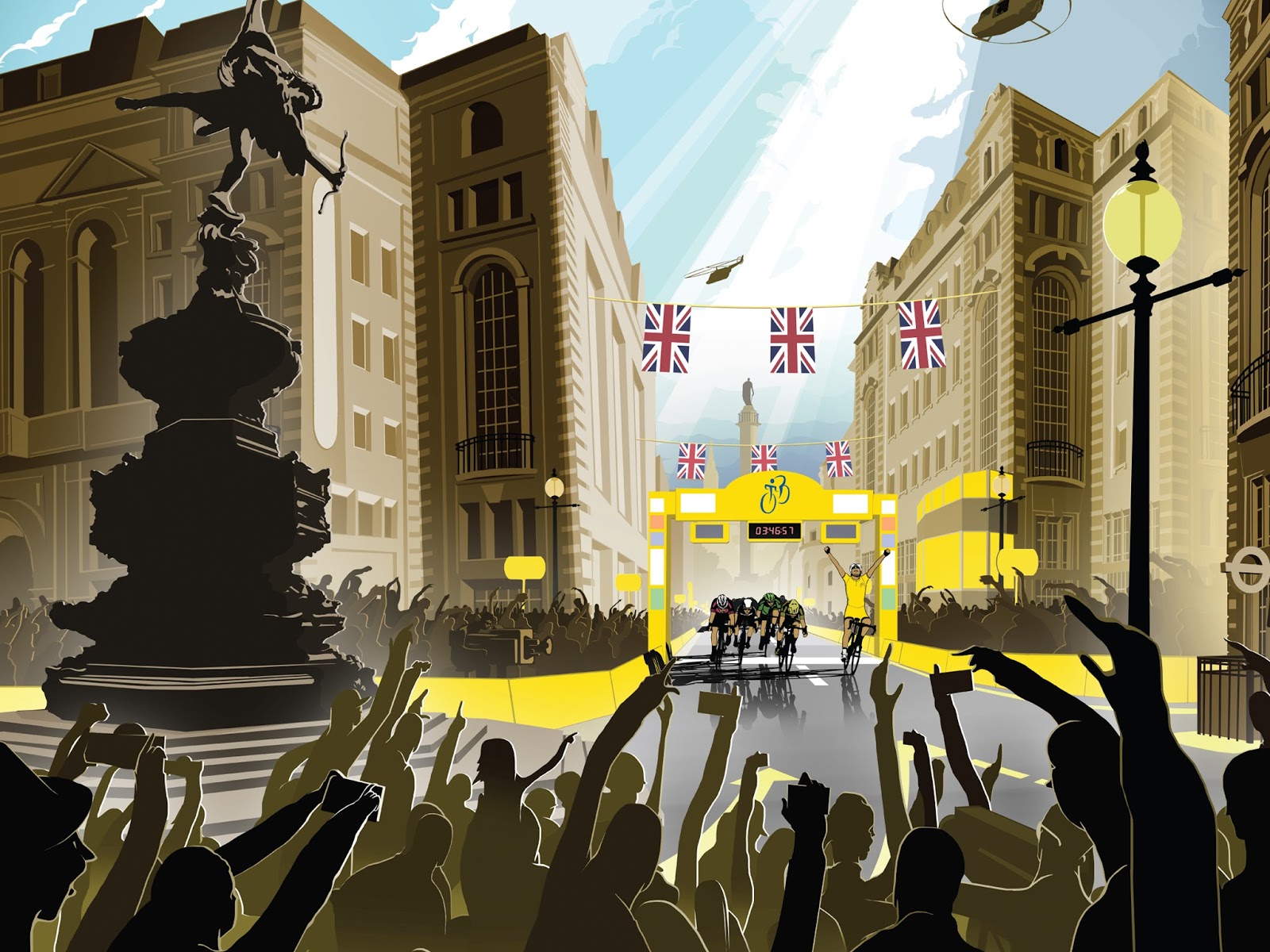
So I'm thrilled to see that this year's final stage has a new route in our beautiful capital - and it's all because of London's everyday cyclists! Because of construction work on the Embankment to build the new East / West Cycle Superhighway the Tour can't ride there. So in 2015 it is adopting a new route, which promises fast down-hills on Haymarket, tight corners around Trafalgar Square, and racing up and down magnificent Regent's Street which is, in my opinion, the most beautiful street in the world (ESPECIALLY when it is closed to traffic!)
The final stage comes to London this Sunday the 13th of September, heralding the end of a fantastic summer of cycle racing. The start and finish line is just south of Piccadilly Circus, and the riders will make a three-pointed loop of Regent's Street, Whitehall and the Strand, passing some of London's most famous buildings and attractions along the way. It is free to spectate and makes for a fun day out for all the family. The riders are fast, but you might even catch a glimpse of favourites Sir Bradley Wiggins, Mark Cavendish, Alex Dowsett and Andre Greipel, or even local boy Tao Geoghegan Hart from Hackney racing for British Cycling's development team.
Seeing as the stage is hosted and paid for by Transport for London (did anyone check the balance of the cycling budget recently?) Londoners might as well get their money's worth and have a nice day out of it...
All the details of the London stage can be found on the Aviva Tour of Britain website here. The beautiful picture of Piccadilly Circus featured in this post is by artist Will Barras and was specially commissioned by cycling website Rouleur, where it is available for purchase.
Share |
Island of Terror [ 5-Sep-15 12:00am ]
A-hem [ 05-Sep-15 12:00am ]
01-Sep-15

...and what will be left of them? [ 1-Sep-15 4:17pm ]
# [ 01-Sep-15 4:17pm ]up close and personal [ 24-Aug-15 11:26pm ]
Hoop Dreams 1994 Documentary / Drama Movies Full Movie [ 24-Aug-15 11:26pm ]THE FANTASTIC HOPE [ 19-Aug-15 3:10pm ]
THE GUARDIAN'S JEREMY CORBYN COVERAGE IN 15 HEADLINES [ 19-Aug-15 3:10pm ]1. 'Corbyn is on the ballot for the Labour leadership election: but he'll never win'2. 'Corbyn is doing well in the Labour leadership election: why he definitely still won't win'3. 'Corbyn is doing better than we thought: but voting for him would be childish and wrong'4. 'Corbyn has a massive lead in the polls: they must be wrong'5. Michael White: 'Corbyn would return Labour to the 80s'6. Martin Kettle: 'Corbyn would return Labour to the 80s'7. Polly Toynbee: 'Corbyn would return Labour to the 80s'8. Tony Blair: '[jazz hands]'9. Peter Mandelson: 'Corbyn would return Labour to the 80s'10. '0.01% of new Labour supporters once voted Green: cancel the leadership contest'11. 'Editorial: Please please please don't vote for Jeremy Corbyn'12. 'Editorial: Vote for … Yvette Cooper?'13. 'Do you think if we relegate coverage of the leadership election to lower down
the page that will make people forget to vote for Corbyn?'14. 'Shit, still not working: so how the hell are we going to cover this political development that seems to, like, mean something to people?'15. 'Jeremy Corbyn's style evolution'
17-Aug-15
the page that will make people forget to vote for Corbyn?'14. 'Shit, still not working: so how the hell are we going to cover this political development that seems to, like, mean something to people?'15. 'Jeremy Corbyn's style evolution'
Rouge's Foam [ 17-Aug-15 1:26pm ]
Response from chukwumaa [ 17-Aug-15 1:26pm ]chukwumaa, a musician and artist who appeared in August's System Focus - headlined 'The Voices Disrupting White Supremacy Through Sound' - contacted me about framing the music as 'disrupting white supremacy.' I thought his response was important and justified, and it's posted here, [sic] and with permission:
ive been ruminating on it and its implications for a minute and come to think about the scope of the multifarious, nuanced and inventive sounds of the artists involved. I think framing it as "disrupting white supremacy" is painfully de-centering and still framing these artist in relation to whiteness in a way that is simply not explicitly expressed by any of the folks mentioned. i doubt any of the artist create this music with a sole motivation of disrupting white supremacy.
i *do* however believe the artists involved were able to develop (and continue to develop) frames of reference *outside* of whiteness. for someone whose default frame of consumption may be chiefly steeped in whiteness, this may come off as a "disruption", but thats more to do white the perceiver than the perceived. it may have been more apt to frame these musics/processes/ideas as a *departure* from musics/processes/ideas that center whiteness.
chukwumaa's work and other links can be found on Soundcloud, here.
ive been ruminating on it and its implications for a minute and come to think about the scope of the multifarious, nuanced and inventive sounds of the artists involved. I think framing it as "disrupting white supremacy" is painfully de-centering and still framing these artist in relation to whiteness in a way that is simply not explicitly expressed by any of the folks mentioned. i doubt any of the artist create this music with a sole motivation of disrupting white supremacy.
i *do* however believe the artists involved were able to develop (and continue to develop) frames of reference *outside* of whiteness. for someone whose default frame of consumption may be chiefly steeped in whiteness, this may come off as a "disruption", but thats more to do white the perceiver than the perceived. it may have been more apt to frame these musics/processes/ideas as a *departure* from musics/processes/ideas that center whiteness.
chukwumaa's work and other links can be found on Soundcloud, here.
System Focus: The Voices Disrupting White Supremacy Through Sound [ 17-Aug-15 1:18pm ]chukwumaa and E. Jane of Philly duo SCRAAATCH. Photo by Liz BarrAugust's System Focus is on rising networks of African and Afrodiasporic artists disseminating their music in solidarity, along with some cultural context (click here to read). Featuring Chino Amobi, NON, Angel Ho, Nkisi, Serpentwithfeet, SCRAAATCH, E. Jane, chukwumaa, embaci, Brandon Covington, Elon, Butch Dawson, Kayy Drizz, Dog Food Music Group, Violence, Mykki Blanco, Psychoegyptian, Yves Tumor etc.Back in December, angry New Yorkers gathered to sing "They Don't Care About Us" following the decision not to indict Eric Garner's killer, a police officer. The song's lyrics were written on a placard during a protest against the Ferguson police department in the wake of their fatal shooting of Michael Brown. It also provided the soundtrack to the Baltimore protests in response to the death of Freddie Gray in police custody, danced to by a Jackson impersonator amidst the chaos of helicopters and sirens... The song has recently found new layers of meaning and urgency in the context of the continuing struggle against racist police violence, now taken up by the Black Lives Matter movement...
It's no wonder that African and Afrodiasporic artists are choosing to disseminate music in solidarity. In many cases, this creative decision is a strategy for dealing with the alienation that is so often a part of Afrodiasporic experience. As the London-based writer Kodwo Eshun puts it in his 2003 essay Further Considerations on Afrofuturism: "the condition of alienation, understood in its most general sense, is a psychosocial inevitability that all Afrodiasporic art uses to its own advantage by creating contexts that encourage a process of disalienation." And yet in the continuing environment of white supremacy, this creativity is routinely either erased, appropriated, or confined to narrow and fetishized aesthetic areas..."In no uncertain terms, the Intent of NON is to run counter to current Western hyper-capitalist modes of representation and function, exorcising the language of domination through the United Resistance of policed and exotified colored bodies," NON's email continued. "At a time when national (market) state financial and political systems are tested as never before, NON shall remain committed to the militant realities and potentials of 'The NON State.' NON came into existence through the Pan-African desire for representation on our own terms." As stated on their Soundcloud page, NON artists are "using sound as their primary media, to articulate the visible and invisible structures that create binaries in society, and in turn distribute power..."
SerpentwithfeetOne of the most beguiling and exciting voices to have emerged from underground music in recent times, Serpentwithfeet also appears on another track that NON reposted on their Soundcloud. Titled "Total Freedom," it finds the singer winding himself delicately around rising and falling tones, including those of an mbira. In an interview for Dazed, he discussed his self-described "PaganGospel" creed for living and said, "I am always ready to pierce things with my black-queer cutlery. I am constantly looking for ways to make my music extra gay and extra black..."SCRAAATCH is an art and sound double act, originally from Washington DC and now based in Philadelphia, who often perform live. It consists of artists E. Jane and chukwumaa—read interviews with them here and here—and, along with the New Jersey born DJ Haram, they run the monthly Philly "club-not-club" night ATM. Also negotiating race, gender, queerness, mental illness, and the digital world in her artwork and photography, E. Jane makes sounds and edits under the names E_SCRAAATCH and Mhysa, typically with a glitchy, spectral take on R&B. Try their / her Soundcloud playlist I Have To Say No So Much Right Now, especially its magnificent title track. About their / her artwork, E. Jane said in a recent interview with The Offing, "I came to the conclusion that I am black and I am a woman, my body is thoroughly Black American and it is perceived as woman. Then I realized that means my body is not a 'safe' body. My body is an unprotected body. I started asking myself how we protect unprotected bodies? What if the body were code? What if the body were only a simulation? What if I could exaggerate how inhuman I feel?" Her partner in SCRAAATCH, chukwumaa, was born in Nigeria and "on a plane to the US the first week of [his] life." He also engages experimentally with pop as plus_c—the track "quadrille_club_bing" uses a Vine recording of "They Don't Care About Us" being sung during the Baltimore uprising, mixed into a distorted club beat and resonant tones like metal being brushed and played with a bow. He also made an installation consisting of twenty-one burner cellphones playing Beyoncé's "Flawless," which turned the song into a waterfall...
Thumbnail for E_SCRAAATCH's 'I Have To Say No So Much Right Now' Chino Amobi appeared on [Blasting Voice], as did cross-U.S. artist Violence, who is soon to appear on the inaugural release of a new label founded by rapper Mykki Blanco called Dogfood Music Group. Due September 18th, the release will be a compilation titled C-ORE, featuring tracks from Violence, California's Yves Tumor, NYC rapper Psychoegyptian and Blanco himself. "We are a group of friends who have created a release that represents a slice of what we're into, our culture and what we want to show the world," Blanco has said about the collection. "People all over the world are only fed this singular image of 'African American Music' and we want to disrupt that. We all come from backgrounds outside of the black American norm, and the world deserves to see our culture as much as anything else..." C-ORENeedless to say, the artists mentioned here aren't the only African and Afrodiasporic artists making challenging and beautiful music in the underground, just a few constellations—there are countless more voices out there. As it has been for centuries, since the traumatic dawn of modernity, finding such voices through music is not just a leisure activity, as it is marketed to many of us. It's part of the urgent and fundamental search for self and identity in a world that not only erases that identity, or appropriates it, or predetermines it, or constrains it, or renders it fragmented and ostensibly paradoxical, but that also systematically commits physical violence upon people of that identity. This is why so many artists with minority status end up in underground music—this is why they are underground music. Fortunately, the underground can form spaces and networks where identity matters, is audible, and becomes visible. System Focus: Why Today's Underground Club Music Sounds Cybernetic [ 17-Aug-15 12:59pm ]Celestial Trax's Ride or DieJuly's System Focus was on a particular strain of club music with a cybernetic feel, along with some incidental reflections on calling it 'club music' (click here to read). Featuring Night Slugs, Fade to Mind, Keysound Recordings, Liminal Sounds, Her Records, Sentinel, Amnesia Scanner, J.G. Biberkopf, D.J. New Jersey Drone, Track Meet, Bootleg Tapes, P4N4, Velkro, #FEELINGS, CELESTIAL TRAX, Tallesen, WDIS, Gewzer, Gronos1, Magic Fades, SPF666, Korma, Team Aerogel, Infinite Machine, Roller Truck, Tessier-Ashpool Recordings, IMAMI, Cloaka, Spurz, Kadahn, Gel Dust, Dviance, Partisan, Sharp Veins and Lit Internet. Nb/ this article should have said a bit more about the style's relationship to Jersey Club, Bmore Club and Philly Club.There has been a slow but sure shift in the way the underground talks about one of its key areas: "dance music" has become "club music." The major reason for this is probably that it differentiates it from Electronic Dance Music (EDM), the name that, despite its generality, has come to stick more specifically to the recent explosion of big name, big crowd, big show parties held outdoors, particularly across the U.S. "Club music" is not that—it's a more intimate, enclosed environment, both in the physical spaces it describes and in the community that enters and honors those spaces, whether real or imagined...
DJ New Jersey Drone's Energy EP This kind of music was pioneered by transatlantic labels like Night Slugs, Fade to Mind, and Keysound, and mixes together rebooted ballroom/vogue house and the new wave of instrumental grime, all with a stark, hi-tech machine sheen. It was soon developed further on tight, intense and ice-cold shorter releases by artists on London's Liminal Sounds such as Brooklyn-based producer Copout, and particularly those on fellow UK label Her Records, such as DJ Double M, Sudanim, CYPHR and Kid Antoine. It's a style that is enjoyed by the sort of musicians and fans who don't like to name styles, but instead allude to hybridities of aging categories like house, techno and grime...
Korma's ZGMF-X19AWhat makes this music so good to run to? It has a high tempo which keeps urging you relentlessly forward. But it's more than that. It embodies progress and athleticism in its very sound (unsurprisingly, it's the soundtrack to health goth) not in a merely beautiful way, but with a frightening dose of the sublime too. Because as in both running and culture, forward motion isn't nice, easy, or moral—it's laced with anti-humanistic pain, aggression and dissolution, crashing euphoria and dysphoria together in a bodily blur of hormones and neurotransmitters. As muscles grow and become more supple, as lungs become cleaner and the brain less resistant, so technoculture improves: motors, alloys and power supplies increase in efficiency, pixels shrink and multiply, and digital intelligence grows more independent of yesterday's humanity. Organic, machine—it's all the same in the struggle of kinetic matter. All this seems apt as I schlep my loathsome fleshform across the tarmac in a futile bid to flourish, or at least survive the oncoming war...Cloaka's AdaptOne particularly fascinating and powerful release is Lit Internet's Angelysium, which features collaborations with some of the producers on the _VIRALITY compilation as well as South London producer Endgame (who was in last month's tresillo column). Cinematic almost to the point of telling a story, if Angelysium ever gets into a groove, it's likely to vanish suddenly into the vast mists, giant machinery and assorted percussive enigmas. The empty spaces that characterise the stop-start textures of eski grime become yawning chasms thick with tension and potential assailants, yet also with melancholic distance.Lit Internet's AngelysiumAll this is just another reason why the category "club," while it does a lot to hone in on specific and, in many ways, desirable qualities in dance music, can only go so far. "Dance" is a more intangible, open-ended concept, something that can happen anywhere and is directly related to the body and activities like running and other forms of exercise, the body being even more intimate and present than the club that might temporarily enclose it. Dance is music that moves you. faces on posters too many choices [ 13-Aug-15 12:22am ]
The Thin Blue Line 1988 Official [ 13-Aug-15 12:22am ]
10-Aug-15
up close and personal [ 9-Aug-15 11:39pm ]
The Electronic Frontier (1993) [ 09-Aug-15 11:39pm ]
05-Aug-15
i b i k e l o n d o n [ 5-Aug-15 9:24am ]
"We all cycle" - the rise and rise of proud cycling cities [ 05-Aug-15 9:24am ]
I'm spending the summer in the Netherlands, and have been learning so much about cycling in their cities. What has become clear to me is that Dutch cities are increasingly competing for a share of the visitors who come here to learn about the Netherland's cycling and planning culture. Utrecht, host of this year's Grand Depart, is not alone in this - note how this incredible video touting their cycling achievements is presented in English rather than Dutch and really tries to "show off" the city as a beautiful place to visit (which it is, I hasten to add).
I think this is an interesting phenomenon for two reasons; firstly the internet is being recognised by cities as an effective tool for reaching and inspiring many people around the world, getting them excited and clearly demonstrating exportable concepts. There's also a clear attempt here to attract high-spending tourists who are on learning-based trips. In short, visiting cities to find out how they work has become a mini industry of its own!
What do you think? Have you spent time visiting cities in order to learn and find out what you can do in your own city? Do videos like this make you want to visit somewhere more? Could pro-cycling messages like this help to make the case for cycling in the city where you live?
For more information on cycling in Utrecht, visit utrecht.nl/we-all-cycle/
Share |
Island of Terror [ 2-Aug-15 12:00am ]
Interesting Postcards [ 02-Aug-15 12:00am ]
'Bing bing bong, this is Radio Butlin'. Yes, it really happened. We used to on holiday to Butlins in the seventies, and always had a brilliant time. I'll tell you about it someday, as well as posting more of my surprisingly extensive Butlins postcard collection. Bet you can't wait.
What We Call The Most [ 01-Aug-15 12:00am ]
'Look, Mary, no hands!'There's no question in my mind that Cliff Richard has made a lot of good records, but very few of them have the immediate dance floor appeal of his very groovy version of 'The Girl Can't Help It' as released on his 1970 LP 'Tracks 'n' Grooves'.
The Little Richard cover puts Cliff back in touch with his rock and roll roots, of course, but it's a slightly daring move as the lyrics are ridiculously and comically lascivious, with numerous metaphors for sexual arousal and climax.
To complement the saucy words, Cliff is given a loping, slightly sleazy arrangement to emote over, full of dirty bass and, yes, prominent horns. In an attempt to temper the relentless smut, a middle eight is inserted where a Hammond organ goes all churchy and Cliff suddenly declaims 'OH, HEAR ME NOW!' as if he were a hysterical evangelist working a tent full of gyrating snake handlers.
Nice one, Clifford, nice one, son.
The Nanny [ 31-Jul-15 12:00am ]

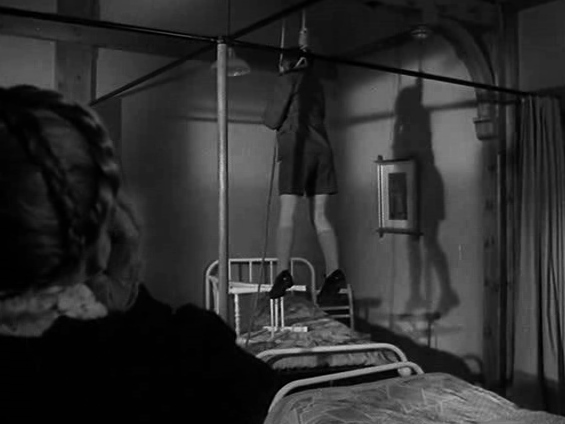
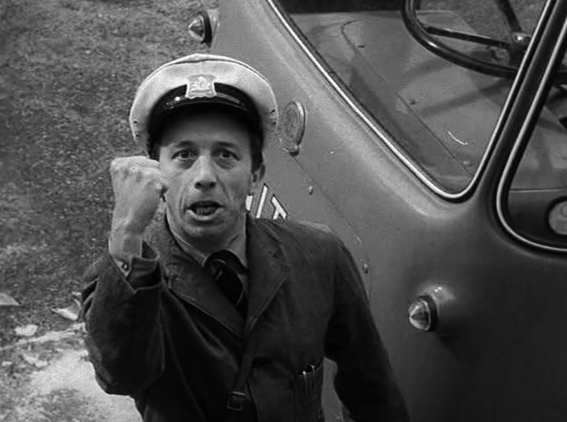


As you might expect from a film that is about the death of a child and the devastating impact it has on a family, 'The Nanny' is a rather somber affair, by far the most restrained of the psychological thrillers that Hammer used to supplement their various horror franchises. There are very few twists and turns, just a slow piecing together of the true circumstances of what may or may not have been a tragic accident.
Bette Davis stars here as Nanny, ably supported by extraordinary eyebrows. The only child in the house hates and fears her, but that's irrelevant as her real duties are to stop the Mother of the family unraveling completely, which she does by treating her like a baby, obsessively brushing her hair and feeding her steak and kidney pie from a spoon (yes, Social Services, I am aware that does not necessarily constitute responsible child care). Davis' performance is mannered and slightly grotesque, without ever being ridiculous. As things begin to unravel, Ms Davis resists the chance to go full psycho-biddy, as if her character is already at the extent of her strangeness.
The lovely Pamela Franklin pops up as a lonely teenage neighbour who pretends to have loads of boyfriends but mainly sits in smoking and watching westerns on the telly, and is by far the most sympathetic character in a film filled with emotionally damaged and psychologically distant people.
It's all a bit depressing, really, but it's well made and directed and doesn't rely on cheap shocks to tell its ultimately rather sad story. I fancy some steak and kidney pie now. I'll have a bath later.
Check Four [ 30-Jul-15 12:00am ]





Driving used to have criteria, things that you had to do before embarking on a journey. There were special clothes to wear, equipment you needed to keep in your boot, sweets you needed in the glove box: there were gloves. It was also a time when men were expected to be useful, and so a series of mechanical checks were expected to be made before every trip. Now people just jump in and piss off at high speed in the same casual way that they might sit on a chair, or a toilet.
So, next time you need to use the car, humour me. Check the lights; check the steering; check the tyres; check the brakes; put on your car coat and pull on your driving gloves. When you've done all these things, light your pipe, make a hand signal and set off. The drive-thru KFC will still be there in a few seconds time.
i b i k e l o n d o n [ 28-Jul-15 8:30am ]
Bike bans in pedestrian zones make no sense, but not why you think [ 28-Jul-15 8:30am ]Last week I visited the Dutch city of Zwolle, the Netherlands City of Cycling in 2014. It's a pretty, historic city surrounded by countryside and has a pedestrianised heart. But what I saw there made me reconsider banning bicycles from pedestrian-only areas, but not for the reasons why you might think.
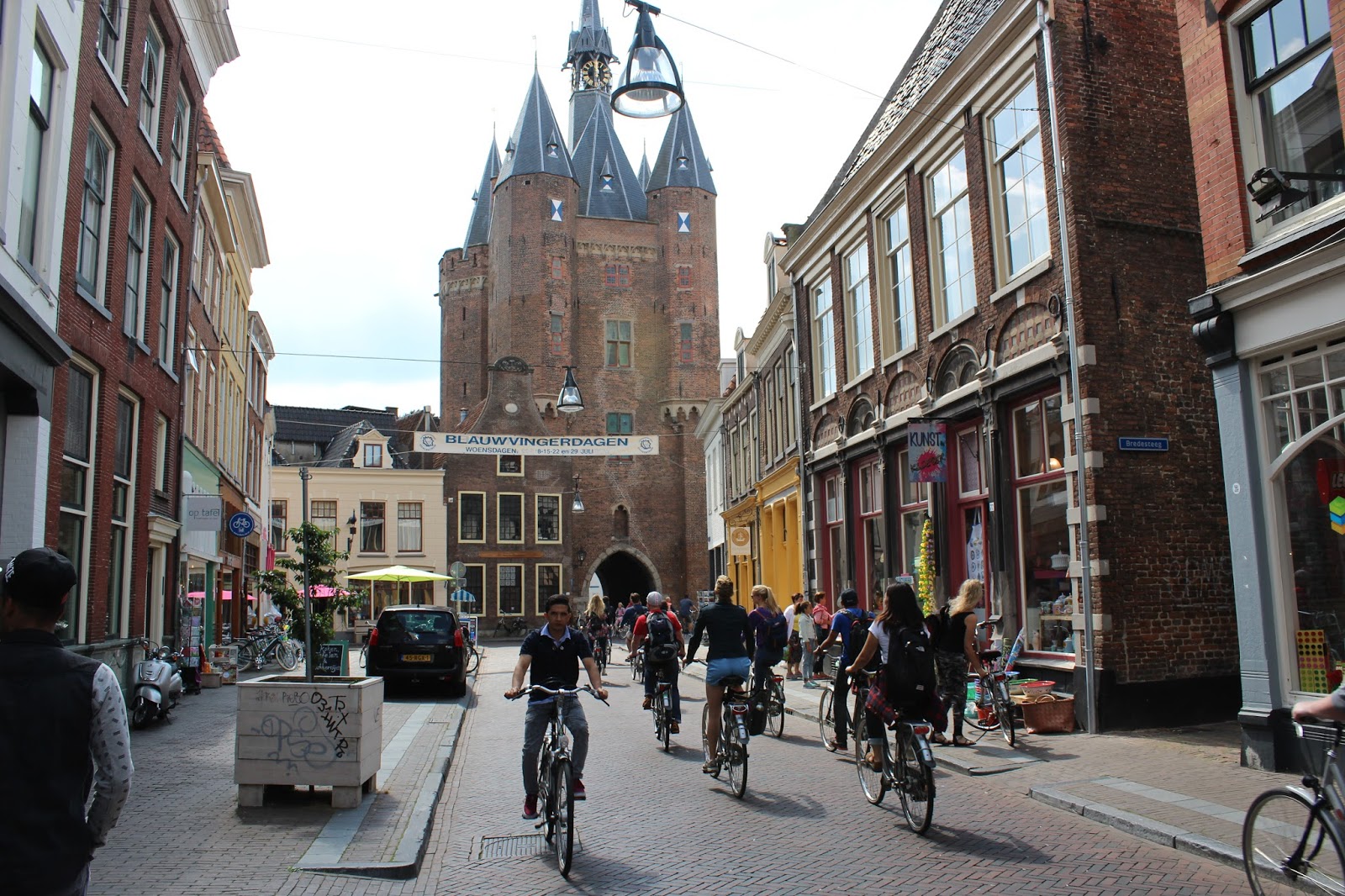 Many cities - both in the UK and elsewhere - have pedestrian zones where people using their feet to get around can relax in a safe environment where they don't need to be worried about being knocked down by speeding cyclists, or any other traffic for that matter. Where there are lots of people, especially around shops, this has always made sense to me.
The West Country town I grew up in had a large pedestrians-only shopping area, where you were expected to lock your bicycle on the perimeter and walk in. Even as a young man I remember being approached by security guards and given a telling off for pushing my bike through.
Things were different in Zwolle. I'm not sure if bikes were technically permitted but I saw many in the pedestrian area. A few were being slowly cycled to available bicycle parking, but the majority of them were being pushed. I saw two friends; one woman on a bike and one man on foot, making a journey together through the city centre (photographed, below) Would their journey have taken place if a strict bike plan was in place?
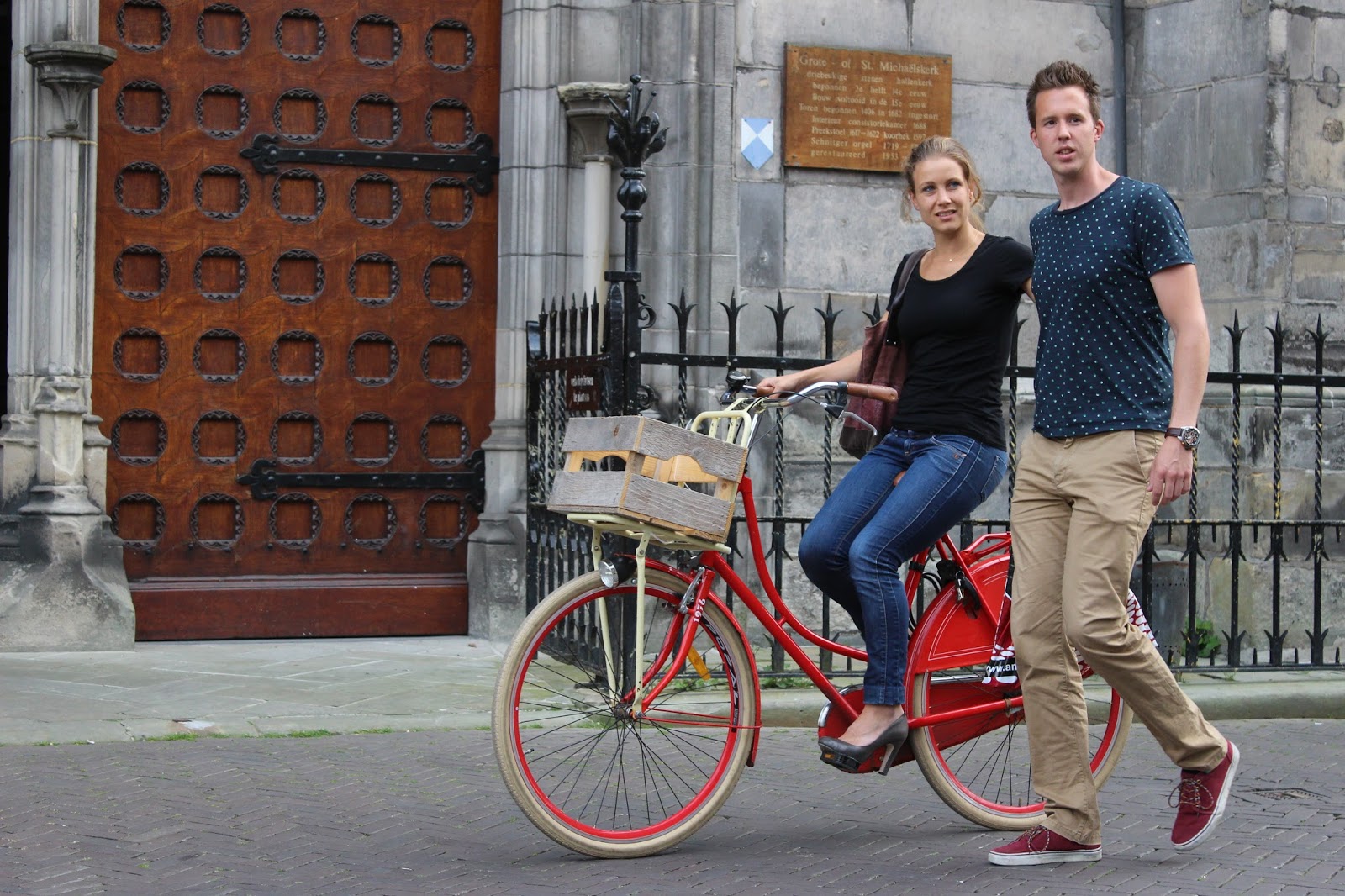 An older woman was using her bicycle as a shopping trolley, filling her basket with goods she brought as she pushed the bike from store to store.
I remember hearing Danish urbanist Jan Gehl recount a story about his mother who, when she became too frail to cycle, would still walk with her bicycle - it was her dignified access to mobility, without having to revert to using a walking frame.
Pedestrians are important, and in pedestrian areas should always come first. As with much in life however the situation is not black and white; people have a complex approach to their own mobility. I wouldn't want to see cyclists riding at speed through shopping areas, or obstructing access with mountains of parked bicycles, but I realise there's more to bicycles in pedestrian-only areas than initially meets the eye.
P.S For more wild and reckless behaviour like using a bike in a pedestrianised area, see this film by the City of Zwolle which features their Bike Director getting a backie from various residents - something which landed London Mayor Boris Johnson in hot water this week and for which he was slammed by the CTC! (Film in Dutch only, sorry!)
Share |
Island of Terror [ 25-Jul-15 12:00am ]
Sucked To Death [ 25-Jul-15 12:00am ]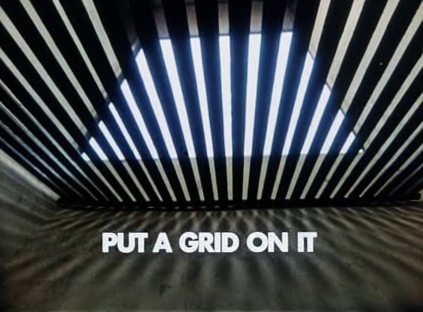





As a child I had a morbid fear of quicksand. I'd probably watched too many Tarzan films, and PIF's like 'Keep A Grid On It', a warning about the dangers of children dying in grain pits ('drowning without water') didn't help. Come to think of it, as an adult I'm still pretty scared of quicksand AND grain pits, I'm just wise enough to know that if I don't go looking for that sort of danger, it certainly won't coming looking for me.
Dracula, Prince of Deadness [ 24-Jul-15 12:00pm ]





It's a convention of vampire films that Dracula starts dead, and ends up dead. In Hammer productions he is usually ended by a member of the Van Helsing family, but his nemesis can also be a callow youth or a monk who likes to warm his arse on an open fire. In 'Taste The Blood Of Dracula' he just gets giddy from being in a church and falls off a ledge. Fact is, Dracula is very much a bully. He's cock of the walk when biting young, vulnerable girls, but he crumbles when faced with any real opposition. Literally. That said, he'll be back. He always comes back.
RIP, Sir Christopher, you pompous old marvel. See you again soon.
Interesting Postcards [ 24-Jul-15 12:00am ]
Dolphins at Brighton Aquarium, Sussex
I know what you're thinking, 'yeah, dolphins are cool, Paul, but they're not that interesting'. Well, wind your neck in, mate, because these clever little bastards are Dick and Delilah, the dolphins the CIA trained to sabotage Soviet submarines during the cold war. And you can't prove otherwise.
The Evil of Banality [ 20-Jul-15 12:00am ]
The writer, theorist and academic Mark Fisher recently set up a Facebook page called 'Boring Dystopia', and invited the submission of photographs of Britain in the 21st century to illustrate the concept. I've already uploaded a few snaps, as manifestations of dullness and decay have long been an interest of mine, particularly the places where the banal and the broken intersect, and the true, terrible, tedious horror of modern life is revealed.
We've all read '1984' and seen the implications of totalitarianism: the endless war, constant surveillance, the relentless propaganda machine, the purges, the torture, the executions, the mind boggling twists and turns in ideology, in language, in life under the heel of the system. But this is a very different dystopia that lacks even the charm of the police state: there are hardly any police for a start (the phalanx of coppers in the picture below dates from 2012, and the procession of the Olympic Torch).
This dystopia is held in place by neglect, by apathy, by a lack of resources, by a lack of interest. Everything is falling apart, but we lack the money and energy to make it right. Newly built things look half-dead even as they are unveiled, MDF where wood used to be, bricks made out of old bricks, slates and glass made out of plastic, all covered with a single coat of watery pastel paint.
New housing is prohibitively expensive and resembles a series of bird boxes split into quarters, sixths, eighths depending on how many newly weds are expected to cram into them. The pity of the boring dystopia is that these poorly and hastily constructed pens are sought after. It has come to this: we are so desperate to live somewhere that we will settle for a Lego house with a tiny consolatory patch of polyurethane lawn. There are some townhouses near to where I work. Each of them has one large window has a tiny balcony attached to it, like a fancy fringe on the bottom of a sofa. You cannot stand on it, sit on it, or even dangle a child over it. In any event, it just looks out onto a dirty, busy road.
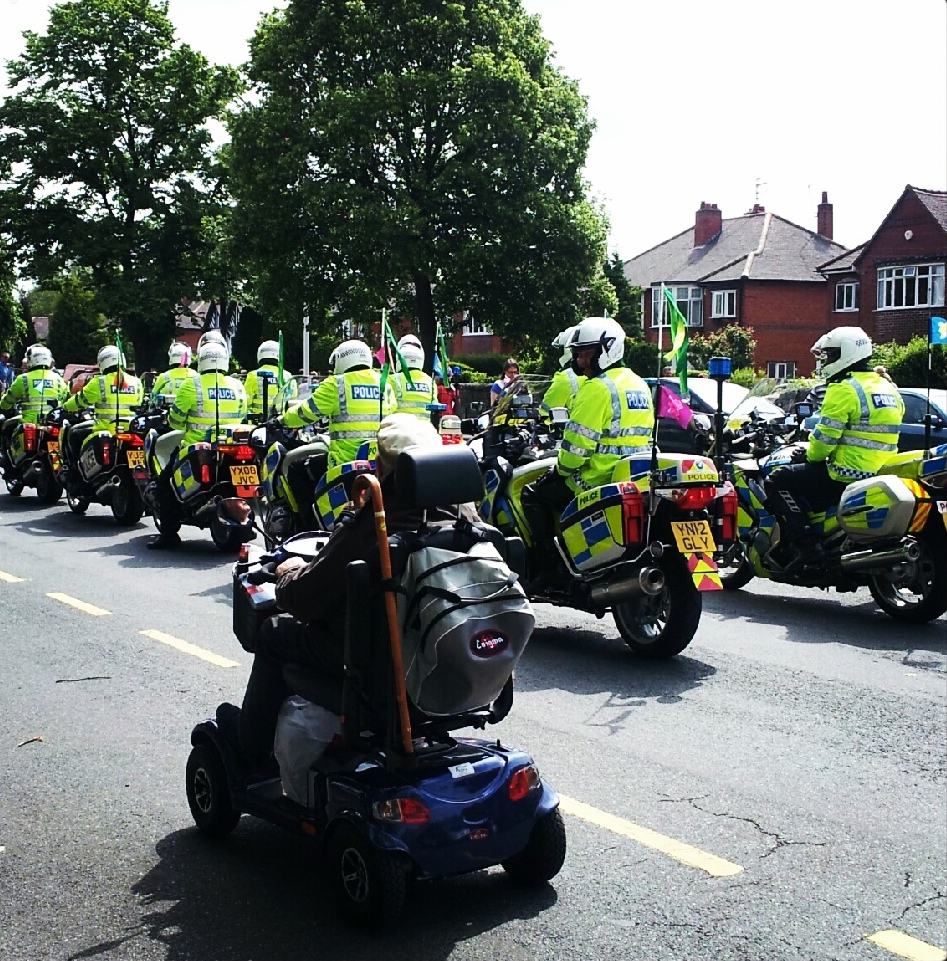
Local authorities and other central civil organisations are not instrumental in the boring dystopia, they are subsumed by it, just like everybody else. Lacking money, resources and motivation, their interventions are confined to putting up signs, or erecting fences and barriers to keep members of the public away from areas that they already have no interest in.

Old and empty buildings are no longer demolished, as that costs too much money, and the boring dystopia has put too many rules in place about blowing things up or setting fire to them. Instead these buildings ossify with pigeon droppings, and stalactites form like spindly toxic fingers. After a while the buildings become invisible.
Yet, despite the underpopulated office blocks, in spite of the abandoned buildings, we keep on building because we are not able to stop, perhaps because we want to fulfil the life trajectory we expected when our world was not so dystopic, not so boring. Or perhaps it's to see out the job that our distant ancestors started several centuries ago: to carve up and chop down this land until every inch of it has the brand of civilisation upon it, until there is no corner or parcel of space that does not have a foot print or a unit or a trampoline upon it. There CCTV cameras everywhere, but they simply provide a continuous flow of unmonitored images. They flicker through the night in unmanned offices. If something happens, someone will review the footage, in exactly the same way that a store detective might rewind the day's surveillance tape to check out a shoplifting incident - in 1990. We've spent billions on replicating a process that already existed. We've lost the whirring noise and gained blurred footage of Michael McIntire shopping.

Who runs the boring dystopia? The answer is no-one. There is no-one driving. The government are too busy to bother with little things like the administration of the country now. They are like burglars who have meticulously planned a precision raid on a gold warehouse, only to get there and find all the doors open and the alarms switched off. They wander around, taking what they want, not quite believing their luck. After a while, they take their masks off. They know no-one will stop them, and they no longer care who sees them.
We can obey a dictator, respect an ideologue, fear a tyrant. These individuals lead by bending parts of the world to their will, and, whether, we go along or fight against, we live or die in the shadow of their monstrous ego. But this dystopia is boring, and it is run by boring people, except for Ian Duncan Smith, who is a fucking maniac.

So, yes, thanks to Mark Fisher, the Boring Dystopia has a name now, and Facebook users can participate in its cataloguing. It is unlikely to spark a revolution, or challenge the parameters of this society that we have created. We are too tired and disengaged to throw a brick, so we press a button to 'like' a picture of something that, actually, represents our cultural penury and societal subjugation, like condemned men unknowingly shaking the hand of their executioner, who uses the contact to estimate the length of the drop. We should be ashamed, really, mortally ashamed, but this dystopia has made us all boring, and we are too stupefied to do a fucking thing about it.
A Million Horns [ 18-Jul-15 12:00am ]It's 1970, and Cliff Richard faces up to the challenges of a new decade and a less than inspiring recent sales record by teaming up with his old pal Hank Marvin and releasing a single that is not only rockier than his usual output, but also exploits a topical theme: the unstoppable rise of the car, and the damage pollution is doing to the environment.
Written by Hank, 'The Joy of Living' features an interesting guitar effect that seems to evoke the grinding futility of a traffic jam, and lyrics that are both deeply sarcastic and rather angry and are redolent of J.G Ballard (who would have thought lots of big, sexy, deadly cars a good thing) or even Patrick Hamilton (who would have thought it disastrous*). In this dystopic version of the future where the motor car is King, man is reduced to living in state appointed high rises, looking down on the world and remembering what it felt like to breathe clean air, like a scene from the credit sequence to 'Soylent Green' come to life.
In the end, however, a strong ecological message and a jaunty chorus were not enough to propel the song higher than number 25 in the charts and the backlash against the dirty bastard car didn't take place after all. As someone who was stuck in a lovely multi coloured crocodile for twenty minutes this morning, I wish the world had listened to Cliff more closely. He was also right about young ones not being young for very long.* Hamilton had more reason than most to hate the motor car, having been knocked over and nearly killed by one in the late 1920's. In 'Coleoptera', the last chapter of his 1953 novel 'Mr. Stimpson & Mr. Gorse', he predicts a Britain over-run by cars, created by man to serve but now completely in charge of their inventors and 'pitilessly exacting' in their demands. 'The beetles were not magnanimous in victory', he notes.
F*** Me, It's Freddie! [ 17-Jul-15 9:00am ]


FMIF as Philip Proudfoot in 'Otley' (1968).
We've actually done this film before, but it is well worth revisiting, especially with facial expressions this good. Freddie plays what is called in olden days parlance 'a flaming homosexual', i.e. he isn't scared of what you think of his sexuality. He's also quite a dandy, and at the centre of the intrigue, like a camp mod spider. It's a broad performance, but it works - after all, as you can see from the second screen shot, Freddie has his tongue firmly in its cheek.
Otley [ 17-Jul-15 12:00am ]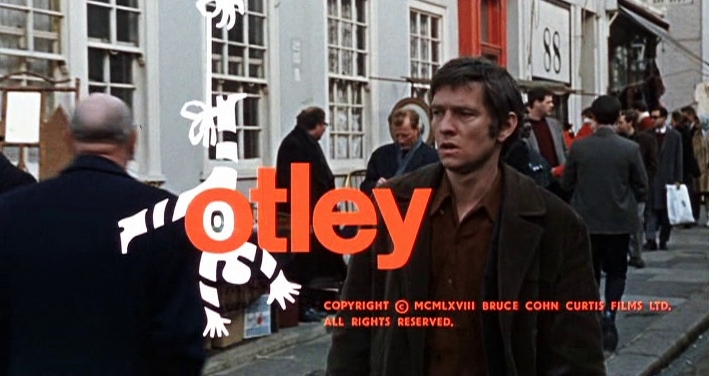
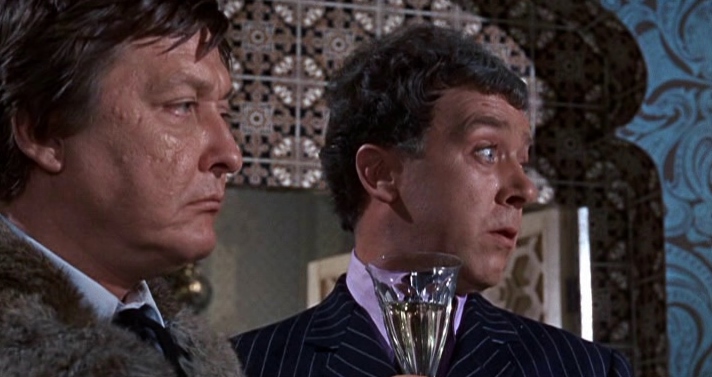
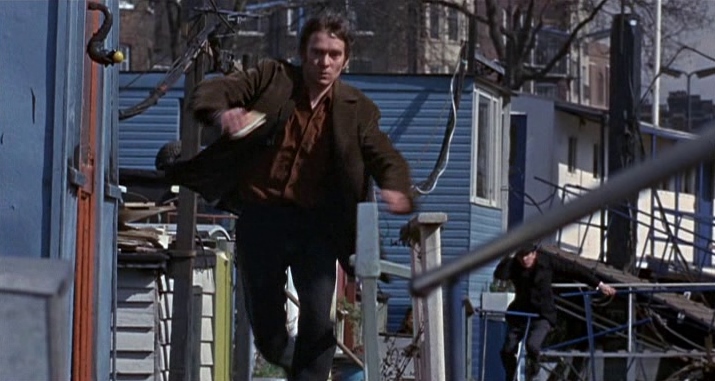
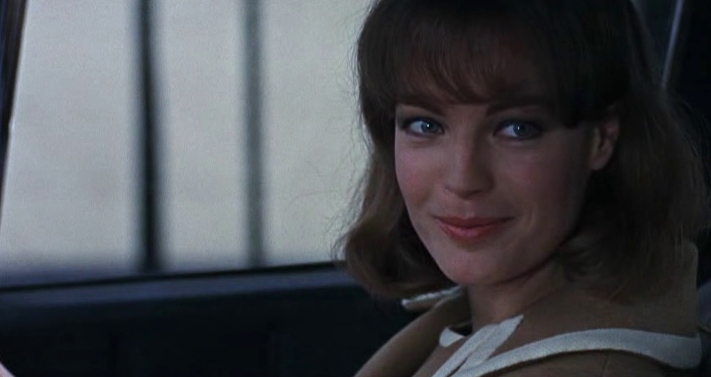
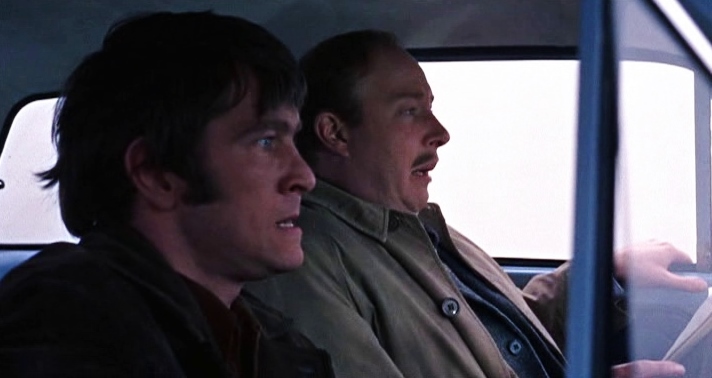

'Otley' is about fifteen minutes too long, but it's a fun film about the rather shabby world of espionage that features a stellar cast of British character actors, led by the great Tom Courtenay as Gerald Arthur Otley, a shiftless moocher and compulsive pincher of ornaments who, by sheer idiocy, finds himself at the centre of a web of slightly incomprehensible intrigue.
A nice mix of comedy and drama, 'Otley' is very sixties (never a problem in my book - or on my blog, anyway), but gives us a glimpse of the 'real' London behind the swing: the markets and bedsits, cafes, pubs and tube stations, people in polo necks and socks that need darning. The grooviest person in it is Freddie Jones, who is so sharply dressed it makes Beau Brummel look like Worzel Gummidge.
Tom Courtenay is excellent, as always. His light Yorkshire accent, bony face and slightly camp delivery are miles away from the usual leading man, and he's not afraid to appear cowardly and pathetic, which is probably why he never made it big in action films. He's also very funny and, at times, the self-obsessed, duplicitous Otley is reminiscent of a (slightly) more grown up Billy Liar, which makes you wonder sometimes if all the running around and gun play is simply part of some elaborate, extended fantasy.
The rest of the cast are a who's who of contemporary character actors, including James Villiers, Alan Badel, Leonard Rossiter, James Cossins, Ronald Lacey, Frank Middlemass, Geoffrey Bayldon and, of course, our beloved Freddie. The last two on the list are still with us (aged 91 and 87, respectively) and, I hope, will remain so for a good few years to come. Romy Schneider makes an attractive female lead, but then she always did, particularly when sporting thigh length white pvc go go boots as she does here.
Light hearted and full of twists, it's the sort of film that should be on TV right now but, for whatever reason, never is. Bloody nowadays TV.
Adieu, Aubrey [ 16-Jul-15 10:50pm ]
The purring, sinister, wonderfully eccentric Aubrey Morris is dead. He lived for 89 years, and was acting up until a few months ago. Here he is as an utterly bonkers psychiatrist Dr. Putnum in Hammer's 'Blood From The Mummy's Tomb'. Adieu, Aubrey.
What Might Have Been [ 16-Jul-15 12:00am ]It's February 1979, and Punk is moribund enough for Legs & Co to get involved and start clod hopping about in plastic sandals and party wigs. If they'd only flipped the record over they would have encountered 'Frigging in the Rigging', a puerile chant full of explicit sexual imagery that is crying out for literal interpretation in dance by five ditzy dancers. Can you imagine the hand gestures?
Christ Almighty [ 12-Jul-15 12:00pm ]
Art therapy is an essential part of prison for those serving long sentences: they've got to do something, after all, and smearing a load of paint all over a canvas can be cathartic.
Ronnie Kray was a keen amateur artist, and his paintings (not all of which are as good as his 'Crucifixion' above) now sell for several thousand pounds each. Good news, Ronnie, wherever you are: people are still fucking mugs when it comes to your tawdry legend.
A tip of the cap to Jonny Trunk who originally posted this on Instagram and made me aware of it. Now I can't think about anything else, so, yeah, thanks a lot.
Keep It Broken! [ 12-Jul-15 12:00am ]

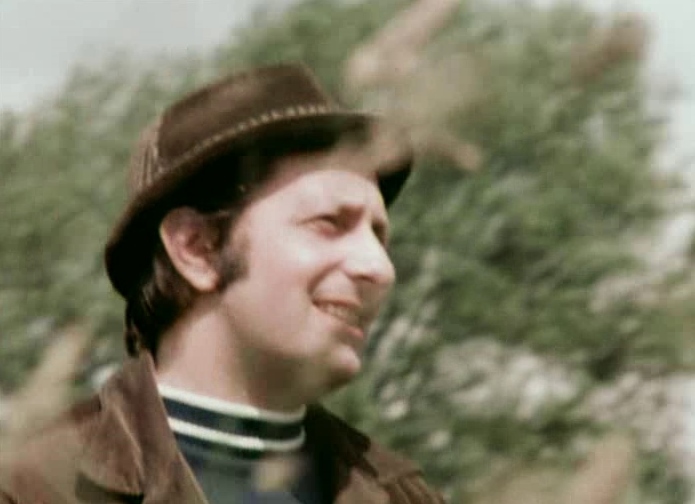
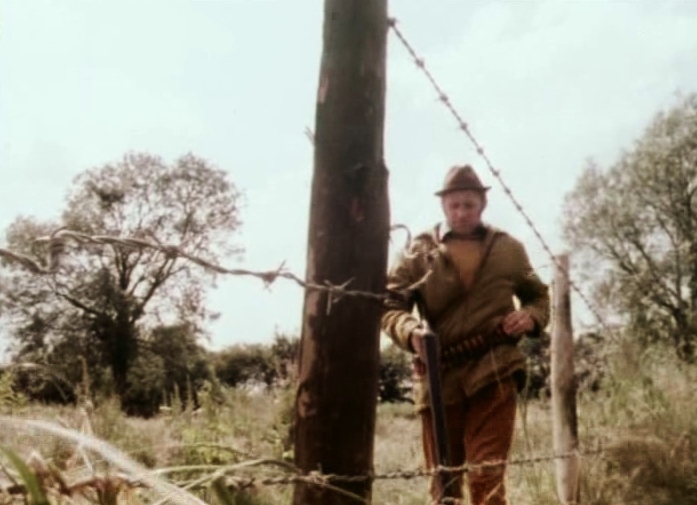
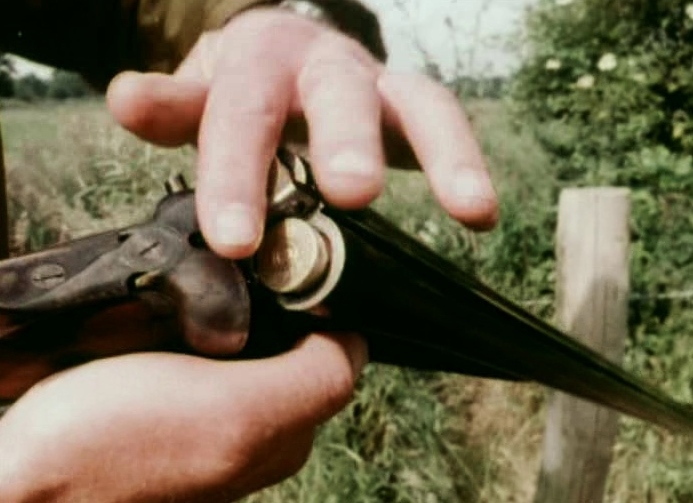
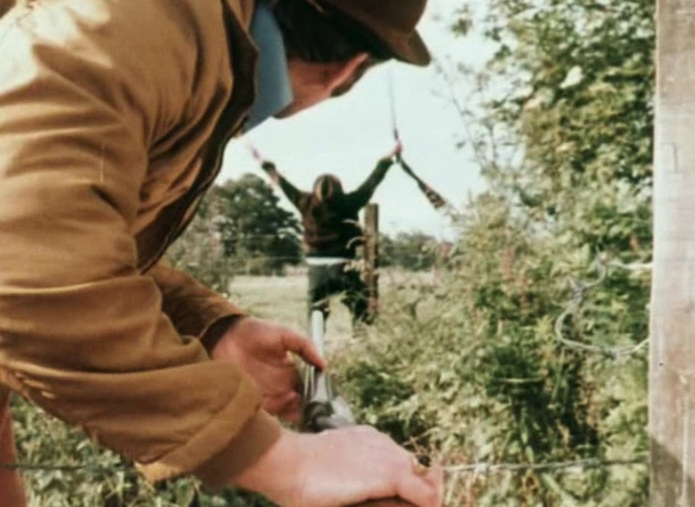
While we're thinking about shotguns, rural settings and sudden, violent death, remember --
'A gun should be broken and unloaded whenever it's not being fired, and especially when getting through a fence or over any obstacle. If you don't follow the rules, sooner or later there'll be a - BANG! - tragedy'.
Look at the geezer being shot. Is it just me, or is he hamming it up a bit?
House On Straw Hill [ 11-Jul-15 12:00am ]
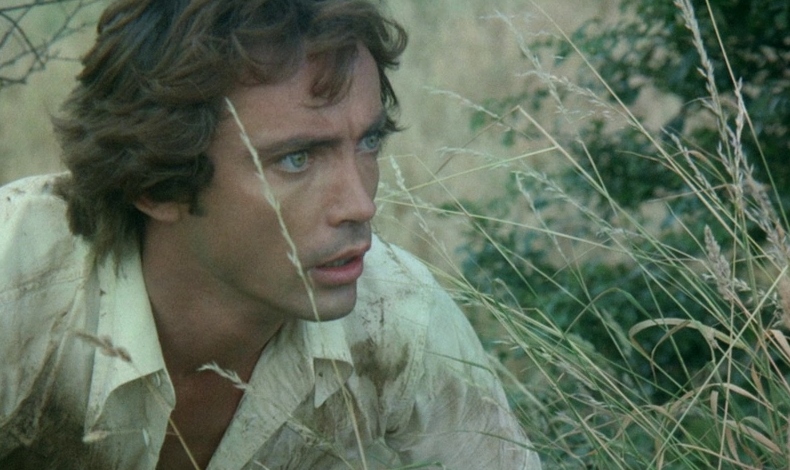
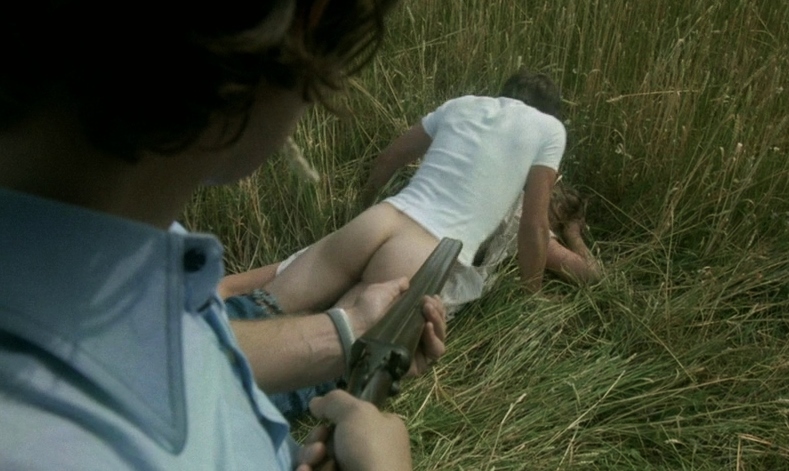


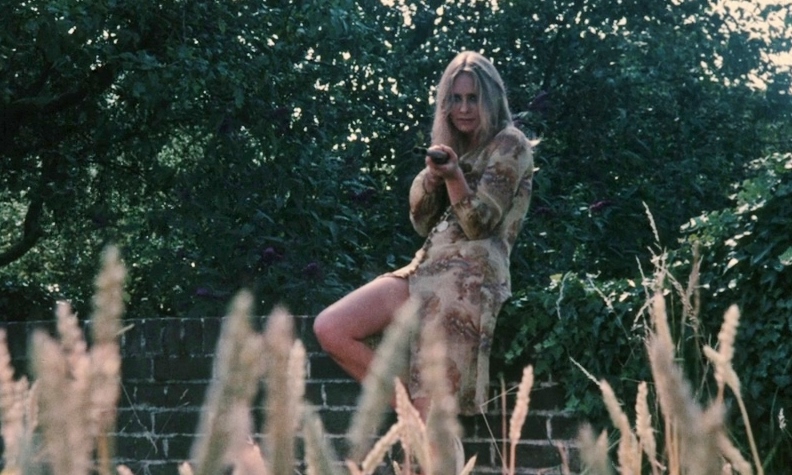
'House On Straw Hill' has either an illustrious history or a terrible reputation, depending on how you look at these things. It was the only British film on the 1984 list of banned video nasties, mainly because of its fairly explicit mix of sex (some consensual, some not) and violence (some consensual, some not). Made in 1975, it exists in any number of different versions, and under several different titles, although a more or less definitive version has recently been released on Digital Versatile Disc.
The always odd Udo Keir plays Paul Martin, a successful author who rents a remote cottage in Essex in order to work on his second book. He has an on-off relationship with porn star Fiona Richmond, i.e. he gets on, then off, then sends her packing. Their 'love' scenes have a rough and ready quality that makes them seem more explicit than they really are, but then some of that might be due to him putting on latex gloves every time they get it on.
Paul hires a secretary over the phone to help type up his masterpiece and is delighted when she turns out to be Linda Hayden, who brings her usual blend of jailbait precocity to the role, and forgets to bring a bra. Linda is a compulsive masturbator and, when she is caught fiddling with herself in a field by a couple of bicycle riding 'youths' (including an already balding Karl 'Brush Strokes' Howman), an unpleasant rape scene (is there any other type?) ensues. This young woman is not quite the pushover she seems, however, as the yokels who assault her find out to their cost.
The last half hour explodes in a frenzy of rough sex and sharp knives and a soap opera plot twist which makes enough sense to validate all the huffing, puffing and intimate touching that has gone before. Unlike the BBFC, I wouldn't describe the film as nasty, rather as an adult psychodrama that occasionally gets a little too adult for comfort: if Ingmar Bergman had made it, it would have been hailed as a masterpiece (it's worth remembering that Bergman's film 'The Virgin Spring' was the inspiration for 'Last House on The Left'). Probably.

I enjoyed the rural setting (it was filmed near Chelmsford, the furthest extent of 'my' Essex), and the scene where Keir drives a brakeless Morris Minor into a pond. I liked Linda Hayden, who always does an excellent sexy psycho, and I was intrigued by Fiona Richmond's lissom body and bricklayer's face. Most of all I enjoyed hearing extracts from the book Paul is working on, which sounds like it's going to be truly fucking awful.
Music lovers will be pleased to hear that the film has a rather good soundtrack, but you needn't take my word for it as my friend and colleague Fearlono has made a custom soundtrack for it that you can download at his smashing website Cottage of Electric Hell. One thing: you will need to pretend to be an adult to gain entry, as there are grown up themes and some sexual swear words.
Baby Love [ 10-Jul-15 12:00am ]
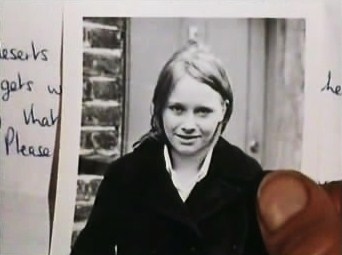

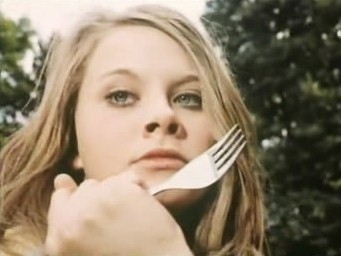


'Baby Love' centres around the familiar plot device of a stranger who enters a supposedly perfect household and shags (or is shagged by) everyone, subsequently exposing how damn dysfunctional they all are behind the smiles and soft focus. Lucy is a fifteen year old strumpet in training who is suddenly orphaned when her sluttish mother (Diana Dors) kills herself. Mum's last wish was that Lucy go to live with Keith Barron, one of her few old flames to have actually done well for himself. Lucy's arrival throws the house into turmoil, not least because she has been trained to exploit her sexuality at every opportunity, and spends most of her time flirting, walking around in her bra and letting seedy strangers feel her up at the pictures. After a while, however, Lucy begins to long to be part of the family, only to find that the family rather like her as she is - a sex object that they can project their hetero and homo sexual fantasies onto.
'Baby Love' simply wouldn't get made today, if only for the fact that frequently nude star Linda Hayden was only fifteen years old at the time of filming. This role propelled her into a career in which she almost exclusively played, for want of a better term, jailbait. In the various retrospective interviews I've seen with her she seems remarkably well-adjusted and good humoured about her ten years as a baby faced slut but, as she went out with Robin Askwith for a number of years, her critical faculties may be slightly impaired.
Some interesting guest stars in this, by the way - the aforementioned Diana Dors, right on the cusp of turning from pneumatic blonde bombshell to frowsy Earth Mother, and, in a small but sleazy role, dirty old Dick Emery.
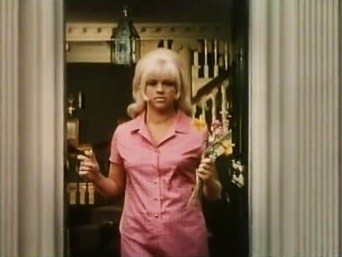
The ghost of Diana Dors.

'Ooh, you are awful', etc.
Bloody Hell [ 09-Jul-15 12:00am ]

What do these randomly selected band of Dickensian grotesques and cheeky urchins know about blood? Nothing. One bloke in a bowler hat even thinks that you can keep it for up to a year! Surely everyone knows it only lasts three weeks, which is why it is used immediately, and why the NHS needs so much of it. So, do as the gingerbread man made flesh says: ring the Blood Transfusion Service and GIVE BLOODY BLOOD.
F*** Me, It's Freddie! [ 04-Jul-15 12:00am ]


FMIF as Harry Field's Dad in 'Who Killed Harry Field?', a 1991 episode of 'Inspector Morse'. If you're wondering who did kill Harry Field, you'll have to watch the show, but, believe me, he definitely had it coming. Freddie gives a great performance, by the way, but then that's Freddie's stock in trade, isn't it? He's a great hero of mine, and it feels good to be paying tribute to him again.
Lifeforce [ 03-Jul-15 12:00am ]




'Lifeforce' is a mostly enjoyable adaptation of Colin Wilson's classic novel 'Space Vampires'. In it, a space shuttle mission is interrupted by the discovery of a huge, seemingly abandoned space craft of alien origin. When the crew board the hulk, they discover hundreds of dead space bats and three naked humanoids in a state of suspended animation. Their genitals are thoughtfully obscured but the sole female (Mathilda May) is very beautiful indeed and has perfect breasts, and we are allowed full sight of these, which is a fatal mistake as they become pretty much all we can see and, when they disappear about forty five minutes in, all we can think about is when we will see them again. Indeed, if I close my eyes I can see them now *closes eyes*

As it goes on, the film becomes less interesting and slightly chaotic, especially in the semi-hysterical finale in which vampirism has infected London and is driving people to barbaric acts of public unrest, and our uninspiring American hero (Steve Railsback) has to strip off and kiss the sexy naked vampire lady a lot in order purely to get her into a position where he can stab her with a special anti gorgeous bloodsucker sword, killing her, saving the world, but sacrificing himself. Good, the man's an idiot.
There are some excellent actors in the cast (Jerome Willis, Frank Finlay, Patrick Stewart, the superb Aubrey Morris), although Peter Firth is miscast as a tough SAS officer. There was also clearly some money spent on the production, and the special effects are generally very good if rather derivative of both 'Alien' and 'Raiders Of The Lost Ark'. There's even a promising plot line about the vampires having visited Earth on a cyclical basis for centuries but this doesn't really develop into anything interesting. Ultimately, however, all of those positive points are totally irrelevant in the scheme of things: this film is all about the ancient space vampire's stupendously attractive chest and the rest, a mysterious celestial body well worth getting bitten on the neck for.
Thinking about it, perhaps not the best film to come back with. I don't want you thinking I've had some sort of breakdown and am now obsessed with knockers, especially as a couple of next week's posts are about Linda Hayden.
From Just This Side Of Midnight [ 02-Jul-15 12:00am ]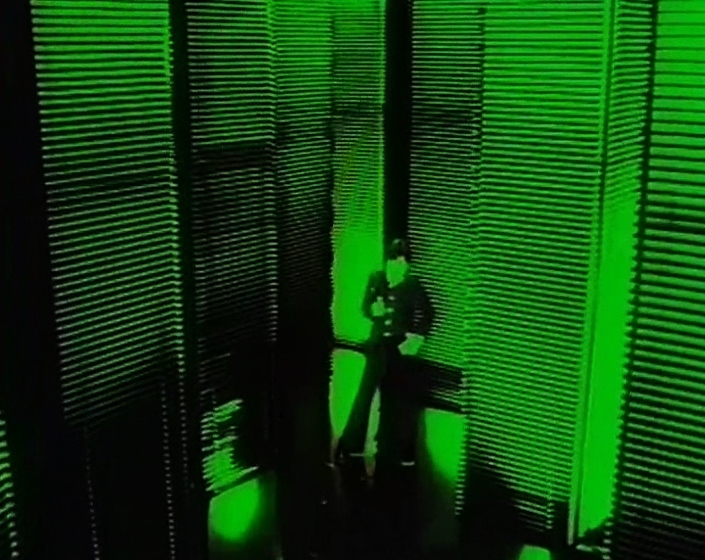
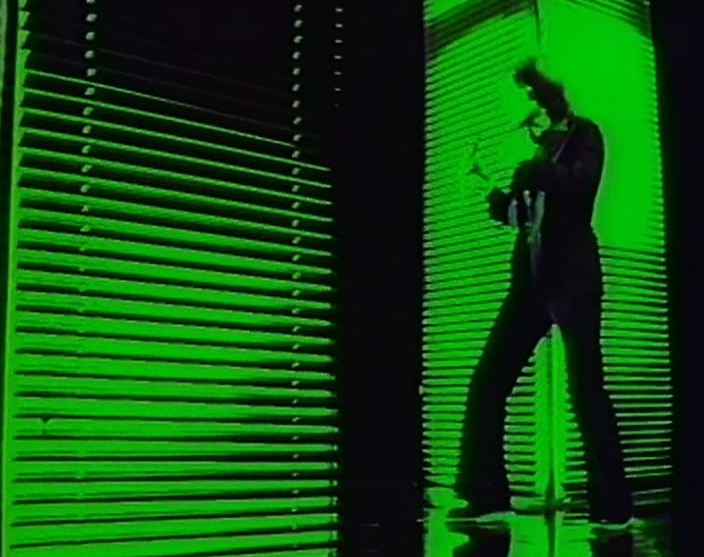

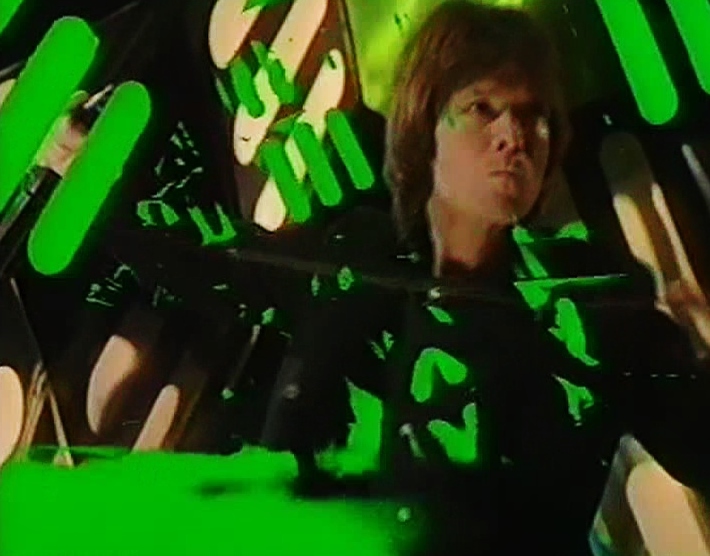

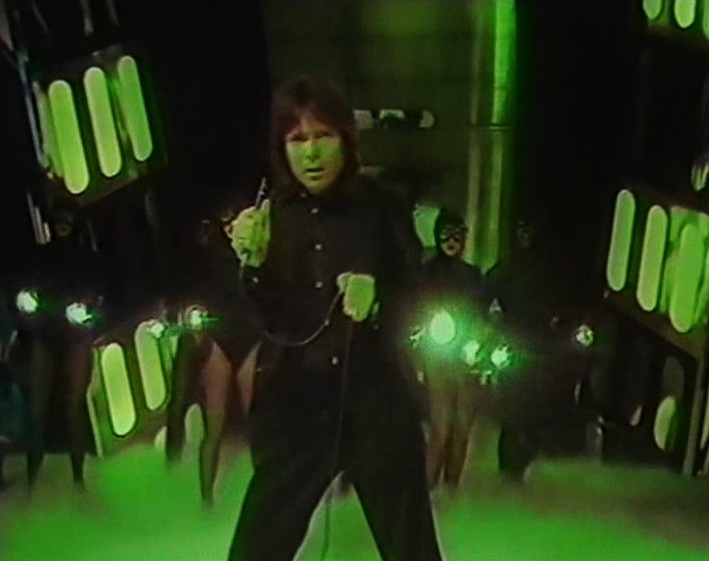
I don't know whether recent allegations about Cliff Richard are true. My only response is that it wouldn't surprise me, not because I have reason to particularly suspect him but because, in a world where Rolf Harris has been unmasked as a serial sex offender, I now lack the capacity to be shocked by further revelations. Anyway, Cliff fascinates me, and always has done, so I thought I'd look at some of his occasionally very odd oeuvre, today arriving in 1979, already twenty one years into his seemingly endless career.
Here, Cliff is searching for a green light. He's been looking for it all night. It's one of his sleaziest records, ably complemented here by the addition of Hot Gossip in this performance from a 1979 episode of 'The Kenny Everett Video Show'.
Cliff appears to be lost in a sensuous reverie but, ever the innovator, has clearly worked closely with choreographer Arlene Phillips to invent dogging. The torch wielding, goggle wearing, balaclava clad dancers bring an additional sinister note to the balefully lit proceedings. Cliff, clad all in black, is both victim and voyeur. He's found half a dozen green lights tonight, and, one way or another, he is going to get fucked.
It's good to be back.
I Had No Luck With Her [ 02-Jul-15 12:00am ]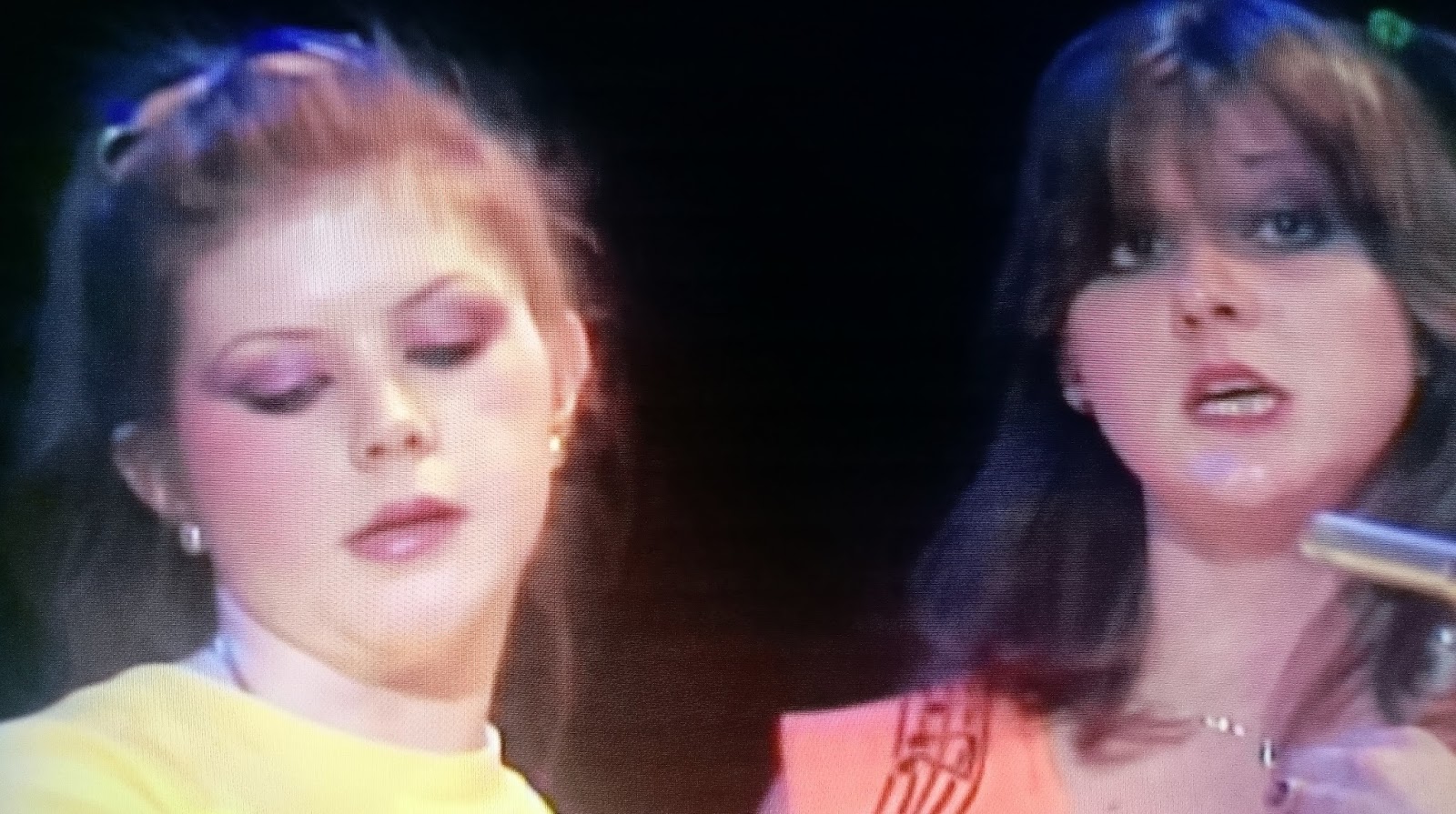
To kick off, here's a screenshot from a recently repeated episode of 'Top of The Pops' originally broadcast in 1980. It features the backing singers for a performance of Jona Lewie's quirky electro pop hit 'You'll Always Find Me In The Kitchen At Parties'.
Left hand lady is the much missed Kirsty MacColl, of course, but I have been unable to identify her co-worker. This task has been made harder by the fact that neither of them actually sang on the record, they were just in the vicinity when needed for the telly. They really remind me of the girls I used to like as a young man: attractive, feisty, not interested.
The British Esperantist [ 29-Jun-15 9:00pm ]
This is Issue 6 of The British Esperantist, the 'mix tape of books' that I have been working on since I left The Island a year ago. It's been pretty successful and, now I have returned, I would like to suggest that you purchase a copy if you can as it is not only very entertaining, it is also informative and really cheap. This issue's contents include: Hawkwind; Ben Weber, International Ventriloquist; William Blake's horoscope; trouser trends and lots, lots more.
More details here --
The British Esperantist 6
Don't linger, though, they generally aren't around for very long. Thank you for your attention.
i b i k e l o n d o n [ 20-Jul-15 8:30am ]
Why there's more to successful cycle paths than just building cycle paths [ 20-Jul-15 8:30am ]Wherever you are in the UK, you're never too far from a so-called "recreational bike path"; a family-friendly cycle route separated from the roads and often built on converted railway lines. Thanks largely to the work of the charity Sustrans these routes criss-cross the country. Some are wildly popular, both with long-distance touring cyclists as well as with families out for a ride and a day out by bicycle.
In previous discussions cycling friends of mine have denigrated these paths, describing them as "choked", "slow" and in one instance "stuffed with nodders on bike-shaped-objects." But I take a different view. The Mums and Dad you find hitting these trails in the school holidays might not ride the best bikes, or even self-define as "cyclists", but when it comes to rehabilitating the bicycle with the British public every journey counts.
In order to encourage adults to start cycling again (often for the first time since their teens) we need to make the experience as simple as possible. What's more, you shouldn't have to make a large up-front investment before deciding you'd like to try riding a bike once more. And that's where I think we are going wrong with our recreational cycle paths here in the UK. It turns out there is more to building successful cycle paths than just building cycle paths.
Fun in the sun on the Venice Beach bike track, Los Angeles.
On a recent trip to Los Angeles I was astonished to find that there - in the very heart of the world's most car-sick city - was a resoundingly popular recreational bike path. Running along the length of Venice Beach, the track itself was smooth, wide and separated from pedestrians. It passed Venice pier, Muscle Beach and other interesting spots and on the Friday afternoon I visited it was packed with people of all ages cruising up and down on bikes. Roller skaters, cycling ice cream salesmen and shady palm trees helped to lend a festive air. We turned off the path and rode for a few blocks away from the beach to see if the whole district was a cycling nirvana, but found ourselves alone. The people on bikes were stuck resolutely to cycling up and down on their safe cycle path. I watched the riders, and started to think; what made this path such a success?

A few years ago I was lucky enough to cycle in Taiwan (check out this ride from the capital, Taipei) In the city of Taichung the local government have converted a disused railway to create a cycling route which stretches for a number of miles along the river and in to the country. There I saw whole families (some on only one bike!) out enjoying themselves for the day on hired bicycles. There were tandems, and cargo bikes and bikes with baby seats. There were electric pedal-assist bikes and bikes with sound systems and bikes which looked like small family cars. The trails were packed with riders, stopping off at small track-side cafes for drinks and snacks or hiring another bike when they got bored with the other at one of the many hire shops. They even had ride-in toilets so you didn't have to worry if you'd not brought a bike lock with you! It turns out that the same amenities in Taiwan which make this path work are the same amenities you find in Los Angeles, and it's what we are lacking on our British paths.
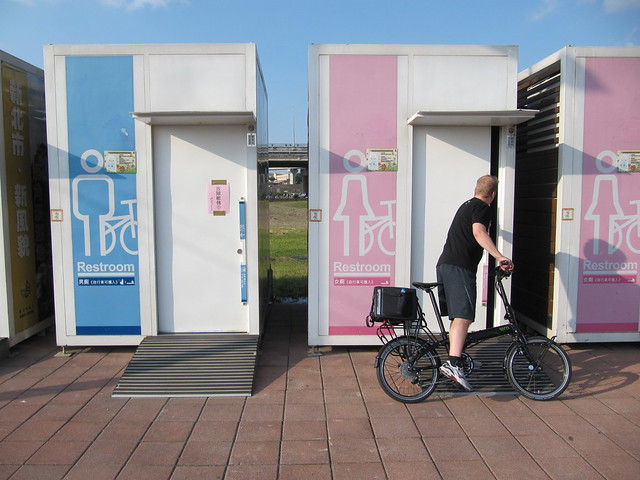 Ride-in toilets for security conscious cyclists who don't have a lock.
In Los Angeles all of the cycle hire stalls were run by the same business, meaning bikes could be dropped off at any point along the route. If people got tired of riding they could simply drop off the bike without having to ride back, or they could do a one way journey with the wind behind them without having to contemplate a strenuous return trip. The ice cream salesmen on bikes added a further level of amenity, whilst well-observed and safe cycle parking clusters were positioned at interesting points along the route meaning people could lock up their bikes with confidence.
 Small businesses selling food, drink and hiring out bicycles line the Taichung bike path.
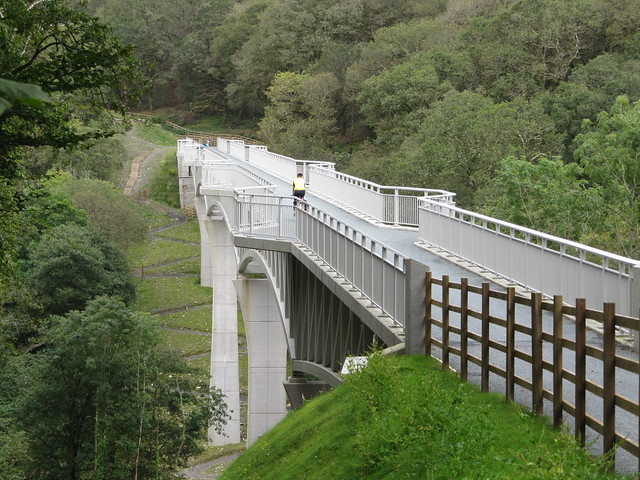 Gem Bridge, near Tavistock. Beautiful, and somewhat empty of cyclists.
In Taiwan, the bike hire was cheap and plentiful and once again right on the path itself so that the ride started in pleasure straight way. On a recent trip to Devon I cycled on the impressive Gem Bridge, a beautiful structure which fords a deep valley and connects two newly-opened sections of converted railway line. But in order to access the path from the nearest town, Tavistock, was a torturous route crossing main roads and down little alleyways. It may not have the best eco-credentials, but people need to have "park and play" access to these routes in order for them to be a success.
Of course, these successful cycle routes had all of the usual things you'd expect, such as smooth surfaces, good sign posting, and safe bike parking. But there's a role for business - such as bike hire and small cafes - in making better recreational cycle routes that we don't utilise enough in the UK. It helps to create jobs, keep money in the local economy and enable rehabilitating bicycle journeys for people who wouldn't usually ride and need their bike served up on a plate. What's not to like?
Share |
In previous discussions cycling friends of mine have denigrated these paths, describing them as "choked", "slow" and in one instance "stuffed with nodders on bike-shaped-objects." But I take a different view. The Mums and Dad you find hitting these trails in the school holidays might not ride the best bikes, or even self-define as "cyclists", but when it comes to rehabilitating the bicycle with the British public every journey counts.
In order to encourage adults to start cycling again (often for the first time since their teens) we need to make the experience as simple as possible. What's more, you shouldn't have to make a large up-front investment before deciding you'd like to try riding a bike once more. And that's where I think we are going wrong with our recreational cycle paths here in the UK. It turns out there is more to building successful cycle paths than just building cycle paths.
Fun in the sun on the Venice Beach bike track, Los Angeles.
On a recent trip to Los Angeles I was astonished to find that there - in the very heart of the world's most car-sick city - was a resoundingly popular recreational bike path. Running along the length of Venice Beach, the track itself was smooth, wide and separated from pedestrians. It passed Venice pier, Muscle Beach and other interesting spots and on the Friday afternoon I visited it was packed with people of all ages cruising up and down on bikes. Roller skaters, cycling ice cream salesmen and shady palm trees helped to lend a festive air. We turned off the path and rode for a few blocks away from the beach to see if the whole district was a cycling nirvana, but found ourselves alone. The people on bikes were stuck resolutely to cycling up and down on their safe cycle path. I watched the riders, and started to think; what made this path such a success?
A few years ago I was lucky enough to cycle in Taiwan (check out this ride from the capital, Taipei) In the city of Taichung the local government have converted a disused railway to create a cycling route which stretches for a number of miles along the river and in to the country. There I saw whole families (some on only one bike!) out enjoying themselves for the day on hired bicycles. There were tandems, and cargo bikes and bikes with baby seats. There were electric pedal-assist bikes and bikes with sound systems and bikes which looked like small family cars. The trails were packed with riders, stopping off at small track-side cafes for drinks and snacks or hiring another bike when they got bored with the other at one of the many hire shops. They even had ride-in toilets so you didn't have to worry if you'd not brought a bike lock with you! It turns out that the same amenities in Taiwan which make this path work are the same amenities you find in Los Angeles, and it's what we are lacking on our British paths.
Ride-in toilets for security conscious cyclists who don't have a lock. In Los Angeles all of the cycle hire stalls were run by the same business, meaning bikes could be dropped off at any point along the route. If people got tired of riding they could simply drop off the bike without having to ride back, or they could do a one way journey with the wind behind them without having to contemplate a strenuous return trip. The ice cream salesmen on bikes added a further level of amenity, whilst well-observed and safe cycle parking clusters were positioned at interesting points along the route meaning people could lock up their bikes with confidence.
Small businesses selling food, drink and hiring out bicycles line the Taichung bike path. Gem Bridge, near Tavistock. Beautiful, and somewhat empty of cyclists. In Taiwan, the bike hire was cheap and plentiful and once again right on the path itself so that the ride started in pleasure straight way. On a recent trip to Devon I cycled on the impressive Gem Bridge, a beautiful structure which fords a deep valley and connects two newly-opened sections of converted railway line. But in order to access the path from the nearest town, Tavistock, was a torturous route crossing main roads and down little alleyways. It may not have the best eco-credentials, but people need to have "park and play" access to these routes in order for them to be a success.
Of course, these successful cycle routes had all of the usual things you'd expect, such as smooth surfaces, good sign posting, and safe bike parking. But there's a role for business - such as bike hire and small cafes - in making better recreational cycle routes that we don't utilise enough in the UK. It helps to create jobs, keep money in the local economy and enable rehabilitating bicycle journeys for people who wouldn't usually ride and need their bike served up on a plate. What's not to like?
Share |
rohorn [ 20-Jul-15 7:57am ]
My idea of fun... [ 20-Jul-15 7:57am ]A big part of the plan for the next racer was to make a large displacement four stroke twin based on an engine design I've been working on (Both 2D on paper and 3D on a flowbench) for about a year now. Then, while standing out in the 100 degree heat while cornerworking at a recent MRA race, a very radical two stroke concept crossed my mind, man. I can develop it from an existing engine, while developing a new race bike around the existing engine. So I got another Kawasaki 500 engine.

More power with potential for a lot more power, a lot less weight (Goal: 265 lbs), a much narrower rider position (Much more aerodynamic and safer as well; the rider's squishy and crunchable bits go inboard the frame's perimeter this time), and loads more traction sound like my idea of fun. If all goes well, 2016 will see the current racer back on the track and construction started on the next racer. No idea what year it will be finished.
By the way - ever compare a four stroke street bike wiring harness to two stroke race bike wiring harness? Wow!
Oh, yes - the four stroke engine design can wait for another year. Or decade. It is still pretty neat...
19-Jul-15

More power with potential for a lot more power, a lot less weight (Goal: 265 lbs), a much narrower rider position (Much more aerodynamic and safer as well; the rider's squishy and crunchable bits go inboard the frame's perimeter this time), and loads more traction sound like my idea of fun. If all goes well, 2016 will see the current racer back on the track and construction started on the next racer. No idea what year it will be finished.
By the way - ever compare a four stroke street bike wiring harness to two stroke race bike wiring harness? Wow!
Oh, yes - the four stroke engine design can wait for another year. Or decade. It is still pretty neat...
...and what will be left of them? [ 19-Jul-15 11:28pm ]
# [ 19-Jul-15 11:28pm ] # [ 14-Jul-15 6:25pm ]Right then, I am going to be sticking my oar in re Utopia Then and Now at AYA, and predictably enough using it partially as an opportunity to talk about neoliberalism and Film. Again. Starting with the 70's., of course. #
09-Jul-15
i b i k e l o n d o n [ 9-Jul-15 8:00am ]
Now that the Tour de France has left, what else can Utrecht teach us about cycling? [ 09-Jul-15 8:00am ]I'm on a summer trip, making a tour of Le Tour following the riders around Antwerp, Namur, and even riding with the peloton in a race car. It's been a brilliant journey and now I am on my last stage, returning to the scene of the Grand Depart, Utrecht in the Netherlands, to see what this cycling city looks like once the pro riders have passed by.
I've partnered with Ibis Hotels for this trip and all of the staff have been so friendly and helpful. Utrecht was the same; "Of course you can ride today", said the cheery receptionist "It takes more than a bit of rain to stop the Netherlands from rolling!" I looked out the window at the rain blowing in sideways and decided to fortify myself with the fantastic breakfast before I set off, grabbing the keys to a bicycle rented directly from the hotel. The Ibis in Utrecht is just a five minute ride in to the city centre along a pretty canal lined by windmills and old town houses - not a bad start to my day, despite the weather.
The clouds darkened and rain intensified, but this didn't seem to deter Dutch riders who cycled on regardless. Rain coats were pulled out of bags, hats were donned and umbrellas were lifted, making it immediately apparent I was in a totally different cycling situation to the UK. You could ride down the Tottenham Court Road in London at peak time in the rain whilst holding a big umbrella if you wanted to, of course, but I wouldn't recommend it. Here, things are different.
Hints that the Tour de France had recently been this way were everywhere. Shop windows were decorated with bicycles, flags were hung over every street and a statue of the city's most famous daughter - Miffy the bunny - had been put up in the tourism office. Naturally, she was riding her bicycle. The facade of the popular cafe Winkel van Sinkel was decked out in yellow jerseys, too.
But even though the pro riders had left, there's still a festive cycling feel to Utrecht that stems from the many thousands of people on bikes who cycle here every day. I saw small children being carried on their parent's bikes, middle-sized children riding alongside on their own, and teenagers enjoying their mobility and being totally independent.
I have no doubt that all that freedom stems directly from the excellent cycling infrastructure which you'll find all over the Netherlands, but what I was particularly impressed by was how the Dutch don't sit on their hands, but are always seeking to improve things. I went for coffee with Mark Wagenbuur from the brilliant Bicycle Dutch blog. He took me out to a junction on the edge of the city, smiling proudly all the way, that we had last visited together in 2012. Back then, he had described it to me as 'the most dangerous junction in Utrecht' and I was inclined to agree. Cyclists were forced to merge with a lane of fast-moving traffic turning right, and to ride together alongside a metal fence for about 100metres. Just three years later and the situation has entirely changed. Engineers have 'found' the space to continue the cycle track safely through the junction, and the right turning traffic simply waits in a lane of the rest of the road. Of course, it's not a question of 'finding' space at all but simply a choice of what to do with the space that you have and who to allocate it to.
The same junction, above in 2012, as it appears today, below in 2015. Notice how space has been 'found' for the new and safer cycle track without taking the pedestrian's pavement away.
I had been impressed by the new junction, but it was nothing compared to the building project which is nearing completion in the city centre. When I first visited Utrecht the space in this photo was part of a multi-lane city ring road built in the 1970s. All it did was create traffic congestion and bring more cars in to the city centre, where there was no room for them. So the city planners decided to push the ring road further out of the city - to loosen the city's belt, if you like - to create more space for people.
The move has allowed for the total redevelopment of the train station, created space for a new shopping area and offices and very soon the dirt that you see in the photo will be removed and replaced with water, re-connecting two sections of the city's ancient canals.
At the new station the city's cycle racks are being refreshed and new bicycle parking areas are being built. On Korte Jansstraat in the old town, a road which used to be clogged with two lanes of car parking has been re-surfaced in red bricks and the parking spaces moved away. Rather than harming the businesses there, the streets were busy with shoppers and restaurants had laid out new tables and chairs.
This is my third trip to Utrecht and each visit has left me with the same impression; that this is a city rapidly growing, improving itself, identifying the planning mistakes of the past and quietly getting on with rectifying them. It's lively and packed with young people and University students. Better still, it is easily connected to the rest of the Netherlands and Schipol airport by the fantastic national rail network. Utrecht proved with the Tour de France that they know how to throw a good bike party, but if the world's cycling cities were in a race Utrecht would in the break away every day. Why not make a visit to see for yourself?
Share
Rouge's Foam [ 8-Jul-15 9:17pm ]
System Focus: How A Traditional Rhythm Is Shaping Today's Most Exciting New Music [ 08-Jul-15 9:17pm ]Exclusivo by Blaze KiddJune's System Focus (click here to read) was on a loose network of producers, most of whom draw on the tresillo rhythm found in reggaeton and other musics of the African diaspora, often using grime and Spanish language too. Labels and artists featured include Blaze Kidd, Uli-K, PALMISTRY, Kami Xlo, Lexxi, Ana Caprix, EndgamE, Golden Mist Records, BLASTAH, Dinamarca, STAYCORE, Lil Tantrum, Sister, Tove Agelii, Mapalma, mobilegirl, Imaabs, ZUTZUT, Extasis Records, Morten_HD, Spaceseeds.A simple rhythm bounces back and forth over the once vast Atlantic ocean, ever faster. It begins in Sub-Saharan Africa, but Europeans brutally pull it up by the roots—slaves bring it with them on a long journey to the Caribbean. By the nineteenth century it has become the defining element in the Afro-Cuban dance habanera, which finds its way to New Orleans where it helps form ragtime, then to South America, where it contributes to tango, and to Europe, where it becomes the most famous section of one of the era's most popular operas, Carmen. It also spreads across the Caribbean, Latin America and Africa and back again, and its descendents meet and collaborate, now using recordings and drum machines. Soon it doesn't even need to touch the water. Ricocheting off satellites and barreling down cables, it permeates the information sphere, with space and place just an interesting footnote on a Soundcloud profile...
EndgameLondon club music (at home and abroad) has recently come to resonate in sympathy with sounds from Mexico down. And it's not just tresillo and reggaeton rhythms that are being drawn on, but the Spanish language too. South London has both a significant population of Latin American migrants and a network of producers who have been on Soundcloud for years and are very hungry for international sounds. They got together on Exclusivo, the debut mixtape of an MC of Ecuadorian heritage, Blaze Kidd, and recently, as Aimee Cliff reported for The FADER, the video for "Sniper Redux."...Tresillo is woven throughout Palmistry's delicate and deceptively carefree fabrics. In tracks like "DROPDrip" (on his Ascención mixtape), "Protector SE5," the single "Catch" or his latest, "Memory Taffeta," it'll ride on the back of simple synths, complementing his fragile yet controlled and earnest voice and forming songs of need and tenderness...
Palmistry One track on the Endgame EP was a remix by Dinamarca, and in turn, Endgame provided one for Dinamarca's EP, No Hay Break. "Dinamarca" is Spanish for "Denmark," but the artist Dinamarca is based in Stockholm, and his intense and attitude-filled tracks typically have a tresillo bounce, however it's distributed through the drum machine. Some of them, when the tempo is upped, even feel like they're morphing into footwork. Dinamarca is the head of the Staycore label, who just put out a brill free collection of tracks titled Summer Jams 2K15—hopefully a sign of things to come...Lil Tantrum is just one of the many areas of overlap between Staycore and Sister, a female-identifying-only club collective founded by the formidable Swedish artist, Tové Agelii. Agelii's own productions are gorgeously gothic and suffused with the human vox the way light shines into a cathedral. And Sister's mixes (again, all female-identifying, using productions that all involve women) are both peppered with a tresillo feel and seriously something...'Icesheets' by MobilegirlHailing from Santiago de Chile and one of the weirder and more futuristic exponents of grimy reggaeton, Imaabs has a great EP out on noted Mexico City underground-club label NAAFI. Another standout is Zutzut's "Yo Te Voa A Dar" on account of it delectable buzzing synth and proper passionate MC. Zutzut, from Monterray, has a truly lovely Soundcloud collection (try the digital flutes of "Otra Vez Llegue") and a self-titled dembow EP with some vogue inflections out for another Mexican label, Extasis, who have a bit of a net aesthetic and, because all is connected, have released cute speedster Xyloid too. Extasis also explored some pretty bizarre experimental grime with Norwegian producer Morten_HD and Mexico's Spaceseeds, and they too have a summer compilation (from last year). And, aha, it featured a Blaze Kidd track with a reggaeton production by Kamixlo and Uli-K. System Focus: What Does "Experimental Music" Even Mean Anymore? [ 08-Jul-15 9:00pm ]What is experimental music, and what does it want from us? As a term and as a field of music-making, it's widely accepted but fits uncomfortably and is never well defined. "Experimental music" was a phrase used in the mid-twentieth-century to describe a range of ultramodernist compositional techniques as being a form of quasi-scientific research. John Cage was careful to point out that the term should apply to music "the outcome of which is not known"—that is, music with chance elements or improvisation built into it—since a composer ought to have completed all the necessary experiments before the piece was finished. And yet in everyday parlance, especially in popular music, "experimental" music has come to refer to music that seems radically unconventional, pretty weird, as if to experiment with the very building blocks of musical beauty...
POPULOUS by Brood Ma [Experimental music is] involved with the building blocks that musical languages are made of. When you put it like this, it's odd to think that people find experimental music "difficult"—it's a radically simpler experience, assuming much less semiotically. And that's where experimental music's appeal lies. It reconnects you with the fundamental life of sound and music, and entices you to search for meaning in a language you cannot yet speak. You ask yourself, "What sort of subjectivity would make art like this? What does it perceive that I don't (or don't yet)?"...DARK WEB by Giant Claw DARK WEB is clearly and curiously unstuck: juddering, dissonant, stop-start, crazed, obsessive. It's like a robot failing at human entertainment, a rejected intermediate form generated by whatever algorithmic process then went on to produce the less uncanny Far Side Virtual, which resonated more comfortably with human needs and desires. If human music were a CAPTCHA, DARK WEB would fail it...Most striking about [Epitaph] is its empty space—enormous architectures bracketed and magnetized by harsh syncopation. The textures are modular, moving from sound object to sound object and back again; Epitaph divides up its musical world into discrete, almost warring factions... U.S.M! by DJWWWW DJWWWW's album U.S.M! is one of this year's most absorbing listens, restlessly assembling horrific and beguiling bouquets of musical sensations (many of which will be familiar to followers of underground music)... DJWWWW is extrapolating and caricaturing the myriad experiences of a day in digital, asking us how and why the combinations work (or not)...[Assault Suits's] own release Statue Cathalogue kickstarted the [Flamebait] label last year with its sinuous yet imposing metallic sculptures. The subsequent album by Tokyo producer Hanali is highly complex and predominantly percussive, roving through many layers of rhythm until it seems to coalesce in the bizarro club cut "10 Years or 100 Years." 10.9†01;9 by modular synth artist GOP (Geniuses Of Place) is equally rich: sizzling and glitching its way through the phone networks only to dissolve and digest what it finds... Aftertouches by Kara-Lis Coverdale Aftertouches weaves in all kinds of colors, many of them acoustic instruments, others eerily hinting at acoustic instruments, and others carrying all the richness of acoustic instruments yet not at all recognizable as such. She manages to do the exact same with the moods of the pieces: some are human, some eerily hint at the human, and others have all the depth of human moods but are as yet unfamiliar as such. Coverdale recently teamed up with LXV for Sirens, where their different palettes of techniques complement one another. They seem to populate each others' landscapes with the distant faces, dwellings and systems of unknown hi-tech cultures, who harvest the elements of their environment with a peace and concord we don't yet understand... Fragments of a Scene (text for Creamcake) [ 08-Jul-15 8:32pm ] Fragments of a Scene website, designed by Jon Lucas
Amazing Berlin clubnight institution Creamcake asked me to write a text to go with an evening they were putting on in April, both to feature Brood Ma, Forever Traxx, Claude Speeed, Club Cacao, DYNOOO, Punishment of Luxury, Hanne Lippard and Britney Lopez. Click here to see the text in its originally obfuscated context with music (scroll down for a PDF), or read below.
Music is space. Music goes high and low, shallow and deep, left and right, in and out,
round and round. It goes here and there at the same time, underneath and over, it
faces in the same and in the opposite direction. It's among and alongside and between
things, it's behind and in front of things, it goes away from and towards things, it's
beyond things and quite within them. Its spatial changes map to bodies when it makes
them move, and in turn music moves according to an embodied imagination. Music is
more than sounds - at the very least it is sounds in spaces. More than that, music is
multimedia, it always means more than just sounds, it means sights, it means
proprioception, it means people. Music is a scene.
Fortunately, there are two senses in that word. A scene is a discrete moment in
theatre, a sequence on-stage with actors, script, speech, costume, props, lights,
background, gesture. Scenes are where things happen, framed both by the elevated
ground, the proscenium and by time. In a way, an entire play is a scene of scenes, and
forms a part of the wider scenes of life. This is where the other sense of the word
scene comes in. It's a term - one loaded with cultural capital, mostly that gained by
disavowing it - for musicians, fans, places, and performances (and speech, costume,
props, lights, background, gesture)clustered together, almost as if in a discrete
moment. The scene in New York in the 1960s: Andy Warhol, the Velvet Underground,
Nico and friends, one of many interconnected scenes at the time. Sometimes there's
only one scene, the scene, something to be in touch with - to be 'scene' is to be a part
of it. But the term can be used without that fancy fluff. It's usefulness comes from the
multimedia nature it inherits from theatre - a scene is never just sounds, never even
just musicians, but a network of artists in multiple mediums 'high' and 'low,' and even in
mediums that are not yet known as Art.
And scenes are difficult to piece together nowadays, especially as discrete moments
framed, like the theatre is, by certain locations in space and time. Berlin, London and
New York are still pretty good at that. But the internet has created social and aesthetic
connections that go beyond the more traditional conceptions of space and time. Don't
believe the rhetoric though: the internet has not destroyed time or space, much less
materiality. The internet is still 'in real life / IRL,' all art is still 'physical.' The aesthetics
of art and the internet, however, has been fascinated with the dilemma that it might not
be - whether that's a good thing (ushering a transcendent Utopia) or a bad thing (an
anxiety-inducing accumulation of blasphemous desires and accesses). At its best,
these two feelings occur at the same time.
What you have at Hau 2 on the 16th of April is Fragments of a Scene - in many
senses of a scene (and of fragments). The artists you will see make up something of a
scene, albeit partially: They are related in music, multimedia, social networks,
geography (to some extent), and are ultimately related by the fact that they are all
appearing tonight. They are all engaging with the modern age, which predominantly
means the digital world and its forms of expression. Yet while many artists in this vein
tend towards representation, figuration, even pastiche, these artists tend towards
abstraction and affect. Their perspective is less one of a detailed fantasy universe than
an onslaught of shapes and sensations boiling within a matrix of strong yet
indeterminate feelings.
Take Brood Ma. While there are occasional outlines of samples in James B. Stringer's
work, or the nuclear shadow of styles like grime (he's from London), at the centre is a
roiling mass of sonic shards, glittering and roaring like scales or teeth. Named after the
matriarchal figure in a culture of humanoid women with large scarabs for heads in
China Miéville's weird fiction Perdido Street Station, there is something deeply
insectoid about Brood Ma's modus operandi: biting, chewing, proliferating, attacking,
defending, all under a hard multipartite carapace filled with even weirder, visceral
matter beneath. Brood Ma works at the constituent level of sound itself, its very grains,
whipping digital codes into vortices as if they were pools of water. He distorts sounds
the way jpeg compression distorts Nature, and depixellates them, datamoshing them
until insides and outsides become part of a broader, more disorienting experience of
space.
This comes as no surprise, because James B. Stringer is part of a network of visually
trained multimedia artists coalesced around the Quantum Natives label, all long
interested in digital techniques of both sight and sound. One of the main nodes is
Stringer's friend Clifford Sage, an incredibly prolific sound-producer himself, with an
industrial synth style. At Hau 2, Sage will be providing the visuals to Stringer's
performance, both inviting us to draw some continuity across their respective fragments
of the abstracted scene.
Like many of Fragments of a Scene's artists, Forever Traxx is one of those producers
who instantly stokes curiosity with their mysterious and oblique Soundcloud profile.
Anonymous and not linking to any formal releases, digital or analogue, the mystery of
Forever Traxx is exponentially intensified by the music, which has been uploaded track
by track over the past four years. It's not just a surreal and somehow spiritual collage of
samples tied together by curiously mountainous passions (like the music of Elysia
Crampton, Chino Amobi and Total Freedom - big inspirations in the Soundcloud
collage scene), but the recurring idées fixe: lithe upper-frequency electronic lines,
babies crying, horror effects and other moments of piercing panic, urgent battalions of
drums, edits of tracks that bring the pitch up slightly as if to highlight some inner quality
(structural coherence? cuteness? absurdity?). Visually, the recurring motif is a rubbery
yet golden stickman who, as the apparent star of a ClipArt set, appears in a series of
symbolic scenarios in the Souncloud account's thumbnails and avatars. What's going
through this little guy's solid gold head, that he's beset by rapturously violent music?
He's the modern internet-user, perhaps, living a life that is both bland and breathtakingly,
monstrously intense.
Claude Speeed has explored the complexity and onslaught of the modern mindset
both as a band and as a solo electronic artist. Hailing from Scotland, his band
American Men released a dazzling EP Cool World in 2010, its crystal vistas and fractal
rhythms seeming to usher in a new decade for post-rock. Since then, Speeed has been
exploring sounds far and wide, each new Soundcloud upload an unexpected turn, from
the tweaking trance textures of 'Ambien Rave' to the roving vox of 'Clearing' and the
wailing new-Dark-Age wake of 'V (Spirit Leaves the Body)', via walls and walls of
distortion. At Fragments of a Scene, Claude Speeed will be performing with four amps
in stereo, so expect sounds so rich and intense you can taste them.
Also taking up these alpine electronic textures and inchoate drama is Club Cacao.
Another Soundcloud mystery whose account artwork competes with the music for
beauty, Club Cacao launches off from contemporary production styles from dance and
hip hop, ending up with compelling tracks like 'Go Off,' with its perfect euphoric
liberation, or the darker 'Balaclava,' an industrially twisted bounce over which a voice is
squeezed out, becoming both hilarious and terrifying.
Due to its uncanny ability to fuse disparate elements into a whole that makes a sense
one does not yet understand, but that one appreciates as the insights of a cybernetic
consciousness, DYNOOO's These Flaws Are Mine to War With was one of last year's
most interesting releases. His work has always suggested to me an emerging
intelligence, either artificial or that of the technological post-human, engaging with its
own mechanical realities as well as the curiously organic world around it. Piecing
together rainforest, desert and arctic tundra with an almost military palette of harsh
sounds and leaving it all suspended and rolling in a bubbling tank like a specimen or an
embryo, DYNOOO's conclusions could not have been reached by yesterday's
humanity, and they're as disquieting as they are beautiful.
Not to be confused with the English post-punk band active in the late 1970s and early
1980s, Punishment of Luxury is a Soundcloud experimentalist in a similar vein to
Forever Traxx, Crampton, Amobi and others. PoL creates strange yet urgent new
atmospheres for pop fragments to breathe in, as if they've suddenly been transported
to other planets. The procedure often seems to cause them to spin erratically in situ,
like broken bots in a massively multiplayer online role-playing game. Try the bizarre
union of Nicki Minaj and the Walker Brothers in 'BASSBREAKUP,' the desperate
product placement of 'BENZ BENZ BENZ,' plagued by alien anxiety, or the way the
ear's finger runs down the length of the male voice in 'TLS Male Vocal Choir Edit,' and
it's rough like a large iron nail file.
Using her voice to beckon a broader understanding of human culture and expression,
Hanne Lippard is somewhere between a poet and a performance artist. A book of her
texts, Nuances of No, was released in 2013. Her phrases often begin or end in the
same way as she accumulates concerns and information in a deceptively random
manner. These parallel the tics of language online, like the telling non-truths of
Google's autocompletes, or the attention-hijacking of sidebar advertising, or the
piecemeal, provisional conclusions of status updates. She narrates the Web 2.0 stream
of attention, but her voice is also perennially human, always seeking to elevate itself
while remaining intimate.
As she puts it, performer Bella Hager was 'torn and raised in Berlin, had to survive the
90s as a teenager.' She focused on pop divas such as Jennifer Lopez, soon feeling a
rupture between the art of being a women in music videos and the art of being a
women on the very own stage. After many years of research in different scenes, social
contexts and with different representations of gender, Bella decided to reunite with
Jenny, Britney, Christina and the rest to resolve this absurd struggle. During the first
act of appearance in Fragments of a Scene her character 'Britney Lopez' will enter
Christina Aguilera's music video to dive into the world of female pop artists in the late
90s, and will then take them into the year 2015 where a new extroverted sexuality
(Bella refers to herself as 'twerself') has left the former virginal image of the diva
behind.
Perhaps the only fair thing to say that all of these artists have in common (apart from
their appearance at Fragments of a Scene), is that they don't quite fit into the normal
distributions of creativity into particular places. Even musically, it is not entirely fitting to
call any of them merely 'producers' or 'musicians,' or to expect their work in clubs or
physical albums. And much of the time, their work is too specific, and too conversant
with the languages of pop and everyday life to feel at home in a gallery or concert hall
either. Many of them have taken the poetics of the visual and used them in a sound-led
medium, perhaps then turning back to re-incorporate the eye, which does not close as
it passes over an online account or a stage. However, nonetheless, these artists have
now carved out a space, somewhere between art and sound and music as it was
understood last century, a way to explore differences within the cohering locus of the
specific, to maintain that fragile equilibrium between novelty and similarity. Isn't that
precisely what a scene should be?


