
 For his final project in Mechanical Engineering at the Danish Technical University, Israeli born Danish citizen Kuba Szankowski designed a velomobile based on the classic Leitra design. He worked closely on the project with Carl Georg Rasmussen of Leitra, who "at eighty years young still builds and maintains all the velomobiles, as well as most any other aspect of the business himself." Prior to earning his degree, Kuba had worked as a bicycle mechanic and as an advocate for bicycle transportation in Jerusalem, so he wanted to build on those experiences and create a design that would introduce human powered transportation to a wider audience.
He explains the idea behind his redesign of the Leitra:
"My main intent was to develop a bicycle fit for my mother (this is actually what I described in my exam, oddly enough)- a bicycle which cannot fall, with electrical assistance, which encapsulates the rider and protects by being visible and high above the ground. This, along with my own perspective of the ways with which the Leitra velomobile could be improved; these being the lack of ergonomic adjustability, its lack of customization for shared usage in a household and others brought me to my design.
I describe a bent aluminium chassis with a platform for a battery pack or other electrical components. The Leitra seat- a 900-gram fiber composite, originally designed by Carl G. by imprinting his bottom in the snow, was 3D scanned. The resulting file was used to develop the two seating positions, along with an adjustable crank mast.

Front view of seat upright and reclined
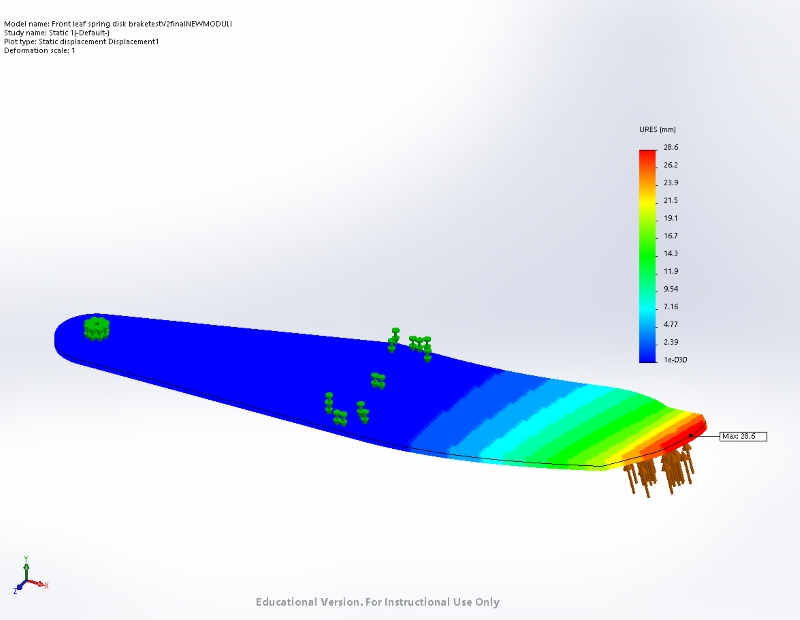
The vehicle is equipped with 24-inch wheels and a unique (to my knowledge) suspension system, which is a hybrid gas damper/ leaf spring. This is in comparison to the existing Leitra suspension, which is also unique (and field-tested!) double cantilever leaf spring, with about two cm displacement. What the existing suspension lacks is a dampening mechanism.

My analysis consisted mostly of Finite element modelling of the existing leaf spring and chassis. By having two models (the existing frame vs. the redesign), I was able to achieve what I called "independence from model discretisation". The viability of all this is of course subject for debate, and I welcome to share my findings with anyone interested.
In terms of this vehicle as a solution to the "blue ocean" problem, I envision three categories resulting; these are: the base tricycle, with no electrical assistance; a pedalec ("E-bike") class tricycle and an electrical vehicle capable of higher speeds (up to 45 km/h).
Kuba mentioned that he was interested to read the recent post by Karl Sparenberg of Windcheetah, whom he had the opportunity to meet, along with Mike Burrows, at the latest SPEZI festival. "I was happy to see a fellow engineer picking up the work of the masters and advancing it. I wish to find new audience for the Leitra, and bring these weird machines closer to my homeland and the world." Kuba will be presenting his design on October 30th at the 2015 Velomobile Seminar in Austria, so hopefully that will be the first step in making his design a reality. I am looking forward to seeing how it progresses.

(adsbygoogle = window.adsbygoogle || []).push({});
Subscribe to the email newsletter, and follow Bicycle Design on Facebook , Twitter , Pinterest , and Google + … and now on Instagram too!
I can hardly believe that it's been a full decade since I started this blog by posting one of my old marker renderings. Though I started with a few of my own sketches, what really kept me interested in blogging were the design submissions from others that I began to receive in those first few months. Over the past 10 years, readers have shared some great designs with the community here, so I want to take the opportunity to look back on this 10th anniversary of Bicycle Design and share a few of the top posts (Sunday was the actual anniversary, but close enough).
Because Bicycle Design was hosted on Blogger at bicycledesign.blogspot.com for the first 4 ½ years, very few posts prior to the February 2010 move are included in the Google Analytics data. As a result, this list heavily skewed toward the last 5 years, but with that caveat in mind, here are the top 25 Bicycle Design posts ranked by total pageviews:

1. The Smart ebike by Hussein Al-Attar


3. The design of SRAM Red 2012

4. Drymer: a Dutch electric assist trike

5. Mando Footloose: a chainless hybrid e-bike

6. Wooden bike by Yojiro Oshima


8. Is TJ Tollakson the Graeme Obree of triathlon?

9. Trimtab 3×3 recumbent trike

10. Urban Arrow- an electric assist bakfiets design


12. Rael road bike concept 2.0


14. Diesel/ Pinarello urban bike

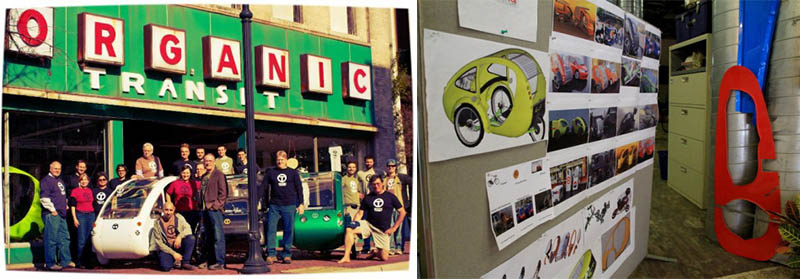

17. I must like harebrained ideas

18. Trek Sasquatch and Sand Crawler Cruisers
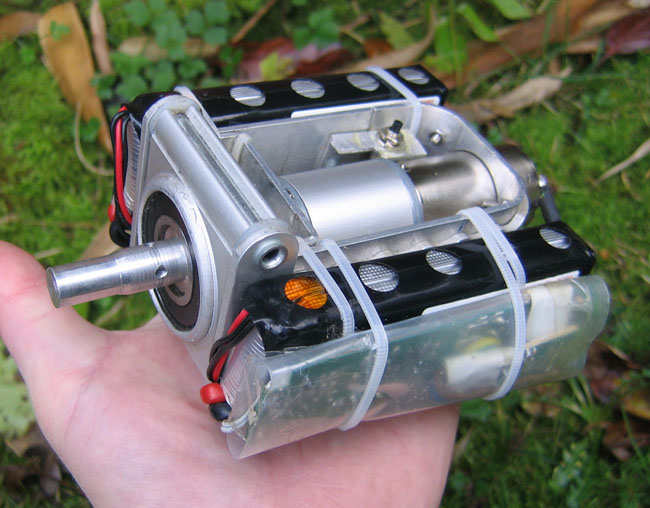
19. Fast Forward powered pedals


21. City Cycle- a pedal-powered pub


23. Forzer off-road handcycle by Marius Hjelmervik
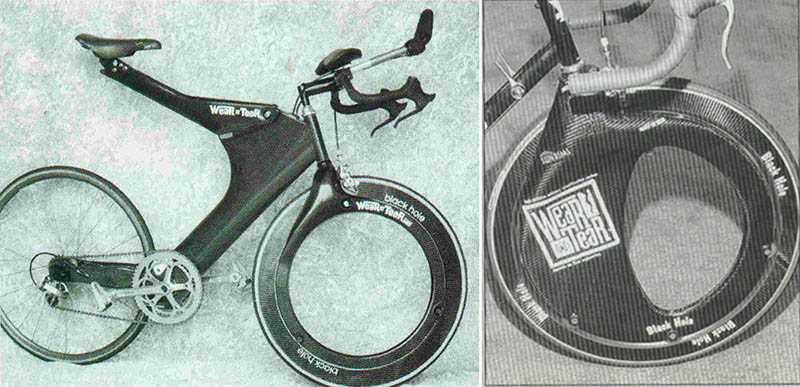
24. A hubless wheel from the past: The Black Hole

25. Mechanical doping and the future of e-bikes
As I mentioned, there were quite a few posts that were popular from 2005 to 2009 that didn't make this list. The early guest posts by Mark Sanders and Michael Downes were quite popular (as was my feature post about Michael in 2006). Posts about the Cannondale Jackknife concept bike (2006) and the JANO dual bike (2007) were among the first to be picked up by large blogs like TreeHugger and Gizmodo to really cause a spike in pageviews at Bicycle design. Joules, the electric stoker was another post that spread around the web and drove a lot of traffic back to this blog. The most viewed posts by far prior to the 2010 switch to WordPress were those from the 2008/09 "Commuter Bike for the Masses" Design Competition that I staged here at the old blogspot site. You can see the six finalists and the winner from that competition here.

Strida folding bike design by Mark Sanders

Looking back, it really has been a great ten years. Thanks to those of you who have been reading since the beginning…and to those of you who just started.
//
Subscribe to the email newsletter, and follow Bicycle Design on Facebook , Twitter , Pinterest , and Google + … and now on Instagram too!
It's that time of year again. Bike show season kicked off on Wednesday with the opening of Eurobike 2015 in Friedrichshafen, Germany. One of the big stories from the show this year seems to wireless electronic shifting. SRAM's new RED eTap system is getting a lot of positive press, and FSA is showing a prototype wireless group at the show as well. Wireless shifting has the potential to have a big impact on the design of racing/sport oriented bikes, but I'll save that discussion for another post.
Today, I want to share three interesting bikes that caught my attention as I have been browsing online galleries and following the #eurobike hashtag on Twitter the last few days. First is the Tern Cargo node. The folding bike company teamed up with Xtraccyle to create a longtail version of the Node that will retail for about $1800. Tern calls it, "a game changer if you live in a city or just want more portability from your cargo bike." They designed the bike to fit in an elevator, so you can easily take it up to a high-rise apartment or office. The option to fold is also a plus for transit riders, as it can be done with a load of cargo on the rear rack.

Shannon Evans of Xtracycle and Josh Hon of Tern on the Cargo Node. Photo credit: BikeBiz.com

German company Altinsoy Manufaktur is showing the Bees Bike, a very unique modular mountain bike with a belt drive and internal gearbox. According to a recent GizMag post:
"The bike adjusts around the rider through an integrated system of bolts and mounts. In this way, the bike can adjust to better fit your body and riding style. Of most interest is the stabilizer bar that can be swapped in for the DT Swiss rear shock, creating a fully metal hardtail in place of a springy pivoting rear triangle."
I am not sure about that feature (why not just lock out the rear shock?), but I do think the frame is interesting and I like the way the gearbox is integrated. If this is a first bike design from Altinsoy, I am looking forward to seeing its evolution.

Altinsoy Manufaktur’s Bees Bike at Eurobike. Photo credit: GizMag.com
The final bike I want to mention isn't really a bike at all. The ICE Full Fat 26FS is a recumbent fat trike that evolved from the custom trike ICE built for a ride across Antarctica to the South Pole in December 2013. The full suspension trike is built for expeditions with oversized 26 inch rims and 4.7" (front), 4.8" (rear) tires. It features a Rohloff XL 14-speed hub based drivetrain, and a 4130 chromoly frame that can be folded for easier transport to the trailhead. This is definitely not a mainstream machine, but based on the number of photos on Twitter and Instagram, it does seem to be a crowd favorite at the show.


//
Subscribe to the email newsletter, and follow Bicycle Design on Facebook , Twitter , Pinterest , and Google + … and now on Instagram too!
I am a big fan of Mike Burrows, and have mentioned his work quite a few times over the years at Bicycle Design. In 2012, lifelong "cycling fanatic" and engineer Karl Sparenberg of Advanced Velo Design took over production of Burrows' Windcheetah recumbent trike, and has been working on improving the materials and manufacturability of the original design. I think it's a pretty interesting story, so I am letting Karl tell it to you directly in the guest post below.

Having taken over the production of Windcheetah's a couple of years ago the design and manufacturing has taken a different tack.
Many people are already aware of Windcheetah's so I've decided not to rattle on with all the historic detail… but it goes without saying that Mike Burrows did a pretty good job 30 or so years ago when he designed it!!
But please do note that the modern iteration of Windcheetah is now a more cutting edge speed machine, incorporating advanced materials including Carbon composites and Titanium that were still prohibitively expensive in years gone by, and with that we have to move with the times and produce a 'better' machine.
When I took over the manufacture Windcheetah, to my alarm there was an Achilles heel, not with the design but the castings. These are the components that make up the frame, by bonding the aluminum and carbon tubes together onto spigots, these sand cast aluminum components could come from the foundry with flaws or voids in them.
If you could imagine ordering a 'set' of castings to make a Windcheetah frame and then having to go through the whole long winded process of post casting heat treatment, machining, drilling, tapping, powder coating and then the final finishing, only then can you proceed onto the bonded assembly with the tubing.

At any stage in this manufacturing process, from the rough sand castings to the finished component can the dreaded 'flaws’ or 'voids’ be discovered. Even worse, if the frame has been fully assembled and the sand casted part fails during testing, not only would the whole frame have to be scrapped, but it would also take out any of the other perfectly good components and tubing to the scrap bin with it. A very expensive and time consuming process as I'm sure you could imagine… there had to be a better way to manufacture these components!?
You may be interested to know, why were the sand castings failing at such an unacceptably high rate? Well, a few things really, but predominantly the foundries in the UK had to compete with the far east for business and as a consequence many of them had to shut down, leaving in short, foundries that were not tooled up for small production runs, or the necessary skills to cast such intricate shapes, as you find on a WIndcheetah. The foundry would simply credit the customer if any of the components failed. But this gesture didn't really help, when what was required was a full set of components to build a machine, not the hassle and cost implication of trying to manage the ongoing balance of the failure in certain components, while the 'perfect' odd parts sat on the shelf.

Top: CAD model screenshot and a 3d printed part (used to produce the soft mold needed for wax production).
The solution became apparent after considerable research into an alternative method of manufacturing and with massive investment into the tooling for a process known as 'lost wax' or 'Investment casting', the two terms are interchangeable but in essence the same thing
So what you see below is the result of numerous hours of redesign and CAD drawing to be able to 3D print the parts ready for soft mould production that manufacture the waxes. Now we can produce waxes this opens up the possibilities of alternative materials to Aluminum. Shortly we will be bringing to market a Magnesium version as soon as Beta testing is completed. The advantages of Magnesium or Aluminium are instantly a weight saving of third the weight.
So watch this space for an even quicker, lighter and more performance orientated Windcheetah.
For further detail contact me directly karl@windcheetah.co.uk

Wax parts for aluminium investment casting
//
Subscribe to the email newsletter, and follow Bicycle Design on Facebook , Twitter , Pinterest , and Google + … and now on Instagram too!

An earlier version of Specialized Creative Director Robert Egger's "Eff You See Eye" concept bike was mentioned on Bicycle Design a couple months ago (in a post that was also featured on Core77). At that time, the personal project bike was just a teaser, a partially assembled primer grey prototype, but now Specialized has released photos of the completed concept bike, along with more information about the design, on their Very Special Things site.
In the updated post, Egger talks about his reasons behind the fUCI project:
"It's kind of everything anti-UCI. Basically a 'hey, here's a totally different way of doing things. It doesn't fit into your box, but the people who would appreciate this bike aren't concerned with that box.' The whole thing was really just an exercise in working outside of the UCI box."
He goes on to say:
"The UCI really caters to a very small population, but there's so many other people out there who couldn't care less about the UCI. They don't follow the racing and they don't even know all the limitations that are put on bikes for the UCI riders. So, my feeling was let's design a bike for someone who really just wants to go fast on a road bike."
I won't elaborate on the design. If you are interesting in learning more and seeing additional images, you can click through to the updated post at Very Special Things. The design itself is secondary to me. What I really love about this is the fact that someone from major bike company is talking about ignoring the UCI technical regulations when it comes to product development. Regardless of your feelings about the UCI (and I have shared my opinions here more than a few times), rules that govern pro racing should not completely dictate the types of bikes that are available to the public. I completely agree with Egger that there is a huge market of people who would like to ride fast, but could care less about the UCI. Actually, I would consider myself to be part of that market, so I would love to see more speed oriented bike designs that are faster and better then the bikes in the pro peloton. As Egger says in the article, the job of a designer is "to create products people feel they can't live without." Great…and for the record I can definitely live without another 6.8kg double triangle carbon frame. There are a few innovative non-diamond frame designs out there already (mostly geared toward triathletes), but I hope to see many more non-UCI compliant road bike designs on the market soon. Even if the fUCI will never be a production model, kudos to Egger and Specialized for stirring the pot.



Photo credits: Carson Blume
//
Subscribe to the email newsletter, and follow Bicycle Design on Facebook , Twitter , Pinterest , and Google + … and now on Instagram too!

Back in the mid nineties, I remember being completely fascinated with Damon Rinard's "How I Made a Carbon Fiber Bike in My Garage" article (20+ years later, you should still check out the archive of his old Tech Pages if you never saw them, and read a recent interview with Rinard at Slowtwitch). I still enjoy seeing homebuilt carbon fiber bikes, and have posted a few reader submitted ones here at Bicycle Design over the years. Today, I want to share one more, a recent personal project by UK based mechanical engineer Richard Machin.
Richard's bike, which was inspired by classics like the Lotus 110 and Pinarello Espada, will serve as his personal time trial machine. Squeezing it in after his day job, Richard spent 8 months on the project, from the first CAD model to the initial test run.
See below for an explanation of the project in his own words.
"The main aim was to produce a light-weight frame with the lowest possible aerodynamic drag I could achieve, whilst still having the “traditional” riding position of a “conventional” bike which I consider to be much safer than a recumbent when being used on public roads. To achieve this, four main strategies were employed:
- Remove frame elements where possible
- Minimize the frontal area of remaining frame elements
- Improve the cross-sectional shape of remaining frame elements
- Shield components from the air flow by placing them behind other elements
Examples of how these principles were applied include: Removing the downtube from the traditional bike shape and inclining the seat stays to an extreme angle which both decreases their frontal area and increases their length to width aspect ratio when measured in a horizontal plane (i.e. in-line with the air flow direction). The rear brake sits nestled behind the chainset above the chainstays so it truly is hidden from the wind, not just out of sight as with some designs where they are underneath the chain stays. The front brake isn’t shown in the pictures but the intention is to get a set of forks with integrated brakes behind the fork arms. At the moment I am using a Campagnolo U-Brake to achieve the same effect.
As the bike will be used on flat Time Trial routes and velodromes only I dispensed with the small inner chain ring which also allowed me to avoid the use of a front derailleur. A small carbon fibre chain guard sits above the chain ring to stop the chain dropping off during gear changes.
Obviously when you’re going to all that trouble to design an aerodynamic frame you also want the best wheels you can find, which is why I went with a rear disc and front tri-spoke. The disc wheel has a built-in PowerTap power meter so that I can actually measure the improvement in drag compared to my “conventional” bikes."
The frame itself is a combination of aluminum (drop-outs, bottom bracket shell, head tube, seat post clamp area), and carbon fiber. The carbon fiber parts were a mix of pre-made plates and tubes cut and bonded together with the aluminum parts to form the basic shape and then the whole thing was encapsulated in several layers of wet lay-up carbon fiber for integrity. "
For more information about Richard's bike, follow his Velox Facebook page, where he plans to post further updates about the bike and its development.

(adsbygoogle = window.adsbygoogle || []).push({});
Subscribe to the email newsletter, and follow Bicycle Design on Facebook , Twitter , Pinterest , and Google + … and now on Instagram too!

Julien Delcambre currently works as a watch designer in Switzerland, but in a previous job at Scott Sports he designed a few interesting concept bikes. He points out on his Behance page that his main mission at Scott was to redesign the old Gambler (a full suspension mountain bike). He was in charge of the design and graphics for all the parts and frame.
"I was in charge of the design and graphics for all the parts and frame. Firstly the job was to create new frame with 27.5 wheels, new saddle, new links. Then I worked on the graphic elements ( colors, shapes, fonts ) to finish the complete bike."
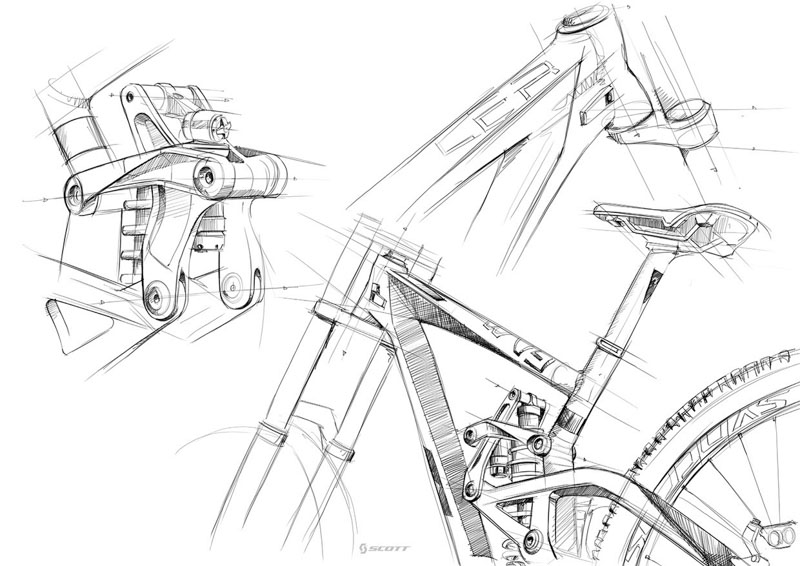
You can see the Gambler on his project page, but the designs that caught my attention were his time trial concepts. Really interesting forms…especially the Plasma concept that is partially shown in the image below.

(adsbygoogle = window.adsbygoogle || []).push({});
Subscribe to the email newsletter, and follow Bicycle Design on Facebook , Twitter , Pinterest , and Google + … and now on Instagram too!

The Gocycle folding electric bike was first mentioned on Bicycle Design in early 2009. At the time, its clean design with a fully enclosed drivetrain seemed quite innovative. Six years later, the latest Gocycle G2 is still an innovative design, which is why it was recently awarded a 2015 Red Dot prize for Product Design (one of more than 10 design awards since it received an igus Gold Manus Award in 2006).
The G2 was designed and developed by former McLaren engineer Richard Thorpe, and he explains that the bike was strongly influenced by automotive engineering principles.
"As a designer, the end result of your work is defined by the product's DNA - the building blocks. A no-compromise mind-set in the choice of materials, production processes, and total component integration so that all parts work and fit together is what sets the Gocycle G2 apart; it has more in common with a car than a bicycle.
Materials choices and construction processes expand the possibility for a designer to come up with different creative solutions. Gocycle's fluid form is a result of my choice to work with different materials such as lightweight and exotic magnesium alloy. Using an injection metal molding process for the construction of the frame and wheels yields smooth and naturally flowing lines in the form. The weight is balanced, the power is balanced, central and dynamic from a visual perspective - and you feel this too when you ride an electric Gocycle."
Due to Thorpe's material choices, the G2 is lightweight for a folding electric bike…only 16kg (about 35 lbs). If you are carrying the folded bike up and down stairs daily or taking it onto a crowded commuter train, the lighter weight is a benefit, as is the lack of a messy exposed chain.
For more information about the G2, visit the Gocycle website, and check out this video review from Electric Bike Report.



(adsbygoogle = window.adsbygoogle || []).push({});
Subscribe to the email newsletter, and follow Bicycle Design on Facebook , Twitter , Pinterest , and Google + … and now on Instagram too!
To celebrate their 100th birthday, the Minneapolis Institute of Arts (MIA) teamed up with Handsome Cycles to bring some of the MIA's most famous masterpieces to life in the form of three art-inspired bikes. According to MIA Venture Innovation Director Hunter Wright, "The MIA is excited to partner with Handsome Cycles, a company that shares the museum's commitment to embracing the local and integrating great design, technology, and experimentation, while staying true to its core values and community. "
In order to create custom bike designs inspired by pieces in the MIA's permanent collection, including paintings by Claude Monet and Frank Stella, and a 1948 Tatra T87 sedan, Handsome reached out to a few other notable Minneapolis based designers and artisans – KNOCK, inc., TREAT AND COMPANY, Peacock Groove, and Dirt Designs Graphic. The results of the collaboration are pretty impressive… as you can see in the video below.
Art Bikes KNOCK | TREAT & Co. | Handsome | MIA from KNOCKinc Interactive on Vimeo.
See images of each of the bikes below. I like many of the details on each of them, so it's hard to pick a favorite. The bike inspired by the 1948 Tatra T-87 sedan is the one that I keep going back to though. I just love the form of the fender skirt, inspired by the car's rear stabilizing fin.






Trend site PSFK talked to Handsome's Ben Morrison about each of the bikes. Check out their post for his take on each of the three designs.
Just one last thing to point out… these bikes aren't just one off museum pieces. The limited edition 100 Year Commemorative Bikes will be available for sale (retail $1099.95) at the MIA Shop and at HandsomeCycles.com.
//
Subscribe to the email newsletter, and follow Bicycle Design on Facebook , Twitter , Pinterest , and Google + … and now on Instagram too!

If all goes well, I'll race at HPR later in the season. Then that bike retires in the living room, and I get rolling in the shop on the next racer...
The next racer is still in the phase before "Connect the Dots" that I like to call "Collect the Dots". While working on some of the design headaches involving a belt drive primary connecting the KX500 engine to the 999 transmission, I wondered if there was a remote chance that a 999 primary drive gear system would fit, since the KX500 primary gearing is terrible for roadracing. The KX500 stroke is a lot higher, so I assumed it wouldn't fit. With the help of a few parts on hand and a few more cheap parts from eBay, the answer became obvious:

The drive side of the crank, 999 primary gear, and KX500 primary gear were promptly boxed up and shipped off to a gear making specialist in England, where a few hybrid 999/KX500 primary gears will be made. Longer connecting rods will also have to be made (The original rod/stroke ratio is not optimal for a higher revving roadracing engine). A longer crank pin will be required for my counterbalancer/inlet valve/supercharger (Yes!!!!) design. Patterns and castings will have to be made for the engine cases. Then those cases have to be machined. It'll be a lot of work, but it should be an a lot of fun.
And then there's the rolling chassis...
And then there's the ultimate question that I can't wait to find the answer: How exciting will it be to exit Pit Out, tip it hard into T3, then pin the throttle?
Glad to be alive.
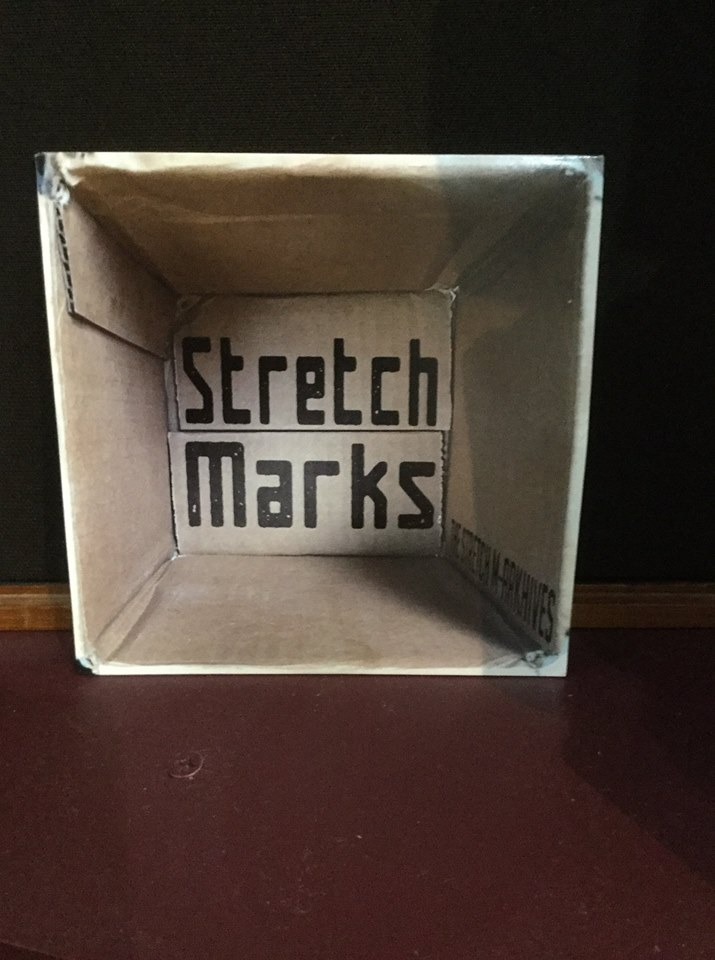
'Can you imagine Doobie in your funk?' - George Clinton
'You fake the funk / Your nose got to grow' - Bootsy Collins
I like my Funk uncut, but who doesn't? However, around 1978, a funny thing happened; white kids extracted seminal fluids from the recently deceased corpse of Punk and spiked everyone's drinks with it at the mutant disco. The bands born of that experiment wouldn't be content to play Funk lite or heaven forbid 'blue-eyed soul'. Oh no. This was a different beast altogether. But I'm getting ahead of myself...
Time is a trick of the mind, as Rip Rig & Panic once suggested, so I'm here in 2018 listening to music that's 30 years-old but actually inspired by music that was 10 years-old then. Geddit? There were a bunch of lads living close to the eye of the 'Madchester' storm but not about to embrace the whole Summer of Love, E'd-up, Rave on scenario, as stated in this lyric: 'no way ( i'm getting laid back )\ there's no way I'm getting laid back, I'm going to attack attack attack attack attack!\ e-sucking teepee heads' (No Way / E-Sucking TeePee heads). Too young for Punk but keen on Funk, Jazz, Improv and more, they conjured up the spirit of '78, the one that had some contorting themselves and their music into shapes formed by Punk, Free Jazz, Dub and, er, 'experimental' Rock.
At a time when white music lacked 'attack' (the E-ffect) but dabbled in the 'baggy' version of Dance music or a straight-up take on Techno, Stretchmarks got themselves into another, 1978 state of mind. You could say that, like E-heads (tee-pee heads), they were escaping reality, but who can blame them? Me, I was coming down after a decade of discovering Jazz whilst dancing to Rare Groove and Hip-Hop. At my Soho cellar bar club, a friend would tell me of the chemicals he'd ingested and describe 'the scene' but I thought 'never mind the Balearics', what about Public Enemy?
Anyway, here on The Stretch m-ARKhives are a set of tunes never released at the time. 1988 wasn't the place for them and today? Yes. Why not? We can all do the time warp. It's...fun? To an old fart like me who still treasures Defunkt or The Pop Group above most contemporary bands it's a treat anyway. As the world edged towards becoming a zone of zero funkativity in 1978 what The Pop Group followed by Rip Rig & Panic along with James Chance then Defunkt did was a blast. Little did I know that Defunkt's Joseph Bowie had a brother, Lester, would provide such a source of pleasure in the next decade, or that the creator of the very words 'Rip Rig & Panic' (Roland Kirk) would do the same. One door (Punk) closed, another (Jazz) creaked open a few years later.
Sorry, but I can't help referring to my musical past, it's so intertwined with that of Stretchmarks. Despite and because of the clear influences, this is a fascinating release. All the relevant names I've mentioned are fed into the sound. No Wavers DNA are also in the, um, DNA, as in Arto Lindsay-style guitar. What marks them out as very British, dare I say, are the 'eccentric' lyrics. 'lets get weird, lets get weird, lets get weird in my kidney shaped swimming pool.' (Let's Get Weird) for instance, reminds me very much of a satirical bite Jason Williamson spits out for Sleaford Mods. Likewise, in a nonsensical fashion: 'twighlight or dawn, i'm yawning at the sudden similarity.\ lobster or prawn , i'm certainly no Jaques Cousteau when it comes to the sea.' (Puddle of Love).
Free-form, funky, raw and ridiculous, Stretchmarks proved it was possible to fake the Funk without fear of serious nose growth. I'm enjoying this album very much and that's no lie. The CD with bonus tracks is worth getting if only for Cosmic String and No Reason. You can buy it and the vinyl version on the Bandcamp page. Band member Matt Wand's words are also, as always, worth reading.
 Logical Progression (LTJ Bukem) / Logical Regression (25 Years of Goldie Oldies) [ 01-May-18 3:36pm ]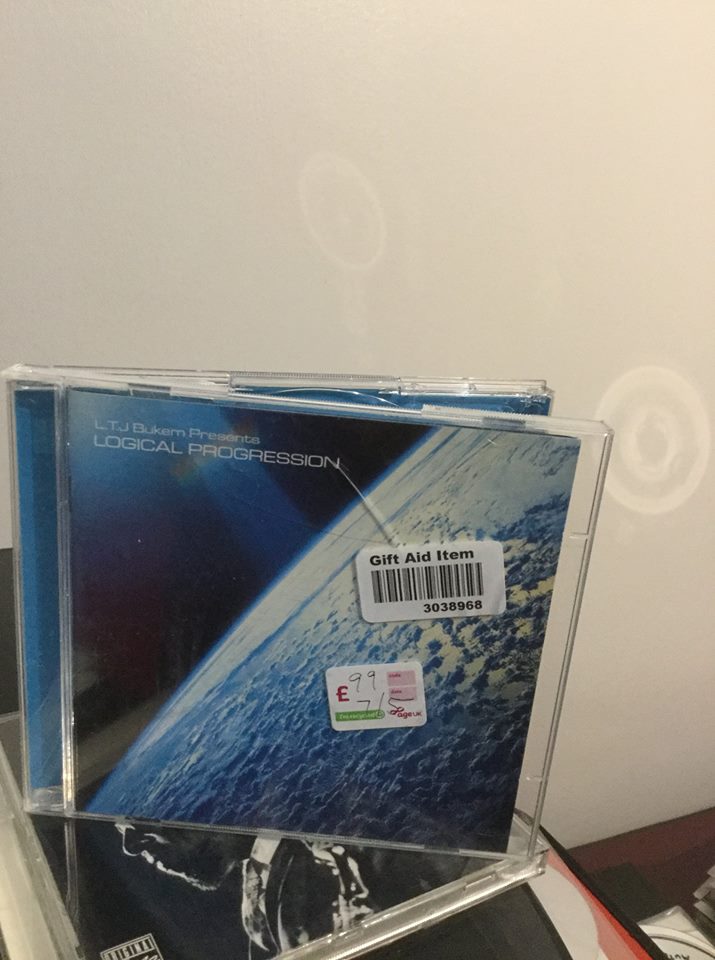
The best thing about Good Looking records was that because most started in an ambient fashion they made mixing easy for someone like me, who never learnt beat mixing when I was a DJ. I preferred to join the thematic/style dots, as befitted an eclectic DJ.
To say that was 'the best thing' isn't strictly true, of course. I only did so in order to reel out an old story from the days of mobile DJs which, I assume, still exist. In the mid-70s a friend once knocked at my door and asked if I wanted to go into the DJ-ing game with him. I was interested until he told me the cost of the turntables. So he went ahead anyway and on one night declared over the microphone that the best thing about the Elvis record he'd just played were the scratches at the end. Not that he was a proto-Christian Marclay-type sonic experimentalist or anything; he simply wanted to wind up the Teddy Boys in the hall.
No, I'm not that old, but you'll have to take my word for the fact that in 1977 Teddy Boys still existed. There were frequent running battles between them and Punks down the King's Road. His comments sparked another battle between those two tribes on that night. He asked us if we'd stand in front of his speakers to protect them, which we did. Luckily, both the Punks and Teds were more intent on damaging each other.
22 years later, how have Good Looking records aged? That's what I wondered, staring at the 99p double CD, LTJ Buken presents Logical Progression, in the charity shop this morning. At that price, I could find out the answer. Also in the shop was Radiohead's OK Computer, for even less, 69p, yet despite being tempted I couldn't even part with that measly sum in order to satisfy my curiosity regarding what many consider to be a 'classic'. Whenever I've seen Radiohead performing on TV they've annoyed the hell out of me. Having passed up on OK Computer at that price, I shall never know if I can find anything worthwhile in it. Yes, I could go to YouTube, but cannot be arsed.
I did buy a few Good Looking singles at the time (1996) but preferred labels with more bite, like Metalheadz or No U-Turn. Bukem brought a kind of sophistication to the Drum'n'Bass scene, not that others didn't try to do the same, just that he made a mission out of it. All these tunes are polished to a high sheen. I'm on the verge of saying 'you can't polish a turd' but that would be a little harsh. My problem with a lot of these tunes now is the very thing that marked them out as Good Looking records in the first place; that gloss and, in places, 'soul' crooning all over the shop. I confess that the desire to have repeat phrases run through Jungle and D&B tunes gets on my nerves now. At the time I would have forgiven it if the drum and bass were hard enough.
So I've run through both discs and my only, admittedly weak (sorry) opinion is that a lot of the tracks are OK, running to good when the rhythm gets going. It's kind of D&B Easy. To many, I know, that will translate as 'classical', especially those thinking themselves too smart for ruffneck tunes featuring gangsta/JA vocal samples (just my kind of thing!).
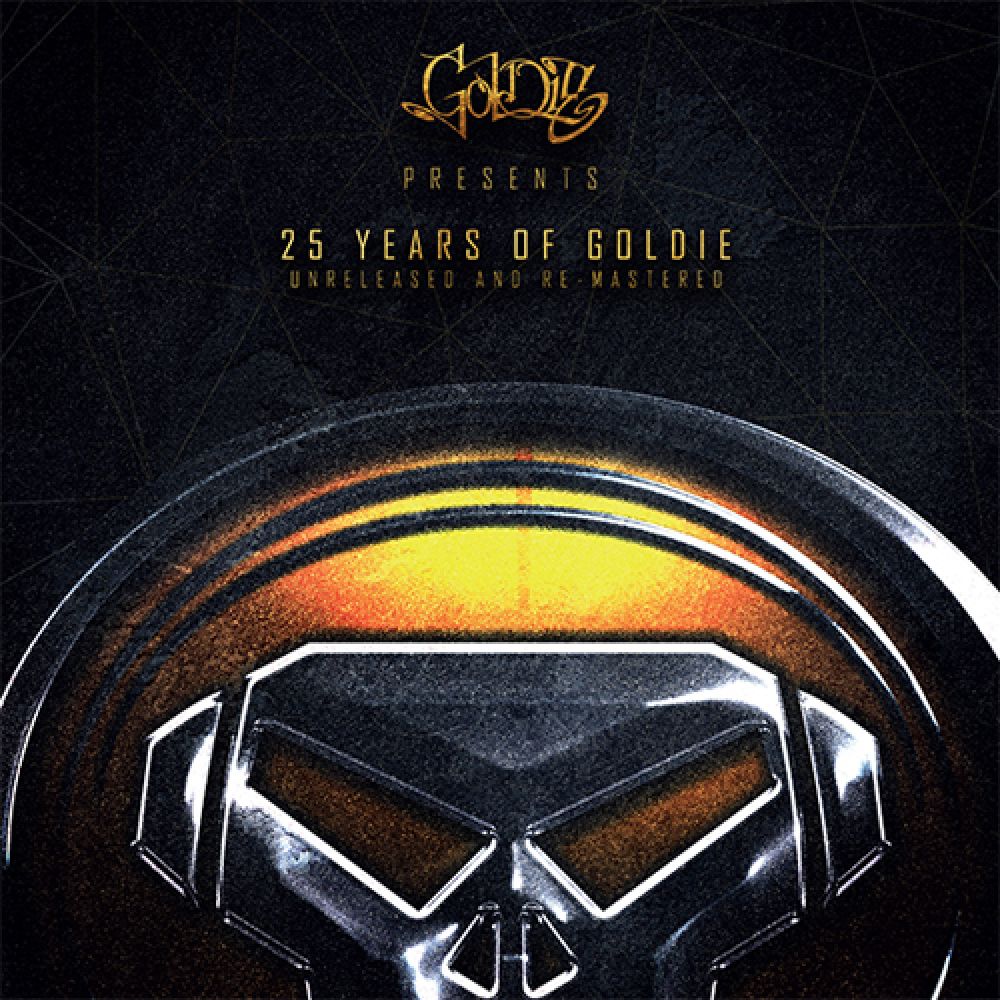
Talking of Metalheadz, 25 Years of Goldie (Unreleased And Re-Mastered) was a Record Store Day release (limited copies available at a later date) and right from the opening bass on Rufige Kru's I Walk The Dog you get that feeling, the one you had back in the day, the tingle of anticipation....then...here come the drumz! - and the incessant, ominous future noize splicing your brain - you know, the way Goldie and co. did. Rob Playford & Goldie's Shadow VIP is a corker too, the la-la-la-la vocal (?) enhancing what is already a demented percussion workout with trademark chainsaw bass flipping it into the realms of a psychotic treat which segues nicely into Rider's Aftermath wherein that vocal mutates into a mechanised refrain whilst Playford and Goldie proceed to beat you into a bloody pulp (and you love it). Although you're either helpless flat on the floor or jumping around the room by now (possibly even middle-aged Junglists can still do that) Stormtroopa delivers the coup de grâce, rewinding your mind (if not body, though you wish it were true) to times when you could and did go mental to Metalheadz records.
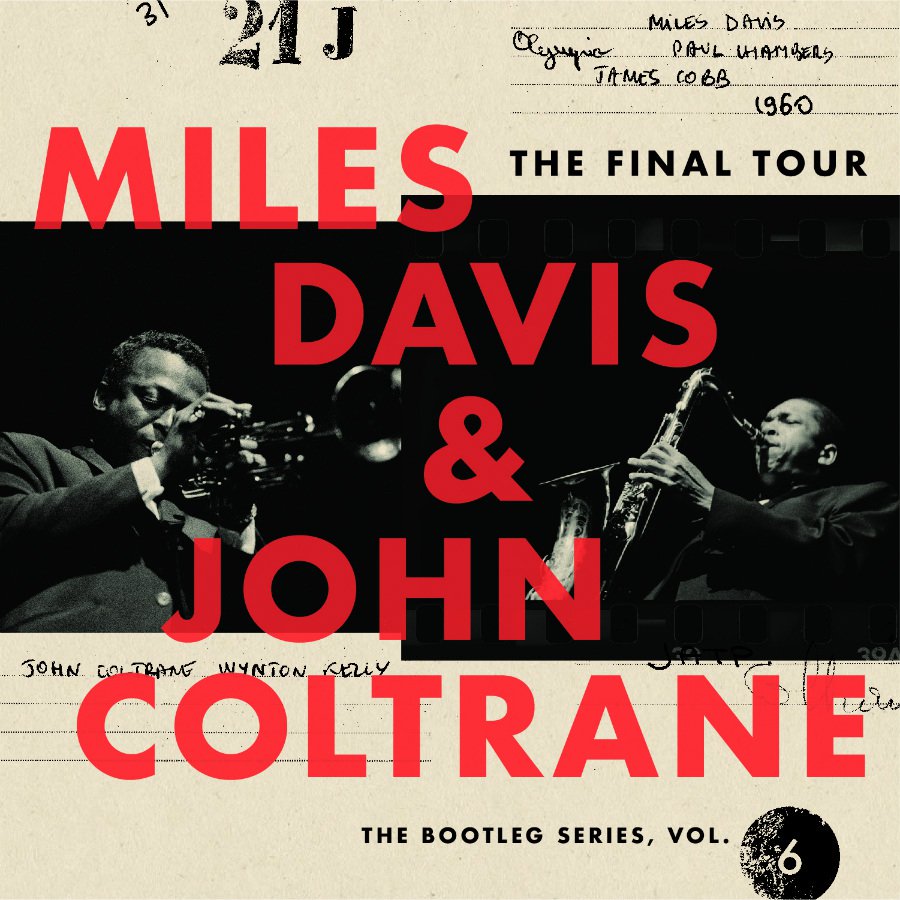
There seems to be little left to say about John Coltrane or Miles Davis, although such is our (human) nature plenty of prose about them will no doubt pour out until the end of the world. I was going to 'review' Miles Davis & John Coltrane - The Final Tour: The Bootleg Series, Vol. 6, but thought better of it, then thought differently again and so on...
...my head bounced to and fro as if I was an audience member at one of these gigs, assuming Coltrane had that effect, which he surely did. Today we're oh-so-wise about What Happened Next but it's not hard to imagine, having closed off retrospective wisdom, how shocking Coltrane's playing was in 1960...
...it's even shocking now in the context of a band tour under the name of a legend playing standards and future classics from Kind Of Blue to all intents and purposes supposedly not 'just' but no more than a 'cool' god playing Modern Jazz but...
...what happens, no-one could predict. What happens is a draft of things to come not just from Coltrane but a generation of iconoclasts out to smash what used to be Jazz into pieces, albeit very large pieces in the form of 20-minute voyages of discovering just how far they could go when blowing and in the process alienating many Jazz-lovers, just as Miles Davis would do towards the end of the 60s with Bitches Brew...
...talking of which, on this tour, at times, Coltrane manages to make Miles Davis sound like The Past, no mean feat, although it's easy to exaggerate what happened. The fact is Coltrane was in a bad mood most of the time and wanted out; the sound of a prisoner sawing at his shackles doesn't always make for comfortable listening but neither does most of what he would unwittingly unleash in the form the The New Thing...
...some of the crowd at the Paris gig definitely weren't happy, as we can hear by the whistling when, having briefly dipped back into the theme on All Of You Coltrane goes way off-message and to those without the ability to see into the future may well have sounded as if he'd lost the plot completely like an amateur in a cutting contest...
...what Davis thought during the process is anyone's guess but 'Muthafucker!' is one good guess. He had, after all, suggested Coltrane try taking the horn out of his mouth when he told his boss he didn't know when to stop, but the Free thing would be very much about not stopping, or more to the point, not being concerned about neatly tying up a tune (what tune?) in the tradition of improvising as it was known up until the 60s when through a hunger for taking a magical mystery tour Afrocentric blacks and radical whites engaged in a process of developing what would become known as just Improv, rather than 'improvisation', thus, ironically, shortening a word but considerably lengthening the nature of the beast unleashed by the likes of Cecil Taylor, Ornette Coleman and the UK's own Joe Harriott who, it must be said, deserved more than he got in terms of recognition and, to be frank, lifetime, but instead is a cult figure in musical history, unlike Coltrane, who despite living for 6 years less than Harriott had the drive, ideas, connections etc to make more incredible music than most tenor players could manage should they live forever and there was tough competition, not that he was in competition except regarding polls; the likes of Sonny Rollins and Wayne Shorter who, having 'scrambled eggs' with Art Blakey's Jazz Messengers was called up for duty in Davis' next Great Band, which set a pace of their very own whilst others took to roaming Free range, which Davis had no interest in or respect for therefore making the wild electric storm blown up by him in the late-60s ironic, eh?
Did I blow for too long with that sentence? Oh well, consider it a homage...
Album: Sonae - I Started Wearing Black [ 16-Apr-18 3:48pm ]
Sonae started wearing black some time ago - I'm not sure that's a good thing but I defer to her right to do so - me, I don't like black or wear it, except shoes for work. The negative connotations are obvious, although that aside, without a care for what it may suggest, black is popular, mainly in the office. People are lazy, knowing that anything goes with black. I understand. If your base sartorial colour is actually a colour, you have to work on the rest of the outfit. The problems of life...
Meanwhile, Sonae's music on I Started Wearing Black is not quite as Dark as the title suggests, without being cheery either. Personally I'm wary of cheerful people. I think they must be a bit simple, but at the same time, envy (a little) their ignorance-is-bliss state of existence. I don't know what shiny happy people listen to (Beyonce?), but it's probably not this kind of music. Among the highlights is Dream Sequence (with Gregor Schwellenbach). Except there's nothing 'high' about it; instead, a beautiful quasi-orchestral feeling of a half-remembered dream. On this and throughout, Sonae loads the track with atmosphere courtesy of concrete-type sound. She has mastered the art of texture to the point where it becomes an art form, as opposed to a cheap easy route to supposed 'haunting' auras, hauntology-by-numbers.
Thankfully, when she decides to use a beat, it doesn't sound like a tokenistic nod towards feeling obliged to liven things up but, as in the case of the title track, an organic evolution, executed with taste. The stripped back metallic beat, when it comes, is even more effective on White Trash Rouge Noir. Quality product.
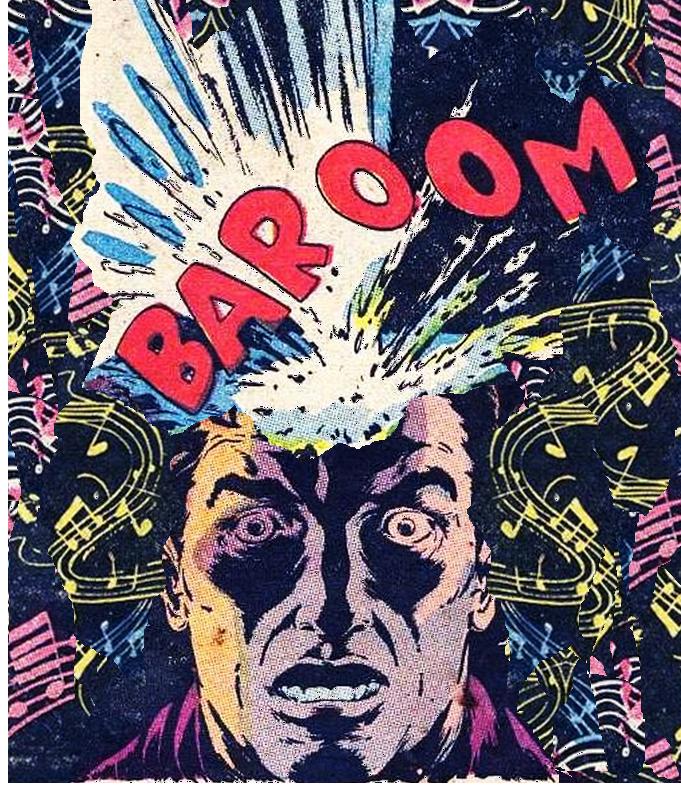
There comes a time when you really have no interest in such things as 'Junglepussy In the city centre of Ghent, in northwest Belgium' (Quietus headline today). This time comes earlier in some people's lives than others. To say I have only just arrived at that point as I near 60 would be a lie. For a few years now (how many, I cannot count because a gradual development has no definite beginning) I have had such thoughts when faced with contemporary music news.
I could lay the blame, not on Mame, but J.S.Bach; to be precise, his cello suite No.4, which I started playing half an hour ago. It took less than a minute for me to think what all great music is capable of making us think, namely: "This is superior to everything" (except the relatively few other truly great pieces of music I own). The subject in the back of my mind is how middle-aged listeners relate to contemporary music, not that which inhabits the narrow specialist field they may still explore should they be interested in contemporary music, but the 'contemporary' as covered by the larger sites.
Unfortunately, even defining 'contemporary music' is not as simple as it once was, in the olde days when vinyl was all we had. That cassette-only album (but on Bandcamp) your Noise-making friend released recently is still, basically, contemporary music. But the fact that it will not even register on supposed indie-minded sites means that, by inhabiting the very furthest margins, it is beyond being recognised in the contemporary field.
Pop music may not be aimed at my age group but that does not stop those within the demographic occasionally (or even frequently) blowing their tops about the state of modern Pop. Within most of us there's a trip mechanism liable to be set off at any time by the mere appearance on screen of a modern Pop star as, say, part of of newspaper's front page. Watching coverage of Glastonbury is asking for trouble, yet sometimes we do so to reaffirm prejudices.
We know that musical appreciation is subjective but that doesn't prevent us from making 'definitive' statements sometimes, by which I mean statements which we are convinced are correct, 100%, no question. This is problematic if one tries comparing say, Slade to Ed Sheeran. Both made/make music for teeny boppers. The thing here is that one made music for me, when I was a teeny bopper, which immediately makes Slade better. Ed Sheeran will be better, in 30 years time, for those who love him now, than whoever kids worship then. Apologies for stating the obvious but part of this process must inevitably be the laying out of facts in order to try and find a truth.
As I said to friend in a pub recently, the only chance contemporary music has of trumping what's gone before is by using new technology in such a way as to truly make something new. But it is only those who have 'heard it all before' who must endure that curse/blessing. Yes, we saw Bowie's first Top of the Pops appearance when it happened and we watched the Sex Pistols 'live' on the Bill Grundy Show. Perhaps we also felt the rush of Jungle when it was new and so on. Such experiences taint us terribly, partly because they are firmly placed in the museum of groundbreaking Musical Events. Those who place them there will be from various generations, of course. Older (than me) people will have seen Bill Hayley's first UK tour, Dylan's first electric set and so on.
What irks some of us, after a few decades, is the site of further additions to that hall of fame. It's as if we have the right to lock the doors of that museum when we think there can be no more worthy additions. One case that springs to mind is is the 90s 'Cool Britannia' phenomenon. I remember well that neither Blur nor Oasis were thought of as actually groundbreaking, original or sensational by seasoned veterans of the listening game. The former were 'mockney' jokes, the latter, Beatles imitators. With some catchy tunes. You don't need me to tell you that for many they too are now deemed worthy nominees for the Hall of Fame. Well, they're already in there.
As far as the professional music press goes it serves them to maintain a continuum of Great Music for obvious reasons. People's earnings depend on it. This is no cynical conspiracy by 'old' editors, but simply a matter of employing young writers and letting them be enthusiastic about all that music which sounds fresh because to them it is despite easily available evidence to the contrary.
Although we have the potential for rational thinking, we humans are prone to being irrational. You've noticed? Rational thought and logic aren't easily applied to music. It takes a very cool head to be rational about all this. But isn't music supposed, among other attributes, to arouse a degree of passion? The very thing about the music we love is most likely to blow rational thinking away. There are few greater sounds, for instance, than a Charlie Parker solo. Agreed? Of course not, unless you also happen be a fan.
Perhaps, when all is said and done, talking/writing about music is a futile exercise. Here on Include Me Out I've written a great deal about music yet I could not begin to describe/explain what it is about a Charlie Parker solo that is so very special. Professional Jazz critics could explain it technically, but no more define the mysterious thrill than I can.
I may think them 'wrong' but I enjoy hearing friends declare a Frank Zappa album to be mind-blowingly brilliant. What worries me more (here's the crux) is seeing the same comment tagged onto a Level 42 album on YouTube. OK, they were a random choice, of course. It would be easier to say Kanye West. Or a contemporary Pop group, but I couldn't name one. Do Pop groups still exist, or are they a dead breed, replaced by solo artists? Is it time for bingo yet, nurse?
My final point is that I'm as capable as any idiot of declaring modern music (within the general field) to be RUBBISH!...
...(Starts shouting) I SAW PARLIAMENT/FUNKADELIC, ORNETTE COLEMAN, THE ART ENSEMBLE OF CHICAGO (original line-up), THE CLASH (SUPPORTED BY THE SPECIALS) AND THE THE RAMONES! I WAS THERE WHEN THE ZIGGY STARDUST ALBUM, ROXY MUSIC'S DEBUT AND 'NEVER MIND THE BOLLOCKS' WERE RELEASED! I DANCED TO THE FIRST 12" DISCO RECORDS! (Internal editor: "Stop, this could go on for ages"). AND YOU EXPECT ME TO GET EXCITED ABOUT MODERN MUSIC???!!! IT'S LIKE VISITING THE SOUTH OF FRANCE THEN BEING FORCED TO LIVE IN BLACKPOOL!
You see how easy it is? To return to J.S.Bach, as he once said: If I decide to be an idiot, then I'll be an idiot on my own accord. The best I can do it restrain myself as often as possible.
Thank you
propaganda [ 02-Jan-09 7:40pm ]Following are several grafs from the sole (at present) Amazon review. Note especially the last line about Jung and Serrano, since we've been discussing them here of late. Though I am calling out this one bit, it's worth reading the entire review, which is much longer.
Rudgley portrays C.G. Jung as the figure of central importance in the modern pagan revival. For Rudgley, Jung was essentially a prophet of Wotan/Odin. Jung saw Hitler as a manifestation of the stormy, restless side of Odin. But there is another side - Wotan's "ecstatic and mantic qualities", which will also be revealed in time. Jung himself said, "things must be concealed in the back ground which we cannot imagine at present..." But Rudgley fails to note that, for mortals, moments of divine ecstasy are not without their price...and the price often involves those same stormy, restless moments he greatly fears.Rudgley describes Jungian archetypes as "blueprints for certain workings of the human psyche." Some of these, he acknowledges, are "specific to certain cultures." (e.g. Odin is the most important archetype of the Germanic mind). Hyperborea, the land of Indo-European origins, is not a physical plane... it is to be found "not on the map of the earth but the map of the soul." As a symbol it has many layers of meaning, one of the primary ones being a vertical ascent, or attainment of enlightenment.
But are the gods, then, merely 'blueprints', and not objectively real? Rudgley seems to think so, and states that "we do not have to believe in Odin's actual existence as a god to track his return to the forefront of the Western psyche." In the same way, Stephen Flowers, noting Jung's influence, claims that "divinities in Asatru/Odinism are not seen as independent/transcendental beings, but rather as exemplary models of consciousness, or archetypes, which serve as patterns for human development." But this doesn't take into account Jung's own later view expressed in his Foreword to Miguel Serrano's book The Visits of the Queen of Sheba, where he stated openly for the first time that his mission was religious rather than scientific - implying that the 'archetypes' are, in fact, independently real.



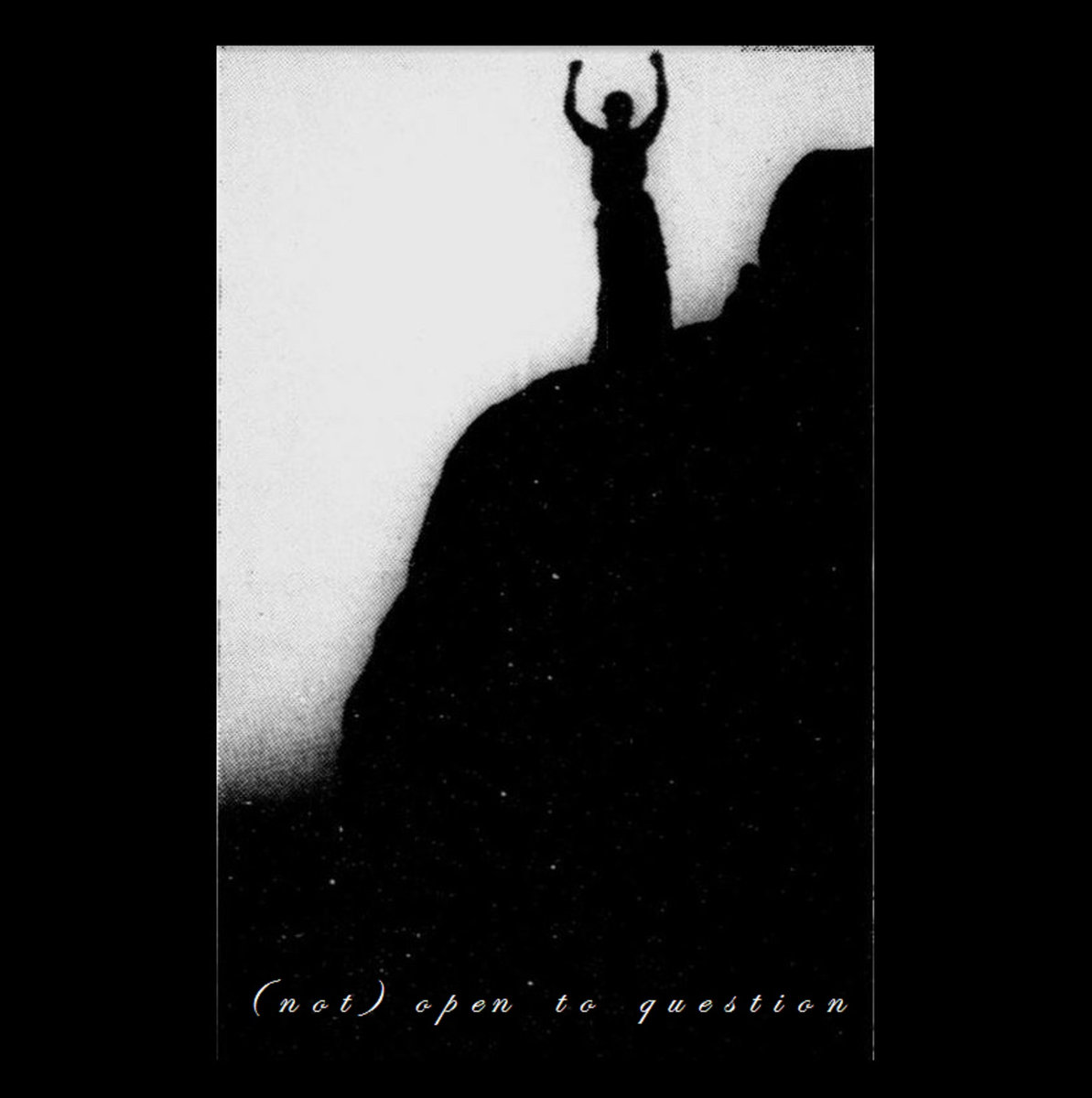
Whilst the New Year may be open to question the quality of the work on this album is not. Furthermore, you're invited by the label to make your own additions to these tracks, the first layer 'is created within the collaboration of MƩCHΔNICΔL ΔPƩ and Les Horribles Travailleurs', so the challenge is set, although this is very much in the spirit of collaboration rather than competition. As always, the bar is set high here but why not (re) create? Remake/remodel (should be a Roxy Music title...oh, it is?). 'You are invited to finish this soundwork by altering\adding layers etc. to the first layer, which can be downloaded from Bandcamp'. As it stands it's very good.
Let's start the New Year with a whimper...@',mn,mn,qwwwwwhhhhhhhhherrrr'
Fact is this year's going to be the one that sees the downfall of the music industry due to it's incessant gnawing of itself like a doped-up rabid labradoodle, foaming as it very slowly chews its own leg off and keeps going as far as it can reach until it's stinking innards spool out across everything but don't worry, you will be immune to the putrid, poisonous substance due to years of injecting the antidote in the form of JS Bach, James Brown, Bernard Parmegiani and other names involving capital 'B', or 'L', or 'D'...how about 'D'? Don Cherry, Defunkt...that's enough, that's the ABC of it, your alphabetically registered pantheon of ....music people...the countermeasure to all the crap...
On the subject of letters...
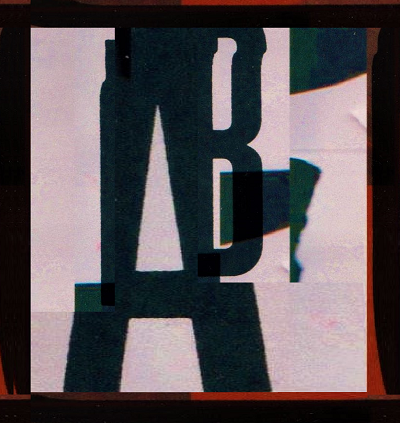
That one's called AB...there's more of my art over here
Whatever...or, actually, all my art work this year will be part of a series called So What...why? I reckon it's the most common response.
In 2018, though, let's not be blase about things, least of all what we love the most and what we make...
As expected, he didn't buy that the poststep stuff is as great as I'm claiming it is. The interesting thing in this respect is the claim that he actually has tried (as stated in the comments), but it just doesn't click. In a way this takes the problem to a different level, not about poststep per se, but about how we react to music, what it means for someone to really get something, and not least: whether really feeling, or not feeling, something, is really an argument for its merit or lack thereof? Personally, there's a lot of stuff I know I ought to like, but that just doesn't do anything for me; which seems pointless and uncommunicative (in the derogatory sense Reynolds is using here - I certainly find some deliberately uncommunicative music deeply fascinating). Something like Velvet Underground could be a good example. All right-thinking people seem to agree that this is simple the most important and amazing rock music ever made, but nevertheless, it leaves me completely cold. Sure, it's mildly interesting when I'm listening to it, but not to a degree where I'm not also slightly bored, and afterwards, I have no wish to ever hear them again. That doesn't mean that I can't see its historical importance - tons of stuff I love (krautrock, post punk, noise rock and dreampop) are deeply indebted to VU, might not even have existed without them. But just because something is revolutionary on a technical level, it doesn't make it the best example of the trend it started. The noise/avant garde-element is still very rudimentary and one-dimensional (not enough Cale), and Lou Reed's song writing is mostly just dull. And yet, even though I've tried "getting" Velvet Underground for many years, and still barely remembers any of it, I'll accept that they are, in a way, "objectively good", I just don't find them subjectively good. I'll grant that they have an important place in the historical archives. There's just many other parts of those archives that I'd much rather like to spend my time with. Such as the best post step, which as far as I see it, isn't just subjectively good, but truly objectively good as well.
The question then is: by what objective criteria? Well, most likely not by how influential it has been (probably the best argument for VUs "importance"), as I doubt most of it will have much influence at all. But then, I think most of us have favourite records that have had very limited subsequent impact, and which we yet would consider truly "good" by some other criteria. Most obviously, I think it should be about originality - creating musical structures that have not been heard before, and yet truly is "structures" (which is what makes it work as music, makes it relatable and fascinating), rather than just pure randomness. But already there's a problem here, because judging if something "has been heard before" or creates a "relatable structure" certainly involve some quite subjective elements. One person's deeply engaging structural originality is the next one's empty indulgence, and as I talked a lot about last time, it's highly relative how "new" something will sound to different people. That said, it seems that Reynolds is acknowledging that there is some formal newness going on in post step, it's just that, as he doesn't connect with the music, then obviously something else must be amiss (and there has to be something wrong with it when he's not feeling it - much like I just tried to explain what is "wrong" with Velvet Underground, because it doesn't seem to be satisfactory that it's simply be a matter of taste whether you're getting something that is "objectively good" or not).
So what is missing, according to Reynolds? Sort of the usual rockish suspects, I guess: Social energy, functionality (being useful), viscerality, bursting-into-the-world, smashing-up, cutting loose, "brocking out". I think there's a least two questions to consider here - 1: why should it be a problem that these elements are absent? And furthermore - 2: are they actually absent? Or rather, in what way can we determine that they're absent, except whether we simply feel them being there?
As for the first question, one of the returning themes in my writings on post-step is that I think it's a huge fallacy to measure it by a 'nuumologically calibrated brock-o-meter. The social chemistry of cutting-loose-on-the-dancefloor is notthe point of this music - or at least most of it -, and saying that it is lacking in this department is a bit like saying sixties electro-acoustic avant garde is "lacking" the passionate social interaction of tango or waltz. I mean, it certainly doesn't have that element, but then, it's not really something it ought to have. It's not that I disagree with the point that "with dance music you want to be getting your rocks off", but most post-step is simply not meantto be heard as dance music - not supposed to belong to the same continuum as Foghat and Slipmatt, but rather - if anything - the same as Subotnick and Schnitzler, Mouse on Mars and The Black Dog. Or, I'd say, as Chrome and Wire. Because once again I think post punk is the obvious analogy - do post punk belong in the cerebral "listening" department that Reynolds have no problem with in itself, or as part of the "brock continuum" that he identifies as running from garage rock all the way through punk and rave to present day hip hop? Post punk is conspicuously absent from his long youtube brock-list, with the quite rock-ish Killing Joke as the only example. Which is not to say that you couldn't find a few more brocking post punkers if you wanted to, but wasn't it exactly the whole pointof most post punk to question and deconstruct that very (b)rockist "essence". Huge swathes of it was self-consciously arty and cerebral, deliberately esoteric and dysfunctional. Sure, a lot of them worked with groove-based black music, and had a lot of physical propulsion (as do a lot of post-step), but there was almost always a mind game element as well, they were never really "cutting loose" in the same way as 'nuum music and "pure" rock, funk or disco is, if for no other reason than it was always articulated, always subservient to some larger artistic goal (trance-states, confrontation, subversion, ritual).
Well, some might point out, doesn't goals like "confrontation" or "ritual" - even though they might be self-consciously constructed - show a strive for social energy and interaction, exactly the kind of thing that is lacking in post-step? And with that I would, at least mostly, agree. It just doesn't mean that post punk is "brock" music. Rather, it shows that social energy can take many other forms than just "getting your rocks off" on the dancefloor. I think placing post punk in the 'nuum would require a lot of creative shoehorning, but then again, I don't see any reason it should be there. Of course, it isn't straight up ethereal "brain music" either, there's still very much a physicality to it - if anything, I would say it's a part of both those worlds (and therefore not really belonging to any of them). And I would say it's the same with post-step. Which gets us to the second question.
Not only do I not have a problem with post-step not belonging to the 'nuum, it's even been one of my points all the time that it's the wrong lens to view it through. But does that mean that there's no visceral element to it, no "cutting loose" or "bursting-into-the-world"? Absolutely not. I must say that Reynolds inability to feel the visceral energy of post-step - and it does seem to have been a point of his right from the start - is really strange to me, because that was exactly what pulled me into it in the first place, what made me a believer. I did not - as suggested in the comments of the Energy Flash post - have to force myself to believe. What I did was accepting that here was something worthy of belief, without the safety net of post modern doubt and constant how-new-or how-good-is-it-really-questioning, saving me from having to defend what I love, and being ridiculed for claiming - how absurd, how naïve - that here is again something worthy of history. But I obviously wouldn't have accepted it if the music wasn't so overwhelming in the first place - and what overwhelmed me to begin with wasn't the more subtle and understated forms (of which there is many), because those are always easier to reject as "just more moody head music" - its originality doesn't demand your attention like the heavier stuff.
How anyone can listen to early poststep tracks like Slugabeds "Gritsalt", Suckafish P. Jones' "Match Set Point", or Eproms "Shoplifter", without getting blown away by the sheer physical force, the explosive energy, the visceral freshness, that is a mystery to me. After all, a lot of the first post-step (and especially what I've called bitstep) was pretty much a reaction to the challenge of wobble - not a "turning back" to "true dubstep" or neo-2step (aka funky), though there sure as hell were a lot of that crap too. Instead, the bitsteppers seemed to ask what the next step after wobble should be - how could you take this music even further out, make it even more mad and grotesque. It was pretty clear that it couldn't be done with just more convoluted twists of the wobble bass itself, the limit had been reached there (and as a result, big wobble producers moved into much more melodic, EDM-crossover territory), so instead post-step producers added cascades of multicoloured sound splinters, absurd syncopations and mangled structures, like treacherous vortices pulling you in several different directions simultaneously - and always with massive force.
The best bitstep delivered on wobbles promise, transforming it from a potential dead end to a gateway into a new world. And when it had opened my ears to the strange and wonderful new things going on, I discovered plenty of other forms of post-step that was equally unique and amazing, even though the brilliance wasn't as in-your-throat-energetic as with bitstep. Though indeed there weremany other forms of hyper-physical post-step too, sometimes even downright groovy (at least for a definition of groovy that includes something as weird as Can - as Reynolds' brockout list does) - the brutally twisted cyberfunk of Debruit and a lot of skweee had a massive, propulsive power, while the freaked out maximalism like DZA, 813 and Eloq is among the most over the top explosive stuff I've ever heard, and avant-trap like TNGHT, Krampfhaft and the later Starkey should be able to work a dancefloor as effectively as any classic rave music. Heck, despite being incredibly cold and dysfunctional, a lot of the current "cybermaximalism" (like Brood Ma, Wwwings and Amnesia Scanner), is also deeply visceral music.
So, I've proved my point then? After all, I've just claimed that a lot of post-step does indeed have a highly physical quality, bursting into the world with undeniable force, so obviously it does! Except... what do I base that claim on? On the fact that I feel it - to me it's undeniable. But to others, not so much, just like there's a lot of stuff that doesn't affect me the way others claim it should. And there's people who never felt rave music, or punk and post punk for that matter, found it empty and cynical, the surrounding subcultures destructive and pointless. In other words: if some music simply doesn't do anything for me, I know that this gut reaction isn't really an argument for it not being any good, I need some more objective way to measure it. But if that measuring device - say, how viscerally enticing it is - itself depends upon a gut level reaction, I'm back where I started. I guess this is why rock critics often use so much time on lyrics, more or less becoming ersatz literary critics, because words are slightly more concrete and tangible than timbres and harmonic structures. Perhaps the sociological angle used by many critics is useful in the same manner - giving them something "real" to deal with, and offering an easy measuring device: If music is worthwhile, it makes a socio-cultural impact - and if doesn't, it's not. Of course, by that standard you'd need some way to explain why, say, Celine Dion isn't more worthwhile than Xenakis or Sun Ra.
That said, this is indeed the point where I think something is lacking with post-step - it hasn't created an active, socially transformative (sub)-culture. That I agree with, but what I doesn't buy is that this is because the music in itself doesn't have what it takes to build such a social structure. A main point from my last post was that nothing could built something like that now, the social-media-mediated reality we inhabit makes it impossible, except as in the form of virtual subcultures, existing online, of which there's as many as you could wish for. They just don't have any transformative power. Or at least not the ones based on music, the physical manifestations of which - concerts, clubs, festivals - simply seem like extensions of the socially networked existence. I don't see any actual socially transformative musical subcultures going on anywhere, and I don't think it's possible anymore. Young people still go out, and a lot of post-step is indeed played at hipster festivals, where there's some social interaction and bonding going on. But no feeling of any chance of changing anything through music - or in any other way for that matter. The modern bohemians into experimental electronics - graphic designers moving from city to city in Europe and the US - might make enough to live sort-of-comfortably with this drugs-and-music hobby, yet they never seem to have any hope or dreams of achieving anything more than that.
Take grime - I think most would agree that the first generation had the shocking formal newness and the burning will necessary to create a truly powerful, reaching-beyond-itself subculture - and yet, it didn't really happen. Countless online 'nuum-connoisseurs clearly wanted it to be the next big thing, but it never got beyond cult status, and was first taken over by dubstep, later by the experimental second wave that seems to have given up all ambitions of moving beyond small, web based communities. In the end, I don't think any form of music will be able to be truly socially transformative in the world we currently live in, no matter how full of energy or how much it wants to. Had jungle never existed, and was then invented out of the blue today, I sincerely doubt it would have more impact than anything going on in post-step, or anything else. It could just as well be called yet another empty show of technical trickery with nothing expressed through it. Because if people are so desensitized that they're immune to the mad dynamics of the best bitstep, I can't see why jungles explosive rhythms should make a bigger impact. No matter how wild and physically powerful, if there isn't a receptive context, the social ignition isn't going to happen. And I think it's really the lack of this kind of "context" - a "practising community" (i.e "a way of life") grown organically around the music, and vice versa - that's the reason Reynolds doesn't relate to post-step. But then again, isn't this something we especiallyexpect from genres like rock, dance and rave? We don't usually diss the electro-acoustics for not having built a subculture of functionality and social practice around their music.
So where does that leave us? With a form of music which is as good as it's gonna get under the current conditions. And that is really, really good, as soon as you're able to accept that you're not going to get any kind of youth movement so potent that it actually makes an impact on society, as with rave and sixties rock. But you do get music that is an incredibly powerful reflection of our current conditions - and as such it's also music that is indeed having a lot released through it. Not pleasant things, mind you, but in its own way very true and overwhelming emotions. You could ask what the point of physically propulsive music is if people aren't going to use it in a social context. Now I'm not really sure this kind of post-step actually isn't used at some underground parties, but even if it's not, the viscerality is still crucial, because it reflects the psycho-somatic aspect of our supposedly purely cerebral online existence: the way it mangles our sense of time, place and identity, wears our body down and traps us in an everchanging maze of stimuli which renders us helpless and nauseas, the way the brightly coloured entertainment-fractal is simultaneously silly and terrifying, an exhilarating joyride with a sinister, insidious core of instability and uncertainly constantly lurking under the surface. To create this feeling, these strains of post-step do indeed need a to deliver a physical punch.
Now, I don't know how many of these producers consciously went for this reality-fracturing effect, for all I know they could just have wanted to create the sickest, most colourfully synthetic party music around, and then simply followed the music's logic all the way into the candy coloured nightmare zone. You can be a vessel for the zeitgeist without being aware of it. With the many strains of post-step that are more dark and atmospheric - directly revelling in the neurosis and hopelessness beneath the surface - the feeling of disintegration and entropic decay often seem to be a much more conscious thing, descended from the whole "death of rave"/end of history-discourse around Burial. Here, the lack of visceral force is part of the whole point of what is being expressed. Its impact is purely on the emotional level - but it's certainly still there, at its best as strange, disorienting and sometimes downright spellbinding as any, say, Young Marble Giants, Tuxedomoon or early Cabaret Voltaire. Which again brings us back to post punk: Unlike rave and sixties rock, post punk and post-step doesn't express a victorious belief in owning the future; rather, it's the sound of desperate resistance against a world where the very possibility of hoping for a better future is being increasingly crushed.
With post punk the resistance could still - and indeed, mostly did - happen through physical social interaction. With post-step it has moved to the virtual sphere, and the "resistance" is happening almost entirely on the art-for-arts-sake level. Some might say that isn't much, but considering that current music is not supposed to be able to do more than mix and re-contextualize pre-existing elements, that art is simply seen as a vehicle for tastes and opinions, I'd say it's actually incredible that something as original and overwhelming in its distillation of the zeitgeist is even existing. Never alone in the soul-destroying web of constant social media, yet isolated and paralyzed, people still dream of strange new worlds never heard before, still want to invent thrilling, absurdly twisted musical structures even if they seem to have no "purpose", still manage to create ominous musical forms that capture the essence of the very condition that should render them incapable of creating anything of any relevance at all. That such a wealth of invention is still possible, still being made, despiteall the forces opposing it (including the creators doubt in their own relevance), well to me that's at least as amazing as people coming up with good stuff under deeply fertile conditions. That stuff as inventive and vibrant as the best post-step mange to even exist now seems like an act of defiance. That it's one of the only places where I can still feel the spark of creative resistance - in a way, relevance - is all the more reason to cherish it. But of course, you'd have to be able to feel that vibrancy, otherwise, well...
After all, what do I know - to me most contemporary rap is completely pointless and with as much relevance and "promise of freedom" as contemporary metal. Or musicals. All something that command social energies and make a lot of people feel something on a gut level - just not me.
...
I think this is going to be the last post-step piece of mine for some time. Have I exhausted the subject? Well, on the level of these long think pieces then yes, I guess I have - even if I still feel like elaborating, I'm already starting to repeat some things from last time. But I'm not exhausted with poststep. Sure, as for new releases, 2017 hasn't been impressive, and I suspect last year was simply a last spasm, or perhaps even the beginning of a different, more static era. Yet, I'm still listening to the older post-step records almost all the time, still not tired of it. So, what I'd perhaps like to do is to go more into some of my favourites, trying to - to use Reynolds' term - incite, making the greatness and expressive power of the music directly relatable, rather than arguing its relative newness in the larger historical context, as I've mostly been doing so far. I have a half baked theory that the lack of messianic writing about specific tracks or records is at least a part of why it's impossible to create the same level of excitement about new music as in previous eras. Back then, when it could take a long time before you were even able to listen to a reviewed record, inventive descriptions in good music writing became a part of how you heard the music, part of its greatness - sometimes the music couldn't live up to the incredible imagery, but ideally, the writing made great music even better, made you hear it in a way that convinced you of its greatness. Now, all you get is a bunch of youtube clips that you'll skip through, unimpressed. I don't think any real incitement can happen that way. I think "forcing" people to use their imagination about music makes that music more vibrant, and makes the relationship with it deeper. So that's what I'll try to do, perhaps, some time. For now, though, I need a break from thinking about post-step (if not from listening to it), and I've had one or two other things lined up for a long time, before I suddenly got caught up in this whole post-step thing, so perhaps it's time to look at them.
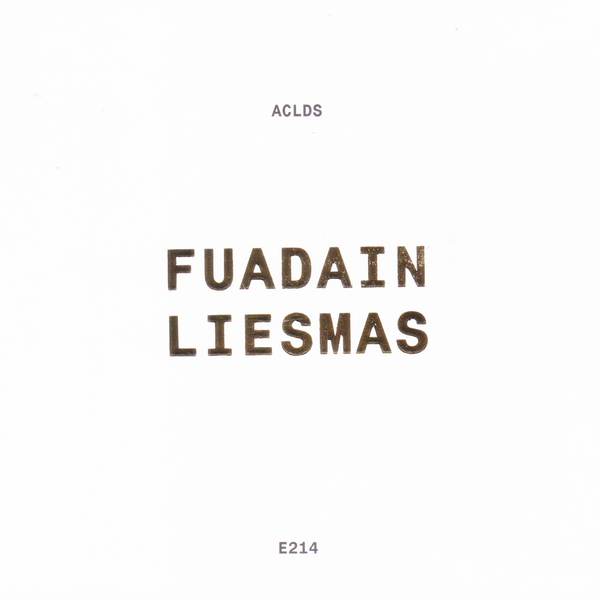
Under the radar, off the map...such terms hardly do justice to Chris Douglas' non-place in the what we might call 'the music world', even the 'underground electronic' version. No surprise then that Fuadain Liesmas has not, to my knowledge, appeared in any end-of-the-year charts. As Dalglish, O.S.T. and Scald Rougish, Douglas has persisted in making music for any reason but the desire for publicity or, perhaps, praise. Not that I believe he wouldn't welcome recognition. Searching for reviews of this album I've found no mention other than on this blog and, of course, Boomkat (because their job is to try and sell music).
Describing the carefully crafted sounds here would be a challenge for most would-be critics, yet that's no reason for it's apparent invisibility; many writers are better equipped than me to talk about 'abstract' sound and do so regularly. Nonetheless, here I am...on the edge of...reviewing what eludes easy categorisation.
Negin Giv, being just 30secs long, might be a good place to start (and end?) since it is, in microcosm a snapshot of Douglas' methodology....his ability to...punch holes in ...the space-time continuum...? If I improvise, forgive me. Free-flowing word scrambles might suit talk of Jazz, but Fuadain Liesmas being so meticulously composed I feel duty-bound to attempt the same in writing. And fail.
OT-IntVxEs 1 is typical of what goes on here, which is not to suggest that it's all predictable from the outset (only in...approach to sound). Rather, I mean, in creating melancholic (?) tones which in other hands would signal mere ambient eternal drift somnambulism, Douglas scatters brittle components throughout. No sleeping here. No daydreaming 'bliss'. Only on Hrm Clng or Dtn#09_Ed do we find what feels like a place of rest, albeit one derived from an afterlife (?). After what? This is life, in all it's restless, skittish, uncertain gravity.
Perhaps ambiguity renders such albums unpopular; not 'difficult listening' - that, surely, is in the ear of the beholder. Albums that gain attention often shout something, even if in a thoroughly minimalist, quiet fashion. Is the popularity of Ambient a result of what many perceive to be a politically turbulent world? An escape from that madness? As if the world has ever been stable. Whatever, the thing to do is make music which speaks of either 'the street', or technological trickery in the service of an adrenaline boost. Songs, naturally, are always in favour. Fuadain Liesmas offers no such musical certainties. It's neither flash nor pleasingly serene. Ultimately, I can only say 'It is what it is'. You can get a taste from the stream below, but to fully savour what Chris Douglas has created, I suggest you buy the CD from here.


RTomens, 2016
WHAT? forgive me. I dunno. WHEN? last year. I mean, this year, 2017. In PC world nobody's memory works so I must consult this blog, scroll back in time (one day everyone will have mental bookmarks implanted, won't they?) to see which albums might be considered
So here goes...
Broken Ground - Christian Bouchardreview

Structures And Light - Group Zeroreview
Sacred Horror In Design - Sote review
Mnestic Pressure - Lee Gamble
review
Some People Really Know How To Live - Shit and Shine
review

Hesaitix - M.E.S.H
review

Fuadain Liesmas - Aclds
review forthcoming

Monika Werkstatt - Various
review
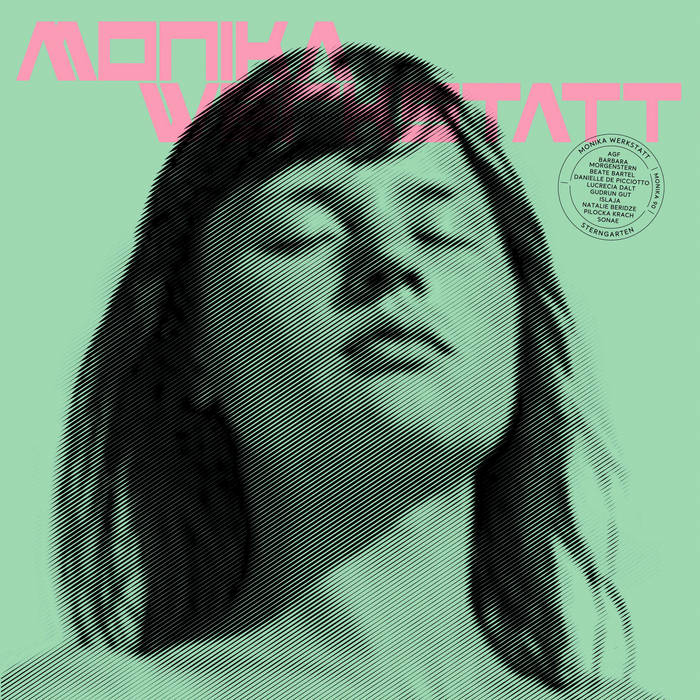
A Little Electronic Milky Way Of Sound - Roland Kayn (this didn't even make the Wire charts!?)
review
Entertaining The Invalid - Various
review


Texture, abstraction, atmosphere...mood music for the apocalypse in your head. Who is not enduring small (or large) psychotic trauma on a daily basis? It's the modern world...in which other modern people go about their business, answering 'it' with just a 'sigh'.
COMA †‡† KULTUR
Pay what you want but somehow you will pay it all, (play it all) back...

All The Marks Of Identity Are Swept Away, RTomens, 2017
Wonder why...I'm not myself of late...

Self-Portrait, RTomens 2017
STARVE LIVING ARTISTS INTO SUBMISSIONDO NOT SHOP
Art: Monk's Mood - Tribute To Thelonious Monk [ 06-Dec-17 6:14pm ]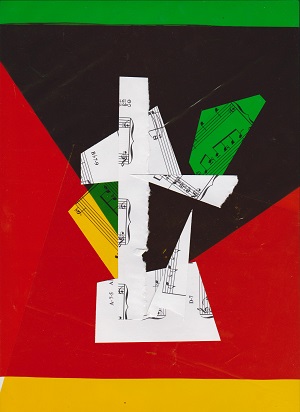
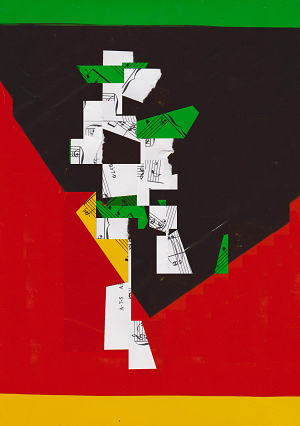
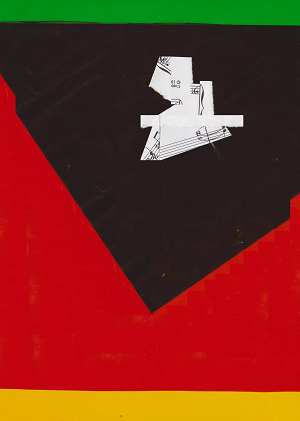
RTomens, 2017 Three art works from a series I made in honour of Thelonious Monk. The music is taken from his tune, Monk's Mood.
RTomens, 2017
RTomens, 2017
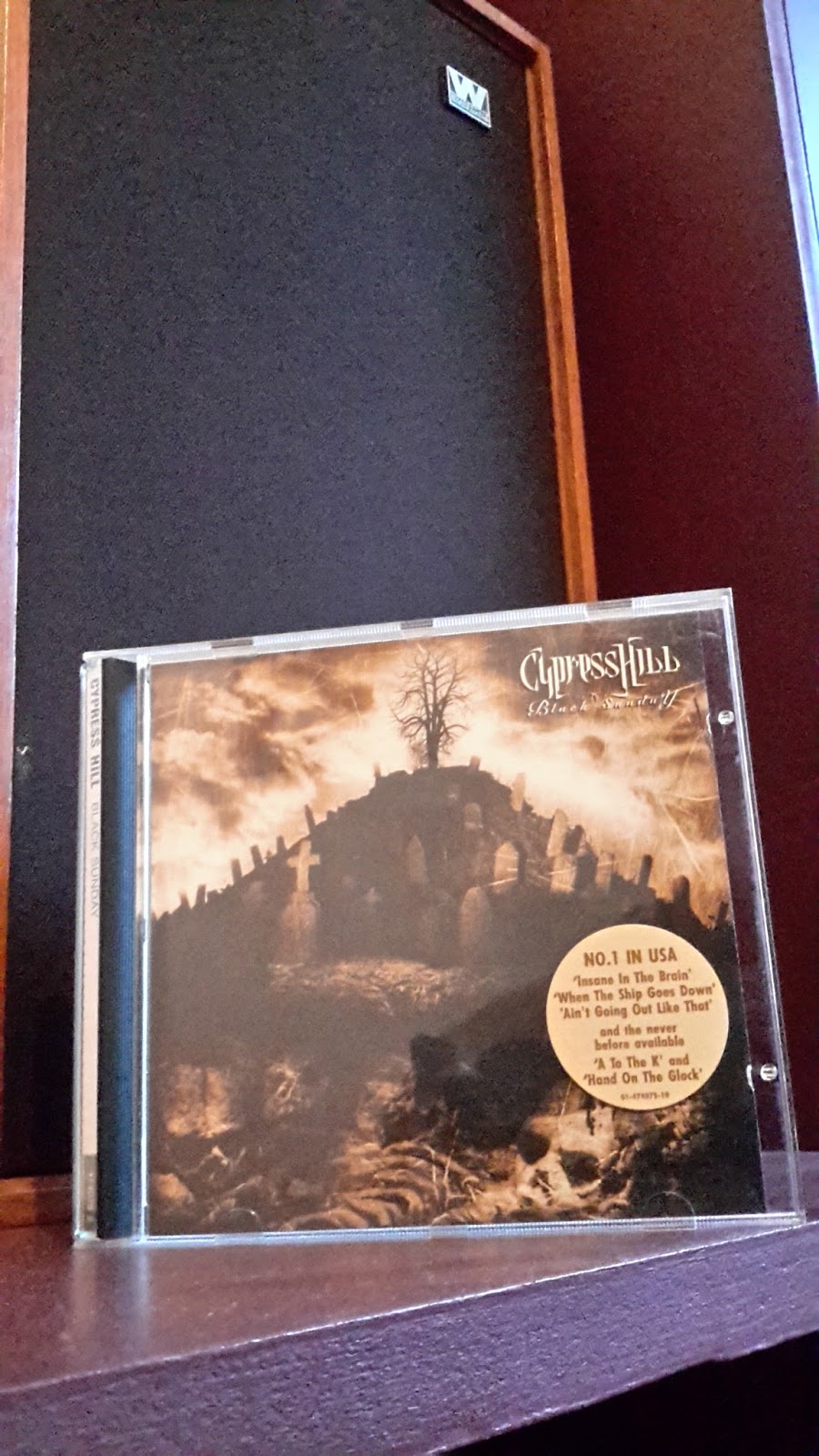
So another CD chariddy shop bargain, Cypress Hill's Black Sunday for a quid - whoo-eee! I had this on vinyl too when it came out - then - what happened?
Remember when hip-hop was big? Remember when Public Enemy were fresh after the old first wave - like dangerous music, like grabbing the torch from The Last Poets and Gil Scott-Heron bad - eh? Yes. Then, well, not quite then, but a few years after the second wave, maybe even the third, hip-hop got out of control worldwide MASSIVE - didn't it? Like many a street sound before it soon every square on the block was into this thing whilst debates about how good it was for the black community and folks at large, what with all that swearing, cop-killing, female-disrespecting, money-idolising, gang-glorifying lyrical splurge - all of which only endeared it to youth and gangsters, naturally. The bigger hip-hop got, the smaller my interest. What this says about me may be that I'm a snob who reacts against popularity, or simply prefers movements when they're fresh? What? Which?
Here's an album that went Triple platinum in the U.S - fuck! I knew Cypress Hill were popular but...only just saw that stat on Wikipedia. I remember loving Black Sunday when it came out, like millions of others - it had the juice - got the juices flowing - but that was then - how would it sound 24 years later? How about BRILLIANT! tHAT'LL DO. sHOCK. tHERE WAS ALWAYS SOMETHING ABOUT b-rEAL'S VOCALS THAT WERE DIFFERENT AND STILL SOUND THAT WAY, AS IF HE'S PERMANENTLY, YES, INSANE IN THE MEMBRANE AND HAMMERING AT YOUR WINDOW TO TELL YOU ALL ABOUT IT. Whoops, caps lock - which rhymes with 'Glock, funnily enough.
In retrospect it's easy to hear how Cypress Hill got so big and so rich. The samples are choice, the mixing is absolutely perfect with the breaks in your face and somehow this album insists that you succumb, not through lyrical force so much as vocal/rhythmic dynamism. It's not original (when did that ever get you rich?). If anything, it's stereotypical of hip-hip subject matter (violence, drugs, bragging) - yet - yet - after the first four tracks you're slaughtered! Putty in their hands. Well, I was, again.
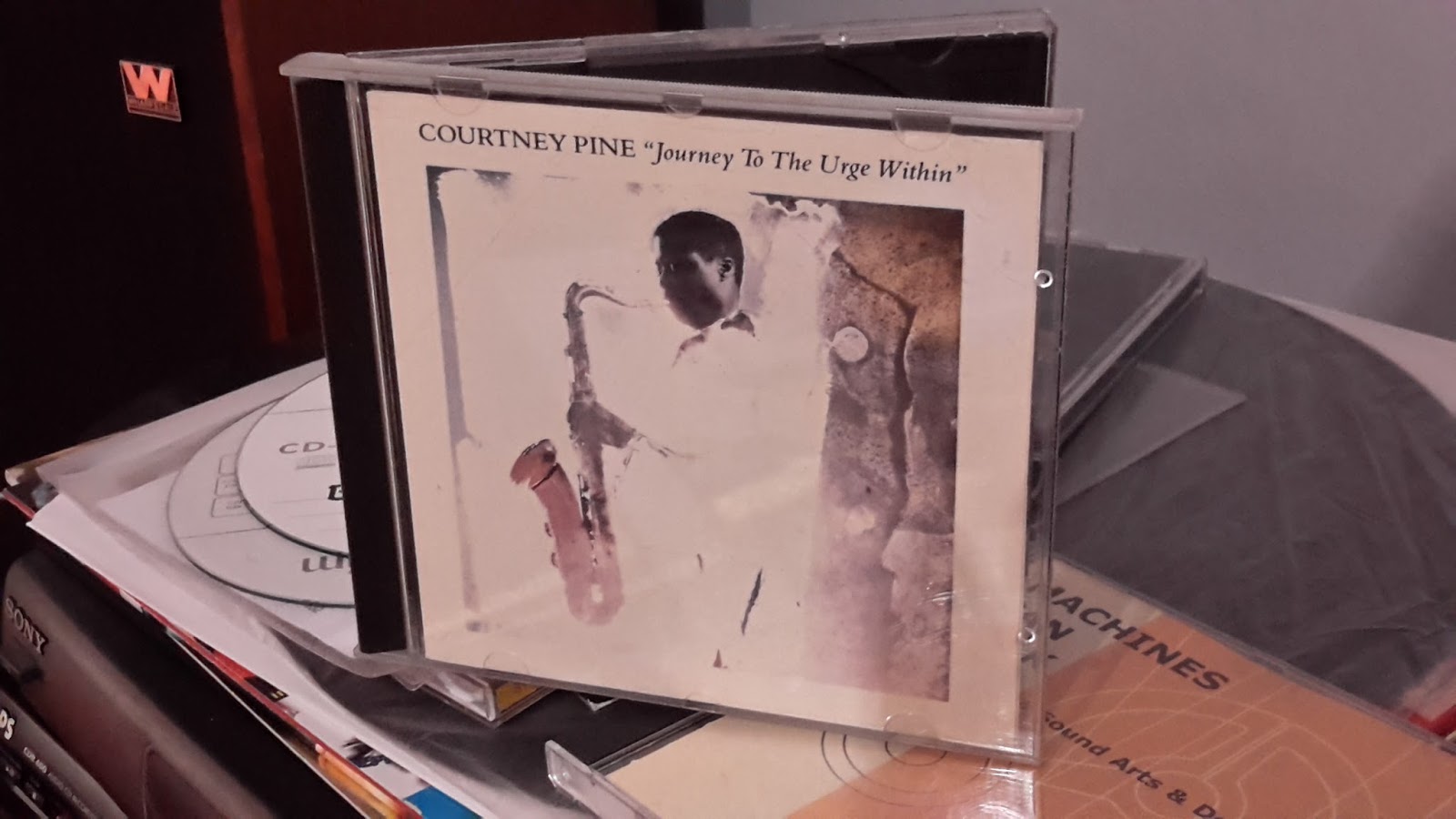
Courtney Pine's debut album for a quid? Couldn't resist. Of course I owned the vinyl when it came out, which was 1986...and Courtney was our Coltrane - he was! We could only watch in awe as our man, a young black man, in a suit, delivered his version of what was then contemporary Jazz..in London Town! He was slimmer then - we all were. He was also the only one to make the cover of the NME. Well how has it aged? Fine, to my surprise. As We Would Say sounds particularity good. OK, in the writing stakes he was no Wayne Shorter or Coltrane, but after 31 years and in the context of all that went before Journey To The Urge Within holds its own with no small help from the likes of Julian Joseph on piano, Gary Crosby's bass and Mark Mondesir's drumming.
So today I came across an interview Pine conducted with David Bowie in 2005, asking him about the influence of Jazz in his life. Turns out our David had some impressive names to drop. I'd never heard Bowie talking about Jazz before but I've often wondered if he got the 'Wham bam thank you mam' line in Suffragette City from the Charles Mingus track. It's more likely he nicked it from the Small Faces tune of that name, of course.
To continue the Mingus connection, when asked for the one Jazz tune that really moves him, Bowie goes for Hog Callin' Blues from the album that Wham Bam Thank You Ma'am was also on, Oh Yeah. A man of taste! This also happens to be one of LJ's favourite tunes. Just listen to Roland Kirk tearing the roof off the studio...

Pure (sun sound) pleasure from Modern Harmonic and how clever of them to collate Sun Ra's 'exotica'. For those not familiar with Sun Ra any sampling of tracks from here will be a surprise if they had him down as too 'crazy'. They may even wonder what all the fuss is about but to miss Ra in these moods is to ignore their worldly 'ancient' and thoroughly justified inclusion in the Arkestral sound collage. Essential.

Accelerated Destruction, RTomens, 2017
This along with other art prints is available now in my shop

How much more 70s/80s cassette culture can we take? - loads! it seems. And why not? There's much pleasure to be had from the beneath-the-underdog bedroom synthesists; the chancers, non-game- changers, radical visionary lunatics and nerds with attitude.
'Nuclear fuel breeds nuclear war/The politics of power/ Rotten to the core' - it's Missing Persons and Rotten To The Core, one of the treats on this superb collection, which illustrates many angles taken by the Lost of Tape Land. PCR's Myths of Seduction and Betrayal (Extract) is another gem. Human Flesh, Urbain Autopsy are names that tell of the Cronenbergian body mutation fixation of the times, when perhaps the recently-evolved opportunity to integrate mind and machine bred obsession with cybernetic mutation. Who knows.
Cassette-sharing sites are popular now but for obvious technical reasons the sound quality is usually poor so this is a welcome chance to hear hi-resolution lo-fi emissions from the vast cavern of underground cassette culture.

Beneath the concrete field, the beach? Perhaps not. Here, at least, is a contemporary collection worthy of your attention. Material by Mark of Concrete/Field, remixed by various folk, most of whom have remodelled original sounds in a very interesting way. Descent's Freebase has great depth, a build-up of tension pressure that's all the better for never actually being released. AMANTRA's Scorched Earth Policy wouldn't sound out of place on the Underground Cassette comp - I mean that as a compliment. Kek-W got A Fax from Philip Glass (great title), well, I suppose a few people did in the 80s - anyway, as always, KW's work is spot-on/interesting, as is Libbe Matz Gang's Tratamento de Enxaquecas, like death metal machine music! Very good comp.

Windows To The SoulBEFORE I GO, A PLUG FOR MY ART PRINTS, WHICH ARE NOW AVAILABLE FOR PURCHASE HERE
Oh, yes, it's Ladies' Night
And the feeling's right
Oh, yes, it's Ladies' Night
Oh, what a night (oh, what a night)...
...Monika Werkstatt at Cafe Oto - yes, what a night! You don't need me to tell that electronic music is a male-dominated world (which part isn't? bingo?), just like Rock, but unlike that traditionally macho realm of phallic axe-wielding at first glance there should be no reason for electronic music being a (mostly) men-only domain, until you start thinking about stereotypical male gadget obsession and the historical culturally-enforced tradition of DIY (inc tinkering with electronics).
Issues surrounding all that (not bingo or DIY) were discussed in the Q&A. An interesting point was raised about how women are expected to be 'brilliant' whereas it's OK for men to be 'all right'. The conclusion was that women should be allowed to be 'all right' too. The issue of expectations aside, pure percentage stats dictate that there's a lot more average male performers in electronic music simply because they dominate.
Politics aside, if it's possible to lay them aside and see the performers as just that (perhaps there's an irony there in rightfully demanding equality, ie not just being viewed as 'female artists', whilst presenting an all-female collective - tricky) with nothing to prove Monika Werkstatt proved it. It was an evening of seductive, passionate, humorous, powerful music, each of the four players performing two songs before a collective session finale. All four were present on stage throughout and it was entertaining just watching their individual reactions to what the performer was doing.
Before the collective, support came from London's La Leif, who brought beats and bass fit to shake Cafe Oto's foundations with a very tough set.
The first of MW to perform was Sonae, whose subtle, richly-textured ambient sounds set a good tone...
Then Barbara Morgenstern ('Queen Of Harmonies') delivered two superb songs, the power of which was amplified times 10 in a 'live' context...
Watch out, it's Pilocka Krach, surely the prankster in the pack, giving us all a good slap with her stomping Electro-Power-Pop! Do you like the beat? Yes, I did!
Finally in solo form, 'the boss', Gudrun Gut, organiser of the whole collective and legendary figure on the scene for years.
The quartet session was as intriguing as you'd expect from four diverse artists with their very own styles, working together intuitively, in the spirit of improvisation, just don't call it 'Improv', Gudrun's ambiguous about that scene and I don't blame her. As she said, it's something you can hate yet be drawn to at the same time. There's nothing to hate about Monika Werkstatt. Do check the collective album. It's an essential release from this year. As an encore, the joint was jumping to Who's Afraid Of Justin Bieber? Here's a brief video I took...
Oh what a night!

Improvising to tape loops may sound implausible, or rather, contrary to the spirit of Improv, but who cares about that, eh? Not you. So here's saxophonist Colin Webster doing just that and the combination of his chops and repetitive sounds works very well. You can almost hear Webster thinking 'What shall I do with this?' in the unaccompanied sections, which adds to the intrigue. Being capable of creating many varied sounds from his horn, Webster has no trouble finding the 'right' tone for each loop (well, perhaps he did, but the released versions all succeed).
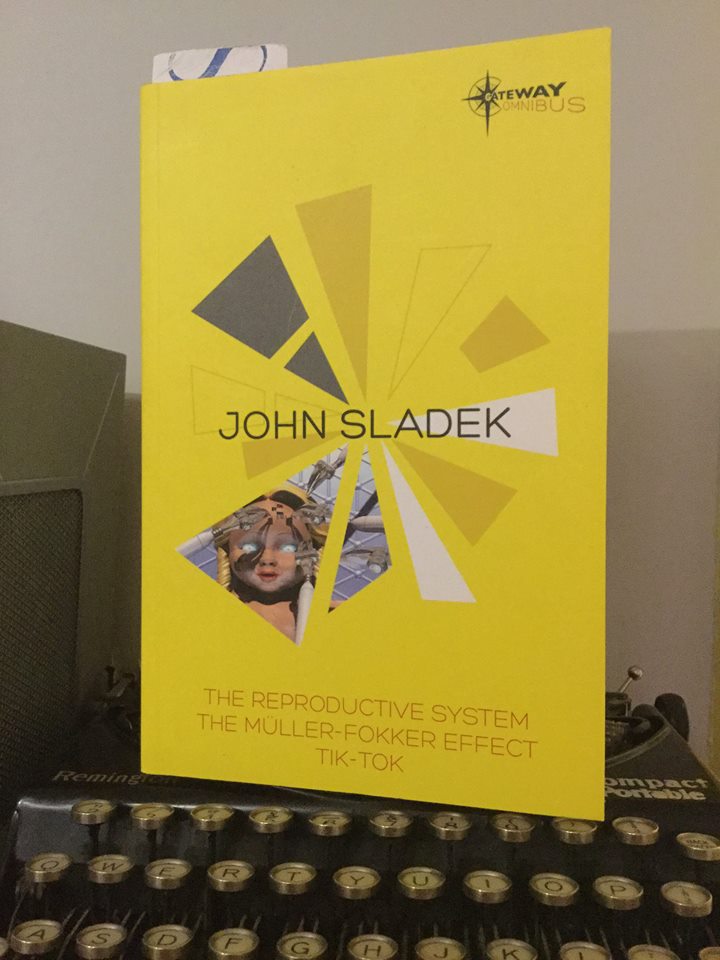
On impulse I called in Daunt Books today to see what sci-fi they had. I asked the girl if they had a section for it, she said they didn't because they 'specialised in travel'. "What about space travel?" I asked..."I know," she replied, almost smiling...
Bought this John Sladek collection the other day, having decided to read more science-fiction. The genre has promised more than it's delivered as far as my needs in recent years are concerned. Those needs have changed since I started reading sci-fi a long time ago, of course.
After the early-teen experience of space adventures I progressed to the biggies such as Asimov and co.. It wasn't until the late-70s and discovering William Burroughs that my view of the genre changed completely; in short, he ruined it regarding everyone else, except JG Ballard, who I still rate highly and read regularly. That's no coincidence considering Ballard's opinion of Burroughs despite their very different writing styles.
Burroughs even gets a mention on page 79 of this Sladek collection from a stoned character trying to get to Morocco. Published in '68, the first novel, The Reproductive System, reflects the era in a good way rather than a 'dated' fashion, covering paranoia, anti-authoritarian, secret agent, science-gone-mad cynicism in the spirit of adventure that reminds me of both Michael Moorcock's Jerry Cornelius and Wilson and Shea's Illuminatus! Trilogy. So far so good and since I will finish it that's a recommendation from someone who's a serial non-finisher (life's too short, isn't it?)
TTFN

The improvement in steering and handling boosted my confidence enough to register for the MRA's final HPR event for the season.Then I got a job offer in the High Plains region of Colorado. Race registration was then cancelled, due to focus on other matters. Time to sell my Englewood home (And 8' x 8' shed) and move into a much better home (With a 30' x 50' insulated 240V workshop and 27' x 31' garage)! There's a lot of romance and mythology about building bikes in sheds - it was a fun and challenging way to start - but the Rohorn Industrial Complex has outgrown that.

There is a lot of work to be finished to the shop (And money to be spent on machinery) before a lot of work gets started on the next racer. But getting this far is a huge step forward.
The rest of 2017's involvement with motorcycle racing was behind a video camera at the MRA's HPR events. Time spent at the track, as close to the action as I could get, with an old JVC GY-HM70U and GC-PX100 was an excellent experience. If you love motorcycle roadracing and want to get involved and up close without actually racing, I highly recommend working as a Corner Marshal for a season, then getting a media pass and shooting photo and/or video. I shot most of the off-bike video content in the 2017 MRA Awards Banquet video:
Space Age print / Flying Saucers Are Hostile / Starship Troopers / Shit & Shine - That's Enough / Felix Kubin - Takt der Arbeit [ 19-Nov-17 3:37pm ]
RTomens, 2017
More of my art here

1967 1st edition
You've been warned - 'YOU DARE NOT ALLOW YOURSELF TO IGNORE IT!' (from the back cover).
Flying saucers are hostile, so too are the alien bugs in Paul Verhoeven's Starship Troopers - "The only good Bug is a dead Bug!". It's 20 years old and re-watching it I confess to enjoying it even more than the first time. That's a 'confession' because revelling in a film filled with square-jawed, squeaky clean heroes out for military death or glory to bombastic soundtrack sounds like hell as a film, but that's the point. ST is pumped up and primed as a trashy action film whilst constantly undermining everything it superficially celebrates. It's very sheen is as sickening as the site of a bug ripping a soldier limb-from-limb. It's gung ho writ large but gets booby trapped at every turn. Verhoeven knew what he was doing but did it so well that few could see the subversive irony through all the flying limbs and phoney machismo.

In a way Shit & Shine like to play with machismo (note the cover) - perhaps they really are macho men. But there's an 'ironic' edge to most everything they do and their latest, That's Enough, is no exception - 'Do you know the way to the garden party?' - the EPs filled with samples, a long one opening the opening title track, which you've probably heard by now. The Worst continues playing with the sample idea - the judges on American Idol? Subversion, like ST, is embedded in the per-usual nasty grooves - that must be Simon Cowell sampled - we might think that's enough of that talent contest shit but it just seems to keep rolling and so too, thankfully, do Shit & Shine.
Do they still make musical geniuses? What do you reckon? Whoever 'they' are - parents of musically gifted kids who rise above being mere talented? What? Anyway, Felix Kubin: as Mark E Smith said 'Check the guy's track record' - it's impressive, to say the least. Here he is with Takt der Arbeit, four soundtracks to educational and industrial 16mm films about work. Is this a return to the fascist/imperial/dictatorship reflected in Starship Troopers? Is that what Work is?
Track one has a militaristic slant (those drums) echoing the regimentation of both machine and human operators but here Kubin brilliantly orchestrates the components into something that sounds part friendly info film soundtrack, part chaotic depiction of factory-frazzled minds. Geburt eines Schiffes has the mood of Soviet-era proletariat-powered propaganda so strong you can see the workers marching towards you over the horizon, shirt-sleeves rolled over bulging biceps. Hold on, I got carried away with that idea. The actual mood is one of a huge industrial-age factory gradually coming to life with the roar, clank and hiss of machines complete with triumphant music heralding the brave new era of man-made mechanical wonders - or hell, since the overriding atmosphere is actually one of foreboding and tragedy. Martial Arts continues the work-til-you're-musclebound theme but Kubin continually breaks things down (a musical spanner in the works). The group Kubin works with add essential components to the EP; the human element in what could have been just another 'industrial record' in other, less creative hands. Release date was supposedly Nov 17th but as I write it's not yet out so keep an eye on Editions Mego. Don't miss it.

Briggflatts by Basil Bunting is one of the great poems of the twentieth century. However, it has not always occupied a prominent place in discussions of modern poetry. The reasons for this are complex, and have largely to do with a range of contentious biographical and historical factors (such as the marginal status of modernism in the UK and Bunting's own variable reputation). Another factor, the poem's supposed difficulty, requires some qualification. Briggflatts is a dense, carefully wrought high-modernist work. As with other poems in this bracket (The Waste Land, The Cantos, The Maximus Poems) it repays diligent close reading and re-reading. But it is arguably more vital (and, dare I say it, accessible) than those works, and can in fact be appreciated pretty well by first-time readers. As a teacher of undergraduate students over the last few years, I have found that Part 1 in particular lends itself very well to group reading and seminar discussion: indeed, the first section of Briggflatts seems to me to serve as a far better introduction to modernist poetry in a pedagogical context than a work like The Waste Land, with its copious and contested layers of allusion. It does help, it is true, to have a skeleton key to unlock some of the key features of Briggflatts. But I think the really essential facts about the poem can be summarised in a relatively modest space. The following brief guide to the poem should hopefully provide a good foundation for first-time readers. I have tried to shine light on the basic subjects and structures of Briggflatts, without diminishing its music and magic.AN, 2017
Part 1
Season: Spring
Phase of Bunting's life: Childhood
Location: Northern England
Part 1 is the most immediate and tightly structured in the poem. Twelve stanzas, each of thirteen lines, sketch an idealised panorama of Northumbria (in Bunting's poetic vocabulary this meant pretty much the whole of Northern England). The verse here is emphatically musical, foregrounding alliteration, assonance and internal rhyme, with a stark rhyming couplet at the end of each stanza to draw it to a close. In one sense, this is pure sound evoking a pastoral idyll and it should be enjoyed as such: Bunting himself said that readers (or listeners) shouldn't try too hard to uncover 'meaning' beneath the musical surface of his verse. At its simplest, this whole section is an extension of the song of the bull ('Brag, sweet tenor bull') in the first line.
However, that is not quite the whole story; there is also a definite realist narrative here. Bunting is recalling a childhood 'holiday romance' with a girl called Peggy, which took place in the early 1910s in Brigflatts (the correct spelling), a tiny village in the North Pennines. Rawthey is a river; Garsdale, Hawes and Stainmore are nearby locations; the stonemason and miners are local characters. Part 1 is therefore the beginning of a process of remembering real things, literally the first chapter in an autobiography. Deeper history also comes to the surface with the first, brief appearance of the Viking warrior and sometime ruler of Northumbria Eric Bloodaxe, killed in battle on Stainmore around 954AD. This enigmatic darker image or 'tone' prepares the way for the mournful conclusion to part 1. Spring ends, the natural presences begin to die and rot, and somehow—we never quite find out why or how—the poet's idyllic love affair with Peggy is 'lain aside' and forgotten.
Part 2
Season: Summer
Phase of Bunting's life: Early adulthood to early middle age
Locations: London; North Sea; Italy; North Pennines; Middle East; Mediterranean
Part 2 is by some distance the longest in the poem. In stark contrast to the chiselled stanzas of part 1, part 2 is an eclectic collage of clashing poetic fragments, perhaps intended to mirror the immature, evolving state of Bunting's mind throughout his wandering 20s and 30s. We start with an intentionally dramatic change of location, from the idealised North to artificial, money-obsessed London (Bunting is nodding at similar depictions of the capital in Wordsworth's Prelude). From this point onward there are continual geographical shifts (again, this is a recollection of real events in Bunting's early life). We are treated to a short tour around 1920s Bloomsbury bohemia (lines 1-23), a jaunt along the Italian coast and mountains (most of the middle of part 2 from 'About ship! Sweat in the south') and finally to a more obscure conclusion that includes flashes of the Middle East, where Bunting spent the latter part of World War II ('Asian vultures riding on a spiral column of dust') and generalised Mediterranean references—as well as spending the early 1930s in Italy, Bunting returned there during and after the war as a soldier and intelligence agent. In between these biographical fragments, more indirect passages and mythical subjects jostle in typical high-modernist fashion. The Bloodaxe narrative is treated more fully: we see Eric cruelly commanding a longship in the North Sea ('Under his right oxter …') and then dying a horrifically violent death back in the Pennines in the first great climax of the poem (the long passage beginning 'Loaded with mail of linked lies'). Paralleling this episode, Bunting nods in the final lines of the section at the Ancient Greek myth of Pasiphae, who gave birth to the Minotaur after an encounter with a bull sent by the sea-god Poseidon (note the subject rhyme with the bull at the start of the poem).
As well as being a sometimes chaotic—though often beautiful—record of the frustrations of Bunting's early adulthood, part 2 is also the place where the underlying moral of Briggflatts is first advanced. Put very simply: human beings cannot control the world, they must find a way to co-operate and co-exist with it. As Bunting put it (far more eloquently) in his 'Note on Briggflatts': 'Those fail who try to force their destiny, like Eric; but those who are resolute to submit, like my version of Pasiphae, may bring something new to birth, be it only a monster.'
Part 3
Season: n/a
Phase of Bunting's life: n/a
Locations: Edge of the world; Northumbrian arcadia
Part 3 is outside the main structure of the poem: it refers neither to a season nor to a specific period in Bunting's life. Nevertheless, Bunting intended it to be the climax of the narrative. In musical terms this is the 'loudest', most forcefully expressed part of the poem, the place where the moral first hinted at in part 2 is affirmed in a dramatic 'big reveal'. The section is based on an episode from the medieval Persian epic poem Shahnameh, which includes a portrayal of the Greek leader Alexander the Great (356-323BC). In Shahnameh, Alexander journeys with his troops to the mountains of Gog and Magog at the edge of the world. At the summit he leaves his men behind and encounters an angel (Bunting has him played by the Biblical figure 'Israfel') who is poised to blow a trumpet to signal the end of the world. There is some ambiguity in Bunting's retelling of this legend. What exactly happens to Alexander on the mountain? Why does Israfel 'delay' in blowing the trumpet? What sort of divine intervention is at play here? Yet the underlying moral is clear. Alexander tries to conquer the world and reach the limits of experience, but in doing so he is ultimately returned back to the ground, to his homeland (for Alexander this was Macedonia, but Bunting describes it here as a kind of Northumbrian arcadia). Lying dazed in the moss and bracken after his fall from the mountain, he encounters the hero of Briggflatts, the slowworm (actually a snake-like lizard) who advises him to lie low, be patient, persistent and mindful of the beauty of his surroundings.
This is the most abstract moment in the poem, but there are also clear parallels here and throughout part 3 with Bunting's biography. The opening passages of the section caricature greedy, powerful people who obstruct creativity and make life a literal shitty nightmare. As a struggling poet for much of his life, Bunting had built up some resentment towards these establishment 'turd-bakers', such as the businessman and newspaper owner Lord Astor ('Hastor'). The overall narrative shape of part 3 also mimics the curve of Bunting's middle years: after spending much of the 1940s in Persia (poring over works like Shahnameh) he returned in the 1950s to Northumberland, the homeland from which he would eventually write Briggflatts.
Part 4
Season: Autumn
Phase of Bunting's life: Late middle age
Locations: North Yorkshire; Lindisfarne; Tynedale
Part 4 is the shortest section in Briggflatts, and is best viewed (or heard) as a penultimate, minor-key movement resembling those in pieces of classical music (Bunting called Briggflatts a 'sonata'). You don't need to follow this musical analogy too closely, but it might be worth spending some time looking at the way Bunting weaves together different textures and 'themes' in the second half of part 4.
Aside from its musical properties, part 4 is also notable for its elegiac subjects. It begins with allusions to the sixth-century poet Aneirin (the correct spelling), whose most famous work Y Gododdin describes the Battle of Catterick and its aftermath in North Yorkshire around 600AD. The purpose of this allusion is twofold. Firstly, Bunting is nodding at what is in effect the first Northumbrian poem (although Aneirin was a 'Welsh' poet, we should remember that the Welsh or Britons lived in Northumbria prior to the Anglo-Saxon arrivals of the fifth and sixth centuries). In terms of the realist dimension, there may also be a glance here at the war and destruction Bunting witnessed in the mid-twentieth century (we are now, chronologically, up to the 1940s-1950s). More personally, the litany of death and decay segues eventually into a recollection of the lost love affair with Peggy. In some of the most moving lines in the poem, Bunting says 'goodbye' to his memories of Peggy as he settles down to lonely old age in post-war Northumberland.
But there is some light in the gloom. Aside from the redemptive music of the baroque composer Domenico Scarlatti, we also encounter the Northumbrian Renaissance of the seventh and eighth centuries (a dramatic 'rebirth' following the violent period marked by events like the Battle of Catterick). Among other achievements, this cultural upsurge produced the Lindisfarne Gospels (celebrated in the gorgeous passage beginning 'Columba, Columbanus …'), a beautiful illuminated book created in part to celebrate the life of the Northumbrian saint Cuthbert, who appears here as the (positive) mirror image to the (negative) portrait of Eric Bloodaxe in part 2. Aside from his Northumbrian pedigree, Bunting gives Cuthbert a starring role because he reputedly 'saw God in everything'. In line with the moral of Briggflatts, Cuthbert was a quiet hero living on the margins of society who loved nature without seeking to control it.
Part 5
Season: Winter
Phase of Bunting's life: Old age
Locations: North Northumberland, Farne Islands
If part 4 was mostly tragic notes with a brief major-key interlude, part 5 is the opposite. Like the final movement of a symphony, this is a resounding conclusion to the poem ('years end crescendo') although it ends with a sad diminuendo.
In musical verse that often recalls the 'Sirens' episode in Joyce's Ulysses, Bunting revisits the idyllic landscape of part 1 (the powerful opening syllable 'Drip' recalls part 1's 'Brag'). But now that he is an old man the perspective is different. We have moved from the mountains in springtime to the Northumberland coast in winter, where the sea speaks of finality and the end of a journey. Having accepted the need to be patient and respect human limitations in the face of nature, it is now possible to appreciate the precious details of life: rock pools, a spider's web, the lapping of the ocean, the way birds fly in harmony, the skill of shepherds in handling sheep dogs, the inexplicable wonder of the night sky. There is a kind of spiritual idealism here, and this conclusion is certainly upbeat and effusive in some ways, with the faint suggestion of a happier ending to Bunting's life than was predicted in part 4.
Part 5 is on the whole concerned with images in themselves rather than any more complex symbolism, but the line 'Young flutes, harps touched by a breeze' may just carry a hint of the optimism Bunting felt in the mid-1960s, when he was 'rediscovered' by younger poets and finally became a celebrated literary figure. However, there is still the nagging sense of tragedy that has persisted throughout Briggflatts. As the stars shine out over the Farne Islands, where St Cuthbert once lived and worshipped, Bunting remembers Peggy for the last time, and awaits a final 'uninterrupted night'.
Coda
The Coda is a fragment composed prior to the rest of the poem, which Bunting rediscovered and welded on at the last minute. It is a condensed summary of the key philosophical motifs in the previous sections: the power of music, the impermanence of all creation, the impossibility of knowing everything. Tellingly, the poem ends with a question mark (this is a work of literature that proclaims its own uncertainty and inability to conquer the world with language). For all that, one thing is certain in the end: as Bunting once remarked, Briggflatts is 'about love, in all senses'.
This past weekend I gave a talk about how, why and whether cultural work can refuse the various alienations of modern society / economics, as part of a panel called 'DIY or Die: Is Bartleby Dead in the Post-Digital Age?' at the No! Music Festival at Berlin's Haus der Kulturen der Welt. I don't think the event was recorded, but I thought I'd share my slides / notes on it here, if only because the HKW computer wasn't able to display my outrageous choice of font at the time.



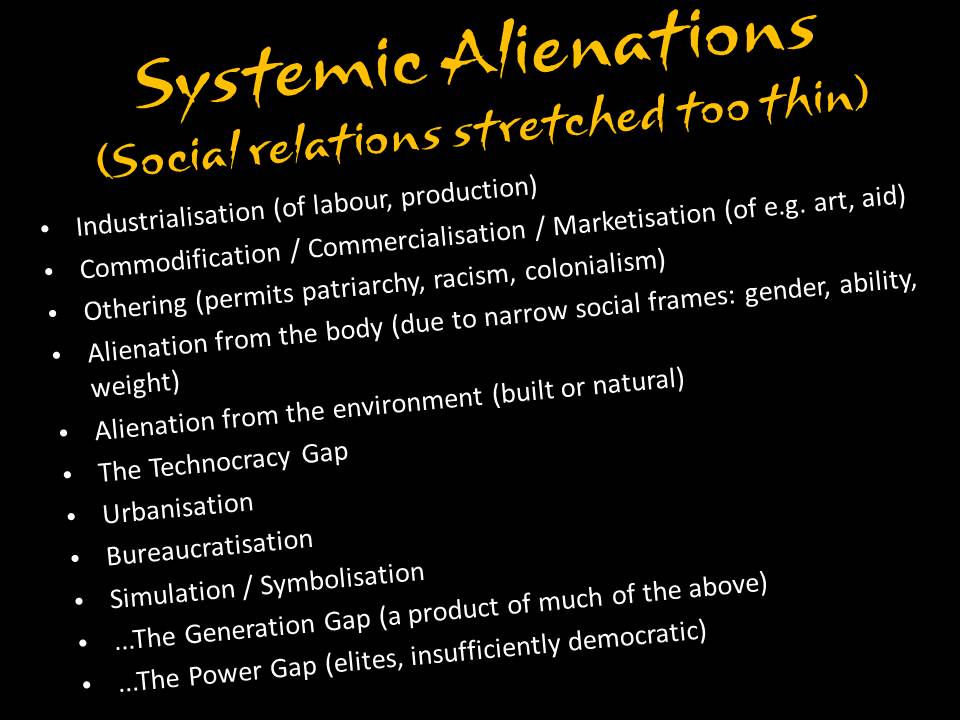
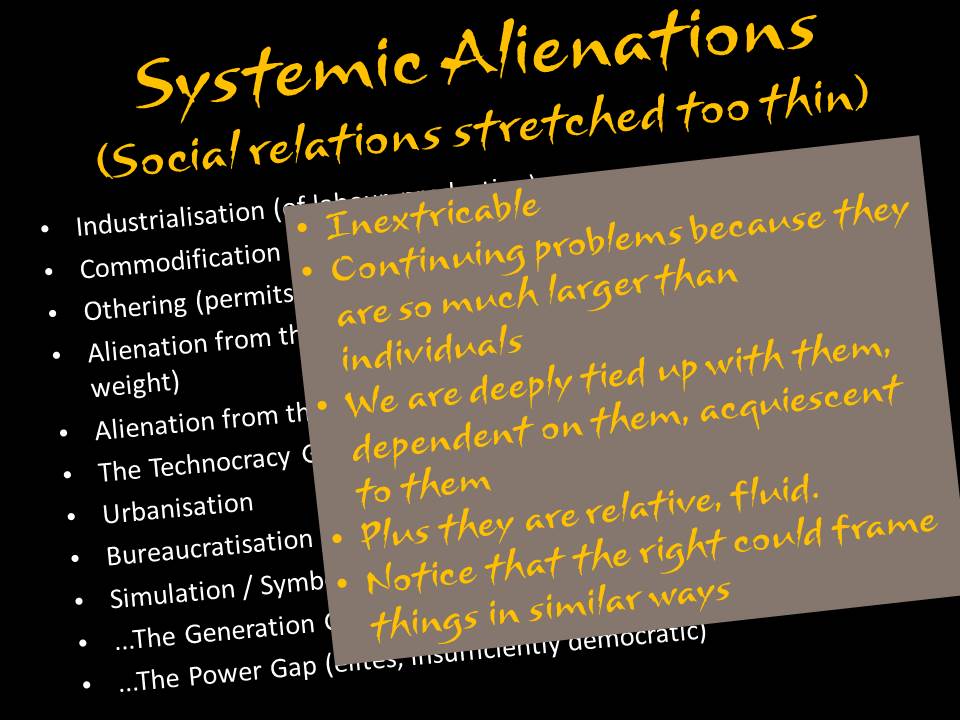




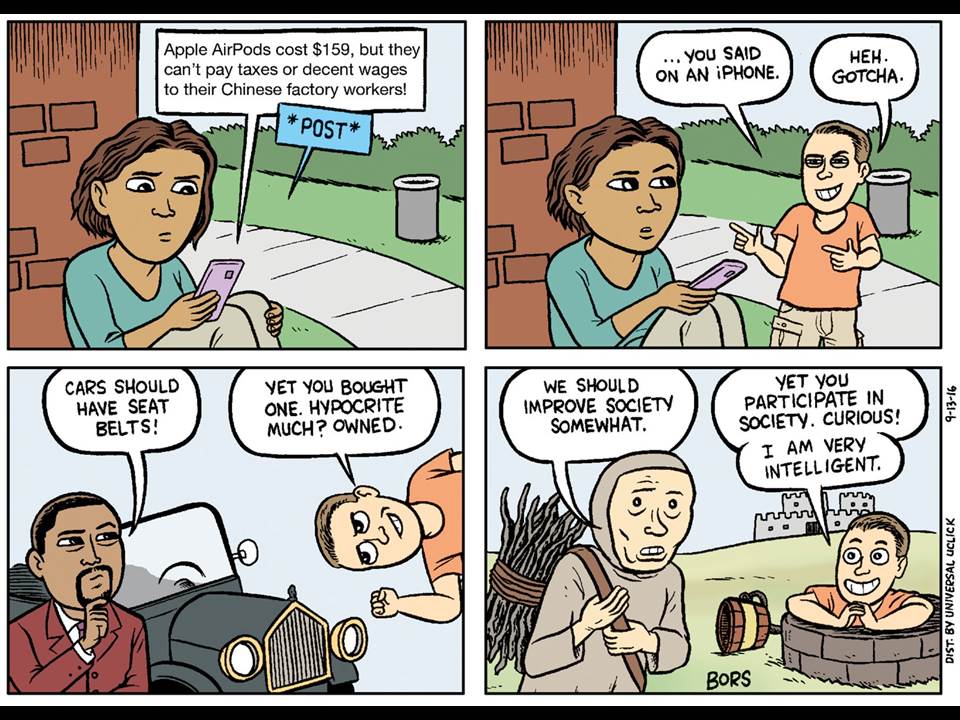
 What Sarkeesian says:


 M.E.S.H. - Hesaitix [ 14-Nov-17 6:06pm ]
M.E.S.H. must be an acronym for something but I haven't bothered finding out what - Making Electronic Shit Happen? - that's probably it. James Whipple does make shit happen - good shit - detailed, interesting electronic shit like Hesaitix. Listening to Mimic just now I kept thinking someone was outside my window, rustling about and banging something so I got up to look and heard that sound again, from the speaker. Whipple's a spook in the speakers, spiriting sounds like...like you can't say what, except for the tolling of bells on Blured Cicada I...and now he's playing ping pong with Robert Henke (you know that sound?), who must be a spiritual brother of sorts, a forebearer, you might say. The difference being the beat, absence of the regular Tech motor Henke uses; instead, more irregular, as on 2 Loop Trip. But whatever messing around there is, he keeps a feeling of movement...the percussion on Search. Reveal is one outstanding aspect of a proper shapeshifting intergalactic gro-o-o-o-ver - yes it is! Whipple maps the space-sound continuum brilliantly, singing the body and brain electric. Damned good.
A Fistful Of Dollars [ 10-Nov-17 5:21pm ]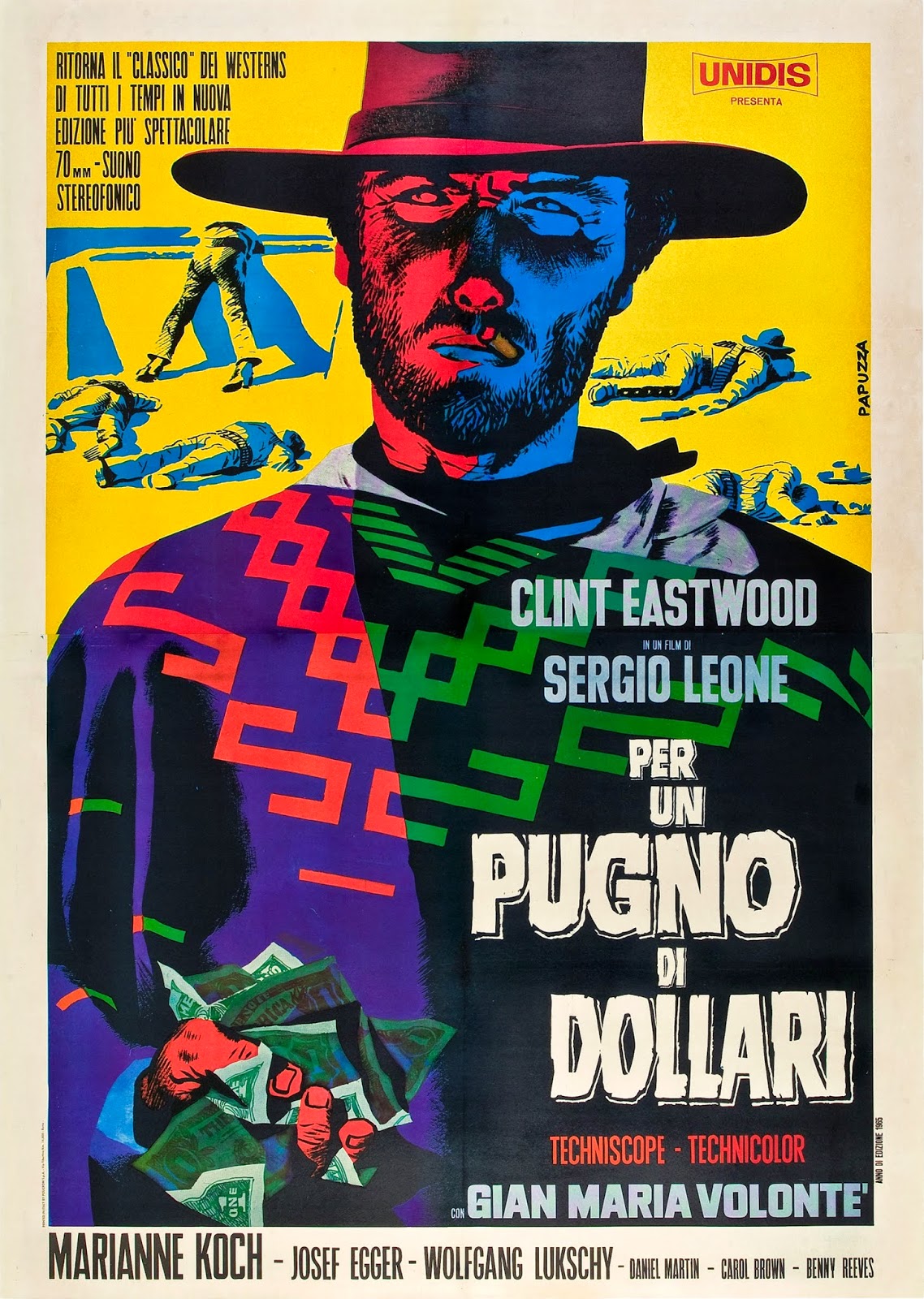
Bought a Clint Eastwood Spag Western box set a few weeks ago but only started watching it recently, beginning, (chrono)logically, with A Fistful Of Dollars. I thought they were due reappraisal, having not watched one all the way through for many years.
One of several things that struck me was the sound, which I only learnt the other day was dubbed on afterwards, thus explaining why every 'clip-clip' of the horses' hooves, jangle of bits and clomp of boots on boards seemed heightened, to the fore. Then the laughter; throughout bad guys spend a lot of time laughing. At times, it's as if some are high on something. The framing of some shots, of course, Leone's recognised for that now, so I wondered why this film, apparently, got such a luke-warm reception from critics. Couldn't they see the artistry involved? Perhaps they were blinded by the amount of gun smoke. If not exactly hailed as a bone fide 'classic' today, this and the subsequent ones are at least rightly hailed as unique.
One other thing that struck me was the similarity between the scene where The Man With No Name is getting his (swollen) eye in again, the shot of his gun hand as he practices to the sound of a militaristic drum beat by Morricone instantly brought to mind Travis Bickle firing to a similar beat by Bernard Herrmann. I may have imagined it, but as you know that military-style drum runs through the Taxi Driver theme.
One astonishing scene is the massacre of the Baxter clan. Leone doesn't depict this in a normal fashion, but hammers home the brutality with almost as many shots of the slayers as bullets they fire. It plays out relentlessly.
By coincidence it's Ennio Morricone's birthday today. The score for A Fistful Of Dollars is great, of course, although as regular readers will know when it comes to playing Morricone scores I favour his Giallo work. Watching the film reminded me of reggae artists' obsession with Spaghetti Westerns, often resulting in hilarious Jamaican/Mexican dialogue. So by way of honouring Morricone, I'm opting for one of those instead of anything by 'Il Maestro'. Featuring adapted dialogue from the film, the now famous coffin joke...

Post-Halloween horror treat for you from I Monster: H.P.Lovecreaft read by Dolly Dolly (David Yates) - what's not to like? The musical accompaniment features students at Leeds Beckett University and is pitched just right, avoiding hauntology cliches, opting instead for a blend of dark electronics and even motorik rhythm. Yates' delivery is, as you'd expect, absolutely perfect. Time to throw another log on the fire, light a candle or two and watch the shadows flicker as your skin crawls. Superb. Available as cassette or download here.
{{{ WITHIN }}}
Even if your literary masochism amounts to but a fraction of my own, you can't avoid running into this bizarre concept if you read anything in this genre. Look within, my child, and your questions shall be answered!
I strongly suspect that heading the FAQ Hit Parade in this regard would be:
"Who's the fairest of them all?"
And the #1 most popular corresponding answer:
"Why, you are, Queenie!"
I got thinking about this again today because a reader kindly sent me a link to an interesting post titled Folk Theories Of Guru-Based Spirituality, which included such items as...
- The folk theory of everything being connected
- The folk theory of ancient wisdom
- The folk theory that only the heart knows what is true
- The folk theory that the mind is an enemy of the spirit
In the comments, someone added one of my all-time favorites...
- The folk theory that the Universe has a plan for Your Life
Meanwhile, I added...
- The folk theory of the Inner Magic 8-Ball
But then, thinking that might well beg for further explication, I finally started my own post on the subject. And as Madge would say: "You're soaking in it."
OK then, let's go to the source...

Of course, that's not really the source of this meme. Nor, despite the highly self-assured (if terse) rhetoric of the reply, is the answer definitive. But even after years of searching and frustrated head-scratching, I have yet to discover where the idea originated that "the answer lies within" -- or words to that general effect. I did, however, just today -- and totally by accident, opening a random book in my downstairs bathroom as if it were the I Ching (it was not) -- find the following passage from Tupak Okra's The Seven Spiritual Laws of Success: A Practical Guide to the Fulfillment of Your Dreams (pp. 43-44).
Consciously put your attention in the heart and ask your heart what to do. Then wait for the response -- a physical response in the form of a sensation. It may be the faintest level of feeling -- but it's there, in your body. Only the heart knows the correct answer. Most people think the heart is mushy and sentimental. But it's not. The heart is intuitive; it's holistic, it's contextual, it's relational. It doesn't have a win-lose orientation. It taps into the cosmic computer -- the field of pure potentiality, pure knowledge, and infinite organizing power -- and takes everything into account. At times it may not even seem rational, but the heart has a computing ability that is far more accurate and far more precise than anything within the limits of rational thought.The cosmic computer, aha! So I guess there's my answer. But now I'm wondering if something like this is what Nietzsche was maybe on about with his whole "Gott ist tot" shtick...


First and foremost, this considered a symptom of the postmodern "end of history" declared by neo-liberalism. If the dizzying development of music during the 20th century is the very manifestation the human spirits thirst for the future, its visionary will-to-re-imagen, to grow and develop, then the lack of anything new, the endless, retromanic harking back to older forms for inspiration, obviously expose our current inability to imagine any alternatives - let alone a future being different from the present. But in that case, shouldn't we perhaps expect music to start moving again, now that the end of history is clearly over - indeed, shouldn't this already have happened? As far as I can tell, it hasn't. Or rather: In the last couple of years, music hasn't begun to move forward any bit more than it has done the previous 5-10 years. The twist, of course, is that I happen to be one of the few people who think, within electronic music at least, that those 5-10 years actually offered a cornucopia of musical invention, originality and brilliance fully on par with the progressive period of late sixties/early seventies or the post punk years, and close even to the early nineties golden age of rave-derived electronic music.
With last year being a kind of return to form for the poststep musical frontline, after a couple of years with a slight lull, I'm not quite sure if the golden age is still going on, or just offered a last outburst, but the interesting thing is that this doesn't change how things are seen, or can be seen. If you're in the camp arguing that everything is completely, retromanically stuck and doing nothing but recycling the past, then I see nothing happening now - and that hasn't already been happening the years before - that should make you change that point of view: Music hasn't suddenly started to be a way for todays youth to address and tackle the graveness of the times, despite living in a world that is seemingly falling apart. If, on the other hand, you've thrilled to the amazing stuff created from, say, 2008 to 2015, then you could still get just as thrilled in 2016. Perhaps this is a clue to what is going on: Not just that the feeling of being in a golden age or in a wasteland can be how the same music is simultaneously interpreted by different people, but also that these divergent interpretations might seem just as valid to both parties even though the zeitgeist is changing violently. You'd think it would change everything - that's how it's supposed to go - but apparently not.
So why is that? Well, there's obviously many different layers to this, but I think crux of it all is that something is indeed missing: Not the ability to create new and inventive stuff, but the ability to recognise new stuff - somehow were getting more and more unable to feel the thrill of the new, even when directly confronted with it, and as a part of this: We seem unable to construct the surrounding narrative of innovation and upheaval necessary for this. Which is why we're not getting that narrative even now, when it would seem bound to pop up. Remember how it was possible for a lot of people to take even grunge as some kind of forward-pushing "movement", despite being largely a media construct, and practically consisting entirely of reheated rock leftovers? Even if there weren'tany even remotely new music around now, it certainly seems like it should be possible to construct narratives of boundary-pushing musical subcultures in the current political climate - but alas, it hasn't happened, even with actual boundary-pushing music around.
The narrative of endless retro-stagnation has become so internalized that it's a self-fulfilling prophecy by now - the very lack of anything truly new is pretty much presented as established fact by most leading critics, of which the best, most convincing are most likely Simon Reynolds and the sadly late K-punk. With the latter, cultural stagnation was an integral part of his Capitalist Realism-analysis, and it certainly makes sense: In a culture unable to even imagine the world being different, how is it possible to create something new? If a culture has completely internalised the notion that all it can do is pick n mix the riches of the past, how can it do otherwise? Well, first of all, I think it's pretty clear that a lot of electronic artists actually don't accept that recombining previous innovations is all they can do. Instead, they're often very actively looking for strange new openings, trying to make something "fresh" The way hordes of hipster beatmakers immediately and eagerly tried to utilise (and twist) the innovations of more "authentically" grown styles like wobble, footwork and trap, clearly shows the thirst for something novel, and the sheer, almost exhibitionistic delight many producers took in creating unrestrained-bordering-on-dysfunctional musical weirdness suggests that it was crucial for them to pledge allegiance to electronic music's heritage as the frontline of innovation.
If anything, I think many of the producers of what I've been calling poststep were fighting a desperate battle to prove that they were indeed still making new things, not least because they were constantly told not only that they weren't - as old farts have always told young turks creating genuinely new stuff - but, more crucially, that they simply couldn't, that it was historically impossible! And as a result, you often get the impression that they didn't even believe themselves that what they were doing was as amazing as it was, they never got into celebratory mode, never rode a crest of victorious excitement. Instead they constantly had to fight, never able to prove to the retrologists that they were creating the shockingly new, and consequently, they were never allowed to feel that what they did was exactly that. But, you might say, if it really wasso great, shouldn't they simply be able to not care what the old farts were thinking? Well, this is where I think the suffocating effect of the end-of-history mindset sets in - I'm not questioning that it's there -, it's just that its result is not in an inability to create something new, it results in an inability to recognise and believe in newness, to be exited by it and letting it ignite a broader, culturally significant movement.
At this point, I suppose I should probably try to back up my claim that an abundance of thrilling newness actually was created during the last 5-10 years. How do you really determine how "new" or inventive a piece of music is - after all, even though I hear some music this way, many others clearly don't, so it's obviously not enough just to listen and say whether you think it "sounds new". Specifically, Reynolds actually did listen to some of the stuff I've been raving about, but even though he did find some of it exciting, he couldn't "quite hear" the formal originality that had been blowing me away, deeming it basically just a combination of existing things. Obviously, the sensitivity to whether music has reached mutational escape velocity can be very differently calibrated, but the question is why?
A possible critique of Reynolds is he is obviously, at least to some degree, a man with a theory he wants to support - if his conclusion is already that things are not moving anywhere, he might very well scrutinise anything supposedly delivering something new, deliberately looking for the recognisable, pre-existing elements (which all music obviously contain), while at the same time underrating the things that are different from post forms. I suppose this is why it took him so long to recognise the new thing going on in dubstep, for years maintaining that nothing really was going on, until it eventually became undeniable with full on wobble. Similarly, his critique of the new wave of "art grime" seems weirdly to mirror "real punk" evangelists moaning about middle class art wannabees not keeping it real, making pretentious (and, I'd certainly say, "superficially jagged and challengingly ugly") art rock - as he himself describes in Rip It Up, where he's fully on the art-wankers side. But grime shouldn't be abstract or emotional or have any other kind of arty pretentions, because the style is by definition meant to be raw, functional backing tracks for MCs delivering its one true essence - its street cred approved will to succeed, to break in to the pop mainstream and take over. Heaven forbid that anyone would think of doing anything different with this music.
All that said, I think it's not so much a matter of deliberately ignoring evidence contrary to the retromania hypothesis, but more of being a victim of the same internet glut that is usually seen as the reason young people can't create anything new: Having all of music available all the time, they're simply stunned by too much inspiration, as well as by the feeling that everything has been done before. But why shouldn't the same be the case with critics? If by 1980 all you had heard before had been mainstream rock and pop, it would be easy to get blown away by Pere Ubu, DNA, Cabaret Voltaire and the early Scritti Politti, thinking it must be the most insanely inventive, radical stuff ever. If, on the other hand, you were already familiar with Conrad Schnitzler, Faust, Henry Cow and the early Red Krayola, then you could certainly say that the new stuff of the post punk years wasn't really that new - that is was a combination, not a direction/mutation. I'm not saying post punk wasn't an amazing cornucopia of invention and originality, but it certainly must seem much more mind blowing and shockingly new if you haven't heard the predecessors. Personally, I clearly remember being deeply underwhelmed when I finally got around to hearing Throbbing Gristle and Suicide - often not easy stuff to obtain in pre-internet days. As someone well acquainted with Schnitzler, Schulze and sundry electronic avant garde, these legendary artists sounded slightly poor and uninspired by comparison.
This is further illustrated by the way K-Punk use music to argue for the overwhelming cultural stasis under capitalist realism, here taken from "The Slow Cancellation of the Future"-essay: ...faced with 21st-century music, it is the very sense of future shock which has disappeared. This is quickly established by performing a simple thought experiment. Imagine any record released in the past couple of years being beamed back to, say, 1995, and played on the radio. It's hard to think that it will produce any jolt in the listener. On the contrary, what would be likely to shock our 1995 audience would be the very recognisability of the sounds: would music really have changed so little in the next 17 years? Contrast this with the rapid turnover of styles between the 1960s and the 90s: play a jungle record from 1993 to someone in 1989 and it would have sounded so new that it would have challenged them to rethink what music was, or could be.
I think there's both a correct and an incorrect assumption here, with correct one probably being the best demonstration of why I think the overall conclusion is misleading. First the incorrect one: It is simply not right that you could take any record from 2012 and play it in 1995 and it wouldn't sound weird, new or unrecognisable. There was nothing in 95 that sounded like what Jameszoo, Starkey, Montgomery Clunk or Jam City were doing in 2012 - to take just a small selection of that year's most original posstep riches. But, some might counter, all that is just, like, updated IDM or hipster club-music - not essentially different from the original strands of IDM and experimental techno already developed by 1995. Well, perhaps, but only in the same way that post punk was basically just updated fringe art rock and avant garde electronics - not essentially different from the original strands of astringent prog, kraut and cut up experimentalism. In both cases, you can identify the tradition and the predecessors - if you know them - but that doesn't mean that things are the same, or that it isn't blindingly obvious that this is new stuff. You can find lots of dysfunctionally weird beats and mangled soundscapes in nineties IDM, but again: None of them sounds even remotely like the fractured syncopations and hyper-coloured structures of the aforementioned 2012-artists. Or at least, if anyone does, I've certainly never heard them.
Of course, you could probably take most current or 2012 mainstream pop records and they wouldn't seem particularly weird in 1995, just as you could take a lot of different underground music - both rock and electronic - and it would be almost the same in 2012 as in 1995. But then again, you could also beam back the majority of mainstream 1993 pop, as well as a huge selection of underground music (indie rock, chill out/ambient, house, early minimal techno), and it would be readily recognised by the people of 1989. Heck, a lot of it would certainly make people 17 years earlier wonder how so little could have changed. Just like the forefront of the current deliberately-trying-to-be-new stuff is more or less unknown to the vast majority, so was most jungle and rave music in 1993, to say nothing of the most out-there post punkers in their heyday. It's connoisseur stuff. Sure, sometimes it really crosses over into wider audiences, and most people will know about it, but it doesn't mean they listen to it regularly, let alone feel any particular future buzz (rather, it's often something like: "is this absurd noise really what people call music these days?!").
I happen to work with a lot of teenagers, and there's a contingent of them into electronic music, which basically means the omnipresent EDM-trap-sound. This is perhaps the most recognisable current trend - even something a lot of people seem to know about - and not something anything sounded like in 1995. It just doesn't mean that it's what everybody is into or acknowledges as "the new thing". By far the majority of the teenagers are basically into rock and pop, r'n'b or metal - just like they've always been - and just like they were in 1993! Sure, everybody knew about techno back them, but most people (perhaps except some places in Germany) sure didn't care for it. Where I came from, there was an OK rave underground, but it was miniscule compared to something like the indie rock underground or the metalheads. Even now, when people talk about what happened the nineties, the talk about either eurodance, or, if it's supposed to be "real music", goddamn grunge. And when jungle broke through shortly after, it was hardly even recognised outside of England. Perhaps if you lived in London, you could feel that you were living through an incredible golden age of invention, but the rest of the world didn't notice until it filtered out through adverts and David Bowie.
To feel that you're living in an age of exhilarating future shock, you have to be both open to the shock of the new, and you have to actually encounter it. Certainly, a lot of people encountered jungle in it's heyday, but even more people didn't, and if they did, it was only fleetingly, and not something that made them think of the first half of the nineties as a pinnacle of musical innovation. However, the point is - and this is where K-Punk was definitely, unquestionably right - the first half of the nineties was a pinnacle of musical innovation. It's just that to see it, you have to focus on the places where that innovation was taking place. And if you're part of that place - even if it's only as an observer -, you're most likely not even aware that you're focussing on something most people doesn't see or care about. Yet, when you do focus, when you're aware of the unbelievable speed and wildness of the evolution going on, its magnitude is overwhelming.
Which is exactly why K-Punk's example is correct, but also misleading with regard to the argument he's making, because nothing is really comparable with the incredible, Cambrian-explosion-like blast of creativity that in just a few years brought forth just jungle, but also bleep, gabber, trance and first generation IDM. But jungle is of course the ultimate example of hyper-accelerated musical evolution, of something so shockingly new and unprecedented that it's practically unrecognisable. Well, to be fair, even without following the development of jungle in real time, when I eventually heard it I could certainly hear that it came from Prodigy-style break beat rave, which again I could recognise as being somehow based on sped up hip hop beats. But that doesn't change how unbelievably, unquestionably new and forward-thinking jungle truly sounded (the early Prodigy too, come to think of it) at the time, for someone thirsting for the newest, most futuristic music around.
It shouldn't be surprising that the musical developments of the last 20 years are not on the same level as what is arguably the greatest eruption ever of musical innovation, in the shortest possible time. Heck, the 20 years from, say, 1965 to 1985, doesn't really compare. Sure, an amazing shitload of innovation took place, but was anything really as jarring, as incredibly different from anything going on before, as jungle or gabber? Well probably many would disagree, but then, the point simply is: The poststep innovations made from something like 2009 to 2014 were maybe not as great as those made in the first half of the nineties, but that is a bar so high that not passing it is absolutely not a proof that nothing exhilaratingly new happened. To return to my favourite comparison: The post punk years yielded an amazing amount of newness, but almost all of it within already established traditions of experimental rock - just like poststep has come up with an equally overwhelming abundance, and almost all of it within established traditions of experimental electronics. Even if we take everything going on in account, including electro and full blown wobble-EDM, neither the postpunk nor the poststep era delivered anything as radically new and game-changing as the inventions of the early nineties rave scene.
What the most inventive post punk and poststep had in common, is that a lot of it was self-conscious experimentalism, art-for-arts sake, weirdness as a goal in itself. And listening to the music, I simply can't hear any evidence that postpunk was more successful on those terms than poststep. Take the most original postpunk creations, whether in terms of pure, extreme abstraction (say, No New York or Voice of America), or in making wild innovations workable components of highly listenable new pop hybrids (say, Remain in Light or Chairs Missing), and I'd like to know what actual musical elements made them more new and revolutionary, compared to the experimental music that came before, than the Zomby ep, Sich Mang's Blwntout, Slugabed's Ultra Heat Treated or Krapfhaft's First Threshold. That the post punk classics are seen as more successful on those terms, though, is abundantly clear. The four mentioned postpunk records are considered classics, and know to everyone interested in rock and pop history. The four poststep records are virtually unknown. But rather than drawing the conclusion that then they obviously didn't offer anything sufficiently original or interesting to make them milestones, can anyone actually point out the in-originality? What previous music is sounding so alike these poststep records - i.e. much more alike than the postpunk artist were alike their predecessors - that you could argue they're just making small adjustments to or combinations of already established forms? I can't find it, and instead I think it's more relevant to search for a reason for why the originality of poststep is unacknowledged, than to claim that it simply isn't there.
Perhaps the history known to future generations will only be the history written by the winners, but the history written while it is happening is also written by the believers - who might eventually become winners, determining how we understand the past. Rock history is a prime example; once seen as primitive, juvenile trash, its history is now considered an important subject with its own priesthood of serious critics. And, paradoxically, the believers who eventually became winners - critics like Bangs and Christgau - reversed the values so that the juvenile primitivism became the hallmark of rock authenticity, what separated the "good taste" of true rock from what is ridiculed as tasteless, self-important trash, like prog, goth or stadium rock. In the postpunk heyday, though, that was still a revolution in progress, and if you weren't part of the theoretical front line (like the British music magazines), you might not even have noticed the fights going on. New pop might have reached the national charts, but how many "ordinary people" - i.e. not music nerds -living in the post punk years had actually heard about The Fall or The Raincoats, Pere Ubu or The Contortions? Even Joy Division was mostly a cult group (though the cult was certainly huge), as they remain today, even despite critics talking about them like it's an established, scientific fact that they were bigger than The Beatles, and at least as important - much like Nick Cave, who apparently, in their minds, is the pinnacle of human culture.
When I recently read some old issues of a local film magazine, during the postpunk years also covering music, its rock critics acknowledged that, sure, some slightly new things were going on, but they clearly weren't thinking they were living in some golden age of unrivalled innovation. All rock music was analysed and understood through the lens of what had gone before, and was more or less classified within established traditions, developed in the sixties and early seventies. They had the same music available as the believers of the British music mags, and yet, they weren't feeling shocked by the new, even though it was staring them in the face. Had the believers not existed, would we, today, recognise postpunk as golden age? And even though everybody now recognises some "important" central names - Joy Division, Talking Heads, Throbbing Gristle, The Human League - would people interested in rock history recognise those groups as just the most recognisable trendsetters in the otherwise amazingly complex, interwoven cultural upheaval described in Rip It Up, if it wasn't for an über-believer like Reynolds? And interestingly, while Reynolds' believing sort of managed to change the focus of dance music history from singular, crossover-prone artists to the runaway inventiveness of intensity-seeking rave scenes, that shift still only happened within dance music fandom. Mainstream (popular) music journalists are still centred around "authentic rock history", and still don't recognise that anything really happened in nineties rave culture. Sure, they'll grant that a whole heap on new dance genres emerged, but how "new" were they really when they were constructed from samples of old music? And besides, it was just dance music, just flashy fads, not dealing with important issues of the human condition - such as being an angsty, horny teenager - like rock music.
To those not invested in music, postpunk was no more an age of future shock than the present. The majority of mainstream music journalists most likely recognise it as such, and yet they don't see the golden age of rave music, K-Punks crown example, as a time of particularly future shocking music. The believers, of course, know that it was, but so far, their cause hasn't won, hasn't shaped mainstream music history. Is it because there aren't enough of them? I don't think so, it seems all kinds of nineties underground dance music has huge web communities. But perhaps that is exactly the problem: Everyone can find a group of likeminded fans, but as a result there's no need to fight for the cause in a broader public framework. Before the internet, you had to become a believer and fight publicly for the stuff you loved, if you wanted to see it succeed and prosper, and if you wanted to find anyone to share your passion. Column inches were limited, so if you didn't push your favoured genre, they would go to lesser, unworthy contestants. Now, the problem is the reverse; you can write endlessly about whatever you want - as I've been doing here - and it will make no difference. Who has time to explore, let alone discuss, unfamiliar stuff anymore, when there's already a near infinite amount of discussion available about the things you already love?
I think it's pretty obvious that this is a part of the reason why poststep doesn't have the believers necessary to make its incredible abundance of invention and originality recognised. There's no need to be zealous when you apparently are able to reach your goal - find the community and recognition you seek - right away. But it's not the whole reason, because shouldn't a poststep believer have a bigger goal than that? Shouldn't the current producers have the same zeal to conquer the world and let everyone know that they are the future as the rave and postpunk (and prog and rock) believers had? Regardless of whether the stuff you make actually do change the world in any significant way, you should still be convinced that it will, that it has to. This is missing now, and the reason it's easy to think nothing new is truly happening - poststep producers (and fans) should by all means be backed by an unyielding belief that the music they love IS the future, IS the most out there, radical, new shit around, but they simply don't. The end-of-history narrative is so internalised, the ubiquitous presence of the past so suffocating, that they're simply unable to believe. When you see reviews of new electronic records, you'll very often have the critic trying to excuse that the music isn't some kind of completely unheard new genre created ex nihilo, say that 'yes, it is admittedly built upon elements of this or that genre, but yet it isn't just a rehash of past stuff, because there's these original touches here and there'.
Now there's obviously plenty of records that are indeed just recycled older styles with a more or less insignificant veneer of contemporary hipness, but the strange thing is that this need to explain that something actually is delivering something new is even felt when dealing with stuff that, by all reasonable accounts, are indeed deeply original and forward-thinking - I've done it myself plenty of times. Remember how Kuedo's Severant was basically considered a retro record, its claim to newness only slightly redeemed by its use of footwork and trap-elements. Despite the Vangelis influence being very clear, though, Severant didn't really sound like anything made before - the fusion of cosmic synthscapes and miniaturized ghetto beats perhaps worked so seamlessly that it didn't grab you throat by its strangeness, but it was nevertheless deeply original, as the countless records using it as the blueprint for further developments demonstrates. Compare with something like A Kiss in the Dreamhouse. The influence from psychedelic rock on that is very clear indeed, yet, as far as I know, postpunk critics didn't feel any need to defend it from being seen as a retro record. Similarly with the afro funk and juju-elements on Remain in Light, they were seen as a part of what made that record a milestone of innovation, and not as a recombination of already known music. All these records are brilliantly using elements of older music to develop something equally original, and yet when we talk about Severant (and several other poststep records just as brilliantly utilising fragments of the past) we for some reason focus on "using older music" and feel a need to excuse it (unless we want to draw the conclusion that it's nothing new, of course), while with the postpunk records "developing something original" is the main thing, and that it is done using older forms doesn't seem to be a problem.
Why is that? Partly, there's the problem of musical omniscience - the use of "exotic" sound-sources seems a lot less exotic when you're familiar with them, having all the music of the past both available and greedily consumed (there's not really "forbidden zones" like with postpunk, where the use of different kinds of hippie music might seem extremely original to the casual listener, simply by not being recognised). When you have seen the building blocks, you can't really unsee them, and unlike postpunk, poststep is probably very rarely functioning as a gateway to unknown musical riches, because the listeners are pretty much on the same omniscient level as the producers when it comes to those riches. But more importantly, the end-of-history-mindset simply doesn't allow us to believe that we're part of a conquering movement, able to change anything.
In the late sixties/early seventies, you could believe that it was possible to transform all of society in a fully positive, utopian way, and music both reflected and embodied that. When we reach punk and postpunk it's horribly clear that that hope had been completely crushed by reactionary forces, and instead we got a movement that was still trying to transform and confront society openly, but now more like a sort of resistance, subverting and destabilising the existing order from below, rather than trying to convince it nicely from above - and again, this is reflected and embodied by the music. With rave, it is clear that this strategy didn't work either, and now the only option left to do something actively for a better world is creating short lived parallel societies, unbound by the rest of the world, but also unable to transform it in any way - the TAZ as defeated escapism. Still, the music reflecting and embodying this was by no means less inventive than the previous era's music of victory and resistance.
Since then, even this last refuge of belief in the transformative power of music and culture has dissolved, and even though the supposed liberal-capitalist utopia at the end of history - which never really fulfilled its promises in the first place - is now falling apart all around us, the belief in an alternative, in the ability to act, remains largely absent. And the music reflects and embodies this - you can create an endless stream of strangeness and newness, and build worldwide connoisseur communities around it, but it's all build within a parallel virtual dimension that is not only no threat or alternative to the established world order, but rather a product of it. If you want to create any kind of community around music, there seem to be no way around the online mirror maze, which will eventually absorb and assimilate anything, turning it into just another random fragment in its entertainment-and-self-surveillance-fractal.
This is the conditions under which poststep is produced, and in that light, it's a true expression of our schizophrenic, bipolar zeitgeist - its fractured structures either dissolving into entropic decay or juxtaposing absurd, hyper-agitated angles, its unreal soundscapes either summoning the hopelessness and sorrow of dead futures, or unfolding ultra-coloured, nausea-inducing stimulation-overdoses. Equally a dazzling spectacle of alien shapes and inventions, and a terrifying premonition of the reality of decay and emptiness hidden behind infinite layers of entertainment and distraction, the best of poststep offers not a music to build the belief of an alternative around, but rather a reflection of the condition under which the very ability to construct such an alternative is non-existent.
When Reynolds say that what is missing is postpunks "expressive intent andcommunicative urgency" or first-generation-grimes "social expression" and"individual hunger", he's basically right. If that's the kind of excitement you're seeking from new music, nothing is going to deliver it. But then again, if your reference points were established in the sixties and early seventies, and you'd expect forward-thinking music to be an optimistic force, imagining positive futures, punk and postpunk probably didn't deliver the excitement you were craving (I think Bill Martin's brilliant book on prog, Listening to the Future, is a good example of this mindset). And if you're expecting music of social importance to actively try and engage directly with the course of society, then certainly rave could very much seem more like escapism than something igniting your social excitement. If social urgency and individual hunger is the only parameters to deem music interesting and relevant, then it has definitely been diminishing returns since the early seventies. You have sort of ensured that nothing will probably be really exiting anytime soon, and that times are as dire as you'd like to think - which of course they are, only not in a way that makes truly exciting music impossible. Also in this respect, the retromanic mindset is a self-fulfilling prophecy.
In the end, I guess the feeling of having been stuck for twenty years can be justified. During that time there hasn't really been a musical movement to believe in in the all-consuming, righteous way where you could convince yourself that you were part of a future unfolding in advance, being swept away by a huge contingent of people - or at least a contingent certainly feeling huge, much huger than it most likely actually is - collectively knowing that they're transforming the world around them through the power of art and imagination. Having felt this way during the nineties rave explosion, I can certainly feel the lack of a musical development so powerful that it's greater than its parts, making it seem important to be alive just to be a part of it. Nothing has really been on that level afterwards - the first wave of grime was promising, but didn't quite deliver a punk-like shock to music that many hoped for; dubstep almost got there, fulfilling its promise by turning into the inescapable noise of wobble - so undeniably original and so successful that for a few years it seemed unstoppable, known by everyone, even if they mostly hated it. Then it sputtered out, like punk, and was followed - also like punk - not by a new genre, but rather by a polymorphous patchwork of weirdness and invention, the sprawl of fluctuating, overlapping para-genres that I collectively called poststep.
While wobble might have shortly recreated the intensity and run-amuck excitement of rave, it didn't recreate rave's overall sense of tearing down an old, dead regime and collective beginning the establishing of a new order, and it didn't include the sense of explosive potential for social transformation that punk passed on to postpunk. As a result, even though poststep was deeply invigorated by dubstep's success, impregnated by an overload of ideas and evolutionary potential, it didn't establish a social excitement and individual hunger around this incredible surge of creative energy. Eventually neither poststep itself nor the dubstep movement preceding it had the ability to transform the ingrained outlook of people living through these times, not matter how much shockingly new material it delivered. I'd dare say that had jungle, or rave, or acid, or postpunk, or prog, or psychedelia, or rock'n'roll, been happening for the first time now, it would not have fared any better. All of those musical revolutions happened in times where some sort of belief was possible, although it had to be redefined as time progressed. The music didn't feel transformative because it delivered a future shock - it was delivering a future shock because it happened at a time where people were still able to be shocked.
Perhaps the lack of social urgency is felt as a bigger problem by the generations that has actually been living through previous communal golden ages, than by the generation creating most of poststep today. It's obvious that many of them really want to create something truly new and original, and feel frustrated by the overall consensus that what they're doing is not really breaking any new ground. They might actually be much more conscious than anyone before, about whether what they're doing is new or not, simply by being met by much higher standards of "newness". And yet, just as they might strive for innovation at some points, they often seem just as satisfied with creating facsimiles of old styles, finely crafted pastiches and educated deconstructions. It's probably that, more than anything, that makes people of the generations before wary of acknowledging them any true inventiveness - if you've always associated the creation of the new with the creators utter dedication to that newness, to the future heralded by it, then the way contemporary producers just treat innovation as some sort of aesthetic game to play among many others, rather than a matter of life, death and social transformation, must give you the impression that they're not really up to it. What I think it shows is that even though poststep producers might long just as much for future shock as anyone before them, they're not longing for a socially transformative community build around it. Not because they don't want to be as dedicated to their art as previous generations, but simply because they're unaware that it can have that power, having never experienced the feeling before. To those who hasexperienced it, the sociological aspect is missing, and they draw the conclusion that the music just isn't sufficiently new, because otherwise it obviously should have created the same social investment in its fans and creators as rave or postpunk did.
The poststep producers most likely don't feel this lack, having grown up in a world where music simply doesn't play that role anymore. But to us who have experienced music in that way, something obviously is missing, our addiction to the future rush comes as a package where the transformative power of truly forward-thinking music should be a given. Always looking for more newness, yet each year harder to convince now we've heard it all, constantly suspicious and demanding hard proof, asking ourselves 'is this really it, the new thing, worthy of my belief in it?', rather than simply giving in and revelling in the brilliance in front of us. We long so much to be overtaken by a new musical revolution, yet dare not believe in it unless we know for certain that we'll get exactly what we long for, the whole package just like last time. So in 2010, when I finally realised that there wasn't just an unusual amount of unusually fresh sounding new music around, but that rather what seemed like a veritable tidal wave of the stuff, coming from all sorts of strange directions, it wasn't easy coming to terms with what was going on, because this unexpected arrival of a new golden age, suddenly realising I was in the middle of it, wasn't anything like I'd expected, there wasn't cries of triumph all over the place - heck, grime and dubstep had been much closer in this respect -, everything was sort of going on independently in small hidden pockets, you had to know it was there and connect the dots.
Yet, it became clear to me that if I didn't accept this as the hidden cornucopia it was, I was simply going to miss it - the golden age was there, but I had to decide to believe in it, suspend the disbelief that had been building ever since the original golden age of rave just sort of fizzled out, so that I was subsequently always conscious about whether something was it or not. And - as soon as I did accept the bounty before me, heard it with fresh ears, it became every bit as overwhelming and future shocking as I could have hoped for. On the purely musical level of course - the sociological level never followed, and it became clear that it didn't have to for the music to be as radically new and inventive as that of earlier, more socially extrovert eras. I could just try and figure out why, all while thrilling to an embarrassment of riches unknown to those who did not let themselves be taken over.
That's where I am now, drawing the conclusion that music can be overwhelmingly, undeniably original and ground breaking without being tied into a socially urgent movement and narrative. Which should not really come as a surprise when I've been deeply compelled by the sheer futuristic strangeness of older electronic music years before rave demonstrated to me that there could actually be a thriving community around something that radically post human. Or for that matter, when I've always been into all sorts of pretentious avant-garde stuff with almost no audience - and certainly with no care for an audience -, simply because I find ridiculous musical weirdness fascinating. And yet, the impact of experiencing the rave years first hand somehow rewired me to think that a future shock in purely musical terms wasn't really relevant without a accompanying impact in the "real world". Well, it would obviously be more amazing if it did include that dimension, but now I know that it doesn't have to to blow me away, that even under conditions stifling to musical evolution, music still evolves, and as a reflection of those very conditions, it perhaps turn even more weird and convoluted than it would otherwise have been.
So, despite what is missing, I do consider myself lucky: not ending like the rock journalists that missed rave. By recognising that a golden age of poststep was going on around me, and subsequently going all in, trying to catch as much as possible, gave me five of the most exiting years of new, ground breaking music I've ever lived through, all being made right here and right now, an exuberant buffet of excitement and surprise that I wouldn't have dared to even dream of when dubstep started taking off in the mid noughties. Whereas those explaining away every new exhilarating thing as lacking either in content (not really new enough) or context (no social combustion around it), well, they just got five more disappointing years of nothing exiting happening. At least, hopefully, people will one day be able to discover the riches the same way I discovered the riches of postpunk - long after the fact. If not, it'll be their loss.

Ben Wilson
–
info@benwilsondesign.co.uk
07973 667 654
–
www.benwilsondesign.co.uk
www.wilsonbrothers.co.uk
–
Ben Wilson Design Ltd incorporated in England Company no 09698216 registered office unit 15-16 7 Wenlock road London n17sl
Posted by Ben.


 I'm helping to run and speaking at a study day in London next week, 'Is there a Musical Avant-Garde today?' Come along! We're expecting great research and lively debate, and we're most excited about having a forum for ideas of musical 'avant-gardes' (however you feel about the term) that brings together different musical and scholarly traditions.
Date: Friday 21st July, 9:45am-5pm.
Location: City, University of London, College Building, Room AG08 (entrance via St John Street, no. 280). Nearest Tube stations: Angel and Farringdon.
Keynote: Jeremy Gilbert (University of East London).
Organising panel: Alexi Vellianitis (University of Oxford), Adam Harper (City, University of London) and Rachel McCarthy (Royal Holloway).
Registration: £8 including lunch and refreshments
If you'd like to attend, click here to register
What would it mean to talk of 'progressive' music today? Applied to the past or, especially, the present, the term 'avant-garde' has largely fallen out of favour within the academy, both as a description of and an imperative for new music. Yet much contemporary music - whichever combinations of limited terms such as 'art', 'popular,' 'classical' or 'commercial' might apply to it - defines itself, if often all too implicitly, in ways most often associated with avant-garde movements: a focus on stylistic complexity and innovation, and an antagonism towards aesthetic norms and the predominant modes of political thought and practice associated with them. But can such a concept still have currency for musicologists and composers?
The aim of this Study Day is to stimulate a broad, interdisciplinary conversation about how, if at all, to talk of an avant-garde in musical cultures today. For the purposes of this conference, the term 'avant-garde' is fluid, but is broadly defined as a particular idea and praxis of a music considered more progressive than certain others.
We invite scholars and practitioners from different fields to address the ways in which musical avant-gardes today are both practiced and discursively constructed. Topics for discussion could include, but are not limited to the following:
- Might there be one, distinct avant-garde (as our title suggests) or many? Should there be one or many?
- How is the avant-garde politically motivated, and how does it contribute to discussions about race, class, and gender? Is it necessary that the musical avant-garde be a mouthpiece for social and political issues, or can these remain indirect, implicit?
- Is the musical avant-garde located within 'classical' or 'art' or 'popular' or 'experimental' music, or none of the above? Can we (still) locate avant-gardes within, variously, art-music, bohemian, bourgeois, academic, urban or minority cultures? Is a musical avant-garde synonymous with an 'underground,' a 'counterculture' or a 'subculture'? Is the avant-garde merely a Western concept or can it be discerned elsewhere? To what extent are all such distinctions even useful?
- What is the present relationship between avant-gardes, patronage, and institutions? Should avant-gardes avoid direct interaction with capital and other forms of social organisation, or should they embrace them? How do musical avant-gardes interact with and condition physical space? How do they relate to emerging technologies
- Ultimately: is progression in musical aesthetics a possible or desirable goal? What might we demand of a musical avant-garde, and what might it demand of us?
Timetable (approximate):
09:45 Arrival and Coffee
10:00 Welcome and Introduction
10:20 Max Erwin: 'Political Music After Sound: Konzeptmusik and the Complicity of the Avant-Garde'
10:50 Alistair Zaldua: '"Small and Ugly": Critical Composition and the Avant-Garde'
11:20 Lauren Redhead: 'The Avant-Garde as Exform'
11:50 (end of first session)
13:00 Rachel McCarthy: '"The Beat Gets Closer': Post-Capitalist Potential in Girls Aloud's 'Biology'
13:30 Adam Harper: 'Object: Resistance: Underground Music Institutions, Discourse, and Representation'
14:00 (ten minute break)
14:10 Alexi Vellianitis: 'Street Culture and the Musical Avant-Garde'
14:40 George Haggett: 'Towards a Sensual Operatic Ekphrasis in George Benjamin and Martin Crimp's Written on Skin'
15:10 (ten minute break)
15:20 Jeremy Gilbert: Keynote
16:05 Plenary Session
17:00 (end)
Abstracts (in chronological order):Max Erwin: 'Political Music After Sound: Konzeptmusik and the Complicity of the Avant-Garde'This paper seeks to clarify the historical, social, and aesthetic precedents, as well as their broader implications, for New Conceptualism in general, with specific reference to the music of Johannes Kreidler, Patrick Frank, and Celeste Oram. Pursuant to this end, I examine Kreidler's work Fremdarbeit (2009) and how it deploys both veiled self-critique and a radical repositioning of artistic engagement, from autonomy to complicity. Such a complicity, I argue, is crucial for understanding the most recent developments in the musical avant-garde, wherein every critique of society/culture/politics is a priori a self-critique; or, as composer Marek Poliks recently put it, "new music 2.0 is new music about new music". I will demonstrate that this self-critical paradigm is nevertheless far from introverted, with an examination of Patrick Frank's discursive-collaborative compositions, especially the "theory-opera" Freiheit - die Eutopische Gesellschaft (2015) which has as its aim no less than the wresting of 1968-style utopia from a material/cynical exhaustion.
In addition, I aim to provide an overview of how a younger generation of New Music practitioners are grappling with the problems exposed by avant-garde culture in general and Konzeptmusik in particular. I examine Celeste Oram's works soft sonic surveillance (2015) and O/I (off/on, 2016) in terms of an attempted reconciliation between the emancipatory potential of technology and its deployment by corporate and government entities.
Keywords: New Conceptualism, Johannes Kreidler, political art, cultural theory
Alistair Zaldua: "Small and Ugly"; Critical Composition and the Avant-Garde
The quotation in the title of this talk is taken from Bruno Liebrucks description of the processes involved in progress: "The next higher step always appears small and ugly in comparison to the lower, and more completed, step."(1) In his article political implications of the material of new music(2), Mathias Spahlinger explains the concept and enactment of 'critical composition'. He seeks to define his choice of musical materials, processes, and open form, as suggestive of a political utopian ideal. Spahlinger locates this historically by describing the importance of atonality: "the appearance of atonality is the very first time in history in which an approach to composition affects all parameters, in particular the fundamental change in the relation between the parts to the whole. From this, all other parameters must follow."(3)
In Spahlinger's conception, atonality is a historical and irreversible moment where historical understanding and progress intertwine. This is a musical movement in which a vision of utopia can be suggested. Spahlinger's approach to composition is self-reflexive and autonomous; Max Paddison describes Spahlinger's aesthetic as one that lays emphasis on the "…largely structural, technical, and methodological aspects of the music itself" rather than one that continues and develops Hans Eisler's engagierte musik, or 'committed' music.(4) The final category Paddison uses to frame his response to Spahlinger's text is of "[…]composition as political praxis in the sense of the now long-standing avant-garde project of the search for the new and not-yet-known through emergent forms." Thus, the criteria of critical composition could be employed in the search for a musical avant-garde.
Open forms and emergent structures are at work in Spahlinger's little known vorschälge(5): a collection of 28 concept, or word scores. These were created for the purpose of both blurring the distinction between composer and performer and 'making the composer redundant'. This talk will examine these pieces through the lens of 'critical composition' and make some tentative suggestions as to how this avant-garde practice could be identified in more recent music.
1. "Die nächst höhere Stufe ist immer klein und häßlich, gegenüber der niedrigeren, in ihrer Vollendung." Liebrucks, B. 'Sprache und Bewusstsein', Trans. Alistair Zaldua
2. Mathias Spahlinger, 'political implications of the material of new music', trans. by Alistair Zaldua, Contemporary Music Review, Vol 34, no.2-3 (2015), 127-166.
3. "Die Atonalität ist die erste Erscheinungsform dessen, was dann alle anderen Parameter ergreift, nämlich eine grundsätzliche Veränderung des Verhältnisses der Teile zum Ganzen in der Musik. Und die anderen Parameter mussten folgen." (Translation: Alistair Zaldua), Spahlinger, M, and Eggebrecht, H. H,'Geschichte der Music als Gegenwart. Hans Heinrich Eggebrecht und Mathias Spahlinger im Gespräch', Musik-Konzepte special edition, edited by Heinz-Klaus Metzger and Reiner Riehn, Munich (2000),16
4. Paddison, M 'Composition as Political Praxis: A Response to Mathias Spahlinger', Contemporary Music Review, Vol 34 (Part 2-3), 2015, 167-175
5. Spahlinger, M. vorschälge: konzepte zur ver(über)flüssigung der funktion des komponisten, Rote Reihe, Universal Edition, UE 20070, (Vienna: 1993)
Lauren Redhead: The Avant-Garde as Exform
Peter Bürger's critique of the historical avant-garde accounts for its ineffectual nature as a movement because '[a]rt as an institution prevents the contents of works that press for radical change in society […] from having any practical effect.'(1) Bürger argues for hermeneutics to be employed as a critique of ideology,(2) as a facet of the understanding of the 'historicity of aesthetic categories'.'(3) The influence of institutions on music 1968 has served as a central part of its critique: the work concept itself seems to enshrine political ineffectiveness and the bourgeois nature of art practice that ought to be critiqued by an avant-garde. Adorno's claim that 'today the only works which really count are no longer works at all'(4) also no longer seems to apply when the relationship of work such as that produced by the so-called Neue-Konzeptualismus(5) with established musical institutions is considered.
In contrast, Bourriaud's concept of the 'exform'(6) re-conceives the avant-garde as outside of institutions and an idea of 'progress' that is aligned with a dominant capitalist ideology. The exformal is 'the site where border negotiations unfold between what is rejected and what is admitted, products and waste', and forms 'an authentically organic link between the aesthetic and the political.'(7) Progress, as part of a capitalist narrative, both creates and abhors waste. Therefore the task of the avant-garde artist is to give energy to this waste, outside of political and ideological institutions. This type of avant-garde practice functions to 'bring precarity to mind: to keep the notion alive that intervention in the world is possible.'(8) This paper explores the exform with respect to the music and art work of the British composer Chris Newman, and considers how Bourriaud's approach to re-thinking the avant-garde might apply specifically to contemporary and experimental music in the
present.
1. Peter Bürger, Theory of the Avant-Garde, trans. by Michael Shaw, Theory and History of Literature, vol. 4 (Minneapolis, MN: University of Minnesota Press, [1984] 2009), p.95.
2. ibid., p.6.
3. ibid., pp15-16.
4. Theodor Adorno, Philosophy of Modern Music, trans. by Anne G Mitchell and Wesley V Blomster (New York: Continuum, 1973), p.30.
5. cf. Johannes Kreidler, 'Das Neue am Neuen Konzeptualismus', published as 'Das Neue and der Konzeptmusik', Neue Zeitschrift für Muzik, vol. 175, no. 1 (2014), pp44-49, de/theorie/Kreidler__Das_Neue_am_Neuen_Konzeptualismus.pdf> [accessed 13.05.2017].
6. Nicholas Bourriaud, The Exform, trans. by Erik Butler, Verso Futures (London: Verso, 2016).
7. ibid., p.10.
8. ibid., p.47.
Rachel McCarthy: 'The Beat Gets Closer': Post-Capitalist Potential in Girls Aloud's "Biology"'
A recent body of Leftist socio-political theory advocates a transformational approach to post-capitalism. Inspired by Brecht's maxim 'don't start from the good old things but the bad new ones', as well as Lenin's suggestion that capitalist institutions such as banks could be re-purposed for socialist ends, writers including Jameson (2010), Williams and Srnicek (2014), and Mason (2015) posit that a future beyond capitalism must be secured not through a rupture with present society, but rather by a transformation of already-existing phenomena. Jameson identifies utopian potential in the organisational structures of Wal-Mart, while Williams and Srnicek promote accelerationism as a means of pushing through the bonds of capitalism.I suggest that the music of the mainstream pop group Girls Aloud represents an aesthetic parallel to this kind of political theory. With roots in the reality television talent show Popstars, capitalist relations of production are deeply embedded in the group's music. Yet analysis of their 2005 hit single 'Biology' demonstrates how, in deviating from the structural norms of mainstream pop, the song contains a striking kernel of utopian impulse. This is further complicated by the disturbing sense of jouissance that pervades the song's reception, whereby a 'critical' enjoyment of mainstream pop can amount to having one's cake and eating it too. Ultimately, 'Biology', like Jameson's assessment of Walmart, should be understood dialectically: neither as a regressive symbol of the evils of capitalism nor as a shining beacon of hope for a post-capitalist future, but as something in between.Adam Harper: 'Object: Resistance': Underground Music Institutions, Discourse and RepresentationHow might a sonic avant-garde go hand in hand with a progressive social ideology today? Might an enlarged set of sonic possibilities correspond to greater social representation? Taking the term 'representation' in both its political and aesthetic senses (that is, the representation of emotion, experience and so on), this paper hopes to begin to approach these questions in the light of a number of recently established collectives and institutions within underground music that explicitly provide platforms specifically for women (such as Sister, Discwoman and Objects Limited), people of certain regional or diaspora contexts (such as NON and Eternal Dragonz), or people of certain sexualities (such as KUNQ). What sort of discourse surrounds such collectives? What are their goals and are they achieving them? To what extent do they combine the musical and the social in redistributing representation?Alexi Vellianitis: 'Street Culture and the Musical Avant-Garde'This paper looks at ways in which certain metaphors or rhetorical strands linked to the musical avant-garde have been mobilised to describe interactions between new classical music and 'urban' music (grime and electronic dance musics) on the London classical concert scene since 2000. In particular, it is concerned with a fetishisation of the 'the symbolic power of street culture[, which] is often understood as authentic, defiant and vital' (Ilan, 2015). Seen as such, this symbolic power shares much with the classical avant-garde, since modernist or avant-garde status has historically been conferred on the basis that music signals 'political engagement and commitment', and is linked to and fuels 'periods of political instability, change, revolt, and revolution' (van den Berg, 2009).In order to unpack these issues, this paper focuses a number musical performances around London over the past decade: two BBC Proms concerts, in which grime was featured alongside the BBC Symphony Orchestra; and the musical activities of composer and producer Gabriel Prokofiev, whose nightclub and record label Nonclassical brings classical music to clubs throughout London, and whose orchestral music brings 'urban sounds into the concert hall' (Shave, 2011). In each case, accusations that the classical concert scene is being 'dumbed down' by featuring popular music are countered by arguments that this 'urban' popular music is in some way new, current, or vital.These concerts foreground questions about race, class, and inclusivity that have been dominant in public discourse. Is this a positive diversification of classical music culture, or just another set of appropriations of black, working-class music by white, affluent musicians? What is it about the experience of social unrest in urban areas that speaks to the political pretentions of the avant-garde? What change, if any, is being effected?George Haggett: Towards a Sensual Operatic Ekphrasis in George Benjamin and Martin Crimp's Written on SkinThere is little in Katie Mitchell's production of George Benjamin and Martin Crimp's 2012 opera Written on Skin that goes unseen: not only does the thirteenth-century plot feature an on-stage orgasm, but throat-slitting, evisceration, cannibalism, and suicide. Nevertheless, when these lurid events are painted by 'the Boy' (the heroine, Agnès's, illicit lover), the audience can never see them. Instead, during what Crimp and Benjamin term 'Miniatures', he takes out a page and, singing, describes the illumination that he has painted onto it. In so doing, he turns his pictures into uttered acts of ekphrasis, the rhetorical device through which visual art is described in detail.In asking how operatic ekphrasis can function and unpacking its potency in Written on Skin, I will do three things: 1) lift ekphrasis from its specificity to the reified, written word and into the performative realm of the sung act; 2) refer outwards from Written on Skin's Troubadour source text to locate its viscera within thirteenth-century understandings of the body; 3) analyse each miniature in turn to interrogate Benjamin's compositional responses to these conditions. Integrating the former two, I will dissect Written on Skin into four sensory organs—eyes, ears, skin, and mouths—and lodge them between Miniature analyses. My intention is to bring the body to the fore, always in pursuit of a reading that hears the body when it hears ekphrasis, and hears ekphrasis when it hears the body.


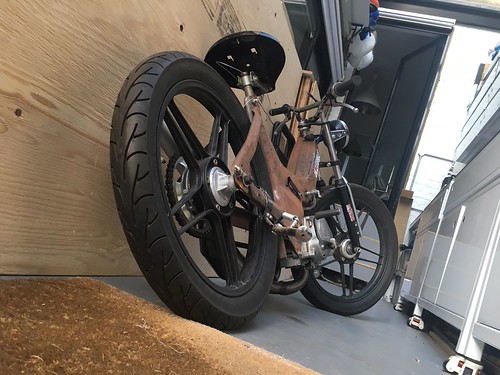

 Garrett David [ 06-Jul-17 3:54pm ] Ross From Friends [ 05-Jul-17 1:11pm ] Chaos In The CBD [ 05-Jul-17 1:08pm ]
You can always trust theses guys.


