
As the press release put it: 'Every item you purchase, every donation you make, goes towards helping Sue Ryder support people through the most difficult time of their lives. Whether that's dealing with the grief of losing a loved one or a terminal illness, your contribution can directly help fund the care and support the charity offers.' A worthy cause which I'm more than happy to promote.
I bought a copy of Longitude by Dava Sobel, a book I'd always meant to read, and did over the next couple of days. Highly recommended, and duly passed on to another keen reader.
-7936.jpg)
-7969.jpg)
-8115.jpg)
Got the frame far enough along to install the upper A-arms and dummy shocks (Half travel length). Next steps: Finishing the frame with a lot of triangulation and finishing the steering system. The lower suspension arm (Left side) is laterally located by Watt's linkages (Not shown) to the right side lower tube. Two wheel drive and two wheel steering in the 21st century requires a far different design approach - 19th century technology doesn't work.

Another surprise video - wasn't involved with the production - still glad to see it out there. Has the typical mix of enthusiastic comments and stupid comments:
Next one should be more fun when it's done - no other reason to do it...
I'm probably going to be scarce around these parts (my blog) for the next several weeks, because real life is having its say.
In the short term, it's not bad news: I'm going to the British Eastercon in Belfast next weekend, traveling there and back by coach and ferry (thereby avoiding airport security theatre) and taking a couple of days extra because I haven't been back to Belfast since 2019. Needless to say, blogging will not be on my list of priorities.
Yes, I'm on some programme items while I'm there.
Longer term: I'm 60, I have some health problems, those go with the territory (of not being dead). I've been developing cataracts in both eyes and these are making reading and screen-work fatiguing, so I'm seeing a surgeon on May 1st in order hopefully to be given a schedule for being stabbed in both eyes over the coming months. Ahem: I mean, cataract surgery. Note that I am not looking for advice or help at this time, I've got matters well in hand. (Yes, this is via the NHS. Yes, private surgery is an option I've investigated: if the NHS can handle it on roughly the same time scale and not bill me £3500 per eye I will happily save the money. Yes, I know about the various replacement lens options and have a good idea of what I want. No, do not tell me your grisly stories about your friends who went blind, or how different lens replacement surgery is in Ulan Bator or Mississippi, or how to work the American medical insurance hellscape—all of these things are annoying and pointless distractions and reading is fatiguing right now.)
I have another health issue under investigation so I'm getting a colonoscopy the day after I see the eye surgeon, which means going straight from blurred vision from mydriatic eye drops to blurred vision from the world falling out of my arse, happy joy. (Again: advice not wanted. I've have colonoscopies before, I know the routine.)
Of course, with eye surgery likely in the next couple of months of course the copy-edits for The Regicide Report will inevitably come to me for review at the same time. (Again: this is already taken into account, and the editors are aware there might be a slight scheduling conflict.)
... And while I'm not dealing with medical stuff or copy edits I've got to get my annual accounts in order, and I'm trying to work on two other novels (because the old space opera project from 2015 needs to be finished some decade or other, and meanwhile a new attack novel is badgering me to write it).
(Finally, it is very difficult to write science fiction when the wrong sort of history is dominating the news cycle 24x7, especially as the larger part of my income is based on sales of books paid for in a foreign currency, and the head of state of the nation that backs that currency seems to be trying to destroy the international trade and financial system. I'm managing, somehow—I now have the first two chapters of a Stainless Steel Rat tribute novel set in my new space opera universe—but it's very easy to get distra—oh fuck, what's Trump done now?)
PS: the next book out, in January 2026, will be The Regicide Report, the last Bob/Mo Laundry novel (for now). It's been accepted and edited and it's in production. This is set in stone.
The space opera I began in 2015, my big fat Iain M. Banks tribute novel Ghost Engine, is currently 80% of the way through it's third re-write, cooling down while I try and work out what I need to do to finally stick the ending. It is unsold (except in the UK, where an advance has been paid).
The other current project, begun in 2025, is going to be my big fat tribute to Harry Harrison's The Stainless Steel Rat, titled Starter Pack. It's about 1 week old and maybe 10% written in first draft. Do not ask when it's coming out or I will be very rude indeed (also, see health stuff above).
Those two are both set in the same (new) universe, a fork of the time-line in my 2010 Hugo winning time travel novella Palimpsest.
There's also a half-written New Management novella gathering dust, pending feedback on the Laundry/New Management and what to do next, but nothing is going to happen with that until after The Regicide Report is in print and hopefully I've got one or two space operas written and into production.
Bear in mind that these are all uncommissioned/unsold projects and may never see the light of day. Do not make any assumptions about them! They could be cancelled tomorrow if Elon Musk buys all the SF publishers or Donald Trump imposes 10,000% tariffs on British exports of science fiction or something. All warranties expired on everything globally on January 20th 2025, and we're just along for the ride ...
Apart from that…
Usually, I don't read science fiction while I'm writing it, and especially not in the sub-genre I'm writing in. But sometimes you have to make an exception. I read or re-read a stack of science fiction recently, to compile lists for the Scottish Book Trust's Book Subscription: Science Fiction. There's a choice of three or six months, with a book a month, attractively packaged and with a note from me saying why it's worth reading. If you're new to science fiction, or just starting out in the genre, you should find it a good overview. The selections cover a wide range: long books and short, classic and recent, from space opera to alternate history to near future.
I'm very much looking forward to going to Reconnect, the Belfast Eastercon. (Eastercon is the annual UK science fiction convention.) Despite my late decision to go, I'm on the programme, for which much thanks. With over 800 attending members, it looks like this Eastercon will be a good one.

In the early twentieth century, architects turned to a newly discovered past to craft novel visions of the future: the ancient history of Mesopotamia. Eva Miller traces how both the mythology of Babel and reconstructions of stepped-pyramid forms influenced skyscraper design, speculative cinema in the 1910s and 20s, and, above all else, the retrofuturist dreams of Hugh Ferriss, architectural delineator extraordinaire.

Sixth instalment in our series of extremely small and free-form cryptic crossword puzzles, themed on our latest essay.
Well, the executive summary for this one is that we’re probably facing VERY significant price hikes across the board that are likely to seriously impact consumers, businesses, Internet firms that build those massive data centers, basically everybody. These technologies are of course now fundamental to our everyday lives.
The administration has now announced what would be a total tariff on China of over 100%. The fact is tariffs ARE effectively taxes and they’re paid by us in the importing country not by the exporting country. And part of what likely is driving a lot of confusion is that we’re often getting conflicting statements and conflicting ideas about what the goals of these tariffs are.
Are they to raise money? To punish countries for their own tariff regimes? To punish countries for trade imbalances? Some combination? Tariffs WILL raise money for the government, but again that tariff money is coming from us not from those other countries. And not all trade imbalances are necessarily horrible things, they can represent the fact that the U.S. is a relatively wealthy country that can choose how and where to obtain products the most economically, especially when making them locally isn’t really practical.
There are conflicting signals from the administration regarding whether the tariffs are negotiation tactics and/or if they’re intended to try drive manufacturing back to the U.S., and those goals also can easily be in conflict with each other.
It’s understandable why there’s nostalgia toward the period many years ago when the U.S. was a manufacturing powerhouse before it moved more into the services sector over the decades. But realistically that’s being somewhat viewed through rose-tinted 20/20 hindsight. Right now we’re a quarter of the way into the 21st century. Not just the U.S. but the entire global trade, manufacturing, and supply chains have utterly changed since way back then, in many ways significantly to the advantage of the U.S economy overall in the long run.
Now maybe in theory, if you were willing to spend enough on factories and had workers willing to work at wages similar to those paid in countries like China for example, and you were willing to wait the years necessary to build up those factories and infrastructures — maybe theoretically you could get some significant portion of that high tech manufacturing back, assuming stable economic signals from the government.
But is this practical? Well, there’s the rub. The infrastructure, the resources (some of which like rare earths are almost completely controlled by countries like China), engineering expertise, worker structures, and all the rest do not seem as if they’re likely to ever significantly return here anything like they once were.
Take the iPhone as just one example, because as I said, this affects these industries across the board. Something like 90% of iPhones are reportedly manufactured in China. It’s estimated that it would take three very disruptive years, and 30 billion dollars for Apple to move just 10% of their supply chain from Asia to the U.S.
And since you can’t reasonably expect U.S. workers to work for Chinese wages, plus so many other costs that are much higher here, you’d probably be looking at iPhones that could cost three times as much as they do currently.
Now the billionaires would still have those silly grins on their faces and couldn’t care less about much higher prices whether from tariffs or anything else. But for ordinary consumers and even firms of pretty much every size, the effects from the kinds of price increases we’re likely see from these tariffs on a vast array of tech products can’t help but have major negative impacts. The additional costs to consumers and businesses will likely be dramatic and could trigger many additional negative ripple effects.
In a short report like this I can’t really do more than address the tip of this giant iceberg, but the bottom line is that at least as far as the tech segment is concerned, it’s very difficult to find realistically optimistic aspects to any of this. We should keep our eyes open for any positive developments of course, but this is yet another one of those situations where it’s probably not a great idea to hold your breath.
–Lauren–

Sheet music whose notes have been replaced by rambunctious cats.

Edo-era prints of a loving demon with adopted or biological son.

An encyclopedic tome of health advice that unpicks the biases of its time.
 Christian Kleine / Electronic Music From The Lost World: 1998-2001 (Vol.2) [ 31-Mar-25 4:10pm ]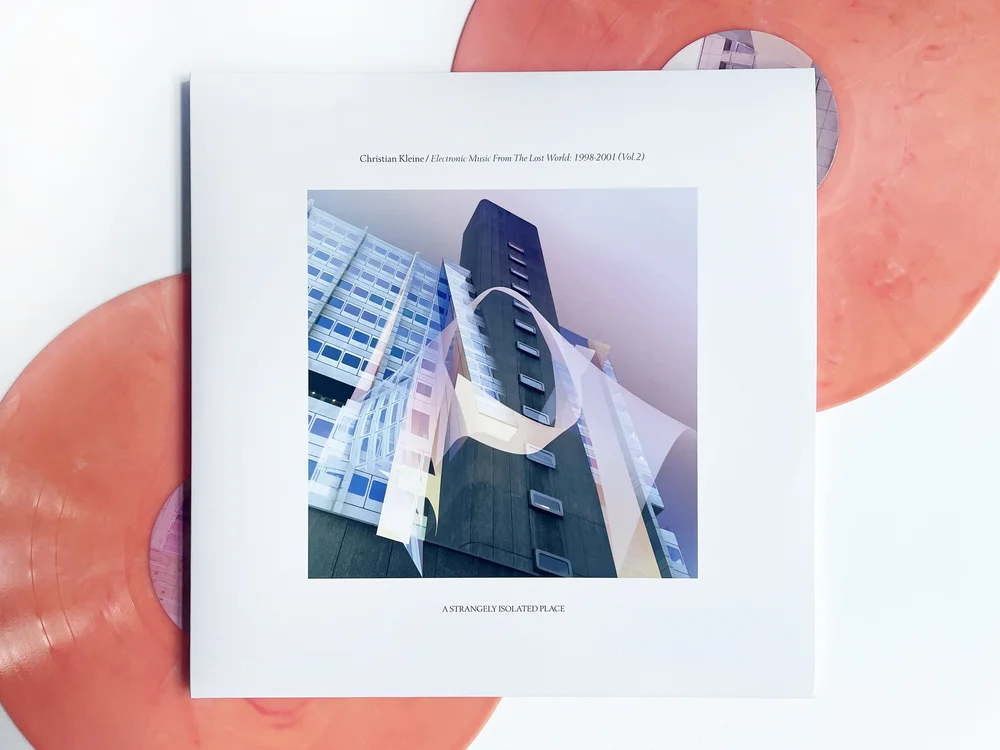

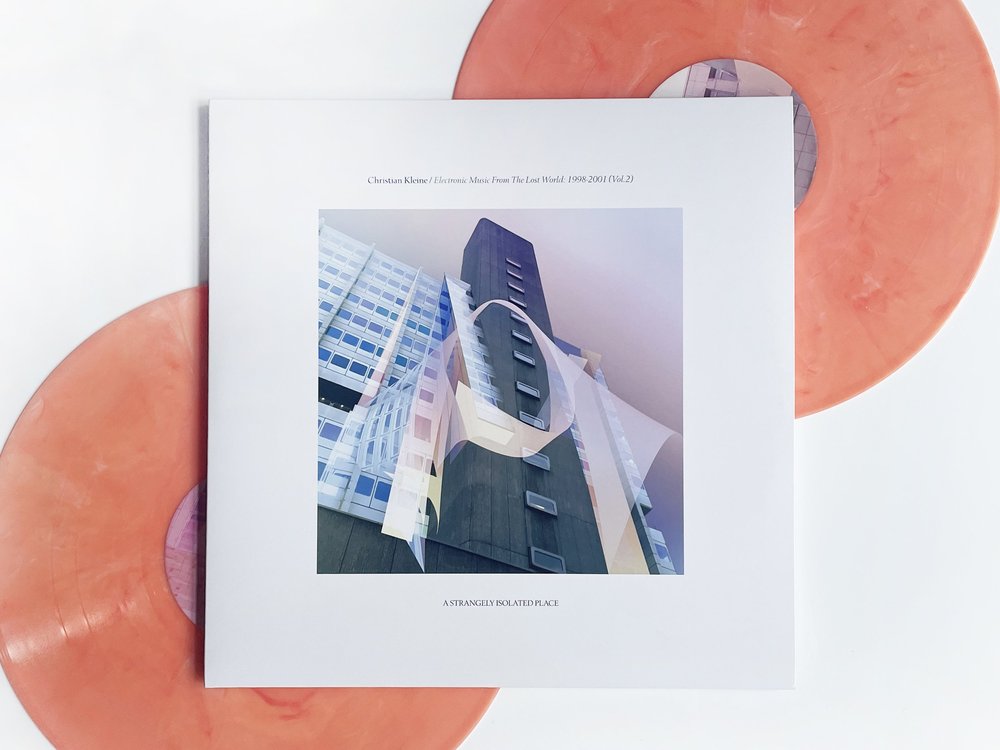
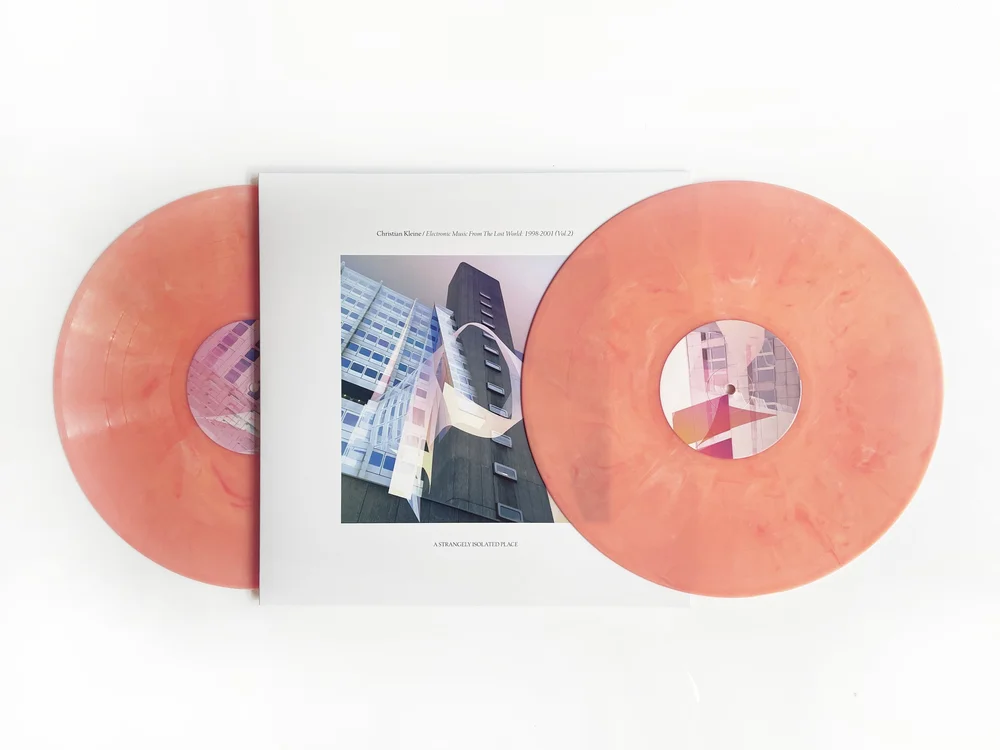

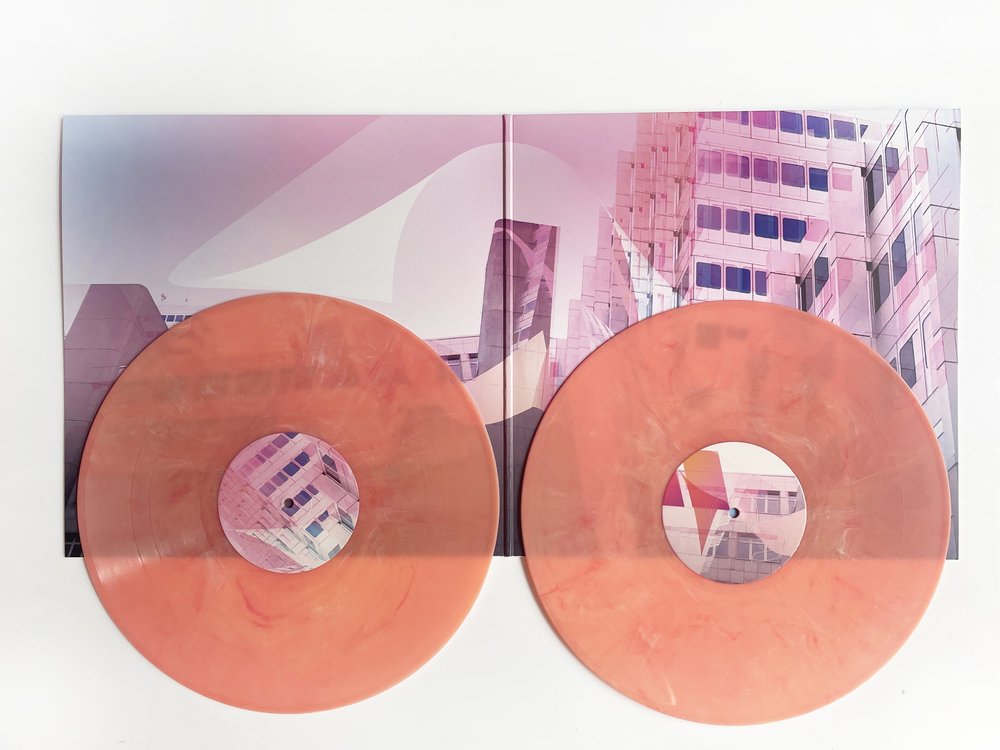

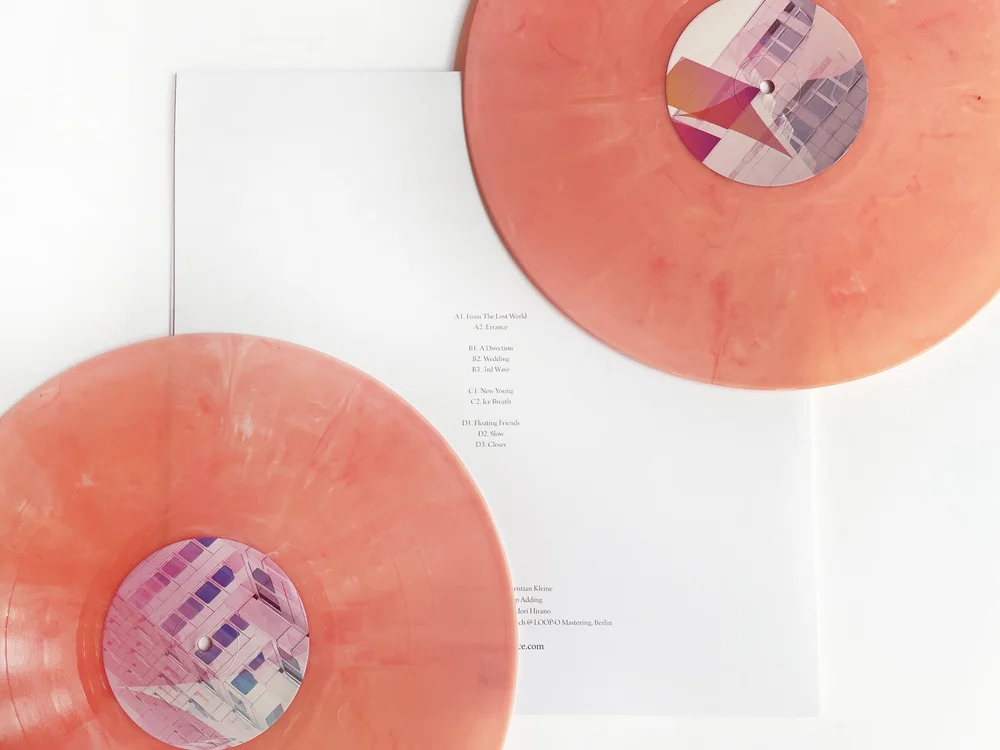
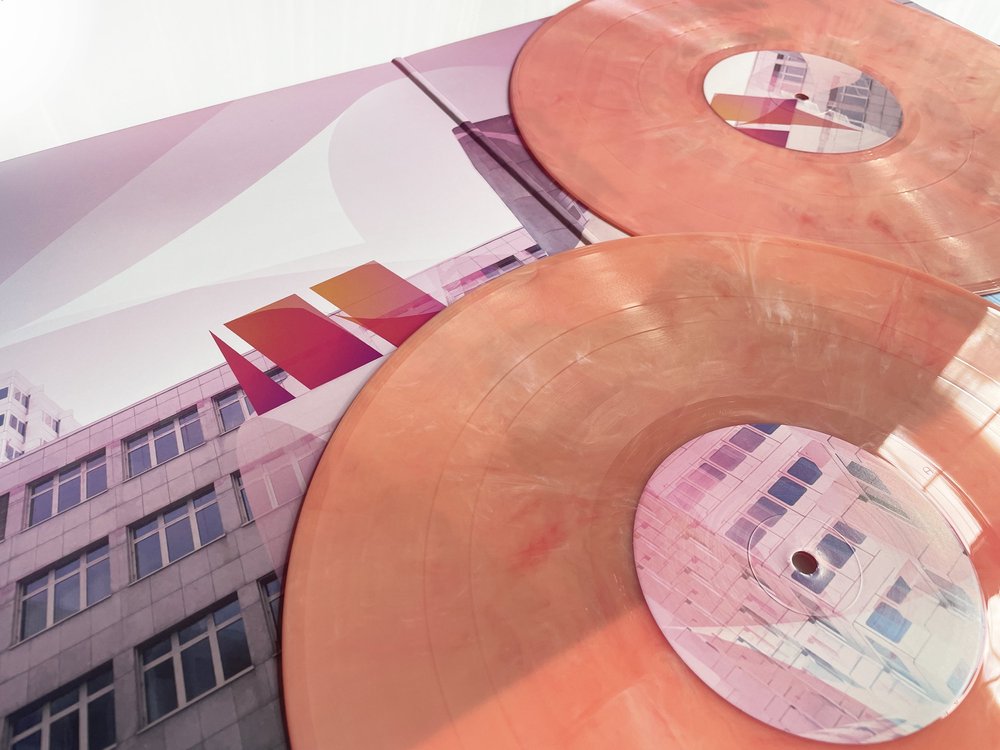

Christian Kleine continues to unearth long-lost transmissions with Electronic Music From The Lost World: Vol.2 - another batch of pristine artifacts from his personal DAT archive. Much like its predecessor, this release serves as both a time capsule and a reminder of Kleine's effortless blend of melodic warmth, intricate rhythm programming, punk influences, and a deep-rooted love for the fringes of electronica.
Where Vol.1 felt like an invitation back to the late '90s, a time when IDM was still an evolving conversation, this second volume extends the dialogue, revealing more of the sonic experiments and fully-formed pieces that never saw the light of day. Tracks recall specific moments from Kleine's time living in Berlin, an era of minimal comforts but maximal creativity, where all that really mattered was that the PowerPC, sampler, and synths kept running. This period of introspection, coupled with the musical freedom afforded by cheap rent and late-night school classes, shaped the deeply personal and solitary sound of these recordings.
Visually, Vol 2 shares its origins with the first volume, as Midori Hirano's stark Berlin photography forms the foundation, and Noah M / Keep Adding pushes the imagery into a brighter, more reflective final space. Final touches remain in familiar hands, with LOOP-O on mastering and lacquer duties, bringing new life to Christian's OG DAT recordings.
And much like the classic City Centre Offices era that shaped this sound and Kleine's early career, this release nods to that legacy. A special limited 7" EP with two bonus tracks, designed in tribute to CCO's iconic DIY aesthetic, will be available on release day direct from the label's Bandcamp.
Electronic Music From The Lost World: 1998-2001 (Vol.2), will be available on marbled pink gatefold 2LP on April 18th 2025.
isolatedmix 130 - Anatolian Weapons [ 29-Mar-25 8:24pm ]
Whether under his Dream Weapons or Fantastikoi Hxoi aliases or more his more extensive output as Anatolian Weapons, Aggelos' output is one to get lost in, where each project feels like a conversation between worlds that don't usually meet. As Anatolian Weapons, that conversation comes into sharper focus: what began as an experiment in bridging the sharper edges of EBM and krautrock with the circular, percussive energy of Greek folk music has turned into a fully formed and consistent thread through his output of EPs and albums.
One of his first full-lengths as Anatolian Weapons arrived via the legendary Tim Sweeney's Beats In Space label back in 2019 - a move that pulled ancient melodies into unfamiliar territory and a statement piece at the time. Since then, Aggelos has gone on to release on labels as varied as Emotional Response, Transmigration and Sound Metaphors along with more techno-oriented homes such as Dekmantel and Kalahari Oyster Cult.
Fast forward to 2024's album, Beyond, and that sense of push and pull is still present, only now with more intent and confidence. It's music that leans into repetition and rhythm without losing sight of where it came from. Aggelos also has an innate ability to find some really addictive hooks in his music, too (for example, I used this voice texture as a loop in my Monument mix, which I absolutely adore).
Aggelos' isolatedmix feels like a natural continuation and culmination of his complex yet harmonious style. There's no strict mood or genre at play, but rather a slow reveal, drawing on the same tensions and textures that have defined Baltas' path so far. It's a pleasure to have him contribute with such a dreamy trip through the many facets of his influences.
~
I see you describe your sound as 'progressive folk and psych'. Can you expand on this a little?
'Progressive Folk And Psych From Freece' is a 3-part mix compilation showcasing my influences as Fantastikoi Hxoi. The Fantastikoi Hxoi albums brought me to the attention of selectors like Lena Willikens, who used to play tracks from that era (2009-2011). The sound is something between space rock, kraut, folk, and progressive with electronics. The Dream Weapons moniker is reserved for more techno-oriented sounds while Anatolian Weapons is moving towards world music influences with driving beats.

One of your first albums came about for Tim Sweeney's esteemed Beats In Space label - how did that happen?
There had been two Fantastikoi Hxoi releases before that, and I had just started the Anataloian Weapons project. Again, Lena Willikens played an unreleased track on her Beats In Space and I contacted Tim to let him know about the ID. He seemed interested, and my collaboration with local folk musician Seirios Savvaidis was born. I love his work, and I'm very lucky and humbled to have worked with him on the album, which did well.
Can you tell us a little about your approach to some of the many remixes and edits you create and why you enjoy producing them?
It is very fun to collaborate with people I admire, and re-editing is something that I enjoy immensely, even if it's just a good pitch-down of a track. I love re-contextualizing and juxtapositions of different genres. It all comes down to the inspiration I get from fellow artists or my musical heroes of the past. I have just released an edit compilation called 'The Whiteout Edits' a couple of days ago and I am working closely with Sound Metaphors on the remix front as well as on original material.
It seems you also enjoy experimenting more by releasing through EPs versus albums - is that intentional? Is that a way to create more regular approaches to your sound?
It all comes down to requests, really, and the dynamics of each label. I feel very lucky to have worked in album format with BIS as well as Subject To Restrictions, a label that feels like home nowadays. Dominik Andre has a flawless instinct for A&R and a great ear.
STR is surely a label worth checking out. Apart from the two brother albums 'Earth' and 'Beyond' I also did mixing and additional production on my good friend Anna Vs June in her album 'Ersi', the album and her musical world are extraordinary - also worth checking out.
One of my favorite tracks of yours is 'Lets Talk' on the Mantil EP - and I think this does a great job of capturing your sound. For anyone new to you, which records would you point them to first?
Thank you. I'm glad you like it; it's much appreciated.
I'd say 'A Strange Light From The East EP' or 'The Black Sea EP' on Lurid music would encapsulate the Anatolian Weapons sound, whether it is dubbed out excursion of African library music or druggy downtempo. My mix for Tim Sweeney's Beats In Space and Lena Willikens Lightning Conductor on NTS can show exactly how I like my music to sound when I play out, along maybe with the Sameheads mixed tape called 'Palace Of Imagination'.
As a producer from Greece, what are the opportunities and challenges you face there? From my limited knowledge, it must be very hard to form a community, given how extensive the country is across islands, etc. Are you active in any local scene?
I have been playing in numerous spots in Athens throughout the years with many local and international acts, as well as keeping my 20-year residency at Astron Bar (now in a new building with a capacity of 300).
The scene is getting stronger day by day, and there are a lot of talented people creating music and throwing parties. The friends whom I have shared decks with would be too many to mention,
I enjoyed opening a gig for Polygonia / Kangding Ray / Wata Igarashi along with Nausicaa from Revolt! who also runs an excellent record shop. So yes, I think the scene here is at an all-time high with a knowledgeable and heady crowd supporting what truly deserves the support.
How has your sound impacted the tracks chosen in this mix? Was there a concept behind the mix? Can you list any tracks included in the mix?
The mix showcases my taste on the ambient/ downtempo side with a couple of tracks from Gus Till, whose output I love, some local stuff, plus the original mix of The Light At The End, a huge favorite of mine by Zen Paradox from his first CD-r release.
I also have the honor of remixing it with two new versions - the vinyl will be out on Transmigration very soon. If the music is deep, contemplative, melancholic, and melodic, with a touch of light for good measure, it will probably be up my street. Two tracks that almost made it in the mix are Kay Nakayama's 'Free Your Mind (Light Side Mix)' and 'Loading To Airport'.

What else can we expect to hear from you soon?
I just released 'The Whiteout Edits' on Bandcamp, there is a split on Dalmata Daniel with The Spy coming soon on 10'' lathe, the Zen Paradox remix EP on Transmigration, remixes for Arvin Fajar and Talking Machine (digital only) an album on Byrd out (digital only) plus original material on Sound Metaphors Also a lot of new edits on Bandcamp so watch that space!
We rarely sleep around here.
~
astrangelyisolatedplace · isolatedmix 130 - Anatolian WeaponsListen on Soundcloud the ASIP Podcast or the 9128.live iOS and Android app
(No tracklist on this one I'm afraid but quite a few tracks mentioned above)
The Feelies / Died Pretty
ULU, London
Melody Maker, November 29 1986


The Feelies
The Good Earth
Melody Maker, September 27 1986

And the answer is.... no.
Until today, in fact.
Crazy Rhythms, I like rather more. But it's a pretty pared-down pleasure.
The self-effacing austerity of this kind of thing - its un-Iggyness - is why I never really got with the college rock program.
Songs from Crazy Rhythms are used well in this cool cult film Smithereens though
In particular, the tentative, slowly-accelerating intro instrumental part of "Loveless Love" becomes a recurring mood-setting leitmotif of the whole picture
Heard in this context, I'm Feelies-ing it more and more...
Archive Fever [ 29-Mar-25 7:16am ]

Looking up an old tutor of mine who had impressed me, to see if his spoor of publications was distinguished in the field, I came across a lengthy tribute to a different professor - one I had not been engaged by nor vice versa of that I am sure. And popping out of this obituary, there was the surprise of an early appearance, decades before Derrida's book, of the phrase "archive fever".
Does this mean the expression has a long if obscure history in English? (It is after all only the translator's rendering of Jacquey's mal d'archive which literally means either / both "illness of the archive" and "in need of the archive" - craving the archive, crazed from too long in the archive.
Ironic too that one of his students that he most likely would have seen as least likely to become a historian, did in fact become a historian, of sorts - poring over not manorial inheritance documents of the Middle Ages but old music papers. A victim of archive fever in his own right, or write..
But wait... the mystery deepens... by chance, reading, finally Borges's short story "The Library of Babel", I stumble on the phrase "feverish library"


But it is rendered as a quotation.... now is it in fact a quotation, a real one, or just a fictitious one that Borges pretend-cites?
The passage is much quoted on the internet but always attributed to Borges not to its "source" (if one even exists)
The Borges story dates to the early 1940s.
Back to Jones, my old tutor (RIP).
No, he was not one of my favorites, A rather dry, dried-out, slightly tetchy fellow... who evidently found it a chore to have to sit through our execrable essays - in my case, always written at the last minute, in an all-nighter, so that during the tutorial I would be struggling to stay awake... my efforts did have the benefit of being short, brisk, and relatively stylishly written, unlike the offerings twice as long droned out by my fellow students... but Jonesy seemed to give more credence and respect to the dronework, since it evidenced a dogged diligence. Clearly he dearly wished to be back in his beloved archives, poring over primary sources, inhaling their sickly must, like the characters Friedrich N warned about in The Uses and Abuses Of History.
So it was with an unseemly amusement that I noticed that nearing the end of his eulogy, the scholarly colleague of Jones admitted, more or less, that Jones's grand opus on the Italian city-state was a dense, barely-readable affair, the work of someone who had succumbed to archive fever but not known how to conquer it or prevent it from rendering the resulting history unnavigable


But I take this not so much as spur to schadenfreude as a warning - a kind of memento mori even - that any kind of writing will sooner rather than later grow useless to later generations, outmoded, exposed, and just simply gathering dusty irrelevance with each passing decade.
Writing, then - like research - is only worth doing for the fever itself.

Fifth instalment in our series of extremely small and free-form cryptic crossword puzzles, themed on our latest essay.

Held in Jim Crow-era Nevada on the 4th of July, the 1910 World Heavyweight Championship was slated to be a fight to remember. Moonlighting as a boxing journalist, novelist Jack London cheered on Jim Jeffries — ringside and on the page — as the "Great White Hope", a contender to take back the title from Jack Johnson, the first Black heavyweight champion. Andrew Rihn examines the contradictions of London's racial rhetoric, which is more complex and convoluted than it may initially appear.

Perhaps the first work of puppet animation, featuring a cast composed of dead bugs.
Social Security is in a DOGE-created crisis, and seniors are already at terrible risk.
DOGE moved quickly to order massive changes to Social Security, originally to essentially end all phone-based Social Security support, and then after major blowback to that — since so many people dependent on Social Security don’t use computers or have Internet — this was revised to continue phone support other than for changes to functions like payment accounts, and also for identification issues. Those crucial functions will no longer be doable by phone and will have to be by Internet — which again many of the people who need Social Security can’t use, or via in person visits to Social Security offices — which can be difficult or completely impossible for many elderly or disabled persons, especially in rural areas.
On top of this, DOGE ordered the closure of around 50 Social Security offices and the firing of thousands of their employees, so in person visits become even harder.
As I’ve said many times before, technical people often don’t really understand the situations that nontechnical people, especially older persons have to deal with. Often there’s a totally wrong assumption that pretty much EVERYBODY uses the Internet. But like I said, a large percentage of seniors do not use the Internet for anything like this, or at all.
Now DOGE originally said all of this was to fight fraud. But its early claims that 10s of millions of deceased persons over 100 years old were getting Social Security payments were apparently incorrect — it’s important to understand these systems — DOGE reportedly didn’t realize that those historical records did not mean all those dead people were getting payments, other aspects of the systems prevented payments to them.
And studies have shown that apparently improper Social Security payments amount to about 1% of overall payments, mostly errors not fraud, and 2/3 of mistaken payments were clawed back.
This all really erupted over the last few days when the administration’s new Commerce Secretary, billionaire Howard Lutnick, made some stupendously tone-deaf and clueless comments in an interview. He said that it’s fraudsters who would complain most loudly about missing Social Security payments, saying that his 94-year-old mother in law wouldn’t call to complain — she’d assume there was something messed up and she’d get her payment the next month.
That of course means having faith that the next payment won’t also fail to appear due to the same problem, but then again having a billionaire son-in-law probably would make that missed payment of somewhat less concern. Unfortunately, most Social Security recipients don’t have billionaire sons-in-law. He said cutting off payment system payments is the easiest way to find a fraudster, because whoever screams is the one stealing.
As you can imagine, Lutnick has been widely criticized for these statements. You really have to wonder what planet he’s been living on.
Because the reality is that 40% of retirees rely on Social Security as their sole source of income, and for many more it’s a primary source. You cut off Social Security from these retirees, even for just one month, either by declaring them dead when they’re still alive — reports of that are already increasing — or by making it impossible for them to quickly fix payment or identification problems by phone when they can’t travel to a Social Security office or use the Internet, and many won’t have any way to pay for food or lodging or anything else.
And these changes that are going to so negatively impact so many seniors dependent on Social Security, were only announced VERY recently and are being rushed into effect at the end of THIS month just a week from now, leaving seniors in an even worse situation, and many of them don’t have anyone locally to help them even if they had more time.
This situation has gone from bad to disastrous. Actually improving Social Security is indeed a good goal, but creating a massive mess that will leave so many vulnerable seniors at such risk, is both gruesome and utterly unacceptable.
–Lauren–
From: Kevin Mustafa
Subject: Urgent Concerns Regarding Bus Safety and Driver Fatigue
Date: 23 March 2025 at 10:31:17 GMT
To: Lorna Murphy - TfL Director of Buses <lornamurphy@tfl.gov.uk>, Andy Lord - TfL Commissioner <AndyLord@tfl.gov.uk>
Cc: Tom Kearney, Neil Garratt <Neil.Garratt@london.gov.uk>, Keith Prince <Keith.Prince@london.gov.uk>, Caroline Russell <caroline.russell@london.gov.uk>, peter skinner <skinnerzboy@yahoo.co.uk>, Lorraine Bus Driver <lorraine.robertsoniz@hotmail.com>, "bishopmi@me.com" <bishopmi@me.com>, James Rossi <jamesrossi268@outlook.com>, Michael Liebreich <michael@liebreichassociates.com>, "billofrights@hotmail.com" <billofrights@hotmail.com>
Dear Lorna , Andy
I am writing to formally raise serious concerns regarding ongoing safety issues within the London bus network, particularly related to unsafe buses and increasing levels of driver fatigue. These issues pose a direct threat to both passengers and drivers, and Transport for London (TfL) must take immediate action to address them.Bus Safety Concerns
London bus drivers are consistently being asked to operate vehicles that are not fit for service. Reports of faulty brakes, malfunctioning speedometers, defective doors, and steering issues are regularly ignored or dismissed by operators. Drivers who refuse to take out unsafe buses under Section 44 of the Employment Rights Act 1996 are facing disciplinary action, creating a culture where safety is sacrificed for operational convenience.
TfL must enforce stricter compliance measures and hold operators accountable for putting unsafe buses on the road. A public transport system that prioritizes profit over safety is not acceptable.
Driver Fatigue and Its Dangers
Fatigue is another critical issue that is being ignored at an operational level. Long shifts, inadequate recovery time, and high-pressure scheduling mean that drivers are regularly behind the wheel while physically and mentally exhausted. Scientific research and real-world incidents confirm that fatigue is as dangerous as driving under the influence—yet TfL continues to allow scheduling practices that put drivers and passengers at risk.
We demand the following immediate actions:
1. A full, independent review of bus safety procedures, ensuring that vehicles with mechanical faults are not allowed on the road.
2. Stronger protections for drivers refusing unsafe buses, ensuring that they are not penalized for prioritizing safety.
3. A comprehensive fatigue management plan, including limits on excessive working hours and mandatory recovery time between shifts.
4. An urgent review of shift patterns and scheduling practices, to ensure they align with TfL's duty of care towards its workforce.
TfL must recognize that bus safety and driver welfare are not negotiable. A failure to act will only lead to more incidents, more risk to passengers, and further damage to the reputation of London's public transport system.
I request a formal response outlining TfL's position on these issues and the steps being taken to address them. I look forward to your urgent attention to this matter.
Best regards,Kevin Mustafa
London Bus Lead Safety CampaignerMob 07950257398Bill of Rights Petition:https://www.change.org/p/mayor-of-london-write-the-bus-drivers-bill-of-rights-into-bus-contracts-now

Overlooked kaleidoscopic images of nature painted directly onto glass.

A grand, submarine entertainment in the form of a children's book.
Barb and I went to Mexico for a couple of weeks in January, 2025, on the Yucatan peninsula. I’ll blog some photos from there later, but today I want to write about this trip we just took to visit with my daughter Isabel in Fort Bragg, up in northern California, on the coast near Mendocino. […]
The post Isabel's "Time Ecosystem" first appeared on Rudy's Blog.
Fourth instalment in our new series of extremely small and free-form cryptic crossword puzzles, themed on our latest essay.

After proclaiming himself the direct descendant of a 12th-century Crusader king, the Armenian priest and educator Ambroise Calfa hit upon an ignoble scheme: grant knighthood to anyone willing to pay. Jennifer Manoukian recovers the cunning exploits of this forgotten 19th-century conman, whose initially honorable intentions quickly escalated into all-out fraud.

A cultural history of ostrich eggs and the birds that lay them.

Illuminations of European plants by an anonymous master.
March 7, 2025. My daughter Isabel Rucker had an art show on the theme of Time at the one-of-a-kind Larry Spring Museum in Fort Bragg, California. Larry Spring was what you might call a folk scientist and an outsider artist. For Isabel’s show, she formed fresh ideas about our notions of time. She and I […]
The post Podcast #116. "Kinds of Time, with Isabel Rucker" first appeared on Rudy's Blog.

I saw that American family sitting glumly in the tea room area of the farm shop the other day. Although the dad may actually be a Brit - he's got one of those grating in-between accents. Passing their table on the way to my favorite nook, I heard him muttering disagreeably about the deficiencies of the bagel that lay forlornly half eaten on his plate. Honestly, anyone with a pinch of sense wouldn't order a bagel in that kind of place. A scone, a granary bap, a nice white roll, a flapjack…
They do seem a downcast bunch. But I suppose having to move, lock, stock and barrel, in such a hurry... I really ought to make more concerted efforts to integrate them into the community, such as it is. But they don't look the sort to be making jams or cheese straws for the church fete.
On to other matters....
Well, the big news in the parish is a new album by Position Normal - Modern & Unique 2.

It is indescribably good. Which I mean literally - I can't describe it.
All the quaint creaky crinkled quirkily chuneful qualities of classic Poz Normal (Stop Your Nonsense, Goodly Time etc) meshed with the unmistakably digital-now. A sort of hyper-brite murk, cobwebbed with glinty glitches.
I say that but looking at the press release, the sound palette is all acoustic and electronic, barely digital at all! And there's material, or constituents at least, in there that allegedly date back to the late '80s. Pre-Bugger Sod.
It's a headscratcher
Release irrationale:
All lyrics and stories written and performed by John Cushway. Instruments played here:. Piano (a real one and a software one). Guitars: Aria Pro 2, Yamaha acoustic, electric Italia Maranello, Double Bass, Congas, Bongos, Tambourine (wooden), Shakers (one egg shaped, the others are all made to look like fruit and vegetables). And synths.
2 samples though. One of a dog barking twice and a drum and bass sample from a 90's D&B Sample CD on the last hidden secret bonus track Techno Non-Stop (Party Party Drugs).
This whole album spans from the late 80's to now.
Recorded onto VHS.
credits
Music: Chris Bailiff
Lyrics: John Cushway
A bonus track not on the album
Oh and look here - a movie about or involving Position Normal
^^^^^^^^^^^^^^^^^^^^^^^^^
Activity from the village elders!
Including posthumous activity... which I suppose is pretty ghostological if you think about it.
Now I remember as a boy cycling past Pendley Manor and slowing to a near-wobble as the big lawn came into view - goggling at the contorted calisthenics cavorted by what looked like naked or nearly-naked figures. Turns out this was the dance troupe of Ernest Berk, an avant-gardist in exile, whose radical choreography was accompanied by equally radical electronic music for movement composed by his good self.
Trunk already issued a chunk of this stuff (Electronic Music for Two Ballets) but somehow I missed the heaping double-CD portions of Berktronica that came out last year via the Huddersfield Contemporary Records label:

Release irrationale:
This double CD represents the first substantial publication of the electronic music of Ernest Berk. Only two works from his catalogue of over 228 pieces were published during his lifetime in the early 1970s. Following the collapse of the Historisches Archiv der Stadt Köln in 2009 it was generally thought that all materials were lost. The project team comprising Prof Monty Adkins, Dr Sam Gillies and Ian Helliwell have managed to source early digitisations of some of the master tapes from Martin Kohler (who was a PhD candidate at the time) as well as other sources across Europe. The project team have then selected 18 representative tracks from Berk's oeuvre composed between 1957-1984. They have then worked with Dr Richard Scott and Jos Smolders to digitally remaster these works for this release. The CD features a bespoke cover design by Ian Helliwell and has been produced by Monty Adkins. Extensive liner notes about Berk's work have been written by Adkins, Gillies, and Helliwell.


An older post on Berk and Berktronica
BBC documentary with a section on Berk in his prime - the dancing and the sound-shape-making
His (ex)-wife Lotte seems to have been quite a freeethinker herself
Jack Dangers at Electronic Sound on Berk's solitary and incredibly rare release during his lifetime - and stuff on his life and Lotte.


More electronic ballet music from the venerable and (like Berk) long-no-longer-with-us Daphne Oram - Beauty and the Beast, a collaboration with the composer Thea Musgrave, made for the Scottish Theatre Ballet in 1969. Released with minimal fanfare only days ago. You don't seem to be able to buy it in solid or immaterial form anywhere - but it's out there on the streamers and YouTube.
Clangers-tastic stuff.
Standard Music Library seem to be putting out a bunch of vintage stuff, some of it a bit 80's and hyperbright, but some fine work by familiar names like Brian Hodgson, such as this spacy 1975 effort Encore Electronic, a collaboration - or perhaps simple adjacence of compatible works - with a less-familiar name, Reginald J. Lewis.

^^^^^^^^^^^^^^^^^^^^^^^^^^^^^^^^^^^^
Younger elders, if that makes sense - a rare sighting of... but I'm sworn to secrecy. Or rather charged with the challenging duty of alerting without revealing. Let's just say, if you ever h.arked to the waftings of A.R.Kane's fellow-travelers and sprite-children, give a glisten to these emissions from melody snakes. Not really "hauntology" but the next parish over, yet certain to trigger ghostly tremors in the memoradelic sector of the brain for some of us.
^^^^^^^^^^^^^^^^^^^^^^^^^^^^^^^^^^^^
A missive from our Canadian twin town East Gwillimbury!
Tony Price alerts us to his latest project, Requiem For The Ontario Science Centre - self-released on Maximum Exposure and described as "a sonic eulogy to my favourite work of art: The recently shuttered Ontario Science Centre in Toronto, a world-renowned brutalist architectural wonder designed by Canadian architect Raymond Moriyama as a centennial project for Canada. It is a stunning landmark that is largely representative of the post-war utopian outlook that permeated through Canadian culture in the 1960s. Last summer, the Conservative Government of Ontario announced its abrupt, unexpected and controversial closure, a decision that was supposedly based on an engineer's report warning of a small percentage of roof panels at risk of collapse after decades of neglect.
"Musically, this record is almost entirely made up of synthesizers and saxophones, played by Toronto avant-garde saxophonist, Colin Fisher. If I had to throw you an elevator pitch I would say it sits somewhere between Terry Riley, Fripp & Eno, Boards of Canada and Don Cherry's "Brown Rice"."
Neat parameters and it does actually fall squarely into that quadrangle
The inspirational touchstone and monument to bygone utopianism


God bless and protect Canada and the Canadian people!
^^^^^^^^^^^^^^^^^^^^^^^^^^^^
From our Italian twin town Potenza Piscene...
Fast approaching their tenth anniversary of operation, Artetetra (have we reached 6th World Music yet?) release the evocatively titled Crepuscular Elixirs by the German-Finnish outfit Grykë Pyje in just a few weeks time. You can hear most of it already here.

release irrationale:
It has been six years since Grykë Pyje (forest ravine in Albanian) stretched out their high sensitivity feelers for the first time into the greatest of outdoors to bring us fascinating, multilayered soundscapes and introduce audiences to their signature, crystal-clear fifth-world compositions. Working on the idea of using music as a way to pierce the fabric of myths from yonder thanks to a wide array of synthesis, sound superimpositions, patchworking and manipulations, blending hazy shards of experience and imagination, in their fourth LP, "Crepuscular Elixirs", Grykë Pyje spins further adrift from its previous works, trying to increase the level of intricacy.
If recent experiments engaged with the sonification of sacred herbariums and the reimagining of chants and myths from the animal kingdom, for the brewing of their latest musical potion, tracks were built around skew and Oddly-hypnotic resemblances of grooves dodging well-trodden patterns. These bumping and stumbling primal rhythms pervading the album were inspired by the inconsistent pulse and timbrical variety of animal noises: a hammering woodpecker, croaks and ribbits from frogs or the scraping of ants at work. Rhythmic backbones were used as free territory to imagine the entire and alien world around the sounds of this pseudo-fauna.
Indeed Crepuscular Elixirs is an apt title for this bizarre conflation of fiction and natural science, magical miniaturism and microscopic realism. With its bizarre world of supernatural charlatans, hazy incantations and invisible accesses to an impossible bestiary, Grykë Pyje creates sixteen tracks of pure audio alchemy where it's impossible to retrace the songs' various layers, rather compelling one to listen to the compositions as a moving thing in its whole. Sounds lift up one another creating texture, mimesis and confusion, incredibly entangled, blurring the line between transmutation and sonic manipulation.
With Crepuscular Elixirs, the duo's organico-mineral soundscape is sharper and more detailed than ever before. A type of listening requiring allure and curiosity, but that repays with a seemingly endless rediscovery and wonder. Now let this seemingly alive bag of sonic illusions open a new chapter in the excitingly chaotic, fantastic world of Grykë Pyje!
"Potion Seller, I am going into battle and I need your strongest potions."
"My potions are too strong for you, traveler."
^^^^^^^^^^^^^^^^^^^^^^^^^^^^^^^^^
Here's a recent-ish mix made by Luke J. Murray aka Stonecirclesampler for The Wire.
"The mix is a hauntological blend of washed out ambient, dub and grime, threaded together with samples from horror films and TV."
Tracklist
Travis Elborough & Stonecirclesampler "Stonecirclesampler Hauntology Primer (Intro)"
Stonecirclesampler "Television Of The Stones (Rainfall version)"
Liquid DNB-like Ambient Grime 2 "Forthcoming Untitled Ambient Grime Dub 12" (Old Grime White Label Wire mix version)"
Stonecirclesampler "The Stone Tape (Wire mix edit)"
Stonecirclesampler "A Drift In Seaburgh (Wire mix edit)"
Rainfall Widens The Cracks In The Concrete "After Dark (Stonecirclesampler version)"
Stonecirclesampler "Memorex Dub (The End Of Techno instrumental edit)"
Old Grime White Label "Forthcoming Untitled B-side (Superior London Pulp edit)"
Stonecirclesampler "The Drift VIP"
Stonecirclesampler "Save The Stones! (Deep Dream Ambient Grime mix)"
Stonecirclesampler "Megalithic Grime Radio Documentary (28 Stonecircle Wire mix version)"
Old Grime White Label "Unknown (Stonecirclesampler A303 Acid rebuild)"
Stonecirclesampler "Megalithic Grime VIP (Stonecirclesampler Wire mix version)"
Liquid DNB-like Ambient Grime 2 "Forthcoming Untitled 4x4 Grime Techno 12" A-side (Stonecirclesampler Rainfall VIP)"
Old Grime White Label "After Leaving The Cliff Overlooking The Pacific Ocean, Rainfall Began To Fall Silently On The Car Roof (Travis Elborough & Stonecirclesampler version)"
Stonecirclesampler "Save The Stones! (Rainfall Widens The Cracks In The Concrete Slowed Down VIP)"
Superior London Pulp "The Real Occults In The Pubs Of The East End (Wire mix acid edit)"
Old Grime White Label "Untitled 2010 Techno (Travis Elborough & Stonecirclesampler Fourth Dimension version)"
Stonecirclesampler "Haunted Goth Ambient Grime (Breakbeat mix)"
Stonecirclesampler "After The Ice Age (Frozen Grime mix)"
Stonecirclesampler "Penda's Fen (Wire mix edit)"
Superior London Pulp "The Green Man Inn (Old Grime White Label's Ambient version)"
Travis Elborough & Stonecirclesampler "Ghost In The Water (DISMAL edit)"
Superior London Pulp "Maybe A Door Will Open Somewhere (Travis Elborough & Stonecirclesampler Haunted mix)"
Stonecirclesampler "Deep Dream Derbyshire Gloom (Liquid DNB-like Ambient Grime 2 Dub)"
Old Grime White Label "Rainfall Falls Silently On Concrete Rooftops (Ambient Grime edit)"
Stonecirclesampler "A Bygone Age (Rainfall version)"
Travis Elborough & Stonecirclesampler "Shivers Of Weird Landmarks, The Time Is Out Of Joint (Outro)"
^^^^^^^^^^^^^^^^^^^^^^^^^^^^^^^^^^^

Release irrationale:
Overspill Estates EP is a new four track EP from Warrington-Runcorn New Town Development Plan, which delves back into the Your Community Hub sessions to uncover some gems that had been forced off the album.
Gordon Chapman-Fox, the genius behind WRNTDP says "I'd worked on these tracks for the best part of a year, and, in my mind, they were a fundamental part of the whole Your Community Hub project. I was heartbroken when they couldn't make it onto the album, so it's an enormous relief to see them come to life here."
The initial concept for the fifth WRNTDP album was to expand beyond north Cheshire, and dedicate a track to some of Britain's other New Towns. Being part of the project from early on, these four tracks were dedicated to Basildon, Cwmbran, Redditch and Harlow. To give an idea on how long these things can take to gestate, the opening track "The People Of The Town was performed at the End Of The Road Festival in 2022.
The album cover is an image from the half-modernist, half-mock Tudor houses that were built in Birchwood, Warrington in some of the last large scale building projects that were part of the New Towns.
^^^^^^^^^^^^^^^^^^^^^^^^^^^^^
Why now, I wondered?
Then suddenly it occurred to me that - instead of monumentally tardy, it might in fact be topical and even jumping the gun ever so slightly. For later on this year... it'll be the 20th Anniversary of Hauntology... if not as an emergent sound-zone (you could date that to 1999/1998 - Stop Your Nonsense, Music Has A Right To Children) then as a christened phenomenon...
Some sneaky snaps I took hastily, furtively, while in the village newsagents.


In late September, 2024, Barb and I went to Lowlands for two and half weeks. This means Amsterdam, Brussels, and Antwerp. All are places I know fairly well. While we where there, my camera got stolen, so I don’t have all that many images—the ones I have are from my phone. To round out the […]
The post Lowlands & Home first appeared on Rudy's Blog.

Expulsion threat from the Royal Society, in 2025 and 1775.

Engravings of unusual births by an artist best known for his joyous skeletons.
For this image, I pasted a sample from from one of my paintings onto an AI image of a writer and a robot. It’s me writing my novel Software in 1980, right? And my muse is Ralph Numbers, or Cobb Anderson, or my father, Embry Rucker, Sr. As I compose today’s post, it’s March, 2025. […]
The post California Gnarl first appeared on Rudy's Blog.

The Mughal emperors in India faced a sartorial quandary: continue wearing their traditional Central Asian attire, or adopt the lighter cotton clothing of this warmer clime? Simran Agarwal considers the cultural, political, and theological implications of embracing Indic fashion, arguing that — by donning the clothing of their subjects — the Mughal emperors fashioned themselves anew.

A work of futurology intended to be read in 1888 and judged in 2000.

Proverbial scenes about human folly painted on serving plates.
Third instalment in our new series of extremely small and free-form cryptic crossword puzzles, themed on our latest essay.
Collected: Vol 8 [ 22-Feb-25 5:44pm ]This album from last year, but only recently made available digitally. I picked Glow World up on vinyl originally and have been spinning it consistently since. A masterclass in detailed world-building, it has to be one of my prized vinyl purchases of late. Everyone knows Rod Modell, but I am sure some people may not have realized that Taka Noda, also released under a dub moniker, Mystica Tribe on Silent Season for a few years. The two make a perfect duo on this timeless record.
And just as you think we'd exhausted the Modell treasure trove in the past few months, he just released another LP of sublime icey textures on 'Northern Michigan Snowstorms'. The sub-zero chillout room from one of Michigan's most renowned immersive techno producers.
Single Cell Orchestra - Single Cell OrchestraOur upcoming release from Monoparts couldn't be further from the sound on this album, but in a twisted rabbit hole way, posting about Olga's upcoming album on Instagram led me to this overlooked classic when asking for people's favorite trip-hop tracks. I love it when older 90s albums crop up on the corners of Bandcamp. For a new platform, I am always dubious of finding gems when hitting the search bar. Silent Cell Orchestra is the perfect capsulation of the freedom of sound and styles found across albums in an era when feelings beat genres.
ESP Institute XV - I Active, II Passive, III Unobtanium [L.A. WILDFIRE FUNDRAISER]There have been a few amazing LA fire fundraiser comps released in the past month or so, and I am sure many of you managed to wrap your ears around the 'For LA' comps, which are a no-brainer of epic proportions within the ambient producer realm.
This one from ESP Institute, however, took me by surprise. I mean, where do you even start? 90 tracks from a label that is consistently pushing genre boundaries and coming up with some defining albums (those early Lord of The Isles, as just one example). I debated doing an entire collected post with 5 of my favorite tracks at one point.
After giving this a spin in its entirety as I hopped around the house and car, it's the type of album you could listen to all day long and always find new moments. The sequencing is subtle but definitely considered. You find your ears pricking up to a beautiful new sound every two tracks or so. My choice track is by the vinyl digger officianado, Chee Shimizu, presenting a truly uplifting Balearic sunset vibe on Zeze... save this one for the summer.
OK, just two more choice cuts then…
Band Ane - Anish MusixMost of you know I love the playful IDM vibes of artists such as LJ Kruzer, Freescha and ISAN. It's been a while since any of those have produced any new music of note, and it's rare to stumble across something that evokes similar feelings nowadays. I don't know why though. Twenty years later, is it all just too serious now? Has the innocence in electronic music just disappeared? Is it not cool to create playful melodies anymore?
I can't remember how this album by Danish artist Band Ane, ended up on my wishlist to purchase, it might have been playing on the Deep Space radio station. An innocent album of whimsical, melodic IDM that takes you back to the early 00's.
Voice Actor, Squu - Lust (1)Listening to Voice Actor's debut on Stroom felt like a voyeuristic snapshot of personal photographs. Abstract, minimal, field recordings, vocal shards- you never knew the twist it was going to take from track to track. Now the enigmatic Stroom label return with Voice Actor alongside 'Squu', (who I know very little about -perhaps on purpose, as the only profile I can find is this Soundcloud).
Squu brings a dubby and trippy metallic sheen to Voice Actor's fragmented musings, turning the abstract, into an almost danceable, yet much more listenable epilogue.
Find these albums and many more over on my Bandcamp Collection.
We used to take photos of our shadows: shadow selfies. 'Smile!' the one taking the photo would say, and we'd laugh.

This post is here to fill space. Skip it if you like. After it the blog will get back to its usual intermittent rambling about trivia, politics, science fiction, science, and materialism. I don't want to click on it to check something, and be thrown back to the funeral. I have that photo of Carol framed in my living-room. This post is here to be a buffer, a shock absorber.
I've been getting on with things. I have family, and I have friends, and they've helped. There's a book to write, which is coming together like a shape emerging from fog. There have been other projects. I had engagements, which I left too late to break. The first was a few days after Carol's funeral, at the Seahorse Bookstore in Ardrossan. It was good to get out, and the owners and staff were lovely. One of my sisters and her husband, who live locally, came along. It was a good event, on a day of long bus rides. The worst pang was the bus back from Largs to Gourock, a short journey I'd often made with Carol.
Back in January, I'd got an invitation to the Gothenburg Book Fair. Carol and I had been to Sweden before, in August 2003. That was when we first met Alastair Reynolds and his wife Josette, and we'd been friends ever since. We'd explored Uppsala and Stockholm and its archipelago, met some of the SF-Bokhandeln people, and had a great time. And I'd been back since, this time on my own and to Gothenburg, in what was for me a busy and fraught year, 2015, for FSCONS.
So of course I asked Carol if she wanted to come with me, and of course she did. We paid her fare, and the Book Fair took care of everything else. They even put us up in the hotel for an extra couple of nights.
The flight was at 06:10 on Wednesday 25 September. I considered booking a taxi for 03:00, and decided to get a train and bus to the airport on Tuesday evening. It felt very strange to be locking the door for a trip and not having Carol going down the stairs ahead of me. I walked along to Cleats, where I had a half pint with the local SF crew, and on to the station. At Glasgow Airport I found a corner seat in Greggs, and read and dozed until it was time to join the queue. Apart from a two-hour delay in Amsterdam, the fight was uneventful. I was met by a taxi at the airport, and taken to Gothia Towers Hotel, adjacent to the venue, an enormous exhibition centre.

Erik Eje Almqvist met me in the lobby, treated me to a beer and lunch in the restaurant, and got me my guest badge and packet. The main theme of the Book Fair was Sápmi, the homeland of the Sámi people. A second theme was space. Quite a number of people in the corridors wore brightly coloured and embroidered Sámi clothing.
The room was splendid and had a spectacular view.

I had a nap, freshened up, and took the lift to the opening party. There the view was even more spectacular and even more people wore Sámi clothing. Everyone was speaking Swedish, but Erik spotted me and steered me into a conversation with a Lutheran clergywoman, so I had someone to chat with over my first glass. Later I had a couple of beers with Glenn Petersen of SF-Bokhandeln. A band played something that was meant to evoke space or cyberpunk, and Johan Stanberg McGuinne performed a joik. I was struck by some resemblances to Gaelic singing and the cadences of Highland heightened speech in preaching and poetry. Afterwards, I raised this rather tentatively with Johan, who surprised me by agreeing. Of Gaelic and Sámi heritage himself, Johan pointed out that these two cultures were unlikely to have influenced each other. An agreeable puzzle.
Thursday was one of my extra days, so after breakfast I picked up a Gothenburg tourist booklet in the hotel lobby and set off on the kind of local wander that Carol and I would have done. This included an amphibious bus tour, a late lunch of a massively filled sandwich at the food market, and a stroll through the botanic garden, which ended in me sitting on a bench and being acutely aware that Carol wasn't beside me.

I walked back to the hotel just as the rain was starting, and had a look around the book fair, which was spread across four large and crowded halls.

The following days, these halls were packed. Every day, tens of thousands of people turned up. Every publisher and, it seemed, every reader in Sweden was there. I may write more about it sometime. I had a good time, I met new people, and I met up with Alastair Reynolds, Paul McAuley and Peter Hamilton, and we had breakfasts and beers. On the last day Glenn Petersen and his wife Ylva took us and their colleagues out for dinner at a Michelin starred restaurant. I asked Ylva if she could recommend somewhere to go on Sunday, the last of the free days we'd booked, and she suggested Marstrand Island. What I wanted to do, again, was take the sort of sight-seeing trip that Carol and I would have taken if she'd been there. This sounded exactly right.
It was. The bus rides were long, but the scenery was amazing, and every bus was on time. Marstrand Island is a five-minute ferry crossing from the terminus. Its main feature is a naval fortress, which unlike many such around the world has seen action.

Going around it was a pang. In 2023, Carol and I had explored a much larger naval fortress, at Pula in Croatia. Much larger, yes, but the layout has its own logic, and every corner had a sharp memory rising unbidden around it.

The views were great. Carol would have enjoyed it, if she'd been there.


Michael Liebreich stopping traffic at London Bus Drivers'
Bill of Rights March to Parliament Square (29 January 2025)
Are you a Londoner? Do you ever come to London on business or for leisure, or as a tourist? Then this post is for you.
You might find the sight of a red London bus reassuring. You should find it terrifying. In an annual benchmarking study carried out by Imperial College, London scores consistently in the lowest tercile for safety, probably the least safe bus system of any major European city.
I was on the board of TfL and chaired the Safety Panel, and I know why: the system under which TfL contracts out bus services to private companies is "institutionally unsafe". Payment is tied entirely to the number of passenger route miles and to keeping up with the bus in front.
As congestion has increased and inflation has eaten bus company margins, pressure on bus drivers to speed has increased. Drivers work in conditions none of us would accept: lack of toilets, overheated cabs in summer; frozen cabs in winter; pressure to drive extra shifts up to 13-days in a row; insufficient time between shifts; and so on.
The Mayor and TfL have tried to deflect attention from all this, and from its impact on safety, but the data does not lie. As you can see from the attached chart, in 2024 there were 16 preventable deaths involving TfL buses - the highest number since 2009, Boris Johnson's first year as Mayor, despite bus journeys in London declining 17% over that period.

In 2017, as part of Vision Zero, Sadiq Khan announced that no one would be killed on or by a London bus by 2030. He has only been on track during the pandemic years, when London's buses ran reduced services. On current trend he will fail by a country mile.
Why does this matter today, and what can you do?
First, London bus drivers are campaigning for TfL and the bus companies to adopt, promote and enshrine in contracts a 12-point Bus Drivers Bill of Rights. There should be nothing controversial about it - all are basic rights that any decent person would want drivers to have. I feel so strongly about this, I have marched with the drivers, alongside Unite the Union. Everyone should sign their petition here.
Secondly, as it stands, the "Better Buses Bill" that the government is pushing through Parliament right now, would extend the "institutionally unsafe" London bus franchise model across the country. If you worry about London's appalling bus driver working conditions and pressure to speed leading to the same safety outcomes nationwide, please write to your MP, demanding that safety be put at the heart of the Bus Services [No. 2] Bill.
- Demand regular, timely, independently audited safety data across all bus services in the UK.
- Demand a guarantee of decent working conditions for drivers: toilets, access to a confidential whistleblower service, and the rest of the Bus Driver Bill of Rights.
- Demand an independent investigator for bus crashes in the UK, as we have RAIB for rail crashes and the AAIB for aircraft crashes.
You can find your MP here.
—Michael Liebreich
Originally Posted by the author on LinkedIn (19 Feb 2025). Published here with the author's permission.
Michael Liebreich served on the Board of Transport for London (2012-18) and as the Chair of the Board's Safety, Sustainability and Human Resources Panel (2016-18).
Collected: Vol 7 [ 18-Feb-25 10:12pm ]Volume 7 is an ASIP artist-related special; on the odd chance you missed some of the amazing records put out by our small extended world of producers. I was thinking of maybe starting a new rating system for ASIP alumni - something along the lines of "How Annoyed I Am ASIP Didn't Release This Out Of Five."
Alex Albrecht - Someday SaraAlex Albrecht on Anjunadeep wasn't on my 2025 bingo card, but listening now, it makes complete sense. Alex's sensibility and stewardship of —quite simply— feel-good music can be heard through his ambient field recordings all the way to the warm-up dance floor. Anjuna veers towards the more accessible side of things, of course, so here Alex has dialed up the beats, but kept consistent with the organic instruments and storied pianolines.
If you liked his release here on ASIP, imagine this record as Disc Two (Evening) versus our Disc One (Daytime) to put it in 90's Trance Compilation verbiage.
Abul Mogard & Rafael Anton Irisarri - Live at Le Guess Who?Guido and Rafael's 2024 collaboration, Impossibly Distant, Impossiblt Close, is the most fitting album title I've ever encountered. Listening to it on headphones was a revelation—an immense soundscape unfolding while the smallest details surfaced with startling clarity. Naturally, experiencing this record of the duo playing live is just as mesmerizing.
Also, Berliners, please note our very own Lihla will be performing at the same show as these two greats on March 20th… don't miss!
Yagya - VorShawn Reynaldo (First Floor) recently featured this album in his newsletter, and his short review pretty much hit the nail on the head. Something along the lines of- and I may be paraphrasing here with my own POV- 'dub techno is getting pretty popular again, but no-one does it better than some of the overlooked OGs'. Well, Yagya is one of the OGs, and on Vor, he returns to his purest manifestation. Bellowing clouds of dubby warmth take you right back to the tin shed pitter-patter vibe of Rigning, with more confident flourishes to be found after years of perfecting his style.
Deepchild - BelovedRick Bull swings from banging techno to swirling moods of ambiance over on his Bandcamp, so it's hard to know when to dive in if you only enjoy one of the two (luckily, I enjoy both!) 'Beloved' is a similar vibe to his vocal approaches on his ASIP release 'Mycological Patterns', and in a textured Burial-esque way, can be even more engrossing and intriguing at points.
Markus Guentner - Black DahliaMarkus has been getting some amazing and well-deserved praise for his new album on Affin, Black Dahlia. You don't need to ask me, his #1 fan if it's any good… But those who listen to Markus' music are a special breed in today's overbearing world. His music and sound design are truly enveloping, and great rewards can be found if attention is given from front to back. Black Dahlia is a precious reminder of this attentive listening approach, as Markus has taken an even more metallic and experimental approach to his usual widescreen world-building - it's not all comfort in there, but the reward is just the same.
Jo Johnson - Alterations 1: UnbrokenJo is up there with some of the masters of synthesizer minimalism, but instead of pioneering the sound in the 70's, she's keeping the atmospheric and dystopian side of this music well and truly alive. And I mean that in a positive light, of course. Much darkness can be found in her compositions, but she is never overbearing to the point of negativity. It was her delicate approach alongside Hilary Robinson that made their 9128 release so glorious, and once again, this record is another class in session.
No embed enabled on this one, so head on over and dive in.
Find these albums and many more over on my Bandcamp Collection.
23 Things That Aren't Recyclable [ 12-Feb-25 10:03pm ]
The costs of Carbon Capture and Storage [ 12-Feb-25 12:19pm ]On 10th December of last year the UK government announced it had signed contracts for the support of the first two parts of the proposed carbon capture cluster in the north-east of England.[1] The projects to be funded are a new gas-fired power station with CCS, largely owned by BP, and a CO2 transmission network that takes the gas to subsurface storage in the North Sea. BP is also a major shareholder in this planned network. Two days later, the senior civil servant in DESNZ, the department responsible for developing the UK's carbon capture capability, said that the details of the deals would be published 'soon'.[2] He made this comment under questioning from a committee of the UK parliament.
When is 'soon'? On 7th February, almost two months later, I wrote to DESNZ to ask if the terms of the contracts had been put into the public domain. The response came back rapidly; the department says that they will be published 'in due course', with no mention of any specific date.[3] It looks as though we may have to wait a long time to see the details of the schemes, including both the payments that will be made to the power station for capturing the CO2 and the pipeline network for transporting it. At the moment nobody has any idea how much these projects will cost energy bill payers and taxpayers.
Does this matter? Yes: the prospective subsidy for the UK's CCS schemes is now set at almost £22bn and these first examples will set the cost expectations for all future developments. This note briefly looks at the what financial support is likely to have been agreed.
In summary, the subsidy agreed may be equivalent to doubling the cost of generating electricity in a gas-fired power station. The cost of gas with CCS could therefore be three times the price of electricity from a solar farm.
Background: the CCS projects.
The government has approved in principal two 'clusters' for CCS. One is on the north-east coast of England and the other on north-western side, spreading out into North Wales. Industries producing CO2 can apply for subsidies to collect and store the gas. The first contracts to be signed are for two projects in the north-east cluster: a new gas-fired power station and a separate transmission and storage network that takes the CO2 from the power station and future other sites.
· Net Zero Teesside Power (NZT Power)
The proposed power station will be located close to the mouth of the Tees estuary. The storage pipeline, engineered to offer a maximum of 4 million tonnes a year, will go offshore immediately to the depleted Endurance saline aquifer for permanent storage.
The design is for a 742 MW power station. If it operates all the time it will produce about 2.2 million tonnes of CO2 per year, and this figure is stated as the storage target. However more realistic expectations seem to be that the actual amount to be sequestered will be around 1 million tonnes. This suggests that the plant is expected to be operating about 50% of the time, generating an average of about 1-1.5% of current UK electricity needs.
The new power station will use a carbon capture technology in Shell's portfolio. Called CANSOLV, it operates at two existing power stations that use carbon capture. These two plants both burn coal as their fuel. No gas-fired power station uses CANSOLV and indeed NZT will probably be the first such plant worldwide to capture its emissions.
NZT Power is a joint venture between fossil fuel producers BP and Equinor. Construction will start in 2025 and is intended to be complete by 2028.
· Northern Endurance Partnership (NEP)
The transmission and storage network is owned by a consortium of BP, Equinor and TotalEnergies. The pipeline operated by NEP will run across the north east of England, passing close to some of the businesses that are applying for carbon capture subsidy. These entities include two blue hydrogen production plants as well as NZT.
The CO2 will be sent via a 145 km pipeline to permanent storage in the North Sea. The NEP has chosen the Endurance saline aquifer about 1000 metres below the surface.
· Types of remuneration agreed by government
We don't yet know the numbers attached to the subsidies but we have been told the bases for payment.
The transmission and storage network will be allowed to charge a price for each tonne of CO2 stored. It will also benefit from payments for lack of use of its network. In other words, should the early CO2 production projects not start immediately the network is ready, NEP will be paid a fee for under-use. In addition, government is providing support for the costs of insuring against CO2 leakage. It also promises a payment to compensate NEP when the subsidy scheme has discontinued paying the per tonne of CO2 fee because the maximum financial support has been reached.
The power station has a completely separate payment scheme. This involves two mechanisms; one that pays the plant for being available for low carbon generation, even if no electricity is being produced and a second that makes a payment that is intended to cover the higher costs of operating CCS equipped power station. This variable payment will in effect be a top-up of the wholesale market price and will be calculated daily 'benchmarked against a reference unabated plant'. The intention seems to be to pay awell-defined subsidy for each MWh of electricity produced bringing the CCS-equipped plant to financial equivalence with a similar power station with no CO2 collection.
How much will the CO2 collection and sequestration scheme cost?
The government talks of most of the additional bills being added to domestic and business electricity bills. The rest will be provided by general taxation.
CO2 capture in a power station uses substantial energy. This is used both in the action of catching the CO2 but also to generate the heat that drives off the CO2 from the chemicals that have captured it. In the process planned for NZT, a type of chemical called an amine will capture the gas. The amine is then taken to a chamber where it is heated and the CO2 released so that it can be pipelined to storage.
Very roughly, it will take about 1 MWh of energy (heat and electricity) to capture 1 tonne of CO2 at a gas-fired power station. We don't know the exact quantity because CCS is not yet operating on a full-sized plant.
Estimates of the full cost of carbon capture, including the energy use, range between about £110 per tonne of CO2 and much higher numbers. The £110 figure is taken from a written submission by a group at Oxford University to the UK parliament committee enquiry mentioned in the first paragraph of this note.[4] The researchers write that this is 'the industry's most optimistic full chain cost projection'.
Other recent sources suggest higher figures. One research report suggests the cost may be as much as twice this level.[5]These figures will include a return on the large amounts of capital employed in building the capture facility, not just the operating cost.
A typical modern gas-fired power station produces a tonne of CO2 for each three megawatt hours of electricity output. The implication is therefore that carbon capture from the new NZT plant on the north-east coast will add about £37-£75 per MWh to the cost of electricity produced.
The recent announcement of support for the Drax power station in north-east England gives us some help determining how high this figure is. According to Simon Evans of Carbon Brief, estimates made by the UK government suggests an expectation of average wholesale prices of around £75-80 per MWh in future electricity markets.[6] These figures are before the price of carbon is applied.
Other sources have estimated lower figures for CCS but these earlier figures usually do not take into account recent increases in the expected cost of installing CCS equipment. Nor do they account for the inevitable premium arising from having to capture CO2 from the dilute concentrations in a gas-fired power station exhaust and transporting the gas a long distance to an offshore permanent storage site.
Typically, gas power stations emit an exhaust stream which is only about 3.5% CO2, a number far lower than most chemical processes and also well below the concentrations from a coal-fired power station. Capturing CO2 from a gas-fired power station is the most expensive way of reducing emissions from a static source.
What are the implications for the cost of power from the NZT plant?
Assuming that the proposed NZT power station typically delivers electricity at an average price of £75 per MWh, the CCS will add between about 50% and about 100% to the cost of the power. The total bill to customers will range from about £112 to approximately £150 per MWh.
These figures compared to costs of around £50 for onshore wind and solar.[7] So renewables are less than half the cost of gas with CCS. I am being probably too suspicious but perhaps this is the reason that the subsidy that BP and its partners have been awarded has not been made public.
[1] https://www.gov.uk/government/news/contracts-signed-for-uks-first-carbon-capture-projects-in-teesside
[2] https://committees.parliament.uk/work/8576/carbon-capture-usage-and-storage/publications/oral-evidence/
[3] Personal communication from press office at DESNZ.
[4] https://committees.parliament.uk/writtenevidence/131665/pdf/
[5] Cost numbers obtained from 'Curb Your Enthusiasm', a report published by Carbon Tracker. https://carbontracker.org/reports/curb-your-enthusiasm/.
[6] Reference price estimate is taken from a BlueSky post by Simon Evans of Carbon Brief at https://bsky.app/profile/drsimevans.carbonbrief.org/post/3lhsuawsv4s26
[7] https://assets.publishing.service.gov.uk/media/6556027d046ed400148b99fe/electricity-generation-costs-2023.pdf. The figures given in this report are in 2021 prices and I have inflated them to current levels.
Triumph Speed Twin 1200 & 1200 RS | Ride Report [ 04-Dec-24 1:30pm ]By Adam Child 'Chad'
When you think of classic British bikes, Triumph almost certainly springs to mind—and for good reason. Their knack for blending old-school cool with modern performance has made hits of the Bonneville, Thruxton, Scrambler, Bobber, and Speed Twin ranges. From nostalgic styling to cutting-edge tech, Triumph's formula keeps working, and the 2025 Speed Twin 1200 is no exception.
For 2025, Triumph's giving us two Speed Twins: the base model (needed a catchier name) 1200 and the sportier 1200 RS, which you could argue steps into the void left by the departing Thruxton. No drastic overhauls here—just thoughtful tweaks. The 270° parallel-twin now packs an extra 5hp, while the steel cradle frame stays put. What's new? Lean-sensitive ABS and traction control, updated suspension and brakes, and a modernised design with sharper details and a sleek TFT dash. Yes, no more twin clocks. Think tasteful nip and tuck, not over-the-top Hollywood makeover. Both models share the same engine, performance, gearbox, and frame, but differ in suspension, braking, ergonomics, and electronics. Triumph's formula? Timeless style, modern thrills, and just enough nostalgia to tug at your heartstrings. Lets go ride.
The 1200cc parallel twin has those charming faux cooling fins to fake its air-cooled vibe, while hiding its water-cooling bits with surgical precision. The two-into-two exhaust looks way too custom for a mass-produced, Euro5+ compliant machine, and Triumph's kept the new electronics and sensors out of sight. The reshaped tank, flip fuel cap, new headlight, and updated side panels all contribute to a perfectly judged retro-modern balance. Add RS-exclusive Öhlins, Brembo brakes, and premium finishes, and it's clear Triumph designers have worked overtime. The base Speed Twin shares much of this beauty, but with notable differences. The RS boasts fully adjustable Öhlins and Marzocchi suspension, while the base model sticks with simpler Marzocchi units and preload adjustment only. Brembo Stylemas vs. Triumph-branded brakes, sticky Metzeler RaceTec tires vs. street-friendly M9RRs, and the RS-exclusive quick-shifter and Sport mode underline its more aggressive character. The RS also tweaks the riding position—lower bars, higher pegs—for a sportier, more attack-ready feel. Classic looks, cutting-edge tech, and proper attitude—Triumph's nailed it again.
 Our test day was split into two, with the morning on the stock bike and the afternoon on the RS. Jumping onboard, it was immediately obvious I was on a new model, its minimalist, single circular TFT dash having elbowed out the old-school twin clocks of before. It's clear and uncluttered - I especially liked the gear position indicator - but judging by the response on my social media, most prefer the older traditional twin clocks.
The 805mm (810mm RS) bench seat is comfortable, and the riding position feels roomier than before, with the bars now higher and slightly further forward. Despite being a big-cube retro bruiser and topping the scales at 216kg, it's a doddle to manage at slow speeds and isn't nearly as intimidating as it appears. In the standard Road mode, fuelling is accurate and easy, but there is a lot of torque low in the rpm, which in the early morning cold and damp made me thankful for the new lean-sensitive traction control. The TC can't be trimmed, incidentally, it's either set to Road or Wet, or deactivated. Close to Palma are some stunning roads, and soon it was time to enjoy the new Speed Twin's performance. There is still that familiar big-twin torque that delivers muscular low-down drive, with peak torque at just 4250rpm. You don't need to rev the 1200cc, just ride the torque and enjoy. Triumph has added five more horses, but they are all at the top end above 7000rpm (peak power is at 7750rpm), and for the morning ride I don't think I ventured past 6000rpm. Instead, I short shifted through the box on the conventional shift and just revelled in the 1200's delicious, surging drive.
 The handling of the base-model Speed Twin matches its relaxed but potent power unit. The ride quality is excellent, designed for comfort over performance, with the suspension seemingly set up softer than the previous bike. The steering could never be described as sharp: the 1200 rolls into corners in the traditional manner rather than dives to the apex - it's more labrador than greyhound - but you soon get into a flow. It covers the ground, carries its speed, short shifting not screaming, and should not be underestimated.
Seriously, don't be fooled. The stock Speed Twin bike may feel unstressed and relaxed but can deliver sporting drama. For a naked retro, ground clearance is excellent, the feedback through the chassis is far from dull, and the Metezlers work well in mixed conditions. By mid-morning, with the ambient temperature rising, so too was the pace. Endless switchback mountain passes were taken with rhythmic ease and growing confidence in the ability of the 1200. I'd like the bars to be a fraction wider to give more leverage and a more old-school streetfighter feel like the BMW R NineT, but otherwise, it's hard to fault the stock bike It's only when you ask for track-levels of grip and handling that you approach the limitations of the suspension and brakes. Ride aggressively and the rear feels soft and a little underdamped while the brakes require all four fingers on the lever for rapid deceleration. Under hard braking, the ABS can also chime in early, but this is mainly due to the softly sprung forks struggling to cope. Fortunately for sporty lovers of retro British iron, Triumph now offers the opportunity to step up to the RS.
 You could question the need to produce the RS, as both models produce the same power and torque, share a frame, and have very similar dimensions - but the step-up in handling is instantly noticeable. As soon as the RS's wheels, now wrapped in sportier Racetec rubber, are turning, you feel the difference. The riding position is more radical, with the bars lower, feet further back and higher up. It's not extreme, you're just positioned a little more aggressively than before without putting weight onto wrists like the outgoing Thruxton or a similarly set up Café Racer.
 Despite the same quoted weight (216kg), the steering feels lighter and the RS turns with a directness absent on the stock Speed Twin. There's a genuine personality shift going on here: aboard the RS you start to attack sections of unfamiliar road, rushing into corners with more confidence, carrying more corner speed, and getting on the power sooner.
 As you might expect, the Brembo Stylema stoppers are much stronger and require just one or two fingers on the multi-adjustable lever rather than a full handful for the same stopping force. The multi adjustable Marzocchi forks have more support and also cope better with aggressive braking, and once warm the racy Racetec rubber provides more grip and rider confidence. I found myself trusting the front more, turning to the apex with newfound gusto.
 Ground clearance is ample on the base bike but the RS sits higher on firmer suspension, meaning you can lean further. With the more poised, more over-the-front-end riding position, it feels more natural to shift bodyweight to the inside and ride it like a modern-day naked sports bike. I had to pick my knee up on a few occasions, reminding myself I wasn't wearing knee sliders...
I loved short shifting the base 1200 and exploiting its rich low-down torque, but aboard the RS I suddenly understood why the Hinckley factory has added horsepower to the top end. Now I was working the RS-only Shift Assist up-and-down quick-shifter and using the RS-only Sport mode, revving the twin to the redline at 8000rpm (7500rpm previously) - and it was moving. The base Speed Twin 1200 is fun and will party until late, but the RS wants to party hard until dawn. After an intense and absorbing mountain ride, it was clear the RS wouldn't be out of place on a track day. Admittedly, we had the perfect tight and twisty roads in Mallorca - and I'm sure 216kg and just over 100bhp might not be that exciting to some - but I was surprised by how responsive and rewarding the RS felt. Even with the TC active in Sport mode, this retro was more than happy to loft its front wheel. Early in the day, when I first laid eyes on the RS, I had no idea that by mid-afternoon I'd be having this much fun. I should have packed leathers and sliders.
 On the base 1200 you can get towards the limitations of the handling and brakes, but on the RS I believe you'd need a racetrack before you'd start scraping pegs or wanting to adjust the suspension. The RS comes with fully adjustable suspension, so may take even grippier rubber on track. The only limitation to a hot lap will be the standard ABS, which can't be deactivated. It would also be nice to be able to trim the TC, which is either on in one of the selected modes or off. There are also no anti-wheelie or engine brake strategies, the quick-shifter is basic and can't be transferred to the standard bike. And while I'm being picky, I don't like bar-end-mounted mirrors, but that is a personal thing. Complaints over.
Verdict
When it comes to looks, styling, and character—plus that cheeky pop on the overrun—the 2025 Speed Twin 1200 gets a big thumbs up. Let's just say my iPhone now has more pictures of this bike than of my kids. Opting for the standard bike and saving £2000 isn't exactly slumming it. You still get the same torquey, smooth motor and laid-back ride, along with basic rider aids and modes. The rubber is year-round ready, and the engine's top-end punch makes it plenty of fun. I reckon 80% of buyers will be happy for the base model—just don't test-ride the RS. Seriously, don't. The RS? That's where the fun really ramps up. Sharper handling, better brakes, and tauter suspension make it a more engaging ride. Add RS-exclusive graphics, Baja Orange paint, Öhlins bling, and a quick-shifter, and it's tough to resist. It's also more aggressive—sportier riding stance, stickier tyres, but a ride that's less forgiving on potholes. At £14,495, it's creeping into premium territory, and yes, some will miss the old-school twin dials or crave more advanced rider aids. Add some accessories, start to personalise, and you could be north of £15,000 - it's easy to get carried away.
Bottom line: if you're after a modern retro, you'll love either version. Just beware: riding the RS when you can only afford the base bike is heartbreak waiting to happen.
 Photography by Chippy Wood / Gareth Hartford
Husqvarna Vitpilen 801 | Ride Report [ 06-Nov-24 1:02pm ]As I circle the newly unveiled Vitpilen 801 on the shores of the Cote D'azur, sipping a blue Margarita, I remind myself that it is often the little things that make the biggest difference. Under usual circumstances, I count myself a fan of the Margarita, but despite the familiar tang of lime and Tequila, this one is failing to float my yacht. Most likely because an over-enthusiastic bartender decided to colour-match it with the rolling ocean. A small change, a significant shift in appreciation. Parking the drink, I return to the bike, resplendent in Hi-Viz Yellow. On the face of it, the differences between the new Vitpilen, and the 801 Svartpilen that so captured my heart earlier in the year, are not substantial. The question is, would these changes combine to make a notable difference between the two, or amount to little more than that dash of blue curacao? Changing the perception, but not the flavour. A day riding the mountain and coastal roads of this beautiful slice of the world, would certainly determine which.
 The Svartpilen has always been pitched as the dirt or scrambler side of the Pilen pair, while the Vitpilen with its more sporting stance, sits firmly in the roadster class. But in the 801 line-up, the Svartpilen ditched the 19' front wheel of its 701 forebear in favour of twin 17's, while the Vitpilen sacrificed the previous iterations clip-ons for low, one-piece bars. In doing so, both have taken incremental steps toward each other's territory.
 In a brief game of spot the difference, I take in seven, maybe eight points of difference between the sister machines. The most visually striking of which, that futuristic halo-ring / projector headlight, giving the Vitpilen a visage befitting some Hollywood sci-fi future-scape. It's even better in the flesh than the shots, lending the bike a real presence on the road. Next up, the aforementioned bars. Low and flat, a significant step up in comfort from the wrist heavy clip-ons of old, but a significant drop from the braced bars of the Svartpilen. Michelin Road 6 tyres in place of the Svartilen's block-pattern MT60RS Pirellis, promise to be the most significant of changes, whilst also contributing the majority of the 1kg weight drop (181kg to 180kg) between the models. The stylish wrap-around belly pan looks the part, while the radiator shrouds, mudguard, and heel-guards are all subtly reworked. The beautiful cast alloy subframe and exhaust, both finished in black rather than silver.
 Beyond the visual we are informed both the suspension internals and seat are firmer on the Vit than the items on the Svart, but the simplified, 5-point adjustment rebound and preload clickers on the fork-legs carry over. Finally, where the Svartpilen, or Black-Arrow comes in any colour you want as long as it's black, the Vitpilen, or White-Arrow is available in both that eye-popping yellow and a striking silver. But not white. Understood.
 Now to what is shared. The cro-mo frame utilises the KTM group 799cc parallel twin (more on which later) as a stressed member, while the striking cast swingarm and five spoke wheels are also like for like. The advanced electronic suite of rider aids is accessed via the slick, shared 5' TFT dash and left thumb navigation cluster. Three discernibly different ride modes come as standard, (Street, Rain, Sport) but the optional Dynamic mode, equipped on the test bikes, allows for full customisation of the array of acronyms on call. PASC (Power Assist Slipper Clutch), MSR (Motor Slip Regulation), Motorcycle Traction Control (MTC) and finally one I recognise, ABS. Anti-Wheelie Control, Supermoto ABS, and Easy Shift are the final pieces of the tech package.
 To the mountains. As our pack of silver and yellow winds its way along the coast, I notice damp, gravelly patches crossing corners as the weekend's uncharacteristic rain washes off the hills. Rumours of an off in the first group do little to settle my nerves, although my body settles comfortably into the roomy riding position. I have a few launches under my belt now, but remain a relative newcomer in the rapid press-pack, where despite 25 years on two-wheels, my riding experiences pale in comparison. But as we navigate further from the main-drag, the pace rising as the traffic thins, I find myself for perhaps the first time on a launch, relaxed and relishing the ride.
 After a photo stop on the mountain, the roads squeeze ever tighter, and as is my bad-habit, my internal critic resumes commentary on my lines, technique and mistakes. But as we close in on lunch, the dialogue reduces as the errors recede, and I find myself riding confidently, as well as I ever have. This could well read as a brag, but the reason I detail it, is for the credit the Vitpilen takes from it.
 That slightly canted forward riding position provides feedback, accuracy and huge confidence in the front-end, at all angles. Familiarity with that barnstorming twin sees me laying down power earlier and earlier between bends, snicking between ratios in an instant via the optional but essential Easy-Shift, the exhaust popping and burbling deliciously on the overrun. A smile takes hold in my helmet. Sure, as we wind on a few gaps spread through the group, but for my part, I find my happy pace.
 There is a clarity of purpose with the Vitpilen that the Svartpilen would lack in these hills. This machine is a roadster through and through, the mountain roads its ultimate playground. The road-focussed rubber is no doubt a key difference maker, but the whole package feels incredibly composed. My only issue seems to be squeaking my feet far enough back on the pegs to prevent catching my size 11 toes through mile after mile of twisties, but the low set pegs never kiss terra-firma.
 I haven't ridden the 790 Duke with which the Vitpilen shares much componentry, but at lunch, those who have suggested the Pilen is a less frenetic, more composed ride. The sport-touring Michelin Road 6 rubber is held up as an example in the different approach between the two machines, with "The Scalpel" KTM wearing more sports focussed tyres. For me, the Husky is on the upper end of the aggressive scale, so it is clearly the better fit of those two machines for me. That it greatly appeals to, rather than baffles my eyes is also a bonus, along with the additional 10 horsepower it claims over the KTM in post-ride Top Trumps.
 The afternoon is a more relaxed ride as we dispatch mundane miles back to base. I click down from Dynamic, via Sport, to Street mode, thankful for the more docile throttle response as we slip between the traffic. Pedestrian eyes often alight to, and linger on the striking Vitpilen and I can see why, against my expectations, I love the Yellow. Where previously Husky have deployed small, accent flashes of the hue, on the Vitpilen they have let loose with the big brush. Just as I consider the superiority of a hi-viz bike over a hi-viz vest, a hybrid-driving Gran threatens to cut me in half regardless. Wits firmly about me, we hit the coast road for one last blast back to the Hotel.
 With a piece to camera in the can for BSMC Youtube, I head to the bar and order a Margarita with which to contemplate the day. It arrives on a serviette, resplendent in pale translucent white. Perfect. So how different are they? The motorcycles, not the Margaritas. Perhaps more so than I expected. The sports-naked category is a stacked class, but the exhilarating, confidence-inspiring Vitpilen more than holds its own, while delivering the standout visuals synonymous with the Pilen family name. The sister bikes may have come closer in spec, but they maintain their own distinct characters, the Svartpilen perhaps the more leftfield option. Which would I get? It's a coin toss, as much decided by the difference in mindset their minor differentiators dictate than anything else. But as I knock back the last of the drink, I make the choice. I'll take my Pilen like I take my Margaritas, white please.


