
For me 2025 has been mostly a year of spending time with family and with getting on with stuff, and with letting some stuff pile up while working on my next novel, provisionally titled Empire Time. Progress has been slower than I'd hoped, but my agent and my editor have been very understanding. It's now close to the end of the first draft, but I have a major plot thread to untangle and tie off, so that's my writing priority for now (immediately after sorting out some of the other stuff I had let pile up, mostly urgent admin and, well, literal stuff piling up).
Things I didn't write about but probably should have: I had a good time at Reconnect and at the first Pictcon, a one-day convention which was successful in every way and is scheduled for a return this year.
Some of the literal stuff piling up has been recent issues of New Scientist which I've yet to read, but the good people who work there weren't to know that when they asked me to be interviewed for their Book Club about Iain M. Banks and his novel The Player of Games, which I re-read with much enjoyment and talked about with enthusiasm, as you can see. Alison Flood was an excellent interviewer, and made it a relaxed conversation. My office as you see it in the video is after I had tidied it.
Looking ahead: I'm reading and being interviewed as part of the Beacon Book Festival in Greenock in February.
For local writers and readers I'm giving a talk on writing science fiction to the Greenock Writers' Club on 4 March. For members only, but new members are always welcome!
Looking back and ahead: in late 2024 my brother James came to Greenock to visit me and to give a talk, illustrated with slides and statistics, which went down very well with a large local audience. The topic of religious imagery on Scottish war memorials may seem narrow, even niche, but the way Professor James MacLeod handles it, I can assure you it's not. Now, everyone in the world who wants to and can spare £5 has a chance to see it online, live on 15 January. Tickets here.

Russian Troops Strap Starlink Terminals to Horses as Russian Cavalry Makes 'Historic' Return - Kyiv Post

A WWII propaganda film narrated as an "auto"-biography

Before the attention economy consumed our lives, "pursuit tests" devised by the US military coupled man to machine with the aim of assessing focus under pressure. D. Graham Burnett explores these devices for evaluating aviators, finding a pre-history of the laboratory research that has relentlessly worked to slice and dice the attentional powers of human beings.

Etchings of birds in a somewhat theatrical style.

Slides from twenty years of lecturing about the workings of the universe and the fate of the soul.

The memoirs of an aristocratic man revolutionised into an anarchist communist.

Each January 1st is Public Domain Day, when a new crop of works have their copyrights expire and become free to share and reuse for any purpose. Here's our highlights for 2026.

From sublime spheres to hungry cats, a rundown of the ten most read of what we published this year.

In mid-19th century Italy, two eccentric aristocrats set forth on parallel projects: constructing ostentatious castles in a Moorish Revival style. Iván Moure Pazos tours the psychedelic chambers of Rochetta Mattei, optimised for electrohomeopathic healing, and Castello di Sammezzano, an immersive, orientalist fever dream.

Still lifes by the artist who seemed to bridge expressionism with the baroque.

Illustrations of Abū Zayd and his adventures in double meaning.

First cloud taxonomer and a poem by Goethe.

Our End-of-Year Fundraiser is launched, and the new postcards theme will be Attention.

Bizarre sweet treats that resemble human and animal forms.

French lithographs of the Eiffel Tower and its environs, in the style of Japanese woodblock prints.

In the 17th century, emanating from Antwerp, a new genre of artwork came on the scene: paintings of paintings, works populated by a lush array of meta-images. From its origins in picturing private curiosity cabinets to its later use in documenting increasingly public collections, Thea Applebaum Licht charts the course of this alluring aesthetic tradition.

A past vision of the future. Domestic utopia? Or sanitised hell?
Adorn your body and coffee in PDR goodness! We've just added 8 new T-shirts and 13 new mugs to our online shop.

In 1899, Charles Godfrey Leland published Aradia, "the gospel of the witches", containing a goddess-orientated creation and saviour narrative, purported to descend from an ancient, hermetic tradition of witchcraft in Italy. A. D. Manns explores this text via an enchanting conjecture: that the writer, medium, and witch Roma Lister played a pivotal role in the formation of both Aradia and, therefore, a new form of paganism called Wicca.

The recommended cut-off dates to order from our shop by to ensure delivery in time for Dec 25th.

Selections from an artist whose phantasmagoric works defined an era.

Photographs from a costume ball featuring fairytale fables.

This Halloween week, a devilish dive into our archives to unearth some supernatural treats...

A novel about a woman who throws off the yoke of patriarchy to become a witch.

Of all the senses cultivated throughout the 19th century, it was the sense of hearing that experienced the most dramatic transformation, as the science of sound underwent rapid advancement. Lucas Thompson delves into a particular genre of popular acoustics primers aimed at children and amateurs alike, which reveal the pedagogical, ludic, and transcendental strivings of Victorian society.

A medical tract on the health effects of burying oneself alive in mud.

Dioramas avant la lettre that depict local life in Suriname.

Illustrations of supposed physiognomic affinities between humans and animals.

Partially banned upon publication and translated into English for the first time this year, René, or: A Young Man's Adventures and Experiences (1783-85) found new readers in the communist era thanks to its critiques of feudalism, capitalism, and the Catholic Church. Dobrota Pucherová introduces us to this hybrid work, which mixes the bildungsroman with the philosophical novel, the romance, the adventure story, the travelogue, the history book, and the orientalist fantasy.

Expedition accounts of aeronauts bravely venturing into the heavens on hot-air balloons.

A "living picture" film staging Botticelli's Birth of Venus with a twist.
-detail.jpg)
A Rapture that wasn't, in 2025 and 1844.

Paintings illustrating Pliny the Elder's account of the origins of art.

Accused of posing as foreign royalty to lure her young suitor into a bigamous marriage, Mary Carleton was the subject of dozens of pamphlets and broadsides published in the mid-17th century, including by Carleton herself. Investigating the fraudster's life, Laura Kolb finds a self-fashioning figure who both influenced the emergence of the English novel and serves as a strange precursor to our modern-day fascination with conwomen and counterfeits, like the heiress manqué Anna Delvey.

A compilation of historical gifting traditions in England, with a focus on the peculiar.

Identical photographs of the artist, each with a unique miniature painting at the centre.

A manuscript that pairs illustrations of cats with poetic descriptions and notes on what mystical benefits their owners might hope to accrue.
 The Spirits #189: The Fireside Flip [ 23-Jan-26 4:02pm ]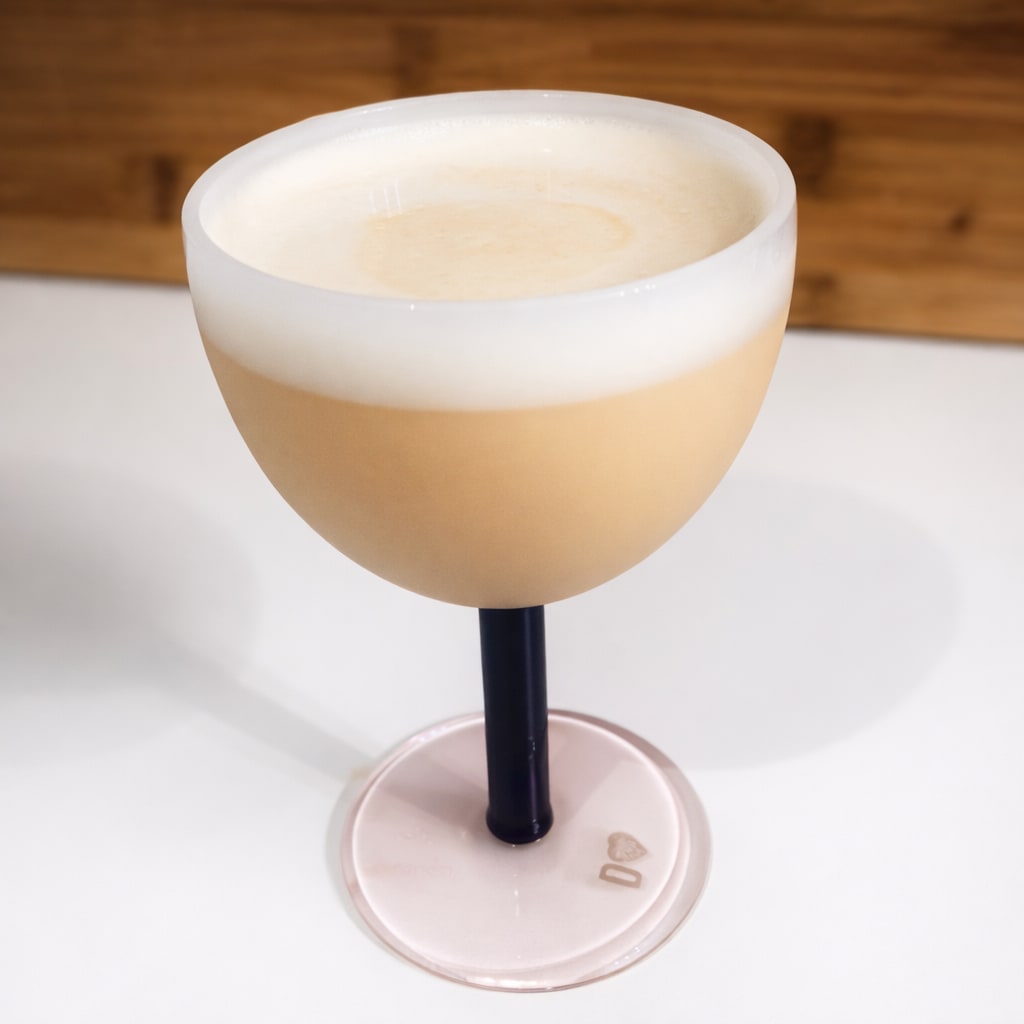
~ THE FIRESIDE FLIP ~
Fresh ginger
15ml honey, loosened with a little hot water
25ml Scotch
25ml sloe gin
1 whole egg
Dash Angostura bitters
Freeze a diminutive cocktail glass. Peel a little coin of ginger and muddle it up with the honey and water in the bottom of your shaker. Now, add the spirits and the entire egg (yes, yolk and all). Shake once without ice for maximum froth. And now again with ice to cool it all down. Fine-strain the mixture into your diminutive glass. Drop the Angostura on top and swirl with a toothpick to make a pretty pattern. Sip by a hearth.
Some Fireside Flip Notes:
It's Burn's Night this weekend. And this excellent little drink from Ryan Chetiyawardana's Good Things to Drink struck me as rather apt for the season — a hearty cocklewarmer combining the warming whiskiness of the Penicillin with the plum-crumble-and-custard qualities of sloe gin and yes, an entire egg. Quoth Ryan (who is particularly good on Scotch cocktails, I find): "This Fireside Flip has comforting, malty notes matched with the fruity/nutty flavours of sloe gin, all tied up with a hint of golden spice from honey and ginger. It's at its best made two-in-a-shaker you you and a loved one."
I have entirely come round to whole eggs in cocktails. I think this one might just be the Great Chieftan o' the Eggy-race.
Speaking of which: you can read me in the Guardian's FEAST on Saturday again. I'm talking about Scotch this time; and the poetry of Robbie Burns; and the great Highland writer Neil Gunn; and the lamentable and somewhat paradoxical elevation of "single malts" to luxury marques; and how actually there's a lot more affordable fun to be had seeking out independent bottlers and sloshing blends around in cocktail shakers. It'll be online next week — so, buy a paper in the meantime?
The sloe gin edition of the Cabinet is also forthcoming; I've now cleared enough deadlines (and illnesses) to have no excuse not to have this opus ready for you by Monday.
WELCOME TO THE SPIRITS✨
The neighbourhood bar of the internet
The Spirits #188: The Sloe Gin Fizz [ 16-Jan-26 4:03pm ]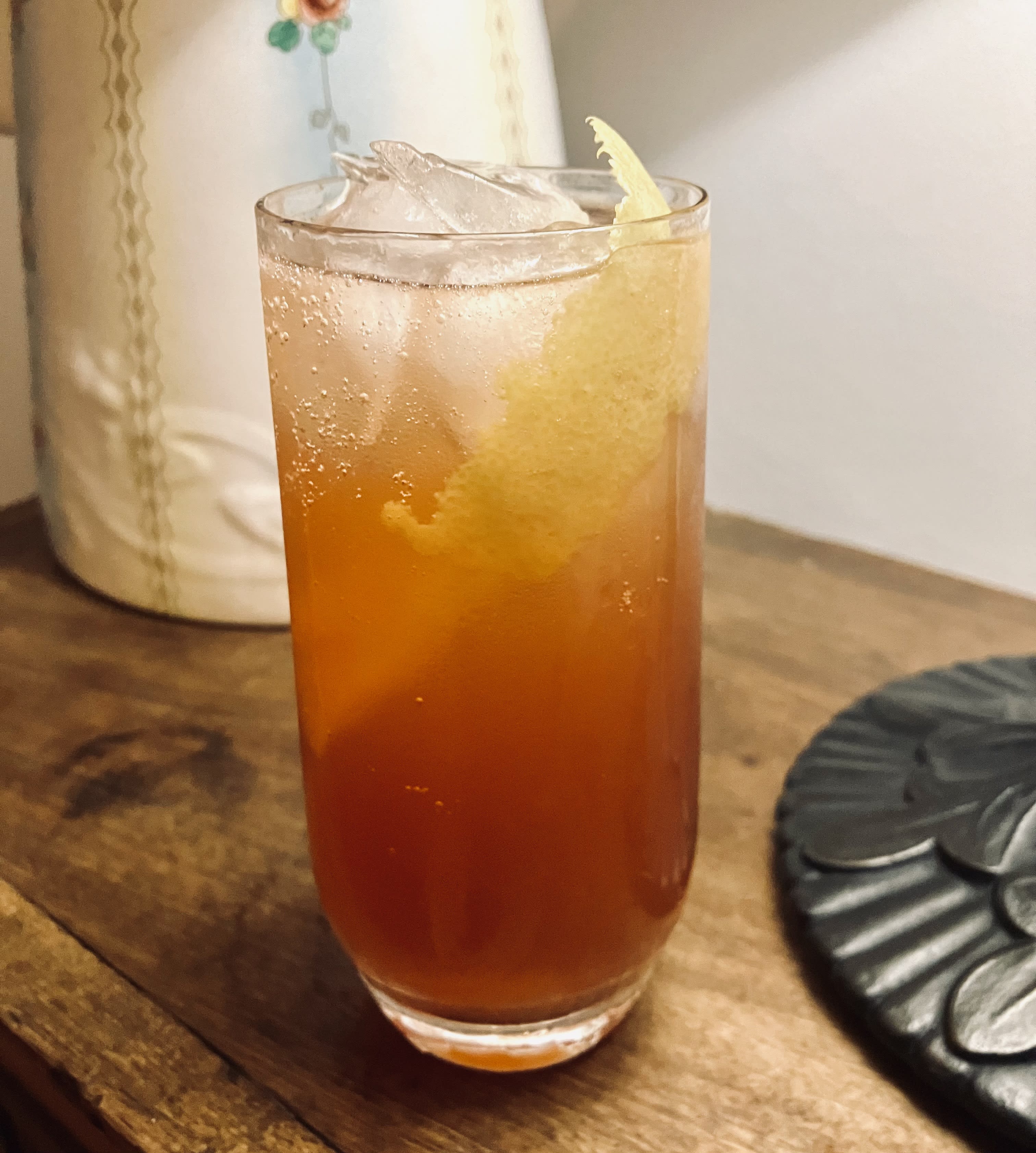
~ THE SLOE GIN FIZZ ~
45ml sloe gin
15ml gin
20ml lemon juice
10ml honey (loosened with a little hot water)
Dash Angostura bitters
~150ml fizzy water
Freeze a tall glass. Now, measure all of the ingredients into that new shaker you got for Christmas. All the ingredients except the fizzy water, that is! Add ice, apply the lid and exercise your shaking muscles. …
Five Cocktails for New Year [ 31-Dec-25 2:03pm ]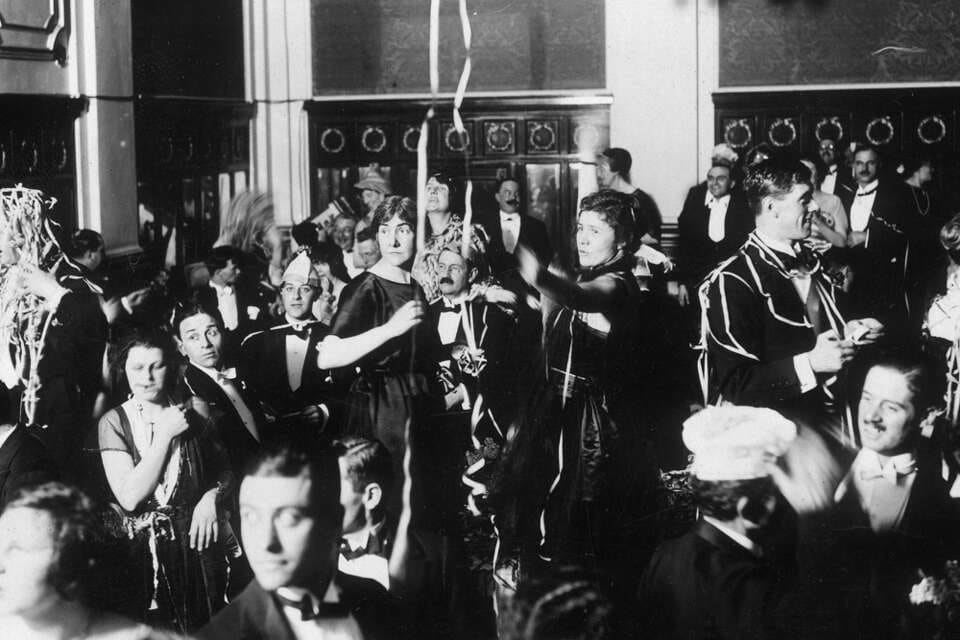
Hello friends —
I hope we all had good Christmases and didn't come down with the quademic? Mine was lovely, thank you. I got a Boston Shaker, among other items — a sign that it's time to get serious with this cocktail business.
The Spirits is a reader-supported publication. To receive new posts and support my work, consider becoming a free or paid subscri…


