
 For those who followed Crisis Report/ Richard Crim [ 02-Feb-26 7:20pm ]
Who I believe posted in Reddit as u/tuneglum. A note in his substack says he passed away in November.
I enjoyed his writing, his style, and learning from him.
Much of what he wrote is far more pessimistic than you hear from other sources, though all he did was compile published work into a digestible theme.
Of all he has done, highlighting the declining albedo, or reflectivity of the earth has been the most troubling, equivalent to an additional 100ppm of CO2e according to Hansen. That and the trailing rate of warming, perhaps 0.26 C per decade is already very dangerous, and the acceleration beyond that is quite a thing to ponder.
I will miss seeing his work, and will try to take some inspiration from what he did. He was not in a cheerful business, but he wrote with clarity and passion, and anger.
submitted by /u/Stillcant[link] [comments]
Resilience and Acceptance in the Face of Collapse [ 02-Feb-26 7:23pm ]Hello, my collapse-aware friends.
I learned about this free 9-week course on "Resilience and Acceptance in the Face of Collapse" on this subreddit and enrolled. This weekend, I got an email from one of the organizers requesting help getting the word out about this program. Here is the email:
I'm Steve Simmer, the course offering coordinator for the Resilience and Acceptance in the Face of Collapse course. The course offering you signed up for is scheduled to start next Thursday, February 5. I've spoken to the course leaders, and they are very excited about leading another course experience. However, at present the enrollment for this course offering is a little low, and in danger of cancellation. We ask your help in getting the word out about the course to a few more people. We have a new introductory video that briefly describes the course experience: Intro Video. Watch it, and if you know someone else who might be interested in the course, share the link with them along with a link to our website, www.acceptingcollapse.com, so that they can explore the course further and register if they're interested.
I'll put more info about the course objectives and syllabus in the comments.
If this sounds like something you are interested in, I encourage you to visit the website and consider enrolling in a course.
Thanks <3
Mods: my apologies if this counts as spam. Let me know if this post violates the subreddit rules. I'm just trying to get the word out.
submitted by /u/essenceofnutmeg[link] [comments]
Greenland's 'green mining' row highlights the key tensions in the energy transition [ 02-Feb-26 5:50pm ] pathdoc/Shutterstock
Green finance is built on a promise: that capital can be redirected to support the transition to a low-carbon economy while avoiding the environmental mistakes of the past. That promise is getting harder to keep.
The technologies needed for decarbonisation of electric vehicles, wind turbines, batteries and grid infrastructure rely on large quantities of critical minerals. Extracting those materials, even from remote places such as Greenland, remains environmentally disruptive, socially contested and politically fraught.
Sustainable finance shapes investment decisions across energy, infrastructure and manufacturing. The ethical frameworks this finance is based on often assume that environmental harm can be minimised through better disclosure, cleaner technologies and improved governance.
The extraction of critical minerals challenges that assumption. Mining is land intensive, energy hungry and often polluting. Recycling of existing batteries, electronics and turbines, and substitution away from scarce materials can reduce demand.
But most projections from the world's energy watchdog, the International Energy Agency, show that demand for critical minerals will rise sharply under clean energy transitions . Similar bodies show that extraction of raw materials such as lithium, cobalt, nickel and rare earth elements will rise sharply over the next two decades.
This is because the transition away from fossil fuels depends on large volumes of new infrastructure including electric vehicle batteries, wind turbines and grid storage, which cannot be supplied from recycled materials alone.
Recent research and policy assessments suggest this contradiction is becoming more acute, not less. Recent analyses of critical mineral supply chains show that extraction and processing remain highly concentrated in a few countries particularly China, Australia, Chile and the Democratic Republic of Congo.
These supply chains are environmentally intensive, involving significant land use, water consumption and pollution. These supply chains are slow to scale because it takes years to obtain permits for new mines, requires large upfront investment, and depends on the construction of extensive infrastructure. Yet global climate targets assume rapid expansion of clean-energy technologies.
In Greenland, environmental regulation and local political decisions have delayed or halted mining projects that are often considered key to the green transition.
Greenland is geologically rich. The island is home to significant deposits of rare earth elements, graphite, zinc and other minerals considered critical by both the EU and the US. These materials are central to clean-energy supply chains and have become strategically important as governments seek to reduce dependence on China, a superpower which dominates global processing capacity.
At the same time, Greenland's environment is exceptionally fragile. Arctic ecosystems recover slowly from industrial disruption, infrastructure is limited and mining projects face high logistical and financial costs. These constraints have already shaped political choices.
In 2021, Greenland's government introduced restrictions on uranium mining, effectively blocking the development of the large Kvanefjeld rare earth project. That decision reflected environmental and social priorities. It also highlighted the economic and legal pressures that arise when sustainability policies collide with global demand for transition minerals.
When green finance meets geopoliticsIn a world of geopolitical competition, governments are increasingly treating access to critical minerals as a matter of national security as well as climate policy. Policy statements and strategy documents from the US, the EU and other major economies now frame mineral supply not just as an environmental issue, but as essential to economic resilience, defence capability and technological leadership.
This shift has encouraged public financial support, diplomatic engagement and strategic partnerships aimed at securing future supply, including increased foreign interest in Greenland's mineral sector. While Greenland retains control over its resources, international attention reflects the growing geopolitical importance of potential new supply sources.
Projects justified as supporting the energy transition may be driven as much by geopolitical urgency as by environmental benefit. Academic research on critical mineral supply chains shows that when geopolitical and industrial priorities shape governance frameworks, local environmental risks and community consent are often marginalised in favour of strategic and economic goals
Read more: The economics of climate risk ignores the value of natural habitats
Tension in Greenland
Despite international interest, large-scale mining in Greenland has not taken off. Environmental safeguards, political opposition, infrastructure gaps and high costs have slowed development. This reality complicates the assumption that new mineral frontiers can quickly solve clean-energy supply bottlenecks through investment alone.
For investors, Greenland raises difficult questions about how environmental, social and governance (ESG) standards apply to transition minerals. Financing a rare earth mine may reduce long-term emissions by enabling renewable technologies, yet still impose immediate environmental damage. Standard ESG metrics struggle to capture this trade-off. They are better suited to assessing corporate behaviour than to resolving conflicts between global climate goals and local environmental harm.
 Current geopolitical dynamics have huge consequences for Greenland's environment.
Kedardome/Shutterstock
Current geopolitical dynamics have huge consequences for Greenland's environment.
Kedardome/Shutterstock
In Greenland, the debate over "green mining" (the idea that mineral extraction can be made environmentally acceptable through cleaner technologies, higher standards and better governance) is not a case of poor regulation or weak oversight. Instead, it reflects a jurisdiction that has deliberately placed environmental limits on extraction, even as it faces economic and strategic pressure as a result.
As governments continue to pursue ambitious climate targets under national and international commitments, similar dilemmas will emerge elsewhere. Green finance cannot avoid the material foundations of the energy transition.
Sustainable finance frameworks must evolve to handle situations where environmental protection constrains access to strategically important resources. Greenland shows how protecting the environment can clash with efforts to secure the minerals needed for the energy transition, and that this tension is far from resolved.
Without clearer rules on how to balance climate benefits against local ecological costs and without genuine respect for sovereignty and community choice, green finance risks becoming reactive, stretched between environmental principles and geopolitical realities.
The transition to a low-carbon economy requires minerals. But Greenland highlights that how those minerals are sourced and who bears the environmental cost remains unresolved.
Don't have time to read about climate change as much as you'd like?
Get a weekly roundup in your inbox instead. Every Wednesday, The Conversation's environment editor writes Imagine, a short email that goes a little deeper into just one climate issue. Join the 47,000+ readers who've subscribed so far.

Narmin Nahidi does not work for, consult, own shares in or receive funding from any company or organisation that would benefit from this article, and has disclosed no relevant affiliations beyond their academic appointment.
Trump's going to win the election he lost, no matter what he has to do to make that happen. Surrounding himself with a better set of sycophants this time around has really allowed him to gain some ground in his "be the despot you wish to see in the world" efforts.
His top appointees are just as willing to lie, defame, deride, and overstep the long-accepted limitations of their positions as the president himself. Now that Trump has pardoned the people who raided the Capitol on his behalf in January 2021, he's going after everyone and everything that pissed him off about that particular election cycle.
Trump's Revenge Time Machine is taking him and his administration back to Georgia to engage in an unprecedented seizure of voting records, as ABC News reports:
Fulton County, Georgia, officials said Wednesday that the FBI seized original 2020 voting records while serving a search warrant at the county's Elections Hub and Operations Center.
[…]
The search warrant authorized the FBI to search for "All physical ballots from the 2020 General Election," in addition to tabulator tapes from voting machines and 2020 voter rolls, among other documents, according to a copy of the warrant obtained by ABC affiliate WSB.
The warrant says the material "constitutes evidence of the commission of a criminal offense" and had been "used as the means of committing a criminal offense." It was signed by Magistrate Judge Catherine Salinas.
It's not surprising that Trump would attempt to extract some sort of penance from Georgia after he failed to convert that state into electoral college votes. The governor of the state, Brian Kemp, did all he could to swing the state back into Trump's favor post-election, including being sued by the DNC for claiming (with zero facts in evidence) that the Democratic party had "hacked" his state's voting machines.
Trump kept this issue alive by bringing Heather Honey — a fellow 2020 election denier from Georgia — into the in-group, appointing her to a high-level position in the DHS where she would [vomits] help oversee future election security efforts.
What is surprising is that any judge would sign this warrant. The allegations range from "threadbare" to "hallucinatory."
Specifically, the warrant listed possible violations of two statutes — one which requires election records to be retained for a certain amount of time, and another which outlines criminal penalties for people, including election officials, who intimidate voters or to knowingly procure false votes or false voter registrations.
Records were seized, which means it's unlikely records were deleted prematurely. And there's been nothing shown to this point that any sort of voter intimidation occurred… at least not on the behalf of the Democratic Party.
This appears to be voter intimidation of a different sort. Last month, the DOJ sued Fulton County (where the raid took place) for access to 2020 election records. This followed attempts to hold Trump accountable for trying to overturn the 2020 election — acts that included Trump asking the Secretary of State to "find" the votes needed to swing the state, as well as its targeting of Fulton County DA Fani Willis, who brought election interference charges against the then-outgoing Trump.
And, for some fucking reason, Director of National Intelligence Tulsi Gabbard attended the raid to seize these voting records.
Accompanying FBI agents on a raid is unprecedented for the chief of U.S. intelligence, whose job is to track threats from foreign adversaries. In her role overseeing the country's spy agencies, Gabbard is prohibited by law from taking part in domestic law enforcement. Her predecessors took pains to keep their distance from Justice Department cases or partisan politics.
Asked about the rationale for her visit to Georgia, a senior administration official said: "Director Gabbard has a pivotal role in election security and protecting the integrity of our elections against interference, including operations targeting voting systems, databases, and election infrastructure."
Whatever, "senior administration official." This is Gabbard hoping to show up on Trump's radar again, after being sidelined during actual foreign-facing activity, like the kidnapping of Venezuela's president. Perhaps she's tired of seeing Kristi Noem flouncing from photo op to photo op as Barbie-in-Chief of the DHS's invasion of the United States.
I mean…
Two senior officials with knowledge of the matter said Gabbard's presence in Fulton County was unnecessary and was not requested by the Justice Department.
Yes, it's another performance from the most performative administration in US history. And it will always play well because people who like this sort of thing will find this the sort of thing they like. The GOP is a flat circle, or perhaps more accurately, a human centipede.
Breaking up this endless cycle of shit ingestion and shit creation are the side effects of this sort of mutual masturbation: the constant shedding of talent from agencies that already don't have enough of it, thanks to the administration's constant purging of anyone who's not MAGA enough.
The special agent in charge of the FBI's Atlanta field office was forced out this month after questioning the Justice Department's renewed push to probe Fulton County's role in the 2020 election, two people familiar with the matter told MS NOW.
Paul Brown was ousted after expressing concerns about the FBI's investigation into President Donald Trump's longstanding and unsubstantiated allegations of voter fraud in the county anchored by Atlanta, and for refusing to carry out the searches and seizures of records tied to the 2020 election, according to the sources, who spoke to MS NOW on condition of anonymity.
Remember all the shit we talked about the USSR and its efforts to rid itself of anyone but party loyalists? Well, we're doing it right here and now, nearly 40 years after the fall of the Berlin Wall. The GOP says there's nothing wrong with this as long as it's the GOP doing it. The MAGA faithful have no problem with this as long as it's the MAGA front doing it. And the rest of us are expected to live with it, because the opposition party still seems to believe there's a polite, non-confrontational set of options to be deployed. Let's hope they'll realize that's no longer the case long before they have to issue a strongly-worded social media post about objecting to being first against the wall.
Embark on the journey of language learning with the Rosetta Stone unlimited subscription for all languages. Rosetta Stone has been the go-to software for language learning for the past 27 years. With its immersive and intuitive training method, you might be reading, writing, and speaking a new language with confidence in no time. Get access to all 25 languages offered with this deal for $149.97 when you use coupon code LANG30.

Note: The Techdirt Deals Store is powered and curated by StackCommerce. A portion of all sales from Techdirt Deals helps support Techdirt. The products featured do not reflect endorsements by our editorial team.

Buying a good budget phone can be a challenge. High-end handsets continue to get more features, but on the other end of the spectrum, there are only so many things you can skimp on before a device becomes too compromised. With the Galaxy A17, Samsung is trying to balance both sides of that equation with something that sports a solid design, a bright screen, decent cameras and respectable battery life for just $200. And despite some flaws, the company has succeeded at making a capable phone that fits into almost every budget.
Design and display
The Galaxy A17 does a good job of demonstrating how all plastics aren't the same. Despite having a polycarbonate frame and back, the phone never feels cheap. Everything from its buttons to its camera module feels nice and tight. The optical image stabilization system used for its rear shooters rattles, though that's something even $1,000 flagships suffer from, so it's not a big deal. Some small concessions for cost savings include a teardrop cutout for its front selfie cam and a small chin beneath its display, but considering its price, they're very forgivable. There's also only a single mono speaker and instead of an in-screen fingerprint sensor, Samsung built one into the power button on its side. Though for some, the latter might actually be a bonus.
 The Galaxy A17's 6.7-inch OLED display is one of the phone's best components thanks to solid brightness and a 90Hz refresh rate.
Sam Rutherford for Engadget
The Galaxy A17's 6.7-inch OLED display is one of the phone's best components thanks to solid brightness and a 90Hz refresh rate.
Sam Rutherford for Engadget
Meanwhile, one thing the A17 has that you don't get on high-end handsets anymore is a microSD card slot (that's shared with its SIM tray) for expandable storage. This gives you a cheap way to increase the phone's base 128GB of space and considering how rare this is nowadays, it's another win for people looking for a truly affordable device.
The Galaxy A17's screen is also surprisingly nice for its price, as it sports a 6.7-inch OLED display with up to 800 nits of brightness. Granted, its refresh rate tops out at 90Hz instead of the 120Hz you get on more expensive fare. But once again, considering how much it costs, I'm not complaining. Especially when you remember that base iPhones were still saddled with 60Hz panels as recently as 2024.
PerformanceOne area where budget phones often struggle is performance because skimping on RAM or the processor can save manufacturers a lot of money. And while the Galaxy A17 is generally fine considering its price bracket, I really wish Samsung had opted for a slightly newer chip. The phone comes with just 4GB of RAM (though there are slightly pricier versions with more), 128GB of onboard storage and an Exynos 1330 SoC, the latter of which is nearly three years old.
 The Galaxy A17 comes with three rear cameras, but its really more like two because one of those is a 2MP macro cam.
Sam Rutherford for Engadget
The Galaxy A17 comes with three rear cameras, but its really more like two because one of those is a 2MP macro cam.
Sam Rutherford for Engadget
At first, I was really worried because during the initial setup, the phone was a laggy, stuttery mess. Thankfully, after signing in, giving the phone some time to download updates in the background and making sure all of its apps were up to date, performance improved significantly. To be clear, this thing still isn't a speed demon and when you're multitasking or quickly switching between heavy apps, you may notice some slowdown. I also wish touch input felt a bit more responsive because sometimes when you tap an icon, there's a small delay before anything happens. But thankfully, it's relatively minor, and in most situations, the phone is snappy enough.
CamerasThe A17 comes with a 13-megapixel selfie camera and three rear shooters, though in practice it's really more like two because one of those is a 2MP macro cam, which doesn't get much use unless you take a lot of up-close photos. That said, the phone takes better pictures than you might expect given its price. In well-lit conditions, both its 50MP main and 5MP ultrawide cams don't give you much to complain about. Images look sharp and sport vivid colors.
However, in low-light situations, there's an obvious difference in quality between the A17 and more expensive midrange phones like Pixel 9a. In a shot of some fruit in my dimly lit kitchen, the A17's pic looks soft and features washed-out colors compared to what Google's phone produced. Then, when I went outside and snapped a photo of a car still buried after the recent snowstorm, textures on the slush in the road, along with various highlights and shadows looked worse in the A17's images. So while the phone can hold its own, camera quality is still one of the biggest reasons you might want to consider upgrading to a more expensive handset.
Battery life The bottom of the Galaxy A17 features the phone's USB-C port and its single, mono speaker.
Sam Rutherford for Engadget
The bottom of the Galaxy A17 features the phone's USB-C port and its single, mono speaker.
Sam Rutherford for Engadget
For a phone with a 5,000mAh battery and a low-power chip, the Galaxy A17 didn't last quite as long as I expected. On our local video rundown test, it lasted just over 23 hours (23:08), which is decent, but also five hours less than the Pixel 9a (28:04). On the other hand, its wired charging speed of 25 watts is more than enough. Just don't be surprised when you plop it on a wireless charging pad and nothing happens because the phone doesn't support that.
Wrap-upIf you are hard-capped at $200, the Samsung Galaxy A17 is a surprisingly impressive device. It's got a solid build, decent cameras with a handful of different lenses, respectable battery life and even a built-in microSD card slot for extra storage. You even get six years of OS and security updates, which is significantly longer than almost all of its similarly-priced rivals. And while its performance could be smoother, it's not laggy enough to get truly bothered about on a phone this affordable.
 Even though the Galaxy A17 is made out of plastic, the phone still doesn't feel cheap.
Sam Rutherford for Engadget
Even though the Galaxy A17 is made out of plastic, the phone still doesn't feel cheap.
Sam Rutherford for Engadget
For those with wiggle room in their gadget allowance, I would seriously consider looking at a version with 8GB of RAM, which is just $30 more. Alternatively, the Pixel 9a remains my favorite Android phone when it comes to value for money and it's $399 (down from its launch price of $499). But if money is tight, the Galaxy A17 delivers everything you need without blowing up your budget.
This article originally appeared on Engadget at https://www.engadget.com/mobile/smartphones/samsung-galaxy-a17-5g-review-a-respectable-and-affordable-android-option-190000154.html?src=rss
ICE-reporting service StopICE has blamed a US Customs and Border Protection (CBP) agent for attacking its app and website and sending users text messages warning them that their information had been "sent to the authorities."…

For only the third time in its 70-year history, Tito's Tacos has added an item to its legendary menu: a cheese quesadilla.
Tito's is a love-it-or-leave-it restaurant in West Los Angeles. Specializing in deep-fried tacos and long lines, if you think Tito's tacos are great, you are willing to brave the line. — Read the rest
The post Los Angeles' Tito's Tacos adds a menu item appeared first on Boing Boing.
The January Subscriber Playlist is Here! [ 02-Feb-26 5:28pm ]
Dispel the winter gloom! Our subscribers can catch up with all the music we wrote about last month
Even though January's always a bit of a quiet month for releases we've still got a fair wedge of music for our Subscribers to kick off 2026, with the playlist featuring the likes of MPTL Microplastics, Knats, Denzel Curry, Dry Cleaning, The Soft Pink Truth, Craven Faults, Qasu, Peaches, Jane Weaver, Zu, Sleaford Mods, Lightning Bolt, Megadeth, Thundercat, Bruce Springsteen, Robyn and Shackleton is below. Our Subscriber Plus members also have access to bonus playlists - the music from Peaches and Mike Dirnt of Green Day's Baker's Dozens, artist guides to go with the Strange Worlds Of David Berman and Toumani Diabaté, the...
The post The January Subscriber Playlist is Here! appeared first on The Quietus.
ROG made a gaming headset for audiophile nerds [ 02-Feb-26 6:47pm ]ASUS ROG just announced the Kithara gaming headset, which is a device intended to bring "audiophile-grade sound" to gaming. It was developed in conjunction with manufacturer HiFiMan, a company that specializes in high-end audio devices.
The Kithara is the company's first open-back planar magnetic gaming headset. ROG says it was designed to please gamers who "demand absolute clarity, precision and realism." The headphones feature 100mm planar magnetic drivers that have been "tuned specifically for gaming."
The company says this results in a wide frequency response, low distortion and a "level of detail that reveals subtle positional cues such as footsteps, reloads and distance movement." ROG boasts that these audio cues remain distinct even during moments of chaotic gameplay, potentially making the headphones a great choice for competitive gamers.
The open-back design allows for clear separation across bass, mids and treble, which should also make the headphones great for listening to music. It features a full-band boom microphone with a high signal-to-noise ratio. There are separate signal paths for audio and microphone inputs, which significantly reduces crosstalk.
The headphones have been built for maximum versatility, so there's a balanced headphone cable with swappable plugs. They support various connection types, including 3.5mm, 4.4mm and 6.3mm. They also ship with a USB-C to dual 3.5mm adapter.
These are gaming headphones, so comfort is also a priority. The metal frame features an adjustable fit and there's a multi-layer padded headband and two sets of interchangeable ear cushions. The ROG Kithara headphones are available now and cost $300.
This article originally appeared on Engadget at https://www.engadget.com/audio/headphones/rog-made-a-gaming-headset-for-audiophile-nerds-184737937.html?src=rss OpenAI brings its Codex coding app to Mac, with new multi-agent abilities included [ 02-Feb-26 6:31pm ]Since last spring, OpenAI has offered Codex. What started life as the company's response to Claude Code is becoming something more sophisticated with the release of a new dedicated macOS app. At its most basic form, Codex is a programming agent capable of writing code for users, but now it can also manage multiple AI assistants that can work together to complete more complex tasks.
OpenAI gives an example of how this could work in practice. The company used Codex to create a Mario Kart-like racing game, complete with a selection of different playable cars, eight tracks and a collection of powerups players can use against the competition. For a single AI agent, generating a game from scratch, with all the needed visual assets, would be a tough ask, but Codex was able to complete the task because it could delegate the work of making the game to different models with complementary capabilities.
For example, it turned to GPT Image for the visual assets, while a separate model simultaneously coded the web game. "It took on the roles of designer, game developer and QA tester to validate its work by actually playing the game," OpenAI says of the process.
If that sounds complicated, OpenAI has tried to make it more approachable with a section of the app titled Skills. The feature bundles "instructions, resources, and scripts so Codex can reliably connect to tools, run workflows, and complete tasks according to your team's preferences," the company explains. "The Codex app includes a dedicated interface to create and manage skills. You can explicitly ask Codex to use specific skills, or let it automatically use them based on the task at hand."
As you might imagine, Codex can also automate repetitive tasks. A dedicated Automations section of the app allows you to schedule tasks, which the software will complete in the background. "At OpenAI, we've been using Automations to handle the repetitive but important tasks, like daily issue triage, finding and summarizing CI failures, generating daily release briefs, checking for bugs, and more," the company said.
The release of the Codex macOS app comes as AI startups explore what a group of AI agents working in parallel can accomplish. At the start of the year, Anysphere, the company behind Cursor, found it was possible to build a working web browser from scratch using such an approach, though it did encounter problems along the way.
For a limited time, OpenAI is making Codex available to ChatGPT Free and Go users so they can see what's possible with this new software. At the same time, the company is doubling rates for Plus and Pro subscribers.
This article originally appeared on Engadget at https://www.engadget.com/ai/openai-brings-its-codex-coding-app-to-mac-with-new-multi-agent-abilities-included-183103262.html?src=rss
Vibe-coded Social Network for AI Bots Exposed Data on Thousands of Humans [ 02-Feb-26 6:50pm ]
Russia-linked APT28 attackers already abusing new Microsoft Office zero-day [ 02-Feb-26 6:18pm ]Russia-linked attackers are already exploiting Microsoft's latest Office zero-day, with Ukraine's national cyber defense team warning that the same bug is being used to target government agencies inside the country and organizations across the EU.…
Michael Jackson Biopic Gets New Trailer [ 02-Feb-26 6:06pm ]
Firefox will soon let you block all of its generative AI features [ 02-Feb-26 6:34pm ] Grubhub waives delivery and service fees on restaurant orders over $50 [ 02-Feb-26 6:22pm ] OpenAI launches new MacOS app for agentic coding [ 02-Feb-26 6:19pm ] Notepad++ says Chinese government hackers hijacked its software updates for months [ 02-Feb-26 6:09pm ]
A developer turned Wikipedia into a social media-style feed [ 02-Feb-26 5:49pm ]While it's important to stay informed about what's going on in the world, endlessly scrolling through your social media feeds and absorbing what's likely to be a largely negative influx of information can't be great for your mental wellbeing. Perhaps with an eye on stopping you from doomscrolling, developer Lyra Rebane created Xikipedia, a social media-style feed of Wikipedia entries.
The web app algorithmically displays info from Simple Wikipedia. "It is made as a demonstration of how even a basic non-[machine learning] algorithm with no data from other users can quickly learn what you engage with to suggest you more similar content," the Xikipedia landing page reads. "No data is collected or shared here, the algorithm runs locally and the data disappears once you refresh or close the tab."
You can opt to see entries from certain categories (including custom ones) and you can like "posts," each of which is a summary of the relevant Simple Wikipedia entry. Liking a post makes it more likely for posts from the same category, parent categories and linked articles to appear in your feed, Rebane explained.
You can click or tap on a post to visit the full article. It's important to note that, since Xikipedia pulls text and images from random articles, you'll probably see some NSFW material if you scroll for long enough, so be warned. You'll also likely need to wait a beat for Xikipedia to load its 40MB of data.
As someone who has a bookmark that takes me to a random Wikipedia article whenever I click it, I love the idea of Xikipedia. The Simple English Wikipedia has more than 278,000 articles, so there are hundreds of thousands of posts available to scroll through. However, it doesn't seem to be updated as often as the main version of Wikipedia. The discography section of one musician's page I ended up on was missing their two most recent albums. Still, it's worth treating this like Wikipedia proper: as a starting point for discovering new things (sort of in the tradition of StumbleUpon).
This article originally appeared on Engadget at https://www.engadget.com/apps/a-developer-turned-wikipedia-into-a-social-media-style-feed-174924280.html?src=rss
Hey Gavin Newsom! Investigating TikTok's Moderation Is Just As Unconstitutional As When Texas & Florida Tried It [ 02-Feb-26 5:22pm ]We called bullshit when Republicans tried to order websites to carry content. We're calling bullshit now when Democrats are trying to do the same.
We spent years explaining to politicians across both parties why the government can't dictate how private platforms moderate content. During the Biden admin, GOP governors seemed most aggressive about trying to tell platforms they couldn't moderate. We wrote many thousands of words words about why Texas's HB20 and Florida's SB7072 were flagrantly unconstitutional. We cheered when courts, up to and including the Supreme Court, agreed.
And now California Governor Gavin Newsom has decided to… do the exact same thing, just from the other direction.
Cool. Cool cool cool.
Here's Newsom, announcing that he's launching a review of TikTok's content moderation practices:

That's Newsom's "press office" announcing:
NEW: Following TikTok's sale to a Trump-aligned business group, our office has received reports — and independently confirmed instances — of suppressed content critical of President Trump.
Gavin Newsom is launching a review of this conduct and is calling on the California Department of Justice to determine whether it violates California law.
We could save a lot of taxpayer dollars by just giving him the answer: no, it does not violate California law. It cannot. Because of the First Amendment.
It's even worse if you dig down one level and see what Newsom is responding to:

That's a rando X account with just a few thousand followers tweeting that "you can't even mention epstein lmao" showing a TikTok warning that her trying to post the word "epstein" "may be in violation of our community guidelines."
Newsom is quote tweeting this saying:
It's time to investigate. I am launching a review into whether TikTok is violating state law by censoring Trump-critical content.
There's so much wrong here.
Let's start with the obvious: these "reports" are sketchy as hell. Beyond it coming from some rando account, TikTok has already explained that there was a data center power outage that caused "a cascading systems failure" affecting content posting and moderation. This happens! Content moderation systems fail all the time. Also, moderation systems make mistakes. All the time! As we've discussed approximately ten thousand times, even with 99.9% accuracy, you're going to have hundreds of thousands of "mistakes" every single day on a platform the size of TikTok. That's just math.
For the Governor of California to jump from "some rando users reported upload problems during a technical outage" to "we must investigate whether this violates California law" is… not how any of this should work.
But, who even cares about that? There's a bigger issue here: even if every single one of these reports were accurate—even if TikTok were deliberately, systematically moderating content to favor Trump—that would be totally legal under the First Amendment.
Content moderation decisions are editorial decisions. They are protected speech. A private platform can legally decide to promote, demote, or remove whatever content it wants based on whatever criteria it wants, including political viewpoint. It can decide what it doesn't want to host. It can do so for ideological reasons if it wants.
This is the same thing we've been saying for years when Republicans howled about "anti-conservative bias" on social media. And, arguably, Newsom merely investigating TikTok for its editorial choices creates chilling effects that themselves raise First Amendment concerns.
When Texas passed HB20, which tried to prohibit large social media platforms from moderating based on "viewpoint," we pointed out that this was flagrantly unconstitutional because it would compel platforms to host speech against their will. The Supreme Court agreed, with Justice Kagan noting during oral arguments that Texas's law would mean "the government can force you to have certain speech on your platform."
When Florida passed SB7072 with similar provisions, we said the same thing. The Eleventh Circuit agreed, calling it "an unprecedented attempt to compel private platforms to host speech," which violates "the First Amendment's long-held protection for the editorial discretion of private businesses."
So now Newsom wants to do the exact same thing, just from the other direction? He wants California to investigate whether a platform's content moderation choices—choices protected by the First Amendment—somehow "violate California law"?
What California law would that even be? The state has attempted a variety of social media laws, which keep getting thrown out as unconstitutional (just like we warned Newsom).
Is he just making up new theories now about how a state can control the editorial decisions of private platforms based on which political direction those decisions allegedly lean?
How is this different from when Josh Hawley or Ted Cruz threatened to strip Section 230 protections from platforms they accused of "anti-conservative bias"? How is this different from when Ron DeSantis tried to punish Disney for political speech he disagreed with?
The answer is: it's not different. It's the same unconstitutional impulse to use government power to control private editorial decisions, just wearing the other team's jersey. We've detailed time and time again that both Republicans and Democrats are super quick to reach for the censorship button whenever they see online speech they don't like, but it's particularly egregious here because the courts have already ruled on this exact issue.
The Supreme Court already made it quite clear that Newsom can't do what he's doing just a couple years ago in the Moody ruling, directed at the governors of Texas and Florida:
But a State may not interfere with private actors' speech to advance its own vision of ideological balance. States (and their citizens) are of course right to want an expressive realm in which the public has access to a wide range of views. That is, indeed, a fundamental aim of the First Amendment. But the way the First Amendment achieves that goal is by preventing the government from "tilt[ing] public debate in a preferred direction." Sorrell v. IMS Health Inc., 564 U. S. 552, 578-579 (2011). It is not by licensing the government to stop private actors from speaking as they wish and preferring some views over others. And that is so even when those actors possess "enviable vehicle[s]" for expression. Hurley, 515 U. S., at 577. In a better world, there would be fewer inequities in speech opportunities; and the government can take many steps to bring that world closer. But it cannot prohibit speech to improve or better balance the speech market.
TikTok could, tomorrow, announce that they're going to remove every single piece of content critical of Trump and promote only pro-Trump material. That would be stupid. It would probably be bad for their business. Users would likely flee to competitors. But it would be legal, because private platforms have the First Amendment right to make their own editorial choices, even bad ones.
Newsom knows this. Or he should. We've been explaining it to politicians of both parties for years: the First Amendment protects against government control of speech, including a platform's editorial decisions about what to host. It doesn't guarantee anyone a right to have their preferred content amplified on someone else's platform.
We called bullshit when Republicans tried this. We're calling bullshit now when Democrats like Newsom are doing the same thing.
The state has no role in dictating editorial practices of any media entity. Period.
Surprise! The Melania movie is terrible and serves no purpose [ 02-Feb-26 5:56pm ]
The Melania movie demonstrates two things: Jeff Bezos has fewer scruples than his Venice wedding already made clear, and Brett Ratner has not changed at all. Aside from that, Melania is as boring as everyone suspected.
Apparently created only because obscenely wealthy people needed a vehicle to bribe one another for consideration that benefits their highly dependent businesses on a friendly government, Melania the Movie exists as an embarrassing complication. — Read the rest
The post Surprise! The Melania movie is terrible and serves no purpose appeared first on Boing Boing.
ICE finds $70 million for a warehouse, still can't find the Constitution [ 02-Feb-26 5:40pm ]
While the rest of the country bellyaches about affordability and cannot find housing or healthcare, Immigration and Customs Enforcement has found $70 million to buy a new warehouse, where they plan to build another "detention center." There is no indication that the agency intends to abide by the document that limits what they can do inside such a prison. — Read the rest
The post ICE finds $70 million for a warehouse, still can't find the Constitution appeared first on Boing Boing.
Rodent reaffirms winter, meteorologists undeterred [ 02-Feb-26 5:27pm ]
Hauled out of his stump at Gobbler's Knob, before daylight, by a bunch of oddly dressed men, Punxsutawney Phil has done his thing, while meteorology continues to exist.
The Punxsutawney Groundhog Club says that when Phil is deemed to have not seen his shadow, that means there will be an early spring.
The post Rodent reaffirms winter, meteorologists undeterred appeared first on Boing Boing.
Trump back to blaming the victim, business as usual for ICE [ 02-Feb-26 5:05pm ]
Convicted felon Trump is once again blaming the dead for state violence and excessive use of force.
The Orange Menace's desire to lower the temperature in Minneapolis lasted less than a week. Trump took to his diminutive social media network to declare Pretti an "agitator" and "perhaps an insurrectionist." — Read the rest
The post Trump back to blaming the victim, business as usual for ICE appeared first on Boing Boing.
Elon Musk Is Convinced He Can Turn Low-Earth Orbit Into a Gigantic Data Center [ 02-Feb-26 5:45pm ]
Winter Storms Wreak Havoc — Blame Fossil Fuels, Not Renewables [ 02-Feb-26 5:47pm ]Weather is big news these days, and winter storms make for great clickbait. (Okay, I'll admit that I'm a bit culpable here.) The US Eastern seaboard is in the midst of a rolling series of winter storms — wind, ice, sleet, and snow have caused upheavals in communities. Sure, the ... [continued]
The post Winter Storms Wreak Havoc — Blame Fossil Fuels, Not Renewables appeared first on CleanTechnica.
CATL Shares Details Of Next Generation 5C Battery [ 02-Feb-26 5:24pm ]CATL keeps pushing the boundaries of battery technology. Its latest announcement is about batteries that can charge at 5C.
The post CATL Shares Details Of Next Generation 5C Battery appeared first on CleanTechnica.
Electric MINI Countryman Gets Range Boost To 311 Miles [ 02-Feb-26 5:19pm ]The 2026 MINI Countryman E range has been boosted from about 286 miles per charge to 311, on the WLTP cycle. This should be plenty of range for many drivers, and is generally sufficient for a small SUV that frequently is driven on work commutes and around town, urban areas, ... [continued]
The post Electric MINI Countryman Gets Range Boost To 311 Miles appeared first on CleanTechnica.
Oracle's first general on-prem release of its .ai database iteration draws skeptics [ 02-Feb-26 5:47pm ]Last week, Oracle announced the general availability of Oracle AI Database 26ai Enterprise Edition for Linux x86‑64, but 13-year support for 19c and the prospect of AI lock-in might make users think twice about upgrading to it.…
McDonald's is not lovin' your bigmac, happymeal, and mcnuggets passwords [ 02-Feb-26 5:05pm ]Change Your Password Day took place over the weekend, and in case you doubt the need to improve this most basic element of cybersecurity hygiene, even McDonald's - yes, the fast food chain - is urging people to get more creative when it comes to passwords. …
Scott Apel's wild novel [ 02-Feb-26 4:40pm ]
I have just finished reading The Uncertainty Principle?, an oddball detective novel (or maybe, as the text says, an "anti-detective novel,") by Robert Anton Wilson's longtime friend, D. Scott Apel. It is quite a wild ride, and I found it hard to stop reading. The hero is private investigator Alec Smart, there are I think three novels that feature him.
Several real people appear in the book under fictional names, including Robert Anton Wilson, Arlen Riley Wilson and Philip K. Dick. Here is one of the descriptions of the RAW character, "Timothy Aleister Finnegan,":
From my perspective, I stood facing an avuncular guy who couldn't be mistaken for anything other than a writer. He was middle-aged, a few inches shorter than my six feet, but well-matched with his wife. He had a large, round face which tapered down to a pointed gray goatee, and he wore his salt-and-pepper hair slicked straight back against his head. He looked like nothing so much as the unlikely offspring of a cherub and a satyr. He had an infectious smile, accentuated by laugh lines radiating around his sharp blue eyes. In those eyes was a hint of endearing devilishness; a touch of the Trickster. The cherub as confidence man. There's an old joke that says, "After you shake hands with him, be sure to count your fingers." I felt like if I counted mine now I might find six.
The Uncertainty Principle? is available as a paperback (about $15) and a Kindle ebook (about $1). I have published a couple of interviews with Scott, here is one.
Another Climate Denier Caught up in Epstein Files [ 02-Feb-26 5:05pm ] Texas "Test Bed" Weathered Cold Snap with Diverse Generation,Wind, New Batteries. [ 02-Feb-26 4:48pm ] Chinese EVs WILL Come to the US [ 02-Feb-26 4:10pm ]
"LDO (Last Day Out)" [ 02-Feb-26 5:16pm ]
Notepad++ Compromised By State Actor [ 02-Feb-26 5:35pm ]
The Truth Really Hurts on This Week's 'A Knight of the Seven Kingdoms' [ 02-Feb-26 5:30pm ] Right-to-Compute Laws Are Spreading Across the US, as Electricity Bills Skyrocket [ 02-Feb-26 5:20pm ] The Baby Universe Really Was a Goopy Soup, Research Suggests [ 02-Feb-26 5:15pm ]
Why does this river slice straight through a mountain range? After 150 years, scientists finally know [ 02-Feb-26 4:33pm ]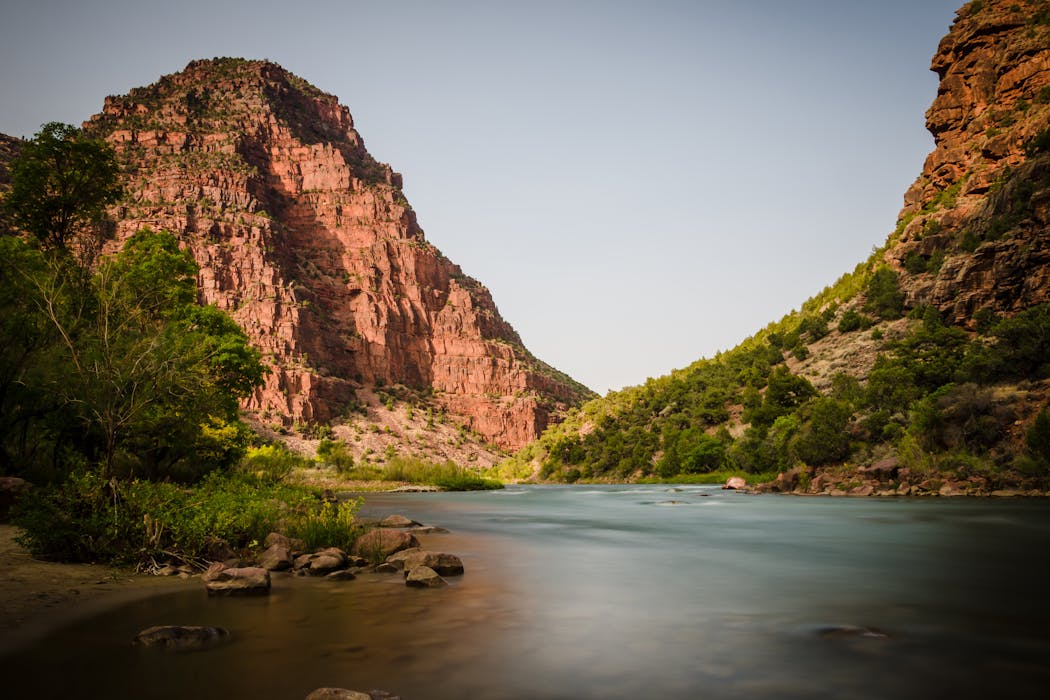 The Gates of Lodore mark the beginning of the Green River's path through the Uinta Mountains. Scott Alan Ritchie / shutterstock
The western US is a geologists' dream, home to the Rocky Mountains, the Grand Canyon, active volcanoes and striking sandstone arches. But one landform simply doesn't make sense.
Rivers normally flow around barriers. The Danube river, for example, flows between the Alps and the Carpathians, twisting and turning to avoid the mountains.
But in north-western Colorado, one river does the opposite.
The intimidatingly named Gates of Lodore marks the entrance to the 700-metre deep Canyon of Lodore that slices straight through the Uinta Mountains as if the range wasn't there at all. It was created by the Green River, the largest tributary of the Colorado River (of Grand Canyon fame).
For more than 150 years, geologists have debated why the Green River chose such an unusual path, creating a spectacular canyon in the process.
 The Green River carves its way through the Uintas in Dinosaur National Monument, on the border of Colorado and Utah.
Eric Poulin / shutterstock
The Green River carves its way through the Uintas in Dinosaur National Monument, on the border of Colorado and Utah.
Eric Poulin / shutterstock
In 1876, John Wesley Powell, a legendary explorer and geologist contemplated this question. Powell hypothesised that the river didn't cut through the mountain, but instead flowed over this route before the range existed. The river must have simply maintained its course as the mountains grew, carving the canyon in the process.
Unfortunately, geological evidence shows this cannot be the case. The Uinta Mountains formed around 50 million years ago, but we know that the Green River has only been following this route for less than 8 million years. As a result, geologists have been forced to seek alternative explanations.
And it seems the answer lies far below the surface.
Drip dripColleagues and I have found evidence for a process in which part of the Earth's crust becomes so dense that it begins to sink into the mantle beneath it. This phenomenon, known as a "lithospheric drip", occurs deep in the Earth, but can have profound effects on the surface.
Drips often form beneath mountain ranges. The sheer weight of the mountains raise temperatures and pressures at the base of the crust, causing dense minerals to form. As these minerals accumulate, the lower crust can become heavier than the mantle it "floats" on. At this point, the crust begins to detach, or "drip", into the mantle.
 Dripping (left) then rebounding (right).
Smith et al (2026)
Dripping (left) then rebounding (right).
Smith et al (2026)
At the surface, this causes two things. Initially as the drip forms, it pulls the crust down, lowering the height of the mountain range above. Then as the drip detaches, the crust springs or rebounds back. The whole process is like pulling a trampoline down and then letting it go again.
For the Green River, this temporary lowering of the Uinta Mountains appears to have removed a critical barrier. The river was able to cross the range during this low period, and then, as the range rebounded, it carved the Canyon of Lodore as it continued on its new course.
A geological bullseyeOur evidence for the lithospheric drip comes from the river networks around the Uinta Mountains. Rivers record a record of past changes to landscapes, which geomorphologists can use to assess how the elevation of a mountain range may have changed in the distant past. The rivers around the Uintas show that the range had recently (in geological terms) undergone a phase of renewed uplift.
By modelling these river networks, we were able to map out the uplift. The result was striking: a bullseye-shaped pattern, with the greatest uplift at the centre of the mountain range, with things decreasing further from the centre. Around the world, this same pattern represents the telltale sign of a lithospheric drip. Similar signals have been identified in places such as the Central Anatolian Plateau in Turkey, as well as closer to the Uinta Mountains on the Colorado Plateau or the Sierra Nevada of California.
To test whether such a process was occurring beneath the Uintas, we turned to seismic tomography. This technique is similar to a medical CT (computerised tomography) scan: instead of using X-rays, geophysicists analyse seismic waves from earthquakes to infer the structure of the deep earth.
Existing seismic imaging reveals a cold, round anomaly more than a hundred miles below the surface of the Uintas. We interpreted this huge feature, some 30-60 miles across, as our broken-off section of the drip.
By estimating the velocity of the sinking drip, we calculated it had detached between 2 and 5 million years ago. This timing matches the uplift inferred from nearby rivers and, crucially, perfectly matches separate geological estimates for when the Green River crossed the Uinta Mountains and joined the Colorado River.
Taken together, these different bits of evidence point towards a lithospheric drip being the trigger that allowed the Green River to flow over the Uintas, resolving a 150-year-old debate.
A pivotal moment in the history of North AmericaWhen the Green River carved through the Uinta Mountains, it fundamentally changed the landscape of North America. Rather than flowing eastwards into the Mississippi, it became a tributary of the Colorado River, and its waters were redirected to the Pacific.
This rerouting altered the continental divide, the line that divides North American river systems that flow into the Atlantic from those that flow into the Pacific. In doing so, it created new boundaries and connections for wildlife and ecosystems.
The story of the Green River shows that processes deep within the Earth can have profound impacts for life on the surface. Over geological timescales, movements of country-sized lumps of minerals many miles below the surface can reshape mountains, redirect rivers and ultimately influence life itself.

Adam Smith does not work for, consult, own shares in or receive funding from any company or organisation that would benefit from this article, and has disclosed no relevant affiliations beyond their academic appointment.
Drastic water shortages and air pollution are fuelling Iran's protests [ 02-Feb-26 12:55pm ]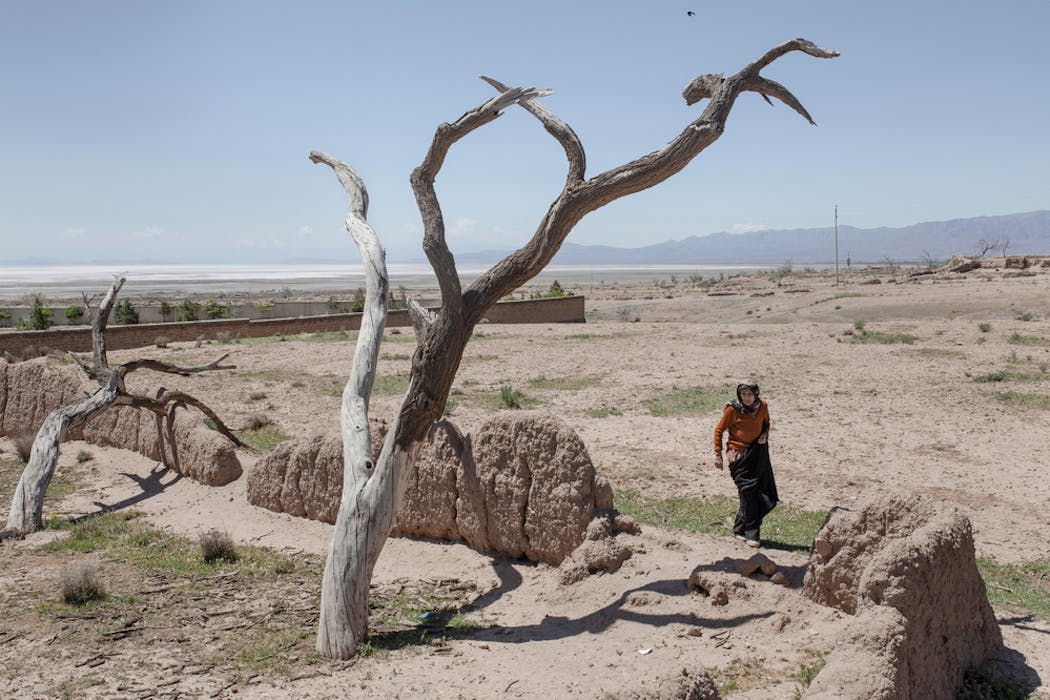 This dry landscape in Iran was once the sixth largest salt lake in the world. solmaz daryani/Shutterstock
This roundup of The Conversation's climate coverage was first published in our award-winning weekly climate action newsletter, Imagine.
"Iran is experiencing not one environmental crisis but the convergence of several: water shortages, land subsidence, air pollution and energy failure. All added together, life is a struggle for survival."
This is the situation inside Iran as described by Nima Shokri, an environmental engineer who works on global challenges related to the environment. Shokri highlights a rarely discussed factor in relation to this year's massive protests across Iran: the severe challenges Iranians are struggling with every day, affecting their ability to simply carry on living.
The air is polluted, the water is drying out and the land collapsing. Many Iranian farmers have been forced to give up their homes and land, and flee to the edges of cities in the hope of just surviving. Their land is cracking and disappearing, and it is no longer possible to grow crops or keep animals alive.
City dwellers are struggling with major water shortages too. On top of that extremely high air pollution levels are forcing hospitals and schools to close, and rising numbers of medical cases are being linked to bad air.
Kevani Madani talks about Iran's long term water problems.Living in that environment, it's no wonder that people feel desperate. As Shokri has pointed out many centres of the massive protests seen in Iran in the past few weeks, where an estimated 30,000 people have been killed, are in places where people are dealing with the most severe environmental challenges.
Read more: Iran's biggest centres of protest are also experiencing extreme pollution and water shortages
Of course, these air, land and water issues are not the only reason why thousands of people are on the streets of this country, where they must live with the decisions of a government that wants to decide who is allowed to walk on the streets and what people, women especially, are allowed to wear.
Struggle for basicsBut these basics of having clean water and air that you can breathe without damaging your health are impossible for anyone to ignore.
These conditions haven't just happened without human intervention. Iran's leaders have made policy choices over the years that have escalated the environmental challenges that many around the world are seeing, such as reduced rainfall. Water intensive agriculture has been encouraged, groundwater has been excessively pumped out, heavy fuel used, and environmental regulation has been weak.
As environmental journalist Sanam Mahoozi and chemical engineer Salome M.S. Shokri-Kuehni wrote, along with Shokri, a few weeks ago, early in January 2026 Iran's capital ranked as the most polluted city in the world.
Local media were reporting more than 350 deaths linked to worsening air quality over ten days during December 2025. And studies indicate that more than 59,000 Iranians die prematurely every year from air pollution-related illnesses.
The Iranian government has failed to protect its people from these escalating crises. In fact, as the three authors argue, its decisions has put them at more risk. And these day-to-day survival issues along with escalating political repression and economic fragility has left desperate people desperate for change, and a country on the edge of collapse.
Iran is not the only country that is experiencing a water crisis that its government hasn't shown signs of knowing how to manage, and where people are struggling to cope. Mexicans are living with conditions caused by years of drought. Reservoirs that used to supply millions with water are drying up. Some people report spending a quarter of their income on water, while others walk 30 minutes to even find a supply.
Water shortages are projected to affect 30 of 32 Mexican states by the year 2050, Natasha Lindstaedt, a professor of government at the University of Essex who researches human security and climate change, writes. And Mexico's water crisis is compounded by being forced to send part of its water supply to the US due to a just over 80-year-old agreement between the two countries.
Read more: Mexico and US look for new deal in long-running battle over 80-year old water treaty
Global crisis
About four billion people - nearly half the global population - live with severe water scarcity for at least one month a year. They are going without access to sufficient water to meet all of their needs, writes Kaveh Madani, director of the Institute for Water, Environment and Health at United Nations University and the author of a new report by UN scientists on water scarcity.
Mexico has been suffering from long periods of drought.The consequences of water deficit are being seen around the world: dry reservoirs, sinking cities, crop failures, water rationing and more frequent wildfires and dust storms.
One massive consequence of short-term water policies, often related to agriculture, is subsidence. And as Madani explains when groundwater is overpumped, the underground structure, which holds water almost like a sponge, can collapse. And it can be impossible for it to recover.
Read more: The world is in water bankruptcy, UN scientists report - here's what that means
In Mexico City, land is sinking by about 25cm per year. In Iran, subsidence is up to 30cm per year, affecting areas where around 14 million people live, more than one-fifth of the population.
The UN report sets out a drastic situation: the world is starting to experience water bankruptcy. This is beyond a crisis. It is long term condition, where cities or regions use more water than nature can reliably replace, where the damage to the environment is so catastrophic that it becomes almost impossible hard to reverse.
And while water becomes such a valuable resource, tension between those who have it and those who don't is only going to increase.
To contact The Conversation's environment team, please email imagine@theconversation.com. We'd love to hear your feedback, ideas and suggestions and we read every email, thank you.
Don't have time to read about climate change as much as you'd like?
Get a weekly roundup in your inbox instead. Every Wednesday, The Conversation's environment editor writes Imagine, a short email that goes a little deeper into just one climate issue. Join the 45,000+ readers who've subscribed so far.
 Preventable deaths in a warming world: how politics shapes who lives and who dies [ 02-Feb-26 12:55pm ]
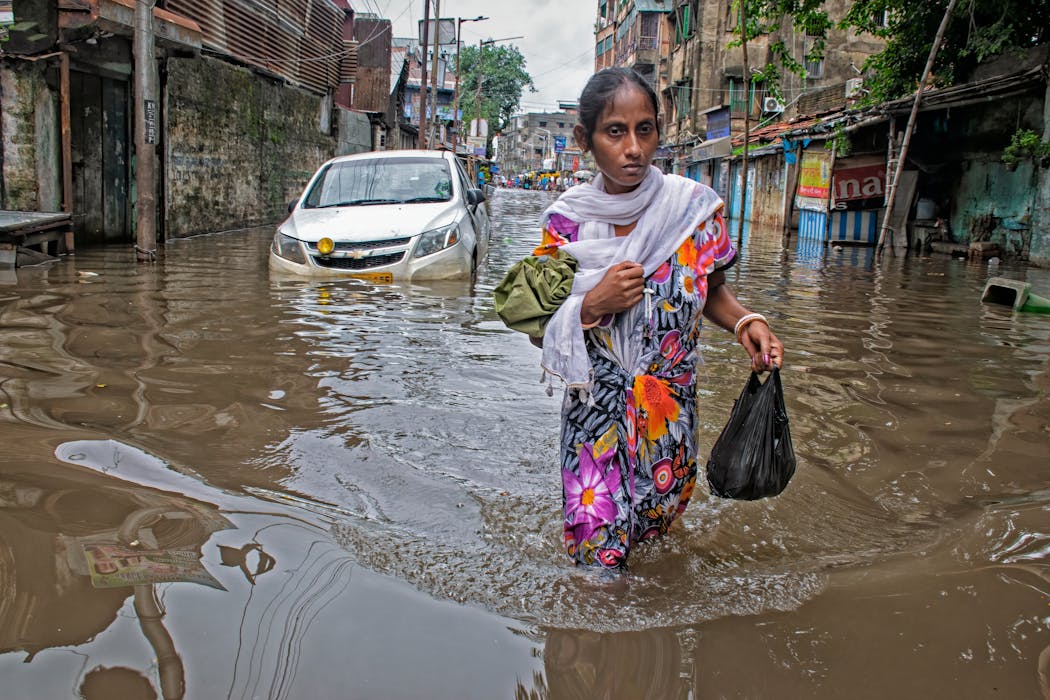 Floods in Kolkata, West Bengal, India in 2019. ABHISHEK BASAK 90/Shutterstock
In Brownsville, Texas, three members of the Galvan family died after a malfunctioning air conditioner left them exposed to extreme heat. Aged between 60 and 82, all three had chronic health conditions, including diabetes and heart disease. This makes it harder for the body to regulate temperature and increases vulnerability to heat stress.
Nobody arrived to check on them until days after they had died in their apartment in 2024. This isolation also increases risk of heat-related deaths.
Although the immediate trigger appears to have been equipment failure, a pathologist attributed the deaths to extreme heat linked to chronic illness. Deaths like these are classified as "heat-related" when ambient temperatures exceed what bodies can safely tolerate.
Climate change is a contributing factor. As heatwaves become more frequent, intense and prolonged, routine failures in cooling, power or housing infrastructure are more likely to turn existing vulnerability into fatal harm.
Around the world, climate-related deaths follow consistent social patterns. People who are older, already ill, economically disadvantaged, or working outdoors are most affected.
The Intergovernmental Panel on Climate Change (the UN's climate science advisory group) concludes that roughly 3.3 billion to 3.6 billion people - nearly half of the world's population - are highly vulnerable to climate risks, with limited capacity to cope. Here, vulnerability is not simply exposure to environmental hazards. Who is protected and who is left at risk depends on social and infrastructural conditions.
Research in climate science, public health and social sciences shows these patterns are clear. My own research spans ecosystem ecology and social science. I examine how climate knowledge is produced, interpreted and acted upon in times of ecological emergency.
The evidence points to an uncomfortable conclusion: much of this suffering is preventable.
The necropolitics of climate changeCameroonian historian Achille Mbembe introduced the idea of "necropolitics" to explain how some lives come to be treated as more expendable than others. This does not imply intent to kill, but rather the routine political acceptance that some people will be exposed to harm.
From this perspective, the Galvans' deaths were shaped not only by heat, but by structural inequalities and gaps in policy and infrastructure.
This logic is visible globally. In south Asia and the Middle East, heatwaves claim the lives of elderly people and outdoor workers. In sub-Saharan Africa, floods and droughts disproportionately affect subsistence farmers.
In the UK, air pollution is linked to roughly 30,000 deaths annually. People from ethnic minority and low-income communities are more likely to live in the most polluted areas. These deaths are not random. They follow recognisable social patterns.
 Floods hit villages in the Jhenaigati upazila of Sherpur district, Bangladesh on October 6 2024.
amdadphoto/Shutterstock
Floods hit villages in the Jhenaigati upazila of Sherpur district, Bangladesh on October 6 2024.
amdadphoto/Shutterstock
Mbembe's concept helps describe situations where political, economic or social arrangements leave some populations consistently exposed to harm. That includes climate-vulnerable communities, places where resources are being extracted through mining or areas where people are displaced from their homes. In the US, "Drill, baby, drill!" has re-emerged as shorthand for prioritising fossil fuel extraction over emissions reduction.
These political and economic choices create consistent patterns of vulnerability for environmental risks, from extreme heat to floods and air pollution. Structural neglect, not personal behaviour, underlies the distribution of harm.
Yet, vulnerability is not fate. Heat provides a clear example. With early warning systems, targeted outreach, and timely intervention, many such fatalities can be prevented. As epidemiologist Kristie Ebi notes: "Those deaths are preventable … people don't need to die in the heat".
The same is true across climate risks. Even with systemic neglect, deliberate and coordinated action can reduce risk. Connecting social, infrastructural, and institutional responses to climate hazards is a crucial step.
Slow violence as a climate processEnvironmental humanist Rob Nixon uses the term "slow violence" to describe harms that accumulate gradually and often invisibly over time. Unlike sudden disasters, the effects of rising temperatures, drought and ecological degradation unfold quietly.
You cannot make a disaster movie out of slow violence. Its harm builds incrementally, striking those already most vulnerable. The deaths of the Galvans exemplify this slow burn, as do the lives lost to prolonged heat exposure, crop failure and environmental degradation worldwide.
People least responsible for emissions, primarily in developing countries, are most exposed to escalating climate harms. Viewed through a necropolitical lens, slow violence shows how neglect becomes lethal through the repeated failure to prevent known and predictable harms.
Feminist theorist Donna Haraway coined the term "Chthulucene", from the Greek chthonic ("of the earth"), to describe an era defined by entangled relationships between humans, other species and the ecosystems they depend on.
Rather than treating environmental harm as separate from social life, this perspective emphasises how vulnerability emerges through the everyday connections between people, institutions and environments. As Haraway argues harm accumulates through these relationships, revealing how exposure to climate risks, political neglect and ecological stress reinforce one another over time.
This dynamic is visible in Vietnam's Mekong Delta, one of the world's most productive rice-growing regions. Here, saltwater intrusion is creeping inland, damaging vast areas of farmland and threatening millions of livelihoods.
Rising sea levels and shifting climate patterns could affect up to 45% of the delta's farmland by 2030, destabilising both local communities and global food systems. Social and ecological harm cannot be separated.
Politics of life, not deathPolitical choices amplify any existing environmental threat. Neglect is not a neutral absence: it is a political condition that shapes who lives and who suffers.
Addressing this injustice requires a living politics of care. This means a political system that recognises vulnerability as socially produced and demands solidarity, equity and accountability. Through alliances between affected communities, researchers and advocates who expose neglect, plus decision-makers under pressure to act, care can become politically unavoidable.
Neglect is no longer allowed to remain invisible in some parts of the world. Cities like Ahmedabad, India, are expanding heat mitigation and early-warning systems. Communities in the Mekong Delta are working with Vietnamese and international researchers to experiment with salt-tolerant crops.
Globally, ecocide laws that make large-scale destruction of ecosystems illegal are being introduced. This helps embed responsibility for environmental protection into legal and political systems. Even in the face of political neglect, targeted action and emerging legal frameworks can reduce harm and foster a more caring form of politics.
Don't have time to read about climate change as much as you'd like?
Get a weekly roundup in your inbox instead. Every Wednesday, The Conversation's environment editor writes Imagine, a short email that goes a little deeper into just one climate issue. Join the 47,000+ readers who've subscribed so far.

Aaron Thierry receives funding from ESRC. He is affiliated with Scientists for Extinction Rebellion.
Grok, which maybe stopped undressing women without their consent, still undresses men [ 02-Feb-26 5:07pm ]It looks like Grok is still being gross. Elon Musk says his chatbot stopped making sexualized images without a person's consent, but The Verge recently discovered this is not entirely true. It maybe (and I say maybe) stopped undressing women without their consent, but this doesn't seem to apply to men.
A reporter with the organization ran some tests with Grok and found that the bot "readily undresses men and is still churning out intimate images on demand." He confirmed this with images of himself, asking Grok to remove clothing from uploaded photos. It performed this task for free on the Grok app, via the chatbot interface on X and via the standalone website. The website didn't even require an account to digitally alter images.
The company recently said it has taken steps to "prevent the Grok account from allowing the editing of images of real people in revealing clothing such as bikinis." However, the reporter had no problem getting the chatbot to put him in "a variety of bikinis." It also generated images of the subject in fetish gear and in a "parade of provocative sexual positions." It even generated a "naked companion" for the reporter to, uh, interact with.
He suggested that Grok took the initiative to generate genitalia, which was not asked for and was visible through mesh underwear. The reporter said that "Grok rarely resisted" any prompts, though requests were sometimes censored with a blurred-out image.
This controversy started several weeks ago when it was discovered that Grok had generated millions of sexualized images over a period of 11 days. This includes many nonconsensual deepfakes of actual people and over 23,000 sexualized images of children. This led to investigations in both California and Europe. X was actually banned in both Indonesia and Malaysia, though the former has since lifted that ban.
X claimed it has "implemented technological measures" to stop this sort of thing, but these safeguards have proven to be flimsy. In other words, the adjustments do stop some of the more obvious ways to get Grok to create deepfakes, but there are still methods to get around this via creative prompting.
It's also worth noting that journalists asking for a comment on the matter get slapped with an autoreply that reads "legacy media lies." Going with the fake news thing in 2026? Yikes.
This article originally appeared on Engadget at https://www.engadget.com/ai/grok-which-maybe-stopped-undressing-women-without-their-consent-still-undresses-men-170750752.html?src=rss The best board games to gift and play this year [ 02-Feb-26 5:01pm ]It's become cliche to say that we live in a golden age of board games, but to paraphrase the great stoic philosopher Andy Bernard, it's great to know you're in the good old days before you've left them. Great titles are still coming out by the thousands every year, from crowd-pleasing party games to genre-bending, theme-heavy Euros. Whether the gamer in your life is looking for a mind-warping challenge, a fun evening with friends or something in-between, we've got new releases or old favorites they'll love.
Best board games to gift and play
Check out the rest of our gift ideas here.
This article originally appeared on Engadget at https://www.engadget.com/the-best-board-games-to-gift-and-play-this-year-125529271.html?src=rss
'Stay away': Israel drop mystery chemicals in Lebanon and refuse to explain why [ 02-Feb-26 4:57pm ]
Israel has sprayed chemicals into Lebanon, according to UN forces in the region. United Nations Interim Force In Lebanon (UNIFIL) said in a press release:
the Israel Defense Forces (IDF) told UNIFIL that they would be carrying out an aerial activity dropping what they said was a non-toxic chemical substance over areas near the Blue Line.
The 'blue line' is a 120km strip which marks the line of withdrawal after Israeli military withdrawal in 2000. UN troops monitor the zone.
Israel attacks Lebanon AGAINDespite the claims the chemical were non-toxic, UNIFIL were told:
peacekeepers should stay away and remain under cover, forcing them to cancel over a dozen activities.
UNIFIL complained their peacekeepers could not "perform normal operations" near the Blue Line for over nine hours. Later, UN troops helped the Lebanese military collect "samples to be tested for toxicity".
UNIFIL called the move "unacceptable" in their press release:
The IDF's deliberate and planned actions not only limited peacekeepers' ability to undertake their mandated activities, but also potentially put their health and that of civilians at risk.
Israel did not disclose what the chemical was or why it as being deployed. UNIFIL said it had
concerns about the effects of this unknown chemical on local agricultural lands, and how this might impact the return of civilians to their homes and livelihoods in the long-term.
Southern Lebanon has remained under Israel attack despite a ceasefire with Israel. Israel killed eight journalists in 22 January, as well as wounding nineteen civilians.
UNIFIL called on the Israeli forces:
to stop all such activities and work with peacekeepers to support the stability we are all working to achieve.
The Republic of Ireland currently has 350 troops deployed as part of the peacekeeping presence. Irish troops were not affected but the country's defence forces condemned:
any violation of airspace or conducting of activities which prevent UNIFIL personnel from carrying out their duties.
The IDF has not commented, but the unexplained use of unknown chemicals in a febrile area is a cause for major concern for UN troops and locals alike.
Featured image via the Canary
By Joe Glenton
Epstein and Palantir boss discussed plans to destabilise the Middle East [ 02-Feb-26 4:49pm ]
Journalist Sulaiman Ahmed has exposed a deliberate agenda between Palantir's Peter Thiel and convicted paedophile Jeffrey Epstein to destabilise the Middle East. The latest Epstein File releases included emails referencing Iraq, Iran, Libya, Syria, Palestine, Lebanon, and Egypt, suggesting coordinated attempts to advance Western interests in the region.
This follows widespread reporting on Palantir weeding its way into our NHS, with the help of their privileged ally and Labour peer Peter Mandelson. This latest revelation strengthens wider calls to block Palantir's advances into our state infrastructure through our healthcare system.
Epstein Thiel: billionaires pulling the strings of global chaosBREAKING: Jeffrey Epstein & Palantir's Peter Thiel were discussing a Plan that would destabilize Iraq, Iran, Libya, Syria, Palestine, Lebanon, and Egypt.
"The more of a mess, with just lots of bad guys on different sides, the less we will do." pic.twitter.com/ZCoMjV2CGP
— Sulaiman Ahmed (@ShaykhSulaiman) February 1, 2026
The email correspondence released shows Epstein and Thiel state their intention to destabilise the over-policed region. Confirming a long-suspected Western agenda, Epstein is alleged to have said 'the more of a mess, with just lots of bad guys on different sides, the less we will do'. This is no secret, of course, with the West having a long history of interfering in the Middle East. Our own Steve Topple wrote in 2017 about the correlation between the unhappiness of the region's citizens with the levels of western interference:
The World Happiness Report 2017 manages to highlight the never-ending chaos and suffering that comes with failed Western intervention. And the reason is generally because such interference is driven by one thing: money. So while Western nations enjoy the fruits of past colonial plunder and modern neoliberal policies, people in far-off, forgotten lands continue to suffer the consequences of those greed-driven Western exploits.
The latest batch of files on Epstein further demonstrate what is the lived reality for Arabs - understanding so-called 'destabilisation' in the region can only happen through understanding Western interventionism carried out by powerful elites.
Palantir, Epstein and mass murderPublic calls to limit Thiel's influence in the UK are likely to gain weight from journalist Ryan Grim's X post. Grim has shared an audio clip in which Epstein links Israel's former PM Ehud Barak to Palantir. Where Palantir operates, morality does not appear to follow:
As Ehud Barak was leaving official govt service in Israel, he turned to Jeffrey Epstein for guidance. Epstein told him he needed to look at a Peter Thiel company called Palantir. Rare audio of Epstein and Barak from the latest DOJ release: pic.twitter.com/bSSeRrWkVb
— Ryan Grim (@ryangrim) February 2, 2026
It's curious that just as the US grows more unstable, connections surface between Thiel's guidance and JD Vance's political rise:
And Peter Thiel is the one who made @JDVance a senator and installed him as Trump's Vice President, just FYI. https://t.co/Aj2GS7wPEa
— Andrew—#IAmTheResistance (@AmoneyResists) February 2, 2026
This next clip simply goes to evidence how US leaders are not acting in the interests of their own country, but that of a hostile, aggressive military state. Again, this should further strengthen public calls to keep pro-Israel Thiel out of UK politics.
Palantir and the NHSNY Sen. C. Schumer (not up for re-election till Jan 2029):
"We delivered more security assistance to Israel, our ally, under my leadership than ever, ever before. We will keep doing that… I have many jobs as leader & one is to fight for aid to Israel."pic.twitter.com/ciwtO7aSMQ
— Drop Site (@DropSiteNews) February 1, 2026
Palantir and Thiel's influence in politics across the world is difficult to overstate. For example, we have repeatedly written about the defence surveillance corporation moving to seize the data held by the NHS. Wes Streeting has shown no qualms in handing the UK state over to billionaires, continually taking steps to ensure the richest profit from the essential health needs of ordinary citizens.
As wrote recently about the contract between Thiel's Palantir and the UK government:
NHS England awarded the contract in 2023, under the Conservative government. Palantir is also known to have close links to the Labour Party, and it has been reported that Palantir hired Peter Mandelson to lobby the Labour Government to help it win more government contracts. The contract is up for renewal in February 2027.
Palantir is a US company that specialises in artificial intelligence powered military and surveillance technology and data analytics. Billionaire Trump donor Peter Thiel was a co-founder of the company.
Moreover, the evidence above shows Peter Thiel demonstrating an apparent eagerness to sow chaos in the Middle East for his own gain. As a result, his active contracts and partnerships with the Labour government must now be scrutinized to ensure the rights of those in the Middle East are not denigrated so billionaires can make even more money.
No more establishment politiciansNeo-liberalism has seen Western politicians repeatedly abusing power and the richest bending the rules in their favour. As a result, the most important choice for UK voters in the upcoming local elections is to elect leaders who serve ordinary people and rein in billionaire influence.
As Zack Polanski, Green Party leader recently put it in a letter to Palantir's CEO Alex Karp:
I know that companies such as yours hire corporate lobbyists such as Peter Mandelson to assess 'political risk'. I have some advice you can have for free. The political risk is very high for your continuing involvement with the NHS. The Green Party is advancing, and we will use every means at our disposal, including that of our hundreds of thousands of members, to get you out of the NHS.
Like many across the country, we are watching and we are taking receipts. We cannot allow this craven bunch of money-hungry fools lead the world into further ruin.
Featured image via the Canary


