
 NASA Picked the Stupidest Possible Week to Go Back to the Moon [ 02-Feb-26 9:45pm ]
China is leading the fight against hidden car door handles [ 02-Feb-26 9:55pm ]
Up Middle Finger [ 02-Feb-26 8:16pm ]
NASA Picked the Stupidest Possible Week to Go Back to the Moon [ 02-Feb-26 9:45pm ]
China is leading the fight against hidden car door handles [ 02-Feb-26 9:55pm ]
Up Middle Finger [ 02-Feb-26 8:16pm ]
This lot had a Top 10 hit with a song that is basically about an intra-scene war - the nu garage rappists (Oxide + Neutrino, So Solid) versus the old guard. Represented here by the sour faced, jowly, paunching-out a bit deejays who get their comeuppance thanks to a G-Force rippling blast of noise.
Portion of the lyric
The garage scene well it's really fucked up
Certain guys can't, won't keep their mouths shut
All they do is talk about we
Something about we're novelty cheesy
Smelling your top lip stop the jealousy
What, 'cos we didn't start from 1983
Oh, I was in my nappy
Did I mention we're only 18
Carnival '99 DJs put up a list telling other
DJs not to play this
But when I asked a certain DJ why
He gave me a shit of a reply
If I recall right, there was actually something - called maybe The Council - , that was formed or mooted to ensure that UKG was run correctly, in terms of media coverage, who got to represent the scene etc
An echo of the Committee (I believe that was the name) formed during jungle over the whole General Levy fracas...
Maybe the jungle era one was The Council, and the garage one was the Committee
Videos from this era of UKG (see also Truesteppers) have a cheap-and-nasty digi-quality (obviously age and wear have worsened it in this case, making it look really los-res - like an ancient 128kps mp3). Feels like it was clumsily processed to have a sub-Hype Williams gleam to it. Actually what it looks like is a Nathan Barley episode.
Mark Fisher thought "Up Middle Finger" was the spirit of punk reincarnated as UKG.
Here is a piece he wrote for Hyperdub when it was a website rather than a label, under the name Mark De'Rosario
Hyperpulp: It's All the Rage 2001
by Mark De'Rosario
Oxide and Neutrino's Up Middle Finger is as important for 01 as the Pistols' Anarchy in the UK was in 76. Like Anarchy, Up Middle Finger is both a call to arms and an darkly exuberant gesture of joyful defiance. Alongside Ms. Dynamite's Booo! (an instant classic, surely the biggest tune in the last year), Up Middle Finger demonstrates that UK garage's efforts to ethnically cleanse the genre of all impure' elements has failed, big style. Everything exiled from the snooty, purocentric higher echelons of UK garage - jump-up ragga-chat, abstract numanoid electronix, frenzy-inducing MCing, deep darkcore bass, film samples, kiddiecore refrains - has returned to terminate its former masters. With extreme prejudice.
Up Middle Finger captures a mood, a growing undercurrent of rage in the country about the discrepancy between the sunny vistas projected by managerialist PRopoganda and the webs of corrruption and incompetence that are lived everyday reality. Neutrino's fury will resonate with anyone who has the misfortune to have tangled with Style London's sad coterie of promoters, PR zombies and A and R people. But, more generally, his invective also speaks to and for anyone who has been blocked and patronized by the complacency and arrogance of all the bullet-pointed, empty-headed drones who officiate in the blurry liar lair of Blair's Britain. Neutrino brings back an edge, an aggression, that has been lacking for too long in a British culture that has seemed to pride itself on its tolerance of mediocrity.
Whilst totally contemporary, Up Middle Finger (and the Execute album from which it hails) sound like a return to the vibe - if not exactly the sound - of jungle in its earliest, most fissile and molten phase, when the sonic contours of the new genre were first becoming audible.
Effectively, O and N have rejected everything 'progressive' that's happened since then - they have rescinded the supposedly inevitable maturation process which proceeds from bolted-together, frankenstein-monster cyborgianism towards the smooth and seamless surfaces of the painstakingly simulated organically 'pure' sound that has enjoyed dominance lately. Listening to O and N, you're reminded of the cargo-culting, skip-scavenging exuberance of Rufige Kru, Tango and Ratty, even the early Prodigy. You're taken back to that vertiginously exciting moment, or series of moments, when rave's synthetic hyper-energy was swept up into the sorcerous vortex of timestretched breakbeats and hyperdub bass.
Ms. Dynamite and O and N are being sold as 'garage', but as their interviews on this site show, they are themselves uneasy about the classification. The currents passing through them belong to ragga, rave and hip hop as much as to garage. Essentially, like early jungle, they are hyperpulp. Hyperpulp is a mode of hyperdub, but defined by a particular relation to mass culture; it is a cybernetic monster that feeds on pop culture and trans- [or de-] forms it into a blobby, seething multiplicity.
Hyperpulp culture finds its model not in the club scene, with its cult of the DJ, but the Jamaican soundclash, with its ruff and rugged indifference to smooth mixing, and the pivotal role it accords to the MC. Oxide and Neutrino - the DJ and MC team - re-effectuate this abstract machine. For those schooled in a white European post-romantic tradition, MCing sounds like something supplemtary to the 'primary text' of the music itself. But in hyperpulp, there is of course no primary text, only an intense multiplexed libidinal experience, which includes and is intensified by the MC's chatting on the mic. The MC's melting of dominant english into the lyrical flow of patois sloganeering functions as an excitation-heightener for those who want to get hyper.
Like NYC hip hop in its early days, Jamaican dancehall culture is fuelled by the antagonistic energy of competing crews. (It's no accident, of course, that Oxide and Neutrino are part of the So Solid posse.) Whilst the intense competition between collective groups is sometimes transected by hard war gangsta/ yardie territorialized violence, it is essentially a soft war - a gift exchange in which no-one loses, and the pressure to outdo the other crew produces a spiralling intensity of experience for da massive.
Da massive is crucial in all hyperdub genres, but it is especially important in hyperpulp, which feeds on and amplifies hype-waves. Witness Oxide and Neutrino's sampling of 100,000 Scottish ravers on Up Middle Finger. The sheer size of the collective body is used as an audio-weapon targeted against the closed-system entropy of scenes which pride themselves on their disdain for popularity, as much as it is directed against the dismal tastefulness of overground popculture. O and D's use of samples of the Casualty TV theme and of dialogue Lock, Stock... are acts of audio-abduction or sonic viracy, in which existing mass cultural associations are radically deterritorialized and minoritized; the certainties of spectacular culture are de-faced, contaminated with traces of rogue semiotic virus.
Where pop tends to interpellate the lone consumer, the solitary spectator, hyperpulp dissloves private subjectivity in the oceanic bassdrome of collective delirium. In overground capitalist popular culture, maturity is signalled by the move from impersonal collective pulp-out into privatized, facialized emotion. Goldie's career offers an exemplary map of this dreary trajectory. Beginning with Rufige Kru and Metalheadz, in which he anonymized/ pseudononymized himself into the collective while simulating the synthetic POV of the terminator and the replicant, he ends up sold as a 'solo' artist, hangs around with saddoes like Noel Gallagher, and devotes much of his last album to baring his soul.
Soul and soulfulness are of course crucial terms for the anti-pulp purists. It's worth remembering here Foucault's remarks in Discipline and Punish on the production of the modern soul. The soul, Foucault tells us, does not precede modernity's disciplinary institutions: it is precisely constructed by schools, prisons, and factories, all of which act to extract an individual subject from the dangerous, teeming multiplicity of 'compact masses.' Baudrillard's arguments in Symbolic Exchange and Death take Foucault's position further. According to Baudrillard, the arrival of the immortal soul marks the imperialistic triumph of monotheism over primitive cultures, which transforms its swarming pantheon of warring entities into 'demons.'
The tyrannical domination of Dance's SS - the Style and Soul gestapo - has kept the demons out, but they are everywhere in hyperpulp. (Even Goldie, never fully seduced by the soul paradigm, was still invoking Demons on Saturnz Return.) Hyperpulp trades in sonic fiction, and as such feeds upon pulp modes effectuated in other media, especially Horror and SF video. Video samples, once so conspicuous in jungle and speed garage, have been noticably absent in the re-musicalised, soul-dominated phase of garage.
Over the years, there has been a remarkable consistency in the sonic textures of the various reactive, boracratic genres Style London has tried to foist on the rest of us. From rare groove through to acid jazz, from 'intelligent' drum and bass through to soulful garage, the same sonic traits are always evident : there's a preference for melody over rhythm, for 'real' instrumentation over the synthetic and the samploid, for personalised emotion over dehumanised abstraction. Naturally, these are reinforced by snooty social codes based on snobbery and exclusivity, which are diseminated by the scene's lapdogs in the depressingly hedonistic dance music media and in the style press - all of whom are dissed, hilariously, by Neutrino on Up Middle Finger.
The so-called garage wars are nothing new, and in fact date back at least as far as the emergence of jungle. Jungle, don't forget, was so named as an insult. Devotees of the original US garage sound - that finessed-to-the-point-of-body-numbing-tedium 'lush' production identified most closely with that high priest of sonic bureaucrats, David Morales - decried the use of breakbeats, essentially for exactly the same reasons that Style London's current hipoisie are cussing Oxide and Neutrino - lack of purity.
Purity is no more real in music than in ethnicity, and no more desirable. It is only ever a retrospective simulation, something hallucinated after the fact by a group of control freaks resentfully anxious about its fading status. Inevitably, purity has no positive features of its own, but is defined negatively, by what it excludes. What purocrats hate about hyperpulp is its ruffness, its refusal to close down into a well-formed aesthetic object. But this is precisely what is exciting about hyperpulp - its dubtractive removal of all that we thought we knew about identity, genre, about where sonicultures had come from and where they are going. Subtract identity, contaminate 'purity', and potential is produced. Now that Soul and Style are losing their grip on garage, something new can be heard emerging.
Hyperpulp has come back to corrupt its illegitimate offspring. Celebrate its return.
^^^^^^^^^^^^^^^^^^^
Up Middle Finger Written by Oxide/Neutrino
(Up middle finger I show dem)
Didn't wanna back we
Now they beg friend
Up middle finger I show them
Back in the day, they didn't wanna know
They wanna dis bound 4 da reload
They wanna talk to Neutrino, no no no
They wanna dis so solid so, no no no
Didn't wanna back we
Now they beg friend
Up middle finger I show them
Back in the day, they didn't wanna know
They wanna dis bound 4 da reload
They wanna talk to Oxide no, no no no
They wanna dis so solid so, no no no
The garage scene well it's really fucked up
Certain guys can't, won't keep their mouths shut
All they do is talk about we
Something about we're novelty cheesy
Smelling your top lip stop the jealousy
What, 'cos we didn't start from 1983
Oh, I was in my nappy
Did I mention we're only 18
Carnival '99 DJs put up a list telling other
DJs not to play this
But when I asked a certain DJ why
He gave me a shit of a reply
Later a bitch said to me
We'll never make it with Casualty
Ha ha ha, he he he
Now the silly bitch wants to try and hire we
Didn't wanna back we
Now they beg friend
Up middle finger I show them
Back in the day, they didn't wanna know
They wanna dis bound 4 da reload
They wanna talk to Neutrino, no no no
They wanna dis so solid so, no no no
Didn't wanna back we
Now they beg friend
Up middle finger I show them
Back in the day, they didn't wanna know
They wanna dis bound 4 da reload
They wanna talk to Oxide no, no no no
They wanna dis so solid so, no no no
Certain guys can't face the fact of
What we've done
Sold over a quarter of a million Casualty went
Straight into No 1
And they still wanna cuss come on
Oh yeah about the Casualty theme
Well no one controls the scene
So you do what you want
And you do what like
And you do what you please
Yeah, guys want to cuss our tunes, say it's shit
Think other people don't like it
But boy we don't care
And we got something for you
This is DJ Oxide playing in front of about a hundred thousand people
Listen to this
When I say you say we say they say make some noise
When I say you say we say they say make some noise
When I say you say we say they say make some noise
When I say you say we say they say make some noise
Didn't wanna back we
Now they beg friend
Up middle finger I show them
Back in the day, they didn't wanna know
They wanna dis bound 4 da reload
They wanna talk to Neutrino, no no no
They wanna dis so solid so, no no no
Didn't wanna back we
Now they beg friend
Up middle finger I show them
Back in the day, they didn't wanna know
They wanna dis bound 4 da reload
They wanna talk to Oxide no, no no no
They wanna dis so solid so, no no no
Finland To Introduce 'Green Wave' Automated System For Emergency Vehicles [ 02-Feb-26 9:50pm ]
Six Months Of 'AI CSAM Crisis' Headlines Were Based On Misleading Data [ 02-Feb-26 8:05pm ]Remember last summer when everyone was freaking out about the explosion of AI-generated child sexual abuse material? The New York Times ran a piece in July with the headline "A.I.-Generated Images of Child Sexual Abuse Are Flooding the Internet." NCMEC put out a blog post calling the numbers an "alarming increase" and a "wake-up call." The numbers were genuinely shocking: NCMEC reported receiving 485,000 AI-related CSAM reports in the first half of 2025, compared to just 67,000 for all of 2024.
That's a big increase! And it would obviously be super concerning if any AI company were finding and detecting so much AI-generated CSAM, especially as we keep hearing that the big AI models (perhaps with the exception of Grok…) have been putting in place safeguards against CSAM generation.
The source of most of those reports? Amazon, which had submitted a staggering 380,000 of them, even though most people don't tend to think of Amazon as much of an AI company. But, still, it became a six alarm fire about how much AI-generated CSAM Amazon had discovered. There were news stories about it, politicians demanding action, and the general sentiment was that this proved how big the problem was.
Except… it turns out that wasn't actually what was happening. At all.
Bloomberg just published a deep dive into what was actually going on with Amazon's reports, and the truth is very, very different from what everyone assumed. According to Bloomberg:
Amazon.com Inc. reported hundreds of thousands of pieces of content last year that it believed included child sexual abuse, which it found in data gathered to improve its artificial intelligence models. Though Amazon removed the content before training its models, child safety officials said the company has not provided information about its source, potentially hindering law enforcement from finding perpetrators and protecting victims.
Here's the kicker—and I cannot stress this enough—none of Amazon's reports involved AI-generated CSAM.
None of its reports submitted to NCMEC were of AI-generated material, the spokesperson added. Instead, the content was flagged by an automatic detection tool that compared it against a database of known child abuse material involving real victims, a process called "hashing." Approximately 99.97% of the reports resulted from scanning "non-proprietary training data," the spokesperson said.
What Amazon was actually reporting was known CSAM—images of real victims that already existed in databases—that their scanning tools detected in datasets being considered for AI training. They found it using traditional hash-matching detection tools, flagged it, and removed it before using the data. Which is… actually what you'd want a company to do?
But because it was found in the context of AI development, and because NCMEC's reporting form has exactly one checkbox that says "Generative AI" with no way to distinguish between "we found known CSAM in our training data pipeline" and "our AI model generated new CSAM," Amazon checked the box.
And thus, a massive misunderstanding was born.
Again, let's be clear and separate out a few things here: the fact that Amazon found CSAM (known or not) in its training data is bad. It is a troubling sign of how much CSAM is found in the various troves of data AI companies use for training. And maybe the focus should be on that. Also, the fact that they then reported it to NCMEC and removed it from their training data after discovering it with hash matching is… good. That's how things are supposed to work.
But the fact that the media (with NCMEC's help) turned this into "OMG AI generated CSAM is growing at a massive rate" is likely extremely misleading.
Riana Pfefferkorn at Stanford, who co-authored an important research report last year about the challenges of NCMEC's reporting system (which we wrote two separate posts about), wrote a letter to NCMEC that absolutely nails what went wrong here:
For half a year, "Massive Spike In AI-Generated CSAM" is the framing I've seen whenever news reports mention those H1 2025 numbers. Even the press release for a Senate bill about safeguarding AI models from being tainted with CSAM stated, "According to the National Center for Missing & Exploited Children, AI-generated material has proliferated at an alarming rate in the past year," citing the NYT article.
Now we find out from Bloomberg that zero of Amazon's reports involved AI-generated material; all 380,000 were hash hits to known CSAM. And we have Fallon [McNulty, executive director of the CyberTipline] confirming to Bloomberg that "with the exception of Amazon, the AI-related reports [NCMEC] received last year came in 'really, really small volumes.'"
That is an absolutely mindboggling misunderstanding for everyone — the general public, lawmakers, researchers like me, etc. — to labor under for so long. If Bloomberg hadn't dug into Amazon's numbers, it's not clear to me when, if ever, that misimpression would have been corrected.
She's not wrong. Nearly 80% of all "Generative AI" CyberTipline reports to NCMEC in the first half of 2025 involved no AI-generated CSAM at all. The actual volume of AI-generated CSAM being reported? Apparently "really, really small."
Now, to be (slightly?) fair to the NYT, they did run a minor correction a day after their original story noting that the 485,000 reports "comprised both A.I.-generated material and A.I. attempts to create material, not A.I.-generated material alone." But that correction still doesn't capture what actually happened. It wasn't "AI-generated material and attempts"—it was overwhelmingly "known CSAM detected during AI training data vetting." Those are very different things.
And it gets worse. Bloomberg reports that Amazon's scanning threshold was set so low that many of those reports may not have even been actual CSAM:
Amazon believes it over-reported these cases to NCMEC to avoid accidentally missing something. "We intentionally use an over-inclusive threshold for scanning, which yields a high percentage of false positives," the spokesperson added.
So we've got reports that aren't AI-generated CSAM, many of which may not even be CSAM at all. Very helpful.
The frustrating thing is that this kind of confusion wasn't just entirely predictable—it was predicted! When Pfefferkorn and her colleagues at Stanford published their report about NCMEC's CSAM reporting system they literally called out the potential confusion in the options of what to check and how platforms would likely over-report stuff in an abundance of caution, because the penalty (both criminally and in reputation) for missing anything is so dire.
Indeed, the form for submitting to the CyberTipline has one checkbox for "Generative AI" that, as Pfefferkorn notes in her letter, can mean wildly different things depending on who's checking it:
When the meaning of checking a single checkbox is so ambiguous that absent additional information, reports of known CSAM found in AI training data are facially indistinguishable from reports of new AI-generated material (or of text-only prompts seeking CSAM, or of attempts to upload known CSAM as part of a prompt, etc.), and that ambiguity leads to a months-long massive public misunderstanding about the scale of the AI-CSAM problem, then it is clear that the CyberTipline reporting form itself needs to change — not just how one particular ESP fills it out.
To its credit NCMEC did respond quickly to Pfefferkorn, and their response is… illuminating. They confirmed they're working on updating the reporting system, but also noted that Amazon's reports contained almost no useful information:
all those Amazon reports included minimal data, not even the file in question or the hash value, much less other contextual information about where or how Amazon detected the matching file
As Pfefferkorn put it, Amazon was basically giving NCMEC reports that said "we found something" with nothing else attached. NCMEC says they only learned about the false positives issue last week and are "very frustrated" by it.
Indeed, NCMEC's boss told Bloomberg:
"There's nothing then that can be done with those reports," she said. "Our team has been really clear with [Amazon] that those reports are inactionable."
There's plenty of blame to go around here. Amazon clearly should have been more transparent about what they were reporting and why. NCMEC's reporting form is outdated and creates ambiguity that led to a massive public misunderstanding. And the media (NYT included) ran with alarming numbers without asking obvious questions like "why is Amazon suddenly reporting 25x more than last year and no other AI company is even close?"
But, even worse, policymakers spent six months operating under the assumption that AI-generated CSAM was exploding at an unprecedented rate. Legislation was proposed. Resources were allocated. Public statements were made. All based on numbers that fundamentally misrepresented what was actually happening.
As Pfefferkorn notes:
Nobody benefits from being so egregiously misinformed. It isn't a basis for sound policymaking (or an accurate assessment of NCMEC's resource needs) if the true volume of AI-generated CSAM being reported is a mere fraction of what Congress and other regulators believe it is. It isn't good for Amazon if people mistakenly think the company's AI products are uniquely prone to generating CSAM compared with other options on the market (such as OpenAI, with its distant-second 75,000 reports during the same time period, per NYT). That impression also disserves users trying to pick safe, responsible AI tools to use; in actuality, per today's revelations about training data vetting, Amazon is indeed trying to safeguard its models against CSAM. I can certainly think of at least one other AI company that's been in the news a lot lately that seems to be acting far more carelessly.
None of this means that AI-generated CSAM isn't a real and serious problem. It absolutely is, and it needs to be addressed. But you can't effectively address a problem if your data about the scope of that problem is fundamentally wrong. And you especially can't do it when the "alarming spike" that everyone has been pointing to turns out to be something else entirely.
The silver lining here, as Pfefferkorn points out, is that the actual news is… kind of good? Amazon's AI models aren't CSAM-generating machines. The company was actually doing the responsible thing by vetting its training data. And the real volume of AI-generated CSAM reports is apparently much lower than we've been led to believe.
But that good news was buried for six months under a misleading narrative that nobody bothered to dig into until Bloomberg did. And that's a failure of transparency, of reporting systems, and of the kind of basic journalistic skepticism that should have kicked in when one company was suddenly responsible for 78% of all reports in a category.
We'll see if NCMEC's promised updates to the reporting form actually address these issues. In the meantime, maybe we can all agree that the next time there's a 700% increase in reports of anything, it's worth asking a few questions before writing the "everything is on fire" headline.
Gore Verbinski on the Difficulties of Making His Weird, Epic New Sci-Fi Movie [ 02-Feb-26 9:30pm ] Mozilla Adding 'Off' Switch to AI in Firefox [ 02-Feb-26 9:25pm ] NASA Let AI Drive a Rover on Mars—and It Somehow Survived [ 02-Feb-26 9:20pm ] Is 'Can It Do Raytracing' the New 'Can It Run DOOM'? [ 02-Feb-26 9:05pm ]
Adobe Animate is shutting down as company focuses on AI [ 02-Feb-26 9:15pm ]
Properly British: 8 of Our Favorite Triumph Cafe Racers [ 02-Feb-26 7:00pm ]
France might seek restrictions on VPN use in campaign to keep minors off social media [ 02-Feb-26 8:53pm ]France may take additional steps to prevent minors from accessing social media platforms. As its government advances a proposed ban on social media use for anyone under age 15, some leaders are already looking to add further restrictions. During an appearance on public broadcast service Franceinfo, Minister Delegate for Artificial Intelligence and Digital Affairs Anne Le Hénanff said VPNs might be the next target.
"If [this legislation] allows us to protect a very large majority of children, we will continue. And VPNs are the next topic on my list," she said.
A virtual private network would potentially allow French citizens younger than 15 to circumnavigate the social media ban. We've already seen VPN's experience a popularity spike in the UK last year after similar laws were passed over age-gating content. However, a VPN also offers benefits for online privacy, and introducing age verification requirements where your personal data must be submitted negates a large part of these services' appeal.
The French social media ban is still a work in progress. France's National Assembly voted in favor of the restrictions last week with a result of 116-23, moving it ahead for discussion in the country's Senate. While a single comment doesn't mean that France will in fact ban VPNs for any demographic, it does point to the direction some of the country's leaders want to take. Critics responded to Le Hénanff's statements with worry that these attempts at protective measures were veering into an authoritarian direction.
The actions in France echo several other legislative pushes around the world aimed at reducing children and teens' access to social media and other potentially sensitive content online. The US had seen 25 state-level laws for age verification introduced in the past two years, which has created a new set of concerns around users' privacy and personal data, particularly when there has been no attempt to standardize how that information will be collected or protected. When data breaches at large corporations are already all too common, it's hard to trust that the individual sites and services that suddenly need to build an age verification process won't be an easy target for hacks.
This article originally appeared on Engadget at https://www.engadget.com/cybersecurity/france-might-seek-restrictions-on-vpn-use-in-campaign-to-keep-minors-off-social-media-205308716.html?src=rss
Future iPhone Might Straight-Up Copy Samsung's Z Flip [ 02-Feb-26 8:40pm ] Nearly Half of Americans Have Hypertension—and Most Aren't Doing Anything about It [ 02-Feb-26 8:40pm ] Disney Expects Fewer International Theme Park Visitors Because, You Know [ 02-Feb-26 8:30pm ] It Turns Out 'Social Media for AI Agents' Is a Security Nightmare [ 02-Feb-26 8:30pm ]
Two Stanford students launch $2M startup accelerator for students nationwide [ 02-Feb-26 8:39pm ]
John Howe on one child per woman: still too high to stay under limits to growth curves [ 02-Feb-26 12:06pm ]
Premiere: UFO95 - Pulsation 3 [ 02-Feb-26 5:00pm ]French producer UFO95 continues to hone and sharpen his craft with A Brutalist Dystopian Society on MORD, an album that takes its inspiration from the imposing
Continue Reading
The post Premiere: UFO95 - Pulsation 3 appeared first on Inverted Audio.
Firefox will soon offer a way to block all of its generative AI features [ 02-Feb-26 8:31pm ]Like practically every other tech company under the sun, Mozilla has been jamming generative AI features into its products. The organization has now acknowledged that not everyone wants things like plagiarism machines chatbots in the Firefox sidebar, so it's giving you the option to turn off all of that.
On February 24 (or earlier in Firefox Nightly builds), Mozilla will roll out Firefox 148, which will include an AI controls section in the desktop browser settings. From here, you'll be able to block current and future generative AI features, or only enable select tools.
At the jump, you'll have the option to disable (or enable) chatbots in the sidebar, automated translations and alt text generation for PDFs. You'll also be able to nix a tool called AI-enhanced tab grouping (which offers suggestions of related tabs and group names), as well as webpage previews that display "key points" before you actually click on a link. If you'd prefer to get rid of all of these — and for Firefox to not bother you with pop-ups and notifications about current and upcoming AI features — just make sure the "Block AI enhancements" toggle is on.
Perhaps Mozilla has come to realize that, rather than having AI cruft soaking up resources and causing apps to bloat, what many people actually want is a fast, secure and streamlined web browser. At the very least, giving users a way to opt out of features they don't want is a positive step. Now then, Google, about AI Overviews...
This article originally appeared on Engadget at https://www.engadget.com/ai/firefox-will-soon-offer-a-way-to-block-all-of-its-generative-ai-features-203132958.html?src=rss
Belfast university dumps Mitchell after further Epstein ties emerge [ 02-Feb-26 7:54pm ]
Queen's University Belfast (QUB) will end its relationship with George Mitchell, following new revelations in the latest trove of Jeffrey Epstein files released in the last week. A building on the university's campus will no longer be known as the Mitchell Institute for Global Peace, Security and Justice. A bust of the former Senator will also be removed.
In a statement, the university said:
String of allegations facing George MitchellWhile no findings of wrongdoing by Senator Mitchell have been made, the university has concluded that, in light of this material, and mindful of the experiences of victims and survivors, it is no longer appropriate for its institutional spaces and entities to continue to bear his name.
As a civic institution with a global reputation for leadership in peace, reconciliation, and justice, Queen's University Belfast must ensure that its honours and symbols reflect the highest standards consistent with its values and responsibilities.
QUB's claim of no wrongdoing by Mitchell is highly questionable. He remained in contact with Epstein years after the notorious paedophile was convicted in 2008 for procuring a child for prostitution. This may not have been criminal wrongdoing, but was certainly the wrong thing to do.
A 2011 email present among the three million documents released by the US Department of Justice shows Epstein planning to meet with Mitchell and former secretary of state for Northern Ireland Peter Mandelson in New York. Mandelson has resigned in disgrace due to continuing details emerging about his links to Epstein.
Other allegations against Mitchell are more sinister. A horrifying letter written in code by a 16-year-old abused by Epstein reads:
They are always flights of horror whether it's with Jeffrey, Mr. Leonsis, Mr. Case, Mr. Snyder, the Gregorys, Mr. Colgan or one being borrowed by a seemingly good federal worker and even rented, it is all horror.
And nothing is as it seems, I am so confused by everything and people you expect to be good like even Senators like George Mitchell who you think will be like a grandpa are bad. Mr. Kimsey is deranged.
Those mentioned appear to mostly be prominent US business figures. A previous email release suggested a victim of Epstein's crimes:
…was required to have sex with friends of Ms Maxwell and Mr Epstein, including Glenn Dubin, Les Wexner, Ehud Barak, former Senator George Mitchell and Stephen Kosslyn.
Mitchell has previously described his relationship with Epstein as a "blessing". In 2019, Virginia Giuffre accused Mitchell of raping her. She died by suicide in 2025.
George Mitchell — scholarship body cuts its lossesThe US-Ireland Alliance has also separated from Mitchell. It describes itself as:
…proactive, non-partisan, non-profit organisation dedicated to consolidating existing relations between the United States and the island of Ireland and building that relationship for the future.
It offers scholarships for US students to study in Ireland. The website is keen to stress the body's role in generating future "leaders". It's reasonable to ask why we'd want the people who should be our representatives pre-selected for us via Ivy League universities and unaccountable institutions. The better option is to have them rise through more organic popular movements, such as trade unions.
The question is even more timely as the Epstein revelations show us the utter depravity of the ruling class the former system has produced. In a statement today, the Alliance said:
The board of directors of the US-Ireland Alliance has unanimously agreed that its George J. Mitchell Scholarship program should no longer bear the former Senator's name.
The decision was made due to new information that has come to light as part of the release of documents related to Jeffrey Epstein by the Department of Justice on Friday, according to Trina Vargo, founder and president of the US-Ireland Alliance.
Vargo, like Mitchell, was previously involved in the North of Ireland peace process.
Time to end all boot-licking tributes to wretched US ruling classMitchell has been a revered figure among the establishment in the Six Counties for his role as chair in the talks which culminated in the Good Friday Agreement of 1998.
He was invited to speak in front of a group of teenagers at the university as recently as April 2025, which seems like a deeply irresponsible decision given the credible accusations against him. Mitchell's removal is long overdue.
Fawning tributes to powerful Americans were always pathetic, but the latest revelations add an additional element of disgust to the sycophancy. While they're ridding us of Mitchell, Queen's can go one better — kick warmonger and fellow Epstein associate Hillary Clinton out of her role as chancellor.
Featured image via the Canary
Trade unionists call on Polanski to mobilise Greens against local council austerity [ 02-Feb-26 7:45pm ]
The Trade Unionist and Socialist Coalition (TUSC) has been in touch with details of a petition to Green Party leader Zack Polanski. It calls on him to commit Green candidates in the upcoming council elections to opposing austerity cuts:
The Polanski petitionThe TUSC all-Britain steering committee has welcomed a new petition from leading trade unionists. It calls on the Green Party leader, Zack Polanski, to mobilise his party in the struggle against local council austerity.
The petition, launched by 20 current and former members of trade union executives, makes an opening appeal to Polanski:
to ensure that in this year's local council elections no candidate shall appear on the ballot paper on behalf of the Greens who has not made a public commitment to vote against all cuts and closures to council services, jobs, pay and conditions should they be elected as a councillor on 7 May.
This is the first set of elections since Polanski won the Green Party leadership last summer, denouncing the 'system rigged for the rich'. And, with local public services still facing an unbearable funding squeeze, opposing all further cuts and closures should be a no-brainer.
As the petition says, while:
we cannot expect Sir Keir Starmer's Labour Party, the Lib Dems, the Tories or Reform to join the struggle to defend local public services… we should not expect anything less from those who have spoken against the establishment's austerity agenda.
The trade unionists' petition further asks that Zack Polanski:
instructs all current Green Party councillors to make the same commitment for future council budget-making meetings, including in the 40-plus local authorities where the Greens are presently part of the council administration.
The Greens do have a substantial presence in local government and if their hundreds of councillors were to take such a stand - and there was a protest movement to back them up - who could categorically say that Starmer and the chancellor Rachel Reeves wouldn't have to make yet another U-turn?
The central battle remains to get the trade union leaders to build on the heroic resistance of those like the Birmingham council bin-workers fighting wage cuts and poorer services. But a widespread councillors' rebellion would open up a new front. That's why the trade unionists' petition to Polanski deserves all our support.
But can councillors resist austerity?The main argument made by councillors from the establishment parties for why they 'reluctantly' go along with the devastation of local public services is that it would not be 'legal' for councils to resist. Firstly, that's not a good argument from those who say they are 'fighting the system' - only not now apparently, and not in their local town hall in defence of public services! But also, it is just not true.
Since its inception, TUSC has pioneered an anti-austerity strategy of councils using their prudential borrowing powers and reserves to set needs-based budgets as part of building a mass campaign for proper government funding for local services, explaining exactly how that was possible. Not by ignoring the legal requirement for a council to set a 'balanced budget' each year before it is able to spend money or issue council tax bills, but by formally 'balancing' it by the use of borrowing powers and reserves.
Previous TUSC documents have detailed what powers councils have and how they could use them to this end. They include the 55-page briefing Preparing a No Cuts People's Budget, available from the TUSC website. What is very relevant is that the alternative budget amendments moved by TUSC-supporting councillors and explored in this briefing were not recommended by council finance officers when they were presented. But officers didn't rule them 'illegal' either. There really is no excuse for any councillor to go along with local austerity policies.
The latest developments on local council funding and the law were addressed in a TUSC discussion document arguing for a clear anti-austerity stance in the 2026 elections from any candidates selected by the newly-formed Your Party. But the same points apply to Green Party candidates too.
TUSC candidates and the petitionIt is clear that local austerity will not be defeated by votes in the council chambers alone but by combining such defiance with building a mass movement. But it is also absolutely clear that councillors voting for austerity is definitely not the way to defeat it!
The TUSC national election agent, Clive Heemskerk, welcomed the petition as a means to help clarify where there should or should not be TUSC candidates contesting seats in the 7 May elections:
All candidates appearing on the ballot paper using one of the TUSC descriptions in May will have no difficulty in making the commitment asked for in the trade union petition. It is a requirement of standing to agree to TUSC's six candidate guarantees - the first one of which is to 'oppose all cuts and closures to council services, jobs, pay and conditions, and the privatisation of services or their transfer to social enterprises or arms-length management organisations which are the first steps to their privatisation'.
The six guarantees are the minimum commitments candidates make. They can bring other issues to the fore of their campaign if they wish, as the TUSC model means that it is the individual candidate who is in control. But you can't use one of the TUSC descriptions on the ballot paper unless you commit to the six guarantees as a minimum.
This May, TUSC has agreed that we will not be standing against Your Party candidates and, if there are Green councillors or candidates who sign the trade union petition to Zack Polanski, we will not stand in competition with them either.
We can't know in advance what position Zack will take on the petition's call - we would very much welcome the Green Party throwing its councillors into the battle against austerity but that will very probably not be his stance - but if a prospective Green candidate is prepared to sign the petition that's a better indication that they might resist the pressure for cuts from the council officers (and their less determined fellow councillors) than any amount of verbal 'opposition' to austerity in general.
Of course, it is true that petitioning Green and Your Party candidates to take a stand is not the same as trade unions having their own candidates running, directly subject to the democratic accountability of the union members. It puts the working class and its organisations in a similar position to where we were at the end of the 19th century, without a party of our own and seeking out individual 'friends of labour' to articulate workers' interests.
That's why TUSC will be stepping up its support for the campaign in the trade unions for them to take the necessary measures to establish their own political voice; including by encouraging as many trade unionists, socialists and working-class community candidates as possible to stand in May's elections - alongside Your Party and genuine anti-austerity Greens.
You can sign the petition online here. Or you can download a printable PDF version here.
Featured image via TUSC
By The Canary
Israel causes Gaza's population to drop by about 254,000 during the war [ 02-Feb-26 7:26pm ]
A large-scale study published by the Guardian and prepared by the Geneva Academy of International Humanitarian Law and Human Rights has found that Gaza's population has fallen by around 254,000 people since the outbreak of war on 7 October 2023.
By the end of 2025, this decline amounted to roughly 10.6% of Gaza's pre-war population. Researchers describe it as one of the most severe demographic shifts in the Strip's modern history.
UnprecedentedThe figures confirm what researchers call an "unprecedented demographic earthquake". They link the decline to mass civilian killings, forced displacement, and worsening health and living conditions. These factors have also caused a sharp drop in birth rates.
The report provides stark details on the human cost of the war:
- 18,592 children were killed between the start of the conflict and the end of 2025.
- 12,400 women died as a result of violence.
- Total Palestinian casualties reached 71,000, with more than 171,000 injured.
Despite a ceasefire agreement signed in October 2025, hundreds of additional deaths and injuries were recorded afterward. This underlines both the fragility of the truce and the failure to protect civilians.
International humanitarian law under strainThe study warns that international humanitarian law, designed to safeguard civilians during war, has reached a "breaking point". Researchers cite widespread war crimes and an almost total lack of accountability.
They caution that continued impunity risks eroding international legal protections entirely, paving the way for future atrocities.
The damage has extended far beyond loss of life. Gaza's social fabric has been torn apart by falling birth rates, destroyed homes, and the devastation of hospitals and schools.
Severe shortages of water, electricity, and healthcare have compounded suffering, pushing civilian life into an unprecedented crisis.
International support and accountabilityThe study urges the international community to act immediately to protect civilians in Gaza. It calls for:
- Stronger enforcement of international humanitarian law
- Faster investigations and prosecutions of war crimes
- Urgent international assistance to relieve civilian suffering and address widespread destruction
Featured image via Red Cross
By Alaa Shamali
As Spycops hearings resume victims set out their positions [ 02-Feb-26 6:47pm ]
The 'Spycops' Undercover Policing Inquiry has resumed hearing live evidence in Central London. Five former undercovers from the notorious Special Demonstration Squad active between 1992 and 2007 will be giving evidence over the next two months.
The inquiry has published a series of 'position statements' on behalf of numerous participants, including the Commissioner for the Metropolitan Police and victims of abusive undercover policing.
Spycops infiltrating campaignsThe Inquiry has set out some of the questions it will be asking about the justification for spying on trades unions, justice campaigns, political parties and campaign groups, including Palestinian solidarity groups, as well as the accuracy of the intelligence reporting, the officers' abuses, including black-listing and sexual deception, as well as the impact of it all.
Following on from previous hearings about the police's handling of the murder of Stephen Lawrence and spying on the Lawrence family, the Inquiry will explore how the tasking of undercovers focused on protecting the reputation of the police.
In 2005, police shot dead Jean Charles de Menezes in cold blood. They then deployed undercover officers to spy on the campaign for justice. The Metropolitan Police has proffered an apology to the family for the reporting on their campaign.
In the early 2000 this drive to protect reputations expanded, with a 'policing' focus on preventing embarrassment to the government, and protecting corporations and 'UK Plc'.
The evidence is that spycops ran deliberate campaigns of harassment. We will hear evidence of how managers and undercover officers secretly plotted to disrupt democratic processes by targeting print shops, raiding people's homes and deliberately harassing people, and we will hear from the victims about the psychological damage and disruption that caused.
The Inquiry will also hear from women targeted for deceitful sexual relationships where the evidence speaks of abuse and coercive control.
Spycops as provocateursAs with previous hearings, the Inquiry will hear about undercover officers' roles in a number of high profile events, including the massive 2003 Stop the War demonstration against the invasion of Iraq, and the undercover officer who played a central role in planning the high profile 1999 Carnival Against Capitalism, often known as J18, which ended in widespread clashes in the City of London.
The inquiry will explore the extent of DC Jim Boyling's role in organising the J18 event, alongside the decision by the Special Demonstration Squad not to tell the City of London Police the protesters' plans, and government claims that the police had no contact with the organisers and no way of knowing what would happen on the day. Boyling will also face questions about his central role in organising the first ever anti-genetic crop decontamination in Ireland.
DC Carlo Soracchi will face questions about his attempts while undercover to encourage an arson attack on a charity shop in Maida Vale. And also how he came to meet with police barristers preparing the Met's defence in a civil case about the mass detaining of protestors, the 2001 Oxford Circus 'Kettling', contributing to the police's victory, and undermining the judicial process in a case which set a major precedent.
The human tollThis so-called 'spycops' inquiry is one of the longest and most expensive ever, and it has been plagued with delays. Nevertheless, its importance is probably best underscored by the final words of the Metropolitan Police in its position statement:
The human toll of the [Special Demonstration Squad]'s dysfunction has been severe and wide-ranging: misuse of deceased people's identities, wrongful intrusion into individuals' private and political lives, grievous sexual exploitation, damaged relationships, broken families, and widespread anger, distress and psychological harm (including to some of the officers themselves).
The MPS recognises how important it is to understand the damage that the SDS has caused, to hear directly from the people who have been affected, and for the Inquiry to hold those responsible to account.
Hearings are taking place at the International Dispute Resolution Centre, opposite St Paul's Cathedral.
For live coverage of hearings follow @tombfowler on social media & see the YouTube channel.
Featured image via the Canary
By The Canary
Starmer tries to pretend he's against Mandelson - but we have the receipts [ 02-Feb-26 6:21pm ]
Keir Starmer is desperately scrambling to distance himself from the (re)disgraced Peter Mandelson. The prime minister now says that Mandelson should be removed from the house of lords after Mandelson's resignation from Labour for his extreme closeness to serial child-rapist Jeffrey Epstein. But we have the receipts - far too many to fall for such craven arse-covering.
Last September, when a then-new tranche of Epstein files exposed Mandelson's pining for Epstein, Starmer went to Parliament to insist Mandelson - a senior Number 10 adviser - had his full confidence as his personally-appointed UK ambassador to the US.
But Starmer had been warned more than a full day earlier that the damning revelations were coming out.
Starmer has no excusesNor was there any excuse for Starmer appointing Mandelson in the first place. Mandelson's closeness to Epstein was not a new revelation. Labour had known about it for years, yet he still got the top job. This appointment was pushed by the appalling Morgan McSweeney, Mandelson's protégé, Starmer's chief of staff and one of the architects of Corbyn's downfall.
Yet even when last September's exposure came about, Starmer tried to protect him. With Labour out of options, Mandelson was then removed - kind of - as ambassador, but kept on the government payroll - and allowed to keep both his peerage and his Labour membership.
And Starmer was never powerless to remove Mandelson from the Lords, as he now tries to claim:
Of course the PM doesn't have the power to unilaterally remove Mandelson from the Lords. But given it can only be removed via an act of Parliament in government time, Starmer is hardly powerless, indeed he is the only person who can make it happen. pic.twitter.com/A9UyQtLK3I
— Lewis Goodall (@lewis_goodall) February 2, 2026
There's a saying about Israel's genocide in Gaza that "one day everyone will have been against this". Starmer now wants us to believe that he has always been against Mandelson and his perks and peerage.
Nope. We're not buying it - but we do have the receipts.
Featured image via the Canary
By Skwawkbox
Dan Norris arrested again, this time over rape and sexual assault [ 02-Feb-26 6:01pm ]
Dan Norris, former Labour MP and current Independent MP, has been arrested again for a number of sexual offences.
Norris's first arrest, in April last year, was over alleged rape and paedophilia. His latest arrest is on suspicion of rape against a second woman, sexual assault against a third woman, as well as voyeurism and upskirting against a number of women. The police investigation into the first allegations is still ongoing.
Dan Norris arrest one of manyNorris's re-arrest is the latest in a long line of scandals involving the pro-Israel right, especially in the Labour party - mainly, but not exclusively, in connection with child sex offences. Zionist former MP Conor McGinn was charged last week with one count of sexual assault against a woman. Starmer's mentor and chief adviser Peter Mandelson resigned yesterday over his notorious links with serial child rapist and Israeli agent Jeffrey Epstein. In early January, Israel fanatic Liron Velleman admitted child sex offences.
But these barely scratch the surface.
In January last year, former Blair minister Ivor Caplin was arrested in a sting operation as he allegedly attempted to meet a 15-year-old boy for sex. Local police went after local left-winger Greg Hadfield for exposing the explicit content Caplin posted on his X feed - Hadfield defeated the 'vexatious' charge in November 2025. However, no charges have yet been brought against Caplin and a court did not impose bail conditions after his initial bail expired. Despite the ongoing police investigation, Caplin was recently invited to speak on LBC about Keir Starmer's move to block Greater Manchester mayor Andy Burnham's bid to stand in a parliamentary election.
The list continuesHackney councillor Tom Dewey, an organiser in pro-Israel group 'Labour First', admitted possession of the most serious category of child rape images in 2023. The party knew of his arrest when it allowed him to stand for election. After his conviction, it blocked local women members from its systems to prevent them discussing the case.
In March 2025 Sam Gould, who worked for Starmer's health secretary Wes Streeting, quit as a Redbridge councillor after being convicted on two separate counts of indecent exposure to a 13-year-old girl.
And in August 2025, the US allowed Israeli cyberwar official Tom Alexandrovich to fly back to Israel after he was caught in a police paedophile sting.
The problem is not limited to Israel's supporters outside Israel, either.
The regime is currently ignoring well over 2,000 extradition requests for alleged and convicted paedophiles. In April 2025 Shoshana Strook, the daughter of Israel's far-right settlements minister fled to police and asked them to protect her, accusing both her parents and one of her brothers of raping her as a child, over a period of years, and filming the rapes.
A jury will decide on the evidence whether Norris and McGinn join the list or are acquitted - as long as 'justice secretary' David Lammy doesn't abolish juries for such cases before then. But the arrests bring the Starmeroid faction's paedo and sex offender issues well and truly back into the spotlight.
Featured image via the Canary
By Skwawkbox
Musk 'fully crashes out' after new Epstein allegations [ 02-Feb-26 5:48pm ]
A spiralling Elon Musk has been accused of "fully crashing out" and "powerscaling his pedophilia" in his bizarre attempt to brush off his over 1,000 appearances in files on serial child-rapist Jeffrey Epstein. So far. Many of them come in the latest Department of Justice release, including asking Epstein about parties on his island on Christmas Day.
Bizarre sort-of-denial from MuskMusk issued a bizarre response that if he wanted to "spend my time partying with young women" he wouldn't need "creepy loser" Epstein's help. But as a non-denial denial, it didn't go down well. Accusations in response were along the lines of 'protesteth too much,' or in more modern parlance, "fully crashing out":
Fully crashing out pic.twitter.com/F0AIxyi7k9
— evan loves worf (@esjesjesj) February 1, 2026
Others were even more direct, accusing Musk of "powerscaling his pedophilia" to say he'd beat Epstein at it:
Dude is powerscaling his own pedophilia against Epstein and saying that he would win pic.twitter.com/N4NJQShVe8
— Saltydkdan (@saltydkdan) February 1, 2026
But even that wasn't direct enough for some:
Just a fair reminder that behind the screen, this is the man who begged to be on Epstein Island pic.twitter.com/UCR6l014Lf
— Dr man (@dr_1man) February 1, 2026
And Epstein may have shot himself in the foot, or at least the ego. A bias he reportedly wanted built into his 'Grok':
the "Elon is great at everything" feature he personally demanded be programmed into Grok is a source of perpetual amusement pic.twitter.com/iRs0hIYluA
— Claire, aka Midwestern Hedgie
Kuenssberg tries to trip up Polanski on legalising drugs, but he smoothly obliterates her [ 02-Feb-26 5:31pm ]
The BBC's Laura Kuenssberg interviewed Green party leader Zack Polanski. The Greens have a policy to legalise, regulate, and use a public health approach to drugs.
Polanski calls out 'unnecessary deaths'With reference to that policy, Kuenssberg tried to trip him up with tired propaganda from proponents of the 'war' on drugs, but failed:
"What we need is a public health approach [to drugs]"
Green Party leader Zack Polanski defends his party's drug legalisation policy and also tells #BBCLauraK why he personally has never taken drugs or drank alcohol#BBCLauraK https://t.co/SSXISApUWc pic.twitter.com/rgOGDP82aQ
— BBC Politics (@BBCPolitics) February 1, 2026
The interviewer said:
Keir Starmer said you were high on drugs and soft on Putin.
Polanksi replied:
That was beneath the audience of the Prime Minister. There are thousands of unnecessary deaths from drug harms and dangerous drugs, what we need is a public health approach. That's not just me saying that, that's experts. So when we talk about legalising drugs, the key bit is about legalising and regulating. If someone has a problematic relationship with drugs, surely they should be seen by a medical health professional to help them.
Legalising and regulating drugs is the sober approach. Portugal decriminalised possession of drugs in 2001 and the results have been positive. Drug death rates fell following the reforms 15 years ago. And compared to the EU, they've remained much lower. In 2019, drug deaths in Portugal were six for every million people. The EU average was 23.7 per million. In Scotland it was much worse at 315 deaths per million.
'Hypocritical'Kuenssberg continued:
Are you sending a message to young people that if you legalise all drugs its ok to use drugs?
But Polanski responded:
Well Keir Starmer made a joke about taking drugs at university. What we see is that this is very racialised. Very often it is young black people stopped and searched on the street, eight times more than their white peers. The danger is happening now where we're pushing it into street corners… I've never taken drugs in my life, or even drunk alcohol, but I don't sit here as the fun police. People should do what they want to do, it just wasn't for me. But this is about a system change, against a hypocritical approach. We've had Labour and Conservative MPs say on the record they've taken drugs, but they're both putting in prison people who have taken drugs, and again, it is disproportionately young black people
In Portugal, use of drugs by 15-24 year olds actually fell in the decade following decriminalisation. So Kuenssberg is missing the mark.
Trauma causes addiction, not drugsEvidence analysed from a wide array of experts shows that trauma, environment, and issues like social isolation lead to drug addiction. It's not a fact of the drugs themselves. This is revealed in Johann Hari's book Chasing the Scream.
Another issue with prohibition is that people with heroin or crack addictions are stigmatised and isolated even further because of their addictions. Whereas, in Portugal they are mentored into increasing social connections and leading vibrant lives. Instead, people with addictions are integrated into society.
This policy is outdated and Polanski is right to challenge it.
Featured image via YouTube screenshot/BBC Politics
By James Wright
Declassified summit: Ahmed Alnaouq confronts the left's failure to unite against rising fascism [ 02-Feb-26 5:21pm ]
Yesterday, Palestinian journalist Ahmed Alnaouq delivered a powerful mobilising speech confronting the left's continuous squabbles whilst the far-right are exploiting divisions and soaring in popularity with British voters.
At the Declassified UK summit, Alnaouq called on left-wing fighters against fascism and Zionism to unite against the threats we all face. He challenged us not to fall for the gutter press' toxic culture wars, amplified by our broken media system. His energised speech reminded us of the power we hold in solidarity and shared resources.
Furthermore, it comes as a wake-up call for socialists across the country: build bridges, focus on what unites us, and stop obsessing over what divides us.
Ahmed Alnaouq: 'we have everything to unite us'View this post on Instagram
Since Your Party was announced by Zarah Sultana and Jeremy Corbyn in the summer, public spats and our failure to have respectful, decent debate have left socialists across the country frustrated and angry.
Alnaouq's speech in full was as follows:
I think it is the time for unity. I'm just sick and tired of us people with morals and human rights. I'm sick and tired of us quarreling among each other. I'm sick of us trying to build new parties. I'm sick of us fighting each other, finding ways to divide us from each other.
Well, we have everything to unite us.
My friends, fascism is not at the doorsteps in the UK. It is here. And unless we join forces with each other, unless we hold hands, we will not be able to defeat it. And we don't have the luxury for trial and waiting. We do not have time. We have to act. My friends, we have the numbers. We have the resources. We have the support of the people. What we don't have is organisation. We need to learn how to work with each other in order to defeat fascism, in order to defeat far-right, in order to defeat Zionism. And we must never shy away from calling ourselves anti-Zionists because we are anti-Zionists.
Our recent reporting highlighted the deepening split between Your Party's co-founders, exposing factions more interested in division than unity. Following the launch of Corbyn's The Many slate, we wrote about the common enemies we should be uniting against:
Both leaders have been clear that they face the same enemies. Wealth inequality, rising costs, oppression, injustice, and war all sit at the centre of their political focus.
Despite those common enemies, as Alnaouq outlines, leftists are not doign enough.
Power for the people, not egosThis issue once again underscores an issue that we know full well permeates through all structures of power: ego and self-advancement. To build a movement that can sustain the fight ahead and withstand attacks from the far right and the media, we must safeguard against self-interest and the hunger for power. Those shady, unwelcome interests will continually seek to manipulate the overall movement for their own advantage, which will only weaken us all in the end and lose the battle ahead.
Capitalist, neoliberal abuse won't fall on its own. In order to beat billionaire-funded fascism we must have a socialist movement run and powered by its members. Anything else is just repeating failure and hoping for miracles.
As Alnaouq pleads, it is high time for the left to finally learn our lesson.
Featured image via Instagram
There's nothing micro about this super-sized Arduino Uno [ 02-Feb-26 8:31pm ]Arduino boards power everything from robots to RGB lights, but they're a little on the small side. YouTuber UncleStem has his own solution: build a gigantic, yet fully functional one.…
Microsoft Weighs Retreat From Windows 11 AI Push, Reviews Copilot Integrations and Recall [ 02-Feb-26 8:35pm ]
The Tyranny of "We" (2026 Update) [ 02-Feb-26 7:38pm ]
Want more ads on your web pages? Try the AdBoost extension [ 02-Feb-26 7:51pm ]Come on, admit it. You like seeing banner ads on your favorite web pages, because they provide a nice break from reading text. If you're honest about this feeling, there's a new extension for you.…
MotoGP: Honda HRC Castrol Reveals its 2026 Colors [ 02-Feb-26 7:55pm ]Honda Racing Corporation unveiled the colours in which Luca Marini and Joan Mir will contest the 2026 MotoGP World Championship.
Honda Racing Corporation unveiled the colours in which Luca Marini and Joan Mir will contest the 2026 MotoGP World Championship as they target further success.
A year on from the debut of the Honda HRC Castrol team, Honda's factory effort has gone from strength to strength in a rapid turnaround in fortunes. Tireless work by Honda HRC's engineers, partners and riders throughout 2025 saw the Honda RC213V earn its best performance since 2019. With momentum behind them, Honda HRC Castrol have clear targets to achieve during the 2026 World Championship campaign while continuing to bring excitement to fans around the world. Consistency is again the key as Luca Marini and Joan Mir enter their third year together inside the factory team, the pairing now a proven combination and offering a holistic approach to racing.
 Joan Mir (36). Photo courtesy Honda HRC Castrol.
Now in the second year of collaboration, the partnership between Honda HRC and Castrol produced impressive technical and performance increases during its first 12 months. Continuing this spectacular rate of development remains at the forefront for both parties as they target further technical excellence and performance gains from fuels and lubricants.
Now in his third year with Honda, Luca Marini's speed and metronomic consistency only progressed more throughout 2025 and will be vital for the 2026 campaign. Growing race-by-race aboard the ever-improving Honda RC213V, the 28-year old's steady hand saw him miss the top ten just twice in the second half of the year as he battled for top Honda billings until the very end. His objective for this season is to take another step and fight for podiums and victories.
 Luca Marini (10). Photo courtesy Honda HRC Castrol.
Having achieved a thrilling first podium as an HRC rider at Honda's home in Motegi, Japan and a second at the Malaysian Grand Prix, Joan Mir enters 2026 with renewed motivations. The 2020 MotoGP World Champion showed his undeniable speed on multiple occasions and is determined to make those stand out performances a regular occurrence during 2026. Like his teammate, challenging at the front week in and week out is the objective.
 Honda RC213V. Photo courtesy Honda HRC Castrol.
The Honda RC213V will enter its final year of competition proudly wearing the iconic tricolore of Honda HRC again. Red representing passion for racing, Blue representing the quest for technical excellence and White for motorsports fans. These colours further unify and strengthen Honda HRC's presence across the top levels of two-wheeled motorsport and distinguish the Factory Teams. The design is bolstered once more by the presence of the striking appearance of title partner Castrol, the collaboration continuing to go from strength to strength.
2026 also marks the 60th anniversary of Honda's entry into the premier class - the 500cc RC181 starting a lineage which has led to the 1,000cc RC213V. The historic year will be punctuated with a several celebrations to commemorate the 314 Premier Class wins and more than 2,300 podiums across all classes that Honda currently have to their name.
Now Honda HRC Castrol prepare for the first pre-season test at the Sepang International Circuit, February 03 - 05 with the first Grand Prix of the year already looming. The countdown to the first lights out of the year at the Thai Grand Prix, February 27 - March 01 is on.
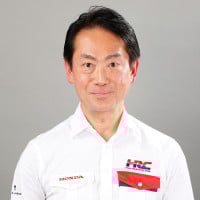 Koji Watanabe - President of Honda Racing Corporation:
"It is a pleasure to help reveal the 2026 Honda HRC Castrol team and highlight our global effort to return to the top of the MotoGP World Championship. It's a special year for Honda HRC as we celebrate the 60th anniversary of our first participation in the premier class, we are looking forward to commemorating this historic moment throughout 2026. Everyone in this team plays their part, as do all of our partners and I want to deeply thank everyone involved in the progress we made in 2025. Our target for this season is clear; we must continue on the trajectory we had and consistently battle at the front. Luca Marini has shown a steady hand and a keen technical mind with Joan Mir's determination and resilience inspiring us all. I would also like to commend Castrol for their efforts as our partnership continues to strengthen."
 Sandeep Sangwan - Chief Marketing Officer, Castrol:
"It's great to see the continuation of Castrol's strong legacy in racing with Honda Motorcycles, and we are thrilled to continue our partnership with Honda as part of the Honda HRC Castrol team in 2026. As a brand that values superior performance and technical innovation, we see a natural alignment with Honda HRC as we race together. This partnership and MotoGP provides a powerful platform for Castrol to connect even more closely with motorcycle racing fans and bike enthusiasts and Castrol wishes the team lots of success for the upcoming 2026 MotoGP World Championship season."
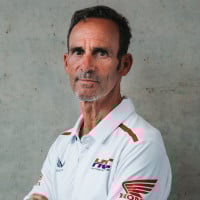 Alberto Puig - Team Manager, Honda HRC Castrol:
" The DNA of this company is racing. What prevails, what finally is going to make the direction is the passion to win and the passion for racing that this company has shown throughout history. The foundation of Honda for 2026 is what we've done in 2025, there were solid developments on the technical side, and both riders were able to make progress. Marini's consistency was crucial in graduating to a new Concession Rank and Mir was able to show his talent as a champion with two great podiums."
 Luca Marini (10):
"It's a pleasure to begin another season with Honda HRC Castrol. The progress we showed in 2025 was incredibly rewarding and all winter I have been working to improve myself and begin this new season in 2026. Our objectives are clear: to be there fighting near the front and take full advantage of any and all opportunities which are presented to us. Everyone in this project has done their homework over the winter and I am itching to get back on the Honda RC213V and ride again. In the last year of the 1,000cc we need to finish in a good way and enjoy the beautiful moments along the way."
 Joan Mir (36):
"Another beautiful bike that I am proud to ride, being part of Honda HRC Castrol is something very special. In 2026 we need to find the consistency we struggled with last year, we showed that both myself and the Honda RC213V have the speed and ability to make Honda HRC proud. These two pre-seasons test will be very important to prepare everything well for the start of the year, I am certain that all the Honda HRC engineers have been working diligently during the winter. There is no time to wait around, we need to be working from the first lap to achieve our maximum and return Honda HRC to where it belongs."
The post MotoGP: Honda HRC Castrol Reveals its 2026 Colors appeared first on Roadracing World Magazine | Motorcycle Riding, Racing & Tech News.
Sony's flagship WF-1000XM6 earbuds have been leaked on a retail site [ 02-Feb-26 7:41pm ]Sony's long-anticipated flagship WF-1000XM6 earbuds have leaked online, according to a report by The Walkman Blog and posts on Reddit. The retailer Power Buy posted a listing for the earbuds, complete with multiple photos and some specs.
Let's get to the specs. We don't know a lot, but the listing does suggest the earbuds will boast an IPX4 water-resistance rating and ANC/transparency modes. None of this is all that surprising, though we don't have any details regarding the audio drivers or anything like that.
We do know what they look like, assuming the listing is accurate. There are two colorways, black and white, with a pill-shaped design that differs from the previous iterations. The case looks like a standard earbud case.
One interesting design aspect is that the eartips are slightly bigger than with previous models. This could indicate a larger air channel, which would translate to an increased bass response. Earbuds tend to struggle with bass, so this could be a nifty little upgrade.
However, that's conjecture and we won't know more until Sony does its own official drop. It's been well over two years since the company released the WF-1000XM5 earbuds, so the refresh is long overdue.
This article originally appeared on Engadget at https://www.engadget.com/audio/headphones/sonys-flagship-wf-1000xm6-earbuds-have-been-leaked-on-a-retail-site-194146960.html?src=rss
DRAM prices expected to double in Q1 as AI ambitions push memory fabs to their limit [ 02-Feb-26 7:32pm ]The memory shortage is worse than most of us first thought. Prices on DRAM and NAND flash memory are expected to surge in the first quarter of 2026 as AI-driven hyperscalers and cloud service providers (CSPs) continue to strain supply chains.…
Ira Parker on That Big 'A Knight of the Seven Kingdoms' Reveal [ 02-Feb-26 7:44pm ] HyperX Cloud Alpha 2 Review: An Enormous Battery Life Wasted on a Stationary Headset [ 02-Feb-26 7:30pm ]
For those who followed Crisis Report/ Richard Crim [ 02-Feb-26 7:20pm ]Who I believe posted in Reddit as u/tuneglum. A note in his substack says he passed away in November.
I enjoyed his writing, his style, and learning from him.
Much of what he wrote is far more pessimistic than you hear from other sources, though all he did was compile published work into a digestible theme.
Of all he has done, highlighting the declining albedo, or reflectivity of the earth has been the most troubling, equivalent to an additional 100ppm of CO2e according to Hansen. That and the trailing rate of warming, perhaps 0.26 C per decade is already very dangerous, and the acceleration beyond that is quite a thing to ponder.
I will miss seeing his work, and will try to take some inspiration from what he did. He was not in a cheerful business, but he wrote with clarity and passion, and anger.
submitted by /u/Stillcant[link] [comments]
Resilience and Acceptance in the Face of Collapse [ 02-Feb-26 7:23pm ]Hello, my collapse-aware friends.
I learned about this free 9-week course on "Resilience and Acceptance in the Face of Collapse" on this subreddit and enrolled. This weekend, I got an email from one of the organizers requesting help getting the word out about this program. Here is the email:
I'm Steve Simmer, the course offering coordinator for the Resilience and Acceptance in the Face of Collapse course. The course offering you signed up for is scheduled to start next Thursday, February 5. I've spoken to the course leaders, and they are very excited about leading another course experience. However, at present the enrollment for this course offering is a little low, and in danger of cancellation. We ask your help in getting the word out about the course to a few more people. We have a new introductory video that briefly describes the course experience: Intro Video. Watch it, and if you know someone else who might be interested in the course, share the link with them along with a link to our website, www.acceptingcollapse.com, so that they can explore the course further and register if they're interested.
I'll put more info about the course objectives and syllabus in the comments.
If this sounds like something you are interested in, I encourage you to visit the website and consider enrolling in a course.
Thanks <3
Mods: my apologies if this counts as spam. Let me know if this post violates the subreddit rules. I'm just trying to get the word out.
submitted by /u/essenceofnutmeg[link] [comments]
Greenland's 'green mining' row highlights the key tensions in the energy transition [ 02-Feb-26 5:50pm ] pathdoc/Shutterstock
Green finance is built on a promise: that capital can be redirected to support the transition to a low-carbon economy while avoiding the environmental mistakes of the past. That promise is getting harder to keep.
The technologies needed for decarbonisation of electric vehicles, wind turbines, batteries and grid infrastructure rely on large quantities of critical minerals. Extracting those materials, even from remote places such as Greenland, remains environmentally disruptive, socially contested and politically fraught.
Sustainable finance shapes investment decisions across energy, infrastructure and manufacturing. The ethical frameworks this finance is based on often assume that environmental harm can be minimised through better disclosure, cleaner technologies and improved governance.
The extraction of critical minerals challenges that assumption. Mining is land intensive, energy hungry and often polluting. Recycling of existing batteries, electronics and turbines, and substitution away from scarce materials can reduce demand.
But most projections from the world's energy watchdog, the International Energy Agency, show that demand for critical minerals will rise sharply under clean energy transitions . Similar bodies show that extraction of raw materials such as lithium, cobalt, nickel and rare earth elements will rise sharply over the next two decades.
This is because the transition away from fossil fuels depends on large volumes of new infrastructure including electric vehicle batteries, wind turbines and grid storage, which cannot be supplied from recycled materials alone.
Recent research and policy assessments suggest this contradiction is becoming more acute, not less. Recent analyses of critical mineral supply chains show that extraction and processing remain highly concentrated in a few countries particularly China, Australia, Chile and the Democratic Republic of Congo.
These supply chains are environmentally intensive, involving significant land use, water consumption and pollution. These supply chains are slow to scale because it takes years to obtain permits for new mines, requires large upfront investment, and depends on the construction of extensive infrastructure. Yet global climate targets assume rapid expansion of clean-energy technologies.
In Greenland, environmental regulation and local political decisions have delayed or halted mining projects that are often considered key to the green transition.
Greenland is geologically rich. The island is home to significant deposits of rare earth elements, graphite, zinc and other minerals considered critical by both the EU and the US. These materials are central to clean-energy supply chains and have become strategically important as governments seek to reduce dependence on China, a superpower which dominates global processing capacity.
At the same time, Greenland's environment is exceptionally fragile. Arctic ecosystems recover slowly from industrial disruption, infrastructure is limited and mining projects face high logistical and financial costs. These constraints have already shaped political choices.
In 2021, Greenland's government introduced restrictions on uranium mining, effectively blocking the development of the large Kvanefjeld rare earth project. That decision reflected environmental and social priorities. It also highlighted the economic and legal pressures that arise when sustainability policies collide with global demand for transition minerals.
When green finance meets geopoliticsIn a world of geopolitical competition, governments are increasingly treating access to critical minerals as a matter of national security as well as climate policy. Policy statements and strategy documents from the US, the EU and other major economies now frame mineral supply not just as an environmental issue, but as essential to economic resilience, defence capability and technological leadership.
This shift has encouraged public financial support, diplomatic engagement and strategic partnerships aimed at securing future supply, including increased foreign interest in Greenland's mineral sector. While Greenland retains control over its resources, international attention reflects the growing geopolitical importance of potential new supply sources.
Projects justified as supporting the energy transition may be driven as much by geopolitical urgency as by environmental benefit. Academic research on critical mineral supply chains shows that when geopolitical and industrial priorities shape governance frameworks, local environmental risks and community consent are often marginalised in favour of strategic and economic goals
Read more: The economics of climate risk ignores the value of natural habitats
Tension in Greenland
Despite international interest, large-scale mining in Greenland has not taken off. Environmental safeguards, political opposition, infrastructure gaps and high costs have slowed development. This reality complicates the assumption that new mineral frontiers can quickly solve clean-energy supply bottlenecks through investment alone.
For investors, Greenland raises difficult questions about how environmental, social and governance (ESG) standards apply to transition minerals. Financing a rare earth mine may reduce long-term emissions by enabling renewable technologies, yet still impose immediate environmental damage. Standard ESG metrics struggle to capture this trade-off. They are better suited to assessing corporate behaviour than to resolving conflicts between global climate goals and local environmental harm.
 Current geopolitical dynamics have huge consequences for Greenland's environment.
Kedardome/Shutterstock
Current geopolitical dynamics have huge consequences for Greenland's environment.
Kedardome/Shutterstock
In Greenland, the debate over "green mining" (the idea that mineral extraction can be made environmentally acceptable through cleaner technologies, higher standards and better governance) is not a case of poor regulation or weak oversight. Instead, it reflects a jurisdiction that has deliberately placed environmental limits on extraction, even as it faces economic and strategic pressure as a result.
As governments continue to pursue ambitious climate targets under national and international commitments, similar dilemmas will emerge elsewhere. Green finance cannot avoid the material foundations of the energy transition.
Sustainable finance frameworks must evolve to handle situations where environmental protection constrains access to strategically important resources. Greenland shows how protecting the environment can clash with efforts to secure the minerals needed for the energy transition, and that this tension is far from resolved.
Without clearer rules on how to balance climate benefits against local ecological costs and without genuine respect for sovereignty and community choice, green finance risks becoming reactive, stretched between environmental principles and geopolitical realities.
The transition to a low-carbon economy requires minerals. But Greenland highlights that how those minerals are sourced and who bears the environmental cost remains unresolved.
Don't have time to read about climate change as much as you'd like?
Get a weekly roundup in your inbox instead. Every Wednesday, The Conversation's environment editor writes Imagine, a short email that goes a little deeper into just one climate issue. Join the 47,000+ readers who've subscribed so far.

Narmin Nahidi does not work for, consult, own shares in or receive funding from any company or organisation that would benefit from this article, and has disclosed no relevant affiliations beyond their academic appointment.
Trump's going to win the election he lost, no matter what he has to do to make that happen. Surrounding himself with a better set of sycophants this time around has really allowed him to gain some ground in his "be the despot you wish to see in the world" efforts.
His top appointees are just as willing to lie, defame, deride, and overstep the long-accepted limitations of their positions as the president himself. Now that Trump has pardoned the people who raided the Capitol on his behalf in January 2021, he's going after everyone and everything that pissed him off about that particular election cycle.
Trump's Revenge Time Machine is taking him and his administration back to Georgia to engage in an unprecedented seizure of voting records, as ABC News reports:
Fulton County, Georgia, officials said Wednesday that the FBI seized original 2020 voting records while serving a search warrant at the county's Elections Hub and Operations Center.
[…]
The search warrant authorized the FBI to search for "All physical ballots from the 2020 General Election," in addition to tabulator tapes from voting machines and 2020 voter rolls, among other documents, according to a copy of the warrant obtained by ABC affiliate WSB.
The warrant says the material "constitutes evidence of the commission of a criminal offense" and had been "used as the means of committing a criminal offense." It was signed by Magistrate Judge Catherine Salinas.
It's not surprising that Trump would attempt to extract some sort of penance from Georgia after he failed to convert that state into electoral college votes. The governor of the state, Brian Kemp, did all he could to swing the state back into Trump's favor post-election, including being sued by the DNC for claiming (with zero facts in evidence) that the Democratic party had "hacked" his state's voting machines.
Trump kept this issue alive by bringing Heather Honey — a fellow 2020 election denier from Georgia — into the in-group, appointing her to a high-level position in the DHS where she would [vomits] help oversee future election security efforts.
What is surprising is that any judge would sign this warrant. The allegations range from "threadbare" to "hallucinatory."
Specifically, the warrant listed possible violations of two statutes — one which requires election records to be retained for a certain amount of time, and another which outlines criminal penalties for people, including election officials, who intimidate voters or to knowingly procure false votes or false voter registrations.
Records were seized, which means it's unlikely records were deleted prematurely. And there's been nothing shown to this point that any sort of voter intimidation occurred… at least not on the behalf of the Democratic Party.
This appears to be voter intimidation of a different sort. Last month, the DOJ sued Fulton County (where the raid took place) for access to 2020 election records. This followed attempts to hold Trump accountable for trying to overturn the 2020 election — acts that included Trump asking the Secretary of State to "find" the votes needed to swing the state, as well as its targeting of Fulton County DA Fani Willis, who brought election interference charges against the then-outgoing Trump.
And, for some fucking reason, Director of National Intelligence Tulsi Gabbard attended the raid to seize these voting records.
Accompanying FBI agents on a raid is unprecedented for the chief of U.S. intelligence, whose job is to track threats from foreign adversaries. In her role overseeing the country's spy agencies, Gabbard is prohibited by law from taking part in domestic law enforcement. Her predecessors took pains to keep their distance from Justice Department cases or partisan politics.
Asked about the rationale for her visit to Georgia, a senior administration official said: "Director Gabbard has a pivotal role in election security and protecting the integrity of our elections against interference, including operations targeting voting systems, databases, and election infrastructure."
Whatever, "senior administration official." This is Gabbard hoping to show up on Trump's radar again, after being sidelined during actual foreign-facing activity, like the kidnapping of Venezuela's president. Perhaps she's tired of seeing Kristi Noem flouncing from photo op to photo op as Barbie-in-Chief of the DHS's invasion of the United States.
I mean…
Two senior officials with knowledge of the matter said Gabbard's presence in Fulton County was unnecessary and was not requested by the Justice Department.
Yes, it's another performance from the most performative administration in US history. And it will always play well because people who like this sort of thing will find this the sort of thing they like. The GOP is a flat circle, or perhaps more accurately, a human centipede.
Breaking up this endless cycle of shit ingestion and shit creation are the side effects of this sort of mutual masturbation: the constant shedding of talent from agencies that already don't have enough of it, thanks to the administration's constant purging of anyone who's not MAGA enough.
The special agent in charge of the FBI's Atlanta field office was forced out this month after questioning the Justice Department's renewed push to probe Fulton County's role in the 2020 election, two people familiar with the matter told MS NOW.
Paul Brown was ousted after expressing concerns about the FBI's investigation into President Donald Trump's longstanding and unsubstantiated allegations of voter fraud in the county anchored by Atlanta, and for refusing to carry out the searches and seizures of records tied to the 2020 election, according to the sources, who spoke to MS NOW on condition of anonymity.
Remember all the shit we talked about the USSR and its efforts to rid itself of anyone but party loyalists? Well, we're doing it right here and now, nearly 40 years after the fall of the Berlin Wall. The GOP says there's nothing wrong with this as long as it's the GOP doing it. The MAGA faithful have no problem with this as long as it's the MAGA front doing it. And the rest of us are expected to live with it, because the opposition party still seems to believe there's a polite, non-confrontational set of options to be deployed. Let's hope they'll realize that's no longer the case long before they have to issue a strongly-worded social media post about objecting to being first against the wall.
Embark on the journey of language learning with the Rosetta Stone unlimited subscription for all languages. Rosetta Stone has been the go-to software for language learning for the past 27 years. With its immersive and intuitive training method, you might be reading, writing, and speaking a new language with confidence in no time. Get access to all 25 languages offered with this deal for $149.97 when you use coupon code LANG30.

Note: The Techdirt Deals Store is powered and curated by StackCommerce. A portion of all sales from Techdirt Deals helps support Techdirt. The products featured do not reflect endorsements by our editorial team.

Buying a good budget phone can be a challenge. High-end handsets continue to get more features, but on the other end of the spectrum, there are only so many things you can skimp on before a device becomes too compromised. With the Galaxy A17, Samsung is trying to balance both sides of that equation with something that sports a solid design, a bright screen, decent cameras and respectable battery life for just $200. And despite some flaws, the company has succeeded at making a capable phone that fits into almost every budget.
Design and display
The Galaxy A17 does a good job of demonstrating how all plastics aren't the same. Despite having a polycarbonate frame and back, the phone never feels cheap. Everything from its buttons to its camera module feels nice and tight. The optical image stabilization system used for its rear shooters rattles, though that's something even $1,000 flagships suffer from, so it's not a big deal. Some small concessions for cost savings include a teardrop cutout for its front selfie cam and a small chin beneath its display, but considering its price, they're very forgivable. There's also only a single mono speaker and instead of an in-screen fingerprint sensor, Samsung built one into the power button on its side. Though for some, the latter might actually be a bonus.
 The Galaxy A17's 6.7-inch OLED display is one of the phone's best components thanks to solid brightness and a 90Hz refresh rate.
Sam Rutherford for Engadget
The Galaxy A17's 6.7-inch OLED display is one of the phone's best components thanks to solid brightness and a 90Hz refresh rate.
Sam Rutherford for Engadget
Meanwhile, one thing the A17 has that you don't get on high-end handsets anymore is a microSD card slot (that's shared with its SIM tray) for expandable storage. This gives you a cheap way to increase the phone's base 128GB of space and considering how rare this is nowadays, it's another win for people looking for a truly affordable device.
The Galaxy A17's screen is also surprisingly nice for its price, as it sports a 6.7-inch OLED display with up to 800 nits of brightness. Granted, its refresh rate tops out at 90Hz instead of the 120Hz you get on more expensive fare. But once again, considering how much it costs, I'm not complaining. Especially when you remember that base iPhones were still saddled with 60Hz panels as recently as 2024.
PerformanceOne area where budget phones often struggle is performance because skimping on RAM or the processor can save manufacturers a lot of money. And while the Galaxy A17 is generally fine considering its price bracket, I really wish Samsung had opted for a slightly newer chip. The phone comes with just 4GB of RAM (though there are slightly pricier versions with more), 128GB of onboard storage and an Exynos 1330 SoC, the latter of which is nearly three years old.
 The Galaxy A17 comes with three rear cameras, but its really more like two because one of those is a 2MP macro cam.
Sam Rutherford for Engadget
The Galaxy A17 comes with three rear cameras, but its really more like two because one of those is a 2MP macro cam.
Sam Rutherford for Engadget
At first, I was really worried because during the initial setup, the phone was a laggy, stuttery mess. Thankfully, after signing in, giving the phone some time to download updates in the background and making sure all of its apps were up to date, performance improved significantly. To be clear, this thing still isn't a speed demon and when you're multitasking or quickly switching between heavy apps, you may notice some slowdown. I also wish touch input felt a bit more responsive because sometimes when you tap an icon, there's a small delay before anything happens. But thankfully, it's relatively minor, and in most situations, the phone is snappy enough.
CamerasThe A17 comes with a 13-megapixel selfie camera and three rear shooters, though in practice it's really more like two because one of those is a 2MP macro cam, which doesn't get much use unless you take a lot of up-close photos. That said, the phone takes better pictures than you might expect given its price. In well-lit conditions, both its 50MP main and 5MP ultrawide cams don't give you much to complain about. Images look sharp and sport vivid colors.
However, in low-light situations, there's an obvious difference in quality between the A17 and more expensive midrange phones like Pixel 9a. In a shot of some fruit in my dimly lit kitchen, the A17's pic looks soft and features washed-out colors compared to what Google's phone produced. Then, when I went outside and snapped a photo of a car still buried after the recent snowstorm, textures on the slush in the road, along with various highlights and shadows looked worse in the A17's images. So while the phone can hold its own, camera quality is still one of the biggest reasons you might want to consider upgrading to a more expensive handset.
Battery life The bottom of the Galaxy A17 features the phone's USB-C port and its single, mono speaker.
Sam Rutherford for Engadget
The bottom of the Galaxy A17 features the phone's USB-C port and its single, mono speaker.
Sam Rutherford for Engadget
For a phone with a 5,000mAh battery and a low-power chip, the Galaxy A17 didn't last quite as long as I expected. On our local video rundown test, it lasted just over 23 hours (23:08), which is decent, but also five hours less than the Pixel 9a (28:04). On the other hand, its wired charging speed of 25 watts is more than enough. Just don't be surprised when you plop it on a wireless charging pad and nothing happens because the phone doesn't support that.
Wrap-upIf you are hard-capped at $200, the Samsung Galaxy A17 is a surprisingly impressive device. It's got a solid build, decent cameras with a handful of different lenses, respectable battery life and even a built-in microSD card slot for extra storage. You even get six years of OS and security updates, which is significantly longer than almost all of its similarly-priced rivals. And while its performance could be smoother, it's not laggy enough to get truly bothered about on a phone this affordable.
 Even though the Galaxy A17 is made out of plastic, the phone still doesn't feel cheap.
Sam Rutherford for Engadget
Even though the Galaxy A17 is made out of plastic, the phone still doesn't feel cheap.
Sam Rutherford for Engadget
For those with wiggle room in their gadget allowance, I would seriously consider looking at a version with 8GB of RAM, which is just $30 more. Alternatively, the Pixel 9a remains my favorite Android phone when it comes to value for money and it's $399 (down from its launch price of $499). But if money is tight, the Galaxy A17 delivers everything you need without blowing up your budget.
This article originally appeared on Engadget at https://www.engadget.com/mobile/smartphones/samsung-galaxy-a17-5g-review-a-respectable-and-affordable-android-option-190000154.html?src=rss
ICE-reporting service StopICE has blamed a US Customs and Border Protection (CBP) agent for attacking its app and website and sending users text messages warning them that their information had been "sent to the authorities."…

For only the third time in its 70-year history, Tito's Tacos has added an item to its legendary menu: a cheese quesadilla.
Tito's is a love-it-or-leave-it restaurant in West Los Angeles. Specializing in deep-fried tacos and long lines, if you think Tito's tacos are great, you are willing to brave the line. — Read the rest
The post Los Angeles' Tito's Tacos adds a menu item appeared first on Boing Boing.


