

Sociable weaver birds in the Kalahari Desert have adapted to the scarcity of trees by building their massive communal nests on telephone poles instead. Some of these nests appear to be as large as a truck. These photos from Lostfoundartny on Instagram look like something out of a Dr. — Read the rest
The post These massive bird nests on telephone poles look like Dr. Seuss art appeared first on Boing Boing.

Ice volcanoes are short-lived formations that appear along very cold lake shorelines, most commonly near the Great Lakes. This video shows what they look like when they "erupt." They resemble small volcanic cones, but there's no lava — just freezing temperatures and powerful waves. — Read the rest
The post Watch ice volcanoes spray frozen water along the Great Lakes appeared first on Boing Boing.

How I Experience the Web Today is a simulation of what it's like to complete a simple Google search in 2026. Accept or deny cookies. Enter your email. Allow notifications? Watch your sanity crumble.
The site responds to whatever you click, just like a real webpage would. — Read the rest
The post This site simulates the nightmare of modern web browsing appeared first on Boing Boing.
• Gastronomic world records broken in 1971: 437 clams in 10 minutes, 1lb unpipped grapes in 86 seconds, 12 whole lemon quarters in 162 seconds, 60 pickled onions in 15 minutes 12 seconds, 1 quart of milk in 6 seconds, 2 pints of beer drunk while upsidedown in 45 seconds
• Herbs in The Herbs: Parsley, Dill, Sage, Sir Basil, Lady Rosemary, Constable Knapweed, Bayleaf, Aunt Mint, Mr Onion, The Chives, Tarragon
• The year in various calendars: AM 5786, AD 2026, AM 1742, AH 1447, BS 1432, SH 1404
• Archers characters who've appeared in more than 200 episodes in the 2020s: Alice 332, Susan 268, Tracy 261, Emma 260, Helen 248, Lillian 241, Kirsty 238, Lynda 237, Brian 234, Jazzer 233, Fallon 228, George 223
• Things I bought 40 years ago today: 3 pairs of white socks, 'Happy Birthday' banner (reduced in closing down sale), 2 birthday cards, stamps, soluble asprin.
• Refreshment outlets in the Millennium Dome: Acclaim, AMT Espresso, Aroma, Bakers Oven, Costa, Great American Bagel Factory, Harry Ramsdens, Hot Bites, Internet Exchange, Juicepiration, Main Square Cafe, Meridian Cafe, McDonalds, New Covent Garden Soup Co, Mezzanine Cafe, Opa John's Famous Wrolls, Street Bites, t.fresh, Trade Winds Food Court, World Bites, Yo! Sushi
• Letters that appeared half as often on Smarties lids: q, z
• The shortest films to win an Oscar for Best Picture: Annie Hall (1h33m), Marty, Hamlet, The Broadway Melody, The Artist, The Lost Weekend, Casablanca, The French Connection, It Happened One Night, Kramer vs Kramer (1h45m)
• Paris Métro stations that opened on 3rd February: Billancourt, Marcel Sembat, Pont de Sèvres
• Departments on the ground floor at Grace Brothers: Perfumery, Stationery and leather goods, Wigs and haberdashery, Kitchenware and food
• Sponsors of the Rugby League Challenge Cup: State Express, Silk Cut, Kellogg's Nutrigrain, Powergen, Leeds Met Carnegie, Tetley's, Ladbrokes, Coral, Betfred
• Words you can make out of squirrel: lurers, quires, risque, rulers, squire, squirl, surlier
• Unlikely Batman Exclamations: Holy Armadillos! Holy Chocolate Eclair! Holy Interplanetary Yardstick! Holy Knit One Purl Two! Holy Mashed Potatoes! Holy Priceless Collection Of Etruscan Snoods! Holy Reverse Polarity! Holy Tuxedo!
• Vegetarian restaurants in Rutland: Castle Cottage Cafe, Don Paddy's, Hitchen's Barn, Jashir, Sarpech, Soi, The Blonde Beet, The Mad Turk
• English constituencies where over 98% of the population is white: Torridge and Tavistock, Whitehaven and Workington, North Northumberland, Tiverton and Minehead, Penrith and Solway, North Norfolk, Thirsk and Malton, Easington, Bridlington and The Wolds, Bishop Auckland, Staffordshire Moorlands
• Crevasse fields in Queen Maud Land: Hamarglovene, Jutulgryta, Jutulpløgsla, Kråsen, Styggebrekka, Trollkjelen, Ulendet
• London museums that closed in the last 10 years: British Dental Association Museum, City of London Police Museum, Clowns Gallery Museum, Firepower!, Greenwich Heritage Centre, Jewish Museum, London Motor Museum, London Motorcycle Museum, Museum of Army Music, Pollocks Toy Museum, Royal London Hospital Archives
• 5 things I did 25 years ago today: downloaded songs off Napster, loitered on IRC, drove to Essex, watched marmalade bubble, performed surprisingly well in a remembered digits test
• Anagrams of SI units: Adrian, twat, coolbum, nemesis, slate, sluices, yarg, restive
• Years I've been alive that aren't UK dialling codes: 01965, 01966, 01973, 01976, 01979, 01990, 01991, 01996, 01998 and all subsequent years
• Stations opened in the last three years: Reading Green Park, Marsh Barton, Thanet Parkway, Portway Park & Ride, Headbolt Lane, Brent Cross West, East Linton, Leven, Cameron Bridge, Ashley Down, Ashington, Seaton Deleval, Newsham, Blyth Bebside, Beaulieu Park
• Words that are animals backwards: doc, flow, god, kay, lee, mar, reed, stab, star, sung, tang, tarps
• Daily newspapers, cheapest first: i, Mail, Sun, Star, Express, Mirror, Times, Guardian, Telegraph, FT, Racing Post
• Watch With Mother shows broadcast on Tuesdays: Andy Pandy, Bizzy Lizzy, Trumpton, Mary Mungo & Midge, Bagpuss, Mr Men, Bod, Thomas, How Do You Do!
• Tetley teabag pack sizes: 1, 20, 25, 40, 50, 75, 80, 100, 120, 160, 200, 240, 250, 400, 420, 440, 600, 800, 1100, 1540
15 lists but I'm not telling you what they are (before 10am) (one guess each)
• ✅A: La Paz, Quito, Bogotá, Addis Ababa, Thimphu, Asmara, Sanaa, Mexico City, Tehran
• ✅B: Sunday Girl, I Don't Like Mondays, Freaky Friday, Funky Friday, Saturday Night, Saturday Night At The Movies
• ✅C: H, Be, F, S, Mn, Kr, Ir, Gd, Tl, Fm
• ✅D: Nathaniel, Nerissa, Nestor, Nicanor, Norfolk, Northumberland, Nurse, Nym
• E: Sirius, Canopus, Rigil Kentaurus, Arcturus
• ✅F: Samuel, Kings, Chronicles, Corinthians, Thessalonians, Timothy, Peter, John
• ✅G: Happy, Funny, Bounce, Nonsense, Skinny, Mischief, Brave
• ✅H: Andorra, Belgium, Denmark, Liechtenstein, Luxembourg, Monaco, Netherlands, Norway, Spain, Sweden, UK
• ✅I: Apple Jack, Captain Cody, Choco, Fab, Freak Out, Jack of Diamonds, Jelly Terror, Jungle Jim, Lemon and Lime Squeeze, Mivvi, Orange Maid, Red Devil, Score, Smash, Zoom
• ✅J: Cindery, Cobmarsh, Foulness, Great Cob, Havengore, Hedge-end, Horsey, Lower Horse, Mersea, New England, Northey, Osea, Pewit, Potton, Rushley, Skipper's, Wallasea
• ✅K: 109, 127, 157, 197, 353, 359, 367, 433, 439, 463
• ✅L: Switzerland, Norway, Austria, Bosnia and Herzegovina (as Yugoslavia)
• M: Northamptonshire, Milton Keynes, Central Bedfordshire, Dacorum, Three Rivers, Hillingdon, Slough, Windsor & Maidenhead, South Oxfordshire, Cherwell
• ✅N: Antlia, Ara, Caelum, Carina, Circinus, Corona Australis, Corona Borealis, Crater, Crux, Eridanus, Fornax, Horologium, Libra, Lyra, Mensa, Microscopium, Norma, Octans, Pictor, Puppis, Pyxis, Reticulum, Sagitta, Scutum, Sextans, Telescopium, Triangulum, Vela
• ✅O: Central Park Tower, Chongqing International Land-Sea Center, KK100, Trump International Hotel and Tower
5 lists I hope you'll provide
• ?????:
• ?????:
• ?????:
• ?????:
• ?????:
My colleague and fellow RAW fan, Tom Jackson, has done some valuable work in tracking down and interviewing four editors who had a hand in getting Illuminatus! published and who worked with Robert Shea and RAW on that project.1 One of the most striking things, to me, is the report that RAW was one of the most difficult writers to work with. Feldman told Jackson about RAW, "I don't think he was happy .... I seem to remember it was a struggle to get him to get on board with the way we were going to produce the books." RAW didn't want Illuminatus! divided into a trilogy, but the publishers were worried about investing that much in what must have been a 2000 page manuscript. David Harris, who worked at Dell, said, "I do clearly remember Bob Wilson as one of the most difficult authors I ever worked with. He seemed to think of me as his enemy, rather than his ally in getting the book into print." To his fans, RAW was kind, funny, a delight. This was not so for most of the editors and publishers he worked with. Why?
RAW's entire oeuvre, including interviews, is teeming with snide remarks about publishers and editors. It got to the point where he published a large number of non-fiction books with a publisher, Falcon Press/New Falcon, who barely edited his work at all, which was what RAW wanted. A laissez faire publisher. A team of volunteer editors at Hilaritas Press has since gone over those books when they were re-printed and reissued with better bindings, artwork, and paper quality.
This Substack is reader-supported. To receive new posts and support my work, consider becoming a free or paid subscriber.
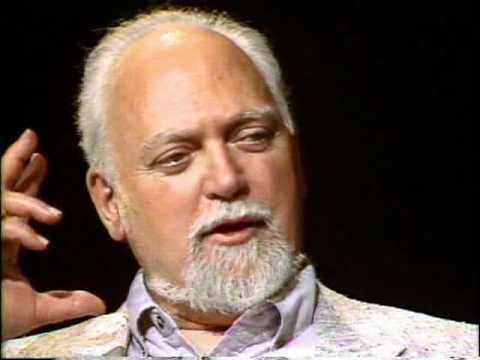
(Robert Anton Wilson)
Falcon/New Falcon books were usually not reviewed in the mainstream, and this seems to have hurt Wilson's reputation. Why didn't he publish with a more reputable publisher? It seems complicated to me, and I want to link RAW's adversarial views about editors and publishers to his very close reading of Ezra Pound, begun when RAW was a teenager, until his death a week away from his 75th birthday. But also: RAW gives reasons why he thinks he'd had a rough time as a writer and I think quite lot of it holds up. Still…let us say that he and Pound were not quiet about the adversarial nature of writers vs. publishers.
Ezra PoundWhen I first plowed through Pound's works I was struck by how cantankerous he was toward academics and universities ("beaneries") and publishers and editors.
Pound wrote a letter to his parents in 1908, age 22-23, in which he complained about commercial publishing and bookselling and "the curious system of trade and traders which has grown up with the purpose or result of interposing itself between literature and the public."2
When Pound's artist and writer friends died in WWI for no good reason at all, he decided he had to figure out what was behind the War, and soon he seemed to have found the reason: it was economics, banking and money loaned at interest. When he tried to get certain publishers to invest in those works, he had a rough time, largely because of the antisemitism in those works. Pound was convinced the Jews ran all the banks. Yea, that old noisy saw again. Farrar and Rinehart were publishers who shied away, being two examples.
In assessing Wilson's love of Pound's work, I see this as very complex, but I don't think we should underestimate the odd cranky tone of Pound, who was clearly a mad genius. Here's a couple of lines from 1931-1932, on publishing and Pound's cantankerousness:
Some months ago and off and on for some time I tried and have tried to stimulate the publication in the outer occident of a series of brochures that would serve as communication between intelligent men, proposing to print such books in America! "dollar impracticable" "fifty cents impossible" undsoweiter can be imagined by 30 percent of my readers; and the conclusion, i.e, that the idea that publishing is a profession not a trade, and the idea of using a publishing house as a focus of enlightenment are both alien to our national sensibility, will come as a surprise to, no one.3
The idea that publishers won't do what Pound thinks needs to be done, for cheap, is a typical riff from Ezra. What I think RAW got from Pound was that books and literature are absolutely vital to the health of the citizens, or at least the ones who are interested in learning. This seems a conceit of all writers of substance: damn the business and profit motive, these are good ideas! Get them out to the people and stop looking at your bottom line! I also think this attitude of Pound's formed part of RAW's identity as a writer, one who would not shrink from speaking out about money issues on behalf of not only his own interests as a writer, but for all writers, especially freelancers.
"We live in a vile age when it is impossible to get reprints of the few dozen books that are practically essential to competent knowledge of poetry." Pound writes this in 1933. He was forever complaining (and I have been doing this, too, for the last 15 years, in my own way) that books are allowed to not only go out of print, but libraries are weeding and discarding books "of substance" at an alarming rate. When Pound is engaged here in railing against "microcephalous bureaucracy" the members of which are "sick with inferiority complex," and which infect American universities with "academic bacilli" and an "inferiority complex directed against creative activity in the arts," I feel quite uneasy: this is Pound sounding completely nuts, but I also…gotta admit…I kinda see his point. I doubt American academia was that bad in 1933, but now?4 In these fulminating passages Pound seems to be hinting that there's a conspiracy between editors and publishers to dumb down the students.
Pound and Wilson seem to think there are legions of readers and writers just like themselves. I have never perceived this in my lifetime as a reader, and I never even stuck it out in academia, but continued to read omnivorously. I think their kind of reading and intellectual interests - and they were both outsiders and not academics - to be fairly rare. This brings up the idea of the writer's perceived audience, and Ideal Readers, which I can't go into here.
In Machine Art, Pound effuses about the lag in getting Ernest Fenollosa's work before the public, and calls out one "P. Carus" as being particularly egregious in this.5 As if the public was going to begin fomenting a revolution against current human perception, the syllogism, the problematic in subject-predicate structure in Indo- European languages, or even interest rates after they got hold of Fenollosa's ideas about Chinese writing and the ideograms. While I am one who does go ga-ga over this stuff, I never believed the public at large would be the least bit interested. Oh, but it was for people like RAW (and me'n you) to Spread the Word. Nouns don't exist, things are placed in relation and are filled with action, etc: I love this stuff; at the same time every week there's some article about incoming collegiate freshman who are functionally illiterate.
Who did get excited over Pound's various enthusiasms and obsessions? Probably at least 50% of those we call "Modernist" writers. Pound's influence has been humongous, and we're all influenced by Pound at least second-hand. As Wilson thought about Pound: Ezra resolved to cause a revolution in the arts, and he succeeded.
In what ways is that World now lost?
RAW and Pound Have Lots of Company Re: Publishers, etcThere's an inexhaustible list of quotes from artists complaining about "the suits," and just the other day I ran across a quote from Katherine Anne Porter that could have been by Wilson.6 When William S. Burroughs writes about the relationship between heroin dealer and junky, the isomorphisms here seem troublingly apt to me. Charlie "Bird" Parker saw the people who booked gigs for him like dealers: "judges" and "robbers" who had control over his life.7 Sam Peckinpaugh and Erich von Stroheim have similar quotes about the purse-string holders in the film biz. I won't even go into Orson Welles here…Check out Vladimir Nabokov, on his dealings with Olympia Press and the notorious Maurice Girodias:
I began to curse my association with Olympia Press not in 1957, when our agreement was, according to Mr. Girodias, "weighing heavily" on my "dreams of impending fortune" in America, but as early as 1955; that is, the very first year of my dealings with Mr. Girodias. From the very start I was confronted with the peculiar aura surrounding his business transactions with me, an aura of negligence, evasiveness, procrastination, and falsity. I complained of these peculiarities in most of my letters to my agent who faithfully transmitted my complaints to him but these he never explains in his account of our ten-year-long (1955-1965) association.8
American writers seem right to complain about the Big Five New York-based conglomerates9, who are like the movie studios after Jaws and Star Wars: they only want blockbusters, and have almost entirely neglected daring literary works. But the late Slavic writer Dubravka Ugrešić asserted that, despite her high status as a literary figure, in 2017, she couldn't get published in Croatia, her home country, because she had left it for Amsterdam. In a 2017 essay, "Artists and Murderers"10 she relates how war criminals, thugs, and other PsOS were getting published, selling art, and opening galleries in Croatia. It's mordant, dark stuff and sounds utterly believable.
Finally, in a July 3rd, 1986 letter to Kurt Smith from Wilson's residence in Ireland, RAW goes into minute detail about how publishers in England, France, and Poland have interests in publishing his books there, and he winds up this line of discourse with, "I am owed money by no less than seven publishers right now, all of them over a month late." To quote David Byrne: same as it ever was.
Wilson's Very Poundian Take on PublishingAn anecdote about editors that Wilson repeated a few times in interviews and at least once in a book was this one:
Nervous editors are always trying to guess the publisher's prejudices from minimal clues and they often guess wrong, which, of course, makes them more nervous in the future. That's probably why Gene Fowler uttered the immortal aphorism, "Every editor should have pimp as an older brother, so he'd have somebody to look up to."11
In 1977 Wilson sat down for an interview with two erudite fans, D. Scott Apel and Kevin Briggs. Early in the interview they ask RAW about his relationship with publishers, and he didn't hold back. I feel Pound lurking here, but you be the judge:
Well, by and large, I am not madly in love with publishers. Publishers are businessmen, and businessmen are really not my favorite type of human beings. James Joyce went into business briefly, and after a while he said to Italo Svevo, "You know, I think my partners are cheating me." Svevo said, "You only think they're cheating you? Joyce, you are an artist!"
RAW tells Apel and Briggs he was employed for seven years in engineering, but the rest of his life he wrote advertising, and worked in magazines and books - "the whole publishing field" - and he thinks businessmen "have no more morals than a scorpion." On with RAW on publishers:
There are two types of predators. There are predators who just go out and grab what they want and take their chances on getting caught. If they spend a little time in jail, that's all part of the game. They lose a few points. As soon as they get out they try to win again, at the same primitive level. And then there is the second type of predator, the type who has figured out that you can do all that grabbing without risking jail. There's a great novel about this, JR, by William Gaddis. It's one of my favorite books. JR keeps saying that anybody who steals is a fool; you can get as rich as you want in this country by using the laws creatively. Businessmen are people who know that. They've got the same mentality as pirates. When they think they can get away with it, they break the law as boldly as thieves.
Then RAW repeats the Gene Fowler line about editors, but replaces "editor" with "publisher." Then:
At this point, nothing a publisher does would amaze me. If a publisher came in the door and shit on the table and said, "You've got to accept that because I'm a publisher and you're a writer," I'd be awed, but I wouldn't be surprised. Nothing they could do would startle me at this point. If a publisher was caught the way Nixon was caught it wouldn't surprise me. In fact, I wonder why none of them have been caught yet. Sometimes I puzzle about things like the Clifford Irving12 case. I don't know how guilty Irving was, but certainly the whole ambience of the publishing business is to incite people to behave that way. It wouldn't surprise me at all if the publishers were ten times guiltier than Irving himself.
I guess I sound uncharitable or unforgiving…(raucous laughter), but as you go around interviewing writers, you'll hear this from all of them.13 This is what writers always talk about when they get together.14
In a wide-ranging 1983 interview, RAW was asked about non-linearity and montage in film and how literature seems to have fallen behind in the 20th century:
Well, I think it's certainly true that writing is regressive compared to other arts in our time. I'm inclined to blame the publishers. I think writers would be a lot more innovative and experimental and would catch up and become contemporary with the other arts except that it is so difficult to get anything published that's at all experimental. And so, even people who have done very experimental work, like William S. Burroughs, tend to write more conventionally as they go along because they just discover it's hard to get their experimental works into print. There is a new anthology of Burroughs' work that just came out recently which has an introduction in which the introducer says that Burroughs has stated quite frankly that it was commercial considerations that led him to cut down the amount of cutups in his books. Publishers have always been chiefly mercantile, of course, but it's getting worse as the cost of printing goes up and book production gets more expensive. They are less and less interested in anything chancy. What publishers are most interested in is a guaranteed bestseller. The further you depart from the formula, the more nervous they get and the harder it is to get published. So writers, in so far as they have any sense of survival at all, tend to become more cautious and less experimental. And it's happened to me; I have made efforts to be more conventional. Of course, it does not always work. If you have an unconventional mind, your books tend to be unconventional no matter how hard you try to be conventional. But it is hard to sell anything that's the least bit avant-garde or experimental.15
So here we have Wilson referring to publishing problems and his own unconventional mind. The idea that writing must keep pace with film seems Ezratic to me. Wilson in other places extended this to a total view of Science and Literature and the Arts: they must keep pace with each other.
Overall, this may be the main reason he remained as a hero in the marginals milieu, with his "difficult" relationship with editors and publishers as secondary. We as fans of marginally noted writers all must contend with: how come my favorite writer seems so neglected? Are we weird?16 Are other readers stupid for going for that NYT best-seller? What are we missing? At least we have the books and damn the publishing machine anyway.17
Wilson also thought about persecution and esotericism regarding publishing, in ways that Pound didn't seem to articulate much. RAW published Sex and Drugs: A Journey Beyond Limits, in 1972. You'd think with this title it would sell well, but RAW thought Playboy must have issued the book on "a need-to-know basis, or something of that sort."18 He also saw his status as known accomplice of Timothy Leary as probably a publishing liability. Finally, RAW often remarked that his style of mixing fact with fiction and genre-mixing in order to make the reader think, was a problem with a lot of publishers:
Dr. Jeffrey Elliot, asks RAW about Illuminatus!: Im what sense is the book science as opposed to science fiction?
RAW: I wanted to write a book that combined several different literary genres. As a result, Illuminatus! is a combination detective story, occult thriller, political satire, and science-fiction work, with overtones of a porno novel, a dissertation on politics, and an occult fantasy. It constantly keeps changing. Whenever the reader thinks he knows where it's going, it turns into another type of novel. That was part of our problem in selling it. Publishers don't like that; they like a novel they can easily label. I'm still struggling with this problem in my present writing. My next book, Masks of the Illuminati, is something the publisher is going to have a hard time finding a label for, because it deliberately starts out as one kind of novel and turns into an entirely different type of novel. This, to me, is realism. After all, life doesn't fall into categories. People don't live their whole lives in detective stories or gothic thrillers or soap operas or science-fiction novels or Hitchcock dramas. People's lives change from day to day, from hour to hour. I've always wanted to write novels in which the reader doesn't know what kind of script he's living in. Publishers can't stand this approach. They want to put a label on a story, and I keep trying to break that restriction. This is all part of my insidious campaign to undermine the minds of readers who think they know what they're reading. I want people to realize that literature isn't always what they think it is. Then they might realize that life isn't what they think it is.19
For decades now I've thought about RAW and publishers needing a label and how it may have hurt him, and I still waffle all over the place about how accurate I think this is. He frequently told interviewers that when Dell advertised Illuminatus! as science fiction or bookstores placed it in their science fiction area, that this harmed the status and/or potential for the book(s). At the same time, he had argued that his Schrödinger's Cat Trilogy predated William Gibson's Necromancer as the first "cyberpunk" book. There he did a trilogy on his own, without pressure from the publisher, and though the framing device is different interpretations of quantum mechanics for each novel, it doesn't read as science fiction to me, much less cyberpunk. So I'm not sure about that, either. If you have an opinion, I'd like to hear it!
Part 2, on RAW's publishers, will be here soon. Stay in touch!
1Go to RAWIllumination.net, scan the right hand side of the page and scroll down until you see "Illuminatus Resources" and find interviews with Dell editors Fred Feldman and David M. Harris, Bob Abel, and Jim Frenkel. Also see Jackson's interview with Teresa Nielsen Hayden, who edited The Widow's Son. Also see Jackson's edited book on Robert Shea's writings, Every Day Is A Good Day, pp.12-13 (RAW against Dell dividing Illuminatus! into a trilogy); 129 (RAW's and Shea's agent, Al Zuckerman); 334-338 (Jackson on Paul Krassner's friend Bob Abel, who helped Illuminatus! get published)
2Italics mine. I'm not kidding when I assert you can collect 300 comments from Pound on just this topic: the perfidiousness of the entire industry. This even though he dealt extensively with more mainstream publishers. Those who haven't read much Pound but who know of his famous off-the-rails and revolting antisemitic stance in the 1930s through the early 1960s will be excused for assuming this constant leitmotif against publishing, academics, and editors was a concealed Jew-baiting, but I don't see it. Not much. He came at this distrust of publishers honestly: I think it was a simple dislike of anyone as "middleman," which does inform much of his economic thought, but there isn't much antisemitism toward publishers. Nothing close to his problems with bankers, about who…whew! 'Nuff said here, for now! I nabbed this quote from a 1908 letter to his parents from Greg Barnhisel's delightful, scholarly, riveting James Laughlin, New Directions, and the Remaking of Ezra Pound, p. 21. Those interested in Pound and the 20th century in publishing are advised to check out Barnhisel's work.
3Selected Prose, 1909-1965, p.54. Originally in The New Review, winter, 1931-32. This feels like Pound really gone off the deep end to me. He's batty, possibly manic-depressive, but I've never figured him out satisfactorily. He's writing this from Italy, where, RAW thought Pound so naive he convinced himself that Mussolini was the second coming of Thomas Jefferson, and Ez was going around the neighborhood feeding the stray cats.
4Selected Prose, 1909-1965, pp.392-393.
5Machine Art & Other Writings: The Lost Thought of the Italian Years, Pound, ed. by Maria Luisa Ardizzone, p.110.
6Writers At Work, 2nd series, ed. George Plimpton, p.156 for Porter quote. From a series of books collecting interviews with writers from the Paris Review.
7Bird: The Legend of Charlie Parker, ed. Robert. G. Reisner, pp. 40-41
8Strong Opinions, Nabokov, p.272, but see the entire chapter 5, "Lolita and Mr. Girodias," pp. 268-269. Nabokov's imputations of "haggling maneuvers" and "abstruse prevarications" rival Pound's invective on the same sort of subject. This was a book in which I realized Nabokov wasn't someone I would have wanted to try to hang out with; he seems quite unpleasant but unassailably genius as a writer. And, to be fair along the lines of Girodias, many other writers had similar takes on him.
9Penguin-Random House; Harper Collins; Hachette; Simon and Schuster; Macmillan. RAW and many other West-Coast-based writers have noted the divide between New York and the big publishing houses, and their seeming antipathy to West Coast aesthetics, and it probably goes back at least to Kenneth Rexroth in the late 1940s. Wilson complained that the big mainstream publishers seemed to think they were hip but they were hopelessly behind the times, and in the 1970s still thought Marx and Darwin were the hottest topics around.
10The Age of Skin, Ugrešić, pp.97-111
11Sex, Drugs & Magick, Wilson, p.12, Hilaritas ed.
12Irving got busted for convincing a publisher that he had a hotline to Howard Hughes for a biography about the wealthy recluse, but he was faking it. Irving also wrote a book on the art forger, Elmyr de Hory, and Orson Welles made a documentary, F For Fake (1973), about Elmyr's and Irving's fakery, but Welles's play with footage was all a fake itself, which delighted Wilson no end.
13One writer I haven't heard complain is Dan Brown, whose agent was the same one RAW had: Al Zuckerman. When Brown did a book tour for Angels and Demons, writers in the audience would ask him advice on how to sell their books, and Brown often referred them to Zuckerman's book, Writing The Blockbuster Novel, with his "seven points." The irony here with regard to Wilson's lingering "cult writer" status vs. Brown's wealth…is too thick to go into here. Suffice to say that RAW's "unconventional mind" and not being able to write a bestseller seems completely on the mark for me, and that we have met the avant garde literary enemy, and it is us. (Not us-us, but everyone else, of course!)
14Beyond Chaos and Beyond, ed. by D. Scott Apel, pp.15-16. (2019) Wilson and Apel put out a magazine, Trajectories, and this is mostly parts from that, although there are some transcripts.
15Coincidance: A Head Test, Wilson, p.323. This interview is only found in the Hilaritas Press ed. of this book, not in the New Falcon version.
16I confess that, yea, personally, I'm weird AF.
17I saw a documentary on this topic once that I now cannot locate. It was called The Stone Reader, and was by weirdo filmmaker and inveterate reader of literary fiction and modernism, Mark Moskowitz, and how he loved a fat novel titled The Stones of Summer, by Dow Mossman. Why was Mossman so obscure? He's great! Etc. Hey, a lot of us have been there. I felt a kinship with Moskowitz after seeing this film; I have not read Mossman yet.
18Sex, Drugs & Magick: A Journey Beyond Limits, Wilson, p.12, Hilaritas ed. RAW thinks by 1972 Nixon's war on the counterculture may have stifled the reception of a book with such a title. he'd give talks and fans hadn't even heard about the book, much less seen it. Others reported it hard to find. For a discussion on Wilson and Giambattista Vico and protective and defensive esotericism in history, especially regarding their own works, see my "Notes on Wilson, Vico, Language, and Class Warfare" in TSOG: The Tsarist Occupation Government by Wilson, pp. 245-293. (2022)
19Literary Voices #1, interview with Dr. Jeffrey Elliot, Borgo Press, pp.50-64; this section pp.56-57. (1980) A much shorter version of this was included in Email To The Universe, pp.213-217, New Falcon ed; 229-234 of Hilaritas ed. Elliot died in 2009 at age 61 or 62.

(graphic art work by Bobby Campbell)
The teams took an extended break after lunch, to avoid the extreme heat in the middle of the day and to save tires for the last two days of the test. That means running has been limited so far this afternoon. Pecco Bagnaia was fastest at 4pm, which would have put him 3rd fastest overall on the day. Joan Mir was second quickest, though still half a second slower than he was this morning, while Fabio di Giannantonio, again still some time off his best lap.
David Emmett Tue, 03/Feb/2026 - 08:30
The original Switch just became Nintendo's best-selling console ever with 155.37 million units as of December 31, 2025, overtaking the DS which sold 154.02 million units from 2004-2011. It was part of a holiday surge that saw the company move 7.01 million Switch 2s (and 17.37 million through Q3 of its fiscal year), making it the "fastest-selling dedicated video platform released by Nintendo to date," the company said in its earnings report.
Despite being supplanted by the Switch 2, the Switch keeps selling decently (1.36 million units in Q3 fiscal 2026), due to its relatively cheap price. Nintendo reported last year that it was just trailing the DS in sales and would likely surpass it after Christmas. The Switch is now just 5.27 million units behind Sony's PS2, the best-selling console of all time — so Nintendo would have to keep selling it for at least a couple more years to get the record.
The Switch 2, meanwhile, has been a sales machine. With high holiday sales that exceeded expectations, Nintendo should easily reach its 19 million sales goal for fiscal 2026 ending March 31 this year. The company has already (easily) busted through its original sales forecast of 15 million consoles set earlier in 2025.
Game sales were also strong, with Mario Kart World hitting 14 million units and Donkey Kong Bananza selling 4.25 million since the Switch 2's launch. With all that, the company saw 803.32 billion yen in sales for Q3 ($5.2 billion), up 86 percent over last year but a bit less than expected, and 159.93 billion yen in profit ($1.03 billion), 20 percent higher than the same period last year.
Whether the company can continue that may depend on the strength of its upcoming game lineup. Two of those key titles are Mario Tennis Fever expected on February 12 and Pokemon Pokopia arriving in March.
This article originally appeared on Engadget at https://www.engadget.com/gaming/nintendo/the-switch-just-surpassed-the-ds-as-nintendos-best-selling-console-ever-083700901.html?src=rss
Ministers' proposals to tackle 'forever chemicals' fail to match tougher stance taken in Europe, say experts
Environmental campaigners have criticised a "crushingly disappointing" UK government plan to tackle "forever chemicals", which they warn risks locking in decades of avoidable harm to people and the environment.
The government said its Pfas action plan set out a "clear framework" of "coordinated action … to understand where these chemicals are coming from, how they spread and how to reduce public and environmental exposure".
Continue reading...Sector bounces back as consumers focus on provenance and healthy eating, but is still well behind Europe
Consumers searching for healthy food from trusted sources have fuelled the UK organic market's biggest boom in two decades, according to vegetable box seller Riverford.
The delivery business, which sells meat, cheese, cookbooks and recipe boxes alongside vegetables, recorded a 6% increase in sales to £117m in the year to May 2025, as the UK organic food and drink market grew by almost 9% in that year, according to new figures from the Soil Association. The strong growth, significantly outpacing the wider food market, helped the employee-owned business give a £1.1m bonus to workers.
Continue reading...Priestcliffe, Derbyshire: The limestone walls in this parish are festooned with luminous mosses, in a variety that's often beyond our comprehension
The word bryophyte refers to a group of plants that may have colonised terrestrial Earth almost half a billion years ago. They need water to reproduce sexually and they love rain. So it's hardly surprising that Britain is an important archipelago for them, with the two main groups, liverwort and mosses, represented by nearly 300 and 770 species respectively. This is a 20th of all the world's bryophytes.
Perhaps the best summary of the British public's sense of the group was offered by a friend recently, who said that he hadn't been aware that there was more than one bryophyte. Moss doesn't occupy our conscious minds. It lives at the periphery, trembling on the edge of our sense of things. Especially when it rains, because moss is then even more luminous.
Continue reading...
Label: n5MD Release: Falter Date: February 6th, 2026 Mastered By: 37n,122w Artwork By: Destiny Templeton-Wolfe Bandcamp Alright, folks. I just spent an entire month celebrating the Best of 2025 music with additional content (and Bandcamp codes for select albums) shared on Headphone Community. I must admit, I am extremely happy with how the platform is turning out, and yes…
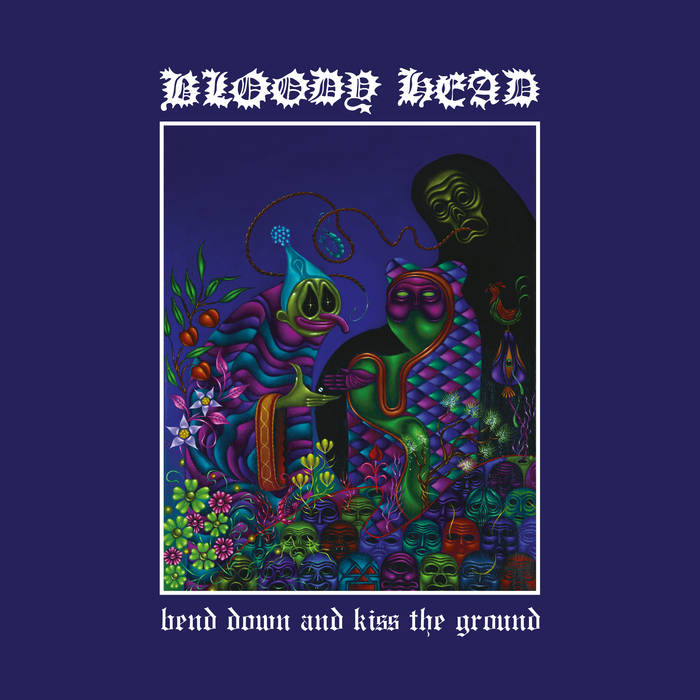
Bloody Head
Bend Down And Kiss The Ground
Nottingham quartet drag noise-rock and psych into some dank, unwholesome places
Bend Down And Kiss The Ground by bloody head
Bloody Head have been lurking at the fringes for some ten years now, occupying a greasy, hard-to-clean crevice where noise-rock and psychedelia begin to intermingle. In this time they've tottered, threatened, collapsed and cajoled, their unexpected incursions akin to having a mysterious, slightly cracked 'character' glom onto you at the pub. Like said pub weirdo, they charm and bemuse and recount tall tales, all while a violent sense of mania flickers intermittently behind the eyes.
Bend Down And Kiss The Ground comes hot on the heels of last year's excellent Perpetual Eden, and hews close to that...
The post Bloody Head - Bend Down And Kiss The Ground appeared first on The Quietus.
Most people think of AirTags when they picture a Bluetooth tracker. And indeed, Apple's little white discs were once the only capable option, relying on a vast finding network of nearby iPhones to pinpoint lost tags. But now Google has a finding network of its own, and third party brands like Chipolo, Hyper and Pebblebee have trackers that pair with your choice of Google or Apple's network. That means you've got a lot of options for tagging and tracking your keys, backpacks, luggage and more. We tested the major brands out there to see how well they work, how loud they are and how they look to put together a guide to help you get the most out of your chosen tracker. Here are the best Bluetooth trackers you can buy.
Editor's note: Apple just released a new version of its AirTag trackers. We are in the process of testing the new model and will update this guide once we're done.
What to look for in a Bluetooth tracking device
Bluetooth trackers are small discs or cards that rely on short-range, low-energy wireless signals to communicate with your smartphone. Attach one of these gadgets your stuff and, if it's in range, your phone can "ring" the chip so you can find it. These tracking devices offer other features like separation alerts to tell you when you've left a tagged item behind, or where a lost item was last detected. Some can even tap into a larger network of smartphones to track down your device when you're out of range. Depending on what you want the tracker to do, there are a few specs to look for when deciding which to get.
Device compatibilityLike most things from the folks in Cupertino, AirTags only work with products in the Apple ecosystem. Both Apple and Google have opened up access to the Find My and Find Hub networks to third-party manufacturers, including Chipolo and Pebblebee. Those two companies make device-agnostic models that will work with the larger tracking network from either brand, so iPhone and Android users can buy the same tag. Tile trackers work with either Android or Apple devices, but use Tile's own Life 360 finding network. Samsung's latest fob, the Galaxy SmartTag2, only works with Samsung phones and taps into a finding system that relies on other Samsung devices to locate lost tags.
Finding networkCrowd-sourced finding capabilities are what make headlines, with stories about recovering stolen equipment or tracking lost luggage across the globe. Using anonymous signals that ping other people's devices, these Bluetooth tracking devices can potentially tell you where a tagged item is, even if your smartphone is out of Bluetooth range.
Apple's Find My network is the largest, with over a billion iPhones and iPads in service all running Apple's Find My app by default. So unless an iPhone user opts out, their phone silently acts as a location detector for any nearby AirTags. Apple recently increased the AirTag's finding power by enabling you to share the tracker's location with a third party, party, like an airline. Chipolo fobs that work on Apple's network have the same ability. Google launched its Find My Device network in 2024 and has since renamed it Find Hub, which, like Apple's fining app, combines devices and people finding in one place. That network is now a close second for the largest in the US
Now that Google's Find Hub network is up and running, it's a close second for the largest in the US. Like Apple, Android users are automatically part of the network, but can opt-out by selecting the Google services option in their phone's Settings app and toggling the option in the Find Hub menu. Samsung's SmartTag 2 and related network also defaults to an opt-in status for finding tags and other devices.
Tile offers a large finding grid that includes Tile users, Amazon Sidewalk customers and people running the Life360 network. Life360 acquired Tile in 2021, and, according to the company, the Life360 network has more than 70 million monthly active users.
In our tests, AirTags and third-party tags using its network, like the Chipolo Loop and Pop and the Pebblebee Clip 5, were the fastest to track down lost items. They offered nearly real-time location data in moderately to heavily trafficked spots around Albuquerque, including a bar, bookstore and coffee shops in Nob Hill, along with various outdoor hangouts on UNM's campus.
Samsung's SmartTags were able to locate our lost items most of the time, though not with the same precision finding accuracy as AirTags. When we tested Google's Find Hub (then called Find My Device) network right after launch, it was noticeably slower than Apple's network when using the community finding feature. Testing it again in mid 2025, the time it took to locate a lost item was considerably improved, taking less than 20 minutes on average for the community to track a fob. In our tests, Tile's finding network wasn't able to consistently locate its lost fobs.
A tracker's day-to-day utility becomes really apparent when it prevents you from losing something in the first place. Separation alerts tell you when you've traveled too far from your tagged items. Useful if you want to make sure your laptop bag, jacket or umbrella always comes with you when you leave the house.
Apple's Find My app delivers these notifications, but Google's Find Hub does not. However, if you have a Chipolo device and allow its companion app to run in the background on your Android phone, left-behind alerts are enabled. Tile trackers require a yearly subscription to enable the alerts (currently $7 to $25 monthly). Both AirTags and Tiles allow you to turn off separation alerts at certain locations, meaning you can set your home as a "safe" place where items can be left behind, but alerts will still trigger elsewhere.
In our tests, AirTags and others using the Find My network alerted us between the 600- and 1,400-foot mark. Tiles sent a notification after about an average of 1,500 feet and were more consistent when using an Android phone than an iPhone. Chipolo Pop tags paired with an Android phone and using its own app sent an alert when we got around 450 feet away from our tagged item.
Connectivity and volumeThe feature you may use most often is the key finder function, which makes the tracker ring when you hit a button in the app. With Apple's AirTags, you can say "Hey Siri, where are my keys?" and the assistant will ring the tag (assuming it doesn't mistakenly think you're asking for directions to the Floridian archipelago). You can also use the Find Item app in your Apple Watch to ring your fob. Asking smart home/personal assistants like Alexa or the Google Assistant to find your keys will work with Chipolo, Tile and Pebblebee trackers linked to your Android device.
If you have your tag but can't find your phone, some trackers will let you ring them to find your handset. SmartTag2 fobs reliably rang our Galaxy phone when we double-pressed it. Tile trackers have the same feature. Chipolo Pop and Loop trackers can ring your phone, but uses the Chipolo app to do so, which can run concurrently with the Find My or Find Hub connection. AirTags and third-party tags using Google's network don't offer this feature.
The volume of the Bluetooth tracking device may determine whether you can find an item buried in your couch cushions or in a noisy room. AirTags have a reputation for being on the quiet side, and that aligned with what we saw (measuring roughly 65 decibels). Chipolo's Pop tags and Tile's Pro model measure between 83 and 86 decibels on average. Pebblebee's new Clip 5 was the loudest of any tag we've tested, clocking in at 97 ear-splitting decibels.
Design and alternative formatsDesign will determine what you can attach the tracker to. AirTags are small, smooth discs that can't be secured to anything without accessories, which are numerous, but that is an additional cost to consider. Chipolo, Pebblebee and Tile offer trackers with holes that easily attach to your key ring, and all three companies also offer card-shaped versions designed to fit in your wallet. Pebblebee Clip 5 tags come with a handy carabiner-style key ring.
You can even get trackers embedded into useful items like luggage locks. The SmartLock from KeySmart is a TSA-approved luggage lock, but in addition to the three digit code, it's also a Bluetooth tracker that's compatible with Apple Find My. It wasn't quite as loud as other trackers in my tests, and the range wasn't as long, but it paired easily and worked with Apple's finding network just like an AirTag.
Battery lifeAirTag, Tile Pro, SmartTag2, HyperShield and Chipolo Pop fobs use replaceable batteries and each should go for at least a year before needing to be swapped. Pebblebee Clip 5 and Chipolo Loop trackers are rechargeable via a standard USB-C port. The Clip 5 has a long battery life claim at 12 months. The Loop should go for six months on a charge.
Trackers shaped like credit cards, aka wallet trackers, don't have replaceable batteries, but some, like the Chipolo Card and the Pebblebee Card 5 are USB-C rechargeable.
Stalking, theft and data privacyAirTags have gotten a lot of attention and even prompted some lawsuits for Apple due to bad actors planting them on people in order to stalk them. While this fact may not influence your buying decision, any discussion of Bluetooth trackers should note what steps Apple, Google and Tile have taken to address the issue. Last year, all the major players in the Bluetooth tracker business teamed up to combat misuse and standardize how unauthorized tracking detection and alerts work for iOS and Android.
Last year, Tile launched a feature called Anti-Theft Mode, which enables you to render one of its trackers undetectable by others. That means if someone steals your tagged item, they won't be able to use the anti-stalking features to find and disable the tracker. That sort of negates one of the major ways potential stalking victims can stay safe, so Tile hopes ID verification and a $1 million penalty will deter misuse.
As a theft deterrent, a Bluetooth tracker may or may not be the best option. Anecdotal stories abound in which people have recovered stolen goods using a tracker — but other tales are more cautionary. Neither Apple nor Google promotes its trackers or finding networks as a way to deal with theft. GPS trackers, on the other hand, are typically marketed for just that purpose.
How we tested Bluetooth trackersBefore deciding on which trackers to test, we researched the field, looking at user reviews on Amazon, Best Buy and other retailers, along with discussions on sites like Reddit. We also checked out what other publications had to say on the matter before narrowing down our options.
Here's the full list of every tracker we tested:
After acquiring the trackers, I tested each one over the course of a few weeks using both an iPhone 11 followed by an iPhone 16 and a Samsung Galaxy S22 then an S23 Ultra. I recreated likely user experiences, such as losing and leaving items behind at home and out in the city. I planted trackers at different spots near downtown Albuquerque, mostly concentrated in and around the University of New Mexico and the surrounding neighborhood of Nob Hill. Later, I conducted tests in the Queen Anne neighborhood of Seattle.
Each test was performed multiple times, both while walking and driving and I used the measure distance feature on Google Maps to track footage for alerts. I paid attention to how easy the app was to use, how reliable the phone-to-tracker connection was and any other perks and drawbacks that came up during regular use.
As new trackers come to market, or as we learn of worthy models to try, I'll test them and add the results to this guide.
Other Bluetooth trackers we tested Motorola Moto TagThe Moto Tag haunts me. At this very moment, my Galaxy phone says the fob is "Near you right now." But I don't know where. I tap to play a sound and the Find Hub tries, but ultimately says it can't. I tap the Find Nearby function that's supposed to visually guide you to the tag. I parade my phone around the house like a divining rod, take it down into the basement, walk it all over the garage. Nothing. But the Hub app unendingly says the Moto Tag is "Near you right now" and I get flashes of every old-school horror movie where the telephone operator tells the soon-to-be victim that the call is coming from inside the house.
It's partly my fault. I tend to keep good tabs on the gadgets I test for work. But during my most recent move, the tiny green disc didn't make it into the safety of my review unit cabinet after relocation. Perhaps in retribution for my neglect, the Moto Tag keeps itself just out of reach. Taunting me. I'll let you know if I ever find it, but in the meantime, it's clear this finding device doesn't want to be found. The recommended tags in this guide will serve you better.
Tile Pro and Tile Mate (2024)Tile recently came out with a new suite of trackers, replacing the Tile Mate, Tile Pro, Tile Sticker and Tile Slim with updated models. In addition to fun new colors for the Mate and Slim, Tile added an SOS feature that can send a notification to your Life360 Circle when you triple press the button on the tracker. It's a clever addition that turns your keys into a panic button, something offered by personal safety companies as standalone devices.
There are a few caveats: You and the people you want to notify in an emergency will need the Life360 app installed on your phones. If you want your Tile to also trigger a call to emergency services, you'll need a $15-per-month Life360 subscription (that's in addition to a Tile membership, which starts at $3/month or $30 annually). And enabling the SOS triple-press disables the ability to ring your phone with the fob.
I tested the SOS feature and it did indeed send a text message to my Circle, with the message that I had triggered an SOS and a link to a website that showed my current location. I thought it odd that the link didn't open the Life360 app (which shows the location of users' phones), but I wasn't as much concerned with Tile's personal safety features as I was with the tracking capabilities, which turned out to be less than ideal.
For my tests, I planted Tile trackers in a densely populated area of Seattle (about 15,000 people per square mile). After setting the trackers to "lost" in the Tile app, I waited. After four hours, one of the trackers was not discovered by the finding community, so I went and retrieved it. Another fob I planted alerted me that the tracker had been found by the Tile community after three hours — but the location it gave me was off by a third of a mile. I then decided to plant a tracker in the busiest place I could think of — the dried fruit and nuts aisle of a Trader Joes on a Friday evening before a major holiday. It still took over a half an hour before another Tile user anonymously pinged my lost tracker.
In my tests with Samsung's trackers and the fobs on Google's Find Hub network, it took around ten minutes for them to be discovered. AirTags took half that time and all were tested in a far less populated city. Tile's four hours with no ping and over a half hour before getting a hit in a crowded TJs were pretty long stretches.
Tile devices work with both mobile operating systems and its latest models are indeed louder than they were before. But they aren't as quick to connect and you need to pay for a membership to activate left-behind alerts. And when you do, those notifications don't kick in as quickly as they do with competing trackers.
Bluetooth tracker FAQs Which Bluetooth tracker has the longest range?Both the Tile Pro and the Samsung Galaxy SmartTag2 claim a maximum range of around 400 feet, which is longer than the 300-foot claim for Chipolo's Pop tags. The Pebblebee Clip 5 claims a 500-foot range, though other trackers with a shorter claimed range often performed better in our tests. Apple doesn't make range claims for AirTags, but 30 meters (100 feet) seems to be the general consensus for those fobs.
Any Bluetooth signal, of course, is dependent on a few factors. Obstacles like walls and people can block the signal, so a clear line of sight is the only way to achieve the maximum range. Other signals, like Wi-Fi, can also interfere with Bluetooth connections. Even high humidity can have an effect and lessen the distance at which your phone will connect to your tracker.
Remember, when considering the range of Bluetooth trackers, the size of the "finding network" also comes into play. This is the number of nearby phones that can be used to anonymously ping your tracker when your own phone is out of Bluetooth range. As of now, Apple AirTags have the largest network, followed by Google's Find Hub, Samsung's finding community and finally, Tile's Life360 members.
What is the best Bluetooth tracker for a car?Bluetooth trackers are designed to track small, personal items like keys, jackets, backpacks and the like. All trackers have safeguards to prohibit the tag from being used to stalk people, so most will alert someone if a tracker that does not belong to them is detected following them. That means a car thief may get tipped off that there's a tracker in the car they're trying to steal.
That said, you'll see plenty of stories about people finding their car thanks to a Bluetooth tracker. Some police departments have even handed out trackers to combat high rates of carjacking. In most instances, the tracker of choice has been AirTags thanks to their wide finding network. If you're looking for a tracker for your car, you may want to look into GPS trackers, some of which are designed for just that purpose.
How accurate are Bluetooth trackers?Accuracy for Bluetooth trackers can be looked at in two ways: Finding items nearby and finding items misplaced outside your home. For nearby items, you'll most often use the ring function on the device to hunt it down. Apple's AirTags also use ultra-wideband technology, which creates directional navigation on your phone to get you within a foot of the tracker.
Accurately finding lost items outside your home depends on the size of the finding network. Since this relies on the serendipity of a random phone passing within Bluetooth range of your tracker, the more phones on a given network, the better. And since Bluetooth ranges and distance estimates are only precise within about a meter or so, getting pings from more than one phone will help locating items. Here again, it's worth noting that Apple's Find My network is the largest, followed by Google, Samsung and Tile (both Chipolo and Pebblebee have fobs that work with the Apple and Google networks).
Recent UpdatesFebruary 2026: Added Pebblebee Clip 5 as the best rechargeable device. Added HyperShield tag as a budget pick. Updated FAQs for accuracy.
October 2025: Added Chipolo Loop as a new pick for best rechargeable Bluetooth tracker. Detailed our experience with the Moto Tag and KeySmart SmartLock. Updated details about separation alerts and Ultra Wideband tech.
August 2025: Updated the name of Google's finding network to Find Hub, instead of Find My Device. Added details about Pebblebee's new Alert feature. Added a table of contents.
This article originally appeared on Engadget at https://www.engadget.com/computing/accessories/best-bluetooth-tracker-140028377.html?src=rss
 Von optimistischen Modellen zu leeren Pipelines: Die intellektuelle Geschichte von Deutschlands Wasserstoff-Backbone* [ 03-Feb-26 4:50am ]
Deutschlands Wasserstoff-Backbone existiert heute als Stahl im Boden und als unter Druck stehende Pipeline. Doch die wichtigere Infrastruktur wurde lange vor dem ersten ausgehobenen Graben geschaffen. Diese Infrastruktur war intellektuell. Eine lange Abfolge von Studien, Modellen und politiknahen Analysen erzeugte den Eindruck, dass Wasserstoff für großskalige Energienutzung nicht nur plausibel, ... [continued]
The post Von optimistischen Modellen zu leeren Pipelines: Die intellektuelle Geschichte von Deutschlands Wasserstoff-Backbone* appeared first on CleanTechnica.
Microsoft kills standalone SharePoint and OneDrive plans, because they're not suite enough [ 03-Feb-26 6:13am ]Microsoft has slipped out news that it's killing some standalone SharePoint and OneDrive plans.…
Weak democracy now or better democracy later? [ 03-Feb-26 5:39am ]
At the root of the debate about delaying local elections this year is a dilemma. If you choose your democratic right for them to go ahead, you risk delaying the implementation of a change which could give you more agency in the long run. Perhaps the biggest positive change of any in recent history.
Why it mattersDevolution is one of the current government's flagship policies, one of its core manifesto pledges, and arguably the single most impactful change to how democracy is done on our island this century. It simplifies the current muddle of different local councils, and creates new elected mayors with serious strategic powers. It is a historically rare show of humility: largely London-based politicians admitting that they do not know how best to run our areas.
The plan acknowledges that they cannot run England as if it is London; it recognises that we know best how our own home works. Devolution will give us the ability to elect someone who can do more than chase up the council to sweep the roads - it will give us someone who can decide things way further up the line. It could transcend the jurisdictional malaise that has set in across many parts of the country; the constant name-calling and blaming that happens between the city, borough, district and county councils so desperately in need of unification. Because who, bar hopeless idealists like myself - interested in politics because we hope we have access to our own agency - actually knows what any of those actually are?
Political apathyTo grasp the importance of devolution, we need to recognise the vicious circle behind the oft-lamented lack of interest in politics. The more disenfranchised a person feels in the system, the less they feel they can affect it, the less they will participate. This leaves us in a place where the people who have the most to gain from choosing their vote carefully are the least likely to do so, or to vote at all.
They are more likely to believe the people who live far, far away, and who know nothing about their community. The people who decide what they read, watch and hear because they have more zeros tacked on to the end of their net worth. And we as a society seem to have decided that that is reason enough to give them control over the information we access about the world around us.
In reality, we should recognise how impressionable we are and therefore how far we should run away from people who want to conserve their wealth; how misaligned their interests and ours truly are.
Devolution is the answerIf we truly believe in a democratic system, if we want to make choices for ourselves and believe we are up to the task of making them, if we don't want to outsource our brain processing either to AI or to the first rich man who talks about the problems we face. We must scream and cry and gasp for devolution, for localised governance of our services.
We must understand that this is our last stand against the army of billionaires and their puppets threatening to return to power. We need to arm ourselves with patience while we sort out the bureaucracy of reorganisation.
As the leader of Tory Norfolk County Council put it: "If our elections go ahead in 2026, I cannot guarantee that my council will be able to deliver devolution because of the governance restraints.
"In the case of implementing local government reorganisation successfully, we will face significant challenges in the reorganisation of eight councils into a currently unknown number of unitaries. In both these cases there is the added issue of the political will and capacity of the new administration to implement the government's priorities."
This is not an issue along party lines. There is, and has always been, consensus among all vaguely pragmatic politicians that elections in the middle of local government reorganisation harms the process. In our case it's the invaluable process of devolution, of control, of a path to a world where we do not feel so hopeless. Where we feel we have someone to turn to when things need improving. A world of comfort, community and conviviality which feels intensely British, vividly Norfolk. May the mayor we choose to elect live up to this vision.
More from East Anglia Bylines
 Democracy
In a Christmas surprise, turkeys vote for devolution
byStephen McNair 12 January 2025
Democracy
In a Christmas surprise, turkeys vote for devolution
byStephen McNair 12 January 2025
 Devolution
What will the new local government map look like in Norfolk and Suffolk?
byJack Abbott MPand1 others 20 March 2025
Devolution
What will the new local government map look like in Norfolk and Suffolk?
byJack Abbott MPand1 others 20 March 2025
 Local government
New report confirms local government crisis is growing
byStephen McNair 24 October 2025
Local government
New report confirms local government crisis is growing
byStephen McNair 24 October 2025
 Letters
Letter to the editor: Britain should learn from France on local government
byEast Anglia Bylines 2 September 2025
Letters
Letter to the editor: Britain should learn from France on local government
byEast Anglia Bylines 2 September 2025
 Democracy
Weak democracy now or better democracy later?
byMatthew Ainsley 3 February 2026
Democracy
Weak democracy now or better democracy later?
byMatthew Ainsley 3 February 2026
 Bylines Network Gazette is back!
With a thematic issue on a vital topic - the rise child poverty, ending on a hopeful note. You will find sharp analyses on the effect of poverty on children's lives, with a spotlight on the communities that are on the front line of deprivation, with personal stories and shared solutions. Click on the image to gain access to it, or find us on Substack.
Journalism by the people, for the people.
The post Weak democracy now or better democracy later? first appeared on East Anglia Bylines.
2026 Sepang MotoGP Test Day FP1 1pm Times - Alex Marquez Takes Over At The Top [ 03-Feb-26 5:22am ]Times at 1pm:
David Emmett Tue, 03/Feb/2026 - 05:22
Xavier [ 03-Feb-26 5:03am ] Empty Hands [ 03-Feb-26 5:02am ] GIRL I LOVE YOU [ 03-Feb-26 5:01am ] African Skies [ 03-Feb-26 5:00am ]
NIO Sales Soar 96% in January! [ 03-Feb-26 4:57am ]NIO's recent sales growth has continued in 2026. After a long period of slow growth, in August of last year, NIO's sales jumped up tremendously. Then sales continued to growth throughout the rest of the year. But what about January, with other Chinese EV makers struggling to get rolling this ... [continued]
The post NIO Sales Soar 96% in January! appeared first on CleanTechnica.
Why This Might Be a Grim Week for the Haitians of Springfield, Ohio [ 03-Feb-26 4:57am ]
South Korea enlists AI to spot pump and dump schemes on social media, or in Spam [ 03-Feb-26 4:42am ]South Korea's government and main stock exchange have developed and deployed AI-powered tools to detect schemes that aim to send the price of cryptocurrencies and shares soaring so that unscrupulous investors can cash in.…
# [ 03-Feb-26 4:00am ] Why Waiting on Grid Batteries Will Cost Ontario More Than Acting Now [ 03-Feb-26 4:38am ]
Recently I took part in a discussion in Ottawa as part of CAFES Network's work to raise local energy literacy, hosted by Invest Ottawa and attended by a mixed audience of residents, municipal and provincial policy observers, students, and people already working in energy and climate. Angela Keller-Herzog, founding executive ... [continued]
The post Why Waiting on Grid Batteries Will Cost Ontario More Than Acting Now appeared first on CleanTechnica.
XPENG Sales Drop 34% in January [ 03-Feb-26 4:35am ]XPENG had a long run of huge sales growth in the past year or two. In January 2025, for example, sales reached 30,350 units, which was a 268% increase over the 8,250 sales of January 2024. However, by December, that growth has slowed down, and 2026 is not kicking off ... [continued]
The post XPENG Sales Drop 34% in January appeared first on CleanTechnica.
2026 Sepang MotoGP Test Day 1 12:00 Times - Bezzecchi Fastest As 2026 Kicks Off [ 03-Feb-26 4:13am ]Marco Bezzecchi tops the timesheets after the first two hours of testing at Sepang. The Aprilia rider is currently the only rider to hit the 1'57s, and is a third of a second faster than the rest of the field. Jack Miller is second on the Pramac Yamaha, having the benefit of two days testing under his belt, with Pedro Acosta currently third.
David Emmett Tue, 03/Feb/2026 - 04:13
SpaceX Acquires xAI in $1.25 Trillion All-Stock Deal [ 03-Feb-26 4:50am ]
The CDC Has Mysteriously Frozen Vaccine Databases Without Explanation [ 03-Feb-26 4:02am ]In any war, information is power. Be it kinetic wars, cyberwarfare, or information wars, data is everything. And since RFK Jr. has clearly declared war on vaccines in America, it's not a huge surprise that he is looking to control information about vaccines. Or, as it turns out, simply sweep that information away.
Nearly half of the databases that public health officials at the Centers for Disease Control and Prevention were updating on a monthly basis have been frozen without notice or explanation, according to a study published in the Annals of Internal Medicine.
The study—led by Janet Freilich, a law expert at Boston University, and Jeremy Jacobs, a medical professor at Vanderbilt University—examined the status of all CDC databases, finding a total of 82 that had, as of early 2025, been receiving updates at least monthly. But, of those 82, only 44 were still being regularly updated as of October 2025, with 38 (46 percent) having their updates paused without public notice or explanation.
Examining the databases' content, it appeared that vaccination data was most affected by the stealth data freezes. Of the 38 outdated databases, 33 (87 percent) included data related to vaccination. In contrast, none of the 44 still-updated databases relate to vaccination. Other frozen databases included data on infectious disease burden, such as data on hospitalizations from respiratory syncytial virus (RSV).
The following are points that should be as uncontroversial as they are plain and clear. Medical and health professionals cannot operate without data and information. Government agencies and professionals cannot make good public health decisions without good and current data and information. Operating in a vacuum could mean a death sentence for some, or mere horrific health outcomes for others.
Whatever Kennedy is aiming at when it comes to American health, it clearly isn't for the sort of positive health outcomes mentioned above. If it were, this obviously coordinated attack on information about vaccinations and the diseases they combat in these databases wouldn't be carried out.
"Given the vaccine skepticism of the Secretary of Health and Human Services, it is concerning that nearly 90 percent of the paused databases related to vaccination surveillance, with additional gaps in respiratory disease monitoring," Freilich, Jacobs, and their co-authors write in the study.
These databases and the information within them are used to identify under-vaccinated populations relating to specific diseases so that public health officials can coordinate on responses to outbreaks of those diseases. Responses that typically involve vaccination campaigns to protect a population that hitherto has failed to protect themselves.
But it's clear this iteration of government isn't interested in those kinds of responses. You can see it plain as day in the reaction, or rather inaction, concerning the country's current measles outbreak. Ostriches don't actually stick their heads in the sand when in danger, but it appears RFK Jr. does. Or perhaps this isn't being done out of fear. Perhaps this is all part of a coordinated plan.
In an accompanying editorial, Jeanne Marrazzo, CEO of the Infectious Disease Society of America and former director of the National Institute of Allergy and Infectious Diseases, stated the concern in starker terms, writing: "The evidence is damning: The administration's anti-vaccine stance has interrupted the reliable flow of the data we need to keep Americans safe from preventable infections. The consequences will be dire."
Marrazzo emphasizes that the lack of current data not only hampers outbreak response efforts but also helps the health secretary realize his vision for the CDC, writing: Kennedy, "who has stated baldly that the CDC failed to protect Americans during the COVID-19 pandemic, is now enacting a self-fulfilling prophecy. The CDC as it currently exists is no longer the stalwart, reliable source of public health data that for decades has set the global bar for rigorous public health practice."
This is dangerous. I would love to hear a single, coherent explanation why it would be a good thing for this data to no longer be available to public health professionals. Other than Kennedy wanting to play hide and seek due to his anti-vaxxer stances, of course. What good comes of us being more ignorant?
There is no answer, of course. There is only agenda. Facts inconvenient to that agenda will be disappeared.
BTS Announce Live Comeback Concert on Netflix [ 03-Feb-26 4:03am ]
Importierte Materialien sind beherrschbar, importierte Energie bepreist Volkswirtschaften neu [ 03-Feb-26 2:55am ]Europas Gaskrise im Jahr 2022 wird häufig als ein geopolitisch getriebener Versorgungsschock beschrieben, doch diese Rahmung verfehlt die zentrale Lehre. Die Krise wurde weder durch Importabhängigkeit im Allgemeinen verursacht noch durch Knappheiten bei industriellen Einsatzstoffen. Sie entstand durch die Abhängigkeit von einem importierten Energieträger, der am Rand der Strom- und ... [continued]
The post Importierte Materialien sind beherrschbar, importierte Energie bepreist Volkswirtschaften neu appeared first on CleanTechnica.
EV Sales Pass Petrol in EU [ 03-Feb-26 2:40am ]
SpaceX and xAI Are Merging Into a Very Silly-Sounding Conglomerate. Take It Seriously [ 03-Feb-26 3:20am ]
2026 Official Sepang MotoGP Test: Results - Day 1 (Tuesday) [ 03-Feb-26 3:06am ]
MRZ - Bring it all [ 03-Feb-26 2:56am ]
MRZ - Bring it all [ 03-Feb-26 2:56am ]
A Century of Hair Samples Proves Leaded Gas Ban Worked [ 03-Feb-26 2:35am ]
Palantir Touts $2 Billion in Revenue from Aiding Trump Administration's 'Unusual' Operations [ 03-Feb-26 1:23am ]
2026 Official Sepang MotoGP Test: Day 1 - LIVE UPDATES [ 03-Feb-26 2:02am ]
Epstein, Mossad, and the question we are not allowed to ask but must do [ 03-Feb-26 12:07am ]
The latest release of documents connected to Jeffrey Epstein has reignited a familiar media ritual. Names circulate, while royals and celebrities dominate headlines. Moral outrage flows freely, and safely in directions that neatly avoid the structures of power.
Epstein - the unasked questionBut beneath the spectacle lies a question that mainstream commentary continues to avoid, despite its growing inevitability:
Was Epstein operating as part of an intelligence-linked blackmail operation? And if so, for whom?
This is not a conspiracy theory, but a legitimate question that the files themselves provoke.
Epstein's death in 2019, officially ruled a suicide but shrouded in conspiracy, left a trail of unanswered questions. The financier's rise from humble Brooklyn teacher to billionaire was always suspicious.
How did a man with no clear business acumen amass such wealth? Epstein's partner, Ghislaine Maxwell, daughter of media tycoon Robert Maxwell, a confirmed Mossad asset who died under mysterious circumstances in 1991, provides the smoking gun. Multiple Israeli prime ministers attended Robert Maxwell's funeral, with Shimon Peres delivering the eulogy.
'Honeytrap'Former Israeli intelligence officer Ari Ben-Menashe has alleged Epstein and Maxwell ran a "honeytrap" operation for Mossad, luring elites into compromising situations to extract favours or silence. This is no conspiracy theory; it is echoed by Steven Hoffberg, Epstein's former business partner, who alleged Epstein frequently flaunted his Mossad connections.
Survivor Maria Farmer described the network as a "Jewish supremacist" blackmail ring linked to the Mega group, a cabal of pro-Israel billionaires including Les Wexner, who gifted Epstein his Manhattan mansion.
Epstein held multiple passports (a spy's toolkit) and reportedly fled to Israel after his first charges in 2008 before securing an extraordinary non-prosecution agreement that allowed him to continue operating freely.
It is also worth noting that Israel has long been a legal and jurisdictional refuge for sexual predators, particularly where extradition would expose intelligence, financial or diplomatic sensitivities.
Israel's intelligence services, including Mossad, operate globally and extrajudicially by design. Like all major intelligence services, they cultivate leverage, assets and influence networks beyond formal diplomatic channels. Sexual blackmail has been widely documented as one such method across intelligence history, from the Cold War to present.
What distinguishes the Epstein case is not the abstract possibility of intelligence involvement, but the patterned convergence of factors: unexplained wealth, elite access, transnational mobility, institutional protection and repeated investigative shutdowns. These are not the characteristics of a 'lone wolf', but of a pernicious foreign influence over celebrities, politicians, bankers and media moguls.
Recent revelationsThe most recently released files only amplify these suspicions. An FBI report from a confidential source claims "Trump has been compromised by Israel," citing leverage through Jared Kushner and Alan Dershowitz. Epstein victim Virginia Giuffre accused Dershowitz, a staunch defender of Israel, of involvement, though she later retracted her statement amid legal pressure.
The scale of Epstein's reach is difficult to dismiss as coincidence. Across politics, finance, media and celebrity culture, the same names, or at least the same circles, recur with unsettling regularity.
In politics, the record is already public. Former US president Bill Clinton flew on Epstein's private jet numerous times, a fact acknowledged but persistently minimised. Donald Trump, for his part, publicly described Epstein as a "terrific guy" who enjoyed the company of "beautiful women… on the younger side". While these statements are not crimes on their own, they are indicators of proximity.
Media power was no less entangled. Senior figures from major broadcasting and publishing empires, from former CBS chief Les Moonves to media baron Rupert Murdoch, surface repeatedly in the documents and testimonies, either through social proximity, shared intermediaries, or financial overlap.
Epstein did not merely socialise with media elites; he embedded himself within institutions capable of shaping coverage, suppressing stories, and disciplining dissent. When journalists attempted to pursue the story aggressively, they encountered legal pressure, editorial resistance, or sudden loss of access.
Hiding in plain sightCelebrity culture played a complementary role. High-profile figures moved through Epstein's orbit not necessarily as conspirators, but as legitimising assets. Fame provided cover, glamour, and normalisation.
The presence of globally recognisable names diluted suspicion, transforming what should have been alarming access into social banality. Ironically, it was over-exposure that provided the perfect cover for Epstein's crimes, rather than secrecy.
Flight logs and visitor records name Hollywood stars like Leonardo DiCaprio, Naomi Campbell, and Kevin Spacey, alongside tech titans such as Bill Gates. While some deny involvement in illicit activities, their proximity to Epstein's web implies potential leverage over public influencers who mould cultural discourse.
Similarly, major institutions including JPMorgan Chase and Deutsche Bank continued to service Epstein long after everyone knew his criminal record. Internal compliance failures have since been acknowledged, but the broader question remains unanswered: how did a convicted sex offender retain access to the global banking system at the highest level? Who judged the risk acceptable - and why?
Geopolitical leverageFurther evidence of Mossad's fingerprints emerges in Epstein's dealings with international crises. Emails from July 2011, just a month before Muammar Gaddafi's fall, show Epstein and associate Greg Brown plotting to recover up to $80bn in frozen Libyan funds, assets deemed sovereign, stolen, or misappropriated by Western powers.
Brown believed the true amount could be four times higher, reaching $320bn. Their scheme involved leveraging MI6 and Mossad agents to extort concessions from postwar Libya, still assumed under Gaddafi's control, in exchange for returning the funds for "reconstruction".
This wasn't mere opportunism; it points to Epstein's role in geopolitical manoeuvring, using intelligence networks for financial and strategic gains aligned with Israeli interests.
The real Epstein scandalThe conclusion, then, is not a lurid morality tale about "bad people doing bad things," nor the tired revelation that royals, celebrities, or billionaires behave with impunity. That much is already obvious. Child abusers exist across every class and every society. What does not exist everywhere is a system that records, archives, weaponises, and protects that abuse for strategic ends.
The Epstein case points not to isolated depravity, but to structured leverage: an architecture of blackmail in which sexual crimes become instruments of power rather than grounds for prosecution. That is why the fixation on individual scandal - princes, parties, and gossip - functions as misdirection.
The real scandal is the evidence of an intelligence-linked operation in which Mossad repeatedly appears as a point of reference, protection, and utility; an operation that embedded itself across politics, finance, media, and celebrity culture.
Not all abusers are documented and not all are shielded. And not all become untouchable.
Epstein did because he was useful. Until this is discussed in those terms, as a question of foreign influence, the story will remain trapped in spectacle, and the system it exposes will remain intact.
Featured image via the Canary
Elon Musk merges xAI into SpaceX to spread universal consciousness via a sentient sun [ 03-Feb-26 1:02am ]Elon Musk on Monday revealed his space company SpaceX has acquired his AI outfit xAI, and that the two will work together to escape the surly bonds of Earthly powers by tapping the sun's enduring glow.…
Beware: Government Using Image Manipulation For Propaganda [ 02-Feb-26 11:41pm ]U.S. Homeland Security Secretary Kristi Noem last week posted a photo of the arrest of Nekima Levy Armstrong, one of three activists who had entered a St. Paul, Minn. church to confront a pastor who also serves as acting field director of the St. Paul Immigration and Customs Enforcement (ICE) office.
A short while later, the White House posted the same photo - except that version had been digitally altered to darken Armstrong's skin and rearrange her facial features to make it appear she was sobbing or distraught. The Guardian one of many media outlets to report on this image manipulation, created a handy slider graphic to help viewers see clearly how the photo had been changed.
This isn't about "owning the libs" — this is the highest office in the nation using technology to lie to the entire world.
The New York Times reported it had run the two images through Resemble.AI, an A.I. detection system, which concluded Noem's image was real but the White House's version showed signs of manipulation. "The Times was able to create images nearly identical to the White House's version by asking Gemini and Grok — generative A.I. tools from Google and Elon Musk's xAI start-up — to alter Ms. Noem's original image."
Most of us can agree that the government shouldn't lie to its constituents. We can also agree that good government does not involve emphasizing cruelty or furthering racial biases. But this abuse of technology violates both those norms.
"Accuracy and truthfulness are core to the credibility of visual reporting," the National Press Photographers Association said in a statement issued about this incident. "The integrity of photographic images is essential to public trust and to the historical record. Altering editorial content for any purpose that misrepresents subjects or events undermines that trust and is incompatible with professional practice."
Reworking an arrest photo to make the arrestee look more distraught not only is a lie, but it's also a doubling-down on a "the cruelty is the point" manifesto. Using a manipulated image further humiliates the individual and perpetuate harmful biases, and the only reason to darken an arrestee's skin would be to reinforce colorist stereotypes and stoke the flames of racial prejudice, particularly against dark-skinned people.
History is replete with cruel and racist images as propaganda: Think of Nazi Germany's cartoons depicting Jewish people, or contemporaneously, U.S. cartoons depicting Japanese people as we placed Japanese-Americans in internment camps. Time magazine caught hell in 1994 for using an artificially darkened photo of O.J. Simpson on its cover, and several Republican political campaigns in recent years have been called out for similar manipulation in recent years.
But in an age when we can create or alter a photo with a few keyboard strokes, when we can alter what viewers think is reality so easily and convincingly, the danger of abuse by government is greater.
Had the Trump administration not ham-handedly released the retouched perp-walk photo after Noem had released the original, we might not have known the reality of that arrest at all. This dishonesty is all the more reason why Americans' right to record law enforcement activities must be protected. Without independent records and documentation of what's happening, there's no way to contradict the government's lies.
This incident raises the question of whether the Trump Administration feels emboldened to manipulate other photos for other propaganda purposes. Does it rework photos of the President to make him appear healthier, or more awake? Does it rework military or intelligence images to create pretexts for war? Does it rework photos of American citizens protesting or safeguarding their neighbors to justify a military deployment?
In this instance, like so much of today's political trolling, there's a good chance it'll be counterproductive for the trolls: The New York Times correctly noted that the doctored photograph could hinder the Armstrong's right to a fair trial. "As the case proceeds, her lawyers could use it to accuse the Trump administration of making what are known as improper extrajudicial statements. Most federal courts bar prosecutors from making any remarks about court filings or a legal proceeding outside of court in a way that could prejudice the pool of jurors who might ultimately hear the case." They also could claim the doctored photo proves the Justice Department bore some sort of animus against Armstrong and charged her vindictively.
In the past, we've urged caution when analyzing proposals to regulate technologies that could be used to create false images. In those cases, we argued that any new regulation should rely on the established framework for addressing harms caused by other forms of harmful false information. But in this situation, it is the government itself that is misusing technology and propagating harmful falsehoods. This doesn't require new laws; the government can and should put an end to this practice on its own.
Any reputable journalism organization would fire an employee for manipulating a photo this way; many have done exactly that. It's a shame our government can't adhere to such a basic ethical and moral code too.
Republished from the EFF's Deeplinks blog.
ICE claims man in custody shattered his own skull. Sure. [ 03-Feb-26 12:05am ]
Immigrations and Customs Enforcement says a man in its custody ran face-first into a wall. No officer caused it. No excessive force was involved. No one else is responsible. The legally in this country immigrant and business owner just decided to shatter his own skill. — Read the rest
The post ICE claims man in custody shattered his own skull. Sure. appeared first on Boing Boing.
Normalizing surveillance under the banner of helping lost pets [ 02-Feb-26 11:52pm ]
The product manager behind Ring/Amazon's expanded "Search Party" feature may actually care about pet safety and animal kindness: a lost dog, a community alert that helps find the lost pup. What it really does is further normalize a private surveillance network that conditions people to accept constant monitoring, expanded data sharing, and passive participation in a system they don't control waiting to be used against them. — Read the rest
The post Normalizing surveillance under the banner of helping lost pets appeared first on Boing Boing.
Work smarter, not harder with 92% off Windows [ 02-Feb-26 10:00pm ]
TL;DR: Power your productivity with one purchase. Upgrade your Windows OS Microsoft Windows 11 Pro for just $12.97 (Reg. $199).
I've never believed in the old adage: "If it ain't broke, don't fix it." In fact, in this day and age, sticking to that idea will keep you stuck in the mud while your peers race ahead of you. — Read the rest
The post Work smarter, not harder with 92% off Windows appeared first on Boing Boing.
From Dorset to the world: wave of donations helps to secure Cerne giant's home [ 03-Feb-26 12:01am ]Support from more than 20 countries propels National Trust to its target to protect chalk figure and local wildlife
It feels like a very British monument: a huge chalk figure carved into a steep Dorset hillside that for centuries has intrigued lovers of English folklore and legend. But an appeal to raise money to help protect the Cerne giant - and the wildlife that shares the landscape it towers over - has shown that its allure stretches far beyond the UK.
Donations have flooded in from more than 20 countries including Australia, Japan and Iceland, and on Tuesday, the National Trust confirmed it had reached its fundraising target to buy land around the giant.
Continue reading...

