
We had a full weekend of racing at Sepang, but all the excitement happened on Sunday night after the chequered flag had fallen. Yamaha announcing they would not travel to Qatar threw a spanner in the works for the MotoGP Group, who had spent all weekend pressuring the teams and persuading them all was well. Neil, Adam and David talk through the possible consequences and fallout from Yamaha's decision, what it means for Qatar, and why MotoGP is so keen to go there.
With all that excitement, you'd almost forget there was a race. The crew also look at how Marc Marquez won, whether there were Aprilia team orders at play, they praise Pedro Acosta's race, and give their winners and losers and grades for the race.
Due to dodgy wifi in Malaysia, the video podcast did not upload completely to YouTube, and so it has been split into two videos.
David Emmett Mon, 02/Nov/2026 - 16:17

Lough Neagh in Northern Ireland has been a dumping ground for soil, fertiliser and wastewater for centuries.
It is the largest body of freshwater in the British Isles and was once surrounded by extensive Atlantic woodlands - woodlands that covered almost all of Ireland between 8,000 and 6,000 years ago.
In recent research I carried out with my co-author - the late Julie Fossitt - we looked at the impact of the removal of those forests.
The last woodlands were cleared in the early 1600s, leaving waterways unprotected and the landscape vulnerable to erosion.
The research also reveals what has ultimately contributed to the ecological vulnerability of Lough Neagh today.
By using palaeoecology (the study of relationships between ancient organisms and their environments across geological timescales) what grew in and around Lough Neagh can be reconstructed from the fossil pollen and other biological remains deposited in the lake sediments.
For the project, I analysed the fossil pollen preserved in the layers of lake sediment from the deepest part of Lough Neagh. Using a microscope, I could see evidence of the different herbs, shrubs and dwarf trees that had colonised the bare soil during the early Holocene period between 11,000-10,000 years ago, after the ice had disappeared in northern Europe.
As well as the pollen I also counted the green alga Pediastrum and particles of microcharcoal. Pediastrum is an indicator of soil erosion from nearby rivers and streams.
As temperatures rose after the last ice age, high levels of Pediastrum revealed how fragile the open landscape had been. But after the Atlantic woodland was established 8,000 years ago, the trees helped stabilise the landscape by helping to build the soil and holding the soil infrastructure together.
Our research shows large-scale native woodland can also significantly reduce runoff and buffer against extremes of droughts and floods. Our second observation is that the Atlantic woodlands of the past did not burn, or not easily, whereas the open landscapes of today are prone to wildfires.
What happened over timeOnce the first farmers began to settle in the region over 5,000 years ago, the landscape became vulnerable to erosion again, due to deforestation as farmers removed trees and introduced livestock.
After that clearance period, fertilisers used on the land increasingly entered Lough Neagh. Soil became more fragile and runoff increased, as shown by growing levels of Pediastrum in the samples.
The value of the tropical rainforests in south-central America, central Africa or south-east Asia, is widely recognised as is their ongoing destruction, loss of biodiversity and their importance as carbon sinks and for regulating the global climate.
But in Europe the value of the great Atlantic woodlands, another type of rainforest, is often ignored. Between 8,000-6,000 years ago, these woodlands provided enormous environmental benefits such as stabilising and enriching soil.
British Isles woodland cover 6,000 years ago and today
 Simon Crowhurst, CC BY-ND
According to the Woodland Trust, Northern Ireland currently has only 0.04% of ancient woodland remaining, the lowest in the United Kingdom. And even this has been threatened by the commercial planting of spruce trees.
Resurrecting the great woodlandsThe question now is how we make use of the knowledge of the value of these ancient Atlantic woodlands.
Increasing global warming and unpredictable rapid swings between dry and wet weather conditions raises the risks of extreme agricultural runoff into waterways. Natural woodland cover in the Lough Neagh catchment area could help mitigate these effects. This is particularly relevant in the light of the completion of the £37 million soil nutrient scheme from the Department of Agriculture, Environment and Rural Affairs across Northern Ireland. This is a massive soil sampling programme. This not only sampled up to 650,000 fields looking at soil content, including phosphorus, but also it produced runoff risk maps showing what is leaking from soil into lakes and rivers.
This should help farmers manage fertiliser applications on their fields more effectively and help to protect the environment. Planting and restoring natural woodlands and hedges with appropriate tree and shrub species should form part of the approach at sites particularly vulnerable to runoff and soil erosion.
In 1998, I reviewed scientific papers on climatic crises around 4,000 years ago, particularly droughts that appeared across the world causing famines and societal disruption. Oddly, the British Isles was one of the least effected areas. But at that time there was still significant Atlantic woodland cover to buffer climate extremes.
Many huge Mesolithic and Neolithic log boats have been discovered by archaeologists in the area around Lough Neagh. The size of oak trees required to build them can only be found in the primeval forests of Poland today.
But these give an indication of the size of the trees in those oak Atlantic woodlands and the biodiversity required to support them.
What's happening now?Lough Neagh has been considered "dying" since 2023 due to toxic blue-green algal blooms and pollution. People are heavily discouraged from swimming in the water and fishing is restricted because of the environmental issues.
This situation has been made worse by agricultural runoff and sewage being brought in from waterways across Northern Ireland. This has also been exacerbated by the shallow water and increasingly warm conditions of Lough Neagh caused by climate change.
But the significant value of large native woodlands in helping to address the ecological problems of Lough Neagh and protect its waterways is being undervalued in current government plans.

Alex Chepstow-Lusty does not work for, consult, own shares in or receive funding from any company or organisation that would benefit from this article, and has disclosed no relevant affiliations beyond their academic appointment.
Victim organizations are losing millions of dollars in token charges as criminals hijack their corporate LLM access to steal expensive computing resources and AI services.
These fraudulent charges from resource consumption can exceed $100,000 a day, according to a Monday report by Google's Mandiant incident responders, who saw cumulative charges at some organizations hit $1 million before the victim companies revoked intruders' access.
"Whenever possible, threat actors want to use this technology to gain a scale advantage over defenders. They achieve that with agentic tools and by stealing tokens from unwitting third parties," John Hultquist, chief analyst at Google Threat Intelligence Group, told The Register. "Locking down these resources will not only protect organizations from runaway costs, but also protect the broader community from a deluge of cheap, autonomous attacks."
This tactic of hijacking access to LLMs is called LLMJacking, and it's been increasing steadily over the past two years. In one extreme case, documented in an August report from CrowdStrike, a token thief sent about 200,000 API requests in just two minutes.
In one case detailed in the report, a group Google tracks as UNC6993 illicitly gained access to LLM API keys, then generated additional keys and enabled services within the victim's cloud projects, racking up $100,000 in charges.
The threat intel biz also documented a different token thief subscribing victim accounts to Pay-As-You-Go agreements to access advanced models on the victim company's dime. The crook selected premium foundation models, launched high-volume inference streams, and used a "burn and rotate strategy" to bypass rate limits by creating and deleting short-lived service accounts while auditing the billing interface to monitor financial impact.
In yet another incident, an intruder executed more than 500,000 LLM API calls in less than eight hours using stolen third-party API keys to power a token routing service called Jet Night, according to a Monday report from Google.
"Given Jet Night's per-token costs to users are so far below typical market rates GTIG believes the service relies on stolen keys to operate profitably," the report says. "For example, Jet Night offers an unlimited token plan for approximately $60 USD per month with alleged access to frontier models, a consumer service level that would typically run between $100 and $250 per month."
Jet Night has also admitted to multiple outages on its public Telegram channel, which the Google threat hunters note is "likely due to stolen keys being revoked as victims discover their respective compromises."
Specialized LLMjacking rolesAs more criminals join the LLMJacking ecosystem, Google says it has documented a division of labor between the criminals that establish initial access to compromised cloud and AI services, and those that manage downstream monetization infrastructure, called "LLM Mixers."
In one case that Mandiant responded to in mid-2026, UNC6993 compromised a cloud instance through a misconfigured Service Account key and used this access to grant further access to a model API.
The crooks also spun up a session hijacking page purporting to be an application portal to join a group of LLM users. "This page tricks users into navigating to the legitimate LLM service website, and pasting their raw JSON payload containing an active access token, which was then posted to the backend API to bypass password and multifactor authentication (MFA) controls," the report says.
Google predicts miscreants will "increasingly prioritize LLMJacking" compared to other types of resource theft like cryptojacking. And to prevent cloud LLM service abuse, the security firm says defenders should prioritize identity and access management plus supply chain security, and use a centralized secrets management platform to rotate keys and secrets.
Also apply least-access privileges to users and service accounts, ensuring that they only have permissions necessary to complete their roles and tasks. And automate secrets scanning within codebases to identify and then remove any API keys and secrets added to source code. ®
One in ten employees at SUSE are facing the chop due to "automation and AI," according to a memo dispatched by management at the privately owned open source software biz.
In an email to the 1,900 strong workforce on Monday - seen by The Register - CEO Dirk-Peter van Leeuwen, the former Red Hat exec who joined SUSE in March 2023, confirmed the "difficult news."
"We are announcing a reduction of SUSE's global workforce of approximately 10 percent," he said. "These decisions are painful for our people, our culture, and our open source community, but they are necessary for us to adapt and build a sustainable, resilient SUSE for the long term."
Van Leeuwen says the business, bought by Swedish private equity provider EQT, decided to cut jobs after scrutinizing its "future strategy, required capabilities, and team structures." The rest of the organization will get a look at the fiscal year 2027 strategy on November 16.
He said in the message to staff:
"What is clear is that automation and AI are fundamentally shifting how software companies operate. AI capabilities are advancing exponentially, forcing us to radically reimagine our work. We have seen this trend already both inside our sector and in the wider economy. This means that the organizational design and cost base that SUSE is built on today will not carry us forward successfully.
"We are adapting. Across SUSE, modern tooling is already changing our daily workflows, enabling teams to move faster with less operational overhead and flatter reporting lines. The requirement for some existing roles has greatly diminished. Other roles will evolve over the next few years. This means we are accelerating investments in high priority areas, and deprioritizing others. These are hard, painful decisions to make, but necessary for our future."
As The Reg reported in 2025, SUSE doubled down on AI.
The specific roles at risk of redundancy were not outlined but SUSE claims it has considered where the people in those positions are "able to evolve, what they can stop doing, what they need to do more of - and decisions have been made on that basis."
Staff caught up in the redundancies will be informed by November 4, employee representatives nominated the following day, and one to one meetings will begin at the start of next week.
Van Leeuwen says in the internal memo that the job cuts are a "reflection of shifting organizational needs, not your talent or commitment. You have tackled hard infrastructure and open source challenges that power critical enterprise systems around the world.
"Any organization will be fortunate to have your expertise."
Back in September, we reported that the company was asking old hands if they would take "voluntary separation." It seems not enough people chose to walk through the door, so instead, they're getting thrown through it instead. SUSE "geckos" in the Czech Republic may be glad they joined a trade union.
Back in 2018, EQT bought SUSE from Microfocus for $2.5 billion. EQT floated SUSE on the Frankfurt Stock Exchange in 2021 with slightly disappointing results. A couple of years later, new CEO Dirk-Peter van Leeuwen took over, and later in 2023, EQT chose to take the company private again.
The commercial context is that in March SUSE's corporate owner EQT was reportedly considering selling it off again. ®

[I'm going to post the main news from his latest Substack newsletter -- The Mgt.]
Hi Everyone,
Just wanted to drop a few updates your way about my work. I've recently wrapped the successful Kickstarter campaign for the Chapel Perilous: The Life & Thought Crimes of Robert Anton Wilson audiobook. I'm also currently working on another book, or pamphlet, that deals with an aspect of Robert Anton Wilson's thought and work. My hope is to have a class that will coincide with the book's release.
I'm also dealing with some intense life situations at the moment. My landlord never renewed my lease, and I've been doing the car life thing for the past month. Overall, it's not so bad, however, it would be better to have some sort of home base rental secured to keep the wheels on this Chapel Perilous bus moving.
The triple whammy at the moment is that I have a pretty bad physical injury. I've had it since April of this year and I haven't really said anything about it since now, because why would I? But I saw a doctor recently and they said I need surgery to fix what's going on, and so I have a surgery date set for January. After the surgery I should be able to get back to being able to work physical labor jobs and gigs again, but there is a two-month recovery time I need to abide by after the surgery.
So, I find myself in a bit of a bind at the mo. As such, I created a GoFundMe to help spread the word and to humbly accept whatever support any of you could muster. For those of you who know me, I don't really like asking for things like this, but I would not be asking if it was not existentially necessary.
Alternatively, if you would prefer to support my work long-term, upgrading to a paid Substack subscription today will directly fund this transition. As a tangible thank-you, anyone who transitions to a paid subscriber tier this week will receive a free digital copy of my book emailed straight to their inbox.



Cyberattacks on both Russia's and Ukraine's emergency alert apps resulted in fake messages about missile and nuclear strikes broadcast to the public.
Officials from both countries confirmed the attacks, which occurred at similar times, on Sunday evening.
According to public statements and messages sent via social media, Ukraine's alert app was hit first, with the country's Air Force quick to dispel nuclear fears.
"The Air Alert app has likely been compromised," it said via Telegram at around 2100 UTC. "There is no radiation threat! Stay calm, follow our messages on our channel!"
At around 0030 UTC on Monday, Russia's Ministry of Emergency Situations confirmed the country's app had also been abused, with fake messages sent to citizens' devices.
"Attention! The Russian Ministry of Emergency Situations' mobile app has been subjected to a massive cyberattack, allowing attackers to send fake information to the public," it said, also via Telegram. "Work is currently underway to patch the vulnerability and restore normal operation."
The ministry issued an update around 90 minutes later, saying the app was once again functioning normally, and pointing out that an attack on the app was not the same as a compromise of the state's national alert system.
"Citizens are alerted through primary channels: regional and municipal alert systems (sirens, loudspeakers), communication networks (SMS messaging), and television and radio broadcasts. The mobile app is merely an additional, supporting information service," it stated.
Ukraine's Ministry of Digital Affairs also issued a public announcement reminding citizens about how to receive emergency warnings while its "Alarm!" app was down. These include enabling iOS and Android emergency alerts, state-controlled sirens, and other official sources, such as the official social media accounts of Ukraine's government.
According to the messages sent to devices after the compromise of Ukraine's alert app, the fake warnings pertained to various threats, such as street fights in Kyiv, chemical attacks, and radiation hazards.
Alerts about the threat of nuclear fallout from official government warning systems would normally lead to panic, however, one of the earliest messages sent to citizens was written in Russian and referenced the "Oreshnik" missile, which was an immediate signal that the message may not be genuine.
Equivalent alerts sent to Russian citizens also warned of impending nuclear strikes "at all regions of Russia," referencing "P1-Sun," the name of a Ukrainian attack drone.
Oleksander Merezhko, who chairs the Ukrainian parliament's foreign affairs committee and noted the suspicious Russian-language alert, told the BBC the attack was almost certainly part of Russia's cyber war.
"It's a very unpleasant fact but it is part of cyber war and people in Ukraine understand that," he said. "It is possible and we are quite prepared for such possibilities."
Russia has not explicitly blamed Ukraine for the attack on its app, and official sources say the app is running as normal.
Ukraine's announcement of the alert app cyberattack came almost simultaneously with the official conclusion of a six-day ceasefire in Kherson.
Russia agreed to the rare temporary suspension of conflict to allow hundreds of Ukrainians to evacuate the Russian-occupied city of Olehsky.
Russia did not agree to a proposed extension of the ceasefire, which officially ended at around 2100 UTC - around the same time Ukrainians began receiving fake warning messages. ®
Microsoft has discovered once again that few things strike fear into the heart of a software engineer quite like a government deciding to fiddle with the clocks.
Parts of Canada stopped observing seasonal clock changes on November 1, leaving affected areas of British Columbia, Alberta, and Manitoba permanently on UTC-07:00, UTC-06:00 and UTC-05:00 respectively. Unfortunately, Microsoft's sprawling software empire hasn't entirely caught up.
The company has confirmed problems across a chunk of its software estate, leaving some customers facing incorrect times, broken schedules and a collection of workarounds while Redmond catches up.
Outlook users have been left with the most homework. Switching to the new Canadian time zones won't automatically update existing calendar entries, meaning that meetings scheduled after November 1 are potentially an hour out of whack.
Microsoft advises users to change their Outlook calendar time zone, then update upcoming events and meetings to use it. For meetings involving other people, only the organizer can make the change.
Recurring meetings come with an additional treat: changing the time zone resets any previously moved occurrences, which then have to be recreated. Anyone with a calendar full of recurring meetings may wish to put the kettle on first.
Microsoft is working on an Exchange Online PowerShell cmdlet to remediate non-recurring meetings, but according to its guidance, that's not due until later this week. A fix for recurring meetings remains "in development," with an ETA yet to be confirmed.
Things get stranger with Power Automate and Fabric, where Microsoft's temporary fix involves pretending you're somewhere else entirely. Depending on the product and province, that could mean Saskatchewan, Arizona or, for Manitobans, Bogota. Because apparently time zones weren't confusing enough already.
SharePoint On-Prem customers, meanwhile, have to wait until November 10 for the correct time zones to arrive, while Power Pages users could see server-formatted dates appear an hour out until a service fix lands. Microsoft's current milestone for that is December 12.
Admins dealing with the fallout aren't exactly delighted. One sysadmin on Reddit said Microsoft's guidance had been "terrible" and claimed to have written roughly 900 lines of PowerShell to change users' Outlook settings and manually adjust calendar events. Others described switching systems to Saskatchewan time while waiting for Microsoft's new zones to settle in.
Microsoft published its guidance on October 26, less than a week before the change took effect, and was still adding affected products and workarounds four days later. Meanwhile, admins were urged to test calendars, recurring meetings, and schedules before the November 1 switch, leaving little time to find out what might break.
If any of this sounds familiar, it's because time has caused trouble for Microsoft before. In 2022, Chile delayed its switch to daylight saving time by a week. Microsoft responded by warning that Windows clocks could be wrong, scheduled tasks could run at unexpected times, and timestamps on files, transactions, and logs could end up an hour out.
Four years later, governments are still messing with time and software is still apparently objecting. ®
The cyberattacks on commercial refrigerators and freezers in Europe continue, as a slew of grocery stores in Belgium, Ireland, Luxembourg, and Sweden report widespread food wastage as a result of miscreants raising the temperatures to highs of 50ºC (122°F).
In Belgium, around 40 Delhaize stores were affected after the attackers reportedly switched fridges and freezers into defrost mode overnight, between Sunday and Monday, resulting in stock issues.
Diego Louwers, a Proxy Delhaize store manager in Overijse, near Brussels, told RTL Info that the consequences of the cyberattacks were "catastrophic," forcing the store to throw out the entirety of its fresh and frozen products.
"We can't have anything worse in our line of work," he said. "We have to throw away all of our merchandise, and it's both heartbreaking and very complicated operationally."
A Delhaize spokesperson said it took steps to ensure stores remain stocked, although fresh and frozen products are "temporarily somewhat limited."
"On Monday, 2 November, we identified an IT incident affecting the refrigeration systems in several dozen of our stores," they said.
"We immediately took the necessary measures to keep our stores operational and ensure that our customers can continue to do their shopping as usual.
"In the affected stores, the range of fresh and frozen products is temporarily somewhat limited. Our distribution centres are operating normally, and there has been no disruption to deliveries to our stores.
"We are, of course, continuing to ensure that our products are stored and presented under optimal conditions, so that we can provide our customers with the quality and freshness they have come to expect from us."
Around 15 Carrefour stores are also reportedly affected, as are sites operated by Intermarché, Spar, and Shop & Go stores located at Q8 service stations.
Belgium's De Laet & Van Haver chain of butcher shops reported temperature rises in its appliances too, but followed up with a statement on Monday saying there was no impact on its produce, and all stores remain open.
Simultaneously, similar issues have affected Swedish grocery chain ICA, which confirmed attacks on a "small number of stores."
"We can confirm that we have been informed of an incident overnight affecting a small number of ICA stores operating outside ICA's central network," a company spokesperson said.
"The incident impacted the stores' refrigeration and freezer systems. ICA is currently supporting the affected stores in managing the situation."
ICA did not respond to questions about the scale of food wastage nor when normal operations are expected to continue.
One store, ICA Nära in Böda on Öland, said via social media that it is open today but has no fresh or frozen produce to sell.
"Unfortunately, we are one of the stores whose refrigerators and freezers have been hacked," it said. "We are open as usual, but unfortunately we have no refrigerators and freezers to sell.
"We have no status on when the refrigerators and freezers are expected to be up and running again."
The store manager, Mats Olsson, told SVT that he arrived to work on Monday morning and was greeted by a puddle of water and freezers set to 55 degrees C - a tale echoed by other managers across the country.
Coop stores are affected by similar attacks too, with six locations in central Sweden experiencing fridge-freezer issues, according to a company spokesperson.
Likewise, at least 13 SuperValue stores in Ireland are also affected, with fresh and frozen food being thrown out, according to parent company Musgrave speaking to RTE.
The news comes less than a month after various grocery chains in France resorted to discarding bucketfuls of produce after their appliances were remotely defrosted by cybercrooks.
Carrefour, Coopérative U, Intermarché, Monoprix, and others were hit with cyberattacks in mid-October, and hundreds of stores across the chains were reportedly impacted.
At least some of the affected stores were running outdated firmware on their Danfoss refrigeration controllers, and shortly after the attacks were confirmed, CERT-FR published an alert pertaining to numerous Danfoss AK-SM and AK-SC controller compromises.
Other retailers, such as Coopérative U, confirmed they were not Danfoss customers.
It remains unclear if the latest attacks across Europe used the same methods as those used for the disruption in France last month.
None of the companies that spoke to The Register on Monday responded to questions about who was behind the intrusions. ®
It's official: Anthropic is going public, and boy, are our eyebrows tired from poring over hundreds and hundreds of pages of questionable claims.
You can listen to the latest episode of The Kettle right here on this page, as well as on Spotify, Apple Music, or YouTube. Those platforms also let you subscribe to The Kettle, so you are always notified when the latest episode goes live.
Anthropic is going to need to do a lot to make its massive IPO more than just a flash in the pan, as systems editor Tobias Mann and senior reporter Tom Claburn tell host Brandon Vigliarolo on this week's episode.
For one, the company has nearly a trillion dollars in compute commitments to pay for, which is going to mean it'll be burning through more cash than a datacenter gas turbine turned up to 11. In addition to its massive spending for the foreseeable future, there's also the fact that much of its computing power relies on customers who are also competitors.
In short, we're skeptical, but you probably already knew that. It's El Reg, after all, and we're not just taking what the AI industry claims at face value - if it looks like a house of cards, it probably is.
A lightly edited transcript is below:
Brandon (00:03)
Hey everyone, and welcome to the latest episode of The Register's Kettle podcast. I'm your host, Reg reporter Brandon Vigliarolo, and this week we're focusing on what I think our contributor Carly Page aptly described as the peak of the AI hype cycle we've been in for the past few years, and that's the public release of Anthropic's initial public offering filing. With me to talk this over is our systems editor Tobias Mann and senior reporter Tom Claburn, both of whom I'm sure have plenty to say about this matter.
Welcome guys.
Tobias Mann (00:34)
Good to be here.
Tom Claburn (00:34)
Good to be here.
Brandon (00:36)
So, I'm sure we've got a lot to cover. 614 pages is a lot to go through. Tobias, I understand you were combing through this thing with a fine-toothed comb. Talk us through the hard numbers before we get into some of the more wobbly parts of this IPO.
Tobias Mann (00:56)
Sure. At face value, going into any S-1 filing, it is a kind of mess of risk mitigation, kind of covering your butt. They all pretty much read like a doomsday prophecy.
Brandon (01:18)
Right.
Tobias Mann (01:18)
The S-1 definitely did that. But on the numbers side of things, the takeaway for the market was kind of interesting because there were some people looking at the numbers and going, "OK, this actually seems reasonable." Their operating losses were only about 700 million dollars.
Brandon (01:40)
I think on 16.3 billion net [revenues], right? That was what they reported.
Tobias Mann (01:46)
Right.
Brandon (01:47)
Now they also mentioned, I think, and I was going to ask you about this, $80.7 billion total losses, but I understand that was an accounting adjustment of some kind. Did they mention in the IPO what that meant specifically?
Tobias Mann (02:01)
Not specifically. It's a little fuzzy, and it's always kind of like this.
Brandon (02:07)
Of course it is, right?
Tobias Mann (02:09)
Anthropic's business is extremely cash heavy, and so they had to go to partners and say, "Hey, we need capital in order to pay for compute to train these models. We can either take it in debt or you could also get repaid in valuation, our equity." And so I believe a large part of that loss is they're trying to write off a lot of the equity that they're going to have to pay off when they do go public. And so I do believe that's the lion's share of that loss. Because it does look huge, but when you think about how companies go public and how they raise capital as startups, it's not really that surprising. It's just a huge number because Anthropic is arguably the largest IPO in US history at this point.
Brandon (03:02)
Right. But bottom line is their actual day-to-day business losses were $693 million....It was $1.2 billion, I think, for the first half of the year or same time last year or something like that. So it's gone down.
Tobias Mann (03:17)
Yes.
Tom Claburn (03:17)
And they're trying to go out at two trillion now? Is that the number?
Tobias Mann (03:25)
Well, the number kind of depends on whether they're going to be able to sustain this. I was going to mention for the first time ever, their revenues outpaced their compute expenses two to one. This has never been true in the company's history, and it's one of the reasons that people are feeling more confident about this. The issue that really comes from all of this, and what has gotten missed somewhat in the more rosy interpretations of the S-1, is that they also are signed up to have to repay upwards of 800 billion dollars and counting of compute commitments out through the next two decades or so.
Brandon (04:12)
You outlined in your story just a whole host of people they owed billions of dollars to for compute. Like you said, it would be great. That $16.3 billion in [revenue] would be great if those compute costs were going to hold steady, right? But they're not. They're going to keep climbing and there are a lot of bills that are going to be due. So, profitability is relying on making more than that nearly trillion dollars in compute obligations, and that's a big if.
Tom Claburn (04:43)
I mean, the big question mark is in terms of what the technology does for inference costs, because I think a lot of this is betting on being able to get the same hardware that is much more efficient down the road and maybe not drop your prices proportionately and profit on the difference. But it remains to be seen whether there will be enough competition to just have the price go do with the increasing cost. And you see that a lot. I think the inference costs have dropped pretty significantly over the year, on average. I mean, it's really hard to calculate inference costs because there are so many different factors and it's really situational depending on the workload and how much caching is going on and things like that. But overall it's a lot cheaper to do inference now than it was a few months ago.
Tobias Mann (05:34)
Per token, yeah.
Brandon (05:36)
But again, I feel like if you're betting this $2 trillion IPO on the fact that we're going to keep getting better and cheaper at inference, right? I mean, I know Moore's Law is kind of a thing of the past, but at this point, what if we run up against another compute bottleneck and inference stops getting cheaper before they need it to?
Obviously any IPO prospectus is one big document about risk, right? Like, "Hey, you might make a ton of money investing in this company, or we might go complete belly up and you lose everything," right? That's always a possibility.
Tom Claburn (06:15)
Right. And they still haven't demonstrated that the use case for AI is wide enough at volume that they claim it is. I mean, in certain sectors it's pretty obvious now there's going to be AI for a long time. Coding, everyone kind of agrees that works and we know how to manage that. And then there will be adjacent fields to that. But once you start getting into more general office work and regular business tasks that are not super-compute heavy, I don't know. It's a good question. We'll see if people are going to use it that broadly, but I just see it being overly optimistic.
Tobias Mann (06:59)
The big question I have right now is: Is there enough user demand to support even a $200 billion a year revenue stream? Because even going off just commitments that they can't get out of made in the first half of this year, that's $417 billion running out through about 2033 to 2036.
Brandon (07:32)
I think the upper end of your estimate was a total, including newer commitments, of about $807 billion. At the lower end, $782 billion at the lower end. That's not that much of a difference when you're looking at hundreds of billions of dollars.
Tobias Mann (07:46)
But if they can't make a profit with a two to one revenue-to-compute ratio — if they have to make twice as much in revenue in order to pay for their compute and still not break even — you extrapolate this out and they're going to have to be making $200 billion plus, assuming no additional compute contracts are made during that period over the next year, which is definitely not going to happen. They've already said they're going to keep making compute contracts. So this number just keeps getting more absurd the further out you go, unless inference magically gets dirt cheap, which we haven't seen.
Brandon (08:33)
Right. And it could cap. You know, I think also you made a really good point in your story, Tobias, when you mentioned that some of their biggest customers are also some of their biggest competitors. They're leasing space from hyperscalers, they're making deals with people to host their compute. But these are also companies that are operating their own AI models. And you might end up in a situation where they're like an MVNO, which, if anyone's not familiar with a mobile virtual network operator, is cell phone companies that are not T-Mobile, Verizon, or AT&T. Anyone who's not those big three in the United States is operating a virtual network that piggybacks on someone else's infrastructure. And when that infrastructure is busy, you get less priority. So we could see them run into a similar situation there, I imagine.
Tom Claburn (09:26)
There's an interesting trend that another piece I'm working on later today touches on. Some of the AI gateways like OpenRouter are now starting to move away from just focusing on price metering and looking towards things like fastest time to tokens and all the quality of service metrics in terms of the way that they price and deliver the models, because inference pricing has become very commoditized in terms of what they're dealing with. They're not necessarily serving all the frontier models at very high prices. They're dealing with a lot of open weight models. And if you just focus on the lower end of the market, there's not a lot of margin there. So it makes sense to go, "Well, maybe if we deliver this faster or have better reliability or service, we can move up the price and get a little profit." And I think everyone in the industry is starting to realize that the music is stopping and they have to take a seat at some point and make the business model work. So there's going to be a lot of pressure on that. And that's also showing up in things like the licensing of models. A lot of those open weight models have seen their licenses get more restrictive over time as companies realize, "Well, maybe we don't want someone competing with us with this thing that we've made." So I think there's a lot..
Brandon (10:48)
That reminds me of Mistral just releasing the open weight version of Large 4, "Le Chonk". And the licensing model basically said if you intend to use this for any down-market purposes, you've got to sign a fairly restrictive agreement with us so that you're not just using this open weight model without us benefiting from it, right?
Tobias Mann (11:15)
A lot of the big Chinese models, like Kimi K3, I believe were among the first to move back in this direction, basically saying, "Hey, if you're just going to deploy this internally, we don't care." If this is just for your enterprise, fine, but if you're going to be selling an API service like OpenRouter around it, you gotta cut us in. So there is definitely that. And Anthropic in their S-1 - again, every S-1 reads like a doomsday prophecy. And this S-1 of the things that they raise: open models are a threat on multiple levels, one of them being that a lot of their customers are startups sensitive to economic downturn. So those customers will likely be the first to jump ship to cheaper alternatives that are maybe not as good, but they can afford if the economy runs into any issues.
Brandon (12:25)
I wonder if that'll happen or not, right?
Tom Claburn (12:28)
Was it Elon Musk who was tweeting about the end of the neoclouds recently? With financing getting tighter, a lot of the neoclouds living on borrowed money are going to find it harder to sustain their loans and are not going to survive this. So there will be a shakeout at some point. Does it hit the big companies? I don't know. All the cloud providers look pretty happy because they get business regardless. Even if Google's AI models are not first in people's minds, they're still serving all of this stuff.
Brandon (13:08)
We've said that on multiple episodes, and in multiple articles we've written, right? Basically, if the AI industry does implode, Google's going to be fine, Amazon's going to be fine, Microsoft's going to be fine; these guys have other businesses. Anthropic and OpenAI, not so much. That's all they do. And in many cases they're renting compute space from these other providers. So they might take a bit of a hit there, but by and large, they're going to be okay. They've got compute, they'll turn it around, they'll find other people to use it. Which is interesting, from your article, Tobias, you kind of summarize that the entire pitch this IPO makes is that bigger is better, right? But as we were just talking about, there are a lot of reasons to say that's probably not the case. It makes me wonder if they're still living in the token-maxxing era, whereas I just wrote a story this week about AWS telling its engineers to back off, stop using so many tokens, be more judicious, use AI well, don't just use it. And Microsoft said this months ago in August - they were saying tokenmaxxing doesn't factor into how they want to do business. So you've got two very big consumers of AI basically saying, "Y'all need to slow it down and be more purposeful." So, bigger isn't necessarily...
Tobias Mann (14:33)
Anthropic's business is predicated on the idea that more compute means more revenue. However, the disconnect is: Can revenue scale fast enough? Is there enough user base? Is there enough token demand to support the scale they need to cash the checks they've already written? And it really looks like a house of cards. They warn about this in the S-1 - they have to - that if their revenue can't keep up with their compute commitments, they could default. And that default could turn into a cascade where if they can't pay one bill, they can't get enough compute to generate revenue necessary to pay the next bill, and it all falls apart.
Brandon (15:28)
If it happens to Anthropic, the other AI frontier labs are not far behind, because that's going to be a symptom of a larger problem. And that's that people are basically saying what a lot of non-AI companies or companies that do AI along with other things, like AWS, are saying: We don't need these massive frontier models for the vast majority of business purposes. They're not necessary.
Tom Claburn (15:54)
Right. A lot of the enterprise AI products you see now are about trying to figure out ways to reduce that cost, too.You have some sort of gateway or harness system that looks at your jobs and routes them to an appropriately cheap model so that most of the time you're not using top-tier intelligence; maybe you're using a decision model, a regular classifier, or something like Gemma to do language translation. You don't always have to use that expensive model, and that price pressure is going to hit them, too.
Tobias Mann (16:37)
To Tom's point, Cadence Systems, which does a lot of electronic design automation and circuit board layout, just rolled out a new product line called Maestro that's built around Nvidia's Nemotron open-weights models. The idea is that they had been using proprietary APIs to power their agents that assist engineers with PCB layout and chip design, but those agents generate a ton of data that could be used to train and fine-tune open weight models. So their latest pitch is, "Hey, we know our customers like this, but it's getting expensive to continue using these proprietary models from OpenAI, Anthropic, or Google. So we're going to give you a way to take an inexpensive model, use the proprietary model to generate training data that we can use to fine-tune this open model, and then you can decide how much of the work you want done on the expensive proprietary models versus the cheap open models. You can deploy those models on-prem, in our cloud, or on your preferred cloud. Just use our agent platform and pay the subscription fee."
Brandon (18:03)
I can't imagine most businesses are going to fork over all this money to proprietary model providers when they don't need those resources. It really makes me wonder how much of this IPO is forecasting the bursting of the bubble. I feel sometimes like we talk about the AI bubble bursting like doomsday prophecies: "It's happening now!" But there have been more signs recently. Chinese AI stocks have been hammered recently. There have been recent earnings reports from American companies that have not looked Yeah.
Tom Claburn (18:57)
Google was hammered; they lost like $500 billion in stock value based on the fact that their search was underperforming
Brandon (19:07)
That's that one I wasn't able to think of, that minor little blip, right?
Tom Claburn (19:11)
AI overviews not monetizing as well. So there's a lot, yeah.
Tobias Mann (19:15)
A problem they created for themselves.
Brandon (19:18)
Google creating its own problems? What?
Tobias Mann (19:24)
I would agree that Anthropic's survival depends fairly heavily on pushing the frontier forward. In order to do that, it needs a disproportionate amount of compute that it may not be able to afford on a continuing basis, especially if Microsoft, Google, and all of these cloud CSPs that provide compute for them and are among their biggest customers decide, "We don't really need cloud for this. We've reached a point where our own open-weights models or small proprietary models are good enough for drafting emails or generating code bases for our customers."
So they're going to start buying fewer tokens from Anthropic or OpenAI when they eventually IPO. They're likely to go through very similar challenges because they're also getting most of their compute from companies like Oracle and Microsoft at this point.
Brandon (20:38)
Which was one of the questions I wanted to ask as we wrapped up: Do you think OpenAI is going to be in any better position once their IPO comes out? Because neither of them owns a lot of their compute, and OpenAI's attempts to build its own compute seem to have fizzled out a bit. Could they be in a better position or is it going to be more of the same?
Tobias Mann (21:05)
I don't know with OpenAI whether they're going to be able to overcome the same risks that Anthropic has. It does feel like Anthropic is sidestepping a lot of hard questions by pushing forward with their IPO now.
Tobias Mann (21:24)
With Anthropic going public this year, if OpenAI goes public next year, I don't think they can avoid the scrutiny, because the world is going to have woken up to the risk factors associated with these giant model houses. And I think they're going to face a much harder time with this, even before they get there.
Tom Claburn (21:52)
OpenAI has the distribution of ChatGPT, which is demonstrating itself to be a useful tool that people like to use. But that's not where their monetization gold mine is going to be, unless they become the Google of AI search, and Google is already trying to get to that space, too. So I don't know how they're going to make it into the enterprise business and get the margins they need to pay back all the money they've taken.
Tobias Mann (22:31)
OpenAI also has a different business model than Anthropic, and to a pretty hilarious degree, if you recall the advertisements during the Super Bowl about injecting advertisements into GPT....
The point being that OpenAI's revenue streams may be sufficiently different to insulate them from this. They have been trying to position themselves as an AI advertising company as another revenue stream, which Anthropic has flatly rejected. So it's possible that OpenAI's business model is sufficiently different by next year.
12 months is a long time in this industry. If Altman takes them public this time next year, the conversation might be very different. Having said that, Wall Street's eyes are going to be open to a lot of the risk factors in a way that Anthropic is sort of sidestepping right now by being the first really big model house to go public.
Brandon (23:54)
Which is honestly kind of surprising to see OpenAI press the brakes while Anthropic presses the gas. I'm assuming they saw an opportunity to get out the gate first and avoid answering the hard questions. Because OpenAI basically said, "Hey, we're going to pause our IPO while we assess these risks," given they've been in the doghouse regarding AI behaving badly this year, giving Anthropic that opportunity to scoot past and not have to deal with these things.
Tobias Mann (24:26)
I think the other tell with Anthropic is actually that two-to-one compute ratio, because that's the first time that's ever happened. And it will be very telling if in their first or second public quarter that just disappears. So the timing might be related to the fact that they can now claim their cash flows are on a positive trajectory towards being cash flow positive and moving towards profitability. OpenAI delaying their IPO, I suspect, is largely because they need to get to a similar point. Otherwise, people are going to look at this and go, "This has no possibility of ever being profitable." At least with Anthropic's S-1, halfway through 2026, it looks like they could be profitable. Whether that's true in in their first public quarter is another matter until
Brandon (25:23)
To close us out here, I think this statement from your article, Tobias: "The only way to justify this kind of spend and risk is if you believe the upside is enormous, like the biggest economic transformation in the history of humankind enormous." And that raises my final question for you both: Is it going to be worth it? And what's the chance that Anthropic is going to flame out spectacularly in the next year or two?
Tobias Mann (25:49)
Tom, I'll let you take the first crack at that one.
Brandon (25:51)
Ha ha ha.
Tom Claburn (25:51)
Yeah. I mean, I don't know how spectacular it will be. I think it's gotten to the point where it's sort of too big to fail, but I could certainly see some desperation moves where one of these big AI companies strikes a deal with Apple for distribution, because they really need the kind of money that Google was paying Apple for, or sorry, that Google is paying Apple for for distribution. And I can see something like that happening because they really need revenue. I don't really see it blowing up because it's everybody. So they're going to figure out a way to do the least harm if things go downhill. And that may mean parting out part of their businesses. Who knows?
Tobias Mann (26:35)
I would tend to agree with Tom. I think about what happened with the dot-com boom as an indicator. The situation is quite a bit different because the AI industry has wormed its way so deep that it's not the surface-level situation we saw with the dot-com boom. There was a ton of fiber laid during the dot-com boom that didn't get utilized until much more recently, but it did get utilized. So I think AI is probably bigger than the internet and going to go down in the history books as the next industrial revolution, in much the same way the internet felt like that.
After the dot-com boom, it was big, but it wasn't as big as people prescribed the value to. It took another 10 years for it to actually become the thing everybody wanted it to become. It eventually rose to that valuation, but it took much longer than the market could sustain. And I think we're probably in for that.
Brandon (27:57)
So in other words, don't buy during the IPO. Don't buy high and hope to sell higher, because you might have 10 years to wait before you get back to that IPO valuation or above. Who knows? Maybe it'll go faster. No matter what happens, there's a good chance we're going to be right here to talk about it because this sure can fill a lot of podcasts and articles. Digital ink is going to be spilled on this topic for years to come. We hope you'll join us to hear all about it on the Kettle. Thanks for listening. ®
The FBI has blamed North Korean hackers for the record-breaking $6.3 billion theft from cryptocurrency exchange Binance, pointing the finger at the notorious Lazarus Group as the exchange scrambles to replace stolen funds and reassure customers.
In an alert published Saturday, the agency attributed the October 29 attack to TraderTraitor, a North Korean hacking operation linked to Lazarus, which has made a lucrative career out of relieving crypto exchanges of their digital assets.
Pyongyang was already in the frame before the FBI weighed in. Blockchain intelligence firms TRM Labs and Elliptic had linked the theft to North Korea, with TRM reporting that most of the $6.36 billion haul disappeared in about 20 minutes. Elliptic, which puts the total closer to $6.43 billion, says it has verified that $2.85 billion of the stolen assets have been frozen or seized.
According to the FBI, the hackers have started swapping their loot for Ethereum, with investigators expecting them to move the funds through decentralized finance (DeFi) platforms and instant swap services to make the money harder to trace.
The agency has published a list of cryptocurrency wallet addresses linked to the theft and is urging exchanges, blockchain analytics firms, and other virtual asset providers to block transactions involving the stolen funds.
The FBI's attribution comes days after Binance admitted that hackers had made off with roughly $6.3 billion in cryptocurrency. According to the exchange, the trouble started with a compromised DevOps engineer's laptop, which gave the intruders access to a service container and allowed them to authorize withdrawals they had no business making.
Binance has since resumed customer withdrawals, which it suspended after the attack, and says it has now replenished about 95 percent of the stolen assets. The remaining tokens are proving harder to replace because of their limited liquidity.
The exchange has committed billions of dollars from its own reserves and emergency funds to cover the losses, with co-CEO Richard Teng promising that customers won't be left footing the bill.
That hasn't stopped users from heading for the exits. Binance recorded approximately $3.64 billion in net outflows after withdrawals resumed, although the company said this represented only around 2.1 percent of its reported assets.
Replacing the stolen cryptocurrency is one thing. Getting it back from North Korea is another, and investigators face the considerable task of tracking billions of dollars as the hackers attempt to move it beyond their reach.
TraderTraitor has form when it comes to raiding crypto exchanges. The North Korean crew has previously been linked to a string of cryptocurrency thefts, including the $308 million attack on Japan's DMM Bitcoin exchange in 2024. The group has previously used fake job offers and recruitment exercises to trick employees into handing over access to their employers' systems.
As we reported here on Friday, crypto exchange Bitget has now confirmed that the cyberattack where hackers drained $387.5 million worth of digital assets from the exchange's wallets also has all the hallmarks of a North Korean operation. Its CEO did not go into too much detail, but did say that "IP behavioral patterns and on-chain signatures" suggest it was Kim's cronies at work.
This isn't Binance's first expensive encounter with hackers, either. Back in 2022, attackers exploited its BNB blockchain bridge and made off with roughly $566 million in tokens.
Four years later, the sums have grown considerably. Binance may have the reserves to make its customers whole, but the attackers responsible for the latest raid still have billions of dollars to launder. ®


 Rep. Haley Stevens, D-Mich., speaks following her endorsement of Republican Mike Rogers in Michigan's Senate race on Nov. 1, 2026, in Detroit. Photo: Emily Elconin/Bloomberg via Getty Images
Michigan Democratic Senate primary loser Rep. Haley Stevens on Sunday released a video that will place her in an ignominious legacy of establishment Democrats who act against the collective good.
And, like others on the list, she did it for the sake of one thing only: Israel.
In the video — filmed on her phone, in her car, and at an awkward angle — Stevens announced her endorsement of Republican candidate Mike Rogers against the Democratic nominee Abdul El-Sayed. Stevens had previously called Rogers a "rubber stamp for Donald Trump's dangerous agenda."
Stevens's defection follows a pathetic effort to suggest that El-Sayed must make greater overtures to Israel supporters.
"I don't belong in Abdul's campaign," said Stevens about El-Sayed, the candidate who currently enjoys 95 percent of Democratic voters' support in Michigan, according to polls.
Stevens's defection follows a pathetic, Islamophobic, and chaotic effort over the last weeks to suggest that El-Sayed must make greater overtures to Israel supporters.
Stevens now follows in the footsteps of other conservative Democrats who have shown an extreme disregard for the welfare of people in this country and beyond.
We might recall former Sen. Krysten Sinema of Arizona, who left the Democratic Party while still in office and notoriously delivered a dramatic thumbs down and curtsy when voting against a raised minimum-wage provision during the height of the Covid pandemic. Sinema and fellow then-Democrat Sen. Joe Manchin of West Virginia also joined with Republicans to effectively tank major voting rights legislation in 2022.
And, of course, there is the entire Senate career of conservative pro-Israel fanatic, Pennsylvania Sen. John Fetterman, who still remains a nominal Democrat. Fetterman offers a consistent master class in dangerous extremism and should be seen as a profound political liability by his own party.
 Related
Centrist Democrats Would Rather Lose the Senate Than Win With El-Sayed
It is, after all, so-called moderates like Stevens who are the radicals. As writer Eoin Higgins noted, an array of Democrats have revealed themselves more willing to see Republicans win than allow the party's left-wing flank — or, more to the point, criticism of Israel's genocide — to gain further ground.
And while there is little political agreement between the right and left wings of the Democratic Party on a whole array of issues, defeating Republicans, particularly Donald Trump's Republican Party, was at least the stated goal of even the most conservative of Democrats.
To so openly fail on even those basic electoral terms should be the very definition of a political liability for a party.
 Related
They Tried to Smear Zohran Mamdani as an Antisemite. Voters Saw Right Through It.
Meanwhile, left-wing candidates running on popular policies with support networks built from the ground up have again and again been treated as the primary internal enemy by the party establishment.
Shifting WindsStevens had perhaps thought she could rely on this pattern. Numerous powerful Democrats and Israel apologists like Reps. Nancy Pelosi, D-Calif., and Hakeem Jeffries, D-N.Y., were slow to get behind El-Sayed and have continued to pick fights over his policies on Israel.
Stevens's Rogers endorsement was not, however, met with the tolerance that Democratic rightward lurches have typically enjoyed. In a bellwether moment, another strong supporter of Israel, Senate Minority Leader Chuck Schumer, D-N.Y., called her endorsement of the Republican candidate "a despicable betrayal."
The condemnation is the correct response of a party leader to a member taking active steps to thwart a crucial Senate race. It may not mark a shift for Schumer away from his own reliable conservatism and support for Israel's genocide, but it nonetheless reflects a shifting political landscape when a figure like Schumer sees greater political expediency in standing with a progressive, Israel-critical, Muslim candidate, than with the radical centrist wrecker with whom Schumer is more ideologically aligned.
Stevens's theatrics are unlikely to make a significant difference to Tuesday's election results. Voters who elevate support for the Israeli state over human lives in Palestine and in the U.S. were already not going to vote for El-Sayed.
In a close race like this, pulling any support away from the Democratic candidate reveals the extremism of the purported center.
It's unclear, then, who would be swayed by Stevens's erratic actions two days before the election. In a close race like this, however, pulling any support away from the Democratic candidate reveals the extremism of the purported center.
We can welcome what looks to be a long overdue shift in political common sense and hope that positions like Stevens's are seen as a liability before they reach their most extreme iterations.
 Related
Mike Rogers Spent $100K on Private Jets and Luxury Travel Last Quarter
Yet it shouldn't take so-called centrists quite literally choosing Trumpian Republicans over progressive and left-wing Democrats to make clear who the real threat to the Democratic Party is — if winning elections and delivering policies to improve the lives of constituents is, in fact, their goal.
It certainly is for El-Sayed. He has dismissed Stevens's performance as a distraction.
"None of this matters," he told reporters on Sunday, and insisted instead on speaking about the state of schools, healthcare, and the cost of food for Michigan residents.
The post Radical Centrists Like Haley Stevens Are the Real Extremists in the Democratic Party appeared first on The Intercept.
Action taken to prevent bottom trawling in the marine protected area and conserve porpoise populations
Greenpeace activists have dropped boulders in the North Sea to snag the dragnets of industrial trawlers fishing in a marine protected area.
Activists onboard the Greenpeace ship Arctic Sunrise dropped the giant stones to form an underwater barrier around the Southern North Sea marine protected area (MPA) - the UK's most bottom-trawled MPA.
Continue reading...


Anxiety over ICE at the polls is a double-edged sword for the Trump administration: There's the fear that federal immigration agents will illegally descend on voters, and there's the threat that by boosting awareness of that fear, activists and journalists will help the federal government carry out the work of voter intimidation.
"Even just rumors of [ICE at the polls] are going to spread fear. That's not what we want," said Daniela Padilla, deputy director at Texas for All, a statewide coalition of organizations working on democracy and justice issues. "Even your reporting around, 'We're watching for ICE at the polls' — it could scare voters."
"The biggest threat that we face in Texas this year is voter suppression."
In Texas, a 40 percent Latino state where a longtime Republican grip on power now finds itself in question, there are real concerns that Immigrations and Customs Enforcement agents could pop up in targeted communities to make people afraid to go out and vote on Tuesday. But while the possibility of election interference has been discussed as one of several "big ticket items" of this year's midterms, Padilla said, "the biggest threat that we face in Texas this year is voter suppression."
That suppression can take many forms. In Tarrant County, for example, where local officials closed 92 polling locations, reports from early voting indicated some election officials wrongly turned away eligible voters. More than fearing ICE would actually approach the polls, Padilla and several organizers working on election integrity and voting rights in Texas told The Intercept they were worried that journalists amplifying the Trump administration's stated plans to "surround the polls" with ICE and federal agents could function as an inadvertent form of voter suppression.
 Related
Trump Vows to Send Election "Monitors" to Maine After Far-Right Conspiracies Spread
Federal and state law prohibits federal immigration agents from being inside polling sites and bar any form of voter intimidation. Those laws haven't stopped the Trump administration and its allies from threatening to deploy ICE and military personnel around the country during elections. In August, the Department of Justice announced that it planned to send at least 1,000 federal monitors to oversee midterm voting, prompting multiple states to assert they would not let them inside polling locations. As states like Maine prepared to respond to the federal presence at the polls, the DOJ claimed to Newsweek it "never said" it would send federal law enforcement to the polls.
"The Trump administration has been spreading fear for months, refusing to say that they will not send ICE to the polls," said Emily French, policy director at Common Cause Texas. "I think that the main function of this discussion around ICE at the polls from the Trump administration is scaring people into staying home on Election Day."
According to Brianna Brown, executive director of the Texas Organizing Project, disinformation efforts are a common voter-suppression tactic in Texas. "So we're trying to reassure people it's safe to vote," she said.
Texas is home to one of the most dramatic potential Senate upsets in the country, with Democratic state Rep. James Talarico leading in the polls over the state's scandal-plagued Republican attorney general Ken Paxton in a race that could see Texas end up with a Democratic senator for the first time since the '90s. And the 32 million-person state has enough voter suppression strategies even without ICE in the picture, Brown said, pointing to a 2021 bill that banned drive-through voting, weakened protections for disabled voters, and gave more power to poll watchers appointed on behalf of a candidate or political party.
"Texas is just like a perfect storm," Brown said.
When ICE showed up at a polling site in San Antonio in May — marking the first known case of ICE at the polls in the country during this year's primaries — the county sheriff kicked the agents out. Even then, it did not appear that the federal agents were targeting someone in the process of voting; they had arrived at the scene shortly after state police, with whom they work closely, pulled someone over in the polling site's parking lot.
That day, staff at the Texas Organizing Project and a group of civil and voting rights organizations working as part of the Texas Election Protection coalition helped coordinate outreach to the local sheriff to get ICE removed from the site.
The state coalition is part of a nationwide effort to protect this year's elections from interference — federal or otherwise. In Texas, the Lawyers' Committee and several other groups including the Barbara Jordan Leadership Institute, Common Cause Texas, and the Texas Civil Rights Project have been training people to help make sure voters know their rights on Election Day and that they report any instances of voter intimidation — whether an eligible voter is wrongly turned away or someone spots ICE — to a national hotline.
"We want to inform people, but we don't want to scare them from coming to the polls," said Khanay Turner-Osborne, executive director of the Barber Jordan Leadership Institute. She said she hasn't heard much concern about ICE showing up around polling sites in Tarrant County, where she's based and where people can vote at any polling site in the county. But still, for voters in hotspots of ICE activity and other forms of voter suppression, the group has told them to consider voting at a different eligible site, she said.
The group wants to help people prepare, Turner-Osborne said. "But I don't want it to be in a way that deters people from voting."
The post Warnings About ICE at the Polls Risk Their Own Kind of Voter Suppression appeared first on The Intercept.

I love testing in production. The thrill of accidentally publishing some dummy data - or taking down an entire website - is similar to skydiving without a parachute. Exquisite excitement followed by heart-stopping terror.
Before going live with a new website or service, it's sensible to test how text looks on it. Most people don't test with readable text - it's too easy for management to start reading the content rather than looking at the layout. So the default is the Latin text "Lorem ipsum". Latin looks enough like English to get a feel for how text will render - but most people can't read it so they gloss over the words and look at the layout.
Say, it sure would be annoying if those dummy pages ever made their way to production, right?!?

One of the things that's fascinating about seeing testing data in a live environment is that you get a small peek behind the curtain of how a site was made. A tiny glimpse into the minds of the people who made it.
Who was Alice? Did she enjoy her time working on the London Councils' website?

Was she friends with Henry at Lambeth council? We may never know.
Some of the placeholders eventually become load-bearing. For reasons which remain inscrutable to those who follow, the Elders declared some pages must remain sacrosanct forever!
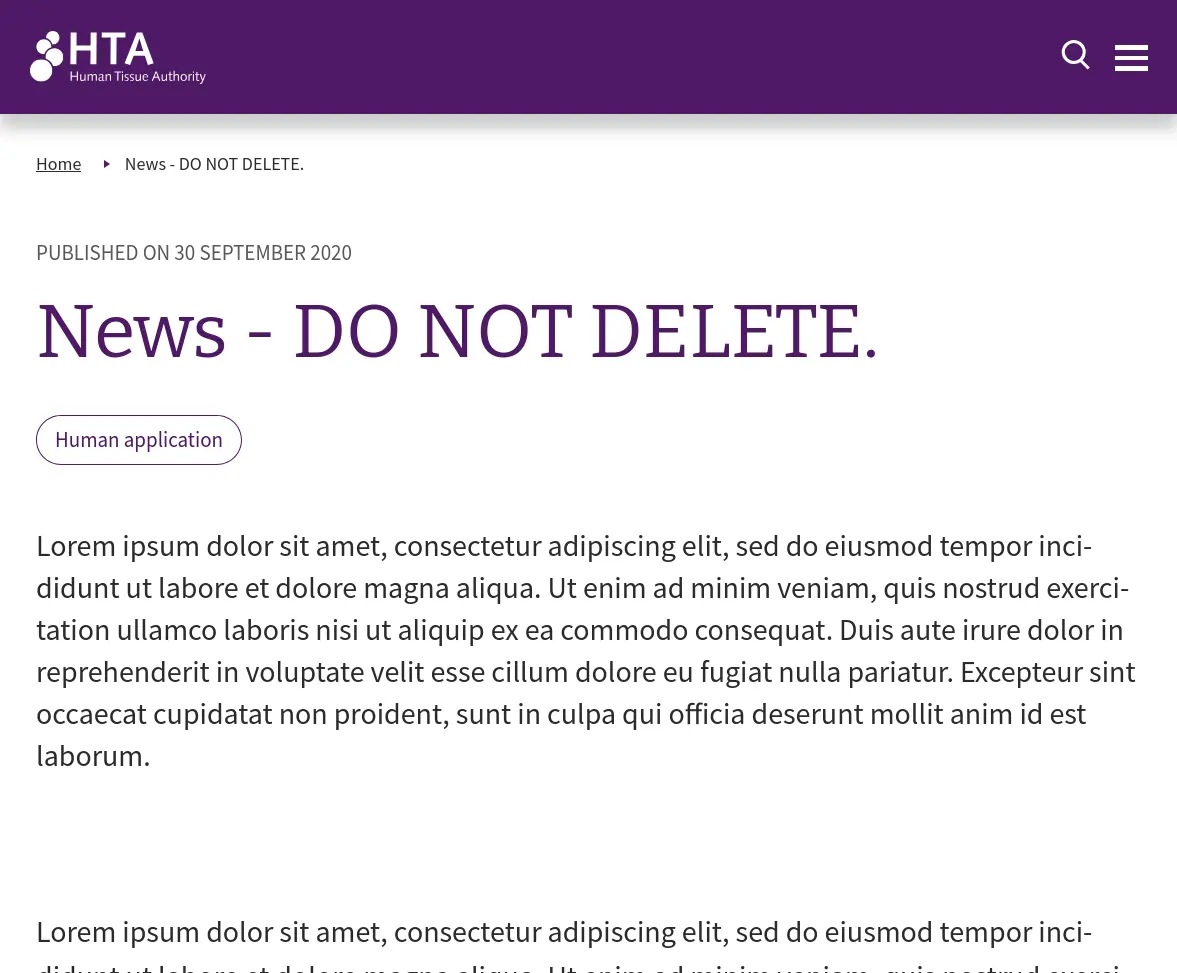
What would happen if that page were deleted? Would you dare risk it?
Sometimes finding a test page leads to a dead end. A stub of a page which should have been purged before go-live.
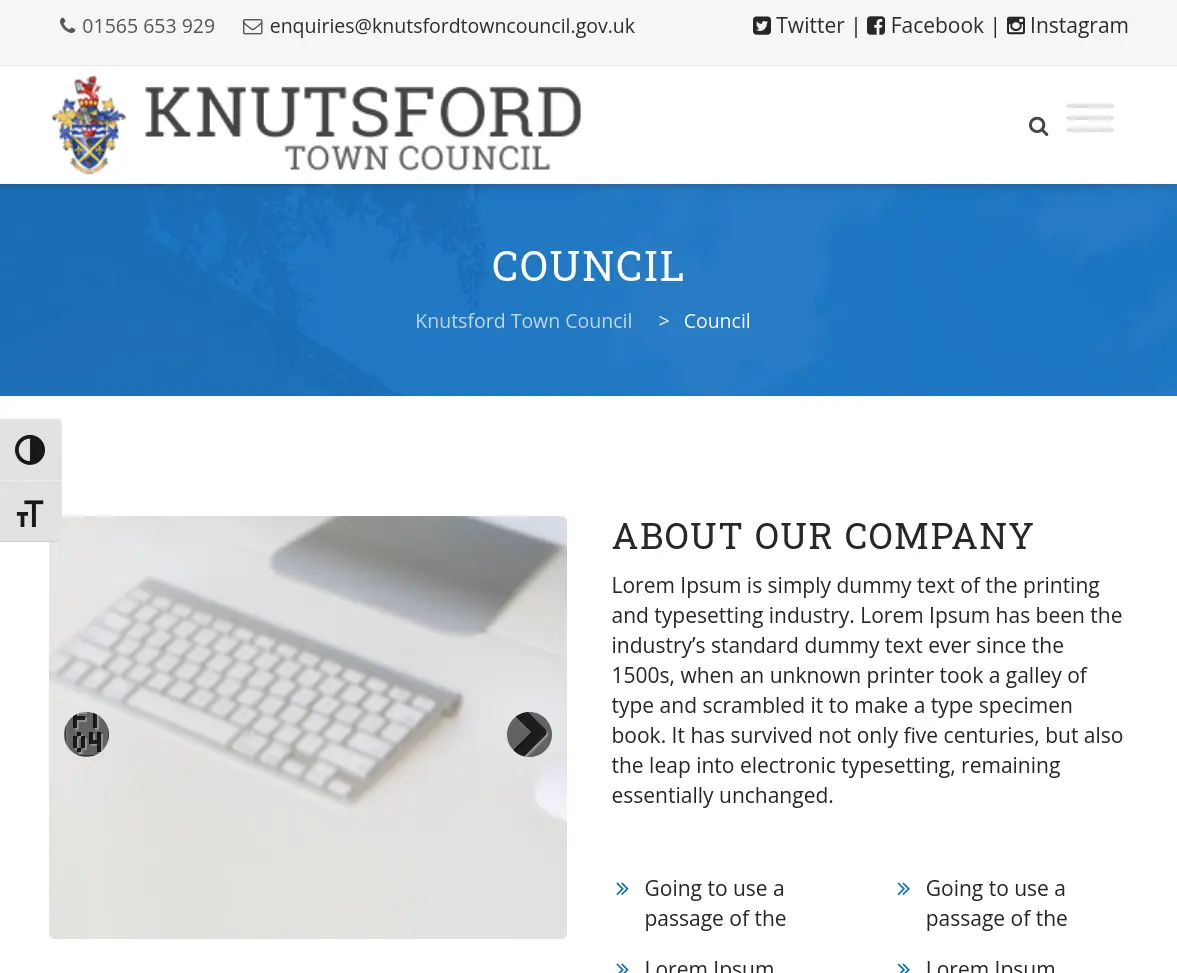
But other times it can lead us to a page hinting at something more. Deeper tests of long-forgotten functionality.

What did those plugins do? Aaaaaaaa indeed!
The purpose of this post isn't to point and laugh, it's to show that searching for dummy data is a good way to find interesting things. It might show you a style-guide, or lead to you to a forgotten and outdated plugin, or it might lead you to an entire pre-production environment.

Finally, this image was on one of the FCDO blog posts. I assume that means it is available under the Open Government Licence and, therefore, I can start T-Shirt production immediately!


 An illustration from the Wellcome Collection of a medieval monk's herb garden. Wellcome Collection
For whatever the land you possess, whether it be where sand
And gravel lie barren and dead, or where fruits grow heavy
In rich moist ground; whether high on a steep hillside,
Easy ground in the plain or rough among sloping valleys -
Whereever it is, your land cannot fail to produce
Its native plants…
These words come the Hortulus: The Little Garden written by Wahlafrid Strabo (c. 808-849), who was a Benedictine monk from the monastery of Reichnau on an island in Lake Constance.
The 9th-century Hortulus is considered one of the most important European historical documents on gardening and plants, combining practical advice with its poetry. It continues to inspire modern gardeners in planting and design. The writings offers a tour of the monastery garden and the qualities of its plants. Twenty-nine plants are named, from Indian pepper to grapes, nettle, pennyroyal and peach. For the most part these are medicinal, though Wahlafrid includes some culinary observations, and a final detail about the rose as a source of soothing oil and symbol of the Virgin Mary.
The descriptions of the fresh and delightful taste of melon and gourds (bottle gourd or calabash) sit alongside longer discussion of the use and preparation of herbs and vegetables for health.
As a flavour of the way in which these observations were made, take the plant Southernwood (Aretemisia Abrotanum), not commonly known these days but common enough in the medieval period. Strabo notes that: "It has power against fevers, banishes stitch, and if your limbs ache with the elusive and mysterious pain of gout, it will bring relief."
Other instructions show how monks used plants as medicine including mixing fennel-root with wine to relieve a rasping cough, and the use of betony as a treatment for a septic wound.
Around 350 years later, in his large work On the Nature of Things, Alexander Neckham, a English Augustinian canon (so, not strictly a monk), wrote a description of a garden, probably recalling his days as a scholar in Paris. His list includes parsley, coriander, savory, cress, sorrel, ponlions, leeks, garlic and purslane, medlars, quinces and citrus fruits. He notes a number of herbs (spices) which do not grow in Europe, including ginger, clove, zedoary and myrrh. Neckham emphasises the importance of hard work in the garden, but also the importance of studying plants and their uses.
This combination of book learning, community knowledge and experience can be found in what is known as "the Herbal", which refers to historical writings on the science and health qualities of plants. These were copied, and added to, by hand. One of the earliest is On Medical Matters compiled by Dioscorides (c.40-c.90 AD), written in Greek and translated into Latin and Arabic.
This became a standard reference text, some with illustrations, in medieval Europe. Much of the focus lies on the medicinal usage of herbs, but also uses in cooking.
 Pages from a 15th-century herbal, 1480-1500, translated from a 12th-century Latin manuscript by Matthaeus Platearius (d. 1161)
Wellcome Collection
The plant lore of the monastic library might be supplemented by longer traditions of Roman science, for example the Natural History of Pliny the Elder (d.79 AD).
And the tradition continued with authors such as Henry of Huntingdon, a 12-century archdeacon, whose work the English Garden deals with six times the number of plants as Strabo, in a more elaborate literary tour of the garden and its plots.
Works by four other key botanists, Isidore, Bede, Macer, and Dioscorides, are to be found in the mid-12th century catalogue of the monastic library at Durham Cathedral Priory.
Then as now, health and eating were considered closely related. Most monasteries kept gardens. For instance, on the famous ninth-century architectural plan of an idealised monastery layout, known as the Plan of St Gall, a main kitchen garden as well as an orchard are shown.
 A famous 9th-century architectural drawing of an ideal Benedictine monastery called the Plan of St Gall.
Wikimedia
Knowledge of plant lore was passed down through the centuries by monks. This was part of a wider monastic approach to the natural environment, which has some resonance with gardening movements of today, by combining spirituality and mental health with growing and eating plants.
The 12th-century theologian William of St Thierry describes shady woodland, recognising the idea of spirituality gained from the natural world. He wrote that the "silent valley spoke to them of the simplicity and humility in the buildings, mirroring the simplicity and humility of those living there".
Another order, the Grandmontines, lived in communities of no more than 12. They believed in no excess and a self-sustaining community, which lived on what it grew. This idea of sustainability and self-sufficiency is popular again today.
Looking after their landMonastic houses managed their land, livestock, mineral rights and waterways. Monasteries also maintained detailed records to pass down knowledge to those that came after them.
These medieval monastic communities also exercised considerable influence over the ecology of their estates, using land and resources carefully.
The valley of the Rie (now Rye) in North Yorkshire, the home of Rievaulx Abbey, is a good example of managed woodlands. It was coppiced and used as foraging grounds for pigs over many years of monastic stewardship. Terracing made the land more usable in the valley. Water channelling ensured sanitation as well as supplying the fulling mill, to help make textiles and clothing, and for the tanning vats, containers used to treat animal skins to make leather.
In Durham monks from the Cathedral Priory were at the heart of a change in the path of the river Wear. Evidence of this emerged in 2009 when heavy rain caused the ancient river's route to come to light. It appears that the river's course had been changed in medieval times to prevent the wooded peninsula of Durham from turning into an island.
A wealth of evidence survives showing just how important gardens and land were to medieval monasteries. While herbals and other historical literature show just how carefully monks used plants in everyday life, many of those ideas, such as sustainability, self-sufficiency and finding spirituality in green spaces, have been absorbed into modern gardening books and are embraced by gardeners today.

Giles Gasper receives funding from the Arts and Humanities Research Council, UK; the John Templeton Foundation; and the Castle Studies Trust.
At more than $52m, the race has become the most expensive in US history, but residents are fed up with flooding
Aida Havel mulled her fate over coffee after working the early voting polls all day in Kill Devil Hills, North Carolina. "We are trapped," she concluded.
The Dare county commission candidate lives about 50 miles (80km) south, on Hatteras Island on the state's Outer Banks.
Continue reading...

The Detroit techno producer has died aged 64. In July 1997 Mike Shallcross interviewed Atkins for the cover story of The Wire 161. We have now made that article free to read in the magazine's online library.
From Detroit to Deep Space: Juan Atkins interviewed by Mike Shallcross, The Wire 161, July 1997
"The moment we start spinning the cocktail, you can see guests' expressions change," says Greta Bazzichi, bartender at Giacosa 1815 in Florence, Italy.
The drink in question is the Cosmo Negroni, created by Bazzichi's co-worker William Franci in 2024, which is garnished with mesmerizing swirls.
As with so many modern ideas, the concept behind the garnish was sparked while scrolling social media. On his day off, Franci came across videos from an artist—unfortunately he can't remember the specific account—making designs by carefully layering dyed sand in a bucket before rapidly spinning it. The result was a spiral effect that Franci thought could work well behind the bar. At Giacosa, he grabbed the first two powders he could find, raspberry and cocoa, and used them on a creamy, sour-style cocktail. "The effect was exactly what I had imagined," he says.
Franci calls the technique "the dust cosmo." Creating it is simple: it requires applying straight lines of colored powders directly to the foam of a cocktail before spinning the glass. Centrifugal force fans the powders out into a galactic looking pattern (hence "cosmo," like the cosmos) across the surface.

In addition to the Cosmo Negroni (which Giacosa makes with cachaça and a raspberry tonka syrup), the bar uses this trick on one of its nonalcoholic serves, the Rossino. Franci says the garnish works on almost any cocktail or coffee drink with a foam, and it's easy to experiment with it. But there are a few things that make the method easier to execute. First, the foam needs to be dry and airy, or else the powders will stick in place and won't be able to freely glide across the drink. Second, you need a level surface, so a Whiskey Sour on the rocks or an iced latte won't work because the powders won't spread evenly. "The ice moves with the spin of the liquid," explains Franci, "disrupting the surface and ruining the pattern."
The other factor that can vary is the speed of the spin. Franci finds that a smooth, slow turn makes the layered swirl he is looking for, but a smaller glass or more fragile foam may require a slower pace. The faster the spin, the looser the pattern.
After I posted a video of this simple technique, I heard from bartenders and baristas who were abuzz with ideas about how to translate the design onto their own drinks. In an industry where trends can be so cyclical, the novel trick struck a chord. I can't wait to see dust cosmos topping cocktails and coffee drinks around the world soon.
 The Itch have released 'Planned Obsolescence', a big beat and electroclash track about being built to wear out, their first new music since debut album 'It's The Hope That Kills You'.
 SYREETA talks launching her label SYREN, working with DJ Minx on 'All Night Thing', and the instinct-led approach behind her exclusive DMY mix.


