
 ICE at the Olympics: America brings fascism back to Italy [ 05-Feb-26 7:36pm ]
Italians are very familiar with what happens when masked thugs wield unchecked power, and they don't want to go backwards. The IOC has had to plead with fans not to boo Vice President JD Vance and Secretary of State Marco Rubio, who have oddly chosen to arrive with ICE as part of their protection detail. — Read the rest
The post ICE at the Olympics: America brings fascism back to Italy appeared first on Boing Boing.
Soulwax bring first ever rave to Abbey Road Studios [ 05-Feb-26 5:03pm ]London's Abbey Road Studios has announced Abbey Road After Hours, the first rave to take place in the venue's historic Studio One. The event will be held on February 21st from 8pm until 1am in partnership with Belgian sibling duo Soulwax. Access for 300 guests will be free via public ballot, with entries accepted through […]
'Rock Springs' Brings Horror From the Past Into Its Tale of Contemporary Grief [ 05-Feb-26 8:00pm ]
OpenAI launches new agentic coding model only minutes after Anthropic drops its own [ 05-Feb-26 8:01pm ]
Prime members can play Alan Wake 2 for free on Luna [ 05-Feb-26 7:35pm ]If you haven't yet played Alan Wake 2, here's your chance to immerse yourself in its terrors for free. Prime members can play it this month on Amazon's Luna cloud gaming service at no additional charge.
The "fantastic" Alan Wake 2 oozes "psychedelic terror," as Engadget's Jessica Conditt put it in our review. The 2023 horror-survival game uses a dual-protagonist motif, alternating between the lost author Wake and the stoic FBI agent Saga Anderson. It "tells a twisted, serpentine story of paranormal murder, shifting realities and demonic possession, with two brooding investigators at its core." Not a bad way to sublimate the all-too-real horrors of life in 2026.
The Order of Giants DLC for Indiana Jones and the Great Circle also arrives on Luna this month. Ditto for Disney Universe, a knockoff of the Lego game franchise starring the Mouse's IP.
Setting Luna aside, Amazon also has downloadable PC games that Prime members can claim for free this month. Starting today, you can snag the Borderlands spinoff Tiny Tina's Wonderlands from the Epic Store. Later this month, you can also claim the highly rated strategy title Total War: Attila (Epic Store, Feb. 26).
You can check out Amazon's announcement post for the complete list.
This article originally appeared on Engadget at https://www.engadget.com/gaming/prime-members-can-play-alan-wake-2-for-free-on-luna-193509728.html?src=rss Meta is giving its AI slop feed an app of its own [ 05-Feb-26 7:22pm ]Meta is developing a standalone app for Vibes, its feed of AI-generated videos, according to reports from TechCrunch and Platformer. Vibes was introduced as a feature in the Meta AI app in September 2025. Similar to OpenAI's Sora app, Vibes lets users prompt Meta AI to create TikTok-style vertical videos.
"Following the strong early traction of Vibes within Meta AI, we are testing a standalone app to build on that momentum," Meta said in a statement. "We've seen that users are increasingly leaning into the format to create, discover, and share AI-generated video with friends. This standalone app provides a dedicated home for that experience, offering people a more focused and immersive environment. We will look to expand the app further based on what we learn from the community."
Meta has yet to share specific numbers for how many people actually use Vibes, but the company does claim that Meta AI usage has continued to grow since Vibes launched. Breaking the feature out into its own app could allow Meta to add more functionality without cluttering the existing Meta AI app. The company believes AI-generated content will be the next big source of engagement on platforms, and said in an October 2025 earnings call that it planned to push more AI images and videos into its recommendation algorithm. A dedicated app for creating videos like Vibes could be one way Meta hopes to do that.
As Meta's main competitor in the burgeoning field of AI-first social media, OpenAI has continued to iterate on its Sora app, adding ways for characters and pets to cameo in videos, and signing a deal with Disney to allow users to generate content with Disney characters. Considering the company has licensed celebrity likenesses in the past, it doesn't seem impossible that Meta could pursue similar deals. Whatever happens, AI-generated videos appear like they'll be increasingly inescapable.
This article originally appeared on Engadget at https://www.engadget.com/ai/meta-is-giving-its-ai-slop-feed-an-app-of-its-own-192208200.html?src=rss
Asia-based government spies quietly broke into critical networks across 37 countries [ 05-Feb-26 7:21pm ]A state-aligned cyber group in Asia compromised government and critical infrastructure organizations across 37 countries in an ongoing espionage campaign, according to security researchers.…
LaMonte McLemore, founding member of the 5th Dimension, RIP [ 05-Feb-26 7:25pm ]
LaMonte McLemore, the bass voice behind some of the most joyful pop music of the late 1960s, has died at 90. He passed away Tuesday at his home in Las Vegas, surrounded by family, after suffering a stroke, reports the Guardian. — Read the rest
The post LaMonte McLemore, founding member of the 5th Dimension, RIP appeared first on Boing Boing.
Flying Lotus Announces New EP and Film, Big Mama [ 05-Feb-26 7:18pm ]
Xikipedia Wants to Take the 'Doom' Out of 'Doomscrolling' [ 05-Feb-26 7:05pm ] Laurence Fishburne Is the Latest Big Name to Join Mike Flanagan's 'The Exorcist' [ 05-Feb-26 7:00pm ] Can You Guess What Creature Won the Close-Up Photographer of the Year Competition? [ 05-Feb-26 7:00pm ]
Bare Metal Authority: A Production Knucklehead by Bull Motor Company [ 05-Feb-26 7:00pm ] The Unconventional Choice: 6 Radical Suzuki Customs [ 05-Feb-26 3:00pm ]
Project Hail Mary is getting its own LEGO set [ 05-Feb-26 7:11pm ]The upcoming science fiction film Project Hail Mary is getting a LEGO set. This is fascinating because LEGO typically makes sets based on long-standing franchises like Star Wars and Harry Potter. Project Hail Mary doesn't even hit theaters until March 20.
It's not an entirely new IP. The movie is based on a 2021 book written by Andy Weir, the same author behind The Martian. It's cool to see a LEGO set based on something more contemporary than its usual fare.
The 830-piece set looks pretty nifty. It includes a replica of The Hail Mary spaceship in all of its glory, complete with minifigures of teacher-turned-astronaut Ryland Grace and his ultra-cute alien buddy that the whole world will likely fall in love with once the film hits.
The set also comes with a functional display stand and a crank that moves the components around to simulate centrifugal gravity. The minifigures can even be arranged to recreate an iconic scene from the book and, likely, the movie.
LEGO's Project Hail Mary set is available for preorder right now and costs $100. It ships on March 1, giving fans around 20 days to build it before the movie hits theaters.
The film involves a reluctant astronaut attempting to solve a mystery as to why the sun is dying. It stars Ryan Gosling and is directed by Phil Lord and Chris Miller, the duo behind the Spiderverse films and, incidentally, The LEGO Movie.
This article originally appeared on Engadget at https://www.engadget.com/entertainment/tv-movies/project-hail-mary-is-getting-its-own-lego-set-191106809.html?src=rss
Stash or splash? Lawmakers ask NASA to find alternatives for International Space Station [ 05-Feb-26 6:50pm ]US lawmakers have asked NASA to look into storing the International Space Station (ISS) in a higher orbit at the end of its operational life, instead of sending the structure hurtling into the ocean when the time comes.…
Epstein met 4chan's founder the day before /pol/ launched [ 05-Feb-26 6:52pm ]
On October 24, 2011, venture capitalist and Bill Gates advisor Boris Nikolic emailed Jeffrey Epstein about a meeting with 4chan founder Christopher Poole. "How did you like moot?" he asked, using Poole's username. "I liked him a lot. I drove him home, he is very bright," Epstein replied. — Read the rest
The post Epstein met 4chan's founder the day before /pol/ launched appeared first on Boing Boing.
The Daily Show explains Gavin Newsom to people outside California [ 05-Feb-26 6:37pm ]
Gavin Newsom is California's slickest retail politician and conservative media's favorite coastal elite. The Daily Show covers Newsom's highly probable rise, family ties, and bulletproof hair.
The Daily Show doesn't crown Gavin Newsom as a savior or condemn him as a menace. — Read the rest
The post The Daily Show explains Gavin Newsom to people outside California appeared first on Boing Boing.
Travellers' tales: Go west - revisiting parts of Wales by bike [ 05-Feb-26 4:06pm ] Save 20% on membership [ 04-Feb-26 12:27pm ]
Automattic and the Internet Archive Team Up To Fight Link Rot [ 05-Feb-26 7:05pm ]
Filton Acquittals Demolish Starmer and Cooper Lies About Palestine Action [ 05-Feb-26 6:49pm ]As the trial finished at Woolwich Crown Court of the six Palestine Action activists who entered the Filton factory to destroy Israeli killer drones, Starmer, Cooper, Lammy and Mahmood are left bereft of a single guilty verdict in the case on which they relied heavily to label Palestine Action as a terrorist organisation.
I could not, on pain of imprisonment, tell you this during the trial. One item produced by the prosecution as evidence was the notebook of Charlotte Head, on which she had written details from her training session with Palestine Action and of the proposed direct action against Elbit's drone factory.
The first ten pages of her notes were about the Israeli weapons company Elbit, their footprint in the UK, their corporate structure and the weapons they manufacture, and the evidence of the use of their weaponry in the genocide in Gaza.
The jury were shown the notebook but were specifically not allowed to see the first ten pages. Throughout the trial anything that referred to the crimes of Elbit, their role in the mass killing and mutilation of women and children, and their cosy relationship with the British government, was excluded from the jury. The judge continually stopped the defence lawyers from asking or saying anything about who ELbit are or why their property was being attacked.
The defendants were not permitted therefore to explain to the jury why they did what they did, which you might have believed was a pretty fundamental right. The jury were additionally in effect instructed by Judge Johnson to convict on the least serious charge, that of of criminal damage.
But despite the state taking every possible precaution to ensure that the state got its convictions in this show trial, the jury refused to find that trying to stop Genocide is a crime.

This trial was fundamental to the government's argument that Palestine Action is a terrorist organisation. And the key to that was the accusation that Palestine Action intended from the start harm to people, not just to property. That is why these defendants were all charged with "aggravated burglary".
Aggravated burglary is an extremely serious charge, carrying a potential life sentence. It is the offence of breaking into a property with the intent to use a weapon. On aggravated burglary, all six defendants were found resoundingly Not Guilty.
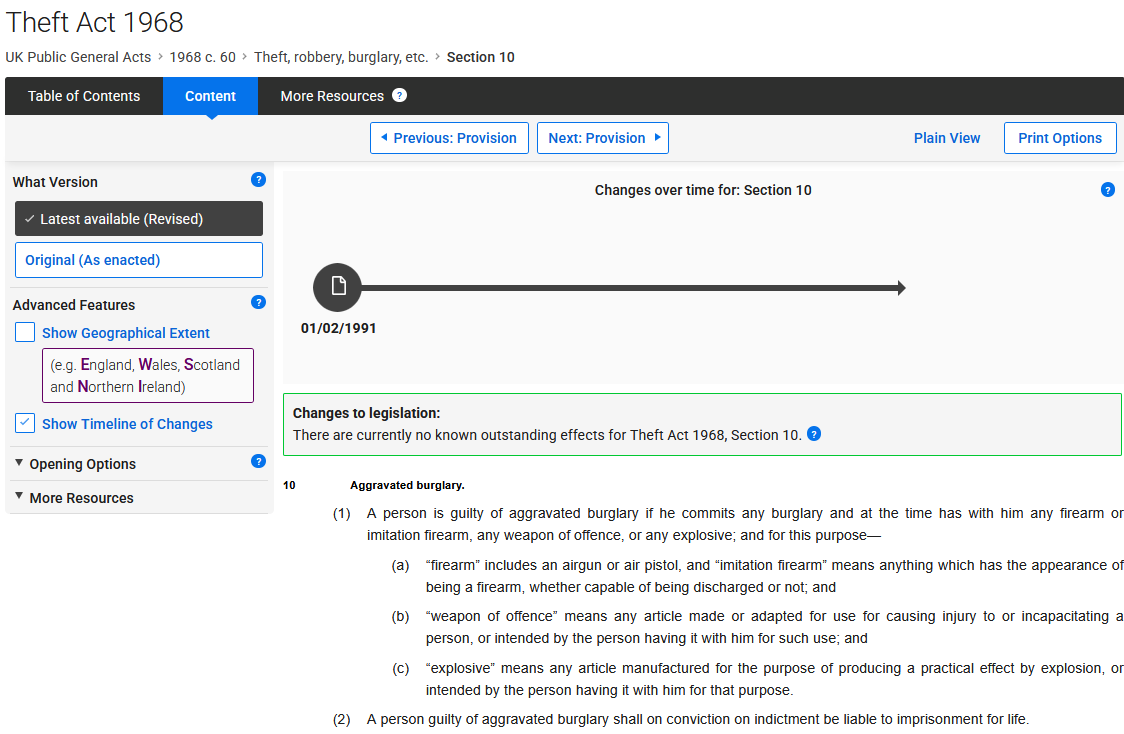
So the attempt to portray Palestine Action as an organisation involved in violence against persons has fallen flat on its face. Because the jury could see it was stupid and obviously untrue.
When it comes to events after the activists were attacked by security guards, three of the six were found not guilty of the charge of "violent disorder". On three others the jury could not reach a verdict.
Most interesting of all perhaps was the charge of criminal damage to Elbit's machinery and instruments of genocide. Here Judge Johnson to all intents and purposes had instructed the jury to convict. Yet enough of the jury could not accept that stopping Genocide is a crime.
The final question was the charge against Samuel Corner of Grievous Bodily Harm with Intent. This was the famous incident where the security guards attacked the defendants with weapons and there was a melee as they defended themselves.
It is worth stating that the tabloid stories and right wing meme of "a policewoman's spine was fractured" was always utter nonsense. As the defence closing speech stated:
The prosecution have said it was a fracture to the spine, a deliberate choice of words which although technically accurate, conjure up a break, a snapping of the spinal vertebrae. Maybe that's what the jury had in mind until they saw the CT scan - it was actually an injury that wasn't obvious. The doctors looking at the first X-rays didn't identify any bone damage, nor in an MRI later.
The injury didn't require surgery and Sergeant Evans was advised to take painkillers and do physiotherapy. The agreed facts state from medical evidence that you'd expect such a fracture to heal in six to twelve weeks, with full healing in three to six months, and no long-term consequences.
The unfortunate policewoman suffered no damage at all to her spinal cord. She had a possible hairline fracture to the wing of one vertebrae. That there was any fracture at all was never definitive from the X rays and MRIs. Whether it reached the bar of grievous bodily harm was disputed, how it was caused was disputed and whether there was any intent to harm was disputed. The refusal of the jury to convict was completely consistent with the evidence heard in court.
This has driven right wingers into a frenzy with completely false claims about the extent of the injury, and continued reference to a highly edited brief video clip.
That video clip is extremely important because it represents the height of the state's attempt to use this incident to demonise Palestine Action. The police were permitted, during the course of the trial, to release a single and highly edited clip of video said to represent the injury of Sergeant Evans by a sledgehammer. A great deal of other video evidence was not released. This resulted in a massive media frenzy.
Even before this, Yvette Cooper and Commissioner of the Metropolitan Police Mark Rowley had caused massive prejudice by stating that a policewoman had been attacked with a slegehammer.
None of these deliberate attempts to affect the trial was censured by the judge nor resulted in any proceedings for contempt of court. Yet we were strictly told we absolutely could not mention that the judge was withholding the evidence about Elbit from the jury, as that would prejudice the trial, and we would face contempt of court proceedings.
On Sergeant Evans, she has become a cause celebre for the right, but I should say there is no evidence she is herself whipping this up. Her behaviour on the night was admirable. She was not herself involved in the excessive use of force, and despite her own painful bank tended to others after the event quietened.
In my view this prosecution was doomed by the overcharging and exaggeration used by the government to demonise Palestine Action. The "aggravated burglary" charge was ludicrous. To attempt to claim that the activists entered the factory with the intent of using weapons against people, went so far against the evidence it was bound to fail.
The massive over-exaggeration of the extent of Sergeant Evans' injury has successfully whipped up right wing hysteria, but did not really meet the threshhold of grievous bodily harm, and the decision to add intent to that charge was again not backed by evidence.
On criminal damage, the jury plainly refused to accept the destruction of weapons of genocide was a crime. For that, I salute them. For the rest, they simply applied robust commonsense to the evidence before them.
The "policewoman attacked with a sledgehammer" nonsense of course featured heavily in the English judicial review of the proscription of Palestine Action. In the Scottish judicial review, they cannot really use this - not without a caveat that a jury did not agree with them.
The Filton result is great news for the Scottish judicial review. We have to submit all the paperwork for that, in just seven working days. I hate to say this, but we are now desperately short of funds to continue this action. I cannot keep asking the same supporters to give more, but if you know people who can afford it and will contribute please activate them.
You can donate through the link via Crowd Justice, which goes straight to the lawyers, or through this blog.
https://www.crowdjustice.com/case/scottish-challenge-to-proscription/
paypal.HostedButtons({ hostedButtonId: "NZDEN7BYDHVS4", }).render("#paypal-container-NZDEN7BYDHVS4")
Alternatively by bank transfer:
Account name
MURRAY CJ
Account number 3 2 1 5 0 9 6 2
Sort code 6 0 - 4 0 - 0 5
IBAN GB98NWBK60400532150962
BIC NWBKGB2L
Bank address NatWest, PO Box 414, 38 Strand, London, WC2H 5JB
Or crypto:
Bitcoin: bc1q3sdm60rshynxtvfnkhhqjn83vk3e3nyw78cjx9
Ethereum/ERC-20: 0x764a6054783e86C321Cb8208442477d24834861a
The post Filton Acquittals Demolish Starmer and Cooper Lies About Palestine Action appeared first on Craig Murray.
One of Europe's largest universities knocked offline for days after cyberattack [ 05-Feb-26 7:00pm ] Elon Musk is getting serious about orbital data centers [ 05-Feb-26 6:50pm ]
The US Central Intelligence Agency is ending one of its popular services, The World Factbook. Over the decades, this reference has provided readers with information about different countries and communities around the world. The post from the CIA announcing the news didn't provide any information about why it will stop offering The World Factbook. The agency was subject to the same buyouts and job cuts that decimated much of the federal workforce in 2025, so maybe this type of public-facing tool is no longer a priority.
This reference guide was first published in 1962 as The National Basic Intelligence Factbook. That original tome was classified, but as other government departments began using it, an unclassified version for the public was released in 1971. It became a digital resource on the CIA website in 1997.
This article originally appeared on Engadget at https://www.engadget.com/big-tech/the-cia-stops-publishing-the-world-factbook-184419024.html?src=rss
If you've been paying attention to surveillance and civil liberties issues over the past fifteen years, you've likely learned to recognize a particular pattern. Senator Ron Wyden will occasionally send a public letter that essentially says "hey, I can't tell you what's happening because it's classified, but something really bad is going on and you should all be paying attention."
A decade ago some dubbed this the Wyden Siren. And when the Wyden Siren goes off, history tells us we should listen. Because every single time he's done this, he's eventually been proven right.
On Tuesday, Wyden sent a remarkably short letter to CIA Director John Ratcliffe. The entire substantive content is this:
I write to alert you to a classified letter I sent you earlier today in which I express deep concerns about CIA activities.
That's it. That's the whole thing. "Deep concerns about CIA activities." He can't say what. He can't say why. But he's making damn sure there's a public record that he raised the alarm.
And if he's done that, it means something very, very, very bad is happening.
If you're not familiar with the Wyden Siren, let me walk you through the pattern, because it's been remarkably consistent.
Back in 2011, Wyden and Senator Mark Udall tried to warn the public that the federal government had secretly reinterpreted the PATRIOT Act to mean something entirely different from what the text actually said. They couldn't reveal the details because they were classified, but Wyden made the situation clear:
We're getting to a gap between what the public thinks the law says and what the American government secretly thinks the law says.
For a couple years, civil liberties advocates were left guessing what that secret interpretation might be. Then Ed Snowden came along and revealed the NSA's bulk metadata collection program—the exact thing Wyden had been warning about. Apparently, one of the things that reportedly pushed Snowden to leak was watching then Director of National Intelligence, James Clapper, lie to Wyden's face in a hearing about whether the NSA was collecting data on millions of Americans. Wyden knew the answer. Clapper lied anyway. Snowden had the proof.
In 2015, Wyden was at it again, this time warning about a secret Justice Department legal opinion related to cybersecurity legislation:
I remain very concerned that a secret Justice Department opinion that is of clear relevance to this debate continues to be withheld from the public. This opinion, which interprets common commercial service agreements, is inconsistent with the public's understanding of the law, and I believe it will be difficult for Congress to have a fully informed debate on cybersecurity legislation if it does not understand how these agreements have been interpreted by the Executive Branch.
In 2017, we wrote about the Wyden Siren going off again when Dan Coats, then Director of National Intelligence, gave an answer about Section 702 surveillance that Wyden pointed out was to a different question than the one he'd actually asked:
That was not my question. Please provide a public response to my question, as asked at the June 7, 2017, hearing.
The pattern repeats. Wyden asks a specific question about surveillance. The intelligence community answers a slightly different question in a way that technically isn't lying but is designed to mislead. Wyden calls them out. Eventually, the truth comes out, and it's always worse than people assumed.
It's not just surveillance, either. Wyden has used this same approach to expose ICE illegally collecting millions of Americans' financial records through bulk administrative subpoenas—a program that was hastily shut down the moment Wyden's office started asking questions about it. He's caught the government gathering push notification data from Apple and Google while forbidding those companies from telling anyone about it. He's questioned domain seizures, the FBI's power to look at your browsing history without a warrant, and countless other government activities that were happening in secret.
The track record here is essentially perfect. When Wyden sends a cryptic letter or asks a pointed question suggesting something concerning is happening behind the classification curtain, something concerning is absolutely happening behind the classification curtain.
So what's happening at the CIA that has Wyden sending a two-sentence letter that amounts to "I legally cannot tell you what's wrong, but something is very wrong"?
We don't know yet. That's the whole point of classification—it keeps the public in the dark about what their government is doing in their name. But Wyden's letter is the equivalent of a fire alarm. He's seen something. He can't say what. But he wants there to be a record that he raised the concern.
Given the current administration's approach to, well, everything, the possibilities are unfortunately vast. Is it about domestic surveillance? Something about current ODNI Tulsi Gabbard? International operations gone sideways? Some new interpretation of the CIA's authorities that would make Americans' hair stand on end if they knew about it? We're left guessing, just like we were guessing about the PATRIOT Act's secret interpretation back in 2011.
But here's what we do know: Ron Wyden has been doing this for at least fifteen years. And every single time, he's been vindicated. The secret programs were real. The abuses were real. The gap between what the public thought was happening and what was actually happening was real.
The Wyden Siren is blaring. Pay attention.
AI companies are looking for new ways of burning cash other than by handing it to hyperscalers for model training. So now they're setting money on fire by buying Super Bowl ads that mock rivals.…
Nintendo capped off today's partner-focused Nintendo Direct with a flurry of Bethesda-related announcements, but arguably the most interesting game of the showcase appeared right at the start.
First announced at the beginning of the year, Orbitals is a two-player puzzle adventure game in which you and your co-op partner play as the intergalactic explorers Maki and Omura, on a mission to save their home in the stars from an incoming cosmic storm. Gameplay-wise, Orbitals looks like it's at least partly inspired by the likes of It Takes Two and Split Fiction, but really what really stands out here is the 90s anime-inspired visuals.
The game is absolutely dripping in style, and somehow looks just as good in motion as it does in cutscenes. Describing it as a playable Saturday morning cartoon is getting into cliche territory, but Orbitals really nails its aesthetic.
It will be a tall order for any game like this to clear the impossibly high bar for creative co-op gameplay that Josef Fares' Hazelight Studios has set in recent years, but Orbitals looks like it could be worth experiencing for its visuals alone.
Nintendo has managed to nab this one as a Switch 2 exclusive, which you can either play locally or online, and thanks to the console's GameShare feature, only one person needs to own the game for the latter.
Orbitals arrives at some point during summer 2026.
This article originally appeared on Engadget at https://www.engadget.com/gaming/nintendo/the-switch-2-exclusive-co-op-adventure-orbitals-launches-this-summer-180657892.html?src=rssJLab just released a gigantic pair of headphones that doubles as a Bluetooth speaker. The Blue XL headphones are ridiculously oversized, making them headphones in name only. I don't even think Andre the Giant could've comfortably worn these suckers.
Unless you have a mythically large head, these are basically "headphone speakers." The idea is to drape them around your neck and stream tunes for all to hear. Though you could also pop them on a table or something. I prefer my Bluetooth speakers to be speaker-shaped, but maybe that's just me.
As for the internals, they feature 30W of power and two 2.5-inch drivers, along with two 2.5-inch radiators. This is obviously more power than what's demanded by headphones because, again, these are actually speakers. JLab says they'll get around 20 hours of use per charge, which is a decent metric.
There's another use case here. They could make a mighty fine accessory in a "person wearing comically oversized headphones" Halloween costume. The price is actually right for a gag gift. The Blue XL headphones cost $99. These were first announced at a recent college football game, but everyone assumed it was a joke because they were gold and the company said they cost $120,000.
This article originally appeared on Engadget at https://www.engadget.com/audio/jlabs-comically-oversized-headphones-are-not-an-april-fools-prank-174338833.html?src=rssWith gaming becoming an ever-smaller part of NVIDIA's lucrative business, the company reportedly won't bother releasing new graphics cards this year. The Information reported on Thursday that NVIDIA has pushed back its plan to release an update to the RTX 50 line in 2026. This would be the first time in three decades that the company hasn't launched new gaming chips. The culprit? Why, AI, of course.
AI demand has driven the current memory chip shortage, throwing the consumer electronics industry out of kilter. Many product prices are expected to rise (as if tariffs hadn't already done enough damage there). And the scarcity of memory chips has made components that rely on them, including GPUs, nearly impossible to find. Even the auto industry isn't spared.
Facing those constraints, NVIDIA, which made its bones on graphics chips for PCs and gaming consoles, is essentially brushing off that demographic. The Information notes that in the first nine months of 2022, NVIDIA's gaming GPUs made up 35 percent of its total revenue. During that same period in 2025, only around 8 percent came from gaming components. In addition, NVIDIA's AI chips have much higher profit margins: 65 percent vs. 40 percent for graphics cards.
That means gamers, already hard-pressed to find last year's RTX 50 series, likely won't get the expected "Super" version in 2026. On top of that, The Information says the delay will also push back NVIDIA's next-gen graphics card (likely "RTX 60"). That component was initially expected to begin mass production at the end of 2027.
But hey, at least you can shop (and view ads!) in ChatGPT, have a talk with your Gmail inbox and record everything the people around you say. Who needs games anyway, right?
This article originally appeared on Engadget at https://www.engadget.com/gaming/pc/nvidia-reportedly-wont-release-new-graphics-cards-this-year-173002651.html?src=rss
Elon Musk's pie-in-the-sky plan to launch a massive orbital datacenter satellite constellation has taken a rapid step closer to reality with the Federal Communications Commission advancing SpaceX's application for public comment, technical feasibility be damned. …

According to new reporting from NPR, the U.S. Public Health Service has been quietly sidelined inside ICE detention centers, leaving medical care understaffed, unaccountable, and increasingly outsourced to the lowest bidder.
Unsurprisingly, medical care at ICE "detention centers," or more accurately, concentration camps, has been eroded from its previously thin levels to a system so frustrating that the medical staff are quitting. — Read the rest
The post ICE detention centers are now a public health hazard appeared first on Boing Boing.

Asked a simple and humane question: why she thought it was appropriate to use people freed from Hamas captivity to promote her movie, Melania Trump once again demonstrated her soulless grift and deflected, treating human trauma as set dressing for a personal brand op. — Read the rest
The post Melania uses hostages freed by Hamas to promote her movie appeared first on Boing Boing.
English lessons shouldn't be an immigration test [ 05-Feb-26 6:13pm ]
What happens when learning English stops being a bridge into society and starts to feel like a test of belonging you can fail? That is the question raised by the the UK government's proposed new immigration policy, which would raise English-language requirements for most visa routes, with the aim of improving integration and workforce readiness. This represents an increase in emphasis on language proficiency. Applicants would have to demonstrate higher proficiency in speaking, reading, writing and listening. There would be stricter testing standards and fewer exemptions, aligning immigration with strong communication skills for employment and community participation.
Ministers say the proposed policies will promote "integration" and "opportunity". But it risks doing the opposite, by turning English for speakers of other languages (Esol) into a tool of surveillance rather than inclusion.
We are part of the Coalition for Language Education, a network of academics, teachers and organisations. The group argues that the proposed policy treats the ability to speak English less as a means of empowerment and more as a mechanism of immigration control.
By tying long-term residence and citizenship to staged progress in learning English, the policy reframes language not as a shared public good, but as a condition of acceptance. In effect, English becomes a kind of border.
Language shapes how we live together. It's how people build relationships, find work, take part in communities and participate in democracy. But it can also be used to divide and exclude.
For non-native speakers, learning English has long been about helping people navigate everyday life, express themselves and feel at home. The government's proposals, however, position English proficiency as a test of belonging - something to be proved, measured and monitored.
A decade-long test of worthinessUnder the plan, migrants seeking settlement or citizenship would be required to show staged progress in English, moving from basic to upper-intermediate levels over a ten-year period. Language attainment would be linked to a points-based system that also tracks employment and civic participation.
Language acquisition, however, is not linear. Progress is shaped by trauma, health, caring responsibilities, work patterns and previous education. For refugees and others who have experienced displacement or interrupted schooling, the expectation of steady, testable improvement can be unrealistic and punitive.
Reducing these complex learning journeys to tick-box benchmarks turns learning English into a compliance exercise. Linguistic ability becomes confused with effort, morality and even loyalty. Passing tests is seen as proof of trying hard, so failure implies laziness. Fluency becomes linked to being a "good" or "deserving" migrant. High proficiency signals commitment to national identity, while lower ability is framed as resistance.
This is not just a UK issue either. Around the world, language education has increasingly been tied to immigration control. What is new with this proposal is how openly English is framed as something to be audited.
In the UK, attendance, test results and progression targets risk becoming data points used to monitor behaviour, rather than tools to support learning. Teachers are pushed to prioritise performance indicators over dialogue, confidence-building and community connection.
When language becomes a tool of control, it reshapes citizenship itself, testing people against a narrow linguistic ideal and eroding democratic values. Equality, fairness, inclusion and participation erode when language becomes a gatekeeping tool. Narrow linguistic standards exclude diverse speakers, denying equal access to citizenship and civic rights.
A policy detached from realityBeyond its ideology, the proposed policy also fails on practical grounds. Esol provision across the UK is already underfunded and uneven. Community and voluntary providers, who support many of the most marginalised learners, are expected to deliver high-stakes outcomes with limited resources.
But there are no commitments to teacher training, pay, or access for women, refugees, or rural learners. There is little recognition of the barriers many learners face, including trauma, caring responsibilities or lack of access to childcare and transport. Nor is there any serious engagement with trauma-informed or learner-centred teaching approaches. Instead, the policy doubles down on a technocratic model that values what can be measured over what actually matters in the classroom.
Language should help people connect, not police their right to stay. Integration cannot be engineered through fear of failure or threat of exclusion. It grows when education is welcoming, well resourced and rooted in respect.
Linguistic diversity is not a problem to be solved. It is a public resource that enriches communities and strengthens democracy. Teaching English works best when it builds on what learners already know, rather than treating their languages as obstacles to overcome.
Instead of tethering language learning to immigration enforcement, the government should invest in trauma-informed, learner-centred provision that meets learners' needs. Assessment, too, needs rethinking. It should prioritise real-world communication and participation, not abstract benchmarks that silence voices.
Most importantly, integration must be understood as a two-way process. Host communities have as much to learn as newcomers.
If the government believes in empowerment, then education should amplify voices, not diminish them. Language policy should open doors, not lock them.
By replacing the language of rights and participation - teaching English not just for jobs, but to empower migrants to understand, claim and exercise their rights and engage in civic life - with conditional belonging, the proposed policy risks reinforcing inequality rather than reducing it. Presenting linguistic mastery as proof of national worth corrodes the democratic values language education should uphold.
Language should unite, not divide. When the English language is turned into an instrument of control, the very medium through which democracy operates is weakened. The task ahead is not to "restore control" over language, but to restore trust - in learners, in teachers and in the power of linguistic diversity to bring people together.

This article is republished from The Conversation under a Creative Commons license. Read the original article.
More from East Anglia Bylines
 Brexit
Why Keir Starmer is embracing a points-based immigration system
byEast Anglia Bylines 29 November 2022
Brexit
Why Keir Starmer is embracing a points-based immigration system
byEast Anglia Bylines 29 November 2022
 Business
Do we really want a big reduction in immigration?
byStephen McNair 17 August 2025
Business
Do we really want a big reduction in immigration?
byStephen McNair 17 August 2025
 Letters
Letter to the editor: A civilised society does not withhold care based on citizenship
byEast Anglia Bylines 13 October 2025
Letters
Letter to the editor: A civilised society does not withhold care based on citizenship
byEast Anglia Bylines 13 October 2025
 Immigration
English lessons shouldn't be an immigration test
byDeclan Flanaganand1 others 5 February 2026
Immigration
English lessons shouldn't be an immigration test
byDeclan Flanaganand1 others 5 February 2026
 Environment
Coastal erosion has forced vulnerable villages to confront 'hard truths'
byOwen Sennitt, Local Democracy Reporterand1 others 5 February 2026
Environment
Coastal erosion has forced vulnerable villages to confront 'hard truths'
byOwen Sennitt, Local Democracy Reporterand1 others 5 February 2026
 Bylines Network Gazette is back!
With a thematic issue on a vital topic - the rise child poverty, ending on a hopeful note. You will find sharp analyses on the effect of poverty on children's lives, with a spotlight on the communities that are on the front line of deprivation, with personal stories and shared solutions. Click on the image to gain access to it, or find us on Substack.
Journalism by the people, for the people.
The post English lessons shouldn't be an immigration test first appeared on East Anglia Bylines.
Coming out of Naarm-based label Kinetic Vision and rooted in slow-burn experimentation and ritualistic sound design, Temporal Loop Transcendance marks the second chapter in POD &
Continue Reading
The post Premiere: POD & Edward Richards - Temporal Loop Transcendance (Pugi_s Mariana Mix) appeared first on Inverted Audio.
Nearly 60 percent of SAP migration projects are delayed and over budget as organizations underestimate complexity, allow expansion of scope, and fail to understand internal constraints, according to research from ISG.…

The body count keeps rising. Brad Karp, chairman of elite law firm Paul Weiss, resigned last night after his correspondence with Jeffrey Epstein surfaced. Peter Mandelson, former British ambassador to the U.S., quit the House of Lords as London's Metropolitan Police opened an investigation. — Read the rest
The post Young girls "were viewed as disposable people." Epstein files reveal not just crimes, but how elite society actually works appeared first on Boing Boing.

Shaped by glaciers, earthquakes, and fires, Yosemite National Park will also survive influencers treating it like a personal stunt show. Especially when the influencers' clips make it obvious who was BASE jumping without a permit.
Federal prosecutors allege that Jack Matthew Propeck violated park rules by using a parachute to descend into Yosemite Valley on Oct.
The post Another influencer mistakes Yosemite for their personal content playground appeared first on Boing Boing.

James Comer has spent months demanding the Clintons testify about Jeffrey Epstein. Now that Hillary Clinton has agreed to a February 26 deposition, she's added a twist: put it on live TV.
"You love to talk about transparency," Clinton wrote on X, directly tagging the House Oversight Committee chair. — Read the rest
The post Clinton to Comer: you want transparency? Put my deposition on live TV appeared first on Boing Boing.

Tourists have been defecating in private gardens in Fujiyoshida, Japan, and "raising a fuss when residents pointed this out." That behavior, along with trespassing, littering, and opening strangers' doors to use their bathrooms, has prompted the town to cancel its annual cherry blossom festival. — Read the rest
The post Japanese town cancels cherry blossom festival after tourists defecate in residents' gardens appeared first on Boing Boing.


