
 Measles Outbreak in South Carolina Linked to Brain Swelling in Kids [ 06-Feb-26 7:40pm ] Trump's Memecoin Down 95% as Democrats Seek Answers on Crypto 'Corruption' [ 06-Feb-26 7:20pm ]
The new trailer for The Super Mario Galaxy Movie shows Yoshi absolutely devouring a Magikoopa [ 06-Feb-26 7:18pm ]
Measles Outbreak in South Carolina Linked to Brain Swelling in Kids [ 06-Feb-26 7:40pm ] Trump's Memecoin Down 95% as Democrats Seek Answers on Crypto 'Corruption' [ 06-Feb-26 7:20pm ]
The new trailer for The Super Mario Galaxy Movie shows Yoshi absolutely devouring a Magikoopa [ 06-Feb-26 7:18pm ]The long wait for The Super Mario Galaxy Movie is nearly over, as the film hits theaters on April 1. To keep the hype train rolling, Illumination and Universal Pictures have dropped a short new teaser. It's exactly 30 seconds long, so you'll probably be seeing it again on TV this Sunday during the Super Bowl.
It does feature some nifty footage that we haven't seen before, including a hungry Yoshi absolutely devouring a Magikoopa. There are also shots highlighting the star cannons from The Super Mario Galaxy games and one shot that shows Rosalina bodying Bowser Jr.
There seems to be a plot point in which Princess Peach and Toad head to some sort of sci-fi mega-city, which should be fun. There's an Octoomba living there, another shout-out to the OG Wii game.
As previously stated, the hotly-anticipated sequel arrives on April 1. The Super Mario Bros. Movie was a total smash, grossing nearly $1.4 billion and becoming one of the most successful animated films ever made. We found the original to be a fun, but safe, trip to the Mushroom Kingdom.
This article originally appeared on Engadget at https://www.engadget.com/entertainment/tv-movies/the-new-trailer-for-the-super-mario-galaxy-movie-shows-yoshi-absolutely-devouring-a-magikoopa-191807037.html?src=rss Noble Audio has released a USB-C Bluetooth dongle for high fidelity transmission [ 06-Feb-26 7:16pm ]Noble Audio has announced the Sceptre, a pocket-sized USB-C Bluetooth transmitter meant to boost wireless audio quality from phones, laptops and tablets. The device is intended to exceed the quality offered by a device's existing hardware.
Sceptre is powered by Qualcomm's QCC5181 Bluetooth chipset and supports LDAC, aptX Adaptive, AAC and SBC codecs. Of course, to take advantage of the high quality codecs you'll need a pair of headphones that support them. The dongle has a reported wireless range of roughly 66 feet.
Listeners use the Noble app for initial pairing and can then move the dongle between compatible USB-C devices. It also supports pass-through charging with USB-C so users can charge their devices while listening. The company says Sceptre is compatible with iOS, Android and Windows, and the company confirmed with Engadget that iPhones 15 and newer are supported.
We've been pleased in the past with Noble Audio products, like the FoKus Apollo headphones, or the FoKus Rex5 earbuds. The Sceptre from Noble Audio is available for $70.
This article originally appeared on Engadget at https://www.engadget.com/audio/noble-audio-has-released-a-usb-c-bluetooth-dongle-for-high-fidelity-transmission-191655786.html?src=rss
Endless entertainment for your most elusive animal starts here [ 06-Feb-26 4:00pm ]
TL;DR: Looking for endless entertainment for your cat? Give them the gift of the Cheerble Ball for $26.90 (MSRP $27.99).
Haven't seen your cat in a while? Our elusive furry friends tend to disappear for hours on end, entertaining themselves and, thus, ignoring you. — Read the rest
The post Endless entertainment for your most elusive animal starts here appeared first on Boing Boing.
Youbooks is the tool that turns your notes pile into a real manuscript for $49 [ 05-Feb-26 10:00pm ]
TL;DR: Get Youbooks for $49 (reg. $359) and turn a nonfiction idea into a book-length draft you can actually edit and ship.
If you've been hoarding ideas, outlines, and research like they're going to assemble themselves, Youbooks for $49 (reg. $359) is the nudge that turns the pile into a draft. — Read the rest
The post Youbooks is the tool that turns your notes pile into a real manuscript for $49 appeared first on Boing Boing.
Dinosaurs And Non-Dinosaurs [ 06-Feb-26 12:00am ]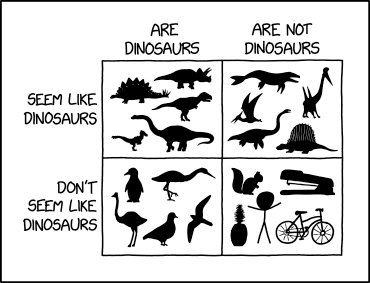 Shadows & Reflections: Sue Brooks [ 06-Feb-26 6:36pm ]
Sue Brooks celebrates more than 75 years in the company of Radio 4.

This is a celebration of more than 75 years with my faithful companion, Radio 4. It came to me so clearly when the BBC was under attack in early November. I leapt to its defence like a teacher watching a bully in the playground. How dare he? I must stand up and make a tribute of some sort, and here it is.
2025 was filled with anniversaries, some of which seem to have reached the papers and social media — 75 years of The Archers for example, although for myself that particular addiction didn't last long. I listened out for Pick Of The Year, usually by a special guest — not someone already associated with Radio 4. This year it was Jeanette Winterson and went out on Christmas Day, which felt auspicious. Generally it goes out at some point in the Christmas week, rarely on the Day itself. I looked at the rest of the schedule and felt that Radio 4 was standing up for itself magnificently. JUST LISTEN TO WHAT WE CAN DO.
Jeanette Winterson — a superb writer who turns out to be a lifelong fan of Radio 4. It was a selection after my own heart and I applauded mightily. A little chastened because it echoed my own ideas, but also thinking…there is so much more.
This year I have discovered two new series — Artworks (Radio 4's arts and culture documentaries, presented as a podcast) and Illuminated (Radio 4's home for creative and surprising one-off documentaries which shed light on hidden worlds). YES, those hidden worlds. Among them, I found 50 Years of the Koln Concert, a programme which commemorated the first 100 years of The Shipping Forecast, and the unforgettable Sea Like a Mirror, celebrating 220 years since Rear Admiral Francis Beaufort devised the Beaufort Scale for wind speeds. They have been feasts for the imagination, touching all the senses, in the way a dream does sometimes.
Do you have appetite for more? Perhaps two more, one of which I can't resist although it doesn't quite fit into the time frame. On This Cultural Life, John Wilson talks to a well-known artist about the inspirations behind their work. In July 2022 he interviewed Maggie Hambling. Magnifique alors, Maggie.
And the last, which has to be Melvyn. In his 86th year, he announced his retirement from In Our Time ( the "death slot" — 9am on Thursday mornings — as it was known in Radio 4 schedules many years ago). This unappealing title now has a vast (over 1,000 episodes) archive and a global audience of dedicated listeners.
Rather than choose a personal favourite, I thought I'd share the fifteen minute conversation between Melvyn and his successor Misha Glenny. It reminded me of the last interview with Dennis Potter, just before he died in 1994, aged 59. Melvyn and Dennis sharing their love of BBC Radio and TV. It's all there in Melvyn's own words.
The first In Our Time without him went out on January 15th. Let's wish Misha Glenny our VERY best…and a heartfelt HAPPY NEW YEAR for the BBC.
'Baldur's Gate 3' Was Always Going to Have a Weird Future [ 06-Feb-26 7:00pm ] Trump Deletes Extremely Racist Meme About Obamas After Backlash From Republicans [ 06-Feb-26 6:35pm ]
AI.com Sells for $70 Million, the Highest Price Ever Disclosed for a Domain Name [ 06-Feb-26 7:05pm ]
Let there be light! DARPA seeking physics-defying photonic computers to supercharge AI [ 06-Feb-26 6:34pm ]It's no lightweight matter. DARPA is putting about $35 million in total funding on the table in the hope that it will spur researchers to work around fundamental physical constraints and build much larger-scale photonic circuits that do more of the computing with light, not electronics.…
Greg Bovino learns he is below Las Vegas standards [ 06-Feb-26 6:14pm ]
What happens in Las Vegas stays in Las Vegas, a city built on excess, poor judgment, and extremely flexible moral boundaries. Even so, a bar on the Las Vegas Strip felt obligated to demand Border Patrol official and Gruppenführer impersonator Greg Bovino GTFO. — Read the rest
The post Greg Bovino learns he is below Las Vegas standards appeared first on Boing Boing.
How Elon Musk is rewriting the rules on founder power [ 06-Feb-26 6:46pm ]
Big Tech's $1.1 Trillion Cloud Computing Backlog [ 06-Feb-26 6:35pm ]
Facial Recognition Tech Used To Hunt Migrants Was Deployed Without Required Privacy Paperwork [ 06-Feb-26 5:37pm ]In the grand scheme of things — the wanton cruelty, the routine violations of rights, the actual fucking murders — this may only seem like a blip on the mass deportation continuum. But this report from Dell Cameron for Wired is still important. It not only explains why federal officers are approaching people with cellphones drawn nearly as often as they're approaching them with guns drawn, but also shows the administration is yet again pretending it's a law unto itself.
On Wednesday, the Department of Homeland Security published new details about Mobile Fortify, the face recognition app that federal immigration agents use to identify people in the field, undocumented immigrants and US citizens alike. The details, including the company behind the app, were published as part of DHS's 2025 AI Use Case Inventory, which federal agencies are required to release periodically.
The inventory includes two entries for Mobile Fortify—one for Customs and Border Protection (CBP), another for Immigration and Customs Enforcement (ICE)—and says the app is in the "deployment" stage for both. CBP says that Mobile Fortify became "operational" at the beginning of May last year, while ICE got access to it on May 20, 2025. That date is about a month before 404 Media first reported on the app's existence.
A lot was going on last May, in terms of anti-migrant efforts and the casual refusal to recognize long-standing constitutional rights. That was the same month immigration officers were told they could enter people's homes while only carrying self-issued "administrative warrants," which definitely aren't the same thing as the judicial warrants the government actually needs to enter areas provided the utmost in Fourth Amendment protection.
The app federal officers are using is made by NEC, a tech company that's been around since long before ICE and CBP become the mobile atrocities they are. Prior to this revelation, NEC had only been associated with developing biometric software with an eye on crafting something that could be swiftly deployed and just as quickly scaled to meet the government's needs. This particular app was never made public prior to this.
ICE claims it's not a direct customer. It's only a beneficiary of the CBP's existing contract with NEC. That's a meaningless distinction when multiple federal agencies have been co-opted into the administration's bigoted push to rid the nation of brown people.
As is always the case (and this precedes Trump 2.0), CBP and ICE are rolling out tech far ahead of the privacy impact paperwork that's supposed to filed before anything goes live.
While CBP says there are "sufficient monitoring protocols" in place for the app, ICE says that the development of monitoring protocols is in progress, and that it will identify potential impacts during an AI impact assessment. According to guidance from the Office of Management and Budget, which was issued before the inventory says the app was deployed for either CBP or ICE, agencies are supposed to complete an AI impact assessment before deploying any high-impact use case. Both CBP and ICE say the app is "high-impact" and "deployed."
This is standard operating procedure for the federal government. The FBI and DEA were deploying surveillance tech well ahead of Privacy Impact Assessments (PIAs) as far back as [oh wow] 2014, while the nation was still being run by someone who generally appeared to be a competent statesman. That nothing has changed since makes it clear this problem is endemic.
But things are a bit worse now that Trump is running an administration stocked with fully-cooked MAGA acolytes. In the past, our rights might have received a bit of lip service and the occasional congressional hearing about the lack of required Privacy Impact Assessments.
None of that will be happening now. No one in the DHS is even going to bother to apply pressure to those charged with crafting these assessments. And no one will threaten (much less terminate) the tech deployment until these assessments have been completed. I would fully expect this second Trump term to come and go without the delivery of legally-required paperwork, especially since oversight of these agencies will be completely nonexistent as long as the GOP holds a congressional majority.
We lose. The freshly stocked swamp wins. And while it's normal to expect the federal government to bristle at the suggestion of oversight, it's entirely abnormal to allow an administration that embraces white Christian nationalism to act as though the only holy text any Trump appointee subscribes to was handed down by Aleister Crowley: Do what thou wilt. That is the whole of the law.
How elites consoled Jeffrey Epstein after his conviction [ 06-Feb-26 5:54pm ]
Private correspondence recently made public reveals that prominent people in politics, business, and academia didn't just maintain ties with Jeffrey Epstein after his 2008 conviction for soliciting a minor. They actively consoled him, cast him as a victim, and offered advice on rehabilitating his image, reports the Wall Street Journal. — Read the rest
The post How elites consoled Jeffrey Epstein after his conviction appeared first on Boing Boing.
Reddit says it's looking for more acquisitions in adtech and elsewhere [ 06-Feb-26 6:33pm ] Here's how Roblox's age checks work [ 06-Feb-26 6:28pm ]
This Forum Should Not Be a Tool of Capitalist Patriarchy [ 06-Feb-26 5:34pm ]This forum should not be tool of patriarchy.
Capitalists want you to believe that competition and death is normal.
That patriarchal violence is the default for humanity, and that it's always "dog eat dog."
Think where you first learned that, my brothers.
Who taught you that? A bully, a father, a coach, a religious leader? An abuser?
Take a breath.
Feel emotions.
Open your eyes.
Life is a circle, a cycle.
Fear is the mind killer.
❤️❤️
Why walking in a national park in the dark prompts people to turn off lights at home [ 06-Feb-26 4:49pm ] Andy Burns
As soon as you drive over the top of the Peak District and down into Sheffield you can see the light pollution - and it's horrible, said a participant in a research project into darkness and light pollution.
In the last 100 years, the places where people can experience darkness have reduced dramatically. Now only 10% of the people living in the western hemisphere experience places with dark skies, where there is no artificial light. And the starry skies they can see are limited by artificial light. The number of stars that people can see from most of the western hemisphere is getting fewer and fewer.
Researchers trying to find out about public attitudes to darkness attended events over three days in the North York Moors National Park. Here, in one of the UK's seven dark sky reserves (where light pollution is limited), the researchers explored how immersive and fun experiences, such as guided night walks and stargazing and silent discos, reshaped public perceptions of natural darkness and sparked ideas of what they might change in their lives.
Working with a professional film-maker, the research team recorded how people responded to taking part in events in darkness. Participants in the research included five tourism businesses, two representatives from the park and 94 visitors.
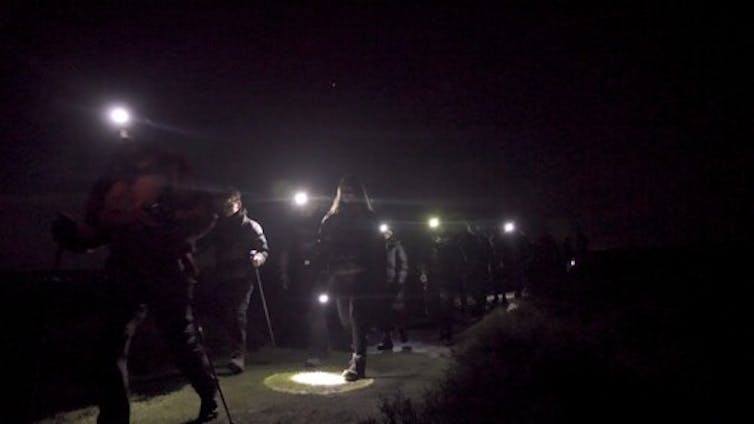 People walking with head torches in a dark sky event in North Yorkshire.
Andy Burns.
Darkness disappears
People walking with head torches in a dark sky event in North Yorkshire.
Andy Burns.
Darkness disappears
Light pollution is increasing globally by approximately 10% per year (estimated by measuring how many stars can be seen in the sky at night), diminishing night skies and disrupting ecosystems.
But increasing awareness of light pollution has led to an increase in national parks hosting events to explore this issue, according to my recent study.
 Andy Burns., CC BY-SA
The study's findings indicated that participants in the North York Moors Dark Sky Festival events not only started to feel more comfortable in natural darkness but also talked about changing their own lifestyle, including using low-impact lighting in their homes, asking neighbours to switch off lights in their gardens at night, and monitoring neighbourhood light levels.
The research team used filming and walking with visitors to capture not just what people said, but what they did in darkness. During guided walks, participants experimented with moving without head‑torches, cultivating night vision, and tuning into sound, smell and learning how to find their way around without artificial light.
Walking in silence helped visitors build a deeper connection with the nocturnal environment. One visitor said that being in the dark just for that moment of peace, and just to listen and tune in to the environment was a privilege and something to conserve.
One said: "I remember as a child I'd see similar stuff from a city [and that] sort of thing, and now we're doing whatever we can do to save things like this."
Visitors reported leaving with new skills, greater awareness and commitment, such as putting their lights at home on timers, and working on bat protection projects. These actions demonstrate that this kind of experience in nocturnal environments can change behaviour far beyond festivals.
Dark Sky activists, such as those in the North York Moors National Park, have learned that the public connect with the issues around light pollution and become more engaged if the activities are fun.
Shared experiences help people understand complex messages about climate, biodiversity, and responsible lighting, and help people feel more confident about walking in the dark. Several participants commented that walking without light was good and wasn't as bad as they thought. Another said: "I find walking at night with a full moon is really quite a magical experience."
By the end of the walk, some visitors (when on relatively easy ground) were happy to switch head torches off and enjoy feeling immersed within the nocturnal landscape.
Dark‑sky festivals show how joy and fun can build public awareness and an understanding of why darkness matters.
However, limited public transport to rural night events as well as safety concerns about walking in darkness, and the cost of festivals all restrict participation.
Why light is a problemResearch shows that artificial light at night disrupts circadian rhythms, impairs some species ability to find their way around and is a cause of declining populations of insects, bats and other nocturnal fauna.
There is also evidence that outdoor lighting generates needless emissions and ecological harm that is intensifying at an alarming rate.
North Yorks dark skies discussed.To rethink this shift, the study argues that darkness could be considered a shared environmental "good", requiring collective care to prevent overuse, damage and pollution.
Small changes in lighting shielding (which controls the spread of light), warmer coloured lights, and half lighting (switching street lighting off at midnight) can be significant and less damaging to animal life.
The national park's next major step has been to establish a Northern England Dark-Sky Alliance to halt the growth of light pollution outside the park boundaries, particularly along the A1 road in northern England, which would help restore natural darkness for nocturnal migratory species, such as birds like Nightjars.
If we can make living with more darkness in our streets, and in our leisure time, feel more normal and more comfortable, then nighttime becomes not something that needs to be fixed, but a shared commons to be restored.
Jenny Hall is a speaker at an upcoming discussion on Cities Under Stars: Tackling Light Pollution in Cities, in conjunction with The Conversation, as part of this year's Dark Skies Festival. Find out more, and come along.

Jenny Hall does not work for, consult, own shares in or receive funding from any company or organisation that would benefit from this article, and has disclosed no relevant affiliations beyond their academic appointment.
Why do disasters still happen, despite early warnings? Because systems are built to wait for certainty [ 06-Feb-26 4:49pm ]After major disasters, public debate often treats them as unexpected or unprecedented. This reaction is not necessarily about the absence of warnings. It reflects how societies process shock - and how authorities often explain disruption as unavoidable, rather than the result of earlier choices.
Extreme weather is rarely unpredictable. Days, sometimes weeks, in advance, scientists are able to warn of an increased risk of storms, floods, droughts or other hazards. Yet the cycle repeats.
To understand why this is, colleagues and I reconstructed the scientific warnings and the official responses to major floods in Luxembourg in July 2021 - my home country's most damaging disaster on record. Those floods caused far more damage than they would have done if early action was taken, but Luxembourg isn't an outlier: many other countries suffer from the same problems we identify.
As the UN targets "early warning for all" by 2027, it's worth noting the issue is not that warnings were missing. It is that warning systems are often designed to act on certainty rather than probability - and that's not how forecasting works. By the time warnings become visible to the public, it is often too late.
Weather forecasts may look definitive on your phone, but they are probabilistic by nature. They are created by running a series of computer simulations of the future weather. The level to which the outcomes of different simulations agree with each other provides the likelihood of hazardous conditions, not guaranteed outcomes. These allow forecasters to identify elevated risk well before impacts occur, even if the precise location of an event and their size remain uncertain.
Crucially, uncertainty is usually greatest further ahead, when preventative action would be most effective. Acting early therefore almost always means acting without certainty. This is not a weakness of science, but an inherent feature of anticipating complex systems under changing conditions. The real challenge lies in how institutions are organised to interpret, trust and act on those probabilities.
Acting on certaintyMost warning systems rely on predefined procedural thresholds: alert levels, activation protocols and emergency plans that kick in once specific criteria are met. Forecasting may indicate that flooding is increasingly likely, for example, but measures such as evacuations or road closures can only be triggered after formal thresholds are crossed.
Before that point, risk information passes through many layers of interpretation and judgment, where early signals are often noted but not acted upon.
 Historic precipitation in one flood-affected region on the border of Belgium and Germany. The size of the dots directly represents the amount of precipitation each day; the circled orange dot is for 13 July 2021 and the circled red dot is for 14 July 2021.
C3S/ECMWF (Data: ERA5), CC BY-SA
Historic precipitation in one flood-affected region on the border of Belgium and Germany. The size of the dots directly represents the amount of precipitation each day; the circled orange dot is for 13 July 2021 and the circled red dot is for 14 July 2021.
C3S/ECMWF (Data: ERA5), CC BY-SA
Thresholds serve important purposes. They help coordinate response, clarify chains of command and reduce unnecessary disruption. But they also embed a structural preference for certainty. Action is authorised only once risk is framed as imminent, even when credible evidence already points to escalating danger.
This attitude was apparent in the days leading up to the July 2021 floods. Our study shows that multiple forecasts at European and national levels indicated a high probability of extreme rainfall and flooding, in some cases up to a week in advance. This information was available across different parts of the warning system. At that stage, uncertainty about precise impacts remained, as would be expected. What mattered was how the system was designed to handle that uncertainty.
Too early for warningBecause Luxembourg's response measures were tied to procedural thresholds, early signals could not translate into anticipatory action. The country's water administration and its national weather service had access to relevant information, but they operated within a framework that did not authorise a collective interpretation of what was happening or encourage action before thresholds were crossed.
This was not a scientific miscalculation, nor was it necessarily an operational mistake by individual agencies. Meteorological and hydrological services most likely did as much as their mandates allowed. The decision to wait for formal triggers was human and institutional rather than technical, reflecting a system designed to prioritise procedural certainty over sound decision-making.
 Across affected areas of Germany, Belgium and Luxembourg, many rivers (in purple) reached their highest levels since records began in 1991.
Copernicus EMS/ECMWF, CC BY-SA
Across affected areas of Germany, Belgium and Luxembourg, many rivers (in purple) reached their highest levels since records began in 1991.
Copernicus EMS/ECMWF, CC BY-SA
By the time action was authorised, for many people it was too late. Evacuations or installing flood gates became far more difficult, particularly for communities with limited experience of such severe floods. From the perspective of those affected, warnings appeared late or did not arrive at all - even though the risks had been identified earlier throughout the system.
Luxembourg is a particularly instructive illustration of what can go wrong, because it is a small, wealthy and well-connected country. The issue was not necessarily a lack of resources or scientific capacity, but of institutional design and societal readiness to act on risk.
Learning and resilienceThe effectiveness of early warning systems over time depends on their ability to learn from extreme events. This requires open, independent analysis of what worked, what did not work and why. In several neighbouring countries affected in 2021, such as Germany and Belgium, formal inquiries and external reviews were carried out. In Luxembourg, they were not.
When expert critique is discouraged or avoided, learning slows. Questions about system performance remain unresolved and the same structural vulnerabilities are likely to persist. This creates a systemic risk in its own right: societies become less able to adapt warning systems, interpret uncertainty and act earlier on emerging threats.
As someone who has worked within these systems and continues to research disaster risk governance, I have seen how asking difficult questions can be treated as destabilising rather than constructive. Resilience depends on confronting uncomfortable truths, not avoiding them.
The risk of extreme weather is increasing across Europe and beyond. Early warning systems are rightly central to disaster risk reduction. But their effectiveness depends on how societies authorise action under uncertainty. This is a choice, not an inevitability.
Uncertainty cannot be eliminated. The challenge is to decide how much uncertainty is acceptable when lives and livelihoods are at stake. Systems designed to wait for certainty - for procedural, organisational, financial or reputational reasons - are more likely to deliver warnings that arrive too late to feel like warnings at all.
If resilience to future climate risks is to be sustainable, warning systems must be designed to learn, adapt and act earlier on credible risk.

Jeff Da Costa does not work for, consult, own shares in or receive funding from any company or organisation that would benefit from this article, and has disclosed no relevant affiliations beyond their academic appointment.
Climate storytelling often ignores young people - arts-based research can change that [ 06-Feb-26 4:49pm ]One autumn evening in 2021, I was co-facilitating the first of ten creative sessions with young people in the Daimler Warehouse, Coventry. It's home to Highly Sprung Physical Performance, a partner in a pilot project called With One Breath. I was there to use theatre, photography and creative writing to explore the climate crisis.
My collaborator, Becky Warnock, a socially engaged artist, ran an exercise to take stock of how the group were feeling about the issue. She asked them to place themselves on a continuum in response to a series of statements - one end of the room meant they agreed with the statement, while the other end meant they disagreed.
It became clear that many young people are incredibly knowledgeable about the climate crisis. However, when Warnock asked them to respond to the statement, "I have a voice in climate change debates", most of the group huddled on one side of the room, showing that they "disagreed".
The climate crisis has a communications problem. How do we tell stories that move people - not just to fear the future, but to imagine and build a better one? This article is part of Climate Storytelling, a series exploring how arts and science can join forces to spark understanding, hope and action.
My research examines what happens when artists engage directly with communities through the co-creation of art. Since 2019, I have worked in collaboration with Rachel Turner-King. We have worked in a range of settings and partnerships including schools, community centres, parks and performance spaces in Coventry, Kampala and Nairobi.
We have called this work Acting on Climate. Underpinning our projects are techniques which engage young people in discussion and act as prompts to explore local environments and share stories. We are also interested in exploring the impact of climate crisis in other parts of the world, and the perspectives of people living in these places.
Young people are often overlooked in discussions about the climate crisis. And yet they stand to be most profoundly affected by it. With One Breath sought to place young people at the heart of this discussion through collaboration across borders.
The project included the use of games and techniques adapted from drama practitioner Augusto Boal's Theatre of the Oppressed. We tasked young people with using photography and film to document and reflect on the areas they live in. We encouraged them to shape the work and decide what to focus on. Three themes were identified: investigating power and responsibility; reflecting on processes of globalisation; and producing positive visions for alternative futures.
The project prompted dialogue across the two locations. While many young people in the UK felt insulated from the immediate impacts of the climate crisis, hearing from Ugandans already living with and adapting to environmental disruption made those unequal realities impossible to ignore.
Our work highlighted that young people often feel a lack of agency to make change, but also feel simplistically portrayed and tokenised as beacons of hope and change. This tokenisation places responsibility on young people to adapt to, and transform, a problem that they have had little role in creating.
Communities in countries like Uganda are frequently excluded and marginalised when it comes to conversations and action on the climate crisis, so the young people we worked with in that country faced a double bind. They are both marginalised due to their age and where they are from.
As such, this transnational project provided an opportunity to amplify voices not typically heard.
Complexity and collaborationMy research took on new dimensions through Fair Play Kenya 2025, a festival at the National Theatre in Nairobi as part of the British Council's Kenya 2025 season.
The festival considered relationships between climate crisis, conflict and land justice. One strand involved connecting three groups of young people from Nairobi, Derry/Londonderry and Birmingham through in person and online workshops. To do so, a partnership was formed involving Amani People's Theatre and ZamaleoACT in Kenya, The Gap Arts Project in Birmingham and The Playhouse in Northern Ireland.
During this short project, young people met online, sharing discoveries and testing ideas. The process is documented in a short film sharing their work and views.
The short film following the young people's partnership.In Derry/Londonderry, participants decided to explore land and ancient Celtic culture and the rights of nature, leading them to focus on the mismanagement of Lough Neagh.
Alternatively, in Birmingham young people were concerned by the lack of access to nature, and how this intersects with the climate crisis. Participants in Nairobi explored land justice and what land means to them in their everyday lives. A particularly striking aspect of this group's work was the reflection on Carbon Credit deals forcing Kenyans off of their land under unjust terms and conditions.
From projects such as Fair Play, we have come to understand that working creatively across borders is inherently messy, complex work. The choices that we all make on a daily basis implicate us in causing environmental harm, but an individualised approach to climate action is unlikely to succeed on its own.
Through artistic projects like ours, such nuance can be engaged with in fun, open-ended ways. For those of us in countries like the UK, the history of industrialisation and colonialism mean we are entangled in processes of exploitation and resource extraction - these must place the burden of responsibility on such countries.
Meanwhile, our work in Uganda highlighted experiences where young people are having to move away from areas that are no longer able to find jobs and how, in Kenya, climate change is one factor fuelling conflict between communities.
For the young people we have worked with, and for us as researchers, arts projects help to make visible the effects of both of this history and the climate crisis in ways that connect and resonate.

Bobby Smith received funding for With One Breath from the Arts and Humanities Research Council. Fair Play Kenya 2025 was funded by the British Council and the University of Warwick's Arts and Humanities Impact Fund.
A Velvet or Violent Climate Revolution: which will we choose? [ 06-Feb-26 5:55pm ]
Pavement's Bob Nastanovich Donates Gold Disc for Auction to Support Margate Venue WhereElse [ 06-Feb-26 3:49pm ]
The rare RIAA-certified award for 'Harness Your Hopes' is currently available for an auction prize of over £4,000
Screenshot
Pavement's Bob Nastanovich has donated his own RIAA gold disc to an auction to support Margate music venue WhereElse.
The gold disc was given to Nastanovich to mark over 500,000 units of Pavement's 1999 cult hit 'Harness Your Hopes' being sold in the US. It's one of just seven gold discs produced, and Nastanovich's item is the only Pavement gold record ever made available for public sale. It's currently going for an auction price of just over £4,000 on eBay.
The gold disc is being auctioned as part of a wider fundraising effort to secure the future of the 150-capacity WhereElse in Margate. Nastanovich has been a regular visitor of...
The post Pavement's Bob Nastanovich Donates Gold Disc for Auction to Support Margate Venue WhereElse appeared first on The Quietus.
"What If" [ 06-Feb-26 5:47pm ]
Trump deletes racist Obama video after outcry — Karoline Leavitt was the only Republican who loved it [ 06-Feb-26 5:32pm ]
President Trump deleted a blatantly racist video clip portraying Barack and Michelle Obama as apes after an outcry that included members of his own party, reports the New York Times.
The 62-second clip, set to "The Lion Sleeps Tonight," spliced in the Obamas depicted as apes near the end of a video promoting conspiracy theories about the 2020 election. — Read the rest
The post Trump deletes racist Obama video after outcry — Karoline Leavitt was the only Republican who loved it appeared first on Boing Boing.
"Babe, wake up, new panda rat just dropped!": Meet the Northern Luzon Cloud Rat [ 06-Feb-26 5:27pm ]
Here's my latest installment in my ongoing series, "Cute Animals You Should Know": the Northern Luzon cloud rat. The adorable ratty creature is endemic to the northern section of Luzon, the Philippines' largest island. Looking at it, you might not recognize it as a rat, as, first, it's huge, and, second, it doesn't really look like a rat. — Read the rest
The post "Babe, wake up, new panda rat just dropped!": Meet the Northern Luzon Cloud Rat appeared first on Boing Boing.
Exit 8 looks like the creepy film I've been waiting for [ 06-Feb-26 5:26pm ]
There's nothing like a bit of faux existential dread to rip you from the grip of actual the-fall-of-the-rules-based-order existential dread. Given how many platforms it's been ported to, I'm shocked I'd never heard of The Exit 8. If the game is anywhere as cheeky and doomful as the trailer for its film adaptation, its developers can have all of my gaming money for the month. — Read the rest
The post Exit 8 looks like the creepy film I've been waiting for appeared first on Boing Boing.
Man accused of ejaculating in colleague's mug: "I just wanted to get close to her" [ 06-Feb-26 5:16pm ]
An employee at Highmark whose drink "smelled and looked like semen" told police, who placed a hidden camera, with her permission, to monitor the mug she used. They allegedly filmed a manager taking and returning the mug with fresh deposits, twice, and he was taken into custody. — Read the rest
The post Man accused of ejaculating in colleague's mug: "I just wanted to get close to her" appeared first on Boing Boing.
15 Super Movies for Super Bowl Sunday [ 06-Feb-26 6:00pm ]
Senator, who has repeatedly warned about secret U.S. government surveillance, sounds new alarm over 'CIA activities' [ 06-Feb-26 6:02pm ]
With Farms in Crisis, Clean Energy Bans make No Sense [ 06-Feb-26 3:35pm ]
The Duality of Man [ 06-Feb-26 5:49pm ]
BREAKING: police raid Mandelson's properties in Epstein hit [ 06-Feb-26 5:25pm ]
Police have raided two properties belonging to disgraced former Starmer adviser Peter Mandelson as part of their investigation into misconduct in public office and insider trading.
Mandelson resigned from Labour and the House of Lords after details of his leaks of sensitive government and financial information to serial child-rapist Jeffrey Epstein were exposed by the latest Epstein file release.
Keir Starmer is currently hiding behind Epstein's victims to avoid disclosing records showing what he knew of Mandelson's misconduct before appointing him as adviser and ambassador to the US. Despite, or because of, the cynical exploitation of Epstein's child victims, Starmer's hold on power is rapidly slipping.
Featured image via the Canary
By Skwawkbox
Epstein files show how ex-Trump advisor Steve Bannon sought to influence Europe [ 06-Feb-26 5:18pm ]
One of child-rapist Jeffrey Epstein's many roles was as a powerbroker and connector of far-right and fascist individuals globally. Messages now show how former Trump advisor Steve Bannon sought the sex-trafficker and paedophile's help to support the European far-right.
The Irish Times reported on 5 February:
The messages mostly date from 2018 and 2019, when Bannon, after being sacked by Trump, regularly visited Europe in his quest to forge a movement in the European Parliament uniting ultra-right wing and Eurosceptic forces from several countries including Italy, Germany, France, Hungary, Poland, Sweden and Austria.
Italy's Matteo Salvini and France's Marine Le Pen, both leaders of far-right and fascist-adjacent political parties, were among those Bannon wanted to see flourish:
Bannon especially set his sights on Matteo Salvini, the Italian deputy prime minister and leader of the far-right League party, who at the time was at the height of his political power.
Opposition parties in Italy have called for investigations:
to clarify whether Epstein influenced the rise of the League after Salvini's name was cited several times in messages exchanged between Bannon and Epstein.
But it wasn't just Italy…
European far-right empire and Steve BannonMuch the same process happened in France, left-wing party La France Insoumise has now called:
for a cross-party parliament inquiry after several French figures, including Jack Lang, a former minister for culture, and his daughter appeared in the latest Epstein trove
The vast trove of Epstein file also featured:
exchanges between Epstein and Bannon in which Bannon spoke of his desire to raise money for the far-right leader Marine Le Pen.
Germany was also effected. Messages to Epstein showed how Steve Bannon sought to promote the far-right Alternative für Deutschland (AfD):
In texts from 2018, Bannon bragged about his influence as an "adviser" to the new right-wing populists and saw the parties' gains in Europe as a chance to use them to his and Epstein's benefit.
The files show:
Epstein's interest in European nationalists.
While a message from March 2019, just before the EU elections, has Bannon saying he is:
focused on raising money for Le Pen and Salvini so they can actually run full slates.
Epstein courted and engaged with figures from both liberal - Peter Mandelson being a case in point - and conservative global elites. But his own politics were those of a far-right Zionist. On many occasions the files show how the billionaire sex predator had an interest in helping some of the most extreme political forces in the world in their bids for power.
Featured image via the Canary
By Joe Glenton
A new British intelligence chief just dropped - here's what you need to know. [ 06-Feb-26 4:52pm ]
A new British intelligence agency chief was just announced. Major General Matthew Jones will be Chief of Defence Intelligence (CDI). Jones will start the role when he is promoted to Lieutenant General in summer 2026. He will run the revamped Military Intelligence Services (MIS). MIS was announced in December 2015.
The BBC reported in December 2025:
The Ministry of Defence (MoD) will unify all of its intelligence services under a single organisation, as part of its strategy to combat "escalating threats" from adversaries of the UK.
That command now belongs to Jones. Jones is an officer in the British Army's Intelligence Corps. His bio describes a long career in imperialism:
His operational service has included deployments to Afghanistan, Iraq, and the wider Middle East. He currently serves as Director Intelligence, Surveillance and Reconnaissance, overseeing intelligence collection, capabilities, training, and counter-intelligence.
MIS will work with other agencies:
including GCHQ, MI5 and SIS. Most notably to provide intelligence products for policy makers in the Ministry of Defence and UK Government.
At least one sycophantic right-wing newspaper got a little excited about the appointment…
Tories giddy over cool new spy manMilitary intelligence is distinct in some ways from civilian-run intelligence agencies. Military intelligence personnel are not 'spies' or 'spooks' in the commonly held 'James Bond' sense. Their role is to gather, analyse, and collate information relevant to military operations.
If you want to know the nature of a military intelligence soldier look no further than Labour MP and Intelligence Corps veteran Mike Tapp of dog cutlery fame. Grim.
This seems to have been lost on some journalists. The Telegraph giddily described Jones as a "spymaster" known for being "ferociously intelligent".
The slightly more measured Labour defence secretary John Healey said:
Matt has the right skills and experience to lead our Military Intelligence Services as the organisation transforms to raise our war-fighting readiness to help keep the nation safe in this era of rising threats.At the Canary we don't usually crush on intelligences organisations - we report on them instead. The organisation MIS is effectively replacing was Defence Intelligence (DI). Back in December we asked the Ministry of Defence (MOD) a question about MIS and its new counter-intelligence component:
Will MIS and the new defence counter-intelligence unit be subject to FOI?We got a typically nebulous response:
They'll be subject to the usual FOI rules around intelligence and matters of national security.For the record, intelligence and national security issues are notoriously hard to get information on. As we reminded readers recently, state secrecy is the real so-called 'English disease'. As legendary security and intelligence reporter Richard Norton-Taylor said:
"National security" is often used to cover up embarrassment rather than genuine, serious threats to the country.We'll be keeping an eye on MIS, needless to say. Counter-intelligence role
The MOD announcement in December said MIS would cover areas like biometrics, chemical weapons, critical national infrastructure, counter proliferation, UK export controls, medical and biosecurity and more.
Pretty broad then…
MIS will also work with open source, human and geospatial intelligence and counter-intelligence around both state and non-state groups. This focuses:
on the understanding of terrorism, espionage, sabotage, subversion and organised crime threats and vectors, and contests the operating space through proactive and reactive counter-intelligence activities. It entails collection of information, analysis and investigation of both state and non-state actors' intelligence methods, capabilities and activities.
Whether the UK needs a new 'spy' chief or not, it is getting one as the military tries to reorganise its intelligence gathering capabilities. There is no sense of the cost of the new reforms and few hints at how accountable it will be to the public. Business as usual then.
Featured image via the Canary
By Joe Glenton
Neil Gaiman and a Substack blog: how a so-called journalist trashed the notion of 'consent' [ 06-Feb-26 4:48pm ] Content warning: this article contains discussion of rape and sexual assault
After almost a year's silence on the matter, author Neil Gaiman released a statement this week to once again deny the allegations of sexual assault against him.
The allegations against Gaiman date back to 2024. They were first reported on the Tortoise Media podcast Master: The Allegations Against Neil Gaiman. The New York Vulture then published a more lengthy - and widely read - article in 2025 entitled:
There Is No Safe Word
How the best-selling fantasy author Neil Gaiman hid the darkest parts of himself for decades.
Beginning with an initial two, eventually nine women would come forward with allegations including rape, other forms of sexual assault, and non-consensual and un-negotiated BDSM practices. Many of the descriptions are graphic in the extreme, and I try not to repeat them here without need.
'I should have done so much better'At the time, 14 January 2025, Gaiman put out a statement on his blog denying the accusations. He described re-reading messages from the accusers on the dates of the situations they described as assault - messages which displayed consent.
These messages are now a matter of public record. They do appear to display consent, although the Vulture article framed this as a product of being scared to upset Gaiman.
In his statement, Gaiman also wrote:
And I also realise, looking through them, years later, that I could have and should have done so much better. I was emotionally unavailable while being sexually available, self-focused and not as thoughtful as I could or should have been.
However, he also stated unambiguously that all of his relationships were consensual, and that:
Some of the horrible stories now being told simply never happened, while others have been so distorted from what actually took place that they bear no relationship to reality. I am prepared to take responsibility for any missteps I made. I'm not willing to turn my back on the truth, and I can't accept being described as someone I am not, and cannot and will not admit to doing things I didn't do.
However, production companies moved quickly to cancel adaptations of Gaiman's works across stage and screen. These projects included a musical version of Coraline, a Disney production of The Graveyard Book, and the Netflix adaptation of Dead Boy Detectives.
'Smear campaign': Neil GaimanGaiman then remained relatively removed from the public eye for over a year. However, on 2 February 2026, he posted a new statement. Again, he denied all of the allegations against himself:
I've learned firsthand how effective a smear campaign can be, so to be clear:
The allegations against me are completely and simply untrue. There are emails, text messages and video evidence that flatly contradict them.
In particular, Gaiman decried the "echo chamber" of journalism reporting on the allegations. He spoke about his conviction that the "truth would, eventually, come out":
I expected that when the allegations were first made there would be journalism, and that the journalism would take the (mountains of) evidence into account, and was astonished to see how much of the reporting was simply an echo chamber, and how the actual evidence was dismissed or ignored.
Then, he went on to single out one blogger whom he believed exemplified the journalistic rigor he'd expected:
I was a journalist once, and I have enormous respect for journalists, so I've been hugely heartened by the meticulous fact and evidence-based investigative writing of one particular journalist, whom some of you recently brought to my attention, who writes under the name of TechnoPathology.
This investigator, Technopathology, produced pages and pages of reporting on Gaiman, under the umbrella title of "Neil Gaiman is Innocent". Gaiman actually linked to the introductory page of the Substack blog in his statement.
Technopathology and 'Neil Gaiman is innocent'For full disclosure, in writing this article I read a lot of Technopathology's blog, but not all of it. There is an awful lot to get through, and I have other articles to write. The author makes some valid points about the overall timbre of the reporting and its motivations, and some that I found reaching or off-mark. I'll get to them later.
Technopathology's introduction to their extensive project contained a complaint that there was "no room for nuance" in the reporting on Gaiman:
Even requiring evidence was deemed to be ''victim blaming''. No deviation from the party line, (that is to say - utter and complete condemnation) went unpunished.
This type of complaint will be familiar to anyone who observed public reactions to the MeToo movement. Technopathology talks about the importance of the MeToo movement, but couples that with their disbelief in the specific allegations against Gaiman.
In the introduction, the author mentioned something that made me sit up in my seat:
I wasn't completely unprepared, I am after all a journalist and make all of my paltry income from writing. I have a steady beat with technology trade magazines, and used to pen a lot of political articles for The Canary. But I had no idea what form the investigation should take. It was new territory.
So, a fellow (ex-)Canary writer. One other mention of the Canary on the blog indicated that they were around for the inception of the site, long before my time or that of most of the current employees. After a bit of digging, we're confident in our guess on who they are, but that's not terribly important for this article.
Fact and speculationSome of the points that Technopathology raises in their articles are valid. In particular, they highlight that the allegations against Gaiman were gleefully seized upon and amplified by elements of the far-right, including Nazi-types and transphobes, due to Gaiman's Jewish heritage and outspoken support for LGBTQ+ causes.
However, other conclusions that they draw are much more of a stretch. This includes speculation that one accuser, Caroline Wallner, could in fact have known another, Scarlet Pavlovich, before they made their allegations, which could potentially cast doubt on the similarities in their accounts of Gaiman's behavior.
The problem is that Technopathology's speculation rests on the fact that Wallner is a friend of Michael Stipe, the lead singer of REM:
Interestingly, Michael Stipe is good friends with Tilda Swinton, who Scarlett Pavlovich says personally gave her a scholarship to her school in Scotland. I'm not altogether convinced that there was no prior contact between the accusers, so these degrees of separation are interesting.
This is quite an extraordinary reach, even if it is framed as a speculation.
Consent is consentHowever, and most importantly, I feel that Technopathology elides some of the features of the cases that simply shouldn't be ignored. For example, the blogger highlights one exchange between Pavlovich and Gaiman, and the way the Master podcast framed it. Pavlovich told Gaiman that:
I have told Amanda [Palmer, Gaiman's then-wife] that even though it began questionably eventually it was undoubtedly consensual and I enjoyed it.
Technopathology then highlighted their problems with the the reporting of the exchange:
Master of course zooms in on ''questionably'' rather than ''undoubtedly consensual''. Questionable does not mean non-consensual, and it's not certain what element is questionable. There's always ways to do better.
I would point out that if the very first sexual encounter between two people features 'questionable' consent, then that's no consent at all. If consent isn't firmly and unambiguously established beforehand, it can't be gained retroactively when people are left to decide what happened. That's not how this is meant to work.
Pavlovich's relationship with Gaiman began the day she arrived at his house to work informally as a nanny. Gaiman ran her a bath in the middle of the garden. He then later climbed in with her. Technopathology quotes from Pavlovich's interview on Master regarding the encounter:
"He ended up sort of asking me to put my legs down and I ignored him."
We should note that he is 'asking', she is not compelled to put her legs down, thus revealing her body.
But the next time he asks, she does. There is no force here. This is an action freely taken, at Gaiman's request.
"He asked me again and sort of gestured, so I put them down."
Again, the problem with Technopathology's framing here is that when Gaiman made a sexual advance that Pavlovich didn't take up, that should have been the end of it. Anything after that point carries an implicit threat, because it doesn't take a lack of 'yes' as an answer in itself.
Neil Gaiman and TechnopathologyTechnopathology later writes that:
Reluctant consent vs enthusiastic consent is a big topic of discussion, but its a lot to go into here. Suffice to say, in legal terms, even reluctant consent is still consent - and it's not clear if she was reluctant at the time or if this a later reframing. Certainly the WhatsApp messages affirm an enthusiastic consent, effusively and repeatedly.
Definitions of sexual assault and rape vary from country to country. As such, I'm not particularly concerned with guilt or innocence in the law, and I won't make pronouncements on it.
However, what I will say with confidence is that anyone who was particularly concerned with consent probably wouldn't show up naked to a bathtub someone else was in without asking first.
Even if they missed that detail, making requests that the other person doesn't acquiesce to isn't a prompt to ask again.
Technopathology, among their many articles on Gaiman's purported innocence, analyses a lot of situations and exchanges around Gaiman in similar detail. You can go read them if you like.
However, I chose the bathtub scene as an illustrative example. The fact that Gaiman pointed specifically to Technopathology's Substack as the kind of journalistic integrity he expects is a point that I find damning in itself.
Yes, Technopathology poured at length over the reporting and some of the dubious motivations behind it. They also took it upon themself to scour the accusers' stories for inconsistencies. However, the blogger's actual understanding of consent is very, very different to mine, and - I would hope - most everyone else's, too.
If that's what Gaiman thinks is proof of his innocence, I'd hate to see his definition of guilt.
Featured image via the Canary
By The Canary
Watch: wrestling crowd boos Trump, shouts 'FUCK ICE' [ 06-Feb-26 4:43pm ]
Spectators at an All Elite Wrestling (AEW( Dynamite wrestling match in Las Vegas had a message for Donald Trump. It was certainly not one that he will have enjoyed, particularly from a sport popular with what's left of his base.
As the wrestlers posed and glared at each other before the start, a chant from the crowd quickly grew to a volume where the message couldn't be missed - "Fuck ICE".
The commentators were silenced. The wrestlers' glares turned to raised eyebrows. But not in disapproval - at least in one corner of the ring. Challenger Brody King is a vocal opponent of Trump's Gestapo thugs, organises anti-ICE fundraising and community organising and wore an "Abolish ICE" t-shirt before a recent match.
His opponent 'MJF' - real name Maxwell Friedman - might be more of a mixed bag. He has described Palestinian resistance as terrorism - but at the same time said that:
I don't support terrorism, Zionism, genocide [or] genocidal governments, dead innocent Palestinians [and] dead innocent Israelis. I don't support people — any people — dying because of hate.
However, he then repeated typical Israel lobby talking points, claiming that:
people are calling for the death of Jews over something that's happening on the other side of the world.
Given ICE's strong links to Israeli terrorist forces, who knows what he made of the chanting.
You'll definitely enjoy it though:
https://www.thecanary.co/wp-content/uploads/2026/02/6i65s9kF1O1J38ym1.mp4Featured image via YouTube screenshot/All Elite Wrestling
By Skwawkbox
Met police refuse to say if it shared classified documents with Israel lobby groups [ 06-Feb-26 4:32pm ]
The Met Police is refusing to admit the existence of a classified document, which pro-Israel groups used to lobby the government over the proscription of Palestine Action.
In a document produced by We Believe in Israel, Stop the Hate UK, and The Shield of David, it states:
In July 2022, the group was investigated under counter-terrorism protocols following intelligence suggesting contact between some of its members and individuals linked to Hamas-aligned networks abroad (see:Metropolitan Police briefing, classified)
It's well documented that the Zionist lobby group We Believe in Israel (WBII) was a primary actor among those lobbying for the proscription of Palestine Action. It published a report in June 2025, titled 'Palestine Action: A Case for Proscription under the Terrorism Act 2000'. Notably, the Guardian pointed out how Home Secretary Yvette Cooper's statement on the decision to proscribe Palestine Action was "similar" to the wording from this report.
Of course, The Canary's least favourite MP - Luke Akehhurst is the former director of WBII. The self-proclaimed 'Zionist shitlord' previously claimed Israel's actions in Gaza were 'proportionate'.
Importantly, one of the other organisations involved in authoring the most recent report is Stop the Hate UK. This is the same group that has been attacking pro-Palestine activists and journalists.
Met Police refusal to answerThe Canary wanted to know whether the Met Police had shared classified documents with these pro-genocide hate groups, or whether someone had leaked them. We sent a Freedom of Information (FOI) request to the Met Police. In it, we asked if the Met had authorised the disclosure of the briefing to the three pro-Israel lobby groups. If it confirmed this, we wanted any documents related to the Met signing this off.
Additionally, we stipulated that if the document was not shared, whether the Met was aware of a leak, and whether they had taken action.
It took the Met over two months to respond to the initial FOI request, which is double the legal limit. In it, they stated:
The MPS is aware of a recent newspaper article which contained an allegation. As a result, the following press lines were issued:
IF ASKED: re alleged info shared about CT[counter-terror] investigations linked to Palestine Action with We Believe in Israel? No knowledge of any such information being shared with this group. Refer back to the group for clarification over this reference in their report.
It went on to say:
Still no answers…The Metropolitan Police Service can neither confirm nor deny whether it holds any information of relevance as the duty in Section 1(1)(a) of the Freedom of Information Act 2000 (the Act) does not apply by virtue of the following exemptions:
• Section 23(5) - Information supplied by, or relating to, bodies dealing with security matters
• Section 24(2) - National Security
• Section 30(3) - Criminal Investigations
• Section 31(3) - Law Enforcement
• Section 40(5)(B)(a)(i) - Personal Information
We then asked for an internal review. Specifically, we asked them to reply to the part of our original FOI where we asked:
whether the MPS has investigated/is investigating how this classified document came to be in the possession of the three aforementioned third parties.
It then took them a further three months to reply. When they did, the Met said:
To clarify the MPS is neither confirming nor denying that any documentation i.e. this briefing document, is held. To answer the second part of your request, namely "if the Met was aware of the leak and b) if it has taken any action over it…providing details of this (how it became aware, what action it is taking, procedures going forward)" would inadvertently be confirming that a document existed, had been leaked and the MPS were investigating how this occurred and this is the very matter we are seeking to neither confirm nor deny that the MPS held this information.
So the Met is refusing to say whether a) it shared information with the three pro-Israeli groups or b) information was leaked to the same groups. Additionally, it's also refusing to say whether this 'classified briefing' mentioned by the groups even exists.
It's also unclear what role this report, which mentioned the classified briefing, then played in Yvette Cooper's case for proscribing Palestine Action.
Of course, it's arguably strongly in the public interest to know what the Met knows about this. There's no world in which pro-Israel lobby groups should have access to classified police documents. The Met has questions to answer - but naturally it's refusing.
Collusion with pro-Israel lobby groups certainly isn't out of the realm of possibility. In fact, the Met's constant raids and arrests of pro-Palestine activists and the links with Zionist auditors targeting them make it seem all the more likely.
Feature image via HG
By HG
Watch soft-left Oli Dugmore say shunning paedophiles is "fringe" at top of Labour [ 06-Feb-26 4:21pm ]
Soft left New Statesman digital editor Oli Dugmore was a guest on BBC Question Time on 5 February 2026. And he had a scathing verdict on the normalisation of paedophilia at the top of the Labour Party.
Oli Dugmore on BBCQTOli Dugmore said that he generally doesn't like to dismiss people according to the worst thing they've ever done - but wouldn't want to be friends with, let alone work with, someone who rapes children. But he said that view is "fringe" among senior Labour figures. Instead, they look at Epstein fanboy Peter Mandelson and think "that's our man in Washington":
https://www.thecanary.co/wp-content/uploads/2026/02/Dugmore-Mandelson-Qt-Subbed-1-hb.mp4He was also clear that Starmer knew all along about Mandelson's closeness to serial child-rapist and trafficker Jeffrey Epstein. Starmer didn't need the security services to tell him, because a quick Google search revealed plenty.
Of course he knew.
Featured image via the Canary
By Skwawkbox
Breaking: anti-genocide activist Drew appeals criminal damage conviction - and wins [ 06-Feb-26 4:09pm ]
Anti-genocide direct action activist Drew Robson has today, 6 February 2025, won his appeal to quash his conviction for criminal damage. Robson occupied the Manchester office of Fisher German, at the time property manager for Israeli weapons firm Elbit Systems. The firm eventually cut all ties with Elbit after a sustained pressure campaign.
Drew Robson wins his appealDrew Robson's appeal victory comes hot on the heels of a jury's refusal to convict six members of the 'Filton 24' group of anti-genocide direct action activists. They were the first of their group to face trial and won despite the attempts of a judge to pressure the jury into convicting. If found guilty, all could have faced sentences of up to 20 years prison. The 24 have been jailed for up to 19 months without trial. Some face more than a year's further wait as Starmer seeks to protect Israel by punishing protest and free speech against genocide.
View this post on Instagram
A post shared by Da'm Support - Defend & Mobilise (@da3m.support)
Featured image via screengrab
By Skwawkbox
Kemi Badenoch accused of contempt of court over Filton 24 ruling [ 06-Feb-26 3:46pm ]
A jury decided on 4 February to acquit anti-genocide protesters. But because establishment mouthpieces like Conservative Party leader Kemi Badenoch have a problem with people protesting against Israel's ongoing genocide in Gaza, they have chimed in. And many believe they're in contempt of court as a result.
The decision was a "huge victory" for people opposing genocide. But it was also a clear critique of the government's highly controversial and wasteful political decision to proscribe non-violent direct-action group Palestine Action.
The establishment's anger was clear, though. It had done all it could to influence proceedings and moved to attack jury trials. But its efforts to stop fairness prevailing failed.
Kemi Badenoch chimes inEntirely reasonable that there's so much fury that a jury of 12 ordinary people, having heard all the evidence, has reached a verdict that does not accord with the directions of the judge, Starmer's government and the billionaire-owned media.
Who do these people think they are?
— Jonathan Cook (@Jonathan_K_Cook) February 5, 2026
In this context, Tory leader Kemi Badenoch gave her thoughts. Despite not having been in court, not seeing all the evidence the jurors saw, and no court finding an activist guilty of injuring a police officer, she repeated a dangerous smear relating to the ongoing legal case:
Nothing to see here, just the leader of the opposition committing contempt of court live on national television.
This accusation lead to no conviction after a jury were given the full context. Nobody was "attacked viciously" or has "[gotten] away with it".
The case is ongoing. pic.twitter.com/I5mmlMS0bg
— Defend Our Juries (@DefendOurJuries) February 5, 2026
Kemi Badenoch has expressed very pro-Israel views and maintained close ties with the Conservative Friends of Israel lobby group.
Tory Chris Philp, who is also close to the Israel lobby, added his dodgy take too:
Coming from the same man which met with Elbit Systems when he was a minister
The meeting in April 2023 was to discuss Palestine Action, and involved the police, a representative of the CPS and arms manufacturers.
Isn't the judiciary supposed to be free from political influence? https://t.co/7WozMKNBw8
— Huda Ammori (@HudaAmmori) February 5, 2026
Five defendants admitted to destroying weapons and equipment of Israeli arms dealer Elbit Systems, which has been profiting from Israel's genocide. And the jury accepted that they had acted according to their conscience.
After over 500 days in jail. https://t.co/NWkMnzsGcd
— Lowkey (@Lowkey0nline) February 4, 2026
The government uses remand to imprison those it knows it can't convict. https://t.co/Br4qimBi64
— Ghassan Abu Sitta (@GhassanAbuSitt1) February 4, 2026
This has left the proscription case against Palestine Action in tatters.
It is only a matter of time before the ban will be lifted.
— Huda Ammori (@HudaAmmori) February 5, 2026
Establishment whine because justice prevailedBREAKING: Jury unwilling to find guilty 6 Palestine Action activists
Today's judgments are hugely important.
The unwillingness of the jury to find Palestine Action activists guilty further highlights how disproportionate the decision to proscribe the organization was.… pic.twitter.com/GHQEEBLsD3
— Amnesty UK (@AmnestyUK) February 4, 2026
The police, meanwhile, also complained:
Police apparently attempting to undermine judicial process…
Officers gave a very questionable account of an incident that had already been sensationalised in the press. A jury didn't convict, because they weren't convinced.
The jury saw all of the evidence.
These lot did not. https://t.co/37MhX5GJK0— Defend Our Juries (@DefendOurJuries) February 5, 2026
The serious injuries lie https://t.co/BaZR9bzbaU pic.twitter.com/4tf6CkDipW
— Dr Iain Darcy
Four horsemen of the AI-pocalypse line up capex bigger than Israel's GDP [ 06-Feb-26 5:44pm ]AIpocolypse Four tech megacorps intend to collectively fork out roughly $635 billion this year on capex, much of it for datacenters and AI infrastructure - more than the entire output of Israel's economy and well beyond all global cloud infrastructure services revenue generated last year.…
New research shows menopause linked to cognitive decline [ 06-Feb-26 5:25pm ]
Menopause is linked to reductions in grey matter volume in key brain regions as well as increased levels of anxiety and depression and difficulties with sleep, according to new research from the University of Cambridge.
The study, published in Psychological Medicine, found that hormone replacement therapy (HRT) does not appear to mitigate these effects, though it can slow the decline in reaction times.
Menopause is a key period in a woman's life when her periods stop, due to lower hormone levels. It typically affects women between the ages of 45 and 55, during which time they may experience hot flushes, low mood and sleep problems. Menopause has previously been linked to cognitive decline, such as memory, attention and language deficits.
To counter the effects of menopause - particularly depressive symptoms and sleep problems - many women are prescribed HRT. In England, in 2023, 15% of women were prescribed the treatment. However, there is limited understanding of the effects of menopause and subsequent HRT use on the brain, cognition and mental health.
How researchers analysed menopause, HRT and cognitionTo address this question, researchers at the University of Cambridge analysed data from UK Biobank of almost 125,000 women, who were classified into three categories: pre-menopause, post-menopause who have never used HRT, or post-menopause who have used HRT.
As well as answering questionnaires that included questions related to their experience of menopause, self-reported mental health, sleep patterns and overall health, some participants took part in tests of cognition, including tests of memory and reaction times. Around 11,000 participants also underwent magnetic resonance imaging (MRI) scans, allowing the researchers to look at the structure of their brains.
The average age of onset of menopause among the participants was around 49.5 years, and the average age that women prescribed HRT began their treatment was around 49 years.
Mental health and sleep problems more common after menopausePost-menopausal women were more likely than those pre-menopause to have sought help from their GP or a psychiatrist for anxiety, nerves or depression, and to score more highly on questionnaires for symptoms of depression. Similarly, they were more likely to have been prescribed antidepressants.
Although women in the HRT group had greater anxiety and depression compared with the non-HRT group, further analysis showed that these differences in symptoms were already present before menopause. It is possible, say the researchers, that in some cases, a woman's GP may have prescribed HRT in anticipation of menopause worsening her symptoms.
Women post-menopause were more likely to report insomnia, get less sleep, and feel tired. Those on HRT reported feeling the most tired of all three groups, even though there was no difference in sleep duration between these women and those women post-menopause not on the medication.
Dr Christelle Langley from the Department of Psychiatry said: "When women will go through menopause, it can be a life-changing event whether they take HRT or not. A healthy lifestyle - exercising, keeping active and eating a healthy diet, for example - is particularly important during this period to help mitigate some of its effects.
"We all need to be more sensitive to not only the physical, but also the mental health of women during menopause, however, and recognise when they are struggling. There should be no embarrassment in letting others know what you're going through and asking for help."
Reaction times slow, but HRT may offer limited benefitMenopause also appeared to have an impact on cognition. Post-menopausal women who were not on HRT had slower reaction times than those yet to start menopause or who were on HRT. However, there were no significant differences between the three groups when it came to memory tasks.
Dr Katharina Zühlsdorff from the Department of Psychology at the University of Cambridge, said: "As we age, our reaction times tend to get slower - it's just a part of the natural ageing process and it happens to both women and men. You can imagine being asked a question at a quiz - while you might still arrive at the correct answer as your younger self, younger people would no doubt get there much faster. Menopause seems to accelerate this process, but HRT appears to put the brakes on, slowing the ageing process slightly."
In both groups of women post-menopause, the researchers found significant reductions in volume of grey matter - brain tissue that contains nerve cell bodies and helps process information, control movement and manage memory and emotions.
In particular, these differences occurred in the hippocampus (responsible for forming and storing memories); entorhinal cortex (the 'gateway' for passing information between the hippocampus and the rest of the brain); and the anterior cingulate cortex (part of the brain that helps you manage emotions, make decisions, and focus your attention).
Possible implications for dementia riskProfessor Barbara Sahakian, the study's senior author from the Department of Psychiatry, added: "The brain regions where we saw these differences are ones that tend to be affected by Alzheimer's disease. Menopause could make these women vulnerable further down the line. While not the whole story, it may help explain why we see almost twice as many cases of dementia in women than in men."
The research was funded by the Wellcome Trust, with additional support from the National Institute for Health and Care Research (NIHR) Cambridge Biomedical Research Centre.
This article from the University of Cambridge is republished under a Creative Commons licence (CC BY-NC 4.0). Read the original here.
More from East Anglia Bylines
 Business
Women's pensions worth a third of men's on retirement
byMartin Waller 7 February 2024
Business
Women's pensions worth a third of men's on retirement
byMartin Waller 7 February 2024
 Economics
Equal pay for women: still out of reach 50 years after Discrimination Act
byJenny Rhodes 13 January 2025
Economics
Equal pay for women: still out of reach 50 years after Discrimination Act
byJenny Rhodes 13 January 2025
 Politics
Why are women moving to the left?
byRosie Campbelland1 others 1 October 2023
Politics
Why are women moving to the left?
byRosie Campbelland1 others 1 October 2023
 Activism
How International Women's Day protests sparked the Russian Revolution
byCameron Holloway 9 March 2022
Activism
How International Women's Day protests sparked the Russian Revolution
byCameron Holloway 9 March 2022
 Bylines Network Gazette is back!
With a thematic issue on a vital topic - the rise child poverty, ending on a hopeful note. You will find sharp analyses on the effect of poverty on children's lives, with a spotlight on the communities that are on the front line of deprivation, with personal stories and shared solutions. Click on the image to gain access to it, or find us on Substack.
Journalism by the people, for the people.
The post New research shows menopause linked to cognitive decline first appeared on East Anglia Bylines.
90% of everything is sanding e.g. laundry [ 06-Feb-26 5:21pm ]What mundane pleasures will I be robbed of by domestic robots?
Sometimes I feel like my job at home is putting things into machines and taking things out of machines.
I don't mean to sound unappreciative about "modern conveniences" (modern being the 1950s) because I take care of laundry and emptying the dishwasher, and I love both. We have a two drawer dishwasher so that is a conveyer belt. And I particularly love laundry. We generate a lot of laundry it seems.
There was a tweet in 2025: "woodworking sounds really cool until you find out it's 90% sanding"
And it became an idiom because 90% of everything is sanding. See this reddit thread… 90% of photography is file management; 90% of baking is measuring; etc.
So when I say that I love laundry I don't mean that I love clean clothes (everyone loves clean clothes) but I love the sanding. I love the sorting into piles for different washes, I love reading the little labels, especially finding the hidden ones; I love the sequencing so we don't run out of room on the racks, I love folding, I love the rare peak moments when everything comes together and there are no dirty clothes anywhere in the house nor clean clothes waiting to be returned. (I hate ironing. But fortunately I love my dry cleaner and I feel all neighbourhood-y when I visit and we talk about the cricket.)
Soon! Domestic robots will take it all away.
Whether in 6 months or 6 years.
I don't know what my tipping point will be…
I imagine robots will be priced like a car and not like a dishwasher? It'll be worth it, assuming reliability. RELATED: I was thinking about what my price cap would be for Claude Code. I pay $100/mo for Claude right now and I would pay $1,500/mo personally for the same functionality. Beyond that I'd complain and have to find new ways to earn, but I'm elastic till that point.
Because I don't doubt that domestic robots will be reliable. Waymo has remote operators that drop in for ambiguous situations so that's the reliability solve.
But in a home setting? The open mic, open camera, and a robot arms on wheels - required for tele-operators - gives me pause.
(Remember that smart home hack where you could stand outside and yell through the letterbox, hey Alexa unlock the front door? Pranks aplenty if your voice-operated assistant can also dismantle the kitchen table.)
So let's say I've still got a few years before trust+reliability is at a point where the robot is unloading the dishwasher for me and stacking the dishes in the cupboard, and doing the laundry for me and also sorting and loading and folding and stacking and…
i.e. taking care of the sanding.
In Fraggle Rock the Fraggles live in their underground caves generally playing and singing and swimming (with occasional visits to an oracular sentient compost heap, look the 80s were a whole thing), and also they live alongside tiny Doozers who spend their days in hard hats industriously constructing sprawling yet intricate miniature cities.
Which the Fraggles eat. (The cities are delicious.)
Far from being distressed, the Doozers appreciate the destruction as it gives them more room to go on constructing.
Me and laundry. Same same.
Being good at something is all about loving the sanding.
Here's a quote about Olympic swimmers:
The very features of the sport that the 'C' swimmer finds unpleasant, the top level swimmer enjoys. What others see as boring-swimming back and forth over a black line for two hours, say-they find peaceful, even meditative, often challenging, or therapeutic. … It is incorrect to believe that top athletes suffer great sacrifices to achieve their goals. Often, they don't see what they do as sacrificial at all. They like it.
From The Mundanity of Excellence: An Ethnographic Report on Stratification and Olympic Swimmers (1989) by Daniel Chambliss (PDF).
But remember that 90% of everything is sanding.
With domestic appliances, sanding is preparing to put things into machines and handling things when you take them out of the machines.
This "drudgery" will be taken away.
So then there will be new sanding. Inevitably!
With domestic robots, what will the new continuous repetitive micro task be? Will I have to empty its lint trap? Will I have to polish its eyes every night? Will I have to go shopping for it, day after day, or just endlessly answer the door to Amazon deliveries of floor polish and laundry tabs? Maybe the future is me carrying my robot up the stairs and down the stairs and up the stairs and down the stairs, forever.
I worry that I won't love future sanding as much as I love today sanding.
'Quality really matters': why the organic food market is booming again [ 06-Feb-26 4:52pm ]Greater awareness of healthy diets and concerns over 'trusted' food mean sales are growing at fastest pace in two decades
When household finances were plunged into turmoil during the credit crunch, one of the first things that Britons cancelled was their veg box delivery.
But although the cost of living crisis persists, the organic market is enjoying its biggest boom in two decades, according to the veg box seller Riverford. It is not just fruit and veg, with a "massive" increase in sales of organic meat. Organic chicken was up 13% year on year, despite costing three times as much as other birds.
Continue reading...
The best live TV streaming services to cut cable in 2026 [ 06-Feb-26 5:01pm ]People who are interested in a live TV streaming service are probably looking for one (or all three) of the following: current sports matchups, breaking news and cable-like channels. We tried all the major providers to see what you get for your monthly bill — particularly in light of the fact that every live TV streamer has raised prices over the past year or two. That said, in most markets, a live TV streaming service is still more cost-effective than cable. And you still don't have to sign a contract. Right now, we think YouTube TV is the most well-rounded option — but the others might have more of what you're looking for. Here are the best live TV streaming services based on our testing.
Editor's note: The blackout of NBC channels on Fubo's service continues, with no end in sight. That means fans hoping to catch the Super Bowl will need to look elsewhere. We've detailed your options below.
How to watch the 2026 Super Bowl with a streaming service
This year, the Super Bowl will take place on Sunday, February 8, 2026 at Levi's Stadium in Santa Clara, California. NBC has the rights to air the broadcast, which means you can watch it with a live TV streaming subscription to YouTube TV, Hulu + Live TV or DirecTV. Sling Blue plans include NBC in certain markets only. NBC channels are dark on Fubo as the company and NBC are still in negotiations. The traditional streaming service Peacock, which is owned by NBC, will also air the game. Those plans start at just $8 per month, which is nearly the cheapest way to watch. However, if you have a digital antenna, you can pick up the game's broadcast signal from your local NBC affiliate for free.
How can I stream NFL games for free?If you have a digital antenna hooked up to your TV, you can grab games that are broadcast over the airways for your region by tuning into your local CBS, Fox, NBC and ABC stations. You can buy a digital antenna for between $20 and $60.
Alternatively, you can check out your local sports bar and watch the game for the price of a soda and maybe some nachos. As it turns out, bars and restaurants that provide those games to customers have to pay a ton of cash to do so, so you may as well take advantage of the opportunity.
Will Peacock stream the Super Bowl?Yes. Peacock is owned by NBC Universal, which holds the rights to stream the big game this year. The Super Bowl will stream on both Peacock (all tiers) and local NBC stations (Premium Plus tier). The cheapest tier of Peacock's service starts at $8 per month.
Can you stream live football on YouTube?September 5, 2025 marked the first time YouTube was an official live NFL broadcaster when it aired the Friday night, week-one game of the 2025 NFL season from São Paulo, Brazil. It pit the Los Angeles Chargers against the Kansas City Chiefs (LA won 21-27) and aired worldwide on YouTube for free as well as for subscribers to YouTube TV.
There are no other plans for YouTube to air live NFL games for the 2025-6 season for free.
Best free live TV streaming services for 2026There are loads of ways to get free TV these days. To start, many standard streaming apps have added live components to their lineups — even Netflix. Peacock Premium Plus subscriptions include regional NBC stations. Paramount+ Premium subscribers can watch on-air CBS programming. The new Fox One service includes multiple live Fox stations. True, if you're already paying for a service it's not technically "free" but at least the live content isn't extra.
The smart TV operating system (OS) you use likely provides free live content too: Amazon's Fire TV, Google/Android TV, Roku's built-in Roku Channel and Samsung's TV Plus all have hundreds of live channels and original programming. Some of the paid services we recommend above have a free version — namely Sling Freestream, Fubo Free (available after you cancel) and DirecTV's MyFree. But if you're looking for more, here are the best free ad-supported TV (FAST) apps with live TV that we tried:
What to look for in a live TV streaming service How to stream live TV
Streaming live TV is a lot like using Netflix. You get access through apps on your phone, tablet, smart TV or streaming device and the signal arrives over the internet. A faster and more stable connection tends to give you a better experience. Most live TV apps require you to sign up and pay via a web browser. After that, you can activate the app on all of your devices.
Monthly PriceWhen I started testing these cord-cutting alternatives, I was struck by the price difference between live TV and a standard video streaming app. Where the latter cost between $5 and $20 per month, most live TV services hit the $80 mark and can go higher than $200 with additional perks, channel packages and premium extras. The higher starting price is mostly due to the cost of providing multiple networks — particularly sports and local stations. And, in the past year or so, every service has raised base plan prices.
Local channelsOnly two of the services I tried don't include full local channel coverage for subscribers and one of those makes no effort to carry sports at all. That would be Philo and, as you might guess, it's the cheapest. The next most affordable option, Sling, only carries three local stations — and only in larger markets — but it still manages to include some of the top sports channels.
When you sign up with any provider that handles local TV, you'll enter your zip code, ensuring you get your area's broadcast affiliates for ABC, CBS, FOX and NBC. Of course, you can also get those stations for free. Nearly all modern television sets support a radio frequency (RF) connection, also known as the coaxial port, which means if you buy an HD antenna, you'll receive locally broadcast stations like ABC, CBS, PBS, FOX and NBC. And since the signal is digital, reception is much improved over the staticky rabbit-ears era.
But local channel access is another area where traditional streaming services, like Netflix, are bleeding into broadcast territory. For example, you can watch your local NBC station with a Peacock subscription and you can tune into your area's CBS station through your Paramount+ subscription. Netflix is even getting into the mix with a recently announced deal with one of France's broadcast companies, TF1. The streaming service will now air TF1's live TV channels and on-demand content inside the Netflix app. No word if the concept will expand to other regions, but it's an interesting move to anyone interested in the future of streaming.
Live sports coverageOne reality that spun my head was the sheer number and iterations of sports networks in existence. Trying to figure out which network will carry the match-up you want to see can be tricky. I found that Google makes it a little easier for sports fans by listing out upcoming games (just swap in NBA, NFL, MLB, NHL and so on in the search bar). When you click an event, the "TV & streaming" button will tell you which network is covering it.
That just leaves figuring out if your chosen service carries the RSNs (regional sports networks) you want. Unfortunately, even with add-ons and extra packages, some providers simply don't have certain channels in their lineups. It would take a lawyer to understand the ins and outs of streaming rights negotiations, and networks leave and return to live TV carriers all the time. That said, most major sporting events in the US are covered by ESPN, Fox Sports, TNT, USA and local affiliates.
I should also point out that traditional streaming services have started adding live sports to their lineups. Peacock carries live Premier League matches, Sunday Night Football games and aired the 2024 Olympic Games from Paris. Thursday Night Football as well as NBA and WNBA games are on Amazon Prime and Christmas Day Football airs on Netflix. HBO Max (formerly, er, HBO Max) now airs select, regular season games from the NHL, MLB, NCAA and NBA with a $10-per-month add-on.
You can watch MLS games with an add-on through the Apple TV app, and Apple TV+ (now just called Apple TV) includes some MLB games. Roku users can watch the just-added free sports channel and those who subscribe to Paramount Plus can see many of the matches aired on CBS Sports, including live NFL games. In 2025, January's Super Bowl was live-streamed for free on Tubi. While all of these alternatives may not cover as much ground as live TV streamers, they could end up being cheaper avenues to the sports you want.
And if sports is all you're after, there are sports-only plans that are a touch cheaper, too. The promised sports streaming service from ESPN, Fox and Warner Bros. called Venu was cancelled early this year. But on August 21, ESPN launched its own streaming service that includes all ESPN channels and costs $30 per month. Fubo Sports is $56 monthly and includes local broadcast stations from ABC, CBS and FOX plus a slew of sports networks (CBS Sport and FS1 among them) as well as all networks included with ESPN Unlimited.
Fox launched its own standalone service in August as well and it includes Fox Sports and all other Fox properties (News, Business, Weather) for $20 monthly. DirecTV also has a $70-per-month, sports-only streaming package called MySports and Comcast has a sports and news bundle for that same price (as long as you're an Xfinity customer with auto-pay, otherwise it's more expensive).
Traditional cable networks
Dozens of linear programming networks were once only available with cable TV, like Bravo, BET, Food Network, HGTV, CNN, Lifetime, SYFY and MTV. If you only subscribe to, say, Netflix or Apple TV+, you won't have access to those. But as with sports, standard streamers are starting to incorporate this content into their offerings. After the Warner Bros. merger, Max incorporated some content from HGTV, Discovery and TLC. Peacock has Bravo and Hallmark shows, and Paramount+ has material from Nickelodeon, MTV and Comedy Central.
Other entertainment channels like AMC+ have stand-alone apps. The Discovery+ app gives you 15 channels ad-free for $10 per month (or with ads for $6 monthly). And a service called Frndly TV starts at a mere $7 per month and streams A&E, Lifetime, Game Show Network, Outdoor Channel and about 35 others. Of course, most live TV streaming options will deliver more sizable lists of cable networks, but just note that you may already be paying for some of them — and if all you need is a certain channel, you could get it cheaper by subscribing directly.
On-demand streamingMost live TV subscriptions include access to a selection of video-on-demand (VOD) content, like you would get with a traditional streaming service. Much of this content is made up of the movies and TV series that have recently aired on your subscribed networks. This typically doesn't cover live events and news programming, but I was able to watch specific episodes of ongoing shows like Top Chef or BET's Diarra from Detroit. Just search the on-demand library for the program, pick an episode and hit play.
Partnerships, like Hulu's relationship with Disney, and add-ons, such as bundling Max with your YouTube TV subscription or Starz with your Sling plan, will let you watch even larger libraries of on-demand content. But again, if VOD is all you're after, paying for those networks directly instead of through a live TV plan will be far cheaper.
Digital video recordings (DVR) limitsEvery option I tried offers some cloud DVR storage without needing a separate physical device. You'll either get unlimited storage for recordings that expires after nine months or a year, or you'll get a set number of hours (between 50 and 1,000) that you can keep indefinitely. Typically, all you need to do is designate what ongoing TV series you want to record and the DVR component will do all the hard work of saving subsequent episodes for you to watch later. You can do the same thing with sports events.
Aside from being able to watch whenever it's most convenient, you can also fast-forward through commercials in recorded content. In contrast, you can't skip them on live TV or VOD.
Simultaneous streams and profiles per accountEach plan gives you a certain number of simultaneous streams, aka how many screens can play content at the same time. And while most providers will let you travel with your subscription, there are usually location restrictions that require you to sign in from your home IP address periodically. Stream allowances range from one at a time to unlimited screens (or as many as your ISP's bandwidth can handle). Some plans require add-ons to get more screens.
Most services also let you set up a few profiles so I was able to give different people in my family the ability to build their own watch histories and libraries, set their favorite channels and get individual recommendations.
Picture-in-picture mode and multiviewPicture-in-picture (PiP) usually refers to shrinking a video window on a mobile device or computer browser so you can watch it while using other apps. Sling, YouTube TV, FuboTV, Philo, DirecTV Stream and Hulu + Live TV all have PiP modes on computers and mobile devices.
Another feature, multiview, lets you view multiple (usually four) sports matches or other live content at once on your TV screen. YouTube TV, FuboTV and now DirecTV all let you do this. With YouTube TV, you can select up to four views from a few preset selection of streams. FuboTV offers the same feature, but only if you're using an Apple TV or Roku streaming device. DirecTV lets you do so through "mixes" which include sports, news, business and kids variants with a set four channels in each mix.
4K live streamsRight now, just FuboTV, YouTube TV and DirecTV Stream offer 4K live streams — but with caveats. YouTube TV requires a $20-per-month add-on, after which you'll only be able to watch certain live content in 4K. DirecTV Stream has three channels that show live 4K content — one with shows and original series, and two with occasional sporting events. You don't have to pay extra for these but you do need to have either DirecTV's Gemini receiver, or a device from Fire TV, Apple TV or Roku. You'll need those same streaming devices to watch the select 4K programming on Sling as well. FuboTV shows certain live events in 4K but access is limited to the Elite and Premier packages, not the base-level Pro plan.
Of course, watching any 4K content also requires equipment that can handle it: a 4K smart TV or 4K streaming device paired with a cord and screen that can handle 4K resolution.
Tiers, packages and add-onsComparing price-to-offering ratios is a task for a spreadsheet. I… made three. The base plans range from $28 to $85 per month. From there, you can add packages, which are usually groups of live TV channels bundled by themes like news, sports, entertainment or international content. Premium VOD extras like Max, AMC+ and Starz are also available. Add-ons cost an extra $5 to $20 each per month and simply show up in the guide where you find the rest of your live TV. This is where streaming can quickly get expensive, pushing an $80 subscription to $200 monthly, depending on what you choose.
How to stream live TV for freeI also downloaded and tried out a few apps that offer free ad-supported TV (FAST) including Freevee, Tubi, PlutoTV and Sling Freestream. These let you drop in and watch a more limited selection of live networks at zero cost. Most don't even require an email address, let alone a credit card. And if you have a Roku device, an Amazon Fire TV or Stick, a Samsung TV, a Chromecast device or a Google TV, you already have access to hundreds of live channels via the Roku Channel, the live tab in Fire TV, through the Samsung TV Plus app or through Google TV.
How we tested live TV streaming servicesWhen I begin testing for a guide, I research the most popular and well-reviewed players in the category and narrow down which are worth trying. For the paid plans, just six services dominate so I tried them all. There are considerably more free live TV contenders so I tested the four most popular. After getting accounts set up using my laptop, I downloaded the apps on a Samsung smart TV running the latest version of Tizen OS. I counted the local stations and regional sports coverage, and noted how many of the top cable networks were available. I then weighed the prices, base packages and available add-ons.
I then looked at how the programming was organized in each app's UI and judged how easy everything was to navigate, from the top navigation to the settings. To test the search function, I searched for the same few TV shows on BET, Food Network, HGTV and Comedy Central, since all six providers carry those channels. I noted how helpful the searches were and how quickly they got me to season 6, episode 13 of Home Town.
I used DVR to record entire series and single movies and watched VOD shows, making sure to test the pause and scan functions. On each service with sports, I searched for the same four upcoming NHL, NBA, MLS and NCAA basketball matches and used the record option to save the games and play them back a day or two later. Finally, I noted any extra perks or irritating quirks.
All live TV streaming services we've tested:
Streaming simply refers to video content that is delivered to your screen over the internet. Live streaming can be split into two categories: linear programming and simultaneous transmission. That first one is similar to what you get with cable or broadcast TV, with channels that play a constant flow of movies and shows (sort of what TV looked like before Netflix). Simultaneous streaming lets you watch live events (like a basketball game) or a program (like the evening news) as they happen.
What is the difference between streaming and live streaming?Standard streaming, the most popular example being Netflix, lets you pick what you want to watch from a menu of choices. It's also referred to as "video on demand." Live streaming refers to sports and news events that you can stream as they happen in real time. It also refers to channels that show a continuous, linear flow of programming.
What streaming service is best for live TV?FuboTV does the best job of letting you organize live channels to help you find just what you want to watch. The interface is uncluttered and when you search for something, the UI clearly tells you whether something is live now or on-demand. YouTube TV also does a good job making that info clear. Both have just over 100 live channels on offer.
What is the most cost effective TV streaming service?Free TV streaming services like PlutoTV, Plex, Tubi and FreeVee show plenty of ad-supported TV shows and movies without charging you anything. Of course, they won't have the same channels or content that more premium subscriptions have. Ultimately it depends on what you want to watch and finding the service that can supply that to you in the most streamlined form so you're not paying for stuff you don't need.
Is it cheaper to have cable or streaming?A basic cable package used to be more expensive than the base-level live TV streaming service. But now that nearly all major providers have raised their prices to over $75 per month, that's no longer the case. And with add-ons and other premiums, you can easily pay over $200 a month for either cable or a live TV streaming service. But those who want to cut the cord will appreciate that streaming services don't have contracts.
What streaming service has all the TV channels?No service that we tested had every available channel. Hulu + Live TV and DirecTV Stream carry the the highest number of the top rated channels, according to Neilsen. Hulu's service also gets you Disney+ fare, which you can't get elsewhere. FuboTV has the most sports channels and YouTube TV gives you the widest selection of add-ons.
What is the most popular live TV streaming platform?YouTube TV has the most paying customers. According to 2024's
The best tech gifts for $100 or less from Apple, Nintendo, Google and others [ 06-Feb-26 5:01pm ]Finding a gift for the tech nerd in your life can be tough. They likely have all the tech they need and then some, but you can add to their kit with the right accessories. Apple, Samsung, Sony and other big tech companies all have affordable gear that comes in at $100 or less, you just have to know where to look. Below are some of our favorites, but it's worth remembering: you can often find alternatives that are just as good (and sometimes better) than these. But for the people in your life for which brand names really do matter, these gifts will speak to them.
Best tech gifts for $100 or less
Check out the rest of our gift ideas here.
This article originally appeared on Engadget at https://www.engadget.com/computing/accessories/the-best-tech-gifts-for-100-or-less-from-apple-nintendo-google-and-others-130038608.html?src=rss
I love my Pixel Fold but hate its on-screen keyboard [ 06-Feb-26 4:55pm ]
Over the last few months, I've found Google's Pixel 10 Pro Fold to be a pretty sweet productivity machine, which, as an added bonus, makes my music sound better than it ever did on any iPhone or iPad I can recollect. — Read the rest
The post I love my Pixel Fold but hate its on-screen keyboard appeared first on Boing Boing.


