
 How to track your sleep and view your sleep data in Apple Health [ 07-Feb-26 1:00pm ]
Apple Health brings sleep tracking, scheduling and long-term analysis into one place, with your iPhone acting as the hub and the Apple Watch doing the overnight monitoring. Once everything is set up, Apple Health can show how long you slept each night, how consistent your sleep schedule is and how much time you spend in different sleep stages. Here is how to get started, track your sleep and review your data.
Sleep tracking in Apple Health relies on two things: You need to set up Sleep in the Health app on your iPhone, and you need a compatible Apple Watch to wear to bed. While you can set sleep schedules without a watch, detailed sleep data — including sleep stages — requires an Apple Watch.
How to set up Sleep in Apple HealthSleep tracking is available on all watchOS 8 (or later) models and setup starts in the Health app on your iPhone. Open Health, tap Browse and then tap Sleep. If this is your first time setting it up, you will see an option to get started. Apple Health will guide you through choosing a sleep goal, setting a bedtime and wake-up time and deciding whether you want one sleep schedule for every day or different schedules for weekdays and weekends.
During setup, you can also enable sleep reminders and a wind-down period. Wind Down reduces distractions before bedtime by activating features like Focus mode and dimming notifications at a set time before sleep. These settings are optional but they help keep your schedule consistent, which improves the quality of the data Apple Health collects over time.
Once Sleep is configured, Apple Health automatically syncs those settings to your Apple Watch. You can adjust your sleep schedule later by returning to the Sleep section in Health and tapping Full Schedule and Options. Any changes you make here update on both your iPhone and Apple Watch.
How to prepare your Apple Watch for sleep trackingTo track sleep, your Apple Watch needs to be worn overnight and have enough battery to last until morning. If the battery drops below 30 percent before bedtime, your watch will prompt you to charge it first. Sleep tracking also relies on Sleep Focus which activates automatically based on your sleep schedule. Once Sleep Focus has been set, open the Settings app on your Apple Watch, tap Sleep and ensure that Track Sleep with Apple Watch is turned on. With both features enabled your watch can monitor sleep automatically without any manual start or stop each night.
Comfort matters when wearing a watch to bed, so many people prefer a softer band for sleep. As long as the watch fits securely and stays in contact with your wrist, it can track sleep without issue.
 The Apple Watch Series 11 on a person's wrist, showing a ring with three segmented arcs encircling a Sleep Score of 53 and the description "OK" in the bottom left.Cherlynn Low for EngadgetHow Apple Watch tracks your sleep
When Sleep Focus is active, the Apple Watch uses its accelerometer and heart rate sensor to detect when you are asleep and awake. Newer models also track sleep stages, including time spent in REM, core and deep sleep. Apple Health combines this information into a single overnight record that appears in the Sleep section the next morning.
You do not need to start or stop sleep tracking manually. As long as you follow your sleep schedule or enable Sleep Focus before bed, the Apple Watch automatically does everything else. If you wake up early or go to bed later than planned, Apple Health adjusts the data based on actual movement and heart rate rather than just your scheduled times. In addition, some Apple Watch models (SE 3 or higher) support on-device Siri, enabling you to ask questions such as "how much sleep did I have last night?" for a more immediate response.
How to view your sleep data in Apple HealthTo see your sleep data, open the Health app on your iPhone and tap Browse, then Sleep. At the top of the screen, you will see a chart showing how long you slept the previous night. Tapping this chart reveals a detailed breakdown, including time asleep, time in bed and sleep stages (if available).
Scrolling down shows trends over longer periods. You can switch between daily, weekly, monthly and six-month views to see patterns in your sleep duration and consistency. Apple Health also highlights whether you are meeting your sleep goal and how regular your schedule has been.
Under Highlights, Apple Health may surface insights such as changes in average sleep time, variations in sleep stages or your nightly sleep score. Sleep scores provide a simplified summary of how well you slept, and is based on factors such as duration, consistency and restfulness. These summaries update automatically as more data is collected over time.
Understanding sleep stages and trendsIf your Apple Watch supports sleep stages, Apple Health displays how much time you spent in REM, core and deep sleep. These stages give context to your overall sleep quality, though Apple emphasizes trends over individual nights. Occasional short nights or unusual stage distributions are normal.
Over time, Apple Health makes it easier to spot patterns. Consistently short sleep durations, irregular bedtimes or frequent awakenings become clearer when viewing weekly or monthly summaries. This makes the Sleep section useful not just for nightly check-ins but for understanding longer-term habits.
Editing and managing sleep dataApple Health allows you to add or edit sleep data if needed manually. In the Sleep section, tap Add Data to log sleep that was not recorded automatically. This can be useful if you forget to wear your watch or take a nap without it.
You can also manage which devices contribute sleep data by scrolling to the bottom of the Sleep screen and tapping Data Sources and Access. This is helpful if you use third-party sleep apps or multiple devices.
Once set up, sleep tracking in Apple Health runs quietly in the background. With a consistent schedule and a charged Apple Watch, your sleep data builds into a clear picture of your nightly rest, all stored securely within Apple's health platform.
This article originally appeared on Engadget at https://www.engadget.com/mobile/smartphones/how-to-track-your-sleep-and-view-your-sleep-data-in-apple-health-130000023.html?src=rss
What RFK Jr.'s Unproven Autism Treatment Could Mean for Autistic Patients and Their Families [ 07-Feb-26 12:00pm ]
Guenther Steiner 'like a MotoGP rookie': 'Normally I give them a hard time!' [ 07-Feb-26 12:40pm ]
Engadget review recap: Shokz OpenFit Pro, Nex Playground, Sony A7 V and more [ 07-Feb-26 12:34pm ]We're starting to hit our stride in 2026. Now that February is here, our reviews team is flush with new devices to test, which means you've got a lot to catch up on if you haven't been following along. Read on for a roundup of the most compelling new gear we've tested recently from gaming, PCs, cameras and more.
Nex Playground
If you still have a fondness for the Xbox Kinect, the Nex Playground might be right up your alley. Senior reporter Devindra Hardawar recently put the tiny box through its paces and found an active gaming experience that's fun for the whole family. "While I have some concerns about the company's subscription model, Nex has accomplished a rare feat: It developed a simple box that makes it easy for your entire family to jump into genuinely innovative games and experiences," he wrote.
MSI's Prestige 14 Flip AI+
Devindra also tested MSI's latest laptop, the powerful Prestige 14 Flip AI+. While the machine got high marks for its performance, display and connectivity, he noted that the overall experience is hindered by subpar keyboard and truly awful trackpad. "As one of the earliest Panther Lake laptops on the market, the $1,299 Prestige 14 Flip AI+ is a solid machine, if you're willing to overlook its touchpad flaws," he explained. "More than anything though, the Prestige 14 makes me excited to see what other PC makers offer with Intel's new chips."
Shokz OpenFit Pro
Fresh off of its Best of CES selection, I conducted a full review of the OpenFit Pro earbuds from Shokz. I continue to be impressed by the earbuds' ability to reduce ambient noise while keeping your ears open. And the overall sound quality is excellent for a product that sits outside of your ears.
Sony A7 V
Contributing reporter Steve Dent has been busy testing cameras to start the year. This week he added the Sony A7 V to the list, noting the excellent photo quality and accurate autofocus. "The A7 V is an incredible camera for photography, with speeds, autofocus accuracy and image quality ahead of rivals, including the Canon R6 III, Panasonic S1 II and Nikon Z6 III," he said. "However, Sony isn't keeping up with those models for video."
Apple AirTag (2026)
Our first Editors' Choice device of 2026 is Apple's updated AirTag. All of the upgrades lead to a better overall item tracker, according to UK bureau chief Mat Smith. "There's no doubt the second-gen AirTags are improved, and thankfully, upgrading to the new capabilities doesn't come at too steep a cost," he concluded.
This article originally appeared on Engadget at https://www.engadget.com/engadget-review-recap-shokz-openfit-pro-nex-playground-sony-a7-v-and-more-123400089.html?src=rss
Claude Code is the Inflection Point [ 07-Feb-26 12:50pm ]
Watch: Trump goon arrested after hilariously destroying Minneapolis (anti-) ICE sculpture [ 07-Feb-26 12:11pm ]
Neo-nazi Trump supporter Jake Lang has been hilariously arrested in St Paul, Minnesota, after publishing footage of himself equally hilariously destroying an anti-ICE ice sculpture.
Lang, a 'Jan 6er' thug who served four years in prison before Trump pardoned him, then told his followers he'd see them on 7 February outside the Minnesota state capital, where he destroyed the sculpture.
No, he probably won't, since he'll likely still be in jail — or if he's lucky, on bail — after being arrested for criminal damage. Especially since local cops won't exactly be short of evidence, with him filming everything and publishing it.
And in true far-right fashion, he made a right pillock of himself. Lang nearly emasculated himself with his first kick, then almost fell over — and was quite puffed out by the time he had finished shortening 'Prosecute ICE' to 'Pro ICE'. Bright lad, that:
https://www.thecanary.co/wp-content/uploads/2026/02/Lang-Ice-Doofus-hb.mp4Lang has previously posted an image of himself performing a nazi salute outside a synagogue. Perhaps not the sharpest tool in the box, then.
Featured image via the Canary
By Skwawkbox
Police investigating Reform following dodgy by-election letter drop [ 07-Feb-26 11:38am ]
Well, well, well, it looks like Reform UK have been accused of dodgy tricks in the Gorton & Denton by-election:
A number of residents have received this correspondence. The @ElectoralCommUK are aware and it is our understanding that they are discussing this matter with the police. https://t.co/PaciUNuac4
— Turn Left Media (@TurnLeftMediaUK) February 6, 2026
Don't Reform UK sell themselves as a party of law and order?
Hopefully they don't intend to follow the Donald Trump model of 'law and order', which is to break every law in order to extract maximum profit for himself. Although if they do, we shouldn't really be surprised given Farage's relationship with the US president.
Call the copsThe letter above may be a little blurry and small for you, but here's what it says:
Dear Neighbour,
Forgive me for writing to you, but with the Gorton and Denton by-election on Thursday, 26th February, I feel I have no choice.
My name is Patricia. I am a local pensioner, 74 years old. I worked hard, paid my taxes, brought up my family here, and always believed that if you did the right thing, this country would look after you.
Lately, that belief has been shaken. Every month I worry about my energy bills. Prices in the shops keep rising. My pension does not stretch far enough.
I previously voted Labour because Keir Starmer told us things would change for the better. They haven't. The truth is that Britain no longer feels like the country I grew up in. Simple things like doctor's appointments or the buses don't work. The system feels broken, and no-one in charge seems able to fix it.
Keir Starmer's Labour government doesn't care about Gorton and Denton. Their tax rises have cost pensioners like me an extra £160 that we cannot afford. I remember how our last Labour MP - a government minister - wished that a local pensioner who asked about her bin collection would drop dead!
In the Gorton and Denton by-election, I understand why some neighbours who have had enough of Keir Starmer are thinking of voting Green. But I do not believe the Greens have answers to our problems. They have extreme policies like legalising drugs and letting men use women's changing rooms. What good would that do people like us?
For me, this by-election comes down to a simple choice: more broken promises from Keir Starmer, or real change. That is why I will be voting for Reform UK's candidate, Matthew Goodwin, who grew up in Manchester. Our area deserves someone who will stand up for local people.
I do not want Keir Starmer to be our Prime Minister anymore. Voting for Reform is the best way to kick him out. After a lifetime of voting loyally, I feel I have no choice but to vote for Reform UK on Thursday, 26th February. Please think about doing the same.
Yours sincerely,
A concerned neighbour,
Patricia Clegg
Firstly, if you're on a pension, we've got bad news for you about Reform UK:
55% of the welfare bill is spent on pensions.
The majority of sick and disabled people receive around £9k to £11k a year.
Reform UK wants to cut £25 Billion from welfare.
To get this much means they would have to make massive cuts from sickness benefits and pensions. https://t.co/8NpJ1S6Wlt— Dr_Rebecca (@Dr_Bekka_UK) January 21, 2026
Secondly, as this video shows, when someone rang the number on the envelope, there was no 'Patricia Clegg' there:
Have you seen this? https://t.co/p0BiRtQQa3
— James Foster (@JamesEFoster) February 6, 2026
The printers who answered confirmed that they produced the letter for Reform UK, and that it was "official literature" for the party. Strange, given that the letter didn't mention 'Reform UK' anywhere. And this is why the situation has become a matter for the police:
Reform UK will face a police investigation in Gorton and Denton after admitting that it sent out letters from a "concerned neighbour" which did not state that they had been distributed and funded by the party.https://t.co/ZoYvV4bp0J
— Anne Greensmith
The Most Dynamic Real Estate Markets in the World [ 07-Feb-26 10:01am ]
In 2026, high returns on real estate investments are linked to emerging growth hotspots. While prices in the US and Western Europe show moderate increases, dynamic markets such as Greece, the UAE, Vietnam, and Turkey are delivering double-digit yields.
In this article, we explore why investing in developing economies often produces 8-15% annual growth compared to 3-4% in mature markets and highlight key destinations where you can acquire not just property, but a high-yield asset.
Why Consider Fast-Growing Markets?Investing in fast-growing markets is attractive because property prices are still relatively low but increase rapidly. Unlike mature economies, where market parameters are already established, these countries are often in active development: populations are growing, infrastructure is expanding, and housing demand outpaces supply. This creates a foundation for higher overall investment returns.
Key advantages:
- High growth rates: Active construction, city development, and an initially low price base enable rapid property value appreciation alongside economic growth.
- Accessibility: Lower prices allow investors to enter the market with smaller capital and acquire assets in promising locations that can increase significantly in value.
- Attractive rental yields: Growing demand for housing, fueled by tourism, migration, and labor market growth, supports high rental rates.
- Comprehensive infrastructure development: Roads, transport hubs, and commercial and social projects boost area attractiveness and stimulate long-term demand.
Metric Developing Markets Mature Markets (US, UK)
Annual price growth 5-15% nominal; 5-10% real 3-4%; market near peak
Average rental yield 5-10% (Turkey 6-8%, UAE 5-7%, Greece 4-6%) 5-7%
Average property price $150,000-$300,000 (Turkey, Montenegro, Greece) ~ $350,000
Risk level Medium: currency fluctuations, regulatory changes Low: high predictability, stable institutions Top Emerging Real Estate Markets Greece
Greek real estate shows consistent growth: in 2025, prices increased 8-9%, with urban areas rising ~6% in Q1 2025. Foreign capital remains a key driver: over 9,000 Golden Visa Greece applications were submitted in 2024 (10% more than in 2023). In popular tourist zones, foreign buyers account for up to 70% of transactions.
The Greek residency-by-investment program, with a minimum threshold of €250,000 for renovated properties, adds incentive. Applications take about 4 months; residency is granted for 5 years with renewal rights for the family, without a requirement to reside permanently.
- Rental yield: 4.5-8% annually; small apartments in central Athens yield 6-8%, while short-term rentals on Mykonos and Santorini can exceed 10%.
- Price growth: 6-10% annually in key areas.
- Promising locations: Athens, Thessaloniki, and major islands - Crete, Rhodes, Corfu.
Cyprus is one of the region's most dynamic markets. In 2025, transaction volume reached a record €5.71 billion, and prices rose 6.51%. Growth is concentrated in Limassol, Larnaca, and Nicosia, supported by stable tourism (over 4 million visitors) and residency-by-investment programs.
- Rental yield: 5.4-7%; Limassol reaches 7%.
- Demand: high for properties up to €250,000 and luxury villas over €1.5 million.
- Promising locations: Limassol (highest yield), Larnaca (fast sales growth), Nicosia (stable demand), Paphos (tourist market).
The Maltese market benefits from tourism and economic growth (+6%). In 2025, sales increased 14% and prices 6.8%. Apartments and penthouses in Special Designated Areas (SDAs) are particularly sought after by foreigners, with no restrictions on foreign ownership.
- Rental yield: average 4%; in premium areas (St Julian's, Sliema) 5-10%, with some projects up to 15%.
- Price growth: Valletta 6-8% annually.
- Promising locations: SDAs, coastal districts, areas near universities.
After a stagnation period, the Japanese market is recovering. Yen depreciation stimulated tourism (+18%) and foreign investment inflows. Prices in major cities increase 5-7% annually, with premium properties appreciating 12-20%.
- Rental yield: 3-6% per year.
- Price range: $400,000-$650,000 for quality properties.
- Promising locations: central Tokyo (Shibuya, Minato), Kyoto (Higashiyama), Osaka (Kita).
The market is expanding due to a tech boom and foreign investment. Tourism grows 20-22%; Seoul prices rise 4-6% annually, and luxury apartments can gain up to 30% in five years.
- Rental yield: 2-7%; short-term rentals in tourist areas yield 4-7%.
- Price range: from $350,000 for apartments in premium areas.
- Promising locations: Gangnam and Mapo in Seoul, areas near university campuses.
The market grows 7-9% annually due to urbanisation, infrastructure projects, and increased tourism (up to 18 million visitors). Foreign investors actively buy projects starting at $150,000.
- Rental yield: 3-12% annually; coastal villas and tourist apartments 8-12%.
- Resale profits: may exceed 20%.
- Promising locations: Ho Chi Minh City, Hanoi, Danang, Nha Trang.
Dubai remains a growth hotspot: in 2025, prices rose 15-18%. Investors are attracted by zero rental taxes and access to the "Golden Visa" for investments from $204,000.
- Rental yield: 7-11% annually for apartments.
- Price growth: areas like Palm Jumeirah exceed 13% per quarter.
- Promising locations: Dubai Marina, Downtown Dubai, Palm Jumeirah, Jumeirah Village Circle.
Portugal remains one of Europe's most active markets: in 2025, prices grew 15-17% amid chronic supply shortages. Demand is strong in Lisbon, Porto, Algarve, and Madeira.
- Rental yield: 4-7% annually; Lisbon 5-7%, Porto up to 6.7%.
- Most sought-after properties: 1-3 bedroom apartments for long-term rental in major cities and tourist areas.
The market is in a correction phase: nominal price growth is 30-40% annually, but real value is affected by inflation. A key driver for foreigners remains the citizenship-by-investment program via real estate purchase.
- Rental yield: average 7.5-8% nationwide; Istanbul 6-6.5%, Antalya 5-7.5%.
- Strategy: apartments in central Istanbul and resort properties in Antalya.
Property prices are rising rapidly: in 2025, growth reached 21%. Coastal locations (Budva, Kotor) see prices of €3,000-3,800/m²; premium complexes reach €12,000/m². Up to two-thirds of buyers are foreigners.
- Rental yield: 6-10% in coastal areas; 4.5-7% on average nationwide.
- Promising locations: Porto Montenegro, Budva Riviera, Bar.
- Legal regulations: foreign ownership rules vary widely, from freehold (UAE, Cyprus) to restricted zones (Turkey). Understand minimum holding periods, taxes, and reporting requirements.
- Currency risk: investing in developing economies carries local currency fluctuations, affecting real dollar returns.
- Liquidity: time to sell an asset ranges from weeks (Dubai) to months (seasonal markets like Montenegro).
- Fundamental drivers: sustainable growth depends on tourism, migration, and major infrastructure projects.
- Net yield: gross yields of 8-10% should be adjusted for taxes, maintenance, and vacancies. Actual net returns often range 2-5%.
- Set clear goals: capital growth, rental income, or residency status.
- Analyse metrics: price growth, yield, entry cost, infrastructure development.
- Study legal environment: thoroughly check rules for non-residents, program requirements, and developer reliability.
- Plan your budget: include all costs—purchase, renovation, taxes, and management.
- Engage local experts: they minimise risks and ensure proper transaction handling.
- Manage the asset: monitor the market, update rental terms, and maintain the property to enhance value and liquidity.
UK electric vehicle charging firms 'seeking buyers amid rising costs and tough competition' [ 07-Feb-26 12:00pm ]Mergers and acquisitions will shrink number of operators from more than 100 to five or six, says Be.EV co-founder
British electric charger companies are asking rivals to buy them as they run out of cash amid rising costs and intense competition, according to industry bosses.
A wave of mergers and acquisitions is likely to shrink the number of charge point operators from as many as 150 to a market dominated by five or six players, said Asif Ghafoor, a co-founder of Be.EV, a charging company backed by Octopus Energy.
Continue reading... Post-Brexit sales of British farm products to EU fall by 37% [ 07-Feb-26 12:00pm ]NFU warn it could take years to restore Brexit losses despite efforts to smooth negotiations on farming and other elements of UK-EU reset
Exports of British farm products to the EU have dropped almost 40% in the five years since Brexit, highlighting the trade barriers caused by the UK's divorce from the EU in 2020.
Analysis of HMRC data by the National Farmers' Union shows the decline in sales of everything from British beef to cheddar cheese has dropped by 37.4% in the five years since 2019, the last full year before Brexit.
Continue reading... Deafening, draining and potentially deadly: are we facing a snoring epidemic? [ 07-Feb-26 12:00pm ]Experts say dangerous sleep apnoea affects an estimated 8 million in the UK alone, and everything from evolution to obesity or even the climate crisis could be to blame
When Matt Hillier was in his 20s, he went camping with a friend who was a nurse. In the morning she told him she had been shocked by the snoring coming from his tent. "She basically said, 'For a 25-year-old non-smoker who's quite skinny, you snore pretty loudly,'" says Hiller, now 32.
Perhaps because of the pervasive image of a "typical" sleep apnoea patient - older, and overweight - Hillier didn't seek help. It wasn't until he was 30 that he finally went to a doctor after waking up from a particularly big night of snoring with a racing heartbeat. Despite being young, active and a healthy weight, further investigation - including a night recording his snoring - revealed that he had moderate sleep apnoea. His was classed as supine, the most common form of the condition, meaning it happens when he sleeps on his back, and is likely caused by his throat muscles.
Continue reading...
Hotline Miami meets football, the power of video editing and other new indie games worth checking out [ 07-Feb-26 12:00pm ]Welcome to our latest roundup of what's going on in the indie game space. As always, we've got a bunch of neat games to tell you about. Perhaps I'll tear myself away from playing as Chappell Roan in Fortnite or Jetpack Cat in Overwatch long enough to check more of them out.
Thanks to the folks at Aftermath, I learned about a short, text-based game from Woe Industries from a while back called You Have Billions Invested In Generative AI. Surprisingly enough, you take on the role of a venture capitalist who has plowed gobs of money into genAI technology and might be starting to have doubts about that investment. Other characters warn you about the dangers of the tech and real-life headlines showing the impact of genAI hallucinations pop up. It's tagged as a horror game, for what it's worth.
It's both satirical and all too real, and it's pretty funny. Plus, any game that allows me to yell at Noam Chomsky is A-OK in my book. You can play You Have Billions Invested In Generative AI for free on Itch.io.
New releasesTackle for Loss had a very timely arrival this week, just ahead of a certain other big, real-life game. This is a football-themed take on action-heavy, top-down games like Hotline Miami. Developer Indifferent Penguin took some inspiration from the Taken film series as well — you take on the role of a CTE-afflicted former football player who sets out to rescue his kidnapped daughter.
The combat sounds pretty interesting here. You need to clear out all of the bad guys on each floor of a multistory building before you can progress, but you only have four offensive actions at your disposal each time (this draws from the four-down format of football). You'll need to plan things out before you go on the attack, not least because your character and the enemies all die in a single hit.
Tackle for Loss is out now on Steam. It'll usually run you $11, but it's 15 percent off until February 12.
Trust Me, I Nailed It is an intriguing turn-based strategy game from Team Afternoon and publisher Jungle Game Lab. A useless warrior hires you as a video editor to make them look like a true hero capable of slaying any beast.
Enemy attacks and other actions appear on the edit timeline as pre-recorded footage, and the idea is to plot out the warrior's movements around those. You have post-processing visual effects tricks at your disposal, so you can let the warrior teleport and convert low-power strikes into critical hits.
It's a fun idea, and a reminder (as if we should need one in the current climate) not to always take videos at face value. Trust Me, I Nailed It is on Steam now and it's free-to-play.
Tomb of the Bloodletter is a spin on the roguelike deckbuilder genre that I haven't really seen before. Your deck consists of magic powers that are applied to letters of the alphabet. Spelling out words using these Magicks can result in powerful combinations, particularly if you use the same letter multiple times. That's right, this is a typing game — a roguelike deckbuilder that the likes of Wordle players might be interested in.
It's really about coming up with words that put the right letters in a specific order. For instance, certain letters are more effective if you place them at the end of a word. So, this should get your brain ticking.
Tomb of the Bloodletter — from Ethan's Secretions and indie.io — debuted during the Steam Typing Fest. It'll typically cost $8, but there's a 20 percent discount until February 19.
UpcomingShadowstone is an upcoming turn-based tactical co-op roguelike for up to four players from developer Secret Door and Dreamhaven (Blizzard co-founder and ex-CEO Mike Morhaime's company). It's set in the same universe as Secret Door's Sunderfolk.
The action plays out on a hexagonal board with randomized rooms and enemies. Positioning will be key, and finding synergies between the abilities of the playable characters will put you in good stead.
Shadowstone will hit Steam in early access later this year for $15. It's also coming to the Epic Games Store.
Meanwhile, a major update for Sunderfolk is set to go live on March 10. It will introduce a new tank-style character and two fresh sets of missions. Secret Door will also add two much-requested features to PC versions: online multiplayer and — so you don't have to use your phone to play the game anymore — mouse and keyboard controls.
I really loved Planet of Lana and the sequel is among my most-anticipated games of this year. There's now a release date for the upcoming puzzle platformer. Wishfully and Thunderful Publishing are bringing it to Steam, Xbox, PlayStation and Nintendo Switch on March 5. It'll also be on Game Pass on day one.
A Planet of Lana II: Children of the Leaf demo will hit Steam, Xbox and PlayStation on February 11. It will arrive on Switch a bit later.
Is Sticker/Ball the first Ball x Pit-like? I'm not entirely sure. Still, it is now firmly on my radar. Instead of firing balls at a horde of constantly-advancing enemies, here you'll shoot them at dice to earn points. You'll unlock stickers that can be applied to said dice and they'll interact with each other too. For instance, spiders can create webs and these can catch flies that are attracted to poop stickers.
The trailer describes another interaction, "frog jumped and triggered cigarette pack." Frogs can also hijack spaceships, apparently, and there's a bouncing DVD (well, "VID") logo. There are more than 100 types of stickers and dozens of different enemies.
I don't really understand what's going on in the trailer, but it's somehow making my brain happy, so this is going on my wishlist. Solo dev Bilge is behind Sticker/Ball, which is coming to Steam soon through the help of publisher Future Friends Games. A demo is available now, so that's my weekend sorted.
Skate City has long been one of the best games on Apple Arcade. Its creator, Daniel Zeller, (Zellah Games) has revealed a new project. Skate Style is billed as a "next-gen skateboarding game with high-end graphics." You'll be able to take to the virtual streets of Barcelona and Prague to show off your best moves.
What could help Skate Style really stand out from the pack is the animation editor, which enables you to create completely new tricks. The game is slated to have an "advanced" character creation tool as well as mod support, so there'll be a high level of customization available.
A Skate Style demo is available on Steam now. The full game should land on PC later this year. Here's hoping the soundtrack can match up to those from the Tony Hawk's Pro Skater series.
Crimson Capes is billed as a 2D Soulslike action RPG with four playable characters, elemental magic, more than 25 bosses, swordfighting, lots of secrets, co-op, optional hunts with randomized dungeons and invasions from other players. That all sounds neat enough, but most exciting to me here is the pixel-art, rotoscoped animation work. It looks modern and retro at the same time, and I'd love to see this sort of style in more games. I also dig that you get a PDF instruction manual and game guide as well as a printable world map when you buy the game.
You (and I) won't have to wait long to play Crimson Capes, which is from Poor Locke. It's coming to Steam on February 12 for $15, though you'll get 10 percent off if you pick it up within the first nine days. Console versions are in the pipeline too.
This article originally appeared on Engadget at https://www.engadget.com/gaming/hotline-miami-meets-football-the-power-of-video-editing-and-other-new-indie-games-worth-checking-out-120000628.html?src=rss
Shadows & Reflections: Ian Preece [ 07-Feb-26 9:00am ]Ian Preece shares another year in books, records, film, life and community.

I think, as I get older, I'm just on a simple path in life now: to strip out all the crap, all the artifice. I managed to catch at the NFT this year, on a super-beautiful 35mm colour print, a screening of what's possibly my favourite film of all time: Claire Denis' 35 Shots of Rum (or 35 Rhums in the French). First released in 2008, it's a kind of simple tale of a train driver in Paris (played by Alex Descas, a Denis staple) and his daughter (Mati Diop), who's about to spread her wings. There's lingering ennui, melancholy, unrequited longings, the passing of time, and the simple matter of getting by, day to day, on the rainy twilight streets of a Parisian banlieue; a mise en scène superficially gloomy but full of hope, and soundtracked (like all Denis' films) with commensurate aplomb by the Tindersticks, which also includes what has to be the greatest (and most fraught) use of 'Nightshift' by the Commodores ever captured on celluloid. It's the fans of understatement's most understated film. I've been searching for that bottled essence on the silver screen ever since, but it's proved elusive (Paterson, Perfect Days, Past Lives, Shadows in Paradise, Winter in Sokcho - close; What Do We See When We Look at the Sky? ‒ also close, but too whimsical; The Holdovers - sharp lines and superb acting, held back by dollops of Hollywood cheese; The Mastermind ‒ disappointingly flat, all super-cool cars and cinematography, though an unengaging lead untypical of Kelly Reichardt movies renders it not quite the measure of its brilliant Rob Mazurek soundtrack; La Cocina - great, more than a tad theatrical though; Denis' own Trouble in Mind - similar palette, superb matching soundtrack, but too psychotic). I probably need to work my way back to Yasujirō Ozu's Late Spring.

Is it me, or is everything over-produced, over-hyped, suspect, lurching to the false, or just downright fake these days? On one level there's obvious questions like: isn't Venezuelan oil Venezuelan? Or shouldn't a manager familiar with life on the touchline be allowed to run a football club (rather than someone who was once a winger, or founded a talent agency from the back bedroom of their mum's house before making a killing on the futures markets)? On a more micro level, we live in an over-mediated world: 6 Music DJs and trailers carry on like they are all our best mates accompanying us on our own personal 'journeys in sound' ('shout out to Maya and Felix baking cranberry muffins with their dad in Swanley, Kent'; with, of course, the honourable exception of Gideon Coe, who actually is someone listeners would queue round the block to have a pint with); the Guardian want us to 'share our experience'; and 'this is our BBC', for 'each of us'. Why is there a 'severe weather warning' and news bulletin on the weather page of my phone from the Sun proclaiming 'snow in London' when out of the window the sun dazzles in a clear blue sky and there's just a very slight firmness under foot from a light frost? Why this desperate faux inclusivity when this feels like a time when people are more divided than ever? The answer, I guess, is the same as it ever was: the smokescreens, filters, buffers and diversionary tactics of 'late' (it's always 'late'?) capitalism. Fifteen years late to the party, I read John Lanchester's Whoops! just before Christmas, explaining the financial crash of 2008 to finance-illiterate idiots like me: he was on the money re. the monetization of every last walk of everyday life; and I think I buy his overreaching thesis that now communism is dead and buried in the east, capitalism no longer has to pretend to be benevolent in terms of the greater good in the west (no more education, welfare, infrastructural spending for the mass 'we'), the untethered banking madness leading up to 2008 (super high-interest subprime loans earning bankers a fortune ahead of them reaping a further payout/bailout/fortune from taxpayers) signaling just the start of a new rapacious world order curated for the entitled few.
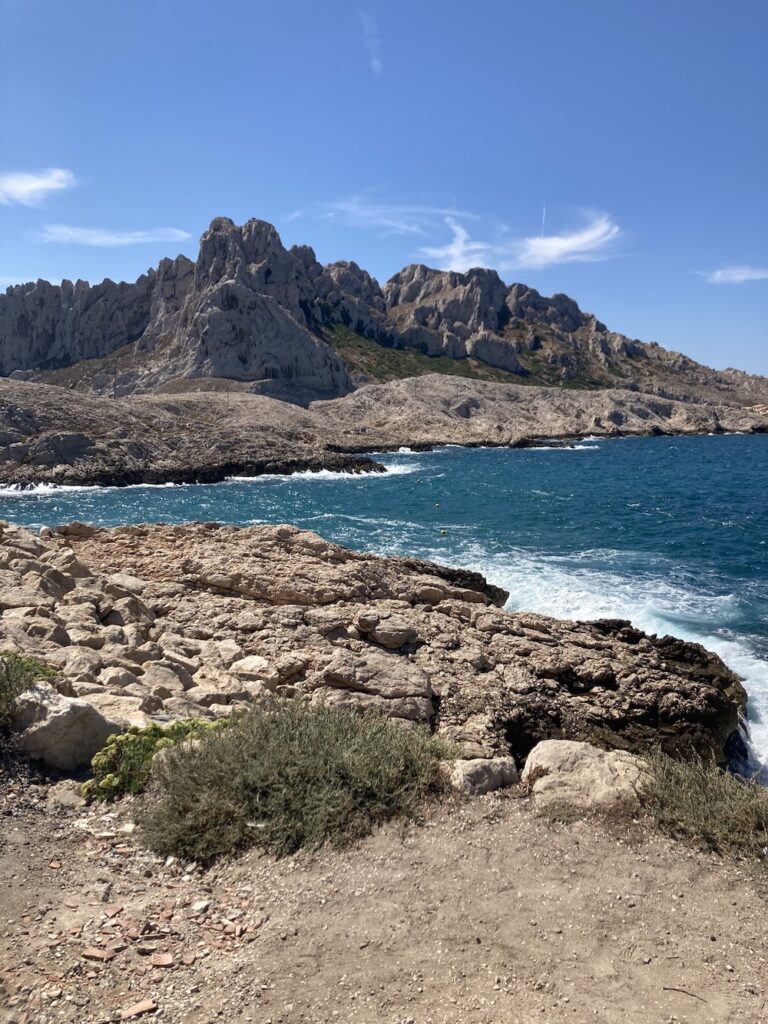
Fuck that. Highlights of 2025 have included Wassie One at new reggae night 'People's Choice' in the Plough & Harrow in Leytonstone (it was a lady called Sandra's birthday - she cut up a large chocolate cake and handed rounded slices in polystyrene bowls to everyone, friends and strangers alike); joining the Polytechnic of Wales WhatsApp group for the BA Communication Studies alumni, intake of 1985, then meeting folk I hadn't seen for 37 years on a lovely weekend at Gareth's house in Dorset, everyone chipping in, cooking, washing up, walking on the beach, playing table tennis and catching up with more chilled, older versions of ourselves after four decades of life; then, as a direct spin-off of that, dancing to A. Skillz's 'California Soul' in a fog of lazers and dry ice in a basement in Dalston at Helene's 60th birthday party that has now passed into legend; listening to speakers talking about the inclusivity of their community on a keep-Stephen Christopher Yaxley-Lennon (let's stick to real names)-and-his-thugs-out-of-Whitechapel march (plus a fine dahl, roti and tea afterwards in a café by the tube station with my mate Wayne); checking out the rooftops, swimming spots and environs of Marseille; DJing with Doug of the Sir Douglas Sound Hi-Fi, loading Doug's periscopic speaker and decks in and out of the van and into various south-east London pubs, then spinning tunes from the likes of Al Campbell, the Morewells, More Relation, The Invaders and Phyllis Dillon. Doug has been heavily involved in a local musicians' open mic night, set up and ran a poetry and spoken-word night, facilitated our services as a support act to The Brockalites, and soundtracked plenty of pubs' Friday and Saturday evenings in SE23: exemplary use of a wide-angled lens; selfless community service of the highest order.
*
'I love a circular conversation,' as the late, great, sadly missed John Broad/Johnny Green used to say at the end of a phone call. Just to circle back to French railways, Mattia Filice's Driver (nyrb) is a life-affirming book, a free-verse novel based on Filice's two decades as driver on French railways, much of it in the Paris region. I'd be bullshitting if I said I got every reference or allusion to Rimbaud, Congolese French rappers, suburban railway stations, inner diesel and electric workings or Apollinaire poems, but I love all the smoking in the cab, the quotidian dramas, the endless tussle with management, the Socratic asides and existential crises that arise staring at miles and miles of steel rails unfurling before you on misty mornings and dark nights, the slowly accruing sense of solidarity and friendship among the drivers in Filice's intake. Jacques Houis' translation is beautifully musical: at various points Filice compares the tempo of the train running over the crossties to Tommy Flanagan's piano on John Coltrane's 'Giant Steps', alludes to the pantograph and the train itself as like the bow of a cello scraping against the strings of the catenary wires, and writes superbly with a cabin-eye view. Here he is on a morning commuter train, deciding whether to pull out from the platform on time: 'I think I'm God, master of the doors . . . To those who run, who pant in protest at their sad fate, I reopen the doors. Some mortals are aware and give thanks through the camera, others ignore me and put their faith in providence . . . To those who drag their feet I'm pitiless. In my kingdom, one's place has to be earned.' Right on; chapeau.
*
Mixtape 2025
1 Rafael Toral, 'Take the A Train'. I've got slightly obsessed with this D-side, bonus vinyl track, which takes a while to bloom into life, but when it does, does so magnificently: a glorious stretched-out blare of the main riff of the Billy Strayhorn/Duke Ellington classic of yore. The rest of the experimental Portuguese guitarist's album Traveling Light is similarly made up of elongated, languorous jazz chords ‒ especially beautiful are the versions Billie Holiday's 'Body and Soul' and the Chet Baker/John Coltrane/Don Raye standard 'You Don't Know What Love is'. 'Lovingly valve saturated strums, bent by Toral's whammy' is the fine description on Boomkat. Album of the year.
2 أحمد [Ahmed] 'Isma'a [Listen]'. In truth I've listened to Ahmed Abdul-Malik's 'Summertime' from his sublime 1963 LP The Eastern Moods of Ahmed Abdul-Malik far more than I have the modern day أحمد [Ahmed]'s furious deconstructions of the Brooklyn bebop bassist and oud player on their own Wood Blues or Giant Beauty. But this year I finally caught أحمد [Ahmed] live at Café Oto. That gig smoked. Antonin Gerbal's pulsing, skittering skins; Seymour Wright's horn sparking into the darkness; Pat Thomas's clangorous piano blues; Joel Grip's pounding bass . . . what could have been a relentless hammering was an ecstatic journey that gently descended to smouldering embers.
3 Nicole Hale, 'All My Friends', 'Give it Time', 'Sleeping Dogs' (from the Curly Tapes cassette Some Kind of Longing). This tape has been stuck in my deck all year. It's a languorous but poised, beautifully smoky thing. Opening track 'All My Friends' unfurls and fills out slowly like the morning light. Some of these melodies might feel hazily familiar from 1970s FM radio, filtered through a Mazzy Star-like (even a more somnolent Big Star-like) gauze. There's early Jolie Holland in there too, but Hale's take is all her own - she's listed as playing 'keys, guitars, vocals and skateboard'. I got so obsessed with the track 'Give it Time' its lustre has dimmed slightly. New favourite these days is 'Sleeping Dogs', complete with spare, sleepy piano and, if listening on headphones, what sounds like a crackling distant storm, audio vérité not a million miles away from Sonic Youth's 'Providence, Rhode Island'.
4 Joe McPhee, 'Cosmic Love'. Talking of 1970s vibes, I bought this on 7-inch a few years back, but it's cropped up again as the closing track on a fine Corbett vs Dempsey compilation LP linked to a Sun Ra exhibition in the label's gallery in Chicago. Man, is this a beauty. I was DJing at a local writers' open-mic night in south-east London earlier this year and I tried to mix it in with 'Short Pieces' from McPhee's latest poetry/free noise opus on Smalltown Supersound (with Mats Gustafsson) and got the levels and timing all wrong: the rutly, strangulated raspy skronk in the middle of 'Cosmic Love' fused with the vacuum-cleaner feedback on the poetry LP. The speaker stack squalled, the pub cat shot out the door and a few poets grimaced. Just as beautifully coruscating is Straight Up, Without Wings: the Musical Flight of Joe McPhee (also published by Corbett vs Dempsey). There's a fantastic moment when a young McPhee, driving home from his late shift at the ball bearings factory outside Poughkeepsie where he worked for years, first hears John Coltrane's 'Chasin' the Train' on the car radio at 2 in the morning: 'I went beserk. I pulled up in front of my house, the windows of the car were open and the radio was blaring. The sound was extreme. I couldn't contain myself. I went crazy . . . screaming and going on. My father heard the sound of the radio and me screaming, and thought I was insane. I was, but that's another story.' I just listened to 'Cosmic Love' again, and after all these plays hadn't realized right at the end, just as McPhee's space organ fades, you can just make out ocean waves crashing against the shore.
5 Zoh Amba, 'Fruit Gathering'/'Ma'. Haunting, mournful moments of quiet Ayleresque beauty from Zoh Amba's excellent new Sun LP.
6 Mike Polizze, 'It Goes Without Saying'. From Polizze's dreamy Around Sound LP this track lodged in my head for much of the summer; kind of acoustic J. Mascis with mellotron and vibraphone fuzz.
7 Phyllis Dillon, 'You're Like Heaven to Me'. Just an exquisite 2 mins 04 seconds from 1972, reissued as a Duke Reid 7-inch.
8 The Invaders, 'Give Jah the Glory'. Beautiful upfull reggae vibes from archive LP of the year, Floating Around the Sun, which should be in every home, and also includes Invaders' gems 'Conquering Lion' and 'Heaven & Earth'.
9 Al Campbell 'Babylon'. In the sleevenotes to the 2000 Pressure Sounds Phil Pratt Thing compilation, Harry Hawke noted, 'When Phil first took Al Campbell to the recording studio many observers apparently laughed at him saying that Al "couldn't sing"! Phil felt differently.' I knew there was a reason I love Al Campbell's singing. Give me his slightly flat, unique grain any day over the more honeyed tones of Ken Boothe, Alton Ellis and Delroy Wilson, et al. 'Babylon' is a Peckings' masterwork of smouldering intent: 'Babylon them a criminal/Babylon them an animal/Babylon them a conman/Babylon them a ginal'.
10 Yassokiiba, 'Dub 5'. Beautifully spacey, chilled-out digidub 7-inch from Tokyo; a heavenly muted steppa.
11 Mark Ernestus' Ndagga Rhythm Force, 'Lamp Fall'/'Dieuw Bakhul'. Rhythm & Sound's Berlin dubscapes rinsed through a Dakar filter. Hushed, spectral hypnotic vocal from Mbene Diatta Seck floats through Ernestus' slowly intensifying beats.
12 Mother Tongue, 'Djangaloma Dara'. Mola Sylla's windblown Senegalese blues refracted through jazzy Puerto Rican drummer Frank Rosaly and Dutch electric clavichord courtesy of Oscar Jan Hoogland. Slightly desolate but deeply funky too.
13 Melody & Bybit, 'Kwakaenda Imbwa'. Total heater from glorious comp Roots Rocking Zimbabwe: The Modern Sound of Harare Townships, 1975‒1980, written by Oliver Mtukudzi's sister Bybit, and featuring Oliver - a kind of lodestar for Samy Ben Redjeb's Analog Africa project - on lead vocals.
14 Pharoah Sanders, 'Ocean Song'. I spent too long stoned as a pigeon in my chalet at Pontins, Camber Sands (and in the heated swimming pool ‒ first time I'd been in one of those), and have only a dim memory of catching A Tribe Called Quest late at night on what I think was the first ever Jazz FM weekender, in November 1990. In my defence I was only 23, but to compound my dismay I've belatedly come to realise, after years of lamenting never catching Pharoah Sanders live, that he was on the bill at the holiday camp too. Fuck. Still catching up with his records - this beauty is from the Bill Laswell-produced LP Message from Home of a few years later, but Sanders' gorgeous saxophone melodies make me think of 1980s Crown Heights/Brooklyn/Manhattan, a world this émigré from the East Midlands had no idea about (just received images from the TV).
15 The Uniques, 'My Conversation'. Totally ace, lolloping late-1960s rocksteady, spun (I think) by Miss T in the Servant Jazz Quarters' basement at a recent Ram Jam night, and a fixture on our kitchen turntable over the festive period and ever since.
16 Jake Xerxes Fussell and James Elkington, 'Contemplating the Moon', 'Glow in the Dark' and 'County Z', from Music for Rebuilding, the elegiac, beautifully composed soundtrack to forthcoming Josh O'Connor film Rebuilding. This is serene, poignant Willy Vlautin/The Delines The Night Always Comes, William Tyler's First Cow and Bruce Langhorne's The Hired Hand territory. 'Things We Lost' concludes with a glorious muted brass finale (from Anna Jacobsen) that makes me well up every time (like Johann Johannson's The Miners' Hymns fifteen years on).
The Bloodbath at Washington Post Is All Jeff Bezos's Fault [ 07-Feb-26 11:11am ] The Washington Post headquarters in Washington, D.C., on Jan. 27, 2026. Photo: Kent Nishimura/Bloomberg via Getty Images
Billionaire Jeff Bezos'S Washington Post on Wednesday cut one-third of its staff, including around 300 members of the newsroom, a journalistic bloodbath that marks a shift from the "Democracy Dies in Darkness" era back into darkness.
Defenders of the executive team's decisions have cited declining subscriptions and revenue as the reasons why the company needs to tighten its belt. But for Bezos, who could leverage his net worth, which is somewhere in the neighborhood of $250 billion, to run the paper at a loss for generations to come, these cuts to a trusted news organization are an ideological, rather than commercial, choice — and the Amazon founder is more responsible than anyone for the change in the Washington Post's fortunes.
After promising Post employees that he'd take a hands-off approach to the newsroom and let journalists do their jobs when he bought the Post in 2013, Bezos dramatically changed course in late October 2024 when he killed the paper's planned endorsement of Kamala Harris for president over Donald Trump. That made Bezos, and the Washington Post itself, enemies of the liberal audience the newsroom had been cultivating for a decade and beyond. More than 200,000 people canceled their subscriptions in the wake of Bezos's intervention, a massive loss of revenue for an already struggling business.
Reporters at the paper could see what was coming and appealed to readers not to punish the newsroom. "Please don't cancel your subscriptions," wrote Amanda Morris, a disability reporter who resigned from the paper last May, in a prescient post. "It won't impact Bezos — it hurts journalists and makes another round of layoffs more likely."
Morris was right. Unsubscribing has had no effect on Bezos's appeasing of Trump, and he has continued to go out of his way to flatter the 47th president. Amazon donated $1 million to Trump's 2025 presidential inaugural committee, and Bezos attended the ceremony, one of a murderer's row of tech billionaires who stood near the president on the dais in the Capitol rotunda, flanked by other Silicon Valley titans like Elon Musk, Mark Zuckerberg, and Sundar Pichai.
There's always more than enough money to go around, except if you're a working journalist.
One month later, in February 2025, Bezos restructured the opinion section along explicitly ideological grounds, writing in a memo to staff: "We are going to be writing every day in support and defense of two pillars: personal liberties and free markets."
It's paying off. On Monday, two days before the layoffs, the billionaire welcomed Secretary of Defense Pete Hegseth to his Blue Origin spaceport in Florida for a mutual backslapping affair — highlighting yet another Bezos business that's benefiting from public money in the form of a Space Force contract worth more than $2 billion, which was announced last April. Hegseth posted on X that the company was "building The Arsenal of Freedom."
Bezos replied that it was a "huge honor" to have Trump's war chief to visit. "The whole team here was energized by your visit, and we're excited to be doing our part to bring high-tech manufacturing back to America. Thank you!" he said.
 Related
Apple Workers Are Livid That Tim Cook Saw "Melania" Movie Hours After CBP Killed Pretti
Related
Apple Workers Are Livid That Tim Cook Saw "Melania" Movie Hours After CBP Killed Pretti
There's always more than enough money to go around, except if you're a working journalist. Amazon's "Melania" debuted on January 30, just days before the layoffs; the documentary reportedly paid the first lady around $28 million of its $40 million budget, leading former executive Ted Hope, who helped start Amazon's film division, to wonder: "How can it not be equated with currying favor or an outright bribe?"
The Washington Post isn't the only newsroom to see the right-wing politics of its owner lead to backlash and a loss of revenue followed closely by cuts. At the Los Angeles Times, a similar dynamic played out after billionaire owner Patrick Soon-Shiong declined to allow the paper to endorse Kamala Harris on October 22, 2024, just three days before Bezos did the same.
Subscriptions dropped by the thousands, though not to the extent they did at the Post; in October 2025, as ownership sought a $500 million investment, they reported $50 million in losses attributed primarily to the time period after the non-endorsement. The LA Times has been hit with extensive layoffs in the newsroom, another example of employees paying the price for ownership playing at right-wing politics.
 Related
Bari Weiss Is Doing Exactly What She Was Installed at CBS to Do
Related
Bari Weiss Is Doing Exactly What She Was Installed at CBS to Do
This rightward turn, with job cuts framed as a necessary evil to tighten up a floundering business, was also on display at CBS News, where Trump ally David Ellison appointed conservative ideologue Bari Weiss to run the show after his media company Skydance bought the network last fall. One of the first orders of business was cutting staff, which came a month after the purchase.
In each case, the driving forces appear to be the political priorities of billionaires and their desire to avoid Trump's wrath and curry his favor — while massively benefiting their bottom line with media mergers and lucrative government contracts. Soon-Shiong's multibillion-dollar fortune is built on the health care industry, particularly on drugs he's developed like Anktiva, which rely on FDA approval. Ellison is shamelessly ingratiating himself to Trump for more media merger approval, a strategy that's working for the whole family: Patriarch Larry just led a bid to take over American operations of TikTok with the president's blessing.
Bezos in particular has an interest in keeping Trump happy. The president won't hesitate to punish enemies or the disloyal by yanking federal contracts, and AWS, Amazon's web services division, relies on the government for billions of its annual revenue. The relationship between the White House and Amazon has already sparked outrage, especially over AWS's contracting with ICE for more than $140 million, but money in the bank speaks louder than protests against one of the world's largest and most ubiquitous companies.
A rigorous, adversarial news media is not in the best interest of the ultra-wealthy.
Amazon continues to rake in hundreds of millions annually — at least — in federal dollars through its cloud contracts, not only for ICE, but also in agencies and departments across the government. While there's no solid number for the average annual value all these contracts amount to, it's enough that AWS was able to promise $1 billion in savings to the federal government in 2025 through a cloud updating and consolidation deal through the end of 2028.
Those staggering profits add insult to injury for Bezos' now-former employees at the Post, who could have kept their jobs in perpetuity if the billionaire valued the Fourth Estate as much as he's claimed. Former editor David Maraniss told the New Yorker that Bezos "bought the Post thinking that it would give him some gravitas and grace that he couldn't get just from billions of dollars, and then the world changed. Now I don't think … he gives a flying fuck."
The newsroom lost, effectively, its entire sports section on Wednesday, its photo desk, as well as most of its arts coverage. Promises to "restructure" the Metro desk with major cuts will leave Washington, one of the most important cities in the world, with a greatly diminished ability to report on the capital.
International coverage also sustained major losses. Despite immense public interest in covering conflicts in the regions, the Post's Cairo bureau chief tweeted that she was laid off, along with "the entire roster" of Middle East editors and correspondents, and the Ukraine bureau was also reportedly axed. In one particularly stark example, reporter Lizzie Johnson was reporting from the front lines of the Ukraine war in Kyiv — with no dependable heat, power, or running water — when she was laid off. "I have no words," Johnson posted to X. "I'm devastated."
This is a crushing blow for the journalists who have lost their jobs. It's also a real loss for the public at large. But despite his lofty blustering, the good of the public doesn't matter to Bezos, nor to his ally in the White House. A rigorous, adversarial news media is not in the best interest of the ultra-wealthy and could perhaps even act as a check, however small, on their unending ambitions. Bezos has already reaped the material awards of this administration and will continue to — a few hundred livelihoods be damned.
Billionaires are only benevolent until they're not, and they certainly can't be trusted to "save" the news when their self-interest is at stake. The Washington Post layoffs only reinforces the need for a media that isn't controlled by the capricious whims of the superrich, but one that serves the good of the public. Otherwise, we're on our own.
The post The Bloodbath at Washington Post Is All Jeff Bezos's Fault appeared first on The Intercept.
Shipyard Bosses Forced to Pay Overtime to Get People to Stay for Pete Hegseth Speech [ 07-Feb-26 10:00am ]The bosses at a Maine shipyard are offering overtime to workers there if they attend a speech by Secretary of War Pete Hegseth, according to workers at the facility.
Hegseth is reportedly set to tour Bath Iron Works on Monday and give a speech on the recently announced "Trump" class battleship, according to the Bangor Daily News.
When the bosses reached out to workers for volunteers to attend the speech, however, few hands went up, according to one worker, who spoke with The Intercept on condition of anonymity for fear of retribution. The speech is slated for Monday afternoon, shortly before a shift change, which means that workers who attend would need to stay past their normal work hours — and anyone who shows up would be required to stay until the event is over.
"They issued a polling sheet this morning to see who would attend and, at least from my crew, there were no takers," said the worker, "and not even a mention of overtime."
 Related
Trump and Hegseth Gathered U.S. Military Leaders for an "Embarrassing" Rant
Related
Trump and Hegseth Gathered U.S. Military Leaders for an "Embarrassing" Rant
Hegseth has made his speeches a high priority during his tenure as secretary of the War Department, including one address in which he railed against "fat" generals. He later ordered the entire U.S. military to watch the speech.
Devin Ragnar, a spokesperson for International Association of Machinists and Aerospace Workers Local 6, which represents workers at the yard, confirmed that anyone attending the speech past shift change would receive overtime pay, but declined to discuss in detail how the arrangement was reached.
After the initial lack of enthusiasm on Friday morning, a later survey went out around noon that explicitly said workers would receive overtime if they stayed past the end of their shift, according to the worker.
"This company doesn't pay out for anything they don't explicitly have to."
"I don't know if that was always going to be the case — a change to bribe folks to get a larger attendance — or if union leadership grieved it by saying they can't mandate us stay past our shift and not pay us," said the worker, whose hunch was that management was looking to entice people to attend. "This company doesn't pay out for anything they don't explicitly have to."
Another worker who spoke with The Intercept expressed dread about the impending headache of Hegseth's visit, echoing how unusual the offer of overtime pay was.
"I'm sure it'll both interrupt the workday — which is very ironic since we're always being hounded about productivity and efficiency — and create a lot of discourse that I don't want to have to listen to all day," said second worker, who also requested anonymity for fear of retaliation. "I was also a little angry because, again, there are lots of other things that we get denied paid time off for — snowstorms, events during work hours that aren't work-related, etc. But they're offering OT for this?"
Representatives of Bath Iron Works did not immediately respond to requests for comment, and a Pentagon spokesperson declined to comment.
"We haven't announced any trip for the Secretary and have nothing to add at this time," said Joel Valdez, the spokesperson.
Located in Bath, Maine, at the mouth of the Kennebec River, the shipyard is one of the largest employers in the state and has long been one of the most reliable sources for steady, well-paying union jobs in the Midcoast region. A subsidiary of the defense giant General Dynamics, BIW plays a key role in building and maintaining U.S. Navy ships and has been the recipient of billions of dollars in government contracts.
Charles Krugh, the president of Bath Iron Works, has signaled to President Donald Trump that his facility is ready to take part in the construction of the "Trump" battleships.
"America's warfighters deserve the most advanced, lethal and survivable combat ships we can deliver to protect our country and our families," Krugh said in December, echoing Hegseth's fondness for the term "warfighter."
When news emerged this week that Hegseth was coming to the yard, however, reactions among the staff were muted, the BIW worker told The Intercept. They said many colleagues greeted news of Hegseth's visit with feelings ranging from "apathy to disgust,"
"I hate Pete Hegseth to my core," the first worker said. "He has no business discussing warships, or anything involved with what we do here. I find it insulting that he is given any authority or respect."
The worker acknowledged that not everyone at BIW would share the same view of Hegseth.
"We have plenty of die-hard Trump supporters, and I don't know how much of that fanaticism spreads to Hegseth," the worker said. "I think if anything he's an afterthought by most people."
The post Shipyard Bosses Forced to Pay Overtime to Get People to Stay for Pete Hegseth Speech appeared first on The Intercept.
Baldassarri's new colours unveiled as Team GoEleven reveal bold yellow livery for their Ducati [ 07-Feb-26 11:00am ]The Ducati Independent outfit have completed the signing of the #34 and excitedly await the start of racing action in 2026
Watch Live: MotoGP's 2026 season launch in Kuala Lumpur [ 07-Feb-26 10:04am ]
What Makes a Classic Album in the Streaming Era? or What Charli XCX Could Learn from The Police [ 07-Feb-26 10:31am ]
In an exclusive extract from his new book, Body of Work: How the Album Outplayed the Algorithm and Survived Playlist Culture, author Keith Jopling looks at the curious phenomenon of the 'vanishing LP' - as well as the ones that didn't
A classic album in the "post-album" age of streaming is hard to define and probably impossible to nail down. This is probably why Tim Footman regarded OK Computer as the last time an album counted as a bona fide classic - an album that reflected society and was widely discussed and celebrated in its long-form. A record that very much characterised a decade. Over a quarter of a century on, it feels like we have descended into a culture that tries...
The post What Makes a Classic Album in the Streaming Era? or What Charli XCX Could Learn from The Police appeared first on The Quietus.
New Bill in New York Would Require Disclaimers on AI-Generated News Content [ 07-Feb-26 10:35am ]
Sepang MotoGP Test Analysis, Part 2: A Photo Essay Deep Dive Into Aprilia - Aero, And Interpreting Riders [ 07-Feb-26 9:41am ]
As journalists, we are reliant on various sources of information. What riders tell us, what we can spot with our own eyes, and what we can find out through various sources who are not supposed to be speaking to us. Our primary source, however, is the riders. After all, they are contractually obliged to speak to us at the end of every day, with only injury or looming PR disaster to prevent it.
That means they find themselves between a rock and a hard place. The team's PR staff tell the riders that they have to speak to journalists (under pressure from Dorna). And the team's PR staff simultaneously tell them not to tell us anything. Which leaves them learning circuitous patterns of speech which are either blatantly or deceptively vacuous. Alex Márquez has learned to be as vague as possible. Cal Crutchlow and Valentino Rossi would also tell us nothing, but do so with so much wit that we didn't notice until we listened back to the audio to transcribe it.
David Emmett Sat, 07/Feb/2026 - 09:41
Openreach turns up the heat to force laggards off legacy copper lines [ 07-Feb-26 9:30am ]Openreach is warning British businesses that the old phone network shuts down in less than a year - with half a million commercial lines still unmigrated.…
4. [ 07-Feb-26 9:23am ]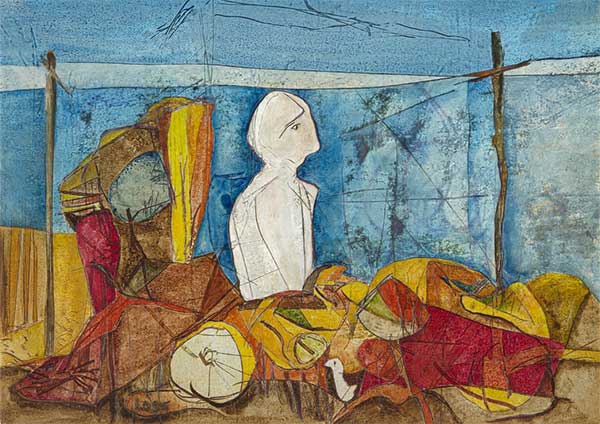
Please
keep
asking
how
far
down
must
I
go
They
never say
.
John Phillips
Picture Fred Schimmel
Bermuda snail thought to be extinct now thrives after a decade's effort [ 07-Feb-26 6:00am ]Special pods at Chester zoo helped conservationists breed and release more than 100,000 greater Bermuda snails
A button-sized snail once feared extinct in its Bermudian home is thriving again after conservationists bred and released more than 100,000 of the molluscs.
The greater Bermuda snail (Poecilozonites bermudensis) was found in the fossil record but believed to have vanished from the North Atlantic archipelago, until a remnant population was discovered in a damp and overgrown alleyway in Hamilton, the island capital, in 2014.
Continue reading... Country diary: Which farm produces the smelliest silage? I went to find out | Rev Simon Lockett [ 07-Feb-26 5:30am ]Peterchurch, Herefordshire: Some silage competitions are assessed in a lab far away, this one takes place in a noisy pub, with judges getting their hands dirty
What a night. I've just got home from the Nags Head, Peterchurch, having attended the Eskleyside Agricultural Society's annual silage competition. The Nags is one of the great social spots in the Golden valley. Here you can meet potato growers, social workers, sheep farmers, stranded pilgrims, water diviners and Thomas the cat. I've witnessed carol singing and dancing on tables, and the fire only goes out for two weeks each year, in the height of summer.
Tonight the focus is silage. Grass, maize and cereal crops, harvested last summer, have been under wraps ever since in the local barns. Starved of oxygen, they have been steadily "pickling", to ensure they're packed with nutrients when fed to hungry cattle and sheep.
Continue reading...
David Bowie Centre [ 07-Feb-26 7:00am ]David Bowie Centre
Location: V&A East Storehouse, 2 Parkes Street, E20 3AX [map]
Open: 10am - 6pm (until 10pm on Thursdays and Saturdays)
Admission: free
Two word summary: Starman's hoard
Five word summary: documenting David's life and creativity
Website: vam.ac.uk/exhibitions/david-bowie-centre
Time to set aside: half an hour
When the V&A Storehouse opened in the Olympic Park in May last year, one corner of the 2nd floor wasn't open. The David Bowie Centre's door was finally unlocked in mid-September but, to regulate numbers, you had to book a free slot in advance. Finally on Tuesday the requirement to plan ahead was removed and now anyone can wander in and admire the creative ephemera of a boy from Brixton. Oh! You Pretty Things.

David planned ahead keeping decades of cuttings, papers, props and costumes, then bequeathing his 90,000 item archive to the V&A. They decided the best place for it was their new Storehouse at Hackney Wick with its acres of storage space, filling racks with stacks and stacks of boxes. Only 159 items made the cut for display, at least in the initial selection, but other objects can be booked in advance for your hands-on perusal in a separate lab alongside. When I walked in yesterday a woman was examining two of David's gold discs, her hands carefully covered by a pair of purple disposable gloves, and when I walked out later the frames were being packed respectfully away.

The first glass cabinet contains Fan art, shoes and instruments, which it has to be said is not a typical museum category. They couldn't really kick off with anything other than a jacket with a Ziggy Stardust slash, archive number 1972.2035.0025. As with every other item in the V&A Storehouse it doesn't have an information label but yes it is the real thing designed by Freddie Burretti in red lamé for David's most iconic tour. Alongside are glam platform shoes, gold boots and some kind of guitar, and whilst they're all lovely to look out you'll only know precisely what they are if you notice the QR code, get your phone out and scan for a catalogue. I don't think I saw a single visitor do this with any of the exhibits in the Centre, merely staring with ignorant admiration, so essentially all the V&A's descriptive curatorship is going to waste. The QR link leads to this index, should you want to dig down deeper for yourself.

The main space is extremely tall and divided into two halves, one with shelves and the other with ten tall glass-fronted displays. Within are an eclectic selection of things to admire and things to read, notionally themed but you'd never really guess. Some of the suits are fabulous, for example an Alexander McQueen Union Jack concoction, a lurex jumpsuit and a narrow-waisted turquoise number as seen in the video for Life on Mars. I was less drawn to the photographs, perhaps because images are more easily shared and all you're seeing is a print, although they do form a considerable proportion of what's on show. But I did love the many manuscripts scribbled in David's handwriting and somehow saved through the years, including sheet music for Fame and (omg yes) the lyrics for Heroes as they were first written in black pen on a sheet of torn red graph paper.

Items are often symbolic of culture at the time, for example an electronic Stylophone used on Space Oddity (1969), an East German entry permit (1977) and a Yahoo! Internet Life Online Music Award (2000). The cabinet for the Glass Spider tour is topped off by the gold resin wings Bowie wore on stage in 1987, again not that most people staring up at them would have realised. A couple of the displays focus on artists who worked with Bowie rather than the man himself, which although emblematic of high esteem did feel overly tangential when space here is so limited. But I did love David's rejection letter from Apple Records dated 15th July 1968 ("The reason is that we don't think he is what we're looking for at the moment") and also a reference written by his father a few years earlier, perceptively noting "It is impossible to get him to relax and once having made up his mind to do something nothing will stop him in his effort to make a good job of it".

The opposite wall is stacked high with boxes, all labelled but closed. A few items are available for you to flick through in flappy plastic folders on the study table in front. High above are 21 iconic costumes hung on a looping rail, but all inside sturdy plastic wrappers so you can't see much of them, only read some text explaining what they are. And on the wall is a huge screen playing Bowie videos and live performances, which a large proportion of the visitors were watching rather than studying the actual objects. It does provide the best soundtrack you'll ever hear in an exhibition space but equally you could just sit at home and watch most of these on YouTube, plus they'd be in the proper landscape format rather than lopped-off portrait.

One thing which struck me while looking round was how a single Londoner was being celebrated on such a great scale. Imagine being deemed so important that a national museum chooses to celebrate your work with a named gallery. Imagine them taking ownership of tens of thousands of items relating to your career development. And imagine people standing reverently in front of some post-its you scrawled on for a project you never realised! Who keeps everything from their early scribblings to later artistic paperwork, who has sufficient space to stash it all away and who also has the nerve to consider the nation might think it worth saving? Personally I have enough old papers that that V&A could easily fill a cabinet with several formative childhood works, were I ever to be deemed a key national icon, but instead the contents of my spare room will all be heading down the tip after I'm gone. Such is the rarity of genuine Fame.

The visitors yesterday were a mix of older folk who experienced the magic first time around, and were maybe transformed by it, and youths too young to remember anything. It seemed a particularly popular destination for middle class family groups, say 60-something parents and 30-ish offspring, each thrilled to be pointing things out to each other. The entire crowd at the V&A Warehouse are those with culture on their mind, barely a Brexit voter amongst them, because why hang out at Westfield when you could enrich your artistic credentials up the road in E20. A sign outside the David Bowie Centre warns that visitors may be held outside if the room exceeds capacity, so this weekend may not be the most convenient time to visit. But it's well worth a look when you have the time, in both Sound and Vision, very much Hunky Dory, as Boys Keep Swinging.
This has been the 11000th post on diamond geezer.
1000 2000 3000 4000 5000 6000 7000 8000 9000 10000 11000
Neocities Founder Stuck in Chatbot Hell After Bing Blocked 1.5 Million Sites [ 07-Feb-26 8:20am ]
Another London [ 07-Feb-26 7:17am ] Excavating the disenchanted city
by Hari Kunzru
Excavating the disenchanted city
by Hari Kunzru
The North Prospect of the City of London and Westminster (as seen from Parliament Hill), 1712, detail of an engraving by an unknown artist © The Trustees of the British Museum.

A painting depicting the arrival of Brutus to England, the slaying of giants, and the founding of a city, possibly London, fifteenth century, by an unknown artist © The British Library/akg-images
It's not so much where to begin as when, though in London the distinction between time and space broke down centuries ago. There's a cast of wanderers, visionaries, and itinerants, the self-educated and self-published, a long lineage of cranks and outcasts, mostly penurious, always opinionated, stretching away into the mists of pseudohistory. If you go back far enough you end up right at the beginning, with King Brutus, great-grandson of Aeneas, defeating a clan of giants and founding a settlement he named New Troy. The giant Brân the Blessed's head, which spoke for many years after it was severed, lies buried under a white hill, on top of which the Norman conquerors built a fort, known to later generations as the White Tower, or just the Tower of London. The name London comes from the Llandin, a sacred mound now called Parliament Hill. The London. Or perhaps it originates with King Lud, the carnivalesque warrior and giver of feasts who was bold enough to rename New Troy after himself. Kaerlud became Kaerlundein, and eventually London. Of course, if you indulge in such etymologies, you'll find yourself chased down alleyways by angry professors and cornered in the rookeries, the most intellectually disreputable of the city's slums. Nothing about this London, the London, survives the scrutiny of decent folk. It is a hive, a warren, lousy with junkie poets and readers of tarot cards, autodidacts prone to exaggeration and outright deceit.
Brân's head was buried facing France, though some say King Arthur dug it up and threw it into the sea, because he wanted everyone to know that he and he alone was the protector of the island kingdom. Without Brân's watchfulness, it was probably inevitable that the French would sneak across the Channel. You can see them in a grainy photograph taken in September 1960, outside the Sailors' British Society in Limehouse, eight men and a woman, walking toward the camera, dressed in tweeds and overcoats. They are Parisian intellectuals—and not just French; they are Belgians, Dutch, Danes, and Germans, participants in the fourth conference of the Situationist International, an avant-garde group fond of the trappings of bureaucracy, heckling at boozy meetings, and denouncing one another for perceived artistic and political transgressions. They are fascinated by this impoverished district of docks and shabby warehouses, associated in the popular imagination with Asian sailors, white slavery, and cholera. In 1955, some future Situationists had written to the editor of the Times of London, complaining about the redevelopment of the area, which had been pulverized by the Luftwaffe during the Blitz:
It is inconvenient that this Chinese quarter of London should be destroyed before we have the opportunity to visit it and carry out certain psycho-geographical experiments we are at present undertaking.
In the first issue of the publication Internationale Situationniste, "psychogeography" is defined as "the study of the specific effects of the geographical environment, consciously organized or not, on the emotions and behavior of individuals." This might sound bloodless, but for the Situationists it was part of a utopian revolutionary program. The small band of café radicals sought to overthrow not just a government but the entire global system, which relied on what they called the "organization of appearances," or simply "the Spectacle." As the explosion of consumer society followed a period in which totalitarian propaganda had mobilized millions for war, they were among the first to understand mass media as a subtler means of social engineering. Advertising, film, television, fashion, and pop music were, they theorized, useful to the interests that controlled them because together they wove a kind of fascinating screen—or Spectacle—behind which the actual operations of power could be hidden. Pacified citizens had been reduced to dazzled consumers, unable to even see what was going on, let alone understand or oppose it. "The organization of appearances is a system for protecting the facts," one member, Raoul Vaneigem, wrote. "A racket."

"Whitechapel High Road, 1965," by David Granick. © London Borough of Tower Hamlets/Tower Hamlets Local History Library and Archives
Sixty years later, the Spectacle saturates us in ways the Situationists never imagined. Online platforms structure our personal relationships; algorithms nudge us toward the platform owners' preferred choices. "Intelligence" is embedded into everything from our phones to our kitchen appliances. But back in the Sixties, the Situationists saw the physical environment of the city as an expression of the mass society created by consumerism and governed by the Spectacle, and they felt power closing in around them: "All space is occupied by the enemy. We are living under a permanent curfew. Not just the cops—the geometry."
As a teenager growing up in London, I experienced the Spectacle's rapid intensification. I would go out with friends to a burger restaurant in Covent Garden that had video screens on the wall, a stunning innovation in Eighties Britain. In between MTV clips, a camera would roam the room, and we would fleetingly see ourselves onscreen, an experience that felt edgy and utterly modern. Then we would go home on the Tube, waiting on platforms strewn with rubbish because the bins had been removed to stop the IRA from placing bombs in them. Later, after some major terrorist attacks on financial targets, the City of London erected a security radius known as the Ring of Steel. By the mid-Nineties, London was said to have more security cameras than any other city in the world.
In the years when the Ring of Steel was growing around London's financial district, psychogeography was also in the air. Everyone seemed to be interested in exploring the fabric of the city, trying to excavate its strange atmospheres and hidden meanings. I knew people who were teaching themselves urban climbing, trespassing into abandoned buildings as a form of artistic action. Others were involved in an anticapitalist movement called Reclaim the Streets, or were steeping themselves in countercultural histories. My friends and I cycled along canal towpaths and danced at warehouse raves that were advertised on pirate radio stations whose transmitters were concealed on the rooftops of council tower blocks. There was a sense that a change was coming to London. We told ourselves it was the impending millennium, the new thousand-year cycle that the government was celebrating by building a giant dome on the Greenwich Peninsula. In retrospect, I think we sensed that we were living our last moments in the material world, before all our visions migrated online.
Ileft London for New York eighteen years ago. For a long time I didn't miss it. Recently I have found myself thinking about it more often, and sometimes even dreaming about it. In these dreams, I walk down alleyways toward mysterious glowing lights. I wait outside the kind of seedy minicab offices that used to exist before the advent of ride-hail apps. My old friends have moved on; the places I used to know are gone or have passed on to the next generation. I am not nostalgic, exactly, but lately I have been preoccupied by something that I used to believe I had found in London—a city within the city, above and beneath and between the everyday. This visionary city had a history and geography that didn't correspond to the official version. It was a prism, a maze in which I thought I discerned possibilities, things that might have been or ought to have been, or that I could imagine into existence. In the era of GPS and social media, where every location has already been rated and reviewed and nothing is real unless it is captured by a cell-phone camera, is it still possible to fall through the cracks into this other world?
For many years, as I took the train to Portobello, I would pass a giant piece of graffiti running along a wall between Westbourne Park and Ladbroke Grove stations. It had been there since at least the Seventies, long enough to have become a landmark: same thing day after day—tube—work—dinner—work—tube—armchair—t.v.—sleep—tube—work—how much more can you take?—one in ten go mad—one in five cracks up. It was the work of a group called King Mob, effectively the British chapter of the Situationist International until its members were expelled in one of the frequent purges. Malcolm McLaren, future manager of the Sex Pistols, supposedly participated in an early King Mob action. Jamie Reid, the graphic designer who made the famous image of Queen Elizabeth II with a safety pin through her mouth, did the cover for the first English-language Situationist anthology.

A "God save the Queen" button based on the 1977 artwork by Jamie Reid © Mick Sinclair/Alamy
Reid's promotional poster for the Pistols' single "Pretty Vacant" shows two buses, their destinations nowhere and boredom. In "God Save the Queen," John Lydon snarls that there is "no future." With this lyric, he channeled the Situationist critique that shopping and entertainment were somehow substituting for a more vivid and authentic life into the nihilist posturing of punk—but the full line is "there's no future in England's dreaming," which hints at something altogether more romantic and less rational. When Situationism came to London, it fused with a subterranean current of mysticism that flows through the city like one of its "lost rivers," the Fleet or the Tyburn, long since buried under the surface.
In Derek Jarman's 1978 film Jubilee, the punk-scene celebrity Jordan cheekily refers to a Situationist slogan that had appeared on the walls of the Latin Quarter in Paris during the uprising of May 1968.
Our school motto was Faites vos désirs réalités. Make your desires reality. . . . In those days, desires weren't allowed to become reality, so fantasy was substituted for them: films, books, pictures. They called it art. But when your desires become reality, you don't need fantasy any longer, or art.
The end of alienation would mean nothing less than a reenchantment of reality. In the film, Jordan is literally a magical vision. Jubilee opens with Queen Elizabeth I summoning her court magician, Dr. John Dee, to ask him for "some pretty distractions which you call angels." Dee looks into the black depths of his scrying mirror and summons a spirit who grants the queen a vision of the future. The film cuts to a desolate South London street, the sound of machine-gun fire in the distance. A gang of punk girls is beating someone up. Elizabeth II, whose Silver Jubilee was celebrated with much pomp and circumstance in 1977 (giving the film its title), is mugged inside a shed on some waste ground, her crown stolen by feral punks. Transported to the scene, her royal ancestor looks down in horror.
Dee's black mirror is now in the British Museum. As a child, when I wanted to be an archaeologist, the museum was one of my favorite places. My mother would sit outside reading a book while I wandered the halls, visiting the Rosetta Stone or the helmet and sword from the Anglo-Saxon ship burial at Sutton Hoo. In my twenties, I would sometimes write in the museum's Round Reading Room, a huge open space beneath a dome inspired by the Roman Pantheon. Ghosts of previous readers flitted around the card catalogues: Arthur Rimbaud, Mark Twain, Karl Marx, Marcus Garvey, Bram Stoker, Virginia Woolf. If London had a psychogeographical center, it was not Trafalgar Square or Buckingham Palace but this room, the navel of an imperial treasure house that for more than a century was also a magnet for the kind of oddballs who liked to "do their own research."

A photograph of the Reading Room of the British Museum while under
construction, 1855, by William Lake Price © The British Library/Bridgeman Images
The reading room closed in 1997, and the library moved to new premises on Euston Road. Dee's mirror is easy enough to find, lying in a case with other magical paraphernalia, including a knife used as a prop by a charlatan alchemist, the tip of the blade "transmuted" into gold. The mirror is actually an Aztec ritual object, a polished obsidian disk brought to Europe soon after the Spanish conquest. Small and undramatic, it is the sort of thing that most tourists pass by. I have come back to London to lose my bearings, to lose myself, but all I can make out in its depths is my own reflection. I remember that in real life, Dee saw no angels. It was his assistant, Edward Kelley, who had—or claimed to have—the gift of sight. I am stubborn. I stare harder, bending down in front of the glass case.
The black mirror is where I begin whatever it is I'm doing back in London. An action, a ritual. Perhaps a spell. The Situationists practiced something they called the dérive, usually translated into English as "drifting," an "aimless stroll" that served as a tool for analyzing the "psychic atmospheres that power had produced." "In a dérive," wrote Guy Debord,
one or more persons during a certain period drop their relations, their work and leisure activities, and all their other usual motives for movement and action, and let themselves be drawn by the attractions of the terrain and the encounters they find there.
What I have in mind is something like a dérive, except not quite, because I have a general route in mind, about eight miles southeast to Greenwich, the site of the prime meridian, the line of zero degrees longitude that the British Empire invented to divide the world into Eastern and Western Hemispheres. I will connect the museum to the meridian, two sites of traditional power. And perhaps in so doing I will reenchant reality, or at least my corner of it.
In the streets of Bloomsbury, like barnacles on the museum's huge hull, are shops and services catering to the collecting impulses of the habitués of the old library, the men (and a few women) I used to see huddled over their solitary lunches in the local cafés. There are dealers in coins and stamps and antiquities, and, above all, books. At the Atlantis on Museum Street, an occult bookshop that has existed since the Twenties, I am shown a massive volume of transcriptions of Dee's conversations with angels. It must weigh ten pounds. It's an expensive volume, and I have a long way to walk, so it isn't that hard to say no. I put it back on the shelf and wander toward Soho. This is a detour—Greenwich is in the opposite direction—but of course getting to Greenwich is not the point, and it feels somehow appropriate to start out by going the wrong way.
In 1802, seventeen-year-old Thomas De Quincey, the son of a wealthy merchant, ran away from his Manchester boarding school. He made his way to London, where he slept for a while in an empty house on the corner of Greek Street and Soho Square. "I found," he wrote in his Confessions of an English Opium-Eater, "that the house already contained one single inmate, a poor friendless child, apparently ten years old." The building where De Quincey and the nameless little girl huddled together under a scrap of rug and an old sofa cover has since been demolished, replaced by a Barclays bank. As I walk past, someone is asleep in the doorway under a construction of cardboard boxes.
At night, De Quincey would wander up and down Oxford Street, a major East-West thoroughfare. Now one of the busiest shopping streets in Europe, it was in the first years of the nineteenth century a zone of pubs and other places of entertainment, notorious as the route that condemned prisoners took from Newgate Prison on their way to be hanged at Tyburn. De Quincey's companion on these walks was Ann, a teenage prostitute whom he portrays as an almost saintly figure, crediting her with saving his life "when all the world had forsaken me." When he left London, he promised to return and help her, expecting to be back in a week. They never saw each other again. Ann was lost in the "great Mediterranean of Oxford Street." For the Situationists, the pair were the Adam and Eve of a new sensibility. As an essay in Internationale Situationniste put it:
The slow historical evolution of the passions reaches a turning point with the love between Thomas De Quincey and his poor Ann, separated by chance and searching yet without ever finding one another . . . through the mighty labyrinths of London; perhaps even within just a few feet of each other.
This was a form of love and loss brought about by the new social relations of the crowded nineteenth-century metropolis. In the twenty-first-century city, things have inverted. It is trivial for runaway teenagers to stay in touch with one another, but hard to escape the eyes of others—security cameras, facial-recognition technology, and all the rest of the apparatus of surveillance and control.

From Songs of Innocence and Experience, copy Y, plate forty-six
(orange-brown ink, watercolor, and shell gold), by William Blake, etching 1794, print c. 1825. Courtesy the Metropolitan Museum of Art, Rogers Fund, 1917, New York City
"If the doors of perception were cleansed, every thing would appear to man as it is, Infinite." So wrote the poet William Blake, who is a sort of tutelary spirit for London's seekers and visionaries. Blake's birthplace at 28 Broad Street has been obliterated by a brown granite tower, a monument to the worldview of the City of Westminster's postwar planning department, but his influence is everywhere in the other London. One of Blake's disciples was a young Welsh writer who arrived in London in the 1880s and took a job trawling through a garret full of old occult books, writing descriptions for a publisher's catalogue. Too poor to attend university, Arthur Machen received his education through bookselling and publishing. Per Machen, the garret contained volumes on witchcraft, Kabbalah, gnosticism, hermetic magic, and much else that "may be a survival from the rites of the black swamp and the cave or—an anticipation of a wisdom and knowledge that are to come, transcending all the science of our day."
Despite his esoteric interests, Machen grubbed up a career as a popular and prolific author. There is, he wrote, "a London cognita and a London incognita." He considered
the science of the great city; the physiology of London; literally and metaphysically the greatest subject that the mind of man can conceive. . . . You may point out a street, correctly enough, as the abode of washerwomen; but, in that second floor, a man may be studying Chaldee roots, and in the garret over the way a forgotten artist is dying by inches.
Machen's London was a descendant of Blake's, where angels perched in trees. It was intuitive, antirational, a city of visions glimpsed out of high windows and horrors lurking at the end of dark alleyways. "I didn't buy a map," says one of his characters, recalling his journey of discovery. "That would have spoilt it, somehow; to see everything plotted out, and named, and measured."
Farther east on Bloomsbury Way, I steer well clear of the commodified irrationalities of Serendipity Crystal, with its window display of sparkly geodes. I'm looking for the spire of St. George's, Bloomsbury, consecrated in 1730. You can see it in the background of William Hogarth's print Gin Lane, presiding fancifully over the slums of St. Giles. Two lions and two unicorns writhe at the base of a stepped pyramid. On top, instead of a cross, there's King George I, dressed as a Roman emperor. Its architect, Nicholas Hawksmoor, designed six London churches that have acquired a strange reputation. They were designed to have a "Solemn and Awfull Appearance," an aesthetic that the authorities hoped would intimidate the London rabble into faith or, failing that, compliance. Since the Seventies, Hawksmoor, a Freemason and student of ancient Egypt, has been spirited across the border into fiction, reimagined as a sort of dark magus of London, a figure who sought to control the city through architecture, binding it to the will of those he served.
"Hawksmoor was no Christian," says Sir William Gull, Queen Victoria's surgeon, in Alan Moore and Eddie Campbell's graphic novel From Hell. Gull is being driven by a coachman on a tour of London, which is marked by various sites of esoteric power. Gradually their route takes the shape of a pentagram. "Encoded in this city's stones," Gull says, "are symbols thunderous enough to rouse the sleeping Gods submerged beneath the sea-bed of our dreams." Gull has been commissioned by Queen Victoria to hush up a royal scandal, but he will exceed his brief and commit the appalling killings ascribed to Jack the Ripper. A psychopathic misogynist and high-ranking Freemason, Gull sees these killings as a "great work," a ritual intended to enforce an ancient patriarchal order. Pyramids and obelisks are sun symbols, and Hawksmoor and his fellow Masons have positioned them round the city. " 'Tis in the war of Sun and Moon that Man steals Woman's power; that Left Brain conquers Right . . . that reason chains insanity." The pattern of spires, obelisks, and pyramids forms a pentacle "wherein unconsciousness, the Moon and Womanhood are chained."

Preparatory drawing (red chalk and graphite on paper, incised with stylus and verso rubbed with chalk) for the engraving Gin Lane, by William Hogarth, c. 1750. Courtesy the Morgan Library & Museum, New York City
Moore is best known as the author of the revisionist superhero series Watchmen and of V for Vendetta, the story of a dystopian near-future London and the source of the Guy Fawkes mask that became the symbol of the Anonymous collective of the 2010s. He is also a practicing ritual magician. Moore doesn't come to London anymore; in fact, he rarely leaves his house in Northampton, the town where he was born. On the phone, he describes to me a "borderland between the world of things that materially exist and the world of things that don't." It is, he says, "a porous borderland, because if we look around us, everything surrounding us started out as an idea in somebody's mind, the chairs we're sitting on, the devices we're talking on, the language we're speaking in, the carpet, the curtains, the view outside. We are living in our unpacked imagination. As I see it, it's the imaginary space which is the foundation of the physical world." I am struck by this. It is an inversion of the generally accepted chain of causality, wherein the material underlies the social and the airy castles of the imagination float somewhere overhead.
In The Waste Land, T. S. Eliot famously described Twenties London commuters as ghostly figures crossing London Bridge "under the brown fog of a winter dawn." His London was an "unreal city" that seems to have migrated out of imagination and into reality, a necropolis watched over by the security cameras of the Ring of Steel. Eliot's ghosts carried on down King William Street to where the clock of St. Mary Woolnoth "kept the hours / With a dead sound on the final stroke of nine." This is the second of Hawksmoor's churches I pass, crammed into a tight space on a corner near the Bank of England and the ancient Roman Temple of Mithras, whose excavated foundations now pulse with mystic power in the basement of Bloomberg's European HQ.
A few minutes from St. Mary Woolnoth is Leadenhall Market, a quaint covered arcade tenanted by little food shops and pubs frequented by city workers. The market is a high Victorian confection of glass and iron, popular with filmmakers seeking a little heritage color. Pass through it and there's a sudden and extreme transition, a textbook instance of the Situationist "division of a city into zones of distinct psychic atmospheres." The Lloyd's building next door is the hub of a different kind of market, the global insurance trade. The vast tower is like something you'd find on a prog-rock album cover, a postmodern steel god veined with external pipes and ducts. Going from Leadenhall to Lloyd's feels like a particularly violent kind of time travel, as if you're an H. G. Wells character spat into the future, except that it's some airbrushed Seventies fantasy version of it. The Lloyd's building is strong evidence for Alan Moore's contention that the imaginary is the foundation of the physical world. The engineers of the City of London seem to have been engaged in a collective hallucination, bringing the capitalist future into being out of the ether. Currently, they are devoted to financing (and insuring, and calculating the risks of) giant data centers and rockets to Mars, eruptions out of dog-eared science-fiction paperbacks into the real world.
Outside Liverpool Street station, a pedestrian crossing marks the invisible border that separates all this money and power from the poverty of the East End. Turning off Bishopsgate, I am confronted—that would be the word—by the pale façade of Hawksmoor's Christ Church Spitalfields. Even on a sunny day it is chilling, a bone-colored mass topped by a cruelly sharp spire. It seems impossible that such a building could be allowed to fall derelict, but by the Sixties it came very close to being torn down. Supposedly built over a plague pit, Christ Church looms over the Ten Bells pub, where at least two of the Ripper's victims were said to have drank before they were murdered. This is the kind of connection that vibrates in the psychogeographical imagination, which is essentially a form of productive paranoia, an experience of intense interrelatedness, of being at the center of a story that doesn't really want to be a story, that would probably rather be a map or a diagram.
Growing up nearby, the painter Leon Kossoff, son of Russian Jewish immigrants, could not escape the presence of the church, alien and haughty, in a district that had become an almost entirely Jewish quarter. One of Kossoff's charcoal drawings of Christ Church hangs in the living room of the writer Iain Sinclair's house in Hackney, a gift from the artist. John Berger compared Kossoff to Beckett, and a sense of existential terror is present in the drawing, a kind of darkness that tugs at me as I drink my tea. Sinclair is probably the most adept living navigator of London's subterranean currents. His mind is a tangle of occult connections, a rat king of red thread. He is also the most robust link between the visionary London of Blake and Machen and the avant-garde mappings of the Situationists. In the early Seventies, he was writing poetry and working as a municipal gardener, cleaning and tending to the public spaces of the East End. He'd met Allen Ginsberg when he came to town in 1967, and remembers sitting on top of Primrose Hill with him, "aware of Blake's vision of Jerusalem being put down there. And being incredibly engrossed by the Post Office Tower—which had just been built—I suppose, as a sort of phallic symbol." Around the same time, he was in a secondhand bookshop "when a woman came out of a room and looked at me and said you should read this." Sinclair produces the book, and I laugh, because "this" is an early edition of E. O. Gordon's Prehistoric London: Its Mounds and Circles, first published in 1914. I have a reprint of the same book in my backpack. It tells stories about King Lud and Brutus the Trojan as if they are reliable historical facts. Inside, there is a "plan of the London mounds" with a triangle of dotted lines drawn between Parliament Hill, the Tower of London, and other significant places. Prehistoric London was described by one appalled reviewer as a "bewildering pot-pourri of Keltic traditions." Its sources include medieval chroniclers, eccentric antiquaries, and no doubt many denizens of the British Museum's Reading Room. It is utterly bogus, and central to Sinclair's strange refraction of the city.
As Sinclair picked up trash in East End graveyards, which at the time were in terrible disrepair, he became increasingly sensitive to Hawksmoor's architecture of terror and magnificence, and to the gruesome history of the area. The result was a book called Lud Heat: A Book of the Dead Hamlets, published in 1975, which fuses Gordon and Blake and Ginsberg and De Quincey and Jack the Ripper and Hawksmoor and hundreds more sources into an extraordinary metaphysical cacophony, a vision of a London traversed by lines of occult power. Quoting Yeats, Sinclair tells me, " 'The living can assist the imaginations of the dead.' The great things are unfinished, and our job is to attach ourselves to them and honor them and make them available and carry on." This is an oddly subversive notion of tradition, the past as secret society. Lud Heat found its way into the hands of Alan Moore, who was tinkering with inchoate ideas about murder. "That drops into my lap," he remembers, "and suddenly I can see a whole new way of focusing upon place. It knocks my entire prose style sideways for about the next ten or fifteen years." Without Gordon, there's no Lud Heat. Without Lud Heat, there's no From Hell. This is how the living assist the imaginations of the dead, infusing reality with fiction and altering the meaning of a city.
From Sinclair's house in Hackney I cut through Whitechapel to Wapping, past the site of Execution Dock, where the bodies of pirates were displayed on a gibbet just above the waterline, left to decay until the third high tide. The next Hawksmoor church I pass is St. George-in-the-East. During the Blitz, nightly waves of German bombers were sent to destroy the docks. The River Thames bends round in a horseshoe shape, easy for a bombardier to target. St. George-in-the-East was hit, its interior destroyed by fire. In 1964, a new church was built inside the old shell. I walk through a gateway, under yet another of Hawksmoor's stark towers, and find myself in a bright, bland space that is hosting a mother-and-baby group, a row of prams lined up against one wall. It is another sudden change of psychic atmosphere, all bustle and chatter and civic modernism.
A little farther down the old Ratcliffe Highway, once the scene of murders and press-gangings, is Limehouse. A giant anchor decorates the traffic island outside the old Sailors' Mission, which has now apparently been converted to apartments. According to a very dry report published in Internationale Situationniste, the Situationists' time in Limehouse was mostly taken up with formal political debates. The German faction split from the others, calling for an immediate mobilization of avant-garde artists rather than trusting the revolutionary capacities of the workers. Arguments went on late into the night.
Across from the Sailors' Mission is St. Anne's Limehouse, the fifth of the six Hawksmoor churches. St. Anne's served the old neighborhood of Pennyfields, London's first Chinatown. This was a place where other Asians also found a home, notably lascars from India and East Africa, and ayahs abandoned by their English employers after the long sea voyage. The barrackslike Strangers' Home for Asiatics, Africans, and South Sea Islanders once stood on West India Dock Road, providing assistance (and Christian preaching) to Asian people who had found themselves stranded in a country that considered them alien and frightening.
The dissident German contingent published their impressions of the Situationist conference in their own journal, SPUR, a much more fanciful tale than the serious French account. It includes a collaged picture of a turbaned Indian delegation that looks like it was cut out from a magazine. Was this a way of representing people they had met in Pennyfields or, as with Dali, Peggy Guggenheim, and a papal nuncio, just an entry in a list of attendees who were not actually there? Like the French, the Germans were very excited to be in Limehouse, "famous from crime novels." Somewhere in this vicinity is the opium-den headquarters of Sax Rohmer's fictional villain Fu-Manchu, "the yellow peril incarnate in one man." An ambulatory confection of racist stereotypes, Fu-Manchu appeared in a series of pulp novels and films in the first half of the twentieth century. A persistent internet factoid links him, unverifiably, to a mysterious stone pyramid in St. Anne's churchyard, supposedly the entrance to his lair. The pyramid is real, and genuinely mysterious. It is neither a grave marker nor a monument to an identifiable person or event. The best guess seems to be that it was one of a pair intended as ornamentation for the church, but was never mounted. It bears a very worn heraldic crest and the words the wisdom of solomon. Just that, no more. "The Wisdom of Solomon" is the title of a biblical text, but not one that is canonical for Protestants. In other words, it is an inscription that has no business in an English graveyard. An esoteric tradition takes Solomon's wisdom to be the Ars Goetia, ritual magic used to summon and bind demons.
Leaving St. Anne's, I follow a riverside path down the western side of the Isle of Dogs. After the Blitz, there was virtually nothing left of the old docks that had connected London's merchants to the Empire, or the foundries and yards where great ships had been launched. It languished for decades; redevelopment didn't really get going until the Eighties. The life of the modern Isle of Dogs is away from the water, in the commercial zone around Canary Wharf. It has been years since I walked this path; I remember the obelisklike tower of One Canada Square as the ruler of the skyline, a monument to the financialization that followed the deregulatory Big Bang of the Eighties. In Iain Sinclair's Docklands novel, Downriver, published in 1991, a few months before the building's grand opening, the tower is imagined as an occult center in a near-future London that lies under the control of "the Widow," a grotesque avatar of Margaret Thatcher. Nowadays it's hedged in by other tall buildings, many bearing corporate logos; these labels give the cluster an odd, simulated quality, as if I'm looking at the map rather than the territory.

A photograph of Blitz air-raid damage inflicted on the west side of Eastern Dock, northerly view from the south end, London, by John H. Avery & Co., September 8, 1940 © London Museum/PLA Collection/John Avery
During the Nineties, there was a revival of an organization called the London Psychogeographical Association (LPA), which had briefly existed in the Fifties. The new LPA was understandably obsessed with the Isle of Dogs and the rapid transformation it was undergoing. After the election of a neofascist politician named Derek Beackon to the local council in 1993, the LPA released a pamphlet with the headline nazi occultists seize omphalos. An omphalos (Greek for "navel") was defined as "the psychogeographical centre of any culture, myth structure or system of social dominance." "Beackon is a dedicated Nazi occultist," wrote the LPA. "British nationalism is a psychic elemental which drains energy from living people in order to maintain itself as a sickly caricature of life." The LPA claimed that Beackon and his cronies had taken control of this magical site and were using it to win political power. The new councillor was in fact an "adept of Enochic magic," a follower of none other than John Dee, who had come to the Isle of Dogs in 1593 to perform a magical ritual to found the British Empire. All those great ships, their holds full of human cargo, had been conjured up in an unremarkable spot in present-day Mudchute Park. Now, with its fantasies of mass deportation, the British National Party was tapping into a four-hundred-year-old darkness.
In the other London, truth is slippery. The "omphalos" in Mudchute Park, a little circle of cobbles visited sooner or later by most of London's psychogeographically inclined, can date to no earlier than 1868, when the dock was first developed. In Dee's day the site was featureless marshland. Alan Moore is frequently contacted by people who believe that the pentagram he drew across London in From Hell reveals some real ancient conspiracy. He lets them down gently. "If you've got a small enough map and a thick enough magic marker, any three points are in line. To me it's not so much about ley lines or earth energies or whatever, because I don't see how that works. What I do see is that if you link up three places on a map, then you are drawing a line between three points of information, points which perhaps were not connected before. You are considering those points of information in relationship to each other."
On a deserted stretch of walkway at the southern tip of the Isle of Dogs, I spot a man hanging over the water, clinging to the railing. I worry that he's about to jump off. Then I see that he's hanging on to the fence with one hand and wielding a trowel with the other. He is planting something in the narrow strip of earth in between the metal railing and the lip of the embankment. The sight is so strange, and he is so intent, that I hesitate to break his concentration. I hover, and when he finally looks up, I ask him what he's doing. They're succulents from his garden, he tells me. If they take, they'll grow all the way along. We are completely alone, in an eerie non-place of silent streets and residential blocks with maritime names. The only other people I've seen for some time were a group of young East African men taking pictures of themselves next to a sports car.
I am on the stairs that lead down to the Edwardian foot tunnel that runs under the river from the southern tip of the Isle of Dogs when I realize that the gardener is the one I've been looking for. Here is someone with a vision of another London, green and abundant, a vision he is dreaming into being. I should have talked to him properly, but I have missed my chance. My footsteps echo on the tunnel's white tile as I trudge along, knowing that it's too late to go back. At the southern end, I take an elevator and find myself in Greenwich, surrounded by tourists. After the sepulchral silence of the Isle of Dogs, it's a shock. I walk across a sort of piazza, under the tall masts of the clipper ship Cutty Sark. The last of the Hawksmoor churches is just around the corner. This is a wealthy neighborhood, bustling with shoppers. I look at St. Alfege, which is trim and well-kept, though just as stark and bony as its sisters. In the graveyard, I sit down on a bench, then get up to help a couple chase an excitable terrier, which they've foolishly let off the leash.
In this story, I should continue my walk up the hill through Greenwich Park to the prime meridian, making the magical link to the British Museum. I should describe how a circuit is completed; how a metaphysical light switches on in my head. But something has shifted, some energy has drained away. At times on my walk, I have felt like a ghost, existing more in the past, or an imaginary past, than the present. High on a wall on Fournier Street, beside the arrogant spire of Christ Church Spitalfields, I had seen an eighteenth-century sundial bearing the inscription umbra sumus: "We are shadow." Yes, I thought as I walked underneath it. That is all I am. I have passed an unusual number of street-corner memorials, laminated sheets of paper attached to railings, surrounded by wilted flowers and candles; photos of smiling young men who met untimely deaths in nondescript spots, deaths that the city will forget as soon as the memorials are taken down. Then I met the magus planting his hanging garden by the river, but I wasn't sharp enough, quick enough, to catch his message. Now the sense of being in touch with life and death has gone, and I can feel normality falling over me like a blanket.
I remember something Alan Moore told me: "It is so important to reenchant these places that we live in, to actually give back the energies that have been bled out of them. An empowered landscape creates empowered people, and the reverse is also true. A disempowered landscape, stripped of its history, stripped of its meaning, will produce people who are stripped of their history, of their meaning. So yes, if magic is anything, it has to be political."
Though I have fallen away from my intention, failed to complete my quest, I have convinced myself that the other London is still possible to find, and it is important to keep looking for it. But for now I am standing at the bus stop, waiting for the number fifty-seven. It begins to rain.
 From the
Subscribe or log in to access this PDF:
From the ArchiveTimeless stories from our 175-year archive handpicked to speak to the news of the day.
Email address Related Another London
Excavating the disenchanted city
by Hari Kunzru
Another London
Excavating the disenchanted city
by Hari Kunzru
 The Sanctuarium
The Philippines reckons with its war on drugs
by Sean Williams
Hari Kunzru
The Sanctuarium
The Philippines reckons with its war on drugs
by Sean Williams
Hari Kunzru
's latest novel is Blue Ruin. He teaches in the creative writing program at New York University. This essay is part of a series supported by the John Templeton Foundation.
Tags British Empire David Granick Derek Jarman dérive Jamie Reid King Mob London Mass media Psychogeography Sex Pistols T.S. Eliot Thames River The Situationists Thomas De Quincey William Blake William Hogarth William Lake Price More from Hari Kunzru Lo-fi Beats for Work or Study
I've written in many places, some wonderful, others makeshift or uncomfortable. I've written on trains and in hotel rooms, at ergonomically perfect desks and on laptops balanced on my knees.…
Above Politics
For all those involved in the publication and dissemination of ideas, freedom of expression is the foundation on which our work depends. Like many writers, I have campaigned to defend…
Be Here Now
On March 14, 2010, the artist Marina Abramovic sat down at a small table in the center of a gallery in the Museum of Modern Art in Manhattan. Visitors were invited…
Thanks to
Lo-fi Beats for Work or Study
I've written in many places, some wonderful, others makeshift or uncomfortable. I've written on trains and in hotel rooms, at ergonomically perfect desks and on laptops balanced on my knees.…
Above Politics
For all those involved in the publication and dissemination of ideas, freedom of expression is the foundation on which our work depends. Like many writers, I have campaigned to defend…
Be Here Now
On March 14, 2010, the artist Marina Abramovic sat down at a small table in the center of a gallery in the Museum of Modern Art in Manhattan. Visitors were invited…
Thanks to

- Current Issue Advertising Permissions and Reprints Internships Customer Care
- Contact Careers Classifieds Help
- Archive Submissions Find a Newsstand
- About Media Store Terms of Service Privacy Policy
 Ma Yongbo Poetry Road Trip — Summer Tour 2025 volume 34 [ 07-Feb-26 7:16am ]

Ma Yongbo 马永波, Reflecting on Dialectic Translational Poetics: the conversations of Bear and Kitten.
Reflections on Reading Helen's Many Poems for Me
观海伦诸多赠诗有感
Must you insist on stabbing
my body, which is already leaking everywhere
with your Western fountain pen
until it becomes a sieve of holes?
Yet I only sketch you with a soft brush
into spring mountains like ink-dark brows
and autumn waters rippling with sidelong gazes.
The West's mirage of the East
you've draped over my crumbling old house—
layered roofs, stacked floors, an extra storey
suddenly appearing from the empty sky,
yet unable to store my mouldy scrolls and ideals.
Yet I paint you only a water-ink Troy:
its walls are strokes of soaked black,
those galloping or overfed heroes are but tiny graffiti.
Meanwhile, you've long sailed away lightly
on an Eastern boat of light
through fallen leaves of generations.
The collars, rain, and darkness you penned
cut sharp as Cambridge's slanting rooftops.
I rewrite them with my brush
till they soften like rice paper,
can be folded into white Kongming lanterns
soaring higher and higher, until they turn to tangerine stars.
Dawn, March 27, 2025
Response Poetry By Ma Yongbo 马永波
Response Poetry Translated by Ma Yongbo 马永波
观海伦诸多赠诗有感
Reflections on Reading Helen's Many Poems for Me
你非得用你那西方的钢笔
把我本就四处漏风的身体
戳出无数个窟窿,才肯罢休吗
而我,只是用柔软的毛笔
把你描得春山如黛,秋水横波
西方对东方想象的海市蜃楼
被你盖在我年久失修的老房子上
叠屋架床,凭空多出一层
但又无法存放我那些发霉的卷轴和理想
而我只为你画一幅水墨的特洛伊
它的城墙是一块黑色饱墨
那些驰骋或吃撑了的英雄
不过是一些小小的涂鸦
而你,早已在纷纷世代的落叶中
乘坐来自东方的光之船飘然远引
你用钢笔写下的衣领、雨和黑暗
锋利如剑桥的屋脊倾斜向上
我用毛笔把它们又写了一遍
让它们像宣纸一样柔软
可以叠成一盏盏洁白的孔明灯
越飞越高,直到变成橘色的星辰
2025年3月27日晨
马永波
Tangerine stars
—for Yongbo
橘色的星星
——答永波
as the orange lanterns float higher, as tiny boats,
we two are lifted by a gentle warmth.
Light within paper has a sallow colour,
but the energy of our light is not muted;
a permanent brightness exists
and it is never extinguished;
heat and light transferring to everything
around us. We continue on our journey.
Two tangerine stars, can be sleepy dawn sailors,
who can also move counter clockwise on the deck;
drawing the curtain of night cover
in a flux of silver stars behind us
27th March 2025, early evening
Response Poetry By Helen Pletts 海伦·普莱茨
Response Poetry Translated by Ma Yongbo 马永波
橘色的星星
——答永波
Tangerine stars
—for Yongbo
当橘色的灯笼小船一样浮升,
我们俩被一股温柔的暖意托起。
纸中的光是灰黄色的,
但我们光的能量并未衰减;
一种恒久的明亮驻留,
永远不会熄灭。
将热与光向四周的一切
传递。我们继续我们的旅程。
两颗橘色的星星,可以是昏昏欲睡的黎明水手,
也可以在甲板上逆时针移动;
在我们身后
以银色的星流揭开夜的帷幕。
2025年3月27日傍晚
海伦·普莱茨
Translation as a dialogue in the key of Yeats
By Helen Pletts 25th January 2026
There is a tiny key which opens a tiny door to a corridor which incidentally runs between Harbin and Cambridge and that key is a long dead poet by the name of Yeats. He fits perfectly into this dynamic, although in his lifetime he could hardly foresee his own significance decades later.
It is roughly mid-evening in Cambridge, well slightly North of Cambridge, and if you count back 8 hours from 7pm you will find yourself in a white Harbin morning and you will need Yeats' key in order to do this.
There is a difficulty in that language translation, through any device, gives you a language without sentiment and gestures and until we found the Yeats' key we used to write to each other in the language of emotionless instructions for microwave dinners, shopping lists. In the pause after one microwave instruction, I felt I justified more praise for my translation attempts, more encouragement.
At that time, we were co-translating Yongbo's poem 'Wander around the Barren Mountain from Afternoon till Evening on the Sunny World Poetry Day Leaving the Dull Books Behind':
Wander around the Barren Mountain from Afternoon till Evening
on the Sunny World Poetry Day Leaving the Dull Books Behind
诗歌日阳光明媚的下午,抛开厌倦的书本,去荒山里游逛至晚
Those who venture into the mountains in the afternoon live an extra day,
they gaze up from this mountain to the higher ones,
rubbing their reddened hands, watching the changing mountain air,
or look down into the valley below
where a large white bird spreads its wings
and glides along the stream, capturing the invisible currents.
The empty mountains are silent, the first cicada chirps fading intermittently,
last year's wild roses haven't bloomed yet;
tiny wildflowers, no bigger than buttons, fall without wind.
The mountains are so still, it seems as if no one has ever been here,
those desolate paths don't lead to the world but to oblivion.
In the grass, it seems as if countless grasshoppers' legs,
are countless tiny saw-blades, sawing at various invisible things
and various enclosed locks. Poetry is ultimately futile;
it cannot reach the hearts of others,
like those continually diverging paths,
that can never return to their origin. Yet why do some still sing,
in unseen heights, in deep forests and secluded valleys,
his wind-swollen blue coat fluttering wildly?
Let's return to grass, trees, stones, and flowing water,
they make up the mountain, while the mountain itself
lies in even more distant mountains, like a mineral vein,
silent and still. Perhaps this is the only path,
though it is now desolate and deserted,
it allows you to find peace in everything that time brings.
March 21, 2016
Retranslation 31st January 2026 Ma Yongbo 马永波 and Helen Pletts 海伦·普莱茨
诗歌日阳光明媚的下午,抛开厌倦的书本,去荒山里游逛至晚
Wander around the Barren Mountain from Afternoon till Evening
on the Sunny World Poetry Day Leaving the Dull Books Behind
下午进山的人都会多活上一天
他们从这山望着更高的山
搓着通红的大手望山气变化
或是望着下面的山谷
那里有一只白色大鸟展开翅膀
沿溪流滑翔,捕捉无形的气流
空山寂寂,最初的蝉鸣断断续续
去年的野蔷薇还没有开
钮扣大小的草花无风自落
这山静得好像从未有人来过
那些荒芜的小径不是通往人世
而是通往遗忘
草丛中似乎有众多蚱蜢的大腿
无数把小锯条在锯着各种无形之物
和各种锁头。诗歌终究是徒劳的
它通达不了他人的心灵
像那些不断分岔的岐路
再回不到原处。可为什么还有人歌唱
在看不见的高处,在深林幽谷
把鼓满风的蓝布衫猎猎振动
还是回到,草木,石头,流水
它们组成了山,而山的本身
还在更远的山里,像矿脉
保持着沉默。也许这是唯一的道路
虽然已经荒芜,杳无人迹
却让你安于时间带来的一切
2016.3.21 马永波
Yongbo's poem 'Wander around the Barren Mountain from Afternoon till Evening on the Sunny World Poetry Day Leaving the Dull Books Behind', refers to a blue garment, and at this point we were calling it a 'dress'—the recognised attire of an ancient Chinese poet, is more like a long flowing blue robe, or coat—and I had a bizarre Yeats moment, I thought of this long blue flowing robe, pinned to the stick referred to by Yeats in 'Sailing to Byzantium'—a tattered blue 'dress', fluttering, from an old man's stick, instead of an old man's coat.
At this point the microwave dinner instructions descend into momentary chaos, as if the factory label printer is having a 'HAL' moment and something else gets printed instead. I write to Yongbo that he is actually "a grumpy tattered blue 'dress' upon a stick" and then, happily, the microwave dinner label printer runs out of ink—from this moment on we are just two friends having fun.
Because what returns in an email from Yongbo is this inspirational picture of him as a student at Xi'an Jiaotong University and an admission that he has historically been likened to an angry black bear. Translation is the loneliest job on the planet, it is just you against the language but if you have a genius in the shape of an angry black bear on your team you have a much better chance of succeeding.

Ma Yongbo 马永波, sent this image to Helen Pletts 海伦·普莱茨
describing himself as an 'angry black bear' during his student years at Xi'an Jiaotong University, 1982-86, and so she has called him Bear ever since.
Now we're in that secret Yeats' corridor creating our own language of jocularity and we have been continuously using this access route with remarkable success:
"i think you picked up on my Yeats reference to you being "like a tattered coat on a stick" with your blue poetry-dress, when I first guessed you were an angry black bear ha ! ha !
ALL OUR COSTUMES [ 07-Feb-26 7:15am ]
Suddenly all our costumes
are in the wash,
which means we
stand here
in our dirty underwear
holding the Sunday funnies
just below the stomach line,
a situation that makes
it impossible to
make a speech
or lecture the house plants
on how tall they should grow,
crooning baby talk to a cat
that will ignore you
or sit on your keyboard
because what you're writing
is jive anyway,
none of us
will open a toolbox
and remove the pliers,
without costumes
our cars
will not roar
with the attitude
Detroit promised
as we sped up the interstate ,
our language feels corrupted,
false, hollowed of verve,
I want my costume now
though it reeks,
we wear our costumes
as long as
we can get away
with it,
our armor
achieves a genuine scent of grease
and soapless months,
our costumes
and our postures
start to stink so bad
that fire alarms
go off in apartment buildings
across the street,
traffic lights shut down
at critical intersections,
diners lose
their appetites
in cabins in
distant mountain towns,
but yes,
clean clothes, clean slate,
a fresh aroma of detergent
and warmth comes off
the fabrics,
everything fits like a
tailored pair of gloves,
nattily dressed,
elegantly coifed,
perfumed
and flexing biceps
for no one
in particular,
we stop feeling
ridiculous
and plan our
patrol of the city
we call our own,
but first,
this fellow
will take a nap
when the last
pair of pants are hung
and the clock reads
2PM on any hour
It happen to be.
.
Ted Burke
.
SPEAKING {Reform UK [ 07-Feb-26 7:12am ]

It's a measure of my limitations that I can't remember the title (or author) of both the most important fictions I've read since the year started; the two books that have made the deepest impression on me. The novel I've just finished is by qntm (an internet presence) called There Is No Anti Memetics Division, and the other was recommended by Mick Herron, who writes the Slough House spy novels, in an interview I believe I read last year.
I bought and began reading this second novel which, among other things, examined the boundaries between human and non-human workers, and stopped because it was derailing thoughts I was pursuing in parallel with these ideas. It was brilliant.
Both books were brilliant. Borrow them or buy them.
In conjunction with these, I began listening to Roger Penrose, the philosopher and his ideas about consciousness and the philosophical thoughts around idealism (which are very different to our regular everyday thoughts about idealism.)
The primacy of consciousness over materialism (is how I understand it) and how this/these might interact with my political interests (which are essentially Marxian.) I believe I understood some of it. Other parts, I skimmed across.
At the same time, Starmer's Labour continued to unravel exponentially and become a corresponding incongruity. Their representatives increasingly reminded me of porridge gone cold. Abandoned. Congealing in a room that no one enters. A room that no one will ever enter.
I had already dismissed them because of their complicity in Gaza, but the ongoing infolding of their collective identities (into this whey grotesquerie) began to feel unearthly, as though their dead and deadening eyes held an external truth, a truth that mattered beyond their blank and venal self-interest. They were become flat abstractions.
I began to feel they (New Labour) were rather less than human, incapable of escaping their designations as exemplifiers of a world in which they had no emotional interest, involvement, or physical agency. They reminded me of both Mick Herron's employees, and qntm's mind cannibals.
Within this mash-up came the Gorton and Denton by-election.
I was born and raised in Hyde, immediately across the River Tame from Denton.
It used to be the second most polluted river in Europe. My family, on my father's side, going back to the early 19th century, were hatters and textile workers, sometimes living and frequently working in Denton. There was a connection. His grandfather, Garibaldi, was driven mad by the mercury used in hatting.
I have engaged, of an evening on discussion sites, with Reform supporters, many of whom are AI generated with no existence beyond an algorithm responding to my arguments and provocations. Many of them have numbers instead of names. Their unexistence isn't hidden.
And somehow, all these strands have come together in this twisted thread of illogic.
To quote directly from qntm's great novel (which gave me nightmares):
'Its malevolent gravity drags humanity and all human ideas into its orbit, warping them beyond recognition. Beneath it, within its context, everything becomes corrupted into the worst version of itself. It takes joy and turns it into vindictive glee; it takes self-reliance and turns it into solipsistic psychosis; it turns love into smothering assault, pride into humiliation, families into traps, safety into paranoia, peace into discontent. It turns people into people who do not see people as people. And civilisations, ultimately, into abominations.'
As spring approaches, if birdsong were battery operated, would it be less beautiful (or even beautiful at all.)
The two books -
There Is No AntiMimetics Division by qntm
The Employees: A Workplace Novel of the 22nd Century by Olga Ravn (although I can find no record of Mick Herron recommending this)
Steven Taylor
.
Immerse Yourself in the Exosphere [ 07-Feb-26 7:11am ]
Theta 7, Orchestra of the Upper Atmosphere (Discus Music)
Immersion, Maggie Nicols, Robert Mitchell, Alya Al Sultani (Discus Music)
Theta 7 is, we're told, to be the last of the albums released by The Orchestra of the Upper Atmosphere. This is a shame, but I guess all projects have a shelf-life and there's nothing worse than bands, TV series, etc., going on past the date on the packet. At the risk of stating the obvious, Theta 7 is the seventh in a series of albums named after the Greek letter theta ('θ'). It got chosen, I'm guessing, because it's also used to describe one kind of brain wave ('theta rhythms') which are associated with relaxation, dreaming and effortless creativity: exactly the kind of rhythms orchestra members need to have pulsing through their heads on their journeys to the edge of space.
Inspired by their love of Sun Ra, Alice Coltrane, Stockhausen and Terry Riley, Sheffield-based sax player and electronic musician Martin Archer and his long-time collaborator, keyboard player Chris Bywater put OOTUA together in 2010. The idea was 'to create a large scale music which would be improvisation-based but would also feature arrangements for massed voices, strings and horns. A process which they … named "Improg".' The result was Theta 1. A core group - initially, a septet - was established which, with minor changes, went on to create the subsequent albums, drawing in other musicians as required (notably, but not on Theta 7, the 30-voice avant-garde choir Juxtavoices). What followed was described by Chris Cutler as music founded in 'a rock-rooted aesthetic, but with acres of space for improvisation, sonic exposition and studio manipulation. Assembled (a lot like Unrest-era Henry Cow) through a process of focused improvisation, extensive editing, customized composition, many overdubs and radical mixing - the results are persuasive and full of musical substance.'
If Theta 7 is your first encounter with OOTUA, it may well leave you with a desire to check out its predecessors. If it does, Sid Smith, writing in Prog Magazine, reckons Theta 4 is a good place to start. Having had a listen myself, I wouldn't argue with him.
As for Theta 7, I'd really recommend taking the option to listen to the album without track breaks (Track 12 on the Bandcamp page), as the tracks really do, for the most part, flow naturally one into the other. I'd save the seperate tracks for if I wanted to listen to a particular part. It begins with a duet for double bass and guzheng which makes striking use of the stereo space and slips effortlessly into a hypnotic groove entitled 'A Blessing in Azure'. A restless violin solo from Yvonna Magda introduces a hymn to the dawn (hearing the way the guzheng is used on this album, its hard not to think of Alice Coltrane's harp). This, in turn, morphs into a celebration of the deep sea: a world of darkness, strange creatures and hydrothermal vents and about as far as you can get on the Earth, physically, from the band's natural habitat of the upper atmosphere. They sound quite at home there, though. This gives rise to a rich groove, striking for its spiky, high speed glissandi. 'Cold Mariana', alluding to the Mariana Trench, is a musical evocation - or so it seems, to me - of the view from a bathysphere window. If we've not realised already, this album - perhaps because it's the last? - sets out to embrace the whole universe. There have been previous forays (one title on Theta 5 references, I suspect, the famous Hubble image of the Pillars of Creation) but what's going on here is far more systematic. We return to the surface, where the moon is rising. What follows is a hymn to Aether, the Primordial Titaness of the sky, no less. OOUTA name-check Stockhausen as an influence and I couldn't help being reminded here of the text of that composer's text-piece, Set Sail For the Sun, in which the performers are asked to gradually transform the music they're making 'until you arrive at complete harmony / and the whole sound turns to gold / to pure, gently shimmering fire.' After this we're plunged into an evocation of black holes, the darkest places imaginable (at least from the outside. On the inside, who knows?). The next track references the space rock Oumuamua, a visitor from another solar system, music that attempts to give shape to something we can only vaguely discern. The penultimate track is a stonking cover of Sun Ra's 'That's How I Feel' - an inspired, optimistic way to bring the OOUTA journey to an end. What follows is another duet, mirroring the first track, this time for Jan Todd's guzheng and violin. (Anyone who finds these duets interesting - and they are - should check out the OOUTA spin-off Private View 185CD (2024), also available on Discus Music, an album Jan Todd and Archer made together, without the rest of the band, although I think OOUTA bassist Terry Todd joins them for one track).
Theta 7 is quite something. Stockhausen and Alice Coltrane would've approved, I hope. Sun Ra would've been bowled over.
Free improv vocalists Maggie Nicols and Alya Al Sultani have worked together quite a lot in recent years. When, in 2024, they were working on their album Free, Free, Nicols brought along a poem by jazz pianist (and poet) Robert Mitchell, to see what they could do with it. The upshot was that they got together with Mitchell himself to make the album Immersion, recently released by Discus Music and described by Al Sultani as 'a sonic interpretation of three of Robert's books of poetry, three poems chosen by each of us'.
There is, a course, something of a tradition of improvising pianists writing poetry - Sun Ra and Cecil Taylor spring to mind. Anyone unfamiliar with Mitchell's writing should check out his poetry audiobook (available on Bandcamp), A Vigil For Justice, A Vigil For Peace. If, like me, you like to know a bit about a poet's work before you hear it used in a piece of music, you'll be interested to know that one of the poems he reads on it, 'You Are My World', also appears on Immersion (as 'My World Is You'). I was wondering how best to explain how his poetry relates to his music and then realised Mitchell had already done a better job than I could in the album notes that go with Immersion: 'As Wayne Shorter says 'Our instrument is our humanity'. Our most human job surely is to keep our antenna clean and functioning, and to keep as many channels open as possible. As a result - we might even receive the coordinates to the most important treasure: living in peace. The daily distractions, and thus the deliberate weakening of our abilities to work together while benefitting from our naturally occurring 'differences' - are some of the most pressing challenges of these times.'
The first track, 'Amongst a Trillion Fears', is all vocal. Mitchell recites the poem with some rhythmic elaboration while Nicols and Al Sultani weave improvisational paths around his words. From hereon in, Mitchell spends most - although not all - of his time on the piano. It soon becomes clear that the words are often hard to follow. It's best not to try. After all, what we're being offered is the essence of poetry rendered as music: to try to follow the poem in each case could be considered a distraction. A lot of the time, only the occasional phrase jumps out ('walk as one', 'full immersion: there is no division', 'we are free'). The style of the music ranges from the bluesy (especially in 'My World Is You' and 'Soul Speak') to the avant-garde. Although what's happening here is obviously on a much smaller scale, I was reminded more than once of the late operas of Michael Tippett and, indeed, the themes of Mitchell's poems and Tippett's libretti are not dissimilar.
Nicols' more natural voice with its wide-ranging vocal effects, Al Sultani's more trained voice and Mitchell's piano make a great trio. As I said, there's everything here from avant-garde pyrotechnics to great bluesy moments, but some of the most spellbinding music they make together (as in 'Inner Sanctum' and 'Where We Are') succeeds because, it manages to be complex without being dense. Do give it a go.
.
Dominic Rivron
LINKS
Theta 7: https://discusmusic.bandcamp.com/album/theta-seven-206cd-2026-2
Immersion: https://discusmusic.bandcamp.com/album/immersion-205cd-2026
Robert Mitchell's poetry - A Vigil For Justice, A Vigil For Peace:
https://robertmitchell.bandcamp.com/album/a-vigil-for-justice-a-vigil-for-peace-poetry-audiobook
.
CONSPIRACY DREAM ONE [ 07-Feb-26 7:09am ]
You smiled
crawled into my bed
syringed the love out of me
left my eyebrows wired to Langley
my heart in a silo aimed at Moscow
you had me crawling across a ledge
of broken glass
away from a dream
back into your arms
while downstairs
Philip K Dick
trilby tilted at 180 degrees
in the doorway
dripped darkness
like a leaking gasoline tank
emptying onto the sidewalk
he was later weeping in the joke shop
as the funny mask scowled back
his wife
the surf blonde
divorced him over the Kiss Me Quick
seaside hat
that had ruined their marriage
I'm trying to deal with the world's madness
fake news
there's lipstick on my collar
it provides co-ordinates for a kiss
the rifle left in the woods
has a garland of crocuses now
daydreams in the boot of a Buick
cockroaches listening
ears against the walls
to every word the mad politician
says
as he buttons up his trousers
tosses cash to the hooker
counting the pills
ripping out the wires
Singing the Body Electric
Philip K Dick steps off the planet
into space
and is gone forever
.
by Malcolm Paul
Tomorrow Never Knows [ 07-Feb-26 7:08am ]Experimentalism and Innovation in The Beatles Studio Practice
Experimentalism forms a central thread running through the recorded work of The Beatles and remains fundamental to understanding their cultural and musical significance. While the group is often celebrated for melodic songwriting and mass appeal, their sustained engagement with unconventional sound, recording technique, and compositional process situates them firmly within a broader history of twentieth century musical experimentation. Working in close collaboration with producer George Martin and Abbey Road engineers, The Beatles repeatedly tested the limits of what popular music could contain, both sonically and conceptually.
Experimental practices within The Beatles recordings were not isolated gestures or occasional stylistic flourishes. Instead, they emerged gradually through a process of accumulation, refinement, and increasing confidence. From the earliest years of their recording career, the band demonstrated a willingness to retain sonic accidents and unconventional sounds when they contributed to the emotional or textural impact of a song. This approach reflects a shift in attitude toward the recording studio, not as a neutral space for documentation, but as an active site of creative intervention.
It is important to recognise that musical experimentalism did not originate with The Beatles. Long before their emergence, artists working on the margins of Western art music had begun dismantling traditional ideas of harmony, timbre, and musical structure. One of the earliest and most influential movements was Italian Futurism, particularly the work of Luigi Russolo, which argued that the industrial environment required a new musical language capable of incorporating mechanical noise, urban sound, and sonic abrasion. Russolo's custom built noise instruments, intonarumori, and performances challenged the assumption that music must be organised around pitch and melody, proposing instead that sound itself could function as compositional material.
This early noise music developed further in other experimental strands. Edgard Varèse explored dense sound masses, percussion, and unconventional timbres, while John Cage destabilised the distinction between music and noise through chance procedures, prepared piano, and environmental sound. Karlheinz Stockhausen expanded these ideas through tape and electronic composition, manipulating spatial placement and nonlinear time. Other early experiments included the noise explorations of Pierre Schaeffer, using recorded environmental sounds and tape splicing, and the electronic manipulations of Daphne Oram with her Oramics system for drawn sound. These experiments provided a rich, albeit largely inaccessible, context for the avant garde ideas that would later influence The Beatles.
By the middle of the twentieth century, these experimental practices were no longer confined to academic or avant garde circles. Galleries, broadcast recordings, and publications made these ideas available to musicians outside traditional classical music institutions. Paul McCartney's growing engagement with contemporary art and experimental composition brought these ideas directly into The Beatles creative environment. His interest in avant garde music was practical and intuitive rather than purely theoretical. He recognised that recording technology could be used playfully, unpredictably, and expressively, rather than simply as a means of capture.
Among the members of The Beatles, McCartney frequently acted as a catalyst for experimentation within the studio. When songs were still loosely formed, he often proposed unconventional solutions that challenged established song structures. These suggestions did not always originate from musical necessity, but from curiosity about what might be possible within the recording process itself. This approach contributed to the significant differences often observed between early demos and final album versions.
The gradual emergence of this experimental sensibility can be traced through recordings predating the band's most overtly experimental work. The use of guitar feedback at the opening of I Feel Fine represents an early instance in which an unintended sound was deliberately retained and foregrounded. Similarly, the dense rhythmic emphasis and production choices on Ticket to Ride subtly disrupt the expected flow of a contemporary pop single. These moments indicate an increasing comfort with destabilising conventional listening expectations.
Revolver represents a decisive stage in this evolution. The album demonstrates a fully developed understanding of the recording studio as an instrument in its own right. Tape manipulation, artificial double tracking, reversed recordings, and unconventional microphone techniques are employed consistently across the album, forming part of its underlying aesthetic logic.
Tomorrow Never Knows exemplifies this approach. Early versions of the song reveal a comparatively direct structure, lacking the dense layering of the final recording. The transformation illustrates the extent to which studio intervention reshaped the composition. The static harmonic framework, relentless rhythmic repetition, and absence of traditional melodic development align the track more closely with drone based and tape music than with standard pop songwriting. The drum performance, recorded with close microphones and heavy compression, produces a forceful and almost mechanical presence that anchors the surrounding sonic activity. Tape loops introduce fragmented vocal and instrumental sounds that resist conventional interpretation, functioning instead as textural elements. The processed vocal further distances the track from familiar pop conventions, reinforcing its hypnotic quality.
Elsewhere on Revolver, experimentation manifests in multiple forms. Eleanor Rigby dispenses entirely with traditional band instrumentation, relying on a string ensemble octet to create a stark, emotionally restrained soundscape. Love You To engages fully with Indian musical structures, including tabla and sitar, moving beyond earlier gestures toward non-Western instrumentation. I'm Only Sleeping employs reversed guitar passages not merely as an effect but as a compositional tool, reinforcing the song's themes of disorientation. Here, experimentalism functions as both texture and narrative.
Following Revolver, Sgt Pepper's Lonely Hearts Club Band represents a further evolution of the band's experimental approach, framed around a loose conceptual premise that allowed for heightened studio creativity. The album integrates orchestral arrangements, tape loops, sound effects, and musique concrete techniques alongside conventional rock instrumentation, establishing a fully realised studio aesthetic. Tracks such as Being for the Benefit of Mr Kite employ tape collage and processed wind instruments to generate a carnival-like atmosphere, while A Day in the Life juxtaposes sparse orchestral dissonance with pop melody to create unprecedented structural contrast. Lucy in the Sky with Diamonds blends Mellotron textures, layered vocals, and unconventional chord progressions, producing a dreamlike soundscape that foregrounds sonic experimentation. Within Sgt Pepper, The Beatles demonstrated that experimentation could serve both expressive and conceptual purposes, bridging avant-garde techniques with accessible popular music.
Following Sgt Pepper, The Beatles (White Album) presents a deliberately eclectic and experimental approach. Unlike the cohesive frameworks of Revolver and Sgt Pepper, the album's diversity reflects both the individual members' creative autonomy and the increasing fragmentation of their collaboration. The album ranges from stripped down acoustic folk to hard rock extremes, avant garde tape collage, and non traditional sound effects. Revolution 9 exemplifies the band's most extreme engagement with tape loops, musique concrete techniques, and non musical sounds, creating a sprawling sonic tapestry that draws on Cage, Schaeffer, and Stockhausen. Helter Skelter demonstrates sheer volume, repetition, and aggressive sonic layering, anticipating developments in heavy and punk music. Happiness Is a Warm Gun, Wild Honey Pie, and Glass Onion experiment with abrupt tempo shifts, overlapping textures, vocal layering, and unconventional structures, while Back in the U.S.S.R incorporates playful production techniques and contrasting timbres. The album represents a continued expansion of the band's experimental vocabulary, pushing boundaries in rhythm, texture, and sonic unpredictability.
Following the white album, Abbey Road demonstrates a sophisticated integration of experimentalism into a more polished and unified production. Abbey Road illustrates a careful combination of classical instrumentation, studio effects, and compositional innovation across a commercial framework. The medley on side two represents a sequence of fragments linked through key relationships, tempo shifts, and harmonic continuity rather than a traditional suite. This approach allowed The Beatles to explore thematic development, musical montage, and tonal contrast within a popular context.
Tracks such as Because illustrate harmonic experimentation, with three layered vocal parts creating a choral texture, while the Moog synthesiser is employed in Maxwells Silver Hammer and I Want You (She's So Heavy) to generate otherworldly timbres and oscillations. Polyrhythms and tape edits are used creatively in Golden Slumbers and Carry That Weight to manipulate perception of time and pacing, while the extended guitar solo in I Want You (She's So Heavy) employs feedback and distortion to produce a sense of sonic excess approaching harsh noise music. The album demonstrates that by this point, The Beatles had fully internalised studio practice as a compositional resource.
Experimentalism on Abbey Road is not limited to instrumentation and effects. The band also experimented with texture and production. The crossfading of medley sections, the overlapping of vocal and orchestral layers, and the subtle use of tape compression and EQ reveal an unprecedented understanding of studio technology as a creative tool. Here, experimentation is both musical and technical, reflecting a cumulative process that began with early noise experiments by Russolo, Varèse, Cage, and others, and matured over successive albums.
Individual band members continued experimental work beyond the collective context. George Harrison's Electronic Sound uses the Moog synthesiser extensively, presenting unstructured sonic textures that mirror electronic and tape experiments in the avant garde. John Lennon explored extended vocal improvisation, noise collage, and minimalist structures, demonstrating that experimentalism extended into post Beatles activity.
In considering The Beatles relationship to experimental music, it becomes evident that their significance lies in mediation and translation. They absorbed techniques developed in avant garde and noise traditions and rendered them accessible within popular forms. Through this process, they expanded the conceptual and practical possibilities of popular music and transformed the recording studio into a space of artistic exploration.
Tomorrow Never Knows occupies a central position within this trajectory. The track crystallises the band's ability to integrate experimental technique with accessible musical form, serving both as a culmination of earlier practices and a foundation for future innovation. Through sustained engagement with noise, non-traditional instrumentation, studio technology, and structural experimentation, The Beatles established a model of creative exploration that continues to inform musicians, producers, and listeners across genres.
by Ade Rowe
.
The Full Moon Crafts Vistas New [ 07-Feb-26 7:07am ]
The snow moon peels off layer after layer
of
the overhanging dense dark, the gloomy visage
of hoary winter.
The silvery beams reveal core of
an infinite arch above a comatose
earth
buried under banks of pale snow;
the bared topaz-blue touched with the white
of the lunar breath
creates a tropical lake with a glowing heart,
up in those empyrean heights; waves faintly
heard by a passing ascetic.
The cumulus clouds massed on the serrated
edges of
the shimmering immensity,
stand forlorn and outcast, driven out there by
the
frigid winds to those liminal thresholds;
dim firs condensed together
as spatial shadows
from
the Fields of Mourning, first
witnessed by Virgil,
the diffused light, this late hour,
illuminates
the crooked trail to a hut on the hill
where tribal songs are echoed by the
pines with grey hairs, as the wolves
close in.
Sunil Sharma
Painting Ernest Lawson
Academic |Writer | Critic | Editor | Freelance Journalist | Reviewer | Literary Interviewer
Editor: Setu: http://www.setumag.com/p/setu-home.html
Website: https://sunilsharmawriter.com/
Twitter:https://twitter.com/drsunilsharma
Instagram:https://www.instagram.com/drsunilsharma/
LinkedIn:http://in.linkedin.com/in/drsharmasunil/
Pinterest: https://in.pinterest.com/
Amazon-author link: https://www.amazon.com/author/sunilsharma

.
Radio [ 07-Feb-26 7:05am ]The Members
RADIO
I listen to the radio, it's better than a stereo
We listen to the radio, radio stereo
Telephone is ringing, but, I can hardly hear
Though the man on the end of the line is speaking loud and clear
Somehow my mind is where, where exactly I don't know
Too busy tuning in the dial, portable radio
I know I'm alive, so you can all go ride a bike
The airwaves don't lie
I listen to the radio, its better than the stereo
We listen to the radio, radio stereo
Oh-oh-oh-oh radio, Oh-oh-oh-oh radio
Oh-oh-oh-oh radio
.
6 Snapshots: The Depths of the NY Winter [ 07-Feb-26 7:04am ]

bart plantenga
From NY Sin Phoney in Face Flat Minor
The Unloaded Camera Snapshots [Paris Scratch & NY Sin Phoney in Face Flat Minor] were launched as an exercise to document the not-quite prose poems, not-quite journal entries "snapshots" of everyday life in Paris with Paris Scratch. & this continued upon my return to NYC. The exercise consisted of every day "taking" a written "snapshot" - 365 of them. I, like other New Yorkers, had become, as Flora Lewis described it, "inured to the ravages around them they scarcely notice anymore." A deadening of our senses &, never mind our idealism, allows us to believe we're outwitting our environment. A.E. Housman noted: "Having drunk a pint of beer at luncheon, I would go out for a walk. As I went along, there would flow into my mind, with sudden & unaccountable emotion, sometimes a line or 2 of verse, sometimes a whole stanza …"
• The Fit of a SweaterI meticulously fold the sweater my mom had knit for me 1 Christmas that I never wore like I'd seen them do in Soho boutiques. I place it on top of a trashcan on a gift box with the idea that it's winter & maybe a homeless man could use it. A week later I see a guy wearing it & it looks pretty good & I think maybe I should tell him that my mom had knit that sweater for me! & that I wanted it back! But how: jump him, bribe him, coerce him, call the cops, embarrass him or simply wrestle it off his torso? I don't know. Maybe just take a picture of him instead. Send it to my mom.
• The Exhausted ParkThe park had gone through more than neglect; it had borne witness to murders & other unpleasantries. It wasn't really a park so much as a piece of land they couldn't figure out how to apportion profitably. Someone had pissed on & then torn down—was it?—the Yogi Berra statue. All the swings were already down for the winter. The seesaws could us a coat of paint. What's with the 4 shopping carts dumped over the ledge there where the walkway just ends like an nihilist's sidewalk design? Do people know the carts cost $175 a piece? Do people really ever sit on the 2 crumbling benches here to meditate or figure out how to beat the IRS?
• The City That Finally Fell AsleepThe 1st big snow is always magical. Everyone scurries about with a glee that only snow can bring. Giddy kids go aimless with their tongues catching flakes or rolling big ball torsos to build snowmen. Even the old man smiles & forgets he hasn't eaten for how many days. Even the guy hauling big boxes of food on a dolly has to pause & smile as he pushes through the stuff. Even the first snow-related fender bender couldn't kill the joy & as you walk, you hear the silence as an absence of noise but also as abandonment, quiescent as when the very last car of the guy who closes up the supermarket parking lot leaves at midnight. Everyone moves slower & with a sudden awareness of life all around them, however fleeting. Paralysis brings us back to life. The only beings who venture out into traffic at 10 mph are the cabbies & bus drivers. The city sounds like it has, indeed, finally gone to sleep for a night.
• Poster in the 13th SnowfallThe snowfall is massive, beautiful, but it is by now the 13th snowfall of the season, so all a bit redundant & tiring. The poster taped 4 side by side: INFORMATION WANTED CONCERNING A BIAS ATTACK LAST FRIDAY IN THIS AREA. At approximately 10 PM, several black men were attacked by a gang of white men, some of whom had baseball bats. The incident took place in the vicinity of Prince & Mott Streets. If you have any knowledge of this event or of any of the assailants, please call 212-312-****.
• Side Streets to Beer History
To investigate the mystery of those who line up nightly to get drunk at McSorley's Old Ale House I stand outside & just stare. I want to tell them that to drink there will not buy their way into any history, esteem, status—women were denied entry & it's motto was "Good Ale, Raw Onions & No Ladies" until mid-1970. At least it's better than McDonald's or TGIF or Bud Lite … That "Be Good or Be Gone" is it's new motto, is a sign of progress. But, lining up for 45 minutes of shivering & sleet before you get in the front door is the nature of the hype of the hype. I should work for a local bar, help reroute them to other incredible backstories for a fee …
• Blood of Ink of IceI stood on the rotting docks far west, just beyond the shadows cast by Wall Street. New Jersey's bitter shore about to crash into piers already collapsing into the neglect of all of us like a precarious plate of cheap, cold food left behind by a drunk in a diner. Few realize how many others realize how buildings that keep you out can make some of us so contemptuous that we end up spitting on their walls as we pass by. The cold made the ink in my pen stubborn & invisible. But I rub it between my hands to warm it up so that the ink will begin to flow again. I write about sheets of ice like rafts to float out an adventure on, floating down the Hudson, resembling crying panes of high-rise glass or the windshields of trashed sports cars, tossed from high cliffs (revolution, insurance or spite?), north of the city, outside of the kingdom, this side of Kingston.
Will Water-Powered Microgrids Work in the Real World? [ 07-Feb-26 4:59am ]Webinar Series Will Highlight How Researchers Test and De-Risk Marine Energy Microgrid Technologies in the Lab In remote places where water flows freely but electricity often does not, the potential to harness the power of waves, currents, and tides is palpable. But is it possible? Although marine energy technologies like ... [continued]
The post Will Water-Powered Microgrids Work in the Real World? appeared first on CleanTechnica.
Could Light Be Used To Drive Enzymes for Efficient Ammonia Production? [ 07-Feb-26 4:56am ]Nanocrystal-Nitrogenase Biohybrids Harvest Light To Reduce N₂ Gas. Abundant High-Energy Electrons Are Essential. By Justin Daugherty, NLR Ammonia, a key part of nitrogen fertilizers, is central to sustaining global food production. However, its manufacture is also energy intensive: ammonia production requires 2% of global energy to meet global demand. Fifty ... [continued]
The post Could Light Be Used To Drive Enzymes for Efficient Ammonia Production? appeared first on CleanTechnica.
From Airports to Elementary Schools, New Examples of Geothermal Heating & Cooling Sites Emerge [ 07-Feb-26 4:55am ]5 New Case Studies Add to Database of Geothermal Systems Installed Across the Nation By Becca Sweet, NLR The U.S. Department of Energy (DOE) Office of Geothermal (OG) has published five new case studies on a variety of geothermal heating and cooling applications. These case studies, researched and written by the ... [continued]
The post From Airports to Elementary Schools, New Examples of Geothermal Heating & Cooling Sites Emerge appeared first on CleanTechnica.
Ducati trying to find "right balance" of "completely revised" WorldSBK bike [ 07-Feb-26 6:00am ]
Benchmark raises $225M in special funds to double down on Cerebras [ 07-Feb-26 5:23am ]
How Flexibility, Not Nuclear, Can Secure Ontario's Electricity Future [ 07-Feb-26 4:58am ]Ontario is moving forward with planning for an entirely new nuclear generation site in Port Hope, 100 km east of Toronto, at a moment when its electricity system is already one of the most nuclear-heavy in the world. Nuclear power today provides roughly 55% of Ontario's electricity, with hydro adding ... [continued]
The post How Flexibility, Not Nuclear, Can Secure Ontario's Electricity Future appeared first on CleanTechnica.
Waymo Showers Us With More Information On Driving Simulation [ 07-Feb-26 4:57am ]It's been a busy week for Waymo. The California company, born out of Google many seasons ago, is at a critical point in its life and development. The company is on the verge of something, but that something is completely different depending on who you ask. This week, Waymo has ... [continued]
The post Waymo Showers Us With More Information On Driving Simulation appeared first on CleanTechnica.
Pecksniff: McSweeney's downfall would bring seismic changes to British politics [ 07-Feb-26 6:16am ]

My dears, where to start? When No.10 says the prime minister has full confidence in Morgan McSweeney, we know of course it's actually Morgan McSweeney declaring the prime minister has full confidence in Morgan McSweeney. The trouble is, he probably does: because Morgan McSweeney has advised him accordingly.
There are many ramifications in this complex political quadrille, but there is remarkable unanimity in the criticism levelled at how Keir Starmer runs his government. (Or, at the nub and as many would have it, the way Morgan McSweeney runs Keir Starmer's government.) That impression of the PM having outsourced almost everything except shaking hands with important foreigners begs the question: what then would happen to the PM and his government were Mr McSweeney to vacate his position?
 Morgan McSweeney
If we believe the rather persistent narrative, the whole shape of Labour strategy is down to MMcS. In particular that means the extraordinary volte face in making an internationalist party like Labour into Brexit-supporting Little Englanders; and coat-tailing Reform on opposing immigration, when they (and pedants in particular) know perfectly well that we need far more immigrants, not less fewer.
Would these positions change? Without the Machiavellian Mr McSweeney, why should they hold? And in the lack of his chief of staff, Sir Keir would become acutely vulnerable. Might his MPs demand he also looks at electoral reform as their price of keeping him in No.10?
*
Pecksniff is grateful for these acute observations from the Economist:

As your diarist has commented to the wise men: This is painful and dreadfully sad too. Keir Starmer increasingly looks like a good man lifted to a position not really of his choosing and for which he shows little aptitude. He has fallen foul of the ideology and the machinations of the henchmen who put him there and may well end his political career in arguably undeserved ignominy.
*
There are still three weeks before the by-election at Gorton and Denton, so still early days to play the raisonneur and pretend a prediction. But already we see the contest taking shape. There are five 'serious' parties involved, two of which we can discount here. Those two tell the story of how domestic politics are changing.
The Tories and Liberal Democrats are the snotty kids left outside the pub with a still orange and a packet of crisps, noses pressed to the window to watch the ruckus going on in the bar. Those two parties have been part of the warp and weft of our political culture, but are they sliding into irrelevance?
Labour of course are the crusty old warriors, holding half the vote here last time and looking to their local organisation (and - let's face it - a sense of privilege) to hold on. The challenge comes from the two new kids on the block, Reform and the Greens. Reform has also felt a sense of privilege over the past couple of years. Because of the execrable politics of both Labour and Tories, they are used to just walking into both council and parliamentary seats.
At the moment there is little evidence of the voters; opinions on the doorstep, but on the face of it any one of the three could take the seat. The Greens are, remarkably, the favourite of all the bookies, though all that tells us is that punters reckon they could make a few quid on them. The party has shown formidable organisation when they focus their resources, but this would be their first by-election win.

*

It is worth considering what the result of the by-election - however it goes - would mean for our politics. Labour support was in question before the Mandelson scandal broke: what has it done for their vote share now? We only have straws in the wind at the moment, but the wind blows cold. We have to say, in present circumstances, a Labour victory feels unlikely. Nevertheless, the presence of two parties of the left is bound to split the vote, and perhaps dramatically. So it is likely that one of Labour or Greens will come third.

Anything but a victory for Reform would bruise their amour propre, and dent the sense (partly engendered by shabby news reporting) that the party is unstoppable. As Pecksniff has frequently pointed out, that is a long way from the truth. If on the other hand Reform were to come third, any pretence of the unstoppable surge of the right would be punctured.

If Reform do win, then that is going to mean the Tory vote has been squeezed to the point of embarrassment, and no amount of bluster from Kemi Badenoch (NW Essex) will disguise the fact that she is leading her party towards oblivion. More grist to the mill of the new Prosper faction, the beginning at last of a moderate Tory fight-back.

A Green victory however would bring the most seismic shock. For the first time they would have beaten all other parties in a high profile by-election. The three traditional parties which have become ensconced in our political culture would have to face potentially existential questions.
*
 Image by Chatham House via Wikimedia Commons (CC BY 2.0)
By the way, we learn that Matt Goodwin, the Reform candidate in Gorton and Denton, suggests childless couples should be taxed for their impertinence. Would those infertile be exempt? How would you tax a couple who separate without children, and anyway how long would they be given in order to procreate? Would childless couples suddenly begin fostering simply as a means of avoiding tax? Would there be comparable rebates for those with large families? Presumably that would be reflected in increased social benefits? Then how does that fit in with his party's policy of restricting child allowance? Has freedom of choice any part to play here? No doubt Mr Goodwin will be pleased to address these issues.
*
In a former life, your diarist was engaged in arranging EU grants to encourage businesses within the bloc to merge with those, usually penurious, in emergent member states. But fast forward a couple of decades, and all that pump priming has worked. Those emergent economies of eastern and central Europe are standing on their own feet and providing lucrative export markets for the rest of the EU bloc.
EU now richer than UK
— Gunther Fehlinger-Jahn (@GunterFehlinger) February 1, 2026
Remember we took 100 Million very poor Eastern Europeans inside EU in last 20 years
UK was always significant richer in EU but leave EU made UK poorer first time in history @Keir_Starmer @Nigel_Farage
RejoinEU or drop down poor pic.twitter.com/dQ6uisizfn
Sadly of course, and because of Brexit, Britain's exports market has withered, along with the economy in general. So for the first time ever, because of the EU's foresight and Britain's lack of it, Britain is now poorer than the EU.
*
The astute reader - and at East Anglia Bylines we expect nothing less - will have noticed that Reform has throttled back on its anti-immigration rhetoric, since of course net immigration figures have plummeted. Instead, they are promoting the slogan that 'Britain is broken'. (Perhaps a difficult position to hold, since those trying to make the case these days would mostly be turncoats from the Tory party who broke it.)
This follows news that the Tories have accepted they can't outpace Reform in their contempt for immigration, and instead they are attacking them on their economic policies. If so, then it would appear that the only party still enthusiastically focusing on keeping down immigration is, er, Labour.
*
'Ah, did you once see Farage plain? / And did he stop and speak to you? / And did you speak to him again?'
Thus wrote Browning… well almost, and it is still the tenor of conversation in The Old Lifeboat House in Clacton. And if the gentleman at the bar had seen Farage plain, it would have been in a pub and, of course, during his election campaign: not since. (By the way, Nigel Farage is best known for bludging from anybody with money: do we know if he ever buys a round? I think we should be told.)
The point is, dear reader, the mystic power of his own respect for money increasingly suggests it is beyond his capabilities to behave with even comparative rectitude. These days he is only superficially invested with the characteristics of a public servant. He carries with him a perpetual air of being up to something furtive and not wholly within the canons of acceptable behaviour.
He claimed a six-figure sum in public money as furlough during the Covid years, and once it was safely trousered he blithely condemned the scheme. And he accepted a £50,000 trip to Davos from an Iranian billionaire. And so it goes on.
Yet still, in the Lifeboat and the Queens Arms and Tom Peppers, even as the punters continue to cough up his MPs' salary of £93,904 (plus expenses) and 'Nine Jobs' Nigel tarts himself around to earn another million quid on other jobs in the time he should be spending on his constituents, still all they want is to touch his raiment.
*

Nigel Farage is not a man one would usually associate with embarrassment. But social media this week must surely cause discomfort. Among the hysterical claims made on his behalf are that Mr Farage turned water into beer granted the grotesquely implausible last dying wish of a little girl with cancer for her hero, Nine Jobs himself, to visit her in the hospice. Another is that Clacton's finest has paid for and built a 'Nigel Farage Medical Center'. The give-away - if one were needed - is of course the word 'center' is spelt in the American fashion.
*
There was confusion among Reform MPs in the Commons this week, not (it has to be admitted) for the first time. Four of the party's MPs voted for what is understood to be Reform policy - keeping the two-child limit on benefits - while two voted to get rid of it. They were recent converts Suella Braverman and Robert Jenrick. Mr Jenrick was seen desperately trying to call his glorious leader on his phone, but Nigel Farage was not contactable. Nor was he anywhere to be seen in the lobbies.
Yes, he had ducked yet another vote, no doubt having a prior and no doubt more lucrative engagement.
*
With a happy disregard for veracity, last weekend Kemi Badenoch proclaimed she had been responsible for winning compensation for the ill-used sub-postmasters. "I got sub-postmasters their compensation," she says. "I fought and I won."
This is an assertion which of course entirely lacks the merit of being true. As Hansard shows, she failed even to mention the scandal until it became a public outrage with the TV drama. This is all the more remarkable, given that she was the secretary of state for business and trade, under whose auspices the scandal was played out.
*

Now who is that face? Didn't he used to be an MP? Indeed he did, dear reader, and wannabe leader of the Conservative Party too until his campaign team rather cocked up their tactics. They wanted to face Robert Jenrick in the play-offs, rather than Kemi Badenoch, you may recall, so they boosted his votes. Only it worked too well and it was - Yes! That's the name! - James Cleverly (Braintree) who lost out.
He's still an MP though, not for the first time this week courting ridicule. He claims Keir Starmer's judgement on Lord Mandelson is "deeply unsound". Yet what is this? Mr Cleverly using his own sound judgement to praise the qualifications of Liz Truss at the time she was busy bankrupting the economy.
*
Yasmin Gregory, Liz Crosbie, Malcolm Lynn, Helen Forte, James Porter, Stace Richards, Celina Błędowska, Karl Whiteman, Mary Marshall and David Patey.
<<< Previous Pecksniff's Diary
More from East Anglia Bylines
 Brexit
Who broke Britain?
byStephen McNair 1 February 2026
Brexit
Who broke Britain?
byStephen McNair 1 February 2026
 Blog
Is Nigel Farage Britain's Trump?
byLuke Tryl 2 February 2026
Blog
Is Nigel Farage Britain's Trump?
byLuke Tryl 2 February 2026
 Democracy
When 'The land of the free' stops being free
byGuy Anthony Ayres 6 February 2026
Democracy
When 'The land of the free' stops being free
byGuy Anthony Ayres 6 February 2026
 Cambridgeshire
24 live code of conduct cases rock council
byJohn Elworthy 4 February 2026
Cambridgeshire
24 live code of conduct cases rock council
byJohn Elworthy 4 February 2026
 Friends of Bylines Network
There has never been a greater need for grassroots journalism that investigates the stories that really matter, holds power to account and champions the voices of everyday citizens. We are proudly powered by volunteers but what we do isn't free.
STAND WITH US for independent, citizen-led journalism that makes democracy stronger, and you will even get some exclusive benefits.
BECOME A FRIENDThe post Pecksniff: McSweeney's downfall would bring seismic changes to British politics first appeared on East Anglia Bylines.
Waymo is Having a Hard Time Stopping For School Buses [ 07-Feb-26 6:05am ]
Yemen: The First Country to Run Out of Water [ 07-Feb-26 5:22am ]Yemen might be the first country to actually run out of water
I just made a video about Yemen and honestly learned some pretty disturbing stuff.
The country was already running out of groundwater before the war even started. This was not drought. It was decades of pumping ancient aquifers faster than they could recharge. Wells got deeper, water got more expensive, and people without money slowly lost access.
By the early 2000s, experts were warning Sana'a could become the first capital to physically run out of water.
Most of Yemen's water goes to farming, especially qat, which only sped things up.
Once water disappears, everything else follows.
The war did not cause this. The water crisis made Yemen fragile.
I made a short documentary style video breaking it down if anyone's interested. Just wanted to share because this feels like one of those slow disasters we do not notice until it is everywhere.
submitted by /u/redpillbjj[link] [comments]
western beats [ 07-Feb-26 5:00am ] "Chase" [ 07-Feb-26 5:00am ]
Reminder: Don't Believe The NFL's Lies About Its Super Bowl Trademarks [ 07-Feb-26 3:39am ]It's been several years since we last did this, but I'd like to remind you all that the National Football League plays a lot of make believe when it comes to what its trademarks for the "Super Bowl" do and do not allow it to do in terms of enforcement. Thanks largely to media outlets that repeat the false narrative the NFL puts out there, far too many people think that businesses, or even members of the public, simply cannot use the phrase "Super Bowl" in any capacity whatsoever if there is any commercial component to it.
TV companies advertising their goods and telling you to "be prepared for the Super Bowl"? Can't do it. A church holding a party for the game with invitations to the Super Bowl and a 5$ cover charge? Verboten. And this way of thinking is perpetuated by posts like this one from TVLine.
The term "Super Bowl" is an NFL trademark, and licensing that trademark is very, very expensive. After all, the NFL makes a lot of money from "Super Bowl" commercials - 30-second slots for this year's game have cost upward of $10 million.
Of course, there are ways around not being able to mention the Super Bowl in commercials. Brands that aren't willing or able to license the name will refer to it as "the big game" or something along those lines instead. What's more, the brands that pay to license the name still have to work within strict parameters. According to L.A. Tech & Media Law, parties that purchase Super Bowl ad spots can only mention the name of the event for a limited period of time.
In the past, the league has sent cease-and-desists to bars and even churches that host Super Bowl parties and charge an admission fee. In short, if an entity of any kind uses the term for commercial gain, they can expect a letter from the NFL's lawyers.
Yes, they can, but that shouldn't be the entirety of the post. The NFL can send whatever letters they like. What matters is whether they are asserting rights they actually have or not. Otherwise, posts like this leave the public with an, at best, incomplete idea of what rights the NFL has and what rights it doesn't.
The NFL certainly has a trademark on "Super Bowl." That does not automagically mean it can fully control all uses of that mark, even where there is money involved. Fair use defenses still apply, of course, as does the general standard that the use had to either confuse the public as to the source of the product or service, or falsely imply an association between the company and the NFL. Not all uses, even commercial, will do that.
Stop giving the NFL power it doesn't actually have. A restaurant putting out a sidewalk sign that says it will have the Super Bowl on its TVs is not trademark infringement by any sane reading of the law. An advertisement merely acknowledging the existence of the Super Bowl does not in and of itself make it infringing.
Yes, the NFL pulls overly protectionist crap with this trademark all the time. Yes, it would take coordinated pushback from more than one corporate entity with deep pockets to fight it. But it's a fight worth fighting and, at the very least, none of us have to pretend that the NFL has rights it doesn't have.
America Is Trying to Bully the World Over Climate Change [ 07-Feb-26 4:47am ]The last nuclear treaty between Russia and America has expired and neither Congress or the Duma have any interest in renewing or reformulating.
We (he) pulled out of the climate accords, later than we wish his father would have pulled out.
But I wanna talk about another issue, one that seems to be flying under the radar lately.
This recent article from Foreign Policy is primarily concerned with flagging - that is to say, when a ship uses literal false flags to operate in protected or contested waters. This may not immediately conjure images of collapse but it seriously compromises the estimates of the IPCC and other NGOs that are basing their models on the beautiful idea that nobody lies.
This is collapse related because just like methane and plastic pollution - this is yet another variable that is not taken into account or, perhaps, intentionally ignored.
Things are bad. That might be the most honest thing you can say about this decade. But they are far worse than what is presented by the "official" figures and studies.
*"It is worse - much worse than you think" *
- David Wallace-Wells
[link] [comments]


