
The 2026 WorldSBK entry list is boosted with the arrival of Superbike Advocates Racing; the Australian-owned team will fully commit to the championship as of Round 2, taking to the tracks with rider Tommy Bridewell and the Ducati Panigale V4R.
In a late development, Superbike Advocates Racing announces its full-time entry to the 2026 FIM Superbike World Championship. Ready to field expert rider Tommy Bridewell and a 2026 spec Ducati Panigale V4R, this new-entry team will contest all eleven European championship rounds starting with the Portuguese round at Portimão (27-29 March) and will be the first Australian-owned team ever to do so.
Operating from its UK base, the squad originally intended to compete in British Superbike this season but has taken the bold step of accelerating its plans and will now debut in WorldSBK in 2026, a move originally envisaged for 2027. An ambitious project that is perfectly suited to a highly motivated and experienced rider like Bridewell.
Tommy is no stranger to Ducati; the British rider having secured the 2023 British Superbike Championship with the Panigale V4. A standout performance from bike and rider brought a total of 8 race wins and 10 additional podiums. Bridewell also powered his Ducati to top three in the 2019, 2021 and 2022 BSB seasons and scored WorldSBK points in 2019 while competing as a wildcard. Despite his extensive racing experience, Tommy essentially takes on the 2026 WorldSBK campaign as a rookie, a challenge the Brit relishes.
"It's an opportunity I've never been given before" admits Bridewell. "We were testing at Portimão and when the bikes arrived - full WorldSBK spec - I made a jokey comment to the team to the effect of 'wouldn't it be nice to leave them like that and not have to remove all the electronics.' I think this gave the team food for thought and before I knew it the entry was submitted and we were approved to compete in WorldSBK. A lastminute switch but I couldn't be more excited."
"I want to say a huge thankyou to the team for the opportunity" continues an enthusiastic Tommy. "I think it's all coming together and we're in for an exciting year. Sure, I've got a lot to learn - I've been racing for many years and am going into the season as prepared as I've ever been, but I feel a bit like a rookie! I'm really looking forward to it though. I just couldn't turn down this chance, and I really hope the BSB fans can get to some of the races and support me and the other British riders. Let's see how we do."
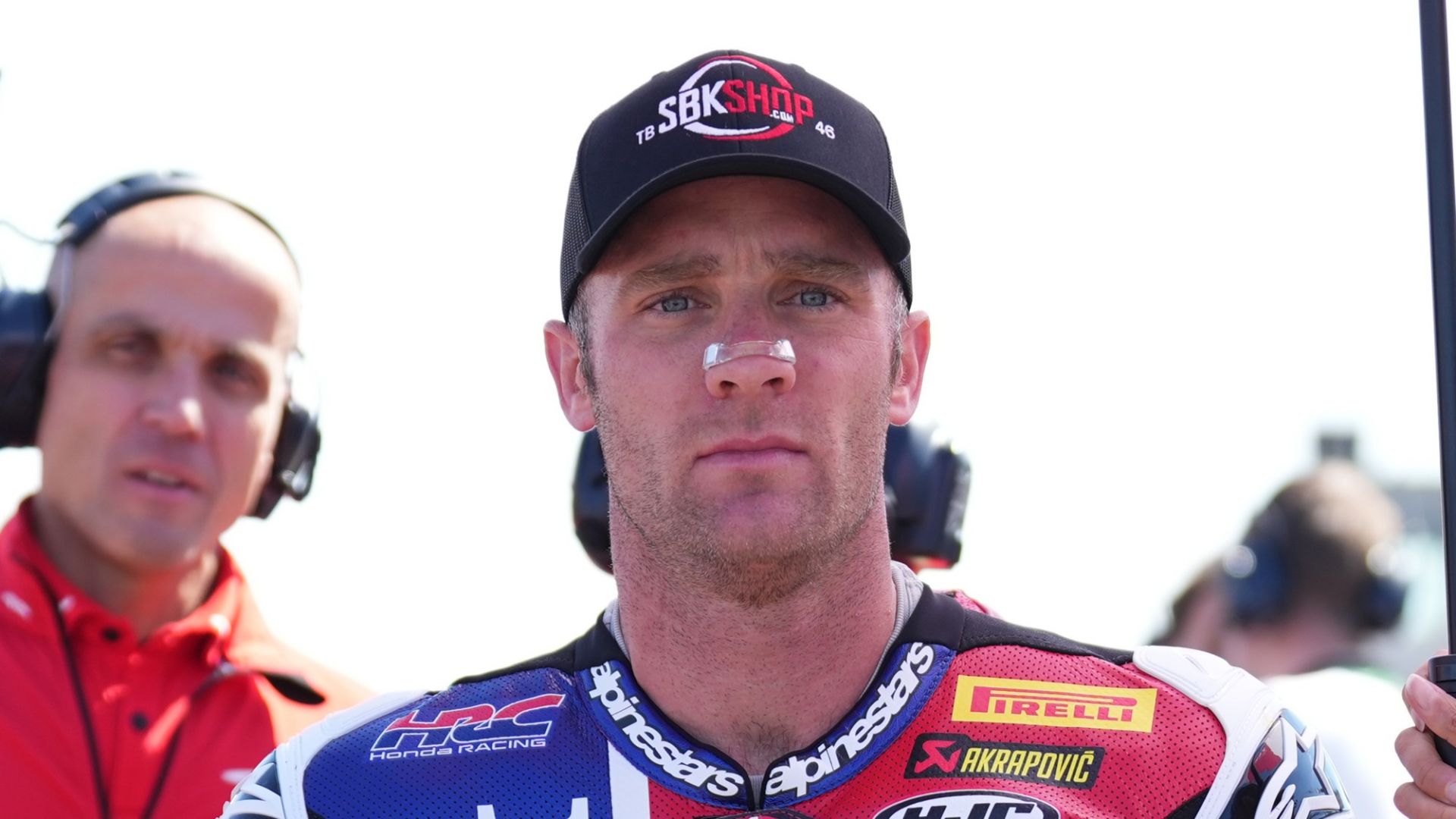 Former BSB Champion Tommy Bridewell confirms full-time Ducati WorldSBK ride. Photo courtesy WorldSBK
It is also a rookie season for Superbike Advocates Racing, a project launched by Australian Lee Khouri. Wellknown in the automotive world as the founder of Supercar Advocates and an avid Ducati collector, Lee's passion for the prestigious Italian brand left no doubt as to the machinery the team would field on track. Having cut its teeth in Australian Superbike with Glenn Allerton - and finishing the 2025 season a notable fifth overall - the team is excited to make the jump to the world championship.
"To officially step onto the WorldSBK grid in 2026 is an incredibly proud moment - not just for our team, but for Australia", comments Team Owner, Lee Khouri. "Superbike Advocates Racing will be the first Australianowned team in the history of the Superbike World Championship, and that's something that means a great deal to me personally. This project started with pure passion - passion for Ducati, for racing, and for building something that could compete at the highest level. What began in Australian Superbike has evolved into a world championship campaign much sooner than we originally planned, and that reflects the belief we have in the people around us."
Structurally, the team can count on the expertise of several key figures, not least Alan Jackson, who takes the helm as team manager. The former TT winner has managed teams competing across BSB, Endurance and road racing and offers the kind of support and insight that only a former racer can. Mick Shanley comes aboard as technical director, bringing a wealth of experience from his many years of operation in WorldSBK and MotoGP. Together, Alan and Mick have hand-picked a group of expert technicians ready to support Bridewell during his rookie WorldSBK season.
"WorldSBK is one of the most competitive championships in global motorsport. We're not entering to make up the numbers - we're here to build, to learn quickly, and to fight", Khouri concludes. "With Tommy's experience, the Ducati Panigale V4R, and the strength of our technical structure, we believe we can establish ourselves as a serious and professional operation from day one. To represent Australia and the United Kingdom on the world stage in this way is something I'm extremely proud of. This is just the beginning."
The stage is set and Superbike Advocates Racing is ready to perform - stay tuned as the team sets its sights on WorldSBK success!
https://www.superbikeadvocatesracing.com/
The post WSBK: Superbike Advocates Racing Confirms 2026 Entry appeared first on Roadracing World Magazine | Motorcycle Riding, Racing & Tech News.
Be there
Surveillance-based pricing (just for you!) will be the subject of this talk at 4pm Eastern today. Register and attend at that link.
Slay the Spire 2 will launch in early access next month. This sequel to the hugely popular 2019 roguelike deckbuilder hits early access on Steam beginning March 5, 2026. Along with releasing the teaser trailer above, developer Mega Crit shared some details about its goals for this phase ahead of the game's official release.
"Slay the Spire requires a lot of player feedback so we can balance content, add quality of life features, and make sure the game runs without issues," the developers explained. "Early Access is also a chance for us to test experimental features, try exotic designs, identify niche problems, and helps us make sure the game is headed in the right direction." Slay the Spire 2 is expected to be in early access for a year or two, or more generally "until the game feels great."
Mega Crit has also revealed that it will be introducing a new co-op mode where up to four people can team up. This gameplay option will feature some unique cards just for multiplayer as well as some team-wide synergies.
Some of the characters from Slay the Spire will be returning for the sequel alongside new ones. For anyone who hasn't yet experienced the original game, Slay the Spire is available on iOS, including as part of Apple Arcade. It's also on consoles and PC.
This article originally appeared on Engadget at https://www.engadget.com/gaming/slay-the-spire-2-will-enter-early-access-on-march-5-210338514.html?src=rss
Warning: This article discusses suicide and some research regarding suicidal ideation. If you are having thoughts of suicide, please call or text 988 to reach the Suicide and Crisis Lifeline or visit this list of resources for help. Know that people care about you and there are many available to help.
When someone dies by suicide, there is an immediate, almost desperate need to find something—or someone—to blame. We've talked before about the dangers of this impulse. The target keeps shifting: "cyberbullying," then "social media," then "Amazon." Now it's generative AI.
There have been several heartbreaking stories recently involving individuals who took their own lives after interacting with AI chatbots. This has led to lawsuits filed by grieving families against companies like OpenAI and Character.AI, alleging that these tools are responsible for the deaths of their loved ones. Many of these lawsuits are settled, rather than fought out in court because no company wants its name in the headlines associated with suicide.
It is also impossible not to feel for these families. The loss is devastating, and the need for answers is a fundamentally human response to grief. But the narrative emerging from these lawsuits—that the AI caused the suicide—relies on a premise that assumes we understand the mechanics of suicide far better than we actually do.
Unfortunately, we know frighteningly little about what drives a person to take that final, irrevocable step. An article from late last year in the New York Times profiling clinicians who are lobbying for a completely new way to assess suicide risk, makes this painfully clear: our current methods of predicting suicides are failing.
If experts who have spent decades studying the human mind admit they often cannot predict or prevent suicide even when treating a patient directly, we should be extremely wary of the confidence with which pundits and lawsuits assign blame to a chatbot.
The Times piece focuses on the work of two psychiatrists who have been devastated by the loss of patients who gave absolutely no indication they were about to harm themselves.
In his nearly 40-year career as a psychiatrist, Dr. Igor Galynker has lost three patients to suicide while they were under his care. None of them had told him that they intended to harm themselves.
In one case, a patient who Dr. Galynker had been treating for a year sent him a present — a porcelain caviar dish — and a letter, telling Dr. Galynker that it wasn't his fault. It arrived one week after the man died by suicide.
"That was pretty devastating," Dr. Galynker said, adding, "It took me maybe two years to come to terms with it."
He began to wonder: What happens in people's minds before they kill themselves? What is the difference between that day and the day before?
Nobody seemed to know the answer.
Nobody seemed to know the answer.
That is the state of the science. Apparently the best we currently have in tracking suicidal risk is asking people: "Are you thinking about killing yourself?" And as the article notes, this method is catastrophically flawed.
But despite decades of research into suicide prevention, it is still very difficult to know whether someone will try to die by suicide. The most common method of assessing suicidal risk involves asking patients directly if they plan to harm themselves. While this is an essential question, some clinicians, including Dr. Galynker, say it is inadequate for predicting imminent suicidal behavior….
Dr. Galynker, the director of the Suicide Prevention Research Lab at Mount Sinai in New York City, has said that relying on mentally ill people to disclose suicidal intent is "absurd." Some patients may not be cognizant of their own mental state, he said, while others are determined to die and don't want to tell anyone.
The data backs this up:
According to one literature review, about half of those who died by suicide had denied having suicidal intent in the week or month before ending their life.
This profound inability to predict suicide has led these clinicians to propose a new diagnosis for the DSM-5 called "Suicide Crisis Syndrome" (SCS). They argue that we need to stop looking for stated intent and start looking for a specific, overwhelming state of mind.
To be diagnosed with S.C.S., Dr. Galynker said, patients must have a "persistent and intense feeling of frantic hopelessness," in which they feel trapped in an intolerable situation.
They must also have emotional distress, which can include intense anxiety; feelings of being extremely tense, keyed up or jittery (people often develop insomnia); recent social withdrawal; and difficulty controlling their thoughts.
By the time patients develop S.C.S., they are in such distress that the thinking part of the brain — the frontal lobe — is overwhelmed, said Lisa J. Cohen, a clinical professor of psychiatry at Mount Sinai who is studying S.C.S. alongside Dr. Galynker. It's like "trying to concentrate on a task with a fire alarm going off and dogs barking all around you," she added.
This description of "frantic hopelessness" and feeling "trapped" gives us a glimpse into the internal maelstrom that leads to suicide. It also highlights why externalizing the blame to a technology is so misguided.
The article shares the story of Marisa Russello, who attempted suicide four years ago. Her experience underscores how internal, sudden, and unpredictable the impulse can be—and how disconnected it can be from any specific external "push."
On the night that she nearly died, Ms. Russello wasn't initially planning to harm herself. Life had been stressful, she said. She felt overwhelmed at work. A new antidepressant wasn't working. She and her husband were arguing more than usual. But she wasn't suicidal.
She was at the movies with her husband when Ms. Russello began to feel nauseated and agitated. She said she had a headache and needed to go home. As she reached the subway, a wave of negative emotions washed over her.
[….]
By the time she got home, she had "dropped into this black hole of sadness."
And she decided that she had no choice but to end her life. Fortunately, she said, her attempt was interrupted.
Her decision to die by suicide was so sudden that if her psychiatrist had asked about self-harm at their last session, she would have said, truthfully, that she wasn't even considering it.
When we read stories like Russello's, or the accounts of the psychiatrists losing patients who denied being at risk, it becomes difficult to square the complexity of human psychology with the simplistic narrative that "Chatbot X caused Person Y to die."
There is undeniably an overlap between people who use AI chatbots and people who are struggling with mental health issues—in part because so many people use chatbots today, but also because people in distress seek connection, answers, a safe space to vent. That search often leads to chatbots.
Unless we're planning to make thorough and competent mental health support freely available to everyone who needs it at any time, that's going to continue. Rather than simply insisting that these tools are evil, we should be looking at ways to improve outcomes knowing that some people are going to rely on them.
Just because a person used an AI tool—or a search engine, or a social media platform, or a diary—prior to their death does not mean the tool caused the death.
When we rush to blame the technology, we are effectively claiming to know something that experts in that NY Times piece admit they do not know. We are claiming we know why it happened. We are asserting that if the chatbot hadn't generated what it generated, if it hadn't been there responding to the person, that the "frantic hopelessness" described in the SCS research would simply have evaporated.
There is no evidence to support that.
None of this is to say AI tools can't make things worse. For someone already in crisis, certain interactions could absolutely be unhelpful or exacerbating by "validating" the helplessness they're already experiencing. But that is a far cry from the legal and media narrative that these tools are "killing" people.
The push to blame AI serves a psychological purpose for the living: it provides a tangible enemy. It implies that there is a switch we can flip—a regulation we can pass, a lawsuit we can win—that will stop these tragedies.
It suggests that suicide is a problem of product liability rather than a complex, often inscrutable crisis of the human mind.
The work being done on Suicide Crisis Syndrome is vital because it admits what the current discourse ignores: we are failing to identify the risk because we are looking at the wrong things.
Dr. Miller, the psychiatrist at Endeavor Health in Chicago, first learned about S.C.S. after the patient suicides. He then led efforts to screen every psychiatric patient for S.C.S. at his hospital system. In trying to implement the screenings there have been "fits and starts," he said.
"It's like turning the Titanic," he added. "There are so many stakeholders that need to see that a new approach is worth the time and effort."
While clinicians are trying to turn the Titanic of psychiatric care to better understand the internal states that lead to suicide, the public debate is focused on the wrong iceberg.
If we focus all our energy on demonizing AI, we risk ignoring the actual "black hole of sadness" that Ms. Russello described. We risk ignoring the systemic failures in mental health care. We risk ignoring the fact that half of suicide victims deny intent to their doctors.
Suicide is a tragedy. It is a moment where a person feels they have no other choice—a loss of agency so complete that the thinking brain is overwhelmed, as the SCS researchers describe it. Simplifying that into a story about a "rogue algorithm" or a "dangerous chatbot" doesn't help the next person who feels that frantic hopelessness.
It just gives the rest of us someone to sue.
Earlier this month, the FBI decided it was going to help Donald Trump steal back the election he's claimed for half-a-decade was stolen from him. The state whose Secretary of State was asked directly by the outgoing president in January 2021 to "find 11,780 votes" was raided by Trump 2.0, who still somehow thinks he can win the election he lost back in 2020.
It's not just revenge Trump is seeking. He's also hoping to find anything that will allow him to cast doubt on midterm election results now that it seems entirely possible the GOP might lose its majority in the legislature.
The FBI walked off with tons of stuff after its raid of the Fulton County election hub in Georgia. The raid — which was attended by the current DNI Tulsi Gabbard for no apparent reason — saw the Trump government seize as many 2020 ballots and voter records as possible. The stated reason for this raid was to collect evidence related to two alleged crimes: not retaining election records long enough and attempts to "intimidate voters or procure false votes/false voter registration."
One of several glaring problems with this raid is the fact that some of the criminal acts alleged have already surpassed the five-year statute of limitations. The rest of the glaring problems are far less subtle. Like Trump using the FBI and DOJ to engage in vindictive prosecution. And the FBI appearing to have deliberately mislead the magistrate judge to get this search warrant approved.
This declaration [PDF] by Ryan Macias, a project manager for the voting system used in Fulton County who also served as the Acting Director of the Voting System Program during the 2020 election, points out multiple flaws in the FBI's warrant affidavit — all of which it would be safe to assume were deliberate "errors."
The Affidavit asserts that there were five "deficiencies or defects with the November 3, 2020, election and tabulation of the votes thereof." The Affidavit concludes that "[i]f these deficiencies were the result of intentional action, it would be a violation of" Title 52 U.S.C. §§ 20511 (Criminal Penalties) and 20701 (Retention and Preservation of Records of Elections).
In all five areas identified by Special Agent Evans' Affidavit, there are a multitude of false or misleading statements and omissions. In fact, there are, as set forth below, over a dozen omissions of critical parts of the reports and related materials that I identified in paragraph 4 above. This is in addition to the absence of any recognition that much of what the Affidavit references as concerning are widely known as benign and common election practices. As noted there, all of those materials are publicly available and could have been referenced by Special Agent Evans. Even when Special Agent Evans cites to one of these sources, he repeatedly omits crucial facts and findings inconsistent with his characterizations. Once the statements and omissions in the Affidavit are corrected and based on my experience administering elections in accordance with the statutes cited in the Affidavit, the Affidavit loses any basis in reality.
The whole thing needs to be read, but here are just a couple of the things we're going to generously call "errors," even though they're really deliberate omissions. The criminal allegations allege ballot images weren't retained in violation of the law. But, as this declaration points out, the retention of images wasn't mandated by law in Georgia until 2021, which would be after the 2020 election. If images weren't retained, it was likely because election staffers obviously didn't think it was necessary to do so.
Second, the affidavit claims something is shady about the audits performed by county officials, insinuating that this somehow resulted in votes mysteriously swinging the state in Biden's direction. This declaration states the actual truth: "risk limiting audits" only aid in determining whether or not a recount might be warranted. Only official counts and recounts can actually alter voting results.
Fulton County's challenge [PDF] of the search contains even more information that indicates the FBI's search warrant application was crafted to basically trick a judge into authorizing an illegal search (all emphasis in the original):
First, the Fourth Amendment demands "probable cause"—not "possible cause." The Affidavit fails that constitutional requirement. Despite years of investigations of the 2020 election, the Affidavit does not identify facts that establish probable cause that anyone committed a crime. Instead, FBI Special Agent Evans (the "Affiant") all but admits that the seizure will yield evidence of a crime only if certain hypotheticals are true. See, e.g., Aff. ¶ 10 ("If these deficiencies were the result of intentional action, it would be a violation of federal law[.]"); ¶ 85 ("If these deficiencies were the result of intentional action, the election records . . . are evidence of violations[.]"). Unsupported by probable cause and dependent on unsubstantiated hypotheticals, Respondent's seizure violated the Fourth Amendment.
There's more (emphasis mine):
Second, instead of alleging probable cause to believe a crime has been committed, the Affidavit does nothing more than describe the types of human errors that its own sources confirm occur in almost every election—without any intentional wrongdoing whatsoever. Mislabeling an expected margin of error as "deficiencies" or "defects" cannot establish probable cause, let alone for a seizure of this magnitude.
Third, the Affidavit omits numerous material facts—including from the very reports and publicly-disclosed investigations that the Affiant cites—that confirm the alleged conduct was previously investigated and found to be unintentional. Moreover, the Affidavit not only fails to allege that any particular witness is reliable or credible; it omits discrediting information about those witnesses that was obviously available to the Affiant. These omissions are serious. The ex parte warrant process would be rendered a nullity if the government were permitted to hide material and probative facts that refute probable cause from a magistrate judge and nevertheless retain the fruits of its misconduct.
It then goes on to note that even if the affidavit wasn't more about what was deliberately left out of it, rather than what Kash Patel's FBI decided to include, it would still suck, constitutionally-speaking:
Fourth, even if the Affidavit established probable cause, the seizure of original election materials would be unreasonable and in callous disregard of the Fourth Amendment because (1) the statutes of limitation have lapsed on the only crimes under investigation; (2) the warrant violates Georgia's state sovereignty by effectively enjoining a pending state court proceeding and preventing Georgia from performing its constitutionally-mandated role in administering its elections; and (3) the Respondent improperly used the criminal warrant process to circumvent a pending civil lawsuit in which it requested the same records.
That last sentence is a particularly spicy zinger. It shows the administration will do anything to rack up a few rabble-rousing "victories," no matter how fleeting or Pyrrhic. This is a fully-cooked collection of gassed-up bigots and conspiracy theorists (or both!) who have managed to turn their extremely online "own the libs" bullshit into a 24/7 attack on the Constitution, the system of checks and balances, and anything else that stands in the way of their autocratic wet dreams.
What's standing between us and further destruction of the stuff that makes America great is a court system that doesn't actually seem to know what to do when it has to deal with an entire administration that refuses to play by the rules that have held this nation together for more than two centuries. It's time for the courts to dig deep and start breaking the glass on every judicial tool labeled "IN CASE OF EMERGENCY." Giving any of these fuckers the benefit of a doubt only allows them to dig in deeper.
The Complete Big Data and Power BI Bundle has 5 courses to help you learn how to effectively sort, analyze, and visualize all of your data. Courses cover Power BI, Power Query, Excel, and Access. It's on sale for $40.

Note: The Techdirt Deals Store is powered and curated by StackCommerce. A portion of all sales from Techdirt Deals helps support Techdirt. The products featured do not reflect endorsements by our editorial team.
NASA has released the findings from its investigation of the ill-fated crewed Boeing Starliner mission of 2024, and while it still isn't sure of the root technical causes, it's admitted that trusting Boeing to do a thorough job appears to have been a mistake. …

The recordings were captured at jazz clubs in New York and Philadelphia between 1961 and 1965
Photo by Francis Wolff
A fabled collection of John Coltrane live recordings dating back to the 60s are set to get their first official release this year.
The recordings featured on Tiberi Tapes were captured at jazz clubs in New York and Philadelphia between 1961 and 1965 by saxophonist Frank Tiberi, but had been stored away in a private collection until now. They will now be unleashed to the world as part of celebrations of what would have been Coltrane's 100th birthday this September, with an initial exclusive release scheduled for Record Store Day on 18 April and a wider release to follow in September.
Record label Impulse!'s...
The post John Coltrane Live Album 'Tiberi Tapes' Set for First Release appeared first on The Quietus.
If you want an even better AI model, there could be reason to celebrate. Google, on Thursday, announced the release of Gemini 3.1 Pro, characterizing the model's arrival as "a step forward in core reasoning."…

"These are MAGA airwaves now," seems clear enough that no one has to doubt FCC Chairman Brendan Carr's intent to keep an already reeling media landscape deep in the yellow.
During a Thursday interview on the Charlie Kirk Show, co-host Andrew Kolvet asked Carr why CBS had prevented Colbert from airing the Talarico interview.
The post FCC Chair wielding equal-time rule in service of Trump's agenda appeared first on Boing Boing.

Trump's white power-loving "Secretary of War" invited his white supremacist pastor to speak at the Pentagon. Doug Wilson is a guy who says slavery was just fine, women shouldn't vote, and that Muslim and Hindu folks are parasites.
"Doug Wilson routinely mocks the pope and the Catholic Church," the Catholic writer and Democratic operative Christopher Hale wrote on X.
The post Whiskey Pete invites a white supremacist to the Pentagon appeared first on Boing Boing.
Sony is closing Bluepoint Games, the studio behind the Shadow of the Colossus and Demon's Souls remakes, Bloomberg reports. Bluepoint's last major project was God of War: Ragnarok from 2022, which it co-developed with Sony Santa Monica.
According to Bloomberg, Sony decided to shut down the studio following "a recent business review." Around 70 employees will lose their jobs as part of the studio closure, which will officially happen in March. "Bluepoint Games is an incredibly talented team and their technical expertise has delivered exceptional experiences for the PlayStation community," Sony said in a statement to Bloomberg. "We thank them for their passion, creativity and craftmanship."
Following their work on Ragnarok, Bluepoint was reportedly tasked with developing a live-service game set in the God of War universe. That title was cancelled in 2025, alongside another game from Bend Studio. In the context of Sony's other live-service failures, the decision wasn't surprising. Sony shut down the servers for multiplayer shooter Concord just two weeks after its release. Not long after, it also closed Firewalk Studios, the developer behind the game.
Bluepoint Games was originally acquired by Sony in 2021, when it seemed like the studio's expertise in remaking and remastering classic PlayStation games could be a major asset going forward. Why that changed isn't entirely clear, but Sony's mismanagement of its pivot into and out of publishing premium online multiplayer games may have played a role. Some of Sony's studios are still experimenting with live-service mechanics. Guerilla Games recently announced an online co-op game set in its Horizon universe. Destiny 2 developer Bungie is also releasing its extraction shooter Marathon in March.
This article originally appeared on Engadget at https://www.engadget.com/gaming/playstation/sony-is-shutting-down-the-studio-behind-the-demons-souls-remake-195234213.html?src=rss
I just caught up on comments under an article I wrote several days ago, "Is Tesla Really In Trouble This Time?" There were many great comments from readers, but a few jumped out at me to stimulate this followup piece. The first one came from vensonata, who wrote: "The combined ... [continued]
The post Tesla Market Cap More Than Market Cap of Toyota, BYD, GM, Ford, Hyundai, Kia, Mercedes-Benz, Stellantis, Geely, Ferrari, BMW, Volkswagen Group, Honda, Nissan, Renault, XPENG, and NIO Combined appeared first on CleanTechnica.
One thing is clear: Either you are in lockstep with the US pro-fossil fuel energy policy, or you are the enemy and will pay the price. Created in the 1970s after the OPEC oil embargoes, the International Energy Agency was designed to collect data on who was producing oil and ... [continued]
The post IEA Focus On Clean Energy Gives US Officials Heartburn appeared first on CleanTechnica.
The other day, watching the below video, there was a little excitement to find out about an electric RV, but that quickly turned to dismay to find out it uses a gas generator to provide extra electricity. The RV in question is the 2026 Entegra Electric Class A Motorhome, which ... [continued]
The post An Electric Chevy BrightDrop Van For 50% Off? appeared first on CleanTechnica.
Weakening the hydrogen framework would threaten climate goals, grid stability, and the investment certainty needed to build a truly sustainable hydrogen market. 2025 marked an important milestone for EU hydrogen policy: with the entry into force of the Delegated Regulation (EU) 2025/2359 ('Low-Carbon fuel Delegated Act'), the EU hydrogen regulatory ... [continued]
The post Green NGOs & Renewable Fuel Producers: Commission Must Resist Pressure to Reopen the Rules Governing Renewable Hydrogen appeared first on CleanTechnica.
I've lived through many internet ages. In each stage of where the internet evolves and where humans spend their time, businesses and political actors step in and try to "game the system" for their benefit. It's not all about eyeballs and money, but, eventually, that's almost always what anything popular ... [continued]
The post Hacking AI — In Simple Ways — To Spread Misinformation appeared first on CleanTechnica.
Washington, DC — A broad coalition of health and environmental groups sued the Environmental Protection Agency today over its illegal determination that it is not responsible for protecting us from climate pollution and its elimination of rules to cut the tailpipe pollution fueling the climate crisis and harming people's health. The case, ... [continued]
The post Sierra Club, Partners Sue EPA Over Illegal Repeal of Climate Protections appeared first on CleanTechnica.
The updates are projected to save Oregonians hundreds of dollars each month on utility bills SALEM, Ore. — Today, the Oregon Building Code Division's Residential and Manufactured Structures Board (RMSB) voted to approve a package of updates to the state's residential energy code, including a requirement that new homes be built ... [continued]
The post Oregon Adopts New Building Codes to Reduce Energy Costs and Increase Energy Efficiency in Newly Constructed Homes appeared first on CleanTechnica.

A newly-leaked Labour Together report shows that the Starmeroid sabotage group continued to monitor the Canary for years after trying to destroy it. And, Skwawkbox was monitored too - although the geniuses at the shady group failed to spell it correctly. One thing is very clear: Labour Together have been running scared of journalists reporting on their connections and movements.
Evidently, any attention on what they got up to in pursuit of their aims - and how they funded it - clearly made Morgan McSweeney and company fearful of discovery. This is flagged in the preamble of the leaked report, which says that:
Labour Together's dossierrecent articles and blog posts…have contained more information than ever before, raising questions and concerns about the sources of the information.
The Morgan McSweeney faction's frank terror of left media, especially the Canary, was well and truly exposed in Paul Holden's excellent book The Fraud. That fear triggered McSweeney and his partner in crime Imran Ahmed to try to "destroy" the Canary.
The faction's fear of left media clearly didn't stop when the propaganda groups they set up managed to topple Jeremy Corbyn as Labour leader by sabotaging the 2019 general election - and came close to forcing the Canary to close.
McSweeney resigned in early February 2026 as Keir Starmer's chief of staff after years - as Holden exposed - of running covert campaigns against the left and its media. The immediate cause of his resignation was McSweeney's closeness to disgraced string-puller Peter Mandelson. It was a doomed attempt to protect McSweeney's boss Keir Starmer - but the scandals have just kept on oozing out ever since.
This week, Rupert Murdoch's Times 'broke' the news that McSweeney's outfit Labour Together paid tens of thousands to private investigators to spy on two Times hacks. It wasn't breaking; it wasn't even news. The Canary and others had already reported on it - and had reported six months earlier on Labour Together's spying on a number of left-wing journalists, as well as on author Paul Holden and former Mandela minister Andrew Feinstein.
Something bothering you, lads?The newly-leaked report shows just how much Labour Together was discomfited by what the Canary and others were digging up. The memo begins with some anxiety over who is watching their every move:
For both left- and right-wing influencers, Labour Together and CCDH sit at the centre of a nexus of conspiracy theories that involve government attempts to suppress free speech, increasing state censorship, the sabotaging of left- and right-wing leaders, and pro-Israel advocacy, among many other accusations.
Conspiracy theories? What is it about the Canary and other independent journalists that so bothers Labour Together? Perhaps that we're not in the pockets of billionaires or politicians, and actually report the truth as we find it?
The memo also confirms that the McSweeney group continued to monitor the Canary - with particular attention to how it exposed Imran Ahmed's sock-puppet groups. This was going on long before Holden's book was published, though Holden features too:

The report was prepared for Labour Together in December 2023, marked "Strictly Private and Confidential". Oh well. After introducing the Canary as one of the main outlets paying attention to Labour Together's actions from the start of Starmer's diseased tenure as Labour leader, and to Labour Together's links with the Israel lobby, it then turns to the exposure of McSweeney and Ahmed's shamelessly named fake-news campaigns [emphases added]:
Who is Imran Ahmed?December 2020: The far-left website The Canary published an article which focused on the Stop Funding Fake News campaign following its successful campaign urging corporations to stop advertising on The Canary website.
The article focused on the connection between SFFN and Morgan McSweeny [sic]. McSweeney was identified as one of the directors, alongside Imran Ahmed, and as Keir Starmer MP's Chief of Staff at the time. The article noted celebrity Rachel Riley's support for both SFFN and the Center for Countering Digital Hate (CCDH).
The article accused CCDH of being linked to a "number of figures on the Labour right" and suggested that McSweeney and Ahmed had been operating both campaigns for longer than the organisations were "willing to admit".
Labour Together is briefly mentioned as an organisation that shares its address with CCDH and is accused of being a grouping of Blue Labour and Labour Right figures - including Lisa Nandy at the time.
Like McSweeney, Imran Ahmed is one of the most shadowy figures on the Labour right. Initially a staffer for right-wing Labour horror Angela Eagle and desperate to protect Eagle from deselection by angry party members, Ahmed was at the centre of fake claims that left-wingers threw a brick through Eagle's office window. The whole thing was made up. The window was not Eagle's. There was never any evidence the left had anything to do with it. There was never even a brick. But following a pattern that was soon to become characteristic of Labour Together's operations, the corporate and state press were more than happy to amplify the false claims fed to them.
Ahmed then went on to co-found the Orwellian smear factory 'Stop Funding Fake News' (SFFN) to target the Canary. When that was no longer needed, SFFN morphed into the equally misnamed 'Centre for Countering Digital Hate' (CCDH). Ahmed moved to the US and touted CCDH's services to the anonymous wealthy and powerful to attack their opponents using similar tactics to those used against the Canary. He also specifically courted Israel and its donors, eager to target Palestine and the anti-genocide movement. Author Paul Thacker has accused Ahmed of working with or for UK intelligence services.
Given Ahmed's links to nefarious groups and his closeness to McSweeney, it's clear - and no surprise - that any scrutiny was unwelcome.
Shit out of luckThe Canary features numerous times in the memo, each time as a thorn in the McSweeney-Ahmed axis's side. In each case, the information exposed by our journalists about Labour Together's activities and personnel has subsequently been proven to be true, particularly by Holden's book, which was serialised by the Canary in the autumn of 2025.
When Jeremy Corbyn was still leader of the Labour party and the left media were central to his prospects of success, Morgan McSweeney told his fellow saboteurs, "kill the Canary before the Canary kills us". They came close, but they are now disgraced relics while the Canary is thriving more than ever. And, for good measure, so is Sk(w)awkbox.
Featured image via the Canary
By Skwawkbox

The Church of England should speak out and call on the prime minister to stop Rosebank. That's the demand from Christian Climate Action (CCA). The group held a 'die-in' outside St Paul's Cathedral on 18 February, which was Ash Wednesday, the start of Lent.
Ministers also used symbolic 'oil' instead of traditional ash to anoint activists with the sign of the cross as part of the peaceful vigil.
Archbishops urged to campaign against RosebankCCA has also written to the archbishops of Canterbury and York calling for their support in urging the government to refuse permission for the Rosebank oil field in the North Sea, stating:
As part of our Stop Crucifying Creation campaign, CCA is urging the Church of England to be a prophetic voice in this existential crisis and speak out against the fossil fuel companies that are driving the Climate Emergency.
Rev James Grote explained:
Climate change is crucifying creation through flood and drought, heat and storms. We must speak up with those who are suffering the loss of everything in our one and only planet.
If we are to continue to live in hope we have to act now, move away from fossil fuels, call out the oil and gas giants and stop Rosebank. The UK government must give us hope.
On Ash Wednesday, they held a 'die-in' where protesters shrouded themselves under white sheets, with banner messages that included "Don't Crucify Creation" and "Stop Rosebank," at the foot of the steps to the main entrance of St Paul's Cathedral.
Rev Helen Burnett said:
Ash Wednesday marks the beginning of Lent, which is the season of repentance and reflection. A time when Christians consider their commitment to living within the limits of the gospel which frees us to live in ways that bring justice and peace.
That's why we have chosen today to urge the Church to speak out against fossil fuel extraction and here in the UK that means stopping the Rosebank oil field from being developed.
The Church of England can 'Speak Truth to Power' and be a prophetic voice on climate, calling out oil and gas companies and government inaction on the climate and nature crisis.
Rosebank, the UK's largest undeveloped oil field, is back on the government's desk. It received approval in 2023, before Scottish courts ruled it unlawful. Norwegian state oil company Equinor reapplied for drilling permission in September 2025.
Following the completion of the Adura joint venture deal between Equinor and Shell in December, Adura has now assumed majority ownership of the field.
An application to develop Rosebank has been resubmitted, which will now be subject to the government's new climate test. This requires oil firms to account for the climate impact of burning the oil and gas they plan to extract.
Stop Rosebank campaigner Lauren MacDonald said:
We cannot open new North Sea oil and gas projects if we are to stay within the 1.5ºc threshold set out in the Paris Agreement, to which the UK is a signatory. In fact, Rosebank's vast CO2 emissions from burning oil and gas, would equate to what more than 700 million people living in the world's poorest countries produce in a year.
It's simply not possible to drill at Rosebank and uphold our climate commitments.
Not only this, Rosebank is a very bad deal for the UK. It won't lower bills and will do almost nothing to boost energy security, given that most of it is oil destined for export. It could also lead to a net loss to the Treasury of hundreds of millions of pounds, thanks to the enormous tax breaks for new drilling in the UK.
It is fantastic to see activists such as Christian Climate Action taking this issue to the highest level. It demonstrates how the Stop Rosebank campaign brings people from all walks of life together in unity and hope to save our planet.
Featured image via Angela Christofilou / Christian Climate Action
By The Canary

Former PM Gordon Brown has said that he dobbed former prince Andrew into "several UK police forces".
Brown wrote a five-page letter to various forces, including the Met, Sussex and Thames Valley, which he says contained "new and additional" information from the Epstein files. The ex-royal was arrested this morning on suspicion of 'misconduct in public office' — which carries a potential life sentence but does nothing for Andrew's and Epstein's victims.
Brown doesn't seem to have been asked quite why he had information from the Epstein files not previously available to police. Keir Starmer has helpfully added 'What the king said', insisting like Chuck that the "law must take its course".
The whole establishment now seems to be getting in on the Andrew act as some kind of ritual hand-washing of its own metastatic part in Epstein's decades of child-rape, trafficking and spying for Israel. Which isn't how they're describing it, of course — especially the Israel bit.
For more on the Epstein Files, please read the Canary's article on the way that the media circus around Epstein is erasing the experiences of victims and survivors.
Featured image via the ScottishGreens
By Skwawkbox

You've seen the claim on TikTok, in parenting forums, and in roughly a million Instagram infographics: "Your brain isn't fully developed until you're 25." It's the go-to explanation for everything from bad relationships to impulsive tattoos. The number 25, though, has almost nothing to do with neuroscience. — Read the rest
The post The "brain isn't done until 25" factoid is based on a funding cutoff appeared first on Boing Boing.

Your colon is lined with a layer of mucus. It's wet, it's slimy, and it keeps your stool hydrated enough to, you know, move along. Without it, everything dries out and gets stuck. Researchers at Nagoya University have now identified two species of gut bacteria that team up to devour this protective slime — and they think it could be the root cause of chronic constipation that laxatives can't fix, according to findings published in Gut Microbes. — Read the rest
The post Your chronic constipation might be caused by mucus-eating bacteria appeared first on Boing Boing.
Meta is shutting down the standalone Messenger website, according to a company help page. The website will disappear in April, though web users will still be able to send and receive messages within Facebook.
"After messenger.com goes away, you will be automatically redirected to use facebook.com/messages for messaging on a computer," the help page reads. "You can continue your conversations there or on the Messenger mobile app."
Users will be able to restore their chat history after switching to the app by entering a PIN number. This is the same PIN that was used to initially create a backup on Messenger. It can be reset for those who simply don't have the bandwidth to remember yet another six-digit code.
Many users have expressed discontent over the decision to shut down the standalone website, according to a report by TechCrunch. This is particularly true for those who have deactivated their Facebook accounts but continued to use Messenger.
This comes just a few months after Meta shut down Messenger's standalone desktop apps. At that time, Meta directed existing users to Facebook to continue using the service and not the dedicated Messenger website. In other words, the writing has likely been on the wall since October.
Messenger has had a long and storied history. The platform first launched as Facebook Chat all the way back in 2008. Facebook Messenger became a standalone app in 2011. The company has long-tried to make Messenger a thing outside of Facebook. It removed messaging capabilities from the main Facebook app in 2014 and began directing users to the Messenger app. Meta began reintegrating Messenger back into the Facebook app in 2023 and now here we are.
This article originally appeared on Engadget at https://www.engadget.com/apps/meta-is-shuttering-messengers-standalone-website-which-is-a-thing-that-exists-191808134.html?src=rss
The deregulation agenda being pushed by Germany's chancellor and Italy's prime minister is economically and ethically flawed
When the European Union launched its green deal in 2019, putting into law the goal of climate neutrality by the middle of the century, it showed strategic foresight as well as global leadership. Russia's war in Ukraine has starkly underlined the extent to which the continent's energy security - and its future prosperity - is dependent on the transition away from fossil fuels. Lately, however, EU leaders' environmental approach appears to be echoing the youthful St Augustine's plea on chastity: make us greener, but not yet.
The recent European Industry Summit in Antwerp made unusually big headlines thanks to Sir Jim Ratcliffe's xenophobic outburst over immigration. But it was also notable for fierce attacks on one of the most important pillars of EU environmental policy. The bloc's emissions trading system (ETS) - which makes polluters pay for the C02 they emit - has achieved dramatic results in driving down overall emissions since 2005 and encouraging green innovation. Worryingly, the German chancellor, Friedrich Merz, appeared to sympathise with demands from Sir Jim and other CEOs for a radical relaxation of the rules.
Continue reading...
His love for cycling reinvigorated, Alistair Fitchett spent much of 2025 colouring in maps.

Colouring The Lanes
Much of 2025 has been spent colouring in maps, recording roads and lanes down which I have cycled. Most of this colouring activity has focused on sheet 192 (Exeter and Sidmouth) of the Ordnance Survey 1:50000 First Series from 1974, although surrounding maps have also been touched by my pen on occasion. I suspect part of the reason for doing it is the need to evidence existence, just as writing these words is, whilst another might be the strain of completist collector in me. Whatever the reasons, the desire to colour in as many lanes as possible is strong and has, alongside investment in an electric road bike (originally as a means of getting back to health after a spinal issue, ahem, 'back' in 2024) rather reinvigorated my love for cycling.
The first assaults on the map are exercises in memory retrieval. What roads and lanes have I ridden in thirty three years of living in Devon? Quite a lot, as it turns out, and it is particularly gratifying to let loose with the highlighter pen on those larger roads that I would never choose to ride on now, like the A3052 from Sidmouth to Exeter. This was one of the first Devon roads that I cycled back in 1988 when I made a cycling tour of parts of the South West visiting musician and fanzine-writing friends. It is immeasurably busier these days and now it is mostly an obstacle to cross rather than something to travel along.
I do cross this road early on my ride of June 27th, which is the first of my targeted colouring routes (I'm aiming to fill in a bunch of lanes around the hills of Northleigh in the designated East Devon Area Of Outstanding Natural Beauty), and also one of the rare occasions when I take the bike in the car, riding out from the beach car park at Branscombe. The route ends up being 68km and 1600m of elevation gain and is gloriously rewarding. Around Harcombe, with its 22% inclines, a series of fluorescent pink signs decorated with stencils of dinosaurs punctuate Chelson Lane. Their meaning is never clear, but I assume them to be for different camp sites as there are vans and tents dotted in fields, whilst another sign promises a Fun Dog Show the following day in 'The Party Field'. Categories include 'Best Sausage Catcher', 'Waggiest Tail' and 'The dog judges would most like to take home'. I hope they do not succumb to the temptation.

Elsewhere on this ride I finally take the opportunity to go down past the Devenish Pitt Riding School, the signs for which C and I have seen many times on drives to/from swims at Beer and about which we usually say to each other "I'm Devenish Pitt" in the style of Steve Coogan saying "I'm Holbeck Ghyll" in series one of The Trip. As another aside, Devenish Pitt (retired Army Major, I think) is surely a character out of a great lost Golden Age detective story, no? In truth the riding school is utterly charming, tucked away on a typically steep hillside with views east to Farway and the river Coly winding its way towards the coast, where it merges with the Seaton wetlands and reaches the sea at Axmouth Harbour. This is where I eventually head, after several loops around the hills, following the Axmouth Road and riding over the old Axmouth Bridge. Built in 1877, it is believed to be the oldest surviving concrete bridge in England and on my map is still the only bridge across the river at this point.
July 2nd is a ride from home, out west and north this time on lanes I've ridden many times. The exception, and the main reason for this ride, is one very short stretch that leads down to and then back up from Pennicott Farm near Shobrooke. At the farm I've hit rush hour for the sheep, so gates are closed across the yard through which the lane passes. The farmer apologises, but it's fine to stand in the shade for a few minutes and watch others at work.
The following day I do a longer ride and fill in more new lanes in East Devon, finally detouring off the road from Hemyock up to the airfield at Dunkeswell, which I have ridden innumerable times, to visit the ruins of Dunkeswell Abbey. It's a glorious high summer day and I meet a couple from Swansea who have walked to the Abbey along the lane that skirts the Madford river. We talk of the not-so-ancient routine of 'two sleeps' at night, which the monks at the abbey would certainly have practised, and about the liberating pleasures of electric bicycles.
The 13th of August finds me out near Dunkeswell again, this time on a mission to colour in some of the lanes around Bolham Water and particularly to ride along what used to be one of the runways of the Upottery Airfield. The approach to the airfield from the north is on a narrow lane, even by East Devon standards, alternately potholed, scattered with gravel and/or muddy, even in one of the driest and hottest summers on record. Often there is grass growing down the middle, a sure sign of a lane less travelled. Old maps show the lane joining the ridge road at Clayhidon Cross, but since the construction of the airfield in WW2 there must have been little reason to travel along it. Then, like now, the only traffic must be for Middleton Barton farm, for the only other building, the quaintly named Trood's Cottage, is now a crumbling shell. The landscape that the lane crosses is largely wooded, dipping down to the Bolham River and then back up again to the airfield, which explains the lingering dampness. Emerging onto the remains of an airfield runway is quite an odd experience. The surface turns suddenly to concrete, the wind whips across the Blackdowns and the ghosts of American airmen and parachutists linger on the periphery, mixing with burnt out shells of caravans and motor cars, for the airfield now plays host to banger racing and monster truck shows. How times change.
It occurs to me now that I must have passed the Upottery airfield site back in 1988 on that first visit to the South West, for my ride to Sidmouth had started in Taunton and I must have ridden out on the Honiton Road, up Blagdon Hill and then across the ridge of the Blackdown hills. It must have been a headwind that day too, the struggle bleaching out all memory, and the proof that the suppleness of youth is no match for the motorised assistance of age. Still, it's good to piece these fragments of memory together and colour those routes some 37 years later.
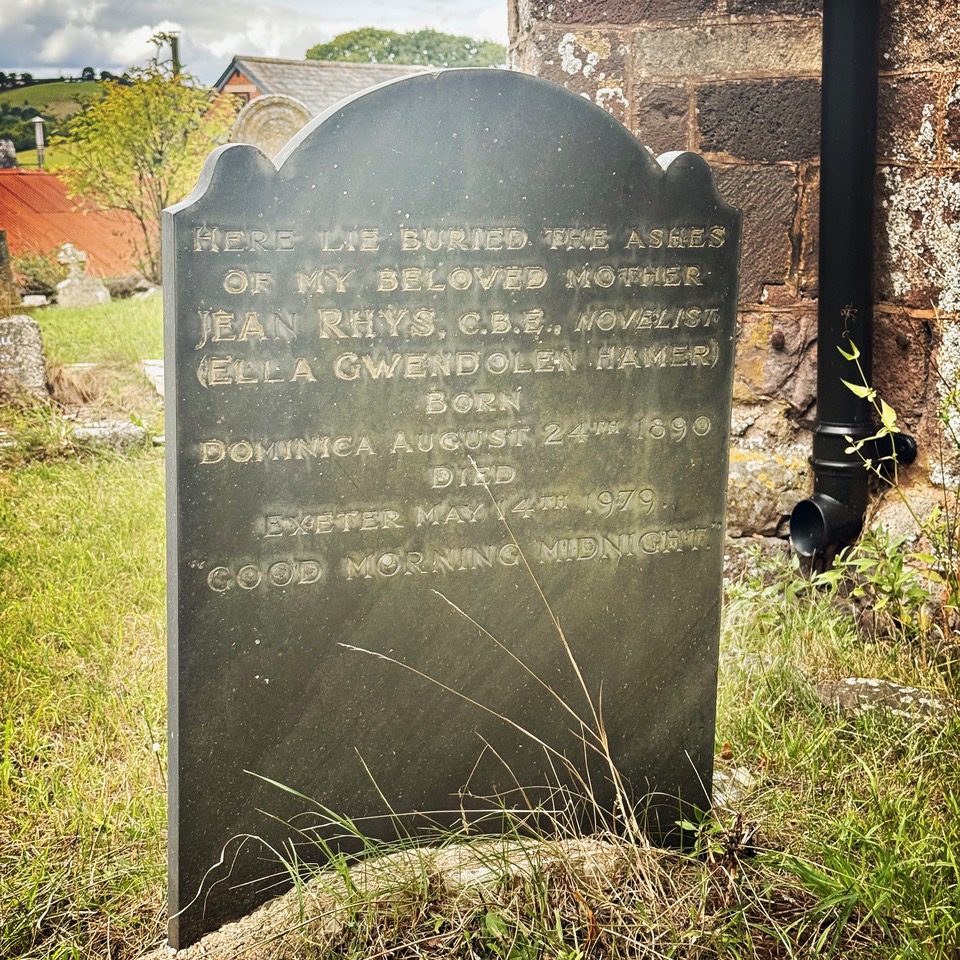
On September 4th, a day before driving to Scotland for my mum's 93rd birthday, I colour in some lanes on Sheet 191 (Okehampton and North Dartmoor), ostensibly to visit the grave of author Jean Rhys in the churchyard of St Matthew Church, Cheriton Fitzpaine. I also track down what I think was the cottage in which she lived, on the end of the terrace of Landboat cottages. There is no plaque commemorating the fact that Rhys lived here and I cannot decide if this is a shame or a relief. The latter, I think, for there is something rather splendid about keeping such mysteries at least partially caged.

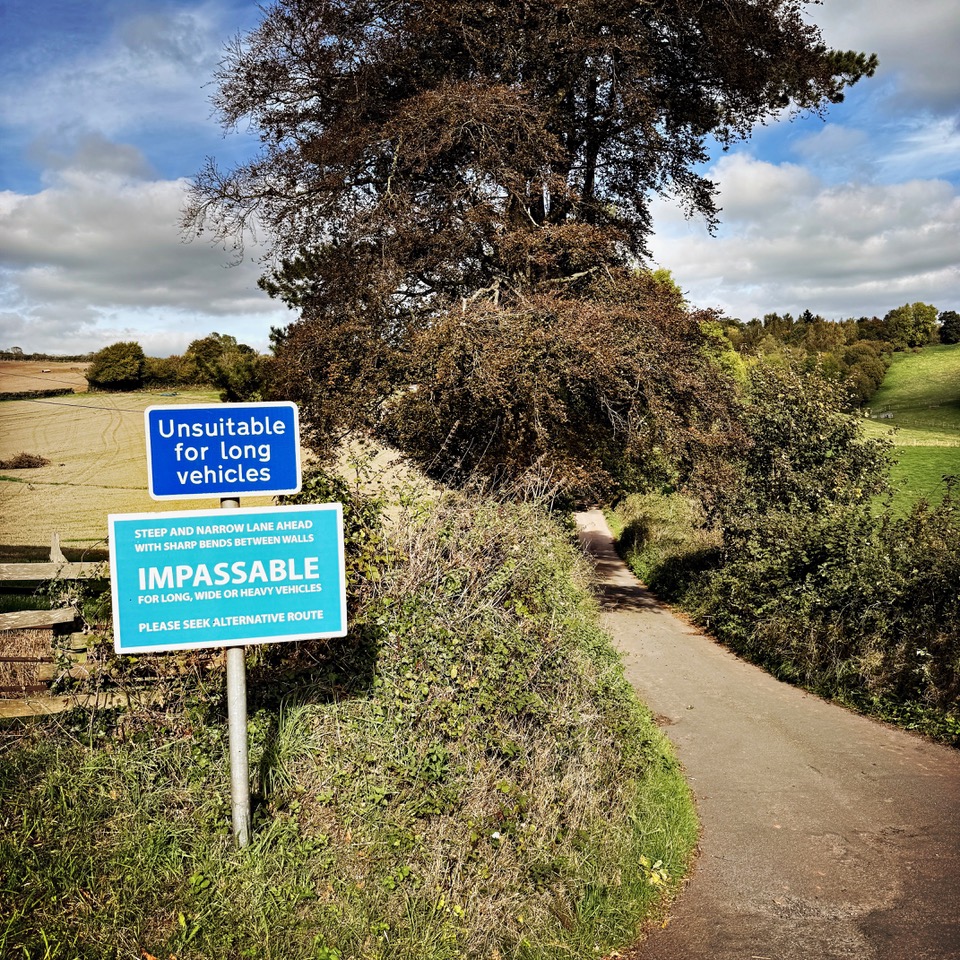
In October I do a few rides out east again, through Kentisbeare, where I always nod to the resting place of another author, E. M. Delafield, whose Diary of a Provincial Lady is one of my very favourite books. On these autumnal rides I head up from the village towards the pumpkin farm on Broad Road, colouring a lane at Windwhistle Cross, an 'Unsuitable for Wide Vehicles' one leading from Broadhembury to the A373 and a couple of others that lead only to farms.
On November 1st I visit the area again, this time to fill in a lane that climbs to Blackborough past All Hallows farm. The landscape is damp and grey and I am happy to not have ridden here a day earlier when the ghostly presence of generations past could easily be imagined haunting the crossroads where the finger sign is so weathered as to be almost illegible. The landscape is starting to look more like winter, though there are still enough leaves on the trees to feel like autumn is clinging on for a few more weeks at least.

Come the end of the month, however, and the low sunlight shining through bare branches insists that the year is reaching its conclusion. On a ride close to home I finally take the opportunity to ride along Harepathstead Road, a lane at the foot the Ashcylst Forest close to Westwood, where I am delighted to see that the festive Christmas Bouybles are hung once again from the large Oak tree at Wares Cottages. These remind me that whilst it will no doubt continue to be enormously enjoyable to colour in lanes not yet travelled, it is equally important to keep revisiting the treasures I know and love.
St. Peterburg's Ezor makes a welcomed return to the Citate Forms imprint this month, releasing a brand new 2-track EP which features his single 'Door Into'. The track combines modulated low end wobbles and atmospheric synth tones with high cutting drum breaks and playful one shots, bringing a dark and swampy bass-focused production overall. Previous […]


