

The European Union has formally inaugurated NanoIC, a semiconductor pilot line backed by a €700 million investment under the European Chips Act. The facility aims to accelerate the development of advanced chip technologies and strengthen Europe's position in the global semiconductor landscape. Situated at the research hub imec in Leuven, NanoIC is designed as an open pilot line where companies, research institutes, and startups can prototype and test cutting-edge components before commercial deployment. Unlike traditional closed fabs, the facility offers access to beyond-2-nanometre system-on-chip (SoC) technologies, early-stage process design kits, and advanced toolsets that bridge the gap between laboratory research…
This story continues at The Next Web
Since Apple finally put its mysterious and long-suffering Project Titan out to pasture, we've wondered what a Jony Ive-designed Apple Car might have looked like. Today, we might have a clue. This, though, is no Apple Car. It's the Ferrari Luce ("light" in Italian), the actual name for the EV formerly known as Elettrica, and I'm fresh from getting a walkthrough of the thing from Sir Ive himself. At a glance things look like you might have expected, but there are a few surprises here.
While Ferrari has sold hybrids in some form or another since 2013's LaFerrari, Luce (née Elettrica) will be the company's first all-electric machine. We got our first look underneath back in October, when we saw the chassis, battery pack and other details that pointed to this being a larger, more family-friendly machine than your average Ferrari. Last week, I got a look at the next major component, the interior, which comes courtesy of LoveFrom.
LoveFrom is the house that Jony Ive founded after leaving Apple in 2019. The obsessive design firm, which currently numbers about 60 employees, was acquired by OpenAI for $6.5 billion last year. LoveFrom has thus far taken on a medley of projects, like the $60,000 Linn Sondek LP12 turntable, but the Luce could be among the company's biggest projects so far — at least in terms of literal dimensions.
If you're familiar with the designs that Apple produced under Ive's tenure, particularly in the era beginning with the iPhone 4, you'll feel right at home here. The overall aesthetic is one dominated by squircles and circles, all with absolute, minute perfection and symmetry.
 Ferrari Luce interior designed by LoveFromFerrari
At first blush, it's a bit clinical, but dig deeper, start poking and prodding, and you'll see there's a real sense of charm here. Fun little details and genuinely satisfying tactility begin to reveal themselves. The key, for example, has a yellow panel with an E Ink background. Push the key into the magnetized receiver in the center console, and the yellow on the key dims, moving across to glow through the top of the glass shifter. It's meant to symbolize a sort of transference of life.
The shifter isn't the only thing that's glass. There are 40-odd pieces of Corning Gorilla Glass scattered throughout the cockpit, everything from the shifter surround to the slightly convex lenses in the gauge cluster. What isn't glass is aluminum, much of it anodized in your choice of three colors: gray, dark gray and rose gold.
Yes, all that sure does sound like I'm writing about a new iPhone and not the latest Ferrari. But where Apple has been pruning every physical control it possibly can from its devices lately, LoveFrom will insert some great tactility in the Luce. The shifter moves through its detents satisfyingly, the air vents open and close with a clear snick and the paddles behind the steering wheel pop with a great feel.
My favorite feature is the windshield wiper control, a little dial in the upper-right of the steering wheel face. It features a tiny lens that magnifies the current setting. It's actually magnifying one of four custom OLED panels, 200 ppi units from Samsung, cut and shaped to deliver LoveFrom's ornate style.
 Ferrari Luce interior designed by LoveFrom
The gauge cluster behind the steering wheel, or binnacle as it's more formally called here, is two OLED displays stacked on top of each other, with a physical needle sandwiched between serving as a pseudo-tachometer for this car without an engine. The gauges change and morph as you move from one mode to the next.
The center display is a 10.12-inch OLED perforated with plenty of holes to allow some pleasingly chunky toggle switches through, plus a glass volume knob. The little clock in the upper-right can turn into a stopwatch or a compass, with its needles swinging about depending on the mode. The whole central control panel pivots and swivels. Just grab the big handle below and drag it where you want it.
The attention to detail on everything is astonishing. Even the rails that hold the seats to the floor are gently shaped and anodized to match the rest of the interior.
Ive was on hand to unveil the interior, clearly a little nervous about showing all this for the first time. After five years of working confidentially on this topic, Ive said he was "enormously excited" and "completely terrified" to provide our first real glimpse at the Luce.
Marc Newson, who founded LoveFrom with Ive, said: "Jony and I share a really, really deep interest in automotive things and vehicles. Actually, I'd go so far as to say that that is probably a hobby of both of ours."
Both Ive and Newson own many vintage machines, and Ive said that modern cars "are missing some things that we love about our old Ferraris." Things like tactility. "It was very clear to us that we needed to figure out as many ways as possible to viscerally and physically connect to the interface," Ive said.
 Ferrari Luce interior designed by LoveFrom
So, while the Luce does have that pivoting touchscreen, it's far from the vehicle's primary interface. Ive said he hopes that physical connection and all the clever touches create a uniquely charming vehicle.
Ive told me that the LoveFrom team has genuinely enjoyed working with Ferrari. "It's been really lovely," he said, and he praised Ferrari CEO Benedetto Vigna's dedication to this project and where it might lead down the road. "Benedetto is an amazing engineer," he said, "he's really interested in what can be learned more broadly."
The biggest challenge might have been working within the automotive industry. Here, design, form and function are key, but safety is of the utmost importance. "It's very hard," Ive told me. "I've never worked in an area that's so regulated. Some of it's great, because you understand why, and people's safety is certainly important, but some of it drives you nuts."
It's far and away the most exciting and fresh interior I've seen outside of the ultra-rare machines like the $4 million Bugatti Tourbillon. But it's so clinically precise and refined that it lacks the rough and raw feel that typifies many classic Ferraris. Whether that's a good or a bad thing will be debated endlessly, and I look forward to reading your comments, but I do figure it'll go a long way to delivering the kind of new clientele that Ferrari must be targeting with the Luce.
 Ferrari Luce interior designed by LoveFrom
Ultimately, whether anyone will want one is hugely dependent on how good the rest of the car looks and how much it will cost. Those are questions we still can't answer, at least not until May, when CEO Vigna says we can expect the Luce's full reveal.
For Ive, though, it seemed like that won't be the end of the road for this automotive journey. "At the end of a project, there are two products. There's what you've made, and there's what you've learned. I've always been fascinated by what you've learned," he told me. "And honestly, we've learned so much."
This article originally appeared on Engadget at https://www.engadget.com/transportation/evs/inside-ferraris-luce-ev-the-jony-ive-interior-is-here-130000211.html?src=rss
Brussels has accused Meta of breaking EU competition rules by locking rival AI chatbots out of WhatsApp, opening the door to emergency action that could force the tech giant to let competitors back onto the platform.…
Welcome to the latest Best of Bylines newsletter. This time, we bring you a powerful response to Prime Minister Kier Starmer's claim that the UK "will not look away" when women and girls are trafficked and abused by powerful men. He was talking about Jeffrey Epstein, following revelations about his ongoing relationship with Lord Mandelson. Yet, for several months, Bylines Network publications have carried stories from survivors of another powerful man - one based in the UK and whose victims are still seeking justice 30 years after the scandal of his abuses first became public.
Mohammed Al Fayed presided over the abuse of more than 400 women and girls whilst running his Harrods empire. Survivors have been bravely telling their stories and explaining why they feel the justice system has failed them, in Bylines Cymru, Central Bylines, Sussex Bylines and Yorkshire Bylines. MPs have championed their cause and on Friday, we published Isbella's immediate reply to the Prime Minister's statement that his government would "not shrug our shoulders" in the face of such atrocities:
Today, we bring you a response from another survivor - Shanta Sundarson, who reveals why she believes requests for a statutory inquiry into the allegations linked to Harrods, the late Mohammed Al Fayed, and associated institutions, have been deflected. It's a powerful article that raises far-reaching questions about this case and the commitment of the government to take action in support of abuse and trafficking survivors.
You can read Shanta's words or watch her video below, recorded the day after Kier Starmer's speech. Bylines Network is here to champion the voices of unheard citizens - if you think this story matters as much as we do, please share it and subscribe to receive the stories that matter directly to your inbox.
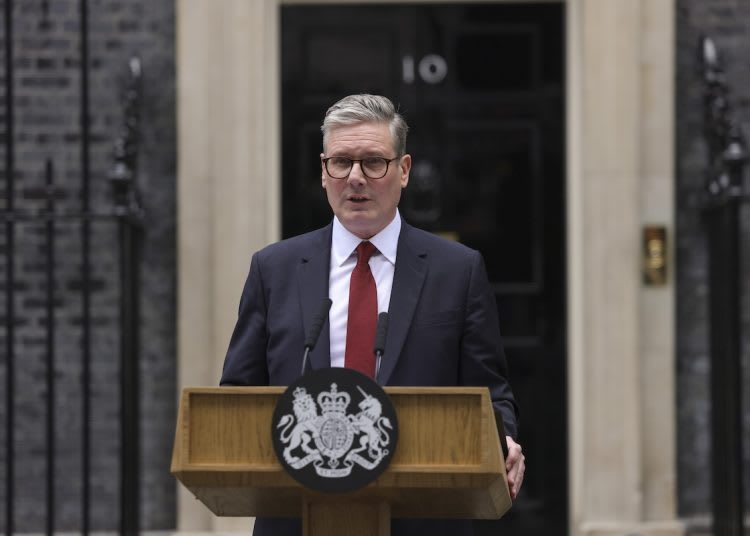 By Kirsty O'Connor / No 10 Downing Street - Prime Minister Sir Keir Starmer arrives at Number 10 Downing St, OGL 3, Link
By Shanta Sundarson.
On 27 May 2025, I wrote to the prime minister, Keir Starmer MP, requesting the establishment of a statutory public inquiry under the Inquiries Act 2005 into allegations linked to Harrods, the late Mohamed Al Fayed, and associated institutions. An inquiry into systemic abuse, institutional failure, and state response failures. In other words, the failures that allow exploitation to persist not because of ignorance, but because power, proximity, and reputation are treated as a shield.
It was not a rhetorical appeal. It was not an attempt to weaponise public outrage. It was a formal request to invoke a legal mechanism designed specifically for moments when public confidence has been compromised and when systemic failures demand scrutiny.
What followed has not been a decision, but a deflection.
And the longer the government avoids providing a clear answer, the more serious the question becomes: has the prime minister effectively refused a statutory inquiry - and if so, why?
A request for accountability, not political theatre
I contacted Downing Street on behalf of survivors seeking justice and public accountability in relation to detailed and consistent allegations spanning over 30 years, that are increasingly difficult for Britain to ignore.
Hundreds of survivors have now come forward with credible accounts of:
a multi-decade system of organised sexual abuse and exploitation;
intimidation, threats of harm, and retaliation for disclosure;
the use of non-disclosure agreements (NDAs) and institutional pressure to suppress complaints;
failures within Harrods' management to intervene or safeguard;
failures by public bodies to investigate, prosecute, or meaningfully respond.
These allegations are not isolated. They describe patterns. And patterns matter because they point beyond individual perpetrators toward institutional ecosystems that enable harm.
The effective muting of survivors through these mechanisms describes an architecture of control that obstructs justice and prevents others from coming forward.
These are the dynamics that have surfaced in other national scandals. They are the dynamics of institutional abuse.
Trafficking allegations cannot be managed quietlyMy request also referenced deeply troubling reports involving human trafficking, covert surveillance, and intimidation of survivors and whistleblowers.
The allegations include the transportation of employees or prospective employees to and from Harrods or other locations, and recruitment into fabricated roles with proximity to Mohamed Al Fayed and members of his family, for the purpose of sexual exploitation.
Such tactics resemble coercive mechanisms associated with organised criminal networks: a blend of grooming, intimidation, dependency, isolation, and control. If these accounts are even partially true, they raise urgent questions not only about criminal conduct, but about institutional complicity and state failure.
The UK government cannot credibly claim that violence against women and girls is a national emergency while allowing allegations of this scale to be processed as though they are merely an employment dispute or a corporate reputational matter.
A specific and lawful requestThe Inquiries Act 2005 exists precisely because there are circumstances where public accountability cannot be achieved through criminal trials alone.
A statutory inquiry has powers that matter:
to compel witnesses
to require disclosure of documents
to take evidence under formal procedures
to examine institutional and regulatory failures
to establish a public record
The point of such an inquiry is not to replace criminal justice, but to confront systemic breakdown: the failures of organisations, regulators, police, and political decision-makers that allow abuse to persist.
I explicitly requested a survivor-centred inquiry to determine how abuse could allegedly continue within a high-profile British institution over decades, and to examine the actions and omissions of those in positions of responsibility.
The proposed scope included not only internal safeguarding failures at Harrods but potential criminal liability for acts not currently addressed under compensation mechanisms, such as unlawful surveillance, intimidation, harassment, drugging with intent to commit sexual abuse, false imprisonment, and trafficking for sexual exploitation.
I also urged examination of the knowledge, involvement, and potential culpability of Mohamed Al Fayed's estate and close associates, and the conduct of law enforcement and regulatory bodies, including whether there was corruption, misconduct, or wilful failure to act.
I further raised the issue of NDAs - how they may have been used not simply as private settlement tools, but as institutional instruments of suppression.
And I made clear that survivors and advocates were willing to participate in scoping discussions and provide supporting materials, including anonymised testimonies.
This was not a vague appeal. It was a structured request.
The Home Office replied - but did not answerOn 30 June 2025, I received a response from the Home Office Interpersonal Abuse Unit, referencing my letters to the Prime Minister.
The response began with standard acknowledgements of the devastating impact of sexual violence and trafficking, the importance of treating victims with dignity, and the expectation that investigations be thorough.
Then it pivoted to the familiar shield:
"The Government and its Ministers are unable to intervene in, or comment on, the circumstances of individual cases."
But I did not ask ministers to intervene in an individual case. I asked the prime minister to exercise a statutory power to establish an inquiry into systemic failures.
The reply then invoked the operational independence of police and courts, and claimed that inquiries require careful consideration, particularly where there may be ongoing proceedings.
This is neither a refusal nor an acceptance. It is a carefully constructed non-answer: a generic template response. It is not a clear response to a formal statutory inquiry request.
It is policy language in place of accountability.
Strategy has become a substitute for actionThe Home Office letter closed with statements about violence against women and girls being a top government priority and the development of a new cross-government strategy.
For decades, institutions have responded to scandal with new strategies, frameworks, and reviews - while survivors are left navigating hostile legal processes, private compensation schemes, and the quiet erosion of evidence.
Britain does not suffer from a lack of strategies. It suffers from a lack of consequences.
A national strategy cannot compel disclosure. It cannot subpoena documents. It cannot compel testimony. It cannot expose who knew what, when, and what was ignored.
A statutory inquiry can.
If the government genuinely views violence against women and girls as a national emergency, it must demonstrate that commitment not only through future strategy documents but through meaningful examination of historic institutional failures.
Otherwise, the phrase becomes empty: a headline without substance.
Help us give a voice to survivors
We're proud to enable citizens like Shanta to speak truth to power. We are free to publish and share stories like this because we are also proudly independent - no corporate owners or billionaire backers. But it costs us at least £150,000 a year to run our network. We're proud to give a platform to survivors of abuse and injustice. Support journalism by the people, for the people. Become a Friend of Bylines Network. For as little as £3.50 a month, you'll get behind-the-scenes insights, chances to engage with our editorial teams, access to special events, merchandise, and more. Sign up by clicking the button below, or upgrade your Substack subscription.
Become a Friend of Bylines Network
If survivors matter in New York, they matter in London
British political commentary is saturated daily with moral certainty about Jeffrey Epstein and his associates.
In the headlines about Peter Mandelson - whether he should testify, about who knew what and when - politicians speak with justified outrage about a system that enabled a powerful abuser abroad.
Epstein's survivors deserve seriousness, truth, and accountability.
But on British soil, hundreds of women have now come forward with consistent, credible accounts of exploitation linked to Mohamed Al Fayed and facilitated through Harrods, one of the most recognisable institutions in British public life.
Yet there seems to be no urgency, no calls for testimony, no political demand for a full public reckoning for them.
If politicians are sincere about accountability, then it cannot stop at the Atlantic.
If it is a scandal when powerful men exploit women through wealth, access, and institutional protection in New York, then it is also a scandal when it happens in London, operating openly for decades inside a flagship British institution.
If survivors matter in the Epstein case, then they matter here too.
Right now, it is hard to escape the impression that some scandals are treated as politically convenient to condemn, while others - closer to home, implicating British institutions - are quietly encouraged to fade into silence.
Four parliamentary questions that must be put on the recordOne of the most effective ways to force government accountability can be for MPs to table parliamentary questions - forcing the prime minister to place the government's position on the public record. Journalists, too, should be asking these same questions of government. The four questions that the prime minister needs to address are:
Decision Status: Has the prime minister considered a request dated 27 May 2025 for the establishment of a statutory public inquiry under the Inquiries Act 2005 into allegations of sexual abuse, institutional failure and state response failures linked to Harrods and Mohamed Al Fayed? On what date was that request considered?
Criteria Applied: Can the prime minister confirm what criteria were applied in deciding whether to establish a statutory public inquiry under the Inquiries Act 2005 in response to correspondence received on 27 May 2025 concerning allegations linked to Harrods and Mohamed Al Fayed?
Compulsion Powers: Can the prime minister describe what assessment was made of the necessity for statutory powers of compulsion under the Inquiries Act 2005 in relation to allegations of systemic abuse and institutional failure linked to Harrods and Mohamed Al Fayed?
Reasons (if refused): Can the prime minister say, if the Government has decided not to establish a statutory public inquiry under the Inquiries Act 2005 in relation to allegations linked to Harrods and Mohamed Al Fayed, what the legal basis for that decision is?
These questions do not demand political opinion. They demand administrative truth.
They are reasonable, restrained, and unavoidable.
A familiar pattern of delayBritain has seen this pattern repeatedly: Jimmy Savile. Rotherham. Hillsborough. Grenfell and others.
In each case, there were warnings. In each case, institutions denied, deflected, delayed, and minimised until public pressure became impossible to withstand. And in each case, the eventual inquiries exposed not only the original harm but the systemic failures that allowed it to continue.
The Harrods and Al Fayed allegations now sit firmly within that territory.
The question is no longer whether the allegations are 'serious enough'. The scale, duration, and reported methods of coercion and silencing make this an overwhelming matter of public interest.
The government must provide a clear decisionIf the British government is serious about violence against women and girls as a national emergency, then it cannot continue to respond to survivors with generic letters and strategy language. A letter from the Home Office is not a decision from the prime minister.
If the government intends to refuse a statutory inquiry, it must state so plainly, provide reasons, and identify the legal basis.
If it is actively considering the request, it must confirm that fact and provide a timeline.
If it has already considered the request, the public deserves to know when, by whom, and on what basis.
Silence is not neutral. Silence is a tactic.
Survivors know this. Institutions rely on it.
Delay exhausts victims, fragments evidence, and allows public interest to fade. It is one of the oldest tools of institutional self-preservation.
This is not a request for sympathy. It is a request for accountability.
The government must directly answer the question placed before it.
And it must answer it now.
Corteva will discontinue a mixture of Agent Orange and glyphosate, but another of its herbicides will still use Vietnam war-era defoliant
The chemical giant Corteva will stop producing Enlist Duo, a herbicide considered to be among the most dangerous still used in the US by environmentalists because it contains a mix of Agent Orange and glyphosate, which have both been linked to cancer and widespread ecological damage.
The US military deployed Agent Orange, a chemical weapon, to destroy vegetation during the Vietnam war, causing serious health problems among soldiers and Vietnamese residents.
Continue reading...Storm Marta sweeps Iberian peninsula just days after Storms Kristin and Leonardo brought deadly flooding and major damage
Spain and Portugal have endured another storm over the weekend, just days after the deadly flooding and major damage caused by Storm Kristin and Storm Leonardo last week. Storm Marta passed over the Iberian peninsula on Saturday, bringing fresh torrential rain and killing two people. Storm Kristin killed at least five people after it made landfall on 28 January with Storm Leonardo claiming another victim last Wednesday.
The outlook for this week is for more rain across Spain, Portugal and France, especially across north-west Portugal, where more than 100mm is possible during the first half of the week. Some of the heaviest of the rain will transfer to southern Italy and western parts of Greece and Turkey later in the week.
Continue reading...
The EU could take "interim measures" against WhatsApp as it investigates AI providers' access to the app. On Monday, the EU's regulatory arm announced its "preliminary view" that Meta, WhatsApp's parent company, violated antitrust laws by blocking third-party AI assistants from operating on WhatsApp.
The European Commission's is concerned that Meta's actions will limit competitors from entering the AI assistant market. "We must protect effective competition in this vibrant field, which means we cannot allow dominant tech companies to illegally leverage their dominance to give themselves an unfair advantage," Teresa Ribera, executive vice-president for Clean, Just and Competitive Transition said in a statement.
Ribera continued: "AI markets are developing at rapid pace, so we also need to be swift in our action. That is why we are considering quickly imposing interim measures on Meta, to preserve access for competitors to WhatsApp while the investigation is ongoing, and avoid Meta's new policy irreparably harming competition in Europe."
The issue arose in October when Meta announced updates to its WhatsApp Business Solution Terms. According to the European Commission, the January 15 update would "effectively" make Meta AI the only AI assistant available on WhatsApp. The regulatory agency opened an investigation into the matter on December 4.
Today's update stands as a warning to Meta that the European Commission initially believes the company has violated antitrust regulation. A final decision is still to come. It also gave Meta a chance to respond to the allegations — which it swiftly did.
"The facts are that there is no reason for the EU to intervene in the WhatsApp Business API," a Meta spokesperson told Reuters. "There are many AI options and people can use them from app stores, operating systems, devices, websites, and industry partnerships."
This article originally appeared on Engadget at https://www.engadget.com/big-tech/eu-warns-meta-over-blocking-rival-ai-chatbots-on-whatsapp-121708895.html?src=rss
FOSDEM 2026 The creators of security software have encountered an unlikely foe in their attempts to protect us: modern compilers.…
European techies looking for the biggest payday are far better off in Switzerland than anywhere else, with average salaries eclipsing all other countries on the continent.…
Brits will soon pay more to legally watch the BBC's output than to subscribe to some of the world's biggest streaming services, after the UK government confirmed the TV license fee will climb to £180 a year from April.…

Off the back of an incendiary debut record that was one of 2025's best rock albums, Leather.head speak to Cal Cashin about the importance of keeping things political, uncompromising collaborations with poet Zia Ahmed, the reclamation of emo and more
Leather.head's Mud Again, their incendiary self-released debut, was one of the finest and most fully realised rock albums of 2025. The real deal.
Across its 37 minutes, the South London rascals' fractured collage of blasted Slint guitars and explosive brass arrived perfectly formed. A cocktail of Midwest emo, jazzy post rock and hellfire punk rock, the album is made up of eight jagged sound-worlds that live and breathe and wheeze and writhe with the whims of the group creating them.
This chemistry, this...
The post Direct Action Gets the Goods: An Interview with Leather.head appeared first on The Quietus.
Lyft has officially introduced teen accounts for ages 13 to 17. This is a rideshare feature in which teenagers can request their own rides, which is similar to Uber's pre-existing platform.
Teens request the rides on their own, but parents can keep an eye on things every step of the way. Lyft says that parents or guardians can see every ride in real time and manage the account. They also get updates at pickup and drop-off and the app allows communication with the driver when needed.
This is a rideshare service for teens, so there are several new safety features. The drivers must "meet the highest standards" on the platform. Lyft says they get annual background checks and must have "proven safe driving records, positive passenger interactions and experience behind the wheel."
The teens have to enter a PIN to ensure the correct rider gets in the car, which is something Lyft has been experimenting with for adults. Audio recording of the ride is on by default, for an added layer of safety.
Lyft Teen is available right now, though not everywhere. The company has launched the platform in 200 markets, including New York City, Chicago, Atlanta and Miami, among others. It's coming to more cities as the year winds on.
This article originally appeared on Engadget at https://www.engadget.com/apps/lyft-rolls-out-teen-accounts-with-enhanced-safety-protections-110002761.html?src=rss
YouTube Music has started putting lyrics — a previously free feature introduced in 2020 — behind a paywall, according to multiple users and 9to5Google. In the latest update, the "Lyrics" tab in the Now Playing screen displays a warning message: "You have [x] views remaining. Unlock lyrics with Premium." Free users get lyrics for five songs, then after that, will only see a few lines before the rest of the song is blurred.
Google has been testing the feature since at least September with a limited number of users, according to previous reports. It's been speculated that YouTube may have made the change to recuperate costs spent with lyric aggregators like Musixmatch. Spotify also put lyrics behind its Premium paywall in 2024, but a user backlash forced it to reinstate the feature for free users.
Google has yet to confirm the change, and while it appears to be a larger rollout, the feature change could still be in testing. YouTube Music's Premium subscription costs $10.99 in the US with ad-free playback, offline downloads, AI features and more — the same as its main rivals Spotify, Apple Music and Amazon Music.
This article originally appeared on Engadget at https://www.engadget.com/entertainment/music/youtube-music-starts-limiting-lyrics-for-free-users-101258311.html?src=rssApple's AirTag makes it easy to keep tabs on everyday items like keys, wallets and bags, but the tracker itself is only part of the equation. The best AirTag accessories help you attach it securely, protect it from wear and tear and fit it naturally into how you carry your stuff. A good holder can make the difference between an AirTag that's always with you and one that's easy to forget.
Accessories range from slim wallet inserts and low-profile key rings to more rugged mounts designed for bikes, luggage or pet collars. Materials vary just as widely, from leather and silicone to hard plastic shells built for travel and outdoor use. Many options also come in multiple colors and finishes, making it easy to balance durability with a look that matches your gear. We've covered the best AirTag accessories available now, so you can find the right fit for how you use your tracker.
AirTag holder FAQs Why do AirTags need a holder?
AirTags need a holder because they do not have built-in keyring holes like Tile, Chipolo and other Bluetooth trackers do.
How do you attach an AirTag to things?You'll need a holder or case to attach an AirTag to your stuff. If you're comfortable slipping an AirTag into an interior pocket of a bag or coat, you can do so without an extra accessory. But if you want to use one to keep track of your keys, wallet, backpack or even your pet on their collar, you'll need an accessory that can accommodate that use case.
Do AirTag holders affect tracking performance?No, AirTag holders should not affect tracking performance.
Do AirTag holders protect against scratches and impacts?Yes, AirTag holders can protect against scratches and impacts. Many AirTag cases encircle the edge of the tracker only, leave the two disk sides exposed. For the most protection, look for an AirTag holder than goes around the entire Bluetooth tracker like a sleeve.
This article originally appeared on Engadget at https://www.engadget.com/computing/accessories/best-apple-airtag-cases-holders-accessories-123036404.html?src=rss
Brussels is digging into a cyber break-in that targeted the European Commission's mobile device management systems, potentially giving intruders a peek inside the official phones carried by EU staff.…
FOSDEM 2026 Amid growing interest in digital sovereignty and getting data out of the corporate cloud and into organizations' ownership, the Matrix open communication protocol is thriving.…
You find them in the strangest places.
Barney, the Barn Elms plane (270? years old)
The London plane (Platanus x hispanica) is the capital's most common tree despite being non-native - a hybrid of American sycamore and Oriental plane. It proven particularly resilient to polluted air, the peeling bark an ideal way to shed contaminants, thus planes have been planted along many an avenue since the 18th century. London's tallest plane is also believed to be its oldest, a proper girthy specimen at Barn Elms, and to find it you have to wander into a huge sports ground and hunt for the leftover patch of woodland in the middle.

Barn Elms is seriously busy on a Sunday morning as a steady stream of parents arrive in the car park to deliver their offspring to multifarious sporting activities. They hop out of their 4×4s and tie their boots before dashing off to football, rugby, tennis, lacrosse, pickleball or whatever, scattering to one of umpteen pitches across the 52 acre site. Ignore them and walk out past the changing rooms and cinder track to an unmarked gate by the fishing lake. Beyond is a rectangular scrap of woodland just large enough to get lost in, and at its centre a taller tree than all the rest which is Barney the Barn Elms plane.

It has the knobbly flaking trunk planes are known for, also bulbous protrusions aplenty as a result of centuries of growth. Stomp across the undergrowth and you can actually touch it, also walk right around it, staring upwards to where the trunk divides into elegant multiplicity. In its highest branches I saw native birds not yet embarked on their spring courting, also squawking green parrots bringing the ancient plane right up to date. I had wondered if winter was the ideal season to be visiting an old tree, but had I come later in the year I'd only have heard the birds and would never have appreciated the plane's majestic silhouette.

Only when I got home did I discover that the maze of muddy paths I'd been following was really the site of a former mansion and its landscaped garden. Barn Elms was originally a Tudor hideaway accessible only by river, the estate purchased in 1750 by Sir Richard Hoare, a wealthy banker and former Mayor of London. He planted a fine avenue of trees down to the river and also (it's believed) this plane tree, the species then very much an innovative peculiarity. The Hoares moved out in 1827 when the opening of Hammersmith Bridge caused a main road to divide their land, and a disastrous fire in 1954 led to demolition of their former manor. Now only Barney lives on, 35m tall and 8½m around, in glorious woody isolation.
The Fulham Palace Holm Oak (500? years old)
Across the river, but annoyingly half an hour away on foot, are the grounds of Fulham Palace. This has been the official home of the Bishop of London for over 1300 years, so is thus perhaps the ideal place to find some very old plants. Nobody's quite sure when this holm oak was planted but it's likely to have been by Bishop Grindal (1553-1559), a budding botanist who grew grapes for royalty and introduced the tamarisk to England. A Mediterranean-sourced specimen planted just outside the Tudor walled garden would have been right up his street, and it continues to grow today roped off behind signs reading 'Protect our 500 year old Holm Oak'.

The holm oak is Quercus ilex, or holly-leaved oak, hence this tree's currently smothered with leaves and your average oak is not. Its age is apparent from the multi-stemmed trunk with huge twisting branches, many of them propped up to prevent premature collapse. The tree appears to erupt from the ground in several places and is best seen from the path, not the adjacent lawn where a burst of leaves and a separate tree get in the way. It's believed to be Britain's oldest surviving holm oak, or at the very least England's, and if you give it a few weeks it'll be surrounded by a fine fringe of crocuses too.
The Charlton Mulberry (416? years old)
Across town behind a greengrocers in Charlton Village is another ridiculously old tree doing its best to live on. The location makes more sense if you walk round the corner to the library where the full glories of Charlton House can be seen, a large Jacobean manor in a prime hilltop spot. The mulberry tree is tucked away in the corner of the gardens below the Summer House on a path many parkgoers follow, thus securely fenced off to prevent over-curious interaction and scrumping of the berry harvest in August. It's believed to date to 1608 when the great house was built, which would also match with James I's plea to the gentry to plant mulberries to boost the silk industry.

One thing this old tree has in abundance is signs telling you what it is. The oldest is now cracked in half and makes the bold statement that this was the first mulberry planted in England, which I don't believe can be the case, although it is now the most ancient in London. Alongside is a green plaque confirming this to be one of the Great Trees of London, a list initially compiled by a charity after the Great Storm, then given published credence in a Time Out Guide. A third plaque confers the even greater honour of being one of Fifty Great British Trees appointed for the Queen's Golden Jubilee in 2002, only two of which were in London. The most unnerving board tells you all about black and white mulberries but is printed on a mirror, eek. And the most informative panel is old enough to remember when Charlton House's tearoom was the Mulberry Cafe (who baked mulberry pasties in season), but I see it's now called Frilly's instead.
The West Wickham Oak (800? years old)
Finally to a suburban street in West Wickham, the quintessential Bromley suburb. Woodland Way lies just south of the shops and is lined by a typical string of attractive white-fronted semis, you'd think of no great longevity whatsoever. But the tree that pokes out between number 30 and number 32 is enormous, and at this time of year a great branching mass completely out of scale to the rest of the street.

Usually you find such monsters in parks or in the grounds of former stately homes, but this one's remarkable for being at the bottom of someone's back garden. 2 Southcroft Avenue is a redbrick detached house accessed via an alleyway, and because its garden backs onto Woodland Way the tree gets to dominate the street. I found a photo taken at time the house was last sold, in 2010, and the back garden's just a scrappy lawn with a small garage and a monster oak tree at the far end. A plaque out front confirms that this is the West Wickham Oak, another of the Great Trees of London, and one look at the thickness of the trunk confirms this is no ordinary tree.

Allegedly it's 800 years old, or at least that's what it says on Wikipedia, but I don't have a copy of the Time Out Guide nor can I find any official confirmation online. All I can tell from old maps is that the tree was originally on the edge of a large field, nothing obviously manorial, and must have been retained circa 1938 when the developers turned the surrounding land into housing. I'd thus treat the 800 year claim with a dose of scepticism, just as I don't believe Wikipedia's 1680 date for the Barn Elms plane either, indeed tree longevity claims are often wild guesses given credence by being repeated endlessly online. But what is for sure is that this West Wickham oak is a fabulous ancient outlier, and now I want to come back in the spring and admire its full flush of towering green.
Other seriously old London trees
» The Totteridge yew (2000 years old?)
» The Minchenden Oak, Southgate (800 years old?)
» The Royal Oak, Richmond Park (750 years old?)
» The Master Oak, Bentley Priory (500 years old?)
Opinion Thirty years is a big ol' chunk of anyone's life. It can take you from new parent to new grandparent, from bright young thing to mid-life crisis, and from shaver to graybeard. In the case of Todd C Miller, one thing hasn't changed. He's been the sole maintainer of the Linux sudo utility. He's not giving up just yet, but he needs help and no help has come.…
Two big names from the MotoGP paddock make the jump into WorldSBK in 2026!
Huge thanks to my February sponsor, John Rember, author of the three-book series Journal of the Plague Years, a psychic survival guide for humanity's looming date with destiny, shaped by his experiences living through the pandemic in his native Idaho. Thoughtful, wry and humane, Journal 1 is a pleasure.
 "Economic nationalism giving rise to a zero-sum world…
"…new walls are rising, not of concrete, but of tariffs, subsidies and export bans. The grand narrative of seamless globalization now sounds increasingly like a relic from a bygone era… economic nationalism has gone global, spreading across ideologies and regions alike."
https://asiatimes.com/2026/02/economic-nationalism-giving-rise-to-a-zero-sum-world/
 "Public debt: A ticking time bomb about to explode?
"Countries have sharply increased the money they owe to the markets, putting their own spending policies at risk in an increasingly unstable world."
 "Elon Musk warns the U.S. is '1,000% going to go bankrupt' unless AI and robotics save the economy from crushing debt…
"Interest payments alone on the $38.5 trillion debt pile are about $1 trillion a year, exceeding the U.S. military budget, Musk pointed out."
 "£99,987 and counting: graduates trapped by ballooning student loans [UK].
"Growing anger over the plight of millions of graduates saddled with ballooning student loan debts is threatening to develop into a fresh crisis for the government…"
https://www.theguardian.com/money/2026/feb/06/graduates-student-loans-finances
 "Italian police use tear gas and water cannons on protesters near Olympic Village.
"The larger demonstration, organised by unions and community activists, saw around 10,000 people take to the streets of Milan in protest of the
environmental and social impact of the games."
https://www.lbc.co.uk/article/italy-protests-winter-olympics-5HjdRz7_2/
 "Ukraine-Russia war latest: Suspect detained in Putin general shooting while Zelensky reveals Trump's peace deadline.
"…the US is aiming to get a peace deal between Ukraine and Russia over the line in March despite a lack of progress on territorial concessions, according to reports."
 "China's future growth rate could drop to 2.5% without market reforms: economist.
"China will struggle to keep growth above 4 per cent unless there is a 'strong turnaround' in productivity and consumer spending, economist warns."
 "Japan's dangerous game with China.
"Japan's postwar constitution renounces war 'forever'. But with fears that US actions in Venezuela could embolden China to seize Taiwan, Sanae Takaichi could be tempted into a risky game."
https://mondediplo.com/2026/02/07japan
 "Japan Goes to the Polls on Sunday With an Economy at Tipping Point…
"Long-suppressed forces are re-emerging all at once: inflation, rising interest rates, shortages, and fiscal strain. Japan now faces choices it has postponed for decades, and the cost of delay is rising."
 "Thailand on high alert as security chiefs warn of renewed border conflict.
"Thai security officials have issued a stark warning regarding a "concerning" escalation of military activity along the Cambodian border, with intelligence suggesting that Phnom Penh is preparing a fresh wave of strikes."
https://www.nationthailand.com/news/asean/40062258
 "Outcry in Bangladesh over politician's call to curb women in workforce.
"The proposal has sparked concerns that it would damage the country's vital garment sector, which is dominated by female workers."
 "Is Pakistan's Job Crunch Pushing it Towards Unrest?
"Pakistan's worsening unemployment crisis is pushing the country toward a dangerous crossroads, with experts warning that rising joblessness could fuel both internal unrest and a steady exodus of skilled workers."
https://english.mathrubhumi.com/amp/news/world/pakistan-job-crisis-unrest-migration-vak3ti0g
 "Balochistan strikes test Pakistan's bid to market minerals globally.
"Recent coordinated attacks by separatists in Pakistan's southwestern Balochistan province, and the military's operations in response, have killed more than 250 people, underscoring renewed security risks just as the country prepares to pitch its mineral wealth to global investors."
 "Iran warns will not give up enrichment despite US war threat.
"Iran will never surrender the right to enrich uranium, even if war "is imposed on us," its foreign minister said Sunday, defying pressure from Washington."
 "Thousands of Iraqis volunteer to defend Iran against US attack…
"According to a statement, almost 5,000 people in Iraq's Diyala province gathered to declare their intent to defend both Iraq and its eastern neighbour, as well as Iran-backed armed groups, "without any compensation"."
https://www.middleeasteye.net/news/thousands-iraqis-volunteer-defend-iran-against-us-attack
 "Yemen's crumbling health system leaves patients without treatment options.
"In northern Yemen, thousands of patients endure prolonged agony or die prematurely amid a crippled health sector and the absence of commercial flights."
 "It feels like humanity has died in Sudan…
"The UN estimates that more than half the women and girls arriving from Sudan are victims of sexual violence, many too ashamed to speak. "This is sexual violence on an industrial scale," says Yvette Cooper, the UK foreign secretary, who visited Adré last week…"
https://www.thetimes.com/world/africa/article/sudan-civil-war-yvette-cooper-2pnkchv0l
 "An estimated 4.5 million girls worldwide are at risk of undergoing female genital mutilation this year, the United Nations warned on Friday…
"It is practiced in some parts of Africa, the Middle East and Asia on religious or traditional grounds. Children under the age of five are sometimes victims…"
 "2026 brings no respite to children living in violence and conflict in the Middle East and North Africa…
""Violence, including grave violations against children, such as killing and maiming, are unacceptable. Children must always be protected, yet the first month of 2026 across the Middle East and North Africa has already been marked by the devastating loss of young lives."
 "Outgunned and overrun: Nigeria struggles to contain surge in militant violence.. .
"The senseless violence marked another gruesome chapter in a deteriorating security crisis that has left vast tracts of Nigeria beyond the reach of its exhausted soldiers at a time when President Bola Tinubu's government is under intense pressure from Washington."
https://www.ft.com/content/7ab6ff74-b03c-4512-8f0d-19f3c2923b13
 "Dakar universities rocked by renewed clashes between students and police. [Senegal]
"Students have been protesting a lack of financial aid from the government, leading to clashes with police. On Friday, the situation there deteriorated again. Other institutions also saw protests."
 "US President Donald Trump's efforts to shut off fuel shipments to Cuba are starting to cut into parts of its crucial tourism industry.
"At least two large beach resorts on Cayo Coco, on the northern coast of the Caribbean nation, will be closing as soon as this weekend due to gasoline shortages, employees reported Friday."
 "'Panic Mode'—$10,000 Bitcoin Price Crash Warning Suddenly Triggers Huge BlackRock Earthquake…
"Now, in the aftermath of Binance's founder suddenly flipping, bitcoin and crypto traders are reeling from a $10 billion BlackRock exchange-traded fund (ETF) shock."
 "If you're not terrified by AI, you're not paying attention…
"Amodei conjures up the prospect of advanced AI being used to propagandise populations, direct swarms of armed drones or monitor every piece of communication and conversation for disloyalty to the regime."
https://www.thetimes.com/comment/columnists/article/ai-uk-technology-ll28d70n8
I rely on donations and tips from my readers to keep the site running. Every little bit helps. Can you chip in even a dollar? Buy me a coffee or become a Patreon supporter. A huge thank you to those who do subscribe or donate.
You can read the previous "Economic" thread here. I'll be back tomorrow with a "Climate" thread.
The post 9th February 2026 Today's Round-Up of Economic News appeared first on Climate and Economy.
Rising GDP continues to mean more carbon emissions and wider damage to the planet. Can the two be decoupled?
During Cop30 negotiations in Brazil last year, delegates heard a familiar argument: rising emissions are unavoidable for countries pursuing growth.
Since the first Cop in the 1990s, developing nations have had looser reduction targets to reflect the economic gap between them and richer countries, which emitted millions of tonnes of CO2 as they pulled ahead. The concession comes from the idea that an inevitable cost of prosperity is environmental harm.
Continue reading...Cullernose Point, Northumberland: These cliffs are always thrilling, but today is a riot of sound and damp air as we take the coastal path
The sea is still raging after yesterday's storm, waves the highest that I've seen here, more ocean than North Sea. The grey-green water, full of churned up sand, is frothing and erupting against dark rocks, bursting with the force of geysers as it collides with the land.
Here at Cullernose Point, the dolerite cliffs of the Whin Sill thrust a giant wedge as they taper into the sea. It's dramatic at all times, but today is especially thrilling, the sound all enveloping, the wind cutting, the air damp with spume.
Continue reading...
Apple's iPhone lineup has grown more complicated over the years, with multiple models targeting different kinds of buyers. Some prioritize camera performance and display quality while others focus on design or price, and not everyone needs the most powerful option on the shelf. If you're planning an upgrade, the challenge isn't whether Apple makes a good phone; it's figuring out which iPhone actually makes sense for you based on how you use it.
We test every new iPhone Apple releases, comparing performance, cameras, battery life and long-term value. In this guide, we break down the current lineup to highlight the best iPhones for different needs, from the best all-around picks to more specialized options that trade raw power for affordability or style.
For consistency, our recommendations are based on Apple's standard pricing for unlocked models sold directly through Apple. Deals from carriers, third-party retailers or refurbished sellers can shift the value math, but this guide is meant to help you choose the right model first — then decide where to buy it.
The rest of Apple's iPhone lineup in 2026
Apple is still selling the last-gen iPhone 16 and iPhone 16 Plus for $699 and $799, respectively, but the improvements made with the iPhone 17 have forced both devices into something of a no man's land. The 16 Plus and its 6.7-inch display might be worth it if you want a large-screen iPhone for a much lower price than the iPhone 17 Pro Max, but you'll miss out on the base model's 120Hz always-on display and upgraded dual-camera setup. If you just want a usable iPhone for as little as possible, meanwhile, the iPhone 16e is acceptable for $100 less. In general, we think the iPhone 17 is worth the extra $100; its 6.3-inch display helps it split the difference between the 16 and 16 Plus anyway.
iPhone FAQsThe best time to buy an iPhone, or really any product, is whenever you need one. But if you want to maximize how long your iPhone is considered "current," plan to upgrade in late September. Apple almost always introduces its new core models around then. SE and "e" iPhones, meanwhile, have arrived between February and April, but those aren't guaranteed annual releases.
Cash discounts on new unlocked iPhones are rare, so there usually isn't much reason to wait for a deal before buying (as is often the case with Samsung or Google phones). Carriers will run their own sales, but those typically involve locking you into years-long service plans. The exception would be if you specifically want an older iPhone, since Apple typically cuts the price of its last-gen devices by $100 or more when it introduces a new model. So, for instance, if you know you won't care about the inevitable iPhone 17's upgrades, you could wait until that device is announced and get the iPhone 16 for a little cheaper.
How long does an iPhone last?This depends on the person and how they define "last." If we had to give a broad estimate, we'd say most iPhone users keep their device between two and four years. If you're particularly sensitive to performance and camera improvements, you might want to upgrade on the earlier side of that timeline. If you're not as picky, you could hold out for even longer — though you'll likely want to get a battery replacement sometime around the three- or four-year mark (or whenever you notice your battery life has severely degraded).
Software support shouldn't be a problem regardless: Apple is renowned for keeping its devices up-to-date long-term, and the current iOS 26 update is available on iPhones dating back to 2019. Most of those older phones don't support Apple Intelligence, so there isn't total parity, but that's not a big loss in the grand scheme of things.
How do I know how old my iPhone is?Go to your iPhone's Settings, then tap General > About. You should see the Model Name right near the top. You can also tap the Model Number below that, then verify the resulting four-digit code on Apple's identification page to further confirm.
If you don't want to use software, for whatever reason, you can also find your iPhone's model number printed within its USB-C or Lightning port, if the device lacks a SIM tray. For older devices, you can alternatively find that number within the SIM slot or — if you're still hanging onto an iPhone 7 or older — right on the back of the handset.
Recent updatesSeptember 2025: We've overhauled this guide to reflect the release of the new iPhone Air and iPhone 17 series. The base iPhone 17 is our new top pick for most people, while the iPhone 17 Pro and Pro Max represent the best iPhones you can buy if money is no object. The iPhone Air is worth considering if you care about style above all else, while the iPhone 16e remains acceptable if you want the most affordable new iPhone possible.
August 2025: We've taken another pass to ensure our advice is still up-to-date and noted that we expect to Apple to launch new phones soon in September.
June 2025: We've lightly edited this guide for clarity and added a few common FAQs. Our picks remain unchanged.
February 2025: The new iPhone 16e replaces the iPhone 15 and iPhone 15 Plus as our "budget" pick. We've also removed our notes on the iPhone 14, iPhone 14 Plus, and iPhone SE (3rd generation), as each has been formally discontinued.
January 2025: We've made a few minor edits for clarity and ensured our recommendations are still up to date.
December 2024: We've made a few edits to reflect the release of Apple Intelligence, though our picks remain the same.
This article originally appeared on Engadget at https://www.engadget.com/mobile/smartphones/best-iphone-160012979.html?src=rss
It's been a while since I published my OUT TODAY column. In fact, I barely had the chance to dig through all the new music released in January, as I was busy publishing my Best of 2025 selections, rolling slowly through the month. January is still on the list. Plenty of unread emails in my Inbox (300+). Meanwhile, here is a list of releases from late last year that you will surely enjoy. By now…

Nilza Costa
Cantigas
The Salvador de Bahia-born singer creates songs that refuse all explanation
CANTIGAS by Brutture Moderne Label
Do you need a sensitivity to divine forces to be drawn into Nilza Costa's new album? Not necessarily. But it does require a willingness to listen to music that resists explanation. Nilza Costa is a Brazilian singer and songwriter from Salvador de Bahia, now based in Italy. Her new album revolves around cantigas - sacred songs from the African diaspora - sung in Yoruba, Kimbundu and Brazilian Portuguese. These songs function as direct invocations of the orishas: spiritual entities that, in traditions such as Candomblé and Santería, connect human life with nature, history, and the divine. Rather than presenting this tradition from the outside, the...
The post Nilza Costa - Cantigas appeared first on The Quietus.

Late afternoon: witching hour of the soul.
Old men at the bar, their voices gravel.
They speak the names the lake has swallowed whole,
The wives who walked, the threads they couldn't unravel.
The waitresses arrive. The evening shift.
One stops where windows face the frozen deep.
She watches the world turn white, dissolve, and drift,
Then turns to serve the ones not yet asleep.
The lake holds still—a cold that won't expire.
The white has eaten distance, depth, and shore.
Still diners come and whisper their desire:
"A window seat." They can't say what it's for.
What do they think they'll see beyond the pane?
A mirror, or a door they hope to find?
Perhaps they come for what they can't explain—
What has no name, long buried in the mind.
Now voices fill the room like something warm,
With wine poured out, the ritual of plates.
A thin domestic hedge against the storm—
The way we talk while something silent waits.
The waitresses glide swift from chair to chair,
Their hands like birds, their motions deft and sure.
Thought is a luxury they cannot spare.
The body knows its work, its only cure.
They never look. The orders keep arriving.
The bread runs low. The glasses must be filled.
And yet they serve through all their quick surviving,
A silence underneath that won't be stilled.
For when they pour the water, clear and cold,
Into each glass beside each waiting face,
Unknowing priests, they serve the unconsoled—
They serve the lake, and give the drowned their place.
The lake asks nothing. It does not require
Our witness, or our grief, or our way back.
It holds the cold, the depth, the dark entire,
And waits beneath, immense, unbroken, black.
The check arrives. We've eaten what we owe.
We leave our tips like debts paid to the drowned.
The lake is in our blood, its undertow—
Cold current calling us to hallowed ground.
The waitress waves. The door swings shut. We go.
The lake is where it was. The lake remains.
We start our cars. We leave the drowned below.
Or think we do. The drowned course through our veins.
Who, Me? You can fool some of the people some of the time, but The Register tries to entertain all of its readers most of the time and especially early on Monday mornings, when we present a new installment of "Who, Me?" - the reader-contributed column that shares your stories of workplace mayhem and mischief.…
 both underestimation and overestimation of world population carry a significant risk of underestimating the dangers of overpopulation. [ 09-Feb-26 6:58am ]
https://www.popularmechanics.com/science/environment/a70202293/human-population-miscalculated-study/
A news recently appeared suggesting that the world population may have been underestimated.
First, underestimation carries the risk of failing to accurately capture the true extent of the population explosion, leading to delays in preparation.
In the case of overestimation, even though the population is large, it may be less crowded than expected, and the harmful effects of overpopulation may be less noticeable, creating the illusion that even a large population is acceptable.
There is no evidence yet that the world's population is overestimated, but it exists locally and is well-founded.
Therefore, both are harmful.
That's why we need to be wary of blindly trusting statistics and examine them with a critical eye.
submitted by /u/madrid987[link] [comments]
Luca Marini plays down Sepang MotoGP Test gap: "You never know" [ 09-Feb-26 7:16am ]
Cache is king and DIMMS are bling as memory prices soar [ 09-Feb-26 6:58am ]The rising price of memory has produced an interesting phenomenon: technologists wondering if the memory they have installed in home labs, or bottom drawers, might make them rich.…
'To live a normal life again, it's a dream come true': UK's first climate evacuees can cast off their homes and trauma [ 09-Feb-26 6:00am ]Forty-odd residents of Clydach Terrace in Ynysybwl, south Wales, relieved by council buyout after years in fear of fast flooding
When Storm Dennis hit the UK in 2020, a wall of dirty, frigid water from a tributary of the Taff threw Paul Thomas against the front of his house in the south Wales village of Ynysybwl. He managed to swim back into his home before the storm surge changed direction, almost carrying him out of the smashed-in front door.
"I was holding on to downpipes to stop myself being dragged out again. It was unbelievably strong, the water," he said.
Continue reading...
Toprak Razgatlioglu describes "scary" save at 'Quartararo corner' during Sepang MotoGP Test [ 09-Feb-26 5:57am ]
National Football League Launches Challenge to Improve Facemasks and Reduce Concussions [ 09-Feb-26 6:05am ]
The great Ministry of Defence-to-Palantir pipeline [ 09-Feb-26 5:39am ]
Palantir hired four ex-Ministry of Defence officials last year, with its latest recruit joining months before the US spyware giant won its biggest ever contract with the department.
OpenDemocracy has revealed that on 31 August 2025, Barnaby Kistruck left his role as the Ministry of Defence's director of industrial strategy, prosperity and exports - marking the end of a career in the civil service spanning almost two decades, in which he'd worked primarily on national security and defence. Nine days later, he took up his new position as senior counsellor at Palantir, a US tech firm with close ties to the Trump administration that specialises in providing AI-powered military and surveillance systems and data analytics.
It is understood Kistruck played a key role in writing the UK's Strategic Defence Review and accompanying Defence Industrial Strategy, which were published last summer, in which he recommended AI play an increased role in defence policy. In December 2025, three months after Kistruck's appointment, Palantir won a three-year Ministry of Defence contract worth £240mn to 'modernise defence' by providing "data analytics capabilities supporting critical strategic, tactical and live operational decision-making across classifications" in the armed forces.
The contract, which is more than three times larger than any Palantir has previously won with the MoD, was awarded without tender.
There is no suggestion of any wrongdoing on Kistruck's part. But his appointment highlights Palantir's preference for 'revolving door' recruitment, in which private firms appoint outgoing ministers, senior civil servants and special advisers to lobbying or advisory posts.
A revolving door gathers paceKistruck was Palantir's fourth hire from the public defence sector last year, alongside two high-level civil servants, Laurence Lee and Damian Parmenter, and former Conservative armed forces minister Leo Docherty, who lost his seat at the July 2024 election. At the same time, the company forged close ties with the UK government, holding official meetings with Keir Starmer, the then US ambassador Peter Mandelson, six cabinet ministers and senior officials from the Cabinet Office, the Treasury and the Home Office in 2025.
In February 2025, Starmer and Mandelson enjoyed what the Cabinet Office has called an "informal visit" to the firm's HQ in Washington DC, involving a tour of its facilities, a Q&A with staff and a meeting with Palantir CEO Alex Karp.
Four months later, Palantir's UK CEO, Louis Mosley, joined the Ministry of Defence's Industrial Joint Council, which the government describes as its "main strategic mechanism for defence sector engagement". Then, during US President Donald Trump's UK state visit in September, the Ministry of Defence announced it had agreed a 'strategic partnership' with the company.
Concerns over accountability and dependencyIain Overton of the campaign group Action on Armed Violence says the "steady stream of senior defence officials moving into Palantir should concern anyone interested in how the military-industrial complex works".
"We risk becoming subservient to a single, American-based proprietary technology," he warns. "And when the Ministry of Defence treats one foreign firm as indispensable to how it fights, plans and thinks, the danger is not only dependency, but an erosion of accountability.
"Modernising defence does not require hard-wiring it to one toxic company's will, especially at a time when the US is being far from the reliable ally we have all too often thought of it as."
These findings come as Palantir's public contracts come under increased scrutiny. Earlier this week, Green Party leader Zack Polanski delivered a letter to Palantir's London office warning that he is seeking to terminate the company's £330m contract to run the NHS's Federated Data Platform, which manages large amounts of sensitive NHS data.
"We are putting Palantir on notice," said Polanski in a video filmed outside Palantir's office. "This is a military surveillance company tied to authoritarian surveillance and the devastation in Gaza - and it has no role in our NHS."
The government's close relationship with Palantir is also raising questions as Europe grapples with Trump's erratic foreign policy, including his threats to invade Greenland and punish European leaders who stand in his way with tariffs.
Palantir was founded by billionaire Peter Thiel, a close ally of Trump who donated to his 2016 presidential campaign, using money from the CIA. Senior figures at the firm have continually stressed its unwavering commitment to US "domination".
'Loving life at Palantir'The last time Palantir hired several former UK civil servants in quick succession was in late 2022, around the time that it signed its first 'Enterprise Agreement' with the Ministry of Defence, a deal that was at the time worth £75m.
In April 2023, five months after Polly Scully was appointed Palantir's 'senior counsellor: UK government', she personally invited then-armed forces minister James Heappey to a reception the firm was hosting in London to celebrate the signing of the agreement.
"I just wanted to say a big thank you for joining us on Wednesday night," she wrote in an email to Heappey days after the event. It was great to have such significant support for the Enterprise Agreement; I hope you had a good time.
"We are still figuring out what partnership between MoD and industry means in practice, but I'm sure some of it is about building trusted relationships, and hopefully we did some of that on Wednesday night."
Scully was well-placed to help the firm develop trusted relationships with the MoD; she'd recently left a position as its strategic director and had worked in a variety of senior roles across the department over the previous eight years - a fact she acknowledged in her email to Heappey.
"As I mentioned I am loving life at Palantir but MoD still has a big place in my heart," she wrote.
Scully wasn't the first former crown servant to be tasked with building the firm's ties with government, as openDemocracy reported in 2023. It seems likely she won't be the last.
When Palantir was approached to ask about its recent hires from the Ministry of Defence, it responded via a spokesperson who worked at the Ministry of Defence in 2015/16. The spokesperson, who has also held roles as a special adviser in No 10 and the Conservative Party's co-director of communications, said: "Palantir requires all staff to adhere to any non-compete clauses or business appointment rules advice - as has been the case in both of these instances."
An MOD spokesperson said: "We conduct comprehensive due diligence on any business appointments that may lead to concern. We work diligently to enforce any conditions placed on individuals, fully investigating instances raised of breached policy and, if found valid, take appropriate action."
'Pull the plug on everything'Concerns have been growing among some European nations about the use of Palantir software in state defence and intelligence since Trump's re-election.
Danish intelligence services are seeking a new data processing platform to replace Palantir in light of Trump's escalating demands to take control of Greenland, a semi-autonomous Danish territory, according to Intelligence Online, a specialist intelligence industry news outlet. Denmark reportedly fears that sensitive data processed by Palantir may be accessible to the US government and the CIA, which invested in Palantir through its venture capital fund, In-Q-Tel.
Last month, a joint investigation by Swiss research outlet WAV and Republik magazine revealed that Switzerland rejected a deal with Palantir after an internal report commissioned by the Swiss army found a risk that US intelligence would be able to access data that its government shared with Palantir, despite the company's official assurances to the contrary.
At the time, a Palantir spokesperson told The Guardian: "There is no basis to the claim in the report by the Swiss army about potential access to sensitive data and no truth to it whatsoever. We run a business that is predicated on the trust of our customers, which means we also do everything possible - from contractual, procedural, to technical controls - to ensure that our customers are in full control of their data, their operations and their decisions when using Palantir software."
Palantir's reach extends far beyond the MoDThe MoD is not the only part of the public sector where Palantir has made major inroads in the last few years. It currently has live contracts worth over £500m, and a commitment from the MoD which could be worth a further £500m in the coming years.
MPs, human rights groups and the British Medical Association have raised concerns about the company's involvement with the NHS, after the company won a £330m NHS England contract to build the NHS Federated Data Platform in November 2023.
Liberal Democrat MP Martin Wrigley, whose career in telecoms afforded him technical expertise in collecting, storing and managing data, said he was left with "profound concerns" about Palantir's NHS contracts and wider relationship with the government after questioning Mosley, the firm's UK CEO, in a science committee hearing last year.
"Palantir systems appear to be designed to result in massive technical lock-in. From a supplier's point of view, that is exactly what you would want, but from a government perspective, it is deeply problematic," Wrigley said. "That undermines transparency, weakens democratic oversight, and makes us dependent on a single commercial actor for functions that go to the heart of public trust."
Wrigley continued: "What we need is UK tech firms to have the opportunity to bid for and provide sovereign solutions to sovereign problems. What might happen when Trump has another tantrum and demands that Mr Thiel and his friends have to pull the plug? Pull the plug on what you might ask, well… everything."
In light of Trump's demands over Greenland, Wrigley raised further concerns in Parliament last month about the UK's dependence on Palantir, among other US firms.
"We are heavily dependent on several American IT systems, including Palantir, controlled by Peter Thiel, who is well inside the coterie of Donald Trump's Administration," he said. "Will the government look into ensuring that Palantir is not a single point of failure in our critical systems - in the health service, defence, the Cabinet Office and now the police?"
Responding in the Commons, home secretary Yvette Cooper acknowledged that the government should "consider key areas in which critical national infrastructure needs to be strengthened".
This article by openDemocracy is republished under a Creative Commons license (CC BY-NC 4.0). Read the original here.
More from East Anglia Bylines
 Foreign Policy
The US rupture - fire at Heartbreak Hotel
byLiz Crosbie 19 January 2026
Foreign Policy
The US rupture - fire at Heartbreak Hotel
byLiz Crosbie 19 January 2026
 Democracy
When 'The land of the free' stops being free
byGuy Anthony Ayres 6 February 2026
Democracy
When 'The land of the free' stops being free
byGuy Anthony Ayres 6 February 2026
 Blog
Is Nigel Farage Britain's Trump?
byLuke Tryl 2 February 2026
Blog
Is Nigel Farage Britain's Trump?
byLuke Tryl 2 February 2026
 Brexit
Who broke Britain?
byStephen McNair 1 February 2026
Brexit
Who broke Britain?
byStephen McNair 1 February 2026
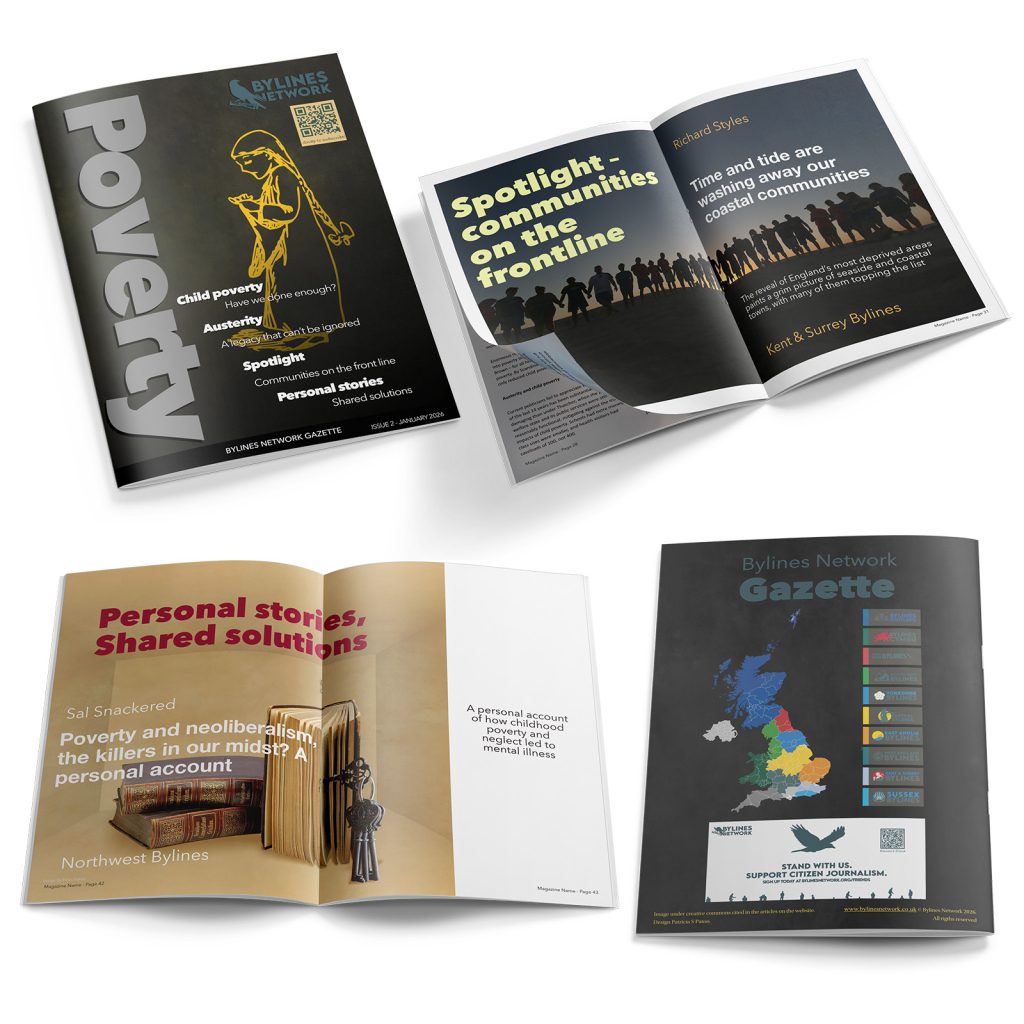 Bylines Network Gazette is back!
With a thematic issue on a vital topic - the rise child poverty, ending on a hopeful note. You will find sharp analyses on the effect of poverty on children's lives, with a spotlight on the communities that are on the front line of deprivation, with personal stories and shared solutions. Click on the image to gain access to it, or find us on Substack.
Journalism by the people, for the people.
The post The great Ministry of Defence-to-Palantir pipeline first appeared on East Anglia Bylines.
Canada Pension Plan is Bankrolling Trump's Fossil Fuel and AI Agenda [ 06-Feb-26 4:38pm ]The Canada Pension Plan Investment Board (CPPIB) is financing — and profiting from — U.S. President Donald Trump's fossil fuel and AI development agenda, DeSmog has learned.
The CPPIB has invested billions in fossil fuel expansion in the U.S. since Trump's return to office. It has partnered with private equity firms to acquire American oil and gas producers, and financed AI companies like Elon Musk's xAI.
The CCPIB is an independent investment management organization responsible for managing the Canada Pension Plan (CPP), Canada's largest public pension. It was created by an Act of Parliament in 1997, and is accountable to Canada's Parliament. The CPPIB's primary responsibility is to ensure the CPP maximizes its long term revenues with minimal risk.
The CPPIB has a policy on sustainable investing, updated in May 2025, that recognizes climate change as a serious risk, and which encourages adapting its investment strategy to evolving decarbonization pathways and investing "for a whole economy transition required by climate change." However, the same policy indicates the CPPIB's belief "that accelerating the global energy transition requires a sophisticated, long-term approach rather than blanket divestment."
In response to Canadian Prime Minister Mark Carney's pledges to fast-track major infrastructure projects, CPPIB CEO John Graham stated in September 2025 that the CPPIB was keen to invest in major projects, particularly in the energy sector. As reported by the Financial Post, Graham singled out fossil fuel pipelines, saying "Here in Canada, we like pipelines. We like oil and gas pipelines."
Its recent investments in the U.S. fossil fuel and AI sectors are a growing concern to pension fund watchdogs, which argue that at a time when the US is actively waging a trade war against Canada and destabilizing the climate, the CPPIB is providing capital to allow it to happen.
"As the U.S. government wages economic warfare against Canadian industry, upends the international rules-based order, and threatens to annex Canada, CPPIB appears content to continue gambling the Canada Pension Plan on risky U.S.-based companies," said Patrick DeRochie, Senior Manager with Shift Action, a charitable organization dedicated to protecting pensions and the environment from investments in the fossil fuel sector, in a statement to DeSmog.
"With so many Canadians boycotting U.S. products and companies while coping with the economic shocks triggered by our volatile neighbor to the south, I think many Canadians would be shocked to learn where CPPIB has invested some of their hard-earned retirement savings during this time of turbulence and uncertainty," said DeRochie.
CPPIB didn't respond to a request for comment.
Subscribe to our newsletterStay up to date with DeSmog news and alerts
Email Address What content do you want to subscribe to? (check all that apply) All International UK Sign Up (function($){ $('.newsletter-container .ijkidr-us').click(function() { $('.js-cm-form').attr('data-id', '2BE4EF332AA2E32596E38B640E905619D07B21962C5AFE16D3A2145673C82A3CEE9D9F1ADDABE965ACB3CE39939D42AC9012C6272FD52BFCA0790F0FB77C6442'); $('.js-cm-email-input').attr('name', 'cm-vdrirr-vdrirr'); }); $('.newsletter-container .ijkidr-uk').click(function() { $('.js-cm-form').attr('data-id', '2BE4EF332AA2E32596E38B640E905619BD43AA6813AF1B0FFE26D8282EC254E3ED0237BA72BEFBE922037EE4F1B325C6DA4918F8E044E022C7D333A43FD72429'); $('.js-cm-email-input').attr('name', 'cm-ijkidr-ijkidr'); }); })(jQuery); CPPIB's Failing Climate GradeThe CPPIB operates at an arm's length from the Canadian government and is accountable to it, but operates under the guidance of an independent Board of Directors. It manages assets totaling C$777.5 billion, from 22 million contributors to the CPP. The CPPIB has recently invested in or entered into joint ventures with firms involved in sectors as diverse as American outpatient medical facilities, the Japanese hospitality sector, and the AI sector.
The CPPIB received its worst grade to date in Shift Action's latest climate report card, dropping to a D grade overall and coming in second to last in the non-profit group's annual ranking of Canadian pension funds' climate policies. The CPPIB's performance fell in four out of six categories, earning failing grades when it came to meeting Paris Agreement aligned targets, intermediate targets, and for not excluding fossil fuels.
Part of the rationale for that low grade is that the CPPIB has major investments in American fossil fuel companies, AI companies, and fossil fuel companies seeking to power America's AI expansion.
The CPPIB invested US$300 million last year in xAI, specifically to construct a gas-powered AI data centre in a low-income Black neighborhood in Memphis, Tennessee. The xAI facilities in Memphis have been cited as examples of environmental racism by advocacy groups and have been recorded emitting massive quantities of pollution. Most recently, xAI was in the news because its AI chatbot product Grok was flooding the Internet with pornographic and sexualized images of women and children. In response to the Toronto Star's questions about why the CPPIB was investing in xAI, a spokesperson said the CPPIB wasn't endorsing how Grok was being used.
The CPPIB recently spent $1.2 billion to acquire a roughly 25 percent stake in Tallgrass Energy, a pipeline company invited to the White House to participate in discussions about the exploitation of Venezuela's oil industry.
Tallgrass Energy has 16,000 kilometre's worth of pipelines and terminals across 14 states. A managing director of the CPPIB's 'sustainable energies' group sits on Tallgrass' board.
Tallgrass is also focused on developing fossil fuel infrastructure to capitalize on the AI boom. The company has proposed a new pipeline from the Permian Basin to support new data centres and gas plants across the United States. The company has also partnered with the AI infrastructure company Crusoe to build an AI-focused data centre that would be powered primarily by natural gas and "future renewable resources."
"It appears that CPPIB is betting that the expansion of AI infrastructure will drive an increase in demand for fossil gas, and is planning to finance and profit from gas-fired data centres," said DeRochie.
During a November 2024 meeting, CPPIB CEO John Graham described how "the demand for energy globally is not declining" and AI is "further driving the demand for energy." Graham further stated that the CPPIB needs to "continue to support the oil and gas industry" because the "industry has a long track record of delivering energy into the economy in a very safe and economical way."
The CPPIB has committed hundreds of millions to VoltaGrid, a Houston-based company that specializes in modular natural gas systems for data centres and fossil fuel operations. The company regularly misidentifies natural gas as a "low-emission" solution for the AI and data centre sectors, yet is part of CPPIB's "Sustainable Energies" portfolio. Moreover, a CPPIB managing director sits on VoltaGrid's board.
The company's CEO, Nathan Ough,is a Republican donor who has eagerly embraced Donald Trump's "drill, baby, drill" agenda. VoltaGrid isn't merely supportive of Trump's focus on gas-powered data centre expansion, but also collaborates with companies owned by major Trump donors, including Oracle and Energy Transfer. The company is also involved in a controversial project to build a gas plant to power a data centre in Saint John, New Brunswick. Responding to this criticism, Ough responded that VoltaGrid is 51 percent Canadian-owned and that its finances are "banked in large part out of Canada."
Shift Action further notes that the CPPIB in general is overweighted with American investments: approximately 47 percent of its portfolio is invested in the U.S., a percentage that far exceeds their share of the global economy.
Several fossil fuel companies owned by the CPPIB sit on the U.S. Department of Energy's National Petroleum Council (NPC). These include The Williams Companies, AlphaGen, and California Resources Corp. Though not backed by the CPPIB, two other Canadian fossil fuel companies — Enbridge and TC Energy — also sit on the NPC. These companies are involved in oil and gas production, transporting fracked gas, and operate fossil fuel power plants in six states.
According to Shift Action, the CPPIB reported that it invested US$807 million in fossil fuel expansion in the U.S. in the final quarter of 2024. This includes a US$300 million investment in Salamanca Infrastructure LLC, which owns midstream energy assets in the United States, more than US$200 million to fund pipeline assets that transport fossil gas in Pennsylvania, Ohio, and West Virginia, and three co-investments with Quantum Capital Group, a Houston-based private equity firm focused on the energy sector.
These investments included stakes ranging from 10 to 29 percent in three different firms involved in fossil fuel exploration. The CPPIB's commitment to Quantum Capital Group / Quantum Energy Partners has been steadily growing since its first investment of US$200 million in 2008, followed by another US$300 million in 2014. In 2024, it committed US$500 million to Quantum despite the fact that the company stated the investment would be used to support the US' conventional energy industry.
"For a national pension manager meant to ensure the long-term retirement security of 22 million Canadians, CPPIB sure has a strange way of investing in our best interests and avoiding undue risks of loss," said DeRochie. "You would think that the risks of American aggression, catastrophic climate change, and Trump-aligned tech oligarchs would give the CPPIB pause before making these investment decisions."
The post Canada Pension Plan is Bankrolling Trump's Fossil Fuel and AI Agenda appeared first on DeSmog.
MAGA Gathers in European Parliament to Attack EU Laws [ 06-Feb-26 4:30pm ]BRUSSELS - Groups aligned with Donald Trump's administration rallied against "online censorship" and "extreme environmentalism" as they took to the stage at an event held in the heart of the European Parliament earlier this week.
The meeting in Brussels comes amid reports that the U.S. State Department is poised to fund MAGA-aligned think tanks and charities across Europe to further Trump's agenda overseas.
At the one-day conference run by the Political Network for Values (PNfV) on 4 February, speakers from the Heritage Foundation, the Alliance Defending Freedom (ADF), Family Watch International, and other U.S. conservative Christian groups defended what they described as "basic truths […] such as love of God, country and family."
The event was co-organised by the far-right Patriots for Europe (PfE) and right-wing European Conservatives and Reformists (ECR), which have used their growing influence in the EU Parliament to undermine climate policies.
Trump-aligned groups spoke in defence of the absolute right to free speech, and against EU regulations designed to regulate hate speech online.
They were referring to the Digital Services Act (DSA), the flagship legislative package designed to hold big tech platforms to account for the harms they produce, including online hate and climate change disinformation.
The event has prompted concerns from Members of European Parliament (MEPs) that the Trump administration is realising its aim to cultivate "resistance to Europe's current trajectory within European nations" as set out in a White House National Security Strategy document published last year.
"Fostering far-right movements to destabilise the continent is no longer just a line in a White House strategy document. It is a political reality," said Daniel Freund, a German MEP for The Greens.
"This week, the enemies of Europe, the adversaries of freedom, gathered in the European Parliament. These individuals call themselves patriots, yet they are nothing more than Trump's foot soldiers. The event made one thing clear: Trump's MAGA movement has established a political foothold in Europe. The answer must be a stronger, more independent Europe."
Subscribe to our newsletterStay up to date with DeSmog news and alerts
Email Address What content do you want to subscribe to? (check all that apply) All International UK Sign Up (function($){ $('.newsletter-container .ijkidr-us').click(function() { $('.js-cm-form').attr('data-id', '2BE4EF332AA2E32596E38B640E905619D07B21962C5AFE16D3A2145673C82A3CEE9D9F1ADDABE965ACB3CE39939D42AC9012C6272FD52BFCA0790F0FB77C6442'); $('.js-cm-email-input').attr('name', 'cm-vdrirr-vdrirr'); }); $('.newsletter-container .ijkidr-uk').click(function() { $('.js-cm-form').attr('data-id', '2BE4EF332AA2E32596E38B640E905619BD43AA6813AF1B0FFE26D8282EC254E3ED0237BA72BEFBE922037EE4F1B325C6DA4918F8E044E022C7D333A43FD72429'); $('.js-cm-email-input').attr('name', 'cm-ijkidr-ijkidr'); }); })(jQuery); 'Backbone of the Trump Regime'On Thursday, the Financial Times revealed that the Trump administration plans to fund MAGA-aligned think tanks and charities across Europe in an effort to spread "American values".
The Heritage Foundation, one of the most prominent MAGA think tanks, is credited with producing the authoritarian playbook known as Project 2025, the intellectual blueprint for Trump's second term. That effort has helped to set the U.S. government on a path to "energy dominance", which in practice means abandoning climate targets in favour of massively expanded fossil fuel extraction.
The MAGA groups at the PNfV event have a long record of attacking and attempting to undo progressive social gains on issues including gender, religion, and LGBTQ+ rights. Alliance Defending Freedom (ADF) in particular was instrumental in the 2022 overturning of the constitutional right to an abortion that was guaranteed under Roe v. Wade.
An early version of the event's programme showed both ADF and Heritage as sponsors of the event, along with the Foundation for a Civic Hungary, the official party think tank of Fidesz, the ultraconservative party of Viktor Orbán's Hungary. This version was quietly removed from the PNfV's website to show no sponsors, although speakers from these organisations remained on the updated programme.
The groups at the event identified removing regulation on X and other digital platforms sympathetic to right-wing views as a top priority.
One speaker from the European branch of the ADF, Adina Portaru, labelled the EU's DSA "one of the most dangerous threats to freedom of expression online in the Western world today".
The criticism of Europe's attempt to regulate hate speech online echoes comments made by JD Vance in his address to the Munich Security Conference in February 2025. He argued Europe's biggest threat was the "threat from within", partly caused by "digital censorship". This, he argued, posed a bigger threat than Russia, at a time when Europe faces the escalating threat of Russian hybrid warfare on its eastern flank.
The ADF has itself made inroads into Europe, and has been quietly working with Nigel Farage's Reform UK. Farage had rarely, if ever, mentioned abortion in his 31-year political career until May last year, when he called the UK's 24-week abortion limit "absolutely ridiculous".
"The timing is shocking. While the rest of Europe is re-considering its links with the U.S. after the Greenland affair, here we have quite a few European far-right parties rubbing shoulders with the core of Trump's hinterland," said Kenneth Haar, researcher and campaigner at Corporate Europe Observatory, an advocacy group pushing for greater accountability in European institutions.
"The Heritage Foundation is not just a think tank. It is part of the backbone of the Trump regime."
'Revolution of Common Sense'The PNfV event was the seventh "Transatlantic Summit" organised by the groups, a coalition of Christian conservative groups that brings together senior government officials, legislators, and well-connected civil society groups to fight progressive social gains. The group has active members in Europe, North and Latin America, and Africa.
In a programme handed out at the summit, the group's president, Stephen Bartulica, a Croatian MEP, said the group "must promote what some have called a revolution of common sense."
The PNfV counts the President-elect of Chile, Jose Antonio Kast, among its list of former presidents. The Republican chair of the Iowa State Senate, Amy Sinclair, and members of Polish and Hungarian parliaments sit on its board.
Kast, who delivered the single keynote speech of the day, spoke about defending "fundamental beliefs", from "isms" such as "extreme environmentalism," which allegedly "prioritises the environment over people". He was introduced as having nine children - the second speaker to be introduced in this way.
Alongside calls to "defend the values of God, country and family," speakers at the summit railed against a "far-reaching online censorship regime". This, they claimed, was established by efforts to regulate hate speech online, which they said infringes on the "innate natural right of all human beings to free speech," a "natural right that comes before the state". Censorship was mentioned on average once every six and half minutes during the nine-hour conference, according to DeSmog's analysis.
Jay Richards, vice president of social and domestic policy at the Heritage Foundation, denounced the "white martyrdom" imposed on U.S. Americans who are, he claimed, "having his or her free speech violated". Richards also cited the removal of Donald Trump's former Twitter account for spreading the lie that the 2020 election was "stolen" by 46th U.S. President Joe Biden as an example of "white martyrdom".
The second Trump administration has banned the use of terms like "diversity, equity and inclusion", "climate change", "vaccines", and "disability" from departmental websites across the U.S. government, while arresting and detaining people for actions including writing op-eds for a student newspaper.
"This conference confirms that there is a campaign underway against any kind of content moderation," Kenneth Haar said.
"It is waged by ultraconservative groups, some of which belong to the MAGA-coalition. We are seeing a camp against European regulation emerge, with religious groups, people from Trump's inner circle, and Big Tech emerge."
'Totalitarian Act'Attacks on the DSA were repeated throughout the day.
The DSA is a "totalitarian act" that "must be abolished" said Slovenian MEP Branko Grims, who closed his speech with "God bless Europe, and God bless Western civilization".
Grims also called for the EU to revoke the €120 million fine it levied against Elon Musk's X platform in December for breaching transparency obligations under the DSA.
Despite pleas from speakers that the attacks on LGBTQ+ rights were an attempt to "protect our kids," none of the speakers mentioned the recent scandal enveloping X - that the platform's built-in chatbot, Grok, has been digitally undressing people, including women and children, on command.
While primarily focussed on free speech and reinstating "Christian values", speakers also used their platform to attack climate targets in Europe, with one arguing that voters "demand realism and affordability in climate policy, but the Green Deal remains untouchable dogma".
Tom Vanderdreissche, MEP from Vlaams Belang, the Belgian party pushing for independence for the Dutch-speaking Flanders, asked in his address: "Is there anyone who believes that the Green Deal will save the world when Europe only produces around 6 percent of global CO2 emissions?"
This is a typical 'Whataboutism' argument made by those seeking to delay climate action, which tries to redirect responsibility for tackling climate change to other actors.
 Nigel Farage and Donald Trump in 2016.
Credit: Associated Press
Other speakers from across the world bemoaned their frustration at being labelled "homophobic," "transphobic," "fascists," and "extreme" for their opposition to LGBTQ+ rights.
Ugandan MP Lucy Akello received widespread applause following her speech, where she identified as the victim of a hunt against those who seek to "protect family values".
Akello is one of the MPs who called for Uganda's Anti-Homosexuality Act to be reinstated in 2023 after it was overruled by the courts. The act prescribes life imprisonment for homosexual sex and the death penalty for "aggravated homosexuality".
Akello argued her actions were about "protecting our kids who were being coerced, who were forced into homosexuality activities".
"Looking at the speakers and the organisations in this mix, tells me that when they say free speech, what they really mean is free hate speech," Kenneth Haar added.
Later in the same panel, Guatemalan MP Ronald Portillo added that "people have a right to feel what they feel, even if it's hatred," in his defence of "fundamental rights".
Many of the speakers also complained of how Christianity had become marginalised in the West. The words "God" and "Christ" were mentioned 76 times throughout the day.
One address from British Catholic Priest, Father Benedict Kiely, included a call to "declare war on dumptyism," a reference to the children's tale of Humpty Dumpty, which he used to make a point about rediscovering the meaning of words. He also warned that "I'll probably be arrested when I go home" for his address.
At the time of publication, he had not been.
The post MAGA Gathers in European Parliament to Attack EU Laws appeared first on DeSmog.
Q&A: Tech Billionaires' AI Space Empire Fantasies Are 'An Insidious Form of Climate Denial' [ 04-Feb-26 4:26pm ]In the wildest dreams of tech billionaires, humans colonize the solar system on giant space stations, dodge mortality by uploading their brains into computers, and solve climate change in a single swoop of god-like AI-generated genius.
It's a hubris that has led Big Tech companies, which until recently were seen as corporate climate leaders with ambitious clean energy goals, to run full-tilt towards oil and gas — powering the rapid expansion of their monstrously energy-hungry AI data centers with natural gas, and holding court with Trump energy officials who deny climate science while championing American fossil fuel "energy dominance."
To all of this, Adam Becker, an astrophysicist and science journalist, basically says - Um. No.
Becker's book, More Everything Forever: AI Overlords, Space Empires, and Silicon Valley's Crusade to Control the Fate of Humanity, exposes how tech billionaires' sci-fi inspired fantasies about ever-more technology making everything, endlessly, better are basically, well — terrible. These billionaires' promises, in Becker's careful accounting, veer from what he says is "wildly implausible" to "profoundly immoral" - and ultimately paves the way for a descent into oligarchy.
They're also, in Becker's view, emerging as the root of a new, Silicon Valley-styled "insidious form of climate denial" - replete with its own set of what he calls greenwashing tactics.
DeSmog reporter Rei Takver spoke with Becker about what he thinks drives this new kind of climate denialism, and its consequences.
This interview has been condensed and edited for concision and clarity.
Rei Takver: You've said that writing More Everything Forever started after uncovering that evangelical Christian tech billionaire and Palantir founder Peter Thiel was funding a science magazine, Inference: International Review of Science, that was publishing not only creationism, but full-on climate science contrarianism. Why did Thiel's climate denial take you over the edge?
Adam Becker: People take Silicon Valley's ideas about science and technology very seriously, as though the leaders of the tech industry actually know anything about science or tech. It's an understandable mistake to make, but it's a mistake. When I started thinking about what I already knew about that, I realized that there was this through-line in Silicon Valley of climate denial of a kind, usually not the outright climate denial that you find in that Thiel-funded magazine, but a more insidious form of climate denial that minimizes climate change as a problem and says, "Oh, this is something that we can solve later, once we've built an [artificial intelligence] god, or gone to space."
Rei Takver: When I see the phrase "more everything forever," it conjures visions of endless power — more oil, more gas, more nuclear, forever. You've written about how many of these tech billionaires, such as OpenAI CEO Sam Altman, love dreaming about tapping into endless sources of infinite energy — often alongside the Trump administration. Why do you think Altman, and a wide selection of other tech leaders are aligning with the Trump administration's aggressively fossil-fuel dominant AI energy policy?
Adam Becker: Let me answer your question with a segue. Nuclear fusion is one of these false promises of the tech industry, right? There's a company, Helion, saying that they're going to get a nuclear fusion power plant online at commercially competitive rates by 2028. I'm a physicist. That's delusional. More realistically, we're talking 40 years, and even that is probably optimistic — 2028 is not going to happen. Guess who's the single largest investor in Helion and chairman of the board? It is Sam Altman. In an interview in January he was asked, what's the best way to combat climate change? And he said, oh, we need to loosen up permitting for nuclear fusion plants, something that doesn't exist and will not exist for probably decades.
Rei Takver: I wonder if Altman knows that himself. He's written in his personal blog that "the 22nd century is going to be the century of atomic energy," but also that he's "unsure" how we'll power the 21st century. Well, it does seem like he has some idea, since OpenAI is firing up gas turbines to run data centers already.
Adam Becker: I think it's important to take a careful look at the world view here. Altman hired a Trump natural gas dude [to lead OpenAI's global energy strategy] because he wants to build out as much AI infrastructure as possible, and he wants to get people to give him as much money as they can — before either the AI bubble pops or they succeed in building an AI god, which is not going to happen.
Rei Takver: Hasn't Altman even said he believes AGI, artificial general intelligence, a supercomputer that in theory would match or exceed the intelligence of a human being, is going to solve climate change when it's invented?
Adam Becker: Yeah, he said back in 2023 that climate change isn't going to be that big a deal for a super intelligent AGI, because we can just ask it for three wishes to solve global warming. That's not a viable plan. That's not even a concept of a plan. The thing about these insane, futuristic visions that Altman and other tech billionaires are trying to sell the rest of us on is that it allows them to justify any action that they possibly want to take. As in, sure, we can just burn as many fossil fuels as we want right now, because the AGI is going to solve it for us.
Eric Schmidt, former CEO of Google, billionaire venture capitalist, and CEO of a space company [Relativity Space], said a little over a year ago now that"we're not going to hit the climate goals anyway because we're not organized to do it," so we need to just burn as much energy as possible, get into AGI now, so the AI will solve climate change for us. That's a better climate plan.
Solar and renewables are cheaper than they've ever been, and more reliable than they've ever been, but sure, buddy, we're not going to meet our climate goals, even if we try. Whatever. I'm sure that the solution is to have people invest in the companies in your venture capitalist portfolio, which, by the way, includes another one of these boondoggle fusion companies.
Rei Takver: Microsoft and its founder Bill Gates have also been backtracking on climate issues recently. Last year, Microsoft announced publicly that its own climate targets had been a "moonshot," and Bill Gates recently argued that AI will do more to solve climate change than worsen it.
Adam Becker: The idea that tech will save us, and is the only thing that will save us, and will solve every single problem, is something that you see over and over again in the tech industry. It is the idea that, his time, we found the thing that's going to save the world, the World Wide Web! Oh, no. no, no. What's going to save people is social media — look at the Arab Spring! Oh, no, no. What's going to save the world is AI! No. What's going to save the world is AI data centers in space!
Rei Takver: Speaking of data centers in space, Jeff Bezos is a huge fan, and also a huge fan of expansive space colonization that would see trillions of humans across the solar system. What is going on with this?
Adam Becker: Bezos said recently that he "doesn't see how anybody can be discouraged who is alive right now" because "in the next couple of decades, there will be millions of people living in space." No, that's definitely not happening. You are wrong. The only reason you could actually say that with a straight face was you just don't believe anything that anyone with expertise tells you about the world, or don't bother to seek it out in the first place before you make statements.
Rei Takver: And part of the reason that Bezos says we need these space colonies is because he thinks there's just not enough energy on Earth.
Adam Becker: Bezos is right about the fact that if our energy usage growth continues at the current rate, in a few hundred years we will not be able to keep growing our energy usage, because we'll be using all the energy that the sun delivers to Earth in the form of sunlight. He's right about that, too. The problem is, first of all, we're not even going to get close to that. There's all sorts of reasons why our energy usage is going to have to stop growing way before that point. Even if it doesn't stop before that point, the waste heat from thermodynamic limits would boil the oceans.
The other way Bezos goes wrong is that after he says "Earth is the best planet," he then says, so therefore, since we have to go into space to keep growth going, we need to build giant artificial space stations, and then we can have Earth as a kind of like planetary preserve.
Rei Takver: Which doesn't have any congruence with the fact that his company just sponsored a summit where a bunch of fossil fuel companies came together with Trump energy officials to fantasize about building out more carbon belching, everything in the name of building out AI infrastructure.
Adam Becker: Yup. We get more, everything, forever.
Rei Takver: Elon Musk is also really into space colonies — in his case, on Mars. Musk says humans need to be multi-planetary because we need a backup, and weirdly, he seems to talk more about asteroids hitting the Earth than climate change. Why do you think that is?
Adam Becker: I'm going to quote [astronomer] Lucianne Walcowicz on this. They speculate, and I think they're probably right, that an asteroid hitting Earth is something that a billionaire can't be culpable for, right? Billionaires are not complicit in the fact that planet-killing asteroids exist, right? That's just a fact about the solar system. Of course, it's also true that if one of those asteroids hit here, it would still be nicer to be on Earth than it would be on Mars. And it's also true that Mars gets hit with more asteroids than the Earth does.
Musk talks about terraforming Mars … if we have the technology to terraform Mars, why not just use that technology to solve climate change here on Earth? If such technology existed, it would absolutely be easier to use it here to fix climate change, because stopping climate change and getting the climate back into a good state that is compatible with advanced human civilization is so much easier than terraforming Mars. And yet, we have not shown ourselves capable of getting climate change under control. Mars is just a terrible idea as a backup for humanity for so many reasons. Even the idea of a backup for humanity is inherently problematic.
Rei Takver: Totally. In going after a "backup" planet, Musk is not just abdicating responsibility about climate change in a hypothetical future, he's abdicating responsibility for the climate, and humanity, here and now.
Adam Becker: Oh yeah, I mean, look at the un-permitted natural gas plants that Musk is using to power an xAI data center in Tennessee. These tech billionaires are using these futuristic visions of their technologies to justify continuing extractive practices and continuing to accumulate power and wealth that's always going to be at the expense of lots of other people. And I don't think that they're acting in their own enlightened self interest, right? What good is your money if civilization collapses due to a climate crisis?
Rei Takver: How much would you say we should be thinking of these tech bro fantasies and these tech bros as explicitly anti-climate?
Adam Becker: That's exactly what they are. They do not care about the climate because they don't see it as a problem, which is a form of climate denial, right? They think, we'll fix it in post, basically, right? That's essentially Sam Altman's answer about climate change is: "Oh, yeah, we'll get to AI and then we can fix everything else with that." That's not going to happen. And they just don't think that anything else is as important as these futuristic fantasies that they have about AI in space and, you know, having more everything forever. Even the nuclear fusion stuff, where they say, "Oh yeah, this is green energy." It's not going to happen. And so what it is, is essentially a form of greenwashing, by using false promises of a futuristic green energy technology that is not going to arrive in time, if ever, as an excuse to temporarily use fossil fuels as transition to this technology that will never come, instead of just using the abundant, cheap green energy technology that we have now.
Adam Becker's More Everything Forever can be purchased in the U.S., UK, and Canada.
The post Q&A: Tech Billionaires' AI Space Empire Fantasies Are 'An Insidious Form of Climate Denial' appeared first on DeSmog.


