
If you watched NBC's prime time broadcast of the Winter Olympics opening ceremony on Friday, you saw Vice President JD Vance in the stands at San Siro Stadium in Milan with his wife, Usha. The commentary team said "JD Vance" and moved on. Pleasant enough.
But if you were watching literally any other country's broadcast—or were actually in the stadium—you heard something else: the crowd booing. Loudly. Jeering. Whistling. CBC's commentator captured the moment awkwardly:
There is the vice-president JD Vance and his wife Usha - oops, those are not … uh … those are a lot of boos for him. Whistling, jeering, some applause.
Multiple journalists on the ground reported the same thing. The Guardian's Sean Ingle noted the boos. USA Today's Christine Brennan noted the boos. The boos were, by all accounts, quite audible to anyone actually present in the stadium.
Timothy Burke put together clips of many other countries broadcasts, many of which called out the boos or discussed criticism of the Trump admin:
JD Vance getting booed, as called around the world (auto transcribed & translated, mostly):
Mexico's broadcast went on at length, including discussing how the US had to change the name of their Olympic village from "ice house" to "winter house" knowing how it would be perceived.
I didn't forget Mexico, BTW, it's just that I had to make Mexico as its own separate video because they were talking about Vance and ICE through the entire U.S. arrival at each of the locations and WELL INTO FRANCETWO AND A HALF MINUTES
But if you were watching NBC's broadcast in the United States? Crickets. As the Guardian reported:
However, on the NBC broadcast the boos were not heard or remarked upon when Vance appeared on screen, with the commentary team simply saying "JD Vance". That didn't stop footage of the boos being circulated and shared on social media in the US. The White House posted a clip of Vance applauding on NBC's broadcast without any boos.
For what it's worth, NBC denies that it "edited" the crowd booing the Vances. But the analysis on that page by the folks at Awful Announcing show pretty clearly that NBC (which ran a live feed of the opening ceremony as well as a prime time version) turned up the sound of music at the moment the Vances were shown on the screen.
Now, look. As a technical and legal matter, NBC has every right to make that editorial choice. Broadcasters exercise editorial discretion over their coverage all the time. They choose camera angles, they choose what to amplify and what to downplay, they shape narratives. That's not illegal. It's not even unusual. It's called being a media company. The First Amendment protects editorial discretion—including editorial discretion that results in coverage that makes politicians look better than reality would suggest.
Of course, that principle cuts both ways. Or at least it should.
We've now spent months watching Donald Trump file lawsuit after lawsuit against news organizations for what he claims is "unfair" editing. The theory in these cases is that editing footage in ways that make Trump or his allies look bad is somehow actionable defamation or election interference. It's a theory that, if accepted, would basically mean the president gets veto power over how he's portrayed in any news coverage.
Remember, Trump sued CBS over a "60 Minutes" interview with Kamala Harris, claiming that the way the interview was edited amounted to "election and voter interference." That lawsuit was, to put it charitably, legally incoherent nonsense. We covered it at the time, noting that Trump's supposed smoking gun was that CBS edited an answer for time—you know, the thing every television program in history does, including cutting out the bits that make Trump look bad.
Then there was the $10 billion lawsuit against the BBC over a documentary that didn't even air in the United States. Trump's legal team actually cited VPN download statistics as evidence of damages, apparently believing that Americans who went out of their way to circumvent geographic restrictions to watch a documentary they weren't supposed to see somehow constitutes harm to Trump.
Of course, as you already know, CBS, facing the Trump lawsuit while also trying to get FCC approval for the Paramount merger, decided to just… pay up. We called it what it was at the time: a $16 million bribe. Not because CBS thought Trump had a valid legal claim—the lawsuit was obviously baseless—but because CBS was terrified that an angry Trump administration would tank its merger if it didn't make the lawsuit go away.
And that's the point. The lawsuits aren't really about winning in court. They're about establishing a new norm: favorable coverage or else.
So now we have NBC, which happens to have a rather large interest in staying on the good side of this administration (what with the LA Olympics coming up in 2028 and all the broadcast rights that entails, and you already have Trump and FCC boss Brendan Carr threatening NBC's late-night comedy hosts), making an editorial choice to mute crowd boos directed at the vice president. And I will bet you every meager dollar I have that no one in Trump's orbit will say a single word about NBC's "unfair" editing. No tweets from Trump about "fake news NBC" cutting audio to misrepresent crowd reactions. No lawsuits alleging that NBC's editorial choices constitute fraud on the American public.
Because the "unfair editing" complaints were never actually about editing. They were about whether the editing made Trump look good or bad. Editing that cuts out boos? That's just good production values. Editing that makes Harris's answer seem more coherent? That's election interference worthy of billions in damages.
This is what an attack on press freedom looks like. It's not a single dramatic moment. It's a slow accretion of pressure—lawsuits that are expensive to fight even when you win, regulatory approvals that get held hostage, implicit threats that keep executives up at night—until media companies internalize the lesson. The lesson isn't "be accurate" or "be fair." The lesson is: make us look good, or face the consequences.
And NBC appears to have learned the lesson well.
Another day, another wave of gaming layoffs. Today it's Riot Games with the announcement that it's cutting jobs on its pair-based fighting game 2XKO. For context, a representative from Riot confirmed to Game Developer that about 80 people are being cut, or roughly half of 2XKO's global development team.
"As we expanded from PC to console, we saw consistent trends in how players were engaging with 2XKO," according to the blog post from executive producer Tom Cannon. "The game has resonated with a passionate core audience, but overall momentum hasn't reached the level needed to support a team of this size long term."
The console launch for 2XKO happened last month. Cannon said the company's plans for its 2026 competitive season have not altered with the layoffs. He added that Riot will attempt to place the impacted people at new positions within the company where possible.
This article originally appeared on Engadget at https://www.engadget.com/gaming/riot-games-is-laying-off-half-of-the-2xko-development-team-215423279.html?src=rss
Digital intruders exploited buggy SolarWinds Web Help Desk (WHD) instances in December to break into victims' IT environments, move laterally, and steal high-privilege credentials, according to Microsoft researchers.…

TL;DR: Pamper an old PC with this Microsoft Office Professional 2021 for Windows lifetime license, on sale now for just $34.97 through February 22.
Don't count out your dusty ol' PC! You can give it a whole new lease on life with this Microsoft Office Professional 2021 for Windows license. — Read the rest
The post Breathe new life into your PC with this $35 Microsoft Office license appeared first on Boing Boing.

The Department of Homeland Security has switched to a mobile facial recognition system that combines two of the worst qualities a government surveillance tool can have: it tramples privacy and doesn't work, especially when analyzing non-whites.
Under claims of "efficiency," DHS and its subagencies are now using the smartphone app "Mobile Fortify" to identify people in the field. — Read the rest
The post Invasive and ineffective: DHS's facial recognition system appeared first on Boing Boing.

On Thursday 5th February, the Canary sat down with Andrew Feinstein to discuss his upcoming book 'Making a Killing'. He is a former ANC member from South Africa who worked alongside Nelson Mandela and has worked tirelessly alongside others to expose the arms trade and its corruption of politicians around the world.
Working in collaboration with others, Feinstein has united the brutal conflicts in Gaza and Yemen in one body of work, allowing readers to connect the dots between the billionaire-owned military machine and world leaders' involvement in the mass murder and devastation of the Middle East.
Alnaouq: 'Who killed my family?'In the co-author's own words, we asked Feinstein to share with us the backstory that led them to write this book:
'Most difficult book I've ever tried to write'So the book is called Making a Killing, How the West Profits from Slaughter in Gaza and Yemen. Where we got the idea for the book from is that a friend of mine from Gaza called Ahmed Alnaouq lost 21 members of his family in the bombing of a family home in an area of Gaza called Deir al-Balah. And he asked me, who killed my family? Who made the bomb that killed my family? Who made the plane that dropped it on my family home? Who gave them the orders? And who profited from it? And that's how we've gone about the book.
So, the book follows what happened to Ahmed's family in Gaza. And it follows another family in Yemen, which was a much more drawn-out conflict. So, in Yemen, again, it was someone who we knew of, an extraordinary Yemeni woman called Radia. She started a human rights organization in Yemen, without which we would never have known about the atrocities committed with British and American and other Western weapons by Saudi Arabia and the United Arab Emirates. And the extraordinary thing about Radia is that she comes from a family where her father was a public intellectual in Yemen.
He wasn't affiliated politically, and he was hated by everybody because he used to, in the truest sense of the word, speak truth to power, to all power. He was assassinated 14 years ago, so just before the onset of the conflict. And to this day, they have no idea who assassinated him because it could have been so many different groups and people.
To contrast with the story of Gaza, we decided the story of Yemen would be about someone who has not only suffered from the conflict, but who has shown this extraordinary resilience to document the conflict and to demand accountability for the conflict. So, this is what drives both Ahmed and Radia, which is the similarity in the story. And so, the book traces the weaponry that's been used in both conflicts, through specific incidents. And we then trace back who sold it, who manufactured it, everybody involved, and how much money everybody has made out of it. And the figures are stupefied.
And then we ask in the book: So, who killed these people? And how do we ensure justice for all of the people who have been killed in these conflicts?
And it's by demanding accountability for all of those who have profited and people profit not just materially but politically as well. Our political leaders convince us that they spend these extortionate amounts of our money on weaponry, that they sell it with massive corruption into these conflicts and that we are the good guys in the conflicts. And the reality is we're not.
But the politicians present themselves as our protectors and our war heroes and they're making shed loads of money out of it. And that includes the politicians. People like Tony Blair, who is a war profiteer and was when he was in office. He's making money now out of war because of decisions he made in government. Keir Starmer will be exactly the same. And all of these people in this kill chain need to be called to account. So that's really what has motivated the book.
We then asked how it felt for Feinstein to write this book, as a Jewish, western man operating in a capitalist society:
I don't find writing easy generally. But this is the most difficult book I've ever tried to write.
Fortunately, I haven't done it alone. There are five of us who've co-authored the book. And so, on the team, people have written different parts of it, and I've turned it into one narrative and one style. But in order to do the book, we've had to follow the conflicts, we've had to examine the weaponry, and we've had to trace back where the weaponry comes from. So in that sense, it's been a horrific thing to do.
And we've had to constantly remind ourselves why we're doing it. Because it's almost like having to focus on the awfulness that our governments have created and been a part of, and are obviously absolutely complicit in. The anger, and to be honest with you, the hatred that I feel, for our morally and materially corrupt politicians and political process has grown exponentially through the process of writing this book.
Feinstein then explained three things he hopes will be achieved through sharing this book with wider society:
Feinstein's advice to those new to advocacy against western brutalitySo, I suppose there are three things:
The first is that we want people to read this book. Very few people know anything about the Yemen conflict. We call it the forgotten war. It went on for ten and a half years. And it was like Gaza but spread out. It destroyed millions of people's lives and continues to. And of course, people tend to have one of two views on Gaza. And we want people to be able to read a totally factual account with a lot of footnotes so that everything they read, they can see how it's been verified as factual. I hope that some people who have been apologists for the conflict or who haven't thought it's a particularly bad thing on the part of our governments perhaps reassess. So that would be the first thing.
The second thing is we want accountability. We want to ensure that out of this book with all the material in it, there are a series of legal cases around the world trying to get justice from the people who have engineered these conflicts and the people who have materially profited from them. They should suffer the consequences of what they've done, which is to destroy millions of human lives and there are domestic and international laws that apply, that our governments have run roughshod over. And those laws need to be applied.
The third thing is that the book tries to show that these conflicts are not an aberration of our political system, but are actually a reflection of it, and are absolutely integral to and a central part of our political system. And we want people to understand that our political systems in the so-called West are broken beyond repair and are not fit for purpose and are causing immeasurable suffering across the world so that a tiny elite can profit and benefit. And so, I suppose, and not explicitly but implicitly, It's a call for fundamental structural and systemic political change in the world.
Finally, we asked Feinstein what advice he would offer to someone new to advocacy and unsure where to start in order to act effectively in solidarity:
There isn't a lot of accessible good stuff written about Yemen, to be honest. But there is, there are a couple of writers who've written well on it. There's a woman who lived in Yemen for 55 years called Helen Lackner, whose work we've used a great deal in the book. We've spent many, many hours with her. She's an extraordinary human being. Yemen is one of the most complicated places I've ever tried to understand. Everything is in a constant state of flux and fluidity. Allegiances, alliances, it's just constantly changing. It's extraordinary. So, her work would be an interesting place to start, but I think more important would be to start on the sort of Western meddling in the Middle East and how destructive that's been. And there are all sorts of wonderful writers, people like Robert Fisk, who was the independent Middle East correspondent for decades and decades. I would have said Noam Chomsky but I'm not sure that I will just at the moment.
There's some very good stuff that's been written about this I would also suggest a film was made at Shadow World Investigations, we wrote this 555-page book with almost 3000 footnotes on the global arms trade. But fortunately, there is a 90-minute film. And I would strongly encourage people to watch that just to get a sense of the systemic nature of the arms trade and how it corrodes our politics while causing destruction across the world.
There is also an extraordinary song by LowKey called 'Hand on Your Gun' that says in a song of a few minutes what took us 555 pages. And I would really encourage people to listen to it.
We have done some more accessible stuff. We did a book called 'Indefensible, Seven Myths that Sustain the Global Arms Trade', that just deal in a very conversational way with myths like 'increased defence spending makes us safer', 'corruption only happens over there in the arms trade, not here', all of which is a nonsense. And we then disprove those myths. And you can read it for free on our website at shadowworldinvestigations.org. So that's probably a good place to start and to get a sense of this industry that's responsible for 40% of all corruption in the world, that corrupts our politics, that corrupts all sorts of other countries' politics, and that kills on average, half a million people a year. But the last three years, it's been far more than that.
And then we do events all over the UK all the time. So to come to our events and engage with us, even those who might not agree with us, who have different views to us. Because we like to be challenged. and we believe that we've come to the views that we hold in a very factual, evidence-based way. And I think in the sort of post-truth world that we live in where to be a successful politician, your primary skill has to be to lie constantly and convincingly, it's really important to engage on the basis of verifiable facts. And that's what all our work tries to do, and that's what this book will do. a very factual account of who has profited and how they have profited, and a very factual account of the legal position that they should be answerable for. And I hope that it just raises questions for people about what we should be doing in Britain or the United States or Europe to stop our governments and our countries being involved in the creation of murder and mayhem across the world.
Making a Killing is due to be published in September 2026.
Featured image via the Canary
House Judiciary Committee member Jamie Raskin (D-MD) has asked the US Department of Justice to turn over all its communications with both Apple and Google regarding the companies' decisions to remove apps that shared information about sightings of US Immigrations and Customs Enforcement officers. Several apps that allowed people to share information about where they had seen ICE members were removed from both Apple's App Store and Google's Play Store in October. Politico reported that Raskin has contacted Attorney General Pam Bondi on the issue and also questioned the agency's use of force against protestors as it executes the immigration policy set by President Donald Trump.
"The coercion and censorship campaign, which ultimately targets the users of ICE-monitoring applications, is a clear effort to silence this Administration's critics and suppress any evidence that would expose the Administration's lies, including its Orwellian attempts to cover up the murders of Renee and Alex," Raskin wrote to Bondi. He refers to Minneapolis residents Renee Good and Alex Pretti, who were both fatally shot by ICE agents. In the two separate incidents, claims made by federal leaders about the victims and the circumstances of their deaths were contradicted by eyewitnesses or camera footage, echoing violent interactions and lies about them that occurred while ICE conducted raids in Chicago several months ago.
This article originally appeared on Engadget at https://www.engadget.com/apps/doj-may-face-investigation-for-pressuring-apple-google-to-remove-apps-for-tracking-ice-agents-212145181.html?src=rss
Let's hope it's always sunny ... in Texas, at least for Google's sake. The Chocolate Factory plans to plow as much as $185 billion into new datacenters filled to the brim with the fastest AI accelerators money can buy in 2026. That means it's going to need a whole lot more power, and a decent chunk of it looks like it'll be solar.…
Royalty Racing has announced that Carson King will enter the Supersport Championship for the 2026 MotoAmerica season.
King, who is from Caseyville, Illinois, will be aboard the #35 Suzuki GSX-R750 beginning next month when he races in his first Daytona 200. After progressing through both the Junior Cup Championship and the Talent Cup Championship where he recorded multiple top-four finishes and qualified on the front row multiple times, this will be the 17-year-old's third full season in MotoAmerica.
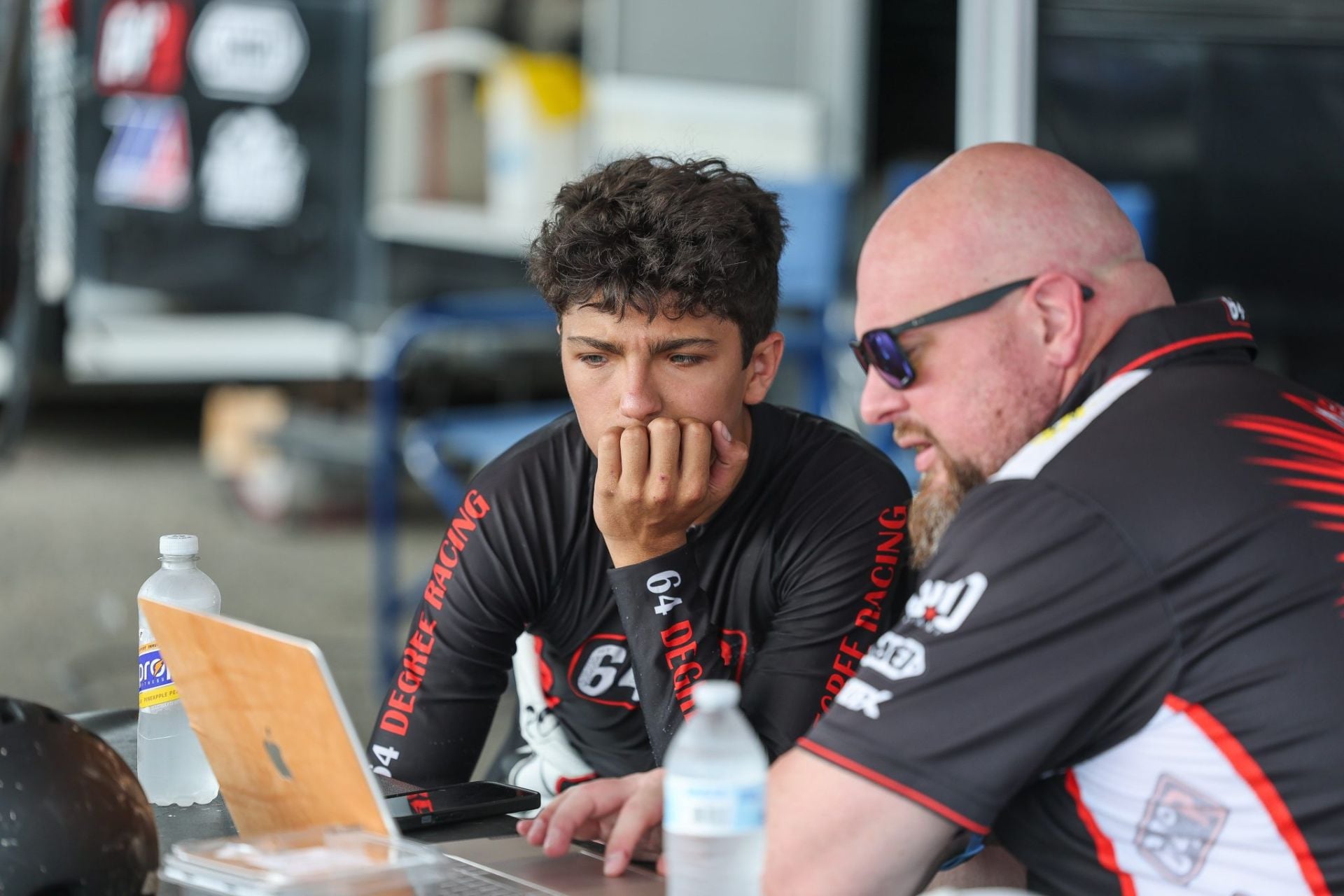 King is 17 years old and lives in Caseyville, Illinois. Photo by Brian J. Nelson.
The move up to Supersport marks the next step in King's development as he faces a deeper, more experienced field of riders. Royalty Racing team owner Travis King commented, "Carson was a little bit oversized for the Talent Cup bike, and we're excited to see what he can do on a bike that fits him better and has plenty of power."
King and his Royalty Racing team are supported by Window Depot, MotoSetup Pro, Woodcraft Technologies, Dunlop, Bison, Helmet House, Shoei, and Vortex.
The Daytona 200 kicks off the 2026 MotoAmerica season on March 5 through 8 at Daytona International Speedway.
For the full 2026 MotoAmerica schedule and to purchase tickets for MotoAmerica events, click HERE
For information on how to watch the MotoAmerica series, click HERE
The post MotoAmerica: King Moves Up To Supersport For 2026 appeared first on Roadracing World Magazine | Motorcycle Riding, Racing & Tech News.
This past weekend Section 230 turned 30 years old. In those 30 years it has proven to be a marvelous yet misunderstood law, often gravely, as too many, including in Congress and the courts, mistakenly blame it for all the world's ills, or at least those that happen in some connection with the Internet. When in reality, Section 230 is not why bad things happen online, but it is why good things can happen. And it's why repealing it, or even "just" "reforming" it, will not stop the bad, but it will stop the good.
Unfortunately, even 30 years in, these ignorant efforts to diminish or even outright delete the law continue, despite the harm that would result if they succeeded. Which is why this anniversary seems like a good time to review why many of the reasons why the hostility towards Section 230 is so misplaced. Here at Techdirt we've collectively all spilled a lot of digital ink over the years about why Section 230's critics are wrong to condemn it, and not just a little bit but completely and utterly, as well as counter-productively. But on this celebratory occasion I thought it would be fun to look back on what I personally have written about Section 230—at least since its 20th birthday celebration and the piece I wrote then—and collect some of these "greatest hits" in a post to help get anyone new to thinking about Section 230, who may be unsure why those pushing to repeal it is so misguided, caught up on why Section 230 is not a law we should be messing with.
What Section 230 does. One reason that people get Section 230 wrong is that there are a lot of myths about it and what it does or does not do. A good place to start is with an overview of how it generally works, and if you like watching videos you can watch this presentation from a few years ago where I gave a crash course in its operation.
In short, though, Section 230 immunizes platform providers from liability in two key ways: for liability in what their users use their services for, and for liability that could possibly result in how they moderate their users' use of their services. Section 230 aligns platforms providers with Congress and makes it possible for them to work towards what Congress wants—the most good material online, and the least bad—by making it legally possible for the providers to do the best they can to achieve it on both fronts. If it is legally safe for them to allow user expression, because they won't have to fear being liable for it, they will allow the most good expression, and if it is legally safe for them to remove user expression, because they won't have to fear being liable for their moderation, then, as this post explains, they will be able to remove the most that is bad.
But Section 230 is not some sort of special favor for Big Tech, as some have suggested. It's not even one for startups, as others have alleged. In fact, it applies to regular people as much as it applies to anyone. Rather than it being any sort of subsidy, it instead operates more like a rule of civil procedure to make sure that platforms cannot be drained of resources having to defend themselves for whatever wrong a user's conduct is accused. Which is also why "reforming" Section 230 effectively means repealing it, because nearly all the proposed reforms would make the statutory protection more conditional, but if platforms are unsure about whether they are protected or not and in jeopardy of having to litigate the question, then for all intents and purposes they are effectively unprotected, and they will act accordingly to defensively either deny more beneficial content, or leave up too much that is harmful (or both).
When Section 230 applies. One of the common myths about Section 230 is that it prevents anyone from ever being held responsible for how the Internet has been used. Not so; Section 230 does nothing to prevent anyone from being accountable for their own behavior. What it does not allow, however, is someone else being held accountable, namely the provider of the platform service they used, because, as discussed above, if the platform could have to answer for how any of their users used their services, they would never be able to offer their services, and if they couldn't offer their services then there would be no Internet for anyone to use even for any of the good, useful, or important things we use it for.
Section 230 also doesn't immunize platforms for their own actions, only those of their users. The issue sometimes is in telling the two apart, but as this post argues, it's not actually as hard to figure out as some people would insist. First, the idea that there is some publisher/platform distinction is a fiction; the only thing that matters is whether the immune provider is providing an interactive computer service of some sort and someone else has provided the content, or if the platform has provided the content itself. And in the event we get confused about who the content provider is, we can look to see who imbued the offending expression with its allegedly wrongful quality, which more often than not is the user and not the platform. As we've understood since the Roommates.com case, that a platform has simply welcomed the expression isn't enough to put the platform on the hook for it.
Furthermore, the type of content a platform might be immune for intermediating can be myriad, including online advertising, which is expression provided by others and then intermediated by a platform (despite what certain state governments think), online dating sites, or online marketplaces—although there have been some issues getting the courts to consistently recognize how Section 230 should apply in that context, even though the statutory history supports it. Although sometimes they still do.
Why Section 230 is important. Regulators can be tempted to take swings at Section 230 because it can be tempting to try to control what can be said on the Internet, and Section 230 gets in the way of those efforts. While the First Amendment also protects platforms' ability to choose what user expression to facilitate, Section 230 makes that protection meaningful by making those choices practically possible. When they cannot be freely made, then the user expression they facilitate takes a hit.
Which is why efforts to change Section 230 are a problem, because of all the collateral damage they will cause to online expression. But for some regulators, that censorship is the goal and why they have Section 230 in their sights. They want to prevent online expression, because too often it is online expression they don't like. And, indeed, sometimes the speech is unfortunate, potentially even actionable.
But eliminating Section 230 is no solution at all. If we take away platforms' ability to be platforms, then we take away everyone's ability to use them to speak, no matter how important what they have to say is. It's why we need to defend Section 230, even when it's hard. There are always things that need to be said online, especially when we need to speak truth about power. Section 230 means we can. And we'd miss it if we couldn't.
Healthcare researchers have found that AI chatbots could put patients at risk by giving shoddy medical advice.…
Don't want Discord to start treating your account like it belongs to an underage kid? Then you'd better be willing to fork over some PII - just months after the company's age verification partner had such data stolen. …

The Indian government's response to Prime Minister Narendra Modi being named in the Epstein files was that the allegations deserved to be treated with contempt.
We have seen reports of an email message from the so-called Epstein files that has a reference to the Prime Minister and his visit to Israel. Beyond the fact of the Prime Minister's official visit to Israel in July 2017, the rest of the allusions in the email are little more than trashy ruminations by a convicted criminal, which deserve to be dismissed with the utmost contempt.
Nevertheless, Pandora's box is now open. No matter how hard the global ruling class tries to contain it, the proverbial genie has escaped.
Recent documents disclosed by the US Department of Justice show Epstein communicating about Modi favourably.
On July 9, 2017, just three days after Modi's official visit to Israel, Epstein wrote an email claiming the Prime Minister had taken his advice. In the message, Epstein asserted that Modi had "danced and sang" in Israel for the benefit of U.S. President Trump, concluding that the plan had worked.
Just three days before, on July 6th, Modi had shared a "romantic walk" on Olga Beach in Haifa, Israel. It was the first time ever that an Indian Prime Minister had visited Israel, smashing any remnants of Indian post-colonial solidarity with Palestine.
Later, in 2019, Epstein encouraged Steve Bannon to meet with Modi to counter China. Epstein chats have shown US bigotry behind the escalating war against China.
He told Bannon that Modi was a strategic opportunity, asking him to "look at your underwear" to see if it was made in either China or India.
Epstein Files — Indian elite implicatedHardeep Singh Puri, now a senior BJP (Prime Minister Narendra Modi's party) official, is featured on Epstein's list, with scheduled appointments at least five times between June 2014 and January 2017.
Puri is now busy sending "thugs" to his opposition. Indian opposition MP Mahua Moitra has claimed that Puri contacted her and asked her to delete her social media posts about his name appearing in the Epstein files.
Also do not appreciate @HardeepSPuri calling me to ask me to delete tweet & telling me if "people" come after me now he won't be able to help it. I'll take my chances, Sir. Your thug armies don't scare me.
— Mahua Moitra (@MahuaMoitra) February 3, 2026
Puri then worked with the International Peace Institute (IPI) in New York, now says he was making the case for India in these exchanges.
Ironically, the people Puri was meeting with were being racist to him behind his back. Norwegian diplomat Terje Rød-Larsen, who once served as President of the IPI, made a racist remark about Puri in a 2015 email to Jeffrey Epstein, writing, "when you meet an Indian and a snake, kill the Indian first!"
Anil Ambani is the Indian tycoon who once held billionaire status but later lost his fortune; he was also an ally of Jeffrey Epstein, seeking his help in March 2017 to connect with Jared Kushner and Steve Bannon with the Indian "leadership."
Tall Swedish BlondLater that month, Epstein offered "a tall Swedish blonde woman" to Ambani to make it "fun to visit." Ambani replied, "Arrange that."
Deepak Chopra, an Indian-origin wellness guru, described Ambani as "very rich, very much wanting to be noticed, very celebrity conscious," to Epstein, adding that he met him at a party in Bombay. Oprah and Indian socialist Parmeshwar Godrej also attended the party, Chopra adds.
Chopra is himself disgraced in the files. The Yoga guru emailed Epstein, saying that "God is a construct. Cute girls are real."
The documents also show a connection to Indian royalty. In 2018, a redacted sender says to Epstein that they are organising an "amazing" birthday party near Rome at their "family castle" for the "Maharaja of Jaipur."
Padmanabh Singh is the 'king' of Jaipur in Rajasthan, India. Although he's not officially considered a king by the state in democratic India. His mother is the BJP's Deputy Chief Minister in Rajasthan — Diya Kumari.
Dalai Lama Meeting ImpliedThe Dalai Lama, a Tibetan spiritual leader from China who is currently exiled in India, has denied meeting Epstein, as implied by the released files.
An email in 2012, from a redacted sender to Epstein claims they are going to an event where Dalai Lama will be present.
Japanese entrepreneur Joi Ito suggests a connection to set up a meeting with Dalai Lama to Epstein in an email in 2015. The next day, Epstein emailed Soon Yi Previn, Woody Allen's wife, writing: "I'm working on the Dalai Lama for dinner."The Indian connection could imply Epstein harvesting all allies he could get to confront a rising China.
Epstein and Bannon — both millionaires — referred to the Chinese government as "peasants". And current US vice-president JD Vance has said the same thing. (Vance rose to prominence thanks to billionaire Palantir co-founder Peter Thiel, who also appears in the Epstein files.)
Modi has been a good ally to the West — signing favourable trade deals with Israel, the EU and the US recently. Modi has also told Trump that he will not be buying Russian oil, Trump claims, abandoning BRICS solidarity in favour of alignment with the USA.
Featured image via the Canary
By The Canary

Last summer, I wrote what I think is one of my most important posts about our species' nature and how it has led to our civilization's accelerating collapse. My thesis was that what differentiates us from all other species on the planet, including h. neanderthanesis, is our profound distrust, fear, discomfort, and intolerance of creatures (including other humans) who are significantly different from us in their behaviours or beliefs.
My argument was that the cause of this differentiating quality was the unique evolution of our brains, with the emergent capacity to conceive of ourselves as separate and apart from all other life on Earth (which I also argued was delusional, a catastrophic misunderstanding of the actual nature of reality). In other words, we have evolved to suffer a species-wide, severe, and highly-infectious mental illness. This is not merely a belief in our separateness; it is an embodied sense of separateness, one unique to our species and one that is inherently terrifying.
And likewise, I argued that the inevitable consequence of this terrified intolerance of those different from us was a violent propensity to dominate, subdue, and exterminate any life form whose differences caused us to fear that they posed a serious or existential threat to us.
If you've been reading my earlier work, you'll know that I have come to believe we have absolutely no free will, and that our behaviours and beliefs are entirely determined and conditioned by our biology, our culture, and the circumstances of the moment.
And hence I believe that our transformation, over millennia, from a biophilic species to a biophobic and thence biocidal species, has been inevitable, irreversible, and ultimately fatal for our own species and for all life on Earth. Just as we ruthlessly exterminated h. neanderthanesis because we couldn't tolerate how they were different from us, we are going to keep exterminating other life forms (we're doing a bang-up job of this as the sixth great extinction accelerates), and also other humans who we assess to be different and hence terrifyingly intolerable, until (with our unwitting help) nature removes us from the planet so we can do no further harm.
This is a brutally negative and pessimistic assessment of the state of our species and of our world, and one that I have fiercely resisted for most of my life. But I'm coming, reluctantly, to the belief that it is an assessment that is entirely consistent with the evidence all around us.
Of course, this assessment and the beliefs and rationalizations underpinning it are neither provable nor disprovable, and I'm not trying to convince anyone of their veracity (nor seeking anyone to disavow me of their veracity). We have no choice about what we believe, any more than we have choice about our (bodies') behaviours.
Obviously, this assessment does not suggest or offer any course of action to 'deal' with it, either internally by trying to 'rethink' our own beliefs or externally by trying to change the current trajectory of unfolding events. There is nothing that can be done, and hence no 'need' for anything to be done. Even trying to 'accept' this assessment and its implications is not something we can choose to do or not do.
Where does that leave us, then?
In my case it seemingly drives me to chronicle this collapse as competently as I can. I am afflicted with the human propensity to try to make sense of things, and that propensity will obviously colour my chronicle. But, slowly but surely, my conditioning seems to be leading me to be a little less judgemental about what is happening, a little less preoccupied with causes and effects. And more attentive to the details — the astonishing beauty, the exquisite pleasures, the delicious, absurd cosmic joke, the wonders of utter unknowing and delightful discovery, and the endless joyful play of just being.
That does not require denying or ignoring (or obsessing about) the ghastly, growing evidence of ugly violence and dizzying chaos and frightening collapse happening all around us. But instead, it entails just setting it aside, at least when the work of chronicling is done, 'working around' it so as not to be consumed by it (or consumed by what, we dream, could or should or might 'otherwise' be). Fortunately, my conditioning seems to be allowing that, slowly, to happen.
That's me. It's not a prescription that I would presume to recommend to others. It's not as if any of us has any choice in the matter.
self-portrait by AI; my own prompt

An Irish man with a valid U.S. work permit has been held in ICE detention since September 2025. He has no history of violent crime and no problems with his paperwork. DHS offers no clear explanation for why this man has been confined for months. — Read the rest
The post Valid papers, no crime, indefinite detention: ICE's American promise appeared first on Boing Boing.

Australia's government has laid out the red carpet for genocide-inciting Israeli president Isaac Herzog. And its police have met mass protests against the visit with violence. Herzog's ex-adviser Eylon Levy, meanwhile, prepared for the trip by dehumanising Palestinians.
Thousands oppose Herzog's visit, and Levy spreads hatredThousands of anti-genocide protesters in Australia hit the streets on Monday 9 February. But police got special permission to crack down on dissent. And they used pepper spray, made dozens of arrests, and even threw punches.
Numerous MPs had previously called on the government to cancel the divisive visit, promising to join the protests. The Jewish Council of Australia, meanwhile, had also asked in an open letter for the cancellation of the invitation. Over 1,000 academics and community leaders from Australia's Jewish community had signed.
Thanks to your support, our full-page ad is in today's Sydney Morning Herald and The Age. Over 1,000 Jews and thousands of allies have signed our open letter to say that Israeli President Isaac Herzog is not welcome here.
Help us spread the word! pic.twitter.com/sq1k2he7rf
— Jewish Council of Australia (@jewishcouncilAU) February 9, 2026
As usual, though, Levy struggled to hide his disdain for the people suffering or opposing Israel's genocide in Gaza. Dehumanisation has played a key role in the extermination campaign. And Levy continued this tradition by sharing an animation picturing a toad wearing a Keffiyeh, saying it was a "poisonous invasive species":
Is Israel a poisonous invasive state? Hours ahead of Herzog's visit to Australia, his spokesman (2021-2023) has promoted the visit by posting an animation depicting Palestinians as cane toads, calling them a "poisonous invasive species". https://t.co/ubky81NXDJ
— WikiLeaks (@wikileaks) February 8, 2026
Levy has also tried to compare UN special rapporteur Francesca Albanese with Hamas due to her opposition to genocide:
What's the difference between Hamas and UN official @FranceskAlbs at this point?

Measurable, documented, and ongoing harm is being caused by the UK's anti-trans panic. Years of
hostile policy, medical rollbacks, and political scapegoating are producing a sharp increase in suicides.
As Erin Reed documents, the UK has systematically dismantled gender-affirming care, framed trans youth as a social threat, and replaced evidence-based medicine with political panic. — Read the rest
The post The human cost of the UK's anti-trans turn appeared first on Boing Boing.
Users on ChatGPT's free and Go plans in the US may now start to see ads as OpenAI has started testing them in the chatbot. The company announced plans to bring ads to ChatGPT. At the time, the company said it would display sponsored products and services that are relevant to the current conversations of logged-in users, though they can disable personalization and "clear the data used for ads" whenever they wish.
"Our goal is for ads to support broader access to more powerful ChatGPT features while maintaining the trust people place in ChatGPT for important and personal tasks," OpenAI wrote in a blog post. "We're starting with a test to learn, listen and make sure we get the experience right."
These ads will appear below at the bottom of chats. They're labeled and separated from ChatGPT's answers. Ads won't have an impact on ChatGPT's responses.
Ads won't appear when users are conversing with ChatGPT about regulated or sensitive topics such as health, mental wellbeing or politics. Users aged under 18 won't see ads in ChatGPT during the tests either. Moreover, OpenAI says it won't share or sell users' conversations or data to advertisers.
A source close to the company told CNBC that OpenAI expects ads to account for less than half of its revenue in the long run. Currently the company also takes a cut of items bought through its chatbot via the shopping integration feature. Also according to CNBC, OpenAI CEO Sam Altman told staff on Friday that the company will deploy "an updated Chat model" this week.
The tests come on the heels of Anthropic running Super Bowl ads that poked fun at OpenAI for introducing advertising. Anthropic's spot asserted that while "ads are coming to AI," they won't appear in its own chatbot, Claude.
This article originally appeared on Engadget at https://www.engadget.com/ai/openai-starts-testing-ads-in-chatgpt-191756493.html?src=rss
Anthropic's sensitive cubs and roaring cougars commercial trampled OpenAI's offerings in searches and site hit metrics during the Super Bowl, according to ad tracking firm EDO. However, the unknown player ai.com, which pitched the fantastical idea that "AGI is coming," won the day.…

Florida's top culture warriors, Ron DeSantis, his wife Casey, and the anti-vax Surgeon General
Joseph Ladapo held a press conference to announce that glyphosate, the active ingredient in Roundup, the household herbicidal equivalent of Agent Orange, is found in many supermarket-sold breads. — Read the rest
The post Florida says it found Roundup's active ingredient in widely sold breads appeared first on Boing Boing.

Cannabis users' brains look younger than their age would predict, according to a brain imaging study of more than 25,000 UK Biobank participants aged 44 to 81. The connectivity patterns associated with cannabis use were the near-opposite of those associated with normal aging — and cannabis users outperformed non-users on six out of nine cognitive tests, including memory, reasoning, and executive function, according to a preprint by researchers at Georgia Tech, Emory, and the University of Colorado. — Read the rest
The post Cannabis users' brains look younger, big study finds appeared first on Boing Boing.


