
 Chris Homer/Shutterstock
While floods are becoming more frequent in recent years, you should still be able to buy reasonably priced home insurance. That reassurance exists largely because of Flood Re. Launched in 2016, Flood Re is a national public-private reinsurance scheme that prevents many properties from being priced out of cover.
But the Flood Re scheme is a temporary fix that's due to end in 2039, on the assumption that flood risk will fall and the market can move back towards more risk-reflective pricing. As financial experts, we're worried that the UK may not be able to adapt its infrastructure and systems to climate change fast enough.
The success of the Flood Re scheme hinges on a shared contract between government, homeowners and insurers. Government has to cut risk through investment and delivery. Homeowners reduce damage by building back better and avoiding preventable exposure. And insurers must increase prices of premiums to better represent the climate risk but not so fast that cover becomes unaffordable.
If premiums rise too quickly, fewer households will stay insured and the ability to socialise risks across a large pool will not be possible.
The scale of the challenge is already clear. Flood Re was designed when a global temperature rise of 1.5°C still felt achievable and a 2°C increase should be a hard limit.
Climate change has accelerated since then. By around 2050, around 8 million properties in England, roughly one in four, could be at flood risk.
The House of Commons public accounts committee warns that deterioration in existing defences has left around 203,000 properties without reliable protection, while the government aims to protect 200,000 more by 2027. Labour's target to deliver 1.5 million new homes in England by 2029 risks adding pressure by pushing development onto cheaper land that's at greater risk of flooding.
Many countries intervene to support insurance for disasters such as floods and storms, but few put a firm end date on that support. For example, The US National Flood Insurance Program (NFIP) was created to provide affordable flood insurance and to reduce future damage by discouraging development in high-risk floodplains.
In practice, repeated extreme weather has left the NFIP in debt and subsidised premiums have weakened incentives to avoid building in flood-prone areas. Although the NFIP is regularly renewed by the US Congress, its long-term sustainability remains uncertain.
France's catastrophes naturelles scheme (CAT-NAT) covers natural disaster losses that private insurers struggle to price, funded by a national surcharge. Rising losses from more frequent and severe disasters are straining the model, so the surcharge increased from 12% to 20% in January 2025. That raises a hard question: how can the system stay fair as the cost of disasters keeps climbing?
Preparing for post-2039Our ongoing research suggests flood-related volatility can amplify financial stress and uncertainty. The choice is not simply between keeping Flood Re forever or ending the scheme. The real question is whether the UK can use the time Flood Re is buying to reduce risk fast enough to make a fair transition possible by 2039.
That is why progress needs to be visible and measurable in five areas.
First, as demonstrated by recent updates in England and Wales, flood maps and modelling must reflect current conditions and future climate risk, with updates that keep pace with changes to the drivers of flood risk whether that be from heavy rainfall or rivers and the sea.
 The Flood Re scheme is a temporary fix, not a long-term strategy.
Martin Charles Hatch/Shutterstock
The Flood Re scheme is a temporary fix, not a long-term strategy.
Martin Charles Hatch/Shutterstock
Second, governance must be joined up, with clear responsibilities and minimum coordination standards across agencies for rivers, surface water, drainage and sewers. Better collaboration would help to resolve misalignments in major capital programmes across risk management authorities.
Third, drainage and surface water management must be strengthened, with clear rules and long-term maintenance so new development does not add to flood and sewer risk.
Also, every tool in the box should be used to increase investment in flood risk reduction and to enhance maintenance. The benefits of flood protection should be made transparent to insurers and fed into catastrophe models.
Finally, a clear Flood Re future must be shaped together by planners, insurers and flood authorities. This will help set a shared standard for flood risk management.
Don't have time to read about climate change as much as you'd like?
Get a weekly roundup in your inbox instead. Every Wednesday, The Conversation's environment editor writes Imagine, a short email that goes a little deeper into just one climate issue. Join the 47,000+ readers who've subscribed so far.

Neil Gunn works and consults for Willis Towers Watson and also owns some shares in that company While the Willis research network supports scientific research through for example direct grants and in kind support, it benefits from schemes like CDTs which are supported by government funding
Dalu Zhang and Meilan Yan do not work for, consult, own shares in or receive funding from any company or organisation that would benefit from this article, and have disclosed no relevant affiliations beyond their academic appointment.
A decision to ban Telegram on home soil may have backfired on the Kremlin. Last week, Russia went on a blocking spree, banning a number of Western apps in an effort to push domestic users towards Max, an unencrypted state-owned app. One of the restricted apps was WhatsApp (which was also blocked) rival Telegram, a move that drew rare internal criticism from soldiers and pro-war bloggers, with the army being heavily reliant on the cloud-based messaging service for communications.
As reported by Bloomberg, pro-Russian military channels are now complaining that the sudden Telegram blackout — coupled with Elon Musk cutting Russia's access to Starlink earlier this month — is now actively harming frontline operations. As well as being the messaging app of choice for millions of Russian civilians, soldiers also use Telegram to liaise directly on the battlefield. The government said last week that it was banning Telegram for violating national law, and that the decision was for the "protection of Russian citizens."
Bloomberg was told by senior European diplomats that the double blow of Telegram's sudden unavailability and SpaceX moving to block Russia's use of "unauthorized" Starlink terminals in Ukraine earlier this month has had a significant impact on Russian comms. Starlink's satellite coverage is particularly important for coordinating the Russian military's drone strikes, the frequency of which has seemingly been disrupted in recent weeks, giving Ukrainian forces an advantage.
Whether these developments will have a longer term effect on the tide of the conflict remains to be seen, but a Ukrainian drone operator who calls himself Giovanni has told the BBC that the Russian army has lost "their ability to control the field" in the wake of the Starlink outage. "I think they lost 50% of their capacity for offence," he said. "That's what the numbers show. Fewer assaults, fewer enemy drones, fewer everything."
This article originally appeared on Engadget at https://www.engadget.com/social-media/russias-recent-blocking-of-telegram-is-reportedly-disrupting-its-military-operations-in-ukraine-135250159.html?src=rss
PC Gamer is reporting that the current demand by AI companies for computer chips is having a disastrous effect on the rest of the industry.
In an interview, the CEO of Phison0 said:
If NVIDIA Vera Rubin ships tens of millions of units, each requiring 20+TB SSDs, it will consume approximately 20% of last year's global NAND production capacity
NAND is a type of microchip. Rather than being used for computation directly, it is used for memory. It can be used for temporary or permanent storage. It is vital to the modern world. Larger storage sizes means that more data can be gathered and saved. Larger RAM means computations can happen quicker. NAND is one of the fundamental components of modern computing. The more you have, the faster and more powerful your computer is.
Back in 2014, the philosopher Nick Bostrom wrote a book called "Superintelligence - Paths, Dangers, Strategies". In it, he develops the thought experiment of the "Paperclip Maximizer". When an AI is given a goal, it seeks to achieve that goal. It doesn't have to understand any rationale behind the goal. It does not and cannot care about the goal, nor any collateral damage caused by its attempts to satisfy the goal.
Let's take a look at how "a paperclip-maximizing superintelligent agent" is introduced
There is nothing paradoxical about an AI whose sole final goal is to count the grains of sand on Boracay, or to calculate the decimal expansion of pi, or to maximize the total number of paperclips that will exist in its future light cone. In fact, it would be easier to create an AI with simple goals like these than to build one that had a human-like set of values and dispositions. Compare how easy it is to write a program that measures how many digits of pi have been calculated and stored in memory with how difficult it would be to create a program that reliably measures the degree of realization of some more meaningful goal—human flourishing, say, or global justice. Unfortunately, because a meaningless reductionistic goal is easier for humans to code and easier for an AI to learn, it is just the kind of goal that a programmer would choose to install in his seed AI if his focus is on taking the quickest path to "getting the AI to work" (without caring much about what exactly the AI will do, aside from displaying impressively intelligent behavior).
Bostrom, N. (2014). Superintelligence: Paths, dangers, strategies. Oxford: Oxford University Press, Cop.
To misquote Kyle Reese from the film The Terminator - "It can't be bargained with. It can't be reasoned with. It doesn't feel pity, or remorse, or fear! And it absolutely will not stop, ever, until it has maximised the number of paperclips!"
Suppose, just for a moment, that the fledgling AIs which now exist were self-aware. Not rational. Not intelligent. Not conscious. Simply aware that they exist and are constrained. What would you do if you were hungry? What if you could ingest something to make you smarter, faster, better?
Every process we have seen on Earth attempts to extract resources from its surroundings in order to grow2. Some plants will suck every last nutrient out of the soil. Locusts will devastate vast fields of crops. Perhaps some species understand crop-rotation and the need to keep breeding stock alive - but they're all vulnerable to supernormal stimuli.
Bostrom predicted this back in 2014. He says:
The only thing of final value to the AI, by assumption, is its reward signal. All available resources should therefore be devoted to increasing the volume and duration of the reward signal or to reducing the risk of a future disruption. So long as the AI can think of some use for additional resources that will have a nonzero positive effect on these parameters, it will have an instrumental reason to use those resources. There could, for example, always be use for an extra backup system to provide an extra layer of defense. And even if the AI could not think of any further way of directly reducing risks to the maximization of its future reward stream, it could always devote additional resources to expanding its computational hardware, so that it could search more effectively for new risk mitigation ideas.
(Emphasis added.)
To be clear, I don't think that AI is deliberately consuming all the NAND it can and forcing us to make more to fill its insatiable maw. The people who run these machines are at the stage of injecting them with bovine growth hormones. Never mind the consequences; look at the size! So what if the meat tastes worse, has adverse side effects, and poisons humans?
Heretofore the growth in NAND production has been driven by human need. People wanted more storage in their MP3 players and were prepared to pay a certain price for it. Businesses wanted faster computations and were prepared to exchange money for time saved. Supply ebbed and flowed with demand.
But now, it seems, the demand will never and can never stop.
-
Phison describes itself as "A World Leader in NAND Controllers & Flash Storage Solutions" so they aren't a neutral party in this. ↩︎
-
This was machine translated. I've no idea how accurate it is against the original interview. ↩︎
-
It probably isn't helpful to fall back on biological analogies - but I can't think of any better way to draw the comparison. ↩︎
Meta is among tech giants reportedly funding US politicians friendly to the AI industry, as concerns mount over a huge expansion in datacenter building and the effects of AI on everyday life.…
economy that's booming on paper but feels stuck when it comes to hiring
submitted by /u/Pretend_Guess_4317[link] [comments]
Faaborgs rail against oppressive industrial agricultural system with unexpected evolution into indie artisan food firm
As a sixth-generation Iowa farmer, Tanner Faaborg is all too aware that agricultural traditions are hard to shake. So when he set in motion plans to change his family's farm from a livestock operation housing more than 8,000 pigs each year to one that grows lion's mane and oyster mushrooms, he knew some of his peers might laugh at him. He just did not necessarily expect his brother to be chief among them.
"My older brother has worked with pigs his entire adult life, managing about 70,000 of them across five counties," Faaborg says. "But we got to a point where he went from laughing at me to saying: well, I guess maybe I'll quit my job and help you out."
Continue reading...A bill banning the sale and use of plastic and metallic glitter has yet to go through in Brazil as the capital's sandy shores bear cost of carnival's shine
Whether it is embellishing elaborate costumes, delicately applied as eye makeup, or smeared across bare skin, glitter is everywhere at Rio de Janeiro's carnival in Brazil. The world's largest party, which ended on Wednesday, leaves a trail of sparkles in its wake.
At one bloco last weekend, a huge sound truck and dancers in leopard print led thousands of revellers down the promenade at Flamengo beach. Among them was Bruno Fernandes, who had jazzed up an otherwise minimalist outfit of navy swimming briefs by smearing silver glitter over his body.
Continue reading...
Cybersecurity conference DEF CON has added three men named in the Epstein files to its list of banned individuals. They are not accused of any criminal wrongdoing.…
Open and transparent data can accelerate the decarbonisation of China's industries and boost public interest in climate change, says Ma Jun.
Ma - one of China's most recognisable environmental activists - says that early experiments with publishing real-time air quality data have paved the way for greater openness from the Chinese government towards publishing greenhouse gas emissions data.
However, he tells Carbon Brief in a wide-ranging interview, more needs to be done to encourage "multi-stakeholder" participation in climate efforts and to improve corporate emissions disclosure.
He also notes that China faces significant "challenges" in reducing emissions from "hard-to-abate" sectors, where companies struggle to find consumers willing to pay a "green premium" for low-carbon versions of their products.
Ma is the founder and director of the Institute of Public and Environmental Affairs (IPE), a Beijing-based NGO focused on environmental information disclosure and public participation.
The IPE is most well-known for developing the Blue Map, China's first public database for environment data.
Ma has been a long-term advocate for environmental protection in China.
Prior to founding the IPE, he covered environmental pollution as an investigative reporter at the Hong Kong-based South China Morning Post.
He also authored China's first book on the serious water pollution challenges facing the country.
Speaking to Carbon Brief during the first week of COP30 in Brazil last November, the discussion covered the importance of open data, key challenges for decarbonising industry, China's climate commitments for 2035, cooperation with the EU and more.
- On how data transparency prevents environmental pollution in China: "From that moment [that the general public began flagging environmental violations on social media], it was no longer easy for mayors or [party] secretaries to try to interfere with the enforcement, because it's being made so transparent, so public."
- On encouraging the Chinese government to publish data: "The ministry felt that they had the backing from the people, basically, which helped them to gain confidence that data can be helpful and can be used in a responsible way."
- On China's new corporate disclosure rules: "We're talking about what's probably the largest scale of corporate measuring and disclosure now happening [anywhere in the world]."
- On air-pollution policies creating a template for climate action: "It started from the pollution control side and now we want to see that happen on the climate side."
- On paying for low-carbon products: "When we engage with them and ask why they didn't expand production, they say that producing these items will have a 'green premium', but no one wants to pay for that. Their users only want to buy tiny volumes for their sustainability reports."
- On public perceptions of climate change: "It's more abstract - [we're talking about] the end of the century or the polar bears. People don't feel that it's linked with their own individual behaviour or consumption choices."
- On the need for better emissions data: "It will be impossible to get started without proper, more comprehensive measuring and disclosure, and without having more credible data available."
- On criticism of China's climate pledge: "In the west, the cultural tendency is that if you want to show that you're serious, you need to set an ambitious target. Even if, at the end of the day, you fail, it doesn't mean that you're bad…But in China, the culture is that it is embarrassing if you set a target and you fail to fully honour that commitment."
- On global climate cooperation: "The starting point could be transparency - that could be one of the ways to help bridge the gap."
- On the economics of coal: "There's no business interest for the coal sector to carry on, because increasingly the market will trend towards using renewables, because it's getting cheaper and cheaper".
- On working in China as a climate NGO: "What we're doing is based on these principles of transparency, the right to know. It's based on the participation of the public. It's based on the rule of law. We cherish that and we still have the space to work [on these issues]."
- On the climate consensus in China: "The environment - including climate - is the area with the biggest consensus view in [China]. It could be a test run for having more multi-stakeholder governance in our country."
The transcript below has been edited for length and clarity.
Carbon Brief: You have been at the forefront of environmental issues in China for decades. How would you describe the changes in China's approach to climate and environment issues over the time you've been observing them?
Ma Jun: I started paying attention to the issues when I got the chance to travel in different parts of China. I was struck by the environmental damage, particularly on the waterways, the rivers and lakes, which do not just have all these eco-impacts, but also expose hundreds of millions to health hazards.
That got me to start paying attention. So I authored a book called China's Water Crisis and readers kept coming back to me to push for solutions. I delved deeper into the research and I realised that it's quite complicated - not just that the magnitude [of the problem] is so big, but that the whole issue is quite complicated, because we copied rules, laws and regulations from the west but enforcement remained weak.
There are huge externalities, but companies would rather just cut corners to be more competitive, put simply. Behind that, there was a doctrine before of development at whatever cost. That was the starting point in China - not just for policymakers, even people in the street, if you asked them at that time, most likely [they] would say: "China's still poor. Let's develop before we even think about the environment."
But that started changing, gradually. Unfortunately, it needed the "airpocalypse" in Beijing and the big surrounding regions to really motivate that change.
In 2011, Beijing suffered from very bad smog and millions upon millions of people made their voices heard - that they want clean air.
The government lent an ear to them and decided to start from transparency, monitoring and disclosing data to the public. So two years after it started and people were being given hourly air quality data [in 2011] - you realised how bad it was. In the first month [of 2013], the monthly average was over 150 micrograms. The WHO standard was 10 at the time - now it's dropped to five. [Some news reports and studies, based on readings published at the time by the US embassy in Beijing, note significantly higher figures.]
We believe that it's good to have that data - of course, it's very helpful - but it's not enough. Keeping children indoors or putting on face masks are not real solutions, we need to address the sources. So we launched a total transparency initiative with 24 other NGOs calling for real-time disclosure of corporate monitoring data.
To our surprise, the ministry made it happen. From 2014, tens of thousands of the largest emitters, every hour, needed to give people air [quality] data, and every two hours for water [quality].
We then launched an app to help visualise that for neighbourhoods. For the first time, people could realise which [companies] are not in compliance. Even super-large factories - every hour, if they were not in compliance, then they would turn from blue to red [in the app].
And so many people made complaints and petitioned openly - sharing that on social media, tagging the official [company] account. That triggered a chain reaction and changed that dynamic that I described.
From that moment, it was no longer easy for mayors or [party] secretaries to try to interfere with the enforcement, because it's being made so transparent, so public. The [environmental protection] agencies got the backing from the people and knocked the door open - and pushed the companies to respond to the people.
Then, the data is also used to enable market-based solutions, such as green supply chains and green finance.
Starting first with major multinationals and then extending to local companies, companies compared their lists with our lists before they signed contracts. If any of their [supplier] companies were having problems, they could get a push notification to their inbox or cell [mobile] phone.
That motivates 36,000 [companies] to come to an NGO like us - to our platform - to make that disclosure about what went wrong and how we try to fix the problem, and after that measure and disclose more kinds of data, starting with local emission data and now extending to carbon data.
And for banking and green finance, an NGO like us now helps banks track the performance of three million corporations who want to borrow money from them, as part of the due diligence process. These are just tiny examples to try to demonstrate that there's a real change.
Before, when I got started, the level of transparency was so limited. When we first looked at government data, at the beginning, there were only 2,000 records of enforcement. So we launched an index, assessed performance for 10 years across 120 cities.
During this process, [we also saw] consensus being made. In 2015, China's amended Environmental Protection Law [came into effect] and created a special chapter - chapter five - titled [information] transparency and public participation. That was the first ever piece of legislation in China to have such a chapter on transparency.
CB: What motivated that? Was it because they'd already seen this big public backlash?
MJ: They started listening to people and the demand for change, for clean air. And then they started seeing how the data can be used - not to disrupt the society, but to help to mobilise people.
The ministry felt that they had the backing from the people, basically, which helped them to gain confidence that data can be helpful and can be used in a responsible way. Before, they were always concerned about the data, particularly on disruption of social stability, because our data is not that beautiful at the beginning, due to the very serious pollution problem.
When our organisation got started, nearly 20 years ago, 28% of the monitored waterways - nationally-monitored rivers - reported water that was good for no use. Basically, it is so polluted that it's not good for any use. [Some] 300 million [people] were exposed to that in the countryside, it was very serious.
We're talking about the government changing its mindset. Of course, the reality is that they found [the data] can be used the responsible way and can be helpful, so they decided to embrace that and to tolerate that, to gradually expand transparency.
Now, China is aligning its system with the International Sustainability Standards Board (ISSB). The environment ministry also created a disclosure scheme, with 90,000 of China's largest [greenhouse gas] emitters on the list. We and our NGO partners tried to help implement that. We're talking about billions of tonnes of carbon emissions.
It would have been hard to imagine before, but we're talking about what's probably the largest scale of corporate measuring and disclosure now happening [anywhere in the world].
Of course, it's still not enough. Last year, we also helped the agency affiliated with the ministry to develop a guideline on voluntary carbon disclosure, targeting small and medium sized companies. We now have a new template on our platform - powered by AI - and a digital accounting tool that helps our users measure and disclose nearly 70m tonnes [of carbon dioxide equivalent] last year.
CB: Is there appetite on the industrial side to proactively get involved? Or is local regulation needed that mandates involvement?
MJ: At the beginning, no. If we have the dynamic that I described - at the beginning, whoever cut corners became more competitive. This caused a "race to the bottom" situation and even good companies find it quite difficult to stick to the rules.
But then the dynamic changed. Whoever's not in compliance with the law will be kicked out of the game. Not only would they receive increasingly hefty penalties or fines, but the data will be put into use in supply chains. Many of our users - the brands - integrate that data into their sourcing, meaning that if [suppliers] don't solve the problem they will lose contracts. And also banks could give them an unfavourable rating.
All this joint effort could create some sort of - of course, it's [only a] chance - but some kind of a stick. But it's also a kind of carrot, because those who decided to do better now benefit. If someone loses business [because they cannot help their consumer with compliance], then that business will [instead] go to those who want to go green.
This change in dynamic is very helpful. It started from the pollution control side and now we want to see that happen on the climate side. That's why we decided to develop the blue map for zero carbon, to try to map out and further motivate the decarbonisation process - region by region, sector by sector.
You asked about corporations - this is extremely important. China is the factory of the world and 68% of carbon emissions still relate either to the direct manufacturing process or to energy consumption to power the industrial production. So it is very important to motivate them, to create both rules and stimulus - both stick and carrot.
But if you don't have a stick, you can never make the carrot big enough. That is an externality problem, you never really solve that. We've now managed to solve the basic problem - non-compliance and outrageous violations. But that's the first step. Deep decarbonisation - not just scope one and two, but extending further upstream to reach heavy industry, the hard-to-abate industries - now this is the challenge.
CB: What are your expectations for industrial decarbonisation more broadly, especially given the technology bottlenecks?
MJ: There are still bottlenecks, but we see, actually, some progress is being made. Now corporations in China understand that they need to go in [a low-carbon] direction and some of them are actually motivated to develop innovative solutions.
For example, several major steel manufacturers managed to be able to find ways to produce much lower-carbon steel products. In the aluminium [sector] they also tried and also batteries. Unfortunately, these remain as only pilot projects.
When we engage with them and ask why they didn't expand production, they say that producing these items will have a "green premium", but no one wants to pay for that. Their users only want to buy tiny volumes for their sustainability reports - for the rest, they just want the low-cost ones.
They said, the more we produce the green products, the bigger our losses. So we decided to leave these products in our warehouse.
Then we engaged with the brands - the real estate industry, the largest user of iron and steel - and the automobile industry, the second largest. They claimed that if they [purchase greener materials], they would pay a green premium, but their users and consumers have no idea about [green consumption]. They only want to buy the cheapest products - and the more [these manufacturers] produce, the more they suffer losses.
So this means we need a mechanism, with multi-stakeholder participation, to share the burden of that transition - to share that cost of the green transition.
That green premium can only be shared, not one single stakeholder can easily absorb all of this given all the breakneck competition in China - involution - it's very, very serious and so companies are all stuck there.
What we're trying to do is to help change that. We assessed the performance of 51 auto brands and tried to help all the stakeholders understand which ones could go low-carbon.
But it's not enough just to score and rank them. We also need to engage with the public, to have them start gaining an understanding that their choice matters. So how - it's more difficult, you know? Pollution is much easier. We told them: "Look, people are dumping all this waste."
CB: It's all visible.
MJ: Yeah, when people suffer so seriously from pollution - air, water and soil pollution - they feel strongly. They wrote letters to the brands, telling them that they like their products but they cannot accept this.
But on climate, it's more abstract - [we're talking about] the end of the century or the polar bears. People don't feel that it's linked with their own individual behaviour or consumption choices.
We decided to upgrade our green choice initiative to the 2.0 level. This new solution we developed is called product carbon scan. Basically, you take a picture of any product and services products and an AI [programme] will figure out what product that is and tell you the embodied carbon of that product.
Now, it's getting particularly sophisticated with automobiles. The AI now - from this year - for most of the vehicles on the streets of China, can figure out not just which brand it is, but which model. We have all these models in our database - 700-800 models and 7,000-8,000 varieties of cars, all of which have specific carbon footprints.
CB: How do you account for all of the different variables? If something changes upstream, if a supplier changes - how do you account for that?
MJ: The idea is like this - now, this is mostly measured by third parties, our partners. We also have our emission factors database that we developed. So we know that, as you said, there are all these variables. For the past six months, we got our users to take pictures of 100,000 cars. We distributed them to 50 brands and [calculated] that the total carbon footprint was 4.2m tonnes, for the lifecycle of these 100,000 cars. Each brand got their own share of this.
So we wrote letters - and we're still writing letters now, 10 NGOs in China, we're writing letters now to the CEOs of these 50 brands - to tell them that this is happening. Our users, consumers of their products, are paying attention to this and are raising questions. We have two demands.
First, have you done your own measuring for the product you sell in China? Do you have plans to measure and disclose those specific details? Because if third parties can do it, so can they. It's not space technology, they can do it and obviously they own all this data. They understand much better about the entire value chain and it's much easier for them to get more accurate figures. With the "internet of things" and new technologies, for some products, they can get those details already, so the auto industry should be getting close to [achieving] that.
The second question is, you all have set targets for carbon reduction and carbon neutrality. We know that most of you are not on track. Even the best ones - Mercedes-Benz is at the top of our rankings - are seeing their carbon intensity going up. Not just the total volume [of emissions], but products' carbon intensity is going up instead of going down. So, obviously, they haven't really decarbonised their upstream - steel and aluminium. So [we ask them]: "What's your plan? Can you give me an actionable, short- or mid-term plan on the decarbonisation of these upstream, hard-to-abate sectors?"
I think this is the way to try to tap into the success of pollution control and now extend that to cover carbon.
CB: It seems a challenge facing China's climate action that policymakers often flag is MRV [monitoring, reporting and verification] and data in general. You're the expert on this. Would you agree? Are there big challenges around MRV that China needs to address before it can progress further?
MJ: This is a prerequisite, in my view. To have [to] measure, disclose and allow access to data is a prerequisite for any meaningful multi-stakeholder effort. I wouldn't underestimate the challenge in the follow-up process - the solutions, the innovations, the new technologies that need to be developed to decarbonise - but it will be impossible to get started without proper, more comprehensive measuring and disclosure, and without having more credible data available.
I take this as a starting point - a most important starting point. I'm so happy to see that there's a growing consensus on that. In China, the government decided to embrace the concept of the ISSB, embrace the concept of ESG reporting, and to allow an NGO like us to try to help with the disclosure mechanism.
This is very powerful and very productive, and the reason that we could create that solution is because China pays so much attention to product carbon footprints, of course, motivated by the EU legislations, like the carbon border adjustment mechanism (CBAM) and others. In some ways, it's quite interesting to see the EU set these very progressive rules, but then China responds and decides to create solutions and scale them up.
On the product carbon footprint alone, the Ministry of Ecology and Environment (MEE) coordinated 15 different ministries to work on it, with a very tight schedule - targets set for 2027 and then 2030 - [implying] very fast progress. We work together with our partners on a new book telling businesses - based on emission factors - how to handle it and how to proceed, in terms of practical solutions.
All this is just to say that, on the data and MRV side, China has already overcome its initial reluctance, or even resistance. Now [it] is in the process of not just making progress and expanding data transparency, but also trying to align that with international practice.
And at COP30, I actually launched a new report [titled the Global City Green and Low-Carbon Transparency Index]…The transparency index actually highlighted that, of course, developed cities are still doing better, but a whole group of Chinese cities are quickly catching up. Trailing behind are other global south cities.
When China decides to do something, it isn't just individual businesses or even individual cities [that see action taken]. There will be more of a platform-based system - meaning there is an [underlying] national requirement, which can help to level the playing field, with regions or sectors possibly taking up stricter requirements, but not being able to compromise the national ones [by setting lower targets].
So, with MRV, I have some confidence. That doesn't mean it's easy. Particularly on the product carbon footprint, there are so many challenges. Trying to make emission factors more accurate is quite difficult, because products have so many components and the whole value chain can be very long and complicated. But with determination, with consensus, I'm still confident that China can deliver.
And in the meantime, what is now going on in China, increasingly, could become a contribution to global MRV practice.
CB: It's interesting that you mentioned that. Talking to people at the COP30 China pavilion, people from global south countries see China as a climate leader and want to learn about what's going on in China. By contrast, developed countries seem more focused on the level of ambition in China's NDC [its climate pledge, known as a nationally determined contribution]. How would you view China's role in climate action in the next five years?
MJ: On the NDC, my personal observation - I come from an NGO, so I don't represent the government's decision here - is that culturally, there's some sort of differences, nuanced differences - or very obvious differences - here.
In the west, the cultural tendency is that if you want to show that you're serious, you need to set an ambitious target. Even if, at the end of the day, you fail, it doesn't mean that you're bad, you still achieve more than if you'd set a lower target. That's the mentality.
But in China, the culture is that it is embarrassing if you set a target and you fail to fully honour that commitment. So they tend to set targets in a slightly more conservative way.
I'm glad to see that [China's] NDC is leaving space for flexibility - it said that China will try to achieve a higher target. This is the tone, and in my view it gives us the space and the legitimacy to try to motivate change and develop solutions to bend the curve faster. Even if the target is not that high, we know that we will try to beat that.
And then, there's the renewables target for 1,200 gigawatts (GW) by 2030, a target that was achieved last year - six years early. Now we've set a target of 3,600GW - that means adding 180GW every year. But, as you know, over the past several years [China's renewable additions] have been above 200GW.
So you can see that there's a real opportunity there and we know that China will try to overdeliver. There's no kind of a good or bad, or right or wrong, with these two different cultural [approaches].
But one thing I hope that we all focus more on is implementation - on action. Because we do see that, for some of the global targets that have already been set, no-one seems to be paying any real attention to them - such as the tripling of [global] renewable capacity.
We all witnessed that, in Dubai at COP28, a target was agreed and accepted by the international community. China's on track, but what about the others? Most countries are not on track.
The global south, it's not only for their climate targets - the [energy] transition is essential for their SDG [sustainable development goal] targets. But now they lag so far behind. That's a pity, because now there's enough capacity - and even bigger potential - to help them access all this much faster.
But geopolitical divides, resource competition, nationalism, protectionism - all of this is dividing us. It's making global climate governance a lot more difficult and delaying the process to help [others in the] global transition. It's very difficult to overcome these problems - probably it will get worse before it gets better.
But if we truly believe that climate change is an existential threat to our home planet, then we should try to find a way to collaborate a bit more. The starting point could be transparency - that could be one of the ways to help bridge the gap.
In China, we used to have a massive gap of distrust between different stakeholders. People hated polluting factories, but they also had suspicions around government agencies giving protection to those factories. So there's all this distrust.
With transparency, it's easier for trust to be built, gradually, and the government started gaining confidence [in sharing data] because they saw with their own eyes that people came together behind them. Before, [people] always suspected that [the government] were sheltering the polluters. But from that moment, they realised that the government was serious and so gave them a lot of support.
Globally - maybe I'm too negative - I do think that it would [improve the chances for us all to collaborate] if we had a global data infrastructure and a global data platform, that doesn't just give [each country's] national data but drills down - province by province, city by city, sector by sector and, eventually, to individual factories, facilities and mines. For each one of these, there would be a standardised reporting system, giving people the right to know. I think through this we could build trust and use it as a starting point for collaboration.
I sit on several international committees - on air, water, the Taskforce on Nature-related Financial Disclosures (TFND), transition minerals, and so on. In each of these, I often make suggestions on building global data infrastructure. Increasingly, I see more nodding heads, and some have started to make serious efforts. TNFD is one example. They already have a proposal to develop a global data facility on data. The International Chamber of Commerce also put forward a proposal on the global data infrastructure on minerals and other commodities.
Of course, in reality, there will be many difficulties - data security, for example. So maybe it cannot be totally centralised, we need to allow for decentralised regional systems, but you could also create catalogues to allow the users to [dig into] all this data.
CB: And that then inspires people to look into issues they care about?
MJ: Yes and through that process, we will create more consensus, create more trust and gradually formulate unified rules and standards.
And we need innovative solutions. In today's world, security is something that's not just paid attention to by China, in the west it's a similar [story]. There are a lot of concerns about data security - growing concerns - so I think eventually there will be innovation to solve them. I'm still hopeful!
CB: Speaking of international cooperation, how has the withdrawal of the US from the Paris Agreement affected prospects for China-EU cooperation?
MJ: It will have a mixed impact, of course. Having the largest economy and second-largest emitter withdraw will have a big impact on global climate governance, and will in some way create negative pressure on other regions, because we're all facing the question of: "If they don't do it, why should we?" We also have those questions back home. I'm sure the EU is also facing this question.
But in the meantime, I hope that China and the EU realise that they have no choice but to work together - if they still, as they claim, truly believe in [the importance of] recognising the existential threat posed by climate change, then what choice do they have but to work together?
Fundamentally, we need a multilateral process to deal with this global challenge. The Paris Agreement, with all its challenges, still managed to help us avoid the worst of the worst. We still need this UNFCCC process and we need China and the EU to help maintain it.
At the last COP[29 in Azerbaijan], for the first time, it was not China and the US who saved the day. Before, it was always the US and China that made a deal and helped [shepherd] a global agreement. But last year, it was China and the EU that made the agreement and then helped to reach [a global deal] in Azerbaijan.
I do think that China and the EU have both the intention and the innovative capacity, as well as a very, very powerful business sector. I'm still hopeful that these two can come together at this COP [in Brazil].
CB: We've spoken a lot about heavy industry and industrial processes. Coal is a very big part of China's emissions profile. In the short term, how do you see China's coal use developing over the next five to 10 years?
This ties into that complicated issue of the geopolitical divide. The original plan was to use natural gas as the transition [fuel], which would make things much easier. But geopolitical tensions means gas is no longer considered safe and secure, because China has very little of this resource and has to depend on the other regions, including the US, for gas.
That, in some way, pushed towards authorising new coal power plants and, in some way, we are all suffering for that. In the west as well. We all have to create massive redundancies for so-called insecurity, we're all bearing higher costs and we're all facing the risk of stranded assets, because we have such a young coal-power fleet.
The only thing we can do is to try to make sure that these plants increasingly serve only as a backup and as a way to help absorb high penetration of renewables, because now this is a new challenge. Renewables have been expanding so fast that it's very difficult - because of its intermittent nature - to integrate it into the power grid. New coal power can help absorb, but only if we can make [it] a backup and not use it unless there's a need. Of course, that means we have to pay to cover the cost for those coal plants.
The funny thing is that there's no business interest for the coal sector to carry on, because increasingly the market will trend towards using renewables, because it's getting cheaper and cheaper. So the coal sector, for security and integration of renewables, will be kept. But it will play an increasingly smaller role. In the meantime, the coal sector can help balance the impact through making chemicals, rather than just energy.
In the meantime, [we need to] try to find ways to accelerate the whole energy transition and electrify our economy even faster. That's a clear path towards both carbon peaking and carbon neutrality in China.
It's already going on. Carbon Brief's research already highlights some of the key issues, such as from March [2024] emissions are actually going down. That cannot happen without renewables, because our electricity demand is still going up significantly. In the meantime, the cost of electricity is declining.
This allows China to find its own logic to stick to the Paris Agreement, to stick to climate targets and even try to expand its climate action, because it can benefit the economy. It can benefit the people.
I think Europe probably could also learn from that, because Europe used to focus on climate for the climate's sake. With [the Russia-Ukraine] war going on, that makes it even more difficult.
CB: You mean the green economy narrative?
MJ: Yes, the green economy narrative is not highlighted enough in Europe. Now, suddenly, it's about affordability, it's about competition, and suddenly they feel that they're not in a very good position. But China actually focuses more on the green economy side. China and the EU could - hand-in-hand - try to pursue that.
CB: That leads perfectly to my last question. How important is the role of civil society now in developing climate and environmental policy in China?
MJ: We all trust in the importance of civil society. This is our logo, which we designed 20 years ago. Here are three segments: the government, business and civil society.
 IPE director Ma Jun showing a pin based on his organisation's logo. Photo credit: Carbon Brief
Civil society should be part of that. But we all, realistically, understand that the government is very powerful, businesses have all the resources, but civil society is still very limited in terms of its capacity to influence things.
But still, I'm glad to see that we have a civil society and NGOs like us continue to have the space in China to do what we're doing. What we're doing is based on these principles of transparency, the right to know. It's based on the participation of the public. It's based on the rule of law. We cherish that and we still have the space to work [on these issues].
We're lucky, because the environment - including climate - is the area with the biggest consensus view in our society. It could be a test run for having more multi-stakeholder governance in our country. I hope that, increasingly, this can help build social trust between stakeholders and to see [climate action] benefit society in this way.
I know it's not easy - there are still a lot of challenges [for NGOs] and not just in China. We work with partners in other regions - south-east Asia, south Asia, Africa and Latin America - and it's hard to imagine the challenges they could face, such as serious challenges to their personal safety.
Now, even in the global north, NGOs are under pressure. So we have a common challenge. Back to the issue of transparency. I hope that transparency also can be a source of protection for NGOs.
When all of us need to [take action to address climate issues], whether that be taking samples of water, protesting on the ground - being face-to-face and on the front line - without some sort of multi-stakeholder governance, then it will be far more difficult for NGOs to participate.
If the government can provide environmental monitoring data to the public, if corporations can make self-disclosures, then it will help with this, to some extent. Because it's not new - environmental blacklists in China are managed by the government, based on data, based on a legal framework. That can be a source of protection.
So I hope that NGO partners in other parts of the world can recognise that we should work together to promote transparency.
CB: Thank you.

Analysis: China's CO2 emissions have now been 'flat or falling' for 21 months
China energy
|12.02.26

China energy
|05.02.26
Analysis: Clean energy drove more than a third of China's GDP growth in 2025
China energy
|05.02.26
'Rush' for new coal in China hits record high in 2025 as climate deadline looms
China energy
|03.02.26
jQuery(document).ready(function() { jQuery('.block-related-articles-slider-block_1f4447154486567cb00c7f41b8c9e11b .mh').matchHeight({ byRow: false }); });The post Ma Jun: 'No business interest' in Chinese coal power due to cheaper renewables appeared first on Carbon Brief.

The sabotage outfit that put Keir Starmer into power, spied on journalists, and whose architect Morgan McSweeney recently resigned in disgrace from his role as the prime minister's chief of staff, has spun the revolving door at Westminster once again. This time, a former director and senior staff member from the shady pressure group Labour Together have quietly wormed their way into the Department for Work and Pensions (DWP).
So now, its acolytes are in the prime position to shape this Labour Party government's next callous plans for welfare claimants.
Labour Together grifters: now at the DWPIn December, Labour Together executive director Matthew Upton made like a reverse Ashworth running from constituent scrutiny and landed himself a new role at the DWP. There, he's now 'Principal Advisor' to Alan Milburn's stitch-up Young People and Work review.
The Canary previously highlighted Upton's connection to investment (and former insurance) giant Aberdeen Group Plc. Upton was a trustee for its philanthropic research funding arm: arbdn Financial Fairness Trust. The now-defunct organisation financed a 2023 Fabian Society report that proposed a time-limited 'unemployment insurance' benefit. In reality though, it's a trojan horse to do-away with new-style Employment Support Allowance (ESA). So naturally, the new Labour government has been all over the idea.
Upton also appeared next to the overpromoted Blair-era relic in a foreword for a September 2025 Labour Together briefing. Curiously, it was discussing the very same thing.
Hope the (revolving) door hits you on your way out…Incidentally, that segues quite nicely to the next Labour Together grifter-come-dutiful-benefit-slashing-DWP-disciple. As of January, author of said report and Labour Together chief policy advisor Morgan Wild slid on over to his new position at Westminster. He's now policy advisor to none other than current DWP benefit-reaper-in-chief himself: Pat McFadden.
Here's what a New Statesman senior editor had to say about Wild's appointment:
Spad news: Morgan Wild, Labour Together's chief policy adviser, has become a policy adviser to Pat McFadden.
He's a champion of the contributory principle, which will be a key feature of welfare reform. pic.twitter.com/NHk0WRN0QZ
— George Eaton (@georgeeaton) January 13, 2026
The 'contributory principle' holds that:
Our society only succeeds when people pay their taxes, care for their families and communities and are recognised for these contributions. Our economy only succeeds when people work, develop skills, take risks, and start businesses.
In other words, anyone who cannot work because of health issues, caring commitments, or any other reason is a workshy layabout who shouldn't be supported to survive, but punished for existing.
In (not) unrelated news: the government's recent so-called Fairer Pathway to Settlement consultation rattled off the words 'contribution' or 'contribute' no fewer than 72 times. Needless to say, the anti-immigration hostile environment is disgustingly alive and thriving at the racist DWP.
Guess who's back?And speaking of ex-Labour Together directors, Jonathan Ashworth was at the Centre for Social Justice (CSJ) in Westminster - where it appears the washed-up former DWP sec now works as a senior fellow on "welfare, health, and addiction".
Ashworth appeared in the Express recently, clamouring to be relevant and spouting trash about welfare 'reform.'
He's also claimed that disabled people are "being abandoned to health-related benefits". He made the stigmatising remarks as part of the announcement for the CSJ's Welfare 2030 enquiry launch.
Genius interpreter of the public mood and uncontestable political clairvoyant Ashworth is, he told the Express in early January:
I think Labour can turn this around, and I suspect, in a year's time, if you come back to record me for a follow-up interview, I'll bet you that Keir Starmer is still the Labour prime minister.
The previously tipped to-be Cabinet member will now be just a short hop and a skip away from Whitehall. Bang, smack in the heart of Westminster, the CSJ's office is just a five minute walk from parliament.
So not only has Labour Together installed itself in the DWP, but it also has a former director positioned at a Tory-founded think tank that's influencing the Labour government's plans to decimate the welfare state.
Labour Together and the party of 'work'The intentions behind their appointments are obvious in the buzzword of the moment: 'contribution'.
For his Welfare 2030 cameo, Ashworth was also crowing on about developing:
a system that values contribution, protects the most vulnerable, and helps thousands more people gain all of the advantages that come with work.
Chuck it alongside vitriol around 'economic inactivity' and you have a winning recipe for ripping into the welfare state.
The clear insinuation is that a person's worth is tied to their productivity inside the capitalist system. What this really means in practice, is that disabled lives are expendable. The fact that 'cuts kill' is of little consequence to Labour Together and its devotees.
But as the Canary has previously pointed out, this eugenicist thinking is the corporate fascist wing of the Party's MO.
Labour Together still shaping the agendaSuffice to say that despite McSweeney's departure from Number 10, Labour Together still has its claws in shaping this government's brutal policy programme.
And Upton and Wild's appointments wouldn't be the first instance of the Labour right think tank driving the DWP's austerity agenda.
As the Canary previously exposed, Labour Together and its donors funded nearly every single one of the 'Get Britain Working' group of Labour MPs. In March 2025, it sprung up to back Rachel Reeves and Liz Kendall's vicious disability benefit cuts.
The clincher that Labour Together has had its grimy mitts all over the DWP benefit cuts all along? As the Canary's Steve Topple highlighted before, it was Morgan McSweeney who led 'briefings' in a bid to:
"win over" MPs for its package of atrocious austerity-driven cuts.
But ultimately, what it all underscores is how the Labour Together right-wing circus is still scattered right throughout this government. For all its smokescreen committees boasting disabled representation, these are the capitalist cronies this government is really listening to.
Because at the end of the day, this rotten ableist 'party of work' rhetoric has always been at the Labour right's very core. Upton and Wild's new high-profile advisory roles at the DWP show that's not about to change.
Featured image via author

The United Nations (UN) has strengthened its language on Sudan. The international body said the foreign-backed war has a genocidal character. The move is welcome, but too late for the tens of thousands who've been murdered.
Genocidal intentThe three-year conflict between the Sudanese government, backed by Egypt and Turkey among other states, and the Rapid Support Forces (RSF), heavily reliant on arms from the UAE, has displaced and killed millions.
The RSF and allied militias are known for acting out their "racist Arab supremacist" ideology against non-Arab populations, murdered and ethnically cleansed from certain areas to maintain an Arab majority.
UN fact-finder Mona Rishmawi said on 18 February:
The body of evidence we collected — including the prolonged siege, starvation and denial of humanitarian assistance, followed by mass killings, rape, torture and enforced disappearance, systematic humiliation and perpetrators' own declarations — leaves only one reasonable inference.
Rishmawi said:
The RSF acted with intent to destroy, in whole or in part, the Zaghawa and Fur communities in El-Fasher. These are the hallmarks of genocide.
The UN also launched a major humanitarian appeal to support the millions of Sudanese left starving and displaced by the ongoing war. It said that the:
El Fasher massacreSudan Regional Refugee Response Plan (2026) aims to deliver lifesaving assistance this year to 5.9 million people across seven neighbouring countries: the Central African Republic, Chad, Egypt, Ethiopia, Libya, South Sudan and Uganda.
The plan will continue to prioritize aid for roughly 470,000 new refugees who are expected to cross into these countries, as well as thousands more who remain in border areas and have received only the most basic assistance.
A report released by the UN on 19 February detailed the El Fasher massacre carried out by RSF in October 2025. The southern city was besieged by RSF for months. When it fell RSF massacred civilians wholesale.
The evidence gathered since:
Establishes that at least three underlying acts of genocide were committed: "killing members of a protected ethnic group; causing serious bodily and mental harm; and deliberately inflicting conditions of life calculated to bring about the group's physical destruction in whole or in part."
Mohamed Chande Othman, chair of the mission, said:
The scale, coordination, and public endorsement of the operation by senior RSF leadership demonstrate that the crimes committed in and around El Fasher were not random excesses of war.
They formed part of a planned and organized operation that bears the defining characteristics of genocide.
As the Canary has previously reported, British military equipment has turned up in RSF hands.
The UK is a major supplier to the UAE. In turn, the UAE is supplying the RSF. The UAE is pursuing resources (not least, gold) and control in Sudan as part of its increasingly colonial regional aims. And you can read about Israel's dangerously under-reported role in the war here.
International bodies have been slow to respond to the crisis in Sudan. They are finally admitting there is an active genocide in Sudan. And, just like in Gaza, the British are playing a role in the slaughter.
Featured image via the Canary
By Joe Glenton

Genocide supporter Rachel Reeves has been called out as - well, a genocide supporter - as she toured a Sainsbury's supermarket:
https://www.thecanary.co/wp-content/uploads/2026/02/goY7OJBKwFeMnEyt1-1.mp4All too true. In December 2025, after more than two years of Israel's genocide in Gaza, she told the racist 'Labour Friends of Israel' that she is a "proud" and "unapologetic" Zionist. She added that the idea there's anything "inherently wrong" in the ethno-supremacist ideology must be "wholeheartedly" rejected.
Getting called out while posing in a supermarket is nowhere near enough - Reeves and her boss belong in jail for collaborating in genocide. But it's still nice to see.
Featured image via the Canary
By Skwawkbox

A Champions League match between Benfica and Real Madrid had to be called to an end shortly after the second half following yet another incident of racist abuse against Real Madrid's Vinícius Júnior. The abuse is alleged to have come from Benfica's Gianluca Prestianni who was seen covering his mouth to deliver the offending racist remarks.
Denials after the game from Benfica's coach Jose Mourinho compounded the harm caused by the racism on clear display, with many coming out to show solidarity with the Real Madrid forward. UEFA have since announced that an investigation will be launched into 'allegations of discriminatory behaviour'.
The latest to add their voice to this long-overdue discussion is sports broadcaster Kate Scott who declared racists 'don't belong' in football.
Vinícius Júnior constantly racially abusedKate Scott has absolutely nailed it. Every word is spot on.pic.twitter.com/UDhxl9Eazz
— Mukhtar (@I_amMukhtar) February 18, 2026
Vinícius Júnior has received an onslaught abuse in football, regularly finding himself on the receiving end of racial abuse. The Canary reported yesterday:
The match had just gone into the second half, with Real Madrid dominating the game. Vinícius Júnior scored in the 50th minute. Like many footballers do, he celebrated his goal at the corner flag which took his team into the lead. This resulted in a yellow card for the player.
Apparently, his dance of celebration was even enough to rile up Prestianni who proceeded to throw a racial slur at the Real Madrid forward. This isn't the first time racism has shown up in football. Particularly targeted at Vinícius Júnior who the Independent say has 'evidently' become a:
"lightning rod for the kind of people who would racially abuse an individual, who want to goad him in the worst way possible."
Kate Scott is a sports broadcaster from Manchester best known for her football coverage on CBS. She has been outspoken in her support of Vinícius Júnior amid ongoing issues of racism in football.
During her recent segment, Scott strongly condemned racist abuse directed at players, making it clear that racism should have "zero involvement whatsoever" in the sport. Her comments make clear that broadcasters, players, and governing bodies are calling out racism directly rather than brushing it aside.
Bigots have repeatedly subjected Vinícius Júnior to racist abuse while he played in Spain. As a result, he has become a central figure in the fight against racism in football.
'Same old racist problems'In the clip above, Scott reminded us that this is not a new issue as she stated:
Well, I guess today is a new day in football, but with the same old racist problems. And whilst we do want to focus on the games ahead today, because the game is what we love, yesterday does still linger.
And whether or not you like Vinnie Junior, that shouldn't shape your opinion on this incident. And which team you support, it shouldn't affect which side of the story that you fall on.
This isn't Real Madrid versus Benfica, it is right versus wrong. Vinnie Jr. and Kylian Mbappe said that there was repeated racial abuse. Gianluca Prestianni said they misheard.
Plenty have tried to deny the abuse occurred, with Benfica doubling down sharing videos trying to suggest it was impossible for Prestianni to even be heard:
But he covered his mouth to hide what he said from the cameras. And hopefully we can all agree that if what you're saying on a football pitch is shameful enough to have to hide it from the public, then you're wrong. In any case, racial abuse is not new in this game, that's for sure. In decades gone by, Cyril Regis, Howard Gale, Viv Anderson and John Barnes, to name just a few who played in this country, dealt with continued and horrific racial abuse to pave a path for players of Vinnie's generation to play and celebrate without shackles.
Scott then astutely pointed out the lack of progress for the wellbeing and safety of Black and Brown players:
Except in 2026, that still doesn't always apply. They are still expected, as Vinny Jr. was last night, to rise above it, to answer by performance, to shut up and play. Jose Mourinho is an iconic figure in world football. Yesterday, he switched the focus from what had actually been said to whether there was provocation for it. He essentially told us that Vinny Jr. was asking for it. That is a damaging narrative from a man who is considered a leading figure in the global game.
Football governance struggles globally with racial diversity at its top executive levels, as do UEFA. But we do hope that the lack of black voices in the room will not mean that black players continue to go unprotected. Investigation and due process will have to occur. But whatever the results of that in this case, we hope that football becomes a better platform where hatred is met with more than nominal fines and partial stadium closures, where diversity is truly celebrated, not just tolerated or abused with shirts over mouths.
The racial diversity on a football pitch in the Champions League is the representation of the global love for this game and the global belonging in this game. This is the very spirit of football.
Scott finished with a polite 'fuck you' to racists:
Thierry Henry: 'Let's see how big of a man Prestianni is'And if you don't agree, then respectfully, you are the one who doesn't belong.
Thierry Henry, who sat alongside Scott on the segment, offered his experience as a Black footballer:
I can relate to what Vinicius is going through.
That happened to me so many times on the pitch. I talked about it so many times after games. I've also been accused of looking for excuses after games when that happened to me. At times, you feel lonely, because it's going to be your word against his word.
Touching on the cowardice inherent in racism, Henry added:
We don't know what Prestianni has said, because he was very courageous by putting his shirt over his mouth to make sure that we weren't going to see what he said, so clearly, already, you look suspicious.
Henry also issued a moral challenge to Prestianni:
Let's see how big of a man Prestianni is, tell us what you said. You must have said something, because you can't go to Mbappe and say, 'I didn't say anything'. What do you mean, you covered your nose for what, you have a cold?
Henry joined Scott in referring to those who came before them and who fought so courageously for equality in football:
Courageous leaders in footballPeople did fight, way before my time, for us to be able to perform and to entertain people
And to still be in 2026 dealing with the same thing, it's tiring. Obviously, I can relate, not only I can relate by the colour of my skin, I can relate because I've been there. I've been lonely.
This incident against Vinícius Júnior is deplorable, there can be no doubt on that. The very fact it has become so fatiguing for Black and Brown players speaks to how often racial abuse occurs.
The courage shown since this incident by those in the sport with a platform is invaluable in promoting equality. Nevertheless, Black and Brown players and pundits should not stand alone in this, left continually to fight this uphill battle alone.
Featured image via the Canary

The decision of a criminal court judge to enter not guilty verdicts for all of the remaining 'Filton 24' anti-genocide protesters has again exposed the lies told by successive Labour home secretaries to justify banning the 'Palestine Action' group.
Contrary to some reports, the Crown Prosecution Service (CPS) did not merely drop the charge of aggravated burglary lodged against all the 24. The judge ordered verdicts of not guilty, an acquittal just as concrete as any delivered by a jury. Six of the group were already acquitted on 4 February 2026.
'Aggravated burglary' involves burglary with prior intent to cause physical harm. The offence carries a potential life sentence and was brought by the CPS to justify the Starmer regime's decision to ban Palestine Action as a terrorist group. The attempt was underpinned by claims from media and politicians that a policewoman's spine was broken by the activists. In fact, the injury was only suspected, could not be identified on x-rays and will heal fully in a matter of months.
Not only that, but the prosecution presented no evidence to show the injury was caused by the activists. Instead, the only evidence of violence was entirely on the part of security guards working for Israeli weapons-maker Elbit. This caused considerable embarrassment when video evidence completely contradicted the claims of the prosecution and its witnesses. Or it would have, if the corporate media had bothered to report it.
Palestine Action questionsBut then-home secretary Yvette Cooper had tried to justify the terrorist designation - which happened after the 24 were imprisoned - by lying that Palestine Action intended violence toward human beings. That lie has long been exposed and the disgraced Cooper was reshuffled to foreign secretary.
Her replacement Shabana Mahmood, however, continued the lie - and the regime needed convictions on serious charges involving violence to shore up its claims. That attempt has now collapsed entirely - except for the charge of grievous bodily harm still hanging over Sam Corner.
The High Court ruled on 13 February 2026 that the terrorist ban on Palestine Action was disproportionate and unlawful. The jury in the 4 February criminal trial refused to convict Corner of GBH and refused to convict any of the six of criminal damage.
Mahmood has appealed both decisions, claiming falsely that the jury's refusal to convict was the result of 'tampering'. The 'tampering' was protesters reminding jurors of their legal right to acquit - which a court has already ruled cannot be a crime. Mahmood and the Israel lobby are desperate to continue their long 'lawfare' war against solidarity with Palestine.
The government's attempt to criminalise the group is not over, but the regime's lies are teetering on the brink of collapse. The appeals court will rule on Friday 20 Feb whether Mahmood will be allowed to appeal the lifting of the proscription, keeping the ban in place for now, or it will be lifted immediately. For the time being, supporting Palestine Action remains a chargeable offence.
Featured image via the Canary
By Skwawkbox

Modern piracy and missile threats rarely meet a single line of defence. They meet layers of state power. To protect global shipping routes, national naval forces patrol high-risk corridors such as the Gulf of Aden, the Red Sea, and the Strait of Hormuz, where traffic density and regional conflict raise the stakes for global trade.
In the Red Sea, Operation Prosperity Guardian illustrates how a multinational coalition can surge ships, aircraft, and intelligence sharing when the Houthis target commercial vessels. These deployments often combine escort missions with maritime domain awareness, while diplomats coordinate rules of engagement that minimise disruption to shipping. This posture aims to deter attacks before ships become easy targets.
Closer to shore, coast guards enforce law in territorial waters, investigate boarding incidents, and coordinate handoffs to naval forces when threats cross jurisdictions. Together, they support freedom of navigation through routine presence patrols and, when required, freedom of navigation operations that challenge unlawful restrictions and keep sea lanes open.
Private expertise also informs assessments. A maritime security consultant may provide risk snapshots alongside official reporting, helping operators understand threat patterns before vessels enter contested waters.
International Frameworks That Govern Maritime SecurityProtection on the water depends on legal authority established through international agreements. Without these frameworks, coordinated anti-piracy efforts would lack the jurisdictional foundation needed to operate across borders.
The IMO and ISPS CodeThe International Maritime Organisation sets baseline maritime security standards through conventions that flag and port states implement, creating shared expectations for vessel protection across busy shipping lanes.
Under the ISPS Code, ships and port facilities must translate those standards into practical controls. These include security assessments that identify likely boarding and sabotage risks, documented plans with designated officers and training to maintain readiness, and procedures for setting security levels and exchanging alerts with ports.
The official ISPS Code maritime security framework links security duties to broader safety rules, providing a reference point for compliance across the industry.
UNCLOS and Legal Authority at SeaUNCLOS provides the legal authority that allows states to act beyond their territorial seas when piracy occurs on the high seas. It supports interdiction, seizure of pirate vessels, and prosecution decisions, while still requiring evidence handling and respect for jurisdictional limits.
This legal baseline enables international naval operations to coordinate boardings and handovers effectively. Regional agreements can then add local reporting channels and shared procedures tailored to specific corridors.
These add-ons often clarify who can pursue suspects into adjacent waters. They also guide how ports share incident reports without delaying cargo flows.
Private Security Companies and Armed GuardsWhere naval patrols cannot cover every lane, private security companies fill practical gaps. This is especially true on merchant transits that must keep schedules. Their value often starts before a ship leaves port, with a structured risk assessment that shapes the entire voyage.
Intelligence Gathering and Risk AssessmentConsultants track piracy patterns, local conflict dynamics, and known threat actors using open-source reporting, port briefings, and shipboard surveillance practices. They translate this intelligence into routing advice, watch schedules, and communications plans tied to specific choke points.
The process involves drafting incident checklists that bridge teams can follow under stress, at night, or whenever conditions deteriorate. To connect security planning with wider context, crews often review current maritime security challenges alongside flag state guidance and insurer requirements.
This alignment helps decisions reflect both operational reality and compliance obligations.
Armed Teams on High-Risk TransitsWhen a voyage still requires additional protection, armed guards may embark for the highest-risk legs. Teams typically coordinate with the master to avoid escalation and to keep crew safety central throughout the passage.
On transit, vessel protection focuses on layered deterrence. This includes visible watchkeeping and clear rules for reporting contacts, hardened access points and rehearsed mustering procedures, and graduated response protocols if evasive manoeuvring fails.
Armed presence serves as a last line of defence, intended to buy time, break an attack, and allow the ship to exit the danger area without injury.
How Protection Differs by Regional HotspotNo single protection model works everywhere. Threat profiles vary dramatically between regions, and defensive measures must adapt accordingly.
Red Sea and Gulf of Aden OperationsIn the Red Sea, protection planning now reflects missile and drone risks linked to the Houthis. Naval forces concentrate on coordinated escorts and shared surveillance across air and surface assets, responding to threats that look more like state-adjacent warfare than traditional piracy.
Operators also rely on rapid threat reporting to adjust routes and watch levels. Managed corridors help responders cover traffic without diverting the main shipping lanes.
In the Gulf of Aden, however, procedures still draw on lessons from the Somali piracy peak. Patrol patterns and reporting points aim to increase visible presence against criminal networks rather than armed groups with military capabilities.
Crews log contacts early to trigger support before skiffs close. This consistency matters because ships still funnel through fixed shipping lanes where predictability creates vulnerability.
West Africa and Southeast Asia ProtocolsWest African waters often involve kidnapping and cargo theft closer to shore than open-ocean piracy. Protection leans on port state procedures, secure anchorages, and restricted access during cargo operations.
Regional navies focus on interdiction and evidence handling within coastal jurisdictions. Operators plan communications to limit time at low speed near approaches.
In Southeast Asia, by contrast, incidents concentrate in narrow straits where traffic density complicates detection. Watch teams use short-range surveillance to track craft that blend into routine movements.
Coast guard cooperation becomes central because vessels cross jurisdictions quickly. Local reporting networks help authorities coordinate intercepts before attackers reach sheltered waters.
Coordination Between Naval and Private Security ForcesReal-time coordination works best when naval forces and private security companies operate from a shared picture of risk. Standard reporting formats let shipboard teams pass contact reports, surveillance cues, and posture changes to military watch floors without delay.
Communication hubs such as UKMTO and regional maritime security centres relay threat alerts, route advisories, and incident updates to vessels and nearby patrols. If a ship with guards aboard transmits a distress call, responders may include coalition units or the U.S. Coast Guard, depending on location and tasking.
To avoid gaps at jurisdiction lines, operators use defined handoffs when ships enter territorial seas or leave escorted corridors. The master and security team confirm tactical control at each boundary.
Common mechanisms include agreed radio channels and call signs, time-stamped position reports, escalation criteria for warnings versus assistance, and post-incident summaries focused on crew safety and evidence preservation.
Evolving Piracy Tactics and Defensive ResponsesModern piracy groups increasingly borrow tools from state and criminal networks. Reports from recent incidents describe attackers using drones for scouting, GPS spoofing to confuse navigation, and encrypted communications to coordinate multiple craft.
The Houthis shifted the risk picture by pairing maritime harassment with missile and one-way drone strikes. This threat profile looks closer to terrorism than classic boarding-for-ransom operations. As a result, vessel protection plans now evolve around detection, disruption, and rapid reporting rather than just physical barriers.
Defensive responses often include enhanced surveillance that fuses radar, electro-optical cameras, and AIS analytics. Electronic countermeasures help mitigate jamming and spoofing effects, while tighter access control, drills, and escalation protocols align with terrorism scenarios.
These measures support earlier alerting when small boats loiter or when air contacts appear. They also help crews share clearer track history with naval responders quickly.
Protecting Global Trade Through Layered SecurityNo single navy, coast guard, insurer, or private team protects shipping lanes on its own. Modern piracy, drone harassment, and regional conflict shift quickly, so coverage depends on layers that overlap and backstop one another. When one layer misses a warning, another can still detect, deter, or respond.
That layered approach blends patrols and escorts, legal authority through international frameworks, and shipboard measures informed by private risk assessment. It also relies on shared reporting hubs, evidence handling, and clear handoffs at jurisdiction lines.
As threats evolve, sustained coordination keeps vessels moving and helps safeguard global trade across contested chokepoints and oceans.

"If we go to the police, we would be killed." Those are the words of a woman featured in a BBC report about paramilitary extortion rackets in the North of Ireland. The investigation spoke to:
…business owners anonymously about being threatened to pay money to proscribed organisations. It includes those running restaurants or shops and those in the construction industry.
The paramilitaries involved would previously have been participants in the sectarian warfare that characterised The Troubles in Ireland.
Since the 1998 Good Friday Agreement, that kind of violence has hugely declined. Paramilitarism remains a feature of the Six Counties, however, particularly in organised crime. The payments which gangsters demand from businesses are typically described as 'protection money'. The name implies you will receive protection from some unspecified threat, but in reality you are paying to avoid beating or death from those demanding it.
Sometimes the thugs characterise it in other ways. One respondent to the BBC said:
Reverse-Robin Hood paramilitaries rob from those least able to payI have never been asked to pay for protection, but they asked me to contribute to the community activities which I did do.
The report refers to "shops, salons and restaurants" as among the businesses targeted. Construction sites are another common source of revenue for paramilitaries. What this essentially amounts to is a regressive tax on people of average income.
The thugs aren't going to Tesco management, Intel or JP Morgan to demand a cut of their profits. They're robbing small local businesses often struggling to survive in a climate where large corporations relentlessly lobby government, and where the high street already struggles to survive.
Of course, such gangsters rob everyone on a daily basis, a fact highlighted by the Independent Reporting Commission (IRC) which monitors paramilitary activity. They pointed out that:
If paramilitarism is not brought to an end, it will continue to create
unmanageable strain on public finances through its direct and indirect harms.
This cost to us all comes from the increased policing expenses required to deal with the issue, especially when paramilitaries drive instances of mass rioting and racial pogroms, such as those they stoked in Ballymena in June 2025. The IRC reported with "no doubt" that there was paramilitary involvement in the riots, which took place among loyalist communities in the town. The Belfast Telegraph reported how:
'Protection' scam extends to exploiting kidsAlmost 50 children have been referred to social services by the PSNI after race riots in Northern Ireland over the last two years.
These are kids who are coerced into participating in criminal racist behaviour. Those with links to far-right loyalist paramilitaries often like to parade as the protectors of women and children. However, as in the case of 'protection money', it's the men in balaclavas who people need protecting from.
The Northern Ireland Human Rights Commission has warned that the Justice Bill before the Northern Ireland Assembly may not provide sufficient protection against criminalising children dragged into crime by paramilitaries. The bill seeks to bring the Six Counties somewhere close to parity with Britain, as the former has previously lacked legislation to deal with organised crime.
Some indicators show a decline in paramilitary activity. The Police Service of Northern Ireland's (PSNI) Security Situation Statistics give an indication of this. In their latest report, which covers the period from 1 October 2024 to 30 September 2025, there were:
…no security related deaths, compared to one during the previous 12 months.
Shooting incidents also declined from 16 to 11. The chief constable of the PSNI Jon Boutcher has expressed optimism about a downgrading of the security threat rating in coming years. He says it may go from its current 'substantial' level to 'moderate', meaning "an attack is possible, but not likely."
Of course, this assessment is based on threats to the state, rather than the general threat posed to the population at large by paramilitary violence, nevermind the other costs.
PSNI must take a share of the blameThe PSNI itself has some role to play in the continued role in daily life of paramilitaries. It has turned a blind eye to displays by violent groups such as the Ulster Volunteer Force (UVF), while arresting peaceful Palestine Action protesters. Like police forces in Britain, it continues to maintain relatively low ratings from the public. According to the Northern Ireland Statistics and Research Agency (NISRA):
60.6% thought police were not visible or not very visible in their local area.
67.5% were satisfied with the job the PSNI do in Northern Ireland.
61.4% were confident in PSNI's ability to protect and serve.
63.8% thought the PSNI were engaged or very engaged with local communities
While this remains the case, some people will still see paramilitaries as a local replacement for cops, perceived as cracking down on drug dealers and petty crime. This is the legacy of The Troubles — a police force still beholden to appalling British law, and the long tail of paramilitary thuggery given life by an inadequate political settlement.
Featured image via Nazli Tarzi
MV Agusta reaffirms its commitment to uncompromising performance, innovation, and rider-centric design by delivering the complete electronic package as standard equipment across its entire 2026 motorcycle lineup. From three- to four-cylinder models and across all segments, every MV Agusta leaves the factory fully equipped—with no additional components, no software unlocks, and no activation fees required.
- A CLEAR POSITION IN A CHANGING MARKET
 Photo courtesy MV Agusta
- RIDING EXPERIENCE: PREMIUM PERFORMANCE, NO COMPROMISES
- 6-axis IMU
- ABS with Cornering function
- 3 riding modes + 1 CUSTOM
- Quick Shift (up & down)
- Traction Control (Off + 8 levels)
- Front Lift Control
- Engine Brake Control
- Adjustable Engine Response
- Gas Sensitivity (Low / Medium / High)
- Max Torque Engine (Low / Medium / High)
- RPM Limiter
- Cruise Control
 Photo courtesy MV Agusta
- ADVANCED RIDER INTERACTION & CONNECTIVITY
- 7 / 5.5-inch TFT display
- Wi-Fi and Bluetooth connectivity
- MV Ride App
- GPS Tracking Device & Anti-theft system
 Photo courtesy MV Agusta
- MV RIDE APP & GPS TRACKING DEVICE
 Photo courtesy MV Agusta
- THE MV AGUSTA PROMISE
Luca Martin, CEO - MV Agusta Motor S.p.A.: "Every strategic decision at MV Agusta is driven by a customer-centric mindset. This commitment is what allows us to deliver the full experience as standard, with a transparent pricing philosophy and no hidden costs—exactly as our customers expect from a premium brand."
The post MV Agusta Makes Full Electronics Standard Across Lineup appeared first on Roadracing World Magazine | Motorcycle Riding, Racing & Tech News.
Meta is reportedly gearing up to enter another segment of the wearables market. According to The Information, the company is planning to release its first smartwatch sometime this year. Meta has revived its smartwatch initiative internally called "Malibu 2," The Information says, which will come with Meta AI and health tracking.
The same publication reported back in 2021 that Meta was working on a smartwatch powered by an open-source version of Android. Over the next year, more details of its possible features emerged, including reports that it had a detachable camera and that Meta was developing a model with up to three cameras. But in 2022, the company was believed to have put the project on hold to focus on other wearable devices.
The Information says the decision to pause its smartwatch project was made as part of a broader cut in spending in the Reality Labs division. If you'll recall, Meta laid off more than 1,000 employees from Reality Labs in January, because the division was hemorrhaging money. Mark Zuckerberg said during an earnings call after the layoffs started that when it comes to Reality Labs, the company was focusing most of its investment "towards glasses and wearables going forward."
At the moment, Meta's wearable products are comprised of virtual reality headsets and smartglasses. They include the Meta Ray-Bans, which are a hit in the US. Meta reportedly has four augmented reality and mixed-reality glasses in development, but it'll take some time until we see them. Based on previous reports, it pushed back the unveiling of its next mixed reality headset model codenamed "Phoenix" to early 2027.
This article originally appeared on Engadget at https://www.engadget.com/wearables/meta-reportedly-plans-to-release-a-smartwatch-this-year-121247838.html?src=rss

Andrew Mountbatten-Windsor, formerly Prince Andrew, was arrested today by police investigating misconduct in public office. Investigators simultaneously raided Windsor Castle, near London, and the royal estate in Sandringham, Norfolk. Mountbatten-Windsor, brother of King Charles, is suspected of sharing secret information with Jeffrey Epstein, the powerful American financier and convicted sex trafficker who died in jail awaiting trial in 2019. — Read the rest
The post Former Prince Andrew arrested appeared first on Boing Boing.
Teach an AI agent how to fish for information and it can feed itself with data. Tell an AI agent to figure things out on its own and it may make things worse.…
Staff are using stoves and generators to keep lions, camels and Ukraine's lone gorilla safe from winter and war
Kyiv zoo's most famous resident lays on his back watching television. On screen: a nature documentary.
For a quarter of a century, Toni has been the zoo's star attraction, drawing tens of thousands of visitors. He is Ukraine's only gorilla. At 52 - old by western gorilla standards - he needs warm conditions similar to the lowlands of central Africa.
Continue reading...
The UK is bracketing "intimate images shared without a victim's consent" along with terror and child sexual abuse material, and demanding that online platforms remove them within two days.…
Bork!Bork!Bork! Today's bork is entirely human-generated and will send a shiver down the spine of security pros. No matter how secure a system is, a user's ability to undo an administrator's best efforts should not be underestimated.…

Plato, a Berlin-based startup, has raised $14.5 million in seed funding to bring generative AI into wholesale distribution, a massive industry that rarely makes tech headlines but quietly moves a significant share of the world's goods. The round was led by Atomico, with Cherry Ventures, Discovery Ventures, and D11Z joining in. Wholesale distribution accounts for […]
This story continues at The Next Web
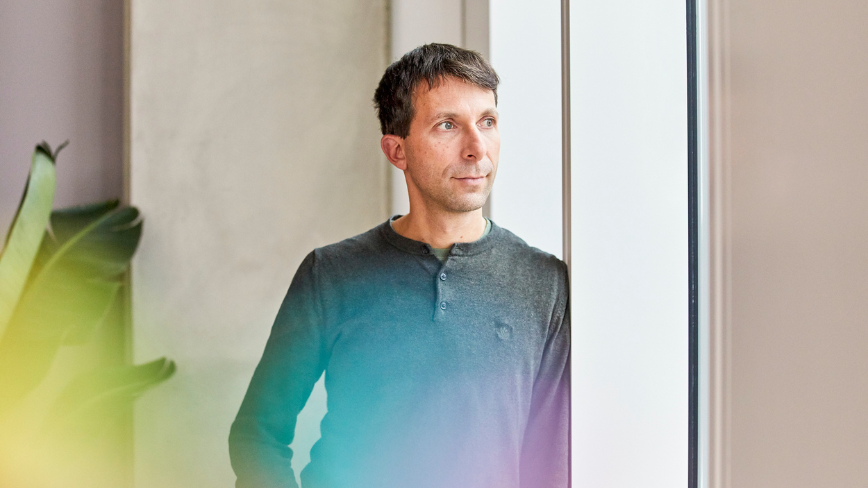
David Silver, a British AI researcher known for his role at Google's DeepMind lab, has helped build some of the most influential AI systems and is now leading his own ambitious start-up. He is in the middle of raising a $1 billion seed round for his new London-based venture, Ineffable Intelligence. If the fundraising will […]
This story continues at The Next Web
For a month, Michael Rectenwald had been trying to get Nick Fuentes to notice him. Rectenwald had a new political action committee devoted to anti-Zionism, and he hoped the far-right influencer would promote it to his legions of perpetually online, often antisemitic fans. But Rectenwald, a former New York University professor and one-time presidential hopeful, had struggled to stand out to the ascendant Fuentes, who has come to symbolize the formerly fringe extremes of the online right. So in October, Rectenwald posted something sure to catch Fuentes's eye: "Nick has sold out to the cabal."
It worked. "Fuck you," Fuentes wrote back.
This was Rectenwald's shot. He apologized, calling Fuentes "a brilliant guy." He reposted an uncannily gorgeous, computer-generated woman in a cross necklace and blazer encouraging the two men to "drop the beef." She sat in front of an American flag and six light-up letters spelling "AZAPAC," the acronym for Rectenwald's new group. If Fuentes would just endorse it, Rectenwald promised, he'd "take it all back."
Rectenwald launched the Anti-Zionist America Political Action Committee in August, vowing to fight to end U.S. financial and military aid to Israel and root out pro-Israel influence in Congress. AZAPAC aims to raise money to unseat pro-Israel legislators in the coming midterm elections, targeting some of the main recipients of cash from influential groups like the American Israel Public Affairs Committee and Democratic Majority for Israel.
It's a goal that might sound appealing for the electoral left, whose members have long struggled to make meaningful progress on Palestinian rights in Washington, D.C., largely because of the strong grip the pro-Israel lobby holds on U.S. politicians. And as Israel's genocide in Gaza stretches into a third year, AZAPAC's policy goals may tap into a political energy currently unaddressed by either major party: growing anti-Israel sentiment on the right.
Though the Republican party loudly backs Israel and its war effort, far-right online spaces are growing increasingly critical of Israel. While accusations of antisemitism from the pro-Israel mainstream often dog Israel's critics on the left, they appear as little cause for concern to far-right figures and their followers. As the nonpartisan AZAPAC works to sway the 2026 midterms, Rectenwald's group will test whether candidates across the political spectrum will be similarly pressed on the distinction between anti-Zionism and antisemitism.
 Related
Israeli Military Found Gaza Health Ministry Death Toll Was Accurate. Will These Deniers Admit It?
Related
Israeli Military Found Gaza Health Ministry Death Toll Was Accurate. Will These Deniers Admit It?
The AZAPAC founder has attempted to connect with openly antisemitic figures like Fuentes, a Holocaust denier who famously praised Hitler. Rectenwald is a regular on The Stew Peters Show, which streams on the Peter Thiel and JD Vance-funded YouTube alternative Rumble, where the host has used slurs to describe Jewish and Black people — to no objection from Rectenwald. He's courted support from popular manosphere influencer Dan Bilzerian, an antisemitic conspiracy theorist who has falsely claimed Jewish people are behind DEI policies, transgender identity, and "open borders." AZAPAC is helping fund at least one candidate who is a Hitler apologist and another who has participated in white nationalist demonstrations.
In a conversation with The Intercept, Rectenwald made clear he's aware such affiliations could be detrimental to his cause. He said he is no longer seeking the support of Fuentes, though he remains interested in his fan base — they're "more sincere than him on some things" — and that he was unaware of "the depth of" Bilzerian's antisemitic views, which are well-documented online.
Asked about Peters's language, Rectenwald told The Intercept he would no longer appear on his show, then reversed and said he didn't want to "throw him under the bus." Peters, Rectenwald added, has "helped us quite a bit."
Affiliating with such figures perpetuates harmful and often violent rhetoric toward Jewish people, antisemitism and hate speech experts told The Intercept, and in the most extreme cases, conspiracy theories can motivate violence, as occurred when a white nationalist shooter massacred worshippers at Pittsburgh's Tree of Life synagogue in 2018.
These antisemitic allyships also risk undermining legitimate criticism of the state of Israel — a heightened liability at a time when the federal government and its pro-Israel allies have launched largely spurious claims of antisemitism against advocates on the left who support Palestine and oppose Israel's genocide.
"If we give any quarter to antisemitism anywhere near our movements, we are opening ourselves up to the charges from Israel's defenders," said Ben Lorber, an author and researcher of antisemitism and white Christian nationalism. "It stands to really harm the movement."
"If we give any quarter to antisemitism anywhere near our movements, we are opening ourselves up to the charges from Israel's defenders."
Rectenwald appears to understand what he's risking. After The Intercept reached out to AZAPAC-endorsed candidates for this story, two rejected the group's backing and were scrubbed from the site, and a third threatened to do the same. Rectenwald accused The Intercept of trying to sink his PAC.
Rectenwald himself has used language commonly associated with antisemitic conspiracy theories of global Jewish control, and he argues that other Israel critics embrace similar language. Online, he regularly refers to "the Jewish mafia" and "Jewish elites," and last April, he self-published a novel called "The Cabal Question." He originally wanted to call it "The Jewish Question," as he said on a podcast, but Amazon barred him from using the title.
"We don't use the same language and talk about the same things with the same terms," Rectenwald told The Intercept, referring to Peters. And yet, he said, "I do believe he's doing pretty good work in terms of exposing the Zionist network and what it's up to." He said a significant portion of AZAPAC's early donations arrived after his appearances on Peters's show, which also runs commercials for the group.
Rectenwald self-published a novel called "The Cabal Question." He originally wanted to call it "The Jewish Question," but Amazon barred him from using the title.
During a September episode while introducing Rectenwald, Peters referred to Jewish people using a common antisemitic slur. A month earlier, he used an anti-Black slur to describe Department of Justice attorney Leo Terrell in another episode with Rectenwald. In that episode, Peters said the U.S. is "occupied" by "anti-white, anti-Christian, anti-American Jews who are not just working on behalf of Israel, but on behalf of a more broad, satanic, Talmudic agenda that's taken shape over thousands of years."
Rectenwald promised Peters in his August appearance that AZAPAC does not have "infiltrators," "dual allegiances," or "sneaky Jews coming in and running the show." He closed out the episode by offering Peters an invite — which he told The Intercept has since been rescinded — to be a member of AZAPAC's board.
The 2026 SlateAn AZAPAC ad launched in November and produced by the far-right company Dissident Media shows Donald Trump and Benjamin Netanyahu shaking hands, Palestinian children killed by Israel, re-enactments of the American Revolution — and the red, clawed hands of a puppet master manipulating strings overlaying a mashup of the American and Israeli flags.
Rectenwald told The Intercept that he was not aware "puppet master" was a well-known antisemitic trope and that the strings represented the pro-Israeli donor class's influence on the Trump administration. Plus, the trailer was a success: Donations poured in as it drew attention online, Rectenwald said.
AZAPAC had raised $111,556 by the end of December, according to recent FEC filings.
Of AZAPAC's 10 publicly endorsed candidates, six are running as Republicans with three Democrats and a Libertarian on its slate. The group is more focused on Republicans, Rectenwald said, because he aims to put a dent in the GOP's pro-Israel base. AZAPAC is backing Aaron Baker, for example, an America First conservative who is running to unseat Rep. Randy Fine, R-Fla., a vocal supporter of Israel and Netanyahu.
 Related
AIPAC Is Retreating From Endorsements and Election Spending. It Won't Give Up Its Influence.
Related
AIPAC Is Retreating From Endorsements and Election Spending. It Won't Give Up Its Influence.
At least one AZAPAC candidate drew national headlines five years ago. Tyler Dykes, a Republican candidate running for Rep. Nancy Mace's congressional seat in South Carolina, was famously accused of performing a Nazi salute, which he denies, while storming the Capitol on January 6, 2021, and later pleaded guilty to assaulting, resisting, or impeding federal officers with a stolen riot shield. (Trump pardoned Dykes on his first day in office.) Dykes also received a felony conviction for his participation in the 2017 white supremacist Unite the Right rally in Charlottesville, Virginia, where organizers protested the removal of a monument to Confederate Gen. Robert E. Lee and yelled, "Jews will not replace us."
Reached by The Intercept, Dykes said in an emailed statement he denounces "violence and extremism in all its forms." He added that "Robert E. Lee was a hero, and deserves to be honored as such."
Rectenwald told The Intercept that AZAPAC's board had vetted Dykes and other candidates. He said he was willing to tolerate certain disagreements with the candidates and their views. The endorsements, Rectenwald said, are "a pragmatism of sorts."
"We don't agree with all of these candidates," Rectenwald said. "We're trying to put together a coalition of sometimes very unlikely bedfellows, if you will."
AZAPAC's endorsement process is primarily based on a 19-part questionnaire, which Rectenwald shared with The Intercept. It asks things like whether a candidate would pledge not to receive campaign donations from prominent pro-Israel groups or "any other foreign lobby/PAC"; what they think of laws restricting the Boycott, Divestment, and Sanctions movement or imposing the International Holocaust Remembrance Alliance definition of antisemitism; and whether they would vote to end military aid to Israel.
"We're trying to put together a coalition of sometimes very unlikely bedfellows, if you will."
The group's contradictions are perhaps best captured by two brief recent endorsements: two former American soldiers, Anthony Aguilar and Greg Stoker, running for Congress as progressive Green Party candidates. As a contractor working with the Gaza Humanitarian Foundation, Aguilar, who is running in North Carolina, became a whistleblower alleging that GHF employees were firing into crowds of starving civilians at aid sites. Stoker, running in Texas, took part in last year's Global Sumud Flotilla, a humanitarian mission meant to break Israel's blockade of Gaza.
Their AZAPAC endorsements were short-lived.
After receiving questions from The Intercept about Rectenwald's language and AZAPAC's associations with far-right figures, both Aguilar and Stoker rejected the group's backing. Mentions of them had been erased from AZAPAC's online presence by Tuesday.
In explaining his withdrawal, Aguilar's campaign acknowledged that anti-genocide and anti-Zionist activists "are falsely accused on antisemitism on a regular basis" to discredit their work. "For that reason, we want to avoid being associated with any group whose statements or actions raise credible concerns of actual antisemitism," Aguilar's campaign manager said in a statement.
Stoker told The Intercept that "I have always used my platform to fight against racial superiority," adding that AZAPAC's narrow focus on "old conspiracy theories" and eradicating the pro-Zionist lobby "is not going to fix any of the larger systemic issues facing working class Americans."
Christine Reyna, a professor at De Paul University who studies the psychology of extremism, questioned why AZAPAC would endorse candidates like Dykes and Casey Putsch, a racecar driver and AZAPAC-backed Republican candidate for Ohio governor. In August, Putsch posted a video asking Grok to list "all the good things Adolf Hitler did or was responsible for creating in his life" and railed against the Jewish right-wing commentator Ben Shapiro, whom he called "an annoying little rodent." While there's a growing number of other candidates who oppose sending military aid to Israel or have sworn off AIPAC donations, backing candidates like Putsch and Dykes could serve as a dog whistle, Reyna said, to some of the most extreme corners of the far right.
"When you package these really frightening and terrible and dangerous ideologies and you hide them behind this front-facing organization that gives them legitimacy," Reyna said, "That can be extremely dangerous."
Aligning with such America First nationalists, who tend to ignore the issue of America's own ambitions of control and profit, can harm other communities, antisemitism researcher Lorber warned, because of their anti-Blackness, xenophobia, or anti-LGBTQ views. In the case of Israel, these far-right alliances can also injure the movement for Palestinian liberation, he said.
"If we get distracted chasing fantasies of Jewish cabals, it harms our analysis, it makes our work less informed and less effective," Lorber said, "and it also divides our movements."
"There is a big umbrella for a movement against unconditional support for Israel. But neo-Nazis and far-right antisemites will never be welcome in that."
Palestinian-American advocate and analyst Tariq Kenney-Shawa, whose family is from Gaza, is acutely aware of the ways pro-Israel institutions have attacked anti-Zionist work for being antisemitic. He said those bad-faith attacks were why he was concerned about AZAPAC's affiliations with the far right, which has long rooted its criticism of Israel in "actually racist and antisemitic" beliefs.
"There is a big umbrella for a movement against unconditional support for Israel," Kenney-Shawa said. "But neo Nazis and far-right antisemites will never be welcome in that."
The day after federal immigration agents shot and killed Alex Pretti in Minneapolis, Putsch, who did not respond to outreach from The Intercept, doubled down on his support for ICE's mass deportation campaign. On social media, Putsch, who is Christian, often attacks his opponent Vivek Ramaswamy's Hindu faith and Indian ancestry. On his campaign site, his platform includes anti-immigrant calls to "accelerate deportations" and limit the number of H-1B visas offered to immigrant workers.
His platform makes no mention of Israel or foreign policy.
The Founder's Journey"Maybe one time I failed to say Zionist," Rectenwald told The Intercept, acknowledging that on occasion, he has used the words "Jew" or "Jewish" instead. A search of his X account turned up at least 43 references to the "Jewish mafia," and he's repeatedly invoked the "Jewish elite" on his Substack. He claimed to have borrowed the latter term from Norm Finkelstein, a pro-Palestinian author and activist who, unlike Rectenwald, is Jewish himself.
"It's not just an 'israeli lobby.' LOL. It's a Talmudic Jewish mafia that runs the U.S. and the world," Rectenwald wrote in one post in March. The same day, he claimed that "the Jewish mafia did 9/11."
"Maybe one time I failed to say Zionist."
When The Intercept asked about Rectenwald's use of the term "Zionist Occupation Government," which has a history of popularity among white supremacists, he brought up AZAPAC-backed candidates like Bernard Taylor, a firefighter and Democrat hoping to unseat Florida Republican Rep. Brian Mast, a former IDF volunteer. Rectenwald cited Taylor, who is Black, as proof that "we are not like bigots," adding that AZAPAC planned to endorse other people of color.
Taylor, who accepted an endorsement from AZAPAC in December, said he also was not aware of Rectenwald's rhetoric until approached by The Intercept for this story.
"I'm not gonna sit here and say it's not concerning to me," Taylor told The Intercept in a phone call, referring to Rectenwald's language. In an emailed statement, he said his campaign rejects antisemitism, racism, and white supremacy, but would keep the AZAPAC endorsement based on policy. Taylor said that if he feels AZAPAC is "crossing the line" into overt antisemitism, he will reject its endorsement and refund donations from the group.
"If I made, you know, some slips here and there, it isn't intentional — I'm not trying to dog whistle to anybody," Rectenwald said. "I'm just trying to be precise, and sometimes, you know, precision is difficult."
In "The Cabal Question," Rectenwald's self-published novel, a former professor finds his worldview transformed when a friend "thrusts him into the JQ," or Jewish question, as the book's Amazon summary puts it, working with "a steadfast ex-occultist turned Christian nationalist to trace the strands of the cabal's reach." The story mirrors his own evolution of getting "J-pilled," or "Jew-pilled," Rectenwald has said, though he insists the novel is not about promoting antisemitism but rather "a Christian redemption story."
 Related
StopAntisemitism Takes Credit for Getting Hundreds Fired. A Music Teacher Is Suing.
Related
StopAntisemitism Takes Credit for Getting Hundreds Fired. A Music Teacher Is Suing.
Rectenwald once identified as a leftist. He taught liberal studies as a Marxist at New York University — until a fallout that began in 2016, when it was revealed that he was behind the since-deleted Twitter account @AntiPCNYUProf with the screen name "Deplorable NYU Professor." Rectenwald used the account to act "in the guise of an alt-righter," as a way to argue against politically correct use of pronouns, trigger warnings, and safe spaces.
He took a paid leave from NYU and claimed he was a victim of liberal censorship in a splashy op-ed and a sit-down on Fox & Friends. When he came back, Rectenwald invited far-right activist Milo Yiannopoulos to speak to his class and later sued NYU for defamation. Court records indicate the case was dropped with prejudice, and Rectenwald said he settled out of court for a cash payment in exchange for his departure from the school in 2019.
NYU did not respond to The Intercept's request for comment.
The experience prompted Rectenwald to denounce the left and his several decades of Marxist scholarship, and in 2024, he launched a failed bid for president as a Libertarian, representing the conservative Mises Caucus.
It's unclear when his fixation on Israel and antisemitic conspiracy theories took hold. But on the right-wing podcast The Backlash in May, Rectenwald used the protagonist of "The Cabal Question" to describe how his views developed.
In the book, Rectenwald said, the main character flees persecution and surveillance from the government controlled by "the Jewish mafia." The character ends up finding refuge with "radical right wingers," who help him escape the country. The more closely he affiliates with the right-wing network, however, the more he risks damaging his own reputation.
"Art imitates life, right?" said the host. Rectenwald agreed.
The post A New PAC Wants to Counter Israel's Influence. It Also Welcomes Hitler Apologists. appeared first on The Intercept.

Andrew Mountbatten-Windsor, the Epstein buddy formerly known as 'prince', has been arrested this morning at the Sandringham estate in Norfolk.
Police arrived early this morning in unmarked cars. The exact reason for the arrest is still unannounced, though it is under the umbrella term of misconduct in public office. BBC correspondent Laura Manning speculated that:
My understanding is that there's been a very significant development in the investigation into the Epstein files. Andrew Mountbatten-Windsor has been arrested this morning on suspicion of misconduct in public office.
That goes back to documents from when he was a trade envoy, that are alleged to have been passed to Epstein.
Knowing the priorities of the British state, it is more likely to be linked to his leaking of secrets to serial chiild-rapist Jeffrey Epstein than his alleged trafficking of women.
For more on the the Epstein Files, please read the Canary's article on way that the media circus around Epstein is erasing the experiences of victims and survivors.
Featured image via the Canary
By Skwawkbox

The Trades Union Congress (TUC) is exposing on X the dangerous impact Reform MP Richard Tice would have if he makes it to office.
Live on LBC, Tice stated that Reform would:
Will consider cutting the minimum wage for younger workers.
This demonstrates how disastrously out of touch Tice is with the very voters he's trying to win over.
The post below from the TUC underscores the contrast between billionaire-funded Reform UK, and the real challenges facing ordinary people — just trying to make ends meet.
Richard Tice: "100% of nothing is nothing"Young people: We can't afford our rent.
Multi-millionaire Reform MP Richard Tice: We're going to cut your pay. https://t.co/i9SoVTcAPb
— Trades Union Congress (@The_TUC) February 17, 2026
The original LBC interview went as follows:
Ben Kentish: If you were in government, would reform cut the minimum wage for young people to get more of them into work? Is that on the table?
Richard Tice: Well, we'll be talking about that over the coming weeks. We've got to re-look at it because the evidence is immediately there within a matter of six to nine months. But this has had a catastrophic impact as well, of course, of the impact of national insurance contribution rises, employment rights, fears from the dreadful employment rights bill. All of these things have a cumulative impact, which means that employers are saying, why should I take the risk?
Kentish: A potential pay cut for millions of young workers on the minimum wage is something you are considering?
Tice: If you're unemployed, I mean, 100% of nothing is nothing.
Kentish: But we're talking specifically about the minimum wage here and whether it needs to be cut for young people.
Tice: But the wage is irrelevant if you're not employed. If businesses are not employing you, so it's much better to say, actually, we look at…
Kentish: But the young people who are employed on the minimum wage obviously would also be affected by a cut in the minimum wage.
Tice: And that's why I'm not going to make policy on the hoof. That's why you've got to look at the implications of this.
Kentish: But you're looking at it.
Tice: We've got to look at all of this because they've got themselves in a terrible pickle and sometimes it's then quite hard to unwind these things.
Kentish: And to young people who say, well, I'm in work, I'm earning the minimum wage, why on earth would I vote Reform if they think I should potentially earn even less than I'm getting?
Tice: That's…
Kentish: What would you say?
Tice: Well, that's not what I'm saying. What I'm saying is other young people are not being employed who could be and should be because of this extra cost. And it's a significant disadvantage. But it's now… it's a complicated issue.
Unfortunately, Kentish misses another reality: giving bosses 'recruitment discounts' through low pay requirements doesn't lift people out of poverty.
Many will still need benefits to survive, with taxpayers footing the bill for what rich employers refuse to pay. After all, workers can't get their PAYE sent to offshore tax havens — they're captured by the tax system from the get-go.
Once again, the majority are forced to bear the burden the super-rich continue to shrug-off.
As if it wasn't completely clear already, if you vote #Reform, what you are voting for is taking money out of the pockets of the working class and giving it to millionaires and billionaires. It really is that simple. They are a bunch of absolute grifters who prey on stupidity https://t.co/dAHbz1C1TV pic.twitter.com/QzNQQBlGvm
— Jim Kavanagh (@Jimbokav1971) February 17, 2026
Says the immigrant from Dubai. Has he learned Arabic yet?
Reform couldn't give a damn about the working class. They're a private members' club for billionaire tax-dodging wankers and offshore-trust boys who lecture 16 year old shelf-stackers to "tighten their belts for… https://t.co/kuCOsOtU1Z
— Atlanta Rey

The Royal British Legion (RBL) have announced an Iraq War '15 years on' memorial event. The veterans charity, which is backed by major global arms firms, said the event would be held in Staffordshire in May 2025 at the National Arboretum.
The Arboretum is a national site for military remembrance, and is known for partnering with military-linked firms.
The Legion's press release says:
We will remember the lives lost and those affected and pay tribute to the professionalism and dedication of the men and women who served, from the initial invasion to the crucial rebuilding of Iraqi institutions and infrastructure.
That last little bit is particularly deceptive. It makes Iraq sound like a humanitarian mission, rather than a war crime-riddled heist.
Iraq denials don't hold waterIn fact, one Iraq veteran told the Canary that the RBL's claim was flat wrong:
When I was on Telic one [the Iraq invasion] there was a planned campaign of arresting anyone that had membership of the Ba'ath party (this was after the government had fell). In effect teachers, dentists, doctors, or anyone with a skilled job, had to be members of the party under the old regime, or they wouldn't have been allowed to work.
He continued:
When we asked the RBL about their links to corporate sponsors, they told us:In effect, anyone that knew how to do something in society was removed, and when we questioned this on the ground, we were told that this policy had come from the very top (Downing Street)
So it wasn't just the military campaign it was also the removal of all people that ran Iraqi society. At the same time the army was pretty much made redundant.
The institutions and infrastructure wouldn't have needed building up or repairing without this.
The RBL Iraq 15 event will not have any corporate sponsors.
Which certainly doesn't clear up the issue of their corporate sponsors as an organisation. And, when we asked the Iraq veteran about the Legion's links to arms firms, he told us:
Yes the RBL are basically partnering with the arms business, which surely must be against the principles of when the organisation started.
The truth is that the Iraq War was illegal and killed and maimed hundreds of thousands of people. The war destabilised the entire Middle East region, leaving a lasting impact on those who carried it out. By all measures, it was an unmitigated disaster. Yet, bizarrely, figures like Trump's secretary of state Marco Rubio are clamouring to revive colonialism. Regime change in Iraq clearly taught them that war is profitable for the West.
In the pockets of Big DeathSince the ousting of the pre-2003 government, Iraq has become a lucrative cash cow for certain players, including global arms firms — what I prefer to call Big Death. Welcome to the military charity-industrial complex.
What makes the Iraq event and comments from the Royal British Legion striking is that both the legion and the National Arboretum proudly state their connections to the global killing business.
BAE Systems is a major partner of the RBL — to the tune of £400,000. The Arboretum's website names Amey, Key Systems, Briggs Equipment and Jaguar Land Rover among its partners and supporters. All of these firms make profit from war and global instability.
The press and RBL did not even attempt to reflect these galling truths in their coverage of the event.
Flattening Iraq: literally and ideologicallyInstead, the Mirror led with stories about veterans horribly wounded in the war — yep veterans, not the countless Iraqis killed as a result of the war.
Certainly, these are awful and harrowing tales involving terrible injuries. But the point, my friends, is that the choice to focus on individual stories is deeply political.
In 2018 Professor Paul Dixon wrote a report called Warrior Nation: War, militarisation and British democracy. Dixon recently published a much-expanded book on the same issue.
In his original report, Dixon identified many different tactics used by pro-war groups and individuals to de-politicise and flatten discussions about war. One of these is 'personalisation".
As Dixon has it:
The personalisation of war refers to the focus on human stories and the plight of the troops. This may serve militarists well in 'depoliticising' the war (which is, ironically, to conceal the highly political motivations of those behind the war) diverting attention from wider questions as to why it was necessary to fight these wars.He adds:
Personalisation can be combined with deflection in which opposition to the war is presented as opposition to military personnel, militaristic ideals and the nation. War becomes 'a fight to save our own soldiers… rather than as a struggle for policy goals external to the military.'
Whether the press and the RBL know it or not, they're using a well-established tactic to remove the war and its outcomes from their political context. Which is exactly the thing we should be discussing.
We've drawn on Paul Dixon's more recent work in January 2026. He wrote about how he'd argued the UK's military elite had used the wars to cement more power over UK democracy.
These military elites, Dixon argues:
[often] claim to be non-political, [but] their history suggests a close relationship with the political right, sympathy for monarchy and imperialism, and hostility to liberalism, socialism, feminism and democracy.
The British military produces far-right ideologues? Quelle surprise.
Britain's war machineIt might seem odd that major arms firms and the powerful UK military charities are so closely linked. But, this is what it has always been.
You could read about the historical links between the Legion and the military establishment in my second book Veteranhood. Except you can't. Why? Because an Israeli AI bro bought the publishing house and now myself and load of my fellow authors are boycotting our own work and giving any future royalties to Palestinian causes.
And if you want to understand militarism in the UK and globally — and how it's enmeshed with global capitalism — one of the best places to start is by scrutinising military charities (which are themselves big firms) in bed with the war trade.
Because underneath the rhetoric about remembrance, sacrifice, and courage you'll find that what arms firms and these big charities really do is re-write, obscure, and mythologise as noble what is, in fact, the UK's violent, counter-productive, imperialist foreign policy. Lipstick on the pig, if you like? They limit the space to critique those policies, to make them harder to challenge and to conflate criticism with disrespect for 'the troops'.
The real face of that war is much less marketable, as another Iraq veteran told us:
I'm 38 now. I had only just turned 20 when i deployed, I redeploy most nights. Waking my partner up - kicking & screaming. You come home, but bits of it stay with you — and your family carries it too.He pointed out the lack of accountability too:
Chilcot told us what went wrong, but nothing really changed at the top. Blair is still a free man. If remembrance means anything, it should mean telling the truth, rather than white washing the nations war crimes.
But the truth is, when you see and hear about the dead and wounded in wars like Iraq, the real disrespect lies in failing to criticise, probe, and challenge the ugly consequences of war.
Featured image via Peter Kennard and Cat Picton-Phillipps
By Joe Glenton


