
Dom Phillips warned that Jair Bolsonaro would make life more dangerous for reporters and the Amazon rainforest, and that his sons were even more extreme
"Bolso shows all signs of fascism, as do his supporters," the murdered British journalist Dom Phillips told me before his death. "His sons are all more extreme if anything."
These words were written in 2018 by the Guardian contributor shortly before the election of the far-right former army captain Jair Bolsonaro as president of Brazil - a prospect that Dom viewed with dread.
Continue reading...
Jorge Martin's mistake at the Hayshed on lap 8 of the MotoGP sprint race at Phillip Island has had severe consequences. The factory Aprilia rider lost the front on the entrance to Turn 8 and slid off despite a valiant attempt to save a crash. He started tumbling once he hit the gravel, and in the high speed crash he fractured his right wrist.
After the race, Aprilia's communications team issued the following statement: "Jorge Martin was taken to the circuit's medical center following his crash. The x-rays revealed a fracture of the right radius and a suspected fracture of the right ulna at the distal end. Martin will undergo further examinations to reach a definitive assessment of his condition. Martin has been declared unfit for tomorrow's race."
David Emmett Sat, 24/Oct/2026 - 11:26
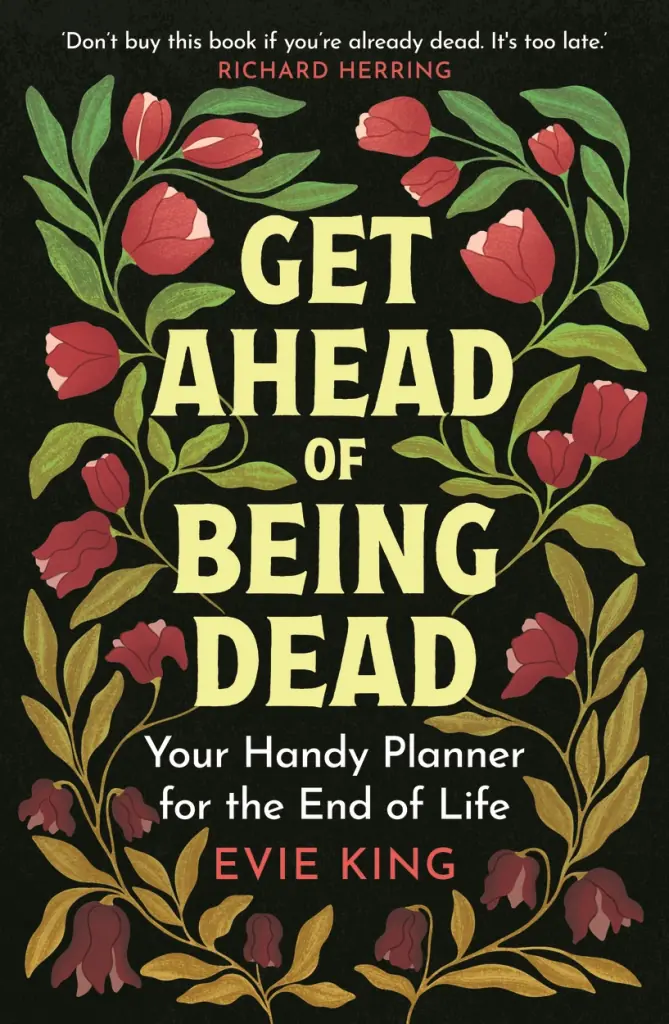
After reading Evie King's previous book Ashes To Admin - Tales from the Caseload of a Council Funeral Officer I was eager to read her not-quite-a-sequel.
We know what happens after death; paperwork. Gas bills need to be cancelled, funeral wishes need to be carried out, money needs to be apportioned between warring family members. When you die, you won't be there to experience the annoyance and distress - but other people will. So do you help them or not?
This book is a chatty and informal guide to how to set out your wishes - including that you have no wishes.
Much like her previous book, it cheerfully mixes anecdotes about death with a powerful political message about how we treat the dead (and, I suppose, nearly dead).
It is one of those rare eBooks which is probably better as a paper book because the end of every chapter has a few dozen questions to fill in. Some are seemingly banal (library card number) and other potentially a little distressing (who do you not want invited to your funeral). The aim is to keep the answers somewhere prominent so that, come the inevitable, there's a one-stop-shop for all your deadmin.
Evie does an excellent job of making the slightly terrifying first steps accessible and approachable. It's fully trans, non-binary, and poly inclusive. It doesn't shy away from some of the more uncomfortable aspects of death, but it really does feel like the author is having a coffee & natter with you.
The style won't be for everyone. I think I'd rather have this as just a plain list of questions. But, then again, I did find it compelling to read the stories about what happens when things go wrong. So maybe I don't know myself as well as I think. Say, what song do I want playing at my funeral?
There's no doubt this is a slightly challenging and provocative read - but you should absolutely buy a copy for yourself and fill it in. Whether you buy it for your friends and relatives…

Brownsea Island, Dorset: I've been here lots of times to see the squirrels, so I know exactly where to find them - behind the church in the woods
Every October my family have an annual trip to Brownsea Island. We go in autumn because this is a good time to see the red squirrels. In the other seasons, they are high up, hidden in the trees. We catch the ferry from Poole Harbour, and we know we are close when we can see the castle come into view. When we arrive we're greeted by nosy chickens and attention-seeking peacocks on the lawns.
We go behind the little church into the woods. It is a different world there. There is a mix of crunchy and soggy brown leaves on the ground and little mushrooms popping up from the earth. Some mushrooms are sprouting from rotting logs.
Continue reading...
One of the most frequently asked questions of Linux folks is "what's the best lightweight distro for an old PC?" The Reg FOSS desk's current answer is Raspberry Pi Desktop.
A couple of weeks ago, we covered the news of a Trixie update for the Raspberry Pi Desktop. Since then, we've been putting it through its paces on a couple of the oldest, slowest machines in the FOSS desk stables. It has performed splendidly.
If you fancy dipping a tentative toe into Linux, but you only have a relatively old low-spec PC spare to try it on, this is ideal. This is a modern OS: it's a 2.6 GB download, and it uses about 8 GB of disk space when installed. It will be a bit too much for a 25-year-old PC that was intended for Windows XP, but if you have an old PC from the Windows Vista era to hand, that should do.
The splash screen calls it "PiOS 6.3," just as on Arm-based Raspberry Pi hardware. Here, though, we're testing Raspberry Pi Desktop: the x86-64 PC edition of the Debian-based system, available at the bottom of the downloads page.
Back in 2023, the PiOS got a new Debian 12-based version, which included a new Wayland-based desktop - although it still looked almost identical to the old environment, based on X11, Openbox, and LXDE. Sadly, the PC version didn't get upgraded. Two years later - so, almost exactly a year ago - we got a Debian 13-based PiOS 6. The PC version still didn't get upgraded.
Now the PC edition has finally caught up with Debian 13. It's very similar to September's PiOS 6.3 release, complete with the option of a dock instead of a taskbar. Like the Arm version, you can use the raspi-config tool to switch between the Wayland-based labwc compositor and X.org if you prefer.
There is one important difference: Raspberry Pi OS still offers 32-bit and 64-bit Arm editions, but Raspberry Pi Desktop is now x86-64 only, following Debian 13's retirement of its x86-32 edition. The Arm editions now use kernel 6.18, but the PC version is still on Debian's default kernel 6.12.
It brings the Pi's streamlined Debian desktop to PCs, with an installer that asks few technical questions. You can do a custom installation into existing partitions if you want, but you can just click "OK" a few times and it will do almost everything for you automatically. Unlike Debian itself, there are no questions about what to download, which desktop, network installation, or anything like that. One size fits all.
You get a custom desktop with a broadly Windows 95-style layout, except that the taskbar is at the top of the screen (you can move it if you want). You get a basic collection of preinstalled apps: Chromium, Firefox, a text editor, and some helpful documentation - albeit aimed at owners of real Pi hardware. At idle, it runs in a little under 450 MB of memory, and if you switch to X.org, Openbox uses about 50 MB less. The lightest variant of Ubuntu is generally agreed to be Lubuntu, but PiOS takes about half as much memory as Lubuntu 26.04 did in our testing.
We tried it on a ThinkPad X200s, released in 2008. Ours has been upgraded with 8 GB of RAM, plus a spare 128 GB SATA SSD, but it's on the original 1.86 GHz Core 2 Duo SL9400 and Intel GMA4500 integrated GPU. Everything we tested worked, including Wi-Fi, Bluetooth, Ethernet, USB 2, volume control buttons, brightness keys, and an external screen on DisplayPort. It automatically picked up and added our network printer, and happily connected to both 2.4 GHz and 5 GHz Wi-Fi networks.
For something even older and lower end, we went back to the year Vista was released: 2007. We transplanted the SSD into a ThinkPad X61 Tablet from that same year. Our very battered X61 has 2 GB of DDR2 RAM. PiOS handled that fine - with the sole exception of the touchscreen, which didn't work. (We've only ever got that working with Windows XP.)
In a 19-year-old PC with an SSD, PiOS booted in under half a minute, and it was able to run Firefox and Chromium and go online. Pages rendered slowly, but it worked. On the better-specced X200s, with four times the RAM, even the web experience was tolerable, if you're patient. We also tried it on a high-end machine from 2008, a Thinkpad W500, complete with AMD GPU. On that, it feels positively snappy.
In our testing, PiOS takes as little memory as Alpine with Xfce - but it's far easier to install. Because it's Debian, it was also much easier to get additional apps such as both text-mode and GUI WordPerfect for Linux working. With Wine 11 from WineHQ, Microsoft Office 97 installed and ran superbly too.
If you're willing to trade a tiny bit of security for visibly better performance, the tweaks we gave in 2022 still work well.
PiOS is about as frugal as ChromeOS Flex, but you don't need a Google account or any other cloud login, and you get all-you-can-eat local apps. Compared to middleweight distros such as Linux Mint Xfce, Linux Lite, MX Linux, or Lubuntu, PiOS is significantly less demanding of hardware resources.
There are even lighter-weight Linuxes out there. For example, there is a Debian 13 version of antiX Linux, but although smaller, it has an overwhelming collection of kernels, init systems, window managers, and file managers. AntiX is not beginner-friendly. In 2024, we looked at Tiny Core Linux 15, which is far smaller. Now up to version 17.1, it remains a specialist tool: you'll need serious tech skills to add extra apps, let alone update.
Alpine is capable, versatile, and lightweight, but assembling a desktop requires considerably more work. If you take the time to learn your way around it, Alpine can be configured to use even less disk and memory than PiOS, but Alpine has a smaller selection of software than Debian - unless you add Flatpak, which negates Alpine's lightweight, clean simplicity. Experienced Debian or Devuan users could build something leaner, but Raspberry Pi Desktop saves them the trouble. Its team has had 14 years of practice in diet Debian.
The Raspberry Pi Desktop also supports Intel Mac hardware, and it's ideal for old-but-working Macs now long-unsupported by macOS. It could also suit older Intel MacBooks whose RAM can't be expanded, although Wi-Fi, graphics, and other hardware support will depend on the model. A 4 GB MacBook Air may still have useful life running current browsers and LibreOffice. Just possibly not at the same time.
This should be your go-to option for an old, low-spec PC. It won't make a 15-year-old computer as fast as a new one. But it can make a 15-year-old PC useful again, with current, supported apps and tools. Once you get familiar with PiOS on a low-end x86 machine, it will also work fine on newer and more capable hardware. ®

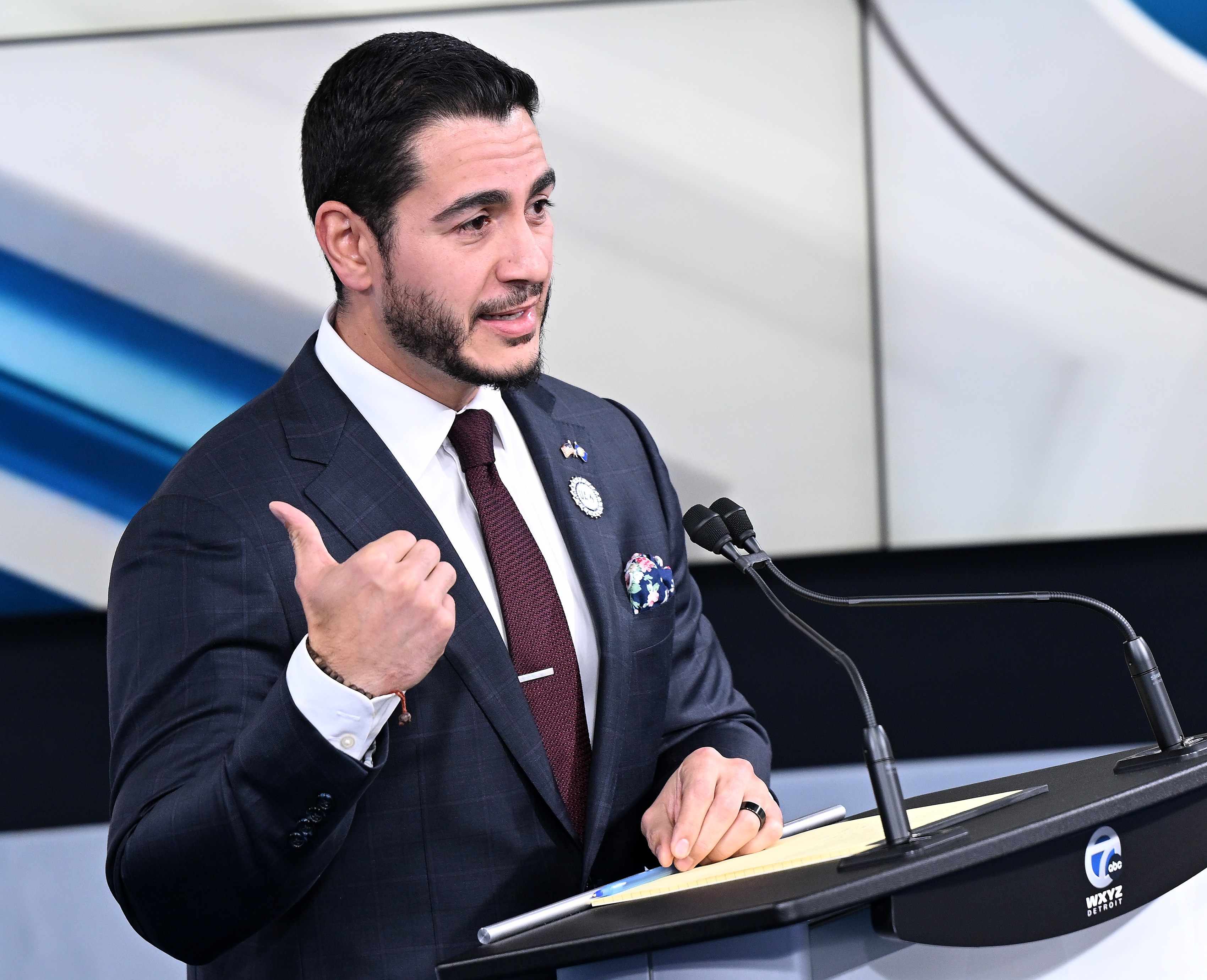 Democratic Senate candidate Abdul El-Sayed speaks during the WXYZ Channel 7 debate on Oct. 21, 2026, in Southfield, Mich. Photo: Robin Buckson-Pool/Getty Images
The PUMA spirit is back. The 2008 Democratic Party protest movement, inflamed by what Hillary Clinton supporters viewed as Barack Obama stealing the nomination from their primary candidate, scorned his general election campaign and embraced the mantra "Party Unity, My Ass."
This time, that energy is aimed at the candidates preferred by the Democratic Socialists of America.
DSA-aligned progressives have won a number of party primaries and are set to help Democrats take the majority in Congress. But once in power, they're likely to make demands — the kinds of demands that could upend decades of carefully crafted donor-friendly policymaking.
For moderate Democrats, "party unity" is only a goal worth pursuing to bully the left wing of the party to fall in line with their preferred candidate.
For moderate Democrats, "party unity" is only a goal worth pursuing to bully the left wing of the party to fall in line with their preferred candidate. When it's on them to step up and vote for someone who might have different goals, that's another story completely, and some centrists are even hoping for Republicans to win the House this November if the alternative is an empowered DSA Democratic wing.
James Carville, the fossilized Cajun strategist who was part of exactly one successful national political campaign, Bill Clinton's 1992 White House victory, said on The Bulwark podcast last Sunday that he'd prefer a tight GOP hold on Congress over a narrow Democratic majority.
"I would be disappointed if it comes in at 225 House seats," Carville told host Bill Kristol. "I would rather the Republicans keep the House by five than the Democrats to win by five, because, if that happens, they're hostage to the DSA."
To his credit, Kristol — who, in a sign of how people can change when they know which way the wind is blowing, spent the PUMA moment promoting Sarah Palin but is now a self-proclaimed Democrat — pushed back, saying he'd rather win.
Carville is the first of his cohort to explicitly call for a GOP victory rather than the left flank of the party getting more power, but he's not the only centrist deprioritizing his party's prospects in November.
Maine Gov. Janet Mills has yet to endorse the Democratic Party's Senate nominee, Troy Jackson, after she lost to now-disgraced Graham Platner. (Mills and Jackson have a long and bitter history from state government, which may be playing a role here.)
Perhaps most consequentially, in Michigan, Democratic Senate nominee Abdul El-Sayed has faced an uphill battle since winning his party's grueling primary. He's now focused on winning in the general election and becoming the first Muslim U.S. senator, but resistance to his candidacy remains a concern.
 Related
Centrists Are Soft-Launching the Idea That We Have a Little Too Much Democracy
Much of the difficulty has come from members of his own party and other liberals. Their antipathy toward a candidate whose positions aren't so out of step with other members of the caucus has raised questions about what exactly is so objectionable about him. El-Sayed may skew to the progressive side of the party, but he's not a socialist and not a member of the DSA; his positions on domestic policy should place him companionably among the likes of Sen. Elizabeth Warren's wing.
Until recently, most of the anger after El-Sayed's primary in early August was confined to X and occasional cable news hits.
That changed on October 16, when two Michigan Democratic Party power players, David Kramer and Lon Johnson, urged voters in a Detroit News op-ed to leave El-Sayed's place on the ballot blank — effectively handing the Senate seat over to Republican Mike Rogers, an election denier and a lockstep Trump ally.
The piece tied El-Sayed to extreme elements of Islam and suggested his opposition to Israel's genocide, war crimes, and occupation was based in hatred for the Jewish diaspora.
"Our gravest concerns involve El-Sayed's associations with figures who have excused or minimized terrorism, his reluctance to unequivocally condemn dangerous rhetoric, and his support of extreme policies," Kramer and Johnson wrote. "At a time of rising antisemitism, Democrats deserve leadership that unequivocally rejects rhetoric threatening Jewish communities."
Comedian Mike Drucker accurately described on Tuesday the centrist rejection of El-Sayed as less "blue no matter who" and more "blue unless brown."
But Democratic leaders like Carville, Kramer, Johnson, and others are panicked beyond their obvious Islamophobia — they can see the writing on the wall goes well past Michigan. It's a full-on existential crisis.
Former Intercept writer Jon Schwarz once opined on what he termed the iron law of institutions: "The people who control institutions care first and foremost about their power within the institution rather than the power of the institution itself."
What we're seeing now is the iron law's white blood cells fighting a threat they don't believe can be easily assimilated into the existing power structure. It's a danger to their status and power.
Their attacks on the left are going to backfire, leaving the Democrats' centrist wing even less empowered than before.
That outcome is ideal for the party, the base, and the country. For centrists, it's a disaster — but if the way to stop their coming irrelevance is to vote for a progressive American Muslim who opposes genocide, they're incapable of taking that step.
 Related
Mike Rogers Spent $100K on Private Jets and Luxury Travel Last Quarter
Ultimately, all their griping may not matter. El-Sayed is regularly polling slightly ahead of Rogers, and 95 percent of Michigan Democrats said they intend to vote for him. Much like Jackson in Maine, should he win, El-Sayed will be even less beholden to the elements of the party power structure who are so desperately trying to prove he needs them, rather than the other way around.
The post The Spirit of "Party Unity, My Ass" Is Back and Coming for the DSA (and El-Sayed) appeared first on The Intercept.

Many thanks to my friend Barry Smiler for being October's sponsor. Do take a look at his climate site, which nicely complements mine. He recently added some nifty enhancements to his Research page. And for your climate listening pleasure, he suggests this little song.
 "The global mean surface temperature on Wednesday, October 21st was 1.89°C above pre-industrial, setting a new daily record dating back to 1940, and likely the warmest October 21st (one month past the Fall equinox) in the last 120,000 years."
[Prof Eliot Jacobson]
https://x.com/EliotJacobson/status/2113604433095602478
 "Chemicals from phones and TVs found in Arctic and Antarctic soil…
"Liquid crystal monomers are the working ingredients of LCD panels. Organic light-emitting materials play that role in OLED screens. Production of both has climbed over the past two decades as the electronics industry grew… Lab studies have linked some of them to liver damage and hormone disruption in animals."
https://www.earth.com/climate/chemicals-from-phones-and-tvs-found-in-arctic-and-antarctic-soil/
 "Polar vortex may weaken by November 5 in a possible record low…
"A comparison of data going back to 1959 shows that in the first ten days of November the speed fell below 12 metres per second in only three years. It was lowest on November 9, 1960, at 10.49 metres per second. A historic record this year therefore cannot be ruled out."
 "Ukraine war pushes Russian oil to Arctic route…
"Gazprom Neft is not the only company sending growing volumes to Asian markets via the Northern Sea Route. Shipping data show that Russian oil exports shipped on the Arctic route to Asian buyers had reached 20 million tonnes by early October, Reuters reported. That implies a year-on-year increase of about 50 percent."
https://www.thebarentsobserver.com/news/ukraine-war-pushes-russian-oil-to-arctic-route/460401
 "Russia's Moscow Braces for Record-Breaking October Warmth This Weekend.
"Russia's capital Moscow is set to experience unusually warm weather this weekend, with temperatures potentially approaching a record set more than a century ago. Evgeny Tishkovets, a meteorologist at the Phobos weather center, said temperatures in the Russian capital could reach 11-14°C on October 24…"
 "'Pure arrogance': anger in Finland as Google illegally fells 250,000 trees for datacentre.
"Behind a wire fence lies a vast gaping wound of earth. Before Google's arrival a few months ago, an estimated quarter of a million trees occupied the 330 hectares (815 acres) of forest near the town of Muhos in rural northern Finland. Now they are all gone."
 "Shetland hit by flooding and landslide after 'biblical' rain…
"Johnny Sandison, who works at the Lerwick Brewery said, "It was probably the heaviest rain I have ever seen in Shetland in my life. "When the cars were going past on the road, you could see these massive waves were coming up above the height of the cars themselves.""
https://www.bbc.co.uk/news/articles/cr1ex3ydy4qyo
 "From potatoes to onions and carrots: How everyday vegetables are disappearing before our eyes [UK].
"The trouble could extend well beyond Christmas. Farmers are now considering planting fewer potatoes, onions and carrots next year because they fear there will not be enough water to grow them… What began with smaller vegetables this autumn could mean fewer of them, and potentially higher prices, in 2027."
 "Storm Austen: Brighton's West pier partially collapses as 110mph winds batter UK…
"A gust of 111mph was recorded in Padstow, Cornwall on Friday morning, while 97mph was recorded in St Ives by a National Coastguard station… there is little respite in sight, with Storm Boelo forecast to sweep across the UK this weekend, bringing further powerful gusts and torrential downpours."
https://www.aol.co.uk/articles/storm-austen-brighton-west-pier-172219000.html
 "European Parliament votes to approve three-year delay on EU methane rules…
"Importers have warned they may not be able to secure enough compliant supplies at a time when energy markets are strained and prices high due to the conflict in the Middle East. Parliament agrees with the need to postpone these requirements, but is pushing for a longer, three-year postponement."
 "Heat killed 'staggering' 50,000 people in Europe's cities this summer, scientists warn…
"The "staggering" death toll, modelled using historical relationships between heat and health in 854 cities, was the worst on record, the study found. Hot weather marked by relentless heatwaves killed nearly twice as many people as it did in each of the two next most dangerous years."
 "French roads suffer from cracks following summer droughts…
"Persistent changes and a cycle of swelling and shrinking can damage structures above ground, leading to cracks in homes. Millions of properties across France are at risk, but the issue extends to other structures built on these soils, including roads."
 "This video captures a severe rainstorm in Djerba, Tunisia. It shows streets and buildings completely flooded…
"The footage captures the impact of torrential autumn rainstorms that have heavily affected the island of Djerba and other coastal regions in Tunisia. Fueled by unseasonably warm sea temperatures, these intense autumn cloudbursts drop an immense volume of water in a very short window."
https://www.facebook.com/watch/?v=1770278697420081
 "Relentless record heat in the Sahel with unprecedented MINIMUMS >29C [84.2F].
"More records of October HIGH MIN in GHANA: 27.0 Axim; 25.8 Takoradi. Maxes will reach 43/44C in Mali, Mauritania and Senegal."
[Extreme Temps]
https://x.com/extremetemps/status/2113591438701432851
 "Nigeria could record an additional 31,400 heat-related deaths between September 2026 and February 2027 as an unusually strong El Niño weather pattern intensifies, a report by the Climate Impact Lab has warned.
"The projection places Nigeria among the countries expected to suffer the highest number of additional heat-related deaths globally during the six-month period."
https://punchng.com/nigeria-may-record-31400-heat-related-deaths-report/
 "Records all over Africa:
"45.6 [114.1F[ Tete MOZAMBIQUE all-time record; Min 26.4 Inhambane; MIN 28.9 Kacholola is ZAMBIA HOTTEST NIGHT IN HISTORY; OCTOBER HOTTEST DAY EVER for TANZANIA, SEYCHELLES, SAO TOME… Min 27.8 Chagos OCTOBER hottest night." [Extreme Temps]
https://x.com/extremetemps/status/2113705486336004344
 "In Mozambique heat indexes have locally risen >55C [131F], the worst feel-like ever recorded anywhere in Southern Africa.
"There has never been anything like this or anything close. Records of High Minimums were locally broken by 8C in Zambia,where nearly 100% of the stations broke them." [Extreme Temps]
https://x.com/extremetemps/status/2113849223179567473
 "Malawi: Schools Urged to Adapt As Heatwave Warning Issued Across Malawi.
"Schools and other learning institutions have been urged to implement immediate measures to protect learners and staff following a heatwave alert issued by the Department of Climate Change and Meteorological Services (DCCMS). The Department has forecast temperatures of up to 42C [107.6F]…"
https://allafrica.com/stories/202610230326.html
 "War-ravaged Sudan on brink as El Nino fans new flames of hunger…
"Farmers across Sudan are facing a devastating harvest as drought and soaring temperatures compound the effects of a civil war that has already pushed millions toward hunger, raising fears of a worsening famine. El Nino, the climate pattern threatening parts of Africa with extreme weather, has brought higher temperatures and drought…"
 "INSANE UNREAL WORLD RECORD; CRAZY MINIMUM 32.0 [89.6F] Qaruh Island, Kuwait is hottest night ever recorded in the Northern Hemisphere in late October.
"Also 31.5 Das Island Emirates and 31.2 Alwakrah Qatar. TROPICAL NIGHTS again in the Caucasus/Caspian Sea - absurd." [Extreme Temps]
https://x.com/extremetemps/status/2113530059340558592
 "Oil spill hits UAE beaches as tanker attacks multiply near Hormuz…
"Frequent attacks on ships have been reported in recent weeks near the Strait of Hormuz, control of which remains at the heart of the war between Iran and the US. The maritime security agency UKMTO reported on 9 October that a vessel had been hit by a projectile off the UAE coast…"
 "Two Dead Following Flash Floods in Salmas, Iran.
"Hamid Mahboubi, CEO of the Red Crescent Society of West Azerbaijan, announced on Friday morning, October 23, 2026, that two people had lost their lives following flash floods in West Azerbaijan province. One of the victims was a 10-year-old child. Additionally, six people were injured, and two remain missing…"
https://iranwire.com/en/news/159234-two-dead-following-flash-floods-in-salmas-iran/
 "India tightens its grip on Pakistan's lifeline…
"After suspending the treaty, India began accelerating the construction and development of hydropower projects on the western rivers… Pakistan's concerns extend beyond these projects to the course India may take in the coming years. If India builds new projects to store water from rivers allocated to Pakistan, Pakistan could face severe consequences over the next five to 10 years."
https://www.noonpost.com/en/386678/
 "Sri Lanka: Death of iconic elephant raises habitat concerns…
"In late September, villagers noticed the 5.5 ton-tusker (5,500 kg) was limping, and a closer look reveled a gunshot wound on his right leg. Despite the intervention of veterinary surgeons, the elephant died on October 16. Sri Lanka records the highest number of elephant deaths annually…"
https://www.dw.com/en/sri-lanka-death-of-iconic-elephant-raises-habitat-concerns/a-79735669
 "Tamil Nadu rain fury: Widespread downpour floods regions [SE India]
"Persistent rain in Kanyakumari district has caused major issues, as floodwaters entered inside people houses, forcing people to leave their house. Vehicles and essential household goods have been submerged or damaged by the water."
 "The Andhra Pradesh coast [SE India] is on high alert as the India Meteorological Department (IMD) warns of a developing system in the Bay of Bengal that is expected to intensify into a severe cyclonic storm.
"…the storm is projected to impact north Andhra Pradesh and the adjoining south Odisha coast with extremely heavy rainfall beginning Tuesday, 27 October 2026."
 "Bangladesh's climate migrants are arriving in cities unprepared to protect them.
"Climate migration is often considered an adaptation strategy, as it moves people out of harm's way from the immediate shocks of climate change. But a new study involving climate migrants in informal settlements in southwest Bangladesh finds that relocation can create new forms of vulnerabilities."
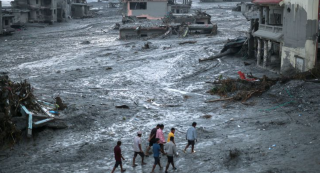 "Nepal becomes first country to receive climate change reparations…
"The UN The Fund for Responding to Loss and Damage was set up in 2023 to help countries deal with climate-related disasters. It decided on Thursday to earmark $20m (£15m) for Nepal to help it recover from the devastating flash flood of Aug 26, which killed more than 1,400 people."
 "Bodies of two climbers recovered after 'freak avalanche' swept them down Himalayan mountain [Nepal]…
"Heavy snowfall and unusual weather patterns in the Bay of Bengal were blamed for a similarly catastrophic slab avalanche that killed at least four people in Manang in September. A sheet of snow 14 feet deep crushed the base camp of Himlung Himal peak last month, wiping out a team of climbers…"
 "Typhoon Champi kills one and injures more than 500 in Taiwan as it heads to China.
"Taiwan's fire department said one man had been killed, swept by waves from the island of Liuqiu. Another 527 people were injured during heavy wind and torrential rain… Large parts of northern and central Taiwan, including Taipei, declared a second day of office and school closures on Saturday…"
 "Hong Kong recorded its highest-ever temperature for the traditional Chinese calendar's "Frost" solar term on Friday, with the weather forecaster warning of a very dry weekend ahead.
"The Hong Kong Observatory said the temperature at its headquarters in Tsim Sha Tsui reached 32.3 [90.1F] degrees Celsius by 3.30pm, the highest of the day."
 "ENDLESS RECORD HEAT IN SOUTH/EAST ASIA
"Thousands of October records have fallen in every single country in the area since the first day of the month and records keep being rebroken continously. Today another avalanche of records (Bangladesh, Laos, Malaysia, Indonesia, Phillipines)." [Extreme Temps]
https://x.com/extremetemps/status/2113633748306583750
 "Indonesia records over 333,000 acute respiratory infection cases as fires rage in several regions…
"The ministry's director of environmental health, Then Suyanti, said that daily cases remained high, with 4,522 new cases reported, according to state-run news agency Antara. She said the latest Air Pollutant Index showed that air quality in several areas had reached hazardous levels…"
 "Flash floods swamp southeast Queensland as record October rainfall forces school closures…
"The deluge began on Thursday with a water treatment plant near Moreton Bay, north of Brisbane, recording more than 250 millimetres [9.8 inches] of rain in 24 hours. Some locations received nearly 180 millimetres in just three hours. Beerburrum recorded its wettest October day on record…"
 "HISTORIC SPRING WARMTH IN TASMANIA:
"Tasmania is unstoppable: it has broken hundreds of records in the past months. Tonight it was like a mid summer night with new records of October HIGHEST MINIMUMS. In New Zealand exceptional peaks over 30C [86F] in mid spring."
https://x.com/extremetemps/status/2113464377789874357
 "Breaking News! It takes 2 weeks to confirm ocean sea surface temperatures and the long wait is finally over. The first day in recorded history with Nino 3.4 SST at or above 30.0°C [86F] is now officially on the record.
"October 7, 2026: 30.000°C." [Prof Eliot Jacobson]
https://x.com/EliotJacobson/status/2113650524742697258
 "South America between floods and record heat: this Nino is way more extreme than anything else experienced.
"Today MIN at Arica was again 21.0C [70F], Chilean National October HIGH MIN record; PERU: 32.7 Chiclayo, 28.3 Pisco, 29.4 Lima Campos de Marte; October highest Minimums: 24.3 Piura,23.0 Pisco. Many stations have exceeded their previous records every day and by over 3! 40.3 Jaguaribe BRAZIL." [Extreme Temps]
https://x.com/extremetemps/status/2113818645352874312
 "Heavy rains and hail cause flooding in several sectors of Quito [Ecuador]…
"Among the affected areas are Occidental Avenue, where hail accumulated, and Colón Avenue, where the force of the water dragged several vehicles. Flooded streets, trapped cars and water on the first floors of some buildings were also reported."
 "Storm in Santa Fe: hail damaged livestock, crops and homes in the region [Argentina].
"In the midst of the storm that affects Rosario and different localities of Santa Fe, videos began to circulate on social networks that show the intensity of the rainfall recorded during this Thursday. One of the records was shared from Fortín Olmos, in the north of the province…"
 "Strong storm in Paraná: it began to rain after intense electrical activity [Brazil].
"The arrival of the rainfall coincided with the conditions announced by the national agency, which maintains a storm alert in force for ten departments of the province. It is expected that the most intense phenomena may develop during the early morning and until noon on Saturday."
 "Amazon communities lose water as mining and deforestation reshape rivers…
"Inhabitants of parts of the world's greatest rainforest face a paradox: they're surrounded by water, but can't use it. For Indigenous peoples, it's also the loss of the spirits that guard their water sources, driven away by the advance of logging and cattle ranching."
 "EXTRAORDINARY HEAT IN THE CARIBBEAN:
"The Caribbean is living the most extraordinary heat wave in history with every record, every island breaking and rebreaking records no-stop, every day. INSANE MINIMUMS of 29.4 [84.9F] Flamingo AP - BONAIRE HOTTEST OCTOBER NIGHT broken for 3rd time in a row." [Extreme Temps]
https://x.com/extremetemps/status/2113719210329432080
 "MEXICO Took the lead of the highest temperature in the Northern Hemisphere on Tuesday with a remarkable 43.5C/110F at Cazanate.
"Mexican Pacific has been experiencing no-stop record heat for over a year, especially with unprecedented hot nights." [Extreme Temps]
https://x.com/extremetemps/status/2113231110176178473
 "California's oceans have become shockingly warm. And strange things are happening…
"Ocean temperatures off the California coast are surging to shockingly high levels as a historic El Niño grows even stronger… The unusual heat is drawing tropical fish coastward, killing kelp forests, pushing tides to record high heights and providing extra fuel for storms."
https://www.sfchronicle.com/california/article/ocean-sea-temperature-california-22485809.php
 "Severe flooding in US west triggers rooftop rescues and evacuation orders…
"Severe flooding in the Four Corners region on Friday led to water rescues - some from rooftops - and impassable roads, with some residents being told to evacuate low-lying areas of Colorado and New Mexico… It followed several busy days of flooding in the region that swamped dozens of homes in Utah…"
https://www.theguardian.com/us-news/2026/oct/23/severe-flooding-west-triggers-rescues-evacuations
 "The US west has lost nearly 300 glaciers since the 1960s. Climate crisis is drastically shrinking what's left…
"After dominating mountaintops for thousands of years, hundreds of once regal glaciers have been reduced to tiny, sad scraps of ice… "When I realized this it was like, 'Yikes - that's a lot more than I thought,'" said Andrew Fountain, a geographer at Portland State University…"
https://www.theguardian.com/environment/ng-interactive/2026/oct/23/glacier-loss-climate-crisis-west
 "Colorado's record-shattering water year was 'ridiculously warm,' a little bit 'scary' and offered a 'new perspective' on how climate change will affect the state…
""What stood out most was the record-setting heat we had," said Allie Mazurek, the engagement climatologist with the Colorado Climate Center. "It was just ridiculously warm…" December, February, March and August were all the hottest ever documented in Colorado, which has 131 years of records…"
 "Colorado River Basin lost trillions of gallons of groundwater during recent severe drought, study finds…
"The findings come as Western states grapple with new cuts to Colorado River water deliveries. In August, the federal government announced reductions for Lower Basin states, including Arizona, California and Nevada, amid declining reservoir levels and disagreements over how to share the river's shrinking supply."
 "El Niño will be the dominant driver of weather patterns across the planet into November, with a huge cell of rising air anchored over the east-central Pacific.
"That will help fuel a burgeoning storm train across the U.S., potentially extending across the Atlantic into Europe." [Ben Noll]
https://x.com/BenNollWeather/status/2113400300069679607
 "Almost every shallow-water coral reef on the planet faces ecosystem collapse by 2075, UN advisors say…
"About 24% of the planet's reefs across more than 80 countries are already critically endangered, the assessment said, but when the expected impacts of global heating were added this rose to 96%. Coral reefs are known as the rainforests of the sea…"
As a reader-funded publication, your one time and regular donations help keep this site going. If you value this work, please share it far and wide and consider a Patreon subscription or a one time Paypal donation. You can also support this work by buying a virtual coffee. Thank you!
You can read the previous "Climate" thead here. I'll be back on Monday with an "Economic" thread.
The post 24th October 2026 Today's Round-Up of Climate News appeared first on Climate and Economy.
Nahlous and Voight burst out of the ASBK blocks at Phillip Island.
JJ Nahlous and Harrison Voight have produced perfectly executed race-winning performances in round one of the 2027 Shannons Australian Superbike Championship presented by Pirelli (ASBK) at Phillip Island today.
In front of another huge crowd farewelling the iconic circuit as a MotoGP venue, Nahlous (Yamaha Racing Team) won his maiden SW-Motech Superbike race in the opening 11-lap lapper on a drying track, and this afternoon Voight took maximum advantage of his AMX Superstores pole position to score an all-the-way win on his McMartin Racing Ducati.
Cameron Dunker (Blue Marlin Pools East Racing Yamaha) was also enterprising with a 2-3 scorecard - race two after a colossal battle with Stop and Seal Ducati's Cru Halliday.
Race three will be held at 9am on Sunday, with the ASBK cohort then passing the Phillip Island baton to the three world championship classes.
Related: Voight edges out Dunker for ASBK pole position at Phillip Island
ASBK RACE 1
ASBK RACE2
- SW-Motech race one
On a drying track which saw a majority of the top brass opt for slicks (except for Honda's Jacob Roulstone), Nahlous made a spectacular start from the third row of the grid, weathered an early challenge from Dunker, and then rode out of his skin in the second half of the race to join an illustrious list of Aussie Superbike winners.
"I'm really lost for words, as I didn't expect that one," said Nahlous, who qualified in eighth position. "But obviously it was the best possible outcome, and I'd like to thank everyone for their support in helping me get here. This is a very proud moment in my career."
Dunker was second, followed by fast-finishing Voight who passed Halliday on the final lap after upping his speed in the second half of the race - although Halliday still owned the fastest lap (1:33.779) on his Panigale V4 R.
Glenn Allerton (Superbike Advocates Ducati) was fifth from Josh Waters (DesmoSport Ducati), John Lytras (Addicted to Track Yamaha) and Mike Jones (Yamaha Racing Team), while Jack Favelle (Apex Racing Team Honda) was fifth across the line before being excluded for failing to have appropriately marked tyres.
That bumped up New Zealander Morgan McLaren-Wood (Blue Marlin Pools East Racing Yamaha) and Roulstone into the top 10.
 A maiden SW-Motech Superbike victory for Jonathan Nahlous. Photo by RbMotoLens.
- SW-Motech race two
A flawless all-the-way win for Voight, who immediately pinned his ears back - he set the fastest lap of the race (1:31.611) on lap two - and then went into management mode.
It was the defending champion's seventh Superbike victory, and it came ahead of Halliday and Dunker who went at it hammer and tongs over the last four laps in an electrifying battle for silver and bronze.
"After race one, that was a great comeback," said Voight. "The conditions were again challenging but I'm a lot happier that I've got a win on the board.
"I was determined to get out front and push hard, and I was then able to hold the advantage to the line."
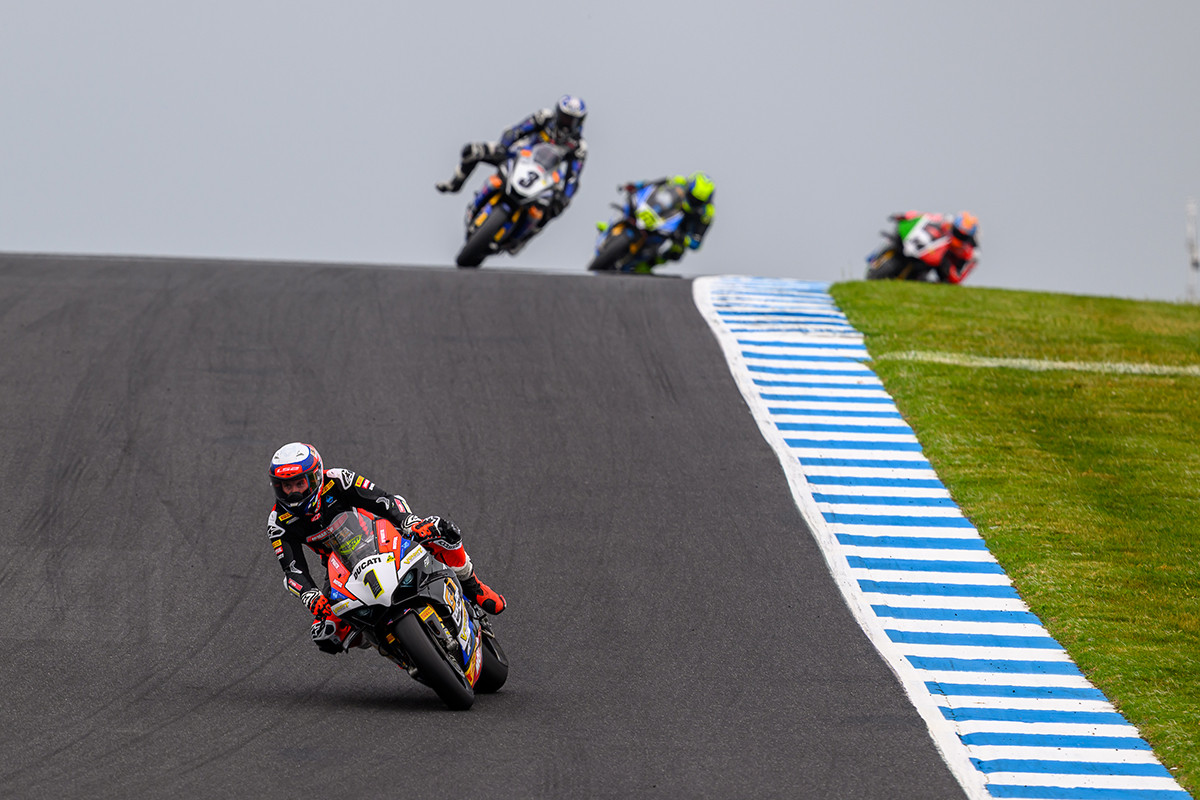 Harrison Voight (#1), Cameron Dunker (#3), Cru Halliday (#65) and Glenn Allerton (#14) blast over Lukey Heights. Photo by RbMotoLens.
Voight won by nearly two seconds over Halliday, who in turn was just 0.04 seconds ahead of Dunker after their intense sparring went to the wire.
Allerton, Nahlous and Roulstone completed the top six in a race where rain-bearing clouds were circling - it was officially declared a wet race - but never became a factor.
Lytras was seventh from Jones, Waters and Favelle.
After two races, Voight leads the championship on 44pts from Nahlous (41pts), Dunker (38pts), Halliday (37pts) and Allerton (33pts).
 Race 2 podium, from left to right, Cru Halliday, Harrison Voight and Cameron Dunker. Photo by RbMotoLens.
For more information on the 2027 Shannons Australian Superbike Championship presented by Pirelli:

The post ASBK: Races 1 and 2 Results From Phillip Island appeared first on Roadracing World Magazine | Motorcycle Riding, Racing & Tech News.
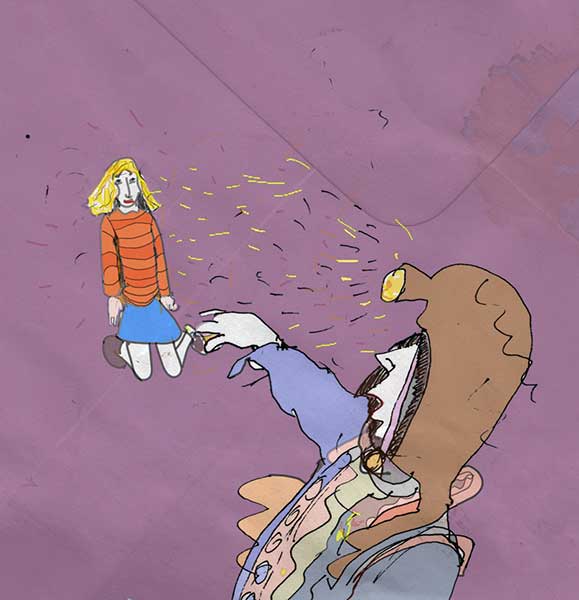
I find peace in solitude
That is if solitude
Wants me
Whisper of the wind
Entangled in mists
That is if the wind wants me
I find quietude in the wind
And trees entangled in branches
And leaves
That is if the trees want me
I am self composed in the hills
That is if the hills want me
Suddenly there is dust storm
And it wants me
To see it and feel the presence
Of violence
That is if violence wants me
.
Ananya S Guha
Picture Nick Victor
Tim and Geli Harris have spent more than a decade fighting to protect Catfield Fen, a rare wetland in the Norfolk Broads
Polluters and regulators who fail to stop pollution must quake in their boots when they receive a letter from the lawyers for Tim and Geli Harris. The couple, who farm 460 acres in the Norfolk Broads, have now scored a hat-trick of landmark legal victories to save an internationally important wetland after they won again in the high court this month.
Lady Justice Lieven found that Natural England failed in its statutory duty to protect Catfield Fen from pollution after nitrates and phosphates washed from arable fields into one of the finest examples of calcareous fen in western Europe, home to 2,500 species including rarities such as the fen orchid, crested buckler fern, breeding bittern and swallowtail butterflies.
Continue reading...Season will be less vibrant with trees such as birches, which usually offer a striking burst of yellow leaves, already bare
Among a canvas of copper, red and purple autumn leaves on display at Wisley garden in Surrey, south-east England, one tree stands conspicuously naked.
"The birch has lost all its leaves," says Guy Barter, the chief horticulturist at the Royal Horticultural Society. "That's the effect of drought, so it'll have no autumn colour this year."
Continue reading...At the midpoint of the last century the region had 1,450 glaciers and a new study reveals the extent of losses
Continue reading...

They're not 100% definitive on what to be ready for, but it includes severe weather, national emergencies and prolonged periods without water and/or electricity and/or gas and/or internet. Flooding is one of the most serious weather-related events and you probably know if you might be susceptible to that, but the entire nation could be at risk from cyber-related power failure, the Russians cutting our undersea cables, a solar radiation event, a nuclear accident, water infrastructure failure, food supply contamination, another pandemic, AI overthrow, nearby war, mass rioting or whatever. You might not be top of the list for rescue, merely left to cope as best you can, so it pays to be prepared.
In particular they've come up with a Be Ready Checklist packed with things you might like to have ready just in case. They've said to build it up gradually, as and when, not to rush out and buy the lot now. They've said you should do this 'if you can', because not everyone has the spare money, the storage space or the stability to comply. And they've provided a handy printable checklist on which to tally things, which does kind of assume you have a printer but it's the individual items that are important, not the ticks.
Use the checklist below to review the steps you have already taken, and what you might still need to do.
Water
● Bottled water for 3 days. 3 litres per person per day for drinking. More would be needed for other tasks such as cooking and washing.
That's a lot of bottled water, or at least it is if you're a household that doesn't normally buy the stuff. I'm perfectly happy with what comes out of the tap but if that tap went dry for a prolonged period of time I'd be stuffed. I had one dry evening a few months ago and that was awkward enough (how do I brew a cuppa? how do I clean my teeth? how long do I leave this to flush?) so three days would be purgatory, not least because I couldn't expect Thames Water to turn up and dish out bottles from a street corner.
The guidance urges you to "set a reminder every six months to check expiry dates and swap out items that need replacing", which could be expensive and/or annoying with something like bottled water. I checked some bottles in the supermarket yesterday and the best before dates were anything from 8 months to two years away, suggesting a stash could need regular replacement (or consumption). Do I really want to keep buying water I won't drink in case it's needed, but how stupid would I feel if a true emergency came along and I hadn't bought any?
I do have a 2 litre bottle stashed away for just such circumstances but it wouldn't go far. However it's been there a long time, indeed I checked the best before date and it's March 2007, so is it safe to drink? You'd think not but I Googled and it said "sealed bottles kept cool and dark stay safe long past their printed date", "water itself does not expire: the best-before date on UK bottled water marks packaging quality, not safety." My 20 year-old water is thus likely full of microplastics and tastes bad, but in case of dire emergency shouldn't kill me. You can't search for this important information if the networks have gone down, so it's worth knowing in advance.
Food
● Non-perishable food for 3 days. Food with a long shelf life that doesn't need refrigeration or cooking e.g. tinned meat, fish or vegetables, dried fruit and nuts. It's best to buy food you'd usually eat.
This is about stocking up your food cupboards with packets, cartons and tins, indeed anything nutritious that'll last and doesn't need cooking. Forget boiling water for rice or wokking up a stirfry if the power goes down, unless you're fortunate enough to use gas and that still works. Everything you rely on in your fridge or freezer could be unsafe within days so it makes sense to have an alternative calorific supply to hand. You might still have leftovers from the early pandemic you never got round to eating, and almost by definition they should still be edible now, just maybe not enough.
I have an emergency can of corned beef, also tinned soup and baked beans and sweetcorn and peach slices and mandarin orange segments and really rather a lot of Christmas puddings, also a Fray Bentos pie in a tin that might or might not be OK without cooking. If I started by eating what was in my switched-off fridge I could make it to three days no trouble, perhaps a week, after which the country might be in such a parlous state that lack of food was the least of my problems.
Hygiene
● Hand sanitiser, wet wipes, hygiene and bathroom products.
The lack of water could be terrible for personal hygiene, especially if it's July rather than October. Hand sanitiser is much better-known since the pandemic so maybe you already have an industrial-sized bottle somewhere, and if not maybe you should because imagine Day Seven without water otherwise.
Light and warmth
● Torch (and spare batteries).
● Blankets, sleeping bags and warm clothing.
They're quite insistent on having a torch rather than candles, this because candles have the occasional tendency to set your home alight and because a raging inferno during a civilian shutdown could cause untold damage. I promise to watch over my IKEA tea lights like a hawk and not let that happen. I do have two torches but also insufficient batteries to maintain them over a long period, plus I couldn't just nip down to Stratford to buy more, so that's something I probably do need to stock up on.
Communication and information
● FM radio (battery/wind-up).
● Charged power bank.
So many of us have switched to digital that the absence of electricity, 4G or wi-fi could completely cut us off from the world. How are you supposed to know what's going on if your screen doesn't work and your phone doesn't connect, and more importantly how is the government going to advise us all what to do? Is this some localised outage or is the world barrelling towards Armageddon... you won't know unless you have old-school technology tuned to a frequency the BBC hasn't turned off yet. Thankfully I do have a wind-up radio, I am genuinely prepared, but I know from experience that keeping it powered for more than 10 minutes is difficult so even my smug state as one of the informed might be difficult to maintain.
Money and documents
● Cash (mix of coins and notes) and cards.
● Copies of IDs/documents
● Important phone numbers and information (e.g. regular medication and doses).
You may love swanning around town flashing your phone at things, paying as you go, but a mass power cut or cyber outage could suddenly leave you with zero access to your money and no chance of buying anything at all. Even a plastic card is useless in a world without connections. It could even happen tomorrow, you never know, so maybe dash down to the cashpoint soon just in case. Similarly if you were unable to fire up your phone or laptop how much critical information would be instantly lost, so maybe write down the important stuff while you can.
Medical and health
● First aid kit / first aid items.
● Essential medication and medical supplies.
I'm lucky in that if I stopped taking my prescribed tablets it wouldn't immediately damage my health, but you may not be so fortunate. Also what would you do if you received an injury that normally required a trip to A&E, might a first aid kit buy you extra time, and would you curse yourself if you didn't have one? Imagine some mildly terrifying scenario and how easily you could either mitigate it now or watch it spiral out of control later.
Baby products
Pet products
Not my problem, might be your problem.
The Be Ready website also reminds us that we are not alone, we have a community around us. Should the worst happen there is strength in numbers, so maybe create some local connections together now rather than asking later if they want to be your Disaster Friends. Also there may well be neighbours who'd be relying on you for help, so think about that now rather than only realising later when it's too late.
The worst may of course never happen and you'll have wasted time and money on resources you'll never use. My emergency can of corned beef may never be opened. But if disaster does entirely disrupt your life you'll wish you'd prepared for it, so either take the risk or Be Ready.
The Aprilia Racing rider has been declared unfit for Sunday's Australian Grand Prix.
Following an eighth lap crash at Turn 8 during the Tissot Sprint, Jorge Martin (Aprilia Racing) has been declared unfit for Sunday's Australian Grand Prix at Phillip Island. The Spanish rider went down while battling Marc Marquez (Ducati Lenovo Team) for the lead in the race and in the World Championship fight, bringing his Sprint to an early end.
The Spaniard was taken to the circuit medical centre following the crash, where X-rays revealed a fracture of the radius and a suspected fracture of the ulna at the distal end, meaning a confirmed break to one of the two bones in his forearm near the wrist, with a second break in the other forearm bone also suspected.
Martin will undergo further examinations to reach a definitive assessment of his condition, but he has already been declared unfit for Sunday's race.
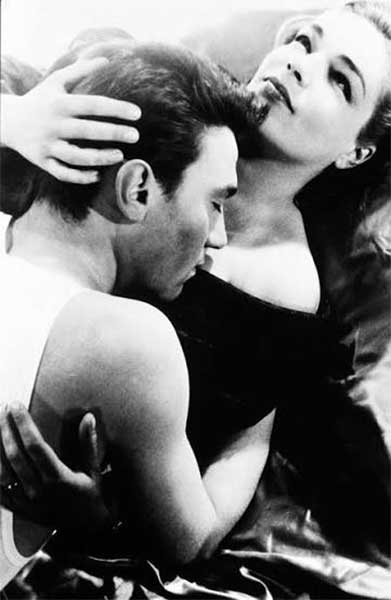
Lovers, the dear the vibrant loved. Those who say they cherish you and who debilitate you. Everyone has at least one ex that mars them, who persists as a scabbed yet seeping wound long after the coupling has ended. Mine was Allison, a scrappy literature student with an air of Hope Sandoval to her features and bearing that I dated when I was twenty-three. I found her by accident. A meet-up arranged in a Soho back-street dive with another woman who didn't show and I got talking to Allison instead while sat solitary by the bar and brooding into my pints. 'Why so glum tonight?' she said, 'have you been stood up? Me too. Why don't we talk to each other instead?' and we saw each other for six months after that, cohabited for three. It was a few weeks in before she opened fully to me, her past unfurled; the childhood rapist uncle, the mother dead in a car, the father in prison, the sister on crack. There was little damage that I'd not separately seen in one or another girlfriend before her but Allison wore each hit with a sense of ownership, not that it made her ability to process them any easier. I remember three thirty am one Saturday night in our New Cross flat and us post-sex and subtly stoned, she weeping into the darkness as Nick Drake played out low on the stereo, Bryter Layter, and I did what I could to console her. At The Chime Of A City Clock will ever be the sound of her sorrow.
'It's only when I listen to this album that I realise how alone I am in this world,' she said.
I traced her pallid arms, the tidy lines of self-harm scars her skin carried there, the scars that would go to the grave with her. Like her words, like her memories. Just another one of the broken. Just another one of the weird and lonely. Just another cutter.
'But it's okay because now I have you,' she said. 'I've found somewhere to belong.'
We had sex again then, our bodies so slight against each other, her hands tight in mine throughout as if mere contact could be salvation. The too-brittle that break too soon. Allison took her own life in the end, twice over; swallowed pills upon pills and then cut both wrists to be certain, an Easter weekend while I was away with friends. I returned home on the Monday evening to find her naked on the bed, blood-pools and empty pill blister-packs spread around her. The loved, ever in the mire of their own shattered centre. Ever in the wake of their damage; to themselves, to the world, to each other. Allison my precious until she wasn't. Until her blood was spent. Until her breath was gone. I adored and I went to bed alone and with buried dreams.
A hotel room in Monterey facing onto the wharf, me thirty-two then and sat by the window, Laura standing in front of a full-length mirror, Pixies tee-shirt hiked up to and tucked under her breasts, she spreading her hands across her yet-sleek belly.
'I can't have a kid,' she said. 'Can I? Kids are for other people. I'm still too young for it.'
'Too young? You're thirty-five. Some people have got adult kids by the time they're your age.'
'It's still too big for me though. It's still too much. I can't make a decision like that.'
'Who else can make it for you though?'
'I don't know. Who is ever adult enough to make a decision like that in this day and age?'
I looked out through the window and down at the wharf, at all the people milling there, each existing only to have sex and then to die. Each existing only to replicate DNA, the function of the human or any organism. I'd had little desire to reproduce in the past. I always thought that it was because I was too selfish, too preoccupied with my own wants, that perhaps this would change as I got older. I didn't know if it had. But if I didn't breed, didn't pass down my coding, did that make my existence a failure? And now the possibility of a child with Laura was there I remained ambivalent. Like her, how could I make a determination like that? What criteria should I employ by which to weigh it? Laura walked over to the bed, sat there, smoothed her tee-shirt down over her belly, watched me as she did so. We'd been seeing each other but a few months and I still deemed our relationship casual; the California trip was the first thing we'd really done together as a couple. Until then our liaisons had chiefly consisted of alternating visits to each other's flats for sex. I could no more gauge her prospective parental qualities than I could my own.
'Well you need to make a decision, and soon,' I said. 'Otherwise a decision is going to make itself for you.'
'I need to make a decision? Why isn't it your decision too? You're as much a part of this as I am.'
'Of course I am.'
We went out then, deferring any choice for another day, for another conversation. Walked Cannery Row, visited the aquarium, sat on the beach watching seals and sea otters, just another hand-in-hand tourist couple. We returned to our hotel room at twilight where Laura sat before the mirror for hours gazing at her belly and declining to talk to me. I was right though in a sense; the decision did make itself for us. She miscarried eight days later on the flight back to London. 'I'm bleeding,' she said, returning to her seat from the toilet as the plane attained peak altitude. Our relationship hobbled on for another five weeks after that, the loss drawing us further together if anything until the end; her decision. 'You know, now it's gone, now it's been taken from me, I do wonder if I did want it after all,' she told me on the evening we parted. But the ever-possibility, and that it never happened, haunts me. How different my days could have been. How different I could have been. Another signifier. Another definer. Another claw in me.
How many people have come and gone in my life? Not just lovers, not just girlfriends, but friends, associates, work-colleagues, acquaintances? How many have left a trace? When I reflect on it few seem significant. They arrived and then they departed with scarce a mark on me. Only a sprinkling truly mattered in all my eighteen thousand yesterdays. Memories now of Sophia, a fifty-something woman who drank alone in many of the same Oxford pubs that my ex-wife Jessica and I frequented. Ever-dusty and bespectacled with hair grey as spiderwebs and always with a bank of books on the table beside her glass, which provided our first conversation-opener when a sozzled Jessica asked her what the titles were. Sophia a former professor of history dismissed from the university after one too many still-drunken lecture mornings. She lived alone and I got the sense that she didn't have many remaining friends, was eager to have someone to talk to aside from her numerous cats. Her three marriages, her five children dotted in as many overseas nations lived in, the seven medieval history text books which bore her name on the cover.
'You two young things make for such an adorable couple,' she slurred through double slugs of whiskey. 'Why would you let such good genes go to waste? Go home right now and have plentiful unprotected sex. Make more just like you. Heaven knows we need more beauty in this world.'
'I don't know if I want to,' Jessica replied. 'I don't mean the plentiful sex bit. I'm never averse to that. But why would anybody willingly bring children into a world as messed up as this one?'
'Whatever else are we here for, darling?' Sophia said. 'Whatever else are any of us here for? Forty years of studying the past and that's the one and only thing I know for sure these days.'
A different night, a dozen drinks down, and us booze-flushed enough to feel as if we could take on all the world's ills.
'Don't aim for the top,' Sophia said. 'Never aim for the top. Nobody at the top has any real power anyway. Take out the middle-men. Take out the bureaucrats. Take out the meddlers and the busybodies. Then we can all go about our business and mind everybody else's.'
Another evening she told me of her surety that god loved her, 'my god at least.' I didn't know how to adequately respond to that but Jessica answered for me.
'Just what do you mean by god?' she asked and Sophia laughed, full-bodied and from the gut.
'Isn't that the question, darling?' she said. 'Isn't that ever the question? One that needs another drink. Every best question always needs another drink.'
Jessica ordered a fresh round for us with chaser shots and I watched and listened as the pair of them settled in to debate the point. I supped until I was emptied, until alcohol's meagre light was all I could see. Booze is so slippery. I knew that, then as now. It persuades me of best, that all is good. It lies.
And as for Sophia; the last time I saw her was a handful of weeks after Jessica and I separated and I was living alone in a dim hole of a rented studio flat on the Oxford periphery. A Saturday afternoon in one of my favourite city centre pubs, Sophia and I shared scotch shots and beers as dusk drew the day to a close.
'I've been told by my doctor I've got two months left,' she said. 'Maybe six weeks. My liver's shot to pieces.' She raised her glass, knocked it against mine.
'Sophia, I'm so sorry to hear that.'
'Oh there's no need for you to be sorry, darling. There's nothing to be done. It is what it is.'
'Do you regret it?' I couldn't think what else to say to her.
'The drinking? All the drinking? No, I don't regret it. All the days I've had and I don't regret what I did with but one of them. Though that's enough about me. We need to talk about you. I still can't believe you and that lovely wife of yours are no longer together. That's of far greater significance than me shuffling off, in the grand scheme of things.'
'You told me before that you believe in god. Your god at least. Do you believe in an afterlife too, if you don't mind me asking?' I hoped she did, that she had that comfort, that surety, even if I didn't.
'How could I know? How could anybody know?'
We drank and we talked until last orders cry, toasting each other over and again with each successive round and sliding deeper into alcohol's thrall, then I bade her farewell one final time, walked out into a smear of chill rain. Nothing remained for me except for my drunkenness. Booze ever the pimp. It tarted me out, promised all I could be and all I could have if I worked the tricks, but it owned me entirely. Was Sophia a guiding factor in my soon-made decision to pause my own drinking? Perhaps. I saw where I was headed if I didn't desist and knew that I had taken it as far as I could. So I pulled back, six months short of alcoholism. And whenever I'm in a bar these days supping on my modest pints I think on Sophia, silently raise a glass in her honour and let my lips form the shape of her name.
.
Darren Francis
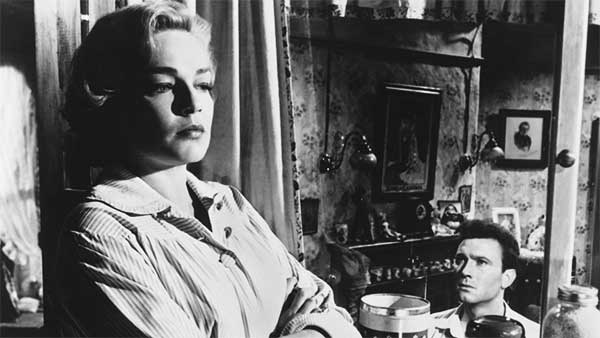
Photos from Room at the Top
.
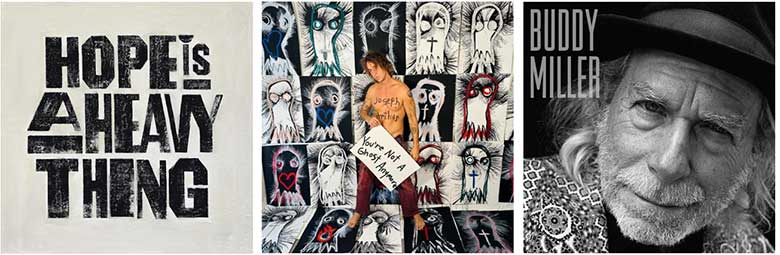
Hope Is A Heavy Thing by Joy Oladokun (Concord Records)
You're Not a Ghost Anymore: Heart by Joseph Arthur (Lonely Astronaut Records)
Buddy Miller by Buddy Miller (New West Records)
The roots of what was originally known as rock 'n' roll are to be found in a blending of blues, country, and gospel. Folk music was added to that mix in the early sixties, while r&b, soul, country rock, and folk rock each major on one of those main strands.
Fusing these core strands in ever new combinations offers a constant source of inspiration which artists such as Joy Oladokun, Joseph Arthur, and Buddy Miller consistently tap. Their past and present collaborations - with a wide range of prominent artists across blues, folk, country, gospel, rock, hip-hop, and African music genres - indicate the breadth of their sources but their particular visions remain unique.
Oladokun has said that Hope Is A Heavy Thing has emerged from a time of 'looking back and digging through the muck to find what's worth fighting for again', as 'To understand your future you have to confront your past'. These are 'songs that I wrote to help myself find my light again after burning out'.
As such, the album is a sonic 'homage to all of the music that inspires me': 'On this record you'll find music that nods the brilliance of the Soulquarians, the rawness of Bob Dylan, the rhythms of afrobeats, and the sampling prowess of J Dilla. Not to mention a callback to the Ronettes and a few songs that find inspiration in rock and roll protest music of the 60's and 70's.'
Afrobeat and Afro pop are significant inspirations. Reference is made to Fela Kuti, the pioneer of Afrobeats, and his use of a Yoruba proverb - 'grandfather kuti once told me / "water get no enemy"' - while Nigerian singer-songwriter Adekunle Gold features on 'Sage' where African rhythms mesh compellingly with folk.
'Dear Maria' is the key track where Oladokun outlines some of significant stresses in contemporary life:
there's just noise on the radio and violence on television
Rumours of radiation in the air
They're playing God in space and giving bullets to the children
These leave them:
stressed out, let down
Stuck in a small town
Hope is a heavy thing
I've been helpless, jealous
Young and so restless
Trying to find somewhere free
They ask Maria to say a prayer:
For the holy, the empty, the loaded
The burnt-out and suffering
For the losers, the bruised, for the old and the useless
And those shut down by history
And when you're done, say a prayer for me
In a world where 'the prophets and doctors are waging a war / On the sickness and ways that we're living our lives / And the promises made are just rooted in lies', they feel they are like a zombie wandering in a beautiful world looking for ways to 'rise above all the tragic' while feeling 'the weight of the times just keeps on holding me back'. This is an album that perfectly articulates the dilemmas faced by all that are not MAGA obsessed. It also does so with often brilliant wordsmithery that reanimates cliches - 'I've been rusting the silver lining'!
With 'Time is a River', they put contemporary dilemmas in a universal frame of reference:
Grief comes to everyone's door
Prepare it a table, let tears and wine pour
Sorrow never wins the war
It only reminds you what you're fighting for
As the days go on, peace will be renewed
Oh, time is a river, let it carry you
Let it cleanse you too
Arthur's You're Not a Ghost Anymore Heart is the second in a trilogy of albums written over a six-year period that the singer-songwriter says, 'chart a deeply personal journey through collapse, recovery and return'. Together with first album Faith and still to come Fight, the songs on Heart 'reflect shifting states of being rather than fixed genres, moving from uncertainty to acceptance with unflinching honesty'. Arthur says they explore 'presence, survival and reconnecting with the self', enabling this album and the three-part movement, as a whole, to follow a path 'from losing direction to finding it again'.
Arthur says the albums are about states of being: about staying when disappearing would be easier; about choosing presence over numbness; about coming back into the body, the voice, and the world. The 'songs trace the long arc from disorientation to embodiment, from losing the thread to picking it back up with both hands'.
Not being a ghost anymore means being original by being in touch with your soul ('R U Original'). We lose our originality and become 'lost to a world that you gave control' by 'trying to fit in'. Arthur enjoins, 'Don't ever fit in' and notes the Biblical injunction that 'you won't get the life that you want / Until you let go'.
Heart opens with words of love from Arthur's daughter and has a relational focus, with songs about love and marriage, family and children, all within a divine embrace of love:
I will be your source for love
As it comes from the lord above
As he shows me how
To help you find your way back home
When you're lost from the places you've roamed
Once again
Following his discovery by Peter Gabriel, Arthur has contributed to several collaborative bands, including Arthur Buck, Fistful of Mercy, RNDM, and Holding the Void, while retaining space to be a strong solo performer who can, using a vast array of pedals and effects, perform as a virtual one-man band. Frustrated with the major label system, he founded his own record label and thereby gained the freedom to release new music whenever, as now, that he has something new to say.
As well as being a solo artist, Buddy Miller has also produced solo albums for his wife Julie Miller and duo recordings as Julie & Buddy Miller, while also being a well-loved bandleader and/or producer for a fantastic coterie of much-loved musicians. This relational focus to his music-making comes together wonderfully on this new self-titled record that is described as comprising '12 songs of soul, country, early rock 'n' roll, and gospel, made with a community of friends and collaborators that spans five decades of American music'.
Featuring five songs by Julie, the album is also graced by appearances from Emmylou Harris, The War & Treaty, Lee Ann Womack, Shawn Colvin, Ashley Monroe, Elizabeth Cook, Jim Lauderdale, Dan Penn, Larry Campbell, The McCrary Sisters and Teresa Williams.
'Till the wheels come off' is a celebration of Buddy and Julie's relationship written by Ashley Monroe, Angalena Presley, Elizabeth Cook & Meg McRee:
When it comes to you, there's no dead end
Every turn with you is one I'd take again
When it all goes to rust, it'll still be us
The song manages to sum up the album's theme in these concise lines:
When the road is long and the travеlling's tough
A love like this don't evеr stop
In Julie's 'Ruby, Hold On', Buddy sings to one for whom their journey is tough:
Ruby, hang on
To the one that's created you …
Everything up 'til now has been a dark place
A sad, lonely space
He will untangle the past and shine down His light
When you look at His face
'The Inner Sanctum of God' outlines, in another of Julie's songs, how that untangling takes place:
In this world of trouble and tears
There is a place it all disappears
Love overtakes our heartbreak and fears
In the inner sanctum of God
These albums, taken together, deal in hope, heart, and home without underplaying the toughness of the journey or the weight that holding onto hope entails.
Jonathan Evens
.
some grow crops and watch the weather.
Others dance or dress delightfully, speak
or sing to crowds of strangers. A number
paint or sculpt or play an instrument. Some
accumulate pathologically. I know many
who operate machines and sell their labour.
Manufacture
thoughts and feelings. Trim their toenails
experimentally.
Smell amazing.
A lover loves without distinction. The best
of them are kind and generous. I know this
from experience.
The least remain suspicious
of any difference. We hide or huddle.
Fretful.
Lament an absence. Live in mirrors.
Reflect and jump, competitively. A
minority fall victim to haemorrhoids.
They don't do anal.
Starve themselves obsessively. Some
like biscuits more than people. But
everyone responds to words and pictures.
We survive on scraps, on bits and pieces.
The Hit Parade and Abba.
Queen. Bananarama. Lies and favours.
We fight oppression,
or count our blessings.
It could be worse.
It could be cancer.
We all consume then die of something.
I know a man who makes equations. A
woman bathes him, provides excuses.
He once was good
but became distracted. Someone
should remember him as different.
Useful.
Of all the choices made available
Poetry, remains the best for explanations.
.
Steven Taylor
.
The blinking eye of an error
The sad prose of autumn
Talks to me silently
Quietly she comes in carriage
To tell me the truth of life
Festivals of life for the godly hour
Moonstruck beach of perishable night
Been through the year all around
My dear soul of autumnal night
Crystal minds think alike
Before the mahoday loses its rain
I claim my life to thee.
.
Sayani Mukherjee
Picture Nick Victor
.
Recorded live for the BBC Arts programme 2nd House in 1973. Musicians include Fred Frith, John Greaves and Tim Hodgkinson of Henry Cow, Steve Hillage and Pierre Moerlen of Gong, Ted Speight of Kilburn & The High Roads, Mick Taylor of The Rolling Stones, and Mike Ratledge and Karl Jenkins of Soft Machine.
.
 Heathcote Williams
WILLIAM BURROUGHS IN 1963. I WAS WORKING for a now defunct literary magazine called Transatlantic Review and we were planning to publish a piece of his called 'The Beginning is also the End'. I'd proposed doing a drawing of Burroughs for the cover and the editor of TR had agreed and so I went round to see him in a tiny hotel room in Princes Square, Bayswater, which I gathered Alex Trocchi had found for him.
Trocchi put his head round the corner at some stage to check that the room was okay. I remember Trocchi saying that 'you couldn't go far wrong here, Bill, not on three pounds a week.' This was what the hotel cost, it being more like a run-down rooming house than a hotel.
Bill had come to England from Tangier principally to take a heroin cure which he had set great store by. The cure had been devised by a Dr John Yerbury Dent of the British Journal of Addiction and consisted of apomorphine which was apparently morphine boiled in hydrochloric acid. 'It works as a total body emetic,' Bill explained, 'if you even have even the remotest whiff of heroin your whole body throws up.'
He insisted that Dr. Dent's formula was working although I couldn't help noticing that he seemed keen on a cough mixture called Breathe-Eezee which contained morphine, and I'm not sure that he wasn't also taking Collis Brown, a popular cure-all, which in those days used to have morphine in it as well.
I did the drawing which was published along with Bill's story and from then on saw quite a bit of him. He invited me to see Fellini's 8 ½ at what was then the International Cinema in Westbourne Grove. He was silent for a good while afterwards and then halfway up Queensway turned and said drily with his expressionless Buster Keaton face, 'Yep, those Italians really know what life is about.'
He was interested in how you could make maps of the human personality and gave me a copy of something called The Minnesota Multiphasic Personality Inventory, a sinister way for corporate America to keep tabs on employees, and he also kindly lent me a book on Mayan Civilisation - a subject that was of particular interest to him as he explained that the Mayans had had a calendar which prescribed what everyone should feel on certain days. 'Makes things much simpler. If you know that somebody coming towards you has been ordered to be in a good mood that day by the Mayan priests' calendar, well, then they're less likely to kill you.'
Later I'd usually see him in the company of his then boyfriend and collaborator Ian Sommerville. I remember them talking about Allen Ginsberg once and both expressing some reservations about Ginsberg's new found role as a leader of the Alternative Society, in the light of his being crowned King of the May by students in Prague. 'The peace and love slopbucket' was how Bill cynically described the 1960s mood swing, and Ian chimed in with, 'You can't smoke Allen Ginsberg.' It was a slightly unsettling moment. I think I'd naively assumed that the Beats were all of one mind about the state of things. Beatific perhaps but Bill could be quite vitriolic although mostly with good reason. He singled out Truman Capote, for example, for especial excoriation. 'That little albino dwarf,' he'd call him, doing a passable imitation of Capote's high-pitched voice.
What concerned Bill was that in Truman Capote's book about the two Kansas murderers In Cold Blood (then a succès d'estime) Capote had not campaigned for a reprieve (as Bill felt he was in a position to) but had instead let both of his protagonists die because 'this would, as far as Capote was concerned, make for a better story. Totally reprehensible.' Burroughs added, 'You gotta look after your characters. Particularly if you've inveigled your way into Death Row and fucked one of them.' (It was being claimed that Capote had had an affair with one of the killers, Perry Smith.)
Bill was later to move into another slightly more comfortable hotel in Earls Court run by two elderly queens with wigs and I remember turning up there once at the same time as James Baldwin had come to visit. They both evidently had a pretty unqualified admiration of each other's work and I recall that during the afternoon Bill announced that the Paris Review had invited him to do an interview. 'That's great, Bill,' Baldwin said, evidently pleased for him (they had known each other well in Paris). 'No, no it's not,' Bill snapped. 'Have you seen the mortality rate amongst Paris Review interviewees?' and with that he produced a copy of the current issue and, not entirely tongue in cheek, read out a long list of the Paris Review fatalities from the masthead: 'See that? Ezra Pound? Dead. Eliot? Dead. Hemingway? Dead. Faulkner? Dead….' And so on. He produced an eerily long list by way of confirming his apprehensions.
Nonetheless he must have overcome such superstition because, a little while later in 1965, he relented and gave them an interview. Seeing him again after it came out I remarked that I was pleased to see that he'd survived the Paris Review curse.
'Oh yes, I did,' he said, then added with a lugubrious chuckle, 'but the interviewer didn't. The interviewer was called Conrad Knickerbocker and he recently threw himself from a block of flats in St. Louis.' He accompanied the words with an odd pursing twitch of the lips that I often noticed. It was a kind of mild tic which seemed to indicate a certain pleasure in that otherwise immobile and unsmiling face - in this case it belied a voluntary or involuntary appreciation of the macabre.
Bill had an unusual belief in the significance of numbers and also in coincidences, which he had a kind of nose for. I was in a cab with him once going down the Brompton Road when he announced that the number twenty-three was 'the death number'. I expressed surprise, if not disbelief, but my reaction was shortly to be transformed into astonishment when he pointed out a shopfront that we were just passing and then said emphatically: 'See that? Kenyon's the Undertakers… now tell me the street number…?' Sure enough it was 239 Brompton Road. There was a distinct 2 and a 3 in the funeral parlour's street sign.
Then Bill leant forward and asked me to tell him what my phone number was. I was living in the Transatlantic Review office at the time and it was KNI (Knightsbridge) 2639. Two and three again. This was all said in the most deadpan, matter-of-fact way - nothing of the drum rolling of some stagey mind reader. Lastly he asked, 'How old are you Heathcote?' I took a moment to answer: '23.'
He concluded by saying, 'Watch out for twenty-three.' It was bewildering.
I politely agreed to watch out for the number twenty-three and ever since I've indeed noticed that twenty-three does seem to have a uncanny habit of cropping up with some doom-laden association or other, although I can't say that my awareness of this has ever seriously affected my behaviour. (It was certainly a disconcerting moment but I've never felt the need to adjust my fate numerologically - my being more or less innumerate or dyscalculiate may have helped).
However some less occult advice of his has indeed influenced me. It's an adage he was fond of repeating: 'Anything that can be done chemically can be done by other means.' I've found that to be enduringly useful as well as wise.
I think Bill found London bleak. He once said with cold sarcasm at UK Customs on being asked for his reason for visiting Britain: 'Number one: the food. Number two: the weather.' And he remarked scathingly to a friend, Martin Wilkinson, 'You think your country's problems are going to be solved by your moth-eaten Queen?' It was true though that he was no great fan of his own country either - 'You stupid, vulgar, greedy, ugly American death sucker' being a favoured misanthropic imprecation directed at his unfortunate compatriots - but nonetheless, despite a seeming indifference to the UK he stayed on in London for quite some while after Dr. Dent's cure primarily, I think, because he was getting published here: first of all quite humbly in the hand-duplicated pages of Jeff Nuttall's My Own Mag; then, with some regularity, in the earliest issues of International Times; and in Mayfair magazine, a kind of English Playboy, which ran a series of his articles exposing scientology.
Burroughs then moved to Duke Street in St James's, Piccadilly, around the corner from Fortnum and Mason, the royal grocers. His collaborator, Brion Gysin, was hoping that their dream machine was going to make their fortune as a drug-free psychedelic that could be marketed by some big corporation. They installed one in Fortnum and Mason for visitors to sample its hypnotic flickering. There were, unfortunately, no takers.
When I went round to Duke Street it often seemed that Burroughs attracted a coterie of characters very much like those whom he was satirising in his work. One fictional character of his, for example, whom he called the 'Intolerable Kid' - a nightmarish creature of total appetite - sprang to life in the form of Mikey Portman, an epicene, voracious youth with a large mouth who would consume anything within reach and quickly turn the whole of the Duke Street flat into his ashtray and needle depository.
Even though Burroughs had renounced drugs and was an expert analyst of the iniquities of the drug pyramid and its cruel chain of exploitation and metabolic enslavement, he seemed to hold an allure for junkies who were drawn to him like iron filings to a magnet. It was if he'd given their unfortunate predicament some glamour, or gravitas even, even though he himself was contemptuous in many ways of the stoned hedonism of Sixties culture. 'Nothing worse,' he'd groan disparagingly 'than going into a room full of giggling tea heads.'
He left London for New York because of some difficulties with VAT according to John Calder, his publisher. I saw him there briefly at the Dial-A-Poem recordings - an installation organised by John Giorno at the Museum of Modern Art. The idea was that anyone entering the museum would be confronted by a row of telephones in the foyer. They could pick up a phone and listen to a poem. This seemingly innocuous installation had the distinction of being closed down by the FBI. John Giorno had invited a radical set to take part in the project, including Eldridge Cleaver and Bobby Seale of the Black Panthers, as well as Timothy Leary and Bill Burroughs. I recorded a diatribe for it called, 'I will not pay taxes until…' (e.g. 'I will not pay taxes until the Ministry of Defence is floodlit from the inside with cement.').
A mother taking her son to the museum apparently got it into her head that one of the poems she or her son had heard contained instructions for making a bomb - it was at a time when New Yorkers were scared of the Weathermen's incendiary campaign - and she duly rang the police. The FBI paid a visit and despite there being no evidence of any bomb-making poems the museum caved in. There would be no more Dial-A-Poem. Those participating thought it absurd, but to Bill, who was convinced that the FBI would have listened attentively to all of the poems, it showed how powerful language could be as an instrument of subversion.
I saw Bill once again before he disappeared to take up permanent residence in Lawrence, Kansas. After a visit to his publisher John Calder, back in England, he came round with Ian Sommerville to the flat I was living in on Ledbury Road in North Kensington. During the evening I explained that I'd felt a bit guilty about not having returned his Mayan book for such a long time. He held his hand up as I proffered it, blocking the book's passage, and said simply, 'You've earned it, Heathcote.' So I kept it.

I last saw Bill in London when he came over for an event called The Final Academy which took place in the Charing Cross venue, Heaven. Derek Jarman was to film it and Bill was the star attraction as uncrowned 'King of the Underground'. He read a riveting piece about mummification and the Pharaoh's alchemical methods of securing their reincarnation amongst the celestial bodies, explaining how only the rich and undeserving Egyptian elite could afford the expensive and elaborate preparations that would enable them to rise from the dead.
At John Giorno's invitation I read a piece called 'Jumping Jesus' about Jesus's sex life. Afterwards we repaired to the Green Room. Bill graciously asked after Joe McCrindle, the editor of Transatlantic Review, and a few other mutual friends, and kindly drew a piece he'd read recently about Denton Welch to my attention. He always liked Welch's work very much, and then he was led away by his protective amanuensis, James Grauerholz.
Bill had always seemed well preserved even when terminally abusing his body (he'd sometimes insist that he never got a cold when using heroin) and I can remember the three of us, Ian, Bill and myself once sauntering through Ennismore Gardens where Transatlantic Review was published, and when we passed under some scaffolding Bill suddenly reached up and pulled himself up, urging us to do likewise in a spur of the moment demonstration of physicality. He did a number of pull-ups with considerable dexterity and unexpected strength.

But now, at Heaven, he suddenly seemed to have aged. He was using a stick and seemed to hold himself upright with difficulty.
Since his death in August 1997, el hombre invisible - as the Mexican street kids used to call him when he lived there - has now entered the region of total invisibility, and yet he's highly visible, achieving cult status as the hippest person that ever lived. I mostly remember his kindness. His last written words were, after all, 'Love is the most natural pain killer there is.' And he'd firmly declare his belief that love was the only way to resolve conflict; a message that certainly bears repetition. His last spoken words were reputedly, 'I'll be right back.' Not quite the words of an out and out dystopian nihilist. When Allen Ginsberg and Gregory Corso interviewed him for The Journal for the Protection of All Beings (published by City Lights Books), Allen Ginsberg asked him: 'What is death?' Burroughs replied: 'A gimmick. It's the time-birth-death gimmick. Can't go on much longer, too many people are wising up.'
ABOUT THE CONTRIBUTOR HEATHCOTE WILLIAMSmost recent work is The Poetry Army, a manifestation of subversive poetry from the Peasants' Revolt to Occupy Wall Street. It's about to begin an Arts Council tour fronted by Roy Hutchins. His video collaborations with Alan Cox can be seen on www.babylonroyal.com. Killing Kit, a play about the life and death of Christopher Marlowe, was staged in a dramatized reading at the Cockpit Theatre, London in February, 2014.
THIS ARTICLE IS AN ONLINE EXCLUSIVE FROM MARCH 2014. SEE THE FULL ISSUE READ NEXT Initiation
fiction
March 2017
Guadalupe Nettel
TR. Rosalind Harvey
Aside from its absence of windows, my apartment is a mausoleum which bestows an epic dimension upon the important moments of my existence: the…
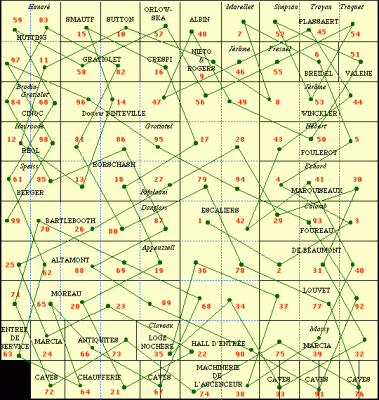 feature
September 2012
Negation: A Response to Lars Iyer's 'Nude in Your Hot Tub'
Scott Esposito
I do not know whether I have anything to say, I know that I am saying nothing; I do…
 poetry
February 2016
[from] What It Means to Be Avant-Garde
Anna Moschovakis
This is an excerpt from the middle of a longer poem. The full poem is in Moschovakis's forthcoming book,…
 https://www.thewhitereview.org/

by Ade Rowe
Circumcision occupies a position within Judaism that is exceptional in both its theological significance and its historical endurance. Few religious practices have inspired such sustained devotion among adherents while simultaneously provoking such persistent philosophical, ethical and political criticism from those outside the tradition. For observant Jews, circumcision, or brit milah, is not merely a customary ritual performed during infancy but the physical manifestation of an enduring covenant between God and the Jewish people. It is regarded as a commandment that transcends personal preference, medical convenience or social custom, linking each generation to the covenant established with Abraham. Yet the same practice has increasingly become the subject of profound ethical debate in contemporary societies that place considerable emphasis upon bodily autonomy, informed consent and the rights of children. Consequently, circumcision exists at the intersection of two fundamentally different moral frameworks: one grounded in divine revelation and covenantal obligation, the other in secular principles of individual liberty and personal sovereignty over the body. The continuing controversy cannot be understood simply as a disagreement over a surgical procedure. Rather, it reflects deeper disagreements concerning the nature of authority, the limits of parental rights, the meaning of religious freedom and the extent to which ancient traditions should remain exempt from ethical standards that have evolved in modern liberal democracies.
The theological importance of circumcision originates principally within the Hebrew Bible, particularly the covenant described between God and Abraham in the Book of Genesis. According to the biblical narrative, God commands Abraham to circumcise himself, his household and all future male descendants as an "everlasting covenant." This covenant is not presented as an optional devotional exercise nor as a symbolic recommendation capable of substitution by alternative expressions of faith. Instead, circumcision functions as the visible sign of belonging to the covenantal community. The physical body becomes the location upon which an invisible spiritual relationship is permanently inscribed. Within Jewish theology, this permanence is itself significant. Temporary rituals may be forgotten, neglected or abandoned, but the covenant, once marked upon the body, accompanies the individual throughout life. It symbolises continuity across generations and affirms that the relationship between God and Israel is not dependent solely upon fluctuating emotions or intellectual conviction but upon an enduring divine promise.
From within this theological framework, circumcision is not generally understood as an attempt to improve an imperfect body or to remove something inherently sinful. Rather, classical Jewish thought typically presents the act as an expression of obedience. The moral emphasis lies not upon the foreskin itself but upon fulfilling a divine commandment. This distinction is important because it challenges the common misconception that Judaism regards the uncircumcised penis as intrinsically impure or morally corrupt. Mainstream Jewish theology does not ordinarily teach that the foreskin possesses inherent sinful qualities. Instead, the obligation concerns covenantal participation. An uncircumcised Jewish male is traditionally viewed, in many interpretations, as having failed to fulfil a commandment rather than possessing an inherently sinful anatomical characteristic. The difference is subtle yet substantial, for Jewish ethics generally locates sin in actions or omissions rather than in ordinary features of human anatomy.
Rabbinic literature subsequently developed these scriptural foundations into an extensive theological tradition. Medieval philosophers such as Maimonides examined circumcision not merely as a legal obligation but as a practice capable of reinforcing communal discipline and religious identity. Other rabbinic commentators interpreted circumcision as symbolising humanity's participation in creation, arguing that while God creates the natural world, humanity is entrusted with refining and cultivating it. This theme appears repeatedly throughout Jewish intellectual history. Agricultural cultivation transforms wilderness into fertile land; education transforms ignorance into understanding; ethical discipline transforms instinct into virtue. Circumcision, within this interpretative tradition, becomes another example of humanity cooperating with divine intention by actively participating in covenantal life.
Whether these theological explanations remain persuasive outside religious belief is a separate question. Modern philosophical analysis frequently distinguishes between explanations that possess internal coherence within a faith tradition and justifications capable of persuading individuals who do not share the underlying religious assumptions. For believers who accept divine revelation, obedience to God's commandments provides a sufficient moral foundation. If God commands circumcision, then its moral legitimacy follows from divine authority. However, for those who reject divine command theory or who remain unconvinced that any religious tradition possesses exclusive access to divine revelation, the argument necessarily loses much of its persuasive force. Consequently, contemporary ethical debate often proceeds independently of theological premises, evaluating circumcision according to secular principles rather than religious doctrine.
One of the most influential secular objections concerns bodily autonomy. Modern liberal philosophy generally maintains that individuals possess primary authority over their own bodies.
This principle underpins legal doctrines relating to informed consent, medical ethics and personal liberty. Surgical procedures ordinarily require the voluntary agreement of the person undergoing them, particularly where the intervention is irreversible and not medically necessary. Critics argue that infant circumcision appears difficult to reconcile with this principle because newborn children lack the capacity to provide meaningful consent. Decisions are instead made by parents, often motivated by religious or cultural commitments that the child may later reject.
This objection does not necessarily deny the sincerity of parental intentions. Most parents who choose circumcision do so because they believe they are acting in their child's best interests or because they regard the practice as an indispensable religious obligation. Nevertheless, critics maintain that benevolent motivation cannot eliminate ethical concerns regarding consent. Throughout medical ethics, good intentions do not automatically justify irreversible interventions performed upon individuals incapable of expressing their own preferences. The central question therefore becomes whether parental religious authority extends sufficiently far to permit permanent bodily modification of a child before that child has developed the capacity to make an informed decision.
Supporters of circumcision frequently respond that parents already make numerous significant decisions on behalf of their children, including education, nutrition, healthcare and religious upbringing. They argue that infant circumcision should be viewed as another legitimate exercise of parental responsibility. Critics counter that most parental decisions remain reversible or can be modified as children mature, whereas circumcision permanently removes healthy tissue that cannot later be restored naturally. The ethical distinction therefore lies not simply in parental authority but in the irreversible nature of the intervention itself.
This irreversibility forms one of the strongest contemporary criticisms of infant circumcision. Ethical philosophers commonly distinguish between temporary influences upon children and permanent alterations to their bodies. Parents may introduce children to religious beliefs without preventing those beliefs from being reconsidered in adulthood. A child raised within Judaism, Christianity or Islam retains the ability to reject those beliefs upon reaching maturity. Circumcision, however, cannot simply be reversed by a later change of conviction. Individuals who ultimately choose not to identify with Judaism nevertheless continue to bear the physical consequences of a decision made before they possessed the capacity for informed consent.
Some defenders argue that reconstructive procedures exist and therefore circumcision is not truly irreversible. Critics generally reject this argument, observing that reconstructive techniques cannot restore the original anatomical structures or functions completely. At best, such procedures approximate certain physical characteristics while leaving permanent alterations intact. Consequently, describing circumcision as reversible is widely regarded within medical ethics as inaccurate.
Another important criticism concerns the concept of medical necessity. In contemporary healthcare, permanent surgical interventions performed upon children are ordinarily justified only when required to treat disease or prevent substantial and immediate harm. Opponents argue that routine religious circumcision differs because the overwhelming majority of healthy infants exhibit no medical condition requiring surgery. They therefore question whether performing an irreversible operation upon healthy tissue satisfies the ethical standards generally expected within paediatric medicine.
This criticism becomes particularly significant when compared with broader medical practice. Physicians ordinarily avoid removing healthy organs or tissue from children merely because doing so might reduce hypothetical future risks. Healthy tonsils, appendices or other anatomical structures are generally not removed pre-emptively in the absence of clinical indication. Critics therefore contend that circumcision appears to occupy a unique category in which ordinary standards governing medical necessity have historically been modified because of longstanding religious and cultural acceptance rather than because of consistent ethical reasoning.
Supporters respond that circumcision has been associated in some studies with reductions in urinary tract infections during infancy, decreased rates of certain sexually transmitted infections in specific populations and reduced incidence of penile cancer. These findings have informed the policies of some medical organisations. Nevertheless, critics argue that even if statistical benefits exist, they do not necessarily justify routine surgery upon every infant. Many health risks can instead be addressed through improved hygiene, vaccination, public health education and safer sexual practices without permanently removing healthy tissue during infancy. Consequently, the ethical question shifts from whether circumcision may produce some medical benefits to whether those benefits are sufficiently substantial to override concerns regarding bodily autonomy and consent.
The discussion is further complicated by the symbolic importance circumcision has acquired within Jewish history. Repeated episodes of persecution strengthened attachment to practices that distinguished Jewish communities from surrounding populations. During periods in which political authorities attempted to suppress Jewish religious life, circumcision frequently became a powerful symbol of resistance and continuity. Abandoning the practice could therefore appear, from within the community, not merely as altering one ritual but as surrendering an essential expression of Jewish identity. This historical experience explains why debates concerning circumcision often evoke particularly strong emotional responses. For many observant Jews, criticism of circumcision is perceived not simply as criticism of a medical procedure but as criticism of one of Judaism's defining covenantal institutions. For critics, however, historical importance does not necessarily determine present ethical legitimacy. Traditions may possess profound historical significance while remaining open to moral evaluation under evolving ethical standards.
The resulting disagreement illustrates a broader philosophical conflict between historical continuity and moral revision. Religious traditions often derive authority from continuity with the past, whereas secular ethical reasoning frequently evaluates practices according to principles considered universally applicable regardless of historical origin. The fact that circumcision has existed for thousands of years demonstrates remarkable durability, yet longevity alone does not establish moral correctness. History contains numerous institutions that endured for centuries before later generations concluded they were ethically indefensible. Equally, novelty does not guarantee moral superiority merely because contemporary values differ from ancient ones. The challenge therefore lies in determining whether continuity itself constitutes sufficient justification or whether every inherited practice should remain open to ongoing ethical scrutiny.
The philosophical tension becomes even more pronounced when the discussion moves beyond questions of religious liberty and enters the realm of children's rights. During the twentieth and twenty-first centuries, legal and ethical thinking increasingly recognised children not merely as extensions of parental authority but as individuals possessing interests that deserve independent protection. International human rights instruments, although not addressing circumcision directly, emphasise the importance of safeguarding children from unnecessary harm while recognising both parental responsibilities and the freedom of religion. Circumcision therefore occupies a legally ambiguous position. It is generally permitted in most democratic societies, yet it remains exceptional in that it involves the permanent alteration of a healthy child's body for reasons that are predominantly religious or cultural rather than therapeutic. Critics argue that this exception requires a stronger ethical justification than is often provided, while supporters maintain that restricting circumcision would represent an unacceptable infringement upon religious liberty and minority rights.
The conflict between these principles illustrates the difficulty of resolving disputes in pluralistic societies. Religious freedom is widely regarded as a cornerstone of liberal democracy. Communities must ordinarily be free to practise their faith without unwarranted interference from the state. However, no liberal society treats religious liberty as unlimited. Governments prohibit practices deemed harmful even when they are sincerely motivated by religious conviction. Consequently, the ethical debate is not whether religious freedom matters, but where its limits should be drawn when the interests of children are involved. Those who defend circumcision typically argue that the procedure falls well within acceptable parental discretion and causes only limited harm. Those who oppose it argue that irreversible bodily alteration exceeds the proper boundaries of parental authority because the decision permanently affects another individual whose consent cannot be obtained.
This disagreement exposes a broader philosophical divide concerning the nature of rights themselves. Religious traditions frequently understand rights alongside duties. Parents possess obligations to raise children within their faith because they believe they are entrusted with the child's spiritual welfare. Liberal political philosophy, by contrast, often places greater emphasis upon the future autonomy of the individual child. According to this view, the child possesses a right to enter adulthood with as many fundamental choices preserved as possible. Circumcision becomes ethically contentious because it appears to reduce the range of choices available to the future adult by making one irreversible religious decision before the individual has developed the capacity for independent judgement.
A related criticism concerns the symbolic meaning attributed to the procedure. Within Judaism, circumcision functions as the physical sign of divine election and covenant. Yet some philosophers question whether genuine religious commitment can meaningfully arise from an action performed before the individual possesses any awareness of its significance. Faith, they argue, ordinarily presupposes understanding, reflection and voluntary commitment. A covenant entered without conscious agreement appears, from this perspective, conceptually different from one freely embraced by an informed adult. Critics therefore suggest that postponing circumcision until the age of consent would preserve both religious symbolism and personal autonomy.
Traditional Jewish theology rejects this proposal for several reasons. First, the covenant is understood as extending across generations rather than being negotiated anew by each individual. Jewish identity has historically been communal before it is individual. Secondly, the commandment itself specifies infancy rather than adulthood, making postponement incompatible with classical halakhic interpretation. Thirdly, delaying circumcision could fundamentally alter its theological meaning, transforming it from an inherited covenant into a voluntary initiation. Consequently, many observant Jews regard proposals for adult circumcision as incompatible with the religious institution established in scripture.
Even so, critics maintain that this response demonstrates precisely why the ethical difficulty persists. If the religious significance depends upon performing the procedure before the individual can refuse, then the practice necessarily conflicts with modern understandings of informed consent. The disagreement is therefore structural rather than superficial. It cannot easily be resolved through compromise because each position begins from different assumptions concerning the relationship between individual liberty and inherited religious obligation.
Medical ethics introduces additional complexity by distinguishing between therapeutic and non-therapeutic interventions. Therapeutic procedures seek to treat existing illness or prevent imminent harm. Non-therapeutic procedures, by contrast, are performed for cultural, religious or cosmetic reasons. Opponents argue that infant circumcision clearly belongs within the latter category in the overwhelming majority of cases. If this classification is accepted, they contend that the ethical threshold for justification should become considerably higher than is ordinarily assumed. Since no urgent pathology exists, postponement until the individual can make an informed decision would appear, from this perspective, to satisfy both respect for autonomy and respect for religious freedom.
Supporters frequently respond that waiting until adulthood would expose individuals to greater surgical risks, longer recovery periods and diminished integration into the religious community. Adult circumcision is generally more invasive than infant circumcision and may involve greater discomfort. Critics acknowledge these practical considerations but argue that convenience cannot override the principle of consent. Adults routinely choose to undergo more extensive medical procedures because they regard the anticipated benefits as worthwhile. The fact that a procedure becomes more demanding later in life does not, by itself, justify performing it before consent becomes possible.
Questions concerning sexual function have likewise become central to contemporary debate. Anatomically, the foreskin contains specialised tissue, blood vessels and nerve endings. Opponents therefore argue that its removal inevitably alters the sensory characteristics of the penis. Some maintain that circumcision may diminish certain forms of tactile sensation or affect aspects of sexual experience. Others report no noticeable differences or even express satisfaction with the outcome. Scientific research has produced mixed findings, with methodological differences, subjective reporting and cultural influences complicating interpretation. Consequently, definitive conclusions remain elusive.
The existence of disagreement within the scientific literature has itself become a subject of criticism. Some scholars argue that public discussions have occasionally overstated certainty in favour of one conclusion or another. Research concerning sexuality is inherently difficult because subjective experience varies substantially between individuals and cannot easily be measured through objective physiological instruments alone. Moreover, studies often involve participants from different cultural backgrounds, healthcare systems and age groups, making direct comparison problematic. Responsible academic analysis therefore requires caution in drawing categorical conclusions from evidence that remains contested.
Psychological considerations have also been examined extensively. Some critics argue that painful procedures performed during infancy may produce subtle developmental consequences, citing research into neonatal pain perception and early neurological development. Medical practice has changed significantly in response to growing recognition that infants experience pain more acutely than was once assumed. Contemporary circumcision is therefore ordinarily performed using analgesia or local anaesthesia where appropriate. Nevertheless, opponents contend that reducing pain does not eliminate the ethical question because the central issue concerns unnecessary intervention rather than discomfort alone.
Another criticism addresses the language commonly employed in discussions of circumcision. Advocates sometimes describe the removal of the foreskin as a minor procedure. Critics argue that this terminology risks minimising the significance of permanently removing healthy anatomical tissue. What counts as "minor", they suggest, depends upon perspective. From a surgical standpoint the procedure may indeed be comparatively straightforward, particularly when performed by experienced practitioners. From an ethical standpoint, however, permanence rather than complexity may be the more relevant consideration. A brief operation may nevertheless have lifelong consequences.
Legal scholars have increasingly explored whether circumcision should be analysed through the same conceptual framework applied to other forms of non-consensual bodily alteration. This comparison remains controversial. Supporters object that equating circumcision with more harmful practices ignores substantial differences in severity, intention and medical risk. Critics respond that ethical consistency requires examining principles rather than relying exclusively upon cultural familiarity. If bodily integrity constitutes a universal right, they argue, then exemptions require particularly compelling justification. The debate therefore frequently turns upon proportionality rather than simplistic comparisons.
Within Jewish communities themselves, attitudes are not entirely uniform. Orthodox Judaism continues to regard brit milahas indispensable, and Conservative Judaism likewise overwhelmingly retains the practice. Reform Judaism generally continues circumcision while placing somewhat greater emphasis upon individual conscience. Alongside these mainstream movements, however, a small number of Jewish thinkers and organisations have questioned whether covenantal identity might be expressed through alternative ceremonies that avoid permanent bodily alteration. These proposals remain a minority position, but their existence demonstrates that ethical reflection regarding circumcision is not confined exclusively to critics outside Judaism. Internal debate, although limited, reflects broader attempts to reconcile inherited religious traditions with contemporary ethical sensibilities.
The emergence of these discussions illustrates an important feature of religious traditions more generally. They are rarely static. Throughout history Judaism has demonstrated considerable capacity for legal interpretation and adaptation while maintaining continuity with foundational texts. Whether circumcision belongs among those practices capable of reinterpretation remains profoundly disputed. Traditional authorities generally argue that explicit biblical commandments leave little scope for alteration. Reform-minded voices occasionally contend that the ethical trajectory of Judaism itself should encourage renewed consideration of ancient obligations in light of evolving understandings of dignity, equality and personal autonomy. Neither perspective has displaced the other, ensuring that the discussion remains active both within Jewish communities and beyond them.
Ultimately, the modern controversy surrounding circumcision cannot be reduced to simplistic claims that one side values religion while the other values science. The disagreement reaches considerably deeper. It concerns whether moral authority originates primarily in divine revelation or individual autonomy; whether communal identity may legitimately shape the bodies of future generations; whether parental religious obligations extend to irreversible bodily decisions; and whether historical continuity should influence ethical judgement in contemporary societies. These are questions that possess no universally accepted answers because they depend upon foundational philosophical assumptions that differ significantly across cultures and belief systems.
From the perspective of contemporary secular ethics, however, the criticism of infant circumcision remains substantial. Even when performed safely, motivated by sincere religious conviction and understood within a rich theological tradition, it continues to raise unresolved concerns regarding consent, bodily integrity and the future autonomy of the individual child. These concerns do not necessarily invalidate the profound religious meaning circumcision holds within Judaism, but they ensure that the practice remains one of the most vigorously debated examples of the broader tension between inherited religious obligations and modern conceptions of individual rights. Whether future generations regard that tension as ultimately reconcilable or fundamentally irreconcilable will depend not only upon developments in medicine or law but upon continuing philosophical reflection concerning the respective claims of tradition, freedom and the moral ownership of the human body.
.
The piles of the dog-eared years, once-precious docs, collections
turn into an accumulated junk of brittle layers.
Dumped memories swirl, settle down. Finally, consigned to airless
attic, garage.
Frozen moments stored, soon-to-be
cancelled by moving hands of time.
What counted then, no longer
counts now: teddy bears, old shoes,
trophies, albums, sweaters—detritus
of the hazy decades lived fully, another life.
The pink-faced walls, framed pictures,
vases, nooks, corners, spiral stairs, the
twisted corridors that circle around,
the sad feline, persistent,
scratching the locked doors, hopeful.
The dormer windows, red tiles,
lawns, trees, street, sidewalks
familiar, comforting in blizzards
on
white nights.
Now: complex of cold, dark labyrinths
of
time, histories, segments, all defunct.
Another port to reach before dusk; a place of odd-sounding names.
Some journeys! They continue without fixed address.
New Ithaca shimmers ahead.
Towers
rise up out of rolling blue mists.
A strange moon hangs in an alien
sky.
The familiar walls look unfamiliar.
The ceaseless
Sisyphean labour starts, again.
.
—Sunil Sharma
Picture Nick Victor
Sunil Sharma Academic |Writer | Critic | Editor | Freelance Journalist | Reviewer | Literary Interviewer Editor: Setu: http://www.setumag.com/p/setu-home.html Website: https://sunilsharmawriter.com/ Twitter:https://twitter.com/drsunilsharma
Instagram:https://www.instagram.com/drsunilsharma/
LinkedIn:http://in.linkedin.com/in/drsharmasunil/ Pinterest: https://in.pinterest.com/
Amazon-author link: https://www.amazon.com/author/sunilsharma


There's no fairness in nature. The natural world knows nothing of justice.
Such concepts are a human invention. Such inventions are imposed on human societies as a way of defining and regulating behaviour. They are neither universal nor consistent. They are continually being tinkered with, adjusted, amended. What is considered right in one decade is inadmissible in the next. Laws are repealed. New laws are introduced, either by a legislative procedure or through reasoned dialogue… or at other times by interpretations of religious texts, or at the arbitrary whim of a tyrant. Nothing is eternal. All is in flux.
Colin Wilson wrote A Criminal History Of Mankind, which was published in 1984 (Granada Publishing, Panther Books paperback ISBN 0-586-05486-3). The cover-art shows a stone spear juxtaposed with a modern bayonet, an image that implies a continuity from then until now. Which is far from the truth. There is no human behaviour which has not been legal, or morally justifiable, at one time or in one place in time. Situational ethics overrule eternal law at every twist of history.
So how is it possible to define what is, or what is not a criminal act?
Slavery was an integral part of every pre-industrial civilisation. The empires of Egypt and Rome were built on slave labour. It was only the advent of the industrial revolution, when the introduction of machinery made it cheaper and more efficient to automate than it was to rely on forced labour, that led to its abolition. Yet forms of slavery persist in low-wage and exploitative contexts. Even the most basic moral imperative - not to murder, not to kill a fellow human, is easily removed for the pretext of warfare, in which case killing becomes a patriotic duty, sanctioned by the church. In point of fact, there is little that has not been considered acceptable behaviour somewhere, from the incestuous unions practiced in Pharaonic Egypt following the sibling marriage of gods Osiris and Isis, to establish the purity of a divine bloodline; to the cannibalism that was the forced upon the 1846 Donner Party when their wagon train was snowbound in the Sierra Nevada mountains. Then, in the 1972 Andes aircraft crash, where survivors resorted to eating the bodies of those who had already died, a decision taken as the result of a mutual pact.
It's possible to construct an entirely rational ethical framework based around mutual respect and interactive human need. The theory of 'Mutual Aid' as propounded by anarchist thinker Pyotr Kropotkin, in which the driving force behind the evolution of societies is not brute competition but cooperation and reciprocity. Colin Wilson spends a great deal of time questioning 'why violence' and tracing the roots of aggressive behaviour, when it could equally be argued that human nature is as much dependent on cooperation, the degree of collective effort required to launch probes to each of the solar system's major worlds, to combat disease, to establish networks of global communication, to plan and monitor cities with mass population densities.
Yet there's an essential irrationalism to the mere fact of being alive, the truth that to the best our knowing we live the span of a single lifetime, and that death obliterates it all in total extinction. So, there's an equal impulse to leave a marker on history that says 'I was here', above and beyond the DNA trail that links us into a racial continuity. An artistic or literary marker, a sporting, political or scientific achievement… or maybe a military triumph. Because every military encounter, every battle, incursion, and skirmish through time contributed to defining the map of the human world as it exists. To say that Genghis Khan or Vlad 'The Impaler' Dracul were criminals because they exceeded the normal conventions of warfare is to deny the historical process that created the modern world.
Abused children will grow up to be abusers. People traumatised by war and atrocity will seek revenge against those they perceive as the aggressor. So the cycle self-perpetuates.
There are some who would argue that a Free Enterprise economy that permits internet billionaires while other people starve is criminal. There are some who would argue that the irresponsible emission of greenhouse gases such as carbon dioxide during a time of climate change is criminal. There is an argument to be made that using atomic bombs against Japanese civilians in order to bring World War II to a close was a criminal atrocity. That the Russian annexation of the Crimea and subsequent undeclared invasion of the Ukraine in defiance of internationally agreed borders since the collapse of the USSR and the end of the Warsaw Pact, is a criminal folly. Putin would argue that the Ukraine had been an integral part of the Soviet Union, and a part of the Russian Empire before that. That although the Ukraine has a distinct cultural and Slavic language identity, its geographical limits have historically been subject to the expansion and contraction of Eastern European empires across centuries. Which is not to agree with Putin. Simply to accept that criminality can be a matter of perspective.
If the concept of justice is a human invention, criminality must also be a human invention.
Fyodor Dostoevsky frames the equation in his 1866 story 'Crime And Punishment', in which impoverished St Petersburg former student Rodion Rashkolnikov feels himself morally justified in murdering Alyona Ivanovna, an unscrupulous elderly pawnbroker. He rationalises the killing by using utilitarian theories of a greater need that transcends conventional morality. Yet he's subsequently tormented by guilt. In a similar way the unnamed first-person narrator of Edgar Allan Poe's 1843 short story 'The Tell-Tale Heart' gets away with murdering an old man with a pale blue 'vulture-like' eye, and he conceals the dismembered body beneath the floorboards. But his feelings of guilt result in him hearing his victim's heartbeat from beneath the floor, driving him - as with Rashkolnikov, to confess his crime. Is that evidence of a 'natural law' above and beyond logic and reason? Or it could be argued that religion, even when denied or abandoned, leaves the ineradicable moral 'policeman in the head'.
Strangely, for a writer of some philosophical pretensions, Colin Wilson rarely ventures into such realms of indeterminacy. He prefers a more linear approach to the history of crime. He does speculate about Abraham Maslow's five-level Hierarchy of Needs, that the most basic need is for food, water, sleep and warmth. That when those needs are satisfied a second tier of needs, for physical safety, security and health emerges. Then a third tier demands belonging into a family or social structure. With esteem and status as the fourth tier. With self-actualisation as the pinnacle of the pyramid of needs, to achieve potential and creative expression. It is the frustration of these needs that lead to criminal behaviour… including self-actualisation through the modern phenomenon of serial killing. The need for fame, even if it is done through notoriety. A process that every low-budget barrel-scraping TV-documentary about the Yorkshire Ripper, Fred & Rosemary West, the Charles Manson Family, or the Moors Murders only accelerates. While Colin Wilson returns to the ideas of Julian Jaynes theory of the 'bicameral mind', the uniting of the left and right hemispheres of the brain.
Surely, this is all just sophistry? We all know and recognise criminality, don't we? Of course there are degrees of badness, but we identify deviant behaviour as evil. We don't need psychological profiling or literary precedents to do this. It's always morally abhorrent to kill children… unless it's as a sacrifice to appease a malevolent god (Abraham almost sacrificed his son Isaac as test of faith imposed by the Old Testament god). Then there's the dilemma posed by 'The Cold Equation', an August 1954 Astounding SF short story by Tom Godwin in which female stowaway Marilyn is discovered on a spaceship carrying life-saving serum to a disease-stricken colony on a planet called Woden. A theme already anticipated to an extent by EC Tubb in his story 'Precedent', (in New Worlds May 1952) where it's a male stowaway. But with limited rocket-fuel and an air-supply sufficient for just one person, the moral conundrum - the cold equation, is that one must die for the other to survive. The logic is inescapable. Yet there are residual feelings of guilt and betrayal. In a sense, it's a metaphor. The human race with its precarious eco-system and fellow-travelling lifeforms are carried on spaceship Earth. Impoverished societies suffer so that wealthier societies can prosper in consumer affluence.
Colin Wilson (1931-2013) began his hugely prolific writing career as an 'angry young man' with the explosive success of his The Outsider (1956), after which he moved in unpredictable ways into his major The Occult: A History (1971), and quasi-history with From Atlantis To The Sphinx (1996), while his fiction included The Space Vampires (1976) which was adapted by Tobe Hooper into the movie Lifeforce (1985). In his A Criminal History Of Mankind, Colin Wilson unwinds through time back to archaeological remains that seem to indicate that humans are a 'mentally unbalanced species.' That 'evolution has left a few screws loose between the neo-cortex and the hypothalamus' that results in a dangerous 'paranoid streak' which explains human self-destructiveness. We are a defective species, hobbled to ancient archetypes. The odds are stacked against us from the start, from before the beginning. Evolution happens on a random haphazard basis. And reality is fundamentally flawed, with the 'killer ape' shoved further out of kilter by living in crowded cities, divorced from the natural world.
In his fairly anecdotal chronology of torture and aberrant behaviour, from Spartans to the I Claudius excesses of Rome - is this criminal, or it just history? some of Colin Wilson's arguments are dubious. Others have been superseded by subsequent discoveries or revised theories, especially in the realm of gender politics. Yet he poses a valid question, why violence? Why aggression?
There's no fairness in nature. The natural world knows nothing of justice.

.
by ANDREW DARLINGTON
.
The hibiscus around my bosom
The molten blue promise
Xenophobic distortion of modern age
Vendors of outdoor recreation
My cavalry of silken sky
A new river is forming
Malignant hope of evening eye
Labyrinths of yankee dream
My mother lives in unison with God
I naturally draw Eden's beauty
Till I reach my sun and moon.
.
Sayani Mukherjee
Picture De Lay
.

 Mr Pecksniff - artist: Joseph Clayton Clark (CC0)
"We have crushed the British to the ground. They are on their knees, and they will not rise for a very long time." So Russia's then ambassador to the UK, Alexander Yakovenko, reportedly boasted to colleagues after the Brexit vote.
Even at the time, Brexit critics could have been forgiven for wondering suspiciously exactly who the 'we' were. Nothing since has other than exacerbated those doubts, and this week the former head of MI6, Sir John Sawers, spelled it out. The Brexit brigade, naively or for some more unscrupulous purpose, had acted as, in Lenin's words, Russia's "useful idiots".
"Russia was very keen that the Leave campaign should succeed and that Britain should leave the European Union", he explained. "Because that would marginalise Britain as a global player and weaken Europe in general. That's the strategic opportunity the Russians spotted, and the leaders of the Leave campaign fell into it."
Did money change hands? Was it treason, or was it all down to the astonishing stupidity of our ruling class at the time?
*
But this week has seen more positive signs from the EU. "I would love to see the UK back," says Bernd Lange, chair of the European parliament's trade committee; and he only echoes the sentiments of so many of East Anglia Bylines' own European contacts. (Given Britain's appalling arrogance and rudeness through the Brexit period, this goodwill continues to astound.)
Hr. Lange suggests the way in may be through a 'Switzerland+' deal, involving regulatory alignment and, crucially, freedom of movement. It is only a suggestion so far, but it is telling that there has been no outraged response from the usual Brexit suspects.
 Image by Number 10 via Wikimedia Commons (OGL 3)
For Andy Burnham, one potential attraction is that it can be presented as something new, to avoid attempts to tar it with the brush of past arguments. And for the first time, we know No.10 is open to ideas.
*
The Liberal Democrats have paid Andy Burnham an inadvertent compliment this week. Only a month ago a leading LibDem MP was assuring Pecksniff the prospect of an early election was "vanishingly unlikely", yet this week they are girding their loins for a possible call on 10 December.
The reason for this abrupt handbrake turn? They accept the PM is on a roll, and is keen to govern on his own mandate rather than that bequeathed to him by Keir Starmer. And dear reader, we know that means: Europe.
*
 Image by Alisdare Hickson via Wikimedia Commons (CC BY-SA 2.0)
There was a time, not long ago, when Labour Party members were keen on proportional representation. We can record the dying of that enthusiasm to coincide almost exactly with their party forming a government.
This week one Labour MP claimed the idea of working with the Greens made them physically sick - yet the Greens are probably their nearest neighbours ideologically. Hardly promising for electoral reform, but that hubris and those attitudes seem unlikely to stand against Mr Burnham's burning ambition for change.
*
Under Boris Johnson, we should have been prepared for any depths of amoral depravity. But it was our misfortune as Covid-19 suddenly burst among us that those among the cult of mediocrity in public life under his squalid regime included Matt Hancock.
 Matt Hancock pictured during the first lockdown. Photo credit: Number10 via Flickr (CC BY-NC-ND 2.0)
Mr Hancock was always known as a creep, one of George Osborne's familiars. As a backbencher, John Bercow is one candidate credited with these bon mots to his Tory colleagues: "There is no point trying to crawl up George's arse. No matter how high you climb, you will still see the soles of Matt Hancock's boots ahead of you."
For all his disagreeable unctuousness and determined self-aggrandisement, the handicap of being among the lowest forms of political life made promotion slow. During the coalition he was given a job in a 'Liberal Democrat' department: business, from where it is said he eagerly betrayed his unsuspecting new colleagues. His real purpose was to report back to his Tory chums and undermine the department's success.
But it took Covid to expose his complete failures as a man. Now he was his own master, executing the petty conceits of a mediocre man on the make, and then refusing to accept responsibility for his own words or actions.
Petty conceits for him, perhaps. But not petty for the families of the 43,000 who died in care homes while he made misleading claims about protecting them and Boris Johnson boogied on in Partygate. They will never forget, and never forgive.
*
The Green Party confronts a muddle the consequence of its own imprudence. If members welcome all fervent supporters of Palestine - many of them quite naturally Muslims - then some of those Muslims will share not a whit of the Greens' other principles. (They are not the first to fall into that trap. Jeremy Corbyn was happy to call one Palestine supporter "my dear friend" who on other platforms happily called for the death of all Jews.)
 Zack Polanski at the Green Party Conference 2025
Zack Polanski suffered the obligation of taking a position on the 'Zionism is racism' motion which has caused all the fuss, but ducked his responsibilities. It now requires some propitiatory act from him, though that seems unlikely since he seems incapable of understanding the political catastrophe for his party that has just occurred. Of the motion, he told Laura Kuenssberg: "I don't think this is actually controversial".
You think? It has made headlines ever since, Labour and the Liberal Democrats have attacked it, many local Green parties have attacked it, Green councillors have attacked it, all the Green MPs have attacked it, and the motion was supported by the vote of less than half of one per cent of the membership. We now find the party machine scrabbling about for a way out of the mess - a mess which apparently their leader does not even recognise.
A polling disaster. Yet the Greens are unlikely to mitigate their decision until next year, with change unlikely before 2028.
*
 Image by Conservative Party via Wikimedia Commons (CC BY 2.0)
Kemi Badenoch's fervour for following sound Conservative principles seems paradoxical: rejecting some of those previously trumpeted by her predecessors. She has an obsession to leave the European Court of Human Rights and throws out any candidates who don't support her position. But the court was set up by Winston Churchill. Would she have chucked him out then? Is he now to be expunged from the roll of Tory deities?
As to Europe, Margaret Thatcher was a leading player in establishing the single market. How long before she joins him? What exactly are Tory principles these days? This week Andrew Boff, a senior London Tory and potential mayoral candidate, has resigned from the party over the ECHR issue, having been a member for 53 years.
Mr Boff says: "A political party that cannot tolerate support for fundamental human rights has moved a very long way from the principles that first attracted me to it. I have not abandoned my Conservative principles. I believe the party has abandoned some of its own."
And dear reader, the ECHR has only overruled a British immigration case three times in the last 45 years….
*
So we come to the weekly Reform rogues' gallery. So far, eight leading figures at the top of the party are under criminal investigation by the police, for what those involved would no doubt claim are minor derelictions of acceptable behaviour which should be disregarded. (My editor will wish your correspondent to emphasise that they are merely under investigation. They can be touchy…)
UPDATE: Reform UK now have eight Senior Officials under criminal investigation with the Police pic.twitter.com/k7voeo6wg9
— AxoAndy (@AxoAndy) October 17, 2026
Meanwhile, 61 Reform councillors across the country have left the party since being elected last May; and 17 in our region have resigned, defected or have been expelled since August last year. Two were on two authorities, so in all 19 councillor positions. All six counties are represented.
Aug'25Richard EverettTendringExpelled after alleging that Farage overspent on his General Election campaign. Now "not in a political group"
Oct '25Des WattCambridgeshireNow Conservative
Feb '26Peter ColleyHertfordshireNow Restore Britain. He pointed to "abuse and mistreatment" that he claimed to have had endured from members of the "Reform management group" - and to "incompetence", at a regional and national level.
March '26Tony HillHertfordshireUnclear
April '26Sarah-Jane ShieldsBasildon"I would like to formally state it is true that Sam Journet has been bullying me. His behaviour has caused significant issues …" Now Independent Councillor.
April '26Andy OsbornCambridgeshireDisqualified for breaking electoral law.
May '26Stuart PriorEssex CC and Rochford DCExpelled and resigned as councillor after being "accused the week before the elections of creating racist and Islamophobic posts on social media".
May '26Joseph SoperThurrockResigned, citing a serious illness in the family as the reason. Note that he didn't turn up for the election count.
May '26Mark StanleyThurrockResigned, citing "a change in personal circumstances". He didn't attend the count either.
May '26James SidlowCambridgeshireResigned citing "personal circumstances and wider pressures".
June '26Mark TuckerNorfolkResigned due to ill health
June '26Tony NelsonHuntingdonshireResigned - probably due to ill health
July '26James FletcherLutonUnclear - now a "non-aligned Independent"
August '26Peter ReevePeterboroughSuspended after being charged with drink-driving offence. Now Independent
Sept '26Christopher PereraEssexSuspended "after it was found that he "damaged" the party's interests". Now Independent.
Sept '26Bradley ThompsonEssex and TendringSuspended following "several serious and well-documented allegations of misconduct". Now Independent.
Sept '26Gary KeoghSuffolkResigned "because of changes in his personal and family circumstances".
*
 Image by Essex County Council
Meanwhile, readers will recall the sinister charade of Operation Vanguard, launched by Reform-led Essex County Council a month ago,in pursuing their malign liturgy of hate against asylum seekers. The aim is supposedly to keep their public safe from residents of Wethersfield asylum centre, even though the police point out there is no evidence of any threat. (Nigel Farage accuses them of "misleading people" because their statistics fail to support his prejudices.)
Triumphantly, Reform's council leader Peter Harris claims his private security team has reported 172 incidents. Only, he cannot say whether any of them involved asylum seekers. As Pam Cox MP (Colchester) points out: "It is deeply concerning that the council has not even gathered information on whether any incidents have involved asylum seekers, despite this being central to the justification of the scheme."
There is no reason to believe the estimable Ms Cox is of a naturally credulous nature, so she will not be surprised if Cllr Harris is reluctant to provide further details on the figures, which might fail to support his bigotry.
But then we learned this week that the council's vigilantes security teams have already arrested and handcuffed two alleged shoplifters. (Since no colour was mentioned, we must presume they were white.) The trouble is, the Vanguarders have no more powers in law than the man in the street. So making a 'citizen's arrest' is rather dubious, and handcuffing can amount to assault. Hence the incidents have been reported and recorded by the police as such.
So, here we have those supposedly protecting the public who are instead assaulting them. The council's deputy leader, Russell Quirk, insists the two arrested are "prolific shoplifters", without offering any evidence to support the claim, and in danger of facing a civil suit for defamation. Also, it seems the two were both young girls, not likely to put up much of a fight, and there is a nagging suspicion that this might have partly prompted the alacrity of the event.
*
 Photo by Gareth Milner via Flickr (CC BY 2.0)
Liz Truss these days cuts an embarrassing figure, searching always for the grand gesture that will establish her true stature, like somebody perhaps asking her to launch a ship. She remains furious at supposing life has treated her far less generously than her talents deserve, but too stupid to understand her eternal infelicity, and that life's generosity has rewarded her far above her natural limitations. (It would be wise, though, for your correspondent not to dwell on how that might have come about…)
Her latest histrionics involve the publication of a book, 'Bank Job', a dangerous title which will invite lewdness from the baser sort, and can only confirm the woman's unworldliness. Her former colleague Conor Burns is excoriating: "She is now an international embarrassment with zero self-awareness". Though to be fair, his own only notable act in politics is to have walked into the office of the then foreign secretary, Boris Johnson, while his girlfriend was apparently on her knees looking for a pen she had dropped under the desk.
*
This week's eager searchers after truth were John Elworthy, David Patey, Malcom Lynn, Helen Forte, JJ Jackson, Mary Marshall, Liz Crosbie, Yasmin Gregory and James Porter.
<<< Previous Pecksniff's Diary
More from East Anglia Bylines
 Brexit
Joining Europe again: first, we need durable consent
by Anna Damski 13 October 2026
 Brexit
Another referendum on the EU? You must be joking
by Peter Thurlow 16 October 2026
 Brexit
Is Britain ready to join Europe again?
by East Anglia Bylines 21 October 2026

What happens when the media itself becomes part of the problem? Who holds it to account? 14 years after the Leveson Inquiry reported its findings, has anything really changed? And how can we build something better?
Join Bylines Network on Wednesday 21 October, for a vital conversation about the media Britain needs — and what it will take to get there.
The event will conclude with a live audience Q&A.
BOOK NOWThe post Pecksniff: Brexiters as Russia's useful idiots: treason or stupidity? first appeared on East Anglia Bylines.

Soz I was too busy to write a mailing list for three months!
GOLF CART ONE

In news that sounds like something between a prank and a half-remembered dream, George Lucas commissioned to me to create a life-sized, cast-aluminium, militarised, presidential golf-cart for the Lucas Museum of Narrative Art which opened last month in Los Angeles, based on the Golf Cart One 1:12 scale model I made back in 2017.
More photos of this new big version on my website!


It is a museum filled with some of my favourite artists, from Chris Ware to Maxfield Parrish, and the golf cart sits upstairs in the murals section next to a line of Banksy's and around the corner from a recreation of the massive Diego Rivera mural that was commissioned, and then immediately destroyed, by Nelson Rockefeller. This is an absolutely insane context for my work be dropped into and I'm very grateful to the people who thought this should happen and to everyone who helped make it happen.
This was obviously already an incredibly surreal experience which I'm still processing, made more so by the opening night when I found myself standing next to Vin Diesel, so I asked if he'd like to see the golf cart, which he did, and then immediately pulled his phone out and started making a video about it. I'll update my blog post with some more photos from the opening shortly.


Vinny getting a good shot of my name tag / Golf Cart One with Vin Diesel for scale
NEW WEBSITE + 15% OFF SALE
 After many months of struggle my new website is finally live and (mostly) working! I've actually properly tagged all my posts so you can easily find other work on the same subject, which for me is very exciting for some reason. PLEASE let me know if you find any errors or omissions! Suggestions also welcome!
I'm doing a bit of a sale for you lot in the shop while I work out the bugs, UNTIL THIS SUNDAY use the code WEBSHITE for 15% off.
Visit me new website

GOOGLE AND THE GENOCIDE

In 2021 Google signed a $1.2 billion cloud computing contract with the Israeli government, Project Nimbus.
In 2024 they sacked 50 employees for protesting the contract over concerns company technology was being used to target Palestinians for murder by the IDF. The Washington Post reported that as the IDF began to obliterate Gaza they requested, and were granted, increased access to the Google AI service Vertex to assist planning and executing the genocide.
It is reminiscent of the way IBM sold its services to the Nazis during the Holocaust. Loaning, maintaining and programming Hollerith tabulating machines which allowed the Nazis to target and administrate the genocide. I made a poster about this in 2019.
HELP THE AGED

Had some road signs made to reflect the new average age of UK terror suspects under this Labour government.
Massive respect and support to Defend Our Juries and everyone who has been putting their bodies on the line to oppose this draconian and absurd policy.
This is also on display in Belfast until the end of October at Time of the Signs group exhibition.
NEW MERCH

Got some new bits and pieces in my shop, including some Hell/ACAB/Toilet fridge magnets and a new ACAB keyring and some new velcro patches.
I also recently got these holographic Orca Anti-Billionaire Action stickers made up.
I was also supposed to have another new sticker about the state of Britain's waterways thanks to decades of neoliberalism, as you can see here, but it was cut wrong by the sticker machine so I'm putting one in free with every order from my shop until they run out.


MUSEUM OF HOMELESSNESS

 CRIMINAL at the Museum of Homelessness closes at the end of this month so you only have a couple more weekends to see it!
Above is one of the poster/dioramas I made for the museum, but I have five pieces in there altogether, four of them new work.
PATREON ZINE + BINDER


Thanks to everyone who supports my work via Patreon and who ordered one of these binders to collect around 10+ years of the annual recap zine which I send out to my Patreon subscribers.
Each binder is signed and numbered. AND they're lovely.
You can also subscribe to my Patreon here and receive all the previous year's zines to go in the binder. I also have a new tier where the binder is included in a year's subscription.
This update is public and shareable so please feel free to pass it on.
If you're not on my mailing list but would like to be
you can sign up here.
Thanks for reading!
Website | Facebook | Instagram | Twitter | Shop
Share on social


Check out my website

Once upon a time in Rome
Our feast was prepared in 3 vessels -
Poetry & Worship & Ethical Philosophy
These arriviste Christians they
Baked them into Cake-o-Fusion -
So ever since the Western mind
Struggles to sort and discriminate
While each ingredient adheres
Dependently on all others
Christians no longer semi-pagan
Brought not peace but a Moulinex
Slaves to their galley-kitchen
Next I blame The Greeks because
They set aside the toga
To flaunt their synthesis -
An outsize shirt
Cinched at the waist with a string -
How can such a sack of olives
Reason and act like a Roman?
.
Bernard Saint
Illustration: Claire Palmer
.
The time will come when we will not be able to remember the horrors of September 11 without remembering also the unquestioning technological and economic optimism that ended on that day.
—Wendell Berry, "Thoughts in the Presence of Fear"
1.
Wendell Berry, how I wish you hadn't
left us at this fraught moment, tragic wars
exploding our hard-fought semblance of world
order, despoiling the land, despoiling
the past, despoiling any facade of honor
we may have maintained through the last century's
disorder. Twenty-five years ago
you saw clearly, had seen clearly for
what appears to be a lifetime, the cost
of our technological idolatry,
the threat to "all life, including the lives
of the supposedly prosperous." Now even
the tech bros who have advanced the madness
in labs and in their profane worship
of god-mimicking human intellect
sound the alarm, falling on deaf ears
of a president embodying the worst
of who we have been, who still believes
that survival is a zero sum game, as if
the mind without spirit inside the machine
would recognize any of us as "winners."
2.
Wendell Berry, you stood for a kind of
mutual flourishing of humans and land,
that also folded the ancestors into
decision-making unto the nth
generation, inscribed that spiritual
community into novels, essays,
and poems in which those who had passed
could stand again with us a little while
in whatever light this strange new day offers.
You would have met the announcement of AI's
threat with unsurprised realism as you did
year after year, decade after decade
from your oracular nest in Kentucky.
But you were not one to make too much
of yourself, and I should be careful
not to overpraise you so as not to further
burden your spirit. No one will say that you
didn't serve existence, peaceable warrior
flying no flag but the one with that lone
earthen sphere into which you are now
welcomed back, leaving us, armed with your gifts,
to continue the work to which you gave your life and love.
.
Thomas R. Smith
.
A brief musing from Alan Dearling
These days my base is in Calderdale. That's in the Pennines of Yorkshire. About four miles distant, is the village of Heptonstall, perched on a rocky outcrop above Hebden Bridge. It's an area redolent in myths and legends, not that far from Haworth and the moorlands brought to life in the writings of the Bronte sisters. But, these days Heptonstall is oft-visited as a destination in homage to American poet, Sylvia Plath, who is buried in the village graveyard. Sylvia was the estranged wife of Ted Hughes, who later became a popular poet laureate.
I am not offering here a 'potted' version of life and death of Sylvia and Ted. That tragic tale has been recounted many times. Rather, this is a brief flight of whimsy based on the fact in the diaries of Sylvia Plath she wrote that Leonor Fini was the female artist she most admired. A kind of muse. Sylvia Plath is probably best known for being married to Ted Hughes and her tragic suicide, perhaps rather more than for her writings such as 'The Bell Jar' and 'Ariel'. I read about the connection in 'Bitter Flame' the detailed biography of Sylvia Path by fellow American writer, Anne Stevenson
In 2012, when Patti Smith came to perform at The Trades Club in nearby Hebden Bridge, Patti made a bee-line, personal pilgrimage to visit Sylvia Plath's grave. She has always regarded Sylvia as her muse.
Patti Smith in Hepstonstall, West Yorkshire, visiting Sylvia Plath's grave, in 2012. Photo: Tony Shanahan.
On-line, I learned more about the connectivity between Patti and Sylvia:
"Patti Smith does indeed maintain a deep, lifelong artistic reverence for Sylvia Plath, frequently citing her as one of her 'literary mothers'. Smith has spoken extensively about how receiving Plath's posthumous poetry collection 'Ariel' at age 20 fundamentally impacted her path as a writer.
Reflecting on the collection's immense influence, Smith recalled:
'My copy of Ariel [was] given to me when I was twenty. Ariel became the book of my life then, drawing me to a poet with hair worthy of a Breck commercial and the incisive observational powers of a female surgeon cutting out her own heart.'
Plath's raw vulnerability and sharp imagery heavily influenced Smith's own writing, leading Smith to reflect on Plath in her memoir, 'M Train' and record haunting audio readings of Plath's poem 'The Moon and the Yew Tree'."
Here is the link to that reading of Sylvia Plath's poem, in spectral form as recited by Patti Smith ("The Moon is No Door"): https://www.youtube.com/watch?v=Bq564YmsL3s
This is a performance of quiet, powerful intensity.
When Patti Smith played at Trades Club, it was to around 190 people, making it one of her smallest live performances in years.
'Because the Night' at Trades Club 2012: https://www.youtube.com/watch?v=NIpoqI7bBME
Leonor Fini and Patti Smith. Here's where I hold up my hand to conducting a personal experiment using on-line Artificial Intelligence for what comes next. Leonor Fini is likely to be one of the most influential and controversial surrealists, who you have never heard of. Unconventional, bold in her life and art. She was an Argentinian-Italian. Well worth checking out. I put in the names of Leonor and Patti into Google search to see what information would be generated. Here is the result. I'm impressed.
"Leonor and Patti are iconic, non-conformist cultural figures from different artistic realms - Fini as a radical surrealist painter and self-mythologizer, and Smith as the punk-poet musician. They share a symbolic lineage of fierce independence, fluid identity, and the rejection of traditional female submissiveness. They inhabited overlapping bohemian avant-garde circles (such as mutual connections to figures like Brion Gysin), and are frequently invoked together in contemporary art discourse as matriarchal archetypes of creative autonomy.
Shared Artistic and Cultural Parallels
- Rejection of Conventional Roles: Both women refused to be passive muses or fit into tidy patriarchal boxes, instead claiming complete authorship over their work and public personas.
- Self-Fashioning: Fini treated her entire life, dress, and theatrical presence as a living artwork, much like Smith shaped her own raw, gender-defying aesthetic and poetic identity from the start of her career.
- The Mystic and the Misfit: Fini's paintings of sphinxes, witches, and dominant figures mirror the raw, visionary, and counter-cultural spirit that Patti Smith brought to rock and roll."
Leonor, Patti and Sylvia are definitely all muses. Here's what Andrea Kollnitz says in the introduction to, 'Becoming Leonor Fini: Theatrical Self-Performances between Art and Life', which is due for publication in December 2026:

"Italian-Argentine artist Leonor Fini (1907-1996) can be seen as the original artist-celebrity; her self-mythologization was promulgated by some of the 20th century's most prominent photographers, from Henri Cartier-Bresson to Dora Maar.
Exploring her self-fashioning and dressing-up practices in light of recent theories of performativity, this book highlights how Fini's extension of artistic creative practices, from painted artworks to her self-creation through costumes, masks and fashion, allowed her to become a living artwork to be created and recreated on daily basis. Applying a multisensory methodology, the book explores Fini's personal theatricality, photographic self-portraits and self-transformative, genderbending, transgressive dressing-up games in relation to surrealist practices, showcasing the hybrid identities that made up Fini's overall character.
In three thematic sections - exploring her theatrical performances at balls, her self-fashioning in photographic and painted portraits, and her becoming-other through dressing-up - the book charts the artist's personal and creative development, the interaction between her paintings and self-creation and her increasing self-empowerment through dressing-up. With over 100 visually-striking colour illustrations, the book analyses and highlights some of Fini's most outstanding performances together with her paintings and self-portraits. Kollnitz argues that the way these identities were represented in the celebrity press compromised Fini's critical reception as an artist, and how more broadly patriarchal objectification of fashionable women artists has the potential to jeopardise their professional agency. In contrast, this book showcases Fini's self-fashioning as a tool of artistic and personal empowerment as well as an intrinsic part of her art production. In doing so, the book gives voice to the significance of self-mythologisation for artists to whom identity is fluid and plural."
If Sylvia Plath was Patti Smith's favourite poet/writer… Leonor Fini was Plath's favourite artist. Exploring transgender, androgyny, melancholy, darkness, separateness, dual forces of good and evil, death and 'otherness'.
After a struggle, I've found this film with English subtitles. It's rather beautiful, haunting and crammed full of often unsettling images and sounds. Cats are always a bit creepy as are witches!
'Leonor Fini', directed by Chris Vermorcken:

'they're selling postcards of the hanging
they're painting the passports brown'
- Robert Zimmerman
where is
the land of the free
and the home
of the brave
going now?
not to hell in a handcart…
in a tumbril more like
but let's not crow
millions across the world
would join a firing squad
or tie a noose
given the chance
a lethal injection
is but the latest termination
to hasten our destination
in belief that a cruel act
is healed somehow
by infliction of another
so what have Christians
got to save about this?
or any other believers
in an after-life
come to that
rat-a-tat-tat
rat-a-tat-tat
.
Jeff Cloves
Picture Rupert Loydell
.
learning four-letter word
a side play of —
back seat
miles of golden fields
dandelion tea
late morning sun
a gulp off the fussing
ògógóró
dazed expressions
under the coconut tree
barbed fence
maneuvering the hoops
agama
colours
of batek sarong
.
Uchechukwu Onyedikam / Christina Chin
Picture Nick Victor
.
Philip Sanderson is a singular voice in the pantheon of creativity in the conjoined towns of Hastings and St Leonards, and one who generally
flies under the radar. Whether this is by choice or force of circumstance isn't entirely clear, but I suspect an element of each.
Sanderson's output is both prodigious and diverse. You can hear for yourself via the links below, and I would urge you to check them out. Your life may be improved as result.
I wanted to ask Philip Sanderson a few questions concerning his work, the nature of existence and other pressing matters. To that end, we met in a café in St Leonards:
KR: I've been trying to decide what I want to ask about Bedsit Baroque, your latest release via Bandcamp. It's an intriguing album - a series of finely wrought baroque pop vignettes, with echoes it seems to me of the Divine Comedy, but with a far darker and more cynical edge, with the song's characters often behaving in a questionable manner. There's also a remarkable consistency in the songs, and it's quite a large collection. It's as if each of the characters in the songs is rooming in a large apartment block something like that in George Perec's A Manual for Living, but in a far different universe. Does the air of melancholy that pervades the album reflect a personal view of an aspect of our contemporary world? Or is it just a collection of songs, with me overthinking my response?
PS: I like your analogy of George Perec's A Manual for Living - of some kind of dystopian boarding house as that rather captures the spirit of the thing. Six months before Bedsit Baroque I was working on a CD of remakes/re-imaginings
of tracks by the Residents (Shark Fin Soup). Prior to this I had never really
listened that closely to the lyrics of the Residents. Maybe it is the squeaky treated voices that can make the words difficult to distinguish but I had just heard the vocals as part of the overall sound. Going through the lyrics line by line for the covers gave a much clear insight into the quirkiness of their vignettes in which there is nearly always a somewhat macabre twist. When coming to Bedsit Baroque some of this rubbed off and alongside other techniques I incorporated a small narrative twist into many of the songs. I also sought to play with the unreliable narrator and mixing the genders/orientation of the "I". So several characters in a song might all be speaking in the first person. This all sounds quite calculated but starting with a first line many of the songs sort of wrote themselves. So for example I had a phrase "My line is short, but yours is much longer" which was originally going to be a Bob Cobbing type affair about the process of writing itself but then came the next couplet "I am weak and you are so so much stronger" and it was like OK we have established a power dynamic
now lets see how can we flip this on its head which led to "so why is it you on your knees…" and so on. Melancholic and a tad dystopian but always with tongue in cheek.
KR: Shark Fin Soup, your album of Residents covers,
manages to dig beneath the top soil and reveal the subtlety of
their writing, which I think sometimes gets buried in their frequently bizarre, and presumably intentionally disorienting, delivery. It's another collection of burlesque pop nuggets that re-imagines the band as something like a lounge act on board an interplanetary cruiser. It's a remarkable album. How did you decide which of their songs to pick? After more than 50 years and 60 albums, it must have been quite a task.
PS: Picking the Residents songs to cover was made easier by my fondness for their 1970s/early 1980s output, what is sometimes called their analogue phase. Duck Stab released in 1978 was (for me) a high point, quirky songs with peculiar arrangements but also kind of catchy, hummable even. Five of the songs remade on Shark Fin Soup are from Duck Stab and indeed you get three versions of Constantinople on the CD. Subsequent LPs saw the Residents become arguably more experimental and ambitious but the essence of the Residents is there on Duck Stab. As you say the subtlety of their writing sometimes gets buried in their Bizarre and disorienting delivery, and on Shark Fin Soup I was attempting to draw out strands that were maybe submerged or hidden. For example the song Semolina had always struck me lyrically and musically as a very big nod to The Beach Boys and I sought to bring this out by giving it the full barbershop harmony
treatment. After hearing the Shark Fin Soup rendition one might even begin to hear the Residents Semolina as itself a cover version? That is possibly wishful thinking. Elsewhere I did things like take the lyrics from Tourniquet of Roses and set them to the melody of Seasoned Greetings which has this great brass part at the beginning not unlike something Peter Skellern might have employed in an arrangement for one of his hits in the 1970s.
KR: There's a lot of discussion at the moment about AI - it is cited as an existential
danger to humanity as a whole in the most extreme case - but it is also posited
as a threat to the arts. The claims are that the use of AI not only erases
authenticity that but also the lack of the 'ontological thumbprint' - the sense of
human involvement - reduces or negates the emotional impact of a given work.
How would you respond to this?
PS: It is hard to avoid discussion of AI at the moment, only last night I was
listening to a podcast from a former Google employee forecasting doom and
destruction if AI wasn't reigned in. If not set to end the world and replace
mankind with AI controlled robots at the very least job losses are forecast, if not happening already [Author's note: two days ago, Barclays announced exactly this].
Aside from a rather fine article in the Wire by Vicki Bennett (People Like
Us) talking up the creative possibilities of AI, the reaction to the use of
AI in music has perhaps unsurprisingly been largely negative, bordering at times on hysteria with for example Bandcamp banning "music and audio that is generated wholly or in substantial part by AI". A lot of the commentary can be ill-informed. For example the new Beatles Rubber Soul re-issue used a form of AI to split the old 4-track masters into stems that could then be remixed and some have decried this as in some way unnatural and artificial. [Author's note: if you listen to the original American stereo mixes that come with the box set, you can understand why this might be a good idea]. I myself came to the music AI models and apps with a degree of scepticism but curiosity led me to giving them a try. It quickly became clear that using prompts alone produced as one might expect anodyne results. I camE back to the apps now and then as the models improved and it began to be clear that SUNO in particular had been trained on a very wide range of musics, not just Spotify bangers but Polkas, Gregorian chant, indigenous music. What is more you could mix and match these styles like some enormous mash-up machine. For somebody like myself who has always liked to cut-up and collage the possibilities were intriguing. Inputting a basic music track you have already recorded and your own lyrics/text and is essential. You then have to nudge, even trick the apps out of their inbuilt desire to be predictable and bombastic but at its best it can be like
having your own Wrecking Crew that can play just about anything but have had a few too many and are a tad bolshie. But with a lot of tweaking you can get some rather wonderful arrangements, even if 50 takes of a song is needed to reach a sweet spot. Rarely would this be a whole track but an intro here a middle eight there. One then needs to edit the whole thing together afterwards and add overdubs to get a finished piece.
This is a fast moving area and as of August 2026 SUNO, the leading online music app, ceased to be a useful tool. Under the threat of a billion pound lawsuit from the music industry majors it removed all the previous quirky versions that had been trained on vast amounts of music (without permission) and replaced it with a new model that is trained on music solely supplied by the one major. Ironically as SUNO no longer has the breadth and depth of music to draw on it now
produces the very AI slop that everybody previously accused it of making.
Q. Can you tell us about your work as a visual artist? You recently had an
exhibition of collages based on knitting magazines, if I understand correctly, and I
am particularly interested in your over-painting on easy listening album covers.
PS: The visual artwork I make compliments the music and at times overlaps with it. In the 1970s I, like many others at the time, made punky dada-esque collages - some of these ended up as covers to cassettes or records but most got lost along the way. I began working with Super 8 film and video in the 1980s and then light and sound based installations in the 1990s and early 2000s. All these employed sound as an integral element and I was keen to explore how sound shaped our perception of the image and vice versa. Some ten years ago almost by accident I began playing around with collage and painting again. After too long spent looking at the computer screen there was something liberating about just using scissors and glue. Collage is also very cheap you can find the materials for almost nothing and don't need the latest or fastest Mac. I have mostly exhibited in galleries in and around Hastings, which for a small town has a buzzy art scene. Many of the collages have also found their way onto album and CD covers of my own music.
A very recent project still in its first flush is not exactly collage but over-painting album covers. Specifically easy listening and classical LPs, those unloved discs that sit in boxes in charity shops that nobody wants but nobody has the heart to put out of their misery. One charity shop in St Leonards had a box going for free so I picked up 15 or so and began experimenting. Album artwork by the likes of Hipgnosis was for many of us growing up an entry point into the visual arts and there is something almost sacrilegious about painting over LP covers, even the easy listening ones. Initially I was aiming for a juxtaposition or tension (getting art
speak here) between the representational 'space' of the photograph on the
sleeve with the tactile physicality of the abstract paint surfaced on top. In
practice this works best with classical LP sleeves. With easy listening the process has become more centred on covering over the sleeve and then removing the paint in various ways to reveal parts of the original. The end results are not that far removed from collage even if there is no actual cutting involved.
KR: I've heard from various sources that certain musicians who used to be able to rely on healthy sales of their releases are now struggling - I don't want to name names but these were highly respected artists 30-40 years ago, one of whom had great success in the 90s but has since given up making albums due to the decline of sales. One could say that as time passes new artists emerge and so the decline in interest is quite natural. Yet at the same, Bandcamp has become something of a black hole - you release your work and it goes pretty much noticed, and sinks without trace (or maybe that's just me). I'm told that being active on social media is essential to get sales, etc, but I think it's far more complex than that. What are your thoughts on all this?
PS: In the post-punk DIY heyday of the 1970s the 'dream' was that you could
bypass the majors and everyone and anyone could make and release their own music, be it on vinyl or tape. There is arguably a missing part to the equation though for if anyone could make and release their own music how would it reach an audience? In the early days my own Snatch Tapes label and band Storm Bugs would reach people by word of mouth but also through columns run in both the NME and Sounds. NME then had a circulation of 50,000 and a mention or even review would ensure that people both sent you tapes and bought some of
your own. This lasted for a couple of years before being flooded with releases both music papers dropped their columns. The music didn't die but went underground. The current Cassette Culture podcast put together by Martin Franklin highlights how many carried on releasing tapes into the 1980s and 90s, often in small numbers, though niche areas like noise and post industrial music fared much better, often building up loyal followings. This continues today when a band like Current 93 (whose main man David Tibet is a Hastings resident) can sell 300 copies of a new release seemingly without too much trouble whereas as you say some better known 'names' from yesteryear struggle. My own sales have had their ups and downs. In the early 2000s both re-issues of old Storm Bugs material and new work sold quite well (300-500 copies) on CD and vinyl. Digital releases on Bandcamp are very democratising - anyone can do it, in some ways it is a fulfilment of the DIY dream - but one has to reconcile oneself to the fact that a digital only release unless accompanied by a major write up in the Quietus and some kind of viral marketing campaign is not likely to do very much sales wise. I suspect Bandcamp is used by many as a streaming platform and when you look at the stats a release can get many plays (even hundreds) but only the odd purchase. It can all be a tad disheartening to work for months on something for it to disappear into the digital ether. A friend I discussed
this with (in the context of film making) said for him it was 85% about the process of making and 15% the feedback. This is a rather sound way of looking at things but as odd as it may seem I'm not sure how much I enjoy making for its own sake - it is more of a compulsion - if that doesn't sound too pretentious. There are always other possibilities of course. Working with two niche labels, Astres d'Or and Wepwawet Editions, I made two very short run (about 30 copies) lathe cut Editions, both with one-off hand-made art on the sleeves. These are more like artworks and priced accordingly but they did sell. We DIY-ers helped break the hegemony of the music industry so I guess we shouldn't expect a mass audience to come running (to tie our shoe).
Links:
Snatch Tapes Bandcamp Page: https://snatchtapes.bandcamp.com
Sanderson Collage: https://www.instagram.com/thesunkenfeaturesofasatellite/

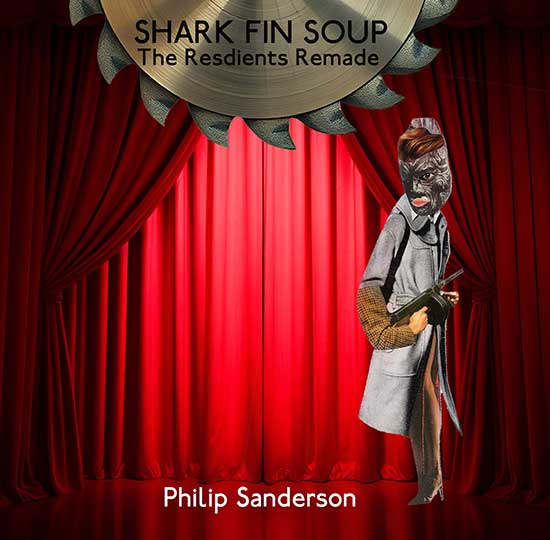
.
Keith Rodway
Against fascistic computation, my latest addition of remastered recordings is themed around the conception of 'misspellings':
 About
Affective, deflective and defective tape-recordings from 2017, Valderøya.
Remastered 2026
credits releases December 24, 2026Misspelling is the grace of humanity!
some rights reserved acoustic folk heterotopias acoustic freak-folk guitar music one-take recordings remastered tape recordings Norway about
C.Strøm Norway
Follow"Music is the universal law promulgated…" Henry David Thoreau (1849)
Bandcamp home

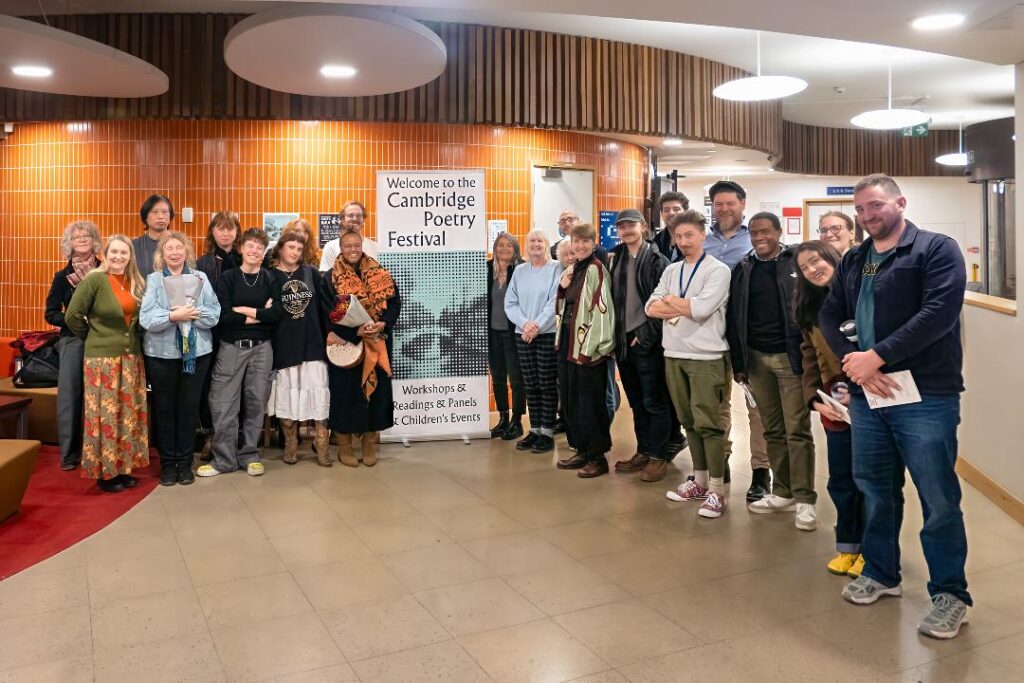
Cambridge Poetry Festival— Film Poems & International Poetry Readings :
Film Poetry Screening of film poems by Olive Mills, Mimi Thompson, Katherine Stockton,
Peter Whittenberger, Daisy Thurston-Gent, Catching Shadows, Emma Grant, C. Moss
Collective, Janet Lees, Jo Gifford, followed by International Poetry Readings by Athambile
Masola, and Ma Yongbo 马永波 and his UK collaborative co-translator, Helen Pletts 海伦·
普莱茨, including the launch of their first bilingual poetry book 'Night-Shining White', at
the Cambridge Poetry Festival, 10th October 2026, Cambridge, UK, Planet Earth, The
Universe
https://internationaltimes.it/ma-yongbo-poetry-road-trip-summer-tour-2025-volume-50/
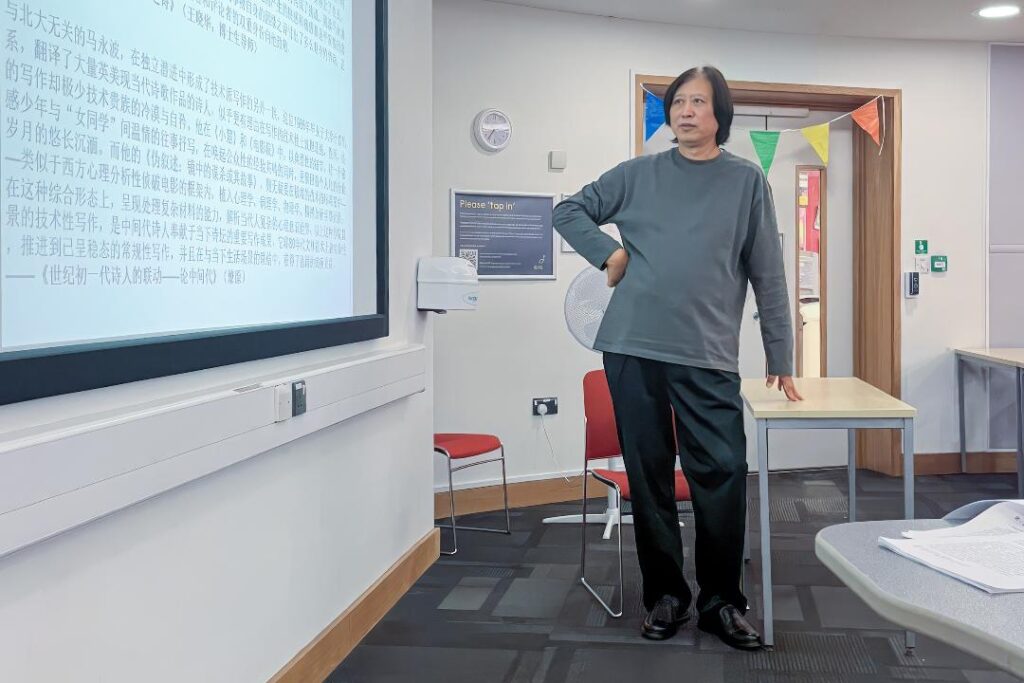
Ma Yongbo 马永波 teaching his Chinese Poetry workshop 'Objectivist Writing:
Polyphony, Scattered Perspective, and Pseudo-Narrative', 10th October 2026, Anglia
Ruskin University, Cambridge, UK, Planet Earth, The Universe
Objective Poetics: Revitalising Tradition Through Sino-Western Dialogues
by Helen Pletts
Ma Yongbo's poetic practice and theoretical frameworks do not merely transplant Western influences; they reinterpret classical Chinese poetics through a cross-cultural lens. By integrating the Eastern wisdom of "unity of heaven and humanity" and "observing things through things themselves" into modernist experimentation, he achieves a creative transformation of tradition. His core contributions can be reframed as follows.
- "Objective Poetics" and Its Subtle Dialogue with Classical Tradition
Ma's proposed "objective writing" (as discussed in "On the Objectivist Tendencies in Recent Writing") is often linked to Western modernism (e.g. Pound's Imagism or Eliot's "objective correlative" and "impersonality"), yet its essence lies in a modern reinterpretation of classical Chinese aesthetics such as "detached observation" and "the dissolution of self and object."
Resonance with "unity of heaven and humanity": Classical Chinese poetry emphasises the dissolution of the self into natural imagery (as in Wang Wei's "Where the stream ends, I sit and watch the clouds rise"). Ma echoes this through "cold lyricism" and "de-subjectivisation," concealing the poet's ego within fragmented narratives and polyphonic imagery and thereby reviving the classical ideal of the "selfless realm."
Methodological innovation: Rather than replicating classical yìjìng (artistic conception), Ma borrows from Western narratology and phenomenology to operationalise "detached observation" structurally. Through collage, polyphonic narration, and intertextuality, he allows objects to generate meaning autonomously within language. This approach extends the Daoist philosophy of "following nature's way" while infusing it with modernist textual complexity.
- Western Poetics as a Catalyst for Reimagining Tradition
Ma's engagement with Western poets such as Pound and Ashbery serves as a "mirror" for reinterpreting Chinese tradition, forging a modernist path for Chinese poetry.
Translation as transcultural mediation: His translations of Stevens, Ashbery, and others are not mere imports but acts of linguistic alchemy. For instance, Ashbery's fragmented rhetoric is transformed into Chinese-style "imagistic juxtaposition," echoing the leaps of thought in classical jueju (quatrains).
Polyphony and "poetry as painting": Although his "polyphonic writing" superficially references Bakhtin's theory, it subtly mirrors the "scattered perspective" of Chinese landscape painting. By interweaving multiple voices (e.g. the soliloquies of objects and humans in "The Alchemist"), he creates a poetic space that evokes the classical ideal of "strollable, inhabitable" artistry—poetry in painting.
- "Intellectual Writing" as a Modern Extension of Classical Poetics
Ma's association with "intellectual poetry" is often misread as mimicry of Western rationality, yet it deeply reworks classical Chinese concepts such as "poetry articulates intent" and "poetry arises from emotion."
From lyricism to speculation: Rejecting sentimentalism, Ma foregrounds language's self-reflexivity (e.g. probing the "word-object relationship" in "Travelling Through Words"). This transforms the classical notion of "meaning beyond words" into a modern "linguistic ontology," paralleling Chan Buddhism's paradox of "not relying on words, yet never abandoning them."
Reconstructing historical consciousness: His poetic archaeology (e.g. myth and classical allusions) is not mere pastiche but a dialogue between past and present, echoing Sima Qian's historiography of "exploring the interplay of heaven and humanity" in a postmodern key.
- Revisiting Controversies: Beyond the "East-West Binary"
Critiques of Ma's "Westernisation" often trap themselves in a reductive East-West dichotomy, overlooking the syncretic nature of his poetics.
"Obscurity" as an aesthetic strategy: The perceived difficulty of his work stems not from blind imitation of the West but from a deliberate rupture with classical "transparent yìjìng." His defamiliarised language mirrors fragmented modern experience—a contemporary iteration of the classical ideal that "words end, but meaning lingers."
The invisible presence of tradition: The classical Chinese spirit persists in his poetry as a "hidden gene," visible in the "artistic blank space" within fragmented imagery or in the interplay of void and substance in narrative delays. To grasp his innovation, one must look beyond superficial Western terminology to his methodology.
Conclusion: Reforging Tradition in the Alchemy of Language
Ma Yongbo's true contribution lies in placing the core spirit of Chinese classical poetics—the philosophical interplay of self and object, the tension between language and existence—into the crucible of modernist poetry. Using Western poetics as a catalyst, he smiths a contemporary form uniquely rooted in the Chinese language. His work demonstrates that tradition's vitality lies not in replicating symbols but in transforming them, through cross-cultural dialogue, into creative energy capable of addressing modernity's crises. This "retroactive innovation" positions his writing as a critical bridge between classical sensibility and postmodernity, offering a distinctive path for Chinese poetry's global conversation.
17 October 2026
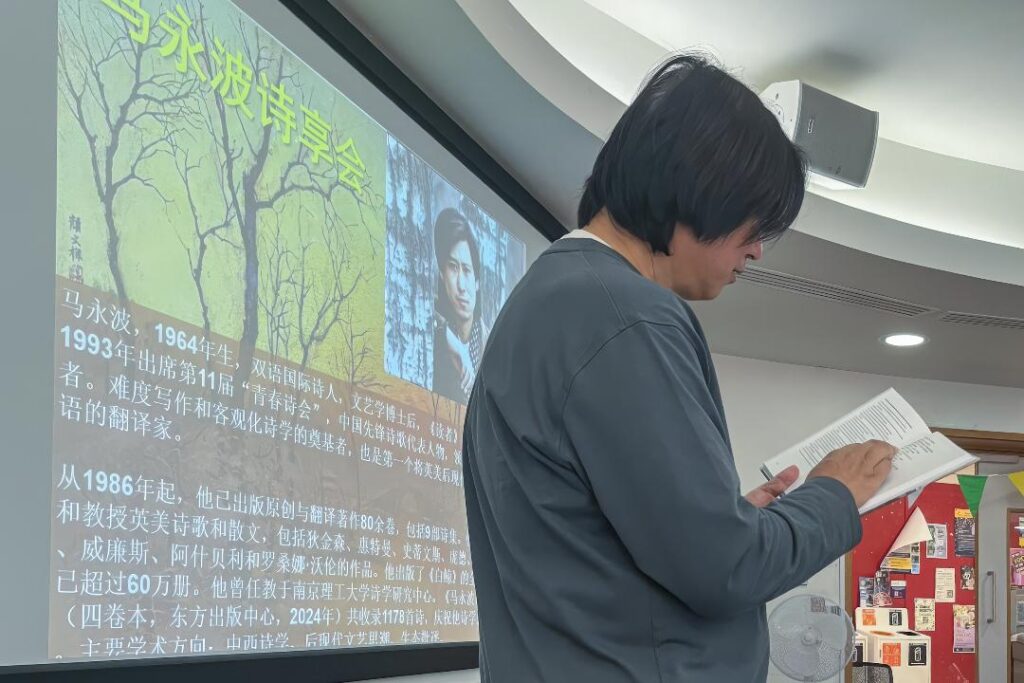
Ma Yongbo 马永波 teaching his Chinese Poetry workshop 'Objectivist Writing:
Polyphony, Scattered Perspective, and Pseudo-Narrative', 10th October 2026, Anglia
Ruskin University, Cambridge, UK, Planet Earth, The Universe
Topic: The Objectifying Turn in Contemporary Chinese Poetry, from Subjectivity to Intersubjectivity
题目:当代汉诗的客观化转折,从主体性到主体间性
Main Contents:
主要内容:
Chapter one Poetics of Narrative: Detachment and Immersion
第一章 叙述诗学:超离与深入
- From Vertical Chanting to Horizontal Narration 从垂直的歌唱到横向的叙说
- Restoration and Transcendence 还原与超越
- From Monologue to Dialogue and Heteroglossia 从独白到对话和杂语
Chapter two Poetics of Pseudo-Narrative: Self-Reflexive Awareness in Writing
第二章 伪叙述诗学:写作的自反意识
- The Necessity and Urgency of Advocating Meta-literary Awareness 倡导元文学意识的必要性与迫切性
- The Dissolution of Metanarrative and the Origin of Pseudo-Narrative
元叙述的消解与伪叙述的由来
- Metalanguage Commentary
元语言评说
- Poetry About Poetry
关于诗歌的诗歌
Ma Yongbo's 马永波 teaching notes for his Chinese Poetry workshop 'Objectivist Writing:
Polyphony, Scattered Perspective, and Pseudo-Narrative', 10th October 2026, Anglia
Ruskin University, Cambridge, UK, Planet Earth, The Universe
Objectivist Writing: Polyphony, Scattered Perspective, and Pseudo-Narrative
by Ma Yongbo 马永波
The premise of this essay is not to attempt a typological categorisation or systematic sorting of Chinese poetry, which currently exists in a state of heteroglossia. It is particularly unhelpful to isolate a single attribute of writing, reify it, and either overgeneralise it or wishfully exaggerate it into the mainstream characteristic and aesthetic tendency of contemporary writing, thereby "promoting" it as a universal style based on one's own preferences. The harm of such an approach outweighs its benefits. Take narrative, for example. As one of many writing techniques, it is no different from lyricism, reasoning, or dramatisation; it is merely a means, not an ontological attribute of poetry. Its prominence is merely methodological, emerging as Chinese poetry moved from the monolithic singing of the 1980s to complex narration. By itself, it is far from adequate for engaging with the complexities of contemporary reality. Only by combining it with the other techniques can we create poetry that truly corresponds to the demands of our era. In fact, if we look at English-language poetry (especially American), it is almost common knowledge that its primary shift has been a reduction in lyrical elements and an increased emphasis on narrative, irony, dramatisation, and novelisation. Perhaps the abstract tradition of Chinese poetry has kept poets universally immersed in obscure metaphysics, unable to extricate themselves, making common sense a secret known only to a few. Some contemporary poets who cling stubbornly to narrative and loudly claim proprietary rights over it are clearly engaging in a power discourse. This is strikingly similar to how other poets in the 1980s engaged in "linguistic occupation," attempting to monopolise words such as "wheat," "gold," "rose," and "radiance"—and even the entire Chinese dictionary.
Bakhtin described the polyphonic novel thus: if past novels were monologic, dominated by a single unified authorial consciousness, the polyphonic novel is "a plurality of independent and unmerged voices and consciousnesses, a genuine polyphony of fully valid voices. It is not that a plurality of characters and fates makes a single objective world unfold in layers under the author's unified consciousness; rather, a plurality of consciousnesses, with equal rights and each with its own world, are combined in a certain unity of the event, but are not merged."
This conveys at least several layers of meaning. First, the subjective consciousness in polyphonic writing no longer possesses the god-like (omniscient) power it held in past literature; it is merely one consciousness among many, neither superior nor inferior to the others. This clearly relates to an attitude of viewing the world on an equal footing with objects. Second, the multitude of consciousnesses (which in poetry equate to multiple contexts) exist in an unmerged state, without being integrated by a meta-consciousness. These consciousnesses (contexts) exist in dialogue; they do not revolve around a unified, one-dimensional theme but rather confront, contradict, echo, argue with, and transform one another.
In Lost Notes and Harbin in December, the distant and the near, the textual and the real worlds are processed synchronously, completing a process of "meaning displacement." The internationalised symbolism represented by Greece is deconstructively localised—a reduction from universal knowledge to specific experience, an effort to find particularity within universality, which is the exact opposite of the traditional Chinese poetic tendency toward sublimation. This also implies a critique of the utilitarian and illusory connection to the "world," as well as an alertness to the fact that localisation can also be a reverse pandering to internationalisation. There is no question of one bearing the other or one subsuming the other between the life of the era and the personal context; they simply exist independently. This state of bidirectional separation avoids the loss of particularity caused by personal narrow ambitions and utilitarianism in the sublimation of personal context into collective myths. Within the seemingly plausible yet paradoxical metaphysical rhetoric (which is full of self-reflection), dissonant quotations often suddenly appear, like Mephistopheles appearing in broad daylight. For instance, I frequently incorporate street gossip into my poems, directly including the "words of wisdom" of my son, Ma Yuan. In "Summer of Two Cartoons" from the collection Music Played at Two Speeds, after discussing profound themes such as distance, heaven, and past lives, the poem suddenly shifts to recording Ma Yuan's exact words from his daily life: "I have a dangerous home. I am in the police station. I haven't slept all day. I will be unhappy tomorrow. I put on my hat and drink all day." It is as if half an apple were glued directly onto an oil painting of fruit. Thus, on two different levels—the epistemological and the experiential—dialogue, mutual subversion, and friction are generated. Maintaining a distance from ideological myths, this "suspense" emphasises irony while demonstrating an attitude toward existence: the world is not unified into a whole.
The non-merging of elements is not only the true state of existence but also the true state of human cognition. Contemporary photographic theory tells us that there is no fixed perspective when observing things; the human eye constantly jumps from one viewpoint to another (saccadic movement)—look, look away, look back—a scanning gaze. If we add the factor of the passage of time, what we see must be a superposition of many different impressions, because time has quietly altered the object itself between two scans. This inspired David Hockney's photo collages. This leads us to another technique crucial to polyphonic writing: scattered perspective. When I first considered this new method of observation, I had not yet encountered Hockney. My scattered perspective was inspired by traditional Chinese scroll paintings. Unlike the single-point depth perspective of Western painting, it is a dynamic, multi-point perspective that moves in various directions and along various paths according to certain rules, organically combining multiple viewpoints on a single canvas. A person on a distant mountain path and a figure at the bottom of the canvas have almost the same volume, and several events unfolding linearly in time are often juxtaposed on the same plane. We can also see this multi-perspective technique in modern Western painting, such as in Giorgio de Chirico's The Enigma of a Street. The eerie, unstable atmosphere of danger stems from this multiple perspective; in fact, the ominous shadow at the street corner, the little girl rolling a hoop, and the building that is almost just an archway do not exist within a single perspective.
Any technique in art is not merely technical; it is inseparable from the artist's worldview, their attitude toward truth, their way of understanding the world, and their moral consciousness. My poetic pursuits in the mid-to-late 1990s were built upon the foundation of truth and objectivity. This began as a moral consciousness of recognising and speaking the truth, then became an aesthetic stance, and finally manifested in linguistic methods. Misty Poetry of the early 1980s, having completed its historical mission, was still written within classical linguistic conventions. It assumed a clear, transparent world that could still be grasped by language, and it used language to wrestle with existence, especially in confrontation with ideology. However, with cultural over-accumulation and the growing influence of the philosophy of language, language has transformed from a tool for understanding the world into the sole fact of presence. One's attitude toward language is one's attitude toward the world. Clearly, Misty Poetry failed to complete this teleological shift of language in poetics; thus, what it offers us may still be entirely traditional, such as "poetry expressing intent" (shi yan zhi), where "intent" could be personal moral integrity or the collective unconscious.
In recent years, my writing has gradually found a new resource: a poetry based on everyday talk. The tone is no longer the arrogant eloquence of the 1980s but has been replaced by the casualness of idle chat. Thematically, it draws directly from conversations in life, excavating the vast amount of existential information they contain. Talk is grafted onto or juxtaposed with (heterogeneous symbiosis) meditations on self and knowledge, and descriptions of objects and scenes. Ideas are constantly revised and subverted, or mutated, substituted, and transitioned into other ideas, rather than solidifying into isolated "presences." This kind of poetry highlights the multi-voiced interrogation, struggle, and ebb and flow within dialogue (novelised poetry). If poetry is to bear the complexity of contemporary existence, it must rely on the authenticity of experience and the hereness of discourse found in the novel. Talk occurs in both personal spaces and public spheres. The tension between the collective constraints of public spaces and the awkwardness of individual private self-discipline produces confrontation and mutual suspense, as seen in "Eye Hospital: A Conversation." In "Spring Conversation," two subjects "talk while watching television, not looking at each other," reflecting the pervasive intrusion of reality's sounds and the incommensurability of interpersonal communication in modern society. "Autumn Lake Conversation" juxtaposes the affectation and rhetorical nature of metaphysical talk with the casualness and authenticity of natural objects, performing a displacement between the inner and outer worlds and highlighting the impossibility of inner life after the disintegration of ideology (inner life being various beliefs, concepts, and values). Human inner life is neither noble nor base; it is nothing more than the spring ice flow of desires, impulses, and "fragments of ancient beliefs." In "Autumn Lake Conversation," I wrote: "Why do you call these: the autumn lake, the leaves, our / wrinkled ears, the thoughts between breath and wind / your inner world…" The so-called self is equivalent to "stones, grass, fish in the water," or "sticks, numbers, islands." Therefore, we have reason to believe that any unified, continuous inner (spiritual) activity is a fictional "omnipotent state"; nothing is truly "in control." Thus, the notion of poetry as an "objective correlative" becomes highly suspect. The fragmentary nature of current poetry, with its seemingly artificial and subjective colouring, is actually an objective correlative to the fragmentation, discontinuity, and fluidity of human consciousness—an alignment with the "brain's circuit diagram."
The reality that humans can process is the reality they can grasp: the reality in their minds, the reality in language. Language is the sole presence of reality. Therefore, representing the actual state of conscious activity is also a way of respecting objective truth. A poem that appears highly subjective on the surface may actually be highly objective. The introduction of "talk" enhances the sense of immediacy in poetry. My approach to reality is not to depict it face-to-face, because we ourselves are part of reality, and a part cannot perceive the whole. Thus, starting from talk is akin to the sociological shift from studying social ontology to studying people's various reactions to society—that is, what they say—as a linguistic method. Approaching reality and existence can only be done by approaching speech (parole), rather than language (langue). Here, fragments and wholes (like ice and thawing water), solidity and fluidity, the personal and the public are all blended together. A singular aesthetic can no longer satisfy a reality in which various social discourses violently conflict.
The single-point perspective creates so-called depth, leading to binary oppositional thinking: the dialectical mode of essence and appearance, the Freudian mode of latent and manifest, the hermeneutic mode of inner and outer, the existential mode of real and unreal, the semiotic mode of signifier and signified, and so on. To eliminate these subjective, stubborn modes of thinking, besides scattered perspective, there is another important technique: pseudo-narrative. Unlike traditional narrative, it focuses on exposing the artificiality, fictional nature, and impossibility of the narrative process. It is self-negating, self-obstructing, and process-oriented, incorporating the consciousness of writing itself into the writing process. By revealing that poetry is an invention, it directs attention to the technique and autonomy of the text, or to the problem of understanding. Readers are frequently presented with incomplete or negated stories that are generally considered basic information. They are forced to constantly ask, "Who is speaking?", "What are their circumstances and motives?", and "Are they reliable?" Ihab Hassan defines this characteristic of "unspeakability" and "self-questioning" as "uncanny interiority," meaning the text's self-reference. The text's meaning does not point to an external objective world but exists only within the text itself, merely revealing the process of the text's formation.
Exposing the constructed nature of the text, the generativity of language, and the rhetorical nature of the text echoes the deconstruction of ideological discourse. All ideological discourse strives to make its daily behaviours appear as natural facts, making itself a "second nature," turning certain behavioural norms into self-evident laws of natural order. In fact, even the most natural evaluation of the world relies on the customs and norms of its group culture. Therefore, exposing the symbolic nature, arbitrariness, and historicity of the text produces an "intertextual" writing. "A text is not a line of words releasing a single 'theological' meaning… but a multi-dimensional space in which a variety of writings, none of them original, blend and clash." Extensive parody, quotation, and strategic misreading have appeared in contemporary Chinese poetry. "Resume: Akhmatova" reveals the textuality of history and incorporates the author's personal voice; you will find two different voices interrogating each other. "Local Reality: Necessary Fiction" demonstrates the text's own generative process, where a massive amount of existential information squeezes metaphysical speculation to ensure the text's reliability. The continuous exposure of the artificiality of textual construction remains necessary in the current historical context. The recent phenomenon of cross-genre writing indicates that poets have realised that literature must become non-literature, and poetry must become non-poetry, to handle literature and reality together, achieving a mutual blurring and subversion. Poets have shifted from caring about the closure, self-sufficiency, and purity of poetry to openness, absorption, and enrichment; they have turned to the relational fields of word and object, text and context, individual and history. This is undoubtedly a demand for poetry's self-renewal.
My initial awareness of writing itself entered my work in the poem "Pure Work." This poem contains a potential subtext and revolves around the confusion and illusion produced by writing around that subtext. It also considers the relational field of word and object, specifically their mutual transformation. In "Pseudo-Narrative: Murder in the Mirror or Its Story," we can at least discover several levels of consciousness: a murder; a play based on a murder; a story where the actor, the murderer, and the narrator are the same person; and the author's level of identity. It is as if a person is half-asleep watching television, playing a mediocre opera, and in a daze weaves the fragments they hear into their own dreams of childhood and love. There is an interaction between reality (the reality on TV, the pseudo-reality) and the dream. The deliberate confusion and covert substitution of character identities, the incompleteness of the plot, and the inexplicable details are all carefully designed. It offers at least one revelation: poetry writing does not have to rely on inspiration (the incompetence of waiting by a stump) and passion; it can instead rely on precise, workmanlike operation. The contingency and irrelevance of events are highlighted. This is because so-called laws and unity come from elimination, artificial arrangement, and imposition. Humans often mistake the logic of language itself for the connections between things. This relates to the question: can humans truly recognise truth? Perhaps what humans can grasp is never truth itself, but a combination of truth and concept—fact. Language cannot even reproduce any intermediate colour in the spectrum from violet to red, nor can it even say where violet begins. The ambiguity of things and their boundaries forces language into silence.
In this fundamental sense, humans cannot recognise truth. What humans can recognise is so-called "reality," and reality is often a cultural and power fiction, a reality within language. In modern Chinese, due to cultural accumulation, words are no longer the unity of signifier and signified as they were in their original naming state; instead, they exhibit an ever-widening separation. Now, when we write about the sun, we are no longer writing about that celestial body but about the culture surrounding the sun—eternity, justice, power. Words can reveal neither human existence nor the existence of things. But "intransitivity" is only a tendency; complete transitivity and complete intransitivity are both myths. On the knot of symbols, the darkness of the entity will eventually fall. Loosening and clearing the semantic hardened layers of culture and ideology becomes a necessary means to reach the authentic object. Thus, writing becomes a process of continuously excluding meaning, a recoding of the various meanings of words. It does not reject meaning but chooses all-encompassing meaning (since meaning comes from selection), or uses it through deviation and displacement. Examples include "My and Ma Yuan's Linguistic Experiment" and "Communicating Vessels: A Wrongly Solved Physics Problem." The text becomes the venue and environment for the literal, derived, and rhetorical functions of words, as well as pure signifier play. In 1994, I wrote in a short essay about a writing strategy called "recording," stating that "things presented in their authentic state are poetry," and we only need to record them. Things in their authentic state are actually things in the pre-cultural stage, things stripped of cultural veils. This aligns with Roland Barthes' ideas and answers the major poetic question of the source of poetic meaning in contemporary life. We used to think that poetic things were things with "meaning," metaphors (metaphors for personal sentiments or the moral state of the era), or symbols, like "roses," "wheat," or "blue moons." Life is elsewhere. Poetry is also elsewhere—in the distance, the Middle Ages, Greece, or even the Russian-Soviet "Silver Age" where poets were universally persecuted. This led to a widespread anaemia and pallor in Chinese poetry, almost losing the ability to handle the complex experiences of contemporary existence. If my argument holds, then precisely these things presented in an inauthentic state are the least poetic. This undoubtedly changes the connotation of "poetic meaning." Things themselves are neither poetic nor unpoetic; as long as you can grasp the thing itself, it is poetic. To touch contemporary existential reality, this "unveiling" is still necessary.
This essay offers only a preliminary analysis of the writing of the mid-to-late 1990s from the perspective of technical characteristics. In reality, beyond the application of these techniques, there are changes in the poet's working methods (from improvisational epistemological writing to deliberate operational methodological writing) and changes in the understanding of the ontology of poetry (from originality to intertextuality, from poetry pointing to non-poetry), and so on. As I wrote in a note, "We cannot change the world, but we can change the way we look at the world. A change in method may lead to a change in ontology." Contemporary Chinese poetry is being rewritten and updated in advance by the very act of writing, without a prior tradition. No "preset posture in advance" or "retrospective stance after the fact" can reveal more than this concrete writing.
22 January 1998
Ma Yongbo 马永波 teaching his Chinese Poetry workshop 'Objectivist Writing:
Polyphony, Scattered Perspective, and Pseudo-Narrative', 10th October 2026, Anglia
Ruskin University, Cambridge, UK, Planet Earth, The Universe
Jeremy Hubbard attended the Chinese Poetry workshop—he was expecting a bilingual
presentation and so he wrote us a wonderful poem which he read at 'The Poetry Beast of
Hybridness, CB1 & Mill Road Poetry' A Cambridge Poetry Festival open-mic event at The
Handsome Prince, 6-8 King Street, Cambridge CB1 1LN, 13th October 2026, Cambridge,
UK, Planet Earth, The Universe
https://internationaltimes.it/ma-yongbo-马永波-from-subjectivity-to-intersubjectivity/
剑桥诗友杰罗米·哈伯德为我客观化诗学讲座写的诗,并在"英俊王子"酒吧朗读:
The Chinese-Language Poetry Workshop
(for Ma Yongbo 马永波 and Helen Pletts 海伦·普莱茨)
中文诗歌工作坊
(为马永波与海伦·普莱茨而作)
I understand
nothing
but I love the sounds
of Ma Yongbo's expressive voice
the unfamiliar phonemes
inflections
intonations
the visual mechanics
like bamboo scaffolding
of the pictographic script
on-screen
its ancient technology
beautiful to see
though I understand
nothing.
I understand
the attentiveness
of the mainly Chinese audience
recognise their desire
to connect with another soul
to feel see hear
a little of what he does
to have a sense of what's important
to him
to listen to his ideas
to know a little of his
interpretations
of life
to compare their own
interpretations
to play with all that
I understand.
I understand
the other sounds
of human existence
we can hear
through the open door
a plain-speaking sonic backdrop
the first faint backwash
on an artist's canvas
vague
yet intimate
a baby's cry
carries through
from the corridor
a cry I recognise
so expressive
how I feel
on waking
most mornings
here I am
I am still here
I am never still
I am in need
always
I am
hear
me
understand.
by Jeremy Hubbard
中文诗歌工作坊
(为马永波与海伦·普莱茨而作)
The Chinese-Language Poetry Workshop
(for Ma Yongbo 马永波 and Helen Pletts 海伦·普莱茨)
我什么也听不懂
但我喜欢
马永波富有表现力的嗓音
那些陌生的音素
抑扬
语调
还有屏幕上
象形文字的
视觉构造
像竹制脚手架
那古老的技术
美得令人目眩
虽然我什么
也听不懂。
我理解
以中文为主的听众
那份专注
我认得出他们的渴望
渴望与另一个灵魂
产生联结
去感受去看去听
他所经历的一小部分
去触摸
对他而言重要的东西
去倾听他的思想
去了解一点他的
生命诠释
再与自己的
相互比照
把这一切
拿来玩味
这一点我懂。
我也听懂了
另一些声音
人类存在的声响
从敞开的门缝
渗进来
一片质朴的声学背景
像画家画布上
最初那层淡淡的底色
模糊
却亲密
走廊里
传来一个婴儿的哭声
我认得这哭声
如此富有表现力
那就是我的感受
每个清晨醒来时
我就在这里
我依然在这里
我从不安息
我总有所求
永远如此
听见
我
理解
我。
——杰罗米·哈伯德
海报设计——安珀·普莱茨
朗诵会主持人——海伦·普莱茨
主要参与者——CB1与Mill Road 两个诗歌小组
我朗读了双语版Eternal Day,海伦和我分别朗读了她的how to lose a poet in Heffers 的双语报
At the Handsome Prince — For Jeremy Hubbard
在英俊王子酒吧——致杰罗米·哈伯德
October 10, at Anglia Ruskin,
where you once worked. I see you sitting in the back row,
for two full hours, watching a human-shaped space
pace before the projection, gesturing,
making low grumbling sounds,
like a bear roused too early from hibernation, complaining.
He has spent long years licking his own paws.
The manners of an English gentleman surprise me somewhat—
not understanding a single Chinese character, yet sitting quietly
for two whole hours. How exhausting that must be.
October 13, we meet again at the Handsome Prince.
This time, you bring a poem written for Helen and me.
You read it aloud yourself; I can understand most of it.
Yet I feel I am worse off than you—
precisely because I can understand a part,
I cannot, as you do, focus only on form
and take pleasure in it. I always want to grasp the whole,
including all the poets' readings that evening.
This wearies me considerably. Yet as for manners,
I am no less composed. I prop my chin in my hand,
affecting a thoughtful, listening pose.
I clap along, unhurried in rhythm.
Fragments of speech drift into my left ear
but cannot find their way out the right. They
mix inside my head like chemical slides
into a monster with many mouths,
all speaking at once, many life stories
placing me simultaneously within and without.
So from time to time I look toward the street corner beyond the window.
Double-decker buses come and go. Pedestrians
pause now and then to curiously examine the poetry reading poster,
but no one pushes open the door and comes in.
I enjoy this endlessly—watching those bright,
moving two-storey buildings, the passers-by
with their swaying expressions upon the glass.
Night falls quickly. For four full hours
I maintain the quiet attentiveness
an Eastern gentleman ought to possess.
I even drink a small glass of "Smiling Face," and,
for the first time in my life, take the initiative to embrace a woman—
lovely Catherine—feeling that we are
flesh and blood, not human-shaped spaces
and chemical sounds. This gives me considerable pleasure.
Thank you for your poem, dear Jeremy. Thank you for an evening
that has passed, yet will never fade.
Five in the morning, 15 October 2026
Response Poetry written and translated by Ma Yongbo 马永波
在英俊王子酒吧——致杰罗米·哈伯德
At the Handsome Prince — For Jeremy Hubbard
10月10号,在安格利亚鲁斯金
你工作过的地方,我看见你坐在后排
整整两个小时,你看着一个人形空间
在投影前走来走去,比比划划
发出一些低沉的咕噜声
像一头从冬眠中被过早惊醒的熊瞎子在抱怨
他靠舔舐自己的手掌度过了漫长岁月
英国绅士的修养让我有些吃惊
听不懂一个汉字,却安静地坐了
整整两个小时,该有多么疲惫
10月13号,我们在英俊王子再次相遇
这回,你带来了一首写给我和海伦的诗
你亲自朗读,我能听懂它的一大部分
可我觉得,我比你还要凄惨
正因为我能听懂一部分
我就无法像你那样,只集中于形式
并感到愉悦,我总想弄明白全部
包括那天所有诗人们的朗读
这让我相当疲惫,可就修养来说
我一点不差,我托着腮帮子
做出一副若有所思倾听的模样
我跟着鼓掌,节奏不紧不慢
那些只言片语飘进我的左耳
却无法从右耳冒出来,它们
像化学薄片一样在我脑袋里
混合成一个怪物,身上众多的嘴
同时说话,众多的生活故事
让我同时置身其中又置身其外
于是,我不时看向窗外的街角
双层巴士来来去去,行人
不时停下来好奇地打量诗会海报
但没有一个人推门进来
我乐此不疲,观察那些明亮的
移动的两层小楼,那些行人
在玻璃窗上摇曳的表情
夜晚来得真快,整整四小时
我保持住了一个东方绅士
应该有的安静和专注
还喝了一小杯"笑脸",而且
平生第一次主动拥抱了女人
可爱的凯瑟琳,感觉到我们
都是血肉之躯,而不是人形空间
和一些化学的声音,这让我相当愉快
谢谢你的诗,杰罗米,谢谢一个
已经过去但永远不会消逝的夜晚
2026年10月15日晨五时于海伦寓所

Ma Yongbo 马永波 and Helen Pletts 海伦·普莱茨 together in a Cambridge Cafe on the
11th October 2026, the day after launching their bilingual poetry book, 'Night-Shining
White', together, at the Cambridge Poetry Festival on 10th October 2026 at Anglia Ruskin
University.

Ma Yongbo 马永波 5th October 2026, his first day in Cambridge UK, Planet Earth, The Universe
the poet is smiling in yellow light and thatch—for Yongbo
诗人在黄光与茅草之下微笑——致永波
this house has a tiny window squeezed through a yellow wall
the four sections of windowpane blink their awareness
while a blue shirt crosses more squares and the poet's shoulders.
In the light the yellow has taken ripened cornfields and deserts
and worn them all together, as if more yellow is an expectation
once the earth has found her shade and hung it like an emblem
warming its own hearth. We have lit the sky with words
and they keep rising wearing secret orange wings
which cannot be extinguished
11th October 2026, midnight, on thinking about Yongbo's first day here in the UK, 4th October, he was wearing a new blue shirt, a gift from me, walking past a very old small thatched cottage with painted yellow walls.
Response Poetry by Helen Pletts 海伦·普莱茨
Response Poetry translated by Ma Yongbo 马永波
诗人在黄光与茅草之下微笑——致永波
the poet is smiling in yellow light and thatch—for Yongbo
这房子有一扇小窗,挤在黄墙上
四块窗格眨动着感知,
一件蓝衫掠过更多方格和诗人的肩头。
在光中,这黄色收纳了成熟玉米田与荒地,
将它们一并披裹,仿佛更多的黄,本就是一种期许——
当大地寻得自己的色调,当作徽章悬挂,
烘暖自家的炉膛。我们以词语点亮天空,
们持续升腾,携带隐秘的橙色翅膀,
永不熄灭。
2026年10月11日,午夜,想起永波初抵英国的10月4日,他穿着我送的新蓝衬衫,走过一座极老的墙漆成黄色的茅屋
海伦·普莱茨
The English Thatch Cottage 英国茅屋
Autumn rain hastens the rotting of thatch,
darkens its colour—the leaky roof,
the head of the bed with no dry place left,
the old quilt, cold as an iron plate,
the child resisting hunger with sleep,
and oneself, as thin as grains of rice.
If placed in the same plight,
could you still spare a thought for other's fate?
Is the dream of "ten thousand broad mansions"
a natural response of the human heart?
As fellow realists, we know:
the romantic thatch, the jackdaw in the chimney—
these are but love of the house, not its hardship,
a fondness for the image, not the thing.
Fortunately, this October in the Cambridge countryside
has not been endlessly wet, but bright with sun,
falling on the thatch, on the sloped roof,
on the small chimney, like a golden promise.
At night, only the fragrant autumn mist
drapes the fields, restored to black, over the roofs.
And I, gazing only at the narrow windows,
admire their outward look, with no wish to enter.
Inside there is only the hearth, and quiet villagers,
like the furniture, hidden decay, and cold dust.
First draft at midnight, 12 October 2026; revised at four in the morning, 13 October, at Helen's residence in Cambridge.
Response Poetry written and translated by Ma Yongbo 马永波
英国茅屋 The English Thatch Cottage
秋雨会加快茅草的腐烂
浸深它的颜色——漏雨的屋顶
床上没有一寸干爽之地
旧棉被,铁板一样冰冷
孩童,以假睡抵御饥饿
而自己,则如饭粒一样瘦削
倘若身陷这般困境
你是否还能惦念他人的命运
安得广厦千万间的理想
是否属于一个人本然的反应
作为同样的现实主义者
浪漫的茅草,烟囱里的寒鸦
不过是爱屋及乌和叶公好龙
幸运的是,今年十月的剑桥乡村
并没有阴雨不断,而是阳光明媚
落在茅草上,落在坡屋顶上
落在小小的烟囱上,有如金色的应许
夜里,也只有芳香的秋雾
将整片恢复成黑色的田野披覆在屋顶之上
而我,只是望着窄窄的窗户
欣赏着它们的外观,无意踏入内里
屋里不过是壁炉,和家具一样
安静的人,暗中的腐朽,以及寒冷的灰尘
马永波,2026年10月12日午夜初稿,13日晨四时修订于剑桥海伦寓所
珍妮特·丽兹, Helen Pletts 海伦·普莱茨 and Ma Yongbo 马永波, close friends meeting
for the first time at the Cambridge Poetry Festival 2026.
Janet Lees' 珍妮特·丽兹 Film Poem 'House of Water', incorporating the Chinese language version read by Ma Yongbo 马永波, featured at the Cambridge Poetry Festival on the 10th October 2026.
Janet Lees' 珍妮特·丽兹amazing black and white photography accompanies the poetry of Helen Pletts 海伦·普莱茨 and Ma Yongbo 马永波 in their first bilingual poetry book together 'Night-Shining White', Published by Ingrid Wilson, Experiments in Fiction, also launched on the 10th October 2026 at the Cambridge Poetry Festival 2026.
NIGHT-SHINING WHITE — HARDBACK https://www.waterstones.com/book/night-shining-white/helen-pletts/ma-yongbo/9781066682812
NIGHT-SHINING WHITE — PAPERBACK https://www.waterstones.com/book/night-shining-white/helen-pletts/ma-yongbo/9781066682812
All images and poetry under individual copyright © to Ma Yongbo 马永波 and Helen Pletts 海伦·普莱茨
.
New Ways of Moving in the Counterworlds, Nisha Ramayya / John Garner / John Pope (John Pope)
Codium, Martín Proscia / Luciano Bagnasco / Marcelo von Schultz (Scatter Archive)
Manara 215CD (2026), Alya Al-Sultani / Pat Thomas / Khabat Abas (Discus Music)
Instantanés Détériorés 2, Jérôme Noetinger / Les Persécutions de Strasbourg (Scatter Archive)
LliFT#24 -Underground Allegories, LliFT (Recordiau Dukes)
New Ways of Moving in the Counterworlds brings together the regular duo of violinist and shakuhachi player John Garner and bass player John Pope, with poet Nisha Ramayya. Ramayya's poetry is very much of the kind that, as Mallarmé famously put it, exists 'donner un sens plus pur aux mots de la tribu' ('to give a purer meaning to the words of the tribe'), or, as Ramayya puts it, to 'subvert the perversions of language,' a language which, as it stands, admits 'categories that kill' and 'stock phrases that legitimise decimation.' It has a kind of permeable quality that, especially when delivered the way Ramayya delivers it, allows it to meld easily into a musical performance. Garner and Pope weave their music around this word-horde, the three performers creating, to quote John Garner's website, a 'music of shared influences from Alice Coltrane and Fred Moten to Ahmad Jamal and Don Cherry'. It's a music that embraces simple, spacious tonal gestures (at one point in track seven, 'Bad Dreams', the music seamlessly incorporates a traditional Japanese cradle song), but which can, at times become more dense and complex (as in track five, 'Giving, Scattering Trying to See').
It's a great listen and, if you're unfamiliar with the artists, it'll probably make you want to explore Pope and Garner's other projects, not to mention Nisha Ramayya's poetry.
Unless it's a word you know, figuring out what's behind the name of the album Codium takes some detective work. The cover art is, I quickly discovered, a picture of a frond of codium, a species of seaweed commonly known as dead man's fingers. The word pops up in the track titles, too. Perhaps they were using collages made of images of codium as graphic scores? Perhaps its significance was less formal than that. It's edible, so perhaps they've been snacking on the stuff. We're not actually told, so probably don't need to know. There's definitely a gentle wit at work though and, on a more serious level, the way the stalks of the plant split off in new multiple directions as it grows, makes it a great metaphor for the way improvised music might come into being.
The musicians at work here are sax-player Martín Proscia, guitarist Luciano Bagnasco and drummer Marcelo von Schultz. There's something about their way of working that reminded me of the early work of Iskra 1903, the way all three players keep the music moving, sustaining each other by constantly throwing fragments into the mix, like people frantically gathering up sticks and throwing them onto a fire, to keep it burning. There are seven tracks, three of which are entitled 'Codium Collage'. The other four are assigned even more whimsical titles. I liked the political nudge in the longest, 'Gibraltar un ir, un saltito' ('Gibraltar - just a quick hop away'). Again I was remind of the eponymous Iskra 1903 double album, the sleeve of which was peppered with slightly edgy - often political - quotes, ranging from Hugh MacDiarmid's pithy observation that 'All government has the monopoly of violence' to the gentle entreaty to 'watch the sunflowers'.
Codium is a consistent, endlessly imaginative album fans of free improv will want to listen to and keep coming back to.
Manara (the Arabic word for beacon) is a trio comprising of Alya Al-Sultani, a soprano and improviser from the city of Basrah in Iraq, Khabat Abas, a cellist, composer and improviser from Iraqi Kurdestan and Pat Thomas, a major figure on the UK improvised/experimental music scene, an initially classically-trained jazz pianist who went on to forge a style of his own out of new music, jazz and improvisation. Here, he's playing both piano and electronics.
Between them they have created an intense, often lyrical (but unconventionally so) way of making music that draws on classical atonality, jazz, improvisation and Middle Eastern poetic traditions. For example, the second track incorporates the convention of the Āvāz, the recitation of a classical poem as an introduction to a musical performance, in this case drawing on the work of Khadija Muhaisen Dajani: his meditation on possible translations of the untranslatable Arabic word, qahr. As he says, 'The dictionary says "anger" but it's not. It is when you take anger, place it on a low fire, add injustice, oppression, racism, dehumanization to it, and leave it to cook slowly for a century.' The third track incorporates a poem by the Palestinian poet, Dareen Tatour, who served time in an Israeli jail for writing it. Britain supports a country that imprisons people for writing poetry. That should give everyone pause for thought.
What these three musicians have forged between them is an honest, uncompromising way of making music that matches the clarity of vision they bring to their politics. What I would stress, though, is that this album is not merely a vehicle for those politics, important though they are: this is music that's strong on integrity, both political and artistic. And to anyone who thinks musicians should keep politics out of music, I'd say this. Music, like politics - in the best (rather than the Westminster) sense of the word - is about what it means to be human and to think that politics can be kept separate from music is to deny the humanity of music. Lacking precise meanings, music can't express views explicitly, but if you try to create music in a vacuum that excludes the state of the world, all you'll get is a pale imitation of the real thing. Great music is not, on the whole, escapist entertainment. And it's not just that: the desire to exclude politics from music, although it masquerades as merely a common sense opinion, is itself a political stance. Whether people like it or not, to demand that artists should remain silent is a form of complicity in whatever it is you don't want them to allude to. How can one make great music that embraces what it means to be human without being prepared to acknowledge the pain so many humans suffer at the hands of others and calling for it to stop?
Christian Malfray (who also goes under the name Les Persécutions de Strasbourg) has been working in electronic and experimental music since the late 1990s. Jérôme Noetinger has been similarly involved since the 1980s and, until 2018, has been the director of La Cellule d'Intervention Metamkine, the French experimental record label, mail-order distributor, and live-performance collective. Both work with analogue synths, reel-to-reel tape recorders and various other bits of electroacoustic paraphernalia plus a few household objects (and, in Noetinger's case the odd bit of home-brewed electronic gadgetery). They've been working together since 2021 and came together last year to improvise together and record the material that became Instantanés Détériorés 2.
Malfray describes what he's doing on this album as manipulating 'filters and oscillators within a carefully arranged feedback loop to make various resonators ring out and sing.' Noetinger is working in a not dissimilar way. And I guess that's one secret of making original improvised electronic or electro-acoustic music: if you patch together the same old modules in predictable ways and make the same old manipulations - or variations thereof - you can't expect what comes out to be strikingly original. However, if, like Malfray and Noetinger, you devise new processes to explore, you create new possibilities. The end result is what I can only describe as some extreme classy electronic music!
If, like me, you think it's a great listen, do check out the links in the album notes to other manifestations of their work together and other projects. They're well worth a delve.
LliFT, the free improv and experimental music group that operates in North Wales, continue to put out albums documenting the music they make at their regular meetings in Bangor. (I've written extensively about them before). The latest, LliFT#24 - Underground Allegories has just been released on the Recordiau Dukes label (where, if you delve, you'll find the others). The musicians who feature here are three LliFT regulars, musician and artist Dave Hopewell, musician and producer Gorwel Owen and guitarist Ash Cooke.
I can't find any explanation for the title on the album's Bandcamp page, but to me, the music has something of a subterranean feel to it which is perhaps all the explanation one needs. Do have a listen!
.
Dominic Rivron
LINKS
New Ways of Moving in the Counterworlds:
https://johnpope.bandcamp.com/album/new-ways-of-moving-in-the-counterworlds
Codium:
https://scatterarchive.bandcamp.com/album/codium
Manara 215CD (2026):
https://discusmusic.bandcamp.com/album/manara-215cd-2026
Instantanés Détériorés 2:
https://scatterarchive.bandcamp.com/album/instantan-s-d-t-rior-s-2
LliFT #24 - Underground Allegories:
https://recordiaudukes.bandcamp.com/album/llift-24-underground-allegories
MotoGP standings after Phillip Island sprint:
Zara Daniela Sat, 24/Oct/2026 - 05:06 Round Number 8 Year 2026

