
 Anthropic raises another $30 billion in series G, with a new value of $380 billion [ 12-Feb-26 8:18pm ] YouTube finally launches a dedicated app for Apple Vision Pro [ 12-Feb-26 8:14pm ]
LapSnap Telemetry Analysis App Available With Track Data [ 12-Feb-26 7:39pm ]
Anthropic raises another $30 billion in series G, with a new value of $380 billion [ 12-Feb-26 8:18pm ] YouTube finally launches a dedicated app for Apple Vision Pro [ 12-Feb-26 8:14pm ]
LapSnap Telemetry Analysis App Available With Track Data [ 12-Feb-26 7:39pm ]LapSnap Acquired by American Interests, Establishes U.S.-Based Company Focused on Data-Driven Motorsports Performance
LapSnap Inc., a newly incorporated American company, has acquired the LapSnap motorsports telemetry analysis app. The acquisition formalizes the app's transition into a U.S.-based company and marks a renewed commitment to helping track enthusiasts turn raw telemetry data into real lap time improvements.
LapSnap eliminates the guesswork traditionally associated with motorsports data analysis. The app presents telemetry in a clear, actionable way, allowing riders to quickly identify where lap time is gained or lost and how to improve their performance.
"Most people using lap timer systems never take the time to look at the data they are collecting," said a spokesperson for LapSnap. "LapSnap bridges that gap by allowing you to download data from your lap timer directly to your phone or tablet. The software makes it understandable, practical, and immediately useful—-so users can see how to improve their technique."
 The new LapSnap app.
Used by track-day goers, racers, and motorsports enthusiasts, LapSnap analyzes performance data such as GPS speed, line selection, RPM, lean angle, and brake/throttle usage. This data helps users make informed improvements session over session. The app also allows users to compare their data to other users, which eliminates the guesswork as to why one rider may be faster than the other.
With the formation of LapSnap Inc., the company plans to continue investing in the app's core capabilities while expanding its analysis tools and improving usability for drivers of all experience levels. LapSnap currently supports popular GPS telemetry systems including AiM, Racebox and GPS enabled GoPros. Additional telemetry systems are planned to be supported in the future.
LapSnap is available on iOS/Android and can be found at https://lapsnap.app
About LapSnap Inc.
LapSnap Inc. is a U.S.-based motorsports technology company focused on simplifying telemetry analysis for drivers. Through its mobile app, the company helps track enthusiasts understand their data, improve performance, and go faster on track.
More, from a press release issued by Joel Ohman:
MotoAmerica Racer Joel Ohman Partners With LapSnap, Releases 2025 Racing Data for Free
Track day riders can now compare their performance directly against MotoAmerica-level telemetry gathered during the 2025 season.
Joel Ohman, a MotoAmerica racer with three years of professional competition experience, has announced he is making his 2025 racing data freely available through the LapSnap mobile app. The data release includes telemetry from all regular-season MotoAmerica events across the United States, giving track day riders unprecedented access to professional-level data.
Ohman, who formerly raced with Team Hammer and currently competes under his personal Open Source Racing banner, is releasing detailed telemetry data including lap times, brake and throttle inputs, lean angle, and GPS traces for all MotoAmerica tracks including Circuit of the Americas, The Ridge, Laguna Seca, New Jersey Motorsports Park, Virginia International Raceway, Road America, Road Atlanta, Barber Motorsports Park, and Mid-Ohio. The data was gathered from his MotoAmerica Supersport-spec Suzuki GSX-R750 during MotoAmerica qualifying and race sessions.
"I want to give other riders tools to help improve their riding by comparing their data directly to mine," said Ohman. "The ability to see exactly where and how a faster rider approaches each corner can be invaluable for someone looking to take their skills to the next level. This type of data was something I wished I had when I started racing. My hope is it shows people that it's possible to go from a novice racer to a national competitor in just a few years like I did. The data removes the guesswork."
LapSnap's overlay feature allows riders to compare their own data side-by-side with Ohman's telemetry, often revealing counter-intuitive insights. "The results are sometimes surprising," Ohman explained. "For example, it's common for intermediate riders to actually be too fast mid-corner. Comparing data, they might see that I'm actually slower at certain points on the track, which allows you to get on the throttle earlier and achieve a better exit. These are the kinds of details that can transform someone's understanding of their riding technique."
The LapSnap app is compatible with popular data logging systems including AiM lap timers, GoPro cameras with GPS, and RaceBox devices, with additional lap timer systems planned for future releases. The app is available to download on both iOS and Android app stores. Track day riders and racers can access Ohman's complete data library by downloading LapSnap and searching for his rider profile within the app.
About LapSnap
LapSnap is a mobile application designed for track day riders and motorcycle racers to analyze and compare performance data directly on their mobile devices. The app is compatible with popular data logging systems including AiM lap timers, RaceBox devices, and GoPro cameras with GPS. Additional telemetry systems will be supported in future releases.
About Joel Ohman
Joel Ohman is a MotoAmerica racer with three years of professional racing experience, from Seattle, Washington. He started racing club events in 2019, and entered his first MotoAmerica race in 2022. He owns and operates Open Source Racing, with a mission to help other riders improve their technique by providing transparency and insight into the racing world.
The post LapSnap Telemetry Analysis App Available With Track Data appeared first on Roadracing World Magazine | Motorcycle Riding, Racing & Tech News.
Shadows & Reflections: Kevin Parr [ 12-Feb-26 5:27pm ]Kevin Parr on a 2025 of high winds and topsy-turvy seasons.

It was a Sunday morning in mid-November when autumn finally broke. A jet-stream flicker brought an Arctic shove, behind which rose a periwinkle sky and low sun streaming through the French windows. The cyclonic cycle had been welcome when it broke the summer drought but then lingered too long. It wasn't that someone had left the tap running, more that they'd left the immersion on, steaming up the mirrors and thickening the soup. We were lighting the fire to dry the washing and fight the damp, sitting in t-shirts while outside the cloud rolled up from Chesil like smoke billowing from a bonfire of damp leaves.
We were back in the limbo of summer, only without the sun. Waiting once more for the shift — but what to do while we wait? The ox-eye daisies decided to come back into flower, while the frogs returned to the little pond by the garden gate. At night, they croaked in conversation as though it was early spring, while inside we struggled for sleep, lying beneath a sheet in November, our duvet that hug of cloud outside the window.

I was missing my routine, the ritual of walks that I tread each autumn. I particularly love the seasonal shift in the meadows at Kingcombe. There, in early September, small coppers and common blues still dance across the yarrow and knapweed, the leaves on the oaks only just beginning to brown. The change, week on week, is as smooth and inevitable as the diminishing arc of the sun. The pattern is reassuring, as flowers fade so waxcaps begin to glow among the green. There comes the vast ring of parasols in New Grafs Meadow and the steadily emergent skeleton of the single oak in Redholm. This year, though, went topsy-turvey. An early flush of fungi folded in the damp warmth, ceding to a churn of buttercups and dandelions. The grasses plumped and greened and the scorched soil saturated. In Redholm, the parasols sunk into oily dollops, while in the garden a blackbird joined the song thrush in full song.
***
The break brought frost and fieldfare as the soup cleared to consommé and steam curled off the backs of the cows. I was back in The Cairngorms, in the summer before this one, wondering if I was actually breathing or whether the air was so pure that it simply seeped through my pores. On the Monday, I walked the meadows until they dissolved into the dusk, crunching though the shadows and savouring the still. Autumn arrived abruptly, yet I was able to absorb the essence in a single afternoon. Just in time for the first bite of winter that followed later that week, though we avoided the snow of elsewhere.

A fortnight on and we are back into the cyclonic cycle, sitting once more in a t-shirt as Storm Bram batters the windows and floods the lanes. And what I must not do is long again for the break. It is a response incompatible with contentment, and little wonder that so many of us are wondering where the year went — we wished a lot of it away.
I am one of those people who struggles with change, although sometimes come those moments that remind us that change doesn't have to be bad. It was the Wednesday following my Monday meadowland walk, and Sue and I were sitting in the lounge as the world drifted outside the windows. The wind, though light, still came from the north and was pushing up the ridge opposite, giving perfect lift for the ravens to ride. Then came the sighting we've been expecting for several years. 'What is that?' Sue asked, although we both knew the answer. Our minds still worked through the process of probability before rationality brought confirmation. It couldn't be anything else.
G818, I later learned, a female white-tailed eagle that fledged in 2021. Some people dismiss the Isle of Wight released birds as 'plastic', but there was nothing artificial about my emotions in the then and there. Yes, I'll asterisk the sighting in my notebook, (species number 101 on the garden list), but I'll never forget the moment.

Watch Central Cee Turn Back Time in "Iceman Freestyle" Video [ 12-Feb-26 7:32pm ]
EU reportedly opens another probe into Google's ads pricing [ 12-Feb-26 7:44pm ]The European Commission has opened a new probe into Google, this time focused on the company's massive online advertising business, Bloomberg reports. European Union regulators have already fined Google billions for violating the Digital Markets Act, and being found guilty of anticompetitive behavior in online advertising could add to that total.
While the Commission has yet to announce a formal investigation, Bloomberg writes that it has started contacting Google's customers and competitors for information about its dominance across multiple online advertising markets. Regulators are particularly concerned that Google could be "artificially increasing the clearing price" of ad auctions "to the detriment of advertisers." If the company is found to be violating the EU's competition rules, Google could be fined 10 percent of its global annual sales.
Google's approach to advertising to minors was reportedly already under investigation by the EU as of December 2024, and besides fines, regulators have ordered the company to open up Android to competing AI assistants and share search data with rivals. In the US, there's also precedent for finding Google's approach to online advertising anticompetitive.
A US federal judge found that Google is a monopolist in online advertising in April 2025, the conclusion of a legal battle that started with a Department of Justice lawsuit accusing the company of dominating the ad market and using its control to charge more and keep a larger portion of ad sales. The DOJ ultimately wants Google to sell its ad tech business, but a final decision hasn't been reached as to how the company's anticompetitive behavior should be remedied.
This article originally appeared on Engadget at https://www.engadget.com/big-tech/eu-reportedly-opens-another-probe-into-googles-ads-pricing-194435095.html?src=rss
'Starfleet Academy' Decides Everyone Needs a Harsh Lesson [ 12-Feb-26 8:00pm ]
Palo Alto Chose Not To Tie China To Hacking Campaign For Fear of Retaliation From Beijing [ 12-Feb-26 7:50pm ]
Antitrust head overseeing Netflix-Warner merger resigns [ 12-Feb-26 7:28pm ]The head of the antitrust division is out at the US Department of Justice. Gail Slater, a former JD Vance adviser and Fox Corp VP, reportedly clashed with Attorney General Pam Bondi. Their longstanding feud is said to have centered around Slater's skepticism of corporate mergers.
"It is with great sadness and abiding hope that I leave my role as [Assistant Attorney General] for Antitrust today," Slater posted on X. "It was indeed the honor of a lifetime to serve in this role."
Although Slater technically resigned, The Guardian reports that she was forced out. The fallout was said to be over her differences with Bondi (who just yesterday yelled, insulted and deflected her way through a hearing over the DOJ's stonewalling of the Epstein files). In recent weeks, Bondi reportedly reiterated to the White House that Slater's views on the antitrust division's direction made the pair's relationship irreconcilable.
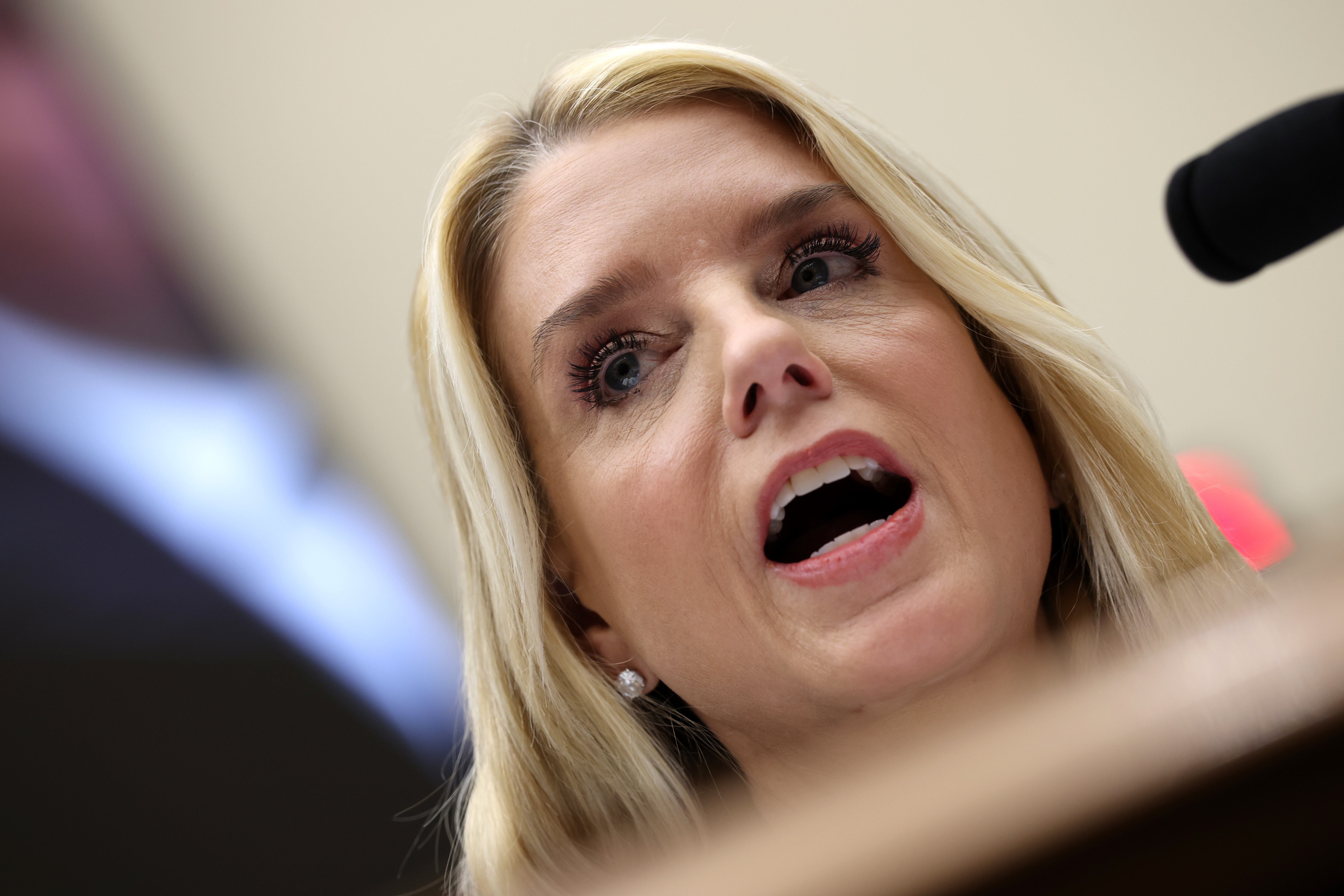 Attorney General Pam Bondi (Photo by Win McNamee/Getty Images)Win McNamee via Getty Images
The tensions reportedly began simmering last summer, when Slater sought to block the merger between Hewlett-Packard Enterprise and Juniper Networks. She opposed the deal out of concerns that it would create a duopoly in cloud computing and wireless networking. In addition, Slater reportedly told Bondi that US intelligence hadn't raised any concerns about blocking the merger. However, CIA Director John Ratcliffe later claimed that blocking it would pose national security risks because it could lead to the loss of business to China. The Trump administration's merger-friendly DOJ ultimately approved the deal.
Alongside Bondi, Slater was overseeing the DOJ's review of Netflix's proposed acquisition of Warner Bros. Discovery. In December, Trump said he would be involved in the regulatory review. That followed intense lobbying by Netflix and Paramount, the latter of which launched a hostile takeover bid. Earlier this month, The Wall Street Journal reported that the department was investigating whether Netflix was involved in anticompetitive practices during the process.
Slater's ousting also comes weeks ahead of the DOJ's antitrust trial against Ticketmaster owner Live Nation. The department's lawsuit was filed during the Biden administration. It claims that Live Nation is operating as a monopoly, harming competition, fans, industry promoters and artists.
This article originally appeared on Engadget at https://www.engadget.com/big-tech/antitrust-head-overseeing-netflix-warner-merger-resigns-192854114.html?src=rss
FBI Counterterrorism Agents Spent Weeks Seeking a Climate Activist — Then Showed Up at His Door [ 12-Feb-26 6:38pm ]Federal Bureau of Investigation agents, at least one of whom works on counterterrorism, went to the home of a former member of a climate activism group for questioning last week, potentially signaling a new escalation in the Trump administration's promise to criminalize nonprofits and activist groups as domestic terrorists.
Two FBI agents, one from New York's Joint Terrorism Task Force, told a former member of Extinction Rebellion NYC they wanted to ask him about the group at his home upstate on Friday, an attorney for the group told The Intercept. The visit followed a prior attempt to reach him at his old address.
The FBI's apparent probe of Extinction Rebellion NYC comes as the Justice Department ramps up its surveillance of activists protesting immigration enforcement and the Trump administration creates secret lists of domestic enemies under Trump's National Security Presidential Memorandum 7, or NSPM-7.
"I believe this to be a significant escalation of the criminal legal system against XR and find it very troubling," said Ron Kuby, the Extinction Rebellion attorney. "This is usually the way we find out an actual investigation is underway and is often followed by other visits and other actions."
The former Extinction Rebellion member, who asked to remain anonymous out of fear for his safety, said that the visit came after a phone call in January from a special agent that he assumed was a scam.
"I was skeptical the phone call was really from the FBI, but after I declined to speak with the agent, she said that she was standing outside my door," he said. She was actually at the activist's former address, which he said made him additionally dubious. But last week, when the agents showed up at his current address, he said he saw the agent's business card through his door.
Kuby confirmed that the agent's business card information corresponded to a current member of the FBI's New York Joint Terrorism Task Force. A text message from the agent, reviewed by The Intercept, shows she identified herself and stated that she was at the former member's house to question him about Extinction Rebellion. Her name, title, and phone number match a known special agent on the task force, according to court records.
Reached by The Intercept, a public affairs officer for the New York FBI field office said, "Per longstanding DOJ policy, we cannot confirm or deny the existence or nonexistence of any investigation."
The DOJ did not immediately respond to a request for comment.
Extinction Rebellion NYC is a chapter of a loose international climate justice movement that does highly public direct actions, like an April Earth Day spray-painting over the presidential seal inside Trump Tower in Manhattan. Kuby said none of the group's actions are violent or rise above the level of misdemeanors, and would not typically be of interest to federal counterterrorism investigators.
The former member said he had not been involved in any Extinction Rebellion actions in two years and hadn't participated in anything that he thought would send the FBI to his door.
"They repeatedly pursued this member and traveled hundreds of miles - this suggests a real investigative effort."
"All of our actions are incredibly public," he said. He recalled that the agent said she had some questions about Extinction Rebellion NYC, and that he wasn't in any trouble, before the activist declined to speak and closed his door.
Why the FBI's counterterrorism task force would investigate Extinction Rebellion is unknown, Kuby said.
"Often, the FBI starts with former members of a group, or less central people, to begin investigations," Kuby said. "The fact that they repeatedly pursued this member, and traveled hundreds of miles from his old address in NYC - this suggests a real investigative effort."
Trump's September presidential memorandum, dubbed NSPM-7, called for the National Joint Terrorism Task Force and its local offices to investigate a broad spectrum of progressive groups and donors for "anti-fascism" beliefs.
 Related
Longtime Paid FBI Informant Was Instrumental in Terror Case Against "Turtle Island Liberation Front"
Related
Longtime Paid FBI Informant Was Instrumental in Terror Case Against "Turtle Island Liberation Front"
A November FBI internal report obtained by The Guardian revealed that there were multiple active FBI investigations related to NSPM-7 in 27 locations, including New York, where the agent investigating Extinction Rebellion works. Trump's directive instructed Joint Terrorism Task Forces to proactively investigate groups and activists with vague language that civil liberty watchdogs say could easily criminalize protected speech and protest.
FBI agents also visited several activists affiliated with Extinction Rebellion and other climate groups in the Boston area last March, according to a local news report. The reasons for those visits remain unclear, and the activists involved said nothing came of them. The FBI's Boston Division declined to comment to the press at the time.
After Extinction Rebellion NYC members protested New York Democratic Rep. Tom Suozzi's town hall at a Long Island synagogue last month, objecting to his vote to increase ICE funding, Assistant Attorney General for Civil Rights Harmeet Dhillon posted on X that she would be investigating the protest to see "whether federal law has been broken."
None of the activists involved in the Suozzi protest have been contacted by federal investigators, representatives for the group told The Intercept. Suozzi did not reply to messages.
In 2023, then-Florida Senator and current Secretary of State Marco Rubio wrote a letter to then-FBI Director Christopher Wray and DHS Secretary Alejandro Mayorkas asking them to bar members of Extinction Rebellion in the U.K. from the U.S. in response to a report that the group planned to protest at federal properties.
"Among other things, the group will allegedly block highways and disrupt federal properties, but violence and terrorist acts cannot be discounted given the group's past threats," Rubio wrote in the 2023 letter. He also used similar language in proposed legislation against "antifa" protests in 2022.
Nate Smith, an Extinction Rebellion activist who took part in the Suozzi protest, objected to characterizations of the group's activism as terrorism.
"Is petitioning an elected official at a public event what makes America great, or a federal offense?" Smith said. "I get if you don't like it. That's half the point, but 'terrorism'?"
There have also been scattered reports of FBI agents visiting anti-ICE protesters around the country. While the FBI's interest in Extinction Rebellion remains unclear, the group pointed to Trump's NSPM-7 directive.
"We did not anticipate that we would be among the first groups of those who speak inconveniently to be targeted," Extinction Rebellion NYC said in a public statement. "We did not anticipate the level of capitulation from our country's hallowed institutions and political opposition."
The post FBI Counterterrorism Agents Spent Weeks Seeking a Climate Activist — Then Showed Up at His Door appeared first on The Intercept.
Even Grok thinks RFK Jr.'s diet is a bad idea [ 12-Feb-26 7:00pm ]
Healthy and Human Services brainworm RFK Jr's new "Real Food" website features his upside-down food pyramid, recommending more fat, butter, and red meat. The site also redirects to Elon Musk's dubious chatbot, Grok, which quickly explains that Kennedy's guidance isn't based on scientific evidence and that you shouldn't trust Kennedy himself. — Read the rest
The post Even Grok thinks RFK Jr.'s diet is a bad idea appeared first on Boing Boing.
Medieval painters gave dogs human faces to symbolize cowardice [ 12-Feb-26 6:54pm ]
In the Retable de la Passion, an oil-on-wood altarpiece from around 1500, a small dog sits among the crowd at Christ's trial. It has grey stubble, a weak chin, and an expression that's unsettlingly human. The dog is Pontius Pilate. — Read the rest
The post Medieval painters gave dogs human faces to symbolize cowardice appeared first on Boing Boing.
"Lyin' and Spinnin' (and Cheatin' and Hidin')" a Valentine's release by Randy Rainbow [ 12-Feb-26 6:48pm ]
Randy Rainbow declares Trump's second term the worst sequel since "Wicked for Good."
I particularly enjoy that Mr. Rainbow gives us a few moments after the interview to discuss the source material before he breaks into song. Randy has consistently documented Trump's evil, and done it in tune. — Read the rest
The post "Lyin' and Spinnin' (and Cheatin' and Hidin')" a Valentine's release by Randy Rainbow appeared first on Boing Boing.
Hacker linked to Epstein removed from Black Hat cyber conference website [ 12-Feb-26 7:15pm ] Trump administration undermines EPA enforcement of Clean Air Act [ 12-Feb-26 7:13pm ] Automattic planned to target 10 competitors with royalty fees, WP Engine claims in new filing [ 12-Feb-26 7:02pm ]
Golden State Championship Heading to Round 2 At Apex [ 12-Feb-26 6:51pm ]The Golden State Championship is looking forward to Round Two of the series, set for March 14-15 at Apex Motorsports Park in Southern California with co-host and legendary racer John Hopkins, promising even more competition and thrilling racing.
The inaugural round of the AMA-sanctioned Golden State Championship was a big success, kicking off January 31-February 1 at Buttonwillow Kart Track, delivering high-octane racing, packed grids, and a weekend full of excitement. The event attracted riders from across the country, including top American road race professionals, Supermoto pros, Motocross and Flat Track racers, and rising stars from the MotoAmerica Mini Cup.
The first weekend featured 16 classes, 4 classes using the dirt section, with the remaining classes contested on asphalt. The track layout, including a challenging dirt section with a deep mud pit, produced intense battles that tested rider skill, adaptability, and strategy. Racing was safe, and the paddock buzzed with enthusiasm from teams, riders, and fans.
Round 1 also featured a $2,000 purse, plus an additional $1,700 in cash bonuses, ensuring every top-three podium finisher received a payout thanks to sponsor Redwood Pipe and Drain. With 155 race entries, the championship's first round set a high bar for competition and excitement. Series owner Hawk Mazzotta and co-host Bronson Pierce teamed up for this first round and had a blast and huge success working together!
"The goal here is to bring back Supermoto, and provide a stepping stone to MotoAmerica for our youth road racers. It has been in the works for a long time, and it's finally come to fruition. I am really happy with how the first event went overall, and confident everything will only get better as we are always learning. I couldn't have asked for a better partner in preparing and running this first event with Bronson, we worked so well together and had a blast while doing so. This has been a gritty process of hands on build it and they will come, they came! We are so pumped for round 2 and the high energy and vibes, let's keep it going!"
Huge gratitude to partners and sponsors, including MotoAmerica, AMA, USMCA, Trackhouse, Yamaha, Bike911, Redwood Pipe and Drain, Dunlop, Roadracing World, California Customs, SDI Insulation, Cardo Systems, KYT, Bison, Yamalube, Farmers Brewing Company, ProTech Signs, Throttle Sauce, DP Brakes, BluCru, Signsations, Ohvale, 73Motorparts, VNM Sport, CT Racing-Pirelli/Metzler, our flag man Andy, volunteers, corner workers, and families who made the weekend possible.
For more information and updates visit hawkmazzottamotocamp.com
ResultsThe post Golden State Championship Heading to Round 2 At Apex appeared first on Roadracing World Magazine | Motorcycle Riding, Racing & Tech News.
ICE, CBP Knew Facial Recognition App Couldn't Do What DHS Says It Could, Deployed It Anyway [ 12-Feb-26 6:42pm ]The DHS and its components want to find non-white people to deport by any means necessary. Of course, "necessary" is something that's on a continually sliding scale with Trump back in office, which means everything (legal or not) is "necessary" if it can help White House advisor Stephen Miller hit his self-imposed 3,000 arrests per day goal.
As was reported last week, DHS components (ICE, CBP) are using a web app that supposedly can identify people and link them with citizenship documents. As has always been the case with DHS components (dating back to the Obama era), the rule of thumb is "deploy first, compile legally-required paperwork later." The pattern has never changed. ICE, CBP, etc. acquire new tech, hand it out to agents, and much later — if ever — the agencies compile and publish their legally-required Privacy Impact Assessments (PIAs).
PIAs are supposed to precede deployments of new tech that might have an impact on privacy rights and other civil liberties. In almost every case, the tech has been deployed far ahead of the precedential paperwork.
As one would expect, the Trump administration was never going to be the one to ensure the paperwork arrived ahead of the deployment. As we covered recently, both ICE and CBP are using tech provided by NEC called "Mobile Fortify" to identify migrants who are possibly subject to removal, even though neither agency has bothered to publish a Privacy Impact Assessment.
As Wired reported, the app is being used widely by officers working with both agencies, despite both agencies making it clear they don't have the proper paperwork in place to justify these deployments.
While CBP says there are "sufficient monitoring protocols" in place for the app, ICE says that the development of monitoring protocols is in progress, and that it will identify potential impacts during an AI impact assessment. According to guidance from the Office of Management and Budget, which was issued before the inventory says the app was deployed for either CBP or ICE, agencies are supposed to complete an AI impact assessment before deploying any high-impact use case. Both CBP and ICE say the app is "high-impact" and "deployed."
While this is obviously concerning, it would be far less concerning if we weren't dealing with an administration that has told immigration officers that they don't need warrants to enter houses or effect arrests. And it would be insanely less concerning if we weren't dealing with an administration that has claimed that simply observing or reporting on immigration enforcement efforts is an act of terrorism.
Officers working for the combined forces of bigotry d/b/a/ "immigration enforcement" know they're safe. The Supreme Court has ensured they're safe by making it impossible to sue federal officers. And the people running immigration-related agencies have made it clear they don't even care if the ends justify the means.
These facts make what's reported here even worse, especially when officers are using the app to "identify" pretty much anyone they can point a smartphone at.
Despite DHS repeatedly framing Mobile Fortify as a tool for identifying people through facial recognition, however, the app does not actually "verify" the identities of people stopped by federal immigration agents—a well-known limitation of the technology and a function of how Mobile Fortify is designed and used.
[…]
Records reviewed by WIRED also show that DHS's hasty approval of Fortify last May was enabled by dismantling centralized privacy reviews and quietly removing department-wide limits on facial recognition—changes overseen by a former Heritage Foundation lawyer and Project 2025 contributor, who now serves in a senior DHS privacy role.
Even if you're the sort of prick who thinks whatever happens to non-citizens is deserved due to their alleged violation of civil statutes, one would hope you'd actually care what happens to your fellow citizens. I mean, one would hope, but even the federal government doesn't care what happens to US citizens if they happen to be unsupportive of Trump's migrant-targeting crime wave.
DHS—which has declined to detail the methods and tools that agents are using, despite repeated calls from oversight officials and nonprofit privacy watchdogs—has used Mobile Fortify to scan the faces not only of "targeted individuals," but also people later confirmed to be US citizens and others who were observing or protesting enforcement activity.
TLDR and all that: DHS knows this tool performs worst in the situations where it's used most. DHS and its components also knew they were supposed to produce PIAs before deploying privacy-impacting tech. And DHS knows its agencies are not only misusing the tech to convert AI shrugs into probable cause, but are using it to identify people protesting or observing their efforts, which means this tech is also a potential tool of unlawful retribution.
There's nothing left to be discussed. This tech will continue to be used because it can turn bad photos into migrant arrests. And its off-label use is just as effective: it allows ICE and CBP agents to identify protesters and observers, even as DHS officials continue to claim doxing should be a federal offense if they're not the ones doing it. Everything about this is bullshit. But bullshit is all this administration has.
Daily Deal: The 2026 Complete Firewall Admin Bundle [ 12-Feb-26 6:38pm ]Transform your future in cybersecurity with 7 courses on next‑level packet control, secure architecture, and cloud‑ready defenses inside the 2026 Complete Firewall Admin Bundle. Courses cover IT fundamentals, topics to help you prepare for the CompTIA Server+ and CCNA exams, and more. It's on sale for $25.

Note: The Techdirt Deals Store is powered and curated by StackCommerce. A portion of all sales from Techdirt Deals helps support Techdirt. The products featured do not reflect endorsements by our editorial team.
Joseph Gordon-Levitt Goes To Washington DC, Gets Section 230 Completely Backwards [ 12-Feb-26 5:26pm ]You may have heard last week that actor Joseph Gordon-Levitt went to Washington DC and gave a short speech at an event put on by Senator Dick Durbin calling for the sunsetting of Section 230. It's a short speech, and it gets almost everything wrong about Section 230. Watch it here:
Let me first say that, while I'm sure some will rush to jump in and say "oh, it's just some Hollywood actor guy, jumping into something he doesn't understand," I actually think that's a little unfair about JGL. Very early on he started his own (very interesting, very creative) user-generated content platform called HitRecord, and over the years I've followed many of his takes on copyright and internet policy and while I don't always agree, I do believe that he does legitimately take this stuff seriously and actually wants to understand the nuances (unlike some).
But it appears he's fallen for some not just bad advice, but blatantly incorrect advice about this. He's also posted a followup video where he claims to explain his position in more detail, but it only makes things worse, because it compounds the blatant factual errors that underpin his entire argument.
First let's look at the major problems with his speech in DC:
So I understand what Section 230 did to bring about the birth of the internet. That was 30 years ago. And I also understand how the internet has changed since then because back then message boards and other websites with user-generated content, they really were more like telephone carriers. They were neutral platforms. That's not how things work anymore.
So, that's literally incorrect. If JGL is really interested in the actual history here, I did a whole podcast series where I spoke to the people behind Section 230, including those involved in the early internet and the various lawsuits at the time.
Section 230 was never meant for "neutral" websites. As the authors (and the text of the law itself!) make clear: it was created so that websites did not need to be neutral. It literally was written in response to the Stratton Oakmont v. Prodigy case (for JGL's benefit: Stratton Oakmont is the company portrayed in Wolf of Wall Street), where the boiler room operation sued Prodigy because someone posted in their forums claims about how sketchy Stratton Oakmont was (which, you know, was true).
But Stratton sued, and the judge said that because Prodigy moderated, that because they wanted to have a family friendly site, that is because they were not neutral, they were liable for anything they decided to leave up. In the judge's ruling he effectively said "because you're not neutral, and because you moderate, you are effectively endorsing this content, and thus if it's defamatory you're liable for defamation."
Section 230 (originally the "Internet Freedom and Family Empowerment Act") was never about protecting platforms for being neutral. It was literally the opposite of that. It was about making sure that platforms felt comfortable making editorial decisions. It was about letting companies decide what to share, what not to share, what to amplify, and what not to amplify, without being held liable as a publisher of that content.
This is important, but it's a point that a bunch of bad faith people, starting with Ted Cruz, have been lying about for about a decade, pretending that the intent of 230 was to protect sites that are "neutral." It's literally the opposite of that. And it's disappointing that JGL would repeat this myth as if it's fact. Courts have said this explicitly—I'll get to the Ninth Circuit's Barnes decision later, where the court said Section 230's entire purpose is to protect companies because they act as publishers—but first, let's go through the rest of what JGL got wrong.
He then goes on to talk about legitimate problems with internet giants having too much power, but falsely attributes that to Section 230.
Today, the internet is dominated by a small handful of these gigantic businesses that are not at all neutral, but instead algorithmically amplify whatever gets the most attention and maximizes ad revenue. And we know what happens when we let these engagement optimization algorithms be the lens that we see the world through. We get a mental health crisis, especially amongst young people. We get a rise in extremism and a rise in conspiracy theories. And then of course we get these echo chambers. These algorithms, they amplify the demonization of the other side so badly that we can't even have a civil conversation. It seems like we can't agree on anything.
So, first of all, I know that the common wisdom is that all of this is true, but as we've detailed, actual experts have been unable to find any support for a causal connection. Studies on "echo chambers" have found that the internet decreases echo chambers, rather than increases them. The studies on mental health show the opposite of what JGL (and Jonathan Haidt) claim. Even the claims about algorithms focused solely on engagement don't seem to have held up (or, generally, it was true early on, but the companies found that maximizing solely on engagement burned people out quickly and was actually bad for business, and so most social media adjusted the algorithms away from just that).
So, again, almost every assertion there is false (or, at the very least, much more nuanced that he makes it out to be).
But the biggest myth of all is the idea that getting rid of 230 will somehow tame the internet giants. Once again, the exact opposite is true. As we've discussed hundreds of times, the big internet companies don't need Section 230.
The real benefit of 230 is that it gets vexatious lawsuits tossed out early. That matters a lot for smaller companies. To put it in real terms: with 230, companies can get vexatious lawsuits dismissed for around $100,000 to $200,000 dollars (I used to say $50k, but my lawyer friends tell me it's getting more expensive). That is a lot of money. But it's generally survivable. To get the same cases dismissed on First Amendment grounds (as almost all of them would be), you're talking $5 million and up.
That's pocket change for Meta and Google who have buildings full of lawyers. It's existential for smaller competitive sites.
So the end result of getting rid of 230 is not getting rid of the internet giants. It's locking them in and giving them more power. It's why Meta literally has run ads telling Congress it's time to ditch 230.
What is Mark Zuckerberg's biggest problem right now? Competition from smaller upstarts chipping away at his userbase. Getting rid of 230 makes it harder for smaller providers to survive, and limits the drain from Meta.
On top of that, getting rid of 230 gives them less reason to moderate. Because, under the First Amendment, the only way they can possibly be held liable is if they had actual knowledge of content that violates the law. And the best way to avoid having knowledge is not to look.
It means not doing any research on harms caused by your site, because that will be used as evidence of "knowledge." It means limiting how much moderation you do so that (a la Prodigy three decades ago) you're not seen to be "endorsing" any content you leave up.
Getting rid of Section 230 literally makes Every Single Problem JGL discussed in his speech worse! He got every single thing backwards.
And he closes out with quite the rhetorical flourish:
I have a message for all the other senators out there: [Yells]: I WANT TO SEE THIS THING PASS 100 TO 0. There should be nobody voting to give any more impunity to these tech companies. Nobody. It's time for a change. Let's make it happen. Thank you.
Except it's not voting to give anyone "more impunity." It's a vote to say "stop moderating, and unleash a flood of vexatious lawsuits that will destroy smaller competitors."
The Follow-Up Makes It WorseYesterday, JGL posted a longer video, noting that he'd heard a bunch of criticism about his speech and he wanted to respond to it. Frankly, it's a bizarre video, but go ahead and watch it too:
It starts out with him saying he actually agrees with a lot of his critics, because he wants an "internet that has vibrant, free, and productive public discourse." Except… that's literally what Section 230 enables. Because without it, you don't have intermediaries willing to host public discourse. You ONLY have giant companies with buildings full of lawyers who will set the rules of public discourse.
Again, his entire argument is backwards.
Then… he does this weird half backdown, where he says he doesn't really want the end of Section 230, but he just wants "reform."
Here's the first thing I'll say. I'm in favor of reforming section 230. I'm not in favor of eliminating all of the protections that it affords. I'm going to repeat that because it's it's really the crux of this. I'm in favor of reforming, upgrading, modernizing section 230 because it was passed 30 years ago. I am not in favor of eliminating all of the protections that it affords.
Buddy, you literally went to Washington DC, got up in front of Senators, and told everyone you wanted the bill that literally takes away every one of those protections to pass 100 to 0. Don't then say "oh I just want to reform it." Bullshit. You said get rid of the damn thing.
But… let's go through this, because it's a frequent thing we hear from people. "Oh, let's reform it, not get rid of it." As our very own First Amendment lawyer Cathy Gellis has explained over and over again, every proposed reform to date is really repeal.
The reason for this is the procedural benefit we discussed above. Because every single kind of "reform" requires long, expensive lawsuits to determine if the company is liable. In the end, those companies will still win, because of the First Amendment. Just like how one of the most famous 230 "losses" ended up. Roommates.com lost its Section 230 protections, which resulted in many, many years in court… and then they eventually won anyway. All 230 does is make it so you don't have to pay lawyers nearly as much to reach the same result.
So, every single reform proposal basically resets the clock in a way that old court precedents go out the window, and all you're doing is allowing vexatious lawsuits to cost a lot more for companies. This will mean some won't even start. Others will go out of business.
Or, worse, many companies will just enable a hecklers veto. Donald Trump doesn't like what people are saying on a platform? Threaten to sue. The cost without 230 (even a reformed 230 where a court can't rely on precedent) means it's cheaper to just remove the content that upsets Donald Trump. Or your landlord. Or some internet troll.
You basically are giving everyone a veto by the mere threat of a lawsuit. I'm sorry, but that is not the recipe for a "vibrant, free, and productive public discourse."
Calling for reform of 230 is, in every case we've seen to date, really a call for repeal, whether the reformers recognize that or not. Is there a possibility that you could reform it in a way that isn't that? Maybe? But I've yet to see any proposal, and the only ones I can think of would be going in the other direction (e.g., expanding 230's protections to include intellectual property, or rolling back FOSTA).
JGL then talks about small businesses and agrees that sites like HitRecord require 230. Which sure makes it odd that he's supporting repeal. However, he seems to have bought in to the logic of the argument memeified by internet law professor Eric Goldman—who has catalogued basically every single Section 230 lawsuit as well as every single "reform" proposal ever made and found them all wanting—that "if you don't amend 230 in unspecified ways, we'll kill this internet."

That is… generally not a good way to make policy. But it's how JGL thinks it should be done:
Well, there have been lots of efforts to reform section 230 in the past and they keep getting killed uh by the big tech lobbyists. So, this section 230 sunset act is as far as I understand it a strategy towards reform. It'll force the tech companies to the negotiating table. That's why I supported it.
Again, this is wrong. Big tech is always at the freaking negotiating table. You don't think they're there? Come on. As I noted, Zuck has been willing to ditch 230 for almost a decade now. It makes him seem "cooperative" to Congress while at the same time destroying the ability of competitors to survive.
The reason 230 reform bills fail is because enough grassroots folks actually show up and scream at Congress. It ain't the freaking "big tech lobbyists." It's people like the ACLU and the EFF and Fight for the Future and Demand Progress speaking up and sending calls and emails to Congress.
Also, talking about these "efforts at reform" getting "killed by big tech lobbyists." This is FOSTA erasure, JGL. In 2018 (with the explicit support of Meta) Congress passed FOSTA, which was a Section 230 reform bill. Remember?
And how did that work out? Did it make Meta and Google better? No.
But did it destroy online spaces used by sex workers? Did it lead to real world harm for sex workers? Did it make it harder for law enforcement to capture actual human traffickers? Did it destroy online communities? Did it hide historical LGBTQ content because of legal threats?
Yes to literally all of those things.
So, yeah, I'm freaking worried about "reform" to 230, because we saw it already. And many of us warned about the harms, while "big tech" supported the law. And we were right. The harms did occur. But it took away competitive online communities and suppressed sex positive and LGBTQ content.
Is that what you want to support JGL? No? Then maybe speak to some of the people who actually work on this stuff, who understand the nuances, not the slogans.
Speaking of which, JGL then doubles down on his exactly backwards Ted Cruz-inspired version of Section 230:
Section 230 as it's currently written or as it was written 30 years ago distinguishes between what it calls publishers and carriers. So a publisher would be, you, a person, saying something or a company saying something like the New York Times say or you know the Walt Disney Company publishers. Then carriers would be somebody like AT&T or Verizon, you know, the the the companies that make your phone or or your telephone service. So basically what Section 230 said is that these platforms for user-generated content are not publishers. They are carriers. They are as neutral as the telephone company. And if someone uses the telephone to commit a crime, the telephone company shouldn't be held liable. And that's true about a telephone company. But again, there's a third category that we need to add to really reflect how the internet works today. And that third category is amplification.
Again, I need to stress that this is literally wrong. Like, fundamentally, literally he has it backwards and inside out. This is a pretty big factual error.
First, Section 230 does not, in any way, distinguish between "what it calls publishers and carriers." This is the "publisher/platform" myth all over again.
I mean, you can look at the law. It makes no such distinction at all. The only distinction it makes is between "interactive computer services" and "information content providers." Now some (perhaps JGL) will claim that's the same thing as "publishers" and "carriers." But it's literally not.
Carriers (as in, common carrier law) implies the neutrality that JGL mentioned earlier. And perhaps that's why he's confused. But the purpose of 230 was to enable "interactive computer services" to act as publishers, without being held liable as publishers. It was NOT saying "don't be a publisher." It was saying "we want you to be a publisher, not a neutral carrier, but we know that if you face liability as a publisher, you won't agree to publish. So, for third party content, we won't hold you liable for your publishing actions."
Again, go back to the Stratton Oakmont case. Prodigy "acted as a publisher" in trying to filter out non-family friendly content. And the judge said "okay now you're liable." The entire point of 230 was to say "don't be neutral, act as a publisher, but since it's all 3rd party content, we won't hold you liable as the publisher."
In the Barnes case in the Ninth Circuit, the court was quite clear about this. The entire purpose of Section 230 is to encourage interactive computing services to act like a publisher by removing liability for being a publisher. Here's a key part in which the court explains why Yahoo deserves 230 protections for 3rd party content because it acted as the publisher:
In other words, the duty that Barnes claims Yahoo violated derives from Yahoo's conduct as a publisher—the steps it allegedly took, but later supposedly abandoned, to de-publish the offensive profiles. It is because such conduct is publishing conduct that we have insisted that section 230 protects from liability….
So let me repeat this again: the point of Section 230 is not to say "you're a carrier, not a publisher." It's literally to say "you can safely act as a publisher because you won't face liability for content you had no part in its creation."
JGL has it backwards.
He then goes on to make a weird and meaningless distinction between "free speech" and "commercial amplification" as if it's legally meaningful.
At the crux of their article is a really important distinction and that distinction is between free speech and commercial amplification. Free speech meaning what a human being says. commercial amplification, meaning when a platform like Instagram or YouTube or Tik Tok or whatever uses an algorithm to uh maximize engagement and ad revenue to hook you, keep you and serve you ads. And this is a really important difference that section 230 does not appreciate.
The article he's talking about is this very, very, very, very, very badly confused piece in ACM. It's written by Jaron Lanier, Allison Stanger, and Audrey Tang. If those names sound familiar, it's because they've been publishing similar pieces that are just fundamentally wrong for years. Here's one piece I wrote picking apart one, here's another picking apart another.
None of those three individuals understands Section 230 at all. Stanger gave testimony to Congress that was so wrong on basic facts it should have been retracted. I truly do not understand why Audrey Tang sullies her own reputation by continuing to sign on to pieces with Lanier and Stanger. I have tremendous respect for Audrey, who I've learned a ton from over the years. But she is not a legal expert. She was Digital Minister in Taiwan (where she did some amazing work!) and has worked at tech companies.
But she doesn't know 230.
I'm not going to do another full breakdown of everything wrong with the ACM piece, but just look at the second paragraph:
Much of the public's criticism of Section 230 centers on the fact that it shields platforms from liability even when they host content such as online harassment of marginalized groups or child sexual abuse material (CSAM).
What? CSAM is inherently unprotected speech. Section 230 does not protect CSAM. Section 230 literally has section (e)(1) that says "no effect on criminal law." CSAM, as you might know, is a violation of criminal law. Websites all have strong incentives to deal with CSAM to avoid criminal liability, and they tend to take that pretty seriously. The additional civil liability that might come from a change in the law isn't going to have much, if any, impact on that.
And "online harassment of marginalized groups" is mostly protected by the First Amendment anyway—so if 230 didn't cover it, companies would still win on First Amendment grounds. But here's the thing: most of us think that harassment is bad and want platforms to stop it. You know what lets them do that? Section 230. Take it away and companies have less incentive to moderate. Indeed, in Lanier and Stanger's original piece in Wired, they argued platforms should be required to use the First Amendment as the basis for moderation—which would forbid removing most harassment of marginalized groups.
These are not serious critiques.
I could almost forgive Lanier/Stanger/Tang if this were the first time they were writing about this subject, but they have now written this same factually incorrect thing multiple times, and each time I've written a response pointing out the flaws.
I can understand that a well meaning person like JGL can be taken in by it. He mentions having talked to Audrey Tang about it. But, again, as much as I respect Tang's work in Taiwan, she is not a US legal expert, and she has this stuff entirely backwards.
I do believe that JGL legitimately wants a free and open internet. I believe that he legitimately would like to see more upstart competitors and less power and control from the biggest providers. In that we agree.
But he has been convinced by some people who are either lying to him or simply do not understand the details, and thus he has become a useful tool for enabling greater power for the internet giants, and greater online censorship. The exact opposite of what he claims to support.
I hope he realizes that he's been misled—and I'd be happy to talk this through with him, or put him in touch with actual experts on Section 230. Because right now, he's lending his star power to one of the most dangerous ideas around for the open internet.
A STI Fungus Is Making Itself Cozy in the US [ 12-Feb-26 7:00pm ] Mutated Rats Reign in This Ooey-Gooey Clip From 'Cold Storage' (Exclusive) [ 12-Feb-26 7:00pm ] Trump Just Blew American Climate Policy to Smithereens [ 12-Feb-26 6:59pm ] Israel Accuses Two Polymarket Bettors of Trading on Classified Military Operations [ 12-Feb-26 6:55pm ] Enjoy This POV of Getting Arrested at the Super Bowl—Courtesy of Smart Glasses [ 12-Feb-26 6:36pm ]
ICE agent fails sobriety test, questions deputy's nationality [ 12-Feb-26 6:30pm ]
In body-camera footage released by the Monroe County Sheriff's Office, 42-year-old ICE goon Scott Thomas Deiseroth repeatedly fails to offer the deputy the respect his agency continuously demands law enforcement merits, displays his racism, and fails a field sobriety test. — Read the rest
The post ICE agent fails sobriety test, questions deputy's nationality appeared first on Boing Boing.
Northern California has its own regional language, and they are making fun of you [ 12-Feb-26 6:17pm ]
Before California's start-up culture gave us its own quasi-corporate pidgin, full of "circling back" and "thinking outside the box," a tiny town in Mendocino County decided to "shark" us all. If you don't get it, you're a "brightlighter."
Logging and farming town Boonville, in California's Anderson Valley, has its own language, "Boontling," a dense and private vocabulary of Pomo words, Spanish, Irish brogue, and pure inside jokes. — Read the rest
The post Northern California has its own regional language, and they are making fun of you appeared first on Boing Boing.
Spotify says its best developers haven't written a line of code since December, thanks to AI [ 12-Feb-26 6:30pm ]
Ducati Unveils Formula 73, Limited to 873 Numbered Units [ 12-Feb-26 6:14pm ]- Produced in a limited series of 873 numbered units, the Formula 73 celebrates the Super Sport 750 Desmo, one the most iconic models in Ducati history.
- An Urban Café Racer that combines modern technology with the authentic charm of the 750 Super Sport Desmo.
- The short film A Piece of Timeless celebrates the birth of this special bike.
 Ducati Formula 73. Photo courtesy Ducati.
Borgo Panigale (Bologna, Italy), 12 February, 2026 - In its centenary year, the Borgo Panigale manufacturer presents the Formula 73, a motorcycle that revives, in a modern version, the spirit of a model and an era that helped create the Ducati legend and inspired the principles that still guide it today. The Formula 73 celebrates the 750 Super Sport Desmo, the first Ducati road bike equipped with a desmodromic valve timing system.
The Super Sport was in fact a replica of the 750 Imola Desmo with which Paul Smart and Bruno Spaggiari triumphed in the 1972 200 Miglia di Imola, the first European competition for production-derived motorcycles, a formula which in the 1980s would give rise to Superbike. The historic victory at Imola and the subsequent birth of the 750 Super Sport Desmo represented the first and fundamental episode in Ducati's saga in production-derived racing, where it has achieved a world championship record that now stands at more than 400 victories, sixteen rider titles and twenty-one manufacturer titles.
The 750 Super Sport Desmo was born in a decade of great change and contrasts, marked by intense cultural creativity. It was a period characterised by changes in society and a widespread desire for renewal. An extraordinary artistic vitality influenced music, cinema, fashion and thought, making the 1970s a complex and deeply significant era.
The Formula 73 was created today as a tribute to that epoch-making motorcycle, which already embodied the values of Style, Sophistication and Performance that have inspired Ducati ever since. The Formula 73 is a model dedicated to motorcycle enthusiasts with timeless charm, who love to stand out by riding a bike with an unmistakable design and strong personality, shunning conformity and paying attention to every detail in their daily lives.
The Formula 73 is the star of the short film 'A Piece of Timeless', in which Italian actor Stefano Accorsi, a great Ducati enthusiast, reflects on his experience of trying it for the first time. Stefano, drawing a parallel between riding a motorcycle and acting, recounts his relationship with acting and the world of motorsports in this film.
 Ducati Formula 73. Photo courtesy Ducati.
- Unmistakable personality
The Ducati Formula 73 line is a contemporary reinterpretation of the legendary 1973 750 Super Sport Desmo. Sleek and slender, this bike conveys agility thanks to its minimalist yet elegant aesthetics. Equipped with the iconic air-cooled Ducati twin-cylinder engine, it combines the rebellious spirit of Urban Café Racers with the timeless charm of what many collectors consider to be the most significant motorcycle in Ducati's history.
Every detail contributes to making the Formula 73 unique. The silver and aqua green livery, inspired by the original 750 Super Sport Desmo, is the result of careful research in the company's historical archives carried out by the Ducati Style Centre. The vertical gold stripe on the tank echoes the original unpainted strip on the 750 Imola Desmo, which allowed the team to check the fuel level without complicating and weighing down the bike with additional instruments. The clip-on handlebars with bar-end mirrors, the short, tapered fairing and tail confirm the Café Racer personality of this collector's bike.
The many billet aluminium components, such as the brake and clutch levers with oil reservoirs, the footpegs and the Rizoma fuel cap supplied as standard, catch the eye and further enhance a bike designed to be admired both when stationary and in motion.
Like all Ducati limited edition models, the Formula 73 features the model name and serial number on the steering plate. Each bike comes with a certificate of authenticity, as well as a collection of period images and sketches created by the Ducati Style Centre, presented in a special box.
 Ducati Formula 73. Photo courtesy Ducati.
- Innovation in tradition
The Ducati Formula 73 is a timeless creation, faithful to the technical solutions that made the 750 Super Sport Desmo iconic, yet at the same time a modern, high-tech motorcycle.
Its 803 cc Desmodue engine is an L-twin with desmodromic distribution and two valves, Euro5+ approved, faithful to the technical standards on which Ducati built its legend in the 1970s and 1980s. An authentic engine, capable of 73 horsepower at 8,250 rpm, which goes beyond the concept of performance to unequivocally define the personality of the Formula 73, becoming a fundamental element of both the style and riding experience of the bike. The silencer, developed in collaboration with Termignoni with aesthetic details specifically designed for this model, gives the bike a full and evocative voice, and the Ride-by-Wire throttle makes the engine response quick, progressive and smooth even at low revs.
The steel trellis frame of the Formula 73 reinforces the connection with the Super Sport Desmo that inspired it. Sleek and painted in aqua green, it becomes part of the livery and, together with the 17-inch spoked wheels with Pirelli Diablo Rosso IV tyres, contributes to making the bike manoeuvrable and easy to ride.
The Formula 73 is a complete motorcycle, thanks to its electronic systems, which include DTC traction control, Cornering ABS, the Ducati Quick Shift system and two Riding Modes. This makes every ride, from your commute to work to trips over mountain passes, safer and more enjoyable, making every moment spent in the saddle unique.
 Ducati Formula 73. Photo courtesy Ducati.
- Availability
Fans wishing to complete their look with technical garments inspired by the aesthetics of this collector's motorcycle can choose a helmet, created in collaboration with Arai, and a sports jacket that echo the Formula 73 livery. The Ducati Formula 73 will be produced in a numbered series limited to 873 units and will arrive in European dealerships in spring 2026. Distribution will be completed in the rest of the world by the end of summer.
The launch video of the bike is available on Ducati's YouTube official channel.
 Ducati Formula 73. Photo courtesy Ducati.
Formula 73
- Livery
-
- 750 Super Sport Desmo replica
- Main standard equipment
-
- Desmodue engine, 803 cm3
- Maximum power: 73 CV @ 8,250 RPM
- Maximum torque: 65.2 Nm @ 7,000 RPM
- Type-approved Termignoni silencer
- Wet weight no fuel: 183 Kg
- Steel trellis frame
- Upside-down 41 mm KYB front fork
- KYB shock, preload adjustable
- Front brake: 4-piston Brembo radial caliper and 330 mm disc
- Pirelli Diablo Rosso IV tyres, 120/70 and 180/55
- Electronic package with Inertial Measurement Unit: cornering ABS; Ducati Traction Control (DTC); Power Modes; Ducati Quick Shift (DQS)
- Full TFT 4,3" dashboard
- Riding Modes (Sport, Road)
- Full-LED lights with DRL
- Ducati Multimedia System (DMS) ready, Turn-by-turn navigation
The post Ducati Unveils Formula 73, Limited to 873 Numbered Units appeared first on Roadracing World Magazine | Motorcycle Riding, Racing & Tech News.
Microsoft Plans Smartphone-Style Permission Prompts for Windows 11 Apps [ 12-Feb-26 6:35pm ]
BBC demonises homeless man who had to sleep on trains [ 12-Feb-26 6:21pm ]
The BBC has reported that a '"brazen" rail fare dodger' has been fined over £3,600 for not paying for hundreds of journeys. However, it quickly becomes clear that the man is actually homeless and was sleeping on the trains. So why didn't the BBC cover it that way?
BBC paints a homeless man as a criminalThe BBC article reports that Charles Brohiri, 29, "travelled" on Govia Thameslink Railway trains 112 times "without buying a ticket" in just under two years. He was given a suspended sentence and ordered to pay back £3,629. Brohiri had previously been sentenced for 36 charges of failing to pay for a ticket in August 2024. He pleaded guilty to 76 recent charges.
The judge at Westminster Magistrates' Court, Nina Tempia, said Brohiri had a "sense of entitlement" and "acted as if he was invincible."
The BBC also mentions that he continued to travel without paying after initially being charged in court in January, right up until the day before the current hearing. Apparently, there have been a further 16 offences since then.
What it glosses over, though, is the reason why Brohiri continued to commit the 'crime'. He's actually been homeless for the last three years and has had no choice but to sleep on trains, as well as in hospitals and libraries.
State incompetence to blameHis defence, Eleanor Curzon, said Brohiri had attempted to get support but struggled to engage with charities. She said it was:
a combination of a lack of support, a negative mental health space and not knowing how to go about maintaining support from services
Curzon also told the court that Brohiri wanted to make a change in his life, and getting sober three years ago demonstrated that. She also pointed out that he had always complied when caught by authorities.
Brohiri has admitted his crimes and wants to be given a chance to get into work and be supported back into having somewhere to live. Curzon told the court:
BBC thinks homeless man not paying £15k is a bad thingHe reiterated to me this morning that if he is given the opportunity to work with probation they can assist him in securing accommodation and employment.
It is really these two factors which will put an end to Mr Brohiri's offending.
Thankfully, Brohiri was given a suspended sentence. He has, however, been ordered to carry out 150 hours of unpaid work. Hopefully, he will also be able to get paid employment alongside that, so he can live safely.
While Brohiri has to (somehow) pay the fine, he thankfully doesn't have to pay the £15,120 prosecution fees. The article frames this as a bad thing, naturally. This is the part where they finally quote Govia Thameslink, who say that people not paying fares:
diverted public funding away from improving services for passengers. That is unfair both on taxpayers and on the vast majority of passengers who pay for their journeys.
However, if they hadn't prosecuted a homeless man for the 'crime' of literally sleeping somewhere safe, that money could've been spent on homeless services.
As Adam Smith said on Twitter:
BBC puts corporations before people's lives, as usualAnd we're supposed to think our justice system is working? That £15,000 couldn't have been spent actually helping this guy, and many others like him?
No, instead we'll hound someone for money they don't have. Like they do to all of us, these days.
This is clearly a story about how the system is failing vulnerable people who fall through the cracks. The fact that the BBC frames this as a "fare dodger brought to justice" and not a sharp look at the way the state treats poor people tells you everything you need to know about who the BBC serves. And let's be honest, the BBC aren't strangers to twisting the truth to fit their narrative.
When it was discovered that Brohiri was repeatedly 'offending' because he had nowhere to sleep, the effort should've been on finding him somewhere safe. Instead, the system punished him and slapped a fine on a man with no possible means of paying it.
The true injustice in this story is being done to people like Brohiri every day. Not faceless corporations — worth millions — that force the taxpayer to pay for their sham trials. That's what the BBC should be reporting on, instead of sucking off scumbag CEOs.
Featured image via Housing Digital
Northern communities are bearing the brunt of DWP and water company deductions [ 12-Feb-26 6:19pm ]
The results are in - and surprise, surprise Northern communities are bearing the brunt of water companies capitalising on the Department for Work and Pensions (DWP) Universal Credit deductions scheme.
As the Canary previously revealed, across 18 months, water firms robbed welfare claimants of £32.4m in Universal Credit.
However, the scale of individual water firms milking this punitive DWP debt clawback mechanism has been a mystery - until now.
Using a combination of publicly available data and Freedom of Information (FOI) requests, the Canary has been able to calculate ballpark figures revealing the likely biggest culprits snatching millions in welfare from some of the poorest households.
And among privatised providers engaged in routine sewage dumping, rampant profiteering, and opportunistic bill hikes, certain companies stood out as clear exploiters of this DWP deductions regime.
DWP Universal Credit deductions: the water companies cashing inUnlike other services, monopoly suppliers dominate by location. What this means is that water companies serve fixed regional areas. Thanks to this, the Canary was able to estimate how much each company might have taken in UC deductions. However, there are a number of significant caveats to the following data, explained here.
Through an FOI, the Canary acquired UC deductions data for every parliamentary constituency in England and Wales. The data spans the 18 months between March 2024 - August 2025.
However, water company coverage does not exactly match up with regional boundaries. This meant we had to use water company parliamentary constituency data to collate the FOI information into our own dataset. Once we had this, we could make estimates for each water company:
So in total, constituencies that the regional water monopolies cover accounted for approximately £28.7m. However, it's important to note that this will include significant double-counting, since suppliers will crossover in some constituencies.
Together, these regional companies supply water services to 30,099,891 postcodes. Small new entrant companies account for the remaining 159,524.
The most reliable data we haveThen, if we estimate deductions for the joint water and sewerage suppliers only, excluding parliamentary constituencies where the water company was different to the sewerage company, we get the following:
The above data was complicated by the fact that companies wouldn't always cover the same number of postcodes for water services versus sewerage in any one given constituency.
As such, we only used data wherever sewerage postcodes were within 10% of the number of water postcodes.
The bottom line all this speculative data underscores is that it's hard to know with any certainty how much each of the major water companies is extracting in Universal Credit deductions.
The key culpritsNevertheless, the tentative estimates still provide a general idea of which companies are cashing in at welfare claimant's expense.
United Utilities appears the most prolific user of the deductions regime by some margin. For a start, the company seems to make up the largest chunk of the £32.4m in deductions. Under all calculations, United Utilities nabbed somewhere north of £9m in Universal Credit. Moreover, even proportional to the number of postcodes it covers, the company is the clear forerunner.
In January 2025, regulator Ofwat greenlit United Utilities hiking customer bills by 32% over the next five years. Since it began raising bills in April, it has seen a 131% profit surge.
Meanwhile, Yorkshire Water and Northumbrian Water extracted the next largest sums from customer's Universal Credit. At more than £2.95m and £2.65m respectively, the two northern utility giants also ranked high as a proportion of the postcodes they covered. For Yorkshire Water, it came in fourth behind United Utilities, Northumbrian in second place, and Dwr Cymru in third place as a ratio of deductions to the postcodes they supply services to.
In October 2025, Northumbrian Water was among five companies that lobbied the Competition and Markets Authority (CMA) for further bill hikes. The company had already secured permission in January to increase bills by 21%.
And of course, Ofwat slapped both United Utilities and Yorkshire Water with boss's bonus bans in November. These were due to category 1 pollution incidents in 2024. In Yorkshire Water's case, it was also down to its "serious failures" over sewage, which had resulted in "excessive spills".
So as these companies provided atrocious services and mass polluted watercourses, they were also running roughshod over some of their poorest customers.
Northern water utilities running roughshod over welfare claimantsWhat's immediately noticeable here is that, with the exception of Dwr Cymru, the biggest culprits are the companies administering water and sewerage in the North.
It tallies with broader statistics on Universal Credit deductions. During the same 12-month period, the North East had the highest number of Universal Credit households where the government or third parties had made one or more deductions. Specifically, it stood at 53%.The North West followed this, at 50%.
The North East (21.5%) and North West (20.2%) also has the highest number of highly deprived neighbourhoods in England. On the one hand, the high levels of deprivation offer an explanation for the significant scale of water debt. This is because, it logically follows that more people would be experiencing debt thanks to state-sanctioned poverty. However, on the other, it points to water companies and their extortionate bill hikes exacerbating the problem. And of course, eating into customer's social security will also only compound this deprivation further.
Ultimately, the key point is that going after some of the poorest customers for outstanding payments is a choice. Water companies reporting mega-profits aren't strapped for cash - and could easily take the hit. These unscrupulous firms are robbing welfare claimants of their social security to fund eye-watering shareholder dividends and executive pay packages. This needs to be recognised for the absolute scandal it is.
As ever, the most marginalised - particularly Northern - communities are bearing the brunt of this egregious cost of greed crisis fuelled by the DWP. This data shows clearly that it's one in which the privatised water racket is undoubtedly playing a significant part.
Featured image via the Canary
Manchester United co-owner Jim Ratcliffe shows his racism off to the world [ 12-Feb-26 5:48pm ]
Sir Jim Ratcliffe, co-owner of Manchester United, has come under heavy criticism for saying that immigrants are "colonising" the UK. He said:
You can't have an economy with nine million people on benefits and huge levels of immigrants coming in. I mean, the UK has been colonised. It's costing too much money.
The UK has been colonised by immigrants, really, hasn't it?
The racist shithead also claimed that the UK's population grew by 12 million people in 5 years. That's bollocks too, as BBC Verify reported:
it's actually increased by 2.7 million.
And, that statistic doesn't take into account the economic benefit of immigrants doing all the shitty jobs white people don't want. And that, in turn, doesn't take into account that we're talking about people - people who have a right to safety and welcome.
Manchester United began in 1878 as Newton Heath, formed by railway workers who wanted solidarity and community within industrial labour. The club grew from working-class collectivism. Migrant communities in Manchester sustained it. Players of colour built its modern success. When the co-owner describes immigrants as colonisers, he positions himself against the communities that shaped the institution he now partially controls.
The Politics of His Non-ApologyKeir Starmer waded in to urge Ratcliffe to apologise:
Offensive and wrong.
Britain is a proud, tolerant and diverse country.
Jim Ratcliffe should apologise.https://t.co/7mSnVV33oo
— Keir Starmer (@Keir_Starmer) February 11, 2026
That would be the same man who made the now infamous "island of strangers" speech.
There is something deeply unsettling about watching Britain distance itself from the language of colonisation while still struggling to confront what that word represents in its own history. The state can condemn vocabulary, yet condemnation does not equal reckoning, especially when the same political culture continues to frame immigration through the language of control, pressure, and strain.
Starmer's objection might sound firm, but it is utterly meaningless when his government are overseeing a hostile environment for immigrants.
His apology doesn't change his stanceRatcliffe did eventually apologise, but it was predictably a non-apology:
I am sorry that my choice of language has offended some people in the UK and Europe and caused concern but it is important to raise the issue of controlled and well-managed immigration that supports economic growth.
The apology focused on offence rather than on the framing itself. While discomfort was acknowledged, the imagery of invasion was left untouched. He did not withdraw the claim. He softened it. As a result, the premise stayed in place, only dressed in calmer language.
Language like this does not appear from nowhere, particularly not from someone operating at that level of influence. Words reflect assumptions. When a historically loaded term such as colonisation is replaced with managerial phrasing about "management" and "control," the logic beneath it does not disappear; it becomes easier to defend. The adjustment feels strategic rather than reflective.
Meanwhile, the political exchange unfolds in a predictable way. Disapproval is voiced. An apology is requested. Regret is offered in careful terms. Yet ownership remains intact and authority remains intact. The tone shifts, but the structure does not.
Ultimately, this episode exposes more than a dispute over wording. It shows how power can absorb backlash without surrendering position, how language can be recalibrated without the worldview behind it being unsettled, and how accountability can be signalled without materially changing who controls the narrative.
Featured image via the Canary
By The Canary
Lambeth leads the way in launching the Vote Palestine pledge [ 12-Feb-26 5:21pm ]
The Palestine Youth Movement (PYM) joined community members in Lambeth on Thursday 5 February to kick Labour out of their hometown. As a result, local people realised their democratic power in being the first community in the UK to launch the 'Vote Palestine' pledge campaign for the upcoming local elections in May.
Lambeth leading the wayThe Lambeth event was led by Mariam of the PYM and London Votes Palestine campaign. Mariam gave an inspiring masterclass in how ordinary people can come together. In turn, she showed how voters across the country can use their democratic power to get the change they want to see in their hometowns.
Activists from Jewish Voice for Liberation (JVL) and Palestine Solidarity Campaign (PSC) joined other local activists and people who have had enough of Labour's ongoing complicity and willingness to ignore Israel's flagrant breaches to countless international laws. Former ANC member and arms trade corruption investigator Andrew Feinstein also attended the event.
In true unity and solidarity, organisers inspired and energised local people to get Palestine on the ballot.

Mariam of the Palestine Youth Movement passionately introduced the Lambeth campaign and what it hopes to achieve:
Lambeth Vote Palestine is not just launching here, but it's part of a national campaign that is launching in 12 boroughs across London because people are fed up of Labour councils that are not listening to people that are pushing resolutions for divestment from genocide. It's launching in Manchester, in Greater Manchester, in Newcastle, in Birmingham and in Sheffield. And the first national launch is taking place here today in Brixton in Lambeth.
So, the way that Vote Palestine came together has essentially come from all these local organisers that have tried to push divestment resolutions to get money out of Israel and money into our council and into the people of this council. But we know that Labour councillors have lied to us about just how much political power they have in order to take on divestment. We know that Labour councillors have watered down resolutions that have managed to pass and protests have been tried, resolutions have been tried, all sorts of attention against Labour majority councils have been tried.
And we know that they're not interested in divestment from Israel because it's a party of genocide. It's a party that's done nothing against austerity. It's a party that with Rachel Reeves' latest budget is raising taxes on ordinary working people. And we see this in Lambeth as well. It is a council that has ignored us time and time again.
So up and down the country, We know that the elections are coming in May 2026. And we've gotten started a little bit early, but actually right now, Labour is preparing itself for who's going to be standing in the next election, and preparing its candidates and other parties are doing that as well. But so is Vote Palestine. We are preparing to say: no divestment, no vote. So, we are asking two things nationally, as well as here in Lambeth.
The first is what's called a councillor's pledge. We are asking that any sitting councillor or new candidate signs a councillor's pledge that commits them to getting money out of Israel and money into our communities. No divestment, no votes.
But there's a second portion to this, because this is also a grassroots campaign and a people-driven campaign, one that's going to be powered forward by us giving it a little bit of time every month and getting a big impact out through just a little bit of labour together. And that is the People's Pledge. So we are also asking voters to take a pledge that will say, 'if this candidate has not endorsed the councillor's pledge, we will not be voting for them'. And we're going to take that to councillor's and say, 'hey, you know what? In Lambeth, hundreds of people have committed to the Palestine pledge, to the people's pledge, and these people will not be voting for candidates that have not endorsed divestment, that have not endorsed Palestine.'
Mariam later referred to the response they receive on the ground from constituents in London, adding:
'At the expense of our NHS, our benefit system, and all local services'We've been talking to people all over London around what's the issue that needs more funding? And no one says genocide. So this campaign is really about… We're putting Palestine on the ballot. We know that the people are with Palestine. We also know from the last election, with the election of the Gaza Independents, that there is a Palestine-first voter. It's time to show that in the local elections. And we're going to make that known.
From Lambeth, from Brixton, all the way up to Newcastle and the country over, we're going to put Palestine on the ballot and make it a non-negotiable issue. No divestment, no votes.
In Lambeth, Feinstein discussed the clear corruption at the heart of our current UK government, namely Keir Starmer's lucrative relationship with billionaire-owned Quadrature:
'Legal responsibility to take action' in LambethAnd the reality is, I've just come from a Zoom meeting with four Palestinian journalists who are fortunate to be alive. What sort of a sick world do we live in? When journalists start a conversation when they introduce themselves by saying, I'm thankful to be alive. Because hundreds of their colleagues are not.
But what relevance does that have for Brixton and for Lambeth? It has every relevance. The reality is that the biggest political donation in British electoral history was paid by a company called Quadrature Capital to the campaign of Keir Starmer for the 2024 local election. That resulted in a situation where Starmer, who didn't once show his face in his own constituency because he knows he would have been drummed out of town, spent tens of thousands of pounds on direct social media advertising. Our independent campaign was allowed to spend £17k in total on everything. Because the political system here is fixed.
Within three weeks of coming to power, Keir Starmer announced two policy proposals. One is he went back on his commitment to a new green economic plan that he'd committed at least £20bn to. And then he increased defence spending by £3.5bn a year until 2027. At which point, defense spending will increase by £15.4bn. Quadrature capital's asset value at the end of those three weeks of Starmer being in power increased exponentially for the expenditure of £5m in their political donations.
And that is why Britain today lives in the best democracy money can buy. Our politicians are bought and paid for. Keir Starmer is a puppet. He is a puppet, not just of Morgan McSweeney, the little worm who is his chief of staff, but he is the puppet of billionaires and corporate interests like Quadrature. Quadrature has invested primarily in fossil fuels and arms company. Of that £15.4bn increase in our defense budget in 2027, a huge proportion of it will land up being used against the people of Palestine.
And that £15.4 bn is at the expense of our NHS, our benefit system, and all of our local services. Because frankly, and I'll ask you to excuse my language here, but as you might gather, I'm a little bit angry about this. People like Keir Starmer and all of our establishment politicians don't give a fuck about us. And if ever that was brought to our attention, it's in the reality that people like them were more concerned about the fact that Jeremy Corbyn could not pronounce Jeffrey Epstein's name properly, which they regarded as anti-Semitic. Then they are about the fact that Lord Peter Mandelson was who is an architect of the Starmer Project, is closest friends with a paedophile, with a man who has abused and sex-trafficked hundreds and hundreds of children for abuse by the old white men who run this world and profit from it.
Local activist Jan O'Malley gave an eye-opening and inspiring speech about the sheer scale of Lambeth council investment in Israel and its ongoing genocide. Referring to the power of the BDS movement, O'Malley said:
BDS, you all know about BDS, boycott, divestment and sanctions. We are the D in BDS. So how big is this problem? PSC has done a massive amount of work on research on this, which has been a great resource for us all. And they have found that 81 local government pension schemes have collectively invested over £12bn in companies complicit with Israel's oppression of the Palestinians. It's genocide, it's apartheid and it's illegal occupation. And the British government as a party to the genocide convention has a legal responsibility to take action to prevent further genocide.
PSC has sent a letter to every pension committee member across the country, telling them about this legal duty. It's not worth waiting until the ICJ finally concludes there is a genocide, they're meant to prevent genocides. And this means that we take immediate action to start divesting. So, in Lambeth, how big is the problem? Well, the figures that we got from FOIs that PSC did was that the Lambeth Pension Fund had £52.4m invested in companies complicit with Israel. And this included £25m in Amazon, £20m in Alphabet.
They may say, 'oh, we all use them', and at the council meeting, they were joking about that. 'Do you mean we ought to stop us using Amazon and Uber and things in our everyday lives? This is what these unrealistic people who are petitioning us are saying.' But both of those companies are involved in providing Project Nimbus, which is a computing technology system of surveillance, which has been used to target the journalists, the doctors, the people in Gaza that they wanted to target…. it's used and bought and helps and supports the Israeli government and military. Other investments are arms companies like Boeing, Rolls Royce, but also Israeli government bonds, which are actually lending money to the Israeli government, and Barclays, which funds so many arms companies.
Referring to a petition sent to Lambeth Council and its pensions committee, O'Malley finished by saying:
We took our petition. We presented it middle of November last year, thinking the council needed time to check the addresses and everything. And then we had to give them enough time. And they were meant to let us know in 10 days, if there was anything wrong with our petition. They didn't until the day before the full council meeting, when they rejected the petition on the grounds that it was about something that they do not control, and they pointed a little item J in their constitution about petitions which will be rejected. They're saying they've changed their constitution to take out the word control and amend all the weaselly words. They only administer.
So, what has the Pensions Committee been doing every three months when they meet and take decisions? It's a total farce. It's ludicrous. It's dishonest. So shame on Lambeth Council. I was really shocked at this. It took me, I'm quite cynical and I've been demonstrating an activism since I was 14, but I've not known a council behave like this in my lifetime. So it shocked me. I wasn't ready for it. So what are we going to do? We're going to challenge. this attack on solidarity with Palestine, which is what it is, and democracy, which is what it is, by all available means, including in the local elections in May, which leads us to why we're here tonight. And we will support alternative candidates who take the pledge for Palestine. And we will challenge Labour councillors who refuse to take the pledge and collude with this despicable denial of democracy. So let's challenge them on the doorsteps. Let's get busy with Lambeth Votes Palestine.

As ever, another powerful speech in Lambeth was delivered by Glyn Secker of what was formerly Jewish Voice for Labour (JVL). First Secker told us that the 'L' no longer stands for Labour, as a result of their pro-genocide actions, but now stands for 'liberation' in solidarity with Palestinians. Secker has long refused to be connected to the hostile state of Zionist Israel particularly as a Jewish man, stating:
We represent a very different perspective on what it means to be a Jew in this country, a very different point of view from the Jewish establishment, the Board of Deputies of British Jews, the Jewish Leadership Council. I'm going to give you a perspective, a historical one, tied up with where we are now.
Jews in this country represent 0.5% of the population. Muslims represent about 5%. So you might ask, why is the Israeli lobby so damn powerful? Why is their establishment here has minimal concerns with Islamophobia, but maximal focus on anti-Semitism and its weaponization?
But we can do no more than understand racism without understanding imperialism and slavery, than we can understand Islamophobia without understanding oil imperialism, which replaced slavery as a financial driver of the second stage of the development of international capitalism.
The economic foundations of Israel were laid by mercantile Jews, traders, financiers, and then developing into international bankers. the privileged upper-class Jews with a role in developing the first stage of capitalism. To jump very quickly from that to Israel and Zionism, Zionism translated that role into a nationalist form, a little loyal Jewish Ulster in a sea of hostile Arabism, as a British colonial agent in the Middle East described it at the time. And what happened was the development of Israel took over that role of Jewish capital when the bankers began, the Jewish bankers, Rothschilds and so on, began to give way to the large financial institutions developing in the States.
And so Israel took on that role of American imperial interest in the Middle East. Like the financials before them, they slotted neatly into servicing the dominant economic and political order. And so you have the United States' multi-billion pound transfers to Israel, not just now during the genocide, but it's accelerated. It's been going on for decades, from the beginning of Israel's inception, pretty much. So it's imperative to draw a distinction between Israel and its ideology, political Zionism and Jew. Because I have nothing to do with what's going on there, as far as I'm concerned, and I will not be identified with that. And there are many hundreds of thousands, probably a couple of million of us around the country.
Secker finished with a bit of advice for those out on doorsteps facing the inevitable allegations of antisemitism for refusing to support mass-murder, advising:
So what do you do on the doorstep when you're told that it's anti-Semitic? Well, you just say, there's a whole lot of Jews in this country, who are deeply committed to it, because they're deeply committed against genocide, who are deeply committed against any Holocaust, whoever perpetrates it.
And if it's Jews, well for me, I'm deeply against that from the bottom of my being, because that is not something that I identify with in terms of my integrity and my humanity. So, I can't tolerate, as a Jewish pensioner, drawing a lamb of pension that my deferred wages are invested in weapons companies that are slaughtering Palestinians.
So, I am deeply behind this campaign to get these shits out of their offices so we can disinvest.
Featured image via the Canary
King Charles paid £1.5m to cover sweaty brother's Epstein case [ 12-Feb-26 5:06pm ]
Following yet another Epstein bombshell, the royal parasites are in trouble again. It appears that the £12m that Andrew Mountbatten-Windsor paid to Virginia Giuffre out of court in 2022 was stumped up by several prominent members of his family. Including King Charles.
A royal cover-up form King Charles that hurts womenThe Sun is reporting that not only did the late Queen loan ex-Prince Andrew millions to pay £12m to Virginia Guiffre, but Charles chipped in £1.5m https://t.co/oX2JgpCqFp
— Victoria Derbyshire (@vicderbyshire) February 11, 2026
The pay off happened before more allegations against Andrew surfaced in the latest release of the Epstein Files.
We knew that the queen stumped up a lot of cash to silence Giuffre and get her little nonce out of trouble, but £7m is a wild sum of money. Couple that with the fact that £3m came from the late prince Philip's estate. And now we've found out prince (now king) Charles stumped up £1.5m towards the case too.
Read that again.
Our now-king paid a large amount of money to cover the tracks of an alleged nonce and to silence one brave woman's fight for justice.
And the 'king' will never be prosecuted for this:
Our royal family is silencing victimsThe monarch is immune from prosecution, by the way, so there will be no investigation https://t.co/DOCz7XhY8b pic.twitter.com/x4aIaoLTQ1
— Svetlana Lokhova (@RealSLokhova) February 12, 2026
I am absolutely fucking disgusted with these utter parasites. This is a clear sign of one rule for us, another for them.
It shows absolute contempt for us, the lowly serfs that they supposedly serve. It shows if you have enough money, you can hush up even the worst kind of crimes. You can avoid justice and prison if you have deep enough pockets to pay for it.
There's thousands of accusations of crimes against women in the Epstein files. Thousands of names of girls and women we will never know and the royal family are spitting on every single one of them.
And our fucking king has done this. He paid to silence the voices of so many women who need to be heard.
King Charles who famously said, at the age of 29 that Diana was "an attractive 16yr old."
King Charles who was close friends with Jimmy Saville and called him a "national treasure."
Abolish the monarchy.
Featured image via The Canary
By Antifabot
Tommy Robinson accused of using AI for his Jerusalem Post article [ 12-Feb-26 5:01pm ]
It appears that The Jerusalem Post is allowing anyone to write for them nowadays. Stephen Yaxley-Lennon (a.k.a. Tommy Robinson) wrote an opinion piece for them on Wednesday 11 February entitled "Jeffrey Epstein and the system that protected him."
After months of silence on the Files, he finally spoke out.
But there's several issues surrounding this piece that we need to look into. first is Robinson's dramatic shift in prose. It uses clinical, polished language that stands in contrast with his usual street-level shouting.
And many are claiming he wrote it with AI:
It seems Israel's PR crisis has reached rock bottom. This piece by Tommy Robinson for the Jerusalem Post is almost certainly AI written.
Anyone familiar with Tommy's posting knows he struggles with the written word, and anyone familiar with AI slop will recognise the many… https://t.co/wGOE7Kae9n
— Keith Woods (@KeithWoodsYT) February 11, 2026
We also need to ask why this prominent racist grifter is even being given a platform to spew his bile.
His use of AI isn't the issue hereIt's certainly plausible that Tommy Robinson used AI for his article. It has all the tells, and to be honest, it would be more surprising if he had written it himself. Robinson can barely string a sentence together on Twitter, so these accusations hold a lot of weight.
But it's not Robinson's lack of literacy skills which are the problem here.
The problem is that, yet again, this racist, little grifter has completely fucked his own argument. By staying silent on the Epstein Files, literally the biggest white-led grooming gang of all time, all future input he has on the matter is null and void.
The Epstein Files have been out for a while. For months we have seen the censored images of women and children blasted across our screens. We have looked at thousands of redacted names of women who will never be able to come forward and tell their stories.
Why the fuck didn't Robinson comment on this then? Why wait this long when you're so desperate to 'protect all women'?
The Epstein files have revealed what is probably the largest grooming-gang in the world.
And the guy running it was fucking white.
That's why he's been so silent. Because it doesn't fit his ridiculously racist propaganda that he shovels down the neck of the British public. He is a hypocrite and a liar who is willing to ignore systematic abuse when the perpetrators look like him.
Oh, and the fact that he was in the files, because Epstein himself was a fan of his.
Tommy Robinson: a legacy of lies and hateNobody should listen to a single 'take' this opportunist has, whether it's AI or not. Tommy Robinson's history proves he is a danger to a better world.
I mean, it doesn't really scream 'protect all women' when Robinson attacked a copper who was intervening in a domestic issue between himself and his partner. This cocaine soaked rat has so many convictions it's hard to count. But they include intent to supply, harassing a literal child because he was an immigrant, leading football hooligans into a mass brawl, possessing and using a false passport, mortgage fraud, the list goes on.
Those actions alone mean that this little racist should be buried in the annals of history. But it's made so much worse when this man does nothing but weaponise sexual violence to target migrant communities to stoke division.
For this convicted criminal, the abuse of women and girls was never the point. He only cares about sexual violence when he can turn the narrative and blame Black and Brown people.
Laundering his racist brandTommy Robinson is now leaning into a pro-Israel narrative to shield his racism. Hiding behind a literal genocidal state which is killing hundreds of thousands of Muslims is absolutely disgusting, but it didn't stop Robinson going on a tour of the Zionist state. Robinson was called out by The Board of Deputies of British Jews for his trip, with them calling Robinson a "thug" and the "very worst of Britain".
This AI slop in a shit publication shows how far Robinson has fallen. But he needs to fall further and into absolute oblivion. Robinson doesn't give a shit about women. He only gives a shit about lining his greasy little pockets and shouting about innocent black and brown people to his legions of knuckle-dragging followers.
Rather than letting Robinson's new grift flourished, it is time to see him for what he is. A racist little grifter who doesn't give a shit about women and girls being raped.
He only cares about where he can get his next bag and how he can somehow turn the narrative on vulnerable marginalised groups.
Featured image via The Canary
By Antifabot
'The real criminals are in power' — Belfast Palestine heroes go to trial [ 12-Feb-26 4:38pm ]
In an era of state repression and mass murder backed by the most powerful nations on earth, it takes something special to speak truth to power. Nine Belfast activists have done just that. This February they face the full power of the genocide-complicit British state.
The Canary understands three of those charged will go on trial on 13 February. Another will be in court on 16 February and a fifth will face British 'justice' on 20 February.
The charges stem from two road blockades carried out on July and October 2025. In a powerful statement, the group made it clear that the real criminals are those who support Israel's genocidal assault on Palestine.
Active genocide participantsView this post on Instagram
BDS Belfast pulled no punches in their statement:
Stormont and Westminster have been active participants in the genocide of the Palestinian people.
Yet, it is 9 Belfast activists, from across multiple solidarity groups, who participated in peaceful civil disobedience, who the police are attempting to criminalise.
They added:
The only thing that we are guilty of is standing for the simple principle that Palestinians are entitled to the same rights as the rest of humanity.
We will not be deterred
View this post on Instagram
The original protests were focused on the role of the so-called 'Gaza Humanitarian Foundation' and the Global Sumud Flotilla respectively and, more broadly, Stormont and Westminster's support for Israel.
View this post on Instagram
The Canary understands the charges will range from "obstructive sitting" and "unauthorised procession". So peaceful protest then….
The nine plan to plead not guilty to all charges.
View this post on Instagram
The British state would suppress every trace of human solidarity with Palestinians if it could. And it will do this at any cost to basic freedoms and rights. These activists are heroic figures. The Canary will keep you updated in the case as it progresses.
Featured image via the Canary
By Joe Glenton
Pam Bondi lies to defend Trump's Epstein ties [ 12-Feb-26 4:38pm ]
US attorney general Pam Bondi may have walked herself into a sticky situation after declaring under oath to congress that there is:
Pam Bondi: liarno evidence that Donald Trump has committed a crime.
Ted Lieu instantly called this out as a lie under oath. Lieu is vice chair of the House Democratic Caucus and a former Air Force colonel. Continuing, Lieu quoted a deeply concerning transcript from the Epstein Files. This transcript has raised urgent questions about the US President's potential involvement in serious criminal acts. The Epstein Files have revealed a significant and highly suspicious relationship between Trump and convicted paedophile, Jeffrey Epstein.
Rep. Jasmine Crockett also took Bondi to task, arguing that she and the Trump administration cannot distinguish right from wrong.
'Epstein should rot in hell, so should the men who patronised this operation'Pam Bondi, "There is no evidence that Donald Trump has committed a crime"
Ted Lieu, "You just lied under oath. There is ample evidence in the Epstein files"
Pam Bondi, "Don't you ever accuse me of a crime"
Ted Lieu, "You just lied under oath, and this is on video tape"
Ted… pic.twitter.com/v2Feci6P4u
— Farrukh (@implausibleblog) February 11, 2026
Pam Bondi: There is no evidence that Donald Trump has committed a crime. Everyone knows that. This has been the most transparent presidency. He's the one that asked that those files be released.
Ted Lieu: I'm going to claim my time. I got your answer. You said there's no evidence.
Bondi: President Trump asked that he sign the legislation.
Lieu: This is time. Time belongs to the gentleman from California. Okay. I'm going to put up another document from… a witness who called the FBI's National Threat Operation Center because I believe you just lied under oath. There is ample evidence in the Epstein file.
Bondi: Don't you ever accuse me of a crime.
Lieu: I believe you just lied under oath, and this is all on videotape. You said there's no evidence of a crime. I'm showing you. Here is a witness statement who called into the FBI's Threat Operation Center. He drove Donald Trump around in a limo. He overheard what Donald Trump said to Jeffrey on his cell phone. He was so angry, he was going to stop the limo and hurt Donald Trump. And he met a girl who said she was raped by Donald Trump and Jeffrey Epstein.
She later had her head blown off, and officers at the scene said that could not have been suicide. No one, no one at the Department of Justice interviewed this witness. You need to interview this witness immediately. Epstein should rot in hell, so should the men who patronised this operation. And as we sit here today, there are over 1,000 sex trafficking victims, and you have not held a single man accountable. Shame on you. If you had any decency, you would resign right after this hearing concludes.
You cannot shame the shameless
Impeach her finished https://t.co/BOGYZ3m3GI— Where We Going, We Don't Need Britches
Howard Lutnick's Epstein Island Visit Puts Spotlight on His Past Crypto Ties [ 12-Feb-26 6:30pm ] Somehow, Samsung May Make QD-OLED Monitors Even Better [ 12-Feb-26 6:23pm ] How Razer's $1,337 Boomslang Mouse Broke Me [ 12-Feb-26 6:17pm ] Scientists May Have Spotted the Soviet Union Lander That's Been Missing for 60 Years [ 12-Feb-26 6:15pm ]
Three decades on from Wales' biggest oil spill, how the Sea Empress disaster changed shipping [ 12-Feb-26 5:19pm ] Volunteers cleaning Tenby's Harbour Beach after the oil spill in 1996. Scott Grant, CC BY-NC-ND
I grew up on the beaches of Pembrokeshire in south-west Wales. Visits to Tenby were my family's summer ritual: sand between our toes, paddling in rockpools, strawberry syrup on ice cream.
But 30 years ago, I vividly remember walking along Tenby's North Beach with my mother and grandmother. No crowds. No laughter. Just the hush of waves sliding over dark, tar‑smudged sand. The holiday postcards had gone grey.
At about 8pm on February 15 1996, the Sea Empress oil tanker missed her tug escort into port by minutes. The ship veered inside the mouth of Milford Haven and struck rocks near St Ann's Head.
Over the next stormy week, it grounded and re‑grounded many times, creating more damage to the hull each time. About 72,000 tonnes of North Sea crude oil were spilled. This was Britain's worst coastal oil disaster in a generation.
The fightback was messy. Weather worsened. Control systems to manage the spill were strained. Nine separate releases of oil stained the sea as wind and tide shoved a wounded tanker around the edges of the Pembrokeshire Coast national park.
Aircraft spread dispersants to try to break up the oil spill. Rough seas helped break oil into smaller droplets. This kept oil suspended in the water (not just floating on the surface), which can increase exposure and toxicity for sea and plant life, even as the visible surface layer declined.
At the same time, because the spilled oil contained a lot of relatively volatile petrol components and the weather was windy and the sea choppy, an estimated 35-45% evaporated in the first two days.
 Oil from Tenby's Harbour Beach is pumped into a tanker for removal in 1996.
Scott Grant, CC BY-NC-ND
Oil from Tenby's Harbour Beach is pumped into a tanker for removal in 1996.
Scott Grant, CC BY-NC-ND
In all, 11,000-16,000 tonnes of water-in-oil emulsion are estimated to have reached the shore - far less than the 72,000-120,000 tonnes of emulsion that could have beached. But even so, more than 120 miles (190km) of coastline were oiled. Birds, shellfish, marine and coastal habitats and the local tourism industry all took a hammering.
The UK government's Marine Accident Investigation Branch found the immediate cause was pilot error - compounded by weak training, poor use of leading marks to help the tanker's navigation, and no agreed master-pilot plan.
Salvage overseen by the Marine Pollution Control Unit (part of the UK Coastguard Agency) unfolded amid a stormy week. Muddled control was an issue alongside insufficient tug power and limited expert knowledge of the tidal streams. When big ships are in trouble, authority must be clear and tugs must be strong.
What's changed since the disaster?A lot has improved since the Sea Empress disaster.
The line of command is now much more direct. The UK created a single, empowered decision-maker - the secretary of state's representative - to cut through competing interests in a major maritime emergency. The role dates from 1999 and exists because of lessons from the Sea Empress.
There's also a clearer response plan in place. The national contingency plan for marine pollution incidents sets out who does what from the first call to the last waste bag. It links government, ports, regulators and science advisers, and outlines how to quickly set up a joint response centre for a coordinated approach to complex incidents.
Prevention of oil spills is high on the agenda. The UK government has identified marine environmental high-risk areas, including Pembrokeshire, to warn where a mistake can become a catastrophe.
Ships have also evolved to reduce the risk of big spills like this happening again. After the 1990s, single‑hull tankers were phased out under an amendment to international and national laws. New tankers had to be double‑hulled - designed with two completely watertight layers of steel - to reduce the risk of oil spills as the result of an accident.
By the mid‑2010s, single‑hull tankers were effectively gone from mainstream trade - a quiet revolution that prevented countless spills.
But not everything moved forward in a positive way.
In the 2000s, the UK stationed powerful government‑funded tugs around the coast. But in 2011, this fleet was axed on cost grounds, with a limited Scottish provision later restored and extended. A 2020 government‑commissioned study acknowledged that commercial towage hasn't filled every gap, and that some sea areas are still at high risk of an oil disaster.
Risk has shifted, not vanished. Milford Haven is now one of Europe's key liquefied natural gas (LNG) gateways. The South Hook and Dragon terminals, opened in 2009, can together meet up to a quarter of UK gas demand on peak days. That keeps homes warm and industry running. It also concentrates critical energy infrastructure in the same magnificent but exposed seascape that the Sea Empress scarred.
 An oil boom across Tenby Harbour tries to clean up the spill.
Scott Grant, CC BY-NC-ND
Lessons learnt
An oil boom across Tenby Harbour tries to clean up the spill.
Scott Grant, CC BY-NC-ND
Lessons learnt
Three aspects of the handling of this disaster still guide my thinking as an environmental scientist today.
Hitting the oil hard at sea - and early on - can make a big difference. With the Sea Empress's cargo of light crude in winter, rapid evaporation and dispersant‑aided dilution reduced shoreline oiling dramatically. It is often better to keep oil off beaches than have to scrape it off later - but you need surveillance, and then aircraft and trained people to be ready immediately.
 Oiled seabirds wait to be cleaned after the Sea Empress spillage.
Scott Grant, CC BY-NC-ND
Oiled seabirds wait to be cleaned after the Sea Empress spillage.
Scott Grant, CC BY-NC-ND
Coasts need to be cleaned in a methodical way, for as long as it takes. Buried oil re‑emerges. Heavy machinery can drive residues deeper if you rush. Quiet persistence beats flashy photo ops.
The government's Sea Empress environmental evaluation programme found that, while many habitats recovered faster than feared, some wildlife communities - from limpets to cushion stars - needed continued protection.
Prevention always costs less than compensation. Fines, funds and court cases don't restore trust or nature quickly. Investing upfront - in trained pilots, rehearsed joint command, powerful tugs in the right places, modern kit and transparent science - is cheaper than rebuilding a reputation for clean beaches, safe seafood and thriving wildlife. That was true in 1996. It is truer now.
Thirty years on, I still see Tenby's empty beaches when they should have been busy. I can still picture the sad faces of Pembrokeshire's people. Wales has deep ties to the sea: trade, holidays, food, fun.
With better ships, clearer command and smarter plans, the risk of major oil spills can be minimised. But complacency is a fair‑weather friend. LNG cargoes, bigger vessels, tighter budgets and busier coasts all raise the stakes. Anything can happen after dark in a gale, when radios crackle, information is scarce, and decisions must be made quickly.
Don't have time to read about climate change as much as you'd like?
Get a weekly roundup in your inbox instead. Every Wednesday, The Conversation's environment editor writes Imagine, a short email that goes a little deeper into just one climate issue. Join the 47,000+ readers who've subscribed so far.

Ian Williams receives funding from UK Research Councils, including the Engineering and Physical Sciences Research Council's Impact Acceleration Account.
Some glaciers can suddenly surge forward - with dangerous consequences [ 12-Feb-26 5:19pm ] The surging Scheelebreen glacier in Svalbard advances into the frozen fjord, April 2022. Erik Schytt Mannerfelt, CC BY
It's difficult to forget standing in front of a glacier that is advancing towards you, towering ice pillars constantly cracking as they inch forward. The motion is too slow to see in real time, but obvious from one day to the next.
One of us (Harold) experienced this during fieldwork in 2012 at Nathorstbreen on the Arctic archipelago of Svalbard, which was moving forwards more than 10 metres per day.
Encounters like this are rare. Most of the world's glaciers are retreating rapidly as the climate warms, and thousands are likely to disappear altogether within the next few decades.
However, a small fraction of glaciers do the opposite, and repeatedly speed up and advance for months or years after a long period of stagnation and retreat. This is known as glacier surging, and it has long puzzled scientists.
It might be tempting to view advancing ice as an antidote to the gloomy picture of disappearing glaciers, but the polar opposite is true. Surges can accelerate ice loss, make glaciers more vulnerable to climate change, and create serious hazards for people living downstream of them.
We have just published a global study of over 3,000 surging glaciers to find out what's causing them to move like this. Our work also summarises, for the first time, the hazards caused by these glaciers, and how surging is being affected by climate change.
Why some glaciers surgeDuring surges, glaciers accelerate from a slow crawl to tens of metres per day - sometimes within weeks. The fastest phase, when ice can flow at over 60 metres a day, typically lasts a year or more - although some glaciers have surged for up to 20 years. The return to low speeds and even stagnation can happen abruptly over days, or over several years.
Nathorstbreen dramatically advanced more than 15 kilometres in roughly a decade during its surge, which began in 2008 - transforming the entire landscape in a matter of years.
 Field investigations at the surging front of Nathorstbreen, Svalbard in July 2012.
Harold Lovell
Field investigations at the surging front of Nathorstbreen, Svalbard in July 2012.
Harold Lovell
The onset of surging is thought to be controlled by changes beneath the glacier. In surge-type glaciers, water generated by melting ice does not immediately drain away, but gathers at the bottom of the glacier. This reduces friction between ice and the ground, making it easier for ice to slide faster.
When that water eventually drains, the glacier slows again. Some glaciers experience repeated surges separated by years or decades of low ice flow - but the exact timing of surges is hard to predict.
The sound of surging ice at Vallåkrabreen, Svalbard in May 2023. Erik Schytt Mannerfelt. Erik Schytt Mannerfelt, Author provided (no reuse)1.63 MB (download) Global hotspots of surging ice
Our study shows that at least 3,000 glaciers have surged at some point. That's only about 1% of all glaciers in the world, but they tend to be large, so represent about 16% of the global glacier area.
Notably, they are found in dense geographical groupings across the Arctic, the Himalayas and other high mountains in Asia, and the Andes - but are largely absent elsewhere. This is primarily controlled by the climate: surges do not generally happen where conditions are currently too warm, such as in the European Alps or mainland Scandinavia, or too cold and dry, such as Antarctica.
Other factors such as size and underlying geology are also important for determining which glaciers surge in a region and which do not.
Some of the hotspots are found in populated regions, where surging glaciers can become hazards. The advancing ice can overrun infrastructure and farmland, and block rivers to form dangerous lakes that can release devastating floods when the ice breaks. An unstable lake formed by a surge of Shisper Glacier in the Karakoram mountain range drained multiple times from 2019 to 2022, causing extensive damage to the Karakoram Highway, a key connection between Pakistan and China.
A flood from a lake dammed by the surging Shisper Glacier destroys Hassanabad bridge on the Karakoram Highway in May 2022.Fast-moving ice can cause deep cracks (crevasses) to form, affecting travel in regions such as Svalbard where glaciers provide highways between isolated human settlements. It also disrupts tourism and recreation activities, such as where climbers use glaciers to approach peaks. When glaciers surge into the sea, they release numerous icebergs in a short space of time that could present a risk to shipping and tourism.
Surging is changing as the climate warmsClimate warming is already reshaping how and when glaciers surge. In some regions, surges are becoming more frequent; in others, they are declining as glaciers thin and lose the mass needed to build towards a surge. Heavy rainfall, intense melt periods or other extreme weather have also been shown to trigger earlier-than-expected surges, and these factors may become more important in a warming climate.
Together, this paints a picture of the increasing unpredictability of glacier surges. Some regions might experience less surging as the world warms, while others might see an increase. It is feasible that glaciers that have never surged before may begin to, including in areas where there are no records of past surges, such as the fast-warming Antarctic peninsula.
Surging glaciers remind us that ice does not always respond to warming in simple and predictable ways. Understanding these exceptions, and managing the hazards they create, is critical in a rapidly changing world.

Harold Lovell receives funding from NERC.
Chris Stokes receives funding from the NERC.
Anna Atkins' blue algae and the dawn of photography [ 12-Feb-26 6:10pm ]
Every architect knows what a blueprint is. Fewer know the process behind it — cyanotype printing — was first used not for buildings but for algae.
In 1843, English botanist Anna Atkins began producing Photographs of British Algae: Cyanotype Impressions, now considered the first book illustrated entirely with photographs. — Read the rest
The post Anna Atkins' blue algae and the dawn of photography appeared first on Boing Boing.
ICE retreats from Minnesota after weeks of backlash [ 12-Feb-26 6:03pm ]
Trump's "Border Czar" Tom Homan announced that, after months of mass arrests, slain citizens, and huge high-profile protests, ICE is already quietly slinking out of Minnesota.
Prepare for ol' Grandpa Puddin' Brains to declare he has reduced crime in Minneapolis by 1 billion percent. — Read the rest
The post ICE retreats from Minnesota after weeks of backlash appeared first on Boing Boing.
Robert Tinney, who painted iconic Byte magazine covers, RIP [ 12-Feb-26 6:02pm ]
Gouache applied by airbrush — that was the secret behind the impossibly smooth, vivid covers Robert Tinney produced for Byte magazine across 80-plus issues from 1975 into the late 1980s. Each one took roughly a week to finish after phone calls with the editors about that month's theme. — Read the rest
The post Robert Tinney, who painted iconic Byte magazine covers, RIP appeared first on Boing Boing.
What are those decorative patterns on old book edges? [ 12-Feb-26 5:56pm ]
I've always loved these decorative indentations on book page edges but never knew what they were called. They're gauffered edges — gilt edges decorated by a finisher using heated tools to indent small repeating patterns into them. The style was popular in the 16th and 17th centuries, though it also appeared in medieval manuscripts and devotional books. — Read the rest
The post What are those decorative patterns on old book edges? appeared first on Boing Boing.
British crime-fighting llamas nab tobacco thief [ 12-Feb-26 5:48pm ]
A herd of llamas assisted law enforcement in the UK, making a "citizen's arrest" of a fleeing suspect. The hapless thief hopped a fence to escape police, but found himself chased and surrounded by llamas.
After stealing some tobacco, a would-be thief fled into Heidi Price and Graham Oliver's Derbyshire field. — Read the rest
The post British crime-fighting llamas nab tobacco thief appeared first on Boing Boing.
A new version of OpenAI's Codex is powered by a new dedicated chip [ 12-Feb-26 6:00pm ]

