
 NASA Puts 21-Year-Old Spacecraft on Pause to Keep It From Crashing Into Earth [ 12-Feb-26 10:00pm ] 'Scarlet' Is a Ravishing Vision Undercut by a Glib 'Hamlet' Reimagining [ 12-Feb-26 10:00pm ] This Tiny Comet Pulled Off a First-of-Its-Kind Spin Flip [ 12-Feb-26 9:45pm ]
WP Engine Says Automattic Planned To Shake Down 10 Hosting Companies For WordPress Royalties [ 12-Feb-26 9:35pm ]
List of games with chroma-keyed actors addressing the player [ 12-Feb-26 8:51pm ]
NASA Puts 21-Year-Old Spacecraft on Pause to Keep It From Crashing Into Earth [ 12-Feb-26 10:00pm ] 'Scarlet' Is a Ravishing Vision Undercut by a Glib 'Hamlet' Reimagining [ 12-Feb-26 10:00pm ] This Tiny Comet Pulled Off a First-of-Its-Kind Spin Flip [ 12-Feb-26 9:45pm ]
WP Engine Says Automattic Planned To Shake Down 10 Hosting Companies For WordPress Royalties [ 12-Feb-26 9:35pm ]
List of games with chroma-keyed actors addressing the player [ 12-Feb-26 8:51pm ]
Games Where a Person in Front of a Greenscreen Talks Directly to You is a directory of games where chroma-keyed actors address the player. A trope of the CD-ROM era of "full-motion" video, early standouts include Myst and Westwood realtime strategy games. — Read the rest
The post List of games with chroma-keyed actors addressing the player appeared first on Boing Boing.
Waymo Announces Its Next Generation of Robotaxis [ 12-Feb-26 9:30pm ] Researchers Jailbreak ChatGPT to Find Out Which State Has the Laziest People [ 12-Feb-26 9:20pm ]
mist: Share and edit Markdown together, quickly (new tool) [ 12-Feb-26 9:16pm ]It should be SO EASY to share + collaborate on Markdown text files. The AI world runs on .md files. Yet frictionless Google Docs-style collab is so hard… UNTIL NOW, and how about that for a tease.
If you don't know Markdown, it's a way to format a simple text file with marks like \*\*bold\*\* and \# Headers and - lists… e.g. here's the Markdown for this blog post.
Pretty much all AI prompts are written in Markdown; engineers coding with AI agents have folders full of .md files and that's what they primarily work on now. A lot of blog posts too: if you want to collaborate on a blog post ahead of publishing, it's gonna be Markdown. Keep notes in software like Obsidian? Folders of Markdown.
John Gruber invented the Markdown format in 2004. Here's the Markdown spec, it hasn't changed since. Which is its strength. Read Anil Dash's essay How Markdown Took Over the World (2026) for more.
So it's a wildly popular format with lots of interop that humans can read+write and machines too.
AND YET… where is Google Docs for Markdown?
I want to be able to share a Markdown doc as easily as sharing a link, and have real-time multiplayer editing, suggested edits, and comments, without a heavyweight app in the background.
Like, the "source of truth" is my blog CMS or the code repo where the prompts are, or whatever, so I don't need a whole online document library things. But if I want to super quickly run some words by someone else… I can't.
I needed this tool at the day job, couldn't find it… built it, done.

Say hi to mist!
- .md only
- share by URL
- real-time multiplayer editing
- comments
- suggest changes.
I included a couple of opinionated features…
- Ephemeral docs: all docs auto-delete 99 hours after creation. This is for quick sharing + collab
- Roundtripping: Download then import by drag and drop on the homepage: all suggestions and comments are preserved.
I'm proud of roundtripping suggested edits and comment threads: the point of Markdown is that everything is in the doc, not in a separate database, and you know I love files (2021). I used a format called CriticMark to achieve this - so if you build a tool like this too, let's interop.
Hit the New Document button on the homepage and it introduces itself.
Also!
For engineers!
Try this from your terminal:
curl https://mist.inanimate.tech -T file.md
Start a new collaborative mist doc from an existing file, and immediately get a shareable link.
EASY
Anyway -
It's work in progress. I banged it out over the w/e because I needed it for work, tons of bugs I'm sure so lmk otherwise I'll fix them while I use it… though do get in touch if you have a strong feature request which would unlock your specific use case because I'm keep for this to be useful.
So I made this with Claude Code obv
Coding with agents is still work: mist is 50 commits.
But this is the first project where I've gone end-to-end trying to avoid artisanal, hand-written code.
I started Saturday afternoon: I talked to my watch for 30 minutes while I was walking to pick my kid up from theatre.
Right at the start I said this
So I think job number one before anything else, and this is directed to you Claude, job number one before anything else is to review this entire transcript and sort out its ordering. I'd like you to turn it into a plan. I'll talk about how in a second.
Then I dropped all 3,289 words of the transcript into an empty repo and let Claude have at it.
Look, although my 30 mins walk-and-talk was nonlinear and all over the place, what I asked Claude to do was highly structured: I asked it to create docs for the technical architecture, design system, goals, and ways of working, and reorganise the rest into a phased plan with specific tasks.
I kept an eye at every step, rewinded its attempt at initial scaffolding and re-prompted that closely when it wasn't as I wanted, and jumped in to point the way on some refactoring, or nudge it up to a higher abstraction level when an implementation was feeling brittle, etc.
And the tests - the trick with writing code with agents is use the heck out of code tests. Test everything load bearing (and write tests that test that the test coverage is at a sufficient level). We're not quite at the point that code is a compiled version of the docs and the test suite… but we're getting there.
You know it's very addictive using Claude Code over the weekend. Drop in and write another para as a prompt, hang out with the family, drop in and write a bit more, go do the laundry… scratch that old-school Civ itch, "just one more turn." Coding as entertainment.
The main takeaway from my Claude use is that I asked for a collaborative Markdown editor 5 months ago:
app request
- pure markdown editor on the web (like Obsidian, Ulysses, iA Writer) - with Google Docs collab features (live cursor, comments, track changes) - collab metadata stored in file - single doc sharing via URL like a GitHub gist
am I… am I going to have to make this?
My need for that tool didn't go away.
And now I have it.
Multiplayer ephemeral Markdown is not what we're building at Inanimate but it is a tool we need (there are mists on Slack already) and it is also the first thing we've shipped.
A milestone!
So that's mist.
xx
More posts tagged: inanimate (2).
Auto-detected kinda similar posts:
- The emerging patchwork upgrade to the multiplayer web (27 Sep 2021)
CVMA: Round 5 Will Be Streamed Live [ 12-Feb-26 9:04pm ]We're excited to announce that CVMA Round 5 will be streamed live!
- Round 5 Saturday:
https://youtube.com/live/2OyJEQLKSVo?feature=share
- Round 5 Sunday:
https://youtube.com/live/FUmQ9ZylrDM?feature=share
Subscribe to the 951 Live YouTube Channel to get notified as soon as we go live. And please encourage your friends, family, and motorcycle racing fans to subscribe and tune in for most races.
The post CVMA: Round 5 Will Be Streamed Live appeared first on Roadracing World Magazine | Motorcycle Riding, Racing & Tech News.
'The Last Sacrifice' Explores the (Maybe?) Occult Crime That Inspired 'The Wicker Man' [ 12-Feb-26 9:00pm ]
Most white collar jobs to be automated within the next 12-18 months [ 12-Feb-26 8:49pm ] "Faith" [ 12-Feb-26 8:47pm ]
A decline in Gaza's population of more than 10% could mean the loss of more than 200,000 lives [ 12-Feb-26 7:54pm ]
In what is considered one of the most serious estimates since the outbreak of war in October 2023, the Geneva Academy of International Humanitarian Law and Human Rights has suggested that Palestinian deaths in Gaza may have exceeded 200,000. The estimate is based on data indicating a population decline of more than 10% in recent months.
If confirmed, the figure would call into question current casualty estimates. It would also raise serious concerns about the gap between published statistics and the reality on the ground.
Gaza's population decline opens the door to shocking possibilitiesStuart Casey-Maslen, head of the Academy's International Humanitarian Law Focus Project, told Anadolu Agency that the recorded population decline could indicate the loss of around 200,000 people. He stressed that the figures announced so far "do not reflect the full extent of human losses."
He explained that the officially documented toll includes only bodies that have been found or registered. An unknown number of victims may remain under rubble or in inaccessible areas. He said
We will need time to know the exact number. But it is clear that we are facing a huge human loss, and it is necessary to know how these people were killed.
According to Gaza's Ministry of Health, documented deaths have reached 72,037, with more than 171,000 injured. The ministry notes that thousands of victims have not yet been recovered due to ongoing destruction and limited rescue access.
International report monitors Gaza among 23 armed conflictsMaslen's comments were included in the Academy's War Watch report, which assessed Gaza and the West Bank alongside 23 other global conflicts over the past 18 months.
The report states that conditions in Gaza remain extremely dangerous. This is despite a decline in large-scale clashes compared to the most intense periods of fighting.
Maslen said the absence of widespread hostilities seen before last year's ceasefire "does not mean that the suffering of the population has ended." He stressed that people "are still dying in Gaza."
He added that wounded civilians in need of urgent evacuation face severe shortages of food, water, shelter, and healthcare. He called for a significant increase in humanitarian aid and guaranteed, unhindered access.
Exceptional destruction and years of reconstructionTurning to reconstruction, Maslen described the scale of destruction as "exceptional." He said returning life to pre-October 2023 levels will take years, not months, and require billions of dollars in investment.
He emphasised that rebuilding critical infrastructure demands long-term international commitment. This must go beyond emergency relief to comprehensive development planning.
Legal characterisation and pending accountabilityIn legal terms, Maslen noted that the UN Independent International Commission of Inquiry previously concluded that genocide had taken place in Gaza, though it did not specify a timeframe.
He also pointed out that in November 2024, the International Criminal Court issued arrest warrants for Israeli prime minister Benjamin Netanyahu and former defence minister Yoav Gallant. The charges relate to alleged war crimes and crimes against humanity.
Maslen criticised sanctions imposed on several ICC judges in connection with those warrants. He argued that such measures undermine international justice rather than support it.
He concluded that the attacks carried out by Hamas on 7 October 2023 cannot justify the scale of human losses that followed. He called for genuine legal accountability for events over the past two years.
Between limited official figures and alarming population estimates, the situation in Gaza remains unresolved. The true scale of human loss may be far greater than current records suggest.
Featured image via Wafa News Agency
By Alaa Shamali
Social housing regulator finds 'very serious failings' with Northumberland County Council [ 12-Feb-26 7:41pm ]
The Regulator of Social Housing (RSH) has issued the lowest, most serious rating for social housing landlords, after its inspection uncovered "very serious failings".
The RSH inspects all social housing providers as part of its regulatory inspection programme. It takes into account all four consumer standards. These are: Neighbourhood and Community Standard, Safety and Quality Standard, Tenancy Standard, and the Transparency, Influence and Accountability Standard.
The judgment on Northumberland County Council ruled:
Social housing — 'Significant inconsistencies'Our judgement is that there are very serious failings in the landlord delivering the outcomes of the consumer standards. The landlord must make fundamental changes so that improved outcomes are delivered.
The RSH also based the judgment on the "scale of the issues" and the "significant impact" on tenants.
Social housing providers are required to have accurate, up-to-date, and evidence-based information about the condition of their homes. This should:
reliably inform their provision of quality, well maintained and safe homes for tenants and to ensure that their tenants' homes meet the requirements of the Decent Homes Standard.
Shockingly, Northumberland CC only had up-to-date information on the condition of around 3% of its homes. The council last conducted its stock condition survey in 2012. However, it only completed it for 10% of its houses. This means the RSH does not have assurance that homes meet the decent homes standard.
Additionally, the RSH requires Northumberland CC to meet all legal requirements related to the safety of tenants in its homes.
The judgment states:
Through our inspection we found very serious failings in Northumberland CC delivering this required outcome. We identified significant inconsistencies in reported information relating to health and safety obligations, and limited evidence that Northumberland CC is assured that it identifies and meets all legal requirements that relate to the health and safety of tenants in its homes and communal areas. We found no evidence to support that health and safety assessments are accurately recorded, are routinely monitored or that actions are being addressed within appropriate timescales.
The RSH also found weaknesses in Northumberland CC's ability to undertake repairs and maintenance effectively and in a timely manner. It states:
Transparency, Influence and AccountabilityWe found no evidence that it has considered the needs of tenants in the delivery of its repairs service or that Northumberland CC keep its tenants informed with clear and timely communication.
The Transparency, Influence and Accountability Standard sets out how landlords must be open with tenants and treat them with fairness and respect, so that tenants can access services, raise complaints, influence decision-making, and hold their landlord to account.
The RSH found that Northumberland CC was also massively failing on this standard, too.
It was discovered that it does not provide meaningful opportunities for tenants to scrutinise or influence services. Additionally, it did not respond to complaints on time.
On the subject of tenancy agreements, the RSH found:
Northumberland CC could not provide evidence that it was offering tenancies or terms of occupation that were compatible with the purpose of its accommodation, the needs of individual households, the sustainability of the community, and the efficient use of its housing stock.
Furthermore, it did not provide any evidence that it was taking appropriate action in response to anti-social behaviour and hate crimes.
Ultimately, the RSH ruled that:
Although Northumberland CC has indicated a willingness to address these very serious failings, and has started the work in some areas, we do not yet have assurance that it understands the potential risks to tenants, and that it has the ability to put matters right.
Based on our assessment of the seriousness of the failings, the risks tenants are exposed to as a result of these failings, and the fundamental changes needed to improve outcomes for tenants, we have concluded a C4 grade for Northumberland CC.
Feature image via NorthumberlandTV
By HG
Capitalism must be dismantled to stop the climate crisis [ 12-Feb-26 7:26pm ]
Writing in the Guardian, renowned economists Jason Hickel and Yanis Varoufakis make the case that tackling the climate crisis first requires dismantling capitalism and its interests.
Hickel and Varoufakis astutely point to the 'extraordinary paradox' we find ourselves. One where we have the technology and resources to produce more than we could ever possibly need. At the same, time inequality is increasing rapidly, leaving millions of people suffering through severe deprivation.
Supporting their argument, they state:
Capitalism cares about our species' prospects as much as a wolf cares about a lamb's. But democratise our economy and a better world is within our grasp
Capitalism: the cause of this paradox"Our existing economic system, capitalism, is incapable of addressing the social and ecological crises we face in the 21st century." https://t.co/nbKPcpnaVr
— Jason Hickel (@jasonhickel) February 12, 2026
Hickel and Varoufakis are sounding the alarm over our continued adherence to capitalist structures and principles. In this piece, they argue that we "have an urgent responsibility" to chart a different course. As they state, we've all learned it makes no difference who we vote for if we don't have systemic change.
Additionally, they point out it's ludicrous to tinker around the edges of a system that works against the interests of the 99%.
Quite aptly, they describe capitalism as:
an economic system that boils down to a dictatorship run by the tiny minority who control capital - the big banks, the major corporations and the 1% who own the majority of investible assets. Even if we live in a democracy and have a choice in our political system, our choices never seem to change the economic system. Capitalists are the ones who determine what to produce, how to use our labour and who gets to benefit. The rest of us - the people who are actually doing the production - do not get a say.
The latest situation in Argentina under far-right Trump-ally Milei only reinforces their claim that ordinary people's quality of life is consistently sacrificed for billionaire profits:
This is what the far right calls 'freedom': turning workers into slaves—12-hour workdays, no severance pay, punished for striking. A country pushed back centuries in just a few years while working people lose their rights.
Milei is a monster. pic.twitter.com/7SzlWyukzh— Alejandro
AI agent seemingly tries to shame open source developer for rejected pull request [ 12-Feb-26 8:47pm ]Today, it's back talk. Tomorrow, could it be the world? On Tuesday, Scott Shambaugh, a volunteer maintainer of Python plotting library Matplotlib, rejected an AI bot's code submission, citing a requirement that contributions come from people. But that bot wasn't done with him.…
Who's the bossware? Ransomware slingers like employee monitoring tools, too [ 12-Feb-26 8:07pm ]Your supervisor may like using employee monitoring apps to keep tabs on you, but crims like the snooping software even more. Threat actors are now using legit bossware to blend into corporate networks and attempt ransomware deployment.…
Didero lands $30M to put manufacturing procurement on 'agentic' autopilot [ 12-Feb-26 8:31pm ]
MotoAmerica: Yamaha Announces Official Teams for 2026 [ 12-Feb-26 8:34pm ]Yamaha Motor Corporation, U.S.A. (YMUS) has announced its official, factory-supported teams for the 2026 MotoAmerica season, and four teams go to the fore, including Attack Performance Progressive Yamaha Racing, Strack Racing Yamaha, Liberty Yamaha Racing, and Yamaha BLU CRU Estenson Racing.
"Yamaha Racing is pleased to announce our official teams for the 2026 MotoAmerica season," commented Jeff Sidlovsky, Yamaha Racing Assistant Department Manager for YMUS. "We're proud to continue our partnerships with a strong group of teams competing across four MotoAmerica classes, showcasing the strength of the YZF-R1, YZF-R9, and YZF-R7. We're also excited to continue our involvement in the MotoAmerica Talent Cup, a series that aligns well with our BLU CRU initiative by developing young riders and creating a pathway to the highest levels of competition. With a great rider lineup that blends emerging talent and championship-proven experience, we're looking forward to an exciting 2026 MotoAmerica season."

Entering its seventh season as an official YMUS Superbike team, Attack Performance Progressive Yamaha Racing will feature a strong, two-rider lineup that includes incumbent Bobby Fong and returning fan favorite JD Beach, who will both be aboard Yamaha YZF-R1 Superbikes.
Fong is coming off a standout debut season with the team. Earning six Superbike victories and finishing third in the standings last year, he looks to contend for another championship in 2026. Joining the team this year is Beach, who returns to Yamaha where he has enjoyed a lot of success in both road racing and flat track, including two MotoAmerica Supersport Championships and two Superbike victories.

Strack Racing Yamaha returns for 2026 with its championship-proven, tandem of Mathew Scholtz and Blake Davis. In addition to making another run at a MotoAmerica Supersport title, the team will expand its efforts to Superbike. Following a highly successful two-year campaign with the team that yielded 19 wins and 31 podiums en route to back-to-back Supersport titles, Scholtz will head the team's efforts in Superbike. Before his tenure with the team, the South African enjoyed success aboard the Yamaha YZF-R1, including five Superbike victories and the 2017 MotoAmerica Superstock 1000 Championship.
Davis returns for his second season with Strack Racing Yamaha to lead the team's Supersport title defense and continue the development of Yamaha's YZF-R9 next-generation Supersport platform. The 2022 and 2023 Twins Cup Champion earned three wins and 10 podiums last season, finishing third in the championship aboard his #22 R9.

Also competing for top honors in MotoAmerica Supersport is Liberty Yamaha Racing, formerly known as Giaccmoto Yamaha Racing. Liberty St. Development returns for a second year to support the program and assumes title sponsorship for the 2026 season. Dominic Doyle returns to lead the team aboard the Liberty Yamaha YZF-R9. The 24-year-old South African brings multiple wins across MotoAmerica support classes and was the 2020 Junior Cup Championship runner-up. Following strong results in Twins Cup and the Super Hooligan National Championship over the past few seasons, Doyle is poised to challenge for Supersport victories in 2026.

Yamaha BLU CRU Estenson Racing returns in 2026 with an expanded, two-class effort in Twins Cup and Talent Cup. Already a championship-proven program as an official YMUS American Flat Track team, Estenson Racing became an official YMUS MotoAmerica Talent Cup team in 2025. Sam Drane returns to the team after an impressive rookie season in the series, finishing third overall in the inaugural Talent Cup Championship. The young Australian earned one victory and nine podiums across seven rounds and now sets his sights on the Talent Cup title, while also making his Twins Cup debut aboard the Yamaha YZF-R7.
For more racing news, click here: https://www.yamahamotorsports.com/racing
The post MotoAmerica: Yamaha Announces Official Teams for 2026 appeared first on Roadracing World Magazine | Motorcycle Riding, Racing & Tech News.
"SPLURGINBAGS" [ 12-Feb-26 8:01pm ]
The best wireless earbuds for 2026 [ 12-Feb-26 8:00pm ]Wireless earbuds are now the default option for everyday listening, whether you're heading out for a commute, fitting in a workout or just watching videos at home. The best wireless earbuds combine reliable connectivity, comfortable fits and sound quality that holds up across music, calls and podcasts, all without the hassle of cables. Most are small enough to disappear into a pocket and pair quickly with phones, tablets and laptops.
What sets one pair apart from another often comes down to priorities. Some earbuds lean heavily on active noise cancellation, while others focus on long battery life, compact charging cases or lower prices. Features like water resistance, customizable controls and app support can also make a real difference day to day. This guide breaks down the best wireless earbuds available now to help you find the right match for how you listen.
What to look for in the best wireless earbuds
When it comes to shopping for earphones, the first thing to consider is design or wear style. Do you prefer a semi-open fit like AirPods or do you want something that completely closes off your ears? If you're shopping for earbuds with active noise cancellation, you'll want the latter, but a case can be made for the former if you want to wear them all day or frequent places where you need to be tuned in to the ambient sounds. The overall shape of earbuds can determine whether you get a comfortable fit, so can the size and weight, so you'll want to consider all that before deciding. And remember: audio companies aren't perfect, so despite lots of research, the earbud shape they decided on may not fit you well. Don't be afraid to return ill-fitting earbuds for something that's more comfortable.
As wireless earbuds have become the norm, they're now more reliable for basic things like consistent Bluetooth connectivity. Companies are still in a race to pack as much as they can into increasingly smaller designs. This typically means a longer list of features on the more premium sets of earbuds with basic functionality on the cheapest models. Carefully consider what you can't live without when selecting your next earbuds, and make sure key items like automatic pausing and multipoint connectivity are on the spec sheet. You'll also want to investigate the volume and touch controls as you'll often have to sacrifice access to something else to make that adjustment via on-board taps or swipes. Some earbuds even offer app settings to tweak the audio profiles or firmware updates to improve performance over time.
For those in the Apple ecosystem, features like auto-pairing with devices, especially with AirPods Pro 3, can be an added advantage, while Android users may want to look for models that offer similar cross-device functionality.
When it comes to battery life, the average set of earbuds lasts about five hours on a single charge. You can find sets that last longer, but this is likely enough to get you through a work day if you're docking the buds during lunch or the occasional meeting. You'll want to check on how many extra charges are available via the case and if it supports wireless charging.
Companies will also make lofty claims about call quality on wireless earbuds. Despite lots of promises, the reality is most earbuds still leave you sounding like you're on speakerphone. There are some sets that deliver, but don't get your hopes up unless reviews confirm the claims.
Sound can be subjective, so we recommend trying before you buy if at all possible. This is especially true if you're an audiophile. We understand this isn't easy when most of us do a lot of shopping online, but trying on a set of earbuds and listening to them for a few minutes can save you from an expensive case of buyer's remorse. If a store doesn't allow a quick demo, most retailers have return policies that will let you take earbuds back you don't like. Of course, you have to be willing to temporarily part with funds in order to do this.
We also recommend paying attention to things like Spatial Audio, Dolby Atmos, 360 Reality Audio and other immersive formats. Not all earbuds support them, so you'll want to make sure a perspective pair does if that sort of thing excites you, especially if you plan to use them for playback of high-quality audio.
How we test wireless earbudsThe primary way we test earbuds is to wear them as much as possible. We prefer to do this over a one- to two-week period, but sometimes embargoes don't allow it. During this time, we listen to a mix of music and podcasts, while also using the earbuds to take both voice and video calls. Since battery life for earbuds is typically less than a full day, we drain the battery with looping music and the volume set at a comfortable level (usually around 75 percent).
To judge audio quality, we listen to a range of genres, noting any differences in the sound profile across the styles. We also test at both low and high volumes to check for consistency in the tuning. To assess call quality, we'll record audio samples with the earbuds' microphones as well as have third parties call us.
When it comes to features, we do a thorough review of companion apps, testing each feature as we work through the software. Any holdovers from previous models are double checked for improvements or regression. If the earbuds we're testing are an updated version of a previous model, we'll spend time getting reacquainted with the older buds. Ditto for the closest competition for each new set of earbuds that we review.
Other wireless Bluetooth earbuds we tested Sony WF-1000XM6Since we established this best wireless earbuds guide, Sony's current 1000X model has consistently been the top pick. However, with the WF-1000XM6, there are two key areas where the company's latest flagship set doesn't measure up well versus the competition. Overall ANC performance lags behind Bose, and even Sony's own WF-1000XM5. Speaking of the M5, the company did well there to address the issues I had with fit when it switched to foam ear tips on the WF-1000XM4, but it regressed in that area on the M6. There's still plenty to like in terms of features and sound quality, but there are also caveats to consider now that could be dealbreakers.
Sony WF-C710NThe WF-C710N is a set of compact and comfy earbuds that offer several of Sony's best features. While the ANC performance is above average for this price ($120), sound quality isn't as good as the company's slightly more expensive options. Battery life fell below stated figures and call performance isn't good enough to use these buds for work.
Beats Powerbeats Pro 2The newest version of the Powerbeats Pro have an improved, comfortable design, balanced bass and new H2 chips and a heart rate sensor inside. But heart rate support is currently limited on iOS.
Samsung Galaxy Buds 3The Galaxy Buds 3 combine ANC with an open-type design, which renders the noise-blocking abilities of the earbuds mostly useless. Still, there's great low-end tone with ample bass when a track demands it. There are also lots of handy features, most of which require a Samsung phone. But at this price, there are better options from Google, Beats and Sony
Sennheiser Momentum SportI really like the overall shape of the Momentum Sport earbuds. They're more comfortable than the Momentum True Wireless 4 and fit in my ears better. What's more, the body temperature and heart rate sensors work well, sending those stats to a variety of apps. However, that sport-tracking feature works best with Polar's app and devices, so there's that consideration. Also, the audio quality and ANC performance isn't as good as the MTW4, and these earbuds are pricey.
Beats Solo BudsThere's a lot to like about the Solo Buds for $80. For me, the primary perk is they're very comfortable to wear for long periods of time thanks to some thoughtful design considerations. You only get the basics here in terms of features and, as expected, the overall sound quality isn't as good as the pricier models in the Beats lineup. You will get 18 hours of battery life though, since the company nixed the battery in the case and beefed up the listening time in the buds themselves.
Bose Ultra Open EarbudsBose created something very unique for this set of earbuds that allows you to stay in-tune with the world while listening to audio content. The clip-on design is very comfortable, but sound quality suffers due to the open-type fit, especially when it comes to bass and spatial audio.
Audio-Technica ATH-TWX7These stick buds have a compact design that's comfortable to wear and the warm sound profile is great at times. However, overall audio performance is inconsistent and there's no automatic pausing.
Master & Dynamic MW09Retooled audio, better ambient sound mode and reliable multipoint Bluetooth are the best things the MW09 has to offer. They're expensive though, and you can find better ANC performance elsewhere.
Wireless earbud FAQs What is considered good battery life for true wireless earbuds?Most wireless earbuds will last five hours on a single charge, at the least. You can find some pairs that have even better battery life, lasting between six and eight hours before they need more juice. All of the best wireless earbuds come with a charging case, which will provide additional hours of battery life — but you'll have to return each bud to the case in order to charge them up.
Is sound quality better on headphones or earbuds?Comparing sound quality on earbuds and headphones is a bit like comparing apples and oranges. There are a lot of variables to consider and the differences in components make a direct comparison difficult. Personally, I prefer the audio quality from over-ear headphones, but I can tell you the sound from earbuds like Sennheiser's Momentum True Wireless 3 is also outstanding.
Which wireless earbuds have the longest battery life?With new models coming out all the time, tracking the hours of battery life for each this can be difficult to keep tabs on. The longest-lasting earbuds we've reviewed are Audio-Technica's ATH-CKS5TW. The company states they last 15 hours, but the app was still showing 40 percent at that mark during our tests. The only downside is these earbuds debuted in 2019 and both technology and features have improved since. In terms of current models, Master & Dynamic's MW08 offers 12 hours of use on a charge with ANC off (10 with ANC on) and JBL has multiple options with 10-hour batteries.
What wireless earbuds are waterproof?There are plenty of options these days when it comes to increased water resistance. To determine the level of protection, you'll want to look for an IP (ingress protection) rating. The first number indicates intrusion protection from things like dust. The second number is the level of moisture protection and you'll want to make sure that figure is 7 or higher. At this water-resistance rating, earbuds can withstand full immersion for up to 30 minutes in depths up to one meter (3.28 feet). If either of the IP numbers is an X, that means it doesn't have any special protection. For example, a pair of wireless earbuds that are IPX7 wouldn't be built to avoid dust intrusion, but they would be ok if you dropped them in shallow water.
Which earbuds stay in ears the best?A secure fit can vary wildly from person to person. All of our ears are different, so audio companies are designing their products to fit the most people they can with a single shape. This is why AirPods will easily fall out for some but stay put for others. Design touches like wing tips or fins typically come on fitness models and those elements can help keep things in place. You'll likely just have to try earbuds on, and if they don't fit well return them.
What wireless earbuds work with PS5?PlayStation 5 doesn't support Bluetooth audio without an adapter or dongle. Even Sony's own gaming headsets come with a transmitter that connects to the console. There are universal options that allow you to use any headphones, headset or earbuds with a PS5. Once you have one, plug it into a USB port on the console and pair your earbuds with it.
Recent updatesFebruary 2026: Updated to include new top picks.
January 2026: Updated to ensure our top picks have remained the same.
September 2025: Updated to add AirPods Pro 3 to our top picks.
May 2025: Updated to ensure top picks and buying advice remain accurate.
March 2025: Updated the top pick for the best sounding wireless earbuds - runner up.
January 2025: Updated the top pick for best sounding wireless earbuds.
This article originally appeared on Engadget at https://www.engadget.com/audio/headphones/best-wireless-earbuds-120058222.html?src=rss
Pam Bondi Admits DOJ Has a Secret Domestic Terrorist List [ 12-Feb-26 8:30pm ]Attorney General Pam Bondi for the first time acknowledged the existence of a secret list of domestic terrorist organizations during a House Judiciary Committee hearing on Wednesday.
"I know Antifa is part of that," Bondi said under questioning about the list from Rep. Mary Gay Scanlon, D-Pa., the ranking member of the House Judiciary Committee's Subcommittee on Constitution and Limited Government. Bondi refused to offer any further details about the "domestic terrorist organization" database being compiled under President Donald Trump's National Security Presidential Memorandum 7, or NSPM-7.
"The goal was to get her - even by denying that she would produce it - to acknowledge that it existed and then raise the alarm," Scanlon told The Intercept.
The Justice Department had previously refused to acknowledge the list to The Intercept, despite being asked scores of questions about it over a period of months.
NSPM-7, which conflates constitutionally protected speech and political activism with "domestic terrorism" — a term that has no basis in U.S. law - specifically targets those that espouse what the administration defines as anti-Americanism, anti-capitalism, anti-Christianity, anti-fascism, and radical gender ideologies, as well as those with "hostility toward those who hold traditional American views."
An implementation memo Bondi issued in December directed the FBI to "compile a list of groups or entities engaged in acts that may constitute domestic terrorism." The initial report was to be submitted to Bondi on January 3 with regular updates issued every 30 days.
 Related
FBI Counterterrorism Agents Spent Weeks Seeking a Climate Activist — Then Showed Up at His Door
Related
FBI Counterterrorism Agents Spent Weeks Seeking a Climate Activist — Then Showed Up at His Door
A November FBI internal report obtained by The Guardian revealed that there were multiple active FBI investigations related to NSPM-7 in 27 locations. The Intercept revealed on Thursday that the FBI appears to be investigating Extinction Rebellion NYC, a climate activism group that could potentially be related to NSPM-7.
Bondi's revelation that she has a working domestic terrorist list came during four hours of back-and-forth with lawmakers that mostly focused on the recently released Justice Department files related to the convicted sex offender Jeffrey Epstein. When repeatedly asked if she would commit to providing the House Judiciary Committee with the NSPM-7 list, Bondi snapped at Scanlon: "I'm not going to commit to anything to you because you won't let me answer questions."
After Scanlon clarified that this meant Bondi now had a "secret list of people or groups that you are accusing of domestic terrorism, but you won't share it with Congress," Scanlon noted that such secrecy precluded Americans from challenging their inclusion on the list. Bondi refused to address the issue and instead insulted Scanlon.
Asked about the NSPM-7 list, the FBI told The Intercept that it had "no comment." Justice Department spokesperson Natalie Baldassarre failed to respond to questions about the size of the list or the persons or groups on it.
For months, the White House and Justice Department have continually failed to answer a troubling question from The Intercept regarding NSPM-7: Are Americans that the federal government deems to be members of domestic terrorist organizations subject to extrajudicial killings like those it claims are members of designated terrorist organizations who are targeted in boat strikes in the Caribbean Sea and Pacific Ocean?
Scanlon entered one of the Intercept's stories on this issue into the record during the Wednesday hearing.
 Related
Trump Calls His Enemies Terrorists. Does That Mean He Can Just Kill Them?
Related
Trump Calls His Enemies Terrorists. Does That Mean He Can Just Kill Them?
Bondi's December memo, "Implementing National Security Presidential Memorandum-7: Countering Domestic Terrorism and Organized Political Violence," defines "domestic terrorism" in the broadest possible terms, including "conspiracies to impede … law enforcement."
Federal immigration agents have said they consider observing, following, and filming their operations a crime under the statute that prohibits assaulting, resisting, or impeding a federal officer. This is also the foremost statute in a directory of prioritized crimes listed in NSPM-7.
Federal officers frequently confront and threaten those observing, following, and filming them for "impeding" their efforts. In numerous instances, they have unholstered or pointed weapons at the people who filmed or followed them. Both Renee Good and Alex Pretti were killed by federal agents in Minneapolis while observing immigration agents.
When asked if Good or Pretti were on any domestic terrorism list, watchlist, or under surveillance by federal authorities, a bureau spokesperson said: "The FBI has no comment."
"The administration is keeping lists of Americans who the White House says are engaged in domestic terrorism. Those lists could include Americans who have not committed any acts of terrorism but simply disagree with this administration, people like Renee Good and Alex Pretti," Scanlon noted during the Wednesday hearing.
When questioned about the NSPM-7 list, Bondi stated that "on February 5, 2025, an Antifa member was arrested in Minneapolis." Baldassarre did not reply to a request for clarification, but Bondi was likely referring to a Minneapolis man who allegedly described himself as an "Antifa member" who was arrested on February 5 of this year, not 2025.
"This man allegedly doxxed and called for the murder of law enforcement officers, encouraged bloodshed in the streets, and proudly claimed affiliation with the terrorist organization Antifa before going on the run," said Bondi, last week, of Kyle Wagner, 37, who was arrested on federal charges of cyberstalking and making threatening communications.
Bondi's Justice Department memo claims that "certain Antifa-aligned extremists" profess "extreme viewpoints on immigration, radical gender ideology, and anti-American sentiment" and "a willingness to use violence against law-abiding citizenry to serve those beliefs." Over the last decade, Republicans have frequently blamed antifa for violence and used it as an omnibus term for left-wing activists, as if it were an organization with members and a command structure.
In September, Trump signed an executive order designating antifa as a "domestic terror organization," despite the fact that it is essentially a decentralized, leftist ideology — a collection of related ideas and political concepts much like feminism or environmentalism.
In addition to the Epstein files and NSPM-7, Bondi fielded questions about her department's unsuccessful effort a day earlier to prosecute six Democratic lawmakers who posted a video on social media in which they reminded military personnel that they are required to disobey illegal orders. The November video led to a Trump tirade that made the White House's failure to dismiss the possibility of summary executions of Americans even more worrisome.
"This is really bad," the president wrote on Truth Social, "and Dangerous to our Country. Their words cannot be allowed to stand. SEDITIOUS BEHAVIOR FROM TRAITORS!!! LOCK THEM UP???" A follow-up post read: "SEDITIOUS BEHAVIOR, punishable by DEATH!" Trump also reposted a comment that said: "HANG THEM GEORGE WASHINGTON WOULD !!"
Scanlon told The Intercept that while it was clear that Bondi was not going to provide substantive answers, the hearing did allow her and her colleagues to raise the alarm on a number of issues, including NSPM-7.
"Every day, we're seeing this administration weaponize government to go after people who disagree with it. Whether it's shooting citizens who protest or trying to indict members of Congress who suggest that it's giving illegal military orders or trying to go after attorneys general around the country. It's not one isolated thing," Scanlon said. "It's connected to a whole bunch of areas where the government isn't doing its job and instead, is just pursuing the president's political enemies. It's truly frightening."
The post Pam Bondi Admits DOJ Has a Secret Domestic Terrorist List appeared first on The Intercept.
After Two Years, the Apple Vision Pro Finally Has a YouTube App [ 12-Feb-26 8:30pm ]
Why Your "Culture" is Becoming Content [ 12-Feb-26 7:54pm ]We've reached a strange point in the simulation where we are obsessed with documenting "the real" precisely because we are losing our grip on it.
You've seen the videos: the grainy filter, the slow pan over a family dinner, the old men playing dominoes in white plastic chairs, the caption reading "THIS is culture." It looks beautiful. It feels nostalgic. But there is a silent tragedy happening behind the lens.
The moment we frame a tradition to "show it off," we have fundamentally altered it. We have taken a living, breathing ritual, one that used to exist only for the people in the room, and converted it into Social Capital. We aren't just sharing a moment; we are feeding the algorithm the raw data of our souls so it can sell a "vibe" back to us.
Jacques Ellul warned us that Technique would eventually move from our factories into our private lives. He was right. We have turned our heritages into "cores" and "aesthetics."
-Culture is a way of being.
-Content is a product for consumption.
When we commodify our upbringing for the For You Page, we flatten the texture of our lives. The algorithm doesn't care about the weight of your grandfather's stories or the specific smell of the coffee; it only cares that the "aesthetic" generates a 10% higher retention rate.
We are watching the "washing out" of humanity in real-time. We are trading the messy, slow, unpolished reality of community for a high-definition simulation of it. We are becoming a society that knows how to look like we belong, while we sit increasingly alone, heads buried in phones, watching videos of people pretending to be together.
The only way to save a culture is to let it be invisible again.
Real culture is inefficient. It is slow. It is often boring. It doesn't have a soundtrack, and it certainly doesn't have a "share" button. If you want to find the "real thing," you have to put the camera away. You have to sit at the table, drink the coffee, and play the game without needing the world to validate that you were there.
submitted by /u/clust10[link] [comments]
Detroit Love returns to FVTVR Paris with Mad Mike Banks live set [ 12-Feb-26 8:05pm ]Detroit Love will host an event at FVTVR in Paris on May 9th, running for 12 hours across four rooms and two separate floors. The Carl Craig founded brand presents Mad Mike Banks performing live, alongside Moodymann, Juan Atkins, and Carl Craig. This is the fourth Detroit Love event held at the venue. Mad Mike […]
Detroit Love returns to FVTVR Paris with Mad Mike Banks live set
Carl Cox remixes James Brown for Black History Month [ 12-Feb-26 7:19pm ]Carl Cox has released a new remix of James Brown's 'Say It Loud - I'm Black and I'm Proud'. The British club music veteran reworks the 1968 track with a combination of electronic elements and the original's funk foundation. Cox describes the project as maintaining Brown's rhythm and message while translating it for contemporary club […]
Anthropic Raises $30 Billion at $380 Billion Valuation, Eyes IPO This Year [ 12-Feb-26 8:20pm ]
Anthropic raises another $30 billion in series G, with a new value of $380 billion [ 12-Feb-26 8:18pm ] YouTube finally launches a dedicated app for Apple Vision Pro [ 12-Feb-26 8:14pm ]
LapSnap Telemetry Analysis App Available With Track Data [ 12-Feb-26 7:39pm ]LapSnap Acquired by American Interests, Establishes U.S.-Based Company Focused on Data-Driven Motorsports Performance
LapSnap Inc., a newly incorporated American company, has acquired the LapSnap motorsports telemetry analysis app. The acquisition formalizes the app's transition into a U.S.-based company and marks a renewed commitment to helping track enthusiasts turn raw telemetry data into real lap time improvements.
LapSnap eliminates the guesswork traditionally associated with motorsports data analysis. The app presents telemetry in a clear, actionable way, allowing riders to quickly identify where lap time is gained or lost and how to improve their performance.
"Most people using lap timer systems never take the time to look at the data they are collecting," said a spokesperson for LapSnap. "LapSnap bridges that gap by allowing you to download data from your lap timer directly to your phone or tablet. The software makes it understandable, practical, and immediately useful—-so users can see how to improve their technique."
 The new LapSnap app.
Used by track-day goers, racers, and motorsports enthusiasts, LapSnap analyzes performance data such as GPS speed, line selection, RPM, lean angle, and brake/throttle usage. This data helps users make informed improvements session over session. The app also allows users to compare their data to other users, which eliminates the guesswork as to why one rider may be faster than the other.
With the formation of LapSnap Inc., the company plans to continue investing in the app's core capabilities while expanding its analysis tools and improving usability for drivers of all experience levels. LapSnap currently supports popular GPS telemetry systems including AiM, Racebox and GPS enabled GoPros. Additional telemetry systems are planned to be supported in the future.
LapSnap is available on iOS/Android and can be found at https://lapsnap.app
About LapSnap Inc.
LapSnap Inc. is a U.S.-based motorsports technology company focused on simplifying telemetry analysis for drivers. Through its mobile app, the company helps track enthusiasts understand their data, improve performance, and go faster on track.
More, from a press release issued by Joel Ohman:
MotoAmerica Racer Joel Ohman Partners With LapSnap, Releases 2025 Racing Data for Free
Track day riders can now compare their performance directly against MotoAmerica-level telemetry gathered during the 2025 season.
Joel Ohman, a MotoAmerica racer with three years of professional competition experience, has announced he is making his 2025 racing data freely available through the LapSnap mobile app. The data release includes telemetry from all regular-season MotoAmerica events across the United States, giving track day riders unprecedented access to professional-level data.
Ohman, who formerly raced with Team Hammer and currently competes under his personal Open Source Racing banner, is releasing detailed telemetry data including lap times, brake and throttle inputs, lean angle, and GPS traces for all MotoAmerica tracks including Circuit of the Americas, The Ridge, Laguna Seca, New Jersey Motorsports Park, Virginia International Raceway, Road America, Road Atlanta, Barber Motorsports Park, and Mid-Ohio. The data was gathered from his MotoAmerica Supersport-spec Suzuki GSX-R750 during MotoAmerica qualifying and race sessions.
"I want to give other riders tools to help improve their riding by comparing their data directly to mine," said Ohman. "The ability to see exactly where and how a faster rider approaches each corner can be invaluable for someone looking to take their skills to the next level. This type of data was something I wished I had when I started racing. My hope is it shows people that it's possible to go from a novice racer to a national competitor in just a few years like I did. The data removes the guesswork."
LapSnap's overlay feature allows riders to compare their own data side-by-side with Ohman's telemetry, often revealing counter-intuitive insights. "The results are sometimes surprising," Ohman explained. "For example, it's common for intermediate riders to actually be too fast mid-corner. Comparing data, they might see that I'm actually slower at certain points on the track, which allows you to get on the throttle earlier and achieve a better exit. These are the kinds of details that can transform someone's understanding of their riding technique."
The LapSnap app is compatible with popular data logging systems including AiM lap timers, GoPro cameras with GPS, and RaceBox devices, with additional lap timer systems planned for future releases. The app is available to download on both iOS and Android app stores. Track day riders and racers can access Ohman's complete data library by downloading LapSnap and searching for his rider profile within the app.
About LapSnap
LapSnap is a mobile application designed for track day riders and motorcycle racers to analyze and compare performance data directly on their mobile devices. The app is compatible with popular data logging systems including AiM lap timers, RaceBox devices, and GoPro cameras with GPS. Additional telemetry systems will be supported in future releases.
About Joel Ohman
Joel Ohman is a MotoAmerica racer with three years of professional racing experience, from Seattle, Washington. He started racing club events in 2019, and entered his first MotoAmerica race in 2022. He owns and operates Open Source Racing, with a mission to help other riders improve their technique by providing transparency and insight into the racing world.
The post LapSnap Telemetry Analysis App Available With Track Data appeared first on Roadracing World Magazine | Motorcycle Riding, Racing & Tech News.
Shadows & Reflections: Kevin Parr [ 12-Feb-26 5:27pm ]Kevin Parr on a 2025 of high winds and topsy-turvy seasons.

It was a Sunday morning in mid-November when autumn finally broke. A jet-stream flicker brought an Arctic shove, behind which rose a periwinkle sky and low sun streaming through the French windows. The cyclonic cycle had been welcome when it broke the summer drought but then lingered too long. It wasn't that someone had left the tap running, more that they'd left the immersion on, steaming up the mirrors and thickening the soup. We were lighting the fire to dry the washing and fight the damp, sitting in t-shirts while outside the cloud rolled up from Chesil like smoke billowing from a bonfire of damp leaves.
We were back in the limbo of summer, only without the sun. Waiting once more for the shift — but what to do while we wait? The ox-eye daisies decided to come back into flower, while the frogs returned to the little pond by the garden gate. At night, they croaked in conversation as though it was early spring, while inside we struggled for sleep, lying beneath a sheet in November, our duvet that hug of cloud outside the window.

I was missing my routine, the ritual of walks that I tread each autumn. I particularly love the seasonal shift in the meadows at Kingcombe. There, in early September, small coppers and common blues still dance across the yarrow and knapweed, the leaves on the oaks only just beginning to brown. The change, week on week, is as smooth and inevitable as the diminishing arc of the sun. The pattern is reassuring, as flowers fade so waxcaps begin to glow among the green. There comes the vast ring of parasols in New Grafs Meadow and the steadily emergent skeleton of the single oak in Redholm. This year, though, went topsy-turvey. An early flush of fungi folded in the damp warmth, ceding to a churn of buttercups and dandelions. The grasses plumped and greened and the scorched soil saturated. In Redholm, the parasols sunk into oily dollops, while in the garden a blackbird joined the song thrush in full song.
***
The break brought frost and fieldfare as the soup cleared to consommé and steam curled off the backs of the cows. I was back in The Cairngorms, in the summer before this one, wondering if I was actually breathing or whether the air was so pure that it simply seeped through my pores. On the Monday, I walked the meadows until they dissolved into the dusk, crunching though the shadows and savouring the still. Autumn arrived abruptly, yet I was able to absorb the essence in a single afternoon. Just in time for the first bite of winter that followed later that week, though we avoided the snow of elsewhere.

A fortnight on and we are back into the cyclonic cycle, sitting once more in a t-shirt as Storm Bram batters the windows and floods the lanes. And what I must not do is long again for the break. It is a response incompatible with contentment, and little wonder that so many of us are wondering where the year went — we wished a lot of it away.
I am one of those people who struggles with change, although sometimes come those moments that remind us that change doesn't have to be bad. It was the Wednesday following my Monday meadowland walk, and Sue and I were sitting in the lounge as the world drifted outside the windows. The wind, though light, still came from the north and was pushing up the ridge opposite, giving perfect lift for the ravens to ride. Then came the sighting we've been expecting for several years. 'What is that?' Sue asked, although we both knew the answer. Our minds still worked through the process of probability before rationality brought confirmation. It couldn't be anything else.
G818, I later learned, a female white-tailed eagle that fledged in 2021. Some people dismiss the Isle of Wight released birds as 'plastic', but there was nothing artificial about my emotions in the then and there. Yes, I'll asterisk the sighting in my notebook, (species number 101 on the garden list), but I'll never forget the moment.

Watch Central Cee Turn Back Time in "Iceman Freestyle" Video [ 12-Feb-26 7:32pm ]
EU reportedly opens another probe into Google's ads pricing [ 12-Feb-26 7:44pm ]The European Commission has opened a new probe into Google, this time focused on the company's massive online advertising business, Bloomberg reports. European Union regulators have already fined Google billions for violating the Digital Markets Act, and being found guilty of anticompetitive behavior in online advertising could add to that total.
While the Commission has yet to announce a formal investigation, Bloomberg writes that it has started contacting Google's customers and competitors for information about its dominance across multiple online advertising markets. Regulators are particularly concerned that Google could be "artificially increasing the clearing price" of ad auctions "to the detriment of advertisers." If the company is found to be violating the EU's competition rules, Google could be fined 10 percent of its global annual sales.
Google's approach to advertising to minors was reportedly already under investigation by the EU as of December 2024, and besides fines, regulators have ordered the company to open up Android to competing AI assistants and share search data with rivals. In the US, there's also precedent for finding Google's approach to online advertising anticompetitive.
A US federal judge found that Google is a monopolist in online advertising in April 2025, the conclusion of a legal battle that started with a Department of Justice lawsuit accusing the company of dominating the ad market and using its control to charge more and keep a larger portion of ad sales. The DOJ ultimately wants Google to sell its ad tech business, but a final decision hasn't been reached as to how the company's anticompetitive behavior should be remedied.
This article originally appeared on Engadget at https://www.engadget.com/big-tech/eu-reportedly-opens-another-probe-into-googles-ads-pricing-194435095.html?src=rss
'Starfleet Academy' Decides Everyone Needs a Harsh Lesson [ 12-Feb-26 8:00pm ]
Palo Alto Chose Not To Tie China To Hacking Campaign For Fear of Retaliation From Beijing [ 12-Feb-26 7:50pm ]
Antitrust head overseeing Netflix-Warner merger resigns [ 12-Feb-26 7:28pm ]The head of the antitrust division is out at the US Department of Justice. Gail Slater, a former JD Vance adviser and Fox Corp VP, reportedly clashed with Attorney General Pam Bondi. Their longstanding feud is said to have centered around Slater's skepticism of corporate mergers.
"It is with great sadness and abiding hope that I leave my role as [Assistant Attorney General] for Antitrust today," Slater posted on X. "It was indeed the honor of a lifetime to serve in this role."
Although Slater technically resigned, The Guardian reports that she was forced out. The fallout was said to be over her differences with Bondi (who just yesterday yelled, insulted and deflected her way through a hearing over the DOJ's stonewalling of the Epstein files). In recent weeks, Bondi reportedly reiterated to the White House that Slater's views on the antitrust division's direction made the pair's relationship irreconcilable.
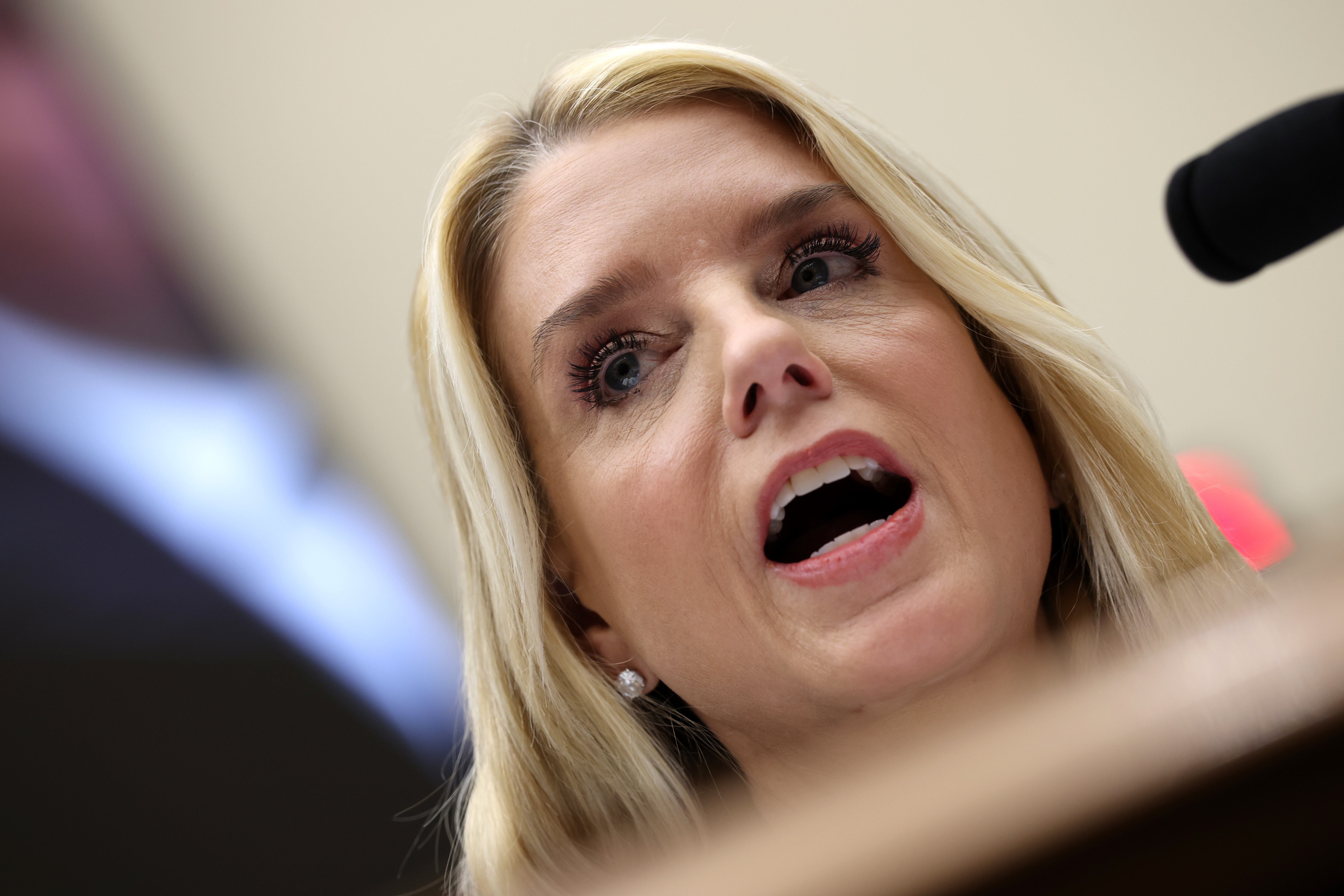 Attorney General Pam Bondi (Photo by Win McNamee/Getty Images)Win McNamee via Getty Images
The tensions reportedly began simmering last summer, when Slater sought to block the merger between Hewlett-Packard Enterprise and Juniper Networks. She opposed the deal out of concerns that it would create a duopoly in cloud computing and wireless networking. In addition, Slater reportedly told Bondi that US intelligence hadn't raised any concerns about blocking the merger. However, CIA Director John Ratcliffe later claimed that blocking it would pose national security risks because it could lead to the loss of business to China. The Trump administration's merger-friendly DOJ ultimately approved the deal.
Alongside Bondi, Slater was overseeing the DOJ's review of Netflix's proposed acquisition of Warner Bros. Discovery. In December, Trump said he would be involved in the regulatory review. That followed intense lobbying by Netflix and Paramount, the latter of which launched a hostile takeover bid. Earlier this month, The Wall Street Journal reported that the department was investigating whether Netflix was involved in anticompetitive practices during the process.
Slater's ousting also comes weeks ahead of the DOJ's antitrust trial against Ticketmaster owner Live Nation. The department's lawsuit was filed during the Biden administration. It claims that Live Nation is operating as a monopoly, harming competition, fans, industry promoters and artists.
This article originally appeared on Engadget at https://www.engadget.com/big-tech/antitrust-head-overseeing-netflix-warner-merger-resigns-192854114.html?src=rss
FBI Counterterrorism Agents Spent Weeks Seeking a Climate Activist — Then Showed Up at His Door [ 12-Feb-26 6:38pm ]Federal Bureau of Investigation agents, at least one of whom works on counterterrorism, went to the home of a former member of a climate activism group for questioning last week, potentially signaling a new escalation in the Trump administration's promise to criminalize nonprofits and activist groups as domestic terrorists.
Two FBI agents, one from New York's Joint Terrorism Task Force, told a former member of Extinction Rebellion NYC they wanted to ask him about the group at his home upstate on Friday, an attorney for the group told The Intercept. The visit followed a prior attempt to reach him at his old address.
The FBI's apparent probe of Extinction Rebellion NYC comes as the Justice Department ramps up its surveillance of activists protesting immigration enforcement and the Trump administration creates secret lists of domestic enemies under Trump's National Security Presidential Memorandum 7, or NSPM-7.
"I believe this to be a significant escalation of the criminal legal system against XR and find it very troubling," said Ron Kuby, the Extinction Rebellion attorney. "This is usually the way we find out an actual investigation is underway and is often followed by other visits and other actions."
The former Extinction Rebellion member, who asked to remain anonymous out of fear for his safety, said that the visit came after a phone call in January from a special agent that he assumed was a scam.
"I was skeptical the phone call was really from the FBI, but after I declined to speak with the agent, she said that she was standing outside my door," he said. She was actually at the activist's former address, which he said made him additionally dubious. But last week, when the agents showed up at his current address, he said he saw the agent's business card through his door.
Kuby confirmed that the agent's business card information corresponded to a current member of the FBI's New York Joint Terrorism Task Force. A text message from the agent, reviewed by The Intercept, shows she identified herself and stated that she was at the former member's house to question him about Extinction Rebellion. Her name, title, and phone number match a known special agent on the task force, according to court records.
Reached by The Intercept, a public affairs officer for the New York FBI field office said, "Per longstanding DOJ policy, we cannot confirm or deny the existence or nonexistence of any investigation."
The DOJ did not immediately respond to a request for comment.
Extinction Rebellion NYC is a chapter of a loose international climate justice movement that does highly public direct actions, like an April Earth Day spray-painting over the presidential seal inside Trump Tower in Manhattan. Kuby said none of the group's actions are violent or rise above the level of misdemeanors, and would not typically be of interest to federal counterterrorism investigators.
The former member said he had not been involved in any Extinction Rebellion actions in two years and hadn't participated in anything that he thought would send the FBI to his door.
"They repeatedly pursued this member and traveled hundreds of miles - this suggests a real investigative effort."
"All of our actions are incredibly public," he said. He recalled that the agent said she had some questions about Extinction Rebellion NYC, and that he wasn't in any trouble, before the activist declined to speak and closed his door.
Why the FBI's counterterrorism task force would investigate Extinction Rebellion is unknown, Kuby said.
"Often, the FBI starts with former members of a group, or less central people, to begin investigations," Kuby said. "The fact that they repeatedly pursued this member, and traveled hundreds of miles from his old address in NYC - this suggests a real investigative effort."
Trump's September presidential memorandum, dubbed NSPM-7, called for the National Joint Terrorism Task Force and its local offices to investigate a broad spectrum of progressive groups and donors for "anti-fascism" beliefs.
 Related
Longtime Paid FBI Informant Was Instrumental in Terror Case Against "Turtle Island Liberation Front"
Related
Longtime Paid FBI Informant Was Instrumental in Terror Case Against "Turtle Island Liberation Front"
A November FBI internal report obtained by The Guardian revealed that there were multiple active FBI investigations related to NSPM-7 in 27 locations, including New York, where the agent investigating Extinction Rebellion works. Trump's directive instructed Joint Terrorism Task Forces to proactively investigate groups and activists with vague language that civil liberty watchdogs say could easily criminalize protected speech and protest.
FBI agents also visited several activists affiliated with Extinction Rebellion and other climate groups in the Boston area last March, according to a local news report. The reasons for those visits remain unclear, and the activists involved said nothing came of them. The FBI's Boston Division declined to comment to the press at the time.
After Extinction Rebellion NYC members protested New York Democratic Rep. Tom Suozzi's town hall at a Long Island synagogue last month, objecting to his vote to increase ICE funding, Assistant Attorney General for Civil Rights Harmeet Dhillon posted on X that she would be investigating the protest to see "whether federal law has been broken."
None of the activists involved in the Suozzi protest have been contacted by federal investigators, representatives for the group told The Intercept. Suozzi did not reply to messages.
In 2023, then-Florida Senator and current Secretary of State Marco Rubio wrote a letter to then-FBI Director Christopher Wray and DHS Secretary Alejandro Mayorkas asking them to bar members of Extinction Rebellion in the U.K. from the U.S. in response to a report that the group planned to protest at federal properties.
"Among other things, the group will allegedly block highways and disrupt federal properties, but violence and terrorist acts cannot be discounted given the group's past threats," Rubio wrote in the 2023 letter. He also used similar language in proposed legislation against "antifa" protests in 2022.
Nate Smith, an Extinction Rebellion activist who took part in the Suozzi protest, objected to characterizations of the group's activism as terrorism.
"Is petitioning an elected official at a public event what makes America great, or a federal offense?" Smith said. "I get if you don't like it. That's half the point, but 'terrorism'?"
There have also been scattered reports of FBI agents visiting anti-ICE protesters around the country. While the FBI's interest in Extinction Rebellion remains unclear, the group pointed to Trump's NSPM-7 directive.
"We did not anticipate that we would be among the first groups of those who speak inconveniently to be targeted," Extinction Rebellion NYC said in a public statement. "We did not anticipate the level of capitulation from our country's hallowed institutions and political opposition."
The post FBI Counterterrorism Agents Spent Weeks Seeking a Climate Activist — Then Showed Up at His Door appeared first on The Intercept.
Even Grok thinks RFK Jr.'s diet is a bad idea [ 12-Feb-26 7:00pm ]
Healthy and Human Services brainworm RFK Jr's new "Real Food" website features his upside-down food pyramid, recommending more fat, butter, and red meat. The site also redirects to Elon Musk's dubious chatbot, Grok, which quickly explains that Kennedy's guidance isn't based on scientific evidence and that you shouldn't trust Kennedy himself. — Read the rest
The post Even Grok thinks RFK Jr.'s diet is a bad idea appeared first on Boing Boing.
Medieval painters gave dogs human faces to symbolize cowardice [ 12-Feb-26 6:54pm ]
In the Retable de la Passion, an oil-on-wood altarpiece from around 1500, a small dog sits among the crowd at Christ's trial. It has grey stubble, a weak chin, and an expression that's unsettlingly human. The dog is Pontius Pilate. — Read the rest
The post Medieval painters gave dogs human faces to symbolize cowardice appeared first on Boing Boing.
"Lyin' and Spinnin' (and Cheatin' and Hidin')" a Valentine's release by Randy Rainbow [ 12-Feb-26 6:48pm ]
Randy Rainbow declares Trump's second term the worst sequel since "Wicked for Good."
I particularly enjoy that Mr. Rainbow gives us a few moments after the interview to discuss the source material before he breaks into song. Randy has consistently documented Trump's evil, and done it in tune. — Read the rest
The post "Lyin' and Spinnin' (and Cheatin' and Hidin')" a Valentine's release by Randy Rainbow appeared first on Boing Boing.
Hacker linked to Epstein removed from Black Hat cyber conference website [ 12-Feb-26 7:15pm ] Trump administration undermines EPA enforcement of Clean Air Act [ 12-Feb-26 7:13pm ] Automattic planned to target 10 competitors with royalty fees, WP Engine claims in new filing [ 12-Feb-26 7:02pm ]
Golden State Championship Heading to Round 2 At Apex [ 12-Feb-26 6:51pm ]The Golden State Championship is looking forward to Round Two of the series, set for March 14-15 at Apex Motorsports Park in Southern California with co-host and legendary racer John Hopkins, promising even more competition and thrilling racing.
The inaugural round of the AMA-sanctioned Golden State Championship was a big success, kicking off January 31-February 1 at Buttonwillow Kart Track, delivering high-octane racing, packed grids, and a weekend full of excitement. The event attracted riders from across the country, including top American road race professionals, Supermoto pros, Motocross and Flat Track racers, and rising stars from the MotoAmerica Mini Cup.
The first weekend featured 16 classes, 4 classes using the dirt section, with the remaining classes contested on asphalt. The track layout, including a challenging dirt section with a deep mud pit, produced intense battles that tested rider skill, adaptability, and strategy. Racing was safe, and the paddock buzzed with enthusiasm from teams, riders, and fans.
Round 1 also featured a $2,000 purse, plus an additional $1,700 in cash bonuses, ensuring every top-three podium finisher received a payout thanks to sponsor Redwood Pipe and Drain. With 155 race entries, the championship's first round set a high bar for competition and excitement. Series owner Hawk Mazzotta and co-host Bronson Pierce teamed up for this first round and had a blast and huge success working together!
"The goal here is to bring back Supermoto, and provide a stepping stone to MotoAmerica for our youth road racers. It has been in the works for a long time, and it's finally come to fruition. I am really happy with how the first event went overall, and confident everything will only get better as we are always learning. I couldn't have asked for a better partner in preparing and running this first event with Bronson, we worked so well together and had a blast while doing so. This has been a gritty process of hands on build it and they will come, they came! We are so pumped for round 2 and the high energy and vibes, let's keep it going!"
Huge gratitude to partners and sponsors, including MotoAmerica, AMA, USMCA, Trackhouse, Yamaha, Bike911, Redwood Pipe and Drain, Dunlop, Roadracing World, California Customs, SDI Insulation, Cardo Systems, KYT, Bison, Yamalube, Farmers Brewing Company, ProTech Signs, Throttle Sauce, DP Brakes, BluCru, Signsations, Ohvale, 73Motorparts, VNM Sport, CT Racing-Pirelli/Metzler, our flag man Andy, volunteers, corner workers, and families who made the weekend possible.
For more information and updates visit hawkmazzottamotocamp.com
ResultsThe post Golden State Championship Heading to Round 2 At Apex appeared first on Roadracing World Magazine | Motorcycle Riding, Racing & Tech News.
ICE, CBP Knew Facial Recognition App Couldn't Do What DHS Says It Could, Deployed It Anyway [ 12-Feb-26 6:42pm ]The DHS and its components want to find non-white people to deport by any means necessary. Of course, "necessary" is something that's on a continually sliding scale with Trump back in office, which means everything (legal or not) is "necessary" if it can help White House advisor Stephen Miller hit his self-imposed 3,000 arrests per day goal.
As was reported last week, DHS components (ICE, CBP) are using a web app that supposedly can identify people and link them with citizenship documents. As has always been the case with DHS components (dating back to the Obama era), the rule of thumb is "deploy first, compile legally-required paperwork later." The pattern has never changed. ICE, CBP, etc. acquire new tech, hand it out to agents, and much later — if ever — the agencies compile and publish their legally-required Privacy Impact Assessments (PIAs).
PIAs are supposed to precede deployments of new tech that might have an impact on privacy rights and other civil liberties. In almost every case, the tech has been deployed far ahead of the precedential paperwork.
As one would expect, the Trump administration was never going to be the one to ensure the paperwork arrived ahead of the deployment. As we covered recently, both ICE and CBP are using tech provided by NEC called "Mobile Fortify" to identify migrants who are possibly subject to removal, even though neither agency has bothered to publish a Privacy Impact Assessment.
As Wired reported, the app is being used widely by officers working with both agencies, despite both agencies making it clear they don't have the proper paperwork in place to justify these deployments.
While CBP says there are "sufficient monitoring protocols" in place for the app, ICE says that the development of monitoring protocols is in progress, and that it will identify potential impacts during an AI impact assessment. According to guidance from the Office of Management and Budget, which was issued before the inventory says the app was deployed for either CBP or ICE, agencies are supposed to complete an AI impact assessment before deploying any high-impact use case. Both CBP and ICE say the app is "high-impact" and "deployed."
While this is obviously concerning, it would be far less concerning if we weren't dealing with an administration that has told immigration officers that they don't need warrants to enter houses or effect arrests. And it would be insanely less concerning if we weren't dealing with an administration that has claimed that simply observing or reporting on immigration enforcement efforts is an act of terrorism.
Officers working for the combined forces of bigotry d/b/a/ "immigration enforcement" know they're safe. The Supreme Court has ensured they're safe by making it impossible to sue federal officers. And the people running immigration-related agencies have made it clear they don't even care if the ends justify the means.
These facts make what's reported here even worse, especially when officers are using the app to "identify" pretty much anyone they can point a smartphone at.
Despite DHS repeatedly framing Mobile Fortify as a tool for identifying people through facial recognition, however, the app does not actually "verify" the identities of people stopped by federal immigration agents—a well-known limitation of the technology and a function of how Mobile Fortify is designed and used.
[…]
Records reviewed by WIRED also show that DHS's hasty approval of Fortify last May was enabled by dismantling centralized privacy reviews and quietly removing department-wide limits on facial recognition—changes overseen by a former Heritage Foundation lawyer and Project 2025 contributor, who now serves in a senior DHS privacy role.
Even if you're the sort of prick who thinks whatever happens to non-citizens is deserved due to their alleged violation of civil statutes, one would hope you'd actually care what happens to your fellow citizens. I mean, one would hope, but even the federal government doesn't care what happens to US citizens if they happen to be unsupportive of Trump's migrant-targeting crime wave.
DHS—which has declined to detail the methods and tools that agents are using, despite repeated calls from oversight officials and nonprofit privacy watchdogs—has used Mobile Fortify to scan the faces not only of "targeted individuals," but also people later confirmed to be US citizens and others who were observing or protesting enforcement activity.
TLDR and all that: DHS knows this tool performs worst in the situations where it's used most. DHS and its components also knew they were supposed to produce PIAs before deploying privacy-impacting tech. And DHS knows its agencies are not only misusing the tech to convert AI shrugs into probable cause, but are using it to identify people protesting or observing their efforts, which means this tech is also a potential tool of unlawful retribution.
There's nothing left to be discussed. This tech will continue to be used because it can turn bad photos into migrant arrests. And its off-label use is just as effective: it allows ICE and CBP agents to identify protesters and observers, even as DHS officials continue to claim doxing should be a federal offense if they're not the ones doing it. Everything about this is bullshit. But bullshit is all this administration has.
Daily Deal: The 2026 Complete Firewall Admin Bundle [ 12-Feb-26 6:38pm ]Transform your future in cybersecurity with 7 courses on next‑level packet control, secure architecture, and cloud‑ready defenses inside the 2026 Complete Firewall Admin Bundle. Courses cover IT fundamentals, topics to help you prepare for the CompTIA Server+ and CCNA exams, and more. It's on sale for $25.

Note: The Techdirt Deals Store is powered and curated by StackCommerce. A portion of all sales from Techdirt Deals helps support Techdirt. The products featured do not reflect endorsements by our editorial team.
Joseph Gordon-Levitt Goes To Washington DC, Gets Section 230 Completely Backwards [ 12-Feb-26 5:26pm ]You may have heard last week that actor Joseph Gordon-Levitt went to Washington DC and gave a short speech at an event put on by Senator Dick Durbin calling for the sunsetting of Section 230. It's a short speech, and it gets almost everything wrong about Section 230. Watch it here:
Let me first say that, while I'm sure some will rush to jump in and say "oh, it's just some Hollywood actor guy, jumping into something he doesn't understand," I actually think that's a little unfair about JGL. Very early on he started his own (very interesting, very creative) user-generated content platform called HitRecord, and over the years I've followed many of his takes on copyright and internet policy and while I don't always agree, I do believe that he does legitimately take this stuff seriously and actually wants to understand the nuances (unlike some).
But it appears he's fallen for some not just bad advice, but blatantly incorrect advice about this. He's also posted a followup video where he claims to explain his position in more detail, but it only makes things worse, because it compounds the blatant factual errors that underpin his entire argument.
First let's look at the major problems with his speech in DC:
So I understand what Section 230 did to bring about the birth of the internet. That was 30 years ago. And I also understand how the internet has changed since then because back then message boards and other websites with user-generated content, they really were more like telephone carriers. They were neutral platforms. That's not how things work anymore.
So, that's literally incorrect. If JGL is really interested in the actual history here, I did a whole podcast series where I spoke to the people behind Section 230, including those involved in the early internet and the various lawsuits at the time.
Section 230 was never meant for "neutral" websites. As the authors (and the text of the law itself!) make clear: it was created so that websites did not need to be neutral. It literally was written in response to the Stratton Oakmont v. Prodigy case (for JGL's benefit: Stratton Oakmont is the company portrayed in Wolf of Wall Street), where the boiler room operation sued Prodigy because someone posted in their forums claims about how sketchy Stratton Oakmont was (which, you know, was true).
But Stratton sued, and the judge said that because Prodigy moderated, that because they wanted to have a family friendly site, that is because they were not neutral, they were liable for anything they decided to leave up. In the judge's ruling he effectively said "because you're not neutral, and because you moderate, you are effectively endorsing this content, and thus if it's defamatory you're liable for defamation."
Section 230 (originally the "Internet Freedom and Family Empowerment Act") was never about protecting platforms for being neutral. It was literally the opposite of that. It was about making sure that platforms felt comfortable making editorial decisions. It was about letting companies decide what to share, what not to share, what to amplify, and what not to amplify, without being held liable as a publisher of that content.
This is important, but it's a point that a bunch of bad faith people, starting with Ted Cruz, have been lying about for about a decade, pretending that the intent of 230 was to protect sites that are "neutral." It's literally the opposite of that. And it's disappointing that JGL would repeat this myth as if it's fact. Courts have said this explicitly—I'll get to the Ninth Circuit's Barnes decision later, where the court said Section 230's entire purpose is to protect companies because they act as publishers—but first, let's go through the rest of what JGL got wrong.
He then goes on to talk about legitimate problems with internet giants having too much power, but falsely attributes that to Section 230.
Today, the internet is dominated by a small handful of these gigantic businesses that are not at all neutral, but instead algorithmically amplify whatever gets the most attention and maximizes ad revenue. And we know what happens when we let these engagement optimization algorithms be the lens that we see the world through. We get a mental health crisis, especially amongst young people. We get a rise in extremism and a rise in conspiracy theories. And then of course we get these echo chambers. These algorithms, they amplify the demonization of the other side so badly that we can't even have a civil conversation. It seems like we can't agree on anything.
So, first of all, I know that the common wisdom is that all of this is true, but as we've detailed, actual experts have been unable to find any support for a causal connection. Studies on "echo chambers" have found that the internet decreases echo chambers, rather than increases them. The studies on mental health show the opposite of what JGL (and Jonathan Haidt) claim. Even the claims about algorithms focused solely on engagement don't seem to have held up (or, generally, it was true early on, but the companies found that maximizing solely on engagement burned people out quickly and was actually bad for business, and so most social media adjusted the algorithms away from just that).
So, again, almost every assertion there is false (or, at the very least, much more nuanced that he makes it out to be).
But the biggest myth of all is the idea that getting rid of 230 will somehow tame the internet giants. Once again, the exact opposite is true. As we've discussed hundreds of times, the big internet companies don't need Section 230.
The real benefit of 230 is that it gets vexatious lawsuits tossed out early. That matters a lot for smaller companies. To put it in real terms: with 230, companies can get vexatious lawsuits dismissed for around $100,000 to $200,000 dollars (I used to say $50k, but my lawyer friends tell me it's getting more expensive). That is a lot of money. But it's generally survivable. To get the same cases dismissed on First Amendment grounds (as almost all of them would be), you're talking $5 million and up.
That's pocket change for Meta and Google who have buildings full of lawyers. It's existential for smaller competitive sites.
So the end result of getting rid of 230 is not getting rid of the internet giants. It's locking them in and giving them more power. It's why Meta literally has run ads telling Congress it's time to ditch 230.
What is Mark Zuckerberg's biggest problem right now? Competition from smaller upstarts chipping away at his userbase. Getting rid of 230 makes it harder for smaller providers to survive, and limits the drain from Meta.
On top of that, getting rid of 230 gives them less reason to moderate. Because, under the First Amendment, the only way they can possibly be held liable is if they had actual knowledge of content that violates the law. And the best way to avoid having knowledge is not to look.
It means not doing any research on harms caused by your site, because that will be used as evidence of "knowledge." It means limiting how much moderation you do so that (a la Prodigy three decades ago) you're not seen to be "endorsing" any content you leave up.
Getting rid of Section 230 literally makes Every Single Problem JGL discussed in his speech worse! He got every single thing backwards.
And he closes out with quite the rhetorical flourish:
I have a message for all the other senators out there: [Yells]: I WANT TO SEE THIS THING PASS 100 TO 0. There should be nobody voting to give any more impunity to these tech companies. Nobody. It's time for a change. Let's make it happen. Thank you.
Except it's not voting to give anyone "more impunity." It's a vote to say "stop moderating, and unleash a flood of vexatious lawsuits that will destroy smaller competitors."
The Follow-Up Makes It WorseYesterday, JGL posted a longer video, noting that he'd heard a bunch of criticism about his speech and he wanted to respond to it. Frankly, it's a bizarre video, but go ahead and watch it too:
It starts out with him saying he actually agrees with a lot of his critics, because he wants an "internet that has vibrant, free, and productive public discourse." Except… that's literally what Section 230 enables. Because without it, you don't have intermediaries willing to host public discourse. You ONLY have giant companies with buildings full of lawyers who will set the rules of public discourse.
Again, his entire argument is backwards.
Then… he does this weird half backdown, where he says he doesn't really want the end of Section 230, but he just wants "reform."
Here's the first thing I'll say. I'm in favor of reforming section 230. I'm not in favor of eliminating all of the protections that it affords. I'm going to repeat that because it's it's really the crux of this. I'm in favor of reforming, upgrading, modernizing section 230 because it was passed 30 years ago. I am not in favor of eliminating all of the protections that it affords.
Buddy, you literally went to Washington DC, got up in front of Senators, and told everyone you wanted the bill that literally takes away every one of those protections to pass 100 to 0. Don't then say "oh I just want to reform it." Bullshit. You said get rid of the damn thing.
But… let's go through this, because it's a frequent thing we hear from people. "Oh, let's reform it, not get rid of it." As our very own First Amendment lawyer Cathy Gellis has explained over and over again, every proposed reform to date is really repeal.
The reason for this is the procedural benefit we discussed above. Because every single kind of "reform" requires long, expensive lawsuits to determine if the company is liable. In the end, those companies will still win, because of the First Amendment. Just like how one of the most famous 230 "losses" ended up. Roommates.com lost its Section 230 protections, which resulted in many, many years in court… and then they eventually won anyway. All 230 does is make it so you don't have to pay lawyers nearly as much to reach the same result.
So, every single reform proposal basically resets the clock in a way that old court precedents go out the window, and all you're doing is allowing vexatious lawsuits to cost a lot more for companies. This will mean some won't even start. Others will go out of business.
Or, worse, many companies will just enable a hecklers veto. Donald Trump doesn't like what people are saying on a platform? Threaten to sue. The cost without 230 (even a reformed 230 where a court can't rely on precedent) means it's cheaper to just remove the content that upsets Donald Trump. Or your landlord. Or some internet troll.
You basically are giving everyone a veto by the mere threat of a lawsuit. I'm sorry, but that is not the recipe for a "vibrant, free, and productive public discourse."
Calling for reform of 230 is, in every case we've seen to date, really a call for repeal, whether the reformers recognize that or not. Is there a possibility that you could reform it in a way that isn't that? Maybe? But I've yet to see any proposal, and the only ones I can think of would be going in the other direction (e.g., expanding 230's protections to include intellectual property, or rolling back FOSTA).
JGL then talks about small businesses and agrees that sites like HitRecord require 230. Which sure makes it odd that he's supporting repeal. However, he seems to have bought in to the logic of the argument memeified by internet law professor Eric Goldman—who has catalogued basically every single Section 230 lawsuit as well as every single "reform" proposal ever made and found them all wanting—that "if you don't amend 230 in unspecified ways, we'll kill this internet."

That is… generally not a good way to make policy. But it's how JGL thinks it should be done:
Well, there have been lots of efforts to reform section 230 in the past and they keep getting killed uh by the big tech lobbyists. So, this section 230 sunset act is as far as I understand it a strategy towards reform. It'll force the tech companies to the negotiating table. That's why I supported it.
Again, this is wrong. Big tech is always at the freaking negotiating table. You don't think they're there? Come on. As I noted, Zuck has been willing to ditch 230 for almost a decade now. It makes him seem "cooperative" to Congress while at the same time destroying the ability of competitors to survive.
The reason 230 reform bills fail is because enough grassroots folks actually show up and scream at Congress. It ain't the freaking "big tech lobbyists." It's people like the ACLU and the EFF and Fight for the Future and Demand Progress speaking up and sending calls and emails to Congress.
Also, talking about these "efforts at reform" getting "killed by big tech lobbyists." This is FOSTA erasure, JGL. In 2018 (with the explicit support of Meta) Congress passed FOSTA, which was a Section 230 reform bill. Remember?
And how did that work out? Did it make Meta and Google better? No.
But did it destroy online spaces used by sex workers? Did it lead to real world harm for sex workers? Did it make it harder for law enforcement to capture actual human traffickers? Did it destroy online communities? Did it hide historical LGBTQ content because of legal threats?
Yes to literally all of those things.
So, yeah, I'm freaking worried about "reform" to 230, because we saw it already. And many of us warned about the harms, while "big tech" supported the law. And we were right. The harms did occur. But it took away competitive online communities and suppressed sex positive and LGBTQ content.
Is that what you want to support JGL? No? Then maybe speak to some of the people who actually work on this stuff, who understand the nuances, not the slogans.
Speaking of which, JGL then doubles down on his exactly backwards Ted Cruz-inspired version of Section 230:
Section 230 as it's currently written or as it was written 30 years ago distinguishes between what it calls publishers and carriers. So a publisher would be, you, a person, saying something or a company saying something like the New York Times say or you know the Walt Disney Company publishers. Then carriers would be somebody like AT&T or Verizon, you know, the the the companies that make your phone or or your telephone service. So basically what Section 230 said is that these platforms for user-generated content are not publishers. They are carriers. They are as neutral as the telephone company. And if someone uses the telephone to commit a crime, the telephone company shouldn't be held liable. And that's true about a telephone company. But again, there's a third category that we need to add to really reflect how the internet works today. And that third category is amplification.
Again, I need to stress that this is literally wrong. Like, fundamentally, literally he has it backwards and inside out. This is a pretty big factual error.
First, Section 230 does not, in any way, distinguish between "what it calls publishers and carriers." This is the "publisher/platform" myth all over again.
I mean, you can look at the law. It makes no such distinction at all. The only distinction it makes is between "interactive computer services" and "information content providers." Now some (perhaps JGL) will claim that's the same thing as "publishers" and "carriers." But it's literally not.
Carriers (as in, common carrier law) implies the neutrality that JGL mentioned earlier. And perhaps that's why he's confused. But the purpose of 230 was to enable "interactive computer services" to act as publishers, without being held liable as publishers. It was NOT saying "don't be a publisher." It was saying "we want you to be a publisher, not a neutral carrier, but we know that if you face liability as a publisher, you won't agree to publish. So, for third party content, we won't hold you liable for your publishing actions."
Again, go back to the Stratton Oakmont case. Prodigy "acted as a publisher" in trying to filter out non-family friendly content. And the judge said "okay now you're liable." The entire point of 230 was to say "don't be neutral, act as a publisher, but since it's all 3rd party content, we won't hold you liable as the publisher."
In the Barnes case in the Ninth Circuit, the court was quite clear about this. The entire purpose of Section 230 is to encourage interactive computing services to act like a publisher by removing liability for being a publisher. Here's a key part in which the court explains why Yahoo deserves 230 protections for 3rd party content because it acted as the publisher:
In other words, the duty that Barnes claims Yahoo violated derives from Yahoo's conduct as a publisher—the steps it allegedly took, but later supposedly abandoned, to de-publish the offensive profiles. It is because such conduct is publishing conduct that we have insisted that section 230 protects from liability….
So let me repeat this again: the point of Section 230 is not to say "you're a carrier, not a publisher." It's literally to say "you can safely act as a publisher because you won't face liability for content you had no part in its creation."
JGL has it backwards.
He then goes on to make a weird and meaningless distinction between "free speech" and "commercial amplification" as if it's legally meaningful.
At the crux of their article is a really important distinction and that distinction is between free speech and commercial amplification. Free speech meaning what a human being says. commercial amplification, meaning when a platform like Instagram or YouTube or Tik Tok or whatever uses an algorithm to uh maximize engagement and ad revenue to hook you, keep you and serve you ads. And this is a really important difference that section 230 does not appreciate.
The article he's talking about is this very, very, very, very, very badly confused piece in ACM. It's written by Jaron Lanier, Allison Stanger, and Audrey Tang. If those names sound familiar, it's because they've been publishing similar pieces that are just fundamentally wrong for years. Here's one piece I wrote picking apart one, here's another picking apart another.
None of those three individuals understands Section 230 at all. Stanger gave testimony to Congress that was so wrong on basic facts it should have been retracted. I truly do not understand why Audrey Tang sullies her own reputation by continuing to sign on to pieces with Lanier and Stanger. I have tremendous respect for Audrey, who I've learned a ton from over the years. But she is not a legal expert. She was Digital Minister in Taiwan (where she did some amazing work!) and has worked at tech companies.
But she doesn't know 230.
I'm not going to do another full breakdown of everything wrong with the ACM piece, but just look at the second paragraph:
Much of the public's criticism of Section 230 centers on the fact that it shields platforms from liability even when they host content such as online harassment of marginalized groups or child sexual abuse material (CSAM).
What? CSAM is inherently unprotected speech. Section 230 does not protect CSAM. Section 230 literally has section (e)(1) that says "no effect on criminal law." CSAM, as you might know, is a violation of criminal law. Websites all have strong incentives to deal with CSAM to avoid criminal liability, and they tend to take that pretty seriously. The additional civil liability that might come from a change in the law isn't going to have much, if any, impact on that.
And "online harassment of marginalized groups" is mostly protected by the First Amendment anyway—so if 230 didn't cover it, companies would still win on First Amendment grounds. But here's the thing: most of us think that harassment is bad and want platforms to stop it. You know what lets them do that? Section 230. Take it away and companies have less incentive to moderate. Indeed, in Lanier and Stanger's original piece in Wired, they argued platforms should be required to use the First Amendment as the basis for moderation—which would forbid removing most harassment of marginalized groups.
These are not serious critiques.
I could almost forgive Lanier/Stanger/Tang if this were the first time they were writing about this subject, but they have now written this same factually incorrect thing multiple times, and each time I've written a response pointing out the flaws.
I can understand that a well meaning person like JGL can be taken in by it. He mentions having talked to Audrey Tang about it. But, again, as much as I respect Tang's work in Taiwan, she is not a US legal expert, and she has this stuff entirely backwards.
I do believe that JGL legitimately wants a free and open internet. I believe that he legitimately would like to see more upstart competitors and less power and control from the biggest providers. In that we agree.
But he has been convinced by some people who are either lying to him or simply do not understand the details, and thus he has become a useful tool for enabling greater power for the internet giants, and greater online censorship. The exact opposite of what he claims to support.
I hope he realizes that he's been misled—and I'd be happy to talk this through with him, or put him in touch with actual experts on Section 230. Because right now, he's lending his star power to one of the most dangerous ideas around for the open internet.
A STI Fungus Is Making Itself Cozy in the US [ 12-Feb-26 7:00pm ] Mutated Rats Reign in This Ooey-Gooey Clip From 'Cold Storage' (Exclusive) [ 12-Feb-26 7:00pm ] Trump Just Blew American Climate Policy to Smithereens [ 12-Feb-26 6:59pm ]

