

Earlier this month we noted how Meta's launch of its cutesy agentic AI software Muse arrived with all sorts of major privacy and security screw ups, despite the company's repeated, breathless claims that privacy and security were at the forefront of the company's thinking during development.
Like most AI agents, Muse is supposed to help automate simple to moderately complicated daily tasks.
But the app launched with multiple ugly zero-day flaws, one of which let an attacker covertly spy on Mac users. Other flaws were reportedly glossed over and downplayed by a company more interested in rushing to market than ensuring its software actually worked. One person even found you could trick Muse into giving you device root access on the device it's installed on simply by pretending to be a Muse agent yourself.
Giving Meta (a company with abysmal ethical and privacy standards) massively expanded access to all sorts of personal accounts is just foundationally insane. That was quickly reflected by the people who found the app was accessing people's private messages without approval, and often ignored all permissions and uploaded them to the cloud - even if you specifically tell it not to.
Outlets like Wired found that Muse consistently creates detailed profiles of all your friends, family, colleagues, "collaborators," and people you "follow." Which is "fun" and "cute" when you consider Meta and Mark Zuckerberg's enthusiastic collaboration with corrupt, surveillance-obsessed authoritarians.
And now Ars Technica has found that Muse can reveal all manner of sensitive personal information when users share conversations through Web links. Like many services, Muse lets users share images, content, searches, and chats with other people via unique URLs. Those URLs generally have long-sequences of text that aren't supposed to be easily guessed.
But researchers from Claroc found that Meta's implementation of this feature made it possible for folks to decipher shared content details via a passive DNS search:
"Claroc researchers were able to discover the Muse share links because all of them use the domain name cf.metaaiusercontent.com. Discovery is further made easy by the decision to add the conversation name to the URL, along with a long string of text. Simplified examples of such links are home-sale-budget-9f21c8a3.cf.metaaiusercontent.com, q3-revenue-review-7b1e42f0.cf.metaaiusercontent.com, and loan-application-draft-a4c9e2.cf.metaaiusercontent.com. It's this last design decision, putting the conversation title in the subdomain rather than in the URL path, that makes public discovery possible."
According to the Claroc researchers, some of the data they were able to easily access included:
- a candidate's notes preparing for a confidential executive-search call with a frontier AI lab, naming the lab's internal contact and the meeting time
- a national marketing company's internal revenue review, marked for its CEO
- a small-business owner's loan application, with the amount requested
- a to-do list that included a bank fraud alert, with a partial account number and a transaction amount and time
- a real-estate investor's internal performance report, with two property addresses and exact return, income and mortgage figures
- a workplace's full-year staff vacation calendar, listing dozens of employees against the week each one would be away
Meta has suspended the feature while they figure out why they screwed up. Again, this is despite Meta claiming repeatedly in pre-release blog posts that Muse was built with a heavy focus on privacy and security. And again, this is all made possible because Meta doesn't have to worry about any meaningful accountability in a country too corrupt to pass modern privacy laws, regulate the data broker ecosystem, or hold corporations legally accountable for literally anything.
This is just the orchestra getting warmed up as a parade of half-cooked agentic AI agents rush to market, and people who don't really understand the scope of what they signed up for connect all sorts of sensitive accounts with Mark Zuckerberg or other sketchy industry titans. Hopefully at least a few market entries can differentiate themselves by not being an ethically dubious pit of public interest malfeasance.

It's one thing to harass children and chase them down the street. But to live in the sewer? Baltimore County still has problems, reports CBS News, including the sewer-dwelling gentleman who emerges to terrorize local youngsters.
After hearing similar complaints from her children at least four times, Wiggins decided to investigate.
The post Sewer-dwelling man harassing local children, says Baltimore mom appeared first on Boing Boing.

Food delivery app Just Eat admitted using AI to generate fake product images after some of the more spectacular examples went viral, including garlic bread in the shape of a plane and "bacon and egg soda bread" presented as a drink with a fried egg in it. — Read the rest
The post Just Eat slop: food delivery service apologizes for bizarre AI-generated menu appeared first on Boing Boing.

TL;DR: Visual Studio Professional 2026 is on sale for just $29.97 (reg. $499.99) and includes cross-platform development tools, intelligent code completion, and GitHub Copilot integration.
AI can write code now, which is great until you have to figure out whether that code actually does what it's supposed to. — Read the rest
The post AI can write code, but this $30 developer tool helps you figure out if it works appeared first on Boing Boing.
AI has yet to deliver any financial payoff to US businesses outside of the tech sector, according to investment biz Apollo Global Management.
The global asset firm made the claim in a posting to its Daily Spark blog that features analysis on the US economy and capital markets. It says corporate America is starting to view token spending not as a source of growth, but rather as a cost center that weighs on company margins.
Apollo's chief economist Torsten Slok says that revenue per worker may be rising for the so-called "Magnificent Seven" tech firms, which includes the hyperscalers plus Apple, Nvidia and Tesla, but this isn't the case for the rest of the S&P 500 businesses.
The same goes for profit margins, and for AI boosting corporate productivity growth, he adds, posting charts to back up these claims.
Apollo's assertion has met with pushback from some, who commented on social media that they did not recognize the picture painted by Slok. Others said a similar effect was noted in the PC industry, when productivity growth lagged the widespread adoption of computers in business by a decade or more.
However the investment firm's observations chime with various reports The Register has analyzed over the past year or two, such as one earlier this year from PwC that found the majority of chief executives had enjoyed neither increased revenue nor decreased costs from AI, despite investing heavily in the technology.
Research from professional services firm Deloitte also showed that adopting AI tools has not helped the bottom line for most companies, while a separate report found AI is now facing corporate accountability after several years of investment with little or no return, and projects will have to prove their worth or be axed.
McKinsey reckons the corporate world is now at a turning point and on the road to seeing a return for all the effort that organizations have put into pilots and early AI deployments - although it concedes the number of businesses reporting an actual earnings boost from their AI initiatives has remained flat.
Slok questions whether mainstream corporations will ever be able to turn AI projects into higher revenue growth and higher profit margins, despite the appearance of cheaper or open-sourced models.
In business, intelligence is mostly judgment, he says, and therefore depends on context. He notes that AI does not really understand anything, but especially accountability, trust, culture, unwritten rules, ethical trade-offs or fairness, all of which shape companies' reputational risk and ultimately drive revenue growth and profit margins.
Apollo also notes a slowdown in token spending growth, claiming this shows the spending is highly price-sensitive and demand falls away or switches to cheap open source alternatives in response to even modest increases in cost. This casts doubt over the economics of pouring billions into constructing ever more datacenters if the resulting compute is only likely to turn a marginal profit.
The investment biz previously handed $11 billion to Intel in exchange for a 49 percent stake in the chipmaker's Fab 34 manufacturing plant at Leixlip in Ireland. Intel repurchased Apollo's stake earlier this year for $14.2 billion after the chipmaker had put itself back on firmer financial ground. ®



V2G tech enables drivers to charge automatically when electricity is cheaper and then sell some back to the grid at times of high demand
Electric cars that can be used as "power plants on wheels" could be given government backing as part of plans under consideration to help UK manufacturers.
Ministers are considering giving manufacturers incentives to add "vehicle to grid" (V2G) technology to cars as part of its review of the zero-emission vehicle (ZEV) mandate.
Continue reading...
We've spent the past several decades using duct tape, string, and chewing gum to chain the world's computers together into this thing we call the internet, so there's really no good reason to be surprised that most of it is full of software containing vulnerabilities that are practically just as old.
You can listen to the latest episode of The Kettle right here on this page, as well as on Spotify, Apple Music, or YouTube. Those platforms also let you subscribe to Kettle, so you are always notified when the latest episode goes live.
The world is still reeling from the PHP2Shell revelations that hit the news cycle this week, and on The Kettle there's no better topic for host Brandon Vigliarolo, cybersecurity editor Jessica Lyons, and FOSS reporter Liam Proven to tease apart.
Join us to discuss what exactly is going on, how AI was key to finding another issue no human likely ever would have discovered on their own, and why exposing more bad code in the backbone of the world's computers might be just what we need to rethink the whole thing for the better.
A lightly edited transcript follows:
Brandon (00:01)
Hi everyone, and welcome to the latest episode of The Register's Kettle podcast. I'm your host, Reg reporter Brandon Vigliarolo. And hey, there's only one thing we could focus on for this week's episode, given all the hubbub around it, and that's the PHP apocalypse. It turns out most of the internet is running software that could allow remote code execution on host systems via a pair, or as of today apparently three, vulnerabilities that have come to collectively be known as PHP2Shell. So that's not great. With me to talk about this is our security editor Jessica Lyons and open source reporter Liam Proven, who has a few things to say about PHP itself and why it's probably not surprising we're finding ourselves in this mess. Thanks to you both for coming on.
Liam Proven (00:43)
Absolute pleasure.
Jessica Lyons (00:43)
Nice to be here.
Brandon (00:44)
So Jess, let's start with the basics. What is this? How big of a problem is it? And where do we stand on getting things fixed?
Jessica Lyons (00:51)
Great. The short answer is it's a very big problem. So we have these two related memory safety vulnerabilities, and they are in the PHP core. Collectively they're called PHP2Shell, and they affect every version that's been released in the last decade affected by one or both of these, going back to about version 5.4. So the general consensus is this is about 70 percent of all of the websites on the internet are running this code. So it basically affects everyone at this point.
What happened here is that this dates actually back to August. An independent researcher first spotted this, and then we can talk a little bit more later about who found more of the exploits and what the (PHP) Foundation did with that. But so he found this vulnerability. There was a coordinated disclosure process with the PHP Foundation, and then that broke a little bit starting over the weekend, and then onto Monday, there were some leaks. There was a video posted that purported to show this exploit. And so we get this emergency warning from the PHP Foundation late Monday saying, "Hey, we are going to be releasing these emergency patches, so everybody get ready so you can implement them as soon as possible. It's very serious." So by Wednesday, they did release these, and there's this mass attempt to patch before any of the attackers get a hold of this and are able to attack websites with it. And one of the issues too is that some websites are running really, really old versions and so they aren't able to patch. So they're just sitting there, these legacy servers are still vulnerable.
Brandon (02:52)
So there's no direct update path for those old versions, right? It's basically shut this down and reinstall it kind of thing.
Jessica Lyons (02:59)
Exactly. So basically they're both these memory corruption vulnerabilities and by exploiting them, an attacker can kind of shape the memory that PHP trusts. And then they can use that to hijack what happens next. And that can mean remote code execution. They can take over the websites, they can steal data. And so people are visiting these websites they trust and they don't realize that the underlying code is stealing their data or delivering malware to their computer. And again, this is potentially 70 percent of the internet. So it's a big deal.
Brandon (03:36)
Quite a few sites were offline. I know even some big services. I stopped playing because I had a baby, but I used to play Final Fantasy XIV pretty religiously. And I know that the entire login server was offline a couple days ago
Jessica Lyons (03:50)
Right.
Brandon (03:50)
They were like, "You've got to fix this. Sorry, no one can play the game. If you're not logged in right now, you're not getting logged in for the foreseeable future." It's just insane how much of the internet was affected by this. Now It's under exploit, is that correct? But maybe not successfully exploited yet?
Jessica Lyons (04:11)
Right. So after the patches were released on Wednesday, later Wednesday, AWS came out and said, "We've seen exploitation attempts at least four days before the patches were released." So that kind of caused another frenzy that, "My God, it's under attack, the whole internet is on fire." There haven't been any successful attacks to date. There's been a ton of attempts.
There's a lot of POCs; some work, some don't. But as of Friday, according to the Foundation and according to all of the security experts that I've spoken to, we haven't seen any evidence of successful exploitation. I don't think that means we're in the clear. I think it just means it's taking a while for people - and honestly AIs - to develop successful attacks, but that's where we are right now.
Brandon (05:06)
Because it's a complicated attack chain, correct?
Jessica Lyons (05:10)
Right. Yes.
Brandon (05:11)
So basically, right. This is not working yet, but especially with some of these older websites that are running older versions of PHP that are going to have to take a more thorough approach to getting this fixed and possibly going down for some time, this could be one of those problems that remains serious for a while. And let's not forget, 70 percent of the websites on the internet, that's almost three-quarters of the entire internet. I don't know how many hundreds of thousands or millions of sites that is, but some of those are probably never going to get patched.
Jessica Lyons (05:41)
Right. Exactly.
Brandon (05:43)
Just the way it goes. Right. This is going to be the sort of thing that we end up hearing about months or years from now.
Jessica Lyons (05:49)
I would say years.
Brandon (05:53)
I'm sure there'll be some bank somewhere that eventually ends up getting - we'll hear about some breach disclosure letter from the state of Maine in four or five years.
Jessica Lyons (06:02)
And local governments, federal and state governments, I think these are the ones that we're going to be hearing about quite a while from now.
Brandon (06:09)
Because that's one of the things I was thinking about even for me in my tiny little town in northern Michigan. I wonder if my township or the county is going to be all over it to update their PHP server. Does their IT guy, who probably is a retired dude who lives in the area, even know this is a problem? It really is one of those things that is a big deal, but if you're not kind of following the news on this, it could probably go completely unnoticed. And for many websites, I'm sure it will.
Jessica Lyons (06:37)
Right. Exactly.
Brandon (06:37)
So, it's pretty crazy. Liam, you're working on a story, I think, as we are recording this, about some of the history of PHP and how it really probably wasn't very well designed or intended to become so ubiquitous on the internet. What's going on there?
Liam Proven (06:53)
I've seen one angle on this, which is people saying, "This is 1990s code and it has 1990s problems," which is one way to look at it. But I'm a 1980s internet guy; that's when I started exploring it. My primary email address is older than the web, and it still works.
My gods, it gets a lot of spam, but it still works. I've watched the rise and rise of PHP since the first releases. Now, I have no personal interest in web development. I can program, but I don't because I'm really bad at it and nobody needs to have my code inflicted upon them. The guy that wrote PHP in the first place, Rasmus Lerdorf, is my age. I've never met him; I'm sure he's a nice guy. But he said in a very early interview about it, "I really don't like programming. I built this tool to program less so that I could just reuse code." And that was about 1993. He built a little tool that allowed him to put macros in HTML for his own website, and it's just grown. In a later interview, he said something along the lines of, "I don't know anything about writing programming languages. I'm just improvising this as I go and people seem to like it."
It originally stood for "Personal Home Page," I think, and later was given a recursive acronym of "PHP: Hypertext Preprocessor." This is a programming language that you mix in with the HTML of a website. It predates the modern model of building websites where a database contains the text and a content management system of some kind assembles on the fly the pages that each person sees. This is an older model where you're running programs that are part of the markup language, which was not a good idea, but that was how he did it.
There was a lovely blog post. I've got an old friend who's an extremely skilled and talented programmer who has built a career on PHP, and he said to me, "Look, those criticisms that you've mentioned are of the really early versions and it's changed now." And if he hears this, he's going to be cross with me. But my favorite summary was from a blog called Eev.ee way back when that called PHP "a fractal of bad design."
Whatever level you look at it, it was done badly. If you look at the whole plan of "let's just intermingle program code in with the markup language," not a good idea. If you look at the details of how it was implemented, not a good idea. If you look down at low-level details of how the functions return values, not a good idea: inconsistent syntax, inconsistent functions, functions that do really weird things, by default no stack traces, not great error reporting.
Now, I'm sure a lot of this has been papered over now, but really there is one reason PHP is still around and still so big: Zuck. Facebook was built in PHP. And Facebook makes lots and lots of money and it's been throwing money at making PHP faster and more reliable and more scalable for decades.
Brandon (11:03)
Have they been big contributors to it?
Liam (11:06)
Yeah. They even built a compiler for it, which I suspect is still in use. Now, how much of Facebook today is in PHP? I don't know, possibly none, but for a long time basically the world's biggest and busiest public-facing website that wasn't owned by Google - only because Google have failed to ever make a successful social network - was built on PHP. And it's big, it's complicated. Like Linux itself, nobody fully understands how the whole thing works anymore and hasn't probably for decades.
And now people have got bots that they can throw against it and ask them to analyze it. I think this is probably just the first, and I think there's going to be many more. A friend of mine who's a senior developer had a look at the patch, and he's not a C guy, but he said - I'm quoting from comments on Mastodon - that the patch to the current version is 13,000 lines of C. That's a doozy of a patch.
Brandon (12:17)
That's huge.
Liam Proven (12:20)
A bunch of people have been working like crazy for quite some time. Some people who've looked at this say it looks handwritten to me. Others have said, "No, I think this is bot-generated." I think the truth is probably a bit of both: some from one, some from the other.
Brandon (12:32)
Bit of both. I mean, you can't pump out thirteen thousand lines that quickly and have it tested. God, I hope they tested it.
Liam Proven (12:41)
Right. But that's just for the current version, and this hole affects every published version. So if they do manage to fix this one, how long till the next one comes along? Because I think there's going to be -
Brandon (12:56)
Especially with the speed at which vulnerabilities are being discovered now. I feel like every time I turn around, I've written one Patch Tuesday article in the past few months, and that one broke the previous two records. And I think since then every month has included more patches, and a lot of those are probably -
Jessica Lyons (13:14)
October at this point is the record: over a thousand for Microsoft alone. So, yep.
Brandon (13:21)
That's insane. Like you said, it is a fractal of bad design all the way down, and is going to probably have more vulnerabilities discovered.
Jessica Lyons (13:32)
Right.
Brandon (13:32)
Seventy percent of all websites on the internet are using this. What can we do? Are we stuck?
Liam Proven (13:35)
Well, there's a reason for that, and it's one that doesn't get talked about an awful lot: Facebook aren't the only people that use it extensively, because WordPress is also built on PHP, and it's far from alone. Another senior Linux techie friend of mine gave me a free shell account on the machine that he runs for a few friends years ago, and I thought of resurrecting my old 1990s hand-coded HTML webpage for fun. So I found it on the Internet Archive and found a tool to scrape it and turn it back into HTML again. I looked at some CMSes and asked him if there was any CMS on the machine.
He went, "No."
And I went, "Well, would you install one?"
He went, "No."
"Well, why not?"
He said, "Well, all the big ones are implemented in PHP, and I won't let that near any server I run."
"Well, that's a bit dramatic, isn't it?"
And he goes, "No, that's pragmatic. I run a bunch of public-facing servers on my own, and this is how I keep them secure. No containers, no Docker, no PHP, nothing built in any of these technologies."
And I went, "Wow, what about..."
So I went looking for non-PHP CMSes. There are a lot of CMSes out there. I got a commission about a decade ago to write a comparative assessment of the CMS market versus a company's proprietary Windows product. I went and did a survey and came back and said, "I've found 1,300 so far."
And they said, "OK, we can give you five thousand words instead of a thousand words."
And I said, "You realize I'm going to have to go and look at 1,300 pieces of software here. Even if I only write three or four words about each one, 'Mostly harmless,' I'm still going to have to look at over a thousand bits of software. It will take me a year."
And they went, "Well, how can how can we do it quicker?"
And I said, "You can't. I cannot do this survey you want. Give me a full-time job and I'll get it back to you in a couple of years' time."
I found a few CMSes that weren't built in PHP. Most of those were built in Ruby instead. And he went, "Yeah, I'm not keen on having that on my server either."
So it's not even a case of people that have PHP deployments needing to update. They don't know. They built it on something else which was built on something that was built in PHP.
Jessica Lyons (16:15)
I was just going to say, Liam, you said, "How long until the next one happens?" And we found out today from the PHP Foundation that there is a third one. They won't be pushing an emergency release for this. They said it'll be published with the next regular release cycle. The Foundation told me that this one, quote, "requires a very unlikely combination of configuration and specific PHP application code, which we do not expect to occur in practical use." So, there's already another one.
Liam Proven (16:45)
So weeks then.
Brandon (16:47)
Yeah.
Jessica Lyons (16:48)
I mean, and even with this, it's hard to exploit. You can mitigate it with a configuration setting. But that was part of the thing we've heard with these other two. And then we did have researchers yesterday who developed this new exploit; this was Vulncheck. And that shows how even ASLR can be bypassed to attack these vulnerabilities on x86 machines. So saying it can be fixed with a configuration setting isn't always a guarantee.
Brandon (17:25)
That brings me kind of to the elephant in the room of this whole story: AI. because of course it all comes back to AI nowadays. OpenAI and two other security firms reported this. I think Jess, one of your stories or one of the ones Lindsay wrote said that they all used AI to find this, right?
Jessica Lyons (17:49)
Right. So the companies: Calif, they are a newer startup doing AI pen testing and they're part of OpenAI's partner program, so they used OpenAI models working with OpenAI to find this. And then independently, Wiz, which is owned by Google, also did. So this happened back in August, and then they have been all working with the PHP Foundation on the patch since that point.
They have all said these are vulnerabilities that probably wouldn't have been found by humans alone. By all accounts, they've existed for decades and wouldn't have just been found by human researchers.
Brandon (18:34)
Right. So either these are things that have never been discovered and would have never been exploited theoretically - the exploit path is complex, they're not obvious vulnerabilities, so they needed an AI to find them - or perhaps this is the kind of thing that was known about but was privately held in the hands of some bug hunting company that sells exploits to governments. Who knows? Maybe that's the case. I remember talking to a guy one time at Black Hat who basically said his company's in the business of finding really sensitive vulnerabilities and then selling them to the highest bidder. So there are companies like that that exist. So there's probably plenty of vulnerabilities in software that are not well known that governments and high-level functions are aware of. But in this case, this probably wasn't the case. This is an incredibly difficult-to-find vulnerability.
I've seen a lot of chatter online in the past few days about how the internet's on fire and the AI bug-pocalypse has arrived. It seems like we're having another case of people getting all freaked out because this is the end of time, history is over, and AI is going to kill us all. It just seems to me like this is another example of: well, maybe not. This has been getting hammered by potentially bad actors or pen testers, and no one's managed, as far as we know, to successfully use this yet. Is this as serious as it seems, or is this another case of a serious vulnerability that is so complicated and convoluted that it's not really going to be that big of a deal?
Liam Proven (20:25)
I want to note parenthetically that you described OpenAI as a security company, and if I had been drinking coffee, that would have been very bad for my keyboard.
Brandon (20:32)
Okay, whoops. Let me take that back.
Jessica Lyons (20:31)
Ha ha ha.
Liam Proven (20:36)
Calif is interesting because I just wrote about them. They found a hole in OpenBSD, and there aren't many of those. And only about a week ago, they found a hole which they dubbed "Big Fish" in OpenBSD, and it was just days before OpenBSD 8 shipped. It looks like that had been there for 37 years, which is a neat trick because OpenBSD was founded 30 years ago. So this is in - going to pronounce this carefully - Berkeley Software Distribution Unix in the eighties. But there are doubtless more, and I'm an arch AI skeptic.
Some people will claim that this will be the sort of problem that you can solve with AI by getting it to rewrite your stack. Well yes, but then you'll replace it with a new stack that nobody ever understood any of. But there are ways to design, host, and run websites, forums, and chat channels without using any of this stuff. And it could be a net positive if holes like this keep getting found that people will be forced to go back to - sounds crazy, but - static websites serving pre-written code off a disk.
One of my favourite websites - recently I discovered there's a whole chain of them, and I hope you won't mind me swearing; maybe you have to beep me. But there's a marvellous website called "This Is a Motherfucking Website and It's Perfect." And recently somebody rewrote it and the new one looks almost identical: "This Is a Modern Motherfucking Website and It's Perfect." He's written it with more CSS or something, but apparently there's a whole chain of these things and they are extremely low on programming code. They contain interactive elements that you can do with just HTML, and you don't need a whole web framework behind it. And the same AI companies are busily scraping the whole web multiple times a day to feed their training engines. Maybe we just have to suck it up, scrape some of these big websites, and redo them as simpler tech with fewer interpreted languages. We are all collectively victims of the sunk cost fallacy. We've got millions of websites. We spent billions and trillions of dollars building all this. We can't just throw it all away. Well, maybe you have to.
Brandon (23:27)
Sunk cost was something that kept coming to my mind as I was writing up the script for this episode and just thinking about this. It seems like a whole big case of, "Well, all the websites in the world are now on PHP, so I guess we're stuck."
Liam Proven (23:42)
We have a script?
Brandon (23:46)
Well, not a formal script, just notes.
Liam Proven (23:48)
Haha. Well I didn't get the memo.
Jessica Lyons (23:50)
I think that's part of the problem though: it illustrates this larger issue with AI in general. AI bug hunting and exploit detection kind of illustrates this bigger problem about the internet, especially these legacy systems that underpin government services and critical infrastructure. It is literally held together by duct tape and string. So it's a massive problem. Again, it takes some work to actually make anything of these vulnerabilities and chain them together. AI is getting better at that. So whether or not this ends up being the end of the world for the internet as we know it, it does illustrate a real problem.
Brandon (24:42)
Like Liam said, maybe this is the sort of catalyst that the wider internet community needs to realize that these systems - this duct tape and string - simply won't keep working forever. We need to maybe modernize all the underlying infrastructure and make it simpler and less kludged together with all these different things over the years. PHP is poor design all the way down, right? It's like: well, maybe we need to tear it out and start over. Even if these vulnerabilities are impractical to exploit and hard to find, the fact that they're being discovered does illustrate that most of our code is a mess.
Liam Proven (25:28)
I am reminded , the other day I was talking in the comments about A/UX, Apple's original Unix for the Mac, and Apple paid another company to develop A/UX because the US military had a tick box on the form that said to buy systems, they have to be able to run POSIX. The US Army at one point hosted its website on Classic Mac OS. And it wasn't exactly security by obscurity. They said virtually all web server attacks in the mid-1990s were based on getting a remote shell, and Classic macOS didn't have a shell at all, anywhere. There was no way to get a remote shell because you couldn't get a shell if you were sitting in front of it. So they said, "They try and inject bits of x86 code: well, it's not an x86. They try and get a shell: it hasn't got one. They try and get it to run scripts: it doesn't run scripts." They said, "We just sit there and watch people throwing themselves at it. All the best attacks, and none of it works because the operating system's kind of too primitive to do any of that stuff." I don't believe many customers actually ever used A/UX, but it got Apple some lucrative deals. Maybe we're going to see a new trend of super primitive, super basic websites. There'll be a new difficulty in trying to scale the things because Kubernetes expects a lot of this to be dynamically generated by microservices. But bring it on; I'd love to see that.
Brandon (27:09)
That's a Kubernetes problem, right?
Liam Proven (27:12)
Yeah.
Brandon (27:14)
I feel like I would love a simpler internet. It would be amazing if I could just wake up in the morning, go to a news site, and just get the headlines. So often, I feel like - and I think The Register is good at having a relatively simple design, but - so often I feel like the news aggregators that I go to... I look for ones that are as minimal as possible. I look for websites that are simple. I don't need all this in-your-face stuff; it's not necessary. I think we probably are all pretty sick of it in a lot of ways.
Jessica Lyons (27:49)
But do we really think this is going to happen though?
Brandon (27:52)
No.
Jessica Lyons (27:53)
I feel extremely pessimistic about this. I think it's much more profitable to just keep marketing solutions to the problem as opposed to a safe coding overhaul.
Brandon (28:04)
Unfortunately.
Liam Proven (28:06)
Geopolitics might yet get in the way. I wrote a piece about OpenEuler, one of the big Chinese enterprise server Linuxes, and one of only two companies actually showing off an OS at the Open Source Summit. The other was also Chinese: OpenKylin, which is more desktop focused. China makes its own chips, China makes its own operating systems, and it's got its own programming languages. They're all open source, taken from European and American developed software by and large, but they could still invade Taiwan and cut off much of the world's chip supply. And suddenly it won't just be that memory is way more expensive than it used to be; it will be that you can't get more memory anymore and you have to keep using 10-year-old chips. And people will be potentially forced to find ways to keep getting more out of the same hardware until we can build new chip fabs, which will take a lot of time and a lot of money. And then quite possibly they'll get blown away in a climate-change-induced hurricane and then we'll have to start again. So, I hope they're going to start building them in the north of Norway and places like that. But yeah we've got bigger problems coming down the pipe and it's all a giant snowball of superficially unrelated things: AI attacks on overcomplicated stacks on one side, and the other kind of attack which involves whistling noises and large explosions on the other side, which cuts off the hardware market. It's hard to plan for this, but nobody's even trying yet.
Brandon (29:52)
Who would have thought a talk about a PHP vulnerability would have turned into geopolitical chaos and the endof modern technology as we know it? Break out the sundial, people.
Liam Proven (30:07)
Excuse me, I've just got to go and wind the web server. Hang on.
Brandon (30:11)
All right, guys. Thanks for coming on. I think this was a really valuable discussion and it shows just how interconnected all these issues in tech are right now. I mean, it is interesting how we're kind of hurtling toward something in a lot of ways. AI will surely be a part of it, as will expensive chips and lots and lots of vulnerabilities being found every day. Hopefully we'll still be here to cover it as that continues to happen.
Jessica Lyons (30:40)
If AI doesn't kill us.
Brandon (30:41)
Right. If AI doesn't kill us all. Well, if it doesn't, we'll be here on the Kettle to talk about it. And we hope that you, from whatever bunker you're hiding in, will join us on future episodes.
Liam Proven (30:53)
Yeah, we'll be publishing a telephone number so you can phone into future Kettle episodes.
Brandon (30:59)
All right, folks, we'll talk soon. ®



UK Biobank (UKB) says its platform is now "secure" and that academics will soon regain access, months after a major data leak of volunteer health data.
The charity, which runs the eponymous research project and describes itself as the custodian of the world's most comprehensive biomedical dataset, said it is waiting for approval from health data controllers and central government before it relaunches the platform.
UK Biobank's Research Analysis Platform (UKB-RAP) has locked out all medical researchers trying to access its dataset since the April attack, which led to all 500,000 volunteers' data being listed for sale on Chinese ecommerce website Alibaba.
More than 20,000 researchers use the dataset provided by the cloud-based platform. They upload research projects and run experiments informed by the genomic data UKB collected from 40-to-69-year-olds between 2006 and 2010.
The org makes around 30 petabytes worth of the stuff available to researchers, who investigate conditions including cancer, dementia, Parkinson's disease, and COVID-19 immunity.
Professor Sir Rory Collins, CEO at UKB, said on Friday that the organization has "completed the work to ensure that the UKB-RAP is secure," and that the progress was checked by an independent cybersecurity company, whose report recommends reopening the platform.
The charity will begin a phased re-introduction of researchers to its platform after it receives the necessary approvals, although boffins will not be able to download any results files at first.
The platform will pilot a "manual output checking system," where human reviewers will inspect files researchers wish to download before allowing them to do so, ahead of an automated process expected to roll out next year.
According to the guide UKB compiled for researchers outlining the changes to the platform, researchers will also be restricted from building public apps and sharing tools with external colleagues until that manual checking system is fully up and running.
Researchers were also warned that they will not be able to refresh or dispense data, only work with pre-existing data. They were also told to expect automatic logout out after 15 minutes of inactivity, with 2FA required upon re-authentication.
Other technical changes include no longer being able to SSH into jobs, interactive tools being run via "isolated browsing" which restricts data transfer between web apps and the user's local system, and some restrictions on CLI use.
UKB is working toward a day when the researchers using its platform store no data on their own computers, working only with that which is uploaded to the repos it hosts.
However, in uploading this data to online repos, de-identified data is accidentally included in the code.
UKB says it runs daily automated scans of these repos to catch errors, and provides training to researchers to help prevent these occurrences.
Collins said that since the attack, most researchers have confirmed the deletion of de-identified data from their projects, but others have not and won't be admitted back to the UKB-RAP until they do.
"Despite our repeated reminders, we are still detecting a small number of code repositories that include de-identified participant data," he said. "As these constitute a serious breach of the Material Transfer Agreement, sanctions are being applied against the researchers who are responsible."
The charity also said researchers caught exposing participant data in their code will be forced to move their analyses to UKB-RAP, delete any downloaded data, and undergo additional training before being allowed back on the platform.
It had initially told researchers to expect a relaunch of the platform by September 2026, although an update penned last month confirmed that it needed to wait for an independent assessment to be completed, despite already making the required security improvements. ®


Company imitates reflection of sun from mirrors, prompting pushback from some scientists, environmentalists and California locals
Locals in a rural area of California were recently startled to see dazzlingly bright light shining down from nearby mountains at night, illuminating a swathe of the desert below.
Unbeknown to them, the strange nocturnal illumination was the latest step in a company's plan to erect thousands of giant mirrors in space to reflect sunlight on to the Earth during night-time.
Continue reading...
 Women collect fish and invertebrates from shallow seagrass next to their village in Mozambique. Benjamin Jones/Project Seagrass, CC BY
At least 18 million people living in poverty across the Indo-Pacific fish in seagrass meadows, while around 6.5 million rely on them as their only fishing grounds. For these communities, the underwater habitats are not simply part of the natural environment but a source of food and a means of earning a living.
But these important fishing grounds face growing pressure from coastal development, changes in land use and poor water quality. When seagrass meadows are damaged or lost, the consequences can extend beyond wildlife. The fish and other marine life they support may also be affected, putting food supplies and household incomes at risk.
Our latest research examines the scale of this dependence and how it relates to poverty. The findings highlight a question that conservation efforts need to address: what happens to people whose livelihoods depend on habitats that are under growing pressure?
Seagrasses are flowering plants that grow in shallow coastal waters. They form underwater meadows that support fish and other marine life. People can fish in these habitats using simple nets, traps and lines, or collect shellfish and other marine animals by hand. Unlike some other fishing grounds, seagrass meadows can often be reached without a boat or expensive equipment.
This level of accessibility can be particularly important for households with few resources or alternative ways to earn money. Yet seagrass conservation is often discussed in terms of protecting wildlife and storing carbon. We have known that these habitats support fisheries, but we have had much less understanding of how many people living in poverty rely on them.
 Communities across the Indo-Pacific often live adjacent to seagrass meadows.
Benjamin Jones/Project Seagrass, CC BY
To investigate this, we analysed data from nearly 2,000 households in more than 150 coastal communities across Cambodia, Indonesia, the Philippines, Sri Lanka and Tanzania.
We looked at household incomes, fishing activities and the habitats people used to catch fish and collect other marine resources. We then compared the livelihoods of households using different fishing grounds, including those living in poverty.
More than 80% of households in the communities we studied were involved in fishing, either to earn money, provide food or both. Households that relied entirely on seagrass fisheries earned around 23% less than those fishing in other habitats, even after we accounted for differences in household size.
To put this in perspective, if a household earns £7.50 per day, a 23% difference amounts to roughly £52 a month. For a family already struggling to afford food, healthcare or education, this is a substantial amount of money.
 Women hunt in seagrass for invertebrates at low tide in Mozambique.
Benjamin Jones/Project Seagrass, CC BY
The dependence was especially striking among households living in extreme poverty. Almost half fished in seagrass as well as other habitats, while more than a 25% relied on seagrass alone. This does not mean that seagrass fishing causes poverty. Rather, accessible fishing grounds may be particularly important to people who cannot afford a boat or specialist equipment.
We then combined our household data with estimates of how many people live near seagrass meadows. Across the five countries we studied, we estimate that 10.8 million people living in poverty use seagrass for fishing. Around 5.4 million may rely on it as their only fishing habitat.
The stakes go beyond income. In separate research published earlier this year, we found that fish communities associated with seagrass could provide a wider range of essential nutrients than those associated with coral reefs. Although reefs supported more fish overall, seagrass fish communities had greater potential to supply several important nutrients together.
These include iron, which helps prevent anaemia, zinc, which supports children's growth and immune systems, calcium, which is essential for health bones, and omega-3 fatty acids which support brain development. For families that cannot afford a varied diet, fish, even as a soup or broth, can provide several of these nutrients in a single meal. Losing access to seagrass could therefore not only mean losing income, but also a vital source of nutrition, especially for children and vulnerable family members.
These risks are important considerations because seagrass meadows face pressure globally. Research suggests that around 20% of surveyed seagrass meadow area in the Indo-Pacific has been lost over the past 70 to 90 years, with coastal development and declining water quality among the major threats identified.
Elsewhere in the Indo-Pacific, researchers documented an 84% decline in fish abundance following substantial seagrass loss. For coastal families that depend on these habitats, this means fewer fish available to catch, fewer income opportunities and less food.
 Men collect shrimp and prawns by hand in shallow seagrass meadows in Puttalam Lagoon, Sri Lanka.
Benjamin Jones/Project Seagrass, CC BY
Protecting seagrass means protecting people
Protecting these habitats, however, is not as simple as restricting fishing. Conservation measures that limit access to fishing grounds could harm communities if they depend on them for food or income and have few alternatives. At the same time, local fishers may have little control over other sources of damage, such as pollution from agriculture or development along the coast.
Read more: Human connections to seagrass meadows date back 180,000 years, study reveals
Conservation plans therefore need to consider both the health of seagrass meadows and the people who depend on them. Where restrictions on fishing are proposed, decision-makers should assess the probable effects on local incomes and food supplies. They should also consider whether realistic alternatives are available and address damage caused by pollution and coastal development, rather than placing the burden of conservation on fishing communities alone.
In the Philippines, local fishing communities are already helping manage marine reserves that protect seagrass meadows. Some approaches allow fishing and shellfish collection to continue while restricting more damaging activities or protecting smaller areas where marine life can recover.
In Indonesia, years of forest clearance had increased soil erosion, washing sediment into coastal waters and threatening seagrass meadows. In response, local governments, communities and organisations came together to plant more than 4,500 trees along riverbanks to reduce the amount of sediment entering the sea and protecting the seagrass fishing grounds that local families depend on.
Protecting seagrass will not solve coastal poverty on its own, however. But our findings show why conservation policies need to recognise the people who depend on these habitats. Safeguarding seagrass means protecting not only marine life but also an important source of food and income for millions of people.

Benjamin Jones received funding from the Swedish Research Council.
Leanne Cullen-Unsworth and Richard K.F. Unsworth do not work for, consult, own shares in or receive funding from any company or organisation that would benefit from this article, and have disclosed no relevant affiliations beyond their academic appointment.
B2B News | A new Swedish manufacturer has entered the electric light vehicle market. ReBake Motors, based in Stockholm, officially introduced its brand on 26 October 2026, with plans to develop a range of electric vehicles and mobile cargo tools aimed at urban transport of people and goods.
 A company built on industry experience
ReBake is led by Founder and CEO Karl Ytterborn, who brings more than ten years of experience in the electric vehicle sector. According to Ytterborn, that period covered both the high points of the industry and its sharp downturns, giving the team direct exposure to the difficulties manufacturers in this segment have faced.
The company says it has used that background to reconsider the full vehicle lifecycle, from design and production through to the ownership experience. Its stated aim is to lower the barriers for people and businesses considering a switch to electric transport.
Ytterborn also outlined a long-term ambition for the brand, saying he wants ReBake to still exist a century from now and to have contributed to electric transport becoming a routine option in European cities.
Focus on urban cargoReBake positions its products as robust electric vehicles and mobile cargo tools, designed and engineered in Stockholm around practical, everyday use. The company targets the evolving ways goods and people move through cities, a segment where light electric cargo vehicles are increasingly used for last-mile logistics, trades and service operations.
The brand states that accessibility is a core part of its plan, with the goal of making high-quality electric mobility available to a broader range of users.
Full reveal on 3 NovemberNo model names, specifications, pricing or production details have been released so far. ReBake says its model range, website and complete product information will be presented on 3 November 2026.
THE PACK will follow up with details of the ReBake line-up once the information becomes available.
While I was busy with electric mobility projects closer to home in the Benelux, the news did not stand still. Fortunately, our German media partner SteckerBiker / THE PACK News kept a close eye on it. A sincere thank you to Remo Klawitter, Paddy Lectric for following the market so closely and digging into the stories behind the headlines. Below are short overviews of six of their latest articles. The full versions, in German, are on SteckerBiker.
E.F.O EM11: an Austrian cruiser with Chinese roots
Austrian brand E.F.O is expanding its motorcycle range with the EM11, an electric cruiser with classic styling. Compared with what came before, it promises more range, a new drive system and shorter charging times. E.F.O stands for Elektro Fahrzeuge Oberhauser and is run by Oberhauser Handels GmbH in Koblach, Austria. The company imports and sells electric scooters and motorcycles, including the EM8 and EM11 cruisers. Remo Klawitter traced the bikes back to China. Both models appear to be based on the JSQ1, built by Jiangsu Hi-Tech Golden Lion Vehicle Industry in Changzhou. According to the company, Golden Lion has existed since 1994 and also produces electric scooters and other two-wheelers.
MORE AT STECKERBIKER > QJMOTOR teases the OAO MAX electric sports bike ahead of EICMA
QJMOTOR will present a new electric sports motorcycle, the OAO MAX, at EICMA 2026 in Milan in early November. The first details are a mid-mounted motor, a belt drive and a range of up to 170 kilometres. QJMOTOR is the brand of Chinese manufacturer Qianjiang Motorcycle. The company's history goes back to 1985, it acquired Benelli in 2005, and it has been part of the Geely group since 2016. Its range covers nearly every segment, from 125cc machines up to the SRK 921 RR. It has raced in Moto3 and Moto2 and now runs a factory team in the Supersport World Championship. Electric two-wheelers are not new for QJMOTOR either. It showed the original OAO electric sports bike in 2023 and also sells the OMO electric scooter series.
MORE AT STECKERBIKER > Antic Bikes: an electric minibike from the makers of Onewheel
Future Motion, the Californian company behind the Onewheel, has launched an electric minibike under the Antic Bikes name. It has a minimalist tubular frame inspired by 1970s fun bikes, and it includes a wheelie mode. Engineer Kyle Doerksen founded Future Motion in 2013, and the company became known for its self-balancing single-wheel Onewheel boards, launched in 2014. It employs around 110 people, has its headquarters in Santa Cruz, and develops and builds its products in San Jose. Antic started as a workshop side project, combining Onewheel motors, batteries and controllers in a home-welded minibike frame. Future Motion officially launched Antic Bikes as a brand in November 2025. No production or sales figures have been published yet.
MORE AT STECKERBIKER > Electric two-wheelers in Germany, Q3 2026: growth from the bottom up
Paddy Lectric analysed the German registration figures for the first three quarters of 2026, using reports from the Industrieverband Motorrad (IVM). Electric motorcycles and scooters are growing faster than the overall two-wheeler market, but the picture is uneven. Large electric motorcycles are still struggling for attention. Electric models in the 125cc class, however, are moving into the centre of the market. Stark and NIU remain the leading names, and Honda and Vmoto show that the shift is becoming broader. For context, the article compares this with cars. In Q3 2026, 236,138 battery-electric cars were registered in Germany out of 737,405 new cars, a 32 percent share that rose to 34.5 percent in September. Two-wheelers are still far from those levels, but the IVM data shows progress that is easy to miss next to that gap.
MORE AT STECKERBIKER > Naxeon SC3 and SC5: playing it safe
Naxeon, from Chongqing in China, drew attention at EICMA 2023 with the I AM., an electric motorcycle with distinctly futuristic styling. The I AM. and I AM. Pro are now available in Germany, with battery capacities of 4.6 and 6.5 kWh and a long list of digital features. Naxeon's new SC3 and SC5 electric scooters follow a different path. They focus on modern technology and practical solutions, but with a much more conventional look. SteckerBiker asks why a brand that made its name with bold design has now chosen a mainstream one.
MORE AT STECKERBIKER > Furion Taran: rethinking the front wheel
French company Furion presents the Taran, a concept with 326 hp and electric all-wheel drive. Furion was founded by engineer Marc Evenisse in Le Mans. In 2017 it developed the M1, a hybrid that combined a Wankel engine with an electric drive, but it never reached series production. It was followed by the M3, a hybrid concept based on the three-wheeled Yamaha Niken. With the M2, the idea became more concrete. A Yamaha MT-07 keeps its twin-cylinder engine driving the rear wheel, while an electric motor of around 15 kW (20 hp) in the front wheel assists under acceleration and recovers energy when braking. Furion has tested this system, called EVERSOR, on the Alès circuit in southern France. The Taran builds on this front-wheel-drive approach and aims to show that electric motorcycle development still has unexplored options.
MORE AT STECKERBIKER >
On Sunday 4 October, Inverted Audio founder and editor-in-chief DJ Antepop took to the decks at Café 1001 on Brick Lane for a three-hour, all-vinyl
Continue Reading
The post Listen back to Inverted Audio with DJ Antepop at Café 1001 appeared first on Inverted Audio.
History is littered with the ruins of failed memory technologies. But former Intel CEO Pat Gelsinger believes an emerging memory tech developed by researchers at Georgia Tech using oxide semiconductors may be the exception to the rule.
"Essentially, we've had no major forms of innovation in memory for three decades - SRAM, DRAM, and Flash as the only memory types in broad deployment," Gelsinger told El Reg.
Nagare Labs' Z2RAM aims to change that by delivering a memory tech that's nearly as fast as SRAM at a density much closer to that of DRAM, while also being easier to manufacture than HBM or LPDDR.
"Fundamentally, they are combining the best characteristics of DRAM, SRAM, and flash into a new device that is both dense like DRAM, fast like SRAM, and scalable like flash," Gelsinger said. "While HBM has many limitations (power, density, shoreline bandwidth) the combination of its density and performance is the best available today. This is exactly the value that Z2RAM brings, giving better density, speed and power."
This explains why investor Playground Global, where Gelsinger became a partner last year, is helping to bankroll Nagare's development efforts.
SRAM-like speed, DRAM-like densityFounded by Georgia Institute of Technology professors Sumem Datta and Shimeng Yu, Nagare Labs is the culmination of years of research into next-generation memory technologies like ferroelectrics and resistive RAM.
The technology is being built on oxide semiconductors and is designed to be integrated directly onto compute logic using 3D hybrid bonding technologies. In this respect, Z2RAM will fill a similar role to AMD's 3D V-Cache SRAM stacking tech.
If you're familiar with CPUs requiring additional L3 cache, AMD uses advanced packaging to bond a 64MB SRAM tile either above or below its CPU chiplets, effectively tripling their SRAM capacity.
Z2RAM is similar in concept, but promises bit density upwards of 5x that of SRAM in its first incarnation. So if you were to look at a 64MB SRAM tile, Nagare's Z2RAM tiles would offer 320 MB of capacity in the same space, at bandwidth comparable to SRAM.
While that may not sound like a lot of capacity compared to HBM-heavy accelerators like Nvidia's Rubin with its 288 GB capacity, or AMD's MI455X with its 432 GB, Z2RAM presents a major improvement over SRAM-based accelerators like Nvidia's Groq LPUs.
Today, Nvidia's Groq 3 LPUs feature about 500 MB of SRAM per chip, necessitating thousands of accelerators in order to serve frontier LLMs at scale. Z2RAM could cut the number of chips required by 5x or more.
"With the explosion of AI demand, we've seen an extraordinary demand in memory as AI is a memory-limited workload. With that backdrop, there is extraordinary interest and now capital available for a breakthrough that solves the bandwidth and capacity challenges that AI is creating," Gelsinger told us.
Look Ma, no capacitorsNagare achieves this density and bandwidth feat using memory cells based on transistors rather than capacitors.
"In terms of speed, it's going to rival SRAM, but in terms of functionality, it is more like a DRAM because of the storage mechanism," cofounder Datta told us. "DRAM is one transistor, one capacitor, one passive physical capacitor. Z2RAM is actually two transistors, but ... we are using the gate capacitance of the second transistor to store the charge."
Because that charge is stored in a transistor, reading it becomes non-destructive, which allows for better latency than you would get from DRAM. That's because when a DRAM cell is read from memory, its capacitor is drained. "After your reading is complete, you have to write back into the cell," he explained.
The fully transistor-based architecture isn't Z2RAM's only party trick because Nagare is pursuing a technology and process which will allow it to stack these cells vertically.
While that might sound a lot like HBM or LPDDR, Datta says it's actually more akin to how NAND is built up in layers, which in theory means that Z2RAM should be dramatically cheaper and easier to manufacture.
A long road aheadWith its first seed funding round behind it, Nagare now has $5 million to further the development of the tech. As semiconductor technologies go, this isn't a lot of money, but Datta is also the first to admit the startup's tech has barely left the lab.
"Where we are is literally lab prototypes," he said. The company is currently looking for an R&D fab partner to help it scale production beyond the university clean room, with the goal of sampling working Z2RAM memory tiles within the next four years and a goal of production shipments within the next decade.
Datta says the company is also open to working directly with chipmakers to integrate Z2RAM into their designs, similar to how AMD worked with TSMC on its 3D V-Cache tiles.
The company also faces challenges with regard to integration.
"There's no standard that we have right now to integrate this new memory with the accelerator," Yu said. "To unleash the benefits of this high capacity, high-speed memory, we have to use 3D bonding, and right now there's no standardization for that."
"AMD, of course, has the V-Cache, but it's a proprietary technology," he added.
In order for Z2RAM to see wide adoption without an open industry standard, Yu tells us that Nagare may have to design an interface itself, which is no small task.
There are also validation concerns. Nagare is working with oxide semiconductors, which Datta tells us benefit from better thermal and radiation performance, but are also prone to atomic vacancies.
Even "single electron effects or few electron effects can cause the threshold voltage of the transistors to move just a wee amount, and that will be enough to actually upset that cell," he explained.
Because of this, a lot of effort is going into maximizing the reliability of the Z2RAM memory cells.
"There have been so many memory startups and they didn't succeed," Datta said. "You might have the most amazing memory technology, but you can never penetrate the system because of the stringent standards."
However, Datta believes the landscape has changed. Changing dynamics and the emergence of new protocols have opened the door to being adventurous with memory again. ®
Apple's iPhone Duo scores higher than its foldable rivals for repairability, but don't let dust get into its delicate workings.
iFixit teardown crew put a spudger and screwdriver to Apple's flagship phone and reached a provisional verdict: its repairable, up to a point, and the batteries can be replaced. The inner display and hinge, though, look daunting.
The foldable inner screen is the Duo's party trick, yet reports suggest it isn't going smoothly for every owner. Some describe dead-pixel lines around the hinge, and others see horizontal lines on the right-hand side of the display.
iFixit's analysis point to the Duo's clever hinge as a possible culprit, rather than a straightforward broken cable.
"The damage we're seeing in photos isn't right where the display cable passes through the hinge, but slightly lower, at a point where several edges meet and change how the thin display is supported as it bends," iFixit said.
There's a center support bar which, the team speculates, might not be dropping far enough. The result is stress on the screen, near to where it reportedly breaks.
As for how that could happen, iFixit dropped the Duo into a bag of glowing powder, and opened and closed it a few times. "The hinge," they said, "started crunching."
To be clear, the Duo performed better than rival brands' foldables in terms of dust ingress, however, there was still enough in there to make the hinge crunch. Removing that flexible display to clean it isn't for the faint-hearted.
The trim around the screen wasn't much trouble, and the thin film behind the Duo's seemingly creaseless appearance peeled off fairly easily. Removing the inner screen itself, though, took heat and a pick, and was far from easy.
The outer screen was much easier to remove, and accessing the batteries (there are two) was relatively straightforward, we're told. The teardown team applied voltage, and the adhesive released the power packs. The cameras, logic boards, and other components were similarly simple to extract, although iFixit notes that five different screwdriver types were needed to finish the teardown.
Aside from the inner display and hinge, the Duo is relatively repairable. "Replacing them takes a lot of work," iFixit noted, "and the price could put owners off repairing the phone at all." With the kind of money the Duo demands, AppleCare+ coverage looks like a sensible safeguard, especially given the trickle of screen-failure reports.
"For a first attempt, Apple has done well," iFixit observed, having provisionally given the device five out of ten, its highest score yet for a foldable. Conventional phones, such as the latest Fairphone, have, however, scored far higher.
"You'd better baby that screen, Duo owners," concluded iFixit, "And maybe quit carrying around that pocket sand." ®
The UK government is throwing £130 million at AI-powered cyber defenses, including plans to deploy autonomous AI agents across critical infrastructure to hunt down security flaws before attackers get there first.
The money is part of a wider £600 million-plus AI spending spree announced by the Treasury ahead of this week's Budget, with ministers also promising to tackle biological threats, bankroll British AI firms, and reduce the country's dependence on foreign technology.
Of the cyber funding, £60 million will go towards a new National Cyber Shield that uses agentic AI to bolster Britain's defenses. That includes a £25 million challenge fund for UK cybersecurity firms and plans for a regulatory sandbox to test autonomous security tools across critical infrastructure, government and industry.
Another £70 million will establish the National Exposure and Real-Time Vulnerability (NERV) Centre, using AI to sniff out vulnerabilities across Britain's infrastructure and wider economy.
The announcement comes just days after the PHP2Shell security scare, which saw dozens of government websites taken offline after critical flaws were discovered in the widely used scripting language.
Britain's National Cyber Security Centre (NCSC) worked with OpenAI to coordinate disclosure of the PHP flaws and give affected vendors time to prepare fixes, after AI-assisted researchers uncovered the vulnerabilities.
Whitehall has already been experimenting with AI-powered vulnerability hunting. AI minister Kanishka Narayan said last week that the technology had uncovered 500 previously unknown security flaws across significant parts of the public sector.
It remains unclear how much freedom the new AI defenders will have to act without human intervention, or when they'll be deployed.
Ciaran Martin, former head of the NCSC, welcomed the investment, pointing to the week's events as evidence that Britain needs to get its cyber defenses in order. "We need to padlock our systems, and harness AI for defense," he said.
The Treasury is also handing another £120 million to the AI Security Institute (AISI), which tests advanced AI systems for dangerous capabilities and researches ways to keep them under control.
Cybersecurity isn't the only threat keeping ministers busy. Another £165 million will fund a National AI Biosecurity Initiative, including £100 million for what the government claims will be the world's first dedicated AI Biosecurity Lab.
The independent, non-profit lab will use frontier AI models to detect biological threats and accelerate the development of vaccines and treatments. OpenAI is contributing £100 million in compute and model credits, while Anthropic is offering up to £100 million in model credits, model access and technical support.
Google DeepMind and British biotech firm Basecamp Research are also involved, while the remaining £65 million will go towards biosurveillance and medical countermeasures against dangerous pathogens.
There's something for the homegrown AI industry, too. The government is adding £60 million to its Sovereign AI Fund to invest in British companies developing technologies including robotics and autonomous systems, plus another £60 million for AI research and development procurement.
A further £18 million will fund an Advanced Chip Design Academy, intended to help Britain develop more of its own semiconductor expertise rather than relying quite so heavily on technology designed overseas.
The package also includes £30 million for local AI partnerships, £15 million for an AI challenge prize initially focused on healthcare, and £23 million for research into AI's impact on jobs and the economy. Manchester will get a new NCSC AI Cyber Security Centre of Excellence to train government specialists.
Additionally, ministers are setting aside £10 million a year to study how AI will reshape employment and industry, including the jobs it might make redundant.
The government clearly has high hopes for AI. Whether the technology can live up to them without creating a fresh set of problems is another matter.®
Many thanks to my friend Barry Smiler for being October's sponsor. Do take a look at his climate site, which nicely complements mine. He recently added some nifty enhancements to his Research page. And for your climate listening pleasure, he suggests this little song.
 "Inside the Pentagon's doomsday plan to keep America fighting if global war erupts…
"The Pentagon is preparing U.S. military bases to keep operating for at least 90 days without outside support as it prepares for the possibility of a major war that could cripple power grids, disrupt supply chains and threaten critical infrastructure on American soil."
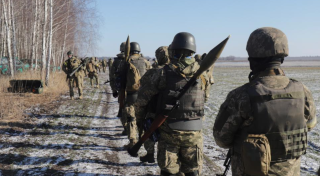 "Are we sleepwalking into World War III?
"As regional conflicts rage and revisionist powers challenge the established order, warnings of a new global conflagration are growing louder… Bleak warnings are being issued against the backdrop of a steady increase in warfare and battle deaths around the world."
https://www.ft.com/content/3a56575e-ecfb-4fa9-af70-01aebd869729
 "A New Level of Threat and Fear Risks Pushing the U.S. and Iran Back to Full War…
"Inside the Trump administration, officials are expressing fears that Iran is in the "advanced stages" of planning attacks against U.S. officials. More than 6,000 miles away, the Iranians appear convinced that Israel and the United States are preparing to unleash their third major attack in 16 months…"
https://www.nytimes.com/2026/10/24/us/politics/trump-netanyahu-iran-new-phase-of-war.html
 "Trump says the economy is better than ever but voters are being crushed.
"GDP is strong yet inflation is squeezing Americans, driving up the price of fuel, food and borrowing… A Telegraph analysis suggests that Mr Trump's war with Iran is costing the average American household an additional $3,073, as fuel, food and interest rates batter finances."
 "EU weighs mirroring Donald Trump in securing critical minerals.
"Members of the European parliament last week voted to create an agency with the power to take stakes in raw materials companies when needed "to safeguard the union's security of supply", create EU stockpiles and to monitor supplies across the bloc."
https://www.ft.com/content/cfb2e934-0000-42e6-93a4-4dffa56f11a8?syn-25a6b1a6=1
 "European governments need to 'prepare systematically' for scorching summers ahead.
""Europe needs to implement its climate commitments faster, prepare our cities and rural areas for extreme weather and ensure that people can afford to keep their homes cool. Protecting people, cutting energy bills and strengthening Europe's energy security must go hand in hand.""
 "How the next eurozone crisis happens - French collapse is contagious…
"Once interest rates exceed a certain threshold, a doom loop sets in. Higher interest rates raise debt servicing costs, which drives up the budget deficit, which drives up borrowing, and which again drives up interest rates… Debt serves as collateral for the money the banking system gets from the ECB. If a country defaults on its debt, the banking system inevitably freezes up."
https://unherd.com/2026/10/how-the-next-eurozone-crisis-happens/
 "More than 1,300 arrested as clashes follow another day of mass protests across France…
"After largely peaceful demonstrations, police fired tear gas and water cannon to disperse protesters in a number of cities including Paris, while barricades were set alight in Marseille and people ripped boards from a shop in Bordeaux."
https://www.bbc.co.uk/news/articles/c95ynd587ynzo
 "Portuguese police with dogs and batons dismantle housing protest camps…
"The raids were the latest incident in days of clashes between police and campaigners who - inspired by similar camps in Spain - had sought to pitch tents in central squares to protest against the country's deepening housing crisis."
 "Spanish youths storm Barcelona as violent protests sweep Europe…
"Riot police arrived in the Catalan capital on Saturday after groups of young people, many dressed in black and wearing hoods, began vandalising street furniture.
More than 30 fires were started in the streets, while 14 shops were looted. Footage shared on social media showed customers trapped inside a department store…"
 "Thousands march across Italy as protests bring isolated clashes with police.
"Thousands of people took to the streets on Saturday across Italy's main cities to protest over a range of issues, including the rising cost of living, Giorgia Meloni's government and the wars in the Middle East."
 "Serbia's long-standing leader Aleksandar Vučić has admitted defeat to a student-led protest movement in snap parliamentary elections.
"Celebrations erupted as crowds descended on the centre of Belgrade, Novi Sad and other cities. The student movement was formed less than two years ago in response to a railway station disaster blamed on corruption…"
https://www.bbc.co.uk/news/articles/cw5yn3xlprpmo
 "Albania protests: unrest across Tirana as violence spreads.
"Albania has also seen a repeat of violent protests this weekend. Demonstrators have been throwing stones and setting fire to government buildings in the capital, Tirana. The country is in advanced talks to join the EU, but many Albanians are frustrated by what they see as corruption and incompetence…"
https://www.channel4.com/news/albania-protests-unrest-across-tirana-as-violence-spreads
 "The Black Sea is now the world's deadliest shipping route…
"More sailors died in the Black Sea than in any other body of water this year, outstripping fatalities in the Gulf, which has garnered more attention worldwide. A critical corridor for global grain supplies and Russian oil, the Black Sea is riskier for vessels than the Middle East…"
https://www.ft.com/content/8c874f60-0041-476d-9c53-8524c374443f?syn-25a6b1a6=1
 "Russia's War on Ukraine Is Straining [Global] Food and Fuel Supply…
"Russia and Ukraine have stepped up assaults on each others' export industries over the past year. The Kremlin is targeting ports, elevators, warehouses, ships and other infrastructure critical to Ukrainian agriculture. Kyiv is striking refineries, oil terminals and tankers as well as Russian grain hubs on the Black Sea and ships."
https://www.bloomberg.com/graphics/2026-ukraine-russia-strikes-exports/
 "Russia likely to harden posture on Japan at least until Ukraine war ends.
"Russia's detention of a Japanese journalist for spying allegation marks a fresh low in bilateral ties, and Moscow's hardline stance toward Tokyo is set to continue at least until the Ukraine war ends, according to foreign policy analysts."
 "Japan reopens taboo debate over nuclear-powered submarines.
"With China flexing its naval power across the Pacific and bilateral tensions running high, Japanese Prime Minister Sanae Takaichi is weighing a move long viewed as taboo - nuclear-powered submarines for the Maritime Self-Defence Force fleet."
 "North Korea-South Korea tensions high as letters lodged with UN, howitzer spotted.
"Tensions between North Korea and South Korea are running high this week after Pyongyang sent a letter to the UN Security Council, repeating accusations that Seoul fabricated a September landmine incident, and after a North Korean howitzer was spotted close to the border."
 "Why China's stimulus keeps missing the mark.
"China has developed a highly uneven, "K-shaped" economy where high-tech manufacturing and exports are booming, while domestic consumption, the property market, and job creation remain severely depressed."
 "China's consumer slump demands a Japan-style stimulus response…
"Alpine Macro's Chen Zhao says China's near-stagnant retail sales and persistent deflation bear striking similarities to Japan's post-bubble economic slump. He criticises Beijing's reluctance to deploy aggressive fiscal and monetary stimulus, warning that prolonged inaction risks inflicting structural damage on the economy."
 "Fuel Oil Becomes Asia's Next Cost Shock.
"Singapore's shipping-fuel market is adding another layer of cost to Asian trade. Disrupted supplies from the Middle East and Russia, resilient bunker demand and prohibitive freight rates have pushed high-sulphur fuel oil above the price of the crude used to produce it."
https://oilprice.com/Energy/Crude-Oil/Fuel-Oil-Becomes-Asias-Next-Cost-Shock.html
 "Indonesia cuts gas exports to Singapore amid row over haze.
"The cut began on Saturday and totals 31 million standard cubic feet a day, with 15 million from the Natuna field in the Riau Islands and 16 million from Sumatra, the head of the state agency that supervises the oil and gas sector said in a statement."
 "Thailand hits back at Cambodia over 2 temples on Oct 25.
"Thailand's Culture Minister rejected Cambodia's demand for the return of artefacts, asserting Thai ownership of two border temples: Prasat Ta Kwai and Prasat Khana. Thailand justifies its claim by stating both temples have been registered as ancient monuments under Thai law…"
https://www.nationthailand.com/news/general/40072733
 "Arunachal Congress chief alleges Chinese troops entered 40-50 km into India, claims soldiers fought with sticks…
""During the last week of July, residents informed us about such clashes. There were reports of soldiers from both sides attacking each other with sticks and engaging in physical fights. The Indian Army also countered the alleged aggressive activities of Chinese troops," he said."
 "Violence Escalates In Arunachal Over Siang Dam Project.
"Protests against the proposed Siang dam in Arunachal Pradesh's East Siang district turned violent late on 23 October 2026, leading to a heavy security deployment in Pasighat and the imposition of restrictions on public gatherings."
https://www.thequint.com/news/breaking-news/arunachal-siang-dam-protest-violence-escalates-security
 "Islamabad warns of further action if Afghan soil continues to be used for militancy in Pakistan.
"Relations between Pakistan and Afghanistan have deteriorated over a rise in militant attacks in Pakistan, particularly in Khyber Pakhtunkhwa (KP) and Balochistan provinces that border Afghanistan. Islamabad has repeatedly accused the Tehreek-e-Taliban Pakistan (TTP) and other groups of using Afghan territory…"
 "Inside the worst month for ships in the Strait of Hormuz…
"More than 120 ships attacked at sea since conflict erupted… Attacks on shipping have risen since the US reimposed its blockade in July. With 29 ships hit so far, October is already the worst month of the war, ahead of the 20 attacks recorded in March."
https://interactive.aljazeera.com/aje/2026/hormuz-journey-seafarer/
 "Gulf economies accelerate diversification as recession looms over Iran war…
"With Trump weighing his options, including both another military escalation and a politically inconclusive end to the war with Iran after midterm congressional elections on November 5, uncertainty reigns in the Gulf region."
 "Beirut's $13 chicken sandwich becomes symbol of Lebanon divide.
"The Glow Paradise restaurant introduced the $13 'Chich Taouk' sandwich, sparking outrage for its high price amid widespread poverty… Seven years after Lebanon's devastating financial meltdown, a debate over a chicken sandwich has exposed an increasingly stark divide between those who can still spend freely and those struggling…"
 "Thousands mourn victims of deadly Jordan church attack…
"Nine people were killed and dozens wounded in a rare attack on Jordan's Christian minority, prompting three days of national mourning. The ninth victim, Mohammed al-Qasous, is due to be buried on Monday, his family told the AFP news agency."
https://www.aljazeera.com/news/2026/10/25/thousands-mourn-victims-of-deadly-jordan-church-attack
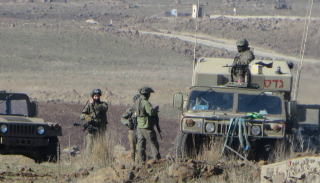 "Israel extends military barrier through farmland in southern Syria.
"Israeli forces continued bulldozing farmland in southern Syria on Sunday to extend a military barrier that Damascus has condemned as a violation of the 1974 disengagement agreement, the official SANA news agency reported."
 "Deeply divided Israel braces for pivotal election…
"Polls published on Friday put the governing coalition and the main opposition bloc almost neck-and-neck, with half a million first-time voters due to cast their ballot and some 70,000 Israelis reportedly flying in from abroad specifically to vote."
https://www.bbc.co.uk/news/articles/ckpdgy6pl7xlo
 "'It's collective punishment': nearly 2,000 Palestinians in Hebron displaced as Israeli forces take over homes.
"Hebron, the biggest city in the West Bank, had paid little attention to Israel's looming elections until it found itself suddenly in the midst of them, a proving ground for Benjamin Netanyahu's security credentials in the run-up to Tuesday's vote."
 "Yemen's Iran-aligned Houthis said on Monday they had attacked Saudi Arabia's East-West crude oil pumping stations and Riyadh airport, as rising hostilities choke oil supplies and threaten to erupt into a larger conflict…
"The Houthis have been firing ballistic missiles and drones at Saudi airports, ports and oil installations, turning US ally Saudi Arabia into a pressure point in the wider war."
https://theedgemalaysia.com/node/823230
 "Escalating Clashes in Yemen Leave Hundreds Dead.
"Yemen has experienced a significant escalation in hostilities over the past five days, resulting in hundreds of fatalities. According to reports from the region, the surge in violence has been characterized by intense direct combat between government-aligned forces and Houthi insurgents, as well as a series of targeted airstrikes."
https://english.globalarabnetwork.com/2026/10/24/escalating-clashes-in-yemen-leave-hundreds-dead/
 "China, Djibouti oppose recognition of Somaliland, backs Somalia's territorial integrity.
"Israel became the first country to recognise Somaliland as an independent state last December, prompting condemnation from Somalia and numerous countries around the world…. Somalia regards Somaliland as an integral part of its territory and considers direct agreements with its authorities that bypass the federal government a violation of its sovereignty."
 "Several dead in clashes between rival Ethiopian regional armies.
"Several people have died during clashes between the armies of southern Ethiopia's Somali and Oromia regions in recent days, against a backdrop of territorial disputes, sources told AFP on Saturday. Fighting erupted on Tuesday after a Somali regional flag was hoisted in Moyale, a city near the border with Kenya…"
 "Sudan's soaring fuel prices make getting by harder for workers.
"Azhari's minibus uses three gallons (11 litres) of petrol a day, costing him about 105,000 Sudanese pounds ($11.30 a day, according to Sudan's parallel-market exchange rate). With fuel increasingly difficult to obtain, he now spends two days on the road and a third day queuing for fuel."
 "A nurse has been killed and another health worker severely injured after they were attacked while responding to an Ebola alert in the Democratic Republic of the Congo, according to the World Health Organization.
"It was the latest in a series of attacks on health workers and responders that authorities say is hampering efforts to slow the fastest-growing Ebola outbreak in the world."
 "Algeria approves army deployment to Niger in major shift in ties.
"Algeria's parliament approved a resolution on Sunday authorising the deployment of army units to Niger, a parliamentary statement said, in what would mark Algeria's first foreign troop deployment since it sent forces to support Egypt in the 1973 war."
https://middle-east-online.com/en/algeria-approves-army-deployment-niger-major-shift-ties
 "Africa's Debt Crisis Deepens as AFRODAD Demands Overhaul of Global Financial System.
"As governments devote larger portions of their revenue to creditors, fewer resources remain available for health care, education, social protection, infrastructure and productive investment. For countries already struggling with limited fiscal space, the growing cost of debt servicing threatens their ability to finance long-term development."
https://africabrief.substack.com/p/africas-debt-crisis-deepens-as-afrodad
 "One Marine Dead, Four Wounded as FARC Dissidents Deploy Grenade-Dropping Drones Against the Colombian Navy.
"A FARC dissident cell dropped a grenade from a drone onto a Colombian Navy patrol boat in Cauca, killing one marine and wounding four — the latest blow in a widening aerial war on the Pacific coast."
 "El Salvador's Bukele says bodies found in Haiti are not those of missing Salvadorans…
"El Salvador deployed more than 100 special forces troops to Haiti on Oct. 22 to help rescue the Salvadorans, a day after announcing a military operation and warning the criminals of a more forceful response if the Salvadorans are not released alive and unharmed."
 "This A.I. Boom Looks an Awful Lot Like the Housing Bubble.
"Artificial intelligence is fast becoming the largest investment in U.S. history. As the money pours in, the companies involved are resurrecting bad old habits eerily reminiscent of the shenanigans deployed in the run-up to the financial crisis."
https://www.nytimes.com/2026/10/25/opinion/ai-bubble-financial-crisis-lehman.html
 "AI euphoria meets rising global debt as bond yields threaten technology investment boom…
"The risks are interconnected. A bond-market sell-off could raise borrowing costs for technology companies, while a sharp correction in AI stocks could hit household wealth, weaken economic growth and leave indebted governments with little room to respond."
 "'Ticking time bomb': The world's pension funds face an ageing crisis…
"The problem is "huge, and it's gotten more pronounced over time," said Sebastien Betermier, executive director at the International Centre for Pension Management, noting that some pension funds have members who have been retired for nearly half a century, aged aged 107 or 108."
https://www.cnbc.com/2026/10/26/pension-funds-ageing-crisis-risk-investment.html
 "Are we in a global whisky recession?
"I've just returned from a trip to Islay in Scotland, which has more whisky distilleries per square mile than anywhere else in the UK, and several of its famous single malts are struggling.. Global Scotch exports fell by 4.3 per cent in 2025, with single malts hit even harder."
https://spectator.com/article/are-we-in-a-global-whisky-recession/
As a reader-funded publication, your one time and regular donations help keep this site going. If you value this work, please share it far and wide and consider a Patreon subscription or a one time Paypal donation. You can also support this work by buying a virtual coffee. Thank you!
You can read the previous "Economic" thead here. I'll be back tomorrow with a "Climate" thread.
The post 26th October 2026 Today's Round-Up of Economic News appeared first on Climate and Economy.

The U.S. military just can't help meddling in the Philippines.
At the turn of the 20th century, an American war of conquest killed "over 20,000 Filipino combatants" in addition to "as many as 200,000 Filipino civilians [who] died from violence, famine, and disease," according to no less than the U.S. State Department. But "violence" doesn't do justice to exactly what occurred.
To take one example, historian Justin Jackson recently shed light on a forgotten atrocity in the central Luzon region of the Philippines in 1900 in which U.S. troops torched 60 buildings and executed 27 detainees. A year later, Brig. Gen. Jacob W. Smith issued orders: "I want no prisoners. I wish you to kill and burn, the more you kill and burn the better it will please me. I want all persons killed who are capable of bearing arms." When Maj. Littleton Waller asked for clarification on the age limit for those who would be killed, Smith told him: "Ten years." Estimates of the death toll from that campaign stretch from thousands to tens of thousands. And in 1906, on the the volcanic crater of Bud Dajo, U.S. troops killed, by some estimates, nearly 1,000 Muslim Moros, including women and children. One American captain recalled wounded babies "groping amid the mass of the dead for the mother's breast."
Year after year, these imperialist U.S. troops conducted brutal counterinsurgency operations in which they, according to the State Department, "burned villages, implemented civilian reconcentration policies, and employed torture on suspected guerrillas," as they fought and died in places like Basilan and Jolo. And a century later, during the forever wars, U.S. Special Operations forces were again sent to the Philippines. For years, they carried out counterterrorism missions, fighting and dying in places like Basilan and Jolo.
Given this long history of military meddling, you probably won't be shocked to learn that U.S. forces are back in the Philippines — and expanding their presence. You may, however, be taken aback by their new ally there: private capital. Today, TomDispatch's stalwart Pentagon watcher Bill Hartung unravels the sordid story of business interests, shady Trump cronies, and Pentagon revolving-door Rangers readying for a war with China that has, thus far, gone on under the radar.
— Nick Turse, editor of TomDispatch
If you haven't yet, sign up to receive TomDispatch in your inbox here.
Bankrolling EmpireDuring the Cold War, the Subic Bay Naval Base in the Philippines was a key enabler of U.S. military operations in the Pacific and beyond. It served as a critical support facility for the U.S. war in Vietnam and a transit point for U.S. weapons destined for American military personnel in the 1991 Persian Gulf War. That all changed in June of that year, when the Philippine Congress, under pressure from a grassroots anti-bases movement, refused to renew the lease for Subic Bay and other U.S. outposts in that nation.
After the closing of U.S. bases, military relations between the U.S. and the Philippines were conducted indirectly through arms transfers, joint training exercises, and deployments of Special Operations forces to aid Philippine counterinsurgency efforts, rather than by the permanent presence of tens of thousands of troops. The relationship was codified in 1999, when Washington and Manila entered into a Visiting Forces Agreement, which eased the movement of U.S. troops and equipment in and out of the Philippines and put U.S. personnel in the country under the jurisdiction of U.S. rather than Philippine authorities.
But now Subic Bay is back in play as part of a new expansion of the U.S. military presence in the Philippines. And this time around, private capital is financing these empire games.
Military Might Versus Human RightsThe long-standing U.S. military ties with the Philippines have come at a high price for the residents of that nation. Washington's military and economic interests there have prompted it to look the other way as repressive leaders like Ferdinand Marcos and Rodrigo Duterte engaged in systematic human rights abuses against their own people.
 Related
"Trump Has Appointed Himself Judge, Jury, and Executioner"
To its credit, the Reagan administration eventually cut ties with Marcos — who was overthrown through peaceful protests known as the "People Power" revolt in 1986 — throwing its support behind his democratically elected opponent, Corazon Aquino. But there was no such shift with respect to Duterte, whose regime ruled the Philippines from 2016 to 2022, and engaged in extrajudicial killings of thousands of Filipinos, including journalists and land reform activists, all under the guise of a "war on drugs." Duterte is now under indictment by the International Criminal Court, which has cited him for "the crimes against humanity of murder and attempted murder."
While Marcos and his family fled the Philippines in the 1980s, his son — Ferdinand Marcos Jr. — returned and, in 2022, won the presidency in a landslide, in part by promising to continue some of the strongman policies introduced by Duterte. According to Human Rights Watch, since the younger Marcos took office:
Serious human rights violations have continued in the country largely unabated, including arbitrary arrests, extrajudicial killings and enforced disappearances by security forces. The murderous 'war on drugs' has continued, though with fewer killings. Leftist civil society activists, journalists, environmentalists, Indigenous leaders, trade unionists, and left-wing politicians remain under serious, at times deadly, threat.
During the Biden presidency, the U.S. expanded a 2014 pact — the Enhanced Defense Cooperation Agreement — which gave the U.S. military access to five major sites in the Philippines. In 2023, the number of bases was expanded to nine. The State Department has described the scope of the EDCA as authorizing "U.S. forces access to agreed locations in the Philippines on a rotational basis, for security cooperation exercises, joint and combined military training activities, and humanitarian assistance and disaster relief activities." That official summary fails to admit the real reason for the signing of the EDCA: to give the U.S. access to territory that can be used in a future war with China.

Read Our Complete Coverage
TomDispatch The Privatization of Subic BayBuilding on his predecessor's enhanced cooperation with the Philippines, President Donald Trump, who had been a staunch Duterte supporter, has pursued even tighter ties with Marcos's government. This has been driven, in significant part, by the desire to use the Philippines as a platform for potential U.S. military interventions in the Pacific region and further economic penetration of Asia.
 Related
The Philippine Missile Crisis: U.S. Deployed Arms to the Philippines and No One Noticed But China
As part of the accelerating security partnership between the U.S. and the Philippines, military activities at Subic Bay have resumed. But this time, formal access has been secured by a private investment firm, Cerberus Capital Management, which controls the area through a 50-year lease granted through collaboration with a Philippine company, Agila.
A report by the New York Committee for Human Rights in the Philippines, a member of the International Coalition for Human Rights in the Philippines, summarized current activities at Subic Bay:
In mid-2025, the U.S. Congress approved a plan to build a forward operating base and ammunition production facility in Subic Bay. It is projected to be the world's largest weapons hub. … The shipyard [is home to] HD Hyundai Heavy Industries, deep sea fiber optic data cables manufacturer Sub Com, defense contractor V2X and the Philippine Navy, which operates a portion of the facility.
Cerberus has strong ties to the Trump administration, first and foremost through its founder, Stephen Feinberg, who is deputy secretary of the Department of War, second in command at the Pentagon behind Pete Hegseth. In that role, Feinberg oversees the Pentagon's Office of Strategic Capital, which makes loans to military tech companies, many of which are current or former Cerberus clients.
Feinberg "earned" his position the old-fashioned way — by giving millions to Rebuilding America Now, a super PAC devoted to supporting Trump, and hosting a $50,000-a-plate fundraiser, the proceeds of which also went to support candidate Trump in 2016.
 Related
Major Trump Donor Owned Security Firm That Trained Khashoggi Killers
Bloomberg News has identified four other former Cerberus executives now in key positions at the Pentagon: David Lorch, director of the OSC; George Kollitides, a special government employee who is simultaneously a director of D. Boral Acquisition, a company that brokers mergers and acquisitions in the weapons sector; and senior Pentagon advisers John Gallagher and Tom Rakusan.
On the other side of the revolving door, Cerberus has hired major Republican figures like former Treasury Secretary John Snow and former Vice President Dan Quayle, who serves as chair of the company's global investment unit. Given these connections, the Pentagon is all-in behind Cerberus's activities in the Philippines. But this has prompted a backlash. Activists in the Philippines and beyond are speaking out against the role of Cerberus, calling for public pension funds to withdraw their investments in the company for underwriting the militarization of the Philippines.
Another important avenue of increased cooperation between the U.S. and the Marcos government is the Philippines' participation in Pax Silica, a U.S.-initiated cartel that the State Department describes as its "flagship effort on AI and supply chain security, advancing new economic security consensus among allies and trusted partners." And by "supply chain security," the declaration primarily means "reducing dependence on China" for critical minerals needed to feed and sustain the computing power now central to the Pentagon and the U.S. arms industry.
 Related
Tech Official Pushing TikTok Ban Could Reap Windfall From U.S.-China Cold War
In addition to the Philippines, there are 24 other participants in Pax Silica, including two other key Asian partners, India and Japan, as well as Taiwan, which is an associate member of the cartel. Jacob Helberg, a former adviser to military tech giant Palantir who now serves as the State Department's point person on Pax Silica, has stressed that the initiative goes well beyond just securing the supply of specific critical resources. "If the 20th century ran on oil and steel, the 21st century runs on [computing power] and the minerals that feed it," he said. "This declaration [announcing Pax Silica] hails a new economic security consensus ensuring aligned partners build the AI ecosystem of tomorrow — from energy and critical minerals to high-end manufacturing models."
The China SyndromeAlthough it supplies many other benefits to U.S. corporations and America's national security state, the enhanced effort to bring the Philippines more securely into the U.S. military, political and economic orbit is all rationalized as moves toward reining in China's economic and military power and garnering Manila's support in a possible war between China and the U.S.
 Related
The Pentagon's Obsession With China Puts Hawai'i at Risk
The policy of economic warfare and aggressively preparing for a military conflict with China could not be more misguided. The oft-cited "need" to posture U.S. forces to do battle with China over Taiwan ignores the fact that there are diplomatic means of preventing such a conflict.
What is needed is a joint understanding on the status of Taiwan. For over 40 years, peace in the Taiwan Strait has been maintained through the U.S.-China agreement that Washington will not take steps toward recognizing Taiwan as an independent state and China would agree not to resolve the issue of Taiwan by force — the so-called "One China" policy. That agreement has been weakened by actions taken during both the Biden and Trump administrations. The simplest and best way for Washington and Beijing to avoid a war over Taiwan would be to revert to the "One China" policy.
Using trade wars and military buildups as the primary U.S. tool for influencing China simply will not work.
China does not pose a direct military threat to the United States. Its last major war was its invasion of Vietnam in 1979, a conflict in which its troops were badly beaten by battle-hardened Vietnamese forces. The U.S. also spends almost three times as much on its military as China does, and is far ahead of Beijing in numbers of advanced combat aircraft, naval firepower, and nuclear weapons.
 "The Trillion Dollar War Machine," by William D. Hartung and Ben Freeman Available on Bookshop.org
In areas where China might be a peer competitor with the U.S. military, like AI-driven weapons, there need to be some rules of the road on how such systems can be used. Using trade wars and military buildups as the primary U.S. tool for influencing China simply will not work. The likely result of persisting in such an approach will be a dangerous arms race and an increased risk of outright war.
A more productive approach to U.S.-China relations would be to seriously explore cooperation on central issues like arms control, addressing the climate crisis, and stabilizing the global economy. There would still be a U.S. military strategy for the Asia-Pacific region, but it should be genuinely defensive in nature, a posture that could save hundreds of billions of dollars in the years to come.
Pursuing a more balanced policy toward China would open the way to developing more equal, less exploitative relations with the Philippines and other nations in the Pacific, and it would allow Washington to finally take a genuine interest in promoting human rights and opposing repression as central pillars of U.S. international relations.
At a time when armed conflict and threats of war are the bedrock of U.S. policy, from the Western Hemisphere to the Middle East, a shift toward diplomacy seems daunting. But it is the only way forward if we want to move toward a more peaceful world where no one nation or group of nations dominates, and where corporations aren't bending foreign and domestic policies to their will.
The post Bankrolling American Empire in the Philippines appeared first on The Intercept.
Angelina Resendiz's voice on the phone was frantic. She was calling a friend from the barracks room of Jermiah Copeland, a fellow sailor at Naval Station Norfolk in Virginia. They had spent the evening together, kissing and drinking, and now Resendiz, 21, needed to leave.
It was the last time anyone would hear from her. When Resendiz's friend arrived at the barracks 15 minutes later, the pair was nowhere to be found.
"The Navy failed her," Resendiz's mother, Esmerelda Castle, told The Intercept. After her daughter's disappearance, friends and family spent a week scrambling to find Resendiz. Castle found the Navy's reports in that time unclear, delayed, or downright false.
A first-of-its-kind Intercept investigation has found critical shortcomings in the U.S. military's procedures for documenting and preserving records of homicides that result from domestic abuse, including intimate partner violence. The Pentagon's mandated reports to Congress appear to substantially undercount these killings, omitting nearly half of cases.
In the six years before Copeland's murder of Resendiz, the Pentagon recorded 41 domestic abuse-related homicides committed by service members. The Intercept identified nearly twice as many: at least 73 potential cases involving 79 victims — almost all of them women — during the same period. Reports for fiscal year 2025, when Resendiz was murdered, are due in November.
The Intercept examined publicly available news articles, obituaries, court records, memorials, and other data to investigate the specifics behind the Defense Department's numbers. Reporters also used data obtained through a Freedom of Information Act request on Army noncombat fatalities to match names, because some news coverage did not mention the victims' and alleged perpetrators' military service.
A killing qualified for the dataset if it occurred in fiscal years 2019 to 2024; if the perpetrator was a member of the military at the time of the crime; and if the case involved a homicide. The database only includes cases where a victim of the violence had dated or was in a romantic relationship with the suspected perpetrator, and it includes multiple women living abroad who were foreign citizens dating American troops.
In the fiscal years since the second Trump administration took power, The Intercept found at least 10 service women or women working for the Defense Department have died from intimate partner and domestic violence, six of them killed by male co-workers. An additional 10 civilian women have been killed by male military personnel in intimate partner violence-related homicides during the same period.
A Pentagon spokesperson acknowledged The Intercept's queries about the discrepancy in homicide rates but did not respond to detailed questions before publication.
"At this moment in our country's history, I am afraid these numbers are going to increase even further," said Jacquelyn Campbell, a professor at Johns Hopkins University's School of Nursing who has been studying domestic violence in the military for decades. "We need primary prevention for everyone in the military and their partners."
The findings come in the wake of President Donald Trump's August announcement of a Military Spouse Commission, led by Jennifer Hegseth, the wife of Defense Secretary Pete Hegseth, and other high-level military leaders. The commission's mandate is to guide policy around issues affecting military families. Though intimate partner violence and spousal abuse have concerned military family advocates for decades and thousands of new cases are reported each year, the commission does not mention the issue as one of its areas of focus.
The Navy and DoD have said in public statements and communication with members of Congress and Castle that while "proper procedures were followed" following the death of Resendiz, they have identified several processes that require further review.
"What Are the Statistics?"Copeland killed Resendiz on May 29, 2025. In the days after Resendiz's disappearance, her friends filed missing person reports and called Castle in Texas, who in turn called the Navy. None of them knew that Resendiz was dead.
The Navy's official timeline of events says it did not start investigating her disappearance as a crime until a missing person's report was filed on the 31st, and that Castle did not reach out until that day. Phone records she shared with The Intercept and members of Congress show she started calling on the 29th.
"I was told she was found, and that the original missing person's report was exaggerated," Castle recalled. "I didn't think for a second that the Navy would lie to me.
"I was told she was found, and that the original missing person's report was exaggerated."
Technically, Resendiz had been found — a Navy chief searching for her had seen Resendiz's body packed under the covers in Copeland's bed around 10 a.m. on the day of her disappearance. They assumed she was asleep, according to evidence later revealed during trial. But as Castle tells it — including in a congressional inquiry she wrote requesting a deeper investigation— a Navy chief claimed on the phone to have spoken to her daughter in Copeland's room.
She had been dead for hours.
"He had Angie wrapped up in a blanket on his bed," said Castle. "It was against policy for her to be in the barracks. And they just turned their backs and left."
Intimate partner violence in the military has long been a problem with unclear signs of progress. Killings in the 1990s on bases such as Fort Campbell made national headlines, leading Congress to establish the Defense Task Force on Domestic Violence in 2000.
Campbell, the nursing professor, was part of the effort, which issued over 200 suggestions for improvement by 2003. "Most of the recommendations we made a long time ago were never implemented," she said. For one, she'd repeatedly requested better recordkeeping.
"One of the things I kept asking was, 'What are the statistics on intimate partner homicide in the military?' We could never get them," Campbell said. "And in the military's suicide reports, you cannot determine how many suicides were part of homicide-suicides, where a service member killed a civilian wife or partner before killing himself."
This lack of clarity sounded familiar to Priscilla Rodriguez, who spent 10 years in the Marine Corps before working in strategic communications for the Navy.
"The command chose not to pursue military legal action."
Rodriguez experienced domestic violence that met the Defense Department's criteria from her husband, an active-duty Marine at the time, according to documents reviewed by The Intercept. Her husband pleaded guilty to misdemeanor child abuse in civilian courts, and military legal authorities recommended domestic violence charges. "The command chose not to pursue military legal action," Rodriguez said.
The Intercept's analysis of the rates of domestic abuse reported in Pentagon data found intimate partner violence among married military couples was at least four times higher than the civilian rate. The Pentagon does not report the rate of abuse involving unmarried intimate partners, like Resendiz and Copeland.
Gaps like these make it difficult to have a thorough reckoning of the problem's scale. "When accountability is inconsistent," Rodriguez said, "it sends a message that abuse can and will remain hidden."
 Defense Secretary Pete Hegseth serves Thanksgiving meals to service members in Washington, D.C., on Nov. 28, 2025. He was joined by his wife, Jennifer Hegseth. Photo: Master Sgt. William Blankenship/U.S. Air Force photo Joint Task Force DC
"I Knew My Kid Was Not Coming Back"
Copeland kept Resendiz's corpse hidden in his barracks room for four days, until June 2, 2025, when he put her body into a duffel bag and dumped it in a wooded area behind a nearby elementary school.
By then, he was being questioned by the Naval Criminal Investigative Service on her whereabouts, and Castle was still wondering about her daughter's safety. She'd asked naval authorities to have her daughter give her a call, and when it never came, she contacted the base again.
A Navy official suggested her daughter may have gone AWOL.
"I didn't believe that," Castle said. "My kid is scared to miss work. She won't take off."
Castle flew to Virginia herself.
Resendiz had been dead for a week. Castle felt she wasn't getting the information she needed after the Navy and local authorities had put out a statewide missing person's alert. She requested that she be let into her daughter's barracks room.
"I didn't want anyone else touching her stuff," Castle said. "It was how she left it. There was still paint out; she had started painting again. Her yoga mat was still out. She had planned on returning. I knew my kid was not coming back."
She spent two more days in Virginia searching for her daughter, talking to local news, and asking naval authorities to give more updates.
"They didn't declare her AWOL or dead," Castle said. "They said she was duty status unknown. I was worried they were going to wash their hands of her."
On June 7, Castle flew back to Texas. Police found Resendiz's body in the duffel bag two days later.
A History of ViolenceJermiah Copeland was convicted of Resendiz's murder on June 8, 2026. According to evidence entered into court records in his murder trial, he had also been accused of two instances of domestic violence, three sexual assaults, indecent recordings, and other crimes from during and before his Navy service.
"He had a history of violence against women starting in high school," Castle said. "And was still allowed to join with the charges against him. Then he was accused of raping another service member, and he was transferred. There were no safeguards in place at the new command."
The absence of safeguards against intimate partner violence in the military is part of a broader set of structural and cultural failings, experts told The Intercept.
"There are many disincentives for a couple, particularly when one or both partners are on active duty, to seek help," Campbell said. "Active-duty women who were being abused told us: 'If my commanding officer knew, I would never get the next promotion.' There is considerable stigma, even for the victim. That makes the violence much more likely to escalate and makes it more likely that we eventually end up with homicides."
 Related
Hegseth Is Pushing Testosterone. The VA Has Already Struggled With the Treatment.
Research indicates that the military's hypermasculine culture and systematic mistreatment of women play a role in the increased risks of intimate partner violence. Some studies suggest that veterans offend at higher rates than those on active duty.
A previous Intercept investigation found active-duty Army women were more likely to be killed by fellow service members than by enemy combatants and had a higher per capita risk of homicide than their fellow male soldiers between the years 2011 and 2025.
More than 70 percent of the victims had an intimate relationship with the perpetrator at some point. Army women faced an intimate partner homicide rate at least three times higher than women nationally; controlling for those killed by service men and male veterans alone, it was double.
The military's systems for identifying and responding to abuse, meanwhile, have come under repeated scrutiny. A 2021 Government Accountability Office report found the department "has not collected and reported accurate data for all domestic abuse allegations received," leaving it unable to assess the scope of alleged abuse.
The same can be said for homicides.
Almost a third of the 79 victims The Intercept found were killed in murder-suicides. Firearms were used in over two-thirds of the fatalities. Twenty-five of the victims were service members. Multiple homicides involved corollary victims who were not partners, including children, who research shows make up a sizable amount of intimate partner violence-related deaths.
 Related
Women in the Army Are More Likely to Be Killed by Fellow Soldiers Than Enemy Combatants
In response to The Intercept's questions, the Department of Defense stated that data in its domestic abuse reports does not constitute estimates, as it is only using aggregated data from the Family Advocacy Program Central Registry, a database run by the DoD. It further stated it did not have any more information to share on the matter.
"Right now, unless an incident is reported to the Family Advocacy Program," said Campbell, "nobody knows about it. Those reports are only the tip of the iceberg."
Data tracking failures have had deadly consequences. The Air Force failed to submit the criminal history of a former service member convicted of assaulting his wife and stepson to a federal database that could have prevented him from purchasing firearms. In 2017, he killed 26 people in Sutherland Springs, Texas.
When Rodriguez reported her own abuse to the DoD, she felt that they didn't consider the previous information they had available. Installation-level committees review reported allegations and determine whether they meet criteria to be input into the central registry. But the process is plagued with issues, experts who spoke to the Intercept revealed, from investigation procedures to data tracking.
"I was terrified to disclose the full extent of the abuse I was experiencing," Rodriguez said. "What stands out to me now is that the Family Advocacy Program already had access to my husband's history. Given that history, I believe the conversation should have been much broader than simply asking whether I wanted to report anything. I left that initial interaction without understanding what support existed or how I could safely leave."
While navigating her own case, Rodriguez was also watching the same problem surface through her communications work for the Navy.
"It felt completely disconnected from the reality my family and so many others were living."
"Headlines I monitored involved active duty and Marine veterans accused of intimate partner homicide," Rodriguez said. "At the same time, I reviewed serious incident reports that were elevated to senior leadership. … The narrative often indicated that intimate partner violence or domestic violence was a contributing or co-occurring factor."
Navy criminal investigative data showed domestic violence-related deaths increasing as Rodriguez was trying to raise the issue in 2022. She tried to compile domestic violence awareness resources, but she recalled being told the need wasn't there.
"I was told there was 'no demand signal,'" Rodriguez said. "It felt completely disconnected from the reality my family and so many others were living."
Castle feels that the knowledge of Copeland's history of abuse could have saved her daughter's life.
"No one knew anything about him," Castle said. "The leadership created an environment that allowed him to harm women."
Winnable CasesSince her daughter's murder, Castle has been at work pushing the Navy and Defense Department to strengthen their responses to intimate partner violence. Her work led to the Navy changing its policies in July on how it transfers sailors with allegations of sexual violence.
Her wins, including potential plans by the Navy to change how it classifies missing sailors, are the latest in a long string of limited efforts toward progress.
"Records are important," said Castle. "With my daughter, they didn't want to classify her case properly at first. For the military, if something isn't in a database, it doesn't exist."
Following the high-profile 2020 murder of Army Spc. Vanessa Guillén at Fort Hood — and two years after domestic violence became classified as a crime under the Uniform Code of Military Justice — Congress gave independent military prosecutors the power to decide which cases to bring to trial.
Domestic violence prosecutions climbed, with charges brought in 359 cases last year alone, up from dozens of cases four years earlier. But Pentagon data identified at least 25,000 intimate partner and spouse abuse victims, and 37,000 cases, from 2021 to 2024.
 Related
Pentagon Considers Cutting Its Sexual Assault Rules
And while domestic violence prosecutions increased, military prosecutions of sexual assault — often related to intimate partner violence — fell by almost 60 percent in the past five years, based on data from its annual sexual assault prevention reports. A 20 percent drop occurred from 2024-2025 alone, and The Intercept's analysis of military court data shows the trend is continuing into 2026.
"In the Pete Hegseth era, sexual assault prosecutions have dropped significantly. Domestic violence is essentially filling that gap," said Paul Newell, an Army veteran and activist who tracks military suicide, sexual assault, and domestic violence while engaging with members of Congress on the issue.
"In the Pete Hegseth era, sexual assault prosecutions have dropped significantly."
Newell thinks the trial counsel's office is "going for what they feel are stronger, more winnable cases," he said. "They'll tell you that their conviction rates at trial are still high, which shows that really, they're just getting rid of the bad cases," he said. "But we're not down 60 percent in sexual assaults happening."
The Pentagon stated in response to The Intercept's questions that it does not have any additional information to share on why prosecution rates for certain crimes are dropping.
The Intercept also discovered preferential treatment in trial outcomes: Analyzing over 650 military court cases with guilty verdicts from 2021 on, reporters found less senior Navy, Marine, and Army service members had higher chances of losing their benefits and received more jail time after being convicted for domestic violence. Senior ranks closest to retirement received the best conviction outcomes, even compared to those of the same rank as them who had fewer years in service.
Newell feels that these discrepancies give perpetrators increased power over their victims. "The justice system should not take time in service into consideration since that's prioritizing the perpetrator. If the punishment for domestic violence is a discharge where you lose benefits, it should be applied equally."
In April, Hegseth directed installation commanders to allow service members to request permission to carry privately owned firearms on bases while off duty. He framed the change as a way to protect service members from attacks on military installations.
Campbell disagrees.
"I have reviewed far too many domestic violence homicide records," Campbell said. "It is clear to me that, in many cases, there might have been a fight, and somebody might have been hit, but nobody would have died if there had not been a gun right there."
Rodriguez, who is now studying public health, is calling for recurring anonymous surveys using specific questions to measure the prevalence of intimate partner violence, standardized tracking, independent evaluation, and public reporting.
Castle is still mourning her daughter and still pushing the Navy to reveal the full details about the investigation into her death. To add to the insult, she remembered the shock she felt late last June, when the Navy sent Resendiz home to Texas in a casket. Naval officials had told Castle that everything was taken care of, she recalled, including cleaning the body.
The Navy acknowledges that it failed to clearly inform Castle of her daughter's true state. She was returned to Texas in decay, her body crawling with maggots.
"There's nothing that can be done for her," said Castle. "That's injustice, and that's what drives me. None of these women volunteered to be violated in this way."
Reporters searched through multiple databases to identify the number of potential victims of intimate partner violence, using definitions provided by health and policy research alongside government organizations, comparing it to the last six years of available DoD reporting from 2019 through 2024. The case of a U.S. Air Force airman who kidnapped and murdered a Mennonite woman in 2020 didn't meet criteria because evidence revealed no previous or current relationship. The case of a soldier who was convicted a year later of the murder of a woman in Texas did, as evidence indicated they had a relationship before the woman's death.
Cases were broken down by the year of the offense, gender of the alleged perpetrator and victim, and branch of the perpetrator and victim, if applicable.
To analyze court data, reporters from The Intercept pulled all court cases pertaining to domestic violence from the years 2021 to 2026 from the websites of the Air Force, Navy/Marines, and U.S. Army. Navy/Marine data was only available starting in 2021.
Data included the offense type, rank of the accused, and whether the cases ended in acquittal, dismissal, or conviction. For those convicted, the analysis included the amount of jail time given and whether offenders received a punitive discharge, which costs them military retirement and other benefits.
Retirement eligibility was calculated based on pay information provided in court documents, which in the military is based on years served. Air Force data could not be used for this analysis due to a lack of documentation and apparent discrepancies between the number of cases reported to Congress and those available on the Air Force portal.
To obtain the number of cases the DoD is prosecuting for sexual assault, reporters utilized Annex B of the DoD's Annual Report on Sexual Assault in the Military to calculate the number of unrestricted reports made to military authorities and the amount sent to the military justice system to begin the judicial process.
The 988 Suicide & Crisis Lifeline offers 24-hour support for those experiencing suicidal thoughts or for those close to them, by chat, text, or telephone. Service members can dial 988 and press 1 to reach the Military and Veterans Crisis Line. Support is free and confidential.
The post Pentagon Records Missed Almost Half of Troops' Domestic Abuse Killings appeared first on The Intercept.


