
Snapchat is taking a page out of Meta's handbook. The social media platform has announced it will launch creator subscriptions for users. Meta-owned Instagram and Facebook currently offer a similar feature.
On Snapchat, creator subscriptions will give users access to exclusive content across Snaps and Stories. They will also get priority replies and go ad-free on stories. Snapchat pitches the new feature as great way to give creators "freedom to experiment" and "build a recurring income stream" — all good things for keeping people on your platform.
Creators can choose exactly how much they want to charge subscribers per month. They can spread these figures out across Snapchat's recommended tiers.
Starting February 23, select US-based Snapchat creators will be able to offer subscriptions. In the US, iOS users should then be able to subscribe to their accounts. The feature should expand to Canada, France, and the UK in the coming weeks.
This article originally appeared on Engadget at https://www.engadget.com/social-media/snapchat-is-rolling-out-creator-subscriptions-152114731.html?src=rss
 Alive Color Stock/Shutterstock
Recent investigations have uncovered forced labour in agricultural supply chains, illegal fishing feeding supermarket freezers, deforestation embedded in everyday food products, and unsafe conditions in factories producing "sustainable" fashion. These harms were not visible on labels. They surfaced only when journalists, whistleblowers or activists exposed them.
And when they did, something predictable happened. Consumers felt uneasy. Brands issued statements. Promises were made. The point is that the force that set change in motion was not regulation. It was consumers.
Discovering that an ordinary purchase may be tied to exploitation or environmental damage creates a jolt of personal responsibility. In our research, we found that when environmental consequences are clearly linked to people's own buying choices, many are willing to switch products — especially when credible alternatives exist.
But guilt is private. It nudges personal behaviour. It does not automatically reshape systems. The shift happens when private discomfort becomes public voice.
Consumers are often also the first to make hidden environmental harms visible. They post evidence on social media. They question corporate claims. They compare sustainability promises with independent reporting. They organise petitions, boycotts and review campaigns. By shining a spotlight on the truth, the scrutiny shifts from shoppers to brands.
That shift matters because modern brands depend on trust. Reputation is an asset. When sustainability claims are publicly challenged, credibility is at risk. Research in organisational behaviour shows that firms respond quickly to threats to legitimacy. Reputational damage affects customer loyalty, investor confidence and regulatory attention.
In many high-profile cases, supply chain reforms have followed intense public scrutiny rather than quiet compliance checks. Leaders may not act out of moral awakening — but they do act when inaction becomes costly to their reputation.
Consumers can trigger the emotional chain reaction. They feel guilt. They seek information. They speak collectively. That collective voice generates corporate shame.
 Consumers have the power to demand more transparency from brands.
Stokkete/Shutterstock
Consumers have the power to demand more transparency from brands.
Stokkete/Shutterstock
Sustainability professor Mike Berners-Lee argues in his book A Climate of Truth that demanding honesty is one of the most powerful climate actions available to citizens. Raising standards of truthfulness in business and media changes incentives. When the gap between what companies say and what they do becomes visible, maintaining that gap becomes harder.
Our research explores how that visibility can be strengthened. The findings were clear. When environmental and social consequences are personalised and traceable, sustainability feels less distant. People see both their own role and the role of particular firms. That dual awareness encourages two responses: behavioural change driven by guilt and corporate accountability driven by shame.
Shame works because it is social. Brands care about how they are seen. When the negative environmental and social effects of supply chains can be publicly connected to named products, corporate narratives become contestable in real time.
Making supply chains socially visibleThe technology to improve transparency already exists. Companies track goods through logistics systems, supplier databases and digital product-tagging that collect detailed information about sourcing and production. The barrier is not data collection. It is disclosure.
Environmental indicators — carbon emissions, water use, land conversion risk, labour standards compliance — can be linked to products through QR codes or retail apps. Comparable reporting standards would ensure consistency. Simple digital interfaces would make information accessible. Social sharing tools would allow consumers to compare and discuss findings publicly.
Social media is crucial. It already enables workers, communities and campaigners to challenge corporate messaging. Integrating verified supply chain data into these spaces would shift transparency from crisis response to everyday expectation.
This strategy, with its behaviour change directive, could work more effectively than rules or green marketing campaigns alone.
Regulation is essential but often slow and uneven across borders. Marketing campaigns can highlight selective improvements while leaving deeper practices untouched. Transparency activated by collective consumer voice operates differently. It aligns emotional motivation with reputational consequence.
Consumers are not passive recipients of information. They are catalysts. By feeling the first twinge of guilt, asking harder questions and speaking together, they create the conditions under which companies experience shame. When shame threatens trust and market position, change becomes rational and inevitable.
Shame is uncomfortable. But when directed at opaque systems rather than consumers, it can be powerful. By demanding truth and making supply chains socially visible, consumers can push businesses towards greater transparency — and, ultimately, towards more sustainable practice.
Don't have time to read about climate change as much as you'd like?
Get a weekly roundup in your inbox instead. Every Wednesday, The Conversation's environment editor writes Imagine, a short email that goes a little deeper into just one climate issue. Join the 47,000+ readers who've subscribed so far.

Janet Godsell receives funding for the Interact Network+ from the Innovate UK Made Smarter Innovation Programme via the ESRC. She is affiliated with the World Economic Forum (WEF) Advanced Future Council for Advanced Manufacturing and Global Value Chains.
Nikolai Kazantsev receives funding from UKRI funded project "Resilience in Agrifood Systems Supply Chain Configuration Analytics Lab (Project ID: R1650GFS). He is a fellow of Clare Hall College, Cambridge.
After weeks of relentless rain and flooding, and even more forecast, 2025's droughts and hosepipe bans feel like ancient history. But they shouldn't.
The UK is increasingly caught between these wetter winters and warmer, drier summers. What if this year's summer brings water shortages again? The seemingly endless rainfall causing flooding across the UK right now could help solve future summer drought problems - if we capture it right.
The stakes are high in Speyside, home to around half of Scotland's malt whisky distilleries. They had to cope with 2025 being the UK's warmest and sunniest on record, where prolonged dry conditions led to widespread restrictions on water abstraction. Multiple distilleries were forced into temporary closures, costing the industry millions of pounds and highlighting just how vulnerable even Scotland's famously wet regions are to water scarcity.
Whisky production represents one of the UK's biggest industrial water users. Large quantities of water are required for the distilling process and the product itself, so understanding water conservation is both extremely important for the industry, and can also help others recognise the benefits.
If it was possible to retain this winter's rainfall and release it gradually when it was needed, the nation could become more resilient to both floods and droughts without building expensive new reservoirs.
Managing droughts with floodsAcross Speyside, they're testing ways to slow, store and steadily release water by working with the landscape rather than against it. Distillers have invested in leaky dams (small barriers built across temporary upland streams) to slow the flow of water during heavy rain and allow the rainwater to soak into soil and recharge groundwater.
Leaky dams hold the water at surface level as well helping it store underground. Water in the soil and deeper groundwater move through the subsurface much more slowly than over land - taking weeks or months rather than hours or days - which is why rivers still flow even after long dry spells.
 Tromie river in Speyside.
Ondrej Zeleznik/Shutterstock
Tromie river in Speyside.
Ondrej Zeleznik/Shutterstock
There are other examples of useful interventions. Peatland restoration, wetland creation and tree planting all work by increasing temporary storage in the landscape and slowing the movement of water into rivers.
Research across upland catchment areas in Cumbria and West Yorkshire shows how the principles being tested in Speyside could translate to elsewhere. A large academic review of natural flood management evidence concluded that measures increasing water storage, slowing the flow of water over the land or enhancing soil structure can consistently reduce the peak level of a flood.
This growing body of evidence supports a simple but powerful idea: the UK and other countries could be more resilient to droughts and floods by redesigning landscapes to keep water around for longer.
Three lessons for the rest of the UK1. Design and location matter
Local factors and hydrology (the study of the movement and management of water) can determine what works best where. For example, planting trees "somewhere" delivers far less benefit than planting them in the right places, especially near rivers, near the source of the river, or where soil can absorb water.
2. Benefits must stack up or they won't be adopted
Leaky dams and other projects, such as tree planting, are relatively inexpensive, compared with traditionally engineered flood defences or having to deal with flood and drought consequences. They can deliver benefits at a fraction of the cost, while potentially also increasing biodiversity, soil health, carbon capture and improving water quality.
But there are trade-offs, which need to be assessed early. For example, in some cases, large-scale tree planting can also reduce summer water availability in already stressed catchment areas. Tree canopies can temporarily store water on the leaves, but if this water evaporates it doesn't return to the soil. Tree roots improve the soil so it absorbs and stores more water, but trees can also use more water. The net effects depend on factors such as climate, soil type and tree species.
3. Good governance will unlock funding
When water security has clear economic benefits, businesses are willing to engage. However, investment is not always private, and a recent review showed public funding is often fragmented, with inconsistent planning rules. Strengthening overall governance of these kind of schemes is essential, because farmers, businesses and landowners are far more likely to participate if they benefit.
Managing our landscapes appropriately won't stop all floods or prevent every drought, but it can make both less severe, while restoring habitats, supporting farming, and protecting industries that rely on dependable water supplies.
Every river carrying floodwater to the sea represents water that could be stored for drier months. Thinking ahead for what happens during heavy rains can be part of forward planning for more extreme weather in years to come.

Josie Geris receives funding from the Natural Environment Research Council, Royal Society, the Scottish Government via CREW (Scotland's Centre of Expertise for Waters), and Chivas Brothers.
Megan Klaar receives funding from the Natural Environment Research Council, The Leverhulme Trust and National Trust.
Nintendo's Virtual Boy app is now available to download on Switch and Switch 2 as part of its Nintendo Classics offering. You'll need to have a Nintendo Switch Online + Expansion Pack membership to access the launch titles, and unlike Nintendo's other retro emulators, this one also requires a dedicated accessory.
As a reminder, the Virtual Boy was a portable tabletop system released in 1995, and the first console capable of rendering stereoscopic 3D graphics. It had a facemask with a monochrome red display built onto a bipod, so rather than wearing it like a modern VR headset, you had to awkwardly push your face towards it to play games.
Once you enter the third dimension, there's no going back…#VirtualBoy - Nintendo Classics is available now on #NintendoSwitch2 and #NintendoSwitch, as part of #NintendoSwitchOnline + Expansion Pack! pic.twitter.com/2uLd8iYorB
— Nintendo UK (@NintendoUK) February 17, 2026
While undeniably innovative for the time, the console never took off (to put it gently), but Nintendo is giving anyone who missed out in the '90s a chance to experience one of the strangest experiments in its history in 2026. Aesthetically, the $100 Virtual Boy add-on is a near perfect replica of the original console, with the big difference being that rather than a built-in display, it has a slot for sliding in your Switch or Switch 2. And unlike the OG Virtual Boy, this one is also wireless.
If $100 seems a bit steep for something that'll almost certainly be collecting dust before summer rolls around, Nintendo is also selling a $25 cardboard version (unfortunately your old Labo VR headset won't work here). Both are available to buy from the My Nintendo Store.
The Virtual Boy app is launching with the following games today: 3d Tetris, Galactic Pinball, Golf, The Mansion of Innsmouth, Red Alarm, Teleroboxer and Virtual Boy Wario Land. More games will be added in the future, including Mario Clash, Mario's Tennis and Space Invaders Virtual Collection.
This article originally appeared on Engadget at https://www.engadget.com/gaming/nintendo/nintendos-virtual-boy-app-is-now-available-to-download-150705800.html?src=rssDuring the flurry of CES 2026 news at the start of the year, it might have been easy to overlook Amazon's announcement that the Fire TV user interface is getting a revamp. But that redesign is rolling out starting today for US viewers. It will be available to users as a free update.
The main visual updates for the streaming device's UI are a lot of rounded corners. But Amazon is also emphasizing speed in this new look, claiming that the improvements will offer 20 to 30 percent faster interactions. This version of the UI also makes more apps visible on the screen at a time, with up to 20 apps able to be pinned to the homescreen compared with six in the prior design. The update also has access to the Alexa+ AI voice assistant if you want to use it to pull up viewing suggestions or to organize your viewing queue.
This article originally appeared on Engadget at https://www.engadget.com/entertainment/streaming/amazons-fire-tv-redesign-is-rolling-out-today-150000988.html?src=rss

An employment tribunal has reaffirmed that anti-Zionism is a "protected characteristic" under equality legislation in relation to the workplace. It then denied protection to two Muslim women disciplined by an Israel-supporting bank for opposing its genocide-friendly investments.
The finding reconfirms the landmark decision of a 2024 tribunal that sacked Bristol professor David Miller's anti-Zionism is protected by anti-discrimination workplace law. It also notably rejected the claim of the Israel lobby's so-called 'IHRA definition of antisemitism', which Lloyds Bank tried to invoke.
Anti-Zionism is a principled stanceHowever, the tribunal judges decided that the two women's anti-Zionism had not yet reached the level of a "philosophical belief" at the time they sent messages to colleagues demanding that Lloyds stop investing in companies profiting from Israel's genocide. Instead, they said that at that point it was "political opinion" not protected by legislation. They hold it as philosophical belief now, the judges ruled, so they would have upheld their claim if the disciplinary action happened now. The judges strongly criticised Lloyds Bank's actions but rejected the women's claim.
Under equality legislation, according to mediator Acas, a "philosophical belief" must be "all of the following":
• genuinely held
• not just an opinion or point of view based on current information
• about a significant aspect of human life and behaviour
• clear, consistent, serious and important
• acceptable in a democratic society - it must respect other people's fundamental rights
The European Legal Support Centre, which supported the two women's case, said that in spite of the adverse outcome the judgment was positive:
This judgment adds to the growing body of cases confirming that anti-Zionism is capable of amounting to a protected philosophical belief under the Equality Act 2010. While the claims did not succeed on the particular facts, the Tribunal made clear that beliefs supporting Palestinian rights can be worthy of respect in a democratic society, and that weaponisation of disciplinary action may give rise to unlawful discrimination.
Ms Sohail and Mrs Khalid should be recognised for their principled decision to pursue this case, which has helped clarify the law and strengthen protections for workers who seek to express deeply held beliefs in the workplace.
The so-called 'IHRA working definition of antisemitism' has been rejected even by its author as unfit for purpose. It has been rejected by legal experts, including Jewish experts, as legally useless for anything but attacking critics of Israel. It is frequently presented as the gold standard and used to protect Israel from criticism.
Featured image via the Canary
By Skwawkbox

US Senator and professional Southern Good Ol' Boy Lindsey Graham says the future of warfare looks like Israel's genocidal attack on Gaza. For once South Carolina's most swivel-eyed hard-right Zionist is bang on the money. And the evidence is right under American noses…
Graham told an audience in Tel Aviv:
The wars of the future are being planned here in Israel.
He insisted that
the most clever, creative military forces on the planet are here in Israel because they have to be to survive
Adding:
So what we're looking at is that Israel is advancing down the road to new weaponry far beyond us. And it would be nice to have a process where we could be partners.
Self-evidently, a lot of this is is garbage, including the myth of 'poor little Israel' fighting to survive in the midst of its enemies. The nuclear-armed settler-colonial state has been backed and armed by - and for the benefit of - Western imperial powers since the very beginning.
Lindsey Graham chats shit from Minnesota to GazaGraham is right though that the genocide in Gaza contain a blueprint for future warfighting. In fact, we can even see that taking place inside the US.
As +972 reported on 12 February:
ICE operations increasingly resemble Israeli occupation. That's no coincidence.
Immigration and Customs Enforcement (ICE) are US president Donald Trump's own paramilitary force. Officially their remit is to detain undocumented migrants. In reality, they are being used to discipline Trump's enemies - using Israeli-linked tactics and AI.
Using apps like ELITE and Fortify, ICE's occupations in places like Minnesota have mirrored Israeli methods.
The technologies supporting their operations illustrate how thoroughly ICE is following in Israel's footsteps: both ELITE and Mobile Fortify bear a striking resemblance to mobile targeting applications Israeli forces have integrated into their policing arsenal over the last decade.
Graham may be a clown, but even the most ridiculous court jester can stumble upon profound truths.
And in a shock no nobody who has been following the news lately, Graham singled out the UAE for special praise:
Graham told his audience that butcher of Gaza 'Bibi' Netanyahu wanted him to tell the UAE's leaders what a great partner the oil state had been to Israel.
I want to go there tomorrow to and acknowledge MBZ's leadership and suggest that America improve his capability to defend the UAE and the region.
The UAE, like Israel, is currently deeply implicated in genocide. The UAE is supporting Sudan's Rapid Support Forces in a war which has killed and displaced millions over the last three years. Here are a whole raft of articles on Sudan we've done lately.
BlowbackLindsey Graham has never seen a genocide - or met a genocidaire - he didn't like. But at the heart of his commentary there is a fundamental truth: Israel has laid the groundwork for a new scorched earth way of war powered by a deranged cocktail of old-fashioned colonial racism and new-fashioned technology.
For my first piece back at the Canary in 2025 I wrote about what Hannah Arendt would call the imperial boomerang. You can read that here.
But Arendt was merely drawing on something Aimé Césaire had developed. Césaire, a seminal anti-colonialist writer, said of Europeans that before the tactics and technologies of empire exploded back into the imperial core as 20th century fascism:
They tolerated that Nazism before it was inflicted on them, … they absolved it, shut their eyes to it, legitimized it, because, until then, it had been applied only to non-European peoples.
It's awfully late in the day, folks. But if I was you, I'd get reading…
Featured image via the Canary
By Joe Glenton

The following is a repost of a piece by Areej Alghazzawi which Amnesty International published on 16 February.
Silent TraumasTrauma follows us like our shadows during daylight. At night, trauma envelopes us until we feel like we are drowning.
Trauma also lives inside us like a disease. Good people in Geneva, New York, and The Hague say there is a cure, but we can't inject their statements.
14-year-old Shorouq Thabet is the only survivor of her immediate family, who were all killed during Israel's genocide. When I first asked her how she was, she simply responded with "nightmare".
Adulthood is being forced on Shorouq, and she fights it by fantasising about being a young child again, when her only worry was wondering where her doll had wandered off to.
She longs to hear her parents' voices; even their arguments could bring some comfort. They were killed in Deir Al-Balah following an Israeli attack on 17 March 2024. It was the last time she would sleep beside her mother and feel that special warmth. It was the last time she'd play with her younger sister, Shahed.
Destruction everywhere and in everyone in GazaShorouq has been in therapy for some time now in the hope of learning to resist the darkness. Until now, there has been no relief. The smell and sight of destruction that is everywhere, and in everyone, in Gaza, open up the wounds again within seconds of leaving her therapy sessions.
On the night of the Israeli strike, she told me she had a strange feeling - that danger was in the room with them. She asked her mother to turn on a flashlight and hold her closely.
At some point, she said she managed to sleep, but when she woke, she was in a hospital. Her mother had survived the attack and was covered in blood:
She was frantically checking on me, my sister, and two brothers, Mohammed and Ahmad. I could see her but not feel her. I was going in and out of the darkness.
It was the first time she had seen her mother in such pain. Her mother's face, covered in blood, is the last memory she has of her.
Her mother didn't survive, nor did her father, little sister, or older brothers. The full details of her family massacre were only told to her when she was out of the hospital after seven days of urgent medical attention.
Everybody was crying. Nobody was talking.Now she lives with her uncle Wael and his wife. I saw many people gathered at their home when Shorouq arrived. Everybody was crying. Nobody was talking.
A few days later, Shorouq told me:
At that moment, surrounded by so many unhappy people, I felt a change. I felt myself turning into an adult, with responsibilities. Now is not the time of dolls and dreams.
Try as she did to resist the pain, it was clear that young Shorouq just wanted to say a last goodbye to her sister and play together one more time.
Her lack of closure has been explored in her therapy sessions. The therapist asks her to draw what she feels. Sometimes, an empty paper expresses everything she feels.
She told me:
I used to love playing with dolls with Shahed. After the massacre, I lost my interest in everything. I actually still have a small piece of my doll that I found under the rubble.
In her free time, when she is not in school, she feels the pressure, and the flashbacks come back. She tells me she is consumed with uncontrollable thoughts. Now she is enrolled in an additional school. The time spent studying is an attempt to escape from her memories.
The detachment may be helping. Recently, Shorouq told me:
I hung a drawing on the door in my room. It's a drawing of a warm home with open windows. Each morning, I look at that because it looks like peace.
Areej Alghazzawi is a junior accountancy student at the Islamic University of Gaza. She hopes to become a teacher and an accountant. She had one year left of her studies before Israel's attack put her hopes on hold.
Alghazzawi is currently displaced but still in Gaza and, along with her family members, struggling every day to survive.
Featured image via the Canary
By The Canary

The mainstream media are choosing to ignore blatant anti-semitism and Islamophobia from Rupert Lowe's new racist party, Restore Britain.
Hey I wonder if this party unambiguous believing that Jewish people can't be British will receive much press attention. pic.twitter.com/j4dB7YuP2f
— linkshund (@linkshund) February 17, 2026
During an interview with Talk TV, Charlie Downes, campaigns director and spokesperson for Restore Britain, stated that Reform UK do not have a clear picture of who the British people are.
Then, in a follow-up post on X, Downes stated:
Restore Britain believe that Britain is a people defined by indigenous British ancestry and Christian faith.
Essentially, Restore Britain has shown itself to be anti-anything that isn't white Christian.
You've never clearly explained what British is
You say ethnicity, then waver into some cultural ties, then go to the way of life, then dip into religion, and end up with Christianity
Excuse me, Celtic Britons were there before. How do you dismiss that blood line?#RestoreGate https://t.co/QawK1tbNXw
— JustCallMeMum
We've got a few days left on our Kickstarter campaign and need a little help getting over the line! There are a handful of different rewards on offer for chipping in. There's a variety of t-shirts, mugs, hoodies, tote bags, etc. to choose from (Smash The Oiligarchy, Keep Calm And ... [continued]
The post Help Us Get Over The Line On Kickstarter! appeared first on CleanTechnica.
This is the third and presumably final article in a series I'm doing on Tesla sales trends in a bunch of European countries in January. The first article explored year-over-year changes in sales and market share for Tesla. However, under that article, some readers suggested looking further back and examining ... [continued]
The post Tesla's Change in Market Share in 13 European Countries appeared first on CleanTechnica.
The Trump administration is looking for a deputy federal CIO, and theater fans need not apply.…
To put it in perspective
"The frequency of these billion-dollar disasters has changed from about once every 82 days to once every roughly two weeks over the last 10 years"
Collapse related because climate change is causing damage to infrastructure and ecosystems around the world.
Like COVID, the current US president has made the brilliant decision to stop monitoring these disasters in any way.
I feel better already.
submitted by /u/Fast_Performer_3722[link] [comments]
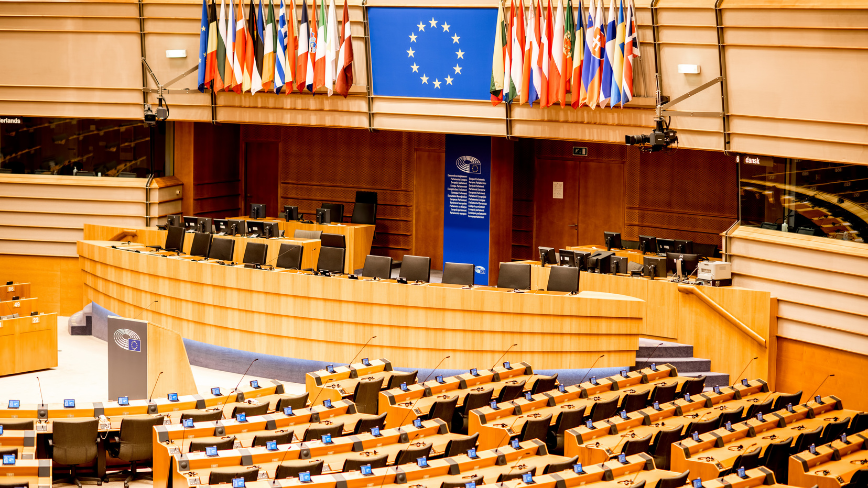
The European Parliament has taken a rare and telling step: it has disabled built-in artificial intelligence features on work devices used by lawmakers and staff, citing unresolved concerns about data security, privacy, and the opaque nature of cloud-based AI processing. The decision, communicated to Members of the European Parliament (MEPs) in an internal memo this […]
This story continues at The Next Web
Aram Zucker-Scharff writes "I don't want to read one more thinkpiece about blackbox AI code factories until you can show me what they've produced."
I've made the same request, and there was very little even brilliant programmers could show, including some who have become influencers in the AI space.
Here's the problem -- it takes a lot of skill and patience to make software that appears simple because it gives users what they expect. It's much easier to write utility scripts, where the user writes the code for themselves. That is very possible, esp if you use a scripting language created for it, and the AI bots are really good at that, they speak the same language we do.
But to make something easy to use by humans, I think you actually have to be a human. I've found I'm not very good at creating software that isn't for me. And I've been practicing this almost every day for over fifty freaking years. (I think freaking is the proper adjective in this situation).
Scaling which everyone says is hard is actually something a chatbot does quite easily imho -- because you just have to store all your data in a relational database, you can't use the local file system. That's all there is to it. They try to make it sound mysterious (the old priesthood at work) but it is actually very simple. It's so easy even ChatGPT can do it.
I know this must sound like the stuff reporters say about bloggers, but in this case it's true. ;-)
An anectdote -- I used to live in Woodside CA where a lot of the VCs live, and we'd all eat breakfast at Buck's restaurant, and around the time Netscape open sourced their browser code, the VCs were buzzing because they wouldn't have to pay for software, they'd just market the free stuff. That was a long time ago, and it did not work out that way.

When FOMO ( fear of missing out) first entered popular language, it was about teenagers scrolling through friends' social feeds and worrying they weren't having as much fun. But today, that word has taken on a different meaning in the era of artificial intelligence. The fear now isn't about beach photos or party snapshots. It's […]
This story continues at The Next Web

In their latest in a long string of U-turns, Labour have announced that local elections will now go ahead as normal in May 2026.
The ruling party had previously called to postpone elections in 30 locations across England. This was ostensibly intended to allow time and capacity for a sweeping restructure of local government.
However, the parliamentary Labour party (PLP) reversed its decision after learning that it would likely lose against Nigel Farage's legal challenge to the delay.
Labour: 'doubled-up bureaucracy'The government originally laid out plans to restructure local authorities back in 2024. This included proposals to merge some district and county councils into a single unitary authority, and to combine some adjacent councils into one.
In 2025, nine local authorities successfully applied to postpone elections whilst they carried out the reconfiguration.
However, in December 2025, Labour wrote to councils asking if they wished to delay the 2026 elections. 30 local authorities accepted the offer. These included 21 Labour-led councils, five Conservatives, two Lib Dems, and one each Green and Independent.
In January, Reed told the Commons:
We must move at pace to remove the confusion and waste of doubled-up bureaucracy. I have asked councils to tell me where holding elections this year to positions that will rapidly be abolished would slow down making these vital reforms, which will benefit local people, and I have listened to what councils told me.
However, that 'doubled-up bureaucracy' is now precisely what's facing local authorities. Only now, Labour have made themselves look spineless and anti-democratic into the bargain.
'Punishment voting'The high proportion of Labour councils among those that chose to delay led many commentators to accuse the PLP of desperately clinging on to power in the face of what could otherwise be a major string of losses for the party.
Following this, Nigel Farage brought a legal challenge against the delays, which would have been heard on 19 and 20 February. The Reform UK leader was expected to argue that the plans violated democratic rights.
Sources close to the government have stated that Reed was warned back in January that the postponements would be vulnerable to legal review. However, it's only in the last few days that lawyers informed the local government minister that Labour would likely lose against Farage's challenge.
Farage clearly believes that the local election U-turn has played right into Reform's hands. On 16 February, he gloated:
You can look at Norfolk, Suffolk, East Sussex and West Sussex, and you can say, well, these are the Tory heartlands. But I think there's going to be a degree of punishment voting going on when these elections happen. So I fancy our chances there.
Labour now also find themselves facing down a £100,000 legal bill from Reform, for their trouble. And, they've just made things much harder for local councils anyway. Local government minister Steve Reed has promised £63m to the affected councils to help with the unexpected administrative costs. Council leaders will now have to rehire polling station venues, and scrabble to find returning officers - or even candidates - at short notice.
The Local Government Information Unit stated that:
U-turn after U-turnThis most recent announcement means that 30 councils will now have to run elections within an even more constrained timetable. This risks the successful delivery of elections in all of these places, not to mention the additional strain it will needlessly add to the workloads of dedicated staff.
The reversal of the plans to delay the local elections also comes as a humiliating blow for the embattled Kier Starmer. The PMs list of high-publicity policy U-turns now includes Personal Independence Payment cuts, the Universal Credit health element, winter fuel payments, audit reform, and ground rent abolition.
Faced with a similar list of his pathetic flip-flopping from the BBC's Jeremy Vine, Starmer said:
I am a pragmatist. I am a common-sense merchant.
Personally, we at the Canary think that 'spineless charlatan unfit for office' would be more accurate. But then, the Labour leader never has said anything that accurate, has he?
Featured image via the Canary

Portugal has established itself as a frontrunner in sustainable tourism, blending its rich cultural heritage with eco-friendly practices. Many travellers appreciate the abundance of holiday villas in Portugal that align seamlessly with these initiatives, highlighting a commitment that sets a benchmark for other nations.
In recent years, Portugal has become synonymous with sustainable tourism, drawing visitors who value environmental stewardship. Enjoying Portugal villa holidays provides a way to protect the countries landscapes by engaging with responsible travel across various sectors. These holidays have gained popularity among those seeking an eco-conscious getaway. As you explore this picturesque country, you'll discover how its green initiatives are transforming the travel experience while safeguarding its cherished ecosystems. For travellers seeking a villa in Portugal that embraces sustainability, the options continue to grow.
Why Portugal is a top holiday destinationPortugal consistently ranks as a top holiday destination due to its favourable climate, stunning coastline, rich gastronomy, and reputation for safety. The Algarve and Lisbon Coast are particularly renowned for their breathtaking beaches and vibrant cultural scenes. Additionally, the Portuguese countryside offers tranquil retreats with picturesque landscapes, making it ideal for travellers seeking both relaxation and adventure.
These regions provide diverse experiences that cater to different preferences, from exploring historic cities to enjoying outdoor activities like hiking and surfing. Portugal's commitment to preserving its natural beauty while offering modern amenities enhances its appeal to tourists worldwide. This balance of tradition and innovation ensures that visitors can enjoy a memorable holiday experience in this captivating country. Booking holiday rentals in Portugal has become a preferred choice for those who appreciate both privacy and the chance to experience the local culture authentically.
Beyond its natural attractions, Portugal boasts a welcoming atmosphere that makes visitors feel at home from the moment they arrive. The Portuguese people are known for their warm hospitality and genuine friendliness, creating an inviting environment for international travellers. The country's excellent infrastructure, including well-maintained roads, reliable public transportation, and modern airports, ensures seamless travel throughout the region. With its affordable cost of living compared to other Western European destinations, Portugal offers exceptional value without sacrificing quality, making it accessible to travellers with varying budgets.
Many visitors also opt for a holiday villa in Portugal when seeking more authentic experiences in smaller towns. Whether exploring coastal hotspots or venturing inland, a Villa holiday in Portugal provides exclusive comfort and opportunities for cultural immersion.
The benefits of holiday villas over hotelsChoosing a holiday villa in Portugal offers numerous advantages over traditional hotel stays. Villas provide more space, privacy, and flexibility, making them perfect for families and groups. Guests can enjoy private pools, expansive outdoor areas, and fully equipped kitchens, allowing for personalised experiences tailored to their needs.
Holiday villas also offer greater value by accommodating larger groups at a lower cost per person compared to hotels. This option allows travellers to enjoy luxurious amenities and scenic locations without compromising on budget. By opting for a Villa holiday in Portugal, visitors can immerse themselves in the local culture while enjoying the comforts of home.
Booking through specialists versus large platformsBooking a holiday villa through trusted villa rental specialists in Portugal offers distinct advantages over using large platforms. Specialists provide personalised service and expert knowledge of the local area, ensuring guests find the perfect accommodation for their needs. They often manage professionally maintained villas, guaranteeing high standards of cleanliness and comfort. For travellers who prefer holiday villas in Portugal, specialized booking services frequently deliver unmatched value and peace of mind.
These specialists also offer exclusive access to unique properties and insider tips on local attractions and activities. By choosing a specialist, travellers benefit from a tailored experience that enhances their holiday, providing peace of mind and ensuring a memorable stay. Whether you seek a villa in Portugal near the coast or a quiet countryside retreat, these experts can match you with the ideal accommodation. This approach contrasts with the often impersonal experience of booking through large platforms, where customer service and local insights may be limited.
Portugal's global leadership in sustainable tourismPortugal's comprehensive approach to sustainable tourism positions it as a global leader in balancing visitor satisfaction with environmental preservation. By integrating government policies with community-led initiatives, the country has created a blueprint for responsible travel that other nations can emulate. The success of Portugal villa holidays serves as a testament to the effectiveness of these strategies in attracting tourists while safeguarding natural resources.
The ongoing commitment to sustainability ensures that a holiday villa in Portugal remains an attractive option for discerning travellers who prioritise eco-friendly practices. As nations worldwide grapple with the challenges of balancing economic growth with environmental protection, Portugal stands out as an inspiring example of how thoughtful policies and community engagement can lead to lasting positive change.

Outrage is rightly growing at the decision of the UK government to award a huge NHS contract to genocide-collaborating US software firm Palantir. The company's CEO Alex Karp is just one of its unhinged top executives - but he's way (way, way, way) out there. And he's perfectly prepared to say out loud that there are few, if any, tactics he's not ready to resort to. Including spraying piss laced with a deadly drug onto journalists he doesn't like:
https://www.thecanary.co/wp-content/uploads/2026/02/FOTcMQy2d3hzP9W71.mp4Karp: "You need a higher purpose, and I think you often need a lower purpose."
Andrew Sorkin: "What's your lower purpose?"
Karp: "I love the idea of getting a drone and having light fentanyl-laced urine spraying on analysts that tried to screw us."
Fentanyl is a deadly opioid drug 50-100 times stronger than heroin. US president Donald Trump uses fake claims of shipping it as an excuse to murder fishermen and kidnap Venezuela's president - with the help of Karp's company. Dealing in fentanyl is terrorism, according to Trump. Karp, however, wants to spray it on innocent critics - but clearly that's ok because he's a Trump backer.
It ought to be unbelievable, but isn't, that this isn't an aberration for Karp - or even his wildest comment. In 2025, he boasted of how his company kills people for profit. He is also a fan of genocide who has claimed that the hundreds of thousands of Palestinians Palantir helped Israel murder in Gaza are "mostly terrorists":
Palantir shouldn't be anywhere near the NHS. It should be banned altogether in the UK and in a sane world Karp should be on trial for genocide.
Featured image via the Canary
By Skwawkbox

A Swiss Olympics commentator has done what no British counterpart will do - challenge why genocidal Israel is allowed to compete.
Stefan Renna, who works for Swiss Radio and Television (RTS), pointed out that bobsled racer Adam Edelman calls himself "Zionist to the core". Edelman has also made numerous social media posts supporting Israel's Gaza genocide. Renna even used the g-word - genocide - that terrifies UK corporate 'journalists', referring to the findings of the UN International Commission of Inquiry, adding:
I am familiar with this terminology. Edelman described Israel's military intervention as the most moral and just war in history.
Renna reminded viewers that Ukrainian skeleton athlete Vladyslav Heraskevych had been banned from wearing a helmet featuring photos of those who died in the war in his country. And he even dared to point out the hypocrisy of the Olympics committee banning Russians who supported that country's war in Ukraine - yet welcoming openly genocidal Israelis:
View this post on Instagram
Renna's point was well made, legally watertight, and morally flawless. So of course he has been viciously targeted by the Israel lobby for his 'rant'. Oh for a fraction of his backbone among the cowardly and hypocritical UK 'mainstream' media.
Featured image via the Canary
By Skwawkbox
Apple released its new 14-inch MacBook Pro M5 in October with little fanfare. But, despite the underselling, we found the device to be a great upgrade to its predecessor and the best MacBook for creatives. Now, you can find out for yourself with less of a strain on your wallet, thanks to a big sale.
Currently, B&H has discounts available for a variety of configurations. The cheapest option is the MacBook Pro M5 with 16GB of RAM and 512GB of SSD. It's available in Space Black and Silver for $1,499, down from $1,599 — the lowest price we've seen for it. There's also a deal on the 24GB of RAM option, but the best savings are $300 off the model with 32GB of RAM and either 512GB ($1,699) or 1TB ($1,899).
We gave the 14-inch Apple MacBook Pro M5 a 92 in our October review. We were impressed with how much faster — up to 60 percent — the GPU is than with the M4. It has a 10-core GPU, 10-core CPU and 16 Neural Engine cores. Beyond that, it has an extensive battery life, lasting 34 hours and 30 minutes while playing a looping HD video. It also has an excellent design, great keyboard and an extensive port selection.
Follow @EngadgetDeals on X for the latest tech deals and buying advice.
This article originally appeared on Engadget at https://www.engadget.com/deals/apples-14-inch-macbook-pro-m5-is-up-to-300-off-131743149.html?src=rss
A US law firm has accused Lenovo of violating Justice Department strictures about the bulk transfer of data to foreign adversaries, namely China.…
Setting sail from the busy port of Plymouth in Devon, the tall ship Pelican of London takes young people to sea, often for the first time.
During each nine-day voyage, the UK-based sailing trainees, who often come from socio-economically challenging backgrounds, become crew members. They not only learn the ropes (literally) but also engage in ocean science and stewardship activities.
As marine and outdoor education researchers, we wanted to find out whether mixing sail training and Steams (science, technology, engineering, art, mathematics and sustainability) activities can inspire young people to pursue a more ocean-focused career, and a long-term commitment to ocean care.
Research shows that a strong connection with the ocean can drive people to be active marine citizens. This means they take responsibility for ocean health not only in their own lives but as advocates for more sustainable interactions with the ocean.
Over the past year, we have worked with Charly Braungardt, head scientist with the charity Pelican of London, to create a new theory of how sail training with Steams activities can change the paths that trainees pursue.
Based on scientific evidence, our theory of change models how Steams activities can cause positive changes in personal development and knowledge and understanding of the ocean (known as ocean literacy). It shows how the voyages can develop trainees' strong connections with the ocean and encourage them to act responsibly towards it.
Tracking changeSurveys with the participants before and after the voyage, and six months later, measure any changes that occur - and how these persist. Through our evaluation, we're exploring how combining voyages with Steams activities can go beyond personal development to produce deep, long-lasting effects.
Our pilot study has already shown how the sail training and Steams combination helps to develop confidence, ocean literacy and ocean connections.
For example, the boost to self-esteem and feelings of capability that occur on board help young people develop their marine identity - the ocean becomes an important part of a person's sense of who they are. As one trainee put it: "I think the ocean is me and the ocean will and forever be part of me."
Swimming, sailing, even just building a sandcastle - the ocean benefits our physical and mental wellbeing. Curious about how a strong coastal connection helps drive marine conservation, scientists are diving in to investigate the power of blue health.
This article is part of a series, Vitamin Sea, exploring how the ocean can be enhanced by our interaction with it.
As crew members, trainees access a world and traditional culture largely unknown to them before the voyage. They learn to live with others in a confined space, working together in small teams to keep watch on 24-hour rotas.
Trainees are encouraged to step out of their comfort zone through activities such as climbing the rigging and swimming off the vessel. Our pilot evaluation found the voyages built the trainees' confidence and social skills, boosting self-esteem and feelings of capability.
One trainee said: "I've felt pretty disappointed in myself not committing to my education or only doing something with minimal effort. But after this voyage, I want to give it my all."
Read more: Five ways to inspire ocean connection: reflections from my 40-year marine ecology career
The Steams voyages encourage the development of scientific skills and ocean literacy through the lens of creative tasks at sea. These activities are led by a scientist-in-residence who provides mentoring and introduces research techniques.
The voyage gives trainees the opportunity to use scientific equipment, ranging from plankton nets and microscopes to cutting-edge technology such as remotely operated vehicles. The Steams activities introduce marine research as a potential career to these young people. One said they wanted to train as a marine engineer at nautical college following the voyage.
Ocean experiences provide a foundation for ocean connection. Trainees experience the ocean in sunshine and in gales, day and night, rolling with the waves and observing marine life in its natural environment.
Citizen science projects such as wildlife surveys and recorded beach cleans also develop their ocean stewardship knowledge and skills. One trainee explained how they have "become more interested [in] our marine life and creative ways to help protect it".
Over the next 12 months, the information we collect from the voyages will help us to better understand the benefits and contribute to an important marine social science data gap in young people. It is important to understand how to develop young people's relationships with the ocean, and the knowledge and skills that will empower the next generation of marine citizens.
As one trainee put it: "Being out on the Pelican showed me how vast and powerful the sea is - and how important it is to respect and care for it."
Don't have time to read about climate change as much as you'd like?
Get a weekly roundup in your inbox instead. Every Wednesday, The Conversation's environment editor writes Imagine, a short email that goes a little deeper into just one climate issue. Join the 47,000+ readers who've subscribed so far.

Pamela Buchan received funding from Economic and Social Research Council for the research cited in this article. The sail training evaluation project received funding from Sail Training International. We would like to thank Charlotte Braungardt for her contribution to this project.
Alun Morgan is affiliated with the Pelican of London as an Ambassador for the organisation
99ONE Launches the Rogue on Kickstarter
A Design-First Motorcycle Communication System Built to Be Seen
Kickstarter launch: March 2026
For years, motorcycle communication systems have looked largely the same - bulky, boxy, understated units designed around electronics, not riders.
The Rogue was designed to change that.
Launching on Kickstarter in March 2026, the Rogue is the first product from 99ONE - a new motorcycle technology brand created through a partnership between BEEBEST and Aleck, combining large-scale audio and communication engineering with deep experience building rider-focused brands for Western markets.
Built on proven audio and communication engineering, the Rogue reimagines helmet communication from the ground up - combining full-featured performance with a bold, unapologetic design language that looks nothing like the rest of the category.
Designed First - Not as an Afterthought
The Rogue was designed from the outside in.
Instead of conforming to the boxy, understated designs that dominate helmet communication today, the Rogue was shaped deliberately and unapologetically - with a clean, flowing silhouette, smooth rounded edges, and a profile designed to sit naturally against modern helmets.
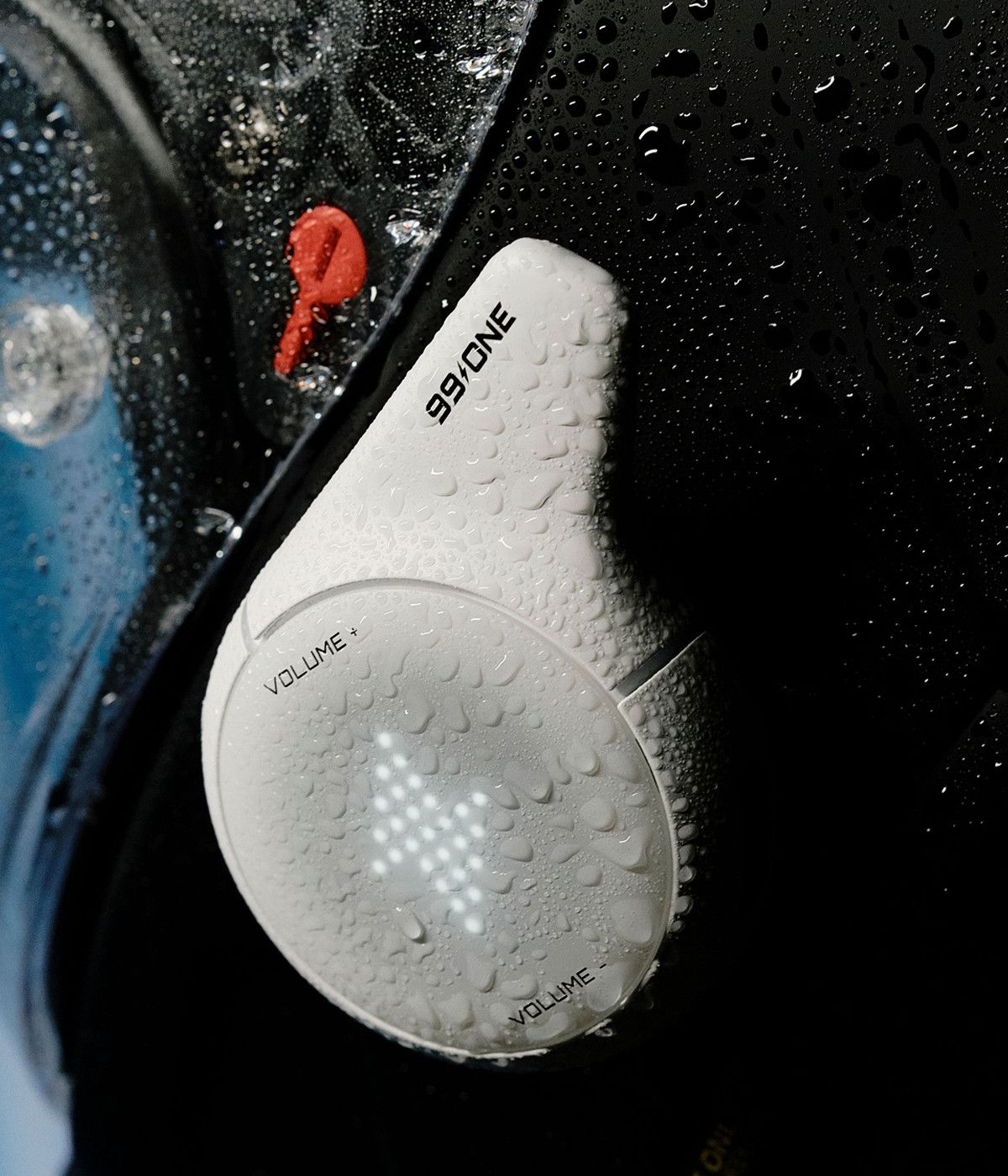
 The waterproof Rogue communicator making a fashion statement, installed on a helmet.
Key design features include:
*A completely new modern form factor, breaking away from boxy, angular helmet comms
*Sleek, rounded lines and edges, reducing visual bulk and creating a refined profile
*Interchangeable wing tips, allowing riders to personalise the look and feel of the unit
*Dot-matrix LED display, delivering clear visual feedback without visual clutter
*Large, glove-friendly primary button, designed for confident use at speed
*Ability to use Siri and Google voice commands, for basic functions
*Transparent rear window, offering a considered glimpse into the internal mechanics
*Bold, brand-defining colourways that allow riders to express individuality rather than blend in
Every element is intentional. Nothing is decorative. Nothing is inherited.
This is communication technology designed to be worn - not hidden.
Two Launch Colourways - A Brand Statement
The Rogue will launch on Kickstarter with two distinctive colourways, combining core 99ONE brand colours with a bold, design-led visual identity.
The launch colourways include:
Shadow Black - understated, technical, and timeless
Jet White - clean, modern, and confident
These aren't afterthought finishes. Each colourway is an intentional extension of the product's design language - designed to give riders control over how the Rogue expresses itself on their helmet.
 The Rogue communicator will be available in white or black at launch, with orange potentially following, based on demand.
Stretch goal: Signal Orange - bold, expressive, and unapologetically visible
Signal Orange has been developed as a future-facing colourway and will be unlocked only if campaign demand and momentum support its introduction. This approach allows the brand to scale responsibly while ensuring new colourways are driven by real rider interest rather than speculative launches.
Beyond Kickstarter, additional colourways will be explored as the platform evolves, informed by rider feedback and distribution partner demand - bringing long-overdue expression and individuality to the motorcycle audio and communication category.
Features Riders Expect - Thoughtfully Refined
While the Rogue introduces a new design language, it delivers the full set of features riders expect from a modern helmet communication system - refined through better tuning, smarter integration, and more considered execution.
The Rogue includes:
*Rider-to-rider mesh communication for seamless group connectivity for up to 16 riders
*Music, podcasts, phone calls, and voice assistant access
*Premium audio quality, tuned for clarity and balance
*Clear, consistent audio at speed, supported by AI-powered noise cancellation
*Long battery life suitable for full-day rides, with up to 30 hours of music playback and 16 hours of continuous communication
*Simple, intuitive controls designed for real-world riding
*Over The Air (OTA) firmware updates
*Multiple helmet mounting options (3M adhesive or clip-on) with a quick-release design
*USB-C fast charging for modern convenience
*IP67-rated dust and water proof rating for all-weather durability
Rather than competing on feature count, the Rogue focuses on delivering a complete, modern feature set - refined into a system that feels balanced, intentional, and easy to live with every ride.
Built for Long Days on the Bike
The Rogue is powered by a custom 1250mAh high-capacity battery, engineered to deliver outstanding endurance in a compact form factor - without adding visual bulk to the helmet.
On a full charge, the Rogue delivers:
*Up to 30 hours of continuous music playback
*Up to 16 hours of continuous communication
*Fast charging support, delivering up to 7 hours of music playback from a 30-minute charge
The result is a system built to last through full-day rides, multi-day trips, and long weekends - without constant battery anxiety.
Roadmap
99ONE Rogue is built as a platform, not a one-off product. Designed to stand on its own from day one, the system will continue to expand through software updates, integrations, and optional accessories.
Walkie Talkie Integration - Long-Range Communication When You Want It
An upcoming integration with the Aleck Off Grid Bluetooth Walkie Talkie will enable long-range rider communication beyond the limits of traditional mesh systems.
 Integration with the Aleck Off Grid Bluetooth Walkie Talkie increases range.
Significantly extended range
No reliance on mobile networks
Ideal for touring, adventure riding, and remote routes
The feature will remain entirely optional, allowing Rogue to stay clean and streamlined while expanding into long-range communication only when riders choose.
Action Camera Integration
GoPro, DJI & Insta360
Future integrations with leading action camera platforms will allow riders to control key camera functions directly from their helmet.
The aim: fewer distractions, fewer buttons, and more focus on the ride - without missing the moments worth capturing.
"OK ONE" - A Custom Voice Assistant
"OK ONE" is a rider-focused voice assistant designed specifically for real riding scenarios.
Rather than generic commands, it will prioritise essential actions such as music, communication, and system controls - all with minimal cognitive load, even at speed.
Optional by design. Rider-first by default.
Continuous Firmware & Feature Improvements
99ONE Rogue is designed to evolve.
Ongoing firmware updates will continue to improve performance, introduce new features, and refine the overall experience - guided by real-world use and rider feedback. Backing 99ONE means investing in a platform built to grow over time.
The 99ONE App - Control Without Distraction
The Rogue is supported by the 99ONE companion app, designed to handle essential setup, configuration and updates.
Through the app, riders can:
*Manage device connections
*Adjust audio preferences
*Manage rider-to-rider mesh pairing
*Customise LED display
*Perform firmware updates
The goal is control without distraction - keeping the focus where it belongs: on the ride.
Why Kickstarter
The Rogue is not a concept or early prototype. It is built on years of development and large-scale manufacturing experience.
99ONE chose Kickstarter as a launch platform to do three things deliberately:
*Give riders early access to the product and brand before retail release
*Offer launch-only pricing and exclusive bundles as a reward for early support
*Introduce 99ONE directly to its first riders, building the brand alongside the people it's designed for
For riders, Kickstarter isn't about risk. It's about access - and being part of a new brand from the very beginning.
Pricing & Kickstarter Access
The Rogue will carry a future retail price of $299.95.
Ahead of the Kickstarter launch, riders can secure VIP access to the campaign with a $1 reservation, guaranteeing the opportunity to purchase the Rogue at the lowest Super Early Bird price, starting from $220 - a $80 saving compared to planned retail pricing.
VIP supporters will receive:
*First access to the Kickstarter campaign before it opens to the public
*Guaranteed eligibility for Super Early Bird pricing
*Priority access to limited launch quantities and exclusive bundles
*Access to a private VIP group, where early supporters can provide feedback, take part in polls, and help shape the campaign and brand journey before, during, and after launch
*For riders who want to be part of 99ONE from the very beginning, VIP access offers the earliest entry point - and the best value.
Riders can register now for VIP access and early notification ahead of the Kickstarter launch at reservations.99.one
Limited Super Early Bird units will be available when the campaign launches on Kickstarter in March 2026.
From the Teams Behind the 99ONE Rogue
"The Rogue gave us the opportunity to rethink how motorcycle communication is presented," said Mr Shao, Founder and CEO of BEEBEST. The technology itself is mature and well proven - this was about shaping it into a product that feels new, refined, intentional, and worthy of the rider experience."
"The Rogue represents how we believe motorcycle technology should move forward," said Stephen Catterson, Founder and CEO of Aleck. "Kickstarter lets us introduce 99ONE directly to riders who care about performance, design, and individuality - and build the brand alongside the community from day one."
"Our focus is on building a brand riders actively choose and grow with," said Scott Goldhawk, Chief Brand and Growth Officer at Aleck. "Not just for what the Rogue delivers today, but for the identity, values, and direction the brand represents as the category moves forward."
Launch Details
The Rogue launches on Kickstarter in March 2026, marking the first public release of the 99ONE brand.
Early supporters will have access to Super Early Bird pricing, limited launch bundles, and the full range of launch colourways.
For riders looking for a motorcycle communication system that reflects how modern gear should look, feel, and perform, the Rogue offers the chance to be part of something from the very beginning.
Riders can register now for VIP access and early notification ahead of the Kickstarter launch at reservations.99.one
About 99ONE
99ONE is a new global motorcycle technology brand created through a collaboration between BEEBEST and Aleck - combining long-standing audio and communication engineering expertise with deep experience building premium, rider-focused brands for global markets.
Purpose-built from the ground up, 99ONE delivers modern motorcycle communication technology through a bold, unapologetic, design-first lens.
The post New Rogue Motorcycle Comm System Designed To Be Seen appeared first on Roadracing World Magazine | Motorcycle Riding, Racing & Tech News.

The latest album from UK ensemble Hen Ogledd is a striking invocation of the mythic and mundane, writes Abi Bliss in The Wire 505
Hen Ogledd
Discombobulated
Domino CD/DL/LP
One of the more unexpected musical evolutions in recent years has been that of Hen Ogledd from the group's origins as a side project for harpist Rhodri Davies and singer-guitarist Richard Dawson. The knotty, writhing improvisations of the pair's 2013 album Dawson-Davies: Hen Ogledd were like wrestling a piglet in a barbed wire jacket, but with the addition of multi-instrumentalists Dawn Bothwell and Sally Pilkington, by the time of 2018's Mogic, Hen Ogledd had become a bold, poppy but still defiantly experimental quartet. With Dawson now on bass, Davies's electrified strings remained a bubbling, gravelly sonic wellspring around which their musical horizons expanded.
Veering between crisply crafted songs such as "Problem Child" and looser-limbed jams, with lyrics tackling human connection in the digital age, Mogic was inspired but scrappy, as colourfully creative yet jokily deflecting as the appliqué capes each member sported in its videos. If anything, its 2020 sequel Free Humans was too consistent, leaning heavily on neon electropop to tackle the frailties of the heart across a timespan ranging from medieval gossip to future space exploration. But with Discombobulated, Hen Ogledd have grown to fully inhabit their costumes, Sun Ra Arkestra style, with the greatest musical and lyrical realisation yet of their diverse strengths.
Hen Ogledd is Welsh for Old North, and refers to an early medieval region spanning the north of Wales, northern England and southern Scotland. At the fringes of Roman influence and where Brythonic languages - forebears of Welsh, Cornish and Breton - were spoken, the area includes the birthplaces of all four members, highlighting a kinship between parts of the UK often overlooked in Londoncentric narratives. Invoking both the mythic and the mundane, Discombobulated draws upon landscape, folklore, popular dissent and individual struggles, enriched by major contributions from saxophonist Faye MacCalman and trumpeter Nate Wooley, and by passing appearances (ranging from vocal non sequiturs to field recordings) from numerous friends and family members.
After one child recounts a dreamlike vignette of sound-collecting fishermen on opener "Nell's Prologue", "Scales Will Fall" raises the protest flag, its call for youth to overturn the institutions of corporate greed delivered in emphatic spoken word by Bothwell, rousingly backed with brassy synth lines, Will Guthrie's economical yet persuasive drumming and a massed chorus singing "The fire in your soul is only fool's gold". The rallying procession is tempered by a melancholy that finds voice in Wooley's lyrical solo, with a world-weary majesty that wouldn't be out of place on Super Furry Animals' downbeat 2000 masterpiece Mwng. Similarly, the Davies-sung "Dead In A Post-Truth World" addresses the far right voices that the BBC's Newsnight programme is all too fond of platforming - "Mae gamwn ar y teledu/Mae'n amser mynd i'r gwely" ("When gammon is on the TV/It's time to go to bed") - its fragmented harmonies, wah-wah harp, twisting sax and fidgeting snares providing a counterpoint of complexity to easy answers.
Elsewhere, the natural world is a place of both wonder and loss. Framed by watery organ chords and what might be a rattling film projector, "Clara" starts with Bothwell's lilting lullaby of horseriding but stumbles into degraded, polluted landscapes. Davies and his children sing "Land Of The Dead", a Welsh translation of an enigmatic Dawson lyric in which the veils between nighttime countryside and eldritch realms dissolve more with each verse.
Time itself rejects a linear path in "Amser A Ddengys" ("Time Will Tell"), the line "Dyna oedd ddoe a dyma yw heddiw" ("That was yesterday and this is today") delivered simultaneously with the song's other three lines by an a cappella choir of Davies. And in "Clear Pools", the cycles signify rebirth and renewal, as initial chaos gives way to clean harp chords, MacCalman's warm, nurturing tones and soft, enveloping textures that wax and wane around the vocals over nearly 20 minutes. But a hot disco can be as transcendent as a cold pond, and the driving "End Of The Rhythm" best encapsulates the album's mood of battered but persisting hope, trumpet, harp and sax lines all yearning for a better tomorrow as Pilkington celebrates "A dancing, contagion/Releasing, rampaging/Our bodies, in union/Spontaneous, communion".
This review appears in The Wire 505 along with many other reviews of new and recent records, books, films, festivals and more. To read them all, pick up a copy of the magazine in our online shop. Wire subscribers can also read the issue in our online magazine library.
The European Commission (EC) has opened an investigation into low-cost fast fashion retailer Shein. EC officials are concerned about the sale of illegal products, including child sexual abuse material, as well as the potentially addictive design of its shopping experience. The Commission found fellow low-cost retailer Temu in violation of the Digital Services Act after a similar investigation last year.
The probe is being opened under the Digital Services Act, a set of EU rules governing online services. The Commission will examine how Shein drives engagement with shoppers, including using a points and rewards system, and whether the company is properly mitigating the risk of addiction via these and other features.
Algorithmic recommendation systems are another point of contention, and the Commission will ask Shein to disclose how it suggests products to users. It also says that the company must offer users a system that is not based on profiling.
The Singapore-based company has faced a great deal of scrutiny in past years on a number of fronts, including its labor practices, materials sourcing, data practices and IP infringement. Last year the Texas Attorney General opened a probe into the company's safety and labor practices amid allegations that Shein uses forced labor as well as toxic or hazardous materials.
Addictive design has been a recent priority for European regulators, with the Commission demanding that TikTok make changes to its platform after a similar probe concluded earlier this month. Algorithms have also been in focus, with the Commission recently launching a probe into how exactly X's recommendation algorithm works.
The regulatory body will now continue collecting evidence in the matter, and holds the authority within the EU to levy fines and demand changes should the platform wish to continue operations in the region.
This article originally appeared on Engadget at https://www.engadget.com/general/europe-probes-sheins-addictive-app-design-and-illegal-product-sales-125322191.html?src=rss

