
The economics of clean energy "just get better and better", leaving opponents of the transition looking like "King Canute", says Chris Stark.
Stark is head of the UK government's "mission" to deliver clean power by 2030, having previously been chief executive of the advisory Climate Change Committee (CCC).
In a wide-ranging interview with Carbon Brief, Stark makes the case for the "radical" clean-power mission, which he says will act as "huge insurance" against future gas-price spikes.
He pushes back on "super daft" calls to abandon the 2030 target, saying he has a "huge disagreement" on this with critics, such as the Tony Blair Institute.
Stark also takes issue with "completely…crazy" attacks on the UK's Climate Change Act, warns of the "great risk" of Conservative proposals to scrap carbon pricing and stresses - in the face of threats from the climate-sceptic Reform party - the importance of being a country that respects legal contracts.
He says: "The problems and woes of this country, in terms of the cost of energy, are due to fossil fuels, not due to the Climate Change Act."
The UK should become an "electrostate" built on clean-energy technologies, says Stark, but it needs a "cute" strategy on domestic supply chains and will have to interact with China.
Beyond the UK, despite media misinformation and the US turn against climate action, Stark concludes that the global energy transition is "heading in one direction":
"You've got to see the movie, not the scene. The movie is that things are heading in one direction, towards something cleaner. Good luck if you think you can avoid that."
- On the rationale for clean power 2030: "We're trying to do something radical in a short space of time…It has all the characteristics of something that you can do quickly, but which has long-term benefit."
- On grid investment: "[T]he programme of investment in infrastructure and in networks is genuinely once in a generation and we haven't really done investment at this scale since the coal-fired generation was first planned."
- On 88 "critical" grid upgrades: "We really need them to be on time, because the consumer will see the benefit of each one of those upgrades."
- On electricity demand: "I think we are in the point now where we are starting to see the signal of that demand increase - and it is largely being driven by electric vehicle uptake."
- On high electricity prices: "[I]t's largely the product of decades of [decisions] before us. We do have high electricity prices and we absolutely need to bring them down."
- On industrial power prices: "[W]e've got a whole package of things that…[will] take those energy prices down very significantly, probably below the sort of prices that you'll see on the continent."
- On cutting bills further: "The investments that we think we need for 2030…will add to some of those fixed costs, but…facilitate a lower wholesale price for electricity, [which] we think will at least match and probably outweigh those extra costs."
- On insuring against the next gas price spike: "The amount of gas we're displacing when that [new renewable capacity] comes online is a huge insurance [policy] against the next price spike that [there] will be, inevitably, [at] some point in the future for gas prices."
- On Centrica boss Chris O'Shea's comments on electricity bills in 2030: "I don't think he's right on this…I'm much more optimistic than Chris is about how quickly we can bring bills down."
- On the need for investment: "I think there's a hard truth to this, that any government - of any colour - would face the same challenge. You cannot have a system without that investment, unless you are dicing with a future where you're not able to meet that future demand."
- On the high price of gas power: "If you don't think that offshore wind is the answer for [rising electricity demand], then you need to look to gas - and new gas is far more expensive."
- On calls to scrap the 2030 mission: "I have a huge disagreement with the Tony Blair Institute on this…I think it's daft - like, super daft - to step back from something that's so clearly working."
- On Conservative calls to scrap carbon pricing: "We absolutely have to have carbon pricing…if you want to make progress on our climate objectives. It also has been a very successful tool…I think it's a great risk to start playing around with that system."
- On gas prices being volatile: "[A]t the time that Russia invaded Ukraine…the global gas price spiked to an extraordinary degree…I'm afraid that is a pattern that is repeated consistently."
- On insulating against gas price spikes: "[Y]ou cannot steer geopolitics from here in the UK. What you can do is insulate yourself from it…Clean power is largely about ensuring that."
- On Reform threats to renewable contracts: "[A]ll this sort of threatening stuff, that is about ripping up existing contracts, has a much bigger impact than just the energy transition. This has always been a country that respects those legacy contracts."
- On the wider benefits of the clean-power mission: "In the end, we're bringing all sorts of benefits to the country that go beyond the climate here. The jobs that go with that transition, investment that comes with that and, of course, the energy security that we're buying ourselves by having all of this domestic supply. It's hard to argue that that is bad for the country."
- On the UK's plans for a renewable-led energy system: "[The] idea of a renewables-led system, with nuclear on the horizon, is just so clearly the obvious thing to do. I don't really know what the alternative would be for us if we weren't pursuing it."
- On the UK becoming an "electrostate": "Yes, that's quite good for the climate…It's also extraordinarily good for productivity, because you're not wasting energy. Fossil fuels bring a huge amount of waste…You don't get that with electrotech. I want us to be an electrostate."
- On bringing supply chains and Chinese technology: "I want to see us adopt electrotech. I also want us to own a large part of the supply chain…I don't think it's ever going to be the case that we can…avoid the Chinese interaction…[B]ut I think it's really important that our industrial strategy is cute about which bits of that supply chain it wants to see here."
- On attacks on UK climate policy: "A lot of the criticism of the Climate Change Act I find completely…crazy. It has not acted as a straitjacket. It has not restricted economic growth. The problems and woes of this country, in terms of the cost of energy, are due to fossil fuels, not due to the Climate Change Act."
- On media misinformation: "[C]limate change and probably net-zero have taken on a role in the 'culture wars' that they didn't previously have."
- On winning the argument for clean power: "Actually, it's not to shoot down every assertion that you know to be false. It's just to get on with trying to do this thing, to demonstrate to people that there's a better way to go about this."
- On net-zero: "I think we are getting beyond a period where net-zero has a slogan value. I think it's probably moved back to being what it always should have been, really, which is a scientific target - and in this country, a statutory target that guides activity."
- On the geopolitics of climate action: "[I]t's striking how much it's shifted, not least because of the US…It is slightly weird…that has happened at a time when every day, almost, the evidence is there that the cleaner alternative is the way that the world is heading."
- On US withdrawal from the Paris Agreement: "I wish that hadn't happened, but the economics of the cleaner alternative that we're building just get better and better over time."
- On watching "the movie, not the scene": "The movie is that things are heading in one direction, towards something cleaner. Good luck if you think you can avoid that - [like] King Canute."
Carbon Brief: Thanks very much for joining us today. Chris, you're in charge of the government's mission for clean power by 2030. Can you just explain what the point of that mission is?
Chris Stark: Well, we're trying to do something radical in a short space of time. And maybe if I start with the backstory to that, Ed Miliband, as secretary of state, was looking for a project where he could make a difference quickly. And the reason that we are focused on clean power 2030 is because it is that project. It has all the characteristics of something that you can do quickly, but which has long-term benefits.
What we're trying to do is to accelerate a process that was already underway of decarbonising the power system, but to do so in a time when we feel it's essential that we start that journey and move it more quickly, because in the 2030s we're expecting the demand for electricity to grow. So this is a bit of a sprint to get ourselves prepped for where we think we need to be from 2030 onwards. And it's also, coming to my role, it's the job I want to do, because I spent many years advising that you should decarbonise the economy by electrifying - and stage one of that is to finish the job on cleaning up the supply.
So it's kind of the perfect project, really. And if you want to do clean power by 2030, [the] first thing is to say we're not going to take an overly purist approach to that. So we admit and are conscious - in fact, find it useful - to have gas in the mix between now and 2030. The challenge is to run it down to, if we can, 5% of the total mix in 2030 and to grow the clean stuff alongside it. So, using gas as a flexible source, and that, we think is a great platform to grow the demand for electricity on the journey, but especially after 2030 - and that's when the decarbonisation really kicks in.
So it's a sort of exciting thing to try and do. And if you want to do it, here comes the interesting thing. You need the whole system, all the policies, all the institutions, all the interactions with the private sector, interactions with the consumer, to be lined up in the right way.
So clean power by 2030 is also the best expression of how quickly we want the planning system to work, how much harder we want the energy institutions like NESO [the National Energy System Operator] and energy regulator Ofgem to support it - and how we want to send a message to investors that they should come here to do their investment. Turns out, it's a great way of advertising all of that and making it happen. And so far, it's working great.
CB: Thanks. So do you still think it's achievable? We're sitting in "mission control". You've got some big screens on the wall. Is there anything on those screens that's flashing red at the moment?
CS: So, right behind you are the big screens. And it's tremendously useful to have a room, a physical space, where we can plan this stuff and coordinate this stuff. There's lots of things that flash red. There's no question. And it's an expression of it being a genuine mission. This is not business as usual. So you wouldn't move as quickly as this, unless you've set your North Star around it. And it does frame all the things that, especially this department is doing, but also the rest of government, in terms of the story of where we are.
We're approaching two years into this mission and - really important to say - if the mission is about constructing infrastructure, it's in that timeframe that you'll do most of the work, setting it up so that we get the things that we think we need for 2030 constructed.
We're already reaching the end of that phase one, and we did that by first of all, going as hard and as fast as we could to establish a plan for 2030, which involved us going first to the energy system operator, NESO, to give us their independent advice. We then turned that into a plan, and the expression of that plan is largely that we need to see construction of new networks, new generation, new storage and a new set of retail models to make all of that stick together well for the consumer.
Phase one was about using that plan to try and go hard at a set of super-ambitious technology ranges for all the clean technologies, so onshore wind, offshore wind, solar [and] also the energy storage technologies. We've set a range that we're trying to hit by 2030 that is right at the top end of what we think is possible. Then we went about constructing the policies to make that happen.
Behind you on the big screens, what we're often doing is looking at the project pipeline that would deliver that [ambition]. At the heart of it is the idea that if you want to do something quickly by 2030, there is a project pipeline already in development that will deliver that for you, if you can curate it and reorder it to deliver. And therefore, the most important and radical thing that we did - alongside all the reforms to things like contracts for difference and the kind of classic policy support - is this very radical reordering of the connection queue, which allows us to put to the front of the queue the projects that we think will deliver what we need for 2030 - and into the 2030s.
Then, alongside that, the other big thing, and I think this is going to be more of a priority in the second phase of work for us, is the networks themselves. We are trying to essentially build the plane while it flies by contracting the generation whilst also building the networks, and of course, doing this connection queue reform at the same time. That is, again, radical, but the programme of investment in infrastructure and in networks is genuinely once in a generation and we haven't really done investment at this scale since the coal-fired generation was first planned. We think a lot about 88 - we think - really critical transmission upgrades. We really need them to be on time, because the consumer will see the benefit of each one of those upgrades.
CB: You already talked about electricity demand growing as the economy electrifies. Do you think that there's a risk that we could hit the clean power 2030 target, but at the same time, perhaps meeting it accidentally, by not electrifying as quickly as we think - and therefore demand not growing as quickly?
CS: So, an unspoken - we need to clearly make this more of a factor - an unspoken factor in the shape of the energy system we have today has been an assumption, for well over 20 years, really, that demand for electricity was always going to pick up. In fact, what we've seen is the opposite. So for about a quarter of a century, demand has fallen. Interestingly, the system - the energy system, the electricity system - generally plans for an increase in demand that never arrives. We could have a much longer conversation about why that happened and the institutional framework that led to that. But it is nonetheless the case.
I think we are at the point now where we are starting to see the signal of that demand increase - and it is largely being driven by electric vehicle uptake. The story of net-zero and decarbonisation does rest on electrification at a much bigger scale than just electric cars. So part of what we're trying to do is prepare for that moment.
But you're absolutely right, if demand doesn't increase, the biggest single challenge will be that we've got a lot of new fixed costs and a bigger system - on the generation side and the network side - that are being spread over a demand base that's too small. So, slightly counter-intuitively, because there's a lot of coverage around the world about the concern about the increase in electricity demand, I want that increase in electricity demand, but I also want it to be of a particular type. So if we can, we want to grow the demand for electricity with flexible demand, as much as possible, that is matching - as best we can - the availability of the supply when the wind blows or the sun shines. That makes the system itself cheaper.
The more electricity demand we see, the more those fixed costs that are in the system - for networks and increasingly for the large renewable projects - the more they are spread over a bigger demand base and the lower the unit costs of electricity, which will be good, in turn, for the uptake of more and more electrification in the future. So there's this virtuous circle that comes from getting this right. In terms of where we go next with clean power 2030, a big part of that story needs to be electrification. We want to see more electricity demand, again, of the right sort, if we can. More flexible demand and, again, [the] more that that is on the system, the better the system will operate - and the cheaper it will be for the consumer.
CB: So, the UK has among the highest electricity prices of any major economy. Can you just talk through why you think that is - and what we should be doing about it?
CS: Yeah, there's a story that the Financial Times runs every three months about the cost of electricity - and particularly industrial electricity prices. Every time that happens, we slightly wince here, because it's largely the product of decades of [decisions] before us.
We do have high electricity prices and we absolutely need to bring them down. For those industrial users, we've got a whole package of things that will come on, over the next few months, into next year, that will make a big difference, I think. For those industrial users, [it will] take those energy prices down very significantly, probably below the sort of prices that you'll see on the continent, and that, I hope, will help.
But we have a bigger plan to try and do something about electricity prices for all consumers. I think it's worth just dwelling on this: two-thirds of electricity consumption is not households, it's commercial. So the biggest part of this is the commercial electricity story - and then the rest, the final third, is for households. The politics of this, obviously, is around households.
You've seen in the last six months, this government has focused really hard on the cost of living and one of the best tools - if you want to go hard at it, to improve the cost of living - is energy bills. So the budget last year was a really big thing for us. It involved months of work - actually in this room. We commandeered this room to look solely at packages of policy that would reduce household bills quickly and landed on a package that was announced in the budget last year, that will take £150 off household bills from April. That's tremendous - and it's the sort of thing that we were advising when I was in the Climate Change Committee - because the core of that is to take policy costs off electricity bills, particularly, and to put them into general taxation, where [you have] slightly more progressive recovery of those costs.
But there's not another one of those enormous packages still to come. What we're dealing with, to answer your question, is a set of system costs, as we think of them, that are out there and must be recovered. Now we've chosen, in the first instance, to move some of those costs into general taxation. The next phase of this involves us doing the investments that we think we need for 2030, which will add to some of those fixed costs, but doing so because we are going to facilitate a lower wholesale price for electricity, that we think will at least match and probably outweigh those extra costs.
That opens up a further thing, which I think is where we'll go next with this story, on the consumer side, which is that we want to give the opportunity to more consumers - be they commercial or household - to flexibly use that power when it's available, and to do so in a way that makes that power cheaper for them.
You most obviously see that in something we published just a few weeks ago, the "warm homes plan", which, in its DNA, is about giving packages of these technologies to those households that most need them. So solar panels, batteries and eventually heat pumps in the homes that are most requiring of that kind of support, to allow them to access the cheaper energy that's been available for a while, actually, if you're rich enough to have those technologies already. That notion of a more flexible tech-enabled future, which gives you access to cheaper electricity, is where I think you will see the further savings that come beyond that £150. So the £150 is a bit like a down payment on all of that, but there's still a lot more to come on that. And in a sense, it's enabled by the clean power mission.
You know, we are moving so quickly on this now and maybe the final thing to say is that as we bring more and more renewables under long-term contracts - hopefully at really good value, discovered through an auction - we will be displacing more and more gas. If you look back over the last two auctions, it's quite staggering, 24 gigawatts [GW] - I think it is maybe more than that - we've contracted through two auction rounds. The amount of gas we're displacing when that stuff comes online is a huge insurance [policy] against the next price spike that [there] will be, inevitably, [at] some point in the future for gas prices. There's usually one or two of these price spikes every decade. So, when that moment comes, we're going to be much better insulated from it, because of these - I think - really good-value contracts that we're signing for renewables.
CB: We've seen quite a few public interventions by energy bosses recently - just this week, Chris O'Shea at Centrica, saying that electricity prices by 2030 could be as high as they were in the wake of Russia invading Ukraine. Just as a reminder, at that point, we were paying more than twice as much per unit of electricity as we're paying now - or we would have been if the government hadn't stepped in with tens of billions in subsidies. Can I just get your response to those comments from Chris O'Shea?
CS: Well, listen, Chris and I know each other well. In fact, he's a Celtic fan, he lives around the corner from me in Glasgow and he comes up for Celtic games regularly. So I do occasionally speak to him about these things. I don't think he's right on this. To put it as simply as I can, our view is very definitely that as we bring on the projects that we're contracting in AR6 [auction round six], AR7 and into AR8 and 9, as those projects are connected and start generating, we are going to see lower prices. That doesn't mean that we're complacent about this, but we've got, I would say, a really well-grounded view of how that would play out over the next few years. And you know, £150 off bills next year is only part one of that story. So I'm much more optimistic than Chris is about how quickly we can bring bills down.
CB: This government was obviously elected on a pledge to cut bills by £300 from 2024 to 2030. Do you think that's achievable? You talked about £150 pounds. That's half…
CS: Well if Ed [Miliband, energy secretary] were here, he would remind you it was up to £300. And of course, that matters. But yes, I do think - of course - I think that's well in scope. I don't want to gloss over this, though; there are real challenges here. We are entering a period where there's a lot of investment needed in our energy system and our power system.
I think there's a hard truth to this, that any government - of any colour - would face the same challenge. You cannot have a system without that investment, unless you are dicing with a future where you're not able to meet that future demand that we keep referring to. So I think we're doing a really prudent thing, which is approaching that investment challenge in the right way, to spread the costs in the right way for the consumer - so they don't see those impacts immediately - and to get us to the to the situation where we're able to sustain and meet the future demands that this country will have, in common with any other country in the world as it starts to electrify at scale. That's what we should be talking about.
We have really tried to push that argument, particularly with the offshore wind results, where we were making the counter case, that if you don't think that offshore wind is the answer for this, then you need to look to gas - and new gas is far more expensive. In a world where you're having to grow the size of the overall power system, I think it's very prudent to do what we're doing. So the network costs, the renewables costs that are coming, these are all part of the story of us getting prepared for the system that we need in the future, at the best possible price for the consumer. But of course, we would like to see a quicker impact here. We'd like to see those bills fall more quickly and I think we still have a few more tools in the box to play.
CB: There's an argument around that the clean power mission is, in fact, part of the problem, or even the biggest problem, in driving high bills. Do you think that getting rid of the mission would help to cut bills, as the Tony Blair Institute's been suggesting?
CS: I have a huge disagreement with the Tony Blair Institute on this. I mean, step back from this. The word mission gets bandied around a lot and I am very pleased that this mission continues. Mission government is quite a difficult thing to do and we're definitely delivering against the objectives that we set ourselves. But it's interesting just to step back and understand why that's happening. We deliberately aimed high with this mission because if you are mission-driven, that's what you should do. You should pitch your ambitions to…the top of where you think you can reach, in the knowledge that you shouldn't do that at any price. We've made that super clear, consistently. This is not clean power at any price. But also in the knowledge that if you aim your ambitions high, in a world where actually most of the work is done by the private sector, they need to see that you mean it - and we mean it.
There's a feedback loop here that, the more that the industry that does the investment and puts these projects in the ground, the more that they see we mean it, the more confident they are to do the projects, the more we can push them to go even faster. And Ed, in particular, has really stuck to his guns on this, because his view is, the minute you soften that message, the more likely it is [that] the whole thing fails.
So occasionally, you know - our expression of clean power is 95% clean in the year 2030 - occasionally you get people, particularly in the energy industry itself, say, "wow, you know, maybe it'd be better if you said 85%". The reality is, if you said 85%, you wouldn't get 85%, you would get 80%, so there's a need to keep pushing the envelope here, because if we all stick to our guns, we'll get to where we need to get to.
And that message on price, I have to say that was one of the best things last year, is that Ed Miliband made a really important speech at the Energy UK conference, to say to the industry, we will support offshore wind, but only if it shows the value that we think it needs to show for the consumer. And the industry stepped up and delivered on that. So that's part of the mission. So that's a very long way of saying I think it's daft - like, super daft - to step back from something that's so clearly working now.
CB: The Conservatives, in opposition, are claiming that we could cut bills by getting rid of carbon pricing and not contracting for any more renewables. They say getting rid of carbon pricing would make gas power cheap. What's your view on their proposals and what impact would it have if they were followed through?
CS: Well, look, carbon pricing has a much bigger role to play. We absolutely have to have carbon pricing in the system and in this economy, if you want to make progress on our climate objectives. It also has been a very successful tool, actually sending the right message to the industry to invest in the alternatives - the low-carbon alternatives - and that is one of the reasons why this country is doing very well, actually, cleaning up the supply of electricity - quite remarkably so actually, we really stand out. I think it's a great risk to start playing around with that system.
My main concern, though, is that the interaction with our friends on the continent [in the EU] does depend on us having carbon pricing in place. A lot of the stuff that I read - and not particularly talking about the Conservative proposals here at all, actually - but some of the commentary on this imagines a world where we are acting in isolation. Actually, we need to remember that Europe is erecting - and has erected now - a carbon border around it. Anything that we try to export to that territory, if it doesn't have appropriate carbon pricing around it, will simply be taxed.
I think we need to remember that we're in an interconnected world and that carbon pricing is part of that story. In the end, we won't have a problem if we remove the fossil [fuel] from the system in the first place, that's causing those costs. I think we're following the right track on this. In a sense, my strategy isn't to worry so much about the carbon pricing bit of it. It's to displace the dirty stuff with clean stuff. That strategy, in the end, is the most effective one of all. It doesn't matter what the ETS [emissions trading system] is telling you in terms of carbon pricing or what the carbon price floor is, we won't have to worry at all about that if we have more and more of this clean stuff on the system.
CB: Just in terms of that idea that gas is actually really cheap, if only we could ignore carbon pricing. What do you think about that?
CS: Well, gas prices fluctuate enormously. The stat I always return to, or the fact that was returned to, is that we had single-digits percentage of Russian gas in the British system at the time that Russia invaded Ukraine, but we faced 100% of the impact that that had on the global gas price - and the global gas price spiked to an extraordinary degree after that. I'm afraid that is a pattern that is repeated consistently.
We've had oil crises in the past and we've had gas crises - and every time we are burned by it. The best possible insulation and insurance from that is to not have that problem in the first place. What we are about is ensuring that when that situation - I say when - that situation arises again, who knows what will drive it in the future? But you cannot steer geopolitics from here in the UK. What you can do is insulate yourself from it the next time it happens.
Clean power is largely about ensuring that in the future, the power price is not going to be so impacted by that spike in prices. Sure, there's lots of things you could do to make it [electricity] cheaper, but these are pretty marginal things, in terms of the overall mission of getting gas out of the system in the first place.
CB: Another opposition party, Reform, thinks that net-zero is the whole problem with high electricity prices. They're pledging to, if they get into government, to rip up existing contracts with renewables. To what extent do you think the work that you're doing now in mission control is locking in progress that will be very difficult to unpick?
CS: Well, it's important to say that we do not start from the position that we're trying to lock in something that a future government would find difficult to unwind. I mean, this is just straightforwardly an infrastructure challenge, in terms of what…we would like to see built and need to see built. And yes, I think it will be difficult to unwind that, because these are projects we want to actually have in construction.
We don't want to find ourselves - ever - in the future, in the kind of circumstance that you might see in the US, where projects are being cancelled so late that actually they end up in the courts. So look, it's not my job to advise the Reform Party and what their policy is on this. But all I would say is that all this sort of threatening stuff, that is about ripping up existing contracts, has a much bigger impact than just the energy transition. This has always been a country that respects those legacy contracts. I'm happy that it would be very difficult to change those contracts, because we [the government] are not a counterparty to those contracts. The Low Carbon Contracts Company was set up for this purpose. These are private-law contracts between developers and the LCCC. It would be extraordinarily difficult to step into that - you probably would need to take extraordinary measures to do so - and to what end?
I suppose my objective is simply to get stuff built and, in so doing, to demonstrate the value of those things, even if you don't care about climate change. In the end, we're bringing all sorts of benefits to the country that go beyond the climate here. The jobs that go with that transition, [the] investment that comes with that and, of course, the energy security that we're buying ourselves by having all of this domestic supply. It's hard to argue that that is bad for the country. It seems to me that that, inevitably, will mean that we will lock in those benefits into the future, with the clean power mission.
CB: One of the things that's been happening in the last few years is that solar continues this kind of onward march of getting cheaper and cheaper over time, but things like offshore wind, in particular - but arguably also gas power [and] other forms of generation - have been getting more expensive, due to supply chain challenges and so on. Do you think that means the UK has taken the wrong bet by putting offshore wind at the heart of its plans?
CS: I mean, latitude matters. It is definitely true that, were we in the sun-belt latitude of the world, solar would be the thing that we'd be pursuing. But we are blessed in having high wind speeds, relatively shallow waters and a pretty important requirement for extra energy when it's cold over the winter. And all that stuff coincides quite nicely with wind - and in particular, offshore wind. So I think our competitive advantage is to develop that. There are plenty of places, particularly in the northern hemisphere, [but] also potentially places like Japan down in Asia, where wind will be competitive.
The long future of this is, I tend to think, in terms of where we're heading, we are going to head eventually - ultimately - to a world where the wholesale price of this stuff is going to be negligible, whether it's solar or wind. Actually, the competitive challenge of it being slightly more expensive to have wind rather than solar is not going to be a major factor for us. But we can't move the position of this country - and therefore we should exploit the resources that we have. I think it's also true that there's room in the mix for more nuclear - and yes, we have solar capacity, particularly in the south of the country, that we want to see exploited as well.
Bring it all together, that idea of a renewables-led system, with nuclear on the horizon, is just so clearly the obvious thing to do. I don't really know what the alternative would be for us if we weren't pursuing it. It's a very obvious thing to do. Solar has this astonishing collapse in price over time. We're in a period, actually, where [solar's] going slightly more expensive at the moment because some of the components, like silver, for example, are becoming more expensive. So, a few blips on the way, but the long-term journey is still that it will continue to fall in price.
We want to get wind back on that track. The only way that happens and the only way that we get back on the cost-saving trajectory is by continuing to deploy and seeing deployment in other territories as well. We are a big part of that story. The big auction that we had recently for offshore wind [was a] huge success for us, that's been noticed in other parts of the world. We had the North Sea summit, for example, in Hamburg.
Just a few weeks ago, we were the talk of the town, because we have, I think, righted the ship on the story of offshore wind. That's going to give investors confidence. Hopefully, we can get those technologies back on a downward cost curve again and allow into the mix some of the more nascent technologies there, particularly floating offshore wind. We've got a big role to do some of that, but it's all good for this country and any other country that finds itself in a similar latitude.
CB: The UK strategy is - you mentioned this already - it's increasingly all about electrification. Electrotech, as it's being called, solar, batteries, EVs, renewables. Do you think that that is genuinely a recipe for energy security, or are we simply trading reliance on imported fossil fuels for reliance on imports that are linked to China?
CS: So there's a lot in that question. I mean, the first thing to say, I've been one of the people that's been talking about electrostates. Colleagues use the term electrotech interchangeably, essentially, but the electrostates idea is basically about two things. These are the countries of the world that are deploying renewables, because they are cheap, and then deploying electrified technologies that use the renewable power, especially using it flexibly when it's available. The combination of those two things is what makes an electrostate.
Yes, that's quite good for the climate - and that's obviously where I've been most interested in it. It's also extraordinarily good for productivity, because you're not wasting energy. Fossil fuels bring a huge amount of waste - almost two-thirds, perhaps, of fossil-fuel energy is wasted through the lost heat that comes from burning it. You don't get that with electrotech. So there's lots of good, solid productivity and efficiency reasons to want to have an electrostate and a system that is based - an economy that's based - more on electrotech.
You've come now to the most interesting thing, which is inherent in your question, which is, are we trading a dependency on increasingly imported fossil fuels for a dependency on imported tech? And I do think that is something that we should think about. I think underneath that, there are other issues playing out, like, for example, the mineral supply chains that sit in those technologies.
I think we in this country need to accept that some of that will be imported, but we should think very carefully about which bits of that supply chain we want to host and really go at that, as part of this story. So I want us to be an electrostate. I want to see us adopt electrotech. I also want us to own a large part of the supply chain.
Now, offshore wind is an obvious example of that. So we would like to see the blade manufacturing happening here, but also the nacelles and the towers. It's perfectly legitimate for us to go for that. That's the story of our ports and our manufacturing facilities. I think it is also true that we should try and bring battery manufacturing to the UK. It's a sensible thing to have production of batteries in this territory. Yes, we wouldn't sew up the entire supply chain, but that is something we should be going for.
Then there are other bits to this, including things like control systems and the components that are needed in the power system, where we have real assets and strength, and we want to have those bits of the supply chain here too. So, you know, we're in a globalised world. I don't think it's ever going to be the case that we can, for example, avoid the Chinese interaction. I don't think that should be our objective at all, but I think it's really important that our industrial strategy is cute about which bits of that supply chain it wants to see here and that is what you see in our industrial strategy.
So as we get into the next phase of the clean power mission, electrification and the industrial strategy that sits alongside that, I think, probably takes on more and more importance.
CB: I want to pan out a little bit now and you obviously were very focused, in your previous role, on the Climate Change Act. There's been quite a lot of suggestions - particularly from some opposition politicians - that the Climate Change Act has become a bit of a straitjacket for policymaking. Do you think that there's any truth in that and is it time for a different approach?
CS: We should always remember what the Climate Change Act is for. It was passed in 2008. It was not, I think, intended to be this sort of originator of the government's economic plans. It is there to act as a sort of guardrail, within which governments of any colour should make their plans for the economy and for broader society and for industry and for the energy sector and every other sector within it. I think to date, it's done an extraordinarily good job of that. It points you towards a future. A lot of the criticism of the Climate Change Act, I find completely…crazy. It has not acted as a straitjacket. It has not restricted economic growth. The problems and woes of this country, in terms of the cost of energy, are due to fossil fuels, not due to the Climate Change Act.
But I think it is also true to say that as we get further along the emissions trajectory that we need to follow in the Climate Change Act, it clearly gets harder. And you know, the Act was designed to guide that too. So what it's saying to us now is that you have to make the preparations for the tougher emissions targets that are coming, and that is largely about getting the infrastructure in place that will guide us to that. If you do that now, it's actually quite an easy glide path into carbon budgets five and six and seven. If you don't, it gets harder, and you then need to look to some more exotic stuff to believe that you're going to hit those targets.
I think we've got plenty of scope for the Climate Change Act still to play the role of providing the guardrails, but it doesn't need to define this government's industrial policy or economic policy - and neither does it. It should shape it - and I think the other thing to say about the Climate Change Act is it has definitely shown its worth on the international stage. It brings us - obviously - influence in the climate debate. But it has also kept us on the straight and narrow in a host of other areas too, not least the energy sector.
We have shown how it is possible to direct decarbonisation of energy, while seeing the benefits of all that and jobs that go with it, and investment that comes with it, probably more so than any other country, actually. So a Western democracy that's really going to follow the rules has seen the benefits from it. I want to see that kind of strategy, of course, in the power sector, but I want to see us direct that towards transport, towards buildings and especially towards the industries that we have here. Reshoring industries, because we are a place that's got this cheap, clean energy, is absolutely the endpoint for all of this.
So I'm not worried about the Climate Change Act, as long as we follow the implications of what it's there for. You know, we've got to get our house in order now and get those infrastructure investments in place and in the spending review just last year, you could see the provision that was made for that - Ed Miliband [was] extraordinarily successful in securing the deal that he needed. This year, of course, we will have to see the next carbon budget legislated. That's a lot easier when you've got plans that point us in the right direction towards those budgets.
CB: I wanted to ask about misinformation, which seems to be an increasingly big feature of the media and social-media environment. Do you think that's a particular problem for climate change? Any reflections on what's been happening?
CS: I suppose I don't know if it's a particular problem for climate change, but I know that it is a problem for climate change. There may well be similar campaigns and misinformation on other topics. I'm not so familiar with them. But it's a huge frustration that it's become as prevalent and as obvious as it is now. I mean, I used to love Twitter. You and I would interact on Twitter. I would interact with other commentators on Twitter and interact with real people on Twitter…But that's one of the great shames, is that platform has been lost to me now - and one of the reasons for that is it's been engulfed by this misinformation. It is very difficult to see a way back from that.
Actually, I don't know quite what leads it to be such a big issue, but I think you have to acknowledge that climate change and probably net-zero have taken on a role in the "culture wars" that they didn't previously have, or if they did, it wasn't as prevalent as it is now. That is what feeds a lot of this stuff. It's quite interesting doing a job like this now [within government], because when we were at the Climate Change Committee, I felt this stuff more acutely. It was quite raw. If someone made a real, you know, crazy assertion about something. Here - maybe it's the size of the machine around government - it causes you to be slightly more insulated from it.
It's been good for me, actually, to do that, because it means you just get your head down and get on with it, because you know, at the end of it, you're doing the right thing. I think in the end, that's how you win the arguments. Actually, it's not to shoot down every assertion that you know to be false. It's just to get on with trying to do this thing, to demonstrate to people that there's a better way to go about this. That is largely what we've been trying to do with the clean-power mission, is try not to be too buffeted by that stuff, but actually spend, especially the last two years - it's hard graft right - putting in place the right conditions. Hopefully now, we're in a period where you're going to start to see the benefits of that.
CB: Final question before you go. Just stepping back to the big picture, how optimistic do you feel - in this world of geopolitical uncertainty - about the UK's net-zero target and global efforts to avoid dangerous climate change?
CS: I'm going to be very honest with you, it's been tough, right? There was a different period in the discussion of climate when I was very fortunate to be at the Climate Change Committee and there was huge interest globally - and especially in the UK - on more ambition. It did feel that we were really motoring over that period. Some of the things that have happened in the last few years have been hard to swallow.
[It's] quite interesting doing what I do now, though, in a government that has stayed committed to what needs to be done in the face of a lot of things - and in particular the Clean Power mission, which has acted as sort of North Star for a lot of this. It's great - you see the benefit of not overreacting to some of that shift in opinion around you, [which] is that you can really get on with something.
We talked earlier about the industry reaction to what we're trying to do on clean power. You do see this virtuous circle of government staying close to its commitments and the private sector responding and a good consumer impact, if you collectively do that well. I think the net-zero target implies doing more of that. Yes, in the energy system, but also in the transport system and in the agriculture system and in the built environment. There's so much more of this still to come.
The net-zero target itself, I think, we are getting beyond a period where net-zero has a slogan value. I think it's probably moved back to being what it always should have been, really, which is a scientific target - and in this country, a statutory target that guides activity.
But I don't want to gloss over the geopolitical stuff, because it's striking how much it's shifted, not least because of the US and its attitudes towards climate. It is slightly weird then to say that, well, that has happened at a time when every day, almost, the evidence is there that the cleaner alternative is the way that the world is heading.
As we talk today, there's the emission stats from China, which do seem to indicate that we're getting close to two years of falls in carbon dioxide emissions from China. That's happening at a time when their energy demand is increasing and their economy is growing. That points to a change, that we are seeing now the impact of these cleaner technologies [being] rolled out. So I suppose, in that world, that's what I go back to, in a world where the discussion of climate change is definitely harder right now - no doubt - and the multilateral approach to that has frayed at the edges, with the US departing from the Paris Agreement. I wish that hadn't happened, but the economics of the cleaner alternative that we're building just get better and better over time - and it's obvious that that's the way you should head.
Pete Betts, who I knew very well, was for a long time, the head of the whole climate effort - when it came to the multilateral discussion on climate. I always remember he said to me - and this was before he was diagnosed and sadly died - he said look, it's all heading in one direction, this stuff, you've just got to keep remembering that. The COP, which is often the kind of touch point for this - I know you go every year, Simon - you know, he said, I always remember Pete said this, "you've got to see the movie, not the scene". The movie is that things are heading in one direction, towards something cleaner. Good luck if you think you can avoid that - King Canute standing, trying to make the waves stop, the waves lapping over him. But the scene is often the thing that we talk about, if it's the COP or the latest pronouncement from the US on the Paris Agreement. These are disappointing scenes in that movie, but the movie still ends in the right place, it seems to me, so we've got to stay focused on that ending.
CB: Brilliant, thanks very much, Chris.
IPBES chair Dr David Obura: Trump's US exit from global nature panel 'harms everybody'
Interviews
|11.02.26
Prof Ben Santer: Trump administration is 'embracing ignorance' on climate science
Interviews
|15.01.26

Interview: How 'mid-level bureaucrats' are helping to shape Chinese climate policy
China energy
|09.12.25

The Carbon Brief Interview: UK Met Office chief executive Penny Endersby
In Focus
|23.10.25
jQuery(document).ready(function() { jQuery('.block-related-articles-slider-block_978fa5a277bfceb75de63ae87ed118a0 .mh').matchHeight({ byRow: false }); });The post Chris Stark: The economics of clean energy 'just get better and better' appeared first on Carbon Brief.
The European Parliament has reportedly turned off AI features on lawmakers' devices amid concerns about content going where it shouldn't.…
The AI hype cycle has officially reached the toilet, with a Japanese bathroom giant suddenly being pitched as a serious tech play.…
A group of influential users and developers of MySQL have invited Oracle to join their plans to create an independent foundation to guide the future development of the popular open source database, which Big Red owns.…

Stephen Colbert said Monday that CBS's legal team called his show and told him, "in no uncertain terms," that he could not interview Texas state Rep. James Talarico on the broadcast, Variety reports. Then they told him he couldn't mention not having Talarico on. — Read the rest
The post CBS blocked Colbert from interviewing a candidate, so he put it on YouTube instead appeared first on Boing Boing.

The first thing Barack Obama wanted to know when he became president was where the aliens are. He admitted this, laughing, during a lightning-round Q&A on Brian Tyler Cohen's podcast, published Saturday. When Cohen asked, "Are aliens real?" Obama said, "They're real." — Read the rest
The post Obama casually said aliens are real on a podcast, then had to post an Instagram correction appeared first on Boing Boing.

"We can't have American producers closing American factories and offshoring," hedge fund billionaire John Paulson told CNBC in September 2024. "We need to protect American jobs and protect American manufacturing."
Paulson is now closing the Eastlake, Ohio plant of Conn-Selmer — America's biggest maker of band and orchestra instruments — and moving tuba, sousaphone, and student French horn production to a new factory in Qidong, China. — Read the rest
The post MAGA billionaire who opposed offshoring is offshoring 150 Ohio jobs to China appeared first on Boing Boing.
Welcome to the latest Best of Bylines Network newsletter, bringing you a standout article from one of our 10 UK national and regional publications.
In this edition, Professor Rupert Read discusses a long-suppressed UK intelligence report about global biodiversity loss, ecosystem collapse, and national security. Produced by the Joint Intelligence Committee (JIC) and supported by DEFRA research, the report was originally presented last year at COBRA (the cabinet committee convened to handle matters of national emergency). Despite its gravity, it was withheld from the public - until now.
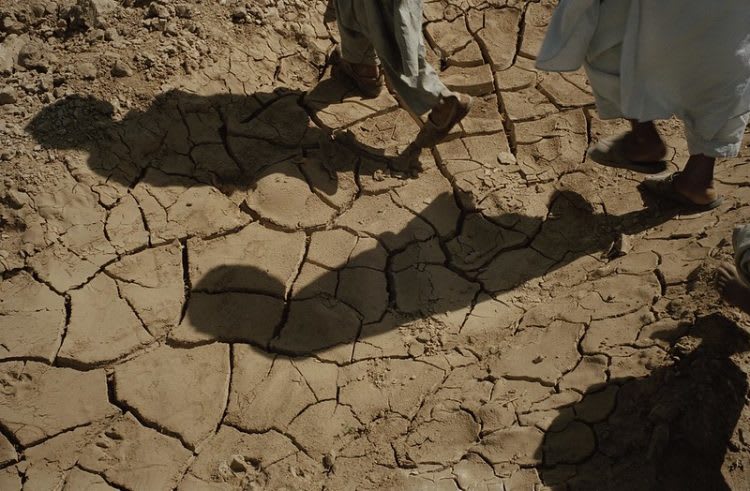 Large-scale migration from newly-uncultivable countries to cooler ones is likely. Photo by DFAT via Flickr (CC BY 2.0)
Its sudden appearance on a government website, without announcement or explanation, strongly suggests an attempt to minimise attention. Released amid the international crisis of Trump's Greenland aggression, the timing appears calculated to bury the story. That must not be allowed to happen.
From environmental issue to security emergencyThe report's title, Global Biodiversity Loss, Ecosystem Collapse and National Security, marks a decisive shift in official framing. Ecological breakdown is no longer treated as a distant, 'merely' environmental, concern, but as a direct and escalating threat to national and international stability.
The report warns that multiple ecosystem collapses are now likely, not merely hypothetical. These failures, it states, will have "dire implications" for national security and will require serious strategic adaptation merely to limit the damage. Such language is measured, but the message is unmistakable: the risk is immediate, systemic and severe.
Just one of the ways British national security is threatened by ecological breakdown as outlined in the report is through migration pressure. As ecosystems degrade, food systems fail, water scarcity increases and livelihoods collapse, "development gains begin to reverse." This restrained phrase points to mass human suffering - entire communities pushed back into poverty and instability. The report makes clear that these dynamics will drive large-scale displacement, creating cascading pressures on regional stability and on countries such as the UK.
Join our movement - 1000s of citizens telling the truth
We're proudly independent - no corporate owners or billionaire backers. But it costs us at least £150,000 a year to run our network. Support journalism by the people, for the people. Become a Friend of Bylines Network. For as little as £3.50 a month, you'll get behind-the-scenes insights, chances to engage with our editorial teams, access to special events, merchandise, and more. Sign up by clicking the button below, or upgrade your Substack subscription.
Become a Friend of Bylines Network
Where's the rest?
While the report is significant, it's pretty clearly not the full version and is strikingly thin in key areas. There is little detail on the geo-regional analyses that presumably underpin its conclusions. The links between specific regional ecosystem failures and concrete national security risks to Britain are not clearly explained. Even the report's 'Key Judgements', which are normally the core of any JIC assessment, are presented without adequate justification or depth.
This strongly suggests that what has been released is only part of a larger piece of work. The omissions appear deliberate, consistent with an effort to satisfy Freedom of Information requirements while withholding the most politically sensitive and disturbing findings.
The Government seems to be acknowledging the problem in principle while concealing its true scale and immediacy; in other words, withholding precisely the information citizens need in order to understand how to adapt to a declining global ecosystem.
First suppression, and now silenceThat this report was suppressed at all is deeply concerning. Its existence became public last October only through investigative journalism (based probably upon one or more officials taking risks with their own jobs), followed since then by sustained pressure from campaigners including notably Ruth Chambers, whose FOI work has been exemplary here.
Back in October, reporting was necessarily extremely limited; journalists had not been permitted to read the report itself. Now that the document has emerged, it is clear that earlier coverage barely captured its significance. This was not merely a warning about climate damage. It was a strategic assessment of how ecological collapse could destabilise entire regions, intensify conflict, disrupt economies and directly threaten the UK's security.
Its presentation at COBRA underscores this point. COBRA is convened for the most serious national threats. That ecosystem collapse featured there should have triggered urgent public debate. Instead, the report was buried.
Why this moment mattersThe quiet publication of this report may nonetheless mark a turning point. Once ecosystem collapse is formally recognised as a national security threat, the implications could be profound. Security threats demand preparation, strategic planning and decisive action. They also demand honesty.
The report exposes a widening gap between the scale of the threat and the inadequacy of current responses. Incremental policy measures and rhetorical commitments are clearly insufficient if multiple ecosystem collapses are likely within the foreseeable future. Strategic, nature-based adaptation will be unavoidable, and delay will only increase the human and economic cost.
This may explain the Government's reluctance to publicise the findings. Once citizens understand that ecological collapse threatens food security, migration stability, economic resilience and peace, pressure for meaningful action becomes unavoidable. This only bolsters the necessity for the Climate Majority Project's campaign calling on the government to fund (with mission-like deep pockets) a National Climate Resilience Plan; with military national security threats, we are always able to find the money to fund a response. It should be no different when the threat to national security is climate/ecological breakdown.
The case for full disclosureThere is now a compelling public interest case for releasing the full report. Democratic societies cannot respond effectively to threats that are only partially disclosed. Nor can citizens prepare for profound disruption if key information is withheld to avoid political discomfort.
Those who pursued the report's release through Freedom of Information requests deserve credit, as do those who commissioned it in the first place. But partial transparency is not enough. If the state holds detailed assessments of regional collapse, cascading risks and timelines, the substance of that knowledge must be shared. Anything less is a disservice to its citizens.
This is not about inducing panic. It is about enabling resilience, informed decision-making, and collective adaptation.
Facing the realityFinally, it must be said that the report's implications are emotionally difficult. To confront the likelihood of widespread ecosystem collapse is deeply distressing. That reaction is both rational and human.
When I first learnt what was really in this report, I suffered a serious episode of climate/polycrisis anxiety. Partly perhaps because I live on the edge of the Broads, in East Anglia, and so am intensely aware already of the (figurative and literal) rising tide of threats we now face.
If engaging with this material provokes anxiety or grief in you, it should not be faced alone. Talk with others. Seek support. Take time to process, and where possible, take action.
The attempt to bury this report has failed. The question now is whether we choose to face its warnings honestly, demand the full truth, and act accordingly, or allow one of the most consequential intelligence assessments of our time to slip quietly back into obscurity.
The stakes honestly could not be higher.
Postscript…Green Party MP for Waveney Valley, Adrian Ramsay, asked in Parliament on Thursday why the critical report was delayed and called for a debate on what the government is doing to prepare for the risks it outlines. The leader of the House responded by committing to making time for the debate (He also claimed that the Government had intended all along to publish the report…).
Crucially, on 23 January The Times also published a major new story about the report, which it observes is not the full version: agreeing with what I have written above.
The story reads in part: "…a full, internal version of the report, seen by The Times, goes further [than what the Government published last week], suggesting that the degradation of rainforests in the Congo and the drying up of rivers fed by the Himalayas could drive people to flee to Europe, leading to "more polarised and populist politics in the UK" and putting "additional pressure on already strained national infrastructure".
There is much more to come out…
Do pressure YOUR MP to get the full security assessment released.
Thanks to Joe Eastoe for crucial editorial assistance in the writing of this piece.
Rupert Read is Co-Director of the Climate Majority Project.
More from East Anglia Bylines
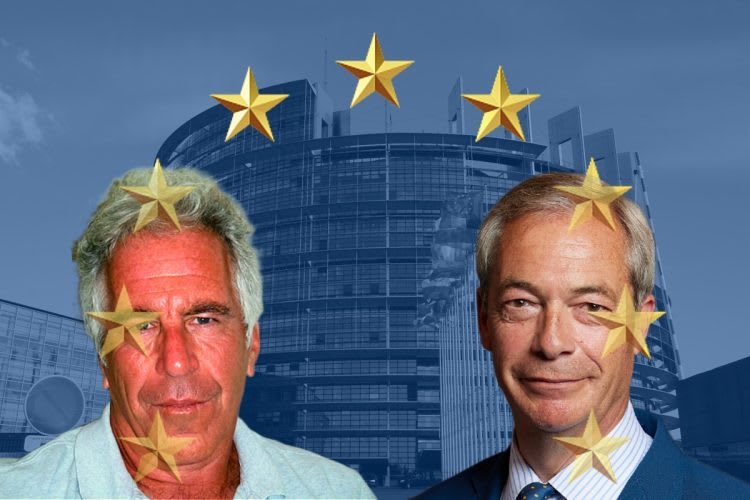 Montage. Epstein by Scottish Govt (CC BY 2.0) via Wikimedia Commons; EU Parliament: image by Rawpixel (CC0)">USVI (CC0); Farage by UK Parliament(CC BY 3.0); EU Parliament by Rawpixel (CC0)
Stephen McNair writes on the Epstein files and what they reveal about the role of Brexit in a global network which stands to gain from undermining democracy itself.
Users of Birdex get points for each bird they see and can compete with friends, with 200,000 sightings logged so far
A new app has launched that aims to gamify birdwatching by allowing people to collect digital cards of UK bird species whenever they record seeing one.
Users of Birdex accumulate points for each bird they see, with less common and rare species yielding the greatest rewards. It is possible to add friends and compete over bird sightings. The app has got birdwatchers talking online - though it has raised hackles among some for its use of AI-generated artwork.
Continue reading...
The regional government of Victoria, the Australian state where both Phillip Island and the city of Melbourne are located, have rejected a request from MotoGP organizer Dorna to move the Australian round of MotoGP from the Phillip Island circuit to Albert Park, the circuit inside Melbourne used for F1.
A statement issued by the government of Victoria expressed support for the Phillip Island circuit hosting MotoGP. "The Australian Motorcycle Grand Prix is synonymous with Phillip Island, and Victoria is proud to support it," the statement read. "Today the Allan Labor Government ruled out a request from Dorna Sports to move the event from Phillip Island to Albert Park. As regional Australia's biggest international sporting event, the Motorcycle GP brings tens of thousands of visitors to Phillip Island every year. It's good for tourism, good for local businesses, and good for jobs."
David Emmett Tue, 17/Feb/2026 - 16:35

Songbirds have charmed people for hundreds of years, boosting our spirits and health. They also play a vital ecological role: dispersing seeds, promoting plant growth, controlling pests and supporting a healthy natural environment. As sensitive indicators of environmental change, they also act as nature's early warning system, alerting us when something's going wrong.
Our UK songbirds are facing unprecedented threats; over the last 50 years, populations have fallen by 50% and continue to decline. We live in an era of mass species extinction, driven by threats such as climate change, insect decline, pollution, predation and landscape changes. Once common species - such as the bullfinch and spotted flycatcher - have become rare sights and sounds.
SongBird Survival, a charity headquartered in Diss, Norfolk, funds scientific research into the reasons for this decline. It focuses on areas where scientific evidence is sparse, inadequate or lacking.
Research into the impact of vet medicinesIn 2023 the charity funded a 2-year research study, working with Sussex University, looking at the effects of veterinary meds on nesting blue tits and great tits. Many species of birds use hair, wool and fur to line their nests as cushioning before laying their eggs. This lining can come from livestock, deer or sometimes from our domestic pets. The study examined the lining of nests for pesticides (such as fipronil, imidacloprid and permethrin) that are commonly found in anti-parasite treatments and tested if the presence of these pesticides had an impact on the offspring of nesting tits.

 Young great tits in their nest box. Image by jokevanderleij8 (CC0) | Two Blue Tit (Cyanistes caeruleus) parents admire their first chick to hatch, just moments before this picture was taken. The female (right) has a caterpillar for the chick's first meal. Image by fs-phil via Wikimedia Commons (CC BY-SA 2.0)
Research findings
Young great tits in their nest box. Image by jokevanderleij8 (CC0) | Two Blue Tit (Cyanistes caeruleus) parents admire their first chick to hatch, just moments before this picture was taken. The female (right) has a caterpillar for the chick's first meal. Image by fs-phil via Wikimedia Commons (CC BY-SA 2.0)
Research findings
The findings from this initial study paint a sad picture for our feathered friends:
- 103 nests were collected from blue tits and great tits and 100% of the nests were contaminated with fipronil (used in spot-on flea treatments for domestic pets).
- 89.1% of blue tit nests and 87.2% of great tit nests had detected levels of imidacloprid (also used in spot-on flea treatments).
- 89.1% of blue tit nests and 84.6% of great tit nests had detected levels of permethrin (typically used in anti-parasite treatments on beef/dairy cattle, horses, sheep, goats, swine, and poultry).
A second phase of this research project investigated whether the chemical exposure is influencing breeding success and survival in songbirds by measuring pesticide levels in the eggs and dead chicks of blue tits and great tits.
"This latest study is due to be published in early spring," Susan Morgan, SongBird Survival Chief Executive Officer told East Anglia Bylines, "so we're on the cusp of learning far more about the hidden impacts these chemicals could be having on our songbirds."
Next stepsWe are a nation of pet lovers, and many pet owners will be using the 'spot-on' flea treatments for cats and dogs. Farmers seek veterinary medical support to control flies, ticks, lice and mites on their livestock. Unfortunately the research findings add to growing evidence that veterinary medicines are potentially having a negative impact on songbird populations. This is why we need a greater environmental risk assessment of veterinary medicines.
SongBird Survival, along with other environmental organisations, is using the research findings to push for a more complete environmental risk assessment of veterinary meds by the Veterinary Medicines Directorate. The impact of pesticides on all wildlife and the environment needs greater understanding.
The charity will be launching a public campaign to help pet owners make informed choices, raising awareness of the environmental impacts of these products and encouraging people to have conversations with vets about the safest and most suitable options for their pets.
What can you do now?
To help prevent treatment pesticides compromising wildlife, SongBird Survival recommends:
- Talk to your vet about the most suitable options for your pet.
- If you do continue to use fipronil, imidacloprid and permethrin spot-on treatments, don't brush your dogs or cats outside or put out hair for the birds to use in nest-making.
- Don't allow pets to go into rivers and streams following the application of spot-on flea treatments, preferably for as long as possible.
- Make sure you dispose of the packaging properly in household waste.
SongBird Survival is the only national UK charity solely dedicated to changing the future for songbirds. Its vision is to create rich, resilient and balanced songbird populations. It makes an impact by driving conservation through scientific research, protecting songbirds by raising awareness and inspiring action, and safeguarding the most at-risk songbird species. Please visit www.songbird-survival.org.uk for more information on how you can help protect songbirds.
More from East Anglia Bylines
 Environment
From silence to song: saving the farmland birds
byRachel Fulcher 5 October 2025
Environment
From silence to song: saving the farmland birds
byRachel Fulcher 5 October 2025
 Environment
Hidden wonders: my fascinating encounters with the Bittern
byLeslie Cater 11 November 2025
Environment
Hidden wonders: my fascinating encounters with the Bittern
byLeslie Cater 11 November 2025
 Climate
The truth about migratory birds and the climate emergency
byJenny Rhodes 18 October 2025
Climate
The truth about migratory birds and the climate emergency
byJenny Rhodes 18 October 2025
 Environment
More than a hobby: garden birdwatching is the new conservation frontier
bySusan Jones 1 February 2026
Environment
More than a hobby: garden birdwatching is the new conservation frontier
bySusan Jones 1 February 2026
 Friends of Bylines Network
There has never been a greater need for grassroots journalism that investigates the stories that really matter, holds power to account and champions the voices of everyday citizens. We are proudly powered by volunteers but what we do isn't free.
STAND WITH US for independent, citizen-led journalism that makes democracy stronger, and you will even get some exclusive benefits.
BECOME A FRIENDThe post Fighting for songbird survival and safer everyday veterinary medicines first appeared on East Anglia Bylines.
Netflix is streaming its very first live MMA fight on May 16. The combatants are one-time phenom Ronda Rousey and one-time actor Gina Carano. Both women have retired from the sport. Rousey left in 2016 and Carano left all the way back in 2009. In any event, they are both back for one night only.
The featherweight bout will take place inside a hexagon cage and will stream globally. It's likely Netflix had to choose two retired fighters because current stars are under contracts with various promotional entities. This fight is co-hosted by Most Valuable Productions, a promotional company started by Jake Paul.
A LEGACY SHOWDOWN
Fans of The Mandalorian and his tiny green apprentice Grogu are getting their best look yet at the duo's upcoming theatrical adventure, set for release this spring. It's hard to believe that it's been just over six years since the last Star Wars movie was released in theaters, followed by wall-to-wall coverage of so-called Star Wars Fatigue.
The newest trailer, released today, clocks in at just over two minutes long and offers some new footage and details to sink our teeth into. Picking up after the events of the Disney+ series The Mandalorian, the Empire has collapsed and Din Djarin (Pedro Pascal) and Grogu are tasked with taking out a bevy of baddies from gangsters to war criminals for the New Republic. Colonel Ward, new to the Star Wars universe and played by Sigourney Weaver, tells Djarin, "This isn't about revenge, it's about preventing another war."
Jeremy Allen White will also star in the film, as Rotta the Hutt, Jabba's son, who we briefly see battling Din Djarin in a colosseum of sorts. Notably, at one point we see Djarin on his knees before Jabba sans helmet, so we'll definitely be getting some moments of Pedro Pascal unfiltered by Beskar. Like any Star Wars adventure, we see flashes of some new creatures that our heroes will face. Most importantly, we see Grogu being downright adorable, playing with buttons on the ship, commandeering a flying bassinet, and snacking on a cookie.
The Mandalorian and Grogu hits theaters on May 22 and, according to the trailer, was shot at least in part for IMAX.
This article originally appeared on Engadget at https://www.engadget.com/entertainment/tv-movies/the-first-full-trailer-for-the-mandalorian-and-grogu-is-here-164244117.html?src=rssXbox has revealed the second batch of Game Pass additions for February. There are quite a few heavyweights in the mix this time, including Kingdom Come: Deliverance II and The Witcher 3: Wild Hunt. Let's start with what's available today, though. Xbox previously said Avatar: Frontiers of Pandora (Game Pass Ultimate and PC Game Pass on Cloud, Xbox Series X/S, handheld and PC) would arrive today, while Avowed joins the Game Pass Premium library on Cloud, Xbox Series X/S and PC on the same day it hits PS5.
There's another Game Pass addition today in the form of Aerial_Knight's DropShot (Game Pass Ultimate and PC Game Pass on Cloud, Xbox Series X/S, handheld and PC). I've been looking forward to this after digging solo developer Aerial_Knight's previous games as well as the demo.
This is a single-player skydiving FPS in which you'll have to fend off enemies to grab the only parachute. You'll use finger guns to take out the competition. Oh, and there are dragons to deal with.
Another trio of games joins the lineup on Friday, including The Witcher 3: Wild Hunt - Complete Edition (Game Pass Ultimate and Premium on Cloud and consoles). This version of the classic action RPG includes all the DLC, so it could keep you busy for quite some time. EA Sports College Football 26 (Game Pass Ultimate on Cloud and Xbox Series X/S) arrives on the same day along with the eye-catching Soulslike deckbuilder Death Howl (Game Pass Ultimate and Premium on Cloud, Xbox Series X/S, handheld and PC). That was already on PC Game Pass.
On February 24 TCG Card Shop Simulator hits Cloud, Xbox Series X/S, handheld and PC in Game Preview on Game Pass Ultimate, Premium and PC Game Pass. As the title suggests, here you'll be managing a trading card game store. Dice A Million — a day-one addition to Game Pass Ultimate and PC Game Pass on PC on February 25 — is an intriguing numbers-go-up game. It's a roguelike deckbuilder in which you'll combine dice with different abilities as well as rings with passive effects as you attempt to roll a million points.
February 26 sees the full release of Towerborne, which had been in game preview (and in early access on Steam). Xbox Game Studios is publishing this co-op action RPG from Stoic. Offline play and online co-op will be added along with more story, areas, enemies, progression features and difficulty settings. The full version of Towerborne will be available on Game Pass Ultimate, Premium and PC Game Pass across consoles, handheld and PC.
Looking a bit further ahead, two high-profile titles are coming to Game Pass Ultimate, Premium and PC Game Pass on Cloud, Xbox Series X/S and PC on March 3: Final Fantasy III and Kingdom Come: Deliverance II. The latter received several nominations at The Game Awards, including Game of the Year, and it was one of our favorite games of 2025. It follows Kingdom Come Deliverance hitting Game Pass just last week.
This article originally appeared on Engadget at https://www.engadget.com/gaming/xbox/kingdom-come-deliverance-2-and-the-witcher-3-are-coming-to-game-pass-163624685.html?src=rss

Venture capital has long avoided 'hard' sectors such as government, defence, energy, manufacturing, and hardware, viewing them as uninvestable because startups have limited scope to challenge incumbents. Instead, investors have prioritised fast-moving and lightly regulated software markets with lower barriers to entry. End users in these hard industries have paid the price, as a lack […]
This story continues at The Next Web

This heartwarming video shows a pigeon caring for a pregnant cat and her babies. The pigeon collects straw and builds a bed around the cat for comfort. After the kittens are born, it keeps adding to the nest, ensuring they're all cared for. — Read the rest
The post Watch a sweet pigeon care for a pregnant cat and her kittens appeared first on Boing Boing.

Wooly Story (1964) is a quietly enchanting stop-motion short from Czech animator Hermína Týrlová, who makes everyday materials feel alive. In nine minutes, a simple ball of yarn awakens with curiosity, slowly unraveling into playful movement and mischief. Without dialogue, the film lets texture, motion, and timing do all the storytelling. — Read the rest
The post Wooly Story is a whimsical stop-motion short from 1964 that brings yarn to life appeared first on Boing Boing.

This may be a step towards telling new Star Wars stories on the big screen, or just a merchandising blitz.
The Mandalorian and Grogu is the next feature-length Star Wars movie, releasing in theaters. It seems to leap directly off the little screen and onto the big, feeling even more like an episode of the TV series than Star Trek attempts at movies with their television casts. — Read the rest
The post Mando and Baby Yoda the Movie's "official" trailer appeared first on Boing Boing.

These photos capture the subtle art of deep sleep marks—imprints left on skin after napping on objects. The collection includes marks from a TV remote, earbuds, and even a palm print.
Each photo tells a story about where someone dozed off. — Read the rest
The post Deep sleep marks captured in photos show the imprints of naps appeared first on Boing Boing.

Skateboarder Ted Barrow takes a look at the yesterday and today of Los Angeles' famous beachfront skate spots, from the Santa Monica Pier to the Venice Pavilion.
Whether you grew up watching skate movies or in West Los Angeles, the skate spots along Santa Monica and Venice Beach are iconic. — Read the rest
The post The architecture and history of LA's skateable beachfront appeared first on Boing Boing.
 It's Pancake Day [ 17-Feb-26 4:29pm ]
So I thought I would republish my paean to pancakes — which are kind of like cocktails, if you think about it —— from last year. Only this time, it's FREE. Enjoy.
When KG Motors handed over the first customer MiBots on December 30, 2025, it did more than complete a ceremonial delivery. It quietly placed a fully engineered, road-legal micro-EV into real-world use — and set the stage for a production ramp beginning in April of 2026. In one particular case, ... [continued]
The post Will The MiBot Work In Amsterdam? Here's A Biased Comparison appeared first on CleanTechnica.
Global adoption is accelerating, but South Africa's freight sector must balance innovation with operational certainty as it prepares for an electric future. Electric trucks are no longer a speculative technology. Across major global markets (particularly North America, Asia, and Europe), they are increasingly visible in urban delivery fleets, port operations, ... [continued]
The post Electric Trucking: Why Ecosystem Readiness Matters In South Africa appeared first on CleanTechnica.
The line at the VinFast booth during the 2026 Chicago Auto Show (CAS) was unexpectedly long, a stark contrast to the skepticism that once trailed the Vietnamese automaker. My only comparison on U.S. soil is last year's Electrify Expo in Nassau County, New York. For a regular at the McCormick ... [continued]
The post VinFast: From California Dreaming To Midwest Reality appeared first on CleanTechnica.
 MarcelClemens / shutterstock
As the Atlantic warms, many fish along the east coast of North America have moved northwards to keep within their preferred temperature range. Black sea bass, for instance, have shifted hundreds of miles up the coast.
In the Mediterranean, the picture is very different. Without an easy escape route towards the poles, many species are effectively trapped in a sea that is warming rapidly. Some native fish are even being replaced by more heat-tolerant species that have slipped in through the Suez Canal.
It's a process affecting coastal species around the world: without a continuous pathway to cooler waters, many are in trouble. Escape becomes difficult where coastlines run east-west or are broken into enclosed basins and islands. In these settings, species have to move huge distances just to gain a few degrees of latitude - the so-called "latitudinal trap".
It's also a process that has repeated throughout history. When we analysed 540 million years of fossil data for a recent study published in the journal Science, we found that species along east-west coastlines were more likely to go extinct than those with easier movement north-south.
 Malanoski et al (2026) / Science
We hypothesised that the shape and orientation of coastlines could help species escape - or trap them. If coastlines provide direct, continuous pathways to move north or south, species should be able to better track shifting climates. But, where species have to travel a long way for minimal latitude gain, their extinction risk is raised during episodes of environmental change.
Coastlines themselves are not fixed. Over millions of years, plate tectonics rearrange continents, sometimes producing long north-south coasts, like those of the Americas today, and at other times sprawling east-west seaways such as during the Ordovician a bit over 400 million years ago.
This means climate shocks can produce very different extinction outcomes depending on the layout of continents at the time.
To test this hypothesis, we analysed fossil data for about 13,000 groups of related shallow-marine invertebrate species, such as clams, snails, sponges and starfish, spanning the last 540 million years. We then paired these records with reconstructions of ancient geography.
For each fossil, we estimated how difficult it would have been for that species to shift its latitude along shallow coastlines. We measured this as the shortest number of steps to travel 5°, 10°, or 15° latitude north or south. (For context, Great Britain covers about 9° from top to bottom). Short distances imply a relatively direct escape; long distances imply a long or maybe impossible escape route.
 A 5° shift in latitude can be reached quickly along a simple north-south coastline (A), but requires much longer routes—or cannot be reached at all—along convoluted east-west margins (B), interior seaways (C), and islands (D).
Malanoski et al (2026) / Science
A 5° shift in latitude can be reached quickly along a simple north-south coastline (A), but requires much longer routes—or cannot be reached at all—along convoluted east-west margins (B), interior seaways (C), and islands (D).
Malanoski et al (2026) / Science
We found that, over the last 540 million years, extinction risk was consistently higher for marine animals with long escape routes.
Geography amplifies catastropheThis pattern intensified during Earth's five mass extinction events. In our models, species with longer distances showed increases in extinction risk of up to 400% during mass extinctions, compared with about 60% during other intervals, highlighting that geography becomes far more consequential when climate change intensifies.
Although our analyses focused on geologic timescales, our results help us understand how shallow marine species may respond to climate change today. Species living in the Mediterranean or the Gulf of Mexico or other regions with semi-enclosed geography, or around the margins of islands, may have more difficulty as the ocean warms.
Coastline geometry may matter less for species that are good at dispersing themselves, however, especially those that have a long planktonic larvae phase where they drift around the ocean before becoming fixed in place. The survival of those species depends more on factors like ocean currents than coastline orientation.
Estimating whether a species is at risk of extinction is typically done with reference to attributes such as body size or geographic range size. But our work shows that extinction risk also depends on geography. Survival during climate upheaval depends not only on a species' biology - but on whether the map itself offers an escape.

Erin Saupe receives funding from the UK Natural Environment Research Council (NERC) and the Leverhulme Trust.
Cooper Malanoski does not work for, consult, own shares in or receive funding from any company or organisation that would benefit from this article, and has disclosed no relevant affiliations beyond their academic appointment.
From high-end boutiques to housing in disaster zones with beer-crate foundations, the Japanese architect creates with things people throw away. What will his distillery in whisky's holy land look like?
'I don't like waste," says Shigeru Ban. It's a simple statement - yet it encapsulates everything about the Japanese architect's work. He takes materials others might overlook or discard - from cardboard tubes to beer crates, styrofoam to shipping containers - and subjects them to a kind of alchemy, refining rough edges and transforming fragility into sturdiness.
The outcome is a perpetually ingenious and curiously poetic scavenger architecture that finds beauty and purpose in the everyday. From high-end boutiques to housing for refugees, Ban's buildings blur the lines between eastern and western design traditions, between the luxurious and the ordinary, and between what constitutes a temporary building and permanent one.
Continue reading...

Noam Chomsky and Jeffrey Epstein (image released by the House oversight committee). Via Scheerpost.
Each time I read new revelations from the heavily-censored Epstein files, I am at once shocked and not at all surprised.
It's a cliché that "power corrupts and absolute power corrupts absolutely". The oft-resurrected causal debate that arises when someone says this is whether (a) the very possession of power leads to its abuse, or (b) those with a predilection for corrupt and abusive behaviour (ie "bad people") strive for power to enable that behaviour.
I'm not going to get into that debate except to say that Lord Acton, to whom this quote is usually attributed, immediately went on to clarify unambiguously that he meant it in the former (a) sense.
I have had a few dozen brushes with members of what I call the patriciate*, this amorphous class of "fatherly nobility" (they're almost all males), and all of them, without exception, exuded a sense of arrogant certainty, intolerance of and obliviousness to criticism ("it isn't from one of our people so it is of no matter"), and an obnoxious sense of privilege (etym.: "that law doesn't apply to me") and of belief that they could basically do no wrong.
I knew some of these people before they became members of the patriciate, and so I do tend to agree with Lord Acton that it was their admission to the patriciate and its membership that corrupted and poisoned their character, thinking, and behaviours. But I also acknowledge that those who are already prone to corruption and abuse do disproportionally seem to strive for power and admission to the patriciate. It's a vicious cycle of depravity.
At some point I'm going to write a longer article about the brief and limited period in my own life when, based on the rewards and recognition I was receiving, I too began to be poisoned by "believing my own press (clippings)". I'm certainly not proud of my behaviour during that period, though it never included anything illegal.
But as a result I can completely understand the seduction and promises of power and their corrupting influence. We are, after all, conditioned by our biology and our culture, and it's not hard to be slowly, subtly conditioned to find certain behaviour that we might once have found revolting and outrageous to be somewhat justifiable, and then, gradually, acceptable and even ordinary.
Looking at the extreme example of Trump, if you disentangle the behaviour that is due to his accelerating senility and his traumatizing past, you see a guy who is utterly unapologetic for saying, while laughing, on camera, that when women don't do what you want, you have to "grab 'em by the pussy". His comments on the Epstein Files have made it quite clear that now that his censors have released millions of emails that aren't "about Me", he no longer sees what the fuss is all about and why anyone still cares about their content. The problem for him, obviously, isn't that the files reveal disgusting and illegal behaviour, it's that the perpetrators (at least the ones revealed so far) got caught and now have to face public reaction — distracting public attention from the demented king.
Worse, it's quite clear that he, just like Ghislaine Maxwell, doesn't really think anything that Epstein and the thousands of people in the patriciate (including Trump, if/when his incriminating emails ever get out) did was morally wrong. Just a bunch of bros hanging together and doing bro stuff. The lion always eats the lamb. If the "alleged victims", he is undoubtedly saying, didn't scream and run away, then they were either stupid or complicit — and hence there was no crime, legal or moral. This is, of course, the typical rationalization of pimps and johns (and of drug pushers). If everyone around you is a pimp or a john, you come to see this as normal behaviour. If you exploit an addict's behaviour, or that of someone weak or in desperate need, you rationalize that that's no reflection on you.
Once you get infected with the patriciate mindset, everyone and everything outside the patriciate becomes disposable without a thought or care: Children, women, animals, ideological opponents, nations, the environment, 'other' ethnic groups, the poor, the sick, the weak, people who have what you want and believe you 'deserve' (Greenland perhaps, or Palestine's land, or Iran's oil, or the Washington Post, or Twitter). They are all tolerated while they are of use to you and available to you, and then cease to be important and can be discarded.
This is not an 'elite' predilection. It's way too big for that. It is ubiquitous in our society. Political leaders and groups, government and institutional administrators and their groups, entertainment and sports stars and associations, business and 'professional' leaders and clubs, university leaders and clubs, religious leaders and associations, gurus of every stripe, leaders and cadres and 'in' groups in the military, in the media, in the sciences, in the arts, among cops and prison guards, street gangs and crime syndicates, and also wherever any kind of 'hazing' or other abusive rituals of membership rear their ugly head — everywhere that wealth, fame, authority and hence power is or can be concentrated, you will find layers of the patriciate. Power corrupts everywhere.
And just to stress, the patriciate is not 'organized' by anyone. This is not a tight cabal conspiring in secret to do nefarious things. It is insidious because it preys on our essential human nature, our malleability, our hunger for recognition and reassurance, our addictive tendencies in search of the next shot of dopamine, and our intense desire to belong and 'fit in'. We get seduced into its outer layers easily, and then just as easily slide into 'higher' layers where the reinforcement of privilege, impunity, recognition, faithful 'brotherhood', belonging, and the easy spoils of power ("money for nothing and your chicks for free") entrench us and blind us to the abuses and horrors we are inflicting on others and on the world. More than being 'invited', we quietly ask to belong. And soon we are conditioned to be part of it, with all the arrogance, self-certainty, intolerance, obliviousness to criticism, sense of impunity, and sense of privilege that goes with that. Everyone is vulnerable to being sucked into it.
What has been most remarkable about the behaviour of those 'outed' in the Epstein Files is their sense of disbelief and astonishment that anyone could dare insinuate that any of their behaviour was wrong. We see this in the annoyed denials, veiled threats, feeble self-apologies, and whitewashing (sometimes with the complicity of the alt media) of celebrities like Noam Chomsky, Richard Dawkins, Peter Thiel, Bill Gates, Bill Clinton, Richard Branson, Lawrence Summers, Ehud Barak, Howard Lutnick, Sergei Brin, Steve Bannon, Elon Musk, 'Prince' Andrew, and hundreds of others across the political spectrum, and in the sidestepping media coverage and absence of on-the-record comment from associates of all these rich and powerful men. You don't want to get on the 'wrong' side of any of this arrogant, privileged, and vengeful bunch, and not just because it would block your admission to the patriciate.
To show that the patriciate isn't exclusively men, Exhibit A is Epstein's partner-in-crime, Ghislaine Maxwell, who shows no remorse for her cruelty in the manipulations that destroyed so many people's lives (most of them women, and lots of them still children). She was quickly moved to more comfy prison quarters after people of influence talked with Trump about her, and has now publicly pledged to say nothing — ie to completely protect the patriciate — unless and until Trump gives her a full and unconditional pardon.
To repeat: This is not a small pocket of rich evil men secretly doing diabolical things among themselves. This is the inevitable product of human greed, thirst for fame, for security, happiness, reward, recognition, and reassurance, in the presence of a monstrous inequality of power. It's been going on for thousands of years.
This will not end with the closure (probably without significant prosecutions) of the Epstein Files. This is a sickness in an entire bewildered and traumatized species that has lost its connection with community and with the rest of life on Earth, whose privileged patriciate has been freed to do anything they want and who, together, and with their procurers, will do anything that will make them feel better about themselves, even for just the duration of a rush of dopamine and other feel-good chemicals, each a little more powerful than the last.
*Why do I not use the more familiar term patriarchy, you might ask? It's because I don't think most members of the patriciate are terribly fussed with the -archy of running things and controlling other people. Running things is hard, annoying work. In fact I think the patriciate would be quite delighted if the 8 billion 'other' people on the planet, who are no longer of immediate use to them getting what they want and what they think they deserve, just vanished and got out of their way.

Nigel Farage announced the Reform UK shadow cabinet today, with former Tories taking front and centre. This is despite the fact that Reform UK has just eight MPs, so is in no need of a shadow cabinet.
As the racist party are not the official opposition, so they don't get to name a shadow cabinet. But, why would the facts stop Farage? At a flashy event reminiscent of an American election campaign, Farage announced the first members of his "shadow cabinet".
New Tory cabinet for ReformAnd surprise, surprise, it's full of Tories
Robert Jenrick has been named as their shadow chancellor. Jenrick defected from the Tory party last month and has stolen the role from both Richard Tice and Zia Yusuf.
Jenrick, who lost the Tory leadership to its current leader, Kemi Badenoch, is expected to give a speech outlining his economic plan sometime this week. By that point, he might've actually come up with one.
The most recent Tory defector, Suella Braverman, will take on more than one role. As well as education and skills, she will also handle equalities. Though this is Reform, so that means she'll be hellbent on destroying any sort of equality. Namely, she wants to get rid of the Equality Act.
Richard Tice isn't too glum about being sidelined as Chancellor. As well as deputy leader, he'll now be 'in charge of' (and we use that term loosely) business, trade, and energy. His biggest focus is on getting rid of net-zero targets to focus on oil and gas.
And then finally, we have Zia Yusuf as Reform's 'home secretary'. Again, there's a heavy use of quotation marks here, because they aren't the shadow cabinet or opposition.
Definitely not a one-man bandOne person noticeably missing was Reform laughing stock Lee Anderson. Ol' 30p will apparently remain as "chief whip", but it's interesting he wasn't announced for a welfare role when he's apparently been their "welfare spokesperson" for months now.
Presumably it's because he can't so much as move without making a fool of himself. Most recently, he was mocked for campaigning in the wrong place,
As well as no DWP "shadow" minister, there was no health secretary announced. This surely shows what Reform's priorities are. You can only assume this is because Reform are so snugly in private healthcare's pockets.
Farage said a big reason for naming a "cabinet" was so the world didn't see Reform as a "one man band". Which would be more believable if he wasn't constantly fucking everywhere. But then it's not like he's got many people to sub in is it?
Despite apparently not wanting to be the star of the show, Farage announced each member of his cabinet in the centre of a big stand at a podium. Instead of letting them speak at his podium, they all had their own smaller podiums. These were also, naturally, slightly further back.
Reform are not to be taken seriouslyThe naming of Reform's shadow cabinet confused a lot of people, but probably none more so than 30p Lee Anderson. Just three weeks ago, Anderson rebuffed rumours of an almost correctly predicted shadow cabinet.
When a Tory, Luke Robert Black, remarked that this was "savage" towards Anderson, he replied
Thicko alert. We cannot possibly have a shadow cabinet, we have spokespersons. I was made DWP Spokesperson last year. Carry on being a useful idiot for the Tory party, but you won't get that safe seat you want. They're laughing at you.
This tweet is currently still up, but let's see how long it lasts. Instead of addressing this, Anderson tweeted this afternoon that the new cabinet was "the Beginnings of a World Class Team."
This latest announcement from Reform UK is just the latest in the long line of them assuming they have any sort of authority or power in Westminster.
More than anything, it shows how entitled they all are. But to the country it's just another silly stunt by Farage, and even more reason to not take Reform seriously.
Featured image via the Canary

The UK have signed a deal with California to collaborate on green energy initiatives and boost investment.
However, US president Trump has been vocal in his opposition to the agreement. As such, the move is an unusual tactic for Starmer's Labour, which has so far sucked up to the far-right dictator like its life depends on it.
The UK government announced that the California deal will connect the UK's clean energy sector with the Californian market. Beyond this, the agreement will also see the two governments share expertise on issues like protecting biodiversity and resilience in the face of extreme weather.
Energy secretary Ed Miliband signed the memorandum of understanding (MoU) on the deal with Californian governor Gavin Newsom on 16 February in London. The MoU itself affirmed that both governments:
Trump tantrumsupport the goals of the Paris Agreement and the United Nations Framework Convention on Climate Change, recognize the urgency of addressing global climate change, and aim to strengthen bilateral cooperation to decarbonize their economies, protect residents from the worst effects of climate change, promote sustainable growth, secure the resources needed for the energy transition, enable research exchange and technology advancement, and develop skilled and modern workforces
The UK-California MoU is one of 12 similar agreements with other US states. These include the Democrat-led Washington and Republican-led Florida.
However, the deal has immediately enraged Donald Trump. He stated that it was "inappropriate" for the UK "to be dealing with him (Newsom)." Governor Newsom has been a notable opponent of Trump's rule within the Senate, particularly regarding both climate policy and immigration.
Earlier this year, the Trump administration backed the US out of the United Nations Framework Convention on Climate Change. However, Newsom has used his recent transatlantic tour to assure European leaders that Trump's climate hostility is "temporary" in the grand scheme of US politics.
Notably, the UK-California deal specifically commits the US state to follow the UN Framework Convention, in spite of Trump's withdrawal.
'Gavin is a loser'In an interview with Politico, Trump displayed his typically childish displeasure:
The UK's got enough trouble without getting involved with Gavin Newscum. Gavin is a loser. Everything he's touched turns to garbage. His state has gone to hell, and his environmental work is a disaster.
The US dictator continued:
The worst thing that the U.K. can do is get involved in Gavin. If they did to the U.K. what he did to California, this will not be a very successful venture.
Devastating wildfires recently ravaged California, with Trump accusing Newsom of mismanaging the state's response. A spokesperson for the Californian governor, meanwhile, highlighted that the Trump administration was withholding disaster funding, stating that:
Starmer the suck-upThe Trump Administration refused a routine wildfire recovery meeting — a rejection we've never seen before — even as LA families near a year without long-term federal financial help. The message to survivors is unmistakable: Donald Trump doesn't care about them.
The move to anger Trump is an unusual one for the Labour Party, which has thus-far been a keen ally of the US far-right.
Recently, Starmer dutifully deployed aircraft carriers to the Arctic Circle. The move seen by some commentators as an act of deference to Trump's 'defence gap' narrative, with which he tried to justify the annexation of Greenland.
Last month, Starmer failed even to condemn Trump's blatantly illegal attack on Venezuela and kidnap of president Maduro. Beyond this, Labour have repeatedly claimed that the USA "keeps us safe" under the Trump regime.
In September 2025, the Labour government celebrated a £150bn deal with Trump. Meanwhile, commentators described the agreement as a thinly veiled mechanism for US firms to asset-strip UK wealth. The list goes on and on.
However, regarding the UK-California climate agreement, we at the Canary aren't exactly convinced that Starmer is finally growing a backbone. If he thinks this one small move to ruffle Trump's feathers will make up for a litany of fawning in the face of the far right, he's got another think coming.
Then again, there's always the possibility that Labour didn't consider that dealing with a vocal Trump opponent might piss off America's fascist-in-chief. You'd think that kind of thing might be obvious to anyone with an ounce of political wherewithal, but this is Starmer's Labour we're talking about.
Featured image via the Canary

Workers at a Cumbria packaging firm will vote on strike action after rejecting an 'insulting' pay offer.
Pay offer = pay cutMore than 100 workers at Futamura, in Wigton, turned down the company's 1.2 per cent pay offer by a majority of 94 per cent. Trade union GMB is demanding a 3.8 per cent pay increase, in line with inflation. This is to ensure members do not suffer yet another real-terms pay cut.
The union has engaged with the Advisory, Conciliation and Arbitration Service (Acas) to help bring the company back to the table.
Futamura makes cellulose film for packaging.
The dispute mirrors other situations where pay has failed to keep pace with inflation. And it comes against a backdrop of long-term "pay depression" going back 20 years.
Michael Hall, GMB Regional Organiser, said:
This 1.2 per cent offer is nothing short of an insult. GMB members have spoken loudly and clearly. Enough is enough. Futamura workers deserve a fair pay rise that simply keeps up with the cost of living.
The company should be listening, not digging in. GMB has been patient and our members have been patient. But Futamura has refused to make a fair and reasonable pay offer.
Featured image via the Canary
By The Canary

Booker Prize-winning author Arundhati Roy has announced her withdrawal from the Berlin International Film Festival (Berlinale) because of filmmaker Wim Wenders' "jaw-dropping" comments on Israel's genocide in Gaza.
Roy described Wenders' comments as "a way of shutting down a conversation about a crime against humanity even as it unfolds before us in real time". Wenders said at a press conference on 12 February 2026 that the art world should "stay out of politics":
Arundhati Roy speaks outWe have to stay out of politics because if we make movies that are dedicatedly political, we enter the field of politics. [Filmmakers should be] the counterweight of politics, we are the opposite of politics. We have to do the work of people, not the work of politicians.
The "shocked and disgusted" Roy was unequivocal in her opposition to Wenders's nonsense:
To hear them say that art should not be political is jaw-dropping," said Roy in a statement announcing she would be exiting the Berlinale jury. "It is a way of shutting down a conversation about a crime against humanity even as it unfolds before us in real time - when artists, writers and film makers should be doing everything in their power to stop it.
It is, of course, inherently political to say that art should not be political, because silence aids the oppressor. The Israel lobby always attempts to cow politicians, news media, and artists into either silence or active collaboration. All too often it succeeds.
The festival previously marketed itself as the most political major film festival, but capitulated to the Israel lobby after the start of Israel's genocide in Gaza. Humanitarian campaigners called for a boycott of the 2024 festival for its refusal to denounce the genocide and Israel's other crimes against the Palestinian people.
Roy's full statement reads:
In Which Annie Gives It Those Ones, a whimsical film that I wrote 38 years ago, was selected to be screened under the Classics section at the Berlinale 2026. There was something sweet and wonderful about this for me.
Although I have been profoundly disturbed by the positions taken by the German government and various German cultural institutions on Palestine, I have always received political solidarity when I have spoken to German audiences about my views on the genocide in Gaza. This is what made it possible for me to think of attending the screening of Annie at the Berlinale.
This morning, like millions of people across the world, I heard the unconscionable statements made by members of the jury of the Berlin film festival when they were asked to comment about the genocide in Gaza. To hear them say that art should not be political is jaw-dropping. It is a way of shutting down a conversation about a crime against humanity even as it unfolds before us in real time - when artists, writers and film makers should be doing everything in their power to stop it.
Let me say this clearly: what has happened in Gaza, what continues to happen, is a genocide of the Palestinian people by the State of Israel. It is supported and funded by the governments of the United States and Germany, as well as several other countries in Europe, which makes them complicit in the crime.
If the greatest film makers and artists of our time cannot stand up and say so, they should know that history will judge them. I am shocked and disgusted.
With deep regret, I must say that I will not be attending the Berlinale.
Arundhati Roy
Featured image via the Canary
By Skwawkbox

Crisis-hit UK PM Keir Starmer is fast-tracking gigantic spikes in war spending. He says it is to defend the country. In reality, Starmer is yet again sucking up to US president Donald Trump. The UK government needs to get its head out of 1997 for all our sakes.
Starmer wants £14bn a year spent on war and the military. That is to say, £14bn more going into the pockets of arms firms and their fellow travelers.
The Guardian reported:
At the Munich Security Conference at the weekend, Starmer argued for higher and more sustained defence spending to meet the threat from Russia. "We must build our hard power because that is the currency of our age," he said. "We must spend more, deliver more and coordinate more."
Currently the UK spends 2.3% of its gross domestic product (GDP) on defence. The increase would take that figure up to 2.6%.
But it could go higher still:
The BBC said No 10 was considering an increase to 3% of GDP by the end of this parliament in 2029 to meet Starmer's ambition, although it is unclear if this will turn into a concrete plan given the many obstacles.
Politico explained the rate of acceleration:
Starmer is Trump's minionThe British prime minister last year pledged to spend 2.6 percent of GDP on defense by 2027, and 3 percent by the end of the next parliament in 2034.
Ministers are now considering accelerating those plans to hit 3 percent by 2029, as first reported by the BBC and backed up by two government officials.
Stop the War Coalition said the move was simply about appeasing Trump's demands for higher spending among European allies:
This is part of a massive European arms drive aimed at appeasing Trump as he demands Europe pay more for its own defence.
The additional cost comes at a time when we are told to accept cuts to pensions, to wages and to public services, while much of what is spent will go directly into the coffers of US arms manufacturers.
The coalition warned the militarist foundations were being laid for a major war in Europe:
We need new ideasIt is clear Europe is creating a climate in which war with Russia is more likely, a war where nuclear weapons could be used with catastrophic consequences.
US secretary of state Marco Rubio's said as much in his Munich Security Conference speech. As part of his weird colonialist rant, Rubio warned the European 'civilisation' was under threat.
He also said:
And this is why we do not want our allies to be weak, because that makes us weaker. We want allies who can defend themselves so that no adversary will ever be tempted to test our collective strength.
Adding:
We want allies who are proud of their culture and of their heritage, who understand that we are heirs to the same great and noble civilization, and who, together with us, are willing and able to defend it.
Starmer wants to stay close to the US - despite Trump's erratic behaviour. The UK PM is from a school of British political thought which ran out of steam decades ago. That Blairite ideology was defined by a puppy-like obedience to US power. It didn't serve the UK then and it sure as hell doesn't serve us now.
This country needs fresh ideas. A good one would be to stop being snivelling vassal of the United States.
Featured image via the Canary
By Joe Glenton

The winter Olympic events consist of skiing, skating, or sliding in a variety of wild ways. Biathlon, which combines cross-country skiing and target shooting, has some competition for the title of "craziest sport combining other sports" at the Olympics with the debut of skimo. — Read the rest
The post The newest Olympic sport is bonkers appeared first on Boing Boing.

Casio's Moflin is an adorable artificial pet, which is to say a toy that's hooked up to AI so that it's squeakings and movements have some element of verisimilitude and the unexpected. The Tribble-like "AI Companion" is designed to "support, reassure, and grow with you through life's everyday moments," as the literature goes, and comes in gold and silver. — Read the rest
The post Do you love your Casio Moflin? appeared first on Boing Boing.

TL;DR: Send voice messages directly through Gmail or Outlook with a lifetime subscription to Chorde for $39.99 (MSRP $199).
Are you a better yapper than a writer? If you've got the gift of gab, but never feel like it translates to writing, it might be time to start writing emails with your voice. — Read the rest
The post Come across like yourself over email with Chorde appeared first on Boing Boing.

Earlier this month, MIT Press came out with The Unseen Internet: Conjuring the Occult in Digital Discourse by Shira Chess, and it seems like a book some of you might be interested in.
Here is part of the book blurb: "Historically the emergence of the internet was concurrent with technopaganism, which blended digital technologies with the occult in ways that are both seen and unseen by the casual user. While technopaganism is not the only lens with which to understand the emergence of the internet, it is an understudied one that reaches toward contemporary anxieties about the ineffability of our tech."
Joseph Matheny called the book to my attention in his latest Substack,
Matheny says he tried to do a similar book and endorses Chess'. "I will give it a full-throated endorsement and assure you that you will be in capable hands ... Included in the interviews, acknowledgements, and profiles (besides your's truly) are friends, acquaintances, and co-conspirators: Nick Herbert, Tiffany Lee Brown, Jon Lebkowsky, Robert Anton Wilson, Klint Finley, R.U. Sirius, Richard Metzger, Don Webb, Timothy Leary, and Douglas Rushkoff, to name a few. I'm sure I left someone out, but it wasn't on purpose." More at the link.


