
Athens-based electronic artist Anna Maria X returns to her Bellalou Records imprint for a new single titled 'Bella'. The track sits within the melodic house and techno space, built around lean tribal percussion and a dense low-end bassline. She has previously released music on Bedrock Records and Swift Records, with Bellalou Records enabling a more […]
Bit barns need a lot of power to operate and, as hyperscalers look for ways to generate it, they are adding more dirty energy in the form of new gas turbines. One estimate says that these new power sources could add another 44 million tons of carbon dioxide to the atmosphere by 2030, equivalent to the annual emissions of 10 million private cars.…
Racers from across the country gathered together in the California desert for Round 5 of the CVMA 2025/2026 winter series. As usual, the weather was perfect for the entire weekend with Sunny skies and mild temperatures.
The event kicked off Friday morning for a full day of practice. A lightly attended New Racer School, welcomed a few new racers into the amateur ranks of the club.
On Saturday morning, riders turned in incredibly fast qualifying times, and the races were exciting and very close all weekend.
 Brenden Ketelesen leading the Middleweight Shootout. Photo by CaliPhotography
- Saturday Qualifying
The fastest of all in Saturday morning qualifying, David Anthony topped the field of open-class bikes, turning a 1:44.431 lap time.
Brenden Ketelesen was fastest on a middleweight, turning a 1:45.784 lap time.
Kensei Matsudaira was fastest on a lightweight bike with a 1:50.393 lap time.
Sawyer Lafayette was fastest on an ultra-lightweight bike with a 1:54.711 lap time.
Bill Coolahan was fastest on a CVMA Hooligan bike with a 1:50.617 lap time.
- Saturday Races
Standout racers from Saturday's races included:
Sahar Zivik won three open class races, including Open Supersport, Formula Open, and
Formula 40.
Kensei Matsudaira won the Formula Middleweight Cup, Formula Twins, and Formula 2 races.
 David Anthony (25) leading Michael Gilbert (55) at the start of The Shootout. Photo by CaliPhotography
- Sunday Shootouts
In the premier race of the day, The Shootout, David Anthony (Yamaha YZF-R1) got the hole shot and led the pack through turn one, followed by Michael Gilbert (Yamaha YZF-R1) in second and Nicholas Ciling (Yamaha YZF-R1) in third. The running order for the top three was set after the first turn and remained unchanged. At the end of the race, Anthony took the checkered flag first with Gilbert and Ciling trailing in second and third, respectively.
In the Middleweight Shootout, Brenden Ketelesen (Kawasaki ZX-6R) took the hole shot into turn one. At the end of the first lap, Ketelesen led, followed by Alexander Enriquez (Yamaha YZF-R9) in second, and Aldo Rovirosa (Yamaha YZF-R6) in third. Rovirosa was able to pass Enriquez for second on the second lap, but Enriquez quickly regained the position at the start of the third lap. Enriquez and Rovirosa rode nose to tail for the first half of the race. During the second half of the race, Enriquez slowly built a gap, and by the end, the top three riders were well separated. At the finish, it was Ketelesen for the win, Enriquez second, and Rovirosa third.
Full race results can be found on Speedhive: https://speedhive.mylaps.com/events/3347675
Replays of the races and pre-show interviews are available on the 951 Live YouTube Channel: https://www.youtube.com/@951live
Next Round. Come out and join us for the next round of the CVMA 25/26 Winter Series on 3/20- 3/22.
CVMA offers two full days of racing every race weekend and also includes Saturday qualifying for grid position in all classes, amateur, and expert, as well as a wide variety of classes to choose from.
CVMA offers free reciprocity as a means of encouraging racers from other clubs to come out and compete. CVMA also offers a New Racers School for those starting in racing on the Friday before each race weekend. Log on to www.cvmaracing.com to sign up or for more information.
CVMA. For racers by racers and offering the best racing experience around!
CVMA would also like to thank the 2025-2026 Winter Series Sponsors: Support Moto Racing, Apex Assassins, Ryder Gear, CaliPhotography, Racers Edge/Dunlop, RoadRace City/Bridgestone, Del's Flooring, The California Superbike School, Ride HMVC, First Team IT, Yamaha, CT Racing/Pirelli, Compact Octane Trackdays, 2 Fast Track Days, LapSnap
NRS Sponsors: Alpinestars, 6D Helmets, Five Gloves, and Racers Edge/Dunlop
The post CVMA: Results From Round 5 of the Winter Series appeared first on Roadracing World Magazine | Motorcycle Riding, Racing & Tech News.

Strikes by more than 200 Transport for Greater Manchester (TfGM) workers have ended with a pay victory, trade union Unite has announced.
The workers, who undertake vital roles including ticketing, passenger assistance and information services for the bus network, voted to accept the deal following intensive negotiations.
Pay rises across the boardThe deal includes a pay uplift of at least 3.2 per cent backdated to April 2025 for all staff, plus a non-consolidated payment of up to £1,000. Workers on lower bands will see pay rise to at least £15.10 an hour. This will result in wage increases of between 6.4 and 11.1 per cent.
Pay for all staff will increase again from April 2026 by at least three per cent.
Unite general secretary Sharon Graham said:
A huge well done to Unite's members at TfGM. They know that collective action works and by standing together and taking strike action they achieved this excellent pay deal.
This is yet another example of Unite's unrelenting focus on improving jobs, pay and conditions paying dividends for our members.
The deal also sees increases in standby payments, shift pattern improvements and new union recognition and facility time agreements. 'Facility time' is where staff get paid time away from their normal role to carry out union work.
The workers began striking in October 2025 and took 18 days of industrial action in total.
Unite regional officer Samantha Marshall said:
This deal could not have been achieved without the hard work and dedication of our reps and members. As this result shows, those wanting better wages and working conditions should join Unite and get their colleagues to join as well.
Featured image via the Canary
By The Canary

According to a recent academic study, the Israeli onslaught on the Gaza Strip does not stop at mass murder and the destruction of infrastructure, but extends - according to American researcher Henry A. Giroux - to the systematic targeting of education, culture, collective memory and Palestinian identity.
In his study entitled "Scholasticide: Waging War on Education from Gaza to the West,' published in the Journal of Holy Land and Palestine Studies, Giroux proposes the concept of 'scholasticide" as an analytical framework for understanding war as a structural project that is not limited to physical destruction, but also targets the intellectual and cultural foundations of Palestinian society.
Israel is targeting the conditions for survival in GazaThe study argues that military operations are not isolated events or incidental consequences of the conflict, but part of an integrated process that strikes at the conditions for the survival of society, including the institutions that produce and transmit knowledge: schools, universities, libraries, museums, and cultural centres.
Giroux writes:
War crimes do more than destroy bodies; they erode morality, memories, and the deeply rooted habits of public consciousness. The brutality of Israel's military actions in Gaza is painfully evident in the images of children's bodies, torn apart amidst bombed mosques, hospitals, and schools.
His work ties the destruction of Gaza - in all its many facets - with the broader aim of Israel normalising such destruction. That normalisation comes in the form of arrests, house demolitions, widespread bombing and the targeting of civilian facilities, including schools and hospitals, are presented, according to his analysis, as routine measures or security necessities, creating a cultural and ethical climate that accepts and reproduces oppression.
He also points out that any attempt to document violations or legally characterise them as war crimes is met with smear campaigns and ready-made accusations, which negatively affects freedom of expression, especially in the academic sphere:
Figures reveal the extent of educational lossesThe ideological assault on free speech and academic freedom lays the groundwork for the physical destruction of institutions essential to critical education as a practice of freedom and liberation
The study is based on UN and human rights reports that point to widespread destruction in the education sector, including:
- A large proportion of schools in the Gaza Strip have been damaged.
- All universities in the Strip have been bombed or vandalised, resulting in the suspension of studies for tens of thousands of students.
- Large numbers of students, teachers and university professors have been killed or injured.
Giroux believes that these facts cannot be interpreted as collateral damage, but rather as part of a policy that effectively undermines the knowledge structure of society and threatens its ability to recover.
Definition of 'cultural genocide'Giroux defines cultural genocide as the systematic destruction of education, culture and intellectual infrastructure with the aim of erasing collective memory and preventing society from producing and transmitting knowledge. This process includes:
- The destruction of educational institutions, archives and libraries.
- Killing or displacing teachers and intellectuals.
- Targeting cultural and historical sites.
He adds that this pattern is not limited to the Palestinian context, but extends, according to his analysis, to universities in the United States and Europe, where controversy over freedom of expression and the punishment of academics and students for their political positions is growing, reflecting, in his view, a broader crisis in the independence of education.
Focus on childrenThe study pays particular attention to children, arguing that depriving them of education in the aftermath of war has profound psychological and social consequences. Giroux describes this impact as 'slow violence' because it does not immediately manifest itself in images of destruction, but leaves long-lasting scars on the fabric of society and its hope for the future.
The study also addresses the relationship between some Israeli universities and the military establishment and security industries, arguing that this entanglement contributes to the transformation of knowledge into a tool that serves the military system and influences the nature of the academic discourse produced about the conflict.
A global test of the meaning of educationGiroux concludes that what is happening in Gaza is no longer a local issue, but has become a global test of the value of education and human rights. When schools are targeted and the right to education is undermined, the question becomes broader than geography: what is the meaning of justice if the very conditions of knowledge are destroyed?
He emphasises that defending education and freedom of research is not a narrow political position, but a moral obligation to protect the future of societies, warning that silence on the destruction of knowledge could open the door to a world reshaped on the foundations of oppression and ignorance rather than justice and human dignity.
Featured image via the Canary
By Alaa Shamali

As Ramadan begins, trade union UNISON is highlighting how thoughtful workplace adjustments and open conversations can help Muslim employees balance faith, wellbeing and work.
The holy Muslim month of Ramadan is due to begin on the evening of Tuesday 17 February, or Wednesday 18 February, depending on the moon.
Eid-al-Fitr, the celebration that marks the end of Ramadan, is expected to fall on the evening of 19 March or 20 March.
The Ramadan fastDuring the month of Ramadan, Muslims spend a period of 30 days abstaining from food, drink (including water) and smoking during daylight hours, as a means of celebrating and reflecting on their faith.
Iftar, the meal that breaks the fast when the sun has set, is often shared with family and the local community. Traditionally, the fast is broken with a date.
During this important holy period for Muslims, UNISON reminds both workers and employers that it is within the Equality Act 2010 for all employers to ensure flexible working and provide reasonable adjustments for workers wishing to observe Ramadan. This includes fasting, prayers, charity and reflecting on the Quran.
Small, thoughtful adjustments, shaped by open conversations, can make a meaningful difference for Muslim employees observing Ramadan.
UNISON spoke to two Muslim members, Raza Sadiq and Nadia Al-Farid, about how their workplaces support them during Ramadan - and what more employers can do.
Ramadan is more than fastingRamadan is not just about abstaining from food and drink. Many Muslims give a percentage of their wages to charity during this month and become more involved in community work. As Raza explains:
It's not just about you personally, it's about community.
Nadia describes how families often invite students who cannot afford proper meals to share iftar (the breaking of the fast) or attend the mosque together for extra prayers. The month strengthens community bonds and encourages generosity.
But alongside this spiritual focus comes physical impact. Many Muslims attend additional late-night Taraweeh prayers, then wake early before Fajr to prepare and eat before the fast begins. This can mean significantly less sleep.
'It's just small tweaks'For Raza, a careers adviser at Skills Development Scotland, workplace support does not need to be complex. He tells UNISON:
It's just small tweaks. A room that people could go and worship in - that would be ideal.
He believes that colleagues taking time to learn about Ramadan, or simply speaking to Muslim coworkers, helps to build bridges and create a more inclusive environment. After once giving a presentation about Ramadan, he returned to his desk to find a colleague eating a ham sandwich beside him without much thought. He laughs about it but reflects:
It just shows a lack of understanding - it's just thinking and having self awareness.
Because fasting, late-night prayers and lack of water can lead to tiredness or dehydration, flexibility is key:
Practical adjustments matterIf someone is asking to swap a shift or start at a different time, colleagues helping is really important during this time.
Nadia, a clinical support worker in microbiology at the Queen Elizabeth Hospital in Glasgow, highlights the importance of suitable prayer facilities:
Our ritual cleansing is wudu - we must do it before we pray. We can't pray in a room that has religious symbols, for example crosses or human figures.
Access to a quiet space near washing facilities is essential.
She also points to temperature control as an important but often overlooked adjustment during Ramadan. Working in lab coats in rooms that can reach 25-30°C while fasting is challenging:
Having AC, even reducing the temperature by one or two degrees, can make the difference between dehydration and just feeling a little thirsty.
Support from colleagues also makes a difference. She explains:
It helps when colleagues are supportive when we feel a little tired, to allow us to take a moment.
Coworkers often share tasks involving heavy lifting and step in when she feels lightheaded or unwell:
Open conversations build understandingAnything that involves heavy lifting they are more likely to say, you can do the lighter stuff… Instead of it being a lone task they will accompany you.
Nadia is clear that asking respectful questions about Ramadan is not offensive:
It's absolutely fine. Some people think if you're religious, you don't want to talk about it. But it's not a personal question.
She also gently dispels common misconceptions. For example, seeing others eat does not invalidate the fast. "It doesn't bother us at all," she says. In fact, fasting can deepen appreciation and patience. She adds with a laugh:
During Ramadan, we are supposed to hold fast to our tongue… so maybe don't be irritating.
Nadia and Raza emphasise that individual circumstances, rather than blanket policy, should shape the reasonable adjustments. Family responsibilities, caring duties, and job roles all affect what support looks like. Nadia says:
The reasonable adjustments framework should be implemented and led by the employee rather than the employer. Two people don't have the same reasonable adjustment frameworks.
Ultimately, supporting employees during Ramadan is about understanding, kindness, and flexibility. Small, thoughtful changes - a quiet room, temperature adjustments, shift swaps, a supportive team - can ensure Muslim staff feel valued, respected, and able to observe their faith without unnecessary barriers.
Featured image via the Canary
By The Canary

In amongst Reform's patently ridiculous announcement of its new 'shadow cabinet', the far-right party has announced Suella Braverman as its education, skills and equalities spokesperson.
In her first move as part of the new role, Braverman announced that Reform would rip up the Equality Act on day one. You'd think an equalities spokesperson would be less zealously committed to legalising discrimination, but that's par for the course for the far-right party.
Braverman whines about diversityAs the Canary's Rachel Charlton-Dailey noted, Reform aren't the official opposition, and thus have no right to be running around announcing shadow cabinets anyway. The whole thing is a PR exercise for egomaniac Nigel Farage.
In a continuation of the bizarre, shortly after being awarded this imaginary role Braverman announced that her party would eliminate the role of equalities minister altogether. She then set off on a rant about the UK being:
ripped apart by diversity, equality and inclusion policies.
Braverman also stated that her (new) party would repeal the Equality Act on its first day of office. By way of reasoning, the ex-Tory minister claimed that she wanted to get rid of the:
divisive notion of protected characteristics.
As a quick reminder, those divisive protected characteristics are age, disability, gender reassignment, marriage and civil partnership, pregnancy and maternity, race, religion or belief, sex, and sexual orientation.
'A sledgehammer to hard-won rights'Parliament instituted the Equality Act back in 2010. It prohibits the victimisation of individuals on the basis of those seven protected characteristics. It forms the basis of anti-discrimination law in the UK, preventing - for example - an employer from sacking somebody upon finding out the employee is gay.
As such, it's not exactly hard to see why a party founded on the idea of bashing immigrants wouldn't be a fan. However, Braverman also claimed that she didn't want to eliminate workplace protections altogether.
In spite of that flimsy reassurance, the Trades Union Congress was quick to call Reform out on its game. TUC general secretary Paul Nowak said:
Hypocrisy and liesIt's official - Reform UK think discrimination should be legal.
Scrapping the Equality Act would be a sledgehammer to hard-won rights working people fought for over generations.
If you're discriminated against because you're a woman, black, disabled, pregnant or gay - that's fine with them.
This is a blank cheque for bad employers to mistreat their staff.
And it wouldn't stop there. Scrapping the Equality Act would just be the start.
From ripping up equality protections, to backing fire-and-rehire, to opposing a ban on zero-hours contracts, Reform UK have made it clear whose side they're on - and it's not working people.
Braverman herself is hardly a stranger to trampling over human rights. As the Tory home secretary, she was a vocal promoter of the infamous Illegal Migration Act. In a clear breach of the European Convention on Human Rights, the act would have enabled the government to transport unlawful migrants to Rwanda.
In spite of her own parents' status as immigrants, Braverman named immigrants an:
existential challenge for the political and cultural institutions of the West.
Of course, the ex-Tory is no stranger to rank hypocrisy either. She once insisted that the Conservative Party needed to do "everything we can" to win Tory voters back from Reform, before slipping off to join the far-right party instead.
Then again, Farage himself previously vowed that his retirement home for washed-up Tories would never take in Suella Braverman.
So, to recap, Reform didn't want to take in Braverman, and Braverman wanted to win votes back from Reform. Then she joined the far-right party after all.
Following that, Reform appointed her to the post of equalities spokesperson, so Braverman promptly announced that she'd abolish her own job - and the public's protection against discrimination into the bargain.
Is anybody else's head spinning here?
Featured image via the Canary

Martin Lewis has accused the Labour Party of turning student loans into a tax on young people.
At the Autumn budget, Labour froze the student loan repayment thresholds for Plan 2 loans at £29,385 from April 2026.
Lewis pointed out that this was either a targeted tax rise on young people, or a:
Student loans are being turned into a taxretrospective rewriting of the terms of a private contract.
Either way, Rachel Reeves claimed the freeze was "fair and reasonable" - which is, of course, bullshit.
Mainly because rich kids who had the bank of mummy and daddy to pay their tuition fees up front are now exempt from this additional tax.
There are five student loan plans in operation. These cover most postgraduate courses, Scotland and three mainly English student cohorts. Namely, entrants pre-2012, those between 2012 and 2023, and those post-2023.
The current student loan controversy refers to plan 2 loans. Around 6m people took these out in England and Wales between 2012 and 2023.
According to the Guardian:
For a plan 2 graduate, every pound earned between £30,000 and £50,000 already faces 20% income tax, 8% national insurance and 9% loan repayment - a 37% marginal rate. Freezing the plan 2 threshold, as Ms Reeves proposes from 2027, penalises these graduates by holding down the point at which repayments begin (roughly £30,000), so that as wages rise, a growing share of their income faces the 9% charge. This ensures more income is taxed at 37% for longer as incomes go up.
According to the Institute for Fiscal Studies, this is equivalent to a tax rise.
£53k of debt per studentGraduates now have an average debt of £53,000. For some doctors, that figure is over £100,000. Which is messed up, considering Rachel Reeves said that the Government will use the repayment freeze to fund the NHS and keep prescription charges under £10.
As the Guardian points out:
If someone earns £60,000, they should be taxed because they earn £60,000 - not because they went to university in 2014 rather than 2009.
Campaign platforms, Organise and Rethink Repayment, previously accused the Government of acting "like a loan shark".
Roxy Khan-William, head of campaigns at Organise, told LBC:
The evidence increasingly points to the hallmarks of mis-selling: complex terms, optimistic assurances, underplayed risks, and later rule changes that materially worsen outcomes.
In effect, the Government is acting like a loan shark.
Most banks would not approve a £50k high-interest loan for the average 18-year-old. Yet that is exactly how the Government is treating the student loans system.
Except there is no contract, no fixed terms, and no interest rate, and most graduates never recall seeing the terms and conditions.
Shitting on young peopleOn my previous point about Rachel Reeves talking shit - when she finished her undergraduate degree in 2000, the average student loan debt was £3,000.
The government only announced tuition fee rises in 2004. So when Reeves finished her postgraduate degree that year, they were still capped at £1,125 per year.
Both of her loans were Plan 1. This means the interest rate is linked to inflation, so there is no real cost to borrowing.
Reeves benefited from low tuition fees and not having tens of thousands of pounds in debt when she left university. Yet now she wants to take a shit on young people?
Another rule for the richWealthy families can essentially buy their kids out of this ridiculous tax. From the vast connections that come with money, to private school, not having to work through education, to the mental health benefits of growing up in financial stability, it's fair to say that kids born into rich families already have enough of a leg up.
And whilst there's no doubt that many rich kids turn out to be massive pricks, why should they be exempt from taxes?
Reeves may as well start handing out step ladders at graduation.
How many other ways does Labour want to say "we hate poor people"? Gone are the days when Labour was the party of the working class.
And let's face it, yes, they hate poor people - but the only reason anyone is poor in the first place is because of the incompetence of consecutive governments.
Featured image via the Canary
By HG

Unruly steeds from King Mu's mythology, cavorting across a silk scroll.

A bestselling 18th-century cookbook, containing the first recipe for curry in English.
Netflix has been in the game adaptation business for a while now, but until recently most of its attention had been on adapting video games. That's still very much happening, but the streaming giant is also now buying up rights for board game IP too, with the latest being Asmodee's Ticket to Ride.
Netflix will look to greenlight a number of projects spanning TV, film and "additional formats," it wrote in a press release. The first of these will be a feature film written by Ben Mekler and Chris Amick. Ticket to Ride creator Alan R. Moon will serve as an executive producer on the project, which will be the game's first on-screen adaptation. Exactly what it will look like is not yet clear, but the internet already has plenty of theories.
Ticket to Ride is a train-themed turn-based strategy and route-building game first released over 20 years ago. Since then it has gone on to ship more than 20 million copies and has been translated into over 30 languages. It's also been given the video game adaptation treatment before.
This is actually the second of Asmodee's IP that Netflix has acquired the rights to, after announcing last year that Catan will also be making its way to screens in various forms. And it isn't just interested in scripted TV and movie opportunities. In early 2025, the company also signed a deal with Hasbro to adapt Monopoly into a TV game show.
This article originally appeared on Engadget at https://www.engadget.com/entertainment/netflix-is-adapting-the-board-game-ticket-to-ride-180505164.html?src=rss
We've been covering Australia's monumentally stupid social media ban for kids under 16 since before it went into effect. We noted how dumb the whole premise was, how the rollout was an immediate mess, how a gambling ad agency helped push the whole thing, and how two massive studies involving 125,000 kids found the entire "social media is inherently harmful" narrative doesn't hold up.
But theory and data are one thing. Now we're getting real-world stories of actual kids being harmed by a law that was supposedly designed to protect them. And wouldn't you know it, the harm is falling hardest on the kids who were already most vulnerable. Just like many people predicted.
The Guardian has a deeply frustrating piece about how Australia's ban is isolating kids with disabilities—the exact population for whom social media often serves as a genuine lifeline.
Meet Indy, a 14-year-old autistic girl who used social media to connect with friends in ways that her disability makes difficult in person:
While some young people were exposed to harmful content and bullying online, for Indy, social media was always a safe space. If she ever came across anything that felt unsafe, she says, she would ask her parents or sisters about it.
"I have autism and mental health things, it's hard making friends in real life for me," she says. "My online friends were easier because I can communicate in my own time and think about what I want to say. My social media was my main way of socialising and without it I feel like I've lost my friends."
As the article notes, the ban started just as schools in Australia let out for the summer, just when kids would generally use communications systems like social media to stay in touch with friends.
"I didn't have all my friends' phone numbers because we mostly talked on Snapchat and Instagram. When I lost everything I all of a sudden couldn't talk to them at all, that's made me feel very lonely and not connected," she says.
"Being banned feels unfair because it takes away something that helped me cope, where I could be myself and feel like I had friends who liked me for being myself."
This is exactly what critics pretty much across the board warned would happen. Social media isn't just "distraction" or "screen time" for many young people with disabilities—it's their primary social infrastructure.
Advocacy group Children and Young People with Disability Australia (CYDA) says social media and the internet is "often a lifeline for young people with disability, providing one of the few truly accessible ways to build connections and find community".
In a submission to the Senate inquiry around the laws, CYDA said social media was: "a place where young people can choose how they want to represent themselves and their disability and learn from others going through similar things".
"It provides an avenue to experiment and find new opportunities and can help lessen the sting of loneliness," the submission said. "Cutting off that access ignores the lived reality of thousands and risks isolating disabled youth from their peer networks and broader society."
This goes beyond people with disabilities, certainly, but the damage done to that community is even clearer than with some others. We were among those who warned advocates of an age ban that nearly every study shows social media helps some kids, is neutral for many, and is harmful for some others. The evidence suggests the harmed group is less than 5% of kids. We should do what we can to help those kids, but it's astounding that politicians, advocates, and the media don't seem to care about those now harmed by these bans:
Isabella Choate , CEO of WA's Youth Disability Network (YDAN), says they are concerned that young people with disability have been disproportionately affected by losing access to online communities. "Young people with disability are already isolated from community often do not have capacity to find alternative pathways to connection," Choate says.
"Losing access to community with no practical plan for supporting young people has in fact not reduced the online risk of harm and has simultaneously increased risk for young people's wellbeing."
A few years back we highlighted a massive meta study on children and social media that suggested the real issue for kids was the lack of "third spaces" where kids could be kids. That had pushed many into social media, because they had few unsupervised places where they could just hang out with their friends. Social media became a digitally intermediated third space. And now the adults are taking that away as well.
Ezra Sholl is a 15-year-old Victorian teenager and disability advocate. His accounts have not yet been shut down, but says if they were it would mean "losing access to a key part" of his social life.
"As a teenager with a severe disability, social media gives me an avenue to connect with my friends and have access to communities with similar interests," Ezra says.
"Having a severe disability can be isolating, social media makes me feel less alone."
There's a pattern here: every time kids find a space to gather—malls, arcades, now social media—a moral panic emerges and policymakers move to shut it down. It's almost as if adults just don't want kids to gather with each other anywhere at all. But the kids still figure out ways to gather.
As Ezra notes in that Guardian piece, most kids are just… bypassing the whole thing anyway:
But he adds that many of his friends have also evaded the ban, either because their original account was not picked up in age verification sweeps or because they started a new one.
"Those that were asked to prove their age just did facial ID and passed, others weren't asked at all and weren't kicked off," Ezra says.
So the kids who follow the rules, or whose parents enforce them, lose their support networks. The kids who figure out the trivially easy workarounds keep right on using social media. And the politicians get to take victory laps about "protecting children" while the most vulnerable kids pay the price.
It doesn't seem like a very good system.
Remember, this is the same Australia where that recent study found social media's relationship with teen well-being is U-shaped—moderate use is associated with the best outcomes, while no use (especially for older teenage boys) is associated with worse outcomes than even heavy use. Australia's ban is taking kids who might have been moderate users with good outcomes and forcing them into the "no use" category that the research associates with worse well-being. Even if you're cautious about inferring causation from that correlation, it should, at minimum, give policymakers pause before assuming that less social media automatically means better outcomes.
And yet, the folks who pushed this ban remain unrepentant. The Guardian quotes Dany Elachi, founder of the Heads Up Alliance (one of the parent groups that advocated for the ban), taking credit for starting the "debate" and saying that it's a "win" in his book that kids are suffering now, because… that's part of the debate, I guess?
"So the fact that this was a debate that was front and centre for over a year means that the message got through to every parent in the country, and from that perspective alone I count it as a win," Elachi says. "What happens further from that is a bonus, we are trying to change the social norm and that takes years."
He's essentially shrugging off the actual harms as collateral damage, which is quite incredible, because you know that he would be screaming loudly about it if any tech company ever suggested any harms to kids on social media were collateral damage.
"Ultimately we don't want to have platforms policing what is going on, we just want parents themselves to say 'this is not good for you' to their twelve or thirteen year old children, and saying the new standard is that we don't get on social media until we're 16 - just like we don't think twice about not giving cigarettes to kids any more or about not giving them alcohol to drink in early teens."
Right. Except the law doesn't let parents make that call. It makes it for them. That's… the entire point of the ban. Parents who think their autistic kid benefits from social media connections don't get to decide their kid can keep using it. The government has decided for them.
This is what happens when you build policy on moral panic instead of evidence. You end up with a law that:
- Cuts off support networks for kids with disabilities
- Does nothing about the kids who just bypass it
- Ignores the actual research on what helps and harms young people
- Was pushed by an advertising agency that makes gambling ads
- Lets politicians claim victory while vulnerable kids suffer
But sure, think of the children.
It's like the movie Inception, but without Leonardo DiCaprio, unless you imagine him. Researchers used carefully timed sound cues to nudge dream content, and in some cases, boost next-morning problem solving. Could dreamtime product placement come next?…

Trump's war secretary, "Whiskey Pete" Hegseth, is threatening to blackball Anthropic's Claude over politics, as Trump denounces "woke AI" in favor of CSAM-generating "MechHitler" Grok.
It would appear that by questioning the Pentagon turning Claude into a mass surveillance tool, and developing self-firing AI weapons, Anthropic got on the administration's bad side. — Read the rest
The post Pentagon threatens Anthropic as Trump allies embrace Musk's problematic Grok appeared first on Boing Boing.

Honda has once again turned to the MotoGP paddock in its search for answers in WorldSBK. On paper, there is plenty to like about the latest reset. In reality, there are just as many reasons to wonder whether history is about to repeat itself.
When the 2020 WorldSBK season kicked off there was plenty of optimism within Honda. The Fireblade was back as a factory effort, the cheque book had been opened for Alvaro Bautista to lead the project. The championship felt ready for a shake-up. Six years on and Team HRC is still searching for the breakthrough that was supposed to come quickly.
Another season brings another reset with a new rider line-up signaling the latest fresh start. The question is no longer whether Honda can rebuild but rather if the latest rebuild will deliver.
Jake Dixon arrives to lead the charge. The Brit has forged a strong reputation in Moto2 after making the leap from British Superbikes but WorldSBK will be a different challenge. The Fireblade has potential, but unlocking it will take time. At least Dixon has knows the Pirelli tyres from Moto2. The paddock though knows Honda's track record.
More new blood
Steve English Tue, 17/Feb/2026 - 18:00

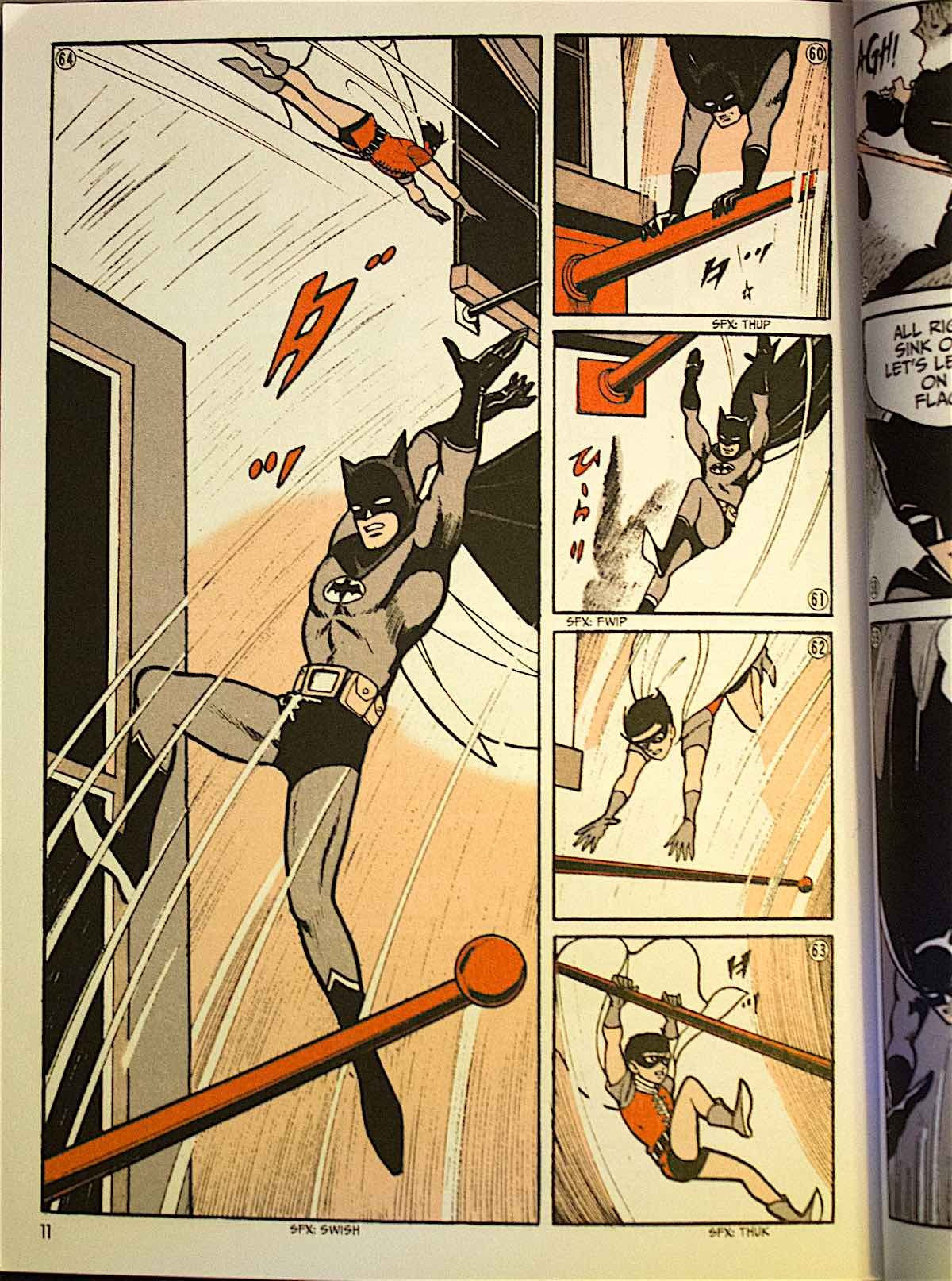


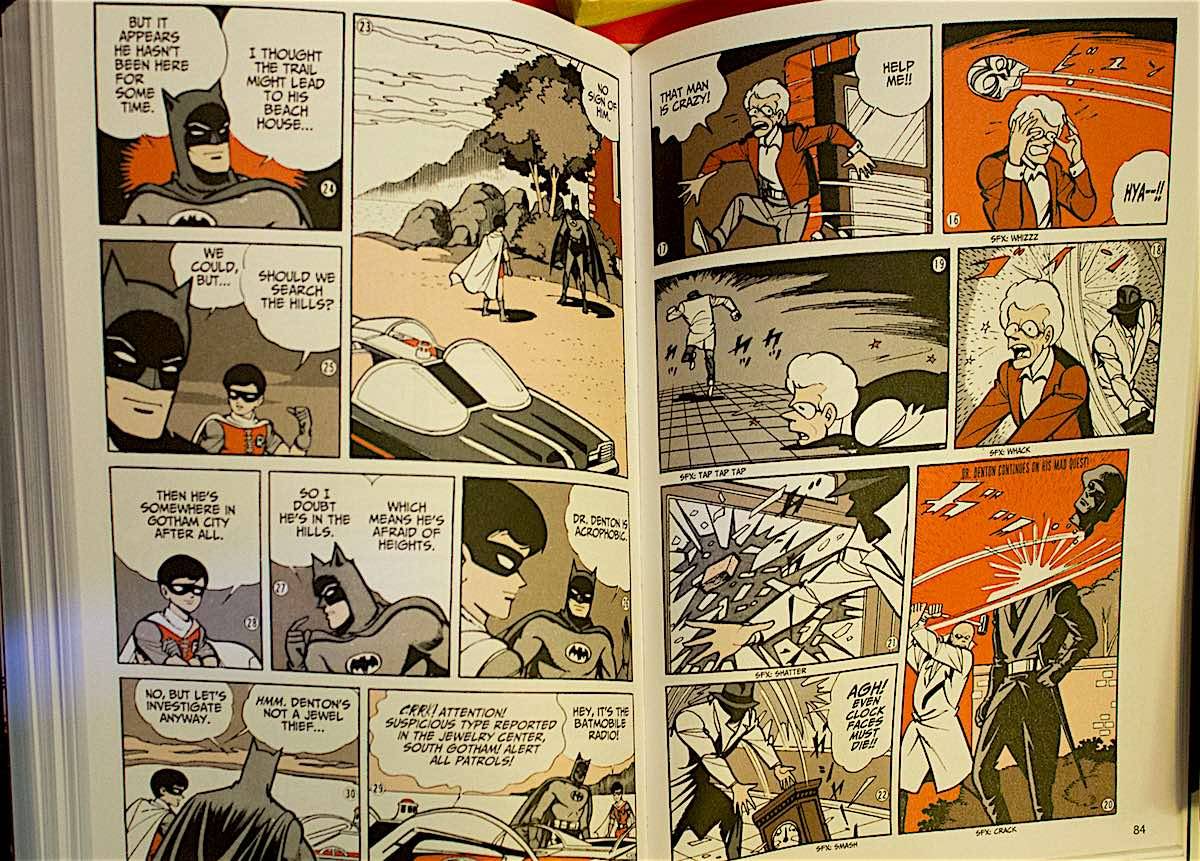
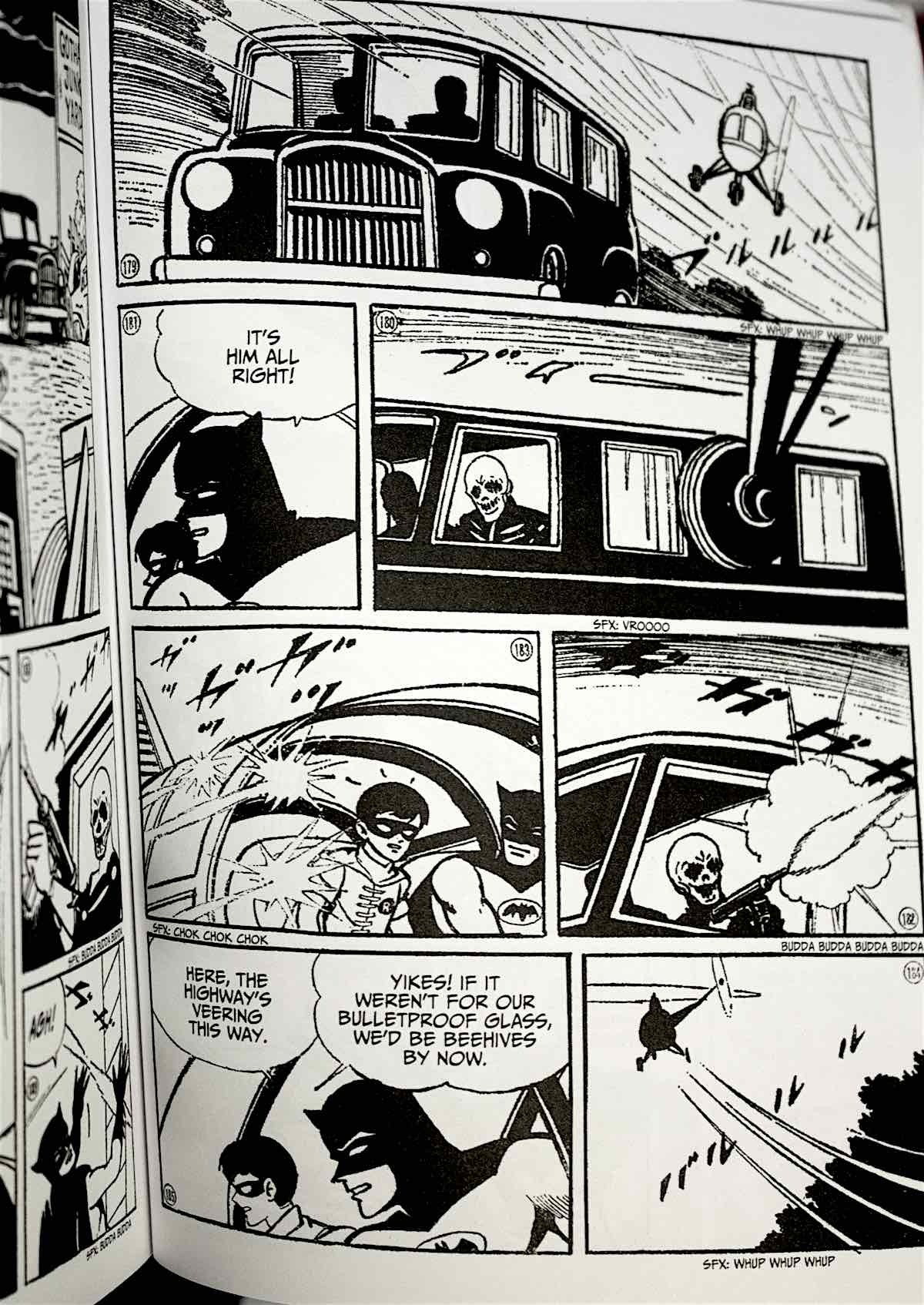
Batman: The Jiro Kuwata Batmanga Vol. 1
by Jiro Kuwata (illustrator)
DC Comics
2014, 352 pages, 5.8 x 8.2 x 1.1 inches (softcover)
Available for the first time in English, Jiro Kuwata's Batman is basically a Japanese version of the 1960s Batman TV series. It's campy, humorous, and sometimes so on the nose it's laughable. Maybe Batman will escape danger with a goofy, too convenient action, or the villain will taunt Batman with some of the oldest superhero cliches around. It will surely be an adjustment for readers who haven't experienced any of Batman's older stories, but it's important to remember this was produced in the '60s, and Kuwata was essentially mimicking the style of Batman that was popular. If you can do that you'll find a thoroughly enjoyable alternate take on the Caped Crusader and the Dynamic Duo.
Included here are six Batman stories, featuring Batman and Robin vs. unique villains like Lord Death Man and the Human Ball. The story arcs are all standalone and don't reference each other, however each arc is sub-divided into three to four parts. These villains are all formidable foes and a good mix of character types. Lord Death Man for example keeps coming back from the dead, while the Human Ball wears a metal suit that allows him to bounce off any surface, including Batman's punches. Each time, Batman is tasked with not just fighting the villain into submission, but using his classic Batman intellect to outthink them and set a trap. I personally love any Batman story that draws heavily on his detective skills, and Kuwata's work is one of the better examples of how to do it right.
The art style is interesting in that it looks and feels like a Batman comic, but Bruce is also drawn to look Japanese. It's incredibly authentic and you may even find yourself thinking that Kuwata himself invented Batman in the first place. The book is mostly black and white but a few color pages sneak in, and the chapter cover pages are all in color as well.
This translation keeps all the non-dialogue text in Japanese (signs, paces, SFX, etc.) and helpful translations are snuck into the margins. If you've never read manga before, have no fear! Pages are regularly numbered for clarity (as manga reads right to left). They're small and unobtrusive so manga pros probably won't even notice them. Two more volumes in the series are available, showcasing Kuwata's complete run. If you're a fan of manga or Batman, or hopefully both, you owe it to yourself to check this out. - Alex Strine
DARTH VADER'S PERSPECTIVE ON A NEW HOPE AND HIS NEED FOR VENGEANCE




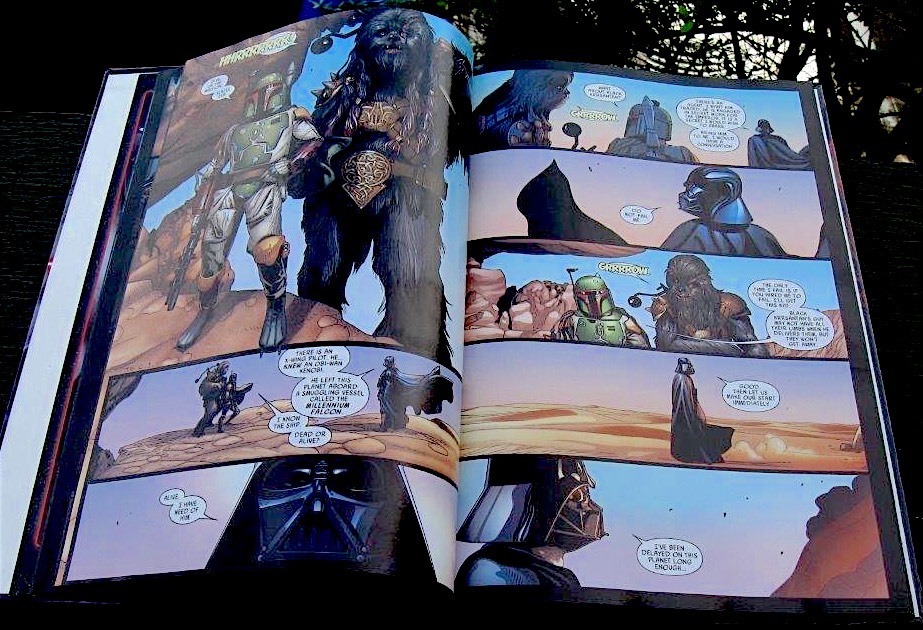

Vader: Star Wars Darth Vader Vol. 1
by Kieron Gillen (author) and Salvador Larocca (illustrator)
Marvel
2015, 160 pages, 6.8 x 10.2 x 0.2 inches (softcover)
The graphic novel Vader is the first installment of the series, Star Wars Darth Vader. Published by Marvel, this book collects into one volume the first six issues of Darth Vader. It begins with Vader's perspective on events of A New Hope. They reflect his need for vengeance because he is in a world of trouble after a really disastrous day at the office. The death star has been destroyed meaning the rule of law is in danger. Sith Lord Darth Vader has failed his master, the emperor, with all that entails for his own personal safety as well as the fact he must seek retribution.
To do that, first he journeys to meet with Jabba the Hutt. Darth Vader wants to work a deal with Jabba and will use force to get it one way or another. Having been a survivor of one of the worst military disasters in the history of the empire and having laid a trap that backfired, Darth Vader has a lot to be responsible for according to the Emperor. Darth Vader wants to find those who escaped on the Millennium Falcon, especially one person in particular, and to destroy any and all who helped them in the past or now.
He is doing all of that while being placed in a subordinate role having been demoted by the Emperor for his failure. Much of what happened prior to this book is referenced here by taking out Luke and inserting Vader into the scenes as everything is told from his perspective. As such prequels and flashbacks make up a significant part of the book. Those journeys into the past serve to enhance the storyline as it moves forward in time as well as refreshing the memory of the reader. It is a nice touch and works very well.
Filled with colorful panels, detailed artwork, and multiple storylines, the pages fly by as Darth Vader's quest for vengeance unfolds. Writer Kieron Gillen, through panels created by Salvador Larroca, tells a wide-ranging tale that answers some questions while creating many more presumably to be answered in the rest of the series. Colorist Edgar Delgado brings the images to life with vivid colors as well as subtle shading accenting both shadows and the dark forces at work. The artwork is quite impressive and really brings the images to life. If Vader is representative of the following installments of the Star Wars: Darth Vader series, this collection of graphic novels will be a visual and storytelling treat. - Kevin Tipple
Books That Belong On Paper first appeared on the web as Wink Books and was edited by Carla Sinclair. Sign up here to get the issues a week early in your inbox.
Web designers of the world: The Automattic-owned WordPress.com is further embracing AI on its platform. On Tuesday, it expanded its one-off AI site builder into a persistent AI assistant for editing and media creation.
In the site editor, the AI assistant can help with site-wide structure and design choices. For example, you can ask the chatbot to "give me more font options that feel clean and professional or "change my site colors to be brighter and bolder." It also includes image generation and writing assistance, such as "rewrite this to sound more confident." (Who needs learning when you have automation!)
The assistant can also now be integrated into your site's media library. It can generate new images or make prompted edits to your existing ones. Examples include "update this image to be black and white" or "replace this stack of pancakes with waffles." (Just don't fake that if your business sells breakfast food, okay?) WordPress says the assistant understands your website's look and brand and can tailor the media accordingly.
WordPress also added the AI assistant to the platform's team chat, Block Notes. You can summon the chatbot from within your team chat threads.
The tool is available for WordPress.com's Business or Commerce plans. (Or, if you made your site using the AI builder, it's enabled by default, no matter which plan you use.) The feature works best with the platform's block themes; it's much more limited with classic ones. You'll find the toggle to activate the AI assistant in your site settings under the "AI tools" section.
This article originally appeared on Engadget at https://www.engadget.com/ai/wordpress-adds-an-ai-assistant-174719676.html?src=rss
Devographics has published its State of React survey, with over 3,700 developers speaking out about what they love and hate in the fractured React ecosystem.…

Unsurprisingly, Kash Patel's FBI has formally informed Minnesota officials that it will not be cooperating and will not provide access to information or evidence it collected in the fatal January shooting of Alex Pretti. The Minnesota Bureau of Criminal Apprehension called the lack of cooperation "concerning and unprecedented." — Read the rest
The post FBI withholds evidence in Minnesota appeared first on Boing Boing.

No federal criminal charges were ever filed for offenses at Jeffrey Epstein's Zorro Ranch. Multiple women said they were sexually assaulted at the 7,600-acre New Mexico property, including Virginia Giuffre, who was abused there repeatedly. Allegations go back to at least 1996, when a 16-year-old girl was targeted. — Read the rest
The post No one was ever federally charged for crimes at Epstein's Zorro Ranch. New Mexico is finally investigating. appeared first on Boing Boing.

"As if the Ministry of Truth in George Orwell's 1984 now existed, with its motto 'Ignorance is Strength,' this Court is now asked to determine whether the federal government has the power it claims — to dissemble and disassemble historical truths when it has some domain over historical facts. — Read the rest
The post Judge cites Orwell's 1984, orders Trump to restore slavery exhibit appeared first on Boing Boing.
Public debt currently amounts to nearly 100 trillion dollars and corporate debt isn't far behind.
Published recently by the Committee for the Abolition of Illegitimate Debt, this article concerns, well, debt.
Collapse related because the "danger zone" for debt to GDP is 90% and some economists have argued even 60% is concerning. The world is currently at over 300% and rising fast. Last year the US government alone spent nearly a trillion dollars just on interest payments.
In the eloquent words of Scooby-doo
Ruh Roh
submitted by /u/Fast_Performer_3722[link] [comments]
Alex Escrig has become the first ever Moto2 rider to lap the Circuito de Jerez in less than 1'39. On the final day of preseason testing for the Moto2 class, the Forward Racing rider squeezed out a lap of 1'38.815, two tenths faster than Manu Gonzalez had lapped on Monday, and a whole seven tenths faster than Deniz Öncü's outright lap record set last year during practice.
David Emmett Tue, 17/Feb/2026 - 17:36
Never too late for the late
Today is Ron Phillips' birthday. He died five years ago, but his absence remains constant and heart-wrenching. I'm also sad to note that I haven't written a proper remembrance for him here. So that's now on my list.
The post Broken locks, broken promises appeared first on London Cycling Campaign.
The economics of clean energy "just get better and better", leaving opponents of the transition looking like "King Canute", says Chris Stark.
Stark is head of the UK government's "mission" to deliver clean power by 2030, having previously been chief executive of the advisory Climate Change Committee (CCC).
In a wide-ranging interview with Carbon Brief, Stark makes the case for the "radical" clean-power mission, which he says will act as "huge insurance" against future gas-price spikes.
He pushes back on "super daft" calls to abandon the 2030 target, saying he has a "huge disagreement" on this with critics, such as the Tony Blair Institute.
Stark also takes issue with "completely…crazy" attacks on the UK's Climate Change Act, warns of the "great risk" of Conservative proposals to scrap carbon pricing and stresses - in the face of threats from the climate-sceptic Reform party - the importance of being a country that respects legal contracts.
He says: "The problems and woes of this country, in terms of the cost of energy, are due to fossil fuels, not due to the Climate Change Act."
The UK should become an "electrostate" built on clean-energy technologies, says Stark, but it needs a "cute" strategy on domestic supply chains and will have to interact with China.
Beyond the UK, despite media misinformation and the US turn against climate action, Stark concludes that the global energy transition is "heading in one direction":
"You've got to see the movie, not the scene. The movie is that things are heading in one direction, towards something cleaner. Good luck if you think you can avoid that."
- On the rationale for clean power 2030: "We're trying to do something radical in a short space of time…It has all the characteristics of something that you can do quickly, but which has long-term benefit."
- On grid investment: "[T]he programme of investment in infrastructure and in networks is genuinely once in a generation and we haven't really done investment at this scale since the coal-fired generation was first planned."
- On 88 "critical" grid upgrades: "We really need them to be on time, because the consumer will see the benefit of each one of those upgrades."
- On electricity demand: "I think we are in the point now where we are starting to see the signal of that demand increase - and it is largely being driven by electric vehicle uptake."
- On high electricity prices: "[I]t's largely the product of decades of [decisions] before us. We do have high electricity prices and we absolutely need to bring them down."
- On industrial power prices: "[W]e've got a whole package of things that…[will] take those energy prices down very significantly, probably below the sort of prices that you'll see on the continent."
- On cutting bills further: "The investments that we think we need for 2030…will add to some of those fixed costs, but…facilitate a lower wholesale price for electricity, [which] we think will at least match and probably outweigh those extra costs."
- On insuring against the next gas price spike: "The amount of gas we're displacing when that [new renewable capacity] comes online is a huge insurance [policy] against the next price spike that [there] will be, inevitably, [at] some point in the future for gas prices."
- On Centrica boss Chris O'Shea's comments on electricity bills in 2030: "I don't think he's right on this…I'm much more optimistic than Chris is about how quickly we can bring bills down."
- On the need for investment: "I think there's a hard truth to this, that any government - of any colour - would face the same challenge. You cannot have a system without that investment, unless you are dicing with a future where you're not able to meet that future demand."
- On the high price of gas power: "If you don't think that offshore wind is the answer for [rising electricity demand], then you need to look to gas - and new gas is far more expensive."
- On calls to scrap the 2030 mission: "I have a huge disagreement with the Tony Blair Institute on this…I think it's daft - like, super daft - to step back from something that's so clearly working."
- On Conservative calls to scrap carbon pricing: "We absolutely have to have carbon pricing…if you want to make progress on our climate objectives. It also has been a very successful tool…I think it's a great risk to start playing around with that system."
- On gas prices being volatile: "[A]t the time that Russia invaded Ukraine…the global gas price spiked to an extraordinary degree…I'm afraid that is a pattern that is repeated consistently."
- On insulating against gas price spikes: "[Y]ou cannot steer geopolitics from here in the UK. What you can do is insulate yourself from it…Clean power is largely about ensuring that."
- On Reform threats to renewable contracts: "[A]ll this sort of threatening stuff, that is about ripping up existing contracts, has a much bigger impact than just the energy transition. This has always been a country that respects those legacy contracts."
- On the wider benefits of the clean-power mission: "In the end, we're bringing all sorts of benefits to the country that go beyond the climate here. The jobs that go with that transition, investment that comes with that and, of course, the energy security that we're buying ourselves by having all of this domestic supply. It's hard to argue that that is bad for the country."
- On the UK's plans for a renewable-led energy system: "[The] idea of a renewables-led system, with nuclear on the horizon, is just so clearly the obvious thing to do. I don't really know what the alternative would be for us if we weren't pursuing it."
- On the UK becoming an "electrostate": "Yes, that's quite good for the climate…It's also extraordinarily good for productivity, because you're not wasting energy. Fossil fuels bring a huge amount of waste…You don't get that with electrotech. I want us to be an electrostate."
- On bringing supply chains and Chinese technology: "I want to see us adopt electrotech. I also want us to own a large part of the supply chain…I don't think it's ever going to be the case that we can…avoid the Chinese interaction…[B]ut I think it's really important that our industrial strategy is cute about which bits of that supply chain it wants to see here."
- On attacks on UK climate policy: "A lot of the criticism of the Climate Change Act I find completely…crazy. It has not acted as a straitjacket. It has not restricted economic growth. The problems and woes of this country, in terms of the cost of energy, are due to fossil fuels, not due to the Climate Change Act."
- On media misinformation: "[C]limate change and probably net-zero have taken on a role in the 'culture wars' that they didn't previously have."
- On winning the argument for clean power: "Actually, it's not to shoot down every assertion that you know to be false. It's just to get on with trying to do this thing, to demonstrate to people that there's a better way to go about this."
- On net-zero: "I think we are getting beyond a period where net-zero has a slogan value. I think it's probably moved back to being what it always should have been, really, which is a scientific target - and in this country, a statutory target that guides activity."
- On the geopolitics of climate action: "[I]t's striking how much it's shifted, not least because of the US…It is slightly weird…that has happened at a time when every day, almost, the evidence is there that the cleaner alternative is the way that the world is heading."
- On US withdrawal from the Paris Agreement: "I wish that hadn't happened, but the economics of the cleaner alternative that we're building just get better and better over time."
- On watching "the movie, not the scene": "The movie is that things are heading in one direction, towards something cleaner. Good luck if you think you can avoid that - [like] King Canute."
Carbon Brief: Thanks very much for joining us today. Chris, you're in charge of the government's mission for clean power by 2030. Can you just explain what the point of that mission is?
Chris Stark: Well, we're trying to do something radical in a short space of time. And maybe if I start with the backstory to that, Ed Miliband, as secretary of state, was looking for a project where he could make a difference quickly. And the reason that we are focused on clean power 2030 is because it is that project. It has all the characteristics of something that you can do quickly, but which has long-term benefits.
What we're trying to do is to accelerate a process that was already underway of decarbonising the power system, but to do so in a time when we feel it's essential that we start that journey and move it more quickly, because in the 2030s we're expecting the demand for electricity to grow. So this is a bit of a sprint to get ourselves prepped for where we think we need to be from 2030 onwards. And it's also, coming to my role, it's the job I want to do, because I spent many years advising that you should decarbonise the economy by electrifying - and stage one of that is to finish the job on cleaning up the supply.
So it's kind of the perfect project, really. And if you want to do clean power by 2030, [the] first thing is to say we're not going to take an overly purist approach to that. So we admit and are conscious - in fact, find it useful - to have gas in the mix between now and 2030. The challenge is to run it down to, if we can, 5% of the total mix in 2030 and to grow the clean stuff alongside it. So, using gas as a flexible source, and that, we think is a great platform to grow the demand for electricity on the journey, but especially after 2030 - and that's when the decarbonisation really kicks in.
So it's a sort of exciting thing to try and do. And if you want to do it, here comes the interesting thing. You need the whole system, all the policies, all the institutions, all the interactions with the private sector, interactions with the consumer, to be lined up in the right way.
So clean power by 2030 is also the best expression of how quickly we want the planning system to work, how much harder we want the energy institutions like NESO [the National Energy System Operator] and energy regulator Ofgem to support it - and how we want to send a message to investors that they should come here to do their investment. Turns out, it's a great way of advertising all of that and making it happen. And so far, it's working great.
CB: Thanks. So do you still think it's achievable? We're sitting in "mission control". You've got some big screens on the wall. Is there anything on those screens that's flashing red at the moment?
CS: So, right behind you are the big screens. And it's tremendously useful to have a room, a physical space, where we can plan this stuff and coordinate this stuff. There's lots of things that flash red. There's no question. And it's an expression of it being a genuine mission. This is not business as usual. So you wouldn't move as quickly as this, unless you've set your North Star around it. And it does frame all the things that, especially this department is doing, but also the rest of government, in terms of the story of where we are.
We're approaching two years into this mission and - really important to say - if the mission is about constructing infrastructure, it's in that timeframe that you'll do most of the work, setting it up so that we get the things that we think we need for 2030 constructed.
We're already reaching the end of that phase one, and we did that by first of all, going as hard and as fast as we could to establish a plan for 2030, which involved us going first to the energy system operator, NESO, to give us their independent advice. We then turned that into a plan, and the expression of that plan is largely that we need to see construction of new networks, new generation, new storage and a new set of retail models to make all of that stick together well for the consumer.
Phase one was about using that plan to try and go hard at a set of super-ambitious technology ranges for all the clean technologies, so onshore wind, offshore wind, solar [and] also the energy storage technologies. We've set a range that we're trying to hit by 2030 that is right at the top end of what we think is possible. Then we went about constructing the policies to make that happen.
Behind you on the big screens, what we're often doing is looking at the project pipeline that would deliver that [ambition]. At the heart of it is the idea that if you want to do something quickly by 2030, there is a project pipeline already in development that will deliver that for you, if you can curate it and reorder it to deliver. And therefore, the most important and radical thing that we did - alongside all the reforms to things like contracts for difference and the kind of classic policy support - is this very radical reordering of the connection queue, which allows us to put to the front of the queue the projects that we think will deliver what we need for 2030 - and into the 2030s.
Then, alongside that, the other big thing, and I think this is going to be more of a priority in the second phase of work for us, is the networks themselves. We are trying to essentially build the plane while it flies by contracting the generation whilst also building the networks, and of course, doing this connection queue reform at the same time. That is, again, radical, but the programme of investment in infrastructure and in networks is genuinely once in a generation and we haven't really done investment at this scale since the coal-fired generation was first planned. We think a lot about 88 - we think - really critical transmission upgrades. We really need them to be on time, because the consumer will see the benefit of each one of those upgrades.
CB: You already talked about electricity demand growing as the economy electrifies. Do you think that there's a risk that we could hit the clean power 2030 target, but at the same time, perhaps meeting it accidentally, by not electrifying as quickly as we think - and therefore demand not growing as quickly?
CS: So, an unspoken - we need to clearly make this more of a factor - an unspoken factor in the shape of the energy system we have today has been an assumption, for well over 20 years, really, that demand for electricity was always going to pick up. In fact, what we've seen is the opposite. So for about a quarter of a century, demand has fallen. Interestingly, the system - the energy system, the electricity system - generally plans for an increase in demand that never arrives. We could have a much longer conversation about why that happened and the institutional framework that led to that. But it is nonetheless the case.
I think we are at the point now where we are starting to see the signal of that demand increase - and it is largely being driven by electric vehicle uptake. The story of net-zero and decarbonisation does rest on electrification at a much bigger scale than just electric cars. So part of what we're trying to do is prepare for that moment.
But you're absolutely right, if demand doesn't increase, the biggest single challenge will be that we've got a lot of new fixed costs and a bigger system - on the generation side and the network side - that are being spread over a demand base that's too small. So, slightly counter-intuitively, because there's a lot of coverage around the world about the concern about the increase in electricity demand, I want that increase in electricity demand, but I also want it to be of a particular type. So if we can, we want to grow the demand for electricity with flexible demand, as much as possible, that is matching - as best we can - the availability of the supply when the wind blows or the sun shines. That makes the system itself cheaper.
The more electricity demand we see, the more those fixed costs that are in the system - for networks and increasingly for the large renewable projects - the more they are spread over a bigger demand base and the lower the unit costs of electricity, which will be good, in turn, for the uptake of more and more electrification in the future. So there's this virtuous circle that comes from getting this right. In terms of where we go next with clean power 2030, a big part of that story needs to be electrification. We want to see more electricity demand, again, of the right sort, if we can. More flexible demand and, again, [the] more that that is on the system, the better the system will operate - and the cheaper it will be for the consumer.
CB: So, the UK has among the highest electricity prices of any major economy. Can you just talk through why you think that is - and what we should be doing about it?
CS: Yeah, there's a story that the Financial Times runs every three months about the cost of electricity - and particularly industrial electricity prices. Every time that happens, we slightly wince here, because it's largely the product of decades of [decisions] before us.
We do have high electricity prices and we absolutely need to bring them down. For those industrial users, we've got a whole package of things that will come on, over the next few months, into next year, that will make a big difference, I think. For those industrial users, [it will] take those energy prices down very significantly, probably below the sort of prices that you'll see on the continent, and that, I hope, will help.
But we have a bigger plan to try and do something about electricity prices for all consumers. I think it's worth just dwelling on this: two-thirds of electricity consumption is not households, it's commercial. So the biggest part of this is the commercial electricity story - and then the rest, the final third, is for households. The politics of this, obviously, is around households.
You've seen in the last six months, this government has focused really hard on the cost of living and one of the best tools - if you want to go hard at it, to improve the cost of living - is energy bills. So the budget last year was a really big thing for us. It involved months of work - actually in this room. We commandeered this room to look solely at packages of policy that would reduce household bills quickly and landed on a package that was announced in the budget last year, that will take £150 off household bills from April. That's tremendous - and it's the sort of thing that we were advising when I was in the Climate Change Committee - because the core of that is to take policy costs off electricity bills, particularly, and to put them into general taxation, where [you have] slightly more progressive recovery of those costs.
But there's not another one of those enormous packages still to come. What we're dealing with, to answer your question, is a set of system costs, as we think of them, that are out there and must be recovered. Now we've chosen, in the first instance, to move some of those costs into general taxation. The next phase of this involves us doing the investments that we think we need for 2030, which will add to some of those fixed costs, but doing so because we are going to facilitate a lower wholesale price for electricity, that we think will at least match and probably outweigh those extra costs.
That opens up a further thing, which I think is where we'll go next with this story, on the consumer side, which is that we want to give the opportunity to more consumers - be they commercial or household - to flexibly use that power when it's available, and to do so in a way that makes that power cheaper for them.
You most obviously see that in something we published just a few weeks ago, the "warm homes plan", which, in its DNA, is about giving packages of these technologies to those households that most need them. So solar panels, batteries and eventually heat pumps in the homes that are most requiring of that kind of support, to allow them to access the cheaper energy that's been available for a while, actually, if you're rich enough to have those technologies already. That notion of a more flexible tech-enabled future, which gives you access to cheaper electricity, is where I think you will see the further savings that come beyond that £150. So the £150 is a bit like a down payment on all of that, but there's still a lot more to come on that. And in a sense, it's enabled by the clean power mission.
You know, we are moving so quickly on this now and maybe the final thing to say is that as we bring more and more renewables under long-term contracts - hopefully at really good value, discovered through an auction - we will be displacing more and more gas. If you look back over the last two auctions, it's quite staggering, 24 gigawatts [GW] - I think it is maybe more than that - we've contracted through two auction rounds. The amount of gas we're displacing when that stuff comes online is a huge insurance [policy] against the next price spike that [there] will be, inevitably, [at] some point in the future for gas prices. There's usually one or two of these price spikes every decade. So, when that moment comes, we're going to be much better insulated from it, because of these - I think - really good-value contracts that we're signing for renewables.
CB: We've seen quite a few public interventions by energy bosses recently - just this week, Chris O'Shea at Centrica, saying that electricity prices by 2030 could be as high as they were in the wake of Russia invading Ukraine. Just as a reminder, at that point, we were paying more than twice as much per unit of electricity as we're paying now - or we would have been if the government hadn't stepped in with tens of billions in subsidies. Can I just get your response to those comments from Chris O'Shea?
CS: Well, listen, Chris and I know each other well. In fact, he's a Celtic fan, he lives around the corner from me in Glasgow and he comes up for Celtic games regularly. So I do occasionally speak to him about these things. I don't think he's right on this. To put it as simply as I can, our view is very definitely that as we bring on the projects that we're contracting in AR6 [auction round six], AR7 and into AR8 and 9, as those projects are connected and start generating, we are going to see lower prices. That doesn't mean that we're complacent about this, but we've got, I would say, a really well-grounded view of how that would play out over the next few years. And you know, £150 off bills next year is only part one of that story. So I'm much more optimistic than Chris is about how quickly we can bring bills down.
CB: This government was obviously elected on a pledge to cut bills by £300 from 2024 to 2030. Do you think that's achievable? You talked about £150 pounds. That's half…
CS: Well if Ed [Miliband, energy secretary] were here, he would remind you it was up to £300. And of course, that matters. But yes, I do think - of course - I think that's well in scope. I don't want to gloss over this, though; there are real challenges here. We are entering a period where there's a lot of investment needed in our energy system and our power system.
I think there's a hard truth to this, that any government - of any colour - would face the same challenge. You cannot have a system without that investment, unless you are dicing with a future where you're not able to meet that future demand that we keep referring to. So I think we're doing a really prudent thing, which is approaching that investment challenge in the right way, to spread the costs in the right way for the consumer - so they don't see those impacts immediately - and to get us to the to the situation where we're able to sustain and meet the future demands that this country will have, in common with any other country in the world as it starts to electrify at scale. That's what we should be talking about.
We have really tried to push that argument, particularly with the offshore wind results, where we were making the counter case, that if you don't think that offshore wind is the answer for this, then you need to look to gas - and new gas is far more expensive. In a world where you're having to grow the size of the overall power system, I think it's very prudent to do what we're doing. So the network costs, the renewables costs that are coming, these are all part of the story of us getting prepared for the system that we need in the future, at the best possible price for the consumer. But of course, we would like to see a quicker impact here. We'd like to see those bills fall more quickly and I think we still have a few more tools in the box to play.
CB: There's an argument around that the clean power mission is, in fact, part of the problem, or even the biggest problem, in driving high bills. Do you think that getting rid of the mission would help to cut bills, as the Tony Blair Institute's been suggesting?
CS: I have a huge disagreement with the Tony Blair Institute on this. I mean, step back from this. The word mission gets bandied around a lot and I am very pleased that this mission continues. Mission government is quite a difficult thing to do and we're definitely delivering against the objectives that we set ourselves. But it's interesting just to step back and understand why that's happening. We deliberately aimed high with this mission because if you are mission-driven, that's what you should do. You should pitch your ambitions to…the top of where you think you can reach, in the knowledge that you shouldn't do that at any price. We've made that super clear, consistently. This is not clean power at any price. But also in the knowledge that if you aim your ambitions high, in a world where actually most of the work is done by the private sector, they need to see that you mean it - and we mean it.
There's a feedback loop here that, the more that the industry that does the investment and puts these projects in the ground, the more that they see we mean it, the more confident they are to do the projects, the more we can push them to go even faster. And Ed, in particular, has really stuck to his guns on this, because his view is, the minute you soften that message, the more likely it is [that] the whole thing fails.
So occasionally, you know - our expression of clean power is 95% clean in the year 2030 - occasionally you get people, particularly in the energy industry itself, say, "wow, you know, maybe it'd be better if you said 85%". The reality is, if you said 85%, you wouldn't get 85%, you would get 80%, so there's a need to keep pushing the envelope here, because if we all stick to our guns, we'll get to where we need to get to.
And that message on price, I have to say that was one of the best things last year, is that Ed Miliband made a really important speech at the Energy UK conference, to say to the industry, we will support offshore wind, but only if it shows the value that we think it needs to show for the consumer. And the industry stepped up and delivered on that. So that's part of the mission. So that's a very long way of saying I think it's daft - like, super daft - to step back from something that's so clearly working now.
CB: The Conservatives, in opposition, are claiming that we could cut bills by getting rid of carbon pricing and not contracting for any more renewables. They say getting rid of carbon pricing would make gas power cheap. What's your view on their proposals and what impact would it have if they were followed through?
CS: Well, look, carbon pricing has a much bigger role to play. We absolutely have to have carbon pricing in the system and in this economy, if you want to make progress on our climate objectives. It also has been a very successful tool, actually sending the right message to the industry to invest in the alternatives - the low-carbon alternatives - and that is one of the reasons why this country is doing very well, actually, cleaning up the supply of electricity - quite remarkably so actually, we really stand out. I think it's a great risk to start playing around with that system.
My main concern, though, is that the interaction with our friends on the continent [in the EU] does depend on us having carbon pricing in place. A lot of the stuff that I read - and not particularly talking about the Conservative proposals here at all, actually - but some of the commentary on this imagines a world where we are acting in isolation. Actually, we need to remember that Europe is erecting - and has erected now - a carbon border around it. Anything that we try to export to that territory, if it doesn't have appropriate carbon pricing around it, will simply be taxed.
I think we need to remember that we're in an interconnected world and that carbon pricing is part of that story. In the end, we won't have a problem if we remove the fossil [fuel] from the system in the first place, that's causing those costs. I think we're following the right track on this. In a sense, my strategy isn't to worry so much about the carbon pricing bit of it. It's to displace the dirty stuff with clean stuff. That strategy, in the end, is the most effective one of all. It doesn't matter what the ETS [emissions trading system] is telling you in terms of carbon pricing or what the carbon price floor is, we won't have to worry at all about that if we have more and more of this clean stuff on the system.
CB: Just in terms of that idea that gas is actually really cheap, if only we could ignore carbon pricing. What do you think about that?
CS: Well, gas prices fluctuate enormously. The stat I always return to, or the fact that was returned to, is that we had single-digits percentage of Russian gas in the British system at the time that Russia invaded Ukraine, but we faced 100% of the impact that that had on the global gas price - and the global gas price spiked to an extraordinary degree after that. I'm afraid that is a pattern that is repeated consistently.
We've had oil crises in the past and we've had gas crises - and every time we are burned by it. The best possible insulation and insurance from that is to not have that problem in the first place. What we are about is ensuring that when that situation - I say when - that situation arises again, who knows what will drive it in the future? But you cannot steer geopolitics from here in the UK. What you can do is insulate yourself from it the next time it happens.
Clean power is largely about ensuring that in the future, the power price is not going to be so impacted by that spike in prices. Sure, there's lots of things you could do to make it [electricity] cheaper, but these are pretty marginal things, in terms of the overall mission of getting gas out of the system in the first place.
CB: Another opposition party, Reform, thinks that net-zero is the whole problem with high electricity prices. They're pledging to, if they get into government, to rip up existing contracts with renewables. To what extent do you think the work that you're doing now in mission control is locking in progress that will be very difficult to unpick?
CS: Well, it's important to say that we do not start from the position that we're trying to lock in something that a future government would find difficult to unwind. I mean, this is just straightforwardly an infrastructure challenge, in terms of what…we would like to see built and need to see built. And yes, I think it will be difficult to unwind that, because these are projects we want to actually have in construction.
We don't want to find ourselves - ever - in the future, in the kind of circumstance that you might see in the US, where projects are being cancelled so late that actually they end up in the courts. So look, it's not my job to advise the Reform Party and what their policy is on this. But all I would say is that all this sort of threatening stuff, that is about ripping up existing contracts, has a much bigger impact than just the energy transition. This has always been a country that respects those legacy contracts. I'm happy that it would be very difficult to change those contracts, because we [the government] are not a counterparty to those contracts. The Low Carbon Contracts Company was set up for this purpose. These are private-law contracts between developers and the LCCC. It would be extraordinarily difficult to step into that - you probably would need to take extraordinary measures to do so - and to what end?
I suppose my objective is simply to get stuff built and, in so doing, to demonstrate the value of those things, even if you don't care about climate change. In the end, we're bringing all sorts of benefits to the country that go beyond the climate here. The jobs that go with that transition, [the] investment that comes with that and, of course, the energy security that we're buying ourselves by having all of this domestic supply. It's hard to argue that that is bad for the country. It seems to me that that, inevitably, will mean that we will lock in those benefits into the future, with the clean power mission.
CB: One of the things that's been happening in the last few years is that solar continues this kind of onward march of getting cheaper and cheaper over time, but things like offshore wind, in particular - but arguably also gas power [and] other forms of generation - have been getting more expensive, due to supply chain challenges and so on. Do you think that means the UK has taken the wrong bet by putting offshore wind at the heart of its plans?
CS: I mean, latitude matters. It is definitely true that, were we in the sun-belt latitude of the world, solar would be the thing that we'd be pursuing. But we are blessed in having high wind speeds, relatively shallow waters and a pretty important requirement for extra energy when it's cold over the winter. And all that stuff coincides quite nicely with wind - and in particular, offshore wind. So I think our competitive advantage is to develop that. There are plenty of places, particularly in the northern hemisphere, [but] also potentially places like Japan down in Asia, where wind will be competitive.
The long future of this is, I tend to think, in terms of where we're heading, we are going to head eventually - ultimately - to a world where the wholesale price of this stuff is going to be negligible, whether it's solar or wind. Actually, the competitive challenge of it being slightly more expensive to have wind rather than solar is not going to be a major factor for us. But we can't move the position of this country - and therefore we should exploit the resources that we have. I think it's also true that there's room in the mix for more nuclear - and yes, we have solar capacity, particularly in the south of the country, that we want to see exploited as well.
Bring it all together, that idea of a renewables-led system, with nuclear on the horizon, is just so clearly the obvious thing to do. I don't really know what the alternative would be for us if we weren't pursuing it. It's a very obvious thing to do. Solar has this astonishing collapse in price over time. We're in a period, actually, where [solar's] going slightly more expensive at the moment because some of the components, like silver, for example, are becoming more expensive. So, a few blips on the way, but the long-term journey is still that it will continue to fall in price.
We want to get wind back on that track. The only way that happens and the only way that we get back on the cost-saving trajectory is by continuing to deploy and seeing deployment in other territories as well. We are a big part of that story. The big auction that we had recently for offshore wind [was a] huge success for us, that's been noticed in other parts of the world. We had the North Sea summit, for example, in Hamburg.
Just a few weeks ago, we were the talk of the town, because we have, I think, righted the ship on the story of offshore wind. That's going to give investors confidence. Hopefully, we can get those technologies back on a downward cost curve again and allow into the mix some of the more nascent technologies there, particularly floating offshore wind. We've got a big role to do some of that, but it's all good for this country and any other country that finds itself in a similar latitude.
CB: The UK strategy is - you mentioned this already - it's increasingly all about electrification. Electrotech, as it's being called, solar, batteries, EVs, renewables. Do you think that that is genuinely a recipe for energy security, or are we simply trading reliance on imported fossil fuels for reliance on imports that are linked to China?
CS: So there's a lot in that question. I mean, the first thing to say, I've been one of the people that's been talking about electrostates. Colleagues use the term electrotech interchangeably, essentially, but the electrostates idea is basically about two things. These are the countries of the world that are deploying renewables, because they are cheap, and then deploying electrified technologies that use the renewable power, especially using it flexibly when it's available. The combination of those two things is what makes an electrostate.
Yes, that's quite good for the climate - and that's obviously where I've been most interested in it. It's also extraordinarily good for productivity, because you're not wasting energy. Fossil fuels bring a huge amount of waste - almost two-thirds, perhaps, of fossil-fuel energy is wasted through the lost heat that comes from burning it. You don't get that with electrotech. So there's lots of good, solid productivity and efficiency reasons to want to have an electrostate and a system that is based - an economy that's based - more on electrotech.
You've come now to the most interesting thing, which is inherent in your question, which is, are we trading a dependency on increasingly imported fossil fuels for a dependency on imported tech? And I do think that is something that we should think about. I think underneath that, there are other issues playing out, like, for example, the mineral supply chains that sit in those technologies.
I think we in this country need to accept that some of that will be imported, but we should think very carefully about which bits of that supply chain we want to host and really go at that, as part of this story. So I want us to be an electrostate. I want to see us adopt electrotech. I also want us to own a large part of the supply chain.
Now, offshore wind is an obvious example of that. So we would like to see the blade manufacturing happening here, but also the nacelles and the towers. It's perfectly legitimate for us to go for that. That's the story of our ports and our manufacturing facilities. I think it is also true that we should try and bring battery manufacturing to the UK. It's a sensible thing to have production of batteries in this territory. Yes, we wouldn't sew up the entire supply chain, but that is something we should be going for.
Then there are other bits to this, including things like control systems and the components that are needed in the power system, where we have real assets and strength, and we want to have those bits of the supply chain here too. So, you know, we're in a globalised world. I don't think it's ever going to be the case that we can, for example, avoid the Chinese interaction. I don't think that should be our objective at all, but I think it's really important that our industrial strategy is cute about which bits of that supply chain it wants to see here and that is what you see in our industrial strategy.
So as we get into the next phase of the clean power mission, electrification and the industrial strategy that sits alongside that, I think, probably takes on more and more importance.
CB: I want to pan out a little bit now and you obviously were very focused, in your previous role, on the Climate Change Act. There's been quite a lot of suggestions - particularly from some opposition politicians - that the Climate Change Act has become a bit of a straitjacket for policymaking. Do you think that there's any truth in that and is it time for a different approach?
CS: We should always remember what the Climate Change Act is for. It was passed in 2008. It was not, I think, intended to be this sort of originator of the government's economic plans. It is there to act as a sort of guardrail, within which governments of any colour should make their plans for the economy and for broader society and for industry and for the energy sector and every other sector within it. I think to date, it's done an extraordinarily good job of that. It points you towards a future. A lot of the criticism of the Climate Change Act, I find completely…crazy. It has not acted as a straitjacket. It has not restricted economic growth. The problems and woes of this country, in terms of the cost of energy, are due to fossil fuels, not due to the Climate Change Act.
But I think it is also true to say that as we get further along the emissions trajectory that we need to follow in the Climate Change Act, it clearly gets harder. And you know, the Act was designed to guide that too. So what it's saying to us now is that you have to make the preparations for the tougher emissions targets that are coming, and that is largely about getting the infrastructure in place that will guide us to that. If you do that now, it's actually quite an easy glide path into carbon budgets five and six and seven. If you don't, it gets harder, and you then need to look to some more exotic stuff to believe that you're going to hit those targets.
I think we've got plenty of scope for the Climate Change Act still to play the role of providing the guardrails, but it doesn't need to define this government's industrial policy or economic policy - and neither does it. It should shape it - and I think the other thing to say about the Climate Change Act is it has definitely shown its worth on the international stage. It brings us - obviously - influence in the climate debate. But it has also kept us on the straight and narrow in a host of other areas too, not least the energy sector.
We have shown how it is possible to direct decarbonisation of energy, while seeing the benefits of all that and jobs that go with it, and investment that comes with it, probably more so than any other country, actually. So a Western democracy that's really going to follow the rules has seen the benefits from it. I want to see that kind of strategy, of course, in the power sector, but I want to see us direct that towards transport, towards buildings and especially towards the industries that we have here. Reshoring industries, because we are a place that's got this cheap, clean energy, is absolutely the endpoint for all of this.
So I'm not worried about the Climate Change Act, as long as we follow the implications of what it's there for. You know, we've got to get our house in order now and get those infrastructure investments in place and in the spending review just last year, you could see the provision that was made for that - Ed Miliband [was] extraordinarily successful in securing the deal that he needed. This year, of course, we will have to see the next carbon budget legislated. That's a lot easier when you've got plans that point us in the right direction towards those budgets.
CB: I wanted to ask about misinformation, which seems to be an increasingly big feature of the media and social-media environment. Do you think that's a particular problem for climate change? Any reflections on what's been happening?
CS: I suppose I don't know if it's a particular problem for climate change, but I know that it is a problem for climate change. There may well be similar campaigns and misinformation on other topics. I'm not so familiar with them. But it's a huge frustration that it's become as prevalent and as obvious as it is now. I mean, I used to love Twitter. You and I would interact on Twitter. I would interact with other commentators on Twitter and interact with real people on Twitter…But that's one of the great shames, is that platform has been lost to me now - and one of the reasons for that is it's been engulfed by this misinformation. It is very difficult to see a way back from that.
Actually, I don't know quite what leads it to be such a big issue, but I think you have to acknowledge that climate change and probably net-zero have taken on a role in the "culture wars" that they didn't previously have, or if they did, it wasn't as prevalent as it is now. That is what feeds a lot of this stuff. It's quite interesting doing a job like this now [within government], because when we were at the Climate Change Committee, I felt this stuff more acutely. It was quite raw. If someone made a real, you know, crazy assertion about something. Here - maybe it's the size of the machine around government - it causes you to be slightly more insulated from it.
It's been good for me, actually, to do that, because it means you just get your head down and get on with it, because you know, at the end of it, you're doing the right thing. I think in the end, that's how you win the arguments. Actually, it's not to shoot down every assertion that you know to be false. It's just to get on with trying to do this thing, to demonstrate to people that there's a better way to go about this. That is largely what we've been trying to do with the clean-power mission, is try not to be too buffeted by that stuff, but actually spend, especially the last two years - it's hard graft right - putting in place the right conditions. Hopefully now, we're in a period where you're going to start to see the benefits of that.
CB: Final question before you go. Just stepping back to the big picture, how optimistic do you feel - in this world of geopolitical uncertainty - about the UK's net-zero target and global efforts to avoid dangerous climate change?
CS: I'm going to be very honest with you, it's been tough, right? There was a different period in the discussion of climate when I was very fortunate to be at the Climate Change Committee and there was huge interest globally - and especially in the UK - on more ambition. It did feel that we were really motoring over that period. Some of the things that have happened in the last few years have been hard to swallow.
[It's] quite interesting doing what I do now, though, in a government that has stayed committed to what needs to be done in the face of a lot of things - and in particular the Clean Power mission, which has acted as sort of North Star for a lot of this. It's great - you see the benefit of not overreacting to some of that shift in opinion around you, [which] is that you can really get on with something.
We talked earlier about the industry reaction to what we're trying to do on clean power. You do see this virtuous circle of government staying close to its commitments and the private sector responding and a good consumer impact, if you collectively do that well. I think the net-zero target implies doing more of that. Yes, in the energy system, but also in the transport system and in the agriculture system and in the built environment. There's so much more of this still to come.
The net-zero target itself, I think, we are getting beyond a period where net-zero has a slogan value. I think it's probably moved back to being what it always should have been, really, which is a scientific target - and in this country, a statutory target that guides activity.
But I don't want to gloss over the geopolitical stuff, because it's striking how much it's shifted, not least because of the US and its attitudes towards climate. It is slightly weird then to say that, well, that has happened at a time when every day, almost, the evidence is there that the cleaner alternative is the way that the world is heading.
As we talk today, there's the emission stats from China, which do seem to indicate that we're getting close to two years of falls in carbon dioxide emissions from China. That's happening at a time when their energy demand is increasing and their economy is growing. That points to a change, that we are seeing now the impact of these cleaner technologies [being] rolled out. So I suppose, in that world, that's what I go back to, in a world where the discussion of climate change is definitely harder right now - no doubt - and the multilateral approach to that has frayed at the edges, with the US departing from the Paris Agreement. I wish that hadn't happened, but the economics of the cleaner alternative that we're building just get better and better over time - and it's obvious that that's the way you should head.
Pete Betts, who I knew very well, was for a long time, the head of the whole climate effort - when it came to the multilateral discussion on climate. I always remember he said to me - and this was before he was diagnosed and sadly died - he said look, it's all heading in one direction, this stuff, you've just got to keep remembering that. The COP, which is often the kind of touch point for this - I know you go every year, Simon - you know, he said, I always remember Pete said this, "you've got to see the movie, not the scene". The movie is that things are heading in one direction, towards something cleaner. Good luck if you think you can avoid that - King Canute standing, trying to make the waves stop, the waves lapping over him. But the scene is often the thing that we talk about, if it's the COP or the latest pronouncement from the US on the Paris Agreement. These are disappointing scenes in that movie, but the movie still ends in the right place, it seems to me, so we've got to stay focused on that ending.
CB: Brilliant, thanks very much, Chris.
IPBES chair Dr David Obura: Trump's US exit from global nature panel 'harms everybody'
Interviews
|11.02.26

Prof Ben Santer: Trump administration is 'embracing ignorance' on climate science
Interviews
|15.01.26
Interview: How 'mid-level bureaucrats' are helping to shape Chinese climate policy
China energy
|09.12.25

The Carbon Brief Interview: UK Met Office chief executive Penny Endersby
In Focus
|23.10.25
jQuery(document).ready(function() { jQuery('.block-related-articles-slider-block_978fa5a277bfceb75de63ae87ed118a0 .mh').matchHeight({ byRow: false }); });The post Chris Stark: The economics of clean energy 'just get better and better' appeared first on Carbon Brief.
The European Parliament has reportedly turned off AI features on lawmakers' devices amid concerns about content going where it shouldn't.…
The AI hype cycle has officially reached the toilet, with a Japanese bathroom giant suddenly being pitched as a serious tech play.…
A group of influential users and developers of MySQL have invited Oracle to join their plans to create an independent foundation to guide the future development of the popular open source database, which Big Red owns.…

Stephen Colbert said Monday that CBS's legal team called his show and told him, "in no uncertain terms," that he could not interview Texas state Rep. James Talarico on the broadcast, Variety reports. Then they told him he couldn't mention not having Talarico on. — Read the rest
The post CBS blocked Colbert from interviewing a candidate, so he put it on YouTube instead appeared first on Boing Boing.

The first thing Barack Obama wanted to know when he became president was where the aliens are. He admitted this, laughing, during a lightning-round Q&A on Brian Tyler Cohen's podcast, published Saturday. When Cohen asked, "Are aliens real?" Obama said, "They're real." — Read the rest
The post Obama casually said aliens are real on a podcast, then had to post an Instagram correction appeared first on Boing Boing.

"We can't have American producers closing American factories and offshoring," hedge fund billionaire John Paulson told CNBC in September 2024. "We need to protect American jobs and protect American manufacturing."
Paulson is now closing the Eastlake, Ohio plant of Conn-Selmer — America's biggest maker of band and orchestra instruments — and moving tuba, sousaphone, and student French horn production to a new factory in Qidong, China. — Read the rest
The post MAGA billionaire who opposed offshoring is offshoring 150 Ohio jobs to China appeared first on Boing Boing.
Welcome to the latest Best of Bylines Network newsletter, bringing you a standout article from one of our 10 UK national and regional publications.
In this edition, Professor Rupert Read discusses a long-suppressed UK intelligence report about global biodiversity loss, ecosystem collapse, and national security. Produced by the Joint Intelligence Committee (JIC) and supported by DEFRA research, the report was originally presented last year at COBRA (the cabinet committee convened to handle matters of national emergency). Despite its gravity, it was withheld from the public - until now.
 Large-scale migration from newly-uncultivable countries to cooler ones is likely. Photo by DFAT via Flickr (CC BY 2.0)
Its sudden appearance on a government website, without announcement or explanation, strongly suggests an attempt to minimise attention. Released amid the international crisis of Trump's Greenland aggression, the timing appears calculated to bury the story. That must not be allowed to happen.
From environmental issue to security emergencyThe report's title, Global Biodiversity Loss, Ecosystem Collapse and National Security, marks a decisive shift in official framing. Ecological breakdown is no longer treated as a distant, 'merely' environmental, concern, but as a direct and escalating threat to national and international stability.
The report warns that multiple ecosystem collapses are now likely, not merely hypothetical. These failures, it states, will have "dire implications" for national security and will require serious strategic adaptation merely to limit the damage. Such language is measured, but the message is unmistakable: the risk is immediate, systemic and severe.
Just one of the ways British national security is threatened by ecological breakdown as outlined in the report is through migration pressure. As ecosystems degrade, food systems fail, water scarcity increases and livelihoods collapse, "development gains begin to reverse." This restrained phrase points to mass human suffering - entire communities pushed back into poverty and instability. The report makes clear that these dynamics will drive large-scale displacement, creating cascading pressures on regional stability and on countries such as the UK.
Join our movement - 1000s of citizens telling the truth
We're proudly independent - no corporate owners or billionaire backers. But it costs us at least £150,000 a year to run our network. Support journalism by the people, for the people. Become a Friend of Bylines Network. For as little as £3.50 a month, you'll get behind-the-scenes insights, chances to engage with our editorial teams, access to special events, merchandise, and more. Sign up by clicking the button below, or upgrade your Substack subscription.
Become a Friend of Bylines Network
Where's the rest?
While the report is significant, it's pretty clearly not the full version and is strikingly thin in key areas. There is little detail on the geo-regional analyses that presumably underpin its conclusions. The links between specific regional ecosystem failures and concrete national security risks to Britain are not clearly explained. Even the report's 'Key Judgements', which are normally the core of any JIC assessment, are presented without adequate justification or depth.
This strongly suggests that what has been released is only part of a larger piece of work. The omissions appear deliberate, consistent with an effort to satisfy Freedom of Information requirements while withholding the most politically sensitive and disturbing findings.
The Government seems to be acknowledging the problem in principle while concealing its true scale and immediacy; in other words, withholding precisely the information citizens need in order to understand how to adapt to a declining global ecosystem.
First suppression, and now silenceThat this report was suppressed at all is deeply concerning. Its existence became public last October only through investigative journalism (based probably upon one or more officials taking risks with their own jobs), followed since then by sustained pressure from campaigners including notably Ruth Chambers, whose FOI work has been exemplary here.
Back in October, reporting was necessarily extremely limited; journalists had not been permitted to read the report itself. Now that the document has emerged, it is clear that earlier coverage barely captured its significance. This was not merely a warning about climate damage. It was a strategic assessment of how ecological collapse could destabilise entire regions, intensify conflict, disrupt economies and directly threaten the UK's security.
Its presentation at COBRA underscores this point. COBRA is convened for the most serious national threats. That ecosystem collapse featured there should have triggered urgent public debate. Instead, the report was buried.
Why this moment mattersThe quiet publication of this report may nonetheless mark a turning point. Once ecosystem collapse is formally recognised as a national security threat, the implications could be profound. Security threats demand preparation, strategic planning and decisive action. They also demand honesty.
The report exposes a widening gap between the scale of the threat and the inadequacy of current responses. Incremental policy measures and rhetorical commitments are clearly insufficient if multiple ecosystem collapses are likely within the foreseeable future. Strategic, nature-based adaptation will be unavoidable, and delay will only increase the human and economic cost.
This may explain the Government's reluctance to publicise the findings. Once citizens understand that ecological collapse threatens food security, migration stability, economic resilience and peace, pressure for meaningful action becomes unavoidable. This only bolsters the necessity for the Climate Majority Project's campaign calling on the government to fund (with mission-like deep pockets) a National Climate Resilience Plan; with military national security threats, we are always able to find the money to fund a response. It should be no different when the threat to national security is climate/ecological breakdown.
The case for full disclosureThere is now a compelling public interest case for releasing the full report. Democratic societies cannot respond effectively to threats that are only partially disclosed. Nor can citizens prepare for profound disruption if key information is withheld to avoid political discomfort.
Those who pursued the report's release through Freedom of Information requests deserve credit, as do those who commissioned it in the first place. But partial transparency is not enough. If the state holds detailed assessments of regional collapse, cascading risks and timelines, the substance of that knowledge must be shared. Anything less is a disservice to its citizens.
This is not about inducing panic. It is about enabling resilience, informed decision-making, and collective adaptation.
Facing the realityFinally, it must be said that the report's implications are emotionally difficult. To confront the likelihood of widespread ecosystem collapse is deeply distressing. That reaction is both rational and human.
When I first learnt what was really in this report, I suffered a serious episode of climate/polycrisis anxiety. Partly perhaps because I live on the edge of the Broads, in East Anglia, and so am intensely aware already of the (figurative and literal) rising tide of threats we now face.
If engaging with this material provokes anxiety or grief in you, it should not be faced alone. Talk with others. Seek support. Take time to process, and where possible, take action.
The attempt to bury this report has failed. The question now is whether we choose to face its warnings honestly, demand the full truth, and act accordingly, or allow one of the most consequential intelligence assessments of our time to slip quietly back into obscurity.
The stakes honestly could not be higher.
Postscript…Green Party MP for Waveney Valley, Adrian Ramsay, asked in Parliament on Thursday why the critical report was delayed and called for a debate on what the government is doing to prepare for the risks it outlines. The leader of the House responded by committing to making time for the debate (He also claimed that the Government had intended all along to publish the report…).
Crucially, on 23 January The Times also published a major new story about the report, which it observes is not the full version: agreeing with what I have written above.
The story reads in part: "…a full, internal version of the report, seen by The Times, goes further [than what the Government published last week], suggesting that the degradation of rainforests in the Congo and the drying up of rivers fed by the Himalayas could drive people to flee to Europe, leading to "more polarised and populist politics in the UK" and putting "additional pressure on already strained national infrastructure".
There is much more to come out…
Do pressure YOUR MP to get the full security assessment released.
Thanks to Joe Eastoe for crucial editorial assistance in the writing of this piece.
Rupert Read is Co-Director of the Climate Majority Project.
More from East Anglia Bylines
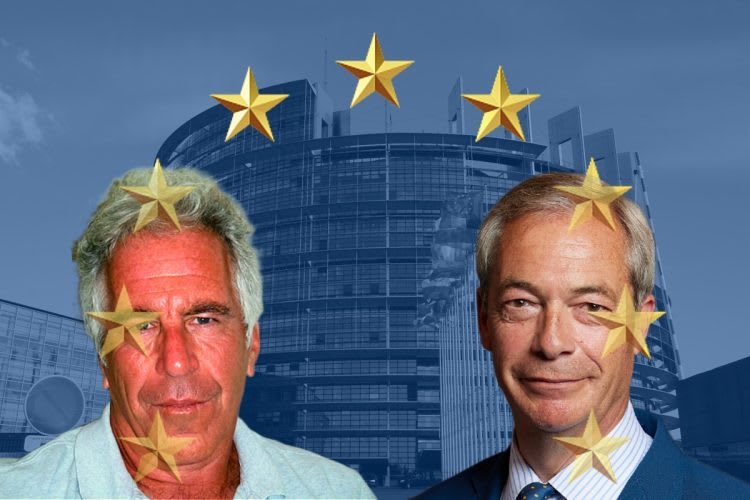 Montage. Epstein by Scottish Govt (CC BY 2.0) via Wikimedia Commons; EU Parliament: image by Rawpixel (CC0)">USVI (CC0); Farage by UK Parliament(CC BY 3.0); EU Parliament by Rawpixel (CC0)
Stephen McNair writes on the Epstein files and what they reveal about the role of Brexit in a global network which stands to gain from undermining democracy itself.
Users of Birdex get points for each bird they see and can compete with friends, with 200,000 sightings logged so far
A new app has launched that aims to gamify birdwatching by allowing people to collect digital cards of UK bird species whenever they record seeing one.
Users of Birdex accumulate points for each bird they see, with less common and rare species yielding the greatest rewards. It is possible to add friends and compete over bird sightings. The app has got birdwatchers talking online - though it has raised hackles among some for its use of AI-generated artwork.
Continue reading...
The regional government of Victoria, the Australian state where both Phillip Island and the city of Melbourne are located, have rejected a request from MotoGP organizer Dorna to move the Australian round of MotoGP from the Phillip Island circuit to Albert Park, the circuit inside Melbourne used for F1.
A statement issued by the government of Victoria expressed support for the Phillip Island circuit hosting MotoGP. "The Australian Motorcycle Grand Prix is synonymous with Phillip Island, and Victoria is proud to support it," the statement read. "Today the Allan Labor Government ruled out a request from Dorna Sports to move the event from Phillip Island to Albert Park. As regional Australia's biggest international sporting event, the Motorcycle GP brings tens of thousands of visitors to Phillip Island every year. It's good for tourism, good for local businesses, and good for jobs."
David Emmett Tue, 17/Feb/2026 - 16:35

