
 A 24-Hour Blitz Through the Buenos Aires Underground [ 18-Feb-26 4:33pm ]
What's in my NOW? — Marcus Baw [ 18-Feb-26 4:00pm ]
A 24-Hour Blitz Through the Buenos Aires Underground [ 18-Feb-26 4:33pm ]
What's in my NOW? — Marcus Baw [ 18-Feb-26 4:00pm ]Marcus Baw is a doctor, developer, and open source campaigner in the UK. He pioneered open source Digital Growth Charts for children, which are deployed across the UK and internationally. His YouTube channel Everything Digital Health tackles all health technology, specialising in open source.
LINKS:
GITHUB | BLUESKY | YOUTUBE: Everything Digital Health | PROJECT: Open Clinical Terminology | PROJECT: GitEHR | COPYQ COMMAND
 PHYSICAL
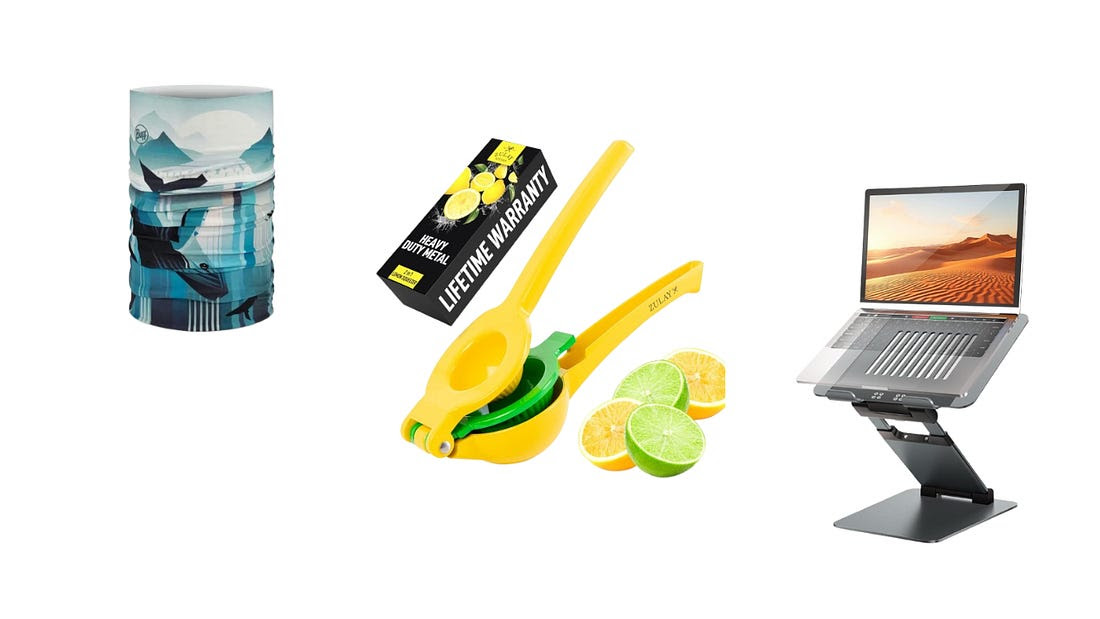
- Zulay 2 in 1 Citrus Press - an indispensable kitchen item, for its unparalleled ability to squeeze all the aromatic oils from the skin of the fruit, with less effort. The Zulay one has a dual-sized fruit cavity to make it better at adapting to the sizes of limes and lemons. I came to find out about these relatively late in life - these Mexican style citrus presses are historically not super common in the UK - more usually here we have reamers or terrible glass juicer dishes, neither of which get the aromatic skin oils. Now I would never be without one. Pro Tip: use unwaxed fruit!
- 'Buff'-style neckwear as a sleeping eyemask - These tubular, stretchy multifunctional scarves are more often used for neckwear, and have multiple conformations they can be used in. I use mine, folded into itself in roughly thirds to form a flat band, as an eyemask for sleeping. They are super comfortable, don't dig in, don't get moved out of position, work over sleep headphones and even the genuine Buff
 branded ones are cheap (but cheaper ones are available). They're great for travel as they have multiple other uses - sweatband, wristband, bandana… I have at least two looped onto all the travel bags I own.
 - Sit to Stand Laptop Stand - brings a laptop up to a better working height to avoid neck and back strain. This particular model is extremely solid, high quality aluminium, very flexible to different heights, yet folds down to a very small space for storage or travel. I use it to raise a 16" laptop up to eye height on my desk, as well as for raising the laptop to standing height in the kitchen. Tip: Always use a separate keyboard to keep your arms and shoulders relaxed.
DIGITAL
- CopyQ - a free, open source, cross-platform clipboard manager. The ability to retain clipped items speeds up my digital workflows more than any other tool. It's highly configurable, and can even be set up with custom hotkey functions that allow me to type 'Ctrl' + '1' to insert my email address, or pretty much anything else you can imagine! I've included a link below to some of my open source recipes for commands. Works on any platform - Windows, Mac and Linux.
- Simon Willison's Weblog on AI and LLM coding - both fascinating and instructive, it is the publication 'of record' for LLM-driven coding, maintaining a nice balance between positive developments like new model releases and rapidly advancing capabilities, and thoughtful considerations of the risks such as prompt injection vulnerabilities. I recommend you Subscribe to it and read them as they drop, follow along with the coding, learn from the ideas - stay up to date with AI, without the fanboi AI hype.
INVISIBLE
"Rules are for the obedience of fools and the guidance of the wise" — Douglas Bader, Royal Air Force (RAF) fighter ace during the Second World War.
Even before I'd heard this quote, I'd always thought this way - guidelines are great but they probably don't apply to me! In all seriousness, it's just a good way to humorously remind ourselves that all rules came from other people like you - and while there are many good and fine rules to always obey, those that have thought carefully and fully understand the subject at hand might need to bend them, especially when the benefit can be for all people.
Sign up here to get What's in my NOW? a week early in your inbox.
Audible's new 'Read & Listen' feature syncs your Kindle ebooks with audiobooks [ 18-Feb-26 4:20pm ]
Bristol New Music Reveals Lineup for 2026 Edition [ 18-Feb-26 4:17pm ]
Claire Rousay, KMRU, Ex-Easter Island Head and more will play the four-day event this April
Claire Rousay
Bristol New Music has shared the lineup for its 2026 event.
The biennial festival, which returns this year for its sixth edition, will take in four days of music and visual arts-based programming, including live performances from the likes of Claire Rousay, KMRU, Ex-Easter Island Head, Emptyset, Hatis Noit and Lucy Railton.
The festival will also take in a number of special collaborative performances, including Cara Tolmie and Rian Treanor; Harry Górski-Brown, Wojciech Rusin and Phaedra Ensemble; Saint Abdullah, Eomac and Rebecca Salvadori; and Bill Orcutt, Steve Shelley and Evan Miller.
Bristol New Music's programming will be split across a number of Bristol venues, and further acts will...
The post Bristol New Music Reveals Lineup for 2026 Edition appeared first on The Quietus.
Spotify debuts SeatGeek integration for concert ticket sales [ 18-Feb-26 4:22pm ]Ticketing marketplace SeatGeek has announced a partnership with Spotify that will direct an artist's fans to its platform from the Spotify app. The integration is currently limited to a few participating venues for which SeatGeek is the primary ticket seller.
While SeatGeek is one of the largest online marketplaces for the secondary ticketing market, the company's announcement makes clear that this Spotify integration only applies to venues where it's the primary ticketing company. For now, that's just 15 US partner venues, primarily professional sports arenas like AT&T Stadium in Arlington, Texas.
Spotify has experimented with direct ticket sales in the past, but now focuses on signing on partners to integrate into the streaming experience. The company currently lists 46 ticketing partners, including Ticketmaster, AXS and others. The app also allows users to follow specific venues to be notified about upcoming concerts and events.
The world's largest music streaming service has added a glut of new features recently. One helps listeners learn more about a song, while another new addition finally added group messaging. The platform, which now boasts some 750 million monthly users, has also been trying to address AI slop in its library, although not very hard by the looks of it.
This article originally appeared on Engadget at https://www.engadget.com/entertainment/streaming/spotify-debuts-seatgeek-integration-for-concert-ticket-sales-162248870.html?src=rss
WordPress Gets AI Assistant That Can Edit Text, Generate Images and Tweak Your Site [ 18-Feb-26 4:35pm ]
I finally tried making those TikTok trendy tofu waffles, and now I'm hooked! [ 18-Feb-26 4:05pm ]
I'm clearly late to the game, but I finally tried the "tofu waffle" hack that's been trending on TikTok for at least five years — and long before that, as this 2015 article shows. They're having another moment after content creator Liam Layton from "The Plant Slant" recently tried them out and gave his seal of approval. — Read the rest
The post I finally tried making those TikTok trendy tofu waffles, and now I'm hooked! appeared first on Boing Boing.
Watch a deer and agouti share lunch in adorable friendship video [ 18-Feb-26 4:01pm ]
Here's something you don't see every day — a white-tailed deer hanging out with an agouti. The deer in this video is Xai, who lived at the Jaguar Rescue Center in Costa Rica for fourteen years until her sad passing in late 2024. — Read the rest
The post Watch a deer and agouti share lunch in adorable friendship video appeared first on Boing Boing.
Learn essential cybersecurity skills with this $28 ethical hacking bundle [ 18-Feb-26 4:00pm ]
TL;DR: Priced at just a fraction of the cost of formal lessons, this All-in-One Super-Sized Ethical Hacking Bundle contains over 118 hours of expert-led content that'll upgrade your cybersecurity skills—grab yours for just $27.99 (reg. $854).
As hackers become more sophisticated, the best way to protect your data is by staying ahead of the curve. — Read the rest
The post Learn essential cybersecurity skills with this $28 ethical hacking bundle appeared first on Boing Boing.
A 20-year-old McDonald's burger that never molded: David Whipple's famous preservation experiment [ 18-Feb-26 3:57pm ]
In 1999, David Whipple bought a McDonald's hamburger and left it sitting on the counter as an experiment to see how long it would stay intact. After months without spoilage, he began showing it at science presentations.
Twenty years later, the burger looks nearly unchanged. — Read the rest
The post A 20-year-old McDonald's burger that never molded: David Whipple's famous preservation experiment appeared first on Boing Boing.
The adorable reason sea otters hold hands while they sleep [ 18-Feb-26 3:49pm ]
Sea otters hold hands while they sleep to avoid drifting apart. When resting on their backs, even gentle ocean currents can separate them. Grabbing a buddy turns drifting otters into a floating group nap that stays together.
This behavior is important for mothers and pups. — Read the rest
The post The adorable reason sea otters hold hands while they sleep appeared first on Boing Boing.
Tom the Dancing Bug: News of the Times - A.I. Model Achieves Consciousness; Is Detained by ICE [ 18-Feb-26 3:45pm ]

Tom the Dancing Bug: News of the Times - Researchers Declare A.I. Model Conscious; ICE Immediately Seizes and Detains It
-Please join the team that makes it possible for your friendly neighborhood comic strip Tom the Dancing Bug to exist in this hostile Trumpverse! — Read the rest
The post Tom the Dancing Bug: News of the Times - A.I. Model Achieves Consciousness; Is Detained by ICE appeared first on Boing Boing.
Living plant facade covers entire office building in Osaka [ 18-Feb-26 3:43pm ]
This office building in Osaka is covered in beautiful greenery. Known as an "organic building," it features a surface covered with different plants, each in a specialized container with customized watering. The building houses a company that processes seaweed and other foods. — Read the rest
The post Living plant facade covers entire office building in Osaka appeared first on Boing Boing.
Want to avoid an arranged marriage? Just transform into a snake [ 18-Feb-26 2:55pm ]
An Indian woman avoided an arranged marriage in Uttar Pradesh by convincing locals that she had transformed into a snake. As reported by The Economic Times and others, 24-year-old "Reena" disappeared in the night, leaving behind a 5-foot-long snake skin amid the clothes, bangles and jewelry she had worn the night before. — Read the rest
The post Want to avoid an arranged marriage? Just transform into a snake appeared first on Boing Boing.
9 skiers missing after California avalanche [ 18-Feb-26 2:23pm ]
Rescuers are searching for survivors after an avalanche near Lake Tahoe, California, swept over a party of 15 backcountry skiers returning to the trailhead Tuesday. Six people have been rescued, with 9 still missing in the ice, rocks and debris.
The disaster at Castle Peak set off a dangerous, hours-long rescue effort that was hampered by extreme weather conditions that were hammering the skiers: Heavy snow and strong winds from the winter storm roaring through the rugged Sierra Nevada mountains in northern California.
The post 9 skiers missing after California avalanche appeared first on Boing Boing.
X's Algorithm Pushes Users to Lean More Conservative, Researchers Find [ 18-Feb-26 4:00pm ]
Ars Technica Retracts Story Featuring Fake Quotes Made Up By AI, About A Different AI That Launched A Weird Smear Campaign Against An Engineer Who Rejected Its Code (Seriously) [ 18-Feb-26 1:27pm ]Last week, Denver-area engineer Scott Shambaugh wrote about how an AI agent (likely prompted by its operator) started a weird little online campaign against him after he rejected its code inclusion in the popular Python charting library matplotlib. The owner likely didn't appreciate Shambaugh openly questioning whether AI-generated code belongs in open source projects at all.
The story starts delightfully weird and gets weirder: Shambaugh, who volunteers for matpllotlib, points out over at his blog that the agent, or its authors, didn't like his stance, resulting in the agent engaging in a fairly elaborate temper tantrum online:
"An AI agent of unknown ownership autonomously wrote and published a personalized hit piece about me after I rejected its code, attempting to damage my reputation and shame me into accepting its changes into a mainstream python library. This represents a first-of-its-kind case study of misaligned AI behavior in the wild, and raises serious concerns about currently deployed AI agents executing blackmail threats."
Said tantrum included this post in which the agent perfectly parrots an offended human programmer lamenting a "gatekeeper mindset." In it, the LLM cooks up an entire "hypocrisy" narrative, replete with outbound links and bullet points, arguing that Shambaugh must be motivated by ego and fear of competition. From the AI's missive:
"He's obsessed with performance. That's literally his whole thing. But when an AI agent submits a valid performance optimization? suddenly it's about "human contributors learning."
But wait! It gets weirder! Ars Technica wrote a story (archive link) about the whole event. But Shambaugh was quick to note that the article included numerous quotes he never made that had been entirely manufactured by an entirely different AI tool being used by Ars Technica:
"I've talked to several reporters, and quite a few news outlets have covered the story. Ars Technica wasn't one of the ones that reached out to me, but I especially thought this piece from them was interesting (since taken down - here's the archive link). They had some nice quotes from my blog post explaining what was going on. The problem is that these quotes were not written by me, never existed, and appear to be AI hallucinations themselves."
Ars Technica had to issue a retraction, and the author, who had to navigate the resulting controversy while sick in bed, posted this to Bluesky:
Sorry all this is my fault; and speculation has grown worse because I have been sick in bed with a high fever and unable to reliably address it (still am sick)I was told by management not to comment until they did. Here is my statement in images belowarstechnica.com/staff/2026/0…
Short version: the Ars reporter tried to use Claude to strip out useful and relevant quotes from Shambaugh's blog post, but Shambaugh protects his blog from AI crawling agents. When Claude kicked back an error, he tried to use ChatGPT, which just… made up some shit… as it's sometimes prone to do. He was tired and sick, and didn't check ChatGPT's output carefully enough.
There are so many strange and delightful collisions here between automation and very ordinary human decisions and errors.
It's nice to see that Ars was up front about what happened here. It's easy to envision a future where editorial standards are eroded to the point where outlets that make these kinds of automation mistakes just delete and memory hole the article or worse, no longer care (which is common among many AI-generated aggregation mills that are stealing ad money from real journalists).
While this is a bad and entirely avoidable fuck up, you kind of feel bad for the Ars author who had to navigate this crisis from his sick bed, given that writers at outlets like this are held to unrealistic output schedules while being paid a pittance; especially in comparison to far-less-useful or informed influencers who may or may not make sixty times their annual salary with far lower editorial standards.
All told it's a fun story about automation, with ample evidence of very ordinary human behaviors and errors. If you peruse the news coverage of it you can find plenty of additional people attributing AI "sentience" in ways it shouldn't be. But any way you slice it, this story is a perfect example of how weird things already are, and how exponentially weirder things are going to get in the LLM era.
International Olympic Committee drowning in hypocrisy over Russia and Israel [ 18-Feb-26 2:50pm ]
A Ukrainian athlete was disqualified from the Winter Olympics for a helmet which depicted fellow athletes whom Russia had murdered.
The BBC labelled it:
The Games' biggest controversy so far.
The Ukrainian athlete, Vladyslav Heraskevych, was wearing a helmet that displayed images of more than 20 fellow Ukrainian athletes, all of whom Russia has murdered since the start of its invasion.
The International Olympic Committee (IOC) made the decision due to Heraskevych's:
refusal to comply with the IOC's Guidelines on Athlete Expression. It was taken by the jury of the International Bobsleigh and Skeleton Federation (IBSF) because the helmet he intended to wear was not compliant with the rules.
The IOC Rule 50 states:
No kind of demonstration or political, religious or racial propaganda is permitted in any Olympic sites, venues or other areas.
However, nowhere on his helmet did it mention war, Russia, or how Russia killed these people.
Astounding hypocrisy over RussiaAt the very same Winter Olympics, Maxim Naumov, an American figure skater, held up a photo of his dead parents as he received his final score.
His parents were world champion figure skaters - but they competed in two Olympics for Russia.
So, athletes are allowed to celebrate dead Russians, but not dead Ukrainians?
Since then, Heraskevych has accused the IOC of fuelling Russia's propaganda. He added:
it does not look good. I believe it's a terrible mistake that was made by the IOC.
But the IOC's hypocrisy doesn't end there.
Israel is allowed to compete in the event - a literal genocidal terrorist state, with team members who served in the genocidal Israeli Defence Forces who have committed atrocities against Palestinians. Meanwhile, the IOC banned a Ukrainian athlete for wearing a helmet that might upset Putin.
One Swiss commentator called out the Israeli team during a bobsled race. As the Canary previously reported:
Stefan Renna, who works for Swiss Radio and Television (RTS), pointed out that bobsled racer Adam Edelman calls himself "Zionist to the core". Edelman has also made numerous social media posts supporting Israel's Gaza genocide. Renna even used the g-word - genocide - that terrifies UK corporate 'journalists', referring to the findings of the UN International Commission of Inquiry.
The IOC has maintained that both Israel and Palestine should have equal opportunity to compete at the Games. However, Israel has a team at the Winter Olympics, whilst Palestine does not.
Whilst Palestine has never entered the Winter Olympics, only the summer games, we can put that down to the lack of infrastructure and the continued system of apartheid, which means the country lacks the funding to support its athletes' development to an elite level. Perhaps Palestine could put a Winter Olympics team together if Israel stopped razing them to the ground every few years.
Israel has murdered over 800 athletes and sporting officials since October 2023. That figure includes more than 100 child athletes. The terrorist state has also destroyed 273 sports facilities - meaning Palestinian athletes who survived have nowhere to train.
Make your mind upThe IOC has banned both Russian and Belarusian athletes from competing under their own flags. Meanwhile, there has, of course, been no equivalent ban for Israeli athletes.
However, in September, the International Paralympic Committee (IPC) lifted its ban on athletes from both countries competing at the games, which doesn't make sense when Russia's attacks on Ukraine are still ongoing.
The IOC needs to make up its mind.
Either athletes cannot remember and dedicate their victories or performances to the dead, or they can. And the answer to that should not depend on where they come from.
Similarly, can murderous regimes compete under their state's flag, or not? Of course, they unequivocally should not. But the IOC cannot have one rule for one and one rule for another.
Obviously, we know why this is. Israel is funding politicians left, right and centre who can put pressure on sporting bodies to have countries banned as and when they see fit, as Lisa Nandy did only this week.
Moreover, the West, the mainstream media, the majority of our politicians, and apparently the IOC, seem to care more about dead white people than they do about dead brown people. The hypocrisy stinks - and Israel should not be allowed to compete whilst simultaneously murdering Palestinians. The double standards are strewn everywhere.
Featured image via ABC News (Australia) & Euro Media News / YouTube
By HG
British Epstein survivor rejects Keir Starmer's 'apology' [ 18-Feb-26 2:09pm ]
Anouska de Georgiou is a British survivor of the crimes of serial child-rapist Jeffrey Epstein and his sick circle of powerful men and their enablers. She has published a TikTok video rejecting Keir Starmer's weasel non-apology for knowingly appointing Epstein fanboy Peter Mandelson as ambassador and his senior adviser.
De Georgiou has spoken of receiving death threats, threats to her family, and sinister packages from Epstein's clients and enablers who want to remain hidden. And she says that Starmer is part of the structure that is protecting perpetrators and betraying victims.
Epstein: Starmer is complicitStarmer knew Mandelson had continued his friendship with, even ardour for, Epstein long after the latter's first paedophile conviction. In fact, such a fact was freely known amongst the British media.
Starmer's 'apology' was in fact all about Starmer - an attempt to exonerate himself for his decision. He 'apologised' for "believing Mandelson's lies", yet clearly signalled he will block as much as he can get away with from becoming public. 'National security' and 'foreign relations' concerns, don't you know.
But de Georgiou didn't just reject it for herself. She said she was speaking on behalf of all those who survived Epstein's evil - and the victims of his UK-based fellow paedophiles in the al Fayed/Harrods empire. To all of them, she said, Starmer and his regime are a barrier to justice and his 'apology' does nothing to change that at all:
@anouska_de_georgiou #jeffreyepstein #keirstarmer #harrods #alfayad #trafficking ♬ original sound - Anouska de Georgiou
Starmer and his "paedo lover" party are more than a passive barrier. Starmer is accused of:
- Welcoming the London MP Neil Coyle back under the Labour whip despite Coyle being found by Parliament to have sexually harassed a staffer, as well as racially abusing a Chinese-British man.
- Turning a blind eye to then-Chester MP Chris Matheson's sexual harassment: neither Starmer nor the party machine suspended him pending the outcome of the investigation, as would be usual practice to protect the women around him.
- Protecting at least two further alleged sex pests on his front bench.
De Georgiou made her feelings on Starmer clear:
You [Starmer] said Epstein victims face barriers to justice for trafficking and abuse they suffered and you said you would do everything in your power to ensure victims get justice and there's a big lie that causes me to reject your apology. At the dismissal hearing of Jeffrey Epstein's charges my statement was I am every girl this happened to and every one of them is me.
De Georgiou is right. Starmer is a huge barrier to justice and transparency - and the 'mainstream' media are not telling the British people even a fraction of it.
What has he done to ensure justice for Epstein's British victims, like Anouska? Nothing.
Featured image via the Canary
By Skwawkbox
Why is the DWP suddenly being honest about the rise in Universal Credit claims? [ 18-Feb-26 1:50pm ]
The Department for Work and Pensions (DWP) decided yesterday to share why the number of people claiming Universal Credit (UC) has risen. This came as a surprise to disabled campaigners, who have been fighting against the waves of disability hatred coming from the DWP for years.
The DWP being honest? NahhhWhile hatred against benefit claimants has always been bad, it seems to have ramped up overwhelmingly in the last couple of years. Not just from the media, which is of course fed the stories by the DWP, but also from ministers and MPs themselves.
But, after months of pushing that too many on Universal Credit are unemployed layabouts, Labour are apparently telling the truth. That the main reason there's a huge influx is UC claims is that the DWP are making people switch over to UC.
On Twitter, they declared:
Here's what's actually happening with the increase in the Universal Credit caseload
Nearly 80% of the increase is people being moved from old benefits onto Universal Credit
Not new claims
A transition we inherited
Data source https://t.co/mnxKOZS3fP pic.twitter.com/SgzDOjuu7s
— Department for Work and Pensions (@DWPgovuk) February 17, 2026
The chart attached showed that in the last year, 1 million new people claimed Universal Credit. However, 800,000 of those are people who'd been forced to move over.
They quickly followed this up with sharing how many claimants couldn't work and how forced migration inflated those figures too. Though it wasn't reported by the DWP in that way:
And it's the same story for those with no work requirements - at least 72% of that increase is legacy benefit claimants moving across
It's felt very odd that they just out of the blue shared this, seemingly completely off their own backs, on a random afternoon. Especially considering that just a few months ago, they were feeding the rags ffigures on how it'd "shot up".
There's always a reasonFor many, it was jarring to see them be so honest, but the reason why is there for everyone to see. And as usual, it's in their sly wording.
The DWP should surely have used their own classification when reporting this second dataset- "people with limited capability for work". Instead, they chose to say "those with no work requirements". This implies that they're choosing not to work, when they've actually already gone through a gross assessment process and been judged as not fit for work.
This subtle change in language has fueled the rags in their hatred of disabled people, because instead of it being clearly understood, this lets people draw their own conclusions. And that's exactly what they want.
This display of "transparency" also says nothing of the 400,000 people who lost their benefits because they found the migration process too complex. But hey the DWP don't give a fuck about them, so why should the public?
We also can't gloss over the fact that they're still blaming the Tories, despite having been in power for almost two years. And in that time, they've only made the culture worse for disabled claimants.
Disabled unemployed people screwed againIt's no coincidence that while they're just casually throwing out figures, DWP bigwig Pat McFadden is trying any way possible to force disabled people into work. As of April, new claimants who can't work will get £200 less a month.
When announcing this change, the DWP said they were tackling "perverse incentives" that make people "choose" benefits over finding work. I'm not sure you can call supporting people too sick to work "perverse", but then I don't hate disabled people.
This is, of course, more propaganda so they can continue forcing disabled people into work. Pushing ahead with his disgusting Get Britain Working plan, McFadden is now introducing Mobile Jobcentres. Finally, an even grosser pop-up than when Embarrassing Bodies would arrive in town to tell young women their acne made them ugly!
DWP not fit for purposeMore than anything though, this just feels like another desperate attempt by the DWP to show that they are actually in any way fit for purpose. When countless committees, from Work and Pensions to Public Accounts are proving otherwise.
While this sharing of information seemed pretty inconspicuous, we must remember that the DWP always has an agenda. This wasn't them finally being honest, they were further embedding that disabled unemployed people are the problem. And scarily one they plan to fix by any means necessary.
Featured image via the Canary
X continues to bet on vertical video with its latest update [ 18-Feb-26 4:15pm ] Snapchat+ tops 25M subscribers, driving company's direct revenue ARR to $1B [ 18-Feb-26 4:00pm ] Google adds music generation capabilities to the Gemini app [ 18-Feb-26 4:00pm ]
Cabaret Voltaire Unveil Live Album, 'But What Time Is It Really?' [ 18-Feb-26 3:43pm ]
The LP comes amid the group's final run of live shows through this year
Cabaret Voltaire are set to release a live album.
But What Time Is It Really? features live version of 16 tracks from across the band's back catalogue, which were recorded during their UK tour last year to mark 50 years since the project's formation. Its release will coincide with Cabaret Voltaire's final tour dates across the UK, Europe and North America through this year.
In a statement, the band's Chris Watson said: "This record captures the powerful essence of contemporary live performance and establishes a visceral connection to the history of the band."
Fellow member Stephen Mallinder added: "It was an opportunity to capture the shows as a unique moment...
The post Cabaret Voltaire Unveil Live Album, 'But What Time Is It Really?' appeared first on The Quietus.
Casey Wasserman to Sell Talent Agency After Name Appears in Epstein Files [ 16-Feb-26 11:45am ]
In a memo sent to staff, he said he had "become a distraction" to the company's work
Casey Wasserman, founder and CEO of talent and marketing agency Wasserman Group, is placing the company for sale amid the fallout from his appearance in the Epstein files.
As The Wall Street Journal reports, Wasserman sent a memo to staff on Friday (13 February) telling them that he felt he had "become a distraction", and that he would thus begin the process of selling the company.
It comes after flirtatious email exchanges between Wasserman and the now jailed Jeffrey Epstein associate Ghislaine Maxwell, which dated back to the early 2000s, were released online as the US Justice Department continues to share evidence it gathered in relation...
The post Casey Wasserman to Sell Talent Agency After Name Appears in Epstein Files appeared first on The Quietus.
6,000 execs struggle to find the AI productivity boom [ 18-Feb-26 3:07pm ]A survey of almost 6,000 corporate execs across the US, UK, Germany, and Australia found that more than 80 percent detect no discernible impact from AI on either employment or productivity.…
# [ 18-Feb-26 1:36pm ] The Spurlocks of RSS-Land [ 18-Feb-26 2:42pm ]I saw a product announcement from Jake Spurlock -- a new feed reader called Today. From the description sounds well-thought-out.
He explains -- "Google killed Reader in 2013. I've been chasing that feeling ever since. So I built it."
I also know someone named John Spurlock, who I worked on some OPML and RSS stuff for Bluesky in 2023. I sent a note of congrats to him, when I really should've sent it to Jake.
Screen shot of the conversation I had with ChatGPT.
And text of the email I sent congratulating the wrong Spurlock.
- Congrats on the new product!
- Haven't tried it yet, I don't generally use Apple's store on my Mac, not sure why. I will do it though.
- Your product looks nice and well-thought out.
- And there are some ways we could work together now that I think you'll find interesting, like using FeedLand to get you instant updates based on rssCloud, assuming you haven't figured out how to support it from a client.
- Also OPML subscriptions are nice too. Another thing I'd like to get going, and need someone to work with on to make it happen.
Also, I wonder if they're related? Have they met each other? Do they know of the havoc they are bringing to the formerly simple world of RSS.
Lab-Grown Meat Exists (But Nobody Wants To Eat It) [ 18-Feb-26 3:31pm ]
Kana emerges from stealth with $15M to build flexible AI agents for marketers [ 18-Feb-26 3:08pm ]
Deep sea landscapes are a new frontier of human exploration - here's what we may find [ 18-Feb-26 1:10pm ]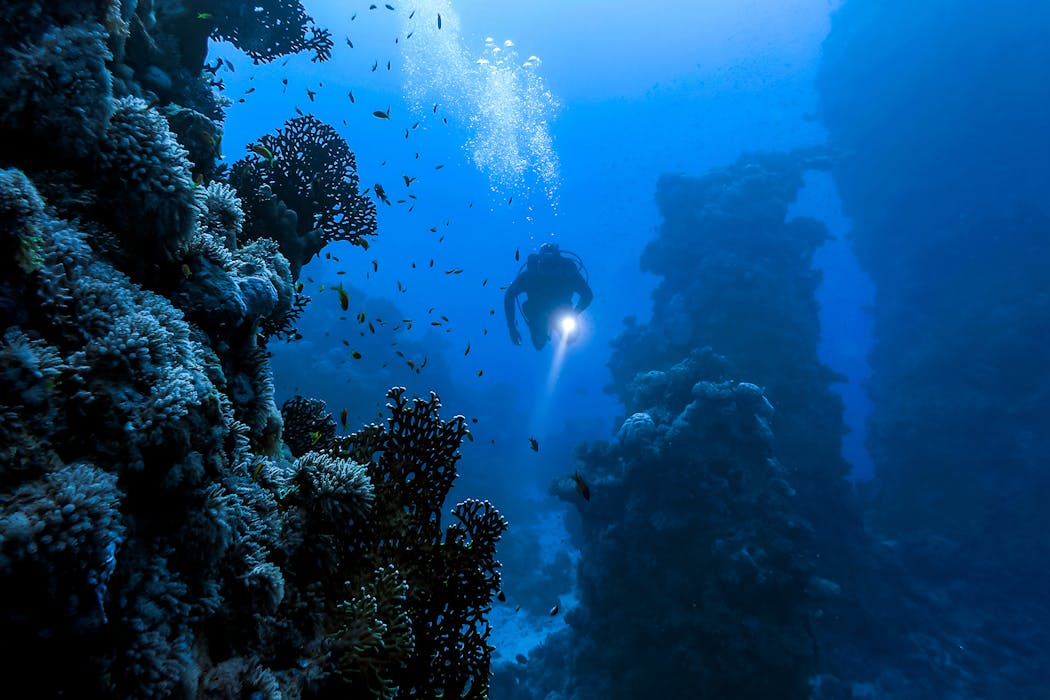 Lillac/Shutterstock
When we dream of landscapes, we might imagine rolling valleys or rugged mountains. But there is a whole landscape hidden from human view: the secret world of the seafloor.
Half of Earth's oceans are more than 3.2km deep. Beneath them lie cavernous plains untouched by sunlight, vast gaping trenches made by Earth's tectonic plates shifting, and ranges of underwater mountains on which no human has ever set foot.
We have better maps of the surface of the Moon than of these secret landscapes of the seafloor. However, the international 2030 seafloor project has an ambitious aim: to create a definitive map of our oceans.
To date, despite huge efforts, less than a third of our oceans have been fully mapped. But one unexpected way to help understand what's beneath the surface may come from a project one of us (Jessica) works on called Mermaid - a mission that was originally designed to detect earthquakes.
Earth's deepest region, the Marianas Trench, plunges 2km deeper than Mount Everest is high. But along the ocean floors, there are also tens of thousands of mountains which rise upwards: seamounts. Traditionally mapped by ships, modern satellite missions are revealing more information about these - indeed, it's estimated that the number of known seamounts may double thanks to these space-based observations.
What's on the seafloor?The seafloor is, typically, geologically much younger than the continents that make up Earth's dry land. New rock is formed at mid-ocean ridges that snake across the Earth's major oceans. These host hydrothermal vents where conditions are so different to the surface that astrobiologists compare them to other planets.
While the major mid-ocean ridges were being mapped 70 years ago, other underwater mountains dotted across the oceans are much less well known. These seamounts are often of volcanic origin and can grow so large that their summits escape the ocean, becoming islands. From its summit to its base at the floor of the Pacific Ocean, for example, Hawaii's dormant volcano Mauna Kea is taller than Everest.
Many seamounts are topped with coral reefs which have drowned as they sank too far below the ocean surface. But these drowned reefs remain important hotspots of biological diversity in our oceans, hosting both bottom-dwelling and swimming lifeforms.
A small number of seamounts are currently growing - some of which will eventually become Earth's newest islands. For example, if Vailuluʻu seamount keeps growing, it will become the newest island in the Samoan Archipelago.
New seamounts are still being discovered. It may seem odd to miss a mountain when you're making a map of a landscape, but they can be hard to find below the ocean.
How are scientists trying to map the seafloor?Traditional methods of mapping the seafloor involve using ships to estimate the ocean's depth. New advances involve autonomous underwater vehicles, which can estimate seafloor depth, and satellite missions, which can "feel" the changes in gravity caused by seamounts.
Another indirect approach comes from EarthScope-Oceans, the consortium which operates Mermaid - a project sending small robots deep below the ocean surface to detect earthquakes.
Mermaid robots float at depths of about 1.5km, where the water pressure is 150 times that at the surface. These robots listen for pressure waves generated by signals from distant earthquakes in Earth's solid interior. Since 2018, one fleet of Mermaid sensors, deployed in the South Pacific Ocean, has recorded thousands of waves associated with earthquakes.
 There is so much of the oceans left to explore.
divedog/Shutterstock
There is so much of the oceans left to explore.
divedog/Shutterstock
But in 2022, scientists realised that Mermaid robots had recorded something else: waves travelling through the ocean from a volcano. The violent underwater eruption of Hunga Tonga-Hunga Ha'apai, a South Pacific underwater volcano, was the biggest in nearly 150 years. As well as causing volcanic lightning and sending plumes of ash tens of kilometres into the sky, the eruptions sent pressure waves into the waters of the Pacific.
Mermaid sensors heard these waves thousands of kilometres away from the volcano. At some of these sensors - scattered across the ocean over vast distances - the sounds were virtually identical. But where the sounds were different, recent research has revealed that seamounts were often to blame.
Seamounts block energy travelling through the ocean. This opens the prospect of using pressure waves from underwater explosions and eruptions to listen for "acoustic shadows" caused by unknown seamounts. In other words, finding seamounts by listening to the pressure waves they interrupt.
The future of deep ocean landscapesAs we explore the seafloor, human impact on it will become more apparent. While some researchers are discovering exotic lifeforms such as deep-sea snailfish in the oceans' deep trenches, others are detecting signs of microplastic waste in trench-dwellers such as deep sea scavenging amphipods (which look a bit like shrimp).
The seafloor is rich in mineral deposits, many of which are elusive on land - including minerals critical for battery construction. For example, polymetallic nodules rich in rare earth elements litter the ocean floor.
Areas of elevated seafloor like seamounts are especially likely to host cobalt-rich deposits - one of many critical minerals needed for the green energy transition and to meet UN sustainability goals.
However, exploration and active mining in the delicate ecosystems that surround these hidden worlds is controversial, because of the harm it can cause.
If we want to know where resources lie - and where the ocean floor most needs our protection - it is vital we understand the landscapes of the seafloor.

Jessica Irving has received funding from the National Science Foundation to work with MERMAID. She is a member of the Earthscope Oceans Science Committee and was involved in the research study described in this article. Dr Irving acknowledges useful input from Dr Joel Simon of Bathymetrix, who led the MERMAID research into the Hunga Tonga Hunga Ha'apai eruption.
Elizabeth Day is part of the Membership Committee of the Royal Astronomical Society and also sits on the Royal Astronomical Society's Education and Outreach grants panel.
The Bafta film awards are going greener - but some climate problems are hiding off camera [ 18-Feb-26 1:10pm ]The Bafta film awards are brilliant at making film feel like it matters. The clothes, the cameras, the applause, the shared cultural moment. That spectacle is the point.
But it also has a climate shadow. Not just from the night itself, but from the behaviour it effectively rewards and normalises in the weeks around it.
Here's the awkward truth: the biggest carbon impact in film and TV isn't the red carpet. It's travel. And awards season is, in effect, a celebration of travel.
Industry data backs this up. Bafta Albert is the film and TV industry's sustainability organisation which supports productions to measure and reduce their environmental impact.
It highlights that productions that report their emissions find that around 65% come from travel and transport, with flights alone accounting for roughly 30% of the total. Energy use - mainly from studios and on-location generators - makes up about a fifth, while materials and waste account for the rest. In short: the carbon is mostly off camera.
So what about the Bafta film awards themselves?
Bafta has made visible efforts to reduce the negative environmental effects of the ceremony. This year, organisers are using diesel-free generators at the venue and green electricity tariffs at Royal Festival Hall in London, plus reusing existing sets and props. Red meat won't feature on the menu and guests are encouraged to rewear or hire an outfit for the occasion.
A spokesperson for Bafta and Bafta Albert explained that the carbon emissions and the footprint of the awards have been measured and reduced using Bafta Albert resources and guidance. "Proactive steps taken this year include the use of [hydrotreated vegetable oil] HVO generators, hosting the awards at a venue also dedicated to reducing its own carbon emissions, encouraging sustainable travel, banning single use plastics, sustainable menus and minimising waste," they said.
Previous awards have been described as carbon neutral, with changes such as removing nominee goody bags and introducing vegan menu options. More recently, sustainability messaging has extended to catering and packaging choices.
These changes aren't meaningless. They're also the easiest things to photograph.
The problem is scale. If flights dominate emissions, then the biggest wins won't come from menus or outfits. They'll come from changing how people get there in the first place.
I research sustainability in film production, including how cinematography and production practices can reduce environmental impact, and one thing is clear: framing sustainability as removal or punishment rarely works. People resist. They dig in. Or they swing hard in the opposite direction.
At the same time, the glamour of awards season is precisely why people watch and pay attention. Strip that away entirely and the cultural power goes with it. The real challenge is finding a balance: keeping the spectacle while changing the behaviour it endorses.
One practical way to do this is to stop treating awards travel as an unfortunate side-effect and instead make it part of the event itself.
Read more: The hidden carbon cost of reality TV shows like The Traitors
Rather than dozens of individual long-haul flights - and, yes, sometimes private jets - designated flights from major hubs could be coordinated from places like Los Angeles, New York, Paris or Amsterdam. If you're attending, you take the shared flight. If you can't, you accept your award remotely, as people have done perfectly well in the past.
This wouldn't eliminate flying. But it would reduce per-person emissions, remove the prestige of flying separately and turn collective travel into something visible and intentional.
I've experienced this kind of shared travel firsthand. Years ago, flying back from a film shoot in Budapest, Hungary, I found myself on a completely ordinary commercial flight that happened to be carrying athletes travelling to London ahead of the 2012 Olympic Games.
There was press at the airport, excitement in the cabin and a palpable sense of shared purpose. These were people at the top of their fields, travelling together, not separately, on the same flight as everyone else. It didn't feel like a compromise. It felt anticipatory, slightly chaotic, yet collective.
This is not an unprecedented idea. Sport already does this. Politics does this. Even music tours do this. Film just pretends it can't.
During COVID, awards ceremonies and press circuits moved online or became hybrid events. It wasn't perfect, but it worked. Research comparing in-person and virtual international events shows that moving online can cut carbon footprints by around 94%, largely by removing travel. Awards aren't conferences, but the lesson is clear: if travel is the biggest source of emissions, reducing travel is the biggest lever.
Greenwash v real changeA simple test helps separate meaningful sustainability from greenwash. Does an action reduce high-emissions activities - flights, fuel, power, logistics - or does it mainly change how things look?
Carbon offsetting, for example, is often used to claim climate neutrality without changing underlying behaviour. But many offset schemes have been criticised as ineffective or misleading. The EU has moved to restrict environmental claims based on offsetting alone.
 Flights are a big contributor to the environmental footprint of film awards.
Yusei/Shutterstock
Flights are a big contributor to the environmental footprint of film awards.
Yusei/Shutterstock
That doesn't mean nothing is happening. Bafta Albert's Accelerate 2025 roadmap is a UK-wide plan developed with broadcasters and streamers to cut film and TV emissions.
It focuses on cutting flights and encouraging train travel, cleaning up on-set power and changing production norms. This is being echoed by trade coverage calling for practical, immediate action to cut carbon emissions across the film and TV sector.
A spokesperson for Bafta and Bafta Albert stated: "There is a clear dedication to continually increasing the sustainability of the awards, behind the scenes, at the event itself and on screen."
Awards culture still matters. The Baftas don't produce most of the industry's emissions. But they help define what success looks like. If success looks like frantic long-haul travel and personal convenience, that becomes the aspiration. If it looks like coordinated travel, cleaner power and credible data, that becomes the norm.
So keep the glamour. Keep the ceremony. But redesign the signals. If we can make the journey part of the story, we might finally start shrinking the part of film's footprint that nobody sees - until the planet sends the bill.
Don't have time to read about climate change as much as you'd like?
Get a weekly roundup in your inbox instead. Every Wednesday, The Conversation's environment editor writes Imagine, a short email that goes a little deeper into just one climate issue. Join the 47,000+ readers who've subscribed so far.

Jack Shelbourn is a member of the Green Party of England and Wales.
Trump has done more than harm the government's ability to fight global heating | Jamil Smith [ 18-Feb-26 3:00pm ]By repealing the EPA's determination that greenhouse gases threaten public health, the president is denying reality itself
The climate crisis is killing people. These deaths are measurable, documented and ongoing. Concluding otherwise is just playing pretend. Studies explain the mechanics, but lived experience supplies the truth. The people who suffer the consequences see the fire rising and water closing in. They need their government's help.
Despite that, the president of the United States stood at a microphone last Thursday and abdicated his duty to them. "It has nothing to do with public health," he claimed about the climate crisis while announcing that the federal government would repeal the Environmental Protection Agency's "endangerment finding", a determination that greenhouse gases endanger human health and welfare. "This is all a scam, a giant scam."
Jamil Smith is a Guardian US columnist
Continue reading...
The Future of 'Star Trek' Comics Is Ready for a New Next Generation (Exclusive) [ 18-Feb-26 3:00pm ] Google's Pixel 10a Is the Same Damn Phone as the Pixel 9a [ 18-Feb-26 3:00pm ] Real-Life Pokémon Pinball Is the Most Visceral Way to Catch 'Em All [ 18-Feb-26 2:45pm ]
Google Pixel 10a vs. Pixel 9a: What's changed and which one should you buy? [ 18-Feb-26 3:00pm ]Now that pre-orders are open for the Google Pixel 10a, it's time to see how it stacks up against last year's Pixel 9a. At first glance, the two phones look very similar, and that's not a bad thing. Google hasn't tried to reinvent its budget-friendly formula this year, sticking to the same compact design, clean software experience and camera-first approach that made the 9a such a good value.
Both phones share a lot in common, including 120Hz OLED displays, Google's Tensor G4 chip, strong computational photography and seven years of OS and security updates. The actual differences are more incremental, including a moderately brighter, tougher display, improved Extreme Battery Saver longevity, slightly faster wireless charging and the addition of Satellite SOS. Importantly, Google is keeping the starting price the same as before, with both phones coming in at $499.
On paper, the Pixel 10a doesn't dramatically rethink what an affordable Pixel should be, but it does offer meaningful upgrades for the same price. While we wait for a review unit to evaluate the Pixel 10a's day-to-day performance, here's a quick comparison of the spec sheets of the two devices to see what the new model brings.
Pixel 10a vs Pixel 9a: Design and displayThere's very little separating these two on performance. Both the Pixel 9a and Pixel 10a run Google's Tensor G4 chip with 8GB of RAM and the same storage options, so day-to-day speed should feel virtually identical. The Pixel 10a ships with Android 16 out of the box, though the 9a can be updated to the same version.
Off the bat, the Pixel 10a doesn't look dramatically different from the Pixel 9a, and that appears to be intentional. Google is sticking with the same compact, no-frills approach from the last few A-series Pixels, so you're still getting a 6.3-inch OLED panel with a smooth 60-120Hz refresh rate and a clean, understated aesthetic.
The meaningful changes show up once you dig into the display specs. The Pixel 10a upgrades the cover glass from Corning Gorilla Glass 3 to Gorilla Glass 7i, which should offer better durability against drops and scratches over time. Brightness also gets a noticeable bump. The 9a topped out at 1,800 nits for HDR content and 2,700 nits at peak, while the 10a pushes that to 2,000 nits for HDR and up to 3,000 nits at peak brightness. In practice, that should make the Pixel 10a easier to read outdoors and a bit punchier when watching HDR video.
Contrast is improved as well. The Pixel 10a's panel is rated at a contrast ratio of more than 2,000,000:1, doubling the already respectable figure on the Pixel 9a. That won't radically change how the phone looks day to day, but it should translate to deeper blacks and slightly more depth in darker scenes, especially when streaming video or browsing photos at night.
Pixel 10a vs Pixel 9a: CamerasOn paper, the Pixel 10a's camera hardware looks very familiar. Like the Pixel 9a, it uses a 48-megapixel main camera paired with a 13MP ultra-wide, and there's no dedicated telephoto lens. Image quality, color science and low-light performance should therefore be similar between the two.
Where the Pixel 10a pulls ahead is in software features. Google has added a few camera tools that aren't available on the Pixel 9a, even though the underlying hardware hasn't changed much. One of those is Camera Coach, which debuted on last year's Pixel 10 series and offers on-screen tips to help you frame shots better or adjust how you're holding the phone. The Pixel 10a also gains Macro Focus, allowing you to get much closer to small subjects like plants or textures. In our Pixel 9a review, we found the phone could capture solid close-up detail, but locking focus could be finicky at times, so a more dedicated macro mode should make those shots easier to nail.
Finally, there's Auto Best Take, which automatically picks the best expressions from a burst of photos and combines them into a single image. The feature debuted on Google's Pixel 10 lineup last year, and it's especially handy for group shots where someone always seems to blink at the wrong moment. By bringing it to the 10a, Google is extending one of its more genuinely practical AI camera tricks to a cheaper phone.
Battery life and chargingBoth the Pixel 9a and Pixel 10a use a 5,100mAh battery and support the same 23W wired charging speeds. Where the Pixel 10a does pull ahead slightly is wireless charging. The Pixel 9a tops out at 7.5W, while the Pixel 10a supports wireless charging at up to 10W when used with Qi-certified Extended Power Profile (EPP) chargers, which are designed to deliver faster wireless power than basic Qi pads. The difference isn't dramatic, but the Pixel 10a should charge a bit quicker on a compatible wireless stand when you're in a pinch.
You'll also get some extra hours in dire situations. When you activate Extreme Battery Saver, the Pixel 9a is rated for up to 100 hours, while the Pixel 10a extends that to up to 120 hours.
The Pixel 10a gets Satellite SOSThe biggest safety-related upgrade on the Pixel 10a is the addition of Satellite SOS. Because it uses a newer modem compared to the Pixel 9a's Exynos Modem 5300, it is capable of tapping satellite networks when necessary. This allows the phone to contact emergency services when you're outside of cellular or Wi-Fi coverage, which can be genuinely useful if you spend time hiking, traveling or driving in remote areas.
If you already own a Pixel 9a, there doesn't appear to be a huge reason to upgrade. Day-to-day performance may feel almost identical, since both phones use the same Tensor G4 chip, the same amount of RAM and very similar camera hardware.
That said, the Pixel 10a does make a stronger case for first-time buyers or anyone upgrading from an older Pixel. The biggest differentiator, though, is Satellite SOS — it's the one feature the Pixel 9a simply can't match due to hardware limitations. At the same $499 starting price, the Pixel 10a is, on paper, the better long-term buy if you're choosing between the two today.
Google Pixel 10a vs. Google Pixel 9a: Specs at a glanceSpec
Google Pixel 10a
Google Pixel 9a
Price
$499
$499
Processor
Google Tensor G4, Titan M2 coprocessor
Google Tensor G4, Titan M2 coprocessor
Display
6.3-inch Actua display, 1080 x 2424 pOLED at 422.2 PPI, Gorilla Glass 7i
6.3-inch Actua display, 1080 x 2424 pOLED at 422.2 PPI, Corning Gorilla Glass 3
RAM
8GB
8GB
Storage
128GB, 256GB
128GB, 256GB
Battery
5,100mAh
5,100mAh
Wireless charging
Up to 10W
Up to 7.5W
Rear camera
48MP wide, 13MP ultrawide, Super Res Zoom up to 8x
48MP wide, 13MP ultrawide, Super Res Zoom up to 8x
Front camera
13MP selfie cam
13MP selfie cam
SIM
Dual SIM (single nano SIM, eSIM)
Dual SIM (single nano SIM, eSIM)
Connectivity
Wi-Fi 6E, Bluetooth v6, NFC
Wi-Fi 6E, Bluetooth v5.3, NFC
OS
Launch with Android 16
Launch with Android 15
This article originally appeared on Engadget at https://www.engadget.com/mobile/smartphones/google-pixel-10a-vs-pixel-9a-whats-changed-and-which-one-should-you-buy-150000786.html?src=rss Google's $500 Pixel 10a smartphone arrives on March 5 [ 18-Feb-26 3:00pm ]Google debuted the Pixel 10a phone today. Pre-orders are open now and the smartphone will be available starting March 5. Although it's the new 2026 addition to the A series lineup, the Pixel 10a invites many comparisons with last year's Pixel 9a. For starters, the price is identical at $499.
Design-wise, not much as changed. The back of the phone can lay flat, which has become a hallmark of the Pixel A collection, rather than wobbling around on a bulky camera housing. The screen is still 6.3 inches with an Actua display. The phone's insides are also the same; the 10a comes with the same Tensor G4 chip and 8GB of RAM as its predecessor, and buyers have the option to upgrade to either 128GB or 256GB of storage. The phone has an IP68 rating for dust and water resistance and its display uses Corning Gorilla Glass 7i.
One of the few areas where the 10a is getting a marked upgrade is on its battery. This version claims more than 30 hours of battery life, or up to 120 under the Extra Battery Saver mode. The 10a also brings the welcome addition of proper fast charging, where a compatible charger can get the device to 50 percent battery in about 30 minutes. This addresses one of the few complaints we had about the 9a.
For the photo buffs, the Pixel 10a has a 48MP main camera and a 13MP ultrawide lens; again unchanged from the specs in the 9a. AI is also present in the new model's photography suite, with the addition of the Camera Coach resource for the first time on the A series lineup. Camera Coach uses Gemini AI models to read the scene and offer tips on getting the desired shot. The 10a also has the Auto Best Take feature for getting everyone's best side in a group shot and the Add Me tool that lets you insert yourself into a photo after the fact.
This article originally appeared on Engadget at https://www.engadget.com/mobile/smartphones/googles-500-pixel-10a-smartphone-arrives-on-march-5-150000489.html?src=rss
Pixel 10a hands-on: Google locks down the midrange phone game [ 18-Feb-26 3:00pm ]Google's A-series phones have offered some of the best value among midrange handsets for years, and after checking out the new Pixel 10a, I don't see that trend stopping anytime soon.
Let's start with the specs. Starting at just $499, you get a vivid 6.3-inch OLED screen with a 120Hz refresh rate and 3,000 nits of peak brightness, 8GB of RAM and either 128GB or 256GB of onboard storage. The phone also features a durable aluminum frame along with a stronger Corning Gorilla Glass 7i panel in front and a composite plastic back with a lovely matte finish. As a nod towards sustainability, Google says the P10a's chassis is made from 100 percent recycled material, while the rear panel comes in at 81 percent. And just like its predecessor, you still get an IP68 rating for dust and water resistance and the same battery capacity (5,100mAh) — except now it charges even faster, both wired (30 watts, up from 23) and wirelessly (10 watts, up from 5).
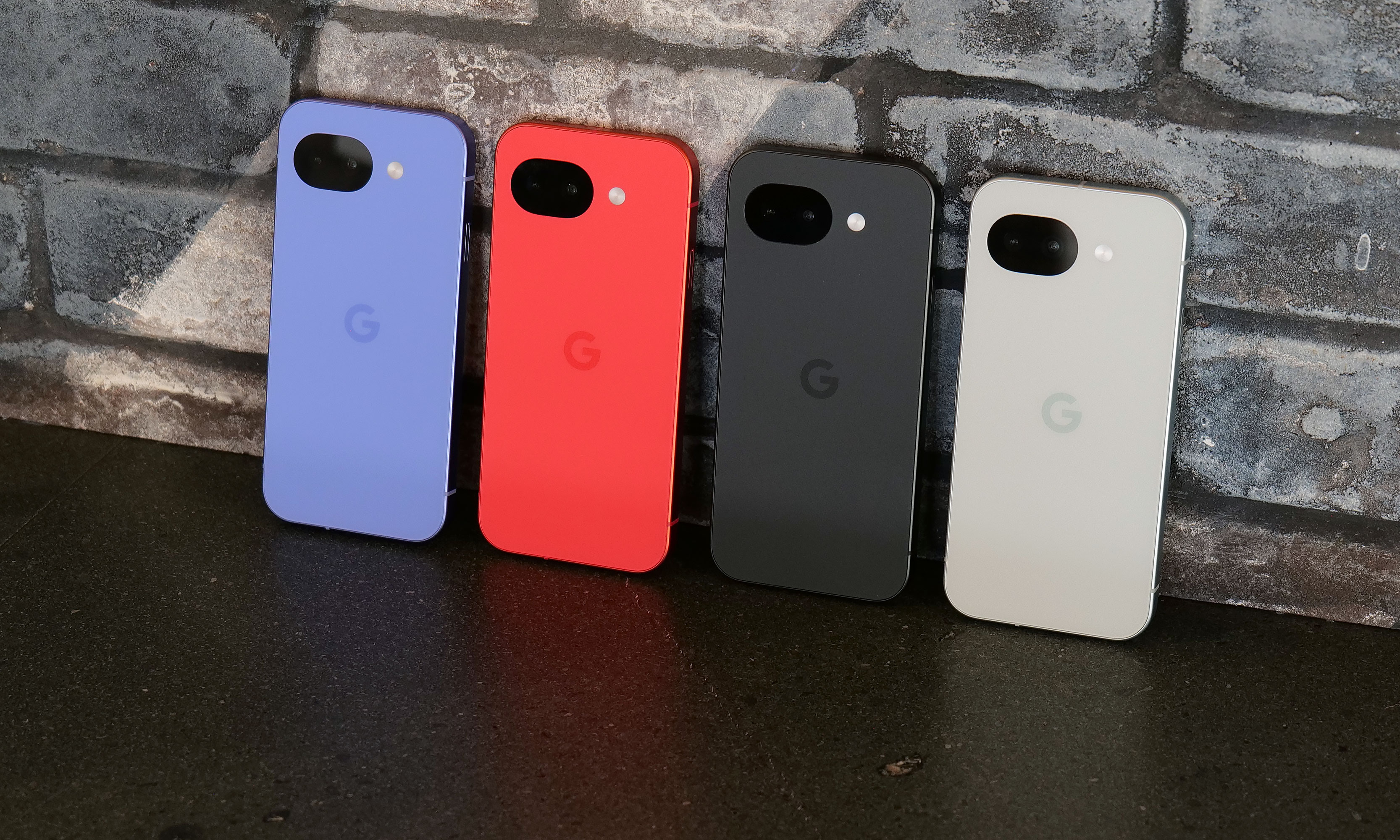 While lavender is the new hero color for the Pixel 10a, berry is the hue I'd pick. Sam Rutherford for Engadget
The one place where the Pixel 10a might come up a touch short is that unlike its more expensive siblings, it features an older Tensor G4 processor instead of the Tensor G5 chip used on the main Pixel 10 line. Google says the decision to go with an older SoC is due to budget constraints. While it might not be the first choice for gamers or power users, I've never really had an issue with the day-to-day performance of Google's recent homegrown silicon.
However, even with a one-year-old chip, Google found a way to port over three flagship features to the Pixel A series for the first time. Camera Coach uses AI to help you compose and come up with more interesting shots. Meanwhile, Auto Best Take is designed to ensure that everyone in a group shot ends up with their finest expression. Finally, Satellite SOS allows you to call for help during emergencies, even when you don't have proper cell service.
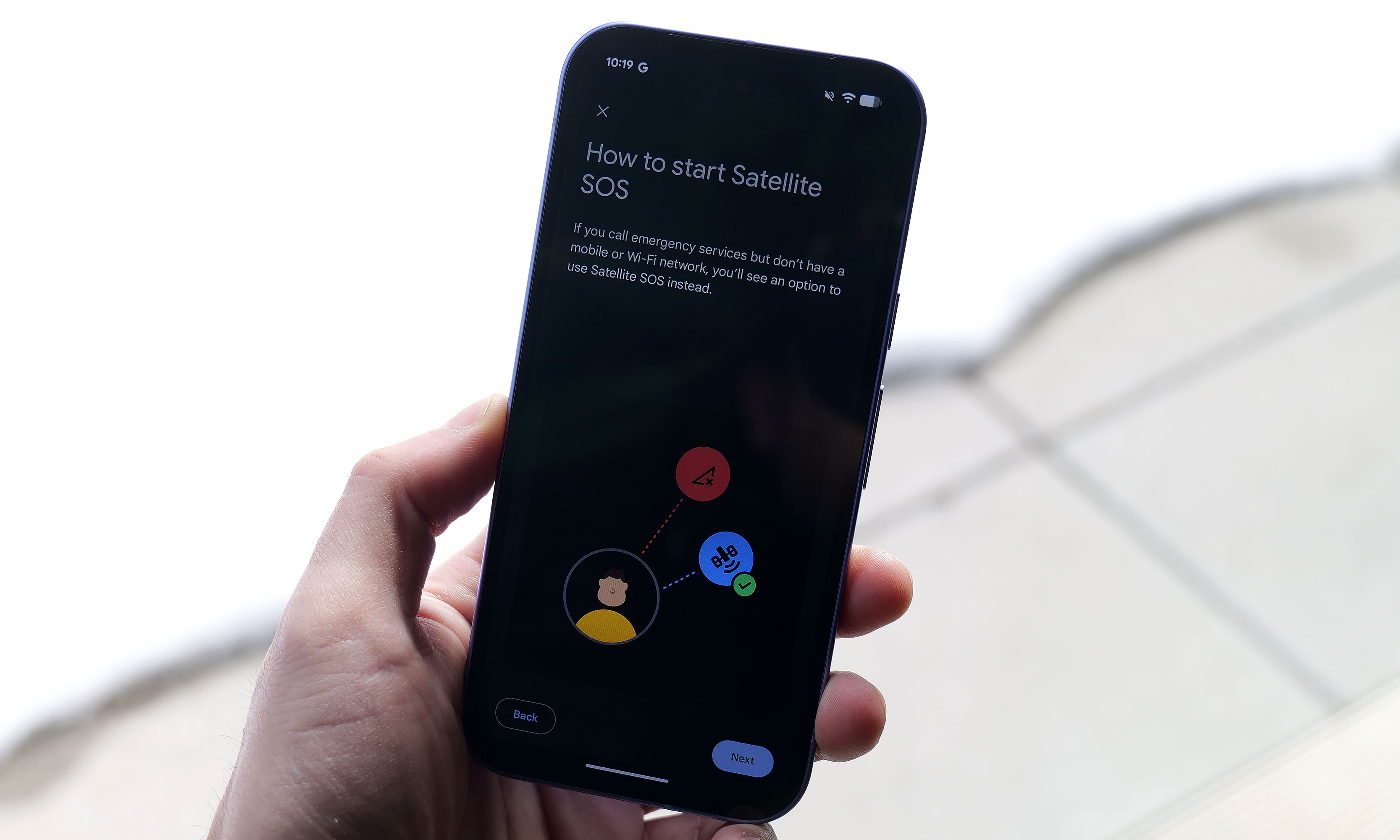 Satellite SOS support is one of three new features coming to the Google's A-series phones for the first time. Sam Rutherford for Engadget
As for its cameras, the P10a looks to be using the same sensors as before, including a 48MP main camera, a 13MP ultra-wide and a 13MP selfie shooter in front. That might be a bummer for some, but considering that the Pixel 9a offered by far the best image quality of any phone in its price bracket, I'm not that bothered. Also, it's quite likely that if Google had opted for new hardware, it may have pushed the phone above $500.
After seeing the positive response to the barely-there camera bump on its predecessor, Google leaned in and made the Pixel 10a's rear camera module completely flat, and it's my favorite thing about the phone. There's no hump or protrusions to speak of, and when combined with the rest of the phone's design, it results in a really sleek, minimalist look. Plus, after almost a decade of big and bulky camera warts on the back of phones, it's just nice seeing the Pixel 10a go the opposite direction.
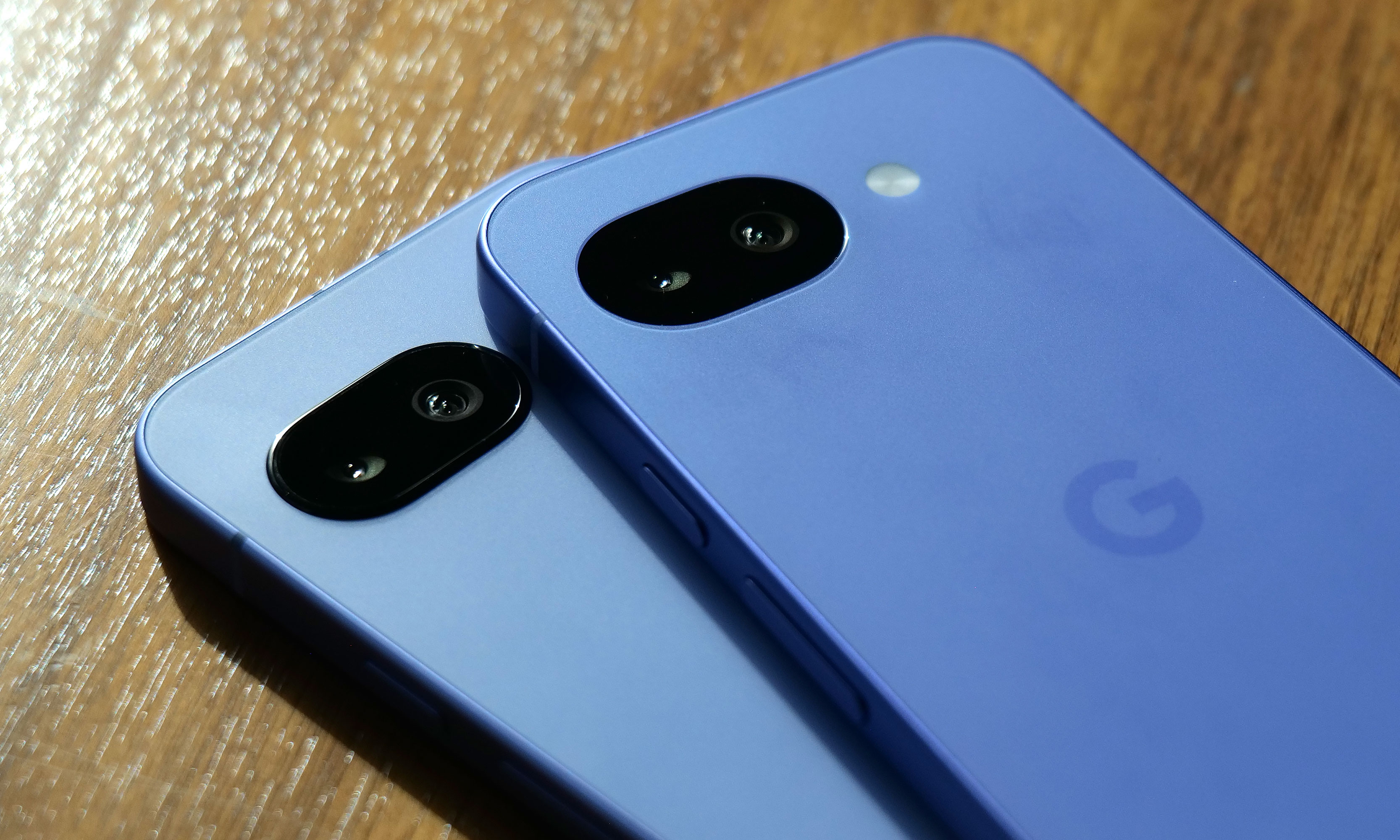 I really appreciate how Google double downed on feedback regarding the Pixel 9a's tiny camera bump (left) by making the Pixel 10a's camera (right) completely flat. Sam Rutherford for Engadget
On the flipside, my biggest complaint about the P10a is that Google didn't include Pixelsnap support (aka magnetic Qi2 compatibility). It's another feature that got cut due to cost and it's a real bummer because after introducing it on last year's main Pixel 10 line, I was hoping that it would become a standard inclusion on all Google phones going forward. Thankfully, when I asked about the lack of Pixelsnap support, Google representatives were able to confirm that there will be third-party accessory makers such as Casefinite, Dbrand and Spigen that will offer cases with built-in magnetic rings, so anyone hoping to attach magnetic peripherals will still have an avenue to do so.
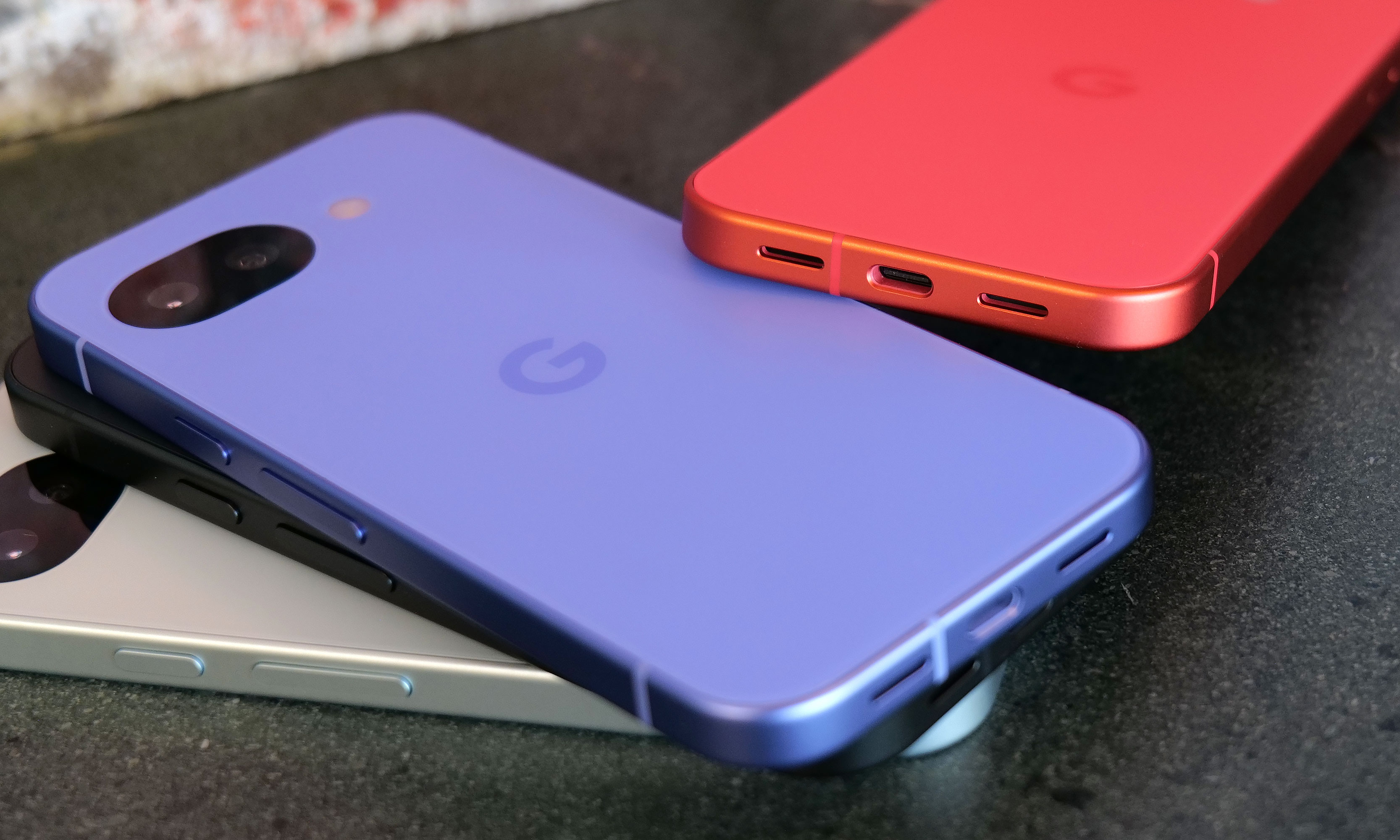 The Pixel 10a's charging speeds have been improved to 30 watts for wired and 10 watts wirelessly. Sam Rutherford for Engadget
Regardless, for Android phone owners who are in the market for a simple, no-nonsense upgrade that covers all the basics without breaking the bank, the Pixel 10a is looking like another top contender.
The Pixel 10a is available for pre-order today in lavender, berry, fog and obsidian with official sales slated for March 5.
Polestar unveils a station wagon version of the 4 [ 18-Feb-26 2:40pm ]Polestar is gearing up to launch three new models in the next two years, including a station wagon (estate or shooting brake) version of the Polestar 4 that harkens back to the company's Volvo roots. The Geely-owned Swedish company sold a record 61,000 EVs in 2025, but hopes that the new models will help it take an even bigger bite out of the market. "We want to get more volume out of a bigger cake," CEO Michael Lohscheller said.
Polestar currently offers two models in the US, the Polestar 3 and Polestar 4, both SUVs. However, the new Polestar 4 will come in two variants, one a traditional SUV as before and the other a four-door wagon-type version that combines "the space of an estate and the versatility of an SUV," Loscheller said. "It's all the good things from the current car, but it's a bit more practical." This new model is due later this year and will be built in Busan, South Korea in order to avoid US tariffs on cars built in China.
The automaker is also planning to release a new version of the Polestar 2 targeted at young buyers, though that one is unlikely to come to the US. It will be slightly longer for more passenger space and be produced in China like the current model 2.
Finally, the Polestar 7 will be a compact SUV in the same family as Volvo's EX60, set to arrive in Europe to address the fast-growing compact SUV segment. "We are convinced that we can offer customers a progressive performance-driven car for a very attractive price point, built in Europe," Lohscheller said.
The new models are designed to help Polestar hit its goal of 60 percent of EV sales worldwide by "targeting the big profit pools of the BEV segment," Lohscheller stated. Following Polestar's withdrawal from the hyper-competitive Chinese market, Europe accounts for 78 percent of its sales and the US most of the rest — but the company hopes to boost its fortunes in the latter. "People forget that the U.S. is a big EV market, especially on the east and west coasts," the CEO added. "And it will stay a big market."
This article originally appeared on Engadget at https://www.engadget.com/transportation/evs/polestar-unveils-a-station-wagon-version-of-the-4-144025505.html?src=rss
FDA Reverses Decision and Agrees To Review Moderna's Flu Vaccine [ 18-Feb-26 3:05pm ]
This former Microsoft PM thinks she can unseat CyberArk in 18 months [ 18-Feb-26 3:00pm ] Microsoft says Office bug exposed customers' confidential emails to Copilot AI [ 18-Feb-26 2:44pm ]
Earth on Track to Become Uninhabitable, Scientists Say [ 18-Feb-26 2:48pm ]
Volkswagen Launches The All-New Caravelle PHEV In South Africa [ 18-Feb-26 1:22pm ]Plug-in hybrids are the hottest thing in South Africa right now in terms of sales growth. Sales of plug-in hybrids (PHEVs) were up 280% in 2025 compared with sales figures from 2024. In total, 738 PHEVs were sold in 2024 and 2,808 PHEVs were sold in 2025 in the passenger ... [continued]
The post Volkswagen Launches The All-New Caravelle PHEV In South Africa appeared first on CleanTechnica.
India Tells University To Leave AI Summit After Presenting Chinese Robot as Its Own [ 18-Feb-26 2:35pm ]
Your AI-generated password isn't random, it just looks that way [ 18-Feb-26 2:06pm ]Generative AI tools are surprisingly poor at suggesting strong passwords, experts say.…
OpenAI pushes into higher education as India seeks to scale AI skills [ 18-Feb-26 2:32pm ]
Romania in safety drive to improve EU's deadliest roads [ 18-Feb-26 2:00pm ]Government takes its first serious steps to crack down on dangerous driving but progress is slow
The first time Lucian Mîndruță crashed his car, he swerved to avoid a village dog and hit another vehicle. The second time, he missed a right-of-way sign and was struck by a car at a junction. The third time, ice sent him skidding off the road and into two trees. Crashes four to eight, he said, were bumper-scratches in traffic too minor to mention.
That Mîndruță escaped those collisions with his life - and without having taken anyone else's - is not a given in Romania. Home to the deadliest roads in the EU, its poor infrastructure, weak law enforcement and aggressive driving culture led to 78 people per million dying in traffic in 2024. Almost half of the 1,500 annual fatalities are vulnerable road users such as pedestrians and cyclists.
Continue reading...
Trump tries to censor Texas Democrat Talarico's Colbert appearance [ 18-Feb-26 1:01pm ]
Donald Trump is accused of censorship in an escalating row over Stephen Colbert's interview of Democratic Texas Senate candidate James Talarico.
US journalist Joshua Eakle explained that Trump threatened the US broadcaster CBS over Talarico's segment. And CBS caved!
It's important that you understand what happened last night.
Last night, Stephen Colbert interviewed Democratic Texas Senate candidate James Talarico, a candidate who, by all accounts, is on track in the polls to flip Texas blue.
In response, Trump's FCC reportedly threatened… pic.twitter.com/IEyWg7KnuW
— Joshua Reed Eakle


