By Adam Wheeler. Photos by Yamaha Racing
Yamaha last ruled MotoGP back in June 2022. They once owned seven titles in 10 years from 2004. The Yamaha M1 inline 4 was not renowned for top speed but its pliant handling allowed even antiquated iterations of the technology to win Grands Prix and rise to the position of championship runner-up at the start of the decade.
The last two seasons have been miserly with just one podium appearance by lead ace Fabio Quartararo. The Frenchman combed the limit of physics to obtain five Pole Positions in 2025 but was largely toothless in the charge for silverware against European machinery and the failure of his rear ride height device while leading the '25 British Grand Prix overshadowed the rapid one-lap prowess. Yamaha are now last in the Constructors table and are the only firm with full MotoGP Concessions, allowing them time and resources to catch back up.
Their three-year mire is perhaps the definition of a 'transition phase'. The Japanese were arguably late in their development, as well as their strategy when they lost their satellite team to Aprilia in 2023 and 2024 and shrunk to a two-bike presence on the grid. Previous Yamaha Motor Racing Director, Lin Jarvis, made way for former Yamaha Motor Europe Marketing boss Paolo Pavesio and even though Cal Crutchlow was shrewdly employed to lead testing duties, the Brit was injured and the programme stuttered as Andrea Dovizioso (and then Augusto Fernandez) was also given more prominence in the R&D.
Yamaha rallied against the malaise by securing the talents of Quartararo on a bumper deal for 2024 and 2025 and brought in Alex Rins, to mind-pick his Suzuki and Honda knowledge. Also hiring the likes of ex-Ducati and Ferrari specialist Max Bartolini and combed their centre of excellences in both Japan and Italy. They then took the head-scratching decision to forge ahead with a 1000cc V4 M1 that would see competitive laps for a single season while concurrently pursuing an 850 version that would vanguard their MotoGP future. The time tight frames meant that Yamaha were also squeezing every single piece of juice from the inline M1 while trying to placate Quartararo's growing impatience. The Grand Prix riders themselves were able to test away from the races (as per the concessions) but, even from distance, it seems that Yamaha still needed more high-level resources in this area.
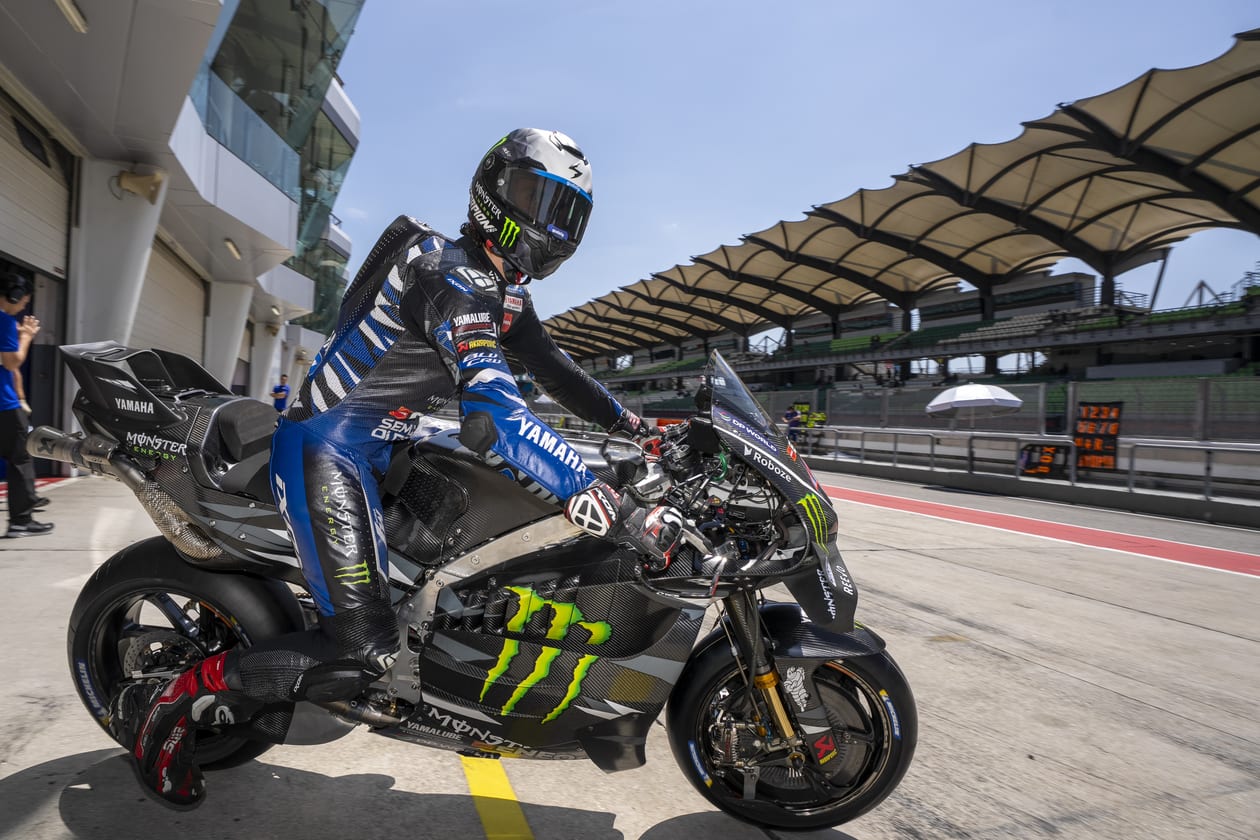
Yamaha were caught in a stop-or-go situation. By sitting solely on the inline M1 for 2025 and 2026 (if Quartararo could not take the motorcycle into the top three then there is little hope for others) they would be largely doomed in terms of results but going V4-only for 2026 represented a major leap of faith. For all of its temporality, 2026 is still a championship of 22 Grands Prix to win and plenty of track mileage for Yamaha to filter whatever knowledge they can to the 850.
They went public with the scale of their effort at the San Marino Grand Prix last September, when Fernandez raced the V4 for the first time. It was also a first serious outing for the likes of Quartararo and co on the bike during the following one-day test at Misano. Enthusiasm was muted by the rudimentary state of the V4, and the potential - judging by comments (even if Pramac's Jack Miller was a constant source of rational positivity) - had not surged upwards by the time of the Valencia test, and then into the many days and laps completed by the Yamaha contingent during both the Shakedown days and the IRTA test in Sepang several weeks ago.
Yamaha were not explicit about their reasoning for rushing a 1000c V4 during a presentation at Misano. But their quest seems as much about overhauling Yamaha's racing operation as finding a way back into the spray of Prosecco. President Takahiro Sumi said Yamaha were altering their "mindset" as well as the processes between Asia and Europe. "It is not an easy way," he admitted.
The Japanese also commented that Yamaha wanted to "explore possibilities of V4 engine and as a pathway. Our main challenge is how to make it and how to accomplish it, as a project." He remarked as well that the parallel project is "unprecedented" in MotoGP, meaning Yamaha had to "change completely and upgrade ourselves".
Yamaha's hunt is therefore bigger than sourcing a route back to MotoGP acclaim. Or maybe the largesse of their scheme demonstrates seriousness and dedication to racing, while papering-over the failures and pitfalls that are inevitable for technical evolution at this (very public) level. The middling ground of engineering and performance as well as the complicated web of promises and assurances for future potential is likely to have cost them their star rider, but then Yamaha have moved to obtain talented leftfield knowledge in the form of Toprak Razgatlıoğlu for 2027. They will likely replace Quartararo with another sizeable name, either through sizeable remuneration or the same guarantees that could not entice Fabio for ninth and tenths seasons with the factory. And, there is also the possibility that Yamaha come out swinging with their M1 850 as MotoGP resets in less than twelve months.
On the eve of the second 2026 test in Thailand, Yamaha are barely keeping their chin above water in the deep end of MotoGP. The dismaying engine failure that cost them the second day of the Sepang test was not the buoyancy the teams and company needed.
In short, Yamaha are already in full rehearsal for 2027…but with a motorcycle that will soon enter the Communications Plaza museum complex in Iwata. Test mode is activated and with high revs…while their four competitors go about making refinements to partially frozen and, in some cases, already proven packages.
"We're given the best of each part, really run them and tried to understand good, bad, ugly from each one," Miller explained of the work in Malaysia. "You throw a chassis [in] and you don't just say that's shit and throw it out. You try and understand what's different, try to give the most clear and precise feedback as I possibly can to the manufacturer. And we've done that over these last couple of days."
Razgatlıoğlu had his own trajectory in trying to understand Yamaha, the V4, news circuits and more "It's really hard for me," he confessed.
For his one foot-in, one foot-out positioning, Quartararo is still the point-man for 2026, even if the 26-year-old should deservingly have some scrutiny over his capabilities to lead a revolving and costly development force. "I know the strong point of our bike last year was the turning and with this year's bike it is still not there," he assessed at Sepang and before the fall that led to a broken right finger and technical issue that warmed the kill switches.
"I think our V4 is not [as] complete as the others," he added. "There is still work to do, especially on the turning, on the traction, on the electronics, on the grip, on the power. So, there are many things to adjust. We know we have margin to improve. How? This is more for the engineers…but the way I'm riding is again different to last year."
"We see that our lap times are not very good. But the only thing I can do is do my best, try to be riding at my maximum and whatever the position is, try to make the best I can."
Miller, as ever, was articulate and detailed about the differences of Yamaha's big, bold offering for the next ten months. "Where pieces of your body make contact with the bike it still feels foreign," he described as Yamaha dealt with ergonomics at the shakedown. "You're just learning. [It] becomes muscle memory after a minute. But you've got to wrap your head around it."
The Australian, who boasts V4 sensibility from Ducati and KTM, said that Yamaha's characteristics were still inherent. "It hasn't lost that M1 turning. Front -end feel or performance is pretty bloody good for this stage. It can always get better…but the way you can pick the line at Turn 12, down the hill is pretty nice. One place we're lacking a bit compared to the old one is the change of direction."
Alex Rins was wary of the timescale, especially with the absence of critical laps at Sepang. "You cannot lose time, especially now," the Catalan warned.
Bartolini spoke with the media at the test. "We don't have experience or history [with the V4] and riders need to get used to the bike so they need bike time," the Italian understated, while also reminding people that 2026 is about the journey rather than the destination. "Compared to our competitors we are still weak…but it's in the plan: it's a new bike. I would be more surprised if the bike is already to the limit of the others."
Thanks for reading! Subscribe for free to receive new posts and support our work.
Expect more parts and more engines for the Yamaha quartet at Buriram this week as the factory continue to roll several dice at their most lucrative and speculative racing outlay. In one sense, the overall approach is hard to understand but it is a total '180' compared to their MotoGP endeavours as little as four years ago. MotoGP should also be encouraged that Yamaha are wading through the hard yards and the minor embarrassments at this stage, as opposed to the fickle attitude of a company like Suzuki. It is also credit to the Japanese hierarchy that there is an evolution taking place, the same can be said of HRC's mentality with their diversification in recruitment, and the series will only be richer for a notable cast member committing more to the show.
Yamaha's ambitions will probably shudder to a halt at time this year, or evaporate in smoke at some point and the chase for the final points of a Grand Prix will be humbling but all that background push has to stand for something?
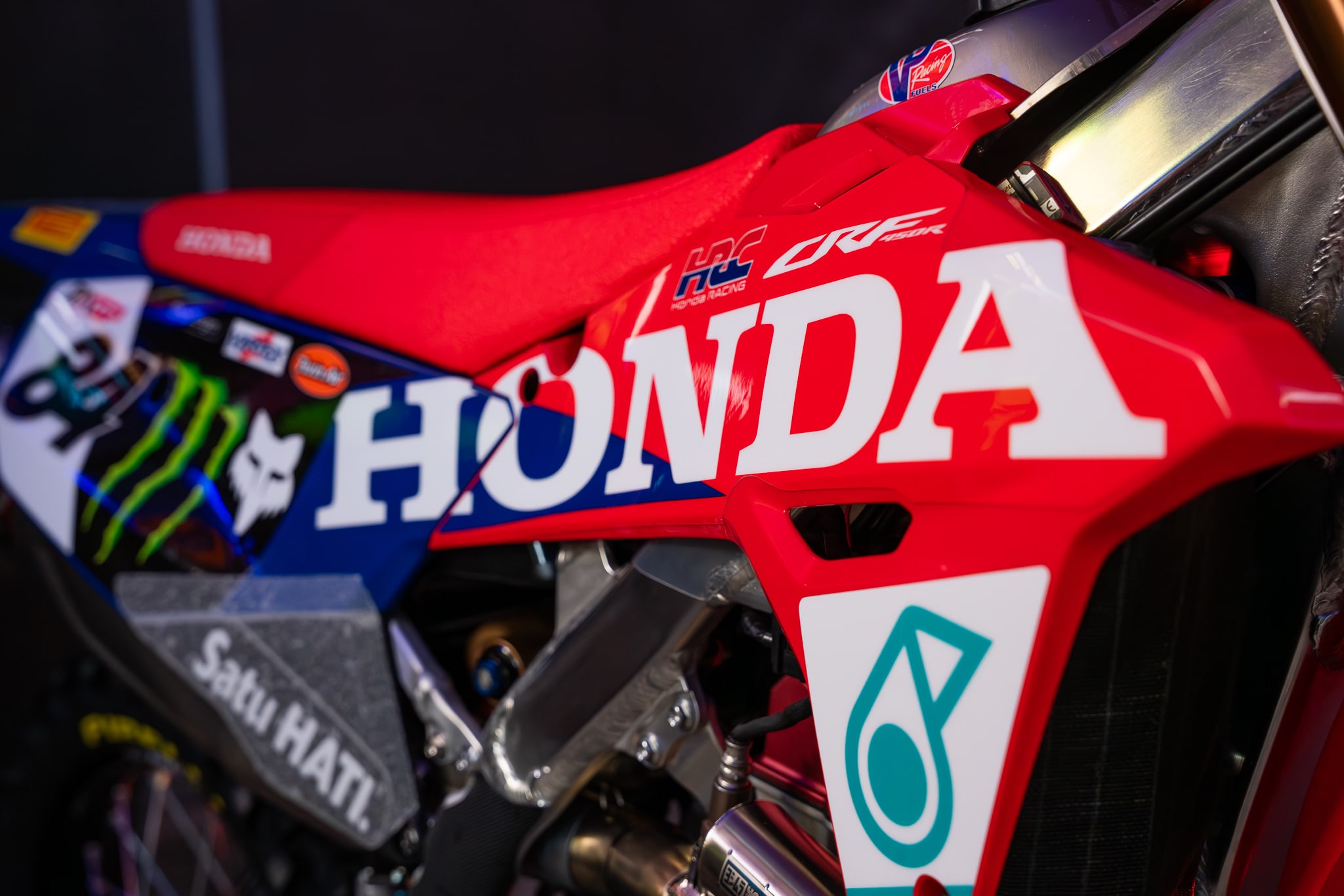
By Adam Wheeler. Photos by HRC/Shotbybavo
In 2019, shortly before society would be ravaged by the fallout of the pandemic and long before KTM Sport Motorcycles lunged into a financial crisis, the Red Bull KTM Factory Racing team entered the MXGP series with the might of Tony Cairoli, defending champion (but absent through injury) Jeffrey Herlings and reigning MX2 #1 Jorge Prado. 14 titles and some of the most impactful dirtbike racers of their generation. And also…Tom Vialle.
The 18-year-old earned his slot on the most decorated Grand Prix squad this century through a late winter 'try-out', overseen by then-Motocross Director Joel Smets. The Belgian felt that this son-of-a-former-racer had the technique and the character to make the step from an inexperienced and middling European Championship runner to a potential MX2 star. It was a brilliant call. Vialle scored a top-three moto result and his first podium finish in only his second Grand Prix with the orange 250 SX-F, after classifying a respectable 7th overall in Argentina - the furthest afield the teenager had ever raced from his base in southern France.
For the rest of 2019 the rookie blended quiet determination and maturity with his natural balance and ability to rank 4th in the world; it was the best performance by a debutant in the class and since the formation of 'MX2' in 2004 (Ken Roczen was 5th in 2009 but had missed the first four rounds until he reached his 15th birthday). Vialle had the runaway stats of Prado as a target, but also as a crutch to remove any elevated pressure or expectation. His union with Smets as a trainer and advisor also brought considerable benefits and the pair would collaborate further for two world titles in 2020 and 2022. Smets would continue to lend counsel as Vialle then scooped two AMA 250SX East titles in the U.S. Four crowns in seven seasons is impressive.
During his four-year blast of MX2, Tom baffled us with his surge of learning. He was a lightning starter on that KTM, and his skinny and diminutive frame helped in this aspect. Sacha Coenen is following the same template. Unlike Coenen (so far), Vialle showed racecraft and race-smarts. He won from the front but also with urgency and ruthlessness when required. He endured and prevailed in two tense neck-and-neck title disputes with Yamaha's Jago Geerts, and continually gave the impression of a young athlete in progression. Even his English language skills and media awareness soared at a rapid rate.
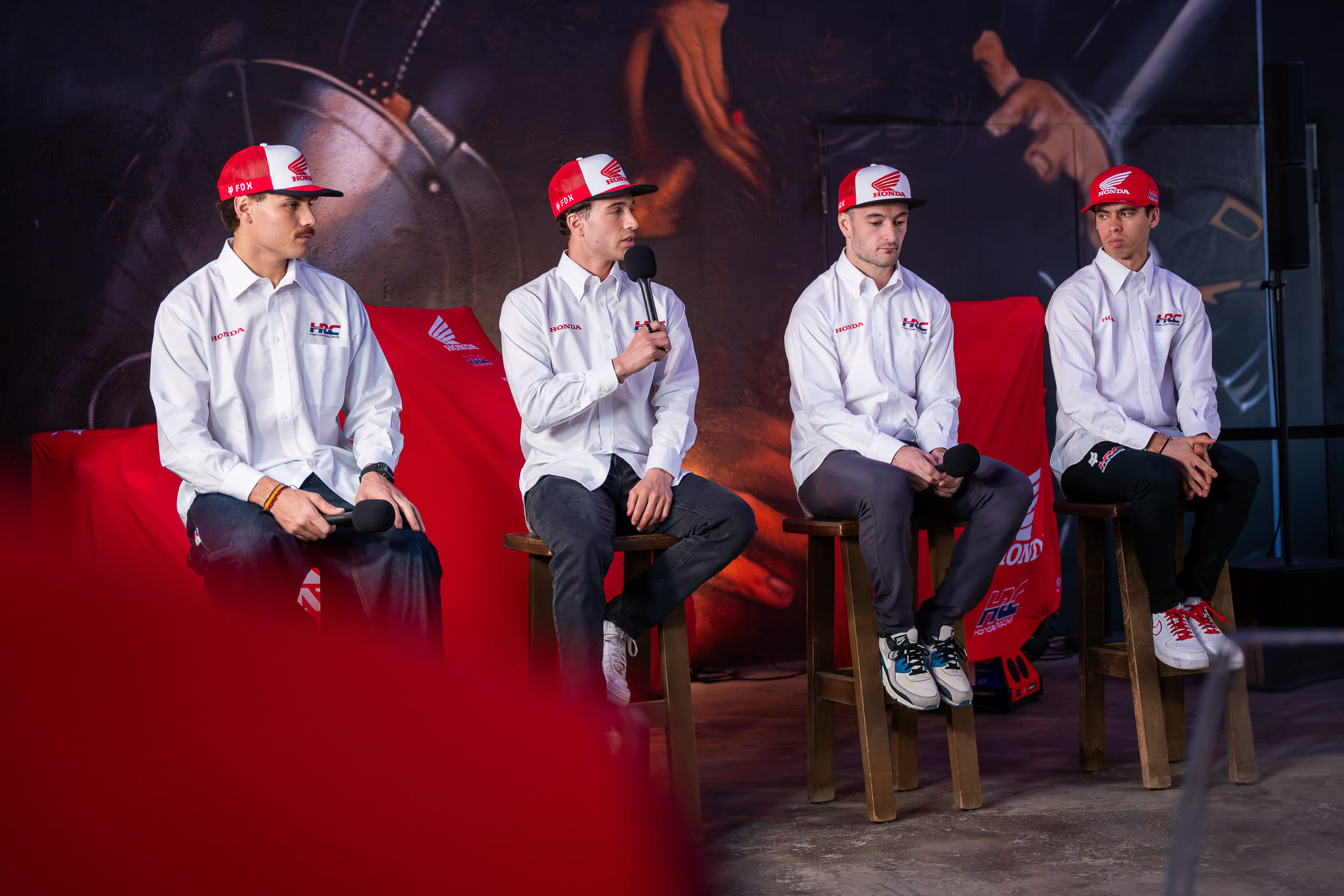
For a racer that moved quickly and achieved quickly, it was ironic that Tom' first career success came in Sweden with a 'solid' 2-2 scorecard. But the attitude and capacity to assess and capitalise would unpin a lot of what he would attain in the United States, where he was often not the fastest but proved to be the wiliest against far more experienced competition, and while throttling up the side of a steep learning curve.
The seven-year association with KTM ended (and supercross 'itch' was scratched) with the lure of factory HRC support for a crack at MXGP for 2026. Before Honda knew they had a chance of acquiring Herlings last summer, the bet on Vialle was hardly a risk and represented something of a coup. His formation in MX2 and his progress stateside provided plenty of evidence that the-now 25-year-old had the intelligence to wade through his third major career adaptation. On paper there are few more 'solid bets' for MXGP transition than Tom Vialle.
True, he can no longer have KTM Team Manager Smets on speed-dial, but he always had his family in back-up mode (they even emigrated with him to the U.S.) and he won't lack resources with Giacomo Gariboldi's Honda set-up. To-date he has had a Jeremy Seewer-esque talent for avoiding major injury setbacks.
As we know, Vialle made his first laps as a Honda rider at the 2025 Paris SX. He then classified 2nd overall to Yamaha-shod Tim Gajser at last week's Internazionali d'Italia at a cold and rainy Mantova, four positions ahead of an underwhelming (but with nine more years of KTM institution to shed) Herlings.
Tom and Jeffrey know each other well having shared an awning for four years and there will be little mutual underestimation. To everyone else, Herlings, 32 in September, is undoubtedly the one with headline billing for 2026 and has been signed to win, rather than develop. Again, this gives Vialle a little wiggle room to make mistakes and to glean HRC's culture, as well as evolve in terms of being a factory employee expected to deliver a modicum of technical feedback for product R&D. If you think this is a moot point then consider the plight of second teammate Ruben Fernandez in 2025, who had to compete in the latter half of the season with the new CRF prototype ("it was still a little bit early for the bike to jump on [in] GPs maybe…but, in the end, it was a lot of good information," the Spaniard admitted.)
Last week HRC fabricated an offline press conference 'event' with journalists invited to submit questions. Tom's reposts were largely lip service, with the usual cliches and platitudes about education, step-by-step and acknowledgements of the difficulty of the class. (Don't forget his 2026 MXGP rookie peers will be former MX2 foes in the shape of Andrea Adamo and Kay de Wolf, two title winners in his absence). His ambition has been emboldened perhaps by the fact that his CV already carries major distinction: no other Grand Prix rider has bagged two MX2/250 world titles and two supercross titles (Marvin Musquin managed three as did Christophe Pourcel so did Roczen). "The goal is to be obviously - in the next year - try to be as successful as I did in the 250 class, so yeah I'm trying to work as hard as I can to get there," he said as part of the HRC transcript, and with understandable conviction.
Thanks for reading! Subscribe for free to receive new posts and support our work.
Tom's status is not without some anticipation, and that is driven by the past exploits of his predecessor Tim Gajser, Romain Febvre, Herlings and Lucas Coenen: all of whom either bagged the premier class championship or ranked runner-up at their first attempts.
Context counts though. Fans should expect some inconsistency and weirdness as an icon like Herlings wades through his transition and Vialle is in the same predicament. He also must readjust to the demands of Grand Prix, which will be far easier for him compared to anybody else from the trenches of SMX but might still need some acclimatisation, as he confessed: "We all know the tracks in the US and in Europe are a little bit different," he said. "The good thing is I know the tracks…but I have to get a little bit back in the rhythm, and get to know again the type of tracks. It's a long weekend in MXGP, we have two days of racing so [it's] a couple things that I have to adapt again."
Herlings is an MXGP monster and HRC have signed attention and profile as much as an athlete born to chase victory, but it is Jeffrey who is the rookie when it comes to significant change. It's quite possible that the lead Honda - at some point this season - could be the #16 compared to the #84. Another stat to support? After his 2019 debut campaign, Vialle won a GP within the first three fixtures each year until, he disembarked to the U.S.
Slow starts and stasis is not his thing.
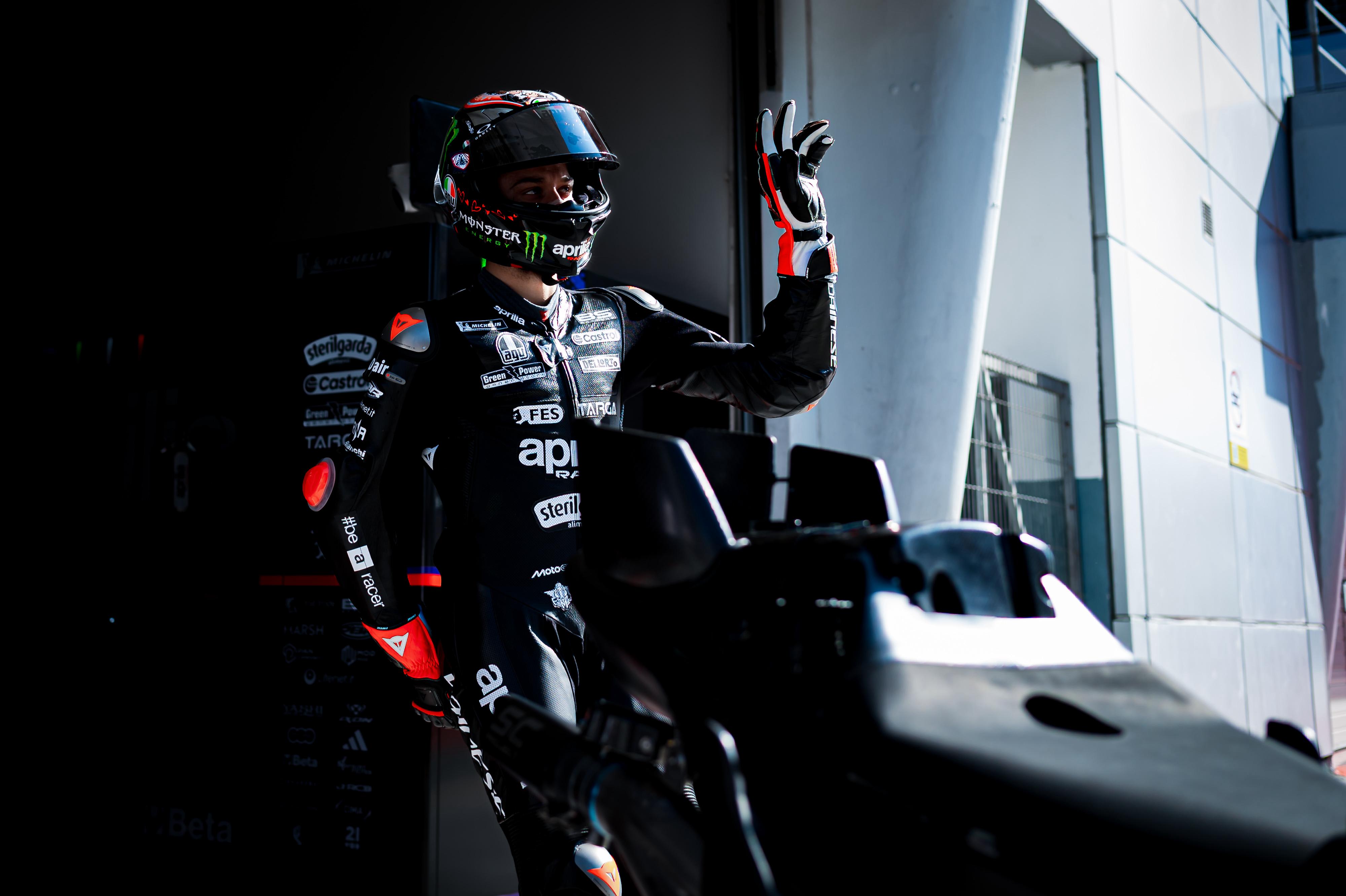
By Adam Wheeler. Photos by Aprilia Racing.
Wooden legs, marriages to motorcycles, VR46 affinity, and a laconic and often flippant approach to the non-racing component of being a MotoGP winner: Marco Bezzecchi is certainly one of a kind on the grid and has been so for the majority of his four-season tenure in the premier class. The fresh unignorable truth is that the 27-year-old must be considered as a viable championship threat in 2026.
Aside from a brief flurry of results at the beginning (two wins and three podium appearances in the first five rounds) and then the middle (one win and four podiums from six outings) of his second MotoGP season in 2023, the Italian sizzled through his hottest streak to-date in the second half of 2025. His first campaign on the works Aprilia RS-GP ended with a second career bronze medal in the standings. He only missed the rostrum four times from R10 onwards and tallied three wins in total; two coming at the final dates in Portugal and Valencia.
Yes, those successes came after he'd punted Marc Marquez off the track and into surgery at the Indonesian Grand Prix for round 18 of 22. He also profited from Aprilia's unflinching attention for the majority of 2025 due to the misfortunes and travails of teammate Jorge Martin. But there is little doubt that Bezzecchi was able to mobilize the environment he found in Noale (200km north of his home on the Rimini coast) and could harness the strengths of the Aprilia once the team had worked through issues of stability, qualifying speed and rear grip. The factory subsequently rose to second place in the Constructors Standings for the first time.
Late 2025, Bezzecchi was formidable. How much of that potential can run in 2026? "The target is to try to start in a good way," he admitted at the Aprilia Racing team launch in Milan during mid-January. "That is what we missed last year. it could be fantastic to try to start in a competitive way, fighting for top fives, top three. Then after a couple of races, we can set a clear[er] target."
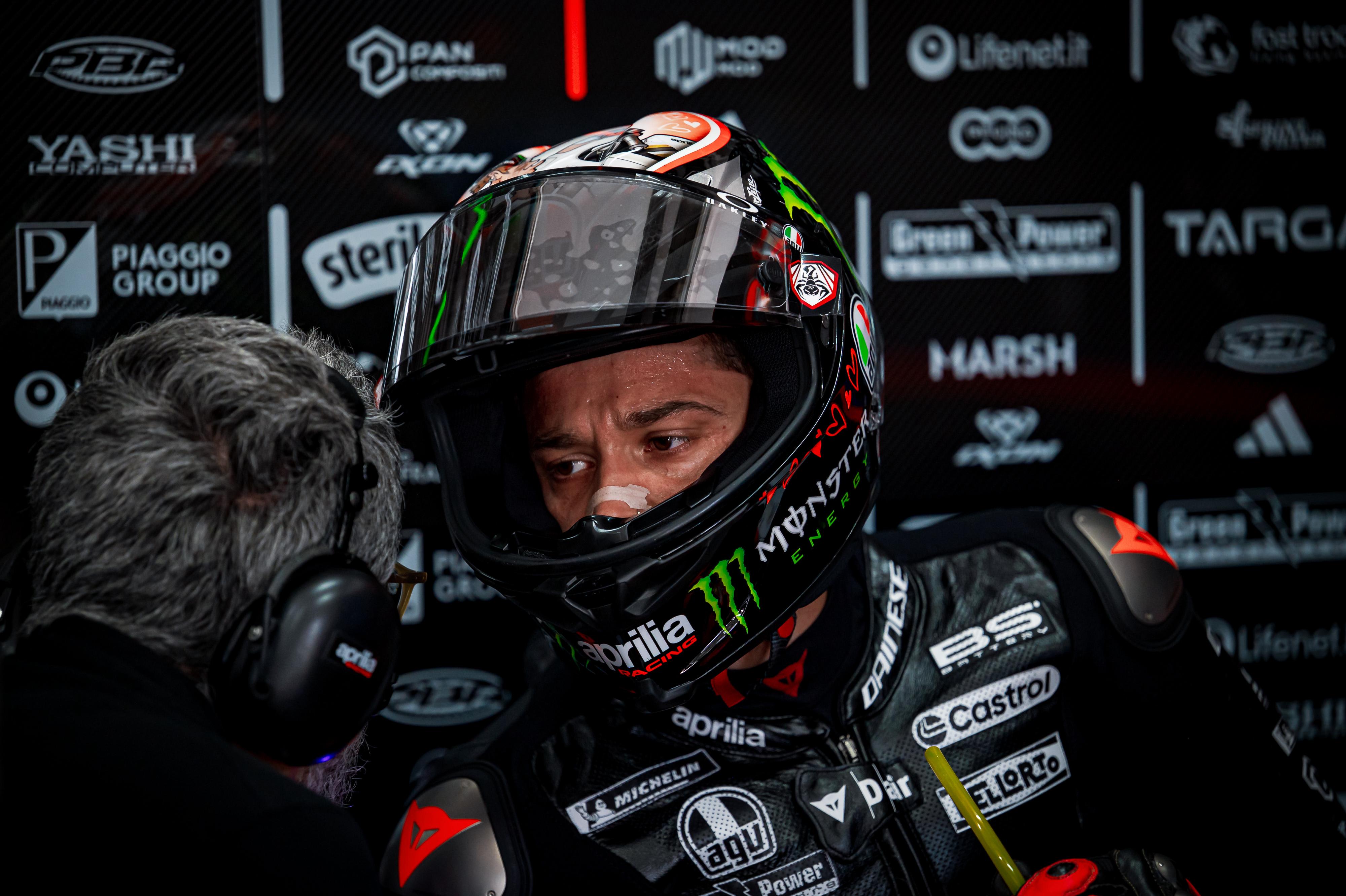
The opening laps of 2026 have been logged already, and the mood has remained chipper as Bezz headed the third and final day of testing at the Sepang International Circuit and was 2nd on overall fastest times. The Sepang test comes with a big asterisk. It is usually a trial period for new ideas and solutions and the track conditions are normally very favourable for grip.
"You really need to be super-focused, and you really need to try to feel everything from the bike and try to be precise on the comments because the track is very good," he told the media in Malaysia. "The pace is very strong compared to the race. It's much, much faster." Bezzecchi could only rank 11th at the Malaysian Grand Prix in October as the Aprilia struggled to utilise effective rear traction at the 20th race of the year. It was his worst score since the wet French Grand Prix at Le Mans back in May. "It's not super-easy…" he added on the nature of the work at the Sepang test, "but it's also super-nice to ride in the track like this."
Bezzecchi has 1 brand, 1 countryman and 1 family to worry about in 2026: small numbers but big obstacles. He also must crack the conundrum of extending his form throughout a nine month, 22-GP and 44 race weekend haul. Here's why he might scale the pole and become the first MotoGP #1 not to have won a championship in other categories since Fabio Quartararo in 2021.
1. Aprilia is ready?
It has taken half a decade since their first premier class podium in the MotoGP era in 2021 but Aprilia have moulded the RS-GP to be a bona fide championship foil for what will be the bike's last roll of the dice. Aprilia is the only constructor aside from Ducati to have won at least one Grand Prix every season since 2022 (the year of their first triumph) and under Massimo Rivola's stewardship and with the influence of former Ducati and KTM Technical Director Fabiano Sterlacchini (who replaced HRC-bound Romano Albesiano) for 2025 the Piaggio Group-owned brand has been creeping closer and closer.
2025 was a disaster for their project with Jorge Martin, but the fact that the firm tempted the 2024 champion away from Ducati stock in the first place was already testament to how they have been progressing in the last 24 months.
Aprilia won four Grands Prix with two different riders in 2025 despite the setback with Martin and all the disruptive speculation of the-then champion's future and status with the factory team. The Spaniard's absence thrust Bezzecchi into the fore and for a campaign where he had to prove his capability, not only as a racer but also a rider who could develop a prototype and lead a factory: roles he never had to face from the comfy confines of the Ducati-shod VR46 set-up from 2022-2024 (and where his credentials had diminished after a poor '24 with just one 3rd place finish to his credit and sliding from 3rd to 12th in the points table).
Bezz found a tight, family-esque nest that had worked effectively for Maverick Viñales. It was an extension of what he had/has at Valentino Rossi's squad and setup. "I have to be honest, it's cool because I have nice people around me in the team. But also at home, with the staff from the academy, my friends. And for the moment, I feel good," he said in Milan. The bonhomie means that he was the first rider in 2026 to confirm his future for the next two-year cycle of MotoGP. "In my mind, when I signed for Aprilia, I wanted to create a relationship. To try to be a rider for them for many years; this was my idea," he said after the 'wedding' on the eve of the Sepang test.
"It takes pressure off Marco, and that was the priority," Rivola commented on the contract extension in Malaysia. "It was our priority to continue with Marco, because we saw his commitment: there was something special. And also in his way of working. We get along quite good together."
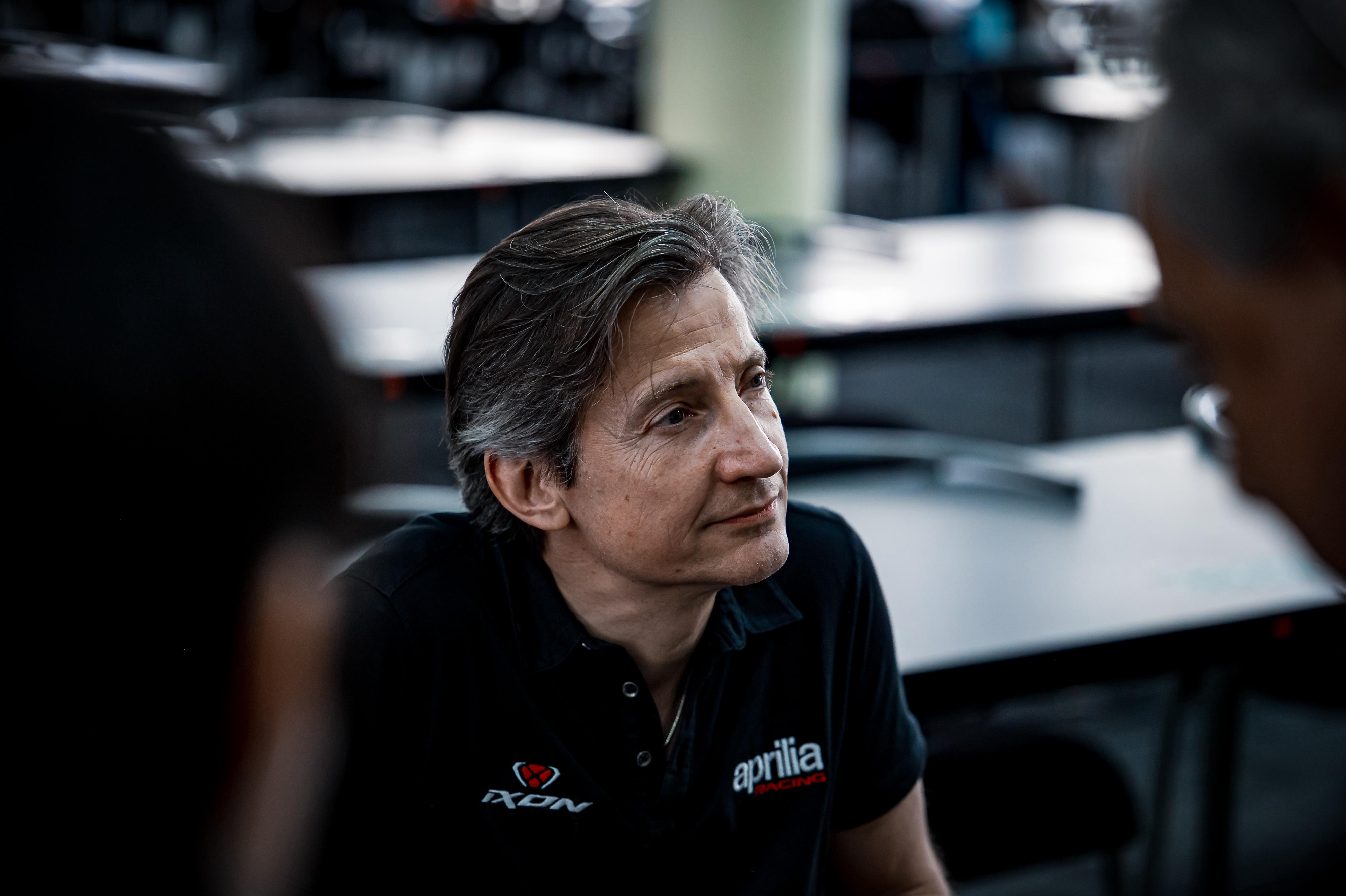
Positive vibes in 2025 and then into 2026 led to conviction for another two years. Which, for all the camaraderie (that can be so temporal if results do not flow), means Bezzecchi is also assured by Aprilia's technical nuance. Sterlacchini's last crack with the current RS-GP means the race department have prioritised electronics and aerodynamics this year. The Italian described his thought process at the official launch. "What we want in terms of aerodynamics is to 'stretch the cover'," he said. "So, to obtain better efficiency, so you can generate better aerodynamic forces that are productive for performance. But you don't have the drawback that you have to 'pay' to have this benefit." This refinement could well be on-point thanks to the fruits of what both he and Rivola explained as the maturation of the technical crew. "You have to create a group of people that are working together to try to create in the fastest way possible solutions. Solution to the problem or solution to improve performance," he stated.
Since 2022 Aprilia have been fast, but also a little ragged in terms of consistency and durability. The overseas GPs in particular have been grim, with just one podium finish by Viñales coming in 2023 before the Phillip Island breakthrough five months ago. If both factory and rider can elevate for 2026 then they will undoubtedly be a sharper foe for the Ducati hoards. "Expectation normally is the one that kills us," Rivola said with a smile in Milan. "I'm very curious to see Marco…we need to manage that. Obviously, the expectation is high for the championship."
2. Marco is ready?
The ability was without question but there were rational doubts about Bezzecchi's attitude and aptitude to front an expensive and high-profile works effort early last year. 2024 had been horrific: only four top five results was not an impressive return for a rider of his ilk as he struggled to find the narrow window on the Ducati GP23. Marco earned props for breaking away from VR46 and seeking personal and external re-evaluation in black: new bike, new team, new culture. "It was a possibility for me to try to use this opportunity as a first-time factory rider," he reflected last month.
Martin-less, things look acceptable (two 6th positions in the first three rounds) but he kicked on from the Jerez test after round five; both as an Aprilia employee and a MotoGP protagonist. "I didn't become a leader, I just tried to be myself and I just tried to push everyone to reach what was not only my target, but also the target of the team," he said, before adding with typical nonchalance: "then, the rest came, how do you say, naturally."
Bezzecchi went from 'B rider' to 'A' by default but then 'earned the part'. "I learned a lot in how I feel the modification on the bike every time," he admitted. "Basically, in MotoGP, I think that you always have to make steps day-by-day. You can never stop, and this is what the factory is trying to do, and also what I'm trying to do in all the areas that I can. So physically and in terms of skills during the riding and in terms of also mentality."
The steps and improvements were transparent. The results came. But he was also smoothing the rough edges. Take qualifying as an example. He needed the first nine Grands Prix to reach the second row of the grid, and was then 1st or 2nd in Q2 five times from the final seven events.
Bezzecchi looked more comfortable as a Grand Prix winner. There was an aura of dependability about his presence. Although his capacity to effectively cope with the extra attention, all the requests and the scrutiny was harder to gauge. "In our sport, the pressure is always there, because when you are slow, you have the pressure to go home. And when you are fast, you have the pressure to try to win," he mused at the 2026 team presentation. "At the moment, I'm facing everything with positivity and try to use this as an advantage. I know it will not be easy. There will be some moments where maybe we will struggle a bit, but it's part of the process, it's part of the game."
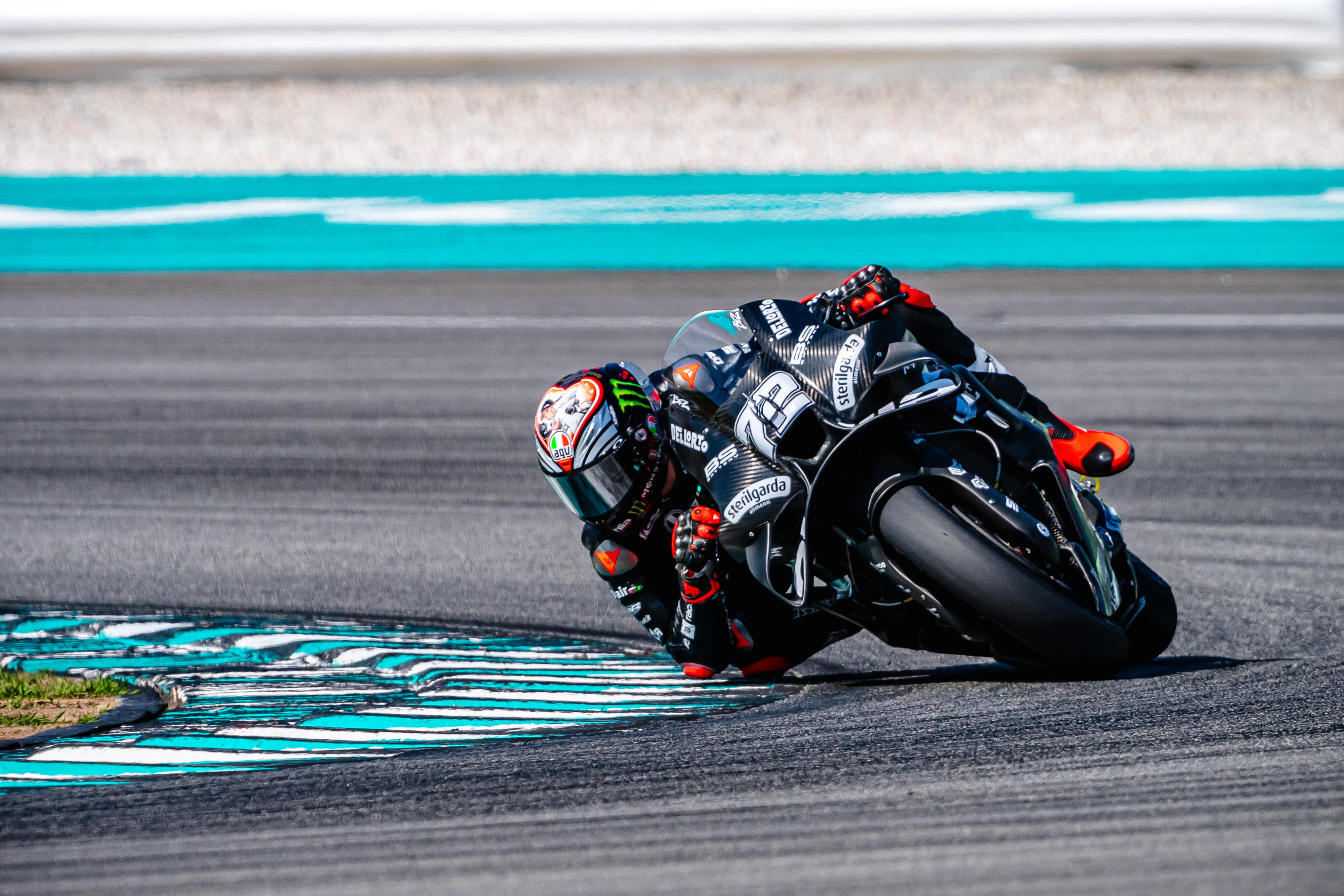
Personally, I am fascinated to see how Bezzecchi deals with the possible status as a championship leader. He adopts the jokey and sometimes dismissive demeanour of his mentor at VR46 but the time could swiftly arrive when Marco has to step-up from being a character actor to a movie lead. Does he have the personality and 'tools' at his disposal to engage and inspire? To make an impact? Or will he be a champion 'blip' in the annals of the series?
3. Are the others ready?
Ducati. Marc Marquez. Alex Marquez. And a simmering Pecco Bagnaia (who might potentially be Bezzecchi's teammate for 2027). Four principal hurdles to the objective. Marc, six years younger than Marco, sets the bar and is a year entrenched with the best team and on the best bike. The only nagging slither of doubt is his fitness and the chance of another injury during the season that could cost the Catalan points or appearances. Bezzecchi's closest face-off with a prime Marquez came at the 2025 San Marino Grand Prix where only a mistake into Quercia halfway through the 27 laps cost him the lead and a chance of the win…but he ended-up only half a second behind the champion-elect at Misano.
Thanks for reading! Subscribe for free to receive new posts and support our work.
Bezzecchi might feel he has the match of Alex and despatched the younger Marquez without issue at the season-closing Valencian Grand Prix, but a resurgent Bagnaia could be a harder test as the Aprilia man will be all too aware of his friend's possibilities. Bezz can also turn into the VR46 enclave for insight when it's needed; Valentino also rallied against some fiery rivals with aplomb.
In truth - for the next few months at least - MotoGP needs a defiant and geared-up Marco Bezzecchi. A disruptor to 'MarquezGP' and the Ducati dominion. He'll gain extra fans and support purely by being 'the most likely one'. Overall, it is a warm, shiny stage of opportunity. "We can only work on our bikes, on ourselves, not on the others," Rivola summarised in Malaysia. "Honestly, I think it's going to be quite an interesting championship. Again, with someone leading - that is still the same - but we will stay in the slipstream."
 Perspective: MotoGP opens 2026 with aplomb under Malaysian monsoon [ 09-Feb-26 3:16pm ]
By Adam Wheeler. Photos by www.motogp.com
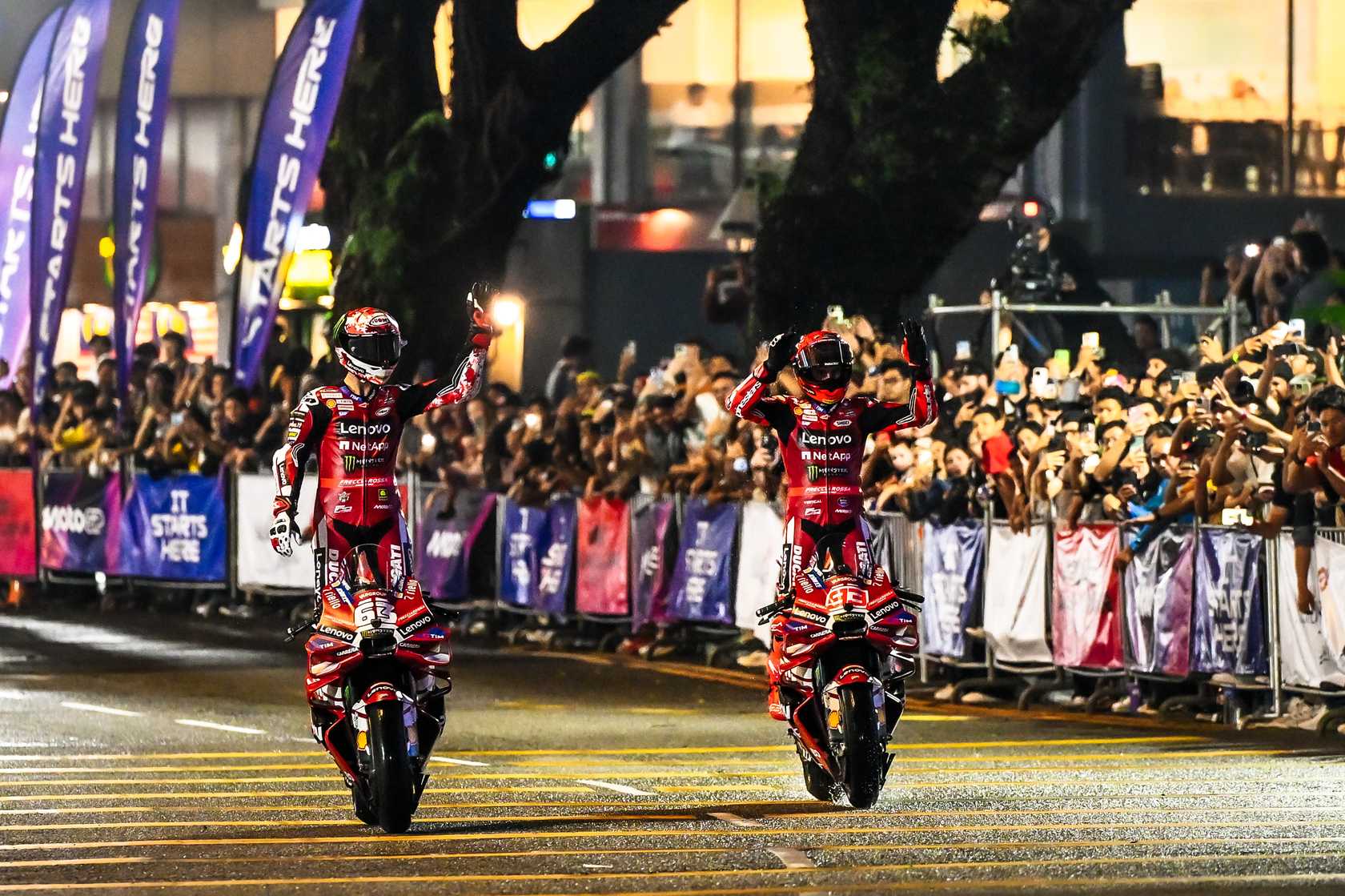
MotoGP certainly nailed its second annual official championship launch in two aspects and chuckled at the best attempts of the Malaysian tropical weather to drown proceedings.
Firstly, it looked stunning. The downtown Kuala Lumpur location, in the beaming light of the PETRONAS Twin Towers, gave power and prominence. The vast proscenium setup and neon branding also transmitted the impression of a major show. Watching the stream, it radiated through a screen and clearly wowed the public on the ground, despite the awkward rainy conditions. MotoGP gained a sense of elevated significance; you only had to look at the expressions and reactions of the riders themselves when they took their turn to come on stage. There were mixes of elation, bemusement, a little surprise and perhaps some appreciation. The 'thank yous' flowed freely from almost everyone who had a microphone shoved into their face.
It was also an 'in-your-face' reminder of the emotion and the fandom towards their endeavours. The Grand Prix paddock had just completed a week of draining testing activity 37 miles south at the Sepang International Circuit and in front of empty grandstands, and the launch was a splendid way of breaking that intense bubble. Of momentarily throwing away the blinkers.
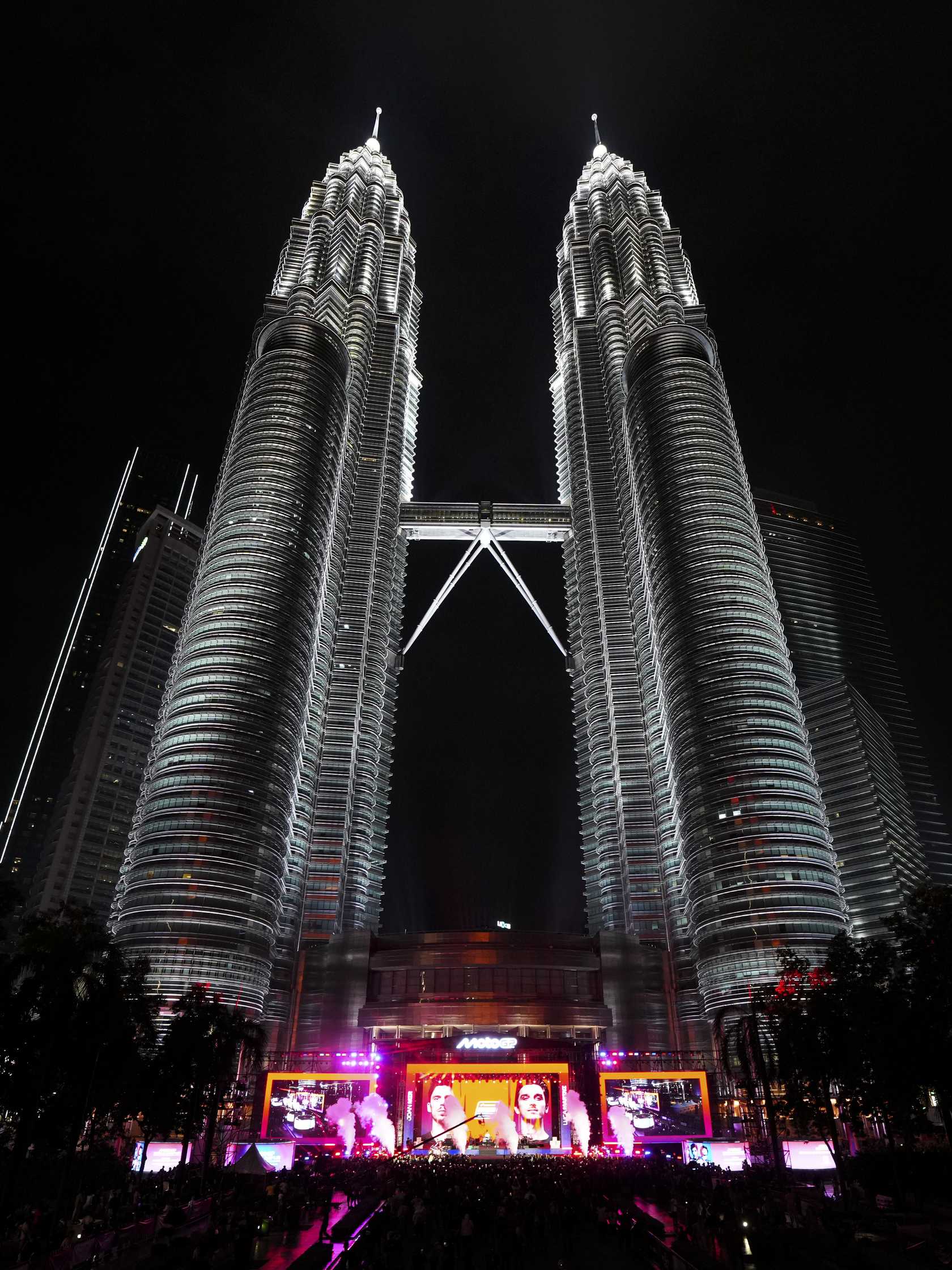
The second distinction was the appearance of the Grand Prix bikes, as each team took their turn to motor up a small 'urban circuit'. "What better noise is there?" new Red Bull KTM Tech3 Team Principal Gunther Steiner admitted to the presenters while Maverick Viñales and Enea Bastianini gingerly revved the RC16s along the street. The rainfall had put a dampener on things and nullified the chance of any burnouts or stoppies but the thunder of MotoGP bikes bounced off the skyscrapers to such an effect that it could be felt through the livestream. Placing two of the most charismatic riders on the grid - Jack Miller and Toprak Razgatlıoğlu - into the run first was a shrewd choice as the Australia and Turk decided to slide side-saddle. The soaking street did deprive us of another one-handed Marc Marquez sliding burnout however.
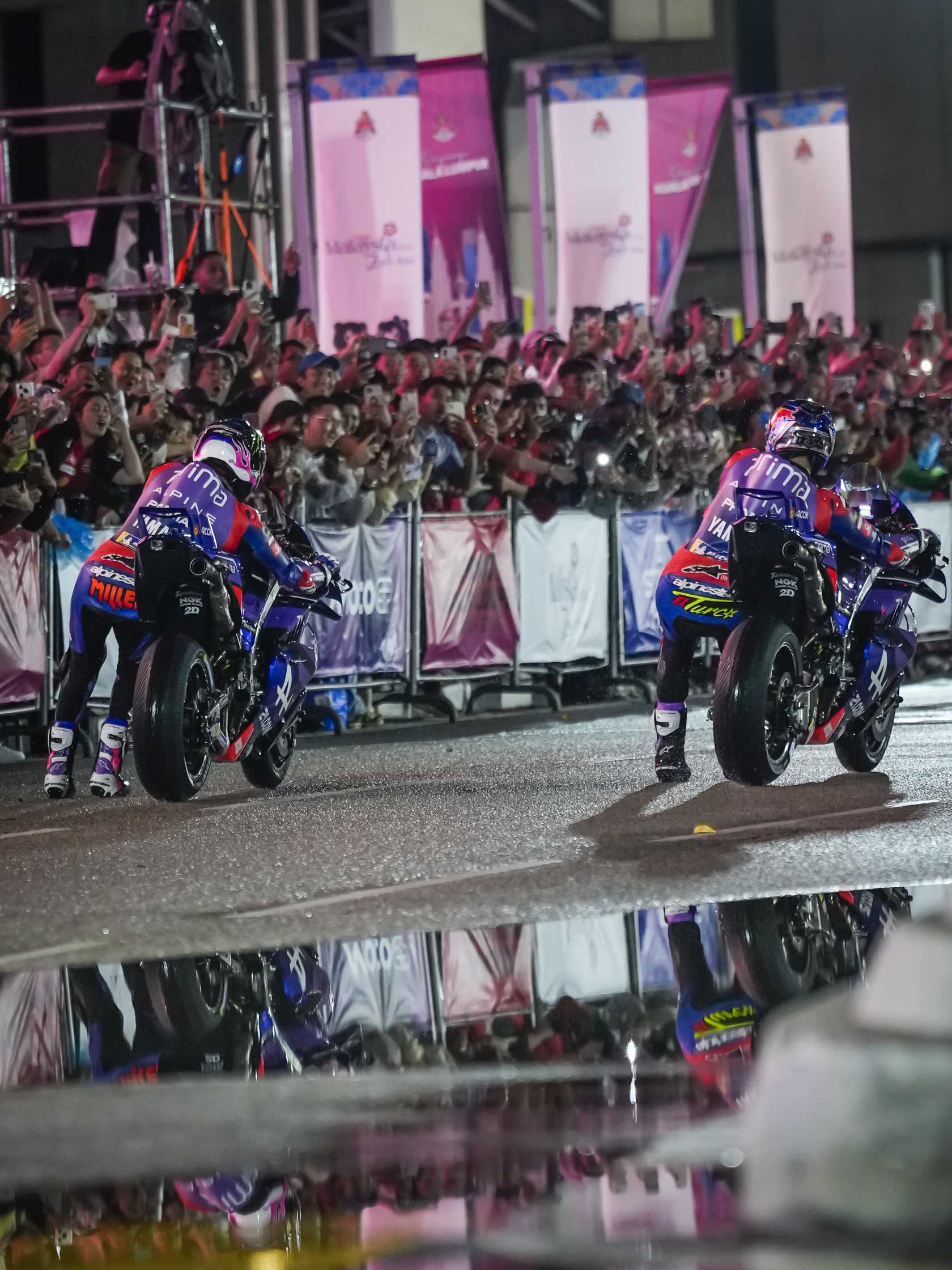
In 2025 the riders steered road models of their respective brands in central Bangkok which was a commercial and convenient workaround, but the multi-million-pound prototype race bikes are as much a character of the series as the riders and it was a smart move to have them included. This has to be an essential ingredient for the future.
The 2026 launch was shown through the MotoGP App, YouTube (where it logged over 200k views) and through respective TV broadcast partners like DAZN so it was easy to find. It happened before lunch CET and early morning EST (middle of the night PST) and the aped the weather in terms of flooding social media channels. The teaser of the MotoGP grid group photo in front of the PETRONAS towers on Friday whet the appetite and underlined that the series has ambition to scale.
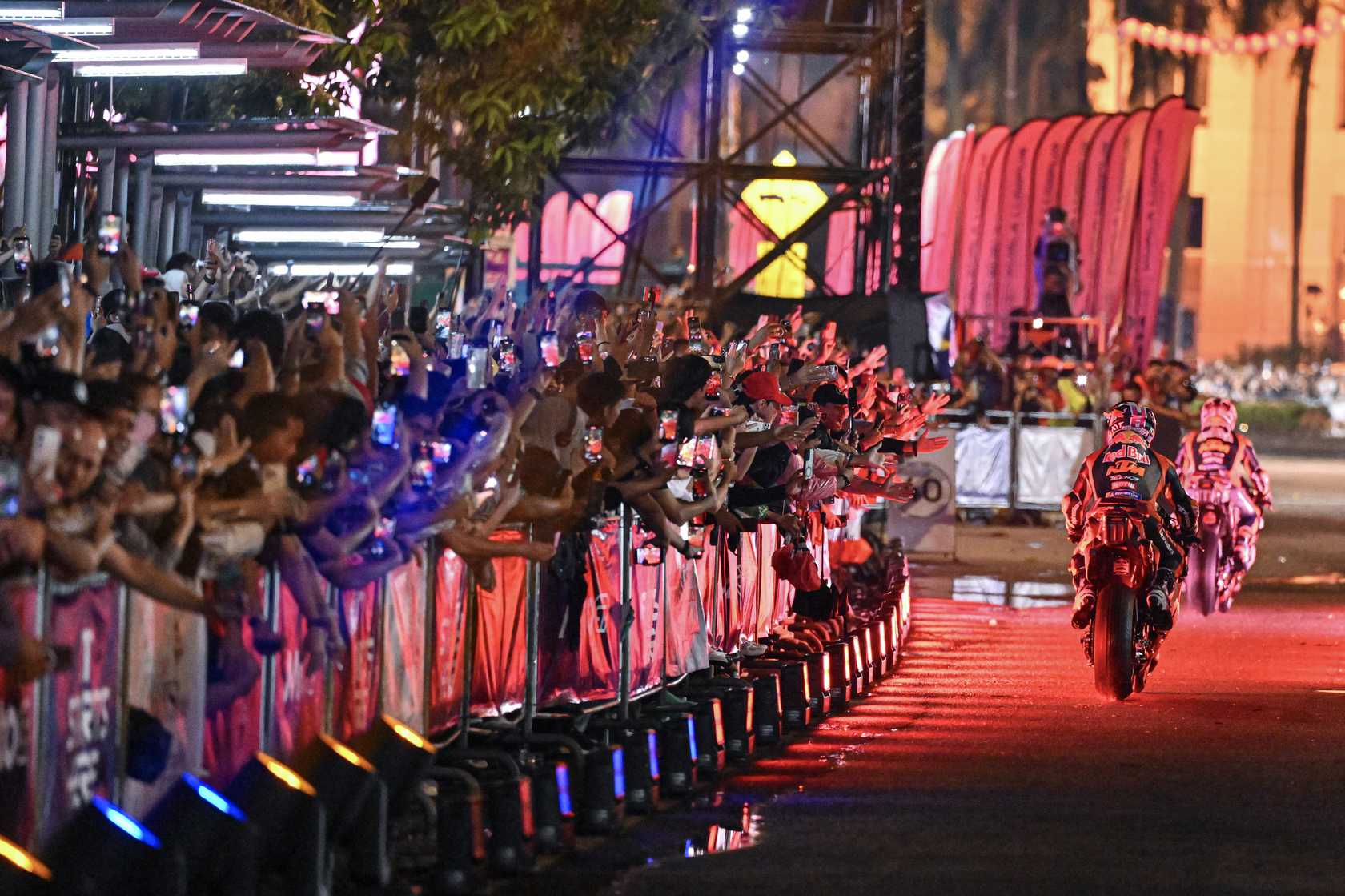
Kuala Lumpur was 'safe' territory. MotoGP is popular in the country, and the Malaysian Grand Prix is a reliable hotbed of attendance with a record 191,000 spectators in 2025, building on another record-buster of 184,900 in 2024. The fans were there in their thousands, even with the troublesome skies.
For 2026 KL was also practical. The logistics and the costs for the teams were relatively low. Bikes and staff were already in the country, and the launch required only a few extra nights in a central hotel. By using Malaysia, Dorna have now tapped into two of their prime Asian fanbases in two years and perhaps only Jakarta remains on the shelf in terms of the full canon of guaranteed public, willing hosts and partners and cost-effective solutions (all potential barriers to a European-based equivalent, outside the power-foundations of Spain and Italy).
Shows of this ilk can tend to drag but the production pace was swift, questions to riders were brief and humorous and the transitions from stage to bikes were seamless. Yes, the continuous hype of the native presenters can grate (my personal favourite was the query to the laconic 12-season veteran Franco Morbidelli if he was familiar with the Sepang International Circuit. "Yeah, I'm familiar with the track," the Italian smirked) but their job is to sensationalise…and it was all in English. Perhaps a more sensitive blend between whipping up the crowd and sustaining the interest of the larger streaming audience should be a goal for 2027?
Noises from the teams and paddock staff were very complimentary, even if behind-the-scenes there was more chaos than anticipated when it came to communication and planning. But, apparently, Dorna hustled admirably as a unified crew to cope with the ruinous appearance of the rain. Spectacles of this size should be treated accordingly - Dorna should invest further in a specialised organisational team and experienced event staff - to minimise any 'seat-of-the-pants' risk, and to foster collaboration with all the parties involved.
Ducati CEO Claudio Domenicali and Head of MotoGP Communication, Artur Vilalta, told me in Italy in January that the Ducati Lenovo Team launch needs six months of planning between the respective groups and people like Madonna di Campiglio, Audi, Ducati Corse, sponsors and other stakeholders. The Italians have been running the three-day 'Campioni in Pista' gathering for four years in a row now. Kuala Lumpur was Dorna's second attempt and undoubtedly there will an internal debrief. What could have been better? More national or regional emphasis might have been engaged with more warning. As an example, how can someone like Honda Malaysia allocate budget and resources within their annual event schedule for large activation, and piggyback MotoGP without the earliest possible warning?
Why does this matter? Perhaps it doesn't but more hands to the pump might lead to a better pump.
Emails for the 'MotoGP 2027' fixture should be drafted now.
The MotoGP launch also lacked a commercial presence through the stream. Yes, promotional slots for the series' main partners may have overinflated a near two-hour ceremony but there are surely other creative ways to give some exposure to key groups?
One of the salient questions in the wake of social media footage still dripping into people's feeds is: who is the launch for? All that expense and effort for an already partisan market? Is it a TV bonanza? If so, what can be done to harness that further? To hammer home MotoGP's messaging, brand and potential?
Conjuring a ceremony that wows fans in a city centre but that also hold the attention of those watching internationally is a tricky elixir to perfect. After Kuala Lumpur 2026 it's clear that bringing MotoGP (and those motorcycles) outside of a circuit and into an 'alien' setting is a great conduit to make the series more accessible. In my opinion, the TV side is important - of course - but the launch should now be seen as Dorna's premium ticket for the uninitiated to hear and see what the technology and the people are about. These touchpoints sometimes happen throughout the season with proactive companies using their tie-in to MotoGP for regional marketing purposes (getting riders and bikes to signings in non-motorcycling settings) but nothing matches the now established size of the official 'opener'.
Thanks for reading! Subscribe for free to receive new posts and support our work.
The launch needs assets like more renowned musical acts (how can MotoGP work more with the likes of Monster Energy and Red Bull?) and then strong local promotion (pop-ups, flash-mobs, media deals etc) months before it happens. Why not aim for a Grand Prix-esque attendance on the streets?
2025 and Bangkok was a lunge in the right direction. 2026 in Kuala Lumpur showed that MotoGP can create sufficient 'wow' away from race asphalt and has further solidified the championship launch as a crucial date in the calendar. It created genuine buzz ahead of a season that many ingrained fans already know could be quite formulaic as the 1000cc era dwindles.
Where (and how) will Dorna and MotoGP take this flagship next?
MXGP: Yamaha say Renaux could be 'dangerous' for Grand Prix glory [ 06-Feb-26 12:02pm ]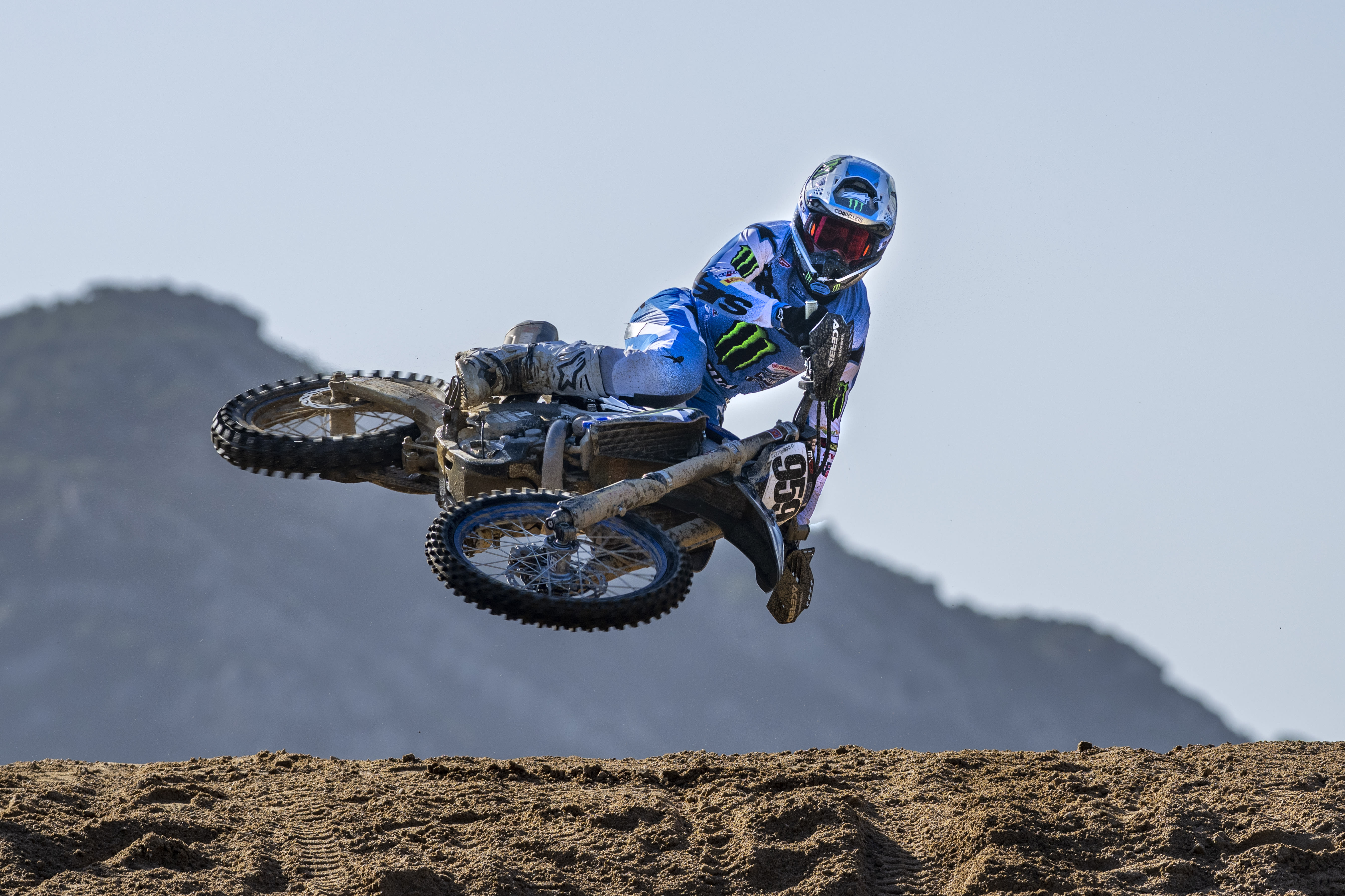
By Adam Wheeler. Photos by Yamaha Racing/shotbybavo
"If he is healthy then he is one of the candidates." Monster Energy Yamaha Factory Racing Team Principal Hans Corvers offers an apt summary of 25-year-old rider Maxime Renaux over a WhatsApp call. The amiable and straight-talking Belgian has already told us how Yamaha have made organisational changes to arrest a decline of results and a spell that has delivered just one MXGP win in two seasons, earned by Renaux (three in total since he moved into the premier class as MX2 world champ in 2022). He is now extoling the potential impact once more of his long-term athlete - the 2022 MXGP rookie of the year - as the Argentine Grand Prix draws closer.
The reorganisation for 2026 by Yamaha and team led to the initiative to employ former Honda stalwart Tim Gajser to sit alongside Renaux. The Slovenian is the most prolific MXGP world champion from the last ten years. His signature represents the first time Yamaha have signed a premier class title winner since Stefan Everts in 2000.
Gajser has coveted plenty of attention since his switch from red to blue (he rode for Honda since 2014) but Corvers, smartly dressed in his team sweatshirt ahead of the crew's first race appearance of 2026 in Sardinia, needs no prompting to talk about Renaux.
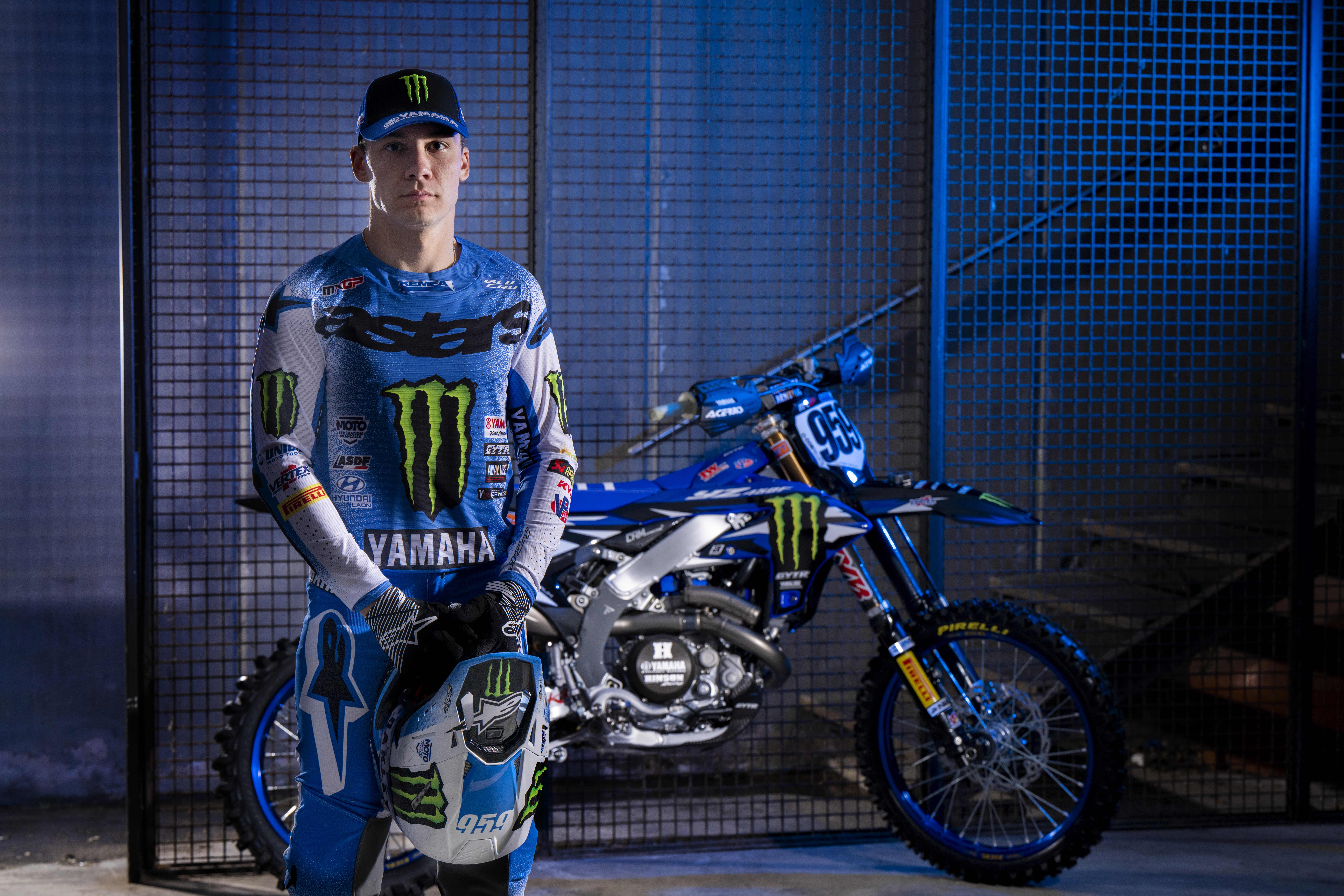
The #959 came into the Kemea team to win the MX2 2021 title and has been their lynchpin in MXGP after spending his entire Pro career on YZ machibery. There was a phase last summer where Renaux's frustration with his spate of injury problems and the waning competitive state of the YZ450F (neither Calvin Vlaanderen nor Jago Geerts were able to consistently fight for podium trophies; the South African making three 3rd positions throughout the course of the 20-round campaign) caused rife speculation that he wanted to end his Yamaha contract a year early. Allegedly discussions were held with Ducati and options were explored for Renaux to extradite himself from his deal but Yamaha held firm. The off-season brought a turnover and placated Renaux's concerns.
If Gajser and Renaux are fit and satisfied with the state of the 2026 YZ450FM then Yamaha have the best combination of experience and results, narrowly shading the titles and wins tallied by Kawasaki's Romain Febvre and Pauls Jonass. HRC and KTM will both draft rookies into the fray this season.
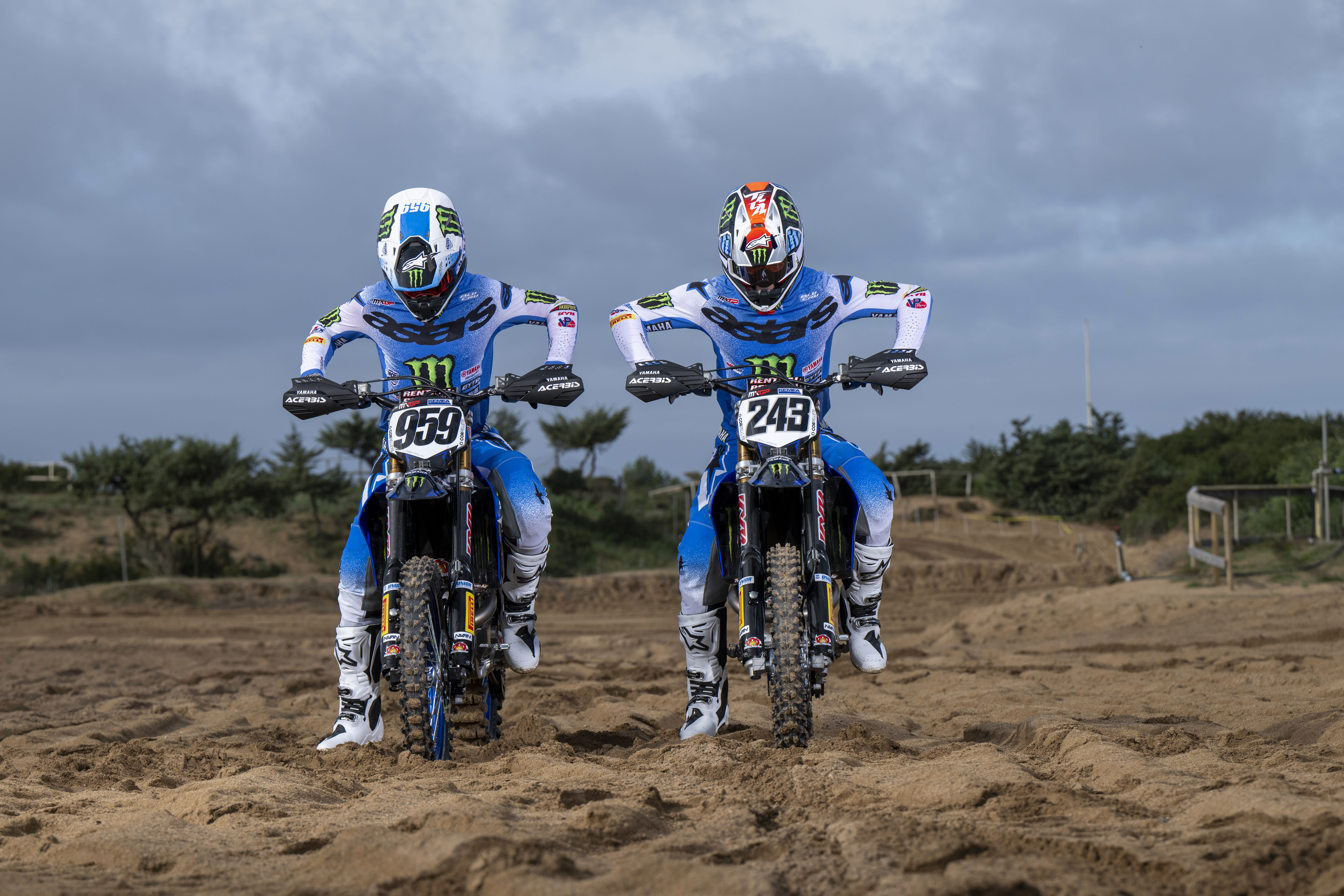
Corvers believes the recruitment of Gajser will give his French charge a 'poke' due to the equal billing. Renaux was eclipsed for wins and podiums by former teammate Jeremy Seewer in 2022 and 2023, but Gajser's slot in joint-P4 for the all-time list of titles (and 5th for career victories) is another level.
Thanks for reading! Subscribe for free to receive new posts and support our work.
"He's strong now and he has a 'gun' next to him," the Belgian says. "People have said to me 'there will be an internal fight' but, and I've said this before: I like this! I've known Maxime for many years and it was the same in 2020 and 2021 when Jago [Geerts] should have been the main guy for the [MX2] title, no discussion, and Max was the underdog. We know what happened. Max is our gun, beyond doubt, and Tim is not coming in above him or below but by the side and we believe strongly in him. The eyes are now on Gajser…and that will make Maxime dangerous. I think he needs it and it's the right moment. He will make a really strong season."
Yamaha have won just 12 Grands Prix in the six seasons since 2020 and one in the last two years. The MXGP team will focus on just two riders for the first time this decade but the potency of Gajser and Renaux - even if the former is new to Iwata technology - means they are well placed to boost the figures. Corvers acknowledges the high level of the competition. "Romain [Febvre], Gajser, [Jeffrey] Herlings, Maxime and [Lucas] Coenen for me are the top five guys that are a little bit higher," he opines. "Then you have [Ruben] Fernandez, [Pauls] Jonass and the new guys like [Tom] Vialle, [Kay] De Wolf and [Andrea] Adamo. [Kevin] Hormgo, at the beginning of last year was good as well, and [Thibault] Benistant is coming in. It's amazing; hard to know which way it will go…and I'm a long time in motocross!"
Interview: Ducati Corse's MotoGP situ for 2026 and beyond…according to Gigi Dall'Igna [ 05-Feb-26 6:12pm ]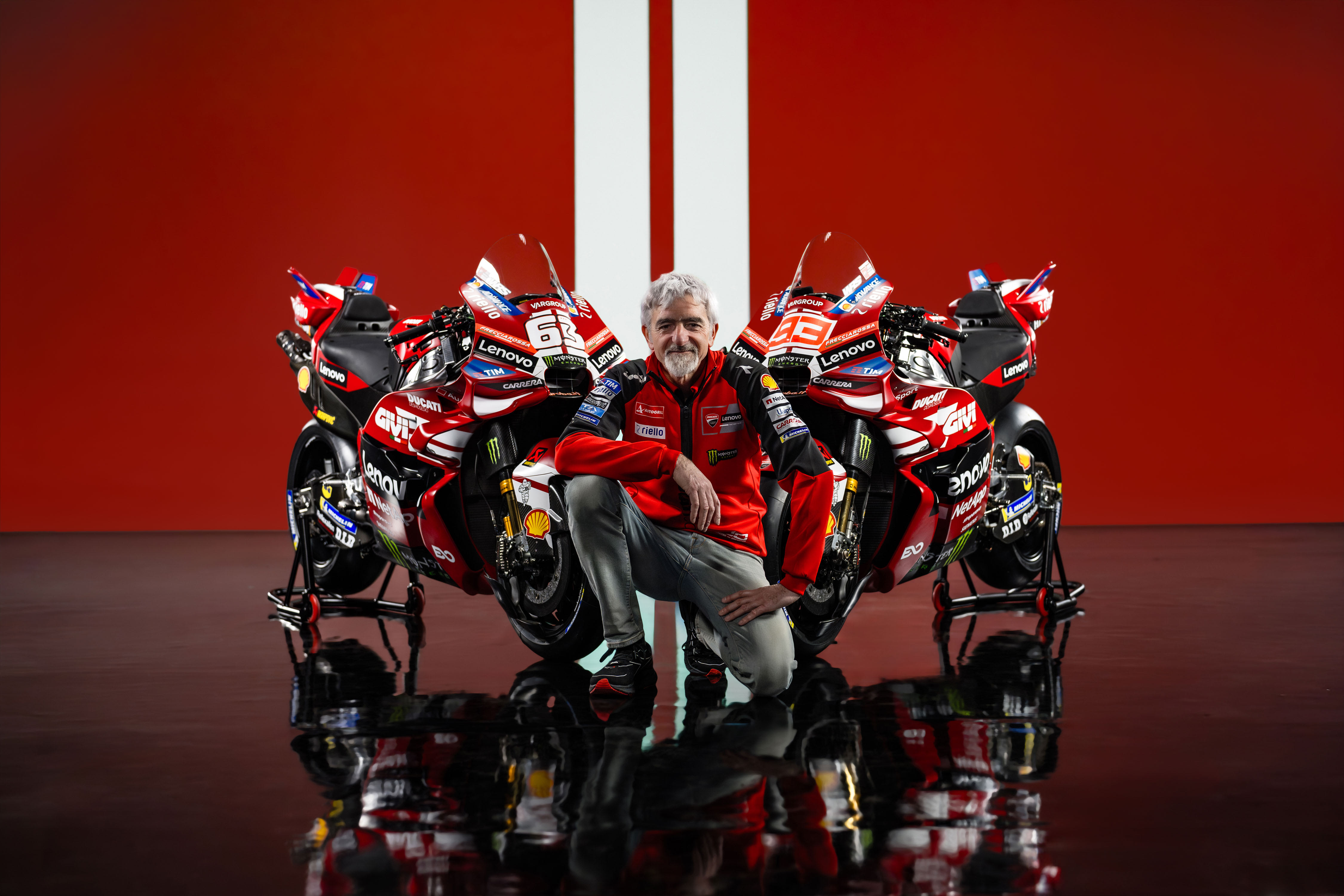
By Adam Wheeler. Photos by Ducati Corse/Falex
Gigi Dall'Igna wanders to an unoccupied high table and a couple of stools with a replenished glass of wine in hand. He graciously waits while I grab a quick refill at the adjacent bar. The location for our chat is in the furthest corner of the Chalet Spinale restaurant, atop one of the snowy Dolomite peaks in the resort of Madonna di Campiglio for the 2026 MotoGP Ducati Lenovo Team launch. We have escaped to this enclave to try and avoid the hubbub of Ducati/Audi/Madonna di Campiglio's many guests and the live music that is pre-facing the evening dinner.
The angle for our talk revolves around Ducati's use of technology in Grand Prix for a story for The Telegraph. We were supposed to sit down at the public presentation of the 2026 livery and, of course, Marc Marquez and Pecco Bagnaia, in the icy village centre of Madonna di Campiglio a few hours earlier but the 59-year-old hadn't been feeling too well after a full day of interviews and media duties.
He is in better form now and still prepared to tackle a few questions.
To call Dall'Igna the 'Adrian Newey' of MotoGP is not too much of an exaggeration. Since he was fished from Aprilia in 2013, he has helped shape Ducati Corse to become the proactive and innovative powerhouse at the top of MotoGP and WorldSBK.

At the team unveiling inside the Pala di Campiglio conference hall earlier in the day he commented about his department's prolificacy, and told host Gavin Emmett about the pride in the eight-year-old ride height device that helped revolutionise MotoGP perceptions of downforce and electronics for corner-exit grip. Along with mass damper technology, 'scoops', holeshot devices and experimentation with aerodynamics (that was swiftly adopted and employed to further extremes by other brands like Aprilia and KTM), Ducati can claim to be the most influential manufacturer at the peak of motorcycle sport and since HRC refined their seamless gearbox in the early '10s.
There are several topics that I would have loved to dissect with Dall'Igna, such as his fascination with Marc Marquez, his real thoughts on the causes of Pecco Bagnaia's torrid 2025 season, and his opinions on the next MotoGP regulations window that has been designed to reel back many of the loophole solutions that Ducati Corse forged. But we have a tight time frame, and I'm also well aware from previous interviews with Gigi that I'm unlikely to pluck the ripest fruit, so the discourse heads in a particular direction.
Before jumping in the dark ski lift to ascend to Chalet Spinale, I had spoken with Ducati Motor Holdings CEO Claudio Domenicali. "Luckily with Gigi, since we met, we had a fantastic alignment because he really likes to innovate…" the Italian told me. For a man accustomed to secretive projects, it's little surprise that Dall'Igna - tall, wiry and busy-faced - can squint, smile and get away with some non-committal comments. Still, his words carry stock. He is an authority. A record 88 consecutive Grand Prix podium finishes for Ducati machinery, a streak stretching back to the summer of 2021, is quite the haul. And, based on the recently closed 2026 Sepang International Circuit pre-season test in Malaysia, where his unofficially monikered GP25 and GP26s filled five of the top seven fastest positions, 2026 is going to be another season of glimmering trophies.
You talked about the ride height device in the presentation. Seeing as 2026 is the last year for the technology, has there been much investment in it?
Yes, still. We started back with the ride height in, probably, 2018 some time, and every single year we improved it. Either the system, the stroke or the system for how it works. Now it is really quite complex. It's [improvement for 2026] not about reliability but performance.
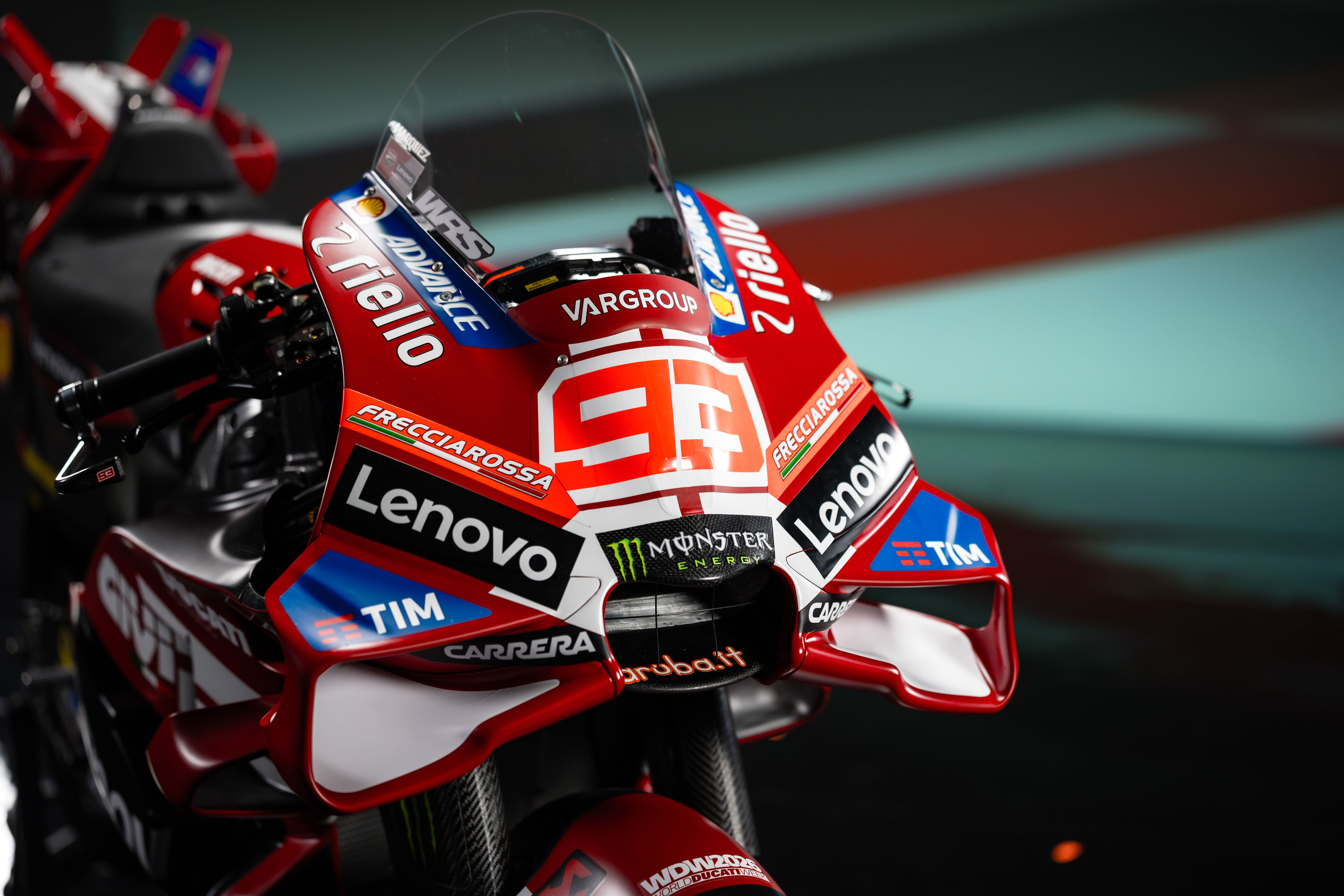
The Desmosedici GP24 won all but one Grand Prix in 2024 and is regarded as one of the best motorcycles in the modern era of MotoGP. Will you be sad to see the current edition of the bike and its 2025 and 2026 derivatives moved to the museum in a matter of months?
Absolutely…but the rules have been the same for I-don't-remember-how-long, so, now it is time to change. Above all because of the speed of the bikes. 360kmph? It's quite high, and I think it is important to reduce it because the tracks now cannot really permit this. We have to remember now that these rules will stay until 2032, so, from tomorrow, there is plenty of time to improve and increase the speed [of the 850] again.
Do you see possibilities with the new technical rules for 2027 onwards? Or restrictions?
Hmmm, previously there did not seem to be opportunities either but then we came up with new ideas, new concepts and new solutions. I think it will be the same [for 2027]. For sure, in the beginning, the possibilities will be a bit less than today but anyway people's brains rise to the challenge.
The Ducati Corse group has a mixture of engineering talent. Some of which have flowed to other brands in recent years…
I think we are the only ones that don't try to catch from other manufacturers. We build the people internally. We bring the young ones from university and grow them in the system and, honestly speaking, I am really happy about this philosophy. We have a lot of really clever young people that can become a good platform for the future.
How do you find working with the current generation of young technicians? How do you see the differences in attitude?
This [pointing to the iPhone on the table] is the new reality. You have to move with the tools now. I am surprised about young people. I'm really happy to work with them because their attitude is fresh. It helps us to stay younger! More or less like Valentino [Rossi]; he build the academy with young riders and also took profit himself. It is the same for us.
In your view what has been one of the biggest changes for R&D in racing and MotoGP? Is it the influx of AI?
One of the keys is to understand better the tyres. Ten years ago, you didn't really fully understand what the tyre needs to then understand the performance of the system. I think in the last years the goal was to know how you can get the best from them. For sure using AI…but this is normal, it's a tool of the job. Still, AI needs the idea. It needs you to tell it what you want or to look for. The human side has to steer the system in the proper direction.
Thanks for reading! Subscribe for free to receive new posts and support our work.
88 MotoGP podiums in a row: that's quite some feat…
88 podiums is really a lot. For sure sooner or later the day will come when it doesn't happen. Sport moves like this. But I hope it will be far away.
How will you and the Ducati Corse team manage the 2026 championship and developing the new 850 at same time?
Everything depends on the result of the Sepang test. If it goes quite well then you can have time to spend on the 2027 project. Otherwise, you have to keep concentration and focus on the '26. For a small manufacturer like us it is necessary to understand what is going on and steer things accordingly. No quiet life for us yet!
MXGP: Yamaha MXGP management talk Gajser signing & adaptation after "disaster" of 2025 [ 03-Feb-26 2:21pm ]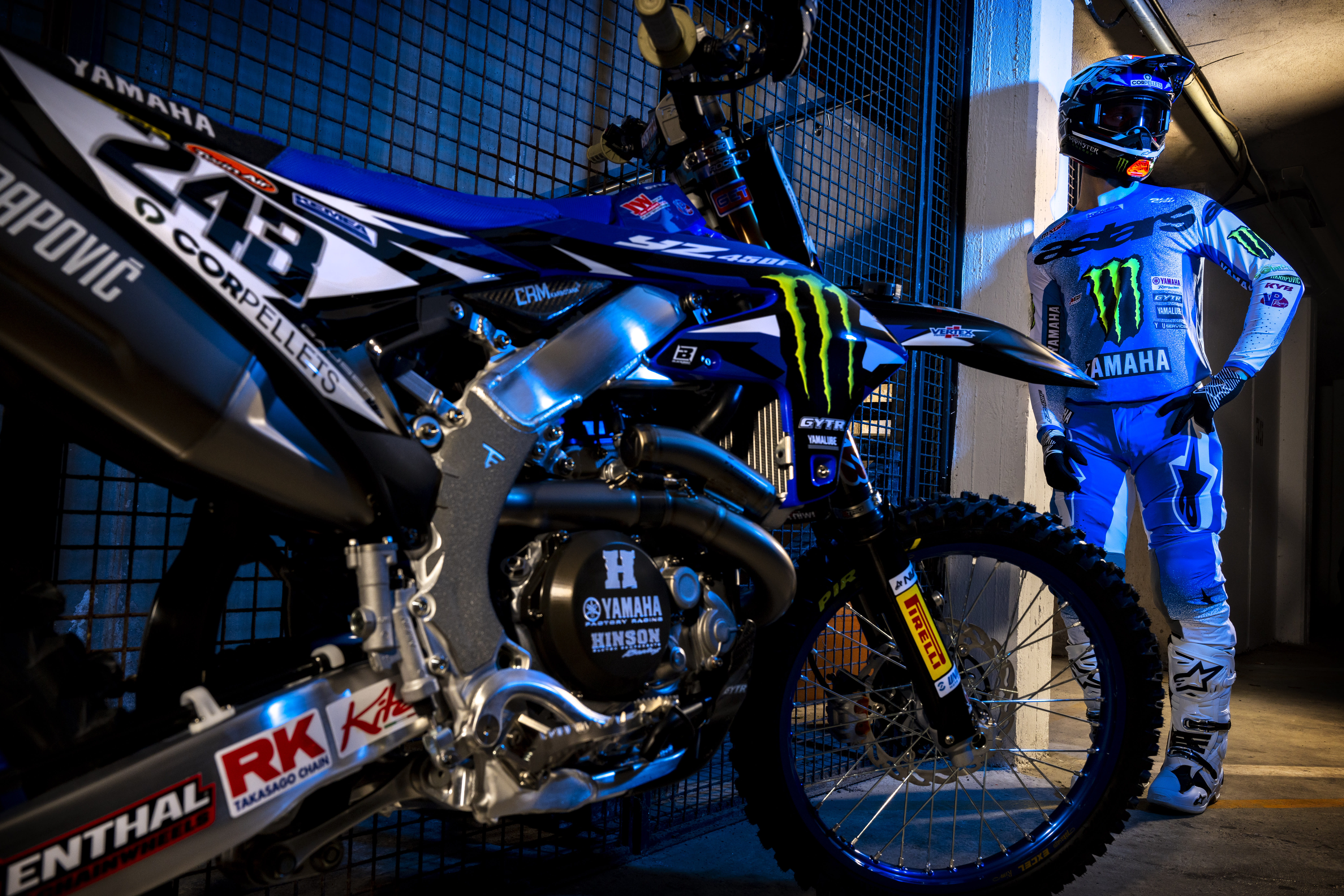
By Adam Wheeler. Photos by Yamaha Racing/shotbybavo
Jeffrey Herlings might have made more impact but Tim Gajser has been the first to post race mileage this winter, and the 29-year-old's runner-up finish to Lucas Coenen in the opening round of the brief Internazionali d'Italia in Sardinia last weekend was evidence of the four-times MXGP world champion's swift acclimatisation to Yamaha blue.Herlings and Gajser occupied most of the scant off-season MXGP chatter with the first unveiling of their new colours last month. The Dutchman and Slovenian - ten world titles between them - had been with their previous brands for 16 and 11 years respectively and had taken all their accolades with those teams and manufacturers. Herlings' first appearance in HRC guise and Gajser's initial airing with the blue Yamaha YZ450F represented two of the biggest shifts in the premier class landscape this century.
Herlings is hardly a publicity hound although his video interviews and photoshoots meant that HRC won the PR 'duel' compared to Yamaha's somewhat understated communication with Gajser's unveiling. Tim was the first to compete however, and the decent outing in the chilly Sardinian sand at Alghero was encouraging, a week before Herlings makes his Honda bow at Mantova for round two of the Italian campaign on February 8th.
Both champions are still in the 'honeymoon' phase of their fresh career chapters (everything is going 'well', 'positive' and 'motivating'), but the pre-season international events before the Argentine Grand Prix in one month will provide more critical data in race conditions. By all accounts Gajser has been able to make some shortcuts with the new factory YZ450FM.
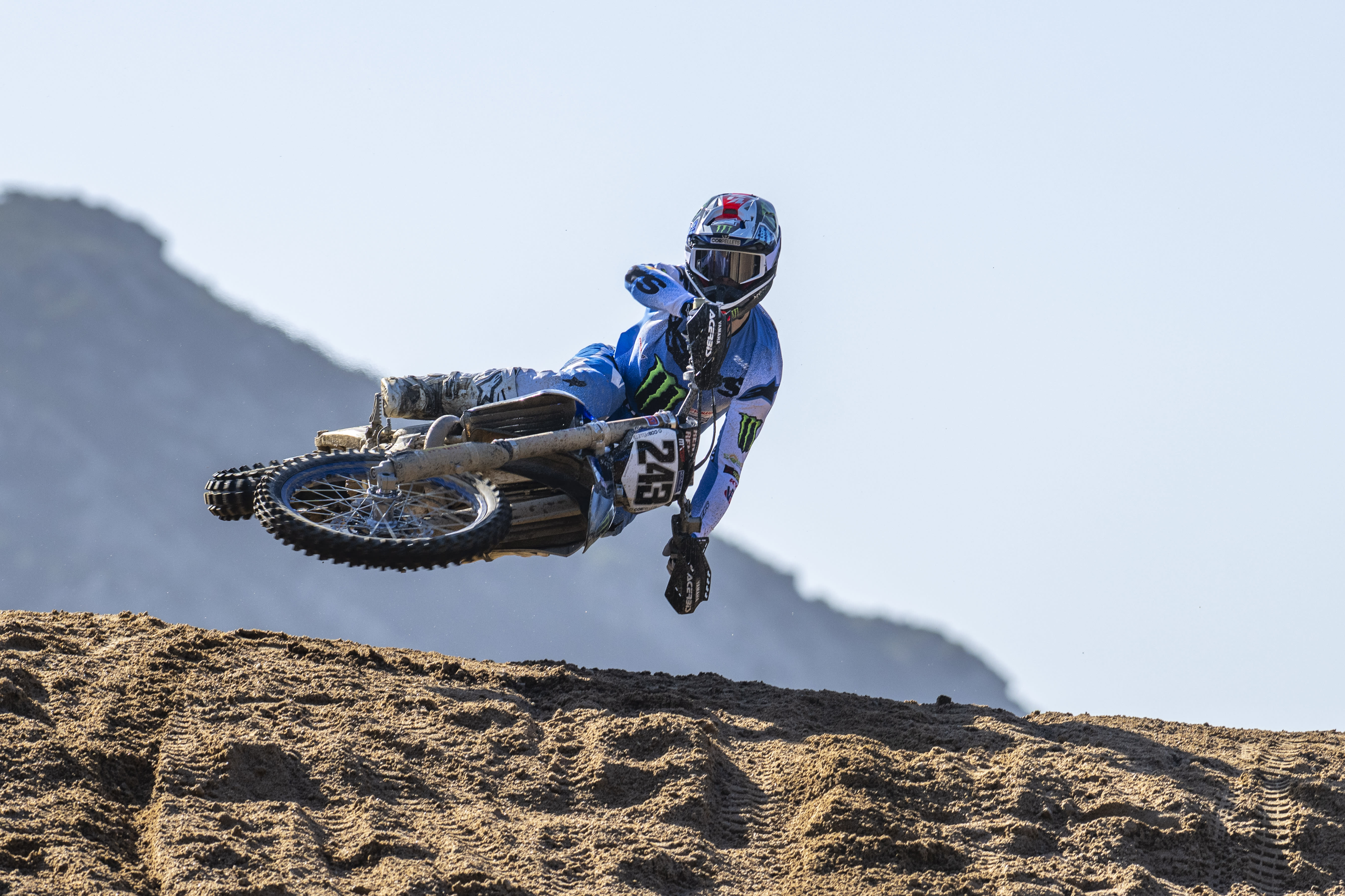
"We know that every good guy who gets on a [new] bike says 'wow'…but what stood out [for Tim] was his happiness with the power and he felt immediately comfortable with the chassis," team owner Hans Corvers told us. "He said he felt more stable than with his previous brand. He's almost a month with the bike now and he gets faster and faster with the suspension work: something that is normal. We are now only onto [small] details, and the two he wanted improvement for were the footpegs and the front brake. They were too sharp, and he really likes a really strong front brake so we just changed the calliper and then it was OK! The pace is fine. It's nice."
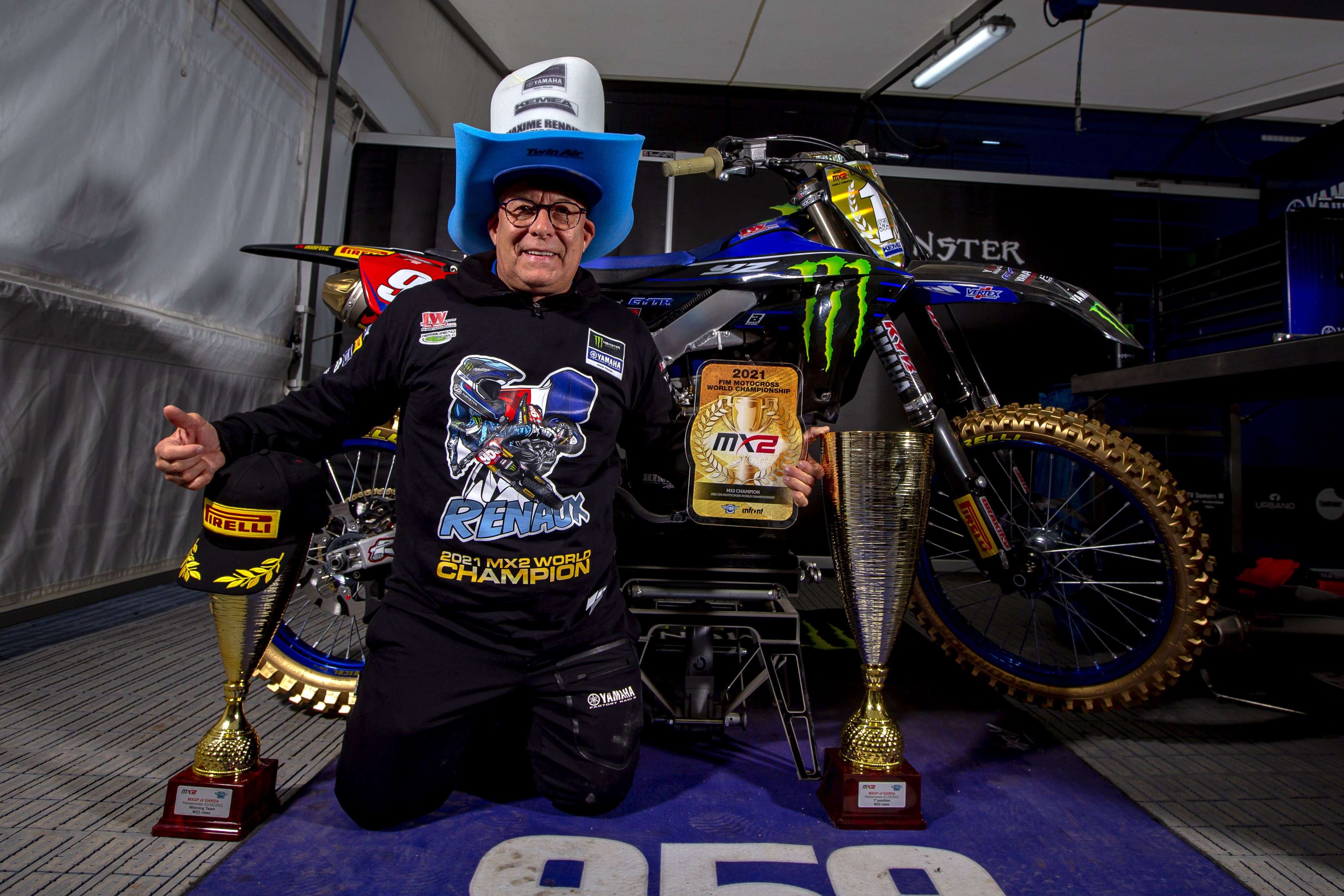
Corvers also says that "Yamaha have worked hard on the bike and on many things." The 61-year-old Belgian has presided over Yamaha's MXGP effort since 2024 after earning MX2 GP wins with five different riders, the rider's crown with Maxime Renaux in 2021 and four manufacturer's titles with the YZ250F. The former Kemea team's transition from 250s to 450s also came during an unstable period for Yamaha Motor Europe's motocross racing programme in terms of their structure, teams, riders and resources. "In the last few years they tried to do their best but it was difficult," Corvers admits reluctantly but with typical honesty. "Moving up from MX2 was not my goal at that moment [at the end of 2023]," he adds. "But we did it, and there were things that could have been better and needed changing for organisation and R&D. Also, my team's organisation…"
2024 and 2025 delivered slim pickings for results. Calvin Vlaanderen posted two 3rd positions in '24 while Renaux missed the campaign through a foot injury, and although the Frenchman won the 2025 Argentine Grand Prix he was again hit by physical problems. Vlaanderen brought another three trophies as Geerts toiled on the bigger bike without success. Both Vlaanderen and Geerts moved on for 2026. "2025 was a disaster," Covers admits. "My worst season in 30 years with Kemea and with Yamaha. We've been in the world championship since 2012, so I think I have some experience. So, the internal organisation changed. Andrea Dosoli came on top for the technical side, Paolo [Pavesio] moved to MotoGP and the R&D team changed a bit. In the team we also changed the Crew Chiefs and other things. If it will work? I will tell you in a year!"
Yamaha's re-evaluation, together with Corvers and the YRRD development group (the technical wing of Michele Rinaldi's old racing division) and YME's reorientation meant new perspective. The plan to emulate KTM's profitable flow for talent through European championship achievement all the way to MXGP (Herlings, Jordi Tixier, Pauls Jonass, Jorge Prado, Rene Hofer, Tom Vialle, Simon Laengenfelder, Liam Everts and the Coenen brothers all emerged from different levels of KTM backing in EMX) was put on hold, and led to dialogue with a 'big hitter' like Gajser.
Corvers describes the process. "We talked a lot and had many meetings and many discussions and we changed our approach. Normally it should have been [former MX2 charge] Thibault Benistant that should have grown and been the next MXGP guy next to Maxime but things went differently. We were heading in that 'line' but when you are as multi-national as Yamaha and in the top five of the world and you want to compete for the title then sometimes you have to look at it differently. Sometimes in football or cycling they also take the good guys to win."
"It was time for all of us to make a move like this because our riders in the line-up were not ready to give us what we needed and expected," he adds. "Nothing against the youngsters…but we also had a lot of bad luck because Maxime started the season so nicely in Argentina and while he's in shape and healthy now it meant three years with the same story [of injury] and we could not take the risk to have a fourth year like that."
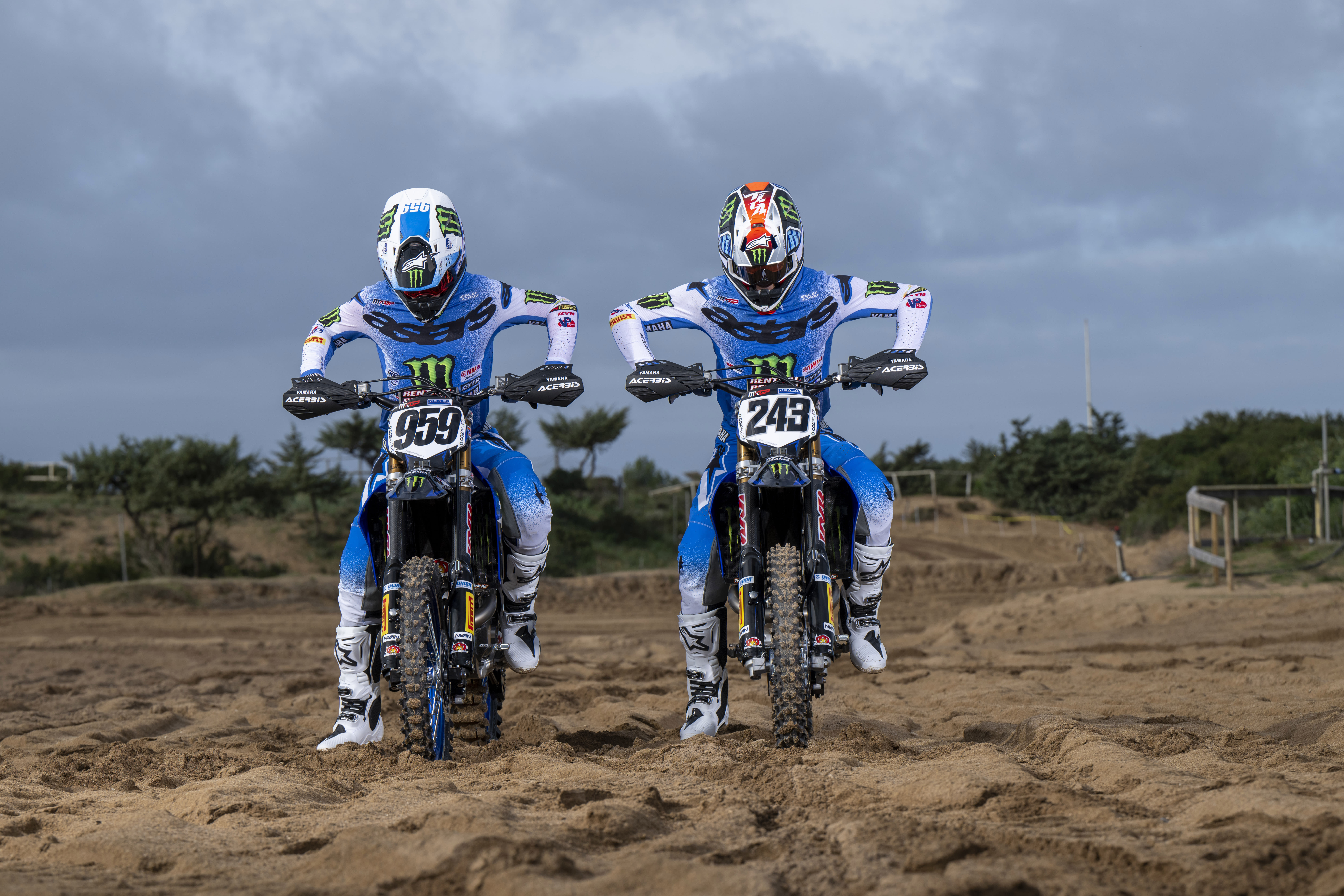
Yamaha now have arguably the most formidable MXGP roster with Gajser and Renaux both multiple winners and bringing fourteen accumulative seasons of experience in the category. Corvers insists that Renaux is "happy' with the alterations. Post-2025 Motocross of Nations there was a sustained period during the off-season where the 25-year-old was allegedly looking to break his contract early and join the factory Ducati effort.
It seems Yamaha have responded to the malaise of the past two years and are scrambling to crest the series they last ruled in 2015. "What's nice is that there was a loud bell ringing: not just from the riders, but inside the team, from Monster and everywhere, and Yamaha reacted in a proper way and I'm thankful that they did," Corvers says. "It was hard in the beginning but now there is calm and everybody knows what to do and there is a nice structure."
Thanks for reading! Subscribe for free to receive new posts and support our work.
Analysis: Pedro Acosta's next move… [ 30-Jan-26 12:12pm ]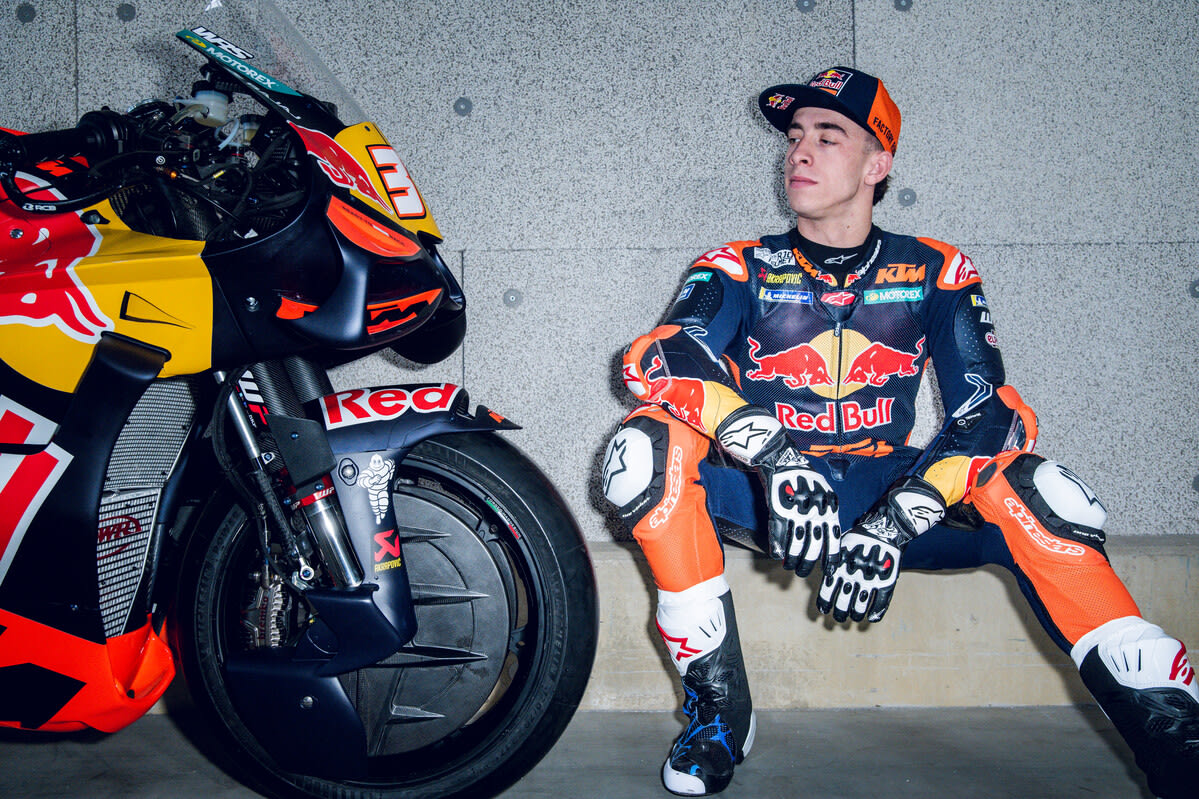
By Adam Wheeler. Photos by KTM.
We've had two Aprilia teams, two Yamaha teams and three Ducati teams declaring that 2026 is a go up until this week but KTM's 1 minute unveiling video, followed by several hours of post-presentation online media sessions with all four riders - Pedro Acosta, Enea Bastianini, Brad Binder and Maverick Viñales - as well as three main management figures was the definition of new season 'box-ticking' for this last twilight rays of MotoGP as we know it.Acosta's fate, and the plans of the Austrians (and their mainly-British-owned French associate team Tech3) for what should be their third five-year contract chapter for MotoGP were the more prominent themes from the activation. Sure, Binder - looking even more trim for his seventh MotoGP term, all on the RC16, and twelfth as a Red Bull KTM athlete - was being asked about his new Crew Chief Phil Marron and Viñales was probed repeatedly on his unusual union with Jorge Lorenzo but it was the words and demeanour of both Pedro and KTM Motorsports Director Pit Beirer that gathered the most attention.
With gossip already swirling about Fabio Quartararo jumping from one Japanese camp to another and Jorge Martin continuing his tour of MotoGP motorcycles by allegedly considering a Japanese bike for the first time (and for the first time in any class since 2018), Acosta's re-up with KTM or leap into new waters has increased in urgency, especially with Marc Marquez pausing on his commitment to MotoGP in the wake of his shoulder injury but unlikely to deviate from factory Ducati status.
Acosta showed expert ability in deflecting enquiries about his future while holding a video call with the press. "I think today is not the day to talk about that, I mean, we are in the KTM presentation…" he said when asked about his time frame for 2027 and beyond.
DARK ORANGE
The general feeling is that Acosta sees his path away from the factory that brought him to prominence since he first entered the Red Bull Rookies series in 2019 (he finished runner-up in his first two races). The impression comes from the cloud surrounding Pedro in the early phases of the 2025 season where speculation was rife that he would escape his KTM contract prematurely and steer a Ducati for 2026. That breakaway did not happen, but it stemmed from the-then 20-year-old's grump with the competitiveness of the RC16 and the wavering period of uncertainty for KTM; not only for their continuance in MotoGP but their existence as a brand and position as Europe's largest motorcycle manufacturer.
Acosta crashed in the first Grand Prix in Thailand. Then finished 8th, 7th and then 8th in Qatar; where he was upstaged as the company's leading rider by new recruit Viñales (and at the Lusail Circuit where Acosta had debuted with the fastest lap and even performed an audacious overtaking move on Marquez twelve months previously). During that spell he struggled with grip and vibration and swapped between bikes with the mass damper and without, until he eventually claimed to be using his GASGAS settings from 2024. "I mean, it's already a topic every time that I entered into the box," he said of the vibration issue that affected his Americas Grand Prix and round three DNF. "For this we need to find a solution because we already one year like this…"
Thanks for reading OTOR! Subscribe for free to receive new posts and support our work.
"We have to be better. Need to be closer," he had urged on Thursday at Austin. Acosta then stirred the pot by gifting his manager, Albert Valera, a signed helmet that featured the phrase 'turning point'. "When you have a bad situation, you need to make a turning point, let's say. You know what I mean?" he said, somewhat vaguely, at the following Grand Prix in Qatar. "It's about everything: the bike, learning how to push, how the brand is understanding what is going on. Everybody has to go in the same direction. It is not only the rider pushing for one and the factory pushing for another, let's say. In the end I understand that every manufacturer wants something new but sometimes it is clever to go back and understand what is going on."
Further comments, and a general air of being fed-up, only increased the sensation that Acosta's impatience for competitiveness was darkening his tenure in orange. "It's frustration," he said in Jerez. "It's not easy to ride like this, to compete like this or achieve a target like this. I hope we can make the flip."
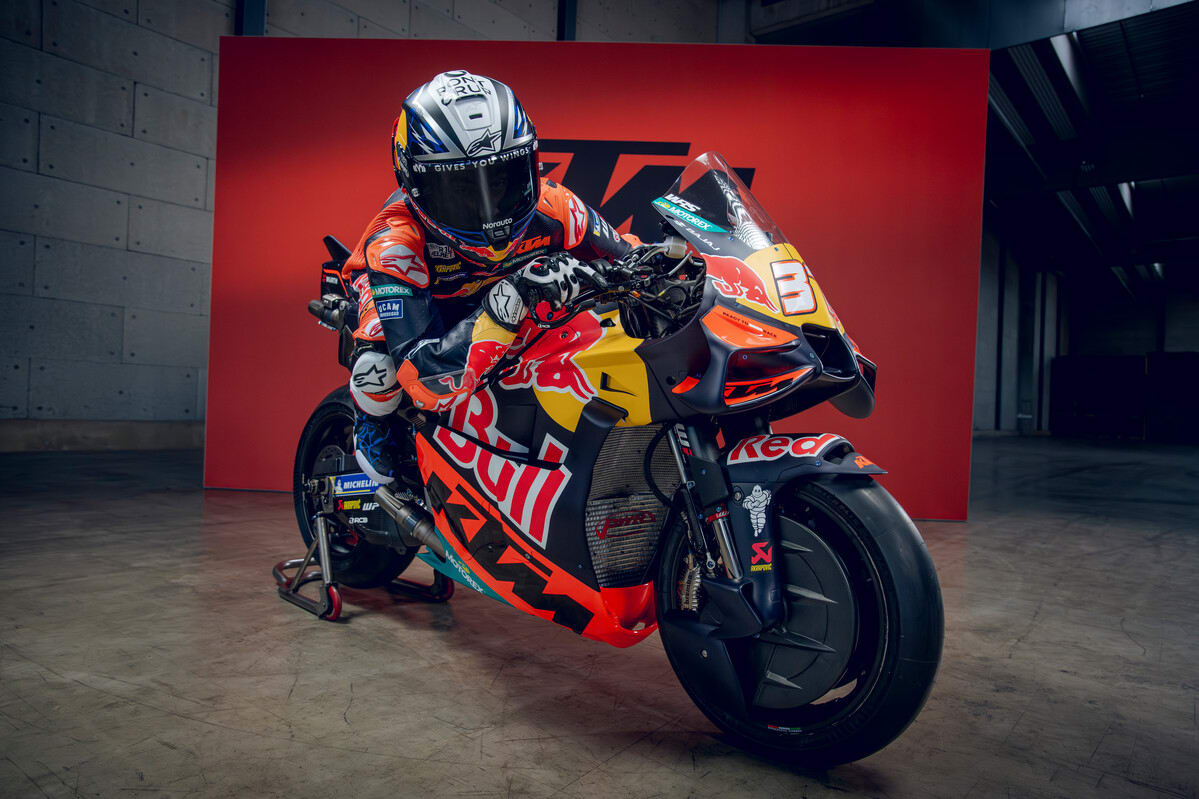
The story of 2025 showed that Acosta, Crew Chief Paul Trevathan and KTM managed to zero-in for set-up and become a regular rostrum threat. The second half of the campaign delivered 5 podiums and 7 Sprint medals. But Pedro remains one of only five riders on the current grid to have not sampled MotoGP success (the others are Luca Marini and Ai Ogura as well as the two rookies for 2026). Watching countryman and former rival Fermin Aldeguer coast to victory in Indonesia by almost seven seconds must have been nibbled at his anxiety.
From the cool and pressure-less climes of 2026 pre-season, Acosta was reflective. "At the beginning of last year, maybe my expectation was too high, and it was not easy to accept the bad moments," he admitted to us. "Thailand, Argentina, Austin, even Jerez was not easy at all…."
"Maybe the key this year will be to be much more calm, maybe also try to be much more cold, let's say, in the way that doesn't make things [crazy] just for my feelings," he added.
TIPPING POINTS
Pit Beirer later said that KTM were "busy talking to our current four riders to keep them on board", and Acosta seemed to indicate that the door was not closed on another KTM agreement. The company and the MotoGP team seem to be in far more settled phase compared to the beginning of 2025; even if all the brands are juggling various pistons, for 2026 formidability and 2027 optimisation with the 850s, Pirellis, less aero and ride-height-free grand prix. Acosta might have the race-winning package he craves after all and the first rounds will be revealing.
"At the end of last year, we go to Malaysia [pre-season test] with some updates of my 2024 bike, but [there] was not really anything new, until mid-season," Acosta revealed this week. "And this year I see a big step, you know? And this makes you super-confident. Also, it's true that the general situation of the factory is not the same than one year ago. You can feel it in the faces of the people, everyone is more calm and more confident. This makes you breathe."
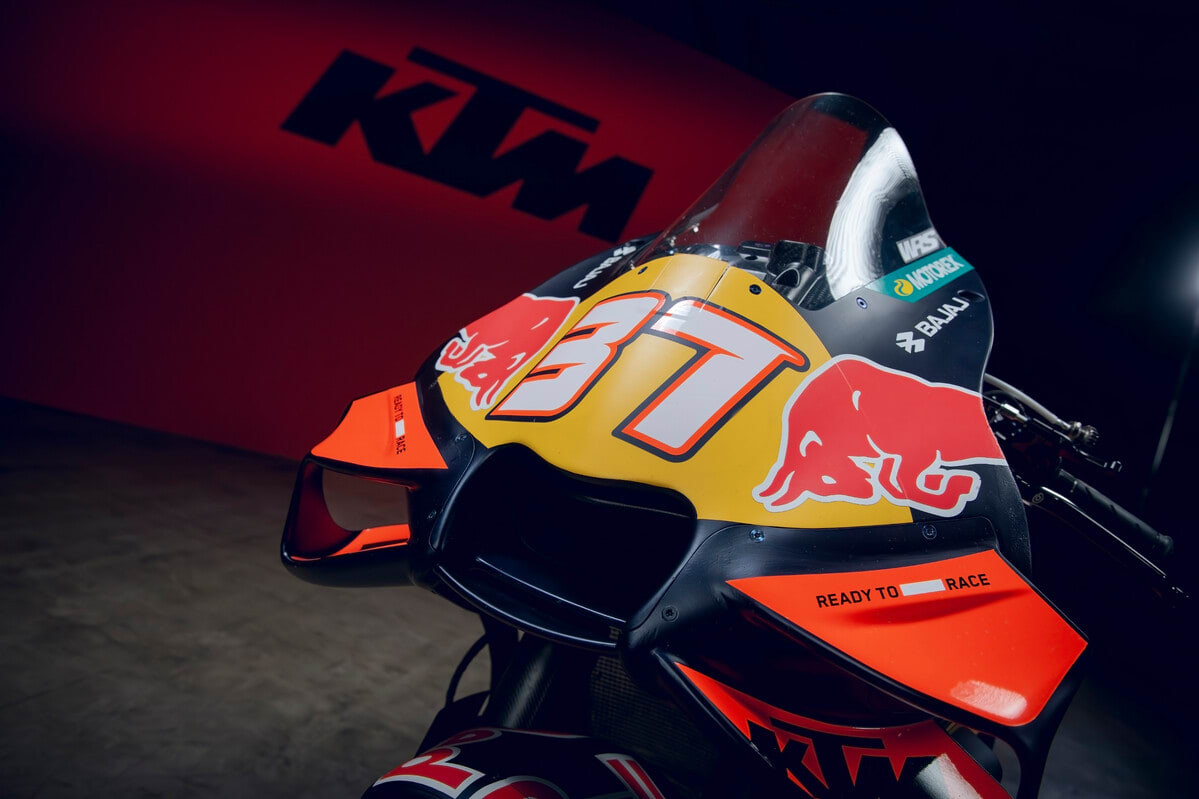
In Trevathan and his team (with several hand-picked members) top-billing at KTM and Red Bull favour, Acosta has almost all of the ingredients an elite-level athlete requires. The subject of the motorcycle remains loose in the equation. This means KTM could have a few weeks, laps and a couple of races to secure their generational talent. "I have to say that I'm impressed," Pedro also claimed in the wake of his visit to the factory for the official photoshoot and the traditional start-of-year bike-build for the race team "but we never know how much the other brands was working, knowing that in one year a new regulation will come."
Acosta's youth and his family's roots (we cannot underestimate the allure of a paycheck from another brand that doubles the salary) as well as his competitive thirst do not cloud his intelligent awareness that timing and strategy are critical to career progress. "It's quite difficult to know who will be the manufacturer to beat," he understated. "But it's true that I'm quite optimistic, after seeing how much KTM was working."
He is linked to Ducati, and that means a sensible bet in joining the current powerhouse of the series and a manufacturer with sharp experience of Pirelli tyres in WorldSBK. But it means ditching Red Bull and sliding into the pitbox next to Marquez; who has successfully vanquished every single teammate in his MotoGP stint, ending the careers of two. And, as a result of 2025, edging a Ducati legend like Pecco Bagnaia out of the factory team frame. Yes, Acosta is billed as Marquez's successor, but good luck as his main rival for the next 24 months while also developing a fledgling technical platform.
KTM POISED TO RETURN
Beirer did not carry the air of a man resigned to losing the rider that finished P4 in the world in 2025. The German has plenty of meetings in the agenda for the coming weeks as KTM need to agree terms with Dorna to continue in MotoGP (as do the other brands and satellite teams), rubber stamp the plan for the 850's development and investment and also bank Gunther Steiner's Tech3 squad association for the same term. Somewhere at the top of that pile has to come Acosta but also the other three racers… and all in-and-around a hectic phase of tests in Malaysia and Thailand, a championship launch in Kuala Lumpur and the first Grand Prix in the final week of February. The activities in Sepang will be crucial for all 11 teams in the series…but extra significant to how KTM can balance their assets.
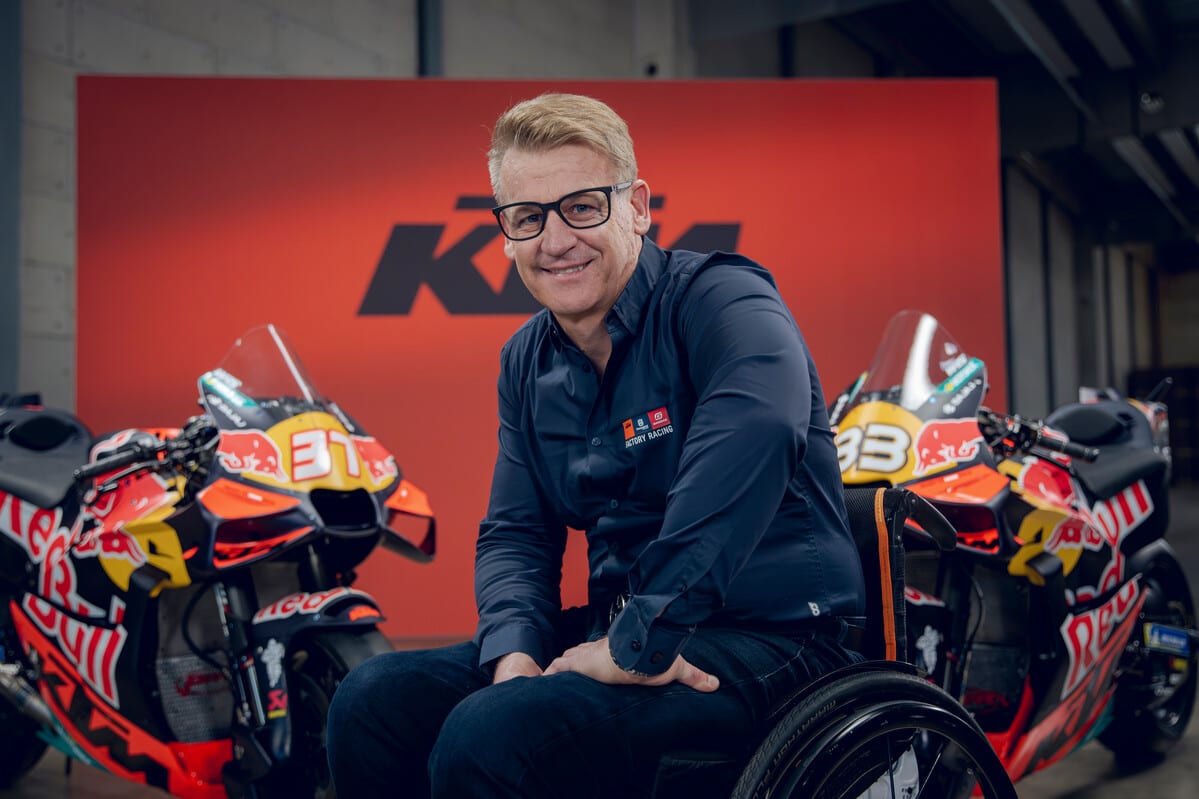
"He made no secret that he expects still another step on the bike [before] we're in the situation to give him a contract for the future," Pit told us. "We made a very clear plan how we're going to phase the beginning of the season and how we're going to phase the Sepang test. I'm pretty sure that also the Sepang test will be important to show not just Pedro but all our riders what we've delivered over the winter."
Thanks for reading OTOR! Subscribe for free to receive new posts and support our work.
"Now it's also time to make the framework on the contract side," Beirer continued. "I feel in the next four weeks everybody really needs to be sure that 'this is my partner who produces material which costs a lot of money and the resources…'. In the next 4 weeks I feel really important things need to be decided."
The fact that KTM were one of the first to display their 850 engine for MotoGP 2027, and shared video images of the bike's early rolling chassis testing during December 2025 is a positive sign that they will indeed be part of the grid until the end of 2031. "Even in all the difficulties for the company, don't expect that we could've built an 850 just because I wanted to build one,' he stressed. "I had to get permission from the board of directors and supervisory board to do so. That commitment was there a long time ago otherwise there'd have been no bike on track in December."
"Thanks to Bajaj we're still here," he admitted. "With their strong commitment, they saved the company. They gave us the chance to work, to repair and we are on a really good way to repair this company. Now we have all their backing to go into the future of MotoGP."
If Acosta does join the flurry of social media silly season chatter in the coming weeks, even before he'd raced the 2026 RC16, then KTM can still look to Binder's resilience and Viñales rejuvenation and perhaps even Enea Bastianini's unpredictable speedbursts. And then there is the matter of the KTM 'pipeline' and a certain 19-year-old by the name of David Alonso who could easily gobble some of Pedro's hype in the coming years of MotoGP.
Thanks to Neil Morrison and David Emmett.
Opinion: What about Marc? [ 21-Jan-26 10:55am ]
By Adam Wheeler. Photos by Falex/Ducati Corse.
Well-fed and watered, we were among the first to leave the mountaintop Spinale chalet on the second night of the 'Campioni in Pista' Ducati Lenovo Team launch, held in the snowy peaks of the Dolomites in northeastern Italy. Outside the restaurant that was populated by Ducati senior management and associated guests from sponsors and significant groups like Audi as well as a healthy media attendance, was a frozen 44,000-euro Panigale V4 R. Wallets were aching. Two of us entered the first ski lift capsule for the dark descent and return to the resort town of Madonna di Campiglio. Surprisingly, the second batch of people to exit the station at the bottom was 2022 and 2023 world champion Pecco Bagnaia, accompanied by his sister and PA Carola and his manager from the VR46 set-up.
It's possible that the recently turned 29-year-old was tired after long day of promotion duties showing off the new Ducati Corse factory colours for what will be his sixth campaign in that distinctive 'red'. But the fact that he left his teammate, Marc Marquez, shuffling on the small restaurant dancefloor under the illumination of content creators' mobile phones and with the bonhomie of figures like Ducati Corse General Manager Gigi Dall'Igna and Ducati Motor Holding CEO Claudio Domenicali for company was a stark contrast of circumstances. Speculation about Bagnaia's fate with the team and brand wafted invisibly over the first official day of 'Campioni in Pista', especially with recent rumours of Pedro Acosta's imminent deal with the Italians popping up online in the preceding days. Marquez, who has not raced a Grand Prix bike since October 5th, meanwhile revelled in the attention befitting of the company's third different world champion in four years and with the assurance of a man that is clearly feted and wanted by the Bologna-based firm.
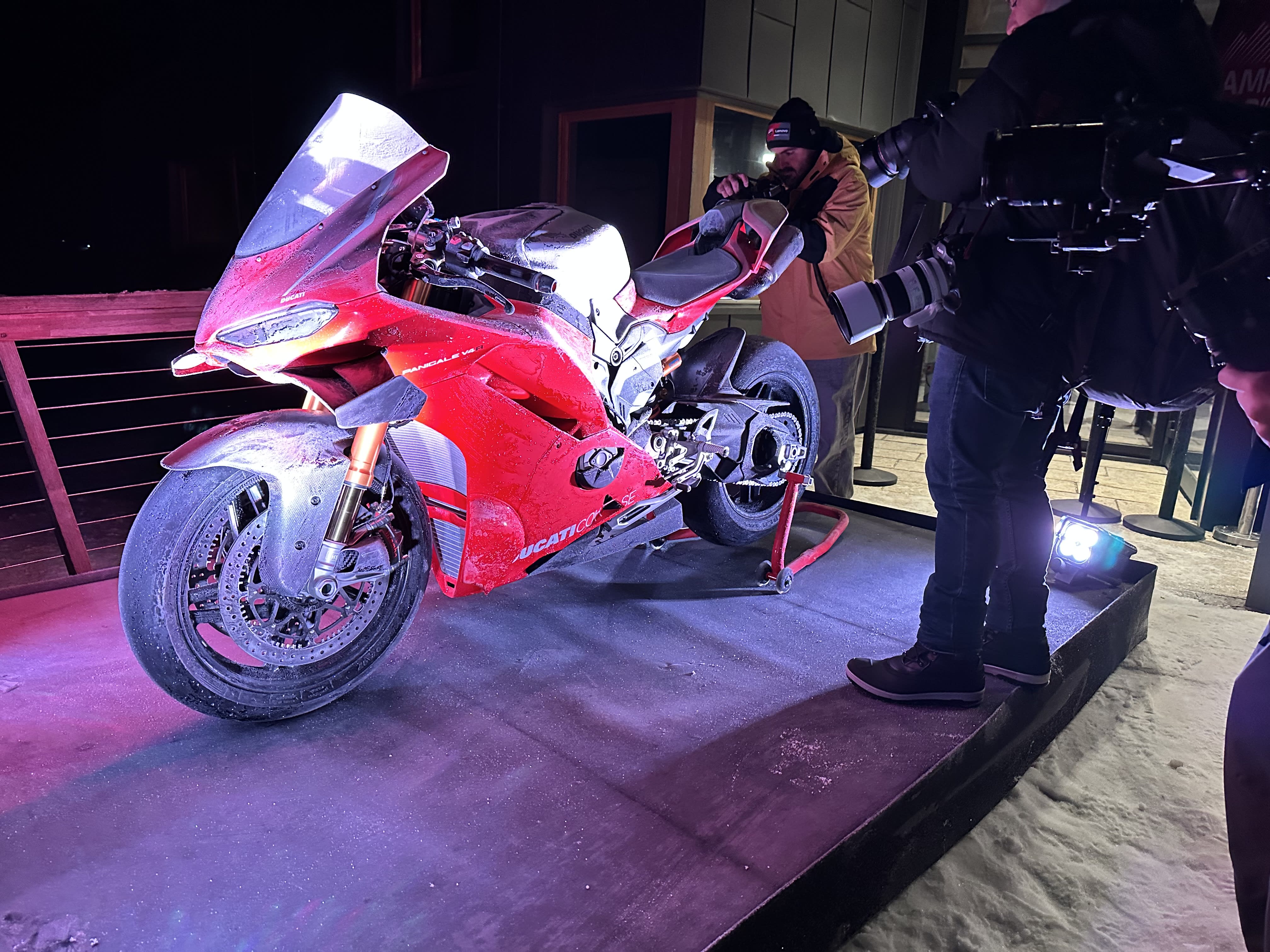
It was hard not to draw a parallel with the glistening, icy Panigale outside the restaurant doors and Bagnaia's apparent future with the Ducati Corse flagship effort. Bewilderment of the Italian's erratic competitiveness in 2025 after three glorious seasons has still not thawed either. From the entire MotoGP grid, only Fabio Quartararo and Brad Binder have been with their respective teams (seven years) longer than Bagnaia with Ducati Corse's flagship. Once again Marquez has dwarfed a teammate, even one as entrenched and celebrated as Pecco with his native brand.
2026 is a bridge year for MotoGP technology, the end of a contract window for the five manufacturers on the grid with Dorna Sports as well as satellite teams and brands. Of course, it will also be the final Grand Prix term for riders, either in the championship itself or with their current employees. As the series sorts itself out for the next five and two-year phases, the transfer stories and narratives arcs will be as fascinating and fervent as any of the -on-track action in the coming months. "2026 will be tricky, not on track, outside the track," Marc said to us in the post-presentation press conference. The clamour for confirmation of plans and the changes to the fabric of MotoGP means that a raft of announcements could surface earlier than expected, so teams and riders can dispel with endless questions and conjecture while they get on with the business of succeeding in the last volley of the current 1000s and then also charting progress of the development of the 850s.
Marquez, the second oldest rider in MotoGP, sits in the familiar position of being 'first' in this mire of mixture. The Catalan's eventual decision will arrange the subsequent spaces, the budgets, the priorities and the possibilities for his peers.
In Madonna di Campiglio Marc's replies to enquires about what he will do were not the first and will not be the last. A seasoned veteran of the game, he was giving little away but the team launch press conference was the opening salvo of questions for his timeline and considerations for possible fifteenth and sixteenth seasons in MotoGP and that Valentino Rossi-eclipsing tenth title bid.
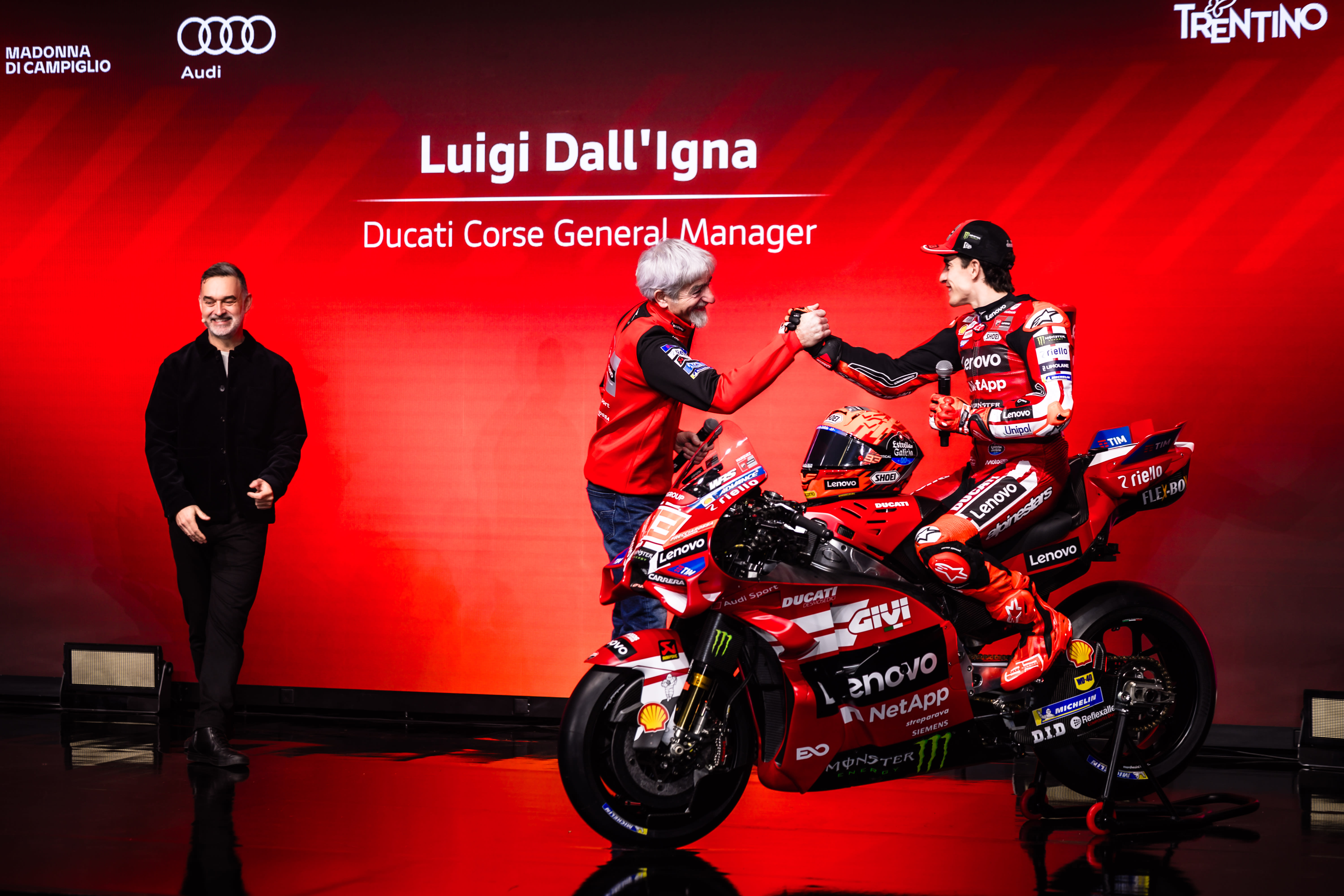
Why go again? Marc is clearly nestling comfortably in a plump Ducati bosom; voluptuous with potential for 2027 thanks to Ducati Corse's extensive experience with Pirelli tyres through their achievements in WorldSBK. Domenicali allegedly said to Sky Sports Italia that re-upping with their star was the priority. His seventh MotoGP championship and the glut of 11 GP victories in 2025 has not quenched the thirst. "I have a big passion about riding a bike," he had said on stage for the presentation. "But not [just] riding a bike, about competition. It's the best fuel I have in my body. And a season like 2025 just creates more motivation."
In the press conference he was more revealing. "I'm happy with my life, I'm happy with my work, if you can say 'work'," he added. "The most difficult challenge of my career I have already done, that was to come back [from his broken right arm]. Now if something [more success] arrives, it's welcome."
A final one-year sortie with the GP26 is unlikely, even if Marquez answered "nothing" to TNT commentator Gavin Emmett's question about what would be at the top of a wishlist for the forthcoming Sepang test. He might be content with his race bike based on the GP25 and with electronics and aero upgrades and final revision to Ducati's masterful rear ride height device to come for 2026, but if Marc continues as a Grand Prix rider then it will be for both 2027 and 2028. "If we decide to go forward, it will be a two-year contract…" he said. "The project of manufacturers are by two years. If not, it will not be a big benefit for the team and the manufacturer."
Why call it a day? As much as Marc blurs the separation between work and passion, 2026 will be a busy year for him. His profile means a loaded calendar of promotion requirements for his employer as well as MotoGP itself. The requests will be dizzying. You have to wonder why he isn't already tired with the periphery of the circus before then contending with the pressures of the paddock and the demands of the travel. Then, there is the physical wear and tear of 107 crashes in the last five years and the nagging doubt that his right shoulder is still not quite ready. "If you asked me two weeks ago, I would say, 'hmm, so so'," he said, earnestly, about the current state of the joint. "But as [with] every rehabilitation or recovery, we have some ups and downs, and now I start to feel better and better. I don't know which percentage I am, because I don't know what will be my 100%. I think it will be the same as before, but I need to analyse this and try to discover."
Marc also hinted at the drain of yet another circle of recovery. Something he's already frustratingly familiar with after the four operations it took to get him race ready between 2020 and 2024. "Yeah, another year we did a long winter, tough winter, about the mental side because a lot of physiotherapy sessions," he half-sighed "and a lot of gym sessions with low weights."
Ducati deservingly flaunted their MotoGP feats in numbers through the presentation: 1-2 in the championship, a third Triple Crown (Rider, Constructor, Team titles), 17 GP wins from 22 in 2025 (and 44 podiums) and 6 of the first 8 riders in the standings. Although its unlikely, there is the slim possibility that they don't hit the mark with the 850 for 2027. Ducati Corse could get it wrong. 2027 will scramble the paint palette of MotoGP and the dominant hue of scarlet could well turn another shade. Marc might re-enter the basin of frustration that he found in his last two years with HRC. "Nobody can promise the best bike," he warned. "You have to feel and follow your instinct what is the best project for yourself."
Thanks for reading ! Subscribe for free to receive new posts and support our work.
Realistically, where could he go? A reunion with a resurgent HRC seems the most imaginable factory move. Aprilia would not sit right, KTM would struggle for budget and Yamaha is a different type of project. Marquez speaks in glowing terms of his one-year experience alongside brother Alex at Gresini, so that would be the next most logical choice if he wants to copy Rossi's graceful ease into retirement outside of 'works' status, but it would also make little sense for arguably the series' all-time greatest rider.
Marc's sensitivity to Bagnaia's situation led him to lament the speediness with how 2027 and 2028 will undoubtedly be cemented. He said of the pecking order: "It's not fair, but it's like this."

"I would like to go more forward and wait a bit more and decide our future mid-season," he added. "[But] I think some riders will close already before the first race. It's true that I'm one of them, we are in conversations, but I need to analyse everything, what is the best for my professional and personal life."
Bagnaia could already be out of Ducati Lenovo. If not, then he might only have a handful of races to prove that 2025 was a brief mind-bend. Thanks to 31 GP wins to-date and those two titles he is already a Ducati 'legend' but six years could be the point where both rider and team need to refresh. Pecco's career prospects with Ducati will endure if he takes the easy option of steering a Desmosedici from the VR46 squad because if MM93 sticks around for another brace of seasons then it's quite clear who will be bringing the heat.
First reaction: Aprilia 2026 MotoGP Launch [ 15-Jan-26 12:22pm ] HRC on initial Jeffrey Herlings tests: "We did not expect everything to go so smooth and easy." [ 15-Jan-26 9:48am ]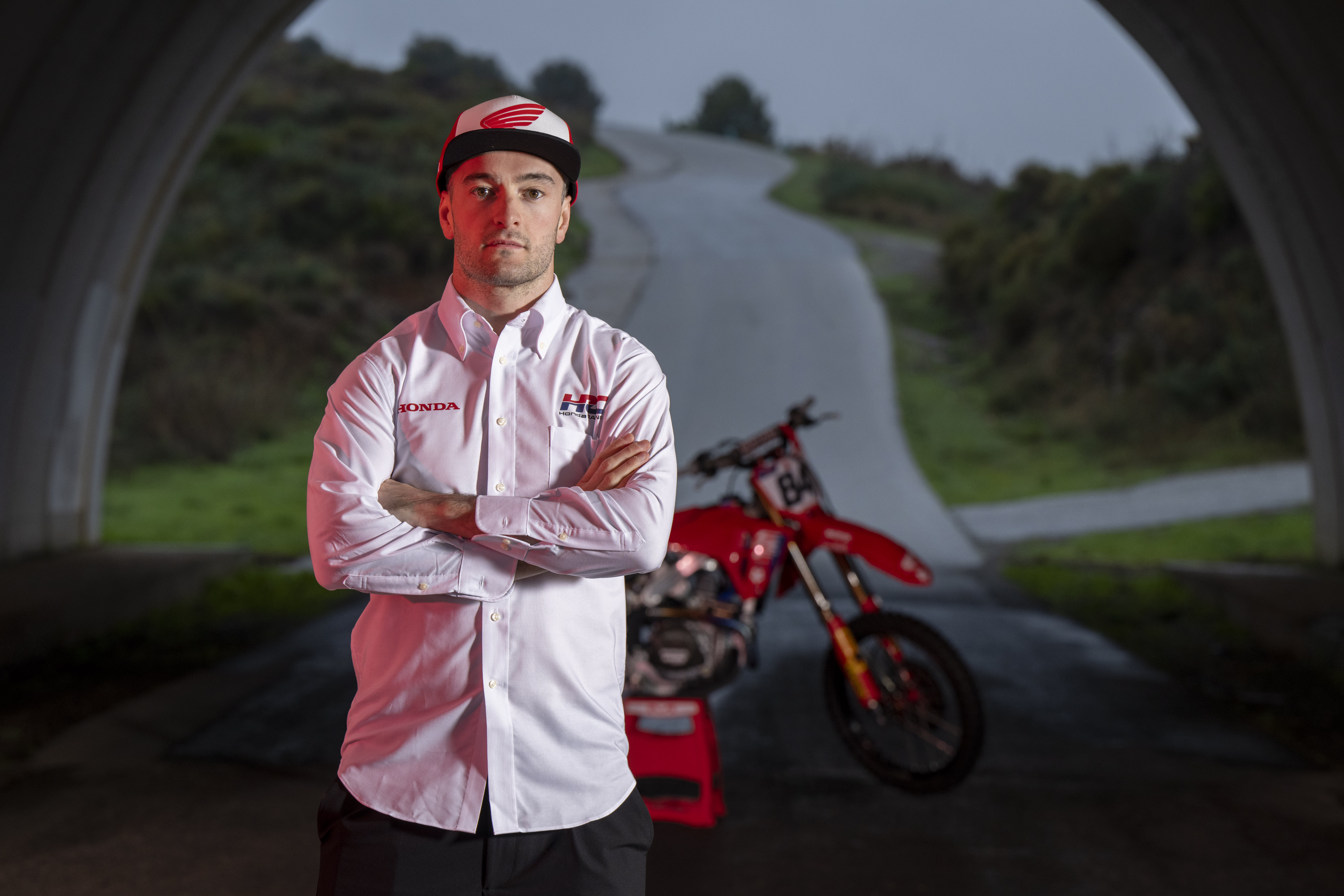
By Adam Wheeler. Photo by Shot by Bavo.
Five world championships and a record tally of 112 Grand Prix wins give 31-year-old Jeffrey Herlings a hefty distinction in FIM MXGP (the series reaches its 68th year of existence in 2026). The fact that the Dutchman achieved every single success with Red Bull KTM means his jump to HRC represented a seismic shift in the landscape of Grand Prix. Herlings' two-season agreement with the Japanese is perhaps the biggest rider shake-up this century because of what he achieved and symbolised with KTM: the orange 84 pervaded over both the MX2 and MXGP classes whether he was dominant on track or absent through injury. Herlings either ghosted his rivals or was a distant spectre; his excellence lurking in the background of the results sheets that he couldn't penetrate.
Austria for Japan/Italy, 450 SX-F for CRF450R, Alpinestars for Fox: from January 1st Herlings abandoned every consistent staple of his career since he impacted the world championship as a shining 15-year-old in 2010.
The change to Honda occurred through the period of uncertainty at KTM last summer and the offer of a strong contract from HRC that had mitigations for injury (there was no clause in the fine print). After sixteen seasons in orange, Herlings was also attracted by the novelty of possibility: the motivational benefits of a void outside of his comfort zone. According to sources close to the racer, he had doubts about the move before and during (even after) the process but forged ahead with his decision. The duration of his outgoing KTM deal meant he could not ride a Honda until January 1st 2026 and officially replaced Yamaha-bound Tim Gajser - a five times champion himself and Honda stalwart since 2015 - at the turn of the year.
The factory unit have then been doubling down with Herlings who will have to adjust to alternative suspension beyond WP and an aluminium chassis. "To have a little taste of Honda we gave him a production bike, all stock, from January 1st," Pereira tells us. "He rode quite a few times before we arrived with all the Japanese, all the engineers and the whole crew and then we switched to the prototype."
Like teammates Tom Vialle (also new to HRC after seven terms with Red Bull KTM in MX2 and then AMA 250SX and MX) and Ruben Fernandez, Herlings will race the factory pre-production CRF. Vialle completed tests in November and raced the Paris Supercross for his debut. Fernandez, who will begin his fourth campaign as an HRC rider, rode the new model through the second half of the 2025 championship and to 4th place in the MXGP standings.
Herlings' initial laps with HRC was an exercise of acute acclimatisation. While both parties are clearly in a honeymoon period and any progress with feeling, speed and potential are positive steps, there is an urgency to get '84' ready to tackle the likes of world champion Romain Febvre and former teammate Lucas Coenen as well as incoming MXGP rookies like Kay de Wolf and Andrea Adamo. According to Pereira the process was effective. "We already had already some idea what we're going to face and what we were going to test with him but you never know until the first day," the Brazilian said. "We were trying to get a base bike that we think that will suit for him very well but being 17 years with a different manufacturer, it's not easy. However, we were together 12 hours a day for three days solid and he was really happy: learning the team, learning how the bike handles, what he needs from the bike, what he needs from us, and also what we need from him. To be honest, I was also really happy. I think nobody from the HRC or the team expected that everything would go so smooth and so easy."
Pereira said that Herlings was extremely curious. For the team it meant a different working approach after a decade of orientating their championship hopes around Gajser. "Tim was with Honda for a long time, so let's say, testing-wise, we knew what he was looking for and we knew the requests. But with Jeffrey everything is new, so there are many questions and many ideas. Things coming from his mind and what he wishes for engine character, suspension and handling. But, in a short time, we were able to give him a base."
Thanks for reading OTOR. Subscribe for free to receive new posts and support our work.
"Both riders [Herlings and Gajser] are really professional," he explains. "Both riders really know what they want because they are both on that high level. The requests for the specification are always met with the best we can give because we like to be on that level as well! But with Jeff there's more questions than usual for us!"
In terms of different bike set-ups for the two championships, Honda are still in the exploration stages but the latest generation of the CRF means the '84' might already have alternative parameters to what HRC had to shape for Gajser. "Tim never rode the new prototype, so it's kind of like a 'reset'," Pereira says. "But it's not a big deal for us and the Japanese can meet the requests Jeffery has."
Herlings' Honda debut will come on February 8th in the shallow sand of Mantova for the second round of the Internazionali d'Italia. The whole HRC line-up will compete in Italy. Herlings will then enter the Hawkstone Park International in the UK the following weekend with Vialle while Fernandez and HRC MX2 rider Valerio Lata will ride the opening dates of the 2026 Spanish Championship. MXGP begins in Argentina on March 7-8.
De Wolf talks 2026 MXGP move [ 20-Oct-25 11:01am ]
By Adam Wheeler. Photos by Ray Archer.
Kay de Wolf has ended a strong half decade in the MX2 class of the FIM Motocross World Championship and will bump into MXGP at the age of 21 for 2026. The Dutchman will steer a factory Nestaan Husqvarna FC 450 and is expected to be part of an official six-rider Austrian works line-up; three of which in the premier division (along with Lucas Coenen and Andrea Adamo). In the wake of Jeffrey Herlings' departure from Red Bull KTM colours after sixteen seasons, De Wolf ensures that the Netherlands will still have factory representation from the depths of Mundering.
Husqvarna confirmed the news last Friday for 2026 as De Wolf continues his association with Kay Henneken's team run by Rasmus Jorgensen and a squad he joined as a teenager for EMX125 in in 2019. Ironically De Wolf made the decision for his future (and for the last year of his current deal with the KTM Group) at the 2025 Motocross of Nations in the USA where he won the MX2 category. "I had to think about it. I missed the deadline by over a week!" he smiles when asked about the choice between another term in MX2 (he could still race another two, based on the 23-year age rule) and the entry to MXGP.
De Wolf should join other MX2 champions like Maxime Renaux, Tom Vialle and Adamo (both also potentially making their MXGP debuts in 2026) on the 450 while incumbent #1, Simon Längenfelder, has opted to try and become the first back-to-back MX2 title winner since Jorge Prado in 2019. Kay (pronounced 'Ky') has finished 7th, 6th, 6th, 1st and 2nd in his five MX2 campaigns and waves farewell to the competition after two years of last race, last lap championship finales.
"A new chapter and it's the right time," he says, exclusively. "I wanted to defend my 250 title in 2025 and I was doing it pretty well despite some injuries."
De Wolf's biggest obstacle was the spell of three consecutive race in France, Germany and Latvia, and then the British Grand Prix at Matterley Basin. He finished 13-3-3-10 at those events. "I went through a lot of pain: France was bad," he explains. "I'd twisted my right ankle and there were a lot of right-handed turns! The tiniest touch or tip on the ground can ruin your whole race with an injury like that. It was the first of a triple header and those things just don't heal that quickly. I went to Germany and was trying not to touch the ground with my foot and ended up doing down on my shoulder. I could not raise my arm. Going into Latvia there was a lot of rain. I didn't have power in my right shoulder and couldn't put my right foot down. I crashed quite a few times there. It was a rough set of GPs and I learned how to charge myself-up mentally and that's something I can take into the future. It was a big learning lesson; going through that pain barrier."
He was then only minutes from re-stamping his champion status at the storm-hit second moto in Australia. His water-logged bike expired a lap before the red flag in Darwin for what was a dramatic and sensational closer to a season where De Wolf had chased Längenfelder and also dealt with Adamo for long stages. "I gave it all I had," he recalls. "That's why I have no regrets. I could hear the water in my engine and I was kinda prepared for it. The lap before it died I was actually hopeful because it sounded better but then I had to go through a puddle that I could not avoid. I tried everything to miss that water because we had information from the team that Simon was quite far behind. I missed it by two minutes but as soon as I walked back I was quite neutral because we gave everything. That's why I've slept well ever since. The whole team gave it all."
De Wolf had travelled to Australia trailing Längenfelder by only 16 points. He lowered to 13 after Saturday's Qualification Heat and then only 10 in the wake of the first moto. The tension meant some close calls between the pair on-track. De Wolf was criticised by some for his tactics when he passed his German rival. "I had people saying they wanted to kill me afterwards," he grins. "I laughed with it. In my opinion he still had an 'open ticket' from Turkey last year and a really unnecessary pass that could have ended my 2024 title. A lot of things happened after that race and a lot of opinions. People can say what they want…"
Thanks for reading OTOR! Subscribe for free to receive new posts and support our work.
Despite the low moments and flashes of controversy, De Wolf was otherwise exceptional. He won the most Grands Prix, the most motos and totalled 15 podiums from 20. His perfect weekend of topping every single MX2 period or outing at Lommel for the Belgian Grand Prix was a masterclass. Now he has drawn a line under the year and his career chapter.
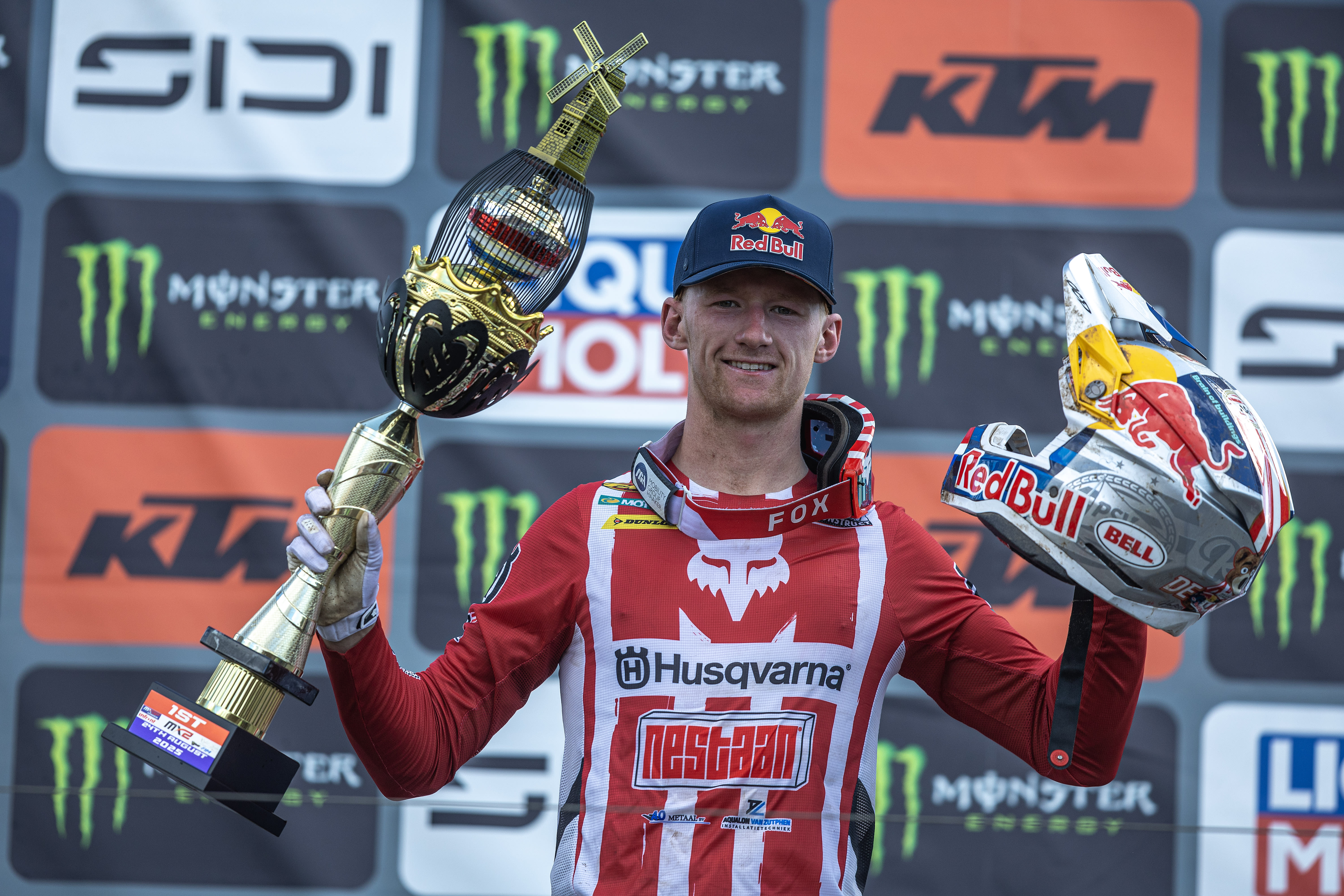
Rather than aspiring to a dizzying rookie season like Romain Febvre (2015), Tim Gajser (2016), Jeffrey Herlings (2nd in the championship with 6 victories in 2017) or Lucas Coenen (also a runner-up with 13 trophies in 2025), De Wolf is being modest and realistic, while also anticipating a contest against the likes of Herlings and co. "It's not just about racing my heroes but learning from them and hopefully take that experience into later years and chase the world title," he said pre-emptively of 2026.
There is cause for optimism, however. De Wolf was one of the tallest and heaviest riders in MX2; a reason why he was comprehensively defeated in Grand Prix holeshots. His technique also lends itself to the greater torque and output of the 450, much in the same way as former teammate and title foe Lucas Coenen. "A lot better than a 250 actually," he says of the suitability of his style for the extra cc's. "I ride it smoothly compared to the 250. Because of my weight I have to hang-it-out on the 250 more whereas on the 450 I have it more under control. It's really enjoyable and I've already shown some good speed on different tracks."
Nestaan Husqvarna will again split classes with De Wolf in MXGP and Liam Everts in MX2. The team last divided their efforts between two bikes in 2024 when they fielded Mattia Guadagnini on the FC 450.
"It's definitely going to be different next year." Tim Gajser anticipates biggest career switch yet after HRC swansong at the 2025 MXoN [ 18-Oct-25 11:01am ]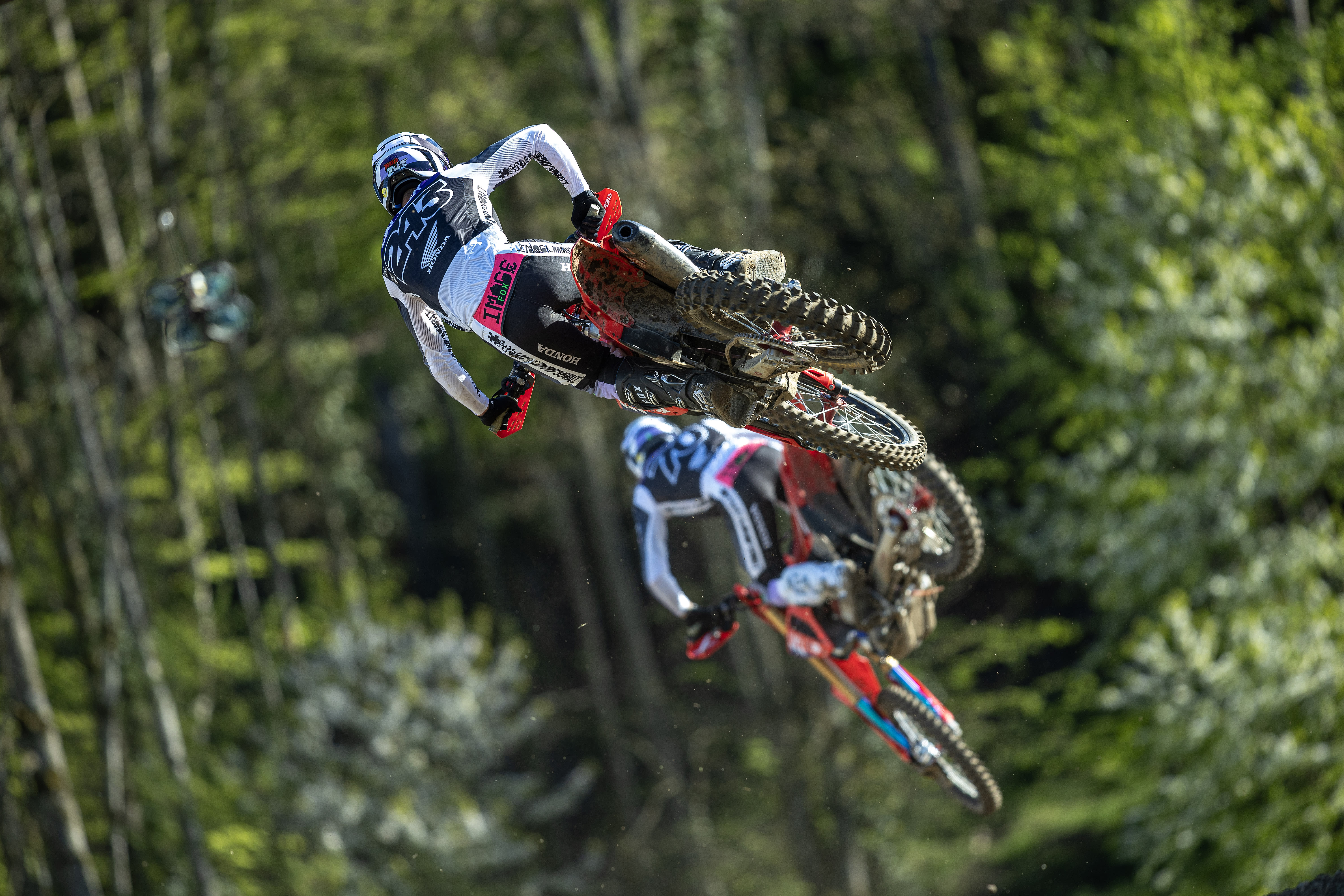
By Adam Wheeler. Photos by Ray Archer.
Tim Gajser could not defeat brandmates Hunter and Jett Lawrence for a second year in a row at the Motocross of Nations this month but the decorated MXGP racer at least gave Honda a farewell top three with 3rd place in the MXGP class in Indiana.
Gajser, along with Jeffrey Herlings, is set to embark on two of the biggest team and manufacturer changes in modern MXGP history. The 29-year-old, who first represented the Japanese in 2014 and from the confines of Giacomo Gariboldi's team in MX2, killed the engine on an -eleven season association with the factory in the USA, and a union that delivered five titles and over 50 Grand Prix victories (putting him 5th on the all-time list). Gajser famously won the premier class division in his first term with the CRF450R in 2016, which was also Honda's first success in the blue ribband competition since 2000.
2025 started positively for #243 with five consecutive podium finishes, including three wins, but then he controversially hit a partially concealed marshal's mound at Frauenfeld for round six of the series and sustained a displaced right shoulder. He missed nine Grands Prix after surgery and returned to grasp one more trophy with a runner-up classification at the penultimate round in China.
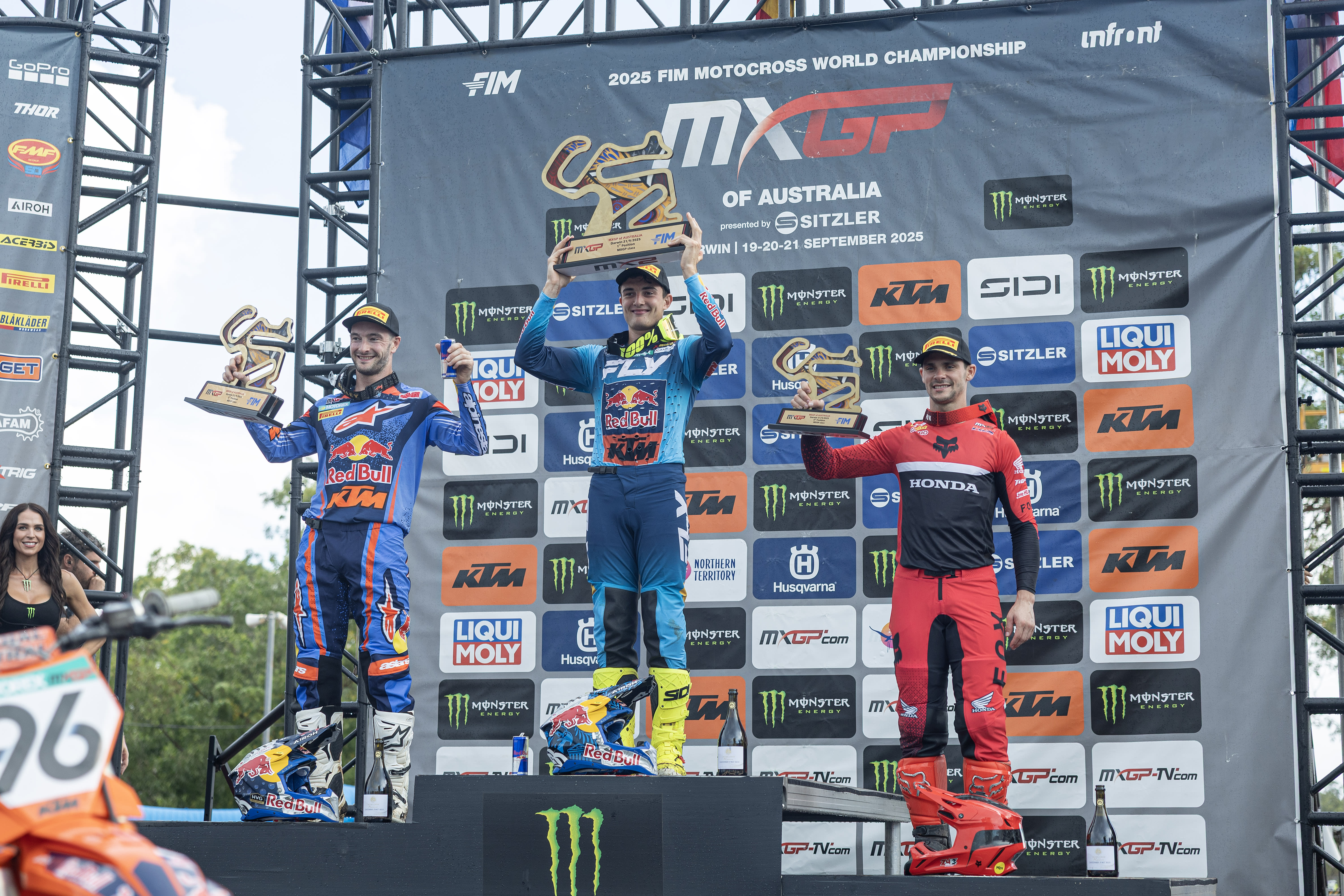
"I had a really comfortable lead, over 50 points, but then the crash happened in Switzerland," he explains. "I gave my best to come back as soon as possible but when I tried in Agueda [Portugal, round seven] it was too damaged. Surgery…and then it [recovery] took way-longer than expected. Without that crash I felt like [2025] was my season…but this is the sport sometimes."
Thanks for reading OTOR! Subscribe for free to receive new posts and support our work.
At Ironman Gajser still wasn't quite back to total fitness. "I still don't have full mobility of the shoulder, but we are working on it and it will be 100% for next year," he said in the paddock in Indiana. "In the last two GPs the speed was there, and Ironman was another step in the right direction. I can go motivated into the off-season: many changes! I'm looking forward and I'm excited."
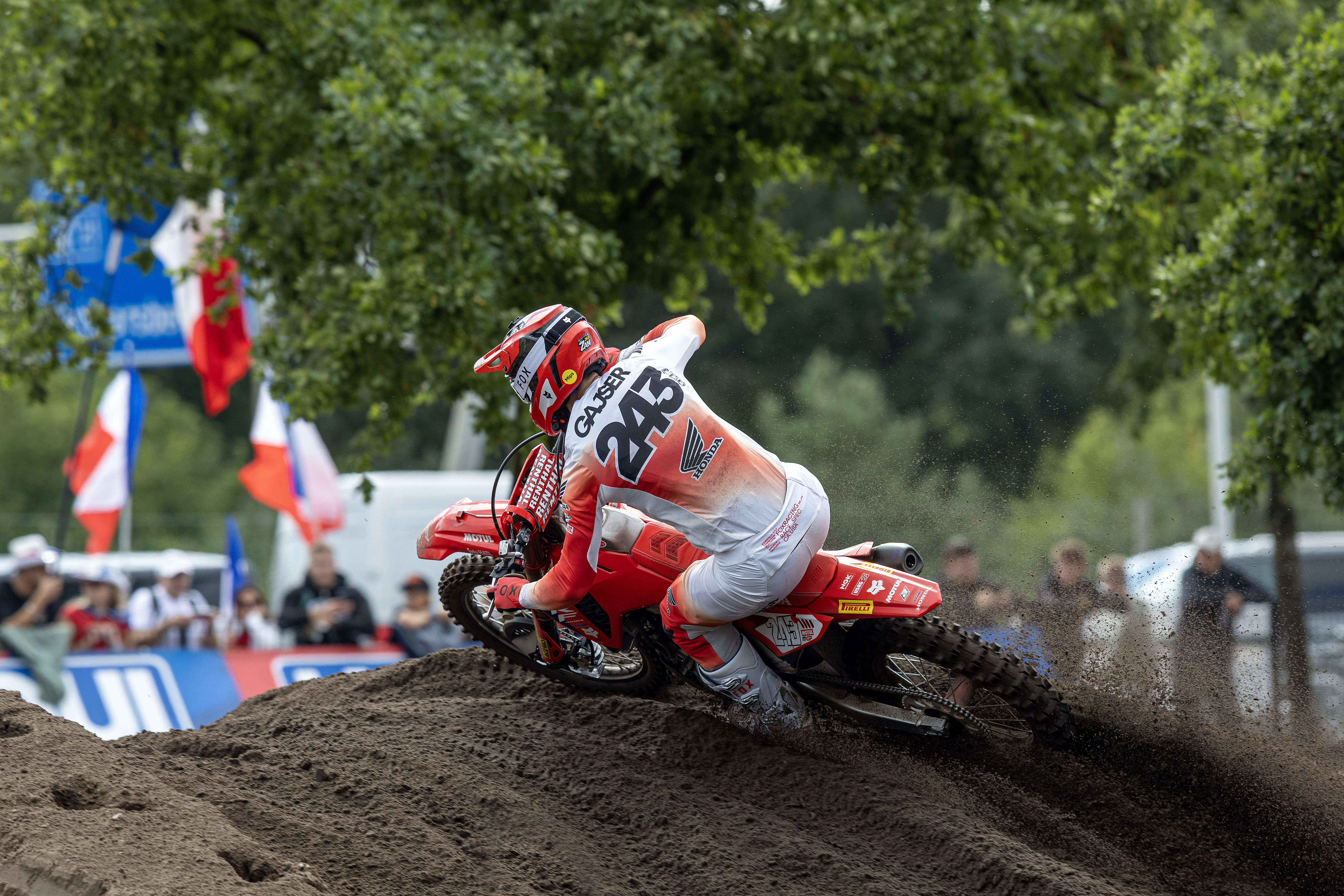
During his recovery this summer, Gajser had been negotiating another new deal with Honda but the company had their head-turned by the prospect of Jeffrey Herlings, and enticed double MX2 world champ and AMA 250SX #1 Tom Vialle back to Europe. Gajser, allegedly, found a willing new employer with Yamaha.
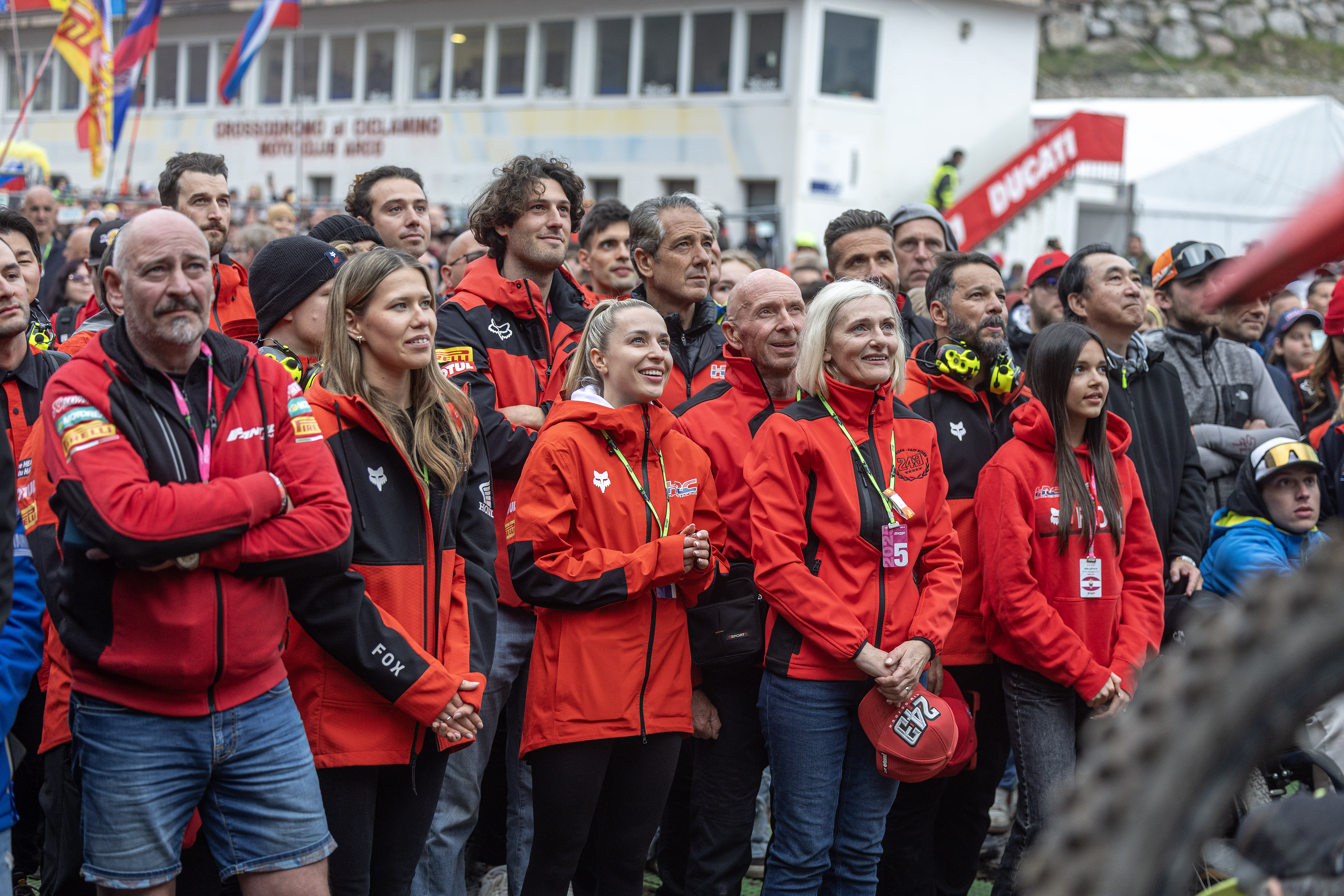
"Strange that it was my last race on a red bike," he said on Sunday at the MXoN. "I have been with Honda since the end of 2013, twelve years is a long time! It's definitely going to be different next year but sometimes a fresh beginning is also good. I am always super-motivated - motivation is never my problem - but it gives me something extra: to go on a new bike, do the testing, see how it feels. It will be good!"
Yamaha have yet to confirm Gajser's deal, and the identity of his teammates. Honda meanwhile are also in a contractual bind with KTM to announce Vialle and Herlings, although Vialle should be declared prior to his debut appearance at the 2025 Paris Supercross in mid-November. Ruben Fernandez - the third CFR450R racer for 2026 and on the pre-production model of the latest generation of the bike - should be announced as part of the overall team roster.
Renaux on MXGP Yamaha future: "It is not really in my hands anymore." [ 17-Oct-25 4:16pm ]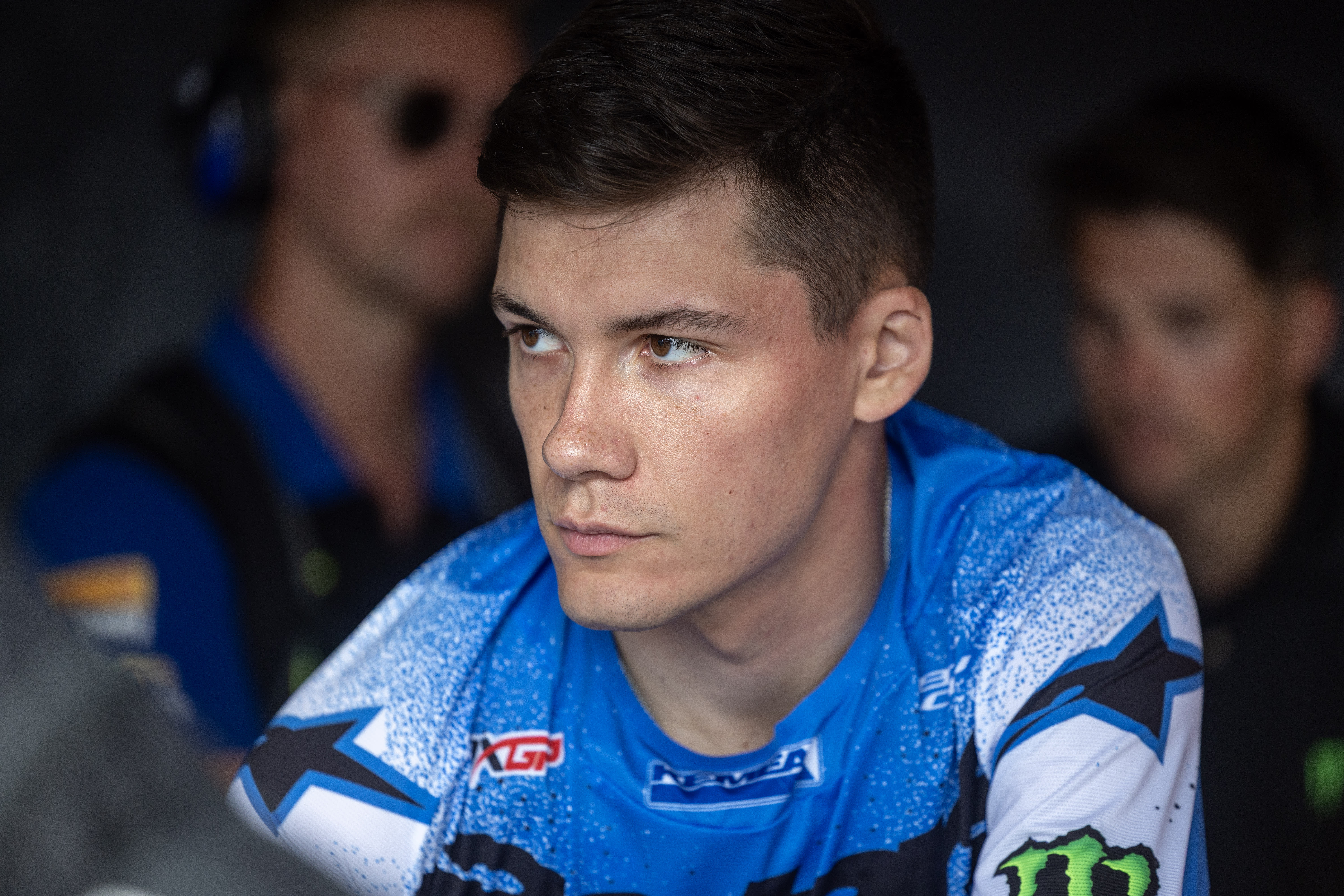
By Adam Wheeler. Photos by Ray Archer.
There is still no official news about Maxime Renaux's contract status with the factory Monster Energy Yamaha team but the luckless 25-year-old, who recently helped Team France to the third step of the podium at the 2025 Motocross of Nations, indicated that his future with the Japanese is far from clear.
"Still to be decided," he said exclusively at Ironman Raceway. "There is a chance obviously…but it is not really in my hands anymore. I gave my opinion. I need changes."
Despite having another term to run on his deal with Hans Corvers' team, Renaux has been linked with a premature departure and has caught the attention of Ducati Corse Off-Road who are on the brink of announcing their link-up with Louis Vosters' unit (who had fielded Fantic machinery for the last two seasons) and had dissolved their partnership with Mattia Guadagnini, leaving a slot next to Jeremy Seewer open for 2026 and the second year for the developing Desmo450 MX project.
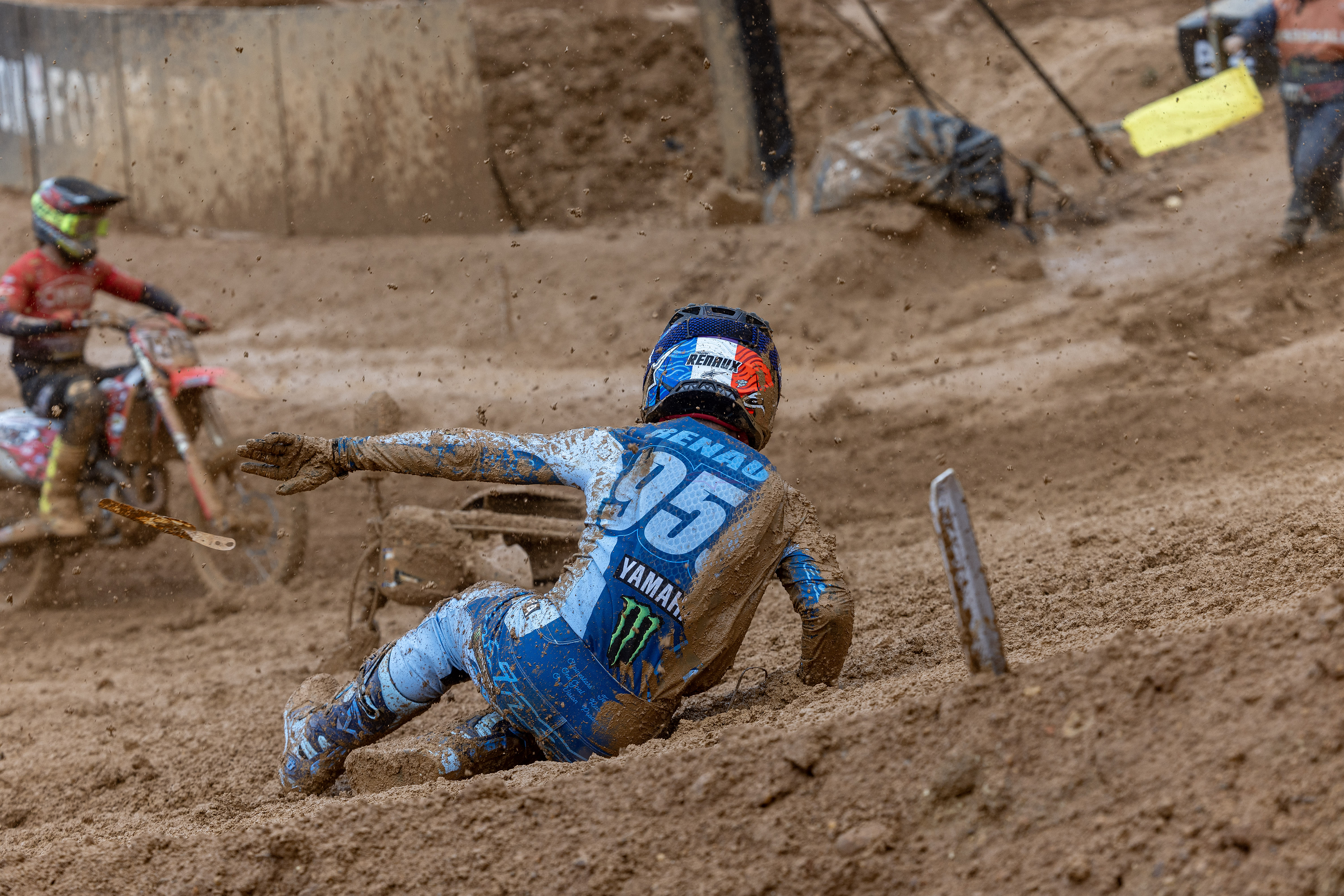
Renaux's frustration has stemmed from a third injury-hit season in a row. He won the opening round in Argentina, but then hurt his right hand, broke some ribs and cracked the top of his femur, effecting his hip area. He has appeared on an MXGP podium just once since the end of 2023. Although Renaux has rarely been 100% in 2025, the Yamaha YZ450F has also been lacking silverware compared to the Kawasaki KX450F, KTM 450 SX-F, the Honda CRF450R and even the Yamaha-based Fantic motorcycle ridden by Glenn Coldenhoff to P3 in the championship. Jago Geerts struggled to become a consistent top ten runner and broke off a career-long spell with Yamaha at the beginning of this week. Calvin Vlaanderen at least salvaged something for the Belgium-based crew with three 3rd positions this year and seems to be the sole constant for Yamaha with five-times world champion Tim Gajser also incoming.
"I came out of a very strong winter and was ready," Renaux recounts. "I won the first race of the season and then it went from bad to worse, injury after injury, and then always trying to recover. I pushed with a knife in the teeth. I went through hell this season and the biggest pain I've had while riding. A broken hand, a broken femur head. I was fighting all the time and the body took a big hit because of that. Of course, mentally, it's not easy to ride injured and you develop bad habits. I'm definitely looking forward to an off-season! And starting from a blank sheet to build up to next season."
"I need to put everything flat, whatever the future will be, and start from new," he added.
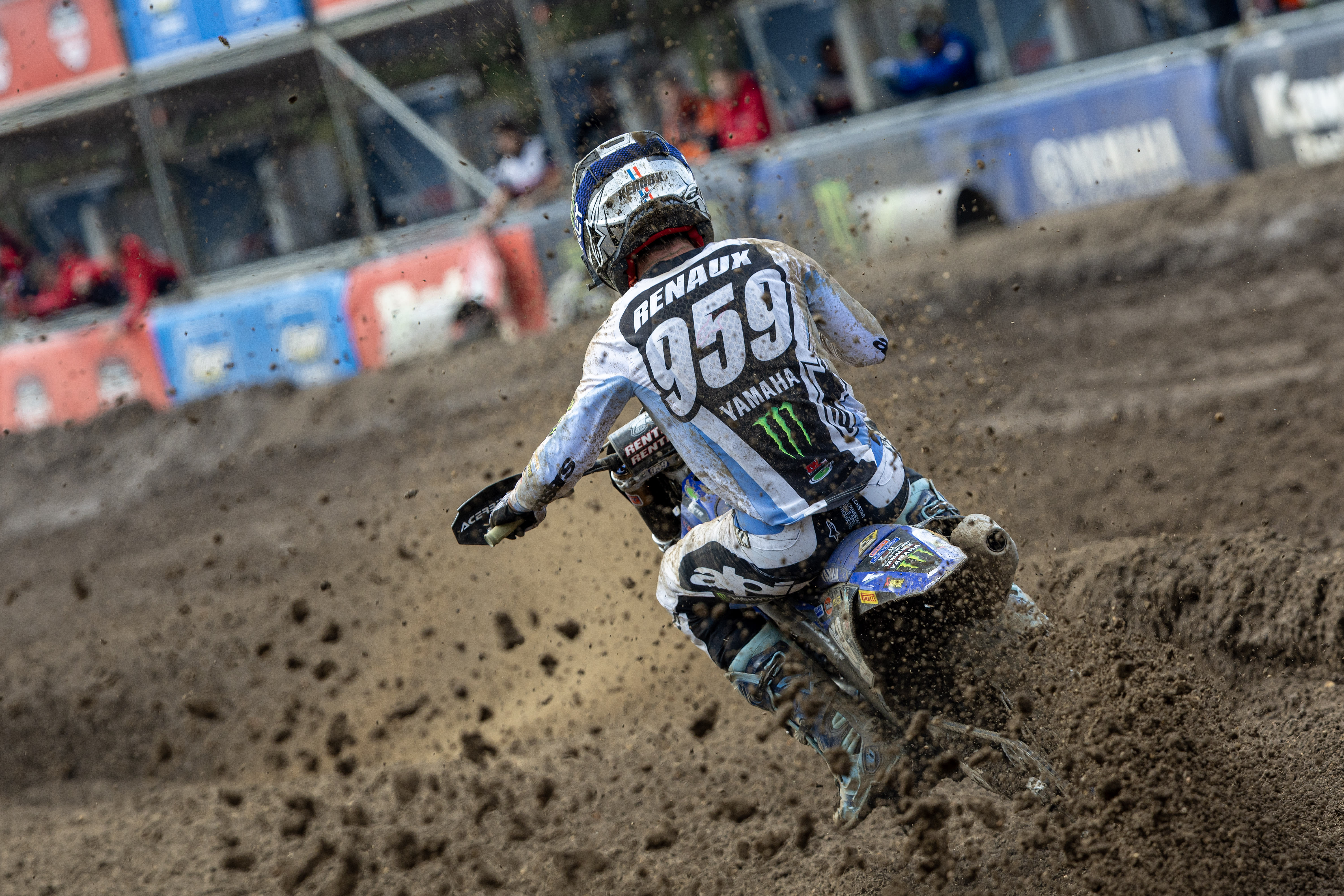
At Ironman there was talk that Yamaha would hold Renaux to the final year of his contract. The dispute is entering the final stages as both parties need to start their planning phase for 2026 testing. Although battered, Renaux insists he can return to be a major name in MXGP. "The hip was a bit better but not fully cured and I'll have a check-up as well as some real rest, which will help a lot," he said of his state at the MXoN. "The goal is to build up again. I'm not dealing with an injury like my foot in 2023. It's not as bad as that and I'm confident I will be back. I just need some time, and to erase all the suffering and bad habits. I need to start from the bottom and build up, and I've done that a lot of times in my career with some huge injuries. I know I'm capable of it. Hopefully we'll see again the real me."
MXGP currently waits to see whether that fast #959 will appear in blue or red.
Ai Ogura on his love for motocross and how the challenge of the dirt helps fuel the need for excellence elsewhere [ 02-Sep-25 2:40pm ]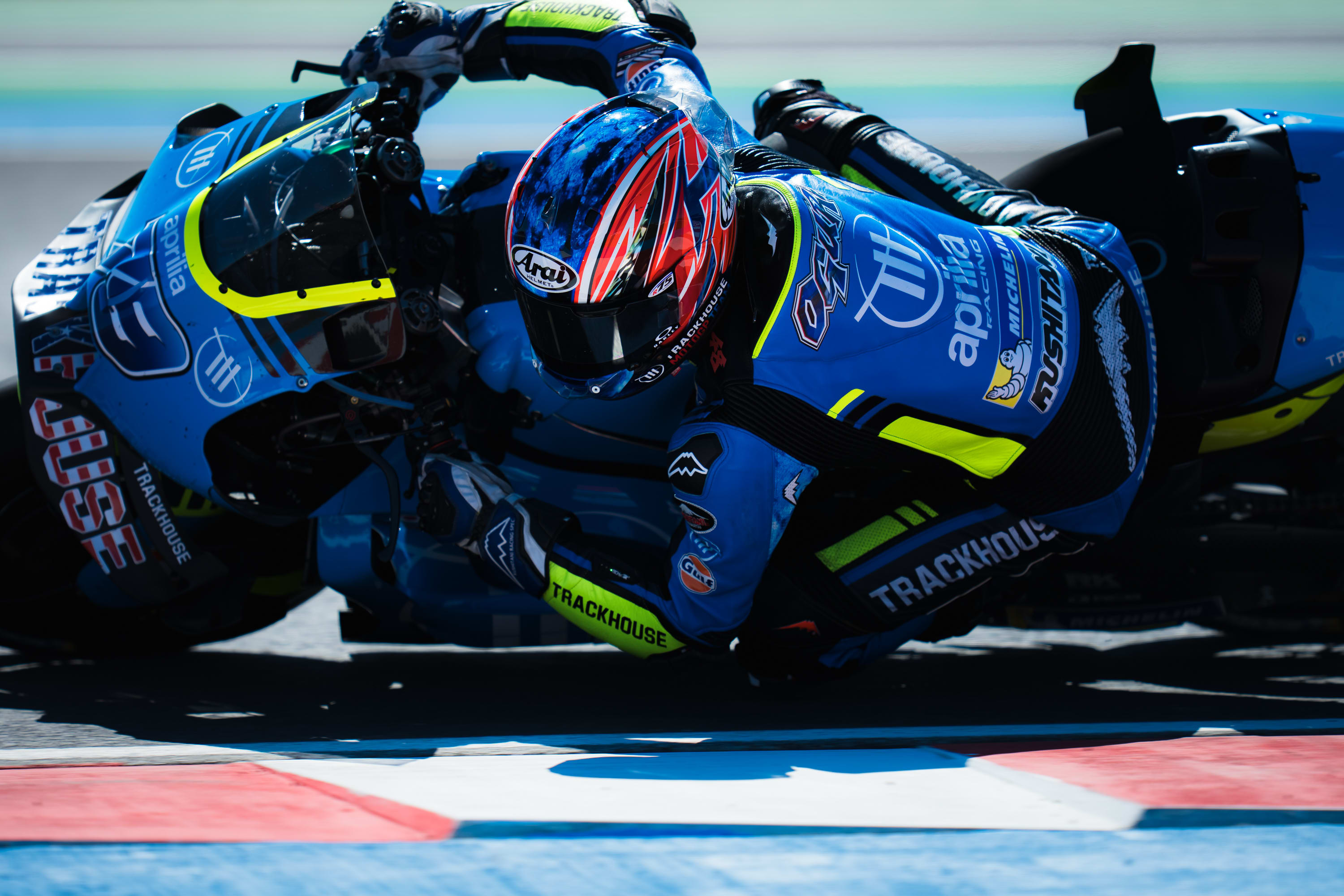
By Adam Wheeler. Photos by Trackhouse Racing.
"I love motocross…!" a slow smile breaks across Ai Ogura's face. The 24-year-old Trackhouse Racing rookie and Aprilia rider has had a bumpy rookie MotoGP season. Good results and fast speed have also come with injury, education of the RS-GP's complexity and drops in form. He has also had to adapt to the American team's culture and their desire for stories and content, as well as the increased media demands from TV and the press. 2025 has been something of a whirlwind so far and the Japanese sits down for an interview expecting the same ream of questions about being the new boy in the category.
Having been tipped off by the ever-amiable Trackhouse press officer Maria Pohlmann and one or two of his mechanics that Ogura's current passion lies on the dirt rather than the tarmac (and it also serves as his main form of training, even if he did sustain a broken arm due to a motocross mishap in 2023) this interview was destined for another direction. Ogura's eyes widen slightly in surprise at the topic of discussion.
Over the course of the following 20 minutes at the Dutch TT, Ai's explanation of his fondness for the dirt helped shed some light on his alternative approach and philosophy. The slow-speaking and reserved racer has a very 'Zen' outlook; and even bemused his Trackhouse team during pre-season tests and the first events of the year by refusing to get rattled by the scale of the task ahead of him and the adjustment to 300bhp+, Michelin tyres, ride height devices and more.
Ai's chat is earnest but reserved. It gives him an air of mystery, but talking about non-MotoGP subjects creates plenty of smiling, a few laughs and seems to make him feel at ease. You cannot help but wonder if the same placidity feeds directly into that economic and elegant riding style for the RS-GP25
Ai, do you prefer a 250 or a 450?
I've tried a 450 maybe three or four times in my life! So, a 250.
You're based in Catalunya right?
Yes, Castelldefels.
So, some decent tracks to choose from…
I always go in the direction of Girona. Tracks like MX Golf, Vallgorguina. I just started training more in 2025 so I am still finding tracks.
Are you quite disciplined with the riding? Do you make motos and time attacks?
I ride until I am tired. Every session is around 20 minutes…but it's just for fun. I like to play with the motorcycle, and motocross is the best. There are a lot of different elements every lap. The track is changing, some corners are really flat, some have deep ruts and then there are the jumps! In one lap you get such variety that you cannot get on asphalt.
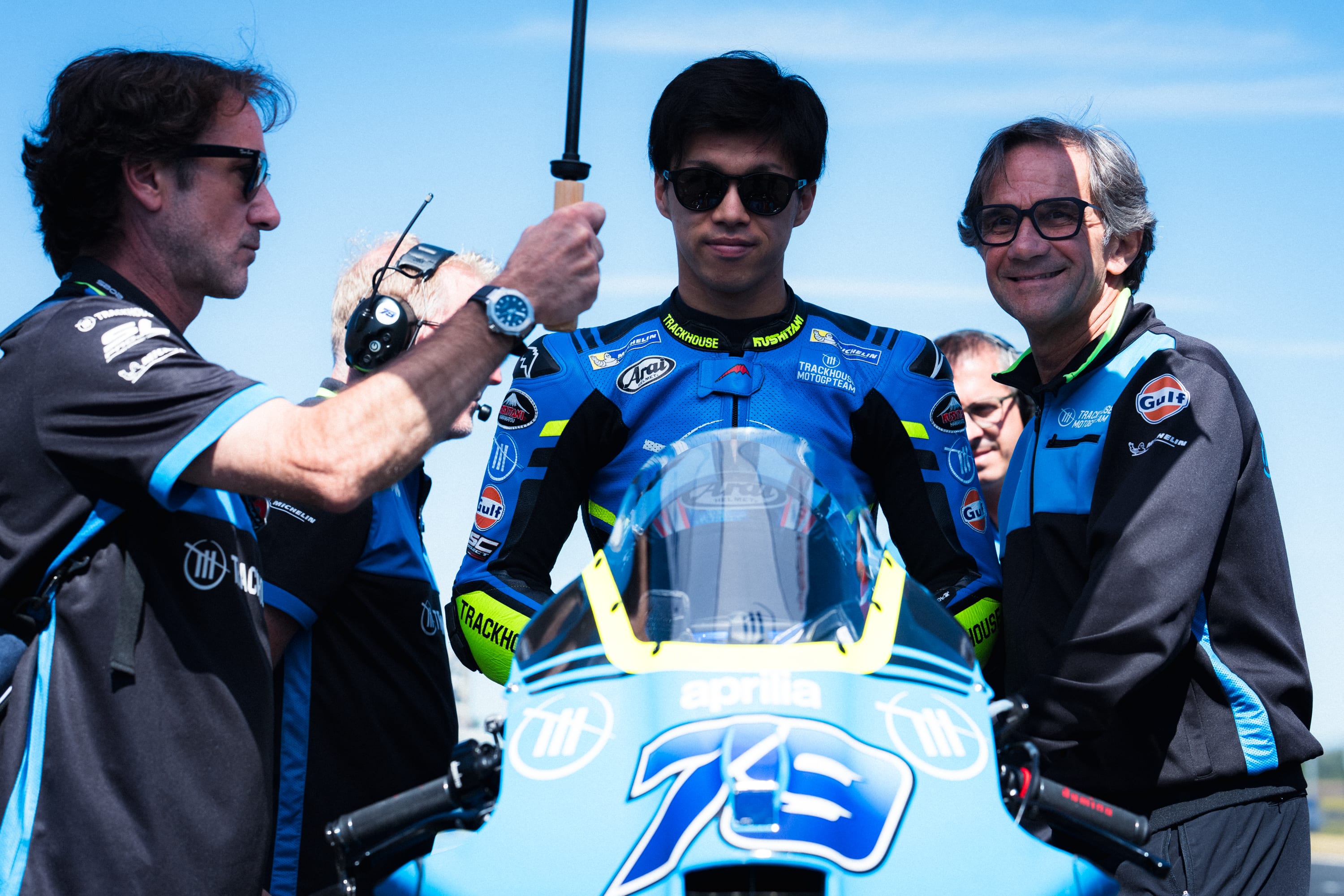
How does Davide Brivio [Team Manager] feel about it?
He loves motocross too!
Your roots are not in off-road, correct?
Yes. I only rode asphalt and pocketbike. I started motocross when I was 17, quite late. I did flat track from school years and I regret starting motocross so late. I was living in Barcelona when I was 18. I was racing in Europe when I was 16. Being in Barcelona helped me for doing more riding, different riding. Japanese riders now are doing motocross or flat track since they are very young. Me, [Ayumu] Sasaki or [Ryusei] Yamanaka brought that kind of information back to Japan and [the scene] started. It's always like this; [Hiroshi] Aoyama would be in Barcelona and said that all the Europeans would be riding all the time. I remember thinking 'ah, OK…'
Have your skills developed quickly?
In flat track I was quite OK from the first day, but motocross…?! It was a disaster, and maybe that's the reason why it's the best for me because even when I go to the track now to train most of the other riders are faster than me. That never happened on the asphalt in Japan. At least you have somebody to chase. That feeling was new. There is always something to learn and you feel the improvement in a big way and that's the best feeling.
Different to a good feeling in MotoGP?
Even if you make a fantastic result in GP, for me it's not 'fun'. It's not pure joy. For me, GP is something different. When I'm training, I have a lot of fun. In official GP sessions I almost never have fun.
Is there any transfer from MX to MotoGP for you?
Just the feeling of a bike. That's all. I don't know if I am getting better in MotoGP because I am training on a motocross bike. Maybe it's important…but I'm tired of thinking in that way. I have tried all kinds of bikes and maybe one day that will pay off but I don't like to think about what I need on a MotoGP bike and then try to find it somewhere else.
Ever tried sand?
I rode hardpack many times. In Japan it was hard to find a deep sand track. If I go to the Netherlands or Belgium then I don't think I will come back! I'd be stuck somewhere. I like motocross but I am not good at it.
Do you follow any of the MXGP or Supercross riders? Ever been to a GP or seen a Main Event?
I followed Ken [Roczen] a lot…and not because he was at HRC. I was interested more in motocross around 2017 and the legends like [Ryans] Dungey, Villopoto and James [Stewart] had gone. So, it was Ken, Eli [Tomac], Jason Anderson. Ken was riding for Honda then and I still follow him now. I've never been to MXGP or Supercross…and I'm in an American team!
Some of the other MotoGP riders are quite fast on the dirt: Marquez, Miller…
Maverick is super-fast.
What happened in 2023 and with the wrist injury…?
It was strange conditions. There was a long straight and one part was very muddy but before it was a dry patch that was super-hardpack and fast. I went straight into that deep mud and the bike just caught and stopped. I don't know if I broke my wrist when I was pushed over the bars or when I landed on the ground. Three broken bones and a dislocation and two-three ligaments. The doctor was happy to see my wrist at all. He thought I would never recover enough to ride.
Thanks for reading OTOR! Subscribe for free to receive new posts and support our work.
Did that make you apprehensive about motocross afterwards?
No! I was like 'come on, get better, I want to go again…' I never think 'oh, the season is happening and I cannot ride because it's dangerous'. No. It is dangerous because you are not any good! I have to train. Until I feel I am good then I train fully at it.
What is your training routine generally?
I do two-three days [per week] on the motorcycle and I run. In the Idemitsu time [Honda Team Asia] I used to cycle a lot. But I am not a big fan of cycling: it is unbelievably boring. After I left the team I switched to running and had more fun and gained more time. Cycling can be three-four hours, running is one hour or less.
Could you ever be tempted to try a motocross race?
My goal is…well, Japanese motocross is not at a high level [compared to world championship] but there is a Professional A and Professional B and National A and National B levels. I would like to be good enough to be one of the last riders in Professional A! You need to make a race to move up the levels but I've never been able to. Maybe after I retire! I want to make one. My friend is already doing 2-3 a year. He is a road racer but I used to train with him and he said it was nice experience, especially the start. I want to have a go…but no chance yet!
Dorna Sports CCO Dan Rossomondo on MotoGP growth: 'The biggest challenge we have is discovery" [ 01-Sep-25 11:49am ]
By Adam Wheeler
Dorna Sports announced its FAST expansion in early August for the U.S. with the 'MotoGP Channel'. The platform will provide free 24hr programming and extensive live coverage of the championship (not the actual race durations) through a stream generated by specialists C15 Studio, who also handle F1. Found through portals like Prime Video, LG Channels, FireTV, FuboTV, Plex and Sling Freestream, the MotoGP Channel is made possible through the presence of 'old school' TV advertising and is a significant boost to the sport's footprint in North America along with the FOX TV deal and Dorna's own VideoPass subscription package on MotoGP.com.
"Sitting back with a TV remote control [thinking] 'hmm, what am I gonna watch today?', there's very little of that now," opines Dorna Sports' Chief Commercial Officer Dan Rossomondo. "So, you have to have your content in front of people in all these different places, and that's what we're trying to do."
"I think the biggest challenge that we have - but it could apply to every sports property in the world - is discovery. How do people find your sport?" the American adds. "Consumption habits, particularly of young people, has changed so rapidly that you have to continue to innovate in terms of how you distribute your product, and that's what we're doing with this. FAST channels are the latest 'thing'. And it goes back to the world of ad-supported television, which is, you know, as old as the day is long."
Fans, viewers or those curious about MotoGP only have to download the channel to get immediate access. One of Dorna's main revenue streams involves the lucrative TV broadcaster deals signed with the likes of TNT Sport, Sky Sports Italia and Germany, Canal +, DAZN, Ziggo and more. These agreements (and others) conjure almost 50% of MotoGP's income (equating to more than 200m euros in 2024) and form the basis of the remuneration paid to teams to contest the series. How does FAST fit into this structure? Especially for the U.S. where MotoGP is already located on FOX Sports, home of the NFL, MLB and NASCAR.
"It's complimentary to everything else we're doing," Rossomondo explains. "If you look at the product ladder, obviously FOX is mass distribution, putting on both the Sprint and the main MotoGP race exclusively. VideoPass is for the really, really hardcore fan who wants every session, wants historical races, wants practice, wants this-wants that, wants to really dig into it, wants timing. Then [with] the FAST channel we're going to try to find a new audience that is really consuming a lot of content in that way. It's an experiment, it's an educated experiment, because we do see people changing the way they consume content."
Dorna have not rushed into this method of engagement, and linking with C15 was pivotal. "It took a long time because how it was going to fit inside of our media landscape was a key question for us," Rossomondo admits. "C15 came very highly recommended. We had some really good conversations. They have great relationships on the distribution side, and they have a proficiency in doing this. So, it was good in that regard."
FAST channels have bloomed in popularity (almost 2000 now exist, over 1300 in the U.S. alone, according to Gracenote video data). MotoGP has merged with the trend but are trying to foresee how the championship can reach new eyeballs is a major guessing game. "I would say this is a great era of choice where consumers have content at their disposal and they can customise it however they want," says Rossomondo. "If they have a broadband connection…people are experimenting but it can be very confusing too. The old, existing bundle of American media is - not disintegrating - but it's changing very rapidly. Prime Video, Paramount Plus, Netflix, Hulu, ESPN and Fox are just launching their own products. Everything is changing. So, for a consumer, even though they've got unlimited choice and unlimited flexibility, we need to make it easy for people."
Could the MotoGP Channel work for other territories? It's a tricky weave considering the exclusivity of the deals and the rights to footage. "I think the United States is more complicated than other markets. European television has gone to this pay model way-quicker than the US. So, I don't know if FAST channels are going to apply globally."
"The number one consumed media company on television in the United States is YouTube," he continues. "So that just gives you a sense of how people have changed consumption habits. When my sons put on the TV, their homepage is YouTube. So that's where they go."
MotoGP's YouTube channel has almost 7m subscribers. The content is diverse, with race highlights videos easily claiming the biggest number of views. Visitors can also catch behind the scenes clips, historical features and more. MotoGP has more than half of F1's following but easily dwarfs other series like NASCAR, Indycar, MXGP and Supermotocross. Perhaps Dorna need to do even more to help YouTube addicts to notice MotoGP. "We have a good subscriber network there. We put content on there as well," counters Rossomondo. "It might be the original FAST channel…but it's global and it's got its Pros and Cons as well. So, I don't know if this is going apply to other markets but, as you know very well, the US is a really important market for us to try to grow."
The series' international scope can bring inconsistencies for commercial interest. It makes blanket deals harder to close and to price: MotoGP has traction in some territories and is barely known in others. The current media rights revenue is steeped towards Europe and sits at 83% of the income. Dorna have a large patchwork business operation to stitch. Rossomondo: "We're blessed that we can take this sport all over the world but we've got to be relevant in those markets. We've got to do distribution deals with the right partners in those markets. It's not like the EPL [English Premier League]. They can be really darn happy with their Sky deal and then obviously they've got huge money with their global rights elsewhere. But they're a domestic league and their domestic deal is the biggest deal they have. We are not a domestic league."
Thanks for reading OTOR! Subscribe for free to receive new posts and support our work.
"We have to be relevant everywhere," Rossomondo says. "I'd say global partnerships are great, but also we have to continue to experiment and find the best way for people to watch our sport and the stories we want to tell. That's the key thing, I think. We have 22 races a year, 44 if you include the sprints, right? But then if you include Moto3 and Moto2, it's another 44. So, 88: that sounds like a lot but there's also another 280 days a year where we have to be relevant. So, we need to tell stories better, and I think consumer consumption wants us to be in places like YouTube so they can find out more about the riders and we can lift the visors and tell the stories about these guys."
Liberty Media have officially owned Dorna Sports for two months. Their past promotional policy changes in F1 partly helped towards the sport's boom in the U.S. TV rights fees surged from 5m dollars to more than 80m in less than five years and with Apple TV rumoured to be considering a 150m dollar deal. F1's global TV revenues have exploded; from 2017 to 2024 they almost doubled from 600m dollars to 1.1 billion and total earnings by the F1 Group in 2024 nearly hit 3.5 billon.
"We saw an increase in all different interests, all over the place," Rossomondo reveals of the new era. "Some of it is far-flung, some of it is far-fetched, but others are real. We have to convert that. Whether it's sponsorships or investment, whatever it might be."
"I think we have started on a really good track. We have invested in marketing. We have invested in adding some really key people. We have invested in the brand and the identity and research. We now have to continue to invest in storytelling. And I think Liberty will help us with that."
Motocross: the key to Diogo Moreira's impeccable style and the attribute that should take him to MotoGP for 2026 [ 29-Aug-25 10:01am ]By Adam Wheeler. Photos by Italtrans: www.italtransracingteam.com
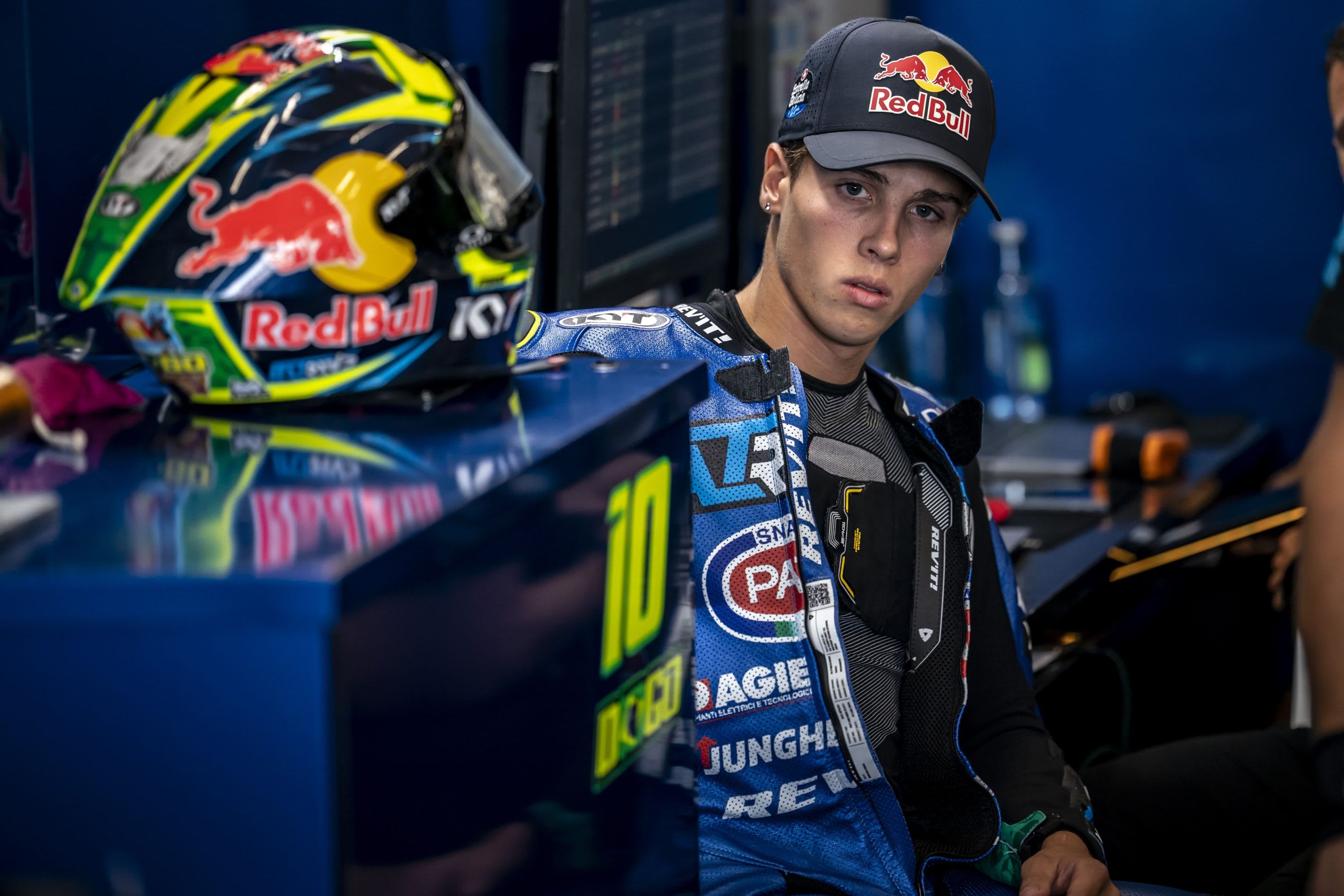
MotoGP is on the cusp of generational change. Riders in (or close to) their 30s such as Jack Miller, Miguel Oliveira, Johann Zarco, Franco Morbidelli, Luca Marini, Maverick Viñales and Alex Rins are likely approaching their last seasons in the premier class and there is a queue of hungry talent waiting for their saddles. Names like Moto2 championship leader Manuel Gonzalez, David Alonso, Daniel Holgado, Collin Veijer, Jose Antonio Rueda, Maximo Quiles, Angel Piqueras. Then, of course, there are the youngsters who have already made it onto the MotoGP grid like Pedro Acosta (21), Fermin Aldeguer (20) and Ai Ogura (24) who are vying to shine.
One rider creating a big surge of interest and linked with a long-term contract offer from Honda (Somkiat Chantra's LCR Honda berth) is 21-year-old Diogo Moreira. The Brazilian is into his second season of Moto2 and has turned heads courtesy of his results (five podiums and three wins so far) but also a wonderfully flowing, adaptive and effective riding style. The signs were present early. Moreira captured 6th position in his Moto3 grand prix debut at Qatar in 2022 and immediately slotted into the top ten, finishing 8th in the championship and rookie of the year. He won the following season. 2024 saw him vault into Moto2. Again, he found a trophy before the end of the campaign and took another rookie of the year accolade. In 2025 he's made a step again and is now at the door of MotoGP.
There are foundations to Diogo's story. He and his family moved from his home in Sao Paulo to Catalunya when he was 14. There he was schooled but also trained and rode flat track and motocross as he rose through the FIM JuniorGP and Red Bull MotoGP Rookies Cup ranks in quick time. He's now based in Andorra. The transition to a European base, his nationality and roots in off-road and the desire and ambition necessary to exist at elite level has created the swirl of momentum.
"I started riding motocross with my father when I was four. Pretty young, and the reason now why I'm pretty good at it!" he smiles during an interview held on the eve of the recent German Grand Prix. "It's good for the body and the condition but most importantly I enjoy it. I was riding for almost ten years, two of those in the USA on the west coast. I was with Rodney Smith, riding Glen Helen, Pala. I changed from motocross to asphalt when I was 12. I won some [MX] championships in Brazil and my father and I talked about moving to the USA…[permanently] but I still think the direction I took is the right one."
Two years after removing the nobs from his tyres, Moreira was a resident in Spain. "We lived there for most of the year and would only go back at the end of the season for a month to see family and friends. Motocross, flat track circuit and karting; for training it was OK. I had to adapt to life, try to make some friends. I went to school for three years, and learnt Catalan, but I am forgetting a bit now!"
"Motocross means fun for me and it's nice to ride on the different terrain," he explains. "Flat track for controlling the throttle, it's pretty good, but it's motocross for enjoyment."
'Enjoyment' is an essential concept for Diogo. "If I enjoy riding the bike then I will always be fast. I need to enjoy it. Otherwise, I cannot be aggressive or do anything."
He rides a 450cc dirtbike because "the 250 for me, now, stock is nothing! I need a bit more power, a bit more strong."
Moreira harnesses the improvisation and adaption necessary for motocross - where the track and the level of grip is constantly shifting and the throttle contact and control can be critical - to apply to his day job (like many other MotoGP riders). Double MXGP world champion, Jorge Prado, commented that the Brazilian was one of the best road racers he'd seen on the dirt. Moreira also ruled the 2024 edition of Valentino Rossi's star-studded 100KM Flat Track race held on the Italian icon's ranch in Tavullia.
"Motocross helps me here [Moto2] to make fast laps. In qualifying I'm usually at the front. It was the same in Moto3 and now in Moto2: I make good times. The track change in motocross forces you to adjust, and you have to do that also in Moto2 to find the flying lap."
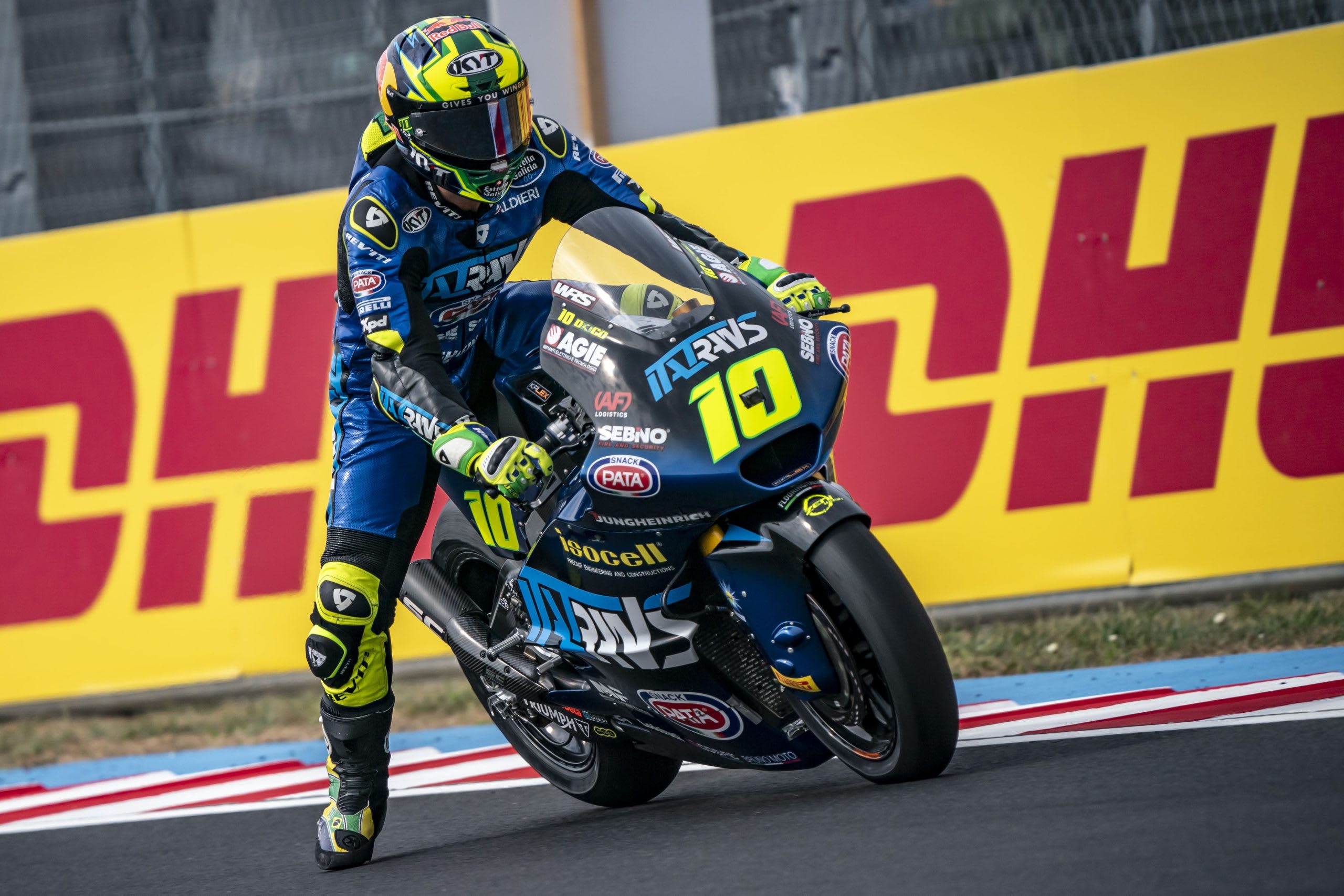
His feeling and technique for maximising his Moto2 package with relatively little experience compared to many of his peers has alerted the majority of the paddock. "The guy is super talented for sure, you only have to see his videos making flat track or supermoto or motocross or whatever, he's fast in all the disciplines," assessed Pedro Acosta when asked about Moreira in Austria last week. "That guy, if he comes to MotoGP without winning a championship, he will not have forgotten to ride a bike. He's a talent and you cannot forget that.'
Moreira might be making large strides on the motorcycle but he still needs to discover the world of attention, pressure and expectation when the engines are off. He might eventually become the first Brazilian premier class race winner since Alex Barros two decades ago and the spotlight will be firmly on his head when MotoGP returns to the country for the first time since 2004 in March 2026. "It is difficult to manage," he admits. "When I started in the world championship in Moto3 I was too young; 17 or 18 and because I did well people started coming up to me. It was tough to manage that. Eventually I learn to follow my line and listen to my personal team. That's the important thing: to stay in the family zone."
"After Barcelona last year [the final round of 2024] I went to Brazil for two weeks and spent one of those weeks making interviews and media appearances," he says. "I think when I go back now then there will be more. It might be like this year by year, no? I just have to organise things well…but it also makes me happy because it means the job is going well. I'm proud of that."
Thanks for reading OTOR! Subscribe for free to receive new posts and support our work.
In the meantime, Moreira has faced constant scrutiny about his future. "I think I am too young for MotoGP," he sighed in Germany. On raceday at Sachsenring Moreira would blast back from a poor start and work his way up to 4th before tangling with Jake Dixon and then re-entering the track without spotting David Alonso. The collision was sickening, and both were fortunate to escape relatively unscathed. Moreira damaged his right elbow and the combination of the physical pain and the pitlane-start penalty meant he withdrew from the Czech GP the following weekend. The incident was the only black mark on an impressive scorecard in 2025. He resumed normal business with total control of the Austrian Grand Prix at the Red Bull Ring and followed up with victory in Hungary.
Moreira has won Moto3 and Moto2 races and although he doesn't have the title collection to match someone like Acosta, his ascension is almost as swift as the feted Spaniard. Like Acosta, and despite his deftness on any set of two wheels, he is still in the educational phase of his career. "I am learning a lot this year because I am racing more at the front and with [Aron] Canet and Manu [Gonzalez]," he assesses. "I have been trying to see things. I need to understand and learn. If I can pass and beat someone like Manu then I will, otherwise I must learn something from him. If I don't make '0's and crashes then I will be there."
Perhaps Diogo is already 'there'.
Bringing the edge: MXGP's engaging drone material has accelerated a fresh perspective of the sport [ 12-Aug-25 2:30pm ]
By Adam Wheeler.
When it comes to live television, MXGP is a stodgy, unwieldy beast. Four hours of coverage of the MXGP and MX2 classes with an inflexible and skeletal pre-and-post race format (that hasn't changed for years) as well as comprehensive but rigid fixed camera positions; it's hard to squeeze much more into the sheer quantity of minutes that the production requires.
Grand Prix has experimented with the impracticality of onboard technology (if riders are shedding personal protection like airbags then why would they carry extra baggage for broadcast?) but the addition of roaming drones has given the visual presentation of the sport (also AMA SMX) a much needed refresh since their introduction in 2024. Infront Motor Racing have invested further in more technology and a family-run two-crew set-up for 2025, and the 'pursuit' drone, operated by 34-year-old Gaetan Valente, has brought a new exhilarating dynamic to the speed and difficulty of MXGP.
The artistic zenith was the plunging 'eagle-eye' view of the Qualification Race start at the Grand Prix of Trentino this spring, allowing a wonderful appreciation of the Dolomite setting of Pietramurata.
Gaetan's work even has its own Instagram account with meaty clips of the MXGP and MX2 action.
The Swiss has been flying and racing drones since 2019. A motocross rider and former Swiss Championship runner, he came into MXGP in 2024 and is now a key component of the live TV output. "We use an FVP drone and the brand is a GEPRC Cinelog35 but the only way to have a live stream, for now, is to use a DJI Pro camera and with DJI goggles as well," he explains. For the uninitiated, Valente flies the drone from a location or pad next to the TV broadcast truck with the aid of a remote, and obtains the 'view' thanks to the goggles, that are similar to a VR headset. He then follows the lead of the TV director and has free reign for proximity. This is the main advantage of MX compared to permanent motorsport facilities used for F1 and MotoGP with strict regulations preventing aerial presence below a certain height; there drones are used for sweeping angles along pitlane or on the exterior of curves.
"I can fly where I want until they need me for something special," he reveals. "Usually I take the race start, then see how the race goes and who is fighting with who. In my left ear I have the TV production and in my right I have the drone co-ordinator who is watching the live timekeeping to see who is making time and where a fight might happen."
"Quite often I feel like I'm in the race," he grins. "I'm really focused because I have to be careful of the marshals, the riders and photographers around the track. It's really enjoyable."
For a relatively new strand of technology for sports broadcasting, the drone set-up has its compromises. Reach, range and duration are the main headaches. "Most of the time I can fly around the whole circuit but I cannot lose sight of the drone," Gaetan says. "We had a problem in Sardinia because half of the track is behind a small hill so we had to build a huge antenna, 10m high, to spread the signal and supply the goggles. My location is important to have the best signal for the image and also the controller."
"It would also be great if we didn't have to change the battery every four minutes!" he adds. "It depends how fast I fly but if the track is quick then it can run down in 3 minutes! It would be a big improvement if we could double this time; much easier for us. We also struggle with the signal sometimes for the goggles. The remote is quite good…but when you lose vision then you cannot fly anymore, and you have to push the 'rescue' button and save."
Looking at FVP drone at Lommel for the Belgian Grand Prix, the rotors and the unit are sandblasted and abused. "It's tough for the drone: it's a good soldier! It takes a lot of rocks and debris," Gaetan says from the confines of his small trailer, stocked with boxes of spares and charging batteries. "Here, with the sand, the propellers get destroyed after one race. We change a lot of parts. A DJI drone cannot be dissembled but ours is different. We build everything and we can change the engine, the flight controller and other components. We have many."
Apparently, flying a drone is not an easy skill. "It's hard to understand if you haven't tried it," Valente asserts. "If you want to turn left then you don't just hit the 'left' button. You have to mix all the angles. It would be impossible just to pick up the controls and to fly an FVP drone in acro mode. You can add 'help' from the flight controller to manage flight…but it gives you less freedom. I fly in full manual mode and it would be very hard to do it without some training. I've trained on the simulator and I'm used to racing with a drone where it is way faster. When you are able to fly at 200kmph and make really tight corners then following an MXGP rider is not too tough."
Swooping after race-leading riders while they hammer ruts and cut through the air is another task. The lines and the positions are not always that clear to predict. "It's easier in the sand though because the speed is more constant," Gaetan says. "On the dirt they can brake hard, lose speed and then accelerate quickly. There is more variation. The sand is easier because nobody escapes it!"
Thanks for reading OTOR! Subscribe for free to receive new posts and support our work.
Creating a standout picture like the Trentino start requires precision. "We tried three times! The first one was for timing, the second time I was stressed and I arrived too early because I didn't trust the count. The third time we followed the plan…and it happened. It was a beautiful shot."
Valente's 'money shot' is beyond audacious. "I would like to pass through a rider's arm and the seat of the bike while he's doing a whip. I think it would be impossible…but I'd like to try. It would take a lot of organisation…and a few attempts. Although riders are here to race and not make our shots!" It says a lot for the power of the technology and the imagination it inspires.
Radicalism aside, the effect of the drone has augmented MXGP and the appreciation of elite level motocross. Gaetan smiles to the suggestion that he has made the TV portrayal of the sport look like a video game. "I'm really lucky to follow the action so closely," he acknowledges. "They believe in my skills and I'm happy with that. I know in F1 and MotoGP they are not allowed on the track. You really have to focus and be careful. It's a great feeling."
Ten minutes with MX2 championship leader Simon Laengenfelder: "Things can turn around in this sport like crazy." [ 11-Aug-25 12:07pm ]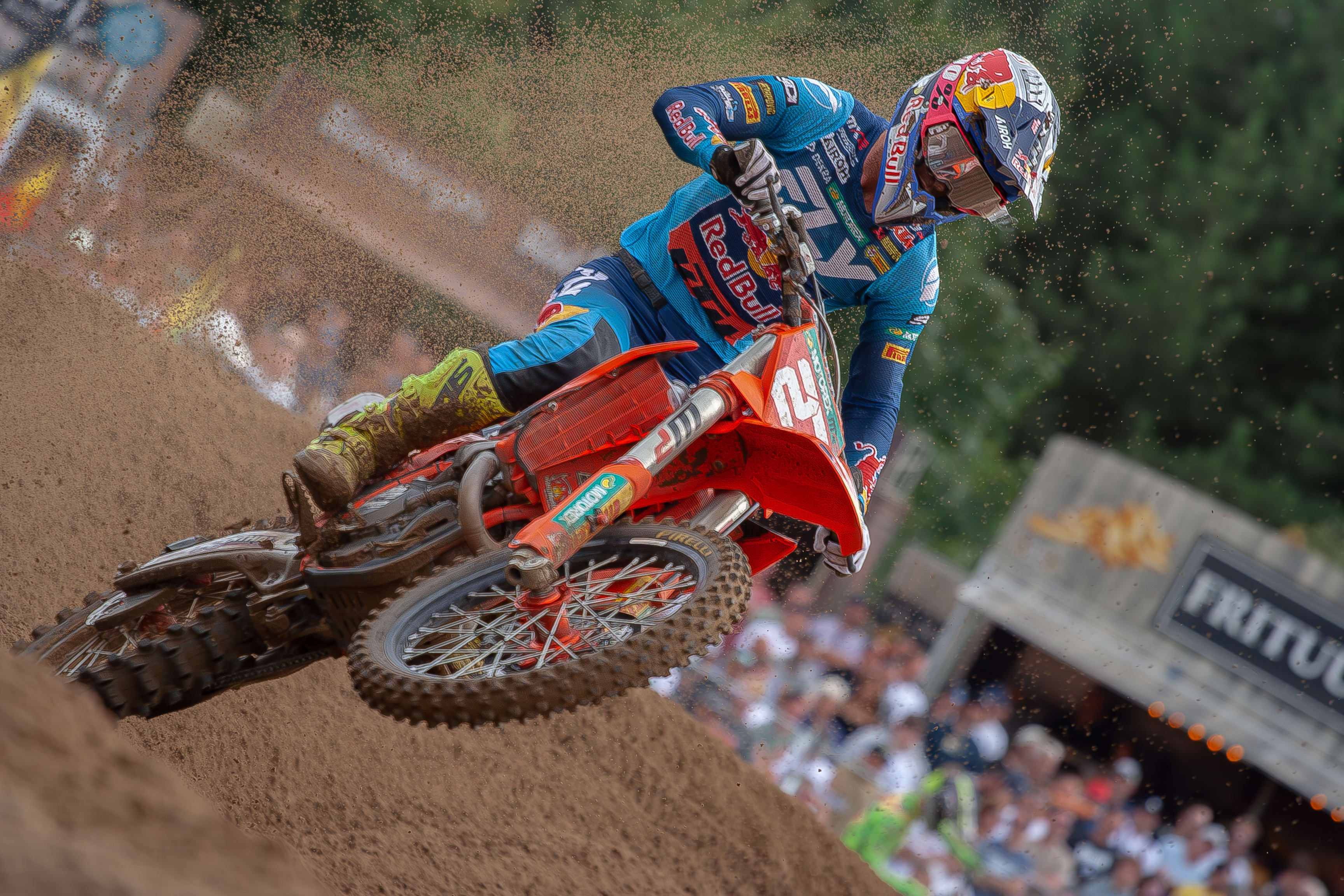
By Adam Wheeler. Photos by Jordi Wheeler Garcia & JP Acevedo.
Simon Laengenfelder smiles throughout our interview at the Belgian Grand Prix. After all, he has a lot to be satisfied about. Four wins, eight podiums and the most prolific leader of 2025 MX2, he is also defending a championship lead and could be the first German FIM motocross title holder since 2011. The 21-year-old even grins while curtly dismissing the notion that his friendly and meek demeanour could be representative of his competitiveness.
Laengenfelder already has four full seasons in MX2, taking wins in 2022, 2023 and 2025 amidst injury and illness setbacks and an arduous educational process at the highest level. He has ranked 3rd in the championship for the past three years. In 2025 he seems to have reached a peak of Grand Prix maturity so far. He has adjusted his environment in the De Carli section of Red Bull KTM Factory Racing; an awning he shares with the Coenen family 'juggernaut' of results, demands and potential, and achieved some separation by departing his Italian base of the past three years to move back to Germany. Familiar ground and a different setting seem to have had a positive bearing on his riding and mentality, even if it means more mileage for the Rome-based squad. Team Manager Davide De Carli even travelled to central Europe recently to oversee Simon's impressive performance in the ADAC German Master series.
Laengenfelder blends fast starts, a smart style and evident determination to steady effect. While peers and former championship winners like Andrea Adamo and Kay De Wolf have endured mistakes and incidents, Laengenfelder has motored to 18 top-three moto finishes from 30 to-date. The total is actually less than Adamo (and he has three fewer podiums than De Wolf) but's picked up more points on his off-days and has yet to classify lower than 9th all year. Coupled with comprehensive 1-1 scorecards in Switzerland, France and Britain - to prove he can outclass everybody - Laengenfelder is closer than ever to dumping that 'P3' tag.
Simon, this year, does the title run feel a little bit overdue? Do you think you could have been in this position maybe last season or season before?
Yeah, three times third in a championship…let's say the first time maybe I was a bit lucky. I got third with very few podiums, not really the best riding, with some really, really bad races. Last year, I was really pushing hard to get that third place overall, and the year before, I needed to push way harder! I needed to be always there, always score because I also had all the injuries. So that set me back a little bit but also made my head, I think, stronger, and made me focus and understand racing a bit better. Now I'm in a really good position, which makes me happy but it's a position I've never been in. But I like to be in it!
You're only just 21, so those three seasons of learning have been done as a young athlete..
Hmmm, the physical side, you can feel. But the mental side is something maybe a bit more difficult to know. Yeah, you learn so much. It's incredible. After every season, I tell myself: 'boy, you were so stupid the previous year. Why did you do this or why did you do that?!' You get smarter, you understand everything better. The bike you understand so much more. The training side, the hydration, the food, everything. There are so many parts. You just understand better, you know which people you want to work with, who's really good for you or what is working good for your body. And I think in those last three years, I really understood these things.
Can you give me an example of something that went wrong? And maybe a preparation method that worked out?
Yeah, one of the biggest things is food. Sometimes I was just making it up. I believed I needed to be lighter to make better starts. So I was on a diet and lost seven kilos. I was pulling holeshots but then I could not last the race. Sometimes from the outside you think, 'oh, he's not trained or he's not fit' but there are so many more points about being fit, having all the energy, all the carbohydrates in your body that you can also use. Having that energy you can just burn. If I would turn back time, I think it could have been all way different. But for sure, I think everybody has their own adventures like this. It's what makes motocross 'motocross' and makes this such a hard and physical sport.
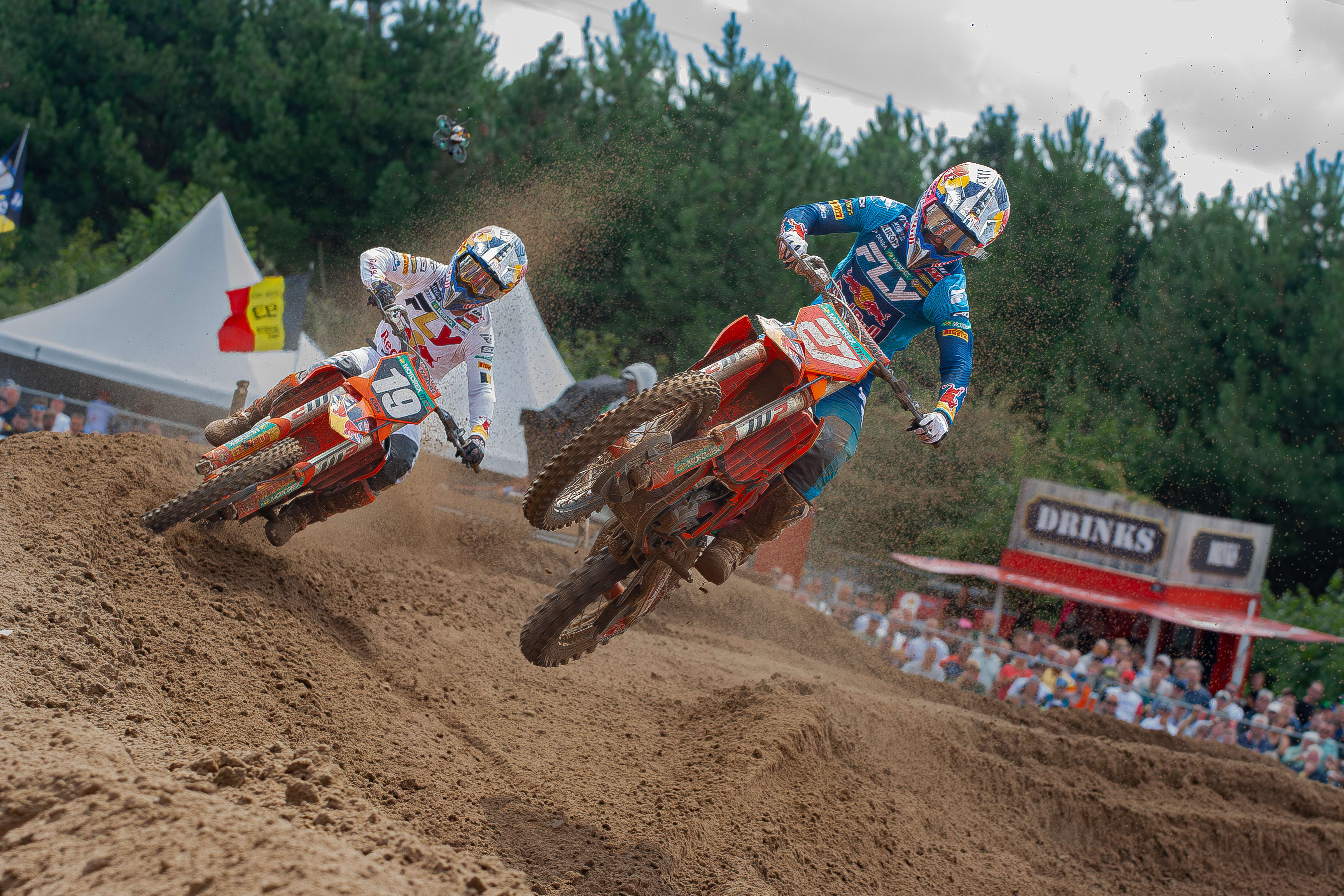
Do you think sometimes people see you and assume you're too much of a nice guy?
I think not. I think you can rewatch a few videos and then make your mind up…!
Well, there's on the bike and off the bike….
Yeah, I would say I'm quite a good guy. And what happens on a race track is because I want to win. It's not because I want to get 2nd or 3rd. I always give my best. Sometimes it goes better, sometimes not. I can, I think, understand my limits. Usually the bike needs to work good, I need to be in a good form and then I can really go faster. And I think I got much smarter throughout all those years about this because before I was going over my limit every training, every race. Yeah…just stupid. Huge crashes were happening. I just hope to continue improving each factor.
How has the De Carli faction of Red Bull KTM helped you?
Yeah, they helped me a lot, to be honest. I moved to Italy three years ago. Now this is my fourth year with them. I was coming from a normal German team and I could feel that De Carli as a group has a lot of experience. They know how to work with the bikes. They know how to set up a bike. They knew way more than I did. To be honest, it was a very important step in my career.
Thanks for reading OTOR! Subscribe for free to receive new posts and support our work.
How have you felt the attention and the profile of leading the championship?
Yeah, this is a completely different scenario for me. I've never been in this situation, like I told you. When I came to Germany [Grand Prix] with the red plate I lost it rightaway, you know, so... sometimes it's just not going your way. You need to learn about having the red plate and [at Teutschenthal] you just have so many fans around and so much attention. You need to learn to use it to your advantage and not your disadvantage. But I think that's part of the game because I regained the red plate and made a nice points lead. So, things can turn around in this sport like crazy. You never know what's really going to happen in the next race. You can never know. We are so many fast guys and you're just going from race to race and hoping that everything goes good. I'm sure with my training, with my riding style, I'm in a really good position. But…never take anything for granted. Just keep on pushing, keep on doing your best, your 100%. That way I think I should be fine because I can't do more than my maximum.
Is there one way in your riding in the last year you're really happy with? Is there one weakness that you think you got rid of?
Yeah, I think my style right now is cleaner. On a 250, I think if you look at me, especially on hard pack tracks, I'm really in control of the bike. I can use the traction quite good. I can really feel the bike. Also, I think setting up a bike: I got way better throughout those years, which also helps with my style then.
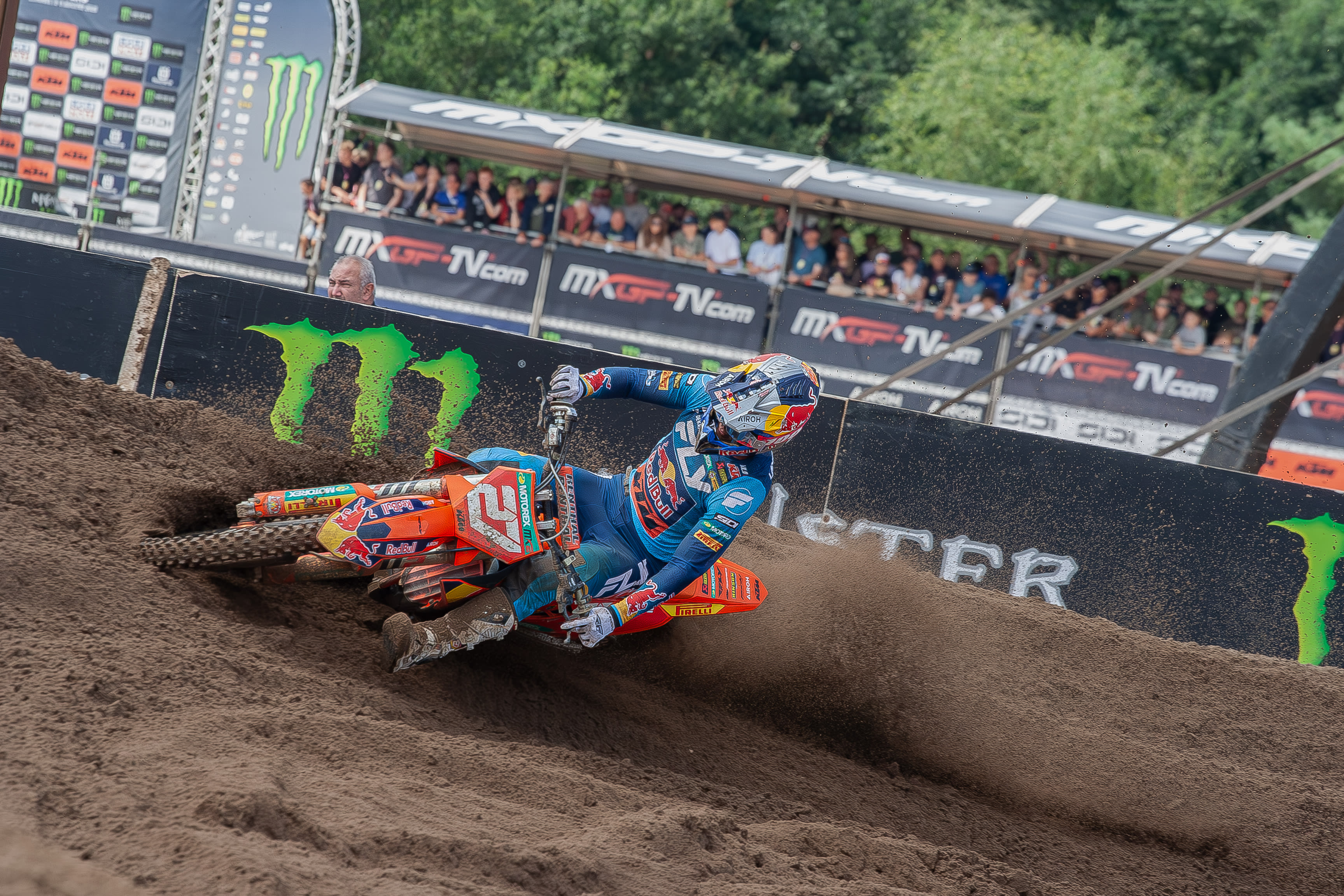
How has it been here with the Coenen family? De Carli was the domain for Tony Cairoli for many years and other riders had to fit in…
In the winter I was riding a bit with them. But right now I'm just living in Germany, so I just see them on the race weekend. I just see the team at the races. Seasons before, we were always training together in Italy. All the riders were staying there, and now it's completely changed. Nobody's in Italy anymore and everybody's around the world. Doing their own thing. I have my mechanic up there in Germany. I would say, yes, for me it's working good. I am enjoying being home. I have some great people around there in Germany, which I think are helping me out quite a lot. Also, track-wise, I think I'm set up really well there.
What does the future hold? Are you in a rush for MXGP?
I was thinking of maybe moving up soon however right now I just put my biggest focus on this championship, on being out front. But, yeah, I would say I could have another year in the 250 class…and then we'll see what's happening after that.
Coenen shuffles the sands of time through MXGP's hardest arena [ 04-Aug-25 10:27pm ]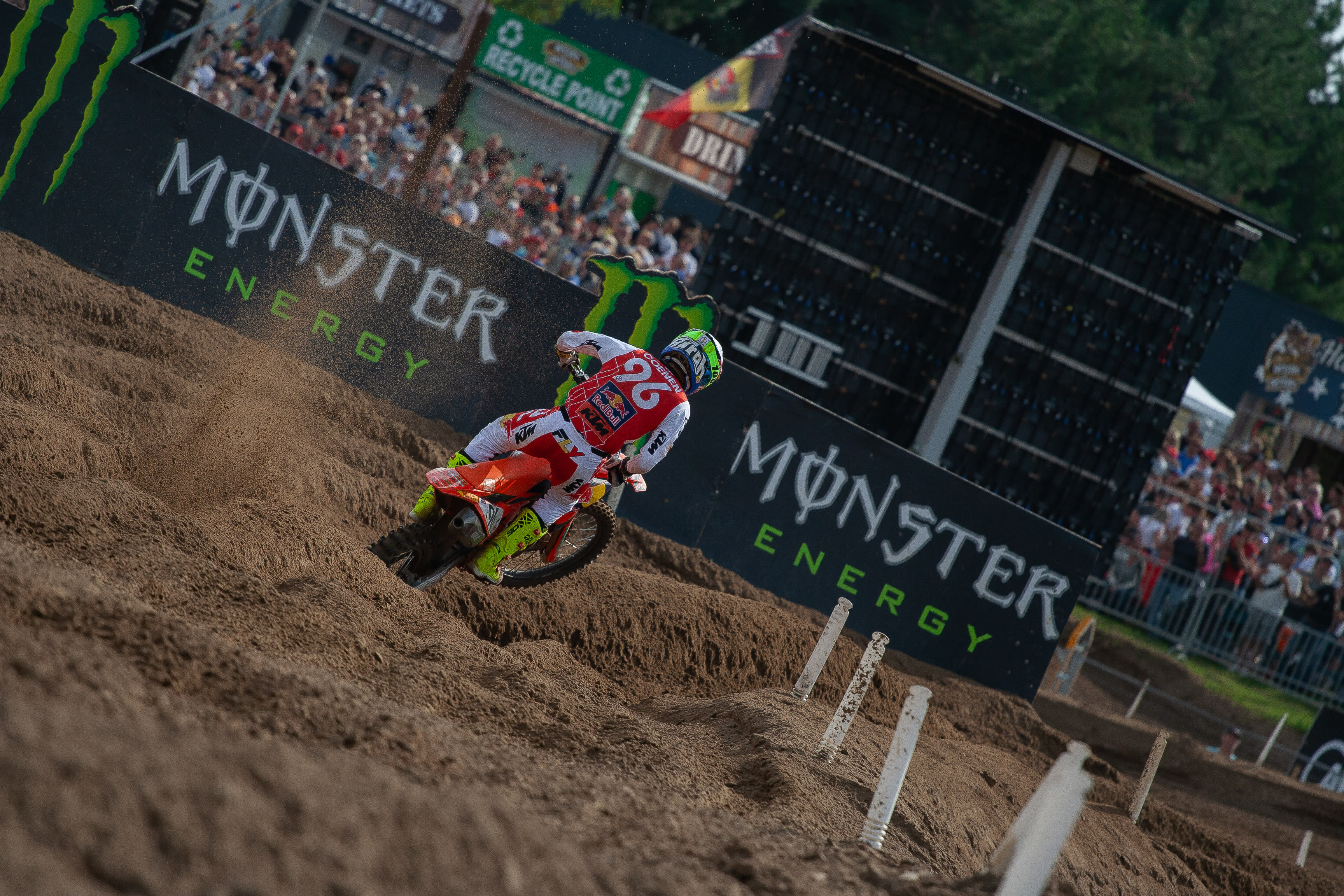
By Adam Wheeler. Photos by Jordi Wheeler Garcia
"Honestly, I am not good in history! I've never looked…" If Lucas Coenen was a student of the FIM Motocross World Championship then the extra significance of his third consecutive MXGP victory and his fifth of a rookie premier class season might have buried slightly deeper into that 18-year-old soul.
Coenen was brilliant for only his third attempt at the fearsome Lommel sand in Limburg and the Flanders Grand Prix (the region evidently putting up the cash to earn title billing in Belgium). He wasn't as complete and impressive as Kay De Wolf, who not only won both MX2 motos at a canter but topped every single session through the weekend. But the young Red Bull KTM rider brings energy and judgement; and his inexperience and age are sharp juxtaposed to the speed and consistency he can carry.
Lucas was cheered enthusiastically all around the circuit close to the Dutch Brabant border. He had noticeably more support than sand master Jeffrey Herlings and even reigning MX2 world champ and former foe De Wolf. Watching him waving to the crowd through the atmospheric 'spoon' curve - a slice of the sand wedged between the vast bank of fans and a small lake - on the last lap of the second moto illustrated Coenen's level of buoyancy and confidence in a term where he was only supposed to learn the rigours of the 450 and glean racecraft from decorated peers like Romain Febvre, Herlings and Tim Gajser.
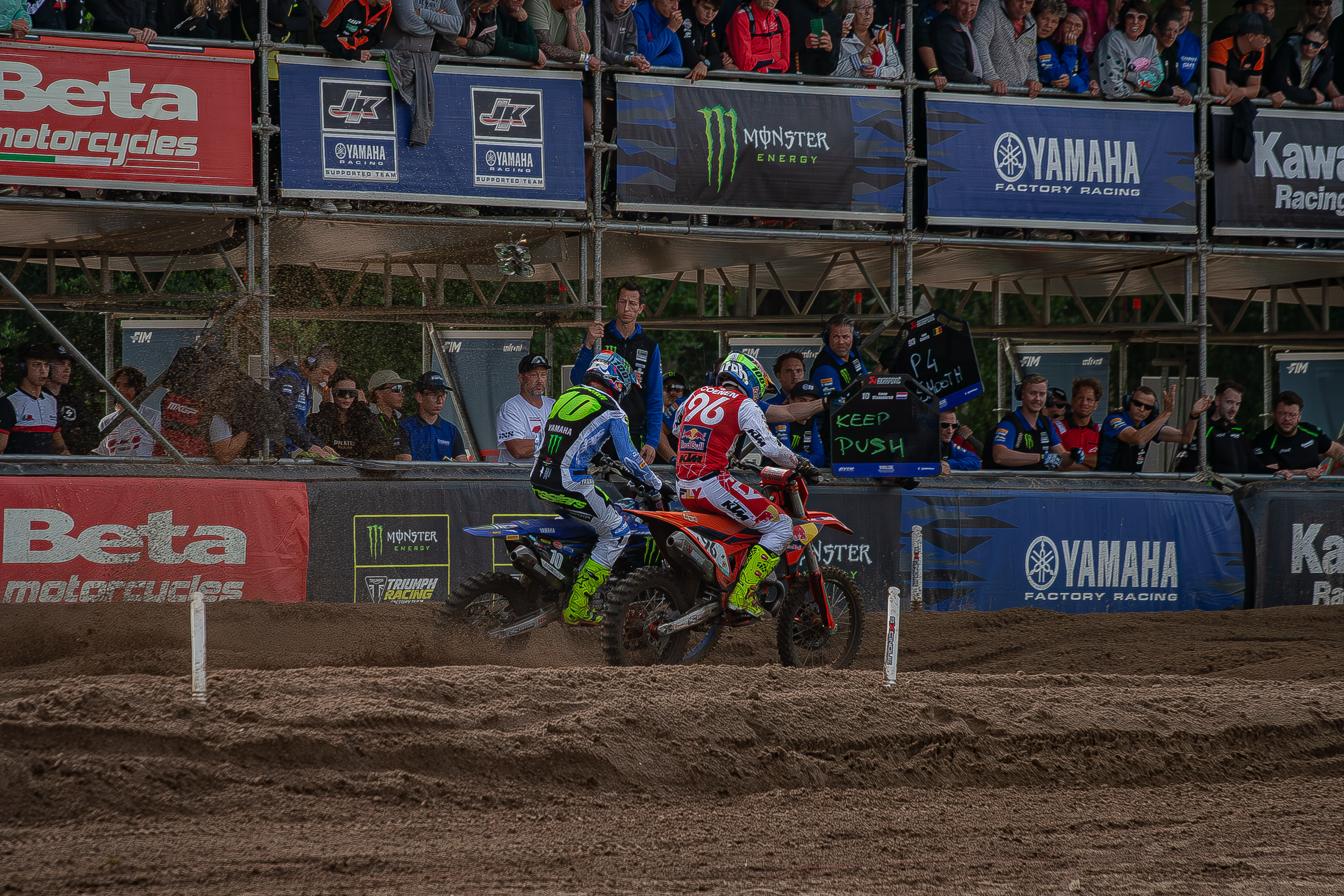
Belgium have waited 18 long years for a world champion in the principal classes of the series, and with the gap between Coenen and Febvre (whose first moto victory and 1-2 scores represented a decent weekend of work…although the French veteran is no slouch in the sand and already has two overall triumphs at Lommel) now down to nine points, the title dispute is fantastically close and tense for the second year in a row and the third time in the last five editions.
Lommel was full to the fences. Saturday was frustratingly 'off-on' for rain and showers but still the paddock was hard to traverse, and the spectator zones were close to capacity. Coenen had his stage. As well as the opportunity to reverse his performance meltdown from 2024 when strong MX2 form should have seen him challenge De Wolf for the overall but he instead flapped and faltered and finished 7th.
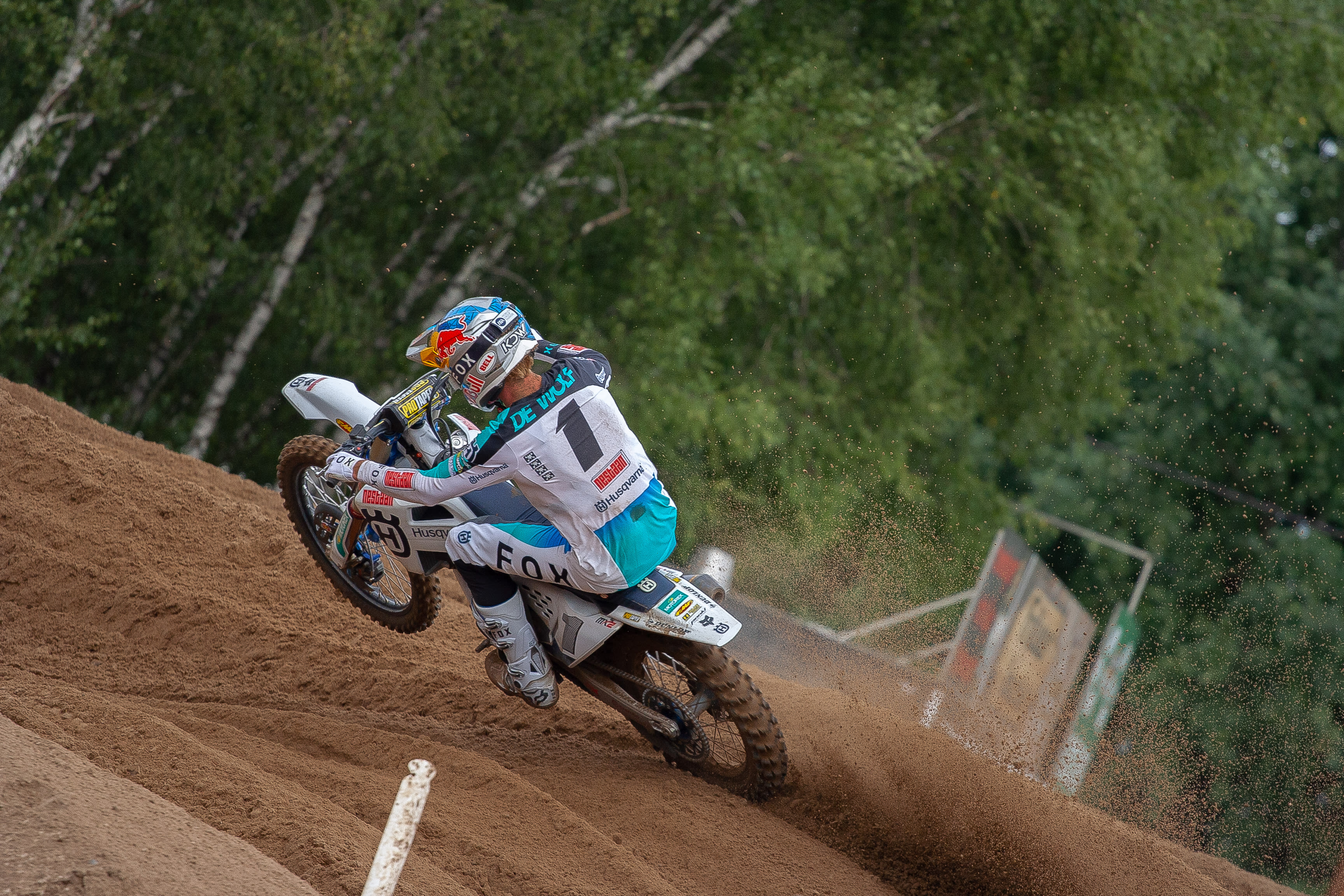
Watching Coenen in practice and the motos last weekend he was not as refined and smooth as De Wolf but is brave, unrelenting and experimental. He is slight but powerful (you'd never guess the diminutive Sacha Coenen is his twin) and could manipulate the KTM to whatever lump or line he fancied. There was something Herlings-esque about his speed and, importantly, his potential. Sand riding, and Lommel in particular, requires discipline. It measures a rider's physicality and mental resolve unlike any other track. The temptation to push harder and risk burnout must be invading a racer's thoughts constantly, but constancy and preservation are crucial ingredients for optimal results sheet.
"It's a fight every lap," Calvin Vlaanderen said in the post-race press conference and after a sturdy run to 3rd place. "If you have that flow then it's alright but if you sit down for that one bump you lose momentum and it's really tough to get that back. I know how to save my energy quite well with riding…".
I asked how it was possible to do that while carrying pace to make it to the MXGP podium, his second of the campaign. "I was watching Kay [De Wolf] ride the [second] moto and you could see the difference between him and Sacha," he started to explain. "Just how Sacha was using his energy a lot and moving his body. Kay keeps his upper body really still and just uses his legs which is really similar to how I ride: really smooth and not really taking risks and not using too much energy over the bumps."
MXGP went to Lommel for the first time this century in 2008. The Grand Prix of Belgium could not have made more of a contrasting switch at the time. The history and leafy scenery of Namur in 2007 was replaced by a large flat sandpit in a Limburg industrial park. Lommel was most teams and riders' 'reluctant' training and testing hub around that time (and still is to some degree) thanks to the all-weather capabilities of the venue and the severity of the terrain. In 2008 it upscaled and grabbed Grand Prix status and, aside from 2013-2104, persevered thanks to the ambassadorial verve of the late Eric Geboers and passion of former rider and promoter Johan Boonen. Belgium, Limburg, Flanders: the event names have changed but the prospect of Lommel on the schedule has been a signature date for most. "It's a race that makes me shiver when I know it's coming…it's scary," Andrea Adamo told me Sunday.
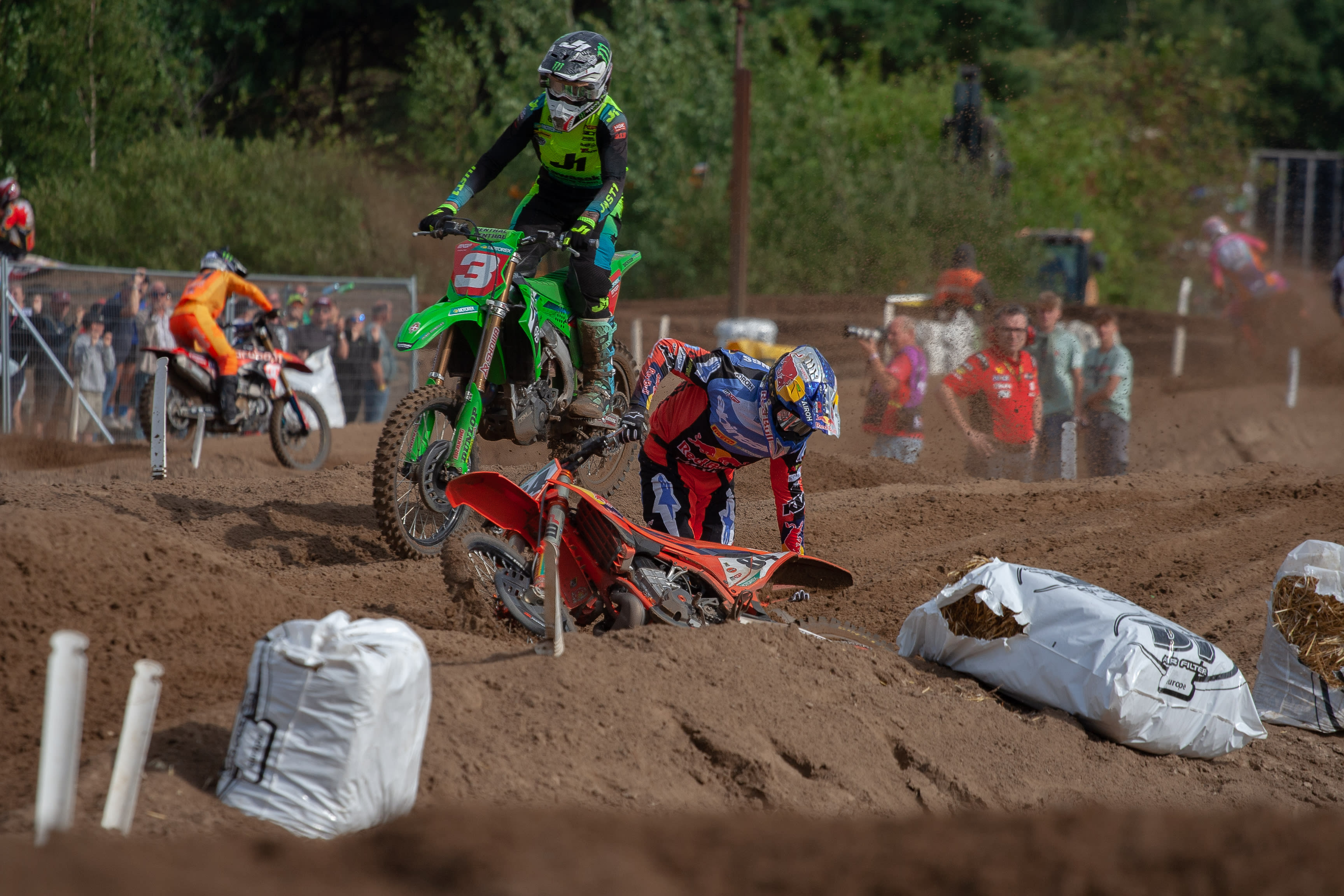
It's been a playground for native talent and schooled sand riders but also permitted intense bragging rights for locals. MXGP hadn't been stranger to Lommel-type sand and, in my opinion, the absence of Lierop (last carved in 2013) is felt to this day and Valkenwaard was another persistent presence until 2019. All three tracks are situated within a 45-minute drive of each other.
Ken De Dycker won at Lommel in 2009 and then decided to strip on the podium. Kevin Strijbos took his and Suzuki's last emotional Grand Prix victory in 2016 and Jago Geerts has three consecutive MX2 Lommel triumphs to his name from 2021-23. Ironically it was a Spaniard that claimed the 2008 inauguration and Jonathan Barragan's third GP win on the bounce with factory KTM equipment was revealing. He beat seven Belgians and Dutchmen in the points-scoring positions, Marc De Reuver's sandy supremacy among them. Barragan had left Spain for the grey climes of Lommel earlier in his career and had become accomplished across the surface (he would win at Valkenswaard in 2009) but it was Tony Cairoli's immigration and residence in the small Belgian town that created a legend as a small, wiry Sicilian went on to become a refence for sand speed. In doing so he debunked the happy hunting ground for the Benelux contingent of the paddock. Tony went against type for a southern European, and raised plenty of eyebrows (and a nod of recognition for his kidology) when he'd frequently describe Lommel as his favourite track. The 2012 Motocross of Nations was a Cairoli, Roczen, Herlings sand show.
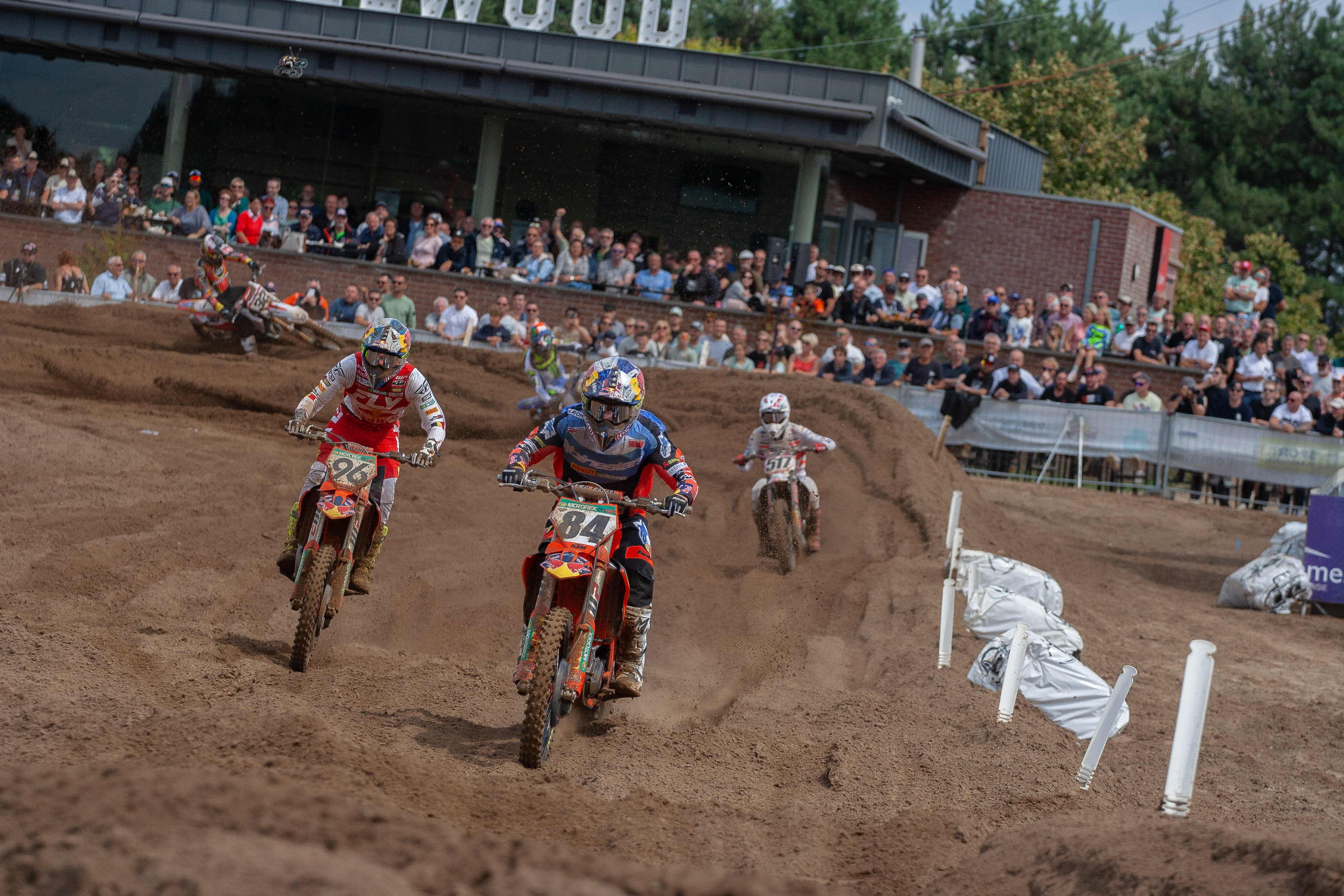
2008 was my first visit to Lommel. I found the circuit uninspiring but at the same time captivating and magnetic for what it forced from the riders. I still do until this day. That summer a fresh-faced 18-year-old American called Zach Osborne made his MX2 debut. He revved the Dixon Yamaha to oblivion in one of the motos but somehow made an 8th place in the other. "The track was almost indescribable as to how deep, rough and hard it is to ride on," he said then, and for a report filed for RacerX, when online texts were still a thing. "I have never experienced anything like that or fought so hard for a race position."
The most successful MXGP riders at Lommel are Tony Cairoli, Jeffrey Herlings and Tim Gajser with three wins each. Two of Gajser's triumphs came in the 2020 triple-header. There have been two rookie victors in Jorge Prado (2020) and Lucas Coenen (2025).Over the years Lommel has been both swampy and bone dry, and the sand provides a vast blank palette for track designers armed with diggers and machinery. Wind-power turbines have popped up in the background, infrastructure has improved. On a sunny day the dust-like roost created by the bikes gleams in the light. Through each battering lap the surface changes quicker than perhaps any other. Bumps become jumps. The track is an organism. It morphed swiftly last weekend with the varying weather.
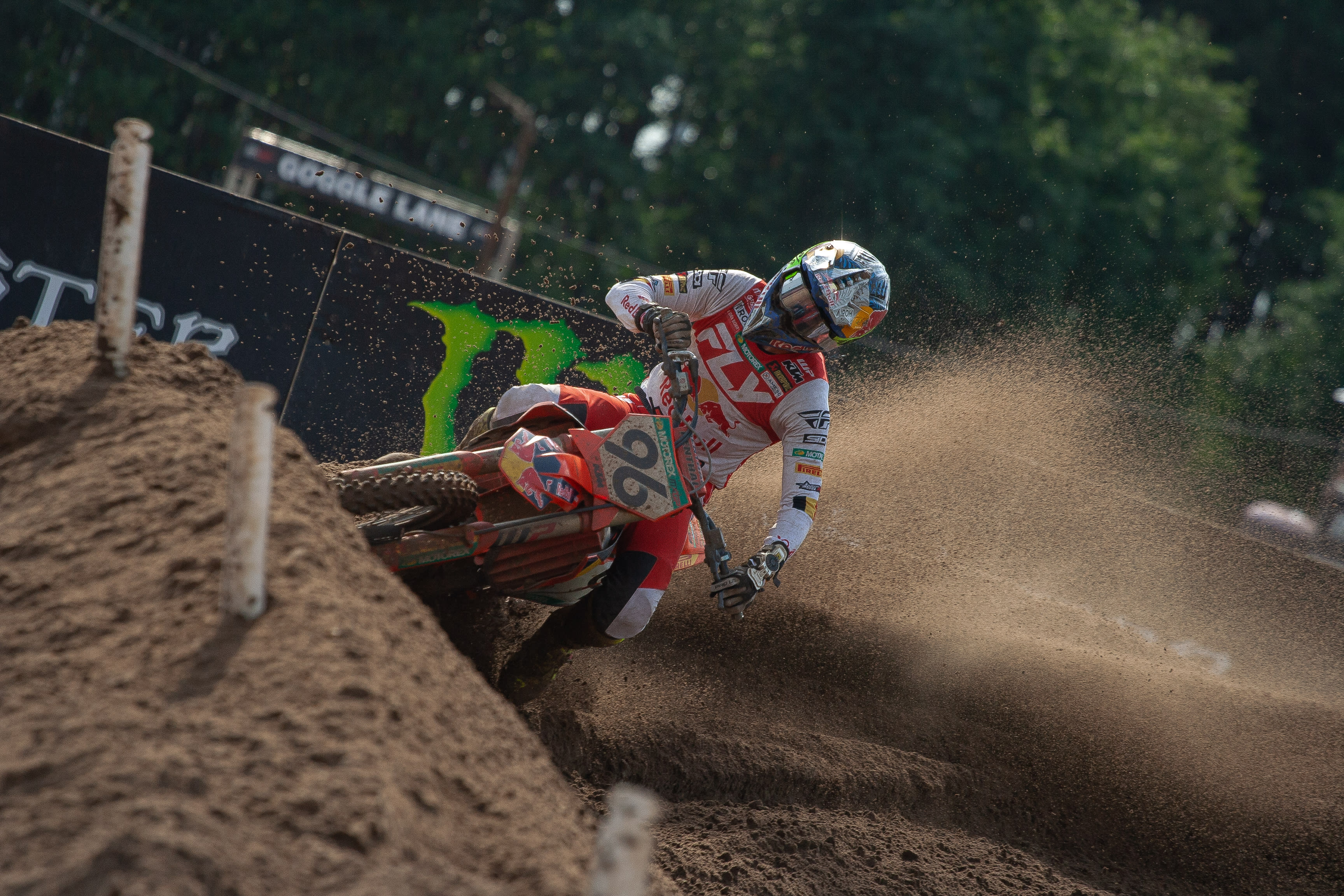
"Really strange, really tough," observed MX2 runner-up Camden McLellan. "The rain made the sand heavy so it was sucking a lot of power from the bikes."
"The track shaped -out really well, especially today," offered De Wolf. "Yesterday it was, in my opinion, a bit different. The 125s, especially with how wet it was, struggled to get the same speed as us and the bumps developed."
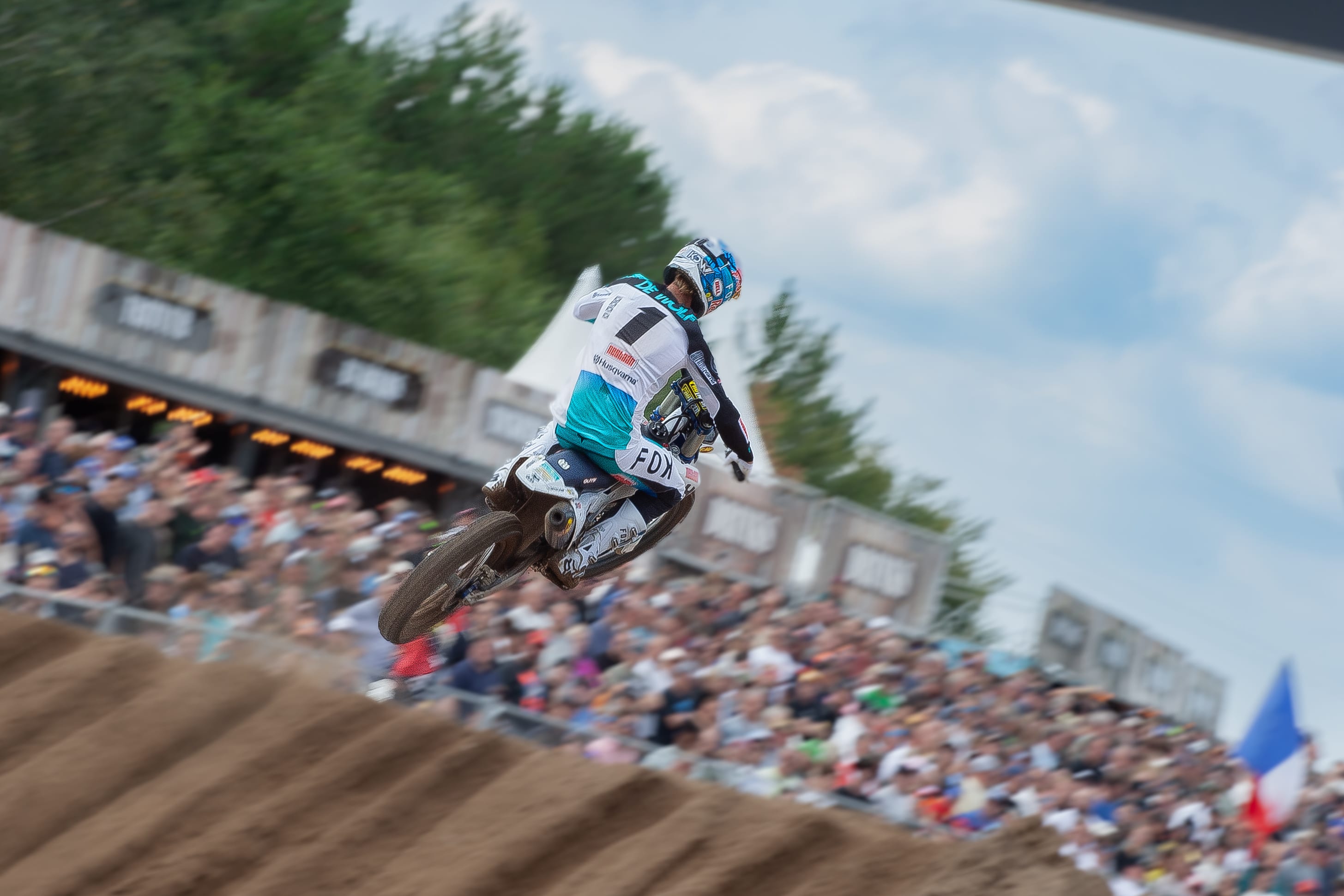
"A really fun day," the Dutchman added, perhaps in the minority.
The landscape has been home to weird and unexpected moments, like one-hit wonder results (Gert Krestinov's 2008 win in MX2, Brian Bogers in MXGP in 2022) and against-the-odds outcomes such as Shaun Simpson's privateer victory in 2015 and Max Anstie's MX2 success with a fragile Dixon Yamaha in 2014. Anstie is the only rider to have won at Lommel three times with three different bikes: Kawasaki and Husqvarna being the other machinery. When he walked the top step for the second time in 2015 it was the last time Britain clinched both classes on the same day.
There have been showcases, such as Herlings' breathless superiority to lap up to 8th place in 2018 and Red Bull KTM's team sweep of the podium in 2017 (Herlings, Cairoli and Glenn Coldenhoff). Then unsung names like Max Nagl, Josh Coppins and Clement Desalle. There have also been hard accidents, such as Steve Ramon's career-ending crash during the 2011 Qualification Heat while going through the section that is now Coenen's 'spoon'.
Lommel has yellow in its essence. The link with Suzuki was established by the Geboers brothers and the former factory team's workshop a short distance from the track. De Dycker won, Strijbos won seven years later and Ramon had his final Grand Prix laps as a factory rider with the RM-Z 450. Ramon was Belgium's (and Suzuki's) last world champion in the premier class back in 2007. Suzuki carried Strijbos to the last homegrown victory in the sand before Coenen continued his merry assault on 2025 MXGP.
Lucas might not be too clued-up on the record books and Lommel's Roll of Honour but he's now part of an exclusive club of just ten names. He could still go bigger and better but a gold plate this year means he enters a freaky group of debutant champions: Cairoli in 2009, Febvre in 2015 and Gajser in 2016. #96 might reignite Belgium's mainstream gaze for motocross. His ability to move the sand last weekend was a sizeable step.
Thanks for reading OTOR! Subscribe for free to receive new posts and support our work.
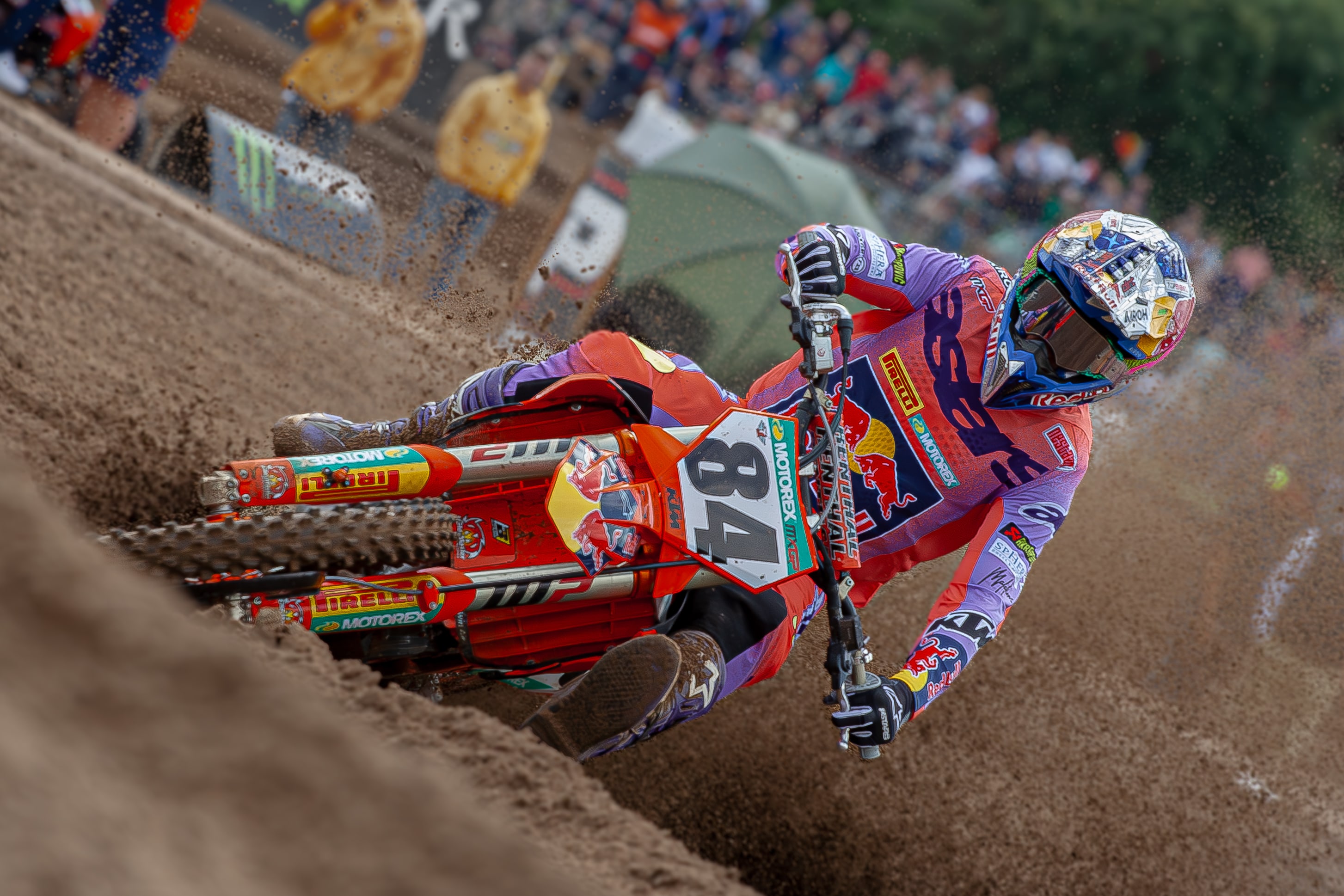 MotoGP: "The live broadcast is still the most important thing." [ 20-Jun-25 1:46pm ]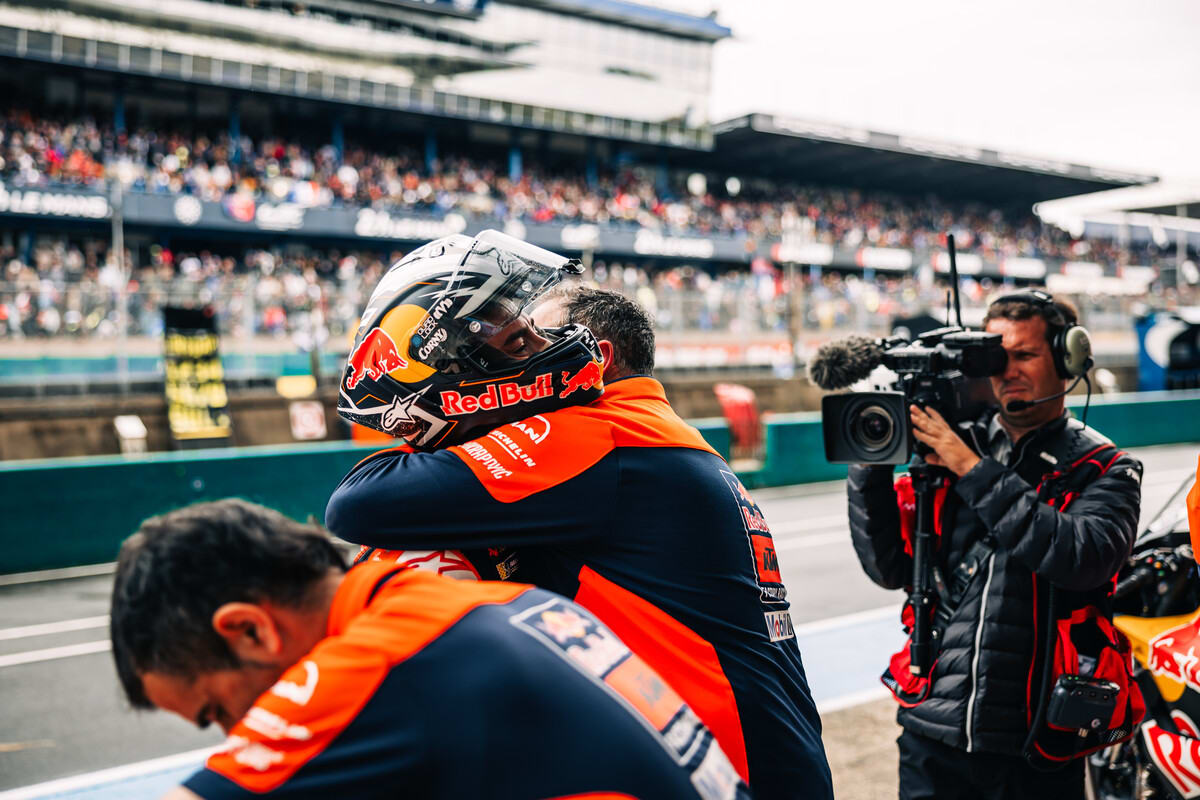
By Adam Wheeler. Action photos by Polarity Photo.
Dorna Sports send almost 200 professionals to each round of MotoGP to provide more than 36,000 hours of live TV broadcasting and accommodate contracts with 117 media partners in 200 countries. It is one of the main revenue pots for the company and the championship but creating a 'live feed' that involves action from variable angles, reports and filtering into OTT content is also a major outlay. There is a trackside network that involves more than 20 and sometimes close to 30 units, as well onboards, remote RFs [Radio Frequency cameras), drones, a heli-cam and even autonomous technology - cameras that film the action without human assistance. The feed can count on input from over 150 channels during a Grand Prix weekend and behind it all there is a sea of "technicians, directors, graphics and replay operators, journalists," explains Live Director Enrique Sierra.
Live sport is apparently still a draw for broadcasters and streamers, and still essential for promoters. In an article written in February, Forbes.com quoted a study from Ampere Analytics that said in 2025 streaming services will account for 'one-fifth of global sports rights spend, reaching over $12 billion.' It could be argued that fans and viewers are digesting sports in different ways: delayed viewing, social media clips, YouTube highlights and other media outlets but Sierra says the root of all moving content is the live feed. "The Live broadcast is still the most important thing," he states. "I think it's the base. We don't have social media [content] if we don't have the Live but it is changing…and for this we have to keep pushing to make sure we have the technology we want and need. The Live still needs to be five-star, and the broadcast partners pay for this product. It's a premium service in coverage."
"There are always budget discussions," he reveals on the split between investment for track action and more resources for social media. "Right now, we have our budget confirmed for a couple of years but if we want to improve then we need to keep investing. We are in a different situation now [with demands for social media] compared to five years ago."
The 51-year-old Spaniard is at the helm of Dorna Sports' vast TV structure and a department that has always pushed for fresh and innovative ways to televise Grand Prix, thanks to the impetus of people like Sergi Sendra and Manel Arroyo who helped craft a large visual and commercial base for the series. TV revenue helps support large sections of the paddock. Sierra is responsible for the MotoGP class signal while he has other directors for other categories. The production on raceday is like coordination of a sizeable symphony orchestra.
"It's important to have the team happy and motivated," he describes. "You want to reduce the amount of 'noise' around you. It's like being in another world for two-hours. You just connect with the race and the team. The secret is to be calm, but fast. Also to change the speed or rhythm of the work because there are many directors who are always 'up' and shouting for the angles when the race might be quite quiet."
"You can change gears and make fast sequences that gives the viewer the feeling of 'wow, look what's happening!' especially with overtaking," he adds. "You have a method of sequencing and then it depends on what happens in the race. We have 60 onboard camera views and 16 channels and you can cut between front and rear, and that's important because if cut away at the wrong moment to trackside then you can lose the feeling of action. It's critical, and it also happens in hundredths of a second."
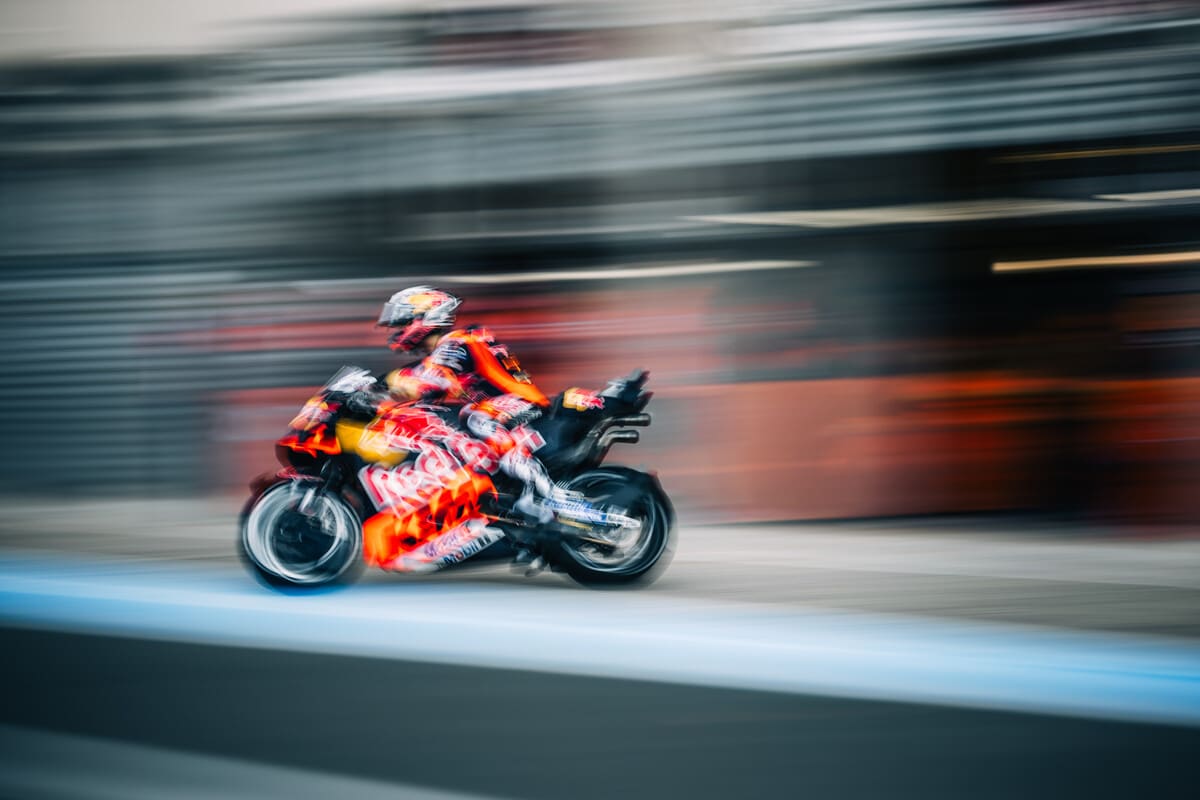
The coverage of crashes is a polemic and delicate subject. Grand Prix's last fatality came with Jason Dupasquier's qualifying crash at Mugello for the 2021 Italian GP but accidents for Pol Espargaro (Portimao), Pecco Bagnaia (Catalunya) and Jorge Martin (Qatar) in recent seasons and shots of teams and family members in pitlane have also attracted commentary on what Dorna's TV should show and of whom.
Sierra acknowledges the difficult mix between sensitivity and an informative relay. "You have to make quick decisions. You see the image, and then you have to decide if you cut to another because it's a drama," he explains. "You have to take care…and these critical moments are very difficult. Showing the human side is part of the racing, part of the story. It comes down to feeling and instinct in the moment. Behind me are journalists and other management that can help and maybe say 'it's a bad crash…'. We check the replays [away from the Live] and if the rider is not moving or in a bad way then we take care of what we show. This is the case from the time of the Simoncelli crash [Malaysia, 2011] where we will not show any replays until the rider seems to be moving and is OK."
MotoGP is a sport entertainment product, yet the controller of its TV portrayal is conscious of his obligation. "It is a spectacular sport but of course we know the riders are playing with their lives," he says.
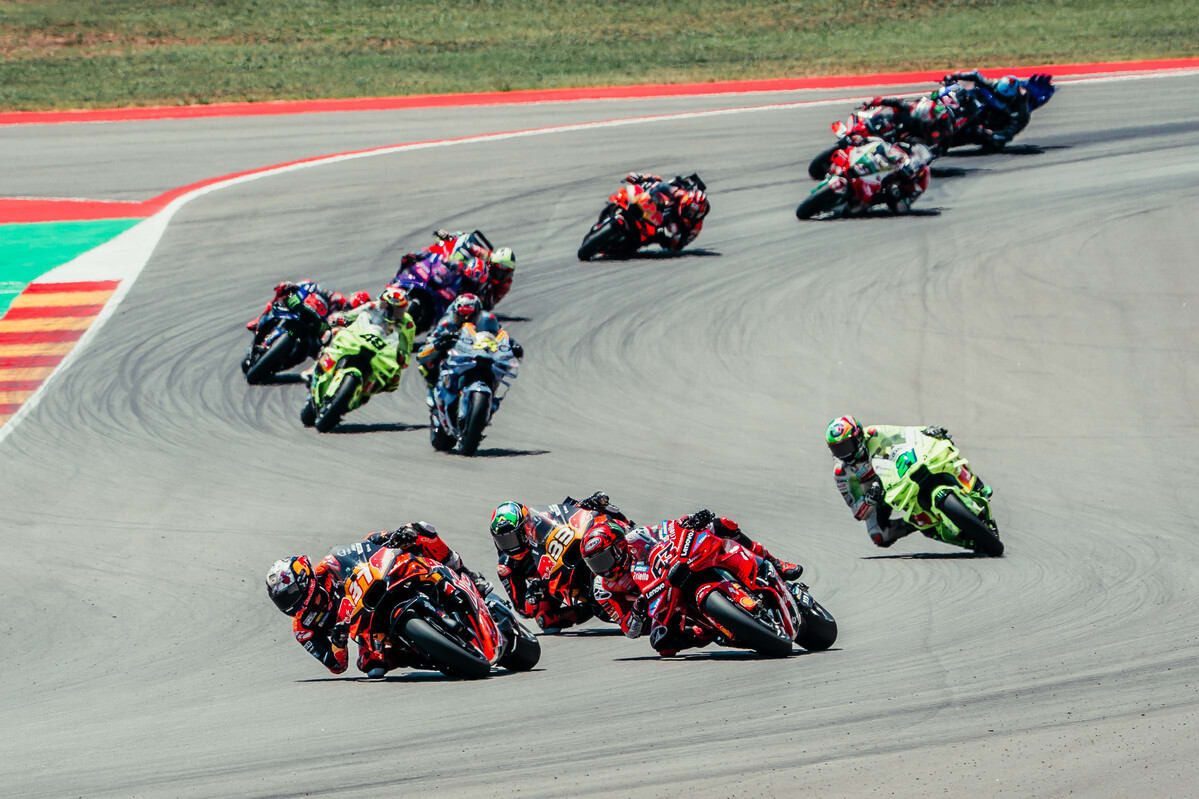
MotoGP now involves 22 Grands Prix and 8 overseas rounds and Dorna's global hike might be due for further review. Thanks to high-speed fibre optics, more and more Grands Prix could be directed from the company's operational headquarters just outside Barcelona. Formula 1 already have a split structure with their Event Technical Centre at each circuit and the Media & Technology Centre at Biggin Hill in southern England piecing together their productions. Sierra still wants Dorna's control hub on the ground at the tracks. "For many reasons," he says. "One being the atmosphere and the tension of the race and the connection with the teams. Another is the quick ability to get to the track to see a new camera position."
Sierra is an avid motorcyclist himself and even makes the timing laps with an official BMW on the day prior to the Grand Prix to get the best possible feeling for the course and the venue. "In terms of TV direction it is important to try and understand the sport and the discipline, in my case riding the laps gives me a feel of the track and I can try to bring that to the TV. It's an advantage. We do what we can to be among the elite for TV sport production."
Thanks for reading OTOR! Subscribe for free to receive new posts and support our work.
He does admit that the days of hauling a full outfit to 22 GPs could dwindle, as soon as it makes fiscal sense. "The future does seem to be remote production," he concedes. "It is a technological matter. There is a cost factor and the budget for travel and the entire crew being on-site is more or less the same [as using the fibre optic]. In the future though I think this will change and it will be cheaper to be in Barcelona than the circuit."
Asking how Dorna could possibly improve their live TV feed going forwards gives ground for thought. "It's a good question. Maybe we are at a level now we can lose more than we gain. It's very satisfying to create good coverage of a good race. You have many tools, many cameras. How can we improve? Obviously, we have new cameras and new onboards. Things always change."
Spain's next one? Oriol Oliver is the slow-burn talent that is gaining attention in MXGP [ 20-Jun-25 9:08am ]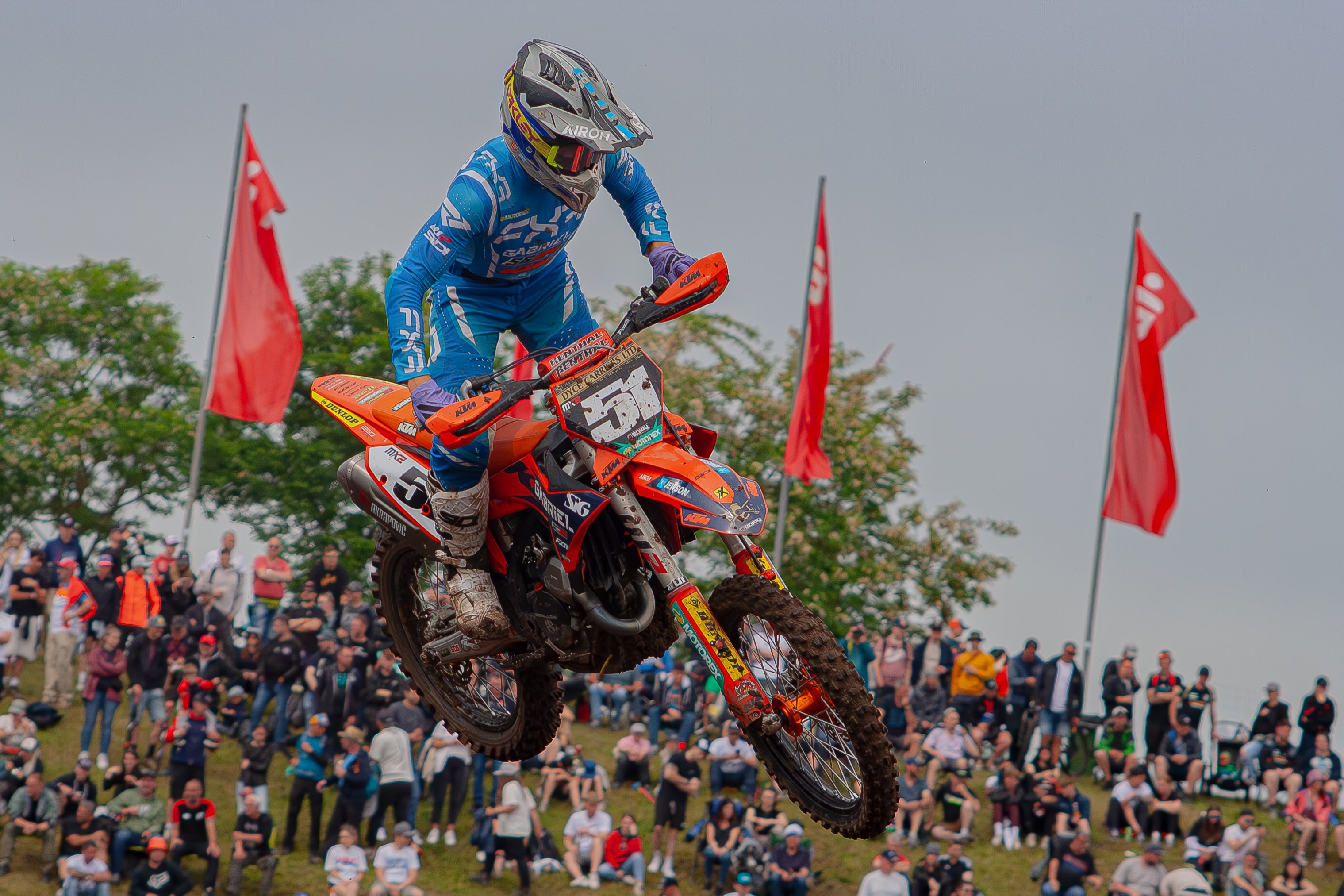
There is something familiar about the Gabriel SS24 KTM team. The orange colour. The compact but well-ordered awning. The small but earnest racing operation. It's the definition of a 'satellite' team: one that can take profit of emerging talent while being an important part of the paddock fabric because they provide a platform those riders to develop.
It's exactly the kind of set-up from which Shaun Simpson achieved his best work in MXGP (with four wins the Scot is the UK's best rider in the premier class). Now, the 37-year-old is Team Manager and marshalling the efforts of upcoming Dutchman Gyan Doensen (already on the podium in his rookie EMX250 term) and promising Spaniard Oriol Oliver in MX2.
Oliver was a late and unplanned subscription. For 2025 the team are into the second year of an official KTM MX Academy structure. In 2024 they helped Dutchman Cas Valk fight for the EMX250 crown (he is now a debutant in MX2) and for 2025 they run the semi-factory KTM 250 SX-Fs for Doensen and Max Werner. When the German dislocated his shoulder pre-season they had a gap and KTM saw a chance to help Oliver; a Catalan who had been roaming the periphery of the MX2 top ten but whose ride with BTS KTM had dissolved. He was rescued by the British squad for the Trentino Grand Prix and has been adopted for the full '25 schedule. He responded by delivering a career-best 4th position overall at the French GP.
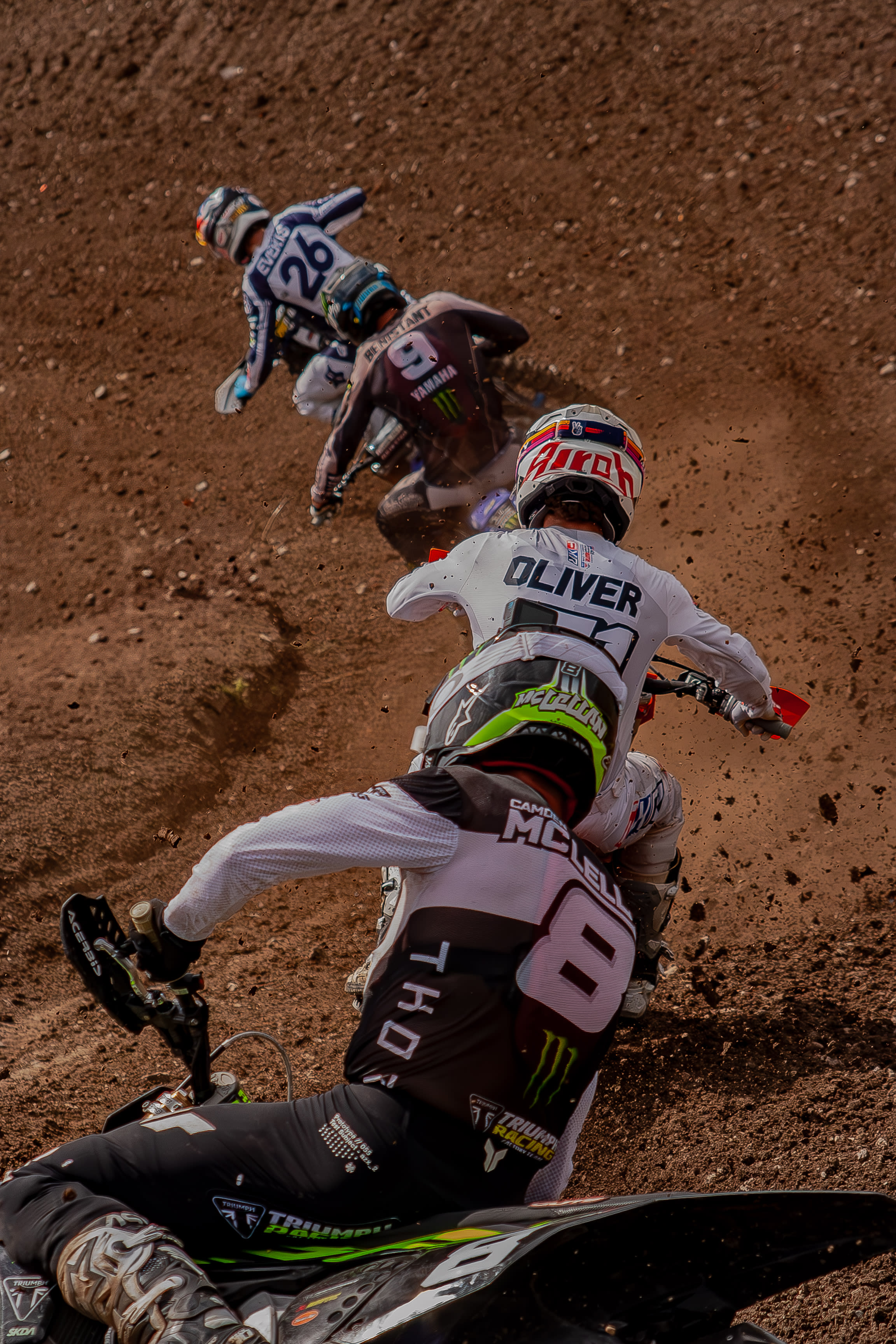
"I've been battling these last few years in MX2 and finally the results are arriving," says Oliver, the son of a racer and with an older brother who competes in the Catalan national series. "Last season I lost my ride - the team owner said he wanted to try something new - and the team I started 2025 with, BTS, lost their main sponsor and I could not pay what they then asked of me. When Max got injured then an opportunity opened up here [Gabriel SS24 KTM] for a few races. I'm really happy. It's the best bike I've ever ridden and it's a relief to know I will finish the season with these guys because it was a hectic period."
2025 is Oliver's last attempt at MX2 as he recently turned 23. But he is combining the starts, some consistency, work ethic and his effective riding style to put his name on the map with the Austrians and in Grand Prix generally. "Oriol hadn't really found his feet in MX2," evaluates Simpson. "If he'd had the right team, bike and support three years ago then he would have developed into a podium guy. He's got this chance now."
"We gel well because I wasn't the most talented guy on the track but hard work got me to where I arrived in MXGP and I think he's the same," Simpson adds. "He has a very efficient style. He doesn't use a lot of rear brake or clutch and rides with the engine. He floats over the bumps compared to some other riders that really manhandle the bike. Oriol thinks a lot and gives good feedback. He's easy to work with because I can see he is totally focused on riding his bike as well as he can. I reckon he would be a good test rider already because he feels things and can explain what going on with the motorcycle."
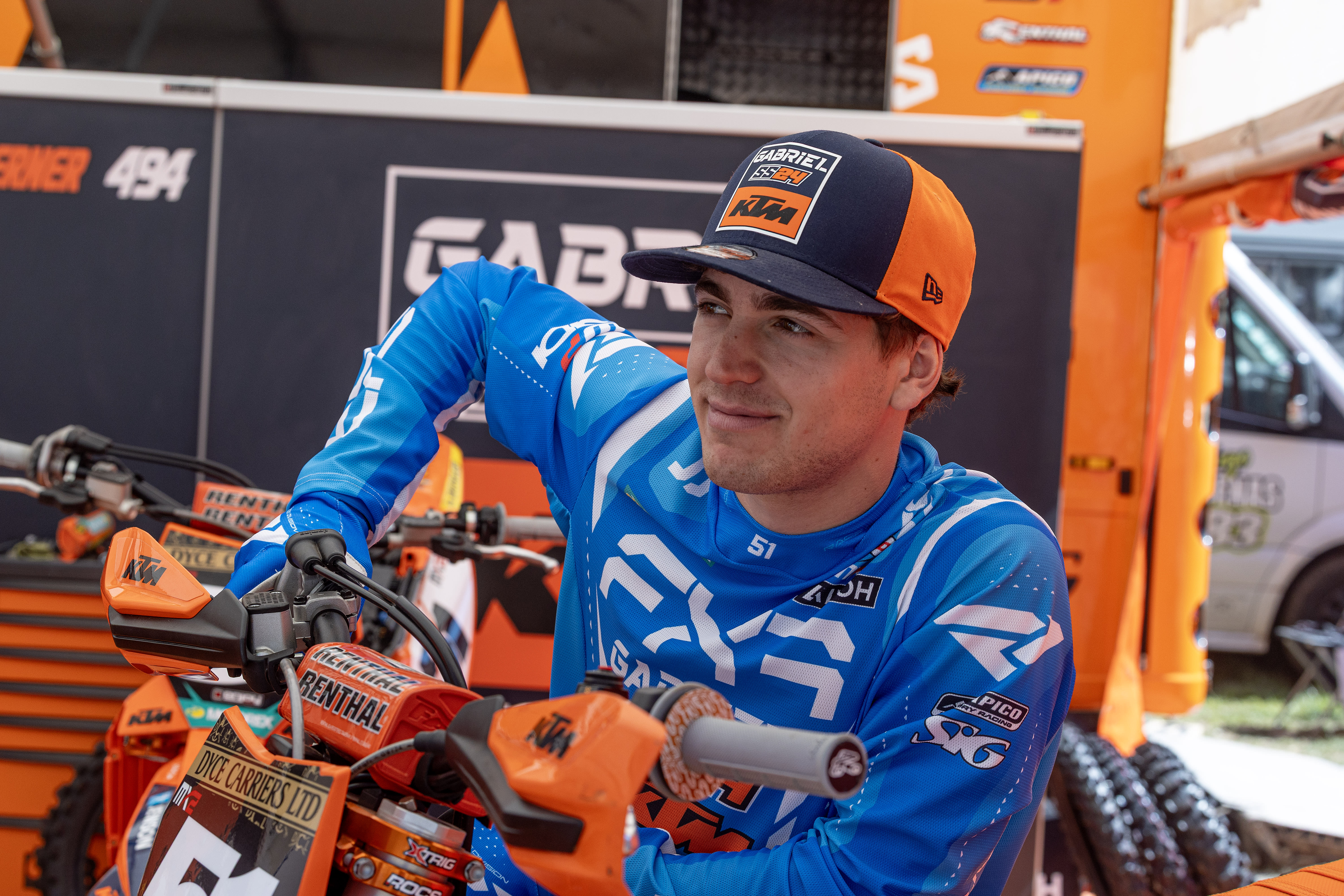
"I've always had this style where it seems I'm not pushing…but I am!" smiles Oliver. "When I'm having fun then the faster I go: it's the case for many riders no? I'm very precise and really like to ride that way. Jorge Prado is a reference for me. Jett Lawrence is amazing."
"Ernee [French Grand Prix] and that 4th place was a relief," he continues. 'We'd had quite a few mud races and there had always been a little issue that stopped us. I could see [a podium finish] in front of me. Everyone is pushing in this class but to be in that 4-6 bracket is a good step for me."
Gabriel SS24 KTM's machinery benefits from engines that are service and maintained by the factory. They run stock suspension but with other upgrades to help with mileage and durability. The works bikes fielded by Andrea Adamo, Sacha Coenen and Simon Laengenfelder have the full engine treatment, factory suspension, titanium upgrades and more, but Oliver has been able to help the Austrians continue their grip on the class as KTMs and Husqvarnas occupy the majority of top ten places and have filled all but 5 of the 33 podiums spots so far in 2025. "It shows our set-up, staff, materials, bike, the whole programme is good enough to not only to be winning in EMX but to filter into MX2 and maybe even MXGP," Simpson claims. "Oriol will help bring Gyan on, and Max as well on his return."
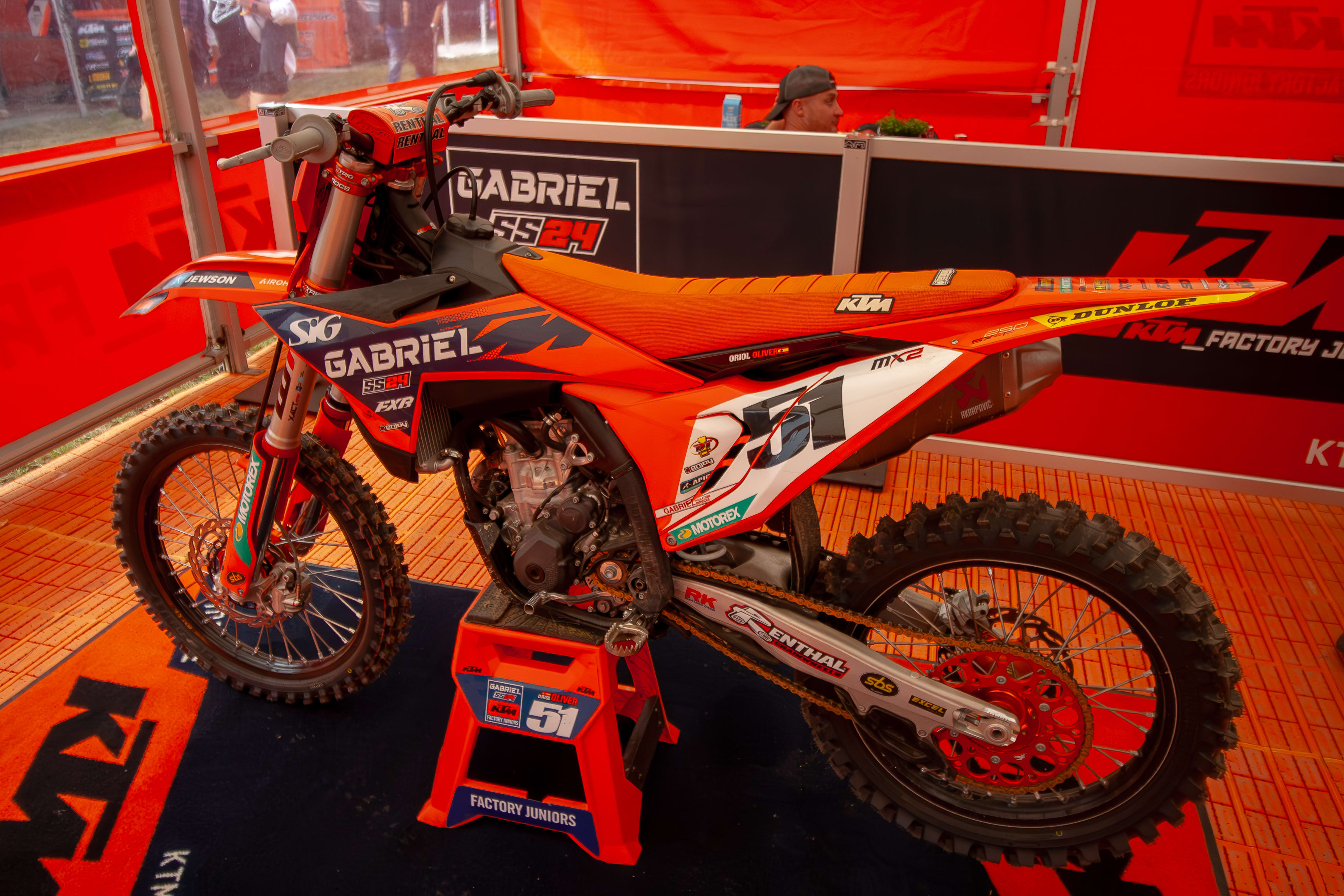
Oliver could be the sixth different racer to take the KTM technical base to an MX2 trophy this season. But what does the future hold? 2025 is already a diversion for Gabriel SS24 KTM who had been expecting to contest only EMX250 (Thomas Traversini's Racestore KTM Rookies squad handles the EMX125 step). KTM's business predicament and economic situation leaves question marks around the size of their MXGP and EMX footprint and to what degree they could support projects like Oliver, who has to vault into the premier class if he stays in the world championship.
Thanks for reading OTOR! Subscribe for free to receive new posts and support our work.
"We are set up and motivated to run the EMX250 development programme but I think there will be a reshuffle at the end of this year," Simpson says. "Whatever happens for 2026 it has to be beneficial to both KTM and also the team. Simon [Gabriel] and I are motivated with Oriol because it means racing in the world championship but this takes nothing away from podiums and wins in the Europeans and hopefully a title one day. We're motivated by results and it's exciting to see we can make podiums with Gyan and get in the top five of MX2 with Oriol. We are that stepping stone. We'll definitely have a presence in EMX250 next year."
A Gabriel SS24 KTM 450 SX-F and more education for Oliver is not outside the realm of possibility for 2026 (the team also helped Briton Josh Gilbert in this way in 2024). Oriol himself knows his career is clicking up a gear. "What I want to do now is seize this chance and push for a podium," he states. "The future? I'm not sure but I know I can be a good 450 rider. I ride long gears and low revs. Whether it's here, the US or Australia I'm open to everything."
Brad Binder's Crew Chief Andres Madrid: "We are trying a lot of stuff to get back the confidence" [ 19-Jun-25 6:15pm ]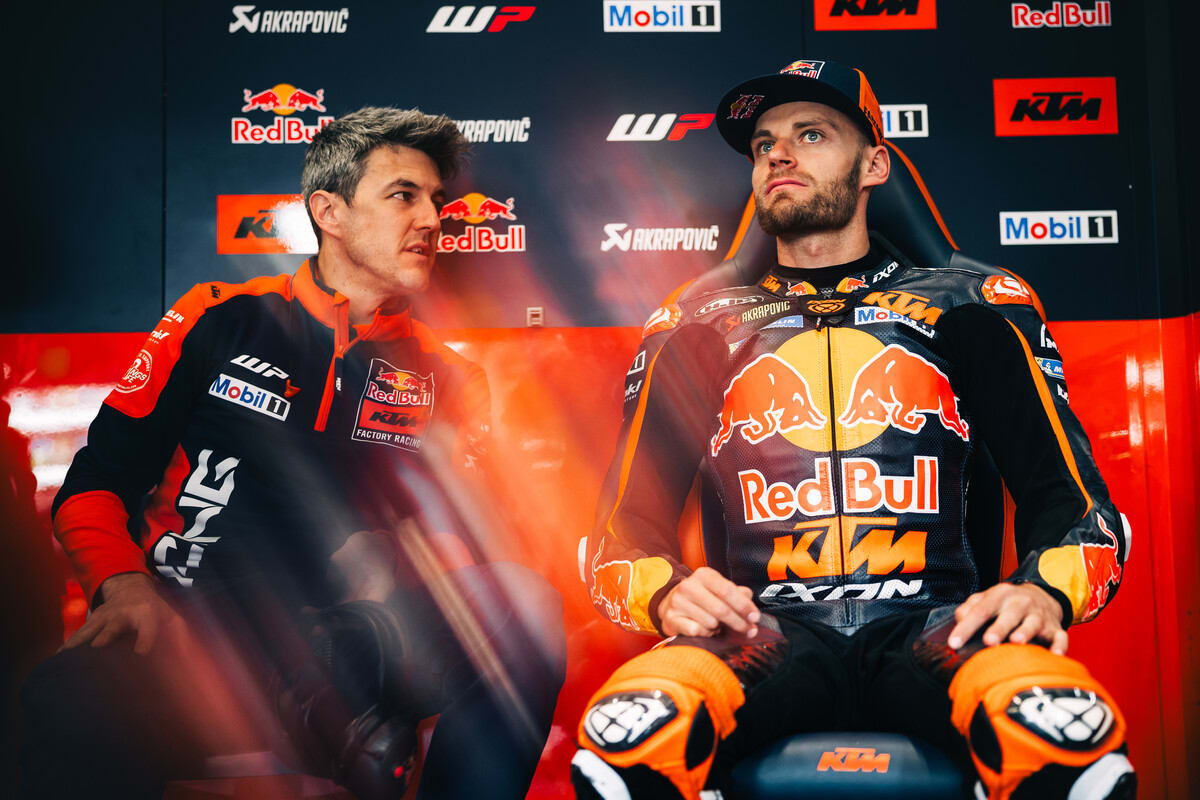
By Adam Wheeler. Photos by Polarity photo.
Three DNFs and a highest classification of 6th from the first eight rounds of the current campaign is a meagre return for a rider of Brad Binder's capabilities. The Red Bull KTM Factory man last walked a MotoGP podium back in Qatar 2024 but both he and the team have been persistently looking for ways to find a better feeling for rear edge grip and less understeer to allow the former Moto3 world champion to use the merits of his hard-braking style. "In our opinion everything started with the new rear tyre technology that Michelin introduced in 2024," Andres Madrid, Binder's Crew Chief since the 2021 season explained. "From our information, from our numbers, we could see that this new tyre behaviour had more affect after Qatar [2024]…for some reason."
The Spaniard and the rest of the KTM technicians have been fighting to optimise a configuration that can suit #33 since the trip to Lusail. "We are still trying to apply a solution," Madrid sighs. "We have tried several approaches, different ways to set-up the bike, different components. We are trying a lot of stuff to get back the confidence."
Binder's struggles and those of his teammate Pedro Acosta (the Spaniard is the best RC16 rider to-date in his second term in the class but has been vocal of his frustrations in needing more performance) have coincided with off-track turmoil for KTM. It would be easy for race fans to assume that KTM's instability as a company would be having an influence on their potential to be MotoGP winners but Motorsports Director Pit Beirer has repeatedly underlined the firm's commitment to the series until the end of the current contract window in 2026. Madrid also insists that the KTM Motorsport department have not eased off the throttle for development.
"During the last winter test the amount of stuff we had was a lot," he says. "I would never have said 'we're in a situation…'. OK, some parts in certain areas have taken longer to produce but, for me, the capacity of the factory is at a very high level for MotoGP. This year I think we had more new parts than previous seasons. This is my experience and a fact. Whether these parts can bring us success is another thing. People don't see but we tried a lot of different things this winter. The company told the riders that we will make the bike better and they are doing their best. Unfortunately, the other manufacturers have done better so far. It's simply this."
Binder, now six seasons into his MotoGP career, has registered at least one podium finish for KTM each year. Madrid believes that the calibre of a rider like Brad - a winner of Grands Prix in all three categories - also has to go through a retrieval process to arrive back at the front. "There is a point where riders lose the confidence and even if we gave them a winning bike then they would not immediately go very fast," he claims, generally. "First of all, they have to recover what they have lost because the amount of crashes has increased [Binder fell 9 times in 2022, 15 times in 2023 and 19 in 2024.] To find their way back takes time. It's quite difficult. Of course, we need to improve the machine, and we need to use all our resources for that: like the efforts of the other MotoGP riders and the team test. It's a complicated issue. "
"All you can do is keep working and be as professional as you can, and I think Brad is doing this," he stresses. "No matter how bad the previous weekend might have been, he tries to follow all our work plans and never, ever gives up. He is fully motivated for every grand prix. Even from one day to another: if we have a bad qualifying then you know he will still go 'beyond' for the race. This is something that I've never seen in a rider quite like Brad: it's that capacity to reset and deliver."
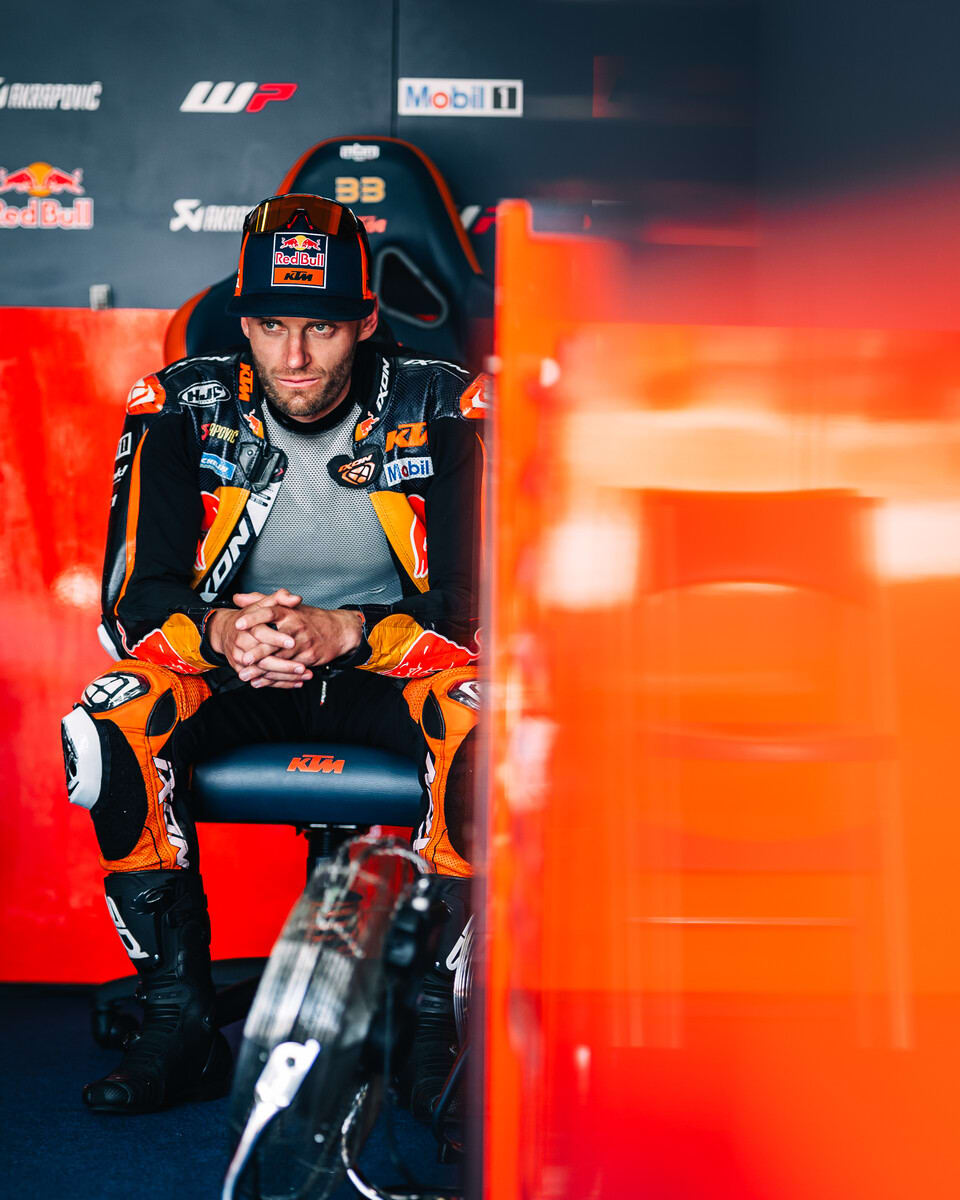
In this sense Madrid has two jobs: to refine and improve the RC16 as a technician but also as a psychologist to get Binder back in the Prosecco spray. "Yes, but that works both ways because Brad motivates us with his energy," he says, drawing more on the human side. "Some other riders might bring this depressed state of mind to the garage. We've seen this in other boxes. Brad, no matter the situation, enters like 'new' again and this is super-appreciated by the mechanics, the crew and everyone. He is always keen to ride."
As much as Binder comes across as a hungry and determined athlete, and one that would seize a mere sniff of an opportunity, Madrid believes the reversal of fortune will take some time. "I don't think you can recover everything in one weekend. When you start the GP you know more-or-less how it is going to be. You can see where the other KTMs are and if they are all performing then you know the bike is suited to the current layout quite well. Then you think: 'we can do it…' and the rider sees it. Then you have to take this to the next race and prove it was not just luck. So, one weekend is not enough. We know in this sport that the rider is important but the bike is also very important and you cannot make magic. There is a limit."
Thanks for reading OTOR! Subscribe for free to receive new posts and support our work.
KTM are not a million miles away from troubling the Ducatis. In Aragon last week Acosta and Binder were running P4 and P5. During Monday's one-day test Red Bull KTM Tech3's Maverick Viñales set the all-time lap record at the track. The factory famously reduced a 2.5 seconds deficit to the leaders in their first GP appearance as full-time members of the grid at Qatar in 2017 to get on the podium less than two seasons later and win races by 2020. The step to silverware in 2025 might again come soon.
"My experience tells me if you measure the gap in time then it's ridiculous," Madrid says. "If we are missing half a second then it can be seen as a lot but if take a stopwatch and try to measure it then it's nothing! The difference is so small. In the past we have made a couple of clicks or switches and then the performance went completely downside up. Sportsmen, I think in general, have a sweet spot: you must find the way to put them inside it and then they can deliver from 5% to 300%! Sometimes it's just a couple of clicks and the rider brings another four. Sometimes you don't need massive help. Half comes from the package and half comes from the rider…they just need the little boost and then boom!"