
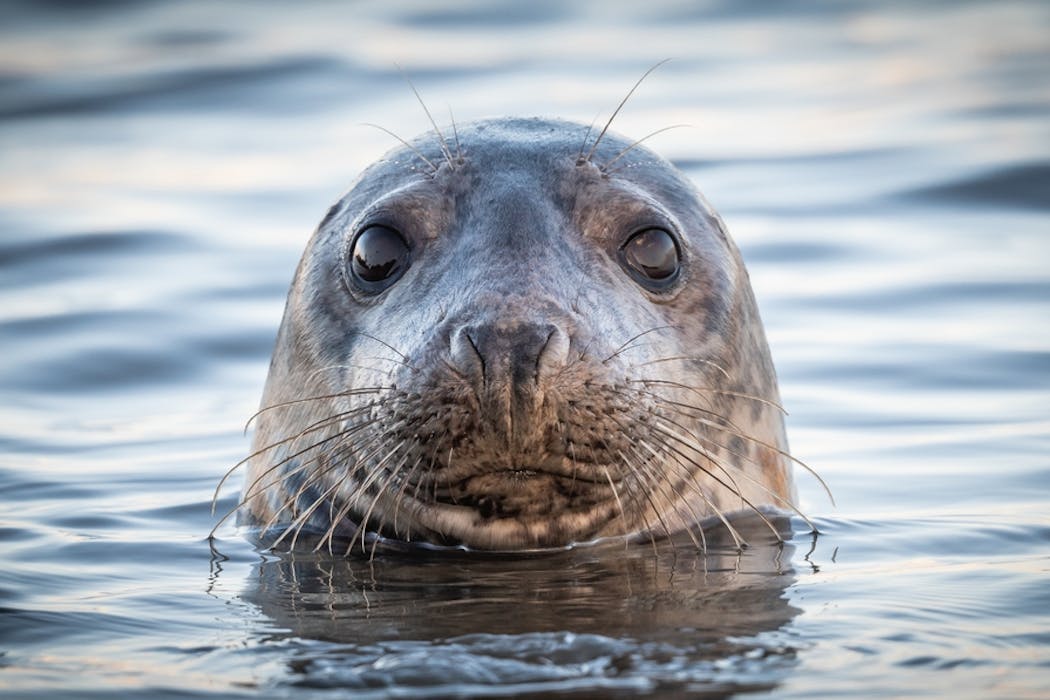
 Grey seals are getting caught in fishing nets. Lynn Batchelor- Browning/Shutterstock
Hundreds of thousands of marine animals are killed every year after becoming accidentally caught in commercial fishing nets. Sharks, skates and rays are at particular risk, alongside turtles, seals, whales and dolphins, many of which are endangered.
Much of this problem comes down to the design of fishing nets and how they are used. Particularly damaging are tangle nets, which typically use large mesh sizes and large amounts of slack that can indiscriminately catch anything that crosses their path. They are also typically left in the water for long periods and only checked every one to ten days.
A new four-year study from Ireland's national Marine Institute highlights the particular problem the nets are causing in Ireland. Legally protected seals, for instance, are regularly caught in this type of net, widely used by the Irish fishing industry including in the country's only marine national park.
Tangle nets were first introduced to Ireland in the early 1970s. This was to help boost the competitiveness of the Irish crayfish fishing sector and provide an alternative method to the traditional pot-based method that was used up to that point.
But tangle nets are known to potentially harm a variety of species. The estimated impact from the latest report (covering 2021-2024) about what the nets had caught was stark:
• 1,161 nationally protected grey seals
• 81 critically endangered angel sharks
• 1,712 critically endangered flapper skate
• 532 critically endangered tope sharks
Other species caught included the endangered white skate and undulate ray, as well as rarer records of common and Risso dolphins. Catches varied throughout the study region, and included Ireland's marine national park in County Kerry. It is unclear whether similar numbers are seen in other fishing areas throughout Ireland.
The report argues for the reduction of these accidental catches to "safe biological limits", but acknowledges that there probably is no safe limit for several of the shark and skate species given their conservation status and their approach to reproduction.
The documented numbers of catches is particularly concerning for the species' designated as critically endangered by the International Union for Conservation of Nature. This classification stipulates an extremely high risk of extinction in the immediate future. Unlike many bony fish such as cod, tuna and salmon, sharks, skates and rays tend to mature slowly (often at more than ten years of age), have long gestation periods, and only produce a few young every year or two.
Rays and sharks are getting entangled in fishing nets.This makes it very difficult for them to recover if anything causes their populations to decline. The angel shark is a good example - once widespread throughout the north-east Atlantic, it has suffered drastic declines across its range, and the species is now locally extinct throughout much of Europe.
There are few remaining strongholds for the species, but County Kerry is one of the last northerly refuges for angel sharks. With so few left in the wild, numbers caught in Ireland's tangle net fishery are a significant concern at a global level.
Fisheries at a turning point?Irish commercial fishers are facing a challenging future, with a number of recent restrictions to activities and quotas creating severe pressure on numerous businesses and communities around Ireland , and closing the crayfish fishery would be another blow.
But there is a suitable and straightforward low-impact alternative to the tangle net, which is to fully return to the traditional pot fishery to target crayfish.
Currently in Ireland some fishers still use these pots, and others a combination of pots and nets. Pots are typically netted, baited cages with a narrow-funneled opening designed to only catch the target species with a minimal footprint when landing on the seabed and low risk of harm to the endangered and protected species documented in the Kerry report.
The report clearly states the urgent need of phasing out tangle nets, and highlights an upcoming Marine Institute report focusing on economic considerations supporting a complete switch from nets to pots. The current report suggests this is the "optimum solution". And it adds that trials using the pots showed equivalent catches.
Fishing is an integral part of Irish culture, and the need for a fair transition with appropriate support is repeatedly highlighted as essential for effective marine conservation.
What happens next in Kerry is probably going to be influenced by proposed legislation relating to how Ireland's marine landscape is managed. The potential introduction of the Marine Protected Area and Nature Restoration laws, currently being debated, are aimed at protecting and restoring marine biodiversity, and may soon change how fishing is carried out in Irish waters.
Examples from around the world show that it is possible to change the type of fishing nets used to protect marine life. Gillnets (which capture fish by entangling then around the gills) have been almost completely phased out in Australia's Great Barrier Reef marine park due to risks to animals including dolphins and turtles. Large scale drifting gillnets were banned in the European Union more than 20 years ago due to similar concerns.
The deaths of the world's most sensitive marine animals documented in the tangle net report highlight the urgency of how fishing needs to change globally, while also protecting the livelihoods of an industry important to coastal communities.

Nicholas Payne receives funding from Ireland's Marine Institute to study the ecology of sharks and rays. He is also a council member for the British Society of the British Isles
Louise Overy has received funding from National Parks and Wildlife Service for ecological research purposes and is a coordinator at the Irish Elasmobranch Group and Project lead of Angel Shark Project: Ireland.
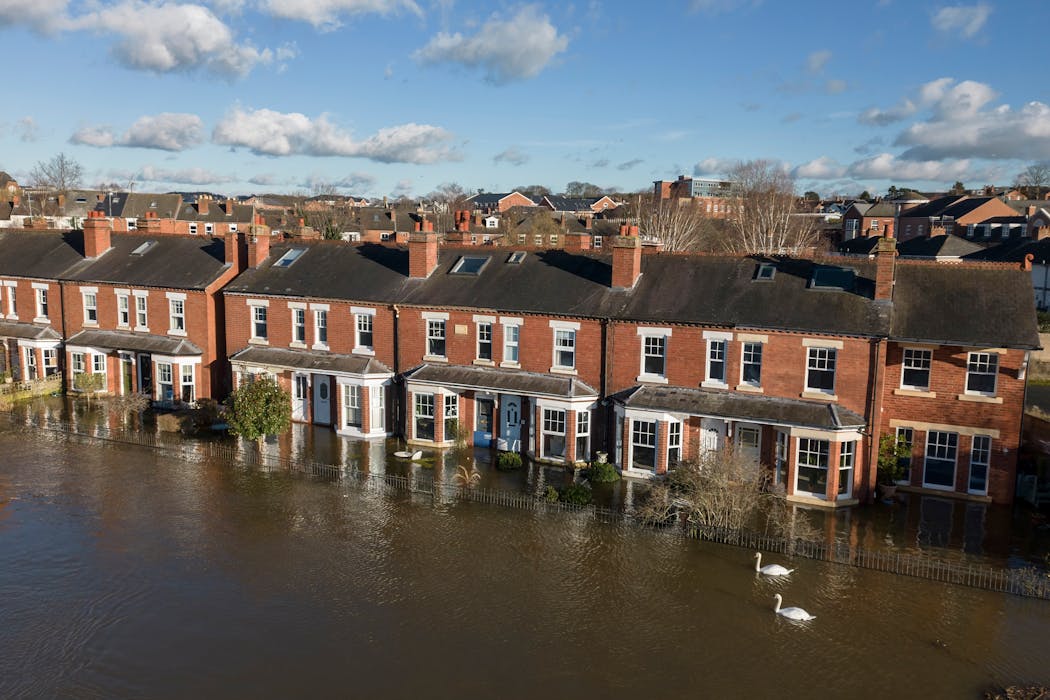 Chris Homer/Shutterstock
While floods are becoming more frequent in recent years, you should still be able to buy reasonably priced home insurance. That reassurance exists largely because of Flood Re. Launched in 2016, Flood Re is a national public-private reinsurance scheme that prevents many properties from being priced out of cover.
But the Flood Re scheme is a temporary fix that's due to end in 2039, on the assumption that flood risk will fall and the market can move back towards more risk-reflective pricing. As financial experts, we're worried that the UK may not be able to adapt its infrastructure and systems to climate change fast enough.
The success of the Flood Re scheme hinges on a shared contract between government, homeowners and insurers. Government has to cut risk through investment and delivery. Homeowners reduce damage by building back better and avoiding preventable exposure. And insurers must increase prices of premiums to better represent the climate risk but not so fast that cover becomes unaffordable.
If premiums rise too quickly, fewer households will stay insured and the ability to socialise risks across a large pool will not be possible.
The scale of the challenge is already clear. Flood Re was designed when a global temperature rise of 1.5°C still felt achievable and a 2°C increase should be a hard limit.
Climate change has accelerated since then. By around 2050, around 8 million properties in England, roughly one in four, could be at flood risk.
The House of Commons public accounts committee warns that deterioration in existing defences has left around 203,000 properties without reliable protection, while the government aims to protect 200,000 more by 2027. Labour's target to deliver 1.5 million new homes in England by 2029 risks adding pressure by pushing development onto cheaper land that's at greater risk of flooding.
Many countries intervene to support insurance for disasters such as floods and storms, but few put a firm end date on that support. For example, The US National Flood Insurance Program (NFIP) was created to provide affordable flood insurance and to reduce future damage by discouraging development in high-risk floodplains.
In practice, repeated extreme weather has left the NFIP in debt and subsidised premiums have weakened incentives to avoid building in flood-prone areas. Although the NFIP is regularly renewed by the US Congress, its long-term sustainability remains uncertain.
France's catastrophes naturelles scheme (CAT-NAT) covers natural disaster losses that private insurers struggle to price, funded by a national surcharge. Rising losses from more frequent and severe disasters are straining the model, so the surcharge increased from 12% to 20% in January 2025. That raises a hard question: how can the system stay fair as the cost of disasters keeps climbing?
Preparing for post-2039Our ongoing research suggests flood-related volatility can amplify financial stress and uncertainty. The choice is not simply between keeping Flood Re forever or ending the scheme. The real question is whether the UK can use the time Flood Re is buying to reduce risk fast enough to make a fair transition possible by 2039.
That is why progress needs to be visible and measurable in five areas.
First, as demonstrated by recent updates in England and Wales, flood maps and modelling must reflect current conditions and future climate risk, with updates that keep pace with changes to the drivers of flood risk whether that be from heavy rainfall or rivers and the sea.
 The Flood Re scheme is a temporary fix, not a long-term strategy.
Martin Charles Hatch/Shutterstock
The Flood Re scheme is a temporary fix, not a long-term strategy.
Martin Charles Hatch/Shutterstock
Second, governance must be joined up, with clear responsibilities and minimum coordination standards across agencies for rivers, surface water, drainage and sewers. Better collaboration would help to resolve misalignments in major capital programmes across risk management authorities.
Third, drainage and surface water management must be strengthened, with clear rules and long-term maintenance so new development does not add to flood and sewer risk.
Also, every tool in the box should be used to increase investment in flood risk reduction and to enhance maintenance. The benefits of flood protection should be made transparent to insurers and fed into catastrophe models.
Finally, a clear Flood Re future must be shaped together by planners, insurers and flood authorities. This will help set a shared standard for flood risk management.
Don't have time to read about climate change as much as you'd like?
Get a weekly roundup in your inbox instead. Every Wednesday, The Conversation's environment editor writes Imagine, a short email that goes a little deeper into just one climate issue. Join the 47,000+ readers who've subscribed so far.

Neil Gunn works and consults for Willis Towers Watson and also owns some shares in that company While the Willis research network supports scientific research through for example direct grants and in kind support, it benefits from schemes like CDTs which are supported by government funding
Dalu Zhang and Meilan Yan do not work for, consult, own shares in or receive funding from any company or organisation that would benefit from this article, and have disclosed no relevant affiliations beyond their academic appointment.
 Trump claims his pollution rollback will save Americans money - but climate change is raising household costs [ 18-Feb-26 5:01pm ]
 NadyGinzburg/Shutterstock
Climate change is usually assessed in scientific terms - rising temperatures, sea levels and carbon emissions. But increasingly, it can also be measured in household bills - higher insurance premiums, steeper energy charges and growing costs to protect homes, travel and health. So when US President Donald Trump said recently that abandoning a key government ruling on greenhouse gases would make cars cheaper for Americans, he was focusing on a tiny piece of a huge picture.
That is because climate change is not a local problem that hits one place at a time. It is increasingly a widespread financial risk, pushing on several parts of household finances at once. When risks become systemic, people cannot simply "insure it away" or plan around it.
When Trump announced he was revoking the US's 2009 "endangerment finding", which set out how greenhouse gas buildup harms human health and wellbeing, he said the move would save Americans "trillions of dollars".
But climate change shows up directly in household budgets as pressures converge. These pressures could include insurance becoming unaffordable or even unavailable, which can then have knock-on effects on property values. On top of that, utility costs can creep up, wages may become less reliable, and retirement savings are exposed to climate-driven shocks.
For many families, their home is their largest financial asset. But climate risk is increasingly being priced into property markets. Research suggests that in the United States, homes exposed to flood risk may be overvalued by between US$121 billion and US$237 billion (£89 billion and £174 billion). The First Street Foundation, an independent climate risk research organisation, estimates that climate risk could wipe out as much as US$1.47 trillion in US home values by 2055.
In the UK, evidence shows that house prices in English postcodes affected by inland flooding fell by an average of 25% compared with similar non-flooded areas. Coastal flooding in England has been associated with price reductions of roughly 21%. The Environment Agency estimates that one in four homes in England could be at risk of flooding by the middle of the century.
Insurance is expensive - or unavailableMany governments have tried to prevent climate risk from pricing people out of insurance by creating schemes of last resort. These government-backed initiatives keep policies available when the market would otherwise withdraw. But this safety net is now under growing financial strain.
In the US, the National Flood Insurance Program (NFIP) has accumulated more than US$22 billion in debt to the US Treasury after repeated borrowing to cover claims.
Meanwhile, in the UK, Flood Re was designed to buy time for adaptation while keeping flood insurance affordable. Yet rising claims have driven up reinsurance costs by around £100 million for 2025/26. France also had to increase the mandatory surcharge on its national "Cat Nat" natural catastrophe scheme from 12% to 20% from January 2025 to maintain financial stability.
Climate change affects households even if they do not own property. As utilities invest in stronger, more resilient infrastructure, those costs are usually recovered through higher standing charges and tariffs. In other words, the price of adaptation is quietly passed on through monthly bills. In California, for example, wildfire-related grid upgrades added 7% to nearly 13% to household energy bills in 2023.
The same logic applies to cars. Rolling back US vehicle emissions rules is being sold to American consumers as cutting US$2,400 off the price of a new car. But that sum isn't a cheque to ordinary Americans. Carmakers are not required to pass the saving on, petrol drivers can end up paying more at the pump, and EVs still come with a high upfront price tag.
In reality, the figure is best understood as an estimated reduction in manufacturers' compliance costs, not a guaranteed discount at the dealership.
Climate change doesn't only put pressure on household budgets. It also threatens the thing many families rely on most: a steady pay cheque. Large parts of the economy worldwide still depend on work that happens outdoors from agriculture and construction to tourism, deliveries and logistics. The 2022 California drought cost farming around US$1.7 billion in revenue and nearly 12,000 job losses.
There are also direct health costs. The International Labour Organization warns that climate hazards expose workers to a "cocktail" of risks, including heat stress, air pollution, ultraviolet radiation and physical injury.
It estimates that 2.4 billion workers around the world could be exposed to climate-related health hazards. Excessive heat already affects about 70% of the global workforce, contributing to 18,970 work-related deaths and roughly 23 million workplace injuries each year.
Climate change is increasingly seen by regulators and investors as a systemic risk that can undermine the pensions people rely on in retirement. Risk management technology firm Ortec Finance warns that failing to transition to a low-carbon global economy could reduce pension fund returns worldwide by around 33% by 2050.
Physical risks (floods, heatwaves and storms) can damage assets and disrupt productivity. Transition risks (policy shifts and sudden repricing of carbon-intensive assets) can hit valuations. Together, they weaken the performance of equities, property and infrastructure.
When climate risk is systemic, there's no bargain to be made: short-term "savings" don't reduce household costs, they are repaid soon through higher bills. Rather than driving up the cost of living, climate policy helps to stop climate shocks from raising prices even faster.

The authors do not work for, consult, own shares in or receive funding from any company or organisation that would benefit from this article, and have disclosed no relevant affiliations beyond their academic appointment.
The 2026 Winter Olympics are the most geographically dispersed ever - here's why that could be a good thing [ 18-Feb-26 1:11pm ]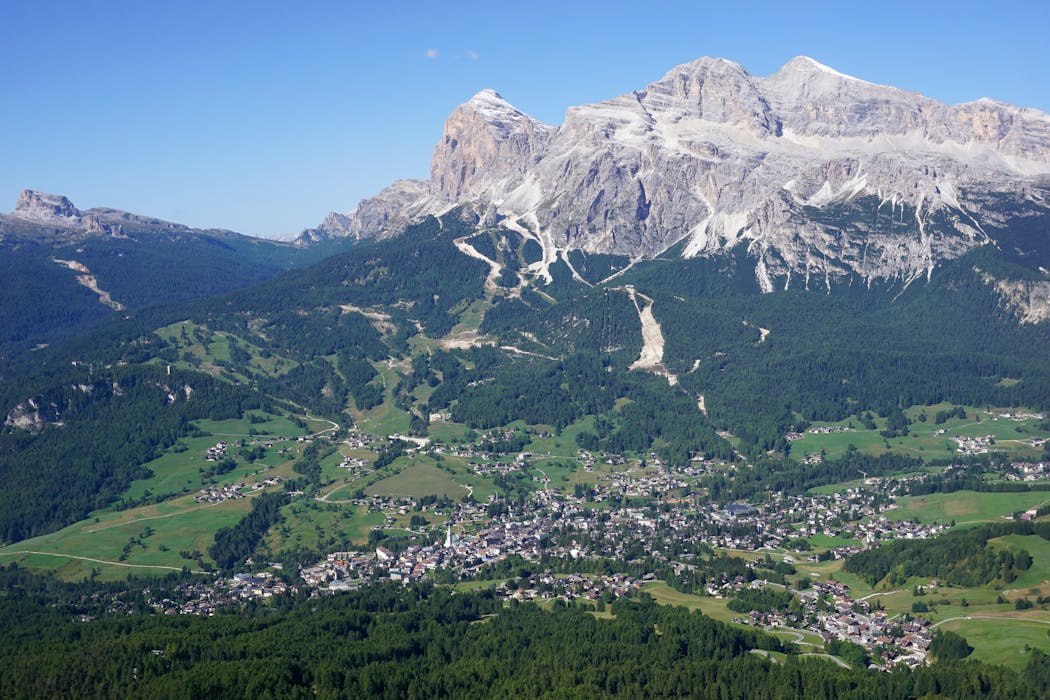 Mount Faloria rises above Cortina d'Ampezzo, one of the host towns for the 2026 Winter Olympics. kallerna / Wikimedia, CC BY
Italy's 2026 Winter Olympics have been described as the most regionally distributed Winter Games ever staged. Events are spread across more than 22,000 km², taking in Milan, as well as the towns of Cortina d'Ampezzo, Valtellina, Val di Fiemme and Livigno in the Alps.
Geographical dispersion is not entirely new. In 1956, the equestrian events of the Melbourne summer Olympics were actually held 15,500 km away, in Stockholm, Sweden, five months before the rest of the games. This was due to Australia's quarantine rules. More recently, surfing during Paris 2024 was done in Tahiti, 15,727km from the French capital. The competition was duly labelled "most distant Olympic event ever".
As a sports management specialist with a human geography background, my research looks at how new spatial solutions and distribution of sport activities and events across a territory increases their sustainability and long-term viability. What distinguishes Milano-Cortina is the way it has been organised across the regions of Lombardy, Veneto and the autonomous provinces of Trento and Bolzano. This represents a strategic shift towards what geographers would term a "dispersed, multinodal model". More than 90% of the venues being used already existed or are temporary. The goal is to reduce construction, minimise environmental impact and reduce any long-term maintenance burdens. In other words, the games have adapted to the territory rather than reshaping it.
Learning from past GamesThe approach adopted for this year's games indicates that national organising committees, and the International Olympic Committee (IOC), are willing to adapt. Research shows such a shift is long overdue.
Olympic planning has long involved sustainability rhetoric. Recent reforms emphasise reduced environmental footprints and the use of existing facilities. Yet, events including the Paris 2024 summer games, have been accused of greenwashing.
Italy's own experience, during the Torino 2006 winter games, highlighted the risks of overbuilding in fragile mountain environments. Many of those purpose-built facilities faced long-term operational and ecological challenges.
Organisers are getting much better at designing flexible venues that can be adapted by the host city for use after the event. In Paris, 95% of the venues were either pre-existing or temporary. The games notably transformed the river Seine into a venue for the opening ceremony and aquatic events. It was expensive to pull off, but as a demonstration of public space reuse and long-term urban ecological investment, it was symbolically powerful. The Place de la Concorde was also converted into a temporary street-sport hub. This showcased how urban environments can host dynamic youth events that blend competition with city life.
Winter games, of course, face different constraints. Where summer hosts can absorb scale, winter hosts rely on natural landscapes that are already under severe climatic pressure. This increases both the stakes and the complexity of sustainable design.
On one hand, spreading events across regions makes them more accessible to multiple communities. It involves more municipalities and regional bodies in planning, implementation, and legacy building, which in turn can foster stronger local engagement and a more distributed sense of ownership.
On the other hand, the model requires robust coordination between diverse actors. It also poses the risk of a fragmented Olympic identity. And it makes media coverage more complex. While this drives innovation in terms of hybrid reporting tools and local storytelling, it can lead to platforms prioritising some events over others.
The transport challengeThe most significant sustainability challenge remains transport. A dispersed model inherently requires athletes, officials, media and spectators to travel more between places. According to the IOC, Milano-Cortina 2026 relies heavily on trains and shuttle systems to minimise private car use, with the goal of reducing car use by 20%, compared to Torino 2006.
Overall travel demand is, however, more complex. A 2022 study on preparations for Milan-Cortina, showed that the larger the host territory, the more complex its mobility planning. Participants still have to get to events and the people who live there, meanwhile, "still expect to inherit benefits from any investments made". Infrastructure upgrades, from rail modernisation to enhanced alpine transit, are duly central to the 2026 games' legacy strategy.
Long-distance spectator travel, in particular, remains a huge factor in the games' carbon footprint, whether the event is geographically concentrated or dispersed. Research published by the French government showed that international travel accounted for almost 50% of the Paris 2024 summer games's carbon footprint.
In sum, from a resource, climate and environmental perspective, Olympic winter games are not justifiable. They inevitably intrude into the natural landscape and despite all sustainability-led reforms, implementation on the ground is spotty. Milano-Cortina 2026 has included some infrastructure projects which reportedly lack environmental assessments or long‑term utility. To what extent this will be offset by the benefits of its geographical dispersion model remains to be determined.
But the public loves them. The Milano-Cortina 2026 approach signals a vital willingness to adapt. As snowpacks retreat, temperatures rise and young people scrutinise what leaders are doing to the environment with ever greater acuity, this might well be the only thing keeping this event alive.

Karin Book does not work for, consult, own shares in or receive funding from any company or organisation that would benefit from this article, and has disclosed no relevant affiliations beyond their academic appointment.
Deep sea landscapes are a new frontier of human exploration - here's what we may find [ 18-Feb-26 1:10pm ] Lillac/Shutterstock
When we dream of landscapes, we might imagine rolling valleys or rugged mountains. But there is a whole landscape hidden from human view: the secret world of the seafloor.
Half of Earth's oceans are more than 3.2km deep. Beneath them lie cavernous plains untouched by sunlight, vast gaping trenches made by Earth's tectonic plates shifting, and ranges of underwater mountains on which no human has ever set foot.
We have better maps of the surface of the Moon than of these secret landscapes of the seafloor. However, the international 2030 seafloor project has an ambitious aim: to create a definitive map of our oceans.
To date, despite huge efforts, less than a third of our oceans have been fully mapped. But one unexpected way to help understand what's beneath the surface may come from a project one of us (Jessica) works on called Mermaid - a mission that was originally designed to detect earthquakes.
Earth's deepest region, the Marianas Trench, plunges 2km deeper than Mount Everest is high. But along the ocean floors, there are also tens of thousands of mountains which rise upwards: seamounts. Traditionally mapped by ships, modern satellite missions are revealing more information about these - indeed, it's estimated that the number of known seamounts may double thanks to these space-based observations.
What's on the seafloor?The seafloor is, typically, geologically much younger than the continents that make up Earth's dry land. New rock is formed at mid-ocean ridges that snake across the Earth's major oceans. These host hydrothermal vents where conditions are so different to the surface that astrobiologists compare them to other planets.
While the major mid-ocean ridges were being mapped 70 years ago, other underwater mountains dotted across the oceans are much less well known. These seamounts are often of volcanic origin and can grow so large that their summits escape the ocean, becoming islands. From its summit to its base at the floor of the Pacific Ocean, for example, Hawaii's dormant volcano Mauna Kea is taller than Everest.
Many seamounts are topped with coral reefs which have drowned as they sank too far below the ocean surface. But these drowned reefs remain important hotspots of biological diversity in our oceans, hosting both bottom-dwelling and swimming lifeforms.
A small number of seamounts are currently growing - some of which will eventually become Earth's newest islands. For example, if Vailuluʻu seamount keeps growing, it will become the newest island in the Samoan Archipelago.
New seamounts are still being discovered. It may seem odd to miss a mountain when you're making a map of a landscape, but they can be hard to find below the ocean.
How are scientists trying to map the seafloor?Traditional methods of mapping the seafloor involve using ships to estimate the ocean's depth. New advances involve autonomous underwater vehicles, which can estimate seafloor depth, and satellite missions, which can "feel" the changes in gravity caused by seamounts.
Another indirect approach comes from EarthScope-Oceans, the consortium which operates Mermaid - a project sending small robots deep below the ocean surface to detect earthquakes.
Mermaid robots float at depths of about 1.5km, where the water pressure is 150 times that at the surface. These robots listen for pressure waves generated by signals from distant earthquakes in Earth's solid interior. Since 2018, one fleet of Mermaid sensors, deployed in the South Pacific Ocean, has recorded thousands of waves associated with earthquakes.
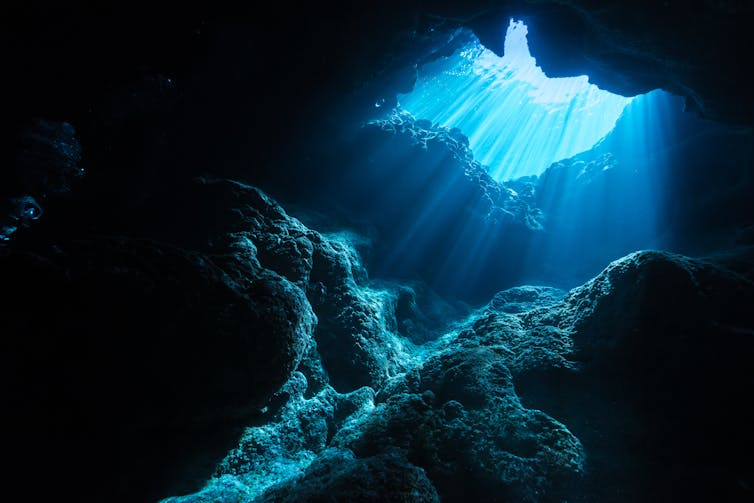 There is so much of the oceans left to explore.
divedog/Shutterstock
There is so much of the oceans left to explore.
divedog/Shutterstock
But in 2022, scientists realised that Mermaid robots had recorded something else: waves travelling through the ocean from a volcano. The violent underwater eruption of Hunga Tonga-Hunga Ha'apai, a South Pacific underwater volcano, was the biggest in nearly 150 years. As well as causing volcanic lightning and sending plumes of ash tens of kilometres into the sky, the eruptions sent pressure waves into the waters of the Pacific.
Mermaid sensors heard these waves thousands of kilometres away from the volcano. At some of these sensors - scattered across the ocean over vast distances - the sounds were virtually identical. But where the sounds were different, recent research has revealed that seamounts were often to blame.
Seamounts block energy travelling through the ocean. This opens the prospect of using pressure waves from underwater explosions and eruptions to listen for "acoustic shadows" caused by unknown seamounts. In other words, finding seamounts by listening to the pressure waves they interrupt.
The future of deep ocean landscapesAs we explore the seafloor, human impact on it will become more apparent. While some researchers are discovering exotic lifeforms such as deep-sea snailfish in the oceans' deep trenches, others are detecting signs of microplastic waste in trench-dwellers such as deep sea scavenging amphipods (which look a bit like shrimp).
The seafloor is rich in mineral deposits, many of which are elusive on land - including minerals critical for battery construction. For example, polymetallic nodules rich in rare earth elements litter the ocean floor.
Areas of elevated seafloor like seamounts are especially likely to host cobalt-rich deposits - one of many critical minerals needed for the green energy transition and to meet UN sustainability goals.
However, exploration and active mining in the delicate ecosystems that surround these hidden worlds is controversial, because of the harm it can cause.
If we want to know where resources lie - and where the ocean floor most needs our protection - it is vital we understand the landscapes of the seafloor.

Jessica Irving has received funding from the National Science Foundation to work with MERMAID. She is a member of the Earthscope Oceans Science Committee and was involved in the research study described in this article. Dr Irving acknowledges useful input from Dr Joel Simon of Bathymetrix, who led the MERMAID research into the Hunga Tonga Hunga Ha'apai eruption.
Elizabeth Day is part of the Membership Committee of the Royal Astronomical Society and also sits on the Royal Astronomical Society's Education and Outreach grants panel.
The Bafta film awards are going greener - but some climate problems are hiding off camera [ 18-Feb-26 1:10pm ]The Bafta film awards are brilliant at making film feel like it matters. The clothes, the cameras, the applause, the shared cultural moment. That spectacle is the point.
But it also has a climate shadow. Not just from the night itself, but from the behaviour it effectively rewards and normalises in the weeks around it.
Here's the awkward truth: the biggest carbon impact in film and TV isn't the red carpet. It's travel. And awards season is, in effect, a celebration of travel.
Industry data backs this up. Bafta Albert is the film and TV industry's sustainability organisation which supports productions to measure and reduce their environmental impact.
It highlights that productions that report their emissions find that around 65% come from travel and transport, with flights alone accounting for roughly 30% of the total. Energy use - mainly from studios and on-location generators - makes up about a fifth, while materials and waste account for the rest. In short: the carbon is mostly off camera.
So what about the Bafta film awards themselves?
Bafta has made visible efforts to reduce the negative environmental effects of the ceremony. This year, organisers are using diesel-free generators at the venue and green electricity tariffs at Royal Festival Hall in London, plus reusing existing sets and props. Red meat won't feature on the menu and guests are encouraged to rewear or hire an outfit for the occasion.
A spokesperson for Bafta and Bafta Albert explained that the carbon emissions and the footprint of the awards have been measured and reduced using Bafta Albert resources and guidance. "Proactive steps taken this year include the use of [hydrotreated vegetable oil] HVO generators, hosting the awards at a venue also dedicated to reducing its own carbon emissions, encouraging sustainable travel, banning single use plastics, sustainable menus and minimising waste," they said.
Previous awards have been described as carbon neutral, with changes such as removing nominee goody bags and introducing vegan menu options. More recently, sustainability messaging has extended to catering and packaging choices.
These changes aren't meaningless. They're also the easiest things to photograph.
The problem is scale. If flights dominate emissions, then the biggest wins won't come from menus or outfits. They'll come from changing how people get there in the first place.
I research sustainability in film production, including how cinematography and production practices can reduce environmental impact, and one thing is clear: framing sustainability as removal or punishment rarely works. People resist. They dig in. Or they swing hard in the opposite direction.
At the same time, the glamour of awards season is precisely why people watch and pay attention. Strip that away entirely and the cultural power goes with it. The real challenge is finding a balance: keeping the spectacle while changing the behaviour it endorses.
One practical way to do this is to stop treating awards travel as an unfortunate side-effect and instead make it part of the event itself.
Read more: The hidden carbon cost of reality TV shows like The Traitors
Rather than dozens of individual long-haul flights - and, yes, sometimes private jets - designated flights from major hubs could be coordinated from places like Los Angeles, New York, Paris or Amsterdam. If you're attending, you take the shared flight. If you can't, you accept your award remotely, as people have done perfectly well in the past.
This wouldn't eliminate flying. But it would reduce per-person emissions, remove the prestige of flying separately and turn collective travel into something visible and intentional.
I've experienced this kind of shared travel firsthand. Years ago, flying back from a film shoot in Budapest, Hungary, I found myself on a completely ordinary commercial flight that happened to be carrying athletes travelling to London ahead of the 2012 Olympic Games.
There was press at the airport, excitement in the cabin and a palpable sense of shared purpose. These were people at the top of their fields, travelling together, not separately, on the same flight as everyone else. It didn't feel like a compromise. It felt anticipatory, slightly chaotic, yet collective.
This is not an unprecedented idea. Sport already does this. Politics does this. Even music tours do this. Film just pretends it can't.
During COVID, awards ceremonies and press circuits moved online or became hybrid events. It wasn't perfect, but it worked. Research comparing in-person and virtual international events shows that moving online can cut carbon footprints by around 94%, largely by removing travel. Awards aren't conferences, but the lesson is clear: if travel is the biggest source of emissions, reducing travel is the biggest lever.
Greenwash v real changeA simple test helps separate meaningful sustainability from greenwash. Does an action reduce high-emissions activities - flights, fuel, power, logistics - or does it mainly change how things look?
Carbon offsetting, for example, is often used to claim climate neutrality without changing underlying behaviour. But many offset schemes have been criticised as ineffective or misleading. The EU has moved to restrict environmental claims based on offsetting alone.
 Flights are a big contributor to the environmental footprint of film awards.
Yusei/Shutterstock
Flights are a big contributor to the environmental footprint of film awards.
Yusei/Shutterstock
That doesn't mean nothing is happening. Bafta Albert's Accelerate 2025 roadmap is a UK-wide plan developed with broadcasters and streamers to cut film and TV emissions.
It focuses on cutting flights and encouraging train travel, cleaning up on-set power and changing production norms. This is being echoed by trade coverage calling for practical, immediate action to cut carbon emissions across the film and TV sector.
A spokesperson for Bafta and Bafta Albert stated: "There is a clear dedication to continually increasing the sustainability of the awards, behind the scenes, at the event itself and on screen."
Awards culture still matters. The Baftas don't produce most of the industry's emissions. But they help define what success looks like. If success looks like frantic long-haul travel and personal convenience, that becomes the aspiration. If it looks like coordinated travel, cleaner power and credible data, that becomes the norm.
So keep the glamour. Keep the ceremony. But redesign the signals. If we can make the journey part of the story, we might finally start shrinking the part of film's footprint that nobody sees - until the planet sends the bill.
Don't have time to read about climate change as much as you'd like?
Get a weekly roundup in your inbox instead. Every Wednesday, The Conversation's environment editor writes Imagine, a short email that goes a little deeper into just one climate issue. Join the 47,000+ readers who've subscribed so far.

Jack Shelbourn is a member of the Green Party of England and Wales.
 MarcelClemens / shutterstock
As the Atlantic warms, many fish along the east coast of North America have moved northwards to keep within their preferred temperature range. Black sea bass, for instance, have shifted hundreds of miles up the coast.
In the Mediterranean, the picture is very different. Without an easy escape route towards the poles, many species are effectively trapped in a sea that is warming rapidly. Some native fish are even being replaced by more heat-tolerant species that have slipped in through the Suez Canal.
It's a process affecting coastal species around the world: without a continuous pathway to cooler waters, many are in trouble. Escape becomes difficult where coastlines run east-west or are broken into enclosed basins and islands. In these settings, species have to move huge distances just to gain a few degrees of latitude - the so-called "latitudinal trap".
It's also a process that has repeated throughout history. When we analysed 540 million years of fossil data for a recent study published in the journal Science, we found that species along east-west coastlines were more likely to go extinct than those with easier movement north-south.
 Malanoski et al (2026) / Science
We hypothesised that the shape and orientation of coastlines could help species escape - or trap them. If coastlines provide direct, continuous pathways to move north or south, species should be able to better track shifting climates. But, where species have to travel a long way for minimal latitude gain, their extinction risk is raised during episodes of environmental change.
Coastlines themselves are not fixed. Over millions of years, plate tectonics rearrange continents, sometimes producing long north-south coasts, like those of the Americas today, and at other times sprawling east-west seaways such as during the Ordovician a bit over 400 million years ago.
This means climate shocks can produce very different extinction outcomes depending on the layout of continents at the time.
To test this hypothesis, we analysed fossil data for about 13,000 groups of related shallow-marine invertebrate species, such as clams, snails, sponges and starfish, spanning the last 540 million years. We then paired these records with reconstructions of ancient geography.
For each fossil, we estimated how difficult it would have been for that species to shift its latitude along shallow coastlines. We measured this as the shortest number of steps to travel 5°, 10°, or 15° latitude north or south. (For context, Great Britain covers about 9° from top to bottom). Short distances imply a relatively direct escape; long distances imply a long or maybe impossible escape route.
 A 5° shift in latitude can be reached quickly along a simple north-south coastline (A), but requires much longer routes—or cannot be reached at all—along convoluted east-west margins (B), interior seaways (C), and islands (D).
Malanoski et al (2026) / Science
A 5° shift in latitude can be reached quickly along a simple north-south coastline (A), but requires much longer routes—or cannot be reached at all—along convoluted east-west margins (B), interior seaways (C), and islands (D).
Malanoski et al (2026) / Science
We found that, over the last 540 million years, extinction risk was consistently higher for marine animals with long escape routes.
Geography amplifies catastropheThis pattern intensified during Earth's five mass extinction events. In our models, species with longer distances showed increases in extinction risk of up to 400% during mass extinctions, compared with about 60% during other intervals, highlighting that geography becomes far more consequential when climate change intensifies.
Although our analyses focused on geologic timescales, our results help us understand how shallow marine species may respond to climate change today. Species living in the Mediterranean or the Gulf of Mexico or other regions with semi-enclosed geography, or around the margins of islands, may have more difficulty as the ocean warms.
Coastline geometry may matter less for species that are good at dispersing themselves, however, especially those that have a long planktonic larvae phase where they drift around the ocean before becoming fixed in place. The survival of those species depends more on factors like ocean currents than coastline orientation.
Estimating whether a species is at risk of extinction is typically done with reference to attributes such as body size or geographic range size. But our work shows that extinction risk also depends on geography. Survival during climate upheaval depends not only on a species' biology - but on whether the map itself offers an escape.

Erin Saupe receives funding from the UK Natural Environment Research Council (NERC) and the Leverhulme Trust.
Cooper Malanoski does not work for, consult, own shares in or receive funding from any company or organisation that would benefit from this article, and has disclosed no relevant affiliations beyond their academic appointment.
 Alive Color Stock/Shutterstock
Recent investigations have uncovered forced labour in agricultural supply chains, illegal fishing feeding supermarket freezers, deforestation embedded in everyday food products, and unsafe conditions in factories producing "sustainable" fashion. These harms were not visible on labels. They surfaced only when journalists, whistleblowers or activists exposed them.
And when they did, something predictable happened. Consumers felt uneasy. Brands issued statements. Promises were made. The point is that the force that set change in motion was not regulation. It was consumers.
Discovering that an ordinary purchase may be tied to exploitation or environmental damage creates a jolt of personal responsibility. In our research, we found that when environmental consequences are clearly linked to people's own buying choices, many are willing to switch products — especially when credible alternatives exist.
But guilt is private. It nudges personal behaviour. It does not automatically reshape systems. The shift happens when private discomfort becomes public voice.
Consumers are often also the first to make hidden environmental harms visible. They post evidence on social media. They question corporate claims. They compare sustainability promises with independent reporting. They organise petitions, boycotts and review campaigns. By shining a spotlight on the truth, the scrutiny shifts from shoppers to brands.
That shift matters because modern brands depend on trust. Reputation is an asset. When sustainability claims are publicly challenged, credibility is at risk. Research in organisational behaviour shows that firms respond quickly to threats to legitimacy. Reputational damage affects customer loyalty, investor confidence and regulatory attention.
In many high-profile cases, supply chain reforms have followed intense public scrutiny rather than quiet compliance checks. Leaders may not act out of moral awakening — but they do act when inaction becomes costly to their reputation.
Consumers can trigger the emotional chain reaction. They feel guilt. They seek information. They speak collectively. That collective voice generates corporate shame.
 Consumers have the power to demand more transparency from brands.
Stokkete/Shutterstock
Consumers have the power to demand more transparency from brands.
Stokkete/Shutterstock
Sustainability professor Mike Berners-Lee argues in his book A Climate of Truth that demanding honesty is one of the most powerful climate actions available to citizens. Raising standards of truthfulness in business and media changes incentives. When the gap between what companies say and what they do becomes visible, maintaining that gap becomes harder.
Our research explores how that visibility can be strengthened. The findings were clear. When environmental and social consequences are personalised and traceable, sustainability feels less distant. People see both their own role and the role of particular firms. That dual awareness encourages two responses: behavioural change driven by guilt and corporate accountability driven by shame.
Shame works because it is social. Brands care about how they are seen. When the negative environmental and social effects of supply chains can be publicly connected to named products, corporate narratives become contestable in real time.
Making supply chains socially visibleThe technology to improve transparency already exists. Companies track goods through logistics systems, supplier databases and digital product-tagging that collect detailed information about sourcing and production. The barrier is not data collection. It is disclosure.
Environmental indicators — carbon emissions, water use, land conversion risk, labour standards compliance — can be linked to products through QR codes or retail apps. Comparable reporting standards would ensure consistency. Simple digital interfaces would make information accessible. Social sharing tools would allow consumers to compare and discuss findings publicly.
Social media is crucial. It already enables workers, communities and campaigners to challenge corporate messaging. Integrating verified supply chain data into these spaces would shift transparency from crisis response to everyday expectation.
This strategy, with its behaviour change directive, could work more effectively than rules or green marketing campaigns alone.
Regulation is essential but often slow and uneven across borders. Marketing campaigns can highlight selective improvements while leaving deeper practices untouched. Transparency activated by collective consumer voice operates differently. It aligns emotional motivation with reputational consequence.
Consumers are not passive recipients of information. They are catalysts. By feeling the first twinge of guilt, asking harder questions and speaking together, they create the conditions under which companies experience shame. When shame threatens trust and market position, change becomes rational and inevitable.
Shame is uncomfortable. But when directed at opaque systems rather than consumers, it can be powerful. By demanding truth and making supply chains socially visible, consumers can push businesses towards greater transparency — and, ultimately, towards more sustainable practice.
Don't have time to read about climate change as much as you'd like?
Get a weekly roundup in your inbox instead. Every Wednesday, The Conversation's environment editor writes Imagine, a short email that goes a little deeper into just one climate issue. Join the 47,000+ readers who've subscribed so far.

Janet Godsell receives funding for the Interact Network+ from the Innovate UK Made Smarter Innovation Programme via the ESRC. She is affiliated with the World Economic Forum (WEF) Advanced Future Council for Advanced Manufacturing and Global Value Chains.
Nikolai Kazantsev receives funding from UKRI funded project "Resilience in Agrifood Systems Supply Chain Configuration Analytics Lab (Project ID: R1650GFS). He is a fellow of Clare Hall College, Cambridge.
After weeks of relentless rain and flooding, and even more forecast, 2025's droughts and hosepipe bans feel like ancient history. But they shouldn't.
The UK is increasingly caught between these wetter winters and warmer, drier summers. What if this year's summer brings water shortages again? The seemingly endless rainfall causing flooding across the UK right now could help solve future summer drought problems - if we capture it right.
The stakes are high in Speyside, home to around half of Scotland's malt whisky distilleries. They had to cope with 2025 being the UK's warmest and sunniest on record, where prolonged dry conditions led to widespread restrictions on water abstraction. Multiple distilleries were forced into temporary closures, costing the industry millions of pounds and highlighting just how vulnerable even Scotland's famously wet regions are to water scarcity.
Whisky production represents one of the UK's biggest industrial water users. Large quantities of water are required for the distilling process and the product itself, so understanding water conservation is both extremely important for the industry, and can also help others recognise the benefits.
If it was possible to retain this winter's rainfall and release it gradually when it was needed, the nation could become more resilient to both floods and droughts without building expensive new reservoirs.
Managing droughts with floodsAcross Speyside, they're testing ways to slow, store and steadily release water by working with the landscape rather than against it. Distillers have invested in leaky dams (small barriers built across temporary upland streams) to slow the flow of water during heavy rain and allow the rainwater to soak into soil and recharge groundwater.
Leaky dams hold the water at surface level as well helping it store underground. Water in the soil and deeper groundwater move through the subsurface much more slowly than over land - taking weeks or months rather than hours or days - which is why rivers still flow even after long dry spells.
 Tromie river in Speyside.
Ondrej Zeleznik/Shutterstock
Tromie river in Speyside.
Ondrej Zeleznik/Shutterstock
There are other examples of useful interventions. Peatland restoration, wetland creation and tree planting all work by increasing temporary storage in the landscape and slowing the movement of water into rivers.
Research across upland catchment areas in Cumbria and West Yorkshire shows how the principles being tested in Speyside could translate to elsewhere. A large academic review of natural flood management evidence concluded that measures increasing water storage, slowing the flow of water over the land or enhancing soil structure can consistently reduce the peak level of a flood.
This growing body of evidence supports a simple but powerful idea: the UK and other countries could be more resilient to droughts and floods by redesigning landscapes to keep water around for longer.
Three lessons for the rest of the UK1. Design and location matter
Local factors and hydrology (the study of the movement and management of water) can determine what works best where. For example, planting trees "somewhere" delivers far less benefit than planting them in the right places, especially near rivers, near the source of the river, or where soil can absorb water.
2. Benefits must stack up or they won't be adopted
Leaky dams and other projects, such as tree planting, are relatively inexpensive, compared with traditionally engineered flood defences or having to deal with flood and drought consequences. They can deliver benefits at a fraction of the cost, while potentially also increasing biodiversity, soil health, carbon capture and improving water quality.
But there are trade-offs, which need to be assessed early. For example, in some cases, large-scale tree planting can also reduce summer water availability in already stressed catchment areas. Tree canopies can temporarily store water on the leaves, but if this water evaporates it doesn't return to the soil. Tree roots improve the soil so it absorbs and stores more water, but trees can also use more water. The net effects depend on factors such as climate, soil type and tree species.
3. Good governance will unlock funding
When water security has clear economic benefits, businesses are willing to engage. However, investment is not always private, and a recent review showed public funding is often fragmented, with inconsistent planning rules. Strengthening overall governance of these kind of schemes is essential, because farmers, businesses and landowners are far more likely to participate if they benefit.
Managing our landscapes appropriately won't stop all floods or prevent every drought, but it can make both less severe, while restoring habitats, supporting farming, and protecting industries that rely on dependable water supplies.
Every river carrying floodwater to the sea represents water that could be stored for drier months. Thinking ahead for what happens during heavy rains can be part of forward planning for more extreme weather in years to come.

Josie Geris receives funding from the Natural Environment Research Council, Royal Society, the Scottish Government via CREW (Scotland's Centre of Expertise for Waters), and Chivas Brothers.
Megan Klaar receives funding from the Natural Environment Research Council, The Leverhulme Trust and National Trust.
Setting sail from the busy port of Plymouth in Devon, the tall ship Pelican of London takes young people to sea, often for the first time.
During each nine-day voyage, the UK-based sailing trainees, who often come from socio-economically challenging backgrounds, become crew members. They not only learn the ropes (literally) but also engage in ocean science and stewardship activities.
As marine and outdoor education researchers, we wanted to find out whether mixing sail training and Steams (science, technology, engineering, art, mathematics and sustainability) activities can inspire young people to pursue a more ocean-focused career, and a long-term commitment to ocean care.
Research shows that a strong connection with the ocean can drive people to be active marine citizens. This means they take responsibility for ocean health not only in their own lives but as advocates for more sustainable interactions with the ocean.
Over the past year, we have worked with Charly Braungardt, head scientist with the charity Pelican of London, to create a new theory of how sail training with Steams activities can change the paths that trainees pursue.
Based on scientific evidence, our theory of change models how Steams activities can cause positive changes in personal development and knowledge and understanding of the ocean (known as ocean literacy). It shows how the voyages can develop trainees' strong connections with the ocean and encourage them to act responsibly towards it.
Tracking changeSurveys with the participants before and after the voyage, and six months later, measure any changes that occur - and how these persist. Through our evaluation, we're exploring how combining voyages with Steams activities can go beyond personal development to produce deep, long-lasting effects.
Our pilot study has already shown how the sail training and Steams combination helps to develop confidence, ocean literacy and ocean connections.
For example, the boost to self-esteem and feelings of capability that occur on board help young people develop their marine identity - the ocean becomes an important part of a person's sense of who they are. As one trainee put it: "I think the ocean is me and the ocean will and forever be part of me."
Swimming, sailing, even just building a sandcastle - the ocean benefits our physical and mental wellbeing. Curious about how a strong coastal connection helps drive marine conservation, scientists are diving in to investigate the power of blue health.
This article is part of a series, Vitamin Sea, exploring how the ocean can be enhanced by our interaction with it.
As crew members, trainees access a world and traditional culture largely unknown to them before the voyage. They learn to live with others in a confined space, working together in small teams to keep watch on 24-hour rotas.
Trainees are encouraged to step out of their comfort zone through activities such as climbing the rigging and swimming off the vessel. Our pilot evaluation found the voyages built the trainees' confidence and social skills, boosting self-esteem and feelings of capability.
One trainee said: "I've felt pretty disappointed in myself not committing to my education or only doing something with minimal effort. But after this voyage, I want to give it my all."
Read more: Five ways to inspire ocean connection: reflections from my 40-year marine ecology career
The Steams voyages encourage the development of scientific skills and ocean literacy through the lens of creative tasks at sea. These activities are led by a scientist-in-residence who provides mentoring and introduces research techniques.
The voyage gives trainees the opportunity to use scientific equipment, ranging from plankton nets and microscopes to cutting-edge technology such as remotely operated vehicles. The Steams activities introduce marine research as a potential career to these young people. One said they wanted to train as a marine engineer at nautical college following the voyage.
Ocean experiences provide a foundation for ocean connection. Trainees experience the ocean in sunshine and in gales, day and night, rolling with the waves and observing marine life in its natural environment.
Citizen science projects such as wildlife surveys and recorded beach cleans also develop their ocean stewardship knowledge and skills. One trainee explained how they have "become more interested [in] our marine life and creative ways to help protect it".
Over the next 12 months, the information we collect from the voyages will help us to better understand the benefits and contribute to an important marine social science data gap in young people. It is important to understand how to develop young people's relationships with the ocean, and the knowledge and skills that will empower the next generation of marine citizens.
As one trainee put it: "Being out on the Pelican showed me how vast and powerful the sea is - and how important it is to respect and care for it."
Don't have time to read about climate change as much as you'd like?
Get a weekly roundup in your inbox instead. Every Wednesday, The Conversation's environment editor writes Imagine, a short email that goes a little deeper into just one climate issue. Join the 47,000+ readers who've subscribed so far.

Pamela Buchan received funding from Economic and Social Research Council for the research cited in this article. The sail training evaluation project received funding from Sail Training International. We would like to thank Charlotte Braungardt for her contribution to this project.
Alun Morgan is affiliated with the Pelican of London as an Ambassador for the organisation
 Swedish homes are among the warmest in Europe, reflecting high levels of insulation and longstanding strategies that have kept heating costs low for most households. Antony McAulay/Shutterstock
The new year in Sweden began with some record-breaking cold temperatures. Temperatures in the village of Kvikkjokk in the northern Swedish part of Lapland dropped to -43.6°C, the lowest recorded since records began in 1887.
Yet for the majority of Swedish households, heating is not an issue. Those living in the multi-household apartment blocks that characterise Sweden's towns and cities enjoy average temperatures of 22°C inside their homes, thanks to communal heating systems that keep room temperatures high and costs low. For many households, heating is charged at a flat rate and included in the rent they pay.
*Some interviewees in this article are anonymised according to the terms of the research.
In the UK, meanwhile, home temperatures average just 16.6 degrees, the lowest in all of Europe. At least 6 million UK households fear the onset of cold weather because they are living in fuel poverty - unable to afford to heat their home to a safe and comfortable level.
The problem is exacerbated by the UK's reliance on natural gas to heat its homes - a fuel which suffers from escalating price volatility. They are also the most poorly insulated in Europe, making them difficult to keep warm.
In Britain, home heating isn't just a political hot potato; it has been shown to cost lives. In the winter of 2022-23, 4,950 people were estimated to have died earlier than expected (known as "excess winter deaths") because of the health effects of living in cold homes - including lung and heart problems as well as damage to mental health. In contrast, despite having a much colder winter climate, Sweden's excess winter deaths index was around 12%, one of the lowest rates in Europe and considerably below the UK's 18% figure.
The Insights section is committed to high-quality longform journalism. Our editors work with academics from many different backgrounds who are tackling a wide range of societal and scientific challenges.
So how did two countries that are geographically quite close end up so far apart when it comes to home heating outcomes? As two professors of energy studies - one British, the other Swedish - we have long puzzled over the stark contrast in how winter is experienced inside our homes in the north of England (Sheffield) and southern Sweden (Lund).
For the last three years, we have been researching the modern histories of home heating in both countries (plus Finland and Romania), gathering nearly 300 oral accounts of people's memories of the daily struggle to keep warm at home for long periods each year.
By charting these experiences of home heating in both countries since the end of the second world war, we show how Britain now finds itself struggling to keep its citizens warm in winter while also facing an uphill battle to meet its environmental targets. The stories from Sweden, on the whole, suggest how different things could have been.
Post-war memoriesThe second world war changed many things but not, immediately, the way homes were heated. In the UK coal remained the primary domestic fuel, while Sweden stuck mainly with wood, although coal was becoming more common in cities. Cold homes were still considered normal in both countries, as Majvor* (who is now in her 80s and lives in the Swedish city of Malmö) recalled of her post-war childhood living in a one-room flat:
There was a stove in the room and that was the only source of heat - I have a memory of it being so cold in the winter that my mother had to put all three children in the same bed to keep warm. In the winter, all the water froze to ice, so you had to … heat it on the stove to get hot water.
Despite the cold, many of our interviewees remembered the burning of wood and coal to heat their homes with great affection - although less so the drudgery and dirt that went with it.
"There's just something about a fire, isn't there," Sue (now in her 60s and living in Rotherham, England) told us. "The warmth, the smell, the laughter. It's that family memory and it was just wonderful. Anyone 'round here will tell you the same: life was hard but it was wonderful. We felt loved."
Mary (now in her 70s and also living in Rotherham) is among a very small minority who still heat their home using a coal fire. Her reflections were less positive:
I remember going to fetch coal when I was pregnant. I gave birth two days later … It's the dirt that gets you down, the dirt from the fire. It's disheartening when your walls are always dirty. That's why I had them tiled because I was painting them every six months before that.
Carolina* (now in her mid-30s and living in Malmö) also had a negative recollection of her wood-burning childhood - but for a very different reason. She described how her mother had once "got the axe in her foot … She continued to chop wood anyway - but I kind of got PTSD [post-traumatic stress disorder] from her doing that. So I can't do it, I'm really scared of it."
In Sweden, home heating was seen as key to improving social conditions after the war. The emphasis was on good-quality homes for everyone as the social welfare concept of folkhem ("the people's home") finally gained traction. The idea had first been articulated by future prime minister Per Albin Hansson in a speech to the Swedish parliament back in 1928, as a way of expressing his vision for a fair and equal society.
From 1946, housing construction was regarded as a key political issue for improving public health and achieving Sweden's other social welfare goals. In several cities, municipally owned public housing companies played an important role in the initial phase of new district heating systems, in part by guaranteeing a secure market. The introduction of the varmhyra ("warm rent") policy meant heating and sometimes other utilities were included in the rent - an arrangement that continues to this day in many Swedish apartment blocks.
The UK, like Sweden, suffered the blight of cold homes during the 1940s, exacerbated by fuel rationing that extended long beyond the war. So it is difficult to explain why Britain's new post-war welfare state did not explicitly address home heating.
Instead, the focus was on public health, with the birth of the National Health Service and recognition that the mass burning of coal was leading to fatal air pollution and unhealthy homes. Heavy city smogs, triggered by widespread coal burning in homes and factories, became increasingly common. The problem reached a climax when the "great smog of 1952" killed approximately 12,000 people, primarily in London, over just five days.
The justification for rapidly phasing out coal as the UK's primary fuel for homes and industry was centred around ending the public health crisis of these killer smogs, rather than on changing the way homes were heated - leading to the introduction of the Clean Air Act (1956). And as the UK scrabbled for a cleaner form of heating, a game-changing discovery was made. Huge reserves of "natural gas" (methane) were found off the Yorkshire coast in 1965, offering the huge advantage of reducing visible air pollutants compared with coal.
One man in particular, Kenneth Hutchison, saw and seized the opportunity to present natural gas as the panacea the UK had been waiting for. As incoming president of the National Society for Clean Air, Hutchison hailed the gas industry as the driving force in Britain's "smokeless revolution". From the late 1960s, he drove the rollout of networks piping natural gas into UK households at an incredible rate, demanding: "We must convince the public that central heating by gas is best" over the grime and drudgery of coal fires.
A 1965 advert for 'high-speed' British gas. Video: Anachronistic Anarchist.The chairman of British Gas, Denis Rooke - not an objective witness, admittedly - described the rollout as "perhaps the greatest peacetime operation in the nation's history". Between 1968 and 1976, around 13 million UK homes (of a total of about 15 million) were made ready for connection to the gas network. The cost of converting domestic heating and cooking systems from coal to gas was largely borne by the national gas supplier, making it effectively free to most households.
Our research suggests this transition was presented to UK households as a fait accompli. But most of our UK-based interviewees remembered the advent of natural gas as a major step forward in cleanliness, comfort and convenience. As 75-year-old Rita from Rotherham recalled of moving into a new council estate with gas heating in 1967:
It was like another universe! It was comfortable, everything became less intense - you didn't need so much clothing … The days of cooking on the fire were gone. Fabulous! The boiler didn't have to go all the time - the gas fire could take the chill off.
Britain's gas rollout not only brought gas central heating but other appliances such as gas fridges and fires that further lightened the domestic load. For Rita's and many other families, it felt like a cascade of liberations which made homes brighter and more enjoyable to live in.
Yet half a century later, Hutchison's faith in gas appears less justified. While it certainly cleaned up the UK's visible air pollution, natural gas is methane by another name - a powerful greenhouse gas.
How Sweden 'futureproofed'With a much smaller population and less crowded cities, air quality in Sweden had been less of a concern than in the UK in the immediate post-war period. But in the 1960s, proposals for a mass home-building programme raised fears this could worsen air pollution.
Without the option of "clean" natural gas, Sweden turned to district heating - an idea which had originated in New York in the 19th century. But Sweden committed to it in a big way during the 1960s and '70s, deciding it was the best way to meet the heating needs of the 1 million homes now being built. This decision shaped the way homes in Sweden are heated: today, some 90% of its multi-family apartment blocks are connected to district heating systems - with heat distributed from power plants (usually on the edge of cities) as hot water via a network of pipes.
Upon its introduction, district heating was celebrated for its efficiency, affordability for households (especially when combined with the warm rent policy), and flexibility - it is easy to change the fuel source. For some municipalities, district heating plants opened up opportunities to produce cheap electricity. Whereas UK households were (and remain) largely individually responsible for paying for their heating, in Sweden it was seen as a collective good.
Even the 1973 oil crisis - when geopolitical tensions in the Middle East quadrupled the price of oil - failed to dent public trust in the Swedish approach to home heating. In response to the oil crisis, Sweden moved quickly to change the fuels used to power district heating, introducing more domestic waste and biomass into the mix - a move that, from a climate perspective, now appears a highly prescient shift.
According to Kjell* (now in his 60s, living in a small town in south-west Sweden), 1973 was "when the whole concept changed because suddenly fossil fuels became expensive". He explained:
The expansion of nuclear power [meant] electricity became very cheap … The government promoted the idea that 'now we should use electricity, we should use direct electric heating' … All you had to do was turn a thermostat, press a button, and it was warm.
As well as nuclear power expansion, Sweden doubled down on hydropower production and was among the earliest European countries to invest in other renewable energy sources. Its government was also an early proponent of the now-familiar concept of energy efficiency - encouraging both households and industry to conserve energy and invest in insulation. By the mid-1990s, every Swedish home was rated by the EU as having comprehensive insulation and double glazing as a minimum. The equivalent figure in the UK in 2025 was only around 50%.
The flagship initiative "Seal up Sweden" encouraged households to insulate homes and restrict room temperature to 20 degrees (still almost four degrees warmer than the average UK home today). And the warm rent system gave landlords a vested interest in improving the energy performance of their properties.
Whether it was realised at the time or not, in the defining moment of the oil crisis, Sweden was futureproofing its urban heating systems - and laying the foundations for its enduring reputation as a leader in clean energy and climate policy. Sweden eschewed energy imports in favour of harnessing its own energy assets through expansion in hydropower, waste and nuclear energy - although this latter commitment would soon be tested by the major 1979 accident at Pennsylvania's Three Mile Island nuclear power plant in the US.
The era of power cutsIn stark contrast, the UK's rapid natural gas rollout couldn't move fast enough to protect households from the twin effects of the oil crisis and miners' strikes in the 1970s. Electricity - mostly still generated by coal and oil - was rationed via rolling blackouts. Many workplaces were required to restrict their operations to a three-day week.
With the average British home heated to 13.7 °C at this time (compared with 20-21 °C in Sweden), there was little scope to ask households to cut back further, so nationwide power cuts were imposed instead. Homes were regularly plunged into darkness. Tony (now in his early 70s, from the English town of Whiston on Merseyside) worked as a social worker during this period. He recalled seeing many interiors without doors or bannisters - they had been burnt to keep the family warm.
Extra candles were imported into Britain in 1972 to cope with power cuts. Video: AP Archive.Nonetheless, "clean" gas pioneer Hutchison was feeling vindicated as the UK enjoyed an era of falling gas prices throughout the 1980s. Climate change was still, at most, a nascent agenda, so it didn't seem to matter that British households were living in some of the least energy-efficient (and worst insulated) homes in Europe.
Gas remained affordable through the miners' strike of 1984-85 and privatisation of the gas industry in 1986, with the average household gas bill six times cheaper in real terms than today. Yet British households continued to modestly heat their homes, with average internal home temperatures slowly rising from 16.1 °C in 1990 to 17.8 °C by 1999.
Over the same period, Sweden went through several momentous changes as concern for the environment grew - amid recognition of the greenhouse effect (the build-up of gases trapping heat in the Earth's atmosphere) and acid rain (rainfall made acidic by air pollution). This resulted in another pioneering move: the world's first carbon tax on fossil fuels in 1991, which further galvanised its move away from oil.
Amid Sweden's dash for energy independence, electric-powered home heat pumps increasingly came to be viewed as something of a status symbol. Even households living in multi-family urban apartments were growing increasingly concerned about the monopolistic nature of district heating. They started opting out in favour of individual heat pumps, undermining these collective systems that rely on everyone contributing.
Short-lived progress in the UKBritain was much slower to embrace the need to address the world's climate crisis. One promising intervention finally came in 2006, when Tony Blair's New Labour government required all newly built homes to meet stringent environmental design standards (although this did little to lessen the environmental burden of existing homes).
In turn, higher standards of environmental design in new homes helped establish a market for more environmentally friendly, electric-powered heat pumps in Britain. Installations accelerated from 2004, mainly in social housing. The following year, gas connections peaked at 95% of UK households - then slowly started to fall, down to the current level of 74% across England and Wales.
With this reduction of reliance on gas, the level of emissions associated with heating UK homes also began to decline. Those urging Britain to do something about its position as one of Europe's least environmentally conscious nations celebrated, if cautiously. But this progress, such as it was, proved short-lived.
From 2010, the new Conservative-Lib Dem coalition government began dismantling key initiatives aimed at domestic energy efficiency, including New Labour's Code for Sustainable Homes as well as financial incentives to install heat pumps and renewables such as solar panels. Sales of these technologies started to fall away.
Since then, initiatives to promote adoption of renewable forms of home heating in the UK have been dogged by controversies - such as the renewable heat incentive in Northern Ireland, which resulted in the suspension of senior government officials.
Heat pump technology explained. Video: Nesta.Ambitious plans (driven by the UK's legally binding emissions reduction targets) to install 600,000 heat pumps a year have been met with public suspicion. Uptake is currently at around 50,000 per year - far below the government target.
Since coming to power, the current Labour government has rolled back its manifesto pledge to ban the sale of gas boilers in homes by 2035 - to the consternation of many environmental pressure groups and climate scientists. And while its recent announcement of more comprehensive investment in domestic energy efficiency (as part of the Warm Homes Plan) is a step in the right direction, many experts still consider the level of investment inadequate to secure the scale of change required to meet the UK's net zero climate targets.
A sizable majority (74%) of UK homes are still heated by gas boilers - which emit around twice as much CO₂ each year as some electric-powered heat pumps.
The clean heating conundrumThe volatile political scene in the UK is hampering its transition to clean energy. Reform UK, which has adopted a strident anti-net zero position, has made strong gains with disenfranchised voters, according to numerous polls. Should it gain power at the next general election in 2028 (even if as part of a coalition), Reform is likely to double-down on fossil fuel extraction and use, dealing a severe blow to efforts to wean the UK off its enduring gas dependency.
However, a shift to electric heating would not be an overnight panacea to the UK's energy bill woes. Depending on the energy efficiency of the homes in which they are installed, heat pumps could push bills up in the short-to-medium term, because electricity remains up to five times more expensive than gas.
But as more and more of the UK's electricity is generated from renewable sources, these costs will fall, with some commentators forecasting that from 2028, the UK will start to see positive price impacts of more electricity being generated from renewables. Most UK households will not be able to take advantage of the cheaper clean electricity coming on stream for their heating, though, because they remain locked into their gas boilers.
In contrast, outside Sweden's cities and towns, heat pumps have seen exponential growth since the 1990s, such that it now has one of the world's highest penetration rates, with over a third of homes equipped with them. And the heat generated from these sources is effectively conserved within the country's well-insulated housing stock.
But Sweden is not immune to political controversies around heating. Electricity price spikes in southern Sweden in recent winters have exposed households reliant on direct electric heating (mainly heat pumps) to affordability concerns. These price spikes were driven by a combination of high wholesale electricity prices, the country's limited transmission capacity between price zones, and periods of low wind generation.
At the same time, energy-efficient district heating networks continue to be challenged by the rapid adoption of heat pumps.
The public debate about the future of nuclear power in Sweden also continues to rage. In recent years, political signals have shifted towards maintaining and potentially expanding nuclear capacity, which has increased uncertainty about whether a full phase-out remains a credible policy objective.
The Swedish city of Lund boasts the world's largest low-temperature district heating network. Video: Alfa Laval. Thermal comfort vs thermal restraintThe UK's gas habit has not served it well in terms of securing thermal comfort for its households, with average indoor temperatures of 16.6°C lagging far behind the European average of 19°C. In contrast, Swedish homes are among the warmest in Europe, reflecting both affordability for many and a cultural expectation of thermal comfort.
But these contrasting expectations could yet play an intriguing role in the two countries' home heating strategies. Both countries are entering a new phase where electrification via heat pumps may test the resilience of national grids and the fairness of pricing structures.
Despite greater precarity in the UK, an established tolerance of lower indoor temperatures may mean that, as electricity prices are lowered by increased renewable energy production, UK households can achieve warmer homes using heat pumps than they have been able using gas. Heat pumps have been found to produce up to four times more heat than a gas boiler, using the same energy input.
Conversely, Sweden's cultural expectation of uniformly high indoor temperatures may challenge its future energy sufficiency targets and climate goals, particularly if electrification accelerates as more people - including those living in cities and large towns - seek the independence of heat pumps.
Sweden's traditional system of cost-sharing through varmhyra (warm rent) and district heating has historically promoted equity, but growing societal disconnections and price variations risk eroding that solidarity.
In contrast, Britain has tended to rely on individual responsibility and market-led solutions when it comes to home heating. The UK Warm Homes Plan, launched in January 2026, makes clear that heat pumps are the government's (and many scientists') favoured route to decarbonising domestic heating, with the exception of district heating schemes in a relatively small number of areas. But this requires incentivising households to move to heat pumps while removing short-term financial pain from this move.
Ultimately, our research suggests that many UK households now understand that change needs to come. As Trevor from Whiston told us firmly:
We just can't be doing that now [burning fossil fuels for heating] … Greenhouse gases - it's not on … We've got to find another way, haven't we?
For you: more from our Insights series:
To hear about new Insights articles, join the hundreds of thousands of people who value The Conversation's evidence-based news. Subscribe to our newsletter.

Aimee Ambrose receives funding from the Arts and Humanities Research Council and Horizon Europe.
Jenny Palm receives funding from Forte under CHANSE ERA-NET which has received funding from the European Union's Horizon 2020 Research and Innovation Programme.
 santypan/Shutterstock
Imagine someone has chronic pain. One doctor focuses on the body part that hurts and keeps trying to fix that single symptom. Another uses a more comprehensive brain-body approach and tries to understand what's keeping the nervous system stuck in alarm mode - perhaps stress, fear of symptoms or learned triggers. Because they're looking at the problem differently, they'll resort to completely different treatments.
Something similar happens in environmental debates. Experts sometimes argue about which solutions work best and often disagree about priorities and trade-offs. But my colleagues and I recently published a study suggesting that the divide may start even earlier: economists and environmental scientists have different perceptions of which environmental issues are most relevant.
In a global survey of 2,365 researchers who publish in leading economics and environmental science journals, we asked them to list up to nine environmental issues they think are most relevant today. The answers show two fields looking at the same planet through different lenses.
The environmental issues that researchers notice are linked to the solutions they recommend. If they mainly recognise climate change, they are more likely to see potential in conventional, market-based solutions (such as introducing a carbon tax). If they recognise further environmental issues such as biodiversity loss or pollution, they are more likely to see potential in broader, more systemic solutions.
Climate change was by far the most often mentioned issue category across the entire sample. About 70% of respondents listed it. The second most common category mentioned by 51% was biosphere integrity, which is essentially the loss of nature.
Several environmental pressures that are critical for our planet's stability were mentioned by far fewer researchers. Novel entities, which include synthetic chemicals and plastics, were listed by about 43%. Biogeochemical flows, which include fertiliser, were at about 9%. Ocean acidification was about 8%.
Economists and environmental scientists have different problem maps. When we compared fields, environmental researchers listed more and broader issue categories than economists.
 Economists and environmental scientists see the world from different perspectives.
World pieces/Shutterstock
Economists and environmental scientists see the world from different perspectives.
World pieces/Shutterstock
Both were equally likely to mention climate change and other closely related issues like greenhouse gas emissions or air pollution. The gaps appeared for issues less directly tied to carbon such as biodiversity, land system change, novel entities and pollution.
One possible reason for these differences is that distinct disciplines are trained to notice different things. Like photographers, we tend to focus on what our field puts in the frame. Economists often study prices, incentives and policies around carbon emissions, so climate change is a natural centre of gravity.
Different solution preferencesWe also asked respondents to rate the potential of seven approaches for mitigating environmental issues. All approaches were rated with at least moderate potential.
Overall, technological advances were rated highest and non-violent civil disobedience lowest. Economists rated market-based solutions and technological advances higher than environmental researchers. Environmental researchers rated degrowth of the global economy and non-violent civil disobedience higher than economists.
Then, we looked at whether researchers who named a broader range of environmental issues also tended to favour different kinds of solutions, even after accounting for things like political orientation and research field.
A pattern emerged: naming more categories was associated with higher perceived potential for more systemic approaches such as environmental regulation, degrowth and non-violent civil disobedience. Naming more issues was also associated with lower perceived potential for technological advances.
Economists and environmental scientists often advise governments, sit on expert panels and shape what counts as a solution. If two influential expert groups are starting from different shortlists of what the problem is, it's no surprise they end up championing different fixes.
It also helps explain why some debates feel stuck. If climate change is the only relevant issue you see, it's easier to put your faith in cleaner tech and market incentives. If you also see biodiversity loss, chemical pollution and land system change as problems, it no longer looks like an engineering issue. It starts to look like lots of connected pressures that need changes in how we produce, consume and organise the economy.
That topic comes up in our related work on green growth, the idea that countries can keep increasing GDP while reducing environmental harm. Using data from our survey, we found that researchers across disciplines were far from convinced that societies can keep growing GDP while cutting emissions and resource use fast enough.
Economists were generally more optimistic than Earth, agricultural and biology scientists. Those differences lined up with faith in technology and markets.
You can't agree on the route if you don't agree on the map. A more shared picture of the environmental crisis, beyond carbon alone, might not magically solve it. But it can lead to more fruitful research and discussions about trade offs and widen the scope of solutions being considered.
Don't have time to read about climate change as much as you'd like?
Get a weekly roundup in your inbox instead. Every Wednesday, The Conversation's environment editor writes Imagine, a short email that goes a little deeper into just one climate issue. Join the 47,000+ readers who've subscribed so far.

Manuel Suter receives funding from the Swiss National Science Foundation (Postdoc Mobility Fellowship: P500PS_225579) and is a member of the organisation "Degrowth Switzerland".
All things bright and beautiful need to be sustainable as well, says Church of England's new flower policy [ 13-Feb-26 5:38pm ] Millions of flowers are used to decorate England's churches every year. Sandifan/Shutterstock
Anyone on the flower rota at England's parish churches will now be reconsidering the way they do their arrangements, after Church of England leaders voted to use more seasonal and local flowers.
A motion to use sustainable flowers brought before the General Synod of the Church of England by the Bishop of Dudley, Martin Gorrick, was passed on February 12. The term "sustainable flowers" means using those that have travelled less distance, use less packaging and have been grown using without chemicals, high energy inputs or an excessive amount of water.
The General Synod, which considered the motion, is made up of all bishops plus representatives from every diocese, and includes the newly appointed Archbishop of Canterbury, Dame Sarah Mullally - who personally thanked those who brought the motion. The bishop said: "It is deeply theological, to honour the God who made the earth."
Parish leaders will now need to be updated about what needs to change in planning the flowers for the front of the church.
For most churches this will mean using seasonal foliage and local flowers in weekly worship, rather than buying those grown thousands of miles away or by using intense heating to grow blooms out of season.
These sustainable flowers may come from churchyards, gardens, donation buckets or offerings from local garden clubs or allotment holders.
The motion encourages all places of worship to source what is local and seasonal to them, wherever possible. It aims to phase out the use of floral foam, which has traditionally been used for flower arranging. And it links the theology of stewardship of creation and the planet to how to treat nature, promoting seasonal and compostable flowers and foliage.
It is likely to mean trying different techniques such as going back to some traditional methods used before floral foam was invented in the 1950s.
I was there to hear the bishop say that the decision to phase out floral foam is about moving away from single-use plastics and manufactured alternatives, towards simpler methods of display, such as vases, sticks and other reusable and compostable materials.
What the church does matters, it uses millions of flowers every year in its displays. Its impact goes far beyond the church doors.
If the around 12,000 Church of England parishes only averaged two bunches a week, that would be over 1.2 million a year and millions of stems. Additionally there are huge numbers used at church events such as weddings and funerals, and brought into churchyards. The church's decision could also drive more Fairtrade sales where local flowers are not available.
With this potential source of business changing, florists might be encouraged to provide plastic-free options, and consumers might be more aware when choosing their flowers - such as for St Valentine's Day and beyond.
What else is needed?Currently, even those who want to buy sustainable flowers will struggle to know what to look for. Details of the place of origin is rarely included on plastic wrapping and any independent verification of flowers meeting particular standards, for example Fairtrade, are rarely available to consumers. Fairtrade flowers do give more information to consumers, including place of origin and farm standards.
The Church of England's decision shows a need for providing consumers with more information on the ecological standards that flowers have been grown to, impact on soil, biodiversity and on the local economy.
 Shane Connolly, CC BY
These are issues that the Sustainable Flowers Research Project, an organisation set up by me and David Bek, a professor of sustainability at Coventry University, have been working on for years. We also work with flower suppliers and buyers to create more sustainable policies on farms and in shops.
A current government-funded project with the Flower Growing Collective, a network of regional flower selling hubs, is providing new routes to market for more than 60 growers. It also is creating convenient wholesale access for florists to buy local flowers, without needing to trail around multiple farms.
Farmers who already supply seasonal flowers can be found through organisations such as Flowers from the Farm. Other useful guidance is also available to help people find more environmentally friendly flowers. And a new sustainable church flowers national award scheme will encourage and acknowledge the work being done.
Hopefully church flower arrangers around the country will embrace this new approach, and see it as changing with the times.

Jill Timms receives funding from the UKRI/Defra Farming Innovation programme and the ESRC Impact Acceleration Account. She is also an affiliate of Sustainable Church Flowers (SCF).
Football has a real fossil fuel problem - and it's not sustainable [ 13-Feb-26 5:38pm ]In 1958, Brazil won the men's Fifa World Cup in Sweden. The team, which included a 17-year-old Pelé, stayed in a modest country hotel and travelled by train or bus to small stadiums in cities such as Uddevalla and Göteborg.
Fan attendance was fairly low for that 16-team tournament. And so too was the the ecological impact of the event - especially compared to the 2026 World Cup which will see 48 teams and millions of supporters travel to and across North America.
For while football's global reach is often highlighted as a positive thing that brings the world together, the beautiful game risks having a rather ugly impact on the planet.
This is partly down to ambitious plans to expand almost every aspect of elite football - more money, more matches, more tournaments, more fans - that have accelerated over recent decades. This could be seen as a positive development for anyone who enjoys football, but it also has some problematic consequences.
The expansion of international competitions for example, has led to increasing carbon dioxide emissions from football-related travel as teams, supporters and media representatives fly around the globe following the game.
A recent study estimated that as part of the growing ecological footprint of international sport, global football now has a carbon footprint similar to that of Austria.
So the high number of international matches, as seen in the remodelled Fifa men's Club World Cup, the expanded men's Euros of 2024 and the forthcoming men's World Cup in 2026 challenges both the health of the players and the health of the planet.
These issues all point in the same direction - prioritising profit and growth over people and planet, and developing a dependence on the fossil-fuel economy.
There are plenty of examples. Oil-rich Saudi Arabia for instance, is often accused of sportswashing, but was named as host for the 2034 World Cup and continues to invest in the English Premier League. The 2022 Fifa World Cup in oil-rich Qatar was criticised for the environmental impact of new stadiums, new infrastructure and the use of cooling systems in the extreme heat.
Then there's Fifa's sponsorship deal with Aramco, a company estimated to be responsible for 4% of global greenhouse gas emissions since 1965. All of these are strong signs that fossil-fuelled growth in the economics of football has been normalised.
Some supporters and campaign groups have been criticising this development for a while now. But how is football responding?
Hope and glory?Well, recently Fifa announced the creation of its own "peace prize" to recognise those who "unite people, bringing hope for future generations". But while that ambition may sound admirable, the actions of global football suggest the opposite.
For instead of bringing hope, football is accelerating climate change through its a problematic dependence on fossil-fuel sponsorship. Research suggests that the sport also displays a distinct lack of support for those countries that are most severely affected by climate change.
There are though, some clubs doing their best to take environmental sustainability seriously. FC Porto, Real Betis and Malmö FF are all involved in the "Free Kicks" project, which requires clubs to assess their environmental performance in terms of things like energy savings and use of resources.
Their work shows that it is possible to combine top-level football with sustainable practices and good governance. And if Fifa is serious about bringing hope to future generations, it may want to learn from some of the people who have done precisely that.
 The Qatar World Cup was controversial.
Fitria Ramli/Shutterstock
The Qatar World Cup was controversial.
Fitria Ramli/Shutterstock
Reducing the size and frequency of large international events would be a good start. So too would organising fixtures in such a way as to minimise their carbon footprint.
If all of this means accepting a deceleration in the expansion of global football in a bid to become more sustainable, would that really be so bad?
After all, those who saw a 17-year-old Pelé in Sweden in 1958 did not know about the coming climate crisis. But the football they followed back then was a lot more compatible with sustainable development than the sport is today.

Daniel Svensson is affiliated with The Sport Ecology Group. He receives funding from The Swedish Research Council for Sport Science.
Britain's relentless rain shows climate predictions playing out as expected [ 13-Feb-26 5:37pm ]Large parts of the UK are experiencing relentless rainfall, with some places seeing rain for 41 consecutive days and counting. In Reading, in the south east of England, our university's official rain gauge has recorded precipitation on 31 consecutive days - unprecedented in records stretching all the way back to 1908.
The pattern has not just made 2026 a bit dreary. It also reveals one way in which climate change is making the already naturally variable (some would say gloriously variable) British weather increasingly extreme.
In those 31 days, Reading has received 141mm of rain, compared to the 30-year average over that period of just 58mm - well over twice what we would expect at the time of year.
Higher than average rainfall totals are expected, well, half of the time. This is just how mean averages work. But it's the nature of this current weather pattern that is so unusual, and is in keeping with the type of wetter winter situation for UK weather that climate scientists have been warning us to expect - even if we are still only just learning why exactly this is happening on a regional level.
Over the full breadth of a British year, the bigger picture is even more revealing. Last year, the UK was grappling with one of the hottest and driest summers on record. A succession of hot spells, combined with long periods that saw less than average rainfall, meant water supplies dwindled and widespread hosepipe bans were put in place.
As a whole, 2025 from spring onwards was exceptionally dry. Fast forward to the new year, and we're facing the opposite - weeks of rainfall and flooding. These extremes are what we expect to see in this part of the world, as heat builds up in the global atmosphere and oceans. For British people, this is what climate change right now feels like.
More rain, more intense rainWhat is causing this link between a warmer planet and wetter British winters? One fundamental link is in basic physics of the atmosphere as temperatures rise. Warmer air can hold more moisture - about 7% more for every one degree celsius of warming. This means that when it rains, on average it rains harder. Bigger, heavier downpours become more common.
Climate change is also disrupting the patterns of currents and cycles within the atmosphere and oceans that bring the UK much of its weather. As an island archipelago on the edge of three competing climate masses - the wet, mild Atlantic, the cold, dry Arctic, and the wildly variable temperatures of the Eurasian landmass - it is used to variability.
But one constant feature plays an oversized role in the type of weather we get: the jet stream - a ribbon of fast-flowing air high in the atmosphere. The position of the jet stream makes a big difference. Sometimes it flows to the north of Scotland, sometimes it is hundreds of miles further south towards Spain. This location matters, because the jet stream helps to blow whole weather systems - think of a big "bubble" of air carrying its own weather with it - from the Atlantic towards the UK.
Currently, the jet stream is positioned further south than typical for the time of year, steering consecutive wet and often windy weather systems directly towards the UK. At the same time, a high pressure system is sitting over parts of northern Europe, blocking the wet weather from moving further east.
The impact of climate change on the jet stream is complex, because this river of air circling the north pole from west to east is influenced by a lot of different factors. One thing we do know: the Arctic, at surface level, is warming faster than other parts of the planet. This means that the temperature difference between the poles and the equator, for air at lower levels at least, is not as big as it used to be. This may be influencing the jet stream to weaken and meander.
With less energy to push them along, these weather patterns can get stuck in one location, meaning that the systems of low air pressure associated with rainfall and storms can slow down or get stuck. When a system bringing rain parks itself over the UK for days on end, only to be followed by another system, and another, the result is relentless rainfall.
To complicate things further, high up in the atmosphere where the jet stream blows, climate change is actually making the temperature difference between equator and poles increase. This may be strengthening the speed and turbulence within the jet stream itself, and just adds to a complex picture of varying influence on UK rainfall.
The challenge of managing extremesThese rapid swings between drought and deluge pose serious practical challenges for everyone in the UK. Water companies must plan for both droughts and floods, even within the same year. Farmers face uncertain growing conditions, with crops rotting in the wet soil one month, and drying out in droughts a few months later. Infrastructure designed for the climate of the past may not cope with the extremes of the future.
Understanding these changes isn't just an academic exercise. It's essential for helping communities, businesses and governments prepare for what's coming. As Britain experiences these climate extremes at first-hand, it is crucial to build resilience into plans for hotter and drier summers, and warmer wetter winters.

Jess Neumann is a trustee of River Mole River Watch, a water quality charity who work with, advise, and receive funding from environmental and conservation organisations and agencies, water companies, commercial services, local authorities and community groups.
Hannah Cloke advises the Environment Agency, the European Centre for Medium-range Weather Forecasts, the Copernicus Emergency Management Service, local and national governments and humanitarian agencies on the forecasting and warning of natural hazards. She is a member of the UKRI Natural Environment Research Council and a fellow of the European Centre for Medium-range Weather Forecasts. Her research is funded by the UKRI Engineering & Physical Sciences Research Council, the UKRI Natural Environment Research Council, the Foreign, Commonwealth & Development Office and the European Commission.
Three decades on from Wales' biggest oil spill, how the Sea Empress disaster changed shipping [ 12-Feb-26 5:19pm ]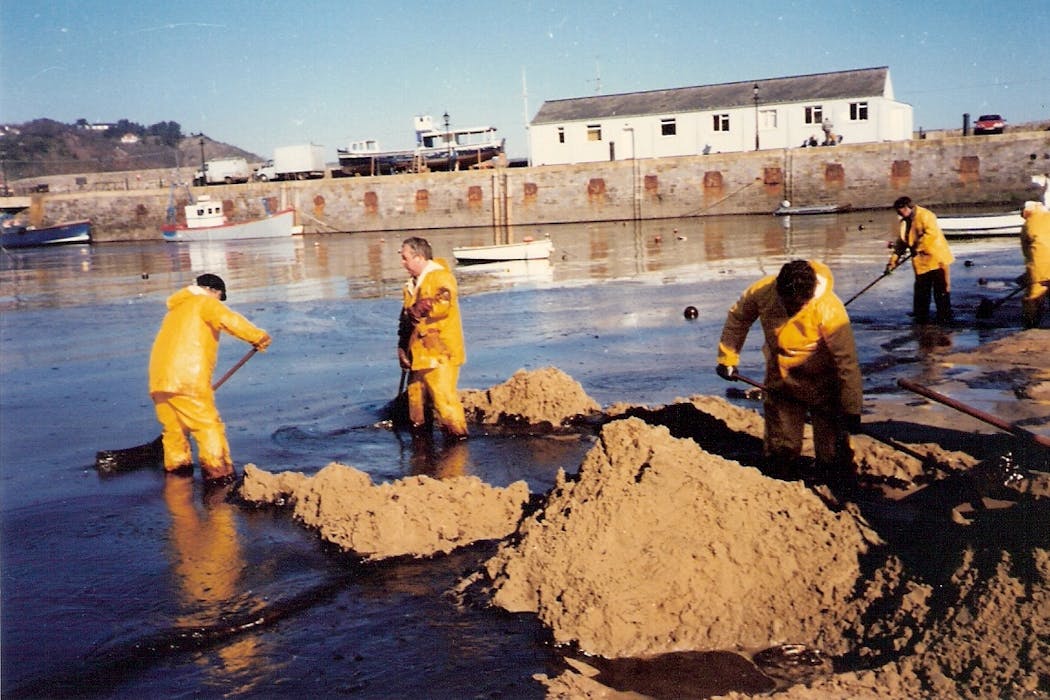 Volunteers cleaning Tenby's Harbour Beach after the oil spill in 1996. Scott Grant, CC BY-NC-ND
I grew up on the beaches of Pembrokeshire in south-west Wales. Visits to Tenby were my family's summer ritual: sand between our toes, paddling in rockpools, strawberry syrup on ice cream.
But 30 years ago, I vividly remember walking along Tenby's North Beach with my mother and grandmother. No crowds. No laughter. Just the hush of waves sliding over dark, tar‑smudged sand. The holiday postcards had gone grey.
At about 8pm on February 15 1996, the Sea Empress oil tanker missed her tug escort into port by minutes. The ship veered inside the mouth of Milford Haven and struck rocks near St Ann's Head.
Over the next stormy week, it grounded and re‑grounded many times, creating more damage to the hull each time. About 72,000 tonnes of North Sea crude oil were spilled. This was Britain's worst coastal oil disaster in a generation.
The fightback was messy. Weather worsened. Control systems to manage the spill were strained. Nine separate releases of oil stained the sea as wind and tide shoved a wounded tanker around the edges of the Pembrokeshire Coast national park.
Aircraft spread dispersants to try to break up the oil spill. Rough seas helped break oil into smaller droplets. This kept oil suspended in the water (not just floating on the surface), which can increase exposure and toxicity for sea and plant life, even as the visible surface layer declined.
At the same time, because the spilled oil contained a lot of relatively volatile petrol components and the weather was windy and the sea choppy, an estimated 35-45% evaporated in the first two days.
 Oil from Tenby's Harbour Beach is pumped into a tanker for removal in 1996.
Scott Grant, CC BY-NC-ND
Oil from Tenby's Harbour Beach is pumped into a tanker for removal in 1996.
Scott Grant, CC BY-NC-ND
In all, 11,000-16,000 tonnes of water-in-oil emulsion are estimated to have reached the shore - far less than the 72,000-120,000 tonnes of emulsion that could have beached. But even so, more than 120 miles (190km) of coastline were oiled. Birds, shellfish, marine and coastal habitats and the local tourism industry all took a hammering.
The UK government's Marine Accident Investigation Branch found the immediate cause was pilot error - compounded by weak training, poor use of leading marks to help the tanker's navigation, and no agreed master-pilot plan.
Salvage overseen by the Marine Pollution Control Unit (part of the UK Coastguard Agency) unfolded amid a stormy week. Muddled control was an issue alongside insufficient tug power and limited expert knowledge of the tidal streams. When big ships are in trouble, authority must be clear and tugs must be strong.
What's changed since the disaster?A lot has improved since the Sea Empress disaster.
The line of command is now much more direct. The UK created a single, empowered decision-maker - the secretary of state's representative - to cut through competing interests in a major maritime emergency. The role dates from 1999 and exists because of lessons from the Sea Empress.
There's also a clearer response plan in place. The national contingency plan for marine pollution incidents sets out who does what from the first call to the last waste bag. It links government, ports, regulators and science advisers, and outlines how to quickly set up a joint response centre for a coordinated approach to complex incidents.
Prevention of oil spills is high on the agenda. The UK government has identified marine environmental high-risk areas, including Pembrokeshire, to warn where a mistake can become a catastrophe.
Ships have also evolved to reduce the risk of big spills like this happening again. After the 1990s, single‑hull tankers were phased out under an amendment to international and national laws. New tankers had to be double‑hulled - designed with two completely watertight layers of steel - to reduce the risk of oil spills as the result of an accident.
By the mid‑2010s, single‑hull tankers were effectively gone from mainstream trade - a quiet revolution that prevented countless spills.
But not everything moved forward in a positive way.
In the 2000s, the UK stationed powerful government‑funded tugs around the coast. But in 2011, this fleet was axed on cost grounds, with a limited Scottish provision later restored and extended. A 2020 government‑commissioned study acknowledged that commercial towage hasn't filled every gap, and that some sea areas are still at high risk of an oil disaster.
Risk has shifted, not vanished. Milford Haven is now one of Europe's key liquefied natural gas (LNG) gateways. The South Hook and Dragon terminals, opened in 2009, can together meet up to a quarter of UK gas demand on peak days. That keeps homes warm and industry running. It also concentrates critical energy infrastructure in the same magnificent but exposed seascape that the Sea Empress scarred.
 An oil boom across Tenby Harbour tries to clean up the spill.
Scott Grant, CC BY-NC-ND
Lessons learnt
An oil boom across Tenby Harbour tries to clean up the spill.
Scott Grant, CC BY-NC-ND
Lessons learnt
Three aspects of the handling of this disaster still guide my thinking as an environmental scientist today.
Hitting the oil hard at sea - and early on - can make a big difference. With the Sea Empress's cargo of light crude in winter, rapid evaporation and dispersant‑aided dilution reduced shoreline oiling dramatically. It is often better to keep oil off beaches than have to scrape it off later - but you need surveillance, and then aircraft and trained people to be ready immediately.
 Oiled seabirds wait to be cleaned after the Sea Empress spillage.
Scott Grant, CC BY-NC-ND
Oiled seabirds wait to be cleaned after the Sea Empress spillage.
Scott Grant, CC BY-NC-ND
Coasts need to be cleaned in a methodical way, for as long as it takes. Buried oil re‑emerges. Heavy machinery can drive residues deeper if you rush. Quiet persistence beats flashy photo ops.
The government's Sea Empress environmental evaluation programme found that, while many habitats recovered faster than feared, some wildlife communities - from limpets to cushion stars - needed continued protection.
Prevention always costs less than compensation. Fines, funds and court cases don't restore trust or nature quickly. Investing upfront - in trained pilots, rehearsed joint command, powerful tugs in the right places, modern kit and transparent science - is cheaper than rebuilding a reputation for clean beaches, safe seafood and thriving wildlife. That was true in 1996. It is truer now.
Thirty years on, I still see Tenby's empty beaches when they should have been busy. I can still picture the sad faces of Pembrokeshire's people. Wales has deep ties to the sea: trade, holidays, food, fun.
With better ships, clearer command and smarter plans, the risk of major oil spills can be minimised. But complacency is a fair‑weather friend. LNG cargoes, bigger vessels, tighter budgets and busier coasts all raise the stakes. Anything can happen after dark in a gale, when radios crackle, information is scarce, and decisions must be made quickly.
Don't have time to read about climate change as much as you'd like?
Get a weekly roundup in your inbox instead. Every Wednesday, The Conversation's environment editor writes Imagine, a short email that goes a little deeper into just one climate issue. Join the 47,000+ readers who've subscribed so far.

Ian Williams receives funding from UK Research Councils, including the Engineering and Physical Sciences Research Council's Impact Acceleration Account.
Some glaciers can suddenly surge forward - with dangerous consequences [ 12-Feb-26 5:19pm ]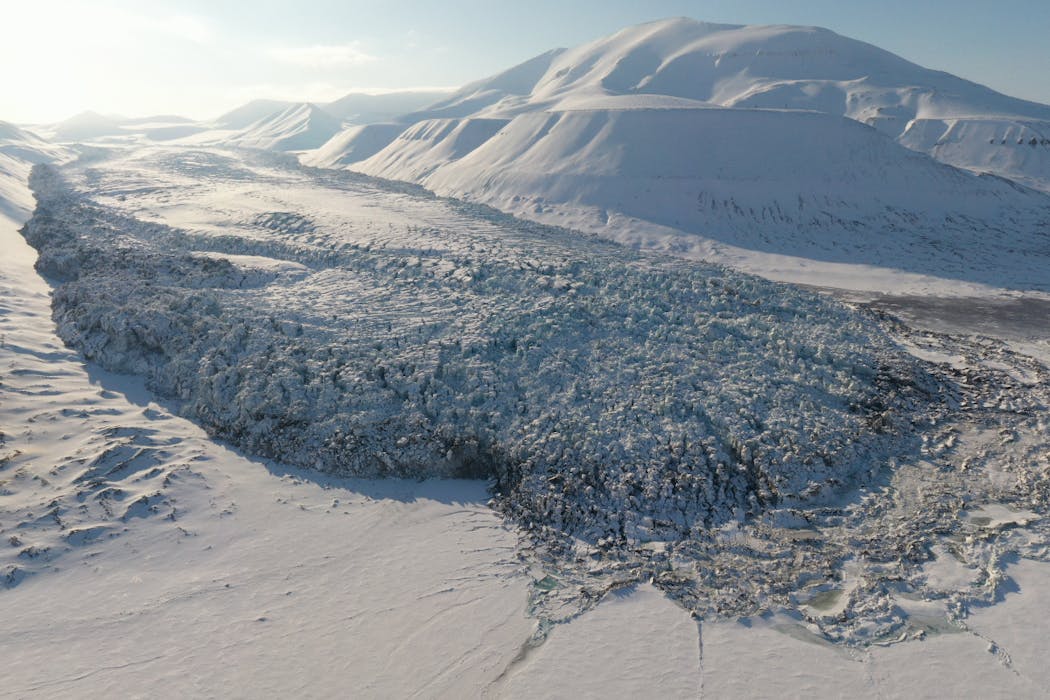 The surging Scheelebreen glacier in Svalbard advances into the frozen fjord, April 2022. Erik Schytt Mannerfelt, CC BY
It's difficult to forget standing in front of a glacier that is advancing towards you, towering ice pillars constantly cracking as they inch forward. The motion is too slow to see in real time, but obvious from one day to the next.
One of us (Harold) experienced this during fieldwork in 2012 at Nathorstbreen on the Arctic archipelago of Svalbard, which was moving forwards more than 10 metres per day.
Encounters like this are rare. Most of the world's glaciers are retreating rapidly as the climate warms, and thousands are likely to disappear altogether within the next few decades.
However, a small fraction of glaciers do the opposite, and repeatedly speed up and advance for months or years after a long period of stagnation and retreat. This is known as glacier surging, and it has long puzzled scientists.
It might be tempting to view advancing ice as an antidote to the gloomy picture of disappearing glaciers, but the polar opposite is true. Surges can accelerate ice loss, make glaciers more vulnerable to climate change, and create serious hazards for people living downstream of them.
We have just published a global study of over 3,000 surging glaciers to find out what's causing them to move like this. Our work also summarises, for the first time, the hazards caused by these glaciers, and how surging is being affected by climate change.
Why some glaciers surgeDuring surges, glaciers accelerate from a slow crawl to tens of metres per day - sometimes within weeks. The fastest phase, when ice can flow at over 60 metres a day, typically lasts a year or more - although some glaciers have surged for up to 20 years. The return to low speeds and even stagnation can happen abruptly over days, or over several years.
Nathorstbreen dramatically advanced more than 15 kilometres in roughly a decade during its surge, which began in 2008 - transforming the entire landscape in a matter of years.
 Field investigations at the surging front of Nathorstbreen, Svalbard in July 2012.
Harold Lovell
Field investigations at the surging front of Nathorstbreen, Svalbard in July 2012.
Harold Lovell
The onset of surging is thought to be controlled by changes beneath the glacier. In surge-type glaciers, water generated by melting ice does not immediately drain away, but gathers at the bottom of the glacier. This reduces friction between ice and the ground, making it easier for ice to slide faster.
When that water eventually drains, the glacier slows again. Some glaciers experience repeated surges separated by years or decades of low ice flow - but the exact timing of surges is hard to predict.
The sound of surging ice at Vallåkrabreen, Svalbard in May 2023. Erik Schytt Mannerfelt. Erik Schytt Mannerfelt, Author provided (no reuse)1.63 MB (download) Global hotspots of surging ice
Our study shows that at least 3,000 glaciers have surged at some point. That's only about 1% of all glaciers in the world, but they tend to be large, so represent about 16% of the global glacier area.
Notably, they are found in dense geographical groupings across the Arctic, the Himalayas and other high mountains in Asia, and the Andes - but are largely absent elsewhere. This is primarily controlled by the climate: surges do not generally happen where conditions are currently too warm, such as in the European Alps or mainland Scandinavia, or too cold and dry, such as Antarctica.
Other factors such as size and underlying geology are also important for determining which glaciers surge in a region and which do not.
Some of the hotspots are found in populated regions, where surging glaciers can become hazards. The advancing ice can overrun infrastructure and farmland, and block rivers to form dangerous lakes that can release devastating floods when the ice breaks. An unstable lake formed by a surge of Shisper Glacier in the Karakoram mountain range drained multiple times from 2019 to 2022, causing extensive damage to the Karakoram Highway, a key connection between Pakistan and China.
A flood from a lake dammed by the surging Shisper Glacier destroys Hassanabad bridge on the Karakoram Highway in May 2022.Fast-moving ice can cause deep cracks (crevasses) to form, affecting travel in regions such as Svalbard where glaciers provide highways between isolated human settlements. It also disrupts tourism and recreation activities, such as where climbers use glaciers to approach peaks. When glaciers surge into the sea, they release numerous icebergs in a short space of time that could present a risk to shipping and tourism.
Surging is changing as the climate warmsClimate warming is already reshaping how and when glaciers surge. In some regions, surges are becoming more frequent; in others, they are declining as glaciers thin and lose the mass needed to build towards a surge. Heavy rainfall, intense melt periods or other extreme weather have also been shown to trigger earlier-than-expected surges, and these factors may become more important in a warming climate.
Together, this paints a picture of the increasing unpredictability of glacier surges. Some regions might experience less surging as the world warms, while others might see an increase. It is feasible that glaciers that have never surged before may begin to, including in areas where there are no records of past surges, such as the fast-warming Antarctic peninsula.
Surging glaciers remind us that ice does not always respond to warming in simple and predictable ways. Understanding these exceptions, and managing the hazards they create, is critical in a rapidly changing world.

Harold Lovell receives funding from NERC.
Chris Stokes receives funding from the NERC.
Nigel Farage has announced Reform UK's first policy pledge of the Welsh election campaign in May: to scrap the default urban speed limit of 20mph introduced by the Labour Welsh government in 2023.
Like the Welsh Conservatives, who are also committed to reversing the legislation, Reform UK have identified frustration with the 20mph limit in Wales as a widespread and emotive issue that it hopes will help to propel the party to seat gains in the election. It is currently second in the polls, behind the centre-left Welsh nationalist party Plaid Cymru.
Reform said it will scrap the "blanket approach" to the speed limit, but would still have it around schools and hospitals. Welsh Labour have also said that some roads will return to 30mph under its plans.
Meanwhile, the Wales Green party leader Anthony Slaughter suggested that the party could push for extensions to 20mph coverage in local government, speaking to the BBC Radio 4 Today programme in January.
Polling by More in Common shows that the 20mph limit is the best known of the current Welsh government's policies, with 90% of respondents confirming awareness, but also the second most unpopular. Some 55% of people polled considered that the change reflected negatively on Welsh Labour, compared with 21% who viewed it positively.
Yet, for others the 20mph limit is a flagship achievement. Lee Walters, the former transport minister who introduced the legislation, has admitted mistakes in the way it was introduced, but told BBC Wales: "The data and evidence shows that it will save lives, and in time it will settle down."
The history of 20mph limitsThe legislation reduced the default speed limit on so-called "restricted roads" in Wales (essentially roads in built-up areas) from 30mph to 20mph.
Part of the aim was to reduce the number of collisions and injuries from road collisions (as well as the cost to the National Health Service of treating these casualties), encouraging walking and cycling, and improving health and wellbeing.
As elsewhere in Britain, 20mph zones already existed in high-risk sites such as outside schools. Exceptions also applied to the 20mph default, with local authorities identifying roads where a 30mph limit would remain.
There's a division of opinion over 20mph speed limits in Wales.Overall, the 20mph limit currently applies to 37% of the road network in Wales. The policy featured in both the Labour and Plaid Cymru manifestos for the 2021 Senedd (Welsh parliament) election. It was also supported by the sole Liberal Democrat Senedd member, when introduced.
Conservative Senedd members voted against the legislation. The measure was controversial, with noisy opposition from sections of the public.
A petition to repeal the law attracted 469,571 signatures and new 20mph road signs were defaced in many parts of Wales.
There was widespread media coverage describing confusion over the speed limit and claiming negative effects on bus timetables, tourism and businesses.
A lack of consistent polling makes it difficult to track public opinion on the issue. Polls in October 2023 and July 2024 recorded 54% and 72% of Welsh voters opposed to the 20mph limit respectively, but no more recent poll has directly asked about the policy.
However, a softening of attitudes over time was identified by an analysis of posts on the social media platform X at implementation in September 2023 and six months later. Not only did comments become less negative towards the change, but the content also evolved. Right after implementation, tweets focused on politics, especially criticisms of Welsh government.
Six months later, discussion shifted toward everyday impact: improved safety around schools and residential streets, benefits for pedestrians and cyclists and urban mobility such as buses and traffic flow. Although political criticism remained, misinformation decreased and conversation became more grounded in lived experience, with safety, especially for children and communities, more prominent.
Psychologists refer to this movement as the Goodwin Curve: when behaviour people are anxious about doesn't materialise, their attitudes soften and they become more accepting of policy change.
Early reports on the impact of the 20mph speed limit were anecdotal. More than two years after implementation, however, there is a growing body of objective evidence on its effects, especially around speed and collision data. The most recent figures show that average speeds for road traffic in Wales have fallen by 3.3 mph.
Relatedly, there has been a marked reduction in both collisions and casualties on roads where the speed limit changed from 30mph to 20mph. In 2024, the first full year after the change, collisions on 20mph and 30mph roads combined were down 23.5% compared with 2022, and casualties were down by 25.8%.
Evidence of environmental and social impacts is less conclusive. Early monitoring shows no material change in air quality (NO₂, PM₁₀ or PM₂.₅) in pilot areas up to April 2024, and analysis of CO₂ emissions is still ongoing. Impacts on walking and cycling also remain unclear, as post-implementation active travel data has not yet been reported.
Speed and the SeneddSo, why are speed limits back on the election agenda? Reform and the Conservatives both cite the cost of the policy, estimated at £32 million. Yet, as journalist Will Hayward points out, this spend has already happened and returning to 30mph would also be expensive.
The significance of 20mph to Reform and the Conservatives is about setting the tone of the election. It is an issue that speaks to the continuing scepticism of some of the Welsh electorate towards devolution.
What's more, the issue encapsulates different visions for Welsh society. For the rightwing parties, opposition to the 20mph limit reflects a championing of individualism and "common sense" against the perceived intrusive paternalism of the left. As Farage told journalists in Newport: "It's an example of government saying we know what is best for you, and you must comply with us."
Reform UK has targeted car drivers as a potential voting base before. Reform-led councils in England have vowed to dismantle low-traffic neighbourhoods, for instance, even in areas that didn't actually have them.
For some leftwing politicians, on the other hand, the 20mph speed limit is emblematic of a devolved Welsh government taking bold, pioneering action for health and environmental wellbeing. Reductions both in collisions and in motor insurance premiums could be presented as evidence of delivering benefits to Welsh people.
Labour and Plaid Cymru are unlikely to want the 20mph speed limit to be a major topic in the election, and would prefer to focus on issues around jobs, education, health care and public transport. Whether they can achieve a swing to those issues as the primary topic of discussion will be down to the public's interest, and possibly media coverage.

Michael Woods receives funding from UKRI. He is a member of the Liberal Democrats.
Charles Musselwhite received funding from Health & Care Research Wales. Charles Musselwhite is currently Chair of the Transport Studies Research Group and a Vice Chair of the Transport and Health Science Group.
 The Thames Barrier in east London. Jorge Elizaquibel/Shutterstock
More than 1,000 properties flooded in London in 2021, resulting in insurance losses of more than £281 million. Record-breaking floods continue to hit the UK.
In the capital, 13% of properties have been classed as having a high or medium risk of flooding. Danger-to-life warnings could soon become a reality, especially for people living in east London on low-lying land next to the river Thames.
Boroughs like Tower Hamlets, Newham and Hackney are built on former marshland. These areas would have originally absorbed water naturally, but have been used for urban development. More than 85% of London marshland was lost during the 20th century. London has lost the natural buffer that used to help water drain away. As the sea level rises and storm surges get more prevalent, chances of flooding are greater.
London is one of the most urbanised cities across the world with 78% of land being urban. With significant impermeable surfaces made of concrete, asphalt and rooftops, water is prevented from draining into the ground. Rapid surface water runoff overwhelms drainage systems and surface water runoff flooding is one of the greatest threats to east London.
Large-scale infrastructure like the Thames Barrier and tidal flood defences protect London from large-scale river flooding, but they cannot prevent surface water flooding from local storms. As these structures age, maintenance costs rise. Relying solely on them is a risky strategy for the future, especially as storm surges become more intense due to climate change.
Read more: Britain is at bursting point and its flood barriers need to be updated
Specialist bodies like the Environment Agency monitor water quality in rivers to reduce infection risks when water is contaminated. However, many parts of east London have Victorian-era sewer systems designed for much lower rainfall, so they are easily overwhelmed. This means the chance of sewage contamination is heightened in these areas. Around 39 million tonnes of untreated sewage are estimated to be discharged into the Thames every year.
East London also faces high levels of deprivation. Many people lack the resources to cope with floods and possible water contamination, often due to being constrained by socioeconomic inequities. High child poverty rates in east London boroughs like Tower Hamlets (47%), Newham (45%) and Hackney (45%) mean that flood preparation is often overlooked.
Aside from strengthening infrastructure and physical barriers, there are natural ways to manage flood risk.
Our research shows that merging nature with urban infrastructure improves the protective capacities and flood resilience of an urban river like the Thames. And initial insights from our ongoing social research show that creative ways of communicating with people can help people better understand - and support - natural flood solutions.
 Planting wetland areas along riverbeds can help improve flood resilience.
Abdul_Shakoor/Shutterstock
Natural barriers
Planting wetland areas along riverbeds can help improve flood resilience.
Abdul_Shakoor/Shutterstock
Natural barriers
Planting suitable wetland species alongside rivers and roof tops helps delay surface water runoff by up to 90%. Plants absorb water and release it over several hours rather than releasing it immediately like impermeable surfaces such as concrete and tarmac. This slows down the flow of water into the drainage system and reduces the risk of overwhelming the sewers and pollution spills.
In the Netherlands, there are hundreds of green roofs on bus stops. Data shows that each square metre green of roof cover absorbs 20 litres of water, reducing how much water enters the drains. More natural solutions like these can also improve air quality, attract pollinators and provide shade (which prevents the sun from heating up buildings or walkways).
Green roofs on bus stops are now a common sight in some UK cities, including Brighton and Cardiff. Introducing them to east London would be a good first step.
 Green roofs on bus stops in Netherlands.
PixelBiss/Shutterstock
Green roofs on bus stops in Netherlands.
PixelBiss/Shutterstock
One charity-led initiative, East London Waterworks Park, involves rewilding a former depot. By converting land covered by concrete into swimming ponds, with reedbeds for filtration, this project provides more space to hold floodwater and a place for the local community to socialise and engage with nature.
At the Queen Elizabeth Olympic Park in London, an area that used to be a depository for building rubble has been transformed into a large-scale sustainable urban drainage system. This involves the creation of open spaces interspersed with natural features like reedbeds, wetlands and swales (marshy channels) that slow down runoff.
This helps slow down the flow of water into rivers, especially during intense rainfall. Studies show that improved water management at the park has saved 4,000 homes from flood risk since it opened in 2014.
London's population is increasing. This constrains its resources and exacerbates the effects of increased urbanisation. Socioeconomic inequities raise the level of vulnerability of London's population. Flood risk is a national security threat, not just an environmental issue.
Including nature in urban resilience plans helps reduce risk and empower people. But policymakers need evidence of which solutions are more effective before they'll act.
Don't have time to read about climate change as much as you'd like?
Get a weekly roundup in your inbox instead. Every Wednesday, The Conversation's environment editor writes Imagine, a short email that goes a little deeper into just one climate issue. Join the 47,000+ readers who've subscribed so far.

Ravindra Jayaratne receives funding from the Royal Society, UK.
Maciej Pawlik is affiliated with the Green Party of England and Wales.
Will artificial snow save the ski industry in the long run - or curse it? [ 11-Feb-26 1:16pm ]At the Winter Olympics, athletes race down immaculate white slopes. The snow looks perfect. But it is largely manufactured.
In Italy, where rising temperatures and declining snowfall were felt earlier than in other Alpine regions, technological fixes began in the 1990s. Today, reliance on artificial snow is widespread: around 95% of Italian ski resorts use snowmaking, and more than 70% of slopes are covered by artificial snow during the season.
Modern snowmaking uses a large fan-like "snow canon" to spray tiny droplets of water into cold air, where they freeze before landing on the ground. Vehicles known as piste bashers (in Europe) or snowcats (in North America) then compress and groom that new snow until it forms a more stable base. The process does not rely on chemical additives. It has become so effective that it can now guarantee competition-grade conditions even when natural snowfall is increasingly unreliable.
Together with colleagues at the Universities of Oxford and Trento, I have been part of the Hot Snow project, investigating what all this means for the ski industry.
 A 'snow canon' blasts tiny droplets into the air, where they freeze into snowflakes before landing.
Gherzak / shutterstock
A 'snow canon' blasts tiny droplets into the air, where they freeze into snowflakes before landing.
Gherzak / shutterstock
We know that continuous innovation - often referred to by the industry as "technical snow" - has helped protect winter sports. Yet we found it also carries a less visible risk: successful adaptation through artificial snow can make the ski industry complacent about climate change.
How artificial snow really worksIn leading resorts, artificial snowmaking process is data-driven and highly automated. At the touch of a tablet, operators can adjust the quality and density of new snow, depending on temperature, humidity and the sort of surface they want to create. This produces snow that can be more controllable and durable than natural snowfall.
Snowmaking systems have become more energy efficient over time. Production is optimised to exploit the coldest possible weather windows, reducing energy use per cubic metre of snow. In regions such as the Dolomites, where the Olympic ski races are being held, resorts largely rely on renewable electricity and rainwater stored in artificial basins.
 A snow cannon fires out water mist that will fall as snow.
Beekeepx / shutterstock
A snow cannon fires out water mist that will fall as snow.
Beekeepx / shutterstock
Even so, artificial snow remains energy intensive. In Italian ski resorts, snowmaking accounts for around 30-40% of total energy consumption, with annual costs of €50 million to €100 million (£44 million to €88 million). Across the Alps, total energy demand for artificial snow is estimated at around 2,100 gigawatt-hours per winter season - roughly equivalent to the total annual domestic electricity use of Milan.
The water footprint is just as significant. Artificial snow production in Italy alone consumes around 100-150 million cubic metres of water each year - roughly equivalent to the annual water use of between 1 million and 1.5 million people.
In regions where winter precipitation is becoming less reliable and summers are growing hotter and drier, this growing competition for water adds another layer of pressure, particularly for mountain communities and downstream users. For this reason, ski resorts increasingly rely on artificial reservoirs to store water which, though useful in dry seasons, are often harmful to mountain landscapes and ecosystems.
When adaptation becomes a trapThe effectiveness of snowmaking is both a blessing and a curse.
Across Europe, artificial snow now underpins much of the ski industry. In many regions, slopes depend on it to open at all. This technological success creates what economists call a lock-in effect. Resorts continue to invest heavily in snow cannons, reservoirs and grooming vehicles, even in areas where artificial snow may soon become unviable.
 In a dry or warm winter, snowmaking is crucial. This photo was taken in the Dolomites in January 2018: a bare mountainside with machine-made snow.
Stefano Politi Markovina / shutterstock
In a dry or warm winter, snowmaking is crucial. This photo was taken in the Dolomites in January 2018: a bare mountainside with machine-made snow.
Stefano Politi Markovina / shutterstock
At the same time, rising infrastructure costs requires a constant increase in consumer prices. Ski pass prices have increased by around 40% since 2021, further turning skiing into a sport accessible only to those with deep pockets. Each new investment further entrenches this trajectory, making it progressively harder to step back and rethink alternatives for the future of these resorts.
The illusion of controlSome snowmaking systems can technically operate even when air temperatures rise above freezing, albeit at a very high energy cost. One manufacturer has demonstrated technology capable of producing snow at ambient temperatures of up to 20°C. That possibility reinforces a dangerous narrative: that innovation alone will solve the problem.
But climate projections suggest there will come a point when even artificial snow cannot compensate for warming conditions at many altitudes. In Italy, most resorts located around 1,000 metres above sea level have abandoned hopes of operating consistently, while skiing in the Apennines - once a preferred destination for central and southern Italy - has largely shut down.
When artificial snow stops being viable, the transition is often abrupt. Resorts are left with stranded assets and communities face sudden economic shocks. This is what we describe as an "expiring industry", one that can appear economically healthy today while facing a clear climate-driven end date.
The danger is not collapse tomorrow, but delay today. As long as slopes remain open and bookings stay strong, there is little incentive to invest in alternatives. After all, winter tourism is still worth over €11 billion (£9.6 billion) a year to the Italian economy alone.
What should changeThose who benefit from the status quo are unlikely to propose alternative futures. Public policy therefore plays a crucial role in shaping which futures remain possible.
Continuing to subsidise ski infrastructure may keep slopes open for a few more seasons, but it also deepens reliance on winter snow in places where long-term viability is increasingly uncertain. It risks diverting public money, attention and political capital away from transitions that could actually endure.
A different approach would make public support conditional. Resorts could be required to disclose water and energy use transparently, and to present credible plans to diversify beyond winter-only tourism rather than simply extending it. This would also mean scrutinising claims that lift infrastructure can function as sustainable, year-round transport — a justification often used to secure public funding, but rarely realised in practice.
I'm a passionate skier myself. As a Veneto native, the Dolomites are my favourite place to ski. So this is not about blaming skiers or dismissing snowmaking technology, which has helped sustain jobs in the mountain communities of my region.
The problem is mistaking successful short-term adaptation for a viable long-term strategy. When technological fixes stand in for long-term planning, they delay investment in alternatives and leave regions more exposed when climate limits are finally reached.
As long as artificial snow keeps slopes white against an increasingly green landscape, it is easy to believe alpine skiing will always be there. But this is not simply kicking the can down the road. It is pushing it uphill. And metre by metre, the slope is getting steeper.

Paolo Aversa works on the Hot Snow project with professor Juliane Reinecke at the University of Oxford and professor Alberto Nucciarelli and Dr Edoardo Trincanato at the University of Trento. The research has been supported by The Center of Sustainable Business at King's Business School, The Fondazione CARITRO, and the Center for Sports and Business at the Stockholm School of Economics.
 Richard M Lee/Shutterstock
Supermarket shelves can look full despite the food systems underneath them being under strain. Fruit may be stacked neatly, chilled meat may be in place. It appears that supply chains are functioning well. But appearances can be deceiving.
Today, food moves through supply chains because it is recognised by databases, platforms and automated approval systems. If a digital system cannot confirm a shipment, the food cannot be released, insured, sold, or legally distributed. In practical terms, food that cannot be "seen" digitally becomes unusable.
This affects the resilience of the UK food system , and is increasingly identified as a critical vulnerability.
Look at the consequences, for example, when recent cyberattacks on grocery and food distribution networks disrupted operations at multiple major US grocery chains. This took online ordering and other digital systems down and delayed deliveries even though physical stocks were available.
Part of the problem here is that key decisions are made by automated or opaque systems that cannot be easily explained or challenged. Manual backups are also being removed in the name of efficiency.
This digital shift is happening around the world, in supermarkets and in farming, and has delivered efficiency gains, but it has also intensified structural pressures across logistics and transport, particularly in supply chains which are set up to deliver at the last minute.
Using AIAI and data-driven systems now shape decisions across agriculture and food delivery. They are used to forecast demand, optimise planting, prioritise shipments, and manage inventories. Official reviews of the use of AI across production, processing, and distribution show that these tools are now embedded across most stages of the UK food system. But there are risks.
When decisions about food allocation cannot be explained or reviewed, authority shifts away from human judgment and into software rules. Put simply, businesses are choosing automation over humans to save time and cut costs. As a result, decisions about food movement and access are increasingly made by systems that people cannot easily question or override.
Extreme weather such as Storm Chandra can cause food shortages, but there are other factors as well.This has already started to happen. During the 2021 ransomware attack on JBS Foods, meat processing facilities halted operations despite animals, staff, and infrastructure being present. Although some Australian farmers were able to override the systems, there were widespread problems. More recently, disruptions affecting large distributors have shown how system failures can interrupt deliveries to shops even if goods are available.
Getting rid of humansA significant issue is fewer people managing these issues, and staff training. Manual procedures are classified as costly and gradually abandoned. Staff are no longer trained for overrides they are never expected to perform. When failure occurs, the skills required to intervene may no longer exist.
This vulnerability is compounded by persistent workforce and skills shortages, which affect transport, warehousing and public health inspection. Even when digital systems recover, the human ability to restart flows may be limited.
The risk is not only that systems fail, but that when they do, disruption spreads quickly. This can be understood as a stress test rather than a prediction. Authorisation systems may freeze. Trucks are loaded, but release codes fail. Drivers wait. Food is present, but movement is not approved.
Based on previous incidents within days digital records and physical reality can begin to diverge. Inventory systems no longer match what is on shelves. After about 72 hours, manual intervention is required. Yet paper procedures have often been removed, and staff are not trained to use them.
These patterns are consistent with evidence from UK food system vulnerability analyses, which emphasise that resilience failures are often organisational rather than agricultural.
Food security is often framed as a question of supply. But there is also a question of authorisation. If a digital manifest is corrupted, shipments may not be released.
This matters in a country like the UK that relies heavily on imports and complex logistics. Resilience depends not only on trade flows, but on the governance of data and decision-making in food systems, research on food security suggests.
Who is in control?AI can strengthen food security. Precision agriculture (using data to make decisions about when to plant or water, for instance) and early-warning systems have helped reduce losses and improve yields. The issue is not whether AI is used, but who is watching it, and who manages it.
Food systems need humans to be in the loop, with trained staff and regular drills on how to override systems if they go wrong. Algorithms used in food allocation and logistics must be transparent enough to be audited. Commercial secrecy cannot outweigh public safety. Communities and farmers must retain control over their data and knowledge.
This is not a risk for the future. It already explains why warehouses full of food can become inaccessible or ignored.
The question is not whether digital systems will fail, but whether we will build a system that can survive its failure.

Mohammed F. Alzuhair does not work for, consult, own shares in or receive funding from any company or organisation that would benefit from this article, and has disclosed no relevant affiliations beyond their academic appointment.
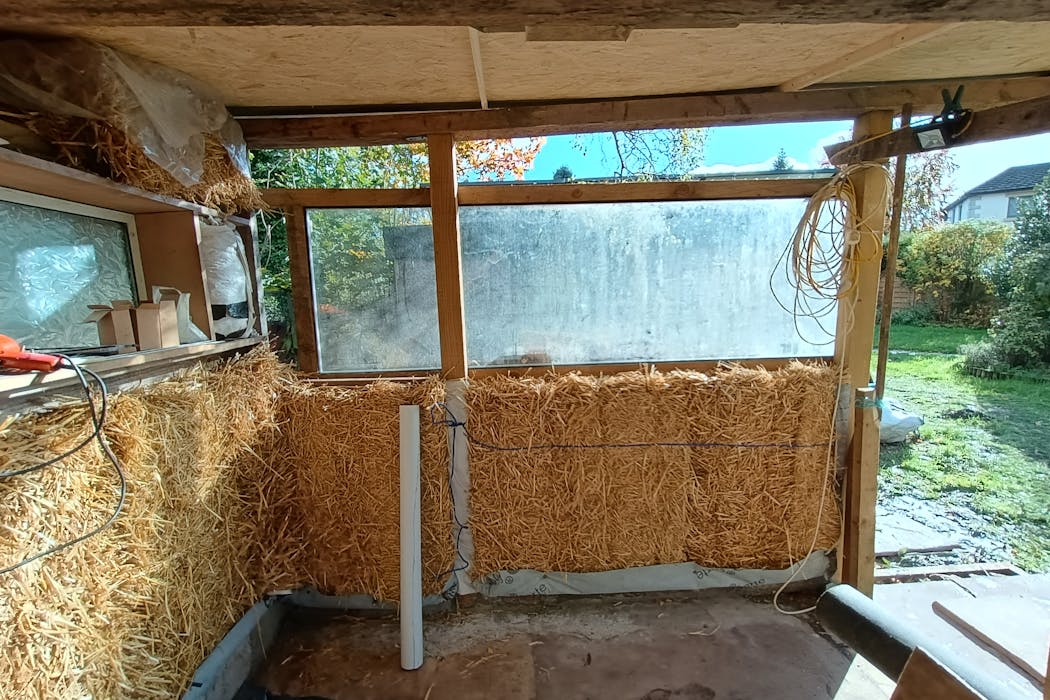 The garden office from the inside. Lorna Jackson, CC BY-NC-ND
When we moved into our house, there was a shed in the garden. Its timbers were rotten, the floor had long since disappeared into the ground, there was no door, the window had fallen out and various creatures had moved in.
I decided to rebuild it out of a material that has been used around the world for hundreds of years, but is less commonly seen in modern buildings: straw bales. A year later, and the "work shed" is now nearly finished.
As sustainability assessment lead at Sheffield University's Grantham Centre for Sustainable Futures, I wanted to make sure my garden office had the lowest possible embodied carbon (a term used to describe the amount of carbon contained, or "embodied" in the materials used to make a product), and low energy use once it was up and running.
That meant the office would need to be very well insulated to avoid using lots of energy to heat it, and made of materials with low carbon content.
Due to its structure, straw is a fantastic insulating material. It's also cheap, easy to work with, and since the straw absorbs carbon dioxide from the atmosphere as it grows, straw buildings act as carbon stores. If we use this in a building, the carbon remains stored for the lifetime of the building, and can even be returned to the soil at the end of life.
My first real involvement with straw building was through the design of a low carbon cold room in Kenya, working with energy efficiency experts from the Energy Saving Trust and Solar Cooling Engineering, and architects from Switzerland and Kenya. A cold room is an easy-to-build and cheap alternative to a large fridge, enabling farmers in developing countries to store produce at a market, improving incomes and reducing food waste.
 Stuart Walker working on his straw bale office.
Lorna Jackson., CC BY-NC-ND
Stuart Walker working on his straw bale office.
Lorna Jackson., CC BY-NC-ND
This cold room is now operating at Homa Bay market on the shores of Lake Victoria, Kenya. It has cement-free foundations, solar panels and batteries, water storage, low energy cooling units, a timber structure and straw bale walls. The project showed me that straw bale structures can provide good insulation without the environmental impact of expanded polystyrene.
Natural materials like mud, earth and dung, as well as fibrous materials such as straw were used to build homes for centuries.
Straw bale housing historyStraw in bale form has been used for buildings since the 1800s. After the invention of mechanical baler in the US, straw bales were used to construct homes in places where timber and stone were hard to find.
Some of these early buildings still exist, but most straw bale houses in the US were built since the 1970s. These buildings offer warm comfortable homes and were the inspiration for a new wave of UK straw bale builders in the 1990s.
Read more: How we can recycle more buildings
Straw works well for single or two-storey buildings, but requires careful design to avoid water leaking into it. Provided the bale buildings are protected from rain splash at the bottom and have an overhanging roof at the top, water isn't really a problem. Fire requires oxygen and fuel, so a compressed straw bale is fire resistant, and straw bale buildings have met all fire, planning, and building regulations, and even achieved Passivhaus - extremely high standards of insulation, thermal performance and energy use.
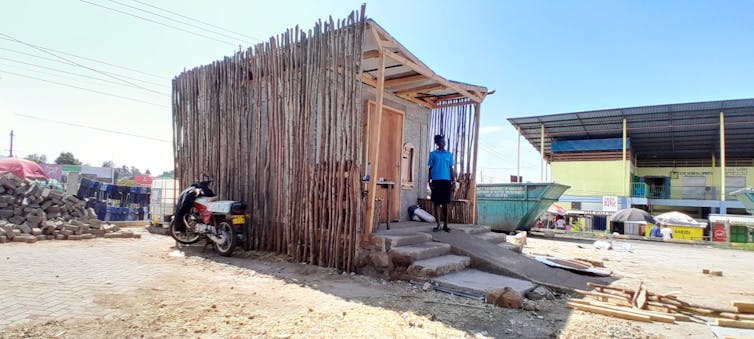 The straw bale 'fridge' built in Kenya.
Francis Maina, CC BY-NC-ND
The straw bale 'fridge' built in Kenya.
Francis Maina, CC BY-NC-ND
My new garden office has 40cm thick walls and double glazed windows, it's clad on the outside with reclaimed timber (some of which came from the original shed) and the roof, windows, doors and underfloor insulation are all secondhand. The final step is cladding the inside.
Here I've adopted another traditional building practice and used cob. Cob is a mixture of clay, water, sand and chopped straw. After digging the clay from our garden and mixing it, I've applied the cob by hand, via an incredibly messy but very satisfying process.
I know that the lifetime greenhouse gas emissions of my shed will be about 20 tonnes lower than they would have been if I had used expanded foam insulation and plasterboard.
People who live in straw bale houses talk about how the irregular shape and natural materials of straw bale buildings also have a positive impact on them, and say that buildings like my shed create a connection with the builder particular to the use of natural materials.
This concept, known as biophilic design, is challenging to quantify but I look forward to finding how it feels to sit inside it.

Stuart Walker is affiliated with The Grantham Centre for Sustainable Futures, University of Sheffield. He receives funding from the Grantham Foundation for the Protection of the Environment.
Pairing scientists with an artist-in-residence can cut through "ecofatigue" (feelings of overwhelm or exhaustion about environment issues that lead to apathy and inaction), spark emotion and change the way people deal with plastics.
My team and I recently published a study that demonstrated this is a low-cost and feasible way to tackle plastic waste in towns.
In a quiet gallery space in London, visitors paused before 13 luminous coastal scenes. Throwaway bottles bobbed in the surf; snack wrappers frayed into microplastic constellations. Many people left this exhibition determined to change their own habits.
These paintings were part of my team's project called Trace-P (Transitioning to a circular economy for plastics with an artist-in-residence) which involves turning environmental evidence into compelling art, then measuring what the public do as a result.
Decades of leaflets, posters and worthy campaigns about plastic pollution haven't shifted behaviour fast enough. Research (including our own previous work) shows that emotion, storytelling and "intergenerational influence" - ideas flowing from children to adults - can outperform dry facts alone. Throughout that previous project, 99% of audiences reported higher awareness, 70% intended to change how they dispose of electronic or e-waste and 65% planned to repair or reuse their belongings more. That success inspired us to test an art-led model for plastics.
The global context is stark. More than 400 million tonnes of plastic are produced each year. Only around 9% of that is mechanically recycled worldwide. A global plan to end plastic pollution by 2040 will require deep shifts in policy and markets to eliminate problematic items, scale reuse and design products that are suitable for recycling.
Art cannot deliver those reforms, but it can mobilise public demand for them.
Our plastics researchers collaborated with a professional artist, Susannah Pal. After interviews and laboratory visits, she produced a series of tragicomic (humorously sad) seascapes. In addition to running public exhibitions in London and Southampton, Pal held an online and in-person drawing workshop for the public.
Visitors learnt about the science of marine litter pathways, microplastics and consumption patterns through powerful imagery that intended to trigger emotion rather than through facts and data. We collected feedback from participants and gallery visitors via on-site in-person surveys, Post-it note "reaction walls" where people could scribble their comments and impressions of the artwork and social media posts by visitors.
Our paper, recently published in the Journal of Cleaner Production, calls this approach "com-art". This combination of creative skills with scientific evidence can improve communication with the general public and lead to more positive action.
Viewers told us that the artworks educated them about sources and negative effects of plastic pollution. They also said that the art provoked emotions - from sadness to resolve - that helped the messages stick and encouraged them to cut personal plastic use or question throwaway lifestyles.
The feedstock problemEurope's plastics system is inching towards circularity via new policies and technologies such as deposit return schemes, but not nearly fast enough. In 2022, circular plastics accounted for 13.5% of new products. EU plastic recycling has essentially stalled, with plastic packaging recycling rates hovering around 40-42%.
Huge amounts of plastic waste are sent for incineration and valuable feedstock (the fossil fuel-based raw materials used to make plastic) is burned instead of being recycled or redirected back into manufacturing.
Public support for reuse, deposit return schemes and better sorting of contaminated waste is the missing multiplier.
Globally, governments are negotiating a treaty to end plastic pollution. To reach its proposed goals, citizens will need to accept refills, returnables and redesigned packaging. Art projects like ours can engage citizens with changes to everyday routines around plastic consumption and disposal.
Read more: How Captain Planet cartoons shaped my awareness of the nature crisis
From inspiration to influence
Cities, schools and museums can start by making art part of their waste strategy. A local artist-in-residence, hosted by a council gallery, museum or library, costs little (a few thousand pounds) compared with large-scale infrastructure projects (that cost millions).
Art projects can help unlock more enthusiasm from citizens for deposit return schemes (refundable deposits for returning containers), reuse pilots or new recycling sorting rules. Artists can jointly create exhibitions with local schools to harness intergenerational influence. You can use short before- and after-project surveys to see what works.
Art interventions often deliver powerful but shortlived boosts in awareness and intent. By reinforcing moments - new shows, classroom projects, hands-on repair events - we can extend this awareness. It is also worth repeating art activities to reinforce messages.
Emotion opens the door to action, and convenient systems keep people walking through it. Exhibitions can be ideal opportunities to recruit residents to refill trials, deposit return collections or school "plastic-free lunch" weeks. These events can showcase possible next steps for people to take through QR codes and sign-ups to activities or maps of refill points, for example.
Plastics touch everything: health, climate, local jobs. Moving to a circular economy will take regulation, redesign and investment and public imagination. Our study shows that artists make the science more legible, memorable and motivating - and this can spark change in communities.
Don't have time to read about climate change as much as you'd like?
Get a weekly roundup in your inbox instead. Every Wednesday, The Conversation's environment editor writes Imagine, a short email that goes a little deeper into just one climate issue. Join the 47,000+ readers who've subscribed so far.

Ian Williams received funding from UK Research Councils to support this work. TRACE-P was supported by the Engineering and Physical Sciences Research Council's Impact Acceleration Account (EPSRC IAA 2017-2020). IAAs are strategic awards provided to institutions to support knowledge exchange and impact from their EPSRC-funded research. Ian also acknowledges support from the EPSRC Centre for Doctoral Training in Sustainable Infrastructure Systems (EP/L01582X/1).
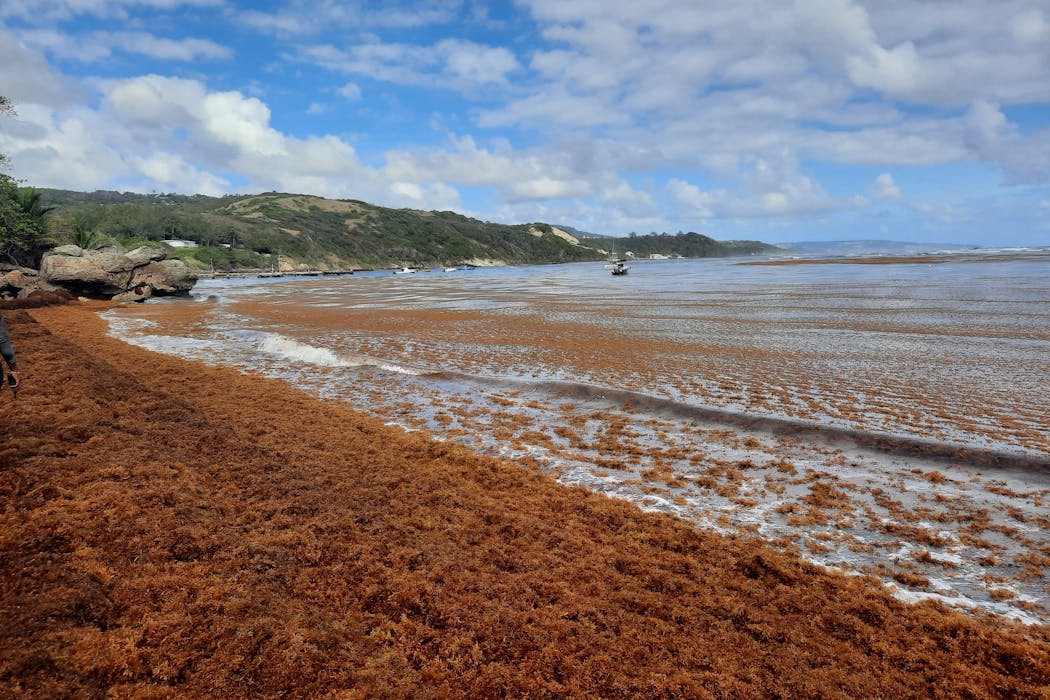 Sargassum seaweed on a beach in Barbados. Yanna Fidai, CC BY-NC-ND
Large blooms of seaweed are increasingly being reported along coastlines globally, from Europe and Asia to the tropics and beyond.
Both native and invasive (non-native) seaweeds are appearing in quantities that are hard to ignore and at unusual or surprising times of year.
As an earth observation and remote-sensing scientist, I track these blooms from space using high-resolution satellite imagery. My research shows that seaweed blooms are getting bigger.
My team's 2025 study reveals a significant rise in sargassum blooms in the north-eastern tropical Atlantic, with a staggering 2.6 million tonnes washing up in September 2020. This is the first long-term analysis of trends in seaweed blooms from 2011 to 2022 in this region.
These unpredictable tides of seaweed have serious consequences for West African coastal communities and marine ecosystems. Our research shows that warming sea surface temperatures link closely with peaks in seaweed growth. Essentially, warmer temperatures can promote seaweed growth and lead to bloom surges.
Seaweed blooms are not a new phenomenon. But over the past 15-20 years, their scale and persistence have increased noticeably.
Of particular concern are free-floating seaweeds: species that float at the ocean surface, either because they detach from the seabed or because they spend their entire lives drifting. Unlike seaweeds that are anchored to the seafloor, floating seaweed can travel long distances to new territories and accumulate in large mats or wash ashore in huge quantities.
One example I have spent much of my career studying is sargassum. Like something from a sci-fi movie, I've seen swathes of sargassum seaweed spreading across the tropical Atlantic, with mats reaching depths of 7 m and spanning hundreds of square miles.
 Sargassum fluitans collected on a beach in Mexico. The air-filled grape-like sacs help this seaweed to float on the surface of the ocean.
Yanna Fidai, CC BY-NC-ND
Sargassum fluitans collected on a beach in Mexico. The air-filled grape-like sacs help this seaweed to float on the surface of the ocean.
Yanna Fidai, CC BY-NC-ND
While most sargassum species are anchored to the seafloor, two species - Sargassum natans and Sargassum fluitans - are entirely free floating. They float freely at the surface of the ocean, kept buoyant by small air-filled grape-like sacs called pneumatocysts, which lift them up towards the surface for photosynthesis.
Our study shows that, since 2011, huge blooms of sargassum seaweed have appeared across the tropical Atlantic, piling up on coasts in the Caribbean, Gulf of Mexico and increasingly West Africa. This drifting seaweed makes fishing difficult and causes mayhem for coastal communities.
Read more: How seaweed is a powerful, yet surprising, climate solution
Seaweed plays an essential role in marine ecosystems, but excessive growth can disrupt them. Large floating mats block sunlight, limiting the growth of seagrasses and corals below. They also alter oxygen conditions in the water, and when seaweed decomposes, particularly in sheltered bays or on beaches, it can create low-oxygen environments that are harmful to marine life.
Some of the most striking consequences are seen on wildlife. In tropical regions, sargassum has accumulated on turtle nesting beaches, with recent studies suggesting that up to a quarter of nesting habitat can be affected. Hatchlings struggle to move through both sand and dense seaweed before eventually reaching the sea, exhausted. This reduces their chances of survival.
 Seaweed blooms make it more difficult for fishers in Ghana.
Yannai Fidai, CC BY-NC-ND
Across Europe
Seaweed blooms make it more difficult for fishers in Ghana.
Yannai Fidai, CC BY-NC-ND
Across Europe
Sargassum as an invasive species has actually found its way to UK waters, but sargassum blooms are not nearly as vast as in the tropical Atlantic. Blooms of other types of seaweed are becoming more noticeable in the UK and Europe. For example, ulva, a green seaweed known as sea lettuce regularly forms dense mats on the surface of the sea in places like Poole harbour, Dorset.
In small amounts, ulva is a native and largely harmless part of UK coastal ecosystems. But when it blooms excessively, it can start to cause problems. Thick mats at the surface reduce the amount of sunlight reaching seagrasses and other organisms below, while decomposition can reduce oxygen levels in the water, creating stressful conditions for fish and invertebrates and death of plants and animals as a result.
Across Europe, invasive seaweeds are becoming a growing concern. In the Mediterranean, species such as Rugulopteryx okamurae (originally from the northwest Pacific) have spread rapidly, likely introduced through shipping routes. These seaweeds can attach to the seabed, but then detach, float for long distances, and then reattach elsewhere, allowing them to spread efficiently along coastlines. In parts of Spain and Portugal, large accumulations are now washing up on beaches, with negative effects similar to those seen with sargassum in the tropics.
Even when blooms are smaller or more localised, their effects can still be disruptive. Seaweed accumulation can interfere with recreation, small-scale fishing and coastal tourism - all important parts of the UK's coastal economy.
Why is seaweed blooming?Seaweed growth is driven by a combination of triggers and favourable conditions, so there isn't a single cause.
In the case of sargassum in the tropical Atlantic, one important trigger appears to have been an anomaly in the large scale atmosphere-ocean pattern known as the North Atlantic Oscillation in 2009. This change in atmospheric pressure at sea helped redistribute seaweed from the Sargasso Sea. Once established in new regions, further seaweed growth was fuelled by access to nutrients.
Seaweed growth is limited by the availability of nutrients such as nitrogen and phosphorus. As long as those nutrients are available for them, they will grow. Nutrient-rich runoff from agriculture, rivers such as the Amazon and Congo, and sediment inputs all deliver these nutrients into the ocean - so human-caused pollution also plays a part.
Together, warming waters, nutrient enrichment and changing ocean circulation can create ideal conditions for blooms to persist and expand.
Seaweed blooms, while sometimes problematic, are fundamental to ocean ecosystems. They act as habitats to small fish and crustaceans. They absorb carbon dioxide through photosynthesis and transport it to deeper waters. They are also a valuable resource. They are used to make fertiliser and building materials, pharmaceuticals and potentially biofuels.
With effective monitoring, more accurate forecasting and better management, communities can live alongside seaweed blooms, harnessing their benefits while minimising environmental and economic consequences.
Don't have time to read about climate change as much as you'd like?
Get a weekly roundup in your inbox instead. Every Wednesday, The Conversation's environment editor writes Imagine, a short email that goes a little deeper into just one climate issue. Join the 47,000+ readers who've subscribed so far.

My previous research on sargassum has been supported by the Economic and Social Research Council GCRF (Grant number: ES/T002964/1), and the UK Natural Environment Research Council (grant number NE/W004798/1), a scholarship from Southampton Marine and Maritime Institute, University of Southampton, and the School of Geography and Environmental Sciences, University of Southampton.
Why walking in a national park in the dark prompts people to turn off lights at home [ 06-Feb-26 4:49pm ]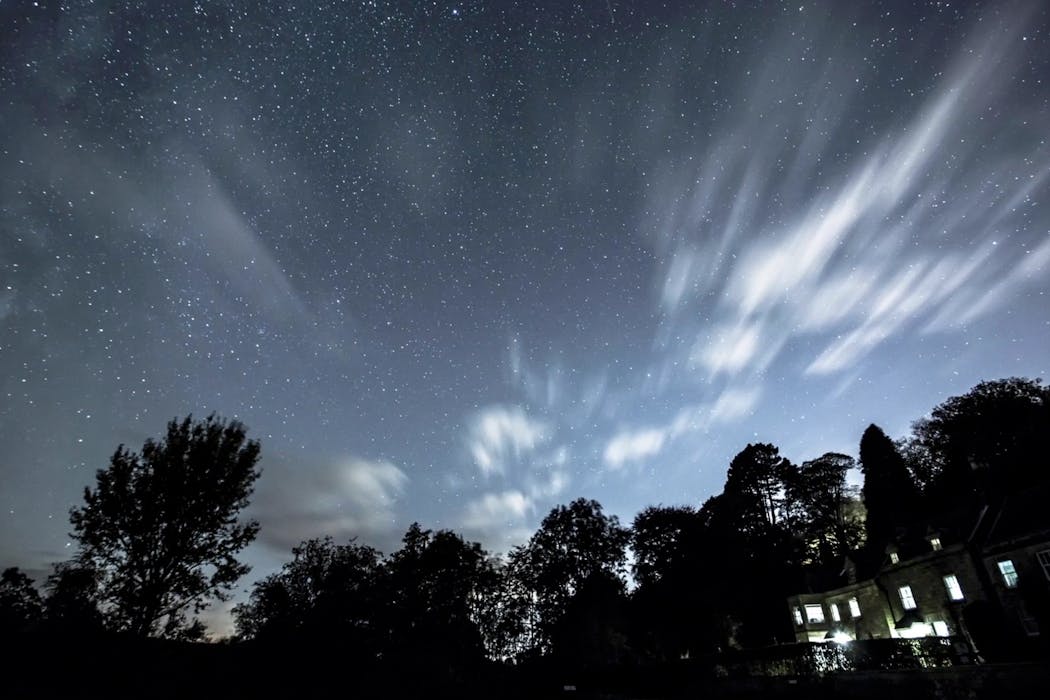 Andy Burns
As soon as you drive over the top of the Peak District and down into Sheffield you can see the light pollution - and it's horrible, said a participant in a research project into darkness and light pollution.
In the last 100 years, the places where people can experience darkness have reduced dramatically. Now only 10% of the people living in the western hemisphere experience places with dark skies, where there is no artificial light. And the starry skies they can see are limited by artificial light. The number of stars that people can see from most of the western hemisphere is getting fewer and fewer.
Researchers trying to find out about public attitudes to darkness attended events over three days in the North York Moors National Park. Here, in one of the UK's seven dark sky reserves (where light pollution is limited), the researchers explored how immersive and fun experiences, such as guided night walks and stargazing and silent discos, reshaped public perceptions of natural darkness and sparked ideas of what they might change in their lives.
Working with a professional film-maker, the research team recorded how people responded to taking part in events in darkness. Participants in the research included five tourism businesses, two representatives from the park and 94 visitors.
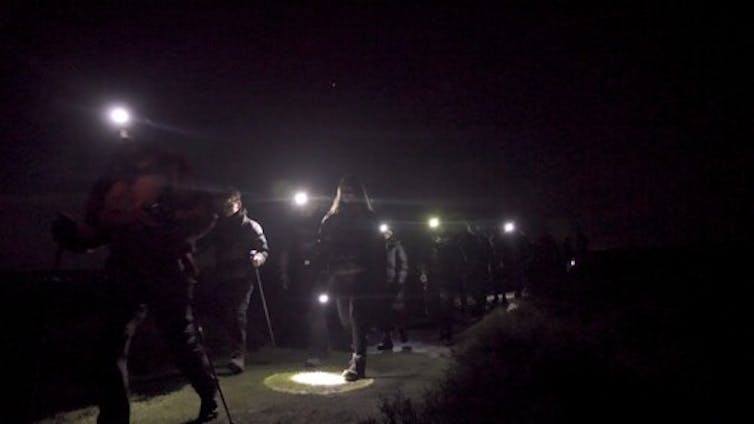 People walking with head torches in a dark sky event in North Yorkshire.
Andy Burns.
Darkness disappears
People walking with head torches in a dark sky event in North Yorkshire.
Andy Burns.
Darkness disappears
Light pollution is increasing globally by approximately 10% per year (estimated by measuring how many stars can be seen in the sky at night), diminishing night skies and disrupting ecosystems.
But increasing awareness of light pollution has led to an increase in national parks hosting events to explore this issue, according to my recent study.
 Andy Burns., CC BY-SA
The study's findings indicated that participants in the North York Moors Dark Sky Festival events not only started to feel more comfortable in natural darkness but also talked about changing their own lifestyle, including using low-impact lighting in their homes, asking neighbours to switch off lights in their gardens at night, and monitoring neighbourhood light levels.
The research team used filming and walking with visitors to capture not just what people said, but what they did in darkness. During guided walks, participants experimented with moving without head‑torches, cultivating night vision, and tuning into sound, smell and learning how to find their way around without artificial light.
Walking in silence helped visitors build a deeper connection with the nocturnal environment. One visitor said that being in the dark just for that moment of peace, and just to listen and tune in to the environment was a privilege and something to conserve.
One said: "I remember as a child I'd see similar stuff from a city [and that] sort of thing, and now we're doing whatever we can do to save things like this."
Visitors reported leaving with new skills, greater awareness and commitment, such as putting their lights at home on timers, and working on bat protection projects. These actions demonstrate that this kind of experience in nocturnal environments can change behaviour far beyond festivals.
Dark Sky activists, such as those in the North York Moors National Park, have learned that the public connect with the issues around light pollution and become more engaged if the activities are fun.
Shared experiences help people understand complex messages about climate, biodiversity, and responsible lighting, and help people feel more confident about walking in the dark. Several participants commented that walking without light was good and wasn't as bad as they thought. Another said: "I find walking at night with a full moon is really quite a magical experience."
By the end of the walk, some visitors (when on relatively easy ground) were happy to switch head torches off and enjoy feeling immersed within the nocturnal landscape.
Dark‑sky festivals show how joy and fun can build public awareness and an understanding of why darkness matters.
However, limited public transport to rural night events as well as safety concerns about walking in darkness, and the cost of festivals all restrict participation.
Why light is a problemResearch shows that artificial light at night disrupts circadian rhythms, impairs some species ability to find their way around and is a cause of declining populations of insects, bats and other nocturnal fauna.
There is also evidence that outdoor lighting generates needless emissions and ecological harm that is intensifying at an alarming rate.
North Yorks dark skies discussed.To rethink this shift, the study argues that darkness could be considered a shared environmental "good", requiring collective care to prevent overuse, damage and pollution.
Small changes in lighting shielding (which controls the spread of light), warmer coloured lights, and half lighting (switching street lighting off at midnight) can be significant and less damaging to animal life.
The national park's next major step has been to establish a Northern England Dark-Sky Alliance to halt the growth of light pollution outside the park boundaries, particularly along the A1 road in northern England, which would help restore natural darkness for nocturnal migratory species, such as birds like Nightjars.
If we can make living with more darkness in our streets, and in our leisure time, feel more normal and more comfortable, then nighttime becomes not something that needs to be fixed, but a shared commons to be restored.
Jenny Hall is a speaker at an upcoming discussion on Cities Under Stars: Tackling Light Pollution in Cities, in conjunction with The Conversation, as part of this year's Dark Skies Festival. Find out more, and come along.

Jenny Hall does not work for, consult, own shares in or receive funding from any company or organisation that would benefit from this article, and has disclosed no relevant affiliations beyond their academic appointment.
Why do disasters still happen, despite early warnings? Because systems are built to wait for certainty [ 06-Feb-26 4:49pm ]After major disasters, public debate often treats them as unexpected or unprecedented. This reaction is not necessarily about the absence of warnings. It reflects how societies process shock - and how authorities often explain disruption as unavoidable, rather than the result of earlier choices.
Extreme weather is rarely unpredictable. Days, sometimes weeks, in advance, scientists are able to warn of an increased risk of storms, floods, droughts or other hazards. Yet the cycle repeats.
To understand why this is, colleagues and I reconstructed the scientific warnings and the official responses to major floods in Luxembourg in July 2021 - my home country's most damaging disaster on record. Those floods caused far more damage than they would have done if early action was taken, but Luxembourg isn't an outlier: many other countries suffer from the same problems we identify.
As the UN targets "early warning for all" by 2027, it's worth noting the issue is not that warnings were missing. It is that warning systems are often designed to act on certainty rather than probability - and that's not how forecasting works. By the time warnings become visible to the public, it is often too late.
Weather forecasts may look definitive on your phone, but they are probabilistic by nature. They are created by running a series of computer simulations of the future weather. The level to which the outcomes of different simulations agree with each other provides the likelihood of hazardous conditions, not guaranteed outcomes. These allow forecasters to identify elevated risk well before impacts occur, even if the precise location of an event and their size remain uncertain.
Crucially, uncertainty is usually greatest further ahead, when preventative action would be most effective. Acting early therefore almost always means acting without certainty. This is not a weakness of science, but an inherent feature of anticipating complex systems under changing conditions. The real challenge lies in how institutions are organised to interpret, trust and act on those probabilities.
Acting on certaintyMost warning systems rely on predefined procedural thresholds: alert levels, activation protocols and emergency plans that kick in once specific criteria are met. Forecasting may indicate that flooding is increasingly likely, for example, but measures such as evacuations or road closures can only be triggered after formal thresholds are crossed.
Before that point, risk information passes through many layers of interpretation and judgment, where early signals are often noted but not acted upon.
 Historic precipitation in one flood-affected region on the border of Belgium and Germany. The size of the dots directly represents the amount of precipitation each day; the circled orange dot is for 13 July 2021 and the circled red dot is for 14 July 2021.
C3S/ECMWF (Data: ERA5), CC BY-SA
Historic precipitation in one flood-affected region on the border of Belgium and Germany. The size of the dots directly represents the amount of precipitation each day; the circled orange dot is for 13 July 2021 and the circled red dot is for 14 July 2021.
C3S/ECMWF (Data: ERA5), CC BY-SA
Thresholds serve important purposes. They help coordinate response, clarify chains of command and reduce unnecessary disruption. But they also embed a structural preference for certainty. Action is authorised only once risk is framed as imminent, even when credible evidence already points to escalating danger.
This attitude was apparent in the days leading up to the July 2021 floods. Our study shows that multiple forecasts at European and national levels indicated a high probability of extreme rainfall and flooding, in some cases up to a week in advance. This information was available across different parts of the warning system. At that stage, uncertainty about precise impacts remained, as would be expected. What mattered was how the system was designed to handle that uncertainty.
Too early for warningBecause Luxembourg's response measures were tied to procedural thresholds, early signals could not translate into anticipatory action. The country's water administration and its national weather service had access to relevant information, but they operated within a framework that did not authorise a collective interpretation of what was happening or encourage action before thresholds were crossed.
This was not a scientific miscalculation, nor was it necessarily an operational mistake by individual agencies. Meteorological and hydrological services most likely did as much as their mandates allowed. The decision to wait for formal triggers was human and institutional rather than technical, reflecting a system designed to prioritise procedural certainty over sound decision-making.
 Across affected areas of Germany, Belgium and Luxembourg, many rivers (in purple) reached their highest levels since records began in 1991.
Copernicus EMS/ECMWF, CC BY-SA
Across affected areas of Germany, Belgium and Luxembourg, many rivers (in purple) reached their highest levels since records began in 1991.
Copernicus EMS/ECMWF, CC BY-SA
By the time action was authorised, for many people it was too late. Evacuations or installing flood gates became far more difficult, particularly for communities with limited experience of such severe floods. From the perspective of those affected, warnings appeared late or did not arrive at all - even though the risks had been identified earlier throughout the system.
Luxembourg is a particularly instructive illustration of what can go wrong, because it is a small, wealthy and well-connected country. The issue was not necessarily a lack of resources or scientific capacity, but of institutional design and societal readiness to act on risk.
Learning and resilienceThe effectiveness of early warning systems over time depends on their ability to learn from extreme events. This requires open, independent analysis of what worked, what did not work and why. In several neighbouring countries affected in 2021, such as Germany and Belgium, formal inquiries and external reviews were carried out. In Luxembourg, they were not.
When expert critique is discouraged or avoided, learning slows. Questions about system performance remain unresolved and the same structural vulnerabilities are likely to persist. This creates a systemic risk in its own right: societies become less able to adapt warning systems, interpret uncertainty and act earlier on emerging threats.
As someone who has worked within these systems and continues to research disaster risk governance, I have seen how asking difficult questions can be treated as destabilising rather than constructive. Resilience depends on confronting uncomfortable truths, not avoiding them.
The risk of extreme weather is increasing across Europe and beyond. Early warning systems are rightly central to disaster risk reduction. But their effectiveness depends on how societies authorise action under uncertainty. This is a choice, not an inevitability.
Uncertainty cannot be eliminated. The challenge is to decide how much uncertainty is acceptable when lives and livelihoods are at stake. Systems designed to wait for certainty - for procedural, organisational, financial or reputational reasons - are more likely to deliver warnings that arrive too late to feel like warnings at all.
If resilience to future climate risks is to be sustainable, warning systems must be designed to learn, adapt and act earlier on credible risk.

Jeff Da Costa does not work for, consult, own shares in or receive funding from any company or organisation that would benefit from this article, and has disclosed no relevant affiliations beyond their academic appointment.
Climate storytelling often ignores young people - arts-based research can change that [ 06-Feb-26 4:49pm ]One autumn evening in 2021, I was co-facilitating the first of ten creative sessions with young people in the Daimler Warehouse, Coventry. It's home to Highly Sprung Physical Performance, a partner in a pilot project called With One Breath. I was there to use theatre, photography and creative writing to explore the climate crisis.
My collaborator, Becky Warnock, a socially engaged artist, ran an exercise to take stock of how the group were feeling about the issue. She asked them to place themselves on a continuum in response to a series of statements - one end of the room meant they agreed with the statement, while the other end meant they disagreed.
It became clear that many young people are incredibly knowledgeable about the climate crisis. However, when Warnock asked them to respond to the statement, "I have a voice in climate change debates", most of the group huddled on one side of the room, showing that they "disagreed".
The climate crisis has a communications problem. How do we tell stories that move people - not just to fear the future, but to imagine and build a better one? This article is part of Climate Storytelling, a series exploring how arts and science can join forces to spark understanding, hope and action.
My research examines what happens when artists engage directly with communities through the co-creation of art. Since 2019, I have worked in collaboration with Rachel Turner-King. We have worked in a range of settings and partnerships including schools, community centres, parks and performance spaces in Coventry, Kampala and Nairobi.
We have called this work Acting on Climate. Underpinning our projects are techniques which engage young people in discussion and act as prompts to explore local environments and share stories. We are also interested in exploring the impact of climate crisis in other parts of the world, and the perspectives of people living in these places.
Young people are often overlooked in discussions about the climate crisis. And yet they stand to be most profoundly affected by it. With One Breath sought to place young people at the heart of this discussion through collaboration across borders.
The project included the use of games and techniques adapted from drama practitioner Augusto Boal's Theatre of the Oppressed. We tasked young people with using photography and film to document and reflect on the areas they live in. We encouraged them to shape the work and decide what to focus on. Three themes were identified: investigating power and responsibility; reflecting on processes of globalisation; and producing positive visions for alternative futures.
The project prompted dialogue across the two locations. While many young people in the UK felt insulated from the immediate impacts of the climate crisis, hearing from Ugandans already living with and adapting to environmental disruption made those unequal realities impossible to ignore.
Our work highlighted that young people often feel a lack of agency to make change, but also feel simplistically portrayed and tokenised as beacons of hope and change. This tokenisation places responsibility on young people to adapt to, and transform, a problem that they have had little role in creating.
Communities in countries like Uganda are frequently excluded and marginalised when it comes to conversations and action on the climate crisis, so the young people we worked with in that country faced a double bind. They are both marginalised due to their age and where they are from.
As such, this transnational project provided an opportunity to amplify voices not typically heard.
Complexity and collaborationMy research took on new dimensions through Fair Play Kenya 2025, a festival at the National Theatre in Nairobi as part of the British Council's Kenya 2025 season.
The festival considered relationships between climate crisis, conflict and land justice. One strand involved connecting three groups of young people from Nairobi, Derry/Londonderry and Birmingham through in person and online workshops. To do so, a partnership was formed involving Amani People's Theatre and ZamaleoACT in Kenya, The Gap Arts Project in Birmingham and The Playhouse in Northern Ireland.
During this short project, young people met online, sharing discoveries and testing ideas. The process is documented in a short film sharing their work and views.
The short film following the young people's partnership.In Derry/Londonderry, participants decided to explore land and ancient Celtic culture and the rights of nature, leading them to focus on the mismanagement of Lough Neagh.
Alternatively, in Birmingham young people were concerned by the lack of access to nature, and how this intersects with the climate crisis. Participants in Nairobi explored land justice and what land means to them in their everyday lives. A particularly striking aspect of this group's work was the reflection on Carbon Credit deals forcing Kenyans off of their land under unjust terms and conditions.
From projects such as Fair Play, we have come to understand that working creatively across borders is inherently messy, complex work. The choices that we all make on a daily basis implicate us in causing environmental harm, but an individualised approach to climate action is unlikely to succeed on its own.
Through artistic projects like ours, such nuance can be engaged with in fun, open-ended ways. For those of us in countries like the UK, the history of industrialisation and colonialism mean we are entangled in processes of exploitation and resource extraction - these must place the burden of responsibility on such countries.
Meanwhile, our work in Uganda highlighted experiences where young people are having to move away from areas that are no longer able to find jobs and how, in Kenya, climate change is one factor fuelling conflict between communities.
For the young people we have worked with, and for us as researchers, arts projects help to make visible the effects of both of this history and the climate crisis in ways that connect and resonate.

Bobby Smith received funding for With One Breath from the Arts and Humanities Research Council. Fair Play Kenya 2025 was funded by the British Council and the University of Warwick's Arts and Humanities Impact Fund.
 Olena Illustrations/Shutterstock
An environmental expert from Nigeria, a climate policy consultant from Kenya, an oceanographer from Indonesia and an Indigenous social development specialist from the Philippines will are among dozens of experts in the UK this month as the UN's top climate body meets to rewrite the the rules for compiling the world's most important climate reports.
The workshops at the University of Reading from February 10 to 12 will lay the groundwork for bringing diverse knowledge into the next report by the UN climate science body, the Intergovernmental Panel on Climate Change (IPCC). The seventh assessment report, known as AR7, will be published in 2028 and finalised the following year.
There are two big themes under discussion. One workshop examines how artificial intelligence (AI) tools can help scientists review growing volumes of climate research. AI is revolutionising scientific research, with its ability to conduct faster analysis of complex data than traditional computer models. AI weather and climate models are already becoming integrated into the information provided through meteorological services such as the Met Office.
Another workshop explores how Indigenous and local knowledge can be integrated into these assessments alongside standard scientific findings. For decades, IPCC reports have been built primarily on peer-reviewed scientific papers from academic institutions, mostly in the world's wealthier nations. These workshops explore how to better include Indigenous knowledge, local observations and expertise from communities that are experiencing climate change first hand.
This could not come at a more important time. A few weeks ago, the US withdrew its participation from the IPCC process. Now, a new cadre of experts from across the world are coming to the UK to make climate science more inclusive and AR7 preparation continues with 195 member countries. The work goes on, but the US absence leaves gaps in emissions reporting and funding.
 Indigenous knowledge is being integrated into the UN's climate reports.
melitas/Shutterstock
Credible, yet unconventional
Indigenous knowledge is being integrated into the UN's climate reports.
melitas/Shutterstock
Credible, yet unconventional
Bringing in diverse voices is essential to the report's success. If IPCC reports reflect only one way of understanding the world, they can miss crucial insights. As other sectors have found again and again, a lack of diversity in the workforce leads to a lack of insight. The environment sector remains one of the least diverse, with only 3.5% of people working in environmental jobs identifying as being from an ethnic minority. Diverse voices and critical discussions are key to making robust, inclusive and future-proof decisions.
Through my work developing flood forecasting systems across Africa, Asia and Latin America, I've learned this directly. After Cyclone Idai hit Mozambique in 2019, the Global Flood Awareness System, a service that provides openly accessible information about upcoming floods across the world, was used to help target relief where it was most needed.
In Uganda, working with the humanitarian agency Uganda Red Cross and the Red Cross Climate Centre, our forecasts helped 5,000 people evacuate before roads were cut. In Bangladesh's river basins, improving forecasts meant understanding how communities interpret flood risk. In Kenya, choosing the right forecasting approach required learning from the people who have lived with these rivers for generations.
Climate science has traditionally valued certain types of expertise. Peer-reviewed papers and university credentials do matter. But expertise also comes from generations of farmers building up understanding of local weather patterns or Indigenous knowledge about the land, forests and rivers. Scientific models, combined with community knowledge, produce better outcomes than either alone.
For the result of its latest report to be credible, the IPCC needs the best evidence from all sources, because that is what produces the best science.

Hannah Cloke advises the Environment Agency, the European Centre for Medium-range Weather Forecasts, the Copernicus Emergency Management Service, local and national governments and humanitarian agencies on the forecasting and warning of natural hazards. She is a member of the UKRI Natural Environment Research Council and a fellow of the European Centre for Medium-range Weather Forecasts. Her research is funded by the UKRI Engineering & Physical Sciences Research Council, the UKRI Natural Environment Research Council, the Foreign, Commonwealth & Development Office and the European Commission.
How the UK government plans to limit 'forever chemical' pollution - and what's missing [ 05-Feb-26 6:12pm ] Forever chemicals known as Pfas are often found in waterproof, stain-resistant or iron-easy clothing, including school uniforms. Pixel-Shot/Shutterstock
The UK government has published its first national plan to deal with per- and polyfluoroalkyl substances, better known as Pfas or "forever chemicals". These chemicals have been used for decades in products such as firefighting foams, non-stick cookware, clothing, electronics and many industrial processes. Because many Pfas do not break down easily, they are now widely detected in the environment and in human blood and tissues.
The policy document, Pfas Plan: Building a Safer Future Together, follows growing public concern, media investigations and years of pressure from scientists calling for stronger controls. This marks an important moment for UK chemicals policy. The plan represents a step forward, but it avoids many of the hardest regulatory choices associated with Pfas.
In practical terms, this could include restricting Pfas-treated finishes from school uniforms and children's clothing. In parts of the US, including California, state-level rules have already restricted or banned Pfas in textiles, effectively eliminating their use in everyday clothing, including school uniforms.
Unlike many pollutants, Pfas are not a single substance. There are several thousand Pfas in use or in circulation, each with different properties and behaviours. Some have been linked to health effects, such as liver toxicity, developmental problems and negative effects on the immune system. For many others, evidence remains sparse or uncertain.
Pfas are also highly mobile. They can be transported through air, deposited onto land or water, and then re-enter the atmosphere or food chain. Contamination measured in one location may originate from industrial activity, waste handling, consumer products or historic uses far away. This transboundary behaviour is well known in environmental science, but Pfas amplify the challenge because of their persistence.
In the UK, regulation has so far focused on a small number (fewer than a dozen) of well-studied Pfas, mainly through drinking water standards. This has left the wider group of Pfas, and their long-term accumulation in air and soil, largely outside the scope of formal regulation.
The new Pfas plan is intended to provide that framework. Rather than introducing sweeping new bans, it sets out how Pfas risks should be assessed and managed over time, with a strong emphasis on coordination across government, regulators, researchers and industry.
A central element of the plan is its focus on evidence. It recognises that Pfas pollution is not limited to water and soil, but also includes air emissions from manufacturing, industrial processes and waste treatment. Expanding monitoring across air, land and water is intended to improve understanding of sources, pathways and exposure, and to support more targeted controls in future.
The plan also commits to reviewing existing regulatory tools. This includes consultation on limits for Pfas in drinking water, closer scrutiny of industrial emissions and assessment of how current chemicals legislation could be applied more effectively to Pfas as a group. Research into the toxicity of Pfas in food and food packaging, plus more effective detection methods and safer alternatives forms part of this longer-term approach. Some Pfas uses such as medical devices are acknowledged as difficult to replace in the short term.
 Until now, Pfas have traditionally been monitored and regulated through drinking water.
Boris023/Shutterstock
A starting point
Until now, Pfas have traditionally been monitored and regulated through drinking water.
Boris023/Shutterstock
A starting point
At the same time, the new plan leaves many hard decisions for later. It does not ban Pfas as a class, set timelines for phase-outs or define which uses should ultimately be considered essential. Much depends on future consultations and how quickly new evidence emerges.
This caution has attracted criticism, but it reflects a real constraint. New Pfas continue to enter the market, sometimes as replacements for substances that have already been restricted. Others occur as impurities or degradation products that are not routinely monitored. Regulating a group of chemicals that continues to evolve is inherently difficult, particularly when emissions are diffuse and exposure pathways complex.
In July 2025, the EU adopted a new Chemicals Industry Action Plan to support a transition away from Pfas through measures such as innovation, substitution, and improved data generation. In parallel, the European Chemicals Agency is assessing a proposed Pfas group restriction - its opinion is expected to be announced by the end of 2026 to inform a subsequent European Commission proposal to phase out Pfas.
The UK's new plan acknowledges that historic Pfas contamination already exists and commits to developing guidance and technical tools to support its management. What remains unclear is how large-scale remediation would be prioritised or funded. Experience from heavily contaminated areas in Belgium, particularly around industrial hotspots near Antwerp, shows that cleaning up legacy Pfas pollution can take decades and involve very high costs.
Taken together, the UK's Pfas plan is best seen as a starting point rather than a solution. It brings air, water and land into a single policy debate and recognises that Pfas pose a long-term challenge rather than a short-term compliance issue.
Whether it leads to meaningful reductions in exposure will depend on what follows: how quickly methods capable of addressing the many thousands of Pfas in commerce and the environment are developed and validated; how monitoring data is used; how rapidly regulatory reviews translate into enforceable standards; and whether future decisions prevent new Pfas problems from emerging.
For now, the plan does not solve the Pfas problem. But it makes clear that Pfas are no longer a peripheral issue, and that dealing with them will require sustained scientific effort and difficult policy choices over many years.
Don't have time to read about climate change as much as you'd like?
Get a weekly roundup in your inbox instead. Every Wednesday, The Conversation's environment editor writes Imagine, a short email that goes a little deeper into just one climate issue. Join the 47,000+ readers who've subscribed so far.

Ivan Kourtchev does not work for, consult, own shares in or receive funding from any company or organisation that would benefit from this article, and has disclosed no relevant affiliations beyond their academic appointment.
Recent storms washed away large sections of roads in the UK after sea defences were damaged. For residents, it was a shock. But for coastal scientists, it was not unexpected.
Parts of the A379 between Torcross and Slapton, in south Devon, collapsed leaving a 200-metre stretch of road broken apart and part of a nearby car park destroyed. Engineers say even steel-reinforced protection failed under repeated wave action.
The road runs along the crest of a shingle barrier beach, with the sea on one side and Slapton Ley, a freshwater lake, on the other. Recent monitoring shows the beach has become narrower and steeper as storms move sediment along and away from the shoreline.
With less material in front of it, waves now break closer to the road and can undercut the edge of the carriageway. In places like this, the problem is not a single extreme storm. Rather, it is the gradual loss and redistribution of beach material that leaves the road increasingly exposed.
Hard defences such as seawalls and rock armour are often the first response. They can hold the line for a while, but they do not remove the force of incoming waves. The energy simply moves elsewhere, often speeding up erosion further along the coast. The risk is diverted rather than resolved.
As sea levels rise and storms intensify, these defences simply cannot keep up. What they usually provide is time, not lasting protection.
Even the science used to inform coastal management decisions comes with caveats. Computer models help estimate how beaches might change in the future, but real coastlines are messy and constantly evolving. Small differences in the assumptions of these models can produce very different forecasts, which makes long-term planning difficult.
Natural ways to manage the coastline are increasingly put forward as alternatives. Restoring dunes, saltmarshes or wetlands can help absorb wave energy while supporting biodiversity and storing carbon. These natural landscapes can adapt, hard defences cannot.
However, they are not quick fixes. They take time and space to establish, and their protection varies. Studies show they can reduce wave energy, but often only modestly reduce flooding during extreme events.
Public expectations often pull the other way. In the UK, natural ways to manage the coastline are popular in principle, yet when storms threaten, people tend to favour hard defences because they offer immediate, visible protection, even if it does not last.
The economics add another layer.
Flood and erosion risks affect where people live and invest. When people see flood maps, they often look elsewhere and pay less for homes in exposed areas. Property prices and insurance costs reflect that. But these maps are usually treated as certain, even though they are not, so prices can fall suddenly after major storms.
In practice, that means money and development often remain concentrated in places that science suggests will become increasingly vulnerable.
A wake-up callThe situation at Slapton brings all of this into focus. Rebuilding the same stretch of road after every storm may not be physically or financially realistic.
Some shoreline plans already acknowledge this potential reality through policies such as managed realignment or "no active intervention", allowing the coast to move inland and creating natural buffers such as mudflats and marshes. In some places, relocating development inland may simply be safer and cheaper than trying to defend an increasingly exposed shoreline.
But these decisions come with real trade-offs.
Roads may need to be rerouted. Farmland may flood more often. Homes and businesses may have to relocate. Existing habitats may be lost before new ones establish. In areas dominated by high-value waterfront properties or second homes, decisions about who receives protection, and who does not, quickly become political as well as practical.
The alternative is a costly cycle of damage, repair and rebuild, with less benefit each time.
Slapton is not simply an engineering failure. It is a reminder that coastlines are inherently dynamic and cannot always be pinned in place. Seawalls can buy time. Nature can help soften impacts. Better information can guide smarter decisions. But none of these removes risk altogether.
Long-term resilience means accepting how coasts really behave and being practical about where to defend, where to adapt and where it may be wiser to step back and let the shoreline reshape itself.
Don't have time to read about climate change as much as you'd like?
Get a weekly roundup in your inbox instead. Every Wednesday, The Conversation's environment editor writes Imagine, a short email that goes a little deeper into just one climate issue. Join the 47,000+ readers who've subscribed so far.

The authors do not work for, consult, own shares in or receive funding from any company or organisation that would benefit from this article, and have disclosed no relevant affiliations beyond their academic appointment.
 The downtown district of Hong Kong city. Lee Yiu Tung/Shutterstock
When structural engineers design a building, they aren't just stacking floors; they are calculating how to win a complex battle against nature. Every building is built to withstand a specific "budget" of environmental stress - the weight of record snowfalls, the push of powerful winds and the expansion caused by summer heat.
To do this, engineers use hazard maps and safety codes. These are essentially rulebooks based on decades of historical weather data. They include safety margins to ensure that even if a small part of a building fails, the entire structure won't come crashing down like a house of cards.
The problem is that these rulebooks are becoming obsolete. Most of our iconic high-rises were built in the 1970s and 80s - a world that was cooler, with more predictable tides and less violent storms. Today, that world no longer exists.
Climate change acts as a threat multiplier, making the consequences of environmental stress on buildings much worse. It rarely knocks a building down on its own. Instead, it finds the tiny cracks, rusting support beams and ageing foundations and pushes them toward a breaking point. It raises the intensity of every load and strain a building must weather.
To understand the challenge, I have been studying global hotspots where the environment is winning the battle against engineering.
The 2021 collapse of Champlain Towers South in Miami, Florida, killed 98 people. While the 12-storey building had original design issues, decades of rising sea levels and salty coastal air acted as a catalyst, allowing saltwater to seep into the basement and garage.
When salt reaches the steel rods inside concrete that provide structural strength (known as reinforcement), the metal rusts and expands. This creates massive internal pressure that cracks the concrete from the inside out — a process engineers call spalling. The lesson is clear: in a warming world, coastal basements are becoming corrosion chambers where minor maintenance gaps can escalate into catastrophic structural failure.
While the Miami case affected a single building, the historic coastal city of Alexandria, Egypt, is more widely at risk. Recent research shows that building collapses there have jumped from one per year to nearly 40 per year in the past few years.
Not only is the sea rising, the salt is liquefying the soft ground beneath the city foundations. As the water table rises, saltwater is pushed under the city, raising the groundwater level. This salty water doesn't just rust the foundations of buildings; it changes the chemical and physical structure of soil. As a result, there are currently 7,000 buildings in Alexandria at high risk of collapse.
 The historic city of Alexandria, Egypt, is widely affected by the retreating coastline.
muratart/Shutterstock
The historic city of Alexandria, Egypt, is widely affected by the retreating coastline.
muratart/Shutterstock
In Hong Kong during Super Typhoon Mangkhut in 2018, wind speeds hit a terrifying 180 miles per hour. When strong winds hit a wall of skyscrapers, they squeeze between the buildings and speed up — like water sprayed through a narrow garden hose.
This pressure turned hundreds of offices into wind tunnels, causing glass windows to pop out of their frames and raining broken glass onto the streets below. With 82 deaths and 15,000 homes destroyed across the region, skyscrapers became "debris machines", even if they didn't fully collapse.
Supercomputer simulations of Japan's river systems show that in a world warmed by 2°C, floods of today's "once in a century" magnitude could recur about every 45 years. With 4°C of warming, they could be every 23 years. These surges in water volume will expand flood zones into areas previously considered safe, potentially overflowing sea walls and flood defences. In a critical region like Osaka Bay, storm surges could rise by nearly 30%.
In the US, a study of 370 million property records from 1945 to 2015 found over half of all structures are in hazard hotspots. Nearly half are facing multiple threats like earthquakes, floods, hurricanes and tornadoes. In the UK, climate-driven weather claims hit £573 million in 2023, a 36% rise from 2022. Annual flood damage to non-residential properties in the UK is also projected to nearly double from £2 billion today to £3.9 billion by the 2080s.
Maintenance is our best defenceMuch of the world's building stock is therefore entering its middle age under environmental conditions it was never designed to face. Instead of panicking or tearing everything down, the solution is to adapt and treat building maintenance as a form of climate resilience - not as an optional extra.
Mid-life building upgrades can help protect our skylines for the next 50 years. Our hazard maps must look at future climate models — not just historical weather — to set new safety standards. Regular structural health monitoring is essential - by using sensors to track invisible stresses in foundations and frames before they become fatal, dangerous situations can be foreseen.
Buildings can stay strong by focusing retrofits on the weakest and most vulnerable parts. This includes glass facades, the underground drainage, the foundation piles and corrosion protection.
Climate change isn't rewriting the laws of engineering, but it is rapidly eating away at our margins of safety. If we want our cities to remain standing, we must act now - before small, invisible stresses accumulate into irreversible failure.
Don't have time to read about climate change as much as you'd like?
Get a weekly roundup in your inbox instead. Every Wednesday, The Conversation's environment editor writes Imagine, a short email that goes a little deeper into just one climate issue. Join the 47,000+ readers who've subscribed so far.

Mohamed Shaheen does not work for, consult, own shares in or receive funding from any company or organisation that would benefit from this article, and has disclosed no relevant affiliations beyond their academic appointment.
 Arctic ice samples show how concentrations of an abundant forever chemical have changed over recent decades. WizartoProduction/Shutterstock
When the phaseout of ozone-destroying chlorofluorocarbons (CFCs) was first agreed in 1987, the world narrowly avoided an environmental catastrophe. However, the replacement of CFCs is causing the pollution of the Earth's surface with a "forever chemical" that could remain in the environment for centuries.
The chemical trifluoroacetic acid (TFA) is a breakdown product of numerous chemicals, including CFC replacement gases used in refrigeration and air conditioning, pharmaceuticals such as gases used in inhalation anaesthesia, pesticides, solvents and other forever chemicals from a class known as per-and polyfluoroalkyl substances (PFAS).
Concentrations of TFA have been increasing in rainwater, drinking water, soil and plants over the past two decades. Environmental removal of any of the thousands of different PFAS chemicals is extremely challenging because existing removal technology is difficult to scale up.
If emissions aren't restricted, the projected cost of PFAS removal has been estimated at €100 billion (£86 billion) per year for Europe. Some researchers have labelled TFA as a "planetary boundary threat" which means it could disrupt Earth's natural systems beyond repair and threaten our survival.
While some PFAS have been linked to numerous cancers and fertility problems, the long-term health effects of TFA on humans and wildlife remains unknown. However, it has been detected in human blood, breast milk and urine, and is being considered for classification as toxic to reproduction by German government agencies.
While understanding of its consequences continues to develop, increasing TFA pollution urgently needs to be addressed.
Read more: The last ozone-layer damaging chemicals to be phased out are finally falling in the atmosphere
A better understanding of the many TFA sources and their relative contributions to environmental levels is required to inform targeted policy.
Evidence from ice cores can offer clues to help detangle these sources. TFA concentrations in Arctic ice over recent decades match the their increasing use. In 2020, Canadian researchers hypothesised that some CFC replacement gases which are known to break down to produce TFA in the atmosphere could be a major source.
These CFC replacements - known as hydrochlorofluorocarbons (HCFCs) and hydrofluorocarbons (HFCs) - are commonly used in refrigeration, air conditioning and for making insulating foams. They eventually leak into the atmosphere as gases and can travel vast distances. These CFC replacements break down to form TFA and other gases. TFA can be either dissolved in clouds then washed out of the atmosphere through rain or deposited directly from air onto the Earth's surface.
Our new study, published in the journal Geophysical Research Letters, quantified the contribution of these CFC replacements and also inhalation anaesthetics to global TFA production. We found that one-third of a million tonnes of TFA (335,500 tonnes) has been deposited to the Earth's surface from these sources between 2000 and 2022.
 The forever chemical TFA is transported vast distances in the air and can end up washing back to the Earth's surface in rain.
Astrid Gast/Shutterstock
The forever chemical TFA is transported vast distances in the air and can end up washing back to the Earth's surface in rain.
Astrid Gast/Shutterstock
HCFCs and HFCs have now been phased down under various amendments to the 1987 Montreal protocol on substances that deplete the ozone layer, because they are potent greenhouse gases. Despite this, TFA production increased over the period with the peak production projected to be anywhere between 2025 and 2100.
By comparing the amounts of TFA in our model to Arctic ice core records, we found that these sources can explain virtually all of the TFA deposited in the Arctic. This is particularly concerning because it highlights the ability of TFA pollution to spread around the globe. Emissions from highly populated regions in the northern hemisphere can have a big effect on far-flung regions once considered to be pristine, such as the Arctic.
Read more: What's the forever chemical TFA doing in the UK's rivers?
Peak TFA
However, when we compared our model results to rainwater concentrations closer to emissions regions in developed countries with extensive infrastructure or manufacturing, we found that the sources in our model could not explain all the observed TFA. We questioned whether this missing TFA could be explained by a refrigerant known as HFO-1234yf. This chemical is increasingly used in vehicle air-conditioning because of its low impact on global warming.
While often promoted as a sustainable climate-friendly alternative to HFCs, hydrofluoroolefins (HFOs) can produce TFA much more quickly than HFCs (this process takes days for HFOs and years for HFCs). This may mean that the HFOs don't travel as far in the atmosphere before breaking down, so more TFA gets deposited back on land closer to the regions they are emitted from.
By adding estimated emissions of HFO-1234yf to the model, we were able to considerably explain the gap between the predicted and actual measurements of TFA.
Emissions of HFOs are highly uncertain, so there may be other unknown sources contributing to the TFA observed in rainwater. But with the increasing use of HFOs, TFA will certainly continue to accumulate in the environment. The peak of TFA emissions from these sources will be well into the future if left unregulated now.
Given the risk of its irreversible accumulation in the environment, animals and people, plus a growing understanding of its effects on human health and nature, preventing pollution at source is the safest and healthiest option.
Don't have time to read about climate change as much as you'd like?
Get a weekly roundup in your inbox instead. Every Wednesday, The Conversation's environment editor writes Imagine, a short email that goes a little deeper into just one climate issue. Join the 47,000+ readers who've subscribed so far.

Lucy Hart receives funding from Natural Environment Research Council ECORISC CDT.
Ryan Hossaini receives funding from the Natural Environment Research Council
Climate 'fingerprints' mark human activity from the top of the atmosphere to the bottom of the ocean [ 03-Feb-26 5:32pm ] buradaki/Shutterstock
The world is warming. This fact is most often discussed for the Earth's surface, where we live. But the climate is also changing from the top of the atmosphere to the bottom of the ocean. And there is a clear fingerprint of humanity's role in causing these changes through greenhouse gas emissions, primarily from burning fossil fuels.
Over the last several decades, satellites have monitored the Earth and measured how much heat enters and leaves the atmosphere. Over that time, as greenhouse gas concentrations have increased in the atmosphere, there has been less heat escaping to space, causing an imbalance with more heat being retained.
The consequence is a rapidly heating planet.
The "warming stripes" are one striking and simple way of visually highlighting the resulting variations in Earth's surface temperature using shades of blue and red for cool and warm, with one stripe per year.
One billion individual measurements of a thermometer combine to produce the clearest picture of our warming planet from 1850 to 2025. The last 11 years have been the warmest 11 years on record and this sequence is unlikely to end anytime soon.
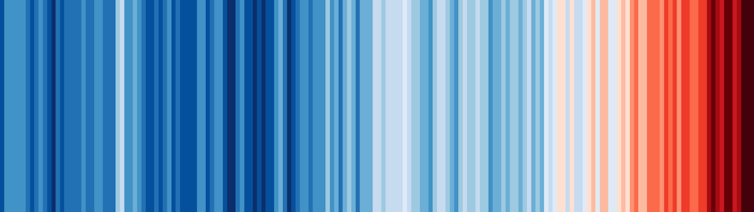 Warming stripes representing changes in global average surface temperatures from 1850 to 2025.
Ed Hawkins / University of Reading, CC BY
Warming stripes representing changes in global average surface temperatures from 1850 to 2025.
Ed Hawkins / University of Reading, CC BY
We recently extended this concept upwards through the atmosphere and downwards into the ocean, although the available datasets are shorter.
Satellites have monitored the temperature of different layers of the atmosphere since 1979. The warming stripes for the troposphere (the lowest layers of the atmosphere, within which commercial flights operate) are very similar to the warming stripes of the surface, with the warmest years predominantly occurring over the last decade. Instead of using surface temperature measurements from thermometers, the atmospheric temperature is measured by instruments on satellites called radiometers that detect how much infrared radiation is emitted from air molecules. These satellite-based estimates help corroborate the surface warming that we have already observed.
Higher up in the atmosphere, the picture changes.
The warming stripes over the upper atmosphere (the part called the stratosphere that's above typical airline cruising height) reveal a cooling trend, with the warmest years around 1980 and the coolest years over the past decade. This feature may appear surprising. If the atmosphere is gaining heat, shouldn't the stratosphere be warming too?
Actually, this feature is a clear fingerprint of how human activities are the direct cause of our changing climate.
 Global temperature change from the top of the atmosphere to the bottom of the ocean.
Ed Hawkins / University of Reading, CC BY
Global temperature change from the top of the atmosphere to the bottom of the ocean.
Ed Hawkins / University of Reading, CC BY
Why is there this pattern of temperature change? The concentrations of greenhouse gases have increased throughout the atmosphere, making the atmosphere more efficient at absorbing and giving off heat. In the lower atmosphere, this effect acts as a blanket, retaining more heat and warming the surface.
Higher up, where the air is thin and very little heat arrives from below, extra carbon dioxide allows the stratosphere to lose more heat to space than it gains, so the stratosphere cools. Another factor is the destruction of stratospheric ozone by substances known as chlorofluorocarbons (CFCs), which produces cooling in the lower stratosphere.
This human-caused fingerprint of a warming troposphere and cooling stratosphere was first suggested by scientists as a consequence of increasing atmospheric carbon dioxide levels in the 1960s, long before the cooling stratosphere was observed. Importantly, this pattern would not be seen if, for example, changes in the sun's brightness were the primary cause of global warming, which instead would lead to warming throughout the atmosphere.
Beneath the surfaceWarming stripes for different depth levels in the ocean reveal a broadly similar warming trend as at the surface, with the warmest years occurring over the past decade. The timing of the warming also suggests the heat moves downwards into the ocean from the surface, again consistent with a human influence.
This uptake of heat by the ocean is important, as otherwise there would be a much greater rise in surface air temperature. Globally, the ocean accounts for around 90% of the extra heat stored by the planet. We also see sea levels rising due to sea water getting warmer and expanding, and because land ice is melting and entering the ocean as extra water.
All these observations tell a very clear story. The burning of fossil fuels increases the amount of greenhouse gases in the atmosphere. The physics of why such an increase should warm the surface was understood in the 1850s, before the warming was observed. And the pattern of change observed from the top of the atmosphere to the bottom of the ocean indicates that greenhouse gas emissions are the dominant cause.
 Past and future 'warning' stripes showing changes in global temperature for two different choices for the future.
Ed Hawkins / University of Reading, CC BY
Past and future 'warning' stripes showing changes in global temperature for two different choices for the future.
Ed Hawkins / University of Reading, CC BY
But, what happens next? Because our emissions are causing the climate to change, our collective global choices about future emissions matter.
Rapid action to reduce emissions will stabilise global surface temperatures but delayed action means worse consequences. Which choice will we make?
Don't have time to read about climate change as much as you'd like?
Get a weekly roundup in your inbox instead. Every Wednesday, The Conversation's environment editor writes Imagine, a short email that goes a little deeper into just one climate issue. Join the 47,000+ readers who've subscribed so far.

Ed Hawkins receives funding from UKRI NERC grants and is supported by the National Centre for Atmospheric Science.
Ric Williams receives funding from UKRI NERC grants and works at University of Liverpool.
How to keep plant-based foods on the table now that Veganuary is over [ 03-Feb-26 5:31pm ] monticello/Shutterstock
Campaigns like Veganuary (an initiative that encourages people to eat a plant-based diet in January) have been hugely successful in raising awareness about the climate and the health benefits of eating this way. However, making the switch longer term is not always easy - especially when there are usually limited meat-free options in workplaces.
For our recent study, my colleagues and I worked with Derek Bell (professor of environmental politics at Newcastle University) to identify public institutions like hospitals, universities and local councils as key players in the move towards a more sustainable food system. They account for a significant amount of the food that is sold in the UK - 5-6% of all food sales or £2.4 billion annually. They can also influence our dietary choices and help shift social norms around food consumption.
However, getting caterers to become more plant-based can be controversial. Some argue that public institutions should not limit our freedom of choice when it comes to what we eat, or that it is insensitive to the cultural preferences of staff and clients.
Our work tries to tackle these concerns. While eliminating or reducing the offering of meat and dairy might limit options, public institutions already limit our choices in various ways to promote health and sustainability. Also, norms and expectations can change. The 2006 public smoking ban initially faced considerable resistance, but support for it has since greatly increased, including among smokers.
Thoughtful cateringWhen introduced thoughtfully, plant-based catering has proved popular. In 2021, New York City Health + Hospitals, the largest municipal health system in the US, made plant-based food the default option for its inpatient meals. Their menus are both nutritionally balanced - assuaging worries about poorly designed vegan and vegetarian menus - and offer users a diverse range of choices. The menu includes Moroccan vegetable tagine, Spanish vegetable paella and a pad Thai noodle bowl.
This shows how plant-based catering can take into account different dietary needs, while respecting a range of cultural backgrounds and not restricting the ability of people to choose. As many as 95% of eligible patients did not request alternative meals, and 90% reported being satisfied. Many patients reported that they would continue to eat vegetarian meals at home. This shows the power of defaults, and the influence public institutions can have on our actions.
 Thoughtful catering takes into account a variety of dietary needs without restricting peoples' choices.
PeopleImages/Shutterstock
Thoughtful catering takes into account a variety of dietary needs without restricting peoples' choices.
PeopleImages/Shutterstock
New York City Health + Hospitals has also shown tangible environmental and economic gains. Its food-related carbon emissions fell by 36%, while food bills also went down: these meals cost roughly 59 cents (£0.43) less per tray than meat-based alternatives.
We're seeing changes happening elsewhere too. In the UK, a growing number of universities are gradually shifting towards more plant-based catering. Sometimes this is being encouraged by students: at the universities of Kent, Lancaster and University College London, student unions have voted in favour of lobbying their university to adopt more sustainable and healthy catering options. In 2021, the four universities in Berlin successfully changed their menus to 68% vegan, 28% vegetarian and just 4% meat dishes. Like the New York City hospitals, they offer a wide range of nutritionally balanced meals with flavours from around the world.
Providing the right kinds of plant-based foods is an effective way of countering worries that people have about the health risks of going vegetarian or vegan, and about restricting their dietary preferences. In short, a well planned menu can keep plant-based foods on the table beyond Veganuary.
Don't have time to read about climate change as much as you'd like?
Get a weekly roundup in your inbox instead. Every Wednesday, The Conversation's environment editor writes Imagine, a short email that goes a little deeper into just one climate issue. Join the 47,000+ readers who've subscribed so far.

Meera Iona Inglis is affiliated with the RSPB. This piece is based entirely on her academic research and is not funded by the RSPB or representative of the organisation's views.
Andrew Walton and Johannes Kniess do not work for, consult, own shares in or receive funding from any company or organisation that would benefit from this article, and have disclosed no relevant affiliations beyond their academic appointment.
Last autumn, a UK government report warned that climate-driven ecosystem collapse could lead to food shortages, mass migration, political extremism and even nuclear conflict. The report was never officially launched.
Commissioned by Defra - the Department for Environment Food and Rural Affairs - and informed by intelligence agencies including MI5 and MI6, the briefing assessed how environmental degradation could affect UK national security.
At the last minute the launch was cancelled, reportedly blocked by Number 10. Thanks to pressure from campaigners and a freedom of information request, a 14-page version of the report was snuck out (no launch, not even a press release) on January 22.
That report says: "Critical ecosystems that support major food production areas and impact global climate, water and weather cycles" are already under stress and represent a national security risk. If they failed, the consequences would be severe: water insecurity, severely reduced crop yields, loss of arable land, fisheries collapse, changes to global weather patterns, release of trapped carbon exacerbating climate change, novel zoonotic disease and loss of pharmaceutical resources.
In plainer terms: the UK would face hunger, thirst, disease and increasingly violent weather.
An unredacted version of the report, seen by the Times, goes further. It warns that the degradation of the Congo rainforest and the drying up of rivers fed by the Himalayas could drive people to flee to Europe (Britain's large south Asian diaspora would make it "an attractive destination"), leading to "more polarised and populist politics" and putting more pressure on national infrastructure.
The Times describes a "reasonable worst case scenario" in the report, where many ecosystems were "so stressed that they could soon pass the point where they could be protected". Declining Himalayan water supplies would "almost certainly escalate tensions" between China, India and Pakistan, potentially leading to nuclear conflict. Britain, which imports 40% of its food, would struggle to feed itself, the unredacted report says.
The report isn't an outlier, and these concerns are not confined to classified briefings. A 2024 report by the University of Exeter and think-tank IPPR warned that cascading climate impacts and tipping points threaten national security - exactly the risk outlined in the Defra report.
 Melting glaciers in remote mountains ultimately pose a security threat for the UK, say intelligence services.
Hussain Warraich / shutterstock
Melting glaciers in remote mountains ultimately pose a security threat for the UK, say intelligence services.
Hussain Warraich / shutterstock
The government has not publicly explained why the launch was cancelled. In response to the Times article, a Department for Environment, Food and Rural Affairs spokesperson said: "Nature underpins our security, prosperity and resilience, and understanding the threats we face from biodiversity loss is crucial to meeting them head on. The findings of this report will inform the action we take to prepare for the future."
Perhaps there are mundane reasons to be cautious about a report linked to the intelligence services that warns of global instability. But the absence of any formal briefing or ministerial comment is itself revealing - climate risks appear to be treated differently from other risks to national security. It's hard to imagine a report warning of national security risks from AI, China or ocean piracy getting the same treatment.
This episode is not even especially unusual, historically. Governments have been receiving warnings about climate change - and downplaying or delaying responses - for decades.
Decades of warningsIn January 1957, the Otago Daily Times reported a speech by New Zealand scientist Athol Rafter under the headline "Polar Ice Caps May Melt With Industrialisation". And Rafter was merely repeating concerns already circulating internationally, including by a Canadian physicist whose similar warning went around the world in May 1953. Climate change first went viral more than seven decades ago.
By the early 1960s, scientists were holding meetings explicitly focused on the implications of carbon dioxide build-up. In 1965, a report to the US president's Science Advisory Council warned that "marked changes in climate, not controllable though local or even national efforts, could occur".
Senior figures in the UK government were aware of these discussions by the late 1960s, while the very first environment white paper, in May 1970, mentions carbon dioxide build-up as a possible problem.
But the story we see today was the same. Reports are commissioned, urgent warnings are issued - and action is deferred. When climate change gained renewed momentum in the mid-1980s, following the discovery of the ozone hole and the effects of greenhouse gases besides carbon dioxide, the message sharpened: global warming will come quicker and hit harder than expected.
Margaret Thatcher finally acknowledged the threat in a landmark 1988 speech to the Royal Society. But when green groups tried to get her to make specific commitments, they had little success.
Since about 1990, the briefings have barely changed. Act now, or suffer severe consequences later. Those consequences, however, are no longer theoretical.
Why does nothing happen?Partly, it's down to inertia. We have built societies in which carbon-intensive systems are locked in. Once you've built infrastructure around, say, the private petrol-powered automobile, it's hard for competitors to offer an alternative. There's also a mental intertia: it's hard to let go of assumptions you grew up with in a more stable era.
Secrecy plays a role too. As the Defra report illustrates, uncomfortable assessments are often softened, delayed or buried. Then, if you do accept the need for action, you are then up against the problem of responsibility being fragmented across sectors and institutions, making it hard to know where to aim your efforts. Meanwhile, social movements fighting for climate action find it hard to sustain momentum for more than three years.
Here's the final irony. Conspiracy theorists and climate deniers insist governments are exaggerating the threat. In reality, the evidence increasingly suggests the opposite. Official assessments tend to lag behind scientific warnings, and the most pessimistic scenarios are often confined to technical or classified documents.
The situation is not better than we are told. It's actually far worse.
Don't have time to read about climate change as much as you'd like?
Get a weekly roundup in your inbox instead. Every Wednesday, The Conversation's environment editor writes Imagine, a short email that goes a little deeper into just one climate issue. Join the 47,000+ readers who've subscribed so far.

Marc Hudson was employed as a post-doctoral researcher on various industrial decarbonisation projects. He runs a climate histories website called All Our Yesterdays. http://allouryesterdays.info
Greenland's 'green mining' row highlights the key tensions in the energy transition [ 02-Feb-26 5:50pm ] pathdoc/Shutterstock
Green finance is built on a promise: that capital can be redirected to support the transition to a low-carbon economy while avoiding the environmental mistakes of the past. That promise is getting harder to keep.
The technologies needed for decarbonisation of electric vehicles, wind turbines, batteries and grid infrastructure rely on large quantities of critical minerals. Extracting those materials, even from remote places such as Greenland, remains environmentally disruptive, socially contested and politically fraught.
Sustainable finance shapes investment decisions across energy, infrastructure and manufacturing. The ethical frameworks this finance is based on often assume that environmental harm can be minimised through better disclosure, cleaner technologies and improved governance.
The extraction of critical minerals challenges that assumption. Mining is land intensive, energy hungry and often polluting. Recycling of existing batteries, electronics and turbines, and substitution away from scarce materials can reduce demand.
But most projections from the world's energy watchdog, the International Energy Agency, show that demand for critical minerals will rise sharply under clean energy transitions . Similar bodies show that extraction of raw materials such as lithium, cobalt, nickel and rare earth elements will rise sharply over the next two decades.
This is because the transition away from fossil fuels depends on large volumes of new infrastructure including electric vehicle batteries, wind turbines and grid storage, which cannot be supplied from recycled materials alone.
Recent research and policy assessments suggest this contradiction is becoming more acute, not less. Recent analyses of critical mineral supply chains show that extraction and processing remain highly concentrated in a few countries particularly China, Australia, Chile and the Democratic Republic of Congo.
These supply chains are environmentally intensive, involving significant land use, water consumption and pollution. These supply chains are slow to scale because it takes years to obtain permits for new mines, requires large upfront investment, and depends on the construction of extensive infrastructure. Yet global climate targets assume rapid expansion of clean-energy technologies.
In Greenland, environmental regulation and local political decisions have delayed or halted mining projects that are often considered key to the green transition.
Greenland is geologically rich. The island is home to significant deposits of rare earth elements, graphite, zinc and other minerals considered critical by both the EU and the US. These materials are central to clean-energy supply chains and have become strategically important as governments seek to reduce dependence on China, a superpower which dominates global processing capacity.
At the same time, Greenland's environment is exceptionally fragile. Arctic ecosystems recover slowly from industrial disruption, infrastructure is limited and mining projects face high logistical and financial costs. These constraints have already shaped political choices.
In 2021, Greenland's government introduced restrictions on uranium mining, effectively blocking the development of the large Kvanefjeld rare earth project. That decision reflected environmental and social priorities. It also highlighted the economic and legal pressures that arise when sustainability policies collide with global demand for transition minerals.
When green finance meets geopoliticsIn a world of geopolitical competition, governments are increasingly treating access to critical minerals as a matter of national security as well as climate policy. Policy statements and strategy documents from the US, the EU and other major economies now frame mineral supply not just as an environmental issue, but as essential to economic resilience, defence capability and technological leadership.
This shift has encouraged public financial support, diplomatic engagement and strategic partnerships aimed at securing future supply, including increased foreign interest in Greenland's mineral sector. While Greenland retains control over its resources, international attention reflects the growing geopolitical importance of potential new supply sources.
Projects justified as supporting the energy transition may be driven as much by geopolitical urgency as by environmental benefit. Academic research on critical mineral supply chains shows that when geopolitical and industrial priorities shape governance frameworks, local environmental risks and community consent are often marginalised in favour of strategic and economic goals
Read more: The economics of climate risk ignores the value of natural habitats
Tension in Greenland
Despite international interest, large-scale mining in Greenland has not taken off. Environmental safeguards, political opposition, infrastructure gaps and high costs have slowed development. This reality complicates the assumption that new mineral frontiers can quickly solve clean-energy supply bottlenecks through investment alone.
For investors, Greenland raises difficult questions about how environmental, social and governance (ESG) standards apply to transition minerals. Financing a rare earth mine may reduce long-term emissions by enabling renewable technologies, yet still impose immediate environmental damage. Standard ESG metrics struggle to capture this trade-off. They are better suited to assessing corporate behaviour than to resolving conflicts between global climate goals and local environmental harm.
 Current geopolitical dynamics have huge consequences for Greenland's environment.
Kedardome/Shutterstock
Current geopolitical dynamics have huge consequences for Greenland's environment.
Kedardome/Shutterstock
In Greenland, the debate over "green mining" (the idea that mineral extraction can be made environmentally acceptable through cleaner technologies, higher standards and better governance) is not a case of poor regulation or weak oversight. Instead, it reflects a jurisdiction that has deliberately placed environmental limits on extraction, even as it faces economic and strategic pressure as a result.
As governments continue to pursue ambitious climate targets under national and international commitments, similar dilemmas will emerge elsewhere. Green finance cannot avoid the material foundations of the energy transition.
Sustainable finance frameworks must evolve to handle situations where environmental protection constrains access to strategically important resources. Greenland shows how protecting the environment can clash with efforts to secure the minerals needed for the energy transition, and that this tension is far from resolved.
Without clearer rules on how to balance climate benefits against local ecological costs and without genuine respect for sovereignty and community choice, green finance risks becoming reactive, stretched between environmental principles and geopolitical realities.
The transition to a low-carbon economy requires minerals. But Greenland highlights that how those minerals are sourced and who bears the environmental cost remains unresolved.
Don't have time to read about climate change as much as you'd like?
Get a weekly roundup in your inbox instead. Every Wednesday, The Conversation's environment editor writes Imagine, a short email that goes a little deeper into just one climate issue. Join the 47,000+ readers who've subscribed so far.

Narmin Nahidi does not work for, consult, own shares in or receive funding from any company or organisation that would benefit from this article, and has disclosed no relevant affiliations beyond their academic appointment.
Why does this river slice straight through a mountain range? After 150 years, scientists finally know [ 02-Feb-26 4:33pm ] The Gates of Lodore mark the beginning of the Green River's path through the Uinta Mountains. Scott Alan Ritchie / shutterstock
The western US is a geologists' dream, home to the Rocky Mountains, the Grand Canyon, active volcanoes and striking sandstone arches. But one landform simply doesn't make sense.
Rivers normally flow around barriers. The Danube river, for example, flows between the Alps and the Carpathians, twisting and turning to avoid the mountains.
But in north-western Colorado, one river does the opposite.
The intimidatingly named Gates of Lodore marks the entrance to the 700-metre deep Canyon of Lodore that slices straight through the Uinta Mountains as if the range wasn't there at all. It was created by the Green River, the largest tributary of the Colorado River (of Grand Canyon fame).
For more than 150 years, geologists have debated why the Green River chose such an unusual path, creating a spectacular canyon in the process.
 The Green River carves its way through the Uintas in Dinosaur National Monument, on the border of Colorado and Utah.
Eric Poulin / shutterstock
The Green River carves its way through the Uintas in Dinosaur National Monument, on the border of Colorado and Utah.
Eric Poulin / shutterstock
In 1876, John Wesley Powell, a legendary explorer and geologist contemplated this question. Powell hypothesised that the river didn't cut through the mountain, but instead flowed over this route before the range existed. The river must have simply maintained its course as the mountains grew, carving the canyon in the process.
Unfortunately, geological evidence shows this cannot be the case. The Uinta Mountains formed around 50 million years ago, but we know that the Green River has only been following this route for less than 8 million years. As a result, geologists have been forced to seek alternative explanations.
And it seems the answer lies far below the surface.
Drip dripColleagues and I have found evidence for a process in which part of the Earth's crust becomes so dense that it begins to sink into the mantle beneath it. This phenomenon, known as a "lithospheric drip", occurs deep in the Earth, but can have profound effects on the surface.
Drips often form beneath mountain ranges. The sheer weight of the mountains raise temperatures and pressures at the base of the crust, causing dense minerals to form. As these minerals accumulate, the lower crust can become heavier than the mantle it "floats" on. At this point, the crust begins to detach, or "drip", into the mantle.
 Dripping (left) then rebounding (right).
Smith et al (2026)
Dripping (left) then rebounding (right).
Smith et al (2026)
At the surface, this causes two things. Initially as the drip forms, it pulls the crust down, lowering the height of the mountain range above. Then as the drip detaches, the crust springs or rebounds back. The whole process is like pulling a trampoline down and then letting it go again.
For the Green River, this temporary lowering of the Uinta Mountains appears to have removed a critical barrier. The river was able to cross the range during this low period, and then, as the range rebounded, it carved the Canyon of Lodore as it continued on its new course.
A geological bullseyeOur evidence for the lithospheric drip comes from the river networks around the Uinta Mountains. Rivers record a record of past changes to landscapes, which geomorphologists can use to assess how the elevation of a mountain range may have changed in the distant past. The rivers around the Uintas show that the range had recently (in geological terms) undergone a phase of renewed uplift.
By modelling these river networks, we were able to map out the uplift. The result was striking: a bullseye-shaped pattern, with the greatest uplift at the centre of the mountain range, with things decreasing further from the centre. Around the world, this same pattern represents the telltale sign of a lithospheric drip. Similar signals have been identified in places such as the Central Anatolian Plateau in Turkey, as well as closer to the Uinta Mountains on the Colorado Plateau or the Sierra Nevada of California.
To test whether such a process was occurring beneath the Uintas, we turned to seismic tomography. This technique is similar to a medical CT (computerised tomography) scan: instead of using X-rays, geophysicists analyse seismic waves from earthquakes to infer the structure of the deep earth.
Existing seismic imaging reveals a cold, round anomaly more than a hundred miles below the surface of the Uintas. We interpreted this huge feature, some 30-60 miles across, as our broken-off section of the drip.
By estimating the velocity of the sinking drip, we calculated it had detached between 2 and 5 million years ago. This timing matches the uplift inferred from nearby rivers and, crucially, perfectly matches separate geological estimates for when the Green River crossed the Uinta Mountains and joined the Colorado River.
Taken together, these different bits of evidence point towards a lithospheric drip being the trigger that allowed the Green River to flow over the Uintas, resolving a 150-year-old debate.
A pivotal moment in the history of North AmericaWhen the Green River carved through the Uinta Mountains, it fundamentally changed the landscape of North America. Rather than flowing eastwards into the Mississippi, it became a tributary of the Colorado River, and its waters were redirected to the Pacific.
This rerouting altered the continental divide, the line that divides North American river systems that flow into the Atlantic from those that flow into the Pacific. In doing so, it created new boundaries and connections for wildlife and ecosystems.
The story of the Green River shows that processes deep within the Earth can have profound impacts for life on the surface. Over geological timescales, movements of country-sized lumps of minerals many miles below the surface can reshape mountains, redirect rivers and ultimately influence life itself.

Adam Smith does not work for, consult, own shares in or receive funding from any company or organisation that would benefit from this article, and has disclosed no relevant affiliations beyond their academic appointment.
Drastic water shortages and air pollution are fuelling Iran's protests [ 02-Feb-26 12:55pm ]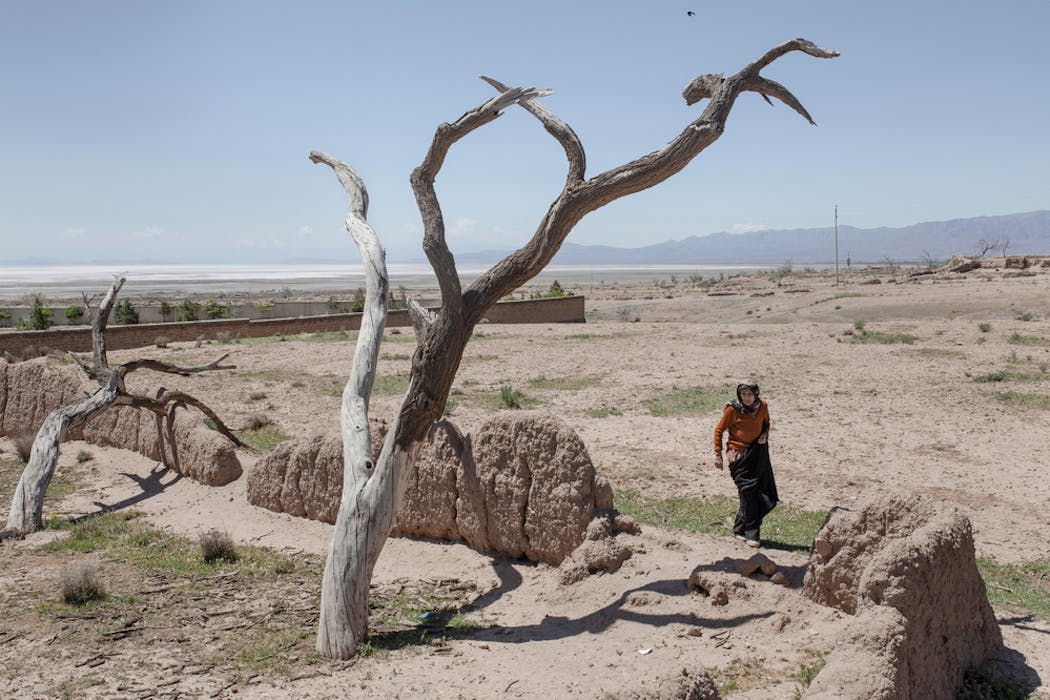 This dry landscape in Iran was once the sixth largest salt lake in the world. solmaz daryani/Shutterstock
This roundup of The Conversation's climate coverage was first published in our award-winning weekly climate action newsletter, Imagine.
"Iran is experiencing not one environmental crisis but the convergence of several: water shortages, land subsidence, air pollution and energy failure. All added together, life is a struggle for survival."
This is the situation inside Iran as described by Nima Shokri, an environmental engineer who works on global challenges related to the environment. Shokri highlights a rarely discussed factor in relation to this year's massive protests across Iran: the severe challenges Iranians are struggling with every day, affecting their ability to simply carry on living.
The air is polluted, the water is drying out and the land collapsing. Many Iranian farmers have been forced to give up their homes and land, and flee to the edges of cities in the hope of just surviving. Their land is cracking and disappearing, and it is no longer possible to grow crops or keep animals alive.
City dwellers are struggling with major water shortages too. On top of that extremely high air pollution levels are forcing hospitals and schools to close, and rising numbers of medical cases are being linked to bad air.
Kevani Madani talks about Iran's long term water problems.Living in that environment, it's no wonder that people feel desperate. As Shokri has pointed out many centres of the massive protests seen in Iran in the past few weeks, where an estimated 30,000 people have been killed, are in places where people are dealing with the most severe environmental challenges.
Read more: Iran's biggest centres of protest are also experiencing extreme pollution and water shortages
Of course, these air, land and water issues are not the only reason why thousands of people are on the streets of this country, where they must live with the decisions of a government that wants to decide who is allowed to walk on the streets and what people, women especially, are allowed to wear.
Struggle for basicsBut these basics of having clean water and air that you can breathe without damaging your health are impossible for anyone to ignore.
These conditions haven't just happened without human intervention. Iran's leaders have made policy choices over the years that have escalated the environmental challenges that many around the world are seeing, such as reduced rainfall. Water intensive agriculture has been encouraged, groundwater has been excessively pumped out, heavy fuel used, and environmental regulation has been weak.
As environmental journalist Sanam Mahoozi and chemical engineer Salome M.S. Shokri-Kuehni wrote, along with Shokri, a few weeks ago, early in January 2026 Iran's capital ranked as the most polluted city in the world.
Local media were reporting more than 350 deaths linked to worsening air quality over ten days during December 2025. And studies indicate that more than 59,000 Iranians die prematurely every year from air pollution-related illnesses.
The Iranian government has failed to protect its people from these escalating crises. In fact, as the three authors argue, its decisions has put them at more risk. And these day-to-day survival issues along with escalating political repression and economic fragility has left desperate people desperate for change, and a country on the edge of collapse.
Iran is not the only country that is experiencing a water crisis that its government hasn't shown signs of knowing how to manage, and where people are struggling to cope. Mexicans are living with conditions caused by years of drought. Reservoirs that used to supply millions with water are drying up. Some people report spending a quarter of their income on water, while others walk 30 minutes to even find a supply.
Water shortages are projected to affect 30 of 32 Mexican states by the year 2050, Natasha Lindstaedt, a professor of government at the University of Essex who researches human security and climate change, writes. And Mexico's water crisis is compounded by being forced to send part of its water supply to the US due to a just over 80-year-old agreement between the two countries.
Read more: Mexico and US look for new deal in long-running battle over 80-year old water treaty
Global crisis
About four billion people - nearly half the global population - live with severe water scarcity for at least one month a year. They are going without access to sufficient water to meet all of their needs, writes Kaveh Madani, director of the Institute for Water, Environment and Health at United Nations University and the author of a new report by UN scientists on water scarcity.
Mexico has been suffering from long periods of drought.The consequences of water deficit are being seen around the world: dry reservoirs, sinking cities, crop failures, water rationing and more frequent wildfires and dust storms.
One massive consequence of short-term water policies, often related to agriculture, is subsidence. And as Madani explains when groundwater is overpumped, the underground structure, which holds water almost like a sponge, can collapse. And it can be impossible for it to recover.
Read more: The world is in water bankruptcy, UN scientists report - here's what that means
In Mexico City, land is sinking by about 25cm per year. In Iran, subsidence is up to 30cm per year, affecting areas where around 14 million people live, more than one-fifth of the population.
The UN report sets out a drastic situation: the world is starting to experience water bankruptcy. This is beyond a crisis. It is long term condition, where cities or regions use more water than nature can reliably replace, where the damage to the environment is so catastrophic that it becomes almost impossible hard to reverse.
And while water becomes such a valuable resource, tension between those who have it and those who don't is only going to increase.
To contact The Conversation's environment team, please email imagine@theconversation.com. We'd love to hear your feedback, ideas and suggestions and we read every email, thank you.
Don't have time to read about climate change as much as you'd like?
Get a weekly roundup in your inbox instead. Every Wednesday, The Conversation's environment editor writes Imagine, a short email that goes a little deeper into just one climate issue. Join the 45,000+ readers who've subscribed so far.
 Preventable deaths in a warming world: how politics shapes who lives and who dies [ 02-Feb-26 12:55pm ]
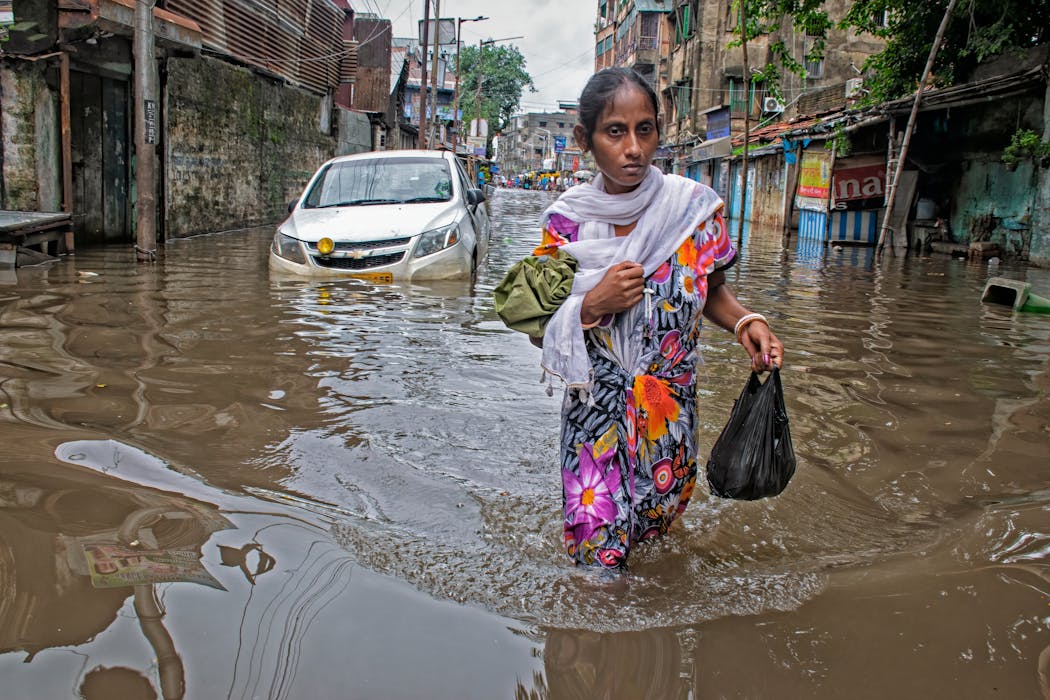 Floods in Kolkata, West Bengal, India in 2019. ABHISHEK BASAK 90/Shutterstock
In Brownsville, Texas, three members of the Galvan family died after a malfunctioning air conditioner left them exposed to extreme heat. Aged between 60 and 82, all three had chronic health conditions, including diabetes and heart disease. This makes it harder for the body to regulate temperature and increases vulnerability to heat stress.
Nobody arrived to check on them until days after they had died in their apartment in 2024. This isolation also increases risk of heat-related deaths.
Although the immediate trigger appears to have been equipment failure, a pathologist attributed the deaths to extreme heat linked to chronic illness. Deaths like these are classified as "heat-related" when ambient temperatures exceed what bodies can safely tolerate.
Climate change is a contributing factor. As heatwaves become more frequent, intense and prolonged, routine failures in cooling, power or housing infrastructure are more likely to turn existing vulnerability into fatal harm.
Around the world, climate-related deaths follow consistent social patterns. People who are older, already ill, economically disadvantaged, or working outdoors are most affected.
The Intergovernmental Panel on Climate Change (the UN's climate science advisory group) concludes that roughly 3.3 billion to 3.6 billion people - nearly half of the world's population - are highly vulnerable to climate risks, with limited capacity to cope. Here, vulnerability is not simply exposure to environmental hazards. Who is protected and who is left at risk depends on social and infrastructural conditions.
Research in climate science, public health and social sciences shows these patterns are clear. My own research spans ecosystem ecology and social science. I examine how climate knowledge is produced, interpreted and acted upon in times of ecological emergency.
The evidence points to an uncomfortable conclusion: much of this suffering is preventable.
The necropolitics of climate changeCameroonian historian Achille Mbembe introduced the idea of "necropolitics" to explain how some lives come to be treated as more expendable than others. This does not imply intent to kill, but rather the routine political acceptance that some people will be exposed to harm.
From this perspective, the Galvans' deaths were shaped not only by heat, but by structural inequalities and gaps in policy and infrastructure.
This logic is visible globally. In south Asia and the Middle East, heatwaves claim the lives of elderly people and outdoor workers. In sub-Saharan Africa, floods and droughts disproportionately affect subsistence farmers.
In the UK, air pollution is linked to roughly 30,000 deaths annually. People from ethnic minority and low-income communities are more likely to live in the most polluted areas. These deaths are not random. They follow recognisable social patterns.
 Floods hit villages in the Jhenaigati upazila of Sherpur district, Bangladesh on October 6 2024.
amdadphoto/Shutterstock
Floods hit villages in the Jhenaigati upazila of Sherpur district, Bangladesh on October 6 2024.
amdadphoto/Shutterstock
Mbembe's concept helps describe situations where political, economic or social arrangements leave some populations consistently exposed to harm. That includes climate-vulnerable communities, places where resources are being extracted through mining or areas where people are displaced from their homes. In the US, "Drill, baby, drill!" has re-emerged as shorthand for prioritising fossil fuel extraction over emissions reduction.
These political and economic choices create consistent patterns of vulnerability for environmental risks, from extreme heat to floods and air pollution. Structural neglect, not personal behaviour, underlies the distribution of harm.
Yet, vulnerability is not fate. Heat provides a clear example. With early warning systems, targeted outreach, and timely intervention, many such fatalities can be prevented. As epidemiologist Kristie Ebi notes: "Those deaths are preventable … people don't need to die in the heat".
The same is true across climate risks. Even with systemic neglect, deliberate and coordinated action can reduce risk. Connecting social, infrastructural, and institutional responses to climate hazards is a crucial step.
Slow violence as a climate processEnvironmental humanist Rob Nixon uses the term "slow violence" to describe harms that accumulate gradually and often invisibly over time. Unlike sudden disasters, the effects of rising temperatures, drought and ecological degradation unfold quietly.
You cannot make a disaster movie out of slow violence. Its harm builds incrementally, striking those already most vulnerable. The deaths of the Galvans exemplify this slow burn, as do the lives lost to prolonged heat exposure, crop failure and environmental degradation worldwide.
People least responsible for emissions, primarily in developing countries, are most exposed to escalating climate harms. Viewed through a necropolitical lens, slow violence shows how neglect becomes lethal through the repeated failure to prevent known and predictable harms.
Feminist theorist Donna Haraway coined the term "Chthulucene", from the Greek chthonic ("of the earth"), to describe an era defined by entangled relationships between humans, other species and the ecosystems they depend on.
Rather than treating environmental harm as separate from social life, this perspective emphasises how vulnerability emerges through the everyday connections between people, institutions and environments. As Haraway argues harm accumulates through these relationships, revealing how exposure to climate risks, political neglect and ecological stress reinforce one another over time.
This dynamic is visible in Vietnam's Mekong Delta, one of the world's most productive rice-growing regions. Here, saltwater intrusion is creeping inland, damaging vast areas of farmland and threatening millions of livelihoods.
Rising sea levels and shifting climate patterns could affect up to 45% of the delta's farmland by 2030, destabilising both local communities and global food systems. Social and ecological harm cannot be separated.
Politics of life, not deathPolitical choices amplify any existing environmental threat. Neglect is not a neutral absence: it is a political condition that shapes who lives and who suffers.
Addressing this injustice requires a living politics of care. This means a political system that recognises vulnerability as socially produced and demands solidarity, equity and accountability. Through alliances between affected communities, researchers and advocates who expose neglect, plus decision-makers under pressure to act, care can become politically unavoidable.
Neglect is no longer allowed to remain invisible in some parts of the world. Cities like Ahmedabad, India, are expanding heat mitigation and early-warning systems. Communities in the Mekong Delta are working with Vietnamese and international researchers to experiment with salt-tolerant crops.
Globally, ecocide laws that make large-scale destruction of ecosystems illegal are being introduced. This helps embed responsibility for environmental protection into legal and political systems. Even in the face of political neglect, targeted action and emerging legal frameworks can reduce harm and foster a more caring form of politics.
Don't have time to read about climate change as much as you'd like?
Get a weekly roundup in your inbox instead. Every Wednesday, The Conversation's environment editor writes Imagine, a short email that goes a little deeper into just one climate issue. Join the 47,000+ readers who've subscribed so far.

Aaron Thierry receives funding from ESRC. He is affiliated with Scientists for Extinction Rebellion.
Animals might be sentient in the law's eyes, but how they're treated still varies hugely [ 30-Jan-26 4:53pm ]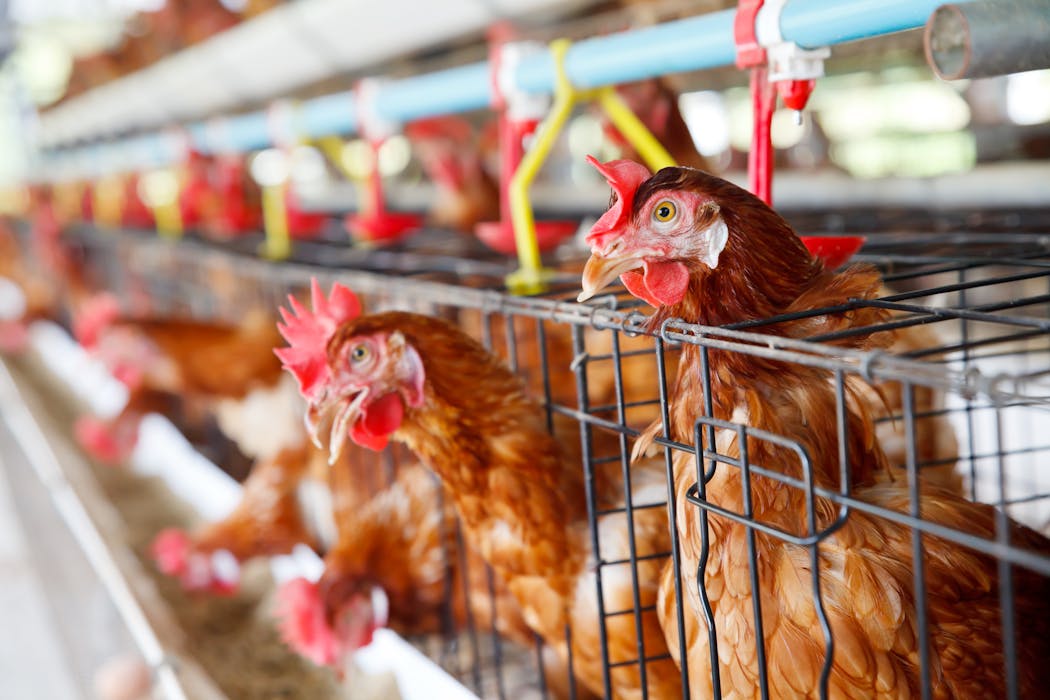 CHAIWATPHOTOS/Shutterstock
Caged hens will be a thing of the past. Puppy farming will be stopped. New laws will enforce humane slaughter standards. All this is part of a new animal welfare strategy for England announced by the government in December 2025.
The prospect of new animal welfare laws and better enforcement shows an intention to improve animal welfare standards and reduce animal suffering.
This follows the adoption into UK law in 2022 of the idea that animals are sentient beings. The Animal Welfare (Sentience) Act means that government has to check whether its policies consider and minimise any negative consequences for animal welfare. Other jurisdictions that have recognised animal sentience include the EU, New Zealand and parts of Canada and Australia.
But the wording of the law rarely means animal welfare should actually be prioritised. Instead, it means that animal welfare must be considered and properly taken into account. Where policy fails to do this it could be argued that there has been a failure in the decision-making process.
Ultimately, despite the legal recognition of sentience, the variety of welfare laws and policies highlights that how we treat animals still differs depending on their type and on how humans value or act around them.
The UK's animal sentience committee, the official body that scrutinises the government's animal welfare policy, recently identified some areas where policy falls short of properly considering animal welfare - for example, through inconsistent monitoring and enforcement of animal welfare standards. The committee also suggested there were "substantial" gaps in animal welfare enforcement.
Read more: How the world might look if animals had legal rights
Although animal sentience is recognised in law, animals are still treated as "things" in law and policy. While they have some protections, many people still consider them as our property. This is despite laws that create animal welfare standards and try to reduce animal harm by requiring the consideration of animal needs.
 Pigs are often farmed in crowded conditions.
Mark Agnor/Shutterstock
Pigs are often farmed in crowded conditions.
Mark Agnor/Shutterstock
When animals are viewed as food or needed to make products like milk or clothing, their sentience might not carry much weight. Clearly animals kept for meat will be killed but in this case, laws will usually require that slaughter is carried out "humanely" and that animals should suffer as little as possible before death.
Battery cages for poultry were banned in the UK in 2012, but "colony cages" (those that allow a larger number of hens to be kept in close proximity) are still allowed despite being considered by animal campaign groups and activists as cruel.
Some animals, such as crows or grey squirrels, are regarded as "pests" so that they can be killed or taken to protect human interests. Some controls are permitted as part of wildlife management to protect livestock or crops, for example and can be covered by what's known as a general licence.
Specific animals can be killed or taken without a clear identification and justification of the necessity of management or control. The law also allows control of pests on your property - this can include using poisons as long as the law is followed.
Five freedomsWild animals tend to be treated differently to companion animals like dogs and cats, which get more protection than wildlife mainly because they depend on humans for food and shelter. The law gives these companions a type of rights by creating legal obligations, sometimes creating a duty of care towards them.
The UK's Animal Welfare Act (2006) does more than just prevent animal cruelty. It creates a duty for people who own or care for companion animals to actively provide animal welfare.
These so-called "thin" rights are a limited form of rights that mean if you have a companion you must cater for the specific needs of your animals and ensure that the individual animal's needs are met according to the "five freedoms". These were developed in the 1960s following a major government report into the welfare of intensively farmed animals.
The five freedoms were then formally established by the Farm Animal Welfare Council - the independent body that has advised the UK government - as the basis of good animal welfare. These include freedom from hunger and thirst, discomfort, pain, disease and distress.
Read more: Animal sentience bill is necessary for the UK to be a true world leader in animal welfare
Thin rights are different to "thick" rights whereby the law protects all of an animal's fundamental interests such as an absolute right to life - such as the right not to be killed for human clothing or to be killed to benefit human commercial interests. The thick approach would prevent most actions that would interfere with an animal's rights.
A logical conclusion of applying thick rights would be an abolition of most if not all animal use, including the use of animals for food. The late animal rights lawyer Steven Wise argued that "without legal personhood, one is invisible to civil law. One has no civil rights. One might as well be dead". A thick approach gives animals rights not to be treated as "things".
Author George Orwell wrote in his 1945 book, Animal Farm, "All animals are equal, but some animals are more equal than others." He might have meant it as satirical comment on the Soviet Union, but the limitations of legal sentience for animals means it can be applied in a more literal way today. If we truly believe that all sentient creatures deserve protecting, the world has a long way to go to put this into practice.
Don't have time to read about climate change as much as you'd like?
Get a weekly roundup in your inbox instead. Every Wednesday, The Conversation's environment editor writes Imagine, a short email that goes a little deeper into just one climate issue. Join the 47,000+ readers who've subscribed so far.

Angus Nurse has received research funding from animal welfare organisations including the International Fund for Animal Welfare (IFAW) the RSPCA and Humane World for Animals (formerly called Humane Society International). He is an independent member of the Wild Animal Welfare Committee (WAWC)
New limits on global trade of sharks won't be enough to save them from overfishing - new research [ 30-Jan-26 1:01pm ]More than one-third of sharks and rays are now threatened with extinction, making them among the most imperilled vertebrates on Earth. Why? Overfishing, both as targeted catches for their valuable fins, meat, gills and liver oil, and as bycatch in nets and lines set for other fish.
In late 2025, governments took sweeping action for sharks and rays. At a global conference on wildlife trade in Uzbekistan more than 70 shark and ray species received new or stronger international trade limits.
Whale shark, oceanic whitetip shark, wedgefish, devil rays and gulper sharks were among those subject to stricter regulations. This is a major political milestone for shark conservation.
But here's the uncomfortable truth: as I outline in my new research paper published in the journal Nature Ecology and Evolution, trade regulation alone won't save sharks.
Cites, the convention on international trade in endangered species of wild fauna and flora, is the main global agreement regulating international wildlife trade, seeking to ensure the survival of the 41,000 species covered by the convention.
Read more: The world wildlife trade regulator is 50 - here's what has worked and what needs to change
Countries can only export most of the more than 1,000 shark and ray species covered by Cites regulations if they demonstrate trade is sustainable. A handful of highly threatened species (including sawfishes, manta and devil rays, whale shark, oceanic whitetip shark) are afforded the highest protection, where international trade is permitted only under exceptional circumstances.
In theory, these regulations can reduce fishing pressure. In practice, the pathway from paperwork to population recovery is far from guaranteed.
Promise and pitfallsInternational trade is only one driver of shark overfishing. Shark and ray fishing mortality is also a byproduct of wild-caught fish. And, in many small-scale fisheries, sharks and rays are valuable secondary catch - meaning they are not the main target catch, but they still have value to fishers because they are sold in domestic markets or eaten locally.
These local drivers sustain fishing mortality, which means lots of sharks and rays get killed regardless of what happens to international trade.
Some shark fishing isn't even driven by demand. In many coastal communities, production is supply driven: shaped mainly by the need to generate income and survive.
In Indonesia, when I've asked fishers what they'd do if shark prices fell, some say they'll fish harder, not less, to maintain their income. In such contexts, Cites listings alone are unlikely to reduce fishing pressure unless trade regulations drive efforts to address local causes of overfishing.
Cites is also implemented through each country's own policies and domestic management measures. Those can range from exemplary - with meaningful, well-implemented trade management that helps wild populations recover (such as the saiga antelope in Kazakhstan) to performative - where regulations exist on paper but are never implemented in practice (this includes, arguably, protection for some sharks, based on recent global trade analyses).
Even trade restrictions implemented with good intentions can backfire. For example, when supply is restricted but demand stays strong, prices rise - potentially incentivising more fishing and black markets.
This dynamic has played out with pangolins and ivory and cannot be ignored for sharks and rays, especially due to the "the snob effect" - when demand for a product increases as it becomes rarer or more expensive. When people consume shark products to display their status, scarcity can make them more attractive - meaning that restrictions on shark fishing might accidentally drive up demand rather than reduce it.
There's also displacement to consider. When Indonesia protected manta rays, some fishers shifted to catching other unprotected ray species instead. Restrictions in one part of the market can redistribute pressure rather than reduce it.
From paperwork to positive outcomesThree broad scenarios now lie ahead for sharks and rays.
In the best case, Cites catalyses integrated reforms across trade chains and the entire seafood sector. Supply countries establish sustainable catch limits to manage bycatch and targeted fisheries in small-scale and commercial contexts. Limits are implemented through effective compliance management including fair support for small-scale fishers already on the margins.
On the demand side, targeted demand management for shark products and other seafood with embedded negative impacts weakens the market signals that makes overfishing profitable in the first place. Overfishing halts and populations begin to recover. Evidence from mammals suggests this pathway is possible - but only if Cites triggers a range of global-to-local management measures.
In a business-as-usual scenario, the new listings deliver little. Countries adopt policies on paper while fishing continues unabated. Trade continues legally, in domestic markets or through new international bureaucracies, or moves illegally, through black markets and laundering. Current evidence on global shark trade flows suggests this is the direction of travel, though these new listings may shift the needle.
In the worst case, well-intended restrictions backfire. Prices spike, black markets expand, and fishers - squeezed economically - fish harder and riskier. Policy inadvertently accelerates decline.
Which future unfolds depends on what happens next. New Cites listings represent an opportunity for transformative change. But only if they are seen as a means to an end - one which catalyses broader reforms, from fisheries through to consumption, focused on limiting fishing mortality - rather than a standalone measure.
If the goal is a more sustainable future for both people and nature, then success must be measured in both the abundance and diversity of species and the wellbeing of people, not in the number of new policies. New trade regulations got the headlines. The harder, messier work of making them count starts now.
Don't have time to read about climate change as much as you'd like?
Get a weekly roundup in your inbox instead. Every Wednesday, The Conversation's environment editor writes Imagine, a short email that goes a little deeper into just one climate issue. Join the 47,000+ readers who've subscribed so far.

Hollie Booth is the Co-Founder and Director of Yayasan Kebersamaan Untuk Lautan, a marine conservation non-profit in Indonesia.
How to cut harmful emissions from ditches and canals - new research [ 29-Jan-26 5:34pm ] Thijs de Graaf/Shutterstock
Ditches and canals are the underdog of the freshwater world. These human-made waterways are often forgotten, devalued and perceived negatively - think "dull as ditchwater". But these unsung heroes have a hidden potential for climate change mitigation, if they're managed correctly.
We know that ditches and canals have a large global extent, covering at least 5.3 million hectares — about 22% of the UK's total land area. However, no one has yet mapped all global ditch and canal networks robustly, so it's potentially more.
These waterways are also hotspots of greenhouse gas emissions, which contribute to climate change. We have previously calculated that ditches emit 333 teragrams of carbon dioxide equivalents (a common unit to express the climate impact of all greenhouse gases), which is nearly comparable to the UK's total greenhouse gas emissions in 2023.
Ditches often contain stagnant waters and are commonly found running through farmland or cities, where they receive high amounts of nutrients from fertilisers, manure and stormwater run-off. This creates the low-oxygen, high-nutrient conditions that are ideal for the production of potent greenhouse gases methane and nitrous oxide - both of which warm the atmosphere considerably more than CO₂.
Read more: Ditches and canals are a big, yet overlooked, source of greenhouse gas emissions - new study
However, ditches and their surrounding landscape can be managed (by farmers and landowners, for example) in ways that reduce nutrient inputs and therefore lower their greenhouse gas emissions. This makes them an untapped solution for reducing the effects of climate change.
Many nature restoration solutions focus on storing atmospheric carbon - by planting trees or mangroves, for example. But there are also immediate wins to be made simply by reducing greenhouse gas emissions. The importance of methane reduction has now been recognised by more than 160 countries, all of which signed the global methane pledge to cut human-caused methane emissions by at least 30% from 2020 levels by the end of the decade.
Our new study outlines the steps needed to reduce emissions from global ditches and canals. First, we need to better understand these systems by mapping their global extent. We also need to collect more measurements of greenhouse gas emissions from underrepresented regions like South America and Africa. Emissions from irrigation ditches in these understudied places could be large.
We also need to improve our understanding of how the potent greenhouse gas methane escapes the sediments in bubbles. This involves using sensors that monitor methane concentrations continuously, in order to capture "hot moments" when weather or human activity (such as fertiliser use on farmland) cause sudden pulses of emissions.
All of these strategies will improve estimates of global greenhouse gas emissions from ditches. From that new baseline, any progress in reducing emissions can be more accurately measured.
New directions for ditchesThere are several ways to reduce greenhouse gas emissions from ditches and canals. These include reducing fertiliser application rates on farmland, excluding livestock from areas beside ditches to reduce the amount of manure that ends up in waterways (which has already been shown to be effective for ponds), and managing pollution sources like wastewater treatment plants.
In the Netherlands, researchers have tested the effects of dredging agricultural ditches to remove the nutrient- and organic matter-rich sediments that release greenhouse gases.
They found that dredging resulted in a 35% decline in ditch emissions after one year. However, this method isn't perfect, as the emissions from the removed sediments still need to be accounted for at a later stage, and dredging disturbs aquatic habitats and organisms.
Planting vegetation alongside ditches helps intercept nutrients and sediments before they reach the ditch. This vegetation also provides shading, which reduces water temperature and rates of greenhouse gas emissions. A study across Denmark, Great Britain and Sweden found that riverside vegetation helped to considerably reduce nutrient inputs to rivers and streams, and improved habitats for stream organisms like bugs and frogs.
Introducing floating vegetation can also trap methane and create the conditions for its removal before it is released into the atmosphere. Current trials in the UK are looking at introducing Sphagnum moss to peatland ditches. Once a floating mat of this moss has been established, it can trap bubbles of methane in an oxygen-rich environment created by the photosynthesising moss.
When methane and oxygen are present together, methane-eating bacteria can convert methane to carbon dioxide, which has a much lower impact on the climate. Initial results showed a decrease in methane of approximately 40% when Sphagnum was present.
Some of these techniques might be too expensive to scale, and many are still at the early stages of research into their use in ditches. Nevertheless, ditches and canals can in future be climate heroes - we just need to give them the chance by managing them in smart and sustainable ways.
Don't have time to read about climate change as much as you'd like?
Get a weekly roundup in your inbox instead. Every Wednesday, The Conversation's environment editor writes Imagine, a short email that goes a little deeper into just one climate issue. Join the 47,000+ readers who've subscribed so far.

Teresa Silverthorn has received funding for ditch research from from Defra, the Environment Agency, and EPSRC (UK research councils).
Jonathan Ritson has receive funding from the GGR-Peat project (UKRI funding, BB/V011561/1).
Mike Peacock has received funding for ditch research from Defra, the Environment Agency, NERC and EPSRC (UK research councils), and Formas and VR (Swedish research councils).
Welcome to the 'Homogenocene': how humans are making the world's wildlife dangerously samey [ 29-Jan-26 12:36pm ] Pigeons are well-suited to urban living, and are outcompeting distinctive local species around the world. Wirestock Creators / shutterstock
The age of humans is increasingly an age of sameness. Across the planet, distinctive plants and animals are disappearing, replaced by species that are lucky enough to thrive alongside humans and travel with us easily. Some scientists have a word for this reshuffling of life: the Homogenocene.
Evidence for it is found in the world's museums. Storerooms are full of animals that no longer walk among us, pickled in spirit-filled jars: coiled snakes, bloated fish, frogs, birds. Each extinct species marks the removal of a particular evolutionary path from a particular place - and these absences are increasingly being filled by the same hardy, adaptable species, again and again.
One such absence is embodied by a small bird kept in a glass jar in London's Natural History Museum: the Fijian Bar-winged rail, not seen in the wild since the 1970s. It seems to be sleeping, its eyes closed, its wings tucked in along its back, its beak resting against the glass.
A flightless bird, it was particularly vulnerable to predators introduced by humans, including mongooses brought to Fiji in the 1800s. Its disappearance was part of a broad pattern in which island species are vanishing and a narrower set of globally successful animals thrive in their place.
It's a phenomenon that was called the Homogenocene even before a similar term growing in popularity, the Anthropocene, was coined in 2000. If the Anthropocene describes a planet transformed by humans, the Homogenocene is one ecological consequence: fewer places with their own distinctive life.
It goes well beyond charismatic birds and mammals. Freshwater fish, for instance, are becoming more "samey", as the natural barriers that once kept populations separate - waterfalls, river catchments, temperature limits - are effectively blurred or erased by human activity. Think of common carp deliberately stocked in lakes for anglers, or catfish released from home aquariums that now thrive in rivers thousands of miles from their native habitat.
Meanwhile, many thousands of mollusc species have disappeared over the past 500 years, with snails living on islands also severely affected: many are simply eaten by non-native predatory snails. Some invasive snails have become highly successful and widely distributed, such as the giant African snail that is now found from the Hawaiian Islands to the Americas, or South American golden apple snails rampant through east and south-east Asia since their introduction in the 1980s.
Homogeneity is just one facet of the changes wrought on the Earth's tapestry of life by humans, a process that started in the last ice age when hunting was likely key to the disappearance of the mammoth, giant sloth and other large mammals. It continued over around 11,700 years of the recent Holocene epoch - the period following the last ice age - as forests were felled and savannahs cleared for agriculture and the growth of farms and cities.
Over the past seven decades changes to life on Earth have intensified dramatically. This is the focus of a major new volume published by the Royal Society of London: The Biosphere in the Anthropocene.
The Anthropocene has reached the oceanLife in the oceans was relatively little changed between the last ice age and recent history, even as humans increasingly affected life on land. No longer: a feature of the Anthropocene is the rapid extension of human impacts through the oceans.
This is partly due to simple over-exploitation, as human technology post-second world war enabled more efficient and deeper trawling, and fish stocks became seriously depleted.
 Lionfish from the Pacific have been introduced in the Caribbean, where they're hoovering up native fish who don't recognise them as predators.
Drew McArthur / shutterstock
Lionfish from the Pacific have been introduced in the Caribbean, where they're hoovering up native fish who don't recognise them as predators.
Drew McArthur / shutterstock
Partly this is also due to the increasing effects of fossil-fuelled heat and oxygen depletion spreading through the oceans. Most visibly, this is now devastating coral reefs.
Out of sight, many animals are being displaced northwards and southwards out of the tropics to escape the heat; these conditions are also affecting spawning in fish, creating "bottlenecks" where life cycle development is limited by increasing heat or a lack of oxygen. The effects are reaching through into the deep oceans, where proposals for deep sea mining of minerals threaten to damage marine life that is barely known to science.
And as on land and in rivers, these changes are not just reducing life in the oceans - they're redistributing species and blurring long-standing biological boundaries.
Local biodiversity, global samenessNot all the changes to life made by humans are calamitous. In some places, incoming non-native species have blended seamlessly into existing environments to actually enhance local biodiversity.
In other contexts, both historical and contemporary, humans have been decisive in fostering wildlife, increasing the diversity of animals and plants in ecosystems by cutting or burning back the dominant vegetation and thereby allowing a greater range of animals and plants to flourish.
In our near-future world there are opportunities to support wildlife, for instance by changing patterns of agriculture to use less land to grow more food. With such freeing-up of space for nature, coupled with changes to farming and fishing that actively protect biodiversity, there is still a chance that we can avoid the worst predictions of a future biodiversity crash.
But this is by no means certain. Avoiding yet more rows of pickled corpses in museum jars will require a concerted effort to protect nature, one that must aim to help future generations of humans live in a biodiverse world.

The authors do not work for, consult, own shares in or receive funding from any company or organisation that would benefit from this article, and have disclosed no relevant affiliations beyond their academic appointment.
The plan to clean up England and Wales' water industry ignores the sector's biggest problem [ 28-Jan-26 6:23pm ] Gala Oleksenko/Shutterstock
Government plans published earlier this month around the water sector in England and Wales were heralded as a "once-in-a-generation" opportunity to transform the system. However, despite the confidence of UK environment secretary Emma Reynolds, the long-awaited plans raise significant concerns. This is a reform agenda for water as a business - but not a vision for managing a vital public and environmental resource.
The fully privatised water system in England and Wales has been facing two (self-inflicted) crises in recent years. First, companies have failed to invest enough in infrastructure and have been pouring untreated sewage into rivers and seas.
Second, some companies (acting primarily in the interests of their shareholders) have hiked up debts while still paying out dividends. The largest company, Thames Water, has been teetering on the brink of financial collapse since 2023.
Occasional but serious interruptions of water supplies prove that all is not well in water service delivery, and there is growing recognition that the water system is unfit for purpose. We, as academics who helped set up a research body called the People's Commission on the Water Sector, would have to agree.
But crucially, missing from the government's white paper detailing the new policy is any reflection on the processes that led to this situation. It acknowledges that companies have behaved badly and that some water companies and their owners have prioritised short-term profits over long-term resilience and the environment.
This is a serious understatement. Underlying the outcomes of the past few years are the profit-seeking activities by private investors. Private companies cut back on costs and manipulated finances to benefit shareholders.
Water users and the environment suffer the consequences. And the regulators, Ofwat and the Environment Agency, were ill-prepared for the scale of the private sector's extractive practices.
The bottom line is that the profit motive is incompatible with treating water in a way that is socially and environmentally equitable.
Now, the government is proposing a new single regulator with dedicated teams for each company, rather than the four institutions that have been in place until now. In addition, there are plans for better regulation and enforcement for pollution, and improvements to infrastructure (the white paper reveals how little is known about water company assets).
However, the language around regulation is confused and contradictory. On the one hand there is talk of being tough: Reynolds says there will be "nowhere to hide" for errant water companies. And there could be criminal proceedings against directors, who may also be deprived of bonus payments.
But on the other, the language is remarkably accommodating in its approach to the firms that have put the whole system in jeopardy.
Those that were behind the sewage crises and the perilous state of water company finances are to be helped to improve through a "performance-improvement regime". Considerable attention is devoted to creating an attractive climate for investors, where returns will be stable and predictable. This, despite the fact that recent unpredictability was largely due to the activities of private companies.
Power and politicsIf water in England and Wales remains in private hands, the unresolvable tension between the drive for profits alongside controls to protect consumers and the environment will persist. The demands of capital tend to prevail, with considerable government attention devoted to ensuring that the sector is attractive to investors.
As an example, the government claims that the next five years will see £104 billion of private investment. But this ultimately is funded by the planned 36% rise in bills (plus inflation). And a fifth of this (£22 billion) is set aside for the costs of capital, to cover interest payments and dividends.
The focus on regulatory and management measures obscures issues of power and politics in water governance. Water is supplied by companies whose shareholders have immense political power.
Private equity investors BlackRock, the biggest asset manager in the world, has stakes in three water companies - Severn Trent, United Utilities and South West Water (via Pennon). Keir Starmer, the prime minister, entertained BlackRock's CEO in November 2024 where an overhaul of regulation was reportedly promised.
And Hong Kong-based CKI, once a contender to take over Thames Water, is the majority owner of Northumbrian Water. It also has stakes in Britain's gas, electricity and rail networks, as well as owning Superdrug and the discount store, Savers.
A similar story is told in other companies. These are global behemoths that have influence and huge resources, and as such may seek to shape regulation in their own interests.
 Paris has got it right.
Oliverouge 3/Shutterstock
Paris has got it right.
Oliverouge 3/Shutterstock
The system in England and Wales is an outlier. No other country has copied this extreme privatised model. In fact, many have taken privatised water back into public hands. In Paris, the public water operator Eau de Paris is an award-winning example of transparency, accountability and integrity in public service.
It demonstrates that it is possible to create public services that are fair, sustainable and resilient. Key to this process has been the vision of water as a vital common good rather than a commodity.
The government's plans will patch up the water system, particularly with the boost in revenue from bill payers. But the private sector has found unanticipated ways to maximise profits in the past and may well do so again. Rather than continually tweaking the failed private model, the only real route to operating water in the public interest is for it to be in public ownership.

The authors do not work for, consult, own shares in or receive funding from any company or organisation that would benefit from this article, and have disclosed no relevant affiliations beyond their academic appointment.
Small-scale farmers produce more of the rich world's food than previously thought - new study [ 28-Jan-26 4:06pm ] Media Lens King/Shutterstock
Who grows our food? This seemingly simple question is getting harder to answer in a world where our food crosses borders to get to our plate.
As countries increasingly rely on food imports, the mention of distant countries on our food labels is commonplace. Today, only one in seven countries are food self-sufficient across key food groups. So to understand who farms our food, researchers like me need to take a global vantage point.
The contribution of small and industrial-scale farming to global food supply has attracted much attention and debate. Yet, my research shows we've been measuring the wrong thing - production and not consumption. Focusing only on national farming systems skews our perception of which farmers are feeding the world by ignoring the food - and farmers - that sustain our daily diets.
This approach also amplifies the assumption that industrial farming is the foundation of global security. But when we lift the lid on our globalised food system, the story is very different.
By studying production and trade patterns of 198 countries, I have found that it's small-scale farms (typically smaller than 20 hectares), not huge industrial operations, that underpin our daily diets. My team's research, published in Nature Food, reveals that small-scale farmers contribute a third of the food consumed in high-income nations such as the UK and the US.
This insight has been overlooked by previous studies that solely focused on food distribution from farmers within national borders. These small-scale farms are often unrecognisable from the mega-farms that have come to dominate rural landscapes in Europe, South America and the US.
Although concentrated in sub-Saharan Africa and across Asia, small farms play a key role in exporting fruit, vegetables, pulses, and root and tuber crops, to western countries. A few key cases stand out.
Despite small-scale farms making up less than 1% of Australian farms they supply around 15% of their food needs. In Canada and Europe, small farms contribute nearly 20% to national food needs, mostly from overseas. They also make up the majority of the food supply in 46 of the countries we studied, meeting the bulk of food needs for 5 billion people every day.
Agri-food export of food crops such as lentils and sweet potatoes from small-scale farms comes at a cost to low- and middle-income countries where these farming systems are dominant. These nations end up importing vast amounts of cereals and oil crops from high-income nations, to compensate for food and nutrition insecurity created by cash cropping and contract farming.
These dynamics bear the signature of colonial extractivism in the global agri-food system. They also signal a growing consolidation of food supply chains in low- and middle-income countries due to imports from industrial farms, a dependency that is set to grow with increased appetite for meat and processed food in rapidly industrialising countries.
 Fruit shipped around the world is often produced on relatively small-scale farms.
Dusan Petkovic/Shutterstock
Fruit shipped around the world is often produced on relatively small-scale farms.
Dusan Petkovic/Shutterstock
Small-scale farms play a crucial role in creating global food security. But farmers of small farms often find themselves facing insecure land tenure, climate risk, unequal terms of trade and international trade regimes.
This new research, also reported in the latest State of Food and Agriculture report from the UN's Food and Agriculture Organization, shows that such risks are not only contained to domestic food systems but will cross borders. Food and land insecurity for small-scale farmers means food insecurity for us all. Cuts to overseas aid from high-income nations makes this more likely, as support for climate-resilient farming dries up.
Safeguarding production from smallholders relies not only on domestic efforts to protect farmer livelihoods but transboundary measures to secure their land, rights and access to markets, such as land titles, small loans and living wages.
Subsidies, trade agreements and corporate consolidation erode these pillars of smallholder security and threaten the healthiest food on our plates - fruit, vegetables and pulses. Shining a light on the farmers hidden in national supply chains is a first step to ensure agri-food finance and regulation delivers sustainable livelihoods for all food producers.
This new study highlights the key role small-scale farmers play in meeting current food needs and hints to their importance in a sustainable food future. A plant-rich dietary transition, as called for by scientists, will rely on fruit, vegetable and pulse production, disproportionality produced by smaller farms, farms which typically produce more diverse food types than large-scale farms, higher yields and greater biodiversity. Now that we know who grows our food, we must give farmers equal priority in national farming policy, within and beyond our borders.
Don't have time to read about climate change as much as you'd like?
Get a weekly roundup in your inbox instead. Every Wednesday, The Conversation's environment editor writes Imagine, a short email that goes a little deeper into just one climate issue. Join the 47,000+ readers who've subscribed so far.

Oliver Taherzadeh receives funding from Horizon Europe.
Mexico and US look for new deal in long-running battle over 80-year old water treaty [ 28-Jan-26 1:51pm ]Mexico City has experiencing years of low rainfall, leaving it often unable to supply its citizens with water.
The city, originally built on lakes and wetlands, is now covered in concrete and asphalt. Another factor is that Mexico City loses about 40% of its water through leaks.
The shortages have sent the price of water shooting up. One resident told ABC News that he now spends about 25% of his income on buying water. And in 2024 water was rationed in 284 of the city's neighbourhoods.
But the problem extends well beyond Mexico City. Water shortages are projected to affect 30 of its 32 states by the year 2050, which is forecast to affect 40-80% of its population.
Despite all of these water shortages, Mexico is being forced to send part of its water supply to the US because of a just over 80-year-old agreement that was negotiated when water was less scarce. The 1944 treaty governs the allocation of water from the Rio Grande and Colorado River. Under the agreement, Mexico must send 430 million cubic metres of water per year from the Rio Grande to the US, and the US agreed to send 1.85 billion cubic metres a year of water from the Colorado River to supply the Mexican border cities of Tijuana and Mexicali.
US president Donald Trump recently threatened additional 5% tariffs on Mexican exports to the US, claiming that Mexico was 986.8 million cubic metres short of delivering water targets set out in the treaty.
While Mexico is facing its worst water crisis in decades, with reservoirs that serve over 23 million people drying up, it continues to be struggle with this water debt to the US.
Now Mexico has agreed to send 65 billion gallons of water (246 million cubic meters) north by the end of January 2026, about a quarter of the debt, in an updated deal that was finalised on December 15, with distribution to Texas starting in January 2026.
Trump and Mexico's president Claudia Sheinbaum are expected to discuss further steps for Mexico to resolve its water debt by the end of January 2026. Sheinbaum has argued that there has to be recognition that Mexico has experienced years of drought.
Mexico has been suffering from a drought for years. How is Mexico coping?This isn't a new problem. Mexico City is sinking at a rate of 20 inches a year, with the aquifer that provides 60% of the city's water over pumped. Back in February 2024, there were concerns that Mexico City might even run out of water in months.
In the town of San Cristóbal, in the southern state of Chiapas, residents have had to travel at least 30 minutes to access water as the taps often run dry, while other residents claim they only have access to water for a few hours a day.
In March 2025 for the first time ever the US refused a request by Mexico to provide water to the border city of Tijuana, which was running out of water. Tijuana is a manufacturing hub just 27 miles south of San Diego, California, which depends on the Colorado River for 90% of its water.
About 97% of the Colorado River basin lies within the US, while about 60% of the Rio Grande runs through the Mexico-Texas border, with the rest running through Colorado and New Mexico.
Read more: The world is in water bankruptcy, UN scientists report - here's what that means
Mexico has not consistently adhered to the water agreement since the early 1990s, and the agricultural sector in Texas has struggled to cope without the water being supplied. Texas lawmakers have made this a priority, calling on Trump to apply pressure on Mexico for not complying with the agreement.
And the pressure on Mexico is likely to continue as it must start to renegotiate the US-Mexico-Canada Trade Agreement this year.
It's not just Mexico that is running out of water, according to a new report by the United Nations.
The report reveals that more than 50% of the world's large lakes have lost water while 70% of the major aquifers are experiencing long term decline. This is likely to ramp up tension between neighbouring countries over water access, with the Mexico/US conflict being just part of the bigger picture.
Mexico and the US's growing dispute over water rights further complicates an already strained relationship that must tackle existing challenges related to drug trafficking, security, migration and trade wars. Water is just the latest issue to rise to the top of the tension table.

Natasha Lindstaedt does not work for, consult, own shares in or receive funding from any company or organisation that would benefit from this article, and has disclosed no relevant affiliations beyond their academic appointment.
Octopus numbers exploded around the UK's south-west coast in 2025 - a new report explores this rare phenomenon [ 27-Jan-26 12:32pm ]Cold spray whipped off the ropes as a diesel engine throbbed in the background. One by one, empty shellfish pots came over the side of the fishing boat, occasionally containing the remnants of crab and lobster claws and carapaces. Something strange was going on.
Then the culprit revealed itself - a squirming orange body surrounded by a writhing tangle of tentacles. A few minutes later, three more of these denizens of the deep came up in a single pot, and then, incredibly, a final pot rose from the water completely rammed full of them, more than a dozen together in a squirming mass.
This was a familiar scene off the south coasts of Devon and Cornwall early last year, as a bloom of the common octopus (Octopus vulgaris) emerged, the first time anything like this had been seen for 75 years. In fact, commercial catches of common octopus in 2025 were almost 65 times higher than the recent annual average. A new report now sheds light on these blooms: their history, the causes and the consequences.
The common octopus, despite the name, is not normally common in British waters. Instead, it favours the warmer climes of southern Europe, the Mediterranean and north Africa. But, occasionally, such as in 1900, 1950 and now 2025, numbers explode off the south-west coast of England, changing marine food chains and disrupting the local fishing industry.
Common octopuses take the ultimate "live fast, die young" approach to life. Despite the large size they can attain, they generally only live for less than two years, with females dying after their eggs hatch. The males also die after breeding. This means octopus populations are highly affected by changes in environmental conditions.
Octopus blooms have previously been rare in the UK, but emerging evidence from long-term marine monitoring of the western Channel suggests that these episodes coincide with sustained periods of unusual warmth in both the ocean and atmosphere.
These "marine heatwaves" can stimulate rapid population growth, whether the octopus are locally established or newly arrived from the south. These warm conditions are often accompanied by unusually low salinity in coastal waters, a signal that points to fresher water entering the region. While salinity itself is unlikely to drive the outbreaks, it serves as a valuable tracer of the water's origin.
The fresher conditions may stem from high river flow from major French Atlantic rivers such as the Loire, or from prolonged easterly winds over the Channel during the cooler months (October to March). These processes could help transport octopus larvae across the Channel from northern France and the Channel Islands.
Taken together, the combination of warmth, altered circulation and low-salinity signatures suggests that climate-driven shifts in ocean and atmospheric dynamics underpin these outbreaks.
From crisis to opportunity?Those early scenes of octopus consuming catches in crab and lobster pots continued as 2025 rolled on. But they didn't just stop at crustaceans. Piles of empty scallop shells were found in many pots, sometimes with remnants of flesh still attached.
Scallops don't normally go into crab and lobster pots (unless they have lights in them, which these ones didn't), so the only explanation is that octopus were actively putting scallops in pots to stock up their larder, consuming them at leisure later.
However, fishers are nothing if not adaptable. They soon realised that there was a lucrative export market for octopus and began targeting them. One boat fishing out from Newlyn in Cornwall brought home over 20 tonnes of octopus, worth £142,000, from just three days fishing.
Between £6.7 million and £9.4 million worth of common octopus was landed on the south coast of the UK from January to August 2025. However, not all fishers benefited, and for most boats, octopus catches suddenly dropped off in August. With other shellfish fisheries also declining dramatically last year - lobsters by 30% and brown crabs and scallops by over 50% - many fishers worry about a future in which there is nothing left to catch.
So, what does the future hold? Given the link with climate change, the extensive reports of octopus breeding and a recent appearance of juvenile octopuses in UK waters, the continued presence of the common octopus seems likely.
If a bloom the size of last year's occurs again soon, future fisheries should be guided by sustainable and ethical principles that help diversify opportunities for fishing fleets, while leaving enough octopus in the sea to be enjoyed by the hundreds of divers and snorkellers who loved watching these amazing creatures last year.
Don't have time to read about climate change as much as you'd like?
Get a weekly roundup in your inbox instead. Every Wednesday, The Conversation's environment editor writes Imagine, a short email that goes a little deeper into just one climate issue. Join the 47,000+ readers who've subscribed so far.

Bryce Stewart receives funding from DEFRA, Plymouth City Council, Devon County Council and the Crown Estate (OWEC Programme)
Emma Sheehan receives funding from DEFRA and Natural England.
Tim Smyth receives funding from the Natural Environment Research Council through their National Capability funded project AtlantiS NE/Y005589/1
How to make sure the nature credits you buy are real - new research [ 26-Jan-26 5:12pm ] Peter Hofstetter/Shutterstock
Global leaders have committed to halting and reversing the ongoing degradation of nature within the next few decades. But with tight public budgets, governments around the world are looking towards nature markets as one way to attract more private investment into nature.
Nature markets are systems for measuring an ecological improvement on some land, then creating a representation of that improvement as a credit, which can then be bought and sold. In theory, they allow governments to attract more private investment and diversify funds that help restore nature. The reality is much more complicated.
My colleagues and I recently published a paper that outlines a checklist that can be used to sense-check whether a nature or nature-based carbon credit is likely to be real - and to make sure you really do get what you're paying for.
Nature markets include both voluntary and mandatory nature-based carbon and biodiversity markets. Examples include the EU's nature credits roadmap, England's biodiversity net gain policy and the international voluntary carbon market.
Most of these are offset markets - the buyers of credits use them to claim they have achieved an overall net neutral outcome from their damaging activities; such as improving grasslands in one place to compensate for the conversion of grassland to buildings in another.
These types of nature credit markets are not new. They have been used around the world for more than 30 years and there's plenty of research that tries to quantify what makes them effective or ineffective.
Some nature markets, like the US wetland mitigation markets, have attracted a lot of investment and now create nearly as much new wetland as gets destroyed each year. Other nature markets, such as Australia's human-induced regeneration carbon credits, have delivered limited ecological outcomes and has involved awarding credits to projects claiming to regenerate trees in the Australian desert.
So how can citizens, the commercial buyers of these credits and the governments that oversee some of these systems, ensure that a nature-based carbon or nature credit represents a real improvement in nature?
Our study evaluates lessons from seven major nature markets around the world. It summarises several key elements that are crucial for establishing scientifically credible nature markets.
Ensuring integrityThe environmental feature that the nature market measures and trades needs to actually correlate with the environmental improvement that you want. So if you want to capture more carbon, it often makes sense to have a credit that measures changes in tree cover or biomass, because there's plenty of evidence that trees in a forest store atmospheric carbon.
Some nature markets use proxies that are based on assumptions that are not always true. For example, England's biodiversity net gain system aims to deliver a 10% improvement in biodiversity, but the specific metric that it used measures the extent and quality of habitats such as wildflower meadows. Subsequent work found that this does not necessarily lead to more diverse insect life, for example because the land might be affected by pesticides.
For nature markets to deliver scientifically credible improvements, it's necessary to make sure they're not paying people to deliver ecological improvements that they would have been delivering anyway. This has been the fundamental problem with carbon credits based on the premise of preventing deforestation that would otherwise have occurred - they have mostly paid for the protection of forest that wouldn't have been cleared.
 Some nature credits support wetland restoration projects.
HiTecherZ/Shutterstock
Some nature credits support wetland restoration projects.
HiTecherZ/Shutterstock
Over the last few decades, there has been immense research effort into studying so-called "additionality" in carbon credits (this means a project's emissions reductions or removals wouldn't happen without revenue from selling carbon credits). Academics have created new methods that allow us to rigorously estimate the additionality of many land management interventions using satellite data.
Evaluations of nature markets consistently show that, in all nature markets, some projects are highly successful while some are unsuccessful. By only issuing credits once they've been proven to work (using advanced statistical techniques such as 'matching' and carefully designed regression analysis), credits are much more likely to represent something additional and this would enable only successful projects to generate credits, giving buyers confidence in the product.
Read more: A gold rush for 'green finance' risks changing our relationship to nature
The next consideration is public data availability. Every single evaluation of a nature market that has ever been conducted was enabled by public data availability. And every single nature market that has been evaluated to date has been found to not have achieved its full environmental objectives. Without public data, there's no way of checking whether things are working. Public transparency of data is essential for improving nature markets.
Nature credits often aim to improve nature over relatively long timescales, say 30 years. So laws and regulations that hold people, businesses and markets accountable are essential to avoid the reversal of nature credits in the future. With forward planning and legally binding accountability, the system can maintain its scientific integrity and live up to its promise of attracting more high-quality investment into nature.
Don't have time to read about climate change as much as you'd like?
Get a weekly roundup in your inbox instead. Every Wednesday, The Conversation's environment editor writes Imagine, a short email that goes a little deeper into just one climate issue. Join the 47,000+ readers who've subscribed so far.

Sophus zu Ermgassen receives funding from NERC and the EU Horizon 2020 programme. He is on the EU Commission's expert group for the EU Nature Credits Roadmap.
Iran's biggest centres of protest are also experiencing extreme pollution and water shortages [ 26-Jan-26 1:39pm ]Iran's current wave of protests is often interpreted as having been sparked by inflation, currency collapse, corruption and repression. These explanations are not wrong, but they are incomplete.
Beneath the country's political and economic crisis lies a more destabilising force that is still largely missing from international analysis: environmental breakdown.
Iran is experiencing not one environmental crisis but the convergence of several: water shortages, land subsidence, air pollution and energy failure. All added together, life is a struggle for survival.
So when citizens protest today, they are not only resisting authoritarian governance. They are responding to a state that can no longer reliably provide the most basic forms of security: water to drink, air to breathe, land to stand on, and electricity to carry on their daily lives.
From 2003-2019, Iran lost an estimated 211 cubic kilometres of groundwater, or twice its annual water consumption, leaving the country facing water bankruptcy. Excessive pumping - driven by agricultural expansion, energy subsidies and weak regulation - has caused land subsidence rates of up to 30cm per year, affecting areas where around 14 million people, more than one-fifth of the population, live.
Provinces such as Kerman, Alborz, Khorasan Razavi, Isfahan and the capital Tehran now have more than a quarter of their population living with the risk of subsidence. In all, large sections of the country - particularly around the capital Tehran, the agricultural centre Rafsanjan, and the city of Mashhad - are subsiding at alarming rates of close to 10cm per year.
Subsidence has cracked homes, damaged railways, destabilised highways, and threatened airports as well as Unesco-listed heritage sites.
Iran's lack of water has become politically explosive. When reservoirs fall to extremely low levels, when taps run dry at night in major cities, or when farmers watch rivers and lakes disappear, grievances turn into protest.
As wetlands, lakes and riverbeds dry up, their exposed surfaces generate dust and salt storms that can blanket cities hundreds of kilometres away.
The aftermath of recent protests in Tehran.At the same time, chronic electricity shortages - caused by underinvestment, inefficiency and poor infrastructure - have forced power plants and industries to burn heavy fuels. The result is extreme concentrations of sulfur dioxide, nitrogen oxides and fine particulate matter.
Ignoring environmental problemsThe World Health Organization notes that Iran is facing severe problems in terms of its air quality. Around 11% of deaths and 52% of the burden of diseases across the country are attributable to environmental risk factors.
In recent months, major cities have repeatedly closed schools and offices due to hazardous air quality, while hospitals report surges in respiratory and cardiovascular emergencies.
These environmental failures do not exist in isolation. They are the predictable outcome of decades of distorted national priorities.
Since the 1980s, Iran has channelled vast financial, institutional and political resources into ideological expansion and regional disputes — supporting groups in Lebanon, Syria, Iraq, and Yemen - while systematically underinvesting in domestic environmental governance, infrastructure renewal and job creation.
Meanwhile, Iran's political economy has been structured around energy subsidies and megaprojects that reward short-term extraction over long-term sustainability. Cheap fuel has encouraged water-intensive agriculture and inefficient industry.
Environmental agencies have remained fragmented and politically weak, unable to restrain more powerful ministries or governmentally linked economic actors. International isolation has compounded these failures.
Sanctions deepened the environmental crisis by restricting access to modern monitoring technologies, clean-energy systems, efficient irrigation and external finance.
While much of the world invested in technology and regulation to curb pollution and stabilise water systems, Iran doubled down on emergency fixes that deepened ecological damage rather than containing it. Sanctions and climate stress amplified the problems, but the root cause lay in state priorities that have consistently ignored environmental security.
The political consequences are now unmistakable. Environmental stress reshapes not only why people protest, but where and how. Maps of unrest in 92 Iranian cities reveal a clear pattern. Protests increasingly erupt in areas where there is groundwater collapse, land subsidence and water rationing.
Water shortages and protestIn provinces such as Tehran, Khuzestan in the south-west and Isfahan in central Iran - all areas with high levels of protest - there are acute water shortages, subsidence causing damage to roads and pipelines, and disputes over access to water.
In other cities such as Kermanshah and Ilam, intensifying unrest reflects the interaction of major environmental problems of drought, rainfall decline and groundwater depletion with severe economic problems and poverty.
But Iran is not unique in this regard. Similar conflicts over water and economic issues have played a destabilising role in neighbouring Syria. Prolonged drought, conflicts over water and access to it, and limited rainfall have affected crop yields and animals there. Hundreds of thousands of people living in agricultural communities have been driven to cities and camps nearby in a desperate attempt to survive.
Water mismanagement and access to decent drinking water have also fuelled unrest in Basra in the south of Iraq.
Iran is not facing a cyclical protest problem that can be stabilised through repression, subsidies or tactical concessions. It is confronting a structural collapse of the systems that make governance possible, and are at the heart of human survival.
When there's no water and the air becomes unbreathable, the social contract fractures. Citizens no longer debate ideology or reform timelines, they question the state's right to rule at all.
What Iran sees today is not simply environmental stress but irreversible simultaneous failures across water, land, air and energy. These are not shocks that fade with rainfall or budget injections. They permanently shrink the state's capacity to deliver security and economic opportunity.
Coercion can disperse crowds but it cannot reverse subsidence, restore collapsed aquifers or neutralise airborne toxins. A state cannot govern indefinitely where the ecological foundations of life, agriculture and public health are failing all at once.

Nima Shokri is affiliated with Hamburg University of Technology.
Love, fear, anger and hope: how emotions influence climate action [ 23-Jan-26 5:31pm ] Fida Olga/Shutterstock
Climate targets have long been treated as technical challenges, focused on infrastructure and behaviour change. Yet as climate movements show, people often need to connect emotionally to the facts in order to be compelled to act by them. Whether goals mobilise action or not depends on how they are felt and negotiated in everyday life.
Nottingham, a city in the East Midlands region of the UK, is one of the most deprived local authority areas in England. Yet the city aims to become the UK's first carbon-neutral city by 2028 by prioritising social justice as well as environmental sustainability.
My PhD research is based on interviews and collaborative workshops with 50 residents, activists, businesses, third sector organisations and elected officials in Nottingham.
My findings highlight how four emotions frequently shape how people have engaged with action towards a sustainable future, be it through love for place, fear of loss or risk, anger at injustice or hope for something better. These emotional reactions reveal why transformation rarely follows neat plans or frameworks.
Many people in Nottingham are involved in climate action because they care deeply about where they live. Love for neighbourhoods, green spaces and future generations motivates people to grow food, protect parks and work together on local projects.
This kind of care helps turn climate change from a distant, abstract problem into something rooted in place and everyday life.
Love here is a verb. It is about taking action with characteristics of care, affection, responsibility, respect and commitment in service of the futures we want to see and the things we want to protect.
Yet love can also exclude. Strong attachments to place can lead to protection in ways that shut others out.
In community green spaces, for example, efforts to protect allotments have led to suspicion of newcomers and resistance to change, resulting in the exclusion of certain community members. Love can both support and complicate just, city-wide action.
Fear and angerFear shapes people's responses too. Worry about rising bills, the knock-on effects of climate change and political instability pushed some people to act, while for others this fear is paralysing.
Activists spoke about burnout, personal risk due to increasingly draconian policing over activism, and feeling stretched too thin when involved in several projects. Fear shaped how people related in communal spaces.
Much like love, fear around "others", ownership and control sometimes led to exclusion. These anxieties were often amplified by media narratives about threat and scarcity, making collaboration more difficult. Fear can motivate action but can also limit who is allowed or able to take part.
Read more: Why anger, anxiety and anguish are understandable psychological reactions to the climate crisis
My conversations with people in the city show that anger is prevalent. Citizens expressed frustration with local decision-making, national policy failures and economic systems seen to prioritise profit over people and the environment, signalling important unmet justice claims.
This anger often became a catalyst for action. It fuelled campaigns, community organising and challenges to existing power structures. Yet, if ignored, anger can lead to disillusionment and disengagement.
Hope also plays an important part in transformation efforts in the city. However, citizens note an important distinction between hope and blind optimism. Their hope is often practical and grounded, helping people keep going despite slow progress and uncertainty.
Community gardens, food projects, DIY retrofitting and other local initiatives became places where people could see change taking shape, however small. Yet hope remains fragile - continued austerity, lack of long-term funding and institutional commitments that fail to deliver real change often undermined trust and can threaten hope.
 Emotions are complex and do not operate in isolation.
Fida Olga/Shutterstock
Emotions are complex and do not operate in isolation.
Fida Olga/Shutterstock
These emotions do not operate in isolation or have fixed consequences. Love often coexists with fear. Anger can fuel hope. Together, they produce complex and non-linear pathways to change.
Nottingham's experience shows that achieving carbon neutrality is not just about technology or targets. Its success depends on whether people feel included, heard and supported.
When emotions are ignored, climate policies risk becoming superficial or exclusionary. When they are taken seriously, transformation becomes more just and practical for the places in which it is occurring.
This can be achieved through participatory processes and co-production that make space for emotional expression, recognise the labour involved, and resist technocratic approaches that sideline people's experiences. For Nottingham and other cities around the globe facing similar pressures, attending to how transformation is felt may matter just as much as how progress is measured.
Don't have time to read about climate change as much as you'd like?
Get a weekly roundup in your inbox instead. Every Wednesday, The Conversation's environment editor writes Imagine, a short email that goes a little deeper into just one climate issue. Join the 47,000+ readers who've subscribed so far.

Katie Keddie does not work for, consult, own shares in or receive funding from any company or organisation that would benefit from this article, and has disclosed no relevant affiliations beyond their academic appointment.


