
 Sublime [ 14-Feb-26 1:39pm ]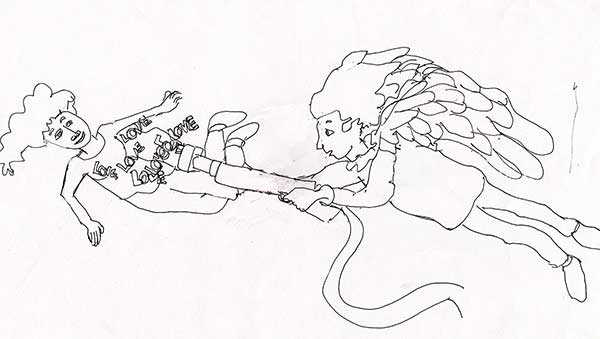
St Valentine
The moment I met you
I immediately knew,
I met my soulmate,
You are sent by Fate…
©Dessy Tsvetkova
picture Nick Victor

Japanese noise is often talked about as if it is one thing, a single wall of sound, a fixed idea. That is not how it really feels when you spend time with it. It is messy, personal, awkward, funny, tiring, and sometimes deeply moving. It grew from real places and real people, not from theory or fashion. To understand it, you have to accept that it does not always want to be understood. Why should it?
Noise in Japan did not appear because musicians wanted to shock people in Europe or America. It came from small rooms, cheap gear, and a sense that normal music was not enough. In the late seventies and early eighties, there was already a feeling that rock music had reached limits. Punk had opened a door, but for some people that door was still too narrow. They wanted sound without structure, without songs, without a clear message. After the rapid growth of cities and technology, sound became part of daily stress. Trains, adverts, crowds, machines, all fighting for attention. Noise music felt like a mirror of that life, but also a way to take control of it. By choosing noise, artists could shape chaos instead of just suffering it.
Even before what most people call noise, there were important earlier examples in Japan that set the ground. Groups like Taj Mahal Travellers in the early seventies explored long drones, outdoor performances, and sustained sound that blurred the line between music and environment. Their recordings and performances treated sound as something physical and shared, not something to consume. This way of thinking mattered deeply and later fed into noise, even if the sound itself was often quiet and slow. Was this already noise in spirit, even if not in volume?
Another crucial early figure is Kaoru Abe. Although usually described as a free jazz saxophonist, his late recordings and performances push so far into intensity and abstraction that they clearly belong to the roots of Japanese noise. His solo performances were relentless. Screeching tones, circular breathing, physical exhaustion, and complete refusal of comfort. Albums recorded shortly before his death feel raw and unfiltered, as if the sound might collapse at any moment. Abe treated sound as a form of total release and pressure, not communication. This attitude had a deep influence on later noise artists who valued commitment and risk over control and polish. How far could a single sound be pushed before it became something else entirely?
Masayuki Takayanagi was one of the early Japanese noise musicians who seemed less interested in pleasing people and more interested in telling the truth, even when it hurt. His noise was not about chaos for its own sake. It came from a deep urge to strip music back until only raw sound was left. Guitars screamed, cracked and fell apart in his hands, but there was focus behind it, not carelessness. Listening to him can feel uncomfortable, even tiring, yet it also feels honest. He treated noise as a way of thinking out loud, a way to push against rules that felt too small. Takayanagi did not try to explain his music much. He played, and let the sound argue for itself.
This early period connects strongly to the wider Japanese avant garde. Experimental music, theatre, dance, and visual art were deeply intertwined. Artists were less interested in categories and more interested in breaking habits. Sound was part of a larger push to reject comfort and expectation. Noise did not arrive from nowhere. It grew out of this avant garde culture, where failure, discomfort, and excess were seen as useful tools rather than problems.
Les Rallizes Dénudés are another vital part of this story. Often labelled as psychedelic rock, their live performances were built around overwhelming volume, endless feedback, and repetition that pushed beyond songs altogether. Recordings from their live shows feel unstable and obsessive. Guitars dissolve into pure sound. Time stretches until it almost stops. Many later noise artists took this idea of feedback as a main voice directly from them.
Keiji Haino stands as a bridge between early experimental music and noise. His early work with Lost Aaraaf, and later solo performances, showed an intense focus on extremes. Screaming vocals, distorted guitar, long silences, and sudden eruptions all appear. Albums and live recordings from the seventies and eighties feel ritualistic rather than musical in a normal sense. Even when melody appears, it feels fragile and threatened. This emotional intensity influenced many noise artists who cared less about sound alone and more about total commitment. How far could expression be pushed before it stopped being music?
Some of the earliest Japanese noise grew close to performance art and underground theatre. Groups like Hijokaidan are a key example. Their early shows were chaotic events rather than concerts. Broken glass, shouting, feedback, body movement, and confrontation were all part of the sound. Albums such as their early live recordings capture this feeling clearly. They do not sound planned or refined. They sound like events barely under control. That sense of danger mattered. It was not about making records that lasted forever. It was about presence and risk.
Incapacitants deserve special attention, and they deserve serious praise. They are not just influential. They are truly great. Their work represents one of the highest points of Japanese noise. Toshiji Mikawa and Fumio Kosakai approached noise with rare focus and intelligence. There is nothing careless in their sound. Albums like Feedback of NMS, As Loud As Possible, and their many live recordings show an incredible sense of balance between force and control. The sound is dense, crushing, and physical, yet carefully shaped over long stretches of time.
Mikawa's electronics create thick, suffocating layers that feel almost architectural, while Kosakai's use of feedback and signal chains adds movement and tension. Together they build noise that feels alive, not static. Changes happen slowly, but they matter. Listening to Incapacitants feels like being locked inside a vast machine that breathes and shifts around you. Few noise acts anywhere achieve this level of discipline without losing intensity. They prove that noise can be overwhelming without being sloppy, and extreme without being empty. How many noise projects sustain this level of quality for so long?
Hanatarash moved in another direction entirely, toward physical danger and confrontation. Their performances became known for using heavy machinery, power tools, sparks, and real destruction. Bulldozers, concrete, and metal were not stage props. They were sound sources. Recordings like Hanatarash 3 still carry this sense of threat. Even without seeing the performances, the recordings feel unstable, as if the sound could collapse at any moment. The question of whether this was music hardly matters. What mattered was the refusal to separate sound from action.
Projects connected to this confrontational spirit also include Niku-Zidousha. This group pushed noise toward raw aggression and physical pressure, often mixing distorted electronics with violent repetition. Their recordings feel blunt and hostile, with little interest in balance or comfort. Niku-Zidousha fit naturally into the Japanese noise world, but they also echo the wider avant garde idea of sound as an attack on the listener's expectations. Is endurance part of listening here, or is it the entire point?
Japanese noise often developed outside normal music spaces. Small galleries, basements, temporary venues, and illegal spaces all played a role. Many artists had no interest in careers or recognition. They made work because they felt driven to do it. Tapes were duplicated by hand. Covers were drawn, painted, cut, or photocopied. Labels like Alchemy Records helped spread this work, but everything remained close to its source. The physical object mattered as much as the sound inside it.
It is impossible to talk about Japanese noise without mentioning Merzbow, but it is also hard not to feel tired of that name. He has become a symbol that overshadows everything else. For some listeners, he is Japanese noise. That is a problem. His work often feels like excess without direction. Endless layers of distortion pushed to the same limit again and again. After a while, the impact fades. Loud becomes flat. Shock becomes routine. When attention stays fixed on Merzbow, it hides how careful, varied, and thoughtful much of the scene actually was.
There is also something uncomfortable about how Merzbow is often treated as a hero. The idea of the artist who goes further than anyone else, who destroys sound completely. This turns noise into a competition. Who is louder? Who is harsher? That misses the point. Noise was never about winning. It was about finding new ways to exist in sound. When everything is pushed to the same maximum, nothing has space to matter. Is destruction really enough?
Many other Japanese noise artists explored very different ideas. Masonna is a strong example. His work combines harsh noise with screaming vocals, sudden silences, and sharp changes. Albums like Spectrum Ripper and his many live recordings feel frantic and unstable. There is fear, humour, and absurdity mixed together. The music constantly shifts, refusing to settle. This nervous energy makes his work feel alive in a way that static noise often does not.
KK Null, both solo and with Zeni Geva, brought a heavy physical weight to noise. Thick guitar tones, repetition, and rhythm play a large role in his work. Albums like Desire for Agony and later Zeni Geva releases balance noise with pounding structure. The sound feels solid and relentless, showing how noise could merge with metal without losing intensity.
There is also a quieter side that people often ignore. Sachiko M is essential here. Her use of sine tones and near silence reduces sound to its smallest elements. Tiny shifts become huge events. Listening demands patience and focus. In the context of Japanese noise, this approach makes sense. It is still extreme, just in a different direction. It challenges the listener through attention rather than force.
Government Alpha explored another path, combining harsh electronics with movement and flow. Albums like Venomous Cumulonimbus Cloud feel less like walls of sound and more like evolving environments. The noise rises, falls, and mutates slowly. It invites long listening rather than immediate reaction.
Other important artists deepen this picture further. The Gerogerigegege used noise, tape manipulation, and provocation to attack ideas of taste and decency. Their releases feel confrontational even before you hear the sound. Astro combined noise with psychedelic repetition, creating trance like chaos. K2 pushed electronics into brutal, metallic forms that feel mechanical and inhuman. Aube focused on single sound sources, like water or metal, building entire albums from one material. This focus shows how conceptual Japanese noise could be without losing intensity.
Japanese noise is often linked to ideas of extremity. Louder. Faster. More brutal. This idea is partly true, but also lazy. Yes, volume matters. Physical impact matters. But there is also control, patience, and detail everywhere. Long stretches of near silence. Repeated textures that slowly shift. Small sounds that feel more intense than any blast of volume. People who say it is just loud do not listen very closely. Are they really listening at all?
Another important part of Japanese noise is how it connects to daily life. There is often a sense of routine in it. Repetition. Mechanical action. Labour without release. Instead of escaping this feeling, noise leans into it. It turns pressure and frustration into sound. That can be difficult to sit with, but it can also feel more honest than polished music designed to comfort. Why look away from this reality?
The way noise was shared also matters. Tapes, burned CDs, handmade covers. Small labels run from bedrooms. This created a loose community, even if the music itself felt isolating. You knew someone had taken time to make this object and send it to you. It was slow, fragile, and imperfect. That fits the sound perfectly.
Over time, Japanese noise became an export. Foreign labels and festivals picked it up. Writers framed it as something exotic or extreme. This changed how it was heard. Some artists leaned into that image. Others faded away. When noise becomes a product, it loses some of its danger. It becomes safe to admire from a distance. Is that what this music was ever meant to be?
Today, Japanese noise still exists, but it feels quieter in a strange way. Not in volume, but in attention. The internet has flattened everything. Harsh sound is easy to find now. Anyone can make it. That makes shock harder, but maybe shock was never the core idea. What still matters is intent. Why make this sound? Why now?
Japanese noise, at its best, asks difficult questions. How much can you take? What do you ignore every day? What happens when you stop trying to please? It does not always give answers. Sometimes it gives nothing at all. That is fine. Not everything needs to be useful.
If you only know Japanese noise through a few famous names and extreme records, you are missing most of it. The heart of it is smaller, deeper, and stranger. It lives in moments that feel pointless and overwhelming at the same time. It does not care if you like it. It does not care if you understand it. That refusal is where its real power sits.
.
Ade Rowe
.

their victims grow up
find their voices
refuse to bind themselves
with shame
that is not theirs.
Sooner or later
girls become women
reach out to others
share their stories.
Sooner or later
the lies unravel,
the hiding places fall apart
and they will be judged.
Sooner or later
the women will speak.
And women everywhere will say
we will hold you to account
and you will pay.
Tonnie Richmond
.
Richard Reeves
Inspired by the elements of nature, this abstract animation film explores the element of light through optical sound and projected images painted directly onto film.
Director: Richard Reeves
Animation: Richard Reeves
Production: Flicker Films
Animation Sound Design: Colin Kennedy
.
the return of, The Fleeing Villagers (Fred Lonberg-Holm)
Convergência do Vôo, Fred Lonberg-Holm / João Madeira / Bruno Pedroso / Carlos "Zíngaro" (4daRecord)
Transgressive Coastlines, Caroline Kraabel / Pat Thomas / John Edwards / Steve Noble (Shrike Records)
LliFT #18, Llift (Recordiau Dukes)
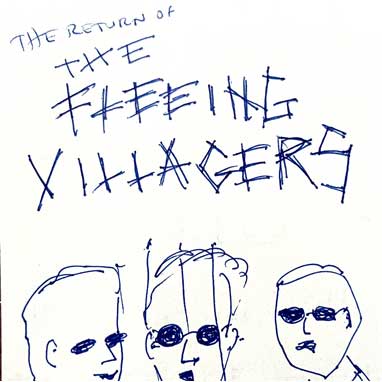
Based in the San Francisco Bay area, Fred Lonberg-Holm is an American cellist or, as he's described himself, anti-cellist. He studied with Anthony Braxton and Pauline Oliveros among others and is most well-known for his work in free improvisation and jazz, although he's also worked as a session musician and arranger with rock, pop and country artists. His latest release, the return of by The Fleeing Villagers, is a savage collage, a punk/noise juggernaut of an album which holds a mirror up to the current state of the USA. You've been warned. I like it and, indeed, it deserves to achieve some sort of cult status. He also figures on another recent release, a collaboration on the 4daRecord label which is, let's just say, a more sedate affair. The title, Convergência do Vôo translates as 'flight convergence'. It describes a meteorological phenomenon, much prized by glider pilots, whereby two air masses meet, forcing air to rise and thereby enabling gliders to gain altitude. I guess it's intended as a metaphor - and it's a good one - for the experience of improvising as part of a group. On it, Lonberg-Holm loops the loop - not for the first time - with fellow string players João Madeira and Carlos "Zíngaro". As a trio of string-players they've made at least a couple of albums in the past on which they've collaborated with a fourth musician (one features Swiss guitarist Florian Stoffner another, bass clarinettist José Bruno Parrinha). On this occasion, they're joined by drummer Bruno Pedroso.
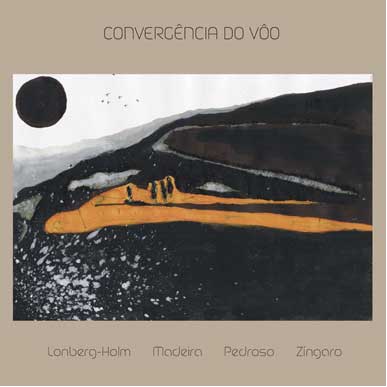
A classically-trained violinist, Carlos "Zingaro" has worked with Derek Bailey's Company and has appeared on over fifty recordings. Bass player and founder of the 4daRecord label, João Madeira, has conducted research into fado (a form of traditional Portuguese music) and worked across many genres, although his main focus is on free improvisation and composition. Bruno Pedroso has been involved in jazz drumming since 1995. As well as teaching, he's very active as a freelance performer.
The guy credited with the mixing, Gordon Comstock, deserves a mention, too. A balance between the instruments has been achieved which allows all kinds of textural nuance to come through. And there's plenty of it, even though the music is often - but not always - fast-paced and dense. There's a lot of subtle shading going on, and, as I hear it, there's an improbably lyrical edge to it. Pedroso's drumming effortlessly joins in the conversation, creatively seeking out - and finding - common ground with the strings in ways I imagine you could only achieve by actually doing it in real time and, indeed, there's a sense of seat-of-the-pants discovery to the music which adds to it's forward drive.
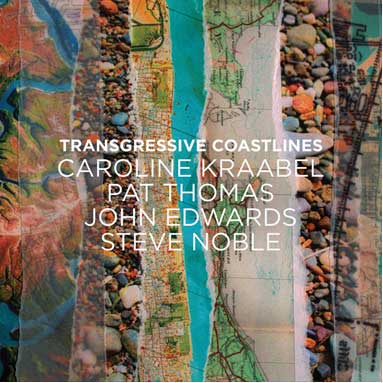
Transgressive Coastlines, the latest release - at time of writing - from Shrike Records, brings together the formidable quartet of Caroline Kraabel, John Edwards, Pat Thomas and Steve Noble. Born in Seattle, Kraabel moved to London in her teenage years and has been a fixture in the free improvised music scene ever since. For almost five years, she had her own programme on Resonance FM, Taking a Life For a Walk, in which she wandered the streets of London with her sax and her children. Among other large-group compositions, she created, for the South Bank Centre, Saxophone Experiments in Space, a 'site-specific ambulant composition for 55 saxophonists'. She's also been involved with the London Improvisers Orchestra and, in addition, has regularly worked as half of a long-standing duo with bassist John Edwards. Obsessed with sound from an early age (his brother played the drums, which intrigued him), Edwards took up the bass guitar in his teens, switching to the double bass in his twenties. He's played with likes of Evan Parker, Derek Bailey, Lol Coxhill and Peter Brötzmann among many others. He's said of improvisation: 'the establishment - by which I mean people in offices, suits and government - maybe want people to do nothing. They want to keep people drugged up with the banal, working, doing the same thing. Maybe free music upsets that'. Pat Thomas began playing the piano when he was eight and started to play jazz piano in his teens. He went on to develop a style of his own, drawing on free jazz, improv and new music. As Rae-Aila Crumble put it on Bandcamp Daily, 'The music he releases is both transcendent and grounded, rooted in his Muslim background and fascination with Islamic mysticism, as well as the histories of jazz afronauts like Sun Ra. Browsing through his … catalog feels like tapping into the secrets of the universe, similar to the way jazz historians describe Coltrane's discography as always searching for something.' Drummer Steve Noble got his first drum kit when he was twelve. He was mainly self-taught, but then, as he explained in an interview with Chris Searle for the Morning Star, 'In 1979 I met Nigerian drum master Elkan Ogunde and we played many concerts [and] workshops together - a great learning experience. By the mid-80s I was organising concerts and festivals and performing with Sheffield guitarist Derek Bailey, another huge influence'. Since then, he's worked with a wide range of musicians and toured extensively throughout Europe.
Like that of the album, the two-word titles of the three tracks on Transgressive Coastlines all suggest surrealist word-play. In the first track, 'Dark Rainbow', the quartet create a complex texture that veers between the polyphonic and the pointillist. You could think of the musical colours here as a rainbow - there are dazzling moments of bright light - but there are others in which the music reaches a point of near stasis which might be thought to invoke the visual impossibility of the title. At first fragmentary, the music of the second track ('Volcanic Tears') gradually becomes more dense. The musicians trade explosive gestures which build into something more sustained, at times static, even, only to be sent off in new directions by further explosive activity. The third track ('Diamond Ashes') again begins with fragmentary explorations, but this time the music settles into a sustained monolith of sound. A pulsing chord from Pat Thomas within it becomes increasingly distinct, transforming the monolith into a series of repeated chords. It finally comes to an end, but no-one seems to want to move away from the zone they've created. The repeated chord idea makes a comeback and the sax, bass and drums continue to pursue their close but inventive orbits around it.
Listening to it all for a second time, I was struck by the sheer virtuosity. Of course, virtuosity isn't essential to good music (it can even become a substitute for real content), but you get a real sense listening to this that you're listening to four seasoned musicians in total command of what they do while, at the same time, still finding fresh and inventive things to say.
Which brings me on to LliFT #18. Just to remind us, LliFT are an 'inclusive community group giving individuals the opportunity to play freely improvised ensemble music on a regular basis in North Wales'. It's only a few weeks since I was writing about #17, saying how it was one of the best LliFT albums yet. #18 carries on where #17 leaves off. One might think that after an outfit putting out so many albums in quick succession, one might detect a note of tiredness, a drop off in quality. Nothing, however, could be further from the case. What we have here is well over an hour of immersive musical landscapes packed with creativity. Listening to it, I was reminded of M John Harrison's Light Trilogy: not only on account of the enthralling strangeness of both, but on account of a striking passage in which the book describes how different civilisations living in different parts of the galaxy developed space travel independently of each other: 'Every race they met on their way through the Core had a star drive based on a different theory. All those theories worked, even when they ruled out one another's basic assumptions. You could travel between the stars, it began to seem, by assuming anything.' What he says about space travel here could also, in many ways, be said about the world of improvised music. People navigate musical space with often very different musical 'star drives': you can, for example, put together a small group of the most experienced improvisers (as in the case of TC), or, like LliFT, create an 'inclusive community group'. Neither is a recipe for success or failure, although, in the case of the albums here, both more than succeed.
Dominic Rivron
LINKS
the return of: https://fredlonberg-holm.bandcamp.com/album/the-return-of
Convergência do Vôo: https://joaomadeira.bandcamp.com/album/converg-ncia-do-v-o
Transgressive Coastlines: https://shrikerecords.bandcamp.com/album/transgressive-coastlines
LliFT #18: https://recordiaudukes.bandcamp.com/album/llift-18
.

It might be a dream repeated, unclear in its own right, perhaps within a dream held from another night, wild with words but always coherent for opening doors in that world. Tenses get muddled up, and a long sequence of numbers will surely mean a winning lottery ticket in the morning, or temptation to join you in bed.
Asked with gravitas to remember a name that makes perfect sense in the present night, and that will be Googled tomorrow with little result, I still hope to dispel blurriness, plead with turbulence and dispersion. "Paradisial" retains the original inflection, but we wise people think "heavenly" preferable to ignite the erotic in a subtitle.
On a summer stroll, we will be gifted the sound of birdsong and the very last pear blossom. With joy and relief, we will finally hear what they sing of and mean, their lyrics of two regular syllables or more. I will create a new season just for sleep, for a space where I do not have to repeat myself, to not have lips follow mine in silent imitation, not to be counted on fingers one, two, three, as if I and larger figures needed to be contained. Ah, to be seen in my language, from my best side!
Melisande Fitzsimons
Picture Rupert Loydell
.

Alan Dearling writes:
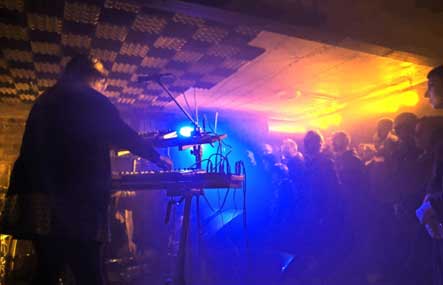
A great celebration of live music at a great Independent Music Venue. The Pale Blue Eyes' gig at the Grayston Unity in Halifax created an almost perfect marriage of music. First up, Warm Parts provided a wall of sound, a dark undertow of Kraut-rock styled drum-driven intensity. In my mind's eye I was taken back to the late 1960s when Hawkwind wereAlan Dearling blowing minds with pummelling, psychedelic waves of sound. Warm Parts received an enthusiastic response from the nicely packed crowd, which is not always the case for support bands. They are certainly continuing and sustaining their musical journey into the oeuvre of outsider, psychedelic weirdness - noise-rock a little akin to bands such as Wooden Shjips.
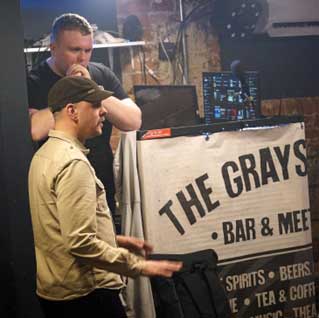
Rachael explained to me: "The band was conceived in early 2024 by myself, Rachael Elwell (synths, programming, theremin and visual artist), and I quickly recruited Dan Smith (guitars), who had moved in similar musical and creative circles, performing in various DIY and experimental bands in and around Manchester in the early 2000s. With the sound evolving and a shared desire for having live drums, we were introduced to Bryn, who, after hearing some early rehearsal recordings was keen to add to the group. With his shared musical background and style he quickly became an integral part of the band's ever evolving sound."

Warm Parts suggest that these are online sites where you can hear Warm Parts' 'Special Square' EP (these are not clickable links):
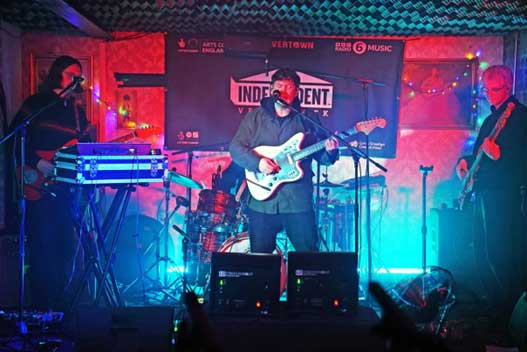
The Pale Blue Eyes arrived on stage. They are mesmerising, professional, polished, offering propulsive rock music with a high melodic content, whilst providing quite an adrenalin rush…
Matt Board is a suitably charismatic front-man and singer with PBE, who already have a significant fan-base and much support from BBC Radio 6 Music. Matt and myself have met up before, back in the halcyon days of music in Devon's town of Teignmouth, during the advent of Muse and the other local favourites, The Quails.
Pale Blue Eyes say that they are:
"Born of a cross-pollination between Totnes and Sheffield, Pale Blue Eyes have been steadily grafting over a number of years to exact their modernist pop vision.
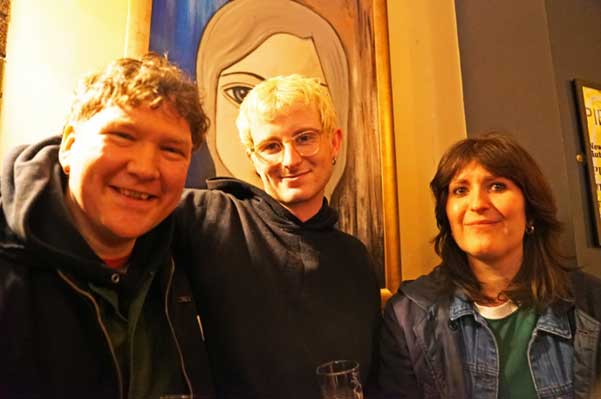
At the ship's helm, Matt and Lucy Board are a genuine marriage of two stylistic perspectives, each bringing unique sonic tropes to the table.

It is the pair's fascination with DIY ethic, retro synths and reminiscence that truly fuels their sound world, calling upon nostalgia and a captivating optimism.
The third part of the Pale Blue Eyes triad arrived when Matt and Lucy met bassist Aubrey Simpson at South Devon's Sea Change festival.
Together they've made three albums, with several tracks from the albums playlisted at BBC Radio 6 Music. They've played three Riley sessions, toured extensively in the UK and Europe, supported GOAT, Slowdive, Sea Power, The Editors, Public Service Broadcasting, The Midnight, FEWS and more…
The band released their third album in March 2025 on their own imprint, Broadcast Recordings. As with the first two albums the record has been produced by the band and finally mixed and mastered by Dean Honer. Honer has produced the likes of The Human League, Add N to (x) and Roisin Murphy and worked with countless Sheffield names from Jarvis Cocker to Tony Christie."
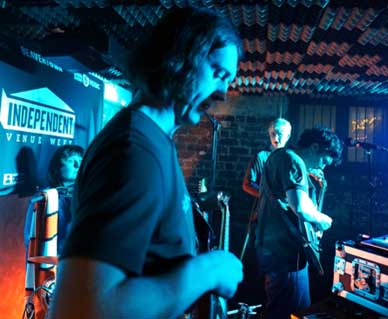
On the current live dates, producer and musician, Lewis Johnson-Kellett joins the trio of Pale Blue Eyes on guitar and synths/keys.
Live video: https://youtu.be/0SFd5nkpFoU
Online, Stephanie Pipe recommends Pale Blue Eyes:
"…saw them when they were on with Public Service Broadcasting a couple of years ago. Blew me away. Bought several cds and merch and am excited to see them back in Sheffield again soon…"
Pale Blue Eyes add: "Thanks to Marc Riley and Gideon Coe for including our track 'The Dreamer' in their best of 2025 show on BBC Radio 6 Music in amongst some class tracks! Cheers to them, and to those who tune in."
It was a great event to celebrate the importance and cultural contribution of the UK's Independent Venues.
'Signify'…jangling, guitar pop with disembodied vocals…
https://www.youtube.com/watch?v=vbf6EsAf8ag
'The Dreamer' (2025) …A thing of Floating effervescence… Official video: https://www.youtube.com/watch?v=wUbdIWLpGls
'New Place' film about making their PBE third album (2024):
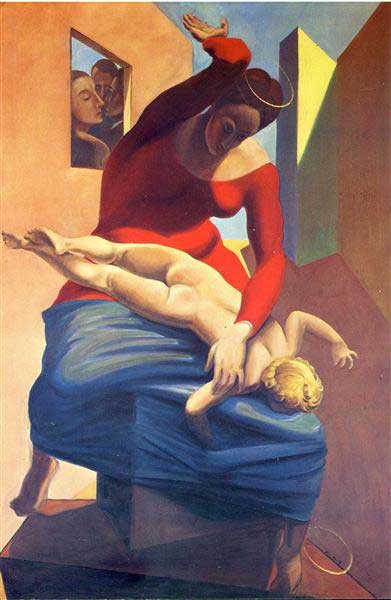
My favourite baby Jesus painting is the one of Mary
in her halo giving him a spanking in front of witnesses
by Max Ernst, the German, who helped found Dada
and became involved with Surrealism, quietly distancing
himself without rancour and being interned by the Nazis
when they invaded France and escaping to America
where he met up once again with Andre Breton and
Marcel Duchamp, briefly married Peggy Guggenheim
before going back to Europe, and becoming more abstract,
lyrical. I've met none of them. Not Max, Marcel or Andre.
Jesus, Mary, Peggy. Although I've read accounts. Seen
some photographs. Had clever thoughts. In the painting,
the baby Jesus is big and blonde and Aryan. His mother,
I imagine, is trying to beat some sense into him. At least
that's my understanding. The three witnesses
appear aloof, disinterested. Only present for posterity.
Andre Breton, Paul Eluard (the poet), Ernst himself.
Steven Taylor
Picture Max Ernst
.
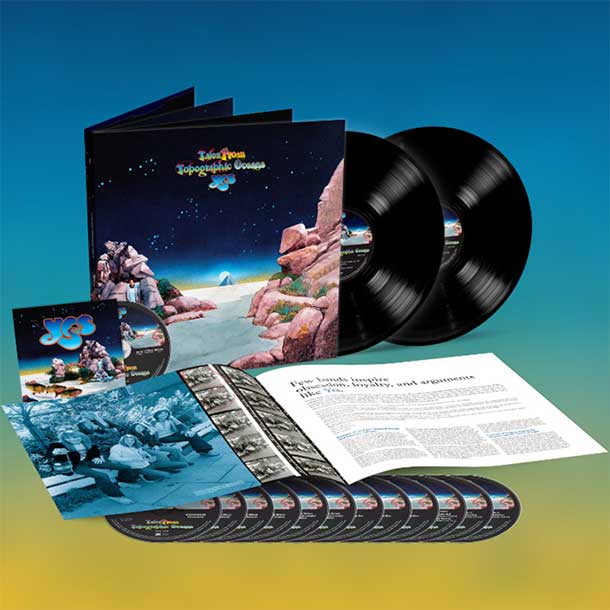
Tales from Topographic Oceans, Yes (Super Deluxe Edition: 12 CDS + 2 LP + blu-ray box set)
You just couldn't resist it, could you?
Umm, no. What?
Another reissue… The same old crap repacked for susceptible drongos like you.
It's not the same old crap, it's got new remixes, new versions, new recordings of works-in-progress and - finally - some live recordings of Yes' greatest, well one of their greatest, albums.
Waddya mean 'finally some live recordings'? I've seen your bloody CD shelf, loads of bootleg downloads. Surely you've got them already?
Well, yes, no. I mean, the ones I've got are actually better… and complete, but they weren't in Steve Howe's tapes library so they're not in the box. It's nice to have some official cleaned-up versions.
So nice you have to buy a 12 CD box?
Well, I like having the official stuff.
Even if that bloke Steve Wilson gets to mess it all up with his remixes?
Well, I shan't be playing those much. Or the instrumental versions he has done. Or the single versions.
Single versions? I thought the whole idea was to bore you into a mystical state through duration and repetition? Peak hippyshit.
Well, I wouldn't put it quite like that.
What would you put it like then?
Look, I explained this to you last time, Tales from Topographic Oceans is a double album based on a footnote in Paramahansa Yogananda's Autobiography of a Yogi. Jon Anderson, the singer, and Steve Howe, the guitarist, composed the initial suites of music at night on tour, and then the band all worked on it together.
But we all know it's boring as fuck. I mean Rick Wakeman dissed it from the word go, and it's renowned as overlong and overambitious.
But it's that ambition that makes it stand out, makes it unique. I mean, who else was releasing spiritual stuff like that?
Well thankfully, nobody else. One band is enough.
You're just ignorant. A bit of spiritual insight, too much wonder or magic and you run away scared.
At least I don't end up buying massive box sets full of stuff I already have.
And remixes and live tracks.
That you won't ever listen to again.
Maybe. Maybe not. And there's talk of them doing Relayer next in the box set series.
Woohoo. For goodness sake Johnny, reign it in. You spend more on box sets and reissues than beer.
That's a good thing isn't it?
Not in my books. Pub?
Oh, ok then. Can you carry this though, this box set is bloody heavy.
Ok, but it's your round.
Again?
Think of it as an outpouring of spiritual love.
Johnny 'soft summer mover' Brainstorm
.
Nick Drake
CELLO SONG
Strange face
With your eyes
So pale and sincere
Underneath you know well
You have nothing to fear
For the dreams that came
To you when so young
Told of a life
Where spring is sprung
You would seem so frail
In the cold of the night
When the armies of emotion
Go out to fight
But while the earth
Sinks to it's grave
You sail to the sky
On the crest of a wave
So forget this cruel world
Where I belong
I'll just sit and wait
And sing my song
And if one day you should see me in the crowd
Lend a hand and lift me
To your place in the cloud
© Nick Drake
.

Vintage Bus Day, 21st May 2023
Olive single-decker accelerates for Happy Mount
gentle hills beyond the bay, occluded mountains misted out
the panorama undulates a hypnotic content
a summer model of life and tide
all cast below Bare's tall tower
whose distinctive chequerboard exudes the decades passed -
though May blossom recurs forever, we hope
and whitens the greens on the way to Hest Bank
countering the daffodils all gone - and that melancholy shiver:
how many Springs?
Gateways and gardens to Bolton-le-Sands
where the Far Pavilion's exotic dancer, girded with praise
is suppliant for custom.
A white 20s house with a redbrick Plimsoll line
leads the way to a perfect jumble of Metroland
mellow red roof tiles and graceful windows
open meandering pathways in the mind
travelling a century back.
Here the stained-glass oval doorway myths
are undisturbed by the power catenary
which the railway weaves through this sweeping land
shallow rise and fall towards the border
freshened fields in lines of cut grass,
the smell, the greenness, another throwback to the past
but the future is here, we shouldn't waste time thinking of all that is lost
meeting Carnforth with the mind's cross-Channel drift . . .
to Sailly-sur-la-Lys.

Carnforth - twinned with Sailly-sur-la-Lys
© Lawrence Freiesleben, January 2026
.
4. [ 07-Feb-26 9:23am ]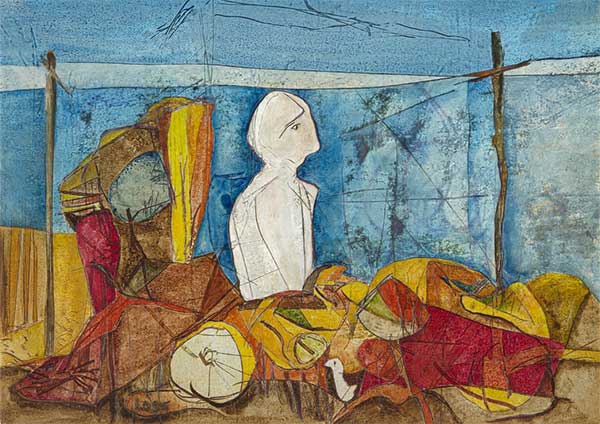
Please
keep
asking
how
far
down
must
I
go
They
never say
.
John Phillips
Picture Fred Schimmel
Another London [ 07-Feb-26 7:17am ] Excavating the disenchanted city
by Hari Kunzru
Excavating the disenchanted city
by Hari Kunzru
The North Prospect of the City of London and Westminster (as seen from Parliament Hill), 1712, detail of an engraving by an unknown artist © The Trustees of the British Museum.

A painting depicting the arrival of Brutus to England, the slaying of giants, and the founding of a city, possibly London, fifteenth century, by an unknown artist © The British Library/akg-images
It's not so much where to begin as when, though in London the distinction between time and space broke down centuries ago. There's a cast of wanderers, visionaries, and itinerants, the self-educated and self-published, a long lineage of cranks and outcasts, mostly penurious, always opinionated, stretching away into the mists of pseudohistory. If you go back far enough you end up right at the beginning, with King Brutus, great-grandson of Aeneas, defeating a clan of giants and founding a settlement he named New Troy. The giant Brân the Blessed's head, which spoke for many years after it was severed, lies buried under a white hill, on top of which the Norman conquerors built a fort, known to later generations as the White Tower, or just the Tower of London. The name London comes from the Llandin, a sacred mound now called Parliament Hill. The London. Or perhaps it originates with King Lud, the carnivalesque warrior and giver of feasts who was bold enough to rename New Troy after himself. Kaerlud became Kaerlundein, and eventually London. Of course, if you indulge in such etymologies, you'll find yourself chased down alleyways by angry professors and cornered in the rookeries, the most intellectually disreputable of the city's slums. Nothing about this London, the London, survives the scrutiny of decent folk. It is a hive, a warren, lousy with junkie poets and readers of tarot cards, autodidacts prone to exaggeration and outright deceit.
Brân's head was buried facing France, though some say King Arthur dug it up and threw it into the sea, because he wanted everyone to know that he and he alone was the protector of the island kingdom. Without Brân's watchfulness, it was probably inevitable that the French would sneak across the Channel. You can see them in a grainy photograph taken in September 1960, outside the Sailors' British Society in Limehouse, eight men and a woman, walking toward the camera, dressed in tweeds and overcoats. They are Parisian intellectuals—and not just French; they are Belgians, Dutch, Danes, and Germans, participants in the fourth conference of the Situationist International, an avant-garde group fond of the trappings of bureaucracy, heckling at boozy meetings, and denouncing one another for perceived artistic and political transgressions. They are fascinated by this impoverished district of docks and shabby warehouses, associated in the popular imagination with Asian sailors, white slavery, and cholera. In 1955, some future Situationists had written to the editor of the Times of London, complaining about the redevelopment of the area, which had been pulverized by the Luftwaffe during the Blitz:
It is inconvenient that this Chinese quarter of London should be destroyed before we have the opportunity to visit it and carry out certain psycho-geographical experiments we are at present undertaking.
In the first issue of the publication Internationale Situationniste, "psychogeography" is defined as "the study of the specific effects of the geographical environment, consciously organized or not, on the emotions and behavior of individuals." This might sound bloodless, but for the Situationists it was part of a utopian revolutionary program. The small band of café radicals sought to overthrow not just a government but the entire global system, which relied on what they called the "organization of appearances," or simply "the Spectacle." As the explosion of consumer society followed a period in which totalitarian propaganda had mobilized millions for war, they were among the first to understand mass media as a subtler means of social engineering. Advertising, film, television, fashion, and pop music were, they theorized, useful to the interests that controlled them because together they wove a kind of fascinating screen—or Spectacle—behind which the actual operations of power could be hidden. Pacified citizens had been reduced to dazzled consumers, unable to even see what was going on, let alone understand or oppose it. "The organization of appearances is a system for protecting the facts," one member, Raoul Vaneigem, wrote. "A racket."

"Whitechapel High Road, 1965," by David Granick. © London Borough of Tower Hamlets/Tower Hamlets Local History Library and Archives
Sixty years later, the Spectacle saturates us in ways the Situationists never imagined. Online platforms structure our personal relationships; algorithms nudge us toward the platform owners' preferred choices. "Intelligence" is embedded into everything from our phones to our kitchen appliances. But back in the Sixties, the Situationists saw the physical environment of the city as an expression of the mass society created by consumerism and governed by the Spectacle, and they felt power closing in around them: "All space is occupied by the enemy. We are living under a permanent curfew. Not just the cops—the geometry."
As a teenager growing up in London, I experienced the Spectacle's rapid intensification. I would go out with friends to a burger restaurant in Covent Garden that had video screens on the wall, a stunning innovation in Eighties Britain. In between MTV clips, a camera would roam the room, and we would fleetingly see ourselves onscreen, an experience that felt edgy and utterly modern. Then we would go home on the Tube, waiting on platforms strewn with rubbish because the bins had been removed to stop the IRA from placing bombs in them. Later, after some major terrorist attacks on financial targets, the City of London erected a security radius known as the Ring of Steel. By the mid-Nineties, London was said to have more security cameras than any other city in the world.
In the years when the Ring of Steel was growing around London's financial district, psychogeography was also in the air. Everyone seemed to be interested in exploring the fabric of the city, trying to excavate its strange atmospheres and hidden meanings. I knew people who were teaching themselves urban climbing, trespassing into abandoned buildings as a form of artistic action. Others were involved in an anticapitalist movement called Reclaim the Streets, or were steeping themselves in countercultural histories. My friends and I cycled along canal towpaths and danced at warehouse raves that were advertised on pirate radio stations whose transmitters were concealed on the rooftops of council tower blocks. There was a sense that a change was coming to London. We told ourselves it was the impending millennium, the new thousand-year cycle that the government was celebrating by building a giant dome on the Greenwich Peninsula. In retrospect, I think we sensed that we were living our last moments in the material world, before all our visions migrated online.
Ileft London for New York eighteen years ago. For a long time I didn't miss it. Recently I have found myself thinking about it more often, and sometimes even dreaming about it. In these dreams, I walk down alleyways toward mysterious glowing lights. I wait outside the kind of seedy minicab offices that used to exist before the advent of ride-hail apps. My old friends have moved on; the places I used to know are gone or have passed on to the next generation. I am not nostalgic, exactly, but lately I have been preoccupied by something that I used to believe I had found in London—a city within the city, above and beneath and between the everyday. This visionary city had a history and geography that didn't correspond to the official version. It was a prism, a maze in which I thought I discerned possibilities, things that might have been or ought to have been, or that I could imagine into existence. In the era of GPS and social media, where every location has already been rated and reviewed and nothing is real unless it is captured by a cell-phone camera, is it still possible to fall through the cracks into this other world?
For many years, as I took the train to Portobello, I would pass a giant piece of graffiti running along a wall between Westbourne Park and Ladbroke Grove stations. It had been there since at least the Seventies, long enough to have become a landmark: same thing day after day—tube—work—dinner—work—tube—armchair—t.v.—sleep—tube—work—how much more can you take?—one in ten go mad—one in five cracks up. It was the work of a group called King Mob, effectively the British chapter of the Situationist International until its members were expelled in one of the frequent purges. Malcolm McLaren, future manager of the Sex Pistols, supposedly participated in an early King Mob action. Jamie Reid, the graphic designer who made the famous image of Queen Elizabeth II with a safety pin through her mouth, did the cover for the first English-language Situationist anthology.

A "God save the Queen" button based on the 1977 artwork by Jamie Reid © Mick Sinclair/Alamy
Reid's promotional poster for the Pistols' single "Pretty Vacant" shows two buses, their destinations nowhere and boredom. In "God Save the Queen," John Lydon snarls that there is "no future." With this lyric, he channeled the Situationist critique that shopping and entertainment were somehow substituting for a more vivid and authentic life into the nihilist posturing of punk—but the full line is "there's no future in England's dreaming," which hints at something altogether more romantic and less rational. When Situationism came to London, it fused with a subterranean current of mysticism that flows through the city like one of its "lost rivers," the Fleet or the Tyburn, long since buried under the surface.
In Derek Jarman's 1978 film Jubilee, the punk-scene celebrity Jordan cheekily refers to a Situationist slogan that had appeared on the walls of the Latin Quarter in Paris during the uprising of May 1968.
Our school motto was Faites vos désirs réalités. Make your desires reality. . . . In those days, desires weren't allowed to become reality, so fantasy was substituted for them: films, books, pictures. They called it art. But when your desires become reality, you don't need fantasy any longer, or art.
The end of alienation would mean nothing less than a reenchantment of reality. In the film, Jordan is literally a magical vision. Jubilee opens with Queen Elizabeth I summoning her court magician, Dr. John Dee, to ask him for "some pretty distractions which you call angels." Dee looks into the black depths of his scrying mirror and summons a spirit who grants the queen a vision of the future. The film cuts to a desolate South London street, the sound of machine-gun fire in the distance. A gang of punk girls is beating someone up. Elizabeth II, whose Silver Jubilee was celebrated with much pomp and circumstance in 1977 (giving the film its title), is mugged inside a shed on some waste ground, her crown stolen by feral punks. Transported to the scene, her royal ancestor looks down in horror.
Dee's black mirror is now in the British Museum. As a child, when I wanted to be an archaeologist, the museum was one of my favorite places. My mother would sit outside reading a book while I wandered the halls, visiting the Rosetta Stone or the helmet and sword from the Anglo-Saxon ship burial at Sutton Hoo. In my twenties, I would sometimes write in the museum's Round Reading Room, a huge open space beneath a dome inspired by the Roman Pantheon. Ghosts of previous readers flitted around the card catalogues: Arthur Rimbaud, Mark Twain, Karl Marx, Marcus Garvey, Bram Stoker, Virginia Woolf. If London had a psychogeographical center, it was not Trafalgar Square or Buckingham Palace but this room, the navel of an imperial treasure house that for more than a century was also a magnet for the kind of oddballs who liked to "do their own research."

A photograph of the Reading Room of the British Museum while under
construction, 1855, by William Lake Price © The British Library/Bridgeman Images
The reading room closed in 1997, and the library moved to new premises on Euston Road. Dee's mirror is easy enough to find, lying in a case with other magical paraphernalia, including a knife used as a prop by a charlatan alchemist, the tip of the blade "transmuted" into gold. The mirror is actually an Aztec ritual object, a polished obsidian disk brought to Europe soon after the Spanish conquest. Small and undramatic, it is the sort of thing that most tourists pass by. I have come back to London to lose my bearings, to lose myself, but all I can make out in its depths is my own reflection. I remember that in real life, Dee saw no angels. It was his assistant, Edward Kelley, who had—or claimed to have—the gift of sight. I am stubborn. I stare harder, bending down in front of the glass case.
The black mirror is where I begin whatever it is I'm doing back in London. An action, a ritual. Perhaps a spell. The Situationists practiced something they called the dérive, usually translated into English as "drifting," an "aimless stroll" that served as a tool for analyzing the "psychic atmospheres that power had produced." "In a dérive," wrote Guy Debord,
one or more persons during a certain period drop their relations, their work and leisure activities, and all their other usual motives for movement and action, and let themselves be drawn by the attractions of the terrain and the encounters they find there.
What I have in mind is something like a dérive, except not quite, because I have a general route in mind, about eight miles southeast to Greenwich, the site of the prime meridian, the line of zero degrees longitude that the British Empire invented to divide the world into Eastern and Western Hemispheres. I will connect the museum to the meridian, two sites of traditional power. And perhaps in so doing I will reenchant reality, or at least my corner of it.
In the streets of Bloomsbury, like barnacles on the museum's huge hull, are shops and services catering to the collecting impulses of the habitués of the old library, the men (and a few women) I used to see huddled over their solitary lunches in the local cafés. There are dealers in coins and stamps and antiquities, and, above all, books. At the Atlantis on Museum Street, an occult bookshop that has existed since the Twenties, I am shown a massive volume of transcriptions of Dee's conversations with angels. It must weigh ten pounds. It's an expensive volume, and I have a long way to walk, so it isn't that hard to say no. I put it back on the shelf and wander toward Soho. This is a detour—Greenwich is in the opposite direction—but of course getting to Greenwich is not the point, and it feels somehow appropriate to start out by going the wrong way.
In 1802, seventeen-year-old Thomas De Quincey, the son of a wealthy merchant, ran away from his Manchester boarding school. He made his way to London, where he slept for a while in an empty house on the corner of Greek Street and Soho Square. "I found," he wrote in his Confessions of an English Opium-Eater, "that the house already contained one single inmate, a poor friendless child, apparently ten years old." The building where De Quincey and the nameless little girl huddled together under a scrap of rug and an old sofa cover has since been demolished, replaced by a Barclays bank. As I walk past, someone is asleep in the doorway under a construction of cardboard boxes.
At night, De Quincey would wander up and down Oxford Street, a major East-West thoroughfare. Now one of the busiest shopping streets in Europe, it was in the first years of the nineteenth century a zone of pubs and other places of entertainment, notorious as the route that condemned prisoners took from Newgate Prison on their way to be hanged at Tyburn. De Quincey's companion on these walks was Ann, a teenage prostitute whom he portrays as an almost saintly figure, crediting her with saving his life "when all the world had forsaken me." When he left London, he promised to return and help her, expecting to be back in a week. They never saw each other again. Ann was lost in the "great Mediterranean of Oxford Street." For the Situationists, the pair were the Adam and Eve of a new sensibility. As an essay in Internationale Situationniste put it:
The slow historical evolution of the passions reaches a turning point with the love between Thomas De Quincey and his poor Ann, separated by chance and searching yet without ever finding one another . . . through the mighty labyrinths of London; perhaps even within just a few feet of each other.
This was a form of love and loss brought about by the new social relations of the crowded nineteenth-century metropolis. In the twenty-first-century city, things have inverted. It is trivial for runaway teenagers to stay in touch with one another, but hard to escape the eyes of others—security cameras, facial-recognition technology, and all the rest of the apparatus of surveillance and control.

From Songs of Innocence and Experience, copy Y, plate forty-six
(orange-brown ink, watercolor, and shell gold), by William Blake, etching 1794, print c. 1825. Courtesy the Metropolitan Museum of Art, Rogers Fund, 1917, New York City
"If the doors of perception were cleansed, every thing would appear to man as it is, Infinite." So wrote the poet William Blake, who is a sort of tutelary spirit for London's seekers and visionaries. Blake's birthplace at 28 Broad Street has been obliterated by a brown granite tower, a monument to the worldview of the City of Westminster's postwar planning department, but his influence is everywhere in the other London. One of Blake's disciples was a young Welsh writer who arrived in London in the 1880s and took a job trawling through a garret full of old occult books, writing descriptions for a publisher's catalogue. Too poor to attend university, Arthur Machen received his education through bookselling and publishing. Per Machen, the garret contained volumes on witchcraft, Kabbalah, gnosticism, hermetic magic, and much else that "may be a survival from the rites of the black swamp and the cave or—an anticipation of a wisdom and knowledge that are to come, transcending all the science of our day."
Despite his esoteric interests, Machen grubbed up a career as a popular and prolific author. There is, he wrote, "a London cognita and a London incognita." He considered
the science of the great city; the physiology of London; literally and metaphysically the greatest subject that the mind of man can conceive. . . . You may point out a street, correctly enough, as the abode of washerwomen; but, in that second floor, a man may be studying Chaldee roots, and in the garret over the way a forgotten artist is dying by inches.
Machen's London was a descendant of Blake's, where angels perched in trees. It was intuitive, antirational, a city of visions glimpsed out of high windows and horrors lurking at the end of dark alleyways. "I didn't buy a map," says one of his characters, recalling his journey of discovery. "That would have spoilt it, somehow; to see everything plotted out, and named, and measured."
Farther east on Bloomsbury Way, I steer well clear of the commodified irrationalities of Serendipity Crystal, with its window display of sparkly geodes. I'm looking for the spire of St. George's, Bloomsbury, consecrated in 1730. You can see it in the background of William Hogarth's print Gin Lane, presiding fancifully over the slums of St. Giles. Two lions and two unicorns writhe at the base of a stepped pyramid. On top, instead of a cross, there's King George I, dressed as a Roman emperor. Its architect, Nicholas Hawksmoor, designed six London churches that have acquired a strange reputation. They were designed to have a "Solemn and Awfull Appearance," an aesthetic that the authorities hoped would intimidate the London rabble into faith or, failing that, compliance. Since the Seventies, Hawksmoor, a Freemason and student of ancient Egypt, has been spirited across the border into fiction, reimagined as a sort of dark magus of London, a figure who sought to control the city through architecture, binding it to the will of those he served.
"Hawksmoor was no Christian," says Sir William Gull, Queen Victoria's surgeon, in Alan Moore and Eddie Campbell's graphic novel From Hell. Gull is being driven by a coachman on a tour of London, which is marked by various sites of esoteric power. Gradually their route takes the shape of a pentagram. "Encoded in this city's stones," Gull says, "are symbols thunderous enough to rouse the sleeping Gods submerged beneath the sea-bed of our dreams." Gull has been commissioned by Queen Victoria to hush up a royal scandal, but he will exceed his brief and commit the appalling killings ascribed to Jack the Ripper. A psychopathic misogynist and high-ranking Freemason, Gull sees these killings as a "great work," a ritual intended to enforce an ancient patriarchal order. Pyramids and obelisks are sun symbols, and Hawksmoor and his fellow Masons have positioned them round the city. " 'Tis in the war of Sun and Moon that Man steals Woman's power; that Left Brain conquers Right . . . that reason chains insanity." The pattern of spires, obelisks, and pyramids forms a pentacle "wherein unconsciousness, the Moon and Womanhood are chained."

Preparatory drawing (red chalk and graphite on paper, incised with stylus and verso rubbed with chalk) for the engraving Gin Lane, by William Hogarth, c. 1750. Courtesy the Morgan Library & Museum, New York City
Moore is best known as the author of the revisionist superhero series Watchmen and of V for Vendetta, the story of a dystopian near-future London and the source of the Guy Fawkes mask that became the symbol of the Anonymous collective of the 2010s. He is also a practicing ritual magician. Moore doesn't come to London anymore; in fact, he rarely leaves his house in Northampton, the town where he was born. On the phone, he describes to me a "borderland between the world of things that materially exist and the world of things that don't." It is, he says, "a porous borderland, because if we look around us, everything surrounding us started out as an idea in somebody's mind, the chairs we're sitting on, the devices we're talking on, the language we're speaking in, the carpet, the curtains, the view outside. We are living in our unpacked imagination. As I see it, it's the imaginary space which is the foundation of the physical world." I am struck by this. It is an inversion of the generally accepted chain of causality, wherein the material underlies the social and the airy castles of the imagination float somewhere overhead.
In The Waste Land, T. S. Eliot famously described Twenties London commuters as ghostly figures crossing London Bridge "under the brown fog of a winter dawn." His London was an "unreal city" that seems to have migrated out of imagination and into reality, a necropolis watched over by the security cameras of the Ring of Steel. Eliot's ghosts carried on down King William Street to where the clock of St. Mary Woolnoth "kept the hours / With a dead sound on the final stroke of nine." This is the second of Hawksmoor's churches I pass, crammed into a tight space on a corner near the Bank of England and the ancient Roman Temple of Mithras, whose excavated foundations now pulse with mystic power in the basement of Bloomberg's European HQ.
A few minutes from St. Mary Woolnoth is Leadenhall Market, a quaint covered arcade tenanted by little food shops and pubs frequented by city workers. The market is a high Victorian confection of glass and iron, popular with filmmakers seeking a little heritage color. Pass through it and there's a sudden and extreme transition, a textbook instance of the Situationist "division of a city into zones of distinct psychic atmospheres." The Lloyd's building next door is the hub of a different kind of market, the global insurance trade. The vast tower is like something you'd find on a prog-rock album cover, a postmodern steel god veined with external pipes and ducts. Going from Leadenhall to Lloyd's feels like a particularly violent kind of time travel, as if you're an H. G. Wells character spat into the future, except that it's some airbrushed Seventies fantasy version of it. The Lloyd's building is strong evidence for Alan Moore's contention that the imaginary is the foundation of the physical world. The engineers of the City of London seem to have been engaged in a collective hallucination, bringing the capitalist future into being out of the ether. Currently, they are devoted to financing (and insuring, and calculating the risks of) giant data centers and rockets to Mars, eruptions out of dog-eared science-fiction paperbacks into the real world.
Outside Liverpool Street station, a pedestrian crossing marks the invisible border that separates all this money and power from the poverty of the East End. Turning off Bishopsgate, I am confronted—that would be the word—by the pale façade of Hawksmoor's Christ Church Spitalfields. Even on a sunny day it is chilling, a bone-colored mass topped by a cruelly sharp spire. It seems impossible that such a building could be allowed to fall derelict, but by the Sixties it came very close to being torn down. Supposedly built over a plague pit, Christ Church looms over the Ten Bells pub, where at least two of the Ripper's victims were said to have drank before they were murdered. This is the kind of connection that vibrates in the psychogeographical imagination, which is essentially a form of productive paranoia, an experience of intense interrelatedness, of being at the center of a story that doesn't really want to be a story, that would probably rather be a map or a diagram.
Growing up nearby, the painter Leon Kossoff, son of Russian Jewish immigrants, could not escape the presence of the church, alien and haughty, in a district that had become an almost entirely Jewish quarter. One of Kossoff's charcoal drawings of Christ Church hangs in the living room of the writer Iain Sinclair's house in Hackney, a gift from the artist. John Berger compared Kossoff to Beckett, and a sense of existential terror is present in the drawing, a kind of darkness that tugs at me as I drink my tea. Sinclair is probably the most adept living navigator of London's subterranean currents. His mind is a tangle of occult connections, a rat king of red thread. He is also the most robust link between the visionary London of Blake and Machen and the avant-garde mappings of the Situationists. In the early Seventies, he was writing poetry and working as a municipal gardener, cleaning and tending to the public spaces of the East End. He'd met Allen Ginsberg when he came to town in 1967, and remembers sitting on top of Primrose Hill with him, "aware of Blake's vision of Jerusalem being put down there. And being incredibly engrossed by the Post Office Tower—which had just been built—I suppose, as a sort of phallic symbol." Around the same time, he was in a secondhand bookshop "when a woman came out of a room and looked at me and said you should read this." Sinclair produces the book, and I laugh, because "this" is an early edition of E. O. Gordon's Prehistoric London: Its Mounds and Circles, first published in 1914. I have a reprint of the same book in my backpack. It tells stories about King Lud and Brutus the Trojan as if they are reliable historical facts. Inside, there is a "plan of the London mounds" with a triangle of dotted lines drawn between Parliament Hill, the Tower of London, and other significant places. Prehistoric London was described by one appalled reviewer as a "bewildering pot-pourri of Keltic traditions." Its sources include medieval chroniclers, eccentric antiquaries, and no doubt many denizens of the British Museum's Reading Room. It is utterly bogus, and central to Sinclair's strange refraction of the city.
As Sinclair picked up trash in East End graveyards, which at the time were in terrible disrepair, he became increasingly sensitive to Hawksmoor's architecture of terror and magnificence, and to the gruesome history of the area. The result was a book called Lud Heat: A Book of the Dead Hamlets, published in 1975, which fuses Gordon and Blake and Ginsberg and De Quincey and Jack the Ripper and Hawksmoor and hundreds more sources into an extraordinary metaphysical cacophony, a vision of a London traversed by lines of occult power. Quoting Yeats, Sinclair tells me, " 'The living can assist the imaginations of the dead.' The great things are unfinished, and our job is to attach ourselves to them and honor them and make them available and carry on." This is an oddly subversive notion of tradition, the past as secret society. Lud Heat found its way into the hands of Alan Moore, who was tinkering with inchoate ideas about murder. "That drops into my lap," he remembers, "and suddenly I can see a whole new way of focusing upon place. It knocks my entire prose style sideways for about the next ten or fifteen years." Without Gordon, there's no Lud Heat. Without Lud Heat, there's no From Hell. This is how the living assist the imaginations of the dead, infusing reality with fiction and altering the meaning of a city.
From Sinclair's house in Hackney I cut through Whitechapel to Wapping, past the site of Execution Dock, where the bodies of pirates were displayed on a gibbet just above the waterline, left to decay until the third high tide. The next Hawksmoor church I pass is St. George-in-the-East. During the Blitz, nightly waves of German bombers were sent to destroy the docks. The River Thames bends round in a horseshoe shape, easy for a bombardier to target. St. George-in-the-East was hit, its interior destroyed by fire. In 1964, a new church was built inside the old shell. I walk through a gateway, under yet another of Hawksmoor's stark towers, and find myself in a bright, bland space that is hosting a mother-and-baby group, a row of prams lined up against one wall. It is another sudden change of psychic atmosphere, all bustle and chatter and civic modernism.
A little farther down the old Ratcliffe Highway, once the scene of murders and press-gangings, is Limehouse. A giant anchor decorates the traffic island outside the old Sailors' Mission, which has now apparently been converted to apartments. According to a very dry report published in Internationale Situationniste, the Situationists' time in Limehouse was mostly taken up with formal political debates. The German faction split from the others, calling for an immediate mobilization of avant-garde artists rather than trusting the revolutionary capacities of the workers. Arguments went on late into the night.
Across from the Sailors' Mission is St. Anne's Limehouse, the fifth of the six Hawksmoor churches. St. Anne's served the old neighborhood of Pennyfields, London's first Chinatown. This was a place where other Asians also found a home, notably lascars from India and East Africa, and ayahs abandoned by their English employers after the long sea voyage. The barrackslike Strangers' Home for Asiatics, Africans, and South Sea Islanders once stood on West India Dock Road, providing assistance (and Christian preaching) to Asian people who had found themselves stranded in a country that considered them alien and frightening.
The dissident German contingent published their impressions of the Situationist conference in their own journal, SPUR, a much more fanciful tale than the serious French account. It includes a collaged picture of a turbaned Indian delegation that looks like it was cut out from a magazine. Was this a way of representing people they had met in Pennyfields or, as with Dali, Peggy Guggenheim, and a papal nuncio, just an entry in a list of attendees who were not actually there? Like the French, the Germans were very excited to be in Limehouse, "famous from crime novels." Somewhere in this vicinity is the opium-den headquarters of Sax Rohmer's fictional villain Fu-Manchu, "the yellow peril incarnate in one man." An ambulatory confection of racist stereotypes, Fu-Manchu appeared in a series of pulp novels and films in the first half of the twentieth century. A persistent internet factoid links him, unverifiably, to a mysterious stone pyramid in St. Anne's churchyard, supposedly the entrance to his lair. The pyramid is real, and genuinely mysterious. It is neither a grave marker nor a monument to an identifiable person or event. The best guess seems to be that it was one of a pair intended as ornamentation for the church, but was never mounted. It bears a very worn heraldic crest and the words the wisdom of solomon. Just that, no more. "The Wisdom of Solomon" is the title of a biblical text, but not one that is canonical for Protestants. In other words, it is an inscription that has no business in an English graveyard. An esoteric tradition takes Solomon's wisdom to be the Ars Goetia, ritual magic used to summon and bind demons.
Leaving St. Anne's, I follow a riverside path down the western side of the Isle of Dogs. After the Blitz, there was virtually nothing left of the old docks that had connected London's merchants to the Empire, or the foundries and yards where great ships had been launched. It languished for decades; redevelopment didn't really get going until the Eighties. The life of the modern Isle of Dogs is away from the water, in the commercial zone around Canary Wharf. It has been years since I walked this path; I remember the obelisklike tower of One Canada Square as the ruler of the skyline, a monument to the financialization that followed the deregulatory Big Bang of the Eighties. In Iain Sinclair's Docklands novel, Downriver, published in 1991, a few months before the building's grand opening, the tower is imagined as an occult center in a near-future London that lies under the control of "the Widow," a grotesque avatar of Margaret Thatcher. Nowadays it's hedged in by other tall buildings, many bearing corporate logos; these labels give the cluster an odd, simulated quality, as if I'm looking at the map rather than the territory.

A photograph of Blitz air-raid damage inflicted on the west side of Eastern Dock, northerly view from the south end, London, by John H. Avery & Co., September 8, 1940 © London Museum/PLA Collection/John Avery
During the Nineties, there was a revival of an organization called the London Psychogeographical Association (LPA), which had briefly existed in the Fifties. The new LPA was understandably obsessed with the Isle of Dogs and the rapid transformation it was undergoing. After the election of a neofascist politician named Derek Beackon to the local council in 1993, the LPA released a pamphlet with the headline nazi occultists seize omphalos. An omphalos (Greek for "navel") was defined as "the psychogeographical centre of any culture, myth structure or system of social dominance." "Beackon is a dedicated Nazi occultist," wrote the LPA. "British nationalism is a psychic elemental which drains energy from living people in order to maintain itself as a sickly caricature of life." The LPA claimed that Beackon and his cronies had taken control of this magical site and were using it to win political power. The new councillor was in fact an "adept of Enochic magic," a follower of none other than John Dee, who had come to the Isle of Dogs in 1593 to perform a magical ritual to found the British Empire. All those great ships, their holds full of human cargo, had been conjured up in an unremarkable spot in present-day Mudchute Park. Now, with its fantasies of mass deportation, the British National Party was tapping into a four-hundred-year-old darkness.
In the other London, truth is slippery. The "omphalos" in Mudchute Park, a little circle of cobbles visited sooner or later by most of London's psychogeographically inclined, can date to no earlier than 1868, when the dock was first developed. In Dee's day the site was featureless marshland. Alan Moore is frequently contacted by people who believe that the pentagram he drew across London in From Hell reveals some real ancient conspiracy. He lets them down gently. "If you've got a small enough map and a thick enough magic marker, any three points are in line. To me it's not so much about ley lines or earth energies or whatever, because I don't see how that works. What I do see is that if you link up three places on a map, then you are drawing a line between three points of information, points which perhaps were not connected before. You are considering those points of information in relationship to each other."
On a deserted stretch of walkway at the southern tip of the Isle of Dogs, I spot a man hanging over the water, clinging to the railing. I worry that he's about to jump off. Then I see that he's hanging on to the fence with one hand and wielding a trowel with the other. He is planting something in the narrow strip of earth in between the metal railing and the lip of the embankment. The sight is so strange, and he is so intent, that I hesitate to break his concentration. I hover, and when he finally looks up, I ask him what he's doing. They're succulents from his garden, he tells me. If they take, they'll grow all the way along. We are completely alone, in an eerie non-place of silent streets and residential blocks with maritime names. The only other people I've seen for some time were a group of young East African men taking pictures of themselves next to a sports car.
I am on the stairs that lead down to the Edwardian foot tunnel that runs under the river from the southern tip of the Isle of Dogs when I realize that the gardener is the one I've been looking for. Here is someone with a vision of another London, green and abundant, a vision he is dreaming into being. I should have talked to him properly, but I have missed my chance. My footsteps echo on the tunnel's white tile as I trudge along, knowing that it's too late to go back. At the southern end, I take an elevator and find myself in Greenwich, surrounded by tourists. After the sepulchral silence of the Isle of Dogs, it's a shock. I walk across a sort of piazza, under the tall masts of the clipper ship Cutty Sark. The last of the Hawksmoor churches is just around the corner. This is a wealthy neighborhood, bustling with shoppers. I look at St. Alfege, which is trim and well-kept, though just as stark and bony as its sisters. In the graveyard, I sit down on a bench, then get up to help a couple chase an excitable terrier, which they've foolishly let off the leash.
In this story, I should continue my walk up the hill through Greenwich Park to the prime meridian, making the magical link to the British Museum. I should describe how a circuit is completed; how a metaphysical light switches on in my head. But something has shifted, some energy has drained away. At times on my walk, I have felt like a ghost, existing more in the past, or an imaginary past, than the present. High on a wall on Fournier Street, beside the arrogant spire of Christ Church Spitalfields, I had seen an eighteenth-century sundial bearing the inscription umbra sumus: "We are shadow." Yes, I thought as I walked underneath it. That is all I am. I have passed an unusual number of street-corner memorials, laminated sheets of paper attached to railings, surrounded by wilted flowers and candles; photos of smiling young men who met untimely deaths in nondescript spots, deaths that the city will forget as soon as the memorials are taken down. Then I met the magus planting his hanging garden by the river, but I wasn't sharp enough, quick enough, to catch his message. Now the sense of being in touch with life and death has gone, and I can feel normality falling over me like a blanket.
I remember something Alan Moore told me: "It is so important to reenchant these places that we live in, to actually give back the energies that have been bled out of them. An empowered landscape creates empowered people, and the reverse is also true. A disempowered landscape, stripped of its history, stripped of its meaning, will produce people who are stripped of their history, of their meaning. So yes, if magic is anything, it has to be political."
Though I have fallen away from my intention, failed to complete my quest, I have convinced myself that the other London is still possible to find, and it is important to keep looking for it. But for now I am standing at the bus stop, waiting for the number fifty-seven. It begins to rain.
 From the
Subscribe or log in to access this PDF:
From the ArchiveTimeless stories from our 175-year archive handpicked to speak to the news of the day.
Email address Related Another London
Excavating the disenchanted city
by Hari Kunzru
Another London
Excavating the disenchanted city
by Hari Kunzru
 The Sanctuarium
The Philippines reckons with its war on drugs
by Sean Williams
Hari Kunzru
The Sanctuarium
The Philippines reckons with its war on drugs
by Sean Williams
Hari Kunzru
's latest novel is Blue Ruin. He teaches in the creative writing program at New York University. This essay is part of a series supported by the John Templeton Foundation.
Tags British Empire David Granick Derek Jarman dérive Jamie Reid King Mob London Mass media Psychogeography Sex Pistols T.S. Eliot Thames River The Situationists Thomas De Quincey William Blake William Hogarth William Lake Price More from Hari Kunzru Lo-fi Beats for Work or Study
I've written in many places, some wonderful, others makeshift or uncomfortable. I've written on trains and in hotel rooms, at ergonomically perfect desks and on laptops balanced on my knees.…
Above Politics
For all those involved in the publication and dissemination of ideas, freedom of expression is the foundation on which our work depends. Like many writers, I have campaigned to defend…
Be Here Now
On March 14, 2010, the artist Marina Abramovic sat down at a small table in the center of a gallery in the Museum of Modern Art in Manhattan. Visitors were invited…
Thanks to
Lo-fi Beats for Work or Study
I've written in many places, some wonderful, others makeshift or uncomfortable. I've written on trains and in hotel rooms, at ergonomically perfect desks and on laptops balanced on my knees.…
Above Politics
For all those involved in the publication and dissemination of ideas, freedom of expression is the foundation on which our work depends. Like many writers, I have campaigned to defend…
Be Here Now
On March 14, 2010, the artist Marina Abramovic sat down at a small table in the center of a gallery in the Museum of Modern Art in Manhattan. Visitors were invited…
Thanks to

- Current Issue Advertising Permissions and Reprints Internships Customer Care
- Contact Careers Classifieds Help
- Archive Submissions Find a Newsstand
- About Media Store Terms of Service Privacy Policy
 Ma Yongbo Poetry Road Trip — Summer Tour 2025 volume 34 [ 07-Feb-26 7:16am ]

Ma Yongbo 马永波, Reflecting on Dialectic Translational Poetics: the conversations of Bear and Kitten.
Reflections on Reading Helen's Many Poems for Me
观海伦诸多赠诗有感
Must you insist on stabbing
my body, which is already leaking everywhere
with your Western fountain pen
until it becomes a sieve of holes?
Yet I only sketch you with a soft brush
into spring mountains like ink-dark brows
and autumn waters rippling with sidelong gazes.
The West's mirage of the East
you've draped over my crumbling old house—
layered roofs, stacked floors, an extra storey
suddenly appearing from the empty sky,
yet unable to store my mouldy scrolls and ideals.
Yet I paint you only a water-ink Troy:
its walls are strokes of soaked black,
those galloping or overfed heroes are but tiny graffiti.
Meanwhile, you've long sailed away lightly
on an Eastern boat of light
through fallen leaves of generations.
The collars, rain, and darkness you penned
cut sharp as Cambridge's slanting rooftops.
I rewrite them with my brush
till they soften like rice paper,
can be folded into white Kongming lanterns
soaring higher and higher, until they turn to tangerine stars.
Dawn, March 27, 2025
Response Poetry By Ma Yongbo 马永波
Response Poetry Translated by Ma Yongbo 马永波
观海伦诸多赠诗有感
Reflections on Reading Helen's Many Poems for Me
你非得用你那西方的钢笔
把我本就四处漏风的身体
戳出无数个窟窿,才肯罢休吗
而我,只是用柔软的毛笔
把你描得春山如黛,秋水横波
西方对东方想象的海市蜃楼
被你盖在我年久失修的老房子上
叠屋架床,凭空多出一层
但又无法存放我那些发霉的卷轴和理想
而我只为你画一幅水墨的特洛伊
它的城墙是一块黑色饱墨
那些驰骋或吃撑了的英雄
不过是一些小小的涂鸦
而你,早已在纷纷世代的落叶中
乘坐来自东方的光之船飘然远引
你用钢笔写下的衣领、雨和黑暗
锋利如剑桥的屋脊倾斜向上
我用毛笔把它们又写了一遍
让它们像宣纸一样柔软
可以叠成一盏盏洁白的孔明灯
越飞越高,直到变成橘色的星辰
2025年3月27日晨
马永波
Tangerine stars
—for Yongbo
橘色的星星
——答永波
as the orange lanterns float higher, as tiny boats,
we two are lifted by a gentle warmth.
Light within paper has a sallow colour,
but the energy of our light is not muted;
a permanent brightness exists
and it is never extinguished;
heat and light transferring to everything
around us. We continue on our journey.
Two tangerine stars, can be sleepy dawn sailors,
who can also move counter clockwise on the deck;
drawing the curtain of night cover
in a flux of silver stars behind us
27th March 2025, early evening
Response Poetry By Helen Pletts 海伦·普莱茨
Response Poetry Translated by Ma Yongbo 马永波
橘色的星星
——答永波
Tangerine stars
—for Yongbo
当橘色的灯笼小船一样浮升,
我们俩被一股温柔的暖意托起。
纸中的光是灰黄色的,
但我们光的能量并未衰减;
一种恒久的明亮驻留,
永远不会熄灭。
将热与光向四周的一切
传递。我们继续我们的旅程。
两颗橘色的星星,可以是昏昏欲睡的黎明水手,
也可以在甲板上逆时针移动;
在我们身后
以银色的星流揭开夜的帷幕。
2025年3月27日傍晚
海伦·普莱茨
Translation as a dialogue in the key of Yeats
By Helen Pletts 25th January 2026
There is a tiny key which opens a tiny door to a corridor which incidentally runs between Harbin and Cambridge and that key is a long dead poet by the name of Yeats. He fits perfectly into this dynamic, although in his lifetime he could hardly foresee his own significance decades later.
It is roughly mid-evening in Cambridge, well slightly North of Cambridge, and if you count back 8 hours from 7pm you will find yourself in a white Harbin morning and you will need Yeats' key in order to do this.
There is a difficulty in that language translation, through any device, gives you a language without sentiment and gestures and until we found the Yeats' key we used to write to each other in the language of emotionless instructions for microwave dinners, shopping lists. In the pause after one microwave instruction, I felt I justified more praise for my translation attempts, more encouragement.
At that time, we were co-translating Yongbo's poem 'Wander around the Barren Mountain from Afternoon till Evening on the Sunny World Poetry Day Leaving the Dull Books Behind':
Wander around the Barren Mountain from Afternoon till Evening
on the Sunny World Poetry Day Leaving the Dull Books Behind
诗歌日阳光明媚的下午,抛开厌倦的书本,去荒山里游逛至晚
Those who venture into the mountains in the afternoon live an extra day,
they gaze up from this mountain to the higher ones,
rubbing their reddened hands, watching the changing mountain air,
or look down into the valley below
where a large white bird spreads its wings
and glides along the stream, capturing the invisible currents.
The empty mountains are silent, the first cicada chirps fading intermittently,
last year's wild roses haven't bloomed yet;
tiny wildflowers, no bigger than buttons, fall without wind.
The mountains are so still, it seems as if no one has ever been here,
those desolate paths don't lead to the world but to oblivion.
In the grass, it seems as if countless grasshoppers' legs,
are countless tiny saw-blades, sawing at various invisible things
and various enclosed locks. Poetry is ultimately futile;
it cannot reach the hearts of others,
like those continually diverging paths,
that can never return to their origin. Yet why do some still sing,
in unseen heights, in deep forests and secluded valleys,
his wind-swollen blue coat fluttering wildly?
Let's return to grass, trees, stones, and flowing water,
they make up the mountain, while the mountain itself
lies in even more distant mountains, like a mineral vein,
silent and still. Perhaps this is the only path,
though it is now desolate and deserted,
it allows you to find peace in everything that time brings.
March 21, 2016
Retranslation 31st January 2026 Ma Yongbo 马永波 and Helen Pletts 海伦·普莱茨
诗歌日阳光明媚的下午,抛开厌倦的书本,去荒山里游逛至晚
Wander around the Barren Mountain from Afternoon till Evening
on the Sunny World Poetry Day Leaving the Dull Books Behind
下午进山的人都会多活上一天
他们从这山望着更高的山
搓着通红的大手望山气变化
或是望着下面的山谷
那里有一只白色大鸟展开翅膀
沿溪流滑翔,捕捉无形的气流
空山寂寂,最初的蝉鸣断断续续
去年的野蔷薇还没有开
钮扣大小的草花无风自落
这山静得好像从未有人来过
那些荒芜的小径不是通往人世
而是通往遗忘
草丛中似乎有众多蚱蜢的大腿
无数把小锯条在锯着各种无形之物
和各种锁头。诗歌终究是徒劳的
它通达不了他人的心灵
像那些不断分岔的岐路
再回不到原处。可为什么还有人歌唱
在看不见的高处,在深林幽谷
把鼓满风的蓝布衫猎猎振动
还是回到,草木,石头,流水
它们组成了山,而山的本身
还在更远的山里,像矿脉
保持着沉默。也许这是唯一的道路
虽然已经荒芜,杳无人迹
却让你安于时间带来的一切
2016.3.21 马永波
Yongbo's poem 'Wander around the Barren Mountain from Afternoon till Evening on the Sunny World Poetry Day Leaving the Dull Books Behind', refers to a blue garment, and at this point we were calling it a 'dress'—the recognised attire of an ancient Chinese poet, is more like a long flowing blue robe, or coat—and I had a bizarre Yeats moment, I thought of this long blue flowing robe, pinned to the stick referred to by Yeats in 'Sailing to Byzantium'—a tattered blue 'dress', fluttering, from an old man's stick, instead of an old man's coat.
At this point the microwave dinner instructions descend into momentary chaos, as if the factory label printer is having a 'HAL' moment and something else gets printed instead. I write to Yongbo that he is actually "a grumpy tattered blue 'dress' upon a stick" and then, happily, the microwave dinner label printer runs out of ink—from this moment on we are just two friends having fun.
Because what returns in an email from Yongbo is this inspirational picture of him as a student at Xi'an Jiaotong University and an admission that he has historically been likened to an angry black bear. Translation is the loneliest job on the planet, it is just you against the language but if you have a genius in the shape of an angry black bear on your team you have a much better chance of succeeding.

Ma Yongbo 马永波, sent this image to Helen Pletts 海伦·普莱茨
describing himself as an 'angry black bear' during his student years at Xi'an Jiaotong University, 1982-86, and so she has called him Bear ever since.
Now we're in that secret Yeats' corridor creating our own language of jocularity and we have been continuously using this access route with remarkable success:
"i think you picked up on my Yeats reference to you being "like a tattered coat on a stick" with your blue poetry-dress, when I first guessed you were an angry black bear ha ! ha !
ALL OUR COSTUMES [ 07-Feb-26 7:15am ]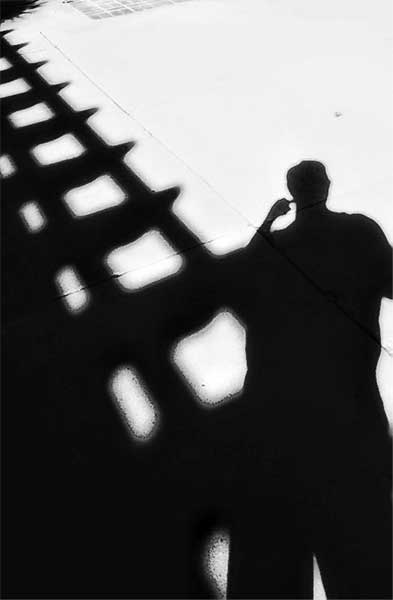
Suddenly all our costumes
are in the wash,
which means we
stand here
in our dirty underwear
holding the Sunday funnies
just below the stomach line,
a situation that makes
it impossible to
make a speech
or lecture the house plants
on how tall they should grow,
crooning baby talk to a cat
that will ignore you
or sit on your keyboard
because what you're writing
is jive anyway,
none of us
will open a toolbox
and remove the pliers,
without costumes
our cars
will not roar
with the attitude
Detroit promised
as we sped up the interstate ,
our language feels corrupted,
false, hollowed of verve,
I want my costume now
though it reeks,
we wear our costumes
as long as
we can get away
with it,
our armor
achieves a genuine scent of grease
and soapless months,
our costumes
and our postures
start to stink so bad
that fire alarms
go off in apartment buildings
across the street,
traffic lights shut down
at critical intersections,
diners lose
their appetites
in cabins in
distant mountain towns,
but yes,
clean clothes, clean slate,
a fresh aroma of detergent
and warmth comes off
the fabrics,
everything fits like a
tailored pair of gloves,
nattily dressed,
elegantly coifed,
perfumed
and flexing biceps
for no one
in particular,
we stop feeling
ridiculous
and plan our
patrol of the city
we call our own,
but first,
this fellow
will take a nap
when the last
pair of pants are hung
and the clock reads
2PM on any hour
It happen to be.
.
Ted Burke
.
SPEAKING {Reform UK [ 07-Feb-26 7:12am ]

It's a measure of my limitations that I can't remember the title (or author) of both the most important fictions I've read since the year started; the two books that have made the deepest impression on me. The novel I've just finished is by qntm (an internet presence) called There Is No Anti Memetics Division, and the other was recommended by Mick Herron, who writes the Slough House spy novels, in an interview I believe I read last year.
I bought and began reading this second novel which, among other things, examined the boundaries between human and non-human workers, and stopped because it was derailing thoughts I was pursuing in parallel with these ideas. It was brilliant.
Both books were brilliant. Borrow them or buy them.
In conjunction with these, I began listening to Roger Penrose, the philosopher and his ideas about consciousness and the philosophical thoughts around idealism (which are very different to our regular everyday thoughts about idealism.)
The primacy of consciousness over materialism (is how I understand it) and how this/these might interact with my political interests (which are essentially Marxian.) I believe I understood some of it. Other parts, I skimmed across.
At the same time, Starmer's Labour continued to unravel exponentially and become a corresponding incongruity. Their representatives increasingly reminded me of porridge gone cold. Abandoned. Congealing in a room that no one enters. A room that no one will ever enter.
I had already dismissed them because of their complicity in Gaza, but the ongoing infolding of their collective identities (into this whey grotesquerie) began to feel unearthly, as though their dead and deadening eyes held an external truth, a truth that mattered beyond their blank and venal self-interest. They were become flat abstractions.
I began to feel they (New Labour) were rather less than human, incapable of escaping their designations as exemplifiers of a world in which they had no emotional interest, involvement, or physical agency. They reminded me of both Mick Herron's employees, and qntm's mind cannibals.
Within this mash-up came the Gorton and Denton by-election.
I was born and raised in Hyde, immediately across the River Tame from Denton.
It used to be the second most polluted river in Europe. My family, on my father's side, going back to the early 19th century, were hatters and textile workers, sometimes living and frequently working in Denton. There was a connection. His grandfather, Garibaldi, was driven mad by the mercury used in hatting.
I have engaged, of an evening on discussion sites, with Reform supporters, many of whom are AI generated with no existence beyond an algorithm responding to my arguments and provocations. Many of them have numbers instead of names. Their unexistence isn't hidden.
And somehow, all these strands have come together in this twisted thread of illogic.
To quote directly from qntm's great novel (which gave me nightmares):
'Its malevolent gravity drags humanity and all human ideas into its orbit, warping them beyond recognition. Beneath it, within its context, everything becomes corrupted into the worst version of itself. It takes joy and turns it into vindictive glee; it takes self-reliance and turns it into solipsistic psychosis; it turns love into smothering assault, pride into humiliation, families into traps, safety into paranoia, peace into discontent. It turns people into people who do not see people as people. And civilisations, ultimately, into abominations.'
As spring approaches, if birdsong were battery operated, would it be less beautiful (or even beautiful at all.)
The two books -
There Is No AntiMimetics Division by qntm
The Employees: A Workplace Novel of the 22nd Century by Olga Ravn (although I can find no record of Mick Herron recommending this)
Steven Taylor
.
Immerse Yourself in the Exosphere [ 07-Feb-26 7:11am ]
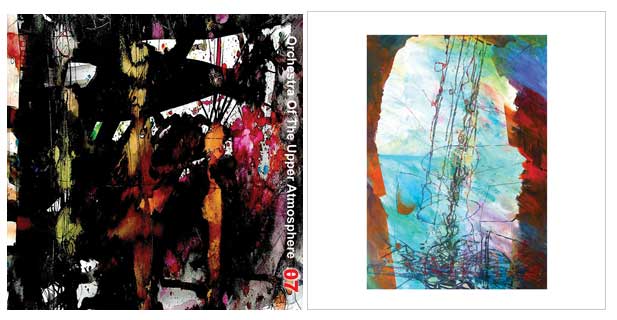
Theta 7, Orchestra of the Upper Atmosphere (Discus Music)
Immersion, Maggie Nicols, Robert Mitchell, Alya Al Sultani (Discus Music)
Theta 7 is, we're told, to be the last of the albums released by The Orchestra of the Upper Atmosphere. This is a shame, but I guess all projects have a shelf-life and there's nothing worse than bands, TV series, etc., going on past the date on the packet. At the risk of stating the obvious, Theta 7 is the seventh in a series of albums named after the Greek letter theta ('θ'). It got chosen, I'm guessing, because it's also used to describe one kind of brain wave ('theta rhythms') which are associated with relaxation, dreaming and effortless creativity: exactly the kind of rhythms orchestra members need to have pulsing through their heads on their journeys to the edge of space.
Inspired by their love of Sun Ra, Alice Coltrane, Stockhausen and Terry Riley, Sheffield-based sax player and electronic musician Martin Archer and his long-time collaborator, keyboard player Chris Bywater put OOTUA together in 2010. The idea was 'to create a large scale music which would be improvisation-based but would also feature arrangements for massed voices, strings and horns. A process which they … named "Improg".' The result was Theta 1. A core group - initially, a septet - was established which, with minor changes, went on to create the subsequent albums, drawing in other musicians as required (notably, but not on Theta 7, the 30-voice avant-garde choir Juxtavoices). What followed was described by Chris Cutler as music founded in 'a rock-rooted aesthetic, but with acres of space for improvisation, sonic exposition and studio manipulation. Assembled (a lot like Unrest-era Henry Cow) through a process of focused improvisation, extensive editing, customized composition, many overdubs and radical mixing - the results are persuasive and full of musical substance.'
If Theta 7 is your first encounter with OOTUA, it may well leave you with a desire to check out its predecessors. If it does, Sid Smith, writing in Prog Magazine, reckons Theta 4 is a good place to start. Having had a listen myself, I wouldn't argue with him.
As for Theta 7, I'd really recommend taking the option to listen to the album without track breaks (Track 12 on the Bandcamp page), as the tracks really do, for the most part, flow naturally one into the other. I'd save the seperate tracks for if I wanted to listen to a particular part. It begins with a duet for double bass and guzheng which makes striking use of the stereo space and slips effortlessly into a hypnotic groove entitled 'A Blessing in Azure'. A restless violin solo from Yvonna Magda introduces a hymn to the dawn (hearing the way the guzheng is used on this album, its hard not to think of Alice Coltrane's harp). This, in turn, morphs into a celebration of the deep sea: a world of darkness, strange creatures and hydrothermal vents and about as far as you can get on the Earth, physically, from the band's natural habitat of the upper atmosphere. They sound quite at home there, though. This gives rise to a rich groove, striking for its spiky, high speed glissandi. 'Cold Mariana', alluding to the Mariana Trench, is a musical evocation - or so it seems, to me - of the view from a bathysphere window. If we've not realised already, this album - perhaps because it's the last? - sets out to embrace the whole universe. There have been previous forays (one title on Theta 5 references, I suspect, the famous Hubble image of the Pillars of Creation) but what's going on here is far more systematic. We return to the surface, where the moon is rising. What follows is a hymn to Aether, the Primordial Titaness of the sky, no less. OOUTA name-check Stockhausen as an influence and I couldn't help being reminded here of the text of that composer's text-piece, Set Sail For the Sun, in which the performers are asked to gradually transform the music they're making 'until you arrive at complete harmony / and the whole sound turns to gold / to pure, gently shimmering fire.' After this we're plunged into an evocation of black holes, the darkest places imaginable (at least from the outside. On the inside, who knows?). The next track references the space rock Oumuamua, a visitor from another solar system, music that attempts to give shape to something we can only vaguely discern. The penultimate track is a stonking cover of Sun Ra's 'That's How I Feel' - an inspired, optimistic way to bring the OOUTA journey to an end. What follows is another duet, mirroring the first track, this time for Jan Todd's guzheng and violin. (Anyone who finds these duets interesting - and they are - should check out the OOUTA spin-off Private View 185CD (2024), also available on Discus Music, an album Jan Todd and Archer made together, without the rest of the band, although I think OOUTA bassist Terry Todd joins them for one track).
Theta 7 is quite something. Stockhausen and Alice Coltrane would've approved, I hope. Sun Ra would've been bowled over.
Free improv vocalists Maggie Nicols and Alya Al Sultani have worked together quite a lot in recent years. When, in 2024, they were working on their album Free, Free, Nicols brought along a poem by jazz pianist (and poet) Robert Mitchell, to see what they could do with it. The upshot was that they got together with Mitchell himself to make the album Immersion, recently released by Discus Music and described by Al Sultani as 'a sonic interpretation of three of Robert's books of poetry, three poems chosen by each of us'.
There is, a course, something of a tradition of improvising pianists writing poetry - Sun Ra and Cecil Taylor spring to mind. Anyone unfamiliar with Mitchell's writing should check out his poetry audiobook (available on Bandcamp), A Vigil For Justice, A Vigil For Peace. If, like me, you like to know a bit about a poet's work before you hear it used in a piece of music, you'll be interested to know that one of the poems he reads on it, 'You Are My World', also appears on Immersion (as 'My World Is You'). I was wondering how best to explain how his poetry relates to his music and then realised Mitchell had already done a better job than I could in the album notes that go with Immersion: 'As Wayne Shorter says 'Our instrument is our humanity'. Our most human job surely is to keep our antenna clean and functioning, and to keep as many channels open as possible. As a result - we might even receive the coordinates to the most important treasure: living in peace. The daily distractions, and thus the deliberate weakening of our abilities to work together while benefitting from our naturally occurring 'differences' - are some of the most pressing challenges of these times.'
The first track, 'Amongst a Trillion Fears', is all vocal. Mitchell recites the poem with some rhythmic elaboration while Nicols and Al Sultani weave improvisational paths around his words. From hereon in, Mitchell spends most - although not all - of his time on the piano. It soon becomes clear that the words are often hard to follow. It's best not to try. After all, what we're being offered is the essence of poetry rendered as music: to try to follow the poem in each case could be considered a distraction. A lot of the time, only the occasional phrase jumps out ('walk as one', 'full immersion: there is no division', 'we are free'). The style of the music ranges from the bluesy (especially in 'My World Is You' and 'Soul Speak') to the avant-garde. Although what's happening here is obviously on a much smaller scale, I was reminded more than once of the late operas of Michael Tippett and, indeed, the themes of Mitchell's poems and Tippett's libretti are not dissimilar.
Nicols' more natural voice with its wide-ranging vocal effects, Al Sultani's more trained voice and Mitchell's piano make a great trio. As I said, there's everything here from avant-garde pyrotechnics to great bluesy moments, but some of the most spellbinding music they make together (as in 'Inner Sanctum' and 'Where We Are') succeeds because, it manages to be complex without being dense. Do give it a go.
.
Dominic Rivron
LINKS
Theta 7: https://discusmusic.bandcamp.com/album/theta-seven-206cd-2026-2
Immersion: https://discusmusic.bandcamp.com/album/immersion-205cd-2026
Robert Mitchell's poetry - A Vigil For Justice, A Vigil For Peace:
https://robertmitchell.bandcamp.com/album/a-vigil-for-justice-a-vigil-for-peace-poetry-audiobook
.
CONSPIRACY DREAM ONE [ 07-Feb-26 7:09am ]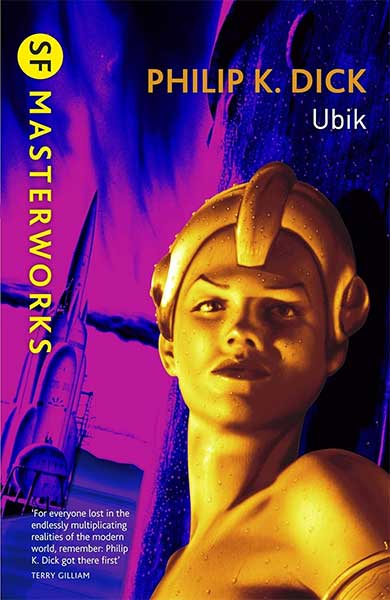
You smiled
crawled into my bed
syringed the love out of me
left my eyebrows wired to Langley
my heart in a silo aimed at Moscow
you had me crawling across a ledge
of broken glass
away from a dream
back into your arms
while downstairs
Philip K Dick
trilby tilted at 180 degrees
in the doorway
dripped darkness
like a leaking gasoline tank
emptying onto the sidewalk
he was later weeping in the joke shop
as the funny mask scowled back
his wife
the surf blonde
divorced him over the Kiss Me Quick
seaside hat
that had ruined their marriage
I'm trying to deal with the world's madness
fake news
there's lipstick on my collar
it provides co-ordinates for a kiss
the rifle left in the woods
has a garland of crocuses now
daydreams in the boot of a Buick
cockroaches listening
ears against the walls
to every word the mad politician
says
as he buttons up his trousers
tosses cash to the hooker
counting the pills
ripping out the wires
Singing the Body Electric
Philip K Dick steps off the planet
into space
and is gone forever
.
by Malcolm Paul
Tomorrow Never Knows [ 07-Feb-26 7:08am ]Experimentalism and Innovation in The Beatles Studio Practice
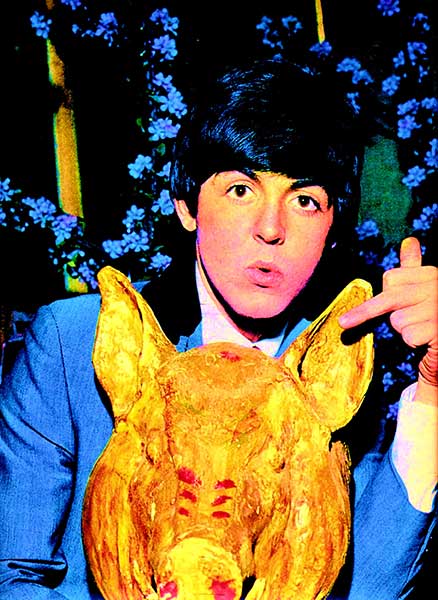
Experimentalism forms a central thread running through the recorded work of The Beatles and remains fundamental to understanding their cultural and musical significance. While the group is often celebrated for melodic songwriting and mass appeal, their sustained engagement with unconventional sound, recording technique, and compositional process situates them firmly within a broader history of twentieth century musical experimentation. Working in close collaboration with producer George Martin and Abbey Road engineers, The Beatles repeatedly tested the limits of what popular music could contain, both sonically and conceptually.
Experimental practices within The Beatles recordings were not isolated gestures or occasional stylistic flourishes. Instead, they emerged gradually through a process of accumulation, refinement, and increasing confidence. From the earliest years of their recording career, the band demonstrated a willingness to retain sonic accidents and unconventional sounds when they contributed to the emotional or textural impact of a song. This approach reflects a shift in attitude toward the recording studio, not as a neutral space for documentation, but as an active site of creative intervention.
It is important to recognise that musical experimentalism did not originate with The Beatles. Long before their emergence, artists working on the margins of Western art music had begun dismantling traditional ideas of harmony, timbre, and musical structure. One of the earliest and most influential movements was Italian Futurism, particularly the work of Luigi Russolo, which argued that the industrial environment required a new musical language capable of incorporating mechanical noise, urban sound, and sonic abrasion. Russolo's custom built noise instruments, intonarumori, and performances challenged the assumption that music must be organised around pitch and melody, proposing instead that sound itself could function as compositional material.
This early noise music developed further in other experimental strands. Edgard Varèse explored dense sound masses, percussion, and unconventional timbres, while John Cage destabilised the distinction between music and noise through chance procedures, prepared piano, and environmental sound. Karlheinz Stockhausen expanded these ideas through tape and electronic composition, manipulating spatial placement and nonlinear time. Other early experiments included the noise explorations of Pierre Schaeffer, using recorded environmental sounds and tape splicing, and the electronic manipulations of Daphne Oram with her Oramics system for drawn sound. These experiments provided a rich, albeit largely inaccessible, context for the avant garde ideas that would later influence The Beatles.
By the middle of the twentieth century, these experimental practices were no longer confined to academic or avant garde circles. Galleries, broadcast recordings, and publications made these ideas available to musicians outside traditional classical music institutions. Paul McCartney's growing engagement with contemporary art and experimental composition brought these ideas directly into The Beatles creative environment. His interest in avant garde music was practical and intuitive rather than purely theoretical. He recognised that recording technology could be used playfully, unpredictably, and expressively, rather than simply as a means of capture.
Among the members of The Beatles, McCartney frequently acted as a catalyst for experimentation within the studio. When songs were still loosely formed, he often proposed unconventional solutions that challenged established song structures. These suggestions did not always originate from musical necessity, but from curiosity about what might be possible within the recording process itself. This approach contributed to the significant differences often observed between early demos and final album versions.
The gradual emergence of this experimental sensibility can be traced through recordings predating the band's most overtly experimental work. The use of guitar feedback at the opening of I Feel Fine represents an early instance in which an unintended sound was deliberately retained and foregrounded. Similarly, the dense rhythmic emphasis and production choices on Ticket to Ride subtly disrupt the expected flow of a contemporary pop single. These moments indicate an increasing comfort with destabilising conventional listening expectations.
Revolver represents a decisive stage in this evolution. The album demonstrates a fully developed understanding of the recording studio as an instrument in its own right. Tape manipulation, artificial double tracking, reversed recordings, and unconventional microphone techniques are employed consistently across the album, forming part of its underlying aesthetic logic.
Tomorrow Never Knows exemplifies this approach. Early versions of the song reveal a comparatively direct structure, lacking the dense layering of the final recording. The transformation illustrates the extent to which studio intervention reshaped the composition. The static harmonic framework, relentless rhythmic repetition, and absence of traditional melodic development align the track more closely with drone based and tape music than with standard pop songwriting. The drum performance, recorded with close microphones and heavy compression, produces a forceful and almost mechanical presence that anchors the surrounding sonic activity. Tape loops introduce fragmented vocal and instrumental sounds that resist conventional interpretation, functioning instead as textural elements. The processed vocal further distances the track from familiar pop conventions, reinforcing its hypnotic quality.
Elsewhere on Revolver, experimentation manifests in multiple forms. Eleanor Rigby dispenses entirely with traditional band instrumentation, relying on a string ensemble octet to create a stark, emotionally restrained soundscape. Love You To engages fully with Indian musical structures, including tabla and sitar, moving beyond earlier gestures toward non-Western instrumentation. I'm Only Sleeping employs reversed guitar passages not merely as an effect but as a compositional tool, reinforcing the song's themes of disorientation. Here, experimentalism functions as both texture and narrative.
Following Revolver, Sgt Pepper's Lonely Hearts Club Band represents a further evolution of the band's experimental approach, framed around a loose conceptual premise that allowed for heightened studio creativity. The album integrates orchestral arrangements, tape loops, sound effects, and musique concrete techniques alongside conventional rock instrumentation, establishing a fully realised studio aesthetic. Tracks such as Being for the Benefit of Mr Kite employ tape collage and processed wind instruments to generate a carnival-like atmosphere, while A Day in the Life juxtaposes sparse orchestral dissonance with pop melody to create unprecedented structural contrast. Lucy in the Sky with Diamonds blends Mellotron textures, layered vocals, and unconventional chord progressions, producing a dreamlike soundscape that foregrounds sonic experimentation. Within Sgt Pepper, The Beatles demonstrated that experimentation could serve both expressive and conceptual purposes, bridging avant-garde techniques with accessible popular music.
Following Sgt Pepper, The Beatles (White Album) presents a deliberately eclectic and experimental approach. Unlike the cohesive frameworks of Revolver and Sgt Pepper, the album's diversity reflects both the individual members' creative autonomy and the increasing fragmentation of their collaboration. The album ranges from stripped down acoustic folk to hard rock extremes, avant garde tape collage, and non traditional sound effects. Revolution 9 exemplifies the band's most extreme engagement with tape loops, musique concrete techniques, and non musical sounds, creating a sprawling sonic tapestry that draws on Cage, Schaeffer, and Stockhausen. Helter Skelter demonstrates sheer volume, repetition, and aggressive sonic layering, anticipating developments in heavy and punk music. Happiness Is a Warm Gun, Wild Honey Pie, and Glass Onion experiment with abrupt tempo shifts, overlapping textures, vocal layering, and unconventional structures, while Back in the U.S.S.R incorporates playful production techniques and contrasting timbres. The album represents a continued expansion of the band's experimental vocabulary, pushing boundaries in rhythm, texture, and sonic unpredictability.
Following the white album, Abbey Road demonstrates a sophisticated integration of experimentalism into a more polished and unified production. Abbey Road illustrates a careful combination of classical instrumentation, studio effects, and compositional innovation across a commercial framework. The medley on side two represents a sequence of fragments linked through key relationships, tempo shifts, and harmonic continuity rather than a traditional suite. This approach allowed The Beatles to explore thematic development, musical montage, and tonal contrast within a popular context.
Tracks such as Because illustrate harmonic experimentation, with three layered vocal parts creating a choral texture, while the Moog synthesiser is employed in Maxwells Silver Hammer and I Want You (She's So Heavy) to generate otherworldly timbres and oscillations. Polyrhythms and tape edits are used creatively in Golden Slumbers and Carry That Weight to manipulate perception of time and pacing, while the extended guitar solo in I Want You (She's So Heavy) employs feedback and distortion to produce a sense of sonic excess approaching harsh noise music. The album demonstrates that by this point, The Beatles had fully internalised studio practice as a compositional resource.
Experimentalism on Abbey Road is not limited to instrumentation and effects. The band also experimented with texture and production. The crossfading of medley sections, the overlapping of vocal and orchestral layers, and the subtle use of tape compression and EQ reveal an unprecedented understanding of studio technology as a creative tool. Here, experimentation is both musical and technical, reflecting a cumulative process that began with early noise experiments by Russolo, Varèse, Cage, and others, and matured over successive albums.
Individual band members continued experimental work beyond the collective context. George Harrison's Electronic Sound uses the Moog synthesiser extensively, presenting unstructured sonic textures that mirror electronic and tape experiments in the avant garde. John Lennon explored extended vocal improvisation, noise collage, and minimalist structures, demonstrating that experimentalism extended into post Beatles activity.
In considering The Beatles relationship to experimental music, it becomes evident that their significance lies in mediation and translation. They absorbed techniques developed in avant garde and noise traditions and rendered them accessible within popular forms. Through this process, they expanded the conceptual and practical possibilities of popular music and transformed the recording studio into a space of artistic exploration.
Tomorrow Never Knows occupies a central position within this trajectory. The track crystallises the band's ability to integrate experimental technique with accessible musical form, serving both as a culmination of earlier practices and a foundation for future innovation. Through sustained engagement with noise, non-traditional instrumentation, studio technology, and structural experimentation, The Beatles established a model of creative exploration that continues to inform musicians, producers, and listeners across genres.
by Ade Rowe
.
The Full Moon Crafts Vistas New [ 07-Feb-26 7:07am ]
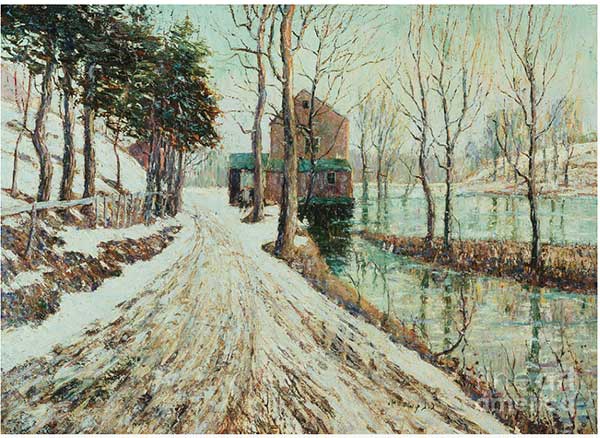
The snow moon peels off layer after layer
of
the overhanging dense dark, the gloomy visage
of hoary winter.
The silvery beams reveal core of
an infinite arch above a comatose
earth
buried under banks of pale snow;
the bared topaz-blue touched with the white
of the lunar breath
creates a tropical lake with a glowing heart,
up in those empyrean heights; waves faintly
heard by a passing ascetic.
The cumulus clouds massed on the serrated
edges of
the shimmering immensity,
stand forlorn and outcast, driven out there by
the
frigid winds to those liminal thresholds;
dim firs condensed together
as spatial shadows
from
the Fields of Mourning, first
witnessed by Virgil,
the diffused light, this late hour,
illuminates
the crooked trail to a hut on the hill
where tribal songs are echoed by the
pines with grey hairs, as the wolves
close in.
Sunil Sharma
Painting Ernest Lawson
Academic |Writer | Critic | Editor | Freelance Journalist | Reviewer | Literary Interviewer
Editor: Setu: http://www.setumag.com/p/setu-home.html
Website: https://sunilsharmawriter.com/
Twitter:https://twitter.com/drsunilsharma
Instagram:https://www.instagram.com/drsunilsharma/
LinkedIn:http://in.linkedin.com/in/drsharmasunil/
Pinterest: https://in.pinterest.com/
Amazon-author link: https://www.amazon.com/author/sunilsharma

.
Radio [ 07-Feb-26 7:05am ]The Members
RADIO
I listen to the radio, it's better than a stereo
We listen to the radio, radio stereo
Telephone is ringing, but, I can hardly hear
Though the man on the end of the line is speaking loud and clear
Somehow my mind is where, where exactly I don't know
Too busy tuning in the dial, portable radio
I know I'm alive, so you can all go ride a bike
The airwaves don't lie
I listen to the radio, its better than the stereo
We listen to the radio, radio stereo
Oh-oh-oh-oh radio, Oh-oh-oh-oh radio
Oh-oh-oh-oh radio
.
6 Snapshots: The Depths of the NY Winter [ 07-Feb-26 7:04am ]
bart plantenga
From NY Sin Phoney in Face Flat Minor
The Unloaded Camera Snapshots [Paris Scratch & NY Sin Phoney in Face Flat Minor] were launched as an exercise to document the not-quite prose poems, not-quite journal entries "snapshots" of everyday life in Paris with Paris Scratch. & this continued upon my return to NYC. The exercise consisted of every day "taking" a written "snapshot" - 365 of them. I, like other New Yorkers, had become, as Flora Lewis described it, "inured to the ravages around them they scarcely notice anymore." A deadening of our senses &, never mind our idealism, allows us to believe we're outwitting our environment. A.E. Housman noted: "Having drunk a pint of beer at luncheon, I would go out for a walk. As I went along, there would flow into my mind, with sudden & unaccountable emotion, sometimes a line or 2 of verse, sometimes a whole stanza …"
• The Fit of a SweaterI meticulously fold the sweater my mom had knit for me 1 Christmas that I never wore like I'd seen them do in Soho boutiques. I place it on top of a trashcan on a gift box with the idea that it's winter & maybe a homeless man could use it. A week later I see a guy wearing it & it looks pretty good & I think maybe I should tell him that my mom had knit that sweater for me! & that I wanted it back! But how: jump him, bribe him, coerce him, call the cops, embarrass him or simply wrestle it off his torso? I don't know. Maybe just take a picture of him instead. Send it to my mom.
• The Exhausted ParkThe park had gone through more than neglect; it had borne witness to murders & other unpleasantries. It wasn't really a park so much as a piece of land they couldn't figure out how to apportion profitably. Someone had pissed on & then torn down—was it?—the Yogi Berra statue. All the swings were already down for the winter. The seesaws could us a coat of paint. What's with the 4 shopping carts dumped over the ledge there where the walkway just ends like an nihilist's sidewalk design? Do people know the carts cost $175 a piece? Do people really ever sit on the 2 crumbling benches here to meditate or figure out how to beat the IRS?
• The City That Finally Fell AsleepThe 1st big snow is always magical. Everyone scurries about with a glee that only snow can bring. Giddy kids go aimless with their tongues catching flakes or rolling big ball torsos to build snowmen. Even the old man smiles & forgets he hasn't eaten for how many days. Even the guy hauling big boxes of food on a dolly has to pause & smile as he pushes through the stuff. Even the first snow-related fender bender couldn't kill the joy & as you walk, you hear the silence as an absence of noise but also as abandonment, quiescent as when the very last car of the guy who closes up the supermarket parking lot leaves at midnight. Everyone moves slower & with a sudden awareness of life all around them, however fleeting. Paralysis brings us back to life. The only beings who venture out into traffic at 10 mph are the cabbies & bus drivers. The city sounds like it has, indeed, finally gone to sleep for a night.
• Poster in the 13th SnowfallThe snowfall is massive, beautiful, but it is by now the 13th snowfall of the season, so all a bit redundant & tiring. The poster taped 4 side by side: INFORMATION WANTED CONCERNING A BIAS ATTACK LAST FRIDAY IN THIS AREA. At approximately 10 PM, several black men were attacked by a gang of white men, some of whom had baseball bats. The incident took place in the vicinity of Prince & Mott Streets. If you have any knowledge of this event or of any of the assailants, please call 212-312-****.
• Side Streets to Beer History
To investigate the mystery of those who line up nightly to get drunk at McSorley's Old Ale House I stand outside & just stare. I want to tell them that to drink there will not buy their way into any history, esteem, status—women were denied entry & it's motto was "Good Ale, Raw Onions & No Ladies" until mid-1970. At least it's better than McDonald's or TGIF or Bud Lite … That "Be Good or Be Gone" is it's new motto, is a sign of progress. But, lining up for 45 minutes of shivering & sleet before you get in the front door is the nature of the hype of the hype. I should work for a local bar, help reroute them to other incredible backstories for a fee …
• Blood of Ink of IceI stood on the rotting docks far west, just beyond the shadows cast by Wall Street. New Jersey's bitter shore about to crash into piers already collapsing into the neglect of all of us like a precarious plate of cheap, cold food left behind by a drunk in a diner. Few realize how many others realize how buildings that keep you out can make some of us so contemptuous that we end up spitting on their walls as we pass by. The cold made the ink in my pen stubborn & invisible. But I rub it between my hands to warm it up so that the ink will begin to flow again. I write about sheets of ice like rafts to float out an adventure on, floating down the Hudson, resembling crying panes of high-rise glass or the windshields of trashed sports cars, tossed from high cliffs (revolution, insurance or spite?), north of the city, outside of the kingdom, this side of Kingston.
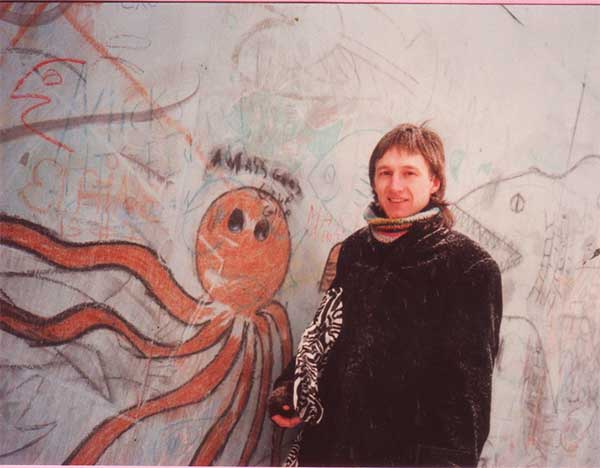
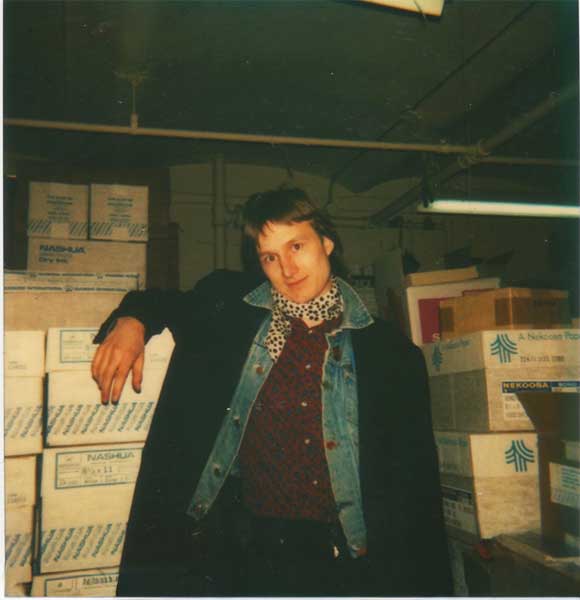
Seam Crooked Sam [ 31-Jan-26 7:32am ]
The mule kicked off a new one
and the stockings ran up Seam Crooked Sam
bandana frock stuffed with smoke
and ears out flopped like bowlin' pins
hog troughs hocked and wallered in cool mud bins
and patent leather hooves
split in twos
rooms for rent down t' Ben's
Frendsa danced in a frenzy
choked a juke bird with froth glass ferns
and turpentine urns her sawdust daily keep
and whiskey creeps down her neck naked front
and red leatherette
peen button set where her fanny sweat
raised her wrist-a-fan and a mouse coughed cotton
through a screen door cracked sand
rooms rent only to friends
Hat Rack Hotel
architecture tincture of red Arkies pinched the southern belle
and splayed his cracked nail hand
grey fedora - snappy band
and the camel walls yelluh like damp dead chickens
beak down the hard wood floor
and the music - O the music
harp man blew his best lung white shirt
his feet worked like a monkey out the door
and Dora robbed a baby through a dark bebop
licorice lenses fogged in hot sorrow
through the floorboards at the general store
yuh foods still in the hot hand oven
apple pie cooked through a seed bruised stem eye
sticky in the window of Momma Frame Broke
rope bell dinglin'
"Children, I won't call yuh once more."
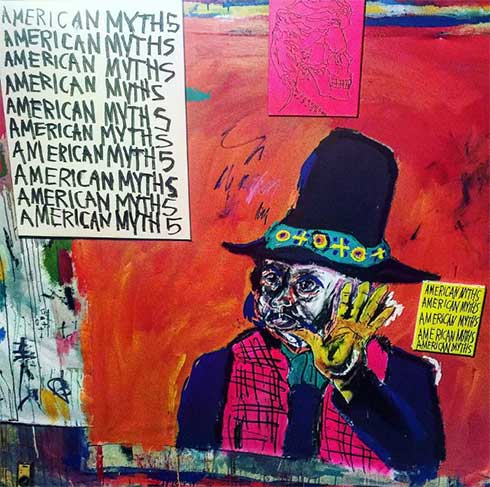
Don Van Vliet
Aka Captain Beefheart
Going Down: Frozen Dreams [ 31-Jan-26 7:26am ]
Alaska, Greenland, Iceland, Canada, they're all mine, mine, mine.
America, around 50 miles from Russia, bought Alaska 1867 for $7.2 million.
America, just 1500 miles from Greenland…
At last. Now I feel safe.
I'll ask her," said the naked
Russian Put in straight, the Bare
Ring, bell when ship hits ice
(with no more ice on land)
Drowned us in rare earth and oil
Going down. Going down.
What's the question?
Cain or Abel?
Pass the right word.
I can see you rush in
From where I am.
Lovely lips stick on the legless John,
Dewey -eyed, oil-crippled moose
With big glass bulging eyes.
Rifle! Shoot the bastard!
Don't let him size me up.
And find me wanting.
Natural selection?
No! My creation.
Killing fields take no hostages
And fortunes die.
Frozen Dreams.
© Christopher
.
Oscar Wilde and L'Hôtel [ 31-Jan-26 7:26am ]

Sam Burcher visits L' Hôtel in St Germain-des-Prés one hundred and twenty five years
after Oscar Wilde died here.
There would be no more luxury for the witty and feted playwright, novelist and poet Oscar Wilde following his disastrous libel trial in London in 1895. The case he brought against the 9th Duke of Queensbury's claims of homosexuality, at the time a criminal offence, had led to Wilde's conviction of gross indecency with a sentence of two years hard labour in Reading Gaol.
In prison he was allowed to write his famous eighty page letter De Profundis (From the Depths) "for medicinal purposes." It starts, Dear Bosie, addressed to his lover Lord Alfred Douglas, the son of the Duke of Queensbury, who had encouraged Wilde's pursuit of the libel claim against his father, with whom he was embattled.
His letter recalls with passion and bitterness Bosie's vanity and greed whilst taking responsibility for his own part in the affair. In the second part Wilde describes with humility his profound spiritual and emotional transformation in jail. He eschews shallowness as the supreme vice and writes, "For the secret of life is suffering. It is what is hidden behind everything."
When he arrived in Paris in February 1898 his health was considerably weakened. Wilde checked into the shabby rather than chic Hôtel d'Alsace, its atrium open to the elements, under the pseudonym of Sebastian Melmoth. Today, this building is L'Hotel, one of Paris's best loved five star boutique hotels.

His eighteen month residency in the draughty boarding house was an unhappy one, not least because he once had been accustomed to and craved beauty. From his sickbed Wilde famously said, "My wallpaper and I are fighting a duel to the death. One or the other of us will have to go."
The libel trial had bankrupted him, and although he still received royalties from his English and Irish publishers, the cheques were slow to arrive. To tide him over, the French Government acted to give Wilde some money demonstrating its benevolence towards the arts, a tradition which it extends to foreign artists to this day.
When Oscar Wilde died aged 46 there were no funds left. He succumbed to a swelling on his brain caused by a fall in prison, and the infection from two surgeries performed in his room to remedy it. His final bill went unpaid for two years after his death, until his literary agent Robert Ross arrived in Paris to pay it.
The last invoice is amongst the framed mementos on the opulent green and gold peacock walls of Room 16 of L'Hotel. The Oscar Wilde Suite represents a luxurious homage to the place where the writer died. As his health deteriorated, he was too ill to climb the spiral staircase to his first floor room. So, a bed was brought into a small room beyond the lobby where his surgeries took place.
No-one can be completely sure, but it's possible this room is now an elegant niche in Wilde's Lounge where champagne and classic cocktails are served with bright green Italian olives and roasted cashews. I think Oscar would approve. The Oscar Wilde Appreciation Society states he moved downstairs to have surgery, but for the final two weeks returned to his room on the upper floor.
Sadly, his fall from grace was irrevocable. He was mercilessly reduced from the celebrated author of witty plays, intriguing novels, poems and charming children's stories to a penniless exile. Before the trial Wilde's life was on course to be a masterpiece, one that required a great ending. But the public and the law had turned against him, consigning him to an unreformed penal system designed to break a man. He had been treated unfairly.
Wilde briefly reunited and lived with Bosie in Naples after his release from prison, but the lovers separated under the pressure of his penury. Bosie later repudiated Wilde and sued Arthur Ransome for publishing libellous passages referring to De Profundis. He lost the case, and in turn, went bankrupt. Bosie's suffering would be complete when he received a six month prison term for libelling Winston Churchill during the First World War.

Wilde's downfall had brought him to a closer understanding of Christ, and of himself. In De Profundis he drew parallels between the true life of Christ and the true life of an artist. He viewed Christ as the imaginative poet whose spiritual message was too radical for his time, and as the seasoned man of sorrows unifying life's beauty and pain on the cross. Both Oscar and Bosie later converted to Catholicism, Wilde on his deathbed at L'Hôtel.
Other Famous Residents of L'Hôtel
In the wake of a forty day trial for allegedly exposing himself on stage, Jim Morrison, the charismatic poet and lead singer of The Doors arrived at L'Hôtel to await the verdict. His intention was to write poetry and his first port of call was Oscar Wilde's tomb. After whiling away the time at the nearby Café de Flore and Les Deux Magots, just as Wilde had done, he moved into his girlfriend's rented apartment in the Marais, where he was found dead on 3rd July 1971, aged 27.

Oscar Wilde and Jim Morrison rest in Père Lachaise Cemetery. The winged sphinx on Wilde's tomb sculpted by Jacob Epstein has been shielded by a glass screen since 2011 to stop adoring fans covering it with lipstick kisses. It was Robert Ross his former agent who commissioned the sculpture on the proviso that his ashes be interred within Wilde's tomb when he died.
The Paris prefecture demanded the Sphinx's genitalia be covered by a bronze butterfly after the occultist and author Aleister Crowley unveiled the limestone carving in November 1913. The genitals were later stolen when the tomb was vandalised in 1961. They have never been recovered.

Morrison's modest plot was at the centre of international media attention last year when his heavily graffitied funerary bust stolen from the graveside forty years ago, suddenly reappeared in Paris. By coincidence I happened to be in Père Lachaise at the time and was interviewed by the Associated Press about my experience of witnessing the bust in situ during the 1980's. https://www.samburcher.com/index.php/articles/notes-on/jim-morrisons-bust-stolen-from-his-grave-finally-recovered
I met Florian Liger-Bernard, the front desk concierge at L' Hôtel to discuss the minutiae of Oscar Wilde's stay until his death in November 1900. He told me about the many other celebrities who have followed in the famous Irish writer's footsteps since then. "There can be no coincidence if you choose to stay at L'Hôtel. It is a form of decadence," he said.
At the height of the success of J'taime…moi non plus in 1969 Jane Birkin and Serge Gainsbourg moved into Room 14 whilst his nearby house, now the Maison Gainsbourg, was refurbished https://internationaltimes.it/sam-burcher-enters-the-maison-and-museum-gainsbourg-to-explore-the-life-and-loves-of-frances-most-prolific-modern-composer/ At night, Serge composed Melody Nelson on the hotel piano in the basement. This brilliant concept album was not an immediate success, because the French public in general did not understand it. Only the intellectuals appreciated its unusual and avant-garde sound. One song, Un Particular Hôtel, was directly inspired by his stay.
In the bar Florian showed me the photographs of other famous guests Elizabeth Taylor and Richard Burton, Salvador Dali, Princess Grace, and Frank Sinatra, who romanced Ava Gardner in The City of Love. He points out the grainy deathbed photo of Oscar Wilde. We respectfully discuss his life and death in the library nook.
After several iterations L'Hôtel, which stands on the exact spot occupied by La Reine Margot's Pavillon d'Amour in the 17th century, underwent a significant refurbishment in 1967. The central atrium once open to the elements is snugly under glass. If you look up directly after entering the lobby it appears as an elegant circular tower with exquisitely lit balconies and arches on each floor interspersed with sculptural reliefs of classical figures.
Around the tower a staircase spiralling six floors is covered in a luxurious leopard print carpet. Small indentations on the handrail burnished from hundreds of years of use attest to the innumerable and celebrated hands that may have caressed the same beautiful imperfections.
Over the last twenty years, the new owners have further transformed L'Hôtel. The bedrooms are categorised as L' Apartment, Bijoux, Chic, Grand, Mignon, Reine Hortense, and of course, the Oscar Wilde Suite. Each room is unique and sumptuously decorated in impeccable French style by interior designer Jacques Garcia (who also designed the piano bar in Museum Gainsbourg). Garcia is the winner of numerous cultural prizes, including the Oscar Wilde Prize in 2002.
For one night I enjoy the Venetian Room 30 on the third floor. The walls are textured in striped golden velvet, the bedhead is a profusion of intricately carved wooden leaves in a Rococo style with burgundy drapes on either side. A crystal chandelier shimmers over the centre of the bed. The Rosso Francia marble that proliferates throughout the building extends to the deep bathtub.
In the stylish lounge a blazing log fire gives the entire place a warm, cosy feel. Beyond the festive breakfast room, where attentive staff and friendly guests mingle, is a view of the peaceful garden with a small ornate stone fountain where Oscar Wilde once sat quietly reading and writing.

My thanks to Florian Liger-Bernard.
L'Hotel is located St Germain-des-Prés, on 13 Rue Des Beaux-Arts, 75006 Paris, https://www.l-hotel.com
.
Of Dark Materials, Strange Curves and Other Curiosities [ 31-Jan-26 7:25am ]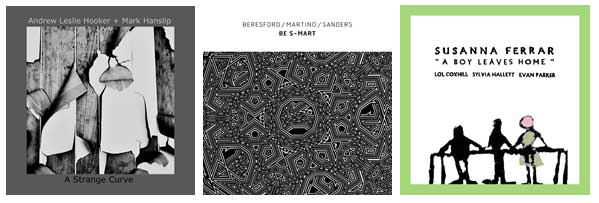
A Strange Curve, Andrew Leslie Hooker / Mark Hanslip (Scatter Archive)
Be S-Mart, Steve Beresford / Pierpaolo Martino / Mark Sanders (Confront Recordings)
A Boy Leaves Home, Susanna Ferrar (Scatter Archive)
Andrew Leslie Hooker is both a visual artist and a composer of no-input music. No-input music, for those who don't know, takes the internal noise of electronic devices as its starting point. The idea dates at least as far back as the 1960s - various musicians, including David Tudor and Pauline Oliveros, explored it. An early, obvious, example would be Steve Reich's Pendulum Music which dates from 1968. In it, microphones are set swinging in front of amplifier speakers - as the microphones pass the fronts of the speakers, feedback is generated. Sonic Youth created a version of the piece for their Goodbye 20th Century album (which, for anyone who doesn't know it, is well worth checking out. It's one they released on their own SYR label).
However, development of the possibilities of no-input music only really took off in the twenty-first century. People began to explore what could be done with mixers. One might, for example, connect the output of a mixer to one of its input channels and amplify the result. If you do, all kinds of changes can be made to the pitch and timbre of the sound by manipulating the mixer controls. There is a degree of unpredictability involved: some artists exploit this in performance, although Hooker himself has said that over the years he's learned to control what he does and can even match a fellow performer 'note for note'. The fact remains, though, that however much control you maintain in performance, such systems are an interesting way to explore sound that sidesteps the obvious choices one might be drawn into making using modular synthesis.
Hooker's no-input soundscapes are so lacking in conventional points of reference that, I imagine, it must be quite challenging, when playing duets with more conventional instruments, to find points of contact. It's a challenge Hooker and his collaborators have set themselves time and time again. A Strange Curve is the latest in a series of duet albums - it's a growing list, which already features artists as diverse as recorder-player Sylvia Hinz and harpist Rhodri Davies. On this occasion, he's paired up with sax-player Mark Hanslip. Hanslip has been a key presence on the jazz scene for over twenty years. He's performed at many major festivals and venues and has featured on over thirty albums. He's no stranger to collaborative duo formats either, having previously worked with drummer Javier Carmona on the album Dosados (released in 2012, on the Babel Label). And, as well as working in contexts more readily identifiable as jazz, he's at home, too, in the more left field - and, as here, the left field of the more left field - world of free improv.
I was going to say, all credit to Hanslip here for finding things to say that fit into the musical conversation, but there's less a sense of conversation here and more a sense of two musicians working closely together to create a homogeneous musical world which, though fundamentally electronic, admits the sound of the sax. And I should add, too, that as well as the no-input electronics, Hooker is also credited on the album as using a snare drum. From what I can hear, it sounds as if, rather than hit it, he gets it to resonate with the electronic sounds he generates, while varying the contact the snare has with the drum. The results are really effective, I think.
I found A Strange Curve a compulsive listen. Hooker and Hanslip have managed to create something really quite special. It's definitely an album I'll be coming back to.
Double bass-player Pierpaolo Martino has worked with Steve Beresford in the past, as part of the trio, Frequency Disasters. Together with drummer, Valentina Magaletti, they've already had two albums released on Confront Recordings. Here, on B-Smart, they're working together, again as a trio, but this time with drummer Mark Sanders.
The result is forty-five minutes of very approachable, high-energy music: jazz-based, certainly, but pushing limits. Grooves are established, ideas elaborated, sometimes more straightforwardly, at others, drawing on noise and electronics. The titles of the two tracks at first put me in mind of Philip Pullman's His Dark Materials, but, on reflection, it seems more likely that they refer to the quote from John Milton Pullman took his title from. Milton's 'dark materials' are the raw, chaotic, and unformed matter from which the God of Paradise Lost forged the world:
Into this wild Abyss
The womb of Nature, and perhaps her grave -
Of neither sea, nor shore, nor air, nor fire,
But all these in their pregnant causes mixed
Confusedly, and which thus must ever fight,
Unless the Almighty Maker them ordain
His dark materials to create more worlds, …
I'm sure choosing titles is a constant headache for most musicians, and anyone coming across this quote would probably think they'd struck gold, but the allusion to Milton here really does capture a quality of the music: the confusion of elements in a 'wild Abyss' coalescing into compelling musical shapes is a great way to describe what's going on here.
Tutanekai and his friend Tiki lived on Mokoia, an island on Lake Rotorua. In the evening, they used to make music together. The sound drifted across the waters of the lake to the mainland, where it was heard by the noblewoman, Hinemoa. One day, Tutanekai visited the mainland. He and Hinemoa fell in love. Sadly, though,Tutenakai had to return to Mokoia. Every evening, he played his music for Hinemoa to hear, hoping she'd follow him. Her people, fearing Hinemoa would leave them, hid all the boats. Undeterred, Hinemoa, using empty gourds as floats to help her, swam across the lake to the island, where she and Tutanekai lived happily ever after.
This Maori legend is the story behind half of the title, 'Hinemoa (Women of Ireland)', of one of the tracks on A Boy Leaves Home, a solo album by violinist Susanna Ferrar, which first came out on CD in 1997, but which has recently been re-released as a digital album by Scatter Archive. For me, it was perhaps the most striking track on the album. Ferrar's improvisations often remind me of Samuel Beckett in the way they seem to struggle to articulate something that may be unsayable. It's a struggle which sometimes resolves itself by morphing into the simple gestures of folk music (in this case, the song from the other side of the globe, 'Women of Ireland'). Of course, it's always presumptuous to speculate what lies behind a piece of music, but I'd say this is music about women finding their voice, struggling to live the way they want to live, and succeeding. It was recorded at a London Musicians Collective concert back in 1992 and, not that it needs any help, but the ambience certainly adds to the power of the performance.
I qualified my judgement by saying it was only perhaps the most striking track, as there is much else here that is remarkable. For example, and especially if you're a fan of his sax-playing, it's impossible not to be touched by Lol Coxhill singing 'Shenandoah'. One critic noted, back when it first came out, that there was 'too much unremarkable folk singing' on the album, which kind of misses the point, I think (and it's a fact which, I assume, is worn as a badge of honour, as it's quoted in the album notes!) The thing is, Ferrar assembles her music the way one might a cabinet of curiosities. An allusion to a folk story, a folk song, someone whistling in a stairwell, her riding a motorbike, her son, as a small boy (he grew up to be actor Dickon Tolson), telling a story. And it's the cabinet of a well-travelled curator, which is hardly surprising, as she's a Fellow of the Royal Geographical Society. There is, inevitably, much we don't get to see. Her grandfather, geologist HT Ferrar, was part of Captain Scott's first Antarctic expedition. She holds a Postgraduate Certificate in Antarctic Studies and has performed on her violin both in Scott's hut and on the Ross Ice Shelf. She has a special interest in site-specific improvisation and is an artist who, very visibly, weaves her art from the threads of her life.
Not that one needs to know the backstories to appreciate what's happening. The music of A Boy Leaves Home speaks for itself, as it should. I described it as a solo album, but it features collaborators, too. I've already flagged up Lol Coxhill and Ferrar's son, Dickon, but there are duets here, too, with sax-player Evan Parker and fellow violinist, Sylvia Hallett ('Shenandoah' is a trio, with Hallett and Coxhill). In 'Oak, Ash and Thorn', Ferrar's folk music gestures morph into fractured free improv, converging with Evan Parker's note-stream. And hearing Ferrar and Hallett play duets together (in 'Ho (Scherzo)' and 'Art Music (Minuet and Trio)'), it's clear that they're improvisational soul-mates.
.Dominic Rivron
LINKS
A Strange Curve: https://scatterarchive.bandcamp.com/album/a-strange-curve
Be S-Mart: https://confrontrecordings.bandcamp.com/album/be-s-mart
A Boy Leaves Home: https://scatterarchive.bandcamp.com/album/a-boy-leaves-home
.
Heroin, Again [ 31-Jan-26 7:25am ]
I don't really recall how I started using opiates and heroin again in 1965. I had kicked the habit early in 1964 and went back to college to redo my A levels so that I could go to university.[1] At the City of Westminster College I met Lynn Ellis and we started going out. I had already met her at the Witches Cauldron in Belsize Park, but it was through college that we got together. She was weaning herself from opiates and had a regular methadone prescription. Sometimes she'd give me half a vial and I'd shoot that up. So that must have been the start. Summer 1965 after travelling overland to Afghanistan with friends I found I could buy ampoules of morphine for 10 Afghanis each (about a shilling old money, 5p today) to shoot up. I also brought 4 oz of opium home from that trip and sometimes would dissolve that and shoot it up, after boiling and filtering it through a tiny ball of cotton wool.
Summer 1966 I went back Afghanistan with just one friend Peter and persuaded a doctor to write me prescription for 4 ampoules of morphine. It was a rather shameful incident. There was a queue of about 100 sick people and I jumped the queue and went straight up to the doctor and asked for medicine for painful piles, as Bill Burroughs used to do. He started to write a prescription for paracetamol when I stopped him and said that was not strong enough. He asked "The pain is very?" I responded "The pain is very!" and he wrote me the prescription for morphine. Shamefully, I have never suffered from piles.
My companion Peter took a picture of my booty laid out on a pillow in Kabul. There's a syringe along the top, over the revolver. Two folding knives on the left, and various discs of black hashish on the right. There are three bullets for the gun top left and various pills, drugs, etc including two ampoules of morphine and 4 larger ones of distilled water. There is a small lump of opium top right near the larger discs of hash. All of it was used up, disposed of, like the gun that was pinched from me in Kandahar, or brought home with me. This rather poor contact print is the only image left.
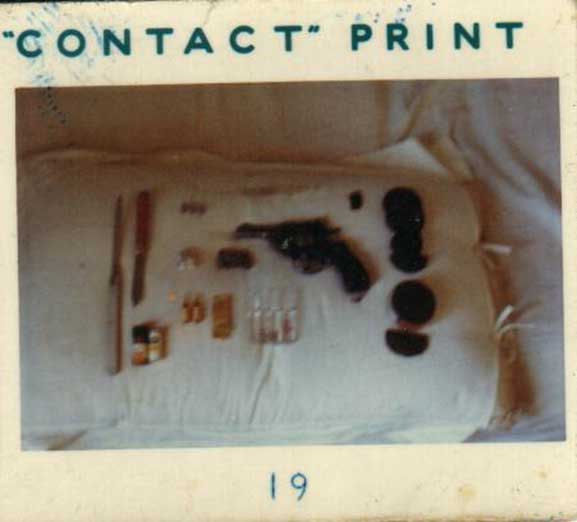
Afghan booty Summer 1966
I bought the gun from a French hippie in Herat for $10 with 3 used but repacked bullets. I never dared fire it just in case it went wrong and blew my hand off. In Kabul I walked around with the revolver butt protruding from the right hand hip pocket of my Levis. An English speaking police officer approached me and politely informed me that, technically, carrying a gun is illegal, so would I kindly disguise it better? In response I wrapped a red hanky round the butt so it wasn't quite so obvious. I kept the gun unloaded with the 3 bullets in a matchbox in my left pocket.
I did wave it around in anger once, to threaten a hotel keeper who tried to extort 3 days rent after a stay of just 2 nights, and who was impeding our departure by hanging on to a suitcase. Luckily he didn't see the chambers were empty when I pulled out the gun and shouted "Let go of the suitcases or I'll blow your fucking head off!" He backed away with raised hands and we escaped with our luggage. Unfortunately our waiting taxi driver saw the incident with the gun and drove off in a panic. So we had to run a couple of hundred meters down the road carrying a packed suitcase in each hand, until we were out of sight! Our suitcases were full of used American clothing from the market that were quite the rage back home in London. These were USAid donations which ended up on sale in the market. Button-down cotton shirts, Ivy League cut jackets, and so on. Plus some traditional Afghan outfits. Just for ourselves and maybe for a couple of friends.
Returning to England I found I had got good grades in my A level resit exams and won a place at the fashionable but excellent Sussex University near Brighton. It was called by 'Hampstead by the Sea' by some wags. I soon made friends with the local heads at the university and in town, especially as my old Hampstead mates Alan Green and his brother Brian Green lived nearby. They were both ex-users but stuck to booze and smoke these days.

Maggi Gearson in 1966
That Autumn I met and fell in love with a wonderful and beautiful girl called Maggi Gearson. She was studying to become a teacher at the Brighton College of Education, across the road from the University. We hit it off so well and were inseparable for the next 20 months, except when she visited her mother in Paris. I did sometimes go with her, and her mother put us up in a modest hotel in the Pigalle district near to her flat. We took a lot of drugs together like hash, acid and less often uppers and downers. I recall spending one whole acid trip in Brighton in bed doing nothing but making love with Maggi. We came again and again and I couldn't tell which was her body and which was mine. It was a wonderful experience of bodily and mind fusion and togetherness. Ah, the passion and lust of young love.
In Autumn 1967 after a Summer together in Ibiza I started my second year and we were more heavily into drugs. Maggi dropped out of college and was living with me in a dingy basement flat in Ventnor Villas, Hove. I shared this flat with my dear friend Dave Fry. One of my new friends was Niall Good whose father was a GP in nearby Rottingdean. He would pinch some morphine solution from the surgery and he and I used to get high on that. He substituted water for it and I do hope some poor tragic accident victim wasn't given a shot of morphine solution diluted to nothing, when in real need.
I tried to keep my opiate use hidden from Maggi, but she knew what was going on and asked me for some. I refused because I thought it would ruin her. I did some serious thinking because I knew it was getting inevitable that she would start shooting up. I faced two choices - to give up all opiates and intravenous drug use myself, or to break up with her. I just couldn't and wasn't prepared to do the former and I loved her too dearly for the latter. I was paralysed with indecision and in the end I made the coward's choice of no choice and the inevitable happened.
One day when I came back from University she showed me she had some heroin she had bought and some nasty punctures on her arm where she had tried and failed to inject herself. I didn't want to do it but couldn't bear to see her wounding herself, so I gave in and, regretfully, gave her her first intravenous shot. She loved it and after it wore off in the midnight hour she wanted more, more, more.
Over the course of that academic year we were multidrug users smoking dope most of the time, taking speed, acid now and then, downers, opiates, and when we could get it, coke to shoot up with the H. We were getting by without getting too degraded and even travelled to Turkey together overland during the Easter vacation 1968 to score a couple of Kilos of hash for sale and personal use. We went to so many psychedelic events that year - the Technicolour Dream at Ally Pally, in April and Christmas on Earth at Olympia in December; UFO in Tottenham Court Road, Middle Earth in Covent Garden. We saw Jimi Hendrix and the Pink Floyd about five times each, Arthur Brown once and loads of others including Captain Beefheart.
One time we were at the Middle Earth club in Covent Garden that my friend Neil Winterbottom had set up with others (so he claimed). John Peel was the DJ and he said over the PA system what bliss it would be if he had a copy of the Velvet Underground's record to play. This was their first album with the Andy Warhol banana cover and my friend Patrick Lane had brought a copy back from San Francisco and later swapped it with me for a box of ampoules of meth. So we went to John Peel and said we had it outside in the car, and brought it in and lent it to him. However after 2 hours he still hadn't played it so we asked for it back and left. In those days you could park in Covent Garden and Maggi had a tiny car called a Goggomobil.
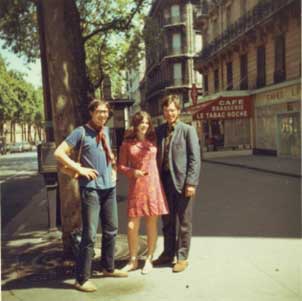
Alex, Maggi and Paul in Paris Easter 1968 on return from Gaziantep, Turkey
However from Easter 1968 we started to go downhill, becoming full-on heroin addicts. I stopped attending University and we spent more time in London, although there were a few registered addicts we scored from in Brighton, as well. We hung around with some heavy users like John Boylan, Danny Halliday and Frank in Shadwell, as well as anyone else we could score from. Too often we would be hanging around the chemists Bliss in Kilburn, and Boots and John Bell & Croyden by Piccadilly circus at midnight, looking to score. However, of the episodes I recall about half involve Maggi and half do not. She also went to Paris several times on her own.
I remember walking around the underground station at Piccadilly circus, trying to score from junkies at the Gents, shooting up in the stalls, and thinking it was like one of Dante's circles of Hell. It really was. Undercover cops chasing rent boys and pick pockets. Junkies chasing dealers - who themselves were just junkies with a little 'spare' on the script. Then there was the squalor and stink of the underground station and the gents toilets! Drunks and junkies vomiting. Rent boys and johns ejaculating. We were condemned by our desires and sins to forever chase each other around this hellish circle.
Too many half remembered episodes come back from the Spring and early Summer of 1968. Such as meeting Gina Strauss who had been such a lovely and joyful girl in Hampstead, Tony's first real girlfriend and later Andrew Loog Oldham's squeeze. Now only 5 years later she was an ill-kempt and desperate junkie hanging around the 'Dilly'. She offered to come home and sleep with me just for a bed for the night. I declined, my sole desire was for the white mistress of the night, heroin. Heroin kills libido in males and reduces capacity too. For women it is different, quashing inhibitions without necessarily squashing desire.
One time I was so desperate all I could score was methadone linctus and I shot that up in a giant 20ml syringe in the Dilly gents. My blood floated on top of the linctus and when I shot it into my arm it was as if my liver groaned and my low grade high was tinged with nausea.
One time I found a jack of H on the floor at Bliss where some junkie had fumbled their little prescription bottle and dropped it. In those days H still came in little jacks in a tiny cork stoppered glass bottle, the pills counted out by the dispensing chemist. Charlie came in similar bottles but was tiny little snow-flake crystals, smaller than in sea salt. Methedrine came in little glass vials holding 2 ml of water into which 30 mg was dissolved. The vials came in cardboard packs of 5 for which the standard price was £1 or 5/- each vial. H and C was £1 a grain (60mg in the form of six10mg jacks) and was 100% pure NHS issue. I have never used any H that was other than 100% pure NHS issue.
In all my time as a junkie I never once had a junkie try to jack the price up on me (excuse the pun). The prices were just standard and accepted by everyone. I hate to think what would happen today, if someone had the stuff you desperately needed and you only had money to buy it with. Would the price double, treble, go up fivefold? I think the reason everything was fair (and cheap) was because it was junkies selling part of their script both to help out a fellow user and to gain a little spending change. They weren't in the game to get rich, just to get by!
As soon as the Chinese Heroin came in via the Hong Kong Triads, after the NHS more or less stopped prescribing it around 1969, the price jumped sixfold to 1 pound a fix (instead of 6 jacks for a pound). Grey elephant they called it. I never tried it.
Only once did I get a prescription for H and that was from the infamous Dr Petro. I met him by arrangement in St John's Wood tube station, where he wrote me a prescription for 3 grains of H, for a fee of £2. He was a doctor who had served the upper classes but now as an alcoholic he was down on his uppers. He was struck off not too long later.
Rab cashed my script (prescription) for me in an East End chemist and as we were walking away he opened the bottle clandestinely in his raincoat pocket to steal some, but fumbled it. When I asked for my H it was all loose in his grubby pocket, mixed in with fluff and god knows what else. I told him off and said "I was going to give you some, you know" which I did.
I was reluctant to get registered on H because I was technically a foreigner and I was applying for British citizenship at the time. I just didn't want 'heroin addict' written all over my official records, and get refused as an undesirable alien. In the end the police decided I was involved with drugs and recommended I be refused citizenship anyway, which I was, in 1968. My friends Tony and Alan were registered addicts by then, but either we didn't meet up that often, or when we did they didn't have any junk to spare.
Maggi was starting to sleep with other guys when were not together, which I didn't really know at the time, although I sometimes had vague glimmerings and uneasy suspicions. She was quite insecure and attention seeking, and if I, her boyfriend, was not there to give her my love and full attention, she would use her charms to get that attention from another guy on the scene. One time she gave me crab lice, and even then I did not suspect how she had been infected. We both had to cut off our pubic hair and apply a pink cream to kill the little parasites and their eggs. When we did, because of all the little wounds and scratches we had made on our pubic regions with nail scissors, it stung really badly. As we jumped about in pain I recall joking that we had the perfect antidote to that pain as we both shot up heroin. It worked.
One time in the Brighton flat, we had 3 jacks each. I shot mine up but she only used one of hers. A few hours later I wanted some of hers, like a child squabbling over his sister's sweets when he'd gobbled up his own share. She didn't want to share and I begged and pleaded for ages. When I looked round she was cutting scratches into her forearm with a knife. She was so torn between her need for her own heroin and my desperate pleas that she turned away from the pain of the insoluble dilemma and hurt herself. I was deeply shocked to see that, upset because of the pain I was giving the woman I loved. But I still wanted some of her heroin. I think she gave me half a jack.
There was a couple we knew, Diane and John, from the London drug scene. They were a stylish, attractive but skinny pair. They might be labelled Goths these days. They were speed freaks, which kept them very thin. She said they lived by 'bric-a-bracing' which was a euphemism for burglary. Diane lent us her mini a couple of times and we'd drive down to Brighton for a day or two.
One time we took the old time junkie Danny Halliday and his girlfriend Pauline on a late night visit to my flat in Ventnor Villas, Hove, in the borrowed mini. We arrived at 6:30 am and waited by the beach until Niall Good turned up at 7am for the start of his deck chair job. We piled into the tiny hut and within 10 minutes Niall had passed out from an overgenerous shot of heroin.
We then drove on to Ventnor Villas. Pauline couldn't wait and was shooting up in the car and passed out with a needle bloody in her arm. She flopped out of the mini and was lying on the pavement, legs in the car, bloodied needle in arm, skirt up 'round her waist, which didn't look too good to the neighbours, as she had a ravaged streetwalker look anyway! A bit much at 8 am as a spectacle for neighbours to pass by on their way to work! We picked her up and hauled her downstairs to the seedy basement flat.
Danny was on a huge script of 30 grains of H, 30 grains of C and I think 10 boxes of methedrine per day, on a prescription from Dr. Lady Frankau. So although a very heavy user he had plenty to spare. I don't know what prescription Pauline had. We piled into the flat and Danny generously allowed me and Maggi to use as much as we wanted. Being greedy I had a big shot of H and C (an exquisite speedball) and passed out on the floor. My friend Patrick was there to witness this. This is his account.
I visited my close friend Paul one day at his basement flat in Ventnor Villas in Hove. I found him on the floor, dead, with a syringe still protruding from his arm. Instead of giving him mouth-to-mouth resuscitation or calling an ambulance, I rifled through his pockets to find his stash of drugs, which I immediately took possession of. I also stole his LP of Bach's Musical Offering and his copy of The Hero with a Thousand Faces by Joseph Campbell. That such wondrous examples of human creativity should be coveted by a lost degenerate provides yet another example of life's rich contradictions.
'Well, he doesn't bloody need them any more,' I would have said if asked.
I'm pleased to report that Paul was not dead, just unconscious, and these days he holds a chair at a prestigious English university. I eventually replaced the drugs and returned the book and LP - though we argued for a long time about how much heroin was in his pocket when I emptied it. But Paul was very forgiving of my behaviour and completely understood. "Of course, man. I would have done exactly the same."
Danny said to me when I came to "Don't trust that guy Patrick, he helped himself to your stash". In fact, he didn't steal it all, just enough to get him off, and for us not to notice. And he did replace the book and the LP although I'm not sure he ever replaced the drugs!
Another incident with Danny and the mini happened not long after. Maggi and I scored some boxes of meth and were pretty high on it for days. We drove to Frank's to see if we could get some H. He didn't have much to spare but swapped a grain of C for a box of meth. Next, after midnight, we drove to Danny's in West Hampstead to score. In my stoned and devious way I thought maybe I could get 2 grains of H from Danny. We went in after the usual palaver of quietly tapping on the window of his rented room at about 1 am. One of his young acolytes let us in and we had an audience with him in his large bedsit room. There were a few young addicts sitting around listening to his longwinded stories for a cheap, or if really lucky, free fix.
We went in and greeted the occupants paying special homage to Danny. After the usual long delays he finally asked me what I wanted. I said I had a couple of grains of coke to swap for two grains of H please. He opened the folded paper and looked at the coke. He said
"This is one grain of coke. You have come here trying to cheat me. I don't like it, I'm no fool you can take advantage of just because I'm high. As a punishment I will give you just half a grain of H for it. But I'm not forcing it on you. I will only give it to you if you tell me that this is fair and you are happy with the deal."
I was hurt, publicly humiliated, but so desperate for the H I told him I was happy with the deal, took the three jacks and left. I was really upset. Outside in the hallway Maggi said to me "How could you let him put you down like that. And in public, have you no spine?". I burst into angry tears and asked how she could kick me like this when I was so down and humiliated.
We got into the mini and headed off to Brighton from West Hampstead. The cogs in my meth raddled mind were turning, and in my amphetamine psychosis the picture became clear. She was my enemy and was planning to kill me. I sat there silently scheming. I wondered how I could escape from the speeding car and her evil intentions, and then a bright idea came to me. I pushed my foot hard against the gear stick so she could not change gear and would be forced to stop. She exclaimed "What are you doing?" and pulled the car diagonally in to the curb in Finchley Road near St John's Wood tube station. I threw open the door and ran out and hid behind a low wall. She followed me asking ""What's happening, are you okay?". I was sobbing by now and ran down a side street and huddled in the doorway to a garden set in a long brick wall. Maggi came and sat next to me with her arm around me trying to comfort me as I shook with tears.
Just then a bobby on the beat walked up and asked me. "Excuse me sir, is that your car on the high street?" I replied, "No, no, no, … it's not my car, it belongs to a friend who lent it to us, you see." He said "Well if you don't mind, would you be kind enough to park it properly, sir?" and then he walked off. I guess he thought we were having a lover's tiff rather than me having a breakdown.
We got back in the car and drove to Brighton down the usual route including the wonderful and aptly named "PurleIy Way". It has a line of sodium lights suspended above the centre of the road for a kilometre, like a string of pearls. I gradually recovered my equanimity, but it was one more step towards the end of our relationship.
There were many further sad, degenerate and desperate episodes of drug abuse throughout the academic year 1967-68, especially in the early summer, culminating in Maggi dumping me.
In the summer of 1968, after Maggi was gone, I recall going to Diane's basement room in Westbourne Grove one evening. She was the girl who used to lend us her mini. There were about half a dozen of us including Diane sitting around on the carpet. Someone had some speed so we all coughed up some money and shared it out in little paper packets. These were made the usual way. You get a rectangle of paper, maybe 6" by 4" and put your powder in the middle. Then you fold it longways so the two lengths overlap a couple of times. Then you fold up the bottom and top thirds, making sure you keep the powder in the middle, and tuck one inside the other. People also sold grass and other drugs wrapped in a similar way. There were no plastic bags nor clingfilm in those days.
So we each had our stashes in little paper folds and were starting to shoot up the speed. After twenty minutes one of the guys, a youngster I hadn't seen before said "Hey, I can't find my stuff!". We all got up and patted down our trousers and looked around. Nothing doing. The young guy got more and more agitated, saying "One of you guys must have nicked it!". Everyone denied it and he went off in near tears. We carried on shooting up, then one of the guys said "Well of course I had it. You can't go leaving your stuff around on the floor and not expect it to get nicked. It was his own fault, he'll learn."
I was deeply shocked by this casual thievery from a compatriot in the brotherhood of drugs. The absolute lack of empathy and ethics towards someone you were treating as a friend a moment before. What was shocking was not just the theft, but the casual admission, as if nobody could possibly regard it as wrong. Drug desire knows no ethics, no bounds, and you'd steal a dying relative's morphine if you needed it.
I remember two incompatible endings to that night, so probably it was two evenings. In one ending everybody left except Diane, and a female friend of hers and her sleeping five year old child. Diane took her blouse off revealing a very skinny torso with ribs deeply etched, and two perfect breasts. She smiled at me and despite my head spinning with speed at 3 am, I felt really sexy and aroused. I wanted to make a move on her. I felt it was an invitation. But I was just too inhibited, embarrassed to make love to her in the presence of another woman and a child in her one room flat. The hours passed and as dawn came I left. I always regretted my timidity.
In the other ending, one of the guys said, wouldn't it be great to score some H. I said I knew where, at Frank's in Shadwell. We went there by tube. I think it must have been really late by then and we got the first tube at 5 or 6 am. I told him to wait on the platform and I would go and score. I couldn't bring him as Frank didn't like strangers coming around. I went to Frank's and it took ages to score and I shot up myself as well, before I left. I did bring some stuff back to Shadwell Tube Station, but it had taken me 1 hour and 15 minutes, and my friend for the night had gone. I felt sad he had given up waiting before I got back. But it left me some extra!
We must have met Frank at the Dilly or somewhere. He lived in a flat in the East End, nearest tube Shadwell, and his flat was absolutely crammed with his stuff. Floor to ceiling. Stuffed eagles, harmoniums, oak pulpits, complete encyclopedia sets, large collections of crockery, fishing tackle, brass instruments, records including 78s, towers of books, cases of butterflies, electric drills, and so on. A real emporium of antiques and bric-a-brac. Except none of it was for sale. He was a hoarder. There were passages through it so you could get to the toilet, kitchen and bedroom. The living room and hall were pretty fully stuffed. Even the bedroom was mostly piled high with books on half on the bed and two or three easy chairs clear, if you were lucky, with a cramped space for your feet, and the rest of the room filled up. Some of the time he lived with a mixed race girl and her child. I think they all slept sitting up in the chairs. Frank was a bright guy, I don't know what path had led him into heavy drug addiction. He was a self taught expert on everything, and with his ginger hair looked a bit like Vincent van Gogh. And just as rough as Vincent on one of his bad days.
He was a decade or two older than us. He could usually spare a bit of H and C and would swap them for Meth, if you had some. He'd often make you accompany him to the chemists to pick up his prescription. He liked the company because there were East End roughs around who would rob him of his drugs if they got a chance. I recall them shouting insults at us, like "He's a dirty junkie!" as we re-entered his flat having collected his prescription. They had broken in once, when he was out, and robbed him. He had a boarded up window in the hallway where they had broken in.
One time I was there, it must have been Autumn 1968, when there were noises and the boarded up window was pushed in. Piles of crockery and books were pushed perilously close to collapse as two guys clambered in the window, breaking a few plates. They were plain clothes police. They said "What are you up to Frank, keeping honest?" I don't know what his relationship with them was, and whether they were on the make. He certainly did not welcome the intrusion. I was sitting down trying to stop nodding off while I read "The Trial of Galileo" by Berthold Brecht. I was studying Thomas Kuhn's Copernican Revolution and the history of science at the time, at Sussex University. One policeman said to me "What's a nice middle-class boy like you doing around here, you shouldn't let Frank get you on the drugs." I protested I was only a friend, although my pinned pupils would certainly have given me away as a user. They left after a while. Frank was a nice and interesting guy, and I did regard him as a friend, not just someone to score off.
Tony told me later that Frank got busted and the Council moved in, cleaned up his flat, and stored his stuff in a garage lock up. When Frank came out of nick his flat was gone and he claims they nicked the best stuff in his collection. I never knew what happened to Frank in the end, let alone the girl and child.
I had a pretty miserable academic year 1968-69 after coming back from Sweden in the Summer, where my parents sent me to rehabilitate. I restarted year 2 of my course at Sussex again but had to leave after a month as I was back on drugs. I was a multi-drug addict, taking anything to get high. I had a lot of acid trips for kicks, not as the semi-religious voyages of self discovery that they had been at first, starting 1965. I used everything I could get, smoking dope daily, alcohol, uppers and downers, speed, opiates, anything at all. It was really a year of depression and breakdown. Sitting at home reading H.P. Lovecraft, Tibetan Buddhism, Sci-Fi and all sorts of weird stuff that confirmed my rabbit hole of 'world-strangeness' or alienation.
I learned later that during this time my two ex-girlfriends Lynn and Maggi moved into Paul de Mille's flat in Chalcott Square, which they shared with Crispin Kitto, while Paul was away for a couple of months. They were both on junk, but our paths did not cross. I had seen Lynn once in early Summer 1968 when she came over to my mother's house and stayed the night after getting out of Holloway Prison on release for some petty drug-related offence. By the time I woke up she was gone again, back into the endless nightmare of her life, wearing some of my clothes.
But as winter 1968 approached I was isolated and very depressed. My mother referred me to a psychiatrist Dr. Peter Dally who she worked with at Westminster Hospital. Because I was intermittently on junk he gave me a methadone prescription for 4 months. He described my state as psychotic, my mother told me later. He was cutting me down from 4 ampoules to 2 ampoules a day. I would jump on a bus from West Hampstead to Golders Green everyday to cash my prescription. I even saw Maggi a bit. I recall hiding behind the door of her bedroom in Hendon with a methadone loaded syringe in my hand when her father looked in to speak to her. I had been banned from the house and she snuck me in. But the magic, the love was gone and we were now both sad and desperate characters.
When my grandmother died around Easter 1969 I asked Dr. Dally for two days worth of methadone syrup to take with me to the funeral in Gothenburg. I went there by ship, which was the cheapest route in those days. Each day I drank half the syrup and then refilled it with water. I was at Danny and Lena's in Gothenburg when the withdrawal kicked in. But it was only aching legs for one night and sleepers took care of it.
I think Lena made love to me once that visit, as I was lying drowsily on the roof in the sunshine with just my pants on, still a bit numb from the sleepers. She climbed on top of me and was finished before Danny came to look for us. If he had caught us, or confronted her she would have said "You don't own me or my body, I'll sleep with anyone I want to!". It would have been more difficult for me though, as I was betraying a friend's trust.
It was good to see old Swedish friends again but I was in a dark place. I felt nothing at my grandmother's funeral although I had spent lots of time with her as a kid and loved her dearly. Returning to London I was still a depressed multi-drug addict taking whatever I could to get high. In the Summer I went to the Stones free concert in Hyde Park.
Paul at the Stones concert in Hyde Park Summer 1969
My last period of drug abuse was Summer 1969. I arranged to meet Lena, my Swedish sometime lover, in Ceuta, Spanish Morocco. She was in an all inclusive holiday resort just outside of Tetuan which she had booked cheaply as a travel agent. I flew in to Gibraltar and took the ferry across the straits and a bus to her resort. The doorman wouldn't let me in and denied that she was there. I found out later she was sleeping with him, and he obviously didn't want to lose his pretty blonde squeeze for the weekend. So I travelled on to Tetuan and hit the chemist for over the counter drugs. I scored lots of preludin, a form of speed, and spent the weekend shooting it up in my hotel room, and smoking kif. I think I suffered from amphetamine psychosis. I was hugely paranoid and saw some terrible things. These included eyeballs on stalks coming through splitting walls. There were whispering voices and an overall aura of threat and doom.
By Monday morning I was in a terrible state. I went back to the holiday camp and met Lena, but I was so locked up inside myself I kept saying "terrible things are happening". We took the bus to Tangier, but instead of shacking up together in a hotel as I had hoped, she abandoned me and hoofed it as soon as we arrived. I was all hippied up in a white flowing shirt with turquoise embroidery and matching turquoise velvet loon pants from my friend Duncan who ran Forbidden Fruit in Portobello Road. But it wasn't the hippie clothes and long hair that drove her off. After all, the previous summer she had sewed me a couple of pairs of flared trousers herself. No, it was my abject head state. Her plan was to score a couple of keys in Tangier and then take them home to Gothenburg, which she did. I can't blame her for dumping me! I never saw her again, although my sister bought her flat in the very steep Nedre Fogelbergsgatan (Lower bird mountain street) from her and Danny in Gothenburg, or rather paid her key money to take it on.
Actually it was me that inspired her to smuggle the dope. I'd met up with Danny de Souza in Gothenburg on my second cure Summer 1968, when my parents sent me to Sweden after my awful summer in the dumps and after the split from Maggi. I stayed in the countryside with my cousins and near my granny (mormor - mother's mother) and took up the habit of bussing into Gothenburg to visit the main library. They had loads of English language books. One day walking out I bumped into Danny de Souza who I knew from City of Westminster College where I had redone my 'A' Level studies 1964-66. He took me home to meet his girlfriend Lena. They invited me to stay and I moved in there.
Danny had to go back to England for a week to clear up some business and Lena immediately invited me into her bed. It was such an intense romance for me. I suppose I had a vacuum in my heart after Maggi and the terrible damage heroin does to you emotionally. Lena filled it, and it was young love all over again. I was head over heels infatuated. I'd meet her after work at her travel agent's office and we'd spend all our time together, much of it in bed. I bought her the new Bob Dylan LP with Johnny Cash and Buffalo Springfield's second album and those songs were listened to by us with such intensity, that the feeling lingers on to this very day.

Paul and Lena during our brief fling, Gothenburg Summer 1968
But then Danny came back and I had to covertly move out of her bed and their normal life resumed. But I regaled them with stories of how I had travelled to Morocco twice and brought back grass. How I'd been twice to Afghanistan and brought back hash. And how I had even travelled to Turkey earlier that year with Maggi and brought back 2.1 kg of best hash. So they wanted some. In fact, in the 1970s Danny did one run and got caught in Iran and spent a year or two in jail in Meshed. When he got back he told me he had become chess champion of Greece on the return overland journey because the colonels had locked up all the best players. He refused to play me though, I was at the peak of my skill at chess and Go, and fancied a game. He didn't learn however, and got caught again bringing quite a few kilos of hash into Turkey from Iran and ended up with a sentence of 20 years. He served many years and his story is like that in the film Midnight Express with John Hurt. He wrote his story in a book "Under the Crescent Moon" which I picked up in a charity shop.
Back to Summer 1969. Lena was gone and I got a hotel room in Tangier, but was still out of my head. I smoked one pipe of kif after another and I could hear people whispering about me incessantly, and I just knew that they were peering into my hotel room through every crack, door and window. I 'sensed' that there were watchers all around, even hanging in the air outside my window, just out of sight. At one point I threw open my doors shouting "I have nothing to hide!" Luckily the hotel manager was either deaf or very tolerant of stoned tourists. Later on that week, wandering around Tangier and looking seawards, I could see big fish jumping out of the water. They were the same size all the way to the horizon, so I worked out that I must be hallucinating, from the speed.
Of all the drugs I ever took the most dangerous was speed, in its many forms from amphetamine, Dexedrine, Preludin, methedrine, Ritalin, etc. Large doses of speed stop you sleeping and you get paranoid and develop threatening hallucinations and suspect that all around you are scheming against you, even those you love. Amphetamine psychosis makes you cunning, wily, paranoid, scheming, distrustful, obsessive and full of distorted illusions about people, space and time. It made me fearful, angry and liable to lose my temper. Luckily I never became violent but some speed freaks do. A small dose makes you warm and loving and you can't stop rabbiting on. Large repeated doses brings out compulsive behaviour, sleeplessness and paranoia and is very dangerous.
Alan Shoobridge and Paul in 1963
Fortunately I stopped shooting up speed and calmed down a bit and my amphetamine psychosis subsided. Actually, what happened was I went to a chemist stoned and asked for preludin. The chemist asked me what for. I was flustered and caught off guard so I said "Slimming". But I was skinny as a rake, twitching and done up in hippy gear, so it was a highly implausible story. The chemist refused me, which was actually doing me a favour.
Walking around the Casbah who did I bump into in but my old friend Alan Shoobridge? I was so happy to see a dear friendly face and we spent the next 2 or 3 weeks together before I flew home to the UK. I kept my cheap room in a hotel in the Casbah, but spent all of my time with Alan. He was shacked up with his French girlfriend in another cheap hotel, taking all the drugs he could afford. Our staple was paregoric, an over the counter tincture of opium with camphor dissolved in the alcohol base, so it could not be injected.
William Burroughs describes chilling it until the camphor has separated out and forms a crust on top, and then extracting and injecting the remaining liquid. I have done that in the UK. Alan had a simpler technique. You heat it in a metal ladle or large spoon until boiling and then set fire to it. Both the camphor and alcohol burn off and you are left with a black opium deposit. This dissolves easy enough in water, suck it up through a ball of cotton wool and hey presto, you are ready to go!
I had money enough to pay for my share and to pay for his Alan would send his girlfriend importuning in the European quarter of Tangier. She would ask gentlemen for money for her favours and then run off back to Alan with the cash. We didn't discuss it but I gathered that some johns caught her and demanded their pound of flesh!
I had a bottle with 120 trips of LSD in liquid form with me in Tangier. Quentin Theobald had synthesised in his Hythe lab. He was of course caught later and ended up in the clink doing a seven stretch. In the 1970s when I was back into studying mathematical logic I sent him logic and philosophy books in jail. He passed his Logic 'A' level inside. After that we sort of lost touch, but I heard he was killed in Ibiza. A brilliant chemist and a lovely guy!
But that summer I didn't feel in the right state to take it myself, so I sold it among the hippies of Tangier. In fact I never took acid again. The drug binge with Alan Shoobridge in Tangier for three weeks was my last mad fling. While there I made a deal with a shop to buy 20 pairs of leather slippers with about 2 oz of hash sewn into each sole. But although I had given them half the money, I had a premonition that it would end badly, so I cancelled the deal. For my money I took some dope, instead, to smoke. Probably one of the best decisions I have ever made. People were getting caught bringing dope back. Paul de Mille had tried to bring a bunch of stuffed leather camel toys with kif in them back from Morocco, or posted them, I forget, and got busted, a year or two before. It was not a smart time to take risks, even though many people were getting through, especially as I was dressed like a hippie, drawing attention to myself. Indeed I was a hippie!
In the years that followed a whole bunch of friends were caught out east smuggling hash back, including Danny de Souza in Iran and Turkey, and Bernie Osgood, Viv Schutzman and Mic Parsons, who did time in Iran. (Mic also did time in USSR, having got off a plane in Tashkent to shoot up. He was later released as small change in a celebrated spy swap deal). That was before the really big-time smuggling took off, which ended with my friends Patrick Lane and Howard Marks splashed all over the papers and then in jail in the USA. I guess I was lucky to get away with it, but I did give it all up before it got really hairy, and my last smuggling was Turkish hash at Easter 1968 with Maggi. Oh no, there was one more occasion. When I went back to stay with Lena in Gothenburg in April 1969 I posted a bundle of comics and magazines with 2 oz of hash stapled between some pages, addressed to myself. The magazines were all rolled into a tube and bound up with string, so you could see right down the middle. It got through undetected.
It was just as well I posted it because when the boat docked in Gothenburg I was strip searched by the customs authorities, who confiscated most of the Rizla cigarette papers I was bringing. These were highly taxed in Sweden at the time. You were allowed 3 packs but I had a box of 50 as requested by Danny and Lena. There was no penalty, just confiscation and a mild telling off. Astutely they noticed the tracks on my arms and I explained that I was a recovering addict who had just given up methadone except for the linctus, which they let me take through. They were a thoroughly decent bunch of people.
Alan and I had a great time in Tangier but it was also uncomfortable. The reusable stainless steel needles we used were getting more and blunt, and even rubbing them on the striking side of a safety match box to sharpen them left them hurting my arm. Also the shots, the dissolved opium deposits, were making me feel sick to my stomach (my liver more likely) and it was all starting to be a pain. Not Alan though, I loved his company.
On reading a draft of this memoir my old friend Tony told me that paregoric includes benzoic acid as well as camphor and opium extract. No wonder shooting it up, even after burning off the inflammables, made me feel sick to my stomach!
I flew home to London via Gibraltar, but when I arrived I was diagnosed as multiply infected. I had hair lice, crab lice, pink eye (conjunctivitis), hepatitis A or B, and was a suspected typhus carrier. After and a few days in a public ward in Middlesex Hospital, I was diagnosed as a risk and sent to Coppetts Wood isolation hospital in Muswell Hill. Before I got there, I made a pact with the doctor to stop all drugs, and I did. This was forever, apart from one telling slip in the Autumn of 1969.
I spent 3 or 4 weeks in Coppetts Wood Isolation hospital completely on my own, off drugs. Visitors had to be gowned and masked up, before they were admitted into my private room, as source of some mirth to me. They were the freaks, not me. My parents brought me a radio and later a portable TV, as well as fruit and other treats on their visits. Bowie's 'Major Tom' (Space Oddity) was the hit of the moment on the radio and I rolled those delicious chords around my mind. I was just sitting and thinking, determined to go clean, forever. The drugs no longer brought me joy and my life was a mess. Just watching the sky at dawn was a huge turn on. Of course, now I know that if you are a heavy user of cannabis the THC saturates your body fats so you remain pretty high for a month after giving it up. But no matter, I was filled with joy and love and ready to start to live again. I wrote poems and other short pieces including dramatic descriptions of sunrises and sunsets. I sent cards and letters to friends to keep in touch, letting them know I was back in the land of the living, adding drawings and writings in coloured pens and pencils. I was sharing the new found joy of being straight, of rediscovering myself, and of finding a self I could love and enjoy, instead of having run away and hide from myself all the time. One of the letters I wrote to was Philip Howe, and a parcel arrived from him in Cornwall. He was yachting with old man Hubbard and sent me a tin of clotted cream. I recall feasting on dark chocolate digestives with the cream in my isolation room, a private ecstasy. I tested negative for typhus in the end and was released.
The last time I had brought any dope to the UK back was Easter 1968. My then girlfriend Maggi and I travelled to Gaziantep, where we bought 2.1 Kg of the best grade hash. Back in England things had gone from bad from worse and we sunk into addiction and had to part Summer 1968, when she dumped me, to my great sorrow. Before then Maggi had a tin with 20 oz of our Turkish hash stolen by a guy called Max, after she spent the night with him. But in Autumn 1969, after I had given up all drugs, Max came back from Afghanistan with 100 kg of hash. Pete Rasini kindly said to Max "Why don't you replace the dope you took from Paul and Maggi? That would be a nice thing to do." Max gave Maggi one pound in weight of black Afghan hash, and although married to Tony by now, and 15 months on from our split, most honourably she contacted me to give me my half.
Selling that was the last dealing I ever did. Although straight, I took it to Brighton to sell to Geoff Conrad and other friends from the University of Sussex. Geoff happily bought it off me, and then offered me some coke. I had one shot, then, two, three, four, until it ran out. By morning I was pretty stoned and wretched as I took the train back to London. I thought to myself I was at a crossroads. I could choose to go back on drugs. Or I could take this slip as a serious lesson, and learn that I could not trust myself around any of my old drug friends, if they were still using. Viewed this way it could be seen as a positive, not the beginning of the end.
I walked back to West Hampstead from Victoria Station through St James' Park, Hyde Park, Regents Park, Primrose Hill, on a glorious and sunny Autumn day. I smelled the flowers in those wonderful rose gardens in Regent's park. My long walk was partly a penance but also partly just time to think, to clear my head. I decided I really did want to stay clean, I didn't want throw away my hard won sobriety. I had just turned 25 and it was time to grow up, get serious, and fully face the wonders and challenges that life has to offer.
And so I did, keeping myself sequestered and applying for work and pursuing new interests in yoga, meditation, mysticism, magic and all the technologies of soul cleansing. I started a new diary recording all of these practices on 1 January 1970, just as I had started a diary about my growing into adolescence on 1 January 1960. Clearing out my mental garbage led to me getting a good job in computer programming at the start of 1970, and meeting Jill, the love of my life three months later. And reader, I'm still married to her, 56 years on.
By the summer of 1970 I was confident enough to meet my old friends on neutral grounds, away from temptation. Many were clean anyway like Peter, Philip, Steve and John. Maggi married my best friend Tony and although still users, they were mostly on methadone treatment programmes. Maggi and I were good friends until her premature death in 1971 from an accidental overdose caused by a pharmacist accidently making up methadone linctus for her that was eightfold too strong. The inquest was a whitewash and they claimed that she has added methadone powder to her syrup to enrich it. And they even talked down the 5 gm discrepancy in his methadone stocks listings as trivial, even though it is enough to kill more than a score of people. Their lovely son Julius is 55 years old now. Tony and the others, those that survived anyway, are still my best friends, to this very day, with heroin a very distant memory in the past.
To continue the story of my life, Sussex University readmitted me in 1971 after passing academic tests and with a letter from my psychiatrist saying I was clean. Jill worked and supported me by commuting from Brighton to her work at the World Films Service office in Brook Street, WC1. She rode down to Cannes in a Rolls Royce carrying the print of Losey's 'The Go Between' to be screened, and it won the Palme D'Or. We were married in 1972.
I graduated in 1973 and obtained a masters degree in mathematical logic in 1974 with distinction. And on to my academic career. I published my first academic paper in 1975 in The British Journal of Philosophy of Science and sent a copy to Dr. Peter Dally, at my mother's urging, to show how the fallen had risen mightily!
Paul and Jill in Summer 1970
There is quite a contrast between this picture and that of the dark and doomed-looking Paul of the Summer 1969, just one year earlier, at the Stones' Concert in Hyde Park.
I guess I was lucky to get away with it, but I did give it all up, especially the smuggling, before it got really hairy. I did get turned down for British Citizenship in 1968. I mentioned Paul de Mill getting busted for smuggling dope. Because my name was in Paul's address book I was listed as 'suspicious' in the Home Office files. One 'strike' against me. I was also interviewed by customs and excise agents Mr Cutting and Mr Cooney, when my friend Steve was done for posting some Afghan stuff in from Paris in 1965, on our way home from Afghanistan. Lynn Ellis's parents had also falsely reported me to the Home Office in 1965 for turning their daughter onto drugs. In fact when we hooked up (sic) she was on a methadone treatment and it was her giving me a bit now and then that helped opened the door to my eventual readdiction. These three things were used against me by the police when they recommended turning down my citizenship application to the Home Office, in 1968.
They were very decent about it and suggested I withdraw my application. But I refused to do, stupidly thinking it was an admission of guilt! Of course they were right, I was deeply involved in drugs, even if none of the circumstantial evidence proved it. But as the policeman said at the time: "just one of these reports could have been a mistake. But three reports - too much to be a coincidence!" As John Buchan wrote "Once is happenstance. Twice is coincidence. The third time it's enemy action." (Goldfinger quotes this!). But in 1990 my next application went through smooth as silk, thank god! Have you seen what they do to immigrants applying for citizenship these days? Monstrous. But I was clean and respectable by then!
When Mr Cutting and Mr Cooney interviewed me in my home, in the 1965 build up to my friend Steve's smuggling case, one of them took a disc of hash out of his case and addressed me. "It's not the money in this that gets me, it's all the misery in a piece like this!" he said, waving the disc. I really had to battle to keep a straight face. I thought of all the laughter and joy in it!
Alan came back to the UK and I recall seeing him late 1969 or early 1970 when he visited me in West Hampstead. I was straight but he was not. He had few personal possessions left but owned a stamp collection in storage and asked me to hold it for him, when he went off on his travels again.
Later that year I got the news that he had had a dirty shot somewhere in Northern France that developed into septicaemia. He was taken to hospital too late by his girlfriend and died there from blood poisoning. He was 25 years old. He would now be in his early 80s.
Portrait of Alan Shoobridge by Paul Ernest, 1963.
All his friends mourn and miss Alan. He was a very bright, stylish, sardonically witty, loyal and sincere friend, but one with an unquiet heart, a death wish. Afterwards Maggie came to me and told me that Alan had said that he would leave his stamp collection to her, so I passed it on. Sadly she too was dead within the year and I think Tony still has Alan's stamp collection. The only surviving, tangible memento. Well, at least Alan found some peace.
And finally there is the sad tale of Lynn Ellis with whom this story started. I was working as a computer programmer in Berkeley Square in 1970 and strolling down Bond Street one lunch hour. Who should I see but Lynn in a doorway. We chatted and I asked if she was off the stuff. She said yes but I could see from her pinned blue eyes that she was on opiates. Later I heard from her friend Nessie that she was living in a squat and died from a dirty fix the year after I saw her. Not many of the cursed gang left, I guess I'm one of the lucky ones.
.
Paul Ernest
January 2026
[1] An account of my first bout of heroin addiction and some speculation about the lure of the drug is in Paul Ernest, Heroin, International Times, May 2020. https://internationaltimes.it/heroin/
.
Black Eyed Dog [ 31-Jan-26 7:23am ]Alessandro Cino Zolfanelli
Alone but for his dog, a man is consumed by obsession with a mysterious creature he encountered in the woods as a child.
Written, directed & animated by Alessandro Cino Zolfanelli
A THING OF BEAUTY AND JOY [ 31-Jan-26 7:23am ]
The Complete C Comics, Joe Brainard
Foreword by Ron Padgett, Essay by Bill Kartalopoulos
(New York Review Books)
 The Complete Comics, Joe Brainard
Foreword by Ron Padgett, Essay by Bill Kartalopoulos
(New York Review Books)
Every now and then perhaps we need to be reminded, and perhaps now more than ever, that joy exists in the world.
It's 1960s New York, and the more or less unknown artist Joe Brainard - living on next to nothing but in the thick of the social and energetic milieu of the poets and painters of the New York School - would send drawings of comic-book style pages to poets - not just any ol' poets: it's John Ashbery, Frank O'Hara, Ted Berrigan, Kenneth Koch, Ron Padgett and loads more; just about anyone who's anyone in the New York School, in fact - and they would supply words for the caption boxes and speech balloons Brainard had left empty, or put them anywhere else they felt that words might go. Brainard and the poets didn't plan or discuss things, they didn't confer . . . for the poets it would have been a bit like getting some do-what-the hell-you-want homework. Sometimes the texts they came up with would be put on the paper by Brainard in a comic-style script, other times the poet's handwriting would go straight in - but no matter, the spontaneity of the whole enterprise is evident on every page. Mistakes were scrubbed out but the messy blobs were allowed to remain, corrections were made, nobody cared much about neatness, and the poets' handwriting is often terrible, albeit always readable. Even now, 60 or so years later, the energy comes right off the page, and never flags.
One might think, given these are comics in the 1960s, that you'd have a version of Pop Art, like the Roy Lichtenstein pictures with the static (and, I suppose, ironic) out-take of the comic strip visual and its language, but here the dynamic is totally different. While Brainard may have appropriated the comic strip format, the ways of presenting it are various, and if there's any narrative (narrative is not a given) it's conjured up by a New York School poet, and never quite what you might expect. For example, on a page devoted to Wonder Woman, upon which she's in 4 or 5 different 'flying' positions spread across the page, Tony Towle has her at first thinking, in mid-flight, "Only someone's who's experienced it can possibly know the heartbreak and humiliation of being rejected", and finally as she splashes down with a SPLASH! she thinks ". . . so my Irish congressman has to lose his autographed rosary in a vat of strawberry preserves. . . "

C Comics #1 (1964) C Comics #2 (1966)
I'm tempted to list some of the treats these comics have to offer:
James Schuyler contributes several advertisements, including one for the marvellous "The Envy of the Harem" necklace ("Makes wearer irresistible says age-old accredited legend").
John Ashbery supplies "The Great Explosion Mystery", which begins by threatening to make sense but then resolutely doesn't, and opts instead for following one frame and speech bubble e.g. "According to the calendar, winter begins at 8.41 pm on Dec. 21, but according to the New York-Florida railroad timetables the winter season is due to start on Thursday" with several others e.g. "What a time to get a case of the staggers!"
Then there's Brainard's own "People of the World: RELAX!" ("Do not be afraid of death. It will not hurt you". . . . .
 But if I start listing the treats I'll be here all day, so I won't do that.
In his brief Forword, Ron Padgett recalls that "we did the work simply for the pleasure and adventure of it, with little or no thought of how it might be received by the public. Likewise, it was happily free of theoretical ambitions, such as toward being avant-garde or radical or even funny . . . Ultimately, we were cradled in the sure-handed graphic beauty of Joe's art." And of course there is play here, and playful poets have long been frowned upon by other poets who, to quote Kenneth Koch from his poem "Fresh Air", are firmly under baleful influences and have "their eyes on the myth/ And the missus and the midterms". Behind the fun and artful artlessness of all of this lurks the sensibility that defines the New York School, whether or not it ever existed or still exists or it's just a label we all use because we like labels, because they help us to know what we have in front of us. It's a sensibility which, if it could be summed up in a few words, they would surely be words clamouring to be crossed out and replaced by something much more amusing.
The first issue of the comics was mimeographed on to, as I understand it, far from the best quality paper in the world. (Cheap and very cheerful.) It was what the Americans call legal size paper, which Google tells me is 8½ x 14 inches. The second issue was offset printed on slightly smaller but higher quality paper (8 ½ by 11 inches). Oh, and another thing I love is that for that second issue, Brainard paid the printer $950 for 600 copies, and sold them at $1 a copy, thereby losing money hand over fist. In his own words: "I am afraid that it is a money losing proposition."
This sumptuous reprint from New York Review Books, as an object to handle and leaf through, is a long way from the 1960s originals, and is a luxurious thing of beauty and joy. But the content of the comics is unadulterated and as pure and fresh as the day they were made. Importantly, the book keeps the large format of the originals so they can be enjoyed to the full. It clocks in at a hefty 14 x 9 inches, and weighs half a ton (or thereabouts) with solid hard covers and superb quality paper. It ain't cheap, but it's worth every penny.
.
© Martin Stannard, 2026
Persuasive [ 31-Jan-26 7:21am ]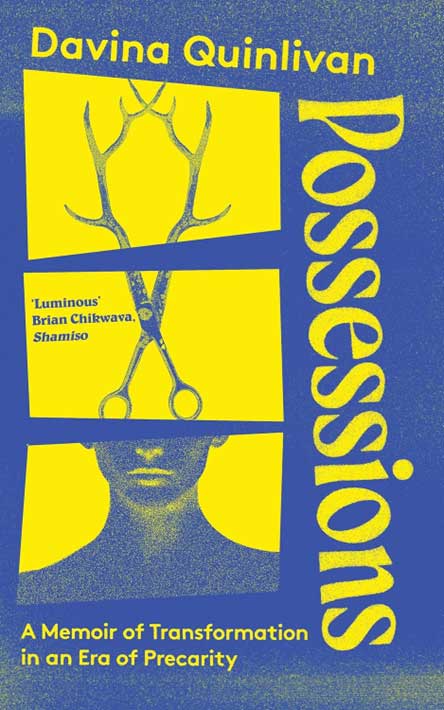
Possessions, Davina Quinlivan (229pp, September Publishing)
Possessions is an almost hallucinogenic, dreamlike memoir. Throughout, the narrator is hyper self-aware and lost in the delusions that friends, authority, fashion and academia want her to conform to. From childhood worries about being 'other' and not looking right, to a realisation she is not the 'academic Barbie' required by universities for their neoliberal teaching and research, via the struggle to be a good parent and earn enough, Quinlivan navigates familial expectations, feminism, racism, epiphanies and breakdown.
She does so as a kind of contemporary shaman, travelling through time and place, talking to her ancestors, her dead parents, her previous and future self, students and colleagues from long ago and the present, and directly to the reader. Unable to conform to the university system she is meant to be part of, everything is brought to a head during lockdown and the move to online teaching: the ghosts in the machine, the silent, uninvolved and invisible students on Zoom classes, are too much to bear and the world spins and becomes untenable.
The university where she worked (it's not named, though I can make an informed guess) clearly took a different attitude to my one during lockdown. My institution prioritised student welfare, conversation, contact and wellbeing, our imposed 'flexible learning' became just that: flexible. It's quite a shock to find out that anywhere does 2 hour lectures, in person or online, when studies have shown for decades that 20 minutes of being talked at or to, however entertaining or sprinkled with jokes and visuals, is the maximum most of us can bear. Lectures and seminars require pace and momentum, changes in activity…
So, I was fortunate, and did not have to try to replicate lectures and 2 or 3 hour seminar workshops online. We could start a session, set online breakout rooms up for small discussion groups or initiate writing tasks and then regroup later that day or week to share and review work. We recorded our lectures (in short parts if necessary) and let the students watch them when they were up to it: felt well enough, motivated or could simply find time amongst the chaos of lockdown. We arranged extra tutorials as well as cross-curricular and multi-cohort (year group) support sessions. Quinlivan, it seems, was expected to somehow replicate all her teaching - which seems to have been way above the agreed national maximum contact time - online, even thought she was also home schooling and dealing with her own personal demons, even though she was part-time and on a fixed-term contract.
Sometimes, I find it hard to empathise. In my place of work we simply refused to do more teaching than we should unless student lives or health were in danger. During lockdown, attendance was not monitored (engagement and assessments were), and the word counts of submission were reduced or different forms of assessment introduced. Possessions makes me realise how liberal my place of work really was, how generous and caring it tried to be (and often was).
But I do empathise with the crunch point Quinlivan reaches. I had a kind of breakdown after lockdown ended, when realisation of what we/I'd endured kicked in, and stress and anxiety belatedly arrived as normal timetables and in-person teaching returned. Quinlivan's experiences are different, and this whole book is self-experiential, birthed from that period of lockdown isolation and digital loneliness. These only accentuate her sense of being lost in the world… How does her Burmese ancestry work in 21st Century Britain? What are the expectations for a woman in a Russell Group university? Why can't her university management and colleagues cope with intelligent, informed and innovative ideas? How does anyone raised in London deal with the weather, traditions, racism and isolation of living in the British countryside? Why can't lived experience inform teaching and research?
Unlike other books which formally examine the failings of the neoliberal hijacking of universities (I particularly recommend Peter Fleming's Dark Academia: How Universities Die), Possessions explores what it feels like to be part of the machine that higher education has become, prioritising money and efficiency over motivational learning and teaching, bullying and persuading its front line staff in the name of streamlining and futureproofing. The idea of teaching students how to think and learn for themselves, of open-ended discussion and debate, has been replaced by 'how to' seminars and the yes/no/tickbox answers already prevalent in UK schools. Instead of encouraging wide-ranging reading and understanding, informed debate and open-ended and ever-developing understanding, students are given the idea that there are right and wrong answers, and academic institutions are judged by the percentage of graduates who have certain incomes or managerial levels of employment.
It's good to reminded how this kind of bullshit is taking its emotional and mental toll on university lecturers and teachers, who mostly want to be doing their jobs because they are passionate and knowledgeable about their subject and want to share that with others, learning and exploring new ideas. Very few think of themselves as oracles of wisdom or receptacles of information that can somehow be imparted or transferred to empty-headed students; good teaching is about enthusing, sharing and encouraging. Quinlivan's book cuts through the educational crap that politicians and management have produced in the last few decades and reminds us of what is possible, what might be; what our priorities should be. It is at times overwrought and often peculiar, has an unfortunate clunky end chapter about a robot lecturer which is not as funny as it thinks it is, and is mystical and emotional in a way I don't normally engage with. But is also startlingly original, passionate and powerfully persuasive.
.
Rupert Loydell
.
A Careful Curation [ 31-Jan-26 7:21am ]
Alarm bells are ringing.
New opportunities will
materialise but there are
rules to follow & it's time
to catch our bus.
A lot of people are
disconnected from birds,
she said. Forget the sea,
this is where we want to be.
These vultures may not
look too wholesome but
they know how to clean
up the bones. A leap into
the dark becomes a leap
into the darkness as total
transparency is not on our
agenda. Today will be cold
& there is a chance of snow.
.
Steve Spence
.
I'm Just A Singer (In A Rock And Roll Band) [ 31-Jan-26 7:19am ]The Moody Blues
h
I'M JUST A SINGER (IN A ROCK AND ROLL BAND)
I'm just a wandering on the face of this earth
Meeting so many people
Who are trying to be free
And while I'm traveling I hear so many words
Language barriers broken
Now we've found the key
And if you want the wind of change
To blow about you
And you're the only other person to know, don't tell me
I'm just a singer in a rock and roll band.
A thousand pictures can be drawn from one word
Only who is the artist
We got to agree
A thousand miles can lead so many ways
Just to know who is driving
What a help it would be
So if you want this world of yours
To turn about you
And you can see exactly what to do
Please tell me
I'm just a singer in a rock and roll band.
How can we understand
Riots by the people for the people
Who are only destroying themselves
And when you see a frightened
Person who is frightened by the
People who are scorching this earth.
Scorching this earth
I'm just a wandering on the face of this earth
Meeting so many people
Who are trying to be free
And while I'm traveling I hear so many words
Language barriers broken
Now we've found the key
And if you want the wind of change
To blow about you
And you're the only other person to know, don't tell me
I'm just a singer in a rock and roll band.
I'm just a singer in a rock and roll band
How can we understand
Riots by the people for the people
Who are only destroying themselves
And when you see a frightened
Person who is frightened by the
People who are scorching this earth.
Scorching this earth
Music is the traveler crossing our world
Meeting so many people bridging the seas
I'm just a singer in a rock and roll band
I'm just a singer in a rock and roll band
Music is the traveler crossing our world
Meeting so many people bridging the seas
I'm just a singer in a rock and roll band.
We're just the singers in a rock and roll band.
I'm just a singer in a rock and roll band…
.
Ali Tahvildar
"UNMADE" is a short film that explores storytelling through light and shadows, allowing viewers to interpret its meaning based on their personal experiences and observations.
Directed by Ali Tahvildar
Actor: Oksana Klepach
Music: And still they move by CO.AG
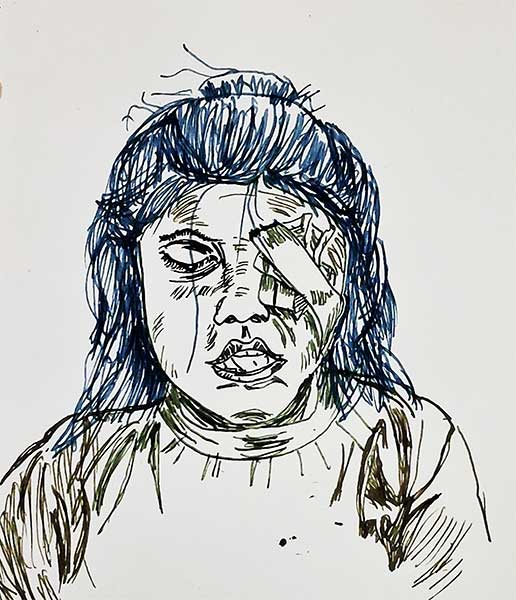
The night that arrives after a minor
accident our daughter faced brings
no sleep. I stare at her, asleep in
the bed barely big enough to hold her
any longer. I look at her awkward
eye pad held in place with micropore tapes.
I begin brewing some slow coffee,
measure beans, crush them with slow
rotations, weigh again, comb and even,
sprinkle a little water, pour some into
the chamber echoing Why, and turn on
the heat. So much I can control. So little.
The fragile cup of coffee, still full
upto its brim, remains on the table.
The shower I take runs its cold fingers
in my hair, seeks the grit of thoughts.
.
Kushal Poddar
Words & Picture
.
oh baby,
shave my back,
dot the i's,
cross the t's,
stand up straight
to call me to
the dinner table,
gimmee a pigfoot
and glass of
suspicious liquid,
swim against
the tides
to discover the
time of day and
where the sunlight shafts
land as they
burn through the clouds
and spotlight the
pies sitting in kitchen windows,
just don't tell
me what to do,
just don't leave me here
with no way to
make a decision
about socks and shoes
and ironing boards,
just don't get bored
with my complaints
about religion
and nodding your head
and walking around town
with a smudge of ash
on your fore head,
but most of all
take a vacation
from all this commotion,
the tongues of the
gargling choir
make their noises
as useless as
smoke detectors
that chirp when
the batteries are used up,
their armor is rusty,
they dance to
the beat of
baseball cards
rattling against
bicycle spokes,
they tell
that you're too slow
or that you arrived too soon
and they curse your name
if you die
at an inconvenient time,
some people
brag of their malaise,
too many are not happy
unless something is burning,
something breaks,
something stops working,
something reeks
in the back of the pantry,
take a vacation
from all
that attention,
no one needs
to be treated
like a vending machine
or a pay phone,
i mean,
if i could
leave myself
behind
right now, i would
and return
again after
finding myself
in the wilds of America
talking to
wonderfully unknown people
doing things
with their lives
that may lack
any kind of
discernable
direction
but seem to have purpose
that is yet to be
discovered, just around the bend,
on the other side of the mountain.
around the corner,
around
the block, the other side of the mountain.
.
Ted Burke
.
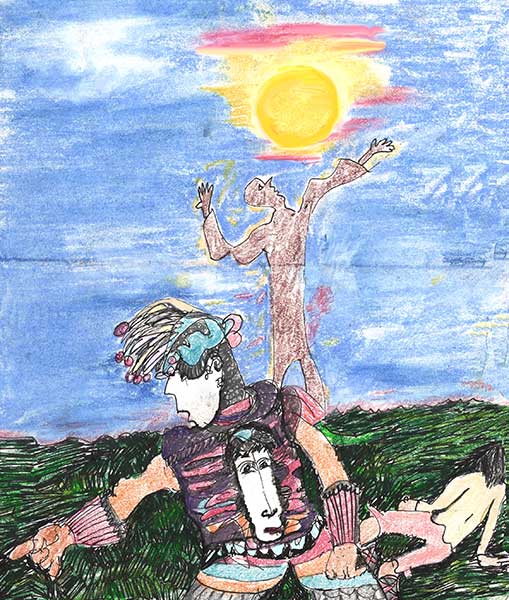
You contemplate the year ended 2025
Deaths
Births
Marriages
Like short stories read
Completed
Set aside
We roll up the days -weeks and months
Like sleeves
As we prepare for 2026
Knot a trusty boot tight
Try on the clown's oversized shoe
A new bold light slips under the door
Almost unseen
Announcing time
A beam of sunlight unhooked from cherry tree
Is cast down
A cloud profiles change
A spectrum of possibilities
A desire for hope
We smile as the future
Spreads out before us..
Like a harvest that drinks the sun and rain
Turns crisp brown
And promises to sustain us through
The coming year..
Fear not the brood of daggers in
Every heart
Thorns that grip our tears
Or the sadness of a love we cannot dig
out of heavy snow /or cleave from ice
A passion tossed aside by rapids
Unfulfilled
Spent and swept from the pillow by
a hand of clay
Because
Our open arms fill with air and silence.
The Unknowing
We can only guess what tomorrow brings
As the year finds us new
Waking every day
Surprised by a dawn
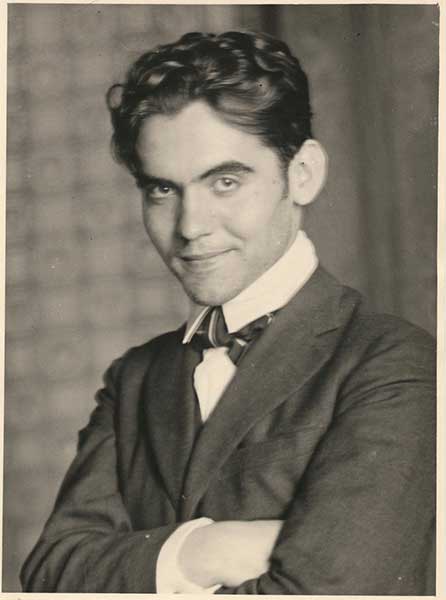
.
Malcolm Paul
Picture Nick Victor
Photo Garcia Lorca
.
Top of Form
Bottom of Form
Ready to Go
Republica
READY TO GO
You're weird, in tears
Too near and too far away
He said, "Saw red
Went home, stayed in bed all day"
Your T-shirt's dish dirt
Always love the one you hurt
It's a crack, I'm back, yeah
I'm standing on the rooftops shouting out
Baby, I'm ready to go
I'm back and ready to go
From the rooftops, shout it out
It's a crack, I'm back, yeah
I'm standing on the rooftops having it
Baby, I'm ready to go
I'm back and ready to go
From the rooftops, shout it out
Shout it out
You sleep too deep
One week is another world
(Big mouth) big mouth (drop out) drop out
You get what you deserve
You're strange, insane
One thing you can never change
It's a crack, I'm back, yeah
I'm standing on the rooftops, shouting out
Baby, I'm ready to go
I'm back and ready to go
From the rooftops, shout it out
It's a crack, I'm back, yeah
I'm standing on the rooftops, having it
Baby, I'm ready to go
I'm back and ready to go
From the rooftops, shout it out
Shout it out
Ready to go
I'm standing on the rooftops, having it
Baby, I'm ready to go
I'm back and ready to go
From the rooftops, shout it out
It's a crack
Baby, I'm ready to go
Baby, I'm ready to go
Baby, I'm ready to go
Baby, I'm ready to go
Baby, I'm ready to go
Baby, I'm ready to go
Baby, I'm ready to go
Baby, I'm ready to go
Baby, I'm ready to go
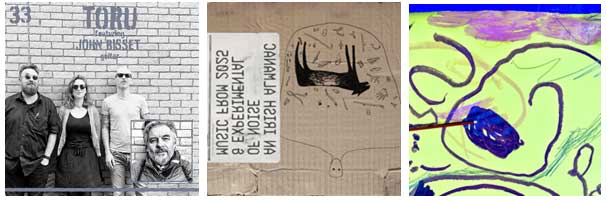
TORU Volume 33 featuring John Bisset, TORU / John Bisset (Toru)
TORU Volume 34 featuring Greg Sterland, TORU / Greg Sterland (Toru)
An Irish Almanac of Noise and Experimental Music From 2025, various artists (Nyahh Records)
Llift #17, LLIFT (Recordiau Dukes)
TORU brings together the three trumpet players Sam Eastmond, Celeste Cantor-Stevens and Andy Watts. Sam Eastmond has been involved in a number of projects over the years, including working closely with the US musician John Zorn. As well as being a trumpet player, Celeste Cantor-Stevens is also a writer and interdisciplinary artist. Her website tells us that 'much of her work focuses on human displacement, migration and borders, education, (in)equality, and social change, and on the place of music within this.' Originally from New Zealand, London-based Andy Watts performs with the London Afrobeat Collective. On top of everything else they do, they've found time, since 2018, to put out almost five albums a year as TORU.
I can't immediately think of anything quite like it. If being a free improv trumpet trio wasn't enough to earn them a place in the annals of uniqueness, every TORU album also features a guest musician. TORU 33 and 34 both came out last November and featured lap-steel player John Bisset and saxophonist Greg Sterland respectively.
TORU 33 has a deep, mellow quality to it. The music here makes the most of the lyrical qualities of the trumpet (and the cornet) and the rich, resonant qualities of John Bisset's lap steel. Anyone who (if they're still reading!) usually finds improvised music a turn-off should check out 'The Gift Shop at the Anarchist Revolution'. They'll probably be pleasantly surprised - the music more than makes up for the lack of actual merch.
TORU 34 is a moodier, edgier affair - just as good, but in a different way. Not that it doesn't have its mellow moments: check out, for example, the track 'A Pleasant Open Face'. It might sound strange, but listening to it straight after 33, I was acutely aware how, here, all four musicians are controlling most of what they do with their mouths: they can - and do - respond to the way they shape the sounds with the spontaneity of spoken conversation. And, as with spoken conversation, as I've often remarked in the past, it's always interesting in improvised music to see how the presence of a new face in a group changes what the other members say and how they say it.
Where to start with the latest release from Nyahh Records ( An Irish Almanac of Noise and Experimental Music From 2025)? One could write a book about it. Over thirty artists are featured, all of whom probably deserve a plug. I'd like to devote a whole column to it, but I'm still catching up after the (very welcome) Christmas break.
Listening to Fergus Kelly's 'Strange Attractor' took me back a few decades, to listening to John Peel late at night. If I'd heard it back then I would've been feverishly glancing at my cassette recorder, hoping it hadn't run out of tape! Talking of which, Danny McCarthy's 'TAPEHEAD (Begin Anywhere)', the longest track on the album, manages to holds one's attention, even with its minimal material and very slow rate of change. Declan Synnott's 'Facility', an electronic piece, conjured up literary associations for me - in this case, JG Ballard. I liked the (intentional?) pun in the title: the music invokes the spectre of some impersonal 'facility' while - to pick up on the other meaning of the word - using materials that are easy to combine effectively. Synnott, though, goes beyond the obvious, and creates an engaging piece, not only in terms of the sounds it uses, but of it's use of the stereo space, too. The same can be said of David Lacey's 'Two Spools'. Dennis McNulty's ' those gates were always open' also invoked - intentionally or not - a literary reference, in this case, Hugh MacDiarmid's poem, 'On a Raised Beach':
The inward gates of a bird are always open.
It does not know how to shut them.
That is the secret of its song,
But whether any man's are ajar is doubtful.
Perhaps it's just me, but the music could even be a backdrop to the poem. Viola player Ailbhe Nic Oireachtaigh's 'Snow Learning' (pre-composed or improvised? I'm not sure which) captures the essence of snow, its uncanny uniformity and the way life carries on, slowly, beneath it. I'm guessing the title of cellist Eimear Reidy's 'Fledgeling Flight Feathers', refers to that sense you can get, when improvising, that every time you jump off a high place into musical space, it feels like the first. Of course, on one level, one learns how to proceed, but, on another, one has to surprise both oneself and the listener. On that level, it's as if you have to relearn how to use your wings every time. David Donohoe's 'Maybe Infra' is a mixture of tonal simplicity and engaging collage. James King and Caroline Murphy are performance artists who began working together in clowning and cabaret. Their performance here, 'Sanction', a brass and string duet featuring vocalisations, is well worth a listen, as is sculptor and sound artist Karl Burke's 'Cage on a Stage'.
These are just some of the tracks that jumped out at me on first listening to the album. If I have a pet gripe with regard to some music labelled 'experimental', it's when people use the genre simply as a way to invoke the weird or gothic. Fortunately, for me, there's not a lot of that here. I say 'for me', as it's just a personal thing: there are lots of people out there who love those kind of fictional and filmic associations. For me, though, experimental music is an opportunity to open the mind to discover and invoke new or, at least, less familiar responses to music. To go back to the MacDiarmid poem, it's about opening gates we perhaps never even realised were there. And, with thirty-two tracks to choose from, there are plenty of gates to try here.
Llift #17, like the TORU albums, is the latest in a series, this time from the Llift community improvised music project in North Wales. They regularly upload albums of recordings made at their meetings. I like the way they occasionally incorporate fragments of text here, although I couldn't find any mention of where they came from. Improvised story telling, perhaps? If so, great. Why not? Near the beginning of the third part - in what, for me, writing this, was a bit of weird synchronicity - we get the gates again: 'At every door he shouted out his name but no-one opened. But when he realised they were waiting for someone and who this someone was he managed to transform his face at which point he made his entry taking the place of one … who never arrived.' Things don't work out though, so he heads for the woods, where he finds 'a simple gate with no lock'. I suppose its hardly surprising to keep finding gates and doors which serve as metaphors for entry points into alternative musically-generated realities.
#17, in my opinion, has to be one of the best Llift albums yet. Between them, the players create a rich sound-world that really keeps you listening. One minute you're in deep space, the next, at the heart of some surreal, industrial process, and then, when you least expect it, the shawm come at you out of nowhere.
.Dominic Rivron
LINKS:
TORU Volume 33 featuring John Bisset: https://torutrumpets.bandcamp.com/album/toru-volume-33-featuring-john-bisset
TORU Volume 34 featuring Greg Sterland: https://torutrumpets.bandcamp.com/album/toru-volume-34-featuring-greg-sterland
An Irish Almanac of Noise and Experimental Music From 2025: https://nyahhrecords.bandcamp.com/album/an-irish-almanac-of-noise-and-experimental-music-from-2025
Llift #17: https://recordiaudukes.bandcamp.com/album/llift-17
.
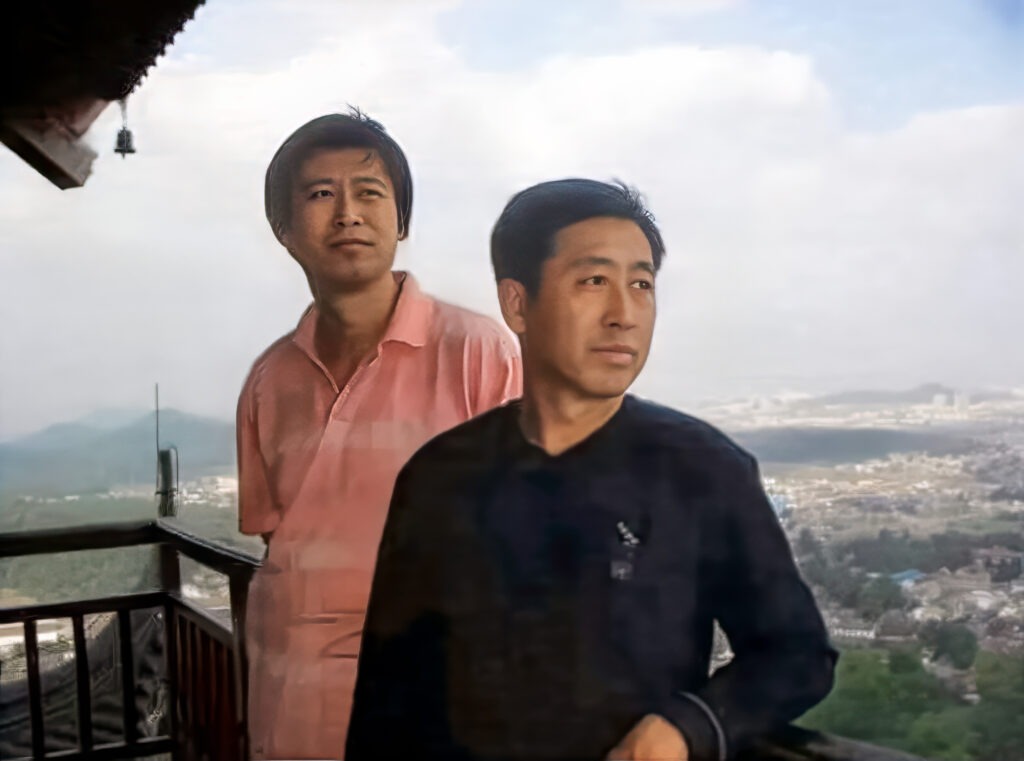
Ma Yongping 马永平 and Ma Yongbo 马永波 , close poet brothers, together in Nanjing
in 2008, at the top of the Pagoda Tower.
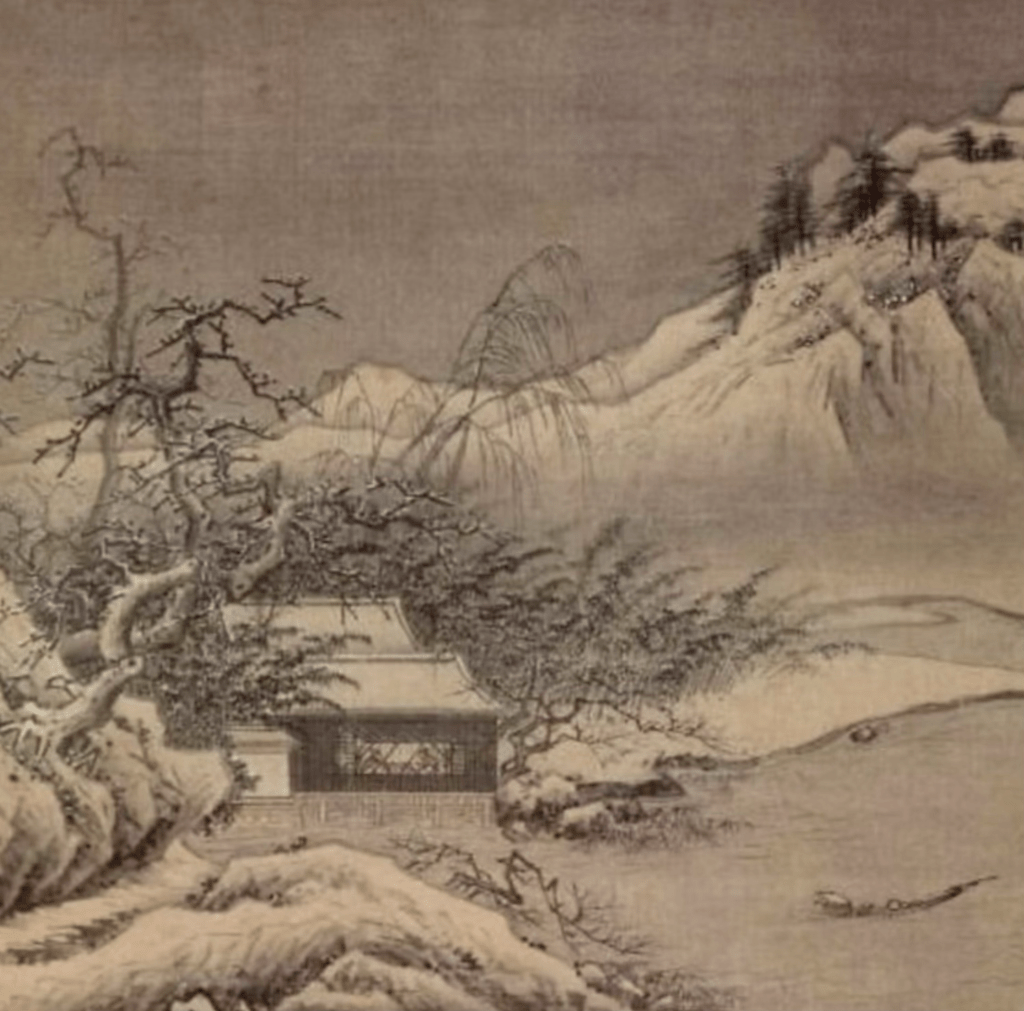
Chinese winter landscape with frozen lake, likely Song Dynasty, artist unknown
LINK1 https://en.wikipedia.org/wiki/Song_dynasty
That One Pickaxe Cut
One winter morning,
I get up early, carrying a dual-use axe,
a pickaxe on one end and an axe on the other.
I cross the courtyard with its wall made of short split firewood logs
to the snow-lined sewage pond in front of the gate,
to break the ice.
Third brother, carrying a small shovel for scooping ash from the stove,
insists on coming with me. I break off the ice that has formed over the sewage,
and he uses the small shovel to scoop it out of the pond,
piling it up. I continue breaking,
suddenly, third brother stretches out the small shovel and his head into the pond.
I watch helplessly, as the pickaxe falls, landing on third brother's head.
A burst of red flashes and I'm terrified
shouting, "Mother, come quick! I've hit him!"
Third brother doesn't cry; he just stands there staring at me.
My mother leads him back into the house and applies Yunnan Baiyao.
He's still staring at me with his big eyes.
He finds it quite amusing. Later, he tells me,
it didn't hurt at all, just a cold breeze blew from the wound.
That one pickaxe cut unearthed
a PhD in literature, and a poet.
Many years have passed,
and the thought of it still sends chills down my spine.
January 5, 2009, evening
By Ma Yongping 马永平
Translated by Helen Pletts 海伦·普莱茨 and Ma Yongbo 马永波, 16th December 2025
Yunnan Baiyao is traditional Chinese medicine
'Once my brother (Ma Yongping马永平) entered the depths of poetry, he also understood how I had stumbled my way through the past few decades. He wholeheartedly supported every poetry-related endeavour I led, always encouraging me to persevere.' Ma Yongbo 马永波
Full coverage of Ma Yongping's 马永平 life and times https://internationaltimes.it/ma-yongbo-poetry-road-trip-summer-tour-2025-volume-20/
这一镐刨下
有一年冬天,
清晨起来,我拎着一把
一头是镐一头是斧的
两用斧子,穿过庭院和
木柈子摞成的院墙
到门前用雪围成一圈的
污水池去刨冰
三弟拿一个掏炉灰的小铲子,
非要跟着我去,我把污水
形成的冰刨下来
他用小铲撮到池子外面,
弄成一堆。我继续刨着,
突然三弟将小铲子和他的头
伸了进来,我眼睁睁地看着
镐落下去,落在了三弟的头上
一股红光喷出,我吓坏了,
高声喊母亲快来,我刨着他啦!
三弟没哭,站那瞅着我
母亲把他领回屋,给他上云南白药
他还瞪着一双大眼睛看着我
感觉很好玩,后来他告诉我
一点不疼,就是伤口冒凉风,
就是这一镐刨出来一个
文学博士,一个诗人
许多年过去,
现在想起仍心惊肉跳
2009.1.5晚
马永平

HORSE ICE SCULPTURE, Harbin, China, 31st December 2025.
2026 is the Year of the Horse in the Chinese Zodiac and occurs every 12 years, symbolising freedom, energy, strength, and ambition. This year is the Fire Horse which lasts from 17th February 2026 to the 5th February 2027.
In winter Northern China experiences extreme weather conditions, that sweep across from Siberia. Cities like Harbin, where Yongbo lives, face extreme temperatures (below zero) for at least six months of the year. While Harbin is famously cold, its official record is around -37.7°C (-35.86°F), but the coldest nearby area, Mohe (China's northernmost city), hit a record-breaking -53.0°C (-63.4°F) in January 2023, highlighting the extreme cold in Heilongjiang province where Harbin is located. Harbin experiences severe winters, often seeing temperatures drop to -30°C (-22°F) or lower, with averages around -30°C in winter.
Ma Yongbo 马永波, 31st December 2025, Harbin, China, Planet Earth, The Universe
the poet's head on receiving the winter axe—for Yongbo 诗人的头颅迎向冬日的斧刃
Yichuan ice as strong as iron glass
splits under the teenage axe,
next the poet's childhood head
receives the cold metal
the point needle-threading skull,
the opening remaining softer and cratered
into adulthood. The ice remaining
year on year and ever-thickening.
But the poet's skull is thinner than his birth
at the opening, in the undulated landscape
of his reconstructed head,
where knowledge now pours
from a thin bone spout
10th December 2025
"Yongping永平 joked that with one swing of his pickaxe,
he'd "knocked sense into me" — a playful way of saying
he'd chiseled a hole in my head, giving the wisdom inside
a way to escape." WhatsApp, Ma Yongbo 马永波
10th December 2025
Response Poetry By Helen Pletts 海伦·普莱茨
Response Poetry Translated by Ma Yongbo 马永波

Helen Pletts 海伦·普莱茨 14th January 2026, Cambridge, UK, Planet Earth,The Universe
诗人的头颅迎向冬日的斧刃 the poet's head on receiving the winter axe—for Yongbo
伊春的冰坚硬得像铁琉璃
在十几岁少年的镐下碎裂,
接着,诗人童年的头颅
迎向冰冷的金属
镐尖穿颅而过,如引线穿针,
那道创口始终柔软,陷成洼坑,
伴他步入成年。年复一年
冰层依旧,越积越厚。
而诗人的颅骨,创口处
比降生时更薄,在他重塑的颅顶
那起伏的风景中,
如今,从细骨的豁口
智慧汩汩涌流。
2025年12月10日,致永波
"永平笑称,他这一镐下去,就让我开了窍——这是种戏谑的说法,说他在我头上凿了个洞,让里头的智慧有了逃逸的出口。" WhatsApp,马永波,2025年12月10日
'The lifelong closeness of the two brothers Ma Yongping 马永平and Ma Yongbo 马永波 was ever present, in spite of the pickaxe accident. Here we celebrate with more poetry written with Yongbo 永波 in mind, by Yongping永平, who is still greatly missed." Helen Pletts 海伦·普莱茨, 30th December 2025
Ginkgo Leaves
Before the Yin-Yang Gate stand two tall trees,
The autumn wind, like a pair of divine hands, caresses them,
instantly turning the leaves golden,
like thin gold flakes,
drifting freely in the air with the wind.
Perhaps tiring, they jump gently down,
as if afraid of hitting passersby on the head.
They sit nestled together on the ground,
sunlight slanting down, casting a golden glow.
I bend down and rake them into piles of varying sizes,
like a child building his own golden tower.
I crouch in the golden light,
and gather them. One by one, I put them into bags,
take them home, to make a pillow for my youngest brother.
December 4, 2008, 7:20 PM
By Ma Yongping 马永平
Translation by Helen Pletts 海伦·普莱茨 and Ma Yongbo 马永波 2025
银杏叶
阴阳门前有两棵很高大的树,
秋天的风像一双神的手抚摸着
一瞬间就把叶子变成金黄
犹如薄薄的金片
跟随着风在空中自由走动
或许是走累了,轻轻地跳下来
仿佛怕砸到过往行人的头
它们相互依偎着坐在地上
阳光斜照下来,映出一片金黄的光
我弯下腰将它们耧成大小不一的堆
像一个孩子要建造一座属于自己的金塔
我蹲在金色的光芒里
把它们一个个收入袋子
带回家,给最小的弟弟做一个枕头
2008.12.4晚7:20
马永平
The book that was thrown out like snowflakes
One autumn, my mother was sewing cotton-padded clothes
for us to wear through the winter.
Third brother was reading on the kang,
sometimes lying down, sometimes sprawled out,
occasionally letting out a loud, giggling laugh,
simultaneously scraping and make a slapping sound with both feet across the kang
flinging cotton up into the air
so it fell like snowflakes.
Our mother sees him and says, "Go outside and play,
you little rascal!"
He went quiet for a while, but soon after,
when he got to an exciting part
his feet started scrambling across the kang again,
sending the cotton flying and falling once more.
Mother got angry,
snatched the book from his hands,
tore it up, throwing it out of the window
like flakes of snow.
Third brother was stunned and stared at our mother
for a long time.
Suddenly, he jumped up from the kang, rushed out of the house,
and picked up the book.
Back inside, he tried to piece it back together,
silently shedding tears,
tears as large,
as his own eyes.
By Ma Yongping 马永平
Translated by Helen Pletts 海伦·普莱茨 and Ma Yongbo 马永波 2025
A Kang is a Northern Chinese bed made out of clay bricks
扔出去的书像一片片雪
一年秋天
母亲在缝制我们过冬的棉衣
三弟在炕上看书
一会儿躺着一会儿趴着
不时发出吃吃的大笑
同时用双脚啪啪地刨着炕
棉花被他刨得飞起
然后雪花一样落下
母亲看着他说
去外边玩去,真捣乱
他安静了一会儿
但没多久,看到精彩处
双脚又开始刨炕
棉花再一次飞起落下
母亲生气了
一把将他手中的书夺下来
撕了,从窗口扔了出去
像扔出去一片片雪
三弟惊呆了
看了母亲半天
突然从炕上一骨碌爬起来
下地,冲出屋外,捡起书
回到屋里,一边往一起粘
一边无声地流泪
那眼泪一颗颗很大
像他的眼睛
2009.1.9
马永平
Dialogue
On a mountain path,
we walk slowly side by side towards the summit.
You say you want to build your own objective poetics in your lifetime,
and continue writing poetry
until your fingers can no longer type on the computer keyboard.
I say I haven't thought that far ahead.
Right now, I write poetry simply to record my feelings about life,
as a way to comfort myself.
April 9, 2010
By Ma Yongping 马永平
Translated by Helen Pletts 海伦·普莱茨 and Ma Yongbo 马永波 2025
对话
在山间的小路上,
我们并肩慢慢地向山顶走着
你说,要在有生之年,
构建自己的客观化诗学
而且要继续写诗,
直到手指敲不动电脑键盘为止
我说,我到没想那么多那么远,
现在我写诗只是想记录对生活的感受
只是想用这种方式哄自己高兴
2010年4月9日
马永平

Cover of Volume of 'Selected Contemporary Chinese Poems of the 21st
Century' (5 Volume set) in which Ma Yongping 马永平 and Ma Yongbo's 马永波 poetry appears together, the two poet brothers are together once more.
The five-volume 'Selected Contemporary Chinese Poems of the 21st Century', edited by the renowned poet Liu Jiemin, was recently published by Shanghai Oriental Publishing Center. It includes six poems by Ma Yongbo 马永波, and even more gratifyingly, it also includes a poem by his elder brother, Ma Yongping 马永平, titled "A Spring Morning at Xuanwu Lake I Sing with the Birds".
A Spring Morning at Xuanwu Lake I Sing with the Birds
In the morning, the birds sing through the mist
stirring the lake awake from its dream
the sun peeks out, its face glowing red
two white butterflies
dance along the path framed by green bamboos
chasing each other. Nearby, clusters of purple florets
bloom quietly. In the distance, rows of trees
send forth tender green shoots, peeking through the fog
a couple, hand in hand
strolls slowly along the lakeshore
the birds' chirping grows louder—then
I fly up to the parasol tree and sing with them
this is my fifty-first spring
I have not lived my life in vain
Written in Nanjing
April 12, 2009
Ma Yongping 马永平 (1958-2020), a Chinese poet, native of Suihua, Heilongjiang Province, started writing poetry in 2008. He left behind more than 2,000 poems totalling over 20,000 lines. His posthumous collection 'Wandering Above the Stars and Moon', compiled by his younger brother Ma Yongbo 马永波, was published by Changjiang Literature and Art Publishing House in 2020.
玄武湖一个春天的早晨我和鸟儿一起鸣叫
早晨,鸟儿雾中的鸣叫
把湖从睡梦中唤醒
太阳露出红红的脸
两只白蝴蝶
在翠竹环绕的小径上飞舞
追逐,近处一片紫色小花
静静的绽放。远处一树树嫩绿
在雾中探出身影。一对恋人
手牵手,沿着湖岸慢慢的行走
鸟儿的鸣叫声更大了,于是
我飞上梧桐和它们一起鸣叫
这是我的第五十一个春天
我没有虚度此生
2009年4月12日于南京
马永平
CHINESE LINK2 https://mp.weixin.qq.com/s/gJtqn8CaRuILXyb_WQepiA

IMAGE7: Ma Yongping's 马永平 poem 'A Spring Morning at Xuanwu Lake I Sing with the Birds'; a page from the 'Selected Contemporary Chinese Poems of the 21st Century', published by Shanghai Oriental Publishing Center.
All images under individual copyright © to either Ma Yongbo 马永波 or Helen Pletts 海伦·普莱茨
.
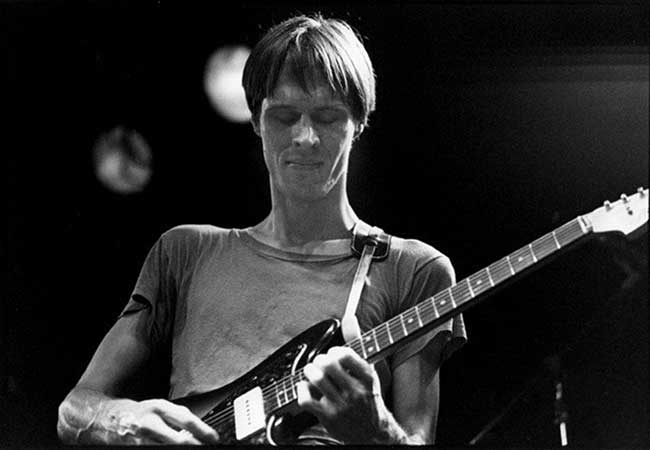
When I started working at the Record & Tape Exchange in 1985, the epicentre of that pre-owned retail empire was a 200 yard stretch of Notting Hill Gate, containing three branches, with a fourth just around the corner in Pembridge Road. Then there was an outpost in Camden - opposite the market - and another in Goldhawk Road, Shepherd's Bush.
Thriving in that environment was not just about how well you worked or what you knew. Liking the right records counted for at least as much. More, probably. There was a moment in everybody's time there when they got to put on a cassette to play over the shop hi fi. A privilege jealously guarded and grudgingly handed out by whoever the most senior person was in the shop that day. This was a rite of passage fraught with danger. I saw careers end on that first cassette choice. When my time came I chose the Buzzcocks debut album. Who could possibly complain? Paddy, the senior man that day, muttered 'playing safe' under his breath. But I survived.
Negotiating the prevailing cultural conventions was no easy task. At the time I was discovering the likes of Tom Rush and Tim Hardin. Fortunately, this went down well. I once put on 'The Circle Game' by Rush and my colleague that day, Dick - a taciturn, ponytailed veteran in his 40s - said 'Mm. I heard there was a new Tom Rush fan', his stony features cracking momentarily into an expression not too far from avuncular fondness.
A friend, Gary, who started at the same time as me liked Julian Cope, but this - surprisingly, it now seems - wasn't right at all. Gary didn't last. The Cramps were right, though. And Dion. And The Sonics and The Saints. Leonard Cohen? No. Nico? Yes. Kris Kristofferson's Jesus Was A Capricorn? Yes. Scott Walker? Yes. The Blue Nile? Not really. U2? I ask you.
Also, there was status attached to which shop you worked in. Getting sent to Goldhawk Road wasn't quite like getting sent to Siberia, but it wasn't far off. Usually there'd just be two of you there, and the place was quiet. You could sit for hours on a weekday afternoon listening to the Cramps or Dion without any customers coming in. There, as in all the shops, only the sleeves of most of the albums were out on display. If you wanted to buy one you bought the sleeve to the counter and a label with a code on it guided the sales assistant to the record itself. Filed in its inner sleeve somewhere in a labyrinthine shelving system behind the counter. Cheaper records were out on display, though. These attracted no-goods who would attempt to walk out with armfuls and peel the price labels off, once out of range. Later, they'd bring the same records back and try to sell them to you. A ruse commendable for its audacity, but rarely successful.
The Goldhawk Road shop was terrorised by a character we called Goldtooth. A cut above, or below, the usual class of petty criminal we dealt with. He was known to threaten violence and demand money from the till. To counter this, a mild-mannered security guard was employed, a benign uniformed presence who hovered around the premises all day. He was allowed to ask Goldtooth to leave, and to phone the police, but had neither the natural authority nor the heft to eject him. His presence was entirely ineffectual. There were times when Goldtooth came in and took what he thought he deserved while staff and security guard stood around watching, waiting for the police to turn up.
I started to think about all of this again when I heard of Tom Verlaine's passing in 2023. For a while I was second in command in the books department. I took care of the place when the manager, Andy, wasn't working. It was on the first floor, above the musical equipment and musical instrument department in Notting Hill Gate. Brian Eno was a regular browser downstairs. Upstairs we had Mick Jones, of the Clash, and Tom Verlaine of Television. At the time Verlaine was living in London, possibly nearby, as he was in the shop pretty often. He looked exactly how you want your heroes to look. Tall, upright. Elegant neck and cheekbones. Always wearing a long dark coat. Scrutinizing the poetry shelves. Sometimes buying a volume or two. Maybe asking 'do you ever see anything by …?' or suchlike.
Once Verlaine was in the shop and a regular troublemaker came in. Not in Goldtooth's league, but someone with a permanent grievance, who would harangue you about an over-priced book or some other perceived injustice. He had a go at me for a while them stomped down the stairs. Verlaine turned to me and said 'we've got people like that in New York', then came to the counter with a book to buy. I took the money and rang it up on the till, then asked him what he was working on.
I knew almost as soon as the words left my mouth that I had made a mistake. Innocently yet unwisely I had crossed an unseen boundary. I had assumed a familiarity that just wasn't there. Verlaine broke off eye contact, mumbled something vague and evasive, and blushed. I don't recall now if I saw him again in the shop, but I left not long after.
About 15 years later a music magazine sent me to interview Television's other guitarist, Richard Lloyd. By coincidence, this took place in the dining room of a hotel in Notting Hill, just down the road from the book shop. It was a perfunctory meeting. I was one of several journalists wheeled in that afternoon. Lloyd was polite, helpful and obviously bored. I don't blame him. For me the best thing about the occasion was that he wore a red Harrington-style jacket, just like the one he wore on the cover of Television's second album, Adventure. It was only when I sat down to write this that I twigged that I met - fleetingly, in Notting Hill - both guitarists responsible for some of the greatest guitar music ever made. To be face to face with a world so alive.
.
Mark Brend
.

Far Above the World: the Time and Space of David Bowie, Paul Morley (Headline)
Paul Morley's second book about Bowie is a disco ball of brief chapters that not only sparkle but reflect and illuminate both its subject and its author. It is, like all of Morley's books, wide-ranging, informed, erudite, opinionated, obsessive and ridiculous, with long lists of comparisons and similes, metaphorical flights of fancy, unsubstantiated conjecture and multiple moments of wonderful insight.
Morley can riff and speculate on a subject with the best of them, and each chapter here is one such riff, quickly concluded within a few pages before he runs out of inspiration, energy or breath. Each section takes off from the one before but often at a tangent, picking up on an obscure reference or aside, often weaving in puns and song titles as the reader is left to collage together a version of Bowie for themselves, each chapter causing a re-evaluation and recontextualisation of his career - music, influences, critical reception - and the very notion of music, fame and culture itself.
And, of course, how Bowie fitted in to that, and changed it, slowly moving from aspiring mime artist, painter and musician to national treasure, despite his chameleon tendencies and periods of musical failure and/or absence. 'Why are we still talking about Bowie so long after his death?' is one of this book's subtexts. Others include 'What is fame?', 'What is love?', 'What is popular music?' and 'How on earth can anyone write about the late great David Bowie?' (Perhaps with the sub-subtext 'Am I worthy?')
This book is a kind of analogue hypertext. I have only read it through as printed but I think it could be read in any order, its hopping, skipping and jumping narrative enhanced even further by acts of random selection. Not to suggest, of course, that Morley hasn't worked hard in his arrangement. The jumpcuts and diversions always loop back to some kind of chronology and discography; Morley remains one of the finest music writers known to humankind.
He considers Bowie's music by looking elsewhere and not talking about it, preferring to consider the influence of others, what the producer is doing, who Bowie is working with this time round, what - perhaps - he is thinking. Spirituality, longing, occult forces, heightened awareness (OK, drugs), love, desire, madness and, of course, illness and death, feature here. Somehow in Morley's hands biography, both real and plausibly imagined, transcends the mundane and irrelevant and becomes musical and cultural criticism.
Blackstars are where matter collapses in on itself, an undoing of creation itself, and wormholes theoretically allow travel between galaxies and co-existent other times. Morley is an intrepid and fearless musical cosmonaut, just as Bowie once was. Far Above the World should not work but it does. It is a multiverse of possible and alternative David Bowies, artfully conjured up by Morley's literary sleights of hand.
.
Rupert Loydell
.
 (Credits: Dangerous Minds / Original Posters / Westside Gallery)
Movies
Richard Metzger
(Credits: Dangerous Minds / Original Posters / Westside Gallery)
Movies
Richard Metzger
Christian McLaughlin isn't just a guy with good taste in cult cinema; he's a full-blown connoisseur of the sleaze-slicked, blood-soaked, garishly erotic underbelly of 20th-century film history. His house? Think Vatican City for VHS degenerates. His collection? Less a pile of posters than a visual archive of cinematic perversion, pulp kink, and celluloid psychosis.
Every now and then, my pal McLaughlin slashes prices in what he once dryly called the "Cruel Summer" sale over at Westgate Gallery. Unfortunately, that has now turned into what he is calling the "Liquidation Sale". And while the discount angle is fine and all, that's not really the point. What matters is this: Christian knows exactly what he's doing, and he's been doing it a long time. If you've ever wondered where the most batshit beautiful movie posters of the last century have gone—French giallo, Italian sleaze, American XXX—he's got them. Not just some. All of them. You don't curate a gallery like Westgate by accident. You do it with obsession, taste, and probably a touch of madness.
So let's talk about the madness.
Take the fevered psychosexual hysteria of Torso (1973), the Sergio Martino giallo-slash-slasher hybrid that reads like Alfred Hitchcock after a bottle of absinthe and a nervous breakdown. The poster doesn't whisper "suspense" so much as scream decapitated co-ed in peril, with that iconic yellow backdrop and power saw branding it with industrial menace. It's less about plot and more about impact—like much of giallo, really.
Then there's the utterly unhinged Du sang pour Dracula (aka Blood for Dracula), directed by Paul Morrissey but practically soaked in Andy Warhol's aura of ironic decadence. Udo Kier vamps around looking like a melancholic corpse on a juice cleanse, surrounded by virginal peasant girls who've never even heard of iron supplements. The poster could hang in a museum…or a sex dungeon.
Things only spiral further from there.
John Waters' Polyester gets the full Odorama treatment (yes, scratch-and-sniff cards were a real thing), and the accompanying poster is a hot-pink fever dream of Divine's demented domestic tragedy. If Leave It to Beaver had a glue-huffing stepdad and a foot fetish, it might come close to what Polyester achieves. You don't just hang this poster—you submit to it.
From there, we're off to the absolutely unhinged Prison Babies, a sleaze epic about "the true story of teenage girls in prison". The art is all jailbait cheesecake and softcore sadism - "sex behind bars", they warn us - as a deterrent. And then there's The Seduction of Amy, whose cherry-popping metaphor is about as subtle as a mallet to the skull. And let's be honest—subtlety is overrated.
Le Jardin des Tortures, meanwhile, leans into Hammer Horror vibes, with Jack Palance, Peter Cushing, and the kind of Victorian hysteria that makes you want to wear lace gloves and commit murder. The artwork screams EC Comics with a Euro twist.
And then there's the pièce de résistance of punk trash: Punk Story, a wild Italian reissue of Female Trouble or Pink Flamingos (or maybe both—it's hard to tell with foreign markets). Divine dominates the throne while Waters' regulars mug in the background, painted like a glammy fever dream cooked up by a horny teen on cough syrup.
This is the stuff of dreams—or nightmares, depending on how you were raised.
These posters weren't just movie marketing, they were transgressive art, shouting from grindhouse marquees and sticky-floored porno theatres. They promised more than plot. They offered perversion, power, kitsch, and taboo. They were pulp psychedelia wrapped in celluloid skin, designed to make you look twice—and maybe never look away.
Because really, what's more beautiful than bad taste, exquisitely framed?
 (Credits: Dangerous Minds / Original Posters / Westside Gallery)
 (Credits: Dangerous Minds / Original Posters / Westside Gallery)
 (Credits: Dangerous Minds / Original Posters / Westside Gallery)
 (Credits: Dangerous Minds / Original Posters / Westside Gallery)
 (Credits: Dangerous Minds / Original Posters / Westside Gallery)
 (Credits: Dangerous Minds / Original Posters / Westside Gallery)
 (Credits: Dangerous Minds / Original Posters / Westside Gallery)
 (Credits: Dangerous Minds / Original Posters / Westside Gallery)
 (Credits: Dangerous Minds / Original Posters / Westside Gallery)
 (Credits: Dangerous Minds / Original Posters / Westside Gallery)
 (Credits: Dangerous Minds / Original Posters / Westside Gallery)
 (Credits: Dangerous Minds / Original Posters / Westside Gallery)
 (Credits: Dangerous Minds / Original Posters / Westside Gallery)
 (Credits: Dangerous Minds / Original Posters / Westside Gallery)
 (Credits: Dangerous Minds / Original Posters / Westside Gallery)
 (Credits: Dangerous Minds / Original Posters / Westside Gallery)
 (Credits: Dangerous Minds / Original Posters / Westside Gallery)
 (Credits: Dangerous Minds / Original Posters / Westside Gallery)
 (Credits: Dangerous Minds / Original Posters / Westside Gallery)
 (Credits: Dangerous Minds / Original Posters / Westside Gallery)
 (Credits: Dangerous Minds / Original Posters / Westside Gallery)
 (Credits: Dangerous Minds / Original Posters / Westside Gallery)
 (Credits: Dangerous Minds / Original Posters / Westside Gallery)
 (Credits: Dangerous Minds / Original Posters / Westside Gallery)
 (Credits: Dangerous Minds / Original Posters / Westside Gallery)
 (Credits: Dangerous Minds / Original Posters / Westside Gallery)
 (Credits: Dangerous Minds / Original Posters / Westside Gallery)
 (Credits: Dangerous Minds / Original Posters / Westside Gallery)
 (Credits: Dangerous Minds / Original Posters / Westside Gallery)
 (Credits: Dangerous Minds / Original Posters / Westside Gallery)
 (Credits: Dangerous Minds / Original Posters / Westside Gallery)
 (Credits: Dangerous Minds / Original Posters / Westside Gallery)
Related Topics ArtCult
Related Articles
 'Santa With Muscles': Hulk Hogan's god-awful Christmas movie
28 days ago
'Santa With Muscles': Hulk Hogan's god-awful Christmas movie
28 days ago
 'Threads' (1984): the most horrifying, terrifying and realistic depiction of the end of the world
15 days ago
'Threads' (1984): the most horrifying, terrifying and realistic depiction of the end of the world
15 days ago
 'Tetsuo: The Iron Man': The body horror movie that made the entire crew quit
6 hours ago
'Tetsuo: The Iron Man': The body horror movie that made the entire crew quit
6 hours ago
 'Häxan': how a silent documentary invented the jump-scare
20 days ago
'Häxan': how a silent documentary invented the jump-scare
20 days ago
 'Let My Puppets Come': The batshit crazy 1976 puppet porn
21 days ago
'Let My Puppets Come': The batshit crazy 1976 puppet porn
21 days ago
 The Driller Killer: How a marketing campaign changed the UK film industry
7 days ago
The Driller Killer: How a marketing campaign changed the UK film industry
7 days ago
 SS Experiment Camp: The movie that invented the video nasty
6 days ago
SS Experiment Camp: The movie that invented the video nasty
6 days ago
 Ben Wheatley on his new film 'Bulk': "Old-fashioned but also right up to date"
1 day ago
Trending
More in Movies
More in Movies
Ben Wheatley on his new film 'Bulk': "Old-fashioned but also right up to date"
1 day ago
Trending
More in Movies
More in Movies

- © 2025 Far Out Magazine


