

Unruly steeds from King Mu's mythology, cavorting across a silk scroll.

A bestselling 18th-century cookbook, containing the first recipe for curry in English.

A wondrous illuminated manuscript, which gathers and illustrates the marvels of the world and beyond.

Observations of "snow flowers" made by microscope in Edo-era Japan.

Taking dictation, revising manuscripts, typing copies, literary amanuenses often labour for little compensation and even less recognition. Christine Jacobson explores the neglected efforts of women like Theodora Bosanquet, Véra Nabokov, and Valerie Eliot, who — through their work as typists, editors, and champions — had a profound impact on modern literature.
 Sara Weiss' Journeys to the Planet Mars (1903) [ 03-Feb-26 3:28pm ]
A forgotten bridge between Spiritualism and UFO encounters.

A WWII propaganda film narrated as an "auto"-biography

Before the attention economy consumed our lives, "pursuit tests" devised by the US military coupled man to machine with the aim of assessing focus under pressure. D. Graham Burnett explores these devices for evaluating aviators, finding a pre-history of the laboratory research that has relentlessly worked to slice and dice the attentional powers of human beings.

Etchings of birds in a somewhat theatrical style.

Slides from twenty years of lecturing about the workings of the universe and the fate of the soul.

The memoirs of an aristocratic man revolutionised into an anarchist communist.

Each January 1st is Public Domain Day, when a new crop of works have their copyrights expire and become free to share and reuse for any purpose. Here's our highlights for 2026.

From sublime spheres to hungry cats, a rundown of the ten most read of what we published this year.

In mid-19th century Italy, two eccentric aristocrats set forth on parallel projects: constructing ostentatious castles in a Moorish Revival style. Iván Moure Pazos tours the psychedelic chambers of Rochetta Mattei, optimised for electrohomeopathic healing, and Castello di Sammezzano, an immersive, orientalist fever dream.

Still lifes by the artist who seemed to bridge expressionism with the baroque.

Illustrations of Abū Zayd and his adventures in double meaning.

First cloud taxonomer and a poem by Goethe.

Our End-of-Year Fundraiser is launched, and the new postcards theme will be Attention.

Bizarre sweet treats that resemble human and animal forms.

French lithographs of the Eiffel Tower and its environs, in the style of Japanese woodblock prints.

In the 17th century, emanating from Antwerp, a new genre of artwork came on the scene: paintings of paintings, works populated by a lush array of meta-images. From its origins in picturing private curiosity cabinets to its later use in documenting increasingly public collections, Thea Applebaum Licht charts the course of this alluring aesthetic tradition.

A past vision of the future. Domestic utopia? Or sanitised hell?
Adorn your body and coffee in PDR goodness! We've just added 8 new T-shirts and 13 new mugs to our online shop.

In 1899, Charles Godfrey Leland published Aradia, "the gospel of the witches", containing a goddess-orientated creation and saviour narrative, purported to descend from an ancient, hermetic tradition of witchcraft in Italy. A. D. Manns explores this text via an enchanting conjecture: that the writer, medium, and witch Roma Lister played a pivotal role in the formation of both Aradia and, therefore, a new form of paganism called Wicca.

The recommended cut-off dates to order from our shop by to ensure delivery in time for Dec 25th.

Selections from an artist whose phantasmagoric works defined an era.

Photographs from a costume ball featuring fairytale fables.

This Halloween week, a devilish dive into our archives to unearth some supernatural treats...

A novel about a woman who throws off the yoke of patriarchy to become a witch.

Of all the senses cultivated throughout the 19th century, it was the sense of hearing that experienced the most dramatic transformation, as the science of sound underwent rapid advancement. Lucas Thompson delves into a particular genre of popular acoustics primers aimed at children and amateurs alike, which reveal the pedagogical, ludic, and transcendental strivings of Victorian society.

A medical tract on the health effects of burying oneself alive in mud.

Dioramas avant la lettre that depict local life in Suriname.

Illustrations of supposed physiognomic affinities between humans and animals.

Partially banned upon publication and translated into English for the first time this year, René, or: A Young Man's Adventures and Experiences (1783-85) found new readers in the communist era thanks to its critiques of feudalism, capitalism, and the Catholic Church. Dobrota Pucherová introduces us to this hybrid work, which mixes the bildungsroman with the philosophical novel, the romance, the adventure story, the travelogue, the history book, and the orientalist fantasy.

Expedition accounts of aeronauts bravely venturing into the heavens on hot-air balloons.

A "living picture" film staging Botticelli's Birth of Venus with a twist.
-detail.jpg)
A Rapture that wasn't, in 2025 and 1844.

Paintings illustrating Pliny the Elder's account of the origins of art.

Accused of posing as foreign royalty to lure her young suitor into a bigamous marriage, Mary Carleton was the subject of dozens of pamphlets and broadsides published in the mid-17th century, including by Carleton herself. Investigating the fraudster's life, Laura Kolb finds a self-fashioning figure who both influenced the emergence of the English novel and serves as a strange precursor to our modern-day fascination with conwomen and counterfeits, like the heiress manqué Anna Delvey.

A compilation of historical gifting traditions in England, with a focus on the peculiar.

Identical photographs of the artist, each with a unique miniature painting at the centre.

A manuscript that pairs illustrations of cats with poetic descriptions and notes on what mystical benefits their owners might hope to accrue.

Centuries before photography froze the world into neat frames, scientists, poets, and artists streamed transient images into dark interior spaces with the help of a camera obscura. Julie Park explores the early modern fascination with this quasi-spiritual technology and the magic, melancholy, and dream-like experiences it produced.

A modernist manifesto inspired (controversially) by the Tupi people of Brazil.

Commemorative featuring illustrations of pageants, costumes, and fireworks, later further illustrated by a separate artist, with floral motifs.

Female astronomical first, in 2025 and 1787.
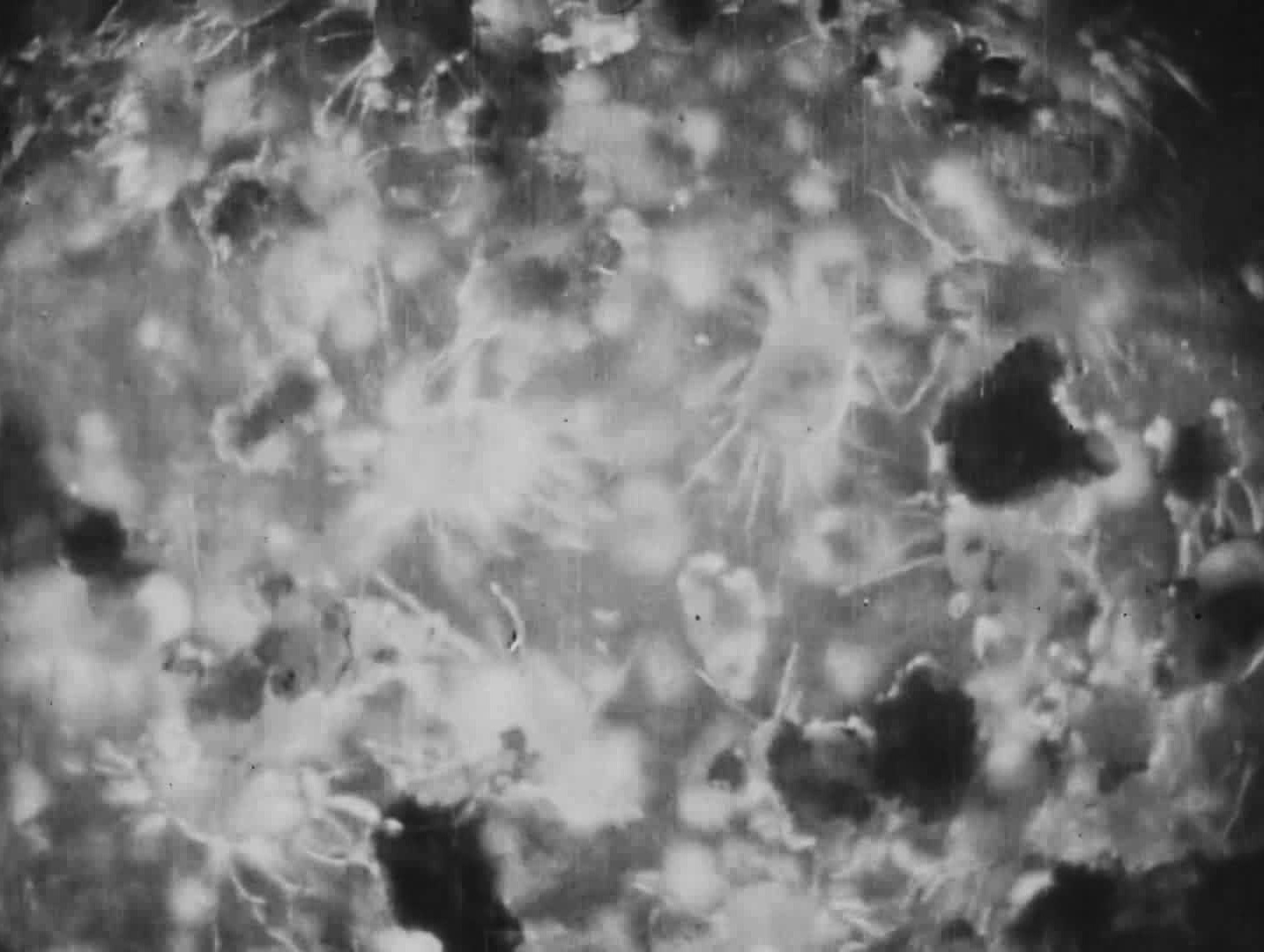
A trick film in the peepshow vein, involving magnification and mites on a block of cheese.
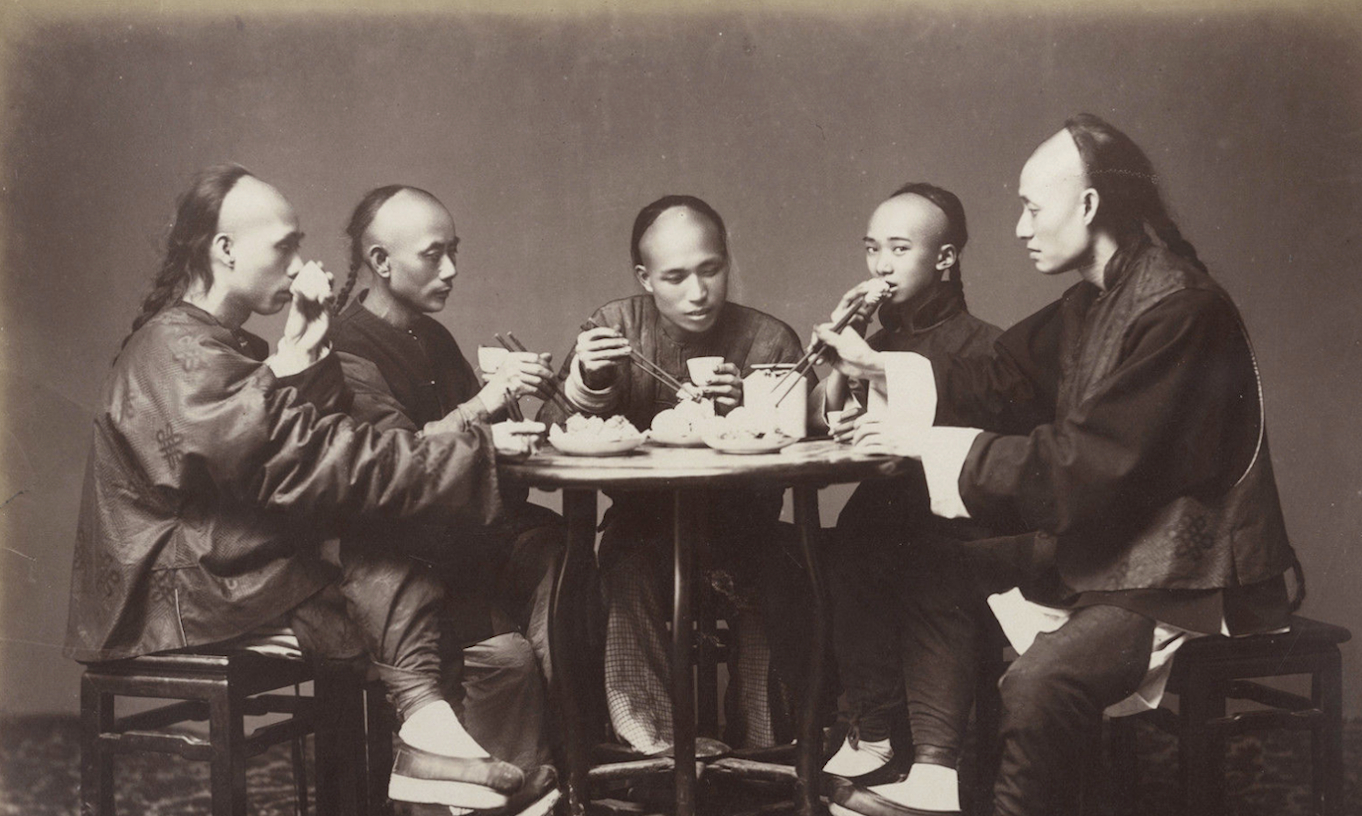
As Chinese immigration to California accelerated across the 19th century, the hairstyle known as the queue — a long, braided pony tail — became the subject of white Americans' fascination, disgust, and legal regulation. Sarah Gold McBride explores why hair served as an index of political subjecthood, and how the queue exposed cracks in American norms regarding gender, economy, and citizenship.

A crop circle sighting tinged with Christian morality.
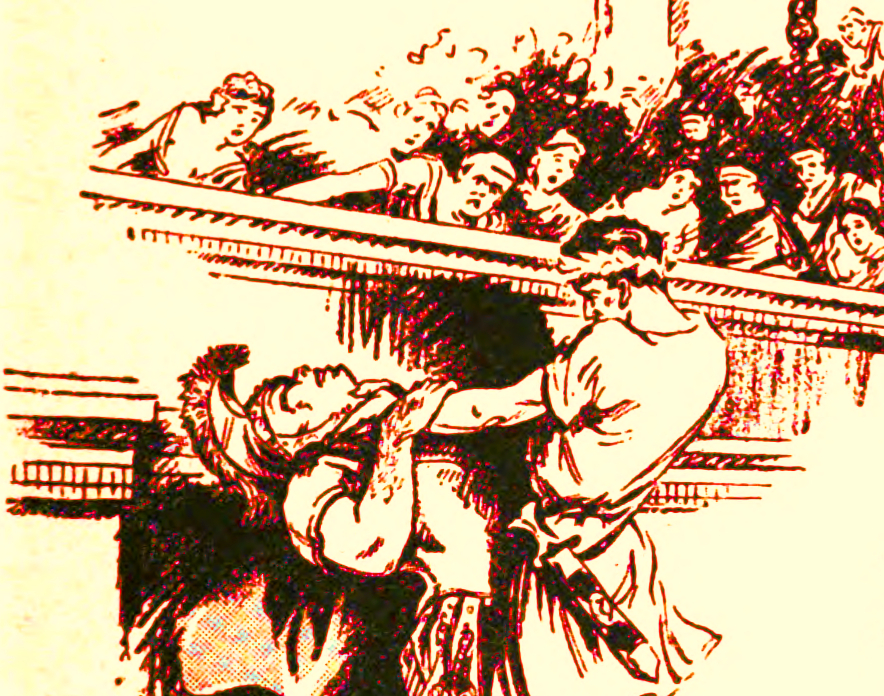
Time travel and murder during a New York heat wave.


