

Excerpts from a dazzling image collection, discovered in a Norwegian barn in the 1980s, that experiments with the presentation of gender.

In 1853, John Benjamin Dancer achieved a feat of seemingly impossible scale: he shrunk an image to the size of a sharpened pencil tip. Anika Burgess explores the invention of microphotography and its influence on erotic paraphenalia and military communications.
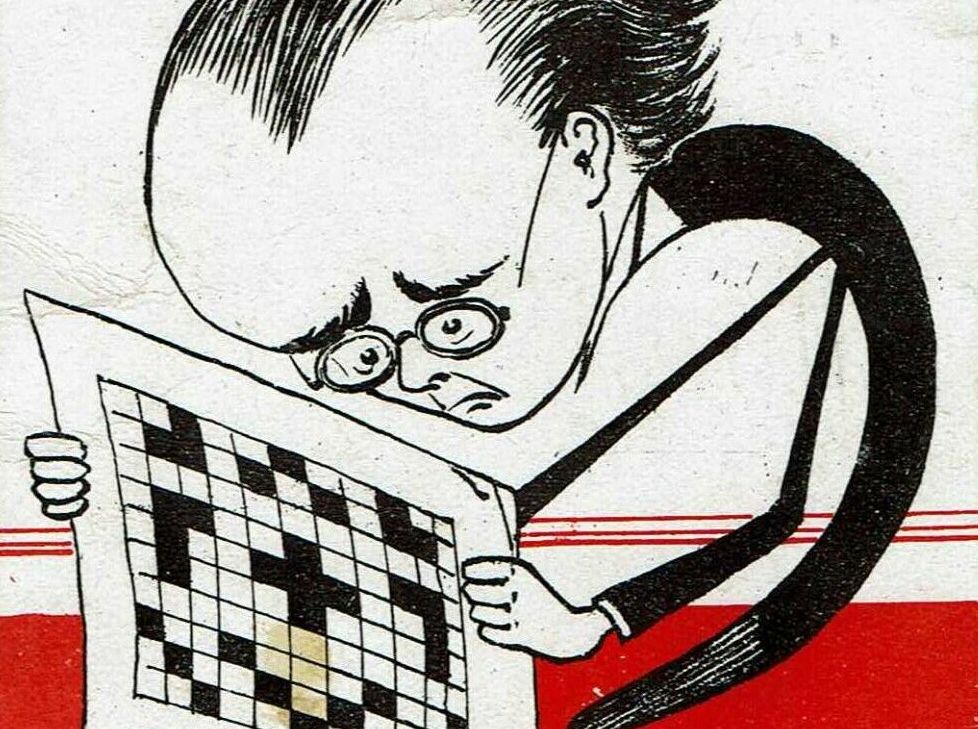
Eleventh instalment in our series of extremely small and free-form cryptic crossword puzzles, themed on our latest essay.

The sole example of a Bauhaus workshop's arcane theatrical scoring system, combining colours, words, and complex symbolic notation.

The first comprehensive history of marionette artistry in the English language.

Depictions of the mythical creatures known as Blemmyes: humanoids whose eyes, nose, and mouth are embedded in their breast.

In 1840, British architect George Wightwick published a world history of architecture in the Romantic mode, inviting readers to enter a vast garden where Buddhist iconography rubs shoulders with Greek temples and Egyptian pyramids gaze upon Gothic cathedrals. His intended audience? Idle women. Matthew Mullane revisits this visionary but ultimately unpopular text, revealing the legacy of attempts to gatekeep the realms of imagination and fantasy pertaining to the built environment.
Tenth instalment in our series of extremely small and free-form cryptic crossword puzzles, themed on our latest essay.

A set of drawing workbooks embroiled in debates about the Indigenist aesthetic movement.

A series of conjectures about the primal scene of writing.

A stunning six-foot-long map that joins the worlds of various myths and stories for the childhood adventurer.

As the story goes, Old Tom Parr was relatively healthy for being 152 until a visit to noxious, polluted London in 1635 cut his long life short. Katherine Harvey investigates the early modern claims surrounding this supercentarian and the fraudulent longevity business that became his namesake in the 19th century.
Ninth instalment in our series of extremely small and free-form cryptic crossword puzzles, themed on our latest essay.

A landmark work of social reform — proposing a land value tax — that helped usher in the Progressive Era.

French overseas imprisonment, in 2025 and 1852.

The first monograph on goldfish published in Europe.

The first full-length work of apiculture published in English.
Eighth instalment in our series of extremely small and free-form cryptic crossword puzzles, themed on our latest essay.

Papal elections begin, in 2025 and 1268.

In the 19th century, dyed ostrich feathers were haute couture, adorning the hats and boas of fashionistas on both sides of the Atlantic. Whitney Rakich examines the far-reaching ostrich industry through a peculiar do-it-yourself-style book: Alexander Paul's The Practical Ostrich Feather Dyer (1888), a text interleaved with richly colored specimens.

Aby Warburg spent his life finding forms that could hold their own against the flow of time. All the while, as Kevin Dann explores, he was churning on the brink of madness with the sense that he himself was changing — into a terrifying animal. What kind of history would a werewolf write?

Images gathered during a survey by Ferdinand V. Hayden, who was responsible for the designation of Yellowstone as a national park.

Woodcut knots likely inspired by Mamluk decorative metalwork.

A 1925 Soviet Children's book about a little screw whose importance is overlooked.
Seventh instalment in our series of extremely small and free-form cryptic crossword puzzles, themed on our latest essay.

In 1902, a woman named Mary MacLane from Butte, Montana, became an international sensation after publishing a scandalous journal at the age of 19. Rereading this often-forgotten debut, Hunter Dukes finds a voice that hungers for worldly experience, brims with bisexual longing, and rages against the injustices of youth.

Photographs of the life-size doll that Kokoschka had made to resemble his ex-lover Alma Mahler.

Images from a ritual practised for 127 generations.

Pamphlets on sea beasts produced for the International Fisheries Exhibition of 1883.

In the early twentieth century, architects turned to a newly discovered past to craft novel visions of the future: the ancient history of Mesopotamia. Eva Miller traces how both the mythology of Babel and reconstructions of stepped-pyramid forms influenced skyscraper design, speculative cinema in the 1910s and 20s, and, above all else, the retrofuturist dreams of Hugh Ferriss, architectural delineator extraordinaire.
Sixth instalment in our series of extremely small and free-form cryptic crossword puzzles, themed on our latest essay.

Sheet music whose notes have been replaced by rambunctious cats.
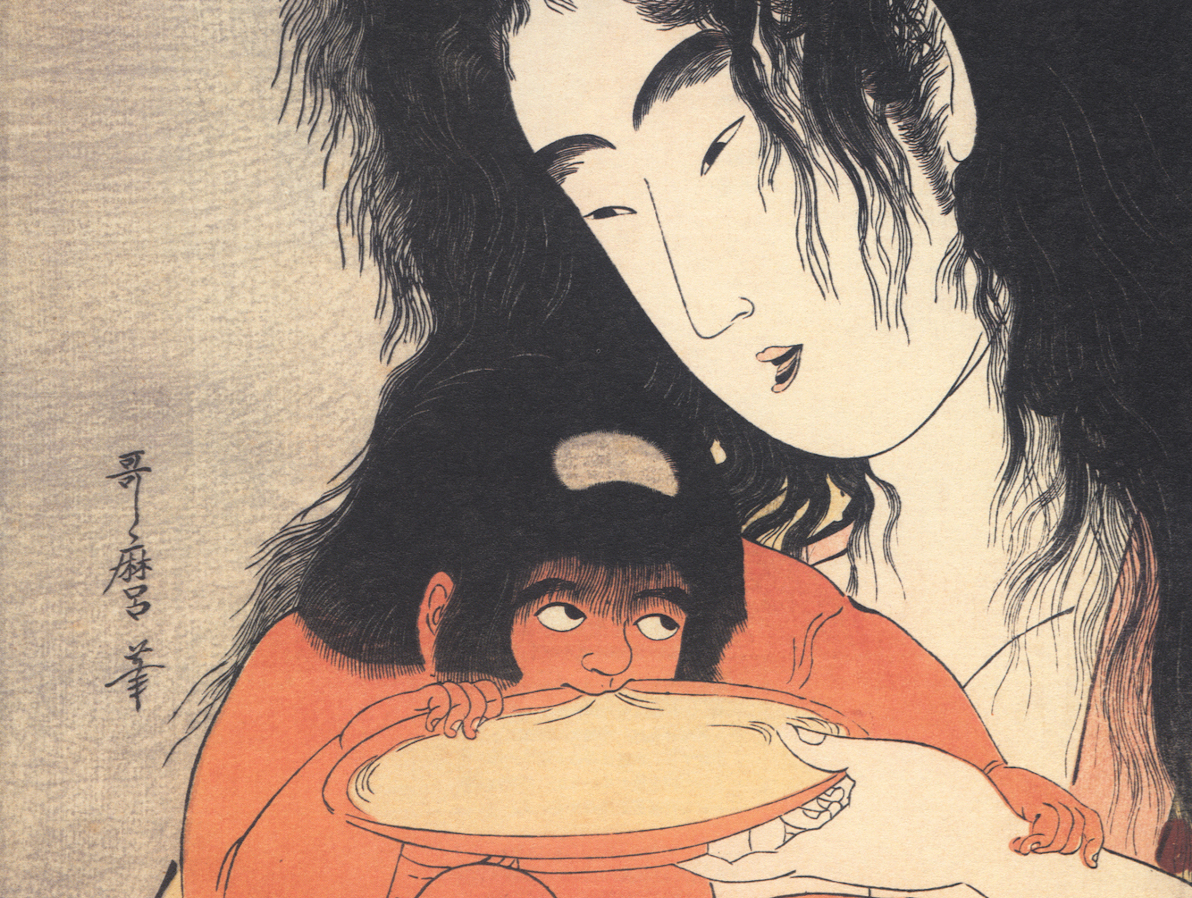
Edo-era prints of a loving demon with adopted or biological son.
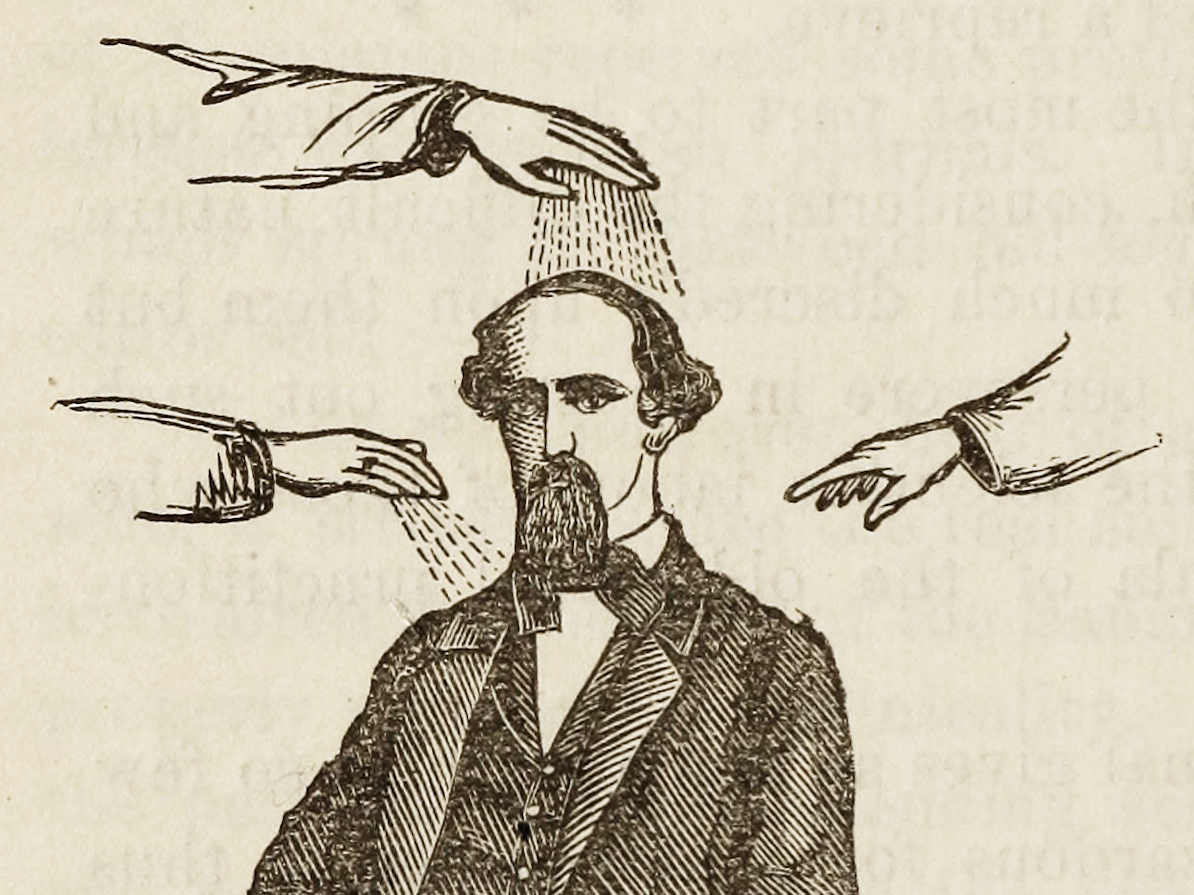
An encyclopedic tome of health advice that unpicks the biases of its time.
Fifth instalment in our series of extremely small and free-form cryptic crossword puzzles, themed on our latest essay.

Held in Jim Crow-era Nevada on the 4th of July, the 1910 World Heavyweight Championship was slated to be a fight to remember. Moonlighting as a boxing journalist, novelist Jack London cheered on Jim Jeffries — ringside and on the page — as the "Great White Hope", a contender to take back the title from Jack Johnson, the first Black heavyweight champion. Andrew Rihn examines the contradictions of London's racial rhetoric, which is more complex and convoluted than it may initially appear.

Perhaps the first work of puppet animation, featuring a cast composed of dead bugs.

Overlooked kaleidoscopic images of nature painted directly onto glass.

A grand, submarine entertainment in the form of a children's book.
Fourth instalment in our new series of extremely small and free-form cryptic crossword puzzles, themed on our latest essay.

After proclaiming himself the direct descendant of a 12th-century Crusader king, the Armenian priest and educator Ambroise Calfa hit upon an ignoble scheme: grant knighthood to anyone willing to pay. Jennifer Manoukian recovers the cunning exploits of this forgotten 19th-century conman, whose initially honorable intentions quickly escalated into all-out fraud.

A cultural history of ostrich eggs and the birds that lay them.
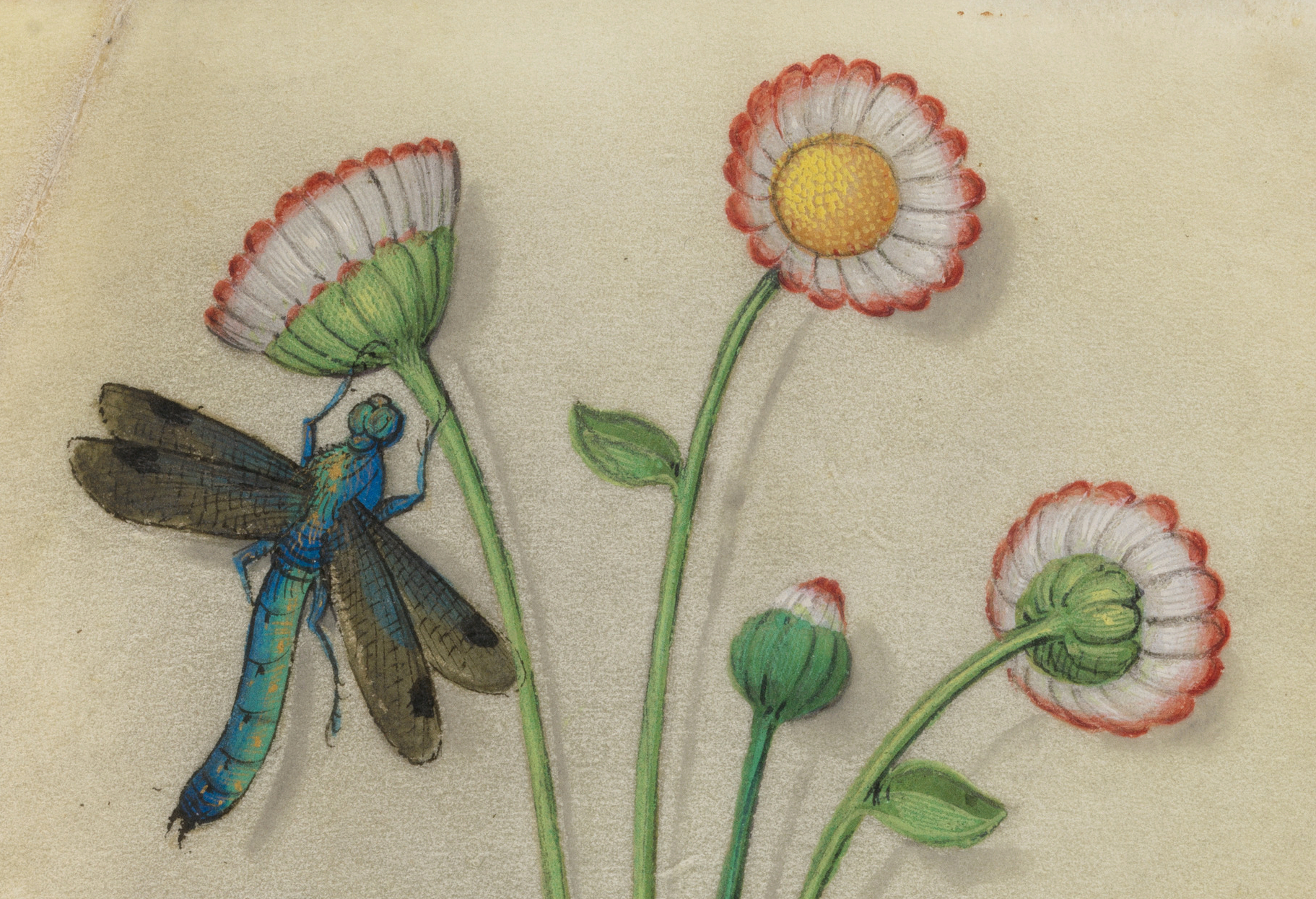
Illuminations of European plants by an anonymous master.

Expulsion threat from the Royal Society, in 2025 and 1775.

Engravings of unusual births by an artist best known for his joyous skeletons.

The Mughal emperors in India faced a sartorial quandary: continue wearing their traditional Central Asian attire, or adopt the lighter cotton clothing of this warmer clime? Simran Agarwal considers the cultural, political, and theological implications of embracing Indic fashion, arguing that — by donning the clothing of their subjects — the Mughal emperors fashioned themselves anew.

A work of futurology intended to be read in 1888 and judged in 2000.

Proverbial scenes about human folly painted on serving plates.
Third instalment in our new series of extremely small and free-form cryptic crossword puzzles, themed on our latest essay.

Underwater photographs that try to capture the world from a fish's perspective.


