
 Green Day AceClassic Albumsat Target Field [ 19-Aug-24 7:03am ]
Words + Photos ANDREW PARKS
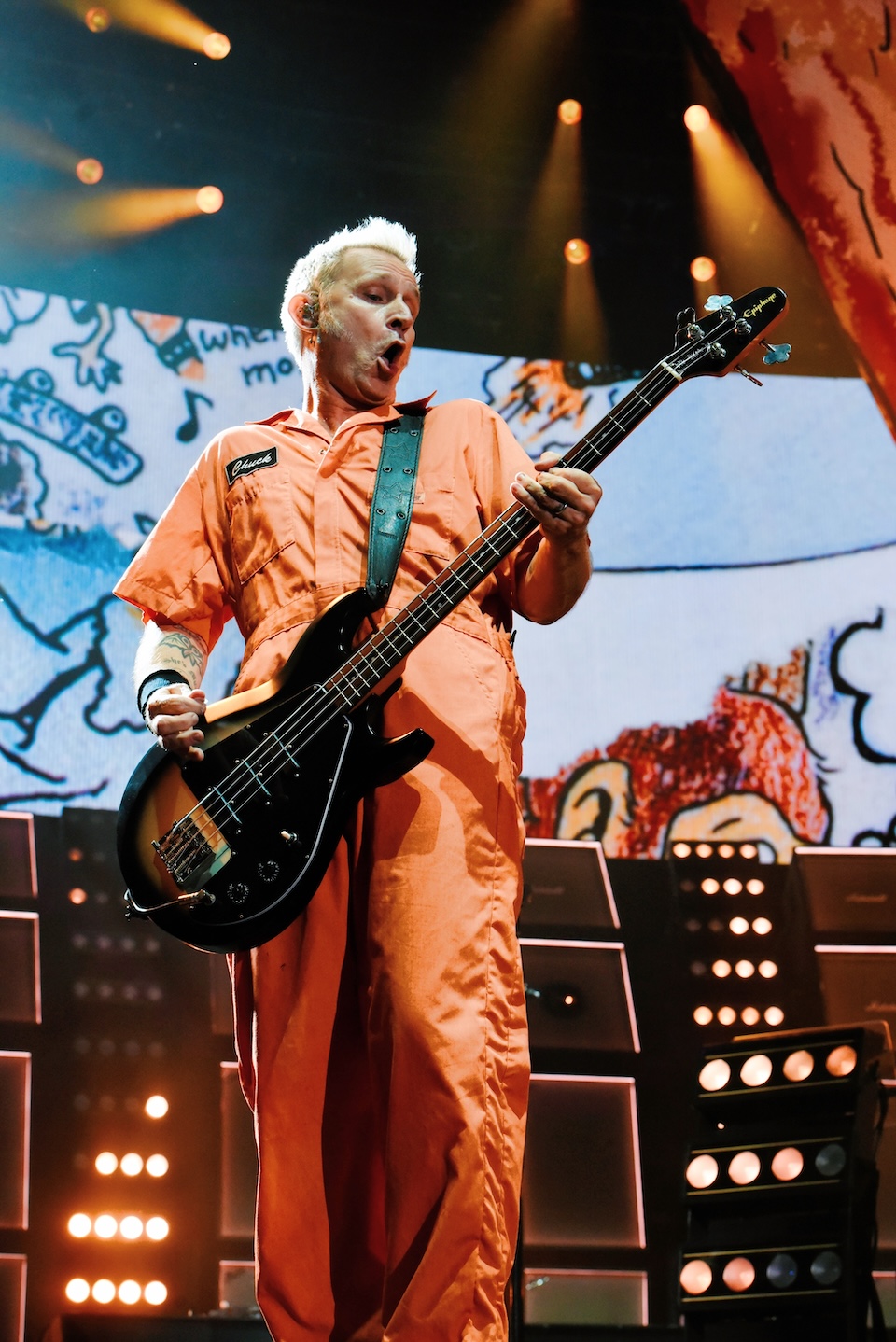
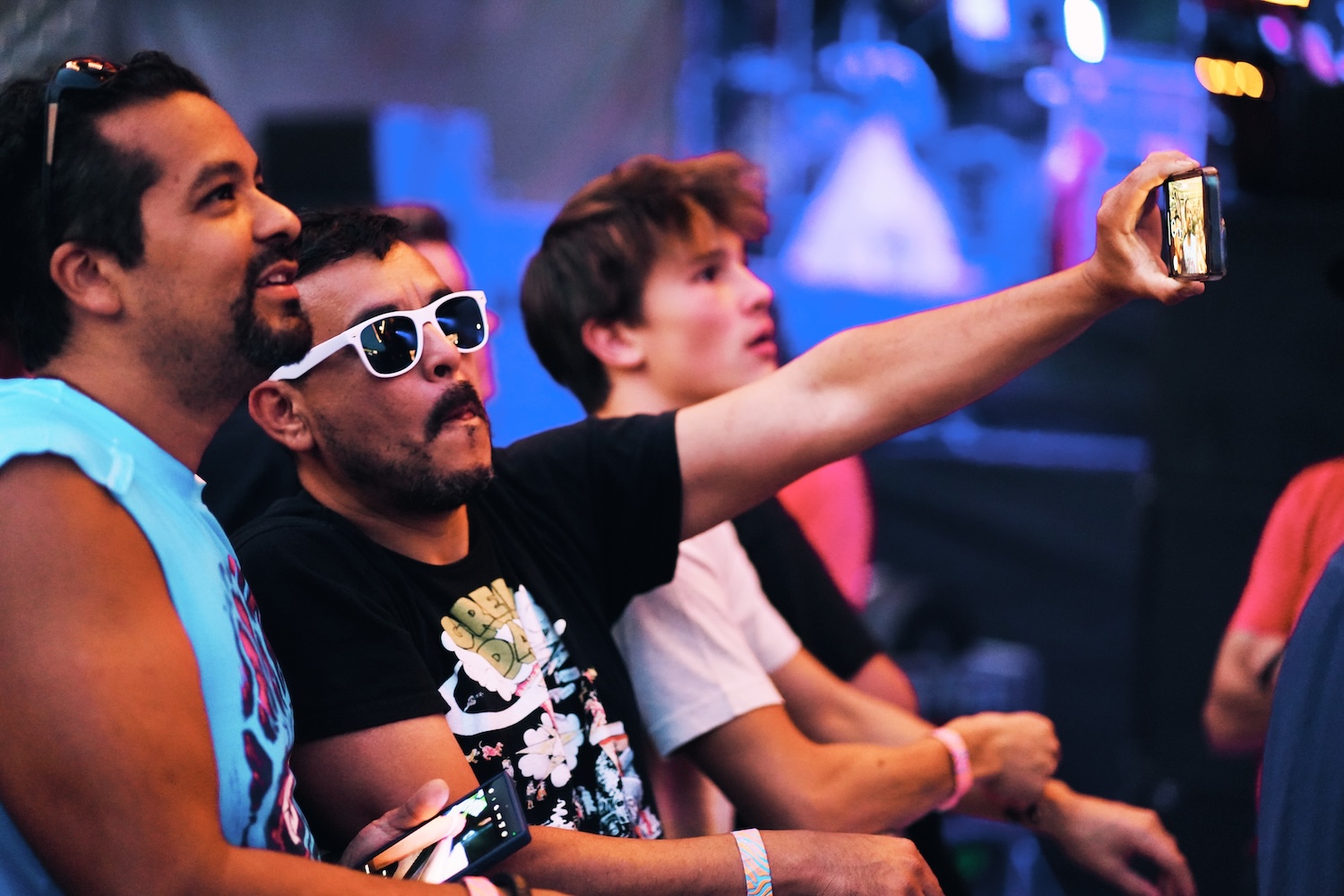
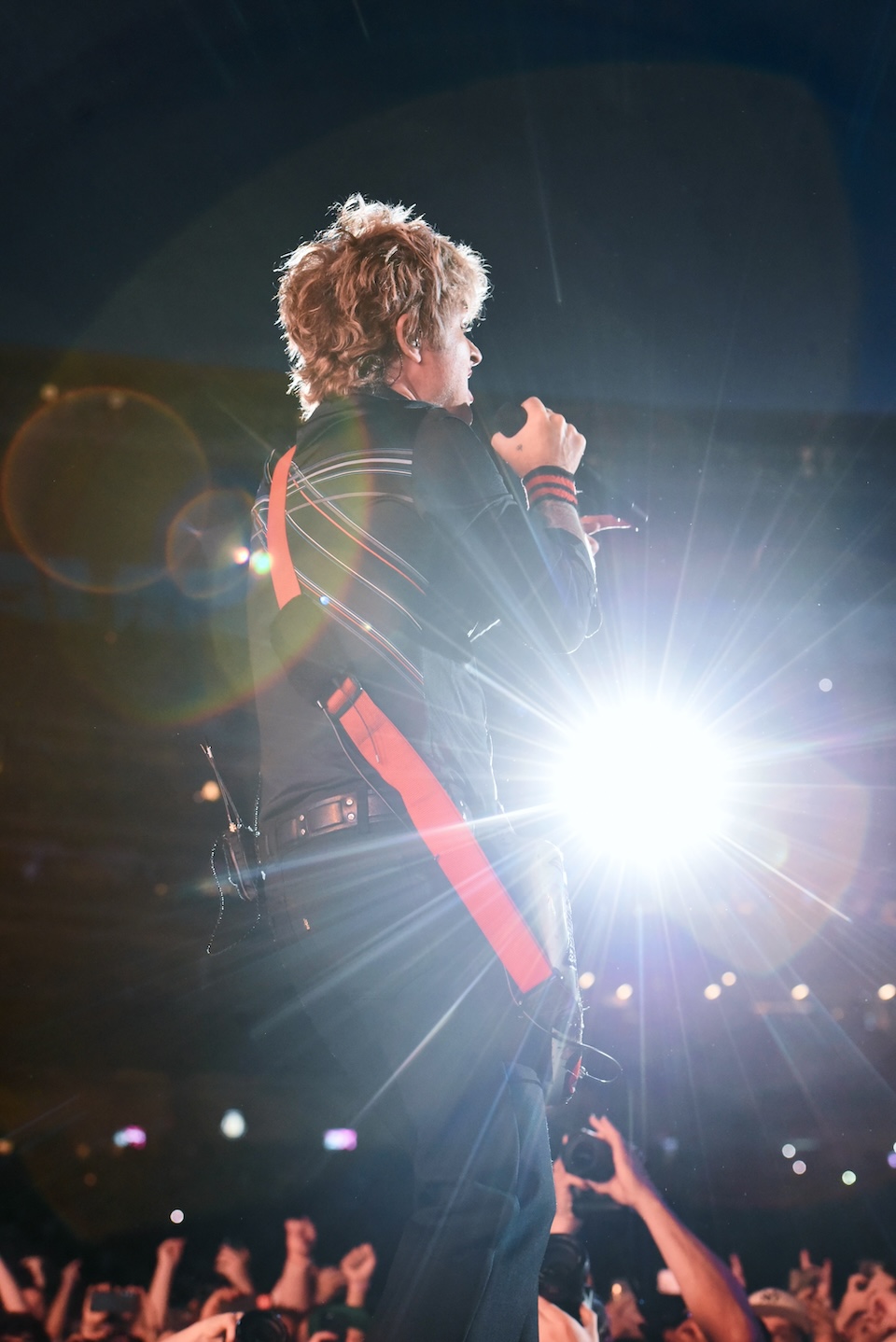
If there was ever any doubt as to the staying power of Green Day, it was obliterated before the punk band even hit the stage at Target Field in downtown Minneapolis on Saturday night. Aside from the obvious — a stadium that felt much fuller than it had for a fierce Smashing Pumpkins set — there was no denying the sudden energy spike as Queen and The Ramones had their biggest hits (“Bohemian Rhapsody” and “Blitzkrieg Bop”) blasted the way they would be at a proper baseball game.
By splitting the difference between pogo-oriented punk and operatic rock, Green Day wasn’t just ensuring a grand entrance. They also seemed to be tipping their dye jobs toward the two divergent forces (grand ambition and true grit) that informed their biggest albums: 1994’s diamond-tipped Dookie and 2004’s Broadway-bound American Idiot LP.
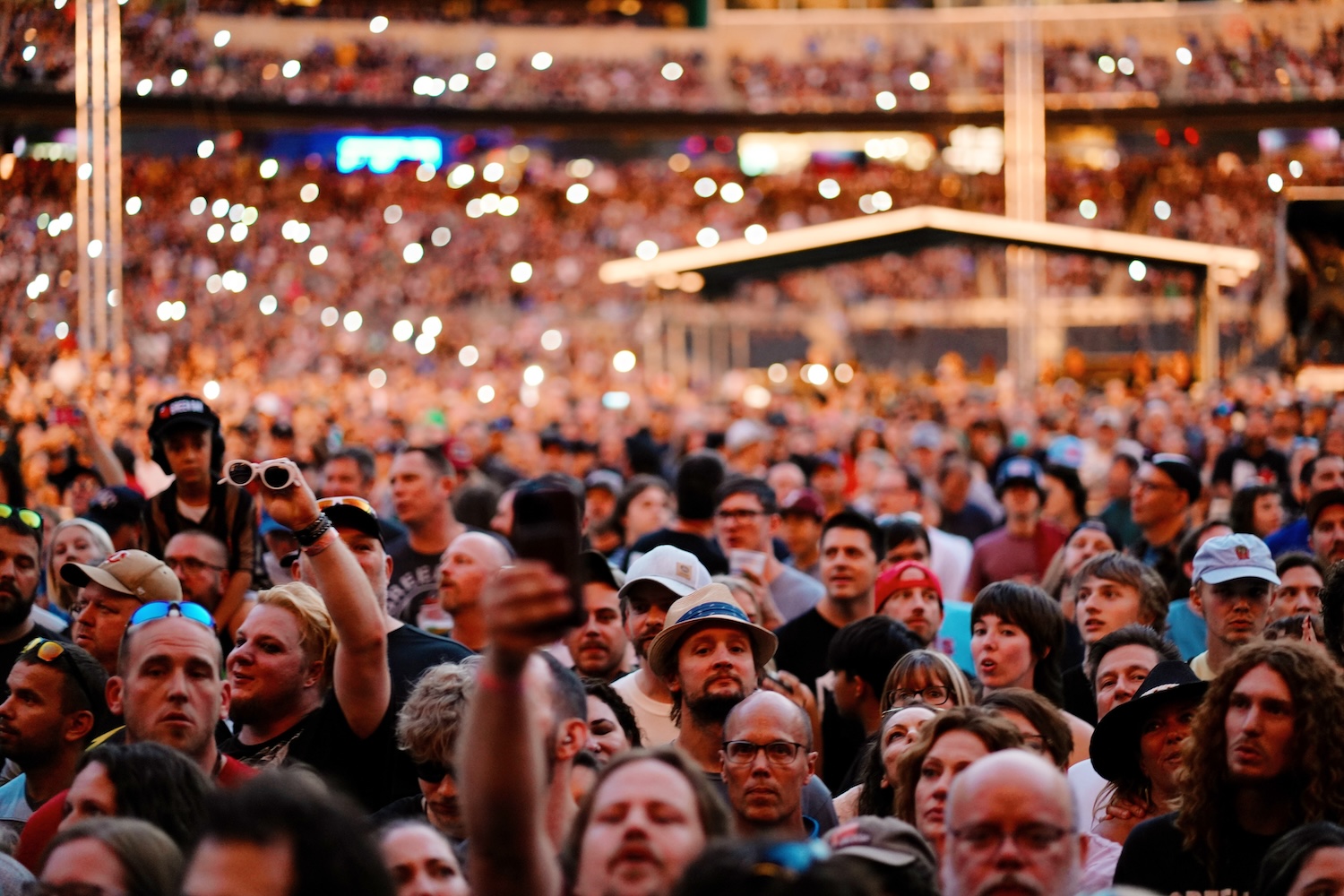
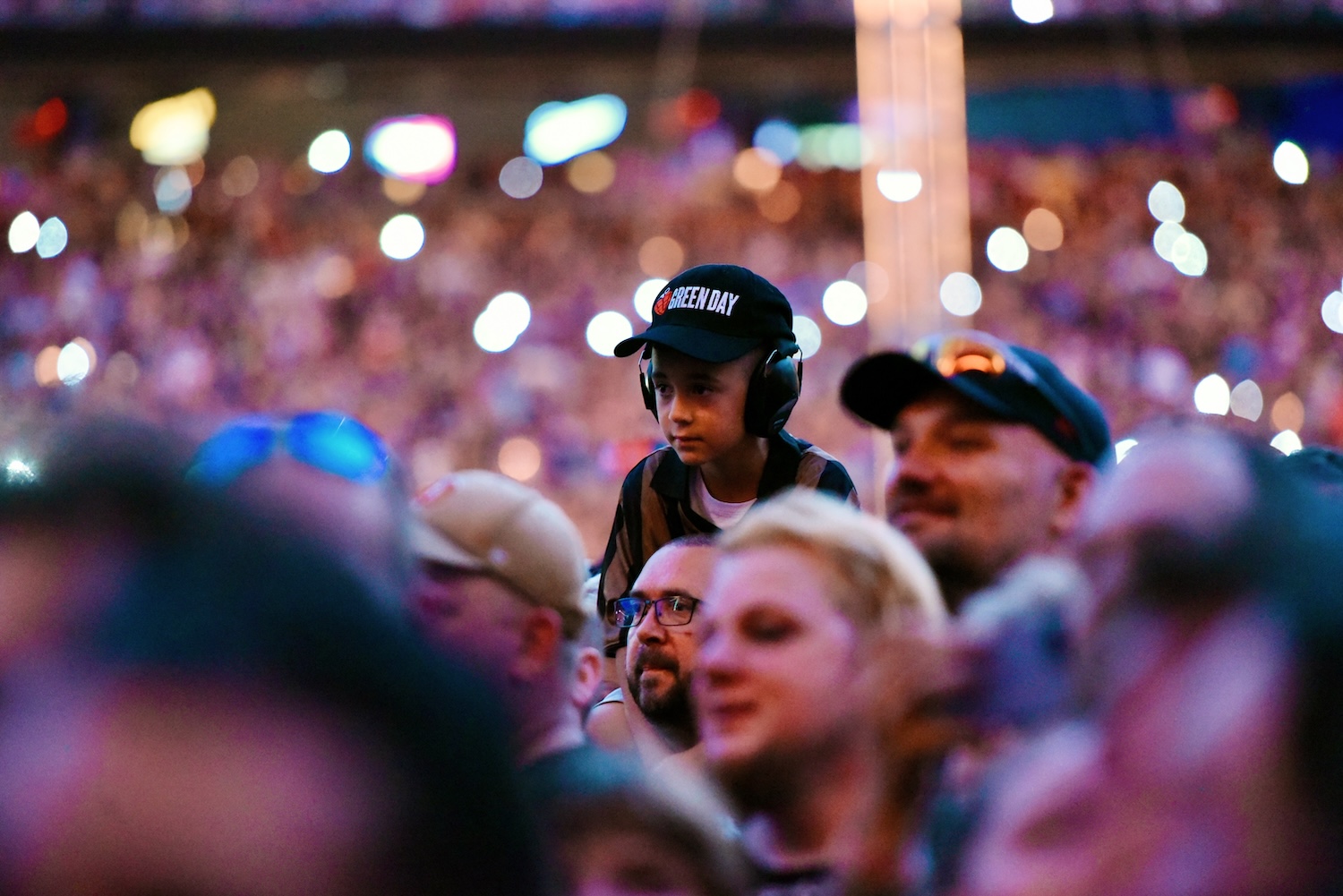
You read those years right; much like Woodstock’s mud-caked pivot towards the mainstream (arguably Green Day’s breakthrough moment), Dookie recently turned 30. And American Idiot, well, it’s old enough to drink in every country but ours. They’ve both aged as well as the band, too — as likely to drive nearly 40,000 people wild as they’ve ever been.
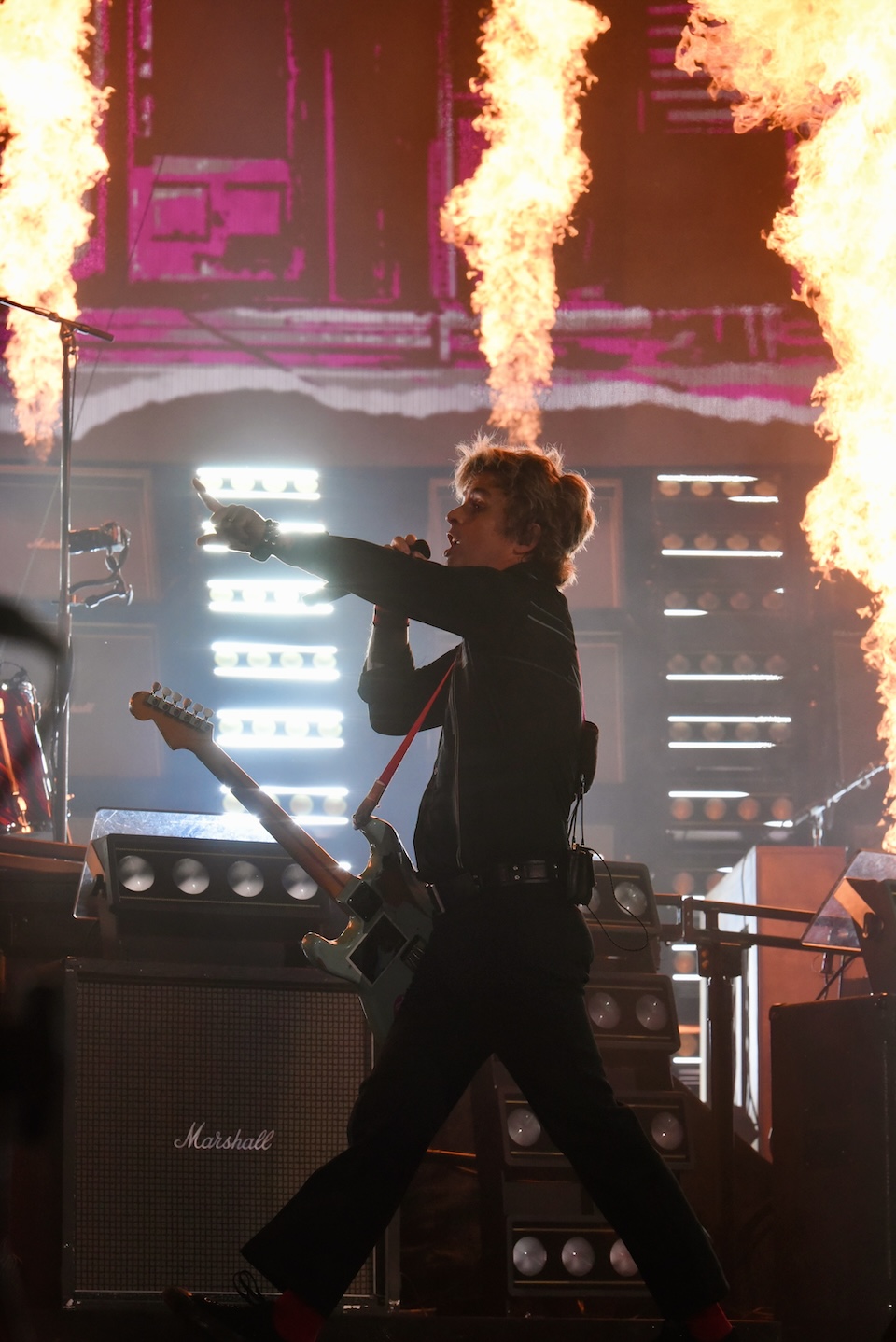
Maybe even more so considering their original fanbase is in full-on nostalgia mode, and the group can now afford to punctuate their many overlapping hooks and melodies with dynamic light displays, towering backdrops, and fire-spewing speaker cabinets. All while barely taking a breather despite having played both albums in full, along with a handful of other hits (“Know Your Enemy,” “Brain Stew,” the song that said goodbye to Seinfeld).
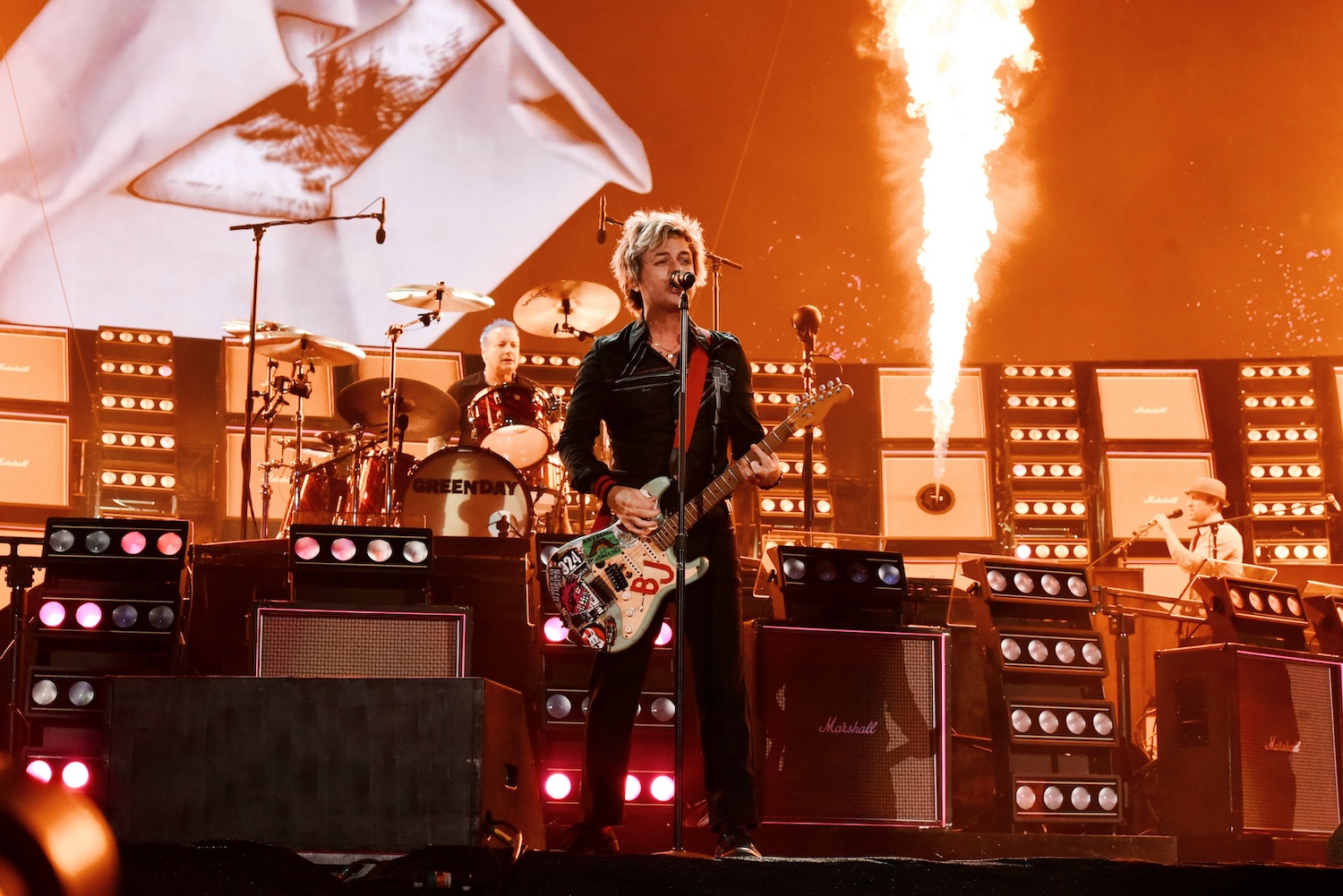
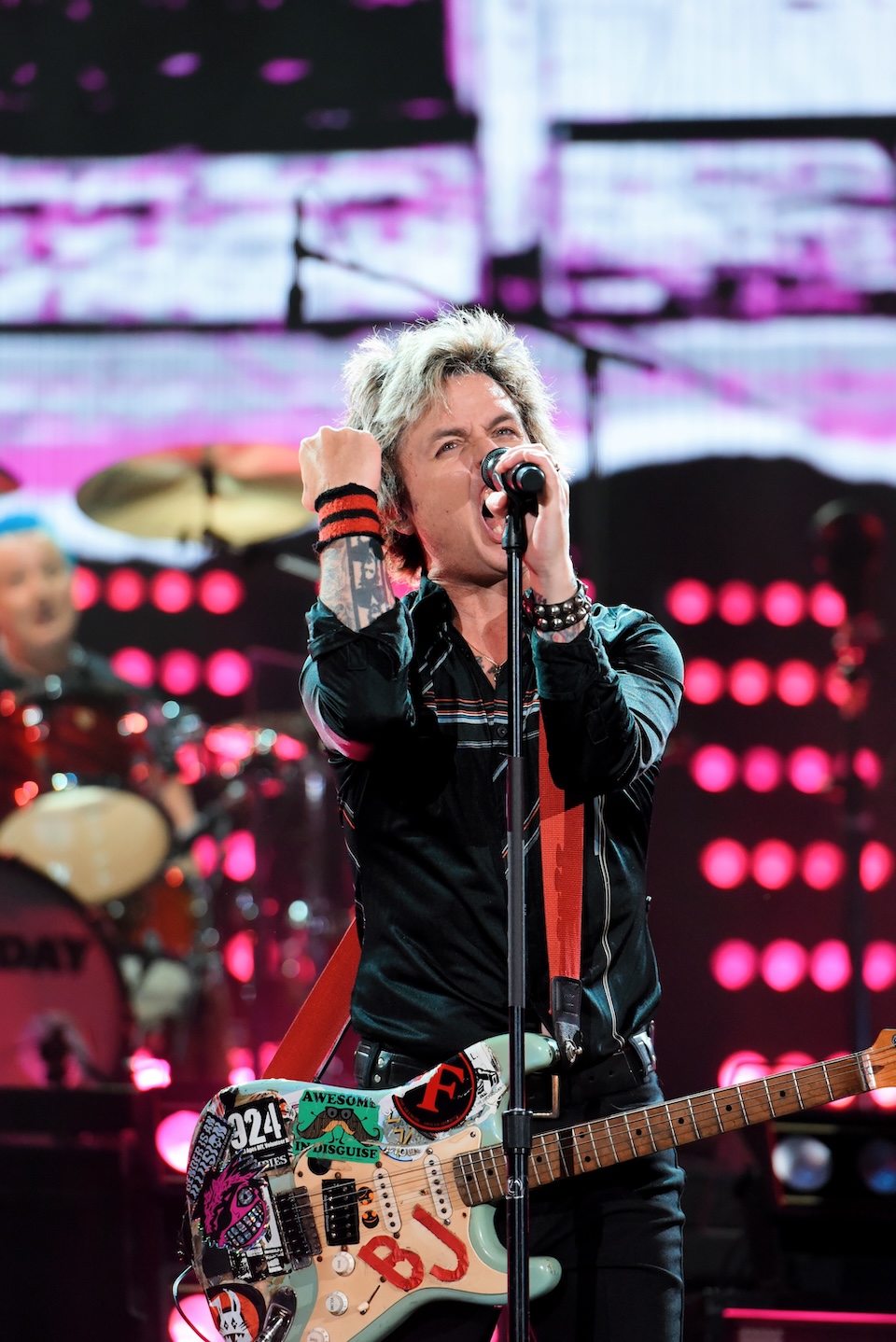
As for where American Idiot‘s political bent falls in a far more contentious year than the one that gave George W Bush another go, frontman Billie Joe Armstrong had this to say: “We need unity! And this is fucking unity tonight!”
Then, after quickly squashing any Democrat vs. Republican discussions, he added, “This isn’t even a party tonight…. It’s a celebration! I want you to scream out for joy; are you ready?”
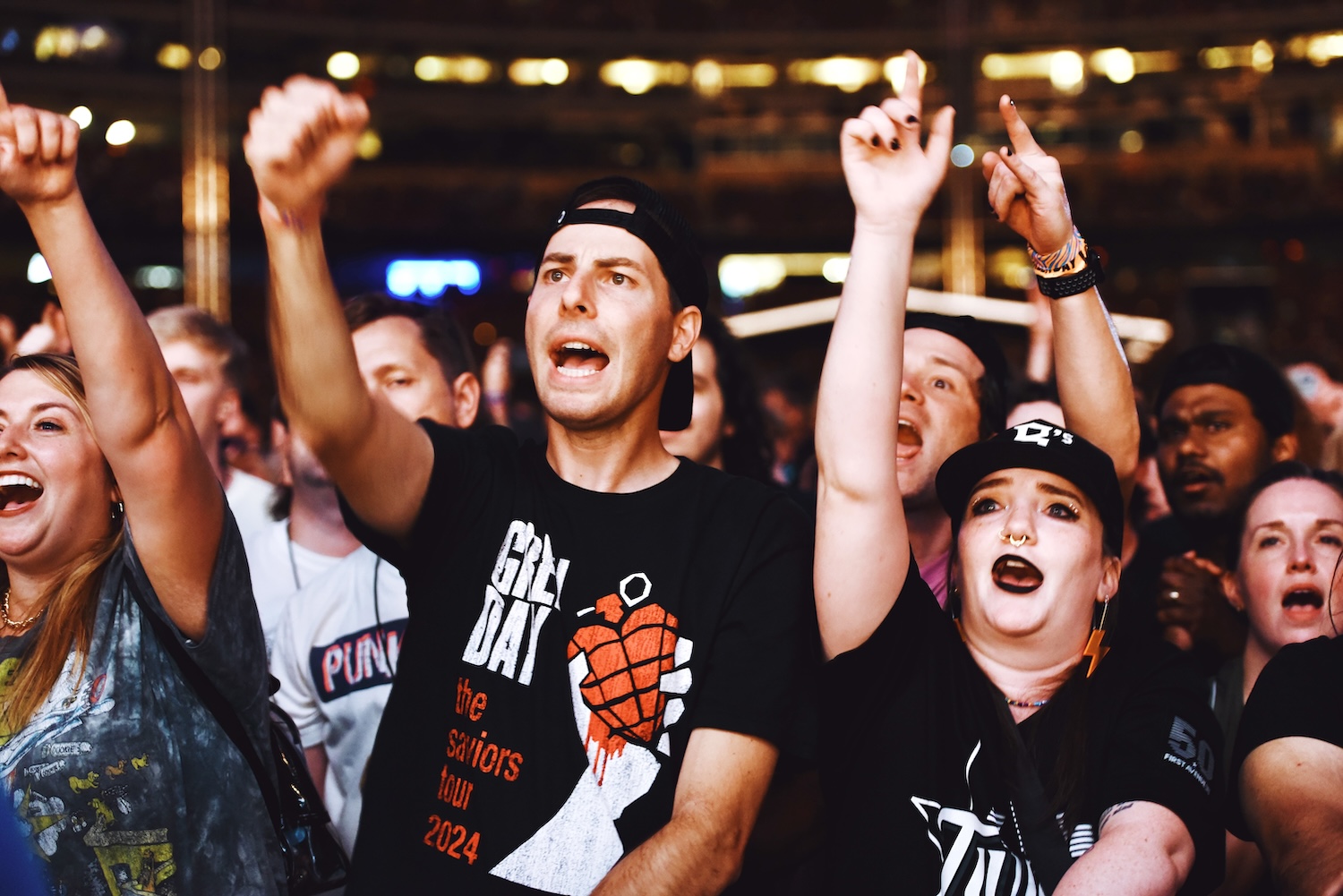
They were all night, to be honest. Thanks to absurdly tight performances by The Linda Lindas, Rancid, and the Pumpkins — a band long criticized for bloat, cramming 13 crackly originals and one cacophonous U2 cover into a one hell of a power hour — a concert that started at the ungodly hour of 5:30 and ended close to 11 never felt that way.
More like a reminder of what made the MTV era and shows like 120 Minutes so vital in the days before digital music. Or as Rancid guitarist/vocalist Lars Frederiksen said before launching into a lovely rendition of “Ruby Soho,” “Thanks for the last 33 years…. If there’s none of you, there’s no us.”
 Caural Shares a DizzyingMixtape of Mashed-up"Holograms" [ 13-Jul-23 5:42pm ]
Photo ALEX MASTOON
It’s hard to believe now that loop conductors like Flying Lotus and Four Tet headline festivals and high-cap venues, but the early ’00s was dominated by truly underground tracks within the sprawling hip-hop scene and cutting-edge electronic community. While DJ Shadow and other crate-digging, sample-threading producers broke through to a broader audience on the backs of waning trends like trip-hop and downtempo, difficult-to-pin-down artists like Prefuse 73, Daedelus, and El-P shaped their respective sounds in relative obscurity on such dearly missed imprints as Chocolate Industries, Mush and Definitive Jux.
“Just like skateboarding,” says Zachary Mastoon, “we early beat-makers were a community of weirdos finding ourselves — punks exploring, falling down, scraping our arms and knees — and not too many people gave a shit about it.”
That’s one of the reasons why Mastoon offed his Caural alias in 2009, only to reemerge in recent years with new music for a generation raised on Adult Swim and Low End Theory. Not to mention plenty of social media platforms that cultivate subcultures on the same playing field as pop music.
With his second EP of the year on the way soon (Thank Your Demons, due out September 1 on Caural’s own Prism92 imprint), we asked the Hudson Valley-based producer to share an exclusive mix and look back on his entire career, including his formative years as an jazz musician, Asphodel intern, and Teenage Mutant Ninja Turtles character (no, really)….
Let's start with a little background. What's one of your earliest memories of connecting with music on a deeper level?
My earliest memories of music were forged on monolithic IMF speakers my father had set up in our living room. I would sit and stare at the art on these gatefold jackets of whatever vinyl was spinning on the turntable, and it was in this way that the connection between sound and visuals was first made for me. I utterly fell in love with music as this all encompassing, visceral experience.
Was anyone else in your family involved with music or the arts, or did your parents simply have a killer record collection?
My mom was a painter and grew up playing the piano; we had an out-of-tune Gulbransen in between those speakers that I'd bang on as a kid. It was always a running joke in our family that — despite his taste — my audiophile dad was tone deaf. He had been going to jazz sets in his hometown of Chicago since his teens, and my mom brought all types of rock, classical and opera into the mix, so their vinyl collection was eclectic and amazing. Aside from early MTV, the records I grew up listening to were an enormous inspiration for me.
Was Transmission your first proper music project? How did you first cross paths with Stuart Bogie and the rest of that band?
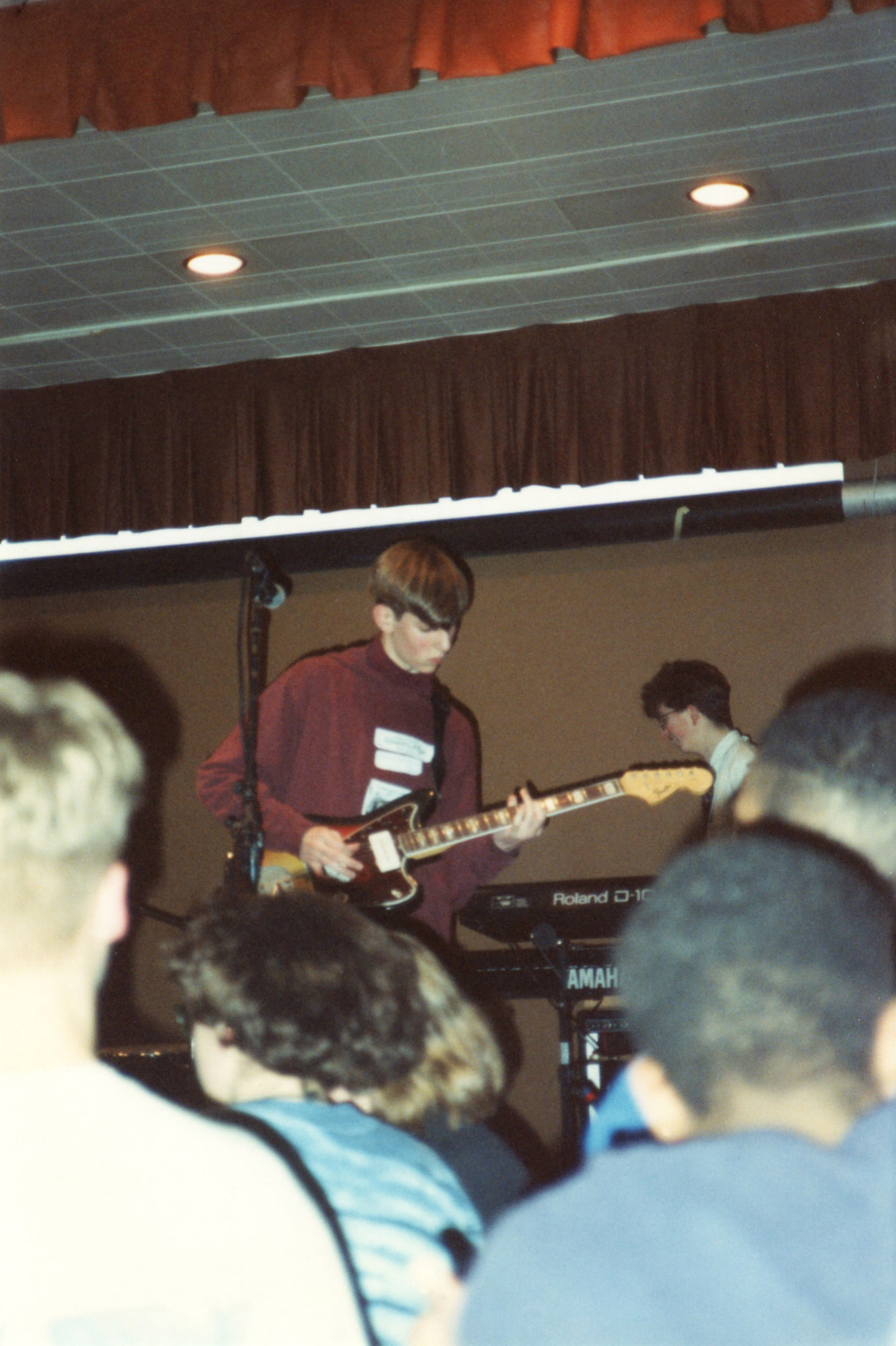
I grew up across the street from Stuart, and he was my first and best friend before I could really walk or talk. When I was 3, my uncle bought me a drum set to piss off my parents, and I had a Casio PT-80 and acoustic guitar when I turned 6. So, as soon as we were able, Stuart and I would record music together in my basement. We called ourselves The Ultraviolets.
From these early tapes on through junior high, it was just the two of us. We did a concert in Joshua "Kit" Clayton's basement when I was in eighth grade as Stuart and His Neighbor, but Stuart soon met Andrew Kitchen (our drummer) in marching band, who then recruited his friend Eric Perney to quickly learn and play bass.
Transmission (which my mother named as a joke) became a more formal incarnation of our joint musical trajectory.
You guys were skateboard buddies too, right? Can you talk a little bit about how it was a major bridge to discovering everything from punk to hip-hop in the pre-Spotify days?
As kids in the suburbs — especially in the early ’80s — we had no real exposure to hip-hop outside of movies like Beat Street and Breakin', but skateboarding had small reflections of its spirit; there was movement, visuals (the graphics on the boards, and the imagery in magazines like Thrasher and Transworld), fashion, and a like-minded community exploring an art form.
I knew skaters who liked punk, rap and metal, and I knew skaters who listened to new wave and house. Ultimately, skate culture was less a gateway to certain genres than it was to a sense of belonging. It told us it was okay to be different, and it instilled a fearlessness that informed our lives as artists. After all, you can't really be afraid to fuck yourself up if you are going to do it right.
Was there any skate video in particular that exposed you to a ton of rad music?
Honestly, it's funny. I remember watching Bones Brigade (I was 7 years old), but I don't remember any music.
I do remember Thrashin' having a Circle Jerks song and an awkward performance by the Red Hot Chili Peppers, but I wasn't running out to go buy those tapes quite yet.
Did you originally think you were going to be an experimental / jazz musician rather than a solo producer?
When I was really young, I was kinda just hoping to be a guitarist in a rock band. I guess the desire to be a producer sprung from wanting more out of live performance, but the fact is that collaboration always leads to something greater than I could ever dream up myself, especially in jazz and improvisational music.
What was your major at Wesleyan? Studying under Anthony Braxton must have been eye-opening to say the least….
I studied jazz guitar at Wesleyan, but left for NYU about a month into my second semester. Anthony Braxton was beyond influential. His “Materials of Jazz Improvisation” class was crucial for me as an artist, but it was less about his music than his imaginative notation and philosophy.
He was my faculty advisor, and I remember telling him the courses I was planning to take in addition to solo guitar and gamelan orchestra: astronomy, Buddhism, and a class on African-American literature. He looked at me dead in the eyes, laughed, and said, “Wonderful, it’s all music!”
You interned at Asphodel in the late '90s — right around the time they were working with everyone from Diamanda Galas to DJ Spooky. What did you take away from that experience on both a creative and professional level? Did it make you want to double down on your own work?
In 1997, I found We’s As Is album at a record store, and it absolutely blew me away; it still does. The fact that the folks at Asphodel saw my gushing email and invited me on board absolutely changed my life. Creatively, working there opened me to the idea of dismissing genre altogether while still maintaining a cohesive sound and approach.
Professionally, I was meeting artists, DJs, and just hearing so much music I wouldn’t have heard otherwise. It was truly another extension of my education, and drove me to start "square-pushing" myself.
Was one of the things you liked about sampling / producing music that it gave you the freedom to be a one-man band in a way?
Oh absolutely. In junior high, I fell in love with the music of My Dad Is Dead, and actually sent him a typewritten letter. At the time, he was doing everything himself, and I asked him how; he actually responded to me! This was in the late ’80s, when my little sampler didn’t yet exist and making records alone was far more expensive and complicated, but his album The Taller You Are, The Shorter You Get showed me it was possible, and I couldn’t wait…
My earliest memory of discovering your music was reading a Turntable Lab recommendation for Stars On My Ceiling in 2002. I feel like that was a very special time — a turning point for turntablism, underground hip-hop, and instrumental beats. In a lot of ways, labels like Chocolate Industries and Mush set the stage for everything from Alpha Pup to Brainfeeder to the club night that brought it all together: Low End Theory. I know this is a complicated, loaded question, but what's your perspective on that time period and how things evolved between your early albums and Mirrors For Eyes, your last proper Caural LP?
I truly agree that time was special, and it’s more than just my own nostalgia and gratitude for having been a part of it.
When I started using the Yamaha SU700 in 1999, I admit I was being experimental for experimentation’s sake. Listening back now to my first record on Toshoklabs — yeah, it was fucking weird. But I think the more I explored, the more I was able to find my own voice. We all did, and it’s magical that it happened: people using machines to take music apart and rebuild it again had such wildly different results, and spawned so many directions in music.
Being on a label like Chocolate Industries where Prefuse 73 would remix my material, or my name would be next to Souls of Mischeif, Tortoise, El-P or Mos Def? As someone just starting out, I felt I had already made it. And the connection with the Los Angeles scene was immediate for me as well. I was in touch with Teebs on MySpace early on, and Ras G would come to my first shows out there and stand right in front.
Spinning records at Sketchbook (a precursor to Low End Theory) also changed what I wanted to hear, and took my music to a new place. Take (now Sweatson Klank) brought the night to NYC, and he and I would take turns playing the weirdest bangers we could find to sometimes empty rooms. This was not yet popular music!
So, from album to album, there was a natural evolution for me in tandem with the scene itself. I don’t think Mirrors For Eyes is my favorite or even best album, but I can map out how and why I got there.
Why did you decide to largely step away from Caural in 2009? Did it feel like that kind of music had hit its peak on some levels, as new generations began to discover artists through MP3 blogs rather than magazines?
A lot of things were happening simultaneously to be honest. As the sound grew in popularity, the proliferation of new tools to make it — along with the internet to spread it — oversaturated everything. To me, the "beat scene" absolutely peaked and imploded, and everyone started sounding the same.
Personally, I was also feeling limited by the very tool that once gave me so much freedom. With the single exception of "Sorry, Underground Hip-Hop Happened Ten Years Ago," I was a stubborn dinosaur who rejected the idea of using a computer to continue on. As someone who grew up playing guitar and drums, I needed an instrument to be tactile and real, not colorful, impersonal blocks on a screen.
I was performing on my sampler live along with another Chicago producer named K-Kruz (this material was later compiled as Handmade Evil) but, when it was eventually stolen from my apartment, I was just like, fuck it.
Was Handmade Evila reaction to the digital turn beat-driven music has taken in recent years — a way to show you can make killer tracks with nothing but a Yamaha SU700 and an MPC?
As a perk for a Boy King Islands Kickstarter, I compiled lost demos and alternate takes of songs for our supporters; this collection was released a few years later by Youngbloods as Pastels. Anyway, digging through sketches on my hard drive inspired me to do the same for Caural, but the music that truly stuck out for a coherent release was the last live recordings before things were brought to a close in 2009.
Maybe it was an unintentional fuck you to what I thought I was leaving behind forever, but instead it became a record of a time I'd look back on fondly.
One artist who showed how big this kind of music could be was DJ Shadow. He actually dropped his last record in the style of Endtroducing… (The Private Press) the same year as Stars on My Ceiling. Looking back now, does it feel like heady, sample-driven beats hit a peak around that time in terms of its potential and audience?
Yes and no. I remember Endtroducing… first coming out, and it was wonderful. A lot of those early Mo’ Wax and Ninja Tune records had a clear route from hip-hop instrumentals, but with added freedom to stretch out since they were made without an MC in mind.
The more we got away from loops and appropriating larger motifs from others, the more expansive our possibilities became, but we needed that time to get where we are now.
Before we get into your other projects, I've gotta ask: How did you end up landing a voiceover gig for Teenage Mutant Ninja Turtles? Are you psyched about the new movie from a nostalgic standpoint since it appears that Seth Rogen grew up with those characters as well?
Haha, oh man. I had done a lot of acting growing up, and when I told my dad I wanted to major in acting at NYU, he said, "What are you going to minor in — 'Do you want fries with that?'" So, those dreams were dashed for a time.
When I moved back to Brooklyn, a friend of a friend was doing work in cartoons and gave me tips on how to make a demo. I landed a pilot at 4Kids Entertainment that went nowhere, but when I was recording my lines, one of the producers approached me to read for another character on another show. And so I became Dr. Chaplin on Teenage Mutant Ninja Turtles.
To be honest, my sister was more a fan of the half-shelled heroes than I was, but props to Seth Rogen for giving it another life in theaters!
Did you launch Prism92 in 2013 to give yourself more creative freedom and a platform for projects outside Caural?
Prism92 became the de facto imprint for really anything I was doing and releasing myself. Prism was an art gallery where I grew up in Evanston that doubled as an all ages venue for high school bands like mine. It was where we all cut our teeth and sold our tapes, and it was a fertile ground for dreaming. It shut down at the end of 1991, and so in naming my little label Prism92, I meant to symbolize the next phase of those dreams, however they took shape.
Speaking of, what's the story with Original Ultraviolets? Was it the main collaborative outlet for you and Stuart between the '80s and early '00s?
So The Ultraviolets was our duo beginning when I was 6, and we had a handful of recordings scattered across cassettes mostly lost or taped over by Bogie's brother. I also accidentally taped over an entire catalog of our material thanks to auto reverse on a friend's tape deck….
Anyhow, Transmission enveloped us in high school and continued without me in Ann Arbor and San Francisco with Colin Stetson, but Stuart and I would always mess around with different ideas, including his short-lived Egyptian Brain Surgery project. When I moved back to Brooklyn in 2003, Stuart opened his Williamsburg apartment to me while he was on tour with Antibalas. When he'd drop back in town, we'd press record on new material for fun on a Tascam 8 track, with vocals in the bathroom and any instruments set-up in our cramped railroad living room.
Through Google, we found there was another band called The Ultraviolets, but we were named 20 years before! Thus, The Original Ultraviolets. For its release, I did final mixes years later from the original reel-to-reels, and scoured unmarked cassettes in the Bogie family's basement for our childhood's surviving music.
Boy King Islands has a similar back story right — a duo (with Jason Hunt, in this case) with roots that reach back into the '90s?
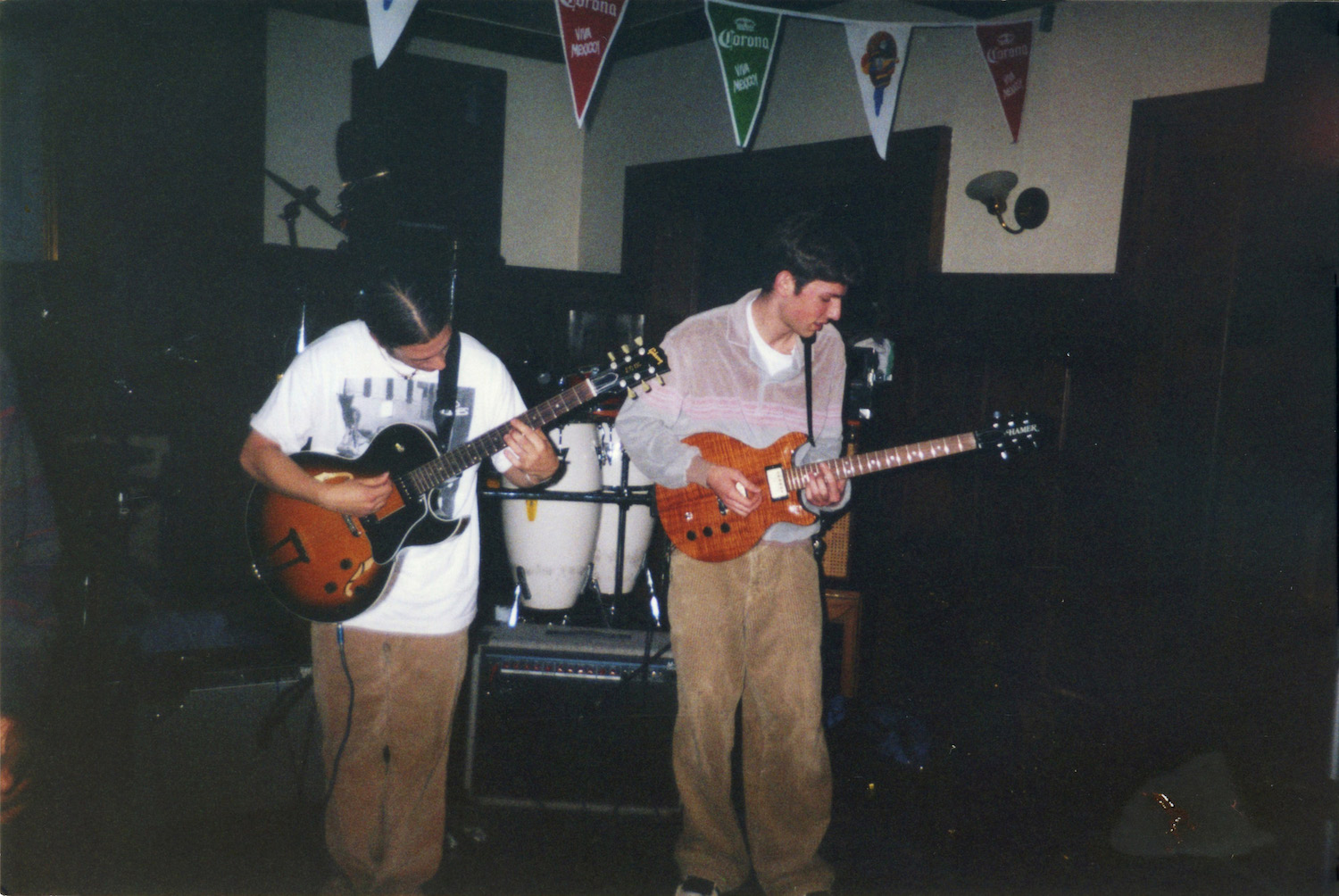
I met Jason in 1991 when he was playing in a different band on the same bill as Transmission. He and his bandmates joined us on horns for our first recording and a handful of shows, but they were really doing their own rock thing. When Transmission left me behind for college – and Jason and his pals kicked out their singer Billy Melody – I stepped in, and we largely did a live hip-hop thing inspired by The Roots.
Years later – after becoming Diverse's backing band and recording an album that was thankfully shelved – I was living with Jason in Evanston. This was now 2002. Numero Group's co-founder Rob Sevier was running a small label called Wobblyhead, and approached me about doing a My Bloody Valentine cover for a seven inch series he was putting together. Well, I enlisted Jason on some additional guitar, and that song – “The Girl With The Stained Glass Eyes” – became the first Boy King Islands song.
What made you want to start working on Caural material again?
Honestly I can thank my wife Alex. In many ways, she turned me back into myself.
How did you and Alex meet? When did you start discussing the ideas that would become Word is Bond?
Our story is crazy — you ready? So, I was Busdriver's touring DJ for a couple of years and, as was customary at the time, I was his top MySpace friend. Well, Alex's brother told her to check him out cause we were soon gonna play Miami with Deerhoof and Harlem Shakes. In doing so, she saw my photo, and added me. This was late 2006.
The venue for the performance changed and we never met, but years later, I saw her on a little MySpace status feed and reached out. This began a digital courtship that turned into a long-distance relationship, a couple breakups, and a magical marriage.
We began collaborating on videos a couple years in, but Word Is Bond was entirely her baby. I stepped in to help with the screenplay, ghost-write raps, produce, cast and compose.
Is homophobia something you witnessed firsthand throughout your years as a producer, and a big reason why you felt the need to help tell that story?
As a heterosexual cis male growing up in the ’80s, homophobia was nothing but normalized. The "f" word was casually tossed around in movies; people played a game called "smear the queer" in elementary school; I knew absolutely no one until college who came out; and frankly I had never been exposed to anything outside of my standard vanilla crushes on girls.
As I grew up, luckily my eyes opened wider, and suddenly I was like, “Woah, none of this is cool.” Whether it was on the screen, on the radio, or in person, the utter machismo "no homo" bullshit became such an ignorant and unfunny joke, and now the veil has been removed on so much more of the hatred driving us apart.
Alex's brother and many of her friends are in the LGBTQ+ community and, as her partner, I was happy to support both her vision in bringing their stories to life, and strengthening my own empathy as an ally.
Did working on Word is Bond — seeing how well Alex’s visual language melded with your music — lead to your work on "Us in Octaves"?
A: Alex and I do nearly everything together. We used to butt heads a little more when we met thirteen years ago, but now we may as well share a brain. So, when she had an idea for another music video for me, it was an immediate yes.
What's the back story behind “Us in Octaves”, the two-part music video you’re unveiling soon?
When we left Los Angeles in 2019, we were working full-time in film in the Hudson Valley. I finally had time to return to music late that fall, and “Ceremony” was the first song I finished. We met a dancer at a screening of Word Is Bond in Harlem, and he and his friend were the original two man cast set to shoot in March of 2020. We all know what happened then.
Two years later, when we escaped upstate New York and were ready to revisit the idea, everything changed. She and I brought on a fantastic DP named Jaan Utno who worked with us as a gaffer on Word Is Bond and, in the casting process, she found muses in Madison Wada and Robyn Ayers.
Our shot list was enormous, and it was the most art department-heavy project we did together. So when she started editing, it naturally became a two-part story: there was just too much to say.
Are you planning on doing a full movie together at some point?
I am already helping her develop a feature script…. Stay tuned!
Dakou sounds like a natural progression of your work as Caural and a live musician. Did it feel like dipping your toes back into a world you sorely missed, making another EP (Thank Your Demons) come together even more naturally?
Thank you! Dakou, Thank Your Demons, and material I am working on now for a full length next year all feel like I have picked up where I left off, but as a fuller and changed person. All along, I had been relegating styles and even instruments to different projects and aliases. Maybe because I feared they wouldn't fit together?
Whatever the case, in returning to music — honestly through Alex kindly forcing me to soundtrack Word Is Bond — I realized that my sound is less a style to put in a box than it is me using everything I have to articulate whatever comes through me.
You also released a digital version of your remix compilation last month. Does that feel like the final word on a very specific period of your solo career?
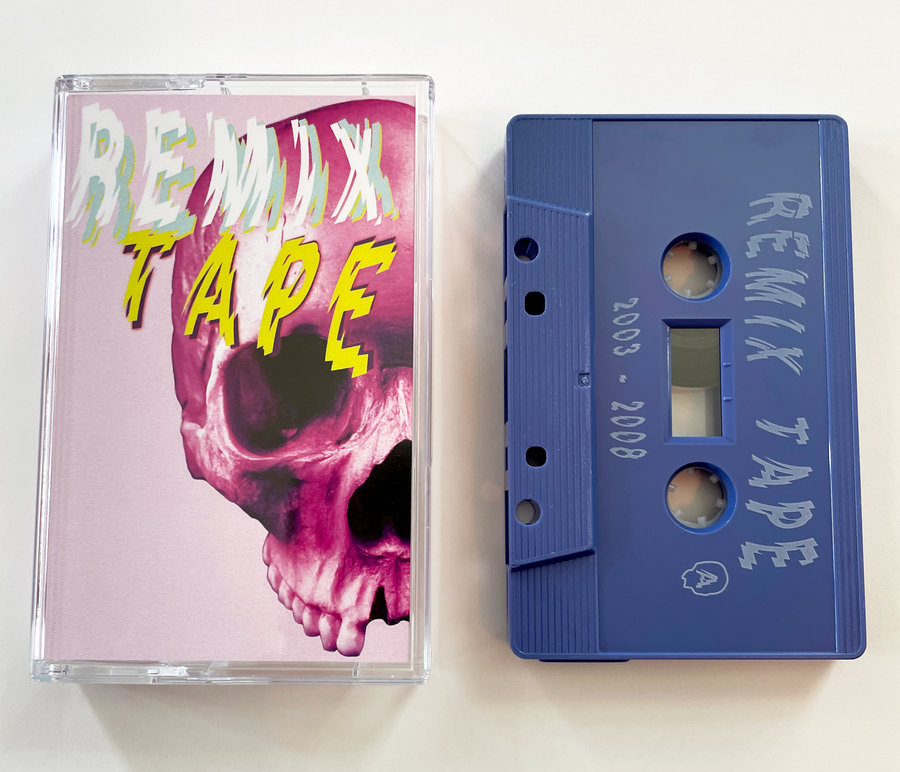
Oh yes! Remix Tape — also released as a limited cassette — compiles almost all of the remixes I made between 2003 and 2008. I left off an embarrassing one unknowingly done at the wrong speed for Miho Hatori, but most everything else that wasn't already stolen for another one of my releases made the cut.
A lot of energy went into these works and often pulled me away from my own material, so in hindsight this collection feels like a lost album.
What can we expect from you next? Is another solo album on the way at some point, or are you more interested in pursuing a film composer path right now?
A little bit of both to be honest. Life has constantly pulled me in different directions, and I have always gone towards what feels best. I am finishing a sound mix on a short documentary right now, and am eager to get back to work on my next album. I will say that I've become a lot more intimately involved with the art around my music lately, so I aim to continue more of a multi-disciplinary approach to any and all of this.
Let's say someone has never heard your music before. What are five tracks that best represent the range of your work as both a solo and collaborative artist, and why?
1. Caural, “Sorry, Underground Hip Hop Happened Ten Years Ago”
This exercise in OCD levels of organization and collage got me invited to a speaking engagement at Princeton (woo!), and was the craziest shit I have ever done. Like, ever. I took well over 400 samples of the word "yo" from across my rap albums, and spent a couple of months painstakingly building each Frankenstein measure of the song. All of my music as Caural involves intense sound editing, organization, and collage, but this piece is really a broken magnifying glass held to my process.
2. Caural, “Transition Suite Part 2: Papillon”
A tune I made with the dueling saxophones of Stuart Bogie and Colin Stetson for Mirrors For Eyes. I've always loved the way this turned out. It feels live, and was also one of the few times I used my own electric guitar on a Caural track.
3. Boy King Islands, “I Talk To The Wind”
I worked at a second record label in the early 2000s: Coup D'Etat (J-Live, Paul Barman, Rasco, etc.). My then boss, Howard Wulkan, asked me to watch his cat Pokey in his Manhattan duplex one weekend. He had a studio in the basement, and I cranked out the vocals, guitars and bass for this tune in a day; I recorded the drums back in Chicago, and Jason's wife Beth played the almost imperceptible Rhodes. It's one of my favorite (mostly) solo things I've done in the rock realm, and I'm embarrassed to admit that – until hearing King Crimson's original – I thought that Opus 3 wrote this song.
4. Caural, “Clear Vinyl”
Still one of my most streamed songs 20 years later, likely because of its inclusion in a skate video backing the street skate pioneer Rodney Mullen. I loved making this rock song out of almost entirely shoegaze samples. It snaps, if I do say so myself.
5. Caural, “Enneagram”
I still love drum & bass. When I was touring with Busdriver, I played a version of his song "Wormholes" in double-time with the famous Amen break (if you don't know it, it's basically the electric guitar to the rock music of jungle). Enneagram – a completely live, improvised drum & bass tune in this spirit – stands out for me as an example of the hardware sampler as a live instrument.
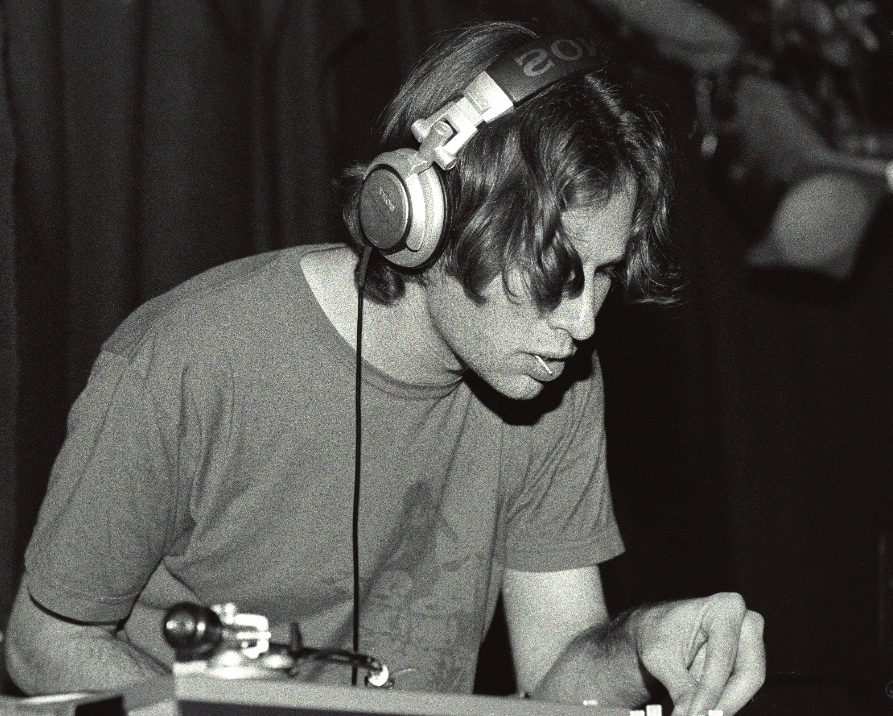
Finally, tell us about the “Holograms” mix you made for us. In a lot of ways, it feels like a reflection of everything we just discussed — a full-circle journey of someone who's been greatly impacted by music on a personal and creative level for decades….
In curating “Holograms” — almost all imaginary collaborations meant in some cases to be slightly absurd — I joined together main themes from my so-far two releases this year. The first — from the spirit of Dakou ("cut out") — was to highlight inspirations of mine: crate-dug gems I wanted to place within a framework of hip-hop. I have found there are such through lines connecting grooves across genres, and for someone to stumble across mangled cassettes with no context of their history or culture — as was the case in China that spawned the title Dakou — music presents itself as itself, leaving the listener to draw their own connections.
The second theme came from Remix Tape, and from that time in my musical life. Some of these tracks were on constant rotation in my early DJ sets, while others were ideas never brought to fruition — either by me, or in some cases by colleagues of mine. But in layering them with acapellas, I also wanted to give a nod to the mashup: an enormous fad of the time which was fun and endearing while simultaneously just kinda horrible. But in a positive light, I think of remixes themselves as holograms: the meshing of waves (in this case, sound) creating a version of the object impossible without the other.
Music is math, isn't it?
TRACKLISTING:1. We – Flutesque – Incursions In Illbient (Asphodel)
1. 1991 – High-End – High Tech High Life (Opal Tapes)
1. (Christian Ministry Truck Stop Tape Intro)
1. Miles Davis – Gingerbread Boy – Miles Smiles (Columbia)
1/2. Aaliyah – Rock The Boat (Acapella) – Aaliyah (Blackground Records)
2. GB – The Roman numeral 3 – Absence of Color Phase I & II (Sound In Color)
3. Dimlite – Last Repetitions Piece/Lorraine For The World – Cookie & Brownie EP 3 (Astrolab)
3. Beastie Boys – Body Movin' (Acapella) – Hello Nasty (Capitol)
3. (Excerpt from Dirty Thoughts – Documentary)
4. Slum Village – Look of Love – Fantastic Vol. 1 (Counterflow)
5. Dabrye – Hyped Up Plus Tax (Outputmessage Remix) – Payback (Ghostly)
6. Painted Cakes – Moving On – Painted Cakes (Self-Released)
7. Push Button Objects – 360 Degrees (Beatapella) – 360 Degrees Remixes (Chocolate Industries)
7. Clipse – Wamp Wamp (What It Do) (Acapella) – Wamp Wamp (What It Do) (Star Trak Entertainment)
7. Herbie Hancock – Sleeping Giant – Crossings (Warner Bros)
8. Ammoncontact – Let The Rhythm Mysticism – Dublab Presents: In The Loop 3 (Plug Research)
8. Ford & Lopatin featuring Tamaryn – Flying Dream (Acapella) – Snakes/Flying Dream (Mexican Summer)
9. Ramsey Lewis – My Love For You – Funky Serenity (Columbia)
9. Opus 3 – It's A Fine Day (Acapella) – It's A Fine Day (PWL International)
10. Kutmah – Warm Like The Sunshine – Warm Like The Sunshine (Poo-Bah Records)
11. Knxwledge – thedaysbefore – Buttrskotch (Leaving Records)
11. Stevie Wonder – Tuesday Heartbreak – Talking Book (Motown)
12. Danny Breaks – The Jellyfish – Another Dimension (Alphabet Zoo)
12. Missy Elliot – Get Ur Freak On (Acapella) – Get Ur Freak On (Elekrtra)
13. Collin Walcott – Prancing – Cloud Dance (ECM)
13. Nas – It Aint' Hard To Tell (Acapella) – It Ain't Hard To Tell (Columbia)
13. Kraftwerk – The Robots – Man Machine (Capitol)
14. Sea Level – Midnight Pass – Cats On The Coast (Capricorn Records)
14. Quincy Jones – Midnight Soul Patrol – I Heard That!! (A&M Records)
15. Diverse featuring Lyrics Born – Explosive (Caural Remix – Instrumental Version) – Remix Tape (2003 – 2008) (Prism92)
15. Mobb Deep – Shook Ones Pt. 2 (Acapella) – Shook Ones Pt. 2 (Loud Records)
16. (Excerpt from Busdriver live at Irving Plaza – unreleased)
16. John Klemmer – Poem Painter – Barefoot Ballet (ABC Records)
17. Caural – One Day It'll All Make Cents (unreleased)
18. Jean Luc-Ponty – Imaginary Voyage Part IV – Imaginary Voyage (Atlantic Records)
19. K-Kruz – Slip Away – Time EP (Organik Recordings)
19. Mos Def – Mathematics (Acapella) – Ms. Fat Booty / Mathematics (Rawkus Records)
20. Sweatson Klank – Not The Same – Collage Dropout (Self-Released)
21. Jeff Beck – The Golden Road – There And Back (Sony)
Eluvium Shares the StoriesBehind (Whirring Marvels In) Consensus Reality [ 26-May-23 4:40am ]Rather than let a debilitating level of arm and shoulder pain get in the way of his latest Eluvium LP, Matthew Cooper found a way to meld traditional melodies with electronic flourishes and ragged algorithms. Not to mention appearances by members of the American Contemporary Music Ensemble (better known as ACME), Golden Retriever and the Budapest Scoring Orchestra.
In the following exclusive feature, Cooper takes a long, in-depth look in the mirror and reveals the musical and conceptual roots of the entire record, from singing resonators to the eternal struggle between man and machine — something that’s hit new heights in recent years, for better or for worse….
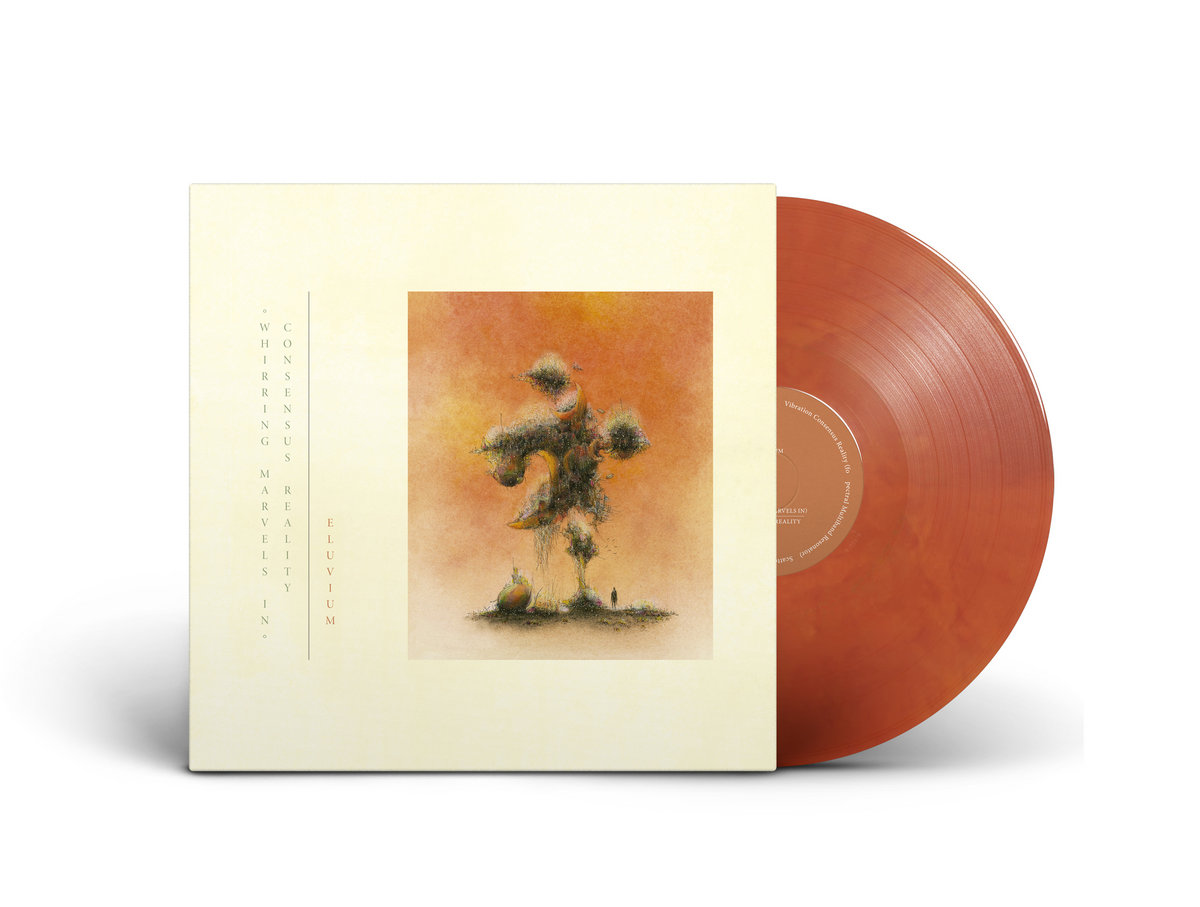 “Escapement”
An escapement is a mechanism in a timepiece that catches and releases at a set amount in order to mark time passing. I was attracted to employing this theme of the machinery that marks our personal slow march towards decay and considered the clock as an early form of robotics.
An escapement is also the term used for a mechanism in a piano that pulls the hammer back into place after it hits the string. Thematically, it was nice that the term also referenced the keyboard — at which so much of my writing is done.
Yet with this album, I would have to somewhat leave this method of writing behind in search of other forms of composition. Allowing myself to open up to more modern musical technology and compositional methods in order to navigate my own body showing its own signs of time…. Specifically the slow and frustrating healing of a shoulder injury.
“Swift Automatons”This music is meant to offer a snapshot of an ever-continuous speeding up of the automation and machinations of things from post-birth of the clock to now and beyond, the many mutations of the robotic, and the effect it has on us and perhaps our evolution. I like to think of it as a sort of "industrial revolution" theme.
Many layers of violin parts had to be recorded to get this piece to work which I reinforced with synths and pianos to get things as pointed and quickly shifting as possible. Ben Russell was kind enough to indulge trying to make it happen and I'm incredibly thankful for his patience and agility and energy.
"Vibration Consensus Reality(for Spectral Multiband Resonator)"
This was probably the first piece of music written for the album and perhaps the center from which everything else was built. The music was written freehand around the "singing" of a particular resonator I was working with at the time.
Ben Russell returns with the violin parts and Ben Shafer on horn duties. At the very end, you can hear the violinist catching his breath from the performance of the final passage. I'd cut it from the violin part and scooted it further down the recording to be deleted but ultimately forgotten to pull it out of the recording while mixing it.
When I heard it again it surprised me and I decided it conveyed something special and human and decided to keep it in. I half-joked with Ben about crediting him with "breathing" on the record, which he thought was a funny thing to be credited for.
It is quite possibly my favorite piece of music I've ever written. The resonator singing makes me think of the HAL9000 a little bit, but I consider the music around it to be very human and emotive, and in that way it feels like a gentle duet between human and machine.
"Scatterbrains"The title of this piece is meant to be suggestive of a mass inability to think straight brought on by an unending consumption of media and information. A miasma of varying thoughts that don't quite tie together in any sensible manner.
Its origins actually come from visits to a shelter of trees on the edge of a precipice that I visit regularly with my dog. There are eagles usually nesting there and the wind howls through it often. The wind is such a peaceful presence and I've thought of how it feels as though it takes my thoughts away and scatters them out across the land below, leaving me mindless and at rest.
The music is a mixture of these two considerations. Jonathan Sielaff was kind enough to perform the bass clarinet solo for this recording. He brought a beautiful touch to it.
"Phantasia Telephonics"The first half of this piece was written using somewhat traditional synthesizer and sequencer techniques and automation, and applying similar methods to the piano. The second half was written with a focus on the Make Noise René (named after René Descartes, a philosopher who is known for his "mind / body problem", which is reflected in the device's "Cartesian" mapping of a sequencer). The outgoing sequence was run through a shifting tape delay to create a reflection of itself which is scattered, shattered, and refracted.
By design, this is the only track on the album performed entirely by synthesized and virtual instrumentation. (There are no orchestral instruments implemented.) It might perhaps seem an odd thing to do (and may even be impossible to tell for many), but I wanted this to be a point in the album where reality becomes more disoriented (within its overarching technology / human narrative) and try to invite an internal discussion of what is real / not real, important / unimportant in a creative experience. And what that, in turn, meant to me (and possibly other listeners).
Choosing to keep it entirely synthesized instrumentation seemed like an interesting way to implement this. The track was also a compositional turning point for what methods were being employed in writing the album due to the physical constraints I had been experiencing with my left shoulder and arm. So in some ways, I think I wanted to pay homage to this.
I'm not sure if it was purely for self-satisfaction or some form of intentional personal bemusement, but initially I did not intend to tell anyone about this. Instilling purposeful quiet brokenness, perhaps?
“I'm naturally drawn towardsworking things until they tie together
in strange, unique ways”
I wanted this album to have a lot of conceptual and mechanical push and pull and blending between what we deem "technology" and what we would consider more "human". Or perhaps simply "natural", or even "reality". This piece is meant to act as a bit of a doorway towards this breaking point, narratively speaking. Whereas the tracks that came before are suggestive of a more rudimentary or primitive mechanical world (and our harnessing of those mechanics), this track leans towards things starting to be a bit more confusing.
At least, this is what I tell myself. I really don't know if any of this matters or translates to the listener. I just do it because I enjoy puzzling out things like this and searching for ways that make all these parts come together into a particular form and narrative. I'm naturally drawn towards working things until they tie together in strange, unique ways and complete a specific narrative. It probably makes things more complex than they need to be, but the mixture seems to stimulate a pleasing variety of thoughts.
 Photo by Jeannie Lynn Paske
"The Violet Light"
Photo by Jeannie Lynn Paske
"The Violet Light"
Ben Russell appears again here to beautifully translate the violin lines. I think this piece was, in part, originally a sketch for a film score I'd worked on. We'd ended up using something else instead. Then it kept popping back into my life, shuffling itself into randomized playlists on my computer. So I started messing with it and adding to it until it eventually morphed into this piece.
This title is a reference to the color of the sky in T.S. Eliot's The Waste Land. The "violet hour" is the sun setting and most would suggest a poetic representation of fading away. To me, this imagery inspired thoughts of not just an individual growing old, but also perhaps humanity itself.
"Void Manifest"The main musical theme from “Void Manifest” had been a work in progress for quite a while, but it just felt like something that no matter how much it was worked on just wasn't fitting into the musical or narrative world of this album. I couldn't figure out the missing thread until one day while out walking and listening I heard a secondary theme present itself to me in a repetitive syllabic motif.
It occurred to me this could be a voice. I began looking for language to use for the lyrical content and decided it would be interesting to algorithmically pull words from the years of notes of jumbled and scribbled down notions, ideas, theories and concepts that I had been considering while working on the album, which had become a bit of a maddening blend of sought after meanings, inspirations and various discourse.
Charlotte Mundy gracefully agreed to work with me to create the vocal recordings, which involved a mixture of singing and other noises. Her willingness and openness was a godsend, and her translation of the work made it truly come alive.
"Clockwork Fables"This track is a return to musical phrases originally presented in "Phantasia Telephonics". It was developed from meddling around with that theme and composed for player-piano. The title is a reference to my narrative suggestion from the beginning of the album being considered from a perspective of old stories from a long time ago… a melody for "old-timey stuff".
“Mass Lossless Interbeing”This piece originates from a sketch I created for a gallery installation. The interactive installation was a somewhat awkwardly held together and unique use of technology, presented in a manner to be interacted with one on one and allowing a space for the viewer to find tranquility within themselves.
It was later reconstructed for orchestra and electronics, and presented here as a representation of the wanting we tend to try to fulfill with technology. The title speaks to the concept of coding representing our connectedness with all things. A bit of a mixture of both purity in genuine emotion and tongue-in-cheek snake oil.
There is a tiny moment right at the end that I took from my sessions with Charlotte where she was making various vocal screams and screeches and noises and one of them sounded almost like an internet dial-up sound to me. It seemed like a nice touchstone to finish the piece.
“A Floating World Of Demons”I have no idea why but I’ve always pictured giant robotic creatures and people working in harmony during a harvest across acres of farmland. A strange blend of the paintings of Jean Giraud and Jakub Ró?alski. The title is meant to suggest a dream-like world of immeasurable beauty and wonder, slowly being destroyed by its inhabitants. It is also a nod to a Carl Sagan book.
"Endless Flower""Endless Flower" is essentially a paean for the universe, intertwined with the beckoning of the human spirit. The orchestra is blended with layers of synths all playing the same lines together. The piano notes are performing inhumanly fast.
If you listen carefully you can hear Charlotte and I both screaming at the end. The piece is inspired by a deep yearning to forever push forward in search of a source of our indescribable feelings that resonate within all of us. A glimpse of our harnessing of technology (with its inherent risks) in this search. A song for a never-ending love affair with life itself, no matter how strange.
Bikini Kill SlayPalace Theatre [ 24-Apr-23 2:44pm ]Words + Photos ANDREW PARKS
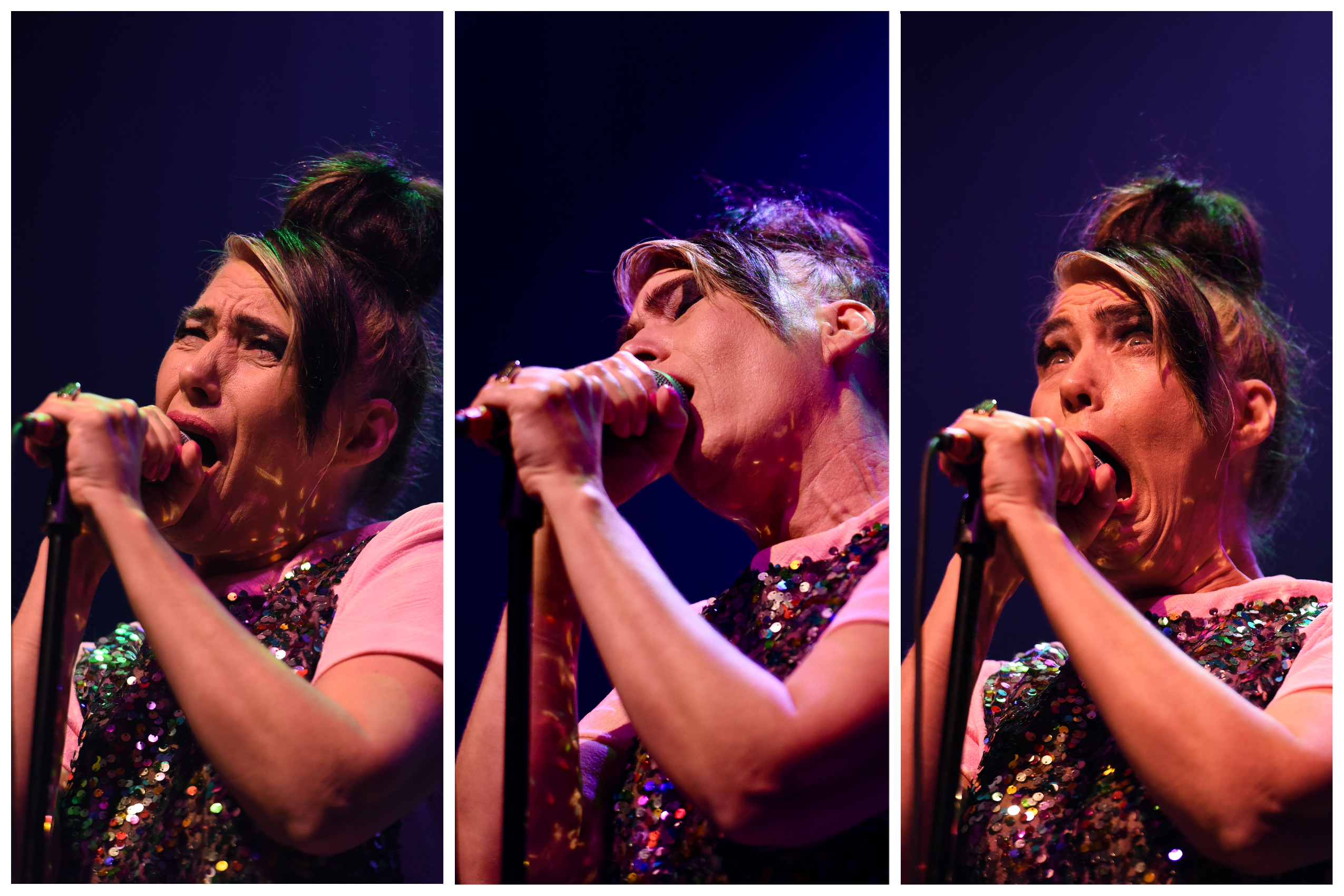
“Bikini Kill was very difficult,” Kathleen Hanna said in a self-titled interview a decade ago. “Not just because the four of us have very different personalities; the reception we got was very confusing. People either loved us or hated us in a way that bordered on violence.”
Elsewhere in the conversation, Hanna elaborated on how and why the band came to an abrupt end in 1997: “It started feeling like it was ramping up to the point that some crazy person was going to shoot me onstage. I felt like everybody expected me to be this über-confident feminist and write these anthems, but I didn't really know who I was anymore.”
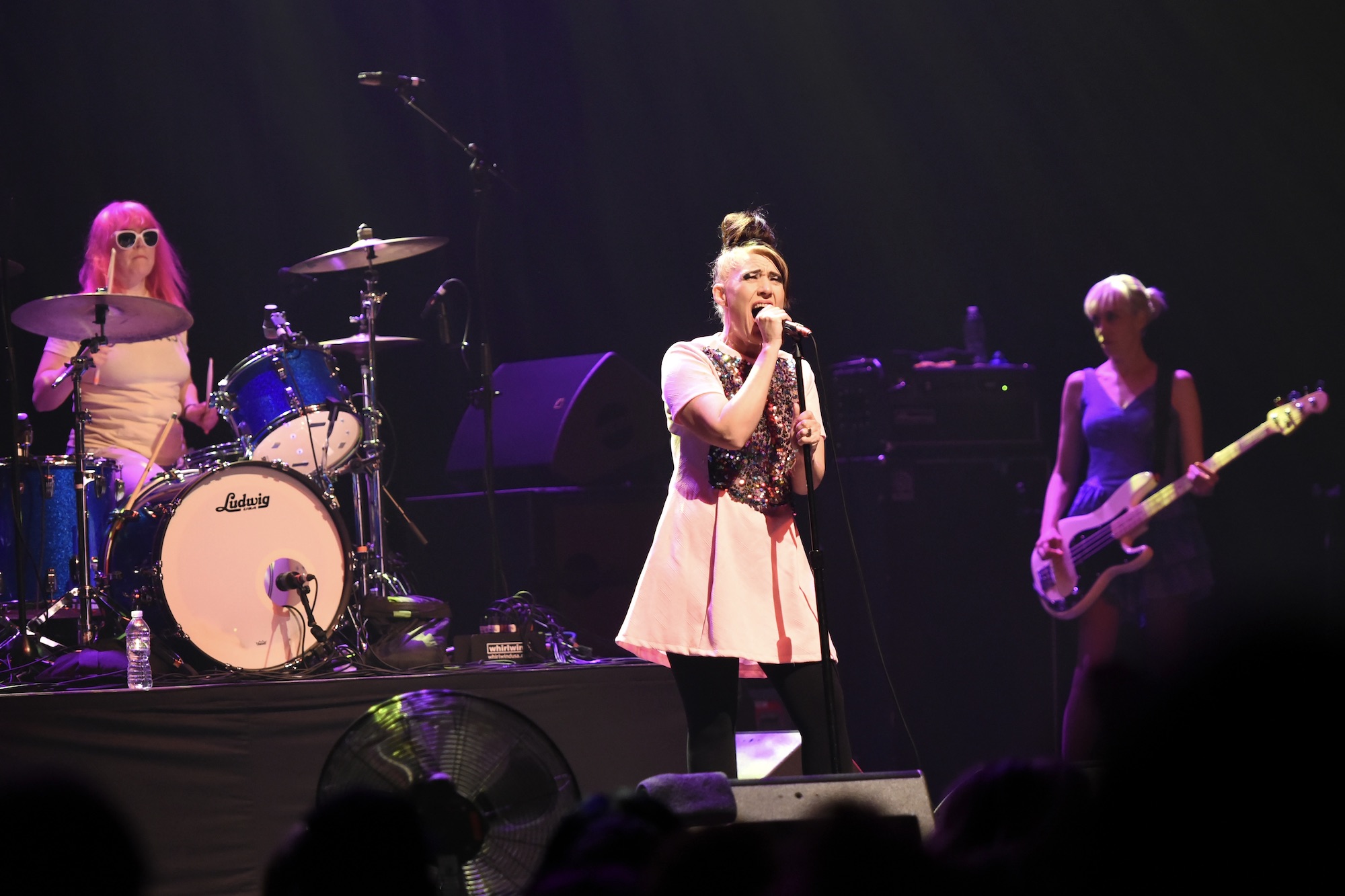
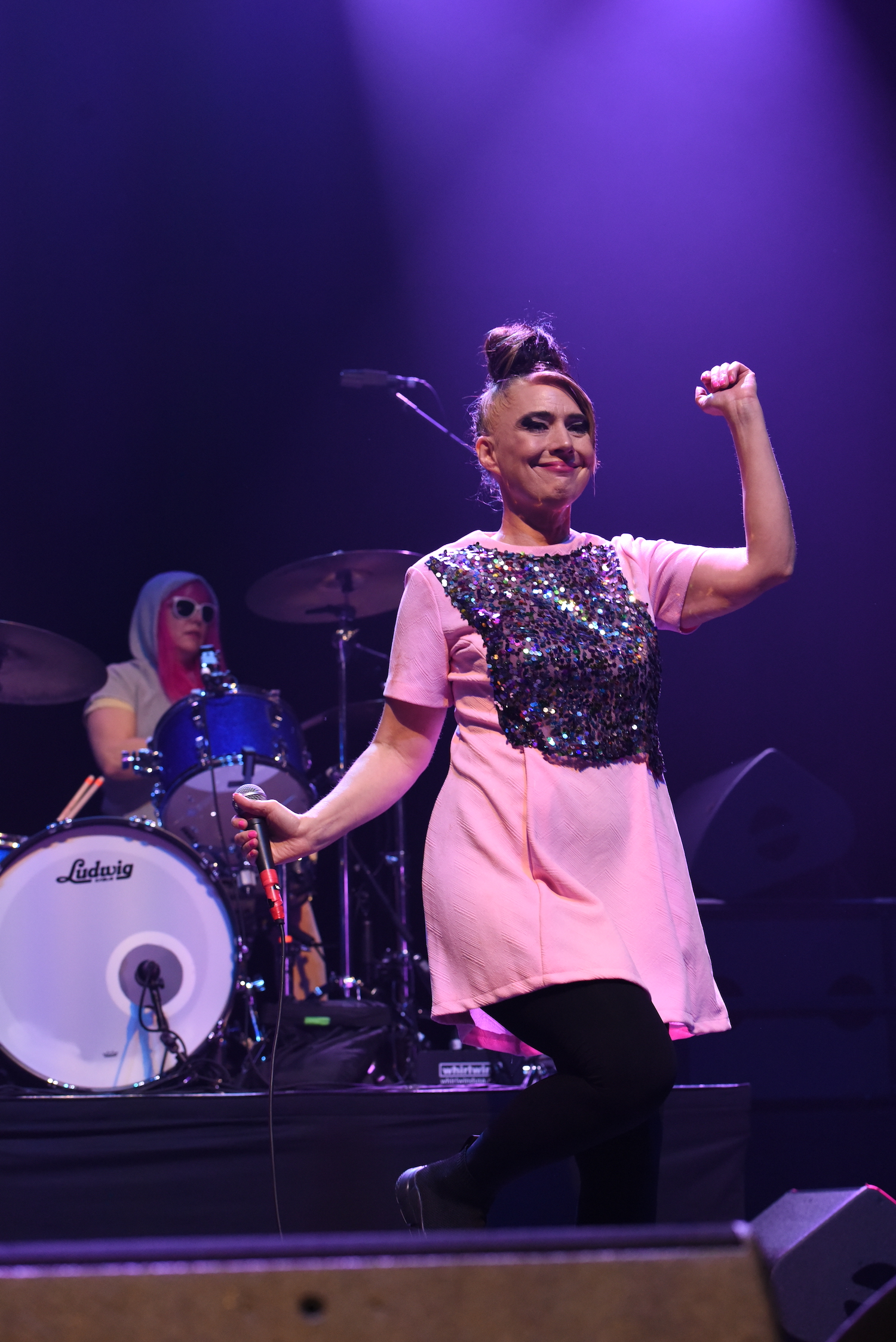
What a difference two decades has made — at least in terms of how the punk-rock pioneers are viewed by the general public. While they received a disturbing amount of death threats and backhanded compliments during their mid-’90s heyday, Bikini Kill are now revered as the high water mark of the riot grrrl movement they helped shape beginning with their self-released demo Revolution Girl Style Now. Its prickly halfway point (“This is Not a Test”) sounded like a lit match sandwiched in between a stormy “New Radio” and “Don’t Need You” at Palace Theatre last Thursday night. One that’s about to be tossed into a tall pile of dry wood dusted in gasoline, as thousands of fans step towards the flames.
Which makes perfect sense given the State of Things. As Hanna pointed out several times throughout the 90-minute show — their first in St. Paul since the Clinton administration — Bikini Kill’s reunion isn’t a nostalgia trip so much as a necessary call for us all to fight a world on fire together. Hanna and her instrument-swapping bandmates (co-founders Kathi Wilcox and Tobi Vail, along with touring guitarist Sara Landeau) don’t just sound like a well-oiled war machine these days. Their raw message of self-reliance and female empowerment in the face of a faltering patriarchy is as relevant as it’s ever been.
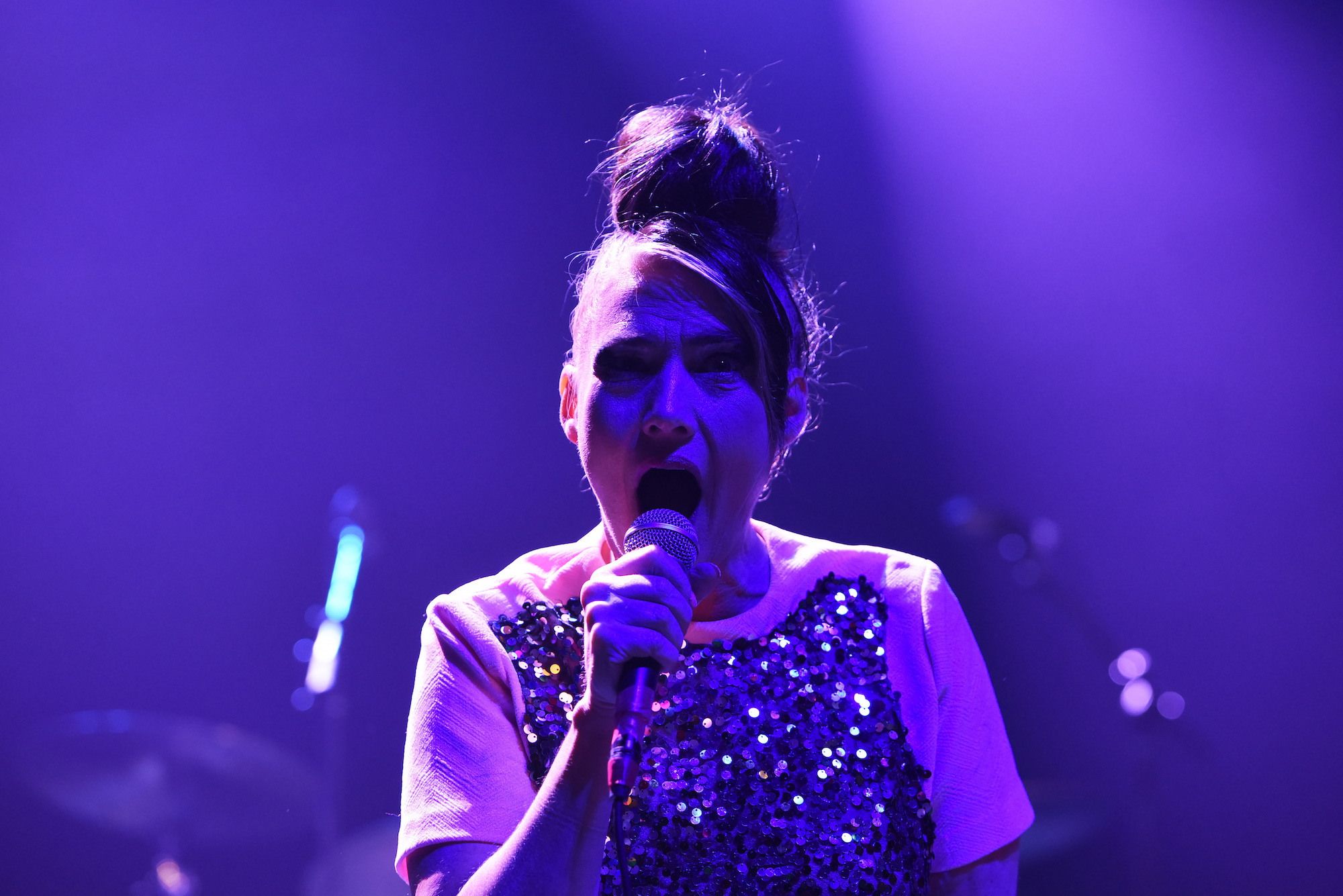
Which isn’t to say that Hanna and Vail — the band’s sometime lead singer, who stepped in to slay tracks like “I Hate Danger,” “Tell Me So” and “Hamster Baby” — tried to draw a dividing line between Us and Them with 25 songs that snake and snarl around hooks that get straight to the heart of the matter. If anything, Bikini Kill are determined to spark an intergenerational stand against all the forces that are wary of true progress.
That includes anyone who has written off Generation Z as lazy, entitled or lacking substance. Hanna was particularly incredulous while recalling that common refrain out loud, giving fans born after the band’s first rodeo credit for educating her on matters of intersectionality and demanding more from an establishment that continues to fail us in more ways than one.
In that way, this show’s warm and welcoming vibe proved we’re all rebel girls now — no matter what age, gender or group. Turns out we all need each other, after all.
New Radio
This Is Not a Test
Don’t Need You
Alien She
Feels Blind
I Hate Danger
In Accordance to Natural Law
Carnival
Resist Psychic Death
I Like Fucking
Capri Pants
Outta Me
For Only
DemiRep
Reject All American
Jigsaw Youth
Sugar
Rah! Rah! Replica
Hamster Baby
Tell Me So
Magnet
Lil’ Red
Suck My Left One
ENCORE:
Double Dare Ya
Rebel Girl
 patten Shares the SequelTo His Atomoxetine Mix [ 24-Apr-23 1:47pm ]
Considering how conceptual and one-of-a-kind Damien Roach’s latest patten LP is — Mirage FM is the first album made from text-to-audio AI samples — it shouldn’t come as a surprise that his Needle Exchange debut is a waking dream as well. We’re talking a wide-ranging set that somehow connects the dots between everything from Jesus Piece and Roy Davis Jr. to Ariana Grande and Actress.
Here’s what the London producer had to say about “TimeSwamp,” the long-awaited sequel to his mind-altering Dummy mix from a decade ago:
The second of an open series started in 2013. The first one went out 10 years ago via Dummy Magazine. I'm into the idea of an osmosis between things distilled to the exact point of contact. Like the lightest but most precise & radically transformative touch possible. Beware, all those who enter the TimeSwamp.
Solange – Cranes In The Sky (2016)
My Bloody Valentine – To Here Knows When (1991)
Burial – South London Boroughs (2016)
Fleetwood Mac – Everywhere (1987)
Drexciya – Bang Bang (1997)
Thomas Mapfumo – Shumba (1981)
Jesus Piece – Lucid (2018)
Roy Davis Junior – Gabriel (1996)
Flanafi – CP2YSA (follow it back) (2022)
JPEGMAFIA – DD Form 214 (2018)
Simon and Garfunkel – For Emily, Whenever I May Find Her (Live) (1969)
Diptera – Silver (2018)
Steve Reich – Tehillim I. Psalms 19:2-5 (1981)
George Benson – Give Me The Night (1980)
Death Grips – Bubbles Buried in This Jungle (2016)
Voice Actor – Blip (2022)
Tirzah (feat. Coby Sey) – Devotion (patten RE-EDIT [Unreleased]) (2020)
Brooke Candy – Cum (SOPHIE remix) (2019)
Cocteau Twins – Fifty-Fifty Clown (1990)
Messiaen – Éclairs sur l'au-delà; XI (1991)
Actress – Purple Splazsh (2010)
Ariana Grande – Shut Up (2020)
Kleenex – Nighttoad (1977)
Dif Juz – Love Insane (1985)
Philip Glass – Floe (1982)
Jeff Mills – Gamma Player (1995)
Jaylib – Champion Sound (2003)
Sade – Love Is Stronger Than Pride (1995)
Joe Jackson – Stepping Out (1982)
Autechre – V-PROC (2003)
Jai Paul – Vibin' (2019)
Mr. G – Daily Prayer (2012)
BADBADNOTGOOD – In Your Eyes (feat. Charlotte Day Wilson) (2016)
Frank Ocean – Little Demon (feat Skepta, Arca remix) (YouTube rip) (2019)
Huerco S. – Plonk VI (2022)
Egyptian Hip Hop – Strange Vale (2012)
Hani Rani – F Major (2020)
Chaka Khan – I Feel For You (1984)
Dimzy – Always Win (2018)
Helen – Motorcycle (2015)
Four Tet – And They All Look Broken Hearted (2003)
Jim O'Rourke – And I'm Singing (2001)
Tyler, The Creator – She (2011)
Arthur Russell – Lucky Cloud (1986)
Battles – Race Out (2007)
St. Vincent – The Party (2009)
Goldie – Inner City Life (1994)
Nirvana – Negative Creep (1989)
Grouper – Call Across Rooms (2014)
Oval – Bloc (1998)
Chynna – Practice (2017)
The xx – Fantasy (2009)
Stereolab – Cybele's Reverie (1996)
Kelis – Milkshake (2003)
Jane Birkin – Jane B (1969)
John Williams – The Fortress of Solitude (1978)
 Handsome BoyModeling SchoolReveal New Album,Music To Drink Martinis To [ 27-Feb-23 5:10am ]
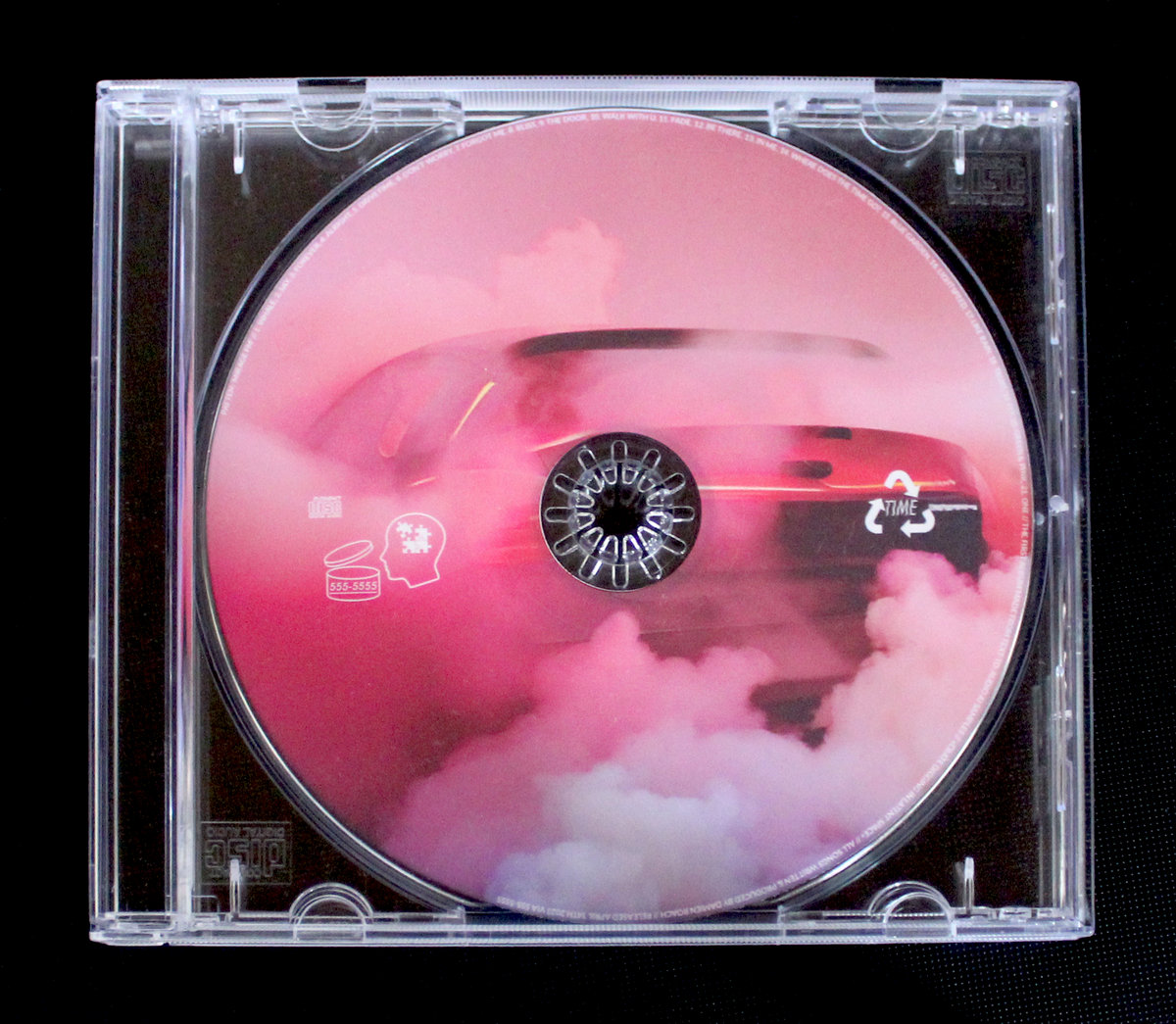
Handsome Boy Modeling School have quietly released their first batch of new material in nearly two decades. Now streaming via your favorite DSP and featuring guest spots from Justin Warfield and Emi Meyer, “How Does It Feel?” and “Case Study” are taken from Music To Drink Martinis To, a long overdue mini-LP underwritten by the Louisville brand Ford’s Gin.
No really; you can buy it alongside a bottle now.
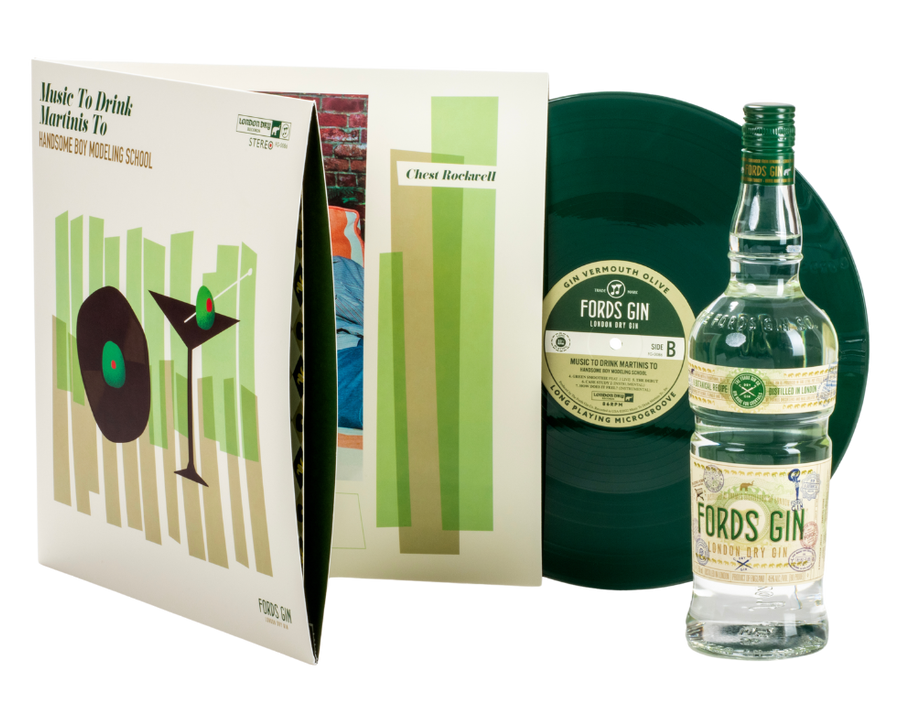
To be honest, the pairing makes perfect sense. Prince Paul and Dan the Automator’s tongue-in-cheek project has always had a man-about-town bent — a sound that was deeply sartorial years before men’s fashion was democratized by style blogs, street photographers and Instagram.
Or as Prince Paul said in a rare interview a few years ago, “We were wearing Euro fitted suits back in the '90s, when everybody else was wearing baggy clothes. Now everybody's wearing fitted suits! That's why we're thinking of bringing the school back. People gotta get back to the basics of handsomeness."
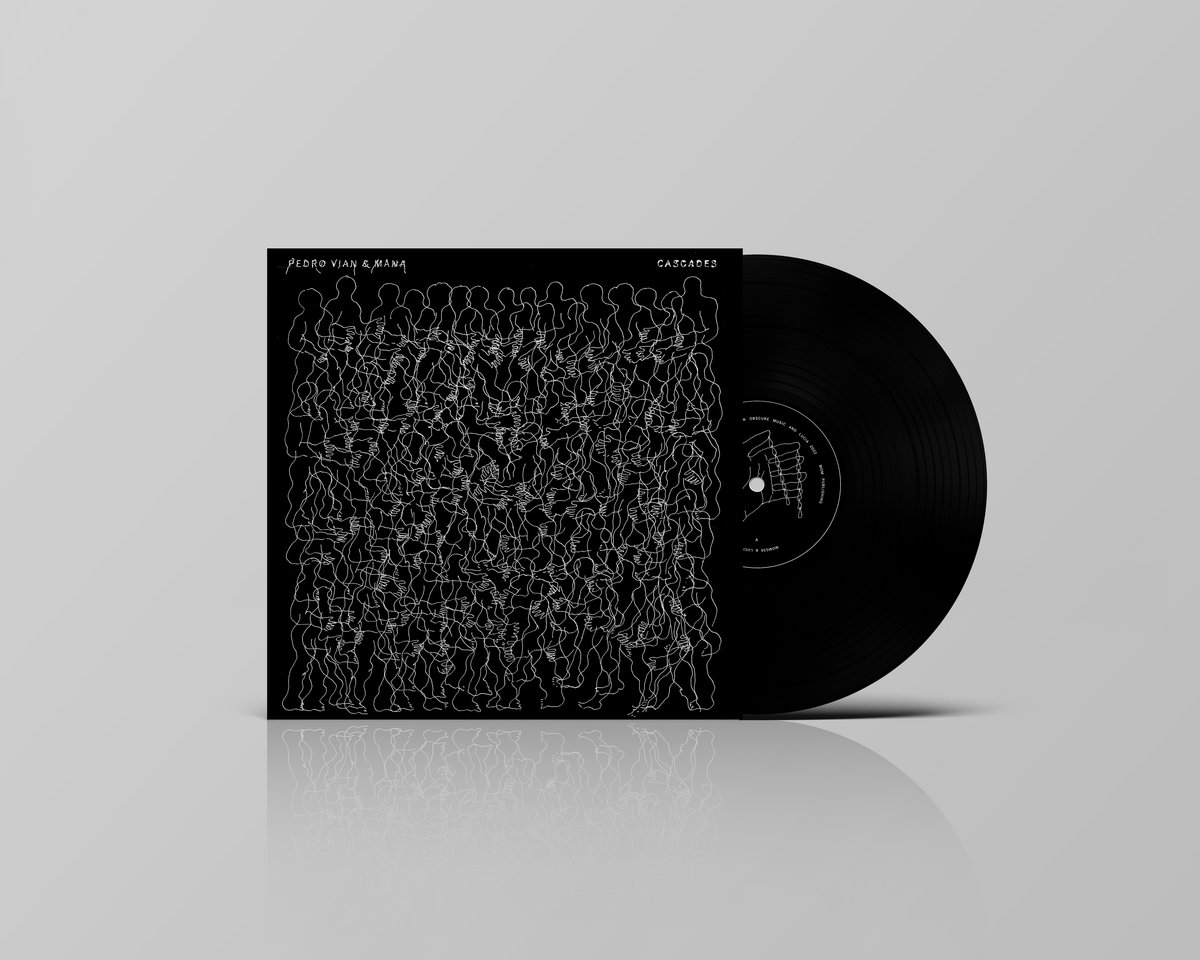
Pedro Vian & ManaCollide on Cascades,Experimental Set [ 06-Feb-23 5:59am ]Words + Mix PEDRO VIAN + MANA
Our mix reflects the same attitude we had during the recording of Cascades. We put our broad taste in music together in one constant flow of sensitiveness and melancholic hyperbole….
Sofie Birch & Antonina Nowacka – Behind The Hill
Holy Similaun – Mode Det Flios On
Kenji Kawai – Street Of Hallucination
Curd Duca – singing stone ( pythagorean )
Bellucci – Can Be scary
Riccardo Sinigaglia – Urbana 1987
Christos Chondropoulos – First Love Fereter
Silvia Kastel – Spoons
Mana – Eye To Eye
Laila Sakini – Fleur D'Oranger ( Rise )
Autumn Fair – Halloween In The Garden
Hiroshi Yoshimura – Water Music
Valentina Magaletti – A Queer Anthology of Drums
African Head Charge – Family doctoring
Benjamin Lew – Profondeurs des eaux des laques
Carmen Villain – CV x Actress
Characi – Jim O'Rourke 6 Seconds Over Sheffield Mix
Nuno Canavarro – BLU TERRA
Duma – Cape to Cairo
Pedro Vian and Mana recently dropped their first record on Modern Obscure Music / Lucia Dischi. Stream it in full below, and look out for a rare live appearance from the duo on March 23 in Berlin.
 Rival Consoles Makes Us aRestless Techno Mix [ 06-Feb-23 5:23am ]
Words + Mix RYAN LEE WEST
Photo DAN MEDHURST
With this mix, I wanted to explore the kind of techno that I love and listen to at home. Tracks which are slightly industrial and stark, yet addictive and upbeat.
I generally like techno to have proper urgency and momentum to it — with quite heavy synths — but I also love contrasts, so I included enough warmth and playfulness across different genres to keep things unpredictable and joyful.
Datasette – mechanical advantage
Randomer – Running dry
Schwefelgelb – wie viel haut
Skee Mask – Korarchaeota
Joy Orbison – 2m3 2U
Delay grounds – Marcelo's whistle
Thomas R – moon roof
Blawan – Justa
Modeselektor – mean
Schwefelgelb – einer macht den twist
Kangding Ray – superverde
Leon Vynehall – sugar slip (the lick) sheds sugarDUB remix
Tensal – back to Birmingham
Daphni – cherry
Delay grounds – wood building
Max William – resilience
Caterina Barbieri – At your gamut
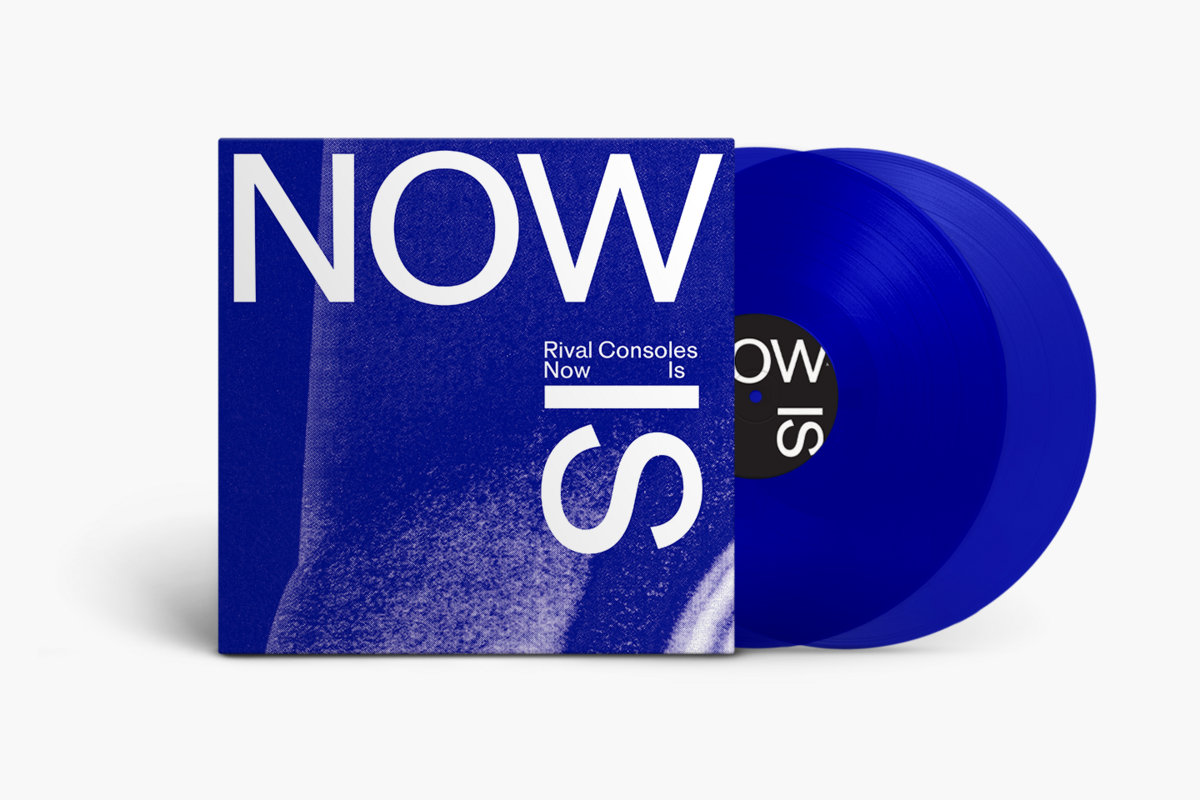
Rival Consoles’ latest Erased Tapes LP, ‘Now Is’, is streaming in full below along with several other key selections from the London producer’s back catalog.
 !K7 Shares a Short DocOn Theo Parrish'sDetroit Forward Mix [ 29-Nov-22 8:31pm ]
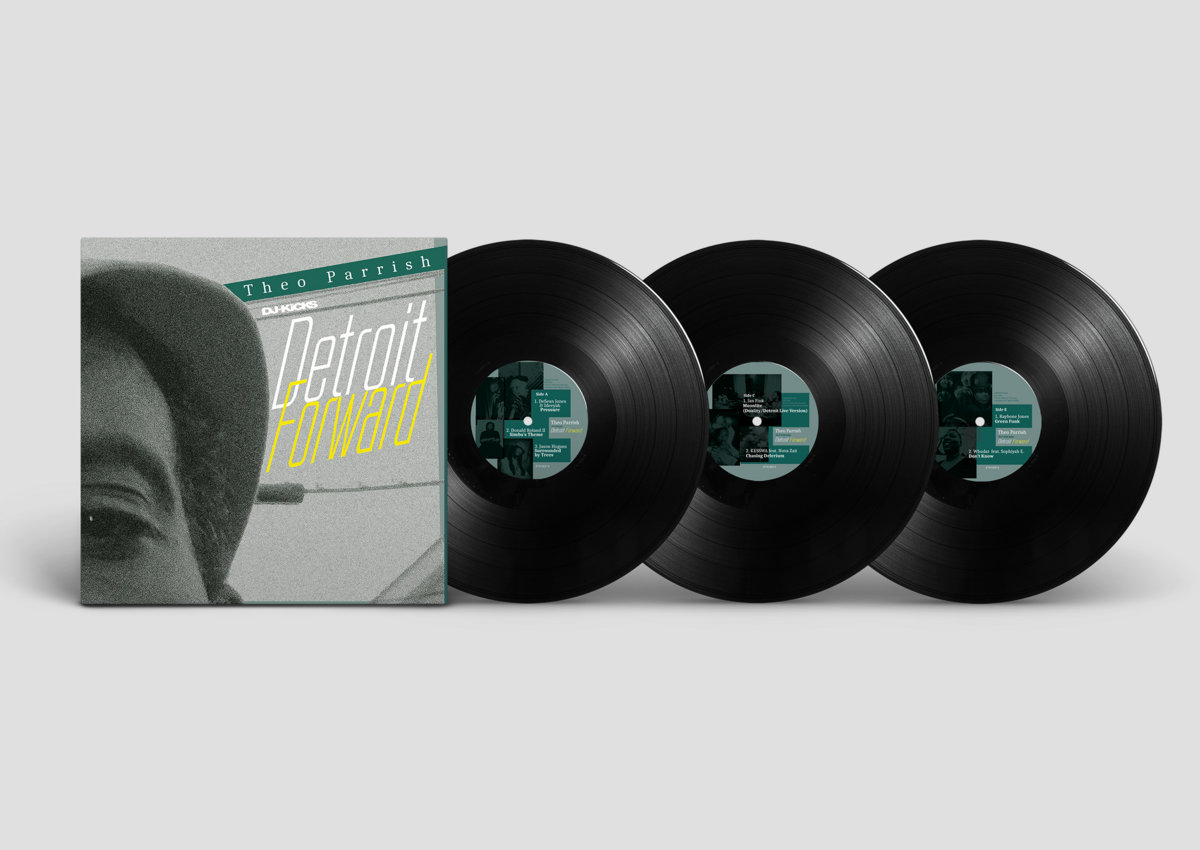
When Theo Parrish sat down to curate and sequence his contribution to !K7’s iconic DJ-Kicks series, he treated its 19 tracks as a fully invested survey of the city that’s as much a part of him as music itself.
“Detroit creates, but rarely imitates,” Parrish says in his track notes, “Why? We hear and see many from other places do that with what we originate. No need to follow. Get it straight.
He continues, “In the Great Lakes there's always more under the surface — more than what appears to penetrate the top layer of attention and recognition. What about those that defy tradition? Those that sidestep the inaccurate definitions often given from outside positions? This is that evidence. Enjoy.”
To help put his sprawling 90-minute set in perspective, here is a 15-minute film that shares the stories behind a few of its exclusive songs……
 FaltyDL On… The SongsThat Shaped Him, FromDJ Shadow to Frank Zappa [ 11-Nov-22 4:29pm ]
Soundtrack of Our Lives is a recurring feature where we ask our favorite artists to process their past via their favorite records. On deck this week: FaltyDL, the elusive producer who just released a doozy of a record (A Nurse to My Patience) that’s been described as his “biggest departure yet”….
The Record I Most AssociateWith 'A Nurse to My Patience'
I immersed myself in a few artists while recording this album. Talking Heads, The Cure, Brad Laner, Muzz…. To be honest I listened to folks who ended up featuring on my album. I also wrote Stay Close to Music (Transgressive, 2022) for Mykki [Blanco] simultaneously, so that may be the closest thing emotionally to my album for me.
Over the years, one thing has become apparent: I have zero idea when my muse will show up. The best I can do is listen to a lot of music and hope to get inspired.
The Record I RightfullyJudged By Its Cover
Headless Heroes of the Apocalypse (Atlantic, 1971) by Gene McDaniels. I bought this album first on CD at Cutlers Music in downtown New Haven, where I am from. They didn't have any ‘listening stations’, so it was a purchase purely because of the cover and the name. I knew this album had a power to it just by looking at it.
I later came to find out its status as a holy grail of samples for hip-hop. You will just put a track on and go, ‘That's from this song?!’ And Gene's attitude toward sampling was elevated. He loved being sampled and repurposed. Very rare for his generation.
The Record That Made MeWant to Be a Musician
Frank Zappa’s Freak Out! (Verve, 1966). I don't think I understood the record or even liked it very much, but it sure impressed my dad. When my dad, a psychiatrist, would put on a record and look so passionately astounded by the music, it was pretty clear how much he respected musicians. If I could become a professional musician he might just be that proud of me.
Of course he would have liked whatever I did, but it was fuel for years. He wanted to be a movie critic and write poetry, but took the 'easy' route by becoming a doctor. What? I fully understand how difficult it is to be a full-time musician and TBH, it's probably harder than going to school for a number of years.
The Record That Made MeWant to Become a Producer
Endtroducing (Mo’ Wax, 1996). I couldn't understand the drums on this album as a kid. I had no concept of chopping up breaks. I thought DJ Shadow was just an incredible drummer! I had to figure out what he was doing. I opened for him years later and handed him a thumb drive of tunes. Was very full circle.
The Record I've Bought ForFriends Because It's That Good
Amen Andrews vs Spac Hand Luke (Rephlex, 2006). I've bought four copies of this record and gifted three. I told Luke [Vibert] how much I liked it and he gave me all this unreleased Amen Andrews, some of which I ended up releasing on my label Blueberry Records!
I don't know what gifting an album looks like in 2022. No one I know plays records anymore. Maybe I just make a friend a playlist?
 The Record I Wish I'd Written
There are so many, but my head will explode if I allow myself to get that competitive. I have to realize that no one can do what anyone else does quite the same. And there is no correct way to do something and no right or wrong either. Work on a tune for 10 years or 10 minutes; it's still a unique object with loads of meaning. Plus version one always has the best energy!
The Record ThatNearly Drove Me to Tears
Listening back to Silver Jews makes me cry. With the hindsight of knowing what David Berman was going through, it’s just so sad. Their music sounds like a pure transfer of energy. Most of his lyrics are just him dissing himself. It's kind of wild.
I hope to be that transparent with my songwriting at some point, but keep it together mentally and stay healthy. There has to be a connection there.
The Record ThatDrove My Parents Crazy
Squarepusher’s Go Plastic (Warp, 2001) coincided with a new stereo in my childhood room. It broke my parents’ brains. Over and over again that record shared my house.
The Record I PlayAt Least Once a Week
While recording my album, and basically through the entire first year of the pandemic, I didn't stop listening to the debut album by a band called Muzz. I had collaborated with the singer Paul Banks on a track for my album, and he had just released this new project. It hit a chord in me I hadn't tickled in years. No one was going to clubs really so it fit perfectly in my morning routine in the studio. Light shining in, hot coffee, and this album got me through many months.
There are two or three lyrics on that album which send me into my feelings pretty hard. "Don't call me stupid." "Picking up work in the city." I dunno; it just really made me feel understood in some way? I think that's the best thing music can do. Just make you feel seen.
FURTHER LISTENING

