02-May-16
 Goodbye ibikelondon blog, hello Strategic Cities [ 02-May-16 1:02pm ]
After six years of incredible cycling experiences, ibikelondon blog is coming to a close. I want to highlight where I have been, where I am going, and to say thank you for coming along for the ride.
I began writing about riding in London in 2009. I hardly expected then ibikelondon would become such a big part of my life. My first post had just ten readers, and included a photo of me participating in a Skyride on a very rusty, very purple second-hand bike. Over 500 blog posts later and thankfully my wheels have improved - and so has London.
If you know me via Twitter you'll have seen clues that change is coming. Starting any new venture is daunting, but I've been preparing to make this move for a while. I worked hard on building this, I'm excited to share it with you, and I hope you'll be as excited using it as I have been creating it. @markbikeslondonwill shortly become @StrategicCities, and you'll be able to find me at my new website; strategic-cities.com
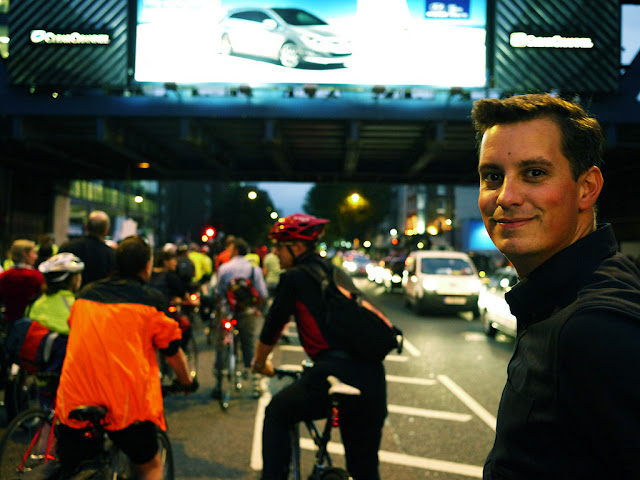 With some of you on Blackfriars Bridge in 2011.
I'll still be looking at how people travel, and how cities can become increasingly efficient and liveable, but my focus will be wider than just the bike. I've come to realise bikes are the "canary in the coal mine" of liveable cities, and there are many issues - childhood freedom, planning, obesity, transport - which are all part of the same urban matrix we call home, and which deserve further scrutiny.
StrategicCities will also see me start a new career. I'll soon be delivering training for urban professionals and communications analysis for city leaders. Why? I've been fortunate enough to work in the media from the inside - as well as influence it from the out - and my experience has shown me that the way we convey messages is more and more important in delivering difficult projects. You only need to look at the vociferous - and frequently hysterical - anti-bike lane sentiment we've experienced in London. Communicating well in a difficult environment is not a skill which comes naturally to most, but preparation goes a long way in helping to navigate that minefield. My first web-based training seminar; "Achieving Change In A Hostile Media Environment" takes place in May and registration is open. If you want to keep up to date about further events and training then you can sign up to the Strategic Citiesmailing list, or connect with me on LinkedIn.
ibikelondon has given me incredible opportunities. I've given evidence at Parliament, lectured at the National Conference for Urban Design at Oxford University and written for national newspapers about cycling and cities. I even appeared on Newsnight and Russian state radio. Blogging takes (a lot of) time, effort and patience, but I've had fantastic experiences by bicycle along the way as well; from riding through backstreets in Shanghai, to chasing the Tour de France through Belgium in a helicopter. More amazing things than I could ever have imagined when I wrote that first post back in 2009.
There have been tough times, too. I've stood beside dangerous junctions as grieving relatives mark the site of a loved one's death too many times. Too often I've written about poorly designed, poorly driven lorries in London, and the fatal problems they present. And too often I've written how someone has died on an appallingly designed stretch of road which authorities had been warned in advance would lead to fatalities.
Two terrible weeks in 2013 saw six London cyclists lose their lives in rapid succession on our roads. Those missing riders marked a shadow for a long time afterwards, when the bus seemed more appealing than the bike, and more likely to deliver me to work alive.
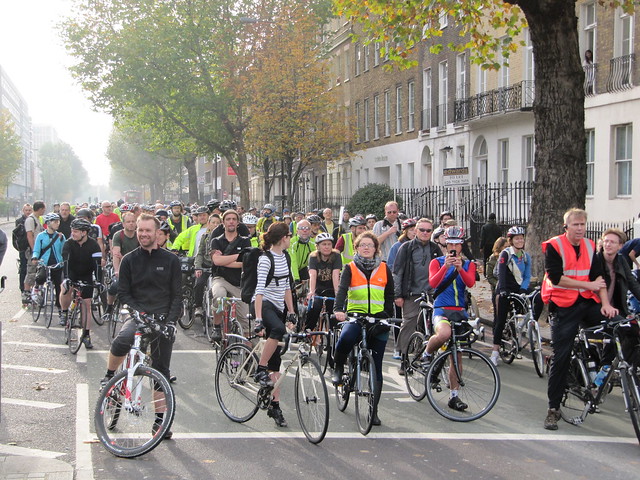 The "Tour du Danger" around London's 10 most dangerous junctions for cyclists. Here the ride is seen outside TfL HQ on Blackfriars Rd - now the site of the north / south cycle superhighway.
London's anger at those deaths, and others, helped to spur our cycling community on. This helped to achieve genuine political commitment and action from Mayor Boris Johnson. Protests on Blackfriars Bridge and around dangerous junctions lead to really meaningful change. Hours of meetings with politicians and their advisors helped to guide policy and new street designs. But it should never have taken so many deaths for this process to start.
Now we're seeing the result of that commitment with hard-won bike tracks and re-designed junctions appearing across London, most contentiously along the Embankment. Credit where credit is due; the North / South and East / West Cycle Superhighways is going to change the way we cycle in the city, and for good.
But resistance was ferocious, well-organised and - in the case of the taxi lobby and CanaryWharf Group - incredibly well-funded. Those same opposing forces are still out there, making their backwards-thinking grievances an issue for the next Mayor of London.
People who want a liveable London must remain focused (and angry), and Mayors must not be afraid to be bold. Do not underestimate the change that committed citizens together with committed leaders can bring about.
I recommend you to the London Cycling Campaign and their Sign4Cycling Mayoral target, and to my fellow bike blogger Danny, at Cyclists In The City, who so often has been "a partner in crime" in campaigning escapades.
So it's goodbye ibikelondon blog, and hello to exciting, new Strategic Cities. Through the years what has often kept me going have been the wonderful interactions - both online and off - with people like you who have read my words here. Thank you. I hope you'll come with me on my new adventure, and that there are many safe and wonderful bike rides ahead for us both.
Share
23-Sep-15
Cyclists are out of control! (And why that's okay) [ 23-Sep-15 7:48am ]
This compelling animation by Lucas Brailsford (whereislucas.com) looks at the high level of "non conformist behaviour" among cyclists in the Netherlands. It's not the sort of narrative you'll usually hear from cycling campaigners - it is hard to be persuasive with Governments and decision-makers if you're also prepared to admit that the people you're championing regularly jump red lights, ride home drunk or generally behave 'badly'.
There's a concept in the Dutch legal system of tolerating lightly illegal behaviour, or changing the framework so that it is no longer illegal. Dutch policy famously allows euthanasia, has legalised prostitution and the use of marijuana, and was the first country in the world to introduce gay marriage. The pragmatic approach seems to be "tolerate things, rather than prohibit them, force them underground and loose control."
When a cyclist barreling down the pavement in the dark nearly knocks you over this pragmatic approach to tolerance might seem frustrating. Likewise if a prostitute sets up (knocking) shop next door. There's no doubt that on an individual level these things could be highly frustrating, or even dangerous, but collectively society just doesn't see it as such a big deal.
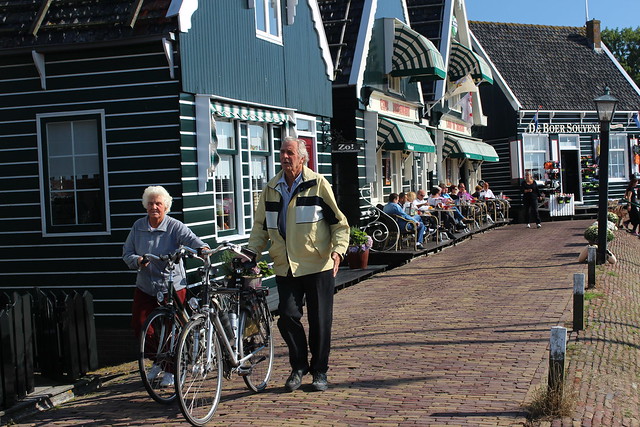
Criminal tearaways, no doubt about it...
But this concept of 'turning a blind eye' is not as foreign as we might think. Watching Lucas' video from an emerging cycling culture is a real eye-opener because the non conformist behaviour of some cyclists seems a bit wild. But if a similar video was made here, about our prevalent transport users, you'd find the same. Non conformist behaviour among motorists includes speeding, parking illegally, driving drunk, riding without insurance and knocking down other road users. You don't believe that as many people in cars flout the law as regularly as cyclists ride drunk in Amsterdam? Just try driving around your local town without once exceeding the speed limit and see how your fellow road users like it..
There's no doubt in my mind that good behaviour helps to encourage a literally civil society. But in terms of fixing things, society only tries to resolve the problems it identifies as being a problem. The cyclists of Amsterdam might seem to us to be a bit out of control, but when it comes to non-conformist behaviour I know which sort I'd prefer any day...
Share |
14-Sep-15
London has been changing over the summer. Whilst the city was on holiday, Transport for London's contractors have been out in force building bike infrastructure on a remarkable scale. Boris Johnson confirmed he would go ahead with his new Cycle Superhighway plans in January of this year, and now we're seeing the first results on the road.

Big construction projects inevitably cause short-term congestion whilst underway, but it is worth remembering the astonishing level of support for the new Cycle Superhighways and the long-term gain they'll bring. The nine-week public consultation on the plans saw an overwhelming 21,500 responses from individuals and business organisations, with 84% in overall support of the plans. A YouGov opinion poll taken during the consultation found 73% of Londoners supported the Cycle Superhighways, even if it meant taking a lane of traffic away. Over 160 major employers, including Deloitte, Coca Cola, Unilever and others came out in support of the East / West Cycle Superhighway which is currently being built on the Embankment.
A quick ride up the finished section of the East / West Cycle Superhighway along the Embankment, courtesy of @CycleGaz
There has been opposition, of course, namely from the old guard of the taxi lobby (hello, LTDA, you scoundrels!) so much of which has been thinly-veiled anti-cycling sentiment. Construction of the Crossrail train project has seen entire streets closed off in central London for years (as opposed to just months), but no one seems to be complaining about that...
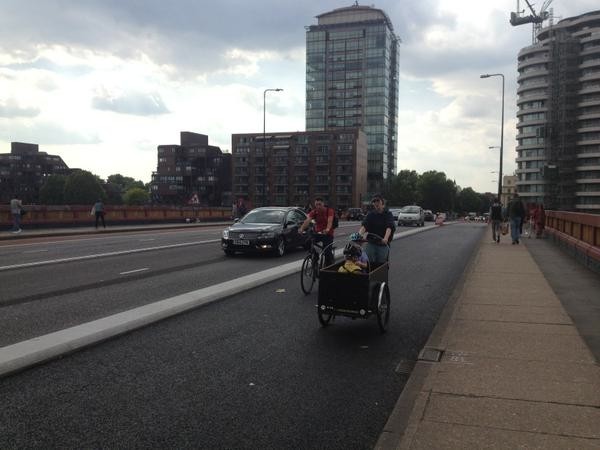
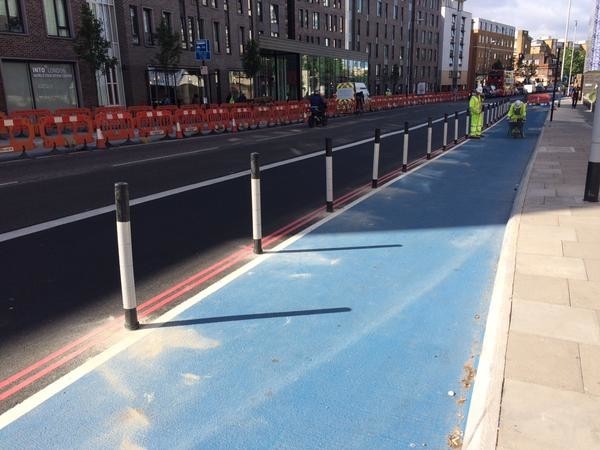
Vauxhall Bridge (2 way track) via @AsEasyAsRiding and segregation wands on the Whitechapel Rd (apologies to whoever I saved this photo from, I can't remember who it was!)
The changes afoot are not just along the route of the East / West Cycle Superhighway. At Oval, CS5 is being upgraded to provide full segregation, including around the terrifying Vauxhall Gyratory and over Vauxhall Bridge. In East London the killer CS2 is also getting an upgrade, with full or semi-segregation being introduced on a route that was previously literally just dirty blue paint and a lot of wishful thinking.
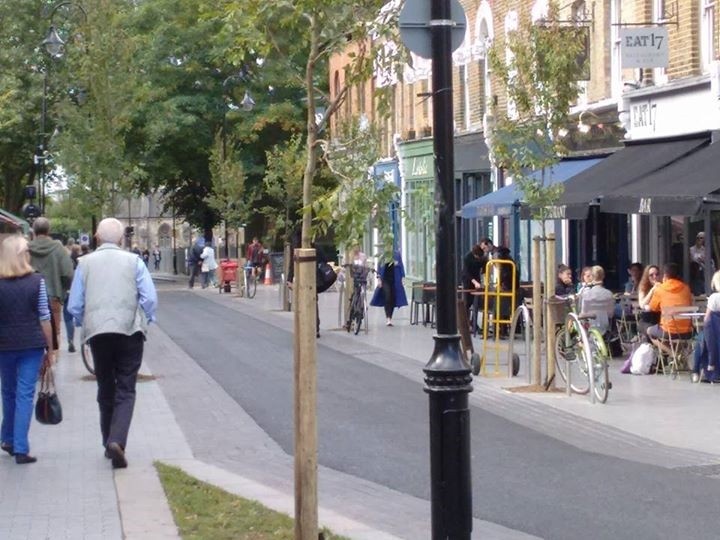
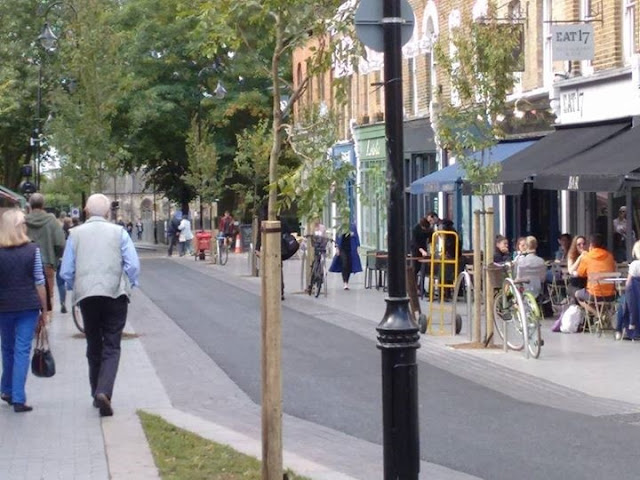 Newly Hollandised Waltham Forest village! Just look at all that anti-driving economic activity going on(!)
Cycle tracks alone can't change a city in to a bike riding paradise. You also need balanced residential zones where local streets are set free from the tyranny of rat running and speeding traffic. The Waltham Forest Mini Holland is just such a project and is now beginning to take shape - but only because of the diligent work of local residents in the face of vociferous NIMBYs who wish to retain their right to drive 150metres to the local shops... There's a street party on Orford Rd today (Monday) from 3PM to celebrate the completion of the first stage of the project, if you're in the area.
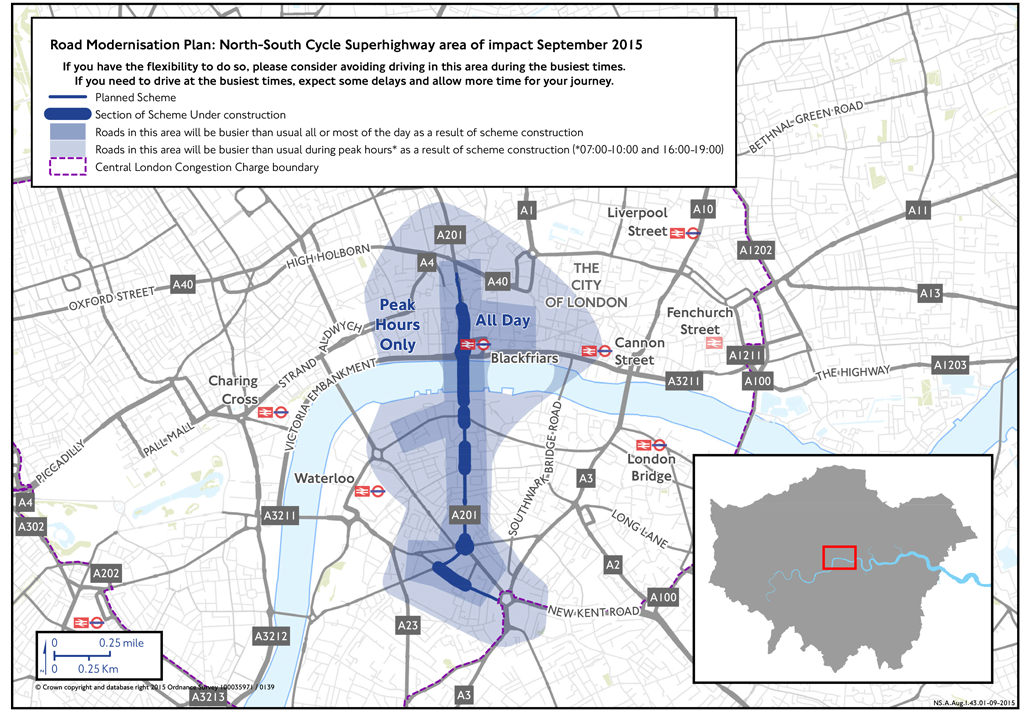
As the London Cycling Campaign rightly point out, there are growing pains which need to be resolved in some places, and that's to be expected with innovation and change. Meanwhile, progress presses ahead with construction of the North / South Cycle Superhighway in central London chalked up to start in autumn (check here for details)
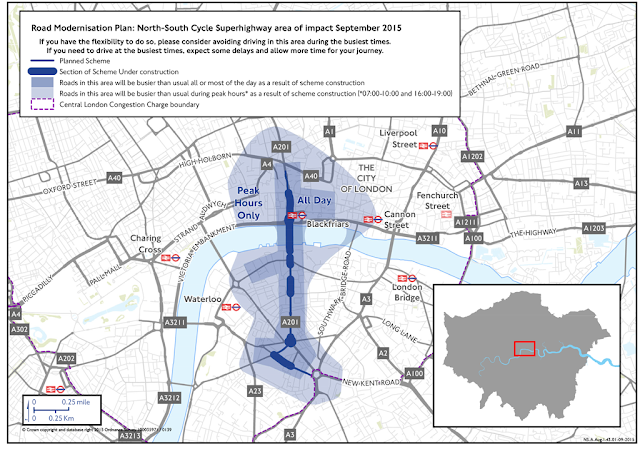
But with summer almost over and the city's streets transformed whilst everyone has been away, the pace of change seems unstoppable. The old "blue paint and optimism" superhighways - despite their very obvious limitations - still saw a leap in rider numbers of a minimum of 25%. When these new safe and separated routes open to the public we'll see a torrent, a deluge, a flood of new riders using them, and it's going to change London completely!
Share |
09-Sep-15
Get ready for racing on Regent's Street as a new Tour of Britain route comes to London! [ 09-Sep-15 8:30am ]
It's no secret, I love the Tour of Britain! I like the smaller scale of it compared to the Grand Tours of Europe, the opportunity for emerging riders to taste success, and of course the route through green and pleasant Great British Countryside.
But I've always felt the final stage - right here in London - has always been a bit of a let down. Yes, you get the finish line photo of racing in front of Buckingham Palace, but the rest of the day is spent riding up and down the Embankment and Upper Ground which makes for a dull stage that is not very exciting for spectators.
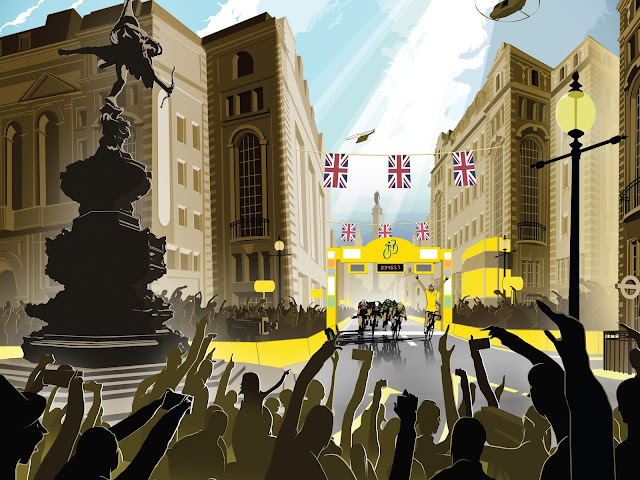
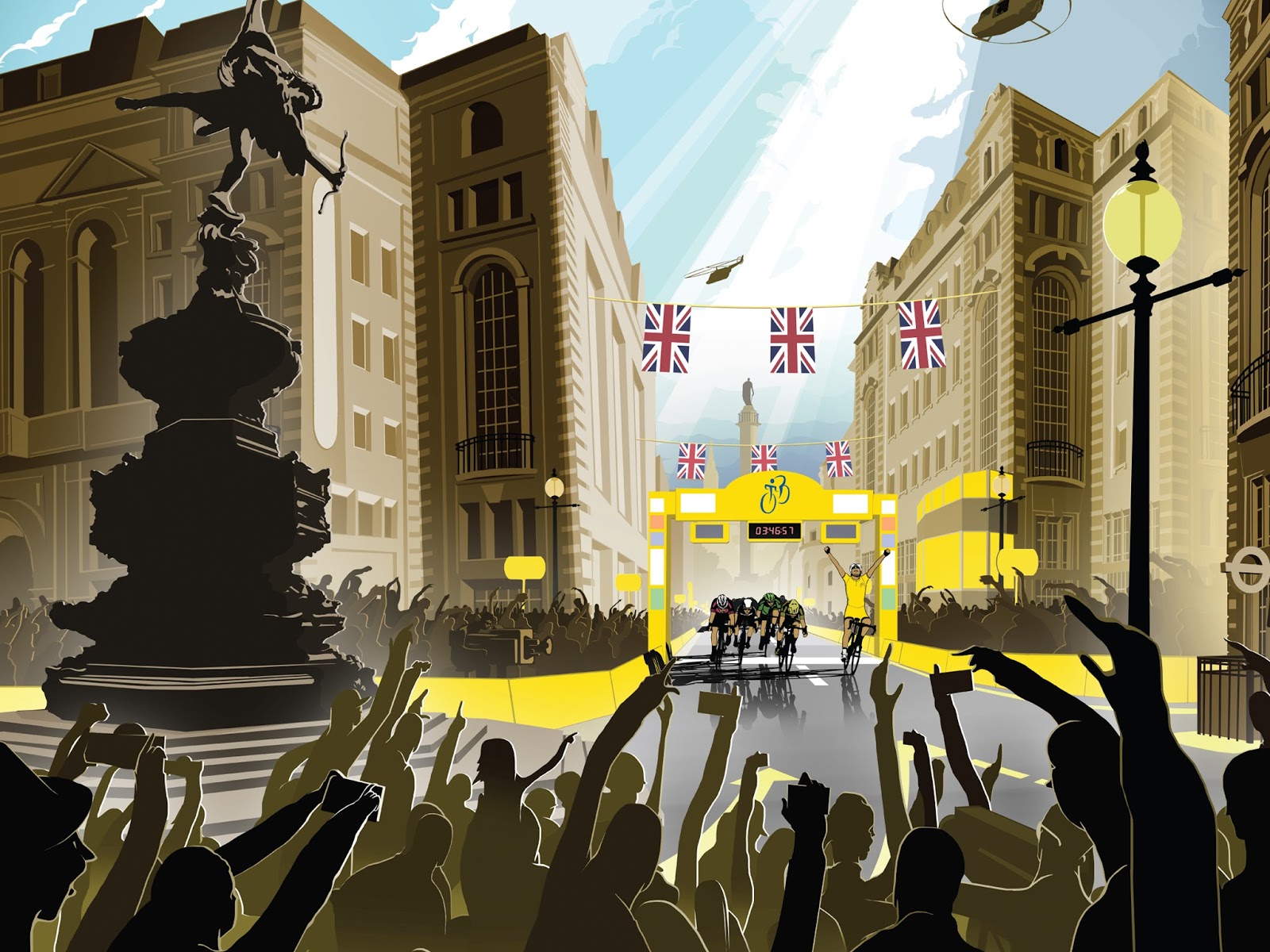
So I'm thrilled to see that this year's final stage has a new route in our beautiful capital - and it's all because of London's everyday cyclists! Because of construction work on the Embankment to build the new East / West Cycle Superhighway the Tour can't ride there. So in 2015 it is adopting a new route, which promises fast down-hills on Haymarket, tight corners around Trafalgar Square, and racing up and down magnificent Regent's Street which is, in my opinion, the most beautiful street in the world (ESPECIALLY when it is closed to traffic!)
The final stage comes to London this Sunday the 13th of September, heralding the end of a fantastic summer of cycle racing. The start and finish line is just south of Piccadilly Circus, and the riders will make a three-pointed loop of Regent's Street, Whitehall and the Strand, passing some of London's most famous buildings and attractions along the way. It is free to spectate and makes for a fun day out for all the family. The riders are fast, but you might even catch a glimpse of favourites Sir Bradley Wiggins, Mark Cavendish, Alex Dowsett and Andre Greipel, or even local boy Tao Geoghegan Hart from Hackney racing for British Cycling's development team.
Seeing as the stage is hosted and paid for by Transport for London (did anyone check the balance of the cycling budget recently?) Londoners might as well get their money's worth and have a nice day out of it...
All the details of the London stage can be found on the Aviva Tour of Britain website here. The beautiful picture of Piccadilly Circus featured in this post is by artist Will Barras and was specially commissioned by cycling website Rouleur, where it is available for purchase.
Share |
05-Aug-15
I'm spending the summer in the Netherlands, and have been learning so much about cycling in their cities. What has become clear to me is that Dutch cities are increasingly competing for a share of the visitors who come here to learn about the Netherland's cycling and planning culture. Utrecht, host of this year's Grand Depart, is not alone in this - note how this incredible video touting their cycling achievements is presented in English rather than Dutch and really tries to "show off" the city as a beautiful place to visit (which it is, I hasten to add).
I think this is an interesting phenomenon for two reasons; firstly the internet is being recognised by cities as an effective tool for reaching and inspiring many people around the world, getting them excited and clearly demonstrating exportable concepts. There's also a clear attempt here to attract high-spending tourists who are on learning-based trips. In short, visiting cities to find out how they work has become a mini industry of its own!
What do you think? Have you spent time visiting cities in order to learn and find out what you can do in your own city? Do videos like this make you want to visit somewhere more? Could pro-cycling messages like this help to make the case for cycling in the city where you live?
For more information on cycling in Utrecht, visit utrecht.nl/we-all-cycle/
Share |
28-Jul-15
Bike bans in pedestrian zones make no sense, but not why you think [ 28-Jul-15 8:30am ]
Last week I visited the Dutch city of Zwolle, the Netherlands City of Cycling in 2014. It's a pretty, historic city surrounded by countryside and has a pedestrianised heart. But what I saw there made me reconsider banning bicycles from pedestrian-only areas, but not for the reasons why you might think.
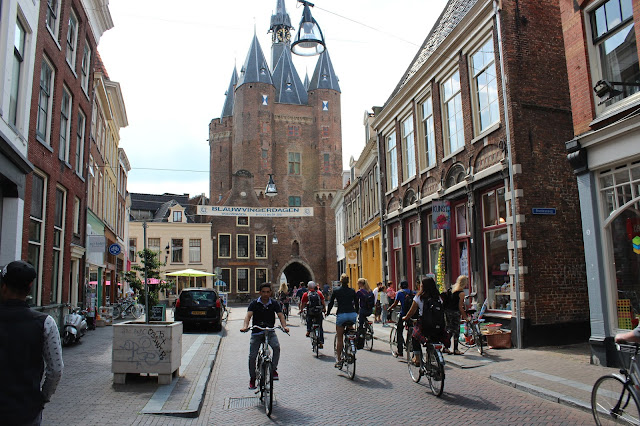 Many cities - both in the UK and elsewhere - have pedestrian zones where people using their feet to get around can relax in a safe environment where they don't need to be worried about being knocked down by speeding cyclists, or any other traffic for that matter. Where there are lots of people, especially around shops, this has always made sense to me.
The West Country town I grew up in had a large pedestrians-only shopping area, where you were expected to lock your bicycle on the perimeter and walk in. Even as a young man I remember being approached by security guards and given a telling off for pushing my bike through.
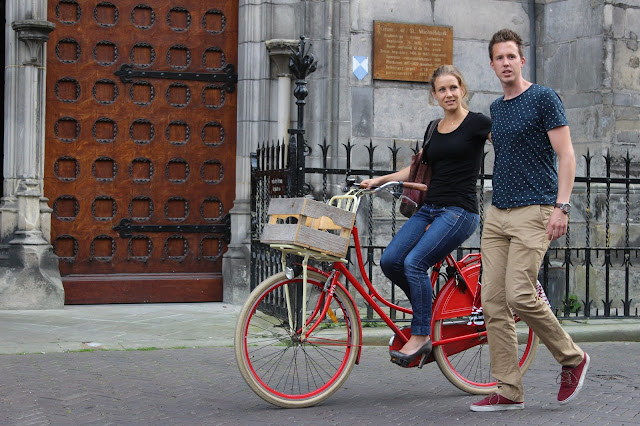
Things were different in Zwolle. I'm not sure if bikes were technically permitted but I saw many in the pedestrian area. A few were being slowly cycled to available bicycle parking, but the majority of them were being pushed. I saw two friends; one woman on a bike and one man on foot, making a journey together through the city centre (photographed, below) Would their journey have taken place if a strict bike plan was in place?
 An older woman was using her bicycle as a shopping trolley, filling her basket with goods she brought as she pushed the bike from store to store.
I remember hearing Danish urbanist Jan Gehl recount a story about his mother who, when she became too frail to cycle, would still walk with her bicycle - it was her dignified access to mobility, without having to revert to using a walking frame.
Pedestrians are important, and in pedestrian areas should always come first. As with much in life however the situation is not black and white; people have a complex approach to their own mobility. I wouldn't want to see cyclists riding at speed through shopping areas, or obstructing access with mountains of parked bicycles, but I realise there's more to bicycles in pedestrian-only areas than initially meets the eye.
P.S For more wild and reckless behaviour like using a bike in a pedestrianised area, see this film by the City of Zwolle which features their Bike Director getting a backie from various residents - something which landed London Mayor Boris Johnson in hot water this week and for which he was slammed by the CTC! (Film in Dutch only, sorry!)
Share |
20-Jul-15
Why there's more to successful cycle paths than just building cycle paths [ 20-Jul-15 8:30am ]
Now that the Tour de France has left, what else can Utrecht teach us about cycling? [ 09-Jul-15 8:00am ]
I'm on a summer trip, making a tour of Le Tour following the riders around Antwerp, Namur, and even riding with the peloton in a race car. It's been a brilliant journey and now I am on my last stage, returning to the scene of the Grand Depart, Utrecht in the Netherlands, to see what this cycling city looks like once the pro riders have passed by.
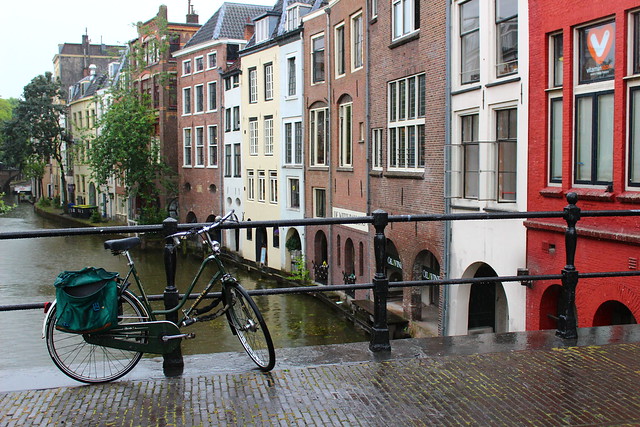
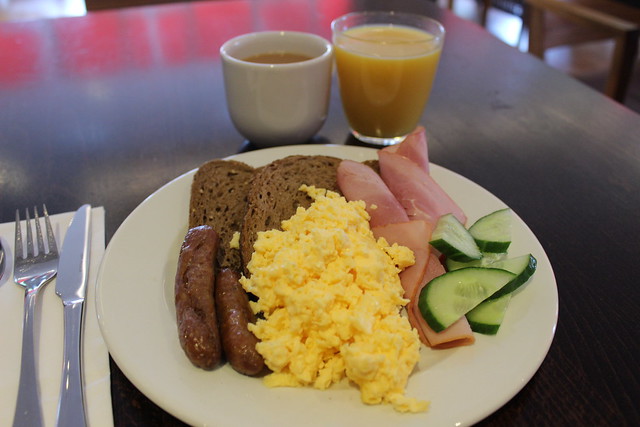
I've partnered with Ibis Hotels for this trip and all of the staff have been so friendly and helpful. Utrecht was the same; "Of course you can ride today", said the cheery receptionist "It takes more than a bit of rain to stop the Netherlands from rolling!" I looked out the window at the rain blowing in sideways and decided to fortify myself with the fantastic breakfast before I set off, grabbing the keys to a bicycle rented directly from the hotel. The Ibis in Utrecht is just a five minute ride in to the city centre along a pretty canal lined by windmills and old town houses - not a bad start to my day, despite the weather.
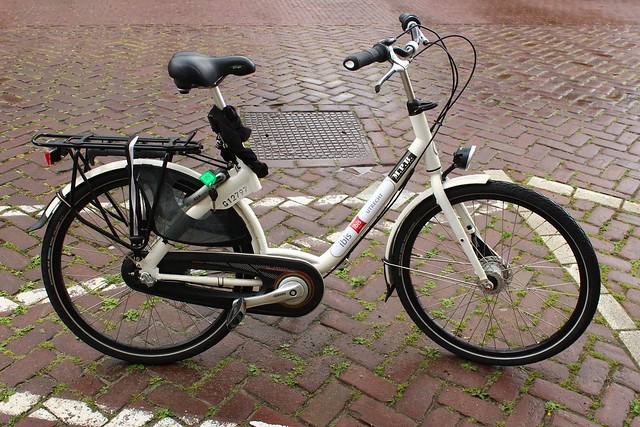
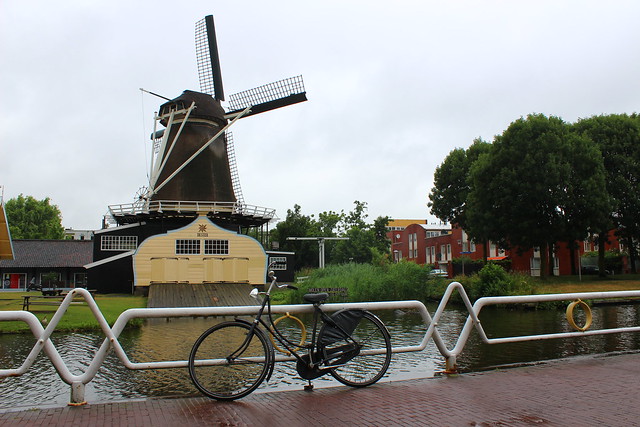
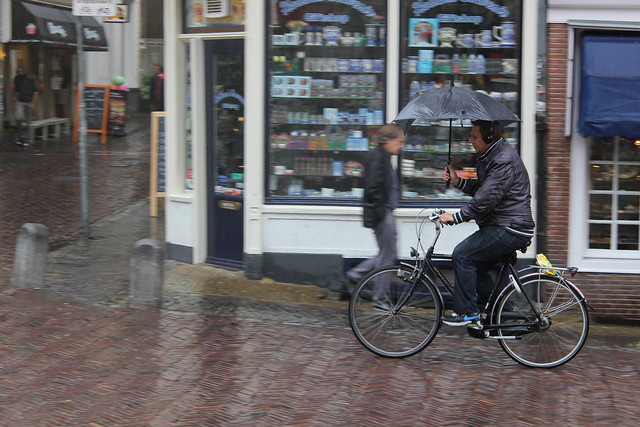
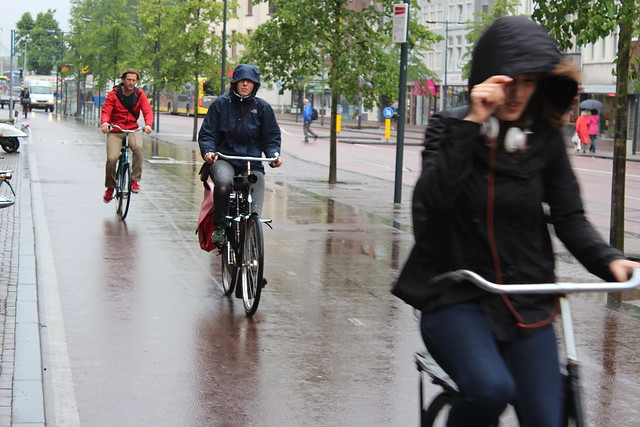
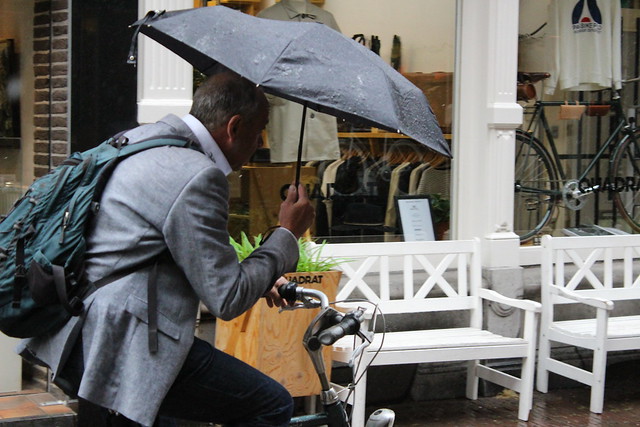
The clouds darkened and rain intensified, but this didn't seem to deter Dutch riders who cycled on regardless. Rain coats were pulled out of bags, hats were donned and umbrellas were lifted, making it immediately apparent I was in a totally different cycling situation to the UK. You could ride down the Tottenham Court Road in London at peak time in the rain whilst holding a big umbrella if you wanted to, of course, but I wouldn't recommend it. Here, things are different.
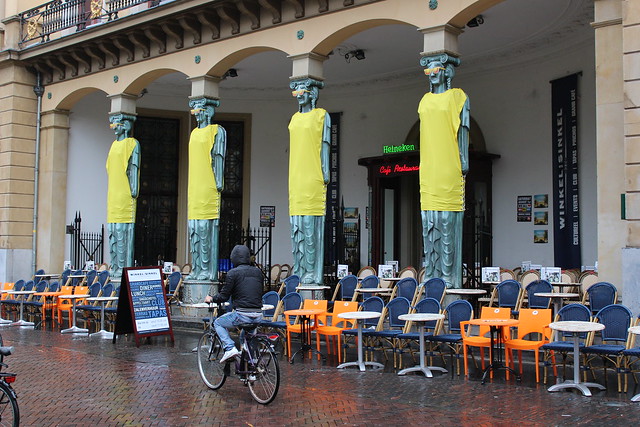
Hints that the Tour de France had recently been this way were everywhere. Shop windows were decorated with bicycles, flags were hung over every street and a statue of the city's most famous daughter - Miffy the bunny - had been put up in the tourism office. Naturally, she was riding her bicycle. The facade of the popular cafe Winkel van Sinkel was decked out in yellow jerseys, too.
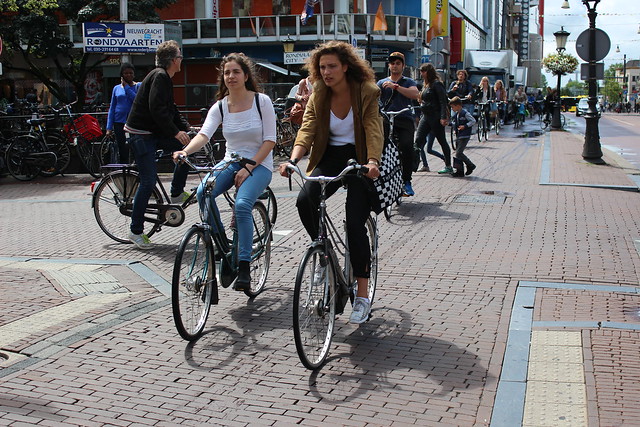
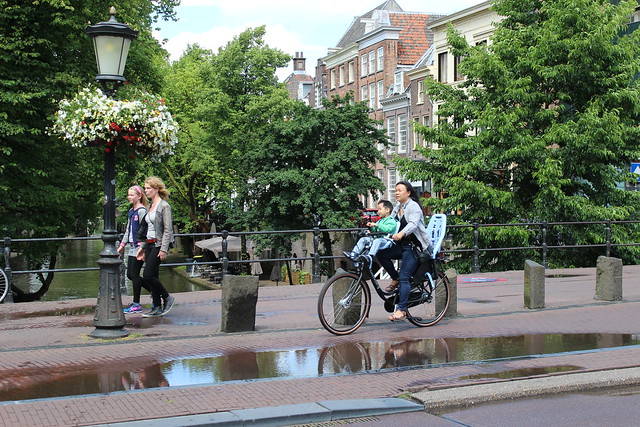
But even though the pro riders had left, there's still a festive cycling feel to Utrecht that stems from the many thousands of people on bikes who cycle here every day. I saw small children being carried on their parent's bikes, middle-sized children riding alongside on their own, and teenagers enjoying their mobility and being totally independent.
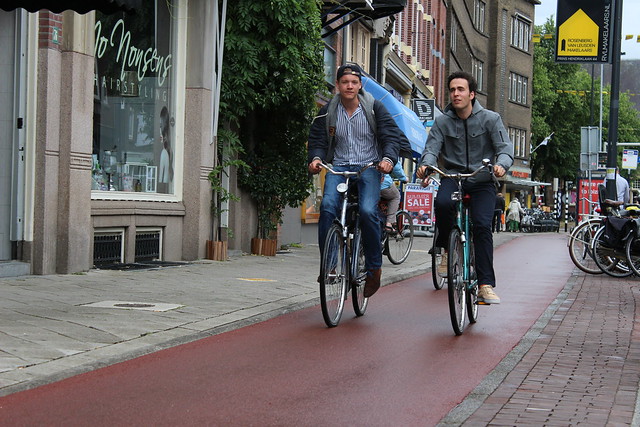
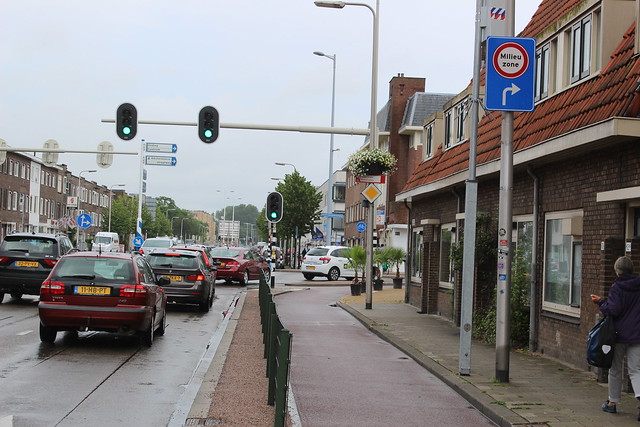
I have no doubt that all that freedom stems directly from the excellent cycling infrastructure which you'll find all over the Netherlands, but what I was particularly impressed by was how the Dutch don't sit on their hands, but are always seeking to improve things. I went for coffee with Mark Wagenbuur from the brilliant Bicycle Dutch blog. He took me out to a junction on the edge of the city, smiling proudly all the way, that we had last visited together in 2012. Back then, he had described it to me as 'the most dangerous junction in Utrecht' and I was inclined to agree. Cyclists were forced to merge with a lane of fast-moving traffic turning right, and to ride together alongside a metal fence for about 100metres. Just three years later and the situation has entirely changed. Engineers have 'found' the space to continue the cycle track safely through the junction, and the right turning traffic simply waits in a lane of the rest of the road. Of course, it's not a question of 'finding' space at all but simply a choice of what to do with the space that you have and who to allocate it to.
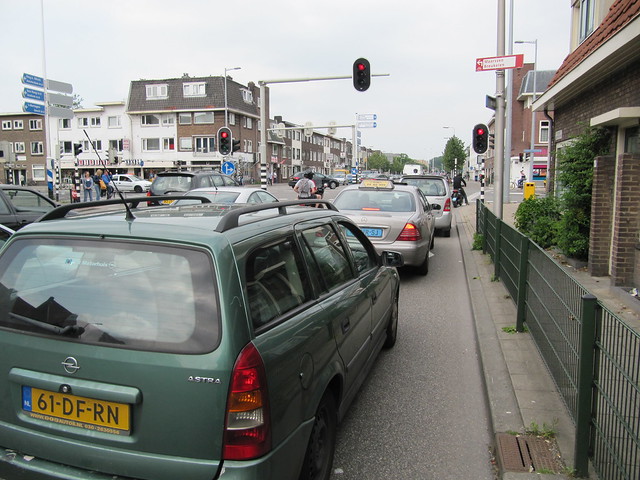
The same junction, above in 2012, as it appears today, below in 2015. Notice how space has been 'found' for the new and safer cycle track without taking the pedestrian's pavement away.
I had been impressed by the new junction, but it was nothing compared to the building project which is nearing completion in the city centre. When I first visited Utrecht the space in this photo was part of a multi-lane city ring road built in the 1970s. All it did was create traffic congestion and bring more cars in to the city centre, where there was no room for them. So the city planners decided to push the ring road further out of the city - to loosen the city's belt, if you like - to create more space for people.
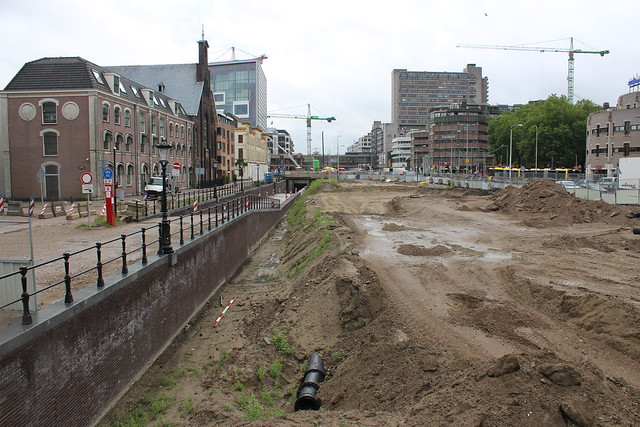
The move has allowed for the total redevelopment of the train station, created space for a new shopping area and offices and very soon the dirt that you see in the photo will be removed and replaced with water, re-connecting two sections of the city's ancient canals.
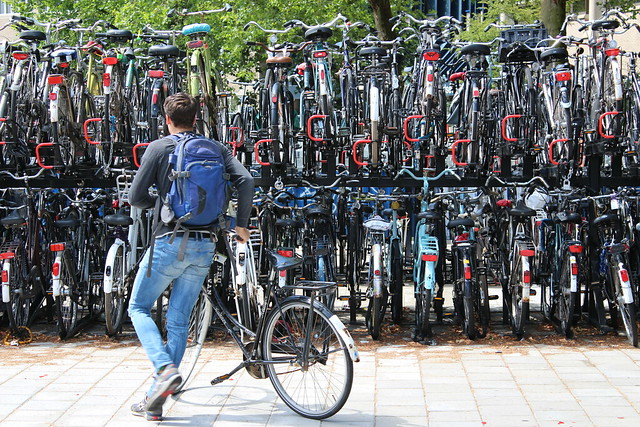
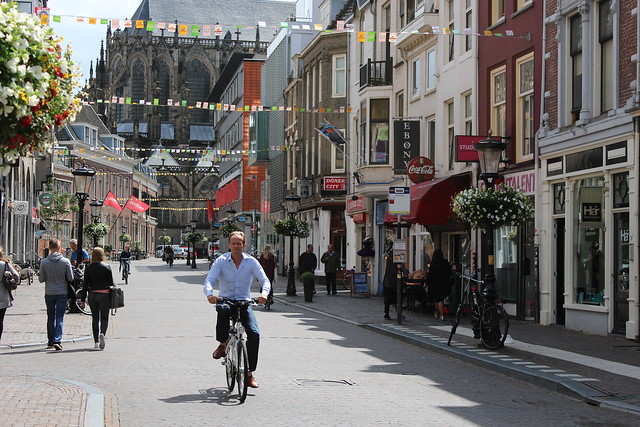
At the new station the city's cycle racks are being refreshed and new bicycle parking areas are being built. On Korte Jansstraat in the old town, a road which used to be clogged with two lanes of car parking has been re-surfaced in red bricks and the parking spaces moved away. Rather than harming the businesses there, the streets were busy with shoppers and restaurants had laid out new tables and chairs.
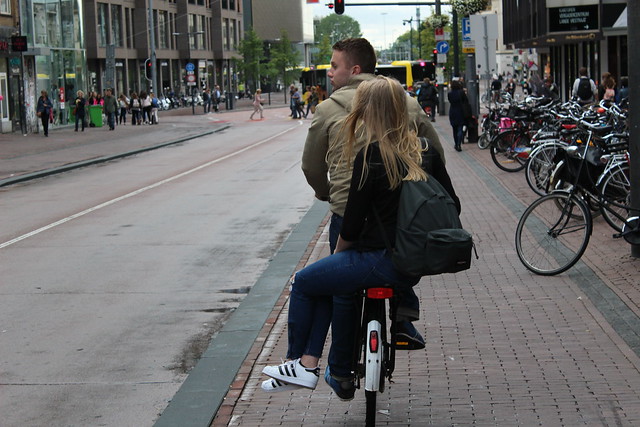
This is my third trip to Utrecht and each visit has left me with the same impression; that this is a city rapidly growing, improving itself, identifying the planning mistakes of the past and quietly getting on with rectifying them. It's lively and packed with young people and University students. Better still, it is easily connected to the rest of the Netherlands and Schipol airport by the fantastic national rail network. Utrecht proved with the Tour de France that they know how to throw a good bike party, but if the world's cycling cities were in a race Utrecht would in the break away every day. Why not make a visit to see for yourself?
Share
07-Jul-15
Tour de France Stage 4: Citadelle de Namur, Belgium [ 07-Jul-15 7:02pm ]

After riding in Antwerp and spending the day with the peloton, my tour of Le Tour continues, today bringing me to the Belgian city of Namur. There was a huge gap between the break away and the main bunch, who crawled up the hot, dusty road to the summit of the Citadelle, where I captured this photo.
It was a hugely exciting stage on the cobbles and a dramatic win for Tony Martin. Tomorrow I leave the pro-riders behind and return to the Netherlands to the host city of the Grand Depart, Utrecht, to find out what happens in a cycling city after the racing cyclists have gone. Stay tuned!
Share
06-Jul-15
In the thick of it. Today I found out what it's like in the middle of the Tour de France... [ 06-Jul-15 11:40pm ]
The cyclists ride at breakneck speeds whilst all around them there is ordered chaos; mechanic's cars, radio cars, official cars and of course the infamous publicity caravan. Spectators waive their picnics from the roadside as the riders tear past. Boozey kids run alongside, shouting and jumping up and down. More than a few crowd members get perilously close in the quest for a perfect snapshot to share with friends. I took a ride in the Tour de France, and here's what it's like to be right in the middle of the world's most famous cycling race.
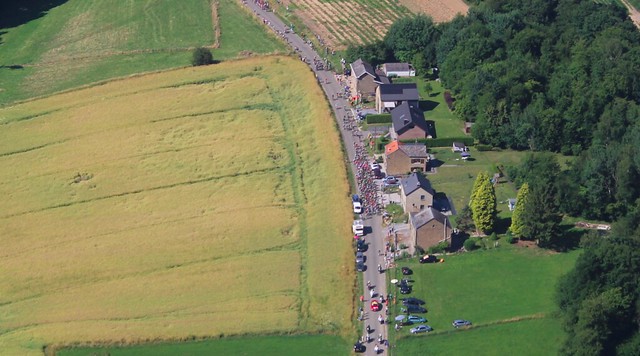
The summers of my youth were always filled with the Tour de France, enjoyed by the whole family as much for the lingering shots of magnificent French scenery as for the riding itself. We cheered on Greg Lemond and talked endlessly about Lance Armstrong as though he were some kind of cycling superman. Looking back it seems like a cycling age of innocence, but I loved all the poetry and drama of a journey around a nation by bike. Not just a journey, but a race no less.
This was all before talk of drugs, "enabling" Doctors, self-administered transfusions and blood bags in the hotel room fridge. Doping cast a deep stain on professional cycling, and it was a long time before I allowed myself to get back in to bike racing. It's all the fault of Mark Cavendish, really. His technical prowess and sheer bravura meant I'd find myself tuning in for the sprints again. Then came Sir Bradley Wiggins. A Brit winning the tour was the stuff of dreams when I was a kid, but then it actually happened. Seeing young rider Simon Yates power to the top of Hay Tor during the Tour of Britain in 2013 meant I was roadside - along with about a million other people - to cheer him on when the Tour de France visited our shores last year.
So when official Tour partner Ibis Hotels got in touch asking if I'd be interested in spending the day right in the middle of the race, they didn't have to ask twice.
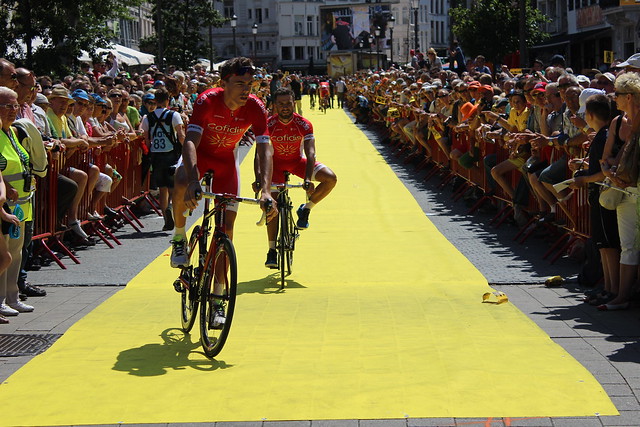
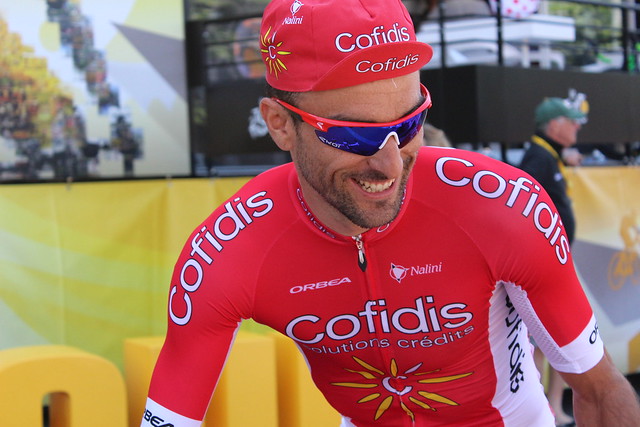
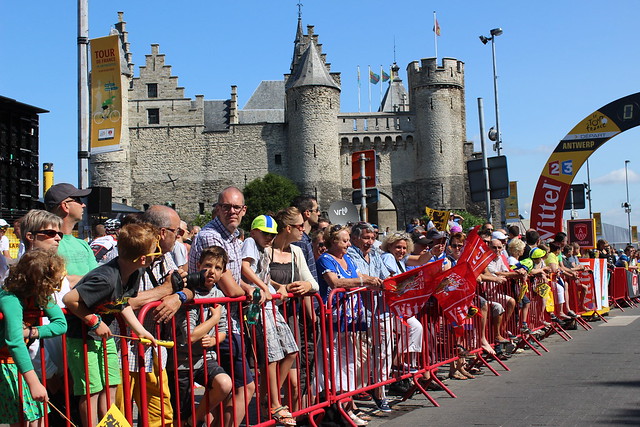
The route from Antwerp to Huy was one of the first 'real' stages after the ceremony of the Grand Depart in Utrecht (a time trial) and a flat spin across the green fields of Holland. With Quintana, Contador, Nibali and of course Chris Froome all keen to prove their metal in the initial stages there was plenty of scope for pushing, shoving and hard racing from the off - and the first real uphill finish; the short and steep Mur de Huy. Both Froome and Cavendish were out of the 2014 Tour within the initial 5 stages, so there was lots to prove.
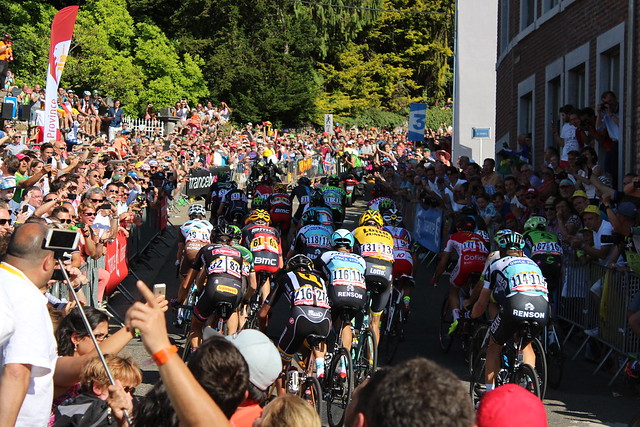
Going to spectate at the Tour is a funny business. You'll stand on a dusty roadside for many hours, and the whole thing flashes past you in a matter of minutes. The cyclists themselves pass in mere seconds. Being stuck in the middle of it all gave me a totally different perspective. The first thing you notice is the speed at which the entire convoy clips along. These boys - all 198 of them - don't hang around. And somewhat paradoxically for cycling the centre of the convoy is a noisy place. There's no elysian wheeling through the countryside here - right behind the cyclists are roaring mechanic's cars, powerful Police motorbikes with sirens, commissaires hurriedly jabbering on their radios, helicopters and not to mention the crowds. Despite the tumult, they do a great job of cheering and shouting at the riders and its surprising how much of what they say is legible. Chris Froome must hear people telling him to cheer up all the time.
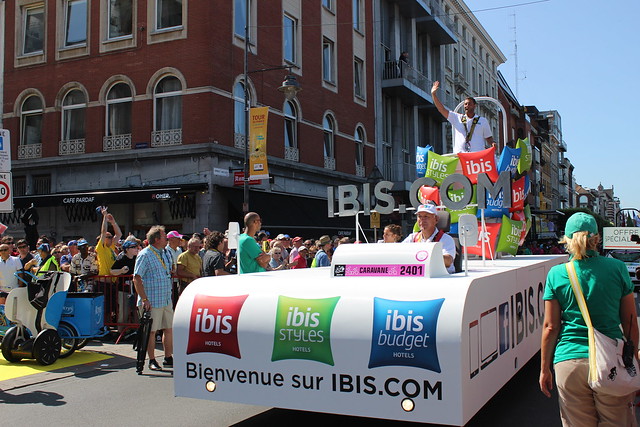
Not all of the drama in the peloton takes place at the front of the bunch, either. Domestics - the worker bees of the Tour - are always falling back to pick up supplies from their team cars (themselves zipping along at a steady 40kph or so) and relaying it forward to their team mates. Bidons are hung out of car windows and you watch as the riders grab hold, perhaps for a second more than is sportsmanlike. The team crew and the cyclists amiably chat as though riding next to a tonne of car moving at speed with a man inside shouting at you is the most natural thing in the world. No wonder Britain is doing so well in pro cycling these days.
And what of the Brits? There's Froome of course, and Cavendish who'll be relishing the absence of young German sprinter Marcel Kittel this year. There's eight other British names - compared to last year's four - and this when well-known names like Wiggins and David Millar are past their peloton prime and not in the Tour. Ian Stannard will be working hard to pull Chris Froome safely across the cobbled sections tomorrow, whilst hour-record-grabbing rider Alex Dowsett will be looking for a good ride after fracturing his collarbone earlier this year. Geraint Thomas, Luke Rowe and Peter Kennaugh will be riding for Team Sky under the tutorship of Sir David Brailsford, whilst the 22-year-old Yates twins - Simon and Adam - are racing with Australian team Orica-GreenEDGE and are the riders I'll be watching most closely. Steve Cummings, riding aged 34, will be in a lead support role in his team MTN-Qhubeka. Surely a golden age of British pro cycling if ever there was one?
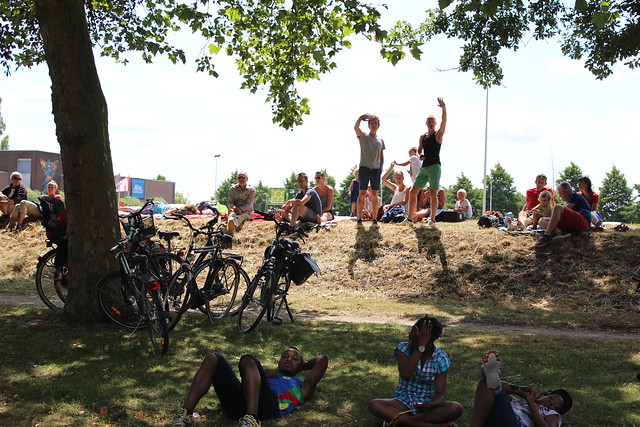
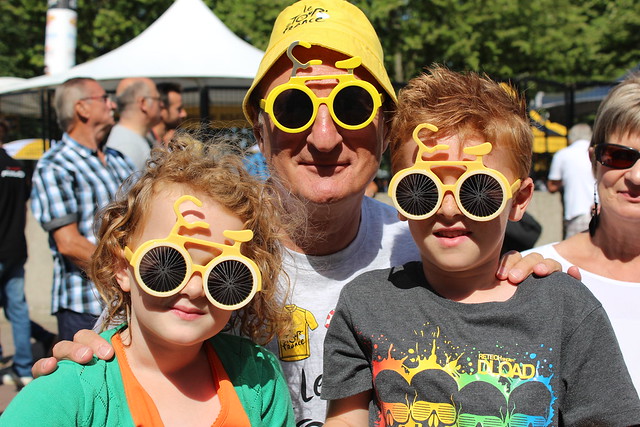
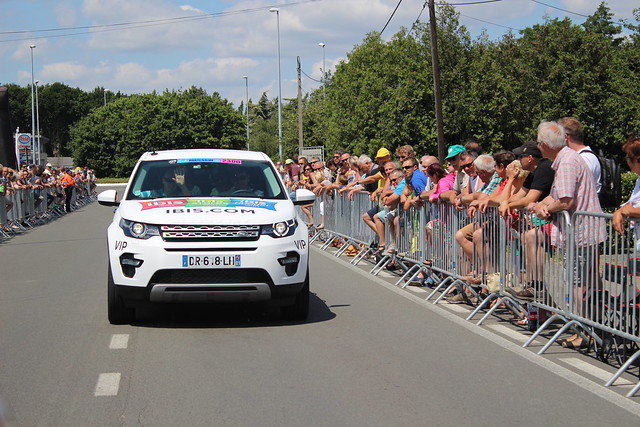
Along the route, entire communities find themselves making the most of an enforced day off. Their streets, no longer enthral to the motor car, are closed down and become occupied by people again. Kids chalk drawings on to the tarmac. Families put out picnic tables and share food with friends and neighbours. In Tienan we saw a Belgian oomph band keeping a whole village entertained. There's a certain holiday atmosphere which, coupled with sunshine, makes for a wonderful day out.
Today's stage raced along at incredible speed. With nerves in plentiful supply and lead riders keen to establish their position, a crash seemed almost inevitable. When the crash came, with about 60km still to go, it was a big one, leading the race director to temporarily suspend the Tour whilst medical staff dealt with a multitude of serous injuries. Yesterday's Yellow Jersey winner, Fabian Cancellara, completed today's stage but has now withdrawn from the Tour after it became apparent he'd broken pieces of his back. White jersey-wearer and young hopeful Tom Dumoulin is also out of the rest of the Tour. Cycling is a tough sport.
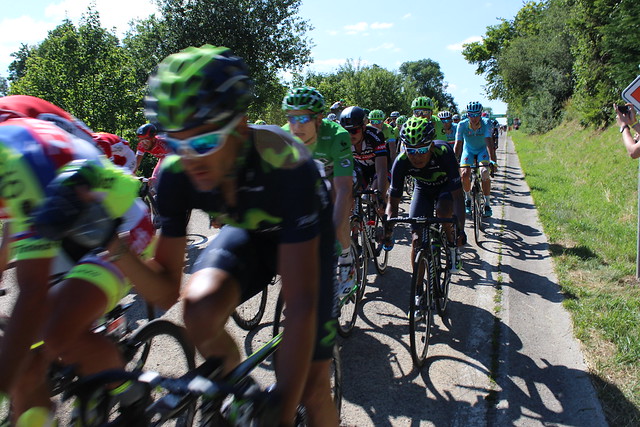
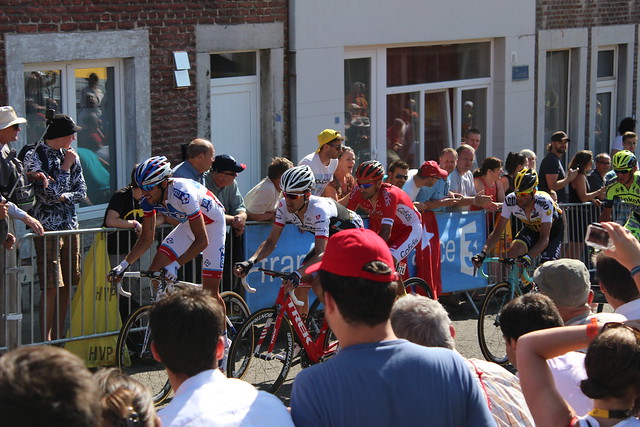
The sheer scale of the entire Tour operation becomes apparent at the finish line when you finally see all those riders, all those support vehicles and all those bikes in the one place. It's like a happy cycling chaos, with riders being ushered in to trailers, pursued by journalists, fans, erstwhile bike bloggers and doping control. Masseurs swing in to action, whilst stage host Mayors beam from the podium for the cameras. I can understand why Ibis loves supporting the Tour de France - all those riders, team directors and hangers on (not to mention the spectators) have to stay somewhere. Indeed, some 1,500 hotel room beds are reserved every night of the Tour just for organisers and teams.
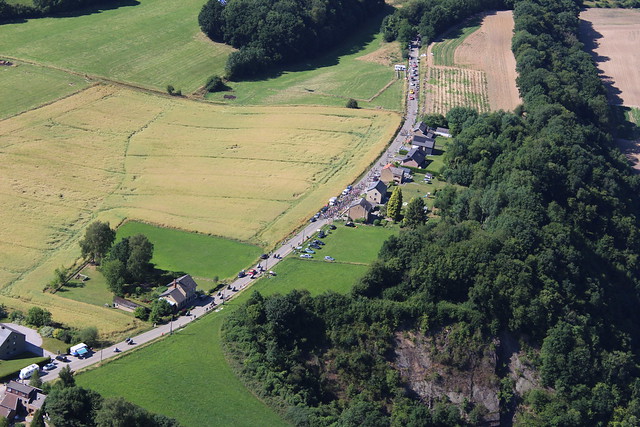
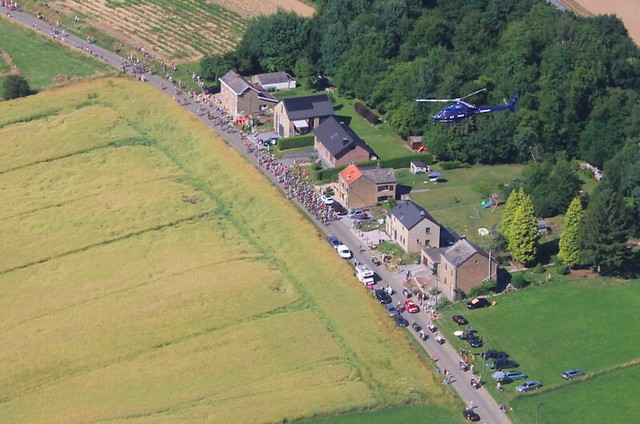
Ibis, who have been putting me up in their super comfortable hotels here in Belgium (I love their Sweet Beds and have been sleeping like a baby throughout my trip) decided that it wasn't enough for a cycle racing fan to be allowed in to the thick of the action and had one final surprise in store for me; a transfer to a helicopter about 20kms out from the finish line to watch the peloton from up on high. Watching the bunch snake its way around corners and up hills through the spectacular, green countryside is a memory that will stay with me forever, and I feel exceptionally lucky to have had such an opportunity. Thank you, Ibis, for your support of the Tour, for such a welcoming stay and for an incredible day of cycling I'll never forget!
Share |
05-Jul-15
Everyone cycles in Antwerp (who knew?!) [ 05-Jul-15 5:21pm ]
I'm in Antwerp, Belgium, which will host stage 3 of the 2015 Tour de France tomorrow. I'm here for the Tour (follow my Twitter feed for live updates tomorrow) but hadn't appreciated what a great cycling city Antwerp is.
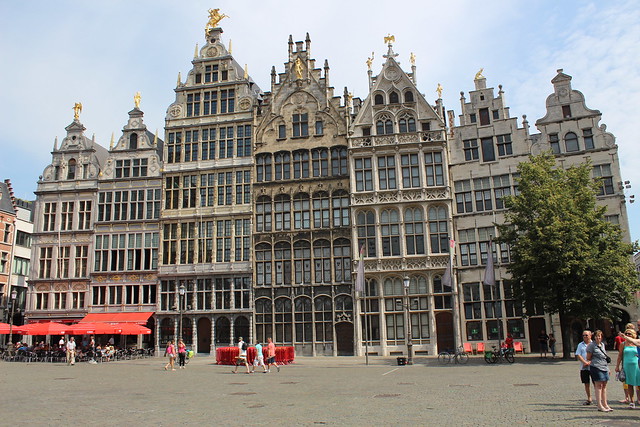
Home to about a million people its Belgium's most populous city, blessed with a compact historic core which is criss-crossed by a web of tram lines and very good cycling infrastructure. There's tonnes of Tour fans in town, and roadies were out in force riding the route ahead of tomorrow's stage, but I also saw lots of just about everybody else riding a bike as well.
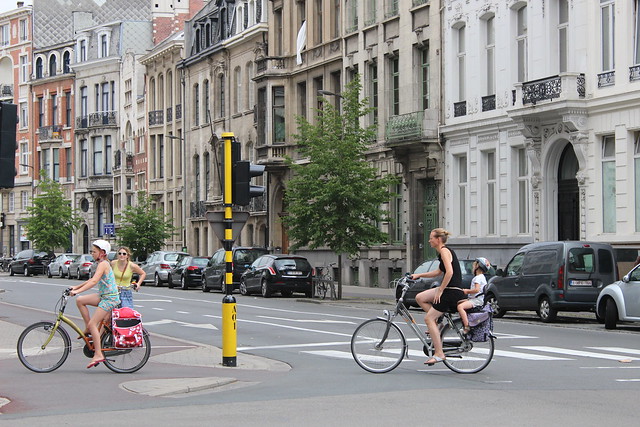
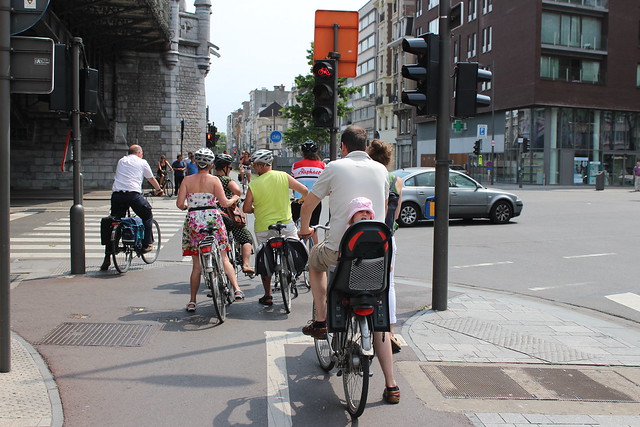
As you'd expect, cyclists share with other traffic on small and quiet roads here, but where volumes or speeds of cars are high the bikes are given their own space. And I was glad to see there was plenty of new cycling infrastructure in place and that it was well maintained; always a sure sign that a city cares for its cyclists.
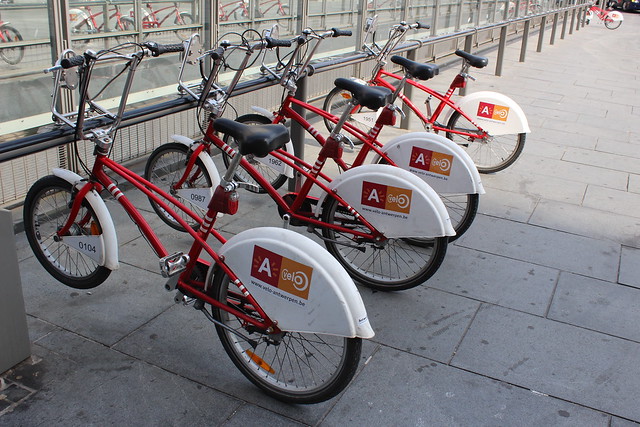
From the moment you step off the high speed train at Antwerp Centraal (and oh my goodness me, train fans, what a station it is) the fact that you're in a cycling city is apparent - deep in the bowels of the station there's acres of secure bicycle parking, a mechanic's workshop and a bike hire station. There's a suite of city bike share schemes - depending on how long you need a bike for - but if you're just visiting I recommend Fietshaven's Yellow Bike scheme, where you can rent a fantastic bike for a full 24 hours for just €13.
It was great to see the beautiful merchant's houses in the bike and pedestrian-friendly city centre. Cyclists are exempt from having to follow most one-way streets here, and bike parking abounds. But it is not just in the old town that the city has been thinking about bikes. There were acres of heavily-used bike parking outside the nearly-new Berchem Station, and smooth, wide brand-new bike tracks to get you there.
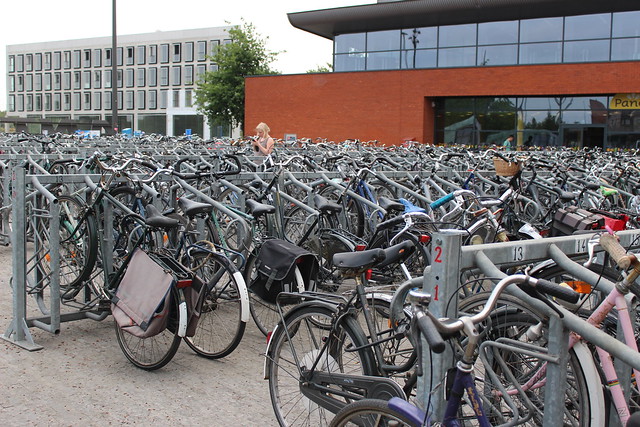
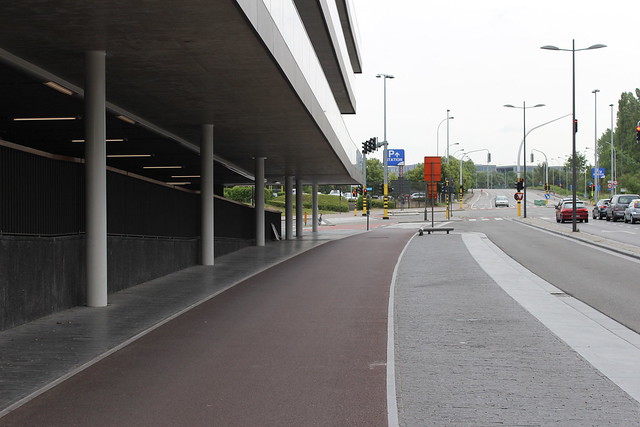
Beneath the river Scheldt, the 1933 Saint Anne's tunnel accommodates people on bike and foot, and allows you to take your bike down the original wooden escalators before a leisurely ride beneath the river with excellent acoustics!
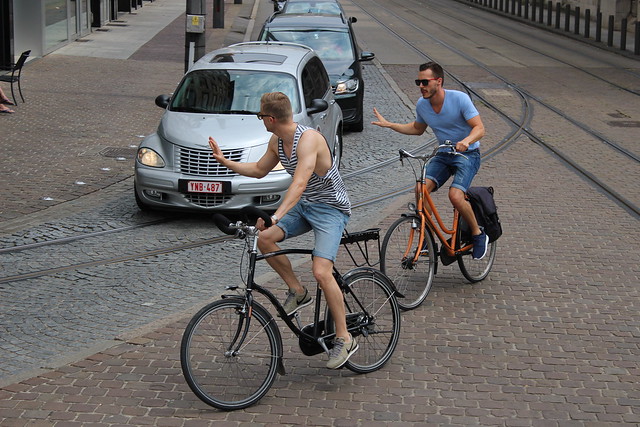
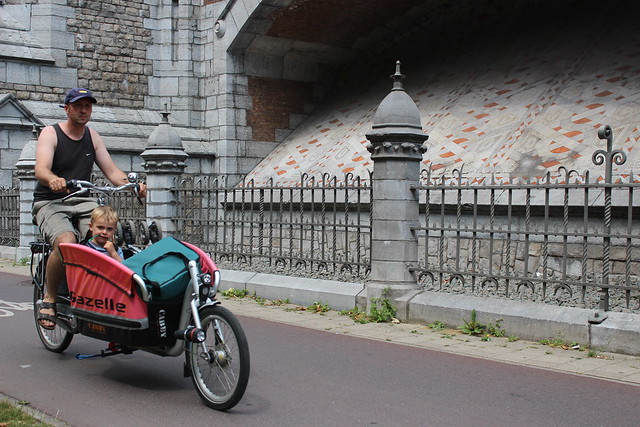
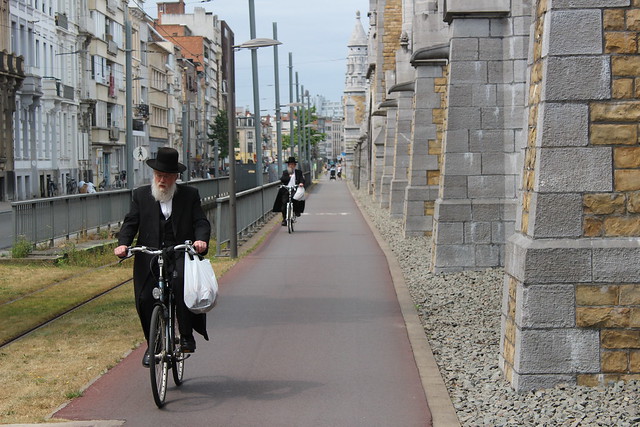
I found drivers to be courteous and interaction between riders and cars seemed friendly. What's more I saw cyclists of all ages out enjoying a summer's Sunday ride. Indeed, the leisurely cycle track that follows the railway south out of the city is so popular it could well do with being made even wider - that's what we call in cycle planning circles "a nice problem to have".
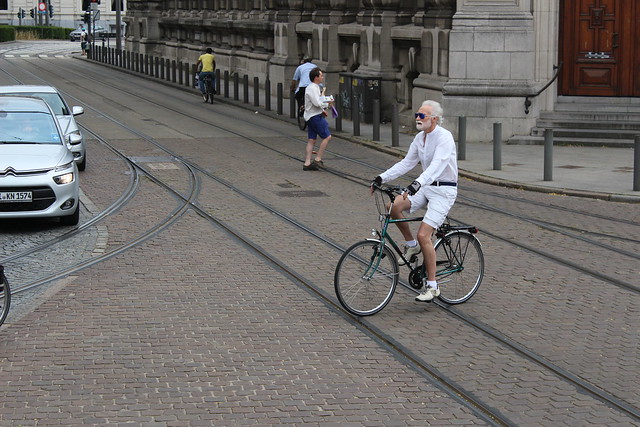
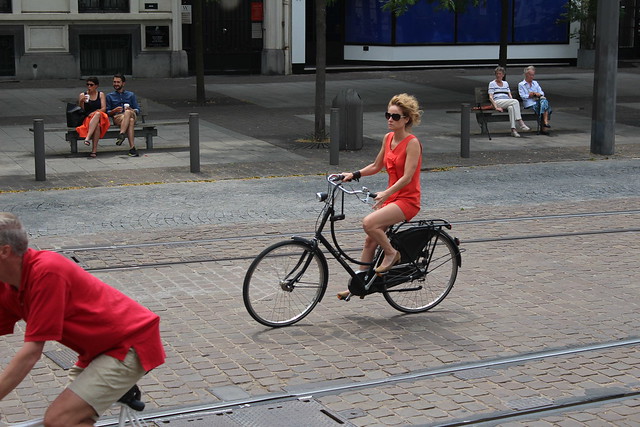
Antwerp had never been on my list of places to visit before. I knew it was here, of course, and that it was really just a short trip by train from London. I had a vague idea that it was famous for diamonds, and shipping, but that was about it. Well, more fool me. Antwerp punches above its weight; both as a cycling city and as a destination in its own right. I couldn't think of a nicer weekend away than riding around here by bike.
For more info on cycling in Antwerp go to Visit Antwerp.
Check LeTour.com for a profile of tomorrow's stage departing from Antwerp.
You can get to Antwerp via the Eurostar in about two hours, with tickets from £80.
Share |
28-Jun-15
Utrecht welcomes the Tour de France but what's the legacy for a city that already cycles? [ 28-Jun-15 8:30am ]
London is changing, and it's all down to you. But what next for cycle campaigners? [ 22-Jun-15 8:30am ]
As the LTDA goes to war with cyclists, we ask just who runs London? Is this a Cycle Superhighway Stich up?! [ 30-Jan-15 8:30am ]
Boris gives green light to Cycle Superhighways to unlock central London for bikes [ 27-Jan-15 10:05am ]
In defence of fair-weather cyclists: how do you keep a city cycling, even in the worst of winter? [ 26-Jan-15 8:30am ]
One of the most persistent criticisms I hear levelled against investing in cycling is that as soon as the weather becomes inclement people stop riding, therefore making it an unreliable way of moving people in cities.
 Cyclists in a recent rush hour snow storm in Copenhagen, via the Copenhagenize / Viking Biking Tumbr.
Whilst the difference between summer and winter cycling levels in London have been decreasing year on year, the number of cyclists on the road over the winter months is markedly lower than in the long, light and warmer summer days.
If a journey by bicycle is tolerated for the sake of convenience, rather than comfort, it is true that poor weather can serve to increase the perception of it being sketchy. I personally dread cycling around Old Street roundabout or through Holborn Circus in heavy rain with reduced visability. No matter how good your waterproofs, you'll still be soaked through with the sweat of anxiety by the end of your terrifying trip.
 Cyclists in the snow, Bethnal Green, London, 2010
Of course, it is not the actual rain, snow or darkness that I fear but the chance that my fellow road users are not paying sufficient attention to the conditions, and do not modify their behaviour appropriately.
In successful cycling countries this problem is solved by separating cyclists from motorised traffic one way or another; perhaps with cycle tracks on main roads, or with closures, restrictions and one-way routes on lesser roads with lighter traffic. But this in turn can pose its own problems: in the worst of the winter weather, how do you keep cyclists - and the city - moving?
When you have a high percentage of your population making their journey by bikes - as in Copenhagen or across the Netherlands - making sure that cycle routes are clear becomes a very serious consideration. In another fascinating new post, video blogger Mark of Bicycle Dutch fame recently recorded how his home city of 'S-Hertogenbosch kept people moving through a recent snow storm, and made journeys by bicycle possible in challenging conditions.
He explains: "On a cycle way the 'gritters' brush the surface first, and then it is sprayed with a mixture of salt and water. That film of salt water does cover the entire surface and that means most of the snow melts instantly on the entire street surface even without [passing cyclist's] tyres to disperse the salt. The difference between routes that were cleared and gritted and those that were not (yet) was huge."
I know what you're already thinking: here in the UK we don't deal with adverse weather well. That we struggle to clear our roads and pavements, let alone cycle paths. That we can't even build all-weather year-round cycle routes.
 Mud, mud, glorious mud! It's not Middle Earth, but all the same you shall not pass... Via As Easy As Riding A Bike.
Indeed, As Easy As Riding A Bike blog recently highlighted a Sussex cycle route which could provide a safe and convenient bypass to the busy A2 is impassable to all but those equipped with mountain bikes and wellington boots for much of the year. It's never been laid properly due to concerns about an "urbanising effect" on the countryside, which clearly doesn't consider the same effect car journeys have that could easily be replaced by trips on this path, were it a viable route instead. Making this journey on the path in its current form on a dark night in wet and windy weather would be reserved for all but the hardiest of thrill-seekers.
 The heavy snow fall of 2010 caught London unprepared. My street, seen here, remained uncleared for over a week.
But as the Dutch example demonstrates, winter weather need not be an insurmountable obstacle for successful cycling. People always tell me that "there's no such thing as bad weather, only bad clothes" but I'd argue that there's more to it than that...
You can have all the fancy water proof kit in the world, but if you're having to fend off thundering lorries and itinerant taxi drivers in addition to trying to stay upright through wet and windy weather you're not going to be having a very nice time. And you could have all the cycle infrastructure in the world (and I'm thinking in particularly of the separated lanes we should start to see being rolled out in London over the next few years) but if the authorities don't have a plan for keeping them clear of mud, snow and ice they'll be next to useless. Keeping your city cycling, even in the worst of weather, shows the special care and consideration people on two wheels need.
Further reading:
Bicycle Dutch: how to make cycling in the snow possible
Copenhagenize: the ultimate bike lane snow clearance post!
As Easy As Riding a Bike: Natural Character
ibikelondon: Cycling through epic amounts of snow, retro Norway style
Share
21-Jan-15
Never mind "cyclists stay back", what about "drivers, watch for cyclists"? [ 21-Jan-15 6:30am ]
They're big, they're yellow, they're angry and they're everywhere. "Cyclists! Stay back!" they shout, and they seem to be stuck on the back (or even the side) of just about every working vehicle in London.
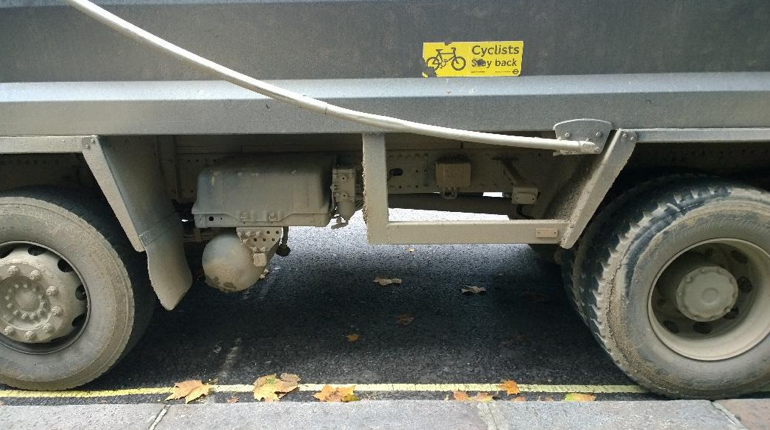 The ubiquitous yellow safety stickers first appeared on lorries as a warning to cyclists that they had massive blind spots, and slipping down their sides was a potentially fatal thing to do. But when Transport for London began requiring every contracted vehicle to also sport the stickers, they began to appear on vehicles ranging from-mini buses to ordinary cars; vehicles which are hampered not by blind spots but by the driver's failure to look. Peter Walker of the Guardian explains very well just why these stickers seem particularly impertinent to cyclists.
There was uproar last summer as the yellow menace spread, and Transport for London agreed to begin replacing the stickers with more gently worded warnings to "avoid passing this vehicle on the inside". But I can only assume the replacement stickers are lost in the post somewhere as just last night I saw what looked to be brand new "stay back" stickers on the rear window of two different taxis.
Popular cycling website Road.cc turned their hand to sticker making and came up with these "Cyclists! Stay Awesome!" stickers, and I can appreciate the humour: too often it seems that signs shouting at people on bikes lurk around every corner. Cyclists! Stay Back! Cyclists! Dismount! Cyclists! Stop at red! Cyclists! Proceed directly to jail, do not pass go, do not collect £200!
So I was really happy to see the below sign on the exit gates of the Crossrail station construction site at Bond Street, which is busy with lorries day in and day out. The message is bold, the message is simple, the message makes sense: "Drivers! Watch for cyclists!"
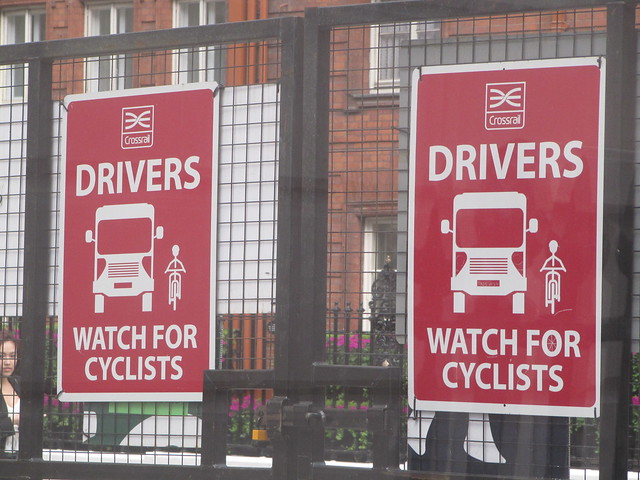
Maybe I bear a two-wheeled bias, but I'd like to see a lot more of these around town. In fact, I have a proposal to make: I'll agree to anyone slapping a "Cyclists! Stay back!" marker on the back of their vehicle so long as they also agree to stick "Driver! Watch for cyclists!" on their steering wheel. Seems like a fair deal to me, don't you think?
Share |
19-Jan-15
Will Camden deliver the UK's best urban planning scheme (with HUGE benefits for cyclists)? 48hrs to tell them to DO IT! [ 19-Jan-15 8:30am ]
Mark from As Easy As Riding a Bike blog tweeted a screen grab from Streetview recently of a newly painted bike lane in Horsham with the caption "Where that Department for Transport 'cycling money' is going. Brand new (2014) cycle 'infrastructure' painted in Horsham with Local Sustainable Transport Fund cash". It doesn't take a rocket scientist - let alone a road engineer - to work out that this is crap:
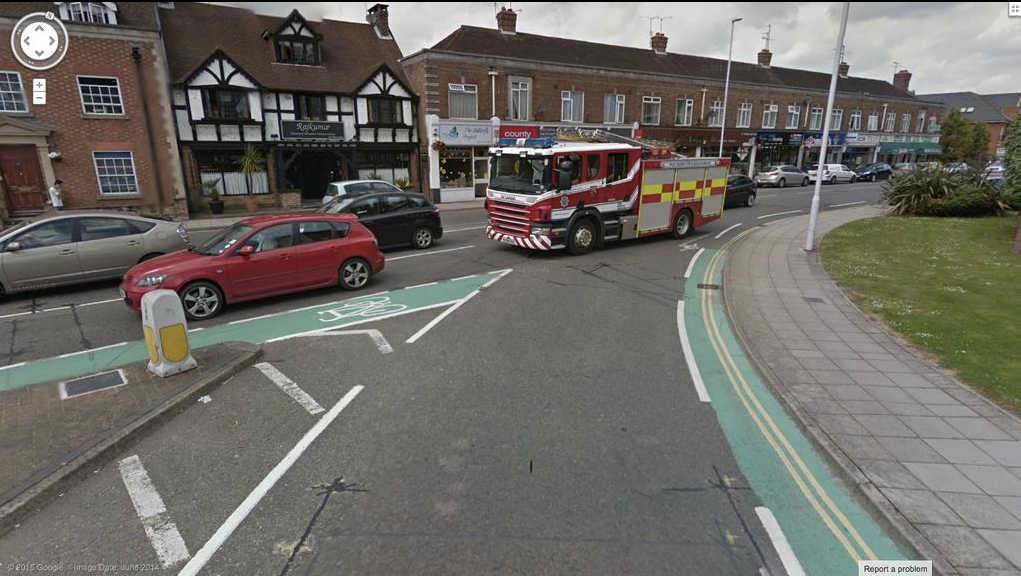
This shouldn't just make cyclist's blood boil. Not only is at best unusable and at worst downright dangerous, it's also a complete waste of tax payer's cash; something we are frequently reminded is in short supply these days.
However Horsham is not alone in splashing the cash (and the paint) around. Here's a shot I recently took in London's shiny new Olympic Park. This road layout is little more than a year or two old, and yet contains poorly painted sub-standard bike lanes which really help no one and serve no purpose:
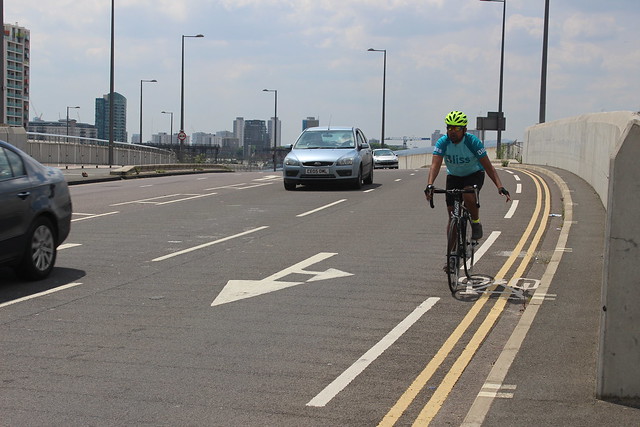
There's a faction of cycle advocates who would say it is not worth asking for cycle infrastructure at all, because all you get is nonsense like this. I can empathise with their position - the internet is filled with pages and pages of examples just as bad as this (or worse).
I've argued before that you need three things to make successful cycling cities:
And in the above cases I would strongly argue that it is the latter - design knowledge - which is lacking. There are plenty of road engineers out there who don't have a clue how to accommodate cyclists in their designs, but there are plenty more who would like to do so but are nervous from straying from the manual.
In UK road design circles innovation cowers in the shadow of liability, perhaps understandably when you consider that it is people's safety potentially at stake. As a consequence most of the space between buildings is filled in like a "Paint by Numbers" picture, fitting in whatever the manual says is appropriate.
Busy road with lots of vehicles? There's a pre-defined solution for that.
Quiet cul-de-sac with heavy pedestrian activity? There's a pre-defined solution for that, too. Call it "tick box urbanism", if you like.
The trouble is that most streets take a few years to get from the drawing board to reality, and in that time I would argue the aspiration of cycle campaigners has evolved whilst the guidance has struggled to keep up. In just a few short years in London we've gone from a situation where campaigners (and campaigns) could not even decide whether they wanted cycle provision or not, to a much broader consensus with far more ambitious aims. The London Cycling Campaign and others are now asking for - and getting - high quality, European-style separated infrastructure.
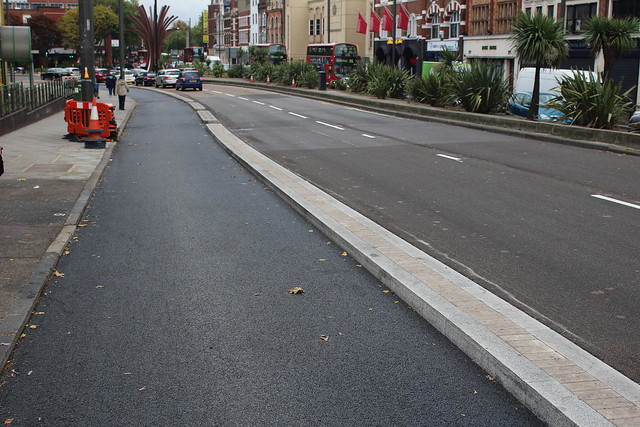
How wide do you want your spanking new bike tracks?
Transport for London have been quick to get their design skills up to date (see the Cycle Superhighways proposed for central London and the construction work currently ongoing around the Oval) whereas some of our local borough authorities are much further behind the curve.
And here's the trap. For those behind the times who are still following guidelines to the letter, there's a real policy lag. As has been remarked elsewhere, not all of the guidelines designers and engineers are employing are particularly effective at prescribing environments suitable for cyclists of all ages and abilities. Whilst there has been much in recent years to help make streets more attractive, there has been less about improving the actual subjective experience of riding a bike.
This policy lag - the inability of the paperwork to keep up with the aspiration - will ensure that for every fantastic new cycle track built over the next few years there's going to be plenty of crap, as well.
Further reading:
Rachel Aldred: what's wrong with place and movement hierarchies?
As Easy As Riding a Bike: when will design guidance think of cycling as something for all?
A View From The Cycle Path: 3 types of Cycle Safety
Share
04-Dec-14
You're invited to the CycleLove x ibikelondon Christmas Ride [ 04-Dec-14 8:30am ]
Friday Throwback: would you let your kids ride this bike? [ 28-Nov-14 8:30am ]
It's nearly the weekend, which means it is time for another in our occasional series of Friday Throwbacks, looking at the best images of bicycles and cyclists from days gone by which have been uploaded to the Flickr Commons.
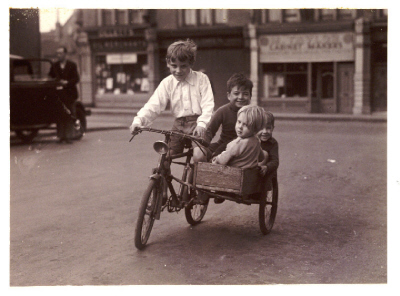
I'm all up for children's freedom, and despair at what indoor and restrained lives kids today lead, but even I am not sure if I'd let me kids ride this bike around town... Still, it looks like they're having a great time, doesn't it?
This photo is via the National Media Museum, who host a wealth of historic photographs online.
Whatever your cycling plans this weekend, whether two-wheeled or three, be sure never to miss another post from ibikelondon again! You can join the conversation on Twitter or follow our Facebook page. Happy cycling!
Share
26-Nov-14
What next for London's Cycle Superhighways? [ 26-Nov-14 9:24am ]
The official consultation on the Mayor of London's ambition to build two new separated Cycle Superhighways across the city has come to an end, but those who are against the plans are still making their case strongly behind closed doors.
Transport for London received over 20,000 consultation responses, one of their highest response rates ever. Of those, approximately 80% are said to be in favour. Transport commissioner Sir Peter Hendy has hinted that TfL will listen to all concerns raised, and will publish revisions to their designs in approximately two months "that will work for everybody."
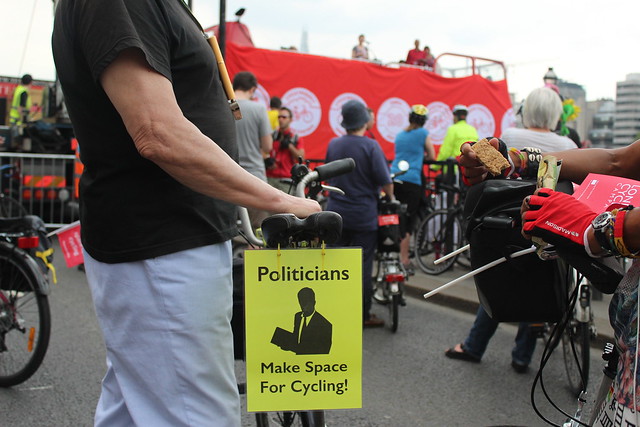
Cyclists make their concerns known in May's Space4Cycling protest.
Talking with the Evening Standard's correspondent Matthew Beard, Hendy said:
"One of the characteristics of this is that it's highly emotional. I think the support for the scheme from the cyclists and the objections from the businesses are both heartfelt. For one side to represent that the other has no case is false."
However Chris Kenyon from CyclingWorks.London has been quick to point out that it is not accurate to portray the debate around the cycle tracks as one just between cyclists and business leaders:
"Rarely if ever has a scheme by TfL gathered so many CEO level signatures of support. Surely that is the big story. The backers represent every major industry sector and show that Londoners are in it together and believe that it's time for kerb protected lanes in the heart of the city."
When the consultation closed at the weekend over 160 city businesses, institutes and organisations had written to Transport for London expressing their support for the Cycle Superhighway plans. Support has continued to roll in past the deadline, including that of publishing group Pearson who employ over 4,000 staff, many of who cycle in London.
Whilst London Assembly member Kit Malthouse was busy last week telling the Mayor his constituents were desperate for the Cycle Superhighways to be extended through his borough, opposing forces were working to undermine the plans.
The London Chamber of Commerce and Industry has proposed that the cycle tracks should be narrowed and only 'partially segregated' from traffic, allowing other road users to utilise the same space as cyclists. A similar system operates for the existing Cycle Superhighways which have seen an increase in cycling numbers but have been roundly criticised by campaigners following a series of deaths on the routes.
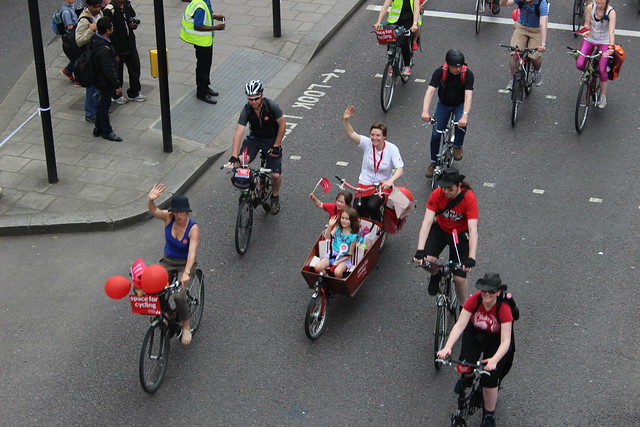
Cyclists take over part of the proposed route of the east / west Cycle Superhighway.
Meanwhile lobbyist Howard Dawber, Strategic Adviser for the Canary Wharf Group, is clear that they believe the Cycle Superhighways will lead to unacceptable traffic congestion in east London. He would do well to talk to academic and modelling expert Dr Rachel Aldred who goes in to detail on her blog as to why he needn't worry about the 'worst case scenario'. Detail aside, the Canary Wharf Group is not an opponent the cycling community can afford to underestimate; they have unprecedented access to influential ears and a lie - or a badly researched briefing document - will get half way around the world before the truth has got it's shoes on...
All this is set against the backdrop of more consultations on further significant changes planned for London's road network; on revisions to Cycle Superhighway route 5 through Oval and Vauxhall, at Archway Gyratory, at Stockwell Cross, and plans to remove the Old Street roundabout.
Those who were around for the Battle of Blackfriars just a few short years ago will remember how cyclists had to fight and fight just to stop cycle lanes being ripped out in order to "maintain traffic flow". It would seem that some elements of Transport for London have come a very, very long way since then.
But when it comes to winning over the rest of London - most especially its most influential interests - we can't afford to rest easily just yet. Watch this space.
Think tank the Centre For London are hosting a debate on the 10th December; "Are Cycle Superhighways good for London?". The Mayor's Cycling Commissioner Andrew Gilligan, CyclingWorksLondon's Chris Kenyon and Canary Wharf Group's Howard Dawber will all be there. Register to attend here.
Share
20-Nov-14
Is this London's most extreme bike ride? Danny Macaskill gets in a spin... [ 20-Nov-14 12:26pm ]
It's not every day you get invited on a mystery tour, to witness what was billed as "London's most extreme bike ride". Planning the launch event for their virtual personal assistant, Cortana, Microsoft had been in touch promising thrills, spills, and world-famous trials bike rider Mr Danny Macaskill. Needless to say, I was excited!
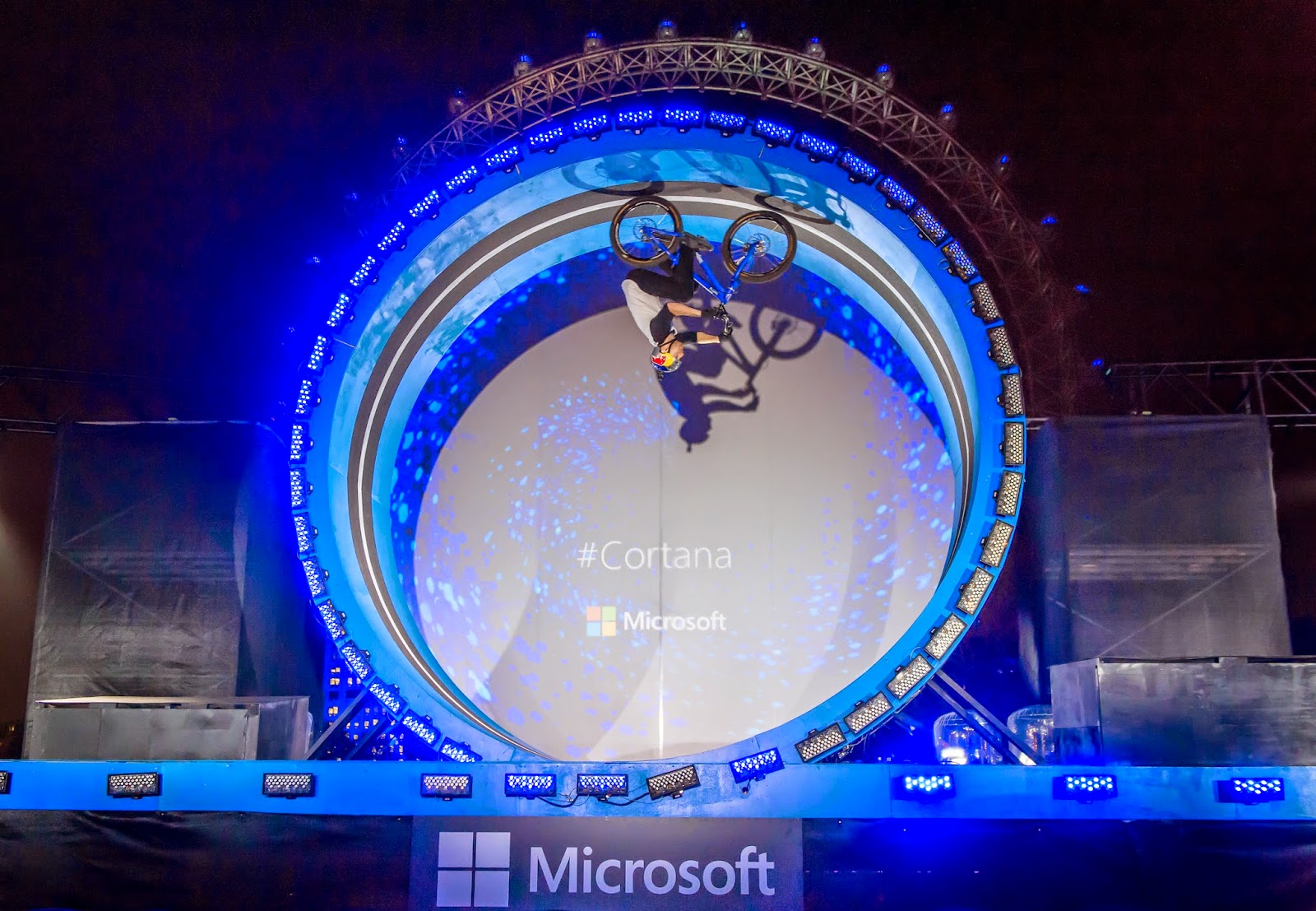
Danny's stunt was kept under wraps right until the last minute, and the excitement built as darkness fell and we cruised up the river Thames on Wednesday evening. Everyone assembled on board snapped pictures of London's most famous landmarks as we neared our destination.
As the London Eye came in to view, so did a barge floating in the middle of the river with a massive slope and loop-the-loop built on top. What was about to unfold became clear, and I was blown away by just how epic the night was turning out to be.
Danny's London stunt is just another string to his bow, following the enormous success of his online videos including the most recent (and I'd argue best) film, The Ridge, which has already been viewed over 20 million times on Youtube.
Apparently Microsoft's Cortana acted as Danny's personal assistant throughout his training for the event, arranging his meetings, setting appointment reminders, playing his favourite music, warning for bad weather and finding maps.
He explains; "A career as a professional athlete can be quite hectic and as I prefer to spend as much time on my bike as possible - any help in organising meetings, travel plans and projects is great. This is one of the biggest set-ups I have ever ridden and the location is amazing. To have a five-metre loop floating on a barge is something surreal. I always look for new challenges and the chance to ride this massive loop with the help of Cortana is another achievement I can be proud of."
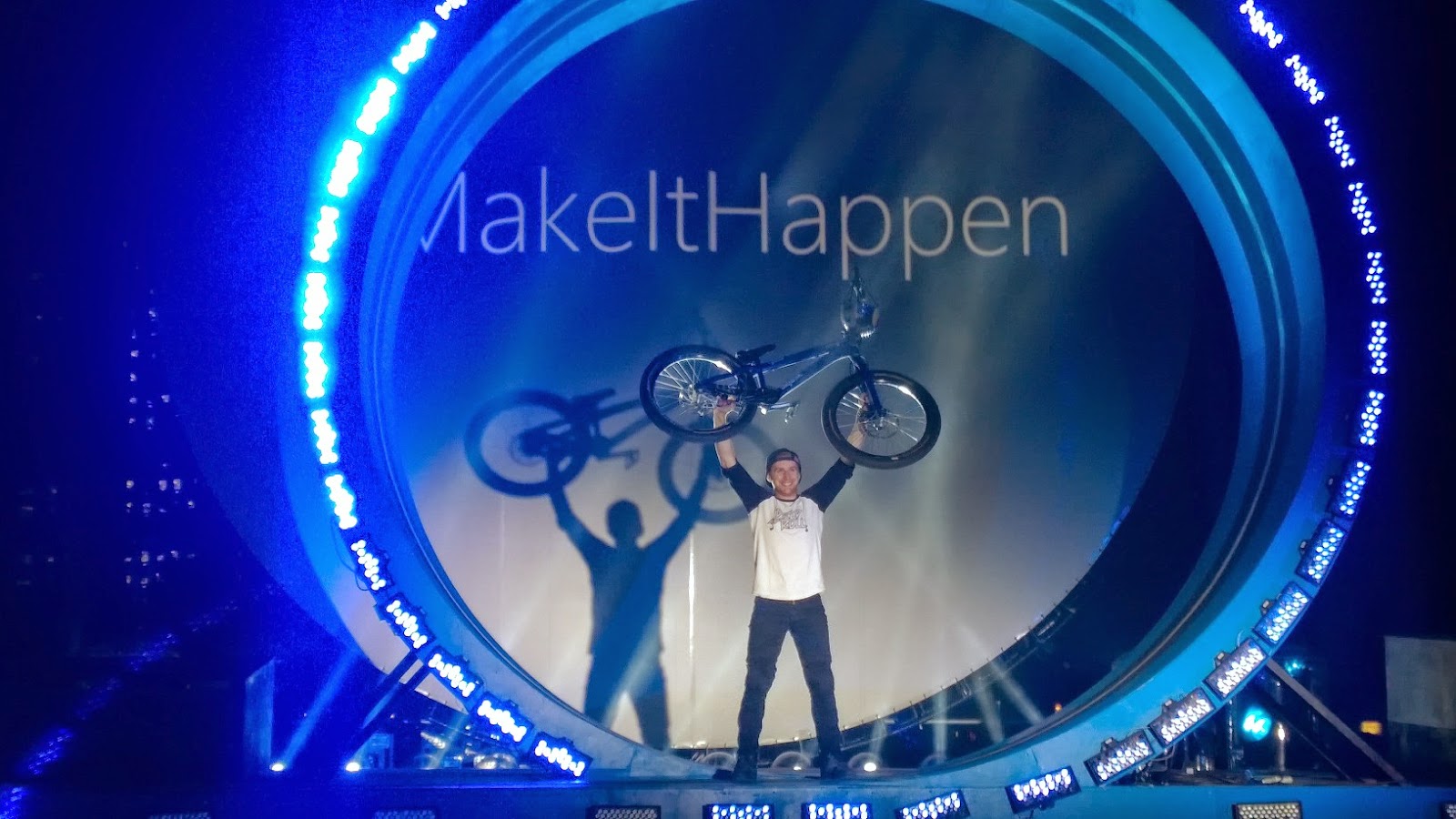
Our boat moored by Victoria Embankment, putting Danny's loop in line with the London Eye. As the crowd waited eagerly, I can't imagine what would be going through his mind. Was he nervous? What if he fell? Would he over-shoot the slope and end up in the river?!
If Macaskill was nervous, he certainly didn't show it. With a quick spin and a hop suddenly he was off, gathering speed on the steep slope before whizzing around the loop, then delivering a perfectly executed backwards wheelie on his front wheel.
The crowd (which I noticed included trails pioneer Hans 'No Way' Rey) gave him a huge cheer, and it was all over too soon.
Riding a bike along the river Thames usually involves dodging lorries and massive pot holes, and there's been lots of talk recently about the idea of building a floating bike track down the middle of the river. That's fine by me, just so long as it includes a 5 metre high loop the loop so we can all have a go!
Many thanks to Microsoft's Cortana for a great evening!
Share
12-Nov-14
The SMIDSY-killing cycling jacket; we road test the dazzling Reflect360 [ 12-Nov-14 8:30am ]
We're often approached by companies interested in sharing their latest cycling "innovation" with us. From gloves with built-in indicators, to cycling jackets with special pockets for storing a pizza, we've really seen it all. So we were pleasantly surprised when a company got in touch claiming not only to have made the most reflective cycling jacket, but that it also started life here in London...
The REFLECT360 cycling jacket does exactly what it says on the tin; it reflects light back to other road users from every angle. It's not just got a reflective strip or some shiny striping, the entire jacket is reflective, from top to bottom.
I have my own reservations about 'safe' cycling wear, having started out my urban cycling career wearing a bright yellow builder's vest I grew to loathe. But I've been pleasantly surprised by the REFELCT360 - here is a cycling jacket designed around safety features that you can actually wear in to the office or the pub without looking like an epic banana.
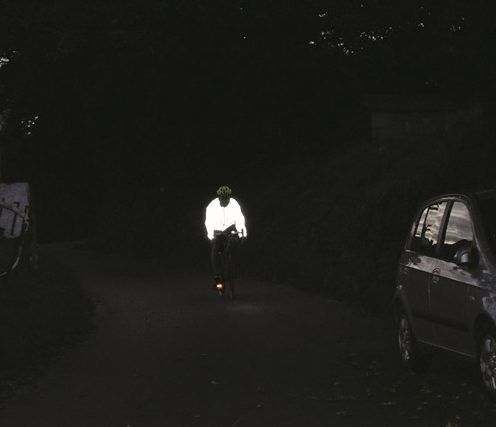
I spoke to the founder of ProViz, Anthony Langly-Smith, to find out what inspired him to create the jacket: "I'd been commuting by bike for about 12 years, and I was seeing lots of people going through Clapham up to London Bridge - on what is now the Cycle Superhighway route - and when I was at the traffic lights I would see three or four other people on bikes. Now there are 30 or 40 people at every turn of the lights. Unless you're actually there you can't quite fathom what a big change that was."
"At the same time there seemed to be a move away from cycling products that didn't just look like builder's jackets. People wanted fitted stuff, waterproof stuff. It started with me and my brother thinking about what our fellow cyclists might need on our commute to work, and has turned in to our business; now we're selling product in Chile, Colombia, China, Korea, Belgium, Denmark, Australia and New Zealand."
Anthony's latest product to come to market, the REFLECT360 range, has been garnering lots of interest with positive reviews on BikeRumor, the Evening Standard, and the Guardian among others. I found it was not just in reviews that this jacket got lots of attention; during our road test other cyclists came up to me at traffic lights to ask where it was from and where they could get one for themselves, astonished by the reflective quality now the nights are growing dark.
"We launched the jacket in February and suddenly we had so many people coming to talk to us, taking photos, wanting to know about the material, wanting to know how this product came about. It was astonishing. The success has bred an entire line; a rucksack cover, a vest, a gillet and a children's jacket."
So what about the jacket itself? How does it work, and what's it like to ride around town in?
The waterproof material is covered with thousands of tiny microscopic glass beads which reflect light, throwing back light that approaches it from any angle. The jacket itself is a well constructed design for cyclists, with taped seams, waterproof zips and pockets, a longer tapered back for good positioning on the bike as well as lots of adjustable seams and flaps to increase or decrease its breathability. It feels strong and sturdy and should last well.
Riding around town I found the jacket fitted well, performed brilliantly in the rain and stood up to everything London's mucky roads could throw at it. Whilst the material is a touch on the warm side, the addition of under arm vents helped me to keep my cool. I'm usually highly sceptical about the sort of claims made about these kind of products, but my reservations about the effectiveness of cycling "safety" kit evaporated too - I did feel noticeably more visible whilst riding around town in the jacket, and I think it would be invaluable on darker country roads.
London's cycle scene inspiring products which in turn help London's cyclists to feel more safe? We like that very much.
The REFLECT360 cycling jacket is available at Evans Cycles, Halfords and most good bike shops, or online directly from ProVisSports here.
Share
07-Nov-14
With 48 hours to go, your voice counts! If you do one thing for cycling this weekend, do this... [ 07-Nov-14 3:08pm ]
You need to send an email to consultations@tfl.gov.uk by Sunday night saying why you want London's new Cycle Superhighways to be built. Doing so is really important and a chance for you to actually make a difference to London. Read on to find out why...
It's been a fast and furious few weeks in the cycle campaigning world, with lots of behind the scenes activity and meetings trying to get as many people as possible to signal their support for the Mayor of London's hugely ambitious "Crossrail for Bikes" cycling plans.
As most of you know, there's been some very cloak and dagger lobbying by some business interests who are desperately trying to kick the plans in to the long grass. With a Mayoral election coming up, delaying these plans means they risk not being built at all. And now there's just 48 hours for you to contribute and make a difference...
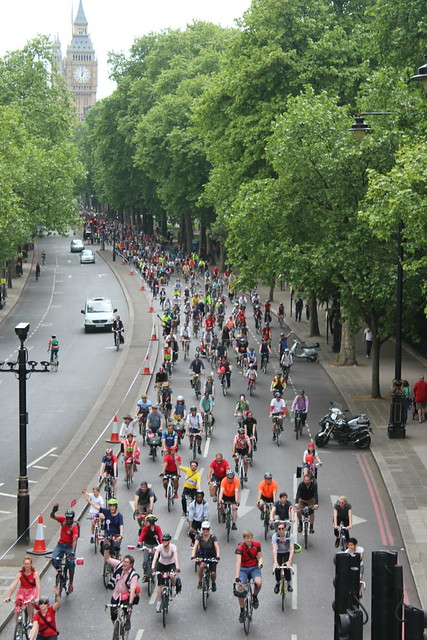 Space4cycling protestors travel down the Embankment, the route of the proposed the east / west cycle superhighway.
These Cycle Superhighway plans are from being won. There's bad news to come with Westminster Council proposing all sorts of mad ideas like painting bike lanes down the middle of the Mall as some sort of Cycle Superhighway alternative. In short, they'll do anything to avoid having to address the sinful cesspit of shame that is the current state of Parliament Square, where the route is currently planned to go. Later today (Friday) the CBI will submit their response to the consultation. I've seen a draft and I'd be charitable if I were to say that it is hopelessly outdated in its approach to how cities really work.
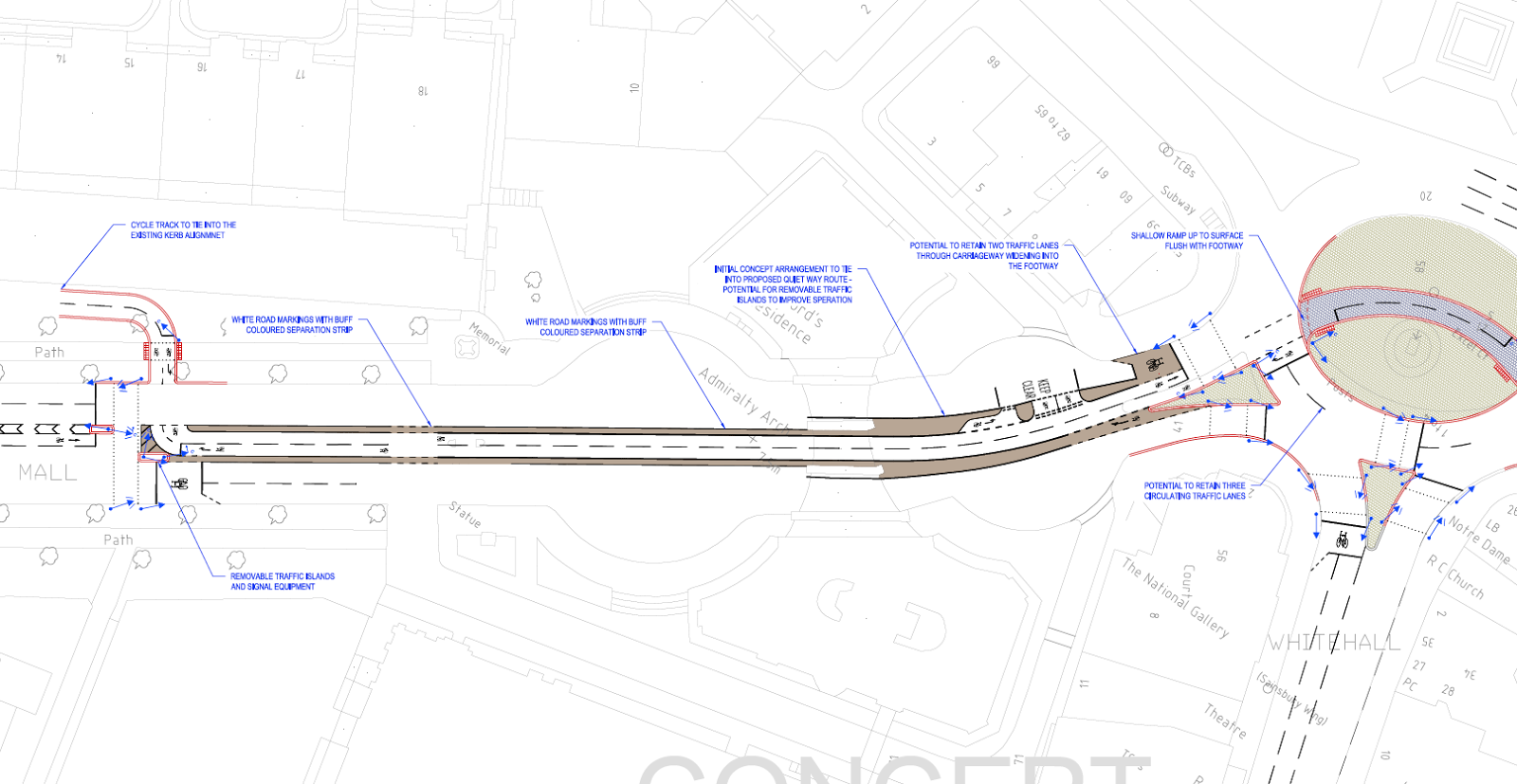 Westminster's bonkers plans to send cyclists down the middle of the Mall with fast moving traffic either side of a painted strip.
Of course, this late flurry of negative attention is not a mere coincidence. With 14 cyclists killed on London's roads in 2013, six in a two-week period this time last year, no-one wants to be seen to be publicly saying they *don't* want to see improvements (real improvements) for people on bikes. So in a classic lobbying tactic these last minute submissions are coming in right on the line in the hope that everyone will go home for the weekend and not notice the "against" voices quietly doing their thing.
It sounds so sinister, doesn't it? Like some kind of crazy conspiracy theory. I'm fully aware of this, but this is the score with lobbying in London it would seem...
Luckily, the wider business community in London is much more enlightened. CyclingWorks.London have been collating positive responses from organisations to the Cycle Superhighway plans and they've been inundated - almost overwhelmed - with businesses saying "Yes" and "Build it, Boris" to these plans. This week alone the University of Central London, the English National Opera, the Civil Aviation Authority, the City of London Police, Universal Records and many others have piled in with their support, joining Microsoft, Unilever, Deloitte, the Royal Bank of Scotland, Olswang LLP, Herbert Smith and many, many others.
 Just some of the very long list of business names who support the Mayor's Crossrail for Bikes.
The devisions between those "for" and those "against" led Evening Standard journalist Ross Lydall to go so far as to say there was only a "50/50 chance" of the Cycle Superhighways ever being built.
And with the consultation plans closing on Sunday, now it is your turn to get involved. If you can find twenty minutes to add your voice as a London cyclist, then you'll have strengthened the chances of these ambitious bike tracks being built and the Mayor delivering on his "Go Dutch" election promises.
You can go through the step-by-step consultation on the Transport for London website, which you can find here.
Alternatively, you can send an email to consultations@tfl.gov.uk with the subject matter "East West and North South Cycle Superhighway consultation" with you own comments.
Perhaps you want to explain how you'd like to bring your kids in to town by bikes safely? Or maybe you are particularly excited about a certain section of the route and the wider calming impacts it will have, like at Parliament Square?
Maybe you work on or near the route and this will make your commute to work a safe and inviting option all year round?
Perhaps you have other reasons you'd like to see these routes built; maybe you voted for the Mayor on the back of his "Go Dutch" promise?
Maybe you'd like to send a note supporting the broader concept, or perhaps you love a particular part of the scheme like a certain road closure or safe space for cycling where currently there is none. You can make critical suggestions for improvements too, of course (I've asked TfL to ensure they use angled curb stones to make sure cyclists can use the full width of the lanes.)
The point is, the agenda is set by those who show up and now more than ever before we need the real voice of Londoners to be reflected in this consultation.
So please, take the time to pen a note to Transport for London this weekend and help to make the city where we live a better place for everyone.
Share |
i b i k e l o n d o n [ 2-May-16 1:02pm ]

Goodbye ibikelondon blog, hello Strategic Cities [ 02-May-16 1:02pm ]After six years of incredible cycling experiences, ibikelondon blog is coming to a close. I want to highlight where I have been, where I am going, and to say thank you for coming along for the ride.
I began writing about riding in London in 2009. I hardly expected then ibikelondon would become such a big part of my life. My first post had just ten readers, and included a photo of me participating in a Skyride on a very rusty, very purple second-hand bike. Over 500 blog posts later and thankfully my wheels have improved - and so has London.
If you know me via Twitter you'll have seen clues that change is coming. Starting any new venture is daunting, but I've been preparing to make this move for a while. I worked hard on building this, I'm excited to share it with you, and I hope you'll be as excited using it as I have been creating it. @markbikeslondonwill shortly become @StrategicCities, and you'll be able to find me at my new website; strategic-cities.com
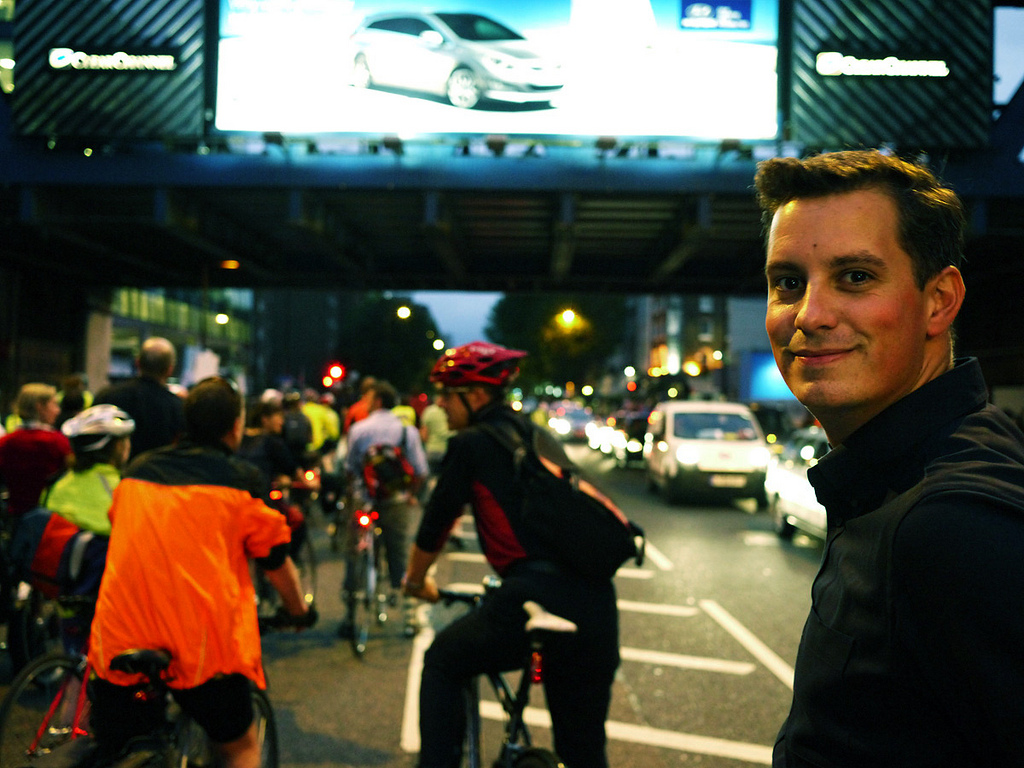 With some of you on Blackfriars Bridge in 2011.
I'll still be looking at how people travel, and how cities can become increasingly efficient and liveable, but my focus will be wider than just the bike. I've come to realise bikes are the "canary in the coal mine" of liveable cities, and there are many issues - childhood freedom, planning, obesity, transport - which are all part of the same urban matrix we call home, and which deserve further scrutiny.
StrategicCities will also see me start a new career. I'll soon be delivering training for urban professionals and communications analysis for city leaders. Why? I've been fortunate enough to work in the media from the inside - as well as influence it from the out - and my experience has shown me that the way we convey messages is more and more important in delivering difficult projects. You only need to look at the vociferous - and frequently hysterical - anti-bike lane sentiment we've experienced in London. Communicating well in a difficult environment is not a skill which comes naturally to most, but preparation goes a long way in helping to navigate that minefield. My first web-based training seminar; "Achieving Change In A Hostile Media Environment" takes place in May and registration is open. If you want to keep up to date about further events and training then you can sign up to the Strategic Citiesmailing list, or connect with me on LinkedIn.
ibikelondon has given me incredible opportunities. I've given evidence at Parliament, lectured at the National Conference for Urban Design at Oxford University and written for national newspapers about cycling and cities. I even appeared on Newsnight and Russian state radio. Blogging takes (a lot of) time, effort and patience, but I've had fantastic experiences by bicycle along the way as well; from riding through backstreets in Shanghai, to chasing the Tour de France through Belgium in a helicopter. More amazing things than I could ever have imagined when I wrote that first post back in 2009.
There have been tough times, too. I've stood beside dangerous junctions as grieving relatives mark the site of a loved one's death too many times. Too often I've written about poorly designed, poorly driven lorries in London, and the fatal problems they present. And too often I've written how someone has died on an appallingly designed stretch of road which authorities had been warned in advance would lead to fatalities.
Two terrible weeks in 2013 saw six London cyclists lose their lives in rapid succession on our roads. Those missing riders marked a shadow for a long time afterwards, when the bus seemed more appealing than the bike, and more likely to deliver me to work alive.
The "Tour du Danger" around London's 10 most dangerous junctions for cyclists. Here the ride is seen outside TfL HQ on Blackfriars Rd - now the site of the north / south cycle superhighway. London's anger at those deaths, and others, helped to spur our cycling community on. This helped to achieve genuine political commitment and action from Mayor Boris Johnson. Protests on Blackfriars Bridge and around dangerous junctions lead to really meaningful change. Hours of meetings with politicians and their advisors helped to guide policy and new street designs. But it should never have taken so many deaths for this process to start.
Now we're seeing the result of that commitment with hard-won bike tracks and re-designed junctions appearing across London, most contentiously along the Embankment. Credit where credit is due; the North / South and East / West Cycle Superhighways is going to change the way we cycle in the city, and for good.
But resistance was ferocious, well-organised and - in the case of the taxi lobby and CanaryWharf Group - incredibly well-funded. Those same opposing forces are still out there, making their backwards-thinking grievances an issue for the next Mayor of London.
People who want a liveable London must remain focused (and angry), and Mayors must not be afraid to be bold. Do not underestimate the change that committed citizens together with committed leaders can bring about.
I recommend you to the London Cycling Campaign and their Sign4Cycling Mayoral target, and to my fellow bike blogger Danny, at Cyclists In The City, who so often has been "a partner in crime" in campaigning escapades.
So it's goodbye ibikelondon blog, and hello to exciting, new Strategic Cities. Through the years what has often kept me going have been the wonderful interactions - both online and off - with people like you who have read my words here. Thank you. I hope you'll come with me on my new adventure, and that there are many safe and wonderful bike rides ahead for us both.
Share
Cyclists are out of control! (And why that's okay) [ 23-Sep-15 7:48am ]This compelling animation by Lucas Brailsford (whereislucas.com) looks at the high level of "non conformist behaviour" among cyclists in the Netherlands. It's not the sort of narrative you'll usually hear from cycling campaigners - it is hard to be persuasive with Governments and decision-makers if you're also prepared to admit that the people you're championing regularly jump red lights, ride home drunk or generally behave 'badly'.
There's a concept in the Dutch legal system of tolerating lightly illegal behaviour, or changing the framework so that it is no longer illegal. Dutch policy famously allows euthanasia, has legalised prostitution and the use of marijuana, and was the first country in the world to introduce gay marriage. The pragmatic approach seems to be "tolerate things, rather than prohibit them, force them underground and loose control."
When a cyclist barreling down the pavement in the dark nearly knocks you over this pragmatic approach to tolerance might seem frustrating. Likewise if a prostitute sets up (knocking) shop next door. There's no doubt that on an individual level these things could be highly frustrating, or even dangerous, but collectively society just doesn't see it as such a big deal.
Criminal tearaways, no doubt about it...
But this concept of 'turning a blind eye' is not as foreign as we might think. Watching Lucas' video from an emerging cycling culture is a real eye-opener because the non conformist behaviour of some cyclists seems a bit wild. But if a similar video was made here, about our prevalent transport users, you'd find the same. Non conformist behaviour among motorists includes speeding, parking illegally, driving drunk, riding without insurance and knocking down other road users. You don't believe that as many people in cars flout the law as regularly as cyclists ride drunk in Amsterdam? Just try driving around your local town without once exceeding the speed limit and see how your fellow road users like it..
There's no doubt in my mind that good behaviour helps to encourage a literally civil society. But in terms of fixing things, society only tries to resolve the problems it identifies as being a problem. The cyclists of Amsterdam might seem to us to be a bit out of control, but when it comes to non-conformist behaviour I know which sort I'd prefer any day...
Share |
One road at a time, London is making cycling progress - and it will change everything! [ 14-Sep-15 8:30am ]
London has been changing over the summer. Whilst the city was on holiday, Transport for London's contractors have been out in force building bike infrastructure on a remarkable scale. Boris Johnson confirmed he would go ahead with his new Cycle Superhighway plans in January of this year, and now we're seeing the first results on the road.
Big construction projects inevitably cause short-term congestion whilst underway, but it is worth remembering the astonishing level of support for the new Cycle Superhighways and the long-term gain they'll bring. The nine-week public consultation on the plans saw an overwhelming 21,500 responses from individuals and business organisations, with 84% in overall support of the plans. A YouGov opinion poll taken during the consultation found 73% of Londoners supported the Cycle Superhighways, even if it meant taking a lane of traffic away. Over 160 major employers, including Deloitte, Coca Cola, Unilever and others came out in support of the East / West Cycle Superhighway which is currently being built on the Embankment.
A quick ride up the finished section of the East / West Cycle Superhighway along the Embankment, courtesy of @CycleGaz
There has been opposition, of course, namely from the old guard of the taxi lobby (hello, LTDA, you scoundrels!) so much of which has been thinly-veiled anti-cycling sentiment. Construction of the Crossrail train project has seen entire streets closed off in central London for years (as opposed to just months), but no one seems to be complaining about that...
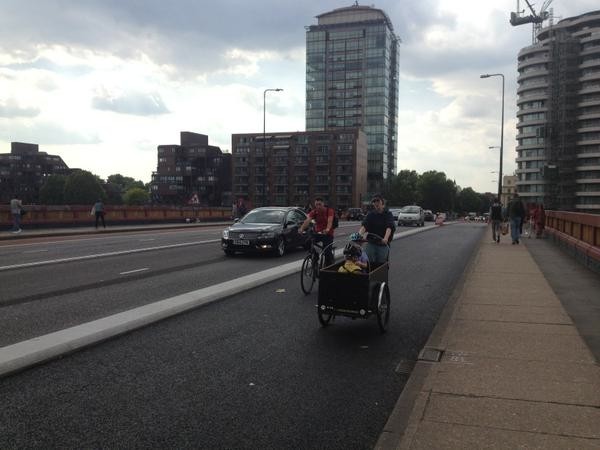
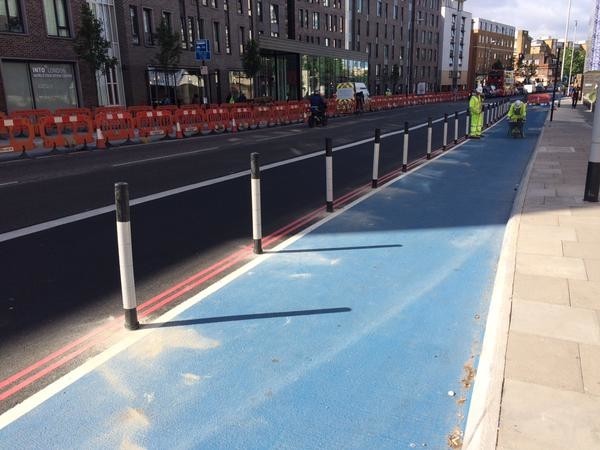
Vauxhall Bridge (2 way track) via @AsEasyAsRiding and segregation wands on the Whitechapel Rd (apologies to whoever I saved this photo from, I can't remember who it was!)
The changes afoot are not just along the route of the East / West Cycle Superhighway. At Oval, CS5 is being upgraded to provide full segregation, including around the terrifying Vauxhall Gyratory and over Vauxhall Bridge. In East London the killer CS2 is also getting an upgrade, with full or semi-segregation being introduced on a route that was previously literally just dirty blue paint and a lot of wishful thinking.
 Newly Hollandised Waltham Forest village! Just look at all that anti-driving economic activity going on(!)
Cycle tracks alone can't change a city in to a bike riding paradise. You also need balanced residential zones where local streets are set free from the tyranny of rat running and speeding traffic. The Waltham Forest Mini Holland is just such a project and is now beginning to take shape - but only because of the diligent work of local residents in the face of vociferous NIMBYs who wish to retain their right to drive 150metres to the local shops... There's a street party on Orford Rd today (Monday) from 3PM to celebrate the completion of the first stage of the project, if you're in the area.
As the London Cycling Campaign rightly point out, there are growing pains which need to be resolved in some places, and that's to be expected with innovation and change. Meanwhile, progress presses ahead with construction of the North / South Cycle Superhighway in central London chalked up to start in autumn (check here for details)
But with summer almost over and the city's streets transformed whilst everyone has been away, the pace of change seems unstoppable. The old "blue paint and optimism" superhighways - despite their very obvious limitations - still saw a leap in rider numbers of a minimum of 25%. When these new safe and separated routes open to the public we'll see a torrent, a deluge, a flood of new riders using them, and it's going to change London completely!
Share |
Get ready for racing on Regent's Street as a new Tour of Britain route comes to London! [ 09-Sep-15 8:30am ]It's no secret, I love the Tour of Britain! I like the smaller scale of it compared to the Grand Tours of Europe, the opportunity for emerging riders to taste success, and of course the route through green and pleasant Great British Countryside.
But I've always felt the final stage - right here in London - has always been a bit of a let down. Yes, you get the finish line photo of racing in front of Buckingham Palace, but the rest of the day is spent riding up and down the Embankment and Upper Ground which makes for a dull stage that is not very exciting for spectators.
So I'm thrilled to see that this year's final stage has a new route in our beautiful capital - and it's all because of London's everyday cyclists! Because of construction work on the Embankment to build the new East / West Cycle Superhighway the Tour can't ride there. So in 2015 it is adopting a new route, which promises fast down-hills on Haymarket, tight corners around Trafalgar Square, and racing up and down magnificent Regent's Street which is, in my opinion, the most beautiful street in the world (ESPECIALLY when it is closed to traffic!)
The final stage comes to London this Sunday the 13th of September, heralding the end of a fantastic summer of cycle racing. The start and finish line is just south of Piccadilly Circus, and the riders will make a three-pointed loop of Regent's Street, Whitehall and the Strand, passing some of London's most famous buildings and attractions along the way. It is free to spectate and makes for a fun day out for all the family. The riders are fast, but you might even catch a glimpse of favourites Sir Bradley Wiggins, Mark Cavendish, Alex Dowsett and Andre Greipel, or even local boy Tao Geoghegan Hart from Hackney racing for British Cycling's development team.
Seeing as the stage is hosted and paid for by Transport for London (did anyone check the balance of the cycling budget recently?) Londoners might as well get their money's worth and have a nice day out of it...
All the details of the London stage can be found on the Aviva Tour of Britain website here. The beautiful picture of Piccadilly Circus featured in this post is by artist Will Barras and was specially commissioned by cycling website Rouleur, where it is available for purchase.
Share |
"We all cycle" - the rise and rise of proud cycling cities [ 05-Aug-15 9:24am ]
I'm spending the summer in the Netherlands, and have been learning so much about cycling in their cities. What has become clear to me is that Dutch cities are increasingly competing for a share of the visitors who come here to learn about the Netherland's cycling and planning culture. Utrecht, host of this year's Grand Depart, is not alone in this - note how this incredible video touting their cycling achievements is presented in English rather than Dutch and really tries to "show off" the city as a beautiful place to visit (which it is, I hasten to add).
I think this is an interesting phenomenon for two reasons; firstly the internet is being recognised by cities as an effective tool for reaching and inspiring many people around the world, getting them excited and clearly demonstrating exportable concepts. There's also a clear attempt here to attract high-spending tourists who are on learning-based trips. In short, visiting cities to find out how they work has become a mini industry of its own!
What do you think? Have you spent time visiting cities in order to learn and find out what you can do in your own city? Do videos like this make you want to visit somewhere more? Could pro-cycling messages like this help to make the case for cycling in the city where you live?
For more information on cycling in Utrecht, visit utrecht.nl/we-all-cycle/
Share |
Bike bans in pedestrian zones make no sense, but not why you think [ 28-Jul-15 8:30am ]Last week I visited the Dutch city of Zwolle, the Netherlands City of Cycling in 2014. It's a pretty, historic city surrounded by countryside and has a pedestrianised heart. But what I saw there made me reconsider banning bicycles from pedestrian-only areas, but not for the reasons why you might think.
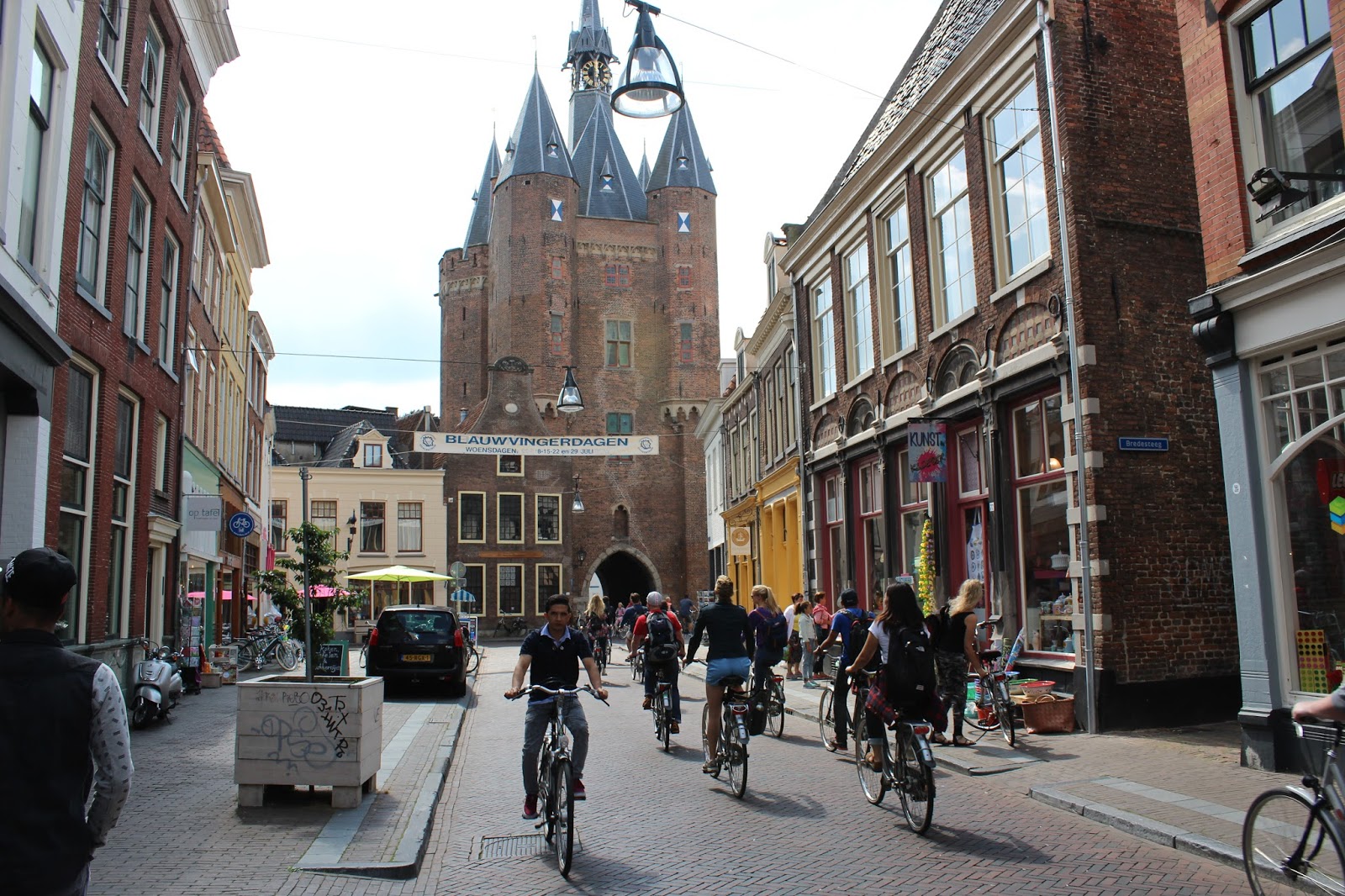 Many cities - both in the UK and elsewhere - have pedestrian zones where people using their feet to get around can relax in a safe environment where they don't need to be worried about being knocked down by speeding cyclists, or any other traffic for that matter. Where there are lots of people, especially around shops, this has always made sense to me.
The West Country town I grew up in had a large pedestrians-only shopping area, where you were expected to lock your bicycle on the perimeter and walk in. Even as a young man I remember being approached by security guards and given a telling off for pushing my bike through.
Things were different in Zwolle. I'm not sure if bikes were technically permitted but I saw many in the pedestrian area. A few were being slowly cycled to available bicycle parking, but the majority of them were being pushed. I saw two friends; one woman on a bike and one man on foot, making a journey together through the city centre (photographed, below) Would their journey have taken place if a strict bike plan was in place?
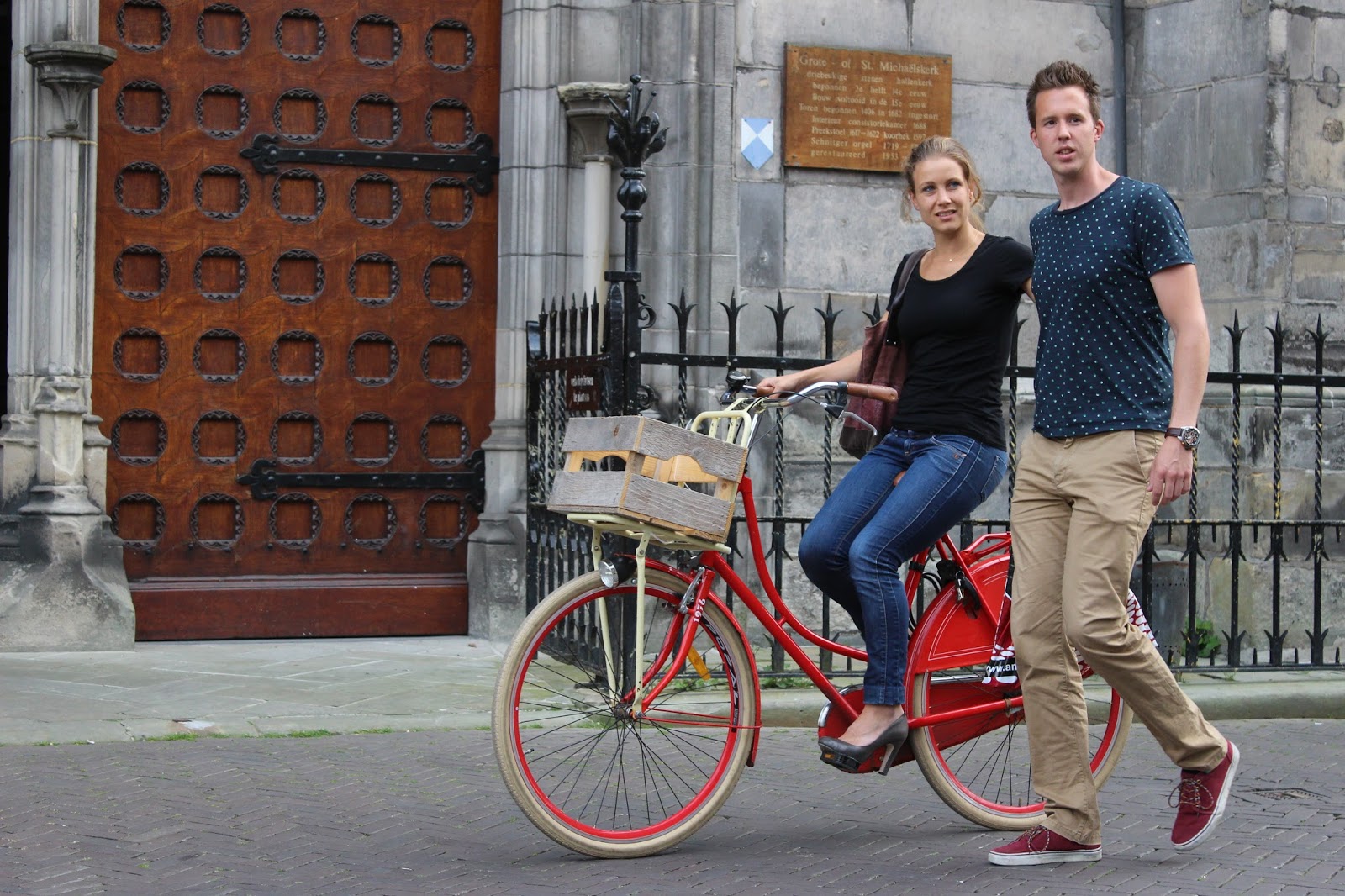 An older woman was using her bicycle as a shopping trolley, filling her basket with goods she brought as she pushed the bike from store to store.
I remember hearing Danish urbanist Jan Gehl recount a story about his mother who, when she became too frail to cycle, would still walk with her bicycle - it was her dignified access to mobility, without having to revert to using a walking frame.
Pedestrians are important, and in pedestrian areas should always come first. As with much in life however the situation is not black and white; people have a complex approach to their own mobility. I wouldn't want to see cyclists riding at speed through shopping areas, or obstructing access with mountains of parked bicycles, but I realise there's more to bicycles in pedestrian-only areas than initially meets the eye.
P.S For more wild and reckless behaviour like using a bike in a pedestrianised area, see this film by the City of Zwolle which features their Bike Director getting a backie from various residents - something which landed London Mayor Boris Johnson in hot water this week and for which he was slammed by the CTC! (Film in Dutch only, sorry!)
Share |
Why there's more to successful cycle paths than just building cycle paths [ 20-Jul-15 8:30am ]Wherever you are in the UK, you're never too far from a so-called "recreational bike path"; a family-friendly cycle route separated from the roads and often built on converted railway lines. Thanks largely to the work of the charity Sustrans these routes criss-cross the country. Some are wildly popular, both with long-distance touring cyclists as well as with families out for a ride and a day out by bicycle.
In previous discussions cycling friends of mine have denigrated these paths, describing them as "choked", "slow" and in one instance "stuffed with nodders on bike-shaped-objects." But I take a different view. The Mums and Dad you find hitting these trails in the school holidays might not ride the best bikes, or even self-define as "cyclists", but when it comes to rehabilitating the bicycle with the British public every journey counts.
In order to encourage adults to start cycling again (often for the first time since their teens) we need to make the experience as simple as possible. What's more, you shouldn't have to make a large up-front investment before deciding you'd like to try riding a bike once more. And that's where I think we are going wrong with our recreational cycle paths here in the UK. It turns out there is more to building successful cycle paths than just building cycle paths.
Fun in the sun on the Venice Beach bike track, Los Angeles.
On a recent trip to Los Angeles I was astonished to find that there - in the very heart of the world's most car-sick city - was a resoundingly popular recreational bike path. Running along the length of Venice Beach, the track itself was smooth, wide and separated from pedestrians. It passed Venice pier, Muscle Beach and other interesting spots and on the Friday afternoon I visited it was packed with people of all ages cruising up and down on bikes. Roller skaters, cycling ice cream salesmen and shady palm trees helped to lend a festive air. We turned off the path and rode for a few blocks away from the beach to see if the whole district was a cycling nirvana, but found ourselves alone. The people on bikes were stuck resolutely to cycling up and down on their safe cycle path. I watched the riders, and started to think; what made this path such a success?
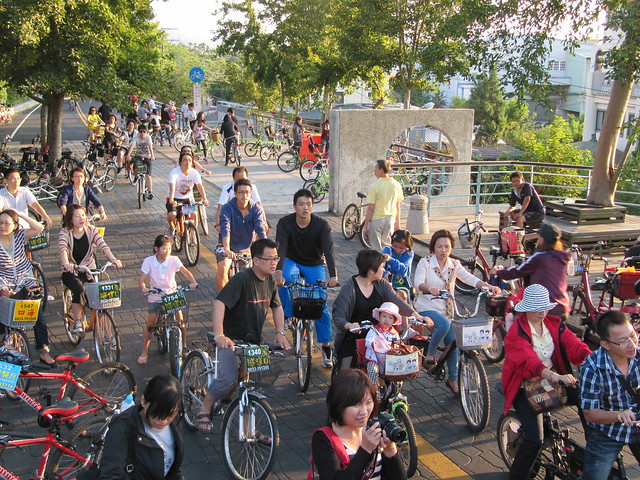
A few years ago I was lucky enough to cycle in Taiwan (check out this ride from the capital, Taipei) In the city of Taichung the local government have converted a disused railway to create a cycling route which stretches for a number of miles along the river and in to the country. There I saw whole families (some on only one bike!) out enjoying themselves for the day on hired bicycles. There were tandems, and cargo bikes and bikes with baby seats. There were electric pedal-assist bikes and bikes with sound systems and bikes which looked like small family cars. The trails were packed with riders, stopping off at small track-side cafes for drinks and snacks or hiring another bike when they got bored with the other at one of the many hire shops. They even had ride-in toilets so you didn't have to worry if you'd not brought a bike lock with you! It turns out that the same amenities in Taiwan which make this path work are the same amenities you find in Los Angeles, and it's what we are lacking on our British paths.
 Ride-in toilets for security conscious cyclists who don't have a lock.
In Los Angeles all of the cycle hire stalls were run by the same business, meaning bikes could be dropped off at any point along the route. If people got tired of riding they could simply drop off the bike without having to ride back, or they could do a one way journey with the wind behind them without having to contemplate a strenuous return trip. The ice cream salesmen on bikes added a further level of amenity, whilst well-observed and safe cycle parking clusters were positioned at interesting points along the route meaning people could lock up their bikes with confidence.
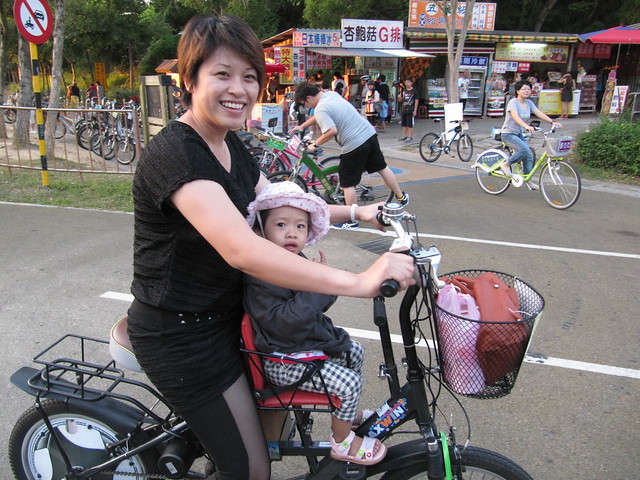 Small businesses selling food, drink and hiring out bicycles line the Taichung bike path.
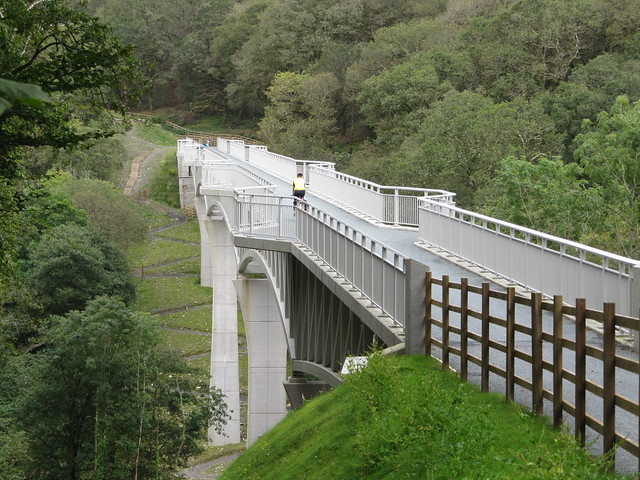 Gem Bridge, near Tavistock. Beautiful, and somewhat empty of cyclists.
In Taiwan, the bike hire was cheap and plentiful and once again right on the path itself so that the ride started in pleasure straight way. On a recent trip to Devon I cycled on the impressive Gem Bridge, a beautiful structure which fords a deep valley and connects two newly-opened sections of converted railway line. But in order to access the path from the nearest town, Tavistock, was a torturous route crossing main roads and down little alleyways. It may not have the best eco-credentials, but people need to have "park and play" access to these routes in order for them to be a success.
Of course, these successful cycle routes had all of the usual things you'd expect, such as smooth surfaces, good sign posting, and safe bike parking. But there's a role for business - such as bike hire and small cafes - in making better recreational cycle routes that we don't utilise enough in the UK. It helps to create jobs, keep money in the local economy and enable rehabilitating bicycle journeys for people who wouldn't usually ride and need their bike served up on a plate. What's not to like?
Share |
09-Jul-15
In previous discussions cycling friends of mine have denigrated these paths, describing them as "choked", "slow" and in one instance "stuffed with nodders on bike-shaped-objects." But I take a different view. The Mums and Dad you find hitting these trails in the school holidays might not ride the best bikes, or even self-define as "cyclists", but when it comes to rehabilitating the bicycle with the British public every journey counts.
In order to encourage adults to start cycling again (often for the first time since their teens) we need to make the experience as simple as possible. What's more, you shouldn't have to make a large up-front investment before deciding you'd like to try riding a bike once more. And that's where I think we are going wrong with our recreational cycle paths here in the UK. It turns out there is more to building successful cycle paths than just building cycle paths.
Fun in the sun on the Venice Beach bike track, Los Angeles.
On a recent trip to Los Angeles I was astonished to find that there - in the very heart of the world's most car-sick city - was a resoundingly popular recreational bike path. Running along the length of Venice Beach, the track itself was smooth, wide and separated from pedestrians. It passed Venice pier, Muscle Beach and other interesting spots and on the Friday afternoon I visited it was packed with people of all ages cruising up and down on bikes. Roller skaters, cycling ice cream salesmen and shady palm trees helped to lend a festive air. We turned off the path and rode for a few blocks away from the beach to see if the whole district was a cycling nirvana, but found ourselves alone. The people on bikes were stuck resolutely to cycling up and down on their safe cycle path. I watched the riders, and started to think; what made this path such a success?
A few years ago I was lucky enough to cycle in Taiwan (check out this ride from the capital, Taipei) In the city of Taichung the local government have converted a disused railway to create a cycling route which stretches for a number of miles along the river and in to the country. There I saw whole families (some on only one bike!) out enjoying themselves for the day on hired bicycles. There were tandems, and cargo bikes and bikes with baby seats. There were electric pedal-assist bikes and bikes with sound systems and bikes which looked like small family cars. The trails were packed with riders, stopping off at small track-side cafes for drinks and snacks or hiring another bike when they got bored with the other at one of the many hire shops. They even had ride-in toilets so you didn't have to worry if you'd not brought a bike lock with you! It turns out that the same amenities in Taiwan which make this path work are the same amenities you find in Los Angeles, and it's what we are lacking on our British paths.
Ride-in toilets for security conscious cyclists who don't have a lock. In Los Angeles all of the cycle hire stalls were run by the same business, meaning bikes could be dropped off at any point along the route. If people got tired of riding they could simply drop off the bike without having to ride back, or they could do a one way journey with the wind behind them without having to contemplate a strenuous return trip. The ice cream salesmen on bikes added a further level of amenity, whilst well-observed and safe cycle parking clusters were positioned at interesting points along the route meaning people could lock up their bikes with confidence.
Small businesses selling food, drink and hiring out bicycles line the Taichung bike path. Gem Bridge, near Tavistock. Beautiful, and somewhat empty of cyclists. In Taiwan, the bike hire was cheap and plentiful and once again right on the path itself so that the ride started in pleasure straight way. On a recent trip to Devon I cycled on the impressive Gem Bridge, a beautiful structure which fords a deep valley and connects two newly-opened sections of converted railway line. But in order to access the path from the nearest town, Tavistock, was a torturous route crossing main roads and down little alleyways. It may not have the best eco-credentials, but people need to have "park and play" access to these routes in order for them to be a success.
Of course, these successful cycle routes had all of the usual things you'd expect, such as smooth surfaces, good sign posting, and safe bike parking. But there's a role for business - such as bike hire and small cafes - in making better recreational cycle routes that we don't utilise enough in the UK. It helps to create jobs, keep money in the local economy and enable rehabilitating bicycle journeys for people who wouldn't usually ride and need their bike served up on a plate. What's not to like?
Share |
Now that the Tour de France has left, what else can Utrecht teach us about cycling? [ 09-Jul-15 8:00am ]I'm on a summer trip, making a tour of Le Tour following the riders around Antwerp, Namur, and even riding with the peloton in a race car. It's been a brilliant journey and now I am on my last stage, returning to the scene of the Grand Depart, Utrecht in the Netherlands, to see what this cycling city looks like once the pro riders have passed by.
I've partnered with Ibis Hotels for this trip and all of the staff have been so friendly and helpful. Utrecht was the same; "Of course you can ride today", said the cheery receptionist "It takes more than a bit of rain to stop the Netherlands from rolling!" I looked out the window at the rain blowing in sideways and decided to fortify myself with the fantastic breakfast before I set off, grabbing the keys to a bicycle rented directly from the hotel. The Ibis in Utrecht is just a five minute ride in to the city centre along a pretty canal lined by windmills and old town houses - not a bad start to my day, despite the weather.
The clouds darkened and rain intensified, but this didn't seem to deter Dutch riders who cycled on regardless. Rain coats were pulled out of bags, hats were donned and umbrellas were lifted, making it immediately apparent I was in a totally different cycling situation to the UK. You could ride down the Tottenham Court Road in London at peak time in the rain whilst holding a big umbrella if you wanted to, of course, but I wouldn't recommend it. Here, things are different.
Hints that the Tour de France had recently been this way were everywhere. Shop windows were decorated with bicycles, flags were hung over every street and a statue of the city's most famous daughter - Miffy the bunny - had been put up in the tourism office. Naturally, she was riding her bicycle. The facade of the popular cafe Winkel van Sinkel was decked out in yellow jerseys, too.
But even though the pro riders had left, there's still a festive cycling feel to Utrecht that stems from the many thousands of people on bikes who cycle here every day. I saw small children being carried on their parent's bikes, middle-sized children riding alongside on their own, and teenagers enjoying their mobility and being totally independent.
I have no doubt that all that freedom stems directly from the excellent cycling infrastructure which you'll find all over the Netherlands, but what I was particularly impressed by was how the Dutch don't sit on their hands, but are always seeking to improve things. I went for coffee with Mark Wagenbuur from the brilliant Bicycle Dutch blog. He took me out to a junction on the edge of the city, smiling proudly all the way, that we had last visited together in 2012. Back then, he had described it to me as 'the most dangerous junction in Utrecht' and I was inclined to agree. Cyclists were forced to merge with a lane of fast-moving traffic turning right, and to ride together alongside a metal fence for about 100metres. Just three years later and the situation has entirely changed. Engineers have 'found' the space to continue the cycle track safely through the junction, and the right turning traffic simply waits in a lane of the rest of the road. Of course, it's not a question of 'finding' space at all but simply a choice of what to do with the space that you have and who to allocate it to.
The same junction, above in 2012, as it appears today, below in 2015. Notice how space has been 'found' for the new and safer cycle track without taking the pedestrian's pavement away.
I had been impressed by the new junction, but it was nothing compared to the building project which is nearing completion in the city centre. When I first visited Utrecht the space in this photo was part of a multi-lane city ring road built in the 1970s. All it did was create traffic congestion and bring more cars in to the city centre, where there was no room for them. So the city planners decided to push the ring road further out of the city - to loosen the city's belt, if you like - to create more space for people.
The move has allowed for the total redevelopment of the train station, created space for a new shopping area and offices and very soon the dirt that you see in the photo will be removed and replaced with water, re-connecting two sections of the city's ancient canals.
At the new station the city's cycle racks are being refreshed and new bicycle parking areas are being built. On Korte Jansstraat in the old town, a road which used to be clogged with two lanes of car parking has been re-surfaced in red bricks and the parking spaces moved away. Rather than harming the businesses there, the streets were busy with shoppers and restaurants had laid out new tables and chairs.
This is my third trip to Utrecht and each visit has left me with the same impression; that this is a city rapidly growing, improving itself, identifying the planning mistakes of the past and quietly getting on with rectifying them. It's lively and packed with young people and University students. Better still, it is easily connected to the rest of the Netherlands and Schipol airport by the fantastic national rail network. Utrecht proved with the Tour de France that they know how to throw a good bike party, but if the world's cycling cities were in a race Utrecht would in the break away every day. Why not make a visit to see for yourself?
Share
Tour de France Stage 4: Citadelle de Namur, Belgium [ 07-Jul-15 7:02pm ]After riding in Antwerp and spending the day with the peloton, my tour of Le Tour continues, today bringing me to the Belgian city of Namur. There was a huge gap between the break away and the main bunch, who crawled up the hot, dusty road to the summit of the Citadelle, where I captured this photo.
It was a hugely exciting stage on the cobbles and a dramatic win for Tony Martin. Tomorrow I leave the pro-riders behind and return to the Netherlands to the host city of the Grand Depart, Utrecht, to find out what happens in a cycling city after the racing cyclists have gone. Stay tuned!
Share
In the thick of it. Today I found out what it's like in the middle of the Tour de France... [ 06-Jul-15 11:40pm ]The cyclists ride at breakneck speeds whilst all around them there is ordered chaos; mechanic's cars, radio cars, official cars and of course the infamous publicity caravan. Spectators waive their picnics from the roadside as the riders tear past. Boozey kids run alongside, shouting and jumping up and down. More than a few crowd members get perilously close in the quest for a perfect snapshot to share with friends. I took a ride in the Tour de France, and here's what it's like to be right in the middle of the world's most famous cycling race.
The summers of my youth were always filled with the Tour de France, enjoyed by the whole family as much for the lingering shots of magnificent French scenery as for the riding itself. We cheered on Greg Lemond and talked endlessly about Lance Armstrong as though he were some kind of cycling superman. Looking back it seems like a cycling age of innocence, but I loved all the poetry and drama of a journey around a nation by bike. Not just a journey, but a race no less.
This was all before talk of drugs, "enabling" Doctors, self-administered transfusions and blood bags in the hotel room fridge. Doping cast a deep stain on professional cycling, and it was a long time before I allowed myself to get back in to bike racing. It's all the fault of Mark Cavendish, really. His technical prowess and sheer bravura meant I'd find myself tuning in for the sprints again. Then came Sir Bradley Wiggins. A Brit winning the tour was the stuff of dreams when I was a kid, but then it actually happened. Seeing young rider Simon Yates power to the top of Hay Tor during the Tour of Britain in 2013 meant I was roadside - along with about a million other people - to cheer him on when the Tour de France visited our shores last year.
So when official Tour partner Ibis Hotels got in touch asking if I'd be interested in spending the day right in the middle of the race, they didn't have to ask twice.
The route from Antwerp to Huy was one of the first 'real' stages after the ceremony of the Grand Depart in Utrecht (a time trial) and a flat spin across the green fields of Holland. With Quintana, Contador, Nibali and of course Chris Froome all keen to prove their metal in the initial stages there was plenty of scope for pushing, shoving and hard racing from the off - and the first real uphill finish; the short and steep Mur de Huy. Both Froome and Cavendish were out of the 2014 Tour within the initial 5 stages, so there was lots to prove.
Going to spectate at the Tour is a funny business. You'll stand on a dusty roadside for many hours, and the whole thing flashes past you in a matter of minutes. The cyclists themselves pass in mere seconds. Being stuck in the middle of it all gave me a totally different perspective. The first thing you notice is the speed at which the entire convoy clips along. These boys - all 198 of them - don't hang around. And somewhat paradoxically for cycling the centre of the convoy is a noisy place. There's no elysian wheeling through the countryside here - right behind the cyclists are roaring mechanic's cars, powerful Police motorbikes with sirens, commissaires hurriedly jabbering on their radios, helicopters and not to mention the crowds. Despite the tumult, they do a great job of cheering and shouting at the riders and its surprising how much of what they say is legible. Chris Froome must hear people telling him to cheer up all the time.
Not all of the drama in the peloton takes place at the front of the bunch, either. Domestics - the worker bees of the Tour - are always falling back to pick up supplies from their team cars (themselves zipping along at a steady 40kph or so) and relaying it forward to their team mates. Bidons are hung out of car windows and you watch as the riders grab hold, perhaps for a second more than is sportsmanlike. The team crew and the cyclists amiably chat as though riding next to a tonne of car moving at speed with a man inside shouting at you is the most natural thing in the world. No wonder Britain is doing so well in pro cycling these days.
And what of the Brits? There's Froome of course, and Cavendish who'll be relishing the absence of young German sprinter Marcel Kittel this year. There's eight other British names - compared to last year's four - and this when well-known names like Wiggins and David Millar are past their peloton prime and not in the Tour. Ian Stannard will be working hard to pull Chris Froome safely across the cobbled sections tomorrow, whilst hour-record-grabbing rider Alex Dowsett will be looking for a good ride after fracturing his collarbone earlier this year. Geraint Thomas, Luke Rowe and Peter Kennaugh will be riding for Team Sky under the tutorship of Sir David Brailsford, whilst the 22-year-old Yates twins - Simon and Adam - are racing with Australian team Orica-GreenEDGE and are the riders I'll be watching most closely. Steve Cummings, riding aged 34, will be in a lead support role in his team MTN-Qhubeka. Surely a golden age of British pro cycling if ever there was one?
Along the route, entire communities find themselves making the most of an enforced day off. Their streets, no longer enthral to the motor car, are closed down and become occupied by people again. Kids chalk drawings on to the tarmac. Families put out picnic tables and share food with friends and neighbours. In Tienan we saw a Belgian oomph band keeping a whole village entertained. There's a certain holiday atmosphere which, coupled with sunshine, makes for a wonderful day out.
Today's stage raced along at incredible speed. With nerves in plentiful supply and lead riders keen to establish their position, a crash seemed almost inevitable. When the crash came, with about 60km still to go, it was a big one, leading the race director to temporarily suspend the Tour whilst medical staff dealt with a multitude of serous injuries. Yesterday's Yellow Jersey winner, Fabian Cancellara, completed today's stage but has now withdrawn from the Tour after it became apparent he'd broken pieces of his back. White jersey-wearer and young hopeful Tom Dumoulin is also out of the rest of the Tour. Cycling is a tough sport.
The sheer scale of the entire Tour operation becomes apparent at the finish line when you finally see all those riders, all those support vehicles and all those bikes in the one place. It's like a happy cycling chaos, with riders being ushered in to trailers, pursued by journalists, fans, erstwhile bike bloggers and doping control. Masseurs swing in to action, whilst stage host Mayors beam from the podium for the cameras. I can understand why Ibis loves supporting the Tour de France - all those riders, team directors and hangers on (not to mention the spectators) have to stay somewhere. Indeed, some 1,500 hotel room beds are reserved every night of the Tour just for organisers and teams.
Ibis, who have been putting me up in their super comfortable hotels here in Belgium (I love their Sweet Beds and have been sleeping like a baby throughout my trip) decided that it wasn't enough for a cycle racing fan to be allowed in to the thick of the action and had one final surprise in store for me; a transfer to a helicopter about 20kms out from the finish line to watch the peloton from up on high. Watching the bunch snake its way around corners and up hills through the spectacular, green countryside is a memory that will stay with me forever, and I feel exceptionally lucky to have had such an opportunity. Thank you, Ibis, for your support of the Tour, for such a welcoming stay and for an incredible day of cycling I'll never forget!
Share |
Everyone cycles in Antwerp (who knew?!) [ 05-Jul-15 5:21pm ]I'm in Antwerp, Belgium, which will host stage 3 of the 2015 Tour de France tomorrow. I'm here for the Tour (follow my Twitter feed for live updates tomorrow) but hadn't appreciated what a great cycling city Antwerp is.
Home to about a million people its Belgium's most populous city, blessed with a compact historic core which is criss-crossed by a web of tram lines and very good cycling infrastructure. There's tonnes of Tour fans in town, and roadies were out in force riding the route ahead of tomorrow's stage, but I also saw lots of just about everybody else riding a bike as well.
As you'd expect, cyclists share with other traffic on small and quiet roads here, but where volumes or speeds of cars are high the bikes are given their own space. And I was glad to see there was plenty of new cycling infrastructure in place and that it was well maintained; always a sure sign that a city cares for its cyclists.
From the moment you step off the high speed train at Antwerp Centraal (and oh my goodness me, train fans, what a station it is) the fact that you're in a cycling city is apparent - deep in the bowels of the station there's acres of secure bicycle parking, a mechanic's workshop and a bike hire station. There's a suite of city bike share schemes - depending on how long you need a bike for - but if you're just visiting I recommend Fietshaven's Yellow Bike scheme, where you can rent a fantastic bike for a full 24 hours for just €13.
It was great to see the beautiful merchant's houses in the bike and pedestrian-friendly city centre. Cyclists are exempt from having to follow most one-way streets here, and bike parking abounds. But it is not just in the old town that the city has been thinking about bikes. There were acres of heavily-used bike parking outside the nearly-new Berchem Station, and smooth, wide brand-new bike tracks to get you there.
Beneath the river Scheldt, the 1933 Saint Anne's tunnel accommodates people on bike and foot, and allows you to take your bike down the original wooden escalators before a leisurely ride beneath the river with excellent acoustics!
I found drivers to be courteous and interaction between riders and cars seemed friendly. What's more I saw cyclists of all ages out enjoying a summer's Sunday ride. Indeed, the leisurely cycle track that follows the railway south out of the city is so popular it could well do with being made even wider - that's what we call in cycle planning circles "a nice problem to have".
Antwerp had never been on my list of places to visit before. I knew it was here, of course, and that it was really just a short trip by train from London. I had a vague idea that it was famous for diamonds, and shipping, but that was about it. Well, more fool me. Antwerp punches above its weight; both as a cycling city and as a destination in its own right. I couldn't think of a nicer weekend away than riding around here by bike.
For more info on cycling in Antwerp go to Visit Antwerp.
Check LeTour.com for a profile of tomorrow's stage departing from Antwerp.
You can get to Antwerp via the Eurostar in about two hours, with tickets from £80.
Share |
Utrecht welcomes the Tour de France but what's the legacy for a city that already cycles? [ 28-Jun-15 8:30am ]It's a year since the world's greatest cycle race kicked off in Britain and 'Tour fever' swept the country. From the hills of the north York moors, to the streets of London, millions turned out hoping to catch a glimpse of their favourite Tour de France rider flash past.
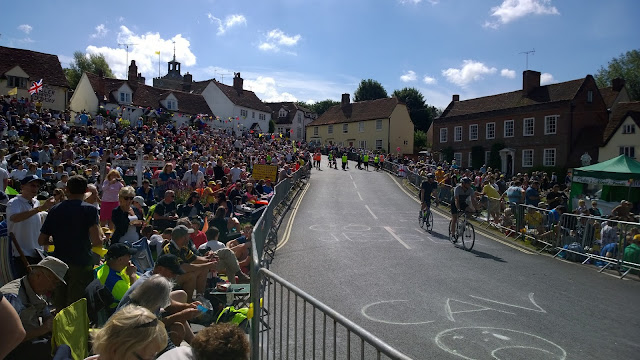
Thousands of spectators packed the tiny Essex village of Finchingfield to watch Le Tour pass by in 2014. With roads closed for miles around, most arrived by bicycle (including me!)
Everything has to have a "legacy" these days (thank you, London 2012) and the Grand Depart in Britain was no exception. Echoing last year's route, members of the public can now emulate their cycling heroes and ride Britain's hills alongside pro riders in the Tour de Yorkshire, encouraging more people to take to their bikes. There was even a Knighthood for Grand Depart organiser Gary Verity.
This Saturday the Tour de France is heading north once more, this time starting in the Dutch city of Utrecht. Home to canals, festivals and Miffy the bunny, it's a compact and charming university city stuffed with cycle tracks and people on bikes. So, in a city that already has a mainstream cycling culture, will the Grand Depart be all of that big deal for the Dutch?
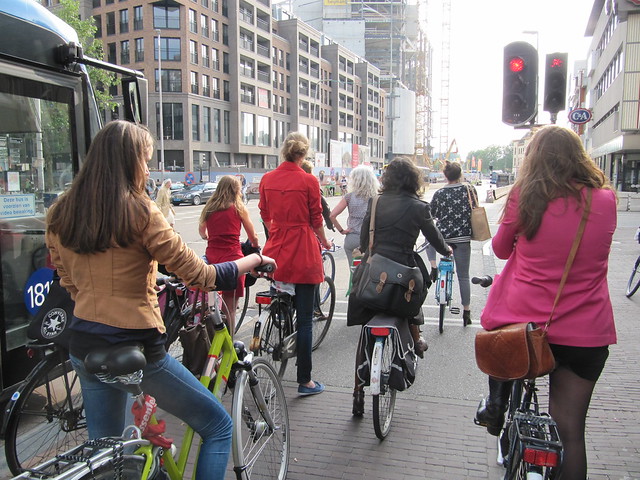
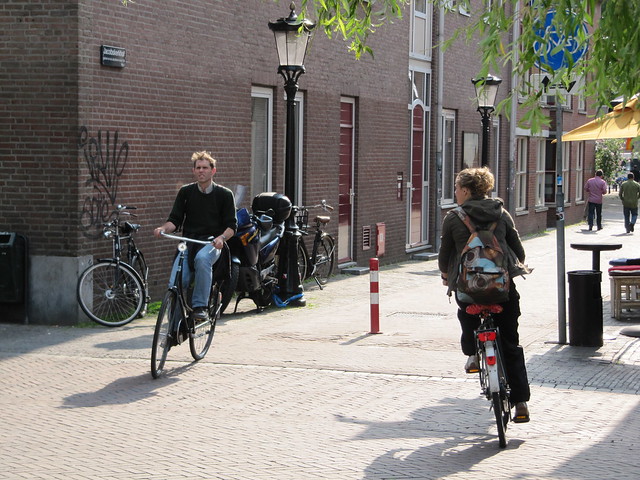
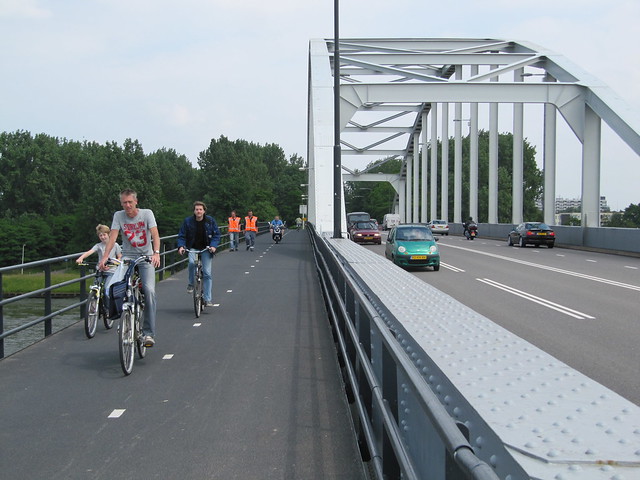
'Cyclists' riding in Utrecht, where the Tour de France will begin this weekend.
I've heard cycle campaigners on both sides of the equation disparaging sports cycling in mass cycling countries. On one hand, the argument goes that sports cycling is all well and good but it is not the "right kind" of journey by bike that cities so desire. On the other, some dedicated roadies discredit cycling provision in case it detracts from their right to ride as quickly as they can. I can see merits in both arguments, but on the ground in successful cycling cities the reality is very different.
Sports cycling is alive and well in the Netherlands (as multi-time world champion and Olympic gold medallist Marianne Vos and 2014 Tour de France stage winner Lars Boom attest) and there is no shortage of people pulling on their lycra on a Saturday morning to head out for a long spin in to the country.
The Dutch use bikes like we use cars and buses; it is an everyday and ordinary activity. So it seems perfectly natural that their language makes a distinction between 'being a person who uses a bike' and 'being a cyclist'. A fietser is someone who uses a fiets (a bicycle) whereas someone with all the kit and the fancy sports bike is called wielrenner, literally a 'wheel runner'. When the Dutch say cyclists don't wear helmets or special gear they mean it sincerely as 'fietser' is only ever a description of someone using a Dutch bike going about their day in a very ordinary way. This is not to say sports cyclists don't exist in the Netherlands and people aren't out there in all their kit putting in the miles.
As this video by Mark from the always excellent BicycleDutch blog demonstrates, the cycle tracks of the Netherlands are home to plenty of wielrenner. The reason you don't see them so much in bike blogs and photographs about the country is that they are somewhat obscured by the everyday and ordinary fietser all around them, much as Britain's sports cyclists are overwhelmed by the everyday and ordinary car journeys going on around them.
I can't help but feel that if we had the same linguistic distinction here in the UK, perhaps Transport for London wouldn't have dipped in to the cycling safety budget to the tune of £6million in order to host the Tour last year, instead of spending that money on making roads safer for bike riders of every hue. (Rumours abound that TfL bosses, keen to spend the cycle budget on anything other than actual changes on the road, are keen to lure the Grand Depart to London again soon) If we had the same linguistic distinction between cyclists and cyclists as the Dutch do, perhaps there might be a clearer understanding of what is needed to bring about those everyday and ordinary journeys by bike?
Utrecht is a beautiful energetic cycling city and I have no doubt it will give Le Tour a fantastic send off this weekend, heralding a summer of brilliant cycle racing. It would be interesting to see - once the professional wielrenner have wheeled out of town - how Utrecht carries on being an everyday and ordinary successful cycling city; it could be a 'legacy lesson' for us all.
Share
22-Jun-15
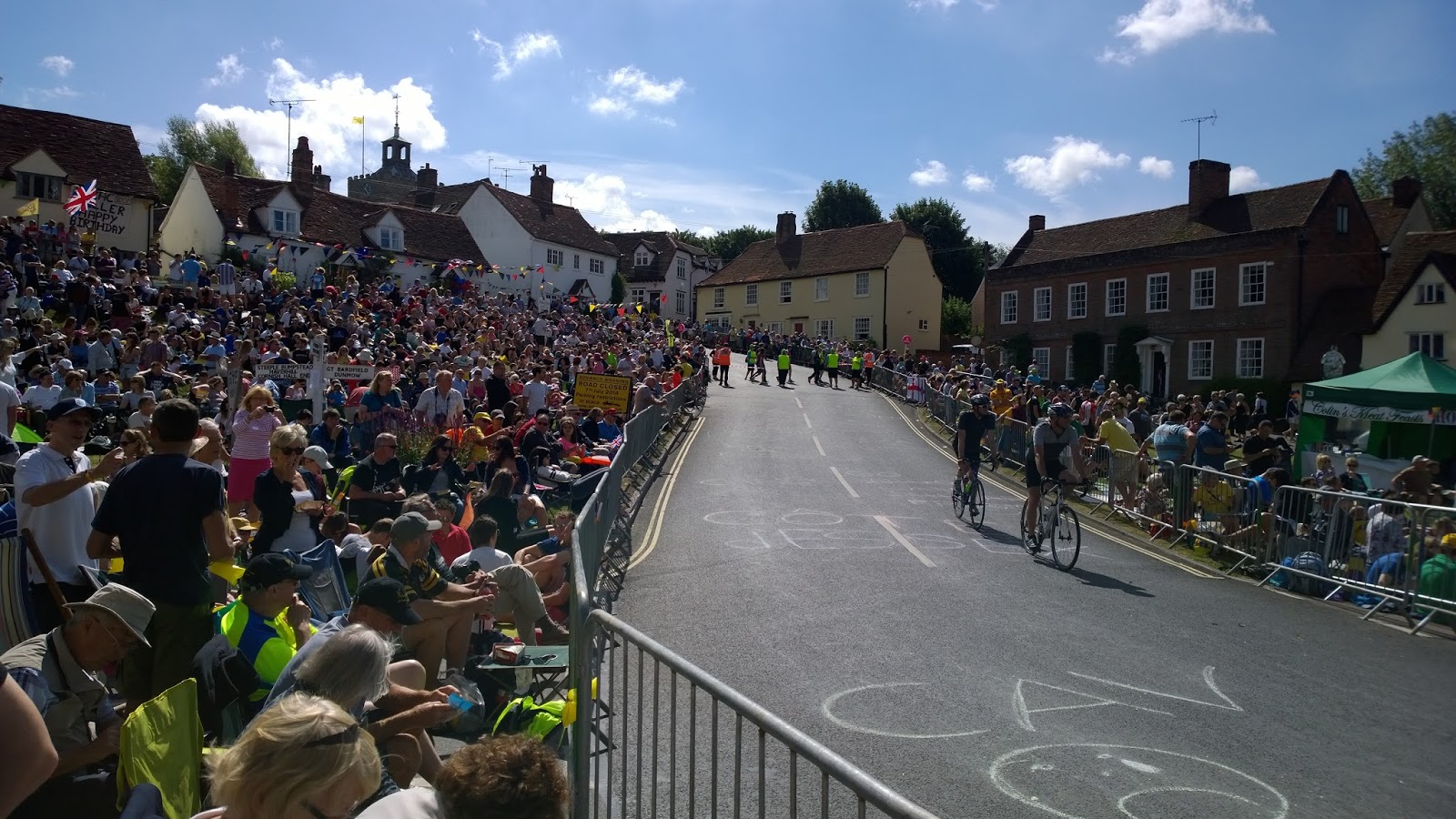
Thousands of spectators packed the tiny Essex village of Finchingfield to watch Le Tour pass by in 2014. With roads closed for miles around, most arrived by bicycle (including me!)
Everything has to have a "legacy" these days (thank you, London 2012) and the Grand Depart in Britain was no exception. Echoing last year's route, members of the public can now emulate their cycling heroes and ride Britain's hills alongside pro riders in the Tour de Yorkshire, encouraging more people to take to their bikes. There was even a Knighthood for Grand Depart organiser Gary Verity.
This Saturday the Tour de France is heading north once more, this time starting in the Dutch city of Utrecht. Home to canals, festivals and Miffy the bunny, it's a compact and charming university city stuffed with cycle tracks and people on bikes. So, in a city that already has a mainstream cycling culture, will the Grand Depart be all of that big deal for the Dutch?
'Cyclists' riding in Utrecht, where the Tour de France will begin this weekend.
I've heard cycle campaigners on both sides of the equation disparaging sports cycling in mass cycling countries. On one hand, the argument goes that sports cycling is all well and good but it is not the "right kind" of journey by bike that cities so desire. On the other, some dedicated roadies discredit cycling provision in case it detracts from their right to ride as quickly as they can. I can see merits in both arguments, but on the ground in successful cycling cities the reality is very different.
Sports cycling is alive and well in the Netherlands (as multi-time world champion and Olympic gold medallist Marianne Vos and 2014 Tour de France stage winner Lars Boom attest) and there is no shortage of people pulling on their lycra on a Saturday morning to head out for a long spin in to the country.
The Dutch use bikes like we use cars and buses; it is an everyday and ordinary activity. So it seems perfectly natural that their language makes a distinction between 'being a person who uses a bike' and 'being a cyclist'. A fietser is someone who uses a fiets (a bicycle) whereas someone with all the kit and the fancy sports bike is called wielrenner, literally a 'wheel runner'. When the Dutch say cyclists don't wear helmets or special gear they mean it sincerely as 'fietser' is only ever a description of someone using a Dutch bike going about their day in a very ordinary way. This is not to say sports cyclists don't exist in the Netherlands and people aren't out there in all their kit putting in the miles.
As this video by Mark from the always excellent BicycleDutch blog demonstrates, the cycle tracks of the Netherlands are home to plenty of wielrenner. The reason you don't see them so much in bike blogs and photographs about the country is that they are somewhat obscured by the everyday and ordinary fietser all around them, much as Britain's sports cyclists are overwhelmed by the everyday and ordinary car journeys going on around them.
I can't help but feel that if we had the same linguistic distinction here in the UK, perhaps Transport for London wouldn't have dipped in to the cycling safety budget to the tune of £6million in order to host the Tour last year, instead of spending that money on making roads safer for bike riders of every hue. (Rumours abound that TfL bosses, keen to spend the cycle budget on anything other than actual changes on the road, are keen to lure the Grand Depart to London again soon) If we had the same linguistic distinction between cyclists and cyclists as the Dutch do, perhaps there might be a clearer understanding of what is needed to bring about those everyday and ordinary journeys by bike?
Utrecht is a beautiful energetic cycling city and I have no doubt it will give Le Tour a fantastic send off this weekend, heralding a summer of brilliant cycle racing. It would be interesting to see - once the professional wielrenner have wheeled out of town - how Utrecht carries on being an everyday and ordinary successful cycling city; it could be a 'legacy lesson' for us all.
Share
London is changing, and it's all down to you. But what next for cycle campaigners? [ 22-Jun-15 8:30am ]I've been away from the blog for a few months travelling, moving house and standing back to watch as London begins to change in a way that was unthinkable just five years ago. As construction in the city centre begins of high quality cycle routes for the first time, it is worth taking a moment to assess how we got to this point, and to ask "what happens next"?
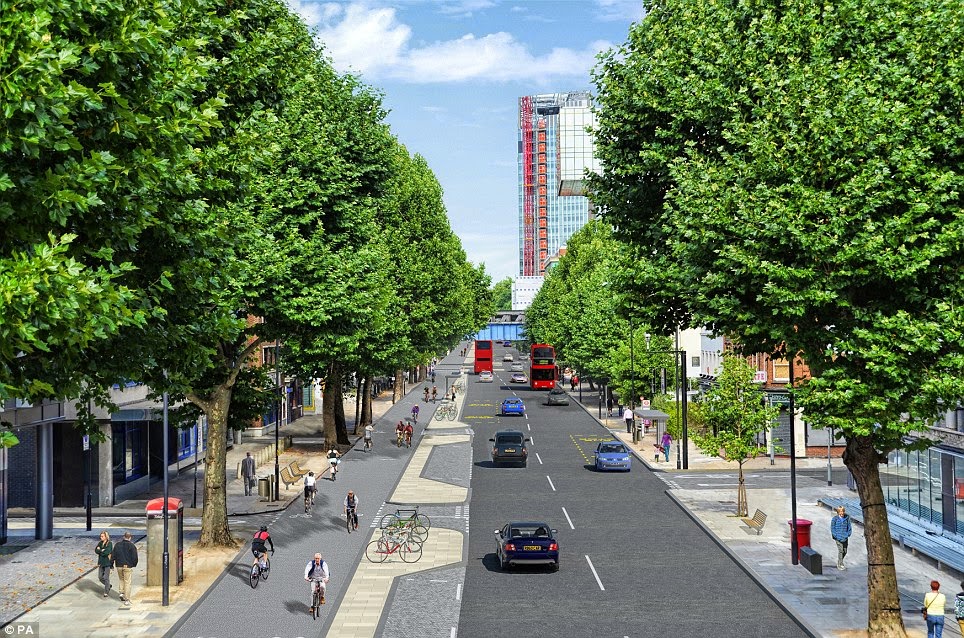
The North / South Cycle Superhighway is finally under construction.
My last article here was about the serious attempt by the Licensed Taxi Drivers Authority to have Mayor Boris Johnson's Cycle Superhighway plans stopped. In a classic filibuster they threatened to submit the entire scheme to Judicial Review in the High Court, which would have added months and innumerable expense to getting the routes built. In the end the LTDA slinked quietly away, and the Board of Transport for London gave construction the green light. (Though not until Board members, some with shocking conflicts of interest, had gone over the proposals in minuscule detail for some 90 minutes.)
Cycle campaigners - myself included - have been saying for many years that the pace of change in London has not been fast enough when considered against the annual death toll of people on bikes and the growth in numbers riding. And yet, in many ways the pace of change has now accelerated faster than anyone could have imagined even just a few years ago.
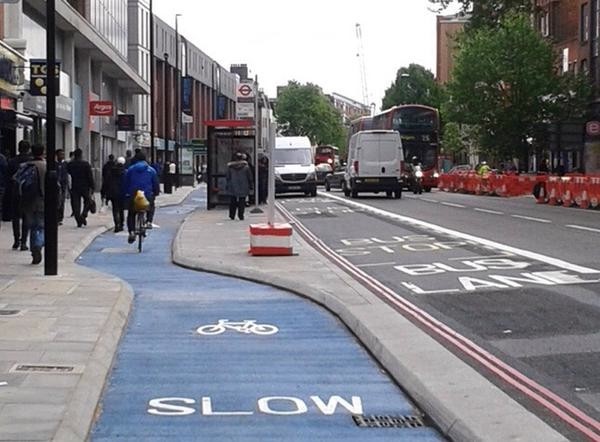
The upgraded Cycle Superhighway 2 in Whitechapel, which is opening in sections and where floating bus stops are working well. (Picture via Twitter with thanks)
In 2010 I demanded to know if the London Cycling Campaign and the Cyclists Touring Club were even prepared to push for decent cycling infrastructure or not. There was no consensus among cycle campaigners as to how best go about creating conditions for mass cycling, and even less agreement as to whether segregated cycle paths were even desirable. The integration / segregation conundrum sparked heated debates, both online and off. Respected cycling journalist and author Carlton Reid disparaged from the comments section of my blog;
Aldgate Gyratory is being largely rebuilt, due for completion in September 2016. Segregated cycle tracks in Oval will arrive by next spring. Construction is underway on the North / South Cycle Superhighways from Elephant and Castle to King's Cross, also due for completion by next spring. The most contentious cycle route of them all, the East / West Cycle Superhighway along the Embankment, is currently causing a little light traffic chaos along the river and will be operational by May 2016, not withstanding gaps in the Royal Parks who continue to dig in their heels, and in so doing reveal their prejudices.
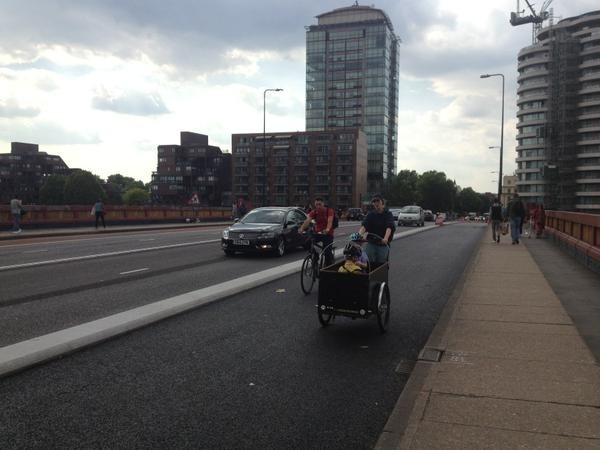
Welcome to the future! This segregated road space on terrifying Vauxhall Bridge will soon become a two-way cycle track. (via @citycyclists with thanks)
Cycle campaigner's integration / segregation argument has largely gone away, with most (cough, Hackney, cough) now acknowledging that where traffic volumes and speeds are sufficiently high then separating cyclists is desirable. As consensus emerged, much was made of the need for any new cycling infrastructure to be as fast and direct as the experience of riding in the road, and rightly so. The internet brought us easily accessible examples of best practise from overseas, whilst popular protests in London rallied around dangerous junctions and the need for design rather than behaviour to provide safety. This spawned the London Cycling Campaign's fabulous "Love London, Go Dutch" campaign and #space4cycling which, in turn, led to the Mayoral promise to build better routes.
Charting this progress is in itself an interesting exercise. I am struck by just how far we have come; my talk at the 2012 National Conference on Urban Design detailed how design and conditions on the ground emerged as the campaigning issue of our time. This consensus has in turn led to new routes being built on the ground. Here's the audio and slides from that talk, if you fancy a lunchtime history lesson.
Design Led Cycle Safety; how the cycling community came to value urban design from ibikelondon on Vimeo.
My 2010 talk on Design-led Cycle Safety charts how campaigning has changed in London.
Once that consensus emerged, London's cycle campaigners became increasingly resilient. Lots of new faces got involved, the LCC's policy was hammered in to shape by brilliant contributors like Dr Rachel Aldred whilst activists became advisers, working as much behind the scenes as in front. Brilliantly conceived activations were put together specifically with media impact in mind, and activist's work became targeted and with achievable aims. The pop-up business campaign CyclingWorks.London was instrumental in helping the new Cycle Superhighways plans scrape through TfL Board approval, in the face of exceptionally powerful opposition from the likes of Canary Wharf and their corporate lobbyists. Without the names of the 170 company CEOs pledging their support for the plans, I am not sure we would have made it. In a recent speech the Mayor's Cycling Commissioner, Andrew Gilligan, highlighted just how tight the fight has been:
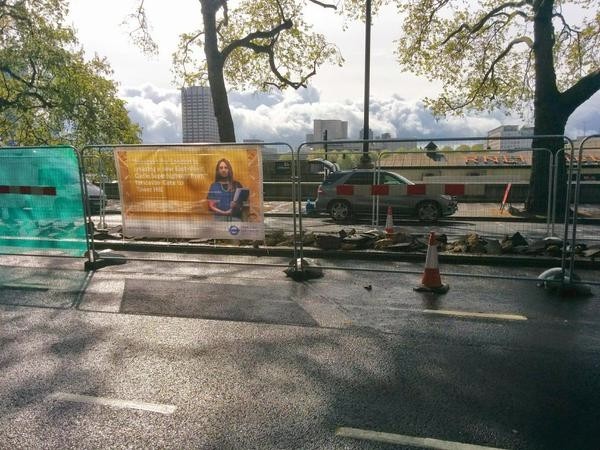
Work is underway on the Embankment for the East / West Cycle Superhighway (via @jonokenyon with thanks)
Despite the amount of work involved to date, campaigners cannot yet rest easy. In the short term we'll need to ensure the new segregated routes are fit for use and finished to a high quality. They'll also have to continue powerfully putting the case to the rest of London that the disruption they're currently experiencing will be worth it. Transport for London will need to ensure their spanking new cycle routes are maintained, cleaned and enforced - a cycle track with a truck parked in it is no good to anyone.
In the longer term efforts must now begin to focus on the Mayoral election in 2016. Without political will for cycling in City Hall in the future it will be too easy for TfL to draw back from their cycling responsibilities. 'Love London, Go Dutch' and #space4cycling were aspirational campaigns which captured the wider public's imagination about how London could be. As the results of those campaigns begin to take solid form, it's important to find a way to convince London that more of the same would be a good thing.
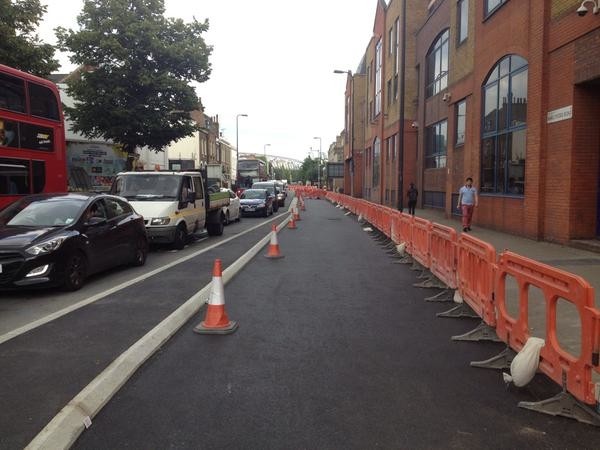
Brand spanking new cycle tracks in south London - look how smooth they are! (Pic via @citycyclists with thanks)
Away from the cycle tracks, lethal lorries remain a chronic issue for vulnerable road users in our city, and much more can still be done on this issue to get the shocking and seemingly inevitable annual death toll down. There is only so much campaigners can do, whereas Boris Johnson has the power to effect lasting change in the last 10 months of his Mayoralty. To keep the pressure up on Transport for London he should appoint a cycling representative to their Board, an easy and much overdue move. He should also push ahead with urgent reforms of lorry safety. In doing so, he'd help to secure his long term cycling legacy and make it harder for future Mayors to unpick his good work.
For now, everyone who has attended a protest, written to the Mayor, tweeted, signed petitions and helped keep the momentum going should take a moment to reflect on how far London has come - both in terms of consensus and successes - and enjoy watching the new cycle routes being built. But there's going to be more work to do to elevate London from "the foothills" of being a cycling city. We need to get ready for what's next.
Share |
30-Jan-15
The North / South Cycle Superhighway is finally under construction.
My last article here was about the serious attempt by the Licensed Taxi Drivers Authority to have Mayor Boris Johnson's Cycle Superhighway plans stopped. In a classic filibuster they threatened to submit the entire scheme to Judicial Review in the High Court, which would have added months and innumerable expense to getting the routes built. In the end the LTDA slinked quietly away, and the Board of Transport for London gave construction the green light. (Though not until Board members, some with shocking conflicts of interest, had gone over the proposals in minuscule detail for some 90 minutes.)
Cycle campaigners - myself included - have been saying for many years that the pace of change in London has not been fast enough when considered against the annual death toll of people on bikes and the growth in numbers riding. And yet, in many ways the pace of change has now accelerated faster than anyone could have imagined even just a few years ago.
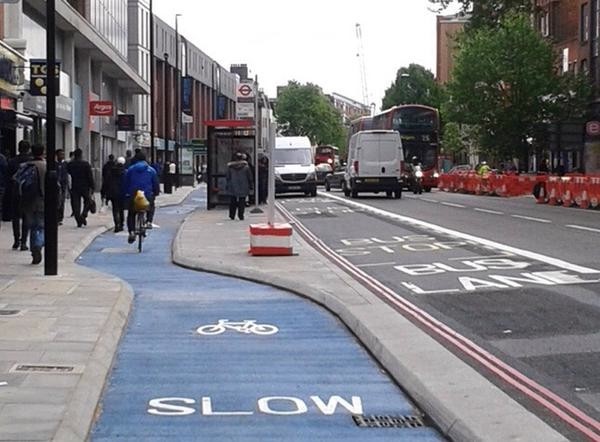
The upgraded Cycle Superhighway 2 in Whitechapel, which is opening in sections and where floating bus stops are working well. (Picture via Twitter with thanks)
In 2010 I demanded to know if the London Cycling Campaign and the Cyclists Touring Club were even prepared to push for decent cycling infrastructure or not. There was no consensus among cycle campaigners as to how best go about creating conditions for mass cycling, and even less agreement as to whether segregated cycle paths were even desirable. The integration / segregation conundrum sparked heated debates, both online and off. Respected cycling journalist and author Carlton Reid disparaged from the comments section of my blog;
"We ain't gonna get the sort of cycle infrastructure we'd all love. Ever.But here we are some 5 years later, and construction of high quality, segregated cycling infrastructure is already underway in London. The plans are by no means perfect, but they will be revolutionary. When TfL's previous Cycle Superhighways were built - effectively little more than just blue paint - cycling levels on those routes leapt. Imagine what the effect is going to be with safe new routes, separated from traffic and useable by all abilities? We didn't just get the kind of cycle routes that people said were impossible, they're going to be game changers too.
In such a car-centric society as the UK it would be next to impossible to take meaningful space away from cars."
Aldgate Gyratory is being largely rebuilt, due for completion in September 2016. Segregated cycle tracks in Oval will arrive by next spring. Construction is underway on the North / South Cycle Superhighways from Elephant and Castle to King's Cross, also due for completion by next spring. The most contentious cycle route of them all, the East / West Cycle Superhighway along the Embankment, is currently causing a little light traffic chaos along the river and will be operational by May 2016, not withstanding gaps in the Royal Parks who continue to dig in their heels, and in so doing reveal their prejudices.
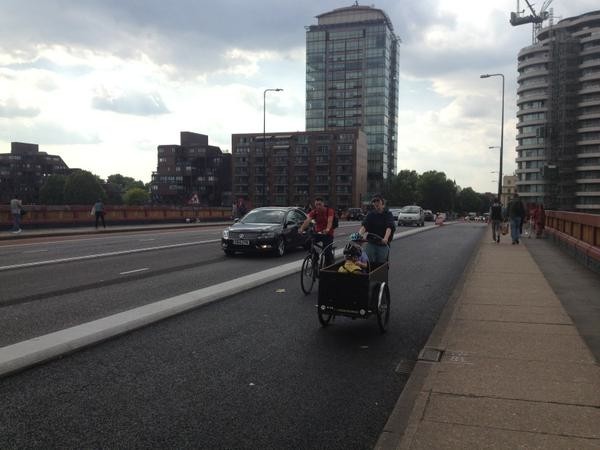
Welcome to the future! This segregated road space on terrifying Vauxhall Bridge will soon become a two-way cycle track. (via @citycyclists with thanks)
Cycle campaigner's integration / segregation argument has largely gone away, with most (cough, Hackney, cough) now acknowledging that where traffic volumes and speeds are sufficiently high then separating cyclists is desirable. As consensus emerged, much was made of the need for any new cycling infrastructure to be as fast and direct as the experience of riding in the road, and rightly so. The internet brought us easily accessible examples of best practise from overseas, whilst popular protests in London rallied around dangerous junctions and the need for design rather than behaviour to provide safety. This spawned the London Cycling Campaign's fabulous "Love London, Go Dutch" campaign and #space4cycling which, in turn, led to the Mayoral promise to build better routes.
Charting this progress is in itself an interesting exercise. I am struck by just how far we have come; my talk at the 2012 National Conference on Urban Design detailed how design and conditions on the ground emerged as the campaigning issue of our time. This consensus has in turn led to new routes being built on the ground. Here's the audio and slides from that talk, if you fancy a lunchtime history lesson.
Design Led Cycle Safety; how the cycling community came to value urban design from ibikelondon on Vimeo.
My 2010 talk on Design-led Cycle Safety charts how campaigning has changed in London.
Once that consensus emerged, London's cycle campaigners became increasingly resilient. Lots of new faces got involved, the LCC's policy was hammered in to shape by brilliant contributors like Dr Rachel Aldred whilst activists became advisers, working as much behind the scenes as in front. Brilliantly conceived activations were put together specifically with media impact in mind, and activist's work became targeted and with achievable aims. The pop-up business campaign CyclingWorks.London was instrumental in helping the new Cycle Superhighways plans scrape through TfL Board approval, in the face of exceptionally powerful opposition from the likes of Canary Wharf and their corporate lobbyists. Without the names of the 170 company CEOs pledging their support for the plans, I am not sure we would have made it. In a recent speech the Mayor's Cycling Commissioner, Andrew Gilligan, highlighted just how tight the fight has been:
"It was at times nightmarishly difficult to manage this, and we saw some absolutely ferocious resistance, kicking and screaming, and we saw a lot more passive resistance, heel digging and foot dragging from whom Olympic cyclist Chris Boardman called Old Men in Limos; you've heard of the MAMILs, those were the OMILs. A lot of objections, which would nearly always start with the words 'Of course I support cycling..."Gilligan went on to highlight how, with the helps of the likes of CyclingWorks, the OMILS were "comprehensively outfought in the PR and public support battle."
"You'll have to read our memoirs, if anyone wants to publish them, to find out how difficult it all was and how close it all came to not happening."
"I think we've made enormous progress - unprecedented progress - over the last couple of years, but I believe we're still in the foothills of making London a cycle friendly city and the task for Londoners is to make sure the progress we've made continues after May [2016, the next Mayoral election]."I think this is an honest assessment and shows how hard campaigners have worked to date. Gilligan has been a highly effective banger together of heads, but will he wish to continue as Cycling Commissioner when Boris Johnson steps down as Mayor next year? Furthermore, will the movers and shakers at Transport for London want to go back to playing just with buses and trains once the political drive for cycling moves on?
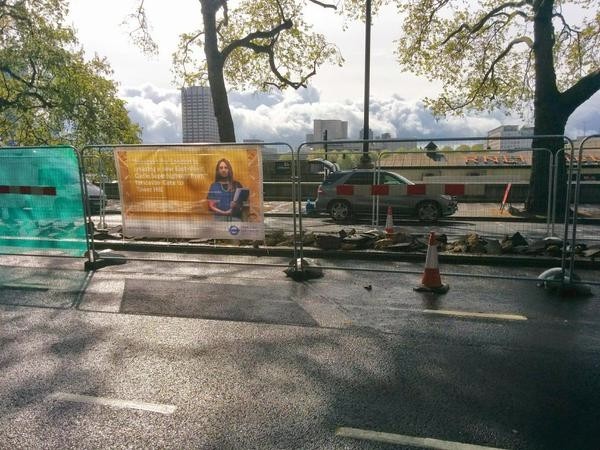
Work is underway on the Embankment for the East / West Cycle Superhighway (via @jonokenyon with thanks)
Despite the amount of work involved to date, campaigners cannot yet rest easy. In the short term we'll need to ensure the new segregated routes are fit for use and finished to a high quality. They'll also have to continue powerfully putting the case to the rest of London that the disruption they're currently experiencing will be worth it. Transport for London will need to ensure their spanking new cycle routes are maintained, cleaned and enforced - a cycle track with a truck parked in it is no good to anyone.
In the longer term efforts must now begin to focus on the Mayoral election in 2016. Without political will for cycling in City Hall in the future it will be too easy for TfL to draw back from their cycling responsibilities. 'Love London, Go Dutch' and #space4cycling were aspirational campaigns which captured the wider public's imagination about how London could be. As the results of those campaigns begin to take solid form, it's important to find a way to convince London that more of the same would be a good thing.
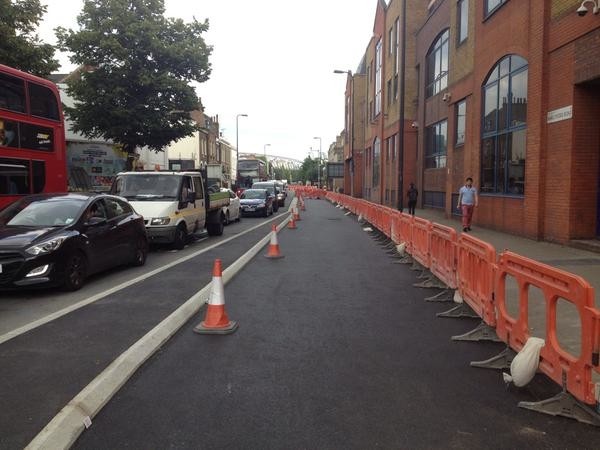
Brand spanking new cycle tracks in south London - look how smooth they are! (Pic via @citycyclists with thanks)
Away from the cycle tracks, lethal lorries remain a chronic issue for vulnerable road users in our city, and much more can still be done on this issue to get the shocking and seemingly inevitable annual death toll down. There is only so much campaigners can do, whereas Boris Johnson has the power to effect lasting change in the last 10 months of his Mayoralty. To keep the pressure up on Transport for London he should appoint a cycling representative to their Board, an easy and much overdue move. He should also push ahead with urgent reforms of lorry safety. In doing so, he'd help to secure his long term cycling legacy and make it harder for future Mayors to unpick his good work.
For now, everyone who has attended a protest, written to the Mayor, tweeted, signed petitions and helped keep the momentum going should take a moment to reflect on how far London has come - both in terms of consensus and successes - and enjoy watching the new cycle routes being built. But there's going to be more work to do to elevate London from "the foothills" of being a cycling city. We need to get ready for what's next.
Share |
As the LTDA goes to war with cyclists, we ask just who runs London? Is this a Cycle Superhighway Stich up?! [ 30-Jan-15 8:30am ]Unless you've been living under a rock it won't have escaped your attention that Mayor of London Boris Johnson announced on Tuesday his intention to proceed with ambitious plans to build a "Crossrail for Bikes"; two new segregated Cycle Superhighways across central London, running from north to south and east to west. But those plans are seriously threatened due to the self-serving actions of two business groups, who could jeapordise the democratic balance of Transport for London's Board in the process.
Johnson's announcement follows one of Transport for London's largest ever consultations on a project, with a staggering 21,500 responses. So many people wanted to respond, they extended the length of the consultation to allow everyone time to air their views. But the results are conclusive; even when you discount responses automatically generated by the London Cycling Campaign's website, some 73% support the more contentious east / west route running along the Embankment.
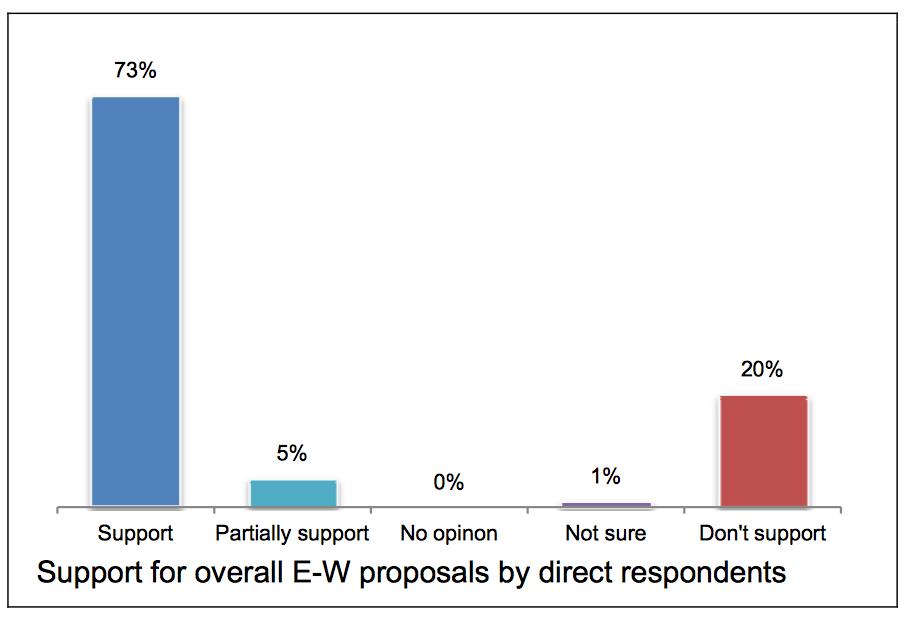 This reflects a recent YouGov poll of Londoners of all backgrounds, the majority (64%) of which supported the cycleway plans even if it involved taking a lane away from traffic. It's also worth remembering of course that the consultation is not a referendum on the proposals; the scheme is the brain-child of our directly elected Conservative Mayor, who is mandated by the population of London to deliver his manifesto promises, of which the Cycle Superhighways were one. So far, so democratic, right?
Within minutes of the announcement on Tuesday, the Licensed Taxi Drivers Association let it be known they were furious that the Cycle Superhighways were going ahead and planned to lodge a Judicial Review. Here's what Steve McNamara, the LTDA's Secretary, had to tell Vanessa Feltz on her BBC London radio show on Tuesday morning:
Then, in March 2014 their Director wrote this frankly bizarre editorial in their member's newsletter, claiming that cycling is "bringing this city to its knees":
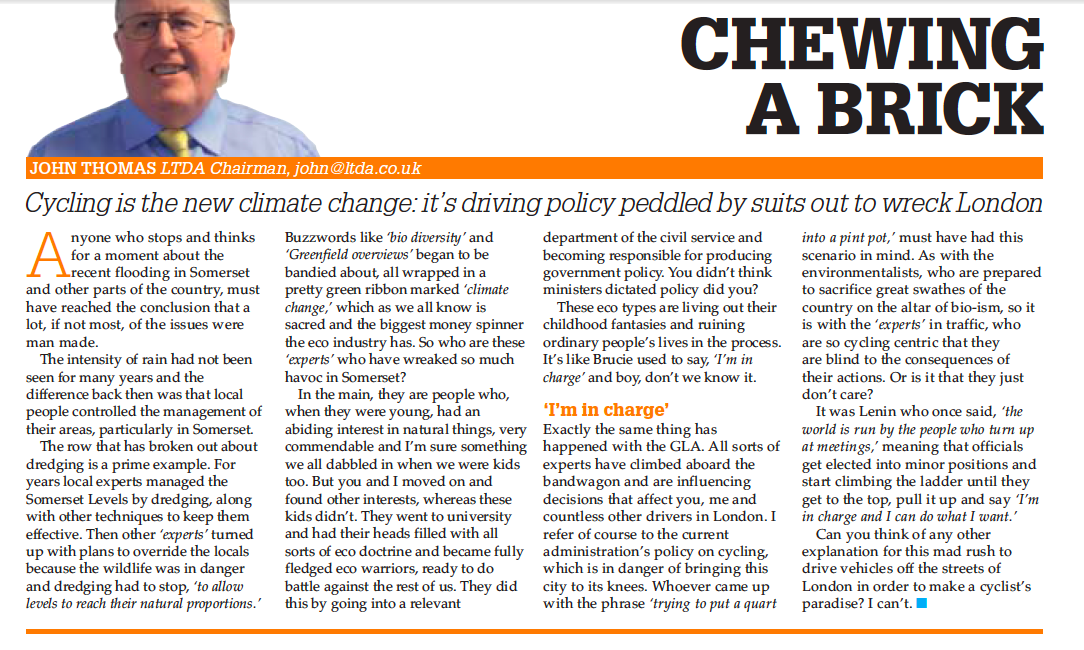
And now, in 2015, they're coming out all guns blazing against the Cycle Superhighway project, threatening legal action and mouthing off to anyone who will listen. But there's more to it than that, unfortunately. I'll deal with McNamara's ridiculous assertions firstly, but please do read on to the end because what happens next is even more ridiculous...
The idea that the LTDA is a paragon of working class, salt-of-the-earth virtue is preposterous: this is an organisation that gives discounts to its members for country hotel leisure breaks, golf clubs and designer glasses. (And cheap legal representation to those facing driving bans who accumulated too many points on their license) Most of their members will be earning around £60,000 a year (that's twice the national average).
Let's contrast that with the 13 people who were killed cycling in London last year: two teachers, two students, a ventilation engineer, a conference organiser, a pharmacist, a hospital porter, a bus depot worker, a solicitor, an IT worker, one person unknown and a security guard. Hardly what I'd call a "metropolitan elite".
And were those who were killed cycling "a few hundred yards or half a mile to work"? Of course not. The majority of all cycle journeys in London originate in the fringes of zone 2 and 3 and make their way to the centre and back again. Commuting patterns like my own journey to and from work which is 10 miles, versus the city-wide average of 15 miles (That's 15 miles regardless of which mode of transport you use).
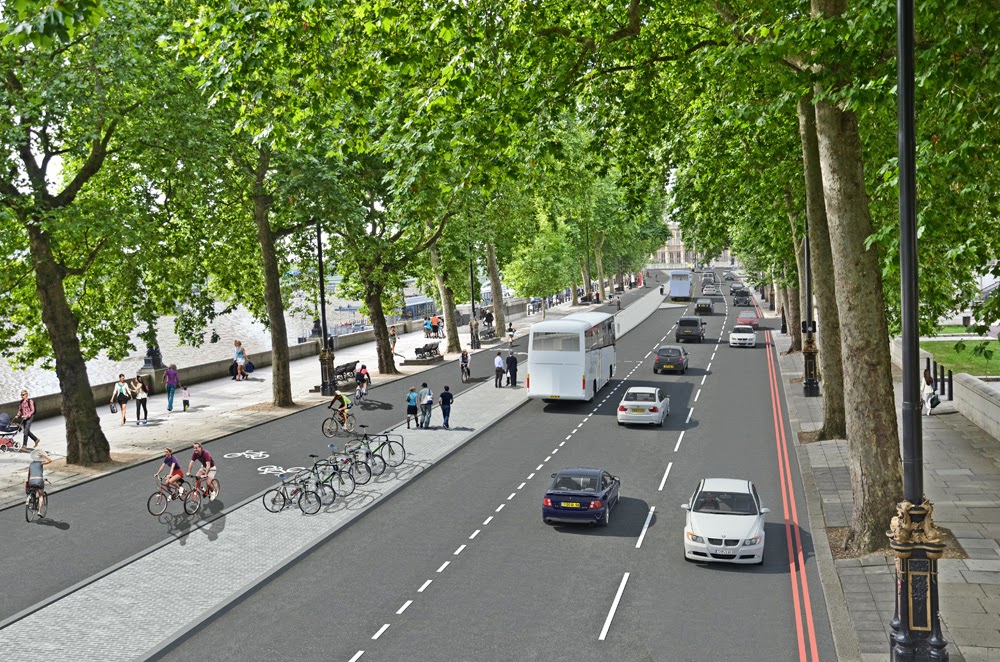 Proposals for Victoria Embankment
Taxis ferry about businessmen on expense accounts and unwitting tourists for the majority of the time, and are out of reach for most ordinary working Londoners. The last time I took a taxi from Heathrow to central London it cost nearly £100 (an awful journey during which the driver stopped his car to scream obscenities at a woman on a pedestrian crossing and deigned to share with me his abhorrently racist views for the duration of the trip). The Piccadilly Line can do the same journey - opinion free - for about a fiver.
As for sticking the Cycle Superhighway south of the river (presumably because Black Cab drivers don't go there) frankly, why should they? For a starter the whole point of the project is to get people by bicycle to centres of work quickly and safely. London's bridges are already a danger spots for cyclists, but to put it in language the LTDA would understand: around half of all the vehicles on Blackfriars Bridge during the peak hour are bicycles (that's one bike every two seconds) Are you sure putting more bikes on the bridges to get south of the river is such a good idea?
To put things in a clearer light, and to completely discredit McNamara's idea that cycle journeys are somehow unnecessary and get in the way of "working London", let's look at some actual statistics.
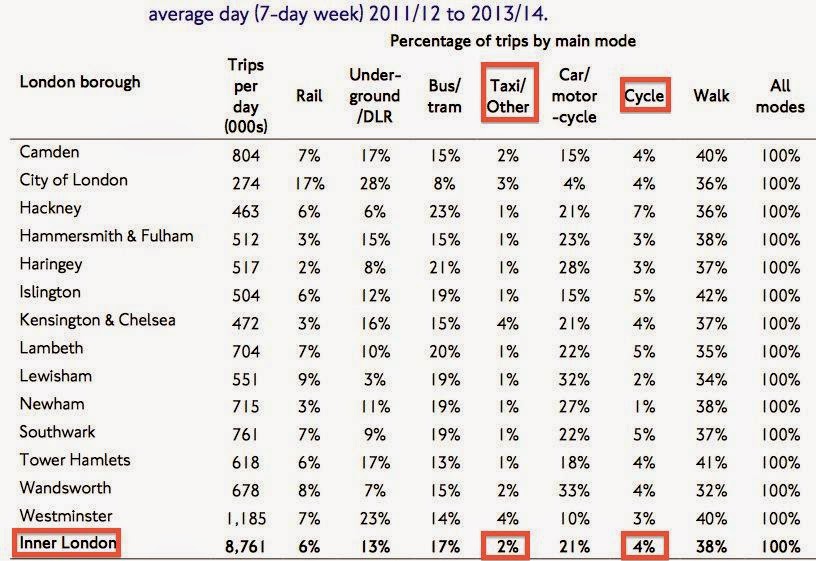 Via As Easy As Riding A Bike, with thanks.
According to Transport for London's latest data, taxis make up 2% of all inner London road users. Bicycles make up 4%. Cycle rates in the same area have doubled over the past 10 years, whilst journeys by car have consistently declined. Across greater London there are approximately 650,000 cycle journeys every day - they can't all be Bradley Wiggins wannabes making laps of Richmond Park.
The LTDA's stance is astonishing. That they'd channel so much effort and resource in to giving such a knee-jerk and provocative reaction to a scheme that will cover a tiny percentage of London's roads (whilst their members lose massive market share to credit-card accepting mini-cab firms and book-by-app discount drivers Uber) is sad to watch. If I was an LTDA member I'd be telling them to pick their battles. As a cyclist I'd laugh if this wasn't so serious.
 Uber take a pop at the LTDA's pre-historic attitude via their Twitter account @Uber_LDN
A Judicial Review could see the Cycle Superhighway project delayed by up to 14 weeks, and its TfL's fare-paying customers who will pick up the bill for fighting it (you know, ordinary working Londoners) But the madness doesn't stop there.
The LTDA's McNamara said say they "are considering a Judicial Review against the scheme in conjunction with Canary Wharf." You'll remember that the Canary Wharf Group were behind an anonymous briefing filled with untruths about the Cycle Superhighways which was distributed to politicians and business leaders late last year. They've also paid for a lobbyist to tour the political party conferences to try and drum up opposition to the scheme. Their strategic adviser, Howard Dawber, has appeared on television and radio claiming the project would be bad for their business and has attended numerous stake holder planning meetings.
And this is where things get ridiculous.
If a Judicial Review doesn't materialise, next Wednesday the Board of Transport for London will meet to decide whether to fund the Cycle Superhighway project or not. This is not just a case of rubber-stamping the Mayor's plans. As Cyclists In The City points out, they've picked over cycling plans in minute detail before.
But two members of the Board have a direct conflict of interest, and it would be a democratic failure were they to be allowed to participate in the funding decision...
Peter Anderson sits on the Board, and is also the Finance Director for.. ..Canary Wharf Group.
Bob Oddy sits on the Board, and is also the Deputy General Secretary of... ..the LTDA!
 The LTDA's Bob Oddy, above, and Canary Wharf Group's Peter Anderson, below
 In the long term I would ask - considering there's more of us on the roads every day than there are of them - why taxi drivers are represented on TfL's Board when cyclists are not. In the short term I'd ask this: what will the Mayor do to ensure that those whose employers have been actively lobbying against this scheme are totally excluded from the process which will decide its future?
London's cycling community has fought long and hard and waited for many years for this: just ONE safe segregated cycle route across our city. This project cannot be scuppered by members of the Board who no longer have a right to be involved in it. If Anderson and Oddy think they can turn up at the Board after all their companies have done they've got another thing coming.
Transport for London's Board meeting takes place at 10AM on Wednesday 4th Feb at City Hall, committee room 4. It is open to the public and the Board papers are available online to review.
Share
27-Jan-15
Johnson's announcement follows one of Transport for London's largest ever consultations on a project, with a staggering 21,500 responses. So many people wanted to respond, they extended the length of the consultation to allow everyone time to air their views. But the results are conclusive; even when you discount responses automatically generated by the London Cycling Campaign's website, some 73% support the more contentious east / west route running along the Embankment.
This reflects a recent YouGov poll of Londoners of all backgrounds, the majority (64%) of which supported the cycleway plans even if it involved taking a lane away from traffic. It's also worth remembering of course that the consultation is not a referendum on the proposals; the scheme is the brain-child of our directly elected Conservative Mayor, who is mandated by the population of London to deliver his manifesto promises, of which the Cycle Superhighways were one. So far, so democratic, right?Within minutes of the announcement on Tuesday, the Licensed Taxi Drivers Association let it be known they were furious that the Cycle Superhighways were going ahead and planned to lodge a Judicial Review. Here's what Steve McNamara, the LTDA's Secretary, had to tell Vanessa Feltz on her BBC London radio show on Tuesday morning:
"It's an abomination!... ...The ideal route would have been to run it along the Southbank, in front of the old LWT [London Weekend Television] building all the way along there, it would have been lovely, it would have been out of the way, it would have been ideal... ... We're against it, lots of businesses are against it. We are considering a Judicial Review against the scheme in conjunction with Canary Wharf and others."McNamara went on to give his opinions as to exactly why the Cycle Superhighways - which represent a tiny percentage of London's roads - were a BAD THING, especially if they benefit CYCLISTS:
"...they all try and tell you this myth, that it is wealthy people driving around in cars that we need to combat, and that it is the poor man on the cycle. And of course it's not. What we've got now is this metropolitan elite who can afford to live in the centre of the city, afford to cycle a few hundred yards or half a mile to work, they're the people campaigning for this. The vast majority of Londoners, working Londoners, business Londoners - the majority of your listeners who are coming in from the suburbs and trying to move around this city - are going to be severely disadvantaged by this scheme...I think it is fair to say that the LTDA has gone to war against cyclists. In November 2013 - the same month six London cyclists died on our roads in just two weeks - they gave the Evening Standard cooked up footage which claimed to show the majority of London cyclists run red lights.
..We're the only people in London who can actually stand up for working Londoners, us and a few businesses who have come together. As I say, Canary Wharf - a massive business that employs tens of thousands of people at the Wharf - they're concerned about their people getting to work, we're concerned about moving people around the city, lots of freight companies are very, very concerned about it, they've got to make deliveries. London is a working city, it's got to be able to work the 23 hours a day when them cyclists are not down on the Embankment - and they're not.... .. it's madness. They must see it, and we're hoping the Courts will see it." [Click here for a full transcript of his interview]
Then, in March 2014 their Director wrote this frankly bizarre editorial in their member's newsletter, claiming that cycling is "bringing this city to its knees":
And now, in 2015, they're coming out all guns blazing against the Cycle Superhighway project, threatening legal action and mouthing off to anyone who will listen. But there's more to it than that, unfortunately. I'll deal with McNamara's ridiculous assertions firstly, but please do read on to the end because what happens next is even more ridiculous...
The idea that the LTDA is a paragon of working class, salt-of-the-earth virtue is preposterous: this is an organisation that gives discounts to its members for country hotel leisure breaks, golf clubs and designer glasses. (And cheap legal representation to those facing driving bans who accumulated too many points on their license) Most of their members will be earning around £60,000 a year (that's twice the national average).
Let's contrast that with the 13 people who were killed cycling in London last year: two teachers, two students, a ventilation engineer, a conference organiser, a pharmacist, a hospital porter, a bus depot worker, a solicitor, an IT worker, one person unknown and a security guard. Hardly what I'd call a "metropolitan elite".
And were those who were killed cycling "a few hundred yards or half a mile to work"? Of course not. The majority of all cycle journeys in London originate in the fringes of zone 2 and 3 and make their way to the centre and back again. Commuting patterns like my own journey to and from work which is 10 miles, versus the city-wide average of 15 miles (That's 15 miles regardless of which mode of transport you use).
Proposals for Victoria EmbankmentTaxis ferry about businessmen on expense accounts and unwitting tourists for the majority of the time, and are out of reach for most ordinary working Londoners. The last time I took a taxi from Heathrow to central London it cost nearly £100 (an awful journey during which the driver stopped his car to scream obscenities at a woman on a pedestrian crossing and deigned to share with me his abhorrently racist views for the duration of the trip). The Piccadilly Line can do the same journey - opinion free - for about a fiver.
As for sticking the Cycle Superhighway south of the river (presumably because Black Cab drivers don't go there) frankly, why should they? For a starter the whole point of the project is to get people by bicycle to centres of work quickly and safely. London's bridges are already a danger spots for cyclists, but to put it in language the LTDA would understand: around half of all the vehicles on Blackfriars Bridge during the peak hour are bicycles (that's one bike every two seconds) Are you sure putting more bikes on the bridges to get south of the river is such a good idea?
To put things in a clearer light, and to completely discredit McNamara's idea that cycle journeys are somehow unnecessary and get in the way of "working London", let's look at some actual statistics.
Via As Easy As Riding A Bike, with thanks.According to Transport for London's latest data, taxis make up 2% of all inner London road users. Bicycles make up 4%. Cycle rates in the same area have doubled over the past 10 years, whilst journeys by car have consistently declined. Across greater London there are approximately 650,000 cycle journeys every day - they can't all be Bradley Wiggins wannabes making laps of Richmond Park.
The LTDA's stance is astonishing. That they'd channel so much effort and resource in to giving such a knee-jerk and provocative reaction to a scheme that will cover a tiny percentage of London's roads (whilst their members lose massive market share to credit-card accepting mini-cab firms and book-by-app discount drivers Uber) is sad to watch. If I was an LTDA member I'd be telling them to pick their battles. As a cyclist I'd laugh if this wasn't so serious.
Uber take a pop at the LTDA's pre-historic attitude via their Twitter account @Uber_LDNA Judicial Review could see the Cycle Superhighway project delayed by up to 14 weeks, and its TfL's fare-paying customers who will pick up the bill for fighting it (you know, ordinary working Londoners) But the madness doesn't stop there.
The LTDA's McNamara said say they "are considering a Judicial Review against the scheme in conjunction with Canary Wharf." You'll remember that the Canary Wharf Group were behind an anonymous briefing filled with untruths about the Cycle Superhighways which was distributed to politicians and business leaders late last year. They've also paid for a lobbyist to tour the political party conferences to try and drum up opposition to the scheme. Their strategic adviser, Howard Dawber, has appeared on television and radio claiming the project would be bad for their business and has attended numerous stake holder planning meetings.
And this is where things get ridiculous.
If a Judicial Review doesn't materialise, next Wednesday the Board of Transport for London will meet to decide whether to fund the Cycle Superhighway project or not. This is not just a case of rubber-stamping the Mayor's plans. As Cyclists In The City points out, they've picked over cycling plans in minute detail before.
But two members of the Board have a direct conflict of interest, and it would be a democratic failure were they to be allowed to participate in the funding decision...
Peter Anderson sits on the Board, and is also the Finance Director for.. ..Canary Wharf Group.
Bob Oddy sits on the Board, and is also the Deputy General Secretary of... ..the LTDA!
The LTDA's Bob Oddy, above, and Canary Wharf Group's Peter Anderson, belowIn the long term I would ask - considering there's more of us on the roads every day than there are of them - why taxi drivers are represented on TfL's Board when cyclists are not. In the short term I'd ask this: what will the Mayor do to ensure that those whose employers have been actively lobbying against this scheme are totally excluded from the process which will decide its future?London's cycling community has fought long and hard and waited for many years for this: just ONE safe segregated cycle route across our city. This project cannot be scuppered by members of the Board who no longer have a right to be involved in it. If Anderson and Oddy think they can turn up at the Board after all their companies have done they've got another thing coming.
Transport for London's Board meeting takes place at 10AM on Wednesday 4th Feb at City Hall, committee room 4. It is open to the public and the Board papers are available online to review.
Share
Boris gives green light to Cycle Superhighways to unlock central London for bikes [ 27-Jan-15 10:05am ]The Mayor of London, Boris Johnson, today confirmed he will go ahead with his proposed "Crossrail for Bikes" Cycle Superhighways across central London, following one of the largest public consultations in the history of Transport for London.
The East / West Cycle Superhighway will form Europe's longest substantially segregated urban cycleway, stretching from Tower Hill in the east to Acton in the west. Intersecting with a new North / South Cycle Superhighway from King's Cross to Elephant and Castle, the new routes will form the flagship facility in Johnson's £913million 10-year cycle investment plan.
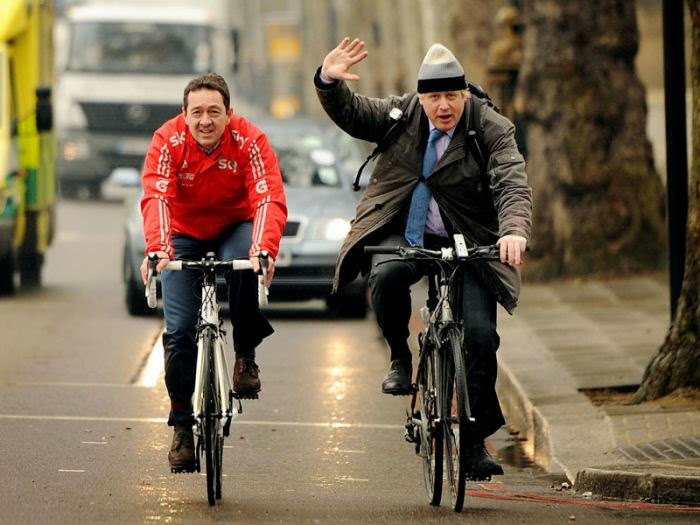 Boris Johnson rides the route of his future Cycle Superhighway on the Embankment with Olympic champion cyclist and campaigner Chris Boardman. Photo via Press Association with thanks.
The Mayor said: "We have done one of the biggest consultation exercises in TfL's history. We have listened, and now we will act. Overwhelmingly, Londoners wanted these routes, and wanted them delivered to the high standard we promised. I intend to keep that promise."
Subject to approval by the Board of TfL next week, construction on the routes will begin as soon as March, with the first route complete and ready for riders by spring 2016. (It's worth pointing out that Johnson's term as Mayor concludes in May 2016)
The nine-week public consultation on the plans saw an overwhelming 21,500 responses from individuals and business organisations, with 84% in overall support of the plans. A YouGov opinion poll taken during the consultation found 73% of Londoners supported the Cycle Superhighways, even if it meant taking a lane of traffic away.
Coordinated by pop-up campaigning group CyclingWorks.London, over 170 businesses and organisations pledged their support for the Cycle Superhighways and called on the Mayor to construct them without delay, including key employers along the route such as Unilever, Orange, the Royal Bank of Scotland and Deloitte.
Businessman and cyclist Chris Kenyon from CyclingWorks.London said:
"Rarely if ever has a scheme by TfL gathered so many CEO-level signatures of support. Surely that is the big story. The backers represent every major industry sector and show that Londoners are in it together and believe that it's time for kerb protected lanes in the heart of the city."
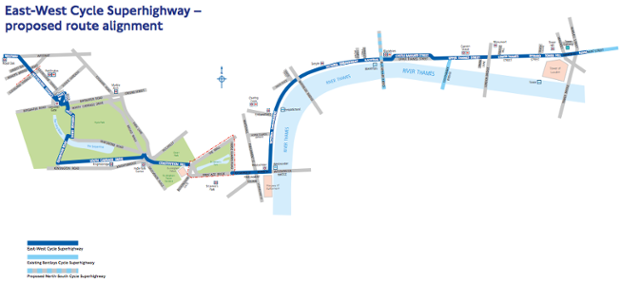 The original route along the Embankment, which will still incorporate Parliament Square, subject to modifications.
The original plans from Transport for London have been revised in response to concerns by the City of London, the taxi lobby and the Canary Wharf Group that building cycle tracks would cause too great a delay.
The lanes for other traffic on the Victoria Embankment were to be cut from two to three between the pinch points of Blackfriars underpass and Temple Station. By squeezing the cycle tracks at these points, the three lanes of traffic will be able to remain.
The Mayor's Cycling Commissioner, Andrew Gilligan, believes delays will be cut by 60% on the original plans. The worst affected journey - from Limehouse Link to Hyde Park Corner - will now only take an additional 6 minutes, rather than 16 minutes under the original plans. The traffic models do not account for people switching to other types of journey (ie cycling) as Rachel Aldred explains in her blog about why we should not fear the worst case scenario.
These new routes will fundamentally change London. Currently we stand with our back to the Thames and the Embankment. What is currently a traffic-choked, noisy and dirty rat-run for the city will become the spine of London's safest cycling infrastructure, where cyclists of all ages and abilities - from roadies, to children - will be able to undertake their journeys in safety.
Transport for London's rendering of the north / south Cycle Superhighway from King's Cross to Elephant and Castle.
Cycle use has already doubled across London over the past ten years, but these ambitious plans will see cycling levels rocket. Sir Peter Hendy CBE, transport commissioner for London, said:
"Cycling is clearly now a major transport option in London, with over 170,000 bike journeys now made across central London every single day... These projects will help transform cycling in London - making it safer and an option that more and more people can enjoy."
We should be clear that the Cycle Superhighway plans are not perfect: the width of the tracks being reduced to approximately 3 metres through the Blackfriars Underpass and at other pinch points on the Embankment is very much of concern. Once built they must be monitored, and potentially dangerous sections must re-assessed. Furthermore, the route through the Royal Parks is still not clear and will be consulted on at a later date, as explained by Danny over at Cyclists in the City. Could the Royal Parks put a spoke in the wheel of the whole scheme?
And there's no guarantee that the Canary Wharf Group will back down in their opposition to the Cycle Superhighway plans, despite the reduction in delays. You'll remember they employed a professional lobbyist, distributed an anonymous briefing paper full of dodgy statistics, and badgered politicians at party conferences over the scheme. The Canary Wharf Group's Finance Director is one Mr Peter Anderson. He's also Chair of Transport for London's Finance and Policy Committee and a member of their board - and therefore will have a say next week over whether the plans will go ahead or not.
The City and Canary Wharf Group have always been keen to demonstrate that opinion is divided on these schemes, whereas it has been my impression throughout that the majority of Londoners want these changes, they need these changes and they must be allowed to go ahead. Those who oppose these changes would do well to remember we are talking about a tiny fraction of London's streets, even though it could have a transformative effect for cyclists. Johnson has now made a big promise in the run up to the elections, it is important that he sticks to it.
If all goes well - and not withstanding skullduggery and backroom dealing - London has achieved something incredible with this announcement. It was only a few years ago, in November 2011, that Danny Williams from Cyclists In The City and I organised the Tour du Danger an initial protest around London's most dangerous junctions for cyclists. Since then there have been countless campaigns, protest rides (not least at Blackfriars Bridge) and of course, cyclist's deaths. Now we have a major UK politician staking their reputation on their cycling dream, prepared to put up the cash, and even ready to take roadspace away from other traffic to achieve their aims. This is in no part is down to all of you who've badgered your politicians, signed petitions, come on protests and responded to consultations. Give yourself a pat on the back, London. Let's make a date in our diaries for a celebratory ride on our city's beautiful new cycling infrastructure, coming soon to a road near you!
Share |
26-Jan-15
The East / West Cycle Superhighway will form Europe's longest substantially segregated urban cycleway, stretching from Tower Hill in the east to Acton in the west. Intersecting with a new North / South Cycle Superhighway from King's Cross to Elephant and Castle, the new routes will form the flagship facility in Johnson's £913million 10-year cycle investment plan.
Boris Johnson rides the route of his future Cycle Superhighway on the Embankment with Olympic champion cyclist and campaigner Chris Boardman. Photo via Press Association with thanks.The Mayor said: "We have done one of the biggest consultation exercises in TfL's history. We have listened, and now we will act. Overwhelmingly, Londoners wanted these routes, and wanted them delivered to the high standard we promised. I intend to keep that promise."
Subject to approval by the Board of TfL next week, construction on the routes will begin as soon as March, with the first route complete and ready for riders by spring 2016. (It's worth pointing out that Johnson's term as Mayor concludes in May 2016)
The nine-week public consultation on the plans saw an overwhelming 21,500 responses from individuals and business organisations, with 84% in overall support of the plans. A YouGov opinion poll taken during the consultation found 73% of Londoners supported the Cycle Superhighways, even if it meant taking a lane of traffic away.
Coordinated by pop-up campaigning group CyclingWorks.London, over 170 businesses and organisations pledged their support for the Cycle Superhighways and called on the Mayor to construct them without delay, including key employers along the route such as Unilever, Orange, the Royal Bank of Scotland and Deloitte.
Businessman and cyclist Chris Kenyon from CyclingWorks.London said:
"Rarely if ever has a scheme by TfL gathered so many CEO-level signatures of support. Surely that is the big story. The backers represent every major industry sector and show that Londoners are in it together and believe that it's time for kerb protected lanes in the heart of the city."
The original route along the Embankment, which will still incorporate Parliament Square, subject to modifications.The original plans from Transport for London have been revised in response to concerns by the City of London, the taxi lobby and the Canary Wharf Group that building cycle tracks would cause too great a delay.
The lanes for other traffic on the Victoria Embankment were to be cut from two to three between the pinch points of Blackfriars underpass and Temple Station. By squeezing the cycle tracks at these points, the three lanes of traffic will be able to remain.
The Mayor's Cycling Commissioner, Andrew Gilligan, believes delays will be cut by 60% on the original plans. The worst affected journey - from Limehouse Link to Hyde Park Corner - will now only take an additional 6 minutes, rather than 16 minutes under the original plans. The traffic models do not account for people switching to other types of journey (ie cycling) as Rachel Aldred explains in her blog about why we should not fear the worst case scenario.
These new routes will fundamentally change London. Currently we stand with our back to the Thames and the Embankment. What is currently a traffic-choked, noisy and dirty rat-run for the city will become the spine of London's safest cycling infrastructure, where cyclists of all ages and abilities - from roadies, to children - will be able to undertake their journeys in safety.
Transport for London's rendering of the north / south Cycle Superhighway from King's Cross to Elephant and Castle.Cycle use has already doubled across London over the past ten years, but these ambitious plans will see cycling levels rocket. Sir Peter Hendy CBE, transport commissioner for London, said:
"Cycling is clearly now a major transport option in London, with over 170,000 bike journeys now made across central London every single day... These projects will help transform cycling in London - making it safer and an option that more and more people can enjoy."
We should be clear that the Cycle Superhighway plans are not perfect: the width of the tracks being reduced to approximately 3 metres through the Blackfriars Underpass and at other pinch points on the Embankment is very much of concern. Once built they must be monitored, and potentially dangerous sections must re-assessed. Furthermore, the route through the Royal Parks is still not clear and will be consulted on at a later date, as explained by Danny over at Cyclists in the City. Could the Royal Parks put a spoke in the wheel of the whole scheme?
And there's no guarantee that the Canary Wharf Group will back down in their opposition to the Cycle Superhighway plans, despite the reduction in delays. You'll remember they employed a professional lobbyist, distributed an anonymous briefing paper full of dodgy statistics, and badgered politicians at party conferences over the scheme. The Canary Wharf Group's Finance Director is one Mr Peter Anderson. He's also Chair of Transport for London's Finance and Policy Committee and a member of their board - and therefore will have a say next week over whether the plans will go ahead or not.
The City and Canary Wharf Group have always been keen to demonstrate that opinion is divided on these schemes, whereas it has been my impression throughout that the majority of Londoners want these changes, they need these changes and they must be allowed to go ahead. Those who oppose these changes would do well to remember we are talking about a tiny fraction of London's streets, even though it could have a transformative effect for cyclists. Johnson has now made a big promise in the run up to the elections, it is important that he sticks to it.
If all goes well - and not withstanding skullduggery and backroom dealing - London has achieved something incredible with this announcement. It was only a few years ago, in November 2011, that Danny Williams from Cyclists In The City and I organised the Tour du Danger an initial protest around London's most dangerous junctions for cyclists. Since then there have been countless campaigns, protest rides (not least at Blackfriars Bridge) and of course, cyclist's deaths. Now we have a major UK politician staking their reputation on their cycling dream, prepared to put up the cash, and even ready to take roadspace away from other traffic to achieve their aims. This is in no part is down to all of you who've badgered your politicians, signed petitions, come on protests and responded to consultations. Give yourself a pat on the back, London. Let's make a date in our diaries for a celebratory ride on our city's beautiful new cycling infrastructure, coming soon to a road near you!
Share |
In defence of fair-weather cyclists: how do you keep a city cycling, even in the worst of winter? [ 26-Jan-15 8:30am ]One of the most persistent criticisms I hear levelled against investing in cycling is that as soon as the weather becomes inclement people stop riding, therefore making it an unreliable way of moving people in cities.
Cyclists in a recent rush hour snow storm in Copenhagen, via the Copenhagenize / Viking Biking Tumbr. Whilst the difference between summer and winter cycling levels in London have been decreasing year on year, the number of cyclists on the road over the winter months is markedly lower than in the long, light and warmer summer days.
If a journey by bicycle is tolerated for the sake of convenience, rather than comfort, it is true that poor weather can serve to increase the perception of it being sketchy. I personally dread cycling around Old Street roundabout or through Holborn Circus in heavy rain with reduced visability. No matter how good your waterproofs, you'll still be soaked through with the sweat of anxiety by the end of your terrifying trip.
Cyclists in the snow, Bethnal Green, London, 2010Of course, it is not the actual rain, snow or darkness that I fear but the chance that my fellow road users are not paying sufficient attention to the conditions, and do not modify their behaviour appropriately.
In successful cycling countries this problem is solved by separating cyclists from motorised traffic one way or another; perhaps with cycle tracks on main roads, or with closures, restrictions and one-way routes on lesser roads with lighter traffic. But this in turn can pose its own problems: in the worst of the winter weather, how do you keep cyclists - and the city - moving?
When you have a high percentage of your population making their journey by bikes - as in Copenhagen or across the Netherlands - making sure that cycle routes are clear becomes a very serious consideration. In another fascinating new post, video blogger Mark of Bicycle Dutch fame recently recorded how his home city of 'S-Hertogenbosch kept people moving through a recent snow storm, and made journeys by bicycle possible in challenging conditions.
He explains: "On a cycle way the 'gritters' brush the surface first, and then it is sprayed with a mixture of salt and water. That film of salt water does cover the entire surface and that means most of the snow melts instantly on the entire street surface even without [passing cyclist's] tyres to disperse the salt. The difference between routes that were cleared and gritted and those that were not (yet) was huge."
I know what you're already thinking: here in the UK we don't deal with adverse weather well. That we struggle to clear our roads and pavements, let alone cycle paths. That we can't even build all-weather year-round cycle routes.
Mud, mud, glorious mud! It's not Middle Earth, but all the same you shall not pass... Via As Easy As Riding A Bike. Indeed, As Easy As Riding A Bike blog recently highlighted a Sussex cycle route which could provide a safe and convenient bypass to the busy A2 is impassable to all but those equipped with mountain bikes and wellington boots for much of the year. It's never been laid properly due to concerns about an "urbanising effect" on the countryside, which clearly doesn't consider the same effect car journeys have that could easily be replaced by trips on this path, were it a viable route instead. Making this journey on the path in its current form on a dark night in wet and windy weather would be reserved for all but the hardiest of thrill-seekers.
The heavy snow fall of 2010 caught London unprepared. My street, seen here, remained uncleared for over a week.But as the Dutch example demonstrates, winter weather need not be an insurmountable obstacle for successful cycling. People always tell me that "there's no such thing as bad weather, only bad clothes" but I'd argue that there's more to it than that...
You can have all the fancy water proof kit in the world, but if you're having to fend off thundering lorries and itinerant taxi drivers in addition to trying to stay upright through wet and windy weather you're not going to be having a very nice time. And you could have all the cycle infrastructure in the world (and I'm thinking in particularly of the separated lanes we should start to see being rolled out in London over the next few years) but if the authorities don't have a plan for keeping them clear of mud, snow and ice they'll be next to useless. Keeping your city cycling, even in the worst of weather, shows the special care and consideration people on two wheels need.
Further reading:
Bicycle Dutch: how to make cycling in the snow possible
Copenhagenize: the ultimate bike lane snow clearance post!
As Easy As Riding a Bike: Natural Character
ibikelondon: Cycling through epic amounts of snow, retro Norway style
Share
Never mind "cyclists stay back", what about "drivers, watch for cyclists"? [ 21-Jan-15 6:30am ]They're big, they're yellow, they're angry and they're everywhere. "Cyclists! Stay back!" they shout, and they seem to be stuck on the back (or even the side) of just about every working vehicle in London.
The ubiquitous yellow safety stickers first appeared on lorries as a warning to cyclists that they had massive blind spots, and slipping down their sides was a potentially fatal thing to do. But when Transport for London began requiring every contracted vehicle to also sport the stickers, they began to appear on vehicles ranging from-mini buses to ordinary cars; vehicles which are hampered not by blind spots but by the driver's failure to look. Peter Walker of the Guardian explains very well just why these stickers seem particularly impertinent to cyclists.There was uproar last summer as the yellow menace spread, and Transport for London agreed to begin replacing the stickers with more gently worded warnings to "avoid passing this vehicle on the inside". But I can only assume the replacement stickers are lost in the post somewhere as just last night I saw what looked to be brand new "stay back" stickers on the rear window of two different taxis.
Popular cycling website Road.cc turned their hand to sticker making and came up with these "Cyclists! Stay Awesome!" stickers, and I can appreciate the humour: too often it seems that signs shouting at people on bikes lurk around every corner. Cyclists! Stay Back! Cyclists! Dismount! Cyclists! Stop at red! Cyclists! Proceed directly to jail, do not pass go, do not collect £200!
So I was really happy to see the below sign on the exit gates of the Crossrail station construction site at Bond Street, which is busy with lorries day in and day out. The message is bold, the message is simple, the message makes sense: "Drivers! Watch for cyclists!"
Maybe I bear a two-wheeled bias, but I'd like to see a lot more of these around town. In fact, I have a proposal to make: I'll agree to anyone slapping a "Cyclists! Stay back!" marker on the back of their vehicle so long as they also agree to stick "Driver! Watch for cyclists!" on their steering wheel. Seems like a fair deal to me, don't you think?
Share |
Will Camden deliver the UK's best urban planning scheme (with HUGE benefits for cyclists)? 48hrs to tell them to DO IT! [ 19-Jan-15 8:30am ]Back in June we explored Camden Council's exciting plans to improve the Tottenham Court Road area with their West End Project. The plans for cyclists have been made better following the public consultation. Now it is time for Camden's Cabinet to make a decision on what is ostensibly the boldest urban realm scheme proposed by a local authority in Britain today. But not everyone is happy about the scheme, which is why it is important we tell them to "Just do it!".
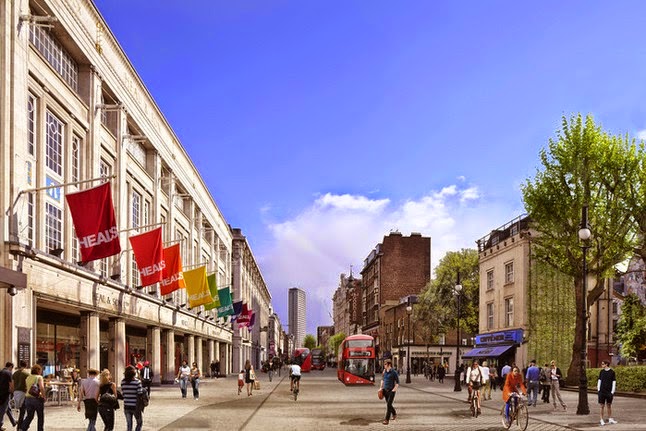 Tottenham Court Road will become a primarily pedestrian route, with safer and easier crossing of the road, 20mph speeds and bus priority. Cycle-specific provision will be supplied on parallel Gower Street.
So, what are the plans? Some £26million pounds will be spent removing the one-way gyratory which currently ensures speeds are much too high on Tottenham Court Road and condemns Gower Street (which should be one of London's finest Regency-era streets) to exist only as a traffic sewer filled with three lanes of buses and speeding vehicles. The area is currently described as one of the worst in the borough for collisions, with 259 casualties in total in the last three years, of which 36% involved pedestrians and 27% involved cyclists.
You can view the amended plans in full here.
13-Jan-15
Tottenham Court Road will become a primarily pedestrian route, with safer and easier crossing of the road, 20mph speeds and bus priority. Cycle-specific provision will be supplied on parallel Gower Street.So, what are the plans? Some £26million pounds will be spent removing the one-way gyratory which currently ensures speeds are much too high on Tottenham Court Road and condemns Gower Street (which should be one of London's finest Regency-era streets) to exist only as a traffic sewer filled with three lanes of buses and speeding vehicles. The area is currently described as one of the worst in the borough for collisions, with 259 casualties in total in the last three years, of which 36% involved pedestrians and 27% involved cyclists.
You can view the amended plans in full here.
Policy lag (or why bike lanes will be crap for a while yet) [ 13-Jan-15 3:27pm ]
Mark from As Easy As Riding a Bike blog tweeted a screen grab from Streetview recently of a newly painted bike lane in Horsham with the caption "Where that Department for Transport 'cycling money' is going. Brand new (2014) cycle 'infrastructure' painted in Horsham with Local Sustainable Transport Fund cash". It doesn't take a rocket scientist - let alone a road engineer - to work out that this is crap:
This shouldn't just make cyclist's blood boil. Not only is at best unusable and at worst downright dangerous, it's also a complete waste of tax payer's cash; something we are frequently reminded is in short supply these days.
However Horsham is not alone in splashing the cash (and the paint) around. Here's a shot I recently took in London's shiny new Olympic Park. This road layout is little more than a year or two old, and yet contains poorly painted sub-standard bike lanes which really help no one and serve no purpose:
There's a faction of cycle advocates who would say it is not worth asking for cycle infrastructure at all, because all you get is nonsense like this. I can empathise with their position - the internet is filled with pages and pages of examples just as bad as this (or worse).
I've argued before that you need three things to make successful cycling cities:
- Political Will
- Money
- Design knowledge
And in the above cases I would strongly argue that it is the latter - design knowledge - which is lacking. There are plenty of road engineers out there who don't have a clue how to accommodate cyclists in their designs, but there are plenty more who would like to do so but are nervous from straying from the manual.
In UK road design circles innovation cowers in the shadow of liability, perhaps understandably when you consider that it is people's safety potentially at stake. As a consequence most of the space between buildings is filled in like a "Paint by Numbers" picture, fitting in whatever the manual says is appropriate.
Busy road with lots of vehicles? There's a pre-defined solution for that.
Quiet cul-de-sac with heavy pedestrian activity? There's a pre-defined solution for that, too. Call it "tick box urbanism", if you like.
The trouble is that most streets take a few years to get from the drawing board to reality, and in that time I would argue the aspiration of cycle campaigners has evolved whilst the guidance has struggled to keep up. In just a few short years in London we've gone from a situation where campaigners (and campaigns) could not even decide whether they wanted cycle provision or not, to a much broader consensus with far more ambitious aims. The London Cycling Campaign and others are now asking for - and getting - high quality, European-style separated infrastructure.
How wide do you want your spanking new bike tracks?
Transport for London have been quick to get their design skills up to date (see the Cycle Superhighways proposed for central London and the construction work currently ongoing around the Oval) whereas some of our local borough authorities are much further behind the curve.
And here's the trap. For those behind the times who are still following guidelines to the letter, there's a real policy lag. As has been remarked elsewhere, not all of the guidelines designers and engineers are employing are particularly effective at prescribing environments suitable for cyclists of all ages and abilities. Whilst there has been much in recent years to help make streets more attractive, there has been less about improving the actual subjective experience of riding a bike.
This policy lag - the inability of the paperwork to keep up with the aspiration - will ensure that for every fantastic new cycle track built over the next few years there's going to be plenty of crap, as well.
Further reading:
Rachel Aldred: what's wrong with place and movement hierarchies?
As Easy As Riding a Bike: when will design guidance think of cycling as something for all?
A View From The Cycle Path: 3 types of Cycle Safety
Share
You're invited to the CycleLove x ibikelondon Christmas Ride [ 04-Dec-14 8:30am ]London's streets are sparkling with illuminations as Christmas approaches - and there's no better way to take in the festive scenes than on a bike ride rounded off with drinks in good company...
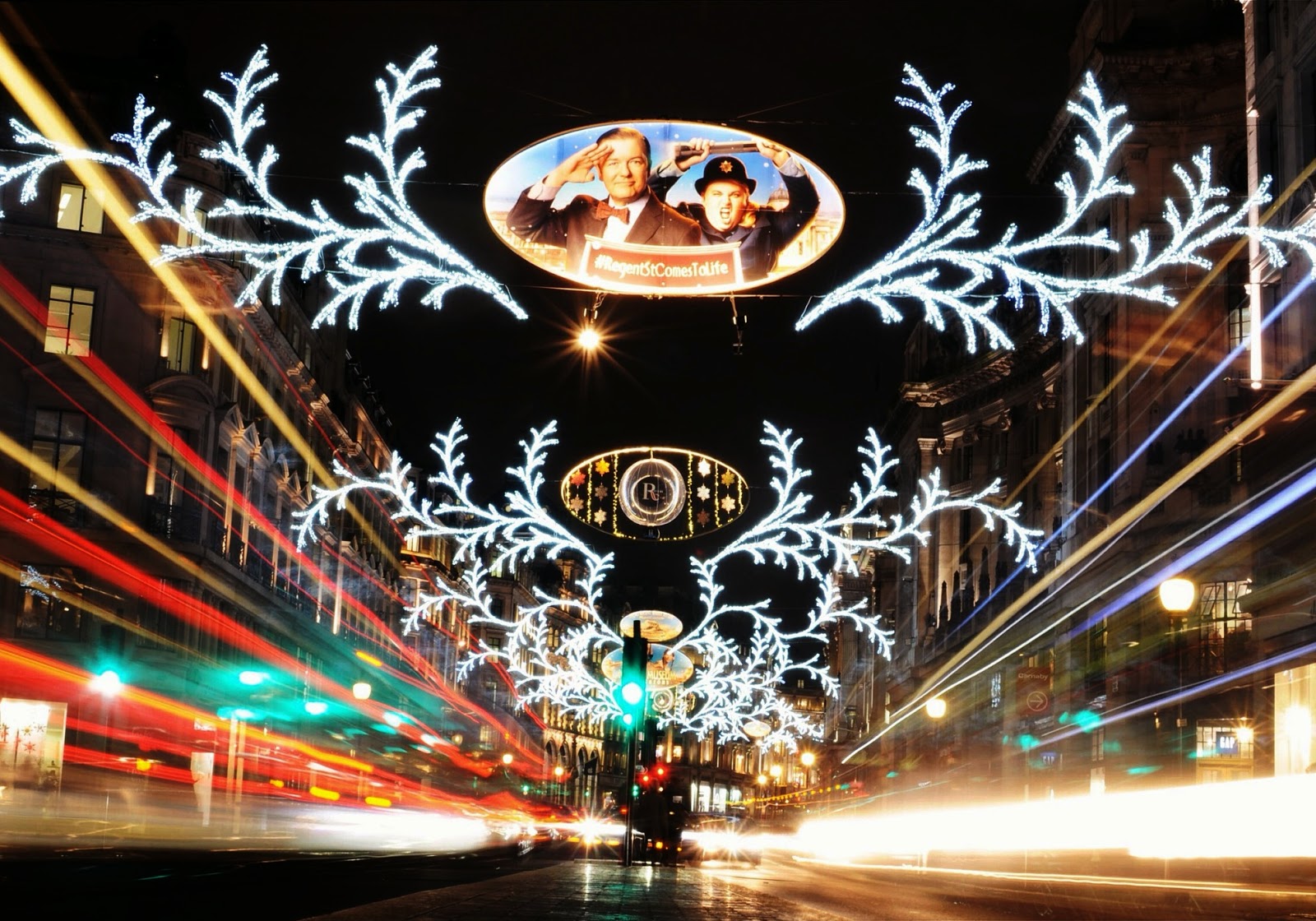 Regent Street Christmas lights, by Tom Payne with thanks.
So join James from CycleLove and me, Mark from ibikelondon, for a festive lighthearted spin around the seasonal lights and sites of London's West End on Thursday 18th December. It's a chance to get in to the Christmas spirit, celebrate the success of the year and to catch up over mince pies and a beer or four with friends old and new.
After an incredible year of the most stylish cycling reportage and one amazing summer adventure by Boris Bike, CycleLove is coming to a close very soon so this is a good chance to say "chapeau" to James in person. And after a year of relentless cycle campaigning I'm looking forward to having a fun night out on my bike that simply celebrates the best way to get around town, in the company of like-minded cyclists.
Setting off from Look Mum No Hands on Old Street at 6:30PM we'll see the Norwegian Christmas tree in Trafalgar Square, the twinkling white lights of Long Acre and the beautiful illuminated Peacocks of New Bond Street. We've devised a special route that packs in maximum Christmas dazzle for your seasonal delectation, so wind some fairy lights around your bike frame, don your best Christmas jumper, and I'll bring the playlist of cringeworthy Christmas tunes. After taking in the sites on our easy and steady-paced ride we'll return to Old Street for drinks and to see out the night.
Hope to see you there!
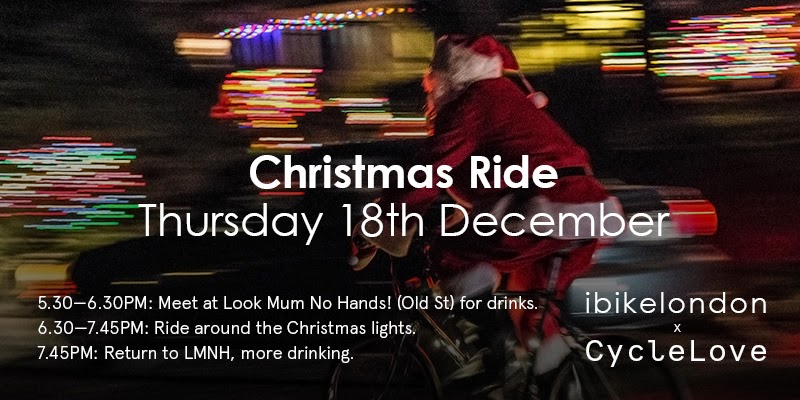 CycleLove x ibikelondon Christmas Ride
Thursday 18th December 2014
5.30—6.30PM: Meet at Look Mum No Hands! (Old St) for drinks.
6.30—7.45PM: Ride around the Christmas lights.
7.45PM: Return to LMNH, more drinks.
Bikes of all style and riders of all abilities are welcome; just let us know you're coming on the Facebook event page.
Got a question? Ask James or me on Twitter: CycleLove or markbikeslondon
Share
28-Nov-14
Regent Street Christmas lights, by Tom Payne with thanks.So join James from CycleLove and me, Mark from ibikelondon, for a festive lighthearted spin around the seasonal lights and sites of London's West End on Thursday 18th December. It's a chance to get in to the Christmas spirit, celebrate the success of the year and to catch up over mince pies and a beer or four with friends old and new.
After an incredible year of the most stylish cycling reportage and one amazing summer adventure by Boris Bike, CycleLove is coming to a close very soon so this is a good chance to say "chapeau" to James in person. And after a year of relentless cycle campaigning I'm looking forward to having a fun night out on my bike that simply celebrates the best way to get around town, in the company of like-minded cyclists.
Setting off from Look Mum No Hands on Old Street at 6:30PM we'll see the Norwegian Christmas tree in Trafalgar Square, the twinkling white lights of Long Acre and the beautiful illuminated Peacocks of New Bond Street. We've devised a special route that packs in maximum Christmas dazzle for your seasonal delectation, so wind some fairy lights around your bike frame, don your best Christmas jumper, and I'll bring the playlist of cringeworthy Christmas tunes. After taking in the sites on our easy and steady-paced ride we'll return to Old Street for drinks and to see out the night.
Hope to see you there!
CycleLove x ibikelondon Christmas RideThursday 18th December 2014
5.30—6.30PM: Meet at Look Mum No Hands! (Old St) for drinks.
6.30—7.45PM: Ride around the Christmas lights.
7.45PM: Return to LMNH, more drinks.
Bikes of all style and riders of all abilities are welcome; just let us know you're coming on the Facebook event page.
Got a question? Ask James or me on Twitter: CycleLove or markbikeslondon
Share
Friday Throwback: would you let your kids ride this bike? [ 28-Nov-14 8:30am ]It's nearly the weekend, which means it is time for another in our occasional series of Friday Throwbacks, looking at the best images of bicycles and cyclists from days gone by which have been uploaded to the Flickr Commons.
I'm all up for children's freedom, and despair at what indoor and restrained lives kids today lead, but even I am not sure if I'd let me kids ride this bike around town... Still, it looks like they're having a great time, doesn't it?
This photo is via the National Media Museum, who host a wealth of historic photographs online.
Whatever your cycling plans this weekend, whether two-wheeled or three, be sure never to miss another post from ibikelondon again! You can join the conversation on Twitter or follow our Facebook page. Happy cycling!
Share
What next for London's Cycle Superhighways? [ 26-Nov-14 9:24am ]The official consultation on the Mayor of London's ambition to build two new separated Cycle Superhighways across the city has come to an end, but those who are against the plans are still making their case strongly behind closed doors.
Transport for London received over 20,000 consultation responses, one of their highest response rates ever. Of those, approximately 80% are said to be in favour. Transport commissioner Sir Peter Hendy has hinted that TfL will listen to all concerns raised, and will publish revisions to their designs in approximately two months "that will work for everybody."
Cyclists make their concerns known in May's Space4Cycling protest.
Talking with the Evening Standard's correspondent Matthew Beard, Hendy said:
"One of the characteristics of this is that it's highly emotional. I think the support for the scheme from the cyclists and the objections from the businesses are both heartfelt. For one side to represent that the other has no case is false."
However Chris Kenyon from CyclingWorks.London has been quick to point out that it is not accurate to portray the debate around the cycle tracks as one just between cyclists and business leaders:
"Rarely if ever has a scheme by TfL gathered so many CEO level signatures of support. Surely that is the big story. The backers represent every major industry sector and show that Londoners are in it together and believe that it's time for kerb protected lanes in the heart of the city."
When the consultation closed at the weekend over 160 city businesses, institutes and organisations had written to Transport for London expressing their support for the Cycle Superhighway plans. Support has continued to roll in past the deadline, including that of publishing group Pearson who employ over 4,000 staff, many of who cycle in London.
Whilst London Assembly member Kit Malthouse was busy last week telling the Mayor his constituents were desperate for the Cycle Superhighways to be extended through his borough, opposing forces were working to undermine the plans.
The London Chamber of Commerce and Industry has proposed that the cycle tracks should be narrowed and only 'partially segregated' from traffic, allowing other road users to utilise the same space as cyclists. A similar system operates for the existing Cycle Superhighways which have seen an increase in cycling numbers but have been roundly criticised by campaigners following a series of deaths on the routes.
Cyclists take over part of the proposed route of the east / west Cycle Superhighway.
Meanwhile lobbyist Howard Dawber, Strategic Adviser for the Canary Wharf Group, is clear that they believe the Cycle Superhighways will lead to unacceptable traffic congestion in east London. He would do well to talk to academic and modelling expert Dr Rachel Aldred who goes in to detail on her blog as to why he needn't worry about the 'worst case scenario'. Detail aside, the Canary Wharf Group is not an opponent the cycling community can afford to underestimate; they have unprecedented access to influential ears and a lie - or a badly researched briefing document - will get half way around the world before the truth has got it's shoes on...
All this is set against the backdrop of more consultations on further significant changes planned for London's road network; on revisions to Cycle Superhighway route 5 through Oval and Vauxhall, at Archway Gyratory, at Stockwell Cross, and plans to remove the Old Street roundabout.
Those who were around for the Battle of Blackfriars just a few short years ago will remember how cyclists had to fight and fight just to stop cycle lanes being ripped out in order to "maintain traffic flow". It would seem that some elements of Transport for London have come a very, very long way since then.
But when it comes to winning over the rest of London - most especially its most influential interests - we can't afford to rest easily just yet. Watch this space.
Think tank the Centre For London are hosting a debate on the 10th December; "Are Cycle Superhighways good for London?". The Mayor's Cycling Commissioner Andrew Gilligan, CyclingWorksLondon's Chris Kenyon and Canary Wharf Group's Howard Dawber will all be there. Register to attend here.
Share
Is this London's most extreme bike ride? Danny Macaskill gets in a spin... [ 20-Nov-14 12:26pm ]It's not every day you get invited on a mystery tour, to witness what was billed as "London's most extreme bike ride". Planning the launch event for their virtual personal assistant, Cortana, Microsoft had been in touch promising thrills, spills, and world-famous trials bike rider Mr Danny Macaskill. Needless to say, I was excited!
Danny's stunt was kept under wraps right until the last minute, and the excitement built as darkness fell and we cruised up the river Thames on Wednesday evening. Everyone assembled on board snapped pictures of London's most famous landmarks as we neared our destination.
As the London Eye came in to view, so did a barge floating in the middle of the river with a massive slope and loop-the-loop built on top. What was about to unfold became clear, and I was blown away by just how epic the night was turning out to be.
Danny's London stunt is just another string to his bow, following the enormous success of his online videos including the most recent (and I'd argue best) film, The Ridge, which has already been viewed over 20 million times on Youtube.
Apparently Microsoft's Cortana acted as Danny's personal assistant throughout his training for the event, arranging his meetings, setting appointment reminders, playing his favourite music, warning for bad weather and finding maps.
He explains; "A career as a professional athlete can be quite hectic and as I prefer to spend as much time on my bike as possible - any help in organising meetings, travel plans and projects is great. This is one of the biggest set-ups I have ever ridden and the location is amazing. To have a five-metre loop floating on a barge is something surreal. I always look for new challenges and the chance to ride this massive loop with the help of Cortana is another achievement I can be proud of."
Our boat moored by Victoria Embankment, putting Danny's loop in line with the London Eye. As the crowd waited eagerly, I can't imagine what would be going through his mind. Was he nervous? What if he fell? Would he over-shoot the slope and end up in the river?!
If Macaskill was nervous, he certainly didn't show it. With a quick spin and a hop suddenly he was off, gathering speed on the steep slope before whizzing around the loop, then delivering a perfectly executed backwards wheelie on his front wheel.
The crowd (which I noticed included trails pioneer Hans 'No Way' Rey) gave him a huge cheer, and it was all over too soon.
Riding a bike along the river Thames usually involves dodging lorries and massive pot holes, and there's been lots of talk recently about the idea of building a floating bike track down the middle of the river. That's fine by me, just so long as it includes a 5 metre high loop the loop so we can all have a go!
Many thanks to Microsoft's Cortana for a great evening!
Share
The SMIDSY-killing cycling jacket; we road test the dazzling Reflect360 [ 12-Nov-14 8:30am ]We're often approached by companies interested in sharing their latest cycling "innovation" with us. From gloves with built-in indicators, to cycling jackets with special pockets for storing a pizza, we've really seen it all. So we were pleasantly surprised when a company got in touch claiming not only to have made the most reflective cycling jacket, but that it also started life here in London...
The REFLECT360 cycling jacket does exactly what it says on the tin; it reflects light back to other road users from every angle. It's not just got a reflective strip or some shiny striping, the entire jacket is reflective, from top to bottom.
I have my own reservations about 'safe' cycling wear, having started out my urban cycling career wearing a bright yellow builder's vest I grew to loathe. But I've been pleasantly surprised by the REFELCT360 - here is a cycling jacket designed around safety features that you can actually wear in to the office or the pub without looking like an epic banana.
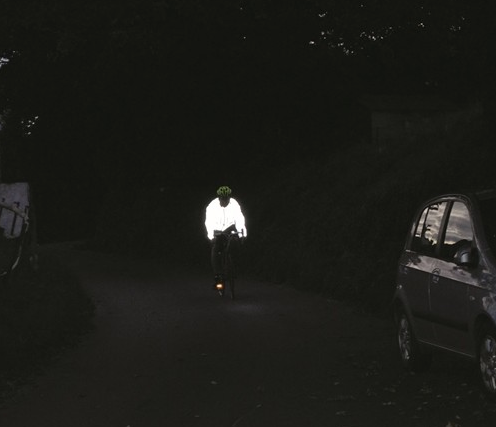
I spoke to the founder of ProViz, Anthony Langly-Smith, to find out what inspired him to create the jacket: "I'd been commuting by bike for about 12 years, and I was seeing lots of people going through Clapham up to London Bridge - on what is now the Cycle Superhighway route - and when I was at the traffic lights I would see three or four other people on bikes. Now there are 30 or 40 people at every turn of the lights. Unless you're actually there you can't quite fathom what a big change that was."
"At the same time there seemed to be a move away from cycling products that didn't just look like builder's jackets. People wanted fitted stuff, waterproof stuff. It started with me and my brother thinking about what our fellow cyclists might need on our commute to work, and has turned in to our business; now we're selling product in Chile, Colombia, China, Korea, Belgium, Denmark, Australia and New Zealand."
Anthony's latest product to come to market, the REFLECT360 range, has been garnering lots of interest with positive reviews on BikeRumor, the Evening Standard, and the Guardian among others. I found it was not just in reviews that this jacket got lots of attention; during our road test other cyclists came up to me at traffic lights to ask where it was from and where they could get one for themselves, astonished by the reflective quality now the nights are growing dark.
"We launched the jacket in February and suddenly we had so many people coming to talk to us, taking photos, wanting to know about the material, wanting to know how this product came about. It was astonishing. The success has bred an entire line; a rucksack cover, a vest, a gillet and a children's jacket."
So what about the jacket itself? How does it work, and what's it like to ride around town in?
The waterproof material is covered with thousands of tiny microscopic glass beads which reflect light, throwing back light that approaches it from any angle. The jacket itself is a well constructed design for cyclists, with taped seams, waterproof zips and pockets, a longer tapered back for good positioning on the bike as well as lots of adjustable seams and flaps to increase or decrease its breathability. It feels strong and sturdy and should last well.
Riding around town I found the jacket fitted well, performed brilliantly in the rain and stood up to everything London's mucky roads could throw at it. Whilst the material is a touch on the warm side, the addition of under arm vents helped me to keep my cool. I'm usually highly sceptical about the sort of claims made about these kind of products, but my reservations about the effectiveness of cycling "safety" kit evaporated too - I did feel noticeably more visible whilst riding around town in the jacket, and I think it would be invaluable on darker country roads.
London's cycle scene inspiring products which in turn help London's cyclists to feel more safe? We like that very much.
The REFLECT360 cycling jacket is available at Evans Cycles, Halfords and most good bike shops, or online directly from ProVisSports here.
Share
With 48 hours to go, your voice counts! If you do one thing for cycling this weekend, do this... [ 07-Nov-14 3:08pm ]You need to send an email to consultations@tfl.gov.uk by Sunday night saying why you want London's new Cycle Superhighways to be built. Doing so is really important and a chance for you to actually make a difference to London. Read on to find out why...
It's been a fast and furious few weeks in the cycle campaigning world, with lots of behind the scenes activity and meetings trying to get as many people as possible to signal their support for the Mayor of London's hugely ambitious "Crossrail for Bikes" cycling plans.
As most of you know, there's been some very cloak and dagger lobbying by some business interests who are desperately trying to kick the plans in to the long grass. With a Mayoral election coming up, delaying these plans means they risk not being built at all. And now there's just 48 hours for you to contribute and make a difference...
Space4cycling protestors travel down the Embankment, the route of the proposed the east / west cycle superhighway.These Cycle Superhighway plans are from being won. There's bad news to come with Westminster Council proposing all sorts of mad ideas like painting bike lanes down the middle of the Mall as some sort of Cycle Superhighway alternative. In short, they'll do anything to avoid having to address the sinful cesspit of shame that is the current state of Parliament Square, where the route is currently planned to go. Later today (Friday) the CBI will submit their response to the consultation. I've seen a draft and I'd be charitable if I were to say that it is hopelessly outdated in its approach to how cities really work.
Westminster's bonkers plans to send cyclists down the middle of the Mall with fast moving traffic either side of a painted strip. Of course, this late flurry of negative attention is not a mere coincidence. With 14 cyclists killed on London's roads in 2013, six in a two-week period this time last year, no-one wants to be seen to be publicly saying they *don't* want to see improvements (real improvements) for people on bikes. So in a classic lobbying tactic these last minute submissions are coming in right on the line in the hope that everyone will go home for the weekend and not notice the "against" voices quietly doing their thing.
It sounds so sinister, doesn't it? Like some kind of crazy conspiracy theory. I'm fully aware of this, but this is the score with lobbying in London it would seem...
Luckily, the wider business community in London is much more enlightened. CyclingWorks.London have been collating positive responses from organisations to the Cycle Superhighway plans and they've been inundated - almost overwhelmed - with businesses saying "Yes" and "Build it, Boris" to these plans. This week alone the University of Central London, the English National Opera, the Civil Aviation Authority, the City of London Police, Universal Records and many others have piled in with their support, joining Microsoft, Unilever, Deloitte, the Royal Bank of Scotland, Olswang LLP, Herbert Smith and many, many others.
Just some of the very long list of business names who support the Mayor's Crossrail for Bikes.The devisions between those "for" and those "against" led Evening Standard journalist Ross Lydall to go so far as to say there was only a "50/50 chance" of the Cycle Superhighways ever being built.
And with the consultation plans closing on Sunday, now it is your turn to get involved. If you can find twenty minutes to add your voice as a London cyclist, then you'll have strengthened the chances of these ambitious bike tracks being built and the Mayor delivering on his "Go Dutch" election promises.
You can go through the step-by-step consultation on the Transport for London website, which you can find here.
Alternatively, you can send an email to consultations@tfl.gov.uk with the subject matter "East West and North South Cycle Superhighway consultation" with you own comments.
Perhaps you want to explain how you'd like to bring your kids in to town by bikes safely? Or maybe you are particularly excited about a certain section of the route and the wider calming impacts it will have, like at Parliament Square?
Maybe you work on or near the route and this will make your commute to work a safe and inviting option all year round?
Perhaps you have other reasons you'd like to see these routes built; maybe you voted for the Mayor on the back of his "Go Dutch" promise?
Maybe you'd like to send a note supporting the broader concept, or perhaps you love a particular part of the scheme like a certain road closure or safe space for cycling where currently there is none. You can make critical suggestions for improvements too, of course (I've asked TfL to ensure they use angled curb stones to make sure cyclists can use the full width of the lanes.)
The point is, the agenda is set by those who show up and now more than ever before we need the real voice of Londoners to be reflected in this consultation.
So please, take the time to pen a note to Transport for London this weekend and help to make the city where we live a better place for everyone.
Share |


