21-Jun-16
 Somethin' Here [ 29-Feb-16 4:50pm ]
28-Feb-16
Piano as bass [ 28-Feb-16 1:58pm ]
'....Heinke cracked the code of "Shook Ones Part II" while listening to "Jessica," a 1969 recording by Herbie Hancock. It turns out that Mobb Deep rapper-producer Havoc took a piano melody from the song and slowed it down at two different pitches to create a two-bar loop more reminiscent of a bass guitar than keyboard.'
LA Times, April 5, 2011
Bass as weapon [ 28-Feb-16 12:46pm ]
13-Feb-16
Best of the blog book? [ 13-Feb-16 4:08pm ]
Hoop Dreams 1994 Documentary / Drama Movies Full Movie [ 24-Aug-15 11:26pm ]
10-Aug-15
# [ 04-Jul-15 6:57pm ]
23-Jun-15
Nature Boy [ 23-Jun-15 6:33pm ]
James Goldsmith's Referendum Party was generally seen as an unhinged plutocrat's last hurrah. The Natural Law Party, backed by George Harrison: for those who thought Monster Raving Loony were too sensible.
And yet .... an in-out Referendum on EU membership remains one of the key issues in British politics and still divides the Right. Goldsmith's railing against "professional politicians" is an even more mainstream view. And doesn't Natural Law's program to de-stress the British people sound rather like the Happiness agenda?
25-Mar-15
# [ 07-Mar-15 2:00pm ]
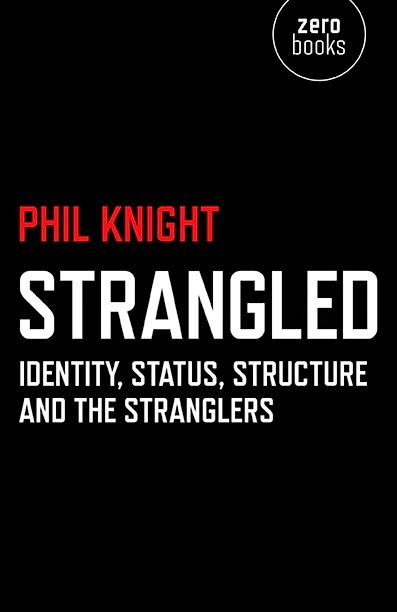
Phil and I are going to have a promotional pub crawl for Strangled and No More Heroes on the 27th of March. Quite what it will constitute remains to be seen. I intend to flog my author copies of No More Heroes out of my gym bag and give the funds raised to Defend The Right to Protest. We will start in Central London around 5 then head south. London Bridge/ Elephant then New Cross/Deptford. We will figure out the exact pubs later. Essentially doing this solves one fundamental problem: the fact that I still like and get on with people who have now fallen out with each other. We will come to you, or somewhere near you, and you don't have to not come for a quick pint through the fear that you'll bump into that ex-comrade who has turned out to be a psycho/ reactionary/ closet Tory/ leering Troll / treacherous Careerist, etc. If you ever contributed to the Decade's blogs it would be great to see you, but it would be great to see you anyway. This is an open invitation. I'll update the pub location nearer the date, after full consultation with Phil. He's dead fussy.
Facebook page here. #
09-Feb-15
I watched the Adam Curtis film Bitter Lake this week. I'm not going to comment on the argument of the film, as I have no special insights into Afghanistan other than having followed the news for the last 15 years. However, a whole line of criticism has developed around the aesthetics of Curtis' films, particularly his use of film archive, that is worth responding to.
The internet was hailed as great breakthrough in multimedia, which it is of course. But it has also produced a revenge of the written word, and of those who believe writing is the senior service of media. Platforms like tumblr or pinterest have ended up devaluing images by reducing them to a churn; twitter actively defaces them, using pictures and video as fodder for jokes, constant fact-checking or abuse. Live-tweeting programs seems like a way of refusing to surrender to the pull of video and sound.
The left, with its tradition of print journalism, and critical theory, created by people trained in philosophy and literature, has form here. On Photography and Camera Lucida could be seen as attempts to cut visual mass media down to size, by those who felt threatened by them. Marshall McLuhan's career is now an academic morality tale: don't get too into television or you will become vacuous. (The exception is John Berger who was an artist before he began writing, and has retained a positive sense of making images.) There is a Protestant and iconoclastic (in the original sense) undercurrent here.
The criticisms of Curtis' use of archival footage and his editing techniques have some of this spirit. At work here is a misunderstanding of what he is doing. Curtis' films are histories. Almost all serious written histories are led by the use of archival sources. In practise most of these were produced, and are kept, by institutions of various kinds. So the argument that Curtis is 'lost in archives' or 'or lost in the BBC archives' is a non-criticism. His use of audio-visual sources is also close to the practise of 'thick description' where historians build up a picture of a past society or event by piling detail on detail and example on example. This is a methodical and rhetorical strategy, and one used by several different historians from Raphael Samuel to Keith Thomas to Saul Friedländer. It should be noted that this technique involves a fair bit of direct quotation or repetition of material that the author may not agree with and is often presented without much comment. Walter Benjamin fans will see the similarity with the Arcades Project; indeed Keith Thomas has written of his admiration for that work. I can't help noticing the link with Humphrey Jennings' Pandemoniumeither - Curtis' father was Jennings' cameraman. This is also the technique of many works of oral history. The statement that Bitter Lake is an 'emotional history' is therefore in keeping with this tradition.
This sheds a different light on complaints about decontextualisation too. This has been perhaps thecomplaint against thick description as a method ['quotation out of the context' is the standard charge]. But this is a problem of all methods: they show some things and reveal others. It is true that, unlike history writing, Curtis' films have no footnotes and apparatus: but this is true of all factual films. Having more talking head experts would not solve the problem; it would merely introduce multiple arguments from authority.
The other point about archives is this: progress in history has generally been made by bringing new sources into play or finding new ways of looking at them. Indeed, it should be emphasised how underused television and film archives are in creating works of histories [as opposed to illustrating them.] This is partly due to the conservatism of the academic form, but also because it is very hard to get access to these archives and even harder to re-use the material publicly. Ironically therefore, the 20th century, that supposedly radical and modernist century, has some of the most conservative and restricted forms of telling its history.
There is a deep literalism at work in criticism of his technique. People seem to want every image or video to come with captions and explanations. Or perhaps every frame has to feature Fergal Keene telling us when to feel sad. Curtis is creating a new form of multi-media history. Who knows where others will take it next?
27-Jan-15
Whatever happened to him? [ 27-Jan-15 11:31am ]
Divine David Christmas Masterclass [ 25-Dec-14 12:14pm ]
23-Dec-14
Cutting Edge - Comrades (Militant Liverpool documentary, 9 November 1992) [ 23-Dec-14 12:06pm ]
28-Nov-14
# [ 27-Nov-14 11:16pm ]
English Fields. [ 20-Nov-14 12:22pm ]
In Kill List the country is divided between the killers, trapped in awful marriages, up to their eyeballs in debt, desperate to hang on to their suburban new builds, their victims: the marginal, denizens of a grey, wintry edgeland of damp basement flats, lock ups, factories and industrial estates, and the cultic higher orders, whose arcane practices and rituals are as ancient as their hold on power.
Marriage is a battlefield, kids are collateral damage. Friendships may erupt into violence at any moment. Work is a series of bloody tasks carried out under the auspices of vastly powerful forces with whom one wittingly or otherwise has signed a blood oath, the exact nature of which is deeply uncertain. Everyone, even your own partner, regards death as a merciful release.Your complicity in your own destruction is the only thing that is guaranteed.
In this sense Kill List is the first great film of Austerity Britain.

The damaged veteran finding ways to readjust to and deploy his skills on Civvy street is a common recent theme in British film, but there's nothing noble or sympathetic about Jay and Gal. Nor do they have that surplus of confidence, the familiarity with violence and the rugged self determination that often makes the demobbed squaddie a hero figure. In fact they lack agency and soon become fearful of what they have got themselves into. In Nick Love's Outlaw, the returned soldier raises a vigilante gang to combat The Establishment, but in Kill List they continue to be its pawns.
There have been all kinds of heated theorizations about how and if Kill List's elliptical and allusive narrative ties up. But Kill List is less interesting for what it means than what it does, enacting a violent rupture with and within its genre conventions, bringing the British Gangster movie under pressure from two directions, Loachian realism and Gothic horror. Only hammering these two seemingly irreconcilable forms together can adequately get at the texture of the moment: cold dread, incomprehension, the sense that things are out of your control, your life is not your own.
We are a long way here, from cheeky London-centric capers like Lock, Stock and Two Smoking barrels. This an England which, during the pomp of the post-historic and classless 90s and Noughties had been banished, never to return.
Food Bank Britain, ATOS Britain, UKIP Britain, with its endlessly declining pay, rising rents, spiralling debts. Home to the nine poorest areas of northern Europe as well as its single richest. A country riven by a series of fantastical, overlapping revelations, phone hacking, financial manipulation, VIP paedophiles, police corruption. A nexus of vested interests intent on occulting and exculpating it all.
To be plunged into such a world, such a crisis, to have a set of prior assumptions whisked away, is disorienting, disturbing, nerve-jangling, the pieces can't yet be fitted fully together, something terrible is happening, has perhaps always been happening, History has returned in all its devastating, vertiginous enormity, not, or not yet at least as the continuation of a progressive project but as a nightmare.
The film was shot in Sheffield, the setting for one of Ben Wheatley's favourite non-horror horror films, the harrowing nuclear attack docu-drama, Threads.
In an interview for a A Field in England Ben Wheatley suggests that it should be thought of as a prequel to Kill List. Loathe as I am to disagree with the director's assessment of his own work, I am going to suggest that the reverse is true. That Kill List, a film about the present, can't help but be about the past. A Field in England, though it's set during the civil war is really a film about the future.
If there is an initially terrible, traumatic return of history in Kill List, history as the piling up of disasters, trauma on trauma, the evil plan of the establishment, the Illuminati, the dark ones unfolding. In A Field in England a countervailing set of societies, movements, and organizations is evoked, the history of the long struggle for liberation. There is some corner of an English field, that is forever foreign, committed to experiment, to rejection, to turning the world upside down, pushing toward the new, and the film itself, with its baroque stylization and breathtaking formal boldness, maintains fidelity to this tradition as it invokes it.
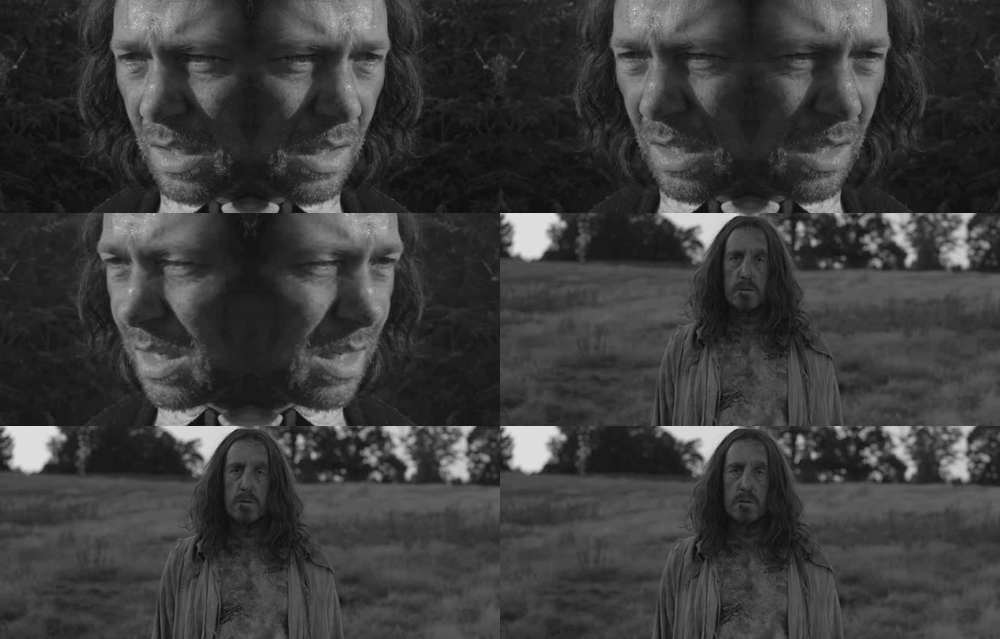
Again the film deals with soldiers, conscripts, rather than professionals who exit the civil war, enter a different field and decide to strike out together to look for an alehouse. This though is a ruse and they are dragooned instead into a treasure hunt. After a few brief moments as masterless men they are again set to work. "I am my own man, I am my own man" Jacob repeats angrily as he digs for treasure at gunpoint.
Whitehead's story could be the drab, reactionary tale of a cowardly intellectual who through learning to kill becomes more-than-human, somewhat like Dustin Hoffman's character by the end of Straw Dogs. But in seeking to return to his master and fullfil his task in a repeat of the films opening point of view shot as he plunges through the hedgerow, he is instead returned to the field and finds Friend and Jacob reborn and silently waiting. The final shot is a tableau of the three men, memorialised, charged with an eerie significance.
The inability to escape from a particular location, with all the narrow, winding roads leading you eventually back to doom, is a trope of rural horror, a spacialization of circadian, rural rhythms, the modern progressive man, rider of times arrow fallen into the vortex, we might say, given that Peter Strickland's superb Berberian Sound Studio deals with similar themes the Equestrian Vortex, of deep time. But here it is used to different, more optimistic ends.

From the flux and chaos of the battle, from their repeated deaths and rebirths, from their having travelled as far into and out of themselves as its possible to go the men have been transformed. Whitehead is now caught up in a particular social field, a particular set of relations. Toward the end of the film Jacob tells him that all along the true treasure was here between them. They have become masterless, finally, not through some abstract notion of freedom, nor by slipping away through the hedgerow, but precisely by staying within the field, altering their relation to it, their relation to each other. Here it is a field, but it could a square, a street, an estate, a nation, a world. This is a process, an alchemical process, which we might call comradeization, in which they no longer are "their own men", but of and for each other.
In this way the film is not just of a piece with the neglected films of the 60's and 70s regularly tagged as influences, from Witchfinder General to Culloden, from Winstanley to Blood on Satan's Claw but also with more trenchant, overtly politicized treatments of the theme, Peter Hall's Akenfield and Bill Douglas' Comrades.
In returning to the past, to the Civil War and its role in accelerating enclosure A Field in England returns us to the problem of ownership, the commons and land rights, something previously considered to be an issue mainly for indigenous peoples in the developing world. The term re-peasantization is used now to talk about the movement of the young unemployed in Spain, or Greece out of urban centres.
When the city can offer us nothing but precarious employment as servants of the rich, it's not rural but urban life that begins to look like the idiocy. A Field in England reminds us that the countryside is no idyll, is as much an arena of power and conflict as anywhere. Who knows but that groups of radicals returning to the land, as they have periodically, will find themselves in solidarity with rural workers, against the ancient estates and the group approvingly identified by the Telegraph back in 2004 as the new squirearchy of our neo-feudal times.
But A Field in England is also cut from more millenarian cloth, imbued with other, longer range fantasies and fears. Finally, when all social relations breakdown, when the end comes, when the credit dries up and the oil runs out, when the waters rise or exotic diseases decimate the globe and Malthus has the last laugh, we will be obliged to return to the land and the great cycle will be complete.
In Threads, Ben Wheatley's favourite non-horror horror film, after the bitter decade-long night of the nuclear Winter has passed, rudimentary communities spring up again to till the soil that, momentarily at least, has been returned to them.
It has taken a war to get them there.
11-Sep-14
# [ 11-Sep-14 6:01pm ]
09-Feb-14
A Jobseeker's Agreement [ 09-Feb-14 11:37pm ]
# [ 28-Dec-13 5:37pm ]
Come Down to the Station House [ 27-Dec-13 10:27pm ]
As well as musical, there are also spoken (and sampled) intros broadening the spectrum of really great intros, of which this must be one of the best.
Terrible Music of the Late 1990s [ 15-Nov-13 12:29pm ]
Brand A [ 10-Nov-13 12:36am ]
The oldest kind of branding the nation knows, to paraphrase.
Britannia reaching towards reclaiming a genre that was ditched a hundred years ago, only that Military Wives tune despite marking a sea-change (when else could it have reached Christmas No 1?) is a bit of an outlier. In the British experience at least after the First World War, war songs came pre-packaged with melancholy and a different sort of sentimentality: that British society of boundless optimism and great-game playing was to a degree 'destroyed' as Paul Fussell has it here.
Of course since the Second World War there hasn't been a war of enough magnitude to require uplifting songs, and this seems to have stuck for a time: unlike in the US everyone from country singers to rappers didn't immediately make their contributions. Post-2008 this gradual re-branding of the nation with it's base components has accelerated faster than it would have done otherwise: it is two of the oldest British (English) institutions that have found themselves doing the most well, Army and Church. One has found itself become a beloved public institution able to dodge most of the criticism in-coming by appropriating emotion and anti-war critique along with the usual dogma; the other has found itself in it's 19th century role as most-often heard critic of the ills of the poor, a role that Robert Tressell and Joe Hill skewered around the same time.
The audio of the patriotic hymn comes accompanied with a pre-packaged "sort of controlled despair" that is as much a selling point as John Bull-ism. A youtube subgenre however exists consisting of jocular squaddies larking to pop tunes in the desert, gritty in-action footage, and video montages set to either ethereal melancholia or blood-thirsty dirge depending on temperament.
What happened this week is unremarkable in the history of the British army. The audio recording however is, something feeling very odd about both the awareness and performativity of what's being done, and the indifference to which it was treated by those who years before would have had at least something to say.
Dangerous Ideas, Dangerous Men [ 14-Sep-13 1:27am ]
up close and personal [ 20-Jun-16 9:13pm ]

The future then [ 20-Jun-16 9:13pm ]
29-Feb-16
Somethin' Here [ 29-Feb-16 4:50pm ] Piano as bass [ 28-Feb-16 1:58pm ]'....Heinke cracked the code of "Shook Ones Part II" while listening to "Jessica," a 1969 recording by Herbie Hancock. It turns out that Mobb Deep rapper-producer Havoc took a piano melody from the song and slowed it down at two different pitches to create a two-bar loop more reminiscent of a bass guitar than keyboard.'
LA Times, April 5, 2011
Bass as weapon [ 28-Feb-16 12:46pm ] Best of the blog book? [ 13-Feb-16 4:08pm ]Calling all contributors past and present Carl and I have had a discussion about whether there could be a Best of the Decades Blog book. The blogs have featured some great writing over the years and it would be nice to give them some recognition. Also, Blogger will stop working at some point, people move onto other things, and it would be a shame to lose so many good posts.
Exactly what form this would take I don't know. We could follow Woebot's example and do it ourselves, or see if a publisher is interested. But before going any further I would like to hear what other contributors think. So email your thoughts, pro or anti, to: belovedenemies [at] gmail.com
Even if you only posted one piece, I would still like your opinion. Readers who feel strongly are also welcome to express their views.
Thanks,William
25-Aug-15
Exactly what form this would take I don't know. We could follow Woebot's example and do it ourselves, or see if a publisher is interested. But before going any further I would like to hear what other contributors think. So email your thoughts, pro or anti, to: belovedenemies [at] gmail.com
Even if you only posted one piece, I would still like your opinion. Readers who feel strongly are also welcome to express their views.
Thanks,William
Hoop Dreams 1994 Documentary / Drama Movies Full Movie [ 24-Aug-15 11:26pm ]The Electronic Frontier (1993) [ 09-Aug-15 11:39pm ]
04-Jul-15
# [ 04-Jul-15 6:57pm ] Nature Boy [ 23-Jun-15 6:33pm ]One for Carl - Nature Boy (BBC Two, 2000), first episode shot in and around Barrow-In-Furness.
20-Apr-15
Outriders [ 20-Apr-15 12:06pm ]
James Goldsmith's Referendum Party was generally seen as an unhinged plutocrat's last hurrah. The Natural Law Party, backed by George Harrison: for those who thought Monster Raving Loony were too sensible.
And yet .... an in-out Referendum on EU membership remains one of the key issues in British politics and still divides the Right. Goldsmith's railing against "professional politicians" is an even more mainstream view. And doesn't Natural Law's program to de-stress the British people sound rather like the Happiness agenda?
# [ 25-Mar-15 3:51pm ]
Right, we are Wetherspooning.
Here from 5
http://www.jdwetherspoon.co.uk/home/pubs/the-lord-moon-of-the-mall
then I guess
The Rockingham arms at approx 7:30
http://www.jdwetherspoon.co.uk/home/pubs/the-lord-moon-of-the-mall
then Hipster fun in New Cross at 9:30 ish
http://www.royalalbertpub.com/
and a late nightcap in the Greenwich Wetherspoons from 11-ish
http://www.jdwetherspoon.co.uk/home/pubs/the-gate-clock
this won't work out of course. I don't have a smartphone, Phil doen't even have a mobile so hopefully we will meet up at some point. Bring anyone you like and remember we like meeting new people and have highly developed social skills. #
07-Mar-15
Here from 5
http://www.jdwetherspoon.co.uk/home/pubs/the-lord-moon-of-the-mall
then I guess
The Rockingham arms at approx 7:30
http://www.jdwetherspoon.co.uk/home/pubs/the-lord-moon-of-the-mall
then Hipster fun in New Cross at 9:30 ish
http://www.royalalbertpub.com/
and a late nightcap in the Greenwich Wetherspoons from 11-ish
http://www.jdwetherspoon.co.uk/home/pubs/the-gate-clock
this won't work out of course. I don't have a smartphone, Phil doen't even have a mobile so hopefully we will meet up at some point. Bring anyone you like and remember we like meeting new people and have highly developed social skills. #
# [ 07-Mar-15 2:00pm ]Phil and I are going to have a promotional pub crawl for Strangled and No More Heroes on the 27th of March. Quite what it will constitute remains to be seen. I intend to flog my author copies of No More Heroes out of my gym bag and give the funds raised to Defend The Right to Protest. We will start in Central London around 5 then head south. London Bridge/ Elephant then New Cross/Deptford. We will figure out the exact pubs later. Essentially doing this solves one fundamental problem: the fact that I still like and get on with people who have now fallen out with each other. We will come to you, or somewhere near you, and you don't have to not come for a quick pint through the fear that you'll bump into that ex-comrade who has turned out to be a psycho/ reactionary/ closet Tory/ leering Troll / treacherous Careerist, etc. If you ever contributed to the Decade's blogs it would be great to see you, but it would be great to see you anyway. This is an open invitation. I'll update the pub location nearer the date, after full consultation with Phil. He's dead fussy.
Facebook page here. #
Our man in the archive [ 09-Feb-15 8:05pm ]
I watched the Adam Curtis film Bitter Lake this week. I'm not going to comment on the argument of the film, as I have no special insights into Afghanistan other than having followed the news for the last 15 years. However, a whole line of criticism has developed around the aesthetics of Curtis' films, particularly his use of film archive, that is worth responding to.
The internet was hailed as great breakthrough in multimedia, which it is of course. But it has also produced a revenge of the written word, and of those who believe writing is the senior service of media. Platforms like tumblr or pinterest have ended up devaluing images by reducing them to a churn; twitter actively defaces them, using pictures and video as fodder for jokes, constant fact-checking or abuse. Live-tweeting programs seems like a way of refusing to surrender to the pull of video and sound.
The left, with its tradition of print journalism, and critical theory, created by people trained in philosophy and literature, has form here. On Photography and Camera Lucida could be seen as attempts to cut visual mass media down to size, by those who felt threatened by them. Marshall McLuhan's career is now an academic morality tale: don't get too into television or you will become vacuous. (The exception is John Berger who was an artist before he began writing, and has retained a positive sense of making images.) There is a Protestant and iconoclastic (in the original sense) undercurrent here.
The criticisms of Curtis' use of archival footage and his editing techniques have some of this spirit. At work here is a misunderstanding of what he is doing. Curtis' films are histories. Almost all serious written histories are led by the use of archival sources. In practise most of these were produced, and are kept, by institutions of various kinds. So the argument that Curtis is 'lost in archives' or 'or lost in the BBC archives' is a non-criticism. His use of audio-visual sources is also close to the practise of 'thick description' where historians build up a picture of a past society or event by piling detail on detail and example on example. This is a methodical and rhetorical strategy, and one used by several different historians from Raphael Samuel to Keith Thomas to Saul Friedländer. It should be noted that this technique involves a fair bit of direct quotation or repetition of material that the author may not agree with and is often presented without much comment. Walter Benjamin fans will see the similarity with the Arcades Project; indeed Keith Thomas has written of his admiration for that work. I can't help noticing the link with Humphrey Jennings' Pandemoniumeither - Curtis' father was Jennings' cameraman. This is also the technique of many works of oral history. The statement that Bitter Lake is an 'emotional history' is therefore in keeping with this tradition.
This sheds a different light on complaints about decontextualisation too. This has been perhaps thecomplaint against thick description as a method ['quotation out of the context' is the standard charge]. But this is a problem of all methods: they show some things and reveal others. It is true that, unlike history writing, Curtis' films have no footnotes and apparatus: but this is true of all factual films. Having more talking head experts would not solve the problem; it would merely introduce multiple arguments from authority.
The other point about archives is this: progress in history has generally been made by bringing new sources into play or finding new ways of looking at them. Indeed, it should be emphasised how underused television and film archives are in creating works of histories [as opposed to illustrating them.] This is partly due to the conservatism of the academic form, but also because it is very hard to get access to these archives and even harder to re-use the material publicly. Ironically therefore, the 20th century, that supposedly radical and modernist century, has some of the most conservative and restricted forms of telling its history.
There is a deep literalism at work in criticism of his technique. People seem to want every image or video to come with captions and explanations. Or perhaps every frame has to feature Fergal Keene telling us when to feel sad. Curtis is creating a new form of multi-media history. Who knows where others will take it next?
Whatever happened to him? [ 27-Jan-15 11:31am ]A pretty conventional Adam Curtis doc from 1996 about Nick Leeson, "the man who brought down Barings Bank." Worth watching for the interview with the man himself, who is brazenly unrepentant and rather odd.
What's interesting about Leeson is, as far as anyone has been able to tell, he didn't actually profit from the giant fraud he committed. He was just trying to cover up the losses he made early on into his new job on the Singapore Stock Exchange, and had to keep going until someone found out. Perhaps this quirk prevented people from drawing any deeper conclusions about finance from the case.
Funny by the way, how many key 90s figures came from Watford: Leeson, Mo Mowlam, Geri Halliwell and Gareth Southgate.
25-Dec-14
What's interesting about Leeson is, as far as anyone has been able to tell, he didn't actually profit from the giant fraud he committed. He was just trying to cover up the losses he made early on into his new job on the Singapore Stock Exchange, and had to keep going until someone found out. Perhaps this quirk prevented people from drawing any deeper conclusions about finance from the case.
Funny by the way, how many key 90s figures came from Watford: Leeson, Mo Mowlam, Geri Halliwell and Gareth Southgate.
Divine David Christmas Masterclass [ 25-Dec-14 12:14pm ] Cutting Edge - Comrades (Militant Liverpool documentary, 9 November 1992) [ 23-Dec-14 12:06pm ] # [ 27-Nov-14 11:16pm ]Radical change is possible and necessary but only if alternative thinking has the courage to move out of the margins. Repeater is committed to bringing the periphery to the centre, taking the underground overground, and publishing books that will bring new ideas to a new public. We know that any encounter with the mainstream risks corrupting the tidiness of untested ideals, but we believe that it is better to get our hands dirty than worry about keeping our souls pure.
http://repeaterbooks.wordpress.com/
 #
#
20-Nov-14
http://repeaterbooks.wordpress.com/
# English Fields. [ 20-Nov-14 12:22pm ]In Kill List the country is divided between the killers, trapped in awful marriages, up to their eyeballs in debt, desperate to hang on to their suburban new builds, their victims: the marginal, denizens of a grey, wintry edgeland of damp basement flats, lock ups, factories and industrial estates, and the cultic higher orders, whose arcane practices and rituals are as ancient as their hold on power.
Marriage is a battlefield, kids are collateral damage. Friendships may erupt into violence at any moment. Work is a series of bloody tasks carried out under the auspices of vastly powerful forces with whom one wittingly or otherwise has signed a blood oath, the exact nature of which is deeply uncertain. Everyone, even your own partner, regards death as a merciful release.Your complicity in your own destruction is the only thing that is guaranteed.
In this sense Kill List is the first great film of Austerity Britain.
The damaged veteran finding ways to readjust to and deploy his skills on Civvy street is a common recent theme in British film, but there's nothing noble or sympathetic about Jay and Gal. Nor do they have that surplus of confidence, the familiarity with violence and the rugged self determination that often makes the demobbed squaddie a hero figure. In fact they lack agency and soon become fearful of what they have got themselves into. In Nick Love's Outlaw, the returned soldier raises a vigilante gang to combat The Establishment, but in Kill List they continue to be its pawns.
There have been all kinds of heated theorizations about how and if Kill List's elliptical and allusive narrative ties up. But Kill List is less interesting for what it means than what it does, enacting a violent rupture with and within its genre conventions, bringing the British Gangster movie under pressure from two directions, Loachian realism and Gothic horror. Only hammering these two seemingly irreconcilable forms together can adequately get at the texture of the moment: cold dread, incomprehension, the sense that things are out of your control, your life is not your own.
We are a long way here, from cheeky London-centric capers like Lock, Stock and Two Smoking barrels. This an England which, during the pomp of the post-historic and classless 90s and Noughties had been banished, never to return.
Food Bank Britain, ATOS Britain, UKIP Britain, with its endlessly declining pay, rising rents, spiralling debts. Home to the nine poorest areas of northern Europe as well as its single richest. A country riven by a series of fantastical, overlapping revelations, phone hacking, financial manipulation, VIP paedophiles, police corruption. A nexus of vested interests intent on occulting and exculpating it all.
To be plunged into such a world, such a crisis, to have a set of prior assumptions whisked away, is disorienting, disturbing, nerve-jangling, the pieces can't yet be fitted fully together, something terrible is happening, has perhaps always been happening, History has returned in all its devastating, vertiginous enormity, not, or not yet at least as the continuation of a progressive project but as a nightmare.
The film was shot in Sheffield, the setting for one of Ben Wheatley's favourite non-horror horror films, the harrowing nuclear attack docu-drama, Threads.
In an interview for a A Field in England Ben Wheatley suggests that it should be thought of as a prequel to Kill List. Loathe as I am to disagree with the director's assessment of his own work, I am going to suggest that the reverse is true. That Kill List, a film about the present, can't help but be about the past. A Field in England, though it's set during the civil war is really a film about the future.
If there is an initially terrible, traumatic return of history in Kill List, history as the piling up of disasters, trauma on trauma, the evil plan of the establishment, the Illuminati, the dark ones unfolding. In A Field in England a countervailing set of societies, movements, and organizations is evoked, the history of the long struggle for liberation. There is some corner of an English field, that is forever foreign, committed to experiment, to rejection, to turning the world upside down, pushing toward the new, and the film itself, with its baroque stylization and breathtaking formal boldness, maintains fidelity to this tradition as it invokes it.
Again the film deals with soldiers, conscripts, rather than professionals who exit the civil war, enter a different field and decide to strike out together to look for an alehouse. This though is a ruse and they are dragooned instead into a treasure hunt. After a few brief moments as masterless men they are again set to work. "I am my own man, I am my own man" Jacob repeats angrily as he digs for treasure at gunpoint.
Whitehead's story could be the drab, reactionary tale of a cowardly intellectual who through learning to kill becomes more-than-human, somewhat like Dustin Hoffman's character by the end of Straw Dogs. But in seeking to return to his master and fullfil his task in a repeat of the films opening point of view shot as he plunges through the hedgerow, he is instead returned to the field and finds Friend and Jacob reborn and silently waiting. The final shot is a tableau of the three men, memorialised, charged with an eerie significance.
The inability to escape from a particular location, with all the narrow, winding roads leading you eventually back to doom, is a trope of rural horror, a spacialization of circadian, rural rhythms, the modern progressive man, rider of times arrow fallen into the vortex, we might say, given that Peter Strickland's superb Berberian Sound Studio deals with similar themes the Equestrian Vortex, of deep time. But here it is used to different, more optimistic ends.
From the flux and chaos of the battle, from their repeated deaths and rebirths, from their having travelled as far into and out of themselves as its possible to go the men have been transformed. Whitehead is now caught up in a particular social field, a particular set of relations. Toward the end of the film Jacob tells him that all along the true treasure was here between them. They have become masterless, finally, not through some abstract notion of freedom, nor by slipping away through the hedgerow, but precisely by staying within the field, altering their relation to it, their relation to each other. Here it is a field, but it could a square, a street, an estate, a nation, a world. This is a process, an alchemical process, which we might call comradeization, in which they no longer are "their own men", but of and for each other.
In this way the film is not just of a piece with the neglected films of the 60's and 70s regularly tagged as influences, from Witchfinder General to Culloden, from Winstanley to Blood on Satan's Claw but also with more trenchant, overtly politicized treatments of the theme, Peter Hall's Akenfield and Bill Douglas' Comrades.
In returning to the past, to the Civil War and its role in accelerating enclosure A Field in England returns us to the problem of ownership, the commons and land rights, something previously considered to be an issue mainly for indigenous peoples in the developing world. The term re-peasantization is used now to talk about the movement of the young unemployed in Spain, or Greece out of urban centres.
When the city can offer us nothing but precarious employment as servants of the rich, it's not rural but urban life that begins to look like the idiocy. A Field in England reminds us that the countryside is no idyll, is as much an arena of power and conflict as anywhere. Who knows but that groups of radicals returning to the land, as they have periodically, will find themselves in solidarity with rural workers, against the ancient estates and the group approvingly identified by the Telegraph back in 2004 as the new squirearchy of our neo-feudal times.
But A Field in England is also cut from more millenarian cloth, imbued with other, longer range fantasies and fears. Finally, when all social relations breakdown, when the end comes, when the credit dries up and the oil runs out, when the waters rise or exotic diseases decimate the globe and Malthus has the last laugh, we will be obliged to return to the land and the great cycle will be complete.
In Threads, Ben Wheatley's favourite non-horror horror film, after the bitter decade-long night of the nuclear Winter has passed, rudimentary communities spring up again to till the soil that, momentarily at least, has been returned to them.
It has taken a war to get them there.
# [ 11-Sep-14 6:01pm ] A Jobseeker's Agreement [ 09-Feb-14 11:37pm ]"Within the system of debt, the individualization of Welfare State policies is no longer solely disciplinary, since it entails a detailed analysis of the ability to "repay," which is repeatedly assessed on an individual basis. It always implies a "moral" evaluation of the individual's actions and modes of life. Repayment will be made not in money but through the debtor's constant efforts to maximize his employability, to take a proactive role in his integration into the work or social environment, to be available and flexible on the job market. Debt repayment is part of a standardization of behavior that requires conformity to the life norms dictated by the institution. This "subjective" relation between the public sector worker and the public assistance recipient, rather than moving beyond fetishism by reestablishing the "relation of man to man" spoken of by Marx, reveals itself instead as the source and height of the cynicism and hypocrisy of our "financialized" society. Continuous cynicism and hypocrisy not only in relations between bankers and customers, but also in relations between the State and the users of social services. In the same way as credit turns trust into distrust, the Welfare State suspects all users, and especially the poorest, of being cheats, of living at society's expense by taking advantage of public assistance instead of working. Under the conditions of ubiquitous distrust created by neoliberal policies, hypocrisy and cynicism now form the content of social relations."
Maurizio Lazzarato, The Making of Indebted Man
13-Jan-14
Maurizio Lazzarato, The Making of Indebted Man
# [ 28-Dec-13 5:37pm ] Come Down to the Station House [ 27-Dec-13 10:27pm ]As well as musical, there are also spoken (and sampled) intros broadening the spectrum of really great intros, of which this must be one of the best.
Terrible Music of the Late 1990s [ 15-Nov-13 12:29pm ]A few weeks ago my girlfriend and I went to Cornwall for a late summer holiday in a caravan park, the kind where there is a round of bingo every night and an Adele tribute act as a "special treat" on a Friday.
It being September, the weather was ambivalent, to put it mildly. One day we found ourselves in Newquay in the middle of a rainstorm. Sheltering in the local Poundland, I came across a rack of CDs priced at a quid each, nearly all of which seemed to be from around 1996-'98. Aha! I thought. Here's my chance to turn this veritable cliche of a miserable British holiday into something truly lugubrious.
When the rain cleared (briefly, as it turned out) we walked back to the campsite with a fiver's-worth of terrible late-nineties music in a thin red-and-white stripey bag, and the way was prepared for an afternoon of painfully frustrated in-caravan boom-box listening that went some way towards curing my nineties nostalgia itch once and for all.
A couple of years back, we surveyed the years 1999-2002 on this blog and judged it to have been some kind of peak for something or other. Whether or not this is the case, my Cornwall koshmar made me think that the preceding period was unquestonably a great cultural nadir of incomparable shitness. Indeed, in comparison with '96-'98, the later "noughties nightmare" we have discussed elsewhere seems like a time of heady artistic flowering redolent of the high years of the Florentine Renaissance.
Yes friends, these may have been the years of Mogwai, Beta Band, Timbaland, Underworld, Stereolab, and all manner of diverse EDM artistry, but this was also the heyday of bands like Ultrasound and Dawn of the Replicants.
NEVER FORGET.
Those Poundland purchases were as follows ...
Arnold, Hillside (1998)
Creation Records folded the year after this came out.
Marion, This World and Body (1996)
Somehow, this manages to combine the worst features of Suede, Oasis, and, err, Mansun, which is no mean feat.
The Unbelievable Truth, Almost Here (1998)
Wow. To think I was once envious of my bezzie pal Graeme for owning this.
Delakota, One Love (1998)
Wait, this is actually really good.
Tricky, Pre-Millenium Tension (1996)
And this is clearly awesome. What was I trying to argue again?
It being September, the weather was ambivalent, to put it mildly. One day we found ourselves in Newquay in the middle of a rainstorm. Sheltering in the local Poundland, I came across a rack of CDs priced at a quid each, nearly all of which seemed to be from around 1996-'98. Aha! I thought. Here's my chance to turn this veritable cliche of a miserable British holiday into something truly lugubrious.
When the rain cleared (briefly, as it turned out) we walked back to the campsite with a fiver's-worth of terrible late-nineties music in a thin red-and-white stripey bag, and the way was prepared for an afternoon of painfully frustrated in-caravan boom-box listening that went some way towards curing my nineties nostalgia itch once and for all.
A couple of years back, we surveyed the years 1999-2002 on this blog and judged it to have been some kind of peak for something or other. Whether or not this is the case, my Cornwall koshmar made me think that the preceding period was unquestonably a great cultural nadir of incomparable shitness. Indeed, in comparison with '96-'98, the later "noughties nightmare" we have discussed elsewhere seems like a time of heady artistic flowering redolent of the high years of the Florentine Renaissance.
Yes friends, these may have been the years of Mogwai, Beta Band, Timbaland, Underworld, Stereolab, and all manner of diverse EDM artistry, but this was also the heyday of bands like Ultrasound and Dawn of the Replicants.
NEVER FORGET.
Those Poundland purchases were as follows ...
Arnold, Hillside (1998)
Creation Records folded the year after this came out.
Marion, This World and Body (1996)
Somehow, this manages to combine the worst features of Suede, Oasis, and, err, Mansun, which is no mean feat.
The Unbelievable Truth, Almost Here (1998)
Wow. To think I was once envious of my bezzie pal Graeme for owning this.
Delakota, One Love (1998)
Wait, this is actually really good.
Tricky, Pre-Millenium Tension (1996)
And this is clearly awesome. What was I trying to argue again?
Brand A [ 10-Nov-13 12:36am ]The oldest kind of branding the nation knows, to paraphrase.
Britannia reaching towards reclaiming a genre that was ditched a hundred years ago, only that Military Wives tune despite marking a sea-change (when else could it have reached Christmas No 1?) is a bit of an outlier. In the British experience at least after the First World War, war songs came pre-packaged with melancholy and a different sort of sentimentality: that British society of boundless optimism and great-game playing was to a degree 'destroyed' as Paul Fussell has it here.
Of course since the Second World War there hasn't been a war of enough magnitude to require uplifting songs, and this seems to have stuck for a time: unlike in the US everyone from country singers to rappers didn't immediately make their contributions. Post-2008 this gradual re-branding of the nation with it's base components has accelerated faster than it would have done otherwise: it is two of the oldest British (English) institutions that have found themselves doing the most well, Army and Church. One has found itself become a beloved public institution able to dodge most of the criticism in-coming by appropriating emotion and anti-war critique along with the usual dogma; the other has found itself in it's 19th century role as most-often heard critic of the ills of the poor, a role that Robert Tressell and Joe Hill skewered around the same time.
The audio of the patriotic hymn comes accompanied with a pre-packaged "sort of controlled despair" that is as much a selling point as John Bull-ism. A youtube subgenre however exists consisting of jocular squaddies larking to pop tunes in the desert, gritty in-action footage, and video montages set to either ethereal melancholia or blood-thirsty dirge depending on temperament.
What happened this week is unremarkable in the history of the British army. The audio recording however is, something feeling very odd about both the awareness and performativity of what's being done, and the indifference to which it was treated by those who years before would have had at least something to say.
Dangerous Ideas, Dangerous Men [ 14-Sep-13 1:27am ]Something which seems to rapidly becoming lost in the recurring arguments for and against Dawkins and rational/scientific rationalism is that this is probably an evolutionary adaptation of what has come before (indeed check our William Shockley, who went from crucial scientific innovation, to popular speaking, to racism: some fairly strong parallels there). The living legacy of scientific racism has never truly been discarded or buried, either in practiceor in thinking:
Here Charles Murray, one of the most influential standard-bearers of the Right's campaigns against the post-1960s developments in regards to race and the family, echoes more or less everything the Left has said about 'The White Working Class Community.' Our current elites are too distant and too disconnected to understand 'our decline', and the rest of the populace is too lost without guidance, solved in Murray's view by having the wealthy elite re-instruct us in the grand old ways of the pre-60s. What Murray and the left believe in unison is that the decline of the white working class is a problem of genetics and the passage of time. In 1984 Murray's Losing Ground would advocate reconstruction of welfare in the US; in 1996 the Personal Responsibility and Work Opportunity Actattacked those groups Murray and his ilk felt were the cause of the country's decline: mothers and African Americans. Murray has experience in managing what he might call unruly populations: for a time Murray worked in Thailand on behalf of the US government carrying out counterinsurgency studies.
One of Murray's coups and a once ubiquitous for a time in US discussions was the publishing with Richard Herrnstein of The Bell Curve in 1994. Bravely the authors declared they could not ignore the wealth of IQ data which they had accumulated suggesting that America must face the facts: compared to whites, black people were possibly genetically less intelligent. Never-mind the distorted route by which intelligence testing came to find itself perfectly situated at he heart of American scientific racism, how it at the very best should be considered pseudo-scientific, or how it has been one of the most valuable footsoldiers in maintaining hierarchies. The genetic inheritance of intelligence is an area well-worth sniffing around because you never know who'll turn up. Putting their names to 1994's Wall Street Journal article "Mainstream Science on Intelligence" endorsing the views of the Bell Curve were respected intelligence researchers such as Raymond B. Cattell, Thomas J. Bouchard, Hans B. Eysenck, and Robert Plomin: these are not obscure backroom people but (Cattell and Eysenck especially) you will have encountered their ideas in some works training or seminar. Steven Pinker, to whom the world has already been pacified by liberal capitalism with the exception of some unruly outposts, approved this missive.
A figure who hasn't enjoyed a resurgence in popularity along with science pron nerd favourite Carl Sagan but is from the same era is the evolutionary biologist Stephen Jay Gould. Gould wasn't a prolific skeptic-buster, eager to throw himself into the industry that developed in the wake of Sagan and now has its avatars in Dawkins and co. In some of his last work Gould seemed to find a much better course in the friction between science and religion than his contemporaries preach. What Gould did in books such as The Mismeasure of Man was apply skepticism to ruling doctrines within science and psychology, and came away with what added up to the collusion and deception on a mass scale by eugenicists to forge the data to support their theories. Gould faced criticism for being ideologically driven in the face of the blistering destruction he delivered to the academic racists; usually, when the ideological biases of something are brought up (as Gould himself honestly does in the work) it is to distract from the fact that the entire body surrounding it is being driven by an opposing ideology.
Here Charles Murray, one of the most influential standard-bearers of the Right's campaigns against the post-1960s developments in regards to race and the family, echoes more or less everything the Left has said about 'The White Working Class Community.' Our current elites are too distant and too disconnected to understand 'our decline', and the rest of the populace is too lost without guidance, solved in Murray's view by having the wealthy elite re-instruct us in the grand old ways of the pre-60s. What Murray and the left believe in unison is that the decline of the white working class is a problem of genetics and the passage of time. In 1984 Murray's Losing Ground would advocate reconstruction of welfare in the US; in 1996 the Personal Responsibility and Work Opportunity Actattacked those groups Murray and his ilk felt were the cause of the country's decline: mothers and African Americans. Murray has experience in managing what he might call unruly populations: for a time Murray worked in Thailand on behalf of the US government carrying out counterinsurgency studies.
One of Murray's coups and a once ubiquitous for a time in US discussions was the publishing with Richard Herrnstein of The Bell Curve in 1994. Bravely the authors declared they could not ignore the wealth of IQ data which they had accumulated suggesting that America must face the facts: compared to whites, black people were possibly genetically less intelligent. Never-mind the distorted route by which intelligence testing came to find itself perfectly situated at he heart of American scientific racism, how it at the very best should be considered pseudo-scientific, or how it has been one of the most valuable footsoldiers in maintaining hierarchies. The genetic inheritance of intelligence is an area well-worth sniffing around because you never know who'll turn up. Putting their names to 1994's Wall Street Journal article "Mainstream Science on Intelligence" endorsing the views of the Bell Curve were respected intelligence researchers such as Raymond B. Cattell, Thomas J. Bouchard, Hans B. Eysenck, and Robert Plomin: these are not obscure backroom people but (Cattell and Eysenck especially) you will have encountered their ideas in some works training or seminar. Steven Pinker, to whom the world has already been pacified by liberal capitalism with the exception of some unruly outposts, approved this missive.
A figure who hasn't enjoyed a resurgence in popularity along with science pron nerd favourite Carl Sagan but is from the same era is the evolutionary biologist Stephen Jay Gould. Gould wasn't a prolific skeptic-buster, eager to throw himself into the industry that developed in the wake of Sagan and now has its avatars in Dawkins and co. In some of his last work Gould seemed to find a much better course in the friction between science and religion than his contemporaries preach. What Gould did in books such as The Mismeasure of Man was apply skepticism to ruling doctrines within science and psychology, and came away with what added up to the collusion and deception on a mass scale by eugenicists to forge the data to support their theories. Gould faced criticism for being ideologically driven in the face of the blistering destruction he delivered to the academic racists; usually, when the ideological biases of something are brought up (as Gould himself honestly does in the work) it is to distract from the fact that the entire body surrounding it is being driven by an opposing ideology.


