15-Feb-23
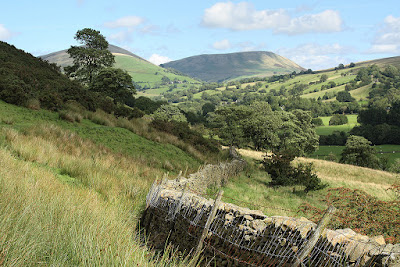
Briggflatts by Basil Bunting is one of the great poems of the twentieth century. However, it has not always occupied a prominent place in discussions of modern poetry. The reasons for this are complex, and have largely to do with a range of contentious biographical and historical factors (such as the marginal status of modernism in the UK and Bunting's own variable reputation). Another factor, the poem's supposed difficulty, requires some qualification. Briggflatts is a dense, carefully wrought high-modernist work. As with other poems in this bracket (The Waste Land, The Cantos, The Maximus Poems) it repays diligent close reading and re-reading. But it is arguably more vital (and, dare I say it, accessible) than those works, and can in fact be appreciated pretty well by first-time readers. As a teacher of undergraduate students over the last few years, I have found that Part 1 in particular lends itself very well to group reading and seminar discussion: indeed, the first section of Briggflatts seems to me to serve as a far better introduction to modernist poetry in a pedagogical context than a work like The Waste Land, with its copious and contested layers of allusion. It does help, it is true, to have a skeleton key to unlock some of the key features of Briggflatts. But I think the really essential facts about the poem can be summarised in a relatively modest space. The following brief guide to the poem should hopefully provide a good foundation for first-time readers. I have tried to shine light on the basic subjects and structures of Briggflatts, without diminishing its music and magic.AN, 2017
Part 1
Season: Spring
Phase of Bunting's life: Childhood
Location: Northern England
Part 1 is the most immediate and tightly structured in the poem. Twelve stanzas, each of thirteen lines, sketch an idealised panorama of Northumbria (in Bunting's poetic vocabulary this meant pretty much the whole of Northern England). The verse here is emphatically musical, foregrounding alliteration, assonance and internal rhyme, with a stark rhyming couplet at the end of each stanza to draw it to a close. In one sense, this is pure sound evoking a pastoral idyll and it should be enjoyed as such: Bunting himself said that readers (or listeners) shouldn't try too hard to uncover 'meaning' beneath the musical surface of his verse. At its simplest, this whole section is an extension of the song of the bull ('Brag, sweet tenor bull') in the first line.
However, that is not quite the whole story; there is also a definite realist narrative here. Bunting is recalling a childhood 'holiday romance' with a girl called Peggy, which took place in the early 1910s in Brigflatts (the correct spelling), a tiny village in the North Pennines. Rawthey is a river; Garsdale, Hawes and Stainmore are nearby locations; the stonemason and miners are local characters. Part 1 is therefore the beginning of a process of remembering real things, literally the first chapter in an autobiography. Deeper history also comes to the surface with the first, brief appearance of the Viking warrior and sometime ruler of Northumbria Eric Bloodaxe, killed in battle on Stainmore around 954AD. This enigmatic darker image or 'tone' prepares the way for the mournful conclusion to part 1. Spring ends, the natural presences begin to die and rot, and somehow—we never quite find out why or how—the poet's idyllic love affair with Peggy is 'lain aside' and forgotten.
Part 2
Season: Summer
Phase of Bunting's life: Early adulthood to early middle age
Locations: London; North Sea; Italy; North Pennines; Middle East; Mediterranean
Part 2 is by some distance the longest in the poem. In stark contrast to the chiselled stanzas of part 1, part 2 is an eclectic collage of clashing poetic fragments, perhaps intended to mirror the immature, evolving state of Bunting's mind throughout his wandering 20s and 30s. We start with an intentionally dramatic change of location, from the idealised North to artificial, money-obsessed London (Bunting is nodding at similar depictions of the capital in Wordsworth's Prelude). From this point onward there are continual geographical shifts (again, this is a recollection of real events in Bunting's early life). We are treated to a short tour around 1920s Bloomsbury bohemia (lines 1-23), a jaunt along the Italian coast and mountains (most of the middle of part 2 from 'About ship! Sweat in the south') and finally to a more obscure conclusion that includes flashes of the Middle East, where Bunting spent the latter part of World War II ('Asian vultures riding on a spiral column of dust') and generalised Mediterranean references—as well as spending the early 1930s in Italy, Bunting returned there during and after the war as a soldier and intelligence agent. In between these biographical fragments, more indirect passages and mythical subjects jostle in typical high-modernist fashion. The Bloodaxe narrative is treated more fully: we see Eric cruelly commanding a longship in the North Sea ('Under his right oxter …') and then dying a horrifically violent death back in the Pennines in the first great climax of the poem (the long passage beginning 'Loaded with mail of linked lies'). Paralleling this episode, Bunting nods in the final lines of the section at the Ancient Greek myth of Pasiphae, who gave birth to the Minotaur after an encounter with a bull sent by the sea-god Poseidon (note the subject rhyme with the bull at the start of the poem).
As well as being a sometimes chaotic—though often beautiful—record of the frustrations of Bunting's early adulthood, part 2 is also the place where the underlying moral of Briggflatts is first advanced. Put very simply: human beings cannot control the world, they must find a way to co-operate and co-exist with it. As Bunting put it (far more eloquently) in his 'Note on Briggflatts': 'Those fail who try to force their destiny, like Eric; but those who are resolute to submit, like my version of Pasiphae, may bring something new to birth, be it only a monster.'
Part 3
Season: n/a
Phase of Bunting's life: n/a
Locations: Edge of the world; Northumbrian arcadia
Part 3 is outside the main structure of the poem: it refers neither to a season nor to a specific period in Bunting's life. Nevertheless, Bunting intended it to be the climax of the narrative. In musical terms this is the 'loudest', most forcefully expressed part of the poem, the place where the moral first hinted at in part 2 is affirmed in a dramatic 'big reveal'. The section is based on an episode from the medieval Persian epic poem Shahnameh, which includes a portrayal of the Greek leader Alexander the Great (356-323BC). In Shahnameh, Alexander journeys with his troops to the mountains of Gog and Magog at the edge of the world. At the summit he leaves his men behind and encounters an angel (Bunting has him played by the Biblical figure 'Israfel') who is poised to blow a trumpet to signal the end of the world. There is some ambiguity in Bunting's retelling of this legend. What exactly happens to Alexander on the mountain? Why does Israfel 'delay' in blowing the trumpet? What sort of divine intervention is at play here? Yet the underlying moral is clear. Alexander tries to conquer the world and reach the limits of experience, but in doing so he is ultimately returned back to the ground, to his homeland (for Alexander this was Macedonia, but Bunting describes it here as a kind of Northumbrian arcadia). Lying dazed in the moss and bracken after his fall from the mountain, he encounters the hero of Briggflatts, the slowworm (actually a snake-like lizard) who advises him to lie low, be patient, persistent and mindful of the beauty of his surroundings.
This is the most abstract moment in the poem, but there are also clear parallels here and throughout part 3 with Bunting's biography. The opening passages of the section caricature greedy, powerful people who obstruct creativity and make life a literal shitty nightmare. As a struggling poet for much of his life, Bunting had built up some resentment towards these establishment 'turd-bakers', such as the businessman and newspaper owner Lord Astor ('Hastor'). The overall narrative shape of part 3 also mimics the curve of Bunting's middle years: after spending much of the 1940s in Persia (poring over works like Shahnameh) he returned in the 1950s to Northumberland, the homeland from which he would eventually write Briggflatts.
Part 4
Season: Autumn
Phase of Bunting's life: Late middle age
Locations: North Yorkshire; Lindisfarne; Tynedale
Part 4 is the shortest section in Briggflatts, and is best viewed (or heard) as a penultimate, minor-key movement resembling those in pieces of classical music (Bunting called Briggflatts a 'sonata'). You don't need to follow this musical analogy too closely, but it might be worth spending some time looking at the way Bunting weaves together different textures and 'themes' in the second half of part 4.
Aside from its musical properties, part 4 is also notable for its elegiac subjects. It begins with allusions to the sixth-century poet Aneirin (the correct spelling), whose most famous work Y Gododdin describes the Battle of Catterick and its aftermath in North Yorkshire around 600AD. The purpose of this allusion is twofold. Firstly, Bunting is nodding at what is in effect the first Northumbrian poem (although Aneirin was a 'Welsh' poet, we should remember that the Welsh or Britons lived in Northumbria prior to the Anglo-Saxon arrivals of the fifth and sixth centuries). In terms of the realist dimension, there may also be a glance here at the war and destruction Bunting witnessed in the mid-twentieth century (we are now, chronologically, up to the 1940s-1950s). More personally, the litany of death and decay segues eventually into a recollection of the lost love affair with Peggy. In some of the most moving lines in the poem, Bunting says 'goodbye' to his memories of Peggy as he settles down to lonely old age in post-war Northumberland.
But there is some light in the gloom. Aside from the redemptive music of the baroque composer Domenico Scarlatti, we also encounter the Northumbrian Renaissance of the seventh and eighth centuries (a dramatic 'rebirth' following the violent period marked by events like the Battle of Catterick). Among other achievements, this cultural upsurge produced the Lindisfarne Gospels (celebrated in the gorgeous passage beginning 'Columba, Columbanus …'), a beautiful illuminated book created in part to celebrate the life of the Northumbrian saint Cuthbert, who appears here as the (positive) mirror image to the (negative) portrait of Eric Bloodaxe in part 2. Aside from his Northumbrian pedigree, Bunting gives Cuthbert a starring role because he reputedly 'saw God in everything'. In line with the moral of Briggflatts, Cuthbert was a quiet hero living on the margins of society who loved nature without seeking to control it.
Part 5
Season: Winter
Phase of Bunting's life: Old age
Locations: North Northumberland, Farne Islands
If part 4 was mostly tragic notes with a brief major-key interlude, part 5 is the opposite. Like the final movement of a symphony, this is a resounding conclusion to the poem ('years end crescendo') although it ends with a sad diminuendo.
In musical verse that often recalls the 'Sirens' episode in Joyce's Ulysses, Bunting revisits the idyllic landscape of part 1 (the powerful opening syllable 'Drip' recalls part 1's 'Brag'). But now that he is an old man the perspective is different. We have moved from the mountains in springtime to the Northumberland coast in winter, where the sea speaks of finality and the end of a journey. Having accepted the need to be patient and respect human limitations in the face of nature, it is now possible to appreciate the precious details of life: rock pools, a spider's web, the lapping of the ocean, the way birds fly in harmony, the skill of shepherds in handling sheep dogs, the inexplicable wonder of the night sky. There is a kind of spiritual idealism here, and this conclusion is certainly upbeat and effusive in some ways, with the faint suggestion of a happier ending to Bunting's life than was predicted in part 4.
Part 5 is on the whole concerned with images in themselves rather than any more complex symbolism, but the line 'Young flutes, harps touched by a breeze' may just carry a hint of the optimism Bunting felt in the mid-1960s, when he was 'rediscovered' by younger poets and finally became a celebrated literary figure. However, there is still the nagging sense of tragedy that has persisted throughout Briggflatts. As the stars shine out over the Farne Islands, where St Cuthbert once lived and worshipped, Bunting remembers Peggy for the last time, and awaits a final 'uninterrupted night'.
Coda
The Coda is a fragment composed prior to the rest of the poem, which Bunting rediscovered and welded on at the last minute. It is a condensed summary of the key philosophical motifs in the previous sections: the power of music, the impermanence of all creation, the impossibility of knowing everything. Tellingly, the poem ends with a question mark (this is a work of literature that proclaims its own uncertainty and inability to conquer the world with language). For all that, one thing is certain in the end: as Bunting once remarked, Briggflatts is 'about love, in all senses'.
29-Oct-15
 GET REAL, TOMORROW IS NOT GOING TO HAPPEN. BY DAN HODGES. [ 29-Oct-15 6:35pm ]

Hi. I'm Dan Hodges. And I tell it like it is.
Like. It. Is.
If you believe everything you read on Lefty Twitter you'd think that time progresses in linear fashion, one day after another, week succeeding week, month upon month.
But hang on. Let's stop and think for a second - is this really what's going on here?
No. It's not.
And I'll tell you why not. People like me - go on, call me a 'Tory' if you like - know that in the real world things like this just don't happen.
Apparently, when the clocks strike 12 tonight, by some magical process of Socialist metamorphosis, today will just magically turn into another, newer, and different day. When the Earth gets to the end of its daily cycle it will just spontaneously keep on spinning, in a kind of Hard-Left utopia of ongoing movement.
Except it won't. Not now. Not ever.
Because this is the Real World. Where Real Things Happen. In barely formulated tabloid-ish sentences that have somehow made their way into a broadsheet where they masquerade as incisive realism. With their no-nonsense tone. And their full-stops.
My trick is to take exaggeratedly cynical negative statements with absolutely no intellectual basis and make them seem like bullshit-free common sense. The sort of common sense that just so happens to coincide exactly with the latest Conservative Party policy announcement.
I say things aren't going to happen. Categorically. End of story.
Sometimes they do. Sometimes they don't. That gives me a roughly 50% success ratio, which is just about enough to insulate my reputation and guarantee my salary at a newspaper for which pessimism and demagogic mean-spiritedness are strategic imperatives.
So for the last time, oh my Lefty comrades.
Tomorrow ain't gonna happen.
Not now. Not ever.
Not even tonight.
Deal with it.
19-Aug-15
THE GUARDIAN'S JEREMY CORBYN COVERAGE IN 15 HEADLINES [ 19-Aug-15 3:10pm ]
BARGAIN-BIN NAIRN: MY LONDON TOP 10 [ 18-Jun-15 4:50pm ]
ELECTION 2015 [ 23-Apr-15 6:08pm ]
OASIS BOOK REVIEW ROUND-UP [ 17-Jul-14 9:47pm ]
DEFINITELY DEFINITELY DEFINITELY OUT NOW [ 15-Jul-14 10:39am ]
AT TIME'S LIGHT THRONGED MERIDIAN [ 20-May-14 9:52am ]
 13-May-14
LONDON RADICAL BOOK FAIR, 2014 [ 08-May-14 11:40am ]
FREUD, CHRIST, MARX & THE BROTHERS GALLAGHER: A 300-WORD PRAYER [ 17-Apr-14 1:30pm ]
DEFINITELY MAYBE 33 1/3 [ 15-Apr-14 11:54am ]
SENSE AND SECTIONALITY [ 02-Apr-14 9:56am ]
13-May-14
LONDON RADICAL BOOK FAIR, 2014 [ 08-May-14 11:40am ]
FREUD, CHRIST, MARX & THE BROTHERS GALLAGHER: A 300-WORD PRAYER [ 17-Apr-14 1:30pm ]
DEFINITELY MAYBE 33 1/3 [ 15-Apr-14 11:54am ]
SENSE AND SECTIONALITY [ 02-Apr-14 9:56am ]

Reading Sterne's Sentimental Journey, I'm struck by how much its ethical guidebook for the haute bourgeoisie resembles our own RaceSexualityGender doxa. In both cases, morality is abstracted - and pseudo-systematised - through a series of jargon terms for the initiated. Whereas we have PoC, intersectionality, trigger warning, mansplaining, brocialism, the eighteenth century had sentiment, sensibility, nature, decorum, sympathy, etc.
In both cases, ethics becomes a kind of manneristic exercise to be perfected if one is to acquire maturity and attain the degree of cultivation required for social advancement (in the eighteenth century - the church, the court, the judiciary, the army; in our own time - academia, politics, the commentariat, and indeed any profession - ie. the vast majority - in which social liberalism is preached while the most punitive form of neoliberal economics is practiced).
The weakness of both systems is their largely performative aspect - using the appropriate terminology and adopting the correct standpoint today with regard to, say, sexuality, is precisely equivalent to eighteenth-century displays of sensibility (the gentleman doffing his cap or handing the young lady his handkerchief at exactly the right moment). The point is that these are what we might call courtly gestures - largely superficial acts of performance that attract applause and approbation in the short term and in the social foreground but do not extend substantially into the realm of actual social organisation. Indeed, in most cases, the former actively stands in for the latter.
23-Mar-14
SUBLIMATION OF THE SOAR PT.3 [ 23-Mar-14 9:58pm ]
Dream swelling soar here
19-Mar-14
HOW HAS CAPITALISM GOT AWAY WITH THE FINANCIAL CRISIS, AND WHY IS POLITICS SCARED OF IDEAS? [ 19-Mar-14 2:41pm ]
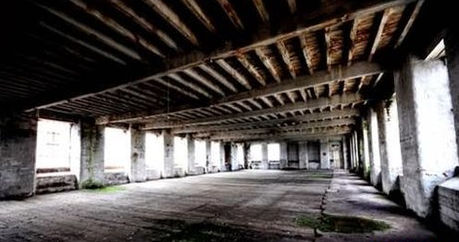
RUINED MILLS OF LEEK, A BALLAD [ 27-Feb-14 1:05pm ]

We drove by the ruined mills of Leek
In the dead time of the year
When the land had become like a faded song
We could no longer hear.
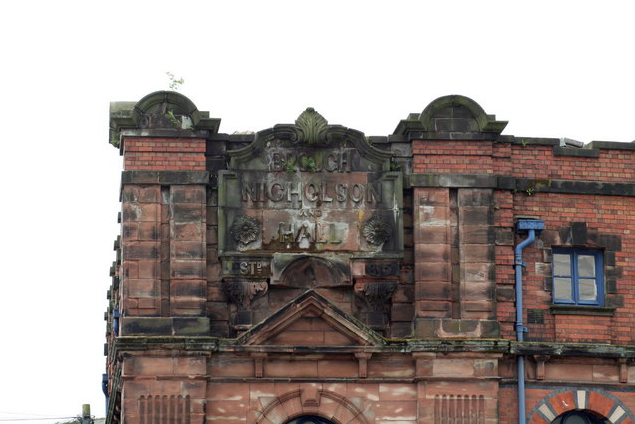
Down where the mouldering sandstone world
Of the Potteries blends with the weeds,
Where the warehouses echo with wandering winds
And the loneliness gathers in beads,
Where the powerful cling to their juggernaut arks
And the cities are sunken and bare,
I was someone who failed like a tumbling tower
On the edge of a kingdom of air.
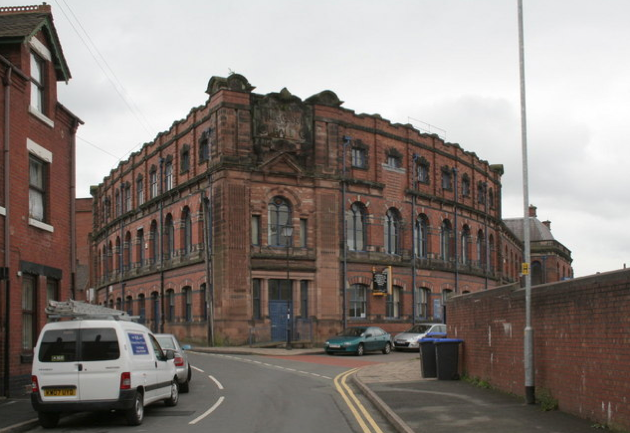
I was someone who failed like a light going out
In a dream on the edge of sight
Because some men are made for the palace of bliss
And some men are made for the night.

We drove by the ruined mills of Leek
In the last days of the year
And the land was as quiet as a faded song
We could no longer hear.
03-Feb-14
MORE SUBLIMATION OF THE SOAR [ 03-Feb-14 7:10pm ]
INTERSECTIONALITY OF THE GUT [ 23-Jan-14 7:47pm ]

There's been a lot of debate about intersectionality recently. But all too often, it seems to me, what's being termed intersectionality is little more than a classic ascetic-deconstructive manoeuvre, a way of saying: okay, your argument is all very well and good, but you haven't given sufficient attention to x, and here's a more sophisticated, more rigorous turn of the screw, and another, and so on ad infinitum. Some might view this positively, as dialectical ratiocination, or simply a necessary way of conducting intelligent debate. But right now, in the current moment, in the context of the omnishambles that is the contemporary left, I think these sorts of movements are invariably negative and paralysing. What is more (and I think this is partly why it took me so long to understand what intersectionality actually is), what's being left out a lot of the time is the "inter" part of the formulation. Invocations of the intersectional credo are most often made along the lines of emphasising - either explicitly, or implicitly through the virulence of their expression - the interests of a single section, a single ideological category. Debate then gets swallowed up by warring capitalised mega-interests - Anti-Racism, Anti-Sexism, Anti-Homophobia, and so on - which of course very few people in their right minds (on the left at least) would ever really consciously oppose, but which have a tendency to be deployed in the context of frequently absurdist melodramas of debate in which people who are quite obviously in general agreement become violently opposed to each other on grounds of super-subtle sectional difference.
How, then, can intersectionality be used more positively? I think that, when we look at something like the above picture, we all know instinctively, and with a visceral certainty that relegates debate to the level of relative meaninglessness. Yes, the picture tells us, this person is undoubtedly racist. But she is also anti-feminist, pro-capitalist, and (literally) perched on the pinnacle of a system in which the labour of millions is used to furnish the airbrushed propaganda of new neoliberal Tsars and Tsarinas who differ from their pre-twentieth century predecessors only in a smattering of infinitesimal ways. The really effective response to this picture should not be banal cries of racism of the kind that we hear from the liberal press (and which Zhukova can try to refute on the grounds that she, as a bien pensant social-liberal-of-sorts, is interested in sponsoring "anti-racist" artworks). Rather, horrors like this should provoke the counterposition of a holistic, socialist, ethical critique in which anti-racism scarcely has to be invoked because it is so obviously an integral part of a wider anti-capitalist, anti-hierarchical critique. Real intersectionality must mean the integration of sectional interests until they need to be emphasised only in rare instances, and in a spirit of solidarity and empathy. If we can't grasp this and act on it before getting sidetracked into endless deconstructive caveatising, then the left really is doomed to repeat the failures of last half-century, if it even makes it through the next decade.
16-Jan-14
POSTMODERNIST REDUX [ 16-Jan-14 10:05pm ]
THE SUBLIMATION OF THE SOAR [ 14-Jan-14 2:17pm ]

I was geet pleased to write the first Quietus Essay. File under: Strains of Tentative Futurism in 2010s Pop!
Hopefully there's more good stuff to come in this new series.
13-Jan-14
2013 POP [ 31-Dec-13 11:47am ]
INTROS [ 29-Dec-13 11:13am ]
NOTES ON ITV'S LUCAN [ 12-Dec-13 2:49pm ]
THE FANTASTIC HOPE [ 24-Nov-13 5:05pm ]

ONE VERY RIGHT THING ... [ 24-Nov-13 5:05pm ]
... about Mark Fisher's "Exiting the Vampire Castle" piece is its underscoring of "a set of snobbish and condescending attitudes that it is apparently alright to exhibit while still classifying oneself as left wing".
Predictably I think, this is exactly the form a lot of the criticisms of the piece have taken. Lots of the contra comments on Facebook and Twitter have adopted exactly that "tone ... as if they were a schoolteacher marking a child's work, or a psychiatrist assessing a patient" MF identifies.
People have tended to refer to the Vampires' Castle piece using words like "crude" or "incoherent". Then there's this slightly noxious piece (which, with its link to a photoshopped caricature, verges on character assassination). The starting point of the critique here is that "the reasons given [by MF in the Vampires' Castle article] ... do not lead to the conclusions he offers", that "it does not follow its own stated reasons". In other words, the teacher steps in to reprimand the pupil who hasn't polished his argument just-so.
FFS, the article is actually called "B-grade politics"!
Here again: "... a case of someone who's read a bit of philosophy and theory but simply doesn't understand the subtlety of the claims advanced therein."
And here: "What I would recommend Fisher is to do some reading". [sic]
Stepping outside of the internecine left for a moment, right-wing blogger Harry Mount made a very similar move earlier this month when he tried to discredit the "spoilt and childish" Russell Brand. Apparently, Brand's big problem in his journalistic writing is his overuse of "long, Latinate words that desperately scream 'I'm clever' at the reader". So according to Mount, Brand should "grow up" and "get a little more Anglo-Saxon" in his writing. These are highly contentious issues of style, about which there has been much debate for aeons. But Mount offers his maxim (Anglo-Saxon words=good, Latinate prose=bad) with the absolute authority of the High Tory schoolmaster.
Very different examples, but I think they're evidence of exactly the sort of imperious "reprimanding" tendency the Vampires' Castle conceit is trying to expose and challenge.
17-Nov-17
Predictably I think, this is exactly the form a lot of the criticisms of the piece have taken. Lots of the contra comments on Facebook and Twitter have adopted exactly that "tone ... as if they were a schoolteacher marking a child's work, or a psychiatrist assessing a patient" MF identifies.
People have tended to refer to the Vampires' Castle piece using words like "crude" or "incoherent". Then there's this slightly noxious piece (which, with its link to a photoshopped caricature, verges on character assassination). The starting point of the critique here is that "the reasons given [by MF in the Vampires' Castle article] ... do not lead to the conclusions he offers", that "it does not follow its own stated reasons". In other words, the teacher steps in to reprimand the pupil who hasn't polished his argument just-so.
FFS, the article is actually called "B-grade politics"!
Here again: "... a case of someone who's read a bit of philosophy and theory but simply doesn't understand the subtlety of the claims advanced therein."
And here: "What I would recommend Fisher is to do some reading". [sic]
Stepping outside of the internecine left for a moment, right-wing blogger Harry Mount made a very similar move earlier this month when he tried to discredit the "spoilt and childish" Russell Brand. Apparently, Brand's big problem in his journalistic writing is his overuse of "long, Latinate words that desperately scream 'I'm clever' at the reader". So according to Mount, Brand should "grow up" and "get a little more Anglo-Saxon" in his writing. These are highly contentious issues of style, about which there has been much debate for aeons. But Mount offers his maxim (Anglo-Saxon words=good, Latinate prose=bad) with the absolute authority of the High Tory schoolmaster.
Very different examples, but I think they're evidence of exactly the sort of imperious "reprimanding" tendency the Vampires' Castle conceit is trying to expose and challenge.
A BRIEF GUIDE TO BASIL BUNTING'S BRIGGFLATTS FOR FIRST-TIME READERS [ 17-Nov-17 12:47pm ]
Briggflatts by Basil Bunting is one of the great poems of the twentieth century. However, it has not always occupied a prominent place in discussions of modern poetry. The reasons for this are complex, and have largely to do with a range of contentious biographical and historical factors (such as the marginal status of modernism in the UK and Bunting's own variable reputation). Another factor, the poem's supposed difficulty, requires some qualification. Briggflatts is a dense, carefully wrought high-modernist work. As with other poems in this bracket (The Waste Land, The Cantos, The Maximus Poems) it repays diligent close reading and re-reading. But it is arguably more vital (and, dare I say it, accessible) than those works, and can in fact be appreciated pretty well by first-time readers. As a teacher of undergraduate students over the last few years, I have found that Part 1 in particular lends itself very well to group reading and seminar discussion: indeed, the first section of Briggflatts seems to me to serve as a far better introduction to modernist poetry in a pedagogical context than a work like The Waste Land, with its copious and contested layers of allusion. It does help, it is true, to have a skeleton key to unlock some of the key features of Briggflatts. But I think the really essential facts about the poem can be summarised in a relatively modest space. The following brief guide to the poem should hopefully provide a good foundation for first-time readers. I have tried to shine light on the basic subjects and structures of Briggflatts, without diminishing its music and magic.AN, 2017
Part 1
Season: Spring
Phase of Bunting's life: Childhood
Location: Northern England
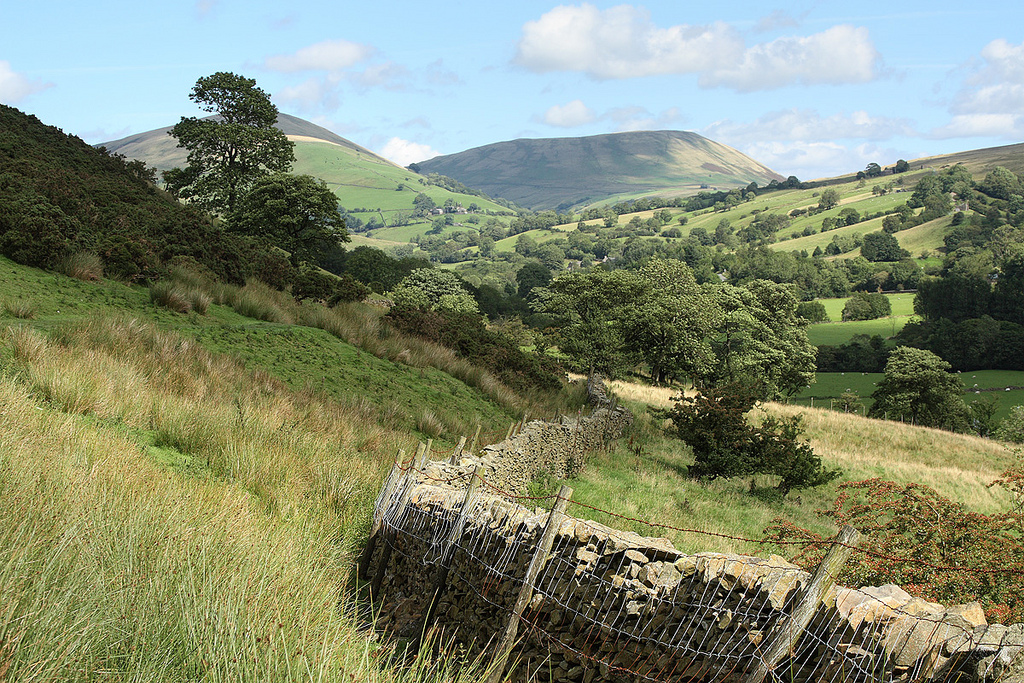
Part 1 is the most immediate and tightly structured in the poem. Twelve stanzas, each of thirteen lines, sketch an idealised panorama of Northumbria (in Bunting's poetic vocabulary this meant pretty much the whole of Northern England). The verse here is emphatically musical, foregrounding alliteration, assonance and internal rhyme, with a stark rhyming couplet at the end of each stanza to draw it to a close. In one sense, this is pure sound evoking a pastoral idyll and it should be enjoyed as such: Bunting himself said that readers (or listeners) shouldn't try too hard to uncover 'meaning' beneath the musical surface of his verse. At its simplest, this whole section is an extension of the song of the bull ('Brag, sweet tenor bull') in the first line.
However, that is not quite the whole story; there is also a definite realist narrative here. Bunting is recalling a childhood 'holiday romance' with a girl called Peggy, which took place in the early 1910s in Brigflatts (the correct spelling), a tiny village in the North Pennines. Rawthey is a river; Garsdale, Hawes and Stainmore are nearby locations; the stonemason and miners are local characters. Part 1 is therefore the beginning of a process of remembering real things, literally the first chapter in an autobiography. Deeper history also comes to the surface with the first, brief appearance of the Viking warrior and sometime ruler of Northumbria Eric Bloodaxe, killed in battle on Stainmore around 954AD. This enigmatic darker image or 'tone' prepares the way for the mournful conclusion to part 1. Spring ends, the natural presences begin to die and rot, and somehow—we never quite find out why or how—the poet's idyllic love affair with Peggy is 'lain aside' and forgotten.
Part 2
Season: Summer
Phase of Bunting's life: Early adulthood to early middle age
Locations: London; North Sea; Italy; North Pennines; Middle East; Mediterranean
Part 2 is by some distance the longest in the poem. In stark contrast to the chiselled stanzas of part 1, part 2 is an eclectic collage of clashing poetic fragments, perhaps intended to mirror the immature, evolving state of Bunting's mind throughout his wandering 20s and 30s. We start with an intentionally dramatic change of location, from the idealised North to artificial, money-obsessed London (Bunting is nodding at similar depictions of the capital in Wordsworth's Prelude). From this point onward there are continual geographical shifts (again, this is a recollection of real events in Bunting's early life). We are treated to a short tour around 1920s Bloomsbury bohemia (lines 1-23), a jaunt along the Italian coast and mountains (most of the middle of part 2 from 'About ship! Sweat in the south') and finally to a more obscure conclusion that includes flashes of the Middle East, where Bunting spent the latter part of World War II ('Asian vultures riding on a spiral column of dust') and generalised Mediterranean references—as well as spending the early 1930s in Italy, Bunting returned there during and after the war as a soldier and intelligence agent. In between these biographical fragments, more indirect passages and mythical subjects jostle in typical high-modernist fashion. The Bloodaxe narrative is treated more fully: we see Eric cruelly commanding a longship in the North Sea ('Under his right oxter …') and then dying a horrifically violent death back in the Pennines in the first great climax of the poem (the long passage beginning 'Loaded with mail of linked lies'). Paralleling this episode, Bunting nods in the final lines of the section at the Ancient Greek myth of Pasiphae, who gave birth to the Minotaur after an encounter with a bull sent by the sea-god Poseidon (note the subject rhyme with the bull at the start of the poem).
As well as being a sometimes chaotic—though often beautiful—record of the frustrations of Bunting's early adulthood, part 2 is also the place where the underlying moral of Briggflatts is first advanced. Put very simply: human beings cannot control the world, they must find a way to co-operate and co-exist with it. As Bunting put it (far more eloquently) in his 'Note on Briggflatts': 'Those fail who try to force their destiny, like Eric; but those who are resolute to submit, like my version of Pasiphae, may bring something new to birth, be it only a monster.'
Part 3
Season: n/a
Phase of Bunting's life: n/a
Locations: Edge of the world; Northumbrian arcadia
Part 3 is outside the main structure of the poem: it refers neither to a season nor to a specific period in Bunting's life. Nevertheless, Bunting intended it to be the climax of the narrative. In musical terms this is the 'loudest', most forcefully expressed part of the poem, the place where the moral first hinted at in part 2 is affirmed in a dramatic 'big reveal'. The section is based on an episode from the medieval Persian epic poem Shahnameh, which includes a portrayal of the Greek leader Alexander the Great (356-323BC). In Shahnameh, Alexander journeys with his troops to the mountains of Gog and Magog at the edge of the world. At the summit he leaves his men behind and encounters an angel (Bunting has him played by the Biblical figure 'Israfel') who is poised to blow a trumpet to signal the end of the world. There is some ambiguity in Bunting's retelling of this legend. What exactly happens to Alexander on the mountain? Why does Israfel 'delay' in blowing the trumpet? What sort of divine intervention is at play here? Yet the underlying moral is clear. Alexander tries to conquer the world and reach the limits of experience, but in doing so he is ultimately returned back to the ground, to his homeland (for Alexander this was Macedonia, but Bunting describes it here as a kind of Northumbrian arcadia). Lying dazed in the moss and bracken after his fall from the mountain, he encounters the hero of Briggflatts, the slowworm (actually a snake-like lizard) who advises him to lie low, be patient, persistent and mindful of the beauty of his surroundings.
This is the most abstract moment in the poem, but there are also clear parallels here and throughout part 3 with Bunting's biography. The opening passages of the section caricature greedy, powerful people who obstruct creativity and make life a literal shitty nightmare. As a struggling poet for much of his life, Bunting had built up some resentment towards these establishment 'turd-bakers', such as the businessman and newspaper owner Lord Astor ('Hastor'). The overall narrative shape of part 3 also mimics the curve of Bunting's middle years: after spending much of the 1940s in Persia (poring over works like Shahnameh) he returned in the 1950s to Northumberland, the homeland from which he would eventually write Briggflatts.
Part 4
Season: Autumn
Phase of Bunting's life: Late middle age
Locations: North Yorkshire; Lindisfarne; Tynedale
Part 4 is the shortest section in Briggflatts, and is best viewed (or heard) as a penultimate, minor-key movement resembling those in pieces of classical music (Bunting called Briggflatts a 'sonata'). You don't need to follow this musical analogy too closely, but it might be worth spending some time looking at the way Bunting weaves together different textures and 'themes' in the second half of part 4.
Aside from its musical properties, part 4 is also notable for its elegiac subjects. It begins with allusions to the sixth-century poet Aneirin (the correct spelling), whose most famous work Y Gododdin describes the Battle of Catterick and its aftermath in North Yorkshire around 600AD. The purpose of this allusion is twofold. Firstly, Bunting is nodding at what is in effect the first Northumbrian poem (although Aneirin was a 'Welsh' poet, we should remember that the Welsh or Britons lived in Northumbria prior to the Anglo-Saxon arrivals of the fifth and sixth centuries). In terms of the realist dimension, there may also be a glance here at the war and destruction Bunting witnessed in the mid-twentieth century (we are now, chronologically, up to the 1940s-1950s). More personally, the litany of death and decay segues eventually into a recollection of the lost love affair with Peggy. In some of the most moving lines in the poem, Bunting says 'goodbye' to his memories of Peggy as he settles down to lonely old age in post-war Northumberland.
But there is some light in the gloom. Aside from the redemptive music of the baroque composer Domenico Scarlatti, we also encounter the Northumbrian Renaissance of the seventh and eighth centuries (a dramatic 'rebirth' following the violent period marked by events like the Battle of Catterick). Among other achievements, this cultural upsurge produced the Lindisfarne Gospels (celebrated in the gorgeous passage beginning 'Columba, Columbanus …'), a beautiful illuminated book created in part to celebrate the life of the Northumbrian saint Cuthbert, who appears here as the (positive) mirror image to the (negative) portrait of Eric Bloodaxe in part 2. Aside from his Northumbrian pedigree, Bunting gives Cuthbert a starring role because he reputedly 'saw God in everything'. In line with the moral of Briggflatts, Cuthbert was a quiet hero living on the margins of society who loved nature without seeking to control it.
Part 5
Season: Winter
Phase of Bunting's life: Old age
Locations: North Northumberland, Farne Islands
If part 4 was mostly tragic notes with a brief major-key interlude, part 5 is the opposite. Like the final movement of a symphony, this is a resounding conclusion to the poem ('years end crescendo') although it ends with a sad diminuendo.
In musical verse that often recalls the 'Sirens' episode in Joyce's Ulysses, Bunting revisits the idyllic landscape of part 1 (the powerful opening syllable 'Drip' recalls part 1's 'Brag'). But now that he is an old man the perspective is different. We have moved from the mountains in springtime to the Northumberland coast in winter, where the sea speaks of finality and the end of a journey. Having accepted the need to be patient and respect human limitations in the face of nature, it is now possible to appreciate the precious details of life: rock pools, a spider's web, the lapping of the ocean, the way birds fly in harmony, the skill of shepherds in handling sheep dogs, the inexplicable wonder of the night sky. There is a kind of spiritual idealism here, and this conclusion is certainly upbeat and effusive in some ways, with the faint suggestion of a happier ending to Bunting's life than was predicted in part 4.
Part 5 is on the whole concerned with images in themselves rather than any more complex symbolism, but the line 'Young flutes, harps touched by a breeze' may just carry a hint of the optimism Bunting felt in the mid-1960s, when he was 'rediscovered' by younger poets and finally became a celebrated literary figure. However, there is still the nagging sense of tragedy that has persisted throughout Briggflatts. As the stars shine out over the Farne Islands, where St Cuthbert once lived and worshipped, Bunting remembers Peggy for the last time, and awaits a final 'uninterrupted night'.
Coda
The Coda is a fragment composed prior to the rest of the poem, which Bunting rediscovered and welded on at the last minute. It is a condensed summary of the key philosophical motifs in the previous sections: the power of music, the impermanence of all creation, the impossibility of knowing everything. Tellingly, the poem ends with a question mark (this is a work of literature that proclaims its own uncertainty and inability to conquer the world with language). For all that, one thing is certain in the end: as Bunting once remarked, Briggflatts is 'about love, in all senses'.
GET REAL, TOMORROW IS NOT GOING TO HAPPEN. BY DAN HODGES. [ 29-Oct-15 6:35pm ]
Hi. I'm Dan Hodges. And I tell it like it is.
Like. It. Is.
If you believe everything you read on Lefty Twitter you'd think that time progresses in linear fashion, one day after another, week succeeding week, month upon month.
But hang on. Let's stop and think for a second - is this really what's going on here?
No. It's not.
And I'll tell you why not. People like me - go on, call me a 'Tory' if you like - know that in the real world things like this just don't happen.
Apparently, when the clocks strike 12 tonight, by some magical process of Socialist metamorphosis, today will just magically turn into another, newer, and different day. When the Earth gets to the end of its daily cycle it will just spontaneously keep on spinning, in a kind of Hard-Left utopia of ongoing movement.
Except it won't. Not now. Not ever.
Because this is the Real World. Where Real Things Happen. In barely formulated tabloid-ish sentences that have somehow made their way into a broadsheet where they masquerade as incisive realism. With their no-nonsense tone. And their full-stops.
My trick is to take exaggeratedly cynical negative statements with absolutely no intellectual basis and make them seem like bullshit-free common sense. The sort of common sense that just so happens to coincide exactly with the latest Conservative Party policy announcement.
I say things aren't going to happen. Categorically. End of story.
Sometimes they do. Sometimes they don't. That gives me a roughly 50% success ratio, which is just about enough to insulate my reputation and guarantee my salary at a newspaper for which pessimism and demagogic mean-spiritedness are strategic imperatives.
So for the last time, oh my Lefty comrades.
Tomorrow ain't gonna happen.
Not now. Not ever.
Not even tonight.
Deal with it.
THE GUARDIAN'S JEREMY CORBYN COVERAGE IN 15 HEADLINES [ 19-Aug-15 3:10pm ]1. 'Corbyn is on the ballot for the Labour leadership election: but he'll never win'2. 'Corbyn is doing well in the Labour leadership election: why he definitely still won't win'3. 'Corbyn is doing better than we thought: but voting for him would be childish and wrong'4. 'Corbyn has a massive lead in the polls: they must be wrong'5. Michael White: 'Corbyn would return Labour to the 80s'6. Martin Kettle: 'Corbyn would return Labour to the 80s'7. Polly Toynbee: 'Corbyn would return Labour to the 80s'8. Tony Blair: '[jazz hands]'9. Peter Mandelson: 'Corbyn would return Labour to the 80s'10. '0.01% of new Labour supporters once voted Green: cancel the leadership contest'11. 'Editorial: Please please please don't vote for Jeremy Corbyn'12. 'Editorial: Vote for … Yvette Cooper?'13. 'Do you think if we relegate coverage of the leadership election to lower down
the page that will make people forget to vote for Corbyn?'14. 'Shit, still not working: so how the hell are we going to cover this political development that seems to, like, mean something to people?'15. 'Jeremy Corbyn's style evolution'
18-Jun-15
the page that will make people forget to vote for Corbyn?'14. 'Shit, still not working: so how the hell are we going to cover this political development that seems to, like, mean something to people?'15. 'Jeremy Corbyn's style evolution'
BARGAIN-BIN NAIRN: MY LONDON TOP 10 [ 18-Jun-15 4:50pm ]I'll be leaving London in a few weeks to return to the Motherland (Newcastle), so thought I'd compile a LONDON TOP 10 based on my nearly four years in the capital.
These are tourist or daytrip recommendations I suppose, with the sort of faint psychogeographical ground bass you might expect from someone of my age, gender and epoch.
I will confess at this point that despite strenuous attempts, I do not now, nor do I think I ever will, love London. My abbreviated epithet (epitaph?) for the city is:
DARWINIAN PUDDLE
By far the best thing about London is its people: their variety, proximity and vitality. This might be a sentimental cliche, but then I love both cliche and sentiment and try to avow these values at every available opportunity.
Most of the places on this list are neither blockbuster highlights nor hipster curios. Rather, I've tended to go for generally popularly celebrated sites from the recent-ish past (often the mid-twentieth century) which have somehow clung on in spite of the topographical atrophy of the neoliberal period, but which haven't (yet) been invested with Sinclairean gothic glamour. Having said that, St Mary Woolnoth is included.
Anyway, enjoy!
1) CECIL COURT, COVENT GARDEN
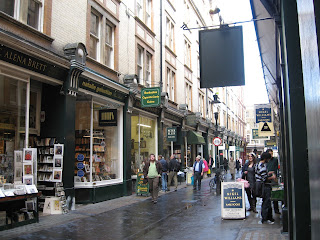
A street of bookshops just off Charing Cross Road (a street famous for its bookshops which now has very few good bookshops - the best second-hand store as far as I can make out is now Skoob in Bloomsbury). Personal favourites are the place that sells 60s sheet music and the shop selling framed collections of stamps. Still possible to buy something good here, or at least have fun browsing.
2) THE BARBICAN, BARBICAN
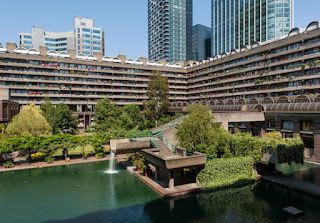
An absolute pearl of aristocratic Brutalism. Okay it was always for the nobs, but this has made it difficult to get rid of while most of everything else has been destroyed. An oasis of rigidly good modernist design in a swamp of capitalist decoupage. 10 out of 10.
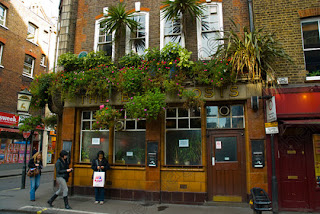
3) THE BLUE POSTS, BERWICK STREET
A slightly dilapidated pub in Soho, for those who like that sort of thing (me). It's a good shape, is not overly hyped, doesn't get too full, and sells Snyders Jalapeno Ptretzel Pieces, an ineffably good American snack that goes very well with a Stella or a Kronenbourg 1664 (another thing in favour of this place is the absence of both real ales and craft lagers).
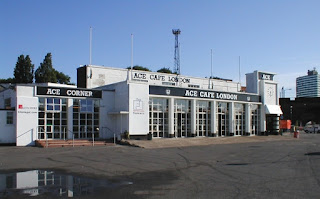
4) ACE CAFE, STONEBRIDGE
A biker's cafe just off the North Circular. Sells cheap hearty food and always has some sort of shindig going on in the carpark. Jon Savage probably loves this place. A living embodiment of Richard Thompson's '1952 Vincent Black Lightning'.
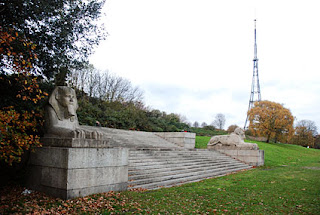
5) CRYSTAL PALACE PARK, CRYSTAL PALACE
The dinosaurs are incredible, and you can see the countryside in the distance. Modernist sports centres alongside Victorian non-ruins. A profoundly haunting and fun day out.
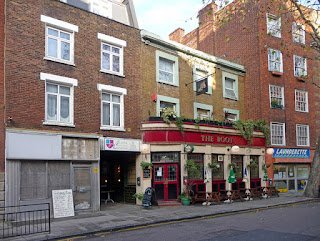
6) AREA AROUND CROMER STREET, KINGS CROSS/BLOOMSBURY
There's a really weird topographical lacuna just south of the British Library bit of Euston Road. Lots of genuinely grimey pubs here, one of which has gaelic football memorabilia on the walls and serves the Worst Meal I've Ever Had in London: a fucking unspeakable ploughmans lunch. They may have shut this place down by now. Difficult to believe these forlorn streets are in Zone 1.
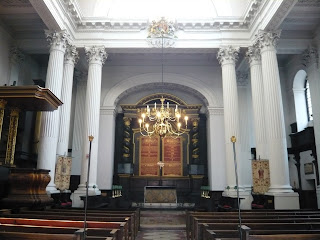
7) ST MARY WOOLNOTH, BANK
A dark and terrifyingly powerful building, with a claustrophobically beautiful interior. Belly of the beast, and certainly nothing Christian about it. Ian Nairn's liver.
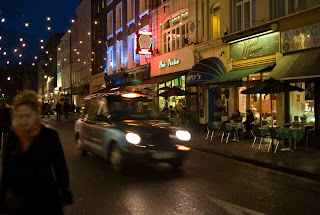
8) ALL OF SOHO
The one part of London with any discernible civic atmosphere. A pretty unbeatable place to walk around on a summer's day. Humanity amid the hieratic callousness, though not without its own dark side, of course. I would recommend a trendy eatery but to be honest I think Chipotle is the place here that has given me the most pleasure. Actually, Wrapchic near Golden Square does a pretty amazing curry burrito. Go there.
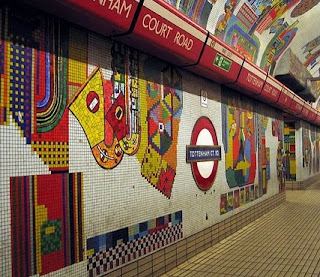
9) PAOLOZZI MURALS, TOTTENHAM COURT ROAD STATION
What has become of them? Genuinely worried. On a related note, will there be anything left of central London after 2018?
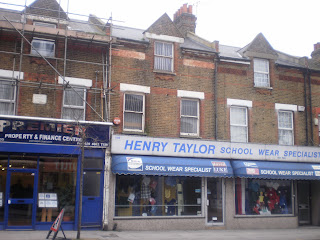
10) HIGH ROAD LEYTON--HOE STREET, LEYTON/WALTHAMSTOW
My best period in London was June through August 2013. I'd finished my PhD and was writing the Oasis book, which I now realise was probably a once in a lifetime gig for a writer in terms of sheer self-indulgent enjoyment. I would walk 30 mins each morning from Leytonstone to Walthamstow tube and thence to British Library, walking through Bakers Arms and the Pakistani stretch of High Road Leyton, past the Romanian enclave on Hoe Street and the place where William Morris was born, ending up at a Walthamstow just beginning to ride the crest of gentrification, but still in this section pretty working-class. It was a bright, hot summer after a long, cold winter. I listened to Definitely Maybe most days, and was grateful to be alive.
23-Apr-15
These are tourist or daytrip recommendations I suppose, with the sort of faint psychogeographical ground bass you might expect from someone of my age, gender and epoch.
I will confess at this point that despite strenuous attempts, I do not now, nor do I think I ever will, love London. My abbreviated epithet (epitaph?) for the city is:
DARWINIAN PUDDLE
By far the best thing about London is its people: their variety, proximity and vitality. This might be a sentimental cliche, but then I love both cliche and sentiment and try to avow these values at every available opportunity.
Most of the places on this list are neither blockbuster highlights nor hipster curios. Rather, I've tended to go for generally popularly celebrated sites from the recent-ish past (often the mid-twentieth century) which have somehow clung on in spite of the topographical atrophy of the neoliberal period, but which haven't (yet) been invested with Sinclairean gothic glamour. Having said that, St Mary Woolnoth is included.
Anyway, enjoy!
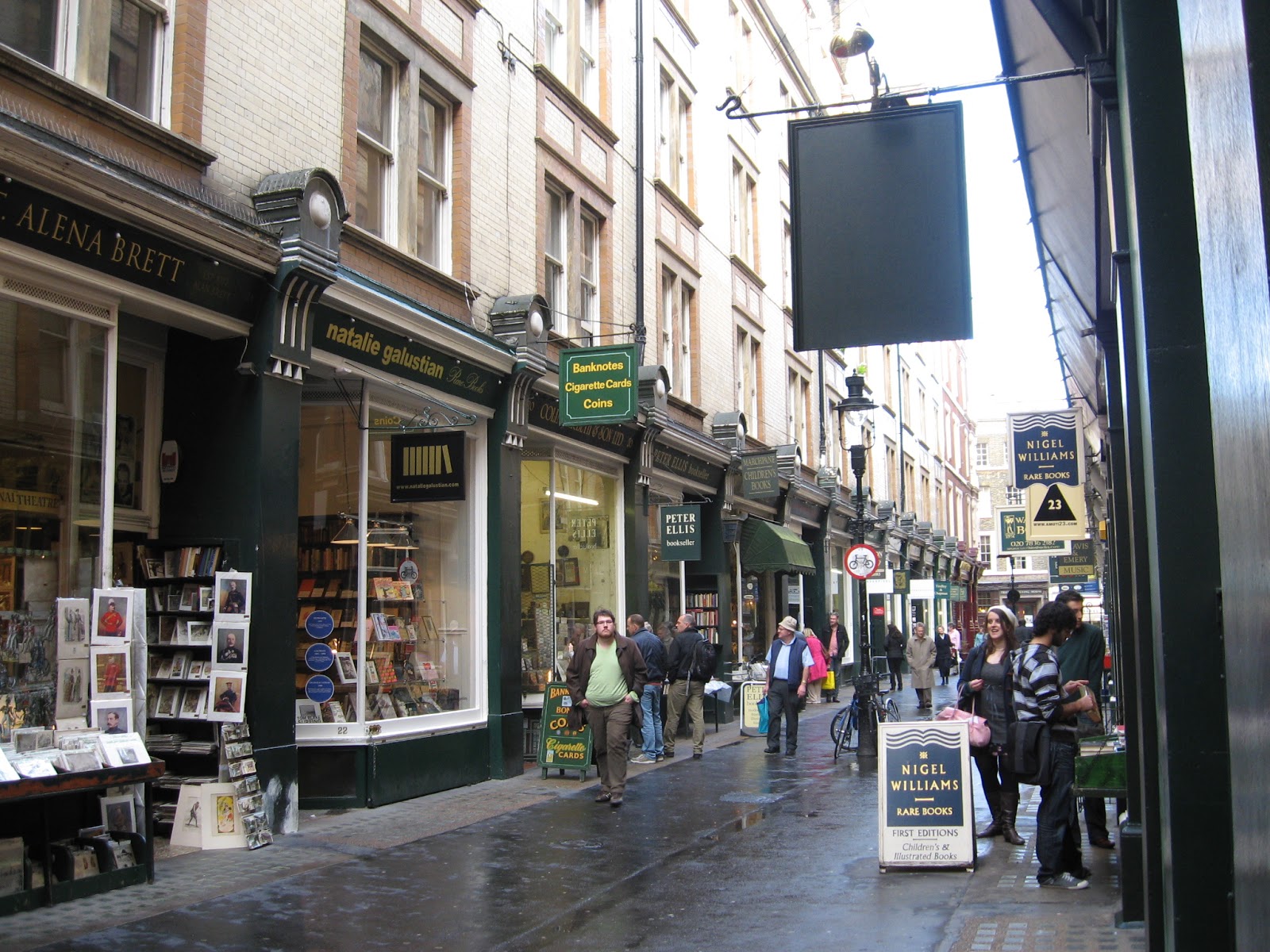
1) CECIL COURT, COVENT GARDEN
A street of bookshops just off Charing Cross Road (a street famous for its bookshops which now has very few good bookshops - the best second-hand store as far as I can make out is now Skoob in Bloomsbury). Personal favourites are the place that sells 60s sheet music and the shop selling framed collections of stamps. Still possible to buy something good here, or at least have fun browsing.
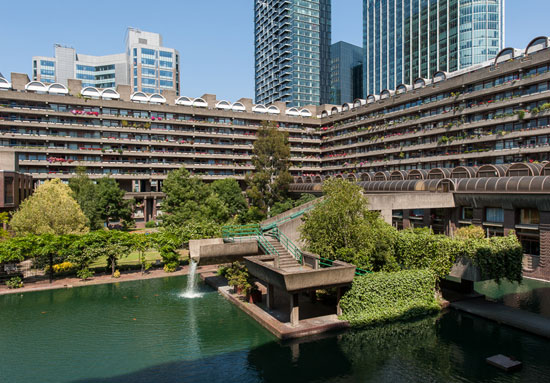
2) THE BARBICAN, BARBICAN
An absolute pearl of aristocratic Brutalism. Okay it was always for the nobs, but this has made it difficult to get rid of while most of everything else has been destroyed. An oasis of rigidly good modernist design in a swamp of capitalist decoupage. 10 out of 10.
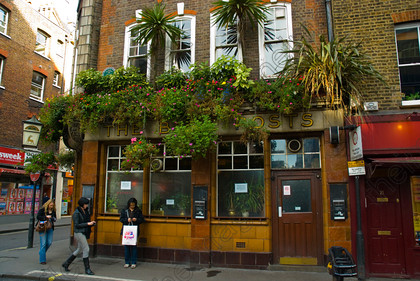
3) THE BLUE POSTS, BERWICK STREET
A slightly dilapidated pub in Soho, for those who like that sort of thing (me). It's a good shape, is not overly hyped, doesn't get too full, and sells Snyders Jalapeno Ptretzel Pieces, an ineffably good American snack that goes very well with a Stella or a Kronenbourg 1664 (another thing in favour of this place is the absence of both real ales and craft lagers).
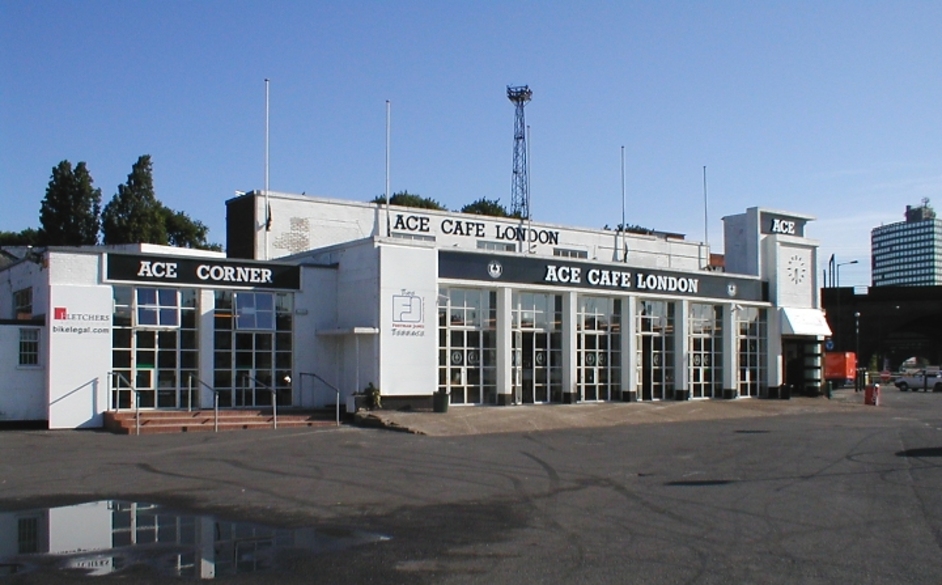
4) ACE CAFE, STONEBRIDGE
A biker's cafe just off the North Circular. Sells cheap hearty food and always has some sort of shindig going on in the carpark. Jon Savage probably loves this place. A living embodiment of Richard Thompson's '1952 Vincent Black Lightning'.
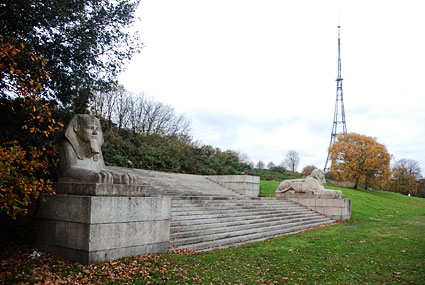
5) CRYSTAL PALACE PARK, CRYSTAL PALACE
The dinosaurs are incredible, and you can see the countryside in the distance. Modernist sports centres alongside Victorian non-ruins. A profoundly haunting and fun day out.
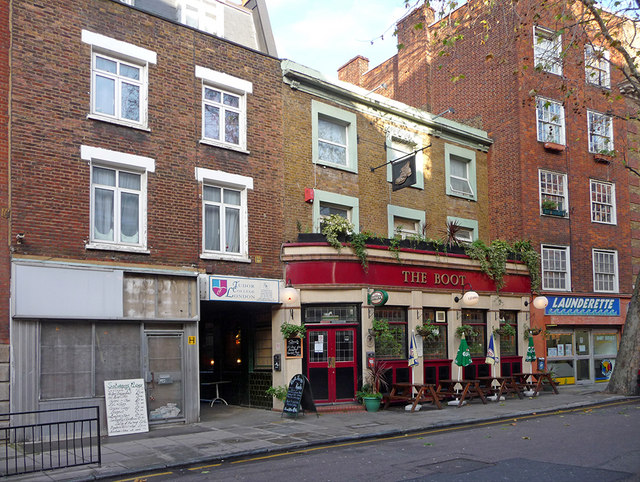
6) AREA AROUND CROMER STREET, KINGS CROSS/BLOOMSBURY
There's a really weird topographical lacuna just south of the British Library bit of Euston Road. Lots of genuinely grimey pubs here, one of which has gaelic football memorabilia on the walls and serves the Worst Meal I've Ever Had in London: a fucking unspeakable ploughmans lunch. They may have shut this place down by now. Difficult to believe these forlorn streets are in Zone 1.
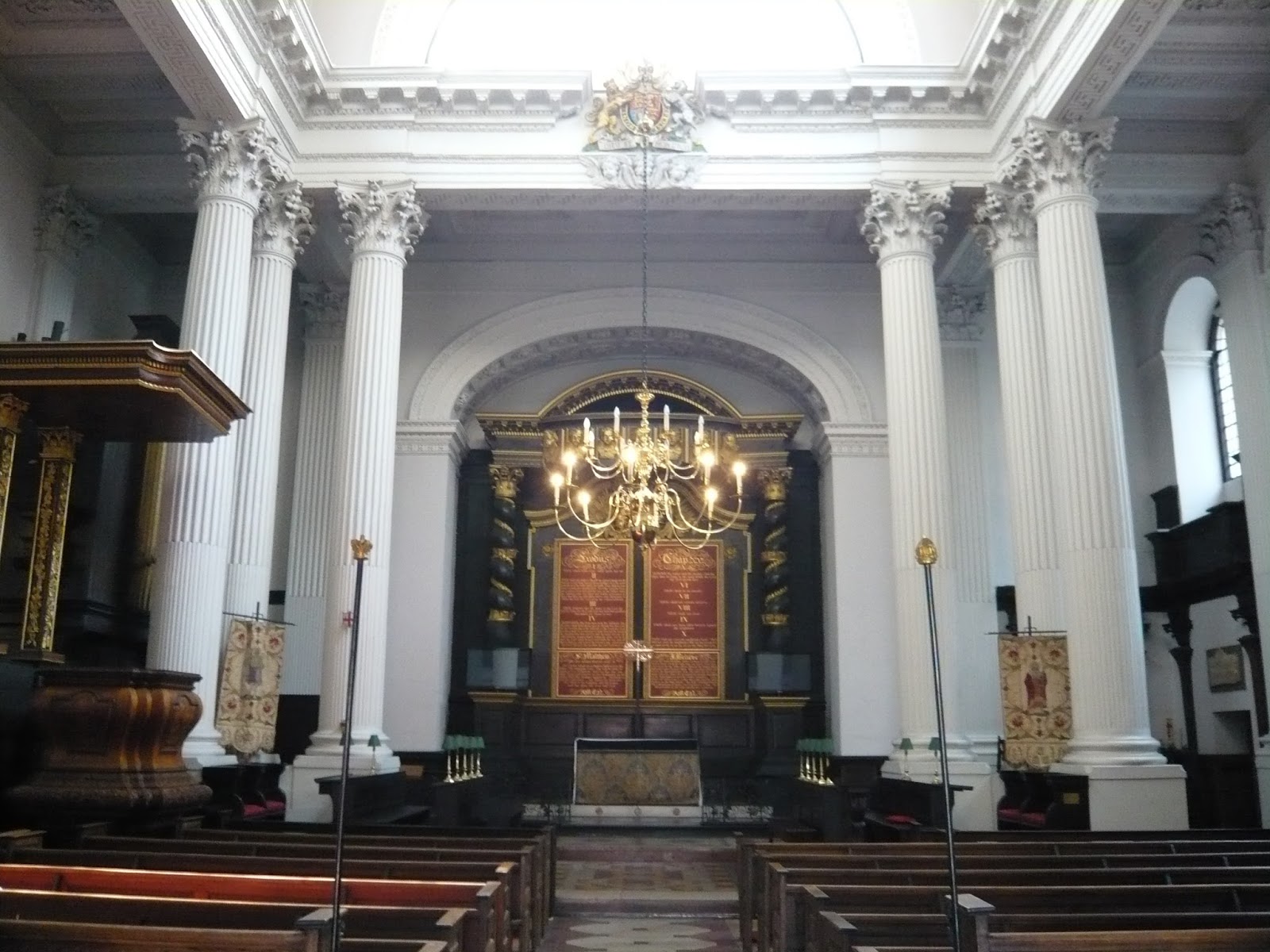
7) ST MARY WOOLNOTH, BANK
A dark and terrifyingly powerful building, with a claustrophobically beautiful interior. Belly of the beast, and certainly nothing Christian about it. Ian Nairn's liver.
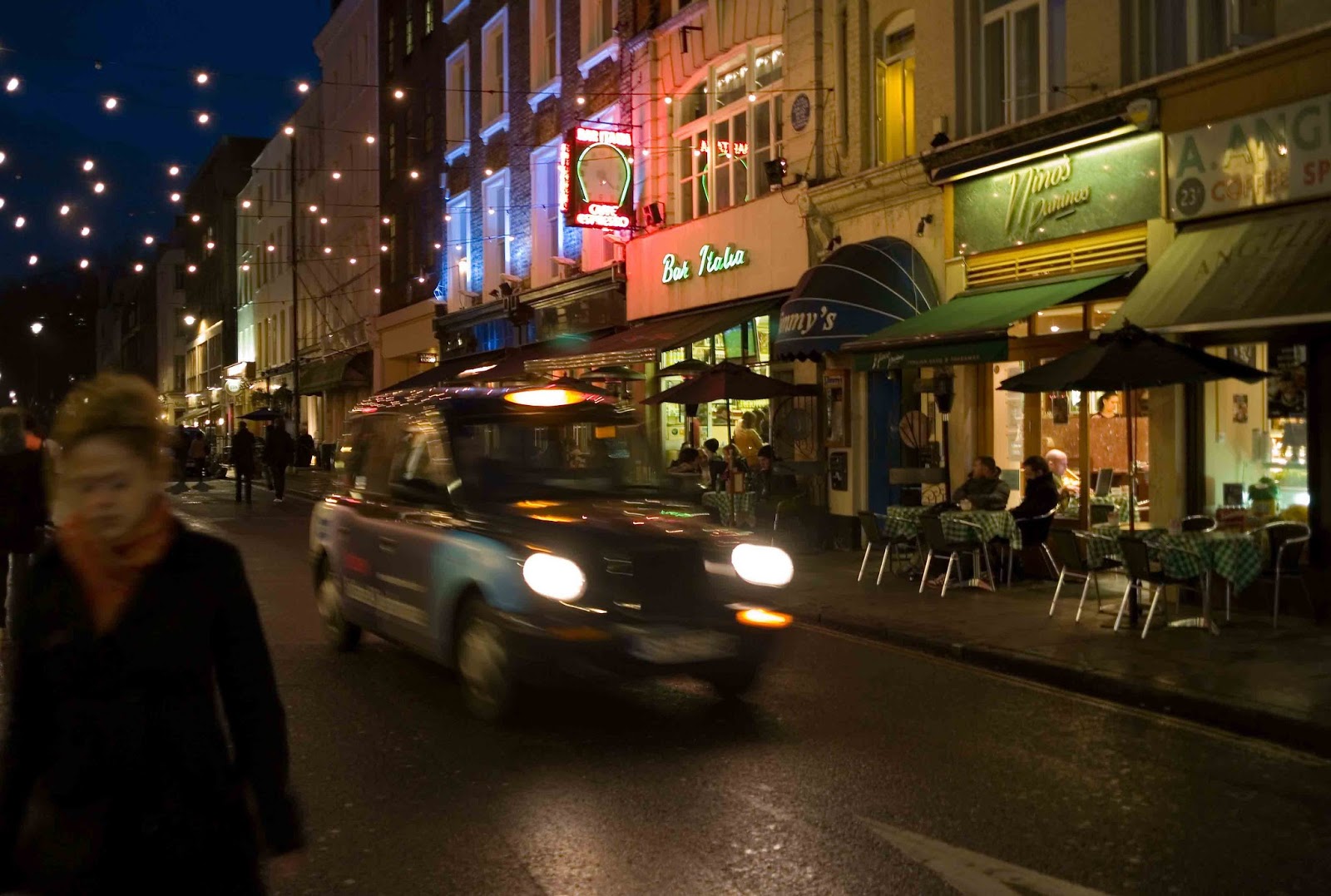
8) ALL OF SOHO
The one part of London with any discernible civic atmosphere. A pretty unbeatable place to walk around on a summer's day. Humanity amid the hieratic callousness, though not without its own dark side, of course. I would recommend a trendy eatery but to be honest I think Chipotle is the place here that has given me the most pleasure. Actually, Wrapchic near Golden Square does a pretty amazing curry burrito. Go there.
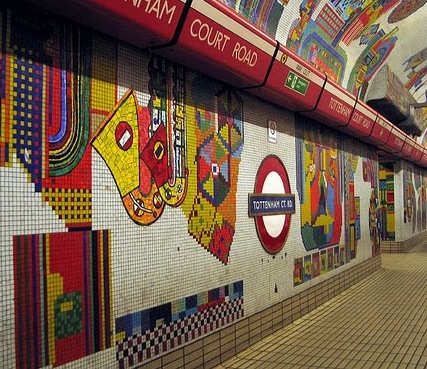
9) PAOLOZZI MURALS, TOTTENHAM COURT ROAD STATION
What has become of them? Genuinely worried. On a related note, will there be anything left of central London after 2018?
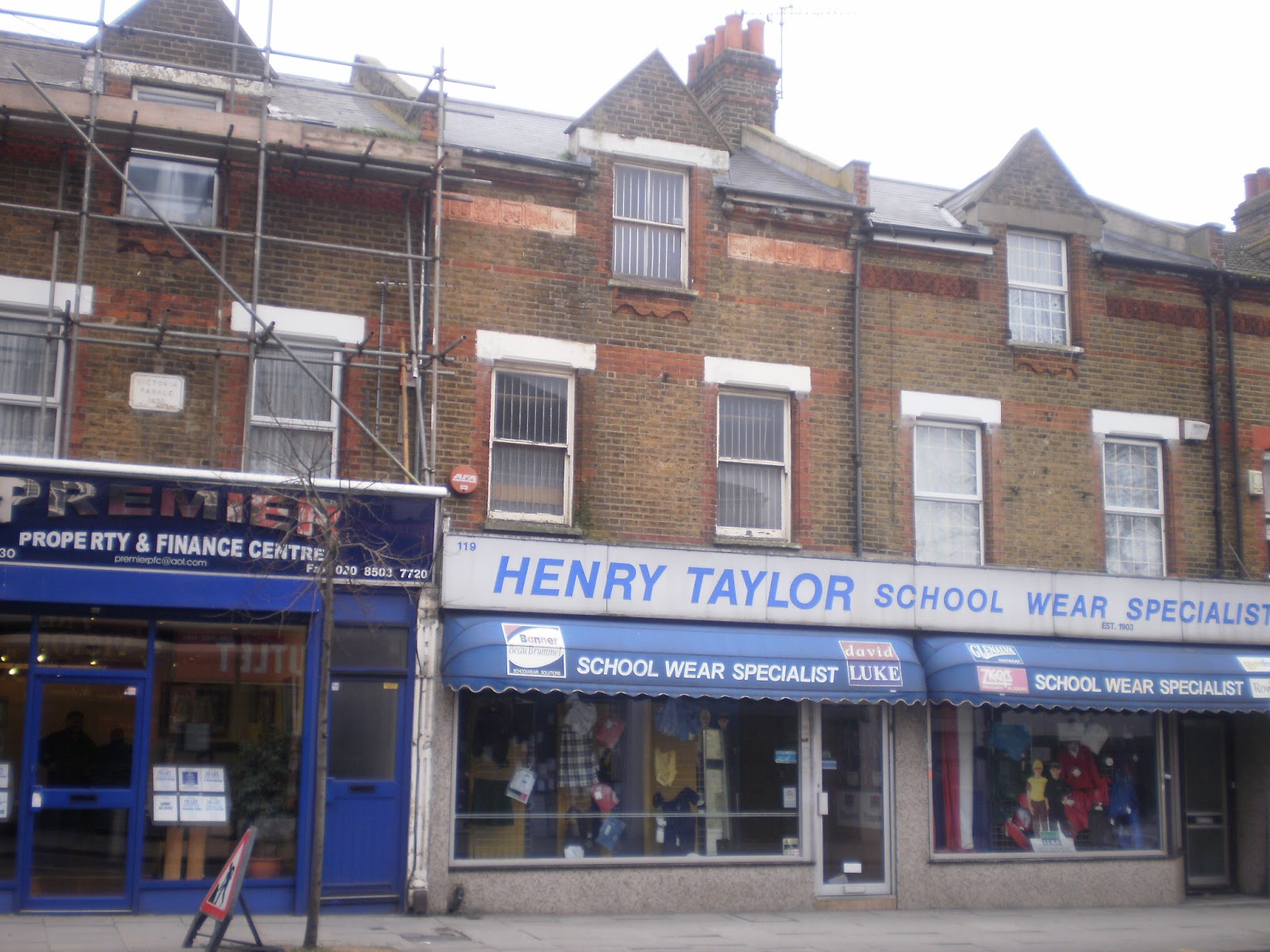
10) HIGH ROAD LEYTON--HOE STREET, LEYTON/WALTHAMSTOW
My best period in London was June through August 2013. I'd finished my PhD and was writing the Oasis book, which I now realise was probably a once in a lifetime gig for a writer in terms of sheer self-indulgent enjoyment. I would walk 30 mins each morning from Leytonstone to Walthamstow tube and thence to British Library, walking through Bakers Arms and the Pakistani stretch of High Road Leyton, past the Romanian enclave on Hoe Street and the place where William Morris was born, ending up at a Walthamstow just beginning to ride the crest of gentrification, but still in this section pretty working-class. It was a bright, hot summer after a long, cold winter. I listened to Definitely Maybe most days, and was grateful to be alive.
ELECTION 2015 [ 23-Apr-15 6:08pm ]At the very least, the 2015 election is an interesting rebuttal to Peter Mair's notion that Western democracy is 'hollowing out'. In fact, after a couple of decades of hollowing, it seems that the British system is starting to grow bulk again.
This is the third time I've been able to vote, and the first election in which anything resembling actual analysis of the parties and candidates has seemed desirable/possible.
As far as I can make out, in my consitutency (Leyton and Wanstead), there are three choices:
1) Greens
2) Spoil me ballot paper
3) Labour
About which I am thinking thusly:
1) The Greens are tempting, but the candidate is a former The Bill actor called Ashley Gunstock. Not necessarily a beyond-the-pale transgression, I know, but it seems to chime with my impression of the party as a whole as bit middle-class and vacuous. The policies are pretty sound, even courageous. But do they have an inkling about the working-class vote in the North, Wales, etc? I'd say probably not, but please feel free to disabuse me.
2) Did this in the council/European elections. Also very tempting, and I don't have any underlying ethical qualms about it. In fact, anyone who tries to tell me ballot-spoiling is apathetic and nihilistic can fuck right off and vote Lib Dem.
3) Which leaves Labour. A few months ago I would have said not in a million years. But then the candidate in my consitutency is a member of the Socialist Campaign Group and Left Platform, and now there is this prospect of a Labour-SNP alliance, perhaps with the Campaign Group MPs holding some sort of balance of power ... Increasingly, this is looking like it might not be such a terrible option.
But can one really vote for a party that will put Ed Balls in charge of fiscal policy?
Why aren't the SNP standing in England?
What's a brother to do?
See, it's exciting.
18-Jul-14
This is the third time I've been able to vote, and the first election in which anything resembling actual analysis of the parties and candidates has seemed desirable/possible.
As far as I can make out, in my consitutency (Leyton and Wanstead), there are three choices:
1) Greens
2) Spoil me ballot paper
3) Labour
About which I am thinking thusly:
1) The Greens are tempting, but the candidate is a former The Bill actor called Ashley Gunstock. Not necessarily a beyond-the-pale transgression, I know, but it seems to chime with my impression of the party as a whole as bit middle-class and vacuous. The policies are pretty sound, even courageous. But do they have an inkling about the working-class vote in the North, Wales, etc? I'd say probably not, but please feel free to disabuse me.
2) Did this in the council/European elections. Also very tempting, and I don't have any underlying ethical qualms about it. In fact, anyone who tries to tell me ballot-spoiling is apathetic and nihilistic can fuck right off and vote Lib Dem.
3) Which leaves Labour. A few months ago I would have said not in a million years. But then the candidate in my consitutency is a member of the Socialist Campaign Group and Left Platform, and now there is this prospect of a Labour-SNP alliance, perhaps with the Campaign Group MPs holding some sort of balance of power ... Increasingly, this is looking like it might not be such a terrible option.
But can one really vote for a party that will put Ed Balls in charge of fiscal policy?
Why aren't the SNP standing in England?
What's a brother to do?
See, it's exciting.
OASIS BOOK REVIEW ROUND-UP [ 17-Jul-14 9:47pm ]Well well well, treatments of the Oasis book are now coming in thick and fast ...
First up, David Stubbs wrote an excellent long-form review essay in Review 31 under the lyrically apposite title: On the Crest of a Wave. It's a great piece of prose in its own right, and contains the seeds of a longer argument DStubbs is developing all about (I think) 1996 as the pivotal year in recent cultural history.
Next, under another great title (Are Oasis Socialists?) VICE's Noisey blog published an interview I did with Josh Hall (also, incidentally, another top-notch writer - see for example here). The VICE copy-editing leaves much to be desired, but once you've waded through the typos there's some very valuable stuff in there, particularly about the Left and heritage.
Most bizarrely of all, perhaps, I managed to get Oasis into this week's TLS. Yes, that's right, the Times Literary Supplement has actually gone and fucking reviewed my book about Definitely Maybe. The piece is relatively short and isn't available online if you're not a subscriber. What's more, it was written by Joe Charlton, one of the two or three people from my Northumberland comprehensive school with even a shred of influence in the contemporary British culture-sphere. But still. The fucking TLS. What would Liam Gallagher make of that, I wonder?
Finally, and most importantly, my intellectual soulmate Rhian E. Jones has written a cracking essay over at Velvet Coalmine, which glances at the Oasis book, but is really just a spot-on summary of everything that matters most in the world right now. Praise her, with great praise.
Oh, also, there's that psychogeographical tour of Manchester thing on the Bloomsbury blog I mentioned in the last post.
There may yet be more to come, you never know.
15-Jul-14
First up, David Stubbs wrote an excellent long-form review essay in Review 31 under the lyrically apposite title: On the Crest of a Wave. It's a great piece of prose in its own right, and contains the seeds of a longer argument DStubbs is developing all about (I think) 1996 as the pivotal year in recent cultural history.
Next, under another great title (Are Oasis Socialists?) VICE's Noisey blog published an interview I did with Josh Hall (also, incidentally, another top-notch writer - see for example here). The VICE copy-editing leaves much to be desired, but once you've waded through the typos there's some very valuable stuff in there, particularly about the Left and heritage.
Most bizarrely of all, perhaps, I managed to get Oasis into this week's TLS. Yes, that's right, the Times Literary Supplement has actually gone and fucking reviewed my book about Definitely Maybe. The piece is relatively short and isn't available online if you're not a subscriber. What's more, it was written by Joe Charlton, one of the two or three people from my Northumberland comprehensive school with even a shred of influence in the contemporary British culture-sphere. But still. The fucking TLS. What would Liam Gallagher make of that, I wonder?
Finally, and most importantly, my intellectual soulmate Rhian E. Jones has written a cracking essay over at Velvet Coalmine, which glances at the Oasis book, but is really just a spot-on summary of everything that matters most in the world right now. Praise her, with great praise.
Oh, also, there's that psychogeographical tour of Manchester thing on the Bloomsbury blog I mentioned in the last post.
There may yet be more to come, you never know.
DEFINITELY DEFINITELY DEFINITELY OUT NOW [ 15-Jul-14 10:39am ]Well friends the Oasis book has finally emerged from the primordial swamp and is now available from at least some good bookshops in the UK and the rest of the world.
The launch is this Wednesday, 16 July, at 7.30 at the Peckham Pelican, Peckham. I'll read a short extract from the introduction to the book, and the inimitable David Stubbs will play some 1994 tunes. Everyone is welcome and there's no ticketing.
Extracts from the book have been published at ...
Stereogum
Flavorwire
+ The Quietus
Bloomsbury's 33 1/3 blog is also publishing some associated features this week as part of "Oasis Week".
First up: my short autobiographical take on the album. I barred first person from the text proper for various stylistic and political reasons, but thought it might be nice to do a brief sketch all about ALEX NIVEN for the sake of scene-setting, empathy, identification, all that shite. Later this week there will be a Video Vault feature nodding at the album's influences and a psychogeographical tour of Manchester featuring Maine Road, Mr Sifter, and Adolphe Valette.
More to follow on reviews, talks &c.
20-May-14
The launch is this Wednesday, 16 July, at 7.30 at the Peckham Pelican, Peckham. I'll read a short extract from the introduction to the book, and the inimitable David Stubbs will play some 1994 tunes. Everyone is welcome and there's no ticketing.
Extracts from the book have been published at ...
Stereogum
Flavorwire
+ The Quietus
Bloomsbury's 33 1/3 blog is also publishing some associated features this week as part of "Oasis Week".
First up: my short autobiographical take on the album. I barred first person from the text proper for various stylistic and political reasons, but thought it might be nice to do a brief sketch all about ALEX NIVEN for the sake of scene-setting, empathy, identification, all that shite. Later this week there will be a Video Vault feature nodding at the album's influences and a psychogeographical tour of Manchester featuring Maine Road, Mr Sifter, and Adolphe Valette.
More to follow on reviews, talks &c.
AT TIME'S LIGHT THRONGED MERIDIAN [ 20-May-14 9:52am ]NOTES ON THE GUARDIAN NORTH-EAST/DETROIT ARTICLE [ 13-May-14 12:26pm ]
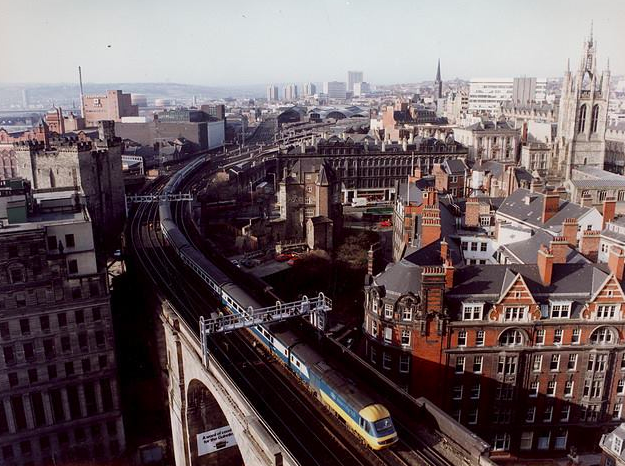
Perhaps because the football season ended so anti-climactically this weekend, the north-east of England has since taken a diversion into socio-cultural terrain to enact a now familiar ritual of tragedy-as-farce played out in the national press. (See also the social media accounts of pretty much everyone from the region over the past couple of days.)
Seeing as I was one of the interviewees for the piece by Andy Beckett that started the whole fuss on Saturday, here's some of my thoughts about both the article and the response to it ...
Firstly, some notes about the format of the piece. My contribution was to be interviewed by Andy over the phone some six or seven months ago. The conversation lasted about an hour, and although a part of me was initially sceptical about the fact of the article being written by someone from [evil voice] The South, I was impressed by Andy's intelligence, inquisitiveness, and above all, his sympathy - arising, I think, out of his own socialist beliefs and certain of his life experiences - in highlighting the profound social and economic difficulties the north-east has faced in recent years, difficulties that have often been occluded and even ridiculed in the mainstream media. Inevitably, in the final version of the article, my comments had been whittled down to two or three short quotations (which are, by the way, kind of embarrassingly ungrammatical - proof of their spontaneous, extemporised origins I think).
I fully expected this to happen and nothing in the piece misrepresented my feelings in any way. At the same time, of course there was a hell of a lot of stuff that I mentioned in that 1-hour phone conversation that didn't make it into the final cut.
On the one hand, I'm tempted to to follow incumbent politician Chi Onwurah's lead by claiming that the choice of quotations and the overall thrust of the article was selective, that there was a lot of more positive stuff mentioned in the interview with Andy that wasn't used in the published version. I could go on about how I think the north-east is the greatest place on earth (I do), talk about how desperate I am to get back there (4 unsuccessful job applications this year and another pending), reel off soundbites for the sake of balance about the growth of tech start-ups in the region, moderate increases in house prices, the fact that Newcastle's nightlife is still thriving, the continued outstanding creative achievements of the area's sons and daughters, how wonderful the landscape is, and so on and so forth.
All this stuff is true, but to be honest, I'm not writing a tourist industry brochure or massaging PR for the Nissan car factory. Besides, as the ever trenchant Ross Lewis pointed out on Twitter: "You can love the best of a place and also be ashamed of it and try and change the worst aspects".
I don't want to speak for Andy Beckett, but I should imagine there are a couple of reasons why his article was not entitled "The North-East of England: Some Pros and Cons" or "A Rounded Portrait of a Part of the Country That is Essentially Quite Similar to Everywhere Else".
The first, obviously, is that no editor would have published it and no reader would have bothered to read it through to the end. Outside the world of corporate hospitality literature and marketing hyperbole, articles about a particular subject will of necessity take a specific line of argumentation, and the Guardian piece was in my opinion an entirely fair-minded exploration of the (factually indisputable) notion that the north-east has suffered in recent years from socio-economic decline. If this premise was subsequently simplified on a superficial level by headlines, choice of images, pull-quotes, the Detroit parallel, etc, then that's the nature of journalism, and it's surely not all that difficult to see beyond this paraphernalia in order to see the nuances of the discussion contained in the actual text. Accusations of a "hatchet job" are laughable, and should be rejected out of hand by anybody with any sense.
The second reason I think for the critical angle taken in the piece is that criticism of the way recent political history has unfolded to the detriment of certain parts of the country are much-needed. If I knew the Detroit analogy would be used in the quite the way it was, I might have been more wary of deploying it in conversation with Andy. But then again, I think the parallel is pretty apt (though of course only partially so), because Detroit is the archetypal example of a post-industrial city/region that has suffered very badly over the last three decades - in a broadly similar way to the NE - from the neoliberal double whammy of deindustrialisation and massively reduced social spending.
I think that anyone who cares about the north-east is likely to feel a sense of anger about the fact that it has, inarguably, suffered in certain concrete statistical ways in the post-Thatcher period. Nitpicking about the finer points of the Detroit analogy seems to me pretty foolhardy in light of the essential connection between working-class Western cities that have been continually passed over in the race to liberate the market and bolster the wealth of the super-rich in the last three decades. (Moreover, looked at another way, as someone pointed out on Facebook, isn't being compared to Detroit - cradle of Motown, Eminem, MC5, and Iggy Pop - quite a bit better than being compared to Croydon?)
I have sympathy with some of the defensive reactions to the Guardian piece. Perhaps there's always something slightly questionable about being told by an outsider that the place you live might have problems, and its a natural human reaction to respond to such claims with proclamations of local pride and useful additions to the discussion that try to provide examples of north-eastern resilience and ingenuity in the face of social and economic marginalisation.
But I think a better way to react to the article than trumpeting local success stories and worrying hysterically about how negative PR might deter capitalist investment (which I'm going to go out on a limb here by suggesting might not necessarily be a plausible or even a worthwhile solution to the problems faced by the vast majority of north-easterners), is to use the example of the way the region has been shafted by the London-based institutions of the English Establishment over the last few years as fuel for political anger and constructive determination to change things. The former ultimately plays into the hands of the Tories, while the latter offers the hope of something much more valuable.
There are way more than 100 reasons why it's great up north, but right now offering a coherent, organised alternative to the south-east and its capitalist mega-city is not one of them.
It could be.
08-May-14
Seeing as I was one of the interviewees for the piece by Andy Beckett that started the whole fuss on Saturday, here's some of my thoughts about both the article and the response to it ...
Firstly, some notes about the format of the piece. My contribution was to be interviewed by Andy over the phone some six or seven months ago. The conversation lasted about an hour, and although a part of me was initially sceptical about the fact of the article being written by someone from [evil voice] The South, I was impressed by Andy's intelligence, inquisitiveness, and above all, his sympathy - arising, I think, out of his own socialist beliefs and certain of his life experiences - in highlighting the profound social and economic difficulties the north-east has faced in recent years, difficulties that have often been occluded and even ridiculed in the mainstream media. Inevitably, in the final version of the article, my comments had been whittled down to two or three short quotations (which are, by the way, kind of embarrassingly ungrammatical - proof of their spontaneous, extemporised origins I think).
I fully expected this to happen and nothing in the piece misrepresented my feelings in any way. At the same time, of course there was a hell of a lot of stuff that I mentioned in that 1-hour phone conversation that didn't make it into the final cut.
On the one hand, I'm tempted to to follow incumbent politician Chi Onwurah's lead by claiming that the choice of quotations and the overall thrust of the article was selective, that there was a lot of more positive stuff mentioned in the interview with Andy that wasn't used in the published version. I could go on about how I think the north-east is the greatest place on earth (I do), talk about how desperate I am to get back there (4 unsuccessful job applications this year and another pending), reel off soundbites for the sake of balance about the growth of tech start-ups in the region, moderate increases in house prices, the fact that Newcastle's nightlife is still thriving, the continued outstanding creative achievements of the area's sons and daughters, how wonderful the landscape is, and so on and so forth.
All this stuff is true, but to be honest, I'm not writing a tourist industry brochure or massaging PR for the Nissan car factory. Besides, as the ever trenchant Ross Lewis pointed out on Twitter: "You can love the best of a place and also be ashamed of it and try and change the worst aspects".
I don't want to speak for Andy Beckett, but I should imagine there are a couple of reasons why his article was not entitled "The North-East of England: Some Pros and Cons" or "A Rounded Portrait of a Part of the Country That is Essentially Quite Similar to Everywhere Else".
The first, obviously, is that no editor would have published it and no reader would have bothered to read it through to the end. Outside the world of corporate hospitality literature and marketing hyperbole, articles about a particular subject will of necessity take a specific line of argumentation, and the Guardian piece was in my opinion an entirely fair-minded exploration of the (factually indisputable) notion that the north-east has suffered in recent years from socio-economic decline. If this premise was subsequently simplified on a superficial level by headlines, choice of images, pull-quotes, the Detroit parallel, etc, then that's the nature of journalism, and it's surely not all that difficult to see beyond this paraphernalia in order to see the nuances of the discussion contained in the actual text. Accusations of a "hatchet job" are laughable, and should be rejected out of hand by anybody with any sense.
The second reason I think for the critical angle taken in the piece is that criticism of the way recent political history has unfolded to the detriment of certain parts of the country are much-needed. If I knew the Detroit analogy would be used in the quite the way it was, I might have been more wary of deploying it in conversation with Andy. But then again, I think the parallel is pretty apt (though of course only partially so), because Detroit is the archetypal example of a post-industrial city/region that has suffered very badly over the last three decades - in a broadly similar way to the NE - from the neoliberal double whammy of deindustrialisation and massively reduced social spending.
I think that anyone who cares about the north-east is likely to feel a sense of anger about the fact that it has, inarguably, suffered in certain concrete statistical ways in the post-Thatcher period. Nitpicking about the finer points of the Detroit analogy seems to me pretty foolhardy in light of the essential connection between working-class Western cities that have been continually passed over in the race to liberate the market and bolster the wealth of the super-rich in the last three decades. (Moreover, looked at another way, as someone pointed out on Facebook, isn't being compared to Detroit - cradle of Motown, Eminem, MC5, and Iggy Pop - quite a bit better than being compared to Croydon?)
I have sympathy with some of the defensive reactions to the Guardian piece. Perhaps there's always something slightly questionable about being told by an outsider that the place you live might have problems, and its a natural human reaction to respond to such claims with proclamations of local pride and useful additions to the discussion that try to provide examples of north-eastern resilience and ingenuity in the face of social and economic marginalisation.
But I think a better way to react to the article than trumpeting local success stories and worrying hysterically about how negative PR might deter capitalist investment (which I'm going to go out on a limb here by suggesting might not necessarily be a plausible or even a worthwhile solution to the problems faced by the vast majority of north-easterners), is to use the example of the way the region has been shafted by the London-based institutions of the English Establishment over the last few years as fuel for political anger and constructive determination to change things. The former ultimately plays into the hands of the Tories, while the latter offers the hope of something much more valuable.
There are way more than 100 reasons why it's great up north, but right now offering a coherent, organised alternative to the south-east and its capitalist mega-city is not one of them.
It could be.
LONDON RADICAL BOOK FAIR, 2014 [ 08-May-14 11:40am ]This Saturday!
Myself and the incomparable Tamar Shlaim will be hosting the Zero stall 10-5.
Blog here. Come doon.

29-Apr-14
Myself and the incomparable Tamar Shlaim will be hosting the Zero stall 10-5.
Blog here. Come doon.
CREATIVE BLOG PROCESS TOUR [ 29-Apr-14 6:12pm ]
I'm not quite sure of the of the origins of this series, but I was flattered to be asked to contribute by esteemed Manchester blogger and dapper man-about-town Greg Thorpe, by way of Emma Jane Unsworth I think (and also somehow Zoe Lambert, who've I've never met but who seems like a very nice lass judging by the writing on her blog).
Greg's answers are here. My nominees are sensational cultural critic/fiction writer Rhian E. Jones and an as yet uncomfirmed international celebrity chef.
What am I working on?
At the moment I'm waiting for a couple of books to come out, and tying together some other ideas in the hope that they'll coalesce into a new project. There's an essay for Glasgow quarterly The Drouth about the Anglo-Scottish borders which will hopefully come out around the time of the independence referendum: a Yes vote is looking increasingly likely so I think we have to start thinking seriously now about what will happen to the North of England after Scottish secession. Aside from another, more academic essay about Ezra Pound's late poetry, I'm trying to work out how to corral my willfully disparate output into a single book about something or other. I've done two short-ish books now so something a bit bigger would be good. The poetry is ongoing too, and sporadic, as poetry tends to be - the latest accretion is here.
How does my work differ from others of its genre?
Following on from the last question, I think one of my biggest preoccupations is trying to work out what genre is best for saying the things that need to be said at this moment in time. I think it's quite a strange period for art in general and countercultural art in particular - lots of the old forms and genres are a bit lost, a bit enervated, and we're awaiting some sort of social development that will re-organise culture in a way that will give a bit more shape to the way we experience art collectively. At the moment the culturescape is a kind of Darwinian sludge pit, with lots of competing individuals and not much agreement about the underlying point of it all. I think that both the big strength and the big weakness of my writing is that it's not yet quite committed to one genre, but hopefully interesting because it's trying to think about how you might create a new genre that's responsive to the spirit of the age and anticipatory about the big societal bang - whatever it may be - that's just around the corner. Maybe something like lyric criticism or lyric non-fiction would be a good term for it. And I think with poetry, similarly: lyric realism or something like that.
Why do I write what I do?
Look, I'm just doing what I'm doing do and if anyone else likes it ... Only joking. I'm trying to say a handful of things that I think are important - I don't really have a problem with that fundamental bedrock. It's more the stuff about genre and form and positioning, and of course trying to persuade people to publish that's the hard part.
How does my writing process work?
I don't really have a set method, partly because, like most people, I live and work pretty precariously with very little routine or long-term job security. When I get a book project to work on it's quite liberating, and I try to work for five hours a day, morning to afternoon, five days a week, until the book's done, if I can. More than that and your concentration starts to slip. I tend to write in short, closely worked-on chunks of 500-700 words at a time and keep the editing at the end to a minimum. Poetry is obviously very different - short bursts followed by continual revisions, sometimes over many years, mainly tied up with the issues of publication and cultural positioning outlined above.
17-Apr-14
Greg's answers are here. My nominees are sensational cultural critic/fiction writer Rhian E. Jones and an as yet uncomfirmed international celebrity chef.
What am I working on?
At the moment I'm waiting for a couple of books to come out, and tying together some other ideas in the hope that they'll coalesce into a new project. There's an essay for Glasgow quarterly The Drouth about the Anglo-Scottish borders which will hopefully come out around the time of the independence referendum: a Yes vote is looking increasingly likely so I think we have to start thinking seriously now about what will happen to the North of England after Scottish secession. Aside from another, more academic essay about Ezra Pound's late poetry, I'm trying to work out how to corral my willfully disparate output into a single book about something or other. I've done two short-ish books now so something a bit bigger would be good. The poetry is ongoing too, and sporadic, as poetry tends to be - the latest accretion is here.
How does my work differ from others of its genre?
Following on from the last question, I think one of my biggest preoccupations is trying to work out what genre is best for saying the things that need to be said at this moment in time. I think it's quite a strange period for art in general and countercultural art in particular - lots of the old forms and genres are a bit lost, a bit enervated, and we're awaiting some sort of social development that will re-organise culture in a way that will give a bit more shape to the way we experience art collectively. At the moment the culturescape is a kind of Darwinian sludge pit, with lots of competing individuals and not much agreement about the underlying point of it all. I think that both the big strength and the big weakness of my writing is that it's not yet quite committed to one genre, but hopefully interesting because it's trying to think about how you might create a new genre that's responsive to the spirit of the age and anticipatory about the big societal bang - whatever it may be - that's just around the corner. Maybe something like lyric criticism or lyric non-fiction would be a good term for it. And I think with poetry, similarly: lyric realism or something like that.
Why do I write what I do?
Look, I'm just doing what I'm doing do and if anyone else likes it ... Only joking. I'm trying to say a handful of things that I think are important - I don't really have a problem with that fundamental bedrock. It's more the stuff about genre and form and positioning, and of course trying to persuade people to publish that's the hard part.
How does my writing process work?
I don't really have a set method, partly because, like most people, I live and work pretty precariously with very little routine or long-term job security. When I get a book project to work on it's quite liberating, and I try to work for five hours a day, morning to afternoon, five days a week, until the book's done, if I can. More than that and your concentration starts to slip. I tend to write in short, closely worked-on chunks of 500-700 words at a time and keep the editing at the end to a minimum. Poetry is obviously very different - short bursts followed by continual revisions, sometimes over many years, mainly tied up with the issues of publication and cultural positioning outlined above.
FREUD, CHRIST, MARX & THE BROTHERS GALLAGHER: A 300-WORD PRAYER [ 17-Apr-14 1:30pm ]With Easter approaching, here's a short, obliquely religious reading of Live Forever by Oasis (pruned and abstracted, as you might imagine, from the 33 1/3 book).
Whatever else Oasis were, there is no doubt that they embodied, in their early days, a kind of religious fervour, channelling a quasi-spiritual urge Sigmund Freud once characterised as oceanic consciousness (a "feeling … of being indissolubly bound up with the whole of the world outside of oneself"). Oasis's great achievement was to advocate a spiritualised form of collectivism in a neoliberal society where such practices had been outlawed. Just ten years after the Miners' Strike, Definitely Maybe suggested that maybe, just maybe, the spiritual core of working-class identity had not been purged completely by Thatcher and her radically individualist regime, that solidarity and towering hope could be put back at the centre of British pop culture by a heroic project of melodic forcefulness and blind belief. The tragedy, of course, was that Oasis quickly became paid-up members of the Thatcherite music industry establishment they had once reviled. But this makes their original mission statements all the more poignant - indeed, sometimes unbearably so.
Live Forever condensed Oasis's radical working-class spiritualism into a raggedly glorious pop song about eternal life built around one of the most affecting lyrics in pop history: "maybe you're the same as me / we see things they'll never see / you and I are gonna live forever". Buried in this fragment is a kind of Christian Marxism - it is easier, after all, for a camel to pass through the eye of a needle than for a rich man to enter the kingdom of heaven. But perhaps more important than Live Forever's impassioned belligerence is its belief in a visionary togetherness that can unite people when they realise, in a moment of leaping bewilderment, that they are unequivocally the same as each other. This special kind of grace has many epithets - comradeship, friendship, solidarity, brotherhood - but perhaps its most familiar name for religious believers and humanists alike is love.
15-Apr-14
Whatever else Oasis were, there is no doubt that they embodied, in their early days, a kind of religious fervour, channelling a quasi-spiritual urge Sigmund Freud once characterised as oceanic consciousness (a "feeling … of being indissolubly bound up with the whole of the world outside of oneself"). Oasis's great achievement was to advocate a spiritualised form of collectivism in a neoliberal society where such practices had been outlawed. Just ten years after the Miners' Strike, Definitely Maybe suggested that maybe, just maybe, the spiritual core of working-class identity had not been purged completely by Thatcher and her radically individualist regime, that solidarity and towering hope could be put back at the centre of British pop culture by a heroic project of melodic forcefulness and blind belief. The tragedy, of course, was that Oasis quickly became paid-up members of the Thatcherite music industry establishment they had once reviled. But this makes their original mission statements all the more poignant - indeed, sometimes unbearably so.
Live Forever condensed Oasis's radical working-class spiritualism into a raggedly glorious pop song about eternal life built around one of the most affecting lyrics in pop history: "maybe you're the same as me / we see things they'll never see / you and I are gonna live forever". Buried in this fragment is a kind of Christian Marxism - it is easier, after all, for a camel to pass through the eye of a needle than for a rich man to enter the kingdom of heaven. But perhaps more important than Live Forever's impassioned belligerence is its belief in a visionary togetherness that can unite people when they realise, in a moment of leaping bewilderment, that they are unequivocally the same as each other. This special kind of grace has many epithets - comradeship, friendship, solidarity, brotherhood - but perhaps its most familiar name for religious believers and humanists alike is love.
DEFINITELY MAYBE 33 1/3 [ 15-Apr-14 11:54am ]Right folks, the campaign trail for this here Oasis book is starting to stammer into life, just as the 20th anniversary season approaches a point of scarcely creditable hysteria.
Apparently some North American readers are beginning to receive copies. Here's one pictured with a first edition of Dostoevsky's Brothers Karamazov (thanks to the estimable David Soud for this):
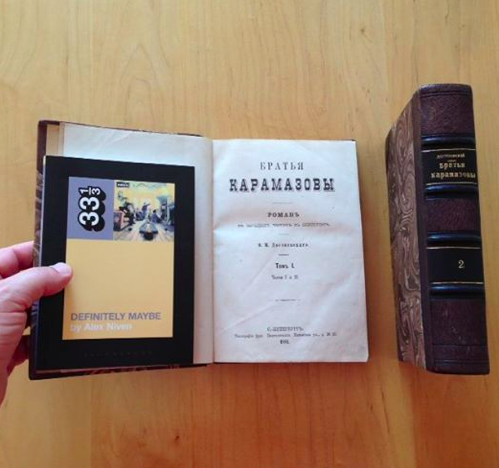
(By the way, this is uncannily apt, as there's a quotation from the Brothers K on my epigraph page - if that seems incongruous, well, it's not, and I will tell you for why if you ask me.)
The media campaign is also up on the rails ...
Here's a comment piece published in the Guardian this weekend, which gives a hyper-condensed summary of the book's argument.
Meanwhile, a handful of speaking events have been scheduled, with more to follow. At the moment these are:
26 June, 2014, Rough Trade East, Brick Lane, London. Q&A with fellow 33 1/3 authors Pete Astor (Richard Hell's Blank Generation) and Darran Anderson (Serge Gainsbourg's Histoire de Melody Nelson).
14-17 August, 2014, Green Man Festival, Glanusk, Wales. Q&A with Agata Pyzik (author of the excellent Poor But Sexy). Details tbc.
1 October, 2014 (exact date tbc), Foyles, Charing Cross Road, London. Legacy of Britpop panel discussion featuring Owen Hatherley (author of Uncommon: An Essay on Pulp) and Rhian E. Jones (author of Clampdown: Pop-cultural Wars on Class and Gender).
More details as and when they come in. And if you'd like a review copy, or want to open high-level negotiations for an event/reading, do get in touch via the email address on the sidebar.
02-Apr-14
Apparently some North American readers are beginning to receive copies. Here's one pictured with a first edition of Dostoevsky's Brothers Karamazov (thanks to the estimable David Soud for this):
(By the way, this is uncannily apt, as there's a quotation from the Brothers K on my epigraph page - if that seems incongruous, well, it's not, and I will tell you for why if you ask me.)
The media campaign is also up on the rails ...
Here's a comment piece published in the Guardian this weekend, which gives a hyper-condensed summary of the book's argument.
Meanwhile, a handful of speaking events have been scheduled, with more to follow. At the moment these are:
26 June, 2014, Rough Trade East, Brick Lane, London. Q&A with fellow 33 1/3 authors Pete Astor (Richard Hell's Blank Generation) and Darran Anderson (Serge Gainsbourg's Histoire de Melody Nelson).
14-17 August, 2014, Green Man Festival, Glanusk, Wales. Q&A with Agata Pyzik (author of the excellent Poor But Sexy). Details tbc.
1 October, 2014 (exact date tbc), Foyles, Charing Cross Road, London. Legacy of Britpop panel discussion featuring Owen Hatherley (author of Uncommon: An Essay on Pulp) and Rhian E. Jones (author of Clampdown: Pop-cultural Wars on Class and Gender).
More details as and when they come in. And if you'd like a review copy, or want to open high-level negotiations for an event/reading, do get in touch via the email address on the sidebar.
SENSE AND SECTIONALITY [ 02-Apr-14 9:56am ]Reading Sterne's Sentimental Journey, I'm struck by how much its ethical guidebook for the haute bourgeoisie resembles our own RaceSexualityGender doxa. In both cases, morality is abstracted - and pseudo-systematised - through a series of jargon terms for the initiated. Whereas we have PoC, intersectionality, trigger warning, mansplaining, brocialism, the eighteenth century had sentiment, sensibility, nature, decorum, sympathy, etc.
In both cases, ethics becomes a kind of manneristic exercise to be perfected if one is to acquire maturity and attain the degree of cultivation required for social advancement (in the eighteenth century - the church, the court, the judiciary, the army; in our own time - academia, politics, the commentariat, and indeed any profession - ie. the vast majority - in which social liberalism is preached while the most punitive form of neoliberal economics is practiced).
The weakness of both systems is their largely performative aspect - using the appropriate terminology and adopting the correct standpoint today with regard to, say, sexuality, is precisely equivalent to eighteenth-century displays of sensibility (the gentleman doffing his cap or handing the young lady his handkerchief at exactly the right moment). The point is that these are what we might call courtly gestures - largely superficial acts of performance that attract applause and approbation in the short term and in the social foreground but do not extend substantially into the realm of actual social organisation. Indeed, in most cases, the former actively stands in for the latter.
SUBLIMATION OF THE SOAR PT.3 [ 23-Mar-14 9:58pm ]Dream swelling soar here
HOW HAS CAPITALISM GOT AWAY WITH THE FINANCIAL CRISIS, AND WHY IS POLITICS SCARED OF IDEAS? [ 19-Mar-14 2:41pm ]Bit of a late one this, but if you're in central London tonight you could do a lot worse than come along to this event, which I'm speaking at alongside Mark Fisher, Rhian E. Jones, Dan Taylor, and Tariq Goddard.
Event info: Wednesday 19th March, 6.30pm - 8.30pm, Committee Room 8, House of Commons
27-Feb-14
Event info: Wednesday 19th March, 6.30pm - 8.30pm, Committee Room 8, House of Commons
RUINED MILLS OF LEEK, A BALLAD [ 27-Feb-14 1:05pm ]We drove by the ruined mills of Leek
In the dead time of the year
When the land had become like a faded song
We could no longer hear.
Down where the mouldering sandstone world
Of the Potteries blends with the weeds,
Where the warehouses echo with wandering winds
And the loneliness gathers in beads,
Where the powerful cling to their juggernaut arks
And the cities are sunken and bare,
I was someone who failed like a tumbling tower
On the edge of a kingdom of air.
I was someone who failed like a light going out
In a dream on the edge of sight
Because some men are made for the palace of bliss
And some men are made for the night.
We drove by the ruined mills of Leek
In the last days of the year
And the land was as quiet as a faded song
We could no longer hear.
MORE SUBLIMATION OF THE SOAR [ 03-Feb-14 7:10pm ]Now this is what I mean when I get steamy about 2010s pop ...
Man called Futurebound ffs.
23-Jan-14
Man called Futurebound ffs.
INTERSECTIONALITY OF THE GUT [ 23-Jan-14 7:47pm ]There's been a lot of debate about intersectionality recently. But all too often, it seems to me, what's being termed intersectionality is little more than a classic ascetic-deconstructive manoeuvre, a way of saying: okay, your argument is all very well and good, but you haven't given sufficient attention to x, and here's a more sophisticated, more rigorous turn of the screw, and another, and so on ad infinitum. Some might view this positively, as dialectical ratiocination, or simply a necessary way of conducting intelligent debate. But right now, in the current moment, in the context of the omnishambles that is the contemporary left, I think these sorts of movements are invariably negative and paralysing. What is more (and I think this is partly why it took me so long to understand what intersectionality actually is), what's being left out a lot of the time is the "inter" part of the formulation. Invocations of the intersectional credo are most often made along the lines of emphasising - either explicitly, or implicitly through the virulence of their expression - the interests of a single section, a single ideological category. Debate then gets swallowed up by warring capitalised mega-interests - Anti-Racism, Anti-Sexism, Anti-Homophobia, and so on - which of course very few people in their right minds (on the left at least) would ever really consciously oppose, but which have a tendency to be deployed in the context of frequently absurdist melodramas of debate in which people who are quite obviously in general agreement become violently opposed to each other on grounds of super-subtle sectional difference.
How, then, can intersectionality be used more positively? I think that, when we look at something like the above picture, we all know instinctively, and with a visceral certainty that relegates debate to the level of relative meaninglessness. Yes, the picture tells us, this person is undoubtedly racist. But she is also anti-feminist, pro-capitalist, and (literally) perched on the pinnacle of a system in which the labour of millions is used to furnish the airbrushed propaganda of new neoliberal Tsars and Tsarinas who differ from their pre-twentieth century predecessors only in a smattering of infinitesimal ways. The really effective response to this picture should not be banal cries of racism of the kind that we hear from the liberal press (and which Zhukova can try to refute on the grounds that she, as a bien pensant social-liberal-of-sorts, is interested in sponsoring "anti-racist" artworks). Rather, horrors like this should provoke the counterposition of a holistic, socialist, ethical critique in which anti-racism scarcely has to be invoked because it is so obviously an integral part of a wider anti-capitalist, anti-hierarchical critique. Real intersectionality must mean the integration of sectional interests until they need to be emphasised only in rare instances, and in a spirit of solidarity and empathy. If we can't grasp this and act on it before getting sidetracked into endless deconstructive caveatising, then the left really is doomed to repeat the failures of last half-century, if it even makes it through the next decade.
POSTMODERNIST REDUX [ 16-Jan-14 10:05pm ]Further to this debate about retromania (see below), there's a very interesting article by James Parker and Nicholas Croggon over at Tiny Mix Tapes, which widens the discussion into an attack on contemporary music crit as a whole.
There's a lot of very tasty stuff there, and the article is strongest I think in pointing to a sort of endemic, half-unconscious historicism right across the board in music writing from Rolling Stone to The Wire.
However, I don't quite get the conclusion:
So, the lesson of Cage, Eno, and now vaporwave, Belbury Poly, and even (if read critically) Daft Punk is that history need not be conceived of as an endless hurtling into the future. Indeed, the important thing about these musics is that they not only concern history, but assume a critical position in relation to it — they both critique certain conceptions of history and offer new ones.
Firstly, there's the obvious fact that a group like Belbury Poly is surely the epitome of retromania in its hauntological mode (and I don't buy the argument in the piece that it "makes us question our sense of nostalgia" - maybe it can, but to do so you have to run it pretty hard against itself, because I reckon most people get off on the nostalgia way more than they enjoy the implicit critique).
Also, and relatedly, I'm not sure from these examples (and from the examples of Malevich and Duchamp) what is being held up as a more positive kind of art. In fact, it seems to me - and the authors' use of the word "timeless" is a tell-tale sign here - that what is being avowed is essentially a very specific mid-twentieth century lineage of postmodernist art, the high-art canon of the last few decades of post-modern, post-ideological neoliberal orthodoxy if you like. "Black Square" and 4'33" were indeed modernistic steps forward of a kind, but they were also endpoints for modernism itself, transition works that helped to usher in the postmodern period (of which "retromania" is merely a latter-day extenuation).
As such, and taken together with the argument against time viewed as an "endless hurtling into the future", I don't really see that anything is ultimately said in the article beyond a restatement of the end of history ethos that the retromania argument takes as a starting point of its diagnosis.
What seems to be being rejected is the idea that art/music can make active, purposive social interventions that impinge upon democratic forward-movements, and I'm afraid we've had more than enough of that sort of thing for way too long now.
14-Jan-14
There's a lot of very tasty stuff there, and the article is strongest I think in pointing to a sort of endemic, half-unconscious historicism right across the board in music writing from Rolling Stone to The Wire.
However, I don't quite get the conclusion:
So, the lesson of Cage, Eno, and now vaporwave, Belbury Poly, and even (if read critically) Daft Punk is that history need not be conceived of as an endless hurtling into the future. Indeed, the important thing about these musics is that they not only concern history, but assume a critical position in relation to it — they both critique certain conceptions of history and offer new ones.
Firstly, there's the obvious fact that a group like Belbury Poly is surely the epitome of retromania in its hauntological mode (and I don't buy the argument in the piece that it "makes us question our sense of nostalgia" - maybe it can, but to do so you have to run it pretty hard against itself, because I reckon most people get off on the nostalgia way more than they enjoy the implicit critique).
Also, and relatedly, I'm not sure from these examples (and from the examples of Malevich and Duchamp) what is being held up as a more positive kind of art. In fact, it seems to me - and the authors' use of the word "timeless" is a tell-tale sign here - that what is being avowed is essentially a very specific mid-twentieth century lineage of postmodernist art, the high-art canon of the last few decades of post-modern, post-ideological neoliberal orthodoxy if you like. "Black Square" and 4'33" were indeed modernistic steps forward of a kind, but they were also endpoints for modernism itself, transition works that helped to usher in the postmodern period (of which "retromania" is merely a latter-day extenuation).
As such, and taken together with the argument against time viewed as an "endless hurtling into the future", I don't really see that anything is ultimately said in the article beyond a restatement of the end of history ethos that the retromania argument takes as a starting point of its diagnosis.
What seems to be being rejected is the idea that art/music can make active, purposive social interventions that impinge upon democratic forward-movements, and I'm afraid we've had more than enough of that sort of thing for way too long now.
THE SUBLIMATION OF THE SOAR [ 14-Jan-14 2:17pm ]
I was geet pleased to write the first Quietus Essay. File under: Strains of Tentative Futurism in 2010s Pop!
Hopefully there's more good stuff to come in this new series.
2013 POP [ 31-Dec-13 11:47am ]This was the best year for the pop single I can remember:
10. Sky Ferreira, "You're Not the One"
9. Miley Cyrus, "We Can't Stop"
8. Lana Del Rey, "Summertime Sadness" (Cedric Gervais Remix)
7. Pusha T, "Numbers on the Board"
6. Taylor Swift, "I Knew You Were Trouble"
5. Naughty Boy, "La La La"
4. Duke Dumont feat A*M*E, "Need You (100%)"
3. Rizzle Kicks, "Lost Generation"
2. Lorde, "Royals"
1. Chvrches, "Gun"
Trendier addenda:
10. Sky Ferreira, "You're Not the One"
9. Miley Cyrus, "We Can't Stop"
8. Lana Del Rey, "Summertime Sadness" (Cedric Gervais Remix)
7. Pusha T, "Numbers on the Board"
6. Taylor Swift, "I Knew You Were Trouble"
5. Naughty Boy, "La La La"
4. Duke Dumont feat A*M*E, "Need You (100%)"
3. Rizzle Kicks, "Lost Generation"
2. Lorde, "Royals"
1. Chvrches, "Gun"
Trendier addenda:
INTROS [ 29-Dec-13 11:13am ]I'm going to nominate some categories (partly picking up on stuff already thrown up on the decade blogs and elsewhere):
THE SPOKEN WORD RALLYING CRY
THE ANOMALOUSLY GOOD DIAMOND-IN-THE-ROUGH FRAGMENT
THE STATEMENT-RIFF
THE SEPARATE MINI-SONG
THE CORRECT USE OF THE BLUES JAM (AS OPPOSED TO STICKING IT IN THE MIDDLE/END OF THE TRACK)
THE GARAGE BAND UNCOVERS PRIMITIVIST MAGIC
THE INDISPUTABLE
(Carl has already nabbed it, but great minds etc ...)
THE SPOKEN WORD RALLYING CRY
THE ANOMALOUSLY GOOD DIAMOND-IN-THE-ROUGH FRAGMENT
THE STATEMENT-RIFF
THE SEPARATE MINI-SONG
THE CORRECT USE OF THE BLUES JAM (AS OPPOSED TO STICKING IT IN THE MIDDLE/END OF THE TRACK)
THE GARAGE BAND UNCOVERS PRIMITIVIST MAGIC
THE INDISPUTABLE
(Carl has already nabbed it, but great minds etc ...)
NOTES ON ITV'S LUCAN [ 12-Dec-13 2:49pm ]Caught the first episode of this last night. So far it's fine social-realist TV drama in the tradition of Our Friends in the North, Tinker Tailor, Red Riding, etc, and certainly better than anything the Beeb have done this year I reckon. (Definitely better than last year's shambolic effort in this regard, anyway.)
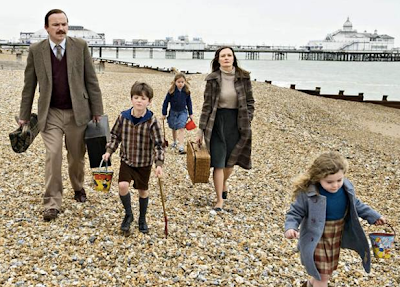
There's quite an interesting political thread running through it, too. Christopher Eccleston is deliciously demonic as gambling club owner John Aspinall. An unusual amount of script space is given over to Aspinall's Randian dialogues full of references to Alpha Males, biological determinism, the survival of the fittest, the importance of accepting the growth of an inferior underclass, and all that shite. He's basically a walking Adam Curtis theory, a right-wing crank grumbling about the power of "the Miners" in social-democratic post-war Britain, a sinister Blimp full of embittered determination to reassert what he calls the "natural order". Of course, the character is all the more shady because his views will become depressingly mainstream some ten years after the early-seventies moment that provides the backdrop to Lucan's narrative.
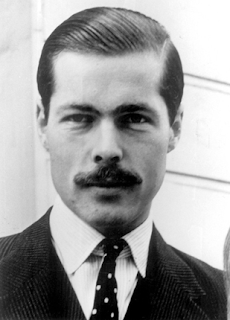
Another interesting thing is the way this class narrative is synthesised with a powerful feminist argument. Egged on by Aspinall's reactionary Alpha Male spiel, Lord Lucan starts to intimidate his wife Veronica - mentally and physically - in an attempt to get her committed so he can win custody of his children. Fortunately, this is the progressive early seventies rather than the Downtonite 1920s, so the courts decide in favour of the independent, sound-of-mind woman against the imperious, bullying aristo. The tragedy is that the working-class nanny who has supported Veronica in the run-up to the trial is bludgeoned to death by a crazed Lucan at the end of the first episode.
The symbolism here - of a brutal, quasi-Darwinian patriarchy reasserting its authority after a period of "effeminate" egalitarianism - is not difficult to grasp. The unheimlich contemporary relevance - bearing in mind certain recent uber-Darwinian pronouncements of the British Conservative Party - is also striking.
And then you realise who Aspinall's step-nephew is:
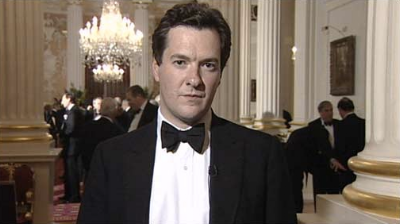
There can be no more denying it ...
The conspiracy theory is the true realist art form of the twenty-first century.


There's quite an interesting political thread running through it, too. Christopher Eccleston is deliciously demonic as gambling club owner John Aspinall. An unusual amount of script space is given over to Aspinall's Randian dialogues full of references to Alpha Males, biological determinism, the survival of the fittest, the importance of accepting the growth of an inferior underclass, and all that shite. He's basically a walking Adam Curtis theory, a right-wing crank grumbling about the power of "the Miners" in social-democratic post-war Britain, a sinister Blimp full of embittered determination to reassert what he calls the "natural order". Of course, the character is all the more shady because his views will become depressingly mainstream some ten years after the early-seventies moment that provides the backdrop to Lucan's narrative.
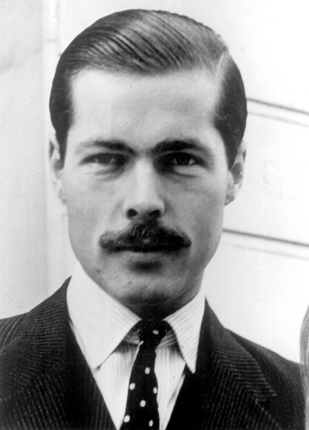
Another interesting thing is the way this class narrative is synthesised with a powerful feminist argument. Egged on by Aspinall's reactionary Alpha Male spiel, Lord Lucan starts to intimidate his wife Veronica - mentally and physically - in an attempt to get her committed so he can win custody of his children. Fortunately, this is the progressive early seventies rather than the Downtonite 1920s, so the courts decide in favour of the independent, sound-of-mind woman against the imperious, bullying aristo. The tragedy is that the working-class nanny who has supported Veronica in the run-up to the trial is bludgeoned to death by a crazed Lucan at the end of the first episode.
The symbolism here - of a brutal, quasi-Darwinian patriarchy reasserting its authority after a period of "effeminate" egalitarianism - is not difficult to grasp. The unheimlich contemporary relevance - bearing in mind certain recent uber-Darwinian pronouncements of the British Conservative Party - is also striking.
And then you realise who Aspinall's step-nephew is:

There can be no more denying it ...
The conspiracy theory is the true realist art form of the twenty-first century.