
 Open Plaques: joining the blue dots [ 04-Apr-10 2:35pm ]
Writing in the Telegraph last year, Stephen Fry reflected: "Many of us like to believe that we understand the point of history. We all pay lip service to the idea that yesterday makes today, but it is hard to make the imaginative leap that truly connects us to the past. It is as if we are forced to move forwards in such a narrow passageway of time that the act of stopping to look behind us is difficult."
Fry surmised that the UK's blue plaques – erected to mark the physical locations occupied by people from history who have left a notable mark on our culture – were a living corrective to this. But are they really? What if these inert short-form stories were re-animated by augmenting the physical markers with a layer of digital information that made looking back in time from the present day a far easier, richer and more immediate experience? Wouldn't that be a greater step forward in terms of bringing history to life?
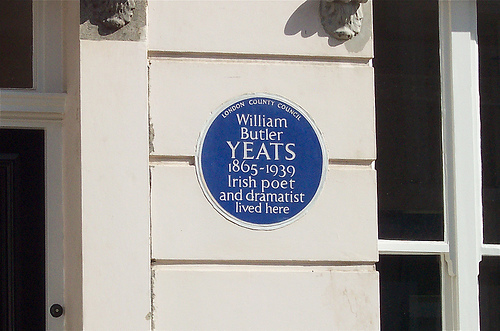
Even as Fry was writing this in June 2009, a project was already underway do just that - to open up that heritage and make it accessible, expanding the narrow passageway of time that Fry lamented.
Credit to kickstarting this goes to Frankie Roberto who came away from a conference on mobile learning for the museums and archives sector in January 2009 with a bee in his bonnet:
"You see them everywhere - especially when sat on the top deck of a double-decker bus in London - and yet the plaques themselves never seem that revealing. You've often never heard of the person named, or perhaps only vaguely, and the only clue you're given is something like "scientist and electrical engineer" (Sir Ambrose Fleming) or "landscape gardener" (Charles Bridgeman).
I always want to know more. Who are these people, what's the story about them, and why are they considered important enough for their home to be commemorated? I'd like to be able to find out all this, and to do so at the point at which I stumble across a plaque - which to me suggests something on a mobile platform."
In the 15 months since, this desire for deeper and more accessible context to these static emblems has crystallized in the Open Plaques initiative. An open source community project; it is also community-driven by necessity, due mainly to the data surrounding the UK plaques being fragmented between hundreds of bodies, and not only inconsistent but sometimes totally absent.
It gathered momentum when Frankie's early efforts caught the attention of Jez Nicholson, Simon Harriyott and Marvin Baretto who’d already (coincidentally) teamed-up to do a blue plaques project for the Open Hack London event in May 2009. So it happened that they prototyped a website that could pull this information together.
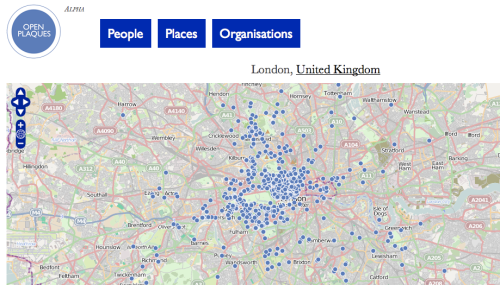
The Open Plaques service which emerged from this ad-hoc grouping (which I joined later last year) synthesises a number of tactics and workarounds to overcome the challenges it faces. As the plaques by their very existence are in public domain, Frankie has made a series of Freedom of Information requests for data and records of the plaques to several of the bodies that hold them, so they can aggregate them together and offer the data in standardised form for free re-use by others.
In turn, the already existent Blue Plaques group on Flickr proved useful and amenable, and the idea of using images from Flickr on the Open Plaques service gained an important leg-up when Flickr agreed to grant a "machine tag" option to photographs of plaques uploaded under a Creative Commons licence.
It's remarkably simple and works like this: each plaque location listed on the Open Plaques database (which you can search on their site by name, place or organisation) has a number. When the number is added as a machine code in the tags of the corresponding photograph on Flickr by the user – and if the user gives the photo a Creative Commons licence – the image is pulled from Flickr onto the Open Plaques website. The service also allows geo co-ordinates to be imported.
The site itself is still in Alpha phase of development but is already substantially populated - with 38.44% of 2297 known plaques in the database now having a corresponding machine-tagged photograph.
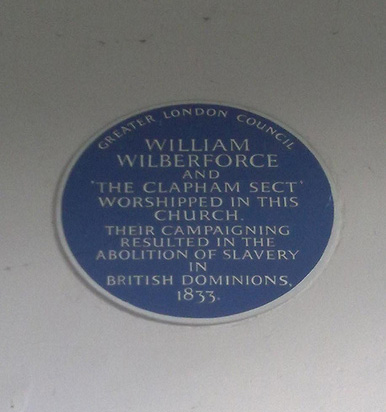
The whole project is still in the earliest of stages. Making it fully functional and accessible on mobile devices still lies ahead. Any number of possibilities for what could be done going forward suggest themselves. But in the very act of pulling it together, it already bears the DNA stamp of what it could some day become. The plaques themselves encapsulate people-powered history: a history of action, ideas and invention. Open Plaques has the potential to transform them into a living resource - and make each one a porthole that helps us connect with, understand and traverse moments in place and time, just like Stephen Fry said.
Re-shaping historical interest points nationwide as dynamic experiences is a mammoth task but Open Plaques – which is unfunded and 100% volunteer based – is already gearing up for a productive 2010. In February, Simon and Frankie attended the first ever English Heritage conference on commemorative plaques (yes, they're not all blue) to find out more about the organisation's thinking and plans, and talk to people about the initiative. Simon also talked about the project at last week's £5 App Meet in Brighton.
In the meantime, we need more people to help fill up the image database - yes that's you Flickr users! – plus help with the technical development. Spreading the word also matters and you can stay in the loop by following Open Plaques on Twitter.
Any input is welcome. You can even source and suggest plaques that aren't on the website's (incomplete) list. So if you'd like to get involved in connecting past and present, and do some local or further-afield exploring in the process, visit the site’s Contribute page for more instructions, see Jez's blog and the Open Plaques group for simple Flickr tips or get in touch directly, and lend a hand in joining the blue dots.
[UPDATE 12/5/10] We now have an Open Plaques blog and I’ve added my first post: Meet the time bandits.

 Ada Lovelace Day 2010: Lee Miller in focus [ 24-Mar-10 1:32pm ]
Telling the story of my Finding Ada heroine for 2010 – photographer Lee Miller – requires taking a broad perspective. Her life’s achievement is a composite of a number of key strands: art, photography, fashion, technology and war reporting, bound together by a pioneering spirit.
This hurried blog isn’t the place to explore and understand these all in detail. Lee Miller was a breakthrough figure for a number of reasons – this is just a snapshot.

Born in Poughkeepsie, New York state in 1907, Elizabeth “Lee” Miller left for Paris at the age of eighteen where, according to Ursula Butler:
"She studied lighting, costume and theatre design at Ladislas Medgyes's School of Stagecraft. She later returned to New York and enrolled in the Art Students League. There she met Condé Nast and he introduced Miller to the world of modeling. From 1926-1929 she modeled, but eventually wanted to see what life was like behind the camera. Miller studied under the great dada-surrealist artist and photographer Man Ray. Under his supervision, Miller learned how to manipulate the photograph to make a self-contained, semi-abstract or dreamlike image."
She also became his wife and established her own studio. So far so interesting, but things were just hotting up.
The word ‘photography’ was coined by scientist Sir John F.W. Herschel in 1839 (though it had been coined seperately by Hercules Florence in 1834!) and is actually is derived from two Greek words: ‘photos’ meaning light and ‘graphein’ meaning draw. The pace of technology development in cameras and photography accelerated during the early twentieth centry, but our subject’s contribution to the science of photography was a marriage of chance and artistry. Miller brought the alchemy.
Much debate surrounds the issue as to which of the couple stumbled across a technique in photography that – like a reverse negative of the ‘photography’ coinage – had been discovered a few times previously but not clearly defined and adopted: namely solarisation.

“The effect was usually caused by inadvertent severe over-exposure or occasionally by accidentally exposing an exposed plate or film to light before processing. Artist Man Ray perfected the technique which was accidentally discovered in his darkroom by his assistant Lee Miller." [Wikpedia]
Whatever the facts, Man Ray was soon flying the flag for perfecting this technique whilst his collaborator Miller was merely, again, known as his model (although she marshalled the technique to equally compelling effect – see her above ‘Portrait of an Unknown Woman’ from 1930). Man Ray was of the controlling variety, and Miller being a woman of substance soon broke free of his grip. She continued to be deeply involved in the Surrealist movement, amassing a body of work in her late twenties and early thirties that puts her on a par with the leading figures in photographic art and photo journalism, though this has only been recognised in the last two decades after her death, thanks to the meticulous recovery, ordering and promotion of her archives by her son.
A friend of Picasso – and combining commercial fashion photography and artistic work while entwined in a bohemian milieu – what beguiles me is the mastery she achieved in the realm of photography by bringing with her all her selves as she worked though each chapter of her career and each dimension of her work. There was truth and artifice – with neither undermining the other – in her iconic photo 'Women with fire masks' (1941), taken on the street of her own residence in Hampstead.

Conversely, when Vogue sent her off with a Rolliflex to Europe to cover the end of the war and the liberation, her photos combined a self-sufficient, often mysterious power with a visceral sense of unfolding drama. As she travelled through a bombed-out, shattered Europe, her camera captured many of the most powerful images of the closing months of that dark chapter in the last century. From the Italian front and the first ever use of Napalm at the siege of St Malo, to the death camps of Buchenwald and Dachau, and the liberation of Paris, you can view a wide selection of her potent war images online in the Lee Miller Archive.
Mistress of the lens, at the height of her career she lived for several years in this house on Downshire Hill in Hampstead, also spending time in Egypt and travelling widely, before moving to Farley Farm House in east Sussex. She had two further marriages, the second to British surrealist artist Roland Penrose whom she stayed with.

After the war, whilst still doing the occasional fashion shoot, Miller’s overall profile declined and she suffered bouts of clinical depression alleged (in retrospect) to have been symptoms of post-traumatic stress disorder caused by the horrors she had seen while on war assignment. In turn, her ironic sensibility was reinforced with disillusionment at the limited type of commercial work she was being offered. Women en masse had successfully taken on all sorts of previously "male" roles during the conflict, and as a surrealist photojournalist embedded with the US army Miller was among them. But after the war, governments scrambled to promote traditional values in their efforts to glue broken societies back together, and opportunities for women in the working world shrank.
In her lifetime, she was all to aware of the cultural - and personal – impact of womens’ abilities and output being marginalised. A photograph she composed of Max Ernst and his partner, artist Dorothea Tanning, encapsulates her subversive take on this.
The recognition she has posthumously achieved was acknowledged on a grand scale some 30 years after her death in a major retrospective at the V&A in 2007, which I attended, plus coverage and exhibitions globally in the last decade. Now the scales have been duly re-balanced, we can celebrate Miller as a true icon and pioneer in the art and technology of photography. For innovation and inspiration personified, look to Lee Miller on Ada Lovelace Day.
–
Ada Lovelace Day is an annual worldwide day of blogging to celebrate the achievement of women in science and technology. More information on Ada Lovelace Day 2010 can be found on the Finding Ada website. This post hasn’t been much about technology per se – it’s what we do with it that matters…

 Social media diet - the book supplement [ 20-Dec-09 9:55pm ]
In December 2007 I went on a media diet, inspired by a Digital Health Service Workshop I’d attended. To be truthful, it was mainly a social media diet. I was an early casualty, as it seems to be catching on more widely now. After being relentlessly engrossed in reading and then creating blogs since 2004, and then diving into the participatathon of Facebook in October 2006, and Twitter the month after, plus a host of other social-sharing-crowdfacing-wikified-whateverisms (on top of all the other web stuff I do), warning signals were sounding.
Having partaken in these principally as a core (and very fruitful) part of my job, they were completely taking over, and the side-effects were not exactly glamorous. I’ve written about them before.
In some ways social media latecomers are lucky and have probably adapted better to the social mediaverse. Plus most don’t have to do it as a matter-of-life-or-paycheck, (although a few dozen tweets can get you a social media intern gig these days, but what did you do before that Tarquin? Enough said).
After I emerged from the two-week zero-fat diet of Xmas 07/ NY 08, things were different. Nowadays, it’s all about judicious media consumption for me, honing a better skim-and-plunge technique… supposedly. I still spend my working days neck-deep in the mechanics and strategy of all aspects of online communities, social media and their ilk, and find their business, tech, social and cultural impacts fascinating. Evenings, if I’m dabbling, it’s more likely reading, bookmarking and the odd tweet. Sometimes I’ll even try out a new web service. But there’s more to life…
And the part I was missing most was books.
(I’d just about managed to keep up on music, film, art and other stuff; somehow that was possible).
When I first moved to London in 1998 I didn’t read a book for 6 months. I was shellshocked – by the material stress of the move, the quantum leap of my job, the social rupture of leaving my life in Glasgow, the general disorienting strangeness (I’d been to London 30+ times previously, but living there – sorry, here – is different). As someone who’d normally read – and often review in my freelance journalist guise – 3-5 books a month, the book-reading famine was symptomatic of a larger destabilising episode.
I just couldn’t sit, zone-in and immerse myself in the great books I’d got queued up to read. When I think about it now, the wave of social media that’s washed over me in a work context in the last 5 years has made me exhibit many of the same behaviours that resulted from my transplanting to Londinium. But you always – hopefully – resurface.
So I made an effort to get some nourishment. Here are (some of) the books I read in 2009. Mainly – if sometimes vaguely – work-related, hence the exhibitionism…

Books queued up in December 2008
I’m not reviewing them (if only!) but I have to admit two of the pictured editions are unfinished: Yochai Benkler’s (seminal) The Wealth Of Networks (see also the blog and wiki) and Grant McCracken‘s Transformations. I’m still in transit with them, gradually snacking my way through. Must be the microblogging ripple effect 

Books queued to read August 2009
I can’t wait to read 2010′s offerings. The pile is currently being assembled. And the project of filtering too many media inputs continues
If anyone wants to do a digital / social web book club (preferrably offline), this reader might be interested.

 Delete, not fade away and radiate? [ 13-Dec-09 3:29pm ]
As digital capture of our lives edges ever closer to ubiquity - and that seems to be where we're heading - what are the consequences for memory and for judgement on both a personal and societal scale? Is it a curse or just a new aspect of the modern age that we're inevitably making some mistakes in coming to terms with?
That's the subject of a new book 'Delete: The Virtue of Forgetting In A Digital Age', and on 19th November I attended a talk at the RSA given by the author Victor Mayer-Schonberger, director of the information and innovation policy research centre at the National University of Singapore's Lee Kuan Yew School of Public Policy, which was ably chaired by Kevin Anderson, Blogs Editor (now Digital Research Editor since December ’09) at The Guardian.

It's a wide ranging topic, and a lot was covered, but the crux was this: the growing tendency to default to digitally documenting and sharing experience is creating a digital legacy that we as individuals are not fully able to control. In many cases this can lead to information being taken out of context, or shared beyond appropriate boundaries, with baleful (and other, still unknown) consequences.
Take a trio of now commonplace examples. The innocent party photo passed through Facebook or stored in Flickr or Google's image archive means you're passed over for a promotion or job, or sacked from your current one. The long past relationship is made ever present by related content from that time being accessible at the push of a button and compounded by current two or three-degrees connection to the ex. The holiday or special occasion is experienced less as something we live through intensely in the moment and later recollect at leisure, but is constantly punctuated with recording for posterity and increasingly stylised and calculated for the consumption of a small or not-so-small audience.
The second interlinked thesis is that our slowly evolved patterns of memory, learning and recollection are being distorted and un-bound by reliance on digital recording and storage. Memory reconstructs the past to minimise cognitive dissonance, the author explained. This is more potent and interesting, if an area I'm less familiar with. Normally, we cannot deliberately forget (for the reverse, see Michel Gondry and Charlie Kaufman's fantastic movie Eternal Sunshine Of The Spotless Mind) and memory naturally both selects, filters and deteriorates over time. But if the default is moving to not physiologically but digitally remembering, is the solution to delete?
Mayer-Schonberger is himself ambivalent about this, but citing a woman known as "AJ" he shared some compelling evidence of studies of human beings who have biological difficulties with forgetting. AJ experiences total recall as a curse. Tethered by an ever more detailed recollection of what has gone before, she is continually haunted by the past; resulting in an inability to live in the present, to generalise and to abstract from experience.
Another worrying consequence touched on by Mayer-Schonberger is our mass participation and compliance in the creation of a temporal Panopticon - in other words our collusion in the ability of institutions to store and always see our actions at any moment in time. My colleague Ian Delaney has written about this more eloquently than I can.
Accelerating referencing of digital content taken out of context - according to Mayer-Schonberger - means we also increasingly deny each other the capacity to change, evolve and grow and as such we are becoming a more unforgiving society. He floated an extreme scenario: what if we disregard our own recollection and instead depend solely on digital memory? Wouldn’t we have lost more than we had gained?
Clearly a thought experiment, he added the caveat that as only fragments of our experience are captured digitally, this cannot actually happen in totality. The problems right now – as mentioned with the careers, relationship and holiday examples – come when it happens on a piecemeal, ad hoc or imperceptible basis.
Solutions proposed by Mayer-Schonberger, include:
(1) Reintroduce forgetting by technological means - an expiration date put on information that we are prompted to input when we add time and GPS co-ordinates to data (or more simply, when we save it). The pitfall of this approach is if it's public it can be copied by others and stored elsewhere.
(2) "Digital rusting" - a closer approximation of the tactile and receeding nature of memory. The issue with this is how we can know at the point of recording how we might feel about the material in the future. This might be a workable model for some public data, but personal information (and creation) has different implications, and personal and public often overlap. Ultimately, I feel current and future historians might beg to differ with this approach.
(3) Go back to forgetting by default. This means either we cease to record and save information (not gonna happen), or that we forget we have done so - which is a much worse nightmare! The key I think is that information, however private or public, somehow needs to be understood and placed in differing temporal and social dimensions.
(4) The dark side of the network – and the downside of the end of silos – is that because social conventions lag behind the increasing openness of information it's easy to find "personal" information about "impersonal" connections, and once this data is exposed and fed into to impersonal judgements it's not so easy to get a second chance. The solution? We should promote the exercise of judgement [privately and publicly, I presume], argued Mayer-Schonberger. Guy Parsons shared an optimistic twist on this at Chinwag Live: The Dark Side Of Social Media, an event I organised back in 2007. But not all elements of society will consistently act this way, so the risk remains.
If the wisest survival response is then self-censorship, how far should you go? Even private use of search engines is not immune. Mayer-Schonberger cited AOL's now infamous search query datastream release c*ck-up in 2006, wherein the supposedly anonymized data of search records was rapidly traced by technologists at the New York Times to some of the individuals who'd created it. What if it you had been one of them? In turn, how much does constant watchfulness really benefit public and personal development? Is it right that privacy is being eroded so much that we need to be so careful?
Nico Macdonald made the point that you can't code the solutions to social problems. This seemed uncontroversial as I don't think much store has been put by the "expiry date" solution in responses to the book. We shouldn't be "subjected" to technology but be more active in shaping it, he inferred. Perhaps that's what we really need reminded of.
Much was said about search engines and the Internet Archive even got a namecheck. But the cash-strapped Internet Archive is shrinking not growing I've noticed. Google is dependent on the trust of its users, and that trust is tantamount to its business model Mayer-Schonberger stressed. But a recent remark by Google's Eric Schmidt tells us this is changing. Facebook now faces the same issue. Despite their recent announcement about the Open Graph API and their latest privacy settings swerve, most people expect privacy from Facebook. Whether or not that expectation is foolish, Facebook could still be wrong-footed by being too open.
Returning to recall for a moment, timelines are something I've always thought that, conversely, digital content could do with more of but their genesis requires some subtlety and serious forethought. Fear of interrogating the past could diminish us as much as it might protect us. Surely it's a function of human enquiry and maturity to be able to embrace our past, to reflect on and dwell in it on occasion without becoming paralysed like AJ? Why would the digital storage and referencing of past information stop us from being able to interpret it wisely and still live in the present? This is really where Mayer-Schonberger and I part paths.
Flexible and reliable privacy settings are just a feature that should come with such services. The first one I came across was Rememble, which enabled you save and store selected text messages, blogs, tweets, photos and other content in a visual timeline. Creator Gavin O'Carroll likened it in 2007 to a washing line for your digital bits and pieces. It was a narrative-led yet accessible framework for piecing together fragmented content and reconstructing memories, conversations and events at the personal level.
If you're looking to place stuff in a larger historical context, a landmark project – sadly no longer existent – came in the form of Miomi. It was an exciting melding of content from different sources to create user generated history that I saw demoed at the Minibar start-up event in Brick Lane in 2007. Miomi allowed the user to zoom in and out of particular years and decades over the last century and a half and see relevant content (eg. from Wikipedia and public digital records) relating to that time, and also location, as well as annotating and adding their own. Unsurprisingly the more contemporary part was already very detailed. I'm doubtful it would have scaled well in terms of moderation and accuracy, but its ambition was refreshing. I'm sure it's next-gen version is being cooked up somewhere.
So digital permanence was the dish of the day at the RSA. But the opposite view - that digital is an extremely fragile and ephemeral medium for so much of human culture and activity to be engraved and invested in, and that we should make far more effort to selectively and robustly archive it - wasn't voiced at this event. Paradoxically digital content is both brittle and persistent, transitory and important. There is no black or white answer to seek refuge in.
Finally the context question. In his talk Mayer-Schonberger seemed to side with the view that personal digital content - in the very act of being accessed beyond me and forwards in time – always lacks a contextual 'je ne sais quoi'. Granted he may say much more than this in the book (I have it on order) but this is where the story both begins and ends.
While I can't talk with any depth about the brain's gradually evolved ability to remember and recollect, surely the digital overlay is just a new frontier for the human ability to record and sometimes simultaneously interlace experience with another layer of data?
We've done it before. We drew pictures, told stories and wrote books. These things took time to permeate our cultures but they enriched them. In the last century we had social panics about radio, recorded music, film and then television being available to the masses (just as we had panics about women voting and going to work, for instance). More recently, there was somewhat more minor fretting that people listening to walkmans walked this earth as if in a bubble. It's funny when you look back on it now - because it's y’know, recorded – and remember…
Now the context is evolving. That's why creative projects such Britglyph and Open Plaques are intriguing, using the medium as a canvas to help us collectively discover, trace and find new ways to map meaning and think about human activity back and forth in time. This is what Bill Thompson was driving at when he described Britglyph as "a fascinating example of what is possible when you work with the grain of the internet, building something around the things the network makes possible."
So rather than disgorging personal data to the network, we should always be curating and shaping. That's the trump card digitally-augmented context - mastered and done well – is bringing to the table.
Are we really so incapable of adapting to and interpreting new contexts that this growing layer of digital information augmenting our lives will render us personally dysfunctional? Or worse still, divided into slaves to "one ring that rules them all" (whether that's Facebook, Google or your friendly local authorities) on one side, and savvy digital invisibles on the other. Or is this just the messy late-teenage phase of the unfolding web canvas? It seems like it could go either way.
Last words, for now, go to Chris Stein circa 1978.
…watchful lines vibrate soft in brainwave time.
Silver pictures move so slow.
Golden tubes faintly glow.
Electric faces seem to merge.
Hidden voices mock your words.
Fade away and radiate.
Fade away and radiate.
Beams become my dream.
My dream is on the screen.
–
For a reverse panopticon of the event itself ;-) Neil Perkin has provided a good write-up, the event was recorded by the RSA (MP3 download) and Mayer Shoenburg was interviewed by Reuters beforehand.
Apologies and thanks to Stein et al for the title.

 Rebooting the association [ 12-Dec-09 5:29pm ]
While media budgets are squeezed still further as we trudge onward under the cloud of recession, trillionesque debt and the massive public spending cuts gathering on the horizon, the focus on social media ROI grows ever sharper, but less energy is expended looking at the benefits that focused online communities can bring to businesses.
Communities for not-for-profits and membership bodies have a slightly different flavour to those developed for commercial entities. While commercial brands answer to shareholders or private owners, NFPs and membership bodies exist for the benefit of their constituents. There is already a genuine, real-world community or shared interest in place – just as there isn't (really) between me and say, Sainsbury's – so a digital community is a natural fit.
But that doesn't mean it's any simpler, nor is the transition to deeper member or supporter engagement any less challenging for the organising bodies than a renewed focus on customer engagement is for businesses. There is a lot of overlap. An event I attended at the Law Society on 6th October, "Surviving in a Recession - What Member Organisations can Learn from the Commercial World” addressed the challenges and opportunities in this area.
One of the things I liked about it was the way it set online communities in a longer timeframe than we're used to talking about. Many membership bodies have been around for 50-200 years. Most started out when enthusiastic and committed people come together informally - usually in a bar room, hotel or coffee house – to improve and professionalise emerging crafts and knowledge.
Fast forward to now, and these bodies occupy grand buildings, wield influence with governments and business, and provide letters after your name. But are they achieving their original aims? How close are they to their members today, and how can a geographically dispersed membership benefit from the knowledge and experience of their fellow members and the wider interested audience? In other words, can we re-boot the association?
The event was co-hosted by Sift - who are the technology and consultancy supplier for CIMAsphere, the online community I manage - and Madgex. Rather than reading a re-cap of the discussion, you can watch the presentations from two of the speakers that morning.
First up is Adam Cranfield, my former colleague, who was at the time Digital Media Manager at CIMA.
The second presentation is from Lawrence Clarke, Head of Consultancy at Sift. Sadly you can't see his slides in the video, nor Adam’s in his. But the stand-out points for me were Lawrence’s thoughts on the tendency of subscription-based associations to rely on inertia and top-down, one-to-many communications, and how that is being undermined by the connectedness and transparency the web brings on the one hand, and recessionary pressures on the other.
That talk is a companion piece to this post Lawrence wrote a month earlier on the Sift blog. Highly recommended.

 Community management under the bonnet: 23 things [ 11-Oct-09 2:46pm ]
Online communities have been around for as long as the internet itself, but the path technology has travelled in the last decade means the options for what you can offer and what you can do with them today have exploded.
Despite this, they’re still viewed as a bolt-on or feature of a brand’s web presence. This has led to what’s been termed as the "iceberg effect of community management".

Image courtsesy of Rita Willaert, Greenland, 10th September 2005 on Flickr
The full-spectrum of web and social media tools is now being vacuumed up into and integrated with communities: so beyond forums and chat, we now have blogs, RSS, aggregation, email, polls, Q&A, photos, video, audio, virtual worlds, groups, ratings, attachments, events, microblogging, profiles, focus groups, networking, widgets and wikis, to list only the most obvious…
These tools protrude the ocean's surface, along with the reams of content created by community members. But that is only a small fraction of what is happening. As more brands and organisations come to recognise the potential value of facilitating their own communities - but still consider it as an “add-on” to their main website - what does this mean for the role of community manager? What do they need to know and what do they do all day?

Image courtesy of The Brain Toad on Flickr
This is my off-the-cuff list of community management under the bonnet. I prefer the engine metaphor because communities commonly have a goal - they’re supposed to get you somewhere. I’ve also included the pre-launch stages. Depending on your product and whatever way you slice it, there’s a lot to get stuck into!
1. Business Plan
Translating business objectives into a workable plan that is agreed with stakeholders across the business. Finding and agreeing a budget. If you’re already on board at this stage, you’ll need to be involved in this in order to understand the business needs, if you’re hoping to translate it into a successful product that is…
2. Technology Platform & CMS
Choosing a technology platform – low-cost off the shelf packages you can tailor to suit community interaction, eg. Ning, Squarespace, Joomla; bigger-budget customised developments based on for example Drupal (the system I’ve worked with in my last three roles); or maybe you go totally bespoke whether in-house or with an agency (potentially the priciest, and beware proprietary lock-ins that could come back to bite you).
3. Personas & User-Centred Planning
Personas are a useful heuristic for surfacing the needs of the different key groups who’ll be using your community. You think you have your audience all figured out, but have you thought about their activities and requirements in community terms? Explore this in workshops if you can.
4. Design & Build
If you’re around during this phase, you could be called upon to input from the following (and more) perspectives: web design and wireframing, information architecture, usability, accessibility, user experience, on site search, SEO, taxonomy and folksonomy, APIs, browser compatibility and web standards. Many brands are still lacking in some or all of these departments, so your broad knowledge and experience can help make or break the end product! In terms of collaboration and notation around refining design and navigation concepts with your devs and designers, I can’t recommend Conceptshare strongly enough. I used it for that purpose in Chinwag‘s previous re-build and it is genius.
5. Registration & CRM Integration
The first experience of a community member is often to register; don’t make it painful and onerous, you'll annoy and lose people from the get go. Communicate the importance of this to direct stakeholders, preferably with story boards and demos of best practice. The experience generally is so poor and under-thought that Joshua Porter’s writing a book about it. Get advance estimates for the costs of integrating community registration / login with your current CRM system (preferably when you’re in Business Planning stage). The figures – and actual effort – can be unexpected. Is there another solution?
6. Testing & Tweaking
When you have early “alpha” versions of the site to play with, plan for an extended period of UAT (user acceptance testing). Get people across the business involved. Allow for some less structured “guerilla” usability testing too, at different stages of the build. You can learn as much from this as from pre-scripted interactions. Make sure your community manager is involved for most if not all of it and has oversight on the final sign-off.
7. Guidelines
Social networks revolve around me and are a bit of a free-for-all, they’re social but generally selfish. Communities bring benefits to people by having a common purpose that may facilitate but also overrides pure self-interest. So community rules and a general etiquette are essential. These guidelines need to be agreed by your organisation, and include some legal considerations. You may also need specific guidelines: for your bloggers, for group managers, for staff members and for sponsors, depending on the scope of your endeavour.
8. FAQ / Help
The more multi-faceted your site, the more bases your FAQ will need to cover! Basic instructions on your different areas, tools and registration are essential, should be visibly linked to everywhere and also feature somewhere in the site-wide navigation. Keep them readable and concise. A good FAQ is not an afterthought, and harder to write than you’d imagine. Be community-minded and have a site help discussion forum too, where your input and peer support can mingle to the benefit of all concerned.
9. Seeding: pilot before launching
There's nothing worse than being told of some cool new community or cutting edge network, and hoofing it over there only to find it bereft of visible life forms. Counter this by running a closed pilot, while you also beta test the site's taxonomy and functionality. Invite a segment of your audience to participate in the pilot. Make sure they know they're getting a special preview, listen to their feedback and iterate rapidly to solve key technology, content and user experience design issues during this period. Allow for a couple of months minimum, or at least until there is lively activity before opening up. Then when the world turns up, they won't be confronted by a confusing environment of unusable tools and tumbleweed. [See also .17]
10. Moderation
Think about posting controls, editing permissions, alert systems, freezing tools, spam filters and of course, moderators! Which is better for your community: external agency moderation, user-mods, or moderation by the experts, contact centre staff and people who know the answers and issues themselves inside the business? As community manager for CIMAsphere I run staff training workshops, and oversee the moderation workflow and rolling schedule. A closed group on the community for geographically distributed moderators to discuss issues and share best practice is another plus. Relying solely on external mods can be un-feasible and also means the brand is not fully engaging.
11. Inboxes
Not everything happens *on* your website, so common community inboxes you may have to set up and manage include: info, help, feedback, and abuse; plus the community manager’s personal inbox of course. That’s a lot of email! Who else can help you mange these inboxes? Hunt down the most apposite or amenable folks and spread the inbox love to spare the pain!
12. Enhancements & bug fixing
Gotta love those bugs as a community manager! Living in perpetual beta with a modest budget, bugs follow you wherever you go. Users complain on the site, people email for help, some people struggle to even login if your registration process isn't perfect (and whose is?). Bugs perkily await you in the morning, and they're there when you go to sleep each night. The thing businesses need to consider is that bugs impact users much more directly and frequently in communities than in other websites. And who else can communicate these bugs' intricacies and preferred fixes to developers apart from the community manager? Prioritise ruthlessly, and use a good bug-logging or collaborative project management tool. I recommend Trac, Adminitrack, or even Basecamp (but not Bugzilla – it’s strictly for the engineer contingent). Realise you'll never get them all fixed if your support budget is minimal. Communicate with your users about the bugs, and discuss with the business how they plan to support product development in the future.
13. Analytics
Unique users, dwell-time, page views, referring sites, search traffic, browser and device breakdown, exit pages, pages per visit, popular keywords and content, campaign tracking… this is just the beginning, but if you can't report on the above, something's wrong. Even if you use a paid analytics vendor like Neilsen, Omniture or Nedstat, it should be possible to also plug in the wonderfully free Google Analytics. But realise there's more to GA than meets the eye - look into its deeper facilities.
14. Community & engagement metrics
Another beast from analytics entirely: clicks are not the bottom line! Value comes in many forms. Most active participants; most active groups / forums; total posts / interactions; average posts per user; ratio of posters to passives. These are some fundamentals, but don't tell you much more than if you're properly monitoring the community from a managerial perspective in the first place. But how many go onto recommend you, or redistribute your content elsewhere? How many buy? How many change their sentiment from negative to positive, and vice versa? How many act creatively? How many contribute valuable feedback and knowledge to other users and to your organisation? Only some of these metrics are directly monetary, others contribute to site and business objectives in the broader sense and longer term. Think about types of value, what you want to measure, and what you effectively *can*.
15. Bloggers
Internal or external, expert or enthusiasts, detractors or advocates? Okay, it might not be the most sensible move to hire detractors as bloggers, but critics will have a voice on your site nonetheless, and are part of the positive future of your organisation, catalysts for beneficial change. This is because they often speak loudly the frustrations and uncomfortable truths that the brand smoothes over. That's because they’re passionate, so some could be bloggers eventually :-) Get a mix of bloggers on board, make sure a variety of business and community interests are represented, and within your guidelines allow for freedom. Give them ongoing feedback. Run training for internal bloggers and monitor their progress. Try out different things and don't expect it to purr along like a dream. Expect it to be bumpy.
16. Groups
Groups are very powerful clusters: a key trait of people is to identify by similarity of experience, location or interest. According to the Ruder Finn Intent Index, 72% of people go online just to become part of a community. Groups in communities facilitate this clustering further. Do you have pre-defined or user suggested groups, or both? Devolving group control to community members is common practice. Group guidelines and moderation can ameliorate the risks involved, as well as reassure the group managers that you're taking their group's good health and sanity to heart.
17. Advocates, evangelists & early days participants
Prior to launching, identify and open a communications channel with brand or business advocates who can get motivated to sign-up and post when you launch, and help spread the word. These could be dynamic individuals already championing your brand elsewhere in the social mediaverse, or people who present themselves and have good ideas when you (for instance) do a mail out to your audience asking for ideas and involvement before the community goes live. In turn, your first active users should be carefully listened to and responded to. Those first weeks are critical. Having turned up first to the party and said hello, they deserve special attention!
18. Getting to know you
If you don't "know" your community, you're onto a loser. By know, I mean get familiar with them as participants. You don't need to be the resident expert on the community's focus (though input from experts is essential) but you do need to know who's unhappy, who's helpful, who's critical, and who's smart. Many community users will be a combination of these and other types. Some people can even be accidentally evil and destructive. Unless they've been heinously bad, don't jump to cast judgement! We're complicated creatures after all.
19. PR, content and attention planning
Do you know why you're building your community? Then the PR and content planning should be seamless. Schedule in some eye-catching events and content around your launch; but remember it's not about broadcasting “messages” or parading shiny baubles. Instead it's about being interesting by providing value and being relevant and useful. If your event isn't going to really matter to those early days and ideal users, then all the press coverage and email-outs in the world aren't going to get people logging in and participating! It's the same with content and event programming going forward. What might impress journalists and influential bloggers on the one hand and what tickles your community on the other don't necessarily correlate.
20. Culture shift and cross-business input
The governance and ongoing development of the community shouldn't be left to one person, or even one department. A cross-business steering group is one way of bringing a range of business eyes and knowledge to bear on the project and prevents it being siloed or becoming a political football for competing fiefdoms in the organisation. Communities languish and fail every day due to the latter scenarios. Breaking down those barriers is one of the great leaps forward that a community can begin to facilitate. People talk about operational efficiencies, but they're rarely delivered in a meaningful or positive way. Well managed communities make this approach tangible, and eat away at the barriers and inertia both within businesses and between them and their customers.
21. Direct engagement and response
Follows from the above. If your community is a platform for CRM, R&D, product development, PR, marketing or customer insight, direct engagement must be baked in. As community manager you should liaise across the business to make sure the right people are aware, listening and acting upon feedback - whether that's publicly, or off-line, or in specific community spaces. And the community needs to know you're listening, even if you don’t respond publicly on every single occasion. Ignore them at your peril. Creating community areas and content that your users have suggested and asked for is one of the best outcomes of engaging with them. Hosting raw, unfiltered and real-time feedback is also a wake up call to complacent businesses; you can gain insight and improve your key business offerings based on monitoring conversations and analysing positive and negative comments.
22. Communications & Marketing
Communities do generate their own buzz, but those who can gain most from community often don't have the time or aren't in the right context to pick up on these vibrations. That said, neither does traditional marketing always reach the parts that other, more context-specific comms can. Marketing in and for communities often falls flat, or as one marketer has put it “there’s a hole in my funnel“. It's got to be clear: what's in it for them? Reaching out and partnering with other networks is likely to be more fruitful (see 23.). In turn, setting up group, discussion and blog alerts, and a community newsletter, can also spur new members and accelerate activity. Working with advocates in your community and elsewhere also has a grassroots halo effect.
23. Off-site community: partnering & networks
Linking with or extending to external communities can create a virtuous circle, with value for the brand and community flowing in multiple directions. Are there directly-related or relevant groups elsewhere? There were already 30+ CIMA student and member run groups on Facebook when I started at CIMA, which up until then had been ignored by the business. We decided to work with some of the livelier groups rather than starting our own, we recently set up a Facebook page and Twitter accounts, and we're reviewing other networks. Think about the positive impact of reaching out, but beware duplicating your product and effort on a platform you don't own. Be realistic about your workload but inform the business that your customers are out there – they're organising themselves and being courted by others. So for how much longer will your brand be relevant, or will it soon be surplus to requirements?
–
Think a lot of this is a job for other people? Web editors, web designers, CRM staff, digital marketing and PR folks, web producers, brand managers, product and business development, perchance even some community assistants? That's as may be, but community management is an emerging profession and – in the main – little understood.
Online communities are viewed much like websites were 10 years ago – “oh, that new thing, let’s get one”. As time goes by, community management will become more specialised. But for now, it's a whole lotta skillsets rolled into one…
So it follows that I've actually left out some things – 23 things is enough to be getting on with ;-) What else do you think goes on under the bonnet of community management?
In line with this (if you'll forgive me for mashing my metaphors) it's also time to ask: what other new roles will emerge to power communities forward and keep the iceberg's complex ecosystem intact?

 Being Don Draper [ 22-Aug-09 9:43pm ]
If you’re a fan of Mad Men, who wouldn’t want to be Don, even if just for one wheeling dealing afternoon or rollercoaster nocturnal session? What's begun to happen with fictional characters on Twitter in 2008/2009 is heading in this, and other equally interesting directions.
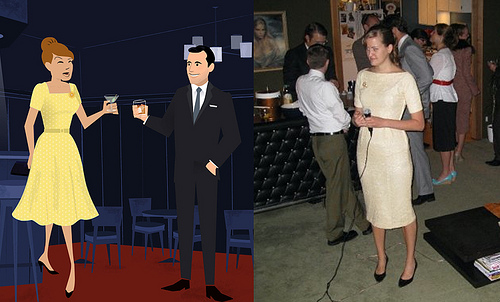
Mad Men vs me at a Mad Men party - courtesy of Laura Brunow on Flickr
It kind of started when digital planner and strategist Paul Isakson donned the guise of early 1960's adman Don Draper on Twitter in the summer of 2008, unbeknownst to Mad Men programme makers AMC. As of writing Don/Isakson now has 8,880 followers. All the other Mad Men characters are on Twitter too (my current fave is Roger Sterling). From what I know, they too are mostly unofficial.
Isakson came clean as to his ownership of the @don_draper account in November and to their credit it seems AMC didn’t demand that Isakson hand it over. Now the chance to be Don (or at least that particular Don, for there are now multiple Dons on Twitter) is up for grabs - and the deadline is today.
Whoever is picked – by a combination of a forthcoming audience vote on the finalists, laced with Paul Isakson’s editorial judgement - will be Don Draper on Twitter for the remainder of Season 3 which began transmitting 16th August in the US. What's more, if folks don't rate the new Don's performance, he can be fired and replaced by the runner-up at any point during the season.
I'm not even going to go into the aptness of all this given Don's very particular backstory, because if you haven't yet followed Mad Men that would be a heinous spoiler.
Looking at his blog post today, I'm not sure Isakson got enough entries (I'm guessing some went via the back door of email and the side entrance of tweetbacks). But as an exercise in crowdsourcing an audition, and expanding the kudos Mad Men accrues by layering multiple, more permeable Dons around actor John Hamm's TV incarnation, it’s a Stars In Their Eyes/X Factor mashup for the transmedia generation.
Of course it's all somewhat jarring for Mad Men fans not in the USA, but y'all know these transmission lags are a major reason why TV torrents are hugely popular in the UK and why the old school TV distribution model is declining.
Concerns of brandjacking and Twitter-squatting aside - and increasingly these concepts seem hugely over-simplified if not redundant – unofficial is often good if not better. Characters are being liberated, authorship is be re-shaped and unforeseen talents are taking the reins. Simples
In fact the Twittersphere is now awash with fictional personae. I’ve already been following “Gene Hunt” from the BBC's Ashes To Ashes for a few months. Daft but bolly good value.
Peep Show is going down the same road, with Mark getting the most interest. All of which feels oddly natural given that a year ago it would have been freakish; and a choice counterpoint to the dreaded real-world insistence that we must “be who we say we are online”, an exhortation that incites me to commit unspeakable acts.
In short, it's exciting territory and ripe for more quality excursions. To take a very random and subjective sample of arresting characters, imagine if you could have been, or be able to converse with:
John Rebus in Ian Rankin's Inspector Rebus novels
Teddy Hoffman or Richard Cross from Murder One
Renton, Begbie or Spud or from Trainspotting - chapters of which were first published in the groundbreaking Edinburgh-headquartered Rebel Inc magazine.
Henry (“helicopters!”), Karen (“Henrrrry!”), or Tommy (“guns”) from Goodfellas
Pembleton or Munch from Homicide: Life On The Street
Bridget Gregory in The Last Seduction
Caleb Temple in American Gothic
Patrick Bateman in American Psycho
(Rita Hayworth as) Gilda in Gilda
Nick Carraway or Jordan Baker in The Great Gatsby.
All so moreish…
Elsewhere this month author Philippa Gregory (working with digital agency Blonde) created a Twitter feed for the main character Elizabeth Woodville in her latest novel The White Queen - all the better, you see, to reinterpret the story through a series of tweets in the week prior to the book's publication.
For one week only? Hmm, not a lot of time to become really hooked or intrigued you'd think. But no, with very little fanfare she garnered 700+ followers, and the feedback in @ messages was equally potent from numerous viewpoints: the author herself, marketer and publisher intelligence gathering, online PR of course, and practitioners of transmedia generally.
After the first week of this project, we were able to read the tweets in more traditional narrative order on this Flash site. Analysed per-tweet, the quality is variable but from a birds-eye view the concept's overall execution is quite beguiling.
A central challenge for The White Queen project lay in matching the quality of the source material, and in the transition of perspective and literary skill from print page to ambient digital flow. A big ask, but sometimes (if not this time) the Twitter offshoot is even better than the original fabrication.
In that vein (to lower the tone for a minute and head over to present-day adland), while I don’t set much store by comparison websites, I've lately followed CompareTheMeerkat. As always with creative marketing, the risk is that we're merely delighted, and this doesn't translate to sales. But that's nothing new, and as part the perennial tug of love between advertising, marketing and branding, largely immaterial to this discussion. What's compelling is the character and @Alexsandr_orlov is a highly diverting creation.
This particular clutch of character extensions are also textbook transmedia shortcuts. Is it just me, or do you ever get tired just thinking about all those Facebook pages connected to the YouTube channel connected to the SEO strategy connected to the website connected to the email sign-up form connected to the mobile campaign, etc, etc, ad infinitum..? All these rinky dink agencies trying oh-so relentlessly to herd our weary eyeballs round some archetypal loop of media integration. Like it was all orchestrated for some slick presentation designed to wow lazy executives at whatever new media conference, ugh.
Oh no, wait, what we should *really* be doing is aggregating them all in FriendFeed or one of its ilk for a full-fat, 360, planned to the nth degree social media experience. Oh, Facebook just bought Friendfeed, umm, well then just wait for 12-18 months, add semantic web – and bada bing! What, the semantic web thingy will take at least 5 more years you say? No, just stop it. It really doesn’t work like that.
Instead, how about we park the whole 360 shizzle, look at the shortcuts that are working some magic and think about the implications? Being @Don_Draper and its Kaufmanesque cohorts are entry points to the future of storytelling. If fictional prototypes like these are the prelude to a new era of character development and narrative interplay, I can’t wait to see what unfolds over the next decade.

 Round up of my Chinwag events [ 09-May-09 10:27pm ]
Sheesh, is it really six months since I left Chinwag? Crazy times. Half of my hybrid role there (the other being planning, wireframing and launching/editing the new website) involved hatching ideas for and bringing to life their wish for an events programme…

What shall we call it, Sam mused, when I joined in October 2006. I processed this while getting other stuff done. A few hours later I blurted out “It’s a bit cheeky, but how about Chinwag Live?”. So, he asked with his customary chortle, what’s it all about then D? “Casting light on trends in the digital media and marketing industry” I reasoned, deadpan. Actually, it was Sam who insisted we add the words “and marketing“.

Me introducing Chinwag Live: Media Widgetised - part of Widget Week 2007
So I got onto it. Oh yeah, and the marketing and the PR and the whole social media fandango. Bloggishness? Obligatory. Old skool press release? Easy. Facebook Goup? In an instant. Upcoming? Check. Oh, now we need a Facebook Page too huh? Sorted. Flickr photos of every event? At once. Multiple Twitter accounts? We have the technology. Endless networking across the digital fleshpots of London (and Texas)? But of course…

All the good people at Chinwag Live: Media Widgetised 16th May 2007
It would all be nothing of course without the thousands of incredible people who were there over the 24+ events… Whatever happens with the recession and the government’s Digital Britain initiative, I know that the UK is a very special place for digital debate and enterprise…

Chinwag Big Summer 07 sponsored by Channel4, Adobe, Neutralize, Agency.com and The Big Chill
Here’s a run-down of the Chinwag Live events that resulted during my tenure, plus the offshoots: Chinwag Clinic; Widget Week 2007; and not forgetting Big Summer ’07 – officially the biggest ever party for digital practitioners in the UK with some 2,000 folk attending.

Chinwag's Big Summer party 5th July 2007 dancefloor moves to The Big Chill's DJs
MY CHINWAG EVENTS CALENDAR:
Chinwag Live: Wobble 2.0 – 6th Feb 2007
Chinwag Live: Mobile Metamorphosis – 26th Feb 2007
Chinwag Live: PPC Earthquake – 27th Mar 2007
Chinwag Live: PR Unspun – 24th Apr 2007
Chinwag Live: PPC Earthquake @ Internet World – 2nd May 2007
Chinwag Live: Media Widgetised – 16th May 2007
Widget Week 2007 - 14th-22nd May 2007
(in collaboration with Mobile Monday & NMK)
Chinwag Live: Dark Side Of Social Media – 19th Jun 2007
Big Summer ’07 – 5th Jul 2007
(a superhuman team effort!)
Chinwag Live: Web TV Takeover – 18th Sep 2007
Chinwag Live: Media Widgetised @ Ad Tech London – 27th Sep 2007
Chinwag Live: Xmas Futures, Crystal Balls? – 5th Dec 2007
Chinwag Live: Skills Emergency – 29th Jan 2008
Chinwag Live: Measuring Social Media – 18th Feb 2008
Chinwag Live: Tomorrow’s Ad Formats – 18th Mar 2008
Chinwag Live: User Centered Advertising (with Manchester Digital) – 15th Apr 2008
Chinwag Live: Real World Usability – 22 Apr 2008
Chinwag Live: Measuring Social Media @ Internet World – 30th Apr 2008
Chinwag Live: Micro Media Maze – 20th May 2008
Chinwag Live: Search vs Recommendation – 2nd Sep 2008
(in co-ordination with Elizabeth Varley)
Chinwag Live: Micro Media Maze @ Ad Tech London – 24th Sep 2008
Chinwag Clinic: Search Marketing Surgery – 30th Sep 2008
(in co-ordination with Elizabeth Varley)
[Testimonials For Search Marketing Surgery]
Chinwag Live: Search and LBS – 7th October 2008
(in co-ordination with Elizabeth Varley)
Chinwag Live: Social Media ROI @ Ecommerce Expo – 28th Oct 2008
(in co-ordination with Julia Eilon)
Chinwag Live: MoSo Rising – 11th Nov 2008
(in co-ordination with Julia Eilon)
Chinwag Live: Xmas Futures, Crystal Balls? – 2nd Dec 2008
(in c0-ordination with Julia Eilon)
That is all.
Want more? Are you for real? Okeydoke, here’s a round-up of My NMK Events.

 Some hero magic on Ada Lovelace Day [ 24-Mar-09 9:14pm ]
It’s all about the “now” and the “next” in media and technology; but in the headlong, often mind-numbing rush for mindshare, followers, whuffie or whatever is this week’s shiny nu nu thing, what has gone before is equally important.
That’s why, to mark Ada Lovelace Day I wanted to write about someone who inspired and mentored me directly.
I’d already edited a web site for the Edinburgh Festival and covered technology and multimedia culture for the likes of The Scotsman newspaper and .net magazine before I touched down in Londoninium in July 1998.
I was starting as Web Editor for the international website of Ernst & Young but – I was informed on Day One – there was a month of handover between me and the freelancer who’d previously been editing the site part-time.
On the morning the freelancer was due to come in my nerves were ratcheted up another notch from their already high levels. There was me *way* out of my comfort zone working in corporatesville when in walks this stunning woman: pixieish hair, jeans and a biker jacket. And when she removed said jacket, ooh, the tattoo on her arm was just gorgeous. She smiled and extended a hand: “Hey! I’m Lizzie”. And that was Liz Bailey. I’ll never forget it.
It was less of a handover, more of a crash course in ramping-up my html skills, and getting the ultimate outsiders insider’s guide to my employer, interspersed with some scrumptious Chinatown and Soho lunches and lots of hilarity. The full-spectrum introduction But more than that it was finding – in this most alien of environments – a kindred spirit, because Lizzie was my entry point into London’s embryonic web scene.
A freelancer who also wrote and did web editing, design and production for Wired UK, The Guardian, BBC Online, the FT, Demos, Wallpaper*, McKinsey, The Telegraph and more, Lizzie knew everyone who was doing anything interesting web-wise in London.
Missing my own familiarity with Scotland’s web scene, I was happy to take a cue from my new mentor. If it wasn’t for Lizzie, well I would’ve been fine, but she allowed me to bridge both worlds: the corporate but innovative focus of my everyday work, and the creativity, excitement and bone fide madness of the first dotcom boom.
I’d seen a black and white A4 newsletter once in Glasgow (when someone in London posted it to me) called New Media Age – it carried four pages of news on the nascent sector and no ads! But it was Lizzie who tipped me off re a packed mid-week party in Great Titchfield St dubbed ‘Boob Night’ where I met the editor of the then fully-fledged magazine, a young fella by the name of Mike Butcher who I managed to out-argue . He says he doesn’t remember it, but back then nights of mayhem where the champers flowed gratis were ten a penny for the current TechCrunchUK editor 
At Lizzie’s 30th Birthday party I also met Phil Gyford (then at BBC Online I think), and a guy she was working with on ‘New Media Creative’ magazine called Paul Murphy. Later she introduced me to hotshot new media reporter Polly Sprenger who was fresh over from Wired News in San Francisco (Mike Butcher once described Polly to me as “the Red Rum of technology reporters” after they worked together on the shortlived Industry Standard Europe magazine).
It reaffirmed I wasn’t just working in a “job”, for a “company”, but part of of something game-changing and amazing.
But this melange of web culture, innovation and merriment paled next to Lizzie’s own formidable focus and grit. A web grrrl to the core, Lizzie would magic up websites to die for whilst relentlessly promoting the causes of usability, innovation and the visibility of women in the web design and technology sector.
That movement for change – and celebration of talent – has latter day embodiments in UK-founded networks (some of which have gone global) like She Says, Girl Geek Dinners, Women In Mobile Data, and the briefly existent Digital Womens’ Club – all great initiatives I’ve actively supported.
Three years flew by, and when I was two jobs on from Ernst & Yong working as editor in chief of a VC-funded music website, the entire sector imploded. After a barren several months I decamped to the TV industry back in Belfast in 2002. But Lizzie hung in there. Multi-talented and entrepreneurial to a tee, she was surely the woman who knew most about new media in London. She was praxis.
And just when I came back to London in 2004, as the first timid signs of hope were visible in the sector (I’d been waiting, watching and biding my time you see), Lizzie switched careers and started studying to be a barrister.
Now she’s qualified and doing well, but her influence in web culture and technology still resonates for me. I’ve often been at conferences like SXSW Interactive, FOWA, Changing Media – and the NMK and Chinwag Live events I’ve organised myself – and thought “damn, Lizzie should be speaking at this!”. But looked at in a broader way, she has been…
I don’t know if I’d have dared come back to digital if I hadn’t known Lizzie. There were too many talented people flushed out of the sector back then. As it turns out while digital certainly has been affected by the current recession, compared to the rest of media – and jobs more generally – it’s still *relatively* resilient. In short, it’s nowhere near a dotcom bust Groundhog Day scenario.
Tons and tons of people inspire me of course, but in reality it’s hard to say what it all will mean and which parts will be valuable 10 years hence.
So raise a toast to the inaugural Ada Lovelace Day and sample some vintage Liz Bailey (NB. it’s an internet hazard that most of Lizzie’s work from then – like most of mine – has not been archived):
Boo gets booed – The Guardian 11th November 1999
Britgrrls No Bark and No Byte? – 1999, trAce
Demos publications by Liz Bailey
–
Who was Ada Lovelace?
Born on 10th December 1815, the only child of Lord Byron and his wife Annabella, Augusta Ada Byron (now known simply as Ada Lovelace) wrote the world's first computer programmes for the Analytical Engine, a general-purpose machine that Charles Babbage had invented »read more
Credits
Thanks to Suw Charman for co-ordinating Ada Lovelace Day on Tuesday 24th March 2009. The first of it’s kind, it’s “an international day of blogging to draw attention to women excelling in technology. Women's contributions often go unacknowledged, their innovations seldom mentioned, their faces rarely recognised. We want you to tell the world about these unsung heroines. Entrepreneurs, innovators, sysadmins, programmers, designers, games developers, hardware experts, tech journalists, tech consultants. The list of tech-related careers is endless.” »Ada Lovelace website
Join In!
You (male or female) can still register your pledge to write a blog post celebrating your technology heroine on this day – Tuesday 24th March – at the official »2009 PledgeBank page

 SXSW 08 core conversation: do you have to disappear completely to get things done? [ 16-Mar-09 10:16pm ]
While anxiety and frustration were visible on the faces of those gathered at this Core Conversation, it wasn’t due to the gruelling conference – or social – schedule (in-step with the syndrome under discussion, it's taken me just over a year to write up this final blog post from SXSW Interactive 2008).
And yours truly? By random chance I'd been scanning the room, looking for something else that I knew was on there, but stumbled upon this instead and was drawn to it in a heartbeat.
Weirdly my serendipitous discovery in meat space of a conversation I didn't intend to find, mirrored one of the key issues in the larger digital challenge it was grappling with: the overload tendancy that’s wedded to being “always on”. You’re only ever one link away from some interesting new fact or opinion.
In a wholesale Being John Malkovich moment, I'd gone through a port-hole and all the voices and daily dillemas in my head that worry about overload were embodied and talking to each other in front of me… Nurse, the screens!
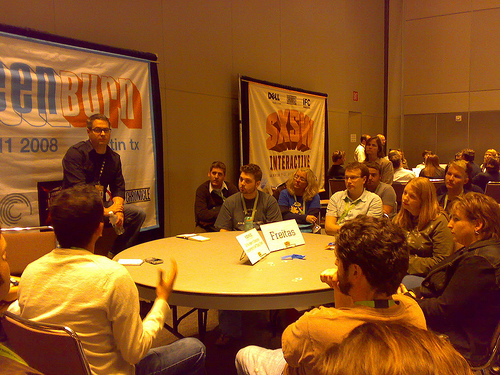
Ryan Frietas facilitating Do You Have to Disappear... at SXSW 2008
So yeah… it was 11th March 2008 at SXSW Interactive, and the facilitator was the one and only Ryan Frietas, then Director of Experience Design at Adaptive Path.
Do we know what we're doing?
Here's the backdrop: we're overwhelmed by information, drowning in email, weary with un-read feeds, tired of Twitter, assailed by mobile comms, productively challenged… and yet the nagging feeling that we're probably missing something very important is strong enough to trample all common sense, and our counter-productive habits surface given the slightest glimmer of opportunity.
Pleasingly, the first point Frietas made was the counter-argument: there's a generation being raised who are multimedia and multi-tasking all in parallel, and are socially different from us. Hurray for them I guess, but what about the rest of us, who didn't use a computer till we were 10 or maybe even 20 years old, and the internet even later? What solace can we take from the information overload?
Self-help required: employers and govt 4 steps behind (as usual)
The group - while commonly exhausted - had plenty of suggestions for coping-strategies. If you're a freelancer, consultant, or just the type who catches up on email and admin at odd hours due to parenting duties or whatever; don't give the impression that you're available and working there and then or the email stream will just increase. Write emails in draft in the evening and weekend if needs be; but send them in office hours.
If you check email, Twitter and RSS feeds first thing in the morning you'll have nothing done by 11am or midday, and that puts you on a psychological downer for the rest of the day. To compound matters, the rest of the day will be less productive than it would have been because of what you did (or rather didn't do) in the morning.
"Eat the frog" was one of Ryan's suggestions. Do the thing you really don't want to do as your first task: a small accomplishment that gives you an immediate sense of achievement and helps you face the rest of the day.
We then paused to talk to the person next to us, and I found myself listening to the woes of a web project manger working at the Austin branch of a large US advertising agency, but she could have been from anywhere. She described an incredibly busy agency scenario, with everyone working lots of unpaid overtime; calls and emails from her boss at the weekend; general over-work and insufficient numbers of skilled staff that sounded identical to many digital shops globally. She loved her job but was unhappy. There was never enough time and the torrent of email was endless.
Firehose slapdown…?
On the positive side, it's an ecosystem of information that we're all contributing to with blogs, wikis, social networks, microblogging, etc, noted Ryan. This is true, but how much of what we’re actually sharing is valuable, discoverable, and to whom?
One woman told of how she goes on regular media diets. This reminded me a lot of some ideas floated at the Digital Health Clinic run by Gavin O'Carroll which I attended in London late in 2007. I've tried out a diet myself, and it worked a tonic.
In fact the DHS clinic spurred me to check-out of Facebook completely for a few weeks at the end of December 2007. My usage of it has been sparse ever since, but for me Twitter is still a toxic siren. Tweetdeck (which I’ve tried) and the like promise to detoxify the stream, with the ability to sort and stratify the importance of our relationships and incoming data-stream on Twitter. While that's progress to be welcomed, it's still a mechanistic approach to filtering and managing highly-nuanced communication.
Widgets and tactics help, but it's complicated…
Talking of which, some other tools mentioned were the dashboard widget that monitors what apps you are on and when you switch between them. The much-feted Feltron was also cited - it tracks what you do on your computer and builds up an annual report.
Part of the challenge derives from the weak divide between work and social / fun stuff, Ryan commented. There's an element of truth here - for some - but it makes me wonder, how did I not feel this pressure when I was editing a music website back in dotcom boom 1.0? I was obsessed by the subject matter, and 2-3 nights a week I went out to gigs or clubs in connection with my role. And was I poorer, stupider, less happy or as shattered then? No on all counts I'm afraid. The salience of Ryan's point is more general, as the context and nature of work and the concomitant technology has evolved.
The concept of “friendless zero” got the first real laughs of the session. Analogous to the Inbox Zero movement (which gets your inbox down to the magic digit), Ryan admitted he'd gone in that direction lately, keeping his Twitter follows down to a tiny number of close friends and colleagues. Still, I've heard countless stories of how people brutally cut back their RSS feeds to the bare essentials only to find a few months alter they've crept back up again. I abandoned Bloglines two years ago myself for the same reason; and I haven't replaced it with another reader. Nothing bad has happened because of this
If engineers fall short, what else is there?
The question was asked: can we automate relevance of information and people? That's an engineer’s approach to human interaction, observed Ryan. My friend is a 5, my mother is a 3, etc… it simply doesn't make sense of or cater for the complexity of our relationships.
Another suggestion from the group was only have one device out at a time [great, but are you going to ignore your mobile ringing or beeping just because you're working on your laptop?]. Someone else suggested the classic panacea of having a hobby that takes you out of yourself.
Much of it comes down to time-management and managing expectations, someone said. That may be true, but these are delicate skills to master and practice, and who in the social media ferment is evangelising them? Discounting Tim Ferris of course, who has actually elevated it to the realms of a modern-day religion (and religion is in the province of the supernatural); oh yeah, and sad-sacks for whom GTD becomes the only topic of conversation.
Central exhaustion system
One reason that it's so important for us to check our various feeds [and devices sir ], Ryan argued, is that we're also interacting with another layer of information and media that is apart from our direct experience and what we're doing. This works for me. It's the invisible skin of data and interaction layering over our immediate and physical lives. But isn't that what old skool social connections - aka the ideas and experiences we hold in common with other people - have always done? And wasn't the point of the session to explore how we maintain productivity, creativity and being “in the zone” in the face of endless sources to discover and distractions?
Maybe it's just me, but the flow isn't all that (yet); or at least, it's over-rated. Un-critical social media mavens love to sanctify it, but many information workers are paying the price for the level of dysfunction it produces in its current embryonic state. It's plumping-up already maxed-out email and task agendas.
While a perfect infomediary grid beckons – the venerated digital nervous system predicted of yore – we’re left to deal with our real, complicated and imperfect experiences. Naturally the recession / depression / correction - or what you will - isn't helping. We're all working that little bit harder (than last year). We're all that little bit more insecure, and we're that little bit more atomised too.
The spread of Being John Malkovich Syndrome (#bjms) is merely the solace we can take from each other here and now. It holds the seeds of promise, but it's not yet fit for purpose. Sifting meaning and / or value from the voices, chatter and keywords we skim through is an arduous, often wasteful and frequently un-manageable task.
Twitteresque – digital stylistics or path to a higher being?
Speaking of Twitter, just today Nic Brisbourne summed-up part of the signal-to-noise filtering challenge:
"I'm not sure that tools are the only answer though… I recently read Lessig's Code2.0, a book in which he talks at length about how communities are governed and regulated. He persuasively argues that for there are four modes of regulation – architecture/code, law, norms and the market (more details here) – Tweetdeck et al are code based solutions to the problem of too much traffic on Twitter, but the other modalities or regulation (as Lessig would describe them) are also important.
"It is pretty clear to me that as the community grows something is going to have to change – and as I have written before it is instructive to think of the Twitter community as an emergent system with rules that need to evolve to ensure that the signal to noise ratio is maintained at a sensible level whilst keeping the service growing… The health of the Twitter community (as with all communities online and offline) is 100% dependent on the rules"
So given the openness of Twitter, the emergent norms are either (1) anyone's guess , or (2) the same norms we see operating in other civilised (or - slight difference here - "consensual") communities. Place your bets.
Broadsight's Alan Patrick keeps saying he hears less noise on Twitter and more signal. I've not seen evidence yet, although most of the folk I follow are reasonably well-behaved. To those I've un-followed, it's not because I doubt your genius But whatever Alan is on, I want some…
Digital Health drop-in surgery 19th March
In the meantime if you're feeling the overload burn, Gavin O'Carroll is running a Digital Health Service drop-in surgery this Thursday 19th March 2009 at the RSA
http://digitalhealthservice.pbwiki.com/
—
FURTHER READING ON INFORMATION OVERLOAD:
Going Without Comms To get a better Connection – Broadstuff 16 April 2009
Digital Overload is Frying Our Brains - Wired 6th February 2009
Distraction: Being Human In The Digital Age by Mark Curtis (Futuretext, 2005)
Overload! By Columbia Journalism Review - 19th November 2008
Dumb, Dumber and Google: Alan Patrick, Broadsight - 9th June 2008
10 Things I Learned from Mental Detox Week: Ian Tait, Poke London - 30th April 2008
Information overload in the web era: Nic Brisbourne, The Equity Kicker - 22nd April 2008
The strain of digital sweatshops: PDA Blog, Media Guardian - 14th April 2008
In Web World of 24/7 Stress, Writers Blog Till They Drop – NYT 6th April 2008
Does work/life balance exist?: Danah Boyd, Apophenia - 6th April 2008
Computer addiction as survival for the ego - 10th December 2007
My other SXSW 2008 panel reports:
http://innovationeye.wordpress.com/category/sxsw-interactive-2008/


