

What would be worse than a Republican US government that doesn't believe in climate change? Perhaps, a Republican US government that does believe in climate change.
Try a thought experiment. Assume Republicans fully accept human activity, in particular burning fossil fuel, causes global warming. Now, I'm not a political scientist, but it seems to me that a major plank of US right wing philosophy is "preserve the American way of life", and that their foreign policy gives primacy to US interests. (Of course many other countries have a similar philosophy, but don't have the firepower to back it up.)
Now, continue the thought experiment: How can these Republican Climate Hawks square the circle of reducing the impact of global warming on the US, while preserving the American Way of Life?
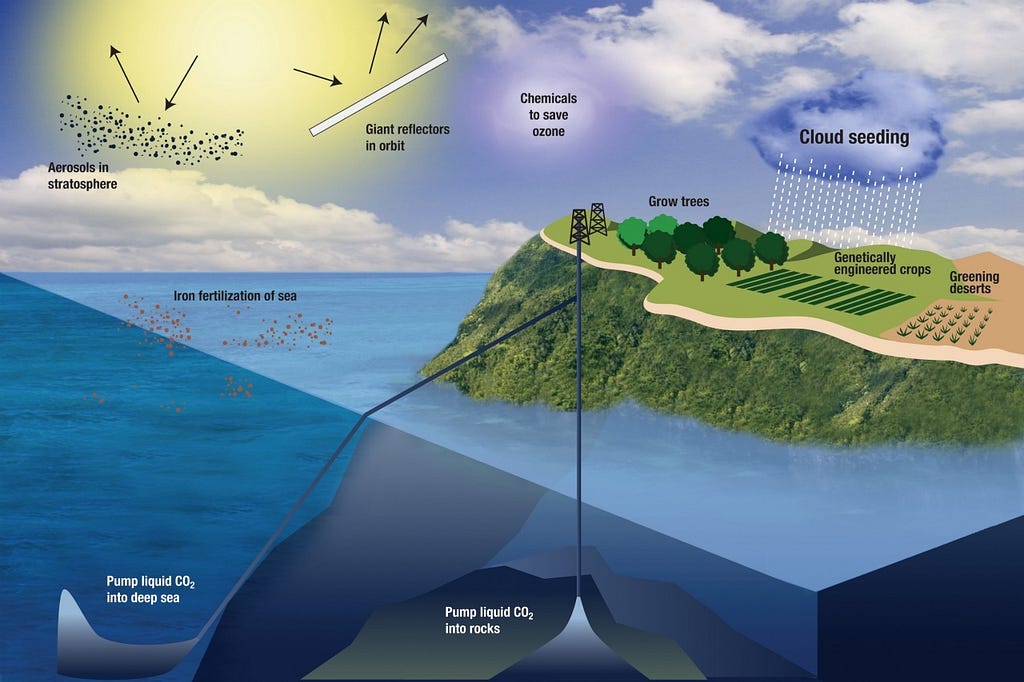
Geo-engineering looks like a really attractive option. Not only does it — in theory — avoid the need to reduce fossil fuel consumption, but it also creates huge opportunities for space technology, defence contractors etc. And if the rest of the world doesn't agree? The US will have to save the rest of the world for their own good.
The chances of success of geo-engineering, and the possible side effects, are impossible to know. But that argument hasn't held back the war on drugs or the war on terror. Of course, if we changed track with those policies, we could try new ones.
An interview with Naomi Klein in Earth Island Journal this week confirmed what I've been thinking for some time: The Big Green Groups in the environmental movement are almost as problematic as climate deniers. As Klein puts it:
I think there is a very a deep denialism in the environmental movement among the Big Green groups. And to be very honest with you, I think it's been more damaging than the right-wing denialism in terms of how much ground we've lost. Because it has steered us in directions that have yielded very poor results.
Maybe it's because I spent about four years dueling with stupid in North Idaho, but I have to admit some amusement with the recent what-went-wrong analysis of the climate battles in Obama's first term. A recent study (140-page pdf) by a Harvard researcher puts a lot of the blame on the Big Green groups based in Washington, DC and their blindness to the swift radicalization of the Republican Party and their inability to counter it. Indeed, the concentration of policy wonk generals calling the shots in DC without sufficient resources being put into the necessary grassroots army across the country was a fatal flaw that was glaringly obvious from Coeur d'Alene.
It probably shouldn't have required a Harvard political scientist to do so, but researcher Theda Skocpol provides a clear-eyed explanation of how things went wrong, culminating with the Tea Party summer of 2009. It was entirely too easy for Big Greens to dismiss the rantings of right-wingers in flyover states — what with all their misspelled signs and all the Jon Stewart ridicule — but the truism that all politics is local was lost on Big Greens whose strategy was based on coalitions with (selective) Big Businesses far from that summer's town hall shouting matches.
As Skocpol is quoted in a brief Washington Post interview:
Theda Skocpol: Climate-change denial had been an elite industry for a long time, but it finally penetrated down to conservative Republican identified voters around this time. That created new pressures on Republican officeholders and candidates. And I don't think most people noticed that at the time. …
… I think a lot of environmental groups were under the impression that the Republican Party is a creature of business, and that if you can make business allies, you can get Republicans to do something. But I don't think the Republican Party right now is mainly influenced by business. In the House in particular, ideological groups and grassroots pressure are much more influential. And in the research we've done, the two big issues that really revved up primary voters were immigration and the EPA.
The fact that much of the white-hot rhetoric was directed at health care reform served only to mask the equally hot anger at legendary evils of EPA overreach. Indeed, the terms "cap and trade" and "scientific consensus" were no less threatening than Obama's death panels. The DC leadership of the Big Green groups should maybe have gone to an Idaho town meeting or two rather than climate conferences in Copenhagen.
The folks at Grist have provided some superb analysis of the analysis, but I'm hoping that the lessons aren't lost. For one thing, foundation funders and big enviro thinkers could start re-emphasizing grassroots capacity in locations other than big blue cities where the Big Green groups are headquartered.
Furthermore, enviros can't be missing in action on important issues related to climate. This exchange closes out the interview and, with a week or two into my new role with a new group, it doesn't bode well.
Washington Post: The Sandy relief bill is going through the House [on Tuesday], and almost no environmental groups weighed in on that. That's shocking to me. Here we are, a large group of people in New York and New Jersey that environmentalists want to connect to climate change, and the groups aren't there. Why not?
Theda Skocpol: So you do have to build broader coalitions. That was one of the things that health reformers did this time around. They buried hatchets and forged ties with groups they needed to, like medical providers, and reached out to small businesses. Health care reformers spent years talking about what went wrong, what they could do differently. But that also took 15 years, from 1994 to when health care finally made it over the top. I'm not sure climate can wait 15 years.
All I know is if another opportunity comes along to get legislation through Congress, those that are prepared are going to be the ones that will be take advantage. And that's what I don't see yet. I haven't been impressed by the inside-the-movement post mortems I've read. I don't see any thought that there will have to be a lot of rethinking for that to happen.
Indeed, as the House of Representatives was voting on amendments to the delayed Sandy relief legislation, the sacrificial cuts — given up at the altar of the Tea Party gods of debt ceilings, deficit reductions, fiscal cliffs, and deadbeat deadlines — came from $150 million in oceans and coastal programs, and a particularly unlucky wildlife refuge in Connecticut.
Yeah. Like we're ready to fight any climate battles any time soon.
 What on earth is an RCP? [ 30-Jan-15 11:35pm ]
If you're reading beyond the headlines about the recent climate change report, you'll quickly hit lots of references to emissions scenarios called Representative Concentration Pathways (RCPs). I'd heard of these, but they were different from the scenarios used in the previous reports by the IPCC in 2001 and 2007. Here's my summary of these scenarios based on an excellent guide by Graham Wayne at skepticalscience.com
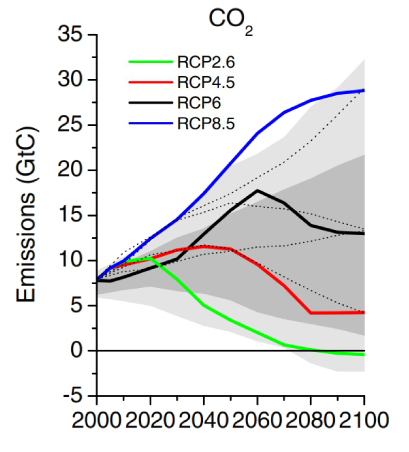 Figure 1. Global carbon dioxide emissions (gigatonnes of carbon per year) under 4 scenarios with different population and economic growth and climate policies (van Vuuren etal, 2011)
RCPs are scenarios that describe alternative trajectories for carbon dioxide emissions and the resulting atmospheric concentration from 2000 to 2100. They encompass the range of possible climate policy outcomes for the 21st century. By agreeing on a limited set of scenarios, researchers (especially climate modelers) can be more sure they are comparing apples with apples when conducting their research and communicating their results.
The RCPs describe 4 different scenarios based on different assumptions about population, economic growth, energy consumption and sources and land use over this century. Details can be found at skepticalscience.com or the source for much of Wayne's document ie van Vuuren etal (2011).
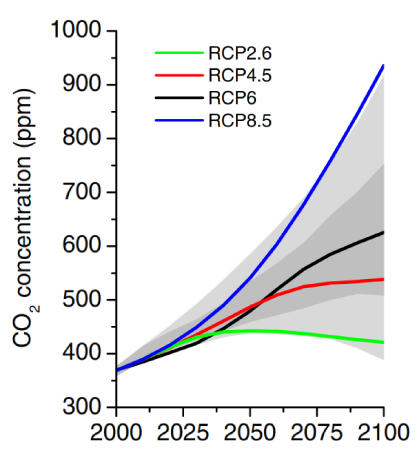 Figure 2. Atmospheric concentration of carbon dioxide (parts per million) under 4 scenarios
The scenarios are named after the level of "radiative forcing" that each scenario produces (measured in watts per square metre). While crucial to describing the mechanics of climate change, I've found that an understanding this term is not needed to comprehend the problem of climate change, its scale and its implications.
Notice how concentration continues to increase even after emissions slow and then drop. Carbon dioxide accumulates in the atmosphere and stays there for decades. Even if emissions start reducing in 2020, the concentration continues increasing and starts falling very slowly only after 2050. Understanding this relationship between our emissions today and the CO2 concentration experienced by our grandchildren is key to grokking the problem of climate change.
So now a brief look at each of the scenarios.
RCP 2.6This scenario might be described as the best case for limiting anthropogenic climate change. It requires a major turnaround in climate policies and a start to concerted action in the next few years in all countries, both developing and developed.
Global CO2 emissions peak by 2020 and decline to around zero by 2080. Concentrations in the atmosphere peak at around 440 ppm in mid century and then start slowly declining.
Global population peaks mid century at just over 9 billion and global economic growth is high. Oil use declines but use of other fossil fuel increases and is offset by capture and storage of carbon dioxide. Biofuel use is high. Renewable energy (eg solar & wind) increases but remains low.
Cropping area increases faster than current trends, while grassland area remain constant. Animal husbandry becomes more intensive. Forest vegetation continues to decline at current trends.
RCP 4.5Emissions peak around mid century at around 50% higher than 2000 levels and then decline rapidly over 30 years and then stabilise at half of 2000 levels. CO2 concentration continues on trend to about 520 ppm in 2070 and continues to increase but more slowly.
Population and economic growth are moderate but slightly lower than under scenario RCP 2.6
Total energy consumption is slightly higher than RCP 2.6 while oil consumption is fairly constant through to 2100. Nuclear power and renewables play a greater role.
Significantly, cropping and grassland area declines while reforestation increases the area of natural vegetation.
RCP 6In this scenario, emissions double by 2060 and then dramatically fall but remain well above current levels. CO2 concentration continues increasing, though at a slower rate in the latter parts of the century, reaching 620 ppm by 2100.
Population growth is slightly higher peaking at around 10 billion. This scenario assumes the lowest GDP growth of the four.
Energy consumption increases to a peak in 2060 then declines and levels out to finish the century at levels similar to RCP2.6. Oil consumption remains high while biofuel and nuclear play a smaller role than in the other 3 scenarios.
Cropping area continues on current trend, while grassland area is rapidly reduced. Natural vegetation is similar to RPC4.5
RCP 8.5This is the nightmare scenario in which emissions continue to increase rapidly through the early and mid parts of the century. By 2100 annual emissions have stabilised at just under 30 gigatonnes of carbon compared to around 8 gigatonnes in 2000.
Concentrations of CO2 in the atmosphere accelerate and reach 950 ppm by 2100 and continue increasing for another 100 years.
Population growth is high, reaching 12 billion by centuries end. This is at the high end of the UN projections. Economic growth is similar to RCP6 but assumes much lower incomes and per capita growth in developing countries.
This scenario is highly energy intensive with total consumption continuing to grow throughout the century reaching well over 3 times current levels. Oil use grows rapidly until 2070 after which it drops even more quickly. Coal provides the bulk of the large increase in energy consumption
Land use continues current trends with crop and grass areas increasing and forest area decreasing.
Climate forecastsWith this information on board I can try to make at least some sense of the forecasts included in the IPCC's latest report. Figure 3 below is a chart showing forecast temperature change under the best (RCP2.6) and worst (RCP8.5) scenario.
 Figure 3. Projected global surface temperature change under different emissions scenarios. Zero is set at the average of 1986-2005 levels (Figure SPM.7(a). IPCC Working Group I Assessment Report, Summary for Policy Makers, 2013)
If we get it together and emissions peak by 2020 and reduce to zero this century (ie RCP2.6), global temperature could be stabilised at around 1°C above levels in the late 1900's. The IPCC say it is unlikely (<33% probability) that the rise will exceed 2°C.
On the other, hand if we carry on as if there is no problem without even a slow down in emissions growth until late in the 21st century (ie RPC8.5) , the forecast outcome is not pretty. Temperatures are forecast to continue increasing and by 2100 and reach around 4°C higher than late 20th century levels. The likely range of outcomes for 2100 is approximately 3°C to 5.5°C higher.
While these projections are similar to those produced by the IPCC in 2007, the prospect of a +4° or higher world seems more possible or even probable now 5 years later. The colossal impacts and implications of a +4° or +6° world are better understood now than in 2007. The IPCC's Working Group II will release their report on impacts, adaptations and vulnerability in March 2014. I don't expect it to be fun reading.
ReferencesWorking Group I Contribution to the IPCC Fifth Assessment Report. Climate Change 2013: The Physical Science Basis. Summary for Policymakers (draft 27 September 2013) (pdf)
Wayne, G.P. (2013) The Beginner's Guide to Representative Concentration Pathways, Version 1.0 August 3013 www.skepticalscience.com
van Vuuren, D.P. et al (2011), The representative concentration pathways: an overview. Climatic Change, Vol 109, Issue 1-2, pp 5-31 Springerlink Open Access
why I care so damn much about climate change [ 19-Feb-14 7:15pm ]jdeboi.com & goCaptainPlanet.com
1. Katrina
Katrina hit when I was a junior in high school, flooding my home, my school, my city— rendering my family, like thousands of other families, homeless 21st century climate refugees. My hurricane experience was unequivocally the most emotionally traumatic, significant, and life-defining experience of my life to date. And the mental scars associated with watching my home and its citizens get swallowed alive by one of the most destructive natural disasters in American history is the reason I decided to study climate change and is the number one reason why I am so passionate about combating the climate crisis.
I could spend hours talking about this subject, but for the sake of holding your attention, I'm going to share just a few particularly vivid memories.
The first is about my father. As the Medical Director of the Intensive Care Unit at Charity Hospital, a public hospital and a long-time sanctuary for less fortunate New Orleanians, he had to remain in the city to keep the hospital running during the storm.
There were 11 patients in the Medical ICU at the time, 9 of whom were on breathing machines- all of them very, very sick. When the levees broke on Tuesday, the day after the eye of the storm passed, water rushed into the city, flooding the hospital and destroying the backup up generators. All of the infusion pumps, defibrillators, monitors, and batteries started to fail.
For four days, they were forgotten; they were left without food, without water, without electricity, air-conditioning,flushing toilets, or any way to communicate with the outside world. At one point my father had to perform surgery on a young man in the back up a pickup truck— without anesthesia— using a flashlight and a scalpel. And while they were struggling to keep their patients alive with limited resources, refugees from the city were coming to the hospital for a safe haven.
Here's a pic of my dad in a Black Hawk with a patient when FEMA finally showed up:
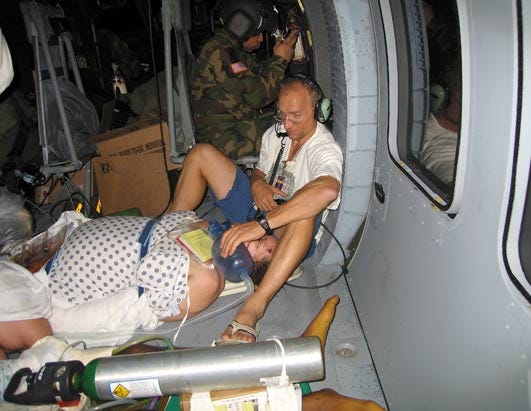
In the interest of time, I'll leave you with a link to the ABC story written about his experience.
Needless to say, I didn't hear from my father for over a week, a horrendously agonizing experience, especially when every news outlet was reporting rampant looting, and chaos, and fire, and deluge. I'll share a few more — I came back to New Orleans for the first time in November (the storm was in August). At the time, the national guard was only allowing first responder type personnel into the city, so my best friend and I had to hide under blankets in the back of her minivan while my father drove through the security checkpoint. We left really early to make sure we could get into the city. It was probably about 4:30 in the morning when we rolled into the CBD, and I pulled my head out from under the blanket for the first time. Here are some imagery bullet points:
- completely unlit skyscrapers; an early morning sky pocked with stars
- thick brown sludge coated every car, plant, surface.
- a desolate, sepia post-apocalyptic war zone; the only sign of life— National Guard trucks
- brown water marks circling every home like the rings of Saturn
- spray-painted neon Xs, a sign the National Guard had searched for bodies
- interiors: mold-infested, black oozy, smelly alien planets
There's one thing that no New Orleanian who returned after the storm will ever forget: the smell. I don't know how to do it justice. It's reminiscent of mildew or some other type of mold, but it had a faintly sweet scent- almost like pine sap. Or spoiled eel sauce- sweet and noxious at the same time. I'll stop there and finish with a conclusion:
Katrina gave me a truly visceral understanding of the destructive capacity of nature as well as the fragility of modern society.
And so senior year of high school when I learned that climate change had the potential to create more frequent and more powerful storms- storms like Katrina- I knew that combatting climate change was my calling.
2. Sandy
After graduating from college, I moved to New York City and started working for a software company. I had been there for about a year when Hurricane Sandy, the second costliest hurricane in US history, hit the East Coast.
If Katrina was my wakeup call, Sandy was the fire the under my ass. This "superstorm" marks my transition from environmentalist to activist.
I'll share a few Sandy stories that really hit home. I lived in Brooklyn, but I evacuated to my office building in SoHo- a trick I learned in New Orleans to prevent cabin fever (which was critical in New York since I lived in a tiny studio). When the lights went out Monday afternoon, I was afraid to be in the building by myself (and technically, I wasn't supposed to be there at all), so I decided to go across the street and stay with a coworker at his uncle's SoHo apartment. As a seasoned hurricane pro, I itched to experience the storm on the ground, and so at 10pm that night, as the storm made landfall on the coast of New Jersey, with sturdy boots and thick parkas my coworker and I ventured out into the city.
Exploring the southern tip of Manhattan as the rain and the wind whipped through man made glassy steel canyons, was oddly reminiscent of my experience entering New Orleans for the first time after Katrina. The streets of Manhattan- streets that never sleep, streets continuously packed with busy bodies, luminous advertisements, pungent smells and sounds— a deluge of stimuli— these streets were desolate; the starry steel skyline— completely black. Eerie to the core.
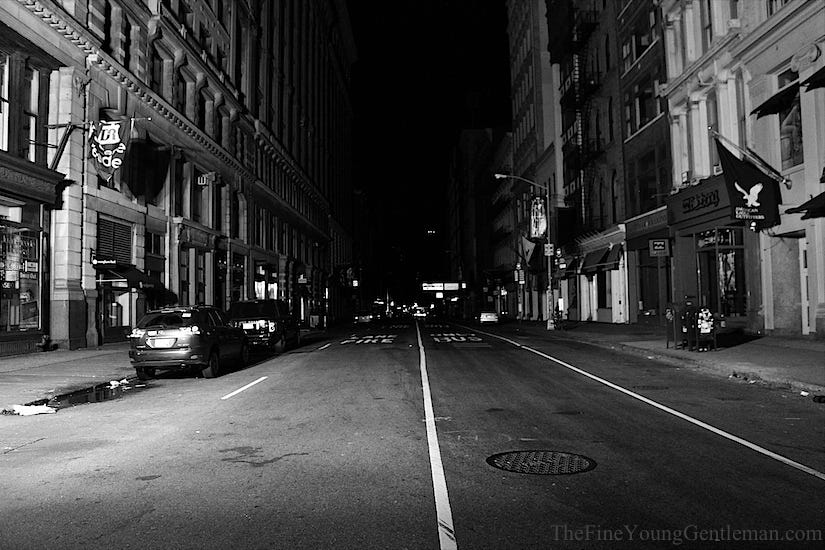
At that moment I realized a natural disaster had the power to render the world's most vibrant metropolis completely silent, empty, and lifeless.
But even more profound was the following morning's revelation. When we woke up on Tuesday there was no power, no internet, no cellphones, no way to communicate with the outside world whatsoever. We had no idea when the power was going to come back on. And we quickly realized that we had enough food to comfortably feed the group for one or two days, which was especially frightening considering the fact that most of the grocery stores were already empty. There was no leaving the city. The subways weren't running, and very few New Yorkers have cars. Even if we did have a car, it probably would have been easier to walk out of the city given the traffic insanity that would undoubtedly ensue.
And that's when it hit me: 9 million people trapped on a tiny rock without food, running water, electricity, or communication with the outside world. And I experienced, for the second time, the fragility of modern society; self-subsistence is a thing of the past. I felt certain that if all of New York City- not just the southern tip of Manhattan- had lost power for multiple days, the situation could have easily devolved into mass chaos.
Last story. While New York was in a limbo state (no subways or electricity or work), I decided to do some exploring. I walked around the tip of the island and up the west side along the Hudson River. When it was time to head back, I had to cross Lincoln Highway. Cars were barreling down the West Side at 40 mph, blazing through intersections DESPITE THE LACK OF TRAFFIC LIGHTS (which were completely defunct without electricity). The cars were traveling fast enough and the traffic was thick enough that one driver's decision to tread cautiously and politely through an intersection might actually lead to a massive pile up. So who's to blame?
So there I was, playing a very difficult level of human Frogger with no brake [pun intended] in sight. Several minutes later a pool of pedestrians had formed around me- all of us wondering how we might make it across the road to tell the tale. After five minutes, I was fed up (perhaps not realizing that East Coasters weren't accustomed to post-hurricane driving etiquette). I took a bold step into the highway, jabbed the palm of my hand at the windshield of an oncoming car, and stared the driver in the eyes. I felt like Moses parting the waters, and I got my people across. Why did I choose to tell this story?
For a second time I recognized that modern society's resiliency is diminishing while nature's propensity for destruction burgeons.
I was very upset after Sandy (and a little insane in the membrane), and to get some of these intense emotions off my chest, I wrote a letter to the American people:
3. New Orleans
4. I ♥ Science
academic background
- major: physics
- minor: Environmental Analysis
research experience
- organic photovoltaics— here's my senior thesis
- chemical and environmental engineering research at the University of Arizona
- studied lithium-ion battery technology for electric vehicles in the Advanced Technologies Division of Southern California Edison- one of the largest utility companies in the nation
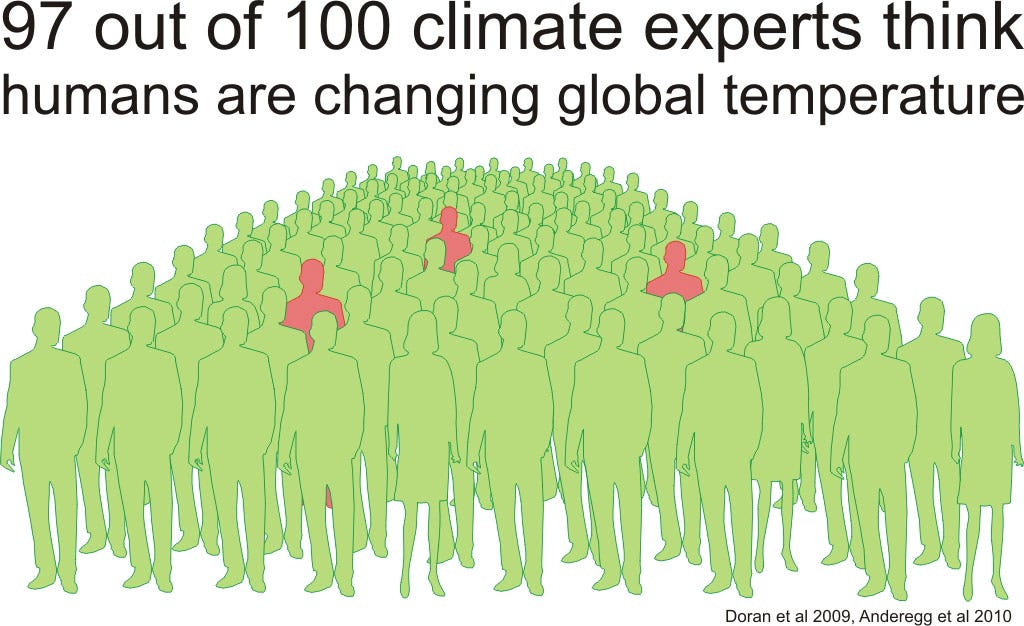 long story short: I love science; I heed science; the science is clear.
5. Hot Music Festivals
I'll keep this section short. I've had the same eye-opening experience at two very hot (>95° F) music festivals— Electric Zoo in NYC and Coachella in CA. It's blazing hot, lots of kids are on drugs, lots of kids are sweaty, and lots of kids need water. And here's the problem: these stupid effing music fests have 1 or 2 watering holes for thousands of people. The lines in the middle of the day are insanely long- about a 40 minute wait to get to a hose.
Let me say this again: it's 100°F. Lots of kids on drugs. Lots of sweating. HUGE WATER LINE. Everyone's a little bit afraid that the waters going to run out (probably irrational fear, but it's damn hot and the line's damn long), and eventually the bros get tired of waiting. So what do they do? Cut the line. Then guess what happens…fights.
In the water lines at hot music festivals I have witnessed the devolution of humanity, precipitated by the scarcity of a basic necessity: water.
Climate change means more frequent droughts and food shortages. Droughts and food shortages lead to unrest. Period.
6. BP Oil Spill
 Fishing with my pops
As a Gulf Coast resident who grew up fishing, hunting, and camping in the Louisiana marshes, BP oil spill, "considered the largest accidental marine oil spill in the history of the petroleum industry" (wiki), was a heart-wrenching, maddening reminder of dirty energy's detrimental impacts on our region.

The negative implications of the oil spill on Gulf Coast wildlife and communities were overwhelming. I immediately recognized the need to internalize the environmental and health costs of fossil fuels, which are enormous in accidents like this, and when considered, render renewables dirt cheap. So I'll conclude with one poignant question:
Why are we putting the very existence of civilization at risk for a filthy, finite, deleterious, and ultimately, uneconomic form of energy?
It's Like An Enron, But For Insurance [ 26-Jan-14 11:46pm ] Creative Commons (C) 2012 by flickr/atmospheric-infrared-sounderGet Rich From Climate Denial and Free Markets
Congratulations!
From your recent letter to the editor, I understand that you question the science proving human-caused climate change.
I have an incredible opportunity that could make you more wealthy than Bill Gates.
I meet far too many otherwise intelligent people who refuse to believe in human-caused climate change either because their politics or their religious beliefs lead them to deny it. If this is you, then you are missing out on billions of dollars.
Let me explain.
There is not even a single insurance company in the world which accepts the premise that climate change is fake. Every insurance company is raising rates or even completely pulling out of insurance markets like Florida and the United Kingdom which are known to have high climate risk.
There is a HUGE potential for a disruptive, start-up insurance company to enter those markets and undercut all of their competitors. If you are right about climate change, then you can be richer than anyone else on Earth.
Why are you still working at your menial job?
Are you brighter than the Oracle of Omaha? You are if climate change turns out to be a hoax.
The most successful investors on Earth like Warren Buffett and Prem Watsa became rich by running large insurance companies and investing their corporate treasuries on Wall Street. All of these leading Wall Street wizards made their business decisions based upon the belief that climate change is real and is caused by human activities.
If you are right about your belief that climate change is a massive hoax, then everyone else in the insurance industry is wrong. You know more than the six million Americans working in the insurance industry.
You are truly one in a million.
Your privileged information allows you to undercut your competitors on price and win markets they concede. If you are right, you could beat them all.
You could sell insurance at lower rates along the coastlines of every continent. In this way, you would win all of those insurance markets.
You could beat every insurance industry expert at their game if you're right.
Of course, I should add an important disclaimer.
If you turn out to be wrong, you will likely be jailed like Ex-Enron CEO Jeffrey Skilling.
If you are wrong, chances are almost certain that you will commit fraud to reassure investors and the media that your company was right about its bets. You would tell them that your company will remain solvent. It's human nature.
If you turn out to be wrong, your company will become so bankrupt from climate disaster claims that even an insurance bailout cannot save it. The claims will keep coming and will increase in size and volume.
If you are wrong, you will likely need to declare personal bankruptcy. Your mortgage will go unpaid as you languish in jail. No one will want to hire you again when you finally emerge from prison.
Are you willing to bet your freedom and your reputation for the potential to become insanely rich from your climate denial?
Or is this fantasy too hot to handle?
Park your igloo here [ 05-Jan-14 5:54pm ]I'm a bit amazed at the weather forecast for the next upcoming week. Could be one of coldest temperatures for an NFL playoff game. Lots of snow coming down? Oh, what about freezing rain and planes skidding off the runway?
When I was a kid, I had to trek a mile in the snow uphill, both ways. (When I left school, I had to walk to the public library to work, thus trekking up the hill again. Gotcha.) It wasn't so bad…
Yet, what about super storm Sandy? Or record hot temperatures in Australia last year?
Just to warp your brain a little more, the earth in 2014 was closest to the Sun…its perihelion…yesterday. Which really doesn't matter because its the Earth's axis tilt gives us our four seasons — not how close we are to a ball of flaming gas. Bet you didn't know that.
Don't think the global warming is causing this? According to NASA, it is. They also say—
This has been the result of the "Arctic oscillation" -- a see-sawing pressure system over the North pole -- that has driven cold air into more southern latitudes.
So, we're on a tilt, close to the sun, yet our weather patterns are like seesawing with a guy who's trying to throw you off because he's just a mean old bitch.
When someone says well, there's no global warming because we're freezing — I really have to ask…are you serious?
To help those who know what's going on, my suggestion today is to rename global warming as global chaos. Already in use by me for more than a year. Keeping calling it warming and I'll make fun of you—
Get the 75 SPF sunscreen and larger than life hats before they goes out of stock. Also get them wool sweaters purchased more because you'll be getting more bone-chilling winters for years to come.
After all, a little chaos is fun. Right?
Convincing Congress to Act on Climate Change [ 19-Dec-13 8:49pm ]Compelling arguments for Congressional climate change action were offered by Ernie Cohen in his Nov. 22 letter to the editor, but he omitted the strongest argument: Justice.
Scientists agree carbon dioxide emissions must be reduced to stabilize the climate and protect the long-term health and security of future generations, our children and grandchildren. However, cutting fossil fuel usage might hurt short-term interests of some businesses, investors, politicians, utility customers and trade associations.
Those with short-term financial interests in maintaining the status quo pressure Congress not to act, resulting in our children's long-term well-being unjustly compromised.
Is Congress biased against children? Of course, not. But we — parents, grandparents, nurses, doctors, teachers, clergy, firefighters, newspaper editors — must work harder to convince Congress the political will exists for equitable climate change legislation. Without demonstrable public support, Congress hesitates.
Become an activist
How can you persuade Congress that the political will exists? Attend marches to close coal-fired power plants. Protest pipelines. Divest. Or join me as a volunteer with Citizens Climate Lobby. We serve as a counterweight to paid, corporate fossil fuel lobbyists.
By writing letters to the editor, meeting with newspaper editorial boards, and visiting our Senators and representatives, we advocate for legislation for emissions reductions via energy efficiencies, the development of clean energy and other solutions the free market will support.
Our approach is straightforward, administratively easy, transparent, and fair. We want Congress to charge fossil fuel producers a fee based on the amount of emissions their products cause. Justice requires paying for one's pollution.
The government would collect the fees and send rebates to households so it would not be unjustly regressive, or drag the economy down by going into government coffers.
International effort
With an emissions fee, the private sector will shift investments into clean energy. The fee would also apply to imported goods to encourage international cooperation against climate change. Justice requires that nations work together.
CCL members understand that government will only protect us from climate change if we spend time studying the issue and informing our elected officials about optimal solutions. CCL has chapters nationwide, including Bridgeport, Providence and Boston. Please contact us for more information.
The Bible commands: Justice, Justice, you shall pursue. Justice must be pursued both by courtroom judges, and ordinary people, in the short- and long-term, for one's own family and others.
We might add: Justice must be sought in the streets and in the halls of Congress, for those already suffering from climate change droughts, rising seas, health impacts and severe weather, and for those at risk in the future.
Rabbi Judy Weiss of Brookline, Mass., is a member of the Citizens Climate Lobby
WEBLINK: http://www.norwichbulletin.com/article/20131202/OPINION/131209999/0/SEARCH
___________________________________________________________
If you like this click "Recommend" below. Thanks!
FALSE CHOICE AND CLIMATE CHANGE [ 08-Oct-13 4:54am ]I have come to believe that there is a false choice represented in the debate around climate change these days. On the one hand, we are told, we may choose environmental conservation and productive moderation. And on the other, we are told, we may choose social and ecological adaptation along with unfettered development. Either we keep carbon at bay and India and China languish, or we allow the World's populations to continue pursuing prosperity and bear the consequences of its externalities.
This analysis, obscured itself by the juvenile pre-occupation with the debate concerning the validity of global warming, obscures alternative possibilities that might preferably balance our valued commitments. Indeed, we need neither sacrifice ecological conservatism nor global prosperity.
Our attitude to China, as one example, is essentially this: if you want to deliver yourselves from poverty, you must devote yourselves to the production of endless junk that we over here do not actually need. Rather than collaborating to redistribute global resources and to harness the varied powers residing in your people, we'd prefer to relegate them to machine-like tasks for the time being, thereby subsidizing the cost of junk for us with a sacrifice in the meaning of individual lives by them. It is apparent to me that this cannot last; it is merely the most recent in a lineage of eager populations that we have mesmerized with the promise of development for a brief time. Once they have transcended the basic thresholds of industrial and urban life they, like we once did, will inevitably refuse to submit to this lifeless work.
The pollution assumed to inhere in China's development, in short, is unnecessary, but to obviate it would require the rest of the World's proposing an alternative path, one befitting the natural aspirations of a billion people who seek lives as full of opportunity, health, and nominal freedom as ours. Such an alternative would call upon us to sacrifice, but perhaps to sacrifice very little in the way of real freedom, real happiness, or real prosperity. It would mean that we perhaps think of our phones as more than disposable commodities. It would mean that we restrain our pursuit of bigger and bigger homes and cars, not by some arbitrary ascetic devotion but by a respect for what we know to be the limits of incremental gains in happiness. We would need to view the admission of the World's bottom billions into our modern digital community as a far greater realization of value than incessant, and incessantly disappointing, iOS upgrades.
As always, our choices are far more plentiful than the binaries that have ossified our discourse suggest. Those who advocate adaptation and those who advocate conservation ought to commit themselves to a collaborative and dispassionate accounting of the costs associated with different blended approaches, including more radical reorientations of the global economy of the sort that I'm proposing. Creativity, generosity, and imagination — paired with a reckless disregard for scarcity — can unlock a third path around climate and development that I am eager to embrace.
Do you need a new bike? [ 25-Sep-13 12:13pm ] Awake at the Big Bend [ 04-Jan-14 7:17pm ]
It was about 3 AM when I woke up, unzipped the tent and looked up, forever changing my relationship with the cosmos…


