
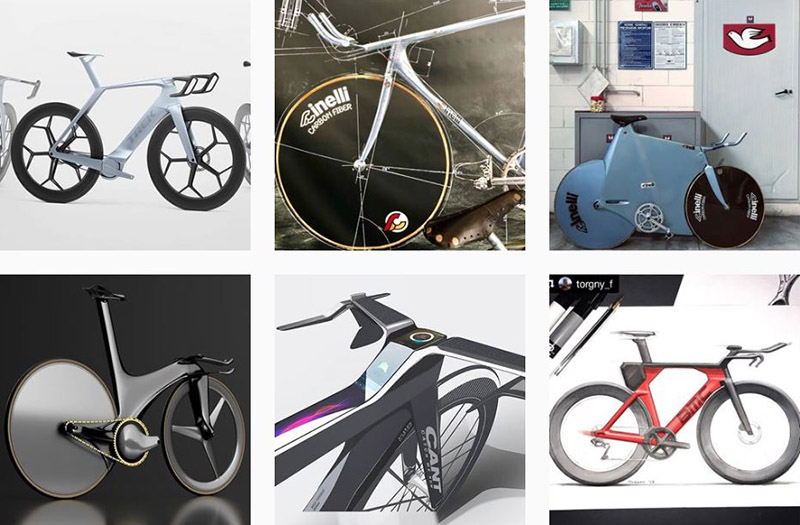
Hello…is this thing on? It’s been quite a while, but some of you may still be subscribed to the old RSS feed (is that still a thing?). If you do somehow find this post, I want to let you know that I just started posting again on the @bicycledesign Instagram account. I plan to update Instagram primarily going forward, but the Twitter and Facebook accounts will remain active too (mainly just auto-posting from Instagram).
Who knows… I may even start occasionally posting on the blog again too. I am sure that it would take quite a bit of time to rebuild the community after three years away, but I really do miss it, so the effort might be worthwhile. I don’t want to get ahead of myself though. For now. I’ll just see how it goes resurfacing on social media. I hope that you will follow along… and maybe even contribute some of your ideas and designs.
After ten years of blogging at Bicycle Design, it's time for me to move on. This post may seem a bit like déjà vu to those of you who remember my "final" post from February of last year, but this time I really do need to shift my focus to other projects and goals. I won't repeat everything that I said in that previous post, but I do want to reshare the first paragraph:
"It is hard to pinpoint the exact reason that I started this blog in 2005. I could say that it was to showcase the work of industrial designers in the bicycle industry, or to give students a place to share their bike related ideas and concepts, or maybe the idea was just to generate discussion and get people thinking about the potential of bicycles, and other types of human powered machines, to change the world for the better. Over time, I believe the blog has served all of those purposes, but when I quickly put together that first post over eight years ago (over 10 now), I wasn't thinking any of those things. The fact is, this blog was something I started one day on a whim, and I never imagined that it would ever last so long… or reach so many people."
At its peak, Bicycle Design reached over 100,000 readers per month, and I am truly grateful for each of them (each of you I should say). Since 2005, I have connected with many wonderful people through my blog, including talented designers who share my passion for bikes and human powered transportation. Thank you to all who contributed designs, participated in discussions, or just followed along. In the decade that this blog has been a part of my life, I have made new friends and learned more than I could have ever imagined. It has been a great experience, and I wouldn't trade it for anything.
Though I have really enjoyed sharing other people's designs for the past 10 years, I am looking forward to making time for a few of my own art and design projects (outside of the work I get paid to do). I also want to refocus on local bike advocacy issues, something that I was heavily involved with in the past, but have not had much free time for lately.
Going forward, I will continue to blog occasionally at JCT.design (pay attention to the "Bikes/Active Transportation" category where I plan to share a few of those personal design projects that I mentioned earlier). You can also connect with me on Twitter, Instagram, and a few other places on the web at @jctdesign. I do plan to continue updating the Bicycle Design Facebook page when interesting bike designs catch my attention, so follow along there if you don't already. Finally, I will contribute to Core77 every once in a while, so keep an eye out for me on that site too.
If you haven't been reading Bicycle Design from the beginning (or even if you have), I encourage you to look back at the 10 years worth of archives from this blog. Recently, I shared the The top 25 posts from 10 years of Bicycle Design, and I would consider that post a good place to start. Beyond the ones that have been the most popular though, there are many other great designs to explore in the 900+ archived posts. If you have been reading Bicycle Design for a while, perhaps you can share one of your favorite older posts in the comments for others to check out.
Thanks again to all you who have contributed, commented, or just read along over the past 10 years. You are the reason that this blog was such a great experience for me, so I really do hope you will keep in touch. You know where to find me.
//
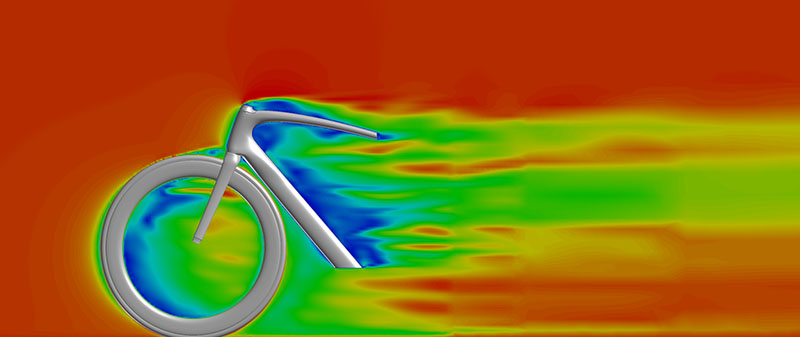
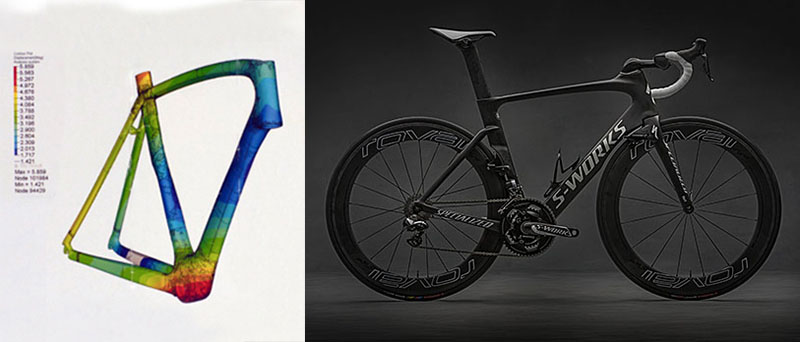
By now, anyone reading this has likely seen the recent redesign of the Specialized Venge aero road bike. In the development of the new Venge, Specialized engineers used Altair's HyperWorks software suite "to analyze and improve the aerodynamic performance of the bike as well as optimize the weight and structural efficiency of the frame." Chris Yu, Aerodynamics & Racing R&D Lead at Specialized Bicycle Components, talks a bit about the design process in an interesting video on the Altair website. To find out a bit more, I asked Mike Barton, computational fluid dynamics (CFD) application specialist at Altair, a few questions:
Before we get into the Specialized Venge project, can you give me a brief over view of Altair and the type of work that you do?
Founded in 1985, Altair is a software engineering and consulting company headquartered in Troy, Mich. After three decades, Altair has grown into a global company specializing in optimization and simulation technology with more than 2,600 employees and 5,000 clients. Altair's software is used by a diverse set of industries, from auto, consumer goods, aero, ship design and rail to heavy machinery. The company uses its expertise and extensive work in various commercial and industrial sectors to help designers and product developers in a wide range of unique industries, including bicycle design, golf club design, and other sporting equipment such as shoes.
The company is best known for HyperWorks, its suite of computer aided engineering programs that helps engineers simulate and optimize designs for light weighting; noise, vibration and harshness; durability; crash and safety and more.
In addition, via its Partner Alliance, Altair provides customers with access to more than 35 additional software products to help designers and engineers develop and optimize their designs and products.
In addition to developing the Fluid Dynamics software that was used to optimize the aerodynamics of the new Venge, did Altair work directly with the industrial designers and engineers at Specialized throughout the design and development of the bike? Tell us a little about the process.
Specialized has been working with Altair for approximately three years to streamline its internal processes.
In the video on Altair's website, Specialized Aerodynamicist Chris Yu mentions that the CFD software allowed them to run problems quickly without perfect CAD, and that those virtual tests of frame shapes saved a lot of time and money over building multiple prototypes for wind tunnel testing. Once the first physical prototypes were tested though, how consistent was the real world data with the results from the software?
We did not receive verification metrics from Specialized regarding the accuracy of their simulations compared to wind tunnel estimates. However, Altair Engineering has conducted similar studies related to bicycle wheel performance with works published by the American Institute of Aeronautics and Astronautics (AIAA 2009, 2010 and 2011). The following publication details the CFD analysis of several bicycle wheels for a range of speeds and yaw angles compared to wind tunnel measurements. The analysis demonstrates good comparisons of the CFD simulation to that of the experimental data and also demonstrates unique flow attributes that were not captured during the wind tunnel testing.
A Comparative Aerodynamic Study of Commercial Bicycle Wheels using CFD
An Aerodynamic Study of Bicycle Wheel Performance Using CFD
A bicycle (even a pro-level racing bike) is slow compared to an airplane or F1 car. How does the lower range of speed for intended use affect the way that you optimize the aerodynamics of the frame?
Although the speeds at which a professional bicycle rider performs are considerably lower compared to an aircraft or automobile, the aerodynamic effects are still very much present.
Consider that the typical drag coefficient (a non-dimensional quantity that is used to quantify the drag or resistance of an object in a fluid environment) of a professional cyclist crouched on top of a moving bicycle ranges between 0.7 and 0.9. Assuming that the bicycle is highly efficient and the rider is aerodynamically streamlined, let's estimate the Cd to be 0.83 and his/her frontal area to be 3.2ft2. If we consider that the rider is traveling at 20mph he/she feels approximately 3.27 pounds force from the aerodynamic loading acting to slow him/her down. In comparison, a typical touring bicycle and upright rider with a Cd of 1.0 and a frontal area of 4.3 ft2 feels approximately 4.4 pounds force at 20 mph[i].
Based on the aerodynamic effects and accounting for minor differences in rolling resistance, the touring rider must put in approximately 27 percent more horsepower to keep pace with the professional rider and bicycle. Contrast that with a highly efficient automobile, like the Toyota Prius that typically has a Cd of less than 0.25 and a frontal area of 23.4 ft2[ii]. At the rider's speed of 20mph, the aerodynamic drag force is approximately 5.98 pounds force. Although the scales at which vehicles travel are considerably different, they are all influenced by the fluid they move through and this must be taken into account when designing for efficiency and speed.
What about the effect of the rider on the aerodynamics? Did the CFD software factor in the messy aerodynamics of a moving cyclist, or were just the aerodynamics of the bicycle considered.
The primary focus of the CFD conducted by Specialized was related to frame design. The design and simulation did not include effects of the rider, but this is possible with Altair HyperWorks AcuSolve.
Altair has developed a proof of concept simulation to demonstrate the lower torso and legs of a manikin pedaling. This analysis was conducted with the use of two Altair applications within a single simulation. The "Co-Simulation" combines the aerodynamic analysis of AcuSolve CFD with the multi-body systems analysis tool MotionSolve. This unique combination of tools allows engineers to analyze arbitrary rigid body motion and the effects of that motion on the surrounding air.
From the proof of concept simulation, Altair has determined that the air movement in the wake of the rider's legs and the bicycle's pedals significantly affects the aerodynamic loading on the rear triangle and rear wheel of the bicycle. The simulation demonstrates that the air flow in this wake is highly transient and pulses with a frequency higher than that of the cyclist's cadence. As each pulse of air collides with the frame and rear wheel a force acts to slow the rider down and may cause minor instabilities depending on the oncoming wind and direction of travel. Although somewhat minute, these forces can accumulate and will have an effect on the performance of the bicycle as it moves with the rider.
In addition to aerodynamic concerns, Chris Yu mentioned the importance of maintain structural targets while minimizing weight (to the UCI limit). Can you talk about the structural "ply by ply" analysis of the carbon and explain its relationship to the fluid optimization work? Were these completely separate problems to address, or were they analyzed and optimized together?
These were analyzed and optimized together.
What else was interesting about this project compared to the work that you typically do?
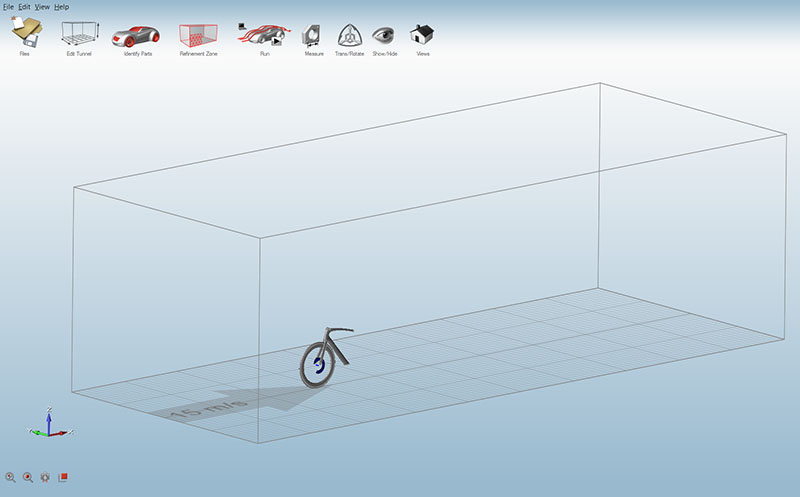
One of the more interesting aspects Altair contributed to for the work at Specialized was the use of out-of-the-box tools for advanced aerodynamic design. Specialized made use of the Altair HyperWorks Virtual Wind Tunnel to design the Venge frame. This tool gives typical design engineers the power to perform CFD simulation with little or no experience with fluid dynamics. This is in contrast with other CFD tools that require significant knowledge related to fluid dynamics, numerical analysis, and computer science.
The Virtual Wind Tunnel allows engineers to directly import CAD into the simulation environment, apply simply boundary conditions to the tunnel walls and part, define the flow conditions and run the simulation on a modest workstation. The results are reported automatically or can be custom formatted to meet specifications desired by the design team. The overall process in Virtual Wind Tunnel has been developed and tuned for engineers to use as a part of the entire design cycle. The aim is to give engineers the tools needed to create many more design iterations with less time spent on traditional prototyping and testing.
Footnotes:
[i] Whitt, Frank Rowland; David Gordon Wilson;MIT Press, 1982 (2nd edn), 377 pages
ISBN 0262731541, 9780262731546
[ii] http://ecomodder.com/wiki/index.php/Vehicle_Coefficient_of_Drag_List
//
//
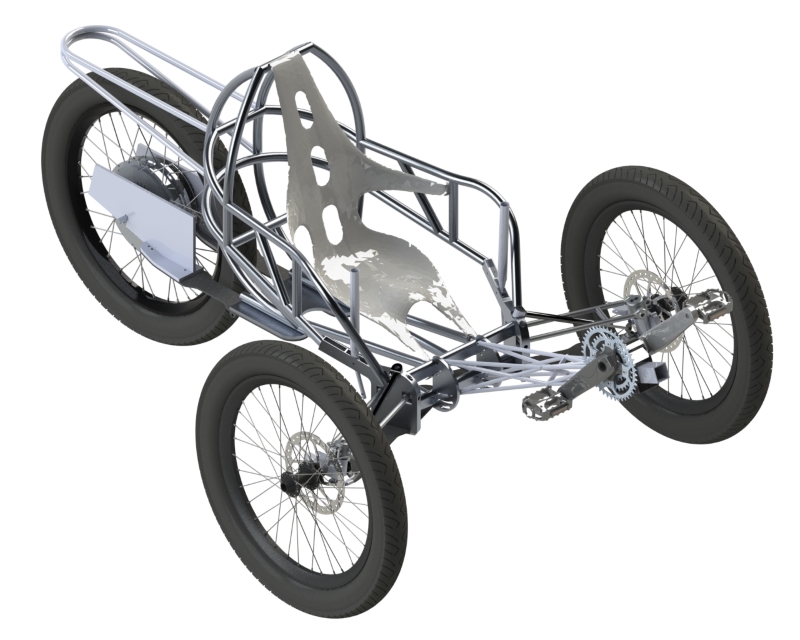 For his final project in Mechanical Engineering at the Danish Technical University, Israeli born Danish citizen Kuba Szankowski designed a velomobile based on the classic Leitra design. He worked closely on the project with Carl Georg Rasmussen of Leitra, who "at eighty years young still builds and maintains all the velomobiles, as well as most any other aspect of the business himself." Prior to earning his degree, Kuba had worked as a bicycle mechanic and as an advocate for bicycle transportation in Jerusalem, so he wanted to build on those experiences and create a design that would introduce human powered transportation to a wider audience.
He explains the idea behind his redesign of the Leitra:
"My main intent was to develop a bicycle fit for my mother (this is actually what I described in my exam, oddly enough)- a bicycle which cannot fall, with electrical assistance, which encapsulates the rider and protects by being visible and high above the ground. This, along with my own perspective of the ways with which the Leitra velomobile could be improved; these being the lack of ergonomic adjustability, its lack of customization for shared usage in a household and others brought me to my design.
I describe a bent aluminium chassis with a platform for a battery pack or other electrical components. The Leitra seat- a 900-gram fiber composite, originally designed by Carl G. by imprinting his bottom in the snow, was 3D scanned. The resulting file was used to develop the two seating positions, along with an adjustable crank mast.
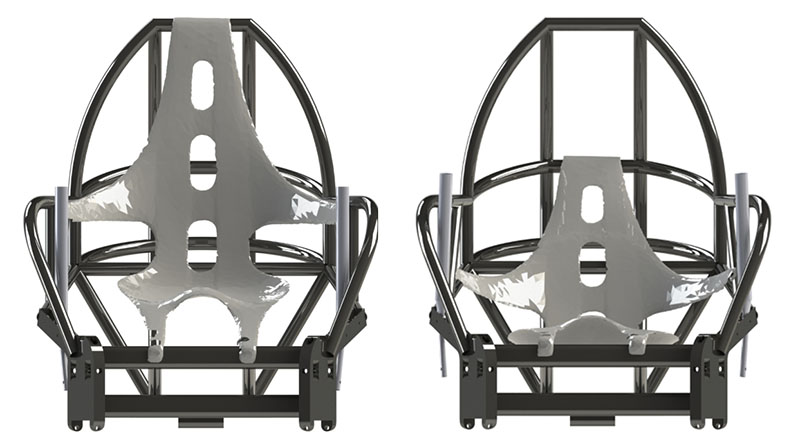
Front view of seat upright and reclined
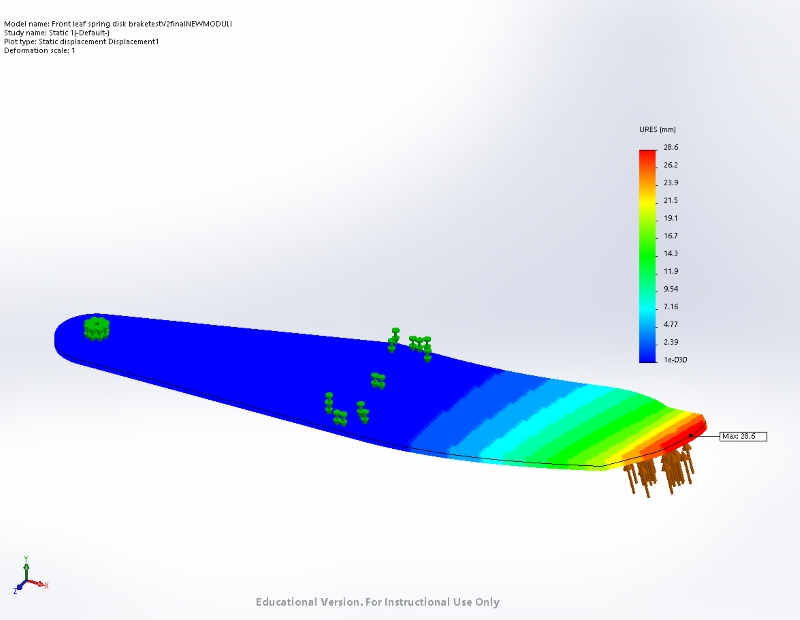
The vehicle is equipped with 24-inch wheels and a unique (to my knowledge) suspension system, which is a hybrid gas damper/ leaf spring. This is in comparison to the existing Leitra suspension, which is also unique (and field-tested!) double cantilever leaf spring, with about two cm displacement. What the existing suspension lacks is a dampening mechanism.
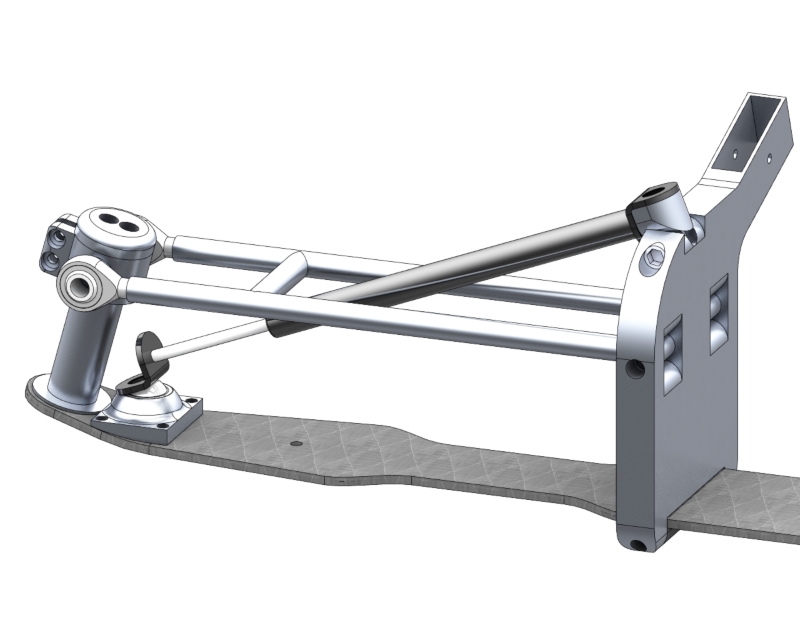
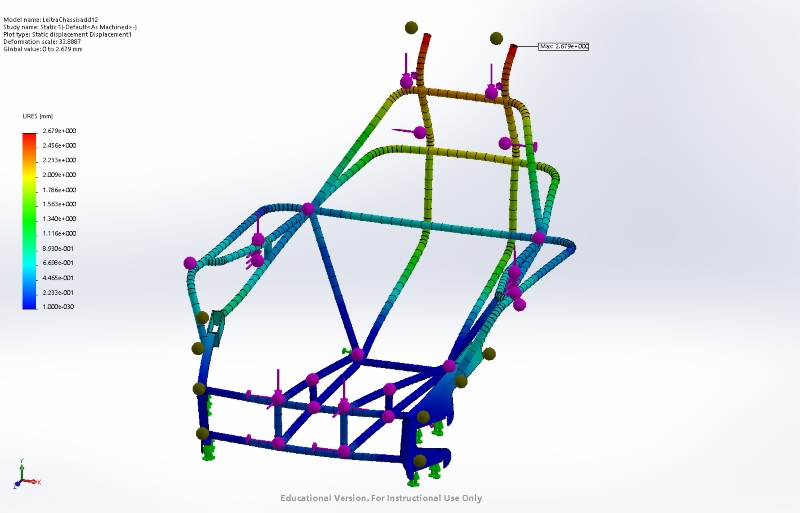
My analysis consisted mostly of Finite element modelling of the existing leaf spring and chassis. By having two models (the existing frame vs. the redesign), I was able to achieve what I called "independence from model discretisation". The viability of all this is of course subject for debate, and I welcome to share my findings with anyone interested.
In terms of this vehicle as a solution to the "blue ocean" problem, I envision three categories resulting; these are: the base tricycle, with no electrical assistance; a pedalec ("E-bike") class tricycle and an electrical vehicle capable of higher speeds (up to 45 km/h).
Kuba mentioned that he was interested to read the recent post by Karl Sparenberg of Windcheetah, whom he had the opportunity to meet, along with Mike Burrows, at the latest SPEZI festival. "I was happy to see a fellow engineer picking up the work of the masters and advancing it. I wish to find new audience for the Leitra, and bring these weird machines closer to my homeland and the world." Kuba will be presenting his design on October 30th at the 2015 Velomobile Seminar in Austria, so hopefully that will be the first step in making his design a reality. I am looking forward to seeing how it progresses.
(adsbygoogle = window.adsbygoogle || []).push({});
Subscribe to the email newsletter, and follow Bicycle Design on Facebook , Twitter , Pinterest , and Google + … and now on Instagram too!
I can hardly believe that it's been a full decade since I started this blog by posting one of my old marker renderings. Though I started with a few of my own sketches, what really kept me interested in blogging were the design submissions from others that I began to receive in those first few months. Over the past 10 years, readers have shared some great designs with the community here, so I want to take the opportunity to look back on this 10th anniversary of Bicycle Design and share a few of the top posts (Sunday was the actual anniversary, but close enough).
Because Bicycle Design was hosted on Blogger at bicycledesign.blogspot.com for the first 4 ½ years, very few posts prior to the February 2010 move are included in the Google Analytics data. As a result, this list heavily skewed toward the last 5 years, but with that caveat in mind, here are the top 25 Bicycle Design posts ranked by total pageviews:
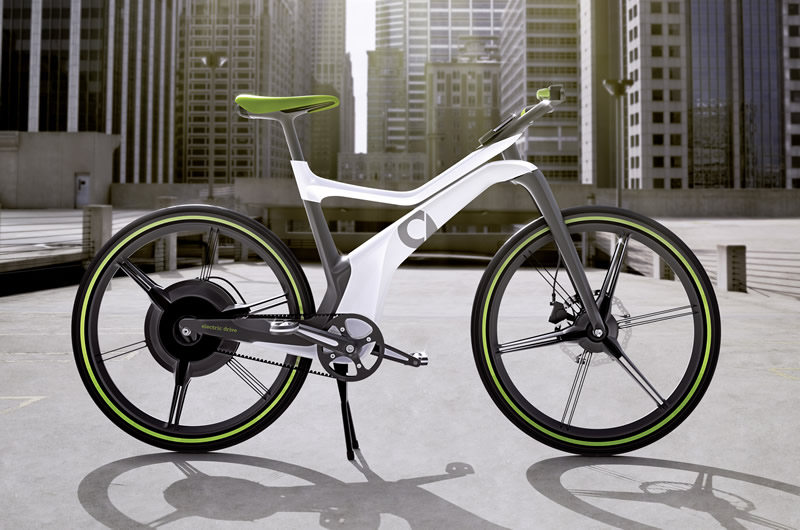
1. The Smart ebike by Hussein Al-Attar
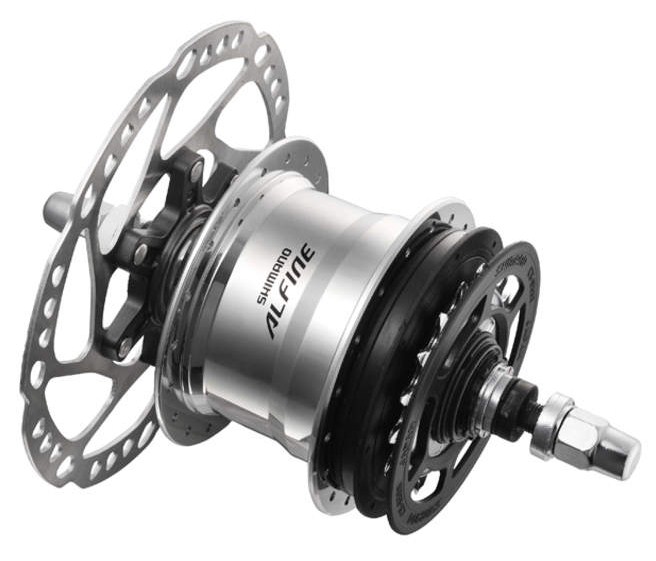
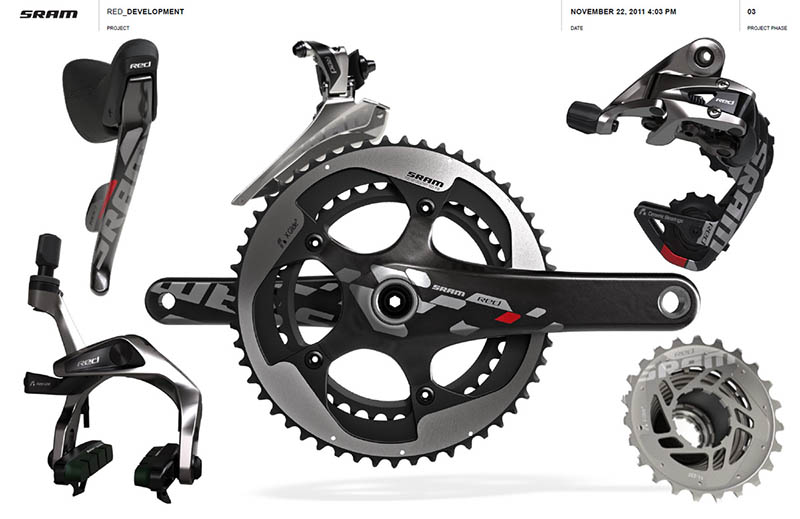
3. The design of SRAM Red 2012
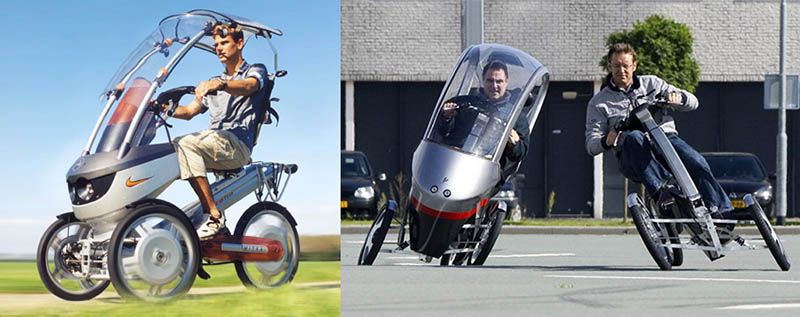
4. Drymer: a Dutch electric assist trike
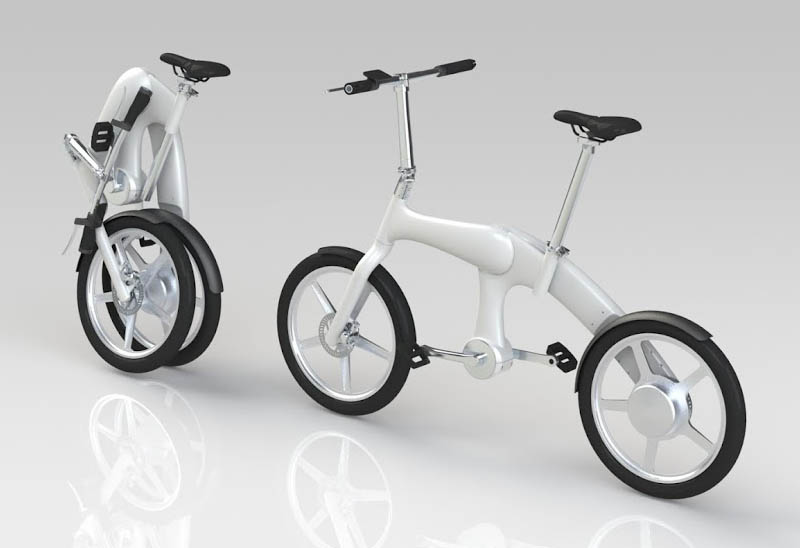
5. Mando Footloose: a chainless hybrid e-bike
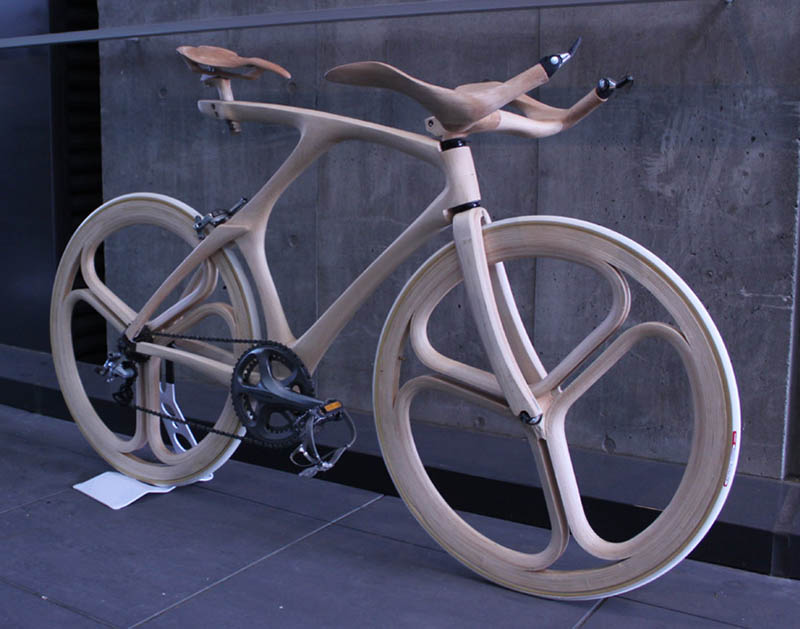
6. Wooden bike by Yojiro Oshima
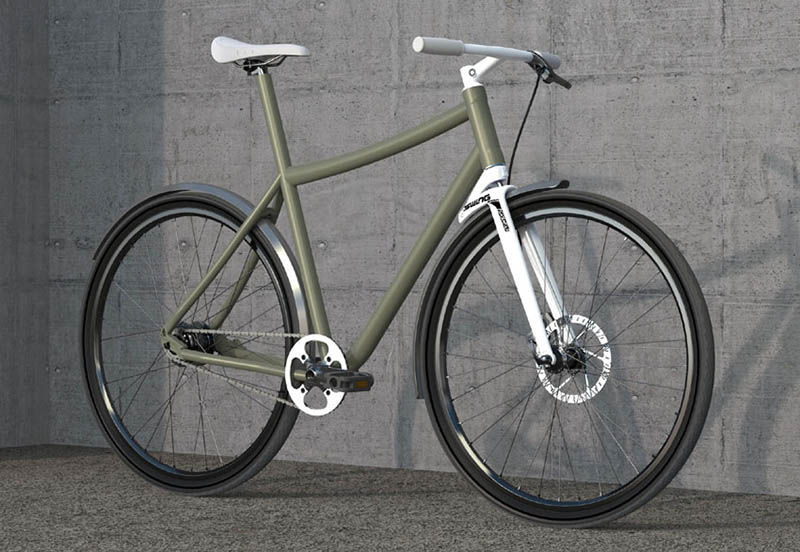
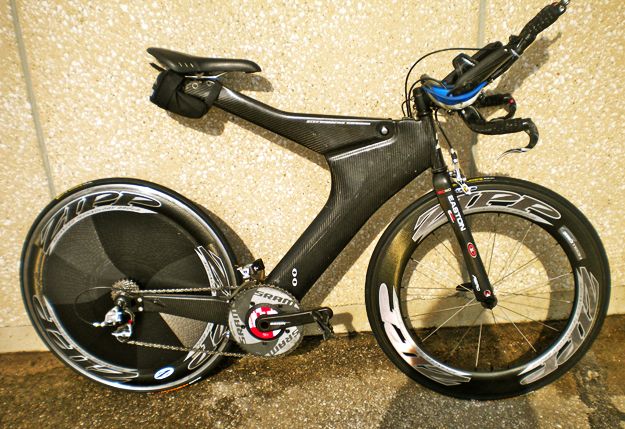
8. Is TJ Tollakson the Graeme Obree of triathlon?
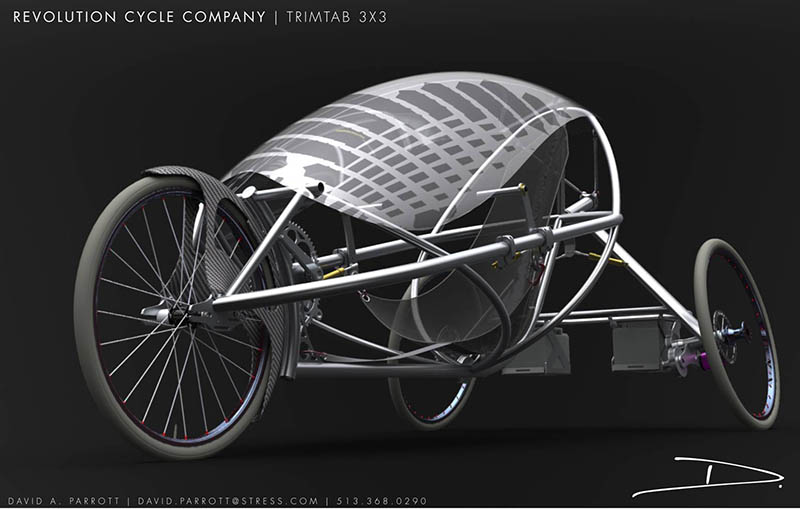
9. Trimtab 3×3 recumbent trike
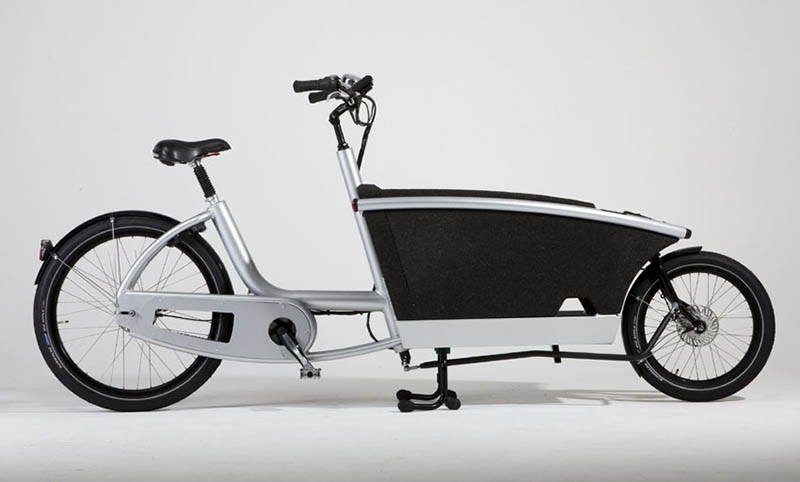
10. Urban Arrow- an electric assist bakfiets design
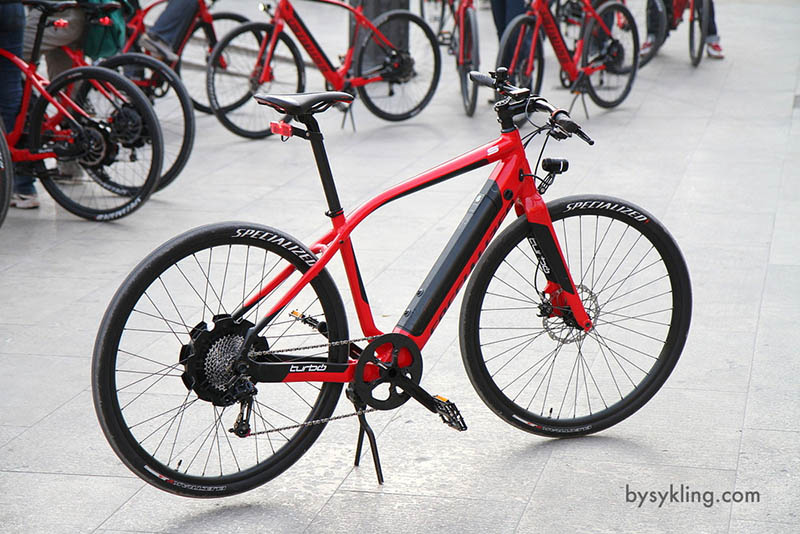
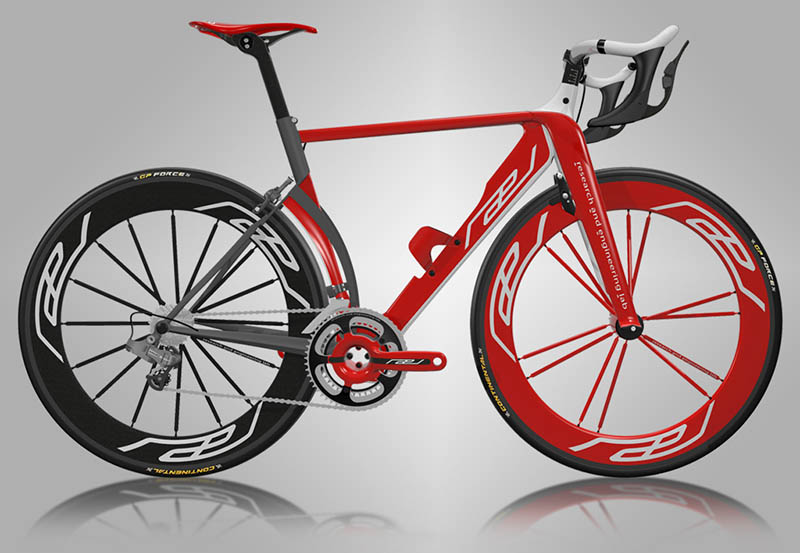
12. Rael road bike concept 2.0
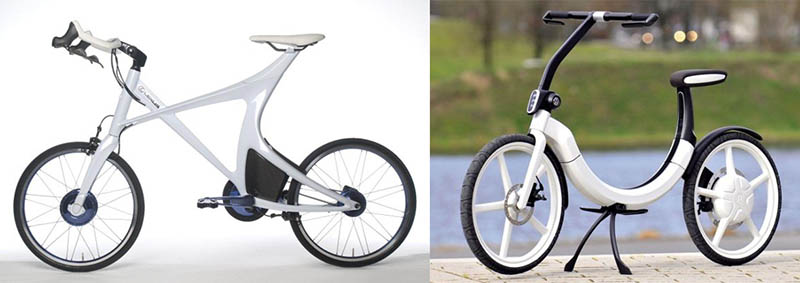
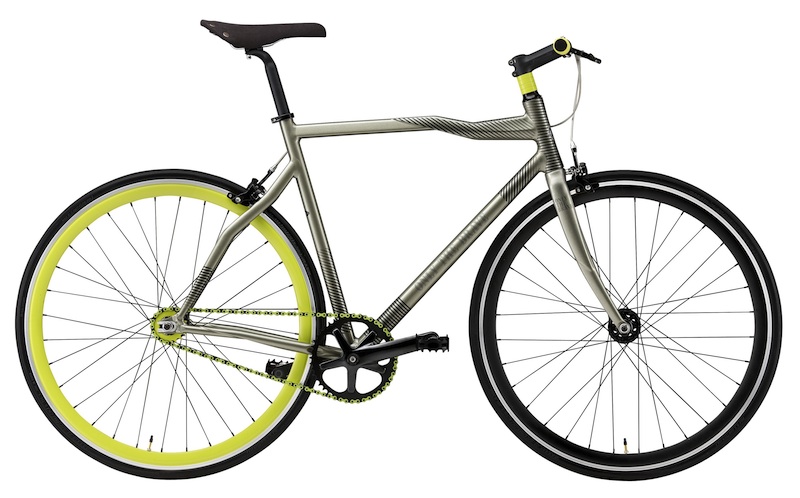
14. Diesel/ Pinarello urban bike
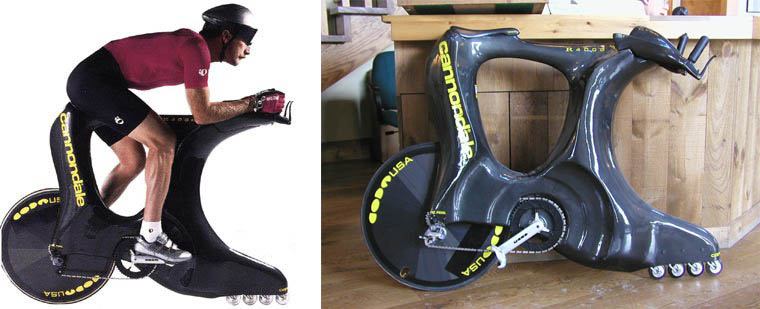
17. I must like harebrained ideas
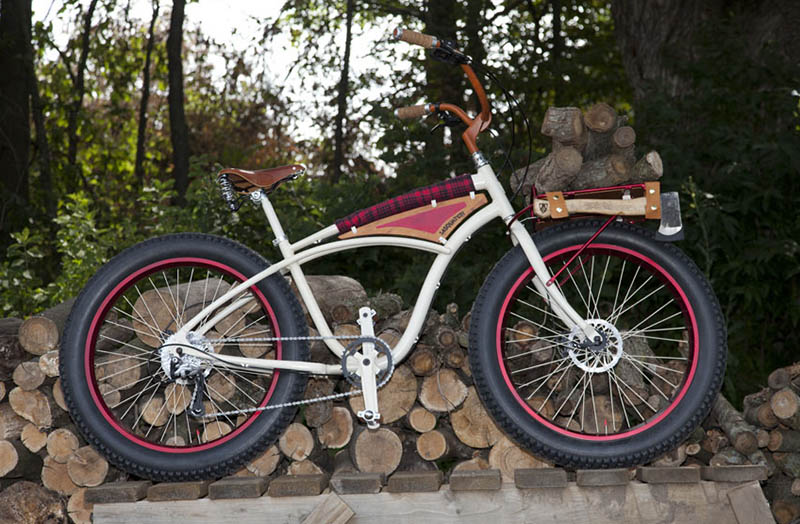
18. Trek Sasquatch and Sand Crawler Cruisers
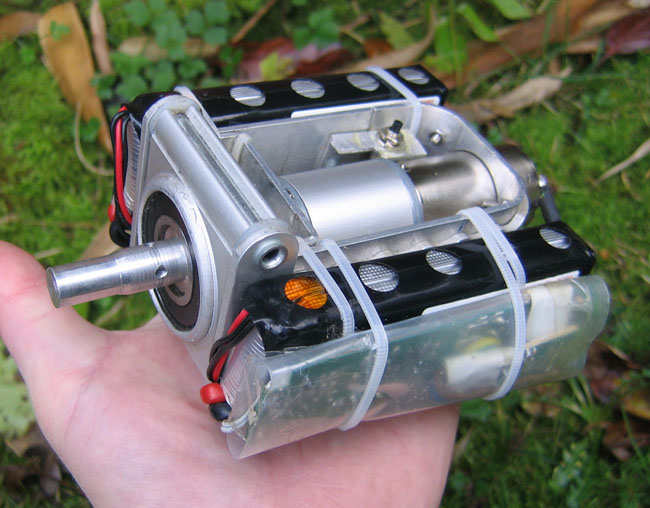
19. Fast Forward powered pedals
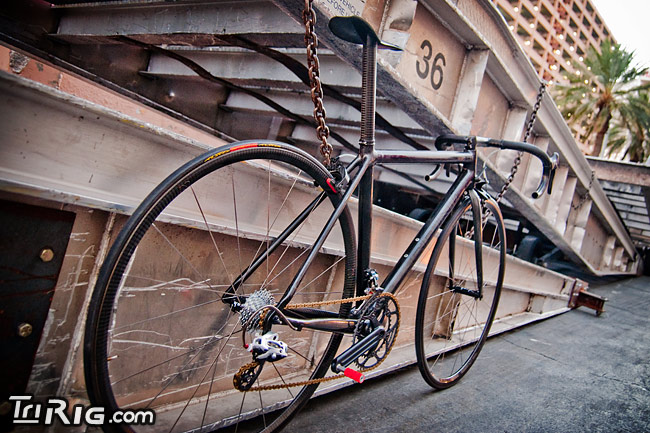
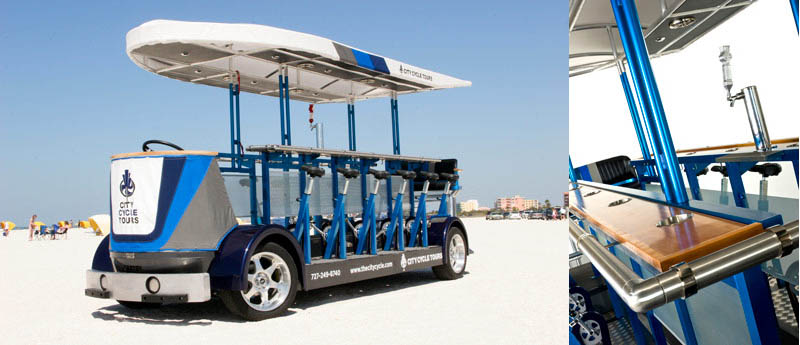
21. City Cycle- a pedal-powered pub
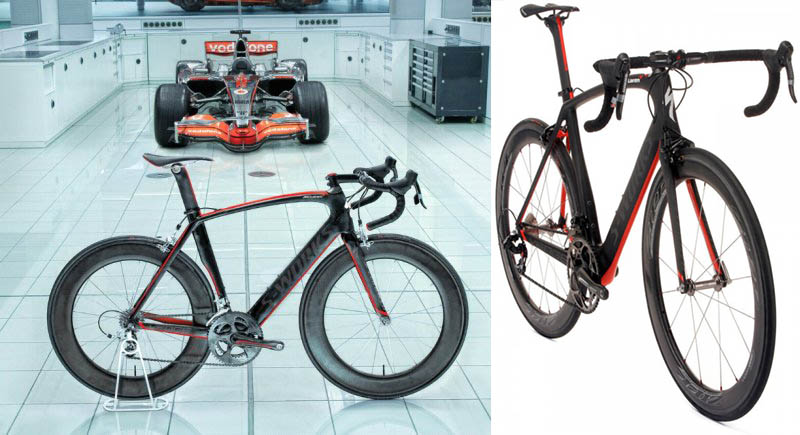
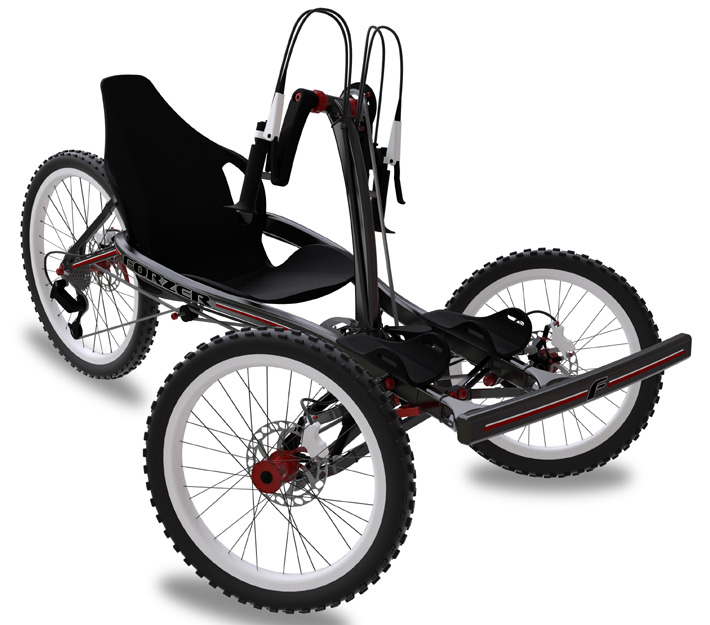
23. Forzer off-road handcycle by Marius Hjelmervik
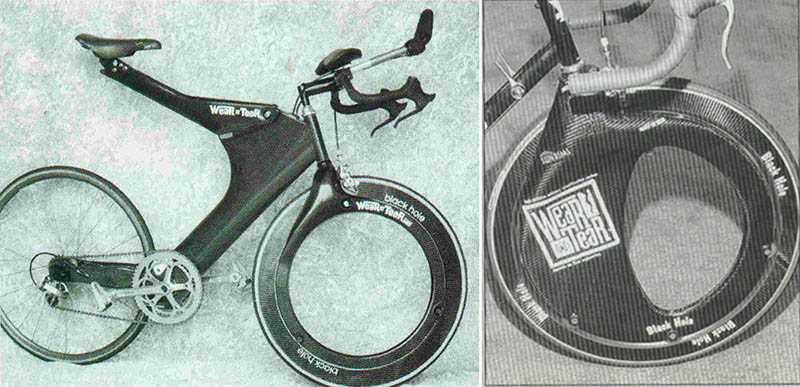
24. A hubless wheel from the past: The Black Hole
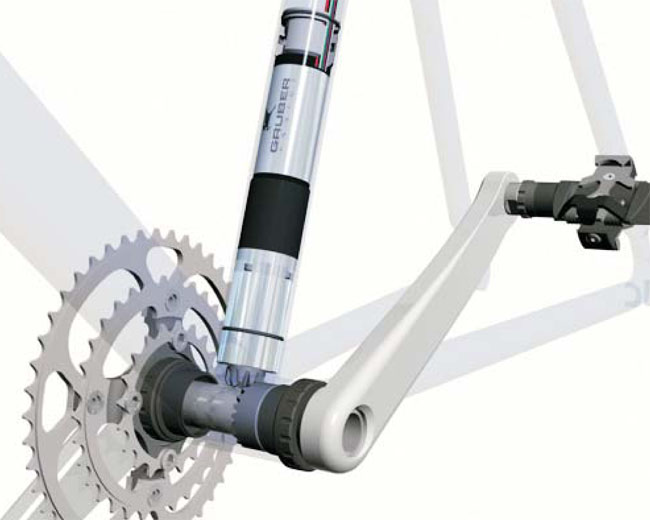
25. Mechanical doping and the future of e-bikes
As I mentioned, there were quite a few posts that were popular from 2005 to 2009 that didn't make this list. The early guest posts by Mark Sanders and Michael Downes were quite popular (as was my feature post about Michael in 2006). Posts about the Cannondale Jackknife concept bike (2006) and the JANO dual bike (2007) were among the first to be picked up by large blogs like TreeHugger and Gizmodo to really cause a spike in pageviews at Bicycle design. Joules, the electric stoker was another post that spread around the web and drove a lot of traffic back to this blog. The most viewed posts by far prior to the 2010 switch to WordPress were those from the 2008/09 "Commuter Bike for the Masses" Design Competition that I staged here at the old blogspot site. You can see the six finalists and the winner from that competition here.
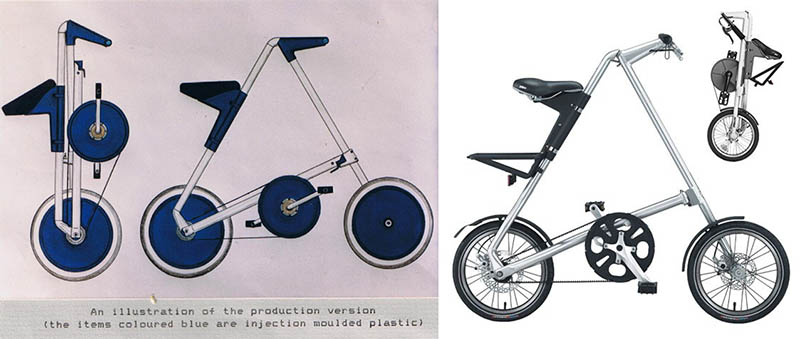
Strida folding bike design by Mark Sanders
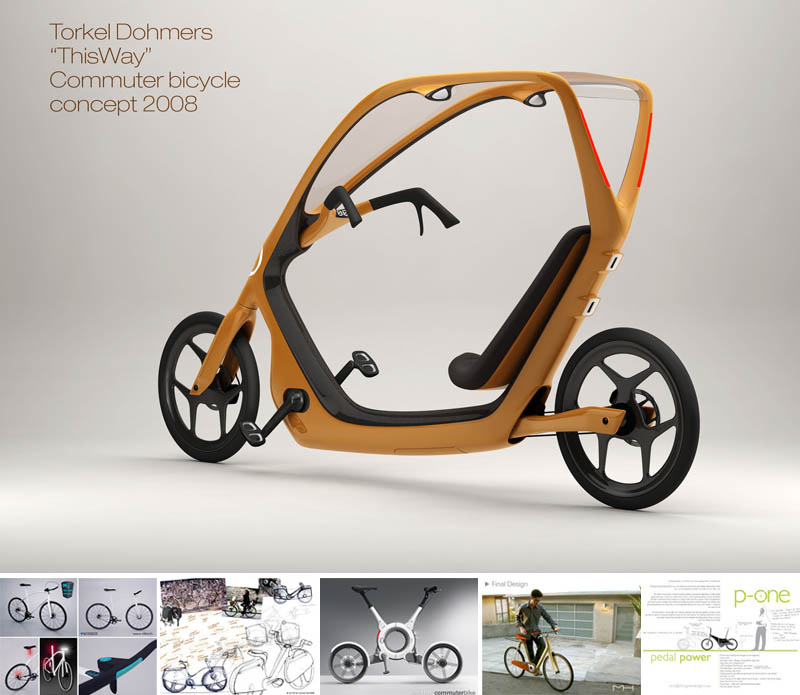
Looking back, it really has been a great ten years. Thanks to those of you who have been reading since the beginning…and to those of you who just started.
//
Subscribe to the email newsletter, and follow Bicycle Design on Facebook , Twitter , Pinterest , and Google + … and now on Instagram too!
It's that time of year again. Bike show season kicked off on Wednesday with the opening of Eurobike 2015 in Friedrichshafen, Germany. One of the big stories from the show this year seems to wireless electronic shifting. SRAM's new RED eTap system is getting a lot of positive press, and FSA is showing a prototype wireless group at the show as well. Wireless shifting has the potential to have a big impact on the design of racing/sport oriented bikes, but I'll save that discussion for another post.
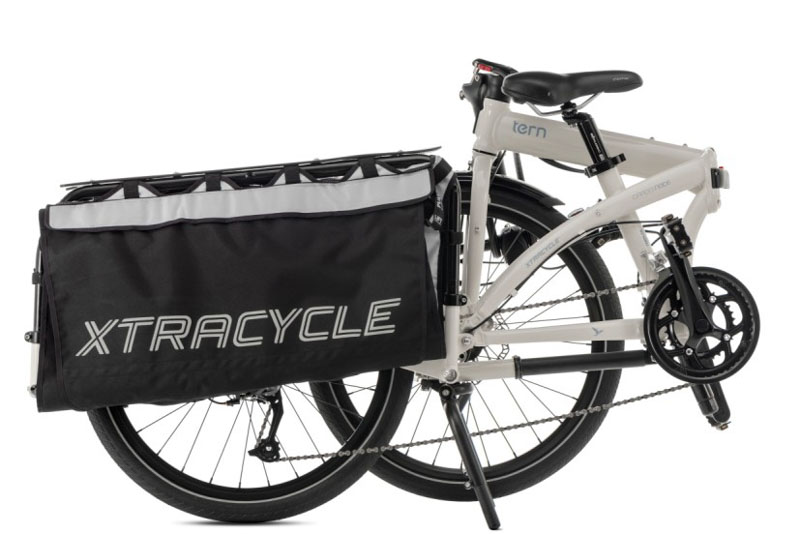
Today, I want to share three interesting bikes that caught my attention as I have been browsing online galleries and following the #eurobike hashtag on Twitter the last few days. First is the Tern Cargo node. The folding bike company teamed up with Xtraccyle to create a longtail version of the Node that will retail for about $1800. Tern calls it, "a game changer if you live in a city or just want more portability from your cargo bike." They designed the bike to fit in an elevator, so you can easily take it up to a high-rise apartment or office. The option to fold is also a plus for transit riders, as it can be done with a load of cargo on the rear rack.
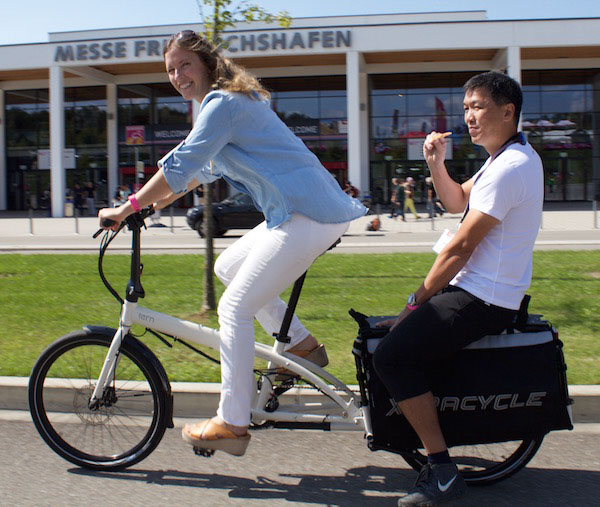
Shannon Evans of Xtracycle and Josh Hon of Tern on the Cargo Node. Photo credit: BikeBiz.com
German company Altinsoy Manufaktur is showing the Bees Bike, a very unique modular mountain bike with a belt drive and internal gearbox. According to a recent GizMag post:
"The bike adjusts around the rider through an integrated system of bolts and mounts. In this way, the bike can adjust to better fit your body and riding style. Of most interest is the stabilizer bar that can be swapped in for the DT Swiss rear shock, creating a fully metal hardtail in place of a springy pivoting rear triangle."
I am not sure about that feature (why not just lock out the rear shock?), but I do think the frame is interesting and I like the way the gearbox is integrated. If this is a first bike design from Altinsoy, I am looking forward to seeing its evolution.
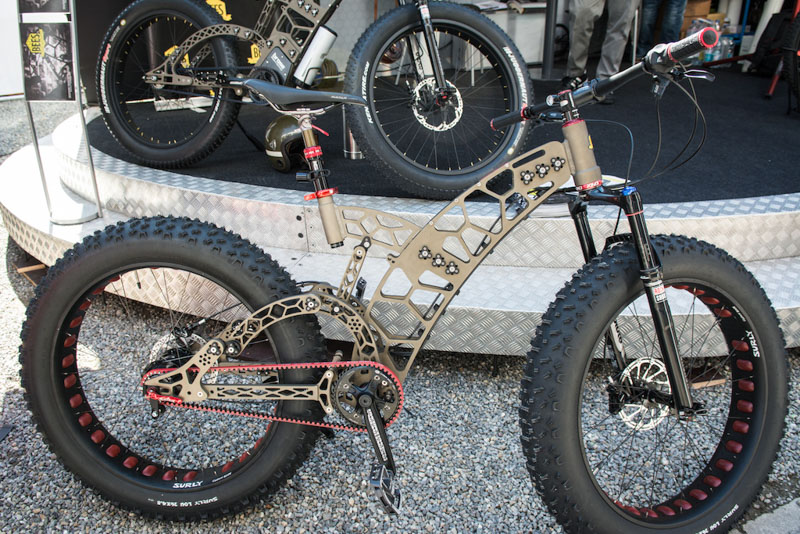
Altinsoy Manufaktur’s Bees Bike at Eurobike. Photo credit: GizMag.com
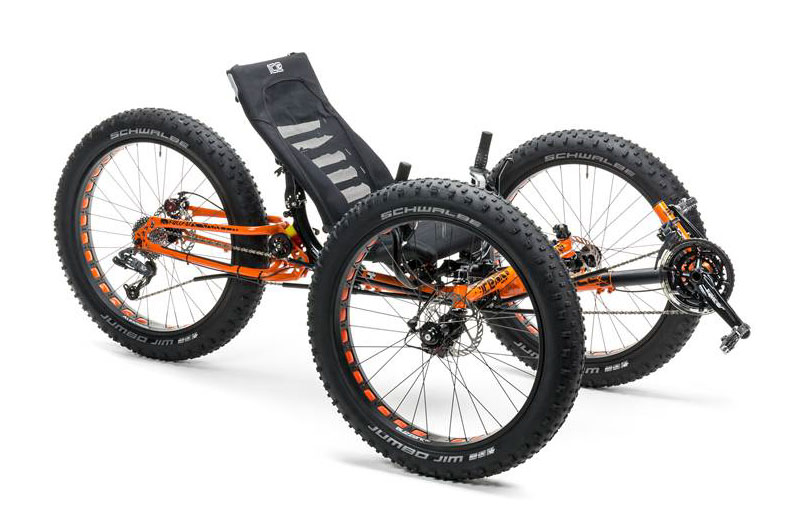
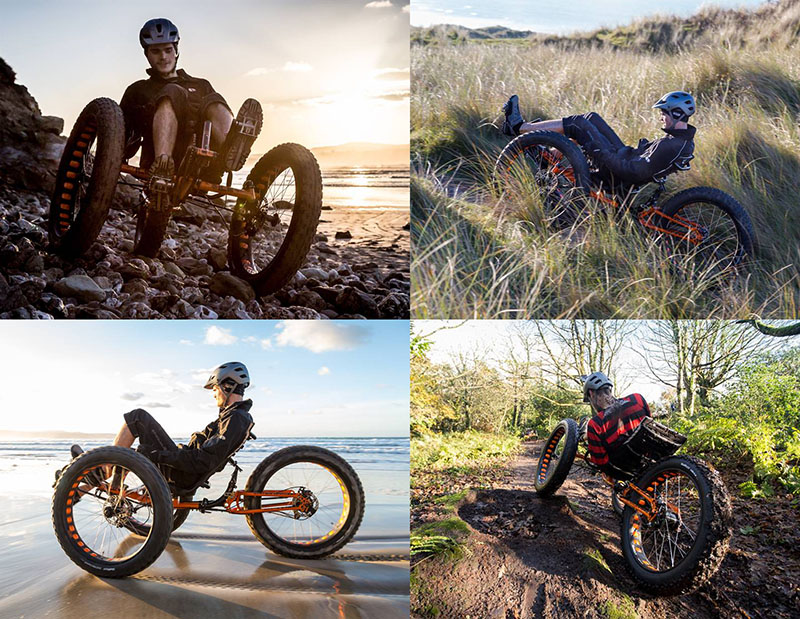
The final bike I want to mention isn't really a bike at all. The ICE Full Fat 26FS is a recumbent fat trike that evolved from the custom trike ICE built for a ride across Antarctica to the South Pole in December 2013. The full suspension trike is built for expeditions with oversized 26 inch rims and 4.7" (front), 4.8" (rear) tires. It features a Rohloff XL 14-speed hub based drivetrain, and a 4130 chromoly frame that can be folded for easier transport to the trailhead. This is definitely not a mainstream machine, but based on the number of photos on Twitter and Instagram, it does seem to be a crowd favorite at the show.
//
Subscribe to the email newsletter, and follow Bicycle Design on Facebook , Twitter , Pinterest , and Google + … and now on Instagram too!
I am a big fan of Mike Burrows, and have mentioned his work quite a few times over the years at Bicycle Design. In 2012, lifelong "cycling fanatic" and engineer Karl Sparenberg of Advanced Velo Design took over production of Burrows' Windcheetah recumbent trike, and has been working on improving the materials and manufacturability of the original design. I think it's a pretty interesting story, so I am letting Karl tell it to you directly in the guest post below.
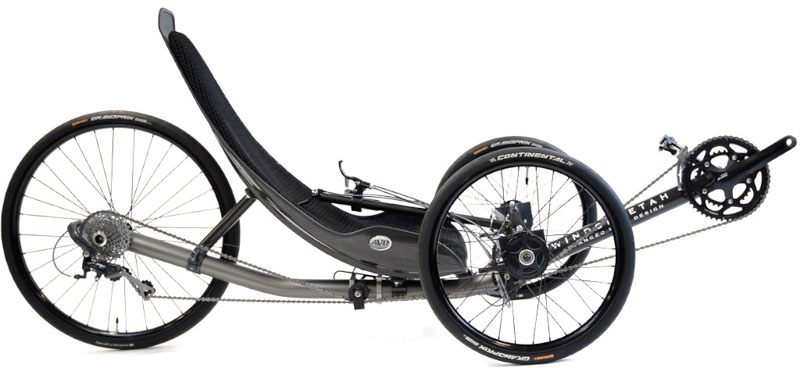
Having taken over the production of Windcheetah's a couple of years ago the design and manufacturing has taken a different tack.
Many people are already aware of Windcheetah's so I've decided not to rattle on with all the historic detail… but it goes without saying that Mike Burrows did a pretty good job 30 or so years ago when he designed it!!
But please do note that the modern iteration of Windcheetah is now a more cutting edge speed machine, incorporating advanced materials including Carbon composites and Titanium that were still prohibitively expensive in years gone by, and with that we have to move with the times and produce a 'better' machine.
When I took over the manufacture Windcheetah, to my alarm there was an Achilles heel, not with the design but the castings. These are the components that make up the frame, by bonding the aluminum and carbon tubes together onto spigots, these sand cast aluminum components could come from the foundry with flaws or voids in them.
If you could imagine ordering a 'set' of castings to make a Windcheetah frame and then having to go through the whole long winded process of post casting heat treatment, machining, drilling, tapping, powder coating and then the final finishing, only then can you proceed onto the bonded assembly with the tubing.
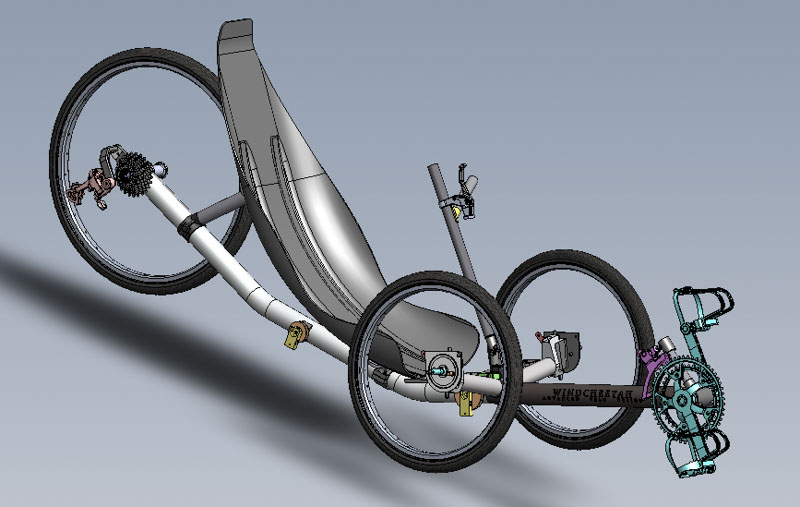
At any stage in this manufacturing process, from the rough sand castings to the finished component can the dreaded 'flaws’ or 'voids’ be discovered. Even worse, if the frame has been fully assembled and the sand casted part fails during testing, not only would the whole frame have to be scrapped, but it would also take out any of the other perfectly good components and tubing to the scrap bin with it. A very expensive and time consuming process as I'm sure you could imagine… there had to be a better way to manufacture these components!?
You may be interested to know, why were the sand castings failing at such an unacceptably high rate? Well, a few things really, but predominantly the foundries in the UK had to compete with the far east for business and as a consequence many of them had to shut down, leaving in short, foundries that were not tooled up for small production runs, or the necessary skills to cast such intricate shapes, as you find on a WIndcheetah. The foundry would simply credit the customer if any of the components failed. But this gesture didn't really help, when what was required was a full set of components to build a machine, not the hassle and cost implication of trying to manage the ongoing balance of the failure in certain components, while the 'perfect' odd parts sat on the shelf.
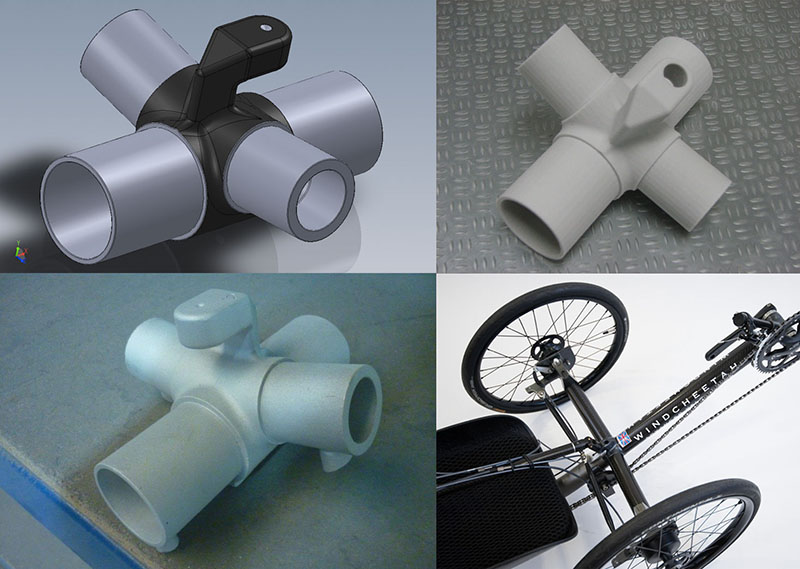
Top: CAD model screenshot and a 3d printed part (used to produce the soft mold needed for wax production).
The solution became apparent after considerable research into an alternative method of manufacturing and with massive investment into the tooling for a process known as 'lost wax' or 'Investment casting', the two terms are interchangeable but in essence the same thing
So what you see below is the result of numerous hours of redesign and CAD drawing to be able to 3D print the parts ready for soft mould production that manufacture the waxes. Now we can produce waxes this opens up the possibilities of alternative materials to Aluminum. Shortly we will be bringing to market a Magnesium version as soon as Beta testing is completed. The advantages of Magnesium or Aluminium are instantly a weight saving of third the weight.
So watch this space for an even quicker, lighter and more performance orientated Windcheetah.
For further detail contact me directly karl@windcheetah.co.uk
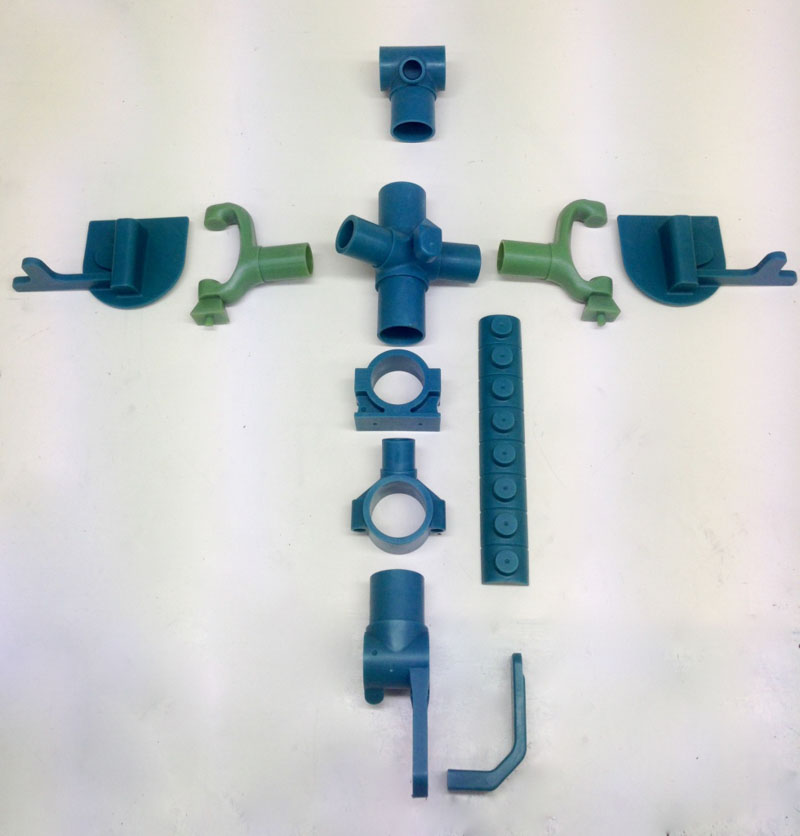
Wax parts for aluminium investment casting
//
Subscribe to the email newsletter, and follow Bicycle Design on Facebook , Twitter , Pinterest , and Google + … and now on Instagram too!
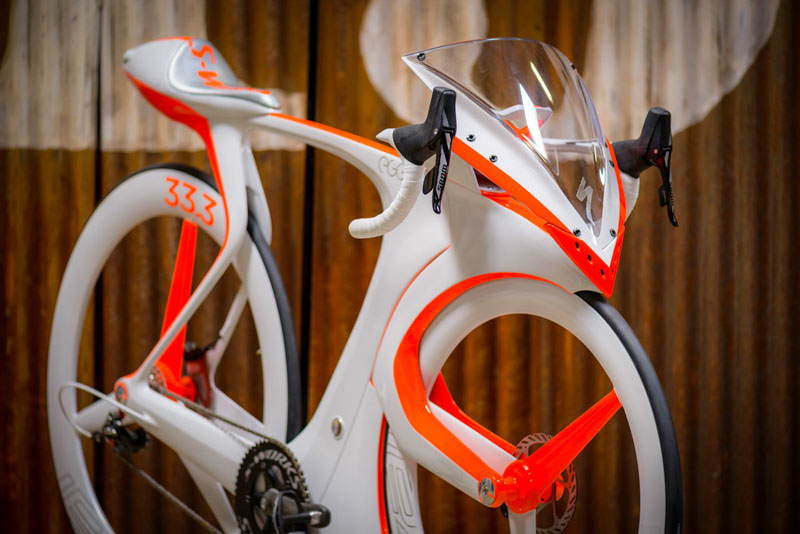
An earlier version of Specialized Creative Director Robert Egger's "Eff You See Eye" concept bike was mentioned on Bicycle Design a couple months ago (in a post that was also featured on Core77). At that time, the personal project bike was just a teaser, a partially assembled primer grey prototype, but now Specialized has released photos of the completed concept bike, along with more information about the design, on their Very Special Things site.
In the updated post, Egger talks about his reasons behind the fUCI project:
"It's kind of everything anti-UCI. Basically a 'hey, here's a totally different way of doing things. It doesn't fit into your box, but the people who would appreciate this bike aren't concerned with that box.' The whole thing was really just an exercise in working outside of the UCI box."
He goes on to say:
"The UCI really caters to a very small population, but there's so many other people out there who couldn't care less about the UCI. They don't follow the racing and they don't even know all the limitations that are put on bikes for the UCI riders. So, my feeling was let's design a bike for someone who really just wants to go fast on a road bike."
I won't elaborate on the design. If you are interesting in learning more and seeing additional images, you can click through to the updated post at Very Special Things. The design itself is secondary to me. What I really love about this is the fact that someone from major bike company is talking about ignoring the UCI technical regulations when it comes to product development. Regardless of your feelings about the UCI (and I have shared my opinions here more than a few times), rules that govern pro racing should not completely dictate the types of bikes that are available to the public. I completely agree with Egger that there is a huge market of people who would like to ride fast, but could care less about the UCI. Actually, I would consider myself to be part of that market, so I would love to see more speed oriented bike designs that are faster and better then the bikes in the pro peloton. As Egger says in the article, the job of a designer is "to create products people feel they can't live without." Great…and for the record I can definitely live without another 6.8kg double triangle carbon frame. There are a few innovative non-diamond frame designs out there already (mostly geared toward triathletes), but I hope to see many more non-UCI compliant road bike designs on the market soon. Even if the fUCI will never be a production model, kudos to Egger and Specialized for stirring the pot.
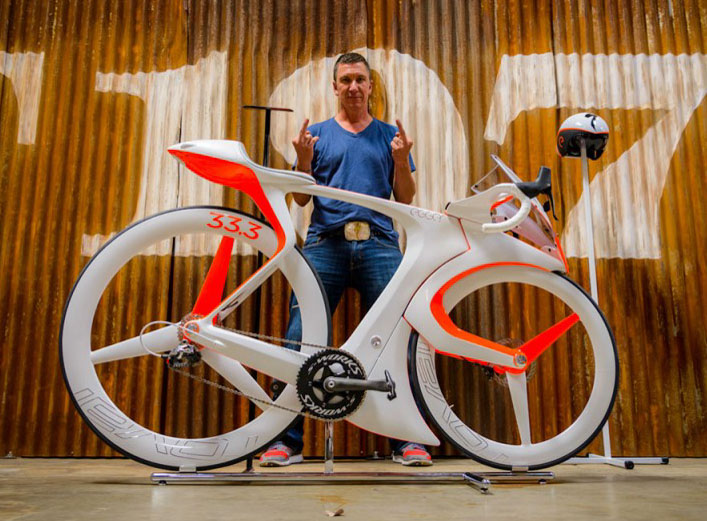
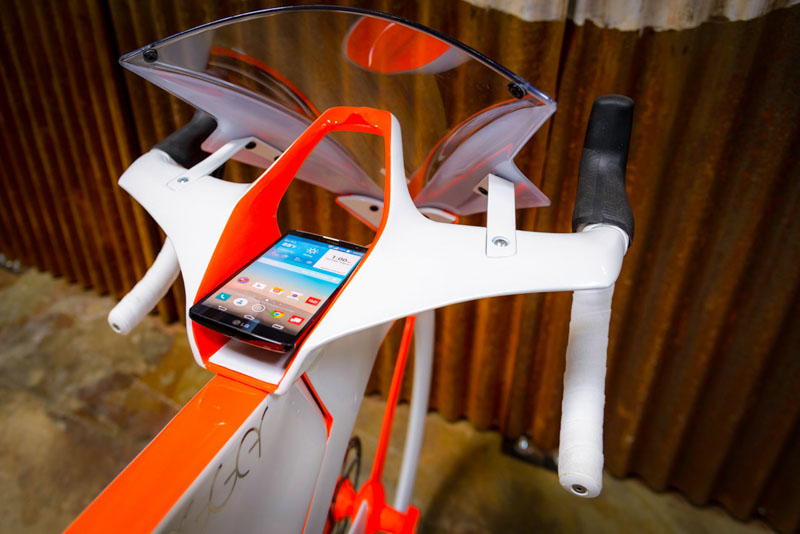

Photo credits: Carson Blume
//
Subscribe to the email newsletter, and follow Bicycle Design on Facebook , Twitter , Pinterest , and Google + … and now on Instagram too!
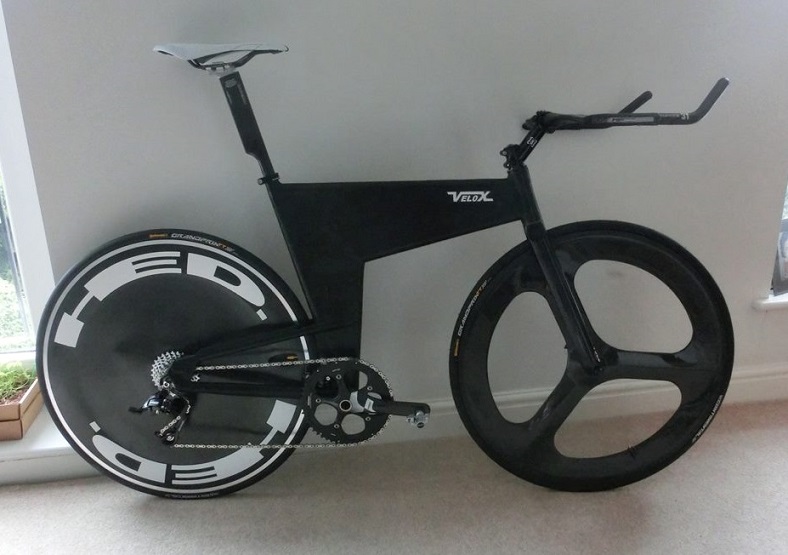
Back in the mid nineties, I remember being completely fascinated with Damon Rinard's "How I Made a Carbon Fiber Bike in My Garage" article (20+ years later, you should still check out the archive of his old Tech Pages if you never saw them, and read a recent interview with Rinard at Slowtwitch). I still enjoy seeing homebuilt carbon fiber bikes, and have posted a few reader submitted ones here at Bicycle Design over the years. Today, I want to share one more, a recent personal project by UK based mechanical engineer Richard Machin.
Richard's bike, which was inspired by classics like the Lotus 110 and Pinarello Espada, will serve as his personal time trial machine. Squeezing it in after his day job, Richard spent 8 months on the project, from the first CAD model to the initial test run.
See below for an explanation of the project in his own words.
"The main aim was to produce a light-weight frame with the lowest possible aerodynamic drag I could achieve, whilst still having the “traditional” riding position of a “conventional” bike which I consider to be much safer than a recumbent when being used on public roads. To achieve this, four main strategies were employed:
- Remove frame elements where possible
- Minimize the frontal area of remaining frame elements
- Improve the cross-sectional shape of remaining frame elements
- Shield components from the air flow by placing them behind other elements
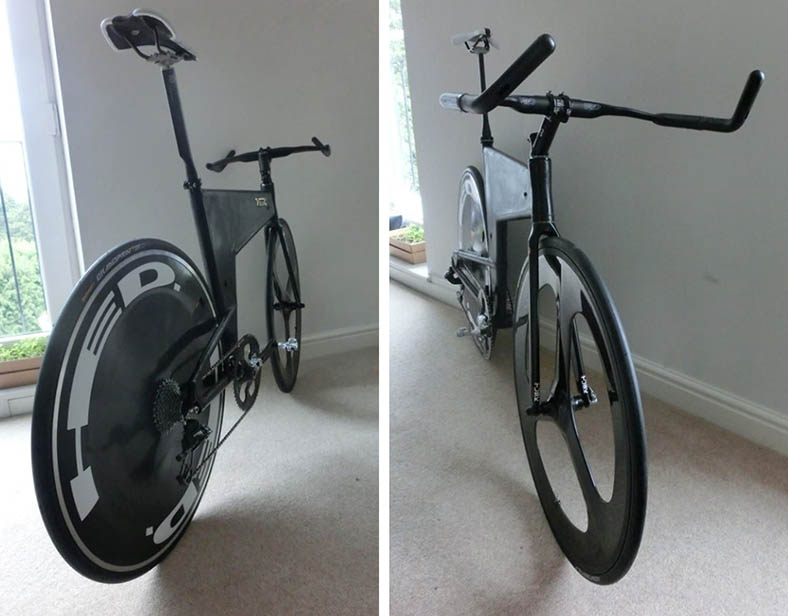
Examples of how these principles were applied include: Removing the downtube from the traditional bike shape and inclining the seat stays to an extreme angle which both decreases their frontal area and increases their length to width aspect ratio when measured in a horizontal plane (i.e. in-line with the air flow direction). The rear brake sits nestled behind the chainset above the chainstays so it truly is hidden from the wind, not just out of sight as with some designs where they are underneath the chain stays. The front brake isn’t shown in the pictures but the intention is to get a set of forks with integrated brakes behind the fork arms. At the moment I am using a Campagnolo U-Brake to achieve the same effect.
As the bike will be used on flat Time Trial routes and velodromes only I dispensed with the small inner chain ring which also allowed me to avoid the use of a front derailleur. A small carbon fibre chain guard sits above the chain ring to stop the chain dropping off during gear changes.
Obviously when you’re going to all that trouble to design an aerodynamic frame you also want the best wheels you can find, which is why I went with a rear disc and front tri-spoke. The disc wheel has a built-in PowerTap power meter so that I can actually measure the improvement in drag compared to my “conventional” bikes."
The frame itself is a combination of aluminum (drop-outs, bottom bracket shell, head tube, seat post clamp area), and carbon fiber. The carbon fiber parts were a mix of pre-made plates and tubes cut and bonded together with the aluminum parts to form the basic shape and then the whole thing was encapsulated in several layers of wet lay-up carbon fiber for integrity. "
For more information about Richard's bike, follow his Velox Facebook page, where he plans to post further updates about the bike and its development.
(adsbygoogle = window.adsbygoogle || []).push({});
Subscribe to the email newsletter, and follow Bicycle Design on Facebook , Twitter , Pinterest , and Google + … and now on Instagram too!
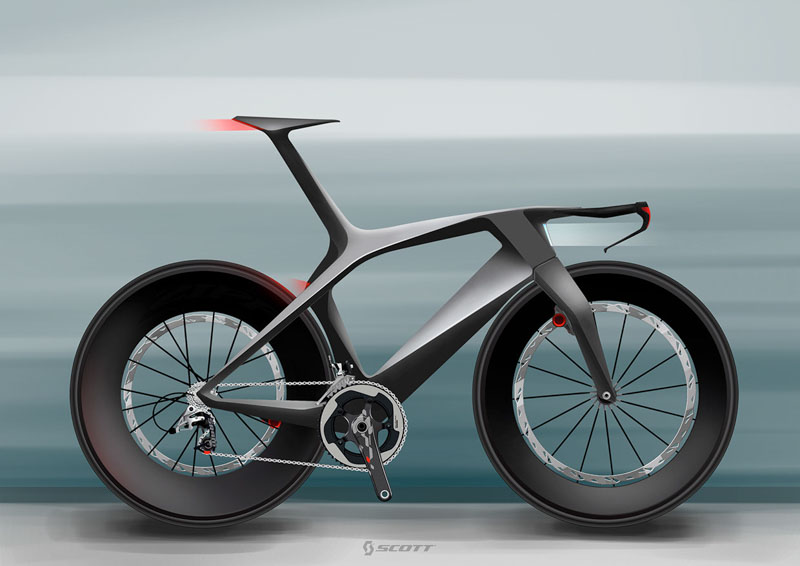
Julien Delcambre currently works as a watch designer in Switzerland, but in a previous job at Scott Sports he designed a few interesting concept bikes. He points out on his Behance page that his main mission at Scott was to redesign the old Gambler (a full suspension mountain bike). He was in charge of the design and graphics for all the parts and frame.
"I was in charge of the design and graphics for all the parts and frame. Firstly the job was to create new frame with 27.5 wheels, new saddle, new links. Then I worked on the graphic elements ( colors, shapes, fonts ) to finish the complete bike."
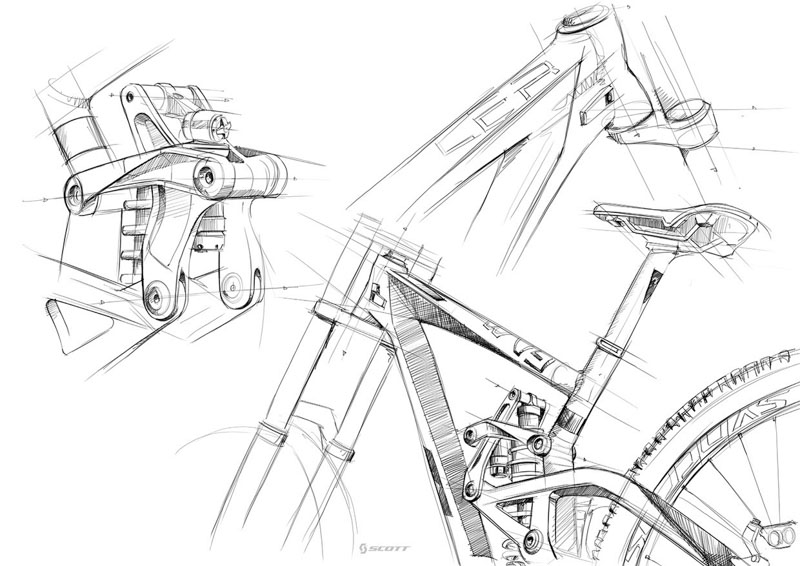
You can see the Gambler on his project page, but the designs that caught my attention were his time trial concepts. Really interesting forms…especially the Plasma concept that is partially shown in the image below.
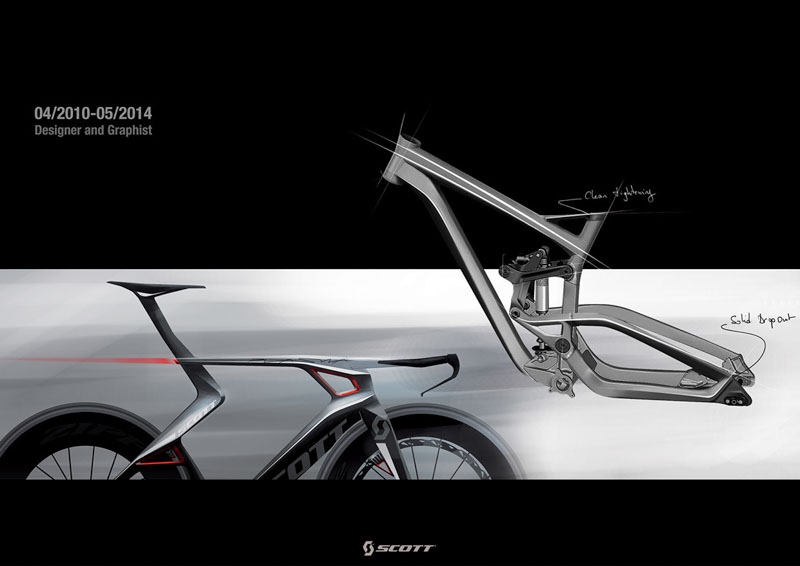
(adsbygoogle = window.adsbygoogle || []).push({});
Subscribe to the email newsletter, and follow Bicycle Design on Facebook , Twitter , Pinterest , and Google + … and now on Instagram too!
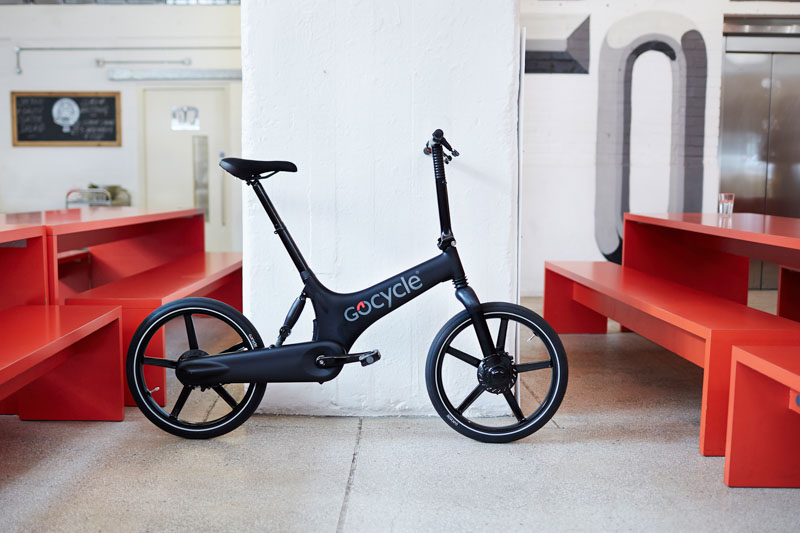
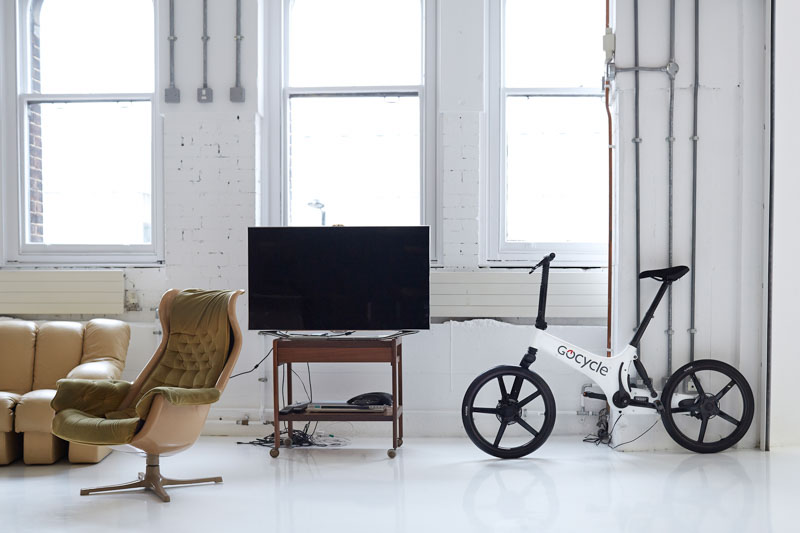
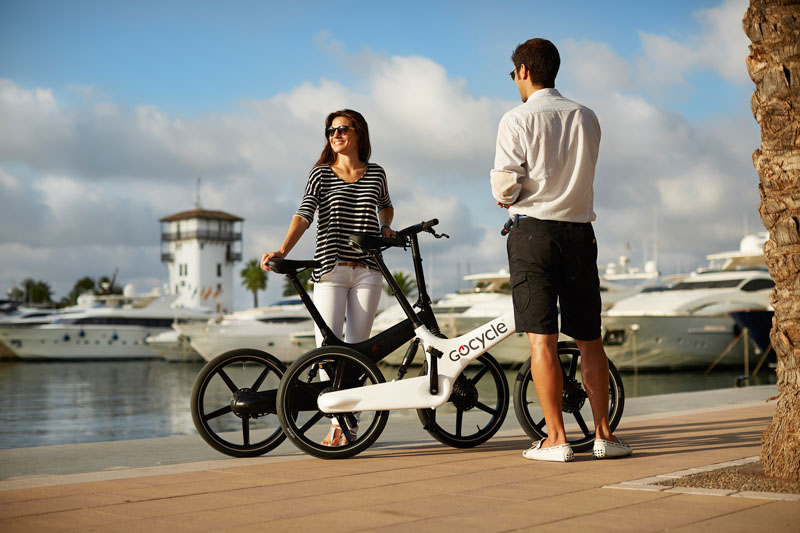
The Gocycle folding electric bike was first mentioned on Bicycle Design in early 2009. At the time, its clean design with a fully enclosed drivetrain seemed quite innovative. Six years later, the latest Gocycle G2 is still an innovative design, which is why it was recently awarded a 2015 Red Dot prize for Product Design (one of more than 10 design awards since it received an igus Gold Manus Award in 2006).
The G2 was designed and developed by former McLaren engineer Richard Thorpe, and he explains that the bike was strongly influenced by automotive engineering principles.
"As a designer, the end result of your work is defined by the product's DNA - the building blocks. A no-compromise mind-set in the choice of materials, production processes, and total component integration so that all parts work and fit together is what sets the Gocycle G2 apart; it has more in common with a car than a bicycle.
Materials choices and construction processes expand the possibility for a designer to come up with different creative solutions. Gocycle's fluid form is a result of my choice to work with different materials such as lightweight and exotic magnesium alloy. Using an injection metal molding process for the construction of the frame and wheels yields smooth and naturally flowing lines in the form. The weight is balanced, the power is balanced, central and dynamic from a visual perspective - and you feel this too when you ride an electric Gocycle."
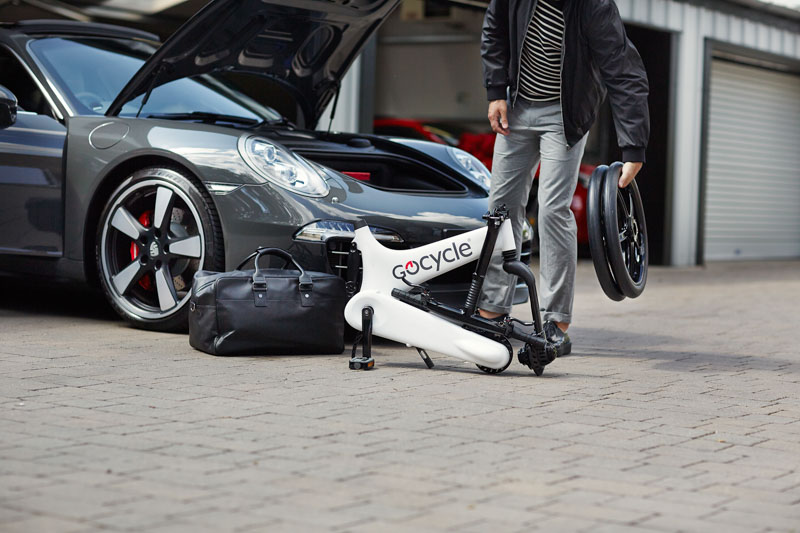
Due to Thorpe's material choices, the G2 is lightweight for a folding electric bike…only 16kg (about 35 lbs). If you are carrying the folded bike up and down stairs daily or taking it onto a crowded commuter train, the lighter weight is a benefit, as is the lack of a messy exposed chain.
For more information about the G2, visit the Gocycle website, and check out this video review from Electric Bike Report.
(adsbygoogle = window.adsbygoogle || []).push({});
Subscribe to the email newsletter, and follow Bicycle Design on Facebook , Twitter , Pinterest , and Google + … and now on Instagram too!
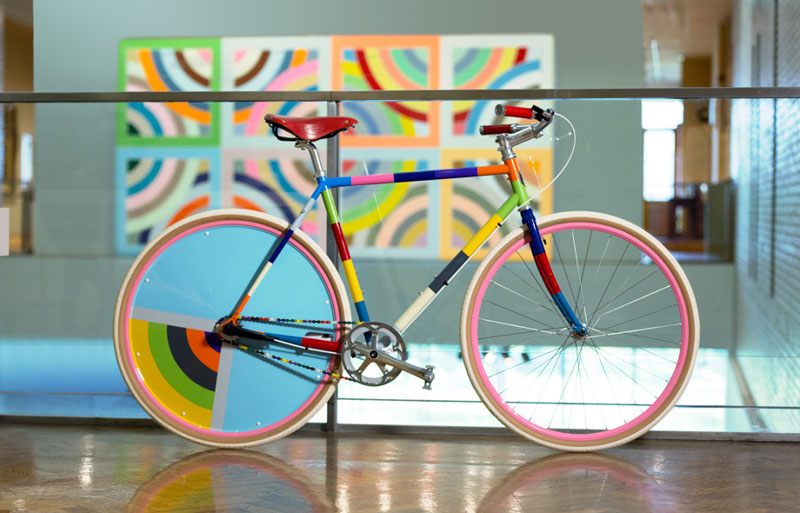
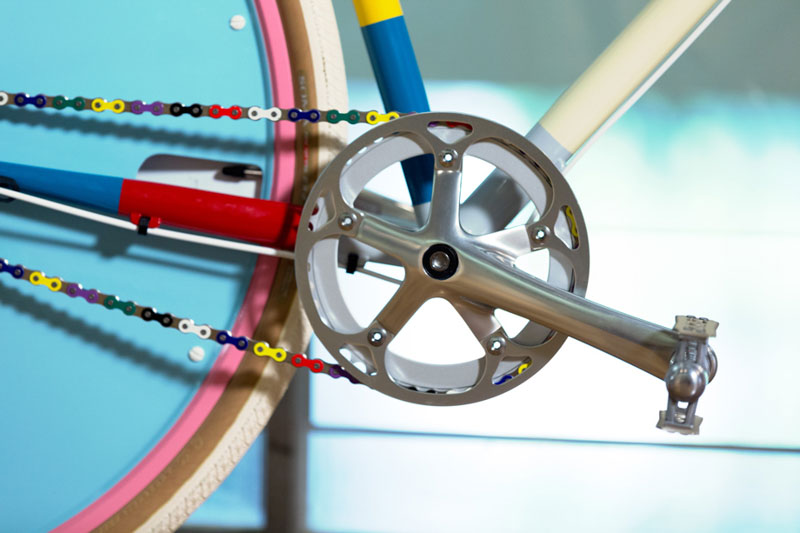
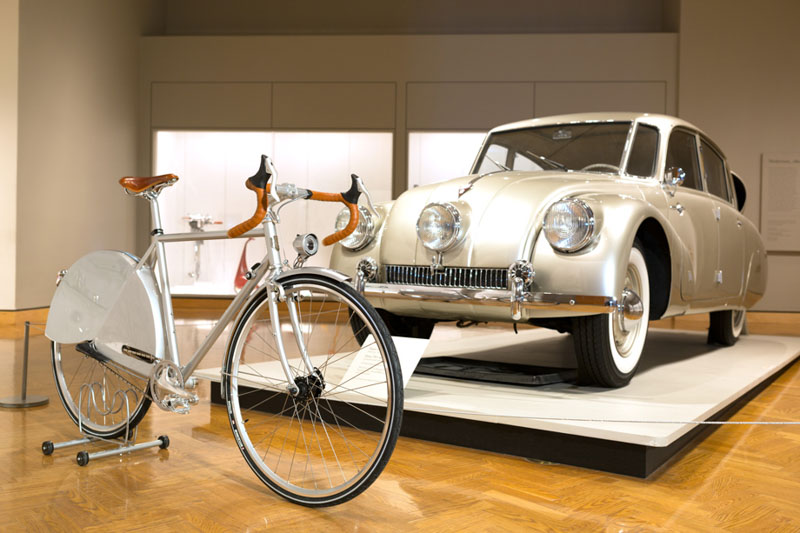
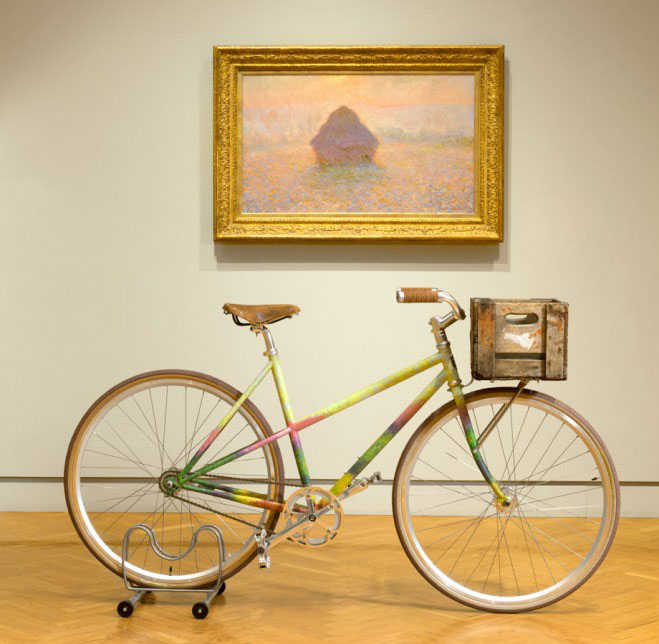
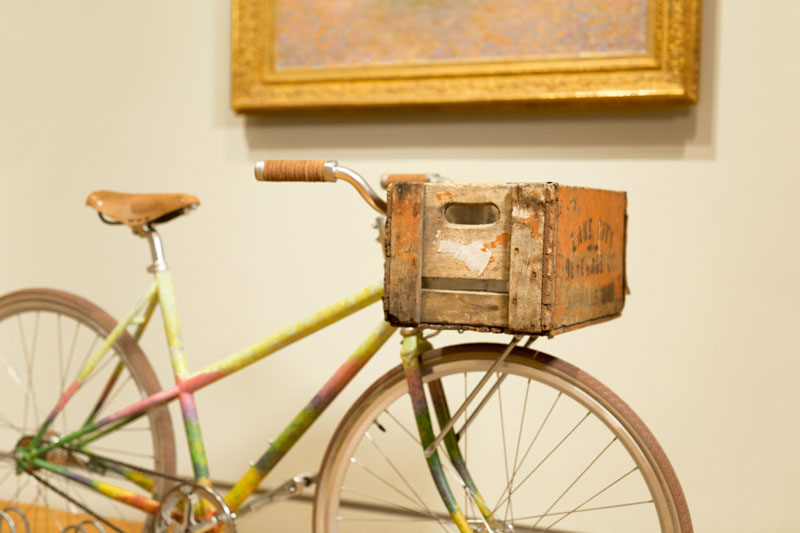
To celebrate their 100th birthday, the Minneapolis Institute of Arts (MIA) teamed up with Handsome Cycles to bring some of the MIA's most famous masterpieces to life in the form of three art-inspired bikes. According to MIA Venture Innovation Director Hunter Wright, "The MIA is excited to partner with Handsome Cycles, a company that shares the museum's commitment to embracing the local and integrating great design, technology, and experimentation, while staying true to its core values and community. "
In order to create custom bike designs inspired by pieces in the MIA's permanent collection, including paintings by Claude Monet and Frank Stella, and a 1948 Tatra T87 sedan, Handsome reached out to a few other notable Minneapolis based designers and artisans – KNOCK, inc., TREAT AND COMPANY, Peacock Groove, and Dirt Designs Graphic. The results of the collaboration are pretty impressive… as you can see in the video below.
Art Bikes KNOCK | TREAT & Co. | Handsome | MIA from KNOCKinc Interactive on Vimeo.
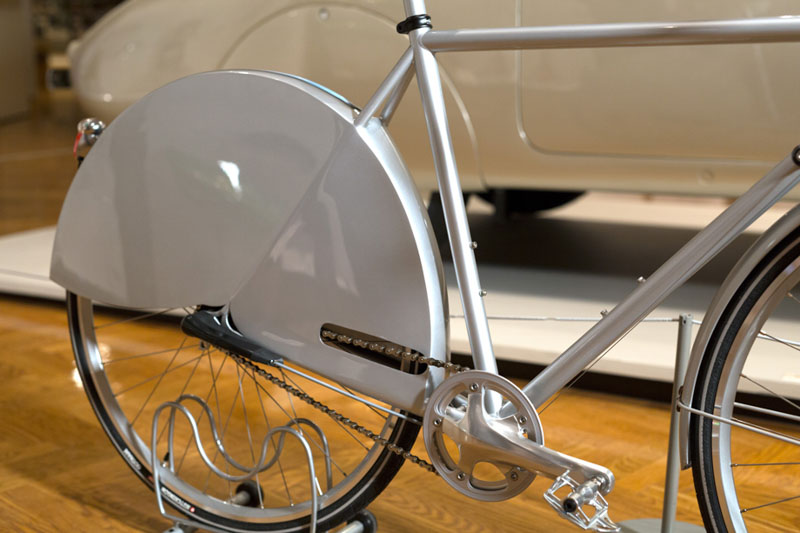
See images of each of the bikes below. I like many of the details on each of them, so it's hard to pick a favorite. The bike inspired by the 1948 Tatra T-87 sedan is the one that I keep going back to though. I just love the form of the fender skirt, inspired by the car's rear stabilizing fin.
Trend site PSFK talked to Handsome's Ben Morrison about each of the bikes. Check out their post for his take on each of the three designs.
Just one last thing to point out… these bikes aren't just one off museum pieces. The limited edition 100 Year Commemorative Bikes will be available for sale (retail $1099.95) at the MIA Shop and at HandsomeCycles.com.
//
Subscribe to the email newsletter, and follow Bicycle Design on Facebook , Twitter , Pinterest , and Google + … and now on Instagram too!


