25-Jul-16
 Rockaway Park / The Mob [ 25-Jul-16 3:26pm ]
Really Red [ 15-Jun-16 9:32am ]
Rockaway Park / The Mob [ 25-Jul-16 3:26pm ]
Really Red [ 15-Jun-16 9:32am ]
Always had an on-off relationship with American Hardcore... never liked most of it as much as the Brit anarcho / hippy / punk dimension but this was a great song and is still a great song...
And entirely true, of course.
25-May-16
Dusk + Blackdown Rinse FM May 16 [ 25-May-16 5:26pm ]
IX Tab / Hoofus - The Blow [ 13-May-16 10:31am ]
There's a new IX Tab split release with Hoofus on the every reliable Front&Follow, the first in a series of collaborative things...
Here's a sample:
Will come in a sexy little cassette form plus downloads for those of you with digital manipulation devices.
12-May-16
Keysound Allstars on SWU FM [ 12-May-16 9:12pm ]
Summer Remains... Kemper and (Ice Bird Spiral) [ 12-May-16 12:26pm ]
...a mix by Kemper Norton, or a mix of Kemper Norton, including some stuff I don't think I've heard before: an on open envelope of odds and ends, including a collaboration / remix of the inimitable Ice Bird Spiral, a band who might well have precipitated a causal chain that lead to Kemper Norton, Ekoplekz, Hacker Farm, IX Tab and probably many others... if only because everyone who went to see them thought: yeah, absolutely, this is immense; why the fuck NOT?
08-May-16
poststep lingers - 2015 overview + latest news [ 07-May-16 11:30pm ]
Time marches on and new music is made, but not music containing much that is actually "new". From my perspective, this is where things have been heading the last couple of years, after approximately five years of endless wonder and invention, while from the perspective of other people, it's how things have continuously been since at least the nineties. For me, the big question is not why things are slowing down - if anything, it would be far more weird if they didn't - but rather, why the majority of people, including those who have dedicated their lives to actively investigating the cutting edge of new music, didn't experience the same future rush as I did, even when directly confronted with some of the most unique, strange and groundbreaking music ever made. And, perhaps even more puzzling, why did the people making that music rarely argue their cause? Almost as if they didn't really believe they could create anything new, they seemed unable to escape the retro-logical mindset themselves, even when their creations did. The answers to these questions are complex and I'm still in the process of thinking them through, so it'll still take some time before I'll the be able to pull it all together comprehensively. In the meantime, even though I'm not driven by the same thrill of discovery as before, I'd still like to make some kind of overview of the state of posstep last year. There was nowhere as much good stuff as in 2014, but the creative momentum of the poststep peak years was still big enough to produce quite a few brilliant records, even if they were all more or less working from within categories established during the peak years, rather than inventing new ones.
Jlin: Dark Energy (Planet MU)
SIMPIG: Strangers (Argent Sale)Darren Keen: He's Not Real (Orange Milk)Ever since footwork became the new big thing among ghetto beat connoisseurs, there's been a lot of handwringing about the possible gentrification of the style. Even with Jlin, who I suppose is seen as an "authentic" member of the original scene, there's been some talk about how she's moving away from the raw radicalism of the original sound, which I think is pretty silly. She's allowing herself to experiment and use a broad palette of sounds and ideas, but the "authentic" rawness and jagged edges are certainly still there - it's just not something that is made with the endlessly repeating rap- and soul-loops of "traditional" footwork, and thank heavens for that. Those loops were already pretty lame to begin with, and have only become more and more annoying as they've been used over and over again for five years by anyone who wanted to sound "authentic". Wonderfully free of that, Dark Energy is one of the best and most forward thinking "proper" footwork albums ever, second perhaps only to DJ Diamonds Flight Muzik, as well as one of the very best and most refreshingly strange albums of 2015. Which, sadly, doesn't mean that it's offering something completely new and unheard, it's just one of the best possible utilization of the still existing potential for the new and unheard in a style that is, in itself, not all that new any more.
Where Dark Energy remains raw, SIMPIGs Strangers is archetypical dreamy-cosmic, almost chilled, footwork-through-an-IDM-lens, to the degree that you hardly even notice the footwork elements at first - it's mostly just rhythmic eccentricities seamlessly blending into a wider concoction of different well established poststep innovations, as well as various chill out/IDM-trappings in general. It was definitely the bitstep-remains that drew me in more than the footwork, but in the end it all just comes together in a way that simultaneously feels obviously right and perhaps a bit too obvious. On the one hand, Strangersrefine and recombine stuff that already works, rather than invent anything new, and as such it's clearly exemplifying the halt that poststeps engine of invention has come to, but on the other hand, it's hard not to enjoy an album that manage to use a good deal of the innovations that has exited me so much the last five years in a rather original and convincing way. After all, I still wish there was more of this stuff, and SIMPIG delivers it.
If Dark Energy is "authentic" footwork at its best and most forward thinking, and SIMPIG is a brilliant example of the "inauthentic" cosmic/atmospheric approach to the style, Darren Keen's He's Not Real is a typical example of the more bizarre and silly end of "inauthentic footwork", turning it into a hyperactive bricolage of IDM-tomfoolery and goofy samples. The result is pretty uneven, with several tracks being hard to stomach due to their lame sample sources (self consciously cheesy pop, ironic "ghetto" vocals), but there's also quite a few tracks (something like half of them, I'd say) that reaches a kind of absurdist, baroque charm that is quite unique, making the album worth seeking out.

Bruce Smear: Chlorine (Orange Milk)Oneothrix Point Never: Garden of Delete (Warp)Co La: No No (Software)The unhinged and at times almost disturbing weirdness of Giant Claw, Filter Dread (on Midi Space at least) and especially Felicita, was one of the most refreshing developments in 2014, but it wasn't developed much further in 2015 - actually, if that year produced anything even remotely as deranged as Felicitas Frenemies, I didn't hear it. The ultra sharp, bright and hyperactive sound of Bruce Smear's Chlorine came close, but also seemed, to some degree, like a bit-too-obvious mixture of PC music, cryo-grime and electro-tinged IDM, and as such it eventually did feel like a slight step backwards despite it's exciting syntheticness.
If anyone actually seemed to take a step forward in this direction, it was Oneothrix Point Never. On Garden of Delete he all but completely abandoned the retro-synth sound of his early records, in favour of a strange concoction of abrasive digital textures, and an opulent, baroque-yet-inorganic approach to composition, sometimes resulting in something like an absurdist take on EDM-"song writing", complete with grotesquely autotuned vocals. Like a self consciously weird and arty cousin to Hudson Mohawkes kitchy Butter, not everything on Garden of Delete worked equally well, but it was definitely one of the most unique and alien records of 2015.
Slightly in the same area - though nowhere as loudly twisted and fractured - was Co La's NO NO, which finally felt like a proper follow up to 2013s Moody Coup (2014's uneven Hegemony of Delete seemed more like a one-off diversion). Using the same strange AI-dream-logic that made Moody Coup such an inexhaustibly fascinating record, but taken in a more febrile and rhythmically angular direction, NO NOwas in many ways as artificial and post-organic as OPN, yet at the same time deceptively straightforward and well rounded, and as such perhaps the better album.
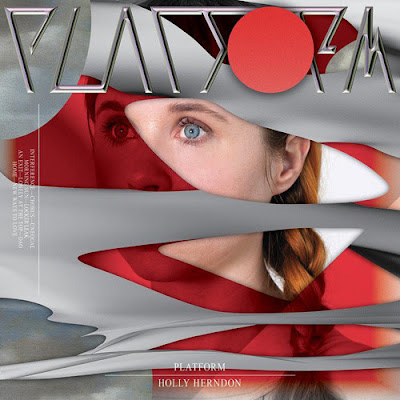
Holly Herndon: Platform (4AD) Aisha Devi: Of Matter and Spirit (Houndstooth)Visionist: Safe (Pan)As one of the most talked about and anticipated albums of 2015, Holly Herndon's Platformseemed to disappoint some, but with me it was the other way round - I liked it so much more exactly because she abandoned the familiar IDM/industrial-ambient structures that made Movement a rather predictable, almost traditional album, and went all the way into twitchy, labyrinthine voicescapes. Sure, abstract voicescapes is not something new, and you could argue that especially within poststep it's pretty much its own tradition, but it's nevertheless still something with a lot of potential, and that potential was brilliantly realised on Platform, which simultaneously managed to avoid the glitchy-dreampop comfyness that these voicescapes far too often regress to, yet sounded almost like pop on some tracks, making abrasive avant garde structures surprisingly catchy.
If Herndon avoided the well-established use of voice manipulations to create dreamy, floating soundscapes, that approach was a big part of Aisha Devi's Of Matter and Spirit, but with none of the usual comforting pleasantness. Instead, the overall sound was icy synthetic and inhuman, as ominous and foreboding as Devis mangled voice, which sounded like the wailing of digital spirits forever caught inside forgotten data networks, or the mysticism of Dead Can Dance remade by an alien AI left to its own devices for millennia.
Herndon and Aisha Devi seem to represent two different takes on how manipulated voices can be used to explore the ever disintegrating border between artificial unreality and the organic, but the most radical of 2015's voice-alchemists was perhaps Visionist, who I guess should technically be classified as "weightless grime", though the use of disembodied, half dissolved voices was pretty much the only defining characteristic of Safe, which otherwise was more or less unclassifiable. Drenched in an overwhelming sadness, the album was sort of related to Burial in spirit, but without using any of the well-established Burial-tricks so familiar by now - no broken 2step beats, engulfing crackle or ghostly submerged rave sounds here, just a half-fractured mosaic of abandoned voice fragments lost in an icy void. Unable to connect while blindly calling into an endless indifferent nothingness, isolated words and phonemes glittered like distant stars in ever changing constellations, creating patterns of stark beauty and hopeless longing. At the same time moving and weirdly terrifying, Safe among the absolute best of the year.
Slackk: Backwards Light (R&S) Acre: Better Strangers (Tectonic)Acre+Filter Dread: Interference (Codes)While Visionist made abstract grime so weightless that it became something else entirely, there were still plenty of experimental grime producers pushing the style forward in 2015 without leaving it behind altogether. One of the best was Slackk - a bit of a veteran in the field by now - who never seemed interested in the pure and bleak abstractions pursued by so many of his colleagues. Continuing down his own path, further refining a highly personal take on "emo-grime", it was hardly surprising that his Backwards Light ep was much in the same style as 2014's Palm Tree Fire lp - an abundance of complex-yet-straightforward melodic arrangements and bittersweet, melancholic moods. At the same time, it also felt like an even more focused distillation of that sound, with each of the six hollow funeral marches a brilliant and self-contained gem in its own right, making it perhaps his best release yet.
Melancholic moods were also present on Acre's Better Strangers, though only as one element in an overall extremely dark and grim sound world - sort of how the most brutally ugly and inorganic tracks from the first Rephlex Grime-compilation would have ended up if they'd been left to disintegrate and deteriorate in a cold concrete basement for ten years. This didn't work all the way through Better Strangers though, some tracks were simply too minimal and monochrome to be interesting, which was extra frustrating because the best tracks were just incredibly good - at the same time genuinely futuristic and hauntologically ghostly, oppressively dystopic and strangely touching, vulnerable and beautiful in all their icy, crumbling hopelessness. Trimmed down three or four tracks, Better Strangers could have been the album of the year, but then, Interference, Acre's collaboration with Filter Dread, was arguably the ep of the year - a much more sharp, focused and upbeat affair, but still every bit as strange and inorganically alien as you could wish for, a sonic landscape inhabited by odd machine creatures moving in high speed patterns completely incomprehensible to us.
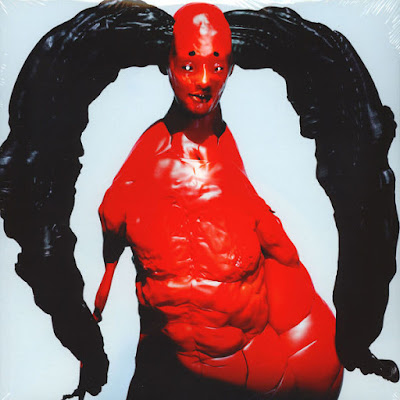
Brood Ma: Populous (Hemlock) Arca: Mutant (Mute)Kuedo: Assertion of a Surrounding Presence (Knives)Related to the abstract grime contingent, the biggest "movement" in experimental electronics in 2015 was probably all those producers inhabiting the interzone between the kind of abstract grime that had become so abstract that it contained no actual traces of grime anymore, vaporwave-turned-neo-IDM, and what I used to call "entropica" - disintegrating soundscapes updating dark ambient and avant-industrial techno for post dubstep sensibilities. Adam Harper territory, on other words. As with a lot of the first generation entropica (Actress, Hype Williams, Lukid), a lot of this stuff didn't completely convince me; a bit too often it was also a bit too close to standard dark/industrial-tinged ambient, or Autechre-ish IDM, and while both kinds of music can be great, it also feels pretty regressive going on making that kind of stuff. So I never really got into M.E.S.H., J.G.Biberkopf or Rabit's Communion - the latter didseem fresh and invigorating at first and in small doses, but it simply lacked the focus and variety to be convincing as Whole LP. Only a few from this camp really worked for me; Brood Ma's Populous had enough structural power and momentum to make the gritty, noisy aesthetic fascinating, even if it didn't exactly feel forward-thinking, and Arca's Mutant, while a bit too reminiscent of traditional glitchy IDM to be a revolutionary work, still had an undeniable originality and personality to its compositions, slowly unfolding the more you'd listen. I'm still in the process, but as with Xen, more and more of it is getting into focus and suddenly making sense. I doubt it'll stop being too long, though, but who knows?
Eventually, the best of this bunch in my opinion was Kuedo's ep Assertion of a Surrounding Presence, which moved away from the pioneering "cosmic footwork" of Severant in favour of a much more cold and ominous sound. There was still a slight element of synth "classicism" here and there, but the overall feel was as bleak and post-organic as anything by Rabit or Brood Ma, just delivered in a much more immediate and straightforwardly structured way, and not held back by attempts to be as formless and constantly shifting as possible.
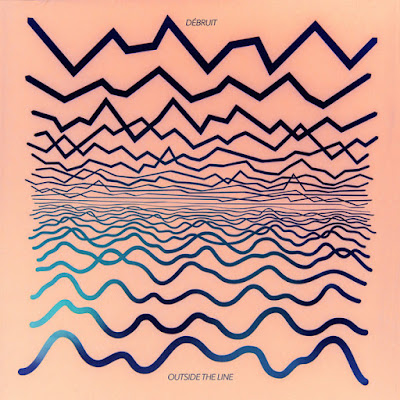
Turnsteak: Digitale Pourpre (With Us) Debruit: Outside the Line (ICI)I have never really been into the "clubby" end of poststep, but it does deliver some good stuff now and then, and surprisingly, two if the most original albums of 2015 was actually from this end of things - as well as from France. The duo Turnsteak, previously completely unknown to me, worked with the well-known formula of twitchy UK funky/2step-beats and a neon lit emotionalism somewhere between euphoria and melancholia - i.e. where we also finds artists like Damu, Walton and Sully (around Carrier at least). Some tracks on Digital Pourpre didn't do much more than continue this tradition, but big parts of the album also showed that there was still plenty of opportunities for new twists within the formula - enough potential for further development to make an album that was both a well-rounded whole and a completely personal take on the sound, full of odd and original touches.
With Debruit's Outside the Line, the most surprising thing is that it seemed like a "clubby" poststep record at all, rather than another instalment of his uniquely twisted ethno-wonky-funk. Sure, the ethno samples were still there, and there was none of the house/garage elements so common to the strains of poststep desperately trying to align itself with club/'nuum authenticity, but the use of four to the floor beats and much more straightforwardly flowing basslines also took it in the direction of - relatively - conventional dancefloor-oriented 21st century club music. And I'm not really sure how to feel about it, I must confess. On one hand, it's good that Debruit is trying completely new things - as great as his previous style is, he has also by now refined it to the point where some new input is clearly needed -, and there's still some wonderfully weird sounds and dreamy, dizzy moods on Outside the Line. On the other hand, though, working within a much simpler rhythmic structure is just not to his advantage: It has always been the sharp edges and far out syncopations that made his music really original and amazing, and without them it can at times feel a bit flat and featureless, especially with the heavy use of sampled "tribal" percussion, which just seems pointlessly tacked on when it isn't twisted into original shapes by larger, weirder rhythmic structures. As a result, Outside the Line was to some degree frustrating - sometimes it seemed strangely anonymous, and sometimes it sounded wonderfully strange and original - but in any case it's a good thing that Debruit isn't stuck. I just hope that he'll be able to develop further while regaining the rhythmic weirdness that made him so special to begin with.
Zomby: Let's Jam pt. 2 (XL)Myth: Evaporate (Halc)Ebbo Kraan: Aletta (Rwina) As with the SIMPIG-album mentioned above, this is all records that feel a bit like guilty pleasures, in that they're immediately pleasurable for someone with my preferences in poststep, but at the same time they're not trying to push any envelope whatsoever. If anything, they sound great exactly because they're cultivating some of those elements that seemed so revolutionary and envelope-pushing in the beginning of poststep. I guess there's people who, like me, wish that there was simply more of this amazing, wonderful music, and hence they make more of it, ticking all the right boxes, rather than inventing new ones. While not straightforward bitstep - still my favourite poststep substyle - these records all use, to some extend, the spiralling arpeggios and 8-bit cascades so significant for that style, but mostly within a slightly more dreamy and melancholic frame, as pioneered by artists like Ikonika, Desto and not least Zomby. So in a way, you could say that Zomby is plagiarizing himself on part 2 of the two Let's Jam-ep's he released in 2015, doing what he does best, and pretty obviously still doing it brilliantly. Not that he's simply repeating classic Zomby-formulas without any development, there's some very slight twists, the tracks seem both more varied and looser, yet also more fully formed than most of the With Love-album, though it's not easy to really put a finger on why that is. In any case it's a great Zomby ep, still evolving his personal sound slowly and organically, his inspiration still far from exhausted. Though, to be fair, part 1 was pretty much run-of-the-mill minimal "acid"/techno-jams that contained nothing to distinguish them as Zomby-productions.
That the "classic" Zomby-sound still has fans should not be surprising, somehow the sad, longing hopelesness of post-Burial sadstep just seem to fit twinkling, super-simple arpeggio-melodies like a glove. Myth's Evaporate ep didn't bring anything new to that table, and yet, it's hard to resist that sound when it's made so pure and immediate. Which could also be said about Ebbo Kraan's Alettaep, despite being a much more hard and heavy affair, based on the half-atmospheric, half-pompous avant-trap sound developed by artists like Starkey, Desto and Krampfhaft over the last three years. Again, there's nothing here really moving that sound forward, but when something works so well, it's obvious that there'll be people out there who think that it's unfair that it should be gone so soon, and wat to keep it alive. I can't really blame them.
STOP PRESS: Just when I'd come to the conclusion that poststep is more or less over and done, a bunch of amazing new poststep records appears in a short time, almost recreating the feeling of a continuous eruption of brilliance that made the previous peak years such a wonder to live through. OK, to be fair, the element of constant surprise is still missing, none of these records are creating something utterly unheard and unexpected, they're all pretty much expanding the current abstract grime sound, but they're doing it on such a uniformly inventive and invigorating level that I'm still feeling an unmistakable future buzz - apparently this style has huge hidden reservoirs of unused potential for invention. The play- and colourful, almost downright cartoony side of grime is taken to the max with Darq E Freaker's ADHDep, Murlo's Odyssey lp, and Loom's European Heartache ep (or most of it, anyway) - sometimes wonderfully absurdist and quirky like toys designed to amuse a hyper-intelligent alien child, and sometimes creating a kind of hysteric grime version of the über-synthetic frenzy found in PC music. In the more harsh and dark department, Brood Ma takes a quantum leap forward from the already pretty good Popolous, and makes the kind of record that actually sounds like you imagine all those abstract electronic artists like MESH, Rabit or Lotic would sound, when reading Adam Harper-ish descriptions of their music. Dazeuses a lot of the same tricks as everybody else in this scene, but here they really work, creating music that is every bit as ominously monumental and inorganically shapeshifting as you could wish for.
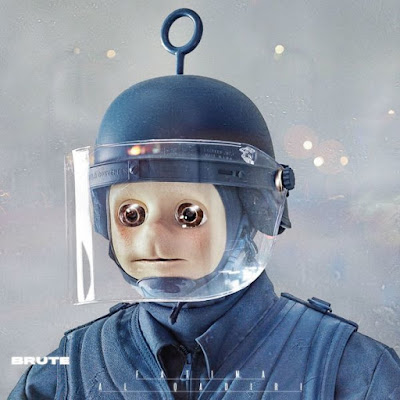
Equally heavy and doomy, but also much more cold and punishing, the Cellar ep from NA (half of Nguzunguzu) is like grime reinvented by Marc Acardipane, and at times reminiscent of NA's former Future Brown-collaborator Fatima Al Qadiri, whose own second album Brute is the best of this brilliant bunch. It has been criticised for not bringing much new to Qadiris table, as well as for being too samey, but even though it's definitely closer to her "defining" sound from the Desert Strike ep and generally even more monochromatic than the already pretty samey Asiatisch, her insistence on refining what's already brilliant, ever so subtly investigating what can be done with it, turns out to be the right strategy. Qadiri is confident that her core aesthetic vision is strong enough to carry the album, and it is - rather than "samey" in any bad sense, Brute is first of all an integrated work of art, almost a meditation on the heart breaking hopelessness permeating our world as the end of history starts to crumble, the veneer of the neoliberal mummery dissolving. Not since Burials debut have I heard an album so drenched in sorrow, but Brute is a much more dark and threatening beast, like feebly trying to navigate in a world of endless fog, while a nervous violence is constantly brooding just below the surface, waiting to break through. Bruteis one of the albums of the decade, but I'm afraid that it most likely will not be remembered as such. And why that is - why something as great as this isn't being recognised, but rather seen as just another slightly experimental electronic record of no real consequence, is also why poststep as whole hasn't been recognised I think. And that's the question that I'll try and tackle next.
 20-Apr-16
Keysound show Rinse FM April '16 [ 20-Apr-16 3:48pm ]
Keysound Rinse show March + Yak interview [ 24-Mar-16 10:51am ]
Brunel University Post-Internet Working Group, London, soon [ 22-Feb-16 3:34pm ]
20-Apr-16
Keysound show Rinse FM April '16 [ 20-Apr-16 3:48pm ]
Keysound Rinse show March + Yak interview [ 24-Mar-16 10:51am ]
Brunel University Post-Internet Working Group, London, soon [ 22-Feb-16 3:34pm ]
 Click to enlarge and read the blurbs for each talkI'm looking forward to participating in a Post-Internet Working Group at Brunel University that'll meet on two occasions, on Feb 4th at 2pm, when Michael Waugh will be giving a talk ('Post-Internet Popular Music: From the Underground to the Mainstream'), and on March 8th at 1pm, when I will be giving a talk ('"Accelerated by the Digital Age?"An Ambivalent Aesthetics of the Digital World in Underground Electronic Music'). Why not come along for some IRL content creation? ;)
18-Feb-16
Amon Duul II - Telephonecomplex [ 18-Feb-16 8:03am ]
Click to enlarge and read the blurbs for each talkI'm looking forward to participating in a Post-Internet Working Group at Brunel University that'll meet on two occasions, on Feb 4th at 2pm, when Michael Waugh will be giving a talk ('Post-Internet Popular Music: From the Underground to the Mainstream'), and on March 8th at 1pm, when I will be giving a talk ('"Accelerated by the Digital Age?"An Ambivalent Aesthetics of the Digital World in Underground Electronic Music'). Why not come along for some IRL content creation? ;)
18-Feb-16
Amon Duul II - Telephonecomplex [ 18-Feb-16 8:03am ]
Listening to this on the way to work, through frost fronds creeping sunlight and reminded (again) of how great this album is... absolutely of its time (never get why that is supposed to be a bad thing and 'timeless' such a great thing - being of its time has to be at least one of the goals, doesn't it?) in the sense that it doesn't really sound like anything else... the first bit, with the bass turned up, could be some kind of early Photek jam (that perfect tumbling, falling-down-the-stairs drum sound) before taking a slight turn into the kind of deep-seated, slow-burning mania of Comus, then adding in a bit of Bowie, maybe even Dylan at one point before...
Ah, I'm running out of references (and forgetting why I felt the need to mention them in the first place... Guess I'm still caught up in a wave of Silver Age Blog nostalgia where it was all about describing... now you can just listen and that's probably what you should be doing...
Ok, maybe not exactly like an early Photek jam.
11-Feb-16
Moondog [ 11-Feb-16 3:32pm ]
I'm listening to Moondog. It keeps coming up. I can't explain what it wants with me or where this relationship is going but it is going... It's ineffable and uncertain, it's past-commentary, almost incorrigible. People don't still listen to Moondog, do they? I'd always been suspicious.
Great hat though. Digging that Merlin-chic.
07-Feb-16
Joan La Barbara / Sesame Street [ 07-Feb-16 9:51pm ]
You can see Holly Herndon doing this kind of thing I guess but, if Sesame Street is still going, I can't see it happening again in quite the same way. Kids TV used to be a kind of deregulated fug, full of off-cuts of audio and odd animation even in the most banal settings but now... Well, maybe there's corners of the internet / cable TV where something like this prospers; it's not on Netflix.
Is it really true old age when you start bitching about Kids TV not being avant-garde ??
What next? Breaking out in hives over the Gold Standard, I guess. Fistfights about the fifty year anniversary celebrations of 2nd Annual Report's release?
Grand Tango [ 07-Feb-16 7:51am ]
Jeff Harrington's work also found at
http://parnasse.com/jh/blog/
27-Jan-16
Assembled Minds [ 27-Jan-16 3:28pm ]

Well, this looks pretty good... twinkling, with a little shudder; gert big beats as well and the merest hint of mushroom madness, psi(locybe) breakdowns; the fear of burping up your hash-pipes in the heart of the wood... horrifying, in it's way and apparently put together by someone who's got still occasionally for that flashbacked thousand-yard stare but (maybe) has managed to come out the other side, still smiling.
Buy it here, if you fancied a go.
555 - The Hierophant [ 27-Jan-16 9:53am ]
This tripped me out on the way to work today. I don't even know how it got into the car.
08-Jan-16
Web Cam Tears [ 08-Jan-16 9:23pm ]
07-Jan-16
1979 wasn't always about Post-Punk [ 07-Jan-16 12:31pm ]
Letha Rodman Melchior [ 01-Jan-16 11:11am ]
Slides from my talk at 3hd, 'What is the Musical Object in the 21st Century?' [ 18-Dec-15 8:03pm ]
Blogpost for Verso: On Music and Folk Politics [ 08-Dec-15 4:17pm ]
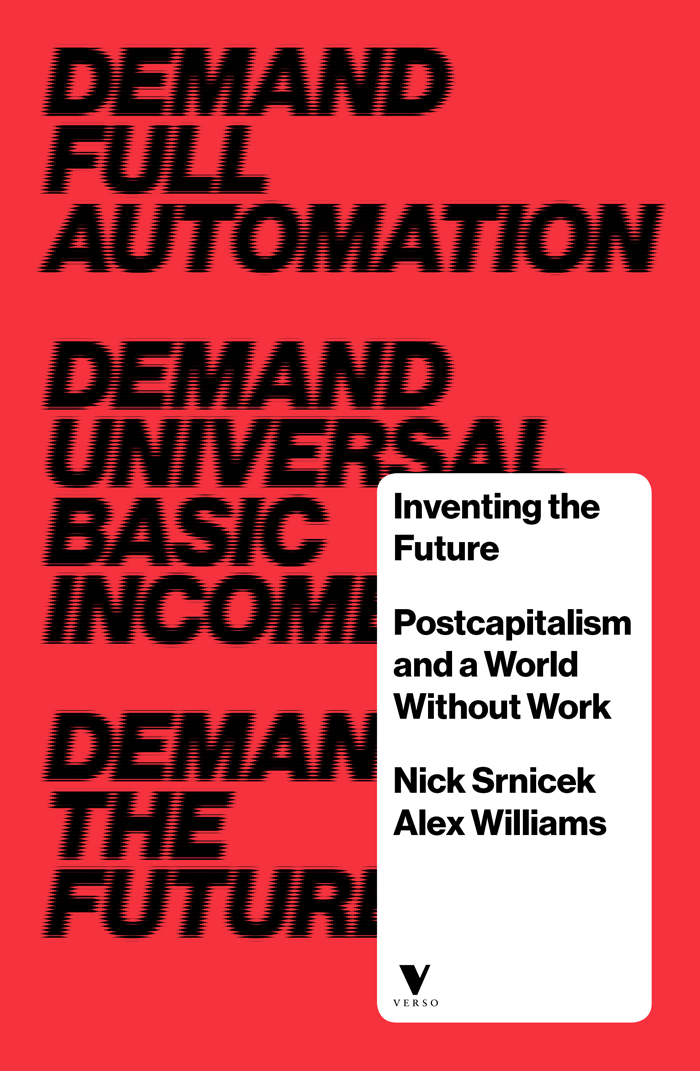
When, in Inventing the Future, Nick Srnicek and Alex Williams critique the collection of tendencies within the contemporary left they call 'folk politics,' they could also be lamenting the aesthetics that now dominates those areas of popular music that were once progressive. Whether it's underground, or 'indie,' or even happens to be in the charts, contemporary popular music routinely 'chooses the familiarities of the past over the unknowns of the future;... habitually chooses the small over the large' and 'value[s] withdrawal or exit rather than building a broad counter-hegemony'. For independent music as in folk politics, 'organisations and communities are to be transparent, rejecting in advance any conceptual mediation, or even modest amounts of complexity' and both 'emphasis[e] the local and the authentic, the temporary and the spontaneous, the autonomous and the particular'. Srnicek and Williams show that these strategies arose and achieved much in the special political circumstances of the mid-twentieth century, and again, as aesthetic strategies in popular music, they arose during the same period in the countercultural atmosphere of jazz, rock, punk and, indeed, folk musics. And for both folk politics and folk-political music, the time has come to invent what happens next...
29-Nov-15
The Black Dog - Spanners [ 29-Nov-15 9:53am ]
For Paris (Woebot) [ 23-Nov-15 10:12am ]
Disemballerina [ 22-Nov-15 7:42am ]
Fell into this via some wormhole or other. It's maybe not meant for me but I've been playing it a lot.
Actually, I'm not sure what is for me.
Not sure I really believe music is for anyone.
These days, I'm always awake, it seems.
Oneirogen - Cinerum [ 21-Nov-15 10:44pm ]
19-Nov-15
Hello Darkness My Old Sample [ 19-Nov-15 12:38pm ]
Not Ekoplekz [ 11-Nov-15 1:25pm ]
Well, if there's any kind of avant - scene that I'm aware of (maybe even a little part of), Nick's the kind of Kingpin: playing on LP, on big boy's labels; undisputedly popular and critically acclaimed where most of us are (at best) critically acclaimed and resoundingly unpopular. He's been quiet recently but he's almost back. You'll love this as much as you loved the other ones. I'm never sure if there's a change in methodology / sound that goes along with a change in name when Nick Edwards / Ekoplekz is concerned but the Eko sound is very much here, give or take some IDM techno lashings, here and there.
He's probably not even using the Eko, anymore but the sound is a thing-in-itself now, has it's own logic.
Saisonscape: Decay [ 11-Nov-15 1:21pm ]

This is happening in Bristol at the weekend and it features Kemper Norton, who is always a delight to meet and watch and hear. I'm going despite the fact that I'm normally deeply suspicious of musical events that cross over into art. I love Art, love music but don't think anything about soundpoems or soundart (both deeply flawed concepts, as far as I can see). I loved it when Throbbing Gristle shifted out of the Art scene and into Pop (sort of) and didn't much care for anything they got up to when, in recent times, they got sucked back in. Coum seemed interesting, as Art, TG were much more interesting as music - and so it goes...
We should watch out for Art, creeping into our musical scenes.
We should resist.
The rules of engagement are different over there.
29-Oct-15
GET REAL, TOMORROW IS NOT GOING TO HAPPEN. BY DAN HODGES. [ 29-Oct-15 6:35pm ]

Hi. I'm Dan Hodges. And I tell it like it is.
Like. It. Is.
If you believe everything you read on Lefty Twitter you'd think that time progresses in linear fashion, one day after another, week succeeding week, month upon month.
But hang on. Let's stop and think for a second - is this really what's going on here?
No. It's not.
And I'll tell you why not. People like me - go on, call me a 'Tory' if you like - know that in the real world things like this just don't happen.
Apparently, when the clocks strike 12 tonight, by some magical process of Socialist metamorphosis, today will just magically turn into another, newer, and different day. When the Earth gets to the end of its daily cycle it will just spontaneously keep on spinning, in a kind of Hard-Left utopia of ongoing movement.
Except it won't. Not now. Not ever.
Because this is the Real World. Where Real Things Happen. In barely formulated tabloid-ish sentences that have somehow made their way into a broadsheet where they masquerade as incisive realism. With their no-nonsense tone. And their full-stops.
My trick is to take exaggeratedly cynical negative statements with absolutely no intellectual basis and make them seem like bullshit-free common sense. The sort of common sense that just so happens to coincide exactly with the latest Conservative Party policy announcement.
I say things aren't going to happen. Categorically. End of story.
Sometimes they do. Sometimes they don't. That gives me a roughly 50% success ratio, which is just about enough to insulate my reputation and guarantee my salary at a newspaper for which pessimism and demagogic mean-spiritedness are strategic imperatives.
So for the last time, oh my Lefty comrades.
Tomorrow ain't gonna happen.
Not now. Not ever.
Not even tonight.
Deal with it.
17-Oct-15
Slides from my talk at Unsound, 'Is Accelerationism Good for the Underground?' [ 17-Oct-15 6:30pm ]
Shape Worship - A City Remembrancer [ 17-Oct-15 6:54pm ]
System Focus: Get To Know Gqom, South Africa's Slow-Burning Club Music [ 05-Oct-15 5:44pm ]
 The TOWNSHIPTECH logo
The latest System Focus is on dance sounds of South Africa that live online, chiefly 'gqom' with some shangaan electro and sgubhu too (click here to read). featuring: Spoek Mathambo, Nozinja, TOWNSHIPTECH, SHANGAANBANG, DJ Dino, U-Zet, Phelimuncasi, Rude Boyz, GQOM OH, Citizen Boy and DjAsinatar and the Facebook groups IGqomu, Sgubhu & Gqom Lovers, Gqomu music and Gqom Nation.
South African popular music, in its myriad forms—from choral folk group Ladysmith Black Mambazo to madcap rappers Die Antwoord—has played a huge role on the world stage for decades, and today this richly musical country boasts an ecosystem of electronic dance and club sounds that changes, spreads, and develops with an energy that can rival that of just about anywhere else you care to name...

Meanwhile, the southeastern coastal city of Durban in the KwaZuluNatal province of South Africa has been incubating a style called gqom for a few years now... It would be difficult to imagine a kind of music more different from Shangaan Electro than gqom is—it's a slow-burning, minimal and ominous style that's frequently described as "raw." Gqom fan Thandolwethu BlaqueMusiq Mseleni—who runs a group on Facebook called Sgubhu and Gqom Lovers out of King Williams Town in the Eastern Cape province—told me that qqom is "house music with broken beats, sliced vocals or chants, high tempo and mostly with no bassline."
"We grew up on it," Veezy tells me about gqom. "You know, taxis in town or everywhere in and around Durban blasting these songs that had really catchy and funny verses as well as banging hooks. Most people just hear loud bangs but, if you take time to really listen to it, you realize it's more than a created pattern—it's rhythm that syncs with fun. I like it cause it's a really huge crowd favorite in lounges and clubs to get turnt with or get the party sounded."...
 Citizen Boy is one of gqom's most creative producers. Plunge headlong into his kasimp3 uploads... featuring him and his affiliates, and you'll encounter dozens of weird and wonderful twists on the genre's template. Try the hectic "Spit Fire (Remix)," the ultra-minimal "VH HIT" with its deadpan cuíca hook, the downright evil "Natural Mafias," the alien skirmish of "Thekwini War (Mafiamix)" or the unholy croaks of "Point Magnet (Dope mix)." There there's "Deep Gqomu," a masterpiece that builds up majestically, its ethereal scales climbing ever skyward...
01-Oct-15
Dennis Smalley - Pneuma [ 30-Sep-15 8:21pm ]
Citizen Boy is one of gqom's most creative producers. Plunge headlong into his kasimp3 uploads... featuring him and his affiliates, and you'll encounter dozens of weird and wonderful twists on the genre's template. Try the hectic "Spit Fire (Remix)," the ultra-minimal "VH HIT" with its deadpan cuíca hook, the downright evil "Natural Mafias," the alien skirmish of "Thekwini War (Mafiamix)" or the unholy croaks of "Point Magnet (Dope mix)." There there's "Deep Gqomu," a masterpiece that builds up majestically, its ethereal scales climbing ever skyward...
01-Oct-15
Dennis Smalley - Pneuma [ 30-Sep-15 8:21pm ]
I like the way this sucks and wheezes. It reminds me of my future. One day, I'll be at a bus stop and this will be the last sound I make. I'm looking forward to it.
28-Sep-15
Roots of Goa trance (2) [ 28-Sep-15 1:13pm ]
THE GUARDIAN'S JEREMY CORBYN COVERAGE IN 15 HEADLINES [ 19-Aug-15 3:10pm ]
Response from chukwumaa [ 17-Aug-15 1:26pm ]
System Focus: The Voices Disrupting White Supremacy Through Sound [ 17-Aug-15 1:18pm ]
 chukwumaa and E. Jane of Philly duo SCRAAATCH. Photo by Liz BarrAugust's System Focus is on rising networks of African and Afrodiasporic artists disseminating their music in solidarity, along with some cultural context (click here to read). Featuring Chino Amobi, NON, Angel Ho, Nkisi, Serpentwithfeet, SCRAAATCH, E. Jane, chukwumaa, embaci, Brandon Covington, Elon, Butch Dawson, Kayy Drizz, Dog Food Music Group, Violence, Mykki Blanco, Psychoegyptian, Yves Tumor etc.
Back in December, angry New Yorkers gathered to sing "They Don't Care About Us" following the decision not to indict Eric Garner's killer, a police officer. The song's lyrics were written on a placard during a protest against the Ferguson police department in the wake of their fatal shooting of Michael Brown. It also provided the soundtrack to the Baltimore protests in response to the death of Freddie Gray in police custody, danced to by a Jackson impersonator amidst the chaos of helicopters and sirens... The song has recently found new layers of meaning and urgency in the context of the continuing struggle against racist police violence, now taken up by the Black Lives Matter movement... It's no wonder that African and Afrodiasporic artists are choosing to disseminate music in solidarity. In many cases, this creative decision is a strategy for dealing with the alienation that is so often a part of Afrodiasporic experience. As the London-based writer Kodwo Eshun puts it in his 2003 essay Further Considerations on Afrofuturism: "the condition of alienation, understood in its most general sense, is a psychosocial inevitability that all Afrodiasporic art uses to its own advantage by creating contexts that encourage a process of disalienation." And yet in the continuing environment of white supremacy, this creativity is routinely either erased, appropriated, or confined to narrow and fetishized aesthetic areas...
"In no uncertain terms, the Intent of NON is to run counter to current Western hyper-capitalist modes of representation and function, exorcising the language of domination through the United Resistance of policed and exotified colored bodies," NON's email continued. "At a time when national (market) state financial and political systems are tested as never before, NON shall remain committed to the militant realities and potentials of 'The NON State.' NON came into existence through the Pan-African desire for representation on our own terms." As stated on their Soundcloud page, NON artists are "using sound as their primary media, to articulate the visible and invisible structures that create binaries in society, and in turn distribute power..." SerpentwithfeetOne of the most beguiling and exciting voices to have emerged from underground music in recent times, Serpentwithfeet also appears on another track that NON reposted on their Soundcloud. Titled "Total Freedom," it finds the singer winding himself delicately around rising and falling tones, including those of an mbira. In an interview for Dazed, he discussed his self-described "PaganGospel" creed for living and said, "I am always ready to pierce things with my black-queer cutlery. I am constantly looking for ways to make my music extra gay and extra black..."
SCRAAATCH is an art and sound double act, originally from Washington DC and now based in Philadelphia, who often perform live. It consists of artists E. Jane and chukwumaa—read interviews with them here and here—and, along with the New Jersey born DJ Haram, they run the monthly Philly "club-not-club" night ATM. Also negotiating race, gender, queerness, mental illness, and the digital world in her artwork and photography, E. Jane makes sounds and edits under the names E_SCRAAATCH and Mhysa, typically with a glitchy, spectral take on R&B. Try their / her Soundcloud playlist I Have To Say No So Much Right Now, especially its magnificent title track. About their / her artwork, E. Jane said in a recent interview with The Offing, "I came to the conclusion that I am black and I am a woman, my body is thoroughly Black American and it is perceived as woman. Then I realized that means my body is not a 'safe' body. My body is an unprotected body. I started asking myself how we protect unprotected bodies? What if the body were code? What if the body were only a simulation? What if I could exaggerate how inhuman I feel?" Her partner in SCRAAATCH, chukwumaa, was born in Nigeria and "on a plane to the US the first week of [his] life." He also engages experimentally with pop as plus_c—the track "quadrille_club_bing" uses a Vine recording of "They Don't Care About Us" being sung during the Baltimore uprising, mixed into a distorted club beat and resonant tones like metal being brushed and played with a bow. He also made an installation consisting of twenty-one burner cellphones playing Beyoncé's "Flawless," which turned the song into a waterfall... Thumbnail for E_SCRAAATCH's 'I Have To Say No So Much Right Now' Chino Amobi appeared on [Blasting Voice], as did cross-U.S. artist Violence, who is soon to appear on the inaugural release of a new label founded by rapper Mykki Blanco called Dogfood Music Group. Due September 18th, the release will be a compilation titled C-ORE, featuring tracks from Violence, California's Yves Tumor, NYC rapper Psychoegyptian and Blanco himself. "We are a group of friends who have created a release that represents a slice of what we're into, our culture and what we want to show the world," Blanco has said about the collection. "People all over the world are only fed this singular image of 'African American Music' and we want to disrupt that. We all come from backgrounds outside of the black American norm, and the world deserves to see our culture as much as anything else..."
 C-ORENeedless to say, the artists mentioned here aren't the only African and Afrodiasporic artists making challenging and beautiful music in the underground, just a few constellations—there are countless more voices out there. As it has been for centuries, since the traumatic dawn of modernity, finding such voices through music is not just a leisure activity, as it is marketed to many of us. It's part of the urgent and fundamental search for self and identity in a world that not only erases that identity, or appropriates it, or predetermines it, or constrains it, or renders it fragmented and ostensibly paradoxical, but that also systematically commits physical violence upon people of that identity. This is why so many artists with minority status end up in underground music—this is why they are underground music. Fortunately, the underground can form spaces and networks where identity matters, is audible, and becomes visible.
System Focus: Why Today's Underground Club Music Sounds Cybernetic [ 17-Aug-15 12:59pm ]
C-ORENeedless to say, the artists mentioned here aren't the only African and Afrodiasporic artists making challenging and beautiful music in the underground, just a few constellations—there are countless more voices out there. As it has been for centuries, since the traumatic dawn of modernity, finding such voices through music is not just a leisure activity, as it is marketed to many of us. It's part of the urgent and fundamental search for self and identity in a world that not only erases that identity, or appropriates it, or predetermines it, or constrains it, or renders it fragmented and ostensibly paradoxical, but that also systematically commits physical violence upon people of that identity. This is why so many artists with minority status end up in underground music—this is why they are underground music. Fortunately, the underground can form spaces and networks where identity matters, is audible, and becomes visible.
System Focus: Why Today's Underground Club Music Sounds Cybernetic [ 17-Aug-15 12:59pm ]
 Celestial Trax's Ride or DieJuly's System Focus was on a particular strain of club music with a cybernetic feel, along with some incidental reflections on calling it 'club music' (click here to read). Featuring Night Slugs, Fade to Mind, Keysound Recordings, Liminal Sounds, Her Records, Sentinel, Amnesia Scanner, J.G. Biberkopf, D.J. New Jersey Drone, Track Meet, Bootleg Tapes, P4N4, Velkro, #FEELINGS, CELESTIAL TRAX, Tallesen, WDIS, Gewzer, Gronos1, Magic Fades, SPF666, Korma, Team Aerogel, Infinite Machine, Roller Truck, Tessier-Ashpool Recordings, IMAMI, Cloaka, Spurz, Kadahn, Gel Dust, Dviance, Partisan, Sharp Veins and Lit Internet. Nb/ this article should have said a bit more about the style's relationship to Jersey Club, Bmore Club and Philly Club.
There has been a slow but sure shift in the way the underground talks about one of its key areas: "dance music" has become "club music." The major reason for this is probably that it differentiates it from Electronic Dance Music (EDM), the name that, despite its generality, has come to stick more specifically to the recent explosion of big name, big crowd, big show parties held outdoors, particularly across the U.S. "Club music" is not that—it's a more intimate, enclosed environment, both in the physical spaces it describes and in the community that enters and honors those spaces, whether real or imagined...
DJ New Jersey Drone's Energy EP This kind of music was pioneered by transatlantic labels like Night Slugs, Fade to Mind, and Keysound, and mixes together rebooted ballroom/vogue house and the new wave of instrumental grime, all with a stark, hi-tech machine sheen. It was soon developed further on tight, intense and ice-cold shorter releases by artists on London's Liminal Sounds such as Brooklyn-based producer Copout, and particularly those on fellow UK label Her Records, such as DJ Double M, Sudanim, CYPHR and Kid Antoine. It's a style that is enjoyed by the sort of musicians and fans who don't like to name styles, but instead allude to hybridities of aging categories like house, techno and grime... Korma's ZGMF-X19AWhat makes this music so good to run to? It has a high tempo which keeps urging you relentlessly forward. But it's more than that. It embodies progress and athleticism in its very sound (unsurprisingly, it's the soundtrack to health goth) not in a merely beautiful way, but with a frightening dose of the sublime too. Because as in both running and culture, forward motion isn't nice, easy, or moral—it's laced with anti-humanistic pain, aggression and dissolution, crashing euphoria and dysphoria together in a bodily blur of hormones and neurotransmitters. As muscles grow and become more supple, as lungs become cleaner and the brain less resistant, so technoculture improves: motors, alloys and power supplies increase in efficiency, pixels shrink and multiply, and digital intelligence grows more independent of yesterday's humanity. Organic, machine—it's all the same in the struggle of kinetic matter. All this seems apt as I schlep my loathsome fleshform across the tarmac in a futile bid to flourish, or at least survive the oncoming war...
 Cloaka's AdaptOne particularly fascinating and powerful release is Lit Internet's Angelysium, which features collaborations with some of the producers on the _VIRALITY compilation as well as South London producer Endgame (who was in last month's tresillo column). Cinematic almost to the point of telling a story, if Angelysium ever gets into a groove, it's likely to vanish suddenly into the vast mists, giant machinery and assorted percussive enigmas. The empty spaces that characterise the stop-start textures of eski grime become yawning chasms thick with tension and potential assailants, yet also with melancholic distance.
 Lit Internet's AngelysiumAll this is just another reason why the category "club," while it does a lot to hone in on specific and, in many ways, desirable qualities in dance music, can only go so far. "Dance" is a more intangible, open-ended concept, something that can happen anywhere and is directly related to the body and activities like running and other forms of exercise, the body being even more intimate and present than the club that might temporarily enclose it. Dance is music that moves you.
08-Jul-15
System Focus: How A Traditional Rhythm Is Shaping Today's Most Exciting New Music [ 08-Jul-15 9:17pm ]
Lit Internet's AngelysiumAll this is just another reason why the category "club," while it does a lot to hone in on specific and, in many ways, desirable qualities in dance music, can only go so far. "Dance" is a more intangible, open-ended concept, something that can happen anywhere and is directly related to the body and activities like running and other forms of exercise, the body being even more intimate and present than the club that might temporarily enclose it. Dance is music that moves you.
08-Jul-15
System Focus: How A Traditional Rhythm Is Shaping Today's Most Exciting New Music [ 08-Jul-15 9:17pm ]
 Exclusivo by Blaze KiddJune's System Focus (click here to read) was on a loose network of producers, most of whom draw on the tresillo rhythm found in reggaeton and other musics of the African diaspora, often using grime and Spanish language too. Labels and artists featured include Blaze Kidd, Uli-K, PALMISTRY, Kami Xlo, Lexxi, Ana Caprix, EndgamE, Golden Mist Records, BLASTAH, Dinamarca, STAYCORE, Lil Tantrum, Sister, Tove Agelii, Mapalma, mobilegirl, Imaabs, ZUTZUT, Extasis Records, Morten_HD, Spaceseeds.
A simple rhythm bounces back and forth over the once vast Atlantic ocean, ever faster. It begins in Sub-Saharan Africa, but Europeans brutally pull it up by the roots—slaves bring it with them on a long journey to the Caribbean. By the nineteenth century it has become the defining element in the Afro-Cuban dance habanera, which finds its way to New Orleans where it helps form ragtime, then to South America, where it contributes to tango, and to Europe, where it becomes the most famous section of one of the era's most popular operas, Carmen. It also spreads across the Caribbean, Latin America and Africa and back again, and its descendents meet and collaborate, now using recordings and drum machines. Soon it doesn't even need to touch the water. Ricocheting off satellites and barreling down cables, it permeates the information sphere, with space and place just an interesting footnote on a Soundcloud profile...
 EndgameLondon club music (at home and abroad) has recently come to resonate in sympathy with sounds from Mexico down. And it's not just tresillo and reggaeton rhythms that are being drawn on, but the Spanish language too. South London has both a significant population of Latin American migrants and a network of producers who have been on Soundcloud for years and are very hungry for international sounds. They got together on Exclusivo, the debut mixtape of an MC of Ecuadorian heritage, Blaze Kidd, and recently, as Aimee Cliff reported for The FADER, the video for "Sniper Redux."...
Tresillo is woven throughout Palmistry's delicate and deceptively carefree fabrics. In tracks like "DROPDrip" (on his Ascención mixtape), "Protector SE5," the single "Catch" or his latest, "Memory Taffeta," it'll ride on the back of simple synths, complementing his fragile yet controlled and earnest voice and forming songs of need and tenderness...
 Palmistry One track on the Endgame EP was a remix by Dinamarca, and in turn, Endgame provided one for Dinamarca's EP, No Hay Break. "Dinamarca" is Spanish for "Denmark," but the artist Dinamarca is based in Stockholm, and his intense and attitude-filled tracks typically have a tresillo bounce, however it's distributed through the drum machine. Some of them, when the tempo is upped, even feel like they're morphing into footwork. Dinamarca is the head of the Staycore label, who just put out a brill free collection of tracks titled Summer Jams 2K15—hopefully a sign of things to come...
 Lil Tantrum is just one of the many areas of overlap between Staycore and Sister, a female-identifying-only club collective founded by the formidable Swedish artist, Tové Agelii. Agelii's own productions are gorgeously gothic and suffused with the human vox the way light shines into a cathedral. And Sister's mixes (again, all female-identifying, using productions that all involve women) are both peppered with a tresillo feel and seriously something...
 'Icesheets' by MobilegirlHailing from Santiago de Chile and one of the weirder and more futuristic exponents of grimy reggaeton, Imaabs has a great EP out on noted Mexico City underground-club label NAAFI. Another standout is Zutzut's "Yo Te Voa A Dar" on account of it delectable buzzing synth and proper passionate MC. Zutzut, from Monterray, has a truly lovely Soundcloud collection (try the digital flutes of "Otra Vez Llegue") and a self-titled dembow EP with some vogue inflections out for another Mexican label, Extasis, who have a bit of a net aesthetic and, because all is connected, have released cute speedster Xyloid too. Extasis also explored some pretty bizarre experimental grime with Norwegian producer Morten_HD and Mexico's Spaceseeds, and they too have a summer compilation (from last year). And, aha, it featured a Blaze Kidd track with a reggaeton production by Kamixlo and Uli-K.
 System Focus: What Does "Experimental Music" Even Mean Anymore? [ 08-Jul-15 9:00pm ]

What is experimental music, and what does it want from us? As a term and as a field of music-making, it's widely accepted but fits uncomfortably and is never well defined. "Experimental music" was a phrase used in the mid-twentieth-century to describe a range of ultramodernist compositional techniques as being a form of quasi-scientific research. John Cage was careful to point out that the term should apply to music "the outcome of which is not known"—that is, music with chance elements or improvisation built into it—since a composer ought to have completed all the necessary experiments before the piece was finished. And yet in everyday parlance, especially in popular music, "experimental" music has come to refer to music that seems radically unconventional, pretty weird, as if to experiment with the very building blocks of musical beauty... POPULOUS by Brood Ma [Experimental music is] involved with the building blocks that musical languages are made of. When you put it like this, it's odd to think that people find experimental music "difficult"—it's a radically simpler experience, assuming much less semiotically. And that's where experimental music's appeal lies. It reconnects you with the fundamental life of sound and music, and entices you to search for meaning in a language you cannot yet speak. You ask yourself, "What sort of subjectivity would make art like this? What does it perceive that I don't (or don't yet)?"...
 DARK WEB by Giant Claw DARK WEB is clearly and curiously unstuck: juddering, dissonant, stop-start, crazed, obsessive. It's like a robot failing at human entertainment, a rejected intermediate form generated by whatever algorithmic process then went on to produce the less uncanny Far Side Virtual, which resonated more comfortably with human needs and desires. If human music were a CAPTCHA, DARK WEB would fail it...Most striking about [Epitaph] is its empty space—enormous architectures bracketed and magnetized by harsh syncopation. The textures are modular, moving from sound object to sound object and back again; Epitaph divides up its musical world into discrete, almost warring factions...
 U.S.M! by DJWWWW DJWWWW's album U.S.M! is one of this year's most absorbing listens, restlessly assembling horrific and beguiling bouquets of musical sensations (many of which will be familiar to followers of underground music)... DJWWWW is extrapolating and caricaturing the myriad experiences of a day in digital, asking us how and why the combinations work (or not)...[Assault Suits's] own release Statue Cathalogue kickstarted the [Flamebait] label last year with its sinuous yet imposing metallic sculptures. The subsequent album by Tokyo producer Hanali is highly complex and predominantly percussive, roving through many layers of rhythm until it seems to coalesce in the bizarro club cut "10 Years or 100 Years." 10.9†01;9 by modular synth artist GOP (Geniuses Of Place) is equally rich: sizzling and glitching its way through the phone networks only to dissolve and digest what it finds...
  Aftertouches by Kara-Lis Coverdale Aftertouches weaves in all kinds of colors, many of them acoustic instruments, others eerily hinting at acoustic instruments, and others carrying all the richness of acoustic instruments yet not at all recognizable as such. She manages to do the exact same with the moods of the pieces: some are human, some eerily hint at the human, and others have all the depth of human moods but are as yet unfamiliar as such. Coverdale recently teamed up with LXV for Sirens, where their different palettes of techniques complement one another. They seem to populate each others' landscapes with the distant faces, dwellings and systems of unknown hi-tech cultures, who harvest the elements of their environment with a peace and concord we don't yet understand...
Fragments of a Scene (text for Creamcake) [ 08-Jul-15 8:32pm ]
Aftertouches by Kara-Lis Coverdale Aftertouches weaves in all kinds of colors, many of them acoustic instruments, others eerily hinting at acoustic instruments, and others carrying all the richness of acoustic instruments yet not at all recognizable as such. She manages to do the exact same with the moods of the pieces: some are human, some eerily hint at the human, and others have all the depth of human moods but are as yet unfamiliar as such. Coverdale recently teamed up with LXV for Sirens, where their different palettes of techniques complement one another. They seem to populate each others' landscapes with the distant faces, dwellings and systems of unknown hi-tech cultures, who harvest the elements of their environment with a peace and concord we don't yet understand...
Fragments of a Scene (text for Creamcake) [ 08-Jul-15 8:32pm ]
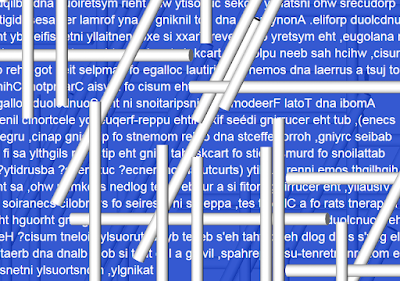 Fragments of a Scene website, designed by Jon Lucas
Amazing Berlin clubnight institution Creamcake asked me to write a text to go with an evening they were putting on in April, both to feature Brood Ma, Forever Traxx, Claude Speeed, Club Cacao, DYNOOO, Punishment of Luxury, Hanne Lippard and Britney Lopez. Click here to see the text in its originally obfuscated context with music (scroll down for a PDF), or read below.
Music is space. Music goes high and low, shallow and deep, left and right, in and out,
round and round. It goes here and there at the same time, underneath and over, it
faces in the same and in the opposite direction. It's among and alongside and between
things, it's behind and in front of things, it goes away from and towards things, it's
beyond things and quite within them. Its spatial changes map to bodies when it makes
them move, and in turn music moves according to an embodied imagination. Music is
more than sounds - at the very least it is sounds in spaces. More than that, music is
multimedia, it always means more than just sounds, it means sights, it means
proprioception, it means people. Music is a scene.
Fortunately, there are two senses in that word. A scene is a discrete moment in
theatre, a sequence on-stage with actors, script, speech, costume, props, lights,
background, gesture. Scenes are where things happen, framed both by the elevated
ground, the proscenium and by time. In a way, an entire play is a scene of scenes, and
forms a part of the wider scenes of life. This is where the other sense of the word
scene comes in. It's a term - one loaded with cultural capital, mostly that gained by
disavowing it - for musicians, fans, places, and performances (and speech, costume,
props, lights, background, gesture)clustered together, almost as if in a discrete
moment. The scene in New York in the 1960s: Andy Warhol, the Velvet Underground,
Nico and friends, one of many interconnected scenes at the time. Sometimes there's
only one scene, the scene, something to be in touch with - to be 'scene' is to be a part
of it. But the term can be used without that fancy fluff. It's usefulness comes from the
multimedia nature it inherits from theatre - a scene is never just sounds, never even
just musicians, but a network of artists in multiple mediums 'high' and 'low,' and even in
mediums that are not yet known as Art.
And scenes are difficult to piece together nowadays, especially as discrete moments
framed, like the theatre is, by certain locations in space and time. Berlin, London and
New York are still pretty good at that. But the internet has created social and aesthetic
connections that go beyond the more traditional conceptions of space and time. Don't
believe the rhetoric though: the internet has not destroyed time or space, much less
materiality. The internet is still 'in real life / IRL,' all art is still 'physical.' The aesthetics
of art and the internet, however, has been fascinated with the dilemma that it might not
be - whether that's a good thing (ushering a transcendent Utopia) or a bad thing (an
anxiety-inducing accumulation of blasphemous desires and accesses). At its best,
these two feelings occur at the same time.
What you have at Hau 2 on the 16th of April is Fragments of a Scene - in many
senses of a scene (and of fragments). The artists you will see make up something of a
scene, albeit partially: They are related in music, multimedia, social networks,
geography (to some extent), and are ultimately related by the fact that they are all
appearing tonight. They are all engaging with the modern age, which predominantly
means the digital world and its forms of expression. Yet while many artists in this vein
tend towards representation, figuration, even pastiche, these artists tend towards
abstraction and affect. Their perspective is less one of a detailed fantasy universe than
an onslaught of shapes and sensations boiling within a matrix of strong yet
indeterminate feelings.
Take Brood Ma. While there are occasional outlines of samples in James B. Stringer's
work, or the nuclear shadow of styles like grime (he's from London), at the centre is a
roiling mass of sonic shards, glittering and roaring like scales or teeth. Named after the
matriarchal figure in a culture of humanoid women with large scarabs for heads in
China Miéville's weird fiction Perdido Street Station, there is something deeply
insectoid about Brood Ma's modus operandi: biting, chewing, proliferating, attacking,
defending, all under a hard multipartite carapace filled with even weirder, visceral
matter beneath. Brood Ma works at the constituent level of sound itself, its very grains,
whipping digital codes into vortices as if they were pools of water. He distorts sounds
the way jpeg compression distorts Nature, and depixellates them, datamoshing them
until insides and outsides become part of a broader, more disorienting experience of
space.
This comes as no surprise, because James B. Stringer is part of a network of visually
trained multimedia artists coalesced around the Quantum Natives label, all long
interested in digital techniques of both sight and sound. One of the main nodes is
Stringer's friend Clifford Sage, an incredibly prolific sound-producer himself, with an
industrial synth style. At Hau 2, Sage will be providing the visuals to Stringer's
performance, both inviting us to draw some continuity across their respective fragments
of the abstracted scene.
Like many of Fragments of a Scene's artists, Forever Traxx is one of those producers
who instantly stokes curiosity with their mysterious and oblique Soundcloud profile.
Anonymous and not linking to any formal releases, digital or analogue, the mystery of
Forever Traxx is exponentially intensified by the music, which has been uploaded track
by track over the past four years. It's not just a surreal and somehow spiritual collage of
samples tied together by curiously mountainous passions (like the music of Elysia
Crampton, Chino Amobi and Total Freedom - big inspirations in the Soundcloud
collage scene), but the recurring idées fixe: lithe upper-frequency electronic lines,
babies crying, horror effects and other moments of piercing panic, urgent battalions of
drums, edits of tracks that bring the pitch up slightly as if to highlight some inner quality
(structural coherence? cuteness? absurdity?). Visually, the recurring motif is a rubbery
yet golden stickman who, as the apparent star of a ClipArt set, appears in a series of
symbolic scenarios in the Souncloud account's thumbnails and avatars. What's going
through this little guy's solid gold head, that he's beset by rapturously violent music?
He's the modern internet-user, perhaps, living a life that is both bland and breathtakingly,
monstrously intense.
Claude Speeed has explored the complexity and onslaught of the modern mindset
both as a band and as a solo electronic artist. Hailing from Scotland, his band
American Men released a dazzling EP Cool World in 2010, its crystal vistas and fractal
rhythms seeming to usher in a new decade for post-rock. Since then, Speeed has been
exploring sounds far and wide, each new Soundcloud upload an unexpected turn, from
the tweaking trance textures of 'Ambien Rave' to the roving vox of 'Clearing' and the
wailing new-Dark-Age wake of 'V (Spirit Leaves the Body)', via walls and walls of
distortion. At Fragments of a Scene, Claude Speeed will be performing with four amps
in stereo, so expect sounds so rich and intense you can taste them.
Also taking up these alpine electronic textures and inchoate drama is Club Cacao.
Another Soundcloud mystery whose account artwork competes with the music for
beauty, Club Cacao launches off from contemporary production styles from dance and
hip hop, ending up with compelling tracks like 'Go Off,' with its perfect euphoric
liberation, or the darker 'Balaclava,' an industrially twisted bounce over which a voice is
squeezed out, becoming both hilarious and terrifying.
Due to its uncanny ability to fuse disparate elements into a whole that makes a sense
one does not yet understand, but that one appreciates as the insights of a cybernetic
consciousness, DYNOOO's These Flaws Are Mine to War With was one of last year's
most interesting releases. His work has always suggested to me an emerging
intelligence, either artificial or that of the technological post-human, engaging with its
own mechanical realities as well as the curiously organic world around it. Piecing
together rainforest, desert and arctic tundra with an almost military palette of harsh
sounds and leaving it all suspended and rolling in a bubbling tank like a specimen or an
embryo, DYNOOO's conclusions could not have been reached by yesterday's
humanity, and they're as disquieting as they are beautiful.
Not to be confused with the English post-punk band active in the late 1970s and early
1980s, Punishment of Luxury is a Soundcloud experimentalist in a similar vein to
Forever Traxx, Crampton, Amobi and others. PoL creates strange yet urgent new
atmospheres for pop fragments to breathe in, as if they've suddenly been transported
to other planets. The procedure often seems to cause them to spin erratically in situ,
like broken bots in a massively multiplayer online role-playing game. Try the bizarre
union of Nicki Minaj and the Walker Brothers in 'BASSBREAKUP,' the desperate
product placement of 'BENZ BENZ BENZ,' plagued by alien anxiety, or the way the
ear's finger runs down the length of the male voice in 'TLS Male Vocal Choir Edit,' and
it's rough like a large iron nail file.
Using her voice to beckon a broader understanding of human culture and expression,
Hanne Lippard is somewhere between a poet and a performance artist. A book of her
texts, Nuances of No, was released in 2013. Her phrases often begin or end in the
same way as she accumulates concerns and information in a deceptively random
manner. These parallel the tics of language online, like the telling non-truths of
Google's autocompletes, or the attention-hijacking of sidebar advertising, or the
piecemeal, provisional conclusions of status updates. She narrates the Web 2.0 stream
of attention, but her voice is also perennially human, always seeking to elevate itself
while remaining intimate.
As she puts it, performer Bella Hager was 'torn and raised in Berlin, had to survive the
90s as a teenager.' She focused on pop divas such as Jennifer Lopez, soon feeling a
rupture between the art of being a women in music videos and the art of being a
women on the very own stage. After many years of research in different scenes, social
contexts and with different representations of gender, Bella decided to reunite with
Jenny, Britney, Christina and the rest to resolve this absurd struggle. During the first
act of appearance in Fragments of a Scene her character 'Britney Lopez' will enter
Christina Aguilera's music video to dive into the world of female pop artists in the late
90s, and will then take them into the year 2015 where a new extroverted sexuality
(Bella refers to herself as 'twerself') has left the former virginal image of the diva
behind.
Perhaps the only fair thing to say that all of these artists have in common (apart from
their appearance at Fragments of a Scene), is that they don't quite fit into the normal
distributions of creativity into particular places. Even musically, it is not entirely fitting to
call any of them merely 'producers' or 'musicians,' or to expect their work in clubs or
physical albums. And much of the time, their work is too specific, and too conversant
with the languages of pop and everyday life to feel at home in a gallery or concert hall
either. Many of them have taken the poetics of the visual and used them in a sound-led
medium, perhaps then turning back to re-incorporate the eye, which does not close as
it passes over an online account or a stage. However, nonetheless, these artists have
now carved out a space, somewhere between art and sound and music as it was
understood last century, a way to explore differences within the cohering locus of the
specific, to maintain that fragile equilibrium between novelty and similarity. Isn't that
precisely what a scene should be?
18-Jun-15
BARGAIN-BIN NAIRN: MY LONDON TOP 10 [ 18-Jun-15 4:50pm ]
 This little electronica column review fell out of the latest Wire because someone else had already done a longer one. Thought I'd post it up here as it's quite a special release. Video below.
Ben Zimmerman
The Baltika Years
Software DL / 2×LP
With this archive release, Joel Ford and Dan Lopatin's Software have found something that reaches right into the core of the label's interest in the curiously soulful side of late-twentieth-century computer music. Between 1992 and 2002, Ben Zimmerman used a series of Tandy machines working with low-quality waveforms to make short sketches and suites sat everywhere between outright experimentation and vernacular tunefulness. What emerges is a meeting between Moondog and Daniel Johnson in the age of the floppy disk. Most intriguing is the timbre itself - FM synths imitating older instruments alongside samples tuned into sonically matchless keyboards, all coated in a thick oxide layer of digital lo-fi. These are wound up like music boxes and let go, spiralling forward into minimalist abstraction, character pieces or clubbier grooves (including breakbeats) as they eat through their slatted programming. Not only is the limited context intimately audible, but the varieties of mood and texture achieved within it are nothing short of inspiring.
05-May-15
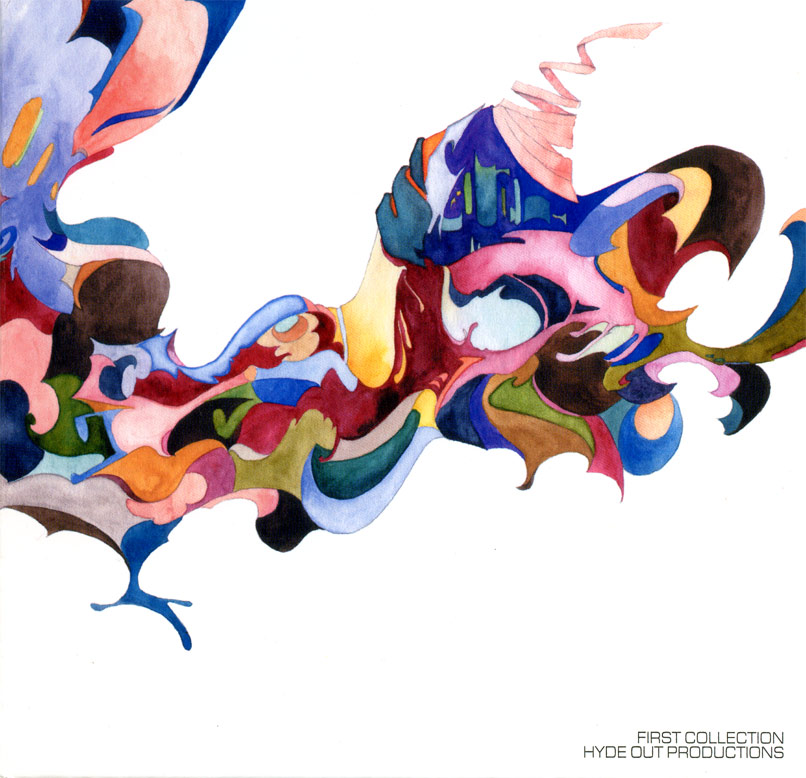


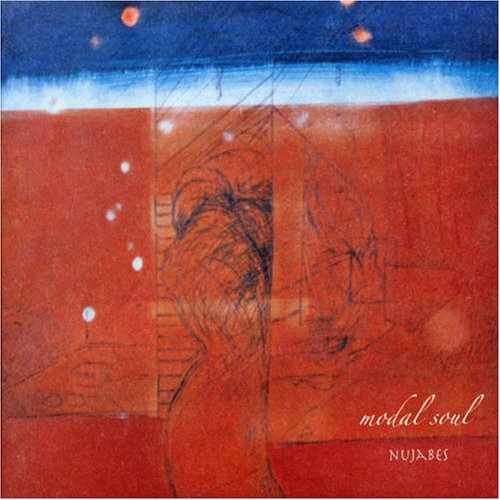 Modal Soul by NujabesOne of the greatest practitioners of drum-machine production with a more traditionally East-Asian sound is from Shanghai: Swimful Buterfly. Swimful has produced for US rappers Lil B and Main Attrakionz, and released a warmly euphoric debut album 馬路天使 (Street Angel) in 2013. Last year's follow-up, 归梦 (Return to a Dream), is even better, perfectly following that trajectory whereby a producer gets both more skilled at crafting beats and more original. It samples both Chinese and Japanese zither instruments and singing try "But Maybe". The track "Air Between Toes" even samples the song "Tsukematsukeru" from J-Pop's kawaii princess Kyary Pamyu Pamyu, transforming its torrent of soda-pop into a cooling stream of sweet mountain water...

 春夏秋冬・終 by α·PavWhat about pop? Magic Yume and Zoom Lens (who I talked to here) are two of the best places for Japanese-inspired indie pop in the online underground, and they both have everything on a continuum from laid-back dreaminess to footwork and hyperactive chiptune, showing us that cute and upbeat doesn't have to be intense. At the calmer end, Magic Yume has Tokyo Princess (東京 姫) by Ikaros イカロス (as well as plenty of downtempo beats) and Zoom Lens has Yeule, Girlfriend by Philippines artist Ulzzang Pistol, the gorgeous Paradice by LLLL, and the Yumetatsu Glider EP by Japanese artist Yoshino Yoshikawa, who's affiliated with Tokyo's richly hyperactive Maltine label.
  Yumetatsu Glider EP by Yoshino Yoshikawa
23-Apr-15
ELECTION 2015 [ 23-Apr-15 6:08pm ]
System Focus: What Health Goth Really Means [ 17-Feb-15 10:15pm ]
Yumetatsu Glider EP by Yoshino Yoshikawa
23-Apr-15
ELECTION 2015 [ 23-Apr-15 6:08pm ]
System Focus: What Health Goth Really Means [ 17-Feb-15 10:15pm ]
 Le1f photographed by Sam Bayliss Ibram After a brief hiatus, System Focus is back, this time a look at Health Goth, its roots, some of the music surrounding it, and how it represents a turn towards particular aesthetics rather than scenes / genres (click here to read it). Nonetheless there's a geographical convergence in Portland (the piece's working title was 'Health Goth, Portland Hi-Tech and the Age of the Aesthetic.'). Featuring Magic Fades, Club Chemtrail, Karmelloz, C Plus Plus and the return of Vektroid.
How about this: these days there are no scenes or genres, only "aesthetics." A scene implies a physical community in physical architectures, and as such is a fatal slur against the URL everspace and its viral lungs. A genre implies limits, intentions, rules, fixity, and—as every itchy-fingered Facebook commenter knows—is a hateful thing. Nothing exists anyways, not really, only names, only hyperlinks, only patterns that work up to a point and then need an upgrade. Backspace your tearful emojis, hypocrites, it's always been that way; it's just more obvious now that code flows through our arteries rather than squeezes of blood and other smells. But it's not homogenous out there and never will be, the online underground and the cultures tapping its magma are built on a vector field that ripples and clumps together, each blob too quick and continuous for your Dad's rock collection. An aesthetic is not an object, it's a way of looking, a way of finding beauty and sifting experiences, originating with process and behaviour rather than product, or, indeed, a journalist with a butterfly net...
 Magic Fades: Push ThruAs the Facebook group curators put it in an interview, "Health Goth is not a lifestyle, it's an exercise in aesthetics. Any publication trying to tell you that Health Goth is about working out has simply taken the two words at face value and opted for a less challenging, and extremely boring alternative." It seems to me that saying that Health Goth is gymming for goths is like saying that cyberpunk is Johnny Rotten doing spreadsheets on a Dell. Let's make something clear: in its original context of the Facebook group and the curators behind it, Health Goth is at a significant remove from music. Health Goth shouldn't be regarded as a musical genre, even if it was given its name by people operating in the online underground music community. What it is is an aesthetic, one that primarily concerns fashion...
The roots of hi-tech, and Health Goth in particular, go way back, but gained particular momentum around 2011. As the Facebook curators recognize, Health Goth is just as reflective of aesthetic trends that preceded it as it is constitutive of new ones. Surprisingly, none of the pieces I'd read on Health Goth mentioned the GHE20G0THIK club phenomenon pioneered by Venus X in NYC, which was a major force in associating pop and hip-hop with dark underground weirdness. Organized alongside Hood By Air designer Shayne Oliver (who often performed), the parties provided an early context for Fade to Mind names like Total Freedom and Nguzunguzu, and were attended by a nascent Arca...
 Karmelloz's Silicon Forest, named after the nickname for the Pacific Northwest's hi-tech industry, confirms him as one of hi-tech's best ambient artists, whose subtle work balances heavenly sweetness with the nausea of future shock, and always puts me in mind of giant vats in which amoral artificial biospheres are roused and stirred. C Plus Plus's Cearà is a rich take on a clubbier sound, catching the light of grime, vogue, house, pop and transatlantic styles as it spins eerily in a space of apparently infinite connections. Most notably perhaps, the Push Thru remix album sees the return of Vektroid, one of the key players in the development of vaporwave between 2010 and 2013 as New Dreams Ltd. and Prismcorp Virtual Enterprises. Vektroid is from Portland and the Pacific Northwest of the USA originally, and her remix of "Ecco" is palpably weighty, shifting through a range of cyborg textures in its eight minutes until it feels more like crawling through a digital wormhole or watching a short film demonstrating some horrifying artificial transformation than hearing the usual shuffling of riffs...
31-Dec-14
stuff I wrote and stuff I liked in 2014 [ 31-Dec-14 2:37pm ]
Karmelloz's Silicon Forest, named after the nickname for the Pacific Northwest's hi-tech industry, confirms him as one of hi-tech's best ambient artists, whose subtle work balances heavenly sweetness with the nausea of future shock, and always puts me in mind of giant vats in which amoral artificial biospheres are roused and stirred. C Plus Plus's Cearà is a rich take on a clubbier sound, catching the light of grime, vogue, house, pop and transatlantic styles as it spins eerily in a space of apparently infinite connections. Most notably perhaps, the Push Thru remix album sees the return of Vektroid, one of the key players in the development of vaporwave between 2010 and 2013 as New Dreams Ltd. and Prismcorp Virtual Enterprises. Vektroid is from Portland and the Pacific Northwest of the USA originally, and her remix of "Ecco" is palpably weighty, shifting through a range of cyborg textures in its eight minutes until it feels more like crawling through a digital wormhole or watching a short film demonstrating some horrifying artificial transformation than hearing the usual shuffling of riffs...
31-Dec-14
stuff I wrote and stuff I liked in 2014 [ 31-Dec-14 2:37pm ]
 Another pretty busy year for me, writing-about-music-wise. Below is a list of everything, if you're interested. Below that is a list of some releases I particularly enjoyed this year in alphabetical order. I didn't join in with any of the year-end stuff in print or online magazines this year, not because I disapprove - vaguely because I'm finding it difficult to claim I've listened to enough to make the call, and find it really difficult to compare online underground music with more traditionally distributed underground stuff within single assessments - not to mention the fact that great stuff is increasingly coming in chunks smaller and/or less official than the album. But mostly it was because I was really busy at the time all that stuff was due.
Stuff I wrote
AWALthe1$t: Empty
AyGeeTee: Imminent Orphan
bine☃: THINGS WILL BE BETTER FROM NOW ON
Brood Ma: POPULOUS
Chronovalve: Trace of Light
Conan Osiris: Silk
DYNOOO: These Flaws Are Mine to War With
E+E: The Light That You Gave Me To See You
Friendly Sneakrz: Flowers From Above
Geotic: Morning Shore (Eon Isle)
Giant Claw: Dark Web
GOP (Geniuses of Place): 10.9†01;9
Guy Akimoto: BaeBae EP
James Ferraro: SUKI GIRLZ
Karmelloz: Source Localization
Kyoka: Is (Is Superpowered)
Lockbox: Prince Soul Grenade
LXV: New World Spa
Magic Fades: Push Thru
Miami Mais: A Popcorn Diet
Nima: See Feel Reel
Old Manual: リング
Oliver Coates: Towards the Blessed Isles
Palmistry: Ascensión
Ramona Lisa: Arcadia
RAP/RAP/RAP: Killing and Matisse Graveyard
Sentinel: Hybrid
t e l e p a t h テレパシー能力者: ゲートウェイ
Untold: Black Light Spiral
18+: Trust
30-Dec-14
Review: Arca, Xen (for Electronic Beats) [ 30-Dec-14 7:38pm ]
 Did a review of Arca's brilliant Xen for Electronic Beats (click here to read). This sentence was cut:
Digital de Koonings jounce down oozing hallways dragging trains of femme paraphenalia, kawaii cenobites howl and squeal in holes, and sugared children restlessly pound plucked keyboards, enthralled in the boom of the tingling strings.
But others weren't (such as these):
Xen is a multiplicitous figure. Many tracks contain several life forms coiling around each other, each with its own sense of time and space, all crowded into the same fractious textures and struggling for expression and independence. New limbs and organs burst through the skin, feelers fly in every direction and prehensile tongues curl. Disasters of pleasure, showers of sex. The title track is an electrical injection, with strobes of percussion whipping up a club nimbus as stallions rear their heads and the wreckers come whirling and squeaking over the polished floor; at the center of it all a daughter's dancing class on a tightrope.
But other tracks are solo portraits, often keyboard improvisations. "Sad Bitch" pliés forward tentative and lonely before exploding into pirouettes and dovetailing melodies. "Family Violence" is a forest of jabbing and pointed fingers. "Promise" shudders and teeters as if shaking off an ice age, and the piano sketch "Held Apart" waits at the windowsill with memories in its big eyes. The parameters of Ghersi's self-exploration are readjusted with each track, causing constant surprise—dance beats, noise, song, cinematic strings and rave stabs all rotate the album in a space of unexpected dimensions.
 Xen artwork by Jesse Kanda
System Focus: Fandom Music Is As Underground As It Gets [ 30-Dec-14 7:30pm ]
Xen artwork by Jesse Kanda
System Focus: Fandom Music Is As Underground As It Gets [ 30-Dec-14 7:30pm ]
 Horizon's 'Confinis'Possibly the most out-there System Focus yet, this one looks at recently-emerged fandoms and the way they practice their fandom through music-making online (click here to read). It looks at Pokémon, Adventure Time, Minecraft, Homestuck and My Little Pony. There's some really unusual stuff in this one..One of the major drivers of underground music culture is sincerity. The underground seeks musicians for whom making music is an art and a passion, rather than a performance or a get-rich-quick scheme. You might have heard a lot about 'The New Sincerity' or 'post-irony,' ideas dating back to the 1980s which have been applied to music with a notable level of (usually positive) emotion and innocent frankness. But the search for sincerity goes back as far as its perceived opposites in, say, industrial capitalism go—back to the Romantics and beyond. That's not to say that all underground music culture is sincere. Irony and satire are arguably stronger than ever as the underground re-engages with hi-tech modernity, shunning the ubiquitous, twee, and now almost empty sincerities of the indie aesthetic. But to find music today made from pure positive passion alone, try an online DIY music almost completely outside the remit of the hip underground sites: the music of fandom...
Lethe Wept on Fortissimo Hall The tracks by Pengosolvent are quite unlike anything else—contemporary orchestral VGM squashed imaginatively into a jovial, frenetic and slightly disturbing blur. Try the crazy "Breaktime Over," the highly cute "Enamored Regard" (below), or the proper creepy ghost-type "Paved With Good Intentions" (belated happy Halloween)...
Intriguingly, Adventure Time is a recurring reference point for some fairly parental-advisory hip-hop—here, here, and here. Then there's Oddpauly, who raps about the attractions of the show on one of his tracks. Pauly also has a YouTube channel featuring a music video of his highlight track "Rain," and a video of him playing Minecraft while eating Fruit Rollups... The largest musical instruments in the virtual worldOne of the most visually striking fandoms online is Homestuck, an epic webcomic about some teens who inadvertently bring about the end of the world, and then get involved with these bizarre troll-like beings that are perfect to dress up as. But don't take it from me—there's a fan song to introduce you to it all... The weirdly great-looking official Homestuck Bandcamp page compiles the soundtrack (made by fans) music and more, and it tends to subtly evade genre, skipping through all kinds of sound worlds, seemingly guided more by emotion (and whatever's going on with those trolls) than form. I've been oddly mesmerized by Erik "Jit" Scheele's One Year Older and the cosmically soppy Song of Skaia.
 Artwork for 'Firefly Cloud' from Erik "Jit" Scheele's One Year OlderThe fandom has a hefty contingent of Bandcamp customers whose pony avatars can be seen lining up on the pages of the most popular albums. But the music only rarely reflects the child-like aesthetic of the show, often bringing out the darker, more romantic connotations of characters and its stories. Alongside sometimes Friedrich-like digital paintings of the relevant ponies, pony musicians regularly put weighty, grand, maximalist and very technically accomplished music. There's punk rock, happy club sounds, ambient electronic, funky song-writing, hardcore, soft rock, epic orchestral, and metal. One of the most popular artists is Eurobeat Brony, who has three volumes of hyperactive 'Super Ponybeat.' Another is TAPS, who has an ear for glitchy vocal science deriving from samples of the show: ponies fractured and suspended in enormous spaces...
 Feather's In My Mind
An Idiot's Guide to Dreaming [ 25-Jul-16 3:26pm ]

Rockaway Park / The Mob [ 25-Jul-16 3:26pm ]Well, I never knew about this... I guess Farmer Glitch does since he knows The Mob mob... Been through Temple Cloud loads of times, of course, but never off course...
These little spaces and places interest me and the Mutoid connection sends seeds way back to the early post-Pilton parties and pre-raves that popped up (periodically)... Also great to not know about something on the doorstep, especially as it's almost certainly related and connected in various ways to places / people I know.
A calming band on indistinct uncertainty in a world tainted with grim inevitability...
Still, keep on! Keep on!
15-Jun-16
These little spaces and places interest me and the Mutoid connection sends seeds way back to the early post-Pilton parties and pre-raves that popped up (periodically)... Also great to not know about something on the doorstep, especially as it's almost certainly related and connected in various ways to places / people I know.
A calming band on indistinct uncertainty in a world tainted with grim inevitability...
Still, keep on! Keep on!
Really Red [ 15-Jun-16 9:32am ]Always had an on-off relationship with American Hardcore... never liked most of it as much as the Brit anarcho / hippy / punk dimension but this was a great song and is still a great song...
And entirely true, of course.
Blackdown [ 25-May-16 5:26pm ]
Dusk + Blackdown Rinse FM May 16 [ 25-May-16 5:26pm ]**Dusk + Blackdown Rinse FM May 16**
Dusk + Blackdown "What do you mean?! (parro mix)" [unreleased]
Threnody "Forward Levels" [unreleased]
Mark pritchard "The Blinds Cage Feat Beans" [Warp]
Fox "Chaos (prod. by Samrai & Platt) [unreleased]
Blackdown "Hackney Vandal Patrol" [unreleased]
Delo "Can You" [unreleased]
Squane "Bog" [unreleased]
Yak "Anju" [unreleased]
Champion "Chrome" [unreleased
13-May-16
An Idiot's Guide to Dreaming [ 13-May-16 10:31am ]
IX Tab / Hoofus - The Blow [ 13-May-16 10:31am ]There's a new IX Tab split release with Hoofus on the every reliable Front&Follow, the first in a series of collaborative things...
Here's a sample:
Will come in a sexy little cassette form plus downloads for those of you with digital manipulation devices.
Blackdown [ 12-May-16 9:12pm ]
Keysound Allstars on SWU FM [ 12-May-16 9:12pm ]An hour of dubs from me. Truce & Damu in two very different mixes to follow.
An Idiot's Guide to Dreaming [ 12-May-16 12:26pm ]
Summer Remains... Kemper and (Ice Bird Spiral) [ 12-May-16 12:26pm ]...a mix by Kemper Norton, or a mix of Kemper Norton, including some stuff I don't think I've heard before: an on open envelope of odds and ends, including a collaboration / remix of the inimitable Ice Bird Spiral, a band who might well have precipitated a causal chain that lead to Kemper Norton, Ekoplekz, Hacker Farm, IX Tab and probably many others... if only because everyone who went to see them thought: yeah, absolutely, this is immense; why the fuck NOT?
leaving earth [ 7-May-16 11:30pm ]
poststep lingers - 2015 overview + latest news [ 07-May-16 11:30pm ]Time marches on and new music is made, but not music containing much that is actually "new". From my perspective, this is where things have been heading the last couple of years, after approximately five years of endless wonder and invention, while from the perspective of other people, it's how things have continuously been since at least the nineties. For me, the big question is not why things are slowing down - if anything, it would be far more weird if they didn't - but rather, why the majority of people, including those who have dedicated their lives to actively investigating the cutting edge of new music, didn't experience the same future rush as I did, even when directly confronted with some of the most unique, strange and groundbreaking music ever made. And, perhaps even more puzzling, why did the people making that music rarely argue their cause? Almost as if they didn't really believe they could create anything new, they seemed unable to escape the retro-logical mindset themselves, even when their creations did. The answers to these questions are complex and I'm still in the process of thinking them through, so it'll still take some time before I'll the be able to pull it all together comprehensively. In the meantime, even though I'm not driven by the same thrill of discovery as before, I'd still like to make some kind of overview of the state of posstep last year. There was nowhere as much good stuff as in 2014, but the creative momentum of the poststep peak years was still big enough to produce quite a few brilliant records, even if they were all more or less working from within categories established during the peak years, rather than inventing new ones.
Jlin: Dark Energy (Planet MU)
SIMPIG: Strangers (Argent Sale)Darren Keen: He's Not Real (Orange Milk)Ever since footwork became the new big thing among ghetto beat connoisseurs, there's been a lot of handwringing about the possible gentrification of the style. Even with Jlin, who I suppose is seen as an "authentic" member of the original scene, there's been some talk about how she's moving away from the raw radicalism of the original sound, which I think is pretty silly. She's allowing herself to experiment and use a broad palette of sounds and ideas, but the "authentic" rawness and jagged edges are certainly still there - it's just not something that is made with the endlessly repeating rap- and soul-loops of "traditional" footwork, and thank heavens for that. Those loops were already pretty lame to begin with, and have only become more and more annoying as they've been used over and over again for five years by anyone who wanted to sound "authentic". Wonderfully free of that, Dark Energy is one of the best and most forward thinking "proper" footwork albums ever, second perhaps only to DJ Diamonds Flight Muzik, as well as one of the very best and most refreshingly strange albums of 2015. Which, sadly, doesn't mean that it's offering something completely new and unheard, it's just one of the best possible utilization of the still existing potential for the new and unheard in a style that is, in itself, not all that new any more.
Where Dark Energy remains raw, SIMPIGs Strangers is archetypical dreamy-cosmic, almost chilled, footwork-through-an-IDM-lens, to the degree that you hardly even notice the footwork elements at first - it's mostly just rhythmic eccentricities seamlessly blending into a wider concoction of different well established poststep innovations, as well as various chill out/IDM-trappings in general. It was definitely the bitstep-remains that drew me in more than the footwork, but in the end it all just comes together in a way that simultaneously feels obviously right and perhaps a bit too obvious. On the one hand, Strangersrefine and recombine stuff that already works, rather than invent anything new, and as such it's clearly exemplifying the halt that poststeps engine of invention has come to, but on the other hand, it's hard not to enjoy an album that manage to use a good deal of the innovations that has exited me so much the last five years in a rather original and convincing way. After all, I still wish there was more of this stuff, and SIMPIG delivers it.
If Dark Energy is "authentic" footwork at its best and most forward thinking, and SIMPIG is a brilliant example of the "inauthentic" cosmic/atmospheric approach to the style, Darren Keen's He's Not Real is a typical example of the more bizarre and silly end of "inauthentic footwork", turning it into a hyperactive bricolage of IDM-tomfoolery and goofy samples. The result is pretty uneven, with several tracks being hard to stomach due to their lame sample sources (self consciously cheesy pop, ironic "ghetto" vocals), but there's also quite a few tracks (something like half of them, I'd say) that reaches a kind of absurdist, baroque charm that is quite unique, making the album worth seeking out.

Bruce Smear: Chlorine (Orange Milk)Oneothrix Point Never: Garden of Delete (Warp)Co La: No No (Software)The unhinged and at times almost disturbing weirdness of Giant Claw, Filter Dread (on Midi Space at least) and especially Felicita, was one of the most refreshing developments in 2014, but it wasn't developed much further in 2015 - actually, if that year produced anything even remotely as deranged as Felicitas Frenemies, I didn't hear it. The ultra sharp, bright and hyperactive sound of Bruce Smear's Chlorine came close, but also seemed, to some degree, like a bit-too-obvious mixture of PC music, cryo-grime and electro-tinged IDM, and as such it eventually did feel like a slight step backwards despite it's exciting syntheticness.
If anyone actually seemed to take a step forward in this direction, it was Oneothrix Point Never. On Garden of Delete he all but completely abandoned the retro-synth sound of his early records, in favour of a strange concoction of abrasive digital textures, and an opulent, baroque-yet-inorganic approach to composition, sometimes resulting in something like an absurdist take on EDM-"song writing", complete with grotesquely autotuned vocals. Like a self consciously weird and arty cousin to Hudson Mohawkes kitchy Butter, not everything on Garden of Delete worked equally well, but it was definitely one of the most unique and alien records of 2015.
Slightly in the same area - though nowhere as loudly twisted and fractured - was Co La's NO NO, which finally felt like a proper follow up to 2013s Moody Coup (2014's uneven Hegemony of Delete seemed more like a one-off diversion). Using the same strange AI-dream-logic that made Moody Coup such an inexhaustibly fascinating record, but taken in a more febrile and rhythmically angular direction, NO NOwas in many ways as artificial and post-organic as OPN, yet at the same time deceptively straightforward and well rounded, and as such perhaps the better album.
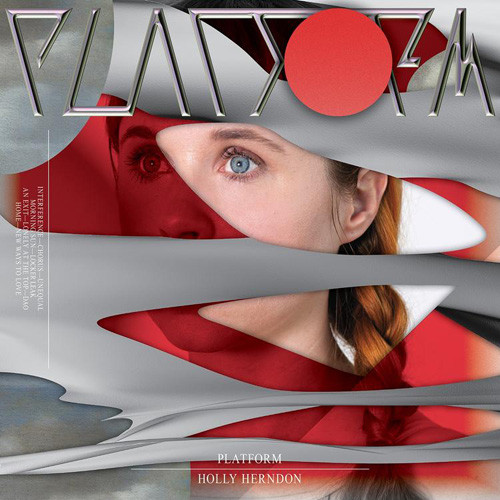
Holly Herndon: Platform (4AD) Aisha Devi: Of Matter and Spirit (Houndstooth)Visionist: Safe (Pan)As one of the most talked about and anticipated albums of 2015, Holly Herndon's Platformseemed to disappoint some, but with me it was the other way round - I liked it so much more exactly because she abandoned the familiar IDM/industrial-ambient structures that made Movement a rather predictable, almost traditional album, and went all the way into twitchy, labyrinthine voicescapes. Sure, abstract voicescapes is not something new, and you could argue that especially within poststep it's pretty much its own tradition, but it's nevertheless still something with a lot of potential, and that potential was brilliantly realised on Platform, which simultaneously managed to avoid the glitchy-dreampop comfyness that these voicescapes far too often regress to, yet sounded almost like pop on some tracks, making abrasive avant garde structures surprisingly catchy.
If Herndon avoided the well-established use of voice manipulations to create dreamy, floating soundscapes, that approach was a big part of Aisha Devi's Of Matter and Spirit, but with none of the usual comforting pleasantness. Instead, the overall sound was icy synthetic and inhuman, as ominous and foreboding as Devis mangled voice, which sounded like the wailing of digital spirits forever caught inside forgotten data networks, or the mysticism of Dead Can Dance remade by an alien AI left to its own devices for millennia.
Herndon and Aisha Devi seem to represent two different takes on how manipulated voices can be used to explore the ever disintegrating border between artificial unreality and the organic, but the most radical of 2015's voice-alchemists was perhaps Visionist, who I guess should technically be classified as "weightless grime", though the use of disembodied, half dissolved voices was pretty much the only defining characteristic of Safe, which otherwise was more or less unclassifiable. Drenched in an overwhelming sadness, the album was sort of related to Burial in spirit, but without using any of the well-established Burial-tricks so familiar by now - no broken 2step beats, engulfing crackle or ghostly submerged rave sounds here, just a half-fractured mosaic of abandoned voice fragments lost in an icy void. Unable to connect while blindly calling into an endless indifferent nothingness, isolated words and phonemes glittered like distant stars in ever changing constellations, creating patterns of stark beauty and hopeless longing. At the same time moving and weirdly terrifying, Safe among the absolute best of the year.
Slackk: Backwards Light (R&S) Acre: Better Strangers (Tectonic)Acre+Filter Dread: Interference (Codes)While Visionist made abstract grime so weightless that it became something else entirely, there were still plenty of experimental grime producers pushing the style forward in 2015 without leaving it behind altogether. One of the best was Slackk - a bit of a veteran in the field by now - who never seemed interested in the pure and bleak abstractions pursued by so many of his colleagues. Continuing down his own path, further refining a highly personal take on "emo-grime", it was hardly surprising that his Backwards Light ep was much in the same style as 2014's Palm Tree Fire lp - an abundance of complex-yet-straightforward melodic arrangements and bittersweet, melancholic moods. At the same time, it also felt like an even more focused distillation of that sound, with each of the six hollow funeral marches a brilliant and self-contained gem in its own right, making it perhaps his best release yet.
Melancholic moods were also present on Acre's Better Strangers, though only as one element in an overall extremely dark and grim sound world - sort of how the most brutally ugly and inorganic tracks from the first Rephlex Grime-compilation would have ended up if they'd been left to disintegrate and deteriorate in a cold concrete basement for ten years. This didn't work all the way through Better Strangers though, some tracks were simply too minimal and monochrome to be interesting, which was extra frustrating because the best tracks were just incredibly good - at the same time genuinely futuristic and hauntologically ghostly, oppressively dystopic and strangely touching, vulnerable and beautiful in all their icy, crumbling hopelessness. Trimmed down three or four tracks, Better Strangers could have been the album of the year, but then, Interference, Acre's collaboration with Filter Dread, was arguably the ep of the year - a much more sharp, focused and upbeat affair, but still every bit as strange and inorganically alien as you could wish for, a sonic landscape inhabited by odd machine creatures moving in high speed patterns completely incomprehensible to us.
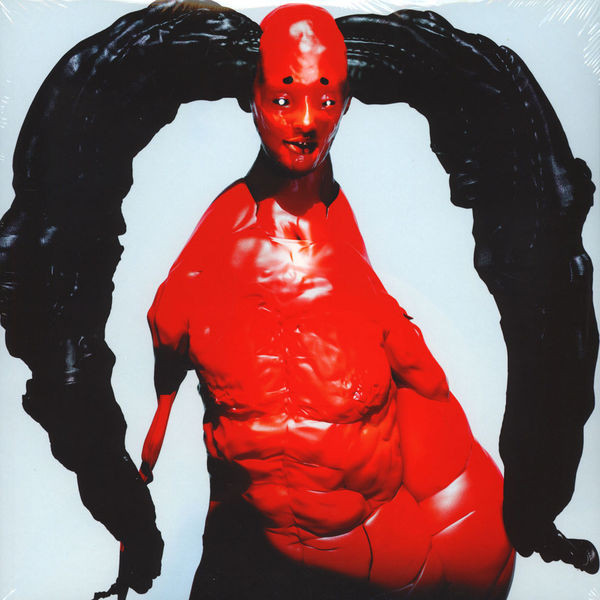
Brood Ma: Populous (Hemlock) Arca: Mutant (Mute)Kuedo: Assertion of a Surrounding Presence (Knives)Related to the abstract grime contingent, the biggest "movement" in experimental electronics in 2015 was probably all those producers inhabiting the interzone between the kind of abstract grime that had become so abstract that it contained no actual traces of grime anymore, vaporwave-turned-neo-IDM, and what I used to call "entropica" - disintegrating soundscapes updating dark ambient and avant-industrial techno for post dubstep sensibilities. Adam Harper territory, on other words. As with a lot of the first generation entropica (Actress, Hype Williams, Lukid), a lot of this stuff didn't completely convince me; a bit too often it was also a bit too close to standard dark/industrial-tinged ambient, or Autechre-ish IDM, and while both kinds of music can be great, it also feels pretty regressive going on making that kind of stuff. So I never really got into M.E.S.H., J.G.Biberkopf or Rabit's Communion - the latter didseem fresh and invigorating at first and in small doses, but it simply lacked the focus and variety to be convincing as Whole LP. Only a few from this camp really worked for me; Brood Ma's Populous had enough structural power and momentum to make the gritty, noisy aesthetic fascinating, even if it didn't exactly feel forward-thinking, and Arca's Mutant, while a bit too reminiscent of traditional glitchy IDM to be a revolutionary work, still had an undeniable originality and personality to its compositions, slowly unfolding the more you'd listen. I'm still in the process, but as with Xen, more and more of it is getting into focus and suddenly making sense. I doubt it'll stop being too long, though, but who knows?
Eventually, the best of this bunch in my opinion was Kuedo's ep Assertion of a Surrounding Presence, which moved away from the pioneering "cosmic footwork" of Severant in favour of a much more cold and ominous sound. There was still a slight element of synth "classicism" here and there, but the overall feel was as bleak and post-organic as anything by Rabit or Brood Ma, just delivered in a much more immediate and straightforwardly structured way, and not held back by attempts to be as formless and constantly shifting as possible.
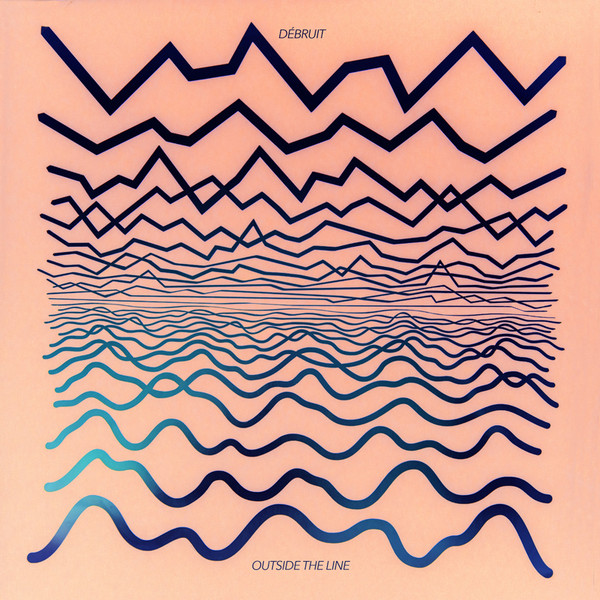
Turnsteak: Digitale Pourpre (With Us) Debruit: Outside the Line (ICI)I have never really been into the "clubby" end of poststep, but it does deliver some good stuff now and then, and surprisingly, two if the most original albums of 2015 was actually from this end of things - as well as from France. The duo Turnsteak, previously completely unknown to me, worked with the well-known formula of twitchy UK funky/2step-beats and a neon lit emotionalism somewhere between euphoria and melancholia - i.e. where we also finds artists like Damu, Walton and Sully (around Carrier at least). Some tracks on Digital Pourpre didn't do much more than continue this tradition, but big parts of the album also showed that there was still plenty of opportunities for new twists within the formula - enough potential for further development to make an album that was both a well-rounded whole and a completely personal take on the sound, full of odd and original touches.
With Debruit's Outside the Line, the most surprising thing is that it seemed like a "clubby" poststep record at all, rather than another instalment of his uniquely twisted ethno-wonky-funk. Sure, the ethno samples were still there, and there was none of the house/garage elements so common to the strains of poststep desperately trying to align itself with club/'nuum authenticity, but the use of four to the floor beats and much more straightforwardly flowing basslines also took it in the direction of - relatively - conventional dancefloor-oriented 21st century club music. And I'm not really sure how to feel about it, I must confess. On one hand, it's good that Debruit is trying completely new things - as great as his previous style is, he has also by now refined it to the point where some new input is clearly needed -, and there's still some wonderfully weird sounds and dreamy, dizzy moods on Outside the Line. On the other hand, though, working within a much simpler rhythmic structure is just not to his advantage: It has always been the sharp edges and far out syncopations that made his music really original and amazing, and without them it can at times feel a bit flat and featureless, especially with the heavy use of sampled "tribal" percussion, which just seems pointlessly tacked on when it isn't twisted into original shapes by larger, weirder rhythmic structures. As a result, Outside the Line was to some degree frustrating - sometimes it seemed strangely anonymous, and sometimes it sounded wonderfully strange and original - but in any case it's a good thing that Debruit isn't stuck. I just hope that he'll be able to develop further while regaining the rhythmic weirdness that made him so special to begin with.
Zomby: Let's Jam pt. 2 (XL)Myth: Evaporate (Halc)Ebbo Kraan: Aletta (Rwina) As with the SIMPIG-album mentioned above, this is all records that feel a bit like guilty pleasures, in that they're immediately pleasurable for someone with my preferences in poststep, but at the same time they're not trying to push any envelope whatsoever. If anything, they sound great exactly because they're cultivating some of those elements that seemed so revolutionary and envelope-pushing in the beginning of poststep. I guess there's people who, like me, wish that there was simply more of this amazing, wonderful music, and hence they make more of it, ticking all the right boxes, rather than inventing new ones. While not straightforward bitstep - still my favourite poststep substyle - these records all use, to some extend, the spiralling arpeggios and 8-bit cascades so significant for that style, but mostly within a slightly more dreamy and melancholic frame, as pioneered by artists like Ikonika, Desto and not least Zomby. So in a way, you could say that Zomby is plagiarizing himself on part 2 of the two Let's Jam-ep's he released in 2015, doing what he does best, and pretty obviously still doing it brilliantly. Not that he's simply repeating classic Zomby-formulas without any development, there's some very slight twists, the tracks seem both more varied and looser, yet also more fully formed than most of the With Love-album, though it's not easy to really put a finger on why that is. In any case it's a great Zomby ep, still evolving his personal sound slowly and organically, his inspiration still far from exhausted. Though, to be fair, part 1 was pretty much run-of-the-mill minimal "acid"/techno-jams that contained nothing to distinguish them as Zomby-productions.
That the "classic" Zomby-sound still has fans should not be surprising, somehow the sad, longing hopelesness of post-Burial sadstep just seem to fit twinkling, super-simple arpeggio-melodies like a glove. Myth's Evaporate ep didn't bring anything new to that table, and yet, it's hard to resist that sound when it's made so pure and immediate. Which could also be said about Ebbo Kraan's Alettaep, despite being a much more hard and heavy affair, based on the half-atmospheric, half-pompous avant-trap sound developed by artists like Starkey, Desto and Krampfhaft over the last three years. Again, there's nothing here really moving that sound forward, but when something works so well, it's obvious that there'll be people out there who think that it's unfair that it should be gone so soon, and wat to keep it alive. I can't really blame them.
STOP PRESS: Just when I'd come to the conclusion that poststep is more or less over and done, a bunch of amazing new poststep records appears in a short time, almost recreating the feeling of a continuous eruption of brilliance that made the previous peak years such a wonder to live through. OK, to be fair, the element of constant surprise is still missing, none of these records are creating something utterly unheard and unexpected, they're all pretty much expanding the current abstract grime sound, but they're doing it on such a uniformly inventive and invigorating level that I'm still feeling an unmistakable future buzz - apparently this style has huge hidden reservoirs of unused potential for invention. The play- and colourful, almost downright cartoony side of grime is taken to the max with Darq E Freaker's ADHDep, Murlo's Odyssey lp, and Loom's European Heartache ep (or most of it, anyway) - sometimes wonderfully absurdist and quirky like toys designed to amuse a hyper-intelligent alien child, and sometimes creating a kind of hysteric grime version of the über-synthetic frenzy found in PC music. In the more harsh and dark department, Brood Ma takes a quantum leap forward from the already pretty good Popolous, and makes the kind of record that actually sounds like you imagine all those abstract electronic artists like MESH, Rabit or Lotic would sound, when reading Adam Harper-ish descriptions of their music. Dazeuses a lot of the same tricks as everybody else in this scene, but here they really work, creating music that is every bit as ominously monumental and inorganically shapeshifting as you could wish for.
Equally heavy and doomy, but also much more cold and punishing, the Cellar ep from NA (half of Nguzunguzu) is like grime reinvented by Marc Acardipane, and at times reminiscent of NA's former Future Brown-collaborator Fatima Al Qadiri, whose own second album Brute is the best of this brilliant bunch. It has been criticised for not bringing much new to Qadiris table, as well as for being too samey, but even though it's definitely closer to her "defining" sound from the Desert Strike ep and generally even more monochromatic than the already pretty samey Asiatisch, her insistence on refining what's already brilliant, ever so subtly investigating what can be done with it, turns out to be the right strategy. Qadiri is confident that her core aesthetic vision is strong enough to carry the album, and it is - rather than "samey" in any bad sense, Brute is first of all an integrated work of art, almost a meditation on the heart breaking hopelessness permeating our world as the end of history starts to crumble, the veneer of the neoliberal mummery dissolving. Not since Burials debut have I heard an album so drenched in sorrow, but Brute is a much more dark and threatening beast, like feebly trying to navigate in a world of endless fog, while a nervous violence is constantly brooding just below the surface, waiting to break through. Bruteis one of the albums of the decade, but I'm afraid that it most likely will not be remembered as such. And why that is - why something as great as this isn't being recognised, but rather seen as just another slightly experimental electronic record of no real consequence, is also why poststep as whole hasn't been recognised I think. And that's the question that I'll try and tackle next.
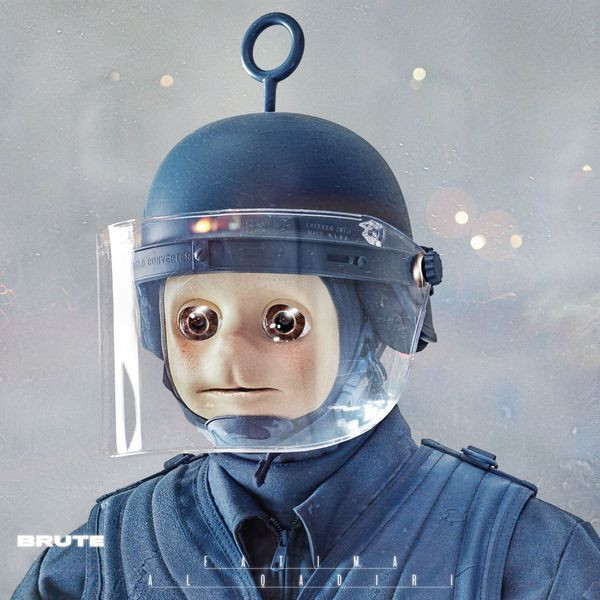
Blackdown [ 20-Apr-16 3:48pm ]
Keysound show Rinse FM April '16 [ 20-Apr-16 3:48pm ]Join the Keysound Rinse list, get free tracks to DL and the show emailed to you:
http://bit.ly/keysoundrinselist
**Keysound show Rinse FM April '16**
Blackdown "Keysound Sessions Anthem (feverish weightless mix)" [unreleased]
Becoming (N)one "Becoming (N)one" [v1984]
Becoming (N)one "Pre, Post, Pre(-lude) i" [v1984]
Mark Pritchard & Thom Yorke "Beautiful People" [Warp]
Anz "Functioning on
24-Mar-16
Keysound Rinse show March + Yak interview [ 24-Mar-16 10:51am ]Keysound Rinse show March 16
Atlas "Solitude" [unreleased]
Desto "untitled" [unreleased]
Aphix "Chemtrails" [unreleased]
Walton "Caught in a Trap" [unreleased]
Walton "Black Hole" [unreleased]
Beneath "Giv Sum" [No Symbols]
RS4 "Be Free" [unreleased]
Near "Lurk" [unreleased]
Blackdown "Where we come from" [unreleased]
???
Blackdown "untitled (WIP for Koast)" [unreleased]
Yak "Mido" [
22-Feb-16
Rouge's Foam [ 22-Feb-16 3:34pm ]
Brunel University Post-Internet Working Group, London, soon [ 22-Feb-16 3:34pm ] Click to enlarge and read the blurbs for each talkI'm looking forward to participating in a Post-Internet Working Group at Brunel University that'll meet on two occasions, on Feb 4th at 2pm, when Michael Waugh will be giving a talk ('Post-Internet Popular Music: From the Underground to the Mainstream'), and on March 8th at 1pm, when I will be giving a talk ('"Accelerated by the Digital Age?"An Ambivalent Aesthetics of the Digital World in Underground Electronic Music'). Why not come along for some IRL content creation? ;)
An Idiot's Guide to Dreaming [ 18-Feb-16 8:03am ]
Amon Duul II - Telephonecomplex [ 18-Feb-16 8:03am ]Listening to this on the way to work, through frost fronds creeping sunlight and reminded (again) of how great this album is... absolutely of its time (never get why that is supposed to be a bad thing and 'timeless' such a great thing - being of its time has to be at least one of the goals, doesn't it?) in the sense that it doesn't really sound like anything else... the first bit, with the bass turned up, could be some kind of early Photek jam (that perfect tumbling, falling-down-the-stairs drum sound) before taking a slight turn into the kind of deep-seated, slow-burning mania of Comus, then adding in a bit of Bowie, maybe even Dylan at one point before...
Ah, I'm running out of references (and forgetting why I felt the need to mention them in the first place... Guess I'm still caught up in a wave of Silver Age Blog nostalgia where it was all about describing... now you can just listen and that's probably what you should be doing...
Ok, maybe not exactly like an early Photek jam.
Moondog [ 11-Feb-16 3:32pm ]I'm listening to Moondog. It keeps coming up. I can't explain what it wants with me or where this relationship is going but it is going... It's ineffable and uncertain, it's past-commentary, almost incorrigible. People don't still listen to Moondog, do they? I'd always been suspicious.
Great hat though. Digging that Merlin-chic.
Joan La Barbara / Sesame Street [ 07-Feb-16 9:51pm ]You can see Holly Herndon doing this kind of thing I guess but, if Sesame Street is still going, I can't see it happening again in quite the same way. Kids TV used to be a kind of deregulated fug, full of off-cuts of audio and odd animation even in the most banal settings but now... Well, maybe there's corners of the internet / cable TV where something like this prospers; it's not on Netflix.
Is it really true old age when you start bitching about Kids TV not being avant-garde ??
What next? Breaking out in hives over the Gold Standard, I guess. Fistfights about the fifty year anniversary celebrations of 2nd Annual Report's release?
Grand Tango [ 07-Feb-16 7:51am ]Jeff Harrington's work also found at
http://parnasse.com/jh/blog/
Assembled Minds [ 27-Jan-16 3:28pm ]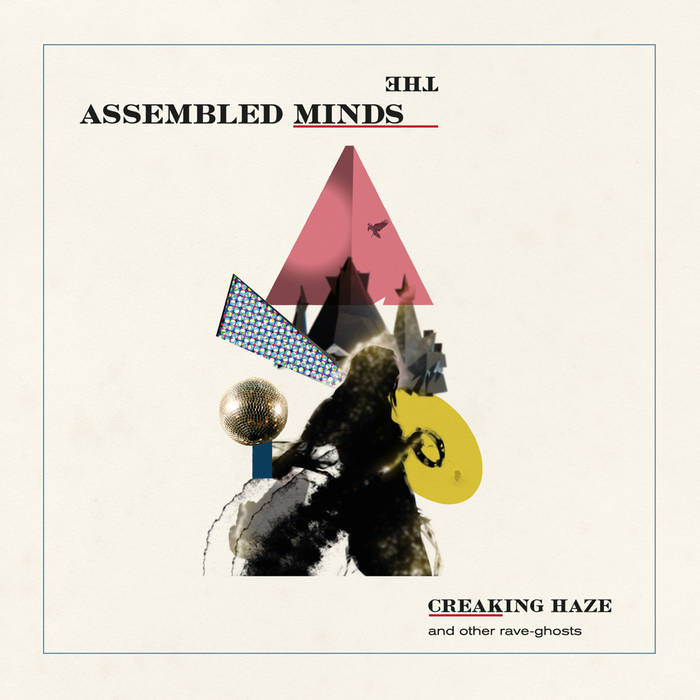
Well, this looks pretty good... twinkling, with a little shudder; gert big beats as well and the merest hint of mushroom madness, psi(locybe) breakdowns; the fear of burping up your hash-pipes in the heart of the wood... horrifying, in it's way and apparently put together by someone who's got still occasionally for that flashbacked thousand-yard stare but (maybe) has managed to come out the other side, still smiling.
Buy it here, if you fancied a go.
555 - The Hierophant [ 27-Jan-16 9:53am ]This tripped me out on the way to work today. I don't even know how it got into the car.
Web Cam Tears [ 08-Jan-16 9:23pm ] 1979 wasn't always about Post-Punk [ 07-Jan-16 12:31pm ]In 1979, I was 8 and I liked 2000AD. I got this and it was immense and it still is.

Here's Breakfast In The Ruins talking about it and giving up loads of scans.
That guy with the plant on his head has been very influential.
01-Jan-16

Here's Breakfast In The Ruins talking about it and giving up loads of scans.
That guy with the plant on his head has been very influential.
Letha Rodman Melchior [ 01-Jan-16 11:11am ]<center><iframe width="420" height="315" src="https://www.youtube.com/embed/C0M8NO1OwRk" frameborder="0" allowfullscreen></iframe></center>
Starting slow this year. But I think it'll end up immense.
This crept up on me when I wasn't paying attention. I'm hoping for more of that kind of thing.
18-Dec-15
Starting slow this year. But I think it'll end up immense.
This crept up on me when I wasn't paying attention. I'm hoping for more of that kind of thing.
Rouge's Foam [ 18-Dec-15 8:03pm ]
Slides from my talk at 3hd, 'What is the Musical Object in the 21st Century?' [ 18-Dec-15 8:03pm ]Here are the slides from my recent talk at the 3hd festival in Berlin. It was a bit more freeform, so apologies if the threads are a bit unclear from them. It was a great festival altogether, with a great line-up of performances too - there was a write-up about it on AQNB.
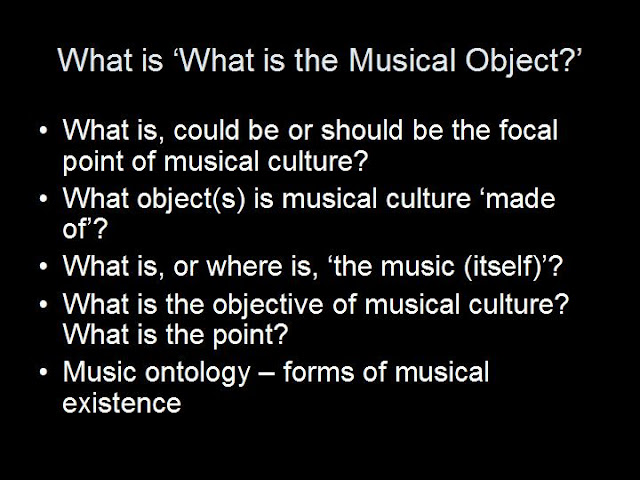
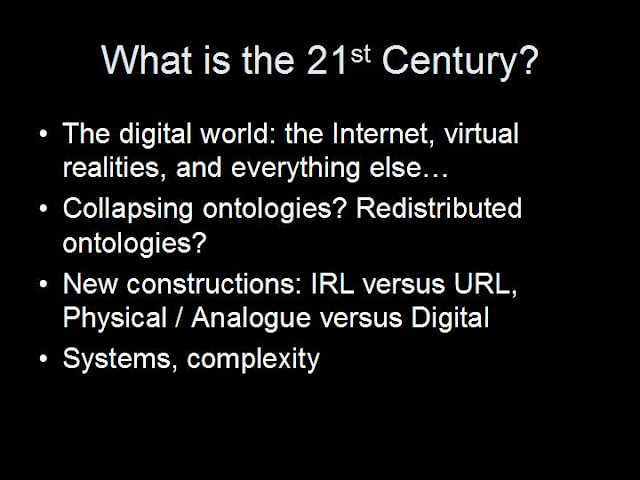
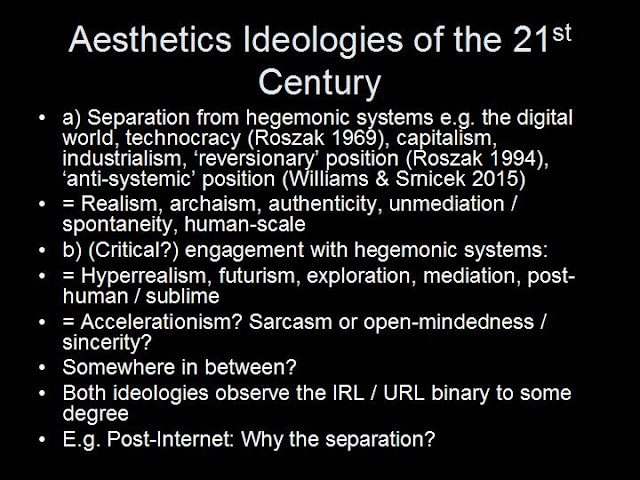
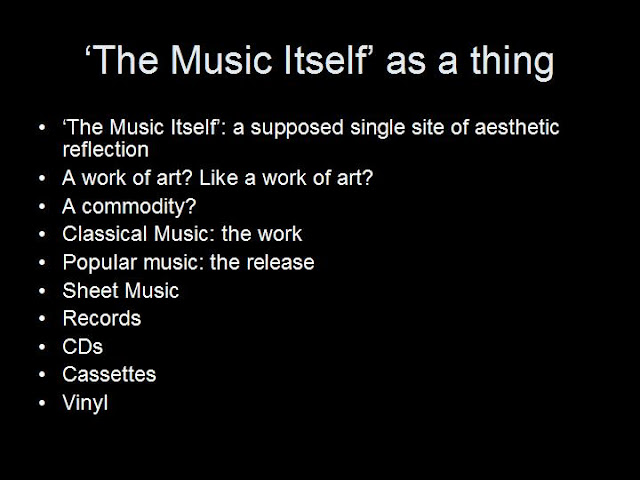

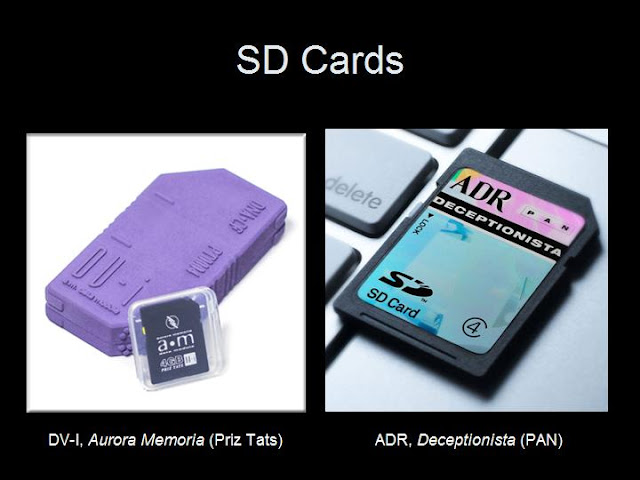
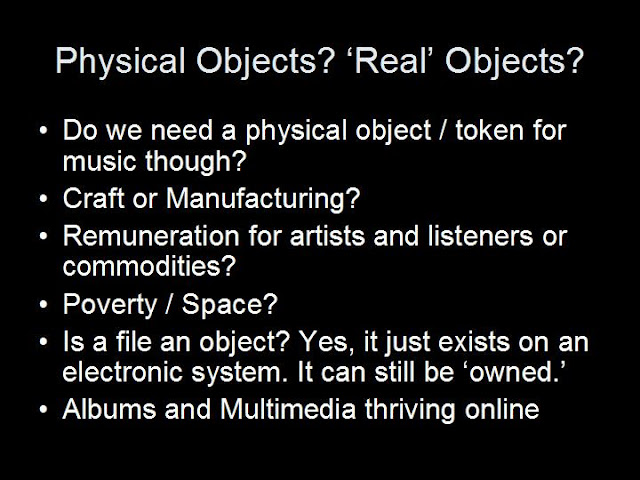
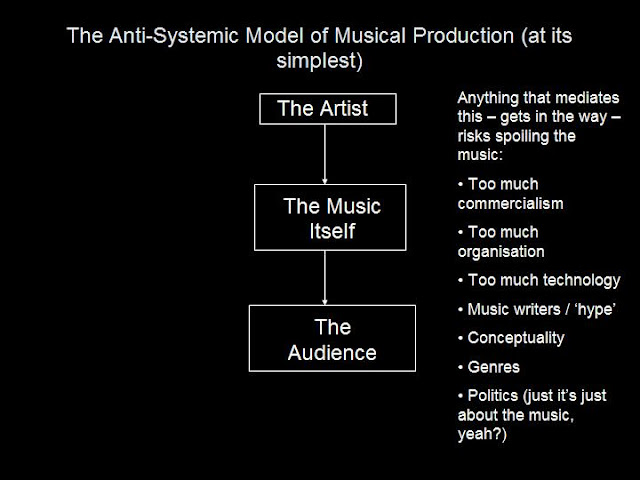
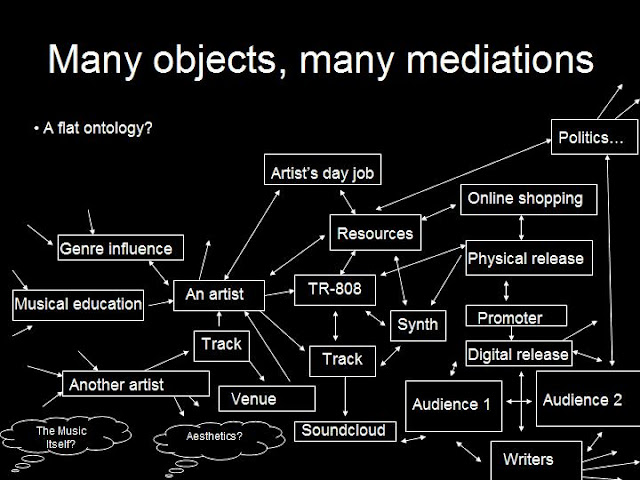
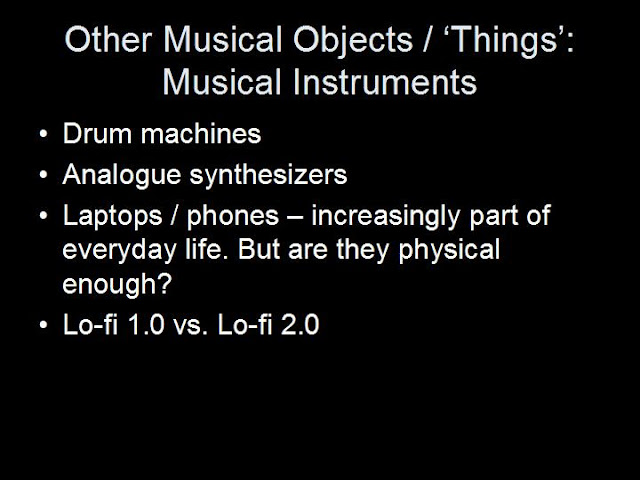
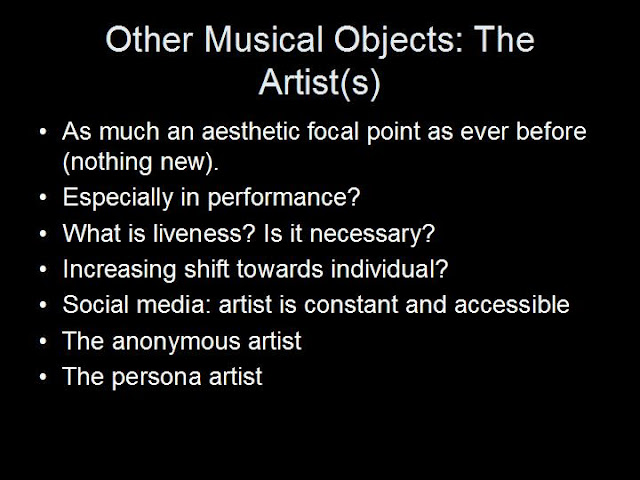
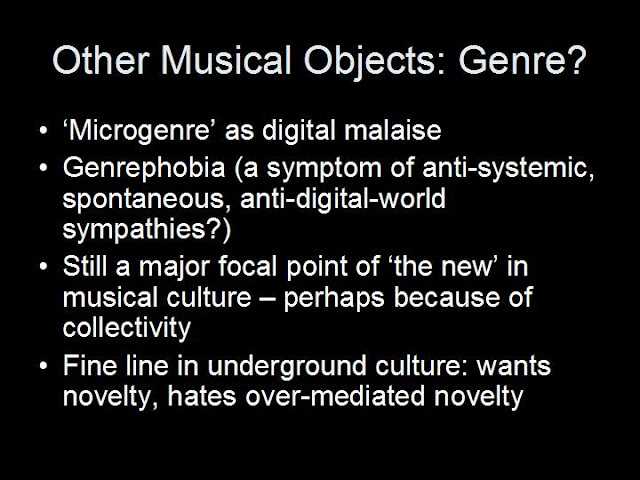
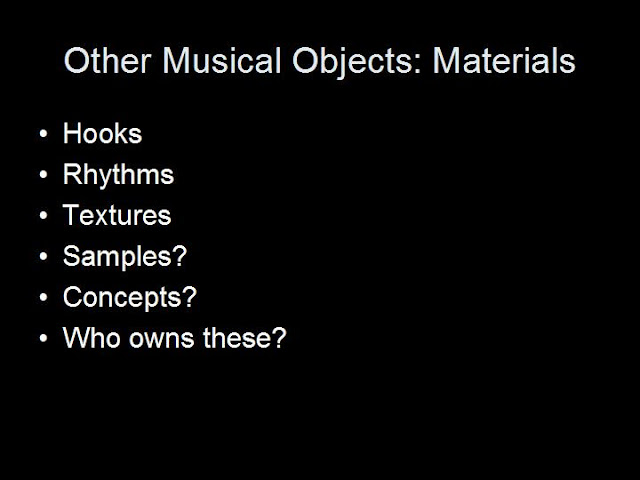
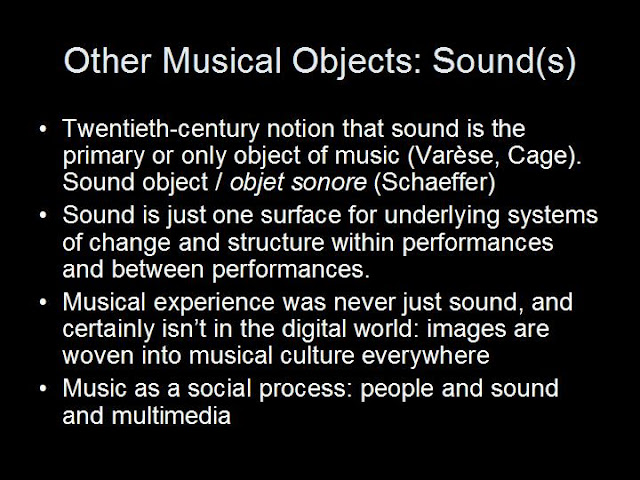
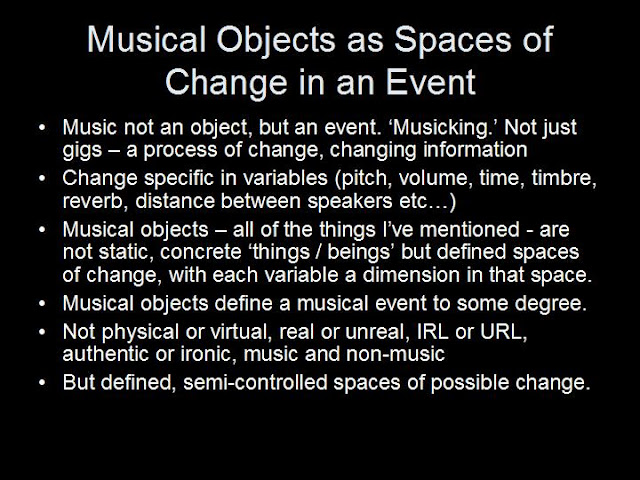
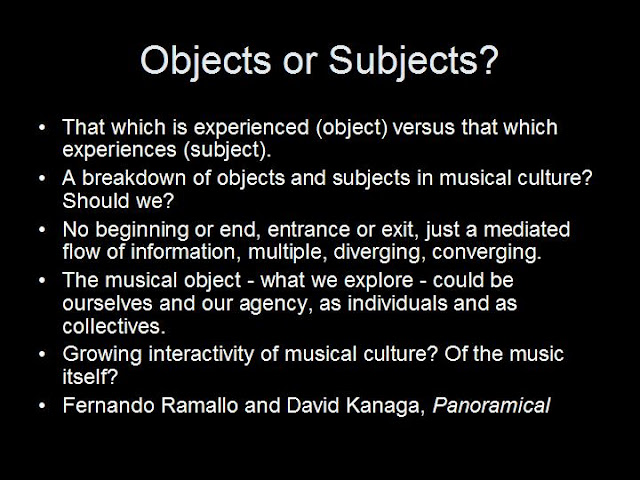
08-Dec-15
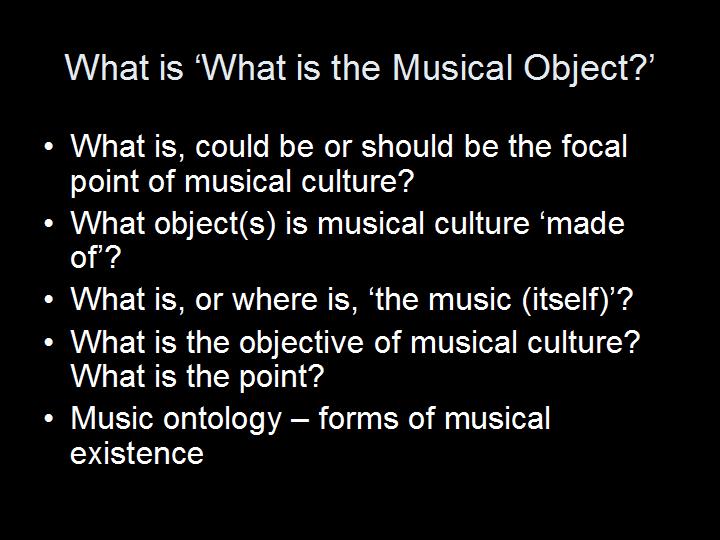
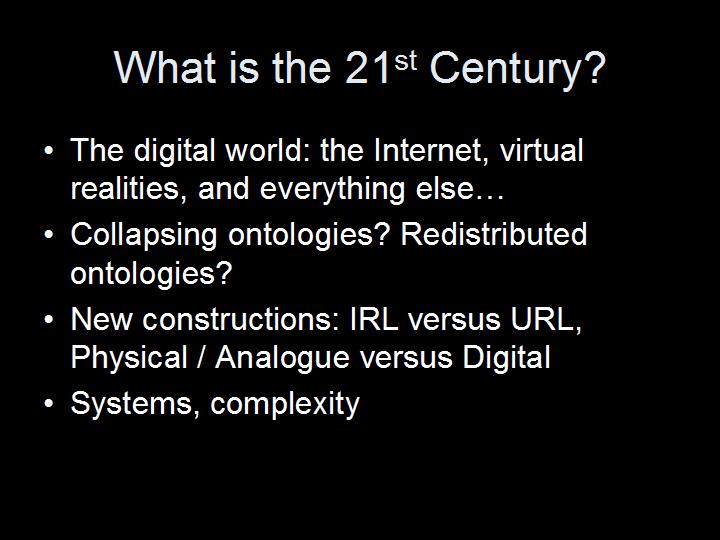
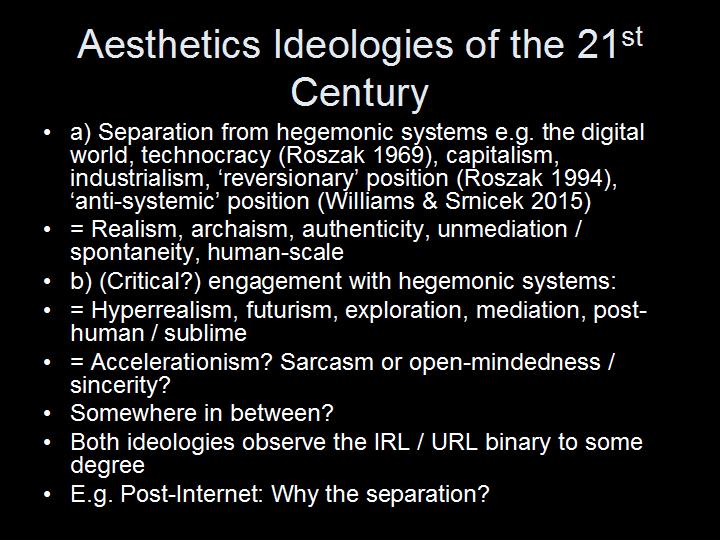
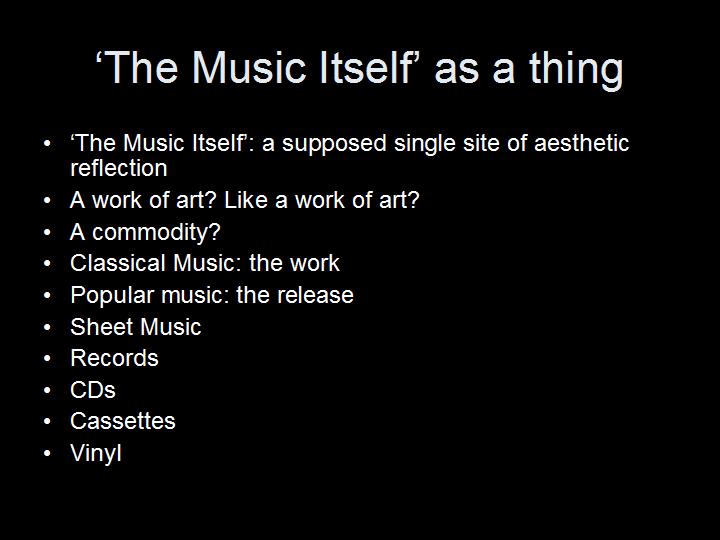

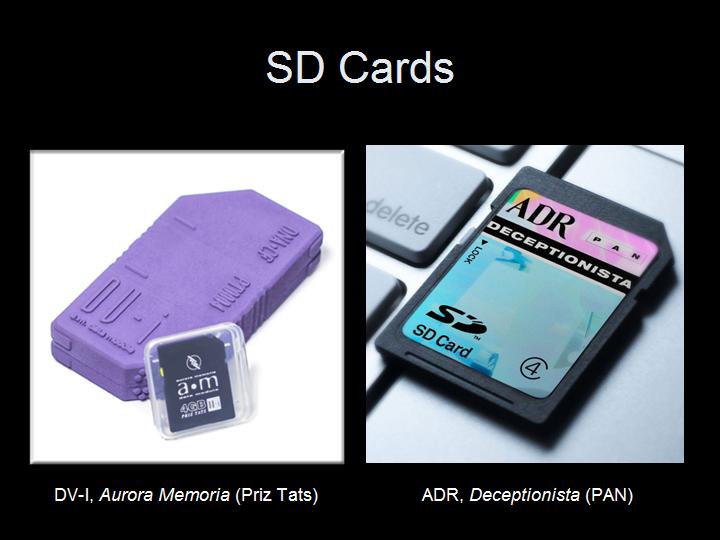
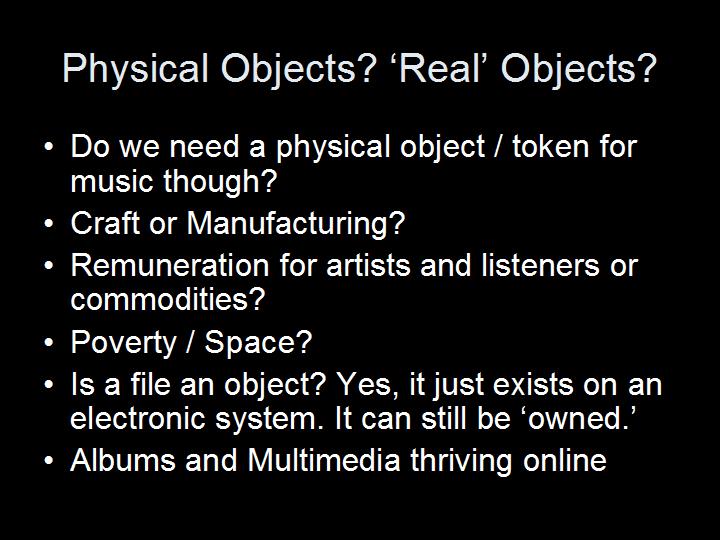
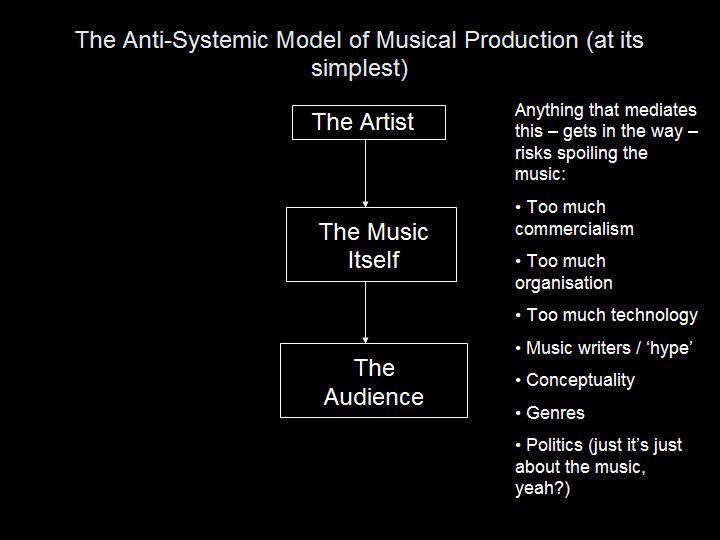
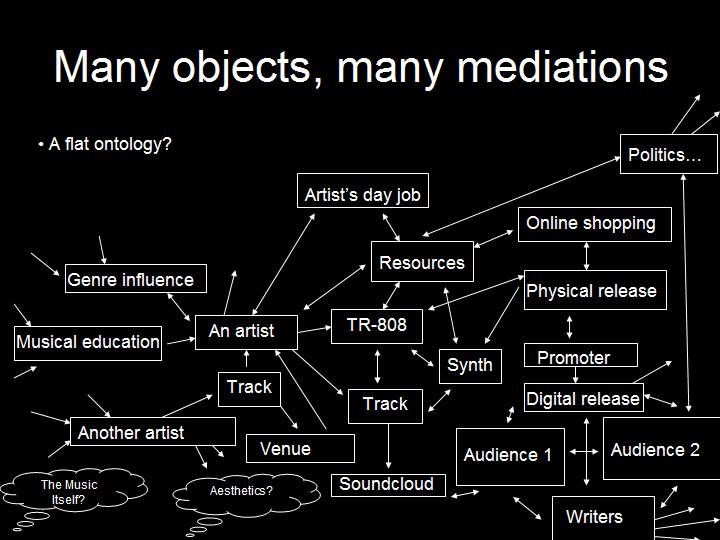
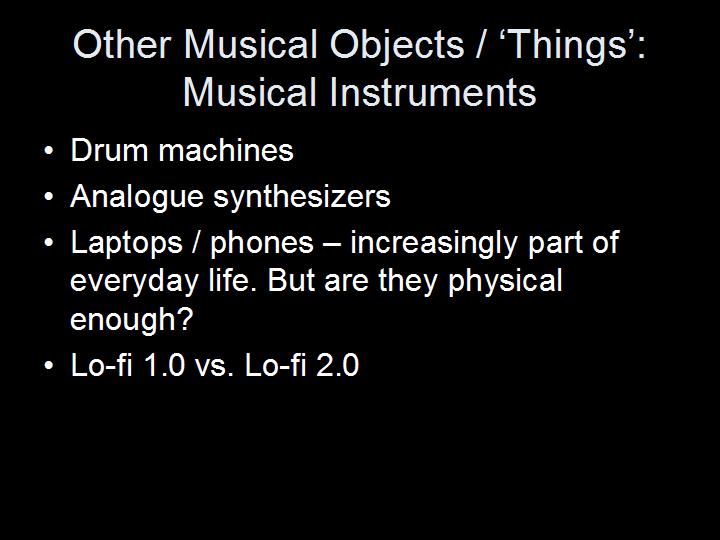
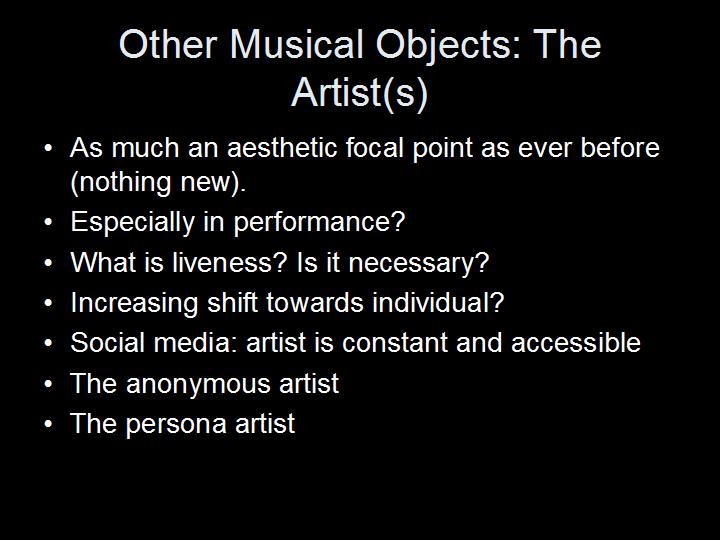
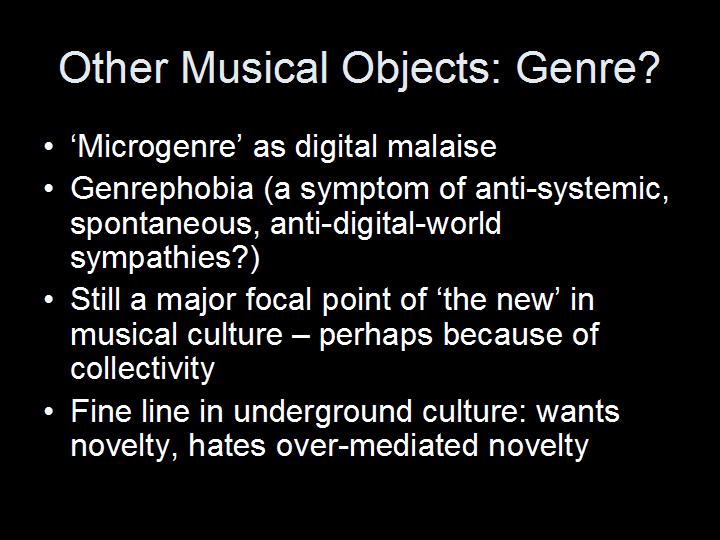
 Blogpost for Verso: On Music and Folk Politics [ 08-Dec-15 4:17pm ]
When, in Inventing the Future, Nick Srnicek and Alex Williams critique the collection of tendencies within the contemporary left they call 'folk politics,' they could also be lamenting the aesthetics that now dominates those areas of popular music that were once progressive. Whether it's underground, or 'indie,' or even happens to be in the charts, contemporary popular music routinely 'chooses the familiarities of the past over the unknowns of the future;... habitually chooses the small over the large' and 'value[s] withdrawal or exit rather than building a broad counter-hegemony'. For independent music as in folk politics, 'organisations and communities are to be transparent, rejecting in advance any conceptual mediation, or even modest amounts of complexity' and both 'emphasis[e] the local and the authentic, the temporary and the spontaneous, the autonomous and the particular'. Srnicek and Williams show that these strategies arose and achieved much in the special political circumstances of the mid-twentieth century, and again, as aesthetic strategies in popular music, they arose during the same period in the countercultural atmosphere of jazz, rock, punk and, indeed, folk musics. And for both folk politics and folk-political music, the time has come to invent what happens next...
An Idiot's Guide to Dreaming [ 29-Nov-15 9:53am ]
The Black Dog - Spanners [ 29-Nov-15 9:53am ]I'm not interested particularly in adding to the canon - everyone loves Spanners don't they? - but in the spirit of revisiting it recently...
It is striking thing. It's a thinking thing. I remembered hearing it for the first time all over again & thinking that these guys were properly aligned with the avant-garde in a way that most of this era (every era) techno / IDM just weren't. I loved Aphex Twin and Autechre and Reload but The Black Dog were entirely odder & clearly unwilling to make commercial leans even in the vaguest of senses. The disco and techno bits of this album show they could easily be assimilated into (what would become) background music for Masterchef / Football Results / Home Improvement shows but the other bits were just so bowel-churningly creepy & psychedelically awkward that you can imagine advertising execs & music placers not being able to... place it.
There's bits on Spanners that make it exist in the world of Coil or The Residents rather than Hip Hop (or Kraftwerk, or Tomita, or Eno), bits that prevent a lay person wandering through the Warp catalogue keeping going....
Bytes was good but Bytes did attempt a theme of sorts; you had a clue as to what was coming next. With Spanners, the chimera / Cerberus is much more evident; this was the multi-headed techno beast in all it's directions, all at once...
I'm going back in. Bits of it our soundtracking our regular live action Angry Birds simulation (you hurl a 5 year old boy towards stuffed toys and pillow constructions) and it works perfectly: scary, silly, serious, soft. The 5 year old says some of it sounds like 'the pigs have gone crazy' and he's right; they really have.
23-Nov-15
It is striking thing. It's a thinking thing. I remembered hearing it for the first time all over again & thinking that these guys were properly aligned with the avant-garde in a way that most of this era (every era) techno / IDM just weren't. I loved Aphex Twin and Autechre and Reload but The Black Dog were entirely odder & clearly unwilling to make commercial leans even in the vaguest of senses. The disco and techno bits of this album show they could easily be assimilated into (what would become) background music for Masterchef / Football Results / Home Improvement shows but the other bits were just so bowel-churningly creepy & psychedelically awkward that you can imagine advertising execs & music placers not being able to... place it.
There's bits on Spanners that make it exist in the world of Coil or The Residents rather than Hip Hop (or Kraftwerk, or Tomita, or Eno), bits that prevent a lay person wandering through the Warp catalogue keeping going....
Bytes was good but Bytes did attempt a theme of sorts; you had a clue as to what was coming next. With Spanners, the chimera / Cerberus is much more evident; this was the multi-headed techno beast in all it's directions, all at once...
I'm going back in. Bits of it our soundtracking our regular live action Angry Birds simulation (you hurl a 5 year old boy towards stuffed toys and pillow constructions) and it works perfectly: scary, silly, serious, soft. The 5 year old says some of it sounds like 'the pigs have gone crazy' and he's right; they really have.
For Paris (Woebot) [ 23-Nov-15 10:12am ]Woebot in various iterations has been hugely influential on this blog and on IX Tab (and on my relationship with unicorns / small horses) and on the www's relationship to music in general and this is his mix for Paris:
Plus, I have a Woebot t-shirt that I was wearing yesterday when I went to visit my Mum. So, fate.
22-Nov-15
For Paris by Woebot on Mixcloud
Plus, I have a Woebot t-shirt that I was wearing yesterday when I went to visit my Mum. So, fate.
Disemballerina [ 22-Nov-15 7:42am ]Fell into this via some wormhole or other. It's maybe not meant for me but I've been playing it a lot.
Actually, I'm not sure what is for me.
Not sure I really believe music is for anyone.
These days, I'm always awake, it seems.
Oneirogen - Cinerum [ 21-Nov-15 10:44pm ] Hello Darkness My Old Sample [ 19-Nov-15 12:38pm ]Some good stuff here about Voodoo Ray from Woebot on hardcore vocal samples. I didn't know it was Peter Cook but it seems perfect that it was. The best thing about those early acid / hardcore tracks was the entirely odd choices of sample material and the dullest thing about what came later was the insistence on 'obscure' horror samples or bits of Blade Runner - Tricky is the exception there, since the Blade Runner sample sounds like it couldn't have been absent... and in fact Tricky's use of Japan's Ghosts was one of the more interesting things about his first album; that kind of non-more-white(skinned) Newpop framework wrapped itself around Tricky in an almost sinister, post-colonial way... I like most of his stuff but none of the later albums seemed willing to disengage from the musical frames that Tricky ought to have been in (Specials, Ganja boys, Grandmaster Flash, Jungle)and so failed to sound.
And when we're talking about vocal samples, I guess this ought to be mentioned because I vaguely remember the moment I first heard this and started giggling uncontrollably for reason I mow really question:
In fact, Woebot's point about the odd nature of vocal samples very much affected my choices of vocal samples on the IX Tab albums - bearing in mind that most of the reviews of both albums focus on the avant-garde / occult nature of the music, the vocal samples are generally utterly prosaic (I can't mention all the sources, for reasons) seem many of them are utterly, and very deliberately prosaic: Dangerous Liasons, Hollywood after Oscar parties, Children's TV, TSW News, Gus Honeybun, Hal from 2001 (yawn!), ITV Drama Specials... It's a kind of occult banality that interests me. that feels truly occult because it's truly personal; it's the detritus of everyday lives that make it occult. I mean, I love all that Crowley / OTO / Hellraiser guff but using it as it is a resource seems totally beside the point.
Simon and Garfunkel, half-heard on my parents stereo on a Sunday is Bay-B-Kane and is darkness incarnate.
11-Nov-15
And when we're talking about vocal samples, I guess this ought to be mentioned because I vaguely remember the moment I first heard this and started giggling uncontrollably for reason I mow really question:
In fact, Woebot's point about the odd nature of vocal samples very much affected my choices of vocal samples on the IX Tab albums - bearing in mind that most of the reviews of both albums focus on the avant-garde / occult nature of the music, the vocal samples are generally utterly prosaic (I can't mention all the sources, for reasons) seem many of them are utterly, and very deliberately prosaic: Dangerous Liasons, Hollywood after Oscar parties, Children's TV, TSW News, Gus Honeybun, Hal from 2001 (yawn!), ITV Drama Specials... It's a kind of occult banality that interests me. that feels truly occult because it's truly personal; it's the detritus of everyday lives that make it occult. I mean, I love all that Crowley / OTO / Hellraiser guff but using it as it is a resource seems totally beside the point.
Simon and Garfunkel, half-heard on my parents stereo on a Sunday is Bay-B-Kane and is darkness incarnate.
Not Ekoplekz [ 11-Nov-15 1:25pm ]Well, if there's any kind of avant - scene that I'm aware of (maybe even a little part of), Nick's the kind of Kingpin: playing on LP, on big boy's labels; undisputedly popular and critically acclaimed where most of us are (at best) critically acclaimed and resoundingly unpopular. He's been quiet recently but he's almost back. You'll love this as much as you loved the other ones. I'm never sure if there's a change in methodology / sound that goes along with a change in name when Nick Edwards / Ekoplekz is concerned but the Eko sound is very much here, give or take some IDM techno lashings, here and there.
He's probably not even using the Eko, anymore but the sound is a thing-in-itself now, has it's own logic.
Saisonscape: Decay [ 11-Nov-15 1:21pm ]
This is happening in Bristol at the weekend and it features Kemper Norton, who is always a delight to meet and watch and hear. I'm going despite the fact that I'm normally deeply suspicious of musical events that cross over into art. I love Art, love music but don't think anything about soundpoems or soundart (both deeply flawed concepts, as far as I can see). I loved it when Throbbing Gristle shifted out of the Art scene and into Pop (sort of) and didn't much care for anything they got up to when, in recent times, they got sucked back in. Coum seemed interesting, as Art, TG were much more interesting as music - and so it goes...
We should watch out for Art, creeping into our musical scenes.
We should resist.
The rules of engagement are different over there.
THE FANTASTIC HOPE [ 29-Oct-15 6:35pm ]
GET REAL, TOMORROW IS NOT GOING TO HAPPEN. BY DAN HODGES. [ 29-Oct-15 6:35pm ]
Hi. I'm Dan Hodges. And I tell it like it is.
Like. It. Is.
If you believe everything you read on Lefty Twitter you'd think that time progresses in linear fashion, one day after another, week succeeding week, month upon month.
But hang on. Let's stop and think for a second - is this really what's going on here?
No. It's not.
And I'll tell you why not. People like me - go on, call me a 'Tory' if you like - know that in the real world things like this just don't happen.
Apparently, when the clocks strike 12 tonight, by some magical process of Socialist metamorphosis, today will just magically turn into another, newer, and different day. When the Earth gets to the end of its daily cycle it will just spontaneously keep on spinning, in a kind of Hard-Left utopia of ongoing movement.
Except it won't. Not now. Not ever.
Because this is the Real World. Where Real Things Happen. In barely formulated tabloid-ish sentences that have somehow made their way into a broadsheet where they masquerade as incisive realism. With their no-nonsense tone. And their full-stops.
My trick is to take exaggeratedly cynical negative statements with absolutely no intellectual basis and make them seem like bullshit-free common sense. The sort of common sense that just so happens to coincide exactly with the latest Conservative Party policy announcement.
I say things aren't going to happen. Categorically. End of story.
Sometimes they do. Sometimes they don't. That gives me a roughly 50% success ratio, which is just about enough to insulate my reputation and guarantee my salary at a newspaper for which pessimism and demagogic mean-spiritedness are strategic imperatives.
So for the last time, oh my Lefty comrades.
Tomorrow ain't gonna happen.
Not now. Not ever.
Not even tonight.
Deal with it.
Rouge's Foam [ 17-Oct-15 6:30pm ]
Slides from my talk at Unsound, 'Is Accelerationism Good for the Underground?' [ 17-Oct-15 6:30pm ]Yesterday I gave a talk on the history, nature, and pros and cons of accelerationism at the Unsound festival. These slights might not give you the full picture of what was said, but since they're full of quotes and references, people have asked that I upload them.
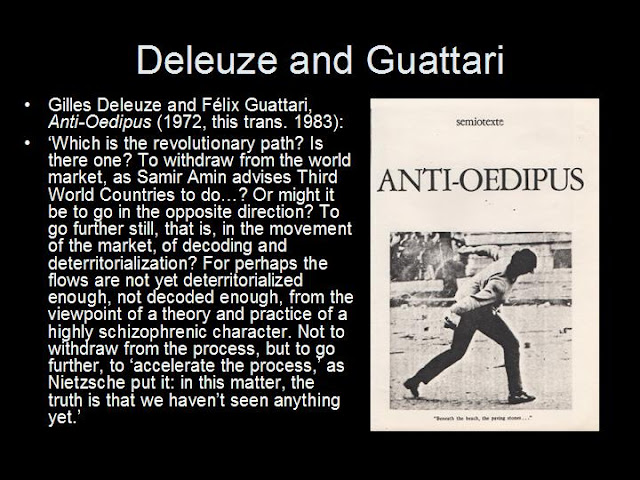
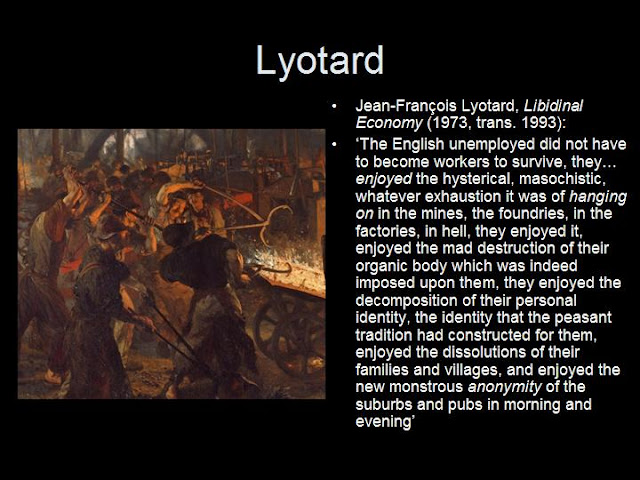
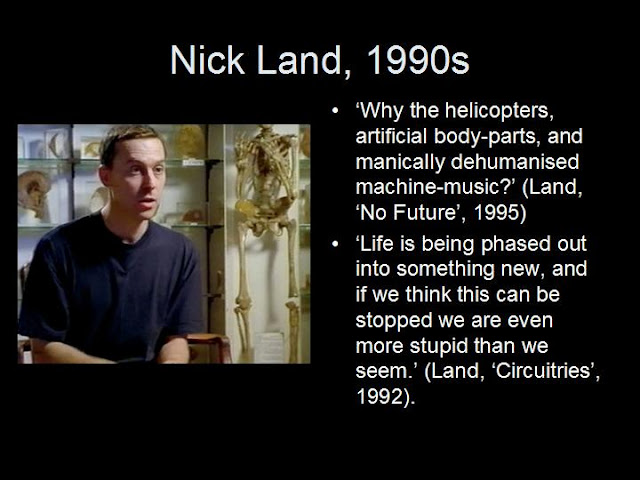

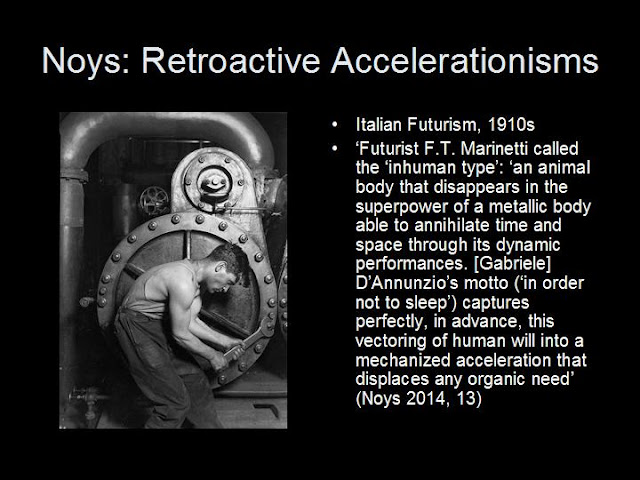
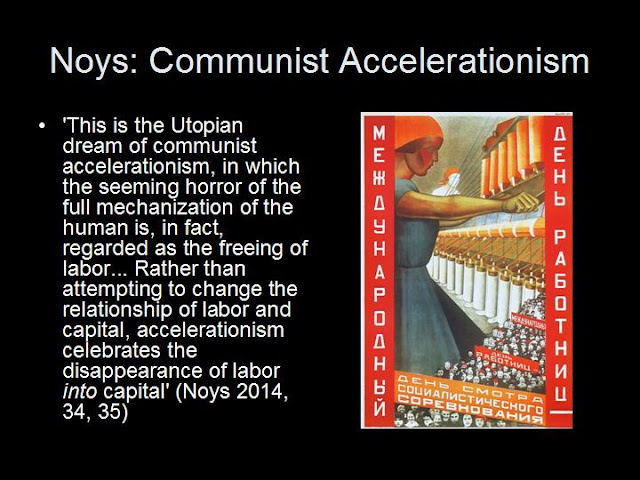

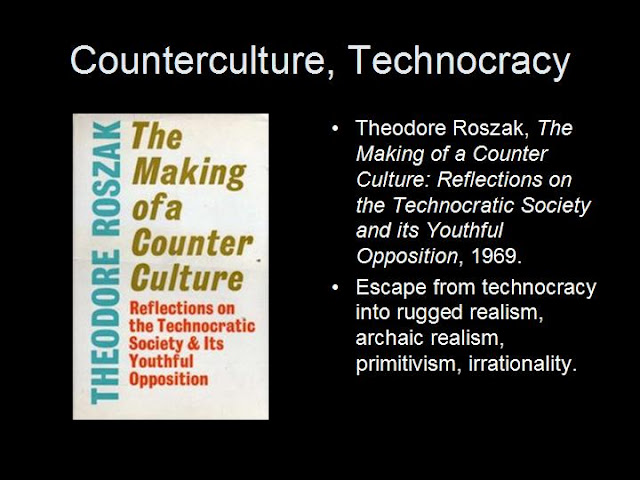

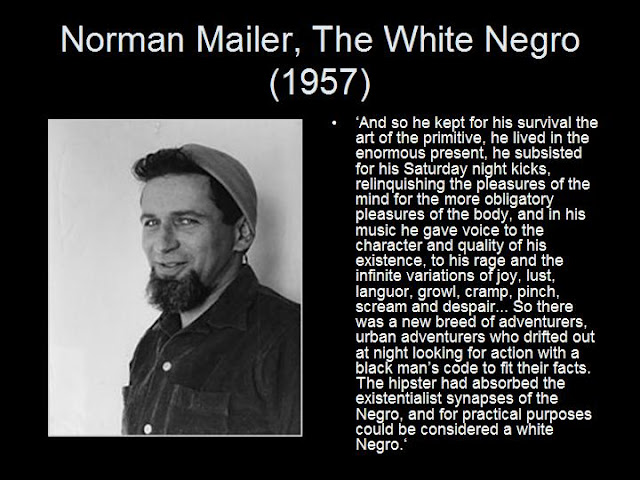

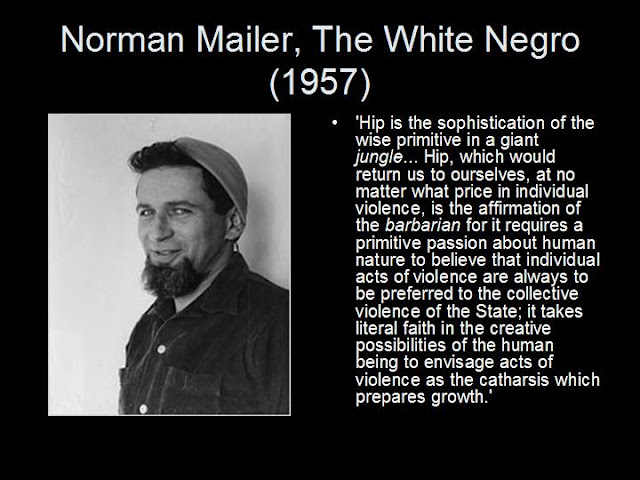
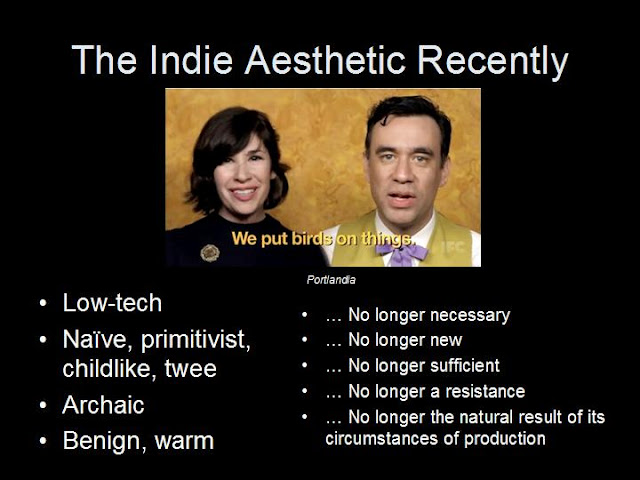
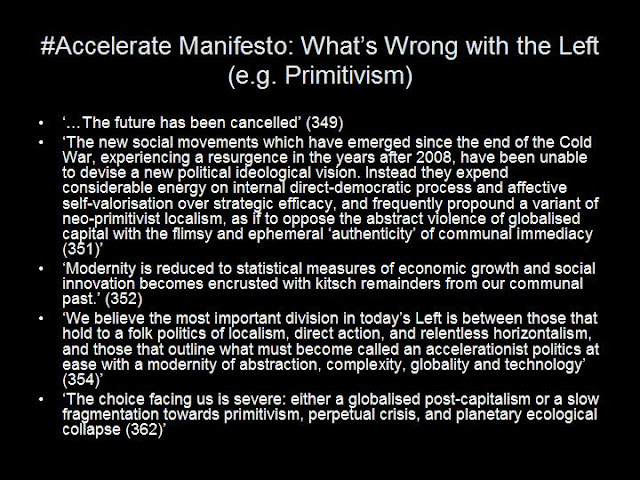

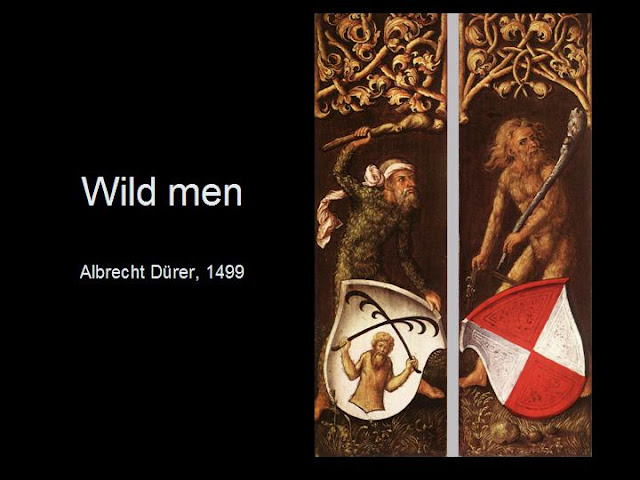
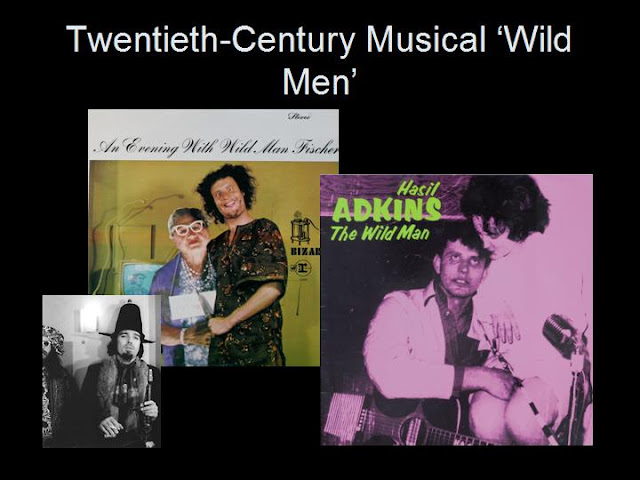
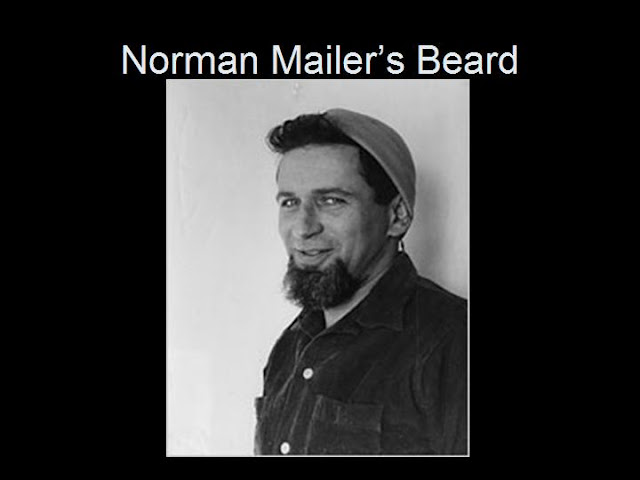
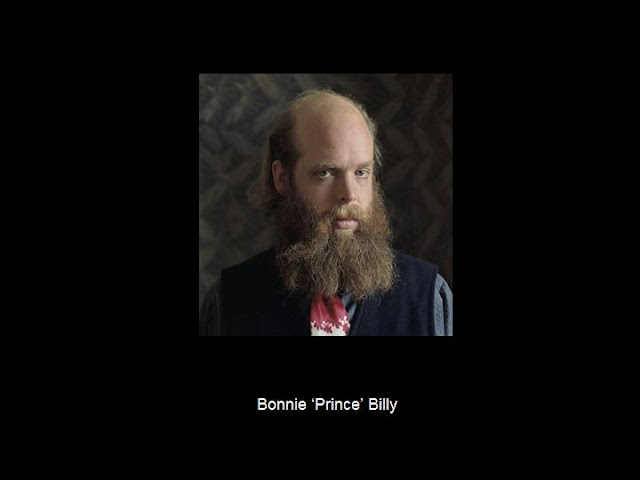
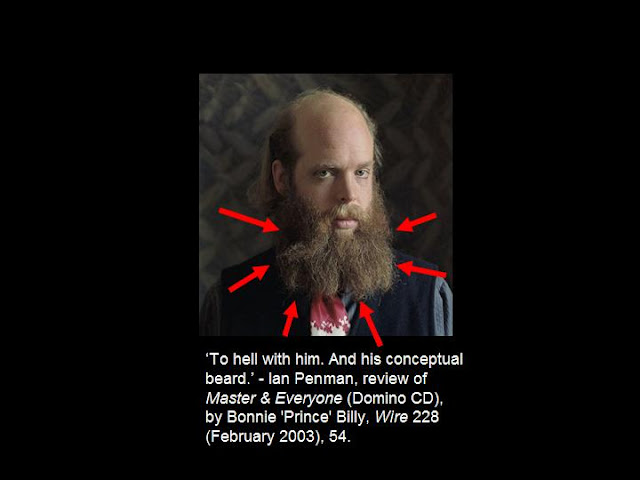

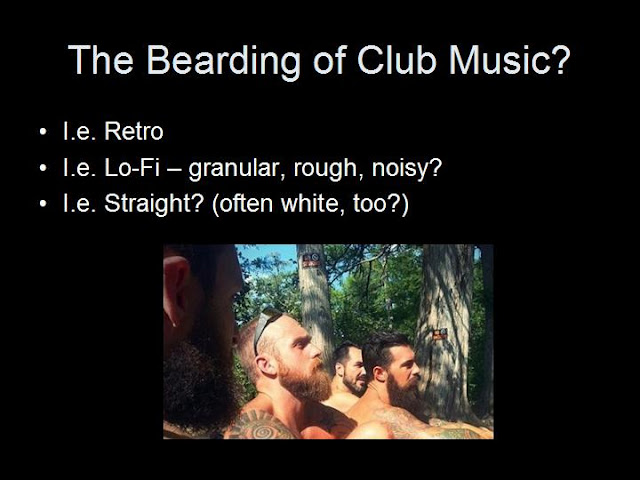
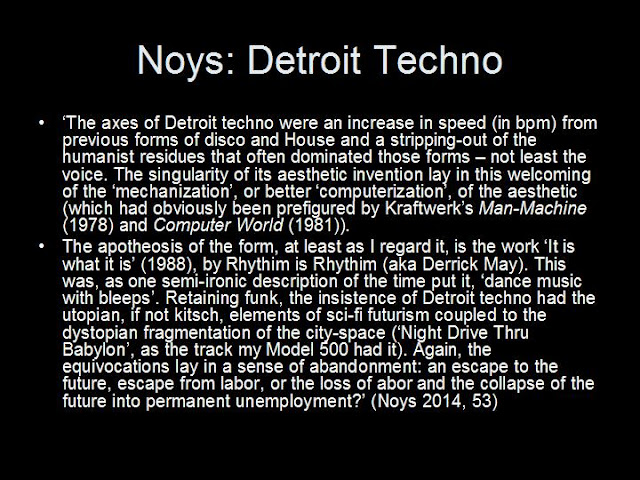

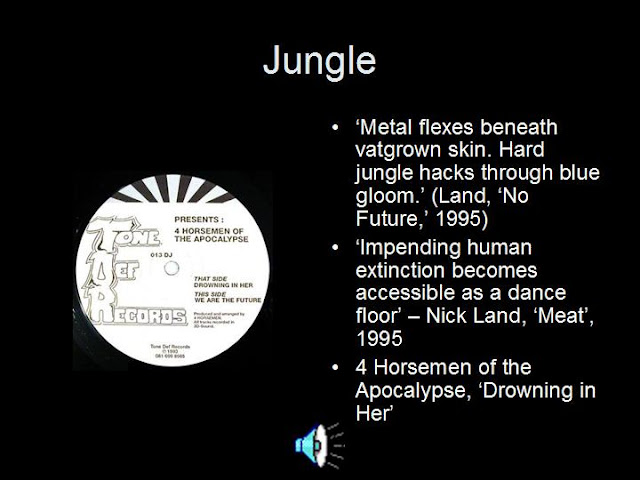
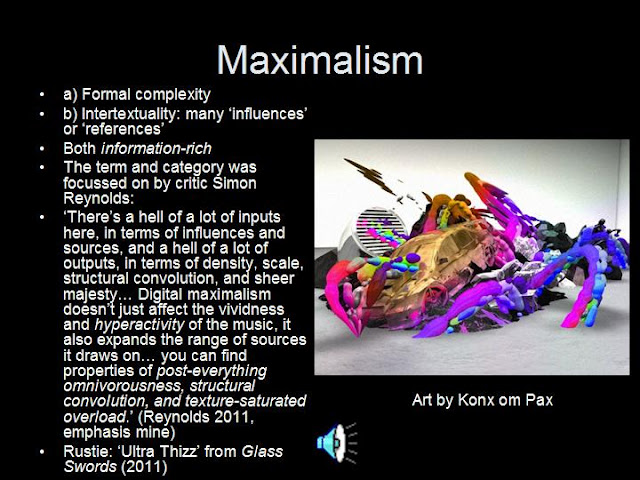
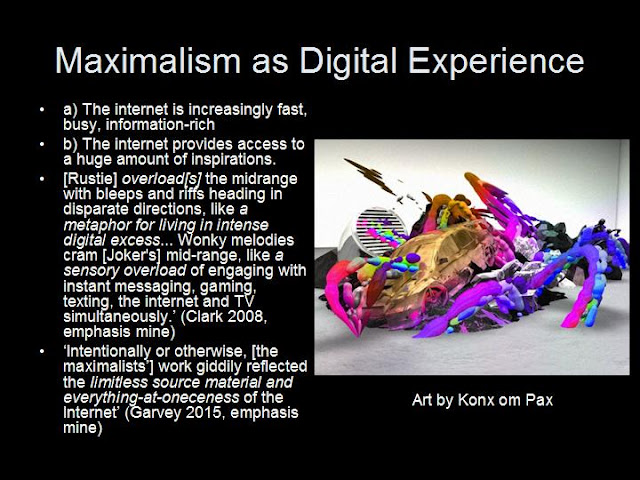

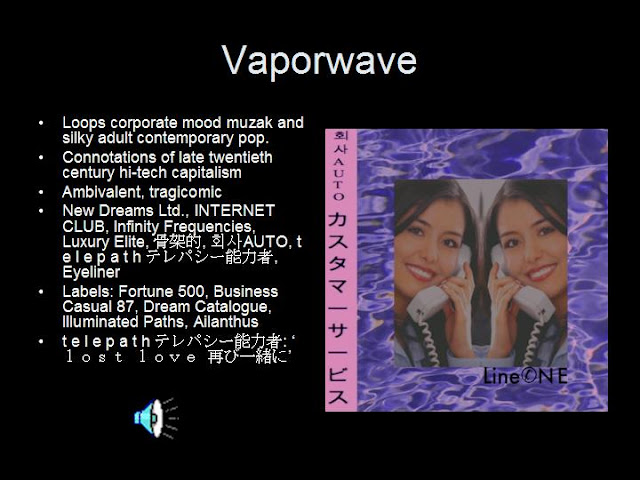
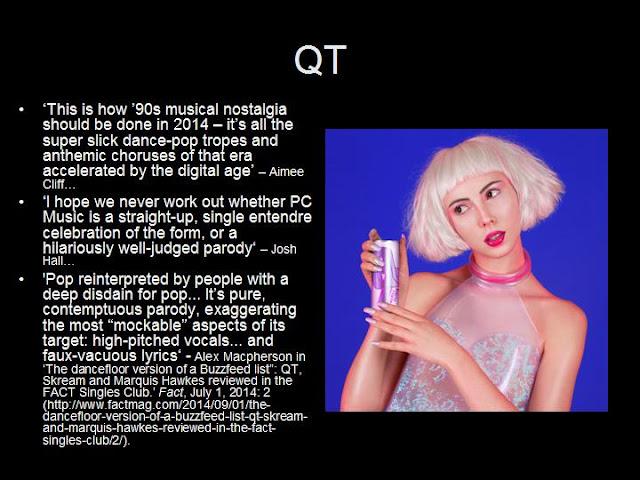
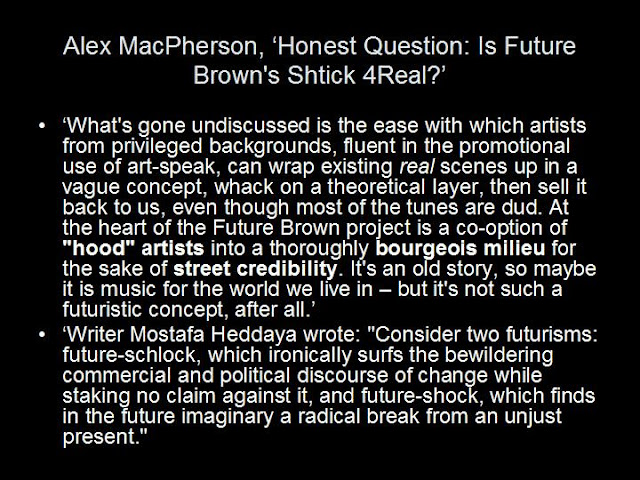
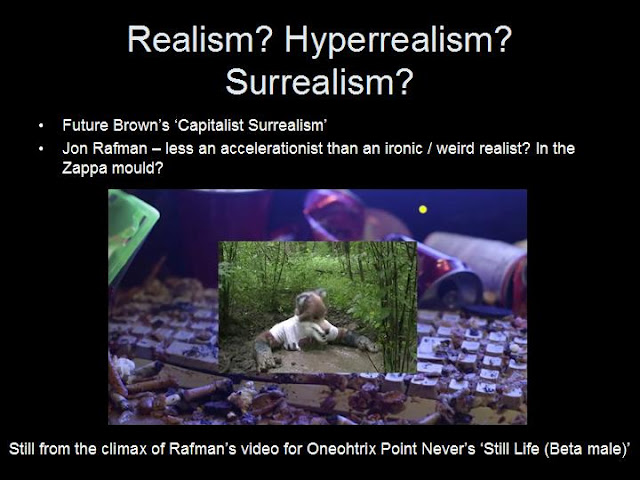
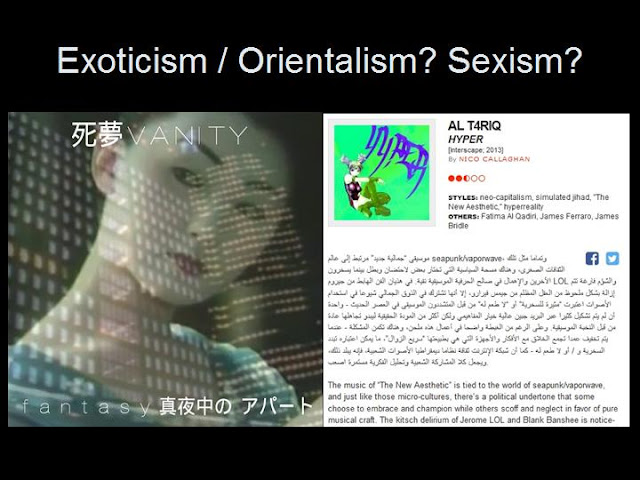

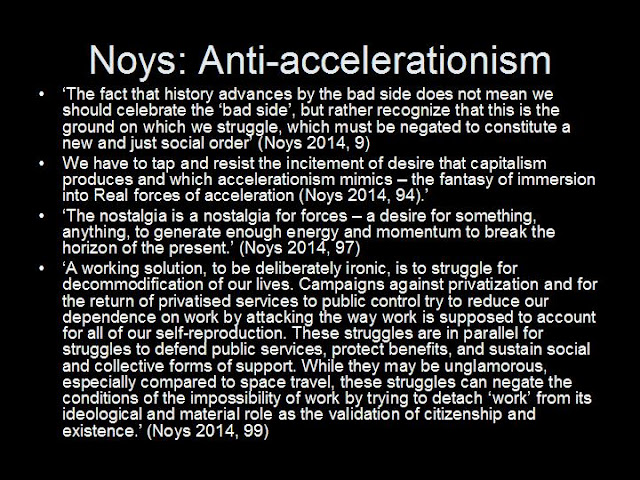
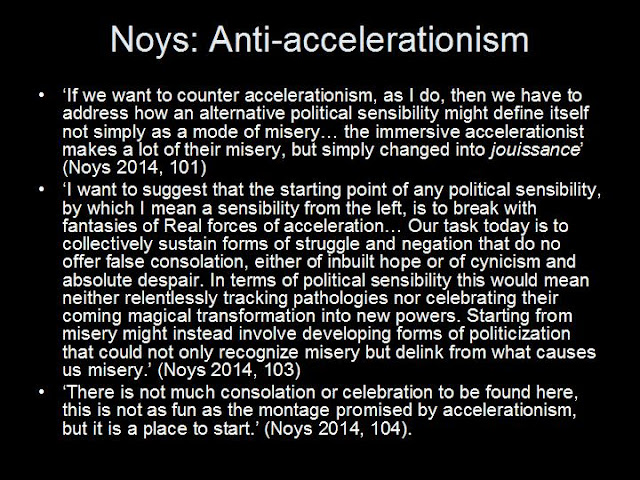

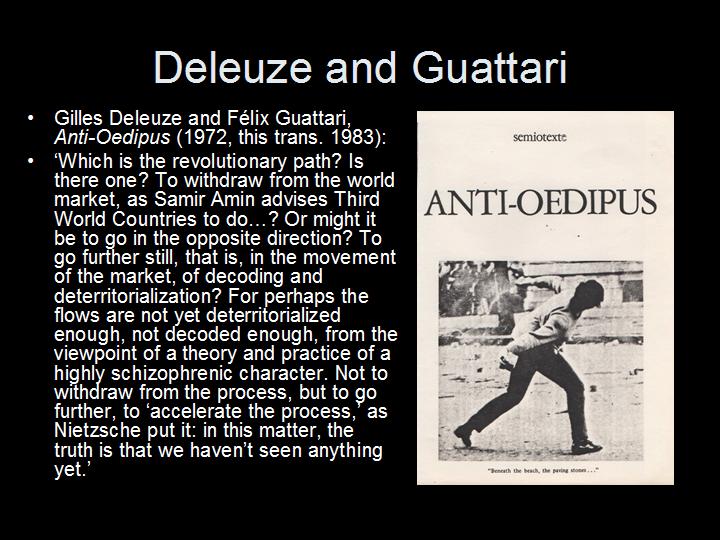
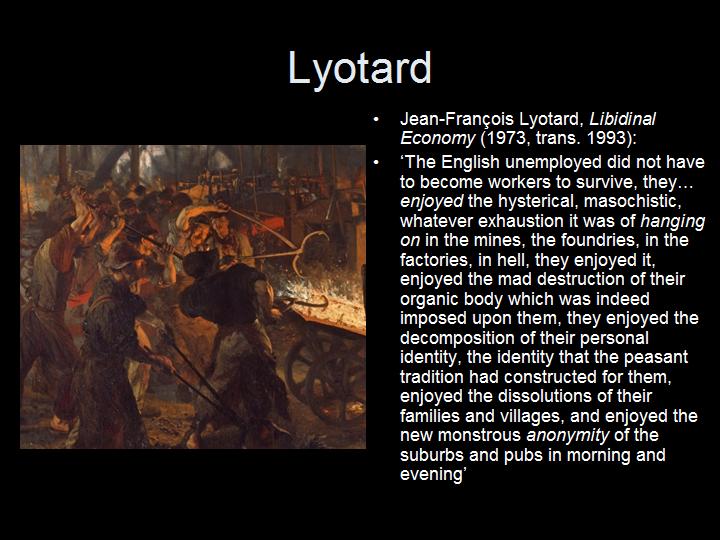
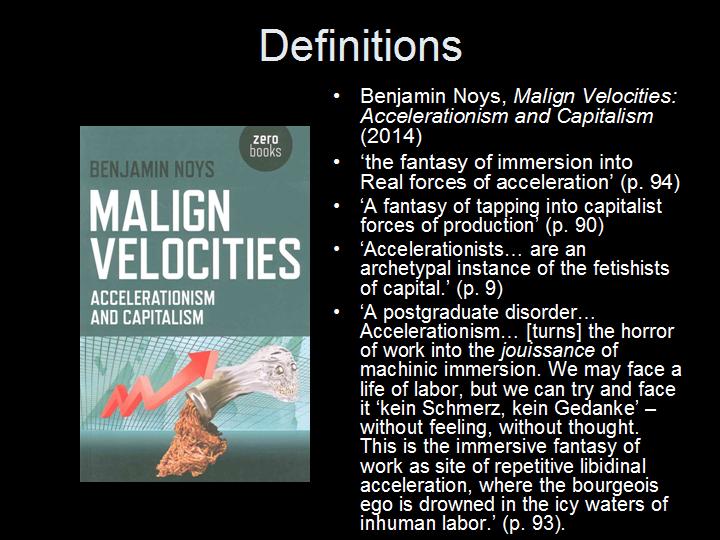
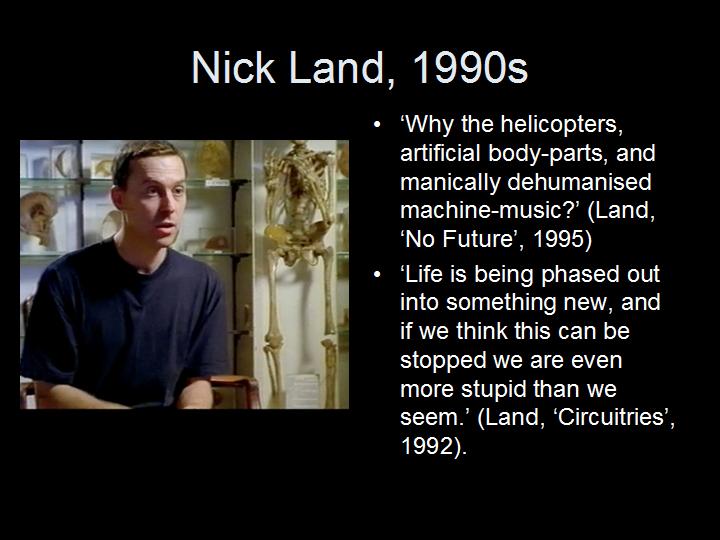

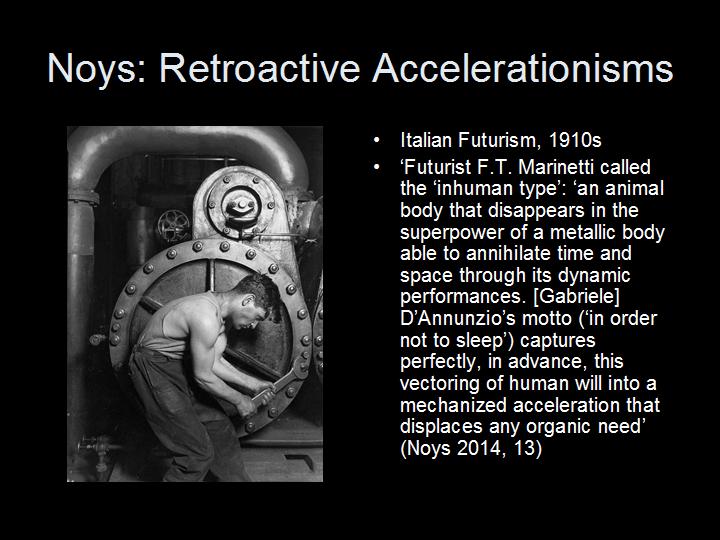
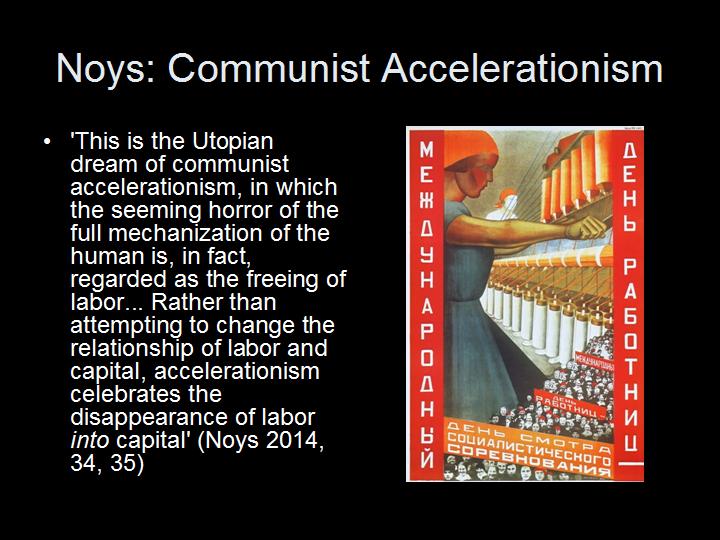

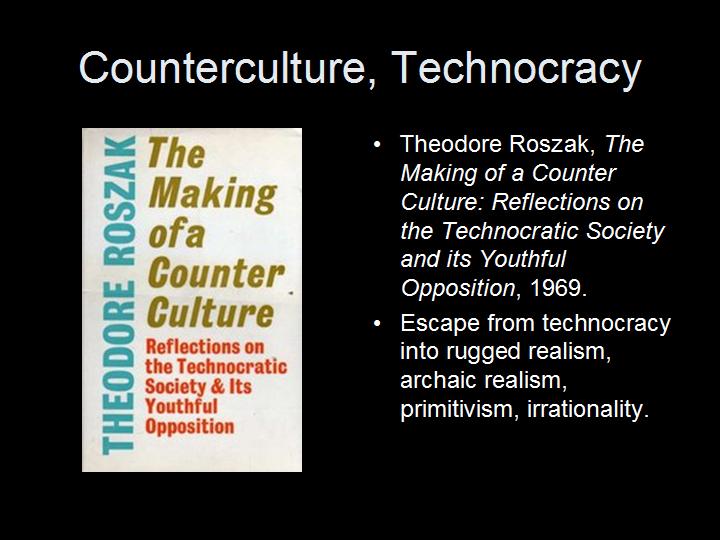

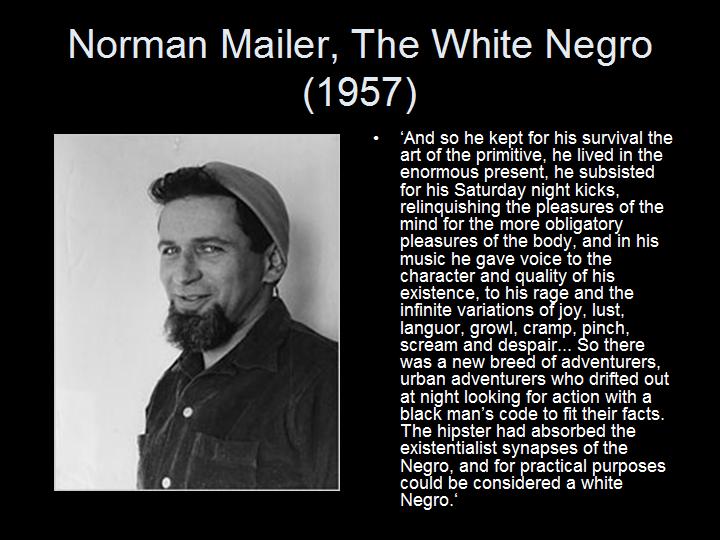

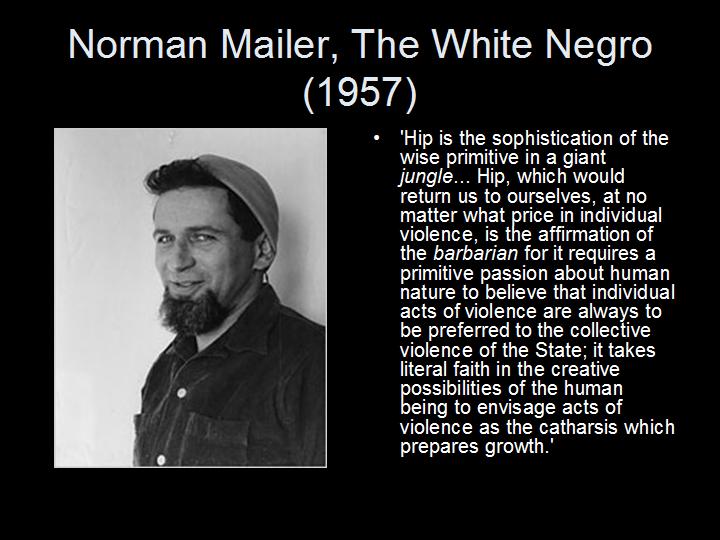
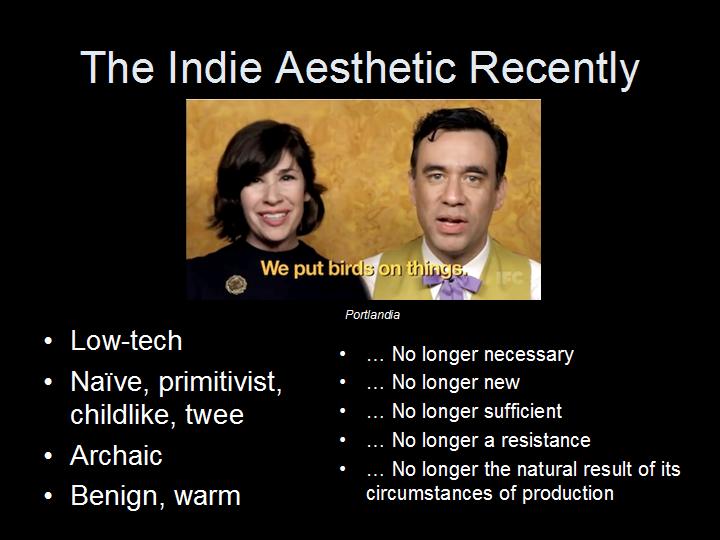
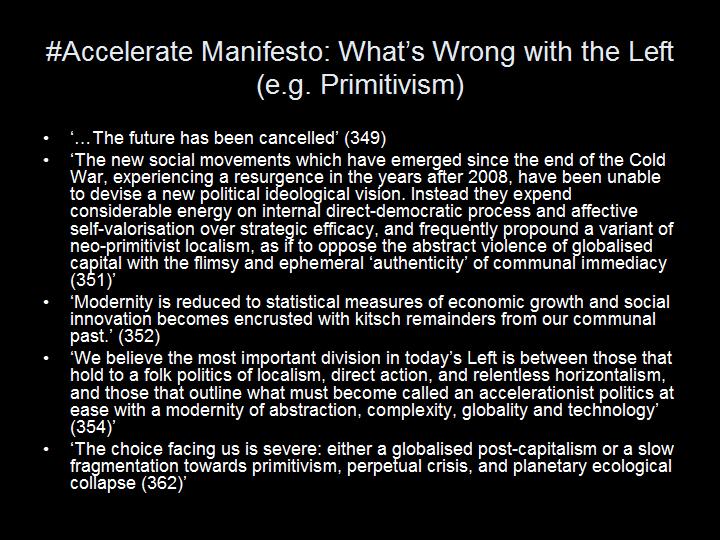

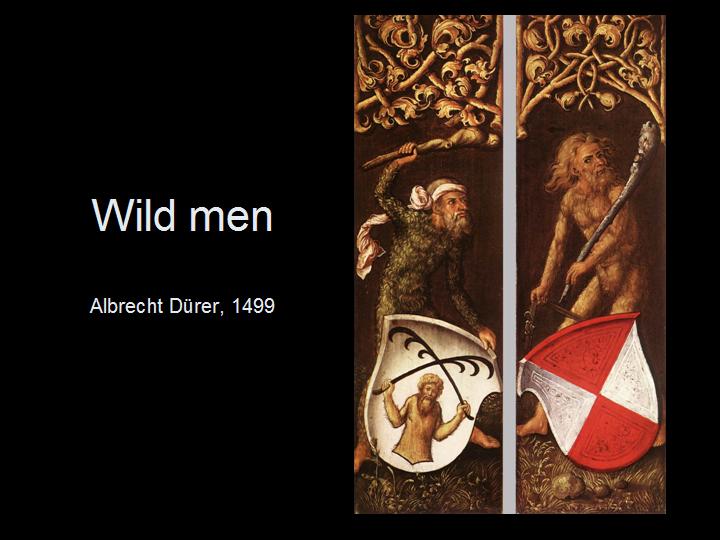
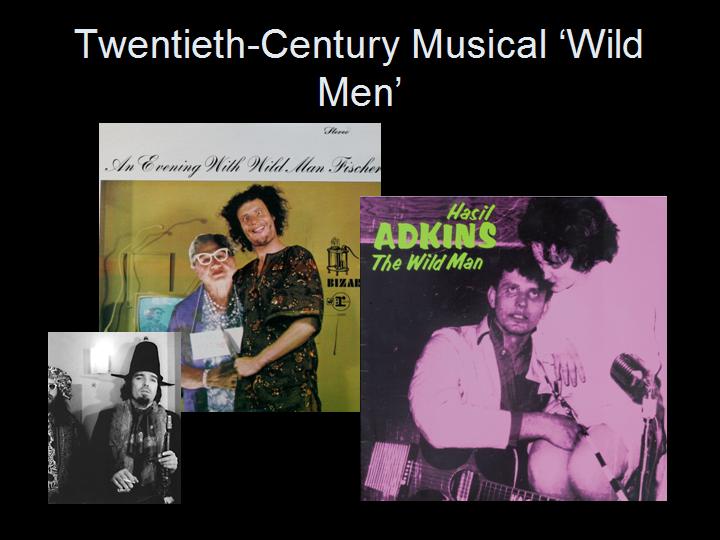
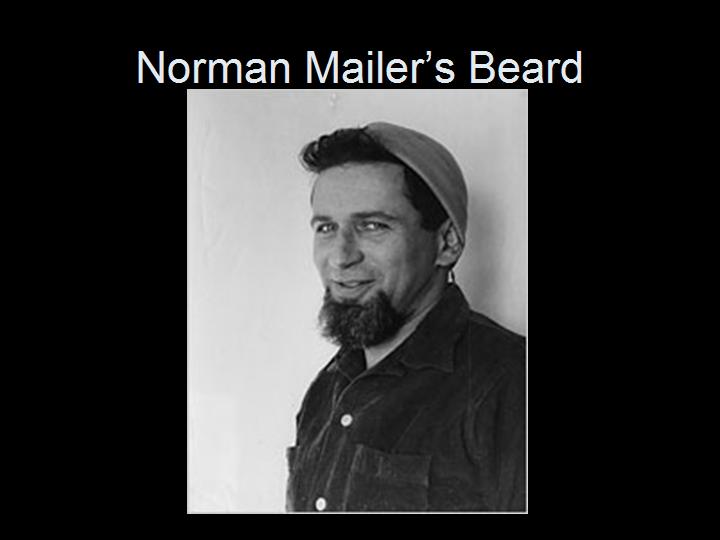
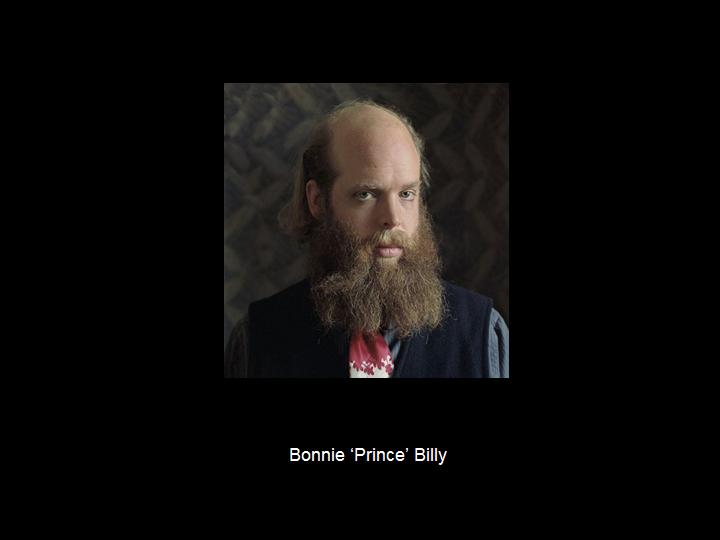
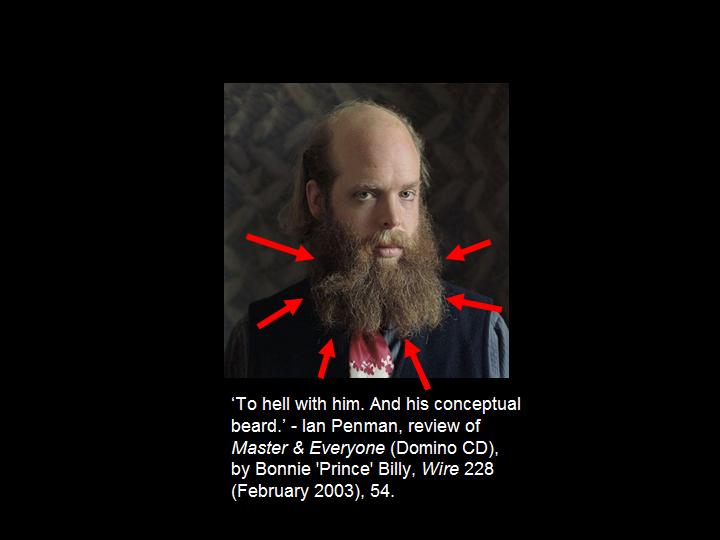

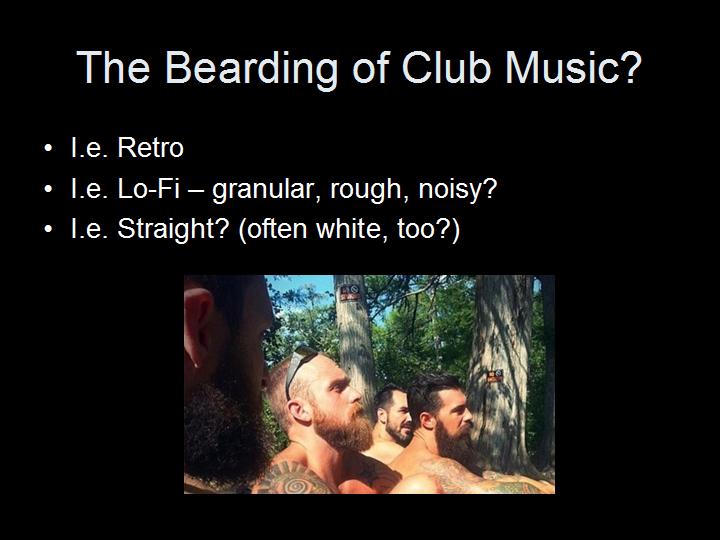

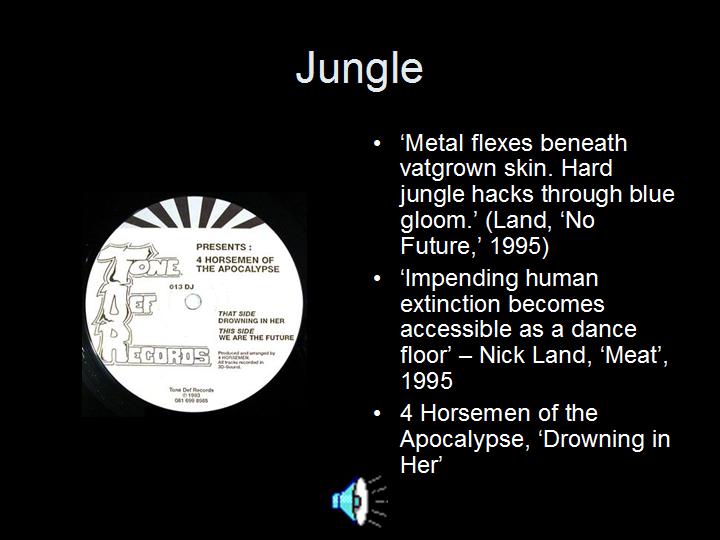
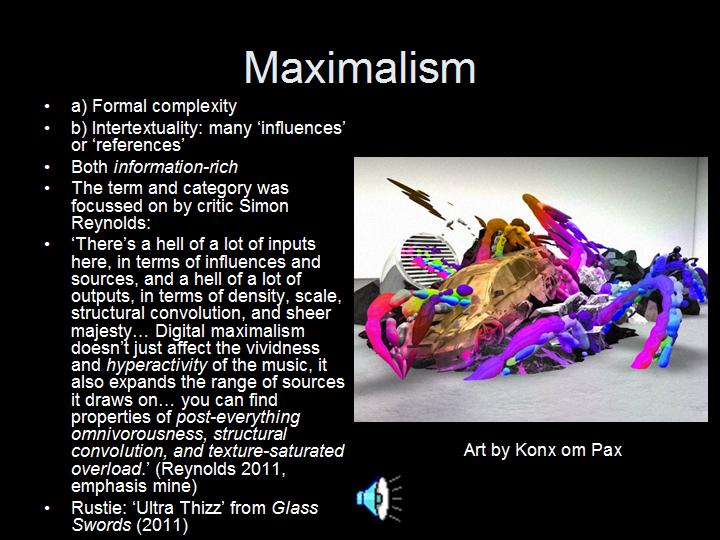
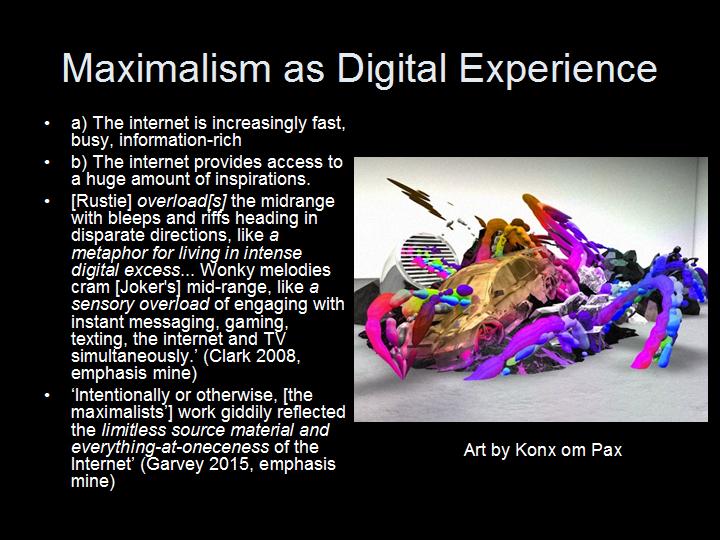

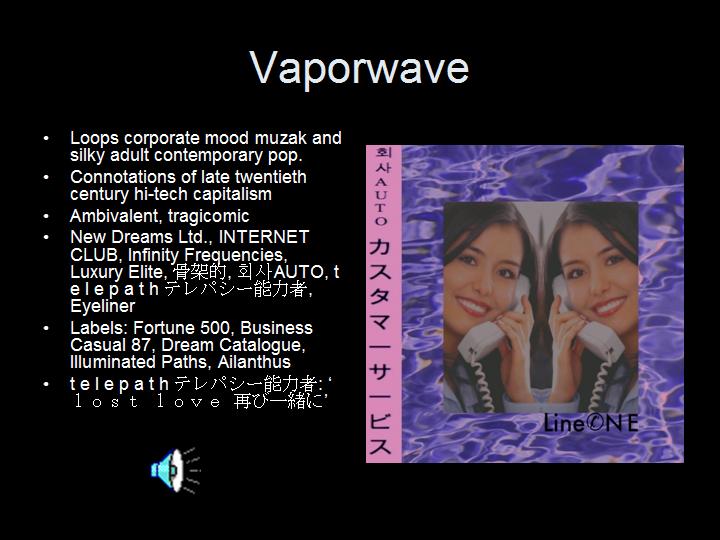
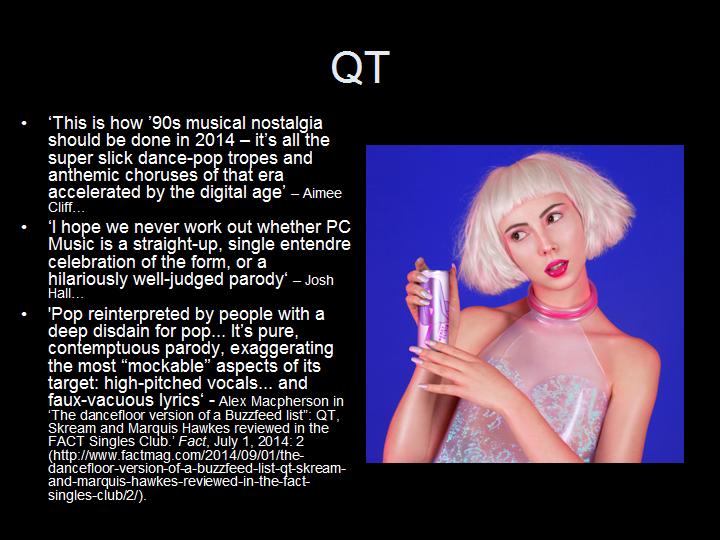
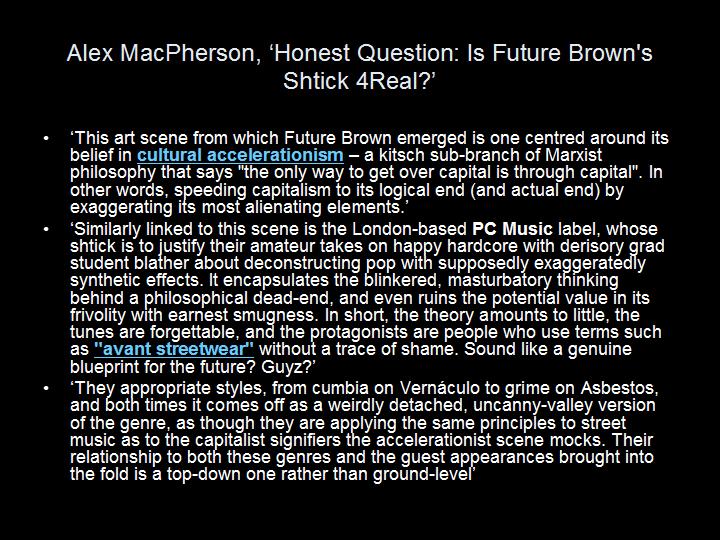
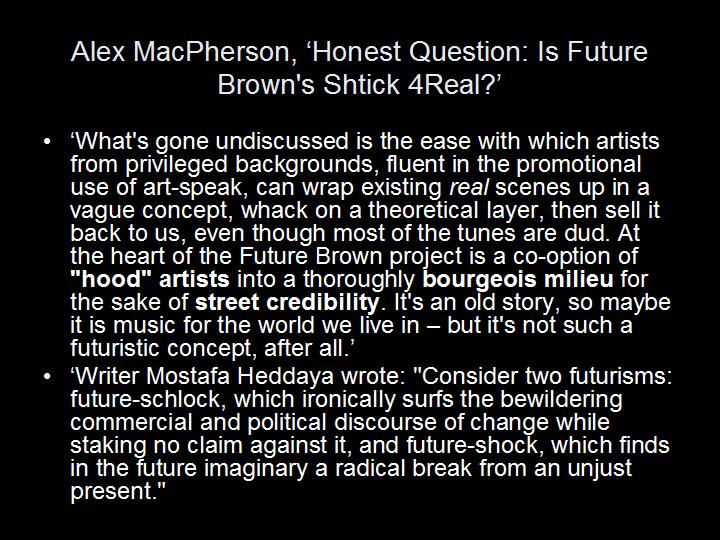
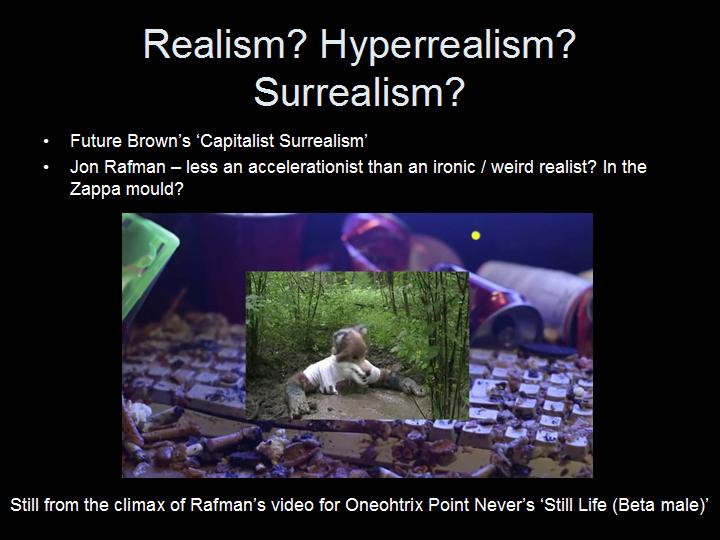
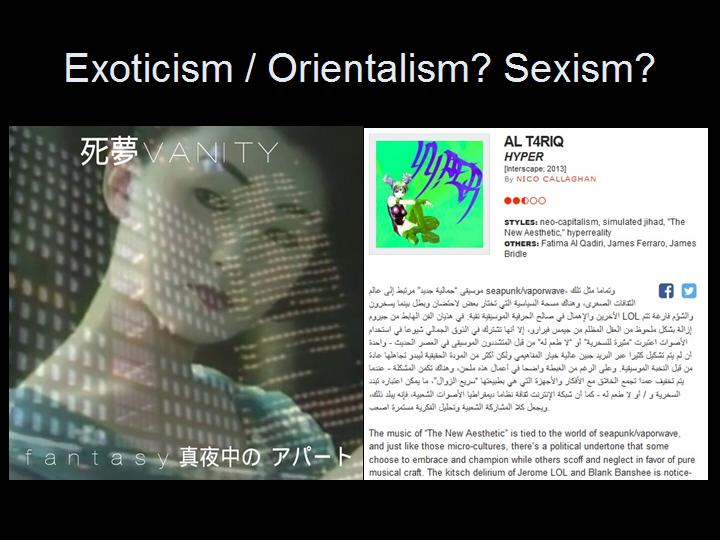

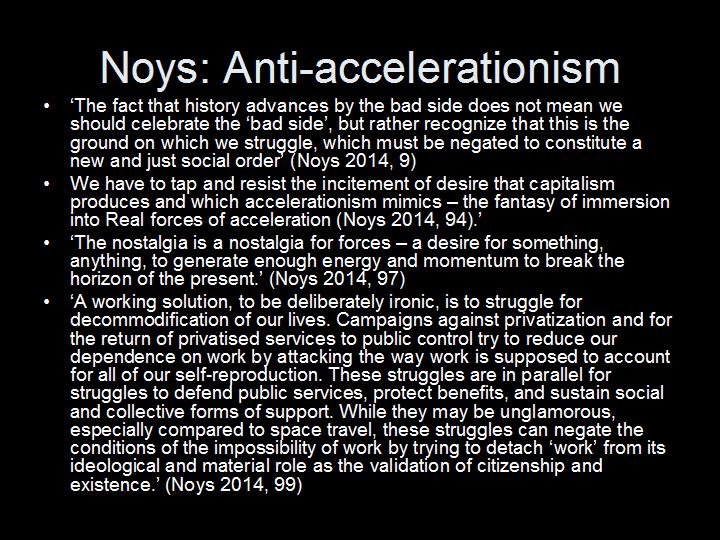
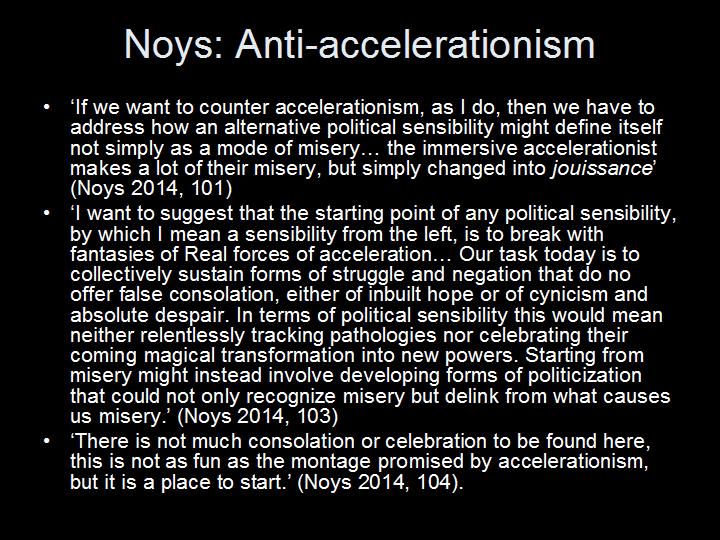
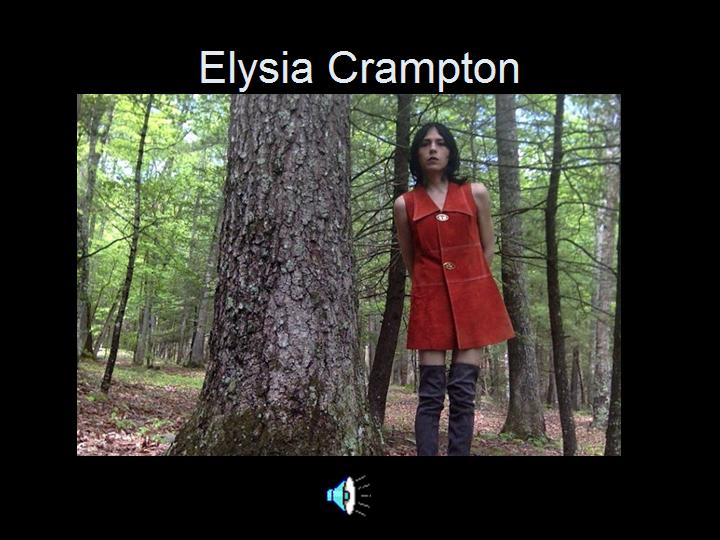

An Idiot's Guide to Dreaming [ 17-Oct-15 6:54pm ]
Shape Worship - A City Remembrancer [ 17-Oct-15 6:54pm ]Man, this is good.
Really good.

I've been offline / limits / thick with flu & driving lesson woes for what seems to be ages but I've finally got around to listening properly to this Shape Worship album (another in the ever-predictable - in that every release is going to be great - line of outsider-chic that is Front And Follow) and it's a little bit immense. This is what I thought Burial was going to sound like when I'd read about them but not yet heard anything. I like Burial, but this is better; this feels less mannered, lighter but paradoxically more intense, less rooted in the (rather obvious) slow-car-garage trails.
This isn't just a car drive. This is a slice of collective consciousness. The cranes are flying.
It is extraordinarily confident in its approach, taking on Burial's shuffling gun-cock / ratchet drums (hopefully without the mythology that they were just created in Audacity) and sending them into new territories, deep in the heart of Britain. It's not all like this (it's better than that), of course but still... each cymbal hisses like a winter yawn. This is Britain not submerged but hanging on a thread; socio-political agitations, key council estate worries, local government politics.
I've not read much about this release because I wanted it to wash over me without contamination (of perhaps the terrible truth) but it's clear that every squeak and every whistle and every hummingly slurred vocal (although many of the samples are clear as day) has a very definite purpose and a place: when the light breaks out at the end of Heygate Palimpsest, for instance, it feels like we've been waiting a long time... like when they finally do put in that zebra crossing that everyone's been asking for... other bits sound like the tiniest snatches of vocal behind and within some of The Shamen's best techno squiggles, pre-C. That sense of delirium can certainly be found in tracks like Zoned (Hecate) which has a tinkling, endless, post-acid comedown vibe to it that is just perfect.
And then the voices come in and make the world real again. Some of them hum with static, with echo but other times they are naked and alone
Although this is some kind of master work and is clearly (I hope, I think) following a concept, it also seems small scale and intimate - cocktail synths, even, at the start of the gently stirring An Exemplar. And the scale works perfectly for the kind of psychogeographical details attended to here. This is a boiling down of issues and virtues; it has a sense of place that has often been neglected in music (replaced with sense of feeling or atmosphere) but not in the sense of windswept moors or smoked bracken (ha!) or goat-noises; instead Ed's attempted to approximate the place as a political satellite, as microcosm.
Easily one of the best things I've heard all year...
05-Oct-15
Really good.

I've been offline / limits / thick with flu & driving lesson woes for what seems to be ages but I've finally got around to listening properly to this Shape Worship album (another in the ever-predictable - in that every release is going to be great - line of outsider-chic that is Front And Follow) and it's a little bit immense. This is what I thought Burial was going to sound like when I'd read about them but not yet heard anything. I like Burial, but this is better; this feels less mannered, lighter but paradoxically more intense, less rooted in the (rather obvious) slow-car-garage trails.
This isn't just a car drive. This is a slice of collective consciousness. The cranes are flying.
It is extraordinarily confident in its approach, taking on Burial's shuffling gun-cock / ratchet drums (hopefully without the mythology that they were just created in Audacity) and sending them into new territories, deep in the heart of Britain. It's not all like this (it's better than that), of course but still... each cymbal hisses like a winter yawn. This is Britain not submerged but hanging on a thread; socio-political agitations, key council estate worries, local government politics.
I've not read much about this release because I wanted it to wash over me without contamination (of perhaps the terrible truth) but it's clear that every squeak and every whistle and every hummingly slurred vocal (although many of the samples are clear as day) has a very definite purpose and a place: when the light breaks out at the end of Heygate Palimpsest, for instance, it feels like we've been waiting a long time... like when they finally do put in that zebra crossing that everyone's been asking for... other bits sound like the tiniest snatches of vocal behind and within some of The Shamen's best techno squiggles, pre-C. That sense of delirium can certainly be found in tracks like Zoned (Hecate) which has a tinkling, endless, post-acid comedown vibe to it that is just perfect.
And then the voices come in and make the world real again. Some of them hum with static, with echo but other times they are naked and alone
Although this is some kind of master work and is clearly (I hope, I think) following a concept, it also seems small scale and intimate - cocktail synths, even, at the start of the gently stirring An Exemplar. And the scale works perfectly for the kind of psychogeographical details attended to here. This is a boiling down of issues and virtues; it has a sense of place that has often been neglected in music (replaced with sense of feeling or atmosphere) but not in the sense of windswept moors or smoked bracken (ha!) or goat-noises; instead Ed's attempted to approximate the place as a political satellite, as microcosm.
Easily one of the best things I've heard all year...
Rouge's Foam [ 5-Oct-15 5:44pm ]
System Focus: Get To Know Gqom, South Africa's Slow-Burning Club Music [ 05-Oct-15 5:44pm ] The TOWNSHIPTECH logoThe latest System Focus is on dance sounds of South Africa that live online, chiefly 'gqom' with some shangaan electro and sgubhu too (click here to read). featuring: Spoek Mathambo, Nozinja, TOWNSHIPTECH, SHANGAANBANG, DJ Dino, U-Zet, Phelimuncasi, Rude Boyz, GQOM OH, Citizen Boy and DjAsinatar and the Facebook groups IGqomu, Sgubhu & Gqom Lovers, Gqomu music and Gqom Nation.
South African popular music, in its myriad forms—from choral folk group Ladysmith Black Mambazo to madcap rappers Die Antwoord—has played a huge role on the world stage for decades, and today this richly musical country boasts an ecosystem of electronic dance and club sounds that changes, spreads, and develops with an energy that can rival that of just about anywhere else you care to name...
Meanwhile, the southeastern coastal city of Durban in the KwaZuluNatal province of South Africa has been incubating a style called gqom for a few years now... It would be difficult to imagine a kind of music more different from Shangaan Electro than gqom is—it's a slow-burning, minimal and ominous style that's frequently described as "raw." Gqom fan Thandolwethu BlaqueMusiq Mseleni—who runs a group on Facebook called Sgubhu and Gqom Lovers out of King Williams Town in the Eastern Cape province—told me that qqom is "house music with broken beats, sliced vocals or chants, high tempo and mostly with no bassline."
"We grew up on it," Veezy tells me about gqom. "You know, taxis in town or everywhere in and around Durban blasting these songs that had really catchy and funny verses as well as banging hooks. Most people just hear loud bangs but, if you take time to really listen to it, you realize it's more than a created pattern—it's rhythm that syncs with fun. I like it cause it's a really huge crowd favorite in lounges and clubs to get turnt with or get the party sounded."...
Citizen Boy is one of gqom's most creative producers. Plunge headlong into his kasimp3 uploads... featuring him and his affiliates, and you'll encounter dozens of weird and wonderful twists on the genre's template. Try the hectic "Spit Fire (Remix)," the ultra-minimal "VH HIT" with its deadpan cuíca hook, the downright evil "Natural Mafias," the alien skirmish of "Thekwini War (Mafiamix)" or the unholy croaks of "Point Magnet (Dope mix)." There there's "Deep Gqomu," a masterpiece that builds up majestically, its ethereal scales climbing ever skyward... An Idiot's Guide to Dreaming [ 30-Sep-15 8:21pm ]
Dennis Smalley - Pneuma [ 30-Sep-15 8:21pm ]I like the way this sucks and wheezes. It reminds me of my future. One day, I'll be at a bus stop and this will be the last sound I make. I'm looking forward to it.
Roots of Goa trance (2) [ 28-Sep-15 1:13pm ]This was something that fascinated me a while ago. Still fascinates me. Uchronie never really took off, though.
I need some people.
The thing is, the essay I linked to in the above post has a related sub/sur-Acid mix and that mix is now here. It's currently sound-tracking some marking of essays related to the Cognitive Approach and seems fairly apposite.
Yeah.
21-Sep-15
I need some people.
The thing is, the essay I linked to in the above post has a related sub/sur-Acid mix and that mix is now here. It's currently sound-tracking some marking of essays related to the Cognitive Approach and seems fairly apposite.
Yeah.
leaving earth [ 21-Sep-15 11:02pm ]
The End of PostStep [ 21-Sep-15 11:02pm ]
There's not much to write about in terms of new exciting post dubstep any more. As predicted the last time I posted here - and that's already a long time ago - 2014 produced quite a lot of good poststep + derived and associated music, but not with the same amount of trailblazing creativity as the four years before. There were still some shockingly new stuff, but mostly it was a year of further refining ideas from the previous wonder years.
Best of all - in a league of its own, really - was Felicitas Frenemies ep, containing the most jaw-droppingly weird and alien music I've heard since, I dunno, Jameszoos Faaveelaa probably. Felicita is related to the PC-music camp, but where those people mostly use hyper-syntheticness as a kitsch enhancer, on Frenemies it's taken far beyond its breaking point and into utter abstraction, as creepy and terrifying as watching an artificially intelligent toy, designed to be overbearingly cute and cheerful, going completely insane, its thought processes disintegrating before our ears. In its own absurd way as radical as, say, early Swans or Einstürzende Neubauten, and the rest of the PC music camp is pretty much coming off as a cut rate Test Department by comparison, though the Lucky Me-label did released a couple of actually quite good EPs - Cashemere Cats Wedding Bells and Joseph Marinettis PDA - which, while still being a bit too pastiche-inflicted to be on Felicitas level, managed to share some aspects of the PC-aesthetic and yet be a bit more unreal and weird than the real PC deal. Closest to Felicitas level of alieness was probably Giant Claws Dark Web, which, despite being much more related to the Oneothrix Point Never/ Software end of things, reached moments of the same inorganic weirdness and broken-machine-dream-logic.
As for something approaching an actual leading movement in poststep in 2014, rather than PC music, the most obvious suggestion is what could collectively be called "abstract grime", spanning a whole heap of different approaches, and culminating in an enormous amount of releases last year. Many were only "grime" in the most tangential sense, and many certainly weren't all that great, but a pretty good amount of highly original, forward-thinking stuff still came out if this department. The icy, hyper angular anti-grooves of the "cryo grime" subgenre had pretty much already culminated in 2013 with Logos' Cold Mission, and not much has been added since, but a couple of brilliant EPs - Air Max '97s Progress and Memory, Blooms Hydraulics - did managed to take it into even more abstract extremes in 2014. Related in its quest for inorganic groovelessness, a much more interesting development was what could be called entropic grime, where the clinical, sharp and shiny angles of cryo grime were taken over by stumbling, dysfunctional zombie-rhythms, and buried in layers of sonic dirt, dead sounds in a state of perpetual decomposition. SD Laikas awesome That's Harakiri-album was more or less the definitive release in this respect, though Filter Dreads Midi Space ep was perhaps even better. While his Space Loops lp - released on tape in 2013 and re-released on vinyl in 2014 - offered a slightly more polished and coherent version of the SD Laika aesthetic, Midi Space infused the style with a bizarre playfulness - there's synthetic colours and rubbery syncopations worthy of the best bitstep, yet it all come off as strangely faded, washed out, hazy: Yesterdays amazing cybertoys twisted and broken, their operating systems overtaken by depression.
Among the most characteristic subgenres of grime in 2014, "new age grime" or perhaps "emo-grime" took the clean, delicate structures of cryo grime and made them, if not exactly "warm", then at least soft and bright, inviting. Some seemed to think that this approach was somehow wrong by definition (because grime should be "raw" and "road" and "authentic"), and while I do consider that puritan mindset pretty ridiculous, I must admit that I didn't get much into this stuff. Perhaps I'd been won over if Yamanekos Pixel Wave Embrace - seen by many as a key work - had been released on vinyl and not just tape, but another potential key work, Mr. Mitchs Parallel Memories, didn't really do anything for me either, too wistfully emotional and uniformally pretty for my taste. Rather, I think the best suggestion in this area is probably Fatima al Qadiri's Asiatisch, which is certainly clean, lithe, bright and soft, and at the same time emotional in a wonderfully synthetic, hyper real fashion. Like with SD Laika and Filter Dread, Asiatisch has only a faint, superficial relationship with grime, with just a few artificially inseminated stylistic elements audible, and I do find it kinda silly that these records are being placed under the abstract grime umbrella, but that doesn't mean that they're not some of the greatest releases of 2014.
Cryo- emo- and entropic grime was only a small part of 2014s huge abstract grime wave, and some of the best of the rest managed to be simultaneously emotional, atmospheric and highly experimental, while still clearly recognisable as - at least a kind of - actual grime descendants. Sure, they were still clearly not doing grime (or more generally, 'nuum music) "right", taking it in a deliberately cerebral and arty direction that is far from how the genre was originally supposed to be, but that is exactly why they were actually doing something new and unheard, and why records like Slackk's moody, melancholic Pakm Tree Fire-album or Inkke's Crystal Children ep were among the best records of 2014. This stuff is to the original grime sound what Ultravox, Japan or Soft Cell were to glam: A clearly new and contemporary take on some related ideas, free of the rock'n'roll/'nuum residue still present in the predecessors. Abstract grime is not 'nuum music, but why should it have to be to be good?
In addition to all the abstract-grime-and-related stuff, 2014 still had quite a few brilliant records scattered throughout different kinds of poststep, as well as some not really belonging there, but perhaps not really belonging anywhere else either. Evian Christs Waterfall-ep and Krampfhaft's Before We Leave-album both had elements that perhaps could classify them as a kind of avant trap, and as such the closest we got to descendants of the wonky-wobble/ravey bitstep-lineage. On Waterfall, massive riff-blasts and brutal lurch-march rhythms are twisted into dysfunctionally weird shapes, the effect being somewhere between over the top silly, slightly creepy and genuinely intimidating, while Before We Leave tried to convert Krampfhafts idiosyncratic style into a more subtle and understated "big album"-sound, and as a result failed to be the masterpiece it could have been. The soft and polished overall sound made it a pretty big disappointment at first, but in the end that was only really a problem because of, as so often before, the inappropriate length. With repeated listening it eventually managed to show itself as one of the very best of the year, despite its shortcomings; On the first three fourths, Krampfhaft really succeeded in creating a kind of cosmic, slow motion version of his ultra-angular bleep-melodies and neurotic trap/bitstep beats, whether in the form of ravey-yet-sonambulist freak-step like "Superfluid", "Spinner" and "Toekan", or isolationist deep sea dreams like "Clip Point" and "Mostly Empty Space". It's only with the last four tracks that it gets too much - here we're getting too close to cosy, pretty chill out music, completely unnecessary, and only making the album seem pointlessly drawn out. Which is a shame when the rest is so good.

Surprisingly, after some very slim years where the Californian "post hop"-scene more or less seemed to have regressed into standard down tempo dullness, it made a (slight) come back in 2014, with two pretty great albums. Mono/Poly is one of the scenes lesser known artists, even if he has been active almost from the start, and has released a couple of brilliant EPs. Where his tendency towards new age mysticism was a bit of an annoying element on 2010s digital-only Paramatma-album, on Golden Skies he dedicates himself completely to these elements, and surprisingly makes it work. The glittering bleep cascades is a perfect match for the drowsy, mystically sun-kissed sound - a genuinely contemporary, wide-eyed take on cosmic chill out music, where too much stoner down tempo is just safe and cosy. Much the same effect is to be found on the first half of Collapse, debut album by the hitherto unknown - to me at least - Repeated Measure. The sound here is perhaps more "spaced out" cosmic than warm and sunny, but we're still talking slowly drifting sci fi-music with plenty of fractured bleep patterns. What's really noteworthy, though, is the second half, where these bleep patterns are suddenly backed by a much more heavy and angular bottom, effectively turning the music into wobbly bitstep. Where 2013 actually had a surprising amount of amazing new bitstep, that sound practically disappeared since, and in 2014, and the only place it really made a noteworthy appearance was on the second half of Collapse - and brilliantly so!
Of the remaining 2014 highlights, Mesaks Howto Readme took skweee in new directions that made the style less uniquely its own, but also yielded some interesting hybrid forms. Equally eclectic, Jimmy Pés Insomnia bridged ravey wobble-trap and atmospheric, burialesque sadstep (with some nauseating vocals here and there, unfortunately), while Ital Teks Mega City Industry ep offered more of his trademark dreamy, floating footwork ("dreamwork"?), and the hitherto unknown Chainless made the best darkstep record of the year with Grey Veils, brilliantly building on the best parts of Lorn and early Nosaj Thing. Surprisingly, Inga Copelands Copeland, which on the surface really seemed too minimal for its own good, somehow managed to be better than anything else I've heard from Hype Williams, whether as Blunt and Copeland solo or together. Sort of entropic music reaching peak bleak emptiness. As opposite to this as imaginable, Disrupt offered colourful and catchy 8-bit hyper-dub on Dub Matrix with Stereo Sound, while The Marvs combination of bouncy beats and ghostly bollywood samples on A King of Tuneswas just as catchy - almost pop music.
Which sort of brings us to FKA Twigs' LP1, I guess, which, while not full blown poststep as such, nevertheless used a whole heap of poststep elements, and sort of demonstrated how they could be used as a base for pop music as odd and futuristic as poststep proper. So far, a much more durable and fascinating record than the much talked about XEN by her producer Arca, who goes all the way into the abstract, and is sort of closer to traditional glitch or IDM than Twigs is to traditional pop music. Not that you can't hear the contemporary elements and techniques - and a few tracks do sound genuinely and exhilaratingly new -, but when taken this far into pure soundplay and atmospheric experimentalism, you inevitably end up with something resembling classic Autechre (or, heck, even Eno), at least on the surface level. And this kind of seem to be the way most of the radically experimental electronic scene is heading - away from the unheard structural weirdness of poststep and into the more well established world of "soundscaping", as heard on records from Holly Herndon, M.E.S.H., TCF and Brood Ma. A lot of this is sort of brilliant (Herndons Platform is one of my 2015 favorites so far), but still also slightly disappointing in the returning to safe formulas. Not unlike the goth lite/proto dream pop of the early 4AD school I guess, delivering light, digestible and comforting "art music" as an alternative to the resurgence of lame and mannered "real rock", in 2015 mirrored by the endless forms of retro house/retro 'nuum music paying lip service to all the righteous signifiers of true dance and club culture while offering no actual evolution of the form - except perhaps a few slight hybrid elements and updates in overall sound design - i.e. stuff that only people with oppressive historic knowledge would notice, let alone care about. I mean, how desperate do you have to be as a critic to get excited about something as boring and creatively inane as deep tech or jackin house, with nothing to offer except having the right, 'nuumologically correct attitude?

So, yeah, I'm not optimistic I guess. So far, 2015 has had very little to offer, and I don't think the coming years will offer much more than the aforementioned updated electronic art music - nu-IDM, entropic, new synth. The once so exciting engine of weird wobble dubstep has ossified into formulaic stadium trap, and most other attempts at making music simultaneously experimental and dance floor oriented seem to end up as yet more insultingly dull 4/4-house-with-percussion-and-slightly-gritty-basslines-crap. Of course, some of the best artists of the poststep golden age will be hanging on and continue to release great stuff (Debruit is still at it, and Kuedo is back after a looong break), and now and then a few new artists will make surprising anomalies as weird and wonderful as the best of the originals (like Jlin's Dark Energy, perhaps the best of 2015 so far). And I am excited to hear what artists like Felicita, Filter Dread and SD Laika will be doing next. But, in the end, the golden age of poststep is definitively over, as it inevitably would be. I knew it wouldn't last, and so I should most of all just be happy about the unbelievable amount of amazing music that made the last 5-6 years such a thrill to live through, an abundance I hadn't experienced since the first half of the nineties, and not something I had really expected to ever happen again. Yet, while I'm grateful for all this, and still listen to all these records more than anything else (and even find more amazing records from the last five years that I didn't even notice the first time around), there's also something about it that feels very curious, like somehow it wasn't real, it didn't really happen, despite all the concrete evidence, all the groundbreaking records. And indeed, if we're talking about this music being recognised as a golden age, as an abundance of innovation and creativity and shocking futurism, then it didn't really happen. It seems like I'm more or less the only one having this perspective - even Adam Harpe has a different focus, both with the music he's championing and with the years he consider the best (to him the years prior to 2010 were the best, and then things got good again only recently, so pretty much exactly the opposite of how I see it).
The question is: why wasn't this golden age recognised as a golden age? I have been giving this a lot of thought lately, and it's a complex problem with no single, simple solution. Answering it really deserves a piece of its own - this is pretty long and pretty delayed already - so I'll postpone my thoughts on that matter for now, and hopefully return soon.
19-Aug-15
Best of all - in a league of its own, really - was Felicitas Frenemies ep, containing the most jaw-droppingly weird and alien music I've heard since, I dunno, Jameszoos Faaveelaa probably. Felicita is related to the PC-music camp, but where those people mostly use hyper-syntheticness as a kitsch enhancer, on Frenemies it's taken far beyond its breaking point and into utter abstraction, as creepy and terrifying as watching an artificially intelligent toy, designed to be overbearingly cute and cheerful, going completely insane, its thought processes disintegrating before our ears. In its own absurd way as radical as, say, early Swans or Einstürzende Neubauten, and the rest of the PC music camp is pretty much coming off as a cut rate Test Department by comparison, though the Lucky Me-label did released a couple of actually quite good EPs - Cashemere Cats Wedding Bells and Joseph Marinettis PDA - which, while still being a bit too pastiche-inflicted to be on Felicitas level, managed to share some aspects of the PC-aesthetic and yet be a bit more unreal and weird than the real PC deal. Closest to Felicitas level of alieness was probably Giant Claws Dark Web, which, despite being much more related to the Oneothrix Point Never/ Software end of things, reached moments of the same inorganic weirdness and broken-machine-dream-logic.
As for something approaching an actual leading movement in poststep in 2014, rather than PC music, the most obvious suggestion is what could collectively be called "abstract grime", spanning a whole heap of different approaches, and culminating in an enormous amount of releases last year. Many were only "grime" in the most tangential sense, and many certainly weren't all that great, but a pretty good amount of highly original, forward-thinking stuff still came out if this department. The icy, hyper angular anti-grooves of the "cryo grime" subgenre had pretty much already culminated in 2013 with Logos' Cold Mission, and not much has been added since, but a couple of brilliant EPs - Air Max '97s Progress and Memory, Blooms Hydraulics - did managed to take it into even more abstract extremes in 2014. Related in its quest for inorganic groovelessness, a much more interesting development was what could be called entropic grime, where the clinical, sharp and shiny angles of cryo grime were taken over by stumbling, dysfunctional zombie-rhythms, and buried in layers of sonic dirt, dead sounds in a state of perpetual decomposition. SD Laikas awesome That's Harakiri-album was more or less the definitive release in this respect, though Filter Dreads Midi Space ep was perhaps even better. While his Space Loops lp - released on tape in 2013 and re-released on vinyl in 2014 - offered a slightly more polished and coherent version of the SD Laika aesthetic, Midi Space infused the style with a bizarre playfulness - there's synthetic colours and rubbery syncopations worthy of the best bitstep, yet it all come off as strangely faded, washed out, hazy: Yesterdays amazing cybertoys twisted and broken, their operating systems overtaken by depression.
Among the most characteristic subgenres of grime in 2014, "new age grime" or perhaps "emo-grime" took the clean, delicate structures of cryo grime and made them, if not exactly "warm", then at least soft and bright, inviting. Some seemed to think that this approach was somehow wrong by definition (because grime should be "raw" and "road" and "authentic"), and while I do consider that puritan mindset pretty ridiculous, I must admit that I didn't get much into this stuff. Perhaps I'd been won over if Yamanekos Pixel Wave Embrace - seen by many as a key work - had been released on vinyl and not just tape, but another potential key work, Mr. Mitchs Parallel Memories, didn't really do anything for me either, too wistfully emotional and uniformally pretty for my taste. Rather, I think the best suggestion in this area is probably Fatima al Qadiri's Asiatisch, which is certainly clean, lithe, bright and soft, and at the same time emotional in a wonderfully synthetic, hyper real fashion. Like with SD Laika and Filter Dread, Asiatisch has only a faint, superficial relationship with grime, with just a few artificially inseminated stylistic elements audible, and I do find it kinda silly that these records are being placed under the abstract grime umbrella, but that doesn't mean that they're not some of the greatest releases of 2014.
Cryo- emo- and entropic grime was only a small part of 2014s huge abstract grime wave, and some of the best of the rest managed to be simultaneously emotional, atmospheric and highly experimental, while still clearly recognisable as - at least a kind of - actual grime descendants. Sure, they were still clearly not doing grime (or more generally, 'nuum music) "right", taking it in a deliberately cerebral and arty direction that is far from how the genre was originally supposed to be, but that is exactly why they were actually doing something new and unheard, and why records like Slackk's moody, melancholic Pakm Tree Fire-album or Inkke's Crystal Children ep were among the best records of 2014. This stuff is to the original grime sound what Ultravox, Japan or Soft Cell were to glam: A clearly new and contemporary take on some related ideas, free of the rock'n'roll/'nuum residue still present in the predecessors. Abstract grime is not 'nuum music, but why should it have to be to be good?
In addition to all the abstract-grime-and-related stuff, 2014 still had quite a few brilliant records scattered throughout different kinds of poststep, as well as some not really belonging there, but perhaps not really belonging anywhere else either. Evian Christs Waterfall-ep and Krampfhaft's Before We Leave-album both had elements that perhaps could classify them as a kind of avant trap, and as such the closest we got to descendants of the wonky-wobble/ravey bitstep-lineage. On Waterfall, massive riff-blasts and brutal lurch-march rhythms are twisted into dysfunctionally weird shapes, the effect being somewhere between over the top silly, slightly creepy and genuinely intimidating, while Before We Leave tried to convert Krampfhafts idiosyncratic style into a more subtle and understated "big album"-sound, and as a result failed to be the masterpiece it could have been. The soft and polished overall sound made it a pretty big disappointment at first, but in the end that was only really a problem because of, as so often before, the inappropriate length. With repeated listening it eventually managed to show itself as one of the very best of the year, despite its shortcomings; On the first three fourths, Krampfhaft really succeeded in creating a kind of cosmic, slow motion version of his ultra-angular bleep-melodies and neurotic trap/bitstep beats, whether in the form of ravey-yet-sonambulist freak-step like "Superfluid", "Spinner" and "Toekan", or isolationist deep sea dreams like "Clip Point" and "Mostly Empty Space". It's only with the last four tracks that it gets too much - here we're getting too close to cosy, pretty chill out music, completely unnecessary, and only making the album seem pointlessly drawn out. Which is a shame when the rest is so good.

Surprisingly, after some very slim years where the Californian "post hop"-scene more or less seemed to have regressed into standard down tempo dullness, it made a (slight) come back in 2014, with two pretty great albums. Mono/Poly is one of the scenes lesser known artists, even if he has been active almost from the start, and has released a couple of brilliant EPs. Where his tendency towards new age mysticism was a bit of an annoying element on 2010s digital-only Paramatma-album, on Golden Skies he dedicates himself completely to these elements, and surprisingly makes it work. The glittering bleep cascades is a perfect match for the drowsy, mystically sun-kissed sound - a genuinely contemporary, wide-eyed take on cosmic chill out music, where too much stoner down tempo is just safe and cosy. Much the same effect is to be found on the first half of Collapse, debut album by the hitherto unknown - to me at least - Repeated Measure. The sound here is perhaps more "spaced out" cosmic than warm and sunny, but we're still talking slowly drifting sci fi-music with plenty of fractured bleep patterns. What's really noteworthy, though, is the second half, where these bleep patterns are suddenly backed by a much more heavy and angular bottom, effectively turning the music into wobbly bitstep. Where 2013 actually had a surprising amount of amazing new bitstep, that sound practically disappeared since, and in 2014, and the only place it really made a noteworthy appearance was on the second half of Collapse - and brilliantly so!
Of the remaining 2014 highlights, Mesaks Howto Readme took skweee in new directions that made the style less uniquely its own, but also yielded some interesting hybrid forms. Equally eclectic, Jimmy Pés Insomnia bridged ravey wobble-trap and atmospheric, burialesque sadstep (with some nauseating vocals here and there, unfortunately), while Ital Teks Mega City Industry ep offered more of his trademark dreamy, floating footwork ("dreamwork"?), and the hitherto unknown Chainless made the best darkstep record of the year with Grey Veils, brilliantly building on the best parts of Lorn and early Nosaj Thing. Surprisingly, Inga Copelands Copeland, which on the surface really seemed too minimal for its own good, somehow managed to be better than anything else I've heard from Hype Williams, whether as Blunt and Copeland solo or together. Sort of entropic music reaching peak bleak emptiness. As opposite to this as imaginable, Disrupt offered colourful and catchy 8-bit hyper-dub on Dub Matrix with Stereo Sound, while The Marvs combination of bouncy beats and ghostly bollywood samples on A King of Tuneswas just as catchy - almost pop music.
Which sort of brings us to FKA Twigs' LP1, I guess, which, while not full blown poststep as such, nevertheless used a whole heap of poststep elements, and sort of demonstrated how they could be used as a base for pop music as odd and futuristic as poststep proper. So far, a much more durable and fascinating record than the much talked about XEN by her producer Arca, who goes all the way into the abstract, and is sort of closer to traditional glitch or IDM than Twigs is to traditional pop music. Not that you can't hear the contemporary elements and techniques - and a few tracks do sound genuinely and exhilaratingly new -, but when taken this far into pure soundplay and atmospheric experimentalism, you inevitably end up with something resembling classic Autechre (or, heck, even Eno), at least on the surface level. And this kind of seem to be the way most of the radically experimental electronic scene is heading - away from the unheard structural weirdness of poststep and into the more well established world of "soundscaping", as heard on records from Holly Herndon, M.E.S.H., TCF and Brood Ma. A lot of this is sort of brilliant (Herndons Platform is one of my 2015 favorites so far), but still also slightly disappointing in the returning to safe formulas. Not unlike the goth lite/proto dream pop of the early 4AD school I guess, delivering light, digestible and comforting "art music" as an alternative to the resurgence of lame and mannered "real rock", in 2015 mirrored by the endless forms of retro house/retro 'nuum music paying lip service to all the righteous signifiers of true dance and club culture while offering no actual evolution of the form - except perhaps a few slight hybrid elements and updates in overall sound design - i.e. stuff that only people with oppressive historic knowledge would notice, let alone care about. I mean, how desperate do you have to be as a critic to get excited about something as boring and creatively inane as deep tech or jackin house, with nothing to offer except having the right, 'nuumologically correct attitude?

So, yeah, I'm not optimistic I guess. So far, 2015 has had very little to offer, and I don't think the coming years will offer much more than the aforementioned updated electronic art music - nu-IDM, entropic, new synth. The once so exciting engine of weird wobble dubstep has ossified into formulaic stadium trap, and most other attempts at making music simultaneously experimental and dance floor oriented seem to end up as yet more insultingly dull 4/4-house-with-percussion-and-slightly-gritty-basslines-crap. Of course, some of the best artists of the poststep golden age will be hanging on and continue to release great stuff (Debruit is still at it, and Kuedo is back after a looong break), and now and then a few new artists will make surprising anomalies as weird and wonderful as the best of the originals (like Jlin's Dark Energy, perhaps the best of 2015 so far). And I am excited to hear what artists like Felicita, Filter Dread and SD Laika will be doing next. But, in the end, the golden age of poststep is definitively over, as it inevitably would be. I knew it wouldn't last, and so I should most of all just be happy about the unbelievable amount of amazing music that made the last 5-6 years such a thrill to live through, an abundance I hadn't experienced since the first half of the nineties, and not something I had really expected to ever happen again. Yet, while I'm grateful for all this, and still listen to all these records more than anything else (and even find more amazing records from the last five years that I didn't even notice the first time around), there's also something about it that feels very curious, like somehow it wasn't real, it didn't really happen, despite all the concrete evidence, all the groundbreaking records. And indeed, if we're talking about this music being recognised as a golden age, as an abundance of innovation and creativity and shocking futurism, then it didn't really happen. It seems like I'm more or less the only one having this perspective - even Adam Harpe has a different focus, both with the music he's championing and with the years he consider the best (to him the years prior to 2010 were the best, and then things got good again only recently, so pretty much exactly the opposite of how I see it).
The question is: why wasn't this golden age recognised as a golden age? I have been giving this a lot of thought lately, and it's a complex problem with no single, simple solution. Answering it really deserves a piece of its own - this is pretty long and pretty delayed already - so I'll postpone my thoughts on that matter for now, and hopefully return soon.
THE FANTASTIC HOPE [ 19-Aug-15 3:10pm ]
THE GUARDIAN'S JEREMY CORBYN COVERAGE IN 15 HEADLINES [ 19-Aug-15 3:10pm ]1. 'Corbyn is on the ballot for the Labour leadership election: but he'll never win'2. 'Corbyn is doing well in the Labour leadership election: why he definitely still won't win'3. 'Corbyn is doing better than we thought: but voting for him would be childish and wrong'4. 'Corbyn has a massive lead in the polls: they must be wrong'5. Michael White: 'Corbyn would return Labour to the 80s'6. Martin Kettle: 'Corbyn would return Labour to the 80s'7. Polly Toynbee: 'Corbyn would return Labour to the 80s'8. Tony Blair: '[jazz hands]'9. Peter Mandelson: 'Corbyn would return Labour to the 80s'10. '0.01% of new Labour supporters once voted Green: cancel the leadership contest'11. 'Editorial: Please please please don't vote for Jeremy Corbyn'12. 'Editorial: Vote for … Yvette Cooper?'13. 'Do you think if we relegate coverage of the leadership election to lower down
the page that will make people forget to vote for Corbyn?'14. 'Shit, still not working: so how the hell are we going to cover this political development that seems to, like, mean something to people?'15. 'Jeremy Corbyn's style evolution'
17-Aug-15
the page that will make people forget to vote for Corbyn?'14. 'Shit, still not working: so how the hell are we going to cover this political development that seems to, like, mean something to people?'15. 'Jeremy Corbyn's style evolution'
Rouge's Foam [ 17-Aug-15 1:26pm ]
Response from chukwumaa [ 17-Aug-15 1:26pm ]chukwumaa, a musician and artist who appeared in August's System Focus - headlined 'The Voices Disrupting White Supremacy Through Sound' - contacted me about framing the music as 'disrupting white supremacy.' I thought his response was important and justified, and it's posted here, [sic] and with permission:
ive been ruminating on it and its implications for a minute and come to think about the scope of the multifarious, nuanced and inventive sounds of the artists involved. I think framing it as "disrupting white supremacy" is painfully de-centering and still framing these artist in relation to whiteness in a way that is simply not explicitly expressed by any of the folks mentioned. i doubt any of the artist create this music with a sole motivation of disrupting white supremacy.
i *do* however believe the artists involved were able to develop (and continue to develop) frames of reference *outside* of whiteness. for someone whose default frame of consumption may be chiefly steeped in whiteness, this may come off as a "disruption", but thats more to do white the perceiver than the perceived. it may have been more apt to frame these musics/processes/ideas as a *departure* from musics/processes/ideas that center whiteness.
chukwumaa's work and other links can be found on Soundcloud, here.
ive been ruminating on it and its implications for a minute and come to think about the scope of the multifarious, nuanced and inventive sounds of the artists involved. I think framing it as "disrupting white supremacy" is painfully de-centering and still framing these artist in relation to whiteness in a way that is simply not explicitly expressed by any of the folks mentioned. i doubt any of the artist create this music with a sole motivation of disrupting white supremacy.
i *do* however believe the artists involved were able to develop (and continue to develop) frames of reference *outside* of whiteness. for someone whose default frame of consumption may be chiefly steeped in whiteness, this may come off as a "disruption", but thats more to do white the perceiver than the perceived. it may have been more apt to frame these musics/processes/ideas as a *departure* from musics/processes/ideas that center whiteness.
chukwumaa's work and other links can be found on Soundcloud, here.
System Focus: The Voices Disrupting White Supremacy Through Sound [ 17-Aug-15 1:18pm ]chukwumaa and E. Jane of Philly duo SCRAAATCH. Photo by Liz BarrAugust's System Focus is on rising networks of African and Afrodiasporic artists disseminating their music in solidarity, along with some cultural context (click here to read). Featuring Chino Amobi, NON, Angel Ho, Nkisi, Serpentwithfeet, SCRAAATCH, E. Jane, chukwumaa, embaci, Brandon Covington, Elon, Butch Dawson, Kayy Drizz, Dog Food Music Group, Violence, Mykki Blanco, Psychoegyptian, Yves Tumor etc.Back in December, angry New Yorkers gathered to sing "They Don't Care About Us" following the decision not to indict Eric Garner's killer, a police officer. The song's lyrics were written on a placard during a protest against the Ferguson police department in the wake of their fatal shooting of Michael Brown. It also provided the soundtrack to the Baltimore protests in response to the death of Freddie Gray in police custody, danced to by a Jackson impersonator amidst the chaos of helicopters and sirens... The song has recently found new layers of meaning and urgency in the context of the continuing struggle against racist police violence, now taken up by the Black Lives Matter movement...
It's no wonder that African and Afrodiasporic artists are choosing to disseminate music in solidarity. In many cases, this creative decision is a strategy for dealing with the alienation that is so often a part of Afrodiasporic experience. As the London-based writer Kodwo Eshun puts it in his 2003 essay Further Considerations on Afrofuturism: "the condition of alienation, understood in its most general sense, is a psychosocial inevitability that all Afrodiasporic art uses to its own advantage by creating contexts that encourage a process of disalienation." And yet in the continuing environment of white supremacy, this creativity is routinely either erased, appropriated, or confined to narrow and fetishized aesthetic areas..."In no uncertain terms, the Intent of NON is to run counter to current Western hyper-capitalist modes of representation and function, exorcising the language of domination through the United Resistance of policed and exotified colored bodies," NON's email continued. "At a time when national (market) state financial and political systems are tested as never before, NON shall remain committed to the militant realities and potentials of 'The NON State.' NON came into existence through the Pan-African desire for representation on our own terms." As stated on their Soundcloud page, NON artists are "using sound as their primary media, to articulate the visible and invisible structures that create binaries in society, and in turn distribute power..."
SerpentwithfeetOne of the most beguiling and exciting voices to have emerged from underground music in recent times, Serpentwithfeet also appears on another track that NON reposted on their Soundcloud. Titled "Total Freedom," it finds the singer winding himself delicately around rising and falling tones, including those of an mbira. In an interview for Dazed, he discussed his self-described "PaganGospel" creed for living and said, "I am always ready to pierce things with my black-queer cutlery. I am constantly looking for ways to make my music extra gay and extra black..."SCRAAATCH is an art and sound double act, originally from Washington DC and now based in Philadelphia, who often perform live. It consists of artists E. Jane and chukwumaa—read interviews with them here and here—and, along with the New Jersey born DJ Haram, they run the monthly Philly "club-not-club" night ATM. Also negotiating race, gender, queerness, mental illness, and the digital world in her artwork and photography, E. Jane makes sounds and edits under the names E_SCRAAATCH and Mhysa, typically with a glitchy, spectral take on R&B. Try their / her Soundcloud playlist I Have To Say No So Much Right Now, especially its magnificent title track. About their / her artwork, E. Jane said in a recent interview with The Offing, "I came to the conclusion that I am black and I am a woman, my body is thoroughly Black American and it is perceived as woman. Then I realized that means my body is not a 'safe' body. My body is an unprotected body. I started asking myself how we protect unprotected bodies? What if the body were code? What if the body were only a simulation? What if I could exaggerate how inhuman I feel?" Her partner in SCRAAATCH, chukwumaa, was born in Nigeria and "on a plane to the US the first week of [his] life." He also engages experimentally with pop as plus_c—the track "quadrille_club_bing" uses a Vine recording of "They Don't Care About Us" being sung during the Baltimore uprising, mixed into a distorted club beat and resonant tones like metal being brushed and played with a bow. He also made an installation consisting of twenty-one burner cellphones playing Beyoncé's "Flawless," which turned the song into a waterfall...
Thumbnail for E_SCRAAATCH's 'I Have To Say No So Much Right Now' Chino Amobi appeared on [Blasting Voice], as did cross-U.S. artist Violence, who is soon to appear on the inaugural release of a new label founded by rapper Mykki Blanco called Dogfood Music Group. Due September 18th, the release will be a compilation titled C-ORE, featuring tracks from Violence, California's Yves Tumor, NYC rapper Psychoegyptian and Blanco himself. "We are a group of friends who have created a release that represents a slice of what we're into, our culture and what we want to show the world," Blanco has said about the collection. "People all over the world are only fed this singular image of 'African American Music' and we want to disrupt that. We all come from backgrounds outside of the black American norm, and the world deserves to see our culture as much as anything else..." C-ORENeedless to say, the artists mentioned here aren't the only African and Afrodiasporic artists making challenging and beautiful music in the underground, just a few constellations—there are countless more voices out there. As it has been for centuries, since the traumatic dawn of modernity, finding such voices through music is not just a leisure activity, as it is marketed to many of us. It's part of the urgent and fundamental search for self and identity in a world that not only erases that identity, or appropriates it, or predetermines it, or constrains it, or renders it fragmented and ostensibly paradoxical, but that also systematically commits physical violence upon people of that identity. This is why so many artists with minority status end up in underground music—this is why they are underground music. Fortunately, the underground can form spaces and networks where identity matters, is audible, and becomes visible. System Focus: Why Today's Underground Club Music Sounds Cybernetic [ 17-Aug-15 12:59pm ]Celestial Trax's Ride or DieJuly's System Focus was on a particular strain of club music with a cybernetic feel, along with some incidental reflections on calling it 'club music' (click here to read). Featuring Night Slugs, Fade to Mind, Keysound Recordings, Liminal Sounds, Her Records, Sentinel, Amnesia Scanner, J.G. Biberkopf, D.J. New Jersey Drone, Track Meet, Bootleg Tapes, P4N4, Velkro, #FEELINGS, CELESTIAL TRAX, Tallesen, WDIS, Gewzer, Gronos1, Magic Fades, SPF666, Korma, Team Aerogel, Infinite Machine, Roller Truck, Tessier-Ashpool Recordings, IMAMI, Cloaka, Spurz, Kadahn, Gel Dust, Dviance, Partisan, Sharp Veins and Lit Internet. Nb/ this article should have said a bit more about the style's relationship to Jersey Club, Bmore Club and Philly Club.There has been a slow but sure shift in the way the underground talks about one of its key areas: "dance music" has become "club music." The major reason for this is probably that it differentiates it from Electronic Dance Music (EDM), the name that, despite its generality, has come to stick more specifically to the recent explosion of big name, big crowd, big show parties held outdoors, particularly across the U.S. "Club music" is not that—it's a more intimate, enclosed environment, both in the physical spaces it describes and in the community that enters and honors those spaces, whether real or imagined...
DJ New Jersey Drone's Energy EP This kind of music was pioneered by transatlantic labels like Night Slugs, Fade to Mind, and Keysound, and mixes together rebooted ballroom/vogue house and the new wave of instrumental grime, all with a stark, hi-tech machine sheen. It was soon developed further on tight, intense and ice-cold shorter releases by artists on London's Liminal Sounds such as Brooklyn-based producer Copout, and particularly those on fellow UK label Her Records, such as DJ Double M, Sudanim, CYPHR and Kid Antoine. It's a style that is enjoyed by the sort of musicians and fans who don't like to name styles, but instead allude to hybridities of aging categories like house, techno and grime...
Korma's ZGMF-X19AWhat makes this music so good to run to? It has a high tempo which keeps urging you relentlessly forward. But it's more than that. It embodies progress and athleticism in its very sound (unsurprisingly, it's the soundtrack to health goth) not in a merely beautiful way, but with a frightening dose of the sublime too. Because as in both running and culture, forward motion isn't nice, easy, or moral—it's laced with anti-humanistic pain, aggression and dissolution, crashing euphoria and dysphoria together in a bodily blur of hormones and neurotransmitters. As muscles grow and become more supple, as lungs become cleaner and the brain less resistant, so technoculture improves: motors, alloys and power supplies increase in efficiency, pixels shrink and multiply, and digital intelligence grows more independent of yesterday's humanity. Organic, machine—it's all the same in the struggle of kinetic matter. All this seems apt as I schlep my loathsome fleshform across the tarmac in a futile bid to flourish, or at least survive the oncoming war...Cloaka's AdaptOne particularly fascinating and powerful release is Lit Internet's Angelysium, which features collaborations with some of the producers on the _VIRALITY compilation as well as South London producer Endgame (who was in last month's tresillo column). Cinematic almost to the point of telling a story, if Angelysium ever gets into a groove, it's likely to vanish suddenly into the vast mists, giant machinery and assorted percussive enigmas. The empty spaces that characterise the stop-start textures of eski grime become yawning chasms thick with tension and potential assailants, yet also with melancholic distance.Lit Internet's AngelysiumAll this is just another reason why the category "club," while it does a lot to hone in on specific and, in many ways, desirable qualities in dance music, can only go so far. "Dance" is a more intangible, open-ended concept, something that can happen anywhere and is directly related to the body and activities like running and other forms of exercise, the body being even more intimate and present than the club that might temporarily enclose it. Dance is music that moves you. System Focus: How A Traditional Rhythm Is Shaping Today's Most Exciting New Music [ 08-Jul-15 9:17pm ]Exclusivo by Blaze KiddJune's System Focus (click here to read) was on a loose network of producers, most of whom draw on the tresillo rhythm found in reggaeton and other musics of the African diaspora, often using grime and Spanish language too. Labels and artists featured include Blaze Kidd, Uli-K, PALMISTRY, Kami Xlo, Lexxi, Ana Caprix, EndgamE, Golden Mist Records, BLASTAH, Dinamarca, STAYCORE, Lil Tantrum, Sister, Tove Agelii, Mapalma, mobilegirl, Imaabs, ZUTZUT, Extasis Records, Morten_HD, Spaceseeds.A simple rhythm bounces back and forth over the once vast Atlantic ocean, ever faster. It begins in Sub-Saharan Africa, but Europeans brutally pull it up by the roots—slaves bring it with them on a long journey to the Caribbean. By the nineteenth century it has become the defining element in the Afro-Cuban dance habanera, which finds its way to New Orleans where it helps form ragtime, then to South America, where it contributes to tango, and to Europe, where it becomes the most famous section of one of the era's most popular operas, Carmen. It also spreads across the Caribbean, Latin America and Africa and back again, and its descendents meet and collaborate, now using recordings and drum machines. Soon it doesn't even need to touch the water. Ricocheting off satellites and barreling down cables, it permeates the information sphere, with space and place just an interesting footnote on a Soundcloud profile...
EndgameLondon club music (at home and abroad) has recently come to resonate in sympathy with sounds from Mexico down. And it's not just tresillo and reggaeton rhythms that are being drawn on, but the Spanish language too. South London has both a significant population of Latin American migrants and a network of producers who have been on Soundcloud for years and are very hungry for international sounds. They got together on Exclusivo, the debut mixtape of an MC of Ecuadorian heritage, Blaze Kidd, and recently, as Aimee Cliff reported for The FADER, the video for "Sniper Redux."...Tresillo is woven throughout Palmistry's delicate and deceptively carefree fabrics. In tracks like "DROPDrip" (on his Ascención mixtape), "Protector SE5," the single "Catch" or his latest, "Memory Taffeta," it'll ride on the back of simple synths, complementing his fragile yet controlled and earnest voice and forming songs of need and tenderness...
Palmistry One track on the Endgame EP was a remix by Dinamarca, and in turn, Endgame provided one for Dinamarca's EP, No Hay Break. "Dinamarca" is Spanish for "Denmark," but the artist Dinamarca is based in Stockholm, and his intense and attitude-filled tracks typically have a tresillo bounce, however it's distributed through the drum machine. Some of them, when the tempo is upped, even feel like they're morphing into footwork. Dinamarca is the head of the Staycore label, who just put out a brill free collection of tracks titled Summer Jams 2K15—hopefully a sign of things to come...Lil Tantrum is just one of the many areas of overlap between Staycore and Sister, a female-identifying-only club collective founded by the formidable Swedish artist, Tové Agelii. Agelii's own productions are gorgeously gothic and suffused with the human vox the way light shines into a cathedral. And Sister's mixes (again, all female-identifying, using productions that all involve women) are both peppered with a tresillo feel and seriously something...'Icesheets' by MobilegirlHailing from Santiago de Chile and one of the weirder and more futuristic exponents of grimy reggaeton, Imaabs has a great EP out on noted Mexico City underground-club label NAAFI. Another standout is Zutzut's "Yo Te Voa A Dar" on account of it delectable buzzing synth and proper passionate MC. Zutzut, from Monterray, has a truly lovely Soundcloud collection (try the digital flutes of "Otra Vez Llegue") and a self-titled dembow EP with some vogue inflections out for another Mexican label, Extasis, who have a bit of a net aesthetic and, because all is connected, have released cute speedster Xyloid too. Extasis also explored some pretty bizarre experimental grime with Norwegian producer Morten_HD and Mexico's Spaceseeds, and they too have a summer compilation (from last year). And, aha, it featured a Blaze Kidd track with a reggaeton production by Kamixlo and Uli-K. System Focus: What Does "Experimental Music" Even Mean Anymore? [ 08-Jul-15 9:00pm ]What is experimental music, and what does it want from us? As a term and as a field of music-making, it's widely accepted but fits uncomfortably and is never well defined. "Experimental music" was a phrase used in the mid-twentieth-century to describe a range of ultramodernist compositional techniques as being a form of quasi-scientific research. John Cage was careful to point out that the term should apply to music "the outcome of which is not known"—that is, music with chance elements or improvisation built into it—since a composer ought to have completed all the necessary experiments before the piece was finished. And yet in everyday parlance, especially in popular music, "experimental" music has come to refer to music that seems radically unconventional, pretty weird, as if to experiment with the very building blocks of musical beauty...
POPULOUS by Brood Ma [Experimental music is] involved with the building blocks that musical languages are made of. When you put it like this, it's odd to think that people find experimental music "difficult"—it's a radically simpler experience, assuming much less semiotically. And that's where experimental music's appeal lies. It reconnects you with the fundamental life of sound and music, and entices you to search for meaning in a language you cannot yet speak. You ask yourself, "What sort of subjectivity would make art like this? What does it perceive that I don't (or don't yet)?"...DARK WEB by Giant Claw DARK WEB is clearly and curiously unstuck: juddering, dissonant, stop-start, crazed, obsessive. It's like a robot failing at human entertainment, a rejected intermediate form generated by whatever algorithmic process then went on to produce the less uncanny Far Side Virtual, which resonated more comfortably with human needs and desires. If human music were a CAPTCHA, DARK WEB would fail it...Most striking about [Epitaph] is its empty space—enormous architectures bracketed and magnetized by harsh syncopation. The textures are modular, moving from sound object to sound object and back again; Epitaph divides up its musical world into discrete, almost warring factions... U.S.M! by DJWWWW DJWWWW's album U.S.M! is one of this year's most absorbing listens, restlessly assembling horrific and beguiling bouquets of musical sensations (many of which will be familiar to followers of underground music)... DJWWWW is extrapolating and caricaturing the myriad experiences of a day in digital, asking us how and why the combinations work (or not)...[Assault Suits's] own release Statue Cathalogue kickstarted the [Flamebait] label last year with its sinuous yet imposing metallic sculptures. The subsequent album by Tokyo producer Hanali is highly complex and predominantly percussive, roving through many layers of rhythm until it seems to coalesce in the bizarro club cut "10 Years or 100 Years." 10.9†01;9 by modular synth artist GOP (Geniuses Of Place) is equally rich: sizzling and glitching its way through the phone networks only to dissolve and digest what it finds... Aftertouches by Kara-Lis Coverdale Aftertouches weaves in all kinds of colors, many of them acoustic instruments, others eerily hinting at acoustic instruments, and others carrying all the richness of acoustic instruments yet not at all recognizable as such. She manages to do the exact same with the moods of the pieces: some are human, some eerily hint at the human, and others have all the depth of human moods but are as yet unfamiliar as such. Coverdale recently teamed up with LXV for Sirens, where their different palettes of techniques complement one another. They seem to populate each others' landscapes with the distant faces, dwellings and systems of unknown hi-tech cultures, who harvest the elements of their environment with a peace and concord we don't yet understand... Fragments of a Scene (text for Creamcake) [ 08-Jul-15 8:32pm ] Fragments of a Scene website, designed by Jon Lucas
Amazing Berlin clubnight institution Creamcake asked me to write a text to go with an evening they were putting on in April, both to feature Brood Ma, Forever Traxx, Claude Speeed, Club Cacao, DYNOOO, Punishment of Luxury, Hanne Lippard and Britney Lopez. Click here to see the text in its originally obfuscated context with music (scroll down for a PDF), or read below.
Music is space. Music goes high and low, shallow and deep, left and right, in and out,
round and round. It goes here and there at the same time, underneath and over, it
faces in the same and in the opposite direction. It's among and alongside and between
things, it's behind and in front of things, it goes away from and towards things, it's
beyond things and quite within them. Its spatial changes map to bodies when it makes
them move, and in turn music moves according to an embodied imagination. Music is
more than sounds - at the very least it is sounds in spaces. More than that, music is
multimedia, it always means more than just sounds, it means sights, it means
proprioception, it means people. Music is a scene.
Fortunately, there are two senses in that word. A scene is a discrete moment in
theatre, a sequence on-stage with actors, script, speech, costume, props, lights,
background, gesture. Scenes are where things happen, framed both by the elevated
ground, the proscenium and by time. In a way, an entire play is a scene of scenes, and
forms a part of the wider scenes of life. This is where the other sense of the word
scene comes in. It's a term - one loaded with cultural capital, mostly that gained by
disavowing it - for musicians, fans, places, and performances (and speech, costume,
props, lights, background, gesture)clustered together, almost as if in a discrete
moment. The scene in New York in the 1960s: Andy Warhol, the Velvet Underground,
Nico and friends, one of many interconnected scenes at the time. Sometimes there's
only one scene, the scene, something to be in touch with - to be 'scene' is to be a part
of it. But the term can be used without that fancy fluff. It's usefulness comes from the
multimedia nature it inherits from theatre - a scene is never just sounds, never even
just musicians, but a network of artists in multiple mediums 'high' and 'low,' and even in
mediums that are not yet known as Art.
And scenes are difficult to piece together nowadays, especially as discrete moments
framed, like the theatre is, by certain locations in space and time. Berlin, London and
New York are still pretty good at that. But the internet has created social and aesthetic
connections that go beyond the more traditional conceptions of space and time. Don't
believe the rhetoric though: the internet has not destroyed time or space, much less
materiality. The internet is still 'in real life / IRL,' all art is still 'physical.' The aesthetics
of art and the internet, however, has been fascinated with the dilemma that it might not
be - whether that's a good thing (ushering a transcendent Utopia) or a bad thing (an
anxiety-inducing accumulation of blasphemous desires and accesses). At its best,
these two feelings occur at the same time.
What you have at Hau 2 on the 16th of April is Fragments of a Scene - in many
senses of a scene (and of fragments). The artists you will see make up something of a
scene, albeit partially: They are related in music, multimedia, social networks,
geography (to some extent), and are ultimately related by the fact that they are all
appearing tonight. They are all engaging with the modern age, which predominantly
means the digital world and its forms of expression. Yet while many artists in this vein
tend towards representation, figuration, even pastiche, these artists tend towards
abstraction and affect. Their perspective is less one of a detailed fantasy universe than
an onslaught of shapes and sensations boiling within a matrix of strong yet
indeterminate feelings.
Take Brood Ma. While there are occasional outlines of samples in James B. Stringer's
work, or the nuclear shadow of styles like grime (he's from London), at the centre is a
roiling mass of sonic shards, glittering and roaring like scales or teeth. Named after the
matriarchal figure in a culture of humanoid women with large scarabs for heads in
China Miéville's weird fiction Perdido Street Station, there is something deeply
insectoid about Brood Ma's modus operandi: biting, chewing, proliferating, attacking,
defending, all under a hard multipartite carapace filled with even weirder, visceral
matter beneath. Brood Ma works at the constituent level of sound itself, its very grains,
whipping digital codes into vortices as if they were pools of water. He distorts sounds
the way jpeg compression distorts Nature, and depixellates them, datamoshing them
until insides and outsides become part of a broader, more disorienting experience of
space.
This comes as no surprise, because James B. Stringer is part of a network of visually
trained multimedia artists coalesced around the Quantum Natives label, all long
interested in digital techniques of both sight and sound. One of the main nodes is
Stringer's friend Clifford Sage, an incredibly prolific sound-producer himself, with an
industrial synth style. At Hau 2, Sage will be providing the visuals to Stringer's
performance, both inviting us to draw some continuity across their respective fragments
of the abstracted scene.
Like many of Fragments of a Scene's artists, Forever Traxx is one of those producers
who instantly stokes curiosity with their mysterious and oblique Soundcloud profile.
Anonymous and not linking to any formal releases, digital or analogue, the mystery of
Forever Traxx is exponentially intensified by the music, which has been uploaded track
by track over the past four years. It's not just a surreal and somehow spiritual collage of
samples tied together by curiously mountainous passions (like the music of Elysia
Crampton, Chino Amobi and Total Freedom - big inspirations in the Soundcloud
collage scene), but the recurring idées fixe: lithe upper-frequency electronic lines,
babies crying, horror effects and other moments of piercing panic, urgent battalions of
drums, edits of tracks that bring the pitch up slightly as if to highlight some inner quality
(structural coherence? cuteness? absurdity?). Visually, the recurring motif is a rubbery
yet golden stickman who, as the apparent star of a ClipArt set, appears in a series of
symbolic scenarios in the Souncloud account's thumbnails and avatars. What's going
through this little guy's solid gold head, that he's beset by rapturously violent music?
He's the modern internet-user, perhaps, living a life that is both bland and breathtakingly,
monstrously intense.
Claude Speeed has explored the complexity and onslaught of the modern mindset
both as a band and as a solo electronic artist. Hailing from Scotland, his band
American Men released a dazzling EP Cool World in 2010, its crystal vistas and fractal
rhythms seeming to usher in a new decade for post-rock. Since then, Speeed has been
exploring sounds far and wide, each new Soundcloud upload an unexpected turn, from
the tweaking trance textures of 'Ambien Rave' to the roving vox of 'Clearing' and the
wailing new-Dark-Age wake of 'V (Spirit Leaves the Body)', via walls and walls of
distortion. At Fragments of a Scene, Claude Speeed will be performing with four amps
in stereo, so expect sounds so rich and intense you can taste them.
Also taking up these alpine electronic textures and inchoate drama is Club Cacao.
Another Soundcloud mystery whose account artwork competes with the music for
beauty, Club Cacao launches off from contemporary production styles from dance and
hip hop, ending up with compelling tracks like 'Go Off,' with its perfect euphoric
liberation, or the darker 'Balaclava,' an industrially twisted bounce over which a voice is
squeezed out, becoming both hilarious and terrifying.
Due to its uncanny ability to fuse disparate elements into a whole that makes a sense
one does not yet understand, but that one appreciates as the insights of a cybernetic
consciousness, DYNOOO's These Flaws Are Mine to War With was one of last year's
most interesting releases. His work has always suggested to me an emerging
intelligence, either artificial or that of the technological post-human, engaging with its
own mechanical realities as well as the curiously organic world around it. Piecing
together rainforest, desert and arctic tundra with an almost military palette of harsh
sounds and leaving it all suspended and rolling in a bubbling tank like a specimen or an
embryo, DYNOOO's conclusions could not have been reached by yesterday's
humanity, and they're as disquieting as they are beautiful.
Not to be confused with the English post-punk band active in the late 1970s and early
1980s, Punishment of Luxury is a Soundcloud experimentalist in a similar vein to
Forever Traxx, Crampton, Amobi and others. PoL creates strange yet urgent new
atmospheres for pop fragments to breathe in, as if they've suddenly been transported
to other planets. The procedure often seems to cause them to spin erratically in situ,
like broken bots in a massively multiplayer online role-playing game. Try the bizarre
union of Nicki Minaj and the Walker Brothers in 'BASSBREAKUP,' the desperate
product placement of 'BENZ BENZ BENZ,' plagued by alien anxiety, or the way the
ear's finger runs down the length of the male voice in 'TLS Male Vocal Choir Edit,' and
it's rough like a large iron nail file.
Using her voice to beckon a broader understanding of human culture and expression,
Hanne Lippard is somewhere between a poet and a performance artist. A book of her
texts, Nuances of No, was released in 2013. Her phrases often begin or end in the
same way as she accumulates concerns and information in a deceptively random
manner. These parallel the tics of language online, like the telling non-truths of
Google's autocompletes, or the attention-hijacking of sidebar advertising, or the
piecemeal, provisional conclusions of status updates. She narrates the Web 2.0 stream
of attention, but her voice is also perennially human, always seeking to elevate itself
while remaining intimate.
As she puts it, performer Bella Hager was 'torn and raised in Berlin, had to survive the
90s as a teenager.' She focused on pop divas such as Jennifer Lopez, soon feeling a
rupture between the art of being a women in music videos and the art of being a
women on the very own stage. After many years of research in different scenes, social
contexts and with different representations of gender, Bella decided to reunite with
Jenny, Britney, Christina and the rest to resolve this absurd struggle. During the first
act of appearance in Fragments of a Scene her character 'Britney Lopez' will enter
Christina Aguilera's music video to dive into the world of female pop artists in the late
90s, and will then take them into the year 2015 where a new extroverted sexuality
(Bella refers to herself as 'twerself') has left the former virginal image of the diva
behind.
Perhaps the only fair thing to say that all of these artists have in common (apart from
their appearance at Fragments of a Scene), is that they don't quite fit into the normal
distributions of creativity into particular places. Even musically, it is not entirely fitting to
call any of them merely 'producers' or 'musicians,' or to expect their work in clubs or
physical albums. And much of the time, their work is too specific, and too conversant
with the languages of pop and everyday life to feel at home in a gallery or concert hall
either. Many of them have taken the poetics of the visual and used them in a sound-led
medium, perhaps then turning back to re-incorporate the eye, which does not close as
it passes over an online account or a stage. However, nonetheless, these artists have
now carved out a space, somewhere between art and sound and music as it was
understood last century, a way to explore differences within the cohering locus of the
specific, to maintain that fragile equilibrium between novelty and similarity. Isn't that
precisely what a scene should be?
THE FANTASTIC HOPE [ 18-Jun-15 4:50pm ]
BARGAIN-BIN NAIRN: MY LONDON TOP 10 [ 18-Jun-15 4:50pm ]I'll be leaving London in a few weeks to return to the Motherland (Newcastle), so thought I'd compile a LONDON TOP 10 based on my nearly four years in the capital.
These are tourist or daytrip recommendations I suppose, with the sort of faint psychogeographical ground bass you might expect from someone of my age, gender and epoch.
I will confess at this point that despite strenuous attempts, I do not now, nor do I think I ever will, love London. My abbreviated epithet (epitaph?) for the city is:
DARWINIAN PUDDLE
By far the best thing about London is its people: their variety, proximity and vitality. This might be a sentimental cliche, but then I love both cliche and sentiment and try to avow these values at every available opportunity.
Most of the places on this list are neither blockbuster highlights nor hipster curios. Rather, I've tended to go for generally popularly celebrated sites from the recent-ish past (often the mid-twentieth century) which have somehow clung on in spite of the topographical atrophy of the neoliberal period, but which haven't (yet) been invested with Sinclairean gothic glamour. Having said that, St Mary Woolnoth is included.
Anyway, enjoy!
1) CECIL COURT, COVENT GARDEN
A street of bookshops just off Charing Cross Road (a street famous for its bookshops which now has very few good bookshops - the best second-hand store as far as I can make out is now Skoob in Bloomsbury). Personal favourites are the place that sells 60s sheet music and the shop selling framed collections of stamps. Still possible to buy something good here, or at least have fun browsing.

2) THE BARBICAN, BARBICAN
An absolute pearl of aristocratic Brutalism. Okay it was always for the nobs, but this has made it difficult to get rid of while most of everything else has been destroyed. An oasis of rigidly good modernist design in a swamp of capitalist decoupage. 10 out of 10.

3) THE BLUE POSTS, BERWICK STREET
A slightly dilapidated pub in Soho, for those who like that sort of thing (me). It's a good shape, is not overly hyped, doesn't get too full, and sells Snyders Jalapeno Ptretzel Pieces, an ineffably good American snack that goes very well with a Stella or a Kronenbourg 1664 (another thing in favour of this place is the absence of both real ales and craft lagers).
4) ACE CAFE, STONEBRIDGE
A biker's cafe just off the North Circular. Sells cheap hearty food and always has some sort of shindig going on in the carpark. Jon Savage probably loves this place. A living embodiment of Richard Thompson's '1952 Vincent Black Lightning'.
5) CRYSTAL PALACE PARK, CRYSTAL PALACE
The dinosaurs are incredible, and you can see the countryside in the distance. Modernist sports centres alongside Victorian non-ruins. A profoundly haunting and fun day out.
6) AREA AROUND CROMER STREET, KINGS CROSS/BLOOMSBURY
There's a really weird topographical lacuna just south of the British Library bit of Euston Road. Lots of genuinely grimey pubs here, one of which has gaelic football memorabilia on the walls and serves the Worst Meal I've Ever Had in London: a fucking unspeakable ploughmans lunch. They may have shut this place down by now. Difficult to believe these forlorn streets are in Zone 1.

7) ST MARY WOOLNOTH, BANK
A dark and terrifyingly powerful building, with a claustrophobically beautiful interior. Belly of the beast, and certainly nothing Christian about it. Ian Nairn's liver.
8) ALL OF SOHO
The one part of London with any discernible civic atmosphere. A pretty unbeatable place to walk around on a summer's day. Humanity amid the hieratic callousness, though not without its own dark side, of course. I would recommend a trendy eatery but to be honest I think Chipotle is the place here that has given me the most pleasure. Actually, Wrapchic near Golden Square does a pretty amazing curry burrito. Go there.
9) PAOLOZZI MURALS, TOTTENHAM COURT ROAD STATION
What has become of them? Genuinely worried. On a related note, will there be anything left of central London after 2018?
10) HIGH ROAD LEYTON--HOE STREET, LEYTON/WALTHAMSTOW
My best period in London was June through August 2013. I'd finished my PhD and was writing the Oasis book, which I now realise was probably a once in a lifetime gig for a writer in terms of sheer self-indulgent enjoyment. I would walk 30 mins each morning from Leytonstone to Walthamstow tube and thence to British Library, walking through Bakers Arms and the Pakistani stretch of High Road Leyton, past the Romanian enclave on Hoe Street and the place where William Morris was born, ending up at a Walthamstow just beginning to ride the crest of gentrification, but still in this section pretty working-class. It was a bright, hot summer after a long, cold winter. I listened to Definitely Maybe most days, and was grateful to be alive.
14-May-15
These are tourist or daytrip recommendations I suppose, with the sort of faint psychogeographical ground bass you might expect from someone of my age, gender and epoch.
I will confess at this point that despite strenuous attempts, I do not now, nor do I think I ever will, love London. My abbreviated epithet (epitaph?) for the city is:
DARWINIAN PUDDLE
By far the best thing about London is its people: their variety, proximity and vitality. This might be a sentimental cliche, but then I love both cliche and sentiment and try to avow these values at every available opportunity.
Most of the places on this list are neither blockbuster highlights nor hipster curios. Rather, I've tended to go for generally popularly celebrated sites from the recent-ish past (often the mid-twentieth century) which have somehow clung on in spite of the topographical atrophy of the neoliberal period, but which haven't (yet) been invested with Sinclairean gothic glamour. Having said that, St Mary Woolnoth is included.
Anyway, enjoy!
1) CECIL COURT, COVENT GARDEN
A street of bookshops just off Charing Cross Road (a street famous for its bookshops which now has very few good bookshops - the best second-hand store as far as I can make out is now Skoob in Bloomsbury). Personal favourites are the place that sells 60s sheet music and the shop selling framed collections of stamps. Still possible to buy something good here, or at least have fun browsing.

2) THE BARBICAN, BARBICAN
An absolute pearl of aristocratic Brutalism. Okay it was always for the nobs, but this has made it difficult to get rid of while most of everything else has been destroyed. An oasis of rigidly good modernist design in a swamp of capitalist decoupage. 10 out of 10.
3) THE BLUE POSTS, BERWICK STREET
A slightly dilapidated pub in Soho, for those who like that sort of thing (me). It's a good shape, is not overly hyped, doesn't get too full, and sells Snyders Jalapeno Ptretzel Pieces, an ineffably good American snack that goes very well with a Stella or a Kronenbourg 1664 (another thing in favour of this place is the absence of both real ales and craft lagers).

4) ACE CAFE, STONEBRIDGE
A biker's cafe just off the North Circular. Sells cheap hearty food and always has some sort of shindig going on in the carpark. Jon Savage probably loves this place. A living embodiment of Richard Thompson's '1952 Vincent Black Lightning'.
5) CRYSTAL PALACE PARK, CRYSTAL PALACE
The dinosaurs are incredible, and you can see the countryside in the distance. Modernist sports centres alongside Victorian non-ruins. A profoundly haunting and fun day out.
6) AREA AROUND CROMER STREET, KINGS CROSS/BLOOMSBURY
There's a really weird topographical lacuna just south of the British Library bit of Euston Road. Lots of genuinely grimey pubs here, one of which has gaelic football memorabilia on the walls and serves the Worst Meal I've Ever Had in London: a fucking unspeakable ploughmans lunch. They may have shut this place down by now. Difficult to believe these forlorn streets are in Zone 1.

7) ST MARY WOOLNOTH, BANK
A dark and terrifyingly powerful building, with a claustrophobically beautiful interior. Belly of the beast, and certainly nothing Christian about it. Ian Nairn's liver.
8) ALL OF SOHO
The one part of London with any discernible civic atmosphere. A pretty unbeatable place to walk around on a summer's day. Humanity amid the hieratic callousness, though not without its own dark side, of course. I would recommend a trendy eatery but to be honest I think Chipotle is the place here that has given me the most pleasure. Actually, Wrapchic near Golden Square does a pretty amazing curry burrito. Go there.
9) PAOLOZZI MURALS, TOTTENHAM COURT ROAD STATION
What has become of them? Genuinely worried. On a related note, will there be anything left of central London after 2018?

10) HIGH ROAD LEYTON--HOE STREET, LEYTON/WALTHAMSTOW
My best period in London was June through August 2013. I'd finished my PhD and was writing the Oasis book, which I now realise was probably a once in a lifetime gig for a writer in terms of sheer self-indulgent enjoyment. I would walk 30 mins each morning from Leytonstone to Walthamstow tube and thence to British Library, walking through Bakers Arms and the Pakistani stretch of High Road Leyton, past the Romanian enclave on Hoe Street and the place where William Morris was born, ending up at a Walthamstow just beginning to ride the crest of gentrification, but still in this section pretty working-class. It was a bright, hot summer after a long, cold winter. I listened to Definitely Maybe most days, and was grateful to be alive.
Rouge's Foam [ 14-May-15 1:58pm ]
Review: Ben Zimmerman, The Baltika Years [ 14-May-15 1:58pm ]
This little electronica column review fell out of the latest Wire because someone else had already done a longer one. Thought I'd post it up here as it's quite a special release. Video below.Ben Zimmerman
The Baltika Years
Software DL / 2×LP
With this archive release, Joel Ford and Dan Lopatin's Software have found something that reaches right into the core of the label's interest in the curiously soulful side of late-twentieth-century computer music. Between 1992 and 2002, Ben Zimmerman used a series of Tandy machines working with low-quality waveforms to make short sketches and suites sat everywhere between outright experimentation and vernacular tunefulness. What emerges is a meeting between Moondog and Daniel Johnson in the age of the floppy disk. Most intriguing is the timbre itself - FM synths imitating older instruments alongside samples tuned into sonically matchless keyboards, all coated in a thick oxide layer of digital lo-fi. These are wound up like music boxes and let go, spiralling forward into minimalist abstraction, character pieces or clubbier grooves (including breakbeats) as they eat through their slatted programming. Not only is the limited context intimately audible, but the varieties of mood and texture achieved within it are nothing short of inspiring.
System Focus: If You've OD-ed On The Internet, This Music Will Save You (Soothing Sounds of East Asia) [ 05-May-15 10:09pm ]
Modal Soul by NujabesOne of the greatest practitioners of drum-machine production with a more traditionally East-Asian sound is from Shanghai: Swimful Buterfly. Swimful has produced for US rappers Lil B and Main Attrakionz, and released a warmly euphoric debut album 馬路天使 (Street Angel) in 2013. Last year's follow-up, 归梦 (Return to a Dream), is even better, perfectly following that trajectory whereby a producer gets both more skilled at crafting beats and more original. It samples both Chinese and Japanese zither instruments and singing try "But Maybe". The track "Air Between Toes" even samples the song "Tsukematsukeru" from J-Pop's kawaii princess Kyary Pamyu Pamyu, transforming its torrent of soda-pop into a cooling stream of sweet mountain water...春夏秋冬・終 by α·PavWhat about pop? Magic Yume and Zoom Lens (who I talked to here) are two of the best places for Japanese-inspired indie pop in the online underground, and they both have everything on a continuum from laid-back dreaminess to footwork and hyperactive chiptune, showing us that cute and upbeat doesn't have to be intense. At the calmer end, Magic Yume has Tokyo Princess (東京 姫) by Ikaros イカロス (as well as plenty of downtempo beats) and Zoom Lens has Yeule, Girlfriend by Philippines artist Ulzzang Pistol, the gorgeous Paradice by LLLL, and the Yumetatsu Glider EP by Japanese artist Yoshino Yoshikawa, who's affiliated with Tokyo's richly hyperactive Maltine label. Yumetatsu Glider EP by Yoshino Yoshikawa THE FANTASTIC HOPE [ 23-Apr-15 6:08pm ]
ELECTION 2015 [ 23-Apr-15 6:08pm ]At the very least, the 2015 election is an interesting rebuttal to Peter Mair's notion that Western democracy is 'hollowing out'. In fact, after a couple of decades of hollowing, it seems that the British system is starting to grow bulk again.
This is the third time I've been able to vote, and the first election in which anything resembling actual analysis of the parties and candidates has seemed desirable/possible.
As far as I can make out, in my consitutency (Leyton and Wanstead), there are three choices:
1) Greens
2) Spoil me ballot paper
3) Labour
About which I am thinking thusly:
1) The Greens are tempting, but the candidate is a former The Bill actor called Ashley Gunstock. Not necessarily a beyond-the-pale transgression, I know, but it seems to chime with my impression of the party as a whole as bit middle-class and vacuous. The policies are pretty sound, even courageous. But do they have an inkling about the working-class vote in the North, Wales, etc? I'd say probably not, but please feel free to disabuse me.
2) Did this in the council/European elections. Also very tempting, and I don't have any underlying ethical qualms about it. In fact, anyone who tries to tell me ballot-spoiling is apathetic and nihilistic can fuck right off and vote Lib Dem.
3) Which leaves Labour. A few months ago I would have said not in a million years. But then the candidate in my consitutency is a member of the Socialist Campaign Group and Left Platform, and now there is this prospect of a Labour-SNP alliance, perhaps with the Campaign Group MPs holding some sort of balance of power ... Increasingly, this is looking like it might not be such a terrible option.
But can one really vote for a party that will put Ed Balls in charge of fiscal policy?
Why aren't the SNP standing in England?
What's a brother to do?
See, it's exciting.
17-Feb-15
This is the third time I've been able to vote, and the first election in which anything resembling actual analysis of the parties and candidates has seemed desirable/possible.
As far as I can make out, in my consitutency (Leyton and Wanstead), there are three choices:
1) Greens
2) Spoil me ballot paper
3) Labour
About which I am thinking thusly:
1) The Greens are tempting, but the candidate is a former The Bill actor called Ashley Gunstock. Not necessarily a beyond-the-pale transgression, I know, but it seems to chime with my impression of the party as a whole as bit middle-class and vacuous. The policies are pretty sound, even courageous. But do they have an inkling about the working-class vote in the North, Wales, etc? I'd say probably not, but please feel free to disabuse me.
2) Did this in the council/European elections. Also very tempting, and I don't have any underlying ethical qualms about it. In fact, anyone who tries to tell me ballot-spoiling is apathetic and nihilistic can fuck right off and vote Lib Dem.
3) Which leaves Labour. A few months ago I would have said not in a million years. But then the candidate in my consitutency is a member of the Socialist Campaign Group and Left Platform, and now there is this prospect of a Labour-SNP alliance, perhaps with the Campaign Group MPs holding some sort of balance of power ... Increasingly, this is looking like it might not be such a terrible option.
But can one really vote for a party that will put Ed Balls in charge of fiscal policy?
Why aren't the SNP standing in England?
What's a brother to do?
See, it's exciting.
Rouge's Foam [ 17-Feb-15 10:15pm ]
System Focus: What Health Goth Really Means [ 17-Feb-15 10:15pm ] Le1f photographed by Sam Bayliss Ibram After a brief hiatus, System Focus is back, this time a look at Health Goth, its roots, some of the music surrounding it, and how it represents a turn towards particular aesthetics rather than scenes / genres (click here to read it). Nonetheless there's a geographical convergence in Portland (the piece's working title was 'Health Goth, Portland Hi-Tech and the Age of the Aesthetic.'). Featuring Magic Fades, Club Chemtrail, Karmelloz, C Plus Plus and the return of Vektroid.How about this: these days there are no scenes or genres, only "aesthetics." A scene implies a physical community in physical architectures, and as such is a fatal slur against the URL everspace and its viral lungs. A genre implies limits, intentions, rules, fixity, and—as every itchy-fingered Facebook commenter knows—is a hateful thing. Nothing exists anyways, not really, only names, only hyperlinks, only patterns that work up to a point and then need an upgrade. Backspace your tearful emojis, hypocrites, it's always been that way; it's just more obvious now that code flows through our arteries rather than squeezes of blood and other smells. But it's not homogenous out there and never will be, the online underground and the cultures tapping its magma are built on a vector field that ripples and clumps together, each blob too quick and continuous for your Dad's rock collection. An aesthetic is not an object, it's a way of looking, a way of finding beauty and sifting experiences, originating with process and behaviour rather than product, or, indeed, a journalist with a butterfly net...
Magic Fades: Push ThruAs the Facebook group curators put it in an interview, "Health Goth is not a lifestyle, it's an exercise in aesthetics. Any publication trying to tell you that Health Goth is about working out has simply taken the two words at face value and opted for a less challenging, and extremely boring alternative." It seems to me that saying that Health Goth is gymming for goths is like saying that cyberpunk is Johnny Rotten doing spreadsheets on a Dell. Let's make something clear: in its original context of the Facebook group and the curators behind it, Health Goth is at a significant remove from music. Health Goth shouldn't be regarded as a musical genre, even if it was given its name by people operating in the online underground music community. What it is is an aesthetic, one that primarily concerns fashion...The roots of hi-tech, and Health Goth in particular, go way back, but gained particular momentum around 2011. As the Facebook curators recognize, Health Goth is just as reflective of aesthetic trends that preceded it as it is constitutive of new ones. Surprisingly, none of the pieces I'd read on Health Goth mentioned the GHE20G0THIK club phenomenon pioneered by Venus X in NYC, which was a major force in associating pop and hip-hop with dark underground weirdness. Organized alongside Hood By Air designer Shayne Oliver (who often performed), the parties provided an early context for Fade to Mind names like Total Freedom and Nguzunguzu, and were attended by a nascent Arca...
Karmelloz's Silicon Forest, named after the nickname for the Pacific Northwest's hi-tech industry, confirms him as one of hi-tech's best ambient artists, whose subtle work balances heavenly sweetness with the nausea of future shock, and always puts me in mind of giant vats in which amoral artificial biospheres are roused and stirred. C Plus Plus's Cearà is a rich take on a clubbier sound, catching the light of grime, vogue, house, pop and transatlantic styles as it spins eerily in a space of apparently infinite connections. Most notably perhaps, the Push Thru remix album sees the return of Vektroid, one of the key players in the development of vaporwave between 2010 and 2013 as New Dreams Ltd. and Prismcorp Virtual Enterprises. Vektroid is from Portland and the Pacific Northwest of the USA originally, and her remix of "Ecco" is palpably weighty, shifting through a range of cyborg textures in its eight minutes until it feels more like crawling through a digital wormhole or watching a short film demonstrating some horrifying artificial transformation than hearing the usual shuffling of riffs... stuff I wrote and stuff I liked in 2014 [ 31-Dec-14 2:37pm ]Another pretty busy year for me, writing-about-music-wise. Below is a list of everything, if you're interested. Below that is a list of some releases I particularly enjoyed this year in alphabetical order. I didn't join in with any of the year-end stuff in print or online magazines this year, not because I disapprove - vaguely because I'm finding it difficult to claim I've listened to enough to make the call, and find it really difficult to compare online underground music with more traditionally distributed underground stuff within single assessments - not to mention the fact that great stuff is increasingly coming in chunks smaller and/or less official than the album. But mostly it was because I was really busy at the time all that stuff was due.Stuff I wrote
- Pattern Recognition: Cold Forecast - a broad look at the aesthetics of coldness in recent underground music, and how it's an exploration of modernity. Ft. Egytprixx, Logos, Diamond Black Hearted Boy, Mykki Blanco and more
- Pattern Recognition: Pon! Cuter Love - on the rise of cuteness and kawaii. Ft. JACK댄스, Sophie, Kyary Pamyu Pamyu, Meishi Smile.
- Pattern Recognition: Gangnam and Beyond - selections from recent K-Pop and how it might reflect underground aesthetics.
- System Focus: The Divine Surrealism of Epic Collage - on the striking and sublime music of E+E, Diamond Black Hearted Boy, Total Freedom, TCF and more.
- System Focus: Inside the New Digital DIY Labels - a look at a handful of digital DIY labels, with interviews, ft. Illuminated Paths, Ailanthus, 1080p, Zoom Lens, Dopefish Family and Aural Sects
- System Focus: The Evolution of the Voice in the Digital Landscape - a look at the spectrum of technological uses of the voice, ft. Nima, Metallic Ghosts, Blank Banshee, vocaloids and more.
- System Focus: Today's Hi-Tech World Has given Birth to a New, Gleaming Grey Sonic Vocabulary - hi-tech dark luxury beats from bine☃, DYNOOO, Dutch E Germ, M-O-R-S-E, Sentinel, Subaeris, Weed Konducta and James Ferraro.
- Cute Computer Chaos (for Boiler Room) - the new wave of digital desire, ft. Hudson Mohawke, Oneohtrix Point Never, AG Cook, SOPHIE and more.
- System Focus: Bridging the Singular Sounds of Lisbon's Underground - I take a trip to Lisbon to investigate Portugal's underground scene and consider what it means to be local in the digital age. Ft., the AVNL and Golden Mist labels, and artists including RAP/RAP/RAP, Old Manual, Marie Dior, Conan Osiris and Lake Haze.
- The Online Underground: A New Kind of Punk? (Resident Advisor Article) - big bad polemical account of the online underground and the aesthetics it takes from its context, with running comparisons to previous generations of punk and indie. Key examples in vaporwave and PC Music.
- Indie Goes Hi-Tech: The End of Analogue Warmth and Cosy Nostalgia (Berlin Music Week Talk) - a talk tying together all the various different hi-tech sub-trends I've been writing about lately.
- System Focus: High-Speed Sounds to Blister Even Internet-Accelerated Brains - more cuteness, this time at high speed and high complexity. Ft. Guy Akimoto, DV-i, Miami Mais, Maxo, Yeongrak, Friendly Sneakrz, Onika, Ba-Kuura, Xyloid, So So In Luv, Lockbox and more.
- System Focus: Fandom Music is as Underground as it Gets - an exploration of the music made as a manifestation of fandom, and its sincerity in particular. Ft. Pokémon, Adventure Time, Minecraft (those note blocks), Homestuck and My Little Pony.
- Review of Arca's Xen (for Electronic Beats) - feverish and gooey writing on one of the year's best albums.
AWALthe1$t: Empty
AyGeeTee: Imminent Orphan
bine☃: THINGS WILL BE BETTER FROM NOW ON
Brood Ma: POPULOUS
Chronovalve: Trace of Light
Conan Osiris: Silk
DYNOOO: These Flaws Are Mine to War With
E+E: The Light That You Gave Me To See You
Friendly Sneakrz: Flowers From Above
Geotic: Morning Shore (Eon Isle)
Giant Claw: Dark Web
GOP (Geniuses of Place): 10.9†01;9
Guy Akimoto: BaeBae EP
James Ferraro: SUKI GIRLZ
Karmelloz: Source Localization
Kyoka: Is (Is Superpowered)
Lockbox: Prince Soul Grenade
LXV: New World Spa
Magic Fades: Push Thru
Miami Mais: A Popcorn Diet
Nima: See Feel Reel
Old Manual: リング
Oliver Coates: Towards the Blessed Isles
Palmistry: Ascensión
Ramona Lisa: Arcadia
RAP/RAP/RAP: Killing and Matisse Graveyard
Sentinel: Hybrid
t e l e p a t h テレパシー能力者: ゲートウェイ
Untold: Black Light Spiral
18+: Trust
Review: Arca, Xen (for Electronic Beats) [ 30-Dec-14 7:38pm ]Did a review of Arca's brilliant Xen for Electronic Beats (click here to read). This sentence was cut:Digital de Koonings jounce down oozing hallways dragging trains of femme paraphenalia, kawaii cenobites howl and squeal in holes, and sugared children restlessly pound plucked keyboards, enthralled in the boom of the tingling strings.
But others weren't (such as these):
Xen is a multiplicitous figure. Many tracks contain several life forms coiling around each other, each with its own sense of time and space, all crowded into the same fractious textures and struggling for expression and independence. New limbs and organs burst through the skin, feelers fly in every direction and prehensile tongues curl. Disasters of pleasure, showers of sex. The title track is an electrical injection, with strobes of percussion whipping up a club nimbus as stallions rear their heads and the wreckers come whirling and squeaking over the polished floor; at the center of it all a daughter's dancing class on a tightrope.
But other tracks are solo portraits, often keyboard improvisations. "Sad Bitch" pliés forward tentative and lonely before exploding into pirouettes and dovetailing melodies. "Family Violence" is a forest of jabbing and pointed fingers. "Promise" shudders and teeters as if shaking off an ice age, and the piano sketch "Held Apart" waits at the windowsill with memories in its big eyes. The parameters of Ghersi's self-exploration are readjusted with each track, causing constant surprise—dance beats, noise, song, cinematic strings and rave stabs all rotate the album in a space of unexpected dimensions.
Xen artwork by Jesse Kanda System Focus: Fandom Music Is As Underground As It Gets [ 30-Dec-14 7:30pm ]Horizon's 'Confinis'Possibly the most out-there System Focus yet, this one looks at recently-emerged fandoms and the way they practice their fandom through music-making online (click here to read). It looks at Pokémon, Adventure Time, Minecraft, Homestuck and My Little Pony. There's some really unusual stuff in this one..One of the major drivers of underground music culture is sincerity. The underground seeks musicians for whom making music is an art and a passion, rather than a performance or a get-rich-quick scheme. You might have heard a lot about 'The New Sincerity' or 'post-irony,' ideas dating back to the 1980s which have been applied to music with a notable level of (usually positive) emotion and innocent frankness. But the search for sincerity goes back as far as its perceived opposites in, say, industrial capitalism go—back to the Romantics and beyond. That's not to say that all underground music culture is sincere. Irony and satire are arguably stronger than ever as the underground re-engages with hi-tech modernity, shunning the ubiquitous, twee, and now almost empty sincerities of the indie aesthetic. But to find music today made from pure positive passion alone, try an online DIY music almost completely outside the remit of the hip underground sites: the music of fandom...Lethe Wept on Fortissimo Hall The tracks by Pengosolvent are quite unlike anything else—contemporary orchestral VGM squashed imaginatively into a jovial, frenetic and slightly disturbing blur. Try the crazy "Breaktime Over," the highly cute "Enamored Regard" (below), or the proper creepy ghost-type "Paved With Good Intentions" (belated happy Halloween)...
Intriguingly, Adventure Time is a recurring reference point for some fairly parental-advisory hip-hop—here, here, and here. Then there's Oddpauly, who raps about the attractions of the show on one of his tracks. Pauly also has a YouTube channel featuring a music video of his highlight track "Rain," and a video of him playing Minecraft while eating Fruit Rollups...
The largest musical instruments in the virtual worldOne of the most visually striking fandoms online is Homestuck, an epic webcomic about some teens who inadvertently bring about the end of the world, and then get involved with these bizarre troll-like beings that are perfect to dress up as. But don't take it from me—there's a fan song to introduce you to it all... The weirdly great-looking official Homestuck Bandcamp page compiles the soundtrack (made by fans) music and more, and it tends to subtly evade genre, skipping through all kinds of sound worlds, seemingly guided more by emotion (and whatever's going on with those trolls) than form. I've been oddly mesmerized by Erik "Jit" Scheele's One Year Older and the cosmically soppy Song of Skaia.Artwork for 'Firefly Cloud' from Erik "Jit" Scheele's One Year OlderThe fandom has a hefty contingent of Bandcamp customers whose pony avatars can be seen lining up on the pages of the most popular albums. But the music only rarely reflects the child-like aesthetic of the show, often bringing out the darker, more romantic connotations of characters and its stories. Alongside sometimes Friedrich-like digital paintings of the relevant ponies, pony musicians regularly put weighty, grand, maximalist and very technically accomplished music. There's punk rock, happy club sounds, ambient electronic, funky song-writing, hardcore, soft rock, epic orchestral, and metal. One of the most popular artists is Eurobeat Brony, who has three volumes of hyperactive 'Super Ponybeat.' Another is TAPS, who has an ear for glitchy vocal science deriving from samples of the show: ponies fractured and suspended in enormous spaces... Feather's In My Mind

