

You think of Sounds and the things that spring to mind would be Oi! and Bushellism, and the New Wave of British Heavy Metal. And maybe if you knew your British rock paper history, you would also think about Jon Savage and New Musick, and the "grey overcoat" Fac-loving thing associated with Dave McCullough, at least until he flipped for Postcard and his own version of poptimism.
But alongside all that - the many flavours of ROCK - Sounds consistently covered reggae and dancehall. Put Jamaican and Black British artists on the cover.
(They also covered funk and soul, did pieces on early rap and hip hop).
NME was probably even better at covering these areas, but Sounds did a creditable job.
Especially considering this was verily the Dark Age of Rockisme. Or so we are told.
A lot of the late '70s coverage is coming from Vivien Goldman, before she jumped to first Melody Maker and then to NME. But there were other writers who kept it going deep into the Eighties, including Jack Barron and Edwin Pouncey.


And not just the roots-rock-rebel stuff, they also covered reggae at its poppiest - lover's.


Even Gaz Bushell wrote a bit about reggae now and then


 Hauntology Parish Newsletter Yuletide Edition: Ghost Box 20th; Moon Wiring Club; Lo Five; Oneohtrix Point Never; Jean-Michel Jarre, Bernie Parmegiani, Ms. Jean Schwarz, Kilkenny Electroacoustic Lab [ 06-Dec-25 12:02am ]
Sweeping up the mince pie crumbs and taking down the tinsel, while feeling one-sherry-too-many green-about-the-gills - that's yours truly the day after the parish hall party celebrating 20 Years of Ghost Box.
The anniversary celebration came about when a light bulb went off above my head and I realized that I'd extravagantly commemorated twenty years of Creel Pone earlier this year but clean forgot about my other favorite record label of the 21st Century, Ghost Box. The two imprints seemed linked in my mind as heroic projects - both in their different ways manifestations of archive fever, the disinterment of buried futures.... and sources of immense ongoing pleasure for this listener.
My feelings about Ghost Box are expressed best in this thing I wrote for the 10th Anniversary in 2015.
Twenty years - goodness me, how time has flown by! Two whole decades since me and the late Reverend Fisher started rambling on about hauntology (although of course the entity had been taking nebulous form for a goodly while before its christening).
Chiltern Radio's Emilie Friedlander and Andrea Domanick kindly invited me to chat with them about the anniversary for their show Cujo (short for The Culture Journalist) . You can eavesdrop on the witterings over here.
Further musings on this merry-melancholy subject at the end of this newsletter, but first some new news - activity in the parish.
A bursting hamper of Moon Wiring Club music - the double-CD / double-LP Gruesome Shrewd and a cassette, Grisly Exaggerated - across which Ian Hodgson develops a new sound, at once recognisably MWC and a defamiliarizing extension. Avail yourself of the "Grisly Bundle" at his online shoppe and get a taster with this film below.
Trying to capture its qualities for myself, a couple of phrases sprung to mind...."Time becomes a quicksand" is one, and the other is "stretchy". As it happens, Ian himself uses the phrase "endless elongation" in the release-rationale below.
These tracks reminds me of the process by which Brighton or Blackpool rock is made: a thick slab of taffy gets extruded out to enormous length, in the process thinning out while still retaining its internal patterning. It's the vocal element, more pronounced and grotesquely deformed than ever, that forms the "lettering" inside the stick of rock that is each sprawling track on Gruesome and Grisly.
As it turns out, the idea of tooth-enamel-eroding souvenir treats bought at the seaside is a suitable thought given that the albums are loosely inspired by coach tours and the sensation of temporal suspension experienced while on holiday. Take it away, Ian:
"One of the main aesthetic influences was what I describe as 'Coach World' ~ that feeling on a holiday (or long journey) that you've got to spend 18 hours on a coach. At first you think 'I'm going to snap' but then after 3 hours you get into a different rhythm and before long (after 8 hours) you kind of can't remember what life was like before you started the journey ~ hence entering Coach World. What I wanted was music that has something of that endless elongation vibe. Initially daunting, then meditative, then you don't want to leave and have to listen again....
Another aesthetic influence was the idea of Holiday Memory ~ a fleeting moment of a holiday situation (going around an art gallery for example), where you can remember with clarity (or what your brain thinks is clarity) a specific moment (the angle of the walls, how the lighting looked, spotlights on glass, colours maybe scents or what you were feeling) forever hightened in your mind in a specific way (because you are on holiday) but you have little or no memory of what preceded / succeeded that moment. So you end up with a loop of thought, or a series of loops as a memory of a holiday from 20, 30, 40+ years ago. Over time they might not all even be from the same holiday.... This concept was something that kept popping into my mind as I assembled the music, sort of 'bursts of heightened memory looping'.
"Sonic Procedure wise, I was getting bored of limited melodic chord changes and wanted something that had a bit of distance from what my standard compositional impulses were. Essentially the majority of the music is comprised of micro-samples (like a snap blast of fuzzy background music on a VHS tape documentary c1982) that are then cleaned up a bit and subjected to endless processes (re-sampling is apparently the key word here). After doing this for several months I had a substantial wonky library of component tune elements that were then deployed in the guiding service of the Gruesome Shrewd package holiday aesthetic.
What I found was that generally the tracks fell into 3 styles ~
a) Sludgy Psyche Rock
b) 80s Corporate Corroded
c) Ambient Slurry (naturally there was also a judicious application of disembodied voices).
I suppose you could say this sort of sound world is Chopped + Screwed (which does sound a little like Gruesome Shrewd) but whereas (in my non-expert knowledge) C&S tends to have that nice thick syrupy sound + big bass + distortion, I'd say there's something different going on with GS/GE even though some of the production techniques would be fairly similar. It's sort of elongated chewing toffee bar mids rather than cough syrup mixture lows.
Compositionally I wanted something that sounded different to the more DAW / Electronica aspects of some MWC stuff ~ 'here are the beats / here goes the bass / that melody works as a chorus / tighten up that bit / move the last bit to the beginning as it has a better hook' etc. When putting these tracks together, quite often I went against my instincts and instead of tightening things up, deliberately left things more loose and allowed elements to play out / loop for longer...
^^^^^^^^^^^^^^
Coaches - specifically the rippled patterns of rain streaking down the windows of a coach in motion - is one of the mental images that often comes to mind when listening to the music of Lo Five. Another is the foreshortening effect on your visual range caused by light drizzle, a muffling of distance. Something about the grey-scale shimmer summons those mundane-mystical moments where boredom and bliss are so very close indeed.
There is a new Lo Five record - Superdank, released on Lunar Module, a CD-oriented imprint of Castles in Space - and it pulls me into its paradoxically inertial motion as irresistibly as ever. Slipping Time's moorings again....
Release rationale:
Lo Five is as proud as he is anxious to present SUPERDANK, a CD album packed to the green gills with heavy dubs for sleepy schlubs.
SUPERDANK is ostensibly presented as a collection of hardware stoner jams, structured in the form of an hour long edible-induced psycho-narrative, taking the listener on an aural voyage - kicking off at pleasant buzztown, calling past existential paranoiaville, then landing back in the relative safety of sofaborough in time for tea and crumpets.
But what is SUPERDANK? What does it mean?
If we were were inclined to illustrate the vibe, we'd say it's along the lines of:
• Forgetting you had an A-level exam because you were busy making the world's largest hash brown
• Having a panic attack in the shower because you couldn't gauge how hot the water was
• Claiming to have invented the story to The Matrix before watching The Matrix
• Using the pages of a bible for cigarette paper after running out of Rizlas
Is SUPERDANK a flimsy concept designed to package a bunch of disparate tracks we weren't sure wether to release or not? Or is it more of a subconscious collective fugue state, woven into the very fabric of our confused mental substrate? Maybe it's both? Who cares?
In either case draw the blinds, turn off your mobile and settle in for a trip you'll potentially regret forever, because it's time... for SUPERDANK...
Lunar Module is thrilled to present the latest album from Wirral based sonic alchemist Neil Grant, better known as Lo Five - a record that feels like it was beamed in from a parallel dimension where melody and madness hold hands.
In an era dominated by algorithmic predictability, Lo Five remains that rarest of artists: a producer whose music is unashamedly strange yet somehow impossibly tuneful. It's the sound of a Commodore 64 dreaming it's a jazz orchestra, or a broken music box trying to remember a rave from 1993 - familiar enough to hum along, alien enough to make the hairs on your neck stand up in delighted confusion.
Beyond the speakers, Neil Grant is a quietly heroic figure in the UK electronic underground. The time he pours into supporting fellow artists - organising events, mentoring newcomers, championing overlooked talent - make him as vital a community builder as he is an innovator in the studio.
This new Lo Five album is more than a collection of tracks; it's a reminder that electronic music can still surprise, unsettle, and seduce in equal measure. It's strange. It's tuneful. It's essential.
^^^^^^^^^^^^^^^
American exchange student Daniel Lopatin has a fab new album out, Tranquilizer.
Over at Line Noise, though, Ben Cardew invokes conceptronica in trying to explain why's he not feeling this new Oneohtrix Point Never record.
Although tickled by this idea that I danced myself right out the womb, I have to do whatever the opposite of co-sign is here: partly because I don't generally find Dan's conceptual apparatus to be overbearing, it works more as a bonus supplement for the listener, but also because I loved Tranquilizer on first listen, as a simple flood of aural pleasure, no cerebration required. (I also don't think Oneohtrix has ever really been in the business of making people dance, so it seems an odd expectation). The conceptual aspect seem to work primarily as a germinal spur for the artist. In this case, the procedure involves sample CDs from the 1990s as a source that is then put through a series of processes - sounds connotative of luxury, relaxation, high-quality, are then tesselated in ways that are weirder and more abstract than their original intended function, but retain the aura of polish and professionalism
There seems to be a spectrum of ways artists in this approximate area operate. Some have a defined framing concept from the start (The Caretaker, or Debit), others work with a procedure or an idea of what the starter material is going to be (restriction, or focus, as the mother of invention). Some (Ghost Box for example) have a mood board, a constellation of musical and non-musical reference points and coordinates that give the project its consistency without overdetermining it. And then others still grope about in the formless dark, molding and grappling without any premeditated notion of where they are going, following intuition and instinct until a direction or shape emerges (I imagine this is how Autechre go about it). In the end, it doesn't really matter - the outcome is all that counts.
^^^^^^^^^^^^
Up at the Insitute, there's been a flurry of archival activity.
Notably Jean-Michel Jarre's very vaporwave looking if not sounding experimental electronic album of 1972, Deserted Palace

And also collations of work by Bernie Parmegiani and by ex-wife Jean Schwarz

The Bernie collection includes his marvelous music for this marvelous animation by Piotr Kamler, which almost singlehandedly propelled me into the (once fevered, now somewhat dormant) obsession with experimental animation as fitfully still expressed at the blog Dreams, Built By Hand and its attendant ever-growing playlist, which would take at least a week to watch through. You'll notice that "L'araignéléphant" - it translates as "The Spider Elephant" - is the first film at the top of that playlist.
Another archival release of recent years, now itself reissued in spiffed up form, comes from our Irish affiliates the Miúin label: Kilkenny Electroacoustic Lab Volume 1 now comes with a book and a poster.
^^^^^^^^^^^^^^^^^^^^
Ghost Box, I'm told, is actually in a state of hibernation these days, with one driving force occupied with other non-sonic activities and the other determinedly pushing into different areas with his Belbury Music imprint. The most recent release is Runner's High by Pneumatic Tubes (an alias for Jesse Chandler of Midlake /Mercury Rev) - a concept album about running.Intriguing murmurs reach my ears of the mood board for forthcoming Jim Jupp music - Bill Nelson, Clannad, Japan, Axxess (whoever the eff they may be)... fretless bass, ebow guitar, and the 82-84 transition moment between analogue and clunky early digital. I do not know if it will be as Belbury Poly or some other identity.
There is a parallel between the evolution of Ghost Box and my favorite labels of the '90s, Moving Shadow and Reinforced: sampladelic producers who gradually get into playing hardware analogue synths, electric and even acoustic instruments. That maturing into musicianship generated some wonderful dividends in both cases, but for me the core of hauntology, as it was with hardcore jungle, is the sorcery of sampling: chunks of dead time reanimated. Ardkore and hauntology are both wyrd British mutant forms of hip hop.
The collage aspect is one reason why Mark Leckey's Fiorucci Made Me Hardcore is the supreme visual artwork counterpart to what Ghost Box and Moon Wiring Club and The Caretaker would later do. The film's audio aspect also prefigures hauntology (it was made in 1999). Fiorucci is also a convergence point - alongside Caretaker's The Death of Rave - between the Moving Shadow/Reinforced realm and the Ghost Box et al world. (Clean forgot that the Fiorucci audio-score actually came out on a imprint called The Death of Rave). Dream English Kid 1964-1999, although based around a different memoradelic mood board, is also in this zone of revenant reverie as memory work.
We really should arrange a showing of both films at the Film Club.
Let me wind this newsletter up with my Top 20 Ghost Box releases (including a couple that are technically on another label but still count as GB releases in my mind)
1/ The Focus Group - hey let loose your love2/ Belbury Poly - The Willows3/ The Advisory Circle - Other Channels4/ Roj - The Transactional Dharma Of Roy5/ The Focus Group - Sketches and Spells 6/ The Advisory Circle - Mind How You Go7/ ToiToiToi - Vaganten8/ Eric Zann - Ouroborindra 9/Belbury Poly - From An Ancient Star10/ Broadcast and The Focus Group Investigate Witch Cults of the Radio Age 11/ John Foxx and the Belbury Circle - Empty Avenues 12/ Beautify Junkyards - Cosmorama13/ The Focus Group - Electrik Karousel 14/ The Advisory Circle - From Out Here 15/ Belbury Poly - Farmer's Angle16/ Children of Alice17 / The Focus Group - Stop Motion Happening with the Focus Groop18/ Beautify Junkyards - Nova 19/ ToiToiToi - Im Hag20/ Beautify Junkyards - The Invisible World of
And then in a special category of its own
Paul Weller - In Another Room (mainly just for the sheer shock surprise of its existing and him being a fan but a creditable effort)
^^^^^^^^^^^^^^^
Suddenly remembered that it was Julian and Jim who did the early version of this very circular, cranking it out back then on a hand-operated mimeograph. I can find barely any proof of its existence online but I know I have a paper-and-ink copy somewhere: The Belbury Parish Magazine.
- ^^^^^^^^^^^^^^^^^^^^^^
- The half-lives of hauntology continue - word reaches me of this book, out on Reaktion next summer.

- By my count, this is the fourth substantial book on the H-zone (not counting the A Year in the Country ever-growing seriess of volume, or the 'pastoral horror' microgenre or 'scarred by 70s kids tell'-sploitation subset).
- I suppose the first would be our dear lost boy's Ghosts of My Life.
 retrochat [ 11-Nov-25 4:36am ]
I had a very interesting and jolly chat with Adina Glickstein for the arts magazine Spike on the subject of nostalgia and retrokultur, touching on many topics including techbro futurism and the Zone of Fruitless Intensification.
The whole Spike issue is themed around nostalgia and related subjects and well worth a peruse.
^^^^^^^^^^^^^
I suppose it's nice to have done a book that enjoys a half-life or two... it is surprising how often I still get asked to comment on these sort of themes: retro-paralysis, cultural stagnation, hauntology...
I don't mind, but in truth my mind has moved on to other preoccupations... mainly the ideas surrounding the new book, due out in June next year.
Which as it happens has a completely different perspective on "the rhetorics of temporality" than Retromania.
^^^^^^^^^^^^^
Keeping the retrochat going have been other writers with books that either extend the polemic or refute it....
In the first camp, there's W. David Marx with Blank Space: A Cultural History of the 21st Century, for which I gave this blurb:
"The first quarter of the 21st Century had a paradoxical feeling - so much happened and yet nothing happened at all. A triumph of forensic research and pattern recognition, Blank Space cuts through the bustle and the babble, makes a senseless time make sense. W. David Marx diagnoses the malaise and even proposes a course of treatment. This is a book that's fun to agree with and even more fun to argue with."
Here is a fairly positive response to Marx's argument from Celine Nguyen at Asterisk and a far less friendly take from Emily Watlington at Artnews. Here's an extract at The Atlantic.
(The one thing I didn't get with Marx's book is why he titled it Blank Space, which to me seems like either a positive image - possibility, an open frontier - or a neutral one. As a trope of barrenness in re. the first 25 years of the 21stC it doesn't quite compute for me).
As regards the counter-argument, the Full Space perspective - "these be years of plenty, innovations up the wazoo, you just need to gouge loose the wax clogging up your ears, O geriatics" - there's the fairly recent book Songs in the Key of MP3: The New Icons of the Internet Age by Liam Inscoe-Jones.
Here is a wide-ranging discussion Inscoe-Jones had with Chal Ravens at Tribune a few months ago, and which has suddenly jumped out from behind the paywall. It's title is Has Pop Finally Eaten Itself? (Variations on that trope certainly have eaten themselves by this point!)
The piece's url, I note wryly, includes the words "after-retromania".
Would that we were! In both senses of the word - the discourse, and the underlying phenomenon itself.
Clearly there's enough evidence - currently, but probably at most moments in the history of pop culture, apart from very obvious surge phases like mid-Sixties or punk/New Wave - that could be marshalled to sustain either argument.
There's always a ton of lame stuff around - revival, retread, remake, etc.
Equally, you can always point to people doing cool things in music - even during the years when I was writing Retromania, I never had any trouble coming up with a substantial end-of-year list of music I liked and thought was doing interesting things. Inventive, if not quite innovative.
The problem is more on the level of: what is the most that you can imagine happening with this cool / clever / inventive / conceivably even innovative music? Is it going to break out all across the surfaces of everyday life? Shake things up?
I would say "is it going to change the sound of the radio?" (thinking of Timbaland, or New Wave, or psychedelia - the instantiation of a new sonic template on a culture-wide basis).
But radio isn't a thing anymore. Who listens to the radio?
That is the big structural problem, which Ravens and Inscoe-Jones touch on in their dialogue. Monoculture still exists, but its mechanisms now - TikTok etc - agitate against anything lasting or substantial.
In terms of "change the sound of the radio" - the last time that happened as far as I can tell is the Auto-Tune trap moment. (Which is the last moment I personally listened to the radio regularly). (And which was also my kind of "psychedelic rap" as opposed to the stuff Inscoe-Jones reps for - Danny Brown etc).
But then again.... doesn't it all seem so trivial, as something to be concerned about, next to what's happening in this country, and in too many other places around the world - including the UK? Political retromania is the true nightmare.
The secret shame of the epigone [ 07-Nov-25 8:40pm ]Bevis Frond addresses the Anxiety of Influence in song - appropriately using the most Oedipus Complex-obsessed, Norman O.Brown-stanning man in rock, Jim Morrison, although it's a different Jim who forever shadows his (re)creative efforts.
"I took an album from the ancient unit
And I walked on down the hall
"Jimi, I want to kill you"
He stood before me in a vision
With treasured secrets of the blues
A voice rang out from battered speakers
"You are not fit to shine my shoes".
Jeff Lynne, virtually a Bloomian archetype of the "weak rocker", here on "Beatles Forever" fesses up to his unrecoupable artistic debts. But then chickened out and didn't release the track.
Key couplet:
I try to write a good song, a song with feel and care
I think it's quite a good song, 'til I hear one of theirs
Full lyric:
Beatles forever
Da-da-da, da-da-da, da-da
There's something about a Beatles song, that lives forevermore
The beauty of the harmonies, the sound of the Fab Four
All their music will live on and on (John 'n' Paul, George and Ringo)
They really taught the world to sing (She came in through the bathroom window)
Beatles forever, "Sgt. Pepper's Lonely Hearts Club Band"
Beatles forever, "All You Need Is Love", yeah yeah yeah
Beatles forever, "I Wanna Hold Your Hand," wooh
Beatles forever, "Hey Jude" and "Revolution" (number nine)
'Cause when you feel the beat, you've gotta move your feet
You get the rhythm and blues, and a pretty tune
Rock and roll eternity, that started out as Merseybeat
I try to write a good song, a song with feel and care
I think it's quite a good song, 'til I hear one of theirs
Makes you wonder how they did it (John 'n' Paul, George and Ringo)
I wish I knew the secret, yeah yeah yeah (She came in through the bathroom window)
Beatles forever, "Strawberry Fields Forever" and ever
Beatles forever, "Nowhere Man" and "Penny Lane", yeah yeah yeah
Beatles forever, "Lucy In The Sky With Diamonds"
Beatles forever, "Get Back" and "Yesterday"
'Cause when you feel the beat, you've gotta move your feet
You get the rhythm and blues, and a pretty tune
Rock and roll eternity, that started out as Merseybeat
All the children sing
Beatles forever, "Please Please Me", "Eleanor Rigby"
Beatles forever, "I Am The Walrus" (yeah yeah yeah) goo-goo g'joob
Beatles forever, "She Loves You", ooh, "Day Tripper"
Beatles forever, "Eight Days A Week", "Magical Mystery Tour"
'Cause when you feel the beat, you've gotta move your feet
You get the rhythm and blues, and a pretty tune
Rock and roll eternity, that started out as Merseybeat
Ah ah-ah-ah-ah, ah-ah ah-ah, ah-ah-all-ah
Ah, feel the beat, ah-ah-ah-ah, gotta move your feet ah-ah ah-ah
Rhythm and blues, ah-ah-ah-ah, pretty tune
Ah, rock and roll, ah-ah-ah-ah, eternity, ah-ah ah-ah
Started out, ah-ah ah-ah, as Merseybeat
Beatles forever
Beatles forever, yeah yeah yeah
Beatles forever
What Was Britain Like Before the Apocalypse? [ 27-Oct-25 8:29am ]Just about the most hauntological thing I have ever seen, and it was made in 1962!
This BBC short film, titled "The Lonely Shore" and produced under the aegis of the program Monitor, imagines a team of researchers visiting the deserted wasteland of the British Isles centuries after an undetermined and civilization-ending devastation, and trying to reconstruct a sense of this lost culture from archeological fragments - furniture, plastic artifacts, appliances, vehicles - to which are often attributed religious significance.
Keeping it haunty, there's some nice and eerie Radiophonic Workshop and Henk Badings electronics on the score.
And then there's grave and witheringly supercilious upper class voiceover - mordantly speculating about the spiritual emptiness that rotted out this culture from within, a loss of purpose, vitality, connection to Nature - which has the feeling of a classic Public Information film.
As for the text itself, there are suggestions that the author is familiar with Nietzsche (Uses and Abuses of History, the Last Man - "we can feel only pity for these last men and women", goes the "Lonely Shore" voiceover) and Oswald Spengler (patternwork, Decline of the West).
There are even a few proto-Retromania touches, which again is pretty good going for 1962.
The film's beachscape setting, with the Jetsam of Time - the mystifying and opaque salvage - arrayed in orderly and symmetrical patterns, recalls the Easter Island statues, certain tableaux from Surrealist paintings, and the post-catastrophe vistas of J.G. Ballard eerie early short stories and novels.
I wonder also if whoever wrote it was a fan of Olaf Stapledon, specifically Last and First Men.
There's also a touch too of H.P. Lovecraft and At the Mountains of Madness.
One of those finds that seem too good to be true somehow but it is via the BBC Archive.
^^^^^^^^^^^^^^^
Informational lowdown from Ian Holloway at Wyrd Britain:
"Written by Jacquetta Hawkes, filmed by Ken Russell and with commentary by Tony Church, this fabulous little film was one of 21 that Russell made for the fortnightly BBC arts programme 'Monitor' between 1959 and 1962.
"The entirely fascinating Hawkes - the first woman to read for the Archeology & Anthropology degree at the University of Cambridge, co-founder of CND, gay rights campaigner & wife of novelist J.B. Priestly - provides a text that is as cutting as it is blunt, that satirises both the language and assumptions of her own disciplines and the cosy absurdities and consumerist excesses of British life in the early 1960s. "
Hawkes was an archaeologist, among other things, which fits the framing of "The Lonely Shore"
Overstimulation [ 24-Oct-25 7:50am ]

Wordsworth, from the Prelude to the Lyrical Ballads, written and published in 1800
The Seventeenth Century is barely over and here is William, complaining about what we would think of as the doomscroll or media overload: "the great national events which are daily taking place... a craving for extraordinary incident, which the rapid communication of intelligence hourly gratifies", stirred up in the hearts and nervous systems of those who live in cities.
"Hourly gratifies" - how often did broadsheets come out in those days? Perhaps he's talking about gossip, rumors...
And then William's other complaints about degraded entertainments and hyperstimulation - "frantic novels, sickly and stupid German Tragedies, deluges of idle and extravagant stories in verse". He could be talking about TikTok and Reels, influencers and Love Island, videogames and franchise blockbusters.
In the Prelude, he proposes Nature and pastoral life as the remedy, a soul-recentering restoration, a resetting of the overclocked sensibility. Again, very much like wellness and meditation and silent retreats today
"An almost savage torpor" - I'd put that on a T-shirt. That is my existence, distilled.
Interesting also to learn from the Prelude that Wordsworth - whose poetry today seems like proper fancy stuff - was in fact aiming to write in the language of the common man, plainspoken, earnest, stripped of all affectations, circumlocution, ornamentation and other flashy flourishes
These beauteous forms,
Through a long absence, have not been to me
As is a landscape to a blind man's eye:
But oft, in lonely rooms, and 'mid the din
Of towns and cities, I have owed to them
In hours of weariness, sensations sweet,
Felt in the blood, and felt along the heart;
And passing even into my purer mind,
With tranquil restoration:—feelings too
Of unremembered pleasure: such, perhaps,
As have no slight or trivial influence
On that best portion of a good man's life,
His little, nameless, unremembered, acts
Of kindness and of love. Nor less, I trust,
To them I may have owed another gift,
Of aspect more sublime; that blessed mood,
In which the burthen of the mystery,
In which the heavy and the weary weight
Of all this unintelligible world,
Is lightened:—that serene and blessed mood,
In which the affections gently lead us on,—
Until, the breath of this corporeal frame
And even the motion of our human blood
Almost suspended, we are laid asleep
In body, and become a living soul:
While with an eye made quiet by the power
Of harmony, and the deep power of joy,
We see into the life of things.
an excerpt from Lines Composed a Few Miles above Tintern Abbey, on Revisiting the Banks of the Wye During a Tour, July 13, 1798


_-_The_River_Wye_at_Tintern_Abbey_-_PD.46-1958_-_Fitzwilliam_Museum.jpg)
I wonder if Wordsworth would have approved of this tribute?
Busy bee
Buzzing all day long
What's the hurry?
There's surely something wrong
I can't rest while the sun and the stars are so bright
'Cause your friends are picking flowers
Take away all my light
But you see busy bee
It's all for love
People pick them
You lick them all for love
Lalalalala...
She was a virgin, of humble origin
She knew of no sin
Her eyes as bright as the stars without light
Spent all the night
Hyperstatic Charge [ 24-Sep-25 2:30am ]Someone asked me what I meant by this term….
"Hyperstasis" is a concept I came up with after listening to a bunch of new electronic dance albums that had been hyped by music journalists, and having this mixed response: being quite impressed by the intelligence and diversity of the music, while ultimately being dissatisfied because nothing on the record ever really felt to me like it was "totally new" or "the future". (Which is the sensation I got all the time from electronic dance music in the Nineties, that the music was hurtling into the future and mutating wildly into all kinds of unprecedented forms). Often I concluded that the artists had managed to avoid being indebted to a single source by being diversely derivative.
Hyperstasis is a paradox, similar to the idea of "running on the spot", or the hamster who cycles endlessly and frenetically on his wheel. The "hyper" element is the way that the music, across the whole of an album but sometimes also within any given track, shuttles back and forth across a kind of grid-space of influences and sources. It is recombinant without ever quite innovating. It moves at a great speed and with great fluency within terra cognita, the sonic territory of the already known. But it never quite manages to push into the unknown and take the listener "out there".
Hyperstasis is a condition that afflicts individual artists and pieces of music. But it is also a condition that can trap an entire genre or field of music. It is not such a terrible state of affairs: good records still come out, often a lot of them. Hyperstasis is not a state of entropy and inertia so much as a febrile stage that follows a period of earlier creativity, which generated a lot of material to be reworked and recombined. But the suspicion is that the frenzy of hyperstasis is what precedes a final collapse.
^^^^^^^
Although I have no recollection of taking it from somewhere or even seeing it before I started using it circa 2009-10… it seemed like a word that would have to have been invented for some other purpose. I did look it up once and seem to recall it had some very specific meaning in physics or maybe finance.
It feels to me to have some vague kinship with stagflation, but there isn't a direct correlation or analogy - more that both words describe something oxymoronic, "shouldn't be happening", worst of both worlds syndrome.
~
Anti-Retro (Foucault else to do) [ 19-Aug-25 5:12pm ]Historians of retro concur that the first time "retro" was used in its current way was in France in the early '70s, with the phrase mode rétro - the retro style - to describe a spate of historical films about France during World War 2, which then sparked a 1940s fashion revival.
Here is an interview with Michel Foucault from July 1974 in which he caustically castigates the trend. It's from Cahiers du Cinema and it's titled ANTI-RETRO' and Foucault's interlocutors are Pascal Bonitzer and Serge Toubiana. Translated by Annwyl Williams. Disappointingly the word "retro" never passes the lips of MF himself. In truth, the discussion is not really about retro as we would understand the term - depthless and dehistoricized duplication of the past - but about historical revisionism and popular memory.
CAHIERS: Let's take as our starting point the journalistic phenomenon of the 'retro style', One might simply ask: How is it that films like Lacomhe Lucien or The Night Porter are possible today? Why are they so immensely popular? We think there are three levels that ought to be taken into account. First, the political conjuncture. Giscard d'Estaing has been elected. A new type of relation to politics, to history, to the political apparatus is being created, one that indicates very clearly - and in a way that is plain to everyone - the death of Gaullism. We therefore have to see, in so far as Gaullism remains very closely associated with the period of the Resistance, how this manifests itself in the films that are being made. Second, how can bourgeois ideology be mounting an attack in the breaches of orthodox Marxism - call it rigid, economistic, mechanistic , whatever you like - which for a very long time has provided the only grid for interpreting social phenomena? Finally, where do militants fit into all this, since militants are consumers and sometimes producers of films?
What has happened since Marcel Ophuls's film The Sorrow and the Pity is that the floodgates have opened. Something which until then had been completely suppressed, that is to say banned, is being openly voiced. Why?
FOUCAULT: That can be explained, I think, by the fact that the history of the War and what happened before and after the War has never really been inscribed in anything other than wholly official histories. These official histories are basically centred on Gaullism which, on the one hand, Was the only way of writing that history in terms of an honourable nationalism and, on the other hand, was the only way of casting the Great Man, the man of the right and of outdated nineteenth-century nationalisms, in a historical role.
It boils down to the fact that France was exonerated by de Gaulle, and on the other hand the right - and we all know how it behaved at the time of the War - found itself purified and sanctified by de Gaulle. Suddenly the right and France were reconciled in this way of making history: don't forget that nationalism was the climate in which nineteenth-century history (and especially its teaching) were born.
What has never been described is what happened in the very depths of the country from 1936 on, and even from the end of the First World War to the Liberation.
CAHIERS: So, what has perhaps been happening since The Sorrow and the Pity is that the truth is making its return into history. The question is whether it's really the truth.
FOUCAULT: That has to be linked to the fact that the end of Gaullism has put a stop to this justification of the right by de Gaulle and the episode in question. The old Petainist right, the old collaborationist, Maurrasian and reactionary right which camouflaged itself as best it could behind de Gaulle, now considers itself entitled to produce a new version of its own history. This old right which, since Tardieu, had been disenfranchised historically and politically, is coming to the fore again.
It supported Giscard explicitly. It no longer needs to wear a mask, and so it can write its own history. And among the factors that explain Giscard's current acceptance by half the French (plus two hundred thousand), one mustn't forget films like those we're talking about - whatever the film-makers actually intended. The fact that all that has actually been shown has allowed the right to re-form along certain lines. In the same way that, inversely, it's the blurring of the distinctions between the nationalist right and the collaborationist right that has made these films possible. It's all part of the same thing.
CAHIERS; This piece of history is therefore being rewritten both in the cinema and on television, with debates like those on Dossiers de I'ecran (which chose the theme of the French under the Occupation twice in two months). Film-makers considered to be more or less on the left are also apparently involved in this rewriting of history. That's something we have to investigate.
FOUCAULT: I don't think things are that simple. What I was saying a moment ago was very schematic. Let me continue.
There's a real battle going on. And what's at stake is what might be roughly called popular memory. It's absolutely true that ordinary people, I mean those who don't have the right to writing, the right to make books themselves, to compose their own history, these people nevertheless have a way of registering history, of remembering it, living it and using it. This popular history was, up to a point, more alive and even more clearly formulated in the nineteenth century when you had, for example, a whole tradition of struggles relived orally or in texts, songs, etc.
But the fact is that a whole series of apparatuses has been established ('popular literature', cheap books, but also what is taught in school) to block this development of popular memory, and you could say that the project has been, relatively speaking, very successful. The historical knowledge that the working class has about itself is becoming less all the time. When you think, for example, about what the workers knew about their own history at the end of the nineteenth century, and what the tradition of trade unionism - using the term 'tradition' in its full sense - represented up until the First World War, it amounted to something pretty substantial. That has been gradually disappearing. It's disappearing all the time, although it hasn't actually been lost.
Nowadays, cheap books are no longer enough. There are much more efficient channels in the form of television and cinema. And I think the whole effort has tended towards a recoding of popular memory which exists but has no way of formally expressing itself. People are shown not what they have been but what they must remember they have been.
Since memory is an important factor in struggle (indeed, it's within a kind of conscious dynamic of history that struggles develop), if you hold people's memory, you hold their dynamism. And you also hold their experience, their knowledge of previous struggles. You make sure that they no longer know what the Resistance was actually about ...
It's along some such lines, I think, that these films have to be understood. What they're saying, roughly, is that there has been no popular struggle in the twentieth century. This statement has been formulated twice, in two different ways. The first time immediately after the War , when the message was a simple one: 'The twentieth century, what a century of heroes! Churchill, de Gaulle, all those parachute landings, airborne missions, etc.' Which was a way of saying: 'There was no popular struggle, that was the true struggle: But no one, as yet, has said directly: 'There Was no popular struggle.'
The other, more recent way - sceptical or cynical, as you wish - consists in opting for statement pure and simple: 'Well, just look at what happened. Did you see any struggles? Can you see anyone rebelling, taking up arms?'
CAHIERS: There's a kind of rumour that's been going round since, perhaps, The Sarrow and the Pity. Namely: the people of France, in the main, didn't resist, they even accepted collaboration, they accepted the Germans, they swallowed the lot. The question is what that really means. And it does indeed seem that what is at stake is the popular struggle, or rather people's memory of it.
FOUCAULT: Exactly. That memory has to be seized, governed, controlled, told what to remember. And when you see these films, you learn what to remember: 'Don't believe everything you were once told. There are no heroes. And if there are no heroes, that's because there's no Struggle.' Hence a kind of ambiguity: on the one hand, 'there are no heroes' positively debunks a whole mythology of the war hero in the Burt Lancaster mould. It's a way of saying: 'War isn't that at al1!' Hence an initial impression that historical untruths are being stripped away: finally we're going to be told why we don't all have to identify with de Gaulle or the members of the Normandy-Niemen mission, etc. But hidden beneath the phrase 'There were no heroes' is another phrase which is the real message-'There was no struggle': That's how the process works.
CAHIERS: There's something else that explains why these films are successful. They make use of the resentment felt by those who did indeed struggle against those who did not. For example, in The Sorrow and the Pity people active in the Resistance see the citizens of a town in central France doing nothing, and recognize this response for what it is. It's their resentment that comes across more than anything; they forget that they struggled.
FOUCAULT: What's politically important, to my mind, more than this or that film, is the the fact that there's a series - the network that's made up of all these films and the place they 'occupy' (no pun intended). In other words, what is important is the question: 'Is it possible, at the present time, to make a film that's positive about the struggles of the Resistance?' And of course you realize that it isn't. The impression you have is that people would find it a bit of a joke, or else, quite simply, that no one would go and see it.
I quite like The Sorrow and the Pity. I don't think it was a bad thing to have done. Perhaps I'm wrong, that's not what matters. What matters is that this series of films corresponds exactly to the fact that it is now impossible - as each of the films emphasizes - to make a film about the positive struggles that may have taken place in France around the time of the War and the Resistance.
CAHIERS: Yes. It's the first thing they say if you criticize a film like Malle's. 'What would you have done instead?' is always the reply. And of course we don't have an answer. The left should be beginning to have a point of view on this, but in fact it has yet to be properly worked out.
Then again, this raises the old problem of how to produce a positive hero, a new type of hero.
FOUCAULT. The difficulties don't revolve around the hero so much as around the question of struggle. Can you make a film depicting a struggle without making the characters into heroes in the traditional sense? It's an old problem: how did history come to speak as it does and to recuperate the past, if not via a procedure which was that of the epic, that's to say, by telling its own story in the heroic mode? That's how the history of the French Revolution was written. The cinema proceeded in the same way. The strategy can always be ironically reversed: 'No, look, there are no heroes, we're all worthless, etc.'
CAHIERS: Let's come back to the 'retro style'. The bourgeoisie has been relatively successful from its own point of view in focusing attention on a historical period (the 1940s) which highlights both its strong and its weak points. For on the one hand that's where the bourgeoisie is most easily unmasked (it laid the ground for Nazism and collaboration), and on the other hand that's where today it tries to justify, in the most cynical way possible, its historical attitude. The problem is: how can we produce a positive account of this same historical period? We - that is, the generation that took part in the struggles of 1968 or Lip. Is this the point on which we should go in and fight, with the idea of possibly, in some way or another, taking the ideological lead? For it's true that the bourgeoisie is on the offensive as well as on the defensive on this question of its recenc history. On the defensive strategically, on the offensive tactically since it has found its strong point, the thing that enables it best co manipulate the facts. But ought we simply - defensively - co be re-establishing the historical truth? Ought we not to be finding the point which, ideologically, would take us into the breach? Is this automatically the Resistance? Why not 1789 or 1968?
FOUCAULT: As far as these films are concerned, I wonder whether something else couldn't be done on the same topic. And by 'topic' I don't mean showing struggles or showing that there were none. What I'm thinking is that its historically true that among ordinary French people there was, at the time of the War, a kind of refusal of war. Now where did that come from? From a whole series of episodes that no one talks about, neither the right because it wishes to hide them, nor the left because it does not want to compromise itself with anything that goes against 'national honour'.
During the First World War, after all, some seven or eight million lads were conscripted. For four years they had a terrible life, they saw millions and millions of people dying around them. Back home in 1920, what did they have to look forward co? A right-wing government, total economic exploitation and finally, in 1932, an economic crisis and unemployment. How could these men, who had been packed into the trenches, still be in favour of war during the decades 1920-30 and 1930-40? In the case of the Germans, defeat rekindled their nationalist instincts, so that this distaste for war was overcome by the desire for revenge. But when all is said and done, people don't like fighting bourgeois wars, with the officers involved, for the gains involved. I believe that was an important phenom_ enon in the working class. And when, in 1940, you have men driving their bikes into a ditch and saying, 'I'm going home', you can't just say, 'What a bunch of cowards' and you can't hide it either. It has co be seen as part of the whole sequence. This disobeying of national orders has to be traced back to its roots. And what happened during the Resistance is the opposite of what we are shown: that's to say that the process of repoliticization, remobilization, the taste for struggle was gradually revived in the working class. It slowly began to revive after the rise of Nazism and the Spanish Civil War. What the films show is the reverse process: after the great dream of 1939, which was shattered in 1940, people just give up. This process did indeed take place, but within another much longer process which was moving in the opposite direction and which, beginning with the distaste for war, ended in the middle of the Occupation with the realization that there had to be a struggle. As for the theme 'There are no heroes, everyone's a coward', you have to ask yourself where it comes from and what it grows out of. After all, have there ever been any films about mutiny?
CAHlERS: Yes. There was Kubrick's film (Paths of Glory), which was banned in France.
FOUCAULT: I believe that this disobedience in the context of national armed struggles had a positive political meaning. The historical theme of Lacombe Lucien's family could be picked up again if taken back to Ypres and Douaumont ...
CAHIERS: Which poses the problem of popular memory, of its own particular sense of time, which doesn't correspond at all to the timing of events like changes of government or declarations of war ...
FOUCAULT: The aim of school history has always been to show how people got killed and how very heroic they were. Look what they did to Napoleon and the Napoleonic Wars ...
CAHIERS: A certain number of films , Malle's and Cavani's included, tend to abandon any attempt to deal with Nazism and fascism historically or in terms of the struggle they provoked. Instead of this, or as well as this, they hold another discourse, usually a sexual one. What do you make of this other discourse?
FOUCAULT: But isn't it quite different in Lacombe Lucien and The Night Porter? Personally, I think that in Lacombe Lucien the erotic, passionate aspect has a function that's fairly easy to pinpoint. It's basically a way of reconciling the anti-hero, of saying that he's not as anti-heroic as all that. If all power relationships are indeed distorted by him, and if he renders them ineffective, by contrast, just when you think that for him all erotic relationships are similarly warped, a true relationship is discovered and he loves the girl. On the one hand there is the machinery of power which leads Lucien more and more, from the puncture onwards, towards a kind of madness. And on the other hand there is the machinery of love which seems to be following the same pattern, which seems to be distorted and which, on the contrary, works in the opposite direction and re-establishes Lucien at the end as the beautiful naked boy living in the fields with a girl.
And so there's a kind of fairly facile antithesis between power and love. Whereas in The Night Porter the problem is - in general as in the present conjuncture - a very important one: it's that of the love of power.
Power has an erotic charge. And this brings us to a historical problem: how is it that Nazism, whose representatives were pitiful, pathetic, puritanical figures, Victorian spinsters with (at best) secret vices, how is it that it can have become, nowadays and everywhere, in France, in Germany, in the United States, in all pornographic literature the world over, the absolute reference of eroticism? A whole sleazy erotic imaginary is now placed under the sign of Nazism. Which basically poses a serious problem: how can power be desirable? No one finds power desirable any more. This kind of affective, erotic attachment, this desire one has for power, the power of a ruler, no longer exists. The monarchy and its rituals were made to evoke this kind of erotic relation to power. The great apparatuses of Stalin, and even of Hider, were also created for that purpose. But this has all disintegrated and it's clear that one cannot love Brezhnev or Pompidou or Nixon. It was perhaps possible, at a pinch, to love de Gaulle or Kennedy or Churchill. But what's happening now? Are we not seeing the beginnings of a re-eroticization of power, developed at one derisory, pathetic extreme by the sex shops with Nazi emblems that you find in the United States, and (in a much more tolerable but equally derisory version) in Giscard d'Estaing's attitude when he says, 'We'll march along the streets in suits shaking people's hands, and the kids will have a half-day holiday.' There's no doubt that Giscard fought part of his electoral campaign not just on his physical presence but also on a certain eroticization of his personal self, his elegance.
CAHIERS: That's how he projected himself in an election poster, the one where his daughter is facing him.
FOUCAUlT: That's right. He is looking at France but she is looking at him. Power becomes seductive once again.
CAHIERS: That's something that struck us during the election campaign, especially in the big television debate between Mitterrand and Giscard; they were on quite different territory. Mitterrand seemed like a politician of the old school, belonging to an old-fashioned left. He was trying to sell ideas, themselves dated and slightly quaint, and he did so with great dignity. Giscard on the other hand was selling the idea of power as if he were marketing a cheese.
FOUCAULT: Even quite recently, you had to apologize for being in power. Power had to be erased and not show itself as such. That was, up to a point, how democratic republics functioned: the problem was to render power sufficiently insidious and invisible so that it became impossible to get a hold on what it did or where it was.
Nowadays (and in this de Gaulle played a very important role), power is no longer hidden, it is proud to be there and actually says: 'Love me , because I am power.'
CAHIERS: Perhaps we should speak about the fact that Marxist discourse, as it has been functioning for some time, is somehow unable satisfactorily to account for fascism. Historically speaking, Marxism has accounted for the Nazi phenomenon in an economistic, determinist way, completely ignor ing what was specific to the ideology of Nazism. You can't help wondering how someone like Malle, well enough in touch with developments on the left, can play on this weakness, fall into this gap.
FOUCAULT: Marxism defined nazism and fascism as 'the open terrorist dictatorship of the most reactionary fraction of the bourgeoisie'. This is a definition completely lacking in content, and one which lacks a whole series of articulations. What is missing in particular is the fact that Nazism and fascism were made possible only by the existence within the general population of a relatively large fraction willing to take on and be responsible for a certain number of state functions: repression, control, law and order. That, I think, is an important aspect of Nazism. The fact that it penetrated the general population so deeply and that some power was effectively delegated to certain people on the margins. That's where the word 'dictatorship' is both generally true and relatively false. When you think of the power an individual could possess under a Nazi regime from the moment he joined the SS or became a Party member! He could actually kill his neighbour, appropriate his wife and his house! That's where Lacombe Lucien is interesting, because it shows that side well. The fact is that, contrary to what one usually understands by dictatorship, that's to say the power of one individual, in a regime like that the most detestable, but in a sense the most intoxicating, part of power was given to a large number of people. It was the SS man who had the power to kill and to rape ...
CAHIERS: That's where orthodox Marxism breaks down. Because this implies that there has to be a discourse on desire.
FOUCAULT: On desire and on power ...
CAHIERS: That's also where films like Lacombe Lucien and The Night Porter are relatively 'strong'. They can handle a discourse on desire and power in a way that seems coherent.
FOUCAULT: In The Night Porter it's interesting to see how, in Nazism, the power of one man was taken up by many people and put to work. That sort of mock tribunal they set up is fascinating. Because from one angle it begins to look like a psychotherapy group, but in fact its power structure is that of a secret society. It's basically an SS cell that has re-formed, that gives itself legal powers different from and in opposition to the power at the centre. We have to remember how power was dispersed, how it was invested within the population itself, we have to remember this impressive displacement of power that Nazism brought about in a society like German society. It is untrue to say that Nazism was the power of the big industrialists continued in another form. It wasn't the power of the top brass reinforced. It was that too, but only on a certain level.
CAHIERS: Indeed, that's an interesting aspect of the film. But what seemed very questionable to us was that it seemed to be saying: 'If you're a typical SS man, that's how you behave. But if on top of that you have a certain "notion of expenditure", that's the formula for a great erotic adventure.' So the film never abandons the idea of seduction.
FOUCAULT: Yes, it's like Lacombe Lucien in that respect. For Nazism never gave anyone a pound of butter, it never gave anything but power. You have to ask yourself, if this regime was nothing other than a bloody dictatorship, how on 3 May 1945 there were still Germans fighting on to the last drop of blood, if these people were not attached to power in some way. Of course, you have to take into account all the pressures, denunciations ...
CAHIERS: But if there were denunciations and pressures, there must have been people to do the denouncing. How did people get caught up in it all? How were they ever conned by this redistribution of power in their favour?
FOUCAULT: In Lacomhe Lucien, as in The Night Porter, this excessive power that is given to them is converted back into love. It's very clear at the end of The Night Porter, with the recreation around Max, in his room, of a kind of concentration camp in miniature, where he is dying of hunger. There love has converted power, super-power, into total powerlessness. Roughly the same reconciliation occurs, in a sense, in Lacomhe Lucien, where love takes the excess of power by which it has been trapped and converts it inca a rural nakedness miles away from the Gestapo's shady hotel, miles away also from the farm where the pigs are being killed.
CAHIERS: Are we then perhaps beginning to explain the problem you were posing earlier: how is it that Nazism, which was a puritanical, repressive system, is now universally eroticized? Some kind of displacement takes place: a problem which is central and which people don't wish to confront, the problem of power, is bypassed or rather completely displaced towards the sexual. So that this eroticization is really a displacement, a form of repression ...
FOUCAULT: The problem is indeed a very difficult one and it has not perhaps been sufficiently studied, even by Reich. How is it that power is desirable and is actually desired? The procedures through which this eroticization is transmitted, reinforced, and so on, are clear enough. But for it to happen in the first place, the attachment co power, the acceptance of power by those over whom it is exercised, must already be erotic.
CAHIERS: What makes it all the more difficult is that the representation of power is rarely erotic. De Gaulle and Hitler weren't exactly attractive.
FOUCAULT: That's right, and I wonder whether in Marxist analyses one doesn't sacrifice a little too much to the abstract character of the idea of freedom. In a regime like the Nazi regime, it's quite clear that there's no freedom. But not having freedom doesn't mean that you don't have power.
CAHIERS: It's on the level of the cinema and television, television being entirely controlled by power, that historical discourse has the greatest impact. Which implies a political responsibility. It seems to us that people are increasingly aware of it. For some years now, in the cinema, there has been more and more talk of history, politics, struggle ...
FOUCAULT: There's a battle going on for history, around the history that's now in the making, and it is very interesting. People want to codify, to stifle What I have called 'popular memory', and also to propose, to impose a grid for interpreting the present. Until 1968 popular struggles had to do with folk tradition. For some they had no connection at all with anything going on in the present. After 1968 all popular struggles, whether in South America or in Africa, find an echo, a resonance. No longer can this separation, this sore of geographical cordon sanitaire, be established. Popular struggles have become not something that is happening now, but something that might always happen, in our system. And so they have to be set at a distance once again. How? Not by interpreting them directly - you would only lay yourself open to all the contradictions - but by proposing a historical interpretation of popular struggles from our own past, to show that in fact they never took place! Before 1968, it was: 'It won't happen, because it only happens elsewhere'; now it's: 'It won't happen, because it has never happened! Even something like the Resistance, the stuff of so many dreams, just look at it ... Nothing there. An empty shell, completely hollow!' Which is another way of saying: 'In Chile, don't worry, the peasants don't give a damn. In France too: a few troublemakers and their antics won't affect anything fundamental.'
CAHIERS: For us, the important thing when one reacts to that, against that, is to realize that it's not enough to re-establish the truth, to say, about the Maquis for example, 'No, I was there, it didn't happen like that at all!' We believe that to conduct the ideological struggle effectively on the kind of terrain that these films lead into you have to have a wider, more comprehensive system of references - of positive references. For many people, for example, that consists in reappropriating the 'history of France'. It was against this background that we spent some time on Moi, Pierre Riviere . .. because we realized that in the end, and paradoxically, it helped us to explain Lacombe Lucien, that the comparison brought out a number of things. For example, one significant difference is that Pierre Riviere is a man who writes, who commits a murder and who has a quite extraordinary memory. Malle's hero, on the other hand, is presented as a halfwit, as someone who goes through everything, history, the War, collaboration, without building on his experiences. And it's there that the theme of memory, of popular memory, can help us to make the distinction between someone, Pierre Riviere, who uses a language that is not his and is forced to kill to obtain the right to do so, and the character created by Malle and Modiano 8 who proves, precisely by not building on anything that happens to him, that there is nothing worth remembering. It's a pity you haven't seen The Courage of the People. It's a Bolivian film, which was made for the speClfic purpose of providing an exhibit for a dossier. This film, which can be seen everywhere except in Bolivia, because of the regime, is played by those who actually took part in the real-life drama it recreates (a miners' strike and its bloody repression) - they undertake to represent themselves so that no one will forget.
It's interesting to see that, on a minimum level, every film is a potential archive and that, in the context of a struggle, one can take this idea one step further: people put together a film intending it to be an exhibit. And you can analyse that in two radically different ways: either the film is about power or it represents the victims of that power, the exploited classes who, without the help of the cinematographic apparatus, with very little knowledge of how films are made and distributed, take on their own representation, give evidence for history. Rather as Pierre Riviere gave evidence, that's to say, began to write, knowing that sooner or later he would appear before a court and that everyone had to understand what he had to say.
What's important in The Courage of the People is that the demand actually came from the people. It was through a survey that the director first learned of the demand, and it was those who had lived through the event who asked for it to be memorized.
FOUCAULT: The people create their own archives.
CAHIERS: The difference between Pierre Riviere and Lacombe Lucien is that Pierre Riviere does everything to enable us to discuss his history after his death. Whereas, even if Lacombe is a real character or one who might have existed, he is only ever the object of another's discourse. for purposes that are not his own.
There are two things that are successful in the cinema now. On the one hand, historical documents, which have an important role to play. In Toute une vie, for example, they are very important. Or in films by Marcel Ophuls or Harris and Sedouy, when you see Duclos waving his arms about in 1936 and in 1939, these scenes from real life are moving. And on the other hand, fictional characters who, at a given moment in history, compress social relations, historical relations, into the smallest possible space. That's why Lacombe Lucien works so well. Lacombe is a Frenchman under the Occupation, someone very ordinary who stands in a concrete relationship to Nazism, to the countryside, to local government, etc. We have to be aware of this way of personifying history, of bringing it to life in a character, or a group of characters who, at a given moment, stand in a privileged relationship to power.
There are lots of characters in the history of the workers' movement whom we don't know about: lots of heroes in the history of the working class who have been totally repressed. And I believe that something important is at stake here. Marxism doesn't need to make any more films about Lenin, there are more than enough already.
FOUCAULT: What you are saying is important. It's a characteristic of many Marxists today. They don't know very much about history. They spend their time saying that history is being overlooked, but are only capable themselves of commenting on texts: 'What did Marx say? Did Marx really say that?' But that is Marxism if not another way of analysing history itself? In my opinion, the left, France, is not very interested in history. It used to be. In the nineteenth century you could say that Michelet represented the left at a given moment. There was also Jaures, and then a kind of tradition of left-wing, social democratic historians (Mathiez etc.). Today that has virtually dried up. Whereas it could be an impressi"e movement of writers and film-makers. There was of course Aragon and Les Cloches de Bale, which is a very great historical novel. But it doesn't amount to much, if you think of what that could represent in a society whose intellectuals are, after all, more or less steeped in Marxism.
CAHIERS: Film-making brings in something new again in this respect: 'live' history ... What relation do American people have to history, now that they see the Vietnam War every evening on television as they eat their supper?
FOUCAULT: As soon as you begin to see images of war every evening, war becomes utterly accepted. In other words, extremely boring - you would certainly prefer to watch something else. But once it becomes boring, it's accepted. You don't even watch it. So what do you have to do for this news, as it appears on film, to be reactivated as news that is historically important?
CAHIERS: Have you seen Les Camisards?
FOUCAULT: Yes, I liked it a lot. Historically it's beyond reproach. It's a beautiful film, it's intelligent, it explains so much.
CAHIERS: I think that's the direction film-makers should be taking. To come back to the films we were talking about at the beginning, another problem that must be mentioned is the confused response of the far left to certain aspects of Lacombe Lucien and The Night Porter, the sexual aspect especially. How might the right take advantage of this confusion?
FOUCAULT: On this subject of what you call the far left, I don't really know what to think. I'm not even sure whether it still exists. All the same, a huge balance sheet has to be drawn up for the activities of the far left since 1968: the conclusions are negative on the one side and positive on the other. It's true that the far left has been responsible for a whole lot of important ideas in a number of areas: sexuality, women, homosexuality, psychiatry, housing, medicine. It has also been responsible for the diffusion of modes of action-which continues to be important. The far left has been important in the kinds of action it has taken as well as in the themes it has pursued. But there is also a negative balance in terms of certain Stalinist, terrorist, organizational practices. And there is equally a misapprehension of certain currents running wide and deep which have just resulted in thirteen million votes for Mitterrand, and which have always been neglected on the pretext that that was just politicking, party politics. Any number of aspects have been neglected, notably the fact that the desire to defeat the right has for some years, some months, been a very important political factor among the masses. The far left didn't have this desire because its definition of the masses was wrong and because it didn't really understand what it means to want to win. To avoid the risk of having victory snatched away it prefers not to run the risk of winning. Defeat, at least, can't be recuperated. Personally, I'm not so sure.
^^^^^^^^^^^^^^^^^^^^^
Interesting that Asterix the Gaul, comic strip about plucky native resistance to Roman imperialism, started the very year that Charles de Gaulle, hero of the Resistance, launches the Fifth Republic...
Mind you, other people have diagnosed it as being an allegory of American cultural imperialism, or even the Algerian war of independence...
One intriguing counterfactual in rock history is what would have happened if drummer Kenny Morris and guitarist John McKay had not quit Siouxsie and the Banshees at the start of a major tour - after an altercation at an LP signing session in an Aberdeen record shop...

McKay & Morris broke their silence about their seemingly impulsive decision to leave a few months later, in December '79


In the counterfactual scenario, Morris & McKay stick around - and Budgie and John McGeoch do not join as their replacements...
And while you wouldn't want to have missed all the amazing music that the new line-up created - "Happy House", "Christine", all of Juju, all of A Kiss in the Dreamhouse, "Fireworks" etc - I wouldn't have minded an album or two more in the Scream / Join Hands mode.
The difference is like the switch between monochrome and Technicolor.
In "Concrete Pop", a 1986 piece written for Monitor, Chris Scott - who vastly preferred the first-phase Banshees - argued for the higher powers of the non-virtuoso and the untrained:
"Now: the archetypal goth band, drone drone drone, texture texture texture, the sound of the sea. Then: the sound of people doing things to objects. Being a punk Siouxsie treated even her voice as an object, and more spectacularly than Rotten or Poly Styrene. The music was not just an atmosphere: it kept us aware of the presence of the instrument, the object and of the presence of the people manipulating the objects, communicating with us because we were kept aware that someone had made these noises for us. Each sound itself was like an object put there for our consideration. Buying that first LP was like finding a huge rusting metal thing in the street, bringing it home and putting it in the middle of your bedroom just because it looked so good. Buying a Banshees album today is like buying a settee. Or a carpet."
He also made an invidious contrast between the two drummers: Kenny Morris's "epochal battering" versus Budgie getting "his drumsticks specially made 200 at a time - rockstars are dead, eh""
When I interviewed Steve Severin he made some points compatible with the Chris Scott viewpoint:
"When you listen to The Scream, you can hear the fingers on the strings, the effort that's actually going into it. You get to the end of a track and you can hear Kenny breathing."
The sound-style emerged out of the combo of the performer's limitations and their active aversions. Severin again:
"It was a case of us knowing what we didn't want, throwing out every cliché. Never having a guitar solo, never ending a song with a loud drum smash. At one point, Siouxsie just took away the hi-hat from Kenny Morris's drum kit."
Here's a bit on Morris's approach to drumming from an interview done only a few years ago by Ellie O'Byrne:
His unorthodox, self-taught drumming style used almost no cymbals: he would turn his sticks round the better to belt his drum kit as hard as he possibly could. Siouxsie said he was like a marionette seated at his kit.
"I was really physical on the drums," he says. "When I eventually got my own kit, it had to be practically specially built. I think it was '78 before I even got that."
"I had a Pearl Drum Kit with a special indestructible pedal. When most drummers use a ride cymbal, I didn't want a ride. I'd have my high hat and a crash and an upside down Chinese cymbal. I would play time on the side drum, not the ride. When I got a riser, I made chalk marks where they had to drill holes and attach metal clasps to secure the cymbal stands."
Still, as severe as the first-phase Banshees could be, the single were pop punchy.
Things like this flange-ferocious beauty - a medium-size hit single
The earlier Banshees also had a better, more coherent look as a band - McKay's beauty, Kenny Morris's pallor, contributed as much as Siouxsie and Severin.


High-contrast black-and-white - the look mirrors the sound of The Scream and Join Hands.

One wonders if the first-phase was selected as much for appearance as ability (since none of them had it or sought it, then).
Whereas the second-phase new recruits were picked for their musical accomplishment and the way that would enable the Banshees to expand and evolve.

I pose that counterfactual query about John and Kenny not leaving at the end of this review of a Deluxe Reissue of The Scream
Siouxsie and the Banshees
The Scream
Uncut, 2005
Knowing Siouxsie as Godmother of Goth, it's easy to forget that the Banshees were originally regarded as exemplary postpunk vanguardists. Laceratingly angular, The Scream reminds you what an inclement listen the group was at the start. Sure, there's a couple of Scream tunes as catchy as "Hong Kong Garden" (which appears twice here on the alternate-versions-crammed second disc of BBC session and demos). "Mirage" is a cousin to "Public Image," while the buzzsaw chord-drive of "Nicotine Stain" faintly resembles The Undertones, of all people.
But one's first and lasting impression of Scream is shaped by the album's being book-ended by its least conventional tunes. Glinting and fractured, the opener "Pure" is an "instrumental" in the sense that Siouxsie's voice is just an abstract, sculpted texture swooping across the stereo-field. Switching between serrated starkness and sax-laced grandeur, the final track "Switch" is closer to a song but as structurally unorthodox as Roxy Music's "If There Is Something".
Glam's an obvious reference point for the Banshees, but The Scream also draws from the moment when psychedelia turned dark: "Helter Skelter" is covered (surely as much for the Manson connection as for Beatles-love), guitarist John McKay's flange resembles a Cold Wave update of 1967-style phasing, and the stringent stridency of Siouxsie's singing channels Grace Slick. In songs like the autism-inspired "Jigsaw Feeling," there's even a vibe of mental disintegration that recalls bad trippy Jefferson Airplane tunes like "Two Heads."
Another crack-up song, "Suburban Relapse" always makes me think of that middle-aged housewife in every neighbourhood with badly applied make-up and a scary lost look in her eyes. Siouxsie's suspicion not just of domesticity but of that other female cage, the body, comes through in the fear-of-flesh anthem "Metal Postcard," whose exaltation of the inorganic and indestructible ("metal is tough, metal will sheen… metal will rule in my master-scheme") seems at odds with the song's inspiration, the anti-fascist collage artist John Heartfield.
Scream is another Banshees altogether from the lush seductions of Kaleidoscope and Dreamhouse. McKay and drummer Kenny Morris infamously quit the group on the eve of the band's first headlining tour, and their replacements--John McGeoch and Budgie--were far more musically proficient. Yet The Scream, along with early singles such as 'Staircase Mystery" and the best bits of Join Hands, does momentarily make you wonder about the alternate-universe path the original Banshees might have pursued if they'd stayed together and stayed monochrome 'n' minimal.
^^^^^^^^^^^^^^^^^^^
From the O'Byrne interview, Morris's account of the breakup at the Aberdeen record shop LP signing session:
"When we left the record shop, we went outside and went, 'what are we going to do?' So we went back to the hotel. Margaret Thatcher was staying there too, so security was everywhere: guys talking into their sleeves."
They booked a taxi but, fearful of the rest of the band catching up with them, lied to the receptionist and said they were going to the train station when in fact they were headed to the airport.
The band did arrive, just as they were leaving.
"[Banshees manager] Nils came up to the taxi and reached in through the window, and started trying to strangle me," Kenny says. "So I wound the window up on his arm. He fell to the floor and he was going, 'I'll see you never work again. I've invested 45,000 in this tour!' and John was going, 'have you? Whose money? Is that our money, Polydor's money?' Things had gotten that bad that we didn't know."
A film made by Kenny Morris, said to be an allegorical account of the break-up
Kenny Morris interviewed by John Robb, who - nothing if not direct and to the point - immediately, bluntly, asks him, "so, what have you been doing for the last 30 years?"
Ooh, a weird loop - in Chris Scott's "Concrete Pop" article, Robb's group the Membranes are considered exemplars (as was The Rox, Robb's zine, in Chris's earlier Monitor article celebrating fanzines for their aesthetic of anti-professionalism).
Of course, I'm a big fan of atmosphere, "the sound of the sea". A nice-looking settee, an attractive carpet - what's the problem?
I also like a nicely laid out page.
Here is Matt's lovely tribute to the Black Dog from a few years ago
Here's my own writing about the group:
THE BLACK DOG, The Book of Dogma
emusic, 2007A legend in techno circles, The Black Dog's music is like the missing link between Coil's eldritch electronica and Carl Craig's exquisitely-textured elegance. Although the British group--originally the trio of Ken Downie, Ed Handley, and Andy Turner--became widely heard as part of Warp Records' "electronic listening music" initiative of the early 90s, the bedrock of their cult is their hard-to-find first three EPs,
Did I say hard? Damn near impossible actually, when it comes to The Virtual EP, Age of Slack EP, and The Black Dog EP, vinyl-only 1989-90 releases long out-of-print and each worth a small fortune. Now at long overdue last they are available in their entirety as the first disc of this double-CD retrospective.
Tracks like "Virtual," "The Weight" and "Tactile" distil the essence of Detroit techno into an etherealized machine-funk so translucent and refined it feels like you should store it in crystal vials rather than a lowly CD case or hard drive. "Age of Slack" and "Ambience with Teeth" use hip hop breakbeats in ways that parallel early jungle, but there's a balletic poise and delicacy to the way Black Dog deploy their crisp and rattling drum loops.
This is rave sublimated into a mind-dance, the shimmying-and-sashaying thought-shapes of some advanced alien species who get together and party via telepathy.
This set's second disc, consisting of tracks from three EPS recorded for the GPR label in the early 90s, is also excellent, looking ahead to the Warp-era albums Bytes and Spanners.
But it's disc one that captures The Black Dog at their magickal and mysterious best.

[from the liner notes to Artificial Intelligence]
The Black Dog's contribution, done as an alter-ego, for AI

^^^^^^^^^^^^
The Black Dog (and Balil and Plaid) from Energy Flash
The Black Dog - the trio of Ed Handley, Andy Turner and Ken Downie - were almost as hermetic as Autechre, but more committed to traditional art notions of 'expression'. They once defined their project as the quest for 'a computer soul', while Ken Downie told Eternity that The Black Dog started in order to fill 'a hole in music. Acid house had been "squashed" by the police and rinky-dinky Italian house music was getting played everywhere. Emotion had left via the window.'
The musical emotions in The Black Dog (and alter egos Plaid and Balil) aren't the straightforward, run-of-the-mill, everyday sort, but rather more elusive: subtle, indefinable shades of mood, ambiguous and evanescent feelings for which even an oxymoron like 'bittersweet' seems rather crude. Eschewing live appearances and seldom doing interviews, The Black Dog nonetheless created a cult aura around their often hard-to-find discography. One of their chosen mediums was cyberspace: long before the current craze for techno websites, The Black Dog established a computer bulletin board called Black Dog Towers. Visitors could gawp at artwork and learn more about the Dog's interest in arcane knowledges, such as paganism, out-of-body experiences, UFOs, Kabbalah and 'aeonics' (mass shifts in consciousness). Ken Downie - the principal esoterrorist in the band - has described himself as a magician. One of The Black Dog's earliest tracks, 'Virtual (Gods in Space)', features a sample - 'make the events occur that you want to occur' - which gives a magickal spin to the punk DIY ethos.
Although far from the euphoric fervour of rave, The Black Dog's early 1990-2 material is remarkably similar to the breakbeat hardcore of the day. Like Hyper-On Experience, DJ Trax, et al., the mode of construction is basically the Mantronix collage aesthetic updated for the rave era: incongruous samples + looped breakbeats + oscillator riffs. But the mood of 'Seers + Sages', 'Apt', 'Chiba' and 'Age of Slack' is quirky Dada absurdism rather than Loony Toons zany. The crisp, echoed breakbeat and keyboard vamp on 'Seers + Sages' recalls 2 Bad Mice classics like 'Waremouse', except that the riff sounds like it's played on a church organ, so the effect is eldritch rather than E-lated. On 1991's 'Chiba', the Morse-code riff has a glancing lightness of inflection that anticipates the Detroit breakbeat of Innerzone Orchestra's 'Bug in the Bassbin'.
Carl Craig, the producer behind Innerzone Orchestra, clearly recognized The Black Dog as kindred spirits in sonic watercolours; in 1992, his Planet E label released their classic Balil track 'Nort Route'. Strangely redolent of the early eighties - the Sinophile phunk of Sylvian and Sakomoto's 'Bamboo Music', the phuturistic panache of Thomas Leer - 'Nort Route' daubs synth-goo into an exquisite calligraphic melody-shape over an off-kilter breakbeat. The track trembles and brims with a peculiar emotion, a euphoric melancholy that David Toop came closest to capturing with the phrase 'nostalgia for the future'.
What The Black Dog/Balil/Plaid tracks most resembled was a sort of digital update of fifties exotica. But instead of imitating remote alien cultures, as the original exotica did, it was like The Black Dog were somehow giving us advance glimpses of the hybrid musics of the next millennium: the Hispanic-Polynesian dance crazes of the Pacific Rim, or music for discotheques and wine bars in Chiba City and The Sprawl (the megalopolises in William Gibson's Neuromancer and Count Zero).
While some of the Dog's later work - on albums like Bytes, Parallel, The Temple of Transparent Balls and Spanners - crosses the thin line between mood-music and muzak, it's still marked by a rhythmic inventiveness that's unusual in the electronic listening field. With its percussive density and discombobulated time signatures, The Black Dog's music often feels like it's designed for the asymmetrical dancing of creatures with an odd number of limbs - not bipeds, but quintupeds or nonopeds.
The Black Dog's mix of bleep n bass for FACT
Stuff on The Black Dog in this Redbull story about London Techno
Here's a January 1995 iD piece by the great Tony Marcus, which is at this excellent repository of old Face iD Jockey Slut Mixmag etc etc pieces known as Test Pressing. And whatdyaknow, the person wot sent it in them ... is Matt Ingram!


Sleeve notes for In A Moment... (Ghost Box compilation, 2015)

Tell me what you see vanishing and I
Will tell you who you are
W.S. Merwin, "For Now"
It's a moment that a music journalist dreads - when an acquaintance or recently acquired friend shyly pipes up, "Actually, I've been making some music myself... would really like to know what you think of it...."
When it happens, it always feels like no good can come of this. It's almost guaranteed that you'll have to work up some sort of considered-seeming reaction that, despite your best efforts, will be transparently polite, the strain of finding something nice to say awfully evident. And then the burgeoning friendship takes a big hit, because as much as people say they want your honest critical reaction...
Ten years ago or so, I got that familiar slightly sick feeling when Julian House - who I'd been chatting with via email for a while - offered to send me some music. I dutifully listened, with zero expectations beyond the necessity of an awkward exchange in the near-future. Little did I know that the recordings Julian sent - early sound-sketches by himself, as The Focus Group - followed shortly by the first EP from his accomplice Jim Jupp, as Belbury Poly - would end up being my favorite music of the past decade. Or that their label - Ghost Box - would soon assume a talismanic significance in my mental landscape.
I suspect Julian got more than he'd bargained for as well...
There are those who like to imagine that the reason I love Ghost Box is because the music - in tandem with Julian's design ("packaging that's wrapped inside the music", to quote his own words about library records) and the scaffolding of concepts and allusions surrounding the project, makes for a superb screen upon which to project theories. Certainly Ghost Box lends itself to that kind of speculative thinking, as the output of dozens of blogs and the profusion of magazine thinkpieces over the last decade testifies. But the truth is simply that the music Julian & Jim have put out is what I listen to incessantly: for pleasure, for comfort, for strange delight. Hardly any of the records I raved about or end-of-year-listed in 2005 are things I still play. But I have never stopped listening to Hey Let Loose Your Love or The Willows.
I used the word "comfort" above. One of the things some people don't seem to get about Ghost Box - and perhaps they're thrown off by the name - is that this isn't meant to be some hair-raising, soul-harrowing trip into necromantic darkness. It's much gentler than that, a twisting or tinting of the everyday. Softly spooky, sweetly creepy, Ghost Box enfolds the listener in a cosy unease. It's umheimlich you can live with, live inside. No, we are not dealing with Gothshit or pierced-dick second-wave industrial shlock here. Yes, humour is involved: in the artwork, the song titles, the fabric of the sound itself, with its queer mix of solemn and jaunty. A humour of a particular poker-face kind that reminds me of old dear comrades from long-ago campaigns of mischief and obfuscation. That's a personal resonance, but it illustrates a wider public fact: the existence of an Anglo-Surrealist continuum that crops up repeatedly across the generations, based each time around slightly different constellations of esoteric erudition and arcane research.
This is possibly the point at which to point out that Ghost Box aren't alone. Before the label started, back in the Nineties, there were precursors: Boards of Canada, Position Normal, Mount Vernon Arts Lab, Broadcast, Add N to (X), Pram, Plone, Stereolab. (A few of these are friends of Julian and Jim, and/or record cover design clients of Julian's). When Ghost Box launched in 2005, it entered an emerging cultural field that had already started to bestow totemic stature on entities like the BBC Radiophonic Workshop and bygone regions of sound like library music and DIY concrete /electronic (maverick composers like F.C. Judd, Basil Kirchin, Tristam Cary, Daphne Oram, Ron Geesin, and Desmond Leslie). Ghost Box found itself in alignment with other operators who'd found their own way to similar sets of preoccupations: Mordant Music, Moon Wiring Club, James Kirby a/k/a The Caretaker, English Heretic, Trunk Records, Cate Brooks of King of Woolworths and later the Café Kaput label. Within a few years Ghost Box were joined by new fellow travelers such as Pye Corner Audio, Burial, Woebot, Robin the Fog, Sarah Angliss, the West Country wyrdtronica / pastoral-industrial crew (Farmer Glitch, Kemper Norton, IX Tab), West Norwood Cassette Library, Demdike Stare, Ekoplekz, and A Year In The Country. There were even remote cousins overseas, from Andrew Pekler in Germany to Ariel Pink's Haunted Graffiti, William Basinski, James Ferraro, and Oneohtrix Point Never in the United States.
Even just focusing consideration to the U.K., the field is really quite crowded now, and I haven't mentioned certain blatantly indebted post-GB operatives, or all of the contributors to Ghost Box's Studies Series and Other Voices split 7-inch singles. Nor the seepage into other art forms *, notably the film Berberian Sound Studio. Wikipedia may not accept it **, but have no doubt: this is a definite "thing" we're talking about, an objectively existing zone.
Ghost Box have remained central in whatever you want to call this "this" ***, and indeed - to my ears and eyes - they've operated at a slight elevation to most everybody else in the parish, their output characterized by consistency in both the "quality standards" and "thematic coherence" senses. Their achievement partly entails a synthesis of existing tendencies, partly a broadening out into a richer frame of reference and resonance, but most of all, the sheer consummate-ness of how they've gone about things.
From the start, the label's releases were designed - literally - to form a set, a format modelled on university course books or the classic grid cover template of Penguin / Pelican / Peregrine paperbacks. The look of the releases made you want to own them all. But more than a mere design fetish, the packaging is the outward display of a continuity of sound and sensibility. When other artists - like Cate Brooks as The Advisory Circle, or Pye Corner Audio - have contributed to the label, they have sounded more Ghost Box-y compared to their regular output. And no slight intended to them or their other releases, they've done their best work for Ghost Box. Something about the ideas-frame, the sense of occasion in joining that "set", perhaps even the name "Ghost Box" - like all great group or label names, it's a miniature poem, a condensed manifesto - seemed to make these talents raise their game.
This isn't the time and place - nor is there the space - to explore thoroughly the huge inventory of themes and obsessions that make up the Ghost(Box)world: tales of cosmic horror and pastoral uncanny by gentlemen occultists like Algernon Blackwood and Arthur Machen; the U.K.'s status as the country with the highest number of ghost sightings in the world and as the culture that invented the ghost story; eccentric scholars of history and the occult like T.C. Lethbridge, M.B. Devot, and Ronald Hutton; British horror movies of the Hammer and Tigon school, especially those with a bucolic-pagan tinge like The Wicker Man; the inappropriately disturbing - by today's sanitised standards - children's television series of the 1970s involving the supernatural or apocalyptic, along with the era's excessively terrifying Public Information Films; Oliver Postgate and Peter Firmin's Smallfilms animations like Bagpuss and The Clangers; the planning-for-tomorrow spirit of post-WW2 Britain that encompassed Brutalist architecture, the Open University, the polytechnics.... Treatises have been written on all of this (I've penned a few myself) and right now there are people beavering away at PhD's making all the right connections.
But here might be the time and the place to talk about... time and place, the two over-arching concepts that unify and permeate Ghost Box's output. Perhaps they are really just different sides of the same coin: Great Britain during the period book-ended by the creation of the Welfare State and by Thatcher's electoral landslide, which inaugurated the post-socialist era in which we grimly find ourselves still. Deeply imprinted memories of this bygone Britain are the source of the music's allure and its poignant charge. Taylor Parkes captures this when he writes that "anyone born between the early 60s and the early 70s is at risk from the past in some ways. Being the generation who were raised in one kind of Britain (a cosy-but-progressive social democracy, where the arts were valued and thought was encouraged) and then came of age in another, there's a sort of dissonance and suppressed fury there which makes our nostalgia deeper and more painful than it should be. That sense of an inheritance having been snatched away, of being a motherless child..... I always thought of the Ghost Box stuff, for instance, as a howl of separation anxiety."
Ghost Box struck a particularly plangent chord with me, not just because of the middle age I'd decisively arrived at circa 2005, but because I was an expatriate who had been living in America for a decade by that point. That made me an exile in space and time. Hearing records like Sketches and Spells and Hey Let Loose Your Love, Farmer's Angle and The Willows... later The Advisory Circle's Mind How You Go and Other Channels... I felt a sense of recognition and connection - self-recognition and self-reconnection - that's probably similar to say, how a migrant Jamaican feels listening to reggae: an organic bond to music that sound-tracked everyday life going back as far as you can remember. Ghost Box is "roots 'n culture" for me and for my kind.
The label's releases have filled me with mournful wonder at the thought of the country I'd grown up in during the Sixties and Seventies, a country that has subsequently been very deliberately eroded away. A time/place where/when a young mind could access all kinds of cultural riches and frissons through the local library (and the inter-library loan system), through a public broadcasting culture that was dedicated to challenging viewers and listeners with unsettling children's programs like The Changes, The Children of The Stones, and The Clifton House Mystery, peculiar plays like Stargazy on Zummerdown, radiophonic dramas and soundscapes like Inferno Revisited and Inventions for Radio.
Which is not to say that Ghost Box only works for a particular generation of Britons, by working on the elegiac centers of the brain, trigging the memory-embedded cues of incidental music and bygone TV scores. I've been surprised - reassured too - by the appeal of the label to much younger and wholly non-British fans and critics, like Stylus and Pitchfork writer Mike Powell, who memorably described The Focus Group sound as resembling "a museum come to life".
Still Ghost Box does seem to have a particularly potent effect on those entering that phase of life when memories flash into your consciousness unbidden, at once astonishingly vivid yet mundane and unremarkable, as if they are files that the brain is submitting for deletion. An involuntary condition that Nina Power crystallizes with this rueful admission: "the thing I find strangest and most unsettling about getting older is the sheer weight of memory - unwanted, everyday, melancholic, heavy, strange, like limescale on a filament."
So does that mean this music is purely a delicious wallow in nostalgia? I don't think so (Ghost Box's contingent of younger fans surely proves that). At the same time, nostalgia itself is a complicated business, not something that can be instantly dismissed or scorned, rather an unavoidable aspect of the human condition. I believe a distinction can be made between "good retro" and "bad retro" that's as crucial as the difference between good cholesterol and bad cholesterol. In what must have been the first published piece on Ghost Box outside the blog circuit, Matthew Ingram, reviewing Hey Let Loose Your Love for The Wire, characterised the music as "an archaeology of emotion, a philosophically-motivated exploration of the power not just of one's childhood memories, but of the collective unconscious. Memory in the work of The Focus Group... is a theoretical portal to the phantasmal kingdom, not a trivial exercise in retro stylistics."
Any person's make-up is necessarily 99 percent composed of the past. As a matter of policy - reflecting a "be here now" stance or philosophical orientation towards The Future - you might shun nostalgia and resist revisiting the past as much as you're able to. But sooner or later, the past will visit you. Ultimately there is no escaping its visitations, its revenant apparitions. This is the Ghost Box sensation: an alloy of intimacy and otherness, like a part of yourself you'd lost or forgotten, returned whether you want it or not.
"The past is never dead," William Faulkner famously wrote. "It's not even past." Ghost Box have expressed their appreciation of Boards of Canada's version of that idea: a compulsion to uncover "the past inside the present." Jim Jupp speaks in interviews sometimes of Ghost Box's world as "a kind of an 'all at once' place where all of the popular culture from 1958 to 1978 is somehow happening at the same time." Even more mystically, Jim has talked about the concept of "eternalism", suggesting that Ghost Box emanates from - or at least proposes the existence of - "a world where time has no existence at all and contemporary sounds and references seem no more or less important than ones from the past or future.... Everything that has happened and will happen and all parallel world outcomes are superimposed in one block time." This idea - that all moments in time are taking place at once - isn't as loopy as it sounds, or at least it has been seriously entertained by philosophers like J.W. Dunne, whose dream-research-influenced theories were popularized by J.B. Priestley amongst others in the mid-20th Century. Dunne's An Experiment With Time also inspired the 1970s ATV children's drama Timeslip.
The forward-moving, one-directional flow of Time might indeed be an illusion. But that's not much help to me, trapped inside that illusion as I am, with no access to a "time bubble" like the one that allows the Timeslip kids to travel back and forth across the decades. I admire and envy the mystics and the supernaturalists; I would like to believe in magic more than I actually do. Music is the closest I get to religion; it's the Force I can't explain. So I return to the point I began with: all these philosophical fancies and theoretical adventures that Ghost Box sets in motion would not count for anything if the music didn't (in)substantiate them.
It's the sheer musicality of Ghost Box that gets short shrifted in all the high-powered intellectual debates. The shocking from-another-time beauty of "Sundial" and "Osprey" by The Advisory Circle. The macabre whimsy of Belbury Poly tunes like "The Willows" and "Insect Prospectus", banging nightclub tracks in that parallel world where Dr. Phibes and Jerry Cornelius really existed. The eldritch sound-contraptions collated on The Transactional Dharma of Roj. The gorgeous electronic rhapsody that is "Almost There" by John Foxx and The Belbury Circle, one of the best things that Foxx & Brooks have ever done, which is really saying something if you think about it. Above all, The Focus Group's miniatures like "Modern Harp," "Frumious Numinous" and "The Leaving" - to my mind some of the most quietly radical, gently deranging music of the 21st Century, cascades-in-reverse whose oneiric flutter never fails to lift me away.
In these and other moments, Ghost Box has abolished time for me, unlocked memory, transported me elsewhere and elsewhen.
2025 Footnotes
* the seepage into other art forms
Rather thin evidence presented here - surprisingly it slipped my mind about Mark Leckey's Fiorucci Made Me Hardcore, which might be visual art's haunty masterpiece.
There is also the phenomenon of re-enactment art, in particular the huge public artwork orchestrated by Jeremy Deller, 2016's We're Here Because We're Here, that has an explicitly ghostly aspect: the apparition of First World War soldiers in public places like railway stations and shopping malls, each volunteer-actor having been assigned the identity of an actual combatant who died during the Somme. When a passer-by approached them to ask what's going on, the spectral soldier did not speak but shows them a card with the name of the slain man. However, at intervals, the troops do break into a chanted song: "We're Here Because We're Here". I can't recall if this was a bitter, fatalistic-at-the-futility ditty chanted by actual soldiers during the not-so-Great War.
I'm sure there are further latter day film examples that could be included (Strickland's In Fabric, notably) and the subject of haunty TV comedy is not fully dealt with in this liner note but gets more of a reckoning here.
** "Wikipedia may not accept"
Below are the full, carefully preserved deliberations on whether or not to allow hauntology-the-music-genre to have an entry.
- The following discussion is an archived debate of the proposed deletion of the article below. Please do not modify it. Subsequent comments should be made on the appropriate discussion page (such as the article's talk page or in a deletion review). No further edits should be made to this page.
The result was delete. Consensus is to delete -- PhantomSteve/talk|contribs\ 14:19, 8 March 2010 (UTC)
Hauntology (musical genre)- Hauntology (musical genre) (edit | talk | history | links | watch | logs | views) - (View log • AfD statistics)
- (Find sources: Google (books · news · scholar · free images · WP refs) · FENS · JSTOR · TWL)
Neologism made up by one reviewer. Ridernyc (talk) 04:50, 1 March 2010 (UTC)
- Delete hoax Shii (tock) 16:22, 1 March 2010 (UTC)
- Note: This debate has been included in the list of Music-related deletion discussions. -- • Gene93k (talk) 01:08, 2 March 2010 (UTC)
- Delete - Hauntology is not commonly considered a musical genre. Therefor hauntology (musical genre) should be deleted and not (!) redirected. gidonb (talk) 21:34, 2 March 2010 (UTC)
- Merge and redirect to Ghost Box Records. Almost the whole thing could be comfortably placed in the "Aesthetics" section with little modification. — Gwalla | Talk 21:55, 2 March 2010 (UTC)
- Why would we take unsourced information from here to expand the unsourced information there? Ridernyc (talk) 23:14, 2 March 2010 (UTC)
- Comment From what I could find, the very existence of hauntology as a musical style is rejected by the relevant musical community. This community claims that what is described as hauntology is an effect at most. Between the strong "hoax" and light "unsourced", I think the term "fringe POV" covers hauntology (musical genre) best. In either case, the combination of hauntology with the words musical genre and the contents of this article are misleading and should be deleted. gidonb (talk) 00:38, 3 March 2010 (UTC)
- Delete Totally subjective and undefinable and unsourced term for another music sub genre. Guyonthesubway (talk) 19:09, 3 March 2010 (UTC)
- Delete. It definitely seems to lack notability. I looked at the fifth reference, and IT SOURCES WIKIPEDIA! Ha, what a joke for that to be cited on wikipedia. Backtable Speak to meconcerning my deeds. 00:49, 8 March 2010 (UTC)
- Delete The sources citated actually indicate pretty clearly that it is not a musical genre and that it is a neologism.--SabreBD (talk) 10:28, 8 March 2010 (UTC)
- The above discussion is preserved as an archive of the debate. Please do not modify it. Subsequent comments should be made on the appropriate discussion page (such as the article's talk page or in a deletion review). No further edits should be made to this page.
- "Hoax", "fringe POV" - haha! The whole cabal discussion has a ludicrous yet faintly sinister air about it, it's like some phantasm from Foucault's brain.
- However I believe that there is nowadays a subsection on hauntology as music genre within the Wiki entry on hauntology
- *** whatever you want to call this "this"
- Note how deftly and considerately I avoid using the H-word throughout this sleeve note!
- Related Thoughts
- This is from a conversation I had with Richard Lockley-Hobson
I think every country or nationality, let's say, has its own Hauntology. Potentially anyway. This sort of cultural or para-cultural substrate of common experience that you don't really notice until it's gone.
Certainly the cluster of music that, for better or worse, I've come to call Hauntology, is very British, and also generational, it resonates for people who were children in the 1960s/70s and a little bit 80s. But non Brits do seem to pick up on aspects that do something for them, a non specific evocative-ness and out-of-timey effect.
What further defines it as sensation is this odd alloy of intimacy and otherness... A part of yourself you'd lost or forgotten that's returned to yourself. A self othering. In that sense definite analogies with analysis in the Freudian sense. Which makes sense if one is talking about cultural unconscious, etc.
So it's not a totally othering, disorientating experience, as in mystical, paranormal, or hallucinatory, like drug experiences or going insane. It's gentler, a twisting, or tinting of the everyday. Rather than deranging, a sort of cosy mild unease or dissociative feeling. Reverie rather than Rapture, in the Saint Theresa sense.
The one thing that came through more clearly when doing the chapter in Retromania, was the extent to which my sense of Hauntology-as-music-genre, and my affection for it, is based around nationality. And I make this opposition between nationality and nationalism. Nationalism is political and it's an ideology of national greatness or exceptionality. Nationality is pre-political I think - it's the things I share with all other Britons including so many I have nothing in common with politically or in terms of chosen allegiances (musical, artistic, etc). Nationality in that sense is the pre-chosen, the given rather than what you consciously seek out or align yourself with. There's this term people use, I'm not sure of the provenance in terms of either who coined it or even what discipline it comes from (Sociology? Anthropology), but the term is "lifeworld" - and I guess it means the realm of customs, everyday life, accents, gestures, rituals, routines, habits, common sense, food etc. I suppose Antonio Gramsci would say this kind of stuff is actually ideological, it's part of hegemony (Roland Barthes also analysed this kind of thing under Mythologies). But to me it's more like the common inheritance of phrase and fable, idiom, and also, the arbitrary stylistic and design quirks of the typography used on everyday articles, the look of shops and public institutions, etc.
I was just in the UK last week and being an expatriate now I notice this stuff that I would not have noticed when I lived there and it was all I knew. Also I just learned to drive so I'm paying more attention, but you know, things like road signs - where my mum lives in west Hertfordshire, signs like "weak bridges" or "traffic calming area" (for a zone with bumps in the road to stop drivers going too fast and running over little kids, presumably!). It's in that kind of thing that the soul of a nation resides. That's where Hauntology does cross over into the realm of the hobbyist, which is frankly nostalgic and fetishistic of the bygone, musty, etcetera.
A lot of Hauntology taps into this kind of thing, and largely the elements of the nation-soul or lifeworld that are fading away. Although whenever I go to England I am quite amazed by how unchanged it is, indistinguishable, in large part, from the 1970s or 80s Britain, that I remember. Old people still look the same. The main differences between then and now seems to be mobile phones and coffee.
In an interview recently I was asked if I missed London. And I said this:
I do miss London, and England, for loads of reasons, too many to list really. Beyond friends and family, just the fabric of daily life. The hedgerows and meadows and copses. The calm modulated tones of Radio Four. The weather - I actually miss things like rain, sudden showers, mist, fog, frost. There are about 20 different kinds of rain in the UK, whereas in LA, when it does rain - which is rarely - it's more like an on/off switch, like a shower. London specifically, obviously I miss the parks - Brockwell Park and Hampstead Heath, above all. I think they have idyllic connotations partly because I was born in London and lived there until the age of 4, so a place like Brockwell Park on a really nice day has a kind of dream-like quality to me. Quite a lot of things that I miss about the UK are actually gone or are going (like record shops, the weekly music press, the BBC). So the homesickness is about a country that doesn't even exist anymore. Yet conversely, whenever I go back, especially once I get outside London to places like the Tring/Berkhamstead area, where my parents live, or Durham and Swaledale in North Yorkshire, where my aunt and uncle live - I get a striking sense that the UK hasn't actually changed that much since I was a boy. Old people look more or less the same, the landscape is more or less the same, except that haystacks now get covered in black bin-liners. There's still allotments and canals, with brightly coloured barges and flooded fields beside them. Pubs and beer gardens. Village fetes, etc. Everyone has science fiction phones, people are dressing a bit sharper and flashier and punk rock is taught in middle school, as part of popular culture courses. But essentially, at heart, the country is the same. For better and worse.
- Bonus Beats
- Some clever and beautiful things other people have written about Ghost Box - including clever things somehow written about Ghost Box before Ghost Box even existed.
- "Songs are like lopsided Victorian automata, instruments mismatch in incongruent tempos... and sequences frequently crumble into soft-edged bliss before one's ears. It is almost as if the very action of their exposure is the agent of their collapse. Stranger still, though plainly audible, occasionally the music seems to disappear from earshot, becoming proverbially invisible, sinking into the netherworld of the unconscious. Recurrent themes serve as mnemonics luring the listener's attention to the surface. Pieced together from the mustiest samples - children's exercise records, vintage BBC drama, clunky Brit jazz and (most pertinently) library records, this is an archaeology of emotion, a philosophically motivated exploration of the power of not just one's childhood memories, but of the collective unconscious. In the work of The Focus Group and House's partners Belbury Poly and Eric Zann... memory is a theoretical portal to the phantasmal kingdom, not a trivial exercise in retro stylistics"
- - Matthew Ingram, on Hey Let Loose Your Love for The Wire, 2005
- "Ghostbox artists deal in a very British style of sound manipulation; perhaps it could be called music-hall concrète.... Sketches and Spells by The Focus Group reveals them as non-idiomatic cratediggers searching for the bits other than the beats, for the reflective moments that the headz miss. This is music by and for shoppers who come home with dirt ingrained deep into their fingerprints from flipping through stacks of old books and records at jumble sales and charity shops. It is as refreshing as the cup of hot tea served by the church bric-a-brac stall where you've failed to find anything interesting among the Sven Hassel novels and stained flannel shirts. Sketches and Spells is as warm and strange as a clockwork sunrise accompanied by a dawn chorus of steam driven birds. Super-dry jazz hi-hat work mixes with offhand synth-bass and slivered chirrups of sound sliced thin enough to be just impossible to place. There's a lot of percussion but it's the click-clack sticks, spacious triangles and tentative, carefully considered woodblocks of primary school rather than the dense free-for-all of the hippie jam (you can almost smell the wood-shavings covering childish vomit.)"
- - Patrick McNally, Stylus, 2005
- "The affect produced by Ghost Box's releases (sound AND images, the latter absolutely integral) are the direct inverse of irritating PoMo citation-blitz. The mark of the postmodern is the extirpation of the uncanny, the replacing of the unheimlich tingle of unknowingness with a cocksure knowingness and hyper-awareness. Ghost Box, by contrast, is a conspiracy of the half-forgotten , the poorly remembered and the confabulated.... Ghost Box releases conjure a sense of artificial déjà vu, where you are dup
director's cut of piece in the The Guardian, roughly a year ago - with the follow-up blog pieces below
I started blogging in 2002. Prior to that I'd operated a website for around six years, but what grabbed me about blogging was the speed and the responsiveness - the way blogs picked up on what other blogs posted and responded almost in real time. I wanted to jump right into the midst of this crackling synergy between blogs. So I did.
The blogging circuit I joined was just one corner of an ever-growing blogosphere. Even within music, my blog's primary focus, there was a whole other - and larger - network of MP3 blogs. Still, my particular neighbourhood was bustling all through the 2000s. Out of its fractious ferment emerged cult figures like K-punk, a.k.a Mark Fisher, one of the most widely read and revered left-wing thinkers of our time, and the prolific architecture critic and author Owen Hatherley. Then there were those like me who fit a different archetype: already a professional writer but who relished the freedom of style and tone offered by blogging.
Today, there are still plenty of active music blogs. They encompass established critics like Richard Williams, anonymous unknowns unloading a lifetime's knowledge and passion such as Aloysius , K-punk-descended blogs like Xenogothic that move fluently between pop culture and theory, and the amiable anecdotes and keen observations of musicians like Wreckless Eric.
What's changed - what's gone - is inter-blog communication. The argumentative back-and-forth, the pass-the-baton discussions that rippled across the scene, the spats and the feuds - these are things of the past. If community persists, it's on the level of any individual blog's comment box. I prize the unusual perspectives and weird erudition of my regular commenters, while wondering why so few of them operate their own blogs.
It's easy to pinpoint what caused the fall-off: social media. On Facebook, once copious bloggers craft miniature essays to an invited audience only. Twitter - at least when it was good - supplied even more instant feedback for rapid-fire opinionators. There are other rival repositories of bloggy informality, like podcasts. Just generally there's more news 'n' views bombarding us than ever. Now wonder the blogs have been shunted to the side.
I miss the interblog chatter of the 2000s but in truth, connectivity was only ever part of the appeal. I'd do this even if no one read it. Blogging, for me, is the perfect format. No restrictions when it comes to length or brevity: a post can be a considered and meticulously composed 5000-word essay, or a spurted splat of speculation or whimsy. No rules about structure or consistency of tone. A blogpost can be half-baked and barely proved: I feel zero duty to "do my research" before pontificating. Purely for my own pleasure, I do often go deep. But it's nearer the truth to say that some posts are outcomes of rambles across the archives of the internet, byproducts of the odd information trawled up and the lateral connections created.
"Ramble" is the right word. Blogging, I can meander, take short cuts, and trespass into fields where I don't belong. Because I'm not pitching an idea to a publication or presenting my credentials as an authority, I am able to tackle subjects outside my expertise. It's highly unlikely I could persuade a magazine to let me write an essay comparing Bob Fosse and Lenny Bruce https://shockandawesimonreynolds.blogspot.com/2022/03/showbiz-against-showbiz-bob-lenny.html
or find a thread connecting Fellini's Amarcord, Wes Anderson's The French Dispatch, and Tati's Playtime
https://retromaniabysimonreynolds.blogspot.com/2022/05/decline-of-wes-or-three-movies-three.html
In recent months, I've ruminated about Wiki-Fear and the sticky way that upsetting information attaches itself to favorite artists and their music, remembered the suggestive Flake commercials of my youth, https://hardlybaked2.blogspot.com/2023/10/flakeatio.html
looked at fame-as-royalty and royalty-as-celebrity via Dame Edna Everage and Clive James
https://shockandawesimonreynolds2.blogspot.com/2023/08/grotesque-with-gratitude-rip-edna-barry.html, and a dedicated a brief blog to a single scene in the film Charlie Bubbles involving Albert Finney protractedly masticating a bacon sandwich https://hardlybaked2.blogspot.com/2023/06/chew-very-much.html
As those examples show, one of the great thing about blogging for a professional journalist is that you can write about topics that aren't topical. You are unshackled from release schedules. An old record or TV program you've stumbled upon, or simply remembered, is fair game. YouTube's arrival in 2005 brought a new dimension to blogging. The two go together so well because they are both handmaidens of 21st Century archive fever, instruments of the atemporal culture brought about by the internet, social media, and streaming.
The motto at the top of my primary outlet Blissblog https://blissout.blogspot.com/ twists Tricky lyric's "my brain thinks bomb-like". My brain thinks blog-like: the digressive rhythms, the lurching between tones, it's how my mind moves, when it's not behaving itself in print. I realized that I had, if not a problem, then perhaps some kind of disorder, when I started to spin off satellite blogs, initially dedicated to specialized zones of my brain (the books Energy Flash, Retromania, Shock and Awe) but soon splintering to encompass particular obsessions and modes. Probably the most enjoyable to write - maybe to read too, although I couldn't say - is Hardly Baked 2 https://hardlybaked2.blogspot.com/. Fragmented fumbles towards a thesis, sometimes based around ancient pop videos, occasionally entirely pictorial, these posts are, as the blog name makes clear, unfinished work. Often they're completed, or expanded beyond anything I could have dreamt, by the comments below. But at the moment of posting, I've no idea whether this one will spark a discussion or plop into the void.
Freedom and doing it for free go together. I've resisted the idea of going the Substack or newsletter route. If I were to become conscious of having a subscriber base, I'd start trying to please them. And blogging should be the opposite of work. But if it's not compelled, blogging is compulsive: an itch I have to scratch. And for every post published, there's five that never get beyond notepad scrawls or fumes in the back of my mind.
I can't imagine ever stopping blogging. Perhaps eventually there'll just be a few of us still standing. But I'm heartened that some of the younger generation have caught the bug - including my own son Kieran Press-Reynolds, who operates his own outlet and contributes to the collective music blog No Bells
https://nobells.blog/babyxsosas-houseparty/
^^^^^^^^^^^^^^^^^^^^^^^^^
The Guardian asked me to write about blogging.
One thing I observe is that although the freedom and fun offered by the format endures, the inter-blog communication of the heyday has faded away. At least, in this particular corner of the 'sphere.
Blogging has become more of a solitary activity. A blogpost will be sparked by something "out there," or by something within, but rarely in response to another blog.
This reminded me that the last time I did a bit of meta-blogging - the 20th anniversary rumination of a year ago - I'd intended to do a follow up: a tribute to the blogs of yesteryear, nodes in a network that once crackled like the synapses of an ever-growing mega-brain. Here, belatedly, is a sketch towards such a memorial.
In the beginning... what sparked my interest was a bunch of blogs and blog-like entities whose existence I noticed around 2000 or so. There was Tom Ewing's outlets New York London Paris Munich and Freaky Trigger, Tim Finney's Skykicking, Jess Harvell's blogs (Let's Build A Car, Technicolor, Rebellious Jukebox, others still?). Then there was Alastair Fitchett's webzine Tangents, featuring contributors like Kevin Pearce (under the name John Carney, for reasons unknown). And Robin Carmody's website Elidor (later on he blogged at House At World's End and Sea Songs and also here).
All sorts of oddball characters sprouted up around then, offering skewed perspectives and obsessive accumulations of knowledge. There was Josh Kortbein (who still maintains Joshblog). Scott of Somedisco. David Howie aka I Have Zero Money. Others still.
So the scene was bubbling before I jumped into the fray in October 2002. Still, it's fair to say that the launch of Blissblog had an accelerant effect. I must have been one of the first pros to start a music blog, although I'd had a website since 1996.
Another accelerant was the excitement about grime - at that point such an emergent sound it wasn't even known as grime yet. Wot-U-Call-It represented probably around 70% of the spur for me to start the blog - at the time I was largely taken out of journalistic commission by Rip It Up and Start Again and I desperately wanted to shout about this latest insurgency from the nuum zone. But I also just fancied having an opinions outlet - fancied joining in the arguments. Skiving off work while staying sat in front of the screen, in those first three years of blogging I generated probably a book's worth of text even while writing a not-short book on postpunk.
Everyone knows about K-punk and Woebot (at the start known as That Was A Naughty Bit of Crap) (and which went away, then came back, then went away, came back and then went away yet again - but currently still exists). (And who remembers woebot.tv?)
There was also Luke Davis's heronbone (urgent dispatches from the frontlines of grime, but also poetry and psychogeography), Silverdollarcircle (similarly pirate radio focused), Martin Clark's Blackdown, John Eden at Uncarved, Paul Meme's Grievous Angel....
(A precursor to this kind of nuum-oriented bloggige was turn-of-millennium webzine Hyperdub, launched by Kode9 well before the label of the same name, and a place where Mark Fisher did some of his earliest public writing about music (under the name Mark De' Rosario) alongside UKdance forum stalwart Bat, Kevin Martin, Kodwo Eshun, and indeed myself. The Hyperdub archives used to be maintained by bloggish entity Riddim.ca, but have now sadly disappeared. A couple of the proto-K-punk's pieces can be found here, though.)
Adjacent to this cluster but pursuing his own obsessions (Cabaret Voltaire, bleep, etc) and probably more aligned with dubstep than grime, there was Nick Edwards's once-prolific, long-shuttered Gutterbreaks. Then there was History Is Made At Night, an archaeology of rave and club lore - and the interface between dance culture and politics - maintained by Neil Transpontine to this day. And the bashmentological analyses of scholar Wayne Marshall at Wayne & Wax.
Getting deeper into the 2000s, the sporadic but extensive posts of Leaving Earth, by the enigmatic Taninian, claimed treasure in underappreciated genres like wobble and skwee, reassessed The Rave LP, and lost me a little with the paeans to postdubstep-as-revolution. Other electronic-music slanted blogs came and went - Acid Nouveaux, Mentasms, Sonic Truth, Mutant Technology, Drumtrip, Musings of a Socialist Japanologist, Tufluv, World of Stelfox, MNML SSGS - saying interesting things for a year or two before going silent. Probably the most impressive of the second wave of electronic music oriented blogz was Adam Harper's Rouge's Foam.
Rewind a bit: by the mid-2000s, the scene was cleaving between the grimy nuum end of things and the poptimistic cru, each represented by a forum, although neither was as monolithically committed in stance or subject matter as the other might like to make out. Still, you could have good arguments about these kinds of issues with the likes of Zoilus (aka Carl Wilson), Utopian TurtleTop. Koganbot, Nick Southall's Auspicious Fish, Jane Dark's Sugarhigh. Less-good arguments with others.
Anti-rockist (OG anti-rockist 4 life) but in an orbit of his own: Momus, elegant and incisive public essayist rather than blogger per se, but hosting a lot of action in the comments. The blog was once called Click Opera, I believe.
When grime faded as a conversation-starter and centripetal agent, hauntology - for a while, for some - provided a new focus....
Now there was a bunch of blogs whose preexisting obsessions with retro design, vintage TV, bygone modernist aesthetics, and sundry musty esoterica placed them in proximity to the H-zone, among them Toys and Techniques, Feuilleton, Rockets and Rayguns, Dispokino, I Hate This Film, and The Sound of Eye. Then there was collective blog Found Objects.
There was another and quite separate gaggle that included Kid Shirt (aka Kek-W), An Idiot's Guide To Dreaming (aka Loki aka Saxon Roach) and Farmer-Glitch (aka Stephen Ives) who could be considered fellow-travelers, albeit approaching the H-zone from a different angle: that esoterrorist thread running from Coil-y industrial to the eldritch fringes of rave and UK techno (The Black Dog and that sort of thing). Funnily enough, their very proximity made them sniffy about the H-word - both as concept and in terms of the output getting bigged up. Some of this blog cluster generated its own wyrdtronic output, via alter-egos like IX-Tab, Hacker Farm, Kemper Norton....
Other bloggers stepped into the sonic fray: Gutterbreaks became Ekoplekz and half of eMMplekz, Woebot became a musical as well as textual entity, and K-punk created a bunch of audio essays/ sound artworks.
While Mark Fisher was a pillar of our end of the scene, K-punk also played a central role in a separate circuit of renegade-academic and philosophy-politics blogs. Not a neighbourhood I frequented much, but Alex Williams at Splintering Bone Ashes had some things to say while Steven Shaviro still does The Pinocchio Theory.
Quite a lot of people on this circuit became authors (and /or fulfilled other functions) within the Zer0 / Repeater empire: Xenogothic's Matt Colquhoun, Robin James of It's Her Factory, Dominic Fox of Poetix.
Others came to the imprints via different paths: Carl Neville aka the Impostume, Phil Knight with his mystifyingly closed-and-erased The Phil Zone and later ceased-but-not-deleted The Interregnum Navigation Service. Owen Hatherley of Sit Down Man, You're a Bloody Tragedy and The Measures Taken, Alex Niven of The Fantastic Hope, Rhian E. Jones with Velvet Coalmine. There was a cluster of collective blogs oriented around decades - the '70s, '80s, '90s - that involved many of these people and lively places they were for a while.
And then there were those who pursued their own completely personal path into the scene (and out again), helped in some cases by geographical distance - operating in a completely different hemisphere. Anwen Crawford (another who mystifyingly deleted their back pages - in this case fangirl), Sam Macklin a.k.a connect_icut with Bubblegum Cage III, Geeta Dayal with The Original Soundtrack (now she has a Patreon), Jon Dale with Worlds of Possibility and Attic Plan and Astronauts Notepad, Sam Davies's Zone Styx Travelcard, Aaron Grossman's Airport Through the Trees, Graham Sanford's Our God Is Speed, Tim 'Space' Debris's Cardrossmaniac2, W. David Marx's Néojaponisme, Oliver Craner, Beyond the Implode, Baal at Erase the World, Tom May's Where Shingle Meets Raincoat, Seb's And You May Find Yourself... , Dan Barrow's porridge-free zones The End Times and A Scarlet Tracery....
Some of these bloggers were already writing in "proper" publications; some started after blogging....
It was interesting to see who out of the already-renowned professionals jumped into the fray and those who stayed aloof. For a virtuoso ranter like Neil Kulkarni, blogging was a natural playpen. Ian Penman seemed unleashed by the format, frothing torrentially at The Pill Box - until he stopped, abruptly, for "reasons unknown". Chuck Eddy is a copious blogger at Eliminated For Reasons of Space. David Stubbs has blogged sporadically over the years; Richard Williams does it more regularly at The Blue Moment. Both these Melody Maker legends, though, are more like online essayists; they don't display that driveling incontinence that is the hallmark of the born-to-blog.
But there were other pros who seemed to disdain the thought of writing for free. One or two seemed faintly t
hreatened by the blogs, the jabbering panoply of amateurs crowding out the main signal.There were various alternatives to blogs that went through vogues - livejournals and tumblrs - but I never really cathected with either of these mode-zones, couldn't see what they brought that was a bonus.
And today... As I say in the column, there's still loads of blogs - loads of specifically music blogs or mostly-music blogs. Some started relatively recently, like the sporadic but very interesting Aloysius, the work of Dissensus bod Mvuent, and Infinite Speeds, a Substack by Vincent Jenewein exploring interfaces between philosophical concepts and the materialities of electronic sound + rhythm. Others, I'm unclear when they started but they have entered my ken only recently, like Lost Tempo (another Substack), the work of regular commenter Matt M. And I see that ex-editor of The Wire Derek Walmsley, who used to have a blog back in the 2000s, recently started a new one: Slow Motion.
There are generation-or-two-below-me oriented entities somewhere between a one-person magazine and a collective blog. Like Joshua Minsoo Kim's Toneglow (another Substack). Like No Bells. To which my own flesh-and-blood contributes, while also operating his own KPRblog (currently surveying 2023 in music).
So I wind to a close, with so many names unmentioned.
Forgive me - it's almost certainly by accident.
^^^^^^^^^^^^^^^^^^^^^^^^^
Xenogothic with some thoughts on blogging.
Among many other things, Matt talks about blogs operated by musicians, by the likes of Deerhunter and Phil Elverum, as a whole other field of bloggy action. I suppose Momus's Click Opera, mentioned in the previous Blissblog post about blogs then and now, counts in this category. In an earlier longer version of the Guardian column, I did link to a currently active music-maker blog that I enjoy: Wreckless Eric's Ericland.
I have been going back and adding more blogs and bloggers that I remembered from the olden days to that post. But there are still swathes of blogging that I didn't cover - even within the music blogging arena.
For instance, I don't talk about MP3 blogs. But then they were never something I got into. The free MP3s seemed as unenticing as the flexi singles attached to fanzines back in the day. And the textual element rarely seemed as interesting as the output of the blogs I considered my true neighbours.
There was a whole other phase of hyperactive blogging I clean forgot about - all the blogs associated with hypnagogic pop and that late 2000s / early 2010s emergence of largely-online DIY micro-genres like witch house and vaporwave. Blogs such as 20 Jazz Funk Greats and Visitation Rites and Gorilla vs. Bear and Rose Quartz that would be shepherded for a while under the Pitchfork-hosted mantle of Altered Zones. I tried to evoke its neophiliac fever in this piece:
On Altered Zones and its constellation of blogs, the flow is relentless: What matters is always the next new name, the latest micro-genre, another MP3 or MediaFire. Artist careers likewise are a continuous drip-drip-drip of releases, a dozen or more per year—there's no reason to edit or hold back, every reason to keep one's name out there. Stimuli streams in, largely via the Web; creativity streams out, largely via the Web. Today's musician is a pure screen, a switching center for all the networks of influence.... This scene is about being engulfed and enthused, carried along by the currents of the new. Drifting not sifting.
Another huge wave of blog energy - and one that had a huge effect on me, albeit not necessarily for the good - was the whole-album sharing blogs. Some of these didn't just offer an album cover image and a link to Rapidshare / Megaupload / Mediafire, but had proper textual content: well-written and informative, if rarely polemical or argument-starting. Serious curatorial activity, as undertaken by the likes of Mutant Sounds, Continuo's, Twice Zonked!, A Closet of Curiosities... I wrote about that scene in this piece for The Wire on "sharity" blogs. Even interviewed a couple of figures behind blogs. That scene is much declined from its height but there's sharity soljas out there still, digging strange shit up...
Yet another still active sub-subculture of music blogging: the "imaginary albums" blogs. This overlaps with the sharity in so far as they sometimes - not always - share their recreation of the rumored but never released album. Some of these blogs generate an enormous amount of counterfactual text, as discussed in this essay of mine on alternative history and music:
Fans for years have been creating unfinished or unreleased albums like Beach Boys's Smile, Hendrix's First Rays of the New Rising Sun, The Beatles's Get Back, the Who's Lifehouse - using bootlegs, demos, out-takes... Today there is a whole realm of blogs dedicated to this practice - Albums That Never Were, A Crazy Gift of Time, Albums That Should Exist, Albums I Wish Existed… Usually they create fake artwork for the counterfactual albums.
Some of these blogs, such as Strawberry Peppers, don't stop at creating imaginary albums and record covers - they write incredibly detailed and extensive alternative histories of worlds where the Beatles didn't split up, or where David Bowie joined the Rolling Stones, or where the Soft Machine's Kevin Ayers, Robert Wyatt and Daevid Allen don't leave the band, or alternate timelines where Syd Barrett stayed in Pink Floyd. A kind of counter-discographical mania erupts.
^^^^^^^^^^^^^
In addition to Xenogothic, there's been some other post-Guardian-piece posts - a few from blogs I know well (like Feuilleton), most from blogs I'd never come across before: Torpedo The Ark, Bhagpuss, The Sphinx. Somewhere amidst all that chatter I gleaned that there's been unconnected blog talk going on too, at The Lazarus Corporation, at Velcro City Tourist Board, and in a piece about the internet getting weird again by Anil Dash for Rolling Stone.
Danny Thompson worked with a host of people, including a stint in Pentangle, but for many of us he is inseparable from the name John Martyn - and revered as the co-author of "Go Down Easy", "I'd Rather Be The Devil", "Solid Air", "Couldn't Love You More", "Glistening Glyndebourne"....
Here by way of indirect tribute are three pieces about Martyn in which Thompson flits into view here and there. Most prominently in the first one, a Blissblog recollection about about the only time I ever saw Martyn live - in New York, just months before he died, with Thompson by his side, the only other person on the small stage with him - which doubled as an obituary. The fond bond between the two was very evident that night.
There is also a short piece about "I'd Rather Be The Devil" and a longer piece about Solid Air as a Desert Island Disc written for the 2007 book Marooned (Phil Freeman's unofficial sequel to Stranded).
John Martyn RIP
Blissblog, January 31st 2009
RIPs appear here quite regularly. Rock is long in the tooth; musicians you admire, whose music you've grown up with, seem to be popping their clogs with mounting frequency. Usually I feel sad for a bit, in a fairly removed sort of way... then life's petty urgencies resume. But this week's big one, I must admit, has hit me quite hard. It's cast a shadow over the last few days. It feels a lot more personal somehow.
It struck me that I might possibly have listened to John Martyn more than any but a handful of other musicians. Actually I can't think of who else I'd have listened to more, over such a sustained period. The Smiths? Love? But if you broke it down, it would be Solid Air and One World that accounted for 95 percent of that lifetime of Martyn listening. Those two albums have been such a large and constant presence. They keep coming back, or rather, they don't go away, whereas there's other central artists, deep deep favourites, where there are long periods of mutual leave-taking (Can, for instance--I seem to be taking a breather from them, for some reason just don't feel the urge, but I know the time will come again.) (Another example: postpunk, which dipped away for much of the Eighties and almost all of the Nineties). But John Martyn… it barely took me a minute to settle on Solid Air as my desert island disc when asked to contribute to Marooned. It was my first choice, and then to do it proper I thought up some other candidates (closest contender being Rock Bottom). But it was always going to be Solid Air, partly because the "desert island" scenario suggested it somehow, but also because of its inexhaustibility as a record.
Strangely, though, when I think of John Martyn's music, I don't think of personal memories particularly. Some records evoke times of your life: Head Over Heels and Sunburst and Snowblind, the debut Smiths album, those records remind me with incredible vividness of a student bedsit in north Oxford, the yearnings and miseries of that time; "Thieves Like Us" carries with it the flush of romance remembered; there's plenty more examples. But with most music, the memories carried are memories of the music itself, if that makes sense. When you're a music fiend, that function of commemoration or life-soundtracking or "our song" that perhaps remains prominent for the more casual listener, it really fades away. You might say that music's life eclipses your own, or it becomes one with it, or it fills in the holes. Music doesn't serve as a mirror for narcissistic identification so much as a means of leaving one's self behind. A favourite record, then, might be more like gazing at a landscape, the kind of place you'd revisit at different stages of your life. A perennial source of wonder. (This is why I'm not a huge fan of memoiristic criticism: oh, it can be done well, but even at its best it doesn't really tell you anything about the music; that one individual's memories adhere to a piece of music in a particular fashion doesn't have any relation to what I or anybody else might get out of the record or glom onto it, experientially. Although it's also true that the narcissistic projection towards a song/album/group that music arouses so potently can make it feel like those life-experiences somehow inhere to the music).
But back to John Martyn--another strange thing is that I'd never gone to see him perform live. This despite being a fan since 1985 (when I'd taped Solid Air off David Stubbs--cheers David!--having been intrigued by this Barney Hoskyns interview with Martyn that compared Solid Air to Astral Weeks--cheers Barney!). The opportunity just never presented itself , and I'd never felt tempted to seek it out. I guess the sense you got was that after the 1970s heyday Martyn onstage was likely to be... variable. He'd be playing with bands composed of younger musicians, a modern soft-rock/AOR-ish sound like on those post-Grace and Danger Eighties albums, you heard tell of the keyboard sound being thin and digital-synth nasty. It seemed to promise disappointment. Anyway, I've always been more of a records man; I just don't have that compulsion to witness everybody whose music I love perform live at least once.
But late last year I heard that John Martyn was playing in New York. (I have to thank Rob Tannenbaum for the tip off, I'd have completely missed it otherwise--cheers Rob!). October the 9th, at Joe's Pub--less than ten minutes away. And not only playing in New York, virtually round the corner, but playing with Danny Thompson. So I had to go, even though this was the night before we flew off to London for the annual see-the-folks-and-friends vacation, there was packing to be done that night, an early rise the next day.
I got there and found quite a long line to get in, which surprised me, as I'd always had the impression Martyn wasn't really known in this country. And nor was it the case that the line was entirely composed of British expats. I ran into a friend-of-a-friend, an experimental musician (of the academic kind) who I'd not have particularly expected to be a John Martyn fan. We positioned ourselves near the bar with good sight-lines of the stage.
Joe's Pub is not a pub at all, but a sort of nightclub/performance space attached to The Public Theater on Lafayette. It's the sort of place where you'd expect, oh, Norah Jones to play; it's got a bit of an acid jazz/downtempo/Giant Steps type vibe to it. The last thing I saw there was ages ago: Herbert and Dani Siciliano doing the full chanteusy-meets-clickhouse thing. Anyway, there was this small, scarlet curtain at the back of the stage, which just seemed like part of Joe's plush cabaret-ish décor. All of a sudden there's a ruffling with the curtain, the suggestion of struggle and kerfuffle behind it, almost a Tommy Cooper/Morecambe & Wise-esque effect. And then, with evident difficulty Big John and his wheelchair were maneuvered through the red fabric and onto the tiny stage. I might be misremembering it but I think they actually had to wheel him on backwards. At any rate, it wasn't a dignified entrance.
First impression was of a ruin of a man. Magnificent, maybe, but definitely a ruin. In fact what I couldn't help thinking of was the sketch in Monty Python's The Meaning of Life ... the monstrously obese diner who eats so much he explodes. Martyn's face had this sagging quality, it seemed to droop and merge into the sprawl of his torso.
They opened, I think, with "Big Muff". It was great, totally different from the One World recording naturally (no drummer, just John and Danny), loose and swinging. I can't remember the exact sequence of songs, but at some point early in the set, they did "Sweet Little Mystery", Martyn's voice this immense blubbery ache of sound, a beached whale of bluesiness, bedraggled and beseeching. But apart from "Mystery" from Grace and Danger and "Muff" from One World, everything else was from Solid Air: "Jelly Roll Blues", "May You Never" (which got a cheer), the shatteringly tender imploring of "Don't Want To Know", "Solid Air" itself, maybe another one or two I'm forgetting. It was almost a Don't Look Back, except the order was scrambled and they didn't do "Go Down Easy", to my chagrin. The friend-of-a-friend pointed out how different the guitar tunings on each song were from the recorded versions.
Indeed between the songs there was some tuning-tweaking going on. There was also banter. But Martyn's speaking voice was so slurred, plus he was sat slightly far back from the mic (fine for singing but not for stage patter) that it was all completely indecipherable. He told jokes but through his bleary, sodden mumble they became abstract jokes. You could pick up the cadence and the timing of joke-as-pure-form, almost to the point of getting the comedic pay-off when the punchline came. But the actual content was lost. I picked up one or two lines: one involved a man going into a bar, another one was about penguins. I think he might also have cracked his post-amputation standard about having promised the promoter not to get legless, boom boom.
But I did manage to catch it clear when he apologized for the set being below par--"that's just the way it goes sometimes". At which Danny Thompson leaned over and gave him a kiss on the top of his balding head, affectionate yet reverent. I also just about made out what Martyn said before they launched into what turned out to be the final song: something like "this is by a gentleman called Skip James, who doesn't deserve to have his song murdered." It was "I'd Rather Be the Devil" of course and it made me wonder what other examples there are of a great artist--a writer and performer of brilliant original material--whose absolute greatest recording and signature song in live performance is a cover of someone else's song. (From the rock era obviously; there's loads of examples from the era when singers did standards, didn't write their own songs, etc). Of course to call it a "cover" is to underplay the amount of reinvention imposed on the original (which must be why John changed the title from "Devil Got My Woman", a bit of justified arrogance there: took your song, made it my song, whatchu gauna dee aboot it, eh?). So "Devil", live at Joe's Pub: not as torrential and tectonic as Live At Leeds, not quite the exquisitely wrought aquamiasma of Solid Air. But I wasn't disappointed. Oh no. Stole my breath away it did.
And then they were off, John wheeled backwards through the red curtain with the same awkward strenuosity it had taken to get him onstage in the first place (apparently he'd reached 20 stone in his last year). Semi-apologising for the brevity of the set as they shuffled off, Danny Thompson explained that the gig was kind of impromptu: John was coming to New York to visit a hospital to get a new prosthesis fitted, and they thought "why not?".
So, my first and only John Martyn Live Experience. I walked home aglow, much earlier than I'd expected (just as well with the flight) but not dissatisfied, not in the least. I meant to blog it after we got back from London but the moment passed. Now the man has passed and the moment seems right.
^^^^^^^^
Picking my favorite record of all time, identifying the album that means the most to me, singling out the one I could least bear to never, ever hear again - such a task would surely make my head explode. But the desert island scenario (and I'm curious: who came up with this conceit first, historically?) actually makes narrowing things down much easier. Something with a very particular bundle of attributes would be required, a tricky-to-find combination of consoling familiarity and resilient strangeness. You'd need a record that could retain the capacity to surprise and stimulate, to keep on revealing new details and depths despite endless repetition. But it couldn't be too out-there, too much of an avant-challenge, because solace would after all be its primary purpose. Which in turn would mean that the selection would have to feature the human voice, as a source of comfort and surrogate company - a criterion that sifts out many all-time favorites that happen to be all-instrumental (Aphex Twin's two Selected Ambient Works albums, Eno records like On Land and his collaboration with Harold Budd The Plateaux of Mirror). But, equally, songs alone couldn't sustain me on the island - I'd need some element of the soundscape, the synesthetically textured...food for the mind's eye...something to take me out and away.
Four albums sprang to mind based around a framework of songs-plus-space (or songs-in-space, or maybe even songs versus space). (Actually, there's a fifth album in this vicinity, but Lester Bangs bagged it last time around: Astral Weeks). All are from roughly the same period in rock history - the early Seventies - and all can be characterized as post-psychedelic music in some sense. Tim Buckley's Starsailor is just too wild, too derangingly strange; its restlessness would stir me to rage against the limits of confinement, rather than adopt a sensible stoicism, and its eroticism would be no help at all. Robert Wyatt's Rock Bottom is rich and lovely, but the album's emotionally harrowing arc (it was made shortly after the fall that left him paralyzed from the waist down) might be too wearing for someone in such dire straits; even its ecstasy is on the shattering side. Stormcock is brilliant and beautiful, but Roy Harper's diatribes wouldn't warm my lonely soul, and besides, it only consists of four long tracks, all pretty much chipped from the same block of sound.
So my choice is John Martyn's Solid Air. There's something about this album that suggests "island music." And I don't just mean that it came out on Island - probably the most highly-regarded record label on Earth at that point, a haven for the visionary, the esoteric, the not-obviously-commercial. The other day I was searching through my stuff for a review I wrote a long time ago of the reissue of another John Martyn record (1977's One World, which is hard on the heels of Solid Air as much-loved album/potential D.I.D.), only to be pleasantly ambushed by the opening lines:
John Martyn was a castaway on the same hazy archipelago of jazzy-folky-funky-blues as other burnt-out hippy visionaries of the Seventies (V. Morrison, J. Mitchell, etc.)
Ha! That list should have included T. Buckley, R. Wyatt, N. Drake (a close friend of Martyn's and the inspiration/addressee of Solid Air's title track), and probably quite a few others too. "Archipelago" still seems like the right metaphor. These artists didn't belong to a genre, each of them had their own distinct sound, but there's enough proximity in terms of their sources, approaches, and vibe, to warrant thinking of them as separate-but-adjacent, a necklace of maverick visionaries sharing a common climate.
The cover of Solid Air invites aqueous reverie. A hand passing through sea-green water leaving an after-trail of iridescent purple ripples, the effect is idyllic on first glance. But then you notice that the image is a circle of color on a black background, introducing the possibility that we're inside a submarine looking through a porthole, and the hand's owner is outside, drowning. Solid Air's title track, we'll see, is about someone who's figuratively drowning, unable to resist the downward currents of terminal depression. One of the best songs is called "Dreams By The Sea," which might resonate for a homesick castaway, except these are "bad dreams by the sea."
Water flows through the entire John Martyn songbook, from "The Ocean" to his delightful cover of "Singin' in the Rain," while two of his post-Solid Air album covers feature images of the sea. 1975's Sunday's Child shows the bearded bard standing in front of crashing surf, while One World's cover is a painting of a mermaid diving up out of the waves and curving back into the ocean, her arched body trailing a glittering arc of sea-spray and flying fish. In that review, I dubbed the album "a Let's Get it On for the Great Barrier Reef," a comparison inspired mainly by the reverb-rippling aquafunk of "Big Muff" and "Dealer," two songs that mingle the language of sex and drugs such that you're not sure what brand of addiction they're really about. One World's final track, the nearly nine minutes of almost-ambient entitled "Small Hours," was recorded outdoors beside a lake.
Solid Air, though, has just one song that actively sounds aquatic, "I'd Rather Be The Devil," a cover of Skip James' "Devil Got My Woman." After almost 15 years of loving Martyn's version, I finally heard the original "Devil" in the movie Ghost World, where this out-of-time specter of a song harrows the teenage soul of heroine Enid. Most songwriters would have flinched from attempting such an unheimlich tune, but Martyn's cover is so drastic it fleshes this skeletal blues into virtually a brand-new composition: imagine the clavinet-driven funk of Stevie Wonder's "Superstition," if it actually sounded superstitious, witless and twitchy with dread. "I'd Rather Be The Devil" starts as a sickening plunge, a dive into seductive but treacherous waters. Roiling with congas and clavinet, the glutinously thick groove rivals anything contemporaneous by Sly Stone or Parliament-Funkadelic. Martyn moves through the music like a shark. Lyric shards come in and out of focus: "my mind starts a-rambling like a wild geese from the west," "stole her from my best friend...know he'll get lucky, steal her back." But mostly Martyn's murky rasp fills your head like a black gas of amorphous malevolence. The song part of "Devil" gives way to a descent-into-the-maelstrom churn, a deadly undertow of bitches-brew turbulence. Then that too abruptly dissipates, as though we've made it through the ocean's killing floor and reached a coral-cocooned haven. Danny Thompson's alternately bowed and plucked double bass injects pure intravenous calm; John Bundrick's keys flicker and undulate like anemones and starfish; Martyn's needlepoint fingerpicking, refracted through a delay device, spirals around your head in repeat-echoed loops of rising rapture. This oceanic arcadia is something music had touched previously only on Jimi Hendrix's Electric Ladyland with the proto-ambient sound-painting of "1983...(A Merman I Should Turn To Be)/Moon, Turn The Tides...Gently Gently Away."
Listening to this split-personality song - glowering storm-sky of dark-blue(s) funk/shimmering aquamarine utopia - it's hard to believe that only a few years earlier John Martyn had been a beardless naïf with an acoustic guitar, plucking out Donovan-esque ditties like "Fairytale Lullaby" and "Sing a Song of Summer." What the hell - more precisely, what kind of hell - happened in between?
Arriving in London from his native Scotland in the mid-Sixties, John Martyn hung out at the city's folk cellars, learning guitar technique by sitting near the front and closely watching the fingers of Davy Graham and Bert Jansch. Soon he was performing at spaces like Les Cousins and Bunjie's himself. He signed to Island (one of the first non-Jamaicans on the label) and in October 1967, aged nineteen, released his debut album London Conversation - fetching but jejune Brit-folk. Like many of his contemporaries, he gradually fell under the spell of jazz, especially John Coltrane and Pharoah Sanders. He later described Impulse as the only truly pure label in the world. The Tumbler, from 1968, featured the flautist and saxophonist Harold McNair, while The Road To Ruin, his second collaboration with wife Beverley, involved jazz players Ray Warleigh, Lyn Dobson and Dudu Pukwana. But neither of these records really transcended an additive, this-plus-that approach; they fell short of a true amalgam of folk and jazz. It's not known if Martyn learned and drew encouragement from, or even heard at all, the voyages of Tim Buckley, who was on a very similar trajectory from pure-toned folk troubadour to zero-gravity vocal acrobat deploying the voice-as-instrument. But Martyn did talk in interviews about digging Weather Report (particularly the colorized electronic keyboards of band leader Joe Zawinul) and Alice Coltrane (he called her "my desert island disc" but didn't specify which particular disc of hers he had in mind!). A less-likely influence was The Band's Music From Big Pink, especially the Hammond organ sound, which he mistook for electric guitar, and described as "the first time I heard electric music using very soft textures, panels of sound, pastel sounds". He and Beverley Martyn made one album, Stormbringer, in Woodstock and New York City, with some members of The Band playing. But that was something of an aberration in the general drift of his music towards a jazzed fluidity. The ideal of a "one world" music possessed the imagination of many at this time - Can and Traffic, Miles Davis and Don Cherry - and throughout this period, at the cusp between the Sixties and the Seventies, Martyn was also listening to Indian classical, high-life, and Celtic music. (He would later record an electric version of the Gaelic air "Eibhli Ghail Chiun Chearbhail.") This all-gates-open receptivity was part of Martyn's refusal, or more likely inability to tolerate divisions, his compulsive attraction to thresholds and in-between states. And it would culminate in the untaggable and indivisible alloy of folk and jazz, acoustic and electric, live and studio, songform and space, achieved on Solid Air. "I think that what's going to happen is that there are going to be basically songs with a lot of looseness behind them," he told Melody Maker at the end of 1971, less than a year before recording the album.
As jazz entered Martyn's musical bloodstream, it affected not just his songwriting and approach to instrumentation, but his singing too. The clear diction of folk gave way to slurring that turned his voice into a fog bank of sensuality tinged with menace. Folk privileged words because of the importance it placed on messages and story-telling, but Martyn had come to believe that "there's a place between words and music, and my voice lives right there." One characteristic Martyn mannerism - intense sibilance - can be heard emerging in his cover of "Singin' In the Rain" (on 1971's Bless the Weather, the immediate precursor to Solid Air), where "clouds" comes out as "cloudzzzzzzz," a drunken bumble bee bumping against your earhole.
If Martyn's music grew woozy "under the influence" of jazz, during this period he was equally intoxicated by...well, intoxicants. The ever more smeared haziness of his voice and sound owed as much to the drugs and drink entering his biological bloodstream; dissolution and the dissolving of song-form went hand in hand. Martyn had always felt the bohemian impulse (he'd gone to art school in Glasgow looking for that lifestyle, only to leave after a few months, disappointed) and on his debut album he sang the traditional folk tune "Cocain." But with its jaunty lyrics about "Cocaine Lill and Morphine Sue," the song sounds like it was recorded under the effect of nothing more potent than cups of tea. Bless the Weather, again, is the moment at which the music first really seems to come from inside the drug experience. "Go Easy" depicts Martyn's lifestyle - "raving all night, sleeping away the day...spending my time, making it shine...look at the ways to vent and amaze my mind" - but it's "Glistening Glyndebourne" that hurls you into the psychedelic tumult of sense impressions. The title sounds like it's about a river, and the music scintillates with dashes and dots of dancing light just like a moving body of water, but it's actually inspired, bizarrely, by an opera festival in a stately home near where Martyn then lived; the suited formality of the upper class crowds provoked him to reimagine the scene.
"Glistening Glyndebourne" was also the track that first captured what had become the signature of Martyn's live performances, his guitar playing through an Echoplex. It seems likely that he was, unconsciously or not, looking for a method of recreating sonically the sense of the dilated "now" granted by drugs. Martyn initially turned to the machine thinking it could provide sustain (a quest that had previously and briefly led him to attempt to learn to play a jazz horn). He quickly realized that the Echoplex wasn't particularly suited to that task, but that he could apply it to even more impressive and fertile ends. Set to variable degrees of repeat-echo, the machine fed the guitar signal onto a tape loop that recorded sound-on-sound; the resulting wake of sonic after-images enabled Martyn to play with and against a cascading recession of ghosts-of-himself, chopping cross-rhythms in and out of the rippling flow. The Echoplex appeared in discreet, barely-discernible form on Stormbringer's ""Would You Believe Me," but "Glistening Glyndbourne" was something else altogether. Its juddering rush of tumbling drums and Echoplexed rhythm guitar was the dry run for "I'd Rather Be The Devil."
Solid Air starts with "Solid Air," twinkles of electric piano and vibes winding around Martyn's close-miked acoustic guitar and bleary fug of voice. For most of my years of loving this album I never knew the song was about, and for, Nick Drake, and I almost wish I could un-know that fact (especially as I've always secretly felt that Martyn deserved the mega-cult following that his friend and Island label-mate has, as opposed to his own loyal but medium-sized cult). But the phrase "solid air" still retains its mystery. Listening to it just now it suddenly flashed on me that "solid air" sounds like "solitaire," raising the possibility that it's a punning image of the lonely planet inhabited by the melancholy Drake, cut-off from human fellowship as surely as any desert island castaway. More likely, though, is that lines like "moving through solid air" attempt to evoke what depression feels like, suggesting both the character in Talking Heads' "Air" who's so sensitive he can't even handle contact with the atmosphere, and someone trying to make their way through a world that seems to have turned viscous. The song, written over a year before Drake committed suicide, is at once an offer of help, an entreaty, and a benediction: "I know you, I love you...I could follow you - anywhere/Even through solid air." Sung with a sublime mixture of maudlin heaviness and honeyed grace, it's a huge bear-hug to someone in terrible pain. But, with the advantage of hindsight, it also feels like a lullaby - rest in peace, friend.
There's a symmetry to the way Solid Air is constructed. Side Two starts like the first side, with a soft, slow whisper of a tune gently propelled by Danny Thompson's languid but huge-sounding double-bass pulse. In texture, tone and tempo, "Go Down Easy" is very much a sister-song to "Solid Air," but this time the air is thick not with melancholy but with a humid sexuality that's oddly narcotic and ever so slightly oppressive. It's a kind of erotic lullaby: the title/chorus seems logical enough, the kind of thing lovers might say, until you actually contemplate it, and then it sounds more appropriate to an agitated animal being quelled or a child being calmed down at bed time. "You curl around me like a fern in the spring/Lie down here and let me sing the things that you bring," croons Martyn, drawing out the chorus "go down easy" into a kind of yawn of yearning, as he draws his lover into a space where breath becomes tactile and intimacy almost asphyxiating.
On Solid Air, John Martyn is a hippie with a heart of dark, equally prone to brawling and balladeering, his voice constantly hovering between sweet croon and belligerent growl. In an interview, he talked about wanting to be "a scholar-gentleman...I'm interested in spiritual grace," and this side of Martyn - the idealist, albeit one whose ideals his all-too-human self tended to fail - comes through in songs like "May You Never" and "Don't Want to Know." The former (his most well-known song, widely covered, mostly famously by Eric Clapton) is a good will message or blessing to a friend; that empty social formality ("best wishes") fleshed out with specifics, bad things to be warded off ("may you never lay your head down without a hand to hold," "may you never lose your woman overnight"). An anti-hex, if you will. Lines like "you're just like a great big sister to me" and "you're just like a great big brother to me" show that this song's domain is agape as opposed to the eros of "Go Down Easy." Eros, in Martyn's world, is the danger emotion, the destabiliser, source of addiction and division (stealing your best friend's woman in "I'd Rather Be The Devil").
If Martyn had only ever recorded delicately pretty, heartfelt songs like "May You Never" and "Don't Want To Know", he might have been as big as, oh, Cat Stevens or James Taylor (although his thumpingly physical and rhythmic acoustic guitar playing always put him several cuts above the singer-songwriter norm). "Don't Want to Know" is an even more desperate attempt to ward off malevolent forces with a willed withdrawal into blissful ignorance: Martyn says he doesn't "want to know one thing about evil/I only want to know about love." It's a kind of shout-down-Babylon song (even though his voice is at its softest), with a strange apocalyptic verse about how he's waiting for planes to fall out of the sky and cities to crumble, and lines about how the glimmer of gold has got us all "hypnotized". Martyn often talked about wanting to leave "the paper chase" behind, move out to the country, live a purer lifestyle. But if this song envisages corruption as an external contaminant that you can escape by putting distance between yourself and it, "I'd Rather Be The Devil" and its own sister-song "Dreams By The Sea" treat evil as an intimate. In "Devil," it's inside his lover, his best friend, and most of all himself ("so much evil," moans Martyn midway through the song), while in "Dreams", a song fetid with sexual paranoia, he goes from imagining there's "a killer in your eyes" to a "killer in my eyes." The track is tight, strutting funk, Martyn's "Shaft"-like wah-wah coiling like a rattlesnake. At the end, it's like the fever of jealousy and doubt ("Nah no nah no/It can't be true...Nah no nah no/It's not the way you are") breaks, and the track unwinds into a lovely, forgiving coda of calm and reconciliation, laced with trickling raindrops of electric piano. There's one more pair of songs on Solid Air, and in these Martyn figures as incorrigible rogue rather than demon-lover. Side One's "Over The Hill" is deceptively spring-heeled and joyous, its fluttery prettiness (mandolin solo courtesy Richard Thompson) disguising the fact that Martyn here appears as a prodigal rolling-stone returning in disgrace. "Got nothing in my favor," he blithely admits, while flashing back to Cocain Lil with a line that confesses "can't get enough of sweet cocaine." Babylon's own powder, coke is a drug that stimulates desire for all the other vices, from sex to booze. "The Man In The Station," on the opposite side of the album, catches the roving minstrel once again wending his way back to the family hearth, but this time he seems less cocksure and more foot-sore, ready to catch "the next train home." These two coming-home songs would sound especially right on the island, where I'd need music that both acknowledged the fact of isolation while offering consolation for it. The album ends with "The Easy Blues," really two songs in one: "Jellyroll Baker," a cover of a tune by acoustic blues great Lonnie Johnson and a Martyn concert favorite whose blackface bawling is the only bit of Solid Air I could happily dispense with, and then the light cantering "My Gentle Blues" which almost instantly flips into a sweetly aching slow fade, draped with a poignant (if dated) synth solo played by Martyn himself.
I've sometimes argued in the past that rock's true essence is juvenile, a teenage rampage or energy flash of the spirit that burns brightest in seemingly artless sounds like '60s garage punk or '90s rave. Solid Air, though, is definitely adult music. Crucially, it's made by an adult who hasn't settled down, who's still figuring stuff out; his music shows that growing pains never stop.
This aspect of Solid Air also owes a lot to its historical moment: Martyn as open-hearted hippie emerging from the Sixties adventure to confront the costs of freedom (the problem of being in a couple but remaining fancy-free; drugs as life-quickening versus drugs as "false energy" or numbing tranquiliser).
Solid Air is post-psychedelic also in the sense I mentioned earlier. These are songs, like the self that sings them, blurring at the edges and melting into something larger. This expanse was designated "space" by the cosmic rock bands of the era, but Martyn's utopian image of healing boundlessness was "the ocean." In "Don't Want To Know," the vengeful verse about cities a-crumbling ends with the wistful yet mysterious line "waiting till the sea a-grow": a mystical image of world destruction as world salvation, perhaps, as though unity will only come when the continents (gigantic islands, if you think about it) drown in the sea of love.
The oceanic, "only connect" impulses of Sixties rock were political and musical at the same time. In the Seventies, these twin dreams collided with political reality and with a music industry that was becoming more market-segmented, and less of an anything-goes possibility space. By the end of the Seventies, Island's Chris Blackwell would inform Martyn that his meandering muse had driven him into a niche marked "jazz," a pigeonhole that every fiber in the singer's artistic being revolted against.
Only a few years earlier, in happier times, Blackwell produced Martyn's #2 masterpiece, One World, its title track a disillusioned hippie's plea as plaintively poignant and ardently apolitical (because seeking to abolish politics?) as Lennon's "Imagine" or "One Love" by Martyn's labelmate Bob Marley. But the track's sentiment is also a musical ideal, the call for a "one world" music being made by many at the time (see Miles Davis' Pangaea, named after the original supercontinent that existed some 300 million year ago).
Martyn had already reached it on Solid Air: a body music that feeds the head, a sound woven from the becoming-jazz of folk, the becoming-electric of jazz, the becoming-acoustic of funk (not that Martyn, an earthy fellow, would ever use such Deleuzian jargon). The schizo-song of "I'd Rather Be The Devil" is where it all comes together, while coming apart. Sonically traversing the distance from the Mississippi levee work-camps in which the young Skip James toiled to Miles Davis' In a Silent Way, "Devil" captures the ambivalence of "blue": the color of orphan-in-this-world desolation, but also of back-to-the-womb bliss. The two halves of "Devil", like the play of shadow and light across the whole of Solid Air, correspond to a battle in John Martyn's soul - between sea monster and water baby,danger and grace.
^^^^^^^^^^^^^^^^^^^^^^
"I'd Rather Be The Devil" for The Wire's cover story on cover versions, November 2005
"Devil Got My Woman" (Skip James, rec. 1931)
Blues might be the most worn-out (through over-use and abuse), hard-to-hear-fresh music on the planet, but James' original "Devil" --just his piteous keening voice and acoustic guitar--still cuts right through to chill your marrow. The lyric surpasses "Love Like Anthrax" with its anti-romantic imagery of love as toxic affliction, a dis-ease of the spirit (James tries to rest, to switch off his lovesick thoughts for a while, but "my mind starts a-rambling like a wild geese from the west"). Most singers would flinch from taking on this unheimlich tune. But John Martyn, reworking (and renaming) it as "I'd Rather Be The Devil" on Solid Air (Island, 1973) not only equals the original's intensity but enriches and expands the song, stretching its form to the limit. It starts as a sickening plunge, a dive into seductive but treacherous waters. Roiling with congas and clavinet, the band's surging aquafunk rivals anything contemporaneous by Sly Stone or P-Funk; Martyn moves through the music like a shark. Lyric shards come into focus now and then--"so much evil", "stole her from my best friend… know he'll get lucky, steal her back"--but mostly Martyn's murky rasp fills your head like this black gas of amorphous malevolence. Then suddenly the bitches-brew turbulence dissipates; ocean-as-killing-floor transforms into a barrier reef-cocooned idyll. Danny Thompson's bass injects pure intravenous calm, keyboards flicker and undulate like anemones, Martyn's needlepoint fingerpicking spirals in Echoplexed loops of rising rapture. Sonically traversing the distance from the Mississippi levee work-camps in which the young James toiled to Miles Davis' In a Silent Way, "I'd Rather Be The Devil" captures the ambivalence of "blue": the colour of orphan-in-this-world desolation, but also of back-to-the-womb bliss. The two halves of Martyn's drastic remake also correspond to a battle in the singer's soul--between monster and water baby, danger and grace.
^^^^^^^^^^^^^^^^^^^^^^
Oneohtrix Point Never
Village Voice, July 6, 2010
by Simon Reynolds
Daniel Lopatin, the young man behind the spacey and spacious mindscapes of Oneohtrix Point Never, operates out of a cramped bedroom in Bushwick. Most of it is taken up by vintage Eighties synthesizers, rhythm boxes, and assorted sound-processing gizmos, plus a gigantic computer monitor. Every inch of surface area is covered with tsotchkes: a Tupac mug, little sculpted owls, John and Yoko kissing on the sleeve of "Just like Starting Over". Besides the computer, a stack of tomes represent upcoming areas of research for the erudite, philosophy-minded Lopatin: a guide to Alchemy & Mysticism, a lavish book on ECM Records, Ray Kurzweil on The Singularity. Most intriguing, though, are the notes posted above his work-space: maxims, self-devised or sampled from thinkers, that are midway between Eno's Oblique Strategies and those embroidered homilies people once stuck on their kitchen walls.
"Do More With Less (Ephemeralize)" is fairly self-explanatory. The more opaque "'Linear' -- Kill Time vs. 'Sacred'" is clarified by Lopatin thusly: "People think killing time is bad, you should be productive --but when music is at its most sanctified, it's a total time kill." There's something in Hebrew and Cyrillic that nods to Lopatin's Russian Jewish background. Most revealing of these "little critical reminders" is "N.W.B.", which stands for "Noise Without Borders". "Everything is noise," elaborates Lopatin, whose yellowish hair and reddish beard mesh pleasingly with his off-purple flannel shirt and kindly, dreamy green eyes. "Noise can be sculpted down to become pop; pop can be sculpted down into noise. But it's also to do with the idea of not having genre affiliations".
Oneohtrix Point Never emerged out of the noise underground, but for a long while Lopatin felt like an outcast among the outcasts. The ideas he was developing--bringing in euphonious influences from Seventies cosmic trance music and Eighties New Age, creating atmospheres of serenity tinged with desolation--went against the grain. "My shit wasn't popping off at all", he laughs. This was 2003-2005, when Wolf Eyes defined the scene with their rock 'n 'roll attitude. Lopatin and a handful of kindred spirits such as Emeralds felt a growing "boredom with noise, a sense we'd done it: we get this emotion." Around 2006, the scene began to shift slowly in their direction. "We were all talking about Klaus Schulze," he recalls of the gig where he first bonded with Emeralds. He notes also the huge clouds of pot smoke pouring from vans outside the venue, Cambridge, MA's Twisted Village. "Drugs!" is his answer when asked about how the noise scene reached its current ethereal 'n' tranquil state-of-art. "Noise, at the end of the day, is headspace music. Drugs are a big part of getting into that experience, from a playing side, and from a fan/listener perspective too."
A flurry of Oneohtrix releases plus collaborative side projects such as Infinity Window made Lopatin a name to watch. But it was last year's Rifts--a double CD for Carlos Giffoni's No Fun label pulling together a trilogy of hard-to-find earlier releases--that propelled him to underground star status. U.K. magazine The Wire anointed Rifts the #2 album of 2009. The CD also sold out its two thousand pressing, making it a blockbuster success in a scene where the majority of releases come out in small runs anywhere from 300 to 30 copies. Rifts was further disseminated widely on the web, talked about and listened to with an intensity that sales figures don't reflect.
Another profile-raising "hit" for Lopatin was Sunsetcorp's "Nobody Here"-- a mash-up of Chris DeBurgh's putrid "The Lady in Red" and a vintage computer graphic called "Rainbow Road," that has so far received 30,000 YouTube hits. Lopatins calls his audio-video collages "echo jams": they typically combine Eighties sources (a vocal loop from Mirage-era Fleetwood Mac, say, with a sequence from a Japanese or Soviet hi-fi commercial) and slow them down narcotically (an idea inspired by DJ Screw). Lopatin collated his best echo jams on the recent Memory Vague DVD. His Eighties obsession also comes through with the MIDI-funk side project Games, a collaboration with Joel Ford from Brooklyn band Tiger City. (Ford also lives in a room at the other end of the Bushwick apartment). Lopatin plays me a new Games track that sounds like it could be a Michael McDonald song off the Running Scared O/S/T and says "We want people to be playing this in cars."
In what is simultaneously a further step forward and another step sideways, the new Oneohtrix album Returnal is released this month on the highly respected experimental electronic label Mego. Although Lopatin's preoccupations with memory are similar to the label's most renowned artist Fennesz, sonically Returnal has little in common with Mego's glitchy past. Yet Returnal is a departure for Lopatin, too. Several tracks adhere to the classic OPN template established by tunes like "Russian Mind' and "Physical Memory": rippling arpeggiations, sweet melody offset by sour dissonance, grid-like structures struggling with cloudy amorphousness. But the most exciting tunes are forays into completely other zones.
Opening with the sculpted distortion-blast of "Nil Admirari" is a fuck you to those who have Lopatin pegged as "that Tangerine Dream guy". It's also a concept piece, a painting of a modern household, where the outside world's violence pours in through the cable lines, the domestic haven contaminated by toxic data: "The mom's sucked into CNN, freaking out about Code Orange terrorist shit, while the kid is in the other room playing Halo 3, inside that weird Mars environment killing some James Cameron-type predator."" At the opposite extreme, the title track is an exquisitely mournful ballad redolent of the early solo work of Japan's David Sylvian. Lopatin's vocals have featured occasionally before as Enya-esque texture-billow but never so songfully as on "Returnal" (qualities that emerge even more strongly on the forthcoming remix/cover voiced by Anthony Hegarty).
Finally, most astonishingly, is "‡Preyouandi∆", the closing track: a shatteringly alien terrain made largely out of glassy percussion sounds, densely clustered cascades fed through echo and delay. On first listen, I pictured an ice shelf disintegrating, a beautiful, slow-motion catastrophe. This "blues for global warming" interpretation turns out to be completely off-base, but "‡Preyouandi∆" is the sort of music that gets your mind's eye reeling with fantastical imagery.
Both "Returnal" and "‡Preyouandi∆" contain textural tints that explicitly echo the hyper-visual sounds and visionary concepts of Jon Hassell, who back in the 1980s explored what he called "4th World Music": a polyglot sound mixing Western hi-tech and ethnic ritual musics. "I wanted to make a world music record," says Lopatin. "But make it hyper-real, refracted through not really being in touch with the world. Everything I know about the world is seen through Nova specials, Jacques Cousteau and National Geographic." He explains that the stuff that indirectly influenced Returnal were things like the unnaturally vivid and stylized tableaus you might see in that kind of documentary or magazine article--a 100 Sufis praying in a field, say. "So I'm painting these pictures, not of the actual world, but of us watching that world."
Oneohtrix Point Never, Elizabeth Fraser
"Tales from the Trash Stratum"
[from Pitchfork end of year tracks blurbs 2021)
The original "Trash Stratum" on 2020's Magic Oneohtrix Point Never entwined distortion and euphony in fairly familiar Dan Lopatin fashion. This year's drastic reinvention lovingly collages '80s production motifs: pizzicato string-flutters as fragrant as Enya, blobs of reverb-smudged piano that evoke Harold Budd, high-toned pings of bass that could be The Blue Nile or Seventeen Seconds Cure. It's like Lopatin is a bowerbird building a glittering nest to attract a mate - and succeeds in reeling in the onetime Cocteau Twin. Fraser's contributions - ASMR-triggering wisps of sibilant breath, chirruping syllables from a disintegrated lullaby - are closer to a diva's warm-up exercises than an actual aria, and sometimes you long for her to take full-throated flight into song. But it's lovely to hear the Goth goddess brought into the glitchy 21st Century.
Queries + replies from / for Amanda Petrusich and her New Yorker profile of Lopatin
1. Dan's work is really conceptual, but I'm also curious how it lands on you as MUSIC -- how you see it fitting in amongst his genre peers, and also his predecessors? My sense is that he's not the first artist to do some of these things, but there's something about his work that feels really special.
Dan is one of the pioneers and exemplars of what I call conceptronica. Sometimes with that not-quite-a-genre (it's more like a mode of operation) the framing can be a bit overbearing. Occasionally he's veered too far that way. But unlike many of those who operate like that (i.e. with a highly articulated rationale pitched to the audience and to critics) , at its best his music has an element of sheer beauty and emotional pull to it that transcends, or just bypasses, the verbalization. I'm thinking of pieces like "Physical Memory", which just aches with feeling.
I'm not even sure I can pinpoint what the emotions are - often it's like strange new affects of the future.
But then something like his most famous eccojam, "Nobody Here" - the emotion here is human and relatable. He's said it's about his own loneliness in New York, having recently moved there. Which is not the emotion in the original song, a romantic ballad. But somehow he was able to take that little vocal sliver and repurpose it, in combination with that early computer graphics animation in the video. I don't think there's any element in "Nobody Here" that sonically or visually was generated by him, it's all found material, but out of it he created something new and emotionally resonant.
When he first came along he was identified with this scene that some called hypnagogic pop and then later chillwave was the term used for the more song-oriented stuff out of that area. So he would be bracketed with artists like James Ferraro and Emeralds - a lot of the emphasis was recycling Eighties mainstream pop or rehabilitating New Age music. When I tried to pinpoint what defined this wave of artists I came up with this idea that it was Pop Art meets psychedelia. So, reusing detritus from mass culture, but shot through with this hallucinatory quality.
In some ways, although he uses older musical material or references it, Dan's ancestors aren't so much in music but in the visual arts - the Appropriation Artists in particular, which is essentially Pop Art part 2..
2. I'm super interested in an idea you write about a lot in "Retromania," that the Internet has left everything essentially untethered to space and time, and therefore we're moving laterally, and not backwards, when we recycle or reappropriate or repatriate or recontextualize ideas from the past. I'm curious what you think might be dangerous -- if anything! -- about this new way of consuming culture?
I don't know if it's dangerous - it's disorienting for someone like me who grew up with ideas of progress and sort of construable linear evolution for music and culture, in which some things get definitively superseded and you move on to the next stage, ideally at exhilarating speed. That was my outlook and my expectation growing up, but it might already have been a somewhat old-fashioned sort of modernism even then - those ideas lingered far longer in popular music than they did in art and architecture.
Dan has some great quotes that I used in Retromania (from the original interview I did with him for Village Voice) to do with how we're living in a time of reprocessing culture, this enormous junk heap of material left over from the 20th Century, it's an aftermath phase of salvage and tinkering and recycling.
That said, there are clearly plenty of new technological things happening that are creating new cultural forms or the potential for them. At the time of writing Retromania I didn't realise how much Auto-Tune would become a creative tool and lead to all this completely new-sounding music, particularly in hip hop but also on the experimental fringe. The voice became the field of action in terms of experimentation. (Dan's done quite a bit of stuff in that vein, whether it's things like "Sleep Dealer" or the vocal entity created for Garden of Delete)
And then there's AI.
So maybe that archival moment that was happening in music in the 2000s (and also in art - reenactments, what Claire Bishop recently wrote about in terms of research based art), maybe that has passed. It was a temporary phase created by the way that the Internet, YouTube etc seemed to erupt into existence and suddenly we were all sitting amidst this enormous cultural junkheap, It was irresistible to explore and excavate. Overpowering in terms of its claims on our attention and how creative people's imaginations were affected. Indeed, there was a kind of helplessness to it, I think.
That is still going on, there's a lot of archival based work, revivalism, pastiche - but there are things that are happening, enabled with newer technology, that result in the genuinely unforeheard.
3. This is kind of a weird one, but does it feel, to you, like Dan has invented something new, some new idiom or sound?
I think he has, in moments, particular tracks. There's a lot of referencing and recycling - the whole hypergrunge idea was very clever.
But something like "‡PREYOUANDI∆" - I can hear faint echoes of earlier artists (like a bit of Jon Hassell maybe) but it's really like nothing I've heard.
Even "Physical Memory", while you might think vaguely of Tangerine Dream and Klaus Schulze, it doesn't really sound much like those groups. It's probably more inspired by an idea of the analogue synth epic, these very long electronic mindscapes that could sometimes take up the whole of one side of an LP.
A lot of what has fascinated Dan is older futurisms - the pathos of new technology that gets obsolesced but also might contain dormant possibilities that were passed over too quickly at the time in the onrush of development. You can hear all these echoes or reactivations of 1980s early digital textures and effects.
So the whole idea of the future and the new is sort of simultaneously jettisoned, or questioned, and yet still has this pull, still continues to have this hold on the imagination .
Nick Hudson reports from Georgia with his guide to the gripping, eclectic and unpredictable music currently being produced in the Tbilisi underground, and how the city's musical communities are stepping up in the face of significant repression
Protests in Georgia, photo by Jack Hubbell Rosene
It's 5 May 2023 and Georgian anarcho-industrial collective Quemmekh are playing the Holoseum in Tbilisi's old town. They're flanked by wall-to-wall screens depicting burning cop cars and riot footage as a tall, imperious, rainbow-ribboned shaman - performed by queer Tbilisi icon Andro Dadiani, who has since found political asylum in Brussels - stands in the audience with a live sheep on a leash. It's a gripping, emotionally violent and unforgettable show.
Flash forward to spring 2024 and the...
The post DIY Against the Oligarchy: Underground Music in Tbilisi, by Nick Hudson appeared first on The Quietus.
Erik Hall
Solo Three
Minimalist music by Laurie Spiegel, Glenn Branca, Steve Reich and Charlemagne Palestine reconfigured as nimble-fingered solo works
Solo Three by Erik Hall
Minimalist music takes on many forms. It encompasses works made of short phrases that interlock and repeat, getting more complex with each reintroduction; compositions that observe sound's gradual transformation; pieces that leave space for chance, interpretation, and the unexpected. But most minimalist music shares one guiding force: a search for presence. Michigan-based composer and multi-instrumentalist Erik Hall has the chance to join that continuous expedition on Solo Three, his latest album that revisits and retools minimalist classics into solo works. But his arrangements, however technically impressive, often fall short of realising the flow state that defines the genre.
Solo...
The post Erik Hall - Solo Three appeared first on The Quietus.
The drone metal band's Instagram page said the venue "put politics above music and have cancelled the show tonight"
Earth's show at Bologna venue TPO last night (January 27) didn't go ahead because Dylan Carlson, the band's frontman and sole permanent member, reportedly objected to the display of a Palestinian flag at the side of the stage.
As Stereogum reports, the venue reportedly refused to remove the flag, which had been on display since a two-day event, O Re o Libertà, this past weekend, which brought together different activist groups to hold panel discussions - TPO hosts cultural events, as well as music gigs.
Posting a photo from last night's show, Instagram user @zang_tumb_tuumb wrote in Italian: "Dylan Carlson, upon seeing the flag,...
The post Earth Reportedly Cancel Bologna Show Over Venue's Display of Palestinian Flag appeared first on The Quietus.

"It's dedicated to the people of Minneapolis, our innocent immigrant neighbours, and in memory of Alex Pretti and Renée Good," the US artist said in a statement
Bruce Springsteen has released a new protest song which takes aim at Donald Trump and United States Immigration and Customs Enforcement (ICE).
Unveiling the track, titled 'Streets Of Minneapolis', the US artist said in a statement: "I wrote this song on Saturday, recorded it yesterday, and released it to you today in response to the state terror being visited on the city of Minneapolis. It's dedicated to the people of Minneapolis, our innocent immigrant neighbours, and in memory of Alex Pretti and Renée Good."
The song makes specific references to ICE's recent killings of protestors Pretti...
The post Bruce Springsteen Shares Anti-Trump and ICE Protest Song appeared first on The Quietus.
Dialect
Full Serpent
Andrew P.M. Hunt makes music for small speakers and close quarters, a tender kind of futurism
Full Serpent by Dialect
In just the first three weeks of 2026, the world has become more uncertain than it has been in the entire past twelve months. Low temperatures in Kiev, protests in Minneapolis, marches in Nuuk, Greenland. Is anyone else wondering where the world is heading? Overwhelmed by this news, it would be best to hibernate and wait out what is overwhelming us.
Andrew P.M. Hunt - one quarter of one of the best contemporary "guitar" bands, Ex-Easter Island Head, and at the same time an exceptionally creative solo artist - returns with an EP lasting just twenty minutes. Released a year and a...
The post Dialect - Full Serpent appeared first on The Quietus.

Ian Wade meets Peaches in Soho to discuss the 13 records that have shaped her life and work, from Lil' Kim to Laurie Anderson, disco to krautrock
Photo by The Squirt Deluxe
With Peaches' new album No Lube So Rude arriving next month, the temptation to call it a comeback seems, well, rude. Sure, it's her first release in 10 years, but that's not to say she hasn't been busy. There have been films, a succession of features on other people's records as well as her own exhibition Whose Jizz Is This? In Hamburg. There have been anniversary tours as her seismic debut The Teaches of Peaches first reached 20, then 25 last year, and three documentaries about her career. Her influence...
The post The Reaches of Peaches: Peaches' Favourite Albums appeared first on The Quietus.
Ahead of the first ever vinyl reissue of Djelika, Mary Chiney provides ten entry points into the work of the master kora player from Mali, tracing a lineage that stretches back 71 generations
The word "fusion" was an insult to Toumani Diabaté. Throughout his life, the maestro of the kora, the 21-string West African harp-lute, rejected the term with a polite but steely firmness. "Fusion means confusion," he often told interviewers, his voice low-pitched gravel, possessed of a gravity that seemed to pull the room toward him. "I don't do fusion. I do a meeting. When you meet someone, you talk to them. You don't become them."
This distinction is the key to unlocking the strange, sprawling, and intimidatingly beautiful world of Toumani...
The post The Strange World Of… Toumani Diabaté appeared first on The Quietus.
Backengrillen
Backengrillen
A garbled and rushed melding of doom metal and free jazz born from the ashes of Refused's recent demise
Backengrillen by Backengrillen
On 21st December 2025, Swedish post-hardcore stalwarts Refused played their final gig in the group's hometown of Umeå. A sweaty and teary affair, Refused unleashed a rolling broadside over a brisk 90 minutes, unfurling the entirety of the band's dedication to weighty and outspoken hardcore in a fierce and conclusive salvo.
As tastefully monochrome images of the band embracing were dragged and dropped onto social pages, you would assume that after thirty-plus years of sonic vitriol the group might sit back for a bit of R&R; a bit of fika maybe? Maybe this would have been the right move considering the...
The post Backengrillen - Backengrillen appeared first on The Quietus.
The 59-page report supports the introduction of a Nightlife Commission with statutory powers to protect the city's nighttime economy
A new report shared by the London Nightlife Taskforce includes a number of recommendations to city officials on how they can support London's nighttime economy.
The 59-page document, commissioned by Mayor of London Sadiq Khan and published today (January 27), aims to put forward a variety of measures that can help to fix the "fragile and fragmented" condition of the capital's nightlife. These recommendations cover reforms related to licensing, planning and transport, warning that without urgent and sustained action, the city's nighttime economy will lose venues, workers and patrons at an ever-growing rate.
Chief among the report's recommendations is the introduction of a London...
The post London Nightlife Taskforce Shares Report Recommending Urgent Action appeared first on The Quietus.

We say goodbye to the Jamaican drummer Sly Dunbar who died at the age of 73 this week, after helping steer the beats of reggae, working globally with everyone from Serge Gainsbourg to Grace Jones
It was at the school gates, while picking up a KPop Demon Hunters-obsessed five year old, where I heard the sad news that Sly Dunbar had left this mortal coil yesterday. This may seem like the last place you'd expect to find out about the passing of reggae's most enduring drummer and, alongside bassist Robbie Shakespeare, one half of the most prolific rhythm section in show business, but such was Sly's reach, his music permeated pop culture, supplying the back beat for everyone from Bob Marley...
The post Remembering Sly Dunbar by Wrongtom appeared first on The Quietus.

After gazing into his crystal ball, JR Moores rounds up the latest psych rock rackets
Michael Hampton
Another year, is it? Already? What's on your bingo card? For me? Maybe actual bingo. I'm old enough to remember when telephones were attached to the walls, like in Stranger Things, and the whole family would gather in front of the telly together to enjoy anything that wasn't hosted by Cilla Black.
Here are some predictions for 2026 in the world of psychedelia, other music, and beyond. Given the catastrophes that are already looming, they're actually quite light-hearted.
My Bloody Valentine will "drop" a brand new album… into the bin. And begin rewriting it from scratch.
The Spectator columnist Bonnie Blue is going to headline Cheltenham Literature Festival.
Jools...
The post Columnfortably Numb: Psych Rock for January by JR Moores appeared first on The Quietus.
Tashi Dorji
Low Clouds Hang, This Land is on Fire
The Bhutan-born, North Carolina-based guitarist picks up an electric guitar for this initially somewhat softer take on his solo practice, albeit spiked with greater urgency as the record progresses
low clouds hang, this land is on fire by Tashi Dorji
One of the more enduring legacies of the World War II partisan movement can be found in its anthems of resistance and uprising. Unlike the brutal force of usual calls to arms, the Soviet war song 'Katyusha', its Italian version 'Fischia il vento', the French 'Le chant des partisans', and the memefied/commodified to death yet eternally poignant 'Bella ciao' occupy a softer emotional space, trading outward aggression for profound melancholy. Their melodies draw strength...
The post Tashi Dorji - Low Clouds Hang, This Land is on Fire appeared first on The Quietus.

The Sheffield group will play six shows across the US and Canada this May
Cabaret Voltaire have shared details of their last-ever North America tour.
The Sheffield group will play six shows across the US and Canada in May, kicking off at Seattle's Moore Theater on May 4. Gigs in Vancouver, Portland, Denver, Los Angeles and San Francisco will follow through the remainder of the month. Tickets for the tour run are on sale now.
The shows will come ahead of a final tour of the UK and Europe later this year. Coming more than 50 years on from the formation of the band, the 11-date run across the UK will see Stephen Mallinder and Chris Watson, who co-founded the project with the...
The post Cabaret Voltaire Announce Final North America Tour appeared first on The Quietus.
Drew Daniel of Matmos has been creating dance music as The Soft Pink Truth for over 20 years, but recently he was forced to ask himself a difficult question: what utility does making music have while the world slides inexorably towards unmitigated disaster?
Drew Daniel aka The Soft Pink Truth by Josh Sisk
Like most of us over the past ten years, I am struggling with how to live my daily life against the backdrop of a global slide into genocide and fascism. Because this is a music publication, I will narrow that down a bit: since the decisive ascension of Trumpist politics in my country, I have struggled in particular with how to proceed as an electronic musician at all in...
The post Edith's Diary: Drew Daniel on Creating Art under Fascism appeared first on The Quietus.

Marta Del Grandi
Dream Life
Caught between the melodic whimsy of indie pop and the atmospherics of minimalist synthesizer music, the Italian-born singer chooses hope every time
Dream Life by Marta Del Grandi
Marta Del Grandi is in a liminal space between the past she always has one eye on and a future she consistently encourages herself to move towards. Her third album, Dream Life, feels like grappling with a reality check where you've put in the work but things don't look the way you expected and there are untold peripheral problems beyond your control.
In the great indie pop tradition, Dream Life masks melancholia with whimsy, whether it's fantasy land synths, syncopated programmed beats, or slide guitar. The dreamy, brooding, and vaguely foreboding synth...
The post Marta Del Grandi - Dream Life appeared first on The Quietus.

Fergal Kinney interviews Emma Warren about her excellent new history of how youth clubs galvanised UK and Northern Irish culture, fashion and sounds
Felinheli Youth Club activities. Photo: Geoff Charles CC BY-SA 4.0
For all of its entrepreneurial vigour, the state was more present in the birth of grime than is sometimes realised. In Dan Hancox's Inner City Pressure, Dizzee Rascal describes the informal circuit of youth clubs that became his apprenticeship: Canning Town and Deptford, the Canary Wharf club that financed Ruff Sqwad's first ever released, and further east to Beckton, which was Kano's local.
From Kano to Michael Caine, whose passion for acting first blossomed at Walworth's Clubland youth club under the Lancashire youth work pioneer Reverend Jimmy Butterworth, the youth...
The post Places To Be: Emma Warren on the Importance of Youth Clubs to British Culture appeared first on The Quietus.

An exhibition at Hull's Humber Street Gallery explores the early performance art work of Throbbing Gristle's Cosey Fanni Tutti
At the beginning of Cosey Fanni Tutti's Incognito a vitrine holds a delicate black lace bolero. It's laid out with her first modelling shots, taken in Hull in 1972, a year before she moved to London and a few years after she joined COUM. In the photos, Cosey is pictured wearing nothing but unbuttoned bolero. She leans forward a little, looking directly at the camera, her expression perfectly unreadable. It's one of a handful of shots from her very first nude shoot at 21, with a local family portrait photographer. She hoped to get some decent photos in preparation for her Magazine...
The post The Body & The Person: Cosey Fanni Tutti at Humber Street Gallery appeared first on The Quietus.

Manu Ekanayake is transported effortlessly back to a time of optimism and creative and cultural flex by a comp digging into the reggae sampling roots of jungle
To create jungle music a cultural melting pot was needed: one with a taste for rave, but also one that could harness Jamaican flavours. Flavours like reggae and more contemporary off-shoot, dancehall, which spawned its own digital offspring, ragga; all of which are all present here. The other parts, for the record (pun intended) are elements of hardcore rave, Belgian nu beat, Detroit techno, hip hop breakbeats and of course the almighty Amen break from American soul group The Winstons' 'Amen Brother', which even people who hate the genre can't help but recognise. All...
The post Reissue of the Week: Junglist! Old Skool Ragga, D&B, Jungle 1993-95 appeared first on The Quietus.
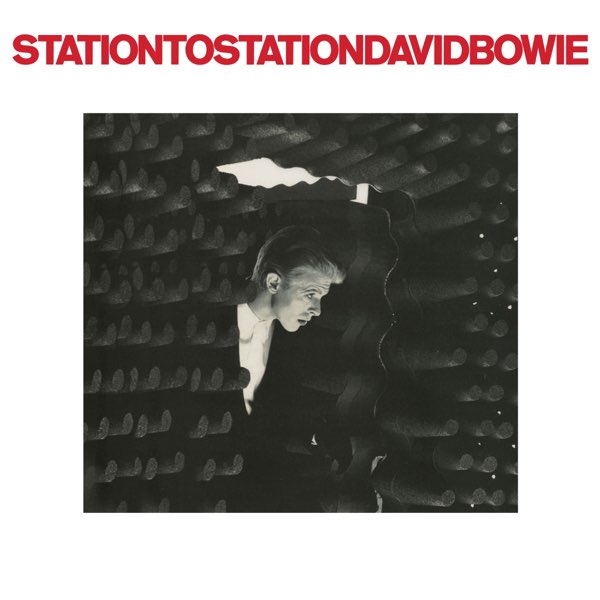
Ben Graham takes a detailed look at the decadent path trod by David Bowie during the creation of Station To Station
Decadence is an appropriately mutable and ambiguous concept. It can be used to signify the most contemptuous approbation, to suggest rottenness, decay, wasteful amorality and an utter disconnectedness from reality and shared social values. Yet without any real change in its meaning, the word can also be used in praising terms to suggest an alluring glamour, a wild, intoxicating freedom from society's petty restraints and a sense of abandon and entitlement that is somehow admirable despite, or even because of, its obvious destructiveness. In some ways, decadence is about style over substance, and whether you view that as a sin;...
The post Notions of Decadence: Half a Century of Bowie's Station To Station appeared first on The Quietus.

Megadeth
Megadeth
Thrash legends' swan song finds Dave Mustaine and co. at their most Spinal Tap - but perhaps that's no bad thing?
Like him or loathe him, Dave Mustaine has long been one of the most fascinating figures of the modern metal era.
For all his bravado, his outspokenness, his… let's call them "traditional" and "patriotic" views (without prodding directly into that hornet's nest) - not to mention the ease at which he's made enemies, his habit of trashing other bands (shared by too few musicians these days) - there's also been a vulnerability floating near the surface.
He had a tough childhood involving an absent father, the Jehovah's Witnesses, drug taking and dealing. After Mustaine was fired, aged 22, from Metallica before their debut album...
The post Megadeth - Megadeth appeared first on The Quietus.
HELP(2) is inspired by the charity's landmark 1995 release, HELP
Pulp
War Child, the charity which aims to protect children caught up in war, is releasing a new compilation album, HELP(2).
Spanning 23 tracks, it features new music by a wide cast of artists that includes Pulp, Depeche Mode, Beth Gibbons, Sampha, Cameron Winter, Bat For Lashes, Young Fathers, Big Thief and Black Country, New Road, among others.
HELP(2) is inspired by War Child's original 1995 release of HELP, which raised £1.2 million. The new compilation was recorded largely during a week-long session at Abbey Road Studios last November and was overseen by producer James Ford.
Leading the release is a new song from Arctic Monkeys, which marks their first release of new material since...
The post Pulp, Depeche Mode, Beth Gibbons and More Feature on New War Child Charity Record appeared first on The Quietus.
The Dutch festival has revealed a second wave of names playing this April's edition
Photo by Alex Heuvink
Rewire has added a number of acts to the lineup for its 2026 edition.
The second wave of artist additions is headed up by Kim Gordon, who will play live in support of her recently announced third solo LP, PLAY ME, which will be released in March. KMRU is also listed for a live set alongside artist and light designer Nick Verstand, with the duo combining under the name As Nature.
This year's Rewire will also host a world premiere screening of Julian Charrière's latest film Midnight Zone, featuring a live score from Laurel Halo, while contemporary dance company Chunky Move will present a show called U>N>I>T>E>D at...
The post Kim Gordon, KMRU and More Join Rewire 2026 Lineup appeared first on The Quietus.

In this month's Low Culture Essay, Jennifer Lucy Allan considers nostalgia and the Japanese idea of kona in the work of electronic pioneer Susumu Yokota. Featuring an exclusive playlist for our Subscriber Plus tier.
Portrait by Rune Hellestad
The first time I tried to buy a Susumu Yokota album I was in my late teens. I picked up a copy of Image in Vinyl Exchange in Manchester's Northern Quarter. I was taken by the artwork: the vintage colour grading, the abstracted shape that could have been a tree branch or a spool of tape. It was inviting but felt important; those dates - 1983-1998 - were a promise of longevity; of material that might survive the passage of time. When I got...
The post Low Culture Essay: Jennifer Lucy Allan on Susumu Yokota appeared first on The Quietus.

After a decade of fluctuating commercial fortunes and sonic wandering, is Oscar Powell ready to start firing out club bangers again? He discusses a time of transition, hedonism and fatherhood with Luke Turner
Portrait by John Cronin
"I've had 10 years in the wilderness as an artist," says Oscar Powell, backlit from the evening light of West London through the window of his studio, which doubles up as the headquarters of his record label, Diagonal. "I ran away from my own success and I feel out of time with everything, but I've reached a point where I don't really care, that's just who I am." Powell's latest album We Do Recover, and the follow-up WDREP1 that came out at the end of of 2025,...
The post Beautiful Chaos & Crying to Frozen: Powell Interviewed appeared first on The Quietus.

Many membered South London group drag the capital's post-punk scene into strange and scrappy new realms, restlessly documenting England's deep reserves of residual weirdness
In the beginning, there was This Heat. Charles Hayward and co traversed the disused pie factories and damp warehouses that suffused South London, and the resultant music was something seriously challenging: dread-laden, perversely fun, janky, dancey, genre-collapsing. Some believed it encompassed post-punk.
I'm not sure if Hayward cast a spell on South London, but, if you haven't been in a 50-year-long hibernation, you might have noticed that the badlands below the Thames have now long been the reactor core for some of the UK's most interesting guitar music. Even young bands from further afield, like Crewe's University, Manchester's...
The post Exploding Plastic Inevitable: Sod in Heaven by MPTL Microplastics appeared first on The Quietus.
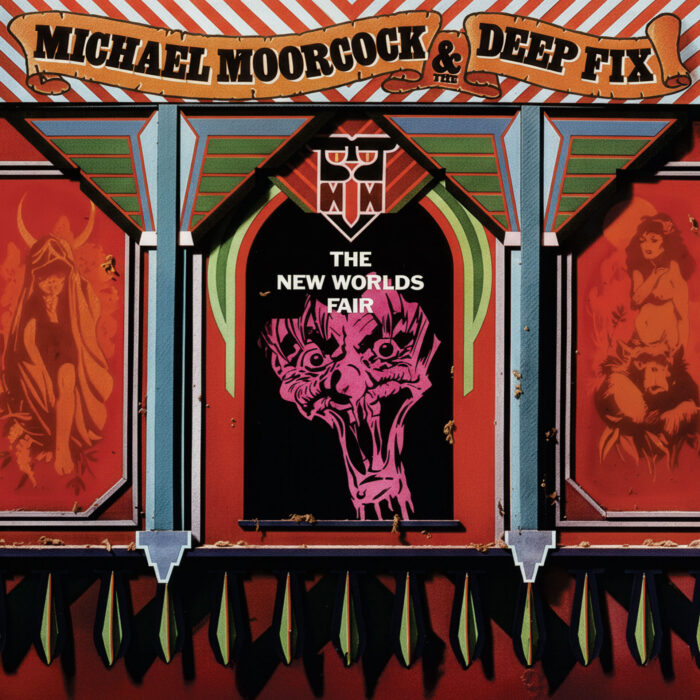
Michael Moorcock and The Deep Fix
The New Worlds Fair
A brand new deluxe and remastered edition of the SF author's album with Steve Gilmore and Graham Charnock sounds dolorous and kaleidoscopic, finds Jeremy Allen
Michael Moorcock isn't particularly well known for his musicianship, despite deep associations with space rock figureheads Hawkwind. In the 60s and 70s, the British science fiction and fantasy author headed up the influential New Worlds magazine, which helped precipitate a new wave of sci-fi that coincided with the emergence of writers like J.G. Ballard, Philip K. Dick and Ursula K. Le Guin. Moorcock, for what it's worth, apparently introduced Peter Green to his first guitar chords before the British blues rock explosion of the mid-60s, and in 1975,...
The post Michael Moorcock and The Deep Fix - The New Worlds Fair appeared first on The Quietus.
The band's former guitarist passed away earlier this month after "a long battle with his mental health"
Screenshot
Geordie Greep has paid tribute to fellow Black Midi co-founder Matt Kwasniewski-Kelvin following his death earlier this month.
Writing on Instagram, Greep said: "It goes without saying that it's been a really tricky week. Really, really sad and shit. But I think that it's important I say something here just to have some record of this time and these feelings."It's really such a sad thing that's happened. But I have been trying to focus on what a great person he was, what a force for positivity and goodwill, and how much better he made the lives of everyone who knew him. We all loved him...
The post Geordie Greep Pays Tribute to Black Midi Co-Founder Matt Kwasniewski-Kelvin appeared first on The Quietus.
Lightning Bolt have also shared lead track 'Cloud Core'
Lightning Bolt and OOIOO have joined forces for a new split LP, titled The Horizon Spirals / The Horizon Viral.
Spanning seven tracks, the record takes in two songs from OOIOO, the project of Boredoms drummer YoshimiO, and five further cuts by Rhode Island noise duo Lightning Bolt. The latter have shared lead track 'Cloud Core' alongside the album's announcement, and you can listen to it below.
In a press statement, Lightning Bolt drummer-vocalist Brian Chippendale said: "OOIOO set the tone with The Horizon Spiral but we didn't really roll with the spiral theme. We're more Viral than Spiral though they both can dump you in a rabbit hole and we definitely like rabbit holes."
The new...
The post Lightning Bolt and OOIOO Announce Split Album, 'The Horizon Spirals / The Horizon Viral' appeared first on The Quietus.
Harry Gorski-Brown, Abul Mogard, Rafael Anton Irisarri and more will play across Cafe OTO and IKLECTIK this May
Able Noise
Dig That Treasure! Festival has announced its return to London this May.
Running across four days at the start of May, the opening night at Cafe OTO hosts the acclaimed Kurdish bouzouki player Mohammad Syfkhan, as well as a rare live appearance from Somali pop singer Canab Marwo.
The following evening sees performances from experimental pop duo Able Noise and enigmatic minimalist project Jemima, as well as DNA? AND?, a group comprised of young people with Down Syndrome and professional musicians from Oslo's improv scene.
The third day features the much-loved guitarist Eric Chenaux, joined by the Scottish folk musician Harry Górski-Brown - among the...
The post Mohammad Syfkhan, Eric Chenaux and More to Play This Year's Dig That Treasure! Festival appeared first on The Quietus.

Finely turned-out rambunctious industrial no wave folk outfit unveil their Sod In Heaven long player at the Windmill on Saturday
One of the capitol's most exciting young live prospects, My Pussy Tastes Like Microplastics, are releasing their debut LP, Sod In Heaven, this month (watch this space for a review) and to celebrate they are throwing a shindig at Brixton's Windmill. And you are cordially invited.
Tickets are the price of a (fancy) pint and as well as the ecstatic MPTL deluge, the bill also includes (effervescent young team) Doom Club, (student nurse with wound x zoomer Pastels) Daltons Fen, and (handmade industrial experimentalist) Ellis Berwick, with DJs Melanie Moof and tQ's John Doran.
Get your tickets here! ...
The post MPTL Microplastics Album Launch in Brixton appeared first on The Quietus.
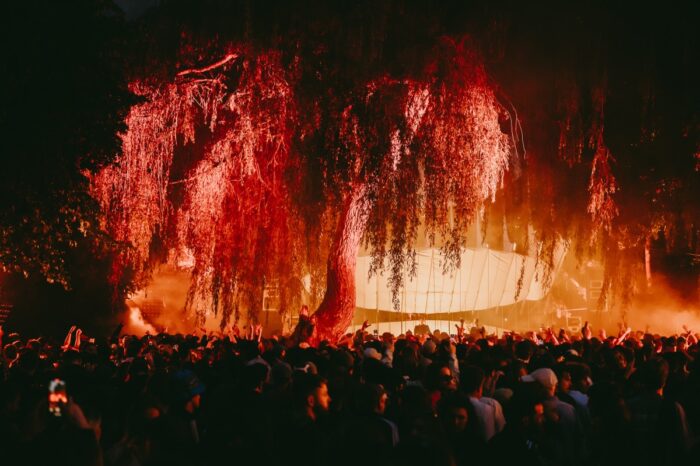
The Amsterdam festival returns this summer with aya, Underground Resistance and lots more
Photo by Jesse Wensing
Dekmantel has shared the full lineup for its 2026 edition, which takes place across five days this summer.
Returning once again to a number of locations across Amsterdam, the programming will, as ever, cover a series of opening concerts in the city centre followed by a weekend of DJ and live sets at the forest surroundings of Amsterdamse Bos.
Among the live acts involved in the opening concerts are Space Afrika, DARKSIDE, Death In Vegas, Juan Atkins (who will present a set under his Infiniti alias) and Speedy J's STOOR project, which will see him collaborate live with the likes of Clark, Barker, Aurora Halal and Azu...
The post Dekmantel Reveals Full 2026 Lineup appeared first on The Quietus.
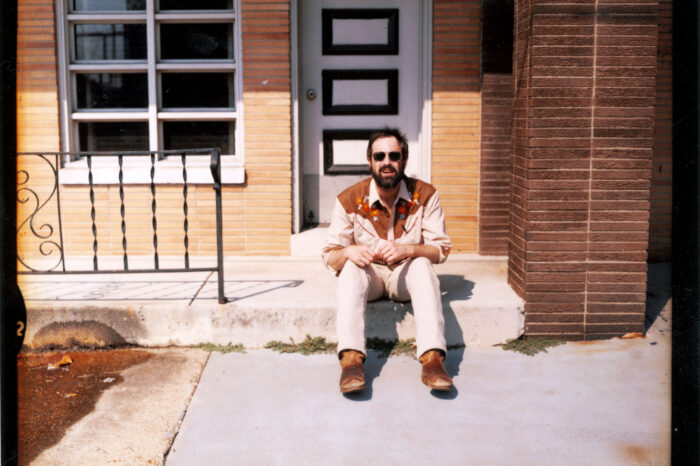
Darran Anderson offers ten points of entry into the inimitable work of David Berman in Silver Jews and Purple Mountains, and as a poet. Portrait by Bobbi Fabian
There are few gateway drugs as effective as the one-liner. All the opening sentence Ishmaels and electrocuted Rosenbergs, invisible men and exploding grandmothers that hook the reader and pull them in. Some have made their entire careers on the backs of such clever tricks and witticisms. Like any drug, there's a cost. You can lose track of what matters, the real substance, or sustenance of things. Take a writer like Oscar Wilde, whose deepest work (De Profundis, The Ballad Of Reading Gaol, The Soul Of Man Under Socialism etc.) is often lost in...
The post The Strange World of… David Berman appeared first on The Quietus.

As AI use spreads further into the creative industries, platforms like Bandcamp must be bold in their efforts to sort the good faith from the bad, argues Erick Bradshaw
Since its founding in 2008, Bandcamp has become an invaluable resource for musicians, from bedroom producers to pop stars, as a host for the streaming and buying of their work. With artists and labels selling a wide range of physical products in addition to every major digital format, Bandcamp is the closest thing to a globe-spanning independent record store. In 2022, founder Ethan Diamond sold Bandcamp to Epic Games, who then sold it to music licensing company Songtradr the following year. Despite these corporate turnovers, the site has not changed much: the Covid-era artist-benefiting Bandcamp Fridays still occur regularly and editorial wing Bandcamp Daily publishes new features, lists and scene guides every weekday. (Full disclosure: I am a Bandcamp Daily contributor.)
While it may be a closed environment, these elements contribute to a healthy ecosystem for artists and fans alike. When fraudulent goods are introduced, it is tantamount to an attack on the entire business model, a threat to the wellbeing of the marketplace. Such doubt becomes a poison, a virus. AI-generated music is that poison. Spotify has been plagued by an influx of AI-generated music that is streamed by bot farms to generate royalties for the perpetrator. This act of "polluting the algorithm" degrades the experience for everyone and funnels money away from where it is most needed.
In a post published on 13 January, entitled "Keeping Bandcamp Human", the company stated that "musicians are more than mere producers of sound. They are vital members of our communities, our culture, and our social fabric. Bandcamp was built to connect artists and their fans, and to make it easy for fans to support artists equitably so that they can keep making music." This was the argument at the centre of the platform's decision to prohibit music generated wholly or in substantial part by AI, which has been met with some resistance by those for whom AI is an integral part of their practice.
Process music, systems music, cybernetic music, player pianos, samplers, emulators, AutoTune, advanced software plug-ins - algorithms have been part of music creation for decades. Parameters are established, instructions are given and music is produced. But imagine doing that on a near-infinite basis and seeding it through every platform on the planet, like a digital kudzu vine. "Make any song you can imagine" promises the company motto of AI-powered music generation platform Suno. At what point did we decide that music made, or at the very least, shaped by humans was not enough?
There are tried and tested ways of making songs in real time without the need for AI. Songs, especially those written by bands or collaborations between individuals, are formed in the heat of the moment, through jamming or working on variations of a theme as a song is hammered into place. This is also true with electronic instruments: sometimes the twist of a knob can radically alter the trajectory of a song. Free improv, the most blatantly "organic" music, is almost completely based upon these principles. The physical space, the smell in the room, the hand slipping from sweat - all of these things make the music live in the present, sound waves moving through the air at that particular moment. Why waste your time creating something, spending time working on it, making mistakes, learning from those mistakes, using those mistakes, turning the mistake into the essence of the work itself, if you can rely on the likes of Suno? Unless, of course, you are invested in the messy business of being a human.
Parsing the meaning and intent from AI proselytizers can be difficult, but, much like the software systems themselves, they use this to their advantage. This is why making a straightforward counterargument is sometimes the best thing to do: just cut through the bullshit. Is it worth the ravaging of our physical world and psychic landscape to satisfy the tech classes' lust for co-opting the imaginations of their customers? It's a perverse bargain, and the only people who benefit are a tiny cabal of so-called angel investors. It may seem grandiose to say that the "training" of LLMs over the last decade amounts to nothing less than the intellectual theft of the entire human race, but why not lay it out in such explicit terms?
The use of generative AI in the arts is a hammer in search of a nail. Does the songwriting industry need to be "disrupted"? Do people need to write songs in the style of Max Martin, Linda Perry or Jack Antonoff? At some point, a vibe coder will hit Send on a prompt that will contain references, perhaps even finely-tuned preferences, to emulate The Shaggs, US Maple, Arthur Doyle, Yoko Ono or Ghédalia Tazartès. The question remains: Why? It doesn't negate the inherent value of the thing, but it does open up Pandora's box, and lets the curses stream forth.
It is possible to be sympathetic to forms of generative art and still decry their effect on the creative ecosystem. Generative AI's ability to create infinite reproductions of material fuels the transformation of art into content, and while some may quibble that generative AI features already exist in music making, for instance in software plug-ins, surely it's necessary to draw a line in the sand, even if that line risks excluding the few instances of genuinely creative uses of AI.
Will errors be made in the scrubbing of AI-generated music from Bandcamp? Most likely, but this is an e-commerce site, not air traffic control or heart surgery. Moreover, this music will continue to exist, whether on YouTube or Spotify, platforms that have long shed any pretence of prioritising artists over profit. Bandcamp must protect itself from chicanery.
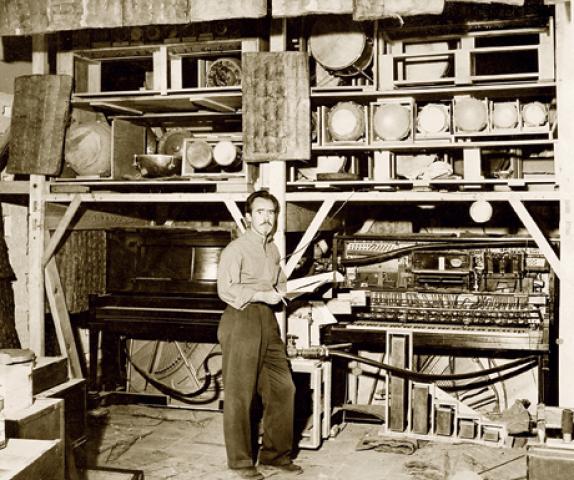
In the first essay of a short series exploring Bandcamp's ban on AI-generated music, Vicki Bennett argues that the platform's decision rests on the belief in a stable binary between computer and human made music
On 13 January 2026, Bandcamp published "Keeping Bandcamp Human", declaring that "music and audio that is generated wholly or in substantial part by AI is not permitted on Bandcamp", alongside a strict prohibition on AI-enabled impersonation of other artists or styles. The post invites users to report releases that appear to rely heavily on generative tools, and it explicitly reserves the right to remove music "on suspicion of being AI-generated".
It frames the stakes in language that is hard to argue with: music as "human cultural dialogue", musicians as "vital members of our communities… our culture… our social fabric". The intention reads as protective: a platform built on direct artist support resisting an industrial shift in which generative systems turn music into an infinitely scalable by-product.
But the policy hinges on a category that cannot sit still: "AI music."
"AI" currently operates as a single alarm word for a sprawling range of tools, techniques, and infrastructures. Bandcamp's policy phrase - "wholly or in substantial part" - leans on exactly this flattening, implying a measurable cut-off point. Yet contemporary music-making already runs through predictive and algorithmic processes - pitch correction, time-stretching, transient detection, beat mapping, generative "assist" features buried inside plug-ins, to name a few. Some of these are marketed as AI today; many will become ordinary defaults tomorrow.
The result is a verification fantasy: the belief that a stable binary can be policed in sound; that an audible threshold exists for "synthetic" or "other". It promises certainty at a moment where certainty is eroding elsewhere too - images, voices, provenance, identity, authorship. It also underestimates how frequently practice collaborates with systems: tools, interfaces, archives, defaults and so on. Music reaches listeners through networks before it reaches them through ears, and those networks are already doing editorial work.
Bandcamp's policy is responding to a genuine structural threat: volume. Automated production changes the ratio of noise to signal. An already difficult discovery environment gets overwhelmed. Public hostility toward what is surfacing in feeds sits inside this dynamic, and it is understandable. Yet what most people encounter as "AI aesthetics" arrives pre-edited, boosted by ranking systems and controversy. The fear is real; the surface it attaches to is already curated. Bandcamp is trying to resist becoming a landfill.
The popular caricature of generative music imagines a one-way transaction: input a prompt, receive a track, publish it. That behaviour exists, and it has consequences. Yet another relationship exists too: immersive, dialogic use where the system becomes a site for discovery rather than a shortcut to a predetermined end. Bandcamp's policy language does not distinguish between these modes; it relies on a broad label and a suspicion threshold.
Generative music has existed for a long time - and not only in the contemporary sense of "model output." Long before large-scale machine learning, artists worked with systems that generate: rule-based procedures, chance operations, constrained scores, stochastic logics, feedback structures, and mechanical or computer-assisted processes. "Generation" reads as a recurring method for distributing agency across humans, tools, rules, and time.
Conlon Nancarrow's Studies For Player Piano are canonical precisely because they make a non-human musical capacity audible: tempo ratios and so on that bodies cannot reliably execute held in place by a mechanised system that does not "interpret". In White-Smith Music Publishing Co v Apollo Co (1908), the US Supreme Court held that music rolls for player piano were not "copies" of sheet music under the law at the time, in part because they were not intelligible to humans as notation. The ruling was later superseded, yet the impulse is instructive: authorship gets tethered to human legibility until technology breaks the tether. This is where the AI debate loses grip. It assumes automation erases authorship.
The more useful question is simpler: what is the role of the author under these conditions? Authorship cannot be considered merely writing, composing, playing any more: the actual practice of making shifts toward interaction, recombination, and editorial agency. The author's presence shows up in how a system is framed and interfered with: what is fed in, what is refused, and so on. In that sense, authorship becomes legible through constraint design and editorial decision making.
Moreover, the "humanity" of the author does not disappear when sound is synthesised or interfered with. It is disclosed through the interference itself: through the deliberate destabilising of sources, the creation of density, the building of "audio mulch" where recognition becomes unstable. That compositional stance sits uneasily with a suspicion-based regime that treats ambiguity as evidence. A policy that encourages judgement-by-vibe pushes complex work towards safer surfaces.
So, what is done with what is present, and with what consequences? A genuine public need exists - protection from impersonation and spam - and Bandcamp's prohibition on impersonation speaks directly to that need. But the broader prohibition targets a moving label and risks producing an optics economy where surface signals are designed to avoid suspicion.
Likewise, the discourse around exploitation needs refinement. Artists are being scraped and stolen from; this is real. But the temptation is to treat it as unprecedented and to call the entire field "the same". What about sampling and collage, which have lived inside those tensions for a long time? A platform policy anchored to a broad label cannot resolve that deeper political economy, and it may distract from where power is actually concentrating. So the question returns, sharpened: who benefits when the category "AI music" becomes the organising principle?
Bandcamp's cultural value has never been limited to commerce. For many, it is still the only workable route for sales and finding the appropriate networks. It functions as an informal archive of tags, micro-genres, and unclassifiable edges: the long tunnel of browsing, the rooms inside rooms, the productive disorientation of finding something you didn't know existed. A suspicion-driven policy makes that ecology more fragile by treating complex processes as a moderation problem rather than as a musical method.
The current moment is already a collision point: economic decisions, artistic freedom, quality, taste, and infrastructural control pressing into the same narrow space. Bandcamp's attempt makes that collision visible. The next step requires definitions that track behaviour rather than vibes, and governance that can resist flooding without shrinking the field of permissible experimentation. Otherwise, the platform preserves "human creativity" as a slogan while narrowing the conditions under which complex, process-driven work can survive.
Tool use will evolve fast. Model output will be run through "human filters"; many artists will train models on their own archives, treating the model as an extension of an already established editing practice. Authorship will not disappear in these workflows. It will become harder to locate through surface cues, and more important to understand through process. The responsibility now is to keep editing, with our eyes and ears wide open.

Philip Brophy analyses Colin Stetson's use of the saxophone's physical dimensions to evoke the disturbed voices and bodies of Texas Chainsaw Massacre (2022) and Hereditary (2018)
As with all post-2010 franchise reboots, Texas Chainsaw Massacre (2022) spins itself dizzy with reflexive stylistics, revisionist story lines and ideological closure. Musician and composer Colin Stetson's distinctly live improvisations of acoustic and processed brass and woodwinds are exploited for sensational affect. When Leatherface first dons his freshly dead mother's peeled face, Stetson deploys a growl deep from the bowl of what sounds like his baritone sax ("Sunflowers", the opening track on the LP release).
Part death metal aping, part psychotic impression, it highlights a key aspect of all monster figurations: the sound of their voice. Much of Stetson's cues for Texas Chainsaw Massacre combine vague vocal tones with breathy sustains, each overlaid with overtones and submerged in reverberant fog. In violent outbursts like "Sledgehammer", the score feels cognisant of Tobe Hooper and Wayne Bell's 'meat industry metalzak' for the original Texas Chainsaw Massacre. Stetson carves, sculpts and moulds his compound acoustics with greater turmoil.
Stetson thematically has directed his instrumental performances across the well known New History Warfare volumes (2007, 2011, 2013). He needn't have pointed out these pieces are recorded live and unedited: they throb with his circular breathing, muscular lungs, and immersion in the swirling sonorum he expels from his mouth. In an unlikely musical merger of Philip Glass arpeggios, 'acoustic acid' pulsations and inchoate metal vocalisations, the trilogy swells with a surprisingly emotional undertow. Like much of Stetson's work, New History Warfare is emotionally hot and performatively anguished. Most 'dark industrial' work in this terrain I find highly affected and closer to cabaret than anything else, but Stetson's grounding in the visceral dynamics of his physical instrumentation colours his compositions and recordings with convincing appeal.
I wonder how many filmmakers have temped their films during editing with tracks by Colin Stetson? His records supply emotional outbursts of debilitating affect which many a director might seek as an appropriate tenor for their hand-wringing tales of woe (a trope too many horror and sci-fi movies embrace). And here's the rub: Stetson's music alone conjures these ecstatic states of demolition and destitution, but when combined with visuals intent on evoking identical feelings in a viewing audience, the resulting audiovision can become overbearing, muddled and unintentionally caricatured.
I wonder how many directors realised this, and resolved to pull back the soundtrack to soften its bombast? The contrast between experiencing Stetson's score in the Texas Chainsaw Massacre and auditing it in isolation on record is stark. This is a generalisation, but the more sonically adventurous a score, the more likely a movie tends to limit its organic energy, as if the music is an untamed entity to be collared. The LP is like a portrait of Leatherface: traumatised, trapped and taunted as if caged in a hellish unending franchise of horror replications.
Three other Stetson scores perform identically: Color Out Of Space (2019), Uzumaki (2024) and Hold Your Breath (2024). Their music alone conveys far more than their accompanying films. Hold Your Breath is an especially lost chance to highlight Stetson's voice, considering it focuses on a Creepy Pasta-style 'Grey Man' whose lore has psychologically infected a woman and daughter struggling to keep their Dust Bowl ranch going during the 1930s climate devastation. The film abounds with some great sound design and voice editing which foregrounds the palpable psychoacoustics of diseased lungs and vocal deterioration. But Stetson's metallic human tones and breathy granularity are plastered almost indiscriminately, like the showy CGI dirt storm clouds and artsy defocused cinematography.
To play devil's advocate: is the problem that Stetson's emotionally 'hot' music is a liability due to his inability to rein it in and properly service the film's narrative? Man, that's such a conservative view, which cinema continually upholds. A director not the composer is the one tasked with resolving and incorporating such intense energies (visually, performatively, sonically); they can experiment with pushing things or choose to pull back. Stetson's first major score commission for Ari Aster's Hereditary (2018) clarifies the benefits in perceptively handling powerful music like Stetson's within a film's narrative world.
Hereditary is as showy with its aesthetic gambles as the other films mentioned here. The opening camera creep into a model of a family house raises a reference flag to Stanley Kubrick's The Shining (1980), whose overhead camera tracks Jack Torrance (Jack Nicholson) roaming the snowed-in hedge maze: the optics are of an animatronic doll in a diorama. His positioning throughout the film had repeatedly alluded to his withering self being a figurine sinking into a dimension governed by ghostly usurpation. Hereditary's story layers this theme onto the dysfunctional family's teenage son, Peter (Alex Wolff). But relevant here is how Stetson's music accompanies that dollhouse opening. A spindly melody from his bass clarinet symbolically traces the claustrophobic contours of the dollhouse bedroom.
Something else floats in the background here and elsewhere in the film: distant harmonics, resonant notes and whirring altissomo squeaks, like chamber music being played in the distance. This vague wallpaper of domesticity - classical, mannered, cultured - is not film music in the normative sense. Rather, it scores how music indifferently occupies familial space, simultaneously placating and irritating a family group (convened with frailty by artist mom Annie - Toni Collette - and psychologist dad, Steve - Gabriel Byrne). Their interactions for the first half of the film are disturbingly devoid of connection; the indistinct musical smearing connotes the absence of emotion. This application of Stetson's pre-storm calm (beautifully apparent on his 2016 release, Sorrow: A Reimagining of Gorecki's 3rd Symphony) is cogently mixed into the film's deliberately empty atmospheres of the deadening household and its dark wooden interiors. The sound of the outside world rarely enters, leaving the household devoid of 'live' acoustics bar the muted taps of a ticking clock. This allows the music to similarly signify that all human progress is halted - and for sudden noises to aggressively startle.
The first sign of the domain's incursion by malevolent spirits occurs when young Charlie (Milly Shapiro) spies laser-like shimmers of blue light swimming across her bedroom ("Charlie"). Stetson layers the earlier snarling bass clarinet line atop a high-pitched bass pulse and multiple bell-ringing drones. Timbres morph as various elements cycle hurriedly and rise in volume before fading away. The impact is as full as any Hollywood orchestral bombast, but the detailing is crisp and lean, not thick and bloated. Film music orchestrations carry on the questionable tradition of being blasted in sound stage hangars; Stetson's scores are always studiophonic. The Hereditary score is a dark doppelgänger of symphonic grandeur, as Stetson employs his wind instruments to perform like soaring strings, gulping cellos and haunting plucks. It's a masterful move, using the vulgarity of saxophones - bass, baritone, contrabass - to simulate the symphonia of a traditional orchestra.
In the memorable scene where Charlie suffers anaphylactic shock as Peter desperately drives her to hospital, her breath is mixed like a guttural vocal track atop Stetson's backing. His sound palette accentuates the mechanics of breath in relation to his instrumental arsenal. Multitracked clicks, taps, spits, coughs and blows rattle and excite Stetson's instruments, as if they are fretfully possessed by sonic poltergeists. That Stetson's unique percussiveness and its rippling noisescapes are welcomed onto Hereditary's soundtrack is a testament to Aster's grasp of the film score's outer limits of sonority. In fact, one can interpret Peter as a human who is slowly transformed into a vessel: the music blows and hums through his hollowed being just like Stetson's aural imaging of Peter. The film's closing theme ("Reborn") uses Stetson's technique of emotive deconstruction from Sorrow, here applied to the euphoric moments of something like Strauss's Alpine Symphony (1915). The impact is like feeling the full spectrum of emotions occurring simultaneously. Post-human transcendence breathed onto the soundtrack.
Wire subscribers can read Philip Brophy's original Secret History of Film Music columns from the 1990s online in the digital archive. Previous instalments of this column published on The Wire website can be found here.


