Fun and fascinating - with fabulous fotos - Danceteria oral history by Joy Press, aka the missus, who was a regular at the legendary New York club in the 1980s.
Everyone from Madonna and Fab 5 Freddy to Mark Almond and Michael Musto to Beastie Boys and Butthole Surfers makes an appearance.
Something in the air clearly - in freaky synchrony the final Soft Cell album is titled Danceteria, while Madonna has a single out called "Danceteria". Joy was working on this story for months for discovering these unexpected pegs to the piece.
"John Sex was singing there.... She said 'dear, I'm not a deejay, I'm an atmosphere engineer'"
"Everybody here is a work of art"
Here's a real-time tribute by Soft Cell, shaped by their New York clubland adventures, when they hooked up with a character called Cindy Ecstasy. She has a rapping cameo on the re-recorded version of "Memorabilia" that appeared on Non-Stop Ecstatic Dancing. This was one of the first remix albums, alongside The Human League's Love and Dancing (released under the alias The League Unlimited Orchestra) and The B-52s Party Mix!
Really like the echo-chambered horn section on this, which reminds me a bit of "Papa Was A Rollin' Stone"
"Memorabilia" is much more in the zone of avant-funkers like 23 Skidoo and A Certain Ratio than the Northern Soul meets Suicide smashes that made Soft Cell pop stars.
 Retrotalk: "There Is No Sound of the 2020s" versus "The Future Is Not Lost" versus "21st Century as Cultural Void" [ 28-Jun-26 2:03am ]
A flurry of recent debate on the topic of cultural stagnation versus "the future is alive and well actually!"
Here's an interesting article by Gabriel Szatan at Resident Advisor from a few weeks ago
It starts with a electronic dance festival experience that feels blocked and static:
But by some deadening alchemy, the sets smushed into a homogenous paste, largely indistinguishable in tempo and tone.
From this, Szatan extrapolates to a general pervasive feeling of being stuck on a 7 out of 10 plateau, anxiously wondering when the distinctive and defining sound of the 2020s will surface:
No matter the soundtrack, the feeling echoed: this is good, not great. The lightning-in-a-bottle effect that animates club culture seems to be in hibernation and it's not just hampering nights out, either. As of late, electronic releases seem to exist on this same endless plateau. We have more music to enjoy than ever, but what's increasingly nagging at me is that this overfamiliarity is actually the problem....
Electronic culture finds itself in a strange double condition: hyper-fragmented in theory, yet consensus-driven in practice. What used to feel like solid land has given way to an archipelago of disparate scenes with little awareness of their neighbours and, broadly, only slight modifications to preexisting sounds...
It's worth asking ourselves what exactly the 2020s will be remembered for musically. If we're invested in breaking new ground, time's running out to get that in motion. The alternative is circling a familiar neighbourhood over and over, repackaging iterations of the same sensation until the culture ages out....
The problem isn't that electronic music has stopped producing quality. It's an issue of quantity. There's more than the culture can reasonably metabolise, and, at a time when many pockets of the underground are still rummaging through the crates of the past, this bottlenecks the potential for new movements to cut through. Without anything to act as both a galvanising force and, occasionally, an antagonist to challenge, a lot of cultural motion effectively peters out....
Five of the revitalised sounds you're liable to hear back in the hands of DJs at, say, Houghton right now — tech house, dub techno, dubstep, minimal and prog - lack a clear aesthetic identity and, you could argue, lack risk too...
2026 lineups heaves with talent, yet the presence of artists who released their most crowd-animating work 20 or 25 years ago pops out more than usual...
In reality, it's little more than a revolving carousel heading nowhere fast with diminishing returns.
Szatan references "retromania" not as a book but as a genre, or an artistic mode cutting across genres:
The '90s has been well turned over by now, so what can we learn from the previous decade? At least three substantial, unique movements were generated in the 2010s: EDM, hyperpop and retromania, all large and notable enough that dozens of variants fold into, and spin off, from them.
The slipperiest of the three is retromania, less a hard sound than a change in mindset as nostalgia ran rampant, and expanded archives pulled whole histories of sound into circulation. In the 2010s, a flood of reissues met a desire to gain a multipolar understanding of music history.
... multiple scenes, including drum & bass, are threatened by "homage [as] the new product," per dBridge...
Then back to the main theme:
the fracture of universal experience means we may never see a coherent sound of the decade again—in this or any decade. Without that, culture risks becoming even more aleatory than usual....
Essentially, as the world gets more expensive and progression stalls, we get sucked into cultural stagflation.
...it feels evident that electronic music's oversupply and option paralysis is causing damage.
We may have arrived at a point where knowledge and adherence to form leave people unable to conjure visions beyond the old frame.
^^^^^^^^^^^^^^^^^^
These snippets are just a fraction from a much larger, in-depth exploratory piece that is well worth your attention (as is the companion piece, its part 2, "No Music On A Dead Internet", which explores archiving and the impacts of AI).
(Some of Szatan's observations chime with my own recent Instagram-as-window onto dance culture thoughts)
I think this was a brave piece to write as the editor of a magazine that is right in the thick of the dance industry - a downer overview rather than rah-rah-rah boosterism.
The sensations Szatan describes from going to festivals or working through new releases... bustling activity and superabundance combined with a sense of blockage and redundancy.... the creeping feeling that nothing is quite new enough... these are familiar sensations to me, from starting to feel them with some acuteness in the late 2000s. (I don't feel them so acutelythese days, but that may only be because I'm not tracking the now and putatively "new" with anything like the same obsessive intensity)
Those back-in-the-day frustrating sensations are what caused me to come up with the term "hyperstasis".
At the time I wondered if hyperstasis was a superstructure to substructure equivalent to this economic malaise of the 1970s called "stagflation", a term Szatan drops in his piece. Stagflation is an economic paradox, what really shouldn't happen: the combination of low growth and inflation (usually inflation is a sign of economic growth - like the economy is running a fever).
But I don't think it is really a sound parallel. Hyperstasis is more to do with the horizons of what's musically thinkable, a feeling that no one can get to the next level of the 'game' but is just scurrying around on a plateau. That said, it is such stagflation is such an evocatively gross word, it is tempting to deploy it in this context. .
Even one as semi-detached as myself can think of at least a few candidates for the New Defining Dance Sound of the 2020s. There's amapiano and bruxeria. The former is one where I do have that "ooh, this is different, this is new" reaction. While also finding the initial excitement will fade a bit as the DJ mix chunters on - it starts to feel plateau-y (part of its innovation I suppose - the diffusion of climax). Still, the basic template-structure is a new way of ts organizing a groove. Then bruxeria - well, that has aspects that feel like irritation-as-aesthetic - the extreme sidechaining, the nagging GIF-like vocal loops - and seem explicitly designed to drive away the elder ear. This is one way that the New has announced itself - a harshness, a rhythmic disruption of groove, that you have to recalibrate your hearing for.
^^^^^^^^^^^
And so to the refutations, both of this specific Resident Advisor piece and the overall "cultural stagnation" perspective.
We need not concern ourselves here with ripostes from the perpetually and chronically optimistic (don't they ever get exhausted with being themselves, these behold-the-plenty types? I find the sunny-side stance as unconvincing as folks who draw up lists of their 350 faves of any given year - c'mon, pull the other one, mate!).
Smacking a little of "behold the plenty" but more reasoned out, there was the Liam Inscoe-Jones book Songs in the Key of MP3 from a year or two ago. This was explicitly framed as a younger's riposte to elders like Mark Fisher and myself. Which is fine, although I wish the book had engaged with my thinking subsequent to the 2011 publication of Retromania, e.g. the Auto-Tune epic, or the whole book's worth of counter-evidence marshalled in Futuromania - my own partial auto-refutation. (Still In A Dream also contains a chapter that dissents with Retromania, looking at how acute consciousness of history can be a basis for attempts to do new things - the chapter is titled "Revisionaries").
But that's fine, people selectively create a cruder, starker version of their opponents (in this case, me) in order to have the arguments they want to have, the arguments they think they can win. I've done it many a time, with my own combatants!
And here comes another book, published last week in fact: The Future Is Not Lost, by Matt Bluemink. This grew out of articles that similarly sparred with Mark Fisher's thinking, starting with the unfurling of the concept of "anti-hauntology" as an alleged genre represented above all by SOPHIE, along with Arca and Iglooghost.


Here is Bluemink (what an amazing name - can it be real?) at his Blue Labyrinths blog describing the scope and themes of The Future Is Not Lost.
"The book is a collection of my essays focused around the idea of the future as it relates to music, technology, architecture, and philosophy. The book itself is split into 3 chapters on a variety of interconnected themes:
1. Anti-Hauntology: The first section explores the idea of 'futuristic music', including artists like SOPHIE, Arca, and Iglooghost, and provides a critique of the nascent pessimism in the work of Mark Fisher through the philosophy of Bernard Sitegler.
2. Spatial Imaginaries: The second section uses the ethos of solarpunk to criticise the dystopian aesthetic of cyberpunk that has become actualised, not just in films, literature, and games, but in architecture and urban design. It also provides a reading of Peter Sloterdijk's theory of foams, atmospheres, and desert islands to show how spatial philosophy can provide solutions to the climate crisis.
3. Individuation: The final section introduces the work of Gilbert Simondon and its influence on Bernard Stiegler and Gilles Deleuze. This section provides the theoretical underpinning of many of the previous chapters. It shows how individuation, conceived as an on ongoing metaphysical process, can lead to a fundamentally progressive form of understanding which allows for the creation of better futures.
And here's a bit on how hearing SOPHIE helped him formulate a counter-view to Mark's pessimism:
"From the very first moment I heard SOPHIE's music I knew it was something different. It felt fresh. It felt new. Listening to Faceshopping was like being transported into an alternate reality that approached popular music from a radically novel perspective: a transgressive perspective. The old structures and forms were there, but shifted, changed, and morphed into something unrecognisable. Electronic music was finding a way forward, not only in some distant, abstract or academic sense, but in popular culture itself. Aspects of the experimental and avant-garde were being brought into popular consciousness in entirely new ways we couldn't have expected. I had discovered the music of the future."
Since Mark died a year before SOPHIE's "Faceshopping" came out, it's hard to know how he would have reacted to it. For what it's worth, I suspect that he would have been bowled over by it as a tour de force of sonics and conceptual provocation - as I was. Especially as it is a song so bound up with his beloved glam - ideas of artifice, plasticity, surface versus depth, theatricality etc. It is practically an audio-essay dramatizing the ideas of Erving Goffman in The Presentation of Self in Everyday Life but updated for the age of the influencer. InstaGlam.
Whether "Faceshopping" would have been enough to spark Mark to a rethink of his fundamental ideas about retro-paralysis, lost futures, hauntology... it's hard to say.
But I think "anti-hauntology" is an odd way to frame this music, since I rather doubt it was motivated by a desire to refute hauntology. I wouldn't be surprised if it emerged as an aesthetic in almost complete unawareness of the hauntology discourse - it has far more to do with long-running aesthetics of camp and plasticity, drawing on precursors like electroclash, Fischerspooner, drag and vogueing and ballroom, New Romanticism and the Blitz scene, avant-garde fashion, Warhol and the Theatre of the Ridiculous.... . As well as many mainstream manifestations, from Bowie to Madonna to Lady Gaga. In some ways SOPHIE is Gaga but with music that actually lives up to the rhetoric.
Talking of rhetoric... I think it would made more sense for Bluemink to come up with a genre term that expresses the positive and substantive properties of this new sound-and-vision, rather than define it reactively against something that may not have impinged on its creators's consciousness. The term "anti-hauntology" creates the impression that SOPHIE, Arca et al exist primarily to be recruited to Bluemink's attempt to refute K-punkian pessimism. But they might have their own reasons for doing what they do, completely unconnected from the debate about retro and lost futures.
(And if you'll forgive me tooting my own trumpet a bit... the aesthetic of what Bluemink calls anti-hauntology is already strongly hinted at in my Digital Maximalism epic of December 2011 - using Rustie's Glass Swords and various others I identify the hallmarks of a new sound - ultrabrite, shadowless, plasticized, denatured, 2D cartoony, "dry" i.e. reverb-less. I'm writing a couple of years before SOPHIE's first releases and before PC Music get started. This emergent ultra-gloss maximalism is contrasted with the deep-and-dark minimalism dominant in 2000s dance, e.g. the dank and shadowy reverb-chambered sound of dubstep. I don't mention Burial but I could easily have done).


^^^^^^^^^^^^^^^^^^^^
And then a few months back there was Audrey Wollen in The Yale Review asking "Is the Twenty-First Century a Creative Void?" and taking issue with Mark Fisher and myself again but mainly with W. David Marx's Blank Space, his history of the C21 so far.
Wollen notes a paradox about Marx's book that I also noticed:
"Blank Space offers 281 fast-paced, rollicking pages that provide an overview of an extraordinary number of cultural events—including the flourishing of reality television, Web 2.0 and social media, monumental social and political movements from Occupy Wall Street to MAGA—only to culminate with the bewildering conclusion that nothing artistically transformative has occurred."
But then that is hyperstasis, isn't it? A roil of activity, but nothing that really surges into the unknown.Wollen picks up on the kind of swampy metaphors that I and other use (in the intro to Retromania, I describe Time becoming like a sluggish river that meanders and forms oxbox lakes)
"If the second half of the twentieth century was a rushing river of culture, many feel that the present has become a brackish wetland, a marsh."
Then she tries to repositive this trope in terms of moist fecundity:
"Maybe
we are living in a marshland. Many creatures do.
Then there is the decelerationist argument, the zero growth / downshifting / permaculture polemic applied to culture itself as opposed to agriculture.
"It does not surprise me that millennials and zoomers might be wary,
unconsciously or otherwise, of contributing anything "new" to a stretch of
history that has voraciously eaten newness only to cough up suffering. What
about the past fifty, seventy-five, one hundred years makes barreling toward
the future seem like a good idea? The Doomsday Clock reads eighty-five seconds
to midnight, and for many across the globe a more local apocalypse has already
arrived. Some of the archive fever of the past twenty-five years might be a
form of emotional anti-accelerationism, a generation desperately trying to
produce a wind drag on the forward velocity powered by the deathly machinery of
the twentieth century. I can already feel the ground
underneath my argument growing a bit soggy—I am, after all, a product of the
cultural marshland of the 2000s. My perspective is history logged, mushy and
inexact, my style is patchworked and gleaned, my analysis makes most sense
mapped as doodled spirals. I find the declarative mode that is necessary for
the construction of an avant-garde (or the loud lamenting of a lack thereof )
kind of cringe, to be honest, not because being born in the early 1990s made me
allergic to earnestness, as is often presumed, but because of its absolutism,
its unquestioned reverence for clarity and category"
And then a note of "OK boomer" condescension:
I can empathize: it must have felt comforting to imagine there was a way to
dress and a type of music to listen to and an art to make that situated oneself
inside of history in a legible and linear way. But it was always an act of
imagination (as evidenced by the various revolutions that once felt inevitable
and around the corner, but never actually occurred), just as this whirlpool of
stasis is a kind of imagining as well. The fact of the matter is that kitsch is
now so overabundant that to not use or misuse it is to leave money on the
table, so to speak — stacks of meaning-bucks, just sitting there. What's
difficult to accept, for those not from the marshes, is that subculture, and
its glowing nimbus of futurity, has become a kitsch object as well. Not merely
the specifics — the hedgehog prickles of a hairstyle, the fog of bass rolling in
over a crowd—but the form itself.
The "kitsch" - meaning much the same as "cringe" - is a reference to Clement Greenberg's "Avant-Garde and Kitsch" essay of 1939, which paved the way for his championing of abstract art. In other words, the kind of Movements that the likes of myself mourn, as we do Subcultures as Vanguards.
Finally the essay deploys an obscure musical reference, a Los Angeles band called Purity who specialize in cover versions of songs from subcultural sounds like hardcore punk and postpunk:
"A cover of "Dance This Mess
Around" is a repetition of a repetition, a warping of the warp, a slow decay of
the slow decay. The listener descends into the mulchy bog, wet and thick. But
this mire unexpectedly greens into acute feeling: somehow, Purity turns the
lyric "I'm not no limburger" into one of the most wretched, mournful lines of
any music I've ever heard."...
I have to salute how deftly Wollen sustains the marshland / mire / boggy ground tropes throughout the essay...
She concedes that these strategies would not placate the declinists.
"[W. David] Marx would probably agree on a more Greenbergian line —yes, exactly, old
cultural forms of radical possibility have been resurrected as half-hearted
ghosts! Tragic! But what he misses, fundamentally, is the vice versa, the
backward loop, that is also true: the kitsch object, the dancing shadow of a
certain subgenre of rock and roll, is transformed through (re)restaging into a
new, sprouting form of subculture, if that can be defined as what goes on
underneath the opaque layer of mass commerce."
An aside: Purity remind me slightly of another painfully knowing band, Bodega, who put out the (pretty funny title) album Our Brand Could Be Yr Life.
^^^^^
It does amaze me sometimes that this debate is still going on - it will not go away.
I regularly get requests to talk on Retromania-ish topics - often from newspaper journalists looking at specific revivals or retro fads. Sometimes pHD students or film makers.
I do sometimes also wonder if, say, Mark or I had both been killed in freak accidents in 2005, ie. before the retro/hauntology discourse kicked off in earnest and well before either of us had written our book length disquisitions on the subject.. whether this debate would have emerged in quite as a pronounced way.
But then I think, it obviously would have done. Partly because there were from the start other people making similar points - Momus, Adam Curtis - independently and in parallel with myself and Mark. But mainly because... well, the objective conditions of the culture would provoke such a critique. It would be differently inflected - figures like Burial who are currently having PhD's centered around them might not have been so prominent in the debate. But the tropes that Wollen simultaneously mocks, parodies, and attempts to reverse and re-positive would have sprung up almost organically, like moss on peat.
Label: Ghostly International Date: August 21, 2026 Mastered By: Rafael Anton Irisarri Artwork By: Michael Cina Pre-order with Ghostly I have never imagined time as a straight line. It was always a bit of a circle. Somewhere, along this line, the time would begin to bend with the weight of its past, until it would arrive at the very beginning, looping upon itself, in an endless rotation.
Noodle Therapy is the ambient-focused alias of Brighton-based producer Dan Porter, a musician active since the late 1990s whose previous work has appeared on labels including 4bit and Thirteen[rec]. While his history and aliases (Gods of Ruin, Cosmic Acid) span a variety of electronic styles, Field Notes marks a deliberate shift toward slower, more reflective forms, drawing inspiration from the coastal, rural, and woodland environments surrounding England's south coast.
Built from a combination of field recordings, modular synthesis, and hardware-based experimentation, Field Notes explores the relationship between memory and place. Fragments of found sound drift through evolving compositions, where analog circuitry, digital instruments, and Eurorack systems are used less as tools of precision and more as instruments of discovery.
The album was mixed collaboratively by Dan and Dennis White (Thermal Audio) during the depths of winter, with Dennis adding a subtle layer of additional production throughout and co-writing The Dip. For listeners familiar with Quiet Places on ASIP, Dennis's presence will already be well known; his touch here provides another thread connecting Field Notes to the wider ASIP family.
Voices appear briefly and disappear again, landscapes emerge from abstraction, and melodies surface just long enough to leave an impression before dissolving back into texture. Particular thanks go to poet Grayson Wayne, whose words feature within Sea Glass.
Perhaps what makes Field Notes feel especially meaningful is the path it took to arrive here. For a brief period, Dan lived directly beneath label founder Ryan (ASIP) back in England, and while neither could have known where their respective musical journeys would lead, it's hard not to appreciate the small chain of coincidences that eventually brought this release into the world.
Buy on Bandcamp (Limited time Name Your Price until June 26th)
RSVP to the Bandcamp listening Session


Emma Warren's 'Up the Youth Club: illuminating a hidden history' is an enthusiastic account of 150 years of recreational provision for young people. This has taken many forms, but she identifies a number of common themes:
'A central quality connects all the spaces in this book, whether they're attended by five young people or five hundred, in a shed or a purpose-built centre. A youth club, as far as I'm concerned, is a broadly warm and welcoming space where those who are in their second decade of life can gather regularly, in person, without compulsion, to do things they like doing, or to discover what they like doing, where restorative 'hanging out' is welcome. Some of these are officially designated, others less so. Youth clubs are places of mutual aid, not easily flipped into private profit'.
Warren doesn't shy away from the fact that many such initiatives have been motivated in various ways by attempts to influence or control young people amidst panics about 'juvenile delinquency', lack of patriotism or religion, or the physical fitness of the next generation of workers and soldiers. But she is less interested in the motives of funders and organisers than in what happens when young people are given, or sometimes take, a space of their own.
She is particularly interested in connections with music, with clubs not only hosting music events but sometimes giving access to music production equipment. Examples highlighted include the Holyhead in Coventry, attended in the 1970s by some of those later involved in the ska scene, and the Basement in Bristol in the 1990s, where Roni Size started out his DJing/music production career. Warren notes that:
Luton youth club memories'There are significant youth work histories in UK music and culture, particularly those that relate to global majority creative expression. Think, for example, of the youth clubs across the UK that hosted reggae sound systems in the 1970s, or the widespread practice in the '80s of using the space as a practice pen for hip hop, dance, DJing or MCing. The youth club disco has been replaced by studios, adding to the discography of UK music'.
Of course reading the book makes you reflect on your own experiences. For me, as for many of my peers, youth clubs were an important transition in those years when I wanted to get out and socialise but was too young for the adult world of pubs and clubs. I started going to Biscot Youth Club in Luton in when I was 14, a club linked to the adjacent Biscot Church of the Holy Trinity and indeed which met in in its hall. At the time I was obsessed with sport, with my diary recording of that first visit ' 'there is snooker, table tennis and darts. Upstairs in the loft there is a room where you sit and listen to music' (there was also bar football upstairs). All this for 5p a week.

Biscot Church Hall - with the youth club loft window upstairs
For the next few years I was a regular there on a Friday night, with my interests transitioning from games to music. The club sometimes had discos - I recall dancing in a circle with linked arms to Jeff Beck's 'Hi Ho Silver Lining' - though the discos further afield at the St Joseph's youth club (linked to the local Catholic church) which we occasionally went to, were a bigger event.
A key feature of the Biscot club was its upstairs attic reached by a ladder where the 'older kids' (maybe 14+) were trusted to hang out without any adults venturing in. There was some seating and a kind of DJ booth - one turntable behind a wooden counter - where we took it in turns to play our records. This was in the punk period, and we were soon conducting a teenage cultural revolution against the slightly older teenagers with their Genesis and Barclay James Harvest records (actually they were now old enough to get served in pubs so were moving on).
On our pocket money and paper boy-girl/Saturday job income nobody could afford to amass a huge vinyl collection, but between us we covered all the bases of the 1977-80 punk/post-punk moment . I can still remember which of my friends had which records, and the circumstances in which I bought mine. To give a few examples:
- The Saints - This Perfect Day - my 14 year old diary from 14 July 1977 mentions seeing this on Top of the Pops along with The Sex Pistols 'Pretty Vacant'. The next day somebody had the 12" of this at the youth club which had an extra track (Do the Robot). I phoned round every record shop in Beds and Herts trying to find a copy but failed. But I did get the 7" - my first punk single and still one of the greatest. Never heard Do the Robot again until recently on Spotify.
- The Clash first LP - August 1977 was momentous for me, I started reading NME and bought this, my first proper album from HMV in Luton. I can also vividly remember buying the Clash 'Complete Control' from FL Moore on the day it came out (thanks to Wikipedia I now know this was 23 Sept 1977). We went on a school trip that day to see David Lean's Great Expectations at Luton Odeon, just down the road from the independent record shop where I bought most of my punk singles. My diary records that at the youth club in February 1978, 'Gordon Charlton offered me £1 for my Clash Complete control picture sleeve'. I declined; he went on to work in A&R for Polydor I think. A friend recalls a similar experience of a school trip to see Wuthering Heights at same cinema and sneaking off to buy Squeeze 'Cool for Cats' on pink vinyl.
- Coloured vinyl was a big deal. I remember another friend bringing 'Crossing the Red Sea with The Adverts' to club, 12" of red plastic and singing of 'Bored Teenagers...watching the planes burn up through the night like meteorites'. Well we weren't far from Luton Airport.
- The Stranglers - Black and White LP - there was an annual trip to St Marys church, Meppershall, in the north Beds countryside where we camped in the grounds and went on long walks. One of our number turned up late having just bought this freshly released album (in May 1978). Nice'n'Sleazy on the vicarage record player.
- Bauhaus - Bela Lugosi's Dead - the younger brother of one of our friends through this was called 'Bela the Goose is dead' and painted this on a t-shirt.
- Joy Division 'Transmission' - I got this from Matrix, a short lived (1979-81) shop in John Street behind Luton Arndale Centre run by Luton punk band UK Decay and associates. The band had a rehearsal space in the basement which 'once housed a memorable after tour party with The Dead Kennedys. During the proceedings Jello Biafra from the 'DK's and the UK DK's, ran amok amidst the Arndale car parks where Jello graffiti-ed his name over the place' (the tour was in 1980). I'd seen UK Decay by then, and we played 'California Uber Alles' at the youth club, but I didn't know the Dead Kennedys had been in town (albeit not to actually play a gig) until years later.
(A few years ago after reminiscing online with some friends I made a playlist of some of the records played at the club - check it out on Spotify).
All of this is a long way of saying that the youth club was a major formative influence on the music taste of me and my friends, where we educated and enthused each other by pooling our records on a Friday night. It wasn't just the sounds we were picking up on but politics and attitude. It was quite a momentous time in music with the punk and post-punk explosion and for those of us slightly too young to fully participate in the world of pubs and gigs, youth clubs were a place where in our own more limited way we could collectively participate in the culture.
Walking back from the club we would often head to the chip shop in Birdsfoot Lane, but before too long we were getting served as underage drinkers in the Biscot Mill pub and other hostelries. What started out as a drink on the way back from the club soon gradually became the main event, as (still underage) drinking in Luton town centre began to supplant the youth club (the Vic, the Vine, the Richard III). I moved on from the church too as I got more involved in radical politics, before I was old enough to legally drink I had helped set up a local branch of CND, joined Anti-Nazi League protests and become vice-chair of the local Labour Party Young Socialists, though I didn't stay there long.
I think the the church played a role in my politicisation. The vicar, Reverand Eric West, ran a short course he called 'Charlie Brown's Three Steps to World Revolution', based around readings from New Internationalist magazine and some liberation theology-lite, most notably 'Rich Christians in an Age of Hunger' by Ron Sider. Me and my mum both went along. The basic idea was that food shortages were caused by the unequal global economy, not any kind of natural scarcity. Good stuff, though in one of the familiar contradictions of much Anglo-Catholic leftism the vicar was an adamant opponent of the ordination of women. But perhaps it was from those tracks listened to upstairs in the youth club that I imbibed a more hard hitting critique and call to action.
See previously:
Out to the Dancers - Emma Warren and Femi Koleoso
How it all began (for me): a School Kid against the Nazis in Luton 1979/80
The following is an excerpt from an ongoing conversation with Monique Recknagel and her label, Sonic Pieces, which is currently featured on Headphone Community. So far this month, we have been talking about the birth of the imprint, revisiting some of the essential records from the likes of Nils Frahm, Erik K Skodvin, Hauschka & Hildur Guðnadóttir, Moon Ate the Dark and many more to come (plus…
Today, as in the past, the fight against the far right has to be taken to small towns as well as to city streets. Back in 1971, the town of Hitchin in Hertfordshire was one such place. On this occasion the openly racist National Front had been refused permission for a rally in London's Trafalgar Square so they landed 40 miles north in Hitchin instead. On 27 March 1971 around 400 NF supporters from around the country took part, countered by between 1,000 and 2,000 anti-racists mobilised by Hitchin Indian Workers Association and other groups. The NF were led by a pipe band from Wolverhampton (something the local Wolverhampton seemed almost proud of - see below!). Smoke bombs were thrown into their ranks as they passed.

 Socialist Worker, 3 April 1971(photos from there too)


(I grew up not far away in Luton and at the end of the 1970s got involved in countering the National Front there - see earlier post)
Quite an early interview with the Fugees from Minneapolis anarchist paper 'The Blast' (March 1995 - though interview was at time of their December 1994 show in MN).
' I was telling you about that whole immigration rap thing. You know what I'm sayin', it's like people hear refugees and I want people to know it's not a gimmick. My mother was really pregnant and immigration was knocking on her door, and they broke the door open. The baby that was in her stomach was my brother... they wasn't legal, you know what I'm sayin'. Yeah, It was immigration tryin' to deport them back. Man, my father had to run from immigration. There was a time in New York where it was a chase, man' (Wyclef Jean)
'you've got to understand, this whole thing is not even between Black and White, its between the haves and the have-nots, the rich and the poor. We're trying to keep people aware, and it's not a contrived thing we are doing' (Lauryn Hill)


Our radio station project, 9128.live is still alive and kicking. Crazy to think it's been 6 years now since we launched. I recently stumbled into someone at a show who was with us for our all-weekend takeovers during the pandemic era, and he said it helped him get through one of the hardest times of his life. It was very humbling to hear, and despite rarely hearing these comments, it's one of the reasons I still keep this thing alive.
I'm quietly updating music in the background on the station - of course, ASIP music is easy for me to keep updated in rotation, and a few other labels keep on top of things with new releases. without much fanfare.
Here are a few key updates that you might have missed:
New label partners
In the past year or so, we've added three amazing catalogs into rotation, including Quiet Details (just this week), Never Late, and Analog Attic. Between these 3 labels alone, we're hosting some of the most majestic music to hit our ears in recent years. I'm also adding some one-off artist music into rotation, as some listeners get in touch with their own music that fits.
Memberships
We had a membership that enabled paying users to access unreleased and exclusive sets. I let this dwindle for far too long, so I'm sorry to anyone who kept going with it. But I've now canceled it fully as I don't see the time or space to make this worthwhile right now. Thank you to everyone who helped us keep the station going with their contributions.
Listening apps
Not new news, but very importantly, we have both iOS and Android apps that enable you to listen to the stream, and they also host the isolatedmix series as a podcast too. A few other bells and whistles to check out too. Links to the apps here.
Sonos
One of my favorite ways to listen is actually through Sonos (at night) and it's not too easy to make that happen. But essentially, you need to add the stations custom listen URL into your TuneIn app (once downloaded), then add the TuneIn Service to Sonos, and it should then show in your faves. See here for more ways to listen.
The 9128 label
When we had regular weekend takeovers, artists were preparing sets for their slots, many of which were original, so we decided to release some of these sets and begin the label. Check out the releases here, by Jo Johnson & Hilary Robinson, Gailes, 36 and Ameeva. With no pipeline for original releases, the label is on a bit of a hiatus, but I hope to spin this up again one day and may open up the catalog to live releases in general.
The future
Being transparent, the radio costs thousands of dollars to run and host each year. For now, it's an investment and a bit of a vanity project because I use it so much myself. So a big thank you to everyone who donates to help with this cost. I hope I get to spend more time on the project in the near future, and bring back proper programming and weekend takeovers again. Until then, I'm doing my best to keep the lights on and keeping 24/7 ambient and electronic music flowing.
Thanks for tuning in.
A tribute to Robert Wyatt, written and recorded for remote participation in a 2025 birthday celebration for the Great Man, organized by Sukhdev Sandhu at NYU
Another great Englishman Mark E. Smith once said "I hated The Soft Machine and that kind of thing. Rock was ruined when the students took it over".
Having been a student once, and middle class through and through, it falls to me to mount a defence of the bourgeois contribution to rock
Let's start with Canterbury, in the south of England - where Soft Machine formed and where other groups directly related to them or influenced by them also hailed from, resulting in what was known as the Canterbury Scene or the Canterbury Sound - an incestuous cluster of post-psychedelic jazz rock outfits who were sometimes endearingly whimsical and sometimes forbiddingly abstruse and often both at the same time
With its superfluity of universities and colleges, Canterbury has the highest ratio of students to native residents of any town in the UK. Think of all the academia-related jobs and ancillary work that institutions like that support (book shops, theatres, cafes, etc) and how that changes the make-up and vibe of a place.
Now in talking of the middle class contribution to rock, I'm not really talking about bank managers or entrepreneurs, but a particular kind of non-business oriented bourgeoisie - the professions, public servants, non profits. People like Robert Wyatt's tolerant, encouraging mother, Honor Wyatt, a journalist and radio presenter - a free thinker sort- who made her home an open house for Wyatt and his friends. Later on, when she moved to South London, her small house was home to the entire Soft Machine and their girlfriends. "I don't how we all fitted in there," Wyatt told me. "But we did and we made our racket and my mum was fine about it."
What's striking about Soft Machine and the other Canterbury groups like Caravan and Hatfield and the North is their relationship to American black music. Unlike other British groups of the Sixties such as the Stones or Yardbirds, they're not trying to swagger like Muddy Waters and Howlin Wolf. Although Soft Machine were obsessed with jazz, they don't attempt to be supercool like Miles Davis.
Almost alone in the British sixties scene, they don't even sing in a fake American accent
Wyatt was one of the very first British singers of the rock era to sound English.
The other main ones are Kevin Ayers, also in Soft Machine, and Syd Barrett, from Pink Floyd, the band that Soft Machine played alongside at psychedelic clubs like UFO, and a band also spawned from another genteel university town, Cambridge.
Wyatt has described his style as "it sounded like me talking, only with notes."
So one thing I find endearing about the Canterbury groups is that they not pretending to be anything other than what they are: nice middle-class South of England boys, educated and well-brought-up. They fit a new archetype of masculinity that I call "soft male" - this is the first generation of British boys to be molded by permissive child-rearing practices (picking up the baby when it's crying rather letting the infant cry out). The first generation to grow up without the stiff upper lip implanted at birth - nor did they experience being toughened up by national service in the Army, that ended around 1961.
Their backgrounds might be genteel but they themselves tend to sound socially indeterminate - a syndrome I call middleclasslessness - if you listen to Robert Wyatt speak, it's mumbly and slightly faltering, softened by self-deprecation. In other words, it's evacuated of the confidence and entitlement that rings out clearly in the voices of the truly posh.
This late Sixties, early Seventies breed of English musician are not without faults, a self-indulgence, a reluctance to grow up - there might be the odd bit of sexism in the mix.
But these young men are finding ways to play the music they love (jazz, rhythm and blues, rock) but also be themselves. Hence the urge to complicate things with time signatures shifts and distorted textures ... but also the puerile humor, the Anglo-surrealist whimsy, elements that parallel the Goons and Monty Python. An odd combo of sophistication and regression.
Take a song by Hatfield and the North in which Robert Wyatt does guest vocals. It's called "Big Jobs No. 2 (By Poo and The Wee Wees)". You hear the singing and you think, ah there's Wyatt - but actually it's Hatfield's Richard Sinclair singing, but he sounds like a dead ringer for Robert - I call it Wyatt-ese, and it is the natural singing and speaking tone of many of these groups. A bit further into "Big Jobs" Wyatt does appear - but doing a little bit of guest scat. No pun intended. He's scat singing, sublimely.
This is one of Wyatt's great inventions - an instrumentalization of the voice. In Matching Mole, the group he formed after his acrimonious expulsion from Soft Machine, he does this the songs "Instant Kitty" and "Instant Pussy" - the titles are whimsical, perhaps even lewd, but the abstract vocalese is astonishing, comparable to things that singers like Tim Buckley was doing on Starsailor. Wyatt told me that he was inspired by Roland Kirk's playing.
On his solo tune "Muddy Mouse (c)/Muddy Mouth" Wyatt vocally mimics the sound of a muted trumpet to exquisite effect.
On the later song "Born Again Cretin" - a hilarious satire of right-wing thinking - the main Wyatt vocal is backed by a sort of bullfrog barbershop quartet of multi-tracked Wyatts wordlessly wheezing and gasping in rhythmic accompaniment. Like so much Wyatt music, it is simultaneously whimsically absurd yet utterly ecstatic.
For his regular singing, when he had a lyric, the model was Dionne Warwick - a very un-rock'n'roll model to have. He has said that he generally found women singers inspiring, they are who wanted to emulate.
Both modes are heard on what might be his great single work, "Sea Song", the opening track of his 1974 masterpiece Rock Bottom - which starts as an eerie serenade to a mermaid, then spirals off into mystical flights of wordless falsetto
Rock Bottom came out after the break-up of Matching Mole. Wyatt had started to form a new group involving Francis Monkman of Curved Air and various Canterbury-aligned musicians, and Virgin Record wanted to sign the group. But then, during a party at the mansion-block flat of socialite and Virgin recording artist Lady June, Wyatt tumbled out of the window of the bathroom. The accident left him paralyzed below the waist, unable to play drums again or participate in a touring rock band. So instead of signing the planned Canterbury supergroup, Virgin released a solo album by Wyatt: Rock Bottom, a heartbreakingly poignant allegory of Wyatt's emotional regression and gradual self-rebuilding during his recovery from the accident, couched in a blurry oceanic sound that recalls Miles Davis's In A Silent Way and Jimi Hendrix's "1983... (A Merman I Should Turn To Be)."
Rock Bottom is dealing with some heavy, heavy stuff but it still has the trademark Wyatt whimsy.
Even Wyatt's lovesongs are skewered by irony. In the wonderfully sentimental 'O Caroline', Wyatt warns his sweetheart "if you call this sentimental crap you'll make me mad", while 'Calyx' is full of oddly phrased praise: "close inspection reveals you're in perfect nick".
On the follow up to Rock Bottom, titled Ruth is Stranger Than Richard, 'Soup Song' is sung from the point of view of one of its reluctant ingredients, a slice of bacon.
Another Canterbury Scene hallmark that Wyatt probably invented is the meta-song, a song that addresses its own circumstances of recording or composition, or talks about the lifestyle of the musician.
In a version of Soft Machine's 'Moon In June', Wyatt extemporises about the joys of doing a radio session for the BBC's Top Gear show.
The opening line of the first verse of Matching Mole's "Signed Curtain" is
"This is the first verse"
And in fact it's also the second, third, fourth and fifth line of that first verse.
The next line?
"This is the chorus / Or perhaps it's a bridge"
It closes with the lines "It only means that I lost faith in this song / 'Cause it won't help me reach you"
"O Caroline" similarly starts not with the lover but with the action in the studio - David on piano, Robert on the drums, "we try to make the music /We'll try to have some fun". Then it gets romantic :"But I just can't help thinking that if you were / Here with me /I'd get all my thoughts in focus and play /More excitingly"
There is the story of how Robert Wyatt had a small pop hit with a cover of "I'm A Believer" by the Monkees and appeared on Top of the Pops. Apparently the idea originated with Richard Branson and it became an obsession - Branson would ask other groups, later on, to cover Monkees songs.
But after that there was a lull, Wyatt stopped making music for several years. And a strange thing happened - his earlier music had been resolutely apolitical but strangely he did become a believer - a born again Communist, a dedicated reader of the Morning Star newspaper. And when he was coaxed back into the studio to record a series of singles for the label Rough Trade, many of them expressed his newly hardline beliefs and commitment.
He did the song "Trade Union" with Dishari Shilpee Gosth - a Bangladeshi band of musicians from the East End of London; he covered the World War 2 pro-Soviet song "Stalin Wasn't Stalling"; he brought out a political subtext to the Chic ballad "At Last I Am Free".
He sang "Strange Fruit" and "Guantanamera" and Violeta Parra's "Arauco".
Best of all though was his version of the black humorously anti-authoritarian ditty by his friend Ivor Cutler, "Grass", plays the role of guru imparting wisdom to an acolyte, the power relation underlined by lines like "while we talk I'll hit your head with a nail to make you understand me / I have something important to say."
Around this time he also recorded a moody instrumental soundtrack to The Animals Film, a documentary about human exploitation and cruelty towards animals, with narration by his friend Julie Christie.
Not long after the Rough Trade singles series ended, Clive Langer and Elvis Costello wrote the song "Shipbuilding", an oblique protest against the Falkland War, and invited Wyatt to record it. That gave him his second hit single.
Wyatt has said that his attraction to Communism was its internationalism - which is why he found the imperialist nostalgia of Thatcher's escapade in the South Atlantic deplorable.
He describes himself as a xenophile - someone who resists the British suspicion of Johnny Foreigner.
I'm sure he was aghast at Brexit and is horrified about the nativism and authoritarian nationalism resurgent all across the globe.
He's the kind of singer that people in the UK call a national treasure - but he'd probably hate that partly because he'd rather be an international treasure, but mainly because he is self-effacing and genuinely humble.


Me and the Great Man (and Alfie) at the Hay Festival 2007, where I did an onstage interview with.
What a lovely man.
I have been worried that the brothers's new effort has not received the amount of attention it deserves. So to boost its profile a bit, here is a little something I prepared earlier (actually for their label, local indie imprint Warp Records).
^^^^^^^^^^^^^
We live in an age of over-exposure. Too many artists actively strip away their mystique, promoting a public persona first and the music a distant second. Going against the grain of our time, Boards of Canada remain an enigma. Rarely photographed, seldom interviewed, performing live just a handful of times over the last thirty years, Boards of Canada let the music speak for itself.
Where some of their peers in left-field electronica cultivate a quirkily charismatic public profile, Boards of Canada earned their cult love through the records alone - the beautiful, eerie music and the beautiful, eerie artwork wrapped around it. They don't have an image, instead their sounds have an unique power to conjure images in your head. As developed on the landmark album Music Has The Right to Children (1998) - which was featured in Pitchfork magazine's list of the greatest albums of the 1990s - Boards of Canada's trademark style of detuned synths and blurry textures have the elegiac quality of faded family photographs, blotchy Super-8 films, worn-out tapes and beloved vinyl spun so often the playback is pocked with scratches and surface noise. It's an aesthetic that's been hugely influential, spawning numerous outright imitators, shaping an entire genre known as hauntology, and affecting mainstream artists as influential in their own right as Radiohead, whose Thom Yorke credits Boards of Canada as a major inspiration during their experimental Kid A / Amnesiac era.
The Boards of Canada sound palette has even crept into pop music, via widely used audio software like Reason and Logic, which contains kits that digitally simulate the analogue-sourced, wavering off-pitch sounds they pioneered, sometimes titling them after specific Boards of Canada tunes like "Roygbiv." Their songs have also been directly sampled by cloud rap and trap artists such as $uicideboy$, Lil B, Travis Scott, Clams Casino, Yung Lean and Lil Peep, and by the ambient R&B singer Solange. Indirectly and directly, Boards of Canada have contributed to making the sound of chartpop and rap radio weirder and spookier.
But although Boards of Canada are innovators, their music never loses touch with the timeless qualities that make for lasting music: beauty and emotion. They are contemporary electronic music's preeminent melodists. From "Roygbiv" through "1969" and "Oscar See Through Red Eye" to the new album's "You Retreat In Time and Space", their records overflow with gorgeous tunes - elongated melody lines that ripple across many bars (a rare thing in electronic music, which tends to work with vamps and riffs). The duo - Michael Sandison and Marcus Eoin, brothers despite the different surnames - have spoken about how they are not primarily concerned with making dance music, but instead see rhythms as "just a vehicle for carrying strange and beautiful melodies. As far as we're concerned the important thing is that you can whistle our tunes".
Although often positioned alongside Warp labelmates like Aphex Twin and Autechre as one of the three giants of electronica, the group have more in common with esoteric postpunk and industrial outfits like Devo, Coil, Nine Inch Nails, and Nurse With Wound, or with shoegaze pioneers like Cocteau Twins and My Bloody Valentine. Boards of Canada records are exercises in world-building: Sandison and Eoin are dreamscape gardeners who dissolve the boundary between musician and magician. The brothers have talked about their belief that music involves "powers… that are almost supernatural… You actually manipulate people with music, and that is definitely what we are trying to do." Fans and critics alike testify to their music's uncanny capacity for triggering buried memories. As unsettling as it is therapeutic, their music seems to reach back into your personal prehistory and part the mists of time.
^^^^^^^^^^^^^^
Parting those mists to trace back to the group's own beginnings… we find ourselves in the early 1980s, when the brothers started experimenting with tape editing as children. "We used to chop up shortwave radio recordings on an ancient portable recorder, and make tunes out of them by punching-in and layering tracks in a crude way," they told an early interviewer. By the end of the 1980s, they had evolved into something closer to a band, with a line-up that included guitar, bass, and live drums (as opposed to the programmed beats and looped breakbeats of their later work). There was even, occasionally, a sung vocal, rather than the artfully deployed samples and soundbites they would become famous for. Boards of Canada's models then were "experimental atmospheric rock groups" like My Bloody Valentine and Cocteau Twins. Something of that dreampop vibe lingered on into their later famous work: a tonally warped blurriness, a misty-minded mood on the threshold between dreaming and wide-awake. "Like when you glaze over when you're listening to something, but you're still there at the same time."
Gradually Sandison and Eoin homed in on a distinctive set of sonic procedures that no one had yet thought to work with (although many would follow in their wake). They became fascinated with the fragility and fallibility of recording mediums, their specific rate of decay, and how this degradation of the material husk of memory added an extra layer of elegiac poignancy to the memories captured in a photograph or a cassette recording. So Boards of Canada started to apply "a process of corruption" to elements within their music, always preferring analogue effects to digital methods. They might run some parts of a track through a defective tape recorder. In one case, they took a whistle melody and "bounced it back and forward between the internal mics of two tape-decks until the sound started disappearing into hell. Like when you look at an image reflected within two mirrors forever, in the distance it gets darker and greener and murkier." By this point, Sandison and Eoin were working in their own studio as members of the Hexagon Sun artists collective, based in an area of rugged beauty to the south of Edinburgh called the Pentland Hills.
Apart from some early tapes heard only by friends and family, Boards of Canada's public life as recording artists started in do-it-yourself / release-it-yourself fashion with the 1995 album Twoismissued via their own imprint Music70, and followed the next year by a very limited-edition cassette, Boc Maxima. That same year, 1996, they formed an alliance with Skam, a rising young electronic label based in Manchester, through which they put out the EP Hi Scores. Although Boards of Canadaslotted in comfortably alongside the Autechre-style crunchy beats and askew melodies of their label mates, you could already detect a unique sweet sorrowfulness to their tunes and tones.
Skam itself allied with the Sheffield electronic music bastion Warp Records to co-release Music Has the Right To Children, the group's classic 1998 album. Limned with a set of intertwined obsessions expressed through the track titles and the samples used - leitmotifs such as the unspoiled beauty and timeless grandeur of Nature, the grounded yet spiritual folkways of Native American tribes, the innocence and the strangeness of childhood, psychedelic and paranormal states of consciousness - Music Has A Right announced a new and different direction for electronic music. Its smudgy textures and wavering off-pitch tones stood out against a late '90s backdrop of digitally crisp music full of fidgety beats and ultra-finessed production. Amid this wide-awake club of sterile sound and banging beats, Boards of Canada showed that music could still be the stuff of dreams.
Many of the sampled soundbites on Music Has A Right came from pre-teen voices captured from children's television - kids giggling, sounding out phrases like "I love you" or chirping "yeah, that's right!". Others were calm and kind voices of authority, redolent of a doctor or a teacher, or suggestive of the voice-over on a nature documentary. The group's name originally came from the educational programs, wildlife docs, and animations produced by Canada's National Film Board, a culturally innovative institution whose work had a nostalgic allure for the brothers, who had lived in the state of Alberta for a few years when their father worked there.
This Arcadian imagery carried through to their next release, the 2000 EP In A Beautiful Place Out in the Country, albeit with a softly sinister undertone. On the title track, a vocoderized speaker invites the listener to "join a religious community and live in a beautiful place out in the country" - and it takes you a while to realize that this is an offer of membership in a cult sect. Geogaddi, the duo's much anticipated 2002 full-length sequel to Music Has A Right To Children, pushed further into the foreboding with tracks like the ominously glowing "The Devil Is In the Details". But there's also something close to a Boards of Canada mission statement in "Music Is Math", whose recurring soundbite about "the past inside the present" defines the group's obsession with the threads of history woven into the fabric of now. At a time when most electronic music, from drum & bass to trance to minimal techno, was fixated on increasingly kitschy ideas of the Future, Boards of Canada were more in tune with the truths understood by poets and novelists: Proust and his obsession with "lost time"; Faulkner, who said "the past is never dead. It's not even past"; and Nabokov, who dismissed science fiction with the comment "the present is only the top of the past and the future does not exist" while in his memoir Speak Memory salvaged as much of his own halcyon childhood as he could mentally retrieve.
The Campfire Headphase, released in 2005, harked back to a phase of the group's own prehistory, with shoegazey electric guitars joining the customary arsenal of vintage analog synths and carefully corroded samples. Rippling with melody, tunes like "84 Pontiac Dream" and "Satellite Anthem Icarus" were classic iterations of the group's established style, while "Dayvan Cowboy", the second single off the album (as the lead tune of the six-track Trans Canada Highway EP), broke out for new terrain with stirring strings and an intricate battery of crashing cymbal rolls like drum sticks splashing into a pool of mercury.
After a long, fan-frustrating gap, Tomorrow's Harvest arrived in 2013. From track titles like "Sick Times," "Cold Earth", and "Come To Dust through to the ambiguous album title Tomorrow's Harvest itself, the record is shadowed with ecological unease and survivalist undercurrents. Sonically it is steeped in the influence of horror and science fiction film scores by composers like Fabio Frizzi and John Carpenter, and draws deliberately on the soundtrack vocabulary of the "video-nasty" era of 1980s straight-to-VHS exploitation movies. Tomorrow's Harvest was the group's first record to break into the UK Top 10 albums chart. Even more amazingly it cracked the Billboard pop chart too - peaking at #13 - a testament to how their fanbase has grown and expanded to new generations of listeners.
Now, after their longest hiatus ever - thirteen years of silence broken only by their celebrated NTS mix Societas X Tape, created for the 30th Anniversary of Warp Records in 2019 - Sandison and Eoin return with a startling new album. Inferno substantially reinvents their sound, drawing on some of the esoteric influences audible in Societas X Tape, while building on the darker atmospheres of Tomorrow's Harvest.
Where once the beats rolled out calm and steady, inducing a head-nodding, heavy-lidded trance, there's new rhythmic tension and density, a crisp intricacy of layered percussion and mid-toned bass as taut as an elastic band. Adding to Inferno's atmosphere of unrest and disquiet is an expanded role for speech soundbites, which in some cases run continuously through an entire song, or are multiply meshed and overlaid to create a feeling of babble - like voices inside your head whispering sinister insinuations. Some of these vocals exude the blank-eyed sincerity of the cult believer; others resemble the kind of admonitory or soothing voices of authority piped out of the public address system in a dystopian movie like THX 1138. Nearly all American voices and often creepily processed, the speech elements woven through Inferno sometimes recall the sampled preachers and talk radio presenters on Brian Eno and David Byrne's My Life In The Bush of Ghosts. At other points, the album feels like a soundtrack for an imaginary giallo, that Italian genre of psychological horror movie known for lurid, saturated colors, disorienting camera work, and tempestuously dramatic scores by composers like Fabio Frizzi and Goblin.
Inferno is a departure in other ways too: having hitherto largely avoided the topical and concentrated on conjuring up their own dreamworld alternative to reality, Inferno is unmistakably a record attuned to the dark forces and evil actors currently at work across the planet, a response to a world consumed by delusion, untruth, and digitally-updated forms of demonology. It's probably as close to a political statement as these mystery men will ever approach.
For Boards of Canada have always avoided anything explicit or crystal clear; they traffic in the evocative and the elusive. Everything about their music - the artwork, the track titles, the vocal samples used - is pregnant with meaning. But unlike the blabbermouth self-curators of modern music, Sandison and Eoin prefer not to spell things out, for fear of breaking the spell. "If we were to explain all the tracks and their meanings... it would ruin them for a lot of people. It's more like viewing something through the bottom of a murky glass, and that's the beauty of it."
- Simon Reynolds
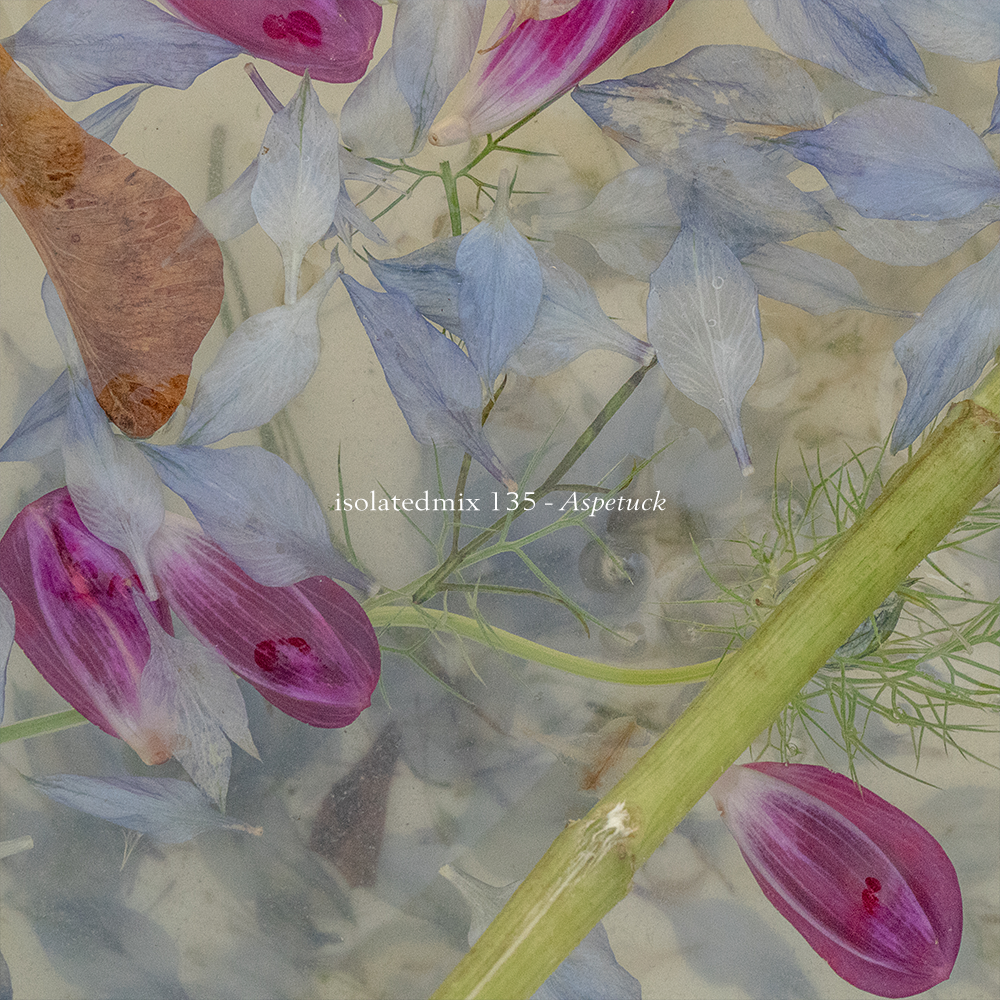
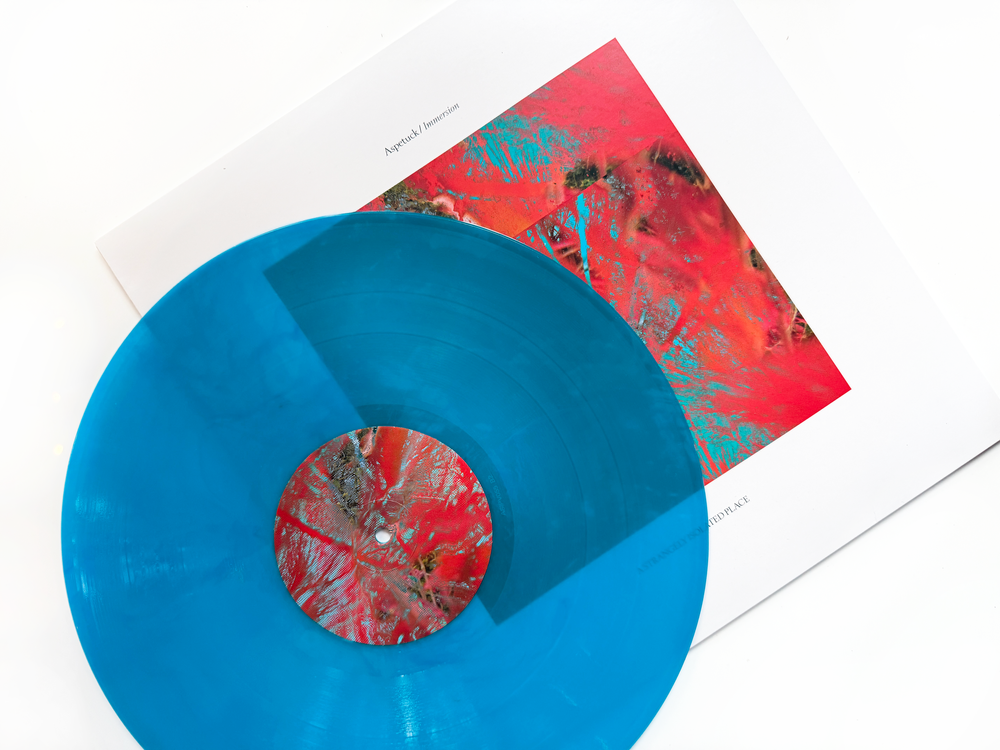
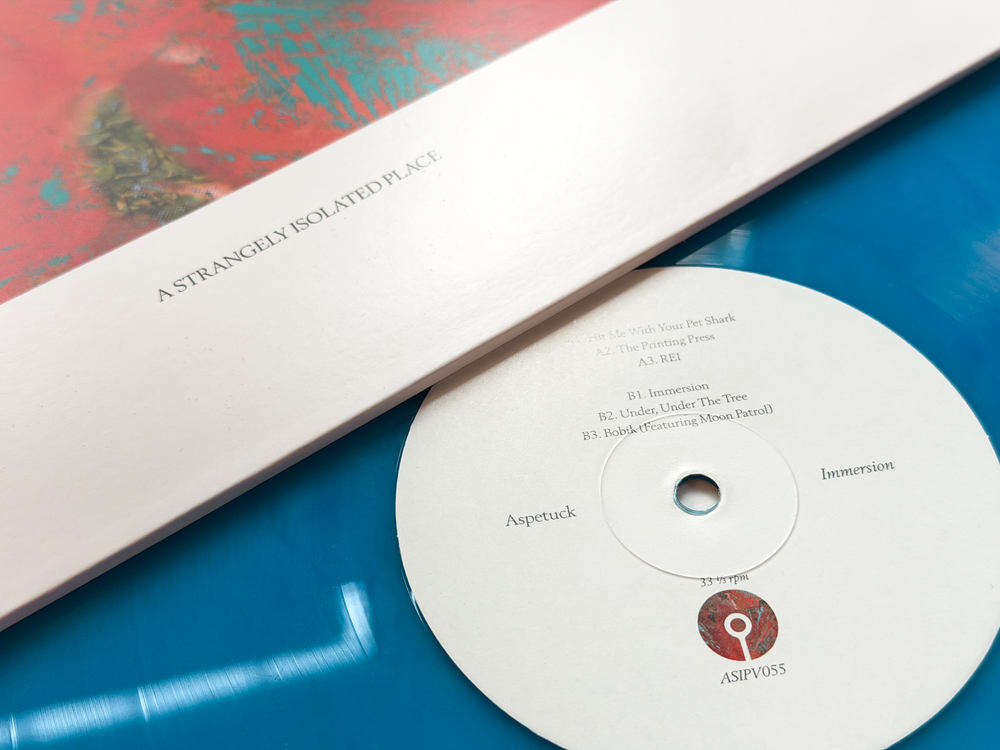
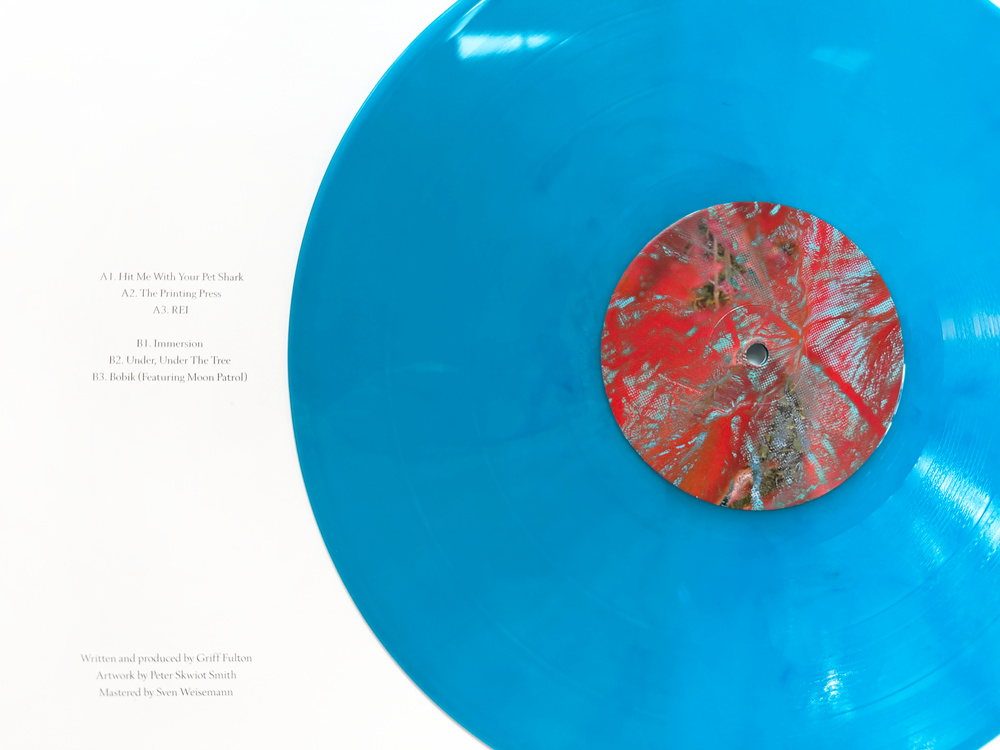
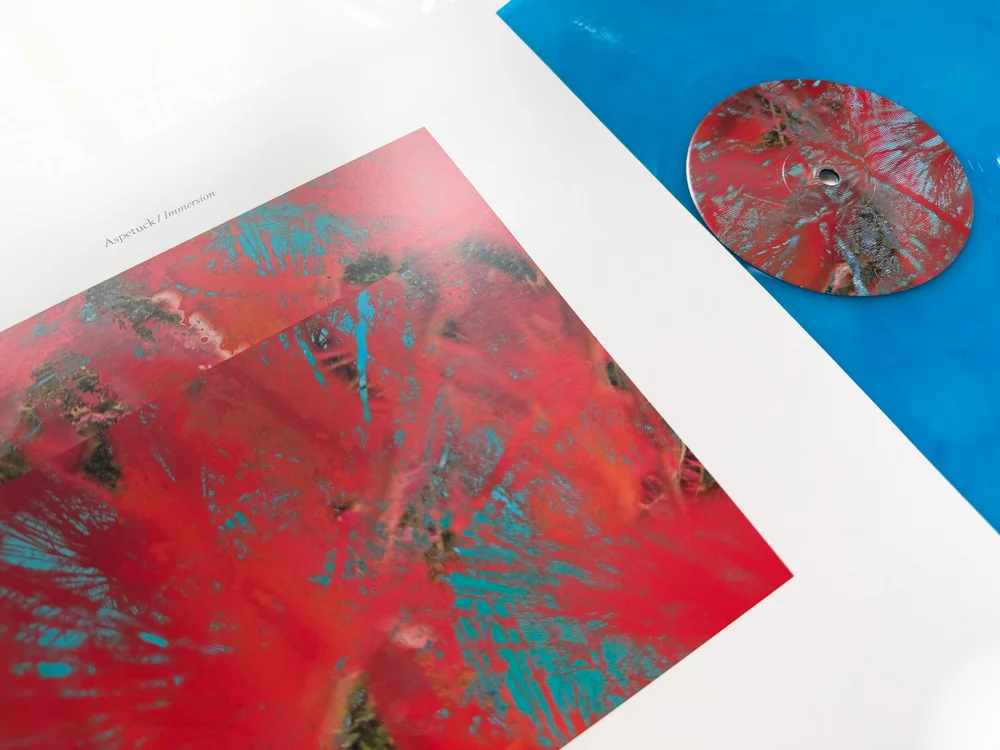
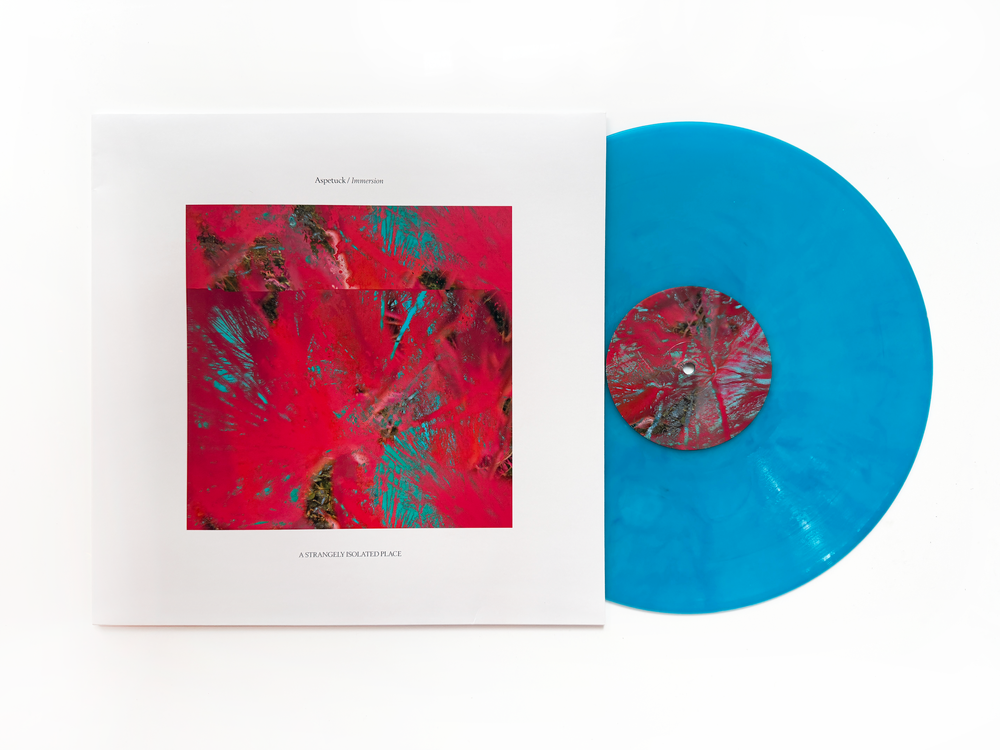
As the man at the controls at our label showcase at Public Records in 2024, our relationship working together had just started, and his new album 'Immersion' (released last month) was in mastering stages. After hearing his opening set, an isolatedmix was written in the stars.
I technically heard Griff DJ at Brooklyn's The Lot radio station just a few hours before our label showcase - sharing the booth with him as a temporary groupie while I plastered ASIP stickers all over the walls - and had been deep in his guest mixes prior to us even meeting in person. His journey as a DJ regularly takes him to festivals worldwide, and as part of his connection with Delayed, some intimate sets in the Pocono's have come to fruition and are a worthy bookmark if you end up liking this one.
As someone who can traverse a multitude of styles, from ambient and downtempo to deeper house and techno, Griff's one of those artists that shows up in different ways - every time. Likely because, his music, and the stories around his reasons for his music, are often very personal. Whether it's a concept, or a vibe, I get the feeling Griff is a master of sense and construct - a pretty special skill for an artist and DJ to have, where stories told come from the heart and have a pure reason. Not performance for performance sake, but a narrative traveling from the mind, told through a meticulous track selection.
The concept was my attempt to portray various stages of consciousness throughout the morning, from dark into light / sleep to awake, as I get up & start the day & eventually get outside, into the woods for a morning - deep sleep into REM, vivid dreams, waking up from a dream & it's still dark outside but there's a faint glow of light, immersed in nature feeling the warmth of the sun in your face. It starts out cold, dark, alien, otherworldly then shifts towards something more mysterious & inviting but still a bit strange, then moves into warm & fuzzy. Analogous to frost on the ground slowly being melted, warmed & evaporated by the sun. - Aspetuck
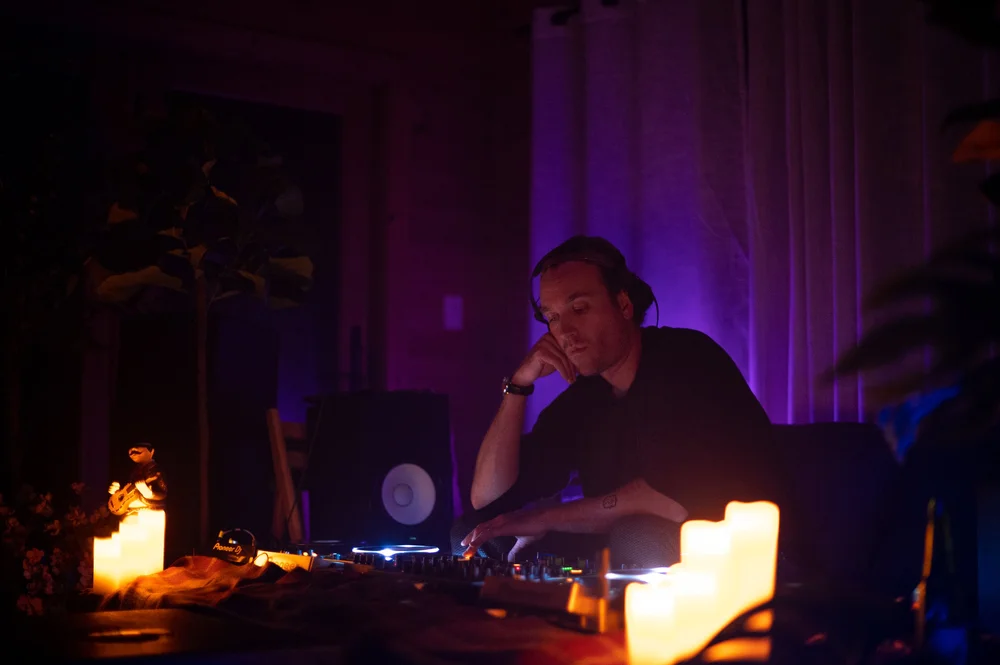 astrangelyisolatedplace · isolatedmix 135 - Aspetuck
Listen on Soundcloud, the ASIP Podcast or the 9128.live iOS and Android app.
Tracklist:
01. Altjira - Atvelope
02. Solma - Skaub
03. JEMAPUR - WSIF.rg
04. Corell - Under The Surface
05. Dan Bean - Chum
06. Jeremiah Chiu - Static Stone Railway
07. Talaboman - Midnattssol
08. Skee Mask - Reminiscrmx
09. In Transit - A.2829
10. Innerst Inne - Nils Påls
11. Doltz - Ibuki
12. Michael Rother - Klangkörper
13. Aspetuck - Synth Named Sukie
14. Aspetuck - Hit Me With Your Pet Shark
15. Arovane - Sunter
16. OK EG - Open Sky
17. Luke Abbott - 2nd 5th Heavy
18. Tunnel Dancers - Central Radiance
19. Anushka Chkheidze + Robert Lippok - Rainbow Road
20. Innerst Inne - Hemma Hemma
Aspetuck | Bandcamp | Soundcloud | Instagram
Listen and support Griff's latest record here


Had Instagram for ages but never got into looking at it regularly until quite recently.... the algorithm has learned to serve me up dance music, above all reels of deejays playing tunes, either in their living room, or it's clips of them performing at a rave.
What follows are some thoughts on dance music today informed entirely by the Instagram perspective
TimeisNOTnow
I say 'dance music today', but the first thing that comes across on Instagram is not-todayness: how dance music exists in a state of complete atemporality. Tunes from decades ago sit alongside current tunes that are either just incrementally different contributions to an established tradition (techno, house, d&B, trance) or they are outright retro (with just a glisten of contemporary production polish). Deejays draw from across a huge bank of stuff, where the long-ago and the this-minute are equally valid.
There's a tremendous awareness of history - a lot of clips are like very brief history lessons, on a genre or even a sound (like say Reese bass), or an artist (DJ Zinc doing a great little potted history of three key tracks by A Guy Called Gerald). Yet offsetting that the effect of the platform interface is that chronology is completely jumbled, there's little sense of a tune's original context (let alone adversarial context) or its place in historical sequence.
What has completely vaporized is the idea that anything is obsolete or passé. Everything exists in a permanent plateau of equal relevance - which has the side effect of making it impossible for any one sound (should an actually fully new sound ever emerge) to assert itself as supremely relevant and demanding of your undivided attention. Indeed, you could say that our attention is pre-divided, splayed across both an enormously expanded and accessible present and a teeming archival vastness that feels vertiginously limitless.
An example of how this plays out.
The gentleman who calls himself Fish56Octagon - and who deejays in his front room wearing a dressing gown (I'm always expecting it to come open as he jigs about, genitals bouncing forth) and often is nibbling on his breakfast, which appears to be Weetabix bits in what looks like a dog's bowl - played a nu-UKG tune on this label:
Timeisnow
Sub-label of Shall Not Fade, specialising in UK bass-driven dance music styles.
Established 2019. Bristol, UK.
The record has a period-perfect title, Bubblers EP, and the sound is spot-on
According to Mr Fish, this labels and others like it have pushed nu-UKG to the point where deejays playing it are getting major sets at festivals all around the world.
And this makes me queasy.... for all the reasons you can imagine. Like what happened to supercession? The dialectic of dance? Fanatical focus?
(Mr Fish's picks from a huge range of genres and as a working deejay either jumbles it all up in a set OR plays a set dedicated to a single genre but just as one arrow from his quiver)
Atemporality and historical hyper-awareness has some strange kinks.
Here's a nu-UKG label called Move Silent, and Keymag asks the man behind it why the name: "This is really giving up the secret. Years ago, I had this t-shirt that sold really well, and had the phrase "Move Silent". It embodies how I operate in life. I'm a big believer in the phrase, "empty vessels make the loudest noises". "
Which is funny to me because I would have 100 percent assumed otherwise it was a nod to "Bad Boys Move In Silence" - could this dude really not know the foundational UKG track?
(Mind you, I only just realised the line "bad boys move in silence" comes originally from Notorious B.I.G.)
Another label Shadow System, the guy behind first heard UKG from his dad playing it!
(Reminds me of another reel I saw recently, a young kid playing "hardcore jungle" - and the text reads: "When ur dad's in the crowd so you gotta blend in his favorite tune from back in the day")
Some of these nu-UKG labels are as far flung as Finland and Houston, Texas.
So it's not just atemporalized, dance music, it's really postgeographicalized too - unrooted from any location socially and spatially.
Well not completely - in the Keymag article, one of the Finnish nu-UKG dudes (the label is Polar Dance) says:
"I've been cutting icicles from roofs because when you snap it off, it makes an amazing sound rhythmically. There is a traditional Finnish instrument called a kantele, which is like a sitar. I've been trying to use it on some tracks as well."
The writer Nathan Evans notes of the Houston nu-UKG bods:
"Aside from the way they literally went back in time with a black mask and comically large knit sack and stole from the Nice 'N' Ripe mixing desk, what struck me about Houston's UKG is how there is even a label pressing limited-run vintage garage vinyl at all. It speaks to shockwaves of the revival, that's enough to traverse space and time simultaneously."
^^^^^^^^^^^^^^^^
Another new-to-me genre has popped up in these reels - not the living room ones but the (usually female deejay) playing to a big room.
The name of this genre is schranz. It designates a sort of hard, fast, banging techno with a scrapy, dirtily abrasive sound.
I looked it up and was surprised to learn that the term has existed since the late '90s, very much a local-to-Germany term, associated with Chris Liebing … and it appears to have crept forward gradually to some kind of larger semantic currency without ever really taking off.
I listened to a Chris Liebing associated album (Metalism) the other day and thought it was rather good - and then with a shock realized it was over 20 years old.
The female deejays playing hard as nails tekno brings me to InstaGrammatological observation number 2
DJ as showman not shaman
The hyper-visibility of social media and influencerization has turned deejaying into a performance art rather than a technical craft - or rather the craft aspect of working the deck has itself become spectacularized
In these clips - at home alone as much as in front of a crowd - the deejays are really working those mixer controls, dancing while mixing and whooping it up as if the jock was a punter rather than a punter-pleaser. The etiquette of deejaying has clearly vastly changed from back in the day when jocks were still figures, impassive and grave as they went about their work... nowadays they performatively flaunt their own pleasure, and are if female are often glammed up and scantily dressed.
These deejays work the mixer frenziedly, fussily tweaking the EQ and fiddling with the fader. There is a kind of performative rhetoric where the arms are tensed as they reach for the knob and they pull away the hand and arm after the tweakage with a dramatic flourish. All while jigging around sinuously and often drawing on a cigarette (tense business, deejaying)
But... as far as I can tell little of this flaunted physicality is really necessary - it is all extraneous to the modest physical exertion that would otherwise be involved. It's all for show - and in that sense similar to, possibly inspired by, the rock guitarist's gestural repertoire, the expressive pantomime of "guitarface". You can make massive, devastating noises on the guitar with very small movements, thanks to amplification and effects. You can make them sitting down, as Spacemen 3 proved, without all the strutting or headbanging. And so it used to be used to be with deejaying (often the deejay was nowhere in sight, tucked away in some alcove)
Indeed I have seen a few Insta reels where the deejay goes against the norms of hypervisuality and goes about their work in a low key way, without the histrionics. Instead of performative hoo-hah, the deekay - usually filmed in a bedroom - is impassive and subdued, limply moving their arm to tweak the knob and then withdrawing it slowly without any flamboyantly flecked gesture that says "decisive mix decision just made"
Also - this happens with the tracky techno and house above all - more often than not I cannot hear any huge difference made by these decisive moves to change the EQ or cut out a frequency band. It all chugs on much as before without a dramatic change - certainly not a wrenching shift that would require such gestural flourish..
DJ tools-y techno seems to me to be the most static of artforms, really unchanged in its fundamentals since the late '90s.
Sourced in
Isn't she lovely?
After N'Joi, Saffron fronted - front being the operative word - this Republica tune that I file with a lineage of excitable go-for-it ladette pop (Icona Pop, "I Love It", Pink "Coming Up", Spice Girls's "Wannabe", Ke$ha "Tik Tok" / "We R Who We R", Martin Solveig + Dragonette "Hello", Ting Tings "The Drums", right through to Charli xcx)
Even more delightful in this mode I think
Too exuberant and boisterous to be glamorous, too insolent to be elegant
Lily Allen hovers on the edge of this lineage, as a spiritual sister, a cheeky monkey, but her tunes are a bit too chill and leisurely in tempo yet also laden with meaning, lyrics-wise. Too fraught with grown-up anxieties and recriminations, too, whereas these girls are out to party and have not a care in the world.
Of course that's pretty much where Charlie XCX started her career, so it's make a nice loop of party-hard girl-pop
"Ready to Go" is a very calculated record - let's merge dance and Britpop - but for all that a perfect slice of mid-Nineties energy - a time when things were a lot better than we tended to think at the time (all that pre-millennium tension bollix, darkness shtick) compared with the next three decades of steady descent into hell
N-Joi, I've never found anything else by them quite as exciting as "Anthem"
But the Untouchables had another amazing moment
Shattering ecstasies
Part of its own mini-lineage of 'distraught divas' tunes - Johnny Jungle "Flammable", Omni Trio "Mainline" , Acen's "Trip"
Talking of being "taken away" and shattering ecstasies
N'Joi played an important role in my life insofar as they were one of four rave acts playing live at a major conversion moment in my journey towards becoming a raver. The headliner, in fact, so I would have been peaking when they came on....

Protests are taking place throughout France against a proposed new law targeting free parties. Thousands took part in a demonstration in Montpellier yesterday (30 May 2026, pictured here) and more are planned over the next two weeks.


The law is known as RIPOST - 'Réponses immédiates aux phénomènes troublant l'ordre public, la sécurité et la tranquillité de nos concitoyens' (Immediate Responses to Phenomena Disturbing Public Order, Security and Tranquility of Our Fellow Citizens) and also includes measures against 'motorized assemblies' (gatherings of motorbikes and vehicles), nitrous oxide and for more video surveillance.
In terms of unauthorised free parties, the law requires events of more than 250 people to be authorised by local authorities (as opposed to 500 people as at present). Organisers of parties could be jailed for up to six months, with a very broad definition of an organiser:
'the following constitute participation in the organization of said gathering: setting up the system for disseminating practical information relating to this gathering, participating in the construction of the sound system, transporting sound equipment to or from the site of the gathering, setting up a rest and social area on the occupied land or setting up a food truck there'.
The free party movement has set out a statement/petition against the law:
'At a time when a large portion of young people have limited purchasing power, and therefore limited social life and access to culture, free parties allow them access to free and unrestricted spaces for socialization...
Furthermore, the free party represents a space for artistic and social experimentation, primarily based on sharing and inclusion. It is a creative refuge that attempts to mitigate the impact of capitalism on our lives. Different techniques and art forms are combined, and skills are pooled: circus arts, sound and lighting technicians, crafts, electronic music, and video projections, among others. It is through these activities and creations that artists, the public, and all other participants can experiment, perform, learn, and develop professionally. This richness must be protected, lest it disappear with the free party movement, without any other scene to re-emerge in.
It is therefore important today to mobilize to defend our movement, our culture, and our values. Free culture defends freedom, sharing, mutual aid, and solidarity'.
The statement has been signed by an impressive range of collectives and sound systems
Collectifs: Collectif Tekno Antirep; Coordination Nationale des Sons; Collectif IDF;Coordination Rhône-Alpes des Sons; Coordination Occitanie des Sons; -Art et Culture 29
Sounds-systems: Maraudeur.euse, Collectif Eclypsis, Oblyk-Dfroké La Chafouinerie, Déchetterie, KrâneKC, Highnoon Soundsystem, k'rabass, BTPutes, Cabatek, Sonokracie, Hobbitek, skro, gptk, foxakif, Mafia, Dissonant Orchestra , Cptk6tm, insolent.e.s, D-TRA-TEK, Diablo'Core, ZQR, GÉNEZ1S, Amplithorynques, Neuroatypik, Lobotonik, Larsen Actif, Collectif Courtoisie, Armatek, RAR Family, ITF, Sub'Nambule, Adekwatt, Dystopyk Circus, Bondatak, free confits, ABDK, SKS, Otarcik, Fanfarons, Tribal Skankers, Inadekwatt, frénésie sonore, deci'bass 29, BDK, System K, Collectif des Insoumis, SA Free System, ECLE7IK, Dechniller, 46tem, 12H, Baba Punk Monster, MBS, MLK, Tekmanta, Infraktus, collectif MiniBeats, Tikitek, ORB²EAT, albertotek, Guinguette Grooverz, Defazotek, Arketyp, les Anonymes, Riboultek, Mirage, ADSR, An'artschitek, Les Affamés, SNT, Tekno Rokette, D-CenTré, Dubeatatif, 1-SURGÉ, Paradoxeteck, 1konform, OTC, Sonot'Ohm, Signal Sonore, TouTanTeK, Soul6Tem, Arrêt Kardiak, Les Insolents, Hpss, S23, DTR, Raveoltek, Meck.401, 1Trakable, Bivouac Tekno Partisans, RBT, D.A. Vagabond, Acid6'trik, BlackBass, No Limit's, Beausniaq, Symbiotek, AKF, Mushroom-CUBN6, NVC, KMTK
Of course there are similarities here with the 1990s Criminal Justice Act in Britain, and indeed in introducing their Bill, politicians made explicit reference to this: 'These rave parties also affect many other European countries , with varying legal responses. British police can fine organizers of illegal gatherings of more than 30 people, compared to 500 in France, with fines reaching up to €11,600. Since 2022 in Italy, organizing and participating in an illegal rave party constitutes a specific offense, carrying prison sentences ranging from three to six years for organizers and one to four years for participants. A fixed fine is also imposed, along with the confiscation of sound equipment. If our European neighbors manage to toughen their legislation regarding these illegal gatherings, France could do the same'.


'Save a party! Eat the prefecture, capital, the fascists, the system. Nobody likes the smell of gas in the early morning. Free party in danger. Stomp your feet to fight back!'
Earlier this month, up to 40,000 people attended the unauthorised Teknival on an old military firing range in Cornusse, near Bourges (central France).
Follow @teknoantirep on insta for updates
See also
Revolt of the Ravers - The Movement against the Criminal Justice Act in Britain 1993-95
Well, a dream comes true - I appear on a pirate radio station. Except it's legal now, but still - Rinse FM!
I am talking - alongside Martin Clark aka Blackdown - about Burial's debut album, which came out 20 years ago - on Eclecticist's show on Rinse.
Now I think about it, I have been on a pirate before - twice in fact.
The first time was inadvertent: BBC radio (I think Radio 4) had done a report on jungle, then emerging, in the summer of 1994, and the reporter came around to our flat to get some quotes from me. And immediately after it aired, one of the pirates - Kool FM if I recall right - pirated it. Played the whole program a few times on the radio. So there I was, coming over the airwaves of the station I most frequently tuned into at that time. (In 1994, after 8 years living in South London, I had finally made it North of the River and was living in Belsize Park, slipping out of range of my beloved Don FM but in compensation able to pick up Kool and other pirates that had mostly been out of reach when living in Brixton).
Another time I actually deejayed on a pirate - but this was not a nuum pirate, it was a sort of hipster pirate in Williamsburg. Sometime in the early 2000s or possibly very end of Nineties. I played gloomcore and stuff like that, but the guy before me played Anthony Braxton and such. So the station was a bit like The Wire on the air. I have no idea if anyone listened. Still, a buzz to do.
A few times I have been inside an actual functioning London pirate station - Flex FM at the height of 2step in 2000, that was in South West London, a big if delapidated house, when reporting on UK garage for Spin. Deekline was spinning.
And then in 2005, again reporting for Spin, this time on grime, I got to go inside Rinse FM's HQ, a basement of a building near Whitechapel. It had once been a travel agents and it was surprisingly smart looking still (compared with Flex FM). They even had a sort of ante-room with a sofa in it, and then the actual room where the deejaying took place - the Ruff Sqwad followed by Roll Deep - was quite tidy. And actually now I recall it was Martin Clark who made the connection for me and came long to the session (thrilling to watch close up - the young Skepta was there). So big up Blackdown.
^^^^^^^^^^^^^^^
I am reading Moby Dick at the moment - it's incredible, but it's taking me a long time - and one thing that surprised me is that seafaring men of that era did actually address each other en masse as "me hearties" e.g. "pull hard, my hearties" when rowing a small boat in pursuit of a whale


One of my favorite things I've written in the last 15 years or so, is this demolition job on what I called "recreativity" - a.k.a. "everything is a remix", a.k.a. "copying is cool", a.k.a. "there's no such thing as originality"
So it was funny to see this well-worn mission statement recycled in a f motivational book of aphorisms + illustrations (an echo itself of that famous McLuhan book with all the pix, The Medium is the Massage).

Ha, ha - the twist at the end where he reveals that he nicked these pearls himself, from Jim Jarmusch.
Clever-ish.
But as is pointed out in my Recreativity piece, the key bit of the Godard quote that Jarmusch and now Arden brandish is "it's where you take them to".
That, right there, is the aperture, the window, through which creep back the very properties of originality / genius / innovation that the recreativity mavens are trying so hard to exorcise and eliminate.
Seeing that reminded of how desperately uninspiring I found the David Shields book Reality Hunger. The one that's almost entirely composed of meant-to-be-inspiring quotes from others (he wanted them to be unidentified, but the publisher forced him to run attributions at the end of the book) (in pique he added some text urging the reader to cut out and throw away the attribution pages).
Like, did Shields intend to write a proper book and then just gave up and decided to present his research, in this barely organised fashion?
One of that select company of books I started and just gave up on well before the end. Usually I am a dogged, tenacious, teeth-gritted, gotta-get-to-the-finish-line reader.
My favorite feat of overcome-by-apathy though is getting to within 20 pages of the end of On the Road and then just pulling over and giving up.
Talking of books...
There is a super-expanded remix of the Slate article on recreativity which is about 18 thousand words long and was published as a stand-alone mini-book to accompany... the French version of Retromania? Or was it the German? I can't remember! The marshalling of all my thoughts on innovation / originality / nature of creativity, and proof that the best time to write a book is a couple of years after the book comes out, if you get me (i.e. it's sharpened immeasurably by all the arguments you've had with people)
^^^^^^^^^^^^^^^^^^^^^^^^^^
Another bit from the Arden book, and here he's got the McLaren story badly wrong, both in particulars and in his sense of what it meant

Nostalgia of Mud was started in the early '80s.
(The "beginnings of the 1970s" boutique was Let It Rock and it was at the far end of the King's Road, not just off Oxford Street).
And those Nostalgia of Mud-era clothes were neither unwearable or unbuyable. They were very much for sale. And became fashionable very quickly. Instantly in fact, so hot was Westwood by this point.
But the same thing happened with the shocking punk era get-up - the shop, by then renamed Sex and then Seditionaries (or was it the other way round - I can't remember) and its owners got covered rather rapidly in the glossy fashion mags.
At absolute most, the punk look was a couple of years ahead of its time, not thirty.
What's also odd about this page is a/ the fact that he is talking about originality as a value (whereas the Jarmusch steal is saying the opposite)
And b/ this wholly un-punk illustration on the facing page

did an interview with a Swiss journo, no idea if he used the quotes... here they are (waste not want not as me old mum likes to say... another maxim of her's appears later)
I don't know if it's as psychologically complex as fetishism, it's more simple greed - you've consumed the major works by the artist you love, and maybe all the stuff released in their lifetime, and you think, I want to keep consuming. I want to keep eating this good stuff, and maybe even the less good stuff will still have some flavour, some nutritious value. So you convince yourself that all these unreleased tracks - the alternate takes, the demos, the live versions, the tracks that the artist didn't consider good enough to release at the time - that these are worth listening to. And there is a psychology of consumerism where it is enjoyable to spend money - so these repackagings are excuses to get the credit card out.
There is a great English expression, a sort of maxim: "Enough is as good as a feast". It's the kind of thing my mum would say, basic common sense wisdom. What it means is that once your belly is full - there is little further to be gained from eating anymore. The satiation point should be your stopping point, regardless of all the tasty looking things arrayed on the table. It doesn't quite apply to music, because it's not a physiological appetite. But if you think about in those terms, you might decide "actually the Beatles put out in their lifetime all these great albums, and non-album singles with awesome B-sides like "Rain" and "I'm Down" and so forth. That really ought to be enough for anyone. Why not stick at that - however many hours of consummate brilliance that all adds up to? Why feel like you need to hear the alternate versions of tracks whose definitive form was achieved and released? All the prototypes for "Strawberry Fields Forever"." In other artforms, only scholars have interested in the draft versions that authors wrote of novels, or all the things they cut out and discarded. Only a very few cineaste fiends want to see the Director's Cut of movies, or the out-takes and bonus bits on the second disc of the DVD or Blue-Ray. In music, though, there seems to be a larger appetite for all this extraneous material.
- The sixties still cast a spell over our present, especially music-wise, why? Because of the baby-boomers who have money to spend - or because the music was better at the time?
I think there is a romance of the early days of something - when it is emerging. The Sixties was a tremendous surge of innovation in songwriting, lyrics, guitar playing, what could be done in the recording studio, even what could be achieved in terms of live performance and amplification. There's was incredibly rapid evolution, and a lot of people trying things for the first time - like the Beatles and Byrds with their Indian music experiments. But mostly the music revolution seemed to be in synch with a larger revolution. People talked about the Movement, or the Underground, or simply the Revolution - and music was right in the centre of things but so were a bunch of other things. It was like a pan-cultural surge of innovation and transgression and emancipation. It matters to the baby boomers who can remember it, but it also has a powerful pull on the imagination of subsequent generations. Even as I was into punk and postpunk, I was fascinated by the Sixties and read books about it and listened to the records. I am technically a babyboomer by age - born 1963, the last year before the cut-off point. But really my generation is the next one, Generation X. And the 1960s seemed to me not a discredited thing but really the previous great revolutionary phase that punk and rave and shoegaze all had some kind of relationship with.
- „We will never agree as we agreed on Elvis", Lester Bangs famously wrote in his obituary of the king. Don't you feel as a writer about music that the fragmentation of the genre in the age of YouTube will make the narrative more difficult, even obsolete?
It makes it more difficult but also more urgent and essential. You can enjoy music from the past without any sense of history, but if you want to understand it, you need a sense of chronology and of context.
What has gone - and what young people can't understand - is the idea of adversarial energy in pop culture. The idea that being into punk meant rejecting progressive rock and Steely Dan sophisto-rock - it doesn't compute for them, these kind of schisms and divides. Streaming culture and the internet culture has eroded this idea. You can be into anything, you don't have to take sides. People still have things by which identity formation takes place, but music is not really part of that process. You can be into punk and alternative type rock, but also into rap, but also into dance music - all at the same time. . It's all there for the feasting on.
I've posted here before about Mick Farren's famous "The Titanic Sails At Dawn" polemic. Appearing in the NME's June 19 1976 issue, the piece is legendarily claimed to have played a precipitative role in the punk uprising. It identified a malaise in rock: the loss of its connection to "the streets" and "the kids" that traverse them; the recline and fall of a rebel folk sound into mere showbiz. And in the process it birthed a mini-genre of explicitly or implicitly Titanic-themed jeremiads, which cropped up in the pages of the NME over the next decade (as well as the pages of zines populated by NME-wannabes).
I've also noted here that six months earlier Mick Farren had written a very similar - and to my mind, sharper - argument in the first NME issue of 1976. A piece that no one seems to remember, and for whatever reason, it didn't seem to have any precipitative effect. Timing is everything.
Talking about timing... Well, here's a funny thing: turns out Mick Farren wrote yet another similar piece almost a year before the first of those 1976 pieces. The complaint is the same: the Seventies so far is a wash-out and rock's new superstar aristocracy - aka the Uncle Toms of Teendom - have "taken Rock off the streets and into the penthouse".


And here's another funny thing - four years after "The Titanic Sails At Dawn", Farren rocks up yet again in the page of NME with a polemic about the music's aesthetic bankruptcy and directionlessness.


I suppose four handwringing thinkpieces across five or six years isn't that excessive.
At Monitor, I must have written two or three with that vibe in just two years / six issues.
David Stubbs wrote a piece on that theme in virtually every issue of Monitor - hilariously vivid evocations of impending entropy.
And then at the end of '86 we co-wrote a rather gloomy overview for Melody Maker (the editor complained it was a bummer way to wrap up the year). Not one of our most coherent efforts, but maybe I should dredge it up as a period curio.
^^^^^^^^^^^^^^^^
Not forgetting Mick Farren's entire book on this approximate subject.... from a few years prior to the 1975 piece "The Kids Are Not Necessarily Alright". With the word "Kids" in the title.

At that point - most likely writing the book in 1971 - Farren still retained some optimism about the radical potential of rock and youth culture. The tone of Watch Out Kids is defiant - the gathering decadence can be turned around.
The story of "how Elvis gave birth to the Angry Brigade" promises the jacket copy.
^^^^^^^^^^^^^^^^^
This is a genre of rock essay - the dispirited measuring of Rock's vital signs.
A classic example is this piece by Greil Marcus.
Some of Lester Bangs's most famous pieces are in that mode, albeit always pointing to green shoots of vitalizing vulgarity that defy the overall atrophy.
No surprises here, but I personally love the "The Death of ________" essay.
Every art form has its examples. E.g. "The Literature of Exhaustion".
Dear Simon Reynolds,
My name is ___________________ and I work with the programming team at BBC Radio 4, a nationally recognized Hot Adult Contemporary station reaching more than 1.39 million weekly listeners across the UK, with additional global reach through online streaming.
We recently came across your book Retromania: Pop Culture's Addiction to Its Own Past, and were immediately drawn to its sharp and thought-provoking exploration of nostalgia and repetition in modern culture.
What stands out is your argument that contemporary pop culture is increasingly recycling its own history revivals, remakes, and retrospectives rather than pushing forward into new creative territory. Your analysis of how digital access to the past has reshaped cultural production offers a compelling lens on music, media, and creativity in the modern age.
The way you connect cultural trends with technological shifts and audience behavior gives the book both intellectual depth and wide relevance, especially in a time where nostalgia seems more dominant than ever.
Your work would strongly resonate with our audience, particularly listeners interested in music, media, cultural criticism, and the evolution of creativity in the digital era.
We would be delighted to feature you in a live on-air author interview, offering you the opportunity to discuss the forces driving this cultural "retromania," explore whether originality is being redefined, and connect with a wide and engaged audience.
What This Feature Includes
• A professionally hosted live radio interview (via phone or Zoom)
• A dedicated on-air spotlight highlighting your book and its key ideas
• National UK broadcast coverage along with global online streaming
• A targeted promotional campaign supporting your book
• One full month of on-air advertising promoting your title
• Strategic media positioning to strengthen your author brand
Coordination & Promotion
To ensure a smooth and fully supported feature, we apply a one-time production fee of $149, which covers:
• Media promotion and campaign coordination
• Radio segment preparation and priority scheduling
• Technical arrangements for the live broadcast
• Advertising placement and campaign management
If this opportunity sounds appealing, I would be happy to share available interview slots and guide you through the next steps to secure your feature.
Warm regards,
______________
^^^^^^^^^^^^^^^^^^^^^^^^^^^^^^^^^^^^^^^^^^^^^
This scam-spam was probably generated by AI but I would really like to believe a human was clueless enough to describe Radio 4 to me, a British born person, as "a Hot Adult Contemporary station"
Pure Inspiration [ 25-May-26 5:20am ]Well, I may not have provoked a musician to pen a retaliation tune (unlike my own flesh and blood, who recently joined a select pantheon of irritant critics).
But I can now bask in having inspired a song, and one made by a well-known and highly regarded group too: electronic act Overmono.
Their single "Lockup" - which heralds a new album Pure Devotion - apparently came from reading not Energy Flash, like you would probably have expected in the circumstances, but the other book of mine that people like.
According to the Overmono duo, brothers Tom and Ed Russell:
"We'd been reading rip it up and start again by Simon Reynolds and just generally on a massive post punk binge trying to find out as much as possible about how some of those records were made and the philosophy behind them".
"We got so obsessed with the all tactile soundscapes, the chaotic mix decisions, the use of physical processes and spaces and probably most importantly the approach to trying to break as many things as possible in the process of creating something new. "
For "Lockup", Overmono sampled "What A Waste" - not the Ian Dury song, but a tune by Birmingham postpunk outfit Fast Relief, who I've never heard of (call yourself a postpunk historian!)
No trace of it on YouTube but it's on this comp of Midlands postpunk on the Easy Action label

Which you can hear on the streamers - like here at Tidal
And here's a photo of the group, who appear to only made the one recording, as excavated for Un-Scene

They could hardly look more postpunk. Flute in the line-up too.
Listening to "Lockup" I'm not really hearing the connection to postpunk beyond the sample. But it's a cool track - I like the way they loop the yammering vocal from "What A Waste", making it sound almost like bhangra.
I seem to remember enjoying Overmono's earlier stuff while feeling they were, if not outright retro-rave, then consolidators of the tradition.
But then people making music today in most fields are unavoidably history-conscious, given the accumulation of all that music behind them.
Whether it's rave or rock or rap, the tradition exists as a fact, a pre-existing thing, an arrayed archive of massed material - something to work with, to rework...
It's in the way, and the only way forward is to go through it...
^^^^^^^^^^^^^
I await the album with interest, curious to see if there are other manifestations of postpunk
From NME, 1 October 1983, a report of anarchist squat centres in London including Kafe Kollapse in West Hampstead, the Burn it Down Ballroom in Finchley and the Peace Centre at 99-119 Roseberry Avenue, London N1

Not interested here in rock writers in their current haggard state, of which there are innumerable examples on YouTube.... but rather, rock writers in their original pristine prime. These are much rarer, as rock journalism was not taken seriously by the gatekeepers of the mass media.
In roughly chronological order
There are some TV clips of the young Coon here amongst the looking-back stuff.
She also appears here from 14.35 onwards in this next clip, a TV program about The Alternative Society
Richard Williams (Melody Maker) presenting The Old Grey Whistle Test, with a natty mustache
Clip of Legs McNeil and the other fellow from Punk magazine which you'll have to go to YouTube to watch
Danny Baker, pre-NME, and Mark Perry, then repping for Sniffin' Glue
Apparently the Clash idolized Tony P
The earliest clip of me on the box is from The Late Show - a discussion of Jimi Hendrix. This must be about 1991 or so. I was brought on to represent the younger breed alongside more venerable rock pundits like Richard Williams and Charles Shaar Murray (during the long wait, he took me in the stairwell for a smoke and tried to ascertain how cool I was about weed. I certainly was not going to get stoned immediately before going on national TV - I believe it was live!).
I have to say, I looked quite dreamy. Extremely soft-spoken, almost whispering through a cloud of long curly hair, as I unfurled my Dionysian patter: better by far that Hendrix burn up like a meteor across the sky, than for him to fade away, dwindling to an ember of his former blazing intensity, living on and on as a respected elder. For what a bourgeois metric it was to measure a life in terms of mere duration - Jimi went through lifetimes more "experience" in his brief transit, than we mere mortals eke out across our cautious, play-safe spans.
Young man's talk, obviously!
Not online but somewhere I have it on a VHS tape.
But there is this.... from 1998. I don't look quite as terrible as I remember... When it was first screened in a movie theater, I was aghast.
Kodwo Eshun in the middle of the Reynolds sandwich there, looking very natty indeed.
Another Kodwo bit
I remember being peeved that they used him talking about gabber, and not me!
The full film - I think we are the only journos in it
I am obsessed with the advertisements in the old music papers - the New Wave era is particularly rich for the semiotician and lover of graphic design trends, but then so is the Old Wave era. For a historian, it's almost as rich material to draw on as the actual journalism.
However that is not my subject today - my subject today is advertisements for the music press.
I'm going to start looking for the ink-and-paper versions, which I suspect are clueless in the extreme.
But for now here are four videos for weekly music papers, going from the early '80s to the 2000s.
These were posted by someone at ILM.
I remember a radio advert for Melody Maker during my early years of being there that was a really irritating jingle and the chorus went something "Read music, read Melody Maker" in a sing-song sort of matey voice. Or was it "love music, read Melody Maker"? Can't recall but the jingle is lodged in my brain like an indestructible tapeworm.
There was also a T-shirt floating around that said something like "Melody Maker - Tomorrow's Music Today".
In the actual music papers, you would get adverts for other music magazines sometimes - The Face advertised in NME regularly.
Monitor actually bought some micro-ads to run in the NME and also The Face, I think. We had come into some funding.
I can feel this post already extending itself towards future posts, including 1/ music journalists on television and 2/ fictionalized depictions of the rock press on television and in film.
There's quite a lot of the former - as a taster, I give you this ruddy marvellous clip of the Stud Brothers being callously anti-humanist in 1989
(a talk I gave at Harvard in 2012 at a conference on Art + Rock)
"When 'art' walks through the door, it's got 15 suitcases full of very smelly washing (ideas of 'geniuses', 'creativity', 'individualism', and the rest of it)...which as far as we're concerned is the kind of crap that just clutters up your back garden, and gets in the way when you want to go out…. There is an art-based conversation that is swamping our neighbourhood, right? It's detrimental to our practice…. [It's] high-culturally derived hogwash, and it's dragging us down… Half the groups that are around at the moment are ex-art-college groups… You are on board a sinking ship--you're one hulk of a rotting carcass, whose language...y'know... don't chuck it over us, chum, because it's redolent of all things tedious, repressive and slimy."
- art school graduate Green Gartside, speaking to the art journal Primary Sources on the International Performing Arts, 1979
"Iggy pretty much changed my life. I saw him in 1969, when I had been fooling around a bit with electronic music, but I was still basically a visual artist.... Out walks this androgynous figure, no shirt on, muscled. He was walking out telling everybody to go fuck themselves and he had this look in his eye, and this amazing body. It kicked into "I Wanna Be Your Dog," then "1969," and suddenly Iggy's flying into the audience. Then he's back onstage and cutting himself up with drumsticks and bleeding. The bass player is humping the guitar player with his bass. The whole set lasted 20 minutes maybe. Usually at rock shows they put on some rock'n'roll between the bands' sets, but right after the the Stooges finished, whoever was in the sound booth put on one of Bach's Brandenburg Concertos. It was perfect, because what we had just seen was great art, and the person in the booth understood that.... I realized that, as a [visual] artist, I could either carry on down this road and be dishonest, or I had to make some moves. Whatever I was doing as an artist was insignificant at this point. That's what got me moving in the direction of the music thing more intensely—because it was a vehicle for doing something more environmental than painting."
- Alan Vega, painter / light-sculptor and member of a New York artists collective
Lester Bangs, in conversation with Jim De Rogatis, 1982
LB: "Rolling Stone's Jon Landau was saying things at the time like every Glenn Campbell album, every Jerry Vale album, every Helen Reddy album, every Ann Murray album was a distinct piece of art which should not be looked at as a piece of product.
JdR: That's definitely against your theory, right? Rock is not art.
LB: Oh, I don't know. I double back on myself so much. There's the trash aesthetic and all that. The way I've written about the Velvet Underground and Van Morrison, of course it's art.
^^^^^^^^^^^^^^^^^^^^^^^^^^^^^^^^
Rock has never quite made its mind up about "art"
Is the status of "art" something to aspire towards, to claim and to seize in defiance of those who would judge rock'n'roll as so low it's beneath consideration?
Or is "art" precisely, for those same reasons, something to recoil from -- should the onset of artiness be feared as the point at which a vital lowliness begins to fade, the confinement or castration of an energy that is properly plebeian, out in the world in a radically democratic way?
In the rock'n'roll world, art often has negative connotations - suggestive a deficit of the visceral, effete conceptualism, dry detachment -- it suggests institutionalization, politeness...
Acceptance is equated with acceptability
Art is improving, it's associated with education - whereas rock'n'roll should be closer to truancy, delinquency, the un-edifying.
In "What A Waste", Ian Dury lists all the socially valuable careers he could have pursued but instead he chose to be a singer in a band, the Blockheads: "what a waste what a waste... rock'n'roll don't mind" -
Yet Ian Dury studied at the Royal Court of Art, actually taught at various art colleges...
He's just one of numerous literally art-schooled people in rock who've acted out an ambivalence towards art - John Lennon, Pete Townsend are others who have done many arty, pretentious things with rock, but also have at other times argued that the art discourse contaminates rock, weakens it, makes it pompous, addles it with self-consciousness
This distrust of art can be traced far back in the history of rock - almost to the moment at which rock acquired self-consciousness and aspired to being art.
There was a point at which rock'n'roll shed the "'n roll" - people now talked of rock -and Dury and Lennon would come to see this shift as a tragic development.
Dury was obsessed with 50s rock'n'roll, worshipped Gene Vincent, hated hippies --- Lennon was totally the long haired hippy and then he decided psychedelia had been a huge mistake - he would revert back to rock'n'roll, a stylized recreation of 50s music in its purity and innocence.
The lost or shed "n'roll" signified a teenage orientation, as lack of adult sophistication lyrically and musically,
It refers back to when rock'n'roll in the Fifties sense was at once rawer and more showbiz -- the pre-Beatles rock'n'rollers carried themselves on TV and radio in a well-behaved way, said "sir" to the hosts, whereas Lennon was ironic, informal, surly - a bohemian,
As raw and rootsy as early rock'n'roll was, it was still largely entwined in the discourse of showbiz -- as the career of Elvis shows, the rebels collapse very rapidly into middle of the road entertainment.
Your typical 50s rock'n'roller didn't see himself as an Artist but as an Artiste. The 'e' on the end is very significant. They saw themselves as entertainers, the groups wore stage outfits. Few of them were artistically autonomous in the way the Sixties rock era artists became: mostly they didn't write their own material and their managers pushed them towards light entertainment as soon as they could, becoming an all-round entertainer.
The move to "rock" in the mid-60s is an aspiration towards thematic maturity, a conception of lyrics as being a form of poetry or literature. But it's also about being artistically independent, in control. The band as an artist that is growing, evolving, questing -- whereas entertainers basically have a shtick that they stick with. An act.
This mid-Sixties art-ification was described scornfully by The Fall's Mark E Smith, speaking to NME in 1981: "when the students got hold of rock'n'roll, that's when it started going downhill"
Prior to Beatlemania, middle class youth, even those who had loved rock'n'roll as teenagers believed that rock'n'roll was a fad that had faded away. When they went up to university in the early Sixties, they were either folkies or they were into jazz - these were the mature options
But then through the Beatles and the Stones and the electric Dylan, rock'n'roll returns in new improved form: the sound as raw as ever, but the attitude and content even more appealing through its poetic and arty qualities.
From approximately 1965 onwards, largely unchallenged until 1976, there followed an unbroken period in which there was a broad consensus that rock could be and should be Art -- the long reign of progressive rock, art rock, singer-songwriter and sophisto rock - steely dan, little feat, joni Mitchell, ry cooder, randy newman - even in something as seemingly lumpen as heavy metal you had the experimentations of led zeppelin, deep purple recording with a symphony orchestra -- the interpretations of what art was ranged from jethro tull to brian eno and all points in between, but the overall consensus was that rock was art, potentially at least.
But you had a tiny sect of dissidents - musicians as high profile as Lennon and barely known as Flamin Groovies. You had heretical critics.
The first pop writer to express a profound ambivalence about pop-as-art was Nik Cohn in Awopboloopbop abopbamboom, published in 1969 - but written in 1968, placing him ahead of the pack, although there had been a handful of dissenters from the acclaim for Sgt Pepper's.
It's The Beatles and Dylan above all that Cohn is most suspicious of . In his book he sounds regular notes of disquiet. Dylan, he concedes "has grown pop up, he has given it brains" but he pointedly declares that "in my own life the Monotones have meant more in one line of 'book of love' than Dylan did in the whole of Blonde on Blonde"
Revolver was a "a big step forward in ingenuity" but a "big step back in guts" and " because everyone copied the Beatles, 'that's why there's no more good fierce rock'n'roll music no more honest trash". The posh Sunday newspapers—" say they're Art... but after all, what's so great about Art? What does it have on Superpop?"
Superpop is Cohn's superlative for everything from Little Richard to Phil Spector to his personal pet artist PJ Proby. In the final short chapter of Awopbop he contrasts Superpop with rock after its shed the 'n roll
"What I've written about has been the rise and Fall of Superpop, the noise machine, and the image, hype and beautiful flash of rock'n'roll music. ... Superpop? It hasn't been much, it's been simple always, silly and vulgar and fake, and it has been a noise, that's all. ... Superpop, it's been like a continuing Western, it's had that classic simplicity, the same power to turn cliché into myth. It's had no mind of its own. All it's ever done has been to catch currents, moods, teen obsessions, and freeze them in images. ... made giant caricatures of lust, violence, romance and revolt... it's finished now, the first mindless explosion, and the second stage has begun..... Pop has split itself into factions. Part of it has a mind now, makes fine music. The other part is purely industrial, a bored and boring business like any other. "
This huge gulf that's opened up within pop is a chasm between lowbrow and highbrow. It has reproduced within a once unified Superpop, aka rock'n'roll, the very division between high and low that had once consigned all of rock'n'roll to the category of junk, trash, mindless pabulum from the culture industry. The market now, he says, is 80 percent manufactured teenpop for AM radio and 20 percent progressive music for FM rock - semipopular music, in terms of its sales.
Cohn: " In ten years, they'll probably be called by another name entirely, electric music or something, and they'll relate to pop the way that art movies relate to Hollywood...., you'll have pop composers writing formal works for pop choirs, pop orchestras; you'll have pop concerts held in halls and the audience all sat in rows, no screaming or stamping but applauding politely with their hands; you'll have sounds and visuals combined, records that are played on something like a gramophone and TV set knocked intot one, the music creating picture and patterns; you'll have cleverness of every kind imaginable. Myself, though, I'm not interested. Not that I have anything much against masterworks in principle but I'm hooked on image, on heroics. It's like films - the best in art movies have no doubt been the most sensitive, brilliant and meaningful works of art, and where have I been? In the back row of the Roxy, of course, gawking at Hollywood. The art movie carries the quality and Hollywood carries the myth."
So here Cohn aligns Superpop - in his view, true pop - with blockbuster movies, pulp entertainment made by the Hollywood system.
Cohn offers here a very early form of what is now known as poptimism or popism: a belief in the de facto superiority of "good honest pop product", a trust in the major labels, who like the Hollywood system, to keep on churning out great entertainment precisely because they only care about money. Their output is sublimely uncontaminated with artistic intent, it aims only to thrill and distract - and get your dollar.
This is one of two ways that the art-ification of rock has been resisted.
The first, the Cohn stance, is basically pro-capitalist, it folds pop and rock back into showbiz, sees records as units of commodified pleasure, the performance as a spectacle. Performers and producers alike are seen as highly skilled professionals. There is a kind of cynical-realist integrity to this factory-line production of good honest commodified entertainment. You can consume without illusions about it being meaningful or the harbinger of revolution. A sort of almost gustatory honesty in the way the consumer consumes, enjoys, and then forgets. Pop is disposable.
The other anti-art view comes from a completely different, anti-capitalist angle: it is folk-ist. Authentic music emerges from the people organically, reflects the worldview and concerns of that community. It then gets co-opted and commodified and eventually weakened. Just as bad as selling out is when it gets gentrified. "Folk" ideology here is not necessarily tied to the formal properties of traditional music, to acoustic guitars and such. Folk-ism includes urban conceptions of the folk culture: notions like the streets, the ghetto, as represented in rap or certain kinds of dance music.
Around the same time as Cohn published Awopbopalop, a different dissenting view about rock-as-art was being formulated in America, not Superpop and if anything leaning to the folk view in so far as it valued a certain primal rawness. Lester Bangs was the major prophet here although there were others such as Greg Shaw whose Who Put the Bomp magazine was one of Bangs main outlets, the other being Creem magazine.
Creem dubbed itself "America's Only Rock'n'Roll Magazine" --a jibe at Rolling Stone -- while Who Put the Bomp!'s had the slogan "rock & roll, all rock & roll, and nothing but rock & roll" .
So that's the reinstatement of the 'n roll right there.
This vision of a return to rock'n roll doesn't have Nik Cohn's mythic Hollywood Western pulp quality but it's very teenage. Its a stylized, idealized version of adolescence, the inarticulate brutish juvenile delinquent - and a rejection of the introspective sensitivity of singer-songwriters such as James Taylor in favor of the two-dimensional cartoon of boredom and lust and aggression offered by The Stooges.
Celebrating Iggy Pop and his band, Bangs insisted that true rock'n'roll was "essentially adolescent music… it can't grow up"; he retrospectively celebrates the sixties garage bands he once despised and says that the bands he admired then, like the Yardbirds and the Who " got 'good' and arty with subtle eccentric songs and fine philosophy..." This pales next to the Stooges debut LP and Funhouse whose raw power is "supermodern, though nothing near to Art".
"Nothing near to Art" - like "art" is cooties, something to recoil from... a contaminant, a debilitator
For heretics like Bangs and Cohn, Sgt Pepper's was the sacred cow they aimed to slaughter. But ironically Lennon at the exact same time was moving in the same direction -- distancing himself from bourgie art and reinstating the 'n'roll.
In the famous 1970 Rolling Stone interview, Lennon equates Fifties rock'n'roll with reality, a raw truth that cut through both socialized pretence and artistic pretension. He asserts that nothing since has been better than simple 50s rock'n'roll and further, that the best Beatles stuff was in that vein: it was the music they made before they ever entered the recording studio - their live performances in Hamburg,
Lennon: "The best stuff is primitive and has no bullshit… It's not perverted or thought about."
What followed seemed to echo Hamlet's mother exasperated suggestion to the verbose Polonius - "more matter, with less art". So, the primal venting of the Plastic Ono band album, then a different form of plain speech, Some Time In New York City, lyrically blunt lyrics addressing sexism, racism, injustice, Northern Ireland, over gutbucket rock with no frills. Lennon here makes a folk ist argument for rock as the people's music,anticipating the sloganeering side of punk that included Tom Robinson Band or CRASS.
Of course while he was going back to art-less rock'n'roll Lennon was up to all kind of arty shenanigans with Yoko both on record and in the public eye. And these hopelessly unresolved feelings about whether rock could or should be art anticipated a kind of vital identity crisis at the heart of punk - a movement containing a high proportion of art school people, manifesting artiness everywhere from the clothes to the graphic art of flyers and record covers to- yet often prone to anti-art and anti-intellectual rhetoric.
Malcolm McLaren is a good case study - a product of the British art school system, attending three different colleges during the 1960s, he talked retrospectively of punk and the Pistols as a gigantic art piece bearing his signature.
"Rather than just while away my time painting, I decided to use people, just the way a sculptor uses clay," he declared, airily.
Epating the bourgeoisie via the mass media was good art.
Yet when Johnny Rotten formed Public Image Ltd, its overt experimentalism was for McLaren a relapse into bad-art: 1970s-style progressive post-psychedelic music, which he loathed. Like Lennon and Ian Dury, he adored 50s rock'n'roll, Gene Vincent and Eddie Cochran. Postpunk was music for students.
Of PiL's Metal Box, McLaren sneered "He's asking you to take a course in music before you understand it."
Rock and roll, he said was "only a bloody Mickey Mouse medium really." that was what was good about - its larger than life cartoon quality. An echo of Cohn's Superpop vision.
McLaren would argue with increasing vehemence in years to come that Rotten had always been a closet hippy, an aesthete, and that the true Pistol was Steve Jones, working class, a petty criminal who stole the band's gear by breaking into the backstage area of a Bowie concert -wonderfully symbolizing the McLaren idea of punk as the working class's revenge against art rock
And also Sid Vicious, who had the ability to lose himself in a cartoon persona, become this mythic scale anti-hero,
Lydon himself was totally conflicted on the subject of art. In a 1978 interview he spat: "I hate art. I can't stand it". This despite having studied a course in art at a Further Education college. In the Pistols documentary The Filth and the Fury, Steve Jones described Lydon as "an intellectual" but he often mocked those who "intellectualized" things ( like Greil Marcus with his analysis of punk in Lipstick Traces). Lydon dismissed Situationism as "mind games for the muddled classes", a jibe not just at Marcus but at McLaren, fingered as the arty poseur trying to intrude fancy French theories into visceral rock'n'roll, and perhaps Pistols designer Jamie Reid, another art school product who probably professed to hate art.
The confusion comes I think from Lydon's social background - working class, but encouraged by his mother to read from an early age, he was widely read, enjoyed taking exams, at the Further College Education college enjoyed talking to the teachers in the pub about Shakespeare. But at the same time a great wariness about becoming bourgeois, an exaggerated loyalty to one's roots.
A similar kind of ambivalence is detectable in The Fall's Mark E. Smith - both Smith and Lydon came from this abiding stratum in British society, this liminal zone where upper working class bleeds into lower middle class, a precarious zone but the source of so much of the exciting energy in British pop culture, the social bedrock of mod, glam, punk
So Smith, like Lydon is a supersharp autodidact, a bookworm , who never went to university. He left school to get a low level white collar clerical job as a clerk. Throughout the Fall's career there's on the one hand a self-taught artiness (Smiths' lyrical influences include Wyndham Lewis, the band would collaborate with the avant-garde ballet dancer Michael Clark) and on the other perpetual sneering at their art school peers in postpunk, at music paper critics who over-intellectualise the band.
Early on The Fall actually had a song "Hey Student' jeering at all the undergraduates in Manchester -- as well as typical working class contempt for freeloading students with generous grants it was a music taste based enmity. I read before the quote about "when the students got hold of rock'n'roll, that's when it started going downhill" . Smith then pointed particularly towards the Soft Machine and their Canterbury scene cohorts. These were mainstays of the early Seventies college gig circuit; Canterbury itself is the British city with the densest number of colleges in the country.
However when Smith realized that most of the Falls fans were students he changed "Hey Student" to "Hey Racist" to fit the Rock Against Racism issues of the time. It was never recorded at the time of writing, but much later, for 1994's Middle Class Revolt, "Hey Student" was resurrected: the old lyrics sneering at the students's "long hair" were updated with references to Pearl Jam.
What concerns Smith here is the eternal reopening of a social divide within rock - something that first rock'n'roll and then early-to-mid Sixties British beat music and mod, and then again punk had managed to bridge.
When this social divide opens up again it is invariably accompanied with the return of art discourse -- a classic instance is the split in mod between psychedelic artiness and the skinheads, who loved Jamaican ska, Northern Soul.
Psychedelia and progressive rock, then postpunk, and then in the 80s and 90s indie and alternative rock and shoegaze: this is the eternal breaking off a semi-popular, bourgeois form of rock. Exactly the same split that bothered Nik Cohn, although less in these social-political terms and more because the music he loved became enfeebled
As early as 1978, Mark E. Smith bemoaned an emerging chasm in the New Wave between arty intellectual bands (like Magazine) and "your headbanger bands for ordinary people." A few years later, he argued that heavy metal was a healthier subculture than post-punk: metal kids didn't spend all their time thinking about music. Attempting a kind of one-band reunification of the split halves of rock, Smiths' vision for The Fall was a primitivist-modernism: they started drawing on rockabilly influences, talked of themselves as "a very retrogressive band in a lot of ways", anything to short circuit there being enfolded in the progressive discourse of postpunk. "The band was attracting a lot of elitists, a lot of Eno-orientated crapheads", Smith complained in one interview. Then there is the lyric that says "the experimental is now conventional".
Smith, like Lydon, was working class and, unlike Lydon, hadn't dabbled in further education at all. But so powerful was the punk mythos of a reuniting of the classes through a stylized, dialectical reversion to rock'n'roll, that it had a powerful and enduring influence even on people who passed through the university system. Such as Greil Marcus, who wrote a whole essay called Against Art, launching off from a sneering stage comment by Penelope Houston of San Francisco punk band The Avengers after they've come on following the avant-garde percussion performer Zev has finished - " what do you call that anyway? I guess it was Aaaart"
Yet Houston was the daughter of an artist, she was studying at the San Francisco art institute. Marcus himself trained to be a professor and is no stranger to museums and exhibitions and symposiums. Nonetheless in "Against Art" Marcus talks approvingly about "the instinctive distrust of art by pop music " which is rooted in "the perception that very little art has actually added anything to pop music". The only exception he can think of is Andy Warhol's Double and Triple Elvises
A similar idea is expressed by Bill Drummond, active in the postpunk era as a musician, record label runner, and manager- a former art school student himself,. In 1971 his mind was blown by a Warhol exhibition - but then he changed his mind and the last essay he wrote at art college before dropping out was 'Why Andy Warhol is shite and the Beatles are fab'. If you got a single by the Beatles, your single was as good as anybody else's. 'Nobody's copy is more original than your copy'. But Warhol was only painting the pictures of the Coca Cola bottles, whereas the Beatles are being the Coca Cola bottles. "
Warhol in the end was just the same as any artist, making singular artworks that then became collectable and valuable in the art market - pop music was radically democratic, mass production art. Warhol celebrated that -he once said "the idea of America is so wonderful because the more equal something is, the more American it is"—but cannily bottled it in a form that could play in high art and high society terms. In a sense Warhol made America play in European terms.
This antipathy to Art endured for Drummond - his late 80s/early 90s outfit The KLF had a run of huge chart success with various pranksterish and absurdist singles - then in the 1992 they quit and then mutated into the K Foundation, one of whose initiatives was to stage a parody of the Turner Prize for Art in Britain. In 1993 they presented a shortlist for their award for the worst piece of art, the shortlist being identical for the Turner's shortlist for best work of art - and when Rachel Whiteread won her 20 thousand prize, the K Foundation gave her 40 thousand, drawn from the royalties of hits like "Justified and Ancient"
The KLF's big Nineties hits were in a style they called "stadium house", inspired by Drummond's encounter with rave culture, in the UK was a youthquake on a par with punk or indeed early rock'n'roll. When I interviewed him in 1991 he talked of it in terms of a mass quasi-religious experience. But it was mass in another sense: for a moment there between 1988 and 1992, a music that united youth across class lines.
Although quite a bit younger than Drummond, my thinking is similarly shaped by punk, and my own baptismal immersion in rave culture, in 91 and 92, had a similar social-utopian dimension - the transcendence of class and race divisions in a new music that echoed the impact of rock'n'roll, mod, punk.... And the way it played out in terms of my subsequent critical writing on post-rave electronic dance music involved this same old strange dance around the idea of art.
Even as I joined the party, rave was starting to fragment, the split between headbanger beats for the proles and fancy music with arty aspirations that Mark E Smith complained about in the late 70s, that was reconstituting itself - despite my class and education, just through circumstances as a late arrival I found myself on the right side of the tracks, which is to say the wrong side of the tracks - captivated by the most lumpen, druggily hedonistic forms of rave - hardcore as it was known then
Discerning folk deemed it a debased mutant of true techno -- but I, semi-consciously following in the footsteps of Cohn and Bangs, celebrated hardcore with a mixture of defiance and doubt in my own taste. "Trash but I luvvit" is the phrase I used in the first substantial piece on ardkore I wrote, in The Wire, late 1992.
The idea was familiar: this impure, sub-music could access barbarian powers that surpassed the more accomplished forms of techno then emerging . But because of my knowledge of critical history I was totally aware that this was a Lester Bangs move - in some other writings I would invoke garage punk as an example of a once despised music that was subsequently vindicated as more prophetic of music's future.
Nonetheless it was hard, so hard, to resist reaching for the Art word, for there was a deranged twisted complexity to the breakbeat editing and sinister atmospheres emerging in the music as it developed, It demanded recognition as an avant-garde.
The way around this fix for me was to imagine it as a street vanguard, ignorant of its own status as an avant-garde and all the better for that, more potent.
So I used the word avant-lumpen. For a while I used the term "artcore", punning on hardcore.
Bbut then within a year, as the outside world partly thanks to this kind of rhetoric by me and a few others, accepted and indeed hailed the music - now known as jungle or drum'n'bass -- a self-conscious deepness and musicality began to change the music. I reversed on that move and looked again for the most lumpen, dancefloor functional, druggy sectors of the music -- soon I was using the word "art techno" as a mildly disdainful word for a kind of album oriented home listening designed electronic music that drew on some of the hardcore/jungle innovations but presented them in palatable or annoyingly quirky form.
In Energy Flash I have a chapter on that zone, called Fuck Dance Let's Art, a reversal of the customary expression, about my ambivalent feelings about art techno, what would later be called Intelligent Dance Music.
I was hopelessly trying to arrest the development of the music, which to me felt like a weakening, vital rudeness turned to devitalized politeness - vibrant tastelessness reduced to inspid tastefulness. I was equally trying to shore up or recover a lost moment of unity that cut across class lines, also in the UK very much crossing racial divisions too.
I had found myself almost by accident inside a moment that was like punk, like the Beatles-Stones-Who moment, like rock'n'roll. "Art" was at once the accolade this music deserved, even the most trashy and ephemeral forms of it ( like chaotic pirate radio transmissions I taped and which I described in my rave history Energy Flash as among my absolute most precious and venerated cultural artifacts of the 20th Century) and yet art was also the downfall, the betrayal, a terrible branding burden.
"Art" then as we've seen has this peculiar reversible status.
It seems to fit the profile of what Frank Kogan calls Superwords
Kogan I should say is a classic example of the critic whose worldview is shaped by punk and is unable to resolve his feelings about art, on the one hand railing against what he calls the PBS-ification of rock, a creeping gentility, which led him to celebrate all kinds of teenpop and most recently the ultraplastic pop of South Korea. On the other hand he has compared the lyrics of Ashlee Simpson to the poetry of Dylan and Patti Smith.
The 'superword', explains Kogan is "a word that causes controversies, that gets fought over, that sometimes runs on ahead of its embodiments; a word that seems to jettison adherents"
Punk is a good example, a prize everyone is seeking to claim and define as they see it.
But "art" , in the rock context, is even more fraught than a superword
There is an attraction-repulsion syndrome that surrounds the term, in the rock discourse. Art is a birthright that you've been cheated of and that you chase, right up until the point it is acquired, when it is immediately renounced, it becomes toxic, repugnant.
Another way of looking at the role the word art plays in rock discourse is supplied by Donald Kuspit's book The Dialectic of Decadence
According to Kuspit, "in modernity, every novel art is at first taken to be non-art, but once it is finally accepted as art - which it would not have been had it not been novel and uncanny enough to seem like non-art - it is understood to have failed or fallen short of Art as such, and is dismissed into art history" -
Decadence is a state of debility, the depletion of instinctual energy, and its replacement by irony, detachment, an over-developed sense of history. Hence the never-ending need for an influx of barbarian energy from "outside"
Art looks to non-art for renewal - as Warhol did with the images and trademarks of mass production and commerce.
In the beginning, all of rock'n'roll was on the right, which is to say, wrong side of the boundary - the non-art side -- trash, noise, jungle music, all rhythm- at once savage and industrial, raw like folk and manufactured like showbiz.
Then, in a triumph that is simultaneously a defeat, artistic value was conferred on it -- and so the ever-recurring need is to get beyond that pale again. Which is also to rejoin the real world, to get out there, away from the white walled rooms, and to merge with and transform everyday life - become plebeian.
Rock and pop still seem to figure as a repository of raw power in at least one place: the imagination of a number of contemporary artists, where it serves as the non-art reservoir that revitalizes their practice and staves off decadence.
For Retromania I interviewed the British reenactment duo Iain Forsyth and Jane Pollard.
Their work includes restagings of rock gigs like the final Ziggy Stardust concerts, a Cramps gig at a mental asylum in California - Forsyth and Pollard were at pains to convey that they didn't get inspiration from art but from music - they got into reenactments simply because they wanted to create an art work that had the visceral excitement of indie rock gigs - for them the rock gig is something like the situation as it figures in Situationist theory: not a passive spectacle but participatory, an event. To amp that up they were drawn to reenact the most event-like events, such as Bowie's final concerts as Ziggy Stardust.
So why not form their own band, if rock has the power that art doesn't? Well interestingly they said that they felt the art world had less strictures than the music industry, which is where they earn their living, working for a record label.
Another British artist expressing similar feelings is Elizabeth Price -- unlike Forsyth and Pollard she's a former musician, but now she's artist whose video installations borrow from advertising and pop sources like the Shangri Las, an influence on her own band Talulah Gosh. This recent video work was a reaction against boredom with her own work in installation and sculpture - she told The Wire magazine, "I was interested in doing something that had a less academic and polite address" . Most modern art is "cool, measured, it's outside of things... it has no relation with the actual social lives we exist in" whereas a rock gig is "loud, it's hot, you can smell other people's bodies, you feel the bass in an embodied way... exactly the things that had been evacuated from art"
Price, Pollard, Forsyth, are all old enough to have come up through indie rock when it was still shaped by punk's recent memory and its inherited value system - their idea of rock's social power comes from a similar place to Frank Kogan's or Greil Marcus's or Bill Drummond's.
But it is noticeable that as the folk memory of punk and of the mid-Sixties and rock'n'roll, has faded, so too is that distrust of art that Marcus wrote about approvingly, that Drummond enacted, that Bangs took for granted...
Gradually there has been a growing resignation towards the very thing that Nik Cohn found intolerable - the division between industrialised chartpop, brainless if entertaining trash, and a separate zone of "fine music", which is totally comfortable with seeing itself as art.
One index of this shift has been the rise in the last decade of the term "curator" within left-field rock, I write about this in Retromania, how activities like selecting a compilation, or booking a festival, are now described as curation - in the underground you also have what I've called the ETSY-ification of rock, a micro-culture of limited edition releases with handcrafted packages, elitist both by necessity and by choice -- music that lies somewhere between art and the artisanal.
And then less obscurantist but still very much aimed at a discerning minority there has been the rise of NPR rock.
Kogan complained about the PBS-ification of rock, but NPR has become a huge force in alternative music, they are actually a driver of sales, they have preview streams of major Pitchfork-type albums on their website.
One of the NPR stations in LA, KCRW invented a programming template they called Morning Becomes Eclectic that has been super influential - the mix is alternative music, but not the noisy types --nearly always well produced, tasteful, and yes eclectic, made by new breed of band who draw on a whole wide world of influences and also all across music history - so they are both cosmopolitan and they have a rich sense of the music as heritage -- -- the presenters of the shows speak with calm, almost hushed tones, like the news program hosts on other NPR sentences.
When I listen to it I feel vaguely catered for, precisely targeted as a demographic -- and there's a discomfort, similar to the feeling I'd get at art-techno events in the late 90s. I missed the vibe of raves but mainly I would feel restless because the last place I want to be is where I'm surrounded by people who are just like me
I can take about 30 minutes of KCRW and then I turn to the pop stations, the banging brainless club music that rules the top 40 and then when I start getting Adorno-like feelings about that ... I turn to the classic rock stations, where you can get music that at its best seems to like fragments of a lost unity -- but only because it is old music, very old music in some cases.
But the most interesting music of today seems to totally comfortable with seeing itself as art and as minority interest - along with "curation" as a model for music-making, there has been the rise of the concept-musician - not completely analogous to the conceptual artist, but there are certainly similarities - musicians like James Ferraro, Onehotrix Point Never, John Maus, artists on the Ghost Box label, invariably there's a spiel accompanying each new release -- framing of the project is increasingly essential -- you'll even get a group now and then that actually has a manifesto -- Prince Rama, a female duo who have this concept "ghost modernism" and composed a text entitled The Now Age: Meditations on Sound and the Architecture of Utopia
Another figure getting a lot of attention at the moment is Julia Holter, a CalArts raduate, whose electronic pop on albums like Tragedy and Ekstasis is informed by her interest in Greek tragedy and Medieval icons. Tragedy included a song called "Try to Make Yourself a Work of Art" while on her website she used to offer something she called HANDMADE THING, a CD-R and a sculpture for 25 dollars.
Increasingly with these zones of music, where micro-genres terms float by fleetingly such as chillwave and witch house - I can't help thinking of Tom Wolfe's The Painted Word... there's a sense that we're heading into a place where the music can't actually be enjoyed or even felt without the intervention of a concept. A certain kind of music-journalist and blogger loves this kind of thing, it gives them something to riff on and riff off - read some of the blogs and webzines that specialize in this area of music, like Tiny Mix Tapes and it reads a lot like prime period October.
Sometimes I'm one of those music journalist / bloggers and other times I feel a disquiet about where all this is going....
It's an easy thing to fall into a mutual admiration mirror image syndrome --the new breed of concept musicians think like critics, you see -- Amanda Brown, who records as LA Vampires told me, "when I make music, I'm only interested in thematics. I think, "What do I want to present? I'm trying to make a certain statement. And that takes it out of emotionality and more into a cerebral place. 'Meaningful' becomes more of an adjective than 'soulful'. " Brown actually describes herself as "not a musician" but an "audio artist".
This sensibility is all the more striking because it's emerged out of indie rock culture, which always leaned towards a shambolic lo-fi slacker aesthetic -- towards a vague populism, or at least "beautiful loser"-ism.
But the self-image of the audio artist appeals I think for a number of reasons. Doing this kind of music is almost never a livelihood these days - even putting out a large number of limited edition releases per year doesn't generate much revenue
But the work gets a much wider listenership and critical and blog response through its being illegally shared and downloaded. So the prestige of being taken extremely seriously and widely talked about in some way compensates for the fact that is not a means of making a living.
Certain albums, like James Ferraro's recent album Far Side Virtuality get discussed and talked about and regarded as momentous in a way that far out-stripped the record's actual sales. Circulating through the blogosphere, it becomes almost like a virtual exhibition - something everyone has to have heard, in the same way that Christian Marclay's The Clock has to be seen, if just for an hour or two, so you can participate in the cultural conversation.
But Marclay, operating properly in the art world, has actually monetized his art. The concept musicians I'm talking about are a long way from being able to do that - and at the same time, these artists have largely opted out of the traditional routes for rock bands to claw their way towards financial viability, the gig circuit.
The logic that you should expand your audience, that you should move from semipopular to real popularity, was once an ethical imperative, especially in the years following punk when the consequentiality of rock was restored, the sense that it had the power to change the world
That logic of out-reach was what seemed to push Sonic Youth, against their bohemian nature and their innate artiness, towards signing with Geffen - getting themselves onto MTV and playing bigger venues and rock festivals.
The modern day equivalents to Sonic Youth - these concept musicians and audio artists --seem reconciled to the idea of semi-popularity, culthood.
All those hang-ups about art have faded away.
The 'n'roll has long gone, and the rock is evaporating pretty fast too.
Aspetuck has been steadily carving out a name for himself through releases on Never Late and Oslated, garnering a respected following for his DJ mixes and festival performances. Aspetuck's latest record, Immersion, was sequenced and curated from dozens of ideas spanning a transformative few years in Griff Fulton's life. The album is less a snapshot in time and more of a memory bank - flashes of fatherhood, loss, modular rabbit holes, late-night studio sessions, and long walks by the Hudson River with his daughter.
The emotional undertow of the album is immediate. Opener Hit Me With Your Pet Shark is one of the earliest compositions in the collection, created just months after the loss of Griff's brother and during the sleepless swirl of new parenthood. Built around a single sound from Spectrasonics Omnisphere, found while rediscovering his brother's studio gear, the track sets the tone: restrained yet searching, personal without becoming precious.
From there, The Printing Press captures the raw energy of a live jam in Griff's upstate New York basement, running through a 1980s Tascam mixer like a lo-fi assembly line of synths, pads, and drum machines. REI, named after a spontaneous family mission to find a pink water bottle, encapsulates his knack for imprinting daily minutiae into sound. And title track Immersion- once known simply as Tuesday 303 Jam- emerges from a dinner break and a blender, distilling modular sketches and distorted drums into a powerful, slow-motion march.
Under, Under The Tree hits hardest. Built around a grainy iPhone voice memo of Griff's daughter singing by the Hudson. And closing the album is Bobik, a collaborative studio session with Moon Patrol channeling the playful chaos of a close friendship and modular exploration. Named after a joke about their golden retriever and filled with alien textures from Griff's beloved EMU XL7 gifted years ago by his late brother, it's a fitting send-off to an album that straddles celebration and mourning with grace.
The artwork comes courtesy of Peter Skwiot Smith, whose textured analog/digital aesthetic resonated immediately with Griff's original vision. Peter's treatment draws on Griff's personal photography and leans into motion, blur, and the layered nature of memory, echoing the album's sonic tone without overexplaining it.
Mastered by Sven Weisemann, Immersion is available on blue smoke colored 12" and digital from today, May 15th 2026.
Goodness, but it's been glorious out there in the parish lately.

The combination of all that heavy rain earlier in the year - and the spell of cloudless skies and midsummer heat in late April - resulted in a virulent verdancy I've never seen before.


What did the poet say?
The world is charged with the grandeur of God.
It will flame out, like shining from shook foil


Dancersend was incandescent last week.
And then, the other day, driving past the station and through those four or five fields of rape (such an unfortunate name) I was floored, overawed, by the flaming fluorescence of yellow stretching out in every direction as far as the eye could see.
A vibrancy of hue I've never seen before.
This photo - of a different field, at a less bright time of day - doesn't nearly do it justice.

And of course the bluebell woods - again, so hard to capture on camera, the gaseousness of that peak-bloom purple haze.


But I've gushed about this time of year in England before.
So - even though the birdsong is our surroundsound symphony these days - we turn now to musical happenings of note in the parish.
From our Emerald Isle twin town Kilkenny, something really special:
Kilkenny Electroacoustic Research Laboratory Anthology Vol. 3 - The Stray Sod.

The latest - and last - installment of the compilation series documenting this Irish institution for electronic music composers active in the 1970s and 1980s.
But what a way to go out - it's a gorgeously varied selection of pieces, ranging from miniature electronic radio-plays to tone poems woven out of chimes and drones to dulcet folk songs.
You can buy it here either as a digital download or as a compact disc that comes with a beautifully illustrated and intricately informative 70-page book about the Kilkenny Electroacoustic Research Laboratory's history, a pull-out A3 poster of the Ireland Pavilion Expo '74, a Radagast's Allotment Macpaint design by Johnny Donnelly, and a special thank you letter from the Label Director.
Release irrationale:
In this third, and final, volume of the Kilkenny Electroacoustic Research Laboratory Anthology, we focus on several disparate yet conceptually linked topics, many of which connect to the Kiely cousins, Owen and Tom, who have been briefly mentioned in previous volumes. The first half of the book focuses largely on the foundations which led to the events of the second half. The second half of the book will focus largely on the arts, crafts and lifestyle collective founded by the Kielys, Radagast's Allotment.
In our first chapter we cover the creation and publication of the 1971 children's book and accompanying audio cassette Upon the Air. Written and produced by Gerry Duggan and Jacinta Delaney and illustrated by the renowned Irish equine artist Johnny 'Ding Dong' Donnelly, Upon the Air, was the first and only children's book made in the lab. It was intended to disseminate Delaney's early-years sound studies research to a wider audience, though was a commercial failure.
The second chapter of the book covers an ill-fated, government funded, immersive art installation which had been planned for the Irish pavilion at the 1974 World's Expo in Spokane, Washington, U.S.A. In this chapter we cover the development of the installation, which was a collaboration between K.E.R.L. founding member, Eoghan Comerford and the Dublin-based artist duo Beamish and Watson. We also explore the government in-fighting which led to the ultimate failure of the project.
Chapter three documents the musical works of the Kilkenny folklorist and composer Maeve Scully (1947-2011), her connection to the Radagast's Allotment and K.E.R.L., and the rediscovery of her work by a younger generation of composers, musicians and improvisers throughout the world. Maeve would go on to become a key member in Radagast's Allotment and would frequently make use of the facilities in the Electroacoustic Lab to realise her 'Mayday Dew' series of compositions.
The radio adaptation of T.V. Delaney's, post-apocalyptic ecological science fiction novel The Capsules of Posterity - The Aurochs, is the topic of our fourth chapter. Initially published in '76 by Tamhóg Press, the book was adapted into a radio play by Antrim Productions and K.E.R.L. It was produced by Tony Quinn, Tom Kiely and Eoghan Comerford and broadcast in 1981. The production process of this adaptation is often cited as the origin for the ideas which later became the formalised Radagast's Allotment.
At this halfway point of the book, we have included several pages from the first edition of the Radagast's Allotment Almanac, which came out in the summer of '85 and was designed by Johnny Donnelly using MacPaint. It gives an insight into the activities and interests of the group, which we will then explore in the second half of the book.
Next, we have an interview which I conducted in a pub in London with the Radagast's Allotment founding member, Owen Kiely, last year, where we talked at length about Dian Cécht and his band after Dian Cécht, The Triskelion. Owen does not suffer fools lightly, though we have printed the interview in full as it gives an insight into the culture and condition which led up the founding and eventual collapse of Radagast's Allotment and the Kilkenny Electroacoustic Research Laboratory.
In chapter six we cover the activities of the Radagast's Allotment, an arts, crafts and lifestyle organisation described by Hannah Sheppard-Noonan, in her book Bards, Binaural Beats, and Borderline Personality Disorder - Mental Illness in a Rural Arts Community as showing 'all the signs of being a new religious movement, though lacked anyone with basic, never mind effective, organisational skills, which fundamentally prevented the group from fully actualising into a cult.'
Socracht Rothlach, which was a collaboration between one of the guitarists from The Triskelion, Stevie Larkin, and the K.E.R.L. member Packie Bolger, is the topic of chapter seven. The release was the second in K.E.R.L.'s Relaxation Series and was, like most things released by the lab, a commercial failure. In the chapter we cover the process of making the album, its musical qualities and the life and death of Stevie Larkin.
Our final chapter is about Tom Kiely and his group The Small Green Hand, who had splintered off from Radagast's Allotment in the mid-80s, and who, inspired by Italian Futurists and the Viennese Actionists, attempted to poison a significant amount of the Kilkenny public in an attempt to 'herald a new Irish techno-feudal utopia.'
Vivere Solem Et Oppositum,
Neil P. Quigley
April '26
^^^^^^^^^^^^^^^^^^^^^^^^^^^^^^^
The Kilkenny release has understandably and deservedly overshadowed everything else going at the moment.
But I do want to shine a spotlight on some other parish activities that may have escaped your notice.
For instance, those secretive brothers behind Boards of Canada have been shyly, slyly, hinting at a forthcoming release, their first in an absolute age.
It would be a shame if they were so coy about it that Inferno didn't get the attention it probably merits.

^^^^^^^^^^^^^^^^^^^^^^^^^^^
Talking of things getting overlooked... I fear that I missed the Keith Seatman album, owing to the long gap since the last newsletter - Counting To Ten Then Back Again came out in February and now there is a remix of a track off the LP, "Clip Clop", done by Simon Heartfield.

^^^^^^^^^^^^^^^^^^^^^^^^^^^^^^^^^^
Conversely, I am a little early in drawing your attention to a new album by Fil OK, titled The Belltower, and out in June.
Well, not really early, actually - as it is part 2 of a trilogy of LPs released this year, with The Steeple already out and hearable here, and the final installment, The Dome, due in the autumn.
The trilogy is under Fil's alter-ego We're in the Water and it's sweetly spooky electro-pop in the vicinity of John Foxx and the Belbury Circle


Naturally, I'm all in favor of ecclesiastical electronica.
Although going by the release-rationale, this second installment of the trilogy is less about the ethereal and spiritual and more about the corporeal:
"The concept of the album is how our bodies constantly guide us: through instinct and movement we are attracted to pleasure, beauty, nourishment, relief, connection and survival, and intuitively away from pain, discomfort, danger, excess and the grotesque. These impulses can be gentle or relentless, welcome or intrusive. We call them needs, instincts, desires - but, at their core, they are simply the language of the organism itself. To live is to inhabit this system: to navigate and direct a restless, vivid machine of nerves and muscles as it carries us forward through life.... Where The Steeple leaned into cerebral electronic textures, The Belltower brings guitars and beats into sharper focus, emphasizing the resonance and vibration of bells and twanging guitar refrains on tracks like "Nothing Is Certain But Death", "The Headaches" and "Not Sleepy", as well as rhythm and distortion on "Not Quite Naked" and "Storm Before The Calm" - the latter a dark electro murder ballad inspired by David Lynch's Twin Peaks: Fire Walk With Me. Lyrically, the new album explores a range of bodily states and experiences - waking, breathing, seeing, identifying, enjoying, suffering, escaping, fornicating, violating, dying and the peculiar theatre of cohabiting...
"The three new works planned for this year each interpret the lyrics and music of the songs literally as architectural spaces, placing them conceptually in these three grand, holy places of worship, celebration and contemplation.
"Whereas The Steeple imagined the mind as a place of elevation and introspection, The Belltower represents the body - vibrating in visceral resonance - tunes and rhythms designed to make the blood flow and the body move."
^^^^^^^^^^^^^^^^^^^^^^^^^^^^^^^^^^^^^^^^^^^^
Talking of "sweetly spooky" - not really hauntology, and not a new release, but newly nailed to my brain - is year-abroad student Naomi Elizabeth, currently studying Instagrammatology at Pendley Manor Arts Institute, but I for one think she should go back to making tunes like these...
Wet Leg goes hyperpop
^^^^^^^^^^^^^^^^^^^^^^^^^^^^^^^
The supernaturally prolific Stephen Prince of A Year in the Country has yet another book out (how does he do it?! Surely he is now in double figures? My refractory period for a new all-new tome seems to be a decade!).
Ghost Signals: The Shadowlands Of British Analogue Television 1968-1995


Full information about its scope and contents, and how to buy it, is at the A Year in the Country blog.
^^^^^^^^^^^^^^^^^^^^^^^^^^^^^^^^^^
A Year in the Country brings us back to where we started - the English countryside, succulently ablaze this month, a vernal inferno

And for all this, nature is never spent; There lives the dearest freshness deep down things
My mum mentioned to me recently that she went to a jazz club in Luton at the TUC Hall in Church Street around 1960, which got me searching the archive. Its seems that the town, like many other parts of the country, experienced a jazz boom in the late 1950s with several weekly clubs running.
In 1958 the New Orleans Jazz Club was running a Sunday night 'Jazz at the Dome' at the Cresta Dome Ballroom in Alma Street, while the New Luton Jazz Club was happening every Thursday at the TUC Hall.

Over the course of that year some of the big names on the trad jazz circuit played in Luton, including Mick Mulligan, George Melly and Acker Bilk at the New Luton Jazz Club, and Cy Laurie. The latter's gig at the Cresta was promoted by the Delta Jazz Club - not sure if this was the New Orleans Jazz Club renamed or a different faction in the fractious jazz scene of the time. There was a promise of 'non-stop jiving'.
There were local bands too including the Leaside Seven (sometime Leaside Six), the Wayfarers and Savannah City.


The Luton News reported in April 1958 that 1,730 people had attended three Luton jazz sessions in one week - 380 to a Cy Laurie gig, 450 at the New Luton Jazz Club (with Bruce Turner and Teddy Layton) and 900 'to listen and dance' to Ted Heath's big band at the Cresta Ballroom.

This was a time of the split in the jazz scene between 'mod' and 'trad' jazz fans, with the modernists catered for by the Luton Modern Jazz Club at the Connaught Rooms. Rather snottily they promised 'no skiffle', unlike the New Luton Jazz Club which did feature the likes of the 'Midland City Vampires Skiffle Group' and 'Highfliers Skiffle Group' alongside jazz performances.

The serious minded could even attend jazz record recitals and talks at Farmers Record shop, featuring jazz writers including Alun Morgan and Sinclair Traill.

If 1958 was the peak, by 1962 it was being noted that 'the popularity boom of traditional jazz is settling down. A smaller crowd that than the peak audience of a year ago gathers at the [New Luton Jazz] club'. A club spokesperson bemoaned 'Audiences are falling away all over the country, but these are only the people who were never really keen on jazz, dropping away now that the Twist is the rage' (Luton News, 20 December 1962).
In April of the following year the Luton News reported that 'Trad died in Luton last week, on the closure of the six year old New Luton Jazz Club', the 'only jazz haunt left in Luton'. Promoters 'Tony Lovell and Ray Elliot can take heart in the fact that they lasted longer than many other clubs'. Blame was attributed to fire safety regulations that had restricted numbers, but the fact is that jazz was waning as the popular dance music of choice for young people. Later that year The Beatles played in Luton at the start of a new pop era, while in 1965 the Tamla Motown review hit town.
 (title 'Luton Trad is Dead now, Dad' refers to a 1962 film 'It's Trad, Dad!')
See also
'Are you a trad or a mod?' (1958)
RIP Mr Kershaw... I didn't much care for his taste (and the underlying ideology) - as least as evidenced by his influential radio show - but here he reveals a solid talent for record reviewing.


Made me mad? Sent me to sleep more like!
It's nearly always the case that the things that are touted for their supposedly superior musicality, are actually - on inspection - rather meagre, musically speaking.
Timbrally and tonally impoverished.
Especially when compared to the alleged hoi polloi of the day.
Far more interesting melody-dissonance clashes and harmonic strangeness to be found in the jungle tekno of the time.
(And we won't even mention the rhythmic shortfall).
But I am preaching to the choir here, no doubt!
"Mondrin" - I assume there's an "a" missing here
I liked the title of their second full-length effort, which was three years a-comin', Time Tourist but not sure I ever listened to it.
Yet like so many IDM-ers they had a perfectly solid pre-career doing hardcore
Like this moderately entertaining bit of novelty bleep-acid


Sadly I don't have the whole Mackenzie singles page, nor do I recall where it came from (the year must be around 1987).
Still, William is quite as flamboyantly caustic as his erstwhile chum Morrissey in decreeing these efforts to be really nothing.
Here in fact is Morrissey being harsher still on a David Sylvian single

In my class on The Artist As Critic / The Critic as Artist last week, assigned readings included Morrissey's singles columns of the 1980s - and I thought it would be fun to play some of the singles (with their appalling videos) in class and get the students to review them, before I read out the Mozzer verdict. Among them were Sylvian's "Pulling Punches"
And it was fun - they were a particularly bad batch of records, including Carmel's "Bad Day" and a twilight-phase Hazel O'Connor.
Although germane and acerbic points were made, none quite matched Stephen's barbs.
^^^^^^^^^^^^^^^^^^^^^^^^^^^^^^^^^^^^^^^^
I don't have many regrets - at least about the music journalism years - but one of them is never having got to interview Billy Mackenzie.
There was always a queue to interview him at Melody Maker and higher-ups would pull rank to secure their 5th or 6th sit-down with him.
Great Scots
Muriel could recite the phone book and I'd be enchanted.
Slightly reduced in impact by the host of the channel reading them out himself in his mild tones. I reckon he should have tried to imitate these rock stars - ribald Scouser for the Fab Four, irascible East Ender for Ginger Baker, etc etc. Perhaps he could get AI to do it now?
There's a huge number below and even more at Yesterday's Papers, along with many other goodies.
Also included below are some examples of musicians
a/ reviewing big deal albums (Ray Davies on Revolver, with George Harrison doing a riposte the next week)
b/ musicians reviewing their own records.
First up all four Beatles get a crack, or multiple cracks
Even more….
ringo
https://youtu.be/AcCU2ccv1Zw?si=eXNIYcoYos86-FpQ
Clapton reviews Disraeli gears
https://youtu.be/gGAvtGLJp5E?si=xMF4NVIMWrPYeJ9E
colosseum jon hiseman
https://youtu.be/vTJ3QoDOrTs?si=3O6Ohv3rGI3Alfkh
mick farren of deviants
https://youtu.be/2Lt-Eg8ZpEg?si=3N9RO504Usif-87k
Julie Driscoll
https://youtu.be/fnSNeklgyMM?si=hNA799oG8MltuAJb
moody blues justin hayward
https://youtu.be/zZJ9SZwH7LE?si=ZNTcX-68qI-HooCR
https://youtu.be/4d6nhIg6iDU?si=DDcEb2yxrIPE3oYk
marc bolan
https://youtu.be/rBR6fFZ_ejI?si=ZAulSGOJFMlz074I
dave hill slade
https://youtu.be/c_g8Aub37HA?si=4HGbMcDYMH01GoFE
roger Daltrey
https://youtu.be/lOZYT4NbgJg?si=PpH5F2NRz71gDfDJ
ray davies
https://youtu.be/We1Yd6RNx3g?si=tk8-ZiUDWlczbyYm
paul mcartney
https://youtu.be/cHzwXELK5iw?si=rZZbzNxBGV0Rqu4F
peter green
https://youtu.be/DtRfUF6V3sk?si=EIyOHWG8nP3M_olH
frank zappa
https://youtu.be/kGOitikmRcE?si=gH2_i7rok9mTSgqM
viv stanshall
https://youtu.be/lUj8hrEg0K0?si=ks_AldD3OzJBGzeF
brian jones
https://youtu.be/Eex_Sg8mEhs?si=PIUgsy2Xmqo6xlfq
pete Townshend reviews my generation
https://youtu.be/abr0ZP1AwR0?si=qwyl2VpdjKtz0VAx
keith moon
https://youtu.be/RN_5tPTxLlo?si=Uc0oLtw3mL3agRm8
mick jagger
https://youtu.be/xMyQ4o5Cf2s?si=9p-hRkREstmIAobj
roger waters
https://youtu.be/_76PqEj7RhE?si=_o1Eh4lNbp7k7rLO
ray davies reviews revolver
https://youtu.be/eSSSzEyPl24?si=4Hjc30qdBNyxOE5A
George Harrison responds
https://youtu.be/VmmOL_nOEs0?si=jzLQTP9mBhDO5tzd
john lennon
https://youtu.be/86jLud5XfDU?si=pDkF_H95_QWpD6Tc
paul McCartney 67
https://youtu.be/aQ3r_GtHnyA?si=Yngmvw6ryOUEjtdg
syd barrett
https://youtu.be/lw5rglhoctw?si=FFBJmKAwXJFqL0L7
ttps://youtu.be/fBB2AXBGhUI?si=mSu9Iioc8p6eMiHu
https://youtu.be/TsZCmj3zvY4?si=MtyE29Uae5OUn548
https://youtu.be/iZqQ93vIXiA?si=MRWSFJsfXgTEZBob
https://youtu.be/yhLuai-LMo8?si=JJXIMiQsV3cT6wg7
https://youtu.be/T1GcpARvFUM?si=7Tc7J8v-T8zJhKTd
https://youtu.be/Hudi2eX9XKw?si=XmMu_FvE8ryBDmMq
https://youtu.be/TY9ASCXrovk?si=ZvnahXgbcqrcQgPn
https://youtu.be/-5E7H2MsFtg?si=k80F18v6OaQo8TVT
https://youtu.be/Bf9Y-CG5KiU?si=4NurS9grZz0Qb-gw
https://youtu.be/v0FSnV4CXcc?si=LqHgvlgl5_bu7GWe
https://youtu.be/5kX_6AAMrxY?si=2PoHE4eyYUpFPA3U
https://youtu.be/wmMOSWuWC8k?si=Qvi5nAro_F6aWej0
https://youtu.be/b-FpbGA5uhg?si=blK7r16_h_afvzYD
https://youtu.be/3Xs7iFKedl0?si=dg-76G6dWkJiZo2n
https://youtu.be/hR3ZgqMwb88?si=4GUngqnn56FvbDNA
https://youtu.be/u3KDF75eHks?si=osoROoC7IcTCKKyr
https://youtu.be/rLS0p7XrWGk?si=QFX6MOehlHfT2DLB
Acen apex [ 28-Apr-26 7:21am ]This video for the Monolithikmaniak mix of "Window in the Sky" - only to be found in this fuzzy, off-TV video cassette recording - is some kind of audio-video apex of its era.
The chaste frenzy of the female dancers, who look like twins, but aren't
The sound, so original and consummate - not techno but pure rave: those swoops and the squitty synth riffs that mash and mesh into the breakbeats, which are choppige at its most advanced yet also pop euphoric.
Here is something I blogged 20 bleedin years ago about "Window" - first installment of an unfinished (barely started, more like) series at Blissblog:
instalment one of an irregular series
THE TOP 300 HARDCORE RAVE TUNES OF ALL TIME
300/ Acen, "Window In the Sky" (Production House, 1993)
"Window In the Sky" was Acen's "River Deep Mountain High." After such a colossus was spurned by both general public and hardcore rave scene, what else was there to do but retreat from view. (Well there was a cool trip-hoppy thing as Spacepimp on Clear several years later, and I heard that more recently he's returned to making drum'n'bass in a low-key way). But "Window in the Sky," wow: a spectacular exit. The drum programming alone contains more creativity than most bands cram into their entire career. You want the mix ("Kingdom of Light") that's on Hard Leaders III: Enter the Darksideand also starts the 75 minutes CD that Profile put on in 1994, a weird little posthumous monument/semi-anthology that's highly listenable (six other mixes of "Window" by other Production House bods like DMS and Nino in state-of-art-94-junglist style, plus various other Acen tracks) but ultimately inadequate (doesn't have the definitive mixes of "Trip to the Moon" or "Close Your Eyes"). Someone really should do a proper Acen anthology, with the original mixes/remixes of "Trip" and Close". But yeah, with "Window", the moment at which hardcore could be pop has passed (it had passed with "Trip" which narrowly failed to be a hit in the late summer of '92) but it's like Acen is trying to hold onto that moment by force of will. And also hold the rave scene together (the sound at times is almost jungle-trance--epic and cheesy and dark and pop and hardcore all at once) under the roof of a single anthem-of-anthems.
~~~~~~~
Strangely Acen is not as proud of this personal zenith as you would imagine, see below from this extensive convo I had with him for the Wire pegged to my review of the Acen box set on Kniteforce.
Acen Razvi
Simon Reynolds talks to the producer behind the reissued 1992 hardcore classic "Trip II The Moon"
Released by Production House in 1992, Acen's "Trip II The Moon" is widely revered as a hardcore classic. As the Kniteforce label prepares to release a six disc vinyl set dedicated to the track and its various B sides, including new remixes from the likes of Pete Cannon, Luna-C and dBridge, Simon Reynolds speaks to Acen Razvi about hardcore history and breakbeat science.
Simon Reynolds: In the 1980s there was a kind of street beats culture in the UK - almost everything came from America and Jamaica, but they got jumbled up here. That resulted in a series of only-in-Britain hybrids whose components all came from overseas. In America, the borders between scenes and genres was more demarcated, but in the UK people moved across scenes or they took bits of everything they liked and made a composite. The classic example would be B-boys into electro and early rap, who then had their minds blown by acid house, and started to mish-mash hiphop, house, techno, dancehall, dub and more into a new sound: hardcore jungle. That is basically your story arc, right?
Acen: Pretty much exactly that. In the early 80s I was doing a lot of breakdancing to electro at school discos. Then I was in a crew called Atomic Rockers, we'd put our lino on the street and practice crazy legs and windmills all summer. The Breakdance movie was a huge inspiration. Then came the harder mid-80s rap and I started to get heavily influenced by the Def Jam sound: Beastie Boys, LL Cool J, Public Enemy. Around 1987-88, I started hearing the DJ cut-up tracks by UK producers like Bomb The Bass, MARRS, Coldcut - that whole megamix scene. That's when I started listening out for samples and becoming aware of all the old James Brown classics.
My family lived in Greenford in West London. Ealing and the Broadway was my stomping crowd. I would go to the Warwick Road parties near Ealing Common and the Haven Stables club. That's when I started hearing acid house and then the warehouse 'bleeps' tunes like Nightmares On Wax, Unique 3, Sweet Exorcist.
SR: Around the same time as those Northern bleep records, a distinctive London sound combining bleeps with sped-up breakbeats and ragga chat emerged - the germ of what would become jungle. You have mentioned figures like Rebel MC and Ragga Twins as particularly inspirational.
Rebel's "Wickedest Sound" and the whole Ragga Twins/Shut Up And Dance set-up really cemented that fusion of raw hiphop and ragga with the warehouse rave sound. It was a melting pot of everything: bleeps, bass, breaks. Tunes by The Scientist like "Exorcist" and "The Bee" really moved me. I started religiously following labels like Reinforced, Tone Def, Kickin', Moving Shadow, Suburban Base, XL. Liam Howlett and The Prodigy were another big inspiration - the What Evil Lurks EP.
SR: Part of the mythology of hardcore rave is teenagers making tunes in their bedrooms with no musical training, messing about with technology without consulting the manual - leading to a lot of mutilated, mutant, so-wrong-it's-right results. That's not entirely a myth, as a listen to the early 90s flood of white labels would show. But quite a few rave producers had backgrounds in bands and knew how to play instruments. You didn't, but you had studied music technology - a different kind of technical expertise.
I did a BTEC media course at West London College in Hammersmith, where I cut my teeth on film making, drama and music technology. Originally I was interested in dance and fascinated with film. But once I went into a music studio for the first time I was hooked. The equipment I had available in the early days was simple stuff - hardware synths like the Yamaha DX7 and Korg M1, and drum machines like the Roland R-8. And an Akai S950 sampler. A bit later I got the Roland W-30 workstation, which was actually way ahead of the gear we had on the course. That was the beginning of gathering samples and obscure records - anything from the BBC Radiophonic Workshop to The Wiz soundtrack. Then there were the soul and club tracks - those came back then with a cappella versions and dub mixes - so it was easy to isolate a vocal to sample.
SR: Production House, through which you released "Trip II The Moon", was not only one of the biggest hardcore rave labels, it was as crucial a cluster of multicultural mix-and-blend as Soul II Soul or the Bristol scene centered around Massive Attack. How did you hook up with them?
I already had a demo of the first single "Close Your Eyes" sitting on a cassette and a friend knew this DJ called DMS. He liked the tune and took me round to Production House's HQ in Harlesden, West London. It was a completely ordinary looking three bedroom suburban house in Herbert Gardens, but with two recording studios inside. The upstairs one was kitted out with synths, samplers and a tape machine, and then downstairs was a more acoustic studio with a vocal booth. Phil Fearon, the co-founder of Production House, had enjoyed chart success with the Britfunk group Galaxy in the 80s and produced some pop acts, so there was gold and silver discs on the walls of the studio, But by the time I joined, the focus of the label had shifted from street soul in the late 80s to house and rave - underground tracks.
SR:Alongside the three Acen singles, you became a mainstay of the Production House team. You worked with DMS on his classic "Vengeance" track, remixed/reproduced tunes by the label's core act The House Crew, made tracks like "Exodus (The Lion Awakes)" with Floyd Dyce under the name The Brothers Grimm, contributed to Russell Norris's releases as X-Static…
After "Close Your Eyes" started making waves, I got on a roll with other potential tracks and had demos of "Exodus" and "Field Of Dreams". But because "Close" was still hanging around the top of the dance charts, Floyd thought it would be better to put them out under a different names. He finished both tracks. Then DMS rolled in with the Run DMC "king of rock" sample, so that led to "Vengeance". X-Static was a similar process: Russell would bring in some dub records and we'd started jamming and ended up with "Murderous Style".
While we were finishing the X-Static EP, I was already into the process of making "Trip II The Moon". Originally, the "take me higher" sample from Britsoul group Tongue N Cheek was the main hook, but I felt it needed something else. I hit a wall, so I went out looking for vinyl and I just happened on the You Only Live Twice John Barry soundtrack at an Oxfam shop in Ealing. I had always remembered a haunting bit of music from the James Bond film and it turned out to be "Capsules In Space". That immediately resonated with me for "Trip II The Moon". And then I used "Mountains And Sunsets" from the same Barry score for the "Pt 2" remix "Trip II The Moon (The Darkside)".
SR: That subtitle would have been one of the very first times that "the dark side" became a buzz term on the British rave scene. The track came out late summer 1992, but by the start of 93, everyone was going on about darkcore and putting out records full of horror movie samples and sinister mind-bending sounds suggestive of a bad trip. Of course there had been darker moods in techno before: Eon's "Fear: The Mindkiller" and "Basket Case", and before that acid house tracks like Sleezy D's "I've Lost Control". But with that "The Darkside" subtitle were you tapping into the emerging drift towards dread and paranoia in hardcore rave?
I wasn't really picking up on anything dark side coming from the scene. It was more a double meaning to do with the dark side of the moon. And a darker reimagining of "Trip".
SE: Then there was third mix of "Trip II The Moon", showcasing some dramatic piano playing. You actually taught yourself to play the instrument just for that mix, right?
I really don't have any background in music. I don't even know how to read or write, I just play riffs and feel out the structure. Everything is from the gut but I see it visually also, so when designing sounds or creating patterns, that helps me. With "Trip" part three, I wanted to create something more synth based and I just kept jamming until I had this piano riff.
SR: Championing this stuff as a critic at the time, the polemical thrust was the idea of hardcore producers as untrained delinquents shredding all the rules of musicality. But what strikes me now listening to breakbeat hardcore and early jungle is actually how musical it often is. The tunes often involve multi-segmented arrangements, artfully structured with dynamics and builds, bridges and breakdowns. Partly because there's so much use of samples from film scores, the tunes are packed with melody and interesting harmonic shifts - or clashes. With producers like you, Hyper-On Experience and The Prodigy, it's a maximalist aesthetic, whereas most techno and house in the 90s was 'tracky' - one idea strung out over six minutes, subtly inflected. That kind of techno works as DJ tools: unfinished music that is completed by the decktician combining it with another barebones track. Whereas the best hardcore tunes are actually much more like finished 'works'.
I got into the music when it was minimalist, the repetitive acid and bleep tracks - just a square-wave riff over a four-to-the-floor Roland 909/Roland 808 beat. But by the time I was producing my own stuff, it felt like the music and the scene had turned a corner with full-on breakbeats and big riff changes every 16 bars.
SR: "Trip II The Moon" is literally orchestrated, isn't it? The rights owners to the John Barry tunes wouldn't clear the samples, so Production House had to hire a small orchestra to perform the parts and you resampled them.
And I sampled both pieces of music with the exact same settings I did with the original vinyl - the same low resolution bit rate. We used that to save space for memory because we always used to max out the very limited memory on these samplers. Or you could get creative with speeding up the record on the turntable and slowing it down in the sampler to squeeze more time out of the sample memory.
SR: Your first two singles under your own name, "Close Your Eyes" and "Trip II The Moon", were monster successes - the top one and top two dance tracks of the year in the Music Week chart, shoving The Prodigy's "Everybody In The Place" to number three. "Trip" cracked the Top 40 pop charts too, albeit only just - it got to number 38. Was the thinking with the follow-up, "Window In The Sky", 'this time, let's have a real pop smash'? There was a proper promo video, with a pair of female dancers doing amazing frenetic moves, and yourself as a shadowy figure, the rave magus. But it didn't cross over.
"Window" was released just a bit too late. The scene had already turned a corner. I wasn't fully satisfied with the EP compared to the first two Acen releases. I had changed my studio set-up and that slowed down the creative process. 1992 was the magic year where everything was on point. But around mid-93, it all changed. The darker, more minimalist stuff was ascendant again and "Window" still had that MAXIMALIST 92 vibe. Of all the "Window" mixes, I prefer the harder "Monolithikmaniak' version.
SR: Production House would actually score a UK pop number one with the 1994 release of Baby D's "Let Me Be Your Fantasy". That was through a deal with London Records and its dance sublabel Systematic. You also had an album deal with them - but nothing ever came out. What happened next?
Jungle had really taken over by 1994 and I was trying to make an album on that basis but London couldn't see a commercial angle in the way that they did with Baby D. I parted ways with Production House and took some time out from making music. For a while I was really into the Mo' Wax vibe and early big beat things like The Chemical Brothers. I made some slower tempo tunes. Under the name Spacepimp, those tunes - "K9 Law" and "The Pimp (Lino-Cut)" - came out on Clear Records. That was going back to the electro 808 bass sound and my days of getting the lino out in the street and breakdancing.
Then in 1997, I was really liking what was going in drum 'n' bass with Bad Company, Ed Rush, Optical, Dom & Roland. I started making some tracks in that vein, one of which, "116.7", came out on the American label Higher Education. My favorite release for them was the Eric B & Rakim "I Know You Got Soul" remixes - Ganja Kru on one side and me on the other.
SR: Rakim is someone you'd sampled on "Trip" - "I get hype when I hear a drum roll" . Your Production House tracks are full of 80s Brit B-boy touchstones - snippets of Ultramagnetic MCs and The Real Roxanne. I'm curious, though, whether you kept on following rap into the 90s. For me, after the cartoon hyperkinesis of hardcore, the East Coast sound of Jeru The Damaja, Wu-Tang Clan, Nas, sounded really flat - one break, one loop of orchestration. I suppose the counter-view would be that these beats are meant to function as plain parchment for the scripture of the rappers, whose intricate flows syncopate with the steadfast groove and whose complex lyrics should be the focus of your attention, not the music.
All the rap records I collected over the 80s transformed into a big sample library in the early 90s. I definitely went out and bought even more "flat" hiphop in the 90s simply because I needed more breaks and vocal samples, not really for listening pleasure any more. But I did like the rawness of Wu-Tang and in 1993-94 I was hugely into the Dr Dre/Snoop sound.
SR: After putting out a few more mid-tempo breaks tunes in the early 2000s, like "Dirty Raver", you dropped out of music for about 15 years. You switched lanes completely, plunging into a career working in video, while also moving to Dubai. But then suddenly in the last couple of years, the Acen name has reappeared with tracks like "Play 2092" and "Thrilla" that build from the classic Acen sound of 1992. You've done a similar thing with your re-remixes and the totally new track "Rings Around The Moon" that appear on the Trip II The Moon 2092 box set. What's it like trying to put on an earlier music self like an old pair of trainers?
I actually found it quite therapeutic to reinhabit the mindset of my 19 year old self and use the same methodology. The equipment was pretty much the same - I needed it to be authentic and so I hunted down the old Akai MPC60 and used a lot of the old methods of generating samples. Sometimes you need the old gear to trigger "that" sound and be inspired by that era.
SR: The Guardian placed "Trip II the Moon" at number two in its list of All-Time Greatest Rave Anthems. Many old skool hardcore fans would place it at one. Casting modesty aside, do you agree? And what would its competition be?
Honestly, it's impossible for me to really know what the biggest rave anthem was. Even for me personally, it was always a changing state of emotions: when a tune comes on at a particular moment and resonates with you, that is the biggest tune for you. At different times that would be The Prodigy's "Your Love", Genaside II's "Narra Mine", Nebula II's "Athema", Shades Of Rhythm's "The Scientist"… Sound Corp's "Dreamfinder" was another marvel.
SR; you are obliged to be diplomatic, I'm sure, but which of the nine guest remixers does the best reinterpretation of "Trip" and its original B-sides "Obsessed" and "Life & Crimes Of A Ruffneck"?
If forced, I'd say that I was equally impressed with Pete Canon's remix and NRG's. But I have a soft spot for drum 'n' bass and I also loved Danny Byrd's take and the dark rattle of dBridge's remix.
Max Horkheimer - Max Horkheimer (1935)- ' Der Wolkenkratzer / The Skyscraper':
'A cross section of today's social structure would have to show the following: At the top, the feuding tycoons of the various capitalist power constellations. Below them, the lesser magnates, the large landowners and the entire staff of important co-workers. Below that, and in various layers, the large numbers of professionals, smaller employees, political stooges, the military and the professors, the engineers and heads of office down to the typists. And even further down what is left of the independent, small existences, craftsmen, grocers, farmers e tutti quanti, then the proletarian, from the most highly paid, skilled workers down to the unskilled and the permanently unemployed, the poor, the aged and the sick.
It is only below these that we encounter the actual foundation of misery on which this structure rises, for up to now we have been talking only of the highly developed capitalist countries whose entire existence is based on the horrible exploitation apparatus at work in the partly or wholly colonial territories, i.e., in the far larger part of the world. Extended regions in the Balkans are torture chambers, the mass misery in India, China, Africa boggles the mind. Below the spaces where the coolies of the earth perish by the millions, the indescribable, unimaginable suffering of the animals, the animal hell in human society, would have to be depicted, the sweat, blood, despair of the animals.
[...] The basement of that house is a slaughterhouse, its roof a cathedral, but from the windows of the upper floors, it affords a really beautiful view of the starry heavens'.
From 'Dawn & Decline: Notes 1926-1931 and 1950-1969', translated by Michael Shaw, Seabury Press, New York 1978, 66ff.

Horkheimer's text is remarkable for the time in including the suffering of animals in a litany of the abuses of capitalism. The image of society as a hierarchically ordered building is not unique but the acknowledgement that other species could be said to occupy the foundations is unusual in the 1930s, as far as I am aware.
Working for many years in the shadow of the Shard in London, this is what I always imagine as the archetypal skyscraper. Yes there are expensive penthouses and restaurants further up, no actual slaughterhouse underneath but it overlooks the suffering and caring of Guys Hospital. The photo above was taken in 2022 when striking nurses at the hospital were picketing directly opposite the Shard (hence the strike placard in image).
Another story from the Shard's history reminds us that whatever the implied hierarchy of such buildings, animals - like humans- refuse to know their place. When the building was under construction in 2011, a fox was found to be living at the top of the building! The fox was nicknamed Romeo and was later released on to the streets of Bermondsey. Possibly only a Frankfurt School critical theorist would be up to the task of analysing the fact that cuddly souvenir toys of the fox were later sold at the Shard, as well as the fox featuring in a children's book.

Words + Mix RYAN LEE WEST
Photo DAN MEDHURST
With this mix, I wanted to explore the kind of techno that I love and listen to at home. Tracks which are slightly industrial and stark, yet addictive and upbeat.
I generally like techno to have proper urgency and momentum to it — with quite heavy synths — but I also love contrasts, so I included enough warmth and playfulness across different genres to keep things unpredictable and joyful.
Datasette - mechanical advantage
Randomer - Running dry
Schwefelgelb - wie viel haut
Skee Mask - Korarchaeota
Joy Orbison - 2m3 2U
Delay grounds - Marcelo's whistle
Thomas R - moon roof
Blawan - Justa
Modeselektor - mean
Schwefelgelb - einer macht den twist
Kangding Ray - superverde
Leon Vynehall - sugar slip (the lick) sheds sugarDUB remix
Tensal - back to Birmingham
Daphni - cherry
Delay grounds - wood building
Max William - resilience
Caterina Barbieri - At your gamut
Rival Consoles' latest Erased Tapes LP, 'Now Is', is streaming in full below along with several other key selections from the London producer's back catalog.
Rather than let a debilitating level of arm and shoulder pain get in the way of his latest Eluvium LP, Matthew Cooper found a way to meld traditional melodies with electronic flourishes and ragged algorithms. Not to mention appearances by members of the American Contemporary Music Ensemble (better known as ACME), Golden Retriever and the Budapest Scoring Orchestra.
In the following exclusive feature, Cooper takes a long, in-depth look in the mirror and reveals the musical and conceptual roots of the entire record, from singing resonators to the eternal struggle between man and machine — something that's hit new heights in recent years, for better or for worse….
 "Escapement"
An escapement is a mechanism in a timepiece that catches and releases at a set amount in order to mark time passing. I was attracted to employing this theme of the machinery that marks our personal slow march towards decay and considered the clock as an early form of robotics.
An escapement is also the term used for a mechanism in a piano that pulls the hammer back into place after it hits the string. Thematically, it was nice that the term also referenced the keyboard — at which so much of my writing is done.
Yet with this album, I would have to somewhat leave this method of writing behind in search of other forms of composition. Allowing myself to open up to more modern musical technology and compositional methods in order to navigate my own body showing its own signs of time…. Specifically the slow and frustrating healing of a shoulder injury.
"Swift Automatons"This music is meant to offer a snapshot of an ever-continuous speeding up of the automation and machinations of things from post-birth of the clock to now and beyond, the many mutations of the robotic, and the effect it has on us and perhaps our evolution. I like to think of it as a sort of "industrial revolution" theme.
Many layers of violin parts had to be recorded to get this piece to work which I reinforced with synths and pianos to get things as pointed and quickly shifting as possible. Ben Russell was kind enough to indulge trying to make it happen and I'm incredibly thankful for his patience and agility and energy.
"Vibration Consensus Reality(for Spectral Multiband Resonator)"
This was probably the first piece of music written for the album and perhaps the center from which everything else was built. The music was written freehand around the "singing" of a particular resonator I was working with at the time.
Ben Russell returns with the violin parts and Ben Shafer on horn duties. At the very end, you can hear the violinist catching his breath from the performance of the final passage. I'd cut it from the violin part and scooted it further down the recording to be deleted but ultimately forgotten to pull it out of the recording while mixing it.
When I heard it again it surprised me and I decided it conveyed something special and human and decided to keep it in. I half-joked with Ben about crediting him with "breathing" on the record, which he thought was a funny thing to be credited for.
It is quite possibly my favorite piece of music I've ever written. The resonator singing makes me think of the HAL9000 a little bit, but I consider the music around it to be very human and emotive, and in that way it feels like a gentle duet between human and machine.
"Scatterbrains"The title of this piece is meant to be suggestive of a mass inability to think straight brought on by an unending consumption of media and information. A miasma of varying thoughts that don't quite tie together in any sensible manner.
Its origins actually come from visits to a shelter of trees on the edge of a precipice that I visit regularly with my dog. There are eagles usually nesting there and the wind howls through it often. The wind is such a peaceful presence and I've thought of how it feels as though it takes my thoughts away and scatters them out across the land below, leaving me mindless and at rest.
The music is a mixture of these two considerations. Jonathan Sielaff was kind enough to perform the bass clarinet solo for this recording. He brought a beautiful touch to it.
"Phantasia Telephonics"The first half of this piece was written using somewhat traditional synthesizer and sequencer techniques and automation, and applying similar methods to the piano. The second half was written with a focus on the Make Noise René (named after René Descartes, a philosopher who is known for his "mind / body problem", which is reflected in the device's "Cartesian" mapping of a sequencer). The outgoing sequence was run through a shifting tape delay to create a reflection of itself which is scattered, shattered, and refracted.
By design, this is the only track on the album performed entirely by synthesized and virtual instrumentation. (There are no orchestral instruments implemented.) It might perhaps seem an odd thing to do (and may even be impossible to tell for many), but I wanted this to be a point in the album where reality becomes more disoriented (within its overarching technology / human narrative) and try to invite an internal discussion of what is real / not real, important / unimportant in a creative experience. And what that, in turn, meant to me (and possibly other listeners).
Choosing to keep it entirely synthesized instrumentation seemed like an interesting way to implement this. The track was also a compositional turning point for what methods were being employed in writing the album due to the physical constraints I had been experiencing with my left shoulder and arm. So in some ways, I think I wanted to pay homage to this.
I'm not sure if it was purely for self-satisfaction or some form of intentional personal bemusement, but initially I did not intend to tell anyone about this. Instilling purposeful quiet brokenness, perhaps?
"I'm naturally drawn towardsworking things until they tie together
in strange, unique ways"
I wanted this album to have a lot of conceptual and mechanical push and pull and blending between what we deem "technology" and what we would consider more "human". Or perhaps simply "natural", or even "reality". This piece is meant to act as a bit of a doorway towards this breaking point, narratively speaking. Whereas the tracks that came before are suggestive of a more rudimentary or primitive mechanical world (and our harnessing of those mechanics), this track leans towards things starting to be a bit more confusing.
At least, this is what I tell myself. I really don't know if any of this matters or translates to the listener. I just do it because I enjoy puzzling out things like this and searching for ways that make all these parts come together into a particular form and narrative. I'm naturally drawn towards working things until they tie together in strange, unique ways and complete a specific narrative. It probably makes things more complex than they need to be, but the mixture seems to stimulate a pleasing variety of thoughts.
 Photo by Jeannie Lynn Paske
"The Violet Light"
Ben Russell appears again here to beautifully translate the violin lines. I think this piece was, in part, originally a sketch for a film score I'd worked on. We'd ended up using something else instead. Then it kept popping back into my life, shuffling itself into randomized playlists on my computer. So I started messing with it and adding to it until it eventually morphed into this piece.
This title is a reference to the color of the sky in T.S. Eliot's The Waste Land. The "violet hour" is the sun setting and most would suggest a poetic representation of fading away. To me, this imagery inspired thoughts of not just an individual growing old, but also perhaps humanity itself.
"Void Manifest"The main musical theme from "Void Manifest" had been a work in progress for quite a while, but it just felt like something that no matter how much it was worked on just wasn't fitting into the musical or narrative world of this album. I couldn't figure out the missing thread until one day while out walking and listening I heard a secondary theme present itself to me in a repetitive syllabic motif.
It occurred to me this could be a voice. I began looking for language to use for the lyrical content and decided it would be interesting to algorithmically pull words from the years of notes of jumbled and scribbled down notions, ideas, theories and concepts that I had been considering while working on the album, which had become a bit of a maddening blend of sought after meanings, inspirations and various discourse.
Charlotte Mundy gracefully agreed to work with me to create the vocal recordings, which involved a mixture of singing and other noises. Her willingness and openness was a godsend, and her translation of the work made it truly come alive.
"Clockwork Fables"This track is a return to musical phrases originally presented in "Phantasia Telephonics". It was developed from meddling around with that theme and composed for player-piano. The title is a reference to my narrative suggestion from the beginning of the album being considered from a perspective of old stories from a long time ago… a melody for "old-timey stuff".
"Mass Lossless Interbeing"This piece originates from a sketch I created for a gallery installation. The interactive installation was a somewhat awkwardly held together and unique use of technology, presented in a manner to be interacted with one on one and allowing a space for the viewer to find tranquility within themselves.
It was later reconstructed for orchestra and electronics, and presented here as a representation of the wanting we tend to try to fulfill with technology. The title speaks to the concept of coding representing our connectedness with all things. A bit of a mixture of both purity in genuine emotion and tongue-in-cheek snake oil.
There is a tiny moment right at the end that I took from my sessions with Charlotte where she was making various vocal screams and screeches and noises and one of them sounded almost like an internet dial-up sound to me. It seemed like a nice touchstone to finish the piece.
"A Floating World Of Demons"I have no idea why but I've always pictured giant robotic creatures and people working in harmony during a harvest across acres of farmland. A strange blend of the paintings of Jean Giraud and Jakub Ró?alski. The title is meant to suggest a dream-like world of immeasurable beauty and wonder, slowly being destroyed by its inhabitants. It is also a nod to a Carl Sagan book.
"Endless Flower""Endless Flower" is essentially a paean for the universe, intertwined with the beckoning of the human spirit. The orchestra is blended with layers of synths all playing the same lines together. The piano notes are performing inhumanly fast.
If you listen carefully you can hear Charlotte and I both screaming at the end. The piece is inspired by a deep yearning to forever push forward in search of a source of our indescribable feelings that resonate within all of us. A glimpse of our harnessing of technology (with its inherent risks) in this search. A song for a never-ending love affair with life itself, no matter how strange.
Words + Photos ANDREW PARKS
"Bikini Kill was very difficult," Kathleen Hanna said in a self-titled interview a decade ago. "Not just because the four of us have very different personalities; the reception we got was very confusing. People either loved us or hated us in a way that bordered on violence."
Elsewhere in the conversation, Hanna elaborated on how and why the band came to an abrupt end in 1997: "It started feeling like it was ramping up to the point that some crazy person was going to shoot me onstage. I felt like everybody expected me to be this über-confident feminist and write these anthems, but I didn't really know who I was anymore."

What a difference two decades has made — at least in terms of how the punk-rock pioneers are viewed by the general public. While they received a disturbing amount of death threats and backhanded compliments during their mid-'90s heyday, Bikini Kill are now revered as the high water mark of the riot grrrl movement they helped shape beginning with their self-released demo Revolution Girl Style Now. Its prickly halfway point ("This is Not a Test") sounded like a lit match sandwiched in between a stormy "New Radio" and "Don't Need You" at Palace Theatre last Thursday night. One that's about to be tossed into a tall pile of dry wood dusted in gasoline, as thousands of fans step towards the flames.
Which makes perfect sense given the State of Things. As Hanna pointed out several times throughout the 90-minute show — their first in St. Paul since the Clinton administration — Bikini Kill's reunion isn't a nostalgia trip so much as a necessary call for us all to fight a world on fire together. Hanna and her instrument-swapping bandmates (co-founders Kathi Wilcox and Tobi Vail, along with touring guitarist Sara Landeau) don't just sound like a well-oiled war machine these days. Their raw message of self-reliance and female empowerment in the face of a faltering patriarchy is as relevant as it's ever been.

Which isn't to say that Hanna and Vail — the band's sometime lead singer, who stepped in to slay tracks like "I Hate Danger," "Tell Me So" and "Hamster Baby" — tried to draw a dividing line between Us and Them with 25 songs that snake and snarl around hooks that get straight to the heart of the matter. If anything, Bikini Kill are determined to spark an intergenerational stand against all the forces that are wary of true progress.
That includes anyone who has written off Generation Z as lazy, entitled or lacking substance. Hanna was particularly incredulous while recalling that common refrain out loud, giving fans born after the band's first rodeo credit for educating her on matters of intersectionality and demanding more from an establishment that continues to fail us in more ways than one.
In that way, this show's warm and welcoming vibe proved we're all rebel girls now — no matter what age, gender or group. Turns out we all need each other, after all.

New Radio
This Is Not a Test
Don't Need You
Alien She
Feels Blind
I Hate Danger
In Accordance to Natural Law
Carnival
Resist Psychic Death
I Like Fucking
Capri Pants
Outta Me
For Only
DemiRep
Reject All American
Jigsaw Youth
Sugar
Rah! Rah! Replica
Hamster Baby
Tell Me So
Magnet
Lil' Red
Suck My Left One
ENCORE:
Double Dare Ya
Rebel Girl