
Mark Hooper looks back over a year that put us all on Boil Notice.
Boil Notice
As I'm writing this, in early December, my entire town is on 'Boil Notice'. It's been almost two weeks since the water supply was turned off in Tunbridge Wells. The irony is lost on no-one that a town owing its existence - and name - to the discovery of a natural spring now has no water. (Although, funnily enough, the spring itself, recently renovated and monetised by an enterprising local, is still bubbling away quite happily, next to a vending machine selling bottles of the mineral-rich elixir for around £7 a pop.)
The problem, according to a slow-drip of corporate comms that I'd trust as much as the tap water, was a 'bad batch of coagulant chemicals' added to the treatment plant. Which fills you with confidence from the outset. To be fair, water returned to our taps after six days but, as of now, we are helpfully informed that - and I quote in full - 'Your water is chemically safe, but a potential fault in the final disinfection process means you must boil it (and let it cool) before drinking.' Which is as clear as the water coming out of the taps (before letting the sediment settle, as advised).
I'm aware that all this may sound like a very First World problem. Especially as I only returned to my hometown on Day Two of the very middle-class emergency, having been on holiday in Tunisia, where of course we were advised to only drink bottled water because our sensitive Western-softened bellies might not be able to handle the coagulant-free variety.
But, as frivolous as it may sound, the effect was more traumatic than I expected. It was like a mini Covid flashback - the deadlines and messages changing daily, the home-schooling and gallows humour unlocking some residue of lockdowns past, mental muscle memory kicking in. It also felt like an apt metaphor for a deeply weird and unsettling year, one that put us all on Boil Notice as we were gaslit and ghosted on an industrial scale. The simmering anxieties were partly why I decided to opt out of social media, making one last virtue-signalling post on my birthday in February, before deleting my data from Meta (a much easier process than you'd expect - although I now keep getting 'Memory almost full' notices on my new laptop from all the backed-up Instagram images I downloaded).
The idea was to step away from the increasingly binary debates that are no good for anyone; to spend more time in nature; to wait for the storm to break.
I'm not sure it worked entirely. For a start, my social media detox wasn't total: I kept my LinkedIn profile going, to keep an eye out for jobs. No joy there. In fact, if anything, it only added to the tension. Not only did it confirm that everyone is 'Open to Work' these days - even those few still doing the hiring - but it also confirmed my worst suspicious about social media. It seems to be dominated by tech-bro wannabes giving you five key but irrelevant takeaways for your business while trolling you about AI, ICE, KPIs and ROIs. But in between the slop and the dross there are still the odd gems - mainly from witty, out-of-work admen (and -women) with newfound time on their hands.
With my own spare time, I vowed to spend more times doing rather than thinking about doing. That meant trips to Bristol to watch the brilliant Idles at their hometown-square gig, as well as GANS, my favourite new band of the year, who I saw in three different towns, from a tiny pub basement to the Troxy, each a fantastic, visceral, life-affirming treat. The Bristol gig was my favourite, because it's my favourite city. While the rest of the world plummets to hell in a bile-powered handcart, it remains a sanctuary of good sense and good vibes. A place where you're a Bristolian first and anything else is secondary if not extraneous; where a nod's as a good as a welcoming West Country hug, where everyone's your mate, 'moi darling' or 'moi lover' (especially when said with gusto between two burly heterosexual males). Some of my favourite people live in or come from Bristol (the former just as important, because they have actively made the decision to be there). This includes Johnny, my oldest friend, who I never see enough, and who can always be relied on to provide the best counsel on life, music, politics and flags. Needless to say, he loved GANS too.
Other musical highlights this year included The Beta Band at the Roundhouse - where we randomly bumped into Marc Wootton, my comedy hero (not to be confused with Dan Wootton, AKA the worst man in the world). The Betas were of course amazing - any gig that starts with Bowie's 'Memory of a Free Festival' played at full blast is incapable of failing, never mind the 90s nostalgia. (On that, it would be remiss of me not to confess I went to see Oasis at Wembley, along with approximately 20% of my generation. I'd never seen them before, and as the years have passed, I've bought into the agenda that they embody all that was wrong with 90s laddism, and I convinced myself that I was doing it for my 10-year-old son, who had never seen anyone before, and who has become - Dad bias notwithstanding - a very talented guitarist. The first song he ever learned to play was by Oasis, followed by his second. When I told him it was amazing that he could play two songs, he replied, 'To be honest Dad, it's pretty much the same song.' Anyway, they were incredible. Of course they were. Even better was Richard Ashcroft. I shed a tear when he dedicated 'The Drugs Don't Work' to 'All those we've left along the way'. As we shuffled our way out at the end, a random scouser high-fived me and called me 'Dad of the year' at the end too, which was nice.)
The Social Street Party in June was another highlight - one of those events where you can guarantee to catch up with the best of the best without any pre-planning - this year Stephen Cracknell of the Memory Band, Mathew Clayton (and some post-planning), plus my old mates Mike and Val and a cast of hundreds made it an afternoon to remember (don't remember the evening, tbf).
At this point I have to give a vigorous nod to KIF's Still Out, the brainchild of Will Cookson and Tom Haverly, which Will had mentioned to me in passing when we met at last year's Neo Ancients festival in Stroud. At the time, I made the sort of noncommittal noises one does when someone mentions a personal pet project. But when Will followed up with a link to the trailer and soundtrack (the result of a roadtrip from North Yorkshire to North Devon, inspired by the KLF and directed by Rufus Exton), I was uncharacteristically effusive. It felt like the soundtrack to my own off-grid ramblings, a connection between the past and the present. Fortunately, a few other people agreed. The film was screened at The Social, while the album was listed among Disco Pogo's top ten of the year. My all-time favourite album, however - of this or most years - was Blood Orange's Essex Honey. A deeply human study of loss, written and recorded by Dev Hynes as he returned to the UK to look after his dying mother, it feels like the perfect summary of this weird year, with people forced to question their sense of belonging and self. Talking of which, there was a rare moment of perfect irony when the Tories' own have-a-go antihero Robert Jenrick singled out the Birmingham district of Handsworth as a 'slum' that showed a lack of integration. The irony being that Handsworth's most famous resident, the late, great Benjamin Zephaniah, did more for integration than any other Briton I can think of (if, by integration you mean a sharing and blending of cultures, rather than wholesale submission to one by all the others). In lieu of a rant against the jackboot-lickers that are getting far too much airtime at present, I'd rather leave you with a few choice words from our unofficial poet laureate who, in his poem 'The British (Serves 60 Million)', lists the many nationalities that make up our nation, urging us to:
Leave the ingredients to simmer
As they mix and blend allow their languages to flourish
Binding them together with English
Allow some time to be cool
Add some unity, understanding, and respect for the future
Serve with justice
And enjoy.
We're still on boil notice, waiting for the storm to break.
*
You can listen to Mark's soundtrack to this piece here.
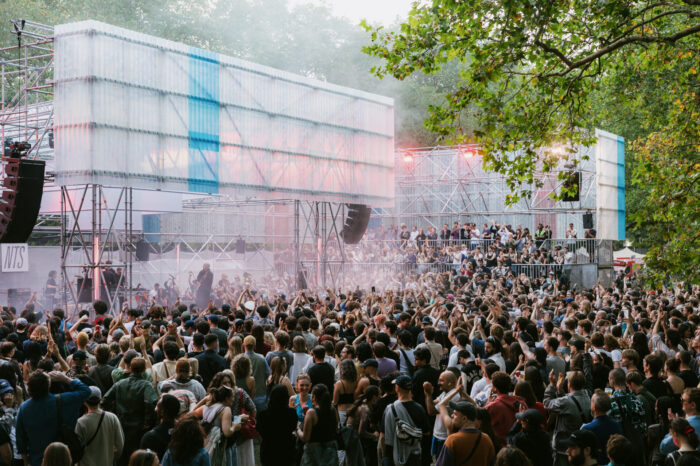
Daniel Avery, Smerz and more will join headliner Blood Orange on the bill
Photo by Jake Davis
London's RALLY festival has announced the lineup for its fourth edition, taking place this August.
Returning once again to Southwark Park, this year's event will be headlined by the previously announced Blood Orange, while there will also be live sets from Daniel Avery, Smerz, james K, YHWH Nailgun, GENA (featuring Liv.e and Karriem Riggins) and keiyaA, among others.
The festival will also take in DJ sets from Optimo (Espacio), Parris and Paquita Gordon, among others.
RALLY will take place on 29 August 2026. Find more information here.
...
The post London Festival RALLY Announces 2026 Lineup appeared first on The Quietus.
Poem 1 is led by new single 'Keepsake'
Photo by Isak Berglund Matsson-Mårn
Ana Roxanne has shared details of her first solo album in six years, titled Poem 1.
Spanning nine tracks, the new record follows 2020's Because Of A Flower and a 2023 LP she released alongside DJ Python under the alias Natural Wonder Beauty Concept.
To mark the announcement of her third solo LP, Roxanne has shared lead track 'Keepsake', which you can listen to below.
Kranky will release Poem 1 on 1 May 2026.
Poem 1 by Ana Roxanne
...
The post Ana Roxanne Returns with First Solo Album in Six Years appeared first on The Quietus.
Athens-based electronic artist Anna Maria X returns to her Bellalou Records imprint for a new single titled 'Bella'. The track sits within the melodic house and techno space, built around lean tribal percussion and a dense low-end bassline. She has previously released music on Bedrock Records and Swift Records, with Bellalou Records enabling a more […]

The latest album from UK ensemble Hen Ogledd is a striking invocation of the mythic and mundane, writes Abi Bliss in The Wire 505
Hen Ogledd
Discombobulated
Domino CD/DL/LP
One of the more unexpected musical evolutions in recent years has been that of Hen Ogledd from the group's origins as a side project for harpist Rhodri Davies and singer-guitarist Richard Dawson. The knotty, writhing improvisations of the pair's 2013 album Dawson-Davies: Hen Ogledd were like wrestling a piglet in a barbed wire jacket, but with the addition of multi-instrumentalists Dawn Bothwell and Sally Pilkington, by the time of 2018's Mogic, Hen Ogledd had become a bold, poppy but still defiantly experimental quartet. With Dawson now on bass, Davies's electrified strings remained a bubbling, gravelly sonic wellspring around which their musical horizons expanded.
Veering between crisply crafted songs such as "Problem Child" and looser-limbed jams, with lyrics tackling human connection in the digital age, Mogic was inspired but scrappy, as colourfully creative yet jokily deflecting as the appliqué capes each member sported in its videos. If anything, its 2020 sequel Free Humans was too consistent, leaning heavily on neon electropop to tackle the frailties of the heart across a timespan ranging from medieval gossip to future space exploration. But with Discombobulated, Hen Ogledd have grown to fully inhabit their costumes, Sun Ra Arkestra style, with the greatest musical and lyrical realisation yet of their diverse strengths.
Hen Ogledd is Welsh for Old North, and refers to an early medieval region spanning the north of Wales, northern England and southern Scotland. At the fringes of Roman influence and where Brythonic languages - forebears of Welsh, Cornish and Breton - were spoken, the area includes the birthplaces of all four members, highlighting a kinship between parts of the UK often overlooked in Londoncentric narratives. Invoking both the mythic and the mundane, Discombobulated draws upon landscape, folklore, popular dissent and individual struggles, enriched by major contributions from saxophonist Faye MacCalman and trumpeter Nate Wooley, and by passing appearances (ranging from vocal non sequiturs to field recordings) from numerous friends and family members.
After one child recounts a dreamlike vignette of sound-collecting fishermen on opener "Nell's Prologue", "Scales Will Fall" raises the protest flag, its call for youth to overturn the institutions of corporate greed delivered in emphatic spoken word by Bothwell, rousingly backed with brassy synth lines, Will Guthrie's economical yet persuasive drumming and a massed chorus singing "The fire in your soul is only fool's gold". The rallying procession is tempered by a melancholy that finds voice in Wooley's lyrical solo, with a world-weary majesty that wouldn't be out of place on Super Furry Animals' downbeat 2000 masterpiece Mwng. Similarly, the Davies-sung "Dead In A Post-Truth World" addresses the far right voices that the BBC's Newsnight programme is all too fond of platforming - "Mae gamwn ar y teledu/Mae'n amser mynd i'r gwely" ("When gammon is on the TV/It's time to go to bed") - its fragmented harmonies, wah-wah harp, twisting sax and fidgeting snares providing a counterpoint of complexity to easy answers.
Elsewhere, the natural world is a place of both wonder and loss. Framed by watery organ chords and what might be a rattling film projector, "Clara" starts with Bothwell's lilting lullaby of horseriding but stumbles into degraded, polluted landscapes. Davies and his children sing "Land Of The Dead", a Welsh translation of an enigmatic Dawson lyric in which the veils between nighttime countryside and eldritch realms dissolve more with each verse.
Time itself rejects a linear path in "Amser A Ddengys" ("Time Will Tell"), the line "Dyna oedd ddoe a dyma yw heddiw" ("That was yesterday and this is today") delivered simultaneously with the song's other three lines by an a cappella choir of Davies. And in "Clear Pools", the cycles signify rebirth and renewal, as initial chaos gives way to clean harp chords, MacCalman's warm, nurturing tones and soft, enveloping textures that wax and wane around the vocals over nearly 20 minutes. But a hot disco can be as transcendent as a cold pond, and the driving "End Of The Rhythm" best encapsulates the album's mood of battered but persisting hope, trumpet, harp and sax lines all yearning for a better tomorrow as Pilkington celebrates "A dancing, contagion/Releasing, rampaging/Our bodies, in union/Spontaneous, communion".
This review appears in The Wire 505 along with many other reviews of new and recent records, books, films, festivals and more. To read them all, pick up a copy of the magazine in our online shop. Wire subscribers can also read the issue in our online magazine library.
Danny L Harle
Cerulean
PC Music wunderkind packs up his donk in order to flame on with the alt-pop Avengers: Caroline Polachek, Clairo, Oklou and PinkPantheress
Cerulean by Danny L Harle
Fans of The Devil Wears Prada will remember Miranda Priestly's tirade about cerulean blue and that colour's important influence on fashion from Yves Saint Laurent to the clearance bins of a budget shop: "That blue represents millions of dollars and countless jobs."
So, perhaps it's unsurprising that one of the pivotal members of PC music, whose influence has trickled down through pop music and no doubt made "millions of dollars and countless jobs" for the genre, has named his latest album after that same shade of blue.
Cerulean is the follow up to his 2021...
The post Danny L Harle - Cerulean appeared first on The Quietus.
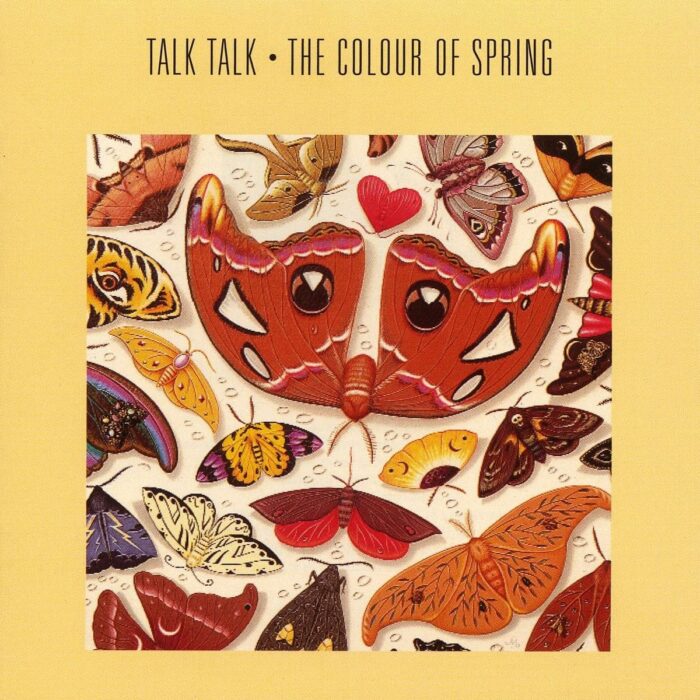
Though eclipsed by what came in its wake, The Colour Of Spring, at the heart of Talk Talk's catalogue, is no less astonishing. Forty years on, Wyndham Wallace commends the inaugural rebirth of Mark Hollis' synthpop band
Every story has a beginning, a middle and an end, but, as contemporary narratives demand, Talk Talk's has come to be told in reverse, caring little for distractions. There are 'wannabe' years and 'we-made-it' years, but it opens with the death in 2019 of their inscrutable mastermind, when an unforeseen outburst of respect and affection for singer Mark Hollis rivals tributes to Prince and David Bowie. Unexpectedly, these eulogies dwell not on the conventional success of early endeavours, nor his biggest hits. Instead their...
The post "It's About Time We Brought Art In, Innit?" Talk Talk's The Colour Of Spring at 40 appeared first on The Quietus.
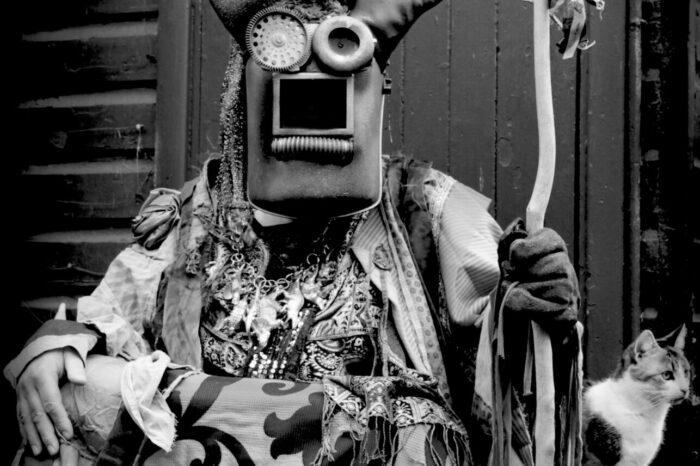
Noel Gardner returns once more from Britain's sonic undergrowth, with an improv-dominated edition of New Weird Britain that also includes epic fringe folk, shuddering static from London via Beijing, and much much more
Tim Hill's Leviathan Whispers
Improvisation tends to be a lurking possibility in these columns, even if not actively being practised, but for the first New Weird Britain of 2026 it's the dominant theme. No reason that my conscious is aware of, and this February edition mops up a few releases from late 2025 (the last 'proper' NWB column having been in October) such as Enough, the debut LP of rafter-rattling, all-improv loft doom by Long Swan Tongues.
LST are a duo of bassist Al Wilson, who also released albums with...
The post New Weird Britain in Review for February by Noel Gardner appeared first on The Quietus.
Label: InFiné Release: Evaporator Date: February 20th, 2026 Bandcamp This morning, I am listening to Nathan Fake's upcoming album, and I'm happy to share one of my favourite tracks with you. Nathan is an English electronic musician from Norfolk, widely recognised for his particular fusion of ambient, IDM, and techno. I will not slot his music into a specific genre, but if you're into the…

Martin died earlier this year aged 39
Photo by Simon Kallas
Tributes have been paid to Oliver Martin of Ghold, one of tQ's favourite heavy bands, who died recently following a serious illness, aged 39. Donations in his memory are asked to be made to helpmusicians.org.uk.
News of Martin's death was shared by his bandmates on social media on 2 February, where they said: "We lost our best friend, our brother, comrade & companion recently. We do and will continue to miss him so dearly. Love and power to an incredible person and musician whose influence on us will never leave."
Martin was born in Bexley on 27 August 1986. He met his future bandmates Paul Antony and Al Wilson in 2013, who were...
The post Tributes Paid to Ghold's Oliver Martin appeared first on The Quietus.
Hamburg-born producer, composer and pianist David August has announced his fifth studio album, HYMNS - a deeply personal work centred around piano improvisation, conceived during the
Continue Reading
The post David August announces fifth album HYMNS and Listening Session in London appeared first on Inverted Audio.
 Guest Playlist: Hen Ogledd [ 16-Feb-26 10:36am ]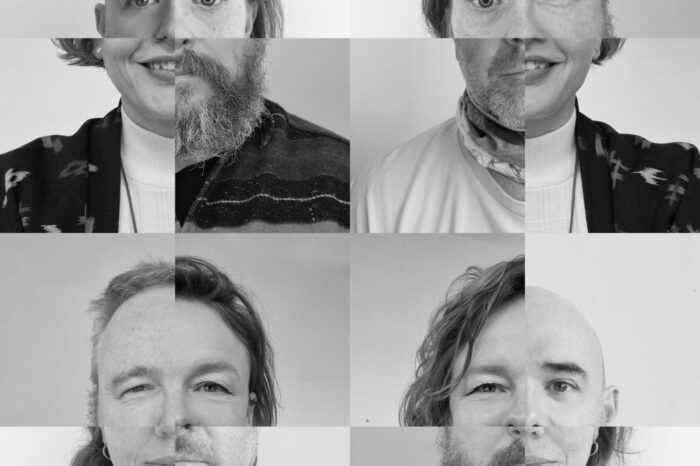
Hen Ogledd talk us through musical influences on astounding new album Discombobulated (the results are compiled into a playlist exclusively for tQ Subscriber Plus tier members)
Music journalists love to tell you they know all the influences that has gone into a new album, but a lot of the time the artists responsible themselves are left baffled by these comparisons. We thought, why not go straight to the source?
Hen Ogledd are Richard Dawson, Sally Pilkington, Dawn Bothwell and Rhodri Davies, whose brilliant new album Discombobulated is released on 20 February via Domino. Here, in their own words, they let us know what the actual influences that shaped it are, spanning ambient, free jazz, a 70s Japanese folk rock gem and more....
The post Guest Playlist: Hen Ogledd appeared first on The Quietus.
Nightingale Floor - Five Stagings [ 16-Feb-26 6:00am ]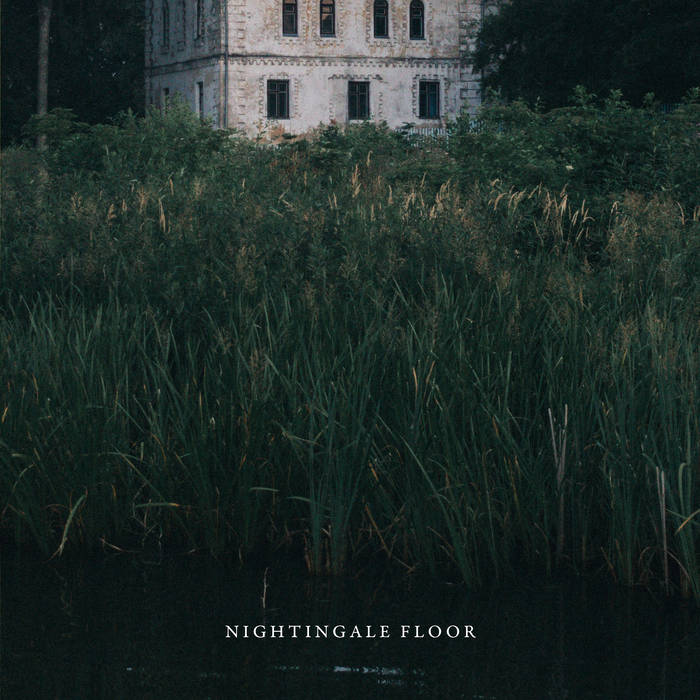
Nightingale Floor
Five Stagings
A remarkably assured debut from a new ensemble formed with members of Ex-Easter Island Head and Powders plus poet Lauren McLean
Five Stagings by Nightingale Floor
Poetry and music have a complex, sometimes uneasy, relationship. Poets put the music in the words, while lyricists tend to strip their writing back to leave space for the music to occupy. It can be tricky to balance writing and playing so each enhances the other, but when it works, it can be something special. This is where Nightingale Floor come in. They are a quartet of improvising musicians and a poet, and Five Stagings is their first album. It's a record made in the North West. The words are written and spoken by...
The post Nightingale Floor - Five Stagings appeared first on The Quietus.
Manchester Orchestra Drummer Tim Very Dies at 42 [ 15-Feb-26 6:59pm ] Casey Wasserman To Sell Agency Amid Epstein Files Backlash [ 15-Feb-26 4:38pm ]
Shadows & Reflections: Sean Prentice [ 15-Feb-26 9:00am ]As a yet-to-be-built bungalow beckons, Sean Prentice concludes his relationship with a mysterious field.
Dog-Walking On Faerie Soil
The man that ploughed the ley would never cut the crop.
— T. D. Davidson, The Untilled Field, Agricultural History Review. 1955.
There are in or near Worcestershire a great many fields and other places of the names "Hoberdy", "Hob", "Puck", "Jack" and "Will" …
— Jabez Allies, On the Ignis Fatuus: Or Will 'O' the Wisp, and the Fairies, 1846.
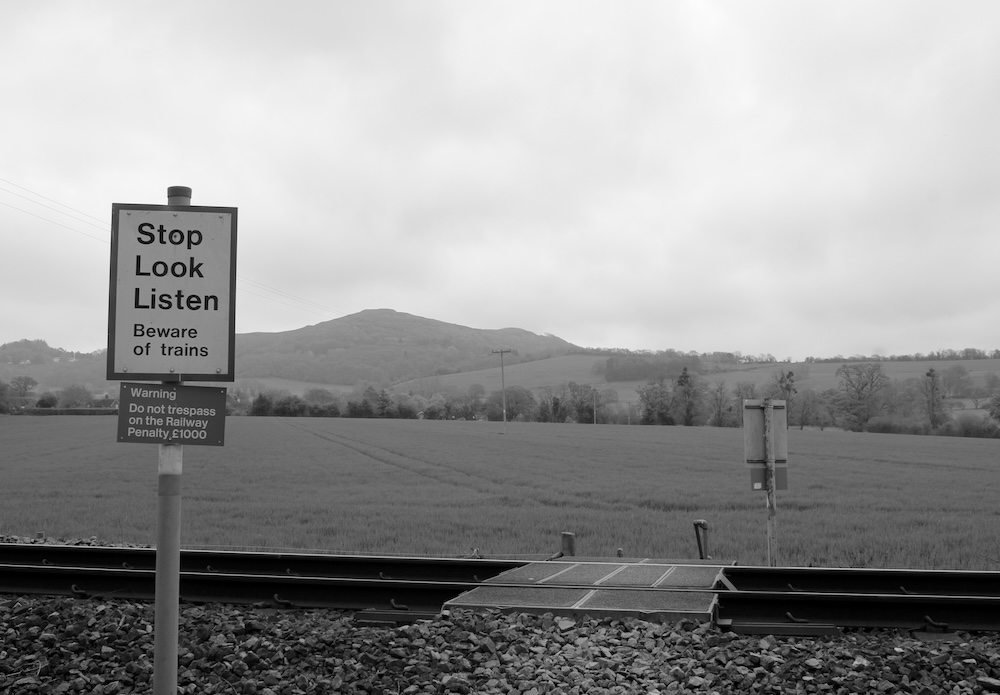
In the last twelve months, as I enter my sixtieth year, as my disability progresses, as my mobility fails more certainly, a yet-to-be-built new build bungalow beckons, more insistently, and I begin the process of uncoupling from the slightly damp mudstone cottage, built in 1873, where I have lived for a decade longer than I have lived anywhere else ever. As part of this stilted farewell, which like all life changes is a variety of mourning, I have decided once and for all that I have to ignore a field — or rather to ignore The Field, to finally say, after all these years of unpredictable and confusing behaviour on its part and frustrating attempts at communication on mine — "this is the end for us". The field in question isn't much to look at — a standard issue agricultural space fringed by hawthorn and blackthorn, boggy at the farthest corner, and bounded at one edge by the Worcester-Hereford line, yet it seeps a rare order of liminality. The location itself, on the edge of the village bounds, beyond the remaining boundary oaks, lends itself to be another order of periphery, as a space between the everyday and down-to-earth and uncertain supernatural worlds. During the fourteen years of being its neighbour the field has oozed enough unplaceable strangeness to make me wary and suspicious of its true identity and possible intentions. The familiar becomes unfamiliar just beyond our back hedge. Walking the bounds of its almost-square I have on occasion become temporarily unstuck in time, I have heard discorporate voices at my shoulder and strange, unplaceable music. I have questioned both where and who I am.
The field is named as Jack Field on the 1841 tithe map of the village. I already knew enough to wonder about that name. There is of course Every Man Jack, Jack Tar, Jack the Lad indeed Jacks of all Trades and although once upon a time every John was also nicknamed Jack I had an inkling that the Jack of Jack Field wasn't a person at all, at least not a person in the strictest sense. Jack Field always puzzled me. In the adjacent Broadley Ground, where the shorn wheat stumps crunched underfoot, each harvest brought to the surface fresh shards of long broken crockery. I have two pickling jars full of this field-edge flotsam — blue and white, the odd piece honey-coloured slipware — evidence of harvest repasts gone by — but I seldom find ceramic or anything much at all to indicate human agency and industry in Jack Field and surmise that it had rarely been cultivated or laboured-upon before living memory. Thumbing through a copy of George Ewart Evans' The Pattern Under the Plough I find a reference to survivals of the belief that certain uncanny fields within the parish should be left untilled, and that these fields 'sometimes called Jack's Land' carried a taboo. I think of Jack in the Green, close kin to the Green Man, and his association with fertility rites, a bringer in of plenty — and that givers in folklore are often takers also. Jack, within this context, I learn, was the generic name afforded to many of the sprites, imps, and other members of the Secret Commonwealth that might slip into human form bestowing good fortune or alternatively cause all manner of mischief. So it was understood that not to exploit the "fairy soil" of such land was a due, a deal made on behalf of the whole community to appease capricious supernatural forces and in so doing safeguard against havoc and mayhem, mischief and misfortune. I research further and find that the practice of sacrificially offering up land in this manner — in many instances on a farm by farm basis — was, in other parts of the British Isles, also referred to as the Goodman's Croft, Gudemen's Fauld, and Goodman's Fauld. Clooties Craft, Jack Craft were other variations. Here the word croft for enclosed farmland is as much Middle-English as Scots and the old time Gudeman doesn't contain the adjective good with an anachronistic spelling but the Anglo-Saxon noun god — the Germanic Guda. Meaning I think that the Gudemen's Fauld was once really the god-man's field, a field belonging to a supernatural being. The church and parliament preferring a different god-man crusaded hard to stamp out these practices throughout the sixteenth and seventeenth centuries, particularly through the use of hefty fines but also by the threat of invoking laws pertaining to witchcraft. Ultimately it was economic pressures and which forced farmers to risk paranormal calamity and cultivate all available land and the practice dwindled and then died a death during the course of the nineteenth-century, with any remaining unworked field falling foul of the Cultivation of Lands Orders enforced for the duration of the First World War. It is possible to see the Enclosure Acts of the early nineteenth-century as an action which extended to the eradication and enclosure of folk beliefs along with the commons and earlier field systems. Now Jack Field, perhaps like the whole of the countryside, might be described as a "post-supernatural landscape" although only in that the supernatural has been pushed aside, trampled, and forgotten, in favour of secular common sense and measurable financial concerns.
Earlier today I attempted to walk our dog in Jack Field. A good portion of it is presently out-of-bounds, divided by an ever-shifting latticework of temporary electric fencing, and the right-of-way down along the stream to the railway line has been churned up by so many sheep. The cold clay is waterlogged and slippy and half-rotted beets from the year before stick out of the soil like tiny bleached skulls. It is unsafe underfoot and I am already irked when I meet another dog-walking villager coming the other way, his own dog one of those overly enthusiastic breeds, and he and I fall into discussing the weather (which until the day before yesterday had been "mild for the time of year") and also the sudden absence of access through the neighbouring fields, and he concludes "O' well never mind…I'll circle 'round…join the footpath over there…" gesturing a semicircle "makes no odds…" and yet it makes significant odds to me. More than I can say as I hobble on. More than I have vocabulary for. The landowner believes, perhaps understandably, that Jack Field is his, but it isn't. The farmer believes equally that the soil he leases from the landowner is his to cultivate or graze as he pleases, but he's also mistaken. If land can be owned at all then that ownership resides elsewhere and beyond our ken.
Now, as I write on this cold and wet afternoon, with an early fire in the hearth, I am already partially elsewhere, partially ensconced in that soon-to-be-bungalow-land, and with this shift comes an acknowledgement that my relationship with Jack Field is coming to some kind of natural — or extra-natural conclusion. I have perhaps, like I accept the inevitability of my physical decline and a future wheelchair usage, accepted when it comes to Jack Field I am left with far more questions than answers — an ending without closure. And in the same manner I have inadequate language to describe the nature and nuance of my disability as I experience it over time — so will not even attempt to, I will also not attempt to describe who or what I once met crossing the field in the first light of morning in the that first year here. Suffice to say that the fellow I encountered on that occasion was more foliage than flesh and blood, and he wasn't walking a dog.
Cupid & Psyche 85 [ 15-Feb-26 5:00am ]
Shadows & Reflections: Tamsin Grainger [ 14-Feb-26 9:00am ]In Edinburgh, Tamsin Grainger spent 2025 on a quest for a hidden river.
This year I have been looking for the Granton Burn in Edinburgh where I live. It began with a New Year Resolution to get to know the area better through planning a series of walks. What I needed was a good map. The February date coincided with the Festival of Terminalia, an annual celebration of the Roman god of boundaries, Terminus, on the 23rd. If I found a chart showing the boundaries, maybe I could get a measure of the place, define it better and identify its features. I was curious to discover who lived there before me, who the indigenous species and people were.
It was clear that the Firth of Forth estuary was the northern perimeter, and contemporary maps showed Ferry Road, a main east-west traffic artery, as the southern. However, nobody seemed to agree where the eastern and western edges were. Local organisations such as the Community and Parish Councils provided plans which differed. Street and building names that included the word 'Granton' were spread over a wide area, some to be found in neighbouring zones. Turning to historical documents, I discovered that the Wardie and Granton burns — Scots for small river or stream — were listed, but where were they? Not on my phone app, that was for sure.
There is an old map showing the City of Edinburgh in colour with Granton in white as if it barely existed. Only a number of thread-like lines depicting fields, one or two boxes denoting properties, and some grassy tussocks and tree shapes can be seen. There was once a castle, the website for the existing garden and dovecot told me, but in 1544 the English invaded and it was sacked. I had very little to go on.
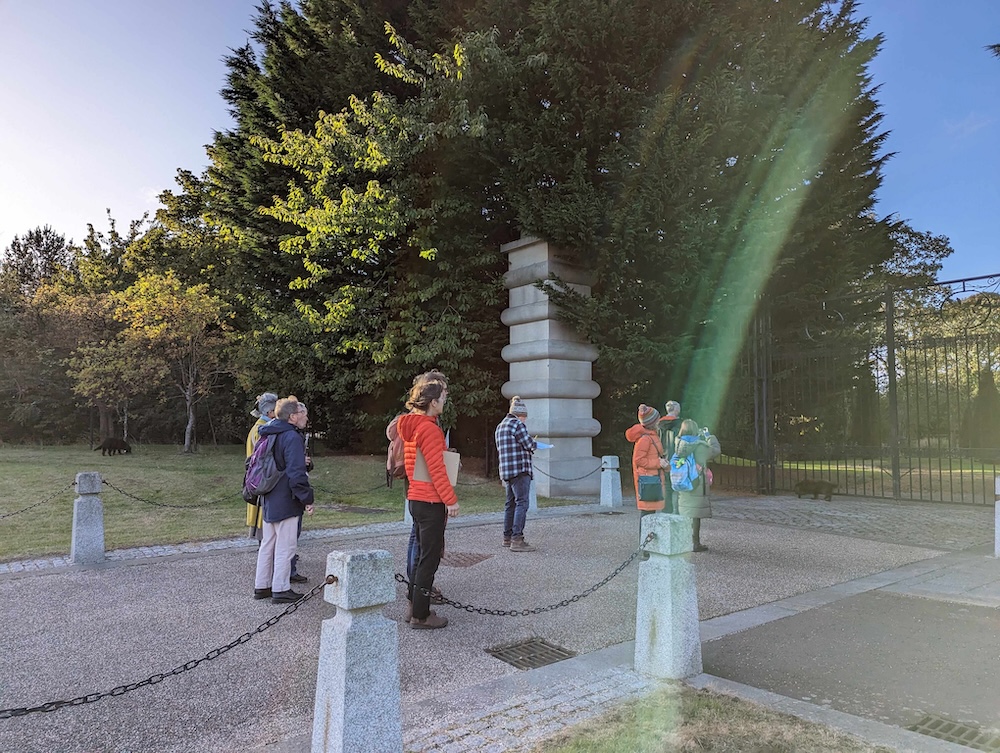
A Granton Community walk - outside Caroline House
Here is where the community walks came in useful. Local people who joined me on my search said that although the Wardie Burn cannot be seen, its route roughly followed the current A903. I had noticed musty, damp smells near where that road meets the end of mine. I could occasionally hear the shrieks of foxes and other small creatures coming from somewhere unpenetrated by street lamps. My walking companions confirmed, yes, the Burn used to run in a dell there between two slopes, maybe still does. Now I knew the eastern limit.
The Granton Burn remained elusive.
On my March walks, when I was close to what I guessed was the edge of the area, I started asking people, "Am I in Granton?" When they shook their heads and said "No, hen," I would enquire, "Do you know where it is?" Everyone had an answer; it was just that their opinions did not tally. In the end I collated the replies and results of my research and drew my own map using pencils and ink on an old roll of wallpaper. Then I mounted it in an exhibition at Granton Hub, the local community centre, to prompt further discussion.
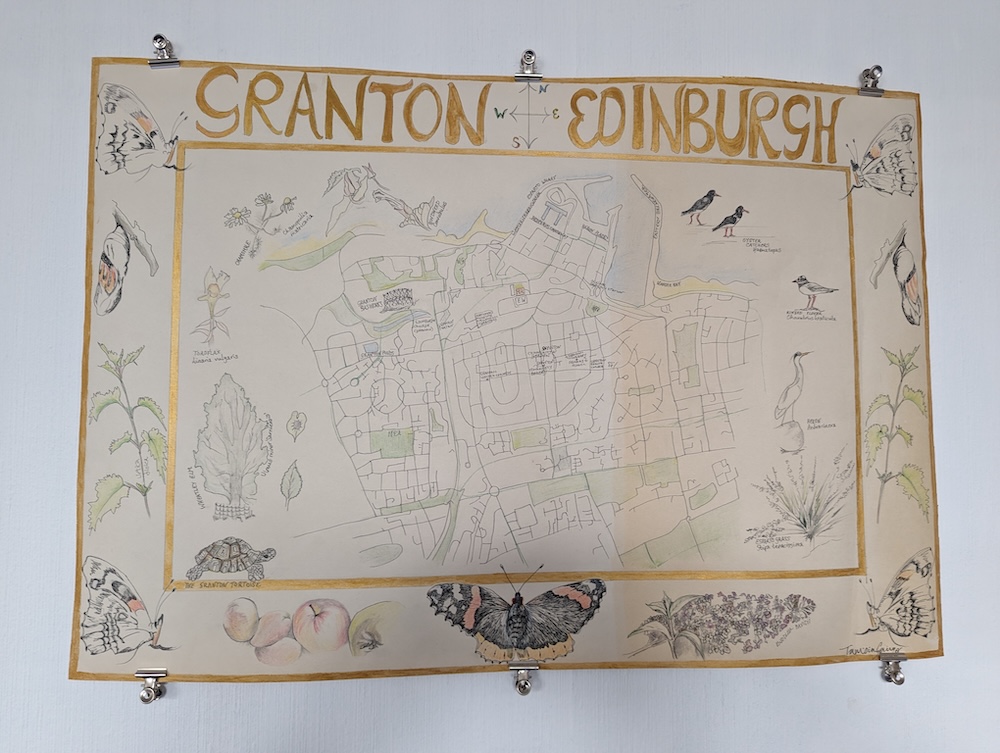
Granton Map by Tamsin Grainger. Pencils and ink on wallpaper. March 2025
Like most cartographers, I used a bird's eye street-view, and influenced by the ancient maps I had lying around my studio, I surrounded it with illustrations of other-than-humans I had met on my walks. The red admiral butterfly is shown in various stages of its development with the nettles and buddleia it thrives on. Our resident heron is there, together with a pair of oystercatchers from the Bay, and also the Wheatley Elm from my garden. This particular elm tree is ideal for Granton for it can cope with salt and high winds.
One chilly day in April, on a community walk, we stopped outside the gates of Caroline House, a private residence down by the sea that dated from 1585. A group member told us a ghost story associated with it: An overnight caretaker had made his rounds in the early evening, checking no-one else was present. All night he heard the distinct sound of furniture being moved upstairs and could not sleep. When someone came to relieve him the next morning, they went up to the floor above only to find that nothing had changed. It has never been explained and people love to speculate. While I was listening, I spied a fountain of water through the fence, coming out of a grassy knoll. What was its name? No-one knew.
As the months went by, my walks skirted around this property. I discovered that a drain on the side of the Firth of Forth regularly overflowed with Spring rains, flooding the road as if the water was making a dash for the Brick Beach, a nearby strand dumped with building materials. When I explored the beach, I found what looked like a cast-iron pipeline in the sand, half hidden by seaweed. Could it be spilling out water, and if so, where did it come from? My appetite truly wetted, I retraced my steps, hesitating at the gravelly side-entrance to Caroline House and peering into the gardens before creeping in undetected.
I found a burn pouring over a stone sill and rushing under a low-arched bridge. It flowed beside the house and, further on, at the bottom of some rickety steps. Slipping on the slimy wood, I clutched the handrail to save myself and, at a tilt, was delighted to spy a colony of over-wintering ladybirds all cuddled up close in a nook underneath. Following the water's flow, I came to the end of the garden and what looked like gate posts. Two square stacks of red stone were set into a wall glowing in the evening sun. Though the space between the stacks was bricked up, I could climb up and see the Brick Beach beyond. Turning to make my way back up the slope, I was assailed by angry cries. I had been discovered.
I offered profuse apologies and gently persuaded the owner I was not threatening. I felt she really wanted to tell me about the history of her home. "This is the Sea Gate and that is the Granton Burn," she told me. I was very happy to hear it, and asked, "Do you know where the source is?" I had recently walked the Braid Burn from its Portobello mouth, further along the Edinburgh coast, to the source in the Pentlands (my writing is part of an Art Walk Porty publication here). I assumed the Granton Burn must also originate there. "No," she replied, "I think it rises on Corstorphine Hill."
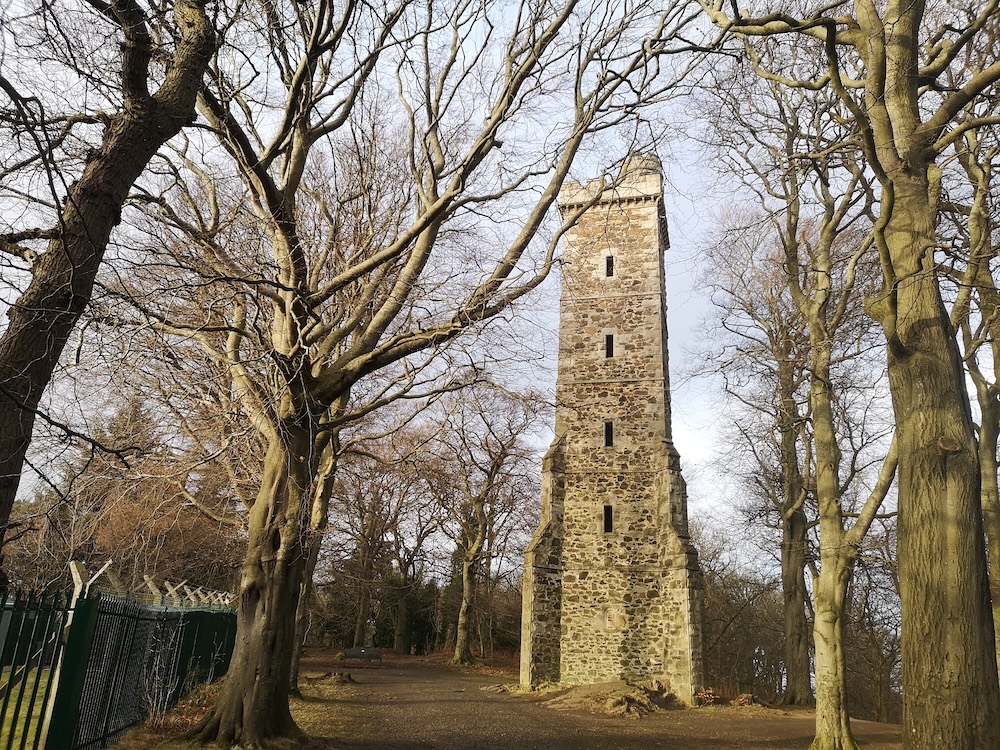
Corstorphone Hill, the Scott Tower
The owner let me out through the front entrance, and waved goodbye. I noticed how squelchy the grass was underfoot. In fact, it was always sodden here whatever the weather. Staying with the juicy noise, I passed the Scottish Gas building and the lights were on. Shut for quite a few years, I could see a security guard at the reception desk, so smiled and gestured. He let me in. "We're getting ready to re-open after the flood" he said, and I remembered that an inundation had been responsible for staff leaving; the Burn must run underneath. I continued on towards Forthquarter Park where there is a man-made canal and a new sign had been put up since my last visit: 'Please Look After Your Granton Burn.'
During the summer, I took more walks through Forthquarter Park, watching the moorhens negotiate the bullrushes and proud-necked swans swimming amongst irises. Silver birches were coming into full trembling leaf and gulls were lined up on the railings. A 'Footpath' marker pointed me between Waterfront Park and West Granton Road, and there was an unexpected lochan of sparkling water with a warning — 'Deep, Beware.'
After this, the trail went dry.
As Autumn began, I received an invitation to speak at the Scottish Historic Buildings Trust (SHBT) Winter Lecture Series on the Edinburgh Coastline. This was the excuse I needed to pick up my project again. I visited the National Library's wonderful map store and scoured for water sources. With the support of the librarians, I found wells and springs, sluices, another reservoir, and filtering beds, all between Corstorphine Hill and Caroline House. That weekend I put on my walking boots, took a bus to the foot of the hill and started to search for the origin of the Granton Burn. I believed it had served many of the industries I knew proliferated along the Forth Estuary in the 18th and 19th centuries: paper, coal, steel wire, and ink, to name a few.
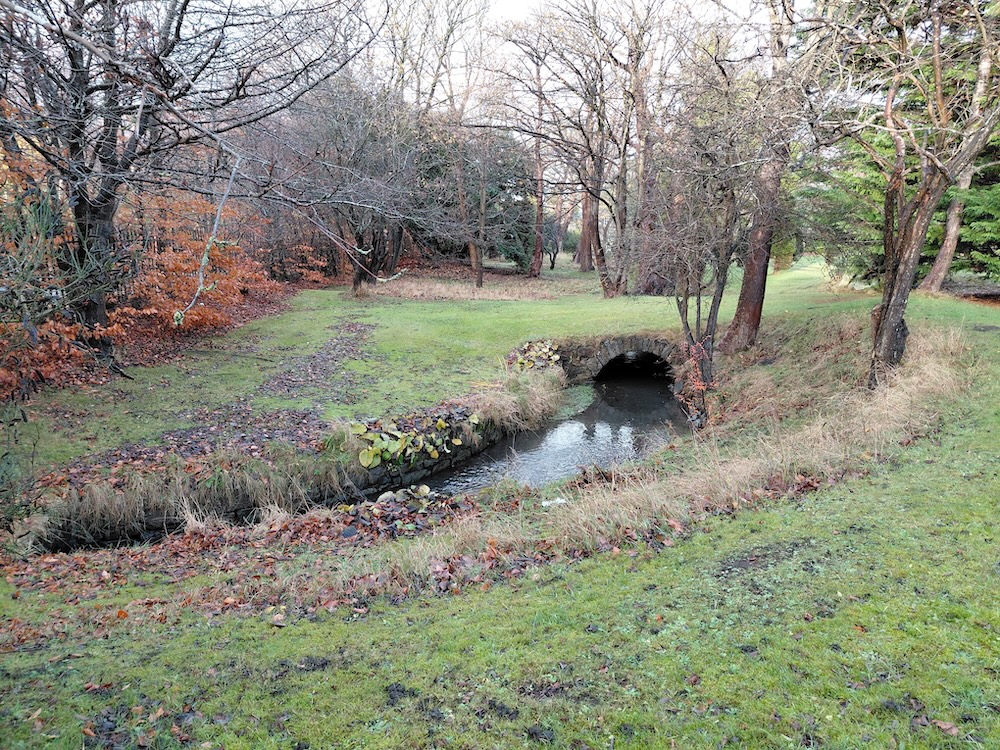
The Granton Burn in the grounds of Caroline House
Starting up the zoo side, I quizzed a dog walker for signs of the burn. We were standing beside a Scottish Water unit which was buzzing and humming. "Oh yes," she said, "there are wells just on the other side of the Scott Tower." After locating them inside circular pens overgrown with brambles, it was easy to follow a gully in the undergrowth. I ignored my scribbled maps and almost flew down the hillside knowing I was onto something.
When I came to a road and stopped to get my bearings, rain was starting to drip onto my notebook and phone. Something else was wrong too: trying to align myself with Caroline House seemed to be impossible. I was not on the right side of the hill. It looked likely that I had been lured by a different burn altogether, one that was running towards Crammond Island, also on the Firth of Forth, but nearer the famous bridges. River though it must have been, this was not the one I was searching for.
Back up the steep incline I trudged, meeting a helpful woman with a baby strapped to her front who took me home to consult her husband. He gave me a paper map, but it did not mention the burn. Later, I spotted a man in a sodden anorak looking up and asked him if he knew the area. He said he was a tree surveyor and after a short explanation of my quest, explained that he was born in Granton and his father still lived there. "The Wardie Burn runs under his garden. If you stand outside the Co-op on Boswall Parkway after the rain you can hear it."
Back at the apex of the hill, I was fed up. It was four hours since I had arrived and according to the street map, it would take me the same time to get back home. Perhaps it was impossible to detect water below ground, even if I had spent a lot of time in its company. I ate my picnic and looked around. The land dropped steeply off to the left where the vegetation was lush. I got out the map I had sketched at home and it showed squiggly blue lines at the bottom where the old maps said Craigcrook Castle used to be. There had been a pump and it was definitely facing in the right direction. I had nothing to lose.
It was raining hard and the daylight would not last long. As I descended the steps, there seemed to be a watery flow in the earth — or was I imagining it? Through the fence, the grass flattened out and a horse was grazing. Suddenly, I stumbled into a hole, nearly falling forwards onto my hands and knees. Clear water was running over my feet; water with vitality. I waded on, energised now, despite soaking socks. It was as if I could feel a sort of magnetic pull from underneath. I sprang from bank to bank over a ditch, lost the trail but was able to find it again quickly. Water-loving plants and grasses, damp-loving fungi, the outward signs were clear, and inside I had a strong feeling too. I had a sense of the water being grateful. It seemed weird, but it really was as if the burn was wanting to be found, was glad to be beside me.
Onwards, and sometimes there was a path and sometimes none. It was unfamiliar territory, but I was not lost. Every time I looked at the compass, I was on-course. I passed a pool, a little creek, went behind a school and out of trees through back gardens. A lane led to a side-street and a main road and then I was in built-up Blackhall where men were on their way to the mosque. As daylight began to dwindle, I was still heading for the known sections when I crossed the familiar Roseburn Cycle Path, realising with surprise that I had never thought to look for a Rose Burn, if there was one*. Manoeuvring between bungalows and blandly designed housing schemes with not a lawn in sight, I kept my attention below ground.
After Pennywell, I came across Granton Mill, a development where a friend lives. In 2024, I had worked at the local history archive. No-one had known if there had been an actual mill there, nor which water it relied on if there was. Now I knew. I crossed Ferry Road into Granton, and trekked through the last blocks of nondescript tenement flats before regaining the reservoir. Ten minutes later I was on the sea side of Caroline House. It was no surprise to hear the force of the burn before I saw it, gushing along after the heavy rain.
As I write, it is the last day of December. I know now that most of the Granton Burn is underground, as many urban rivers — the Fleet in London, Farset in Belfast, for example — are. May East, international urbanist and author of What if Women Designed the City? advises us not to rely on old maps when navigating changing urban landscapes. Prompted by this, and the difficulty I had finding the river, I have embroidered my own, its stitches representing my walking steps. Though this year's research has not been academically corroborated, this walk of faith seemed to be acknowledged by the Burn itself. As if it knew I was there and was pleased that I was paying it attention, it showed itself to me.
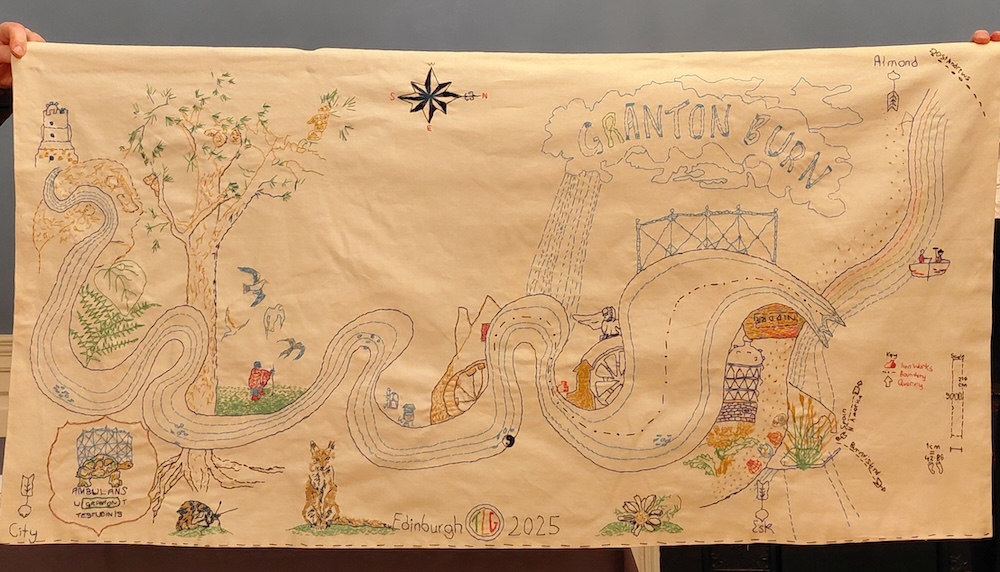
The Granton Burn, stitched map by Tamsin Grainger. Textile and cotton thread. December 2025
I chose to place the Burn at the forefront, and I matched the colours to the 1867 W. and A. K. Johnston Plan of Edinburgh and Leith, using simple running- and chain-stitches. It draws on my walking encounters, depicting a fox, a moth, chamomile, and oyster shells. There are also seabirds, tortoises, a pilgrim, and reminders of some of the industries that relied on the water. Presented at the SHBT Winter Series to accompany my lecture, From Hill to Sea, the map can be viewed at Riddles Court, Lawnmarket, Edinburgh.
*When I looked up the Rose Burn, I found that 'the burn drained into Corstorphine Loch, originally a glacial lake giving way to a large area of marshland which was finally drained in the c17th.' (Water of Leith Conservation Trust website)
*
Tamsin Grainger is a writer, bodyworker and walking artist living in Edinburgh. Visit her website here.
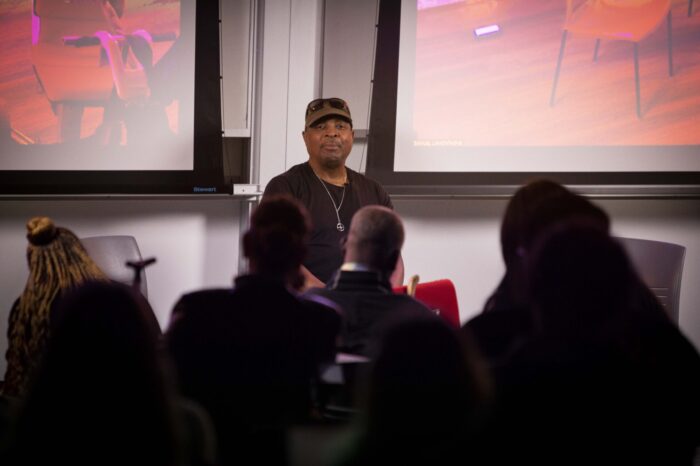
The Public Enemy frontman has always been one of rap music's most articulate advocates, but in 2022 he shifted career from MC to university lecturer. In an exclusive extract from his new book, In The Hour of Chaos, Chuck D talks about the cultural politics of hip hop and what it means for the future
Chuck D speaks to students as the sessions begins. May 4, 2022. Photo by Bad Man's Son
My nearly four-decade career as a professional has been in truth and honesty for the culture. I don't think I remember a time that we, as Black people, were not in an hour of chaos. But the culture, the art, the music, and the people are what I've always been...
The post Fight The Power: Chuck D on the Politics of Hip Hop appeared first on The Quietus.
from the 2017 Pitchfork greatest-IDM-list (that ruffled a few feathers, that did, it was like negative catnip for nerds! I had nothing to do with the selection, honest, apart from being one of many who sent their ballot in)
Isolée: Rest (2000)
There was a moment, around the turn of the millennium, when IDM-aligned figures like Matthew Herbert started to embrace the slinky sensuality of the house template while weaving in glitches and clicks from the Oval/Fennesz world. The term "microhouse" was yet to be coined in 2000, but this is the undefined zone into which Rest slipped to wow the cognoscenti.
As the name hints, Isolée is a one-man-band, Rajko Müller. A German who spent much of his childhood in a French school in Algeria, his music is suitably cosmopolitan and border-crossing, connecting house and techno with '80s synthpop and discreet touches of hand-played world music, like the Afro-pop guitar figure that flutters intermittently through "Beau Mot Plage" like a darting-and-dipping hummingbird. Müller's sound works through the coexistence and interlacing of opposites: spartan and luxuriant, angular and lithe, crispy-dry and wet-look sleek, mechanistic and organic. Sensuous, ear-caressing textures juxtapose with abrasive tones as unyielding and chafing as a pair of Perspex underpants.
"Text," the absolute highlight, is mystifyingly only available on the original 2000 compact disc. It's an Op Art catacomb, a network of twisting tunnels, abrupt fissures, and pitch-shifted slopes that's deliriously disorienting but never loses its dance pulse. Other tracks offer an exquisite blend of delicacy and geometry, like origami made out of graph paper, or echo the Fourth World electro-exotica of Sylvian-Sakamoto and Thomas Leer. We Are Monster, Müller's 2005 follow-up, was excellent but a little too busy, losing the balance between minimal and maximal. So the debut remains Isolée's true claim to acclaim, laurels on which Müller could Rest forever.
and my intro text
Party in My Mind: The Endless Half-Lives of IDM
At the outset, it needs to be said that "Intelligent Dance Music" is—ironically—kind of a stupid name. By this point, possibly even the folks who coined the term back in 1993—members of an online mailing list mainly consisting of Aphex Twin obsessives—have misgivings about it.
For as a guiding concept, IDM raises way more issues than it settles. What exactly is "intelligence" as manifested in music? Is it an inherent property of certain genres, or more about a mode of listening to any and all music? After all, it's possible to listen to and write about "stupid" forms of music with scintillating intellect. Equally, millions listen to "smart" sounds like jazz or classical in a mentally inert way, using it as a background ambience of sophistication or uplifting loftiness. Right from the start, IDM was freighted with some problematic assumptions. The equation of complexity with cleverness, for instance—what you might call the prog fallacy. And the notion that abandoning the functional, party-igniting aspect of dance somehow liberated the music and the listener: a privileging of head over body that reinforced biases ingrained from over 2,000 years of Western civilization, from Plato through St. Paul and Descartes to more recent cyber-utopians who dream of abandoning the "meat" and becoming pure spirit.
And yet, and yet... Dubious as the banner was (and is), under that aegis, some of the most fabulous electronic music of our era came into being. You could even dance to some of it! And while its peak has long since passed, IDM's half-lives echo on around us still, often in the unlikeliest of places: avant-R&B tunes like Travis Scott's "Goosebumps," tracks like "Real Friends" on The Life of Pablo, even moments on "The Young Pope" soundtrack.
You could say that the prehistory of IDM was the ambient chill-out fad of the first years of the '90s, along with certain ethereal and poignant tracks made by Detroit producers like Carl Craig. But really, it all kicks off in 1992 with Warp's first Artificial Intelligence compilation and its attendant concept of "electronic listening music," along with that same year's Aphex Twin album Selected Ambient Works 85-92 (released on Apollo, the ambient imprint of R&S Records). Warp swiftly followed up the compilation with the Artificial Intelligence series of long-players by Black Dog Productions, Autechre, Richard D. James (operating under his Polygon Window alias, rather than as Aphex), and others. Smaller labels contributed to the nascent network, such as Rephlex (co-founded by James) and GPR (which released records by The Black Dog, Plaid, Beaumont Hannant). But it was Warp that ultimately opened up the space—as a niche market as much as a zone of sonic endeavor—for electronic music that retained the formal features of track-oriented, rave floor-targeted dance but oriented itself towards albums and home listening. ELM, as Warp dubbed it—IDM, as it came to be known—was private and introspective, rather than public and collective.
Phase 2 of IDM came when other artists and labels rushed in to supply the demand, the taste market, that Warp had stirred into existence. Among the key labels of this second phase were Skam, Schematic, Mille Plateaux, Morr, and Planet Mu. The latter was the brainchild of Mike Paradinas, aka μ-Ziq— one of the original Big Four IDM artists, alongside Aphex, Autechre, and Black Dog. (Or the Big Six, if you count Squarepusher and Luke Vibert, aka Wagon Christ/Plug). Most of these artists knew each other socially and sometimes collaborated. All were British.
The two stages of IDM correlate roughly with a shift in mood. First-phase intelligent tended to be strong on melody, atmosphere, and emotion; the beats, while modeled on house and techno, lacked the "oomph" required by DJs, the physical force that would cause a raver to enthuse about a tune as bangin' or slammin'. Largely in response to the emergence of jungle, with its complex but physically coercive rhythmic innovations, Phase 2 IDM tended to be far more imposing and inventive with its drums; at the same time, the mood switched from misty-eyed reverie towards antic excess or whimsy. Often approaching a caricature of jungle, IDM tunes were still unlikely to get dropped in a main-room DJ's set. But by now, the genre had spawned its own circuit of "eclectronica" clubs on both sides of the Atlantic, while the biggest artists could tour as concert acts.
You could talk about a Phase 3 stage of IDM, when the music—not content with borrowing rhythmic tricks from post-rave styles like jungle—actually moved to assimilate the rudeboy spirit of rave itself: the original Stupid Dance Music whose cheesy 'n' mental fervor was the very thing that IDM defined itself again. This early 2000s phase resulted in styles like breakcore and glitchcore; these had an international following and, for the first time in IDM's history, a strong creative basis in the United States. Drawing on an array of street musics from gangsta to gabba, upstart mischief-makers like Kid606 and Lesser made fun of first-wave IDM's chronic Anglophilia, releasing tracks with titles like "Luke Vibert Can Kiss My Indie-Punk Whiteboy Ass" and "Markus Popp Can Kiss My Redneck Ass." Around this time, IDM pulled off its peak achievement of mainstream penetration when Radiohead released Kid A—an album for which Thom Yorke prepared by buying the entire Warp back catalog.
Seventeen years after that (albeit indirect) crossover triumph, the original IDM crew continues to release sporadically inspired work. Autechre's discography is quite the feat of immaculate sustain, Richard D. James unexpectedly returned to delightful relevance after a long silence, Boards of Canada remain a treasure. Label-wise, there's Planet Mu, who appear to be unstoppable, hurling out releases in a dozen different micro-styles. Overall, though, you'd have to say that IDM as a scene and a sound doesn't really exist anymore. But its spectral traces can be tracked all across contemporary music, from genius producers like Actress and Oneohtrix Point Never, to the abstruse end of post-dubstep, to Arca's smeared, gender-fluid texturology. Its reach goes way further: I'm constantly hearing IDM-like sounds on Power FM, the big commercial rap/R&B station here in L.A. At the end of the day, stupid name though it may be, IDM has given the world a stupefying immensity of fantastic music. And its reverberations have yet to dim.
Someone in Italy asked me questions about Selected Ambient Works 1985-1992 upon the occasion of its 30th Anniversary. This is what I said:
There was this moment when some record labels astutely noticed that there was the beginnings of a demand for music that related to rave dancefloor sounds like techno but was designed for home listening - atmospheric, intricately textured, dreamy or pensive in mood. Artists had started to do tracks like that on the B-side of their dancefloor-target singles, or on the fourth track of an EP. Ambient interludes or stuff that had drums but wasn't as pounding and body- coercive as the kind of techno a DJ would play. The two main labels that really spotted this development and saw that it could be the basis of album-length works - and album-oriented careers - were Warp, in Sheffield, England, and R&S, in Belgium. It was R&S who put out the Aphex Twin's Selected Ambient Works 85-92 and then Richard D. James signed to Warp. He was also doing that kind of thing through the label he co-founded, Rephlex.
If the rave scene of the period was marked by ecstasy, what drug could be associated with IDM?
Cannabis - and for some LSD perhaps. It's also music that was associated with the after-party and the chill-out room - so music that fit the afterglow of MDMA but not so much the "I got dance like a maniac" phase. But overwhelming it's cannabis. That's why the robot on the front of Artificial Intelligence, the Warp compilation of Aphex-type music, is blowing smoke rings and puffing on a fat joint.
Why did IDM strike a chord with Silicon Valley geeks? And what effect did it have on ravers?
Electronic sound fits the aethetic of digital technology - and the musicians are using a lot of the same equipment as the Silicon Valley people. So there's an affinity there on both levels. Also I think Aphex Twin type music is ideal for people who are working at computers - it's hypnotic, it's rhythmic but not "get up dance NOW", there are patterns in it that are attractive to the ear but you can also tune out if you need to concentrate and it falls back very easily into being background music.
IDM didn't get a lot of play on the rave dancefloor, it might get some play in side-rooms where people want to chill out after frenzied dancing. But also there developed a scene of chill-out clubs, people sitting around and smoking while listening to ambient and floaty electronic music.
What memories do you have related to the release of the album?
It was probably my favorite album of that year and certainly the one I played the most. I must have played it about a hundred times at least. Because it was a CD I quickly reprogrammed it to my favorite five or six tunes. But the whole album is brilliant.
What are your favorite tracks on the tracklist? And why?
I can't be getting into reviewing the album, but my favorites are "Tha", "Pulsewidth", "We Are the Music Makers" and "Heliosphan". "Xtal" is really dreamy and conversely "Hedphelym" is a really scary bit of dark electronic music.
What was Aphex Twin trying to tell us with the quote from Willy Wonka and the Chocolate Factory, We Are The Music Makers?
Well, I think it's simply an honestly arrogant reflection of his self-belief - he knows he's a genius. So that's what he literally thinks musicians - the greatest musicians - do. They weave dreams.
In what elements does the album echo Brian Eno's ambient lesson?
Apart from "Xtal" and "Tha", it's not really an ambient album. It's only ambient in comparison to the hardcore techno, jungle and gabber of that time, which was breakneck fast. Most of the tracks have beats and some are pretty propulsive - "Pulsewidth". It's music that has a physical element and a relation to dance music, but it pulls at your body gently.
But you can use as background music, something to fill the air like fragrance, so in that sense it can be used like ambient music. It's a bit too insistent melodically and rhythmically to qualify as Eno's definition of ambient being "as ignorable as it is interesting".
What does it feel like to listen to the album again today thirty years later?
I haven't listened to it.
What distinguishes Aphex Twin from Autechre and Boards of Canada?
Aphex Twin versus Autechre - well, it's just much better music. It's not afraid to be beautiful and it connects to actual human emotions that are relatable. Autechre have interesting textures but I don't hear tunes like Richard D. James. Autechre have commanding rhythms but they're not groovy, whereas with Aphex Twin there's more of swing and feel - you can imagine dancing to them.
Aphex Twin versus Boards of Canada. Both are sublime melodists. But Aphex Twin has more interesting rhythms - again, you can imagine dancing to much of his music, whereas BoC is about the headnod. The way they use hip hop beats is very effective but as the brothers would admit, they have very little to do with club music. Aphex music is much more on the edge of rave.
Boards of Canada also have this consistently elegaic, nostalgic, wistful quality - the sense of childhood or a lost future. Aphex will go into that zone but generally sounds more aligned with the idea of the future or outer space, in that sense he's more of a techno artist. BoC are more like a shoegaze band that when into sampling and loops.
Are some elements of IDM present in the conceptronica today? Or in what music?
Where I hear the textures of IDM is actually in a lot of the last several years trap and mumble rap - Playboi Carti, Rich the Kid, Migos, Lil Uzi Vert, Travis Scott, Young Thug. You get the blurry, idyllic textures and the bittersweet melody-loops. Even the vocal presence, fed through the glittering and glitchy textures of Auto-Tune, sounds very IDM-compatible - dreamy, sparkly, passively swooning. That kind of trapadelic sound is almost the sole bastion of minimalism in modern popular music, which is otherwise overly dramatic and busy.
Conceptronica has the thoughtfulness of certain kinds of IDM - like Oval or the label Mille Plateaux Fax - but it rarely has the kind of sheer melodic beauty of Aphex and Seefeel and Boards of Canada. Most of today's conceptual electronic artists are trying to reflect or deal with issues related to contemporary society - whether it's queer identity, racial injustice, rage against what's going on politically, or it's the stresses and distortions of personality caused by living on the internet and social media, that "always on" purgatory of today's existence. So the sounds they make are often not pretty and they are rarely relaxing in the way that Selected Ambient Works could be. They are often trying to put you through an extreme or challenging experience. Or they are trying to command your full attention. Either way it's not music - for me - that I can use in everyday life like I did the great Aphex Twin music.
introduction to Valerio Mattioli's book Exmachina: Storia musicale della nostra estinzione 1992 → which centers on Aphex Twin, Autechre, and Boards of Canada, and is a genius work that someone needs to translate into English
The idea that certain kinds of music have a special relationship with the Future has a long history and continues to make a potent appeal to our imaginations—as listeners and thinkers, and as music-makers too.
In the early '90s, for instance, David Toop - a critic and a musician - wrote evocatively about a sensation of "nostalgia for the future" that wafted vaguely off the recordings of The Black Dog, a British group associated with an emerging genre briefly identified as "electronic listening music" but later permanently rebranded as Intelligent Dance Music or IDM.
The notion is not limited to professional analysts and champions of music. William Gibson, in his 1996 near-future novel Idoru, ventriloquizes his own insight through the character of Mr. Kuwayama, a Japanese entertainment executive, who observes that pop "is the test-bed of futurity". Jacques Attali, in his classic 1977 treatise Noise: The Political Economy of Music, constructed an entire theory of music's evolution based around the belief that music is prophecy. But his argument is not so much about the formal properties of music (say, increased tolerance for dissonance, as the title Noise might suggest) as the structures and hierarchies that music engenders around itself. Attali's focus is on the modes of music making, distribution, and consumption, which he sees as a preview of emerging forms of social organization.
As someone who's dedicated his life to magnifying the power and significance of music, this kind of talk is very much to my taste: it stirs my patriotic feelings about music as an area of human existence. Through my personal history of listening and the accident of the era I was born in, I'm wired to seek out and recognize "the future" as it manifests in music, and equally primed to be entranced by arguments and narratives that present music as the herald of a world to come.
So in many ways I'm an ideal reader for Valerio Mattioli's extraordinary book. It's a feat of hyper-interpretation that detects the flexing of the Zeitgeist within the discographies of just three operators, preeminent in a field that is relatively speaking a marginal sidestream of popular music, the aforementioned genre-not-genre known as IDM. To those who know them, Aphex Twin, Autechre, and Boards of Canada are gods, whose every last scrap of recorded work warrants decoding by the devotees. But even these cult believers will be taken aback by the intensity of Mattioli's scrutiny and the scale of the claims he makes.
Exmachina is an archeology of the future embedded in music made a quarter-century or more ago; a future that is now our present. As with Attali's theory, that futurity is not so much in the surface trappings of the music - the coldness of synthesized sound, the domineering mechanistic rhythms - nor even in the imagery wrapped around it (often "futuristic" in a way that was even at the time fairly familiar and occasionally bordered on sci-fi kitsch). The futurism resides more in the deeper grammar of the music and the subjectivity that the music proposed, modeled, and elicited; a future that the music in some way trained the listener for, through the molding of perception and instilling of affect.
Although the subject of Mattioli's book is the latent future in music some of which is 30 years old now, the future that has come true and is now our digital everyday, in other ways a big part of the pleasure of reading it for me is frankly nostalgic. Exmachina is a kind of time machine: it creates a delicious sensation of being plunged back into the early '90s and immersed in all the wide-eyed excitement about the oncoming future that seemed to be manifesting itself through electronic dance and non-dance music, swept up once again in the fevered intellectual climate of that time.
In 1992, computers had become widespread at work and in domestic spaces, but they didn't dominate our existence. Broadband was still many years away; dial-up was cumbersome and time-consuming, and when you got on the internet, there was hardly anything to see (which was just as well given how long it took a page to come up). Almost no one had email; mobile phones were still in their infancy, in terms of widespread usage and the things you could do with them. None of the commonplace "superpowers" of today - wi-fi, search engines, Siri, social media, etc - existed, and some weren't even imagined. The digital realm existed in a cordoned-off zone of our existence. Yet precisely because of this, digital technology could then carry with it the scent of the future—an alluring or alarming aroma, depending on your inclinations.
For most people, the places where you could get the most pungent advance whiff of how things were going to be were music and videogames. They offered the hardest hit of futurity that an ordinary person could access - and even more so if that person happened to make music themselves. As well as the Promethean rush and world-building buzz of grappling with machines and software that by today's standards are laughably rudimentary and clumsy, electronic musicians in the '90s were conceptually stimulated by emergent forms of technology outside of the sonic realm, including things that were then barely more than rumors or pipe dreams. Concepts like virtual reality and surveillance provided imagery for techno and jungle artists long before VR became commercially available or CCTV became omnipresent in some countries.
The polarities represented by VR and CCTV - the artificial pleasuredome versus the Panopticon - relate to a curious bi-polar quality to the writing about digital culture during the 1990s. The naïve optimism and excessive dread were two sides of the same coin: a euphoria that flipped so easily into dysphoria. Reading theorists like Arthur Kroker, Paul Virilio, Donna Haraway, Sadie Plant, Erik Davis, Mark Dery, Jaron Lanier, Kodwo Eshun (and many of these names pop up in Mattioli's text), all it took was to tilt your angle of reading slightly and the exultation could be taken as denunciation. The fervor and fever of the prose would be the same in either the utopian or dystopian modalities. With some of these writers, it was never clear whether they were anticipating or flinching from the posthuman future. And some former evangelists have subsequently morphed into Jeremiahs, writing books with titles like You Are Not A Gadget or New Dark Age: Technology and the End of the Future.
With music in particular, it was an exhilarating time to be a critic. For someone like myself or Kodwo Eshun or the young Mark Fisher and Steve Goodman (both then associated with the para-academic outfit Cybernetic Culture Research Unit), you rarely found yourself using reference points from history. You couldn't resort to coordinates based on existing earlier music because the new music was going right off the map. The rapidly advancing and mutating tones and beats put pressure on you to generate new tropes and concepts. Hence the proliferation of neologisms and invented genre terms. And the posthuman feeling of the music, its seeming absence of human touch, also seemed to demand a depersonalized analysis that attributed a purposive sentience to the way that individual tracks unfolded and that entire genres and scenes evolved. Mattioli reinhabits this mindset, this ecstatically paranoid sense that the music is independent of human designs and has its own dark agenda. Humans didn't make the music; the music is remaking - and undoing - the human as a category. "We must change for the machines" and "human viewpoint redundant," as the video art / theory collective 0(rphan)d(rift>), put it in a 1995 book called Cyberpositive, a delirious collage-text infused with their experiences of going to techno clubs and being mangled mentally by the combination of loud music and hallucinogens, written in a tone of mystical masochism.
Mattioli entered a similar kind of mind-state when writing Exmachina. But rather than reach it through immersion in the congested darkness of the rave space, it was the covid lockdown's enforced isolation that pushed him into a state of creative paranoia in which everything radiated significance and hitherto hidden patterns pulsated into visibility. Decades before wi-fi, Baudrillard imagined the tele-connected citizen of the future as essentially living inside a satellite, a sealed pod in orbit around the void where society once was. Plugged into networks, this was a new kind of porous self, vibrating in a perpetual "ecstasy of communication. All secrets, spaces and scenes abolished in a single dimension of information." A desolated self "open to everything in spite of himself, living in the greatest confusion... He is now only a pure screen, a switching center for all the networks of influence." That describes how many of us having been living during 2020 and 2021. Mattioli took the pandemic trauma and used it to create an adventure close to home. This is the story of where the music took his mind.


