
I enjoyed the 'Wham! 10 Days in China' film if only for the footage of peak-Wham, especially George Michael's beautiful singing of Careless Whisper - who then or now can sing like that live? Seeing that second show in Guangzhou in April 1985 would be up there on my fantasy list of gigs I would have loved to have been at.
Still, it feels strange to have a film with George Michael in 2026 that doesn't wonder out loud what it must have been like for a closeted gay man to be in the middle of this media circus in 1985? Or what it was like for performers of colour like 'Trevor' (what was his full name?), who warmed up the Beijing crowd as a break dancer?
The overall narrative of China 'opening up to the West' seems somewhat anachronistic now. There's mention of the old world meeting the new world but which was which? What Andrew Ridgely correctly identifies as the colonial hangovers at the British embassy were not really the future were they? Ironically many in the Chinese audience now look cooler than the 1980s pop stars and their entourage.
And there's a total absence of historical context beyond the obvious 'first Western pop band to play in China'. For instance, the gigs in April 1985 took place in the month after the end of the bitter miners strike in Britain - not directly relevant perhaps even if Wham! had played a benefit gig for a strikers' hardship fund, but some acknowledgement that they weren't simply ambassadors of an unproblematic British affluence would have been appropriate. Not to mention the fact that four years later the Chinese state was gunning down protestors in the same Tiananmen Square that George and Michael wander across at the beginning of this film. Still if you feel the terrible injustice that Georgios Kyriacos Panayiotou is no longer wandering across Hampstead Heath you will probably watch and have a bit of weep, like I did.


August is the deadest month.
And somehow, even though you've been here so many times before, you're never prepared for the way that each week feels deader than the one before.
Until finally it's the last week of August and it's like Time's clock has stopped.
. . .
Hang on a minute
I have a powerful sensation of deja vu.
A sicky suspicion that I wrote exactly these words last year.
Or was it the year before?
Well, I suppose that only goes to prove my point, in a way.
But this August... this August has felt deader than ever, no-thanks to the unrelenting stifling heat, discouraging people from doing anything but sit indoors and sweat.
As our sexton Susan said plaintively the other day, mopping perspiration from her brow as she stepped into the rectory: "has the sky forgotten how to rain?".

The footpaths are cracked and dusty. The grass in the meadows is crisp and brown. The trees have that beat-down sun-struck feeling about them. The birds are silent. Blackberries, ripened prematurely, are already at that bloated, fly-blown stage, too sickly to tempt the rare soul on a stroll across the fields.
Indeed there was some debate about whether this newsletter should be called the Harvest Edition on account of the abnormally early harvest.

"We need rain. On parched soil and souls" - so says Evangelical Focus.
It all brings back memories of the long hot summer of 1976 and the unforgettable events of that season.
I'm talking of course about the village fête - the dispute about the whittling contest, the dead-of-night vandalization of the exhibits display, that shocking brawl on the Castle grounds between Ralph Knapp and Patrick Hearn, culminating in the burly pair tumbling into the moat (thankfully almost completely dried out because of the drought).


Memories of another long-ago era waft pungently from the first of this season's offerings (dead it might be in the streets and the fields, but musicians and other creative sorts have been busy).
Memories of the early '80s and local musicians like Dramatis and Pride of Passion - late-arriving prog rockers who adapted with surprising agility to the synthpop era (if not in these cases actually making the charts like other musicians who followed a similar arc, such as Nik Kershaw and Howard Jones).
I speak of the new album by The Belbury Poly - Sorcerer, released on the Ghost Box sister-imprint Belbury Music to indicate its divergence from the label's primary soundstream.

Release irrationale:
At the outset of the project, Jim Jupp assembled a palette of instruments and sounds which evoke a moment in musical history when digital studio technology just started to take over from analogue.
Eschewing Belbury Poly's earlier mid 70s obsessions, to focus on that period around 1983, when artists who could afford it started to experiment with samplers. It was a musical moment dominated by the sounds of Prophet 5, DX7 & PPG synthesizers, Fairlight & Synclavier music computers, TR808 drum machine & Simmons Drums (those ubiquitous hexagonal drum pads) and of course the much-maligned fretless bass.
It's also an era that's now seen as something of a golden age for fantasy, sci-fi, comics, book, TV, movies and games (particularly in Britain where it was often fuelled by a post punk reaction to Thatcher's regime).
In Jupp's memory these things go hand in hand; as a child his nerdy fandom was soundtracked not as it was for most by Heavy Metal, but by the electronic pop of Bill Nelson, Yellow Magic Orchestra, Japan, and Frank Chickens. Also, by otherworldly TV soundtracks & production music of the era: Elizabeth Parker and Paddy Kingsland at the BBC, The Parry Music Library, Rod Argent's new age library albums and even Clannad's Robin of Sherwood score.
Sorcerer is due for late September release
^^^^^^^^^^^^^^^^^^^^^^^^^^^^
Also flashing back to the Eighties is the latest release from Fil OK, the final instalment of his "ecclesiastical electronica" trilogy, released under the alter-ego We're in the Water. It's titled The Dome.

No tasters available as yet but to whet your appetite for the kooky chorale of tracks like "Being Eaten" and the final title track, you can check out the previous installments of this 36 song-cycle: The Belltower and The Steeple
Release irrationale:
2026's three ambitious works have each interpreted the lyrics and music of his new songs literally as architectural spaces, placing them conceptually in these three grand, holy places of worship, celebration and contemplation. Across the past twelve months this musical trilogy has variously explored different facets of the human experience, and The Dome sees Fil delve deep into the universe of spirituality and what lies within its mysterious realms.
Whereas February's The Steeple explored the mind - how we think, question, imagine and make sense of the world around us - with June's second long-player The Belltower turning to the body - the reality of living through relationships, joy, struggle and experience - this autumn's concluding part The Dome completes the trilogy via an exploration of what nourishes the spirit. It's a record all about connection, hope, resilience, compassion, love, and our capacity to keep growing.
The new album's journey begins with Fresh Air (featuring Carolyn), an invitation to pause, breathe and begin again. From there, Jugglin' and Tightrope address finding balance in the realities of everyday life, while Desert Island Bed and Permanent Frown explore the idea of facing ourselves honestly and recognising the fears and habits that can leave us feeling disconnected.
The perspective widens with Forty Years On (featuring classical singer Will Eaves) with a string quartet reflecting on what truly matters when we look back on our lives, while the eponymously-titled We're in the Water (featuring We're in the Water!) celebrates our shared humanity and the wonderfully strange experience of simply being alive. Bankrupt reminds us that compassion also needs wisdom, exploring the importance of discernment and healthy boundaries. Being Eaten embraces the idea that becoming someone new often means letting go of who we've been, while standout track Closer Than My Wife (featuring legendary Vicious Pink / Soft Cell vocalist Josephine Warden) and the epic More Love explore the beauty, complexity and mystery of human connection in its many forms.
But it's left to the album's title track to finally bring everything together. The Dome is the place we return to when life feels overwhelming - somewhere to plug into, a well to drink from, a place of renewal, perspective and quiet strength. Not somewhere to escape the world, but somewhere that reminds us who we are before we step back into life with hope, kindness and a renewed sense of purpose.
As Fil reflects, "One of the things that fascinates me most is how strange it is to be alive. Human existence is messy, beautiful, confusing, ridiculous and extraordinary, often all at the same time. None of us has it figured out, yet somehow we're all making our way through it together. That shared journey is, to me, one of the most spiritual things there is."
^^^^^^^^^^^^^^^
More squarely in the main soundstream of parish activity, a couple of new publications and a podcast series dedicated to all things spectral.
From Reaktion Books, here's the latest in a series of tomes taking the measure of this thing they call hauntology: Jamie Sexton's The Sounds of Lost Futures: British Musical Hauntology by Jamie Sexton (that's the second appearance of that word in this newsletter, and kind of an eerily apt name for a scholar of hauntology to have, since a sexton's responsibilities include funerals, digging graves and keeping cemeteries tidy).

Release irrationale:
Musical hauntology conjures sounds of futures that never arrived: music that reflects on memory and the recent past, drawing on analogue instrumentation, sampling and digital processing to capture how time feels twisted in an age of endless reproduction. The Sounds of Lost Futures offers the first sustained overview of this influential British mode, tracing its emergence, cognate genres and wide constellation of media influences. It also unpacks the conceptual forces that shape it - from nostalgia and retro culture to fractured temporal experience - while covering key artists and labels such as Ghost Box, The Caretaker and Mordant Music. With a dedicated focus on audiovisual hauntology, this book provides new clarity on a musical form attuned to the strange echoes of modern life.
Unconvinced by that "the first sustained overview" claim - A Year in the Country has put out no less than eleven books on the subject, there was this effort by the splendidly named Merlin Coverley several years ago, I feel like I'm blanking on one or two other books .... Not forgetting some jottings by yours truly and the Reverend Fisher. So I would say the soil is well tilled at this point.
Also, "cognate genres"!
A slightly stale air also clings to this non-nonfiction publication: the anthology Brutalist Ghost Stories.

You simultaneously think "why did no one think of this before?" and "surely someone already did this?"
From Confingo Publishing, a release irrationale:
'We live among ruins, surrounded by places built for a future that never arrived.'
Brutalist Ghost Stories is an anthology of seventeen original stories inspired by Britain's brutalist buildings and landscapes.
From grand libraries and university buildings to service stations and closed down car parks, this collection explores the concrete structures which have in their own way shaped Britain and imagines what dwells in them.
Traversing Scotland through to the south coast of England, these stories explore haunting, memory, folklore, loss and the uncanny.
Familiar landmarks become sites of mystery, overlooked corners of our nation's built environment reveal hidden histories and strange encounters abound.


Why no story about our local carbuncle, Tonwell Tower?
Clearly this whole field remains a growth area. Viz, the launch up at the Institute of a special unit:.Hauntology and Spectrality Research Group
Ghost stories are in fact one of the group's subjects of interest:

We can glimpse the gleanings of these researchers through their regular Hauntology Podcast, as amiable and indoor-voice intimate as you'd expect from such a gathering of scholarly kith. It's available via Rephonic, Apple, and other places you might expect, with transcripts offered as well as the audio. Three episodes in, topics include "Spectral Tourism" and "Haunted Writing, Creative Non-Fiction and the Moors Murderers".
^^^^^^^^^^^^^^^^^
Returning to recent musical emanations...
Well, what a pleasant surprise - a new late-summer release from Moon Wiring Club, an artist I generally associate with the cold, damp weeks leading up to Christmas.
Almost Alive At Morgans Lane is one of Ian Hodgson's irregular delves into auto-archaeology, with a twist: these are not unreleased tracks and alternate takes but live performances, or residues thereof, that have been assembled into a kind of phantasmagoric "live album" that never quite was.
The album is out in a few days time and although a download-only release, it can be acquired in a special package: a "bespoke chunky presentation envelope" containing sundry goodies such as an A6 kineograph "overlaid with fragmented 1985 Microcomputer Soft Command Hallucinations" (yes your guess is as good mine), 8 exclusive postcards, and 4 (out of a range of 40) Curious Quartet Artcards. There are also some other related and semi-related goodies separately available - an Almost Alive Sticker Selection, issue #3 of Catmask , feline greetment cards - but also buyable as a bundle.
Release irrationale:
ALMOST ALIVE AT MORGANS LANE (GEpH020DLX) is quite possibly the cumulative meisterwerk of MWCs ongoing audio reclamation mission / divine calling to conjure up and deftly assemble as much esoteric ODDNUSS inside the most closely packed, yet luxuriously stacked envelope as possible.
Many moons ago, MWC were coaxed from their ephemeral Northern compound by a variety of elegant individuals and highly professional organisations to lucratively perform aLIVE undertaking within a fascinating variety of fashionably showbiz, yet simultaneously clandestine locations throughout the country.
Naturally these MWC performances were instantly and uniformly proclaimed a MASSIVE SUCCESS and soon became the highly sort-after ticket of the season, spoken of with whispered awe and a wide-eyed reverence.
Who amongst us can ever forget the amusing MWC catchphrase quotations 'In the Phonebook Under Gas' or 'On the Never Never' that artfully proliferated as a welcome secret fever throughout the en vogue vocabulary of the contemporaneous socialite elite.
Now YOU, who understandably were :
denied entrance
unable to locate the supposed venue
not yet sentient
choosing instead to rewatch repeats of Lovejoy
erroneously duped by pernicious rumours viciously perpetrated by the stealth agents of our envious rivals into avoidance
flamboyantly overdosed on Opium derivatives during the proceedings
Can rectify this catastrophic oversight + finally fully submit to Hexperience MWC ALMOST ALIVE AT MORGANS LANE with this highly stylish and unique bespoke chunky presentation envelope ~ jam-packed with HAND-ASSEMBLED interactive mnemonic articles all adeptly infused with occult significance potentiality.
8 tracks of unreleased MWC Musick(e) have been assiduously exhumed and thoughtfully re-spliced from an arcane assimilation-jumble transfer of aLIVE locationals, sound-bored recordings, reassembled rehearsal footage, in situ bootlegs, digital camera memory cards + patented MWC test recovery CDR Disc Rot Technique.
An undeniable RUFFness alongside an omnipresent atmosphere of uncanny malevolence eerily permeate these recordings, which feature aLIVE baked-in beat loopery elaborately juggled with copious quantities of unmoored vocal exclamations, percolated with corroded roomtone reverberations and myriad splintering aberrative atmospheric fluctuations.
Familiar MWC favourites such as Doll Hill House & Tudorbethan Jobbernowl now feature mutating situation deformities, alongside never repeated MWC obscurities such as the distorted machinations of Black Pudding Jacking Zone and the sublime Seance Psychedelia offering Sherry at the Ritz ~ all considerately rescued from the Vault ov 'Orror by dedicated + discerning MWC archivists for the eternal delectation of future generations.
The resulting 55 minute opus provides a definitive aural totality of what undeniably conceivably occurred when MWC manifested one last time and performed their infamous Psychotopographical Swansong
And it's another splendid splodge of oozy-woozy oddnuss... simultaneously disintegrative and driving (the show must go on even if chunks of flesh are flaking off the performers)..... schmears of scrambled sound veer out of the foggy mix like a drunkenly jeering stranger... melody-riffs and refrains naggingly familiar from the MWC songbook return in distended form like hall-of-mirrors reflections of friend-faces... Top tune: the tauntingly jaunty "Tudorbethan Jobbernowl (Ergotoxicosis Mix)".
^^^^^^^^^^^^^^^^^^^^^
Sunday school director Dave Howell informs me that the new record by Lawrence English, who hails from our Australian twin town Woolloongabba, is definitely on the vibe: sonically "somewhere between Vangelis and The Caretaker" and carrying a polemic about "the weaponisation of nostalgia for the purposes of cloaking possible futures." English's release irrationale refers to a term he's coined, "Acid Nostalgia... a shorthand to describe the de-contouring of the future through a corrosive fixation on a flatten rendering of the preceding times... a certain type of lazy cultural scripting where tropes of the past are presented in the absolute, as empty pictorials; photocopies without any original from which to draw actual meaning, or useful detail."
The album's title is certainly bang on theme: The Rest Is My Ghost.
Mr. Howell incidentally directs us also to a new release by Ukrainian exchange student Regina Collage that if not exactly haunty does waft off halcyon echoes of A.R. Kane - "It Should Be Something".
Gorgeous stuff, definite "Up!" vibrations.... From the album Horizont. It's on Jabu's label do you have peace?
(Jabu themselves return shortly with a wonderfully atmospheric and spacey-sounding new EP, Severn Flood Plain / Where You Run To on Mr. Howell's label Six of Swords)
^^^^^^^^^^^^^^^
Hauntology is all over the current issue of The Wire.
It pops up in the cover story on Space Afrika, whose new album Quiet Storm is out at the end of September.
And it pops up again in the lead review for an artist unfamiliar to me: Conflux Coldwell. The album is called Echolalia and it explores the connections between hauntology and autism.
Release irrationale:
"There is a spectre haunting Conflux Coldwell, the spectre of autism."
Bulletdodge is proud to announce the release of Echolalia a striking new electronica album from Conflux Coldwell. Arriving digitally this June, with a vinyl edition to follow in early September, the album Echolalia explores the notion of internal "ghosts" — the lingering traces that inhabit the mind. Sparked by his daughter's autism diagnosis earlier this year, and his sister's AuDHD diagnosis the year before, Coldwell was prompted to reflect on his own neurodivergence. The result is a deeply personal and introspective work that interrogates how these experiences have shaped his creative process, his unique perception of the world, and his enduring fascination with machines and hauntology.
Also lead reviewed in that same issue of The Wire is a record that truly can only be described as bringing-up-the-rear when it come to its subject: the spookiness of children's TV of the British 1960s and 1970s: Luke Haines's Izzy Wizzy Let's Get Busy.
"By the 1960s and 70s magick was all over children's television in the UK..."
^^^^^^^^^^^^^^^^^
Not precisely hauntological but hailing from our Canadian twin town of Port Moody, Realm of Dusk - the new-ish alias of Sam Macklin - have recently released a third album of spacey glitchscapes. It's titled, logically enough, III and comes via the evocatively named imprint Blasted Gorse.
If a title like "Astral Vomit" suggest a secret and hitherto unexpected arsequake influence, other titles like "Bill Evans" and "Solitude Seekers" probably convey the atmosphere more closely. Indeed Matthew Ingram, reviewing at Woebot, uses words like "pensive" and "sidereal" and "funereal". Which last does sound a wee bit haunty.

Another elder of the parish swings by with news of an Extended Play.
Kollidaskope is a hot slab of Ekoplekz homing - or honing - in with laser-precise focus on the exact set of sounds that tickle his audio-erogenous zones. Sensibility refinement as a lifetime's project.
So the opening title track is Rastakraut fastskank, like a dried-up Monolake. Dank 'n' bouncy, "Refrakzion" is like "dub techno" if it meant something completely different. "Dubnauzium" finds the sour spot between "Silent Command" and "The Gospel Comes to New Guinea". "Autoekpression" is Bandalu chasing "Bitches Brew" down a long dark tunnel.

^^^^^^^^^^^^^^^^^^^^^^^
Overtaken by meteorological events! In between starting the Newsletter last weekend and finishing up this morning, well, the sky remembered how to rain. Susan, the sexton, popped by the rectory on her way back from the shops - her face streaming with moisture, only this time precipitation not perspiration. Drenched to the skin she was and shivering, thanks to the sudden cataclysmic downpour and temperature drop. Dripping all over the newly waxed parquet flooring.
Answering the prayers of farmers and gardeners alike, the heavens have finally opened up.
Perhaps a little too much...


A Midsummer Night's Scene
(Bam Caruso)
Melody Maker, 1987
by Simon Reynolds

typos alert:
-- "echory" should be "echoey"
-- "proto-cutie change" should be "proto-cutie chant" #
 Portals Episode 13: Trancemaster 1992-1999 [ 31-Aug-26 6:18pm ]

It's been four years since the last Portals feature (what kind of Portal is that?!). As a quick reminder, this series serves as my way to highlight a specific concept or deep dive into an aspect of music I enjoy, no matter the style. We've had Power Ambient, New New Age, Music For Sleeping, a reinterpretation of the KLF's Chill Out, and Classic Trance Loops amongst others.
For this next episode, we're going back into the world of Trance music again. Maybe our latest Trance-infused release with Mikkel Rev was the inspiration to get another Portals going after that 4-year absence...
Throughout the 1990s, the Trancemaster compilation series documented that evolution of the genre in real time. Across sprawling multi-disc releases, it brought together records from the emerging edges of trance, techno and progressive music (even some random nu-wave track I found), tracks that were often difficult to find outside specialist record shops and European clubs at the time, placing them into a shared world.
Before trance became a global industry, it was a sound still figuring out what it wanted to be. For many listeners, Trancemaster was a map of an evolving landscape that despite being called Trance, still shifted through variations of ambient, chill downtempo and techno, through its early themed compilations such as 'The Goa Gap, 'Tribal Chill Out' and 'Aural Brainfood' to name just a few. which soon dissolved into general Trancemaster compilations as the genre continued to find its sound.
Follow the names buried in these compilations and you could disappear into entire labels, scenes, cities and new strains of electronic music. Across the decades, the series captured Trance as it moved from something darker, stranger and more experimental into the soaring melodies and enormous emotional architecture that would eventually fill clubs around the world in the early 00's, with the label behind the compilation "Vision Soundcarriers" eventually calling it a day on the series in 2012 (citing piracy no less).
The result of this series is a catalog of hundreds of tracks, that became a definitive blueprint of the genre. Unknown gems and deep digs feature alongside many of the biggest classic hits you can think of (BBE, Three Drives, Lustral, Gouryella , Tiesto, etc all sit alongside the many unknowns).
For this edition of Portals, I've dug through the entire Trancemaster compilations through the early years of 1992-1999 (numbers 01 to 23 to be exact - the best years, dare I say?). Seven years of records that helped define a genre, and a reminder of just how wide, weird, and beautiful Trance once was. This true excavation led me into many different places, and it was interesting to see how the sound evolved over the years (especially when compared to the compilations post year 2000).
The Chill Out Room vibe was still apparent, and tracks were being spun by José Padilla (I remember the Max 404 track appearing after an ad break in José's 1993 Essential Mix). Acid house was still a massive influence, with Choice, Josh Wink and many more creating head-buzzing anthems of the time. And the Goa Trance sound was still gloriously shifting BPMs to keep everyone guessing as to what went down in those far-away hedonistic times.
Dolphins, didgeridoos, that distinct bird sound from FSOL (!), chanted mantras and German spoken-word — Trancemaster has all the wonderful excess of a scene discovering just how far it could go, with little sense of the impact it would have. Beneath those unmistakable fingerprints of the era lies an extraordinary run of music: strange, euphoric, hypnotic and, at its best, remarkably timeless. Here are a few gems and personal favorites that capture just how broad Trance could be at the time, from ambient and downtempo, to techno, acid, progressive and the more euphoric sound that would eventually come to define it.
astrangelyisolatedplace · ASIP - Portals Episode 13: Trancemaster 1992-1999Download MP3, listen on Soundcloud, the ASIP Podcast or the 9128.live iOS and Android app.
Tracklist:
01. Gaia - Primitive (Intro) - Trancemaster 04
02. TM 02 - Intro (Whales In Space) - Trancemaster 02
03. (Outro) - Conditions Of Mental Abstraction - Trancemaster 09
04. Max 404 - Quiddity (Last Visit) - Trancemaster 11
05. Komakino - Frogs In Space (Trance Mix) - Trancemaster 01
06. Sleepwalker - The Pink Zone - Trancemaster 10
07. Bas Molendyk - Just Married - Trancemaster 09
08. Frank De Wulf - Afrika's Rhyme - Trancemaster 01
09. Pentaura - Ulma Gets To Linger (Pentatonik Mix) - Trancemaster 11
10. Ravebusters - Rave Bangin' (Atmos' Mix) - Trancemaster 10
11. The Irresistible Force - Space Is The Place (Intergalactic Ambient Mix) - Trancemaster 01
12. Space Cube - Dolphins - Trancemaster 01
13. Gary D. - E-Mojonal: Make E Move - Trancemaster 02
14. E-Mojonal - Silence Of Water - Trancemaster 03
15. FUSE - UVA - Trancemaster 10
16. Redeye - Acid Etch - Trancemaster 07
17. Traumatic - Tribal Symphony - Trancemaster 08
18. Delegate - Crying Over Faith (98 Remix) - Trancemaster 17
19. Microwave Prince - Eternal Light - Trancemaster 11
20. Loophole - Fakeland - Trancemaster 13
21. Sterac - Asphyx - Trancemaster 11
22. Choice - Acid Eiffel - Trancemaster 04
23. Keyload - Unknown Quantities - Trancemaster 13
24. Yum Yum - 3 Minute Warning (Scope Mix) - Trancemaster 08
25. Me & Jack - Viva House (Secret Cinema Mix) - Trancemaster 12
26. Station Rose - Public Brain Session - Trancemaster 01
27. Perry & Rhodan - The Beat Goes Straight On And On (Intro) - Trancemaster 06
Trancemaster on Discogs
Trancemaster on Bandcamp
Trancemaster.de

What began as an arts funding protest has grown into a constellation of site-specific performances at this rural Norwegian event, writes Peter Margasak in The Wire 511
Motvind
Various venues, Rollag, Norway
Thanks to limited resources and modest aims, small summer festivals all across Europe adapt a simple formula: programme a couple of touring acts and round things out with local musicians. But in Norway some of the locals are as compelling and strong as the imported headliners. As terrific as sets by Horse Lords, Bitchin Bajas and Separatist Party may be, the rest of the stylistically broad line-up at Motvind festival never feels secondary.
Held in a remote valley a few hours north west of Oslo, the intimately rustic event has morphed from a political protest against the sponsorship of the nearby Kongsberg Jazz Festival by a weapons manufacturer back in 2016 into a celebration of hand-crafted music instilled with a strong improvisational aesthetic, regardless of genre. The organisers don't need to reach far to find musicians embodying this practice, and most of the performers are part of several overlapping communities.
The music unfolds on two nearby stages - a wooden amphitheatre and a tented shelter up the hill - but nothing feels less than intimate. The Sheriffs Of Nothingness - the veteran string duo of violist Ole Henrik Moe and violinist Kari Rønnekleiv - play amid the audience on the amphitheatre stage, where listeners can absorb every microscopic, unamplified sound they produce. The locked in musicians make minimalist sound studies where the grain of every gesture is audible.
Many sets are concerned with sound qua sound, whether the austerity of The Sheriffs or the just intonation chamber jazz of Krise, a quartet led by guitarist Kristian Enkerud Lien, where harmonies generated with keyboardist Anna Ueland and trombonist Emil Bø complement soaring, almost epic compositions given a rickety charm by drummer Bjørn André Syverinson.
Horse Lords deploy the same tuning during their jacked-up set, and when the group need to adjust tunings they test the patient listeners by extending set pieces - a bracing cascade of feedback and sparkling harmonics from guitarist Owen Gardner, a sculptural carpet of swooping 3D synthesis from bassist Max Eilbacher - into epic textural explorations over Sam Haberman's jagged beats. The crowd remain with them all the way.
Oudist Aly Eissa of The Handover plays a riveting solo set blending self-composed material that embraces Arabic classical tradition with several traditional pieces where he reveals that he can sing just as beautifully as he plucks his instrument. The purity and focus of his performance contrasts with the way the astonishing Pakistani vocalist Muslim Shaggan constantly interrupts the flow of his performance by pedantically explaining every symbol, gesture and shape of what follows.
On Sunday afternoon most attendees and performers partake in a soundwalk, traipsing alongside the Numedalslågen river, serenaded by random improvisations along the trail. Crossing over a primitive suspension bridge in groups of five, the audience eventually gather in a nearby park to eat sour porridge and take in a lovely solo performance of traditional Hardanger fiddle music by Johanne Flottorp.
Part of a genuinely engaging, hours-long jam session, the finale comes from the Norwegian quartet Lotus with saxophonist Signe Emmeluth, guitarist Karl Bjorå and drummer Olaf Olsen. When their leader and electric bassist Chris Holm becomes unavailable earlier in the day, double bassist Johannes Elnan not only steps into the breach, but his furious playing transforms the band's highly interactive attack over krautrock grooves into an unstoppable force.
This review appears in The Wire 511 along with many other reviews of new and recent records, books, films, festivals and more. To read them all, pick up a copy of the magazine in our online shop. Wire subscribers can also read the issue in our online magazine library.
Would you believe, I have actually written about ZZ Top? I reviewed their Greatest Hits along with a Lynyrd Skynyrd box set.
ZZ TOP, Greatest Hits
Melody Maker, 1993
Like 'funk', like 'raunch', boogie is one of those rock'n'roll concepts that are elemental and un-analysable. There's probably some Rockschool equations that could enable you to go through the motions, but musicology can't endow or explain "feel", or account for the continuum that links such disparate instances as Led Zep's "Black Dog", T. Rex' "Get It On", Budgie's "Whisky River", MBV's "Slow", the Stones' "Can Ya Hear Me Knocking", Soundgarden's "Outshined".
Anyways, there ain't a lot of it about these days, least of all this side of the Atlantic. Brit-rock today emits an astounding dearth of rhythmic heat. The drums in most Anglo-indie merely mark time, nobody knows how to groove. For all the calls in these pages for a return to Seventies perversity and caprice (nice rhetoric, I'll prick up when somebody makes a record as freaky and regal as Ritual de Lo Habitual) let's not forget that half of what made T.Rex was the bottom end. Without the love-muscle-quaking slip'n'slide, Bolan was mere tinsel and glitterdust.
When it comes to smokin' rhythmic interplay, Brit-rock whippersnappers could learn a few tricks and licks from ZZ Top: arch-conservatives maybe, but there's little they don't know about the science of friction. The best tracks on this variable compilation come from that period (1979's Deguello, 1981's El Loco) just before the Texans' commercial breakthrough with Eliminator. "Cheap Sunglasses" is just so doggone funky; these old farts are survivors of an era when heavy rock had more in common with James Brown and The Meters than it does with the frigid frenzy of today's metal. Cutting between a low-down, dirty bass-shuffle and eerie, fractured bridge passages that are almost Oriental, "Sunglasses" is dada-boogie worthy of Beefheart's Clear Spot). Filtered through New Wave minimalism, "Pearl Necklace" has an almost Zen geometrical perfection. And with "I'm Bad, I'm Nationwide", an ode to the pimp-rollin' pleasures of low-rider driving, ZZ lumber so limber.
The Eliminator stuff's just fine: is there anyone possessed of a booty who can resist the honeyed bludgeon of "Gimme All Your Lovin'"? Thereafter, with the lame Afterburner and Recycler, ZZ's bluesy raunch sat uneasily on top of programmed beats more appropriate to Janet Jackson. And even the deftest programmer can't get drum machines to elasticate time like a seasoned rhythm section....
Because I was reviewing the Greatest Hits, I wasn't able to squeeze in a mention of my absolute favorite ZZ Top track: Deguello's "Manic Mechanic". Which was a good showcase of Frank Beard's supple stickmanship...
Although it was the Eliminator hits that got me buying Deguello and El Loco, my ears had already pricked up a few years earlier when Tommy Vance played "Cheap Sunglasses" on his Radio One show. I was like, hmmm, this is pretty darn funky... like maybe they are better at this than Delta 5 and Gang of Four.
Strangely, although I bought "Gimme All Your Lovin'" as a single, I never got Eliminator and I'm not sure if I've ever listened to it all the way through.
Deguello is a stone classic, all killer no filler.
El Loco doesn't really stick in my memory except for "Pearl Necklace".
Being an innocent, pure-minded sort in those days, I had no idea how astonishingly dirty the song is.
"Pearl Necklace" is a classic Old Wavers go New Wave move... and a presentiment of what happened next.
Somewhere or other I read the fascinating story behind Eliminator. The impetus came from their studio engineer Joe Hardy. He made a scientific study of the radio, what hit and what didn't. And he discovered that there was an optimum tempo that could damn near guarantee commercial success and persuaded the band to record the whole album at that bpm. He regularized the rhythm with sequencing and did a sort of Butch Vig type job of burnishing the sound.
Which was already a wonderful combo of grit and slickness on Deguello.
I remember my old Melody Maker colleague Frank Owen, who later worked at Spin as an editor (we collaborated on some things there like we had at MM - a cover story on Jimi Hendrix, for instance)... despite being him your archetypal anti-rockist / only-into-black music tasseled-loafer wearing type, Frank found himself at a ZZ Top arena show in the early '90s. He came back blown away by the physical impact of the noise, the astonishing loudness. But probably being a lover of funk and hip hop, the groove aspect must have reached him subliminally too.
From the pre-Deguello era, this one stands out and is another Frank Beard skills showcase.
Used to hear it often on LA classic rock radio when we first moved here - but then that thing happened, the demographic centre of the classic rock listenership started to move forward through historical time. You stopped hearing ZZ Top and The Guess Who... more and more it was things like The Offspring and Sublime... and the last time I checked in it seemed like the centre was now in the early 2000s, The Killers and that kind of thing.
Hearing a ZZ Top song go into a Cars song on a classic rock station was a revelatory moment for me.... ah, the gap between Old Wave and New Wave starts to lose definition.... it's all rooted in the same kind of musicianship... just a slightly differently inflected idea of "tightness"
And then ZZ Top decided to go "New Wave" themselves, with the more mechanistic rhythm base but also with the videos - cleverly turning their fugliness into a visual brand.
Here are some quotes (via Andrew Parker) about the ZZ Top as hit machine era, including one from the guy who literally engineered this metamorph with a hybrid of real and unreal rhythm. Beard's adaption to the new pop regime is rather like Stephen Morris from New Order shift from being a great, original drummer to a skilful programmer of drum machines.
"That's why Eliminator can sound like Frank Beard playing drums inside a drum machine rather than either "real drums" or "a drum machine."
And the historical sources actually support this hybrid interpretation. One account says most of Beard's drumming was replaced by drum machine/Simmons electronic drums while retaining his acoustic tom fills and cymbal accents."
mixed by Jellybean Benitez
Texas guitar hero Joe Knight of Rangers writes to say that ZZ Top's "experimental album" is Tejas, from 1976 - the record before Deguello, and recommends we wrap our ears around this choice cut featuring Frank B shuffling it like "a southern fried Jaki Leibezeit"

In this extract, taken from the chapter "Mystical Warriors", Laurie Osborne aka Appleblim and Sam Shackleton recall the development of their influential Skull Disco label
Appleblim: Shackleton's a unique character. He's extremely well read and speaks at least five languages - but he's also hilarious, one of the funniest people I've ever met. When you get someone's humour and realise that they're also a deep thinker? That's heaven to me. We lived in Stoke Newington in the period that we were going to FWD>> together.
Shackleton: I ended up in London by accident, you see. I was living in Turkey, married to a Hungarian woman, and when that relationship ended, I moved to Leiden, in the Netherlands, with the idea of making quick money in a tulip-packing factory. But when I got there, there was no work for me, so I called a friend in London and told him I had nowhere to stay. I moved over right away, some time between 1999 or 2000, and that turned into a decade in London.
Appleblim: Shackleton was playing at squat parties under the incredible name of Bleach Bastard, in a group called Evil Mastermind with an MC, Vengeance Tenfold.
Shackleton: Vengeance Tenfold was a squatter, so he always knew a place where we could perform. We wanted to be, in essence, a krautrock band with drum machines. We were listening to dancehall, punk and drum 'n' bass, and that want for bass and beat science led to a want for big sound systems, rather than just what was in use at the squat parties.
Appleblim: Shackleton had already been making weird bass music, with a dancehall vibe, and when he went to FWD>>, he basically went, "Oh, I can take what I've already been making, up the tempo and have it fit in with all of this". It was his desire to put out a release in that vein that turned us into Skull Disco. He's from Lancashire and I'm sort of from the Midlands - I was born in Derby, and my Mum's from the North - so we share a love of that self-deprecating Northern humour. Skull Disco is "school disco" in a Northern accent.
We were huge fans of comedians like Chris Morris, Sacha Baron Cohen and Tim Vine, but what really bonded us was a love for heavy, weird bands, like Throbbing Gristle, Crass and The Fall. We read William Burroughs and punk rock fanzines - Shackleton ran a fanzine up North, too - and connected over percussive trance, hardcore dub reggae, ragga and noise music.
Shackleton: When I was 15 or 16 years old, I was putting on bands in my hometown, which is Nelson in Lancashire. I was very DIY. When you come from a small town, especially back then, you had to make your own entertainment, so I got into punk rock. I did run a fanzine - that and the local gigs fed into each other. I'd write about experimental rock bands like Jesus Lizard, Suicide, Nomeansno and Throbbing Gristle.
Appleblim: That's what we, as Skull Disco, had that the London lot didn't have. Their sound was distilled out of garage and drum 'n' bass, and Shackleton liked industrial, Muslimgauze and sacred Indian music. He wasn't a raver. He didn't come from techno and he didn't understand the appeal of house or garage music - but he was into music from around the world that induces a trance state when you're dancing to it, which is what we got at FWD>>.
We'd get home from FWD>>, get on the decks and play King Tubby, Prince Far I and Dillinja, to keep that physical force rolling. The Plastic People sound system was so powerful, so clean, so precise, that when you did start getting this combination of bass and percussion, it was an out of body experience.
Shackleton: Even though Laurie and I weren't squatters, that's where the Skull Disco party roots are, and it was quite a different crowd than the London club scene. The enjoyable thing was just being together; having wild times, if you will. We were always up for the parties - you can read into that what you want - but we were also looking for something different musically. I'm not really interested in melodies, but I also didn't want to make tracks that are purely for chin-strokers. I was never interested in four-to-the-floor music. It never did it for me on any level.
I was always into dub: proper, heaving, big bass; that body music. I wanted beats that were interesting, demanding; not obviously in any formula. It would be wrong to say that the DJs and producers at FWD>> were tapping into the spirit of, say, Throbbing Gristle, but I saw the party as avant garde in its own way. All of the elements I liked existed in one place. Then, instead of working at any bpm - which I do, and have done since - I brought my beats into that FWD>> range of 135-140 bpm. Your body does absorb that bpm as a prototype, unconsciously, when you're on a dancefloor like that.
Appleblim: We're not Jamaican, we're not Rastafarians, but having listened to so much dub, so many soundclashes, that got infused into Skull Disco. We riffed off the idea of the Soundboy being twisted in different ways: Soundboy gets buried, murdered, turned to ash, chopped up and snorted; we commit this Soundboy to the ground! We loved the epicness of reggae with its Biblical references, of Holy Mount Zion and Daniel in the Lion's Den, and used it as a contrast with our dark Northern humour.
Shackleton: There's nothing worthwhile in life that doesn't have humour with it, and the sooner you come to that realisation the sooner you win. That's probably the only bit of wisdom I have. Even Prince Far I himself, the don of dread, could be funny as hell.
Appleblim: Exactly. Within reggae, there's so much humour: in the Yard tapes, where they're calling out what food they like, calling out to each other, telling silly stories amongst that spiritual dread; stuff like the Kingston story of "The baker uses poison flour!" We didn't know exactly what it meant when we heard those songs, but what we did hear were these larger than life characters - and that's what we wanted to tap into with Skull Disco.
Aftershock: The Seismic Impact Of Dubstep is published by Velocity Press. Read Derek Walmsley's review of the book in The Wire 511. Subscribers can also read the review online in the digital library.
Good morning, dear friends, and happy Saturday! For the month of August, I've been featuring Benoît Pioulard on Headphone Community. It promises to be another beautiful weekend here in London, so I plan on taking it easy, with some help from Tom. Today, we generously spoil you with another petite gem, released on Morr Music in November 2015. Tom has shared some Bandcamp codes which we've already…
So recently there was the passing of arts + culture magazines The Face and 4Columns (both of which I had written for)
And then came the announcement of the acquisition / gutting of a bunch of music magazines by some horrible company - among them Alternative Press (which I once wrote for, a long time ago) and Goldmine
That was followed by a lament about the eroding future of music journalism as a full-time career from Jill Mapes at Hearing Things... a piece much commented on elsewhere
So all this got me thinking in a downbeat sort of way about all the English-language popular music publications that expired during my professional life - i.e 1986 onwards.
I decided to make a list of the deceased (some theories of list-making say it's a way of warding off the spectre of death!).
In what follows, I've been fairly thorough - but rather negligent when it comes to the specialist end of things (country, soul, reggae, jazz etc … I've also left out all the completely technical/musicians/recording type mags... and the music-biz trade papers… I'm strictly thinking about places that do criticism and interviews (Not that those are totally absent from the aforementioned categories but it's not their main thing). Actually another category left out is scholarly journals and academic publications.
When it comes to the hazy dividing line between magazine and fanzine (or website versus collective blog)…. Well, I've been hazy about it: going really with the appearance of professionalism, regularity of output, and the possibility that some kind of payment to writers might be going on (even if not the case). Sort of, if it feels like a magazine, then it's a magazine.
But I've also let in quite a few publications that are not primarily music but had dedicated music sections or regular music criticism: Village Voice (however I've not listed all the alternative weeklies elsewhere in the USA), certain general interest magazines; the UK style bibles; some art magazines. My purview is pretty much limited to the U.K. and U.S.A., so in terms of the Anglophonosphere I'm doubtless missing Canadian, Australian and New Zealand magazines of note.
I suppose if any kind of instinct has governed this, it's that I've gone here with magazines that I could
A/ conceivably have picked up and read
B/ conceivably found myself writing for in some circumstance.
Now there's one or two magazines I distinctly remember but I simply cannot summon their name and attempts to Google creatively have come up with nothing… it's really nagging at me! So I invite you tell me the ones I've missed, indicating whether they are still with us or not.
Also tell me if I have misfiled a publication, i.e. it's not dead but actually still around or it's not around, actually dead. (Before you get agitated though, I should say there is a separate section for Historic Titles - magazines that lived and died before I could have conceivably contributed to them).
Oh yes - I have also indicated the ones I have written for with an asterisk
MUSIC MAGAZINES NO LONGER WITH US
Melody Maker *
The Word *
Muzik *
Request *
Pulse! *
Lime Lizard
The Lizard *
Blender *
City Limits *
Details *
Red Bull Music Academy / Daily Note *
20/20 *
Loops *
Pitchfork Review *
Volume *
Stylus *
eMusic *
Observer Music Monthly *
Arena*
The Face *
4Columns *
ZigZag
Smash Hits
New SocietySounds
Record Mirror
Jockey Slut
Q
Select
Vox
Number One
Blitz
New Sounds, New Styles
Collusion
Careless Talk Costs Lives
URB
Option
Puncture
Flipside
Plan B
Ray Gun
Terrorizer
Arthur
Grand Royal
Ego Trip
Forced Exposure
The Rocket
The Herb Garden
Dummy
Deuce
Mondo 2000
Signal to Noise
Then to cheer us all up, I have listed publications that are still with us - starting with a couple of subcategories: the died but resurrected and those of uncertain ontological status (existing in some kind of hibernating or vestigial purely archival mode with some faint talk of reactivation)
RESURRECTED
Creem
UNCERTAIN ONTOLOGICAL STATUS
Village Voice *
Alternative Press *
Goldmine
Tiny Mix Tapes
MUSIC MAGAZINES STILL WITH US
Pitchfork *
The Wire *
Mojo *
Uncut *
Spin *
The Quietus *
Rolling Stone *
Tidal *
iD *
New Statesman *
NPR music *
FACT *
Disco Pogo *
Frieze *
Time Out *
Artforum *
Quietus *
Electronic Beats *
Resident Advisor *
Slate *
Salon *
NME
Vibe *
Clash
Vice / Noisey *
The Stranger
Hearing Things
Mixmag
DJ
The Source
Decibel
Record Collector
Electronic Sound
The Fader
Hot Press
Kerrang!
Magnet
Metal Hammer
Shindig!
Wax Poetics
Bandcamp
XXL
XLR8
Bandcamp
Straight No Chaser
Aquarium Drunkard
Big Takeover
Billboard
Complex
Louder Than War
No Depression
GQ style *
Oxford American
Paste
Revolver
Rock Sound
Stereogum
Dazed & Confused *
No Bells
Toneglow
Moonbuilding
Tape Op
I was pleasantly surprised how many there are still with us…
HISTORIC TITLES
Crawdaddy
Let It Rock
Cream (UK)
Cheetah
Phonograph Review
Street Life
Fusion
Slash
New York Rocker
(there's many more here I'm sure)
^^^^^^^^^^^^^^^^^^^^^^^^^^^^^^^
Of course this is just the English language… one thing I have found in my travels is that every country seems to have its own equivalents to Greil Marcus or Nick Kent…. or indeed much younger examples. Estonia… Argentina… Germany… Italy… France… Portugal… Scandinavia… Spain… Poland... wherever you go, you find a bunch of people, at varying ages, who are operating at a high discursive level, and generally are aware of what's going in the English music writing world. It's an embarrassingly one-way transmission- they read us, but we can't read them, and it does makes you feel like a hegemon. They have their own local equivalents of NME and Rolling Stone (in some cases an actual version of Rolling Stone - like Rolling Stone Italia) and Pitchfork- like Spex in Germany. In other cases, the serious criticism is going on in newspapers or arts magazines.
But back to the main melancholy topic.... and faint thoughts of cheer
It is encouraging that people are still putting out print magazines, that there are clusterings of energy around webzines… I hope it carries on…
(I can tell you, though, from my experience spending regular time in the company of young music lovers, that the reading of criticism is a vanishing pursuit. There is a combo of shattered attention spans and a reflexive distrust of expertise... I would say that for many of the young they would rather take seriously the opinion of some completely random person on Reddit or wherever, than an accredited authority figure )
But music criticism, music journalism - there's still some demand out there for it.
Perhaps the action has shifted to books now - there seems to be an ongoing explosion of serious music books, and thank God for that (although I have also heard that it's a bubble caused by a demographic reaching a certain age and wanting to deepen the passions of their adolescence / youth... and that when this demographic dies out, or its brains turn to mush, this too will pass). Still, for now at least, it is a thriving area, as much as any area of non-fiction could be said to be thriving. People want to do it, some people still want to read it.
Music books are great... I love to read them, Lord knows I love to write 'em. If it wasn't so exhausting, and practical logistics weren't involved, I would have churned out twice as many by now.
But there is something about the ephemerality of music journalism that produces a lighter kind of writing, or at least, one that is nimbler, fleet of foot, less hung up on evidence or research, and above all with less eye on posterity….
And curiously this makes it actually more worthy of posterity, or at least being de-ephemeralized.
Which is the point of this blog - to take little bursts of mental energy, spurts of language frolic, mischief, thinking aloud… things that have been lost in the Heraclitan river of newsprint… now and again blogprint or netprint… but mostly ink-on-paper... and pull them back out of oblivion
Rock's Back Pages is doing that - God's own work! - but in not as individually curated a way, by which I mean that sometimes I talk back to these pieces, or try to connect them to current concerns.

A great critic, but one whose work I have not read much of
And when I have read it, more often than not I disagree.
But that's fine - I don't need to think you are right to get a buzz from how you make your argument. Whether it's opposition to something I hold dear or support of something that mystifies or repels.
Like the Monty Python sketch, I have come in the room looking to have an argument.
I think the very first thing I read by Dave Marsh was his carefully reasoned and backed-up screed against the New Pop Tarts (I think that was his coinage). A/k/a the Second British Invasion. A/k/a the horde of videogenic fops over-running America via the Benedict Arnold medium of MTV.
"It's Like That: Rock & Roll on the Home Front" is the opening salvo in a volume Marsh published in 1985 called The First Rock & Roll Confidential Report, which then became a newsletter - or perhaps the newsletter was gathered into the book? At any rate the newsletter continued thereafter with an interesting blend of rock criticism, music industry reportage and leftist polemic.

In this essay, Marsh's initial statement - that after a disorienting stay in England, he concluded that the Brits will never really get it ("it" being rock'n'roll) and that they (we!) only understand "it" as a pose.... well, it struck me as odd.
For several reasons (does he really think American rock-etc is innocent of theatricality? a pose-free free form of entertainment?), but in particular because just a few years before, in 1983, Marsh had published Before I Get Old, a chunky book about The Who, from the perspective of a passionate fan!
Wouldn't that indicate that far from never really getting it, they already got it, and got it good, two decades before he wrote his Anglophobic tirade?
But it's precisely that disparity, that huge disconcerting gulf - between the first British Invasion of the Sixties, which Marsh like almost all the American rock critics of his generation, found totally thrilling, and totally convincing .... the Beatles, the Stones, the Who, the Kinks.... the gulf between that and the so-called Second British Invasion, which they found absolutely vapid and flimsy.... it's so so befuddling to people like Marsh.
How to explain it?.
The doubts had in fact started to creep in almost immediately after the Sixties.... for out of Britain, largely if not wholly, came in rapid succession: progressive rock, heavy metal, glam...
During this period your American rock critics clung on to the likes of Rod Stewart and Van Morrison as Brits who got "it" and brought something extra to it
Then, deepening the disconnect for some, came New Wave and postpunk
(during which your American rock critics kept faith by clinging onto Graham Parker, Elvis Costello, The Clash)
And then came synthpop and the video revolution... and that was it
So in this meaty essay, Marsh grapples with the problem of how the hell did the country that produced the Beatles and the Stones (both utterly infatuated with America) now puke up poseurs like Adam and the Ants, Duran Duran, A Flock of Seagulls, ABC, Bow Wow Wow, Morrissey
It's a good essay to argue with.


Who the hell is John Tirpak?
I'm thinking "How Soon Is Now" has by now outdistanced "Penny Lover"...
DM had a curious hang-up about commercial success - not seeing it as the guarantor of value and meaning exactly, because much of the charts is pap.... but he regarded the absence of commercial success as vitiating...
But the idea of rock-as-pop was running into problems by the time of the Velvets and Stooges... the best music was not necessarily charting
Still for Marsh as left-populist, it's an article of faith that the hit parade is where things happen, culturally speaking - the mass media is democratic... the people have spoken, by their consumer choices, and if you haven't won enough of them over, you've lost.(So where does that leave the idea of local culture, regional culture?)(In the 21st C, more and more "local" cultures are not bound by place, they are parochial by sensibility and taste. These are post-geographical microcultures).
(Why is music meaningful only when it means something to everyone, some imagined mass public - if not in achieved actuality, then in aspiration? There seems to be a slippage here where narrowcast meaningfulness, minority interest meaningfulness, is seen as exclusive. Crucial distinction: it's not elitist, it's tribal. These are minor languages, to use an old Frenchtheory term, that know they are minor and are fine about it)
^^^^^^^^^^^^^^
Marsh had had his wobbles about the English Disease before. From Shock and Awe:
Creem's Dave Marsh enthused about Ziggy Stardust but in faint-praise terms, arguing that Bowie's knack was executing "relatively exciting readymades..... competently, interestingly, intricately," while also complaining that his work lacked the "uniquely naïve" quality of truly great rock 'n 'roll.... Most revealing of the American critical responses was Ellen Willis's New Yorker essay of October 1972, which bore the title "Bowie's Limitations". She basically dismissed him as a sexless faker (while celebrating Mick Ronson as the real sexy deal). As one of the journalists flown in for the Dorchester Hotel press conference and the Spiders from Mars gig at Friars Aylesbury, she found herself the following day wandering Hyde Park in the company of Iggy Pop and Dave Marsh. "'This country is weird, man' said Iggy. "It's unreal.'" Willis and Marsh discussed what was missing: Marsh reprised his Creem misgivings (a lack of innocence) but Willis thought that "unlike Lou Reed... or Iggy.... Bowie doesn't seem quite "real.
Again, like the start of the "Home Front" essay, this funny image of Americans wandering around London, disoriented and unsettled, ...
While skeptical of DB, DM nonetheless wrote some stuff that seemed to see why "decadence" had become a Zeitgeist meme - like this piece on the post-glitter, pre-punk scene around Club 82 in New York. And then a piece about Roxy Music.


Roxy Music: Decadent, But What Is That?
Newsday, February 23 1975
The British rock band had been up all night, doing to their midwestern hotel what British rock bands are famous for doing. In the morning, their manager was presented with a bill for $1,500 damages, which he peeled off his roll nonchalantly.
The hotel manager, meanwhile, was explaining that he didn't really mind. "I've often wanted to do the same thing myself," he said.
The rock band manager looked at his charges and winked. They winked back. He peeled another $1,500 off his roll. The hotel manager began by kicking in the TV set.
Decadence has become the fashionable term in rock this year. What I have just described is presumed to be a part of the phenomenon, though only on the part of the band and its manager. Was the hotel manager decadent? "Well, in order to be decadent you don't have to be wealthy, but it helps to be able to afford it," said Bryan Ferry, lead singer of Roxy Music, a group that can't yet afford $1,500 damage bills.
Decadence is not a trend, though it has some of the attributes of one. It is just part of the ever expanding vocabulary of the rock fan, who five years ago was taught to spell psychedelic by the Grateful Dead, and last year learned what androgynous meant from David Bowie. But decadence encompasses both the drug culture of the Dead and the sex culture of Bowie, the New York Dolls and Alice Cooper. In fact, that sort of polymorphous sexual culture might be what the American Heritage Dictionary means when it notes that the original decadents — a group of 19th Century French and English writers — tended toward "over-refinement."
The American Heritage adds that the decadents "found inspiration in the macabre, neurotic or morbid." The Rolling Stones sum up the rock meaning of the term in the central lines from their greatest album, Exile on Main Street, "Kick me like you kicked before/I can't even feel the pain no more."
But it is Roxy Music, a five-piece British group, that has been chosen, by listeners and critics alike, as the ultimate example of rock decadence. Rolling Stone magazine called their latest album, Country Life, "decadent cabaret." But no one, least of all the group, seems certain what that means.
Is Bryan Ferry decadent? "When I'm at home, away from all this, I probably lead what might be considered a very decadent life," he said, "but that doesn't mean I have 7-year-old boys chained to my radiator."
But surely Roxy Music is decadent? "You ought to ask our drummer, Paul Thompson, about that," saxophonist Andy McKay said. "He didn't even know who Oscar Wilde was. Now he does. 'Oh, you mean that fag,' he says."
And, indeed, Paul Thompson is the best argument that Roxy Music is not quite what it seems. He's a large, awkward (except on stage), ruddy-cheeked Geordie kid, with an accent right out of A Hard Day's Night. He dresses as those who tend toward chunkiness must, and he can be as innocent as Ferry and McKay can be cosmopolitan. "I don't really approve of eating ducks," he said glumly at dinner one night in a Manhattan restaurant. He speared a piece anyway. "Why not?" someone asked. "I like ducks," he replied, ruefully chewing on a drumstick. One thing about decadents: they don't have compassion for ducks.
Thompson is deceptive. Roxy Music did emerge from an art school tradition of British rock, the same one that produced the Beatles, Who, Kinks and Yardbirds. Of Roxy's three founders, the uni-nominative Eno, and Ferry and McKay, only McKay was academically trained in music. Ferry was schooled in painting, Eno in sculpture. Guitarist Phil Manzanera was a musician but an experimental one.
Paul Thompson changed them. "I really think that choosing Paul as the drummer saved the group," McKay said. "He's not any sort of intellectual like the rest of us. He's just been trying to drum as best he could ever since he got out of school." McKay is right, of course. What makes Roxy Music interesting is its resolution of one of rock's central conflicts: the fight between the Americanized rock and roll tradition and what was added later, the Europeanized experimental and classical traditions. Bryan Ferry and Andy McKay are fascinated by America, but they play like Europeans. Paul Thompson never will be anything but an Englishman, but he has American music down pat. As with Charlie Watts, a 4/4 beat is home to him.
The group's other preoccupations make the decadence charge more plausible. The name harks back to the '30s, and Bryan Ferry's lyrics often have the flavor of the Berlin of Cabaret. The group's album covers all feature half-naked women, in the pin-up calendar tradition of the '40s; on one of them, the model is a sex-change.
As Andy McKay and Phil Manzanera like to point out, the music is not particularly decadent. The charge really stems from Ferry's obtuse, fey lyrics, which are as full of ennui and dissipation as anything Cole Porter or Noel Coward has written. Unfortunately, Ferry's lyrics rarely mean anything; the real trick is the way they fit his voice. He can sing about Texas as though it were an orgy, about "the thrill of it all" like the most jaded dilettante. Because the music is often ominous, the charge sticks.
Most interestingly, however, Ferry has made a pair of solo albums that come very close to defining what it is about rock that incurs the charges of decadence. The albums, These Foolish Things and Another Time, Another Place, treat a variety of rock oldies — from Dylan and the Stones to Leslie Gore and Dobie Gray — with the same enervated dispassion given to 'Smoke Gets in Your Eyes' and 'These Foolish Things'. It is all very mordant, all of it more enraptured with style than meaning. Because Ferry is the most stylized singer in rock, the irony is even heavier.
The point, of course, is that rock is part of the same tradition that Porter and Coward were part of. There is no mistaking Porter and Coward's decadence, of course, but rock and roll, with its fascination with sex and death and the places where they intermingle, is equally decadent, from its root. Porter never wrote a lyric more morbid than Elvis Presley's great masterpiece. 'Mystery Train', nor more jaded than Dylan's 'Sooner or Later (One of Us Must Know)'.
Bette Midler's juxtaposition of Broadway and rock makes much the same statement, of course. But, for all that they may be taken as exemplars of decadence, Roxy Music is really a way out. As with most things, the only way to beat the ennui, to avoid becoming a dilettante, is to create a form that wrings meaning and commitment from just those things. And, as has been the case for 20 years, the best way to do that is find yourself a rock and roll band.
^^^^^^^^^^^
Decadence, in the conventional view of how history works, is always seen as the maggoty phase in a society before the barbarian reinvigoration of fascism.
Marsh, being firmly on the left, often seemed to be worried about a form of fascism manifesting itself through rock.
And fair enough really given Bowie's talk of dictators being needed and the "visions of swastikas" wafting around and out of Iggy and Lou Reed....
Here's where the fascism-fear and the burgeoning Anglophobia conjoin and erupt: his infamous review of Queen's Jazz, in Rolling Stone, 1979.
There's no Jazz on Queen's new record, in case fans of either were worried about the defilement of an icon. Queen hasn't the imagination to play jazz—Queen hasn't the imagination, for that matter, to play rock & roll. Jazz is just more of the same dull pastiche that's dominated all of this British supergroup's work: tight guitar/bass/drums heavy-metal clichés, light-classical pianistics, four-part harmonies that make the Four Freshmen sound funky and Freddie Mercury's throat-scratching lead vocals.Anyway, it shouldn't be surprising that Queen calls its album "jazz." The guiding principle of these arrogant brats seems to be that anything Freddie & Company want, Freddie & Company get. What's most disconcerting about their arrogance is that it's so unfounded: Led Zeppelin may be as ruthless as medieval aristocrats, but at least Jimmy Page has an original electronic approach that earns his band some of its elitist notions. The only thing Queen does better than anyone else is express contempt.
Take the LP's opening song, "Mustapha." It begins with a parody of a muezzin's shriek and dissolves into an approximation of Arabic music. This is part of Queen's grand design. Freddie Mercury is worldly and sophisticated, a man who knows what the muezzin sounds like. More to the point, you don't. What trips the group up, as usual, is the music. "Mustapha" is merely a clumsy and pretentious rewrite of "Hernando's Hideaway," which has about as much to do with Middle Eastern culture as street-corner souvlaki.
But it's easy to ascribe too much ambition to Queen. "Fat Bottomed Girls" isn't sexist—it regards women not as sex objects but as objects, period (the way the band regards people in general). When Mercury chants, in "Let Me Entertain You," about selling his body and his willingness to use any device to thrill an audience, he isn't talking about a sacrifice for his art. He's just confessing his shamelessness, mostly because he's too much of a boor to feel stupid about it.
Whatever its claims, Queen isn't here just to entertain. This group has come to make it clear exactly who is superior and who is inferior. Its anthem, "We Will Rock You," is a marching order: you will not rock us, we will rock you. Indeed, Queen may be the first truly fascist rock band. The whole thing makes me wonder why anyone would indulge these creeps and their polluting ideas.
On one level, he's not entirely wrong... but on another level, it's absurd to take something so camp that seriously.
But Marsh could also find homegrown versions of this sort of cynical fakery - from the industrial heartland, too!Viz, Devo, panned in the Rolling Stone Album Guide.


That the debut gets two stars where everything else gets one suggests that on a gut level he couldn't quite deny what his body told him which was that on Q: Are We Not Men? Devo were radically reinventing rock while still rocking, hard. (And despite the dread Anglo touch of Eno).
^^^^^^^^^^^^^^^
To close, an acerbic two-parter in which Marsh takes the measure of his chosen field, Rock Criticism, ten years into its life. This was published in Rolling Stone at the end of 1976, start of '77.
The Critics' Critic
There's been nothing but grief since Newsweek (or was it the Sunday New York Times!) decided that rock critics invented Bruce Springsteen. Only a moron would have made such a claim, yet it was dignified by serious consideration.
More ran the obligatory dissection of the so-called hype. Robert Christgau, the Village Voice's putative Dean of American Rock Critics, discerned a Rock Critic Establishment consisting of himself, John Rockwell of the daily Times, freelancer Paul Nelson, semi-retiree Jon Landau and me. Elton John attacked Rockwell on the radio. Even the New Yorker ran a short story, "At Lunch with the Rock Critic Establishment," which happened to be the most moronic of the lot.
I have been uncharacteristically silent on the matter, but only partly out of common sense. Most of what's been written is too dumb to require response. And besides, all one has to do is glance at the charts to see that the effect of rock critics on the American record buyer is about equal to Gus Hall's sway on American presidential elections. Still, a couple of those pieces — Christgau's and one written by Peter Herbst, a frequently excellent critic who writes for the Boston Phoenix — were worthwhile reading. And, taken as a whole, they've given me the notion that someone out there is interested in the issues surrounding rock criticism, which is a first in my seven-year experience. Such scrutiny couldn't have come at a less opportune moment. Although just where rock began or ended has always been a matter of opinion, there used to be a consensus on its stylistic traits: a steady beat, some semblance of melodic hooks, an instrumental lineup that includes guitars, bass, drums, often keyboards and horns, and a basic verse-chorus-bridge song structure. Plus, of course, a measure of spirit.
Lately, the spirit of much criticism has turned away from these values, as though their usefulness had been exhausted. Today a record by Eno, which sounds like nothing more than an extended radar blip, has a better chance of acclaim than a well-crafted set of songs by Rod Stewart. Most criticism now seems concerned with expanding rock's form, apparently in order to eventually discard it, rather than using it to full advantage.
But my conviction that the possibilities of the backbeat have yet to be exhausted remains firm.
The greatest rock is still made within the limits of its traditional conventions — listen to 'Tumbling Dice' or 'Born to Run', 'Won't Get Fooled Again' or Rod Stewart's 'Tonight's the Night'. Neither the primitivism of the Ramones nor the avant-gardism of the Mahavishnu Orchestra can duck the fact that the greatest rock is still made within its classic value system.
Little rock criticism is concerned with music, because most rock critics are less concerned with sound than sociology. This can have depressing consequences. For instance, Springsteen's success is defined in terms of his critical cult, "punk" imagery, or his dramatic stage show. Hardly anyone has discussed his inventive use of song structure (multiple bridges, for example), his extraordinary guitar effects, or the simple power of his voice.
There's a good reason for this though. Most rock isn't worth discussing except as phenomenon, a result of working within a restrictive format. (Most symphonies would suck, too, if there were 4000 released a year — or even 40.) But it cripples criticism when everything is seen as event, nothing as art. At some point at least, the critic must deal with the work itself, rather than the circumstances surrounding it. A glance at any group of record reviews will tell you that most critics see the sound as a secondary issue. Gossip, event, phenomenon, psychology, lyric writing, all take precedence over music.
But most criticism has struck out lately, even as an analysis of phenomenon. This is partly because most critics fail to understand the basic rock phenomenon of the Seventies: it is now a huge business. Only recently has anyone begun to recognize this change, which posits a drastically different set of circumstances than existed in the Sixties. A classic example is a recent Village Voice article by Geoffrey Stokes, whose book, Star-Making Machinery, is the first attempt to come to terms with rock as a major industry. In discussing records which move from black audiences to white, or country to pop, Stokes presumes that any record on the pop chart has successfully crossed over in marketing terms. But if a country or soul record needed only to make Number 90 on the pop chart to be considered a pop hit, any Top Ten hit in those minority markets would do so. Record companies would hardly spend hundreds of thousands of dollars to force the issue.
One of the fundamental assumptions of phenomenological rock criticism has been that the record companies run by guesswork. This has never been true, as a glimpse at the history of the Brill Building will tell you — even 15 years ago the return on the investment of all those songwriters' weekly salaries could be calculated. Today, even large corporations are aware of the formula: steady touring, an album every 9 to 12 months, a reasonably disciplined and melodic songwriting approach and you too can have a hit — at least once. (Only talent sustains success.) The record companies also know that this process takes time — usually three or four albums' worth. Indeed, they're taking the long-range view, unlike the critics — how many artists have been written off as losses because of a bad album or two, even major ones like the Rolling Stones or John Lennon? But then, thoughtful analysis of a career is considerably less useful for self-promotion than attacking an icon.
The Critics' Critic II
Rock criticism is now often seen in many quarters as more important than rock itself. Many critics carry this one step further by superimposing their own, frequently arbitrary, standards upon performers.
A classic, sad example is Robert Christgau, whose "Consumer Guide" in the Village Voice was once a model of cogent, witty criticism. Lately, Christgau has grown arrogant and humorless — the raves are reserved for jazz artists, while even the best rock is treated condescendingly unless it conforms to Christgau's passion for leftist politics (particularly feminism) and bohemian culture. While he is far too shrewd to let his dislike for apolitical or middle-class performers affect his A plus to E minus rating of them, the tone of the writing is now snotty — it lacks compassion, not to mention empathy, with current rock.
The Christgau example is particularly dispiriting because when he lightens up on the ideology, he remains one of rock's most perceptive analysts. There are any number of parallel vices: the punk-rock critics, led by Lester Bangs and Richard Meltzer, celebrate cultural garbage — televised wrestling, franchised foods, Quaaludes — and often wander into racism and sexism. Unfortunately for the punks, some mass culture artifacts are just garbage — Bangs and Meltzer usually know the difference but most of their followers and fellow punk critics do not, as a glance at an issue of Creem, their main outlet, quickly shows.
Pseudoacademics, on the other hand, insist that rock parallels literature and the resulting articles are often as opaque and obtuse as the worst scholarly papers. Currently, the most notable examples of pseudoacademicism are Ken Emerson (a liberal) of the Boston Phoenix and the Voice's Tom Hull (a Marxist) and Perry Miesel (a doleful structuralist). It is perhaps worth noting here that genuine academics, such as Jim Miller and Simon Frith, who make their livings as college professors, are among the most lucid critics, because they're not trying to earn respectability.
Today, the worst trend is toward amateur psychology. Here, offhand remarks, casual lyric references, gossip and rumor are manipulated to fit the critic's ideas. For Stephen Holden, for instance, the rumor that the Bee Gees are unhappy about parting with producer Arif Mardin means that: (a) their new album has production flaws; (b) their record company has done them an artistic disservice by joining a conglomerate for which Mardin doesn't work. The possibility that the Bee Gees may have already exhausted Mardin's bag of tricks is never discussed.
Each of these approaches can be useful, of course, and everyone (including myself) uses all of them at one time or another. But they are principally useful in writing about ideas, rather than rock itself. What all of these critical "schools" share is a tendency to value concepts more than results: Patti Smith became the critics' darling mostly because the idea of a tough, female rocker was so appealing. The problem is that her music (as opposed to her poetry or her poses) is so doggedly sloppy and mediocre that it cripples the concept.
Rock is not a nihilistic sideshow or a lifestyle manifesto. Like any living art, rock is in the process of development, and its first obligation is to internal integrity. That is why form is so important — rock does not encompass everything from the Carpenters to the Mahavishnu Orchestra, at least not artistically. Despite much contemporary theory, rock's links are not to the improvisatory tradition of jazz so much as to the songcrafting tradition bounded by Robert Johnson and, perhaps, George Gershwin. Like country and blues, rock is a music of limits which may be exploded but never discarded. The brilliant way in which Rod Stewart's 'Tonight's the Night' extends the elegant formalism of Sam Cooke's soul is a perfect example.
This is the essential strength of the music, which has much more to do with beauty, elegance and gracefulness than with an orderly set of ideas; externally imposed ideas can never bring order to it. But the critic's job ought to be just that — to find a way to give rock an artistic order. If the rather ancient approaches listed above will not suffice, what will?
What is necessary, it seems to me, is not a new critical perspective. All of the tools listed above as sins are valuable. They are self-defeating only when used exclusively: the psychologist rarely concerns himself with politics, the punk never bothers with Art in its classic sense. Any of these approaches might make rock criticism respectable, but none of them can make it meaningful. For that, a greater flexibility is in order.
^^^^^^^^^^^^^^^^^^^^^^^^^^^^^^^^^
A tribute from Chuck Eddy that's quite harsh on Marsh, or at least on the blend of neo-conservative aesthetics and leftist politics that he fell into by the Eighties. It has a choice selection of Marsh quotes from reviews and Pazz 'n' Jops, along with rebarbative real-time comments by others on his positions, including some of Chuck's own.
Marsh's put-down of X-Ray Spex is ridiculous but his dismissal of X, I could only nod my head.

Chicago poet and performer Marvin Tate presents vivid vignettes of magic and loss on his elusive new album, writes Mosi Reeves in The Wire 511
Marvin Tate
Controlled Burn
Amalgam DL/LP
Marvin Tate is a linchpin of Chicago's creative arts scene, emerging as a slam poet in the early 1990s and subsequently participating in an array of musical and literary endeavours, from jazz funk ensembles like Uptighty (which included future members of Tortoise) to 2025's avant jazz foray Andreas Røysum Ensemble With Marvin Tate. In a 1998 profile, the alt weekly Chicago Reader described his unusual voice as "high and fast paced with rich undertones, like a Fat Albert cartoon character crossed with Screamin' Jay Hawkins and a little bit of Martin Luther King Jr". Tate himself has cited Gwendolyn Brooks and Amiri Baraka as chief influences. Aficionados of the jazzoetry world may draw comparisons to the ragged blues Melvin Van Peebles once conjured on 1968's Brer Soul.
However, none of that is preparation for Controlled Burn, which matches Tate's springy, salty tenor with shifting backdrops or no music at all. It's a collaboration with instrumentalist and producer LeRoy Bach, who has worked with Tate since their membership of Uptighty. But Controlled Burn is hardly a Black blues meets alt culture mash-up. Bach's arrangements, made with help from drummer Quin Kirchner and flautist Ben LaMar Gay, sit behind Tate as he speaks haltingly yet deliberately. It feels like they are adjusting to his worldview, not the other way around, and the songs they create feel deeply lived in instead of a one-off studio novelty. The resulting pieces may not be as immersive as Tate's work with Andreas Røysum Ensemble, but they draw closer attention to the way he plays with words and persona.
"Baller" appears to be an autobiographical reminiscence of Tate's dead brother. "My brother was a baller, taught me one-on-one, beat me in a foot race in the presence of a gun", he intones. "Damn judge gave him seven… the streets gave him life". As the 28 minute album unfolds, it becomes clear that Tate is writing characters that may or not be inspired by his real life. Many of his pieces take unusual twists and don't adhere to a rhyme pattern.
"Darren" begins as a lament for an old lover and ends with a memory of a conversation he once had: "Hey Darren, you ever waterboarded? How does that feel, Darren?". The number unfolds over a filtered guitar riff as if Tate is talking to someone in a concert hall while a band play onstage. "First You Hear" is swathed in punk noise that evokes the metallic dirges of Black Flag circa My War. Meanwhile, Tate seems to adopt a young man's swagger for "Genius Shit" as he says, "Tragedy starts in the mind first, death is only imminent if all else falls".
"Love Bass (I Was Hoping)" is another cut about romance expired as he rues, "That poly thing never worked out for us/Too many opinions and illogic over practicality". Throughout, Tate finds ways to dramatically shift the meaning of his songs. "She never cared for your race play", he says as he ends "Hold Me". Another example is the final line on "Love Bass (I Was Hoping)" where he asks, "If love is the answer, then why are we still asking the same questions?".
Tate's slipperiness as a narrator is countered by a crusted, raspy tone that can shift from an odd squeal, like when he yelps "Free!" on "Best Side" to the gospel croon he uses for the a cappella track "Robin" as he sings, "I hope you miss me when I'm gone". The halting way he delivers his pieces and the formatting of the songs ensure that much of Controlled Burn is enveloped in silence, allowing the listener to briefly meditate over his verses. Bach, for his part, devises music that enhances Tate's uniqueness as a performer while subtly upending expectations, whether it's the riffing guitar loop of "Darren" or the warm Boards Of Canada-like electronics of "Genius Shit".
Not every gambit works - the vibe-y beat of "Mosh Pit" sounds a bit too much like middling downtempo. But Bach's overall approach ensures that Controlled Burn is intriguingly difficult to categorise.
When encountering Tate's confident, assured delivery, one can't help but wonder why he hasn't received greater attention despite the best efforts of Chicago indie royalty like Joan Of Arc's Tim Kinsella and singer-songwriter Angel Olsen (who released a pretty and sincere homage to him in 2013, Tim Kinsella Sings The Songs Of Marvin Tate By Leroy Bach Featuring Angel Olsen). For certain, Tate's name has begun to pop up outside of the Windy City: he made cameos on the late jazz trumpeter jaimie branch's 2019 album Fly Or Die II: Bird Dogs Of Paradise as well as Corinne Bailey Rae's iconoclastic 2023 effort Black Rainbows. Perhaps Controlled Burn will introduce his work to a much deserved wider audience.
This review appears in The Wire 511 along with many other reviews of new and recent records, books, films, festivals and more. To read them all, pick up a copy of the magazine in our online shop. Wire subscribers can also read the issue in our online magazine library.

The total eclipse of the sun in 1999 coincided with a high point of activity for the Association of Autonomous Astronauts. On its email discussion list (AAA-list@onelist.com), various AAA operatives posted their reports of the action.
Did Parasol AAA really launch an umbrella-shaped spacecraft under cover of the eclipse in Leicester? Perhaps it's still too soon to say...
From AAA Kernow:
Total Eclipse of the Sun, 11.8.199. AAA Kernow claim responsibilty.
From Steve Ash (Dionysian AAA):
Thank you. A job well done. But you should have held it a few minutes longer than the official two minutes to make the bourgeois experts shit
The DAAA sent agents to Roumania and France, as well as drifting through the streets of London (having no ties to the vulgar world of work) .
In London we were impressed by the eerie blue quality of the light produced by the partial eclipse and laughed heartily at the foolish birds who thought it: was evening. Strange ritualistic behaviour was observed amongst many who gathered in in small groups with smokey glass and pin holes, releasing stifled sounds of awe, perhaps an atavistic resurgence of sun worship.
Even stranger ritualism was found amongst our alter egos in the Dionysian Underground, who made a sacrifice to the Moon, as Dionysos Sabazios, Killer of the Sun, and called for the death of centralisation and the solar consciousness of western civilization, and a return to the nomadic, lunar-sea of spiritual anarchy.
We of the DAAA above such naive primitivism retained a disciplined scientific observation of events at all times. Technical instrumentation was set up and some startling data obtained that may drastically change our conceptions of space travel. One anamoly as yet unexplained was the sighting of what appeared to be some sort of flying parasol heading away from the eclipse into Earth orbit.
Reports from Cornwall informed us of a wonderful Baudrillardian spectacle of people watching the eclipse on a huge TV screen as the clouds engulfed the natural phenomenon. We laughed ourselves silly.
From Henri Beauchamp (Parasol AAA):
Here at work, in Leicester, the sky darkened somewhat at around 11. 10 and everything fell silent. All the porters went home, the nurses went to sleep and various members of the Human Resources dept were seen foraging in the long grass. Meanwhile a little brolly craft slipped into the sky unobserved.
From John Eden (Raido AAA):
The eclipse action was pretty good in central London, with people pouring out of offices for extended fag breaks and complete strangers chatting each other up for a lend of eclipse-specs. Pin hole projections are better for more participatory and communal viewing and you could even see the reflection on the side of some of the new office blocks .
We got a good view of it all (and thankfully we didn't see the Parasol Mission, so I guess we 're safe there!) . It got pretty cold and dark. Someone was smoking a spliff in Red Lion Square .
We are now trying to persuade our boss that we have gone blind and should have the rest of the day off to "recover" . So far this has involved lots of knocking things over. I don't think it's going to work. Ah well .
From ElvinAAA:
and fairly good from the top of a 20 storey south London tower block too! though strangely less impressive than i had hoped really. gonna keep those glasses though might come in handy ! !
From Stuart (Nomad AAA):
Returned from Prawle point (southernmost Devon tip). the sky went out— i wanted my mom (nearpanicattack); bassbins, fireworks, lights on the channel ships all over. again, again, again
From Jez (heterotopiAAA):
We went down the road to Trafalgar Sq and got a pretty good view the clouds acted as a pretty good filter in any case although looking through a strip of unexposed ektachrorne did the trick in the cloud breaks. (I had seen a picture in one of my wife's magazines which had a woman using slices of cucumber, although I guess that you'd have to be careful that you didn't cut them too thinly.) thought it'd get darker than it did in the end. It was quite strange looking over the scene, with a strange dull light, but still bright highlights and blue sky in the distance. So just like wearing sunglasses then. Oh, so not so strange.
From Nigel Ayers:
A lovely day yesterday. We went in a party of seven down along the Fowey river from Lostwithiel -in the wilds really. Armed with shamanic rattles, etc. Sky was cloudy. Around ten we saw the moon advancing over the sun.
Cattle in fields huddled together, birds started to settle down. Silvery clouds, like dusk. River birds paddled in the mud . A cormorant, a heron and a buzzard flew by.
Through gaps in the cloud we could see the crescent of the sun getting thinner. Eclipse glasses were useless, you could see it all with naked eye thanks to cloud cover .
Then it all suddenly went dark, like midnight. Everyone went silent. Spooky. A couple of minutes later, we could see the crescent of the sun on the other side, and a patch of light dawning from the "wrong" side of the sky.
We could hear shouts and applause in the distance, fireworks going off. Then we opened up the champagne and got plastered Then we went home and watched it all over again on the telly.
[Disconaut AAA watched the eclipse from Telegraph Hill Park, New Cross]

Previous AAA posts:
Everybody is a Star! - Disconaut AAA
Summer Solstice 1999: AAA on Parliament Hill
Military out of space - AAA at J18 Carnival Against Capital 1999
AAA at Brixton Reclaim the Streets 1998
Skinheads as Independent Travellers in Space
We were brought up on the space race, now they expect us to clean toilets
Intergalactic conferences and raves in space
My Instagram keep throwing up reels of Charlotte de Witte, who apparently is one of the biggest deejays in the world.
I thought I'd check out her stuff, so tried the Mixmag mix she did in 2021
Where I heard this:
Thought it might be some old skool acid from back in the day I'd never heard - but it was originally released in 2019 by one Robert S.
I cannot believe this kind of thing is still being churned out. It's a 39 year old sound!
I used to grumble about the eternal returns of acid in the early 2000s when e.g. Luke Vibert did a record of acid house jams - so I suppose I am locked in my own loop here.
Still, making acid house now, it's like Robert Cray doing the blues in the '80s.
The whole mix is full of deja vu / deja entendu licks and builds, pulses and breakdowns - a completely terra cognita of trance and banging techno. Hyperstasis, without even the hyper bit, the frantic scurrying for an exit off the recombinant plateau.
So then I thought I would try her more recent artist-album of 2025.
Where my eye alighted on the feat. of a familiar name, the sort of ethereal diva that the likes of Future Sound of London / Messiah / The Beloved / Utah Saints would sample way way backintheday: Lisa Gerrard, of Dead Can Dance, 4AD cult legends....
Lisa wafts mystic, effing the ineffable, over pummeling steroid-maxed techno that is like a Creatine-recreation of "Horsepower" by Ravesignal aka C.J. Bolland. (A Belgian, like de Witte.)
^^^^^^^^^^^^^^^
Talking of eternal returnings, elsewhere on the 'Gram, I saw a reel where someone asserted that tech-house was played out and that UK Garage was the fresh thing coming through.
Again with the flashbacks, this time to the end of the '90s, very early 2000s, when both sounds were in the ascendant in their respective - wholly unconnected - corners of the dance scene.
^^^^^^^^^^^^^^^^^^
The other thing I'm seeing a lot of is hakken reels - people showing how to dance to gabber and its variants like hardstyle, etc.
It looks a bit.... goosesteppy, to be honest, at times.
But I suppose more wholesomely, hakken - also known as hakkûh - could be seen as being in the tradition of all-the-action-is-below-the-knee pan-European folk dance styles, from Morris Dancing to that Irish riverdance style to I dunno Tyrolean frolics beyond my ken
Hakken today seems slightly different to jumpstyle, involving more of the whole leg - so all-the-action-is-below-the-waist maybe. Still, a stampy sort of dance
According to Wiki, hakken comes from a Dutch word meaning the heels of the feet
I thought it had something to do with a Teutonic word that would be the root of our "hack", as in hack with an axe.
I do remember the word being around in the '90s and I naively took it to be a kind of garbling of "hardcore".
This also files under "eternal returns of....." but with variations - new complexifications (backsteps and what have you... dancers raising a knee at an angle and slapping their ankle... ) added to the stompy stampy core of it.
A sort of volkist version of Baraka's "changing same"

Collective listening events respond to a cultural need, but are at risk of co-option by wellness and lifestyle marketeers, argues Derek Walmsley in The Wire 511
"You're in the right place!" smiles the man in the smart shirt and trousers at the velvet rope line. Inside a modest door on a touristy street in London's Soho is a cocktail bar, work space, podcast studio, plus a private cinema which doubles as Polygon Portal, a high spec surround sound listening venue.
The occasion is John Coltrane's centenary, and his Impulse! albums A Love Supreme and John Coltrane And Johnny Hartman are being played for an audience of around 50 people lounging on soft seats and sofas with blindfolds to block out distractions. A ticket costs £25.
These kinds of immersive listening experiences are finding an audience. At Polygon Portal, many of their events - which include classic album sessions, curated playlists accompanied by a short history essay, and "wellbeing" events with some kind of meditation or ritual - are sold out. The vibe in the bar beforehand falls somewhere between the taut anticipation of a classy date and the insider chit-chat behind the counter at a record shop.
Even if you've heard A Love Supreme dozens of times, you pick up something new here. The Polygon set-up takes the original recording and diffuses it across an array of speakers, keeping the stereo separation but allocating frequencies to various cones, tweeters and subwoofers. This particular event does not use surround sound, which might distribute the four instruments of Coltrane's classic quartet to discrete audio sources around the venue. But the distinction between the players is still impressive, seeming to occupy different areas of the room. The rhythm section of Elvin Jones and Jimmy Garrison in particular comes alive, the vibrations in the air carrying a churning turbulence absent on hi-fi or headphones.
Pitchblack Playback is another listening gathering, with events in cities across several continents. A London event includes a free Joni Mitchell eye mask to help you concentrate on Blue (55th anniversary version) and Court And Spark, and there's even a recorded message from Joni beforehand. There are rules to help everyone get along: no looking at phones, no singing, no latecomers. You commit to listening to each album in its entirety, which strengthens the sense of its structure and logic. Afterwards, my smartphone tells me my heartbeat dropped into a state of deep relaxation over the course of the session.
Listening to albums together in public is nothing new. Recorded Music Societies blossomed in the postwar period in the UK, where church halls or libraries hosted gatherings for people to hear records without needing to own costly equipment, with the addition perhaps of an informative talk. London audiophile venue Spiritland opened a decade ago, and in the years since, other listening bars in the city such as Brilliant Corners, Jazu, One Eighty One and the Listening Room at 180 Studios have all offered music heads a place to bond over records.
Collective listening experiences address a desire that many feel for a sense of community - seen elsewhere in the renewed interest in crafting, workshops and real life social networks - and for discovering culture outside the circles of apps and algorithms. This demand side now meets a supply side where cinemas and other high street spaces are underused in the post-pandemic era, and London residents often have limited space in their own homes. While it might seem odd to spend a chunk of money to hear music you might easily find online, it scratches a particular itch for some.
Immersive listening events often carry a sense of exclusivity. Some sell themselves as part of a digital detox - there are events with guided meditation, yoga, or singing bowls - and while the marketing patter might allude to community and connection, presenting themselves as a sanctuary from the world outside can be read as a kind of snobbery. The idea of getting away from the online world easily blurs into a humblebrag about an enviable alternative lifestyle.
The Japanese idea of the jazz kissa - a cafe with a library-like atmosphere in which to appreciate jazz records in particular - gives an extra vibe of distinction to some listening venues. At a time when these venues sometimes struggle for relevance in Japan in the era of the smartphone, their Western iterations have become suddenly chic and fetishised, providing an aspirational oasis of Eastern calm with ticket prices to match. This kind of branding plays out on Instagram and other social media channels, despite the promise that listening venues constitute a break from online life.
Polygon Portal have ambitious ideas. They plan to parlay the attraction of spatial audio into nightclub, restaurant and even gym destinations. These would no doubt all be beautiful experiences, but the more chic the marketing pitch gets, the more alienating some may find it.
At present, listening events often look backwards. Many of the albums featured in immersive listening sessions crop up as they hit an anniversary, or emerge in a glossy new reissue. While that helps to fill venues with committed fans, it also creates a somewhat predictable merry-go-round of familiar classics. As with any artistic canon, unless it's refreshed, stretched and tested, it feels destined to become stale.
For immersive sound experiences to fulfil their creative potential, they need to be open and accessible, firstly to different audiences, and also to relationships with other bodies. A varied approach to curation would ensure that legacy rock reissues don't dominate the music that's presented. And reaching out to other organisations might make them less exclusive, more connected to culture's grassroots, and give them a broader social mission.
There's a future in which DIY organisations, festivals, collectives, multi-disciplinary bodies and other cultural incubators use collective listening to forge stronger connections between audiences and music. If listeners are revisiting King Crimson or Joni Mitchell, why not the music of Terry Riley, Pharoah Sanders, Julius Eastman, Maryanne Amacher, Pauline Oliveros, Alvin Lucier, or any number of avant garde or experimental touchstones? By exploring music found off the beaten track, these kinds of events could serve to change and refresh canons, and not just replicate them.
This essay appears in The Wire 511. Wire subscribers can also read it in our online magazine library.
I was quite taken with the Bass-O-Matic album, cringe though the band name is

In the review, I make that cardinal rockcrit error of looking for the dance artist who can sustain at album level. Writing still from outside the culture at this point (October 1990, a year before the Conversion).
The technorave-chillout yen for Pink Floyd is worth a mini-essay - wasn't there some ambient house (89-90 phase) track that samples "Wish You Were Here"? Consults faded regions of the back brain - ah yes, Innocence, "Natural Thing"
The Orb obviously.... The KLF too. And there was an ardkore track by the wonderfully named E that interpolated from The Wall - "Nobody's Home", the line "I've got a little black book with my poems in" became "oi! I've got a little black disk with me tune on it", and I think a bit of David Gilmour soloing also got sampled at the end. It's the first tune here
The technoptimism of this end of '80s /start of '90s moment is endearing - painfully poignant too, considering all that has happened since, from world stuff to the "bright promise of digital technology" going rancid.
All this stuff - Shamen and Deeelite particularly, but also The Grid, Adamski, The Orb, KLF, 808 State , Underworld, Humanoid / very early Future Sound of London etc, One Dove, Hypnotone ie. for the most part house music made by former rock people - all of it flashes me back to smart drinks, flotation tanks, Mondo 2000, Terence McKenna books, Nicholas Saunders, Fraser Clark, "zippies", etc etc
These blogs are Ciccone-free zones but "Ray Of Light" was one of Madonna's more bearable singles. I hope William made a lot of money off it and the album.
This is an Orbit tune the heads love
I am not sure I ever traced the William Orbit trail back to Torch Song
Joy pipes up: "I loved that song! I didn't know it was William Orbit!"
She thinks she must have heard it at Danceteria.

Here's what Brian says about Bryan Ferry's "You Go To My Head"

And here's another occasion on which he reviews the singles, for Sounds


Yes, it's Mr. Cutler - fixture of the Underground, a regular on Peel, friend to the hippies and the rockers - despite being a member of the Noise Abatement Society and a foe of amplification. So someone at Melody Maker in 1971 thought it would be funny to get him to review the singles - or rather a select (and rather interesting) handful.
Actually looking closer, it's not actually singles - it's tracks from albums (as if Nico would have a single off of Desertshore!).
So it's more like The Wire's Invisible Jukebox column. Except that instead of the choices connecting to the artist's own music and taste in revealing ways, this is all things he has little sympathy for.
The only commonality is the fact that he and Nico play the harmonium.
Still, it's not all negative - he finds some nice things to say about some of the things played.

From 1987.... Smash Hits, I think... Surprisingly kindly to the new releases, is Shane
His unnerving laughter is phonetically spelled out - and even commented upon by the laugher.
The following is an excerpt from an ongoing conversation with Thomas Meluch, aka Benoît Pioulard, our current featured artist on Headphone Community. For the last couple of weeks, we have been traversing Tom's career, beginning with the "kranky years", talking about the "breakup records", and evolving from bedroom productions to collaborations for some of the world's respected labels.


Thanks to Gemma Ross for including Futuromania in the Mixmag list of summer reading for dance music fiends
The full list is here, a worthy bunch to sit alongside indeed
The Face is no more - again.
Which is sad.
But they've also taken down their website, leaving no trace of pieces written in its second incarnation.
I think I only did the one - but it was one I thought was one of my best in recent years.
So here it is below: a piece about trap and its internationalization.
They didn't use the "Trap Internationale" headline, which is understandable but I did mourn the loss of the idea of this being a pan-global counter-revolutionary movement. Irresistible to listen to even if it manifested a "principle of hopelessness" (to twist Ernst Bloch's "principle of hope").
This is the true musical expression of everything that Mark Fisher critiqued in Capitalist Realism (did he not in fact say something like "hip hop is the problem" - or was that just on the blog?).
Well, Capitalist Realism does actually more or less kick off from 1996 comments of mine about the neo-Hobbesian ideology of realness and "the Real" in gangsta rap and the darker strains of jungle and drum 'n' bass (techstep etc).
"Principle of hope" is Bloch's term for a subcurrent of utopianism that informs a whole range of human expression, from literature and art to fairy tales to religion to music to... All of them contain some sense that the world could be different, better, re-enchanted...
Perhaps the word for trap is not counter-revolutionary but counter-utopian... although it finds a profane utopia in the privatized dream of fame, glory, luxury.... a pornofantasia of excess and dominance...
^^^^^^^^^^^^
Trap world: how the 808 beat dominated contemporary music
The Face, November 18, 2019.
"Cookin' up dope with a Uzi." Gangsta gritty yet cartoon-absurd, the image of stirring a crockpot of crack with the butt of a machine gun is just one of the memorable lines racing by in "Bad and Boujee", a song by the Atlanta trio Migos that reached #1 in Billboard in January 2017. The "boujee" celebrates a nouveau riche notion of high class: cash flashed on the most flagrant status symbol brands like Porsches and Pateks. But as Migos's Offset gloats at the start of the song, "We ain't really never had no old money/We got a whole lotta new money though." The video shows the group hanging at a fast food place, their girls laden with exquisite finery but dining on KFC and Pot Noodle. The track itself, produced by in-demand Atlanta producer Metro Boomin, sounds simultaneously street spartan and luxuriant. The voices - the loping, forward-tumbling flow that Migos patented - hypnotise and hook the listener. As addictive as the drugs they claim to sell, "Bad and Boujee" has now been streamed around 1.5 billion times on YouTube and Spotify.
The sound is called trap and it has dominated popular music all through the 2010s. Migos and their peers - rappers like Future, 21 Savage, Playboi Carti, 2 Chainz, and Cardi B and producers like Metro Boomin, Zaytoven, Southside, Mike WiLL Made-It - mostly come from either Atlanta or other Southern cities. But their beats and flows and production tricks have proliferated across the globe.
This decade trap has infiltrated pop music, from Katy Perry's baleful 2013 smash "Dark Horse" to songs on Miley Cyrus' Bangerz album (executively produced by Mike WiLL) and more recent hits by Ariana Grande and Billie Eilish. Trap has also inspired mutant underground and street forms, from the EDM substyle (also confusingly called trap) of slamming instrumentals like Baauer's 2012 viral monster "Harlem Shake", to entire subcultures like drill. The latter, a morose form of trap which peaked as violent crime increased in Chicago, went on to inspire a generation of UK drillers. Mediated by the hallucinatory hellscapes of Chicago drill as pioneered by Chief Keef, the UK version is essentially a South London chapter of trap. But the productions by beatmakers like Carns Hill have a British stamp, with trace elements of jungle and UK garage in the oozy bass and looped piano grandeur (interestingly, the London sound has inspired a burgeoning Brooklyn drill scene, with UK producer 808Melo producing most the tracks by breakout rapper Pop Smoke). The gangster nihilism has a local character too, with lyric after lyric fixated on knives and stabbings. Dripping and splashing in UK drill means blood on pavements, unlike in American trap where it signifies looking incandescent with money.
Trap is a sound, a worldview, a life-stance. But before all that it was a word: the name for the place where drugs are sold. Often an abandoned house, the trap typically has a single entrance/exit, making it a more secure fortress against attacks by rival gangs. "Trap", because it's a lure for addicts, but there's also the submerged implication that the lifestyle of dealing is itself a trap: money simply too good to quit, despite the cumulative costs of paranoia and the subliminal spectre of early death. Trap also sounds like the right name for this sound, its clipped, staccato feel resembling the snappy quality of the genre's sharp snare and hi-hat patterns.
The term was popularised in the 2000s by Atlanta rappers T.I., Young Jeezy and Gucci Mane - whose 2005 LP Trap House was the first of 13 albums and mixtapes by him to feature the word trap. Like those earlier Southern black sounds that took the world by storm - jazz and blues - it started as a lowdown sound with a disreputable aura: the soundtrack in strip clubs and other places where gangsters go to relax and squander their spoils.
As trap has risen to mainstream dominance, its emphasis has shifted away from "work hard" (the grind of drug selling and turf-protecting) to "play hard". According to Alex Tumay, a recording engineer who has worked closely with Metro Boomin and the freakily inventive rapper Young Thug, and was involved with Travis Scott's early music, this is just a different facet of trap's obsessive authenticity: "The topics in trap have a lot to do with honesty. The more successful they get, the more they rap about where they are right now" - the post-gig all-night hotel party, the top-shelf liquor and drugs and women, rather than the tense monotony of drug selling.
The sound of trap has evolved too: from the barebones bombast of the 2000s to the sinuous and slinky ooze that, in the hands of artists like Travis Scott, becomes almost a form of ambient music. The abiding cornerstone of trap is the beat. Its roots go far back, all the way to '80s electro and the Roland 808 drum machine. Where New York rap followed the path of sampled and looped breakbeats, the South stuck with programmed rhythms. When the party-oriented, shake-that-ass sounds of Miami bass and New Orleans bounce fused with gangsta rap lyrics, trap was born. You recognise trap as a sound, or an influence, from the hi-hats, which run at double-time (or even faster) to the 75-beats-per-minute of the hard-hitting kick drums. There's a coiled tension and snake-like hiss to those rapid, intricate hi-hat patterns, while rat-a-tat snares conjure a military, parade-ground feel. Today's trap producers don't use hardware drum machines anymore, but they create that same dead-and-dry grid-like sound within their computers. On the most fundamental level of function, the bass-boom, the ear-tickling hi-hats, and the louche swagger of the music make trap the go-to party sound of the 2010s.
The other crucial component of trap in the 2010s is the lush weave of Auto-Tuned vocals draped over the bass-booming groove. Pitch-correction technology like Auto-Tune has blurred the border between rapping and singing. "A lot of people who aren't inherently singers could explore different melodic patterns," says Tumay, whose engineering forte is vocal processing. "Auto-Tune gave them the confidence to do it. The technology has given us a lot of new melodies, new cadences." Instead of applying Auto-Tune to their vocals after the fact, MCs like Future use it in real-time; hearing their processed voices through headphones in the studio booth, they've learned how to push the effect to extremes. With Young Thug, Travis Scott and Migos's Quavo, the voice becomes like an instrument, spiralling into blissful trills and moans that sound as ornamented as Arabic music and oddly religious in feeling, at odds with the profane subject matter of the songs.
Although funny, outrageous images and contagious slang fills these songs, trap is not as oriented around narrative or sustained flights of lyricism as the more self-consciously literate forms of rap - the tradition that runs from Rakim to Kendrick Lamar. The crooning MCs of today are more about texture than text. Some old guard rappers and rap fans bemoan this as a decline from the glorious heights of yesteryear, but it's more the case that invention and personality have moved into a different area of expression. Take the ad lib, one of the most exciting features in trap. A sort of "backing rap", where a second MC repeats a keyword from each line, interjects a complementary catchphrase, or emits a sound effect or a noise suggestive of exertion or ecstasy, the ad lib has brought an almost choral quality to trap music, an interweaving of vocal parts that in the hands of a trio like Migos can be as swoon-inducing as classic doowop.
As the selling of drugs has dipped into the background of trap, the drugginess of the sound has come to the fore: hip-hop staples like weed and codeine-laced cough syrup have been joined by prescription drugs like Xanax and Percocet. All of these drugs, and others like Molly (MDMA) are endlessly namechecked by MCs but more crucially they shape the woozy glisten of the sound, whose rippling electronic motifs often recall IDM artists like Aphex Twin and Boards of Canada. As Tumay says, it's the birth of a new kind of psychedelia, but one that's far bleaker than its '60s predecessor: Xans and Perkys are pain-killing and anxiety-deadening drugs. Lil Uzi Vert's emo-trap hit "XO Tour Llif3" features the plaintive couplet "Xanny, help the pain, yeah /Please, Xanny, make it go away" and pivots on the catchy hook "all my friends are dead /push me to the edge". Trap is the supreme manifestation of what cultural theorist Mark Fisher called "depressive hedonism", that hollow feeling of numb ennui as you pour expensive liquor down your throat while sporting a mansion's worth of jewelry on your wrist. Having a spiritual void has become the ultimate status symbol in rap.
As if to seal trap's displacement of rock as this era's preeminent music of rebellion and dissolute excess, in the 2010s rappers hijacked the concept of "rockstar" and made it their own, and the fans moshed accordingly. Hence Post Malone's dirge-like Rockstar, the gloriously impudent Black Beatles by Rae Sremmurd and Future calling himself "Future Hendrix". This decade, rap fashion has referenced rock star aesthetics, with artists ditching baggy attire for leather jackets, skinny jeans and merch which features heavy metal graphics. Trap today supplies what the Stones and Led Zep once did: a fantasy of life without constraints. And millions of fans across the world can't get enough.
* * * * * * *
"
Pull Up" is a trap tune that came out in 2018, a few years after Bad and Boujee. But it was made half the way across the globe from Atlanta by the Slovakian rapper Samey, with guest MCs Ego and Yzomandias (from the neighbouring Czech Republic). Released on the leading Central European trap label Fck Them, "Pull Up" has the trap sound down: it bounces irresistibly, and Samey's chorus hook is a potent earworm. But where American trap videos feature sleek sci-fi cars, flowing champagne, and scantily clad girls at poolside parties, Samey's video can't quite match its aspirations. They've got hold of a car with the requisite suicide doors, but the backdrop is a grey Bratislava cityscape of flatblocks and road beneath a freeway flyover. Despite gold teeth and chains and lots of ink, the crew's clothes don't reach Migos levels of futuristic flash."Yzo is the original /Yzo is not a remake" asserts the bouncing Czech MC Yzomandias. That is neither completely true nor completely false: the inspiration is overwhelming American and specifically Atlantan, from the flows to the slang (references to "guap" or money). Academics have an ugly word, "glocal," to describe this syndrome: globalised entertainment formats colliding with native cultures. Yet simply through the translation process, the cadences of the Slovakian and Czech languages, and the rappers' reserves of verve, it comes out different. Despite clear intent to emulate and a ravenous desire to pull it off, "Pull Up" is not quite the real thing - and all the better for it.
A few years ago, I went on a trip that passed through several different European nations, during which I met up with a series of old friends. The conversation invariably turned to our kids and what they were into musically. The answer, no matter the country, was always "trap!" And it was during these conversations that I learned that every single territory had its own local version.
In France, PNL are huge stars with their mournfully sonorous fusion of trap and variété. Reggaeton-trap fusions pervade Latin America. You can hear trap coming out of cars or bazaars from Morocco to the Indian subcontinent. But nowhere is trap stronger than in Central Europe. Poland's SB MAFFIJA label scored 137 million streams during the first six months of 2019 while the rapper Taco Hemingway partnered with pop singer Dawid Podsiadlo to fill the country's sixty-thousand-capacity National Stadium. Trap squads like MO฿฿YN and MCs like Szpaku Szpaku and Kaz Balagne bypass the radio and TV to reach hordes of fans direct through YouTube and Instagram.
In the Czech Republic, the leading label /trap collective is Milion+. According to music critic Miloš Hroch, their sound is "transnational in its nature and core, with no trace of the local in their music videos, just the language of luxury brands and antidepressant pills". Hroch points to the rural outfit Opak Dissu as an example of Czech rap that is rooted in lived realities rather than "straight outta Atlanta" fantasy. Opak's ASAP Jarda once told Hroch that he believes "copying America here is bizarre. Half of Czech rappers live at their mom's place and the second half is at the University. For me traplife is about going to the factory everyday and my roots in the village. We rob that [Atlanta] sound but we fill it with our stories."
T
here's also the Roma rapper Dollar Prync, whose lyrics deal with small-time crime - robbery, street scuffles between gangs - and life as a member of a minority treated with prejudice and discrimination. His song Okamura Skap disses the xenophobic Czech politician Tomio Okamura: "Gypsies, Russians, Vietnamese are sharpening their knives on you - Okamura, die", he spits, denouncing the stereotypes peddled by far-right politicians that immigrants are parasites sucking up social benefits. "Meanwhile you motherfuckers are fucking millions into your own pockets."In Italy, the outfit Dark Polo Gang became the vortex of a debate among rap fans and critics. Decried as a mindless decline from rap's glory days by some, they are celebrated ironically by others as simulation-trap given unexpected substance thanks to genuinely impressive beats by producer Sick Luke. Dark Polo Gang's videos for hits like "Cono Gelato" hover in a zone somewhere between mimicry and parody: a miasma of gold grills, SUVs, and hand guns stuck down the elasticated waist of swimming trunks.
Damir Ivic, a historian of Italian rap, says that his country's first wave of homegrown hip-hop rap in the '90s, known as the "Posse movement", had a more quirky native character. "It was quite different from the rest of Europe, encapsulating reggae, ska, and patchanka - for a few years we felt like there was a cohesive alternative scene." But he argues that the new breed of trap-inspired rappers like Dark Polo Gang, Sfera Ebbasta, and Young Signorino has "nearly zero Italian flavour" and consists of "tattooed youngsters moaning about success and/or drugs and/or being wasted" just like their emo-tinged, fashion conscious counterparts in Sweden like Yung Lean. As in some other countries, Italian trap has triggered mainstream media concern, especially following the death of six kids at a Sfera Ebbasta concert. Pickpockets used ammonia or other caustic sprays to create panic and make it easier to rob people. An emergency exit collapsed in the stampede. "Suddenly a connection between such a tragic accident and the 'evil-ish' soul of trap music has been made," observes Ivic wryly.
Euro-Trap also gets criticised by fans of conscious hip-hop who bemoan its apolitical hedonism, its sexism and materialism. A raw, non-ideological anti-authority stance can be found here and there: Austria's Yung Hurn's "Fick Die Polizei", which needs no translation, comes with a video woven out of hand-held footage of rioting anarchists, burning police cars, and tear gas. But Hurn has also put out more standard trap-themed tunes like "Ferrari", "Stoli", the salacious "Ponny" and "Skrt Skrt", the latter titled after Migos's famous "tires skidding" ad lib.
"We are speaking the language of today's youth," said Bad Bunny, the Puerto Rican reggaeton-trap artist who featured in Cardi B's huge hit "I Like It". A genre born in black America embraced by young people across the world and a sound that indicates a rebellious attitude, trap has indeed become a kind of pop Esperanto. Esperanto translates as "one who hopes" - the language was invented in the hopes of fostering universal brotherhood.
Yet trap, beneath its brash self-confidence, is based on a disillusionment in which hope for collective advancement is not a form of audacity but delusion. Trap sees life as feral - something captured in "Bad and Boujee" when Offset describes his gang as "savage, ruthless". In this war of all against all, you're either a victor or a victim - and the social odds are stacked against you becoming one of the winning few rather than the "losing" many. As visions of life go, it's bleak and it's depoliticising. The fact that it resonates so strongly all across the world - particularly in the formerly Communist countries of Eastern Europe, those that have adjusted most harshly to American-style free market economics - is revealing.
If trap became the defining sound of the 2010s, it's because it captured the pathologies of our era - the glamour of money, the lure of fame as an individualistic escape route, the decadence of self-medicating hedonism - and welded them to the ultimate party soundtrack. It's fitting that the decade's dominant and most addictive sound should derive its name from the place where drugs are sold. The irrepressible and inexhaustible generation of new flows, fresh slanguage, and startling production tricks collides with a stock set of themes and a beat that is instantly recognisable. Trap as the changing same, as a music that keeps reinventing itself even as it serves the base function it always has, is a fitting metaphor for our times.
"^^^^^^^^^^^^^^^^^^^^^^^^^^^^^^^^^^^^^^^^^^
That's the piece as originally run on the Face website. But there was a different harsher ending originally:
As Lil Uzi Vert, guesting on "Bad and Boujee", put it: "You know we winnin' / Yeah, we is not losin'". It's a grim, depoliticizing worldview, and by glamorizing it, trap is helping to make the rest of the world steadily more like America.
At the moment, trap - indisputably the sonic vanguard of mainstream pop - is locked in a vicious cycle: the desire of the underclass to become overlords. MCs could hardly be more explicit in their declaration of this deadly intent. In her #1 single "Bodak Yellow", Cardi B talks about leaving behind stripping for rapping just like her spouse Offset talks about leaving behind trapping for rapping: "I don't gotta dance, I make money move… I'm a boss, you a worker, bitch, I make bloody moves."
Listening to trap is paradoxical: immense creativity, flair, flamboyance, life-force, slamming right up against a deadening set of thematic constraints, somehow magically rewriting and re-rewriting the stale script into inexhaustible freshness. An absolute wealth of brilliance, an utter poverty of imagination. Rae Sremmurd may rap about being "Black Beatles", but we're a million miles from "All You Need Is Love" and "Imagine."
The politics of trap revealed themselves, unfortunately, on the earlier Sremmurd single "Up Like Trump", released in 2015. Swae Lee raps about reading Forbes like the Bible, Slim Jxmmi describes himself as a "money fiend," and in the video, a Donald mask-wearing figure parties with the duo on the open top of a bus riding through Times Square. Speaking to Complex magazine at the time, Lee declared, "Donald Trump is cool…. I'm like, 'That's a cool motherfucker.' He's rich as fuck." In a Guardian profile after their role model was elected, the duo defined Trumpism as "owning businesses, being bossed up" and seemed to have no regrets about making the song.
Rejecting party politics for apolitical partying, Jxmmi said that "young people wanna rage". Sremmurd and their fans are about "living lit" and banging "our heads against the wall". It's a fitting cap to the trap decade: a President whose taste runs to nouveau riche glitz, who runs the White House like a Mafioso.
^^^^^^^^^^^^^^^^^^^
Around this time, I did three other pieces that summed up the 2010s - one on streaming, another on 'conceptronica', and a third on ambient and New Age. The latter had a paragraph in it about trap that got cut out and adds to the analysis here:
Beyond the boom in blissed-out soundscapes, the 2010s has seen a sort of ambient-izing of other genres - including some that would seem to be politically and philosophically about as distant from New Age values as imaginable, such as trap and its variants such as UK drill. Lyrically, it's toxic masculinity a-go-go: the same old shit of egomania, misogyny, commodity-fetishism, and violence. Yet the music has an ambient quality, draping glistening wooze over the hard beats-and-bass, with wistful melody-riffs looping endlessly in a way that recalls the more idyllic kinds of Nineties IDM. In many ways, trap is one of the last bastions of minimalism on the radio.
^^^^^^^^^^^^^^^^^^^^^^^^
On a different post about trap, the commenter Luke had some interesting thoughts about mumble rap and a new male subjectivity in hip hop:
Regarding the dichotomy between 'conscious' hip hop and mumble rap, it is a necessary distinction, but I like to think of mumble rap as 'unconscious' hip hop not because it is anti-woke or anti-progressive, but in the psychoanalytic sense. If conscious hip hop is superego music, and the majority of other hip hop ego music, mumble rap is id music. From all the non-verbal sounds, the adlibs, the mumbling and so on, to those problematic lyrics which often come across as more the product of free association than conscious boasting.
To which, I replied:
I like the idea about it being 'unconscious' rap, stream of unconsciousness, letting fantasy and the id come out to play. The ecstastic blurry moans and gurgles and the tourettic ad libs, they seem to release psycholibidinal energy in spurts and spasms, it's very much some Kristeva semiotic material being let loose, strings and blobs of jouissance.... the babyvoice Playboi Carti just makes the regressive tendency manifest
^^^^^^^^^^^^^^^^^^^^^

In his latest Secret History of Film Music column, Philip Brophy analyses Jonny Greenwood's score for Paul Thomas Anderson's One Battle After Another (2025)
It's hard to put your finger on how Jonny Greenwood's commissioned score operates in Paul Thomas Anderson's One Battle After Another (2025). Not because the music is vague, indistinct or haphazard, but because it's so deeply embedded in the story's tight dramaturgy. It never feels like it's accompanying anything. The music doesn't come from the movie: it resides within the movie. This is the purported theoretical role of film music - to be wedded to everything on screen - but such audiovisual consummation is mostly over-rationalised while making grand claims of emotional evocation. Greenwood's score pushes against such forced marriage, and his score is a series of miniatures stretched beyond any modest length, temporally extended through hesitancy and separation. Notes more than chords; points more than gestures.
One Battle After Another boasts an impressive ensemble cast, and the film continues Anderson's focus on how actors enable a film to reveal its energies - something he learnt from Orson Welles's adoption of a stock company. This entails theatre mechanisms, especially in pre-production, through chemistry reads, group dynamics and character interplay. Sean Penn likened Anderson's method to "hearing the music of [his] character", when reflecting on how the director wrote the Colonel Lockjaw character. One Battle After Another is a prime example of a film in which a director functions like a conductor, and actors transform themselves into sensing instruments.
This accounts for Greenwood's role in the film's group-oriented staging. He provides Anderson a range of possibilities within which the director finds shape, direction and purpose. It's a type of displaced compositional strategy; a bi-fluxional method, where the composer is imagining what might be the musical environment in the director's mind from which he could then construct a scene. Audited in isolation, the score feels like a mirage of a traditional recital: a largish ensemble, accentuated violin lines, studied percussive patterns, and dexterous piano playing, all ebbing and flowing with impressive dynamic range. While cinema fetishises 'orchestrality' as a cheap sign of performative quality, Greenwood's orchestration is activated by textural exploration - not in expanded or improvisational form, but as semiotic reference. Orchestral grandeur is here demoted to being entrained by the prosaic machinations of human drama and its endless cycle of fight-or-flight pulsation.
The film's early theme "One Battle After Another" is tentatively built from a piano's single note modulating through thrummed chords. Its cautious tone is decimated by a loud and sudden burst of a full string section shadowing the piano chords. This irrational dynamic matches the lo-fi amateur stealth of the terrorist group French 45, as we watch Perfidia (Teyana Taylor) and Pat (Leonardo DiCaprio) prepping for their attack on a border detention camp. Yet the music is bereft of dangerous heroics and full of regret, as if it knows what will be the consequences of Perfidia and Pat's actions. I'm reminded of how Charles Ives's The Unanswered Question is a deep well of conflicting emotions through its time-lagged and harmonically-displaced logic, via its wind instruments whose hive mind seems to be sited in another dimension. Greenwood's theme here similarly finishes with trembling notes like waves lapping at an uncertain shoreline.
Like most of the cues throughout One Battle After Another, the opening theme runs across multiple scenes and returns twice more. The result is a score shaped through triaxial statements, with themes versioned up to three times, each sounded to reveal something more about the characters' pressures. (The cues' official titles only match one of their accompanying scenes.) Metallic cymbal tones created by the violins' stacked harmonics ("Baktan Cross 1") sizzle as the terrorist crew creep toward a border crossing station. An orchestral drone swells, combined with passing trucks, dragged chainlink gates and night crickets. In this soundworld, Perfidia first encounters Colonel Lockjaw (Penn). The music seems to sonify their charged environment and the brooding fog of unleashed adrenaline germane to dangerous pursuits. But the music syncs to something more disturbing: Perfidia lectures Lockjaw ("Free borders! Free choice! And free from fear!") while forcing his sexual arousal, mind-fucking his racist supremacist core while getting hot herself.
Later, when Lockjaw discovers that Perfidia has Pat as her boyfriend, a maddening tick-tocking theme is activated ("French 75"). Rendered by a slightly prepared piano tapping a woodpecker waltz with woodblocks simulating a metronome, the notes idly dance up the keys and down again. Infantile, tentative, nervously staccato, it simulates a child's hand - disturbingly so, as the theme trails Lockjaw's shark eyes and craggy mask as he closes in on Perfidia, eventually encountering her in the toilet as she is wiring a bank with explosives. The theme will be repeated again, intensifying the 'pleasure trauma' of Lockjaw's psychosexual rage and Perfidia's orgone accumulation.
The menacingly erotic image of a heavily pregnant Perfidia firing a machine gun, crowning her exposed belly with its magazine and screaming in joy, is accompanied by gunfire that obliterates the soundtrack. It is followed by a gentle baroque theme played on classical guitar ("For Willa") which plays over a montage of Perfidia and Pat's decaying relationship, culminating in her walking out on Pat and their newborn child, Charlene. The guitar feels church-like, but Perfidia is more Tony Montana than Lady Madonna, spitting at Pat, "This is a new consciousness." Tied to a hospital bed after being captured following a botched bank robbery, she faces Lockjaw dangling the prospect of eluding jail time if she rats on members of the French 75. The funereal tonality of "Trust Device" commences, played by ondes Martenot and high strings as she confronts her own will to survive at the expense of her family. The theme continues as Pat prepares to go completely underground with his baby daughter. Both themes are instigated by Perfidia; both perform as a sorrowful 'human Sanctus' - Perfidia's "new consciousness" - as her liberating actions tragically impact others.
But as Pat departs, the music transforms into a warm lilt with light bossa rhythms tapped underneath, "Baby Charlene". Distant hope is implied. It carries over Perfidia being relocated to a witness protection home, implying even hope for her, and symbolically tying mother and daughter together despite their impossible union. Greenwood's cues are not simply emotive. Rather, they are dynamically interrelational, in accordance with the overall group interplay of the ensemble and their characters. Individuals are less activating than their relationships. This characterises how his cues don't evolve as much as they shed their skin. They often devolve through repelled transitions, as if they can't bear their own emotional weight. "Baby Charlene" is skinned to reveal a rising chorale of strings as Lockjaw discovers that Perfidia has escaped. Close in on his weathered scowl as he reads her sarcastic note, "This pussy won't pop for you."
This brings us to the halfway mark of One Battle After Another. The aforementioned 'triaxial' distribution of cues multiple times in different scenes continues, deepening psychic drive and widening emotional composure in all the characters. Notably, the second half of the film shuttles 16 years later to the present, causing the music to resonate with the past. The opening piano theme returns in a deconstructed form as "Perfidia Beverly Hills" when Lockjaw has been accepted into the white supremacist Christmas Adventurers Club. A piano ostinato lumbers while strings rise and twist like a Bartók-ian ecosystem of fungal harmonic growth. Siren-like portamento ascents aerate the strings' harmonic progression, pushing them upwards from an orchestral floor to an ecstatic canopy of upper register climes. It's neither ironic nor cynical; it feels despairing of how nihilistic the control and display of power can be.
Bob receives a phone call as Plan Snap Crackle Pop springs into action, but Bob is high and can't recall the codes and prepared rendezvous points ("I Need The Greeting Code"). Herrmannesque strings wind around him like a stoner smoke haze - just like the tear gas that will engulf him as he crawls through his escape tunnel. Once he surfaces in the woods, a thumping piano cue starts, "Ocean Waves (Pt 1)". It's a very long cue, ratcheting the temporal shrinkage of all Bob must undertake in order to elude Lockjaw's pursuit and reunite with Willa. Itching piano notes percolate as Bob desperately tries to remember the secret codes. They continue over the extended scene of Bob meeting karate sensei Sergio (Benicio del Toro) who will be aiding his flight. The scene flits throughout the labyrinth of Sergio's Sanctuary City multi-floored home as he prepares his multitude of refugees to escape while Bob desperately tries to remember those passwords on his charging cell phone. As an ICE team breaks into the building, toms tap 3/4 time atop the piano pecking and occasional orchestral jitters. It's like the orchestra is being told by the piano to not play. The instrumentation evokes Charles Ives reinterpreting Japanese gagaku court music, here shorn of any exoticist seduction and rendered fretful and agitated.
Tackling Anderson's commissioned scores requires substantial analysis. For now, this essay cannot venture further with One Battle After Another. Elsewhere I've written overly long breakdowns of Jon Brion's score for Magnolia (1999) and Greenwood's score for Inherent Vice (2015). However, next month's essay will consider two uncredited Brion tracks (not on the Nonesuch release) used at formative and conclusive moments in One Battle After Another, and unravel Brion's legacy in Anderson's approach to commissioning music.
Wire subscribers can read Philip Brophy's original Secret History of Film Music columns from the 1990s online in the digital archive. Previous instalments of this column published on The Wire website can be found here.
 A new showcase for uncanny film and music opens on 16 August at Electric Palace Cinema, Hastings.
Organised by The Wire's Joseph Stannard, The Invisible College - the "legacy sequel" to Stannard's previous project The Outer Church - will host screenings of weird/occult/supernatural cinema along with live sets from experimental musicians.
The first edition will feature a screening of Wire columnist and contributor Philip Brophy's 1993 body horror classic Body Melt (with a newly recorded intro from the director) and live performances from US electronic artists Trigger Object and Dream Skills.
Get tickets here.

Discipleship, as practised at Terry Riley's Kirana East, turns the Western paradigm of individual creativity on its head, argues Ryan Meehan
The train had taken me some three hours out of Tokyo to Kobuchizawa, a hamlet in Japan's Southern Alps - a first taste of countryside quiet beyond the reach of the megacities. My contact meets me at the station: Hiromitsu Hirata, who will serve as my translator for the day, having learned English during his time studying music and philosophy in India. He's also the newest of Terry Riley's disciples at Kirana East, the small but vibrant raga school founded by Riley after he relocated to Japan in 2020. Another student and I climb into Hiro's silver van to reach a house beside a meadow. Through a doorway on the garden deck, we enter a sunlit living room brimming with musical instruments and speaker equipment, where a handful of students are already seated around our instructor Sara Miyamoto.
It's only by chance that I'm able to sit in for this introductory class. Now 91, Riley no longer gives interviews; the lessons he teaches are private, and only for the advanced. But as luck would have it, this basic class falls within the window of my visit to Japan, and Miyamoto has given her blessing to join the circle as an observer. With conversation buzzing around me, I shuffle through a packet of instruction materials written by Riley. I first became acquainted with kirana gharana (a signature music style of northern India) while covering a birthday celebration event held by La Monte Young for the late kirana singer Pandit Pran Nath (see The Wire 443), the guru shared by Young and Riley until Nath's death in 1996. I've sought out Kirana East with a degree of confidence in my understanding of its basic premises.
Almost immediately, however, the complications of even this short introduction begin to envelop me in dread. There is the sargam, the Indian equivalent of solfeggio, with its specific proportion of sharps and flats; the gamaks, technical flourishes with which the singer moves between the notes; the all-important alap, the raga's slow introductory motif, which we will be practising as a group. I am not a student of any substance in this music, I say to myself; I'm not even a musician. My trip here has been an imposition, a gesture of real arrogance. In deepening embarrassment, my eyes scan across the page to a phrase underlined in bold: "In practice, you don't have to be too concerned with this." Its placement seems like a pin to pop my ballooning panic, and with my relief comes a convulsion of laughter. When I explain, Miyamoto smiles: "That's so Terry."
Without much ceremony, the lesson gets underway. Miyamoto guides the group through a series of preparatory exercises. Eyes closed, the mind acclimates to stillness, and with each new prompt - about body and mind; awareness of sound, consciousness, and position within the universe - the suggestion that music might be a parallel domain, a constitutive fabric of reality, begins to seem plausible. Miyamoto's prompts (as translated into my ear by Hiro) are not unlike those of an especially attuned yoga class, only instead of the repetitions of bodily poses, we begin cycling through clusters of notes at the foundations of kirana singing. Her voice is crystalline, gliding between pitches with precision, polishing the rough edges I hear in my own. A lesson like this requires a curious mixture of discipline and relaxation: one maintains concentration and control over one's own tone, while at the same time giving oneself over to the larger sonority of the group. It's challenging and meditative and pleasurable, and before I can get my hands around it, it's over.
Miyamoto first heard raga via an Ali Akbar Khan album in the record collection of her family, whose Japanese musical underground ties are extensive. The studio where she teaches, Hoshi To Niji (Star And Rainbow), was founded by her father in the back of his dental practice, and has hosted decades' worth of recordings, the most recent among which are some by Eiko Ishibashi and Jim O'Rourke, as well as her own collaborations with Riley. She began her life as a musician playing bass, and first met Riley during his 2017 trip to Japan for an event programmed by her husband.
"When I saw Terry's concert in Japan, I was so shocked how much information the sound included. Just a single note he played from the melodica brought tears to my eyes." She leapt at the opportunity to take instruction from him. "At the time I didn't have any idea what 'disciple' meant. I was not planning to study raga. I just wanted to keep my life going as a musician."
There's something poetic about the hazard with which Miyamoto found herself embarking on gurukula, the master-disciple relationship that helps to maintain the classical raga tradition. As disciples of Pran Nath, Young and his wife Marian Zazeela were not above tying his shoes if it meant making his life "more beautiful". While the demands of discipleship are unique in each case, the underlying devotion is absolute. It amounts to a sacrifice of a notion of personal freedom in exchange for total access to the wisdom and guidance of a venerated elder. "Being a disciple means totally losing my ego," explains Miyamoto. "I am not the first priority in my life at the moment, and I have to be open for every study from Terry. The outline of myself has totally vanished, and I don't have to think about that."
The intensity of the gurukula relationship can be unnerving to those on the outside of it. In the Western mainstream, musicians are stars; we glorify the autodidacts, the iconoclasts, the rootless young. By contrast, the late composer Michael Harrison sat beside La Monte Young for nearly a decade, adjusting his guru's tuning for the performance of The Well-Tuned Piano, a piece Harrison was only allowed to perform once on his own, and then only in private. Young's closest disciple Jung Hee Choi has described gurukula as "the most demanding long-term art project".
For Hiro, this contrast is a matter of perspective: "We are always educated in modern society as an individual who has the right to choose. We are supposed to have judgement and reasoning. In general, in the Eastern tradition, education is the opposite. When we start, we are blind. We don't have the ability to choose the path we go. That's why we need a guru, the one who removes the darkness and shows the path. Because we are not yet able to judge, we should surrender to someone we think trustworthy."
If discipleship remains niche as a way of life, other aspects of kirana hold unmistakable appeal in the Western avant garde, with figures such as Jon Hassell, Don Cherry and Catherine Hennix all taking instruction from Pran Nath during his lifetime. Perhaps this influence is preparing the ground, in some form or another, for its resurgence.
This essay appears in The Wire 510. Wire subscribers can also read it in our online magazine library.

From a 1971 issue of Melody Maker
Still, there are two turntables - plus bonus feature of a built-in cassette recorder!
This slight return is picking up on the earlier post about the extensive prehistory of discotheques and "disco music" - prior to disco as we have come to misunderstand it.
A time when the music was as likely to be some form of rockin' pop as it was soul. And deejays used a a microphone more than a mixer, since patter was a big part of their performance.
Trawling through a load of early '70s MM's, Sounds, NME's, it is striking how they increasingly have disco sections in the advertising pages, speaking to the burgeoning market for mobile discotheques and all the attendant gear.


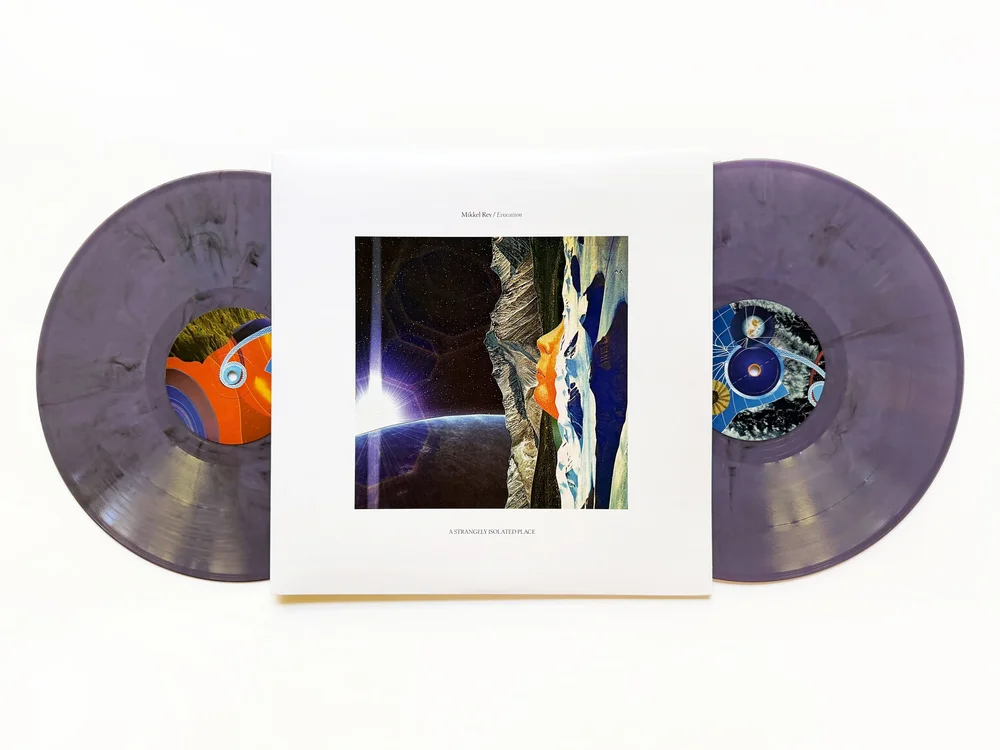
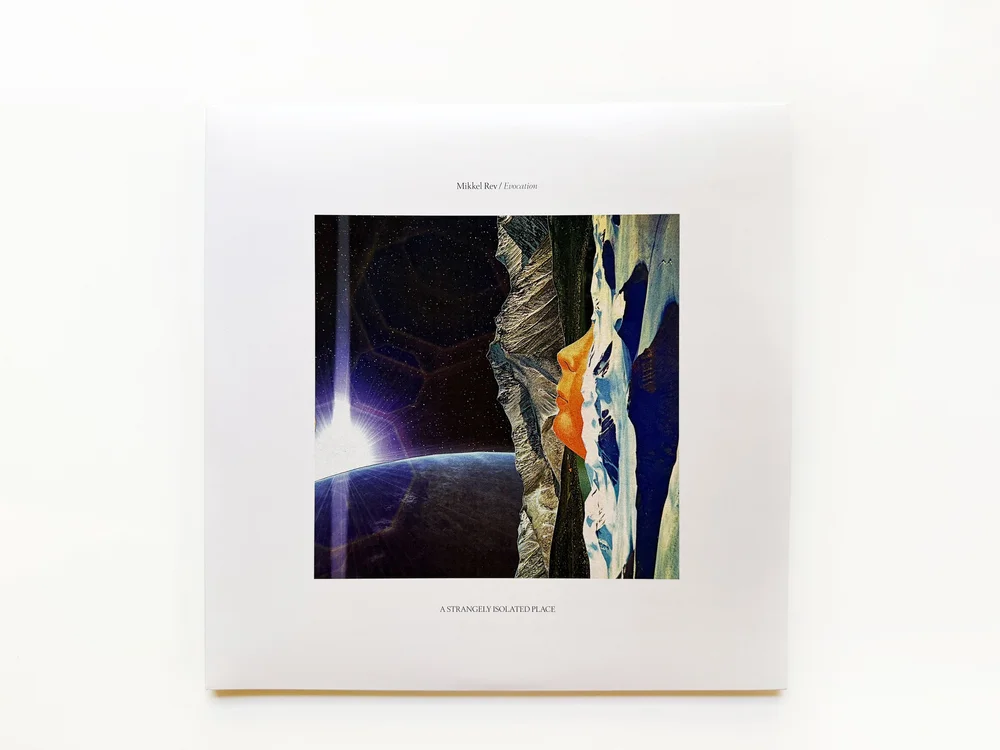
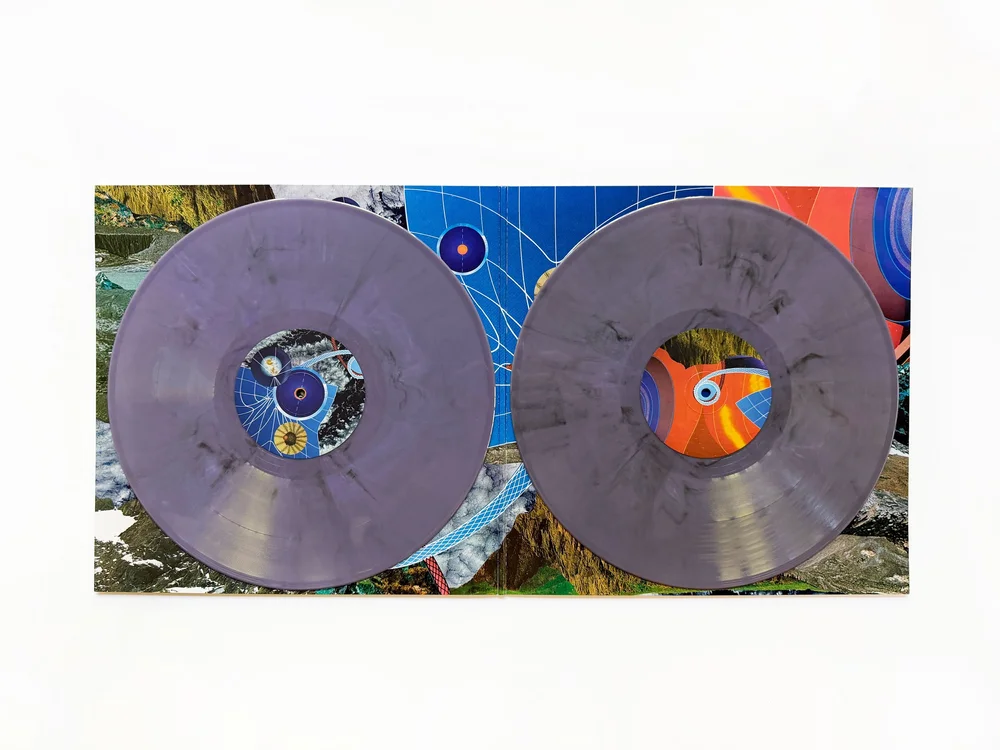
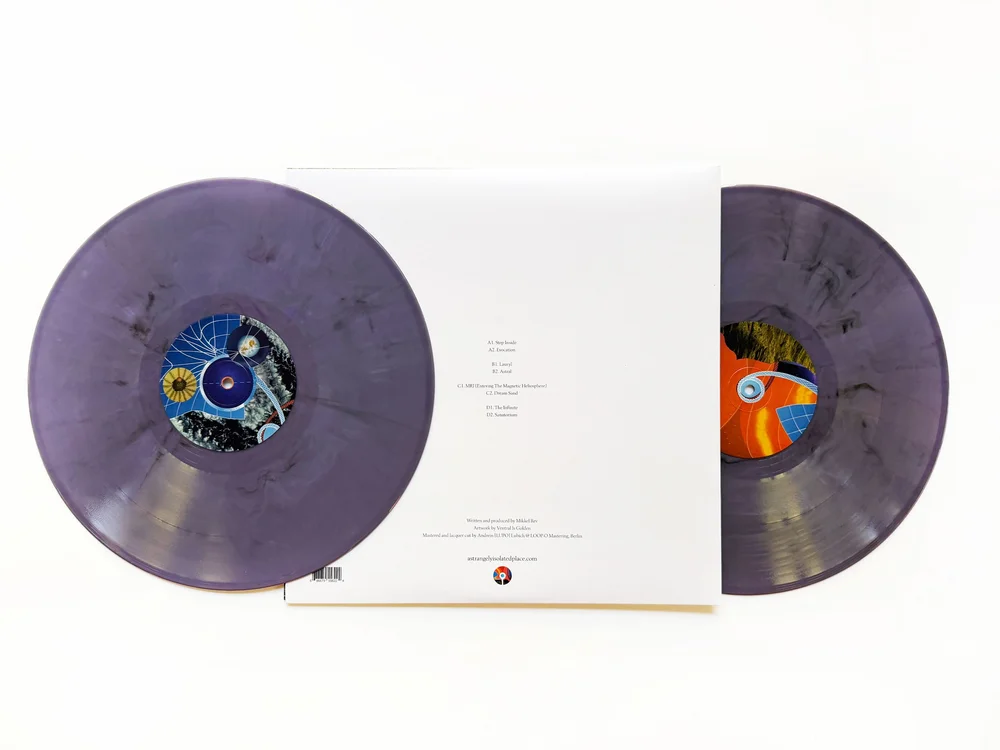
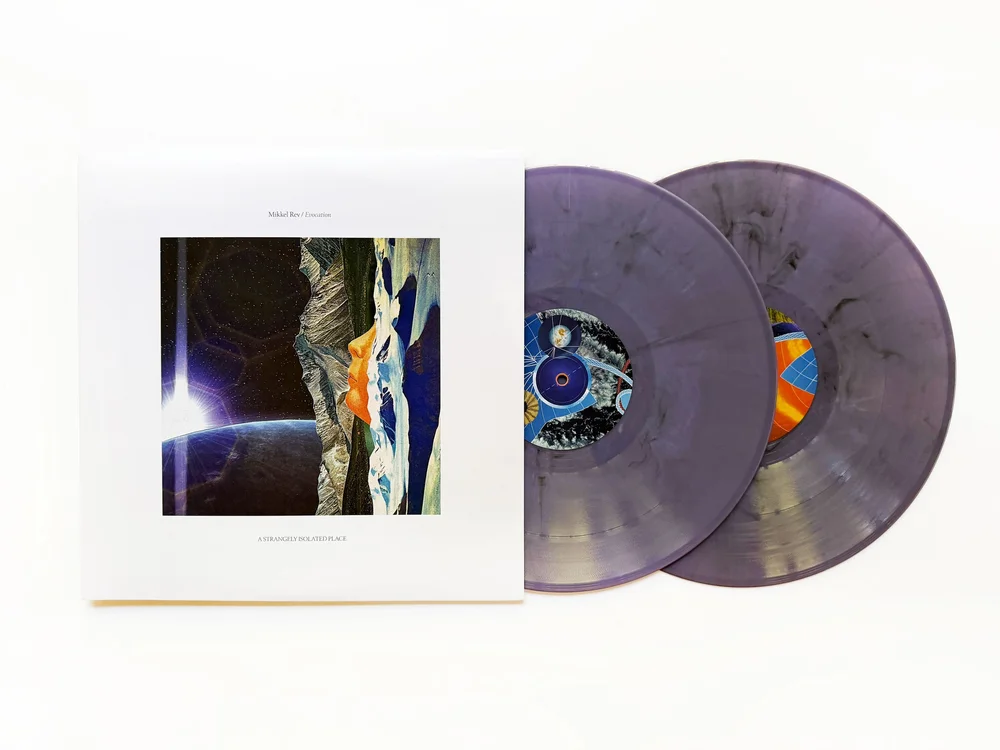
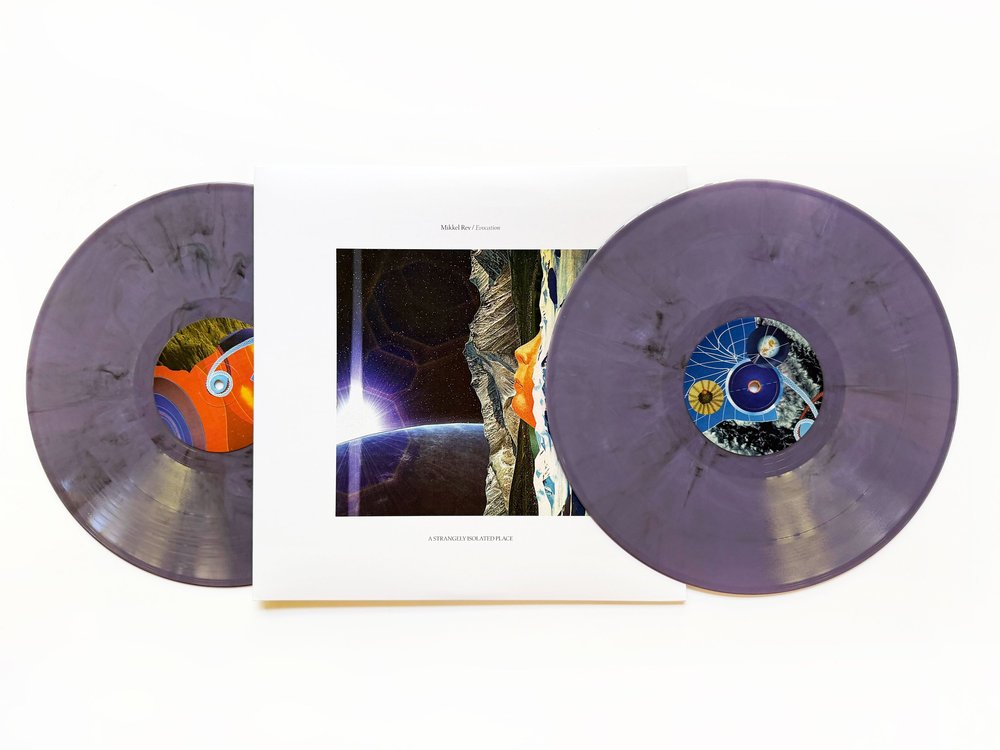
Enter the Magnetic Heliosphere.
Mikkel Rev returns to A Strangely Isolated Place with Evocation, his third full-length album shaped deep within the forests of Norway.
Since Mikkel's debut, The Art of Levitation first arrived in 2023, Mikkel has been quietly building his own corner of the ASIP catalogue. Last year's Journey Beyond expanded that vision further, revealing an artist increasingly comfortable balancing the emotional pull of early trance with a more reflective, ambient-leaning approach. While his work elsewhere naturally gravitates towards the dance floor through his own collective, Ute Recordings and other club-focused outlets, his ASIP releases have always evolved differently. Beginning with a larger body of material that's gradually shaped together, each album seeks to find a narrative without a dancefloor in place; one that moves naturally between momentum and stillness, carrying something of the spirit found in those early-'90s records that drifted effortlessly between peak-time energy and the quiet hours in room two.
astrangelyisolatedplace · Mikkel Rev / Evocation (ASIPV057) [Previews]Long-form compositions like "Step Inside" and "MRI" favor gradual development over immediate impact, while "Dream Sand" introduces shimmering rhythms that subtly shift the album's momentum and pace. The piano-led "The Infinite" offers a definitive nod to the enduring emotional pull of classic trance before "Sanitorium" closes the record with one of Mikkel's most restrained and affecting pieces to date.
Evocation continues Mikkel Rev's remarkable run on ASIP, extending a catalog where echoes of trance's formative years find new expression through the communal energy and natural surroundings of the Nordic forest gatherings that have become an integral part of his world.
Ventral Is Golden returns on artwork duties, with Lupo handling the mastering and cut. Released on August 28th as a gatefold double LP on dusty purple smoke and digital.
Buy at Space Cadets (UK/EU orders)
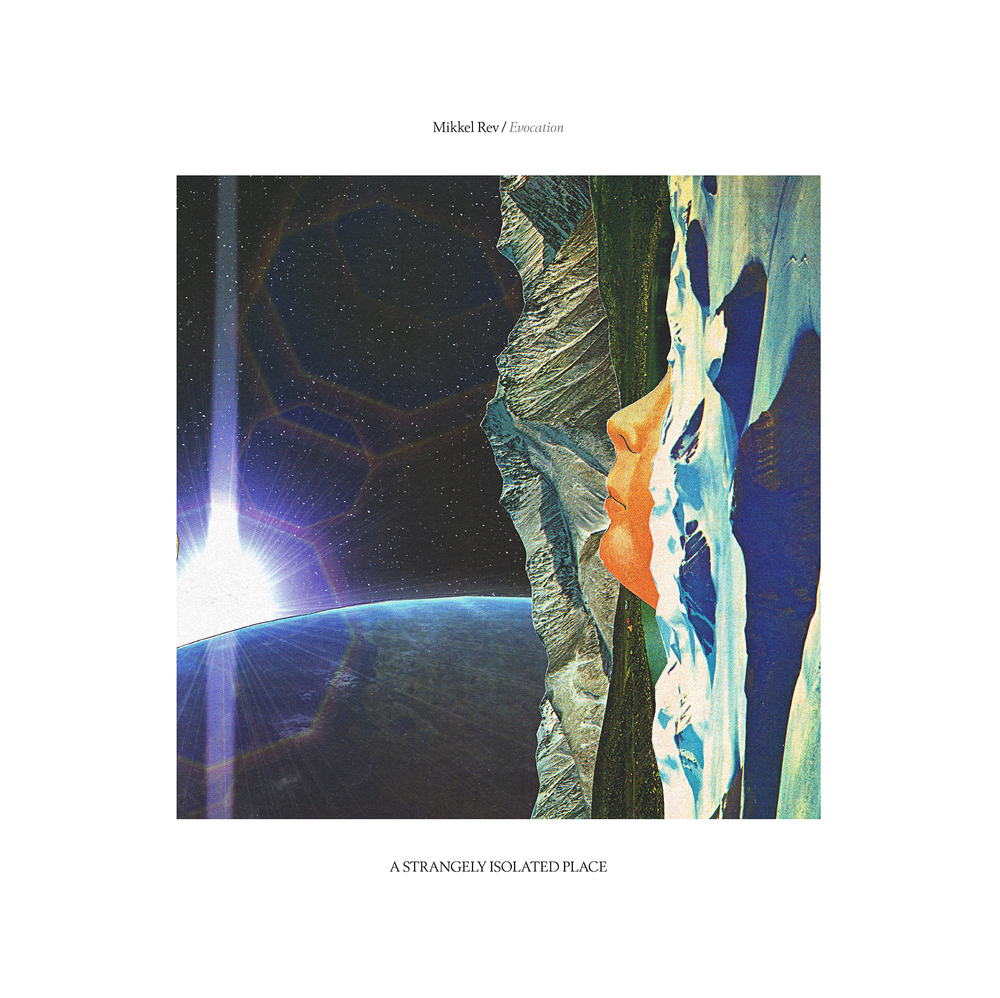
Today, I'm excited to welcome Thomas Meluch to our ever-evolving Headphone Community, who is mostly known for his music as Benoît Pioulard. I'm going to avoid copying and pasting his invented French-sounding artist name (which came to him in a dream!) and simply refer to him as Tom from now on. Besides this fascinating moniker, there is so much more to this American multi-instrumentalist…
In the comments to the previous post about Robyn Hitchcock and his attempt to perpetuate 1967... Phil Knight mentioned that there was quite a bit of it - back-to-psychedelia (specifically English psychedelia) in the early-mid Eighties.... Television Personalities... The Cleaners from Venus, The Monochrome Set...
Quite a bit of it - indeed there was, indeed there was.
Focused on the UK Eighties uptake of the UK Sixties vibe, what follows is not even the complete inventory...
First line of this references Rita Tushingham... Second verse references David Hemmings and David Bailey... the title nods to one of the Men From UNKLE. The entire lyric is a phantasmagoric montage of Sixties references
Patrick Macnee and Twiggy on the cover, not a collage but apparently a shot taken at a fashion shoot dedicated to the Avengers style...
This song by Billy Childish's early band the Pop Rivits might actually just precede the Eighties but I include as a nod to that whole Milkshakes et al scene
"I know you'll say I'm living in the past / But those Beatle boots were made to last"
An Englishy Beatles (psych-era) flavour crept into XTC's albums from Black Sea onwards and then eructated in Dukes of Stratosphear , a side project that was pure Rutles really.
Then there was the neo-psych DIY loner Nick Nicely.
From the 1982 album Psychotropia, "Hilly Fields" is the tune that has cult love
Vocal's a bit Buggly for me...
"Nick Nicely" sounds like the title of one of those character-sketch songs that were rife in UK pop circa 66-67. Or something off the shit McCartneyfied side 2 of Abbey Road.
Nicely popped up again in the "nice one, top one, get sorted" era, as part of the breakbeat house outfit Psychotropic who did the classic rave track "Hypnosis" .

Another Nick doing neo-psych in the early-mid 80s was Nick Haeffner who if memory serves I met at a party - a very quiet fellow, who shyly spoke of his music... and who then materialized a few years later with an elpee on Bam Caruso. Paul Oldfield gave it a generous hearing.

The Great Indoors is a good title - indeed I might have nicked that phrase for something or other, now I think of it
Paul mentions Julian Cope in the review and he would indeed have been the great example of a laughing-madcap-wannabe of the English Eighties.
As Copey put it in an interview I did with him in the '90s, his thinking circa Teardrops / early solo elpees was "the accumulation of all of my heroes would be one hell of god to be" - the heroes being Barrett, Roky Erikson, Skip Spence, et al, whose heroic intake he tried to match in pursuit of druggy divinity.
Julian did better enthusing about the original punkadelia than trying to bring it back (the solo LPs sound awfully 80s).
Liverpool really was the first of the several New Psychedelias of the decade: Echo and the Bunnymen and then all the other non-starter groups with daft names like A Shallow Madness. Even Liverpool groups who weren't psychedelic had psychedelic sounding names - Orchestral Manoeuvres in the Dark
On the less Cope-ious intake committed to journeying up the road of excess end of things, there was the whole Mood Six / Doctor and the Medics scene around the club Alice In Wonderland. Clothes horses and London scene-fabricators rather than real rainbow-chasers.
Soft as runny shite
More of a loner, there was The Bevis Frond - leaning towards acid rock rather than paisley psychedelia, heavy at times
The Legendary Pink Dots - who I rather liked. Edward Ka-Spel had a more expansive conception, informed by Krautrock and experimental music and possibly Hammill and Supersister, as much as by the Barrett side of psych. The track below is from the 1985 album Asylum - as Paul Oldfield, a Dots supporter, pointed out, an ambiguous word, suggestive of sanctuary but also a place of confinement for the mentally disturbed. Madness as visionary state but also estrangement and exile.
On the mainstream tip and far more superficial - a fleeting fancy - there was Prince with Around The World. Lamentably there was also "Sowing the Seeds of Love" by Tears For Fears.
Veering away from the flower power moment to something a little hairier and heavier, there was the Cult, conjuring up Steppenwolf and early Led Zeppelin and such like... much more cock in this rock than the psych boy-men. But they were bandying around words like "Love" and "Revolution" and even the cult-of-Native-Americans ("Spiritwalker" etc) is rather late Sixties, Jim Morrison's souls of dead Indians jumping into his child's "fragile eggshell mind" etc etc.
I did quite like this, more for the tingly filigreed intro than the pumping main groove-drive
I was quite won over by the "boogie 'til you blow chunks" of the next album Electric (1987), when Rick Rubin got them to strip the sound right down.
Astbury has lungs like bellows and the guitarist can screech, but the swing and smoky thickness of sound that Steppenwolf had is completely flattened out -
Groups like Walkingseeds were referencing Blue Cheer (the title of a song on their 1987 album Skull Fuck... more prosaically they also had a number titled "St. Albans").
But I've veered into the American Sixties...
While this was going on you had the label Bam Caruso and the related magazine Strange Things (Are Happening) doing the heavy work of historical excavation: digging (for) freakbeat on the Rubble comp series, John's Children anthologies etc.


And that reminds me of Richard Norris, who was Bam Caruso's label manager, and who then teamed up with Genesis P-Orridge - Psychic TV already on this tip with their Hyperdelia concept: the Brian Jones tribute "Godstar", the cover of "Good Vibrations" - and together Gen and Richard did Jack the Tab, which was sort of but not really acid house.

The Shamen also plunged into the techno-house sound, with better results than either Jack the Tab or The Grid. But back in the Eighties - when I saw them about four times, always as the support or middle of the line-up group - they were total psychedelic revivalists, always performing with Op Art projections.
"Young 'Till Yesterday" - hark at the 67-reference there.
The guitar are quite nicely overloaded and frazzled - Electric Prunesy, White Noise-y - but the songs and the singing are faint and feeble.
This next one is transitional, when they are starting to get into beats and samples, but it's more industrial in feel than it is house-groovy. The title "Christopher Mayhew Says" is about the Liberal MP who took mescaline as part of a Panorama experiment for the BBC.
It was their pre-existing interest in hallucinogens that drew The Shamen to the new dance-drug culture.
And it was at one of the Shamen's Progeny events - them plus Orbital playing live but also loads of deejays - that I had my rave conversion experience in the autumn of 1991.
Good Lord, from "Pictures on My Wall" and "Sleeping Gas" through to the Second Summer of Love (1988) and the Second Second Summer of Love (1989 - getting our heads untogether in the country), the Eighties really was Sixties flashbacks all decade long, from start to finish...
Even the words "rave" and "raver" are Sixties words

(And then, crikey, it carried on into the early '90s with baggy and Inspiral Carpets with their pudding bowl haircuts and sub-Seeds keybs.... Candy Flip covering "Strawberry Fields Forever")
Still, I suppose, bringing it back to where this all started- conceivably this makes Robyn Hitchcock a pioneer of sorts, the earliest of adopters - with the Soft Boys, the first to go back to this particular moment.
If I recall right, the advert for the debut Soft Boys single - released as New Wave was in full swing - bore the proudly untimely slogan: Psychedelic Music.
The second single's title is flying the phreak flag quite fervently.

But perhaps they weren't the first "acid-punks" after all.
Wire's Chairs Missing got criticized in some quarters for having gone in the space of a year from Pink Flag to Pink Floyd - not just for the whimsied picture-lyrics, but for the glassy, heavily effected guitars (using delay and flange, which is just a frostier version of 1960s phasing) and - the horror - for using keyboards.
The Stranglers were all Doorsy with the rippling grandiose organ solos and weird FX on the vocals ("Peasants in the Big Shitty"). In interviews they gruffly stated "we're into acid".
The Fall were "pickled" (Martin Bramah's word) in shrooms and LSD as well as amphetamines. Indeed Mark E. Smith's vision-thing was a catalytic influence on Julian Cope and Ian McCulloch. For a time they followed the Fall around from gig to gig.
And then out of The Fall sprouted The Blue Orchids, the truly great and genuinely psychedelic band of the Eighties.
(Them and Meat Puppets. But we won't go into the all the American acid-punk contenders - Chrome et al)
But I have now thought of something else...
The psychedelic revival was started not by New Wavers after all - but by a handful of Old Wavers who had lived through it the first time round as participants.
Todd Rundgren
That's 1975
1976 - wholly pointless recreation of the original!
And closer to the English source...
Steve Hillage (who didn't so much return to psychedelia as he simply stuck with it)
That's 1977 and it's produced by Todd Rundgren
Brian Eno and Phil Manzanera, with the short lived 801, covering "Tomorrow Never Knows" in 1976
Goodness, that's awful....
Meanwhile...
Eno was one of the first, circa his early solo albums, to talk of the enduring influence of psychedelia on him. So (as per Hillage) it's not so much a revival or a return, it's a continuation. Much of the pre-punk scene is post-psychedelic....
Still, doing the cover versions is a retro move.
Blimey, ahead of the pack in going back, you of course have David Bowie with Pinups.... That is 1973, harking back to less than a decade earlier, to 65-66.
"Shapes" - or "shipes" as Bowie ridiculously pronounces it - "shapes" not of things to come, but of things that have been and gone.
Twiggy on the cover too, almost a decade before Television Personalities.
And Roxy, pastiching and parodying everything under the pop sun, also did a psych-era style "false ending" on "In Every Dream Home a Heartache". With a swirl storm of phased drumming and phased guitar like "Itchycoo Park" and Todd's own Nazz track "Open Your Eyes". That's from For Your Pleasure, 1973.
This experience of "retro" receding deeper into the past is familiar to me from researching Retromania ... as soon as I thought I'd established a hinge point, "the rift of retro", I would realize there was an earlier one.
In rock I managed to trace it (i.e. rock referring back to itself, its own history - not some other earlier sound like music hall) definitively to the Beatles doing the Chuck Berry soundalike "Back in the USSR" and to a 1967 Move B-side that pastiched the Beatles themselves circa "Daytripper" i.e. two years earlier. That was the ground zero point of retro and meta in pop music.

Saw Robyn Hitchcock doing "Brenda's Iron Sledge" on Old Grey Whistle Test and took against it. Witnessed a support slot for R.E.M. in '87 and that sealed the aversion. Then I'd run into college rock types in America and be mystified by their veneration for his Eighties albums. Even hardheads like Forced Exposure - who usually disdained college radio lightweights like Let's Active - reckoned Robyn to be some sort of visionary.
But in recent years I have found myself warming to the honest way Hitchcock describes himself as a man out of time, an epigone, someone gleaning up in the wake of visionary pioneers. Viz his memoir part 1...

In a recent Guardian interview around his memoir part 2, Stranded in the Future, he says:
"Although my prime influence was Bob Dylan and Dylan showed me what I wanted to be, Syd Barrett showed me how I could be it. And I actually wound up sounding like John Lennon. To me, the Beatles are at the beginning and the end of everything. But my role has always just been to carry on a certain kind of music, which appeared in 66 and 67. My influences are all those old dead English blokes, basically....
"I didn't invent this field of music, but I've perpetuated it. I wanted to maintain a tradition and do new work in that tradition. But the guys I worship were innovators. I'm the opposite. I'm sweeping up after them. It's like, 'Oh God, here comes Hitchcock with the broom.'"
That's admirably clear-eyed, isn't it?
About his Eighties success in America:
"It's funny when people think of me as an 80s artist because I think of myself as a 60s artist. I literally am the last to hatch out, I think. I should be in a museum with Ron Wood. I was never actually a pop star. I was on MTV quite a lot in the States in the late 80s and early 90s, but that's a long time back. I always manage to dodge the extreme limelight. You know, in some ways I've avoided both success and failure. It's fantastic. And it's always a bit of a shock when somebody identifies me. Mostly they think I'm Nick Lowe, which is great. But then occasionally people then think Nick is me. I've signed an autograph as Nick Lowe once or twice."
I can feel myself relenting... actually considering listening to the solo albums.... perhaps even "Brenda's Iron Sledge" will get its second chance!
I will say, Hitchcock did record, with The Soft Boys, at least one stone classic. And it doesn't actually sound that 1967, it feels very much of whatever the year it was it came out.
Talking about wanting to destroy someone... over at Pantheon I discuss the mystery of a missing Soft Boys song, "The Lonesome Death of Ian Penman".
Going back to this idea of being an epigone, the honesty and even honour of accepting that you are secondary artist, tilling terrain opened up by pioneers....
An intriguing thing that emerged in another recent Hitchcock interview, with Mojo, is that although he is an overtly psychedelic artist, he was relatively inexperienced with psychedelics:
"I hardly took any acid at all. I don't think I need hallucinations. Sometimes I just feel I am one."
That adds another dimension to the idea of being a "secondary artist". You skip a stage in the process...
Instead of "taking drugs to make music to take drugs to" - the mission statement and modus operandi of Spacemen 3 - you absorb it via the sonic encoding of hallucinatory experience in select Sixties recordings. The music is the drug.
In a piece on Rock and Self-Destruction in the new issue of Vice, I wonder the extent to which this was widely the case with the Still In A Dream groups...
A phrase I use in the book for the era is "a second psychedelia". But in quite a few cases, I imagine it was also a second-hand psychedelia.
Some of the groups were doing acid. For a few, harder drugs. Spacemen 3 energetically explored the whole pharmacopeia (Sonic Boom even experimented with chloroform!). But I'm guessing that a possibly surprising number were getting it indirect, vicariously, via the records and the records alone.
Prompted by the way the music was going, I got into using Sixties lingo in my writing - mind-blowing, kiss the sky, blissed out, far out, tripped out - for quite some time before I could answer Jimi's question in the affirmative...
Now here's a thing that puzzled me for a while...
The Soft Boys recorded a song titled "The Lonesome Death of Ian Penman" (which I've only just realised is an extension of the Dylan fandom - "The Lonesome Death of Hattie Carroll") (and which I seem to remember was once findable out there, but doesn't appear to be anymore).
But then I came across what looks to be the very first NME interview with The Soft Boys by one Ian Penman. And (despite the headline) the July 1978 mini-feature appears to be thoroughly positive.


So I wonder what IP did to piss them off?
I just remembered where I first read about this song (only ever recorded as a demo for Radar Records, played live just once). It was an enormously long 1988 interview with Robyn Hitchcock in Forced Exposure (as discussed at the other place, one of those American zines that venerated RH as some kind of visionary seer).

Interviewer Nigel Cross asks whatever happened to "The Lonesome Death of Ian Penman" and Hitchcock explains:
"Well, it was recorded -- there's probably a quarter-inch version of it knocking around. We never used it -- I think, to avoid libel, we phased out the vocal. Ian Penman was one of the people who put the knife into The Soft Boys' back. And I've never forgiven any of those people. I don't forgive easily. If they're still alive and I've finally made it when I'm ninety-three, they've got it coming. When N.M.E. finally comes to my door on its knees for a front cover feature, I shall say, "Only if you get Ian Penman out of whatever institution he's in, have him cleaned out and sent 'round to apologise for his crimes publicly!" I can understand people not liking Can Of Bees. But it was defenceless. The Soft Boys were an easy target. We didn't have any allies -- any support. We didn't have a record deal. We financed the stuff ourselves. We had a small coterie of hard-core fans. And the whole thing was demolished. I thought it was peculiarly cruel to pick on an act that was suffering from having been the flavour-of-the-month. My bitterness knows no bounds."
Hmmm, so did Ian, in fact, "build them up just to knock them down"? Is there some later vindictive review of a live concert or an album?
Building them up and knocking them down was a sin-drome that rock papers were always accused of, , usually by fans who didn't understand how music magazines work at all.
In fact
A/ usually it's completely different journalists at the paper who do the building up and the knocking down. The builders and the demolishers are completely separate. There isn't some kind of decree from above that everyone on the paper obeys, a policy towards a particular band.
B/ it's also actually possible - and perfectly legitimate - for a critic to change their mind, especially if the promise once detected in an emerging act vaporizes by the time the first album comes out.
My time at Melody Maker overlapped with the final year or so of Brian Case being on the staff. I don't think we exchanged more than a few words - he was pretty fed up by that point, barely in the office (the jazz section had been discontinued some years earlier, he was writing entirely about film by that point, I think). Soon he left to become the main writer about film - his other great passion aside from jazz - at Time Out.
I didn't know then that before joining the Melody Maker he had written for NME for several years, covering a similar sort of area - jazz, with the occasional foray into rock.
A great critic - here's something I found just today where he's caustic about a record I like (although in truth it's really "Jazz Is The Teacher (Funk Is The Preacher)", the inclusion on C81, that really lives with me). I don't understand half the references but I enjoy the way his language moves.

Then in praise mode he's paying tribute to Mingus


Ambivalent seemingly about Ornette Coleman's harmolodics (the same thing that James 'Blood' Ulmer trafficked in)

And a nice, nasty swipe at Julie Burchill - who'd he encountered in his later years at NME - and here is brought up on her lack of movie knowledge.

And then this droll piece, which is possibly off-color by today's standards- comically mixing up Kingston, Jamaica and Kingston-on-Thomas

Ooh and praising, mostly, a record that I love - and that was in fact the very first rock music album that I bought, the week it came out. I think Case is wrong about "Dance of the Screamers", it's exactly as long as it should be, and one of Dury's greatest moments (Davy Payne's too)
Ian Dury and the Blockheads
Do It Yourself
Melody Maker, May 19th 1979
by Brian Case
Uneasy lies the loaf that wears the titfer. Ian Dury's new album dispenses with the outsize characters of New Boots & Panties and moves bravely — since that cast of grotesques is clearly reproduceable, and bankable — into the autobiographically confessional. Of course, that needn't necessarily rate a round of applause — I would be desolate if Randy Newman broke cover — for, as Billy Wilder said of Marilyn Monroe, "there are certain wonderful rascals in this world, and one day they lie down on an analyst's couch and out comes a clenched, dreary thing."
The positive sensuality of 'Wake Up And Make Love With Me' has disappeared and so has the once-removed sexual violence of 'If I Was With A Woman'. Poles have been eroded, and what remains is infinitely true, infinitely troubled, and communicated through craft — and that is the name of the game. Dury distances pain through his love of words: he does not need the swaddlings of impersonation.
'Dance Of The Screamers', therefore, is a dance in the sense that Last Tango In Paris and Strindberg's Dance Of Death are a knees-up. Mother Black, and they draw their catheter of blood. 'Screamers' sets his on-stage kukka-burra brips and gibbon squeals in the context of total despair, algebra of need, visceral response, and is paralleled by what sounds like Davey Payne's overblown upper-register saxophone: a hip correlation. The lyrics are a blat of sexual rejection: "it's hard to be a hero when you've had your helmet cracked"; and the Black/Jewish wisdom in extremis of "some of us are witty, luv, it comes from facing up to facts." The number is too long, and the sarcastic "skies are blue" interjections are too obvious. It needed longer in the oven.
'Sink My Boats', on the other hand, is excellent. Germinating from the Woody Allen routine — "My wife was so immature she'd come into the bathroom without knocking and sink my boats" — the sketch that brought you "I didn't recognise my first wife with her wrists closed" and a lawsuit, Dury has constructed an internal monologue which precisely surfaces character. The closed circuit of "will you still love me when I'm over the hill is another stupid question" anatomises the endless bicker-and-rebuttal of a relationship on the skids, Where both parties bridle at the obverse of their ploys. Did I tell ya this is only rock 'n' roll? The tune is lovely, the arrangement harmonically complex, and the keyboard breaks — Mickey Gallagher? — inventive.
A more diffuse despair can be found on 'Mischief' and 'This Is What We Find'. Both utilise a catalogue of unfortunate happenings to fictitious characters, but move into sharper focus. 'Mischief' lists various naughtinesses — "Barry breaks the windows of his broken home — 'ave a guess — his tiny mind's been scarred" — and subverts these ineffectual rebellions still further with inconsequential documentation — "his dad's a shipping clerk." Behind the pathetic hell-raising lies the old cockney routine of local hero-worship — 'ee ONLY shaved a cart'orse's ankles and flogged it to The Filfth — tasty but inadequate — and the number ends in infantile apologies and pleas for mercy. It's very good indeed, and will get better on the road, as 'Quiet', 'Sink My Boats' and 'This Is What We Find' have refined against a sounding-board.
'This Is What We Find' — the outstanding piece here — is an Edward Gorey amusing mausoleum of catastrophe, and Dury takes transparent refuge in the sacerdotal pipes to reflect upon its burden — i.e.: the flesh is grass. A beautifully balanced piece, in which gabble prepares for thematic repetition, and one laughs at the indignities of the human condition: "A sense of humour is required amongst the bacon rind."
There's plenty of the familiar suburban self-improver in the vocabulary — and elsewhere, "blandishment" in 'Sink My Boats', "the wherewithal" in 'Dance' — as a mockery of the orotund in the face of such humiliation, and an Art School survival in the term "jubblified." There is a jolly pump and Wurlitzer bounce to the backing, and fun in the misfit of words to music.
'Don't Ask Me' and 'Inbetweenies' deal with the early stages of romance. "Here I stand with a doughnut for a brain," sings the suitor in 'Don't Ask Me', and goes on to list his virtues like a street-trader: "On my life, I believe we're tailor-made." The Blockheads complement the voice with nicely varied interjections, and there's a good guitar solo. All very Aldgate, and effective.
'Inbetweenies' is more complex. "A body likes to be near the bone" and "I die when I'm alone" indicate the desperation in this pitch, which settles for friendship with "at least you've put me on the team." There's a beautifully placed ambulance siren in the backing, and some good jazz piano.
'Quiet' contrasts three manners, the polite, the authoritarian and junior rudery. Based on an old schoolmaster of his, Dury's lyrics catch precisely the tone of posturing officialese — "quiet, persistent louts and clowns," "quiet, or else there will be measures" — and subverts it with a chorus of "plop-plops" and "big jobs." The guitar break, spitting like a cat in a bag, is very impressive.
'Uneasy Sunny Day Hotsy Totsy' and 'Waiting For Your Taxi' are slight, the latter mingling taped conversation and traffic noises like Mingus and Kirk, and launching an upper-register screamer from Davey Payne. Here is a deep, pneumatic whump to the vocal, a catchy chant like 'Rhythm Stick'.
Finally, 'Lullaby For Francis/Frances' — a sort of bookend to 'Wake Up' — opens with a fanfare before ducking into reggae. Dury's voice here is beautifully tender, deep, husky — for a change — cleanly recorded. I missed some of the words elsewhere in the mix. Melody and treatment are charming, and Charley Charles's beat — centipede with a wooden leg — is lithe and living. In the context of the album, a lullaby — "safe and sound, that's a promise" and "it's time to impose a curfew" — registers like the all-clear after a psychic air-raid.
Do It Yourself stands in the same relation to New Boots & Panties as Joseph Heller's second novel, Something Happened, does to Catch-22. Both artists kept us waiting, and finally delivered a less fevered dimension which nonetheless bears the authentic trademark.
Whether any of the new numbers will adapt as singalong material in live performance is conjectural. The important thing is that Ian Dury's creativity is still functioning at peak, and will move you from tears to laughter.

Advert for the gig, from NME, 7 July 1979
As reported in the local paper, the Stevenage Comet, a gang of skindeads 'attacked members of the crowd, charged the band and tried to smash up their equipment'. The trouble apparently started during Scritti's second number and the paper reports that 'lead singer Tom was cut on the head when he appealed to the skinheads to behave'. I assume this refers to Scritti drummer Tom Morley, rather than the singer Green Gartside. Not a great night for the band as their transit van was in an accident on the way home. The report also mentions that jazz saxophonist Lol Coxhill was playing with the band.

'Skinheads attack crowd at rock dance' - report from the Stevenage Comet, 11 July 1979 and follow up letter. From Hertfordshire Archives.
Gareth Dent from Stevenage RAR wrote to complain about the paper's coverage, not denying what had happened but stating that it only involved 5 or 6 skinheads, and not all the skinheads present joined in. I assume Gareth also wrote the article in local zine Tooth and Nail which makes similar points and mentions that 'a fight took place between members of the band, Stevenage RAR, the person handling the PA and about five skinheads', after which Scritti completed their set.

Tooth and Nail, 1979
Further background on Stevenage RAR, which included legendary Hertfordshire underground figure Mark Astronaut, is given in Marcus Blakeston's excellent book 'Survivors: 45 year of the Astronauts':
'The Stevenage branch of Rock Against Racism was formed by husband and wife David and Janice Tittle, who began by handing out flyers around the town inviting people to attend a meeting at the Red Lion, a pub on the High Street. From this they recruited Jeremy Wiltshire, Shaun and Christine Manning, and Gareth Dent. Gareth worked for The Guardian in London, so he became the local branch's main contact with RAR head office, while Jeremy had some accounting experience so he was a natural choice as treasurer. Despite having no formal training in graphic design, Gareth also created all their promotional material and, with help from Shaun and Christine, liaised with venues and booked bands to play at their events.
Stevenage's main live music venue at the time was the council-run youth club at Bowes Lyon House, but due to a media-induced fear of 'punk riots' they refused to allow the newly established Stevenage Rock Against Racism to host any gigs there. Instead, they were forced to turn to Hitchin College seven miles away. This was a venue Mark Astronaut frequented on a regular basis, and during the inaugural RAR event there a mutual friend introduced him to Gareth and Christine. Sharing their antiracist views and keen to help out in any way he could, Mark then started attending RAR branch meetings in Stevenage and got to know the other committee members.
While most of the gigs held at Hitchin College went smoothly, playing under a Rock Against Racism banner inevitably attracted attention from the far-right from time to time. When they booked the unashamedly Marxist band Scritti Politti one night the venue was invaded by racist skinheads who gave Nazi salutes while the band played. "There was loads of them at the front," Mark remembers, "going 'Sieg heil, Sieg heil,' and the singer said something like 'All you skinheads think you're so hard, we can have you any time!' -which I thought probably wasn't the best thing to say under the circumstances, considering how many of them were there. Then of course it all erupted and there was a big fight."'
[I have to say that Mark's recollection many years after the event may not be completely accurate - the Tooth and Nail report states that a member of Scritti appealed for the skinheads to stop rather than inviting them for a fight. The band were more inclined to the intellectual side of Marxism than to streetfighting, but I stand to be corrected.
Mark Astronaut later contributed to a track on a Stevenage Rock Against Racism EP.
See previously:
Hitchin demonstration against the National Front 1971
Far right skinheads attack Redskins at GLC gig 1984.

Giles Bailey investigates the New York experimental theatre company's use of vinyl records in their latest production, Nayatt School Redux
The first time I saw The Wooster Group work with vinyl records was at the Pompidou Centre in Paris in October 2016, where the longstanding New York experimental theatre company were mounting their piece Early Shaker Spirituals. It was a masterful, spare performance where a 1976 LP of the same name by the Sisters Of The Shaker Community in Sabbathday Lake, Maine, is played in its entirety. A performer introduces the record, then places it on a turntable visible to the side of the stage and lowers the needle. Four older women in traditional Shaker attire - Elizabeth LeCompte, Suzzy Roche, Frances McDormand, and Cynthia Hedstrom - then present a series of dances and sing with the unaccompanied voices of the women on the recording. This is punctuated by pauses where liner notes are read and then the record is turned over.
When side two begins, the women are joined by four men in their thirties who dance with them until the album is complete. The work is austere and tender, taking the artefact of the LP and expanding its modest status into a live event. It spins and activates an embodied response to the history of the devout, celibate, primitivist Christian sect that celebrates its magic and its strangeness. The Shaker women's music is a stirring engine for a performance driven by the liveness of a needle as it rides along a microscopic groove, translating its ridges into electrical impulses which are amplified to become sound.
I was aware of this recurring device from reading about early Wooster Group works. The dance piece Hula (1981) uses a similar process with an LP by The Waikiki Hula Boys, this time with performers clad only in grass skirts and leis and marking the work's ending by urinating together. The incarcerated singers documented on the 1965 LP Negro Folklore From Texas State Prisons are channeled through earpieces worn by performers Eric Berryman, Jasper McGruder and Philip Moore in The B-Side (2016). Other albums feature in Get Your Ass In The Water And Swim Like Me (2026) and LSD (…Just The High Points…) (1983), but the work where records spin with the most frequency and complexity is Nayatt School from 1978, recently reanimated by the company in April this year at London's Coronet Theatre as Nayatt School Redux.
Witnessing the piece with its many turntables positioned across the set producing a dynamic collage of sound throughout prompted questions about how a performance like this might make us think about the vinyl LP as more than just a carrier of recorded sound. I was left reflecting on how it might be a special tool for performance-making, introducing new potential for listening as part of a work of theatre.
In Nayatt School Redux, founding member of the group Kate Valk evokes the original production by delivering its opening monologue by her late friend and collaborator Spalding Gray. Newly restored video documentation and an audio recording so poor that voices are little more than suggestions of speech buried in textures of noise and hum play alongside her accounts of how the work came together, experiences of performers and Kate's own journey to becoming part of the ensemble. She explains how Spalding would play extracts from records chosen from his collection as part of this introductory section, driving content together in incongruous combinations. At the heart of the performance is a 1950 cast recording of TS Eliot's The Cocktail Party starring Alec Guinness and Irene Worth, a play from which scenes are later acted out in an unhinged fashion by the Wooster Group cast. This is set against sections from Arch Oboler's Drop Dead! An Exercise In Horror! and eruptions of Cerrone's disco epic "Love In C Minor".
When I spoke with Kate Valk about the process of making Early Shaker Spirituals after the performance in Paris, she explained, "In the early 1980s, our record collection was the ancient equivalent of the internet. We would come together as a group and there might be a text that for one reason or another came to the centre of the group… So we'd have a text and then it would always be like, 'Get the records out!'" She went on to describe how the company's director, Elizabeth LeCompte, would often begin the devising of a new work with an imagined architecture for the space. "Then," she said, "we'd just start jamming: read the text, play the records… It's like every era has its medium and at that time, people were really into vinyl!"
Records are woven through Nayatt School Redux and the act of putting LPs onto turntables is part of the performance. Their materiality is consciously underlined. Much as Kate Valk emphasised when we talked, saying, "The idea of the record - yes, it's the soundtrack, yes, it's the primary source of material, and it's also a visual element and artefact." It leaves the audience with audio to interpret, an image to read and a tangible sense of sound inscribed into an object, drawing attention to how, like the histories being studied in the piece, the records are rarified, special and fragile.
In the closing section of the performance at the Coronet, the frenzy has died down and Kate Valk shares her memory of how Nayatt School ended in its original incarnation with the destruction of the records. She explains how lit matches were thrown at them as they turned, performer Libby Howes reached down her dress to grip a turntable arm and scratch it suggestively against the vinyl, Ron Vawter took off his clothes and attempted to use his penis as a stylus. It sounds like a moment of alarming and transgressive catharsis. As this account is given and Scott Shepherd shuffled to the back of the stage with a record player in his hands and trousers round his ankles in an echo of Spalding Gray back in 1978, I recalled the strict instruction I was given as a child about the care necessary in taking an LP from its sleeve and repeat with second nature today each time I play one. Nayatt School Redux's disobedience, in terms of handling both records and histories, is a prompt to consider why either might be deemed precious. It activates bodies across time and inflects them in different ways with music and sound. For the collective 60 minute duration of the piece, the audience is invited on that journey too.
Leaving the theatre, I couldn't help but think about how histories degrade, skip, or play, with beautiful, momentary clarity. I thought too about how I might come to accept or even cherish accumulated dust in the grooves or the unique smear of fingers for the singular liveness of the resulting pops, crackles and jumps.
Nice 'n' slinky Ray Keith (+ Nookie) remix
in two parts
and then the Shades of Rhythm version, the "Hard"
halfway through the "Menace" diva sample appears - much closer to its original speed rather than the ooh oohing whipped soul-cream of the Rufige Cru track
But where oh where is the "Peace Sign (Classic Piano Mix)"?
Ah seems it Was reissued by Kniteforce
https://kniteforcerevolution.com/store/product/peace-sign-ep-12-vinyl
Ar least you can hear the original demo version
https://shadesofrhythm.bandcamp.com/track/peace-sign-original-demo
Shades of Rhythm do have one other track that really does it for me
Gaseous diva bliss-groan sublimely reversioned in

People are constantly asking me for my thoughts on Mark Fisher.
Only a slight exaggeration.
It actually got a little wearisome and I had to start saying no.
But then I seemed to get a second wind. Or maybe I just found easier to comply than to write the note explaining why I couldn't.
Here's some thoughts requested recently by a European journalist - I have no idea if she used them. Waste not want not, as me old mum says....
1. Fisher seems to have a lot of impact on younger audiences, even among those outside academia. Why do you think his work resonates so much with a generation that were still quite young when he passed away?
I think it's the way Mark used his personal experience - depression, dealing with bureaucracy in the workplace, etc - as a basis from which to write outwards, as it were, towards larger principles and a systemic and structural analysis. It is very relatable and accessible, it helps readers understand abstract ideas. He was also a stylish, yet crystal clear, writer - it is entertaining as well as illuminating.
He writes about depressing things but the effect is not depressing - even just apprehending things clearly is energizing. And usually there is some kind of hopeful aspect.
The idea that your depression and anxiety is not the fault of personal insufficiency but caused by systemic tendencies is a liberating message.
Another thing that makes it relatable to young people is the way Mark used music and popular culture (mainstream films like The Hunger Games) to make ideology and political structures legible.
Another factor is that Capitalist Realism is very short - it's only about 80 pages long. You can read it in an afternoon.
2. Since Mark's passing, pop music has taken on new paths -- including new chaotic and fragmented genres like hyperpop, rage, etc. Do you think these new genres and cultural phenomenons still have echoes of "hauntology" and "retromania" that was discussed by both of you in the 2000s and 2010s, or do they mark a departure from these frameworks?
Well, retromania and hauntology are not music genres - they are culture-wide formations, manifesting in quite disparate areas - music but also fashion, TV, film, visual art, literature, videogames etc.
At the same time, neither retromania nor hauntology apply to the entirety of popular culture, or explain everything that is going on in the culture or society. They are tendencies or currents - structures of feeling that can seem dominant at certain points and then prominent but not dominant at other phases.
I would say peak retromania was from around 2005 to 2013 - I see Daft Punk's Random Access Memories as the absolute zenith but in some way the swan song of retromania.
But even during this very retromanic time (conditioned by the emergence of YouTube, then streaming, among many other things) there were things going on in music and the culture that are not retro or that are even anti- retro. A genre like footwork would be one example. ASMR videos is another new cultural form that has nothing retro about it.
Around 2011 there was also a trend for what I called digital maximalism - ultra-bright, crisp, slick, glossy sounds (very different from the sound aesthetic of hauntology which is foggy, soaked in reverb, faded-sounding). Artists like Rustie and Skrillex. Hyperpop is an extension of that glossy, dry (no reverb) aesthetic but combined with a Baudrillardian simulation politique that parodies consumerism, glow-up glamour, and influencer culture (InstaGlam, someone called it).
I would say the Auto-Tune trap of late 2010s - Future, Migos, Playboi Carti, Young Thug, Travis Scott - is another formation that has nothing to do with retro. But unlike hyperpop, trap is minimalist and hypnotic. A new kind of woozy psychedelic ambient music with post-verbal vocals chirruping ecstatically.
3. There's been a lot of discussion about how music criticism has "softened" over the last couple of years. Fisher could be a very rigorous and, sometimes, unforgiving music critic (I remember, as an example, a specific article he wrote for k-punk on Glastonbury). How do you think his writings fit into this new music criticism landscape?
One of Mark's most potent concepts was nihilation - the idea that music culture is driven by dialectical energy and that critics - but also musicians (who are in a sense active critics) - operate by opposing the things they don't believe in or respect, and that their goal is to discredit their ideological foes. He didn't believe that that everything was equally valid and everybody should get along nicely. He didn't believe in that "each to their own" idea - he wasn't into tolerance or acceptance. So yes he was "unforgiving" to things he thought were mediocre or a waste of time or actively pernicious. Like many of us who grew up on the UK music press, he had a bi-polar relationship with music - he thought some things were great, heroic, inspiring, and other things shit, lame, depressing. And he thought there were ups and downs in culture, not a steady state of quality. Exhilarating phases alternated with down periods - crashes that follow the manic collective high.
4. The way Fisher mixed cultural criticism, political analysis, and personal writings about his own mental health was distinctive. What do you think made him such an interesting and compelling writer?
I think I already answered that in the first reply and then throughout.
But a few other thoughts.
Penetrating clarity of intellect combined with style and a certain savage humour. His stuff is entertaining to read, it doesn't feel like hard work.
He had an ability to come up with snappy catchphrases - slogans, memes, aphoristic sentences. "The secret sadness of the 21st Century" is a good example and it sounds beautiful in English - all the 's' sounds, the sibilants.
He could write very well about the details and particularities of a work of art or an auteur's oeuvre, but his superpower was to extend that to larger abstract principles. You sensed that he was always taking things to a higher level, building towards a total understanding of culture / politics / existence. The scale of the ambition was thrilling.
I'm a meme, or at least I'm riding shotgun in a Mark-meme.
I forgot to click on the full caption and so I don't know what exactly contemporary art "keeps" doing...

A new compilation of mock library music takes inspiration from the half-hidden world of ufology, writes Ken Hollings in The Wire 510
Bibliotek: UFO
Various
Evenings & Weekends DL/LP
Only partially glimpsed and then for the briefest of moments, the UFO is the ultimate hauntological signifier. It has become the emblem for what isn't there, but whose absence exerts an influence far greater than any actual presence. Like one of those glowing lights that appear then move so rapidly out of eyeshot, it creates a common space around us. Everybody's seen an unidentified flying object, it seems, and yet no one has. As we rapidly approach the 80th anniversary of Kenneth Arnold's first sighting of "flying saucers" in 1947, this is a good time to reappraise the relationship between UFOs and mood music - if only because Les Baxter's Music Out Of The Moon was also released for the first time that same year.
Baxter's soothing blend of rich orchestration, wordless choruses and Dr Samuel J Hoffman's theremin would end up being Neil Armstrong's choice of background listening on his way to the Sea of Tranquility aboard Apollo XI in the summer of 1969. This connected the dots and established a pattern. From alien contactee Howard Menger's late 1950s album of harmonious keyboard improvisations, Authentic Music From Another Planet, to Frank Comstock's Project Comstock and Russ Garcia's Fantastica, the discerning earthbound listener has been offered some pretty lush visions of extraterrestrial living. Perhaps a little too lush. Hauntology's lure is characterised more by elusiveness than by any tangible presence, producing material representations of what stubbornly refuses to exist.
The past has always been another dimension, but it still opens onto this one. In November 2018, pilots on commercial flights over Kerry radioed Shannon air traffic control with reports of seeing "very bright" lights "moving so fast". One claimed to have seen "two bright lights that seemed to bank over to the right and climb away at speed". Shannon confirmed that no military exercises were taking place at that time. An official inquiry took four years to decide that the evidence was "inconclusive" while withholding the actual report, which is not that unusual.
Meanwhile, Dublin based label Evenings & Weekends has released its own report. Comprising 14 short tracks produced by a range of different artists, Bibliotek: UFO is the first in a projected series of releases devoted to reimagined forms of library music, cinematic easy listening and reverse engineered futurism. Its individual contributors remain as bemused and mystified by the wayward points of light seen in the skies as those wild-eyed observers from almost eight decades ago. Nothing remains more mid-century modern than a good UFO sighting. After all, Kenneth Arnold was a pilot too.
It's consequently no surprise to discover that this compilation contains flashes of an imagined past, fleetingly glimpsed and partially recorded. But if you love mysteries - which is to say, things that remain just outside your grasp - then this collection is for you. Remember, however, that the solution to any mystery can never prove more interesting than the mystery itself. When you get right down to it, whoever heard of an Identified Flying Object? It inevitably turns into something else: something already known. To keep the listener guessing, artists' names and track titles listed on Bibliotek: UFO are interchangeable both with one another and within each other, constituting between them what appears to be a seamless formation of reflective surfaces - or a conspiracy set in motion by a single mind. It's all fairly even and harmonious, each bright light and matchless velocity being just different enough from the next to keep you listening. The discreet electronic loops, beats and melodies remain constant throughout; but, as with many a UFO sighting, there are few surprises after the initial gasp of wonder.
Even so, a few alien anomalies have managed to slip through. The rolling synthesizer lines of Übung's "First Contact" come at you through a dry mist of off-channel interference, while slurred liquid voices bring some genuinely asemic intensity to Demon Isle Trio's "BPS". Snatches of pilots offering mystifying descriptions of their encounters with UFOs animate the heavy doom-laden chording of Jung Dumb 1's "Visitation", setting the scene for the twinkling cosmic jingles that make up Oddfillips' "Floating In Space".
Quite often the pairing of tracks works very well, adding a little more edge and contrast to the overall soundscape. For example, the neatly manicured thrash of "The Chase" by Dog Of The Night derives added impetus from coming right after Rainwater Cats' "Speed", a track containing a lengthy monologue describing a series of alien abductions. Evidence suggests that this latter contribution may have been lifted from some recent comedy drama - certainly a line comparing an alien spacecraft's interior to "the toilets you find in a fancy restaurant" sounds like it came straight from the scriptwriters' table. Either way, the last line is a doozie. "Local Inhabitants" by Psalmanazar and Güggeli's "Flying Saucers" feel like individual continuations of the same melodious reverberations.
This general lack of roughness and discord has proved a drawback in previously remembered versions of the future, which tend to come out a lot smoother than they should have been. Library music collections in the past contained some wilder, more eclectic moments of discordance, ugliness and menace. Not all mood music suits every mood. But with UFO sightings on the rise again and the Pentagon releasing thousands of never before seen documents and videos, you could do a lot worse than taking Bibliotek: UFO to a safe outdoor location anytime you feel like watching the skies.
This review appears in The Wire 510 along with many other reviews of new and recent records, books, films, festivals and more. To read them all, pick up a copy of the magazine in our online shop. Wire subscribers can also read the issue in our online magazine library.

Label: Sonic Pieces Release: Interior Realms - vol. I Date: September 10th, 2026 Mastered By: Andreas (Lupo) Lubich Artwork By: Studio Torsten Posselt simongoff.com | sonicpieces.com Simon Goff is a British violinist, multi-instrumentalist and composer whom I've followed for more than a few years now, mostly via his appearances and collaborations via Gizeh and 7K! imprints…

On June 10 1984 the left Labour-led Greater London Council, on the verge of being abolished by Margaret Thatcher's Conservative government, put on the free 'Jobs for a Change' festival by County Hall on the South Bank. I was one of the estimated 150,000 who went along, with the line up including Billy Bragg, Misty in Roots, Mari Wilson, Hank Wangford, Gil Scott-Heron and Ivor Cutler.

The biggest draw was The Smiths, at that time my favourite band. It was the fourth and last time I saw them, and in less than a year they had gone from being third on the bill at the Lyceum (where I saw them supporting the Gang of Four) to becoming the focus of something like mass hysteria. To be honest though I can't actually remember much about The Smiths performance that day, with events earlier in the day leaving a stronger impression.
Socialist band The Redskins played too, and while they were on stage a largish group of neo-nazi skinheads stormed the stage and attacked people in the crowd. Although the fascists were massively outnumbered by the festival goers, many of the latter fled in panic. Indie kids were never known for their streetfighting skills! I wasn't very handy either but I did end up with a group of punks, anarchists and Red Action members chasing and scuffling with the nazi boneheads round the South Bank.
Some remarkable photos have resurfaced recently and capture some of what happened (most of these photos are from the great Rio Tape Slide Project with the exception of the third one down showing Martin Hewes which I found at Redskins Archive on facebook)
Redskins' Chris Dean on stage

Crowd by County Hall
The Redskins started out with their anthem 'Kick Over the Statues' and were 40 minutes into their set when trouble started. On a recording of the gig singer Chris Dean can be heard shouting 'fuck off out of here' and 'you sound like Margaret Thatcher' at the National Front boneheads just before the latter stormed the stage, knocking over the band's equipment and attacking people.
I was standing near the back with friends and remember large parts of the crowd running in panic towards us (i.e. away from the stage). We stood our ground but it wasn't immediately clear what was happening, though people did start fighting back and the NF disappeared quite quickly.
As described in Sean Birchall's 'Beating the Fascists: the untold story of Anti Fascist Action' (2010): 'Halfway through the event, about 80 or more NF suddenly materialised and immediately set about the audience gathered around the main stage where the Redskins were playing. The boldness of the assault panicked the large left-wing gathering. Not all were cowed. Some elements within the crowd, including some striking miners, regrouped, and after some hand-to-hand fighting in which one Red Action member was slashed and another anti-fascist had his jaw smashed, the right-wingers, mostly skinheads, were driven off'.
In this photo the Redskins bassist Martin Hewes, on left of picture, can be seen grabbing one of the attackers (I think the bare chested lads were defending too):

Some of the crowd headed off after them (see below), but they dispersed only to return later.

The crowd around the stage had emptied out very quickly:

A little while later I saw a procession of boneheads heading back over Waterloo Bridge towards the event and it was obvious to me that there was going to be more trouble, I tried to speak to stewards and left wing paper sellers etc. about it but nobody seemed very interested. Shortly afterwards they attacked again while country singer Hank Wangford was performing.
This time there was a more concerted fight back, as described by Birchall:
'But the NF had not finished. Again led by the 6ft 2in Nicky Crane, who had just completed a four year sentence for a similarly indiscriminate attack on a queue of black cinema goers, and buoyed up by the impact they had made on the many thousands of the left-wing enemy present, the rampaging right-wingers returned to attack the Hank Wangford Band on stage at the other end of the park. It proved to be a major blunder. Where the crowd had been taken unawares the first time, news of the second attack saw RA [Red Action] in particular more than eager for the unexpected chance of a replay. Armed with cider bottles, and anything else to hand, Red Action members sprinted toward the trouble. Their charge had the effect of further galvanising the crowd.
In attempting to make a getaway, Crane was felled by Peter C. and only by using a young female anti-fascist as a shield, survived the onslaught with cuts and bruises. Less fortunate was another skinhead who, to his evident relief, had been rescued from the crowd by two police officers who held off vengeful left-wingers with batons. The stand-off ended when a leading militant stepped out of the crowd and punched one of his benefactors full in the face. When the officer bent to retrieve his helmet, he was bundled headfirst into a concrete litter-bin. Terrified, the skinhead made a run for it with just time, possibly, to reflect on the shortcomings of huge steel toe-cap boots in such a situation, before being brought to earth and kicked unmercifully while the police, understandably putting their safety first, stood by and watched. Nearby another couple of skinheads, one male and one female were both booted on the ground, with police again unwilling to mediate'.
Fighting continued by St Thomas Hospital, where casualties from both sides had gone for treatment, and later that night anti-fascists stormed an Islington pub that had become a haunt for nazi skins (The Agricultural on Liverpool Road).
Here's Red Action's reports on the events from Issue 13 of their paper (Summer 1984), including their reflections that they should have attacked the fascists when they first saw them.

'After the initial confusion, a determined counter-attack by miners, 'red' skins and anti-Nazis had the Front on the run'

Fascism 'thrives on the weakness and indecision of its opponents... [the NF] 'pulled off a major propaganda victory by coming into and disrupting a major event attended by thousands of people'
Hang Wangford later wrote about these events in a song called 'On the Line', which likewise criticised the lack of preparedness for the attack:
'There were hippies and punks and OAPs, UB40s and CIDsBut no one noticed them bad, bad boysWith the bottles, the skins and their mouth full of noise
Cause they slipped through the crowd like a shiver of fearWith their menswear steps that you never can hearAnd I knew what they were when I saw them saluteAnd they knew I was a commie from my flesh pink suit
Now we started a polka, they went Sieg HeilThey jumped us and trod on our faces for a whileWhile they knocked us down and they put in the bootThey made a real mess of my flesh pink suit
Well they smashed a guitar, jagged like a knifeAnd cut it through the face of my friend for lifeAnd there was no one to stop them, no securityFrom the police, the crowd or the GLC
No one told us while Billy Bragg sangThat the redskins just had the boot put inNo one warned us before we went onA hundred to one we wouldn't finish our song'.
(see all posts on Redskins at this blog)
(It was an eventful weekend - the day before saw a mini-rampage during a demonstration against Ronald Reagan in London)
The Caretaker
Everywhere at the End of Time
2019
History Always Favours The Winners
(part of Resident Advisor's 2000-2025 Best Albums)
Memories are ghosts inside your mind; samples are ghosts extracted from records and trapped in forever loops. Starting from these premises, The Caretaker takes snippets of maudlin balladry from pre-World War II crooners like Al Bowlly and subjects them to escalating levels of erosion, simulating the stages of dementia. These nostalgic wisps of decaying music gradually disintegrate until all that's left is a howling dust bowl where there once was a self. Conceptually immaculate, consummately executed and emotionally devastating, Everywhere at the End of Time is the ultimate work of hauntological electronic sound art.
- Simon Reynolds
The Caretaker
Everywhere at the end of timeEverywhere, an empty bliss
Baron Mordant
Mark of the MouldThe Wire, June 2019
by Simon Reynolds
It's twenty years now since the first stirrings of what came to be called hauntology: Boards of Canada's Music Has A Right to Children, Position Normal's Stop Your Nonsense, early releases by Mount Vernon Arts Lab and Broadcast… and The Caretaker's Selected Memories from the Haunted Ballroom. After eleven releases under that name, James Kirby is retiring his best-known alias. And with another leading figure in the genre-not-genre - Baron Mordant, a/k/a Ian Hicks, the man behind Mordant Music the group and the label - also calling time on his public self, it's tempting to see these career-closing releases as tombstones for the sound-sensibility. Is this the moment to give up the ghosts? Or will hauntology enjoy some kind of after-afterlife?
In hindsight, "memoradelia" - an alternative name proposed by Patrick McNally - might have been a better way to go, avoiding the Derridean cargo carried by the term hauntology. Decay, the attrition of aging, memory's uncanny persistence and terrifying frailty are at the maggoty core of Mark of the Mould and Everywhere at the end of time. A memory is a kind of ghost, sharing its queasy quality of ontological instability: a present absence, neither here nor there, now nor then. One psychoanalytical explanation - or explaining away - of the ghost (at least ghosts familiar to us, ghosts we recognize) is that they are symptoms of incomplete mourning: memories we're unable to let go.
Continuing the exploration of memory disorders in Theoretically pure anterograde amnesia and other earlier Caretaker releases, Everywhere at the end of time - a gargantuan project launched in 2016 and now closing with its the sixth installment, plus the free side-album Everywhere, an empty bliss - is Kirby's attempt to mirror in sound the stages of Alzheimer's. Identity, memory and a sense of temporality are interdependent. As the first two props of the self crumble, perception of time also erodes away. What ensues is - as far as we can tell - - a prolapse of consciousness, an undignified slide into a hellish limbo of non-time. That threshold is reached on the latest batch of Everywhere: where earlier tracks lasted three or four minutes each, the new pieces dilate monstrously, ranging from 21 to 23 minutes. Listening to these entropic epics models the ego-death of advanced senility: it's virtually impossible not to drift off into inattentive vacancy.
The first Caretaker record took its concept (and artist name) from the ballroom scene in The Shining: Jack Nicholson's writer turned hotel caretaker turned revenant psychopath hallucinating the sound of the 1930s light-jazz ballads that the Overlook's guests had decades earlier slow-danced to (specifically the songs of Al Bowlly, a British entertainer popular between the wars but now almost completely forgotten). Listening to the drawn-out death rattles of these final Caretaker pieces, you might think of another iconic Kubrick scene: the uncomprehending horror of HAL the rogue computer in 2001, A Space Odyssey, as his brain is dismantled bit by bit, the blanks in his consciousness getting bigger until all that is left is the steadily decelerating ditty "A Bicycle Made for Two".
The Caretaker could have renamed himself The Caregiver, for on this project he resembles a sonic nurse in a hospice for the terminally ill. Kirby is a custodian in another sense. For over two decades, he's collected thousands of dirt-cheap shellac 78 rpm discs of Bowlly-type music, from which he's lovingly sampled, looped, and filtered to create these tracks. The result is an alchemized archive of popular song: music whose original "people" are either dead or on the downward slope. For to be capable of remembering this music as a real-time, living culture, you'd have to be in your nineties now. What Kirby presents here could be heard as the faint, faded memory-fragments of once-beloved tunes as they waver on in atrophying minds.
It's a style of music that, as Kirby has noted, always already ached with nostalgia, oozing a woozy maudlin warmth as comforting as a mug of Ovaltine. His treatments layer an extra sepia-tint patina of Pathé pathos. Suffused with a kindly "golden hour" glow, the earlier instalments of the project loop sonorous horns, harp twinkles and piano ripples into cul de sacs of consciousness: the melodic equivalent of those mental glitches that Americans call "senior moments" (a self-deprecating, uneasily humorous term that shows you are still in command because you are able to identify them as aberrations). Now and then, there's a resemblance to the Gas albums, but replacing Alpine grandeur with fireside intimacy. The titles are heartbreaking ("I Still Feel As Though I Am Me") and often describe the music more effectively than the reviewer ever could ("Long term dusk glimpses," Internal unravel").
Across Everywhere's nearly seven hours duration, everything seems to wilt and yellow as the album progresses, or rather, regresses. Sound starts to reach our ears as though through a swaddling ball of fluff that's wrapped itself around the needle. Where before the rhythm of the pieces was a gently bobbing sway like the rise and fall of a merry-go-round horse, now it's an agonizingly protracted pestle-and-mortar grind, slowly pulverizing thought into sparkly dust. By the end - the 20-minute long pieces - there's no discernible motion, just a sandstorm standstill, eternity-as-abyss.
The Caretaker faces decay and death with serenely fatalistic acceptance, aestheticizing the inevitable extinction of personality. On Mark of the Mould Baron Mordant's subject is middle age and the response is different: he's not going down without a fight. There's a feeling of writhing struggle to this album, a man at war with the spores he's inhaled. Comprising fifteen tracks plus the bonus inclusion of their instrumental versions, Mould is the grand bouffe finale to a career, Hicks sicking up a feast of all his favorite riddim tics and danktronica textures.
Much of Mould resembles the vastly more compelling music that dubstep could have been. True, few things could be more boring in 2019 than manifesting a dub influence, but Mordant's idea of it descends more from Cabaret Voltaire than Lee Perry: it's a dead-aired, dessicated, deep-underground-silo version of dub, built around cold delays rather than misty-mystic reverb. Imagine Shackleton unshackled. Call it Middle-Aged Echo. Other portions of Mould supply a banging 'n' clanking update of early Nineties techno - "(It's A) MariMba (You Knob)" could be a great lost track from the sessions for DHS's "House of God" - that exploits the capacity for detail and dimension afforded by current software.
Elsewhere Mould overlaps with eMMplekz, Hicks's glorious collaboration with Ekoplekz's Nick Edwards, except that in this case the Baron is handling not just the verbals and lyrics but the backing tracks too. Being a genius word-wrangler means that the Baron is better equipped to describe what he's doing than me. Trying to tag his unique delivery and idiom - a Tourettic monologue riddled with floridly fetid imagery and gruesomely tortured puns - I toyed with formulations like "mental effluent," only to be outmatched by a passing reference to "spoken turd" on one track here. Likewise, hoping to pin down the particular tone of sour derision in Hicks voice, I realized eventually that le mot juste was in fact "mordant".
Peter Cook, or certain characters that the comedian played, could be a reference point for the vocal tone - gruffly classless, indeterminately Southern English, withering, withered, the sardonic sneer undercut by its own impotence - but doesn't capture the uniquely macabre brand of Anglo-surreal humour on offer. That voice and the encrypted private slanguage are maintained not just on record, but in press communiques, email correspondence and interviews, making you wonder if Hicks uses it in everyday life too, when shopping or making up bedtime stories for his kids.
As for what Hicks rants about, one ripe terrain is the sort of modern-day U.K. ugliness that inspires online forums like Shit London and Boring Dystopia. A Robert Macfarlane of built-up Britain, Hicks is an accomplished "visual noticer" with a keen eye for the unsightly and characterless. But he's equally observant when it comes to the unreal life of the Internet - the not-so-great indoors - especially the fatuities of today's music scene. Many lines here read like snippets from blog reviews or Boomkat blurbs. "The Internet Did It" points the finger obliquely at, well, all of us, probably: the crime is left undefined but could refer to the economic nonviability of the leftfield musician's life in the age of streaming, or to a creeping paralysis and hemorrhaging of meaning and momentum. Choice phrases fly by almost too fast to register: some near-abstract ("lichen 2-step", "are you being serf?", "Disneyhole") and others nearly too on-the-nose as parody or invective ("make an avant sound-design tune that drops into a chamber of grimy vox", "listen to these cunts waffle on about branding themselves").
But - and here's where midlife-crisis comes in - much of the time the target of the tongue lashing is Hicks himself. "Anything With a Pulse" self-berates with cries of "you're nothing nearly / there's just nothing coming through" that suggest a battle with creative block, and it's followed by "Somebody Wake Up Hicks" whose title makes it clear that the "you" in the previous song was really "me". Defying his own sense of abject futility - "there's thousands of LPs out there like this" goes one line -this album froths over with a last-stand surge and splurge of creativity. And, a vague affinity with Sleaford Mods aside, there's really nothing else out there in modern music that resembles the Baron's particular blend of sound and spiel.
Themes of deterioration, self-doubt, and declining powers pervade, even as the sounds and beats rattle and ping ferociously. "Blong" features a child-voice jeering "Dad is a dick". "Insane Note" has a line about being "persona non grata" and a grim, sinking-feeling chant "you know that / I know that," while its title could be read as one step further along from the "sick note" that gets you off school or work. "Percussive SuMMer" is a piss-stream of consciousness spraying into a latrine of sound: the lyric reads like a real-time vignette of Hicks musing to himself in a local tavern, supping a pint, roaming through random memories and rejoicing that a deferred jury summons will allow him a few days to make some tunes. "KFC's Toilets" might be an answer record to Burial's "In McDonalds." The little kid's voice - presumably Hicks Jnr - reappears on "Aldi Bin Bag" chanting something indecipherable ("Arseland, oh yeah"?).
All the verbal bile and brackish sound roil towards a clammy climax on "Only For Fun Game," the penultimate track. Framed with voice-shivers that lurch upwards in pitch, it's a lament for a life wasted onscreen. "There's a day out there I really should get to," goes the chorus. "A life under sky that's vented and Lenten…. These are the days you can't get back/ the melted clocks on Dali's back." After a flurry of lyric-shards ranging from abstract to uproarious - "turned on by budget sportwear", "senile stepovers", "reduce the risk of a fall while bathing," "no notifications are good notifications," "everyone's over-compensating for a Tavares deficiency" - Hicks signs off with "this is a gentle piss-take". It's the last decipherable utterance on the album - the closing track "Back in the US(S)B" fades out with mumbled vocal sounds - and perhaps the last words of a career.
On "MeMbrane" from 2016's "criminally overlooked" (a Mordant Music joke, that, but true) eMMplekz album Rook to TN34, Hicks described himself as "mildly embittered since the turn of the century", a reference to the very earliest Mordant emissions. Two decades on, hauntology remains a surprisingly bustling field, with records, books, events, conferences, still occurring regularly. Only last month, there was the unexpected appearance of a BBC Ideas Film titled 'What Is Hauntology? Why Is It All AroundUs?'. But as a "news item", it felt tardy not topical. For there is a definite sense of this region having being mapped out long ago, the footpaths worn bare by visitors.
Elsewhere on Rook to TN34, Hicks crooned mordantly: "Well, I should be moving on / Singing the same old song." Perhaps it is time to open the windows and clear away the soupy staleness with a ventilating blast of otherness and newness. A gust of youthful energy to chase away the ghosts for good.
JAMES KIRBY: V/VM AND THE CARETAKER.
"It's very Northern British, very working class," says James Kirby, about the sample-based music he made in Stockport during the late Nineties using the name V/Vm. "A lot of the material on those albums reminds me of being at a horrific family 40th birthday party where all of a sudden fights erupt because somebody owes somebody else cash or looked at their girlfriend in the wrong way. V/Vm is heard through drunken lager ears for sure."
The arc of Kirby's sampladelic career stretches from Plunderphonics/KLF-style vandalizing of mainstream pop through to some of the most consummate hauntological music made this side of Ghost Box. Early V/Vm releases like AuralOffalWaffle and The V/Vm Christmas Pudding seemed driven by a weird ecological recycling impulse, creating "new" music by digitally mutilating the records that nobody wanted anymore: chart-busting but now unsellable crap by middle of the road entertainers like Russ Abbott and Shakin' Stevens. Like John Oswald, Kirby focused on single artists and single tracks, rather than sampling and combining bits and bobs from all over. Technology had advanced by the late Nineties to the point where using some cracked software, he could feed whole tracks into the machine and subject the song/performer to cruel and unusual punishment. Indeed Kirby uses the term "butchering" : "It was all an experiment, to hack up what was considered the offal, the forgotten embarrassing output of the music industry."
But there was already a proto-hauntological aspect to V/Vm, later to flower with his alter-ego The Caretaker. Kirby was tomb-raiding pop's cemetery, defiling the corpses. He was "bringing dead pieces of audio back to life " as zombies condemned to some twilight zone version of the cabaret circuit, where they sang their greatest (s)hit night after night with clumps of pop-flesh falling off their bodies. Another pre-echo of Ghost Box, et al was V/Vm's focus on strictly British sources: the kind of massive-in-the-UK novelty singles and M.O.R. that never crossed over to America or Europe. Our unique national crud: the British equivalent to schlager, Germany's light entertainment and variety show fare.
Eventually Kirby wearied of spattering the post-rave electronic scene with V/Vm matter and shifted in a more atmospheric, pensive direction. The Caretaker's Selected Memories From the Haunted Ballroom (1999) drew inspiration from Stanley Kubrick's The Shining, in which Jack Nicholson plays a hotel caretaker who succumbs to the supernatural malaise hanging over the place and ultimately reenacts the murders committed by an earlier caretaker, who went insane and butchered his family. Specifically, it was the "ballroom scenes which play out in Jack's head" that inspired the album and track titles like "Thronged With Ghosts". "He is having some kind of emotional breakdown and walks into the empty ballroom and then, right there in his own mind, the empty ballroom is full again and music is playing. " The project's main musical source was as British as V/Vm's raw material but from a couple of generations earlier: pre-World War Two British popular song and specifically the "tragic figure" of Al Bowlly. "He was the golden voice of his generation but he was killed by a parachute mine outside his London home. Bowlly always sang as if haunted, his voice is otherworldly. It's very strange music from this time between the two World Wars: optimistic but also very much about loss and longing, ghosts and torment. It seems haunted by the spirits of those who went to the trenches and never returned."
The "haunted ballroom" trilogy peaked with A Stairway to the Stars, which included the resonantly titled song "We Cannot Escape The Past". Kirby then shifted his focus to memory itself, and specifically memory disorders. Theoretically pure anterograde amnesia was about the absolute horror of escaping the past altogether. Disorienting in its scale and abstraction, this six-CD work was an attempt to imagine what it would be like to suffer from a rare form of amnesia in which sufferers are incapable of forming short-term memories and exist in a depersonalized void. Deleted scenes/forgotten dreams and Persistent Repetition of Phrases explored similar zones of queasy amorphousness.
Collective memory was the subject of the Death of Rave project, inspired by Kirby's participation in the Manchester club scene of the late Eighties and early Nineties. "The energy in clubs at this time was amazing. Nobody knew what to expect next." But by the middle of the 2000s, Kirby felt that when he visited dance clubs "the energy and adventure seemed completely lost. I just wanted to reflect that. I took old rave tracks and stripped them down, removing all their life." Spectral echoes of familiar rush-inducing riffs and anthemic refrains intermittently flicker through the dense smog of sound, but "the beat and drive have gone." Recalling the surge years of rave between 1988-1996, Kirby says "Everyone thought everything was possible on those long nights. The world was ours. Now I think this generation is very disillusioned. They saw a glimpse of light on the dancefloors but that light has gone out and the future seems grim and predictable."
Kirby's most recent work is the first music he's released under his own name, James Leyland Kirby. Sadly, The Future Is Not What It Was is a three-CD opus mingling his signature style of gaseous decayed sounds with Harold Budd/Erik Satie style piano (the first time that his own physical self, as a player of an instrument rather than a programmer, has been present in his music). "Maybe it was a year 2000 thing," Kirby mused in one interview. "2000 was always the future for us. We expected something significant from that year. When it came it was just the same as it ever was except we had no 2000 to look forward to anymore. It could be a psychological post-millenial hangover for us all which will take some time to pass for this generation."


