
 MRZ - Bring it all [ 03-Feb-26 2:56am ]
Freddie Gibbs Hops Onto the Last Rabbit Tour [ 02-Feb-26 11:06pm ] Black Country, New Road to Tour North America [ 02-Feb-26 9:33pm ]
Up Middle Finger [ 02-Feb-26 8:16pm ]
MRZ - Bring it all [ 03-Feb-26 2:56am ]
Freddie Gibbs Hops Onto the Last Rabbit Tour [ 02-Feb-26 11:06pm ] Black Country, New Road to Tour North America [ 02-Feb-26 9:33pm ]
Up Middle Finger [ 02-Feb-26 8:16pm ]
This lot had a Top 10 hit with a song that is basically about an intra-scene war - the nu garage rappists (Oxide + Neutrino, So Solid) versus the old guard. Represented here by the sour faced, jowly, paunching-out a bit deejays who get their comeuppance thanks to a G-Force rippling blast of noise.
Portion of the lyric
The garage scene well it's really fucked up
Certain guys can't, won't keep their mouths shut
All they do is talk about we
Something about we're novelty cheesy
Smelling your top lip stop the jealousy
What, 'cos we didn't start from 1983
Oh, I was in my nappy
Did I mention we're only 18
Carnival '99 DJs put up a list telling other
DJs not to play this
But when I asked a certain DJ why
He gave me a shit of a reply
If I recall right, there was actually something - called maybe The Council - , that was formed or mooted to ensure that UKG was run correctly, in terms of media coverage, who got to represent the scene etc
An echo of the Committee (I believe that was the name) formed during jungle over the whole General Levy fracas...
Maybe the jungle era one was The Council, and the garage one was the Committee
Videos from this era of UKG (see also Truesteppers) have a cheap-and-nasty digi-quality (obviously age and wear have worsened it in this case, making it look really los-res - like an ancient 128kps mp3). Feels like it was clumsily processed to have a sub-Hype Williams gleam to it. Actually what it looks like is a Nathan Barley episode.
Mark Fisher thought "Up Middle Finger" was the spirit of punk reincarnated as UKG.
Here is a piece he wrote for Hyperdub when it was a website rather than a label, under the name Mark De'Rosario
Hyperpulp: It's All the Rage 2001
by Mark De'Rosario
Oxide and Neutrino's Up Middle Finger is as important for 01 as the Pistols' Anarchy in the UK was in 76. Like Anarchy, Up Middle Finger is both a call to arms and an darkly exuberant gesture of joyful defiance. Alongside Ms. Dynamite's Booo! (an instant classic, surely the biggest tune in the last year), Up Middle Finger demonstrates that UK garage's efforts to ethnically cleanse the genre of all impure' elements has failed, big style. Everything exiled from the snooty, purocentric higher echelons of UK garage - jump-up ragga-chat, abstract numanoid electronix, frenzy-inducing MCing, deep darkcore bass, film samples, kiddiecore refrains - has returned to terminate its former masters. With extreme prejudice.
Up Middle Finger captures a mood, a growing undercurrent of rage in the country about the discrepancy between the sunny vistas projected by managerialist PRopoganda and the webs of corrruption and incompetence that are lived everyday reality. Neutrino's fury will resonate with anyone who has the misfortune to have tangled with Style London's sad coterie of promoters, PR zombies and A and R people. But, more generally, his invective also speaks to and for anyone who has been blocked and patronized by the complacency and arrogance of all the bullet-pointed, empty-headed drones who officiate in the blurry liar lair of Blair's Britain. Neutrino brings back an edge, an aggression, that has been lacking for too long in a British culture that has seemed to pride itself on its tolerance of mediocrity.
Whilst totally contemporary, Up Middle Finger (and the Execute album from which it hails) sound like a return to the vibe - if not exactly the sound - of jungle in its earliest, most fissile and molten phase, when the sonic contours of the new genre were first becoming audible.
Effectively, O and N have rejected everything 'progressive' that's happened since then - they have rescinded the supposedly inevitable maturation process which proceeds from bolted-together, frankenstein-monster cyborgianism towards the smooth and seamless surfaces of the painstakingly simulated organically 'pure' sound that has enjoyed dominance lately. Listening to O and N, you're reminded of the cargo-culting, skip-scavenging exuberance of Rufige Kru, Tango and Ratty, even the early Prodigy. You're taken back to that vertiginously exciting moment, or series of moments, when rave's synthetic hyper-energy was swept up into the sorcerous vortex of timestretched breakbeats and hyperdub bass.
Ms. Dynamite and O and N are being sold as 'garage', but as their interviews on this site show, they are themselves uneasy about the classification. The currents passing through them belong to ragga, rave and hip hop as much as to garage. Essentially, like early jungle, they are hyperpulp. Hyperpulp is a mode of hyperdub, but defined by a particular relation to mass culture; it is a cybernetic monster that feeds on pop culture and trans- [or de-] forms it into a blobby, seething multiplicity.
Hyperpulp culture finds its model not in the club scene, with its cult of the DJ, but the Jamaican soundclash, with its ruff and rugged indifference to smooth mixing, and the pivotal role it accords to the MC. Oxide and Neutrino - the DJ and MC team - re-effectuate this abstract machine. For those schooled in a white European post-romantic tradition, MCing sounds like something supplemtary to the 'primary text' of the music itself. But in hyperpulp, there is of course no primary text, only an intense multiplexed libidinal experience, which includes and is intensified by the MC's chatting on the mic. The MC's melting of dominant english into the lyrical flow of patois sloganeering functions as an excitation-heightener for those who want to get hyper.
Like NYC hip hop in its early days, Jamaican dancehall culture is fuelled by the antagonistic energy of competing crews. (It's no accident, of course, that Oxide and Neutrino are part of the So Solid posse.) Whilst the intense competition between collective groups is sometimes transected by hard war gangsta/ yardie territorialized violence, it is essentially a soft war - a gift exchange in which no-one loses, and the pressure to outdo the other crew produces a spiralling intensity of experience for da massive.
Da massive is crucial in all hyperdub genres, but it is especially important in hyperpulp, which feeds on and amplifies hype-waves. Witness Oxide and Neutrino's sampling of 100,000 Scottish ravers on Up Middle Finger. The sheer size of the collective body is used as an audio-weapon targeted against the closed-system entropy of scenes which pride themselves on their disdain for popularity, as much as it is directed against the dismal tastefulness of overground popculture. O and D's use of samples of the Casualty TV theme and of dialogue Lock, Stock... are acts of audio-abduction or sonic viracy, in which existing mass cultural associations are radically deterritorialized and minoritized; the certainties of spectacular culture are de-faced, contaminated with traces of rogue semiotic virus.
Where pop tends to interpellate the lone consumer, the solitary spectator, hyperpulp dissloves private subjectivity in the oceanic bassdrome of collective delirium. In overground capitalist popular culture, maturity is signalled by the move from impersonal collective pulp-out into privatized, facialized emotion. Goldie's career offers an exemplary map of this dreary trajectory. Beginning with Rufige Kru and Metalheadz, in which he anonymized/ pseudononymized himself into the collective while simulating the synthetic POV of the terminator and the replicant, he ends up sold as a 'solo' artist, hangs around with saddoes like Noel Gallagher, and devotes much of his last album to baring his soul.
Soul and soulfulness are of course crucial terms for the anti-pulp purists. It's worth remembering here Foucault's remarks in Discipline and Punish on the production of the modern soul. The soul, Foucault tells us, does not precede modernity's disciplinary institutions: it is precisely constructed by schools, prisons, and factories, all of which act to extract an individual subject from the dangerous, teeming multiplicity of 'compact masses.' Baudrillard's arguments in Symbolic Exchange and Death take Foucault's position further. According to Baudrillard, the arrival of the immortal soul marks the imperialistic triumph of monotheism over primitive cultures, which transforms its swarming pantheon of warring entities into 'demons.'
The tyrannical domination of Dance's SS - the Style and Soul gestapo - has kept the demons out, but they are everywhere in hyperpulp. (Even Goldie, never fully seduced by the soul paradigm, was still invoking Demons on Saturnz Return.) Hyperpulp trades in sonic fiction, and as such feeds upon pulp modes effectuated in other media, especially Horror and SF video. Video samples, once so conspicuous in jungle and speed garage, have been noticably absent in the re-musicalised, soul-dominated phase of garage.
Over the years, there has been a remarkable consistency in the sonic textures of the various reactive, boracratic genres Style London has tried to foist on the rest of us. From rare groove through to acid jazz, from 'intelligent' drum and bass through to soulful garage, the same sonic traits are always evident : there's a preference for melody over rhythm, for 'real' instrumentation over the synthetic and the samploid, for personalised emotion over dehumanised abstraction. Naturally, these are reinforced by snooty social codes based on snobbery and exclusivity, which are diseminated by the scene's lapdogs in the depressingly hedonistic dance music media and in the style press - all of whom are dissed, hilariously, by Neutrino on Up Middle Finger.
The so-called garage wars are nothing new, and in fact date back at least as far as the emergence of jungle. Jungle, don't forget, was so named as an insult. Devotees of the original US garage sound - that finessed-to-the-point-of-body-numbing-tedium 'lush' production identified most closely with that high priest of sonic bureaucrats, David Morales - decried the use of breakbeats, essentially for exactly the same reasons that Style London's current hipoisie are cussing Oxide and Neutrino - lack of purity.
Purity is no more real in music than in ethnicity, and no more desirable. It is only ever a retrospective simulation, something hallucinated after the fact by a group of control freaks resentfully anxious about its fading status. Inevitably, purity has no positive features of its own, but is defined negatively, by what it excludes. What purocrats hate about hyperpulp is its ruffness, its refusal to close down into a well-formed aesthetic object. But this is precisely what is exciting about hyperpulp - its dubtractive removal of all that we thought we knew about identity, genre, about where sonicultures had come from and where they are going. Subtract identity, contaminate 'purity', and potential is produced. Now that Soul and Style are losing their grip on garage, something new can be heard emerging.
Hyperpulp has come back to corrupt its illegitimate offspring. Celebrate its return.
^^^^^^^^^^^^^^^^^^^
Up Middle Finger Written by Oxide/Neutrino
(Up middle finger I show dem)
Didn't wanna back we
Now they beg friend
Up middle finger I show them
Back in the day, they didn't wanna know
They wanna dis bound 4 da reload
They wanna talk to Neutrino, no no no
They wanna dis so solid so, no no no
Didn't wanna back we
Now they beg friend
Up middle finger I show them
Back in the day, they didn't wanna know
They wanna dis bound 4 da reload
They wanna talk to Oxide no, no no no
They wanna dis so solid so, no no no
The garage scene well it's really fucked up
Certain guys can't, won't keep their mouths shut
All they do is talk about we
Something about we're novelty cheesy
Smelling your top lip stop the jealousy
What, 'cos we didn't start from 1983
Oh, I was in my nappy
Did I mention we're only 18
Carnival '99 DJs put up a list telling other
DJs not to play this
But when I asked a certain DJ why
He gave me a shit of a reply
Later a bitch said to me
We'll never make it with Casualty
Ha ha ha, he he he
Now the silly bitch wants to try and hire we
Didn't wanna back we
Now they beg friend
Up middle finger I show them
Back in the day, they didn't wanna know
They wanna dis bound 4 da reload
They wanna talk to Neutrino, no no no
They wanna dis so solid so, no no no
Didn't wanna back we
Now they beg friend
Up middle finger I show them
Back in the day, they didn't wanna know
They wanna dis bound 4 da reload
They wanna talk to Oxide no, no no no
They wanna dis so solid so, no no no
Certain guys can't face the fact of
What we've done
Sold over a quarter of a million Casualty went
Straight into No 1
And they still wanna cuss come on
Oh yeah about the Casualty theme
Well no one controls the scene
So you do what you want
And you do what like
And you do what you please
Yeah, guys want to cuss our tunes, say it's shit
Think other people don't like it
But boy we don't care
And we got something for you
This is DJ Oxide playing in front of about a hundred thousand people
Listen to this
When I say you say we say they say make some noise
When I say you say we say they say make some noise
When I say you say we say they say make some noise
When I say you say we say they say make some noise
Didn't wanna back we
Now they beg friend
Up middle finger I show them
Back in the day, they didn't wanna know
They wanna dis bound 4 da reload
They wanna talk to Neutrino, no no no
They wanna dis so solid so, no no no
Didn't wanna back we
Now they beg friend
Up middle finger I show them
Back in the day, they didn't wanna know
They wanna dis bound 4 da reload
They wanna talk to Oxide no, no no no
They wanna dis so solid so, no no no
Premiere: UFO95 - Pulsation 3 [ 02-Feb-26 5:00pm ]French producer UFO95 continues to hone and sharpen his craft with A Brutalist Dystopian Society on MORD, an album that takes its inspiration from the imposing
Continue Reading
The post Premiere: UFO95 - Pulsation 3 appeared first on Inverted Audio.
The January Subscriber Playlist is Here! [ 02-Feb-26 5:28pm ]
Dispel the winter gloom! Our subscribers can catch up with all the music we wrote about last month
Even though January's always a bit of a quiet month for releases we've still got a fair wedge of music for our Subscribers to kick off 2026, with the playlist featuring the likes of MPTL Microplastics, Knats, Denzel Curry, Dry Cleaning, The Soft Pink Truth, Craven Faults, Qasu, Peaches, Jane Weaver, Zu, Sleaford Mods, Lightning Bolt, Megadeth, Thundercat, Bruce Springsteen, Robyn and Shackleton is below. Our Subscriber Plus members also have access to bonus playlists - the music from Peaches and Mike Dirnt of Green Day's Baker's Dozens, artist guides to go with the Strange Worlds Of David Berman and Toumani Diabaté, the...
The post The January Subscriber Playlist is Here! appeared first on The Quietus.
Michael Jackson Biopic Gets New Trailer [ 02-Feb-26 6:06pm ] "LDO (Last Day Out)" [ 02-Feb-26 5:16pm ] 11 Biggest Moments From the 2026 Grammys [ 02-Feb-26 3:28pm ]
Phone it in: Voka Gentle Interviewed [ 02-Feb-26 9:29am ]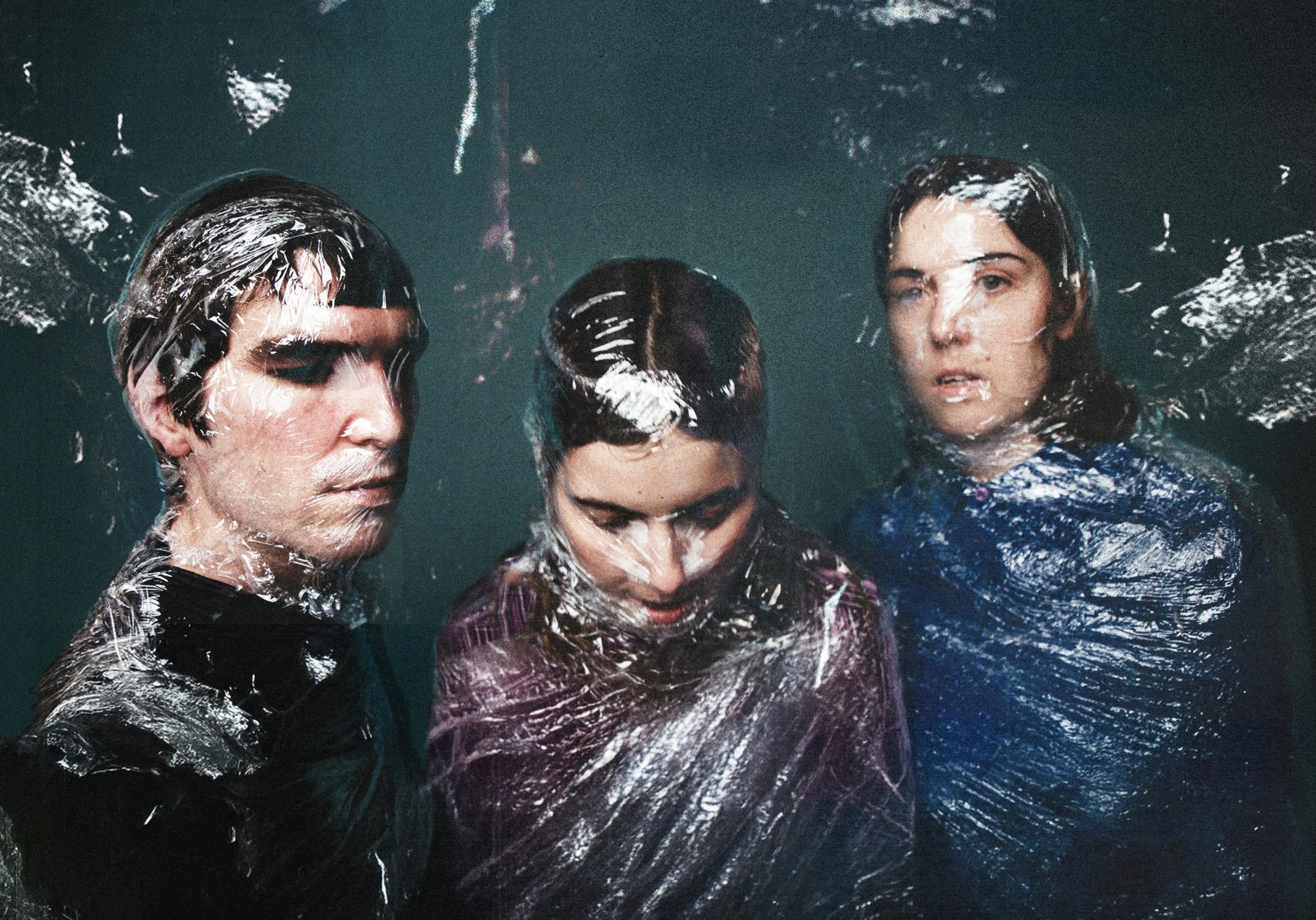
Ahead of the release of new album Domestic Bliss and an appearance at Acid Horse festival in May, the amniotically-linked trio speak to Archie Forde in binaural stereo
London trio Voka Gentle have been playing music together in some form "since the womb", their guitarist, William J. Stokes tells me. Which might be why their latest album, Domestic Bliss, works so well. Composed of identical twin sisters Ellie and Imogen Mason, and William, Imogen's husband, the band craft left-field, mercurial pop that's as hard to box into a genre as it is easy to enjoy.
Recorded at London City University, where the band taught sound workshops in exchange for studio time, their latest LP is a tour-de-force in this synergistic mode of music-making, which...
The post Phone it in: Voka Gentle Interviewed appeared first on The Quietus.
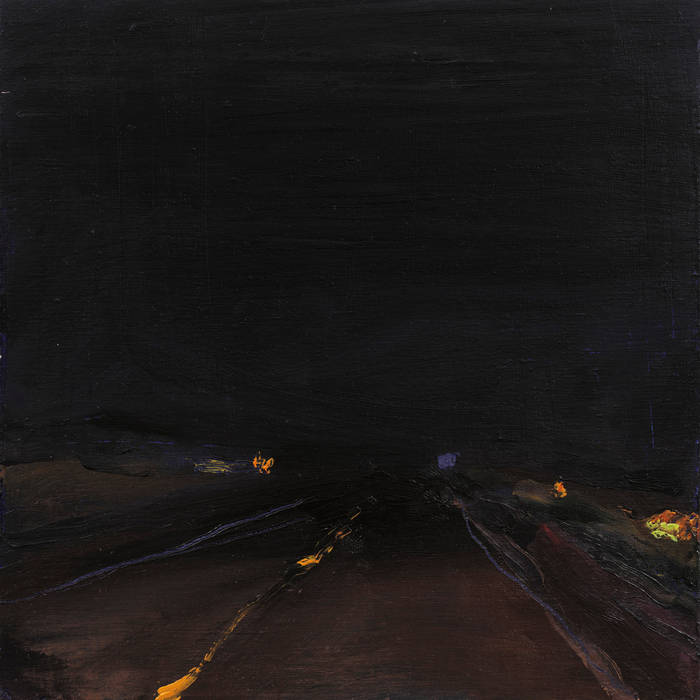
Geologist
Can I Get a Pack of Camel Lights?
Animal Collective member smashes multiple genres into dizzying, kaleidoscopic combinations
Can I Get A Pack Of Camel Lights? by Geologist
Can I Get a Pack of Camel Lights? is the phrase that Brian Weitz, the man behind the moniker 'Geologist' and one of the members of Animal Collective, repeated daily for over four thousand days. Now it's been over five thousand days since he stopped.
In the opening of Tarkovsky's The Sacrifice there is a discussion on the impact of rituals, even the smallest ones, how over time they create something bigger, like a river eroding away at a stone or sediment layering into geological strata. Repetition shapes reality. Any singular thing done every day will change...
The post Geologist - Can I Get a Pack of Camel Lights? appeared first on The Quietus.
Music For Your Stationary Travels [ 02-Feb-26 5:06am ]Seven years ago, in 2019, I unveiled a new list, and I think we'll keep it going. It's fair to call this another tradition of sorts. If the title of this entry sounds familiar to you, that's not entirely by accident. As a long supporter of Brian Housman's words on music, I've been relying on Stationary Travels to pull me out of my vortex of sonic tunnel myopia and remind me of the sounds I've…
Watch Post Malone, Slash, and Duff McKagan Honor Ozzy Osbourne at 2026 Grammys [ 02-Feb-26 5:09am ] Warmer Than Gold [ 02-Feb-26 5:03am ] Can Such Delightful Times Go On Forever? [ 02-Feb-26 5:02am ] 波地獄 / Post Purgatory [ 02-Feb-26 5:01am ] Not Here Not Gone [ 02-Feb-26 5:00am ] Bad Bunny Wins Album of the Year at 2026 Grammys [ 02-Feb-26 4:41am ] Kendrick Lamar and SZA Win Record of the Year for "Luther" at 2026 Grammys [ 02-Feb-26 4:40am ] Watch Ms. Lauryn Hill Honor D'Angelo and Roberta Flack at Grammys 2026 [ 02-Feb-26 4:33am ] Watch Tyler, the Creator Perform at 2026 Grammys [ 02-Feb-26 3:47am ] Billie Eilish Wins Song of the Year for "Wildflower" at 2026 Grammys [ 02-Feb-26 3:29am ] Watch Sombr Performs "12 to 12" at 2026 Grammys [ 02-Feb-26 3:21am ] Lady Gaga Wins Best Pop Vocal Album for Mayhem at 2026 Grammys [ 02-Feb-26 3:00am ] Watch Lady Gaga Perform "Abracadabra" at the 2026 Grammys [ 02-Feb-26 2:58am ] Olivia Dean Wins Best New Artist at 2026 Grammys [ 02-Feb-26 2:45am ] Bad Bunny Wins Best Música Urbana Album at 2026 Grammys [ 02-Feb-26 2:44am ] Jelly Roll Wins Best Contemporary Country Album for Beautifully Broken at 2026 Grammys [ 02-Feb-26 2:36am ] Watch Justin Bieber Perform "Yukon" at the 2026 Grammys [ 02-Feb-26 2:34am ] Watch Addison Rae perform "Fame is a Gun" at the 2026 Grammys [ 02-Feb-26 2:12am ] Watch Lola Young Perform "Messy" at the 2026 Grammys [ 02-Feb-26 2:07am ] Kendrick Lamar Wins Best Rap Album for GNX at 2026 Grammys [ 02-Feb-26 1:36am ] Watch Sabrina Carpenter Perform "Manchild" at the 2026 Grammys [ 02-Feb-26 1:29am ] Inside Pitchfork's First-Ever Best New Music Party [ 01-Feb-26 10:53pm ] Chromakopia Wins the First-Ever Best Album Cover Award at 2026 Grammys [ 01-Feb-26 10:50pm ] The Cure Wins Best Alternative Music Album for Songs of a Lost World at 2026 Grammys [ 01-Feb-26 9:55pm ] The Cure Wins Best Alternative Music Performance for "Alone" at 2026 Grammys [ 01-Feb-26 9:49pm ] Yungblud Wins Best Rock Performance for "Changes" at 2026 Grammys [ 01-Feb-26 9:38pm ] Grammys 2026 Red Carpet Photos: FKA twigs, Dijon, PinkPantheress, and More [ 01-Feb-26 9:30pm ] Doechii Wins Best Music Video for "Anxiety" at 2026 Grammys [ 01-Feb-26 9:21pm ] FKA twigs Wins Best Dance/Electronic Album at 2026 Grammys [ 01-Feb-26 9:10pm ] Ariana Grande and Cynthia Erivo Win Best Pop Duo/Group Performance at 2026 Grammys [ 01-Feb-26 9:03pm ] Grammy Winners 2026: See the Full List [ 01-Feb-26 8:30pm ] Watch Cardi B Perform "Bodega Baddie" and "ErrTime" on Saturday Night Live [ 01-Feb-26 2:36pm ]
Featured Artist: Richard Skelton [ 01-Feb-26 9:35am ]I've been writing about and talking with this British artist since his 2008 album, Marking Time, which was released on Preservation. Back then, I wasn't too much into interviews, and I tried to chat up my favourite artists with only a few lines, which I called "Two and a Half Questions". To me, Richard's music was always extremely poignant. At first, it didn't matter how and why it was made - what…


