
 Kim Gordon Resists "Dirty Tech" in New Video [ 11-Feb-26 2:09pm ]
Premiere: Conor CC - Air [ 11-Feb-26 11:41am ]
Kim Gordon Resists "Dirty Tech" in New Video [ 11-Feb-26 2:09pm ]
Premiere: Conor CC - Air [ 11-Feb-26 11:41am ]Following the kinetic rush of Hidden Allure, Conor CC returns to his Origin CC imprint with Air, a darker, more deliberate cut that trades peak-time velocity
Continue Reading
The post Premiere: Conor CC - Air appeared first on Inverted Audio.
A Sofia Kourtesis DJ Kicks Is on the Way [ 11-Feb-26 11:54am ]
The Cribs' Jarman Brothers on Their Love of Boxing [ 11-Feb-26 10:31am ]
The Wakefield brothers spar with Fergal Kinney about the unlikely - and mutual - love affair between The Cribs and the combat sport.
Gary Jarman (R) spars with Andy Lee
When Amy Winehouse died in July 2011, the singer's passing was a personal tragedy that also called time on a whole era. "It was a real stark moment," reflects The Cribs' bassist and vocalist Gary Jarman, speaking over Zoom from his home in Portland, Oregon. "It was a real wake-up call because of how not-unexpected it was that ultimately there would be casualties from that period. Because it was so intense."
For his twin brother, guitarist and vocalist Ryan Jarman, the shock was closer to home. "I used to hang out with her...
The post The Cribs' Jarman Brothers on Their Love of Boxing appeared first on The Quietus.
Mayhem - Liturgy of Death [ 11-Feb-26 9:59am ]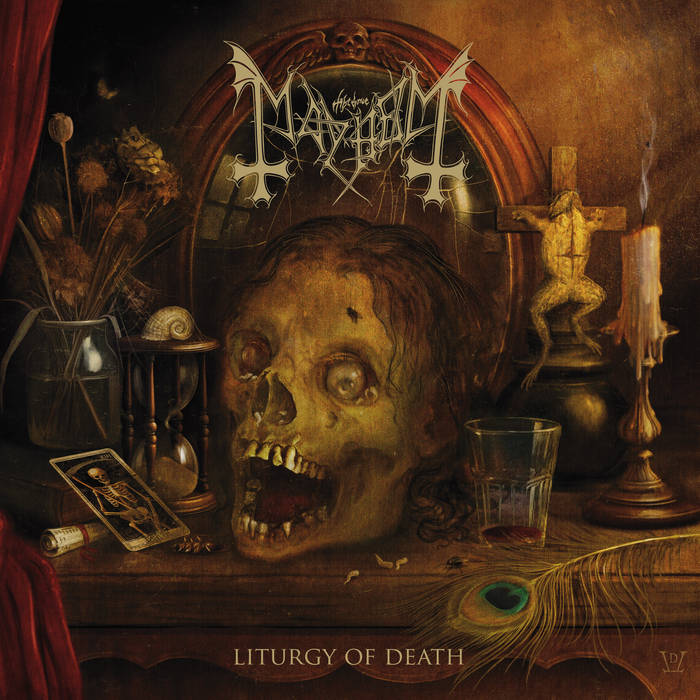
Mayhem
Liturgy of Death
Dense and textural, the reinvigorated Norwegian group's seventh studio album finds them on iconoclastic form
Liturgy of Death (24-bit HD audio) by Mayhem
Norway's prominence in extreme metal can be attributed not only to the dark, saturnine winters of Scandinavia, but also to deep-seated pagan traditions and the rebellious anti-Christian black metal counter-culture that emerged in the 1980s and 1990s. These elements intensified conditions necessary for the development of genres such as Death and Black metal.
As pioneers of the Norwegian Black Metal scene in the 1980s, Mayhem have continued to reign for over four decades in death and black metal, releasing new material roughly every five to seven years. Their seventh studio album, Liturgy of Death, is their "most commercial...
The post Mayhem - Liturgy of Death appeared first on The Quietus.
Karshni - Buck Wild [ 11-Feb-26 9:54am ]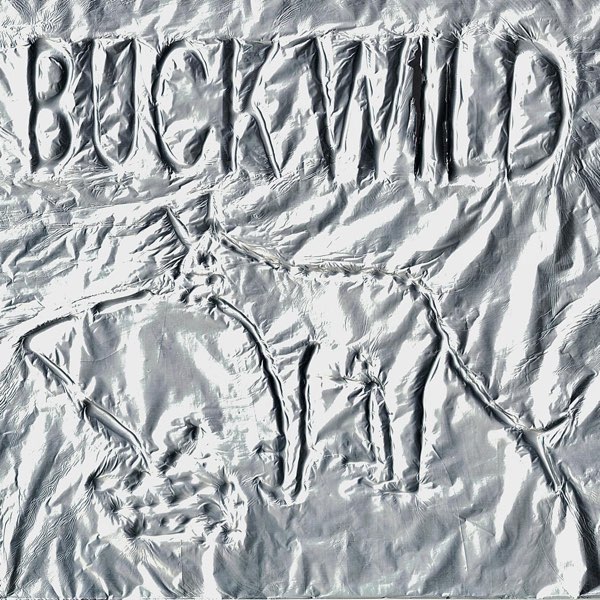
Karshni
Buck Wild
Debut album from the Indian solo artist is as visceral as it is ethereal
Everyone who proselytises will eventually tell you that the truth sets you free. On her debut album Buck Wild, Indian (Pune-based) artist Karshni splits herself open: sometimes with a surgeon's meticulousness, sometimes like a violent, rabid cannibal, utterly disinterested in suturing herself back shut, intent on ravaging the person she once was - all in the service of 'getting real', both with herself and her listeners.
In the last eight-odd years that she has been making music, Karshni has developed an indie-darling, melancholia laden sound-bed, then abandoned it, floated across collaborations with her peers, lending her voice to records that span the distance between avant-garde hiphop and shoegaze,...
The post Karshni - Buck Wild appeared first on The Quietus.

Music can act on listeners in ways that Western modes of engagement and criticism overlook or erase, argues Moravian composer and vocalist Julia Úlehla in The Wire 505
I've just given a keynote presentation at Lines of Flight: Improvisation, Hope and Refuge, a conference hosted by the International Institute for Critical Studies in Improvisation. I'd been invited to talk about my performance research with Dálava, a cross-genre project that is influenced by animist, Slavic cosmology and a land-based folk song tradition that has been in my family for generations. After the presentation a woman approaches me. "There's something I need to tell you. A spirit entered my body while you were singing and has a message for you." She delivers the message and hugs me warmly. Once delivered, her demeanour transforms, as if a weight lifts. She promptly and politely says goodbye.
As this encounter suggests, singing is a devotional practice for me, one that connects me to my ancestors and other spirits, and affords an animist experience of reality. Music born of traditional and spiritual practice is increasingly visible in experimental and underground circles. But music of this kind is often at odds with the patriarchal colonial bias that constrains how music is written about and studied. Listeners, practitioners, teachers and writers need to find ways to move beyond this bias and avoid the harms of misrecognition, desacralisation, instrumentalisation, commodification and extraction.
The musical history of Canada, the nation state in which I live, is built on the extraction of Indigenous song and culture and erasure of Indigenous peoples and lifeways. In current music writing about artists who are women and people of colour, exotification, mischaracterisation and assumptions based on gender, race and ethnicity are common. In a letter in The Wire 424 in which she corrected inaccuracies arising from false assumptions based on her ethnic and racial identity, Amirtha Kidambi notes, "this kind of mischaracterisation and looseness with facts is much more common in stories about women and people of colour... we rarely get to dictate even the facts of our own stories, in the way many of our white male colleagues do, and are narrativised time and time again, in inaccurate and uncomfortable ways…"
Throughout my career I've seen women, queer, trans and racialised colleagues who work with voice prefer to situate themselves inside movement, dance, theatre or performance art milieus because of the patriarchal, colonial bias in music. During my PhD in ethnomusicology, I researched folk songs from Slovácko, a rural region at the western edge of the Carpathian mountains. In this tradition - which has been sung by generations of my family members - ancestor and other spirits, mountains, rivers, wind, weather, humans, animals and plants are understood as agentive, alive and interrelated. My advisor told me to keep my body, my family and my creative practice out of my research, adding that I should maintain a scholarly distance and satisfy his appetite for facts. He asked me to take spirit out of my writing, warning that it would unpalatable for colleagues.
These statements suggest that knowledge cannot arise in the body, and that one's family lineages and exploratory musical practices are not viable fields for research. Gatekeepers have appetites that can only be satisfied by facts obtained through the perceptions of an unaffected, distant observer. Spirits are the stuff of an (often feminised or racialised) Other's belief, fantasy or psychosis. To present them as part of a valid epistemological and ontological field invites ridicule.
I'll give a few examples of what people thinking outside this dominant ideology have told me that they perceive when listening. Neither platitudes nor praise, these comments open imaginative space for what language about music is, or could be. The encounters they describe bridge across alterity without collapsing difference, foregrounding embodied experience, spiritual encounter and collaborative wondering. These exchanges include modes of listening and giving language to musical experience that avoid reification and instead open towards relationship.
A young woman came up to me after a performance and told me that she "grew up inside a Hindu household where music, devotion and the domestic were inextricably linked". She continued, "The performance felt like being home. Your music lives in the heart. Depending on the relationship a person has to their own heart influences how they will hear you."
What if the way we respond to music has more to do with emotional flows and blockages than aesthetic preferences? What would happen if we knew we might be having our hearts worked on when we listened to music, or conversely, when we performed for someone, we might be engaging with their hearts? What does that do to accountability? Would we consent to that? What are we turning away from if we never think about it?
A Syilx woman told me that she palpably felt and saw the land that the folk songs I sing come from and was moved by how beautiful the land was. What if certain songs are inseparable from the lands they grew from, as though the songs themselves contained the land, or could bring the spirit of the land to them? In this diasporic world, what are we asking genus loci to do when we bring them across the world? What are the consequences when songs from faraway lands appear upon stolen, occupied, Indigenous land, and how is each context different? Are we, for example, introducing lands or ancestors to one another in generative ways? Who determines that? Or enacting another form of settler colonialism in the spirit world?
A Serbian woman told me that the performance allowed her to experience "the existential liberation of Slavic melancholy". She said, "If you travel down to the very bottom of suffering, on the other side lies freedom." What if songs are medicine, capable of bringing healing to suffering? What if we knew that when we gather to listen to music or perform for others, we could travel to the bottom of suffering and pass through it together?
And as the opening story reveals, song is a powerful way of communing with ancestors and other spirits. What if we went to concerts knowing that our ancestors were gathered in the room with us? What might we want to do together? Do we have issues to heal or celebrate within our lineages, or among those gathered? Do we know how to do this safely and responsibly, and are we all at equal risk?
These exchanges centre ways of knowing and listening that many academicised modes of engagement find hard to tolerate. Yet, many of us have had experiences like these through music; many of us long for them. Music helps us learn how to love, how to honour the land that sustains us, how to heal, how to grieve, how to visit with the dead, how to experience hierophany. No one is authority in these layered entanglements - not the musicians, not the audience, not the unseen. These relational encounters invite everyone to participate but don't work according to logics of control or distance. You have to let yourself be taken by something bigger. Can music criticism disarm itself enough to make space for this?
Julia Úlehla is a Moravian composer and vocalist. This essay appears in The Wire 505.
Pick up a copy of the magazine in our online shop. Wire subscribers can also read the essay in our online magazine library.

...and pick five highlights from their time at the South London heavy doof haven ahead of final outing this month
As most of you will know, London venue Corsica Studios is to close in its current incarnation later this year - a cruel loss for those of us who love a room where clarity of high volume makes for euphoric experience. Some of the best those came courtesy of the nights put on by James Tec and Luke Handsfree of Plex, the techno / acid / bass / you name it promoters who's regular events (often alongside fellow travellers such as Colony, Machine, Them and Bleed) a decade-and-a-bit ago showcased the best of a particularly good moment in techno - adjacent...
The post Plex say Farewell to Corsica Studios appeared first on The Quietus.
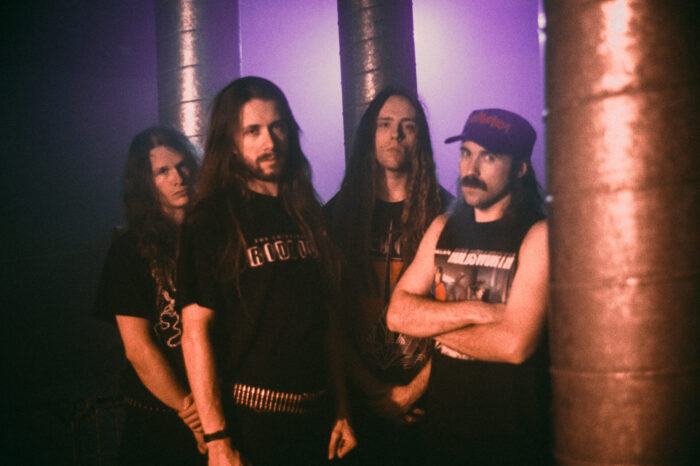
From a visceral return to roots from Converge to Cryptic Shift's epic new death metal space opera, Kez Whelan reviews his first batch of great new metal for 2026
Cryptic Shift, photo by Murry Deaves
As we hurtle into yet another new year, I'm still catching up on great records from the end of the last one - or great tapes, to be precise, with a couple of essential releases landing on cassette after even the tardiest music publications had finalised their year end lists.
Nottingham psych-sludge legends Dead In The Woods returned out of nowhere with a self-titled album, almost 13 years since the band had originally called it a day. The members have all been active in other projects since of...
The post Columnus Metallicus: Heavy Metal for February Reviewed by Kez Whelan appeared first on The Quietus.
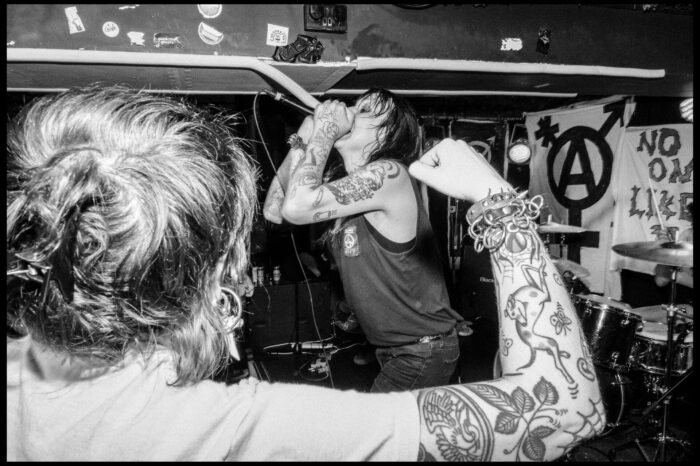
Ahead of Traidora's appearance at Supersonic festival, Stephanie Phillips speaks to experimental guitarist and Crass collaborator Eva LeBlanc about her need to see herself reflected in sound
Eva LeBlanc has always been direct. Those closest to the Chilean artist have often noticed this trait of bold naivety she jokingly tells me over Zoom from her London home. "My friends and my partner will say, 'You're not shy. You just go and ask people for stuff,' and I'm like yeah why not."
Why not indeed, as when LeBlanc decided she wanted to work with her hero Penny Rimbaud, co-founder of the legendary anarcho punk band Crass, she simply messaged him on X (formerly Twitter). "I gave my Bandcamp [and said] I would love...
The post Keep It Punk, Keep it Simple: Eva LeBlanc of Traidora Interviewed appeared first on The Quietus.
Label: Apapachoa Records Release: Chambers Date: March 1st, 2026 Mastered By: Antonio Pulli at Saal 3 Artwork By: Dan Isaac Wallin aukaimusic.com | Bandcamp This morning, I'm delighted to share my time with the music of Markus Sieber, who has been enchanting my studio space with the sounds of his charango (and sometimes ronroco) as Aukai since the release of Branches of Sun in 2018.
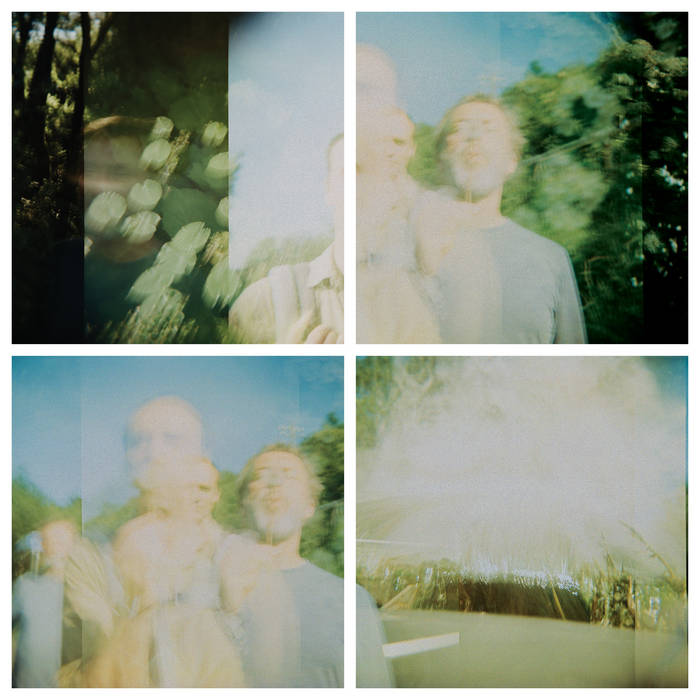
Daniel O'Sullivan & Richard Youngs
Persian Carpets
The second collaboration between Daniel O'Sullivan and Richard Youngs is a very different beast to their last: a pair of minimal improvisations for zither and piano
Persian Carpets by Daniel O'Sullivan & Richard Youngs
Experimental music doyens Daniel O'Sullivan and Richard Youngs have teamed up once before, on 2020's Twelve of Hearts, a set of alluringly off-key songs. Persian Carpets, released by the excellent VHF, is entirely different. The prolific pair take a pair of aging instruments - an upright piano and a zither, both dating from 1915 - which they use to perform two improvised 20-minute pieces, filling either side of the LP. It is an exercise in exploring repetition and tiny, gradual variations. The resulting...
The post Daniel O'Sullivan & Richard Youngs - Persian Carpets appeared first on The Quietus.
Ibiza-based Moroccan artist Affani teams up with Bart Ricardo and French producer John Fritz for 'Don't Know', set for release on his LClub Music label. The collaboration marks a return to Affani's imprint for both Ricardo and Fritz, bringing together producers with established histories across record labels including 1980 Recordings, Farris Wheel Recordings, and Robsoul […]
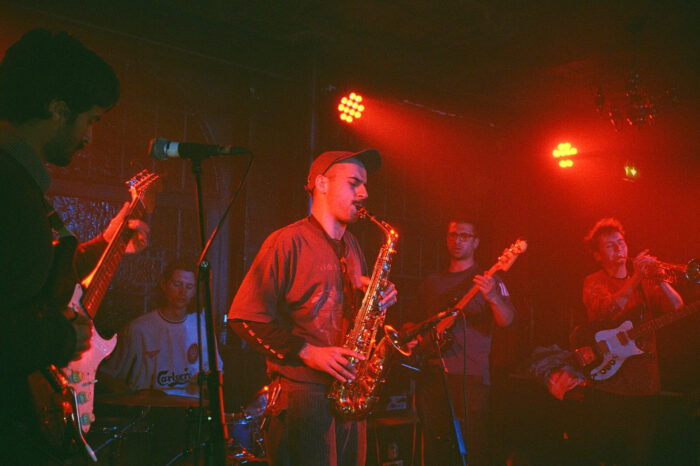
Off the back of an incendiary debut record that was one of 2025's best rock albums, Leather.head speak to Cal Cashin about the importance of keeping things political, uncompromising collaborations with poet Zia Ahmed, the reclamation of emo and more
Leather.head's Mud Again, their incendiary self-released debut, was one of the finest and most fully realised rock albums of 2025. The real deal.
Across its 37 minutes, the South London rascals' fractured collage of blasted Slint guitars and explosive brass arrived perfectly formed. A cocktail of Midwest emo, jazzy post rock and hellfire punk rock, the album is made up of eight jagged sound-worlds that live and breathe and wheeze and writhe with the whims of the group creating them.
This chemistry, this...
The post Direct Action Gets the Goods: An Interview with Leather.head appeared first on The Quietus.
It's been a while since I published my OUT TODAY column. In fact, I barely had the chance to dig through all the new music released in January, as I was busy publishing my Best of 2025 selections, rolling slowly through the month. January is still on the list. Plenty of unread emails in my Inbox (300+). Meanwhile, here is a list of releases from late last year that you will surely enjoy. By now…
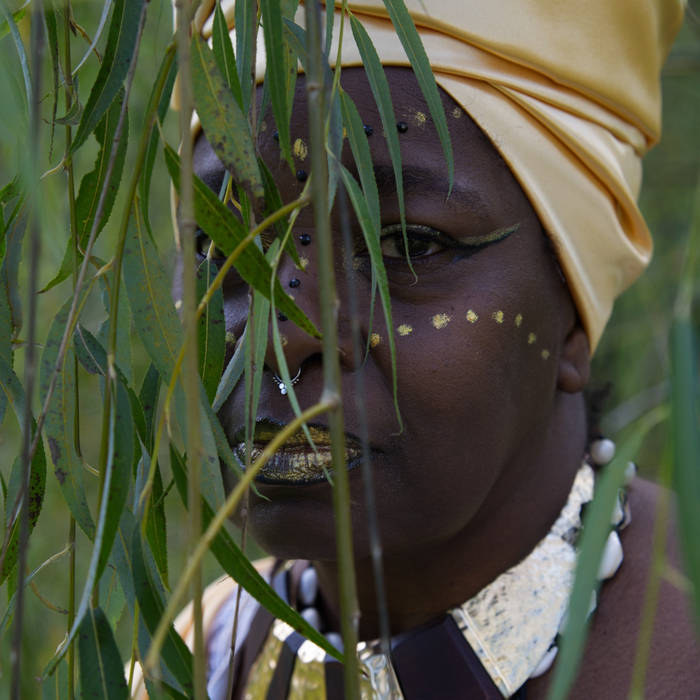
Nilza Costa
Cantigas
The Salvador de Bahia-born singer creates songs that refuse all explanation
CANTIGAS by Brutture Moderne Label
Do you need a sensitivity to divine forces to be drawn into Nilza Costa's new album? Not necessarily. But it does require a willingness to listen to music that resists explanation. Nilza Costa is a Brazilian singer and songwriter from Salvador de Bahia, now based in Italy. Her new album revolves around cantigas - sacred songs from the African diaspora - sung in Yoruba, Kimbundu and Brazilian Portuguese. These songs function as direct invocations of the orishas: spiritual entities that, in traditions such as Candomblé and Santería, connect human life with nature, history, and the divine. Rather than presenting this tradition from the outside, the...
The post Nilza Costa - Cantigas appeared first on The Quietus.
Anata [ 09-Feb-26 5:03am ] The Boy who cried Terrified . [ 09-Feb-26 5:02am ] Jessica Pratt [ 09-Feb-26 5:01am ] Graze the Bell [ 09-Feb-26 5:00am ] Bad Bunny's Incredible Super Bowl Halftime Show Planted a New Flag [ 09-Feb-26 3:52am ]

