
 Discover new music from emerging artists across the globe in DMY's Monthly Music Edit. This month, hear Lakna, ABRILA, AFTR PARTY and more.
 As HE.SHE.THEY. marks five years with its debut compilation, founders Steven Braines and Sophia Kearney talk A&R, inclusion and why vibes come first.

As his cult classic 1986 album Wind receives an expanded reissue, Italian composer and ambient pioneer Gigi Masin takes Siobhan Kane through his life in 13 records
The renewed interest in Gigi Masin's 1986 album Wind has taken the Venetian by surprise. He sees it as "strange and wonderful… I am really happy and honoured". The expanded album, reissued by Numero Uno 40 years later, recontextualises Wind as an ambient gem, but an appreciation for Masin started some time ago, with artists such as Björk referencing his work, sampling 'Clouds' on her 2002 song 'It's In Our Hands'.
Growing up in Italy, playing the guitar and working in radio, Masin was exposed to lots of different kinds of music, but his life...
The post Open Mind, Open Planet: Gigi Masin's Favourite Albums appeared first on The Quietus.

The American composer, producer and audio engineer warps time and space on a slow-burning album that riffs on Philip K. Dick's "orthogonal" temporalities
Photo credit Charmaine Lee
Imagine your entire life, your entire world, being dreamed into existence by a creator who, night after night, gradually gives shape to your being, only to discover that he, too, is someone else's dream. This is the premise of Jorge Luis Borges' short story 'The Circular Ruins', after which Randall Dunn christened his Brooklyn studio. He's the man behind the production of some of the highest peaks in experimental metal, from Earth's The Bees Made Honey in the Lion's Skull to Sunn O)))'s monumental Monoliths & Dimensions, via Old Man Gloom's Light of Meaning and...
The post A Dream Within a Dream: Manifold of Partially Actualized Realities by Randall Dunn appeared first on The Quietus.

Silverwingkiller
Desperate Struggle
Manchester duo's second album feels like inhabiting a video game - from the perspective of a non-player character
DESPERATE STRUGGLE by SILVERWINGKILLER
On 'Worldstar', Silverwingkiller's arpeggiators resemble the swirl of evil slot machines, a rigged jackpot ringing above breakbeats and blown-out electronics. The duo say its pulse comes from a loop of 1970s Somali disco. Across five tracks, Desperate Struggle feels less like a collection of regular songs than a series of playable locations: stations, street corners and checkpoints. It's a post-cyberpunk carnival, closer to the multicultural streets of the video game Jet Set Radio Future than an exoticised East reflected in Western mirrorshades, with those once reduced to scenery grabbing hold of the camera in the Reality Studio.
There's a particular...
The post Silverwingkiller - Desperate Struggle appeared first on The Quietus.
Recently exhibited at Newlyn Art Gallery, Holdfast is an ongoing project by Teän Roberts — an imaginative photographic investigation into the folk-history of kelping in the Isles of Scilly.
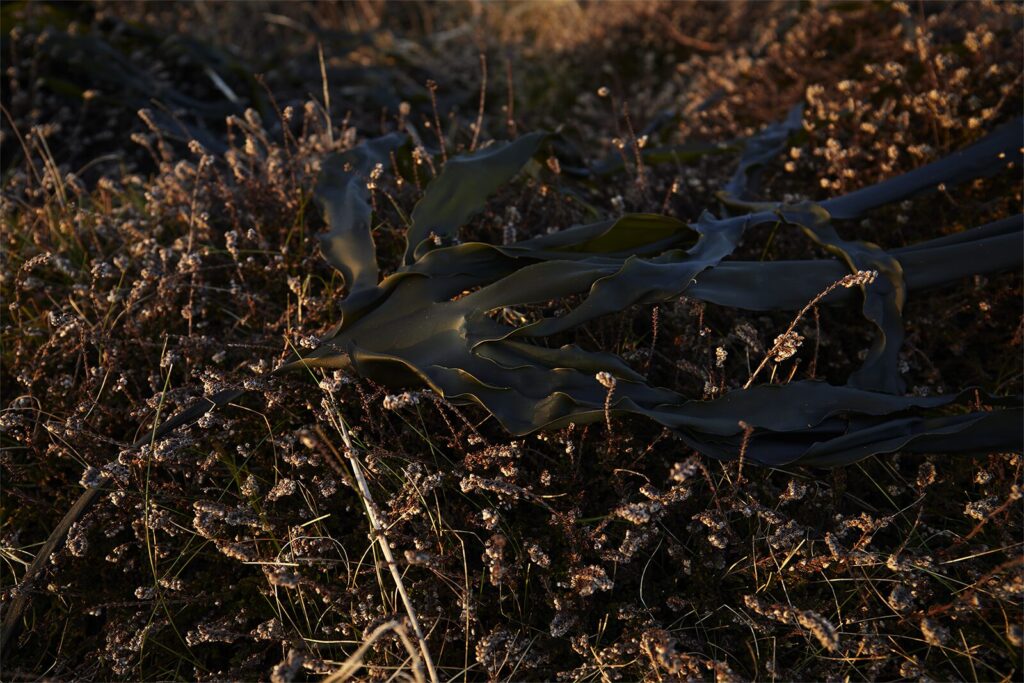
All that is left of this 150-year-long subsistence practice - of collecting, drying and burning seaweed for glass making - are the stone-lined pits where the kelp was burned.
Teän has kindly allowed us to share some images from the project.
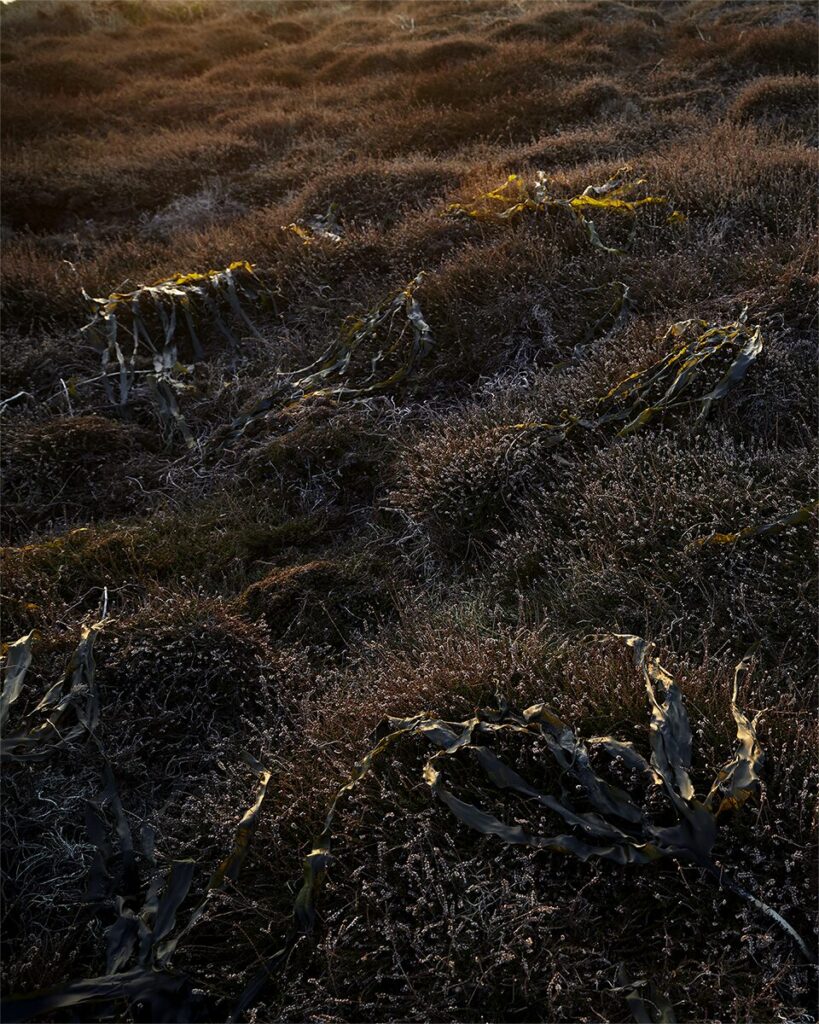
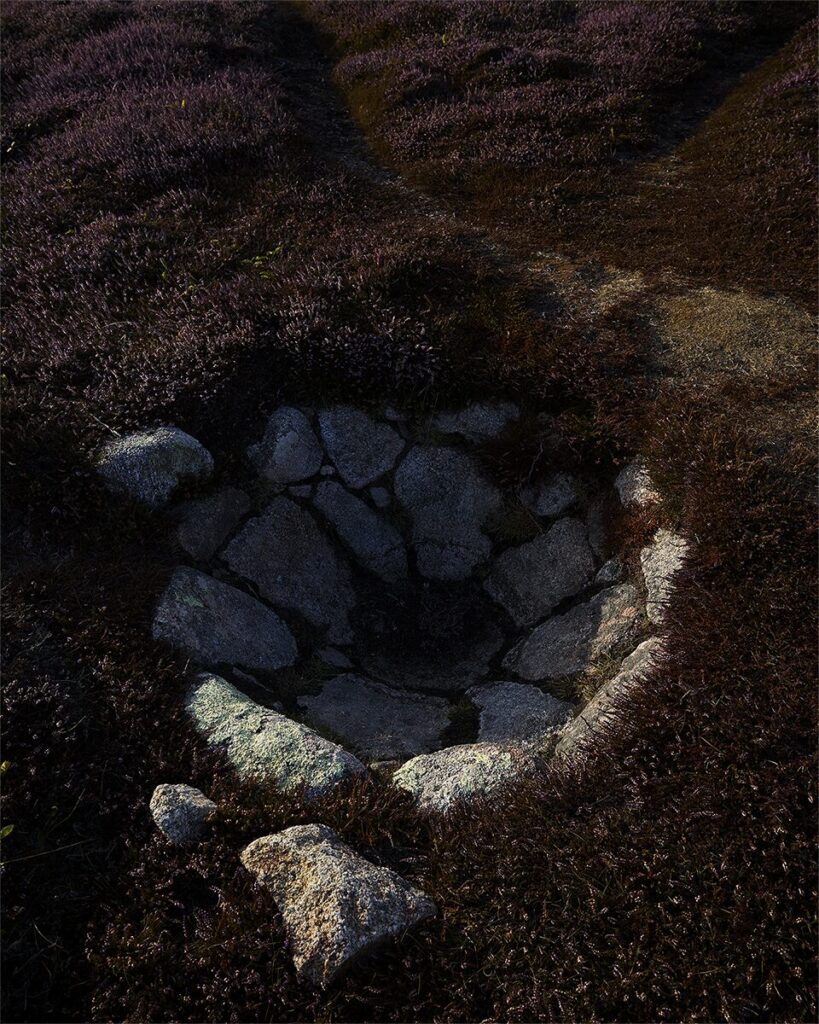
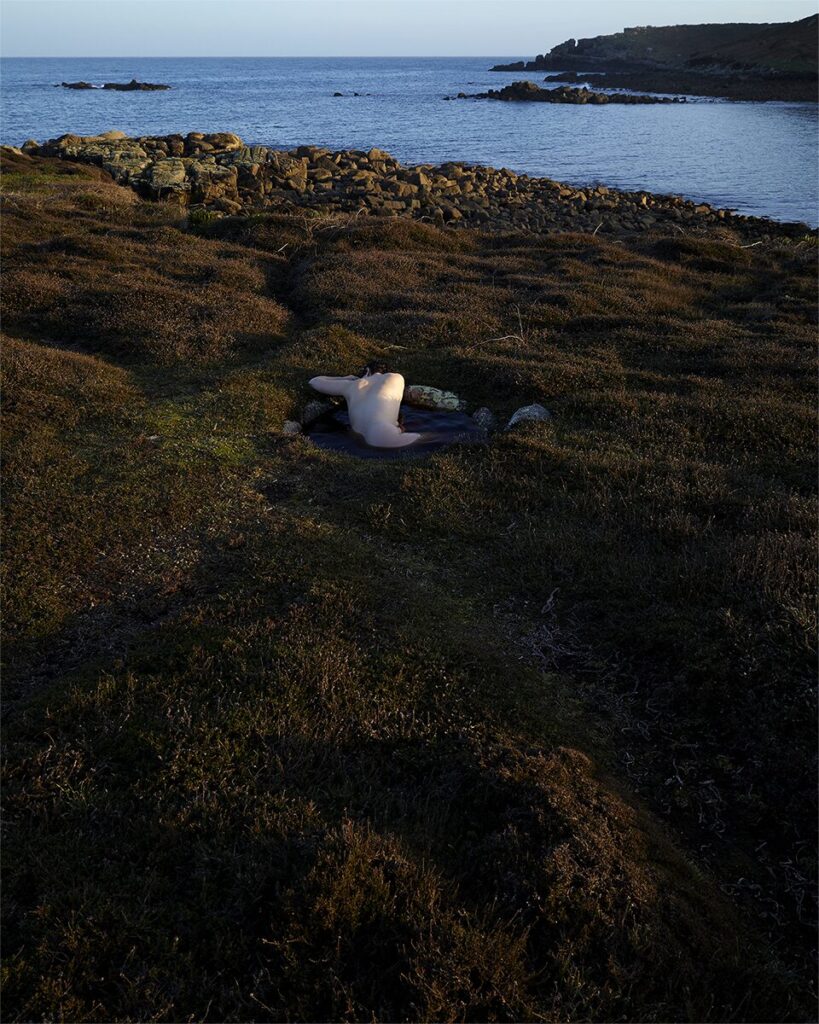
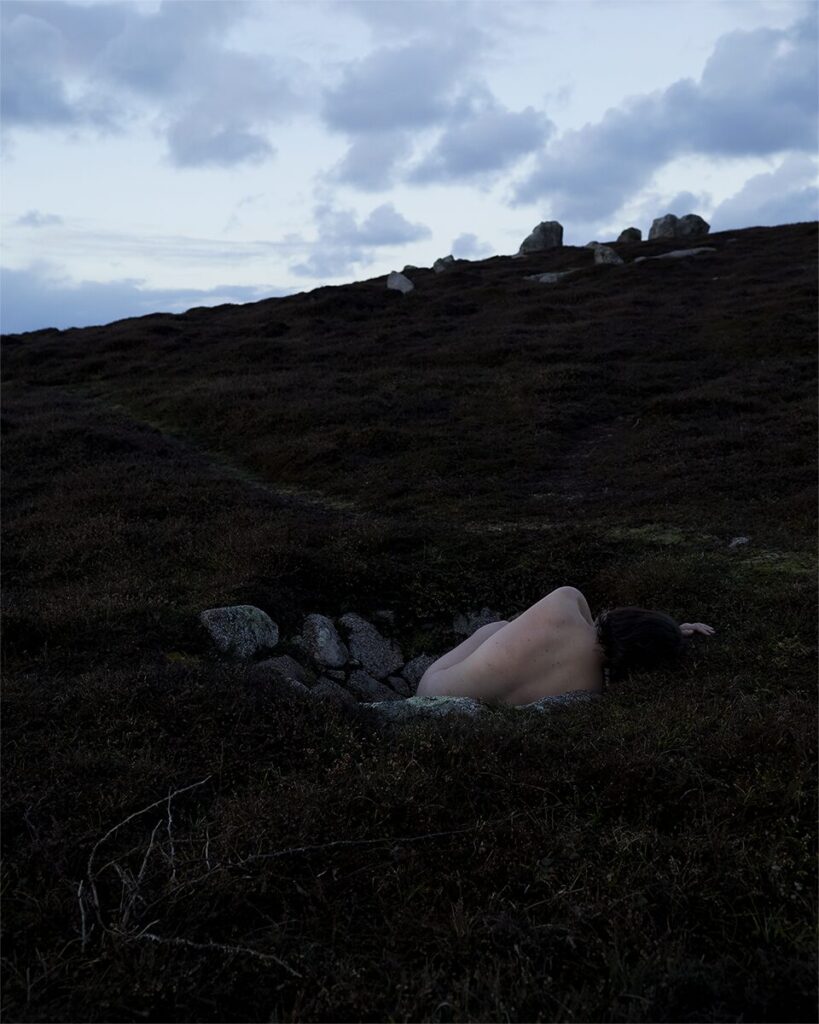
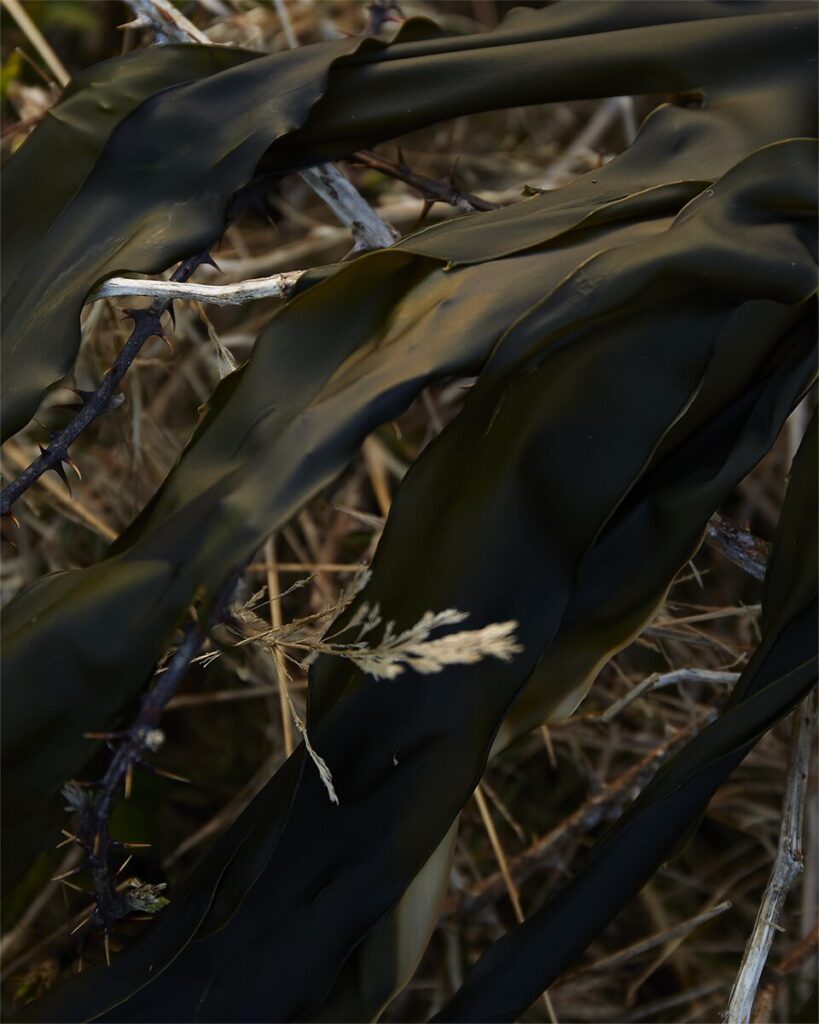
Visit Teän's website here, or follow Teän on Instagram here.
 Bob Dylan, Wearing Hoodie, Meets Pope [ 04-Nov-26 5:51pm ] Four Tet Produced a Tech-House Remix for the Durutti Column [ 04-Nov-26 5:14pm ]

It's the second cut to be unveiled from forthcoming album A Ban On Plastic Bag Bans
Photo by Clemens Habicht
Liars have shared a new song, titled 'Beat Creep Some Eyes'.
It's the second cut to be unveiled from forthcoming album A Ban On Plastic Bag Bans, which was announced in September with lead track 'Ice Pick, Kalamazoo'. Liars' Angus Andrew recorded the album between the US and Australia, where he now lives, with jazz drummer Laurence Pike and multi-instrumentalist Cameron Deyell, who also both worked on 2021 LP The Apple Drop.
In a statement about 'Beat Creep Some Eyes', Andrew said: "Sometimes I think the strangest thing isn't that the world is absurd, but how quickly we get used to it. You can...
The post Liars Share New Track, 'Beat Creep Some Eyes' appeared first on The Quietus.

The UK artist has taken on Vini Reilly's 'Your Shadow At Morning'
Vini Reilly, AKA The Durutti Column, photo by Michael Stef
Four Tet has shared a remix of The Durutti Column's track 'Your Shadow At Morning'.
Clocking in at almost 10 minutes, Four Tet's rework of the track from Vini Reilly's recent album, Renascent, pushes the original cut into dance floor-ready territory, while retaining the delicate, understated touches and vocals of the source material.
In a statement about The Durutti Column's past work, Four Tet, real name Kieran Hebden, said: "It's had a big impact on me so I was thrilled when a new album was announced, and then when I was asked to do a remix it felt like the universe was...
The post Four Tet Shares Remix of The Durutti Column appeared first on The Quietus.

The tracks, dating from 1987 to 1991, have been made available on streaming platforms
Photo by Renaud Monfourny
Four rare Pixies songs originally recorded between 1987 and 1991 have been shared on streaming platforms for the first time.
The tracks - 'Dig For Fire (Albini Version)', 'Go Man Go', 'Brackish Boy', and 'Punk Loop' - had previously only been made available on two bonus 7-inch singles included in the recent limited-edition remastered vinyl pressings of Pixies' albums Bossanova and Trompe le Monde.
The Steve Albini recording of 'Dig For Fire' is from 1987 when Pixies were doing recording sessions for debut album Surfer Rosa, and is significantly different from the version that was officially released three years later. 'Go Man Go' was co-written by Black...
The post Four Rare Pixies Songs Given First-Time Digital Release appeared first on The Quietus.
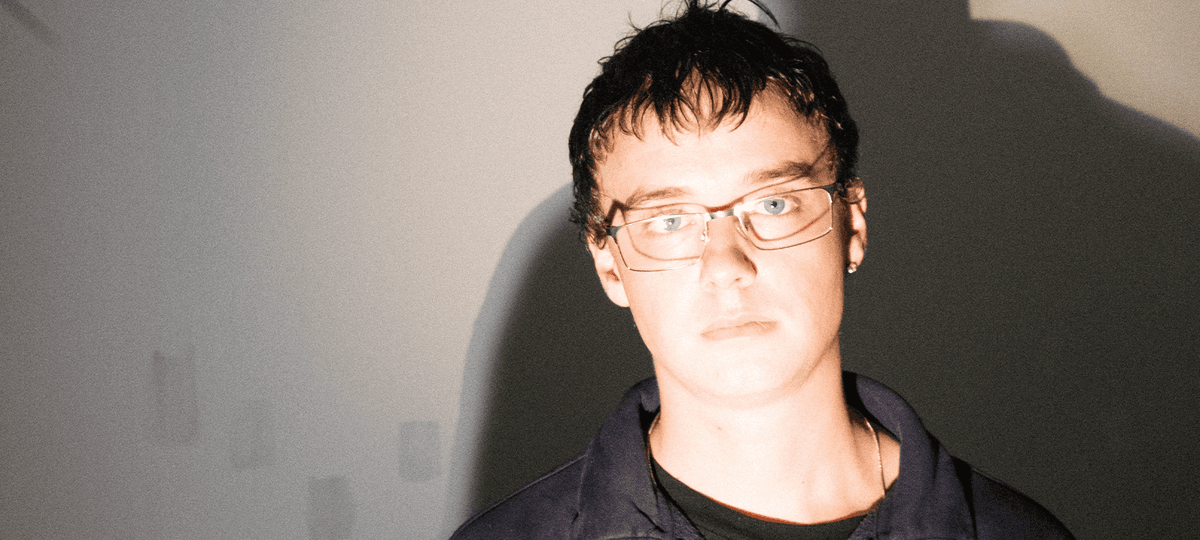
 UK rappers Capo Lee and Pa Salieu have teamed up on a new single, giving DMY a look behind the scenes of the music video shoot.
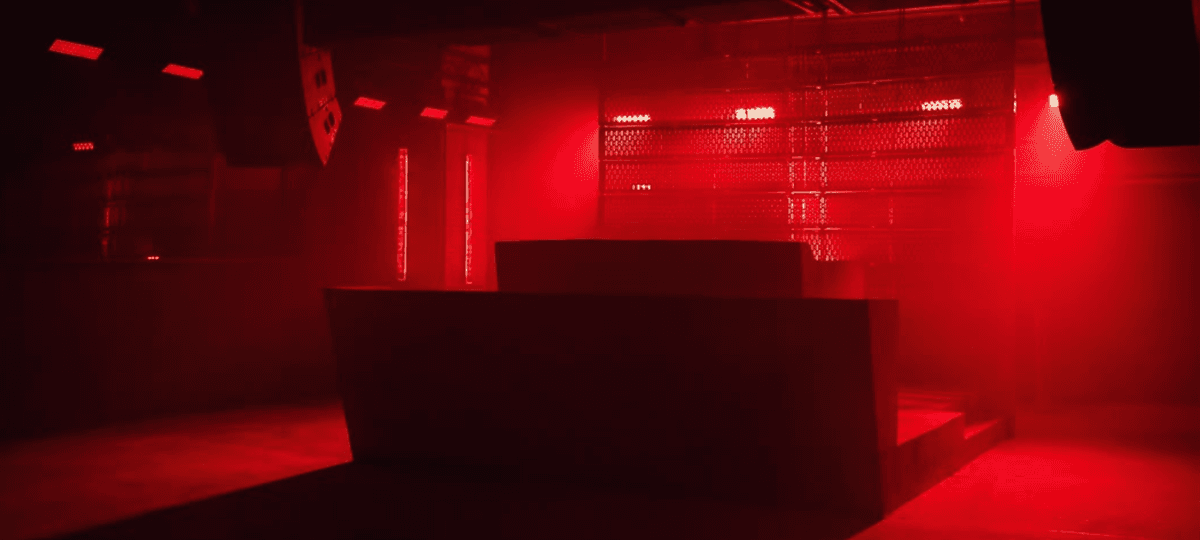 Paris club FVTVR is launching its own label with 'FVTVR-001', a double vinyl featuring Steve Bicknell, Ignez and Kian Gast, plus a 15-hour launch night on 13th November.

Andy Ingamells
Vanity Project
The solo debut album by the British composer-performer is full of fun - and no shortage of questions
"Search for fun, types of fun, source of fun, apply for fun, awarded fun, get fun, have fun," enumerates Andy Ingamells in the opener of his first solo album Vanity Project. It would indeed be fun, were it not for the call bell that keeps cutting in, turning fun into fun-ding - a never-ending, soul-sucking loop. Silence falls after 'decision pen-ding'.
This semantic, even conceptual playfulness of 'Ding' permeates Vanity Project, which gathers pieces from 2008 to 2026. Ingamells is the sole musician on all but one track, speaking, singing, playing melodica, pipe organ and more. Central to his practice is the intersection...
The post Andy Ingamells - Vanity Project appeared first on The Quietus.

With a manic grin leering from the cover Aphex Twin's fourth was readily incorporated into blather about dill & bass but his best, most cohesive album was neither wacky or a novelty, says Toby Manning
Richard D. James Album by Aphex Twin
The year is 1996, the era of Britpop and lads' mags, of Euro 96 and 'Three Lions', the retro complacency of which has seemingly no connection to the restlessly innovative Aphex Twin's fifth album. Yet the depthless positivity of Cool Britannia didn't just produce Britpop but 'comedy is the new rock & roll', the wipe-clean irony of Chris Evans and the music weeklies' suffusion with puns, gags and exclamations of 'arse!' This comedification of culture hence predicated the media presentation...
The post Funny Games: Aphex Twin's Richard D. James Album 30 years on appeared first on The Quietus.

why is this 1971 advertisement from the era before deejays were cool?
it's not the fashion - the sideburns, the superwide tie.
that look was with-it then
no, it's the fact that being a deejay involved using a microphone
this is the era when deejays weren't silent figures intently focused on mixing one record into the other
as important as picking tunes and reading rooms was the smarmy patter they had to maintain between songs
Smashy and Nicey wasn't just a wunnerful Radio One archetype
it was a social fact across the nation, in discotheques and office do's catered to by mobile deejay outfits
the deejay was as much a master-of-ceremonies as a mixmaster
(few of them even mixed records in those days)
they were hosts of party - instigators of congas, announcers of the smoochy up-close slowie section of the night
often using a fake American smoothie accent I should imagine
^^^^^^^^^^^^^
"Hospital radio is a good beginning" says Radio 1 deejay Johnny Walker

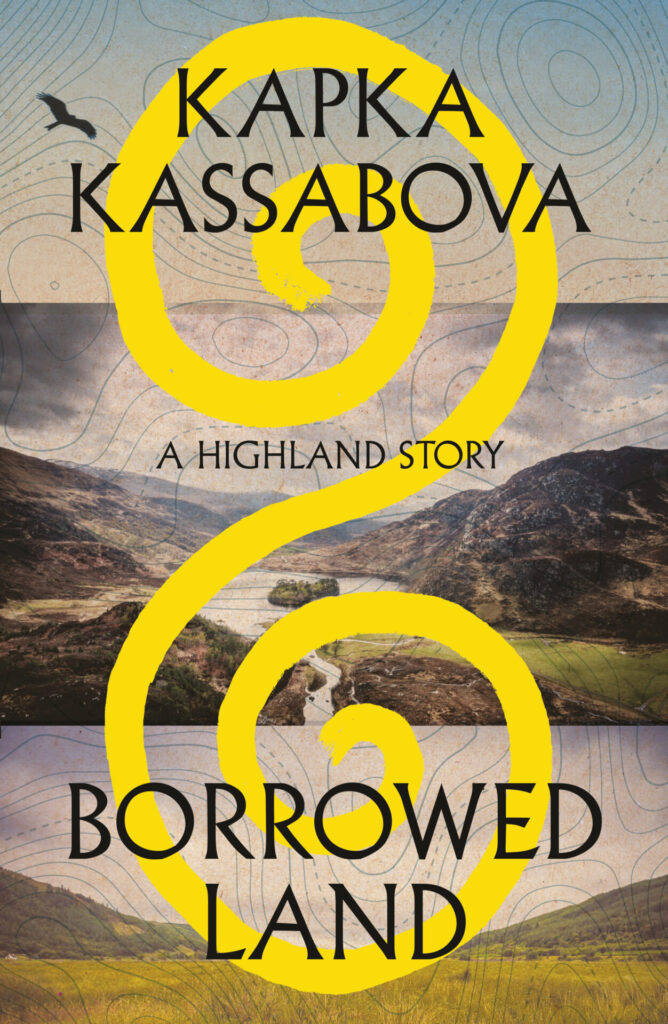
Rich in sonic detail, Kapka Kassabova's 'Borrowed Land' is vital testimony to the ecocide and damage to human health being committed in the name of the energy transition, writes Sally Huband.
Sound is not sound alone, it's touch.
John Cotter, Losing Music
My nerves were on edge when I visited the Barbican's Feel the Sound exhibition two summers ago. I had become fearful of sound and wanted to transform this fear back into love. An energy company had built a hyperscale wind power plant near my Shetland home. The low frequency noise of the turbines rewired the auditory processing in my brain, among other neurological harms. I moved house and slowly recovered but louder sounds continued to cause pain.
I needn't have worried. I suffered no pain at the Barbican exhibition. The subwoofer bass of the souped-up cars in the underground carpark was a gentle nudge compared to the brain punch of industrial wind turbines. I'm deaf and have long known that sound can be felt as much as heard. It was good to see artists explore this. In a video exhibit, Evelyn Glennie talked of teaching the world to listen but with our bodies, hearts and mind. If I had to choose a book that does just this it would be Borrowed Land by Kapka Kassabova.
The deep listening in Borrowed Land takes place in the Scottish Highlands. The writing is rich in sonic detail. A cave becomes the inner ear of the glen and birches whisper. I hear the stories told in Borrowed Land but I feel them too. Kassabova's Highland home place, like my Island home place, is a sacrifice zone. Ecocide is being committed in the name of the energy transition and human health is collateral damage in the pursuit of corporate profit. Kassabova's lived experience is vital testimony. The low frequency noise of a new electricity substation sends workers home with migraines, panic, nausea, a malaise and Kassabova herself is made ill by the pylons that are built next to her home. She, like me, is forced to leave.
I've come to know and love the setting of Borrowed Land while staying at Moniack Mhor, a creative writing centre that sits high on a hillside. The rooms have views across a wooded glen, mountains form the backdrop and the light is always shifting. I mention Moniack's views deliberately. Those of us arguing that all is not well in the energy transition are accused of being more concerned with views than the climate emergency. If only this were true. A wind power plant called Ballach, with turbines 230 m high, is planned 10 km from Moniack Mhor. If it is built, I would hesitate to stay there again and not because the landscape would change. The soundscape would change, it would become unsafe.

Photo: Cliff Green
Each time that a turbine blade passes a tower, a pulse of low frequency noise is flung out. This noise is too low in frequency to be heard by the human ear but it can still be sensed. Think of sound waves as waves of pressure and of turbine harm as barotrauma. Bats can die from pulmonary barotrauma if they fly near turbines, the blood vessels in their pliable lungs burst. In humans, turbine barotrauma causes neurological harm. My brain was rewired and my heart was hacked, it would race uncontrollably. I could tell if the turbines were on or off without looking. It is difficult to describe sensing a turbine other than to say that it is sensory torture.
When I explain turbine acoustic harm to people, they ask if noise cancelling headphones help, or sound absorbing panels. The answer is no. Blade pass emissions cannot be stopped from entering a home, or a body. These pulses can be as low as 0.1 Hz which means soundwaves that are vast in scale and travel many kilometres. I now live 14 km from the hyperscale power plant here in Shetland but I can still sense the turbines in settled weather. The taller the turbine, the worse the blade pass pollution. Ballach wind power plant must never be built.
Building wind power plants a safe distance from homes and workplaces would increase construction and operation costs and decrease profits. This is why the wind industry claims that turbines are safe. They argue that the harm is psychogenic in origin (we are simply stressed because turbines have been built in our view). Despite mounting evidence of direct harm to human health, governments concertedly look the other way and for a while I did not understand why but in Scotland, at least, the reason is becoming alarmingly clear.
Renewables produced more electricity than is consumed in the country for the first time in 2022. The construction of new energy infrastructure continues apace because Scotland is being positioned as a 'green' data centre superpower. Twenty-six hyperscale AI datacentres have been proposed so far. As Kassabova astutely observes in Borrowed Land, renewable energy infrastructure is being built in Scotland to open new markets for profit and not for the good of the planet. These profits do not stay in Scotland. Promised jobs do not materialise and fuel poverty remains. The energy company responsible for ecocide and harm to health in Borrowed Land is the same company that built the hyperscale power plant here in Shetland. Its main shareholder is BlackRock, named by the UN as complicit in the economy of genocide.
Shetland is not a wooded place and I am drawn to Kassabova's portrait of a low impact forester called Dylan. He extracts timber with Nomad the horse, a process that Kassabova describes as hard toil and bright joy. We meet him sitting on his cabin porch listening to rain falling on leaves. In spring, he listens for the sound of sap rising before planting trees. It used to rise in March but now rises in February. The power company intend to build a pylon where he is constructing a barn for Nomad. If he does not agree to leave, the land will be compulsory purchased. As Dylan concludes, We need renewable energy, but this is just wrong. Borrowed Land is a book ahead of its time, a clarion call that cuts through all the corporate energy company noise.
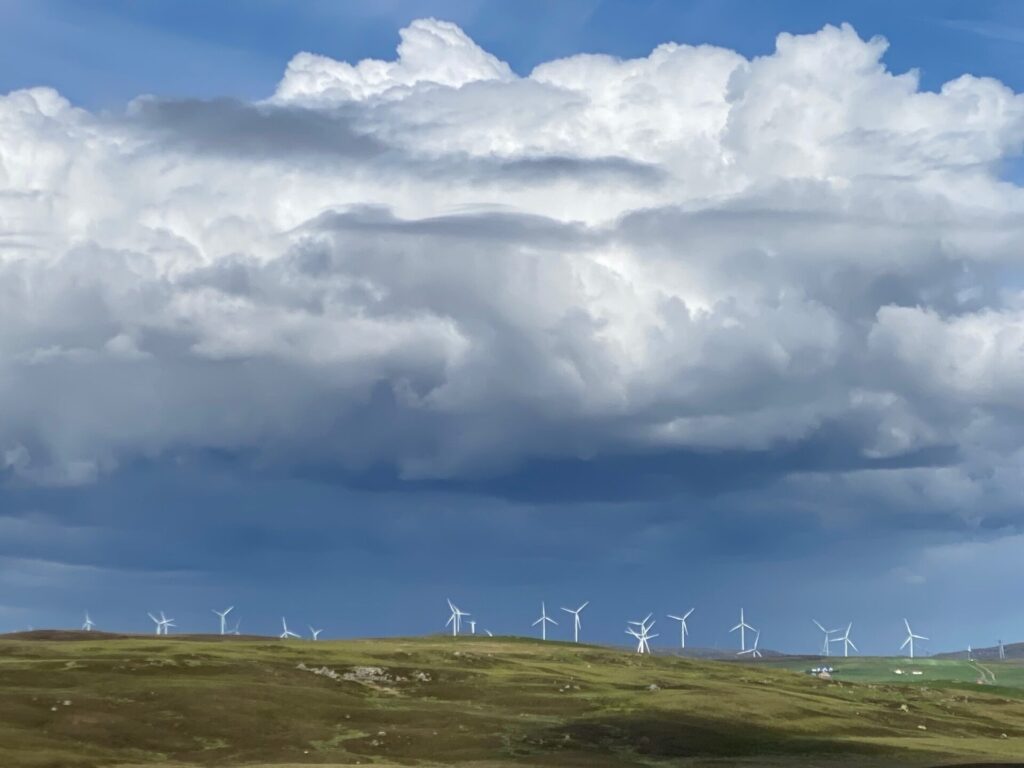
The 103 turbine Viking Wind Farm, Shetland. Photo by Sally Huband
*
Kapka Kassabova's 'Borrowed Land: A Highland Story' is out now and available here, published by Jonathan Cape (£20.90).
Sally Huband's memoir, 'Sea Bean', won the Highland Book Prize and 'saltwaterisland&', produced with Gaada, recently featured in the Dundee V&A Design and Disability exhibition. For 'The Book of Bogs' anthology, Sally co-wrote with Polly Atkin an innovative call and response piece on turbine acoustic harm.
 The independent LA artist turns her dark alt-pop single into a surreal, handmade psychological thriller in this music video.
 Twin sisters Ibeyi speak with DMY about their latest album, 'Offering', transformation and creative independence.
 The Itch have released 'Planned Obsolescence', a big beat and electroclash track about being built to wear out, their first new music since debut album 'It's The Hope That Kills You'.

As celebrations of Daphne Oram's centenary culminate with an all-day celebration in Bradford, Claire Biddles speaks to a host of artists, from her contemporaries to previous Oram Award winners, to get a measure of her immense contribution to electronic music
Photo © Daphne Oram Trust
The pioneering work of Daphne Oram was not fully recognised until after her death in 2003 - but now, over 20 years later, she is rightly recognised as one of the most important electronic musicians of the 20th century. A co-founder of the BBC's legendary Radiophonic Workshop in 1958, Oram was one of the first composers to use electronic sound in her work, and is known for her early use of electronic tape, turntablism, and musique concrète...
The post Daphne Oram at 100: Nine Artists on the Pioneer's Enduring Influence appeared first on The Quietus.

Daryl Worthington considers the extent to which Spool's Out offers investment advice, and reviews a crop of tapes including a footwork legend from Japan going ultra-crisp, mesmerising live code improvisations, ferocious eco-pop and more
Roxanne Harris, photo by Cecilia Díaz Betz
Five thousand dollars. That's how much an original copy of Prince's The Versace Experience on cassette could be worth, according to Finance Buzz, a website which offers "the resources and support necessary to navigate the complexities of personal finance".
That Prince tape, which contained previews of tracks from his then forthcoming The Gold Experience, was issued in 1995 and given to attendees at a fashion show in Paris. It tops the Finance Buzz '10 Cassette Tapes From The 90s Worth A Small...
The post Spool's Out: Cassette Reviews for November by Daryl Worthington appeared first on The Quietus.

Marta Salogni & Stefano Pilia
Phren
Spooky sounds from two Italian masters of modern electro-acoustic composition
Phren by Marta Salogni & Stefano Pilia
Marta Salogni and Stefano Pilia's Phren is music of accretion. Inputs are fed through Pilia's chain of filters and tape echo and on into Salogni's Revox reel-to-reel tape machine for further manipulation and modulation, the signals absorbing new layers and mutations as they go. According to the release notes, that initial input is often Pilia's guitar, but the pair's plastic approach to sound makes that far from obvious. They telescope the act of mediation, mottling, shading and bending signals as they pass from sound source to ears.
'Sopra l'acque scavate' opens with distorted notes sparking like a frosty firework display. The more...
The post Marta Salogni & Stefano Pilia - Phren appeared first on The Quietus.
Today, it is my privilege and honour to introduce Uwe Zahn as the next featured artist on Headphone Community, whom you, of course, already must know as the one and only Arovane. My personal journey with Arovane's music began during the DIN and City Centre Office years, with his monumental albums, Atol Scrap, Tides, and Lilies. We'll revisit these during Uwe's residency, with in-depth interviews…


