
It was a remarkably mild early November morning at 6am as I left the Chelsea Cloisters apartments to get the tube to Westminster and the Supreme Court. I had been worried because I had forgotten to pack my thermal underwear.
I had queued overnight for the Assange hearings, the Salmond trial and the ICJ Genocide case - the latter in minus 5 degrees at The Hague - and thermals were an essential part of the kit. On the first night for the Assange hearings, at Woolwich Crown Court, I stood for seven hours in freezing drizzle with Patrick Henningsen and Randy Credico. Immediately that first day in court finished, I headed to Mountain Warehouse to buy a large, warm, waterproof jacket.
I found the one I wanted which was on sale, and tried it on. I then took it to the counter and explained to the young lady that it was labeled XXL, but I couldn't get the zip to do up. She looked at me coolly and replied "fat people don't climb mountains".
My ego somehow survived, and now as I approached the Supreme Court I saw the flashing orange lights of three trucks parked outside, and hear the ringing metallic sound of crews putting up metal crowd barriers around the building. I had slightly worried I was late for the queue, but there was only one tall young man sitting on the benches outside. He was a journalism student from City University, and neither of us having anything else to do, he interviewed me.
There were three men in sleeping bags along the front of the court building, one right across the door. We speculated as to whether the were part of the queue or simply homeless. As barriers were clamped into place behind us, we worried where the front of the queue was meant to be. I approached the hi-viz wearing man who looked in charge. He had long hair and beard and a friendly open face. He wore a builder's helmet, presumably in case the Supreme Court somehow fell on top of him.
"Do you know what the system is for installing these barriers?" I asked,
"I'd be pretty bad at my job if I didn't", he replied.
I explained we were the queue. He laughed and said we were fine where we were. About five minutes later the crew left with two and three quarters trucks still full of barriers, presumably to cordon off somewhere else. Their work was inexplicably pointless - they had created narrow a pen on the pavement behind us, which led nowhere, finished twenty yards from the court entrance and left a thirty yard gap anybody could walk past to the court on the West side.
I pointed out to Tony this seemed strangely pointless and he said its purpose might become clear later. It didn't, Nobody ever entered the pen and it didn't stop anyone going anywhere.
His name, incidentally, probably wasn't Tony. I introduced myself but he didn't volunteer a name so I didn't press him.
At 7.30am a young lady arrived. She was pleasant and joined our conversation but again did not give her name. She worked for a Westminster lobbying company, so I would assume was in the Israeli interest. It was 8.45am before a real queue began to gather. Public information had been that doors would open at 9am and they did, but we were kept standing outside until after 10am.
There was then a great disappointment as an official arrived and told us no members of the public would be admitted to the courtroom. Court No 1, he explained, has no public gallery and all the rows of benches would be fully occupied by the legal teams. The public would be allowed into an overspill Court No3, where screens were set up.
This was very annoying. It was also later plainly observable on the screens that the official explanation of no seats being available was untrue. Exactly the same thing had happened at the High Court hearing. I have no doubt that "security" was the motivation, and having designated Palestine Action supporters are terrorists, they were determined to treat any of the public interested in the case as potential terrorists.
The building is a very late flowering of Victorian medieval revivalist architecture and was originally Middlesex County Council. When the Supreme Court was established a quarter century ago, it was converted to the purpose, the county of Middlesex itself having essentially already been abolished. It is rather a good building, which is important as a close neighbour to Westminster Abbey. Unfortunately the principle of open justice had not been applied in its conversion to the creation of public galleries.
Today was the last gasp of the UK legal system in challenging the legality of the proscription of Palestine Action, in the case brought by its founder Huda Ammori. This judicial review had proceeded through the High Court, which found the proscription unlawful, and Appeal Court, which found it lawful. As the process went through these courts, the grounds for permitted appeal were whittled down until only one was allowed: whether the effect of the proscription on Article X and XI rights (freedom of speech and freedom of assembly) were disproportionate in terms of what was necessary to protect the public from the terrorist organisation.
Articles X and XI are from the European Convention on Human Rights, enshrined into UK law by the Human Rights Act.
In the Supreme Court they do not wear old horsehair wigs and gowns, including the judges. This felt rather strange as such costume had been worn at all the prior stages. The five judges were situated on a curved dais, with the lines of lawyers below them.
One problem with not being in the courtroom was that, every time a judge spoke, the camera immediately cut to that judge in close up. The judges all looked extremely similar - white men aged about sixty in suits and ties. It was very difficult to tell in close-up which judge was which. Some of the identifications in this account are therefore almost certainly wrong, but not deliberate.
When you think about it, in our society the difficulty of telling Supreme Court judges physically apart is possibly a problem?
Raza Hussain KC opened for Huda Ammori. Raza seemed a much more imposing figure without his wig and gown, and spoke with a force and fluency that I had not really seen in full flow in the earlier hearings.
His first point may have been excellent but as the screens in Court Number 3 had no sound for the first five minutes I did not catch it. We therefore join him at point number 2.
2) Hussain said that Palestine Action was not a terrorist group, but a protest group that takes direct action. He said it could only be caught by stretching the outer limits of the definition of terrorism in the Terrorism Act, a definition which the Supreme Court had already described in an earlier case as "striking in its breadth".
3) Hussain said that according to the Home Secretary herself, the vast majority of Palestine Action's activities did not fall within the definition of terrorism. Only 3 actions out of 385 were so described. Yet these three were used to make all fall as terrorism.
4) Unlike other proscribed organisations, the objectives of Palestine Action were in line with the principles of liberal democracy. They simply wished to impede genocide and war crimes.
5) Contrary to the Appeal Court judgement, Palestine Action did fall within the tradition of other direct action groups, such as the suffragettes, environmentalist and animal rights groups, which were not treated as terrorist.
6) Important civil society groups such as Amnesty, Liberty and PEN, and international organisations had expressed opposition to the proscription
7) Proscription of Palestine Action had wider effects on public confidence in the proscription regime itself, and in the Terrorism Act. There was public revulsion at the arrest of over 4,000 for supporting Palestine Action, many of them elderly and distinguished.
8) Proscription of Palestine Action was prone to upset the court's judgements in many other compatibility cases over the years. (A compatibility case tasts whether a law is compatible with the Human Rights Act). The decision on proportionality of the effect on civil liberties must itself depend on whether the anterior exercise of the proscription power itself was proportionate to the alleged threat.
If an elderly and distinguished person arrested for expressing non violent support for Palestine Action were to win a case against their arrest at the European Court of Human Rights in Strasbourg (he gave the example of an 81 year old female Christian ex-magistrate arrested at a vigil at a Truro church), that could strike down all the Supreme Court's previous decisions on Section 13 of the Terrorism Act (expressing support for a terrorist organisation) where other, real terrorist organisations were concerned.
This last was a very good argument I had never heard before, and one tailored to meet the sensibilities of a court with no interest in civil liberties. Maintaining this absurd proscription could ultimately result by the law of unitended consequences to more freedom of speech, not less).
Lord Sales now interrupted from the judicial bench to ask whether Hussain's description of just three terrorist incidents included that at RAF Brize Norton.
Raza Hussain replied that incident did not meet the bar of Terrorism. It should rather be seen in the light of the famous Margaret Jones case, which was not assessed by anybody to be terrorism. The anti-militarist tradition is not terrorist.
Lord Sale then asked whether the proportionality exercise should not be conducted by this court on the facts as of now, as opposed to the facts at the initial hearing. Hussain replied that Lord Justice Lewis had ruled at an earlier stage that material that had happened after the initial Divisional (High) Court ruling was not admissible. Lord Stepehns aske why the Court of Appeal had made this ruling.
There was a hiatus as everybody in court went through sheaves of papers looking for the answer to this question, but nobody seemed able to find one.
Lord Sales asked why Hussain said Brize Norton was not a terrorist attack. Raza Hussain re[lied that it was the Secretary of State's judgement it was not a terrorist attack. He suggested the government lawyers might explain that. Lord Sales said he was asking Hussain why he would say it was not terrorism. Hussain replied because of the limited amount of damage done, and because of the Jones case.
Lord Stephens then interjected that RAF planes had been damaged. Why was that not terrorism? Raza Hussain said that was a precise comparison to the Jones case which was judged not terrorism. The Jones case involved attempted arson at RAF Fairford. The Brize Norton case was merely spraying paint.
Lord Briggs said that surely the seriousness of damage depended on what the paint was sprayed upon? There was a difference between psraying paint on a railing and spraying paint on a Van Gogh. Lord Sales then asked why it was not for the Supreme Court, rather than the Secretary of State, to decide whether Brize Norton was terrorism?
James Eadie KC for the government intervened to say that the extent of the damage at Brize Norton was the disputed subject of a current criminal trial. But there were other factors to be considered in determining whether an incident was terrorism.
Lord Sales said Raza Hussain appeared to accept it was for this court to determine whether Brize Norton was terrorism.
Raza Hussain suggested that whether one individual act was characterised as terrorism was not determinative of the proportionality of the interference with Article X and XI rights. The definition of terrorism in UK legislation is very broad. The power to proscribe is very broad. The effects of proscription are very severe. The "guardrails" provided by the Convention rights were therefore very necessary.
He outlined the draconian powers of the act, in empowering the police to arrest people on suspicion of supporting Palestine Action, and criminalising speech which could lead somebody else to support Palestine Action, irrespective of whether that was the intention of the speaker.
Lord Stephens asked whether speaking against the proscription of Palestine Action, rather than in support of Palestine Action as such would be an offence. Raza Hussain replied that people are being arrested for doing exactly that.
Lord Sales asked whether, if he wrote a judgement opposing the proscription of Palestine Action, that would itself be an offence. Raza Hussain replied that on the ground people were being arrested for just opposing proscription, as well as those being arrested specifically for supporting Palestine Action.
Lord Briggs said that people opposing proscription were not necessarily supporting Palestine Action, and therefore there was no offence. Raza Hussain said that it was an offence under the Act to make a statement that gave rise to a suspicion of supporting Palestine Action. People opposing proscription were being arrested for that. These offences carried up to 14 years in jail.
Lord Reid said that if an academic published "I understand why Hamas (also a proscribed organisation) did what they did", that would not be actionable.
Raza Hussain said people simply do not know what they may or may not say. There is no clear line. That is precisely the chilling effect on free speech.
I must break now to go back into court on the morning of day 2. I will continue this account afterwards. Production of Day 1 was delayed because, when I got back to Chelsea Cloisters last night, my room had been broken into. This was done with force, the door jamb split apart. Nothing was taken from my room, including cash on the table nor my laptop. I reported to the front desk who came and took photos, but they have to apply to an outside security company for the CCTV footage.
OK, back to court.
—————————————-
Anybody is welcome to republish and reuse my work, including in translation.
My work has no funding at all except for your subscriptions. If you already subscribe, I would be grateful if you could check if your subscription is still active. Over 80% of my subscriptions lapse when debit or credit cards expire: the systems do not warn you.
Because some people wish an alternative to PayPal, I have set up additional new methods of subscription payment including Patreon account and a Substack account, if you wish to subscribe that way. The content will be the same as you get on this blog. Substack has the advantage of overcoming social media suppression by emailing you direct every time I post. You can, if you wish, subscribe free to Substack and use the email notifications as a trigger to come to this blog and read the articles for free.
I am determined to maintain free access for those who cannot afford a subscription.
Choose subscription amount from dropdown box:
Recurring Donations
3 Pounds : £3.00 GBP - monthly5 Pounds : £5.00 GBP - monthly10 Pounds : £10.00 GBP - monthly15 Pounds : £15.00 GBP - monthly20 Pounds : £20.00 GBP - monthly30 Pounds : £30.00 GBP - monthly50 Pounds : £50.00 GBP - monthly70 Pounds : £70.00 GBP - monthly100 Pounds : £100.00 GBP - monthly

PayPal address for one-off donations: craigmurray1710@btinternet.com
Alternatively by bank transfer or standing order:
Account name
MURRAY CJ
Account number 3 2 1 5 0 9 6 2
Sort code 6 0 - 4 0 - 0 5
IBAN GB98NWBK60400532150962
BIC NWBKGB2L
Bank address NatWest, PO Box 414, 38 Strand, London, WC2H 5JB
Bitcoin: bc1q3sdm60rshynxtvfnkhhqjn83vk3e3nyw78cjx9
Ethereum/ERC-20: 0x764a6054783e86C321Cb8208442477d24834861a
The post Palestine Action Supreme Court Hearing Day 1 appeared first on Craig Murray.


Stevenson family rusticating in Samoa, as seen by eye-witness Henry Adams
Jamal Khalique of the Taj Stores is giving an illustrated talk telling the tale of ninety years of trading in Spitalfields at 7pm on Thursday November 12th in the Hanbury Hall, Hanbury St, E1 6QR
Please note that tickets are free on the door to all Taj Stores customers
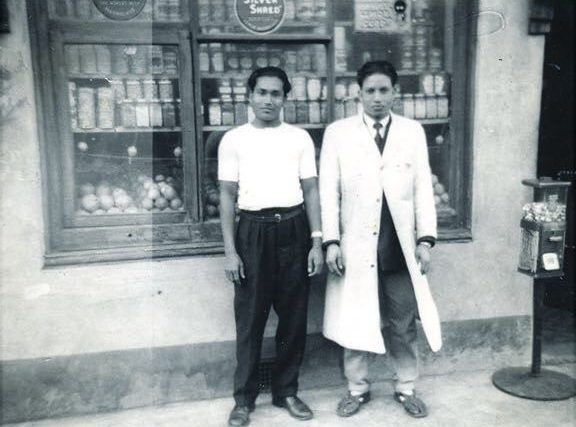
The gentleman on the right is Abdul Khalique, standing with his shop assistant, in the early nineteen-fifties outside the very first Taj Stores in Hunton St (now Buxton St). Abdul Khalique's brother Abdul Jabbar, the founder of the grocery store, commonly known then as 'Jabber's Shop', was a seaman who came here from Bengal to Spitalfields in 1934 after leaving the navy. He worked in textile sweatshops for two years before opening his store, which he ran with his Irish wife Cathleen.
These sparse facts, which I learnt from Abdul Jabbar's nephew Jamal - who never met his uncle - are all that is known of this brave man who travelled across the world and undertook the risky venture of starting a business in another continent, working so hard to build it up until his death in 1969. He would be amazed to visit the Taj Stores today and see how his modest enterprise has blossomed.
I enjoyed the privilege of a tour of the aisles in the company of Jamal (Abdul Quayum), who has been involved in the family business since he was seventeen years old, and now runs the store jointly with his elder brother Junel (Abdul Hai) and younger brother Joynal (Abdul Muhith).
It is a wonderful experience simply to explore here and savour the rich selection of produce on offer from all over the world in the Taj Stores. I love to study the beautifully organised displays of exotic fruit and vegetables, printed sacks of rice, tall stacks of brightly coloured cardboard packages, cans, bottles and jars - each with their distinctive fragrances. Then there is the cooking equipment, towers of plastic jugs and bowls, steel pots and pans, and scourers. There is a vast intricate diversity of attractive things collected here and it is a phenomenal feat of organisation that the brothers have pulled off, bringing this huge range of supplies together from the different corners of the globe.
Jamal explained to me how the business is run nowadays between the three brothers. Jamal does the hiring and the paperwork, while Joynal takes care of the day-to-day buying and selling, and Junel runs the catering supply and wholesale side of the business.'The beauty of it is, we have different responsibilities. We are a modern muslim family and we treat each other like friends,' said Jamal proudly.
Their father Alhaj Abdul Khalique first came to the United Kingdom in 1952 as a student before becoming involved in running the business with his brother. In 1956, the grocery shop moved to larger premises at 109 Brick Lane and then when Abdul Jabbar died in 1969, Abdul Khalique ran it with his brother Abdul Rahman. The pair were photographed looking every bit the sharp business men they were, in a handsome studio portrait taken at that time.
As the Taj Stores prospered, they moved again in 1979 to 112 Brick Lane and an era ended in 1994 when Abdul Khalique died. Then the family business passed from the brothers who had emigrated to this country, into the stewardship of the current generation born in East London.
This year, Joynal, Junel & Jamal - the brothers who run the shop today - moved the shop out of Brick Lane into their former warehouse premises at 26 Princelet Street. They explained to me that they now look back to their roots and, in the tradition of nineteenth century businessmen turned benefactors, they are funding a school and a mosque, building social housing, investing in irrigation and two cancer clinics back in Moulvibazar, Sylhet, Bangladesh - the home town where Abdul Jabbar set out from all those years ago when this story began.

Abdul Jabbar, the founder of Taj Stores

Abdul Khalique and his brother Abdul Rahman who ran the Taj Stores in the fifties
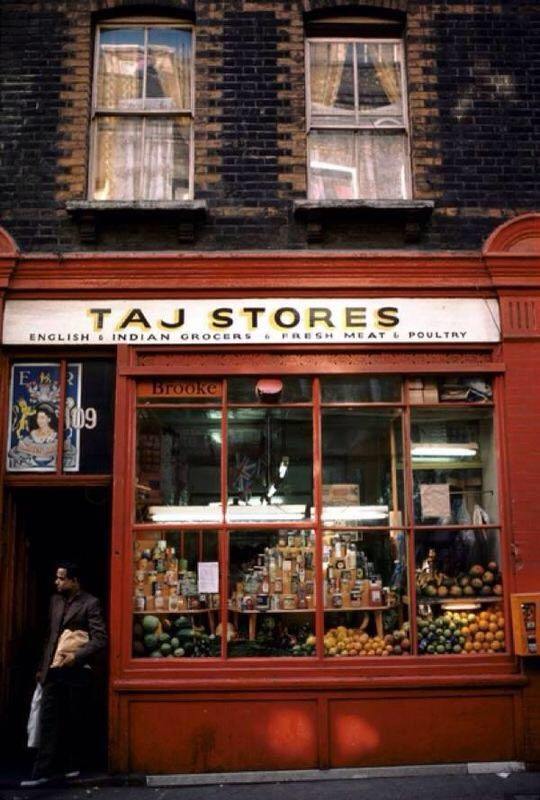
Taj Stores, 109 Brick Lane in 1977 (Photograph by Homer Sykes)
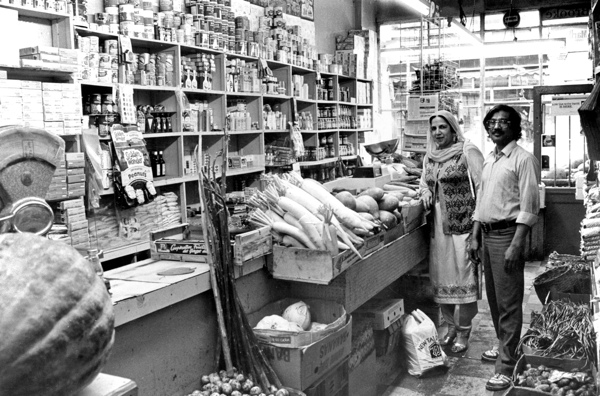
Taj Stores, 1980
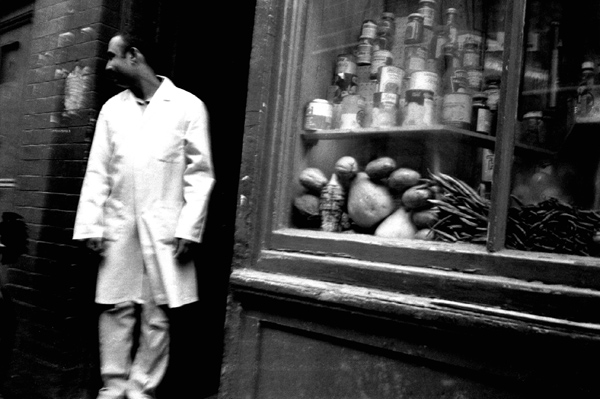
Taj Stores, 109 Brick Lane (photograph by Phil Maxwell)
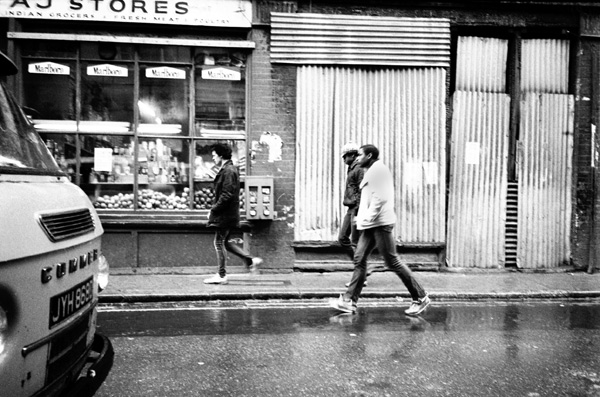
Taj Stores, 109 Brick Lane (photograph by Phil Maxwell)
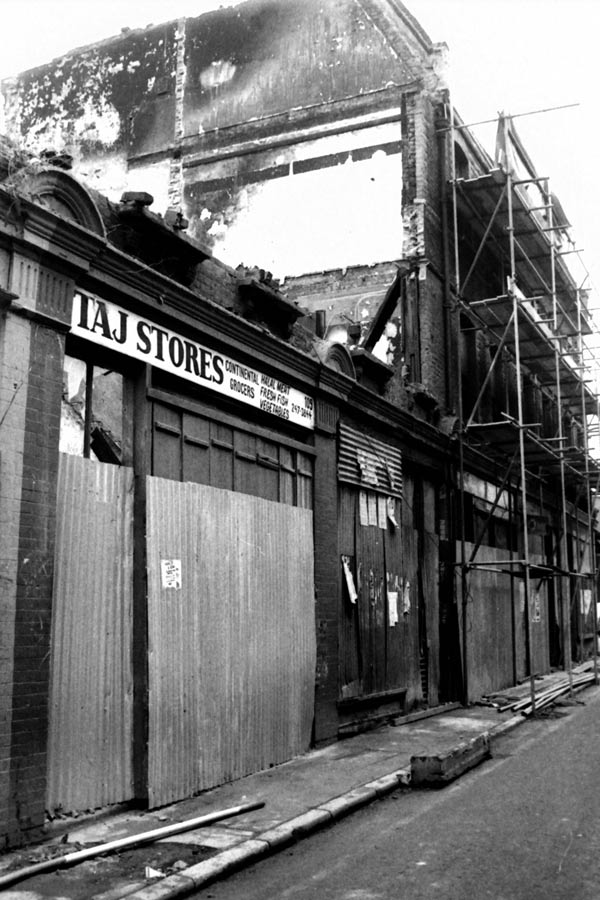
Demolition of 109 Brick Lane, early eighties (photograph by Phil Maxwell)
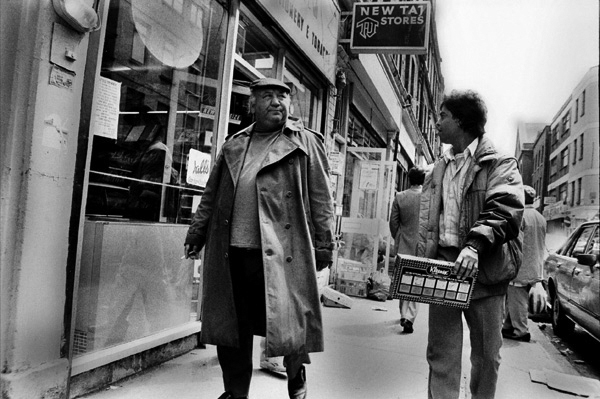
Outside Taj Stores, 112 Brick Lane, c.1987 (photograph by Phil Maxwell)
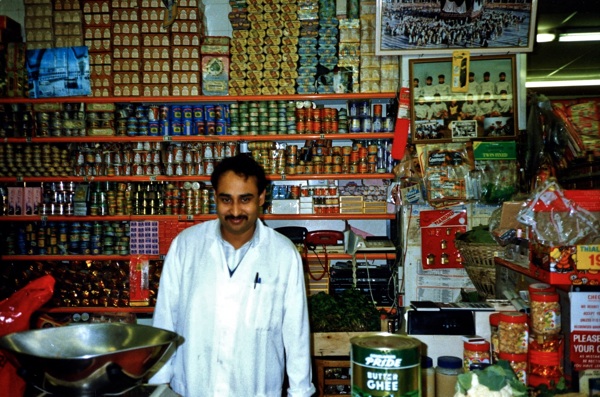
Komor Uddin, Taj Stores, 7th December 1990 (photograph by Clive Murphy)
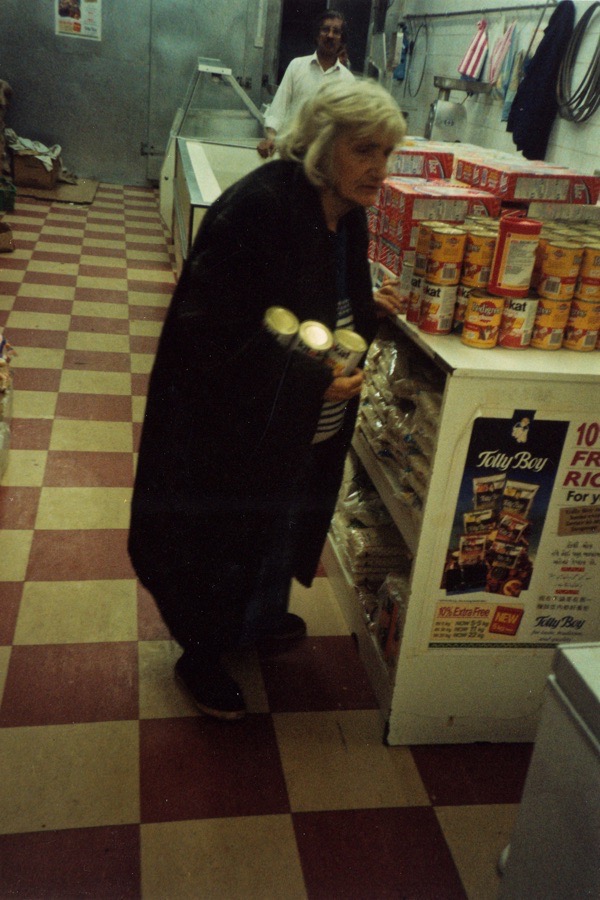
Joan Lauder the cat lady, buying cat food at Taj Stores, Brick Lane, 3rd August 1992 (photograph by Clive Murphy)
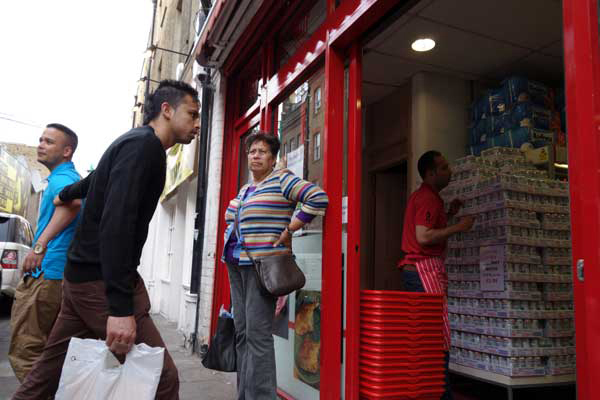
Taj Stores, 112 Brick Lane 2012 (photograph by Phil Maxwell)
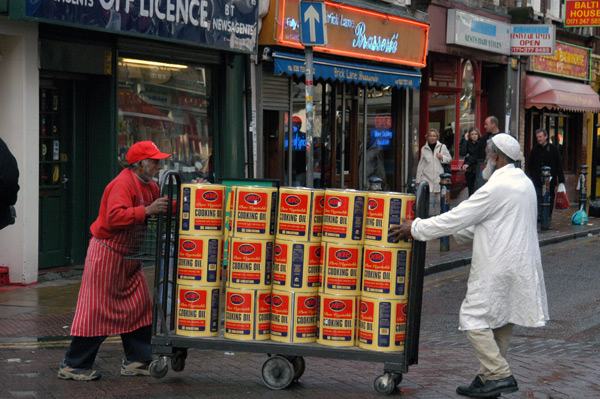
Delivering cooking oil to Taj Stores, 112 Brick Lane 2002 (photograph by Phil Maxwell)

During the final weeks of the campaign, convicted felon and oft-accused of sexual misconduct, Donald Trump kept talking about Jon Husted's butt.
After repeatedly describing Husted's backside as a "pile of muscle," Dementia Don claimed the Ohio senator had jumped 12 points in the polls because "the audience loved" his anatomical review. — Read the rest
The post Trump's anal fixation fails to deliver in the end appeared first on Boing Boing.

TL;DR: Turn one USB-C port into 13 with this docking station, now $34.97 (reg. $70).
A laptop bag full of single-purpose adapters gets heavy, and you usually leave the one you need at home. If you want one small gadget to replace them all, try the 13-in-1 Docking Station with Dual HDMI. — Read the rest
The post A 3-ounce docking station with 13 ports is now half off—just $34.97 appeared first on Boing Boing.
I'm a Professor of Economics at the University of Limerick in Ireland, I've helped create some interesting courses in Software Engineering and Bioscience. I love reading these and thought it might be nice to do one of my own. — Stephen Kinsella
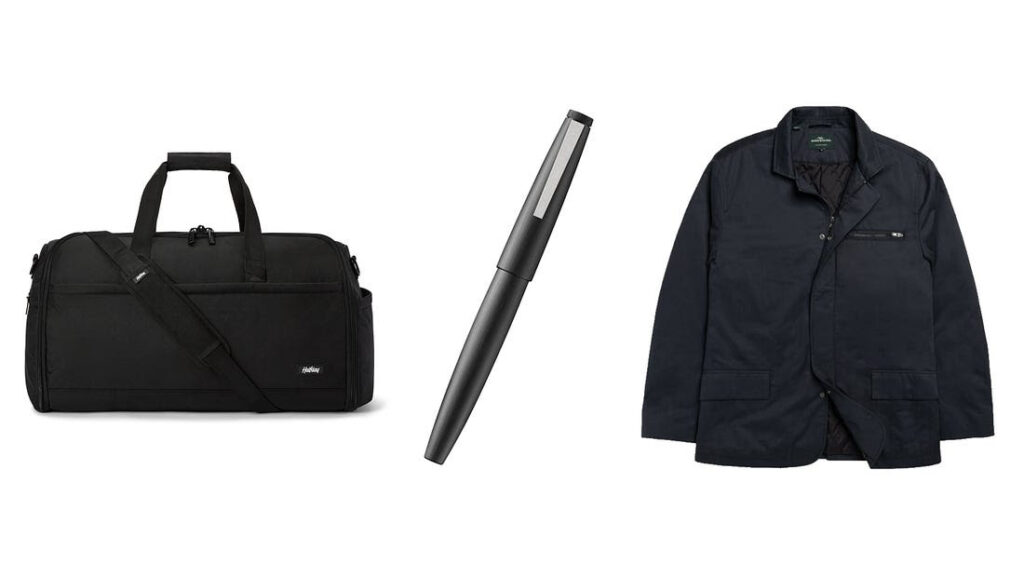 PHYSICAL
- Halfday Garment Duffel Bag. I travel at least once a week and it is a pleasure to use this bag. It is perfectly formed around a specific need. It helps me carry one suit, a spare shirt, some workout gear, and some toiletries, in a designed bag that is exactly adapted to the use case I have. It makes me happy using it.
- Lamy Fountain Pen 2000. A luxury item, mine is twelve years old now, with the fine nib. It feels great to use, looks great, and it is a little piece of design excellence you get to enjoy daily. I use Asa-gao Iroshizuku ink because it looks fantastic on the page and works well with this pen.
- Rodd and Gunn Jacket. I love all of this brand's products, and have several, but this jacket is my favourite.
DIGITAL
- Freedom. I bought a lifetime subscription a while ago. It blocks the stupid stuff when you need to try to be focused and clever.
- YNAB. A budgeting app that saves you money because it forces you to focus for a minute on money. I keep it as simple as I can with this.
INVISIBLE
᚛ᚐᚏ ᚐᚌᚆᚐᚔᚇᚆ᚜ This is Ogham, an ancient Irish alphabet, written linearly and on stone. What you are looking at is 'Ar Aghaidh', or 'Onwards'.
Sign up here to get What's in my NOW? a week early in your inbox.


Dear Editor,
With regard to the article The great heat pump paradox: more heat, less progress, while a great deal has been written about the economics of heat pumps from the point of view of the consumer, it is worth adding some perspective from the point of view of an installer, by comparison with a registered gas installer.
First, I'm afraid, a minor quibble. You state in the article that "By contrast, gas and oil boilers are technically simple". This is not really the case. They are an established technology, but they are an extremely dangerous technology if not correctly installed and maintained. I don't imagine that you have any other piece of technology in your house for which you have a separate alarm specifically to warn you when it goes wrong and tries to kill you. For this reason, the RGI and Gas Safe qualifications are quite technical and difficult to obtain.
However, the economics of heat pumps from the point of view of the installer or engineer do not work out as well because (a) there is a far smaller installed base and (b) they do not require the same mandatory annual checks and frequent maintenance as a gas or oil boiler. This means that most of the money for the heat pump engineer comes from installing new units, whereas for an RGI/Gas Safe engineer the bulk of their income will come from servicing and maintenance.
Both will be looking at installing between two and four new units a month, but the gas engineer will probably service 200-400 units per annum. You can see that, as things currently stand, it does not make sense for an RGI/Gas Safe engineer to get into the heat pump business.
You can contrast this with what happened in the Netherlands, where the government subsidised additional training for all of its gas technicians in air-to-air heat pumps - what we know in the UK as F-gas certification - and also significantly subsidised installations of these units without requiring the removal of any existing gas or oil boiler, allowing them to act as additional rather than complete replacement heating.
This built up a skilled workforce and a large installed base of the new technology, and reduced actual gas demand because, for most of the year, an air-to-air heat pump can provide most of the heat requirements of a Dutch household.
I hope this helps explain some of the slow uptake of heat pumps in the UK. There is also more to say about the UK preference for air-to-water over air-to-air, but that is a different topic.
Duncan Jones
Caistor, Lincs
More from East Anglia Bylines
 Economics
The great heat pump paradox: more heat, less progress
by Stephen McNair 1 November 2026
 Friends of Bylines Network
There has never been a greater need for grassroots journalism that investigates the stories that really matter, holds power to account and champions the voices of everyday citizens. We are proudly powered by volunteers but what we do isn't free.
STAND WITH US for independent, citizen-led journalism that makes democracy stronger, and you will even get some exclusive benefits.
BECOME A FRIENDThe post Letter: Why the heat pump sums don't add up for installers first appeared on East Anglia Bylines.
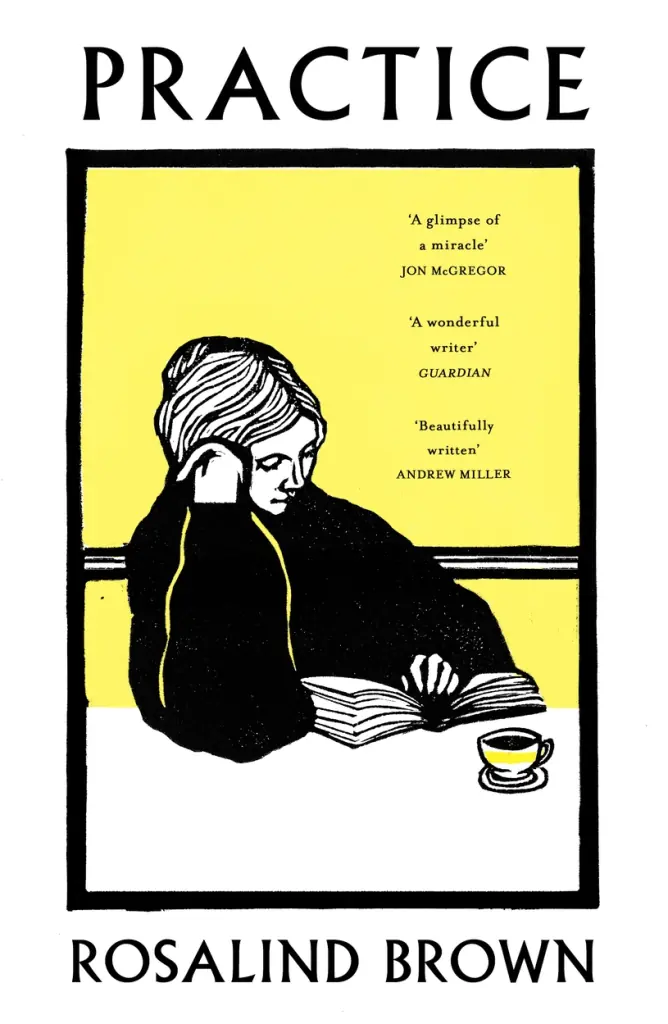
I have a simple rule - if I meet someone at a party and they say they've written a book, then I will immediately buy that book. It's a strategy which has worked out well; leading me to some truly interesting and delightful prose.
Rosalind Brown (a fellow UEA graduate) has written a stunning little book. Practice is an almost Proustian meander through a day-in-the-life of a young woman going through an essay crisis. Much like R. F. Kuang's "Katabasis", I'm rather glad the author found university to be a bewildering and, at times, upsetting experience as it provides rich fodder for this tale.
There is an inherent tragedy in studying English literature. The more you read, the more futile it becomes. Just like repeatedly saying a word aloud creates semantic satiation, so to does the repeated reading of sonnets drive away all their meaning. The closer you study a poem the further it slips from your grasp. The more introspective you become, the more you lose sight of what you really want out of life.
As Proverbs 26:11 suggests, some students are like a snake which is compelled to eat its own tail. The protagonist, Annabel, isn't a caricature but she sure is a trope that you've met in halls. She's a woe-is-me wretch who'd rather cultivate a "Heated Rivalry" style interior monologue rather than engage with those around her. So self-absorbed to that she doesn't realise that, not only do other people have feelings, other people are carrying the same burden she does. I suspect her essay research really should have widened to include the seminal "Male gays in the female gaze"!
It's a short novel, but pleasingly thorough. Although there aren't any major twists, I can't say I predicted how the story would evolve and conclude. The punctuation and sentence structure is charmingly idiosyncratic and, I think, perfectly fits the story.
A note on formatting. The ePub has hard page breaks. That means some "pages" contain little more than a paragraph. I suspect that's intentional as it gives a wonderfully staccato pace to the text. Our day is broken up into little moments which don't quite fit the strictures of a chapter, yet we experience the day as a cohesive whole.
An excellent book - but one to read after you've finished your homework.

Where in London is furthest from a listed building?
Thankfully Historic England provide a scrollable map on which every listed building is pinpointed, so I started there. This is a snapshot from northeast London, where you can see lots of listed buildings in the lower left-hand corner in Hackney, Tower Hamlets and Greenwich, and rather fewer as you continue outwards. A lot of these can be found along main roads because that's where settlement and commerce began, leaving several listed voids inbetween. I hope it's not too much of a spoiler to say that London's most heritage-non-adjacent location is on this map.

To find the largest gap I tried to identify the largest circle that could be drawn on the map without enclosing a listed building. To do this I took a roll of sellotape and moved it around my laptop screen until no blue pins were visible through the gap in the middle. I found five locations altogether, the only qualifying criterion being that the centre of of the circle had to be in London. Each centre turned out to be over a mile from any listed building, mainly because I got lucky with the size of my sellotape, and then it was just a case of measuring the radius of each circle as accurately as possible.
I can therefore confirm that the place in London furthest from a listed building is here, near enough.

This is the junction of Forest Road and Hainault Road in the London borough of Redbridge. The precise location is across the hedge in the middle of a large ploughed field about 100m south of the roundabout, but it's not public land and the entire boundary is shielded by a thickety hedge so that's the best photograph I managed to get. The nearest place you might know well is Fairlop Waters Country Park which is a ten minute walk to the west, alternatively Hainault Recreation Ground which is a large expanse across the road. The only nearby residents live on a caravan park, and although the 462 bus drives past it doesn't stop, there being no local need. Instead the land hereabouts is mostly open fields and the roads are super-useful ratruns for Essex-fringe drivers who pass through in great numbers.
So why is this the place in London furthest from a listed building? One reason is that centuries ago this was all Hainault Forest where nobody lived. Another reason is that after the forest was chopped down in the 1850s it all became agricultural land so the only buildings were three farms, none of them noteworthy. Another reason is that Fairlop Plain was acquired in the 1930s not for housing but for an airport, which when WW2 broke out became RAF Fairlop instead. Another reason is that the airfield was so comprehensively erased after 1946 that nothing of wartime significance survives. A final reason, possibly key, is that all the surrounding land then became either Green Belt or the huge Hainault council estate. That meant either you couldn't build on it or nobody built anything inspiring enough to be notable, and that's how this field became the only place in London to be over 1¼ miles from a listed building. [map] [map]
And here are the listed buildings it's just over 1¼ miles from.

» The alien-looking one is the very wonderful Fullwell Cross library, designed by Frederick Gibberd in 1959 and given Grade II status in 2007. It dominates the roundabout at the top of Barkingside High Street, and if its dramatic copper-topped drum bears some resemblance to Liverpool's Roman Catholic Cathedral that's because Gibberd designed them both. Events today include Chatty Cafe, Scrabble Club and Lego Club, or simply borrowing some books beneath the inspirational ring of clerestory windows.
» The terrace of weatherboarded cottages is 195-209 Manor Road, likely built in the early 19th century and Grade II listed in 1979. I'd never noticed them before because they're set back from the road and have since been screened behind a lot of trees and shrubbery. Their old-school construction puts them at odds with most of the surrounding suburban housing, but they are very close to Grange Hill station so make an excellent commuter bolthole.
» The first church is All Saints Chigwell Row, a fine Gothic pile built to serve the growing village in the 1860s. It was only listed in 2024, but even before that Chigwell Row had so many listed houses that my sellotape circle wouldn't have been any bigger.
» The second is the Church of St Peter, Aldborough Hatch, also from the 1860s but listed much earlier in 1979. Its building material included chunks of Portland Stone from the original Westminster Bridge which had just been demolished.
The fifth and final listed building on my circle's periphery is Furze House Farmhouse in Marks Gate. It's the oldest of all the listed buildings listed here but I don't have a photo because it can't be seen. The farmhouse is tucked away behind a locked gate at the end of a long driveway, all of which are encased so completely within a sheath of woodland that you'd think some previous owner really wanted to be invisible. Everything between here and the centre of my circle is arable farmland, hence no buildings, hence no listed buildings, indeed fewer listed buildings than anywhere else in London.
In second place is a landfill site on the Rainham Marshes.

You can't get inside the landfill site so my photo is of Coldharbour Lane alongside, a remote dead end lane that curls around the huge spoilheap to terminate alongside the estuary. Absolutely nobody lives here, indeed nobody even lives within a mile, let along in anything listed. All that's been built even vaguely nearby are industrial sites and warehouses, some of them across the river in Erith, and basically whenever you ask a "Where in London is furthest from...?" question these marshes inevitably pop up.
In third place is the 18th tee of Addington Court golf course, close to Selsdon Wood and the Forestdale estate. It won't surprise you that there are no listed buildings in New Addington, and that's mainly why these fairways are nowhere near any of them whatsoever.
In fourth place are Tolworth Court Farm Fields in the Hogsmill valley, specifically Finch Hoares, a former hay meadow alongside Jubilee Road. Nothing in Tolworth is listed, especially not that ugly tower block, and it's over a mile until you find one that is.
In fifth place, I think, is High Wood in the extremely rural hinterland beyond Orpington, beyond even the outpost of Pratt's Bottom. When I tried visiting every 1km grid square in London this is pretty much the last square I went to, so you won't have been either.
I hope I used my sellotape correctly to devise this ordering, confirmed by careful manipulation of online maps. But I do think I have the definitive answer to the question Where in London is furthest from a listed building?

It's in the borough of Redbridge in a ploughed field 100m south of the roundabout at the junction of Forest Road and Hainault Road, over a mile and a quarter from any listed building. And because it's all Green Belt round here that's very unlikely to change.


