
 # [ 06-Feb-26 4:42pm ]
 I've been watching Jake do the Headless Frontier work with two different AI bots -- ChatGPT and Claude.ai. And as he's doing that, I'm slogging away the same way I've always done it, working on the top level user interface of WordLand in browser-based JavaScript. I don't see a way around it, because I have a special way of working on user interfaces, and we're still quite a ways away from the bot being able to do vibe coding at that level. It's fascinating to watch Jake revive code I wrote in the late 80s and early 90s. He's a very accomplished user of it, being transformed, with the help of the bots, into a kernel-level developer of what's basically an OS built around a scripting language, object database and with the internet latched on after the whole thing was done, and then ported to Windows. I stopped working at that level before all that michegas happened. I have looked at the code Jake is working on to see what became of it, and wasn't horrified, I recognized my work, but I wouldn't ever want to work on that myself. I imagine some commercial developers have already rebuilt their testing and support functions for products around ChatGPT-like systems. If you're an old Frontier fanatic, that's where our product is once again getting out in front. When Jake is done it'll be one of the first big systems totally managed in an AI system. It should be relatively easy to add new verbs to the language, even to add new features to the language, new APIs, etc. # # [ 06-Feb-26 2:56pm ] Sports galore! [ 06-Feb-26 2:06pm ]
Good morning sports fans!
Boy are we getting some fancy sports action.
The Olympics have already started, with Milan as the host city. The opening ceremony is tonight. My longtime friend, the brilliant and beautiful Anna Masera, will be attending. She's from the nearby city of Torino.
And of course there will be lots of sports action on Sunday, when by coincidence, the Knicks are playing the Celtics in Boston.
And also in case you're into American football -- the SuperBowl is on Sunday in my former home base of Silicon Valley, featuring the New England Patriots (booo) and the Seattle Seahawks (booo two). 6:30PM Eastern on Peacock and NBC. (They say "simulcast" on NBC, which means what?)
Meanwhile I'm sooo freaking tired of working on reading and replying in WordLand, but I gotta get it done. I hope to have a test version up real soon, like maybe next week. I'll write some more about that in a bit. I want people to be prepared for the new design, you won't be replying on my site, you'll be replying on yours. This is the price we pay for true distribution. But when you're reading the posts and replies, it's all seamless. No cost. And, if my site goes away, your writing remains where it was, where you wrote it, on your site. This is what's new about WordLand. We respect the web and we respect you. I'm not trying to lock you in, just trying to set an example for the rest of the tech world. Give us all a way to avoid being locked in the trunk while the tech oligarchs have stadiums and train stations named after them (and if they think that makes them immortal, please tell me who Mr or Ms Shea was? Heh.)
Now one thing some people are sure to be upset about, up front. WordLand only knows how to write to WordPress sites. It's kind of a miracle we can do that, mostly owing to the fantastic API they have created. After we get that going, of course I want to work with other blogging systems to make sure their products can be used in the same way. Working together we're going to give the good old web a new feature! But right now I'm the only person working on this, and I'm pretty old for doing this kind of work, so please be kind. Thanks.
# [ 05-Feb-26 2:57pm ] # [ 04-Feb-26 10:49pm ] # [ 04-Feb-26 11:35pm ] # [ 04-Feb-26 11:29pm ] # [ 04-Feb-26 10:47pm ] # [ 04-Feb-26 5:29pm ] # [ 04-Feb-26 3:44pm ] # [ 04-Feb-26 3:30pm ] # [ 03-Feb-26 2:15pm ] Interesting post on Twitter by an OpenAI co-founder, Andrej Karpathy, about the value of RSS. I've seen it said elsewhere, that RSS and ChatGPT are particularly well-suited for each other. I don't understand the connection, other than RSS is always useful, as a way of formalizing the output of an app so other apps can use it as input. Another thing AI apps have in common with work we've done in the past is the ability to script apps, which was one of the big features of Frontier esp on the Mac starting in the early 90s. This started out just for desktop apps but worked just as well for web apps, once that opportunity became available. I felt strongly that the Mac with it's very functional GUI could benefit from a powerful system-level scripting language with the UI objects being scriptable, and the data of the apps accessible via script. That kind of duality is still a common theme in computer work, I'm doing the same kind of thing with WordPress, as the OS for the web, and making it possible to create different UIs in ways that earlier social web apps can't. I think that functionality as with the others will pair very nicely with ChatGPT and its cousins. # # [ 03-Feb-26 2:46pm ] # [ 03-Feb-26 3:02pm ] # [ 03-Feb-26 5:32pm ]
Reddit, Meta, and Google Voluntarily Gave DHS Info of Anti-ICE Users, Report Says [ 15-Feb-26 10:00am ]
The great computer science exodus (and where students are going instead) [ 15-Feb-26 8:40am ]
Surprising growth in UK productivity [ 15-Feb-26 6:38am ]
Interesting post on Twitter by an OpenAI co-founder, Andrej Karpathy, about the value of RSS. I've seen it said elsewhere, that RSS and ChatGPT are particularly well-suited for each other. I don't understand the connection, other than RSS is always useful, as a way of formalizing the output of an app so other apps can use it as input. Another thing AI apps have in common with work we've done in the past is the ability to script apps, which was one of the big features of Frontier esp on the Mac starting in the early 90s. This started out just for desktop apps but worked just as well for web apps, once that opportunity became available. I felt strongly that the Mac with it's very functional GUI could benefit from a powerful system-level scripting language with the UI objects being scriptable, and the data of the apps accessible via script. That kind of duality is still a common theme in computer work, I'm doing the same kind of thing with WordPress, as the OS for the web, and making it possible to create different UIs in ways that earlier social web apps can't. I think that functionality as with the others will pair very nicely with ChatGPT and its cousins. # # [ 03-Feb-26 2:46pm ] # [ 03-Feb-26 3:02pm ] # [ 03-Feb-26 5:32pm ]
Reddit, Meta, and Google Voluntarily Gave DHS Info of Anti-ICE Users, Report Says [ 15-Feb-26 10:00am ]
The great computer science exodus (and where students are going instead) [ 15-Feb-26 8:40am ]
Surprising growth in UK productivity [ 15-Feb-26 6:38am ]
Here's some good news that might have passed you by. UK productivity - how much the economy produces per hour worked - grew more in the past year than in the previous seven years combined. I know. It doesn't feel like that. GDP per person has barely moved since before the pandemic - up just 0.8% in six years. We've slipped level with Italy, having been 8% ahead. The vibes are terrible.

The UK has lost ground relative to their peer group. But productivity is genuinely picking up, and the reason why tells us something important about what's happening in the economy and what the Bank of England might do next.
First, a measurement issueThe official productivity numbers come from the Labour Force Survey (LFS), and they show a modest 1.1% growth in the year to Q3 2025. That's good - faster than most years since pre-2007 Good Old Days - but not exciting. But the problem is LFS response rates have collapsed since the pandemic, and as a result it erroneously thinks that the 16+ employment rate has been reasonably flat over the past year.
If we use payroll data instead - to count employees receiving a payslip - the picture transforms. The employment rate is now *dropping* fast on this measure. With output rising slowly, but the number of hours worked to produce it dropping fast, productivity in fact grew by 3.1% over those four quarters. That's not a rounding difference. It's the gap between "solid" and the best non-pandemic year since before the financial crisis.
 Productivity growth has accelerated sharply when measured correctly
Creative destruction
Productivity growth has accelerated sharply when measured correctly
Creative destruction
One driver of productivity growth is something the economist Joseph Schumpeter called "creative destruction." The idea is simple: unproductive firms die, their workers move to better firms and the economy gets more productive. It's how market economies are supposed to work - but the UK hasn't been getting enough of it.
Since the financial crisis, and outside of the pandemic, creative destruction has been sluggish. Think of it this way. Interest rates were basically zero for over a decade. Energy was cheap. The minimum wage was low. If you were running a not-very-productive business, you could get by - maybe not thrive, but survive. Too many firms were limping along, tying up workers and capital that could have been used more productively elsewhere. That lack of churn is one of the prime suspects behind the UK's productivity malaise.
Now the environment has changed. Interest rates are higher, energy costs more, and the minimum wage has risen sharply. And sure enough, we're seeing more firms go under. Job losses from exiting firms in 2024 were the highest since 2011. Corporate insolvencies are running well above pre-pandemic levels. Redundancies are up too.
 Insolvencies and redundancies are picking up
*If* this really was creative destruction at work, it could be exactly what the UK economy needs. More churn, more reallocation, more productive firms replacing less productive ones. That's a good story. But it's a pretty big "if."
Destruction yes, creation not so muchHere's the catch. Creative destruction has two parts, and so far we've mainly got the latter.
The destruction is clearly happening - firms going bust, workers being laid off. But the creation? Not so much. We're not seeing a wave of new firms starting up to absorb those workers. Hiring at expanding firms isn't (yet) big enough to pick up the slack.
The result is that unemployment has risen to its highest level in a decade outside the pandemic (5.1%). The productivity gains are real, but they're coming partly from fewer people working, not just from more output being produced.
What kind of unemployment?This is where it gets tricky. Not all unemployment is the same, and what the Bank of England does next depends on what kind we've got.
If higher unemployment simply reflects spare capacity - not enough demand in the economy to keep everyone in work - then the Bank should act. Cut rates, stimulate spending, bring unemployment back down. That's textbook stuff.
If it's frictional - more people between jobs at any given moment because the economy is churning faster - that's different. It's not painless for the people involved, but it is temporary for them, and it's an inevitable side effect of the dynamism the UK economy badly needs more of. A more dynamic economy just has a higher background rate of job switching. The Bank doesn't need to step in.
The really worrying scenario is mismatch or unrealistic expectations. Maybe workers displaced from dying firms don't have the right skills for the jobs being created. A barista laid off when a coffee chain goes bust can't necessarily walk into a role at an AI startup. Or maybe wage expectations haven't adjusted - if workers are hankering after unrealistic wages to make up for past or expected inflation, the labour market will generate inflation. In that world, unemployment stays high, the Bank can't fix it by cutting rates, and we don't get the benefits of higher dynamism either. We would just have to live with it until skills catch up or expectations adjust.
Right now, we honestly don't know which of these stories is right. Probably a bit of all three. But the answer matters enormously - not just for economists, but for anyone with a mortgage or looking for a job.
Watch this spaceThe productivity pickup is genuinely good news. The UK economy badly needed it. But we're stuck in an uncomfortable middle phase: the old firms are dying and the new ones haven't fully arrived yet. Whether this turns into a story about a healthier, more dynamic economy - or a story about a downturn that the Bank must respond to - is probably the most important question in UK macro right now.
This article is republished from the Resolution Foundation's substack. It draws on Chapter 2 of the Foundation's recent report Mountain Climbing.
More from East Anglia Bylines
 Economics
Is Britain at the peak of a great financial wave?
byProf Richard Murphy 2 December 2025
Economics
Is Britain at the peak of a great financial wave?
byProf Richard Murphy 2 December 2025
 Economics
Decline, what decline? The myth of dying Europe
byGabriel Zucman 2 January 2026
Economics
Decline, what decline? The myth of dying Europe
byGabriel Zucman 2 January 2026
 Business
What do we really know about working from home?
byJane Parry 7 January 2026
Business
What do we really know about working from home?
byJane Parry 7 January 2026
 Economics
Where did the money go - we offer some answers
byAndrew Curry 11 January 2026
Economics
Where did the money go - we offer some answers
byAndrew Curry 11 January 2026
 Economics
Surprising growth in UK productivity
byDr Gregory Thwaites 15 February 2026
Economics
Surprising growth in UK productivity
byDr Gregory Thwaites 15 February 2026
 Bylines Network Gazette is back!
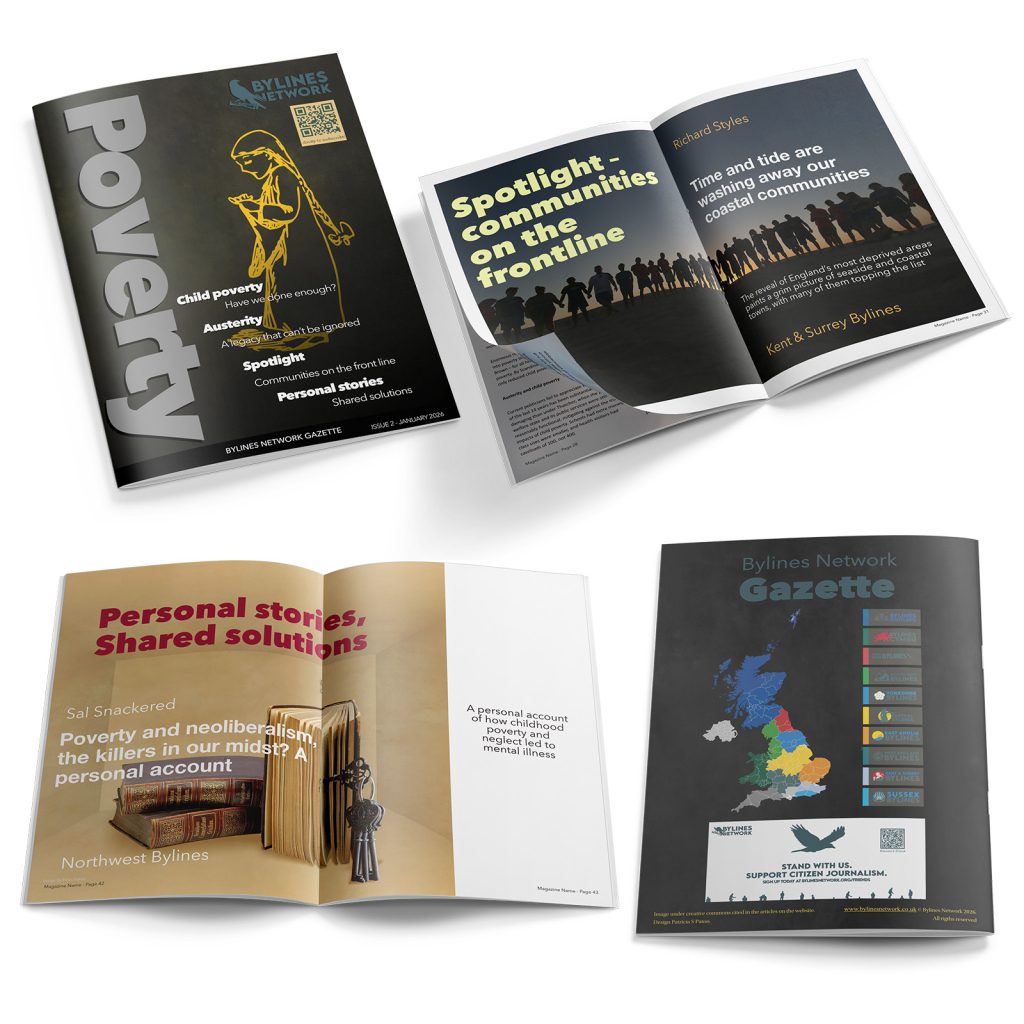
With a thematic issue on a vital topic - the rise child poverty, ending on a hopeful note. You will find sharp analyses on the effect of poverty on children's lives, with a spotlight on the communities that are on the front line of deprivation, with personal stories and shared solutions. Click on the image to gain access to it, or find us on Substack.
Journalism by the people, for the people.
The post Surprising growth in UK productivity first appeared on East Anglia Bylines.
Decimal Day [ 15-Feb-26 12:55am ]
...to this...

Here's how.
1961: Government sets up the Committee of the Inquiry on Decimal Currency. Farthing withdrawn.
1962: Bank of England urges the committee to retain the pound as the main unit in any decimal system.
1963: Committee reports. They propose 100 new pennies to the pound, with coins to be ½ 1 2 5 10 20.
1966: Government proposes to adopt the changes. Decimal Currency Board established. Five-year changeover period begins. Public competition to design the new coins.
1967: Parliament approves the Decimal Currency Act 1967. Coins will be ½ 1 2 5 10 50 (not 20). Nearly 9,000 million coins will be needed. The minor unit will be the new penny (symbol p). Production of pre-decimal coins ceases.
1968: 5p and 10p coins introduced (identical in size to the existing shilling and florin). Souvenir sets of ½p, 1p, 2p, 5p and 10p coins issued in advance of wider circulation.
1969: Old halfpenny withdrawn. 50p coin introduced, the world's first seven-sided coin. "Use it just like a 10/- note".
1970: Half crown withdrawn. Ten-shilling note withdrawn. Massive public information campaign underway (posters, films, songs, TV adverts, booklets, conversion tables, TV programmes)
15th February 1971: Decimal Day, or D-Day. 2p, 1p and ½p coins become legal tender. Banks switch immediately. British Rail and London Transport switch a day early. Most shops show prices in old and new money. Shops continue to accept payment in old coins but always issue change in new coins. Twelve low-value definitive stamps released.
1971: Old penny and thruppeny bit (3d) withdrawn six months later.
1973: First commemorative coin - the European Economic Community accession 50p (with nine clasped hands).
1980: Sixpence (2½p) withdrawn, nine years later than originally anticipated. [1551-1980]
1981: Announcement that a £1 coin will be introduced.
1982: Seven-sided 20p coin introduced. Intention is to reduce the weight of the coins in your pocket. The word "NEW" dropped from newly-minted coins (e.g. the 10p inscription changes from "NEW PENCE" to "TEN PENCE").
1983: £1 coin introduced.
1984: ½p coin ceases to be legal tender [1971-1984, the first decimal withdrawal]
1988: £1 note withdrawn. [1797-1988]
1990: Smaller 5p coin introduced. Original 5p coin (and shilling) demonetised. [1548-1990]
1992: Smaller 10p coin introduced. 1p and 2p coins now made of plated steel rather than bronze.
1993: Original 10p coin (and florin) demonetised. [1849-1993]
1994: Coinage review proposes introduction of bimetallic £2 coin.
1997: Smaller 50p coin introduced.
1998: £2 coin introduced.
1998: Original 50p demonetised. [1969-1998]
2005: Coinage redesign commissioned by the Royal Mint.
2007: New set of coins introduced based on heraldic designs. No numerical values shown.
2011: 5p coins now nickel-plated steel rather than cupro-nickel.
2011: 10p coins now nickel-plated steel rather than cupro-nickel.
2017: 12-sided £1 coin introduced to reduce counterfeiting. Original £1 coin withdrawn six months later. [1983-2017]

2023: New set of coins with animal designs to mark King Charles' reign. Salmon 50p and bee £1 coins enter circulation.
2024: No new coins ordered by the Treasury from The Royal Mint this year.
2025: Oak-leaf 5p coin enters circulation.
2026: Dormouse 1p, red squirrel 2p, capercaillie 10p, puffin 20p and floral £2 coins not yet in general circulation.
Value Diameter Thickness Weight Introduced £228.4mm2.50mm12.0g1998 £123.4mm2.80mm8.75g2017 50p27.3mm1.78mm8.00g1997 20p21.4mm1.70mm5.00g1982 10p24.5mm1.85mm6.50g1992 5p18.0mm1.70mm3.25g1990 2p25.9mm2.03mm7.12g1971 1p20.3mm1.65mm3.56g1971
2027 onwards: tbc. No current plans to withdraw any existing coins, or cash in general.
Maedb Joy, Poet & Former Sex Worker [ 15-Feb-26 12:01am ]Cabaret producer and stripper, Lara Clifton, interviewed Maedb Joy, a poet and former sex worker of extraordinary moral courage who has created Sexquisite, a cabaret of performers with lived experience of sex work.

Portrait of Maedb Joy by Sarah Ainslie
Maedb Joy is a woman in her twenties who is on a mission to resist the simultaneous silencing of sex workers and appropriation of their culture. At Bethnal Green Working Men's Club, as part of the campaign against the threat of closure, I attended what was potentially one of the last events, Sexquisite, a sex-worker-run cabaret. It was the best audience I had stood amongst for a long time. The crowd was mixed in age, class, bodies and genders, giddy with the pleasure of being in a sex-positive, shame-free, celebratory space.
Fifteen years ago, I was interviewed by Spitalfields Life about my work as a stripper. At that time, there were few public spaces where sex workers could speak with nuance, pride and political clarity. What strikes me most is not how much has changed but how much organising, creativity and solidarity it still takes to claim space.
So when The Gentle Author invited me to interview Maedb, founder of Sexquisite, I was chuffed and this is her story, in her own words.
"I worked in the sex industry from when I was fourteen. I was very isolated and working in secret. The only other sex worker I knew I met on Tumblr. I didn't tell my friends.
When I was sixteen, I was arrested for working underage and was on bail for two years. It was a formative experience and really awful - I was forced to come out to my family. My dad was in police meetings with me, seeing everything. It destroyed our relationship.
That same year I had a road accident where I almost lost my right foot. But it ended up being a blessing because I started writing while I was in hospital. At first, I rewrote poems I found online, pretending they were my own. I was desperate for approval. Then I started writing about what had happened to me.
My mum, who is a feminist and an ex-music-journalist, started arranging gigs for me. They were punk gigs. I'd be the only teenager on a line-up with feminist punk bands, performing angry poetry about sex work.
After the accident, I went back to college and studied performing arts because I'd left school without GCSEs. We had to create a play and there wasn't room for another main character, so I wrote a monologue about a girl in a hostel who'd been groomed. That was the first time I told a couple of hundred people about what had happened to me, but I was playing a character. That's how I started performing, to talk about experiences without naming myself.
I got into Guildhall School of Music & Drama. In the second year, we had to put on an event. The event I put on was Sexquisite. That was the beginning of 2019.
At that point, I had no sex worker friends. People told me not to say anything about my past, that this was a fresh start. I was really scared. I was making art about my life but no one knew it was my own story. I didn't even know what cabaret was. I put out a call asking for multidisciplinary artists who were sex workers - poetry, comedy, burlesque, theatre. Through Sexquisite I started meeting people like me.
Being a sex worker is very marginalising. People don't understand what it's like, having family angry at you, friends who won't speak to you, partners who call you a whore. Performance was how I could show the complexity of it. Through a monologue you can explain what it actually feels like.
People think stigma is disappearing but I don't think it is. In sex-positive scenes - such as at the Bethnal Green Working Men's Social Club - it feels easier, but outside that bubble it's still dangerous. I know sex workers who have had their children taken away. People can't rent homes. They can't explain gaps in their CVs. Even legal work like web-camming is treated as immoral earnings.
Sex worker is the only marginalised identity people believe you choose. That alone says a lot. You're never allowed to say you had a bad day at work, people tell you you shouldn't be doing it at all. Even within families it becomes a source of shame. This is why the law matters. The Online Safety Act has been coming into force this year and it's had huge consequences. Platforms are deleting adult content, closing accounts, wiping out years of work overnight. Websites face massive fines if they don't comply, so many are just cutting off adult material entirely.
It's sold as protection but it's collecting people's data, pushing sex workers off safer platforms and into more dangerous situations. It's also erased support spaces such as forums, harm-reduction networks and community archives. That's not accidental. There are also ongoing attempts to expand criminalisation through policing and crime bills and to push versions of the Nordic Model, which claims to protect workers but actually makes screening clients harder and working conditions less safe. These laws don't remove sex work, they remove safety for sex workers.
Meanwhile there's a weird contradiction happening culturally. Sex worker aesthetics are everywhere. Some people dress like strippers, use the language and take the imagery, but they don't work shifts or deal with the consequences, or support the sex worker community. At the same time, actual sex workers are being de-platformed and legislated against. That contradiction is exhausting but it's also why my work has to keep going.
I want to start a UK Sex Worker Pride, in the same way we have Trans Pride and Black Pride. It'll take maybe a team of a hundred people. I would love to do a big march and a big party. This year I'm doing a programme of events but next year it would be cool to make it bigger."

Maedb performing one of her poems at Bethnal Green Working Men's Social Club
Photographs copyright © Sarah Ainslie
Disney Sends ByteDance an AI Trophy in the Form of a Cease and Desist Letter Over Seedance 2.0 [ 14-Feb-26 10:30pm ]
Love [ 14-Feb-26 10:42pm ]Towers
I love to look at them, know what they're for, and (many decades ago) climb them. Places where I write about towers and post photos of them:
• Trunk Line, my blog about infrastructure
• Nfrastructure, my Flickr collection of infrastructure photos (most of which are about broadcasting and transmitters)
• This subset on my main Flickr collection
• All these (121 of them), posted on this very blog
Consider all of them a long love letter to the now-gone golden age of broadcasting. I want future historians and archivists to remember what broadcasting was and how it worked before digital tech absorbed and obsolesced it. Long may it wave.
Stories
I Love Girl, by Simon Rich, in The New Yorker. It's worth getting a subscription just for that one story.
Boom!
What Happens When You Put AI in the Hands of a 73-Year-Old Grandmother, by Frances Flynn Thorsen, @blogmother on her Substack blog. Hats off to the real estate conversation led by Bill Wendel of RealEstateCafe and happening here.
Noem's "Right people voting" comment sparks concern over DHS role in elections [ 14-Feb-26 10:02pm ]
ICE Barbie Kristi Noem ignited a political firestorm on Friday by suggesting her Department of Homeland Security has a role in ensuring "the right people" are voting in upcoming elections. Her comments raise concerns about DHS's limited role in policing elections. — Read the rest
The post Noem's "Right people voting" comment sparks concern over DHS role in elections appeared first on Boing Boing.
A Mac and Microsoft Office? Your productivity toolkit is sorted. [ 14-Feb-26 10:00pm ] Metal, Muppets, Madness [ 14-Feb-26 9:53pm ]
A friend sent me this music video. I don't know the song it parodies, but it is sheer lunacy.
Nothing like metal Muppets to get your day going. Much more fun than Elmo.
Previously:
• Muppets from Space's 'Brick House'
• Long-time voice of Kermit calls the current Muppets a tribute band
• The Muppets' version of Bohemian Rhapsody remains one of the best covers of all time
The post Metal, Muppets, Madness appeared first on Boing Boing.
Homeland Security reportedly sent hundreds of subpoenas seeking to unmask anti-ICE accounts [ 14-Feb-26 10:30pm ]
The tenth Norwich Science Festival is on now [ 14-Feb-26 5:39pm ]
Organised in partnership with the University of East Anglia, the Science Fair will entertain, invigorate and stimulate all who attend and is the third largest science festival in the UK. Catering for all ages, from the moment you enter Norwich's Forum's atrium, you'll notice that this space has become the Explorium for the duration of the festival. The festival is spread across numerous venues throughout Norwich, including Norwich School and Norwich Theatre.
Support from the Norwich Research ParkIf you're fascinated by microscopic science, the Microbe Zoo based in the Forum's Gallery will be open from 10.30 - 16.00 - be prepared to queue. Once inside the 'zoo', you'll be transported into a world inhabited by bacteria, fungi, viruses and algae. A team of 'zookeepers' from Norwich Research Park will guide you through the different habitats, as you discover "what these tiny creatures do and how they keep plants, people, and the planet healthy."
The Microbe Zoo, is presented by the Centre for Microbial Interactions, based at the Norwich Research Park, will guide you through the different habitats as you discover what these tiny creatures do, and how they keep plants, people and the planet healthy. Other organisations from the research park have provided funding for this event through the SAW Trust, which was founded in 2005 at the Norwich based John Innes Centre.
Half-term funFamilies are welcome and many of the events are children centric. From 16 - 21 February the church of St Peter Mancroft, opposite the Forum, is hosting a fascinating exhibition, Bells, Beasts and Bones. Just pick up an explorer's backpack and follow a trail around the church. Children from the ages of 4 to 12 will have a great time making discoveries, and anyone over the age of seven can take part in a bellringing taster session on 18-19 February.

 Images by the Norwich Science Festival
Tasting science
Images by the Norwich Science Festival
Tasting science
Some people love marmite others absolutely hate it. Dr Duncan Gaskin, a former research scientist and currently chair of the Norfolk and Norwich Science association, will delve into the science behind our food tastes with experiments and demonstrations. This event is based on the Atom stage, right in front of the Forum and is weather dependent so it's a good idea to check with the information desk whether the display is still running.
STEM careersIf you ever wanted to learn more about what it's like to work at CERN, home to the Large Hadron Collider , then Tik Tok, Insta and You Tube creator, Dr Clara Nellist, particle physicist, will be on hand in the auditorium on 20 February to explain how she built her successful career. She'll highlight some of the difficulties encountered along the way as well as the satisfaction she gains from her career.

 Images by the Norwich Science Festival
Let there be light
Images by the Norwich Science Festival
Let there be light
For an £8,00 ticket, from 16 - 21 February you can take part in a unique series of workshops where you have to imagine that the city is shrouded in darkness. It's down to you to restore power. You can make your own electrical circuits and even learn how to launch an electrical flying saucer. Children aged 5-8 are welcome along if accompanied by an adult. The event takes place at the Sir Isaac Newton Sixth form situated in the old fire station on Bethel Street.
Many of the events are free and the organisers do not offer concessionary tickets. Booking is essential, even for the free events as many of the most popular events fill up quickly or sell out in advance. Those without tickets can buy on the day at the Information Desk in The Explorium at The Forum.
 Image by the Norwich Science Festival
More from East Anglia Bylines
 Featured
How one remarkable Suffolk woman helped shape modern astronomy
byKate Mooreand1 others 11 February 2026
Featured
How one remarkable Suffolk woman helped shape modern astronomy
byKate Mooreand1 others 11 February 2026
 Activism
One hour for birds: The power of Big Garden Birdwatch
byLeslie Cater 18 January 2026
Activism
One hour for birds: The power of Big Garden Birdwatch
byLeslie Cater 18 January 2026
 Economics
Tech's wild bet on AI: Jackpot or collapse?
byBen Smith 16 December 2025
Economics
Tech's wild bet on AI: Jackpot or collapse?
byBen Smith 16 December 2025
 History
How volcanic eruptions led to the Black Death in Europe
bySarah Collins 8 December 2025
Bylines Network Gazette is back!
History
How volcanic eruptions led to the Black Death in Europe
bySarah Collins 8 December 2025
Bylines Network Gazette is back!
With a thematic issue on a vital topic - the rise child poverty, ending on a hopeful note. You will find sharp analyses on the effect of poverty on children's lives, with a spotlight on the communities that are on the front line of deprivation, with personal stories and shared solutions. Click on the image to gain access to it, or find us on Substack.
Journalism by the people, for the people.
The post The tenth Norwich Science Festival is on now first appeared on East Anglia Bylines.
A Good Valentine's Day Gift for These Nice People in the New York Times Would Be to Destroy Their Phones [ 14-Feb-26 5:50pm ] These New 'Super Mario Galaxy Movie' Posters Go Galactic [ 14-Feb-26 5:25pm ]
Designer Kate Barton teams up with IBM and Fiducia AI for a NYFW presentation [ 14-Feb-26 5:43pm ] India doubles down on state-backed venture capital, approving $1.1B fund [ 14-Feb-26 4:23pm ]
From coding to marketing, get 1,000+ courses for $19.97 [ 14-Feb-26 4:00pm ]
TL;DR: For $19.97 (reg. $600), EDU Unlimited unlocks a library of 1,000+ online courses, progress tracking, certifications, and new content added monthly.
You could keep hoarding "learn Python" threads like digital souvenirs, convincing yourself you'll circle back (spoiler: you won't). Or you could drop $19.97 and finally build the skill set you've been humble-bragging about at brunch. — Read the rest
The post From coding to marketing, get 1,000+ courses for $19.97 appeared first on Boing Boing.
A fan writer's tribute to Arthur Hlavaty [ 14-Feb-26 5:00pm ]
Cover for Dillinger Relic 23, one of Arthur Hlavaty's zines posted at Fanac.org.
Andy Hooper, a prominent science fiction fan who writes a lot about fanzines and fannish history, has justed posted a good tribute/obituary for Arthur Hlavaty. Arthur was a BNF, a "big name fan," nominated many times for the Hugo Award for best fan writer, although many of us knew him as a friend of Robert Shea and Robert Anton Wilson and the founder of The Golden APA.
Hooper mentions that he went through a number of Arthur's zines as he was working on the piece. As the Hugo nominations imply, they are well worth reading. Many of his zines are available at Fanac.org. At one section of the site, they are alphabetized by editor; scroll down in the H section. From the zine pictured above: "Then someone else called up to report that he just read ILLUMINATUS last week, and he's already started hanging out with witches and smoking hash. Some people are just fast learners."
Hooper's piece mentions "Goldencon, a 1980s gathering of Illuminati fandom," does anyone have any more information?
St Valentine's Day and the art of choosing love [ 14-Feb-26 3:23pm ]
Celebrating St Valentine's Day is a very old tradition which may have its origins in the Roman festival of Lupercalia, a festival that marked the start of springtime. One, perhaps apocryphal, ritual was that during the celebrations, boys drew the names of girls from a box. They would be boyfriend and girlfriend for the duration of the festival. Sometimes they'd marry.
There are many other strategies for finding your soul mate: the 3-3-3 rule, where you review yourself at three different points - after three dates, after three weeks, and after three months; the 6-6-6 rule, which is probably best when seeking a male partner, as it refers to choosing someone who is six feet tall, has a six-pack abs, and earns over six figures; and the 37% rule, where one dates and rejects the first 37% of potential partners.
I've never been much persuaded by dating formulas. What follows is simply my own way of thinking about relationships, shaped by years of experience rather than theory. It's not for everyone, but as it works for me, I thought I'd share it.
My advice is different Swans mate for life. Image by Mat Fascione (CC BY-SA 2.0)
Romance and dating don't have to be conventional, but require vulnerability and commitment. The caveat is, when seeking a romantic partner, one does need to use some common sense to avoid headache and heartache.
Over the years, friends have marveled at how successfully I have navigated the adventures of dating. My approach is simple: is the person of good character and does he or she meet my "rules of engagement"?
We all have different ideas about what we want in a relationship. So, before I explain further, I ask that you seek pen and paper, and write out what you are looking for in a relationship. That is, what are the first 12 attributes that come to mind and the 12 things that you will bring to a relationship?
Having made your lists, set the paper aside. Now read my rules of engagement. Remember, this exercise is about clarity, not a critique.
My rules of engagement 1. Mutual attractionWithout this, you are wasting your time. Pining away for unrequited romance is a counterproductive state of mind and, I think, a very unattractive trait.
2. A single personThe individual must be available. Simple as this may read, I cannot count just how many friends I have known over the years that had romances with someone who is committed to someone else. Exhibit self-worth - if they are genuinely attracted to you, let them first take the steps to make themselves single.
3. Emotionally freeTo me, it is also important that the individual is emotionally available - not longing for a previous failed relationship or grieving over the death of a romantic partner. Absolutely avoid falling into the role of "emotionally supportive caregiver". You are looking for a romantic relationship, not the role of therapist.
4. Local Dating App. Image by Santeri Viinamäki (CC BY-SA 4.0)
The individual should be on the spot. It can be very challenging to date someone who is distant. I know internet dating can bring together persons far and abroad, and happiness can transpire. But ask yourself this, "If they are so wonderful, why are they choosing to look at distant romantic possibilities?"
Early romance has enough awkward communication patches without adding in the hurdle of long-distance.
5. IndependentThe individual must be self-supporting. This means not living off their parents, their great aunt, their ex, or a trust fund.
6. A spiritual personI would want the person to be on a spiritual path. Don't let this throw you. It doesn't mean a structured religious person, but someone who is humble, and honest enough to acknowledge that there is something greater in the cosmos than themselves. The key word here is humble. Someone who hugs a tree, or looks beyond themselves, is an excellent example.
ThenRead my rules of engagement one through six, and apply them to yourself; I believe it is only fair that you uphold the same standards.
The review Image by dronepicr (CC BY 2.0)
Now, prioritise each of the two lists you wrote out at the beginning of this article. This allows you to see the most important traits you desire in someone, and what you are offering. Know your goals, know yourself.
And so, the early stage of courtship begins. Remember that ultimately, you can only be who you are, and they in turn, will be who they are. If you find romantic love, research suggests such a pairing with commitment delivers optimal conditions for rearing children.
For those of you that have given up on dating or are discouraged, don't be - unless you prefer to remain footloose and fancy free. Make your own happiness. There is nothing more attractive to others than someone who is independent and content with their life.
Allow the cosmos to surprise you. Romance and love may come when you least expect it.
Happy Valentine's Day!
More from East Anglia Bylines
 Culture
Giving your (unusual) heart away this Valentine's Day
byBen Smith 13 February 2025
Culture
Giving your (unusual) heart away this Valentine's Day
byBen Smith 13 February 2025
 Anglia
Wine harvest brings unexpected romance and 'quintessentially English' sparkling wines
byPeter Thurlow 12 November 2021
Anglia
Wine harvest brings unexpected romance and 'quintessentially English' sparkling wines
byPeter Thurlow 12 November 2021
 Community
The Valentine ring and run!
byKate Moore 14 February 2024
Community
The Valentine ring and run!
byKate Moore 14 February 2024
 Culture
Taylor Swift's 'Tortured Poets': a dive into heartbreak and triumph
byLiz Crosbie 2 May 2024
Culture
Taylor Swift's 'Tortured Poets': a dive into heartbreak and triumph
byLiz Crosbie 2 May 2024
 Friends of Bylines Network
There has never been a greater need for grassroots journalism that investigates the stories that really matter, holds power to account and champions the voices of everyday citizens. We are proudly powered by volunteers but what we do isn't free.
STAND WITH US for independent, citizen-led journalism that makes democracy stronger, and you will even get some exclusive benefits.
BECOME A FRIENDThe post St Valentine's Day and the art of choosing love first appeared on East Anglia Bylines.
Hi-Yah! 'The Muppet Show' Was a Smash Hit [ 14-Feb-26 3:30pm ]
Sublime [ 14-Feb-26 1:39pm ]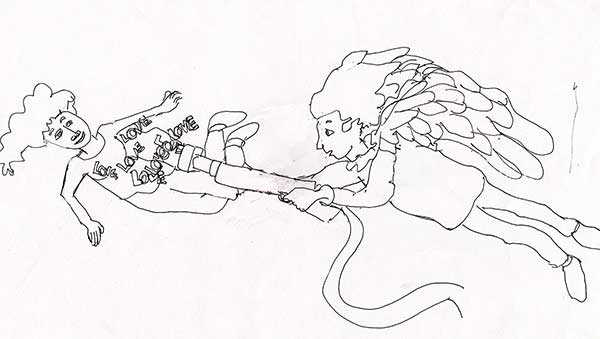
St Valentine
The moment I met you
I immediately knew,
I met my soulmate,
You are sent by Fate…
©Dessy Tsvetkova
picture Nick Victor
I Went On a Dinner Date With an AI Chatbot. Here's How It Went. [ 14-Feb-26 2:00pm ] Elon Musk Has Changed His Mission Statement [ 14-Feb-26 1:00pm ] The Best Time to Leave xAI Is Before Joining. The Next Best Time is Right Now [ 14-Feb-26 12:30pm ]
Book Review: 20 Goto 10 - 10101001 facts about retro computers by Steven Goodwin ★★★★☆ [ 14-Feb-26 12:34pm ]
This is an excellent "dipping" book. There are nearly 200 articles ranging from short anecdotes, multi-page synopses of complex topics, and quirky little asides. Rather than a linear history of computing, each short chapter ends with a multiple-choice "GOTO".
From there, you take a meandering wander throughout retro-computing lore.
Some paths lead to dead-ends (a delightful little Game-Over experience) while others will send you round in loops (much like any text adventure). I've no idea if I actually read everything - although I did stumble onto some Easter Eggs!
Some of the knowledge in here is of the geeky arcane trivia which is of no use to man nor beast - yet strangely compelling to anyone who remembers POKE, CHAIN, and all the other esoteric commands. Some of the stories you'll undoubtedly heard before. Others are deliciously obscure.
Sadly, the book is caught up in the continuing Unbound drama so is rather hard to buy. There are signed copies available from The Centre for Computing History.
I'm grateful to the kind friend who lent me their copy.
1993: Lea Valley Walk follows the Limehouse Cut to the Thames because the last mile is inaccessibleHere's a map I showed you in 2019, since when nothing has changed connectivitywise. There are still no extra bridges across the river and the 'Coming Soon' along the river never happened.
2000s: Half-mile dead-end riverfront promenade opens opposite Bow Locks
2009: Plans for linear Leaside park and riverside path (the 'Fatwalk')
2012: Cody Dock opens, connecting dead end to industrial estate
2016: Fatwalk renamed the Leaway (but remains unbuilt)
2016: Ramp opens linking Twelvetrees Bridge to Lea towpath
2019: Cycle ramp opens beside A13 underpass
2021: Funding for new Lochnagar Bridge (but no subsequent action)

The latest development is a joint project between Tower Hamlets and Newham because a bridge has to involve them both. It's called the Mayer Parry Bridge and is one of five tentative crossings the councils put forward for levelling-up funding in 2021. At the time the intention was to focus on the Lochnagar Bridge instead, a footbridge roughly halfway down the disjoint mile. It has planning consent but not full funding, also still no sign of developers building any of the proposed flats on the west side, so that's been mothballed in favour of something deliverable. The Mayer Parry Bridge has thus been promoted from option 2 to option 1, and if all goes to plan construction could begin next year. Where the red line is.
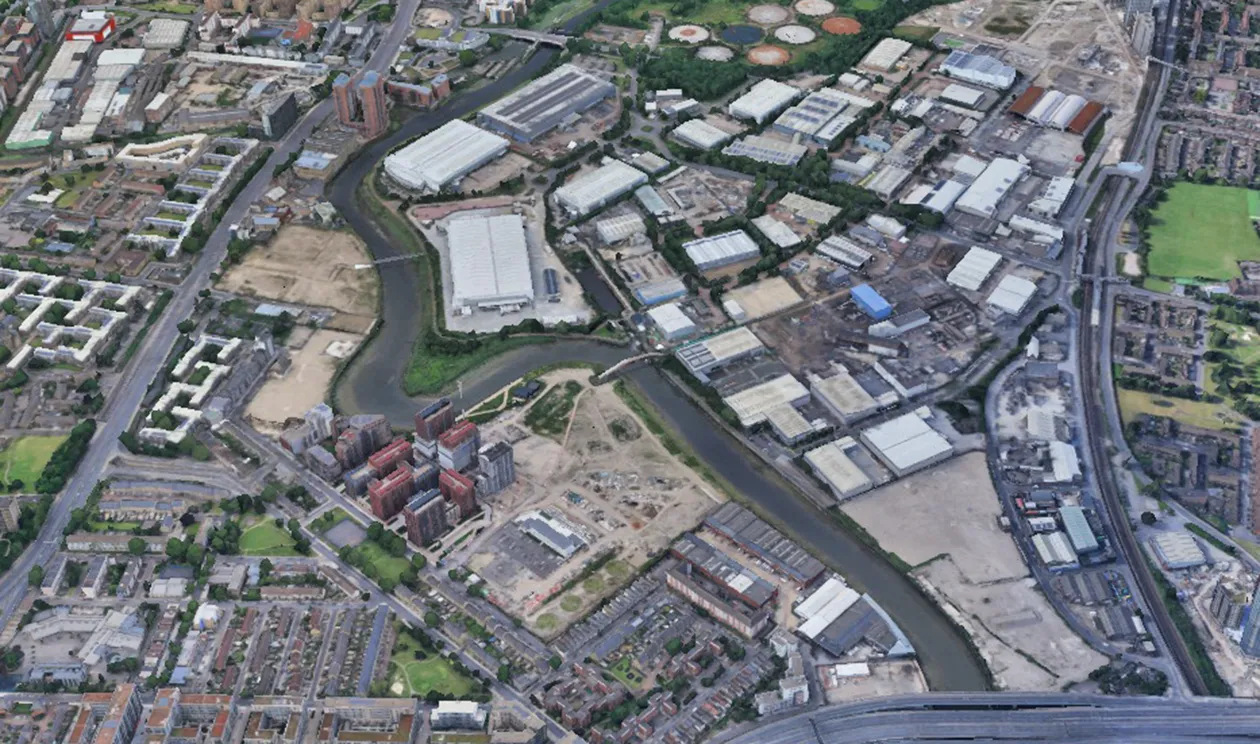
(the other crossings that look like footbridges only carry cables, so ignore those)
On the Tower Hamlets side the bridge launches off from the corner of the old Poplar Gasworks, which is currently being transformed into 2800 homes. One day the entire squarish plot will be covered, but for now only the west corner has flats. On the Newham side the bridge lands in the corner of what before 2022 was the Mayer Parry scrap metal recycling yard, since cleared out. It too is to be redeveloped, indeed the groundworks have already started. Annoyingly these two sites aren't opposite each other, the remainder of the riverside occupied by industrial units and business estates, so the cunning bit is to make the bridge cross the river on a diagonal. Across here.

This is the view from the A13 bridge, an unpleasant roar that those on the Poplar side have to cross if they want to get to Canning Town station. The Mayer Parry Bridge, if built, would provide many with a quicker and more pleasant shortcut. Down below is the seriously tidal end of the River Lea, known as Bow Creek, held back at the highest tides behind a floodwall of corrugated metal. You can see a huge crane is already on site marking out the land ready for the laying of foundations. The new development will be called Crown Wharf, will have 800 flats and is presented as "a fantastic opportunity for Newham to densify around a major transport interchange." Four riverside towers are planned and you already know exactly what they'll look like, but feel free to click here to confirm.
What really surprised me is what's planned for the far end of the site between the flats and the start of the Mayer Parry Bridge. It's an absolutely massive data centre, to be precise an 80MW Hyperscale Data Centre, designed by Foster and Partners no less. To fit the space it needs to be over 70m tall, already cut down from 90m during the planning process, with separate blocks containing plant, data halls, heat recovery and water processing. It's the perfect spot for one of the largest data centres in the UK because The London Internet Exchange, a key global switch-house, is just across the river. Even so, blimey, the rundown urban backwoods of Bidder Street will never look the same again.

As for the landing point on the west bank, it takes a very long time to turn a gasworks into housing. Poplar's gasholders were disassembled as long ago as 2017, then during lockdown I watched as remediation works eventually gave birth to the first few residential skeletons. Thus far only two blocks are complete and two more part-sold, with the developers planning a "Special Lunar New Year Open House Weekend" which tells you all you need to know about the intended purchasers. It feels strange to be able to walk into what was once heavily contaminated land, past boards promoting swimming pools and spa rooms for residents, down generic walkways that could be any new housing development in London.

The Mayer Parry Bridge landing site is screened off and entirely inaccessible, it being part of Phase 3 whereas we're still only on Phase 1. You can however walk down to the river's edge because that's where they located the Sales Office, inexplicably crunching across hundreds of purple shells scattered across the promenade. From the gull-splattered rail you can then look out towards another development shooting up on the far side of a mudflat meander, also two more locations where nobody can afford to build a footbridge. Without a crossing it takes 30 minutes to walk to the opposite bank rather than potentially two.

A consultation event for the Mayer Parry Bridge is taking place on Tuesday between 9am and 2pm at a cafe on the Poplar side. I would have gone but I'm out of town that day so feel free to interrogate the staff on our behalf and report back. I'm particularly interested in the great unmentioned subject in all the online collateral which is whether the footpath along the Lea gets completed at the same time as the bridge. There's already a mothballed promenade beyond Cody Dock so all that was ever needed was an onward connection through the old scrap metal yard, and seemingly the bridge connection delivers that too. What a brilliant outcome that would be, for locals, cyclists and long distance ramblers alike.
The intention is for construction to begin on the Mayer Parry Bridge in 2027, with the slender diagonal span opened to the public in 2029. But as I said we've been here before and nothing's happened, even with all parties onside, so it wouldn't surprise me if I'm still writing about utter inaccessibility in the Lower Lea Valley in 2030 and beyond.


