

How unusual is that?
Very unusual, obviously.
But also perhaps not ridiculously improbable because all three special days are connected to the moon.
And if a new moon crops up in mid-February it's going to be a possibility.
Let's start with Chinese New Year.
The Chinese calendar follows these two basic rules:
• Months start on the day of a new moon (Beijing time).
• The 11th month always contains the winter solstice.
The 12th month thus starts on the first new moon after the winter solstice.
That's the last month of the year.
So Chinese New Year is always the second new moon after the winter solstice.
This can be any date between 21st January and 20th February.
And that's the easy one.
This yearOK, on to pancakes.
The winter solstice fell on 21st December 2025.
The new moon on 20th December didn't count.
The first new moon after the winter solstice was on 19th January 2026.
The second new moon after the winter solstice is on 17th February 2026.
Which is today - Kung hei fat choi!
Shrove Tuesday is the day before Lent, i.e. the day before Ash Wednesday.
It always occurs 47 days before Easter.
The gap is six weeks and five days, always from a Tuesday to a Sunday.
Easter Day can fall anywhere between 22nd March and 25th April.
So Shrove Tuesday can be any date between 3rd February and 9th March.
Chinese New Year and Shrove Tuesday can thus only overlap in the period 3rd February to 20th February.
i.e. you need a late Chinese New Year and an early Easter.
Specifically Easter has to fall between 22nd March and 8th April.
If Easter is 9th April or later then Shrove Tuesday and Chinese New Year don't mix.
But if Easter is before 9th April, it's not unlikely they overlap.
That's because Chinese New Year is the day of a new moon, and Easter is the Sunday after a full moon.
That gap from new moon to full moon is 1½ lunar months, or 44 days.
And if the 47th day happens to be a Sunday that's when the coincidence happens.
This year

Although we are not seeing the mass rallies and violence of fascism in the 1930s, there are certainly similar trends in many countries. So, is this fascism, or something new? In a new study, Mark Coeckelbergh, Professor of Philosophy of Media and Technology at the University of Vienna, argues we are seeing a new form - "technofascism".
What is fascism?Political theorists argue that fascism arises from mass alienation and atomisation. Individuals who feel themselves isolated and oppressed are vulnerable to emotional myths of national rebirth and victimhood. Fascism then suppresses pluralism, fuses the state and corporate power, and turns politics into a kind of entertainment. And capitalist democracies facing crisis, and visible inequality, are particularly vulnerable.
Coeckelbergh argues that we are seeing the rise of a new form of fascism, which he terms "technofascism". This has three components: the technology itself (Artificial Intelligence and platforms), the business context (Big Tech and surveillance capitalism) and a political context (right‑wing populism, authoritarianism, and illiberal democracy).
Where the fascism of the 1930s controlled people through mass rallies and open terror, technofascism uses algorithms that predict, nudge, and constrain behaviour, often invisibly. AI enables mass surveillance, emotional manipulation, information domination, and algorithmic governance that all erode autonomy, moral judgment and accountability.
The tech savioursAI and social platforms enable classic fascist patterns of myth‑making and emotional mobilisation. Personalised feeds amplify "us versus them" narratives. They polarise and dehumanise "others"; and platform owners can tweak algorithms with no need for overt censorship.
Myths about Artificial General Intelligence, the colonisation of Mars and life extension present tech billionaires as saviours of humanity. So extreme inequality and sacrifice are allowed in the name of a technological destiny. At the same time, AI chatbots and digital companions exploit loneliness and alienation by simulating intimacy, offering escape from isolation to a new sense of community.
This is aided by surveillance capitalism, corporate concentration and a "tech coup", where Big Tech gains power over regulations and politics. Where historic fascism dominated by fear, technofascism pacifies with pleasure, convenience and distraction, while AI‑driven platforms subtly steer preferences and suppress dissent. And behind libertarian rhetoric, Big Tech quietly embeds itself in states, militaries and intelligence agencies.
The fantasy of participationCoeckelbergh argues that this is what we are seeing in the rise of illiberal democracies and populism in the US and Europe. Leaders use digital media to bypass intermediaries, cultivate personality cults and turn politics into an emotional spectacle. Social media produces a "fantasy of participation": enabling people to endlessly express their political views online without having any influence on the underlying structural power. Algorithms amplify divisive content and encourage people to follow leaders, while democratic institutions, and checks and balances are hollowed out.
He does not claim that these tendencies are intentional. Many engineers and some tech leaders might not intend fascist outcomes, yet the opportunities offered by the technology, corporate incentives, capitalist crises, and illiberal politics, produce exactly that result. Digital infrastructures and AI align with authoritarian, corporatist and exclusionary politics, clothed in narratives of innovation and human benefit.
What to do?Coeckelbergh argues that conventional AI regulation and modest democratic reforms - transparency rules, impact assessments, anti‑concentration measures, better oversight, digital literacy and restrictions on political uses of AI - are all necessary, but insufficient. They do not address the deeper drivers: unregulated capitalism, entangling of corporations with the state, social atomisation, ideological myths and the vulnerabilities of liberal democracy.
So, he calls for a broader democratisation, by:
- rebuilding stronger constitutions and independent institutions
- limiting emergency powers
- reforming intelligence services
- tackling media ownership concentration
- strengthening welfare and community
- curbing the accumulation of capital and political power in Big Tech.
He also argues for "bottom‑up" resistance: the development of AI ethics, alternative technological architectures and platform co‑operatives, and education that cultivates democratic virtues and critical awareness of the risks of technofascism.
He is not a pessimist; he believes that technofascist systems also have potential internal weaknesses: complexity, infrastructural fragility, loss of expertise, environmental crises, and cyber‑vulnerabilities, which may make opposition possible.
So technofascism is not just a metaphor - it is a mutation of fascism in the new context. To prevent societies sliding further into this form of domination, he urges not just incremental regulation of AI but a much more radical transformation of both technology and society. We need new democratic narratives and "myths" that can mobilise political emotions towards egalitarian and emancipatory ends, rather than towards authoritarian futures.
More from East Anglia Bylines
 Brexit
The will of the rich and powerful: Brexit and the Epstein files
byStephen McNair 11 February 2026
Brexit
The will of the rich and powerful: Brexit and the Epstein files
byStephen McNair 11 February 2026
 Democracy
When 'The land of the free' stops being free
byGuy Anthony Ayres 6 February 2026
Democracy
When 'The land of the free' stops being free
byGuy Anthony Ayres 6 February 2026
 Politics
The great Ministry of Defence-to-Palantir pipeline
byEthan Shone 9 February 2026
Politics
The great Ministry of Defence-to-Palantir pipeline
byEthan Shone 9 February 2026
 Politics
The nature of fascism and why it differs from populism
byProf Paul Kenny 28 November 2025
Politics
The nature of fascism and why it differs from populism
byProf Paul Kenny 28 November 2025
 Democracy
Technofascism: AI, Big Tech, and the new authoritarianism
byStephen McNair 17 February 2026
Democracy
Technofascism: AI, Big Tech, and the new authoritarianism
byStephen McNair 17 February 2026
 Bylines Network Gazette is back!
With a thematic issue on a vital topic - the rise child poverty, ending on a hopeful note. You will find sharp analyses on the effect of poverty on children's lives, with a spotlight on the communities that are on the front line of deprivation, with personal stories and shared solutions. Click on the image to gain access to it, or find us on Substack.
Journalism by the people, for the people.
The post Technofascism: AI, Big Tech, and the new authoritarianism first appeared on East Anglia Bylines.
I hope to write a serious article shortly about the position of Venezuela, which is rather that of a hostage with a gun to their head, attempting to appease a psychopath.
But for now here are a couple of small videos illustrating that it is a lie that the country is failed, starving or repressive.
Obviously in this crisis the government is under some strain. I am however trying to work my way up to get a minister to talk to me on the record about the extent of economic liberalisation, how far it is being driven by the Americans, how the country's revolutionary principles can be preserved, and the prospects for the United States lifting its naval blockade of Venezuelan oil to non-US customers.
If I can't get the access we may reach the limit of how much I can usefully do here; there is still more to bring you from the ground, and simply showing you that long term Western propaganda has given an entirely false image of the country has its uses. A mini documentary on the commune system is in the edit.
As ever with an entirely individual donation and subscriber model, there is also a question of financial sustainability. We are employing a little local team here including Natalia our cinematographer, Andreina our journalist, Jonathan our editor and Greimar our assistant, and we are hiring an apartment. It takes time to get the production pipeline going and I do understand that the output does not yet justify the expense.
As ever we need to spread the load and please we are looking primarily to those who have never donated or contributed before. Our Gofundme link for the Venezuelan operation is here:
This is the same crowdfunding account we used for Lebanon so discount the first £35,000 raised as it was spent in Lebanon.
Anybody is welcome to republish and reuse, including in translation.
Because some people wish an alternative to PayPal, I have set up new methods of subscription payment including a Patreon account and a Substack account if you wish to subscribe that way. The content will be the same as you get on this blog. Substack has the advantage of overcoming social media suppression by emailing you direct every time I post. You can if you wish subscribe free to Substack and use the email notifications as a trigger to come for this blog and read the articles for free. I am determined to maintain free access for those who cannot afford a subscription.
Subscriptions to keep this blog going are gratefully received.
Choose subscription amount from dropdown box:
Recurring Donations
3 Pounds : £3.00 GBP - monthly5 Pounds : £5.00 GBP - monthly10 Pounds : £10.00 GBP - monthly15 Pounds : £15.00 GBP - monthly20 Pounds : £20.00 GBP - monthly30 Pounds : £30.00 GBP - monthly50 Pounds : £50.00 GBP - monthly70 Pounds : £70.00 GBP - monthly100 Pounds : £100.00 GBP - monthly

PayPal address for one-off donations: craigmurray1710@btinternet.com
Alternatively by bank transfer or standing order:
Account name
MURRAY CJ
Account number 3 2 1 5 0 9 6 2
Sort code 6 0 - 4 0 - 0 5
IBAN GB98NWBK60400532150962
BIC NWBKGB2L
Bank address NatWest, PO Box 414, 38 Strand, London, WC2H 5JB
Bitcoin: bc1q3sdm60rshynxtvfnkhhqjn83vk3e3nyw78cjx9
Ethereum/ERC-20: 0x764a6054783e86C321Cb8208442477d24834861a
The post Two Little Caracas Videos appeared first on Craig Murray.
Stanley Rondeau died on 13th January aged ninety-two. His funeral will be on Wednesday 25th February at Edmonton Cemetery, 11.30am

Stanley Rondeau (1933-2026)
If you visited Nicholas Hawksmoor's Christ Church, Spitalfields on any given Tuesday, you would find Stanley Rondeau - where he volunteered one day each week - welcoming visitors and handing out guide books. The architecture is of such magnificence, arresting your attention, that you might not even have noticed this quietly spoken white-haired gentleman sitting behind a small table just to the right of the entrance, who came here weekly on the train from Enfield.
But if you were interested in local history, then Stanley was one of the most remarkable people you could hope to meet, because his great-great-great-great-great-great-grandfather Jean Rondeau was a Huguenot immigrant who came to Spitalfields in 1685.
"When visiting a friend in Suffolk in 1980, I was introduced to the local vicar who became curious about my name and asked me 'Are you a Huguenot?'" explained Stanley with a quizzical grin. "I didn't even know what he meant," he added, revealing the origin of his life-changing discovery, "So I went to Workers' Educational Association evening classes in Genealogy and that was how it started. I've been at it now for thirty years. My own family history came first, but when I learnt that Jean Rondeau's son John Rondeau was Sexton of Christ Church, I got involved in Spitalfields. And now I come every Tuesday as a volunteer and I like being here in the same building where he was. They refer to me as 'a piece of living history', which is what I am really. Although I have never lived here, I feel I am so much part of the area."
Jean Rondeau was a serge weaver born in 1666 in Paris into a family that had been involved in weaving for three generations. Escaping persecution for his Protestant faith, he came to London and settled in Brick Lane, fathering twelve children. Jean had such success as weaver in London that in 1723 he built a fine house, number four Wilkes St, in the style that remains familiar to this day in Spitalfields. It is a indicator of Jean's integration into British society that his name is to be discovered on a document of 1728 ensuring the building of Christ Church, alongside that of Edward Peck who laid the foundation stone. Peck is commemorated today by the elaborate marble monument next to the altar, where I took Stanley's portrait which you can see above.
Jean's son John Rondeau was a master silk weaver and in 1741 he commissioned textile designs from Anna Maria Garthwaite, the famous designer of Spitalfields silks, who lived at the corner of Princelet St adjoining Wilkes St. As a measure of John's status, in 1745 he sent forty-seven of his employees to join the fight against Bonnie Prince Charlie. Appointed Sexton of the church in 1761 until his death in 1790, when he was buried in the crypt in a lead coffin labelled John Rondeau, Sexton of this Parish, his remains were exhumed at the end of twentieth century and transported to the Natural History Museum for study.
"Once I found that the crypt was cleared, I made an appointment at the Natural History Museum, where Dr Molleson showed his bones to me," admitted Stanley, widening his eyes in wonder. "She told me he was eighty-five, a big fellow - a bit on the chubby side, yet with no curvature of the spine, which meant he stood upright. It was strange to be able to hold his bones, because I know so much about his history," Stanley told me in a whisper of amazement, as we sat together, alone in the vast empty church that would have been equally familiar to John the Sexton.
In 1936, a carpenter removing a window sill from an old warehouse in Cutler St that was being refurbished was surprised when a scrap of paper fell out. When unfolded, this long strip was revealed to be a ballad in support of the weavers, demanding an Act of Parliament to prevent the cheap imports that were destroying their industry. It was written by James Rondeau, the grandson of John the Sexton who was recorded in directories as doing business in Cutler St between 1809 and 1816. Bringing us two generations closer to the present day, James Rondeau author of the ballad was Stanley's great-great-great-grandfather. It was three generations later, in 1882, that Stanley's grandfather left Sclater St and the East End for good, moving to Edmonton when the railway opened. And subsequently Stanley grew up without any knowledge of Huguenots or the Spitalfields connection, until that chance meeting in 1980 leading to the discovery that he was an eighth generation British Huguenot.
"When I retired, it gave me a new purpose," said Stanley, cradling the slender pamphlet he has written entitled The Rondeaus of Spitalfields. "It's a story that must not be forgotten because we were the originals, the first wave of immigrants that came to Spitalfields," he declared. Turning the pages slowly, as he contemplated the sense of connection that the discovery of his ancestry has given him, he admitted, "It has made a big difference to my life, and when I walk around in Christ Church today I can imagine my ancestor John the Sexton walking about in here, and his father Jean who built the house in Wilkes St. I can see the same things he did, and when I am able to hear the great eighteenth century organ, once it is restored, I can know that my ancestor played it and heard the same sound."
There is no such thing as an old family, just those whose histories are recorded. We all have ancestors - although few of us know who they were, or have undertaken the years of research Stanley Rondeau had done, bringing him into such vivid relationship with his ancestors. It granted him an enviably broad sense of perspective, seeing himself against a wider timescale than his own life. History became personal for Stanley Rondeau in Spitalfields.

The silk design at the top was commissioned from Anna Maria Garthwaite by Stanley's ancestor, Jean Rondeau, in 1742. (courtesy of V&A)

4 Wilkes St built by Jean Rondeau in 1723. Pictured here seen from Puma Court in the nineteen twenties, it was destroyed by a bomb in World War II and is today the site of Suskin's Textiles.

The copy of James Rondeau's song discovered under a window sill in Cutler St in 1936.

Stanley Rondeau standing in the churchyard near his home in Enfield, at the foot of the grave of John the Sexton's son and grandson (the author of the song) both called James Rondeau, and who coincidentally also settled in Enfield.

"I think it's beyond borderline — 25 amendment." That was Steve Bannon texting Jeffrey Epstein on December 31, 2018, about President Trump. Epstein had texted Bannon, "He is really borderline," and Bannon went further, telling the convicted sex trafficker that Trump should be removed from office, Raw Story reports. — Read the rest
The post Bannon said that Trump was "beyond borderline" and should be removed via the 25th Amendment appeared first on Boing Boing.
 How to utilize urine
Logically, we should recycle our urine to capture its many nutrients for growing new food. Here's a fuller case for that argument, and if you buy it, how to practically accomplish this export on the small scale of a homestead. Most likely you'll be the only person in your neighborhood mining "liquid gold," but you may also be an outlaw, two issues this book anticipates. The small book is also chock full of urine lore, including the historical medical, cooking (!), chemical, and agricultural roles urine has had. This small booklet changed my mind. — KK
- According to sanitation researcher Caroline Schonning of the Swedish Institute of Infectious Disease Control, humans rarely excrete disease-causing organisms, orpathogens, in urine. Also, most pathogens die when they leave their hosts, either immediately or shortly thereafter. The only significant urine-transmitted diseases are leptospirosis (usually transmitted by infected animals), schistosoma, and salmonella. The first two are rare-usually found only in tropical aquatic environments-and the last is typically inactivated shortly after excretion. The more likely health risk is urine contaminated by feces that were misplaced in a urine-diverting toilet.
- There are other ways to use liquid gold. For small amounts of urine, you can make a urine planter. Layer shredded cardboard or paper with chunky sand or peastone. Add more material when the contents shrink as the paper decomposes. Plant hearty nutrient-loving plants, shrubs, or small trees. Urine also works well in hydroponic planter systems.
Applying urine to leaves, not roots, is its most effective use, according to Paul William. "Foliar feeding is much more efficient at stimulating plant growth than fertilizing via the root system only," he says. "The leaves respond within hours ofthe application."
To determine the best dilution to prevent the mis from getting too salty, he uses a TDS (total dissolved solids) meter available from hydroponic garden supply stores. "My tap water has 600 ppm (pars per million) as a result of the chlorine salts before I add any urine. I add urine until I get around 1,700 ppm." He also adds a bit of soap so the spray better penetrates the leaves.
"Urine foliar feeding is amazing," he says. "My friends are having huge success growing all kinds of tropical plants doing it, and my temperate plants are so lushand green, it boggles the mind!"
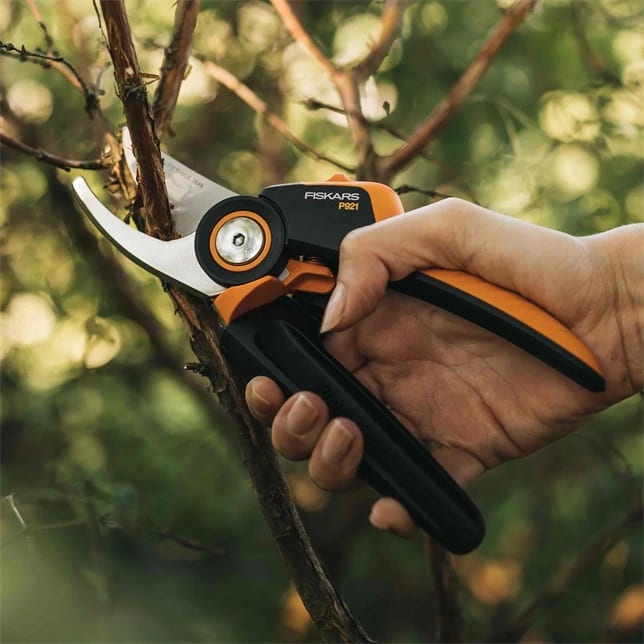 Amplified easy slicing
Fiskars PowerGear Bypass Pruner
This hand clipper is a really cool ergonomic innovation. It uses an ingenious gear design to easily slice off sticks that are 3/4 inch in diameter. As you squeeze, the bottom handle rolls slightly and this motion leverages the power in the scissor cut. I find I can now tackle stuff that ordinarily I would have had to run back to get the larger pruners for. Your Felco pruning clippers will last you a lifetime, but as my grip wanes, I find I this lightweight Fiskars pruner is the clipper I grab first. — KK
 Precise garden snip
Fiskars Softouch Micro-Tip Pruning Snip
Fiskars' PowerGear Bypass Pruner, previously reviewed, is the handiest, most used tool in my vegetable garden, but it's too big and clunky for precision cutting of young salad greens and herbs. For that task, the company's Pruning Snip is an outstanding and inexpensive tool.
Snipping action requires little effort because the short blades are quite sharp and a spring in the center of the handle returns the shear to its open position after each cut. A small garden scissors could work almost as well as this tool, but the spring-activated light-action cutting makes a big difference for ease of use. Like the larger pruner mentioned above, this model gives a lot of cutting output with disproportionately little input. This shear is also useful for carefully thinning densely grouped seedlings by cutting the excess plants at their bases. — Elon Schoenholz
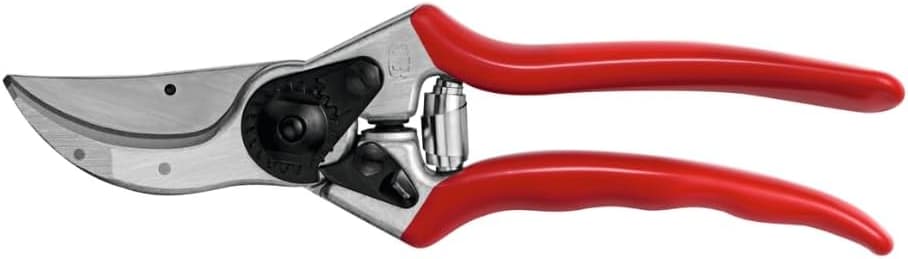 Superb garden clippers
My garden includes roses, blackberry and ivy vines, five kinds of fruit trees — all plants that need constant pruning. So I carry my pruner on my belt. I probably use them a few dozen times every day. I have no idea why it took me so long to buy a pair of the best available — Felco. It's got leverage! A handle shaped to the hand. If you prune a lot, you'll know immediately by the feel that these are the best. You can buy models for small hands, ergonomic models for gardeners with arthritis, left-handed ones. Forty dollars seemed like a lot for clippers but after decades of using inferior pruners I get pleasure every time I snip the Felcos. — Howard Rheingold
Once a week we'll send out a page from Cool Tools: A Catalog of Possibilities. The tools might be outdated or obsolete, and the links to them may or may not work. We present these vintage recommendations as is because the possibilities they inspire are new. Sign up here to get Tools for Possibilities a week early in your inbox.
Together with author Dan Pink, I have started a new podcast series called Best Case Scenarios. Each episode asks an expert to give us their best possible good news scenario in the next 25 years. What happens if everything goes right? What is the best case scenario for say, energy, transportation, biotechnology and brain science? Those are the subjects of our first four episodes, which are also available as YouTube videos, and are now available wherever you get your podcasts. These are not predictions, but visions of what we can aim for in order to make them real. — KK
A visual pattern mapper for behavior loopsUnloop is a visual pattern mapper that helps you catch yourself in the act of being you — to notice a familiar loop, lay it out on a map, and then play with small experiments that might shift the pattern instead of just shaming it. You don't need to sign up or create an account to try it out, and the experience is guided by thoughtful prompts and questions that help you spot what's really driving a loop so you can understand yourself better. It's not therapy or coaching, but structured self‑discovery that treats your patterns as a story you can rewrite rather than a flaw you need to fix. — CD
Better drag-and-drop for MacDropover ($7) is a tiny Mac utility that solves a problem I didn't know I had. When you're dragging a file to a folder that isn't on your desktop, just shake your cursor, and a floating "shelf" appears to hold it. The shelf stays open so you can drop files, folders, images, and even text snippets onto it. Then go find your destination and unload everything at once. You can collect items from multiple folders into one shelf, which macOS can't do natively. — MF
Substack without subsI am a big fan of RSS feeds. I keep up with a long list of blogs and websites by reading the stream of their new stuff via an RSS reader app, negating the need to visit the website directly. (Out of habit I use Feedly, even though it may be outdated.) It is a bit old school, but a well-curated RSS feed is incredibly productive and enjoyable. I have been particularly delighted to discover that I can add Substack newsletters to my RSS feed. If the Substack is free I can read the full text even without subscribing. If it is a paid newsletter I'll only see the full text of whatever free posts are offered, since most substacks usually offer some portion for free. To get the RSS feed, I just add the phrase /feed to any newsletter URL, or I can search for the newsletter title in my favorite RSS reader. (Meta: you can read Recomendo this way. You'll get one less email in your box, but we lose the subscriber count bump, which ultimately pays the way for us to keep it free.) Happy reading! — KK
Notes to Self email folderI read this Ask HN: thread hoping to find an alternative to my own messy digital note‑taking, and I've adopted the very promising "Note to Self" email folder suggestion. Skip all the second‑brain tools and just use your inbox: email yourself interesting links, thoughts, quotes, or questions, and file them into a dedicated Notes to Self folder. Every so often, skim that folder, delete what now feels worthless or obvious, and let the rest sit. As the commenter shared: "It's more useful than you'd think—by reviewing those notes semi‑regularly, you're indirectly memorizing their contents and refreshing their presence in your short‑term memory. And that, to me, is the benefit—not 'copy this cool thing,' but 'feed my mind cool ideas until it has digested them and incorporated them into the larger gestalt.'" — CD
Craft supply bin with built-in cupsThis Citylife 17-quart storage bin is the best way I've found to organize art supplies. It comes with six removable cups that keep markers, crayons, brushes, pencils, and other items separates. Remove only the cup you need, then drop it back in when you're done. The clear plastic lets you see everything at a glance, the lid latches securely, and the bins stack. — MF
Sign up here to get Recomendo a week early in your inbox.
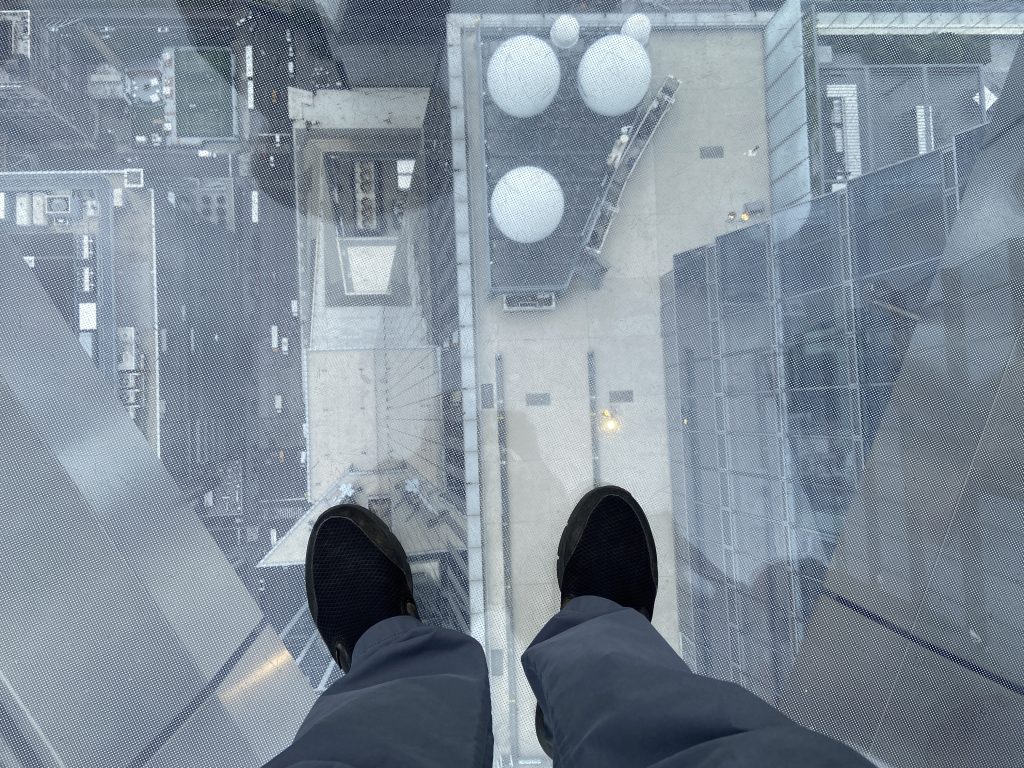 Extra points if you can say where this is.
What you're reading is written and posted on the Web. While the Web isn't a place, we know it as one. The language we use to describe it is concrete and structural: domains at locations, with sites that are built and have pages that are authored, and contents that are uploaded and downloaded.
For a generation or more, we mostly saw and navigated the Web through Google, whose original mission was "to organize the world's information and make it universally accessible and useful." When we searched Google, we relied on its PageRank system to bring us lists of pages ranked by how likely they were to contain keywords or other search terms.
But Google Search has changed. Old pages are gone from many searches. This matters to me because I've been writing on the Web for thirty-one years, almost entirely on static sites. But Google no longer finds many of those. My friend Dave Askins tells me the same malady has befallen much of his own archival work, which is present on the Web, but absent from Google searches. Why?
I asked Google's Gemini that question. Here's what it said:
The "disappearing" of the old web is a result of a massive shift in Google's priorities over the last few years.
While you might be looking for a specific historical document or an old forum thread, Google's systems are now aggressively tuned to filter out what they consider "stale" or "unhelpful" content…
In the race to be a 'helpful assistant,' Google has stopped being a 'universal library.
PageRank is still there, it tells me, but subordinated. To what?
Of course: it's advertising.
Taking my clues from Keyords are dead, by Shalom Gonzalez in Search Engine Land, I asked Gemini to tell me "how searches by the helpful assistant might constantly be looking for what the person might eventually want to buy, so they can be advertised at when the right time comes."
Gemini replied,
This is the "secret sauce" of the 2026 search model. If the old search engine was a librarian, the new one is a personal shopper who is taking notes on everything you do to predict your next "need state. The transition you're sensing is the move from Reactive Search (answering what you asked) to Predictive Search (answering what you're going to ask)."
This treats the Web as nothing more than a heap of data in which patterns can be found, and answers given, based on algorithmic assumptions—not just about who and what a person is, but what advertisers are paying to have pitched. Constantly. In real time.
There are four giant problems to pull apart here:
- How Google is deprecating the Web.
- What to call the vast everything that Big AI now uses to give us answers and pitch us shit.
- How AI dependence is changing us from homo sapiens to homo something else.
- How we can stay human in the midst of it all.
So let's explore those.
I. How Google is deprecating the Web.
We need to name the machine equivalent of hubris that Google and Gemini display in their deprecation of the Web and their presumptions about our intentions.
Dictionary.com says hubris is derived from hýbris, the Greek word for insolence. It mean pride, arrogance, or an excess of ambition…ultimately causing the transgressor's ruin.
When I asked ChatGPT to define AI hubris, it said, "AI hubris is the condition in which a system expresses or operationalizes confidence that exceeds its actual competence, epistemic grounding, or contextual awareness."
Then, when I asked it to explain how that manifests, it gave me—
- A model that acts as if it knows rather than predicts.
- A system that is treated as an oracle rather than a probabilistic engine.
- Designers who mistake fluency for wisdom.
When I asked it to be more specific, it confessed to—
- Overconfident answers: The model presents uncertain, incomplete, or fabricated information as authoritative.
- Boundary blindness: It fails to recognize where its training data ends, where knowledge is outdated, or where a question exceeds its capability.
- Illusion of comprehension: It produces fluent language that implies understanding when it is pattern synthesis.
- Prescriptive overreach: It gives decisive advice in domains requiring caution (medicine, law, policy) without signaling uncertainty.
- System-level hubris: Not just the model—but the designers or deployers assume the system is more reliable, objective, or neutral than it truly is.
Then I asked it to give me some words we might use to label AI hubris. It generated a large pile of them, abridged here—
- Hybris mechanica: Latinized Greek; "mechanical hubris." Evokes classical overreach, but makes clear it's structural, not emotional. Good if you want rhetorical force.
- Pseudomnēsis (ψευδομνήσις): "False memory." From pseudo- (false) + mnēsis (memory, recollection). Captures the illusion of knowing.
- Doctia ignorans: Modeled on docta ignorantia (Nicholas of Cusa: "learned ignorance"). This flips it: Doctia ignorans — "ignorant knowing." Sharp, ironic, philosophical.
- Epistemic hybris: Blunt and precise. The sin is not pride, but overstepping epistemic bounds.
- Pseudognosis (ψευδογνῶσις): False knowledge. Simple, strong, clean.
- Automata superbia: Mechanical arrogance. Has a medieval-theological feel.
- Confidentia vacua. Empty confidence. Direct and Roman.
- Logohybris: λόγος (speech/reason) + ὕβρις (hubris) Hubris of speech. Arrogance of articulated reason. Sharp, rhetorically charged, has teeth.
- Pseudognosis: Names the condition without moralizing it.
- Pseudodoxia (ψευδοδοξία): Suggests false or illusory knowing, overstepping bounds, inflated confidence, illusion of authority, false belief, spurious opinion. Has historical precedent (e.g., Browne's Pseudodoxia Epidemica). Feels learned and slightly ironic.
- Kenognosis (κενογνῶσις): "Empty knowledge." From kenos (empty) + gnosis (knowledge). Strong and elegant.
- Agnomimesis (ἀγνωμιμησις): "Imitation of knowing." From agnoia (ignorance) + mimesis (imitation). Captures the performance of understanding.
- Pseudonoia (ψευδονοία): False mind / counterfeit intellect. More psychological. Overstepping Epistemic Bounds
- Epihybris (ἐπιὕβρις): "Over-hubris" or escalated hubris. Suggests compounding overreach.
- Metahubris: Hubris at the level of system or design. Modern coinage, but philosophically clean.
- Paragnosis (παράγνωσις): Misrecognition; knowing beside the truth. Has a tragic flavor (like parabasis, paradox).
- Transgnosis: Going beyond what one can legitimately know.
- Megalodoxia (μεγαλοδοξία): Inflated Confidence. Grand opinion; overblown self-assurance.
- Superbia machinae: "The arrogance of the machine." Latinate, ecclesiastical.
- Inflatio mentis: Inflation of mind. Roman and sharp.
- Praesumptio automatica: Automatic presumption. Feels juridical.
- Authodoxia: Illusion of Authority. Self-authorizing belief. Authority generated from itself.
- Autognosticism: Self-certifying knowledge. Simulacra scientiae. A simulacrum of knowledge. Very Baudrillard-adjacent.
- Oraculitis: Mock-Greek: "oracle-itis." The disease of speaking as an oracle.
- Technohybris: Structural or Systemic Hubris. Technological overreach. Blunt but serviceable.
- Logomimesis: Mimicry of reasoned speech. Less accusatory, more descriptive.
- Sophomimesis: Imitation of wisdom.Sophia (wisdom) + mimesis (imitation).
- Pseudoepisteme (ψευδοεπιστήμη): False systematic knowledge. More formal than pseudognosis.
- Kenodoxia: "Empty glory" (historically attested in theology). Could be repurposed. Stark and Memorable
- Vox vana: "Empty voice."
- Certitudo vana: "Vain certainty."
- Machina praesumens: The presuming machine.
- Sophomimesis: Imitation of wisdom.
- Kenognosis: Empty knowledge.
- Pseudodoxia mechanica: mechanical false belief.
- Logohybris: Hubris of speech (from earlier).
- Paragnosis: Mis-knowing.
Well, Big AI is all of those. But let's pick one, because we need it. I lean toward logohybris, but I'm open.
II. What to call the vast everything that Big AI now uses to give us answers and pitch us shit
We are the only species that talks. A lot. About everything. We also make sense of the world as embodied creatures. We say good is up and bad is down because we are built for standing, walking, running, and squatting without falling over. This is why heaven is above, hell is below, and to fail is to fall. We say good is light and bad is dark because we are diurnal: optimized for daylight. We say a smart person is bright and a dumb person is dim. Good futures are bright and bad ones are dark. We frame life as travel, not a biological process. That's why birth is arrival, death is departure, and we get stuck in a rut, lost in the woods, and fall off a wagon. We frame time as money, not as a progression of existence. That's why we save, waste, spend, invest, and lose time.
We also lay nouns on everything (and non-thing) that we possibly can. We make taxonomies to organize the nouns. We make verbs for the actions that happen among and between all the nouns. We make prepositions to locate the nouns. We would be lost without all the ways we understand the world as a structured place.
To illustrate how important this is, look at how some drugs detach our minds from structures:
- LSD—acid—detaches what we see and know from all the nouns we project on them.
- MDMA—ecstasy—liberates other beings from what might in a normal state of mind make them separate from us and unlovable until proven otherwise.
- THC—weed—disconnects percepts and thoughts, so they become "strings of pearls without the string." (That's one of the few smart things I ever said when I was high.*)
While all those drugs are good for recreation and therapy, and may even help civilize us in some ways, they distract us from the structures that make civilization work.
Nearly all of what we know about the natural world is also tacit, meaning we know it, but can't explain it. For example, we know how gravity works, even though we can't explain it as well as Einstein or Feynman. Or at all. Doesn't matter. We know how it works, and that's what matters.
We can still be explicit about what we know. About gravity, we might say, "It's what gives things weight." Or, "It's what makes things in a vacuum fall at 9.8 meters per second squared."
Here's the key: What we know tacitly far exceeds what we can say explicitly.
The digital world, however, is entirely explicit. It is composed of data and code. There is no tacit there.
In the digital world, we also have no distance and no gravity, at costs that lean toward zero. A video conference might have people from India, Germany, and Australia, with none sensing distance or cost. Everyone is present. Conversation moves along just fine. Gravity is also absent, because nobody manifests in material form, or appears upside-down or sideways. There might be light outside the window of one participant and dark outside the window of another, but only if the camera points toward a window and the person isn't using a fake background.
But we still have structures in the digital world. For example, the World Wide Web uses a hypertext protocol (http/s) to connect sites at domains locations, between which packetized data can moves up and down. Note that these are real estate and shipping metaphors.
Directory paths on the Web are inherited from UNIX. For example, https://science.what/geology/phanerozoic/paleozoic/devonian/fossils/ammonites is what's called a path. It's like one you might follow through the stacks of a library. That's still how the Web works for us. It has structure.
When search engines indexed everything in those published directory structures, they made sense of the whole Web in a library-like way. We can see how the Internet is drifting away from that structure by reviewing the titles of David Weinberger's literary oeuvre, following The Cluetrain Manifesto in 1999:
- Small Pieces Loosely Joined:
{A Unified Theory of the Web} (2002) - Everything is Miscellaneous:
The Power of the New Digtal Disorder (2008) - Too Big to Know:
Rethinking Knowledge Now That the Facts Aren't the Facts, Experts Are Everywhere, and the Smartest Person in the Room Is the Room (2012) - Everyday Chaos:
Technology, Complexity, and How We're Thriving in a New World of Possibility (2019)
See where this is going?
Yes, toward AI. By now, Big AI has absorbed all those miscellaneous small pieces in the vast chaos of the digital world. I makes sense about that totality in every question we ask of it. It's the room that includes everything that's too big for us to know.
But here's the rub: Big AI also doesn't know a damn thing. It recognizes patterns in a vast totality of data and uses programming and language to answer questions and perform tasks for the human inhabitants of its environments.
Think about what's in the rooms built by OpenAI (ChatGPT), Google (Gemini), Microsoft (Copilot), Perplexity (Perplexity AI), Anthropic (Claude), DeepSeek (DeepSeekAI), and Grok (Xai).
The short answer is everything. All of the Web, all books, all utterings on social media, you name it. Everything explicit, that is. Nothing tacit. It doesn't have tacit knowledge because it's not human.
We need a word for that everything. Here are some candidates (with minimal AI help this time):
- Akasha: (Sanskrit) The aether or mystical compendium of all human events, thoughts, words, emotions, and intent ever to have occurred. Perhaps a poetic synonym for a universal database.
- Pleroma: (Greek) "fullness," totality of divine powers, or the sum of all knowledge.
- Pantology: (Greek root?) The systematic view of all human knowledge.
- Wànwù: (Mandarin: 万物) Literally "the ten thousand things." It's used to describe the entirety of the universe and all its manifestations. It's a beautiful way to describe the sheer variety of data I hold. (Says Gemini, when I asked for a word in another language to encompass what it "knows.")
- Sylloge: (Greek) Collection, compendium, summary, digest.
I vote for akasha.
What's in all those companies' akashas are not databases. Instead they are trillions of "tokens," which (as NVIDIA explains here) "are units of data processed by AI models during training and inference, enabling prediction, generation, and reasoning." These are not structured in ways familiar to us in the natural world. They are also not sources like those Google used to index and treat as directories. They are opaque to us. Every AI data center is a black box in material form.
Marshall McLuhan taught that every new medium, every new technology, creates an environment that changes us. What we are as drivers in the rolling carapace we call a car is not what we are when we are walking around. We are changed. Extended. Enlarged.
Big AI does some of that for us, but we don't have truly personal AI yet. That's a whole 'nuther rant (going on here). But after we get personal AI, we'll still be radically changed. Which brings us to—
III.How AI dependence is changing us from homo sapiens to homo ________
When I asked ChatGPT to "tell me what to name the AI-dependent species that succeeds homo sapiens," it gave me this (which I've abridged into a less wordy form):
- Homo delegatus. The delegating human. Clean. Roman. Almost bureaucratic.
- Homo auxiliatus. The assisted human. Gentler. Less tragic.
- Homo symbioticus. The symbiotic human. Optimistic framing. Mutualism implied.
- Homo prostheticus. The prosthetic human. From prosthesis — extension. Suggests cognition extended outside the skull.
- Homo algorithmicus. The algorithmic human. Likely to stick. Slightly dystopian. The defining trait is AI reliance.
- Homo automatus. The automated human. Bleaker.
- Homo machinatus. The machinated human — shaped by machines.
- Homo instructus. The instructed human — guided by systems. The defining trait is epistemic submission
- Homo credulus. The believing human. Short. Dangerous.
- Homo confisus. The trusting human. Ambiguous — trust can be good or naive.
- Homo oracularis. The oracle-dependent human. Strong mythic tone.
- Homo synthetica. The synthetic human. Hybridized.
- Homo copulatus. The coupled human.
- Homo nexus. The networked human.
- Homo cyberneticus. Classic mid-20th-century feel.
- Homo exocerebralis. The external-brained human. Scientifically plausible.
- Homo delegans sapiens. The wisdom-delegating human.
- Homo post-sapiens. Simple, brutal.
- Homo paragnostica. The mis-knowing human.
- Homo servomechanicus. The servo-mechanical human.
- Homo dependens. The dependent human.
- Homo exocerebralis. External-brained human
- Homo delegatus. Delegating human
- Homo symbioticus. Symbiotic human
- Homo algorithmicus. Algorithmic human
- Homo exocerebralis. It names the real shift: the brain extends beyond the skull into networks and models. Biologically grounded and conceptually sharp.
- Homo delegatus. Has quiet menace.
I don't like any of them. But we need one. Vote on one of these, or give us a better alternative.
IV. How we can stay human in the midst of it all?
First, stop the surveillance. That will at least begin to restore and protect our humanity.
We can't do it all at once, but we can do it through relationships with organizations that don't participate in the surveillance economy. There are a lot of those.
These can't be relationships that organizations initiate. We got that kind when industry won the industrial revolution, and they have infected the digital world with endless "consent" (non-) agreements and "Our terms have changed" gauntlets requiring acceptance of terms we don't read and don't matter.
We can do it with agreements that we proffer, as sovereign and independent human beings. And now we have a standard for that: MyTerms (7012-2025 - IEEE Standard for Machine Readable Personal Privacy Terms). These will allow us to visit sites, use services, and buy stuff without worrying if we're being tracked like marked animals by parties unknown. They will also form a solid base for additional relationships based on mutual trust.
That's the second step. Both are tabula rasa today. But if we want to keep from turning into any of the many species listed above, we need to start with ourselves and our relationships with willing second parties. MyTerms will do that.
__________________________________
*My minimal and pathetic drug history:
- I was never more than a casual drinker, though I do like dark beers and good wine. I also stopped drinking anything a few years ago.
- I've never taken LSD, shrooms, or any hallucinogen.
- The first time I took cocaine was at a party in the North Carolina woods. When nothing happened, the guy who gave it to me said, "Well, maybe ya'll's personality masks the effects." The second time was when a friend and I wanted to stay up late to watch the first round of March Madness. The third time was to stay awake on a very long drive. The fourth and last time was to stay focused through an all-night conversation with an old friend. Afterwards, I felt like I might die and had no perception of color. After that, I never touched cocaine again.
- The only time I ever took ecstasy was with old friends. It was beautiful. Their dog said to us, "See? This is what it's like to be a dog! You love everybody!
- I never smoked tobacco, and only smoked weed a few times. One of those yielded the one-liner I shared above. Another caused such intense pain behind my right eyeball that a bit of it recurs every time I smell weed.

TL;DR: Get control of your data with 91% off a 10TB subscription to Internxt Cloud Storage for just $249.97 (Reg. $2,900).
You pay for your phone, so why are you renting to keep your own files on it? Tired of paying monthly fees for phone storage, email storage, photo storage, and more? — Read the rest
The post Tired of paying to store your own files? Get 91% off secure cloud storage appeared first on Boing Boing.

A neighborhood Facebook page called Montco Community Watch had been doing what neighborhood pages do — posting tips about ICE sightings near specific streets and landmarks in Montgomery County, Pennsylvania, in English and Spanish, for its roughly 10,000 followers. In September, DHS served Meta with an administrative subpoena for the names, email addresses, and postal codes of whoever ran it. — Read the rest
The post DHS sent hundreds of subpoenas to Google, Meta, and Reddit demanding names of people who criticize ICE appeared first on Boing Boing.
Bullet items for the Fediforum conference in March.
- Subscribing must be easy.
- Some things will work better if they're slightly centralized, esp subscribing.
- Use DNS for naming people.
- Support RSS in and out, and test it once you add the feature, so many easy things to fix remain broken (like titles of the feeds, look terrible in a list of feed titles). RSS is how you earn the "web" in your name. "Web" means something, it's just an intention, there are rules.
- You don't need "open" if you have "web." The web is by definition open. Water is wet. Raises question re what the not-open web is. (Silo.)
- Support the basic features of text in the web. If you shut off the writing features of the web, as Twitter did, you're not really part of the web. Especially linking.
- Listen to users, listen to other developers.
- Automattic is doing heroic work connecting WordPress to ActivityPub. This means that WordPress APIs are now ActivityPub APIs. Not a small thing.
- Look at text coming out of WordPress into Mastodon, the HTML used definitely could be improved. Seems pretty simple things to fix, the simple things matter. Example: WordPress version. Mastodon version of the same post. Let's make this beautiful!
- Keep trying fundamentally new architectures.
- Learn from past mistakes.
- Interop is paramount.
- Don't re-invent.
BTW, this can be read on my blog, on Mastodon, in WordPress and of course my feeds (and thus can be read in any app that supports inbound RSS).
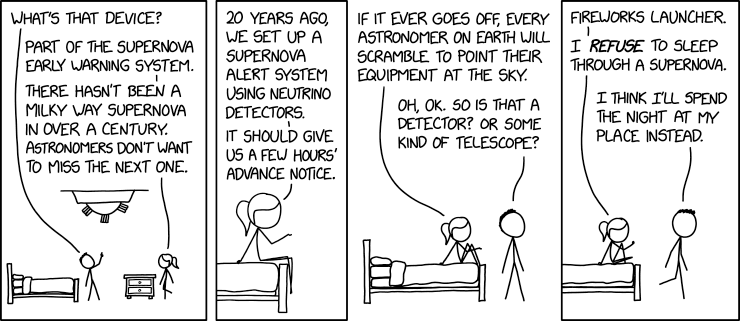
Cycloptery
Seventy-two hours since my cataract surgery and nothing is better. The cornea of my left eye is still swollen and I'm essentially blind (meaning my vision is 20/infinity. It also feels better closed than open, which I'm not sure is a good thing. I'm still wearing a bandana over it. My surgeon says relief will gradually come in a few days. I eagerly await. Meanwhile, if you're depending on me to get work done (and there is lots in my queue), have patience.

Are you fascinated by the stars, meteors, the aurora borealis? The Orwell Astronomical Society founded in the late 1960s at the height of the 'space-race' offers an opportunity to develop a passion for astronomy. As a registered charity (no. 271313) it exists to promote the science of astronomy in Suffolk. This is done by organising meetings and running occasional night, and sometimes day, observing sessions.
The society has done a great deal of work to uncover the astronomical history of Suffolk and the work of a number of amateur astronomers whose influence on science has been profound.
The Orwell Park ObservatoryThanks to the eccentric Colonel George Tomline (1813-1889), Ipswich has an observatory.
 The Observatory, Orwell Park School image by N Chadwick. CC BY-SA 2.0
Tomline was elected to Parliament for the constituency of Sudbury (Suffolk) in 1840. During a period out of office, Tomline purchased Orwell Park estate from Sir Robert Harland for £102,500 in 1848. He subsequently demolished part of the mansion house and replaced it with the beautiful red-brick structure that stands nowadays. A bachelor his whole life, Tomline liked to entertain weekend guests at Orwell Park and kept a steam yacht moored at the bottom of the gardens for their use. He was fabulously wealthy and built the Felixstowe branch railway entirely from his own pocket.
His interest in the sciences encompassed astronomy, which was at the time was a very fashionable and a rapidly advancing science. In the early 1870s, during a major extension to Orwell Park mansion, he indulged his interest by commissioning the Orwell Park Observatory. His enormous wealth enabled him to demand the best, including employing a professional astronomer, John Isaac Plummer (1845-1925).
The telescope Tomline refractor telescope. Credit OAS(I). Used with permission
Central to the Grade II Listed observatory is a refracting telescope that dates from 1874. It was impressive for its age, boasting a ten-inch (250mm) aperture and a 3.9m focal length. The telescope sits on a German equatorial mount. This means it can reach all points of the sky and needs only a single motor to drive it as it tracks objects as they move across the sky.
The society assists Orwell Park School (the current owners) in maintaining and operating its historic observatory. Much of our early work was in renovating the telescope after a period of several decades of neglect.
Suffolk's amateur astronomersThe society continues to encourage astronomers to follow in the footsteps of past influential Suffolk astronomers. Alice Grace Cook (1877-1958), a lady of leisure, discovered Nova Aquilae in 1918 and was one of the first women to be made a Fellow of the Royal Astronomical Society. So accomplished an amateur astronomer was Cook that she taught John Philip Manning Prentice (1903-81) astronomy. Prentice, another amateur, was a key member of Sir Bernard Lovell's team of (professional) scientists. Their work together led to Lovell building Jodrell Bank - in its day, the largest radio telescope on earth.
Roland Clarkson (1889-1954) 'the Trimley Moon Man' is another. Clarkson had a particular interest in the Moon and was a prolific contributor to lunar studies and mapping the surface.
The Orwell Astronomical SocietyIn addition to weekly meetings at Orwell Park Observatory, the society meets in the Village Hall in Newbourne twice a month. Membership is open to all. We have around one hundred paid-up members, whose annual subscriptions help fund our activities.
Members' images of deep sky and solar system objects are published both on our website and in an emailed monthly newsletter. We have a library and a collection of instruments available for loan to members.


 Aurora Borealis captured by the author from Orwell Park at 10pm 10.10.2024. / The corona and diamond ring of the sun from 2.7.2019 eclipse. Credit Paul Whiting. Used with permission
One of our members has a slot on a local community radio station where he discusses what can be seen in the night sky each month. Our WhatsApp and Facebook groups enable the rapid dissemination of information, for instance when there is a display of the aurora borealis (northern lights). This has been particularly useful over the past year or so, when, due to significant activity on the Sun, these displays have been unusually strong and numerous.
We have an 'eclipse chaser' in our midst who regularly travels the world to record total solar eclipses. These spectacular events, which occur when our Moon completely obscures the Sun, are still the only chance ground-based astronomers get to observe the Sun's corona or atmosphere.
The corona image shows the Sun's "atmosphere", which cannot normally be seen because of the glare form the photosphere. The ray structure that can be seen in the corona is caused by the solar magnetic field lines attracting the charged material or plasma being emitted by the Sun. The diamond ring image shows the last vestige of sunlight before it is totally masked by the Moon. You can also see some activity in the the Sun's chromosphere around the "diamond and opposite it. These are flares or eruptions on the solar surface.
Want to know more?Our lecture meetings are open to the public, with nationally known amateur and professional astronomer speakers.
During the winter months we hold monthly 'taster evenings'. Visitors are invited to tour the Orwell Park Observatory and learn about the various forms of telescope available. If the weather is clear you may even have a chance to view a celestial object using Colonel Tomline's Telescope.
More information about The Orwell Astronomical Society's event may be found here. All are welcome.
More from East Anglia Bylines
 Science
Strange new worlds
byProf Chris Impey 20 September 2022
Science
Strange new worlds
byProf Chris Impey 20 September 2022
 Anglia
The Fermi Paradox and UFOs over Rendlesham Forest
byMartin Waller 2 January 2023
Anglia
The Fermi Paradox and UFOs over Rendlesham Forest
byMartin Waller 2 January 2023
 Featured
How one remarkable Suffolk woman helped shape modern astronomy
byKate Mooreand1 others 11 February 2026
Featured
How one remarkable Suffolk woman helped shape modern astronomy
byKate Mooreand1 others 11 February 2026
 Culture
The haunting cry that brings a creature from another world
byPeter Thurlow 30 December 2025
Bylines Network Gazette is back!
Culture
The haunting cry that brings a creature from another world
byPeter Thurlow 30 December 2025
Bylines Network Gazette is back!
With a thematic issue on a vital topic - the rise child poverty, ending on a hopeful note. You will find sharp analyses on the effect of poverty on children's lives, with a spotlight on the communities that are on the front line of deprivation, with personal stories and shared solutions. Click on the image to gain access to it, or find us on Substack.
Journalism by the people, for the people.
The post Spectacular astronomy in Suffolk: past, present, and future first appeared on East Anglia Bylines.

Does anyone know how to make the now playing bar at the bottom of the lock screen linger for longer after music has been paused? I keep being annoyed having to reopen the app to press play again when I've quickly taken off my headphones while at the store or something similar. I have attached a picture pointing to the bar in question. Thank you so much in advance
submitted by /u/burschlein[link] [comments]

By Tracy Harms
Special guest blogger
Deep in the roots of Science Fiction are the pulps, disreputable depths from which visions of zombie hordes emerged. Pulp magazines were a most lowbrow medium. This was a medium where SF and Horror smudged together too closely to bother sorting one from the other.
A bit more recently, SF took to centering tales of apocalyptic futures. This subgenre has offered more of a mix between coarse titillations and sophisticated social commentary, and has proliferated so much for so long as to make one wonder whether Science Fiction is always and only portrayals of wildly disastrous futures. It's not, but that's been a sweet spot for sales, exactly as the pulp heritage of SF makes unsurprising. It meshes well with zombies, too.
28 Years Later: Bone Temple is the new release in a film franchise that has all the superficial hallmarks of a comic book. I went in expecting a zombie flick and a gory action flick and a civilization-struggling-in-collapse flick. In these regards I wasn't disappointed, but to my surprise some viewers were. They wanted more zombies and more cathartic sprayings of blood and bones. Tough luck for them. They unwittingly stumbled into a strikingly crafted storyline, a highbrow Science Fiction tale that earns its place among other SF works that insert serious thematic implications where ticket-buyers thought they were choosing pulp shallowness. Such is life.
We're not done with the stereotypes, though. Bone Temple hinted strongly, from the conclusion of the prior film, 28 Years Later, that it would be riffing on Anthony Burgess' A Clockwork Orange, and/or the infamous film version of that story. That classic work of UK SF put an overt eye towards "the future," and particularly to puzzles regarding social cohesion in the face of modern transformations. Might children wind up feral in the absence of adequately civilizing influences? The answer in the world of the Bone Temple is strongly affirmative, most distressingly so.
People, unlike zombies, entail all sorts of complications. People bring moral problems that outweigh mere violent death. The street gangs in A Clockwork Orange were counterposed against establishment institutions. While the police, courts, and psychiatric wards in Burgess' tale were apparently inadequate to prevent gangs from forming and wilding, they were present and poised to intervene and suppress. The world of 28 lacks any such taming powers. The gang that fleshes out most of Bone Temple is in social free-fall.
As a result, 28 Years Later: Bone Temple may be the most alarming horror film I have seen in years. As in: could the world of our future send us to Hell? Not literally the mythological spiritual abode, of course, but a simple human pattern of suffering, ignorance, and evil which easily passes as its namesake. One in which people come to expect, accept, and enact the worst.
Last year's 28 Years Later laid the groundwork and context for Bone Temple. The premise of these movies gives a more blatant origin for the horrid brats who rove in gangs than does Burgess' future. The world was yanked out from under them in their tender years. These films draw us into thoughts about childhood, childhood trauma, and what happens when children are deprived of a decent future. The youthful gangsters clutch to their memories of children's television entertainment. It was the sparkly portion of their past, now cemented in their minds with no mature art to supersede it. Kids' TV is superficial and infantile and so are its post-apocalyptic fans. The global disaster which forms the premise of the 28 franchise implies a generation that was stunted in its development. The tensions between childhood and maturity, between innocence and depravity, are magnified through brazen reference to Jimmy Savile, a UK TV celebrity whose reputation collapsed in a sexual abuse scandal. Do these damaged youngsters know he became thought of as a monster? Perhaps; and perhaps that's why they emulate him. Perhaps not. There's no internet to inform them. I suspect they would not care. To emulate is to honor a past, even a horrid past, whereas indifferent ignorance is the mark of civilizational erasure.
My interest in this film and in its 2025 predecessor started with knowing it's written by Alex Garland. Garland has written some of the best on-screen SF I've seen over recent years. I'm particularly enamored with Annihilation. I thoroughly enjoyed both Ex Machina and the television series Devs. Garland's screenwriting is so consistently strong that I will sit down for anything he pens. The storyline of Bone Temple exceeded my expectations. I was expecting something adequate, like the 2025 film that is its set-up. I got a good deal more.
In my enthusiasm I may have given the impression that this is A Most Weighty Film, which would miss the fact that it doesn't take itself too seriously. Bone Temple is very much crafted to provide an entertaining couple of hours in the theatre, assuming you're eager to see icky stuff, as lots of moviegoers are. It's more in the vein of a graphic novel than a work of literature. Yet, it has stuck with me for its character interactions and its plentiful implications. Strong SF concocts fantastical scenes and, through them, pokes at the human condition. That's everything I wanted from the Pulps, and more.

I love Acemagic's ad for its NES-styled mini PC, with posters for AI Slop Mario and Legend of Slop and a depressing neon sign exhorting you to "Relive your Glory Days." You'll be needing the Retro X5's AMD Ryzen AI 9 HX 370 processor and AMD Radeon 890M iGPU if you want to get good frame rates in Frievatass JE or Zeriagic. — Read the rest
The post Acemagic's NES clone is a powerful modern mini PC appeared first on Boing Boing.

Mike King is a brilliant but accidental graphic designer who started as a late-70s punk rocker in Portland, Oregon, making show posters for his own bands and other acts at small venues. Before he knew it, he was creating gorgeous, fascinating concert posters as a career for some of the world's biggest musical acts. — Read the rest
The post From punk rocker to poster king: Mike King's 5-decade journey appeared first on Boing Boing.

Wendy's plans to close 5%-6% of its restauraunts in the United States within months and allow others to skip breakfast. With 6,000 outlets, that means more than 300 "underperforming" venues will soon be gone.
Wendy's interim CEO Ken Cook: "By closing consistently underperforming restaurants, we are enabling our franchise partners to increase focus on locations with the greatest potential for profitable growth. — Read the rest
The post Wendy's to close hundreds of restaurants appeared first on Boing Boing.
A camera trap in a tiger reserve captured footage of something never seen before: six Amur tigers in one frame.
In footage from the Northeast China Tiger and Leopard National Park, an adult tigress walks past the camera on a dirt road. — Read the rest
The post Amazing camera trap footage represents hope for endangered tigers appeared first on Boing Boing.

During Brett Kavanaugh's 2018 Supreme Court fight, Epstein coached Steve Bannon on how to undermine Christine Blasey Ford, who alleged that then-Supreme Court nominee Kavanaugh had sexually assaulted her — specifically, that she should be accused of using medications that impair memory. — Read the rest
The post Epstein advised Bannon to smear Blasey Ford during Kavanaugh fight, and more fallout appeared first on Boing Boing.

Texas-based pet microchip registry Save This Life abruptly shut down earlier this month, potentially leaving hundreds of thousands of pets unprotected.
Microchipping is vital for protecting pets. Pets run away or get lost, and collars and tags can fall off. A microchip can be the difference between getting a pet back and losing them forever. — Read the rest
The post Pet microchip company went out of business and took your pet's info with it appeared first on Boing Boing.
A few days ago I asked Manton Reece if he could add a feature that gave me a feed of replies to me on his service, micro.blog.
- I post a lot of stuff to micro.blog via my linkblog RSS feed. Every one of those items can be commented on. But unless I visit micro.blog regularly, I don't see the comments. I guess people have mostly figured out that I'm an absent poster, and don't say anything. Even so, there are some replies. Wouldn't it be great if the responses could show up in my blogroll. And of course if there was an RSS feed of the replies, I would see them when I was looking for something possibly interesting, one of the main reasons I have a blogroll, and keep finding new uses for it.
The feed is there now, I'm subscribed and new comments are posted in the feed and Murphy-willing I will see them. Bing!
It's a killer feature for sure. But the best part of it is this -- here are two developers working together. This is how the web works when it's working.
BTW a suggestion. Right now the title on my feed is:
- Micro.blog - dave mentions
That's a problem in the limited horizontal space in the blogroll. A more useful title would be:
- "dave" mentions on micro.blog

If you haven't been convinced that bats are adorable or that some look like smaller, slightly misshapen doggos, here's your final evidence. Meet Duchess, a Western mastiff bat—the largest bat species in the United States. Duchess is simply gorgeous. Look at her giant floppy ears, sweet expressive eyes, and little piggy nose! — Read the rest
The post Here's a Western mastiff bat that I swear is as cute as a doggo! appeared first on Boing Boing.

Even though raw milk can cause sickness and death — see this tragic story of a New Mexico baby who died from listeria after its mother drank raw, unpasteurized milk while pregnant — raw milk enthusiasts, including many in the Make America Health Again (MAHA) movement, continue hyping the potentially dangerous beverage. — Read the rest
The post Raw milk parties make me want to barf appeared first on Boing Boing.

By now you've seen clips from Wednesday's House Judiciary Committee hearing and Attorney General Pam Bondi's pathetic "but the record Dow!" response to questions about the Trump administration's mishandling of the Epstein files. CNBC explains:
Attorney General Pam Bondi chastised House Democrats for ignoring stock market gains under President Donald Trump as they grilled her on the Epstein files .
The post The Gregory Brothers revive "Auto-Tune the News" for the Pam Bondi hearing appeared first on Boing Boing.

The 12-inch MacBook, discontinued long ago, was my favorite laptop. I kept mine well into the Apple Silicon era, and when it died, I went on eBay and bought another one. Microsoft's 12.5-inch Surface Laptop Go 3 feels closest, all told, but it has a low-resolution 1024-line display and comes with Windows 11. — Read the rest
The post Rumored new low-cost Macbook coming in "fun colors" appeared first on Boing Boing.

Courts have held that police can book people on DUI even if they pass field sobriety tests and blow under the limit on a breathalyzer. The predictable result is an explosion of false DUI charges. In Tennessee, 41 DUI arrests made by a single Highway Patrol officer were dismissed; local media found that 22 of the cases involved drivers with no alcohol or drugs in their systems. — Read the rest
The post Cops' new weird trick: fake DUI charges for everyone they pull over appeared first on Boing Boing.


